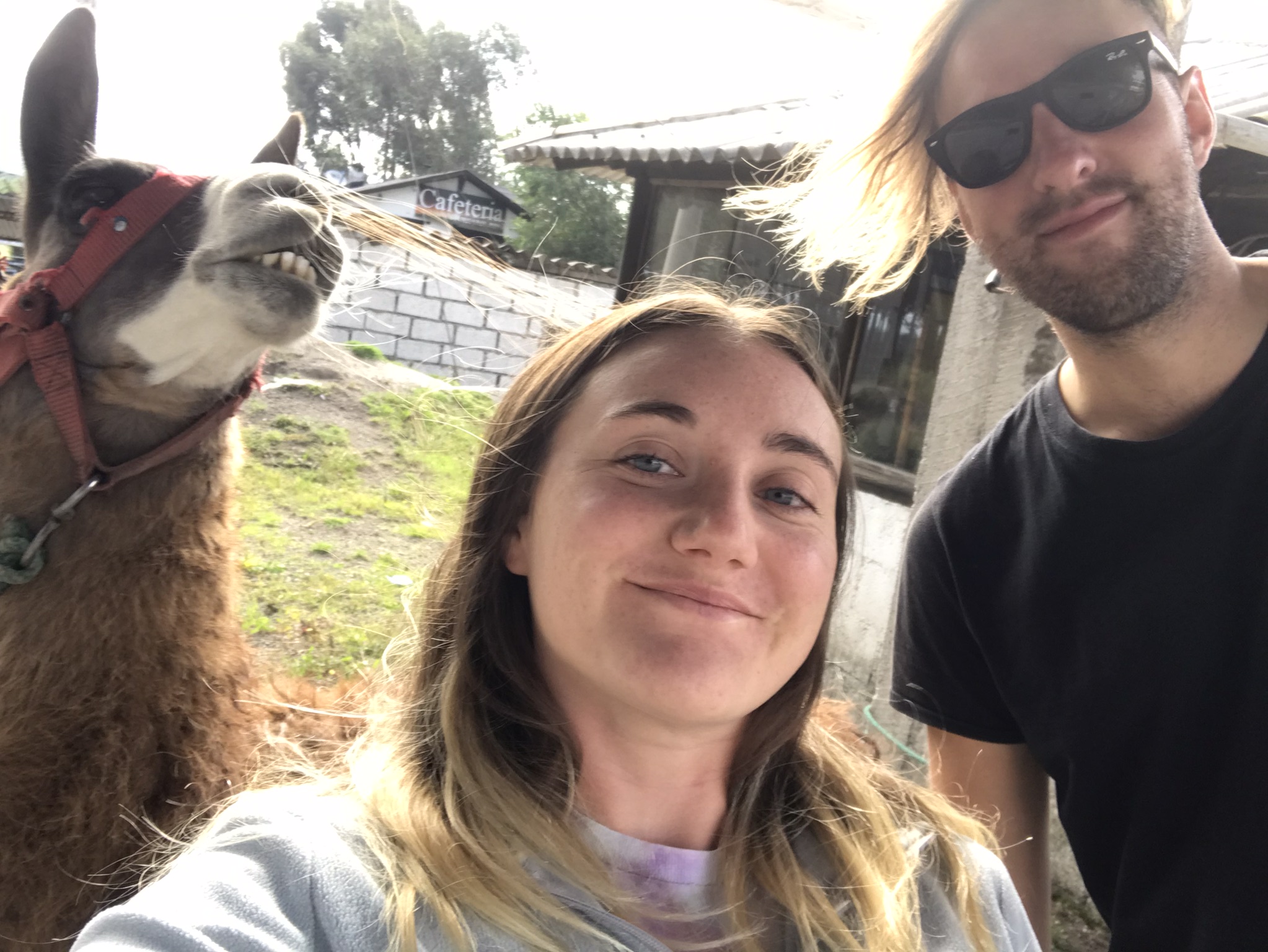
A patchwork of different cultures, languages, religious observances and ethnic minorities, China is more than just the Great Wall or Terracotta Warriors. The territory of China is vast – from the cold climes of the Gobi desert to the tropical climate of Hong Kong and everything in between. You can’t hope to see it all in 2 weeks! We spent 30 days in China and mostly used our time to travel around the Han heartlands to the east of the country, barely scratching the surface of what these areas, let alone the entire country, has to offer. Check out my China travel blog below!
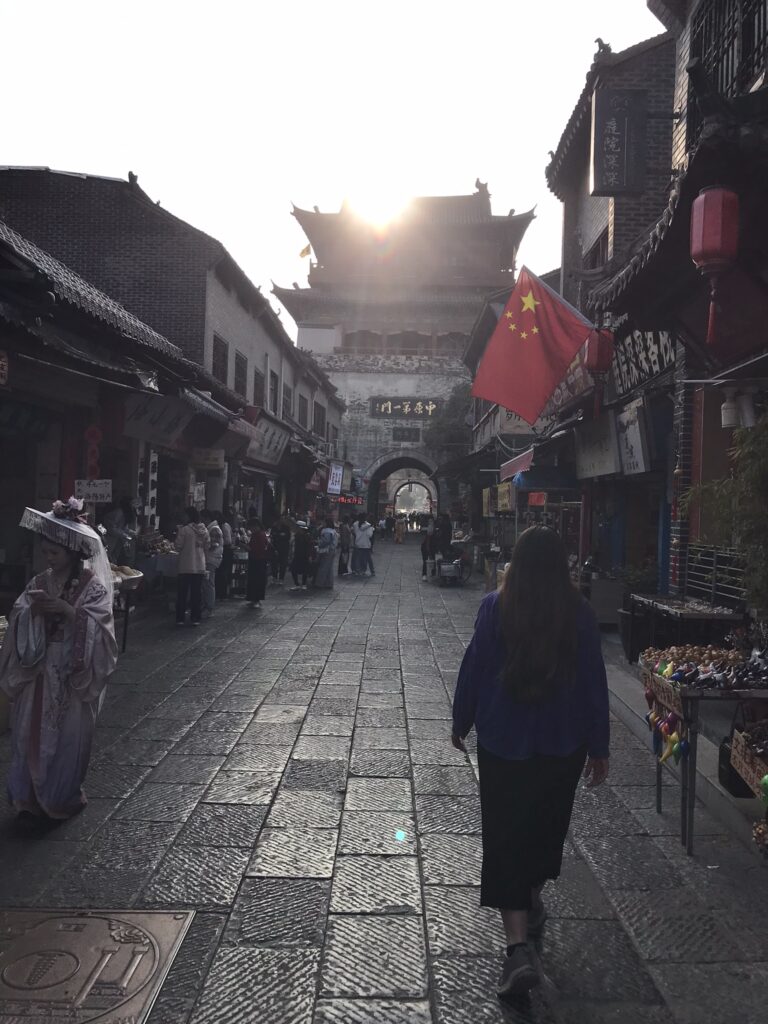
Shanghai, Hangzhou, Suzhou, Zhouzhuang, Nanjing, Yanzhou, Taishan, Qufu, Luoyang, Xi’an, Pingyao, Beijing
People in the west tend to have strong opinions about China and it’s fair to say that there are often negative headlines with regards to things like human rights abuses, excessive surveillance, freedom of speech etc. Westerners tend to think of the Chinese state as secretive, subversive, undermining western nations, spying and making problematic and one-sided deals with developing nations to suit their own interests. I’ll be honest – I thought this too! We often look with suspicion at China. It’s important to keep an open mind and to move past these negative headlines. There’s so much more to China than snappy headlines in western news media. My best advice is to drop all preconceptions before visiting!
From our own experiences in the county we found that the Chinese people generally seemed to be happy and cheerful and the standard of living was overall quite high, at least in the cities we visited. Most major cities seemed to have a bustling and vibrant atmosphere with plenty going on, ample places for food and drink, high levels of cleanliness, ultra-efficient public transport and a relatively low cost of living in comparison to other countries showing a similar level of development, with very little of the urban decay or decadence that can often be found in Western cities. We’ve visited oppressive dictatorships before (such as Tajikistan), and China did not seem this way to us at all. The people seemed to be genuinely content with their government, and it’s easy to see why given the high levels of progress that the nation seems to be making on all fronts.
Myth busting: we found out that the Chinese people actually see the high number of surveillance cameras in the exact opposite way than we do. They see them as being there for their own benefit and to ensure safety. This really surprised us at the time. After only a few days of walking around on the streets, we started to forget that the cameras were even there.
China is probably the safest country that we’ve ever visited (even safer than the UK)! You don’t have to worry about theft of valuables, expensive cameras dangling from your neck, ditching the jewellery, leaving your phone on the table when you go to the toilet in a restaurant or keeping an eye on your bag on the metro: it’s a breath of fresh air! Crime rates are very low – I guess the intense surveillance has its benefits.
The history of China is a neglected subject amongst western nations. China has always been an innovator and inventor, from introducing tea and silk to the west, to inventing paper, gunpowder, wood-block printing, silk weaving techniques and porcelain. Chinese philosophy (Confucianism) and oriental medicine spread to many other nearby nations such as Japan and Korea – in fact many of the cultural aspects and traditions that we associate with Korea and Japan today were originally imported from China. China boasts a fascinating dynastic history spanning thousands of years: from the semi-mythical Xia, Shang, Spring and Autumn Period, Warring States Period, unification under the Qin, Han, Tang, Northern Song, Ming and Qing to name but a few, as well as countless regional kingdoms and dynasties. China was at the epicenter of the ancient Silk Road – you can still see the influence of this mega trade route in cities such as Xi’an with its large Hui muslim population. The Chinese script is the oldest writing system still in use today, traced back all the way to the Shang dynasty (1250 BCE) and a series of oracle bones with distinctly Chinese inscriptions.
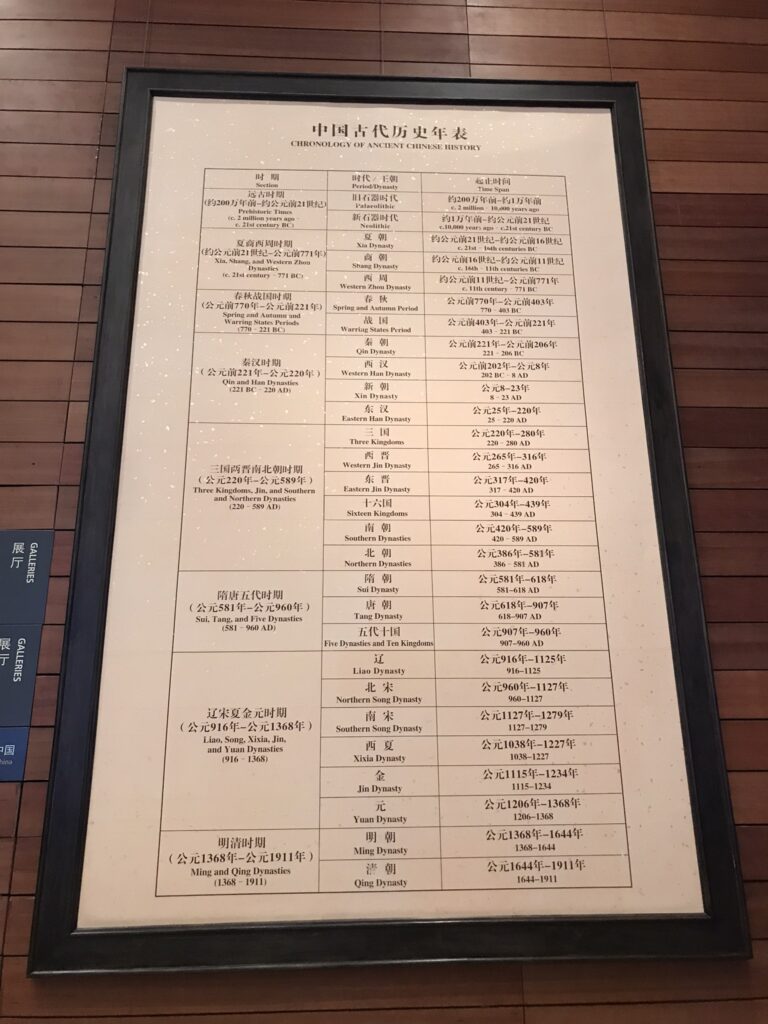
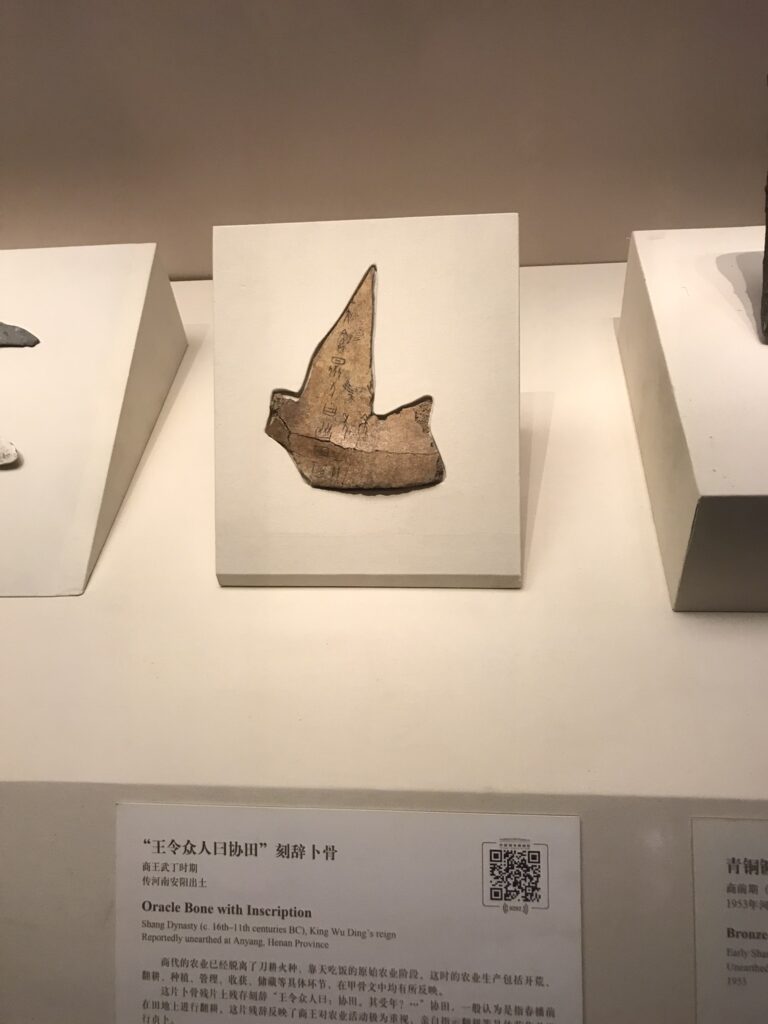
A great timeline of the various Chinese dynasties and an ancient Shang dynasty oracle bone fragment from the National Museum in Beijing
It’s said that before the colonial powers got their claws into China it was one of the top world powers in terms of trade, production and affluence. In the mid 19th century, China suffered a series of defeats to Britain (known as the Opium Wars) which resulted in the signing of unequal treatises, forcibly flinging open the doors of the country to international trade, foreign settlements and trade monopolies by European nations (at the expense of the Chinese). Referred to as the ‘century of humiliation’ by the Chinese, these colonial powers became the overlords of affluent port cities, sucking the wealth out of China. Turbulent episodes occurred including the Taiping Rebellion (an extremely bizarre quasi-civil war centred around a religious zealot which occurred 1850-1864, causing the death of 20-30 million people mainly due to famine) and the Boxer Rebellion at the turn of the 20th century, in which martial artists violently rebelled against foreign influence before eventually being quashed by an almost comically overwhelming alliance of Germany, Japan, Russia, Britain, France, the United States, Italy, and Austria-Hungary. Imperial control waned, culminating in the overthrowing of the final Qing emperor in 1912 (a mere child at the grand age of 6 years old) followed by a turbulent period which saw the nominally pro-democracy Republic of China forces of the Kuomintang fighting the Chinese Communist Party. Japan invaded China in 1932, signaling a shift in the power dynamics of the region and one of the greatest tragedies of World War 2, the Nanjing Massacre. Interestingly, China as an arena of war during WW2 is a lesser-known and lesser-discussed subject in the west, but it was a key area of resistance against Japanese expansionism. Post-WW2, with Japan finally defeated by the allied coalition, the Chinese Communist Party claimed victory over the Republican forces in a civil war and in 1949 China was declared a Communist nation with Chairman Mao Tse-tung at the helm. Since 1949, China has been experimenting with how communism can be fully integrated with modern life for the benefit of the people. It’s difficult to get a grasp of Chinese history as it’s so vast! However it’s beneficial to know at least a little bit of background in order to properly understand most of the sites and attractions in the country. We knew nothing of Chinese history before visiting, but quickly picked up on some of the main 20th century figures and events as well as the key dynastic periods (the most important are generally considered to be the Han, Ming, Qing and Tang).
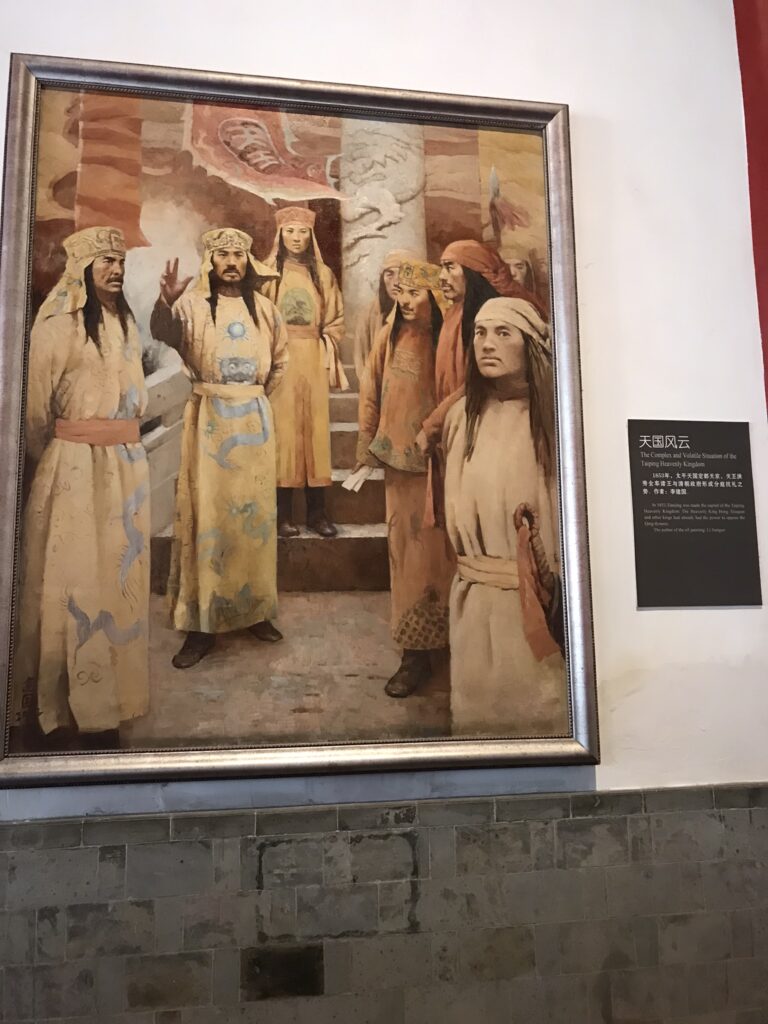
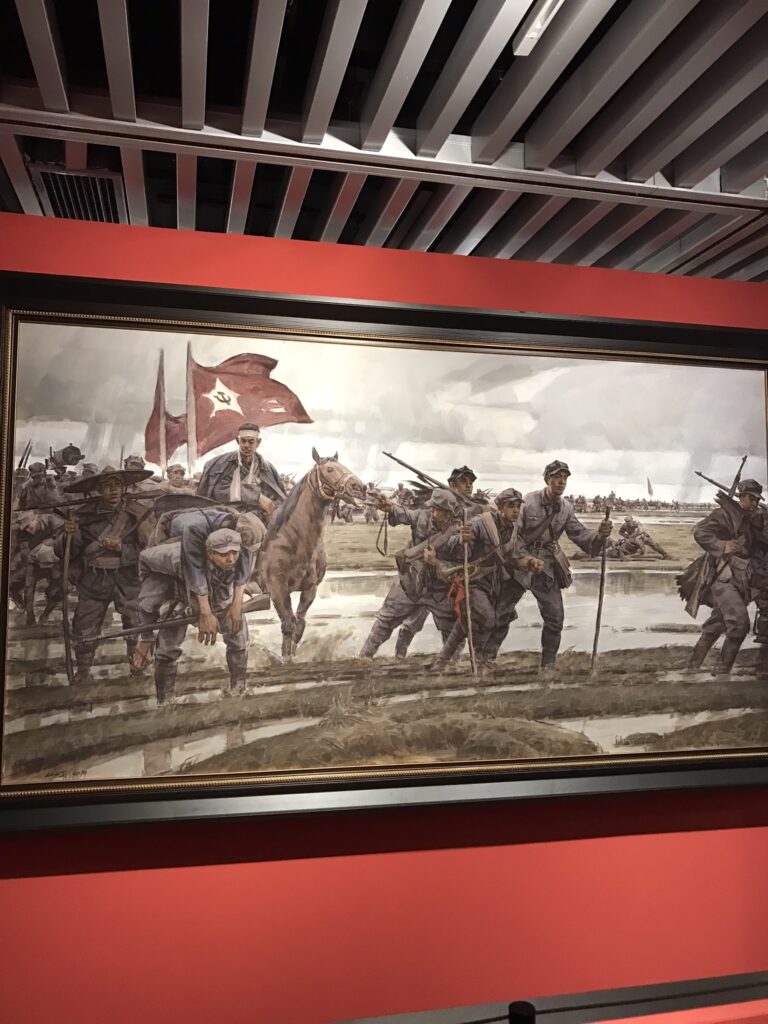
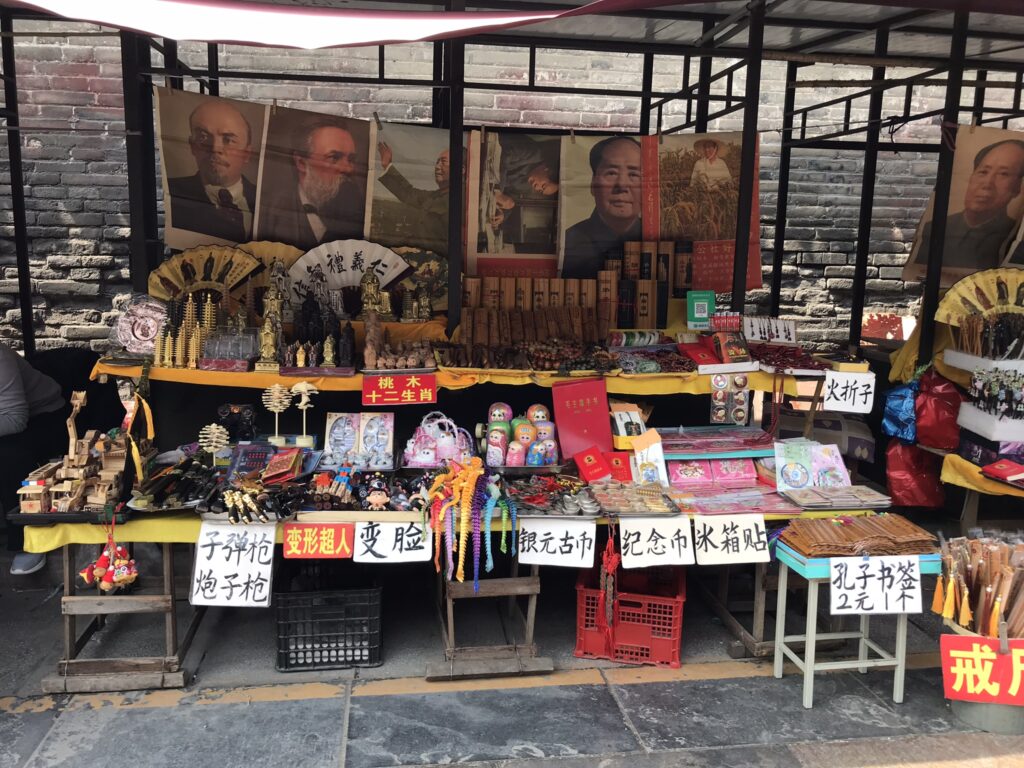
The Heavenly Kingdom during the Taiping Rebellion, Communist forces retreat in the mid 1930’s during the ‘Long March’ and the rise of the Chinese Communist Party and Chairman Mao – all important recent historical events that have shaped modern China
The territorial boundaries of China have shifted throughout history, with many kingdoms existing in parallel with one another at various times. The huge nation now known as China has not existed as a single entity for that many centuries – huge areas to the north and west like Inner Mongolia, Tibet and Xinjiang only came under imperial control in the 17th, 18th and 19th centuries (Xinjiang literally means ‘new lands’ and only officially became part of China in 1884). The eastern seaboard and inland provinces such as Henan, Shanxi and Shaanxi are generally considered to be the Chinese heartlands, where most of the population resides and the dynastic history occurred. It was interesting to see a map in a museum with the ethnic dispersion in China – the Han people (by far the dominant ethnic group in the country) are gathered more in the east, while the west is more sparsely populated and has higher concentrations of ethnic minorities.
China today is known for its heavily populated megacities, with 18 cities boasting over 10 million inhabitants. We’ve spoken to a few Chinese people on our travels and they often say something like ‘I’m from a small city near Shanghai’, and then when we look online the city has a population of 5 million people. The population figures are mind-blowing! China has almost twice as many people as the entire continent of Europe. Interestingly, the nation is facing a demographic crisis similar to its neighbours in South Korea and Japan, as decades of the infamous one-child per family policy and rapid socioeconomic development have led to a massive decline in birth rates. The one-child policy was lifted in 2015 and the government is now actively encouraging childbirth among young people, however the uptake appears to be slow.
Language in China is a complex matter. The official language is Standard Chinese (also known as Mandarin), which is based on the language/dialect of Beijing. However there are a plethora of other regional languages throughout the country (around 300 in total), most of which are not mutually intelligible with Mandarin or each other. In China these languages are often referred to as ‘dialects’ of Chinese, but this isn’t really accurate terminology – in most cases they are totally distinct. Almost all of the languages use the same Chinese script and since we aren’t exactly fluent we couldn’t really tell the difference or when somebody was speaking Mandarin vs another language. As the use of Mandarin is so heavily promoted and standardized by the government, you can probably get away by speaking to most people in Mandarin (or translating into Mandarin as the case may be). English is taught in schools but it’s not widely spoken amongst the general population – we did bump into occasional speakers, but we also met a great many people who were very eager to talk with us but couldn’t speak a single word of English. Many Chinese are able to communicate via translation apps so it’s not the end of the world – we didn’t find communication to be that much of an issue in the country (much less than in India, for example).
China is by definition a communist country (the red on the flag gives it away), but the communism practiced in the country today is very different from the strict Lenin-Marxist interpretations of the 20th century. The Chinese Communist Party’s official philosophy is now ‘Socialism with Chinese characteristics’, meaning it’s a much more nuanced situation on the ground. China has a mix of capitalist economic policies along with classic communist political structures. It’s a one-party state where dissent is prohibited and citizens vote for representatives to their local People’s Committee, however private ownership, the pursuit of wealth, individualism and private businesses are allowed and even encouraged. The hardline policy that the west often associates with China was dropped after Chairman Mao’s death and the failed experiments which resulted in the death of millions of people due to famine (known at the time as the Great Leap Forward). Now, China is increasingly opening the door to and competing with the west in terms of economic, technological and cultural development.
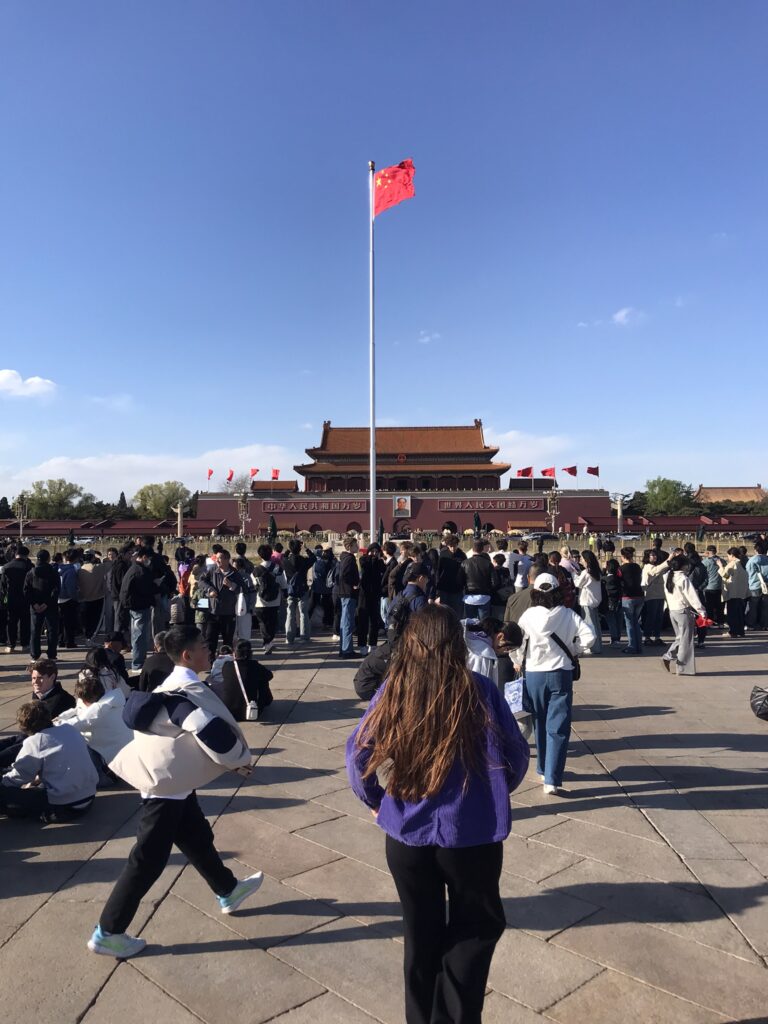
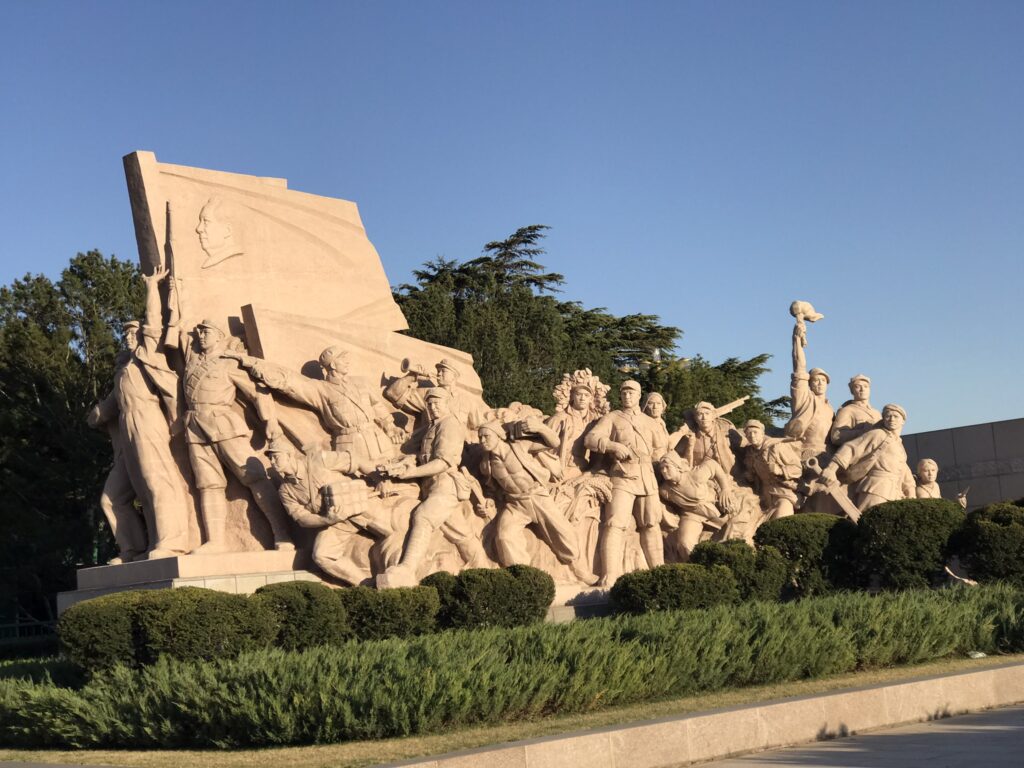
Tiananmen Square is the epicenter of the Chinese Communist Party
It’s important to state that China is not a typical backpacker destination. The biggest issue by far in the country is the tech ecosystem, which is completely different to the west (and every other country we’ve ever visited). Many western websites including Google are banned, which can make browsing and researching on the go difficult (this is greatly mitigated by using an eSim or a VPN – specifically LetsVPN which worked well for us). Moreover, almost everything in China runs via mobile phone apps, specifically the all-encompassing apps Alipay and WeChat. These apps are used to make everyday payments (we didn’t once use our credit cards in China), so constant connectivity is a must. These apps also contain ‘miniprograms’ for almost everything – using the metro, ordering taxis (Uber is blocked but an equivalent service, Didi, is built into Alipay as a miniprogram), ordering food in restaurants, booking attraction tickets. It’s essential to have these two apps while traveling in China – you simply can’t function without them.
Travelling in China requires careful planning before you even step foot in the country, and continuous prep on the road. For example, you have to book slots on WeChat for most attractions (even those with free entry), sometimes days in advance for popular sites and museums. Cheap trains on popular routes often sell out very quickly, so it’s difficult to have a flexible itinerary. Another thing to mention is that there isn’t really a hostel community like other East Asian nations. Expect to stay in smart business hotels rather than hostels – these are super affordable and usually pretty good quality but the social aspect is somewhat limited. On the positive side, it’s possible to travel in China without breaking the bank, especially if you have someone with whom to share a hotel room. Many museums and attractions are free or have a nominal charge, transport overall and trains can be cheap if you’re happy to slum it in the painfully slow lower classes and the price of food in restaurants is usually very reasonable. We didn’t struggle at all to stick to our pretty tight budget here.
In terms of the experience for travelers, China has an extremely developed tourism infrastructure but it’s primarily set up for domestic tourists. The domestic tourism industry cannot be underestimated; foreign tourists are a mere drop in the ocean of the total visitor numbers at most attractions. This makes sense when you consider that China’s size and population is twice the entirety of Europe and there’s a huge variety of landscapes, sights and micro-cultures contained within the country. For foreigners, it can be frustrating at times having to jump through various hoops to be able to visit attractions and sometimes it can feel like the system is working against you, as things are completely set up for Chinese visitors. We often found that the higher levels of technology can be a hindrance rather than a help in these situations, especially when you’re standing outside the entrance to an attraction furiously typing on a WeChat mini-program trying to secure tickets, having to type in your passport number for the umpteenth time. At times we were just let into attractions by guards as the interface simply was not set up for foreigners, but in other cases it was absolutely essential to navigate the web of miniprograms in order to prebook. Hopefully things will improve and become more accessible as more foreigners visit China, but it isn’t really a priority for them right now as the domestic tourist numbers still so massively dwarf the foreigners.
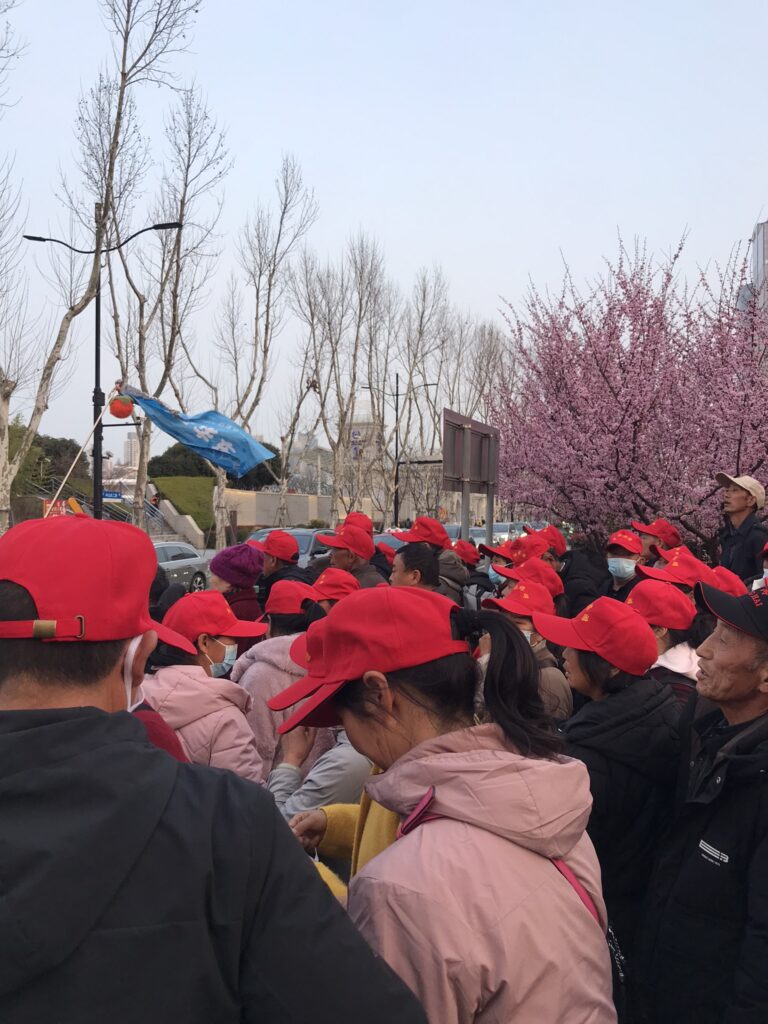
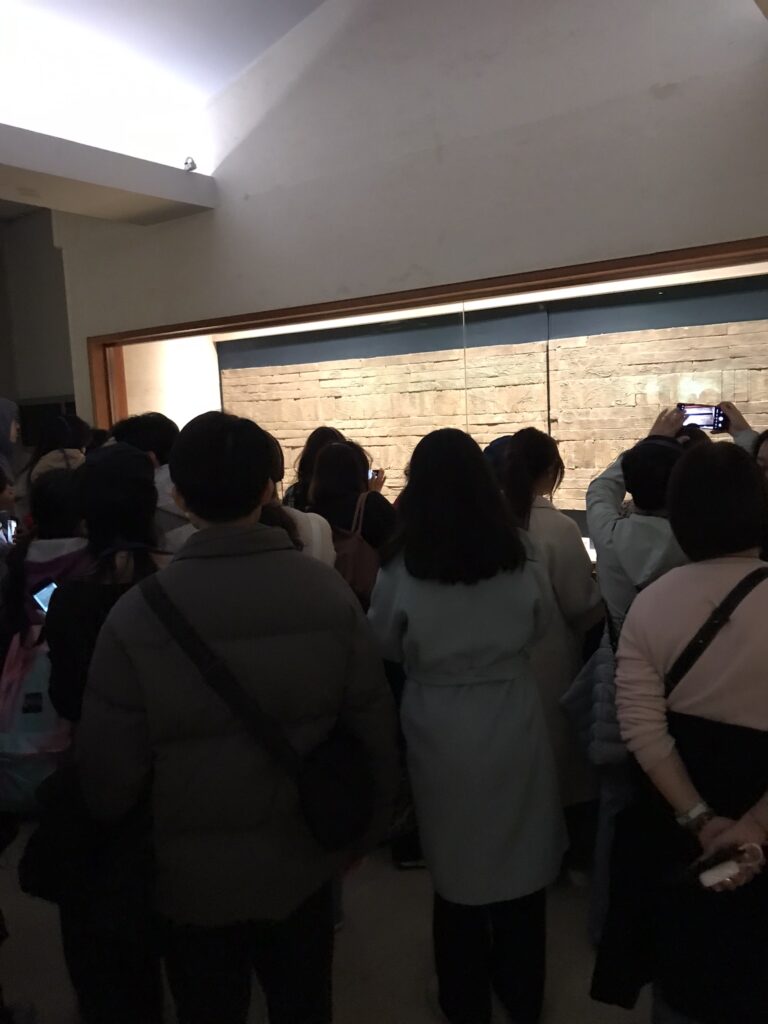
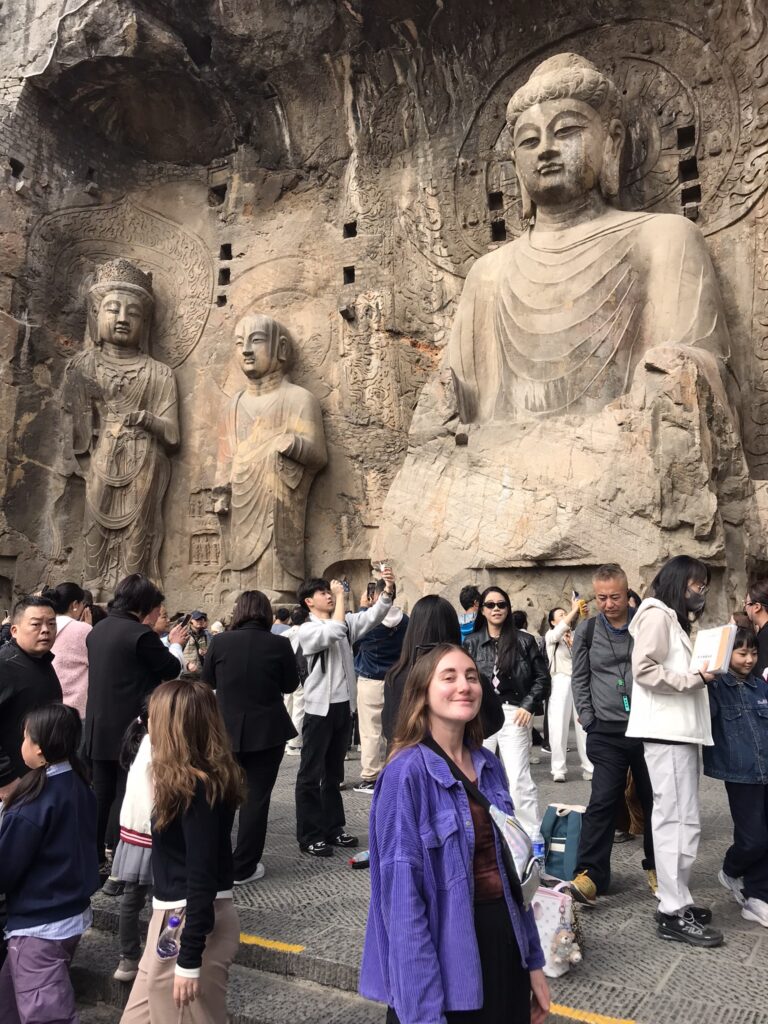
Popular attractions can get very crowded in China; even regular museums are usually teeming with people!
It’s important to understand that there are a lot of people in China and most Chinese go on holiday to other parts of China rather than abroad. If you’re looking for a peaceful saunter around a museum or solitude in a traditional Chinese garden, you’re not going to find it. Trust me. Pretty much everywhere a tourist could possibly visit will be crowded with tour groups touting coloured hats and flags, and museums are not an exception to this rule. The crowds can be quite overwhelming compared to what you may be used to at home. Imagine the busiest day of the year at an attraction in a major touristy city – well that’s every day in China. Tickets for attractions do sell out (quite a lot of the time in fact) so it’s essential in most cases to reserve ahead of time. Avoid holidays and weekends wherever you can. Even visiting early in the morning or late afternoon won’t alleviate the vast crowds too much. It’s just something you have to deal with.
China has witnessed dramatic growth from the 1990s to now. There is a noticeable generational shift in behaviour and attitudes in China. Young people tend to be tech savvy, glued to their phone, silent on public transport and very conscious not to be rude to others. This generation grew up with greater economic opportunities, stability and upward mobility than previous generations. Older people tend to be louder on public transport (sometimes having phone conversations with the loudspeaker on), men sometimes spit in the street (due to buildup of phlegm perhaps from the poor air quality of yesteryear), there is a tendency to smoke in public places such as train platforms, hotel elevators and inside hotel rooms. You can’t avoid the smokers unfortunately as they’re everywhere – smoking is normalised in public spaces even in close proximity to children. Another quirky nuance is that older people can often be spotted exercising and sometimes dancing together in public parks (a hangover of bygone communist past?). The generational divide is visible everywhere. We put this down to the rapid rate of modernisation and technological advancement in China.
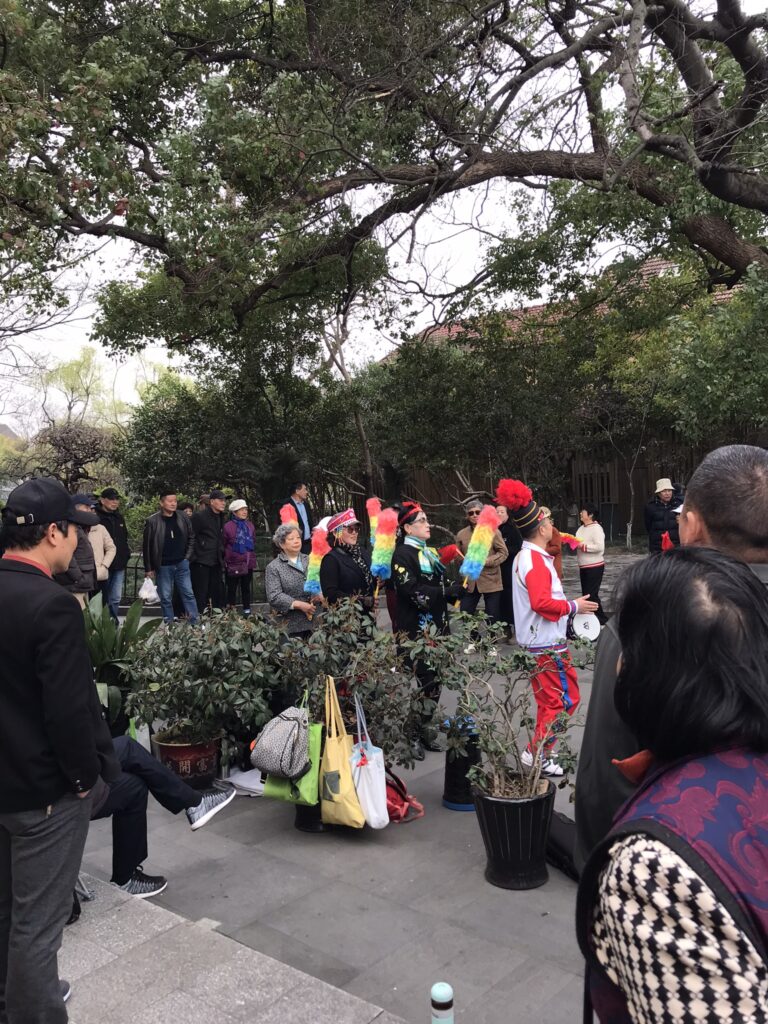
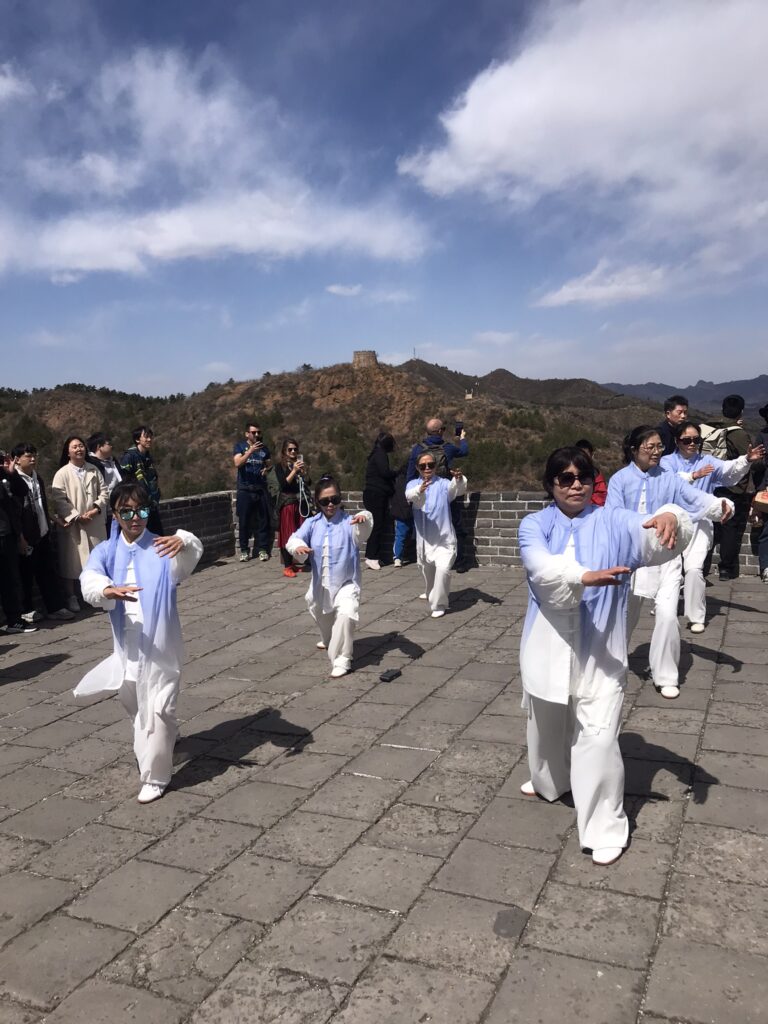
A gathering of older folk parading around with feather dusters in Hangzhou and another group practicing Tai Chi on the Great Wall of China – sights like this are pretty common, whilst younger people tend to be more reserved
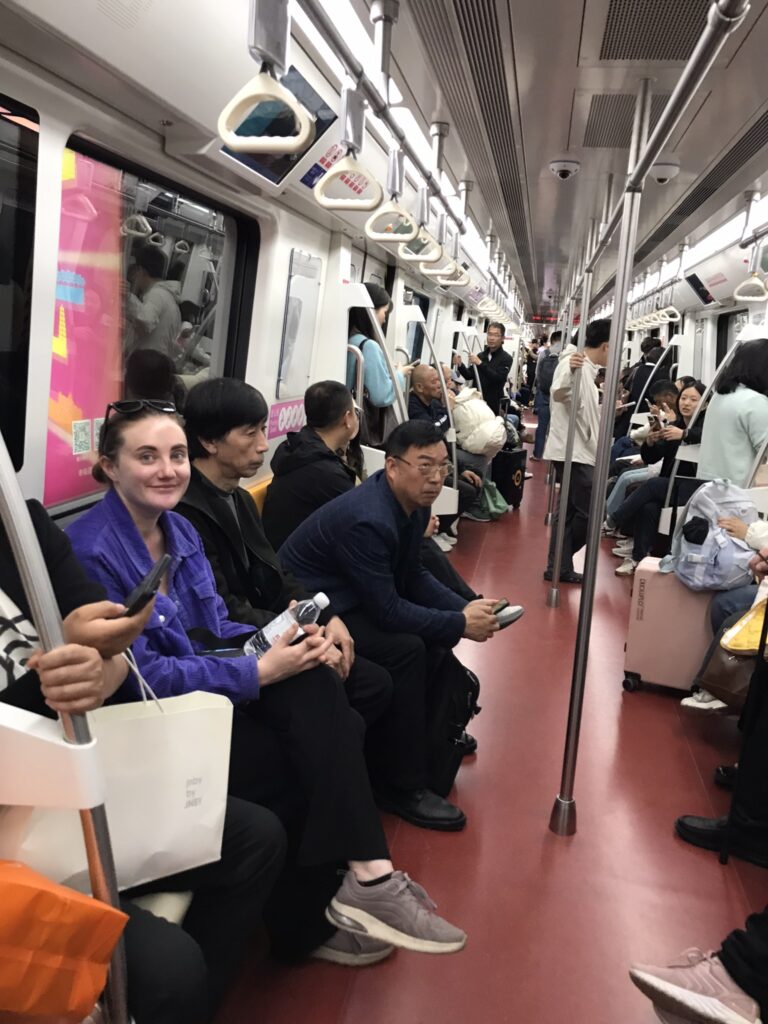
China was much more technologically advanced than we imagined. Think robot cops patrolling the train station, delivery robots in hotels (not just one or two hotels but across the board), robot floor cleaners in underpassages, robot waiters bringing food from the kitchen to the table in restaurants and facial recognition software at the metro stations. China is way ahead of the West in terms of widespread technology and robot use in everyday life. Chinese-made electric vehicles make up the majority of traffic on the roads, meaning quieter streets, less emissions and many cars with a futuristic appearance. Most cities have excellent metro systems which are super cheap, reliable and efficient to use. The signage and announcements in metro stations are usually also in English, which is great for non-Chinese speaking visitors. Uber doesn’t work in China but the equivalent app, Didi, seems to be available pretty much everywhere and is very inexpensive so getting around cities is incredibly stress-free.
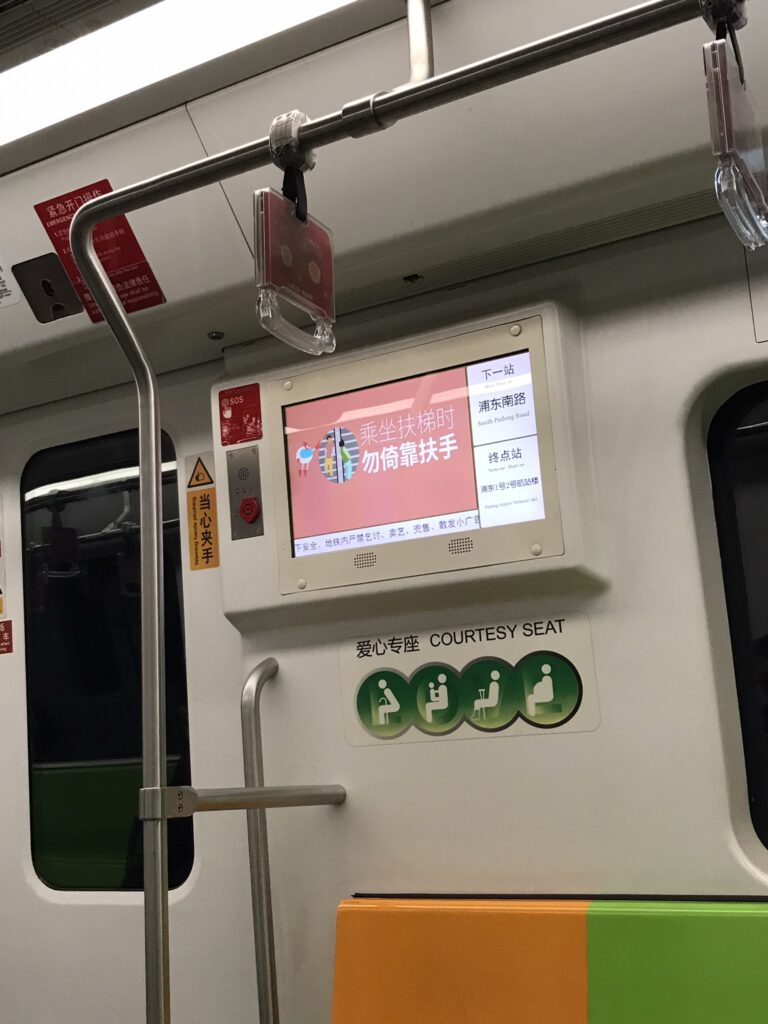
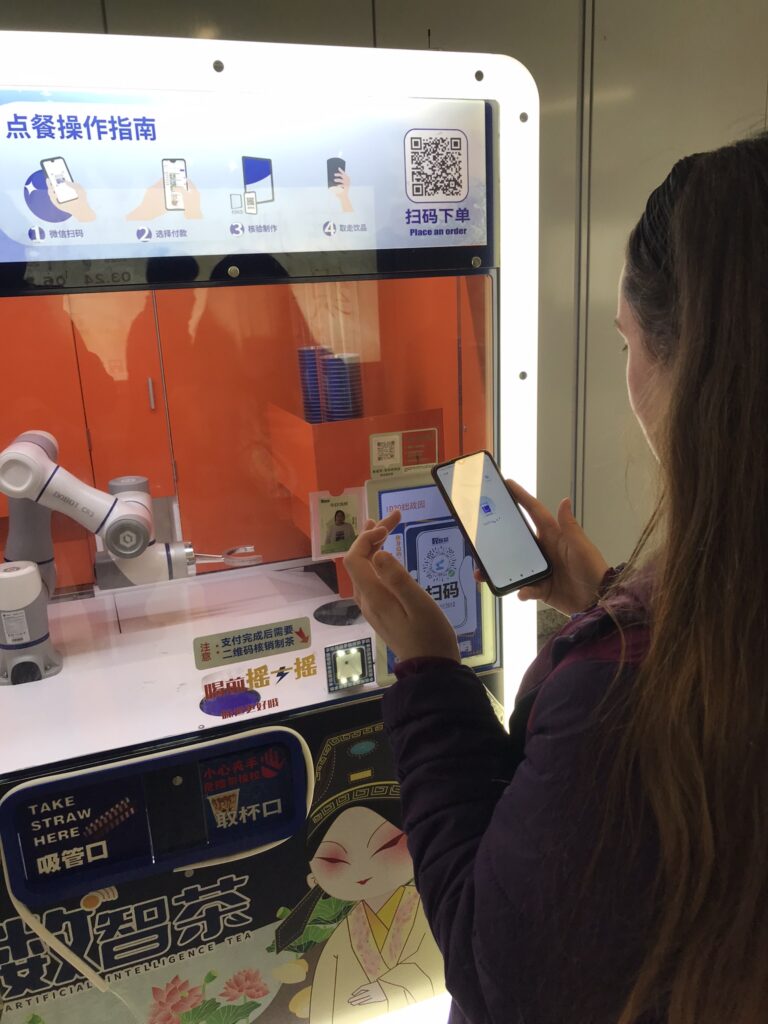
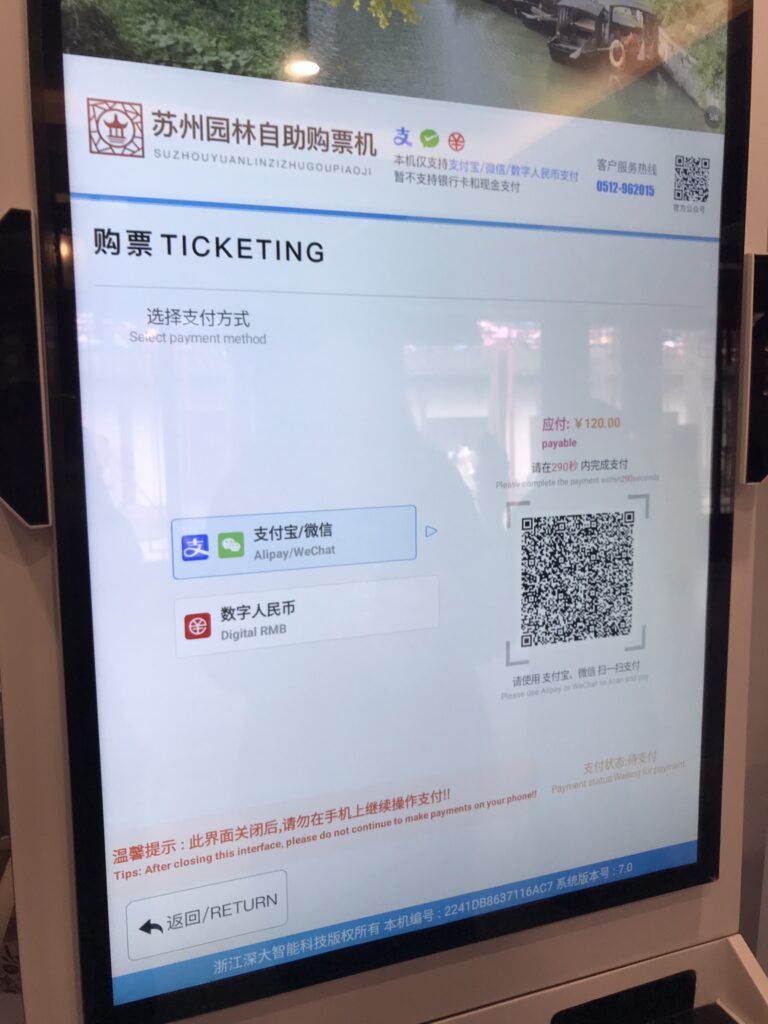
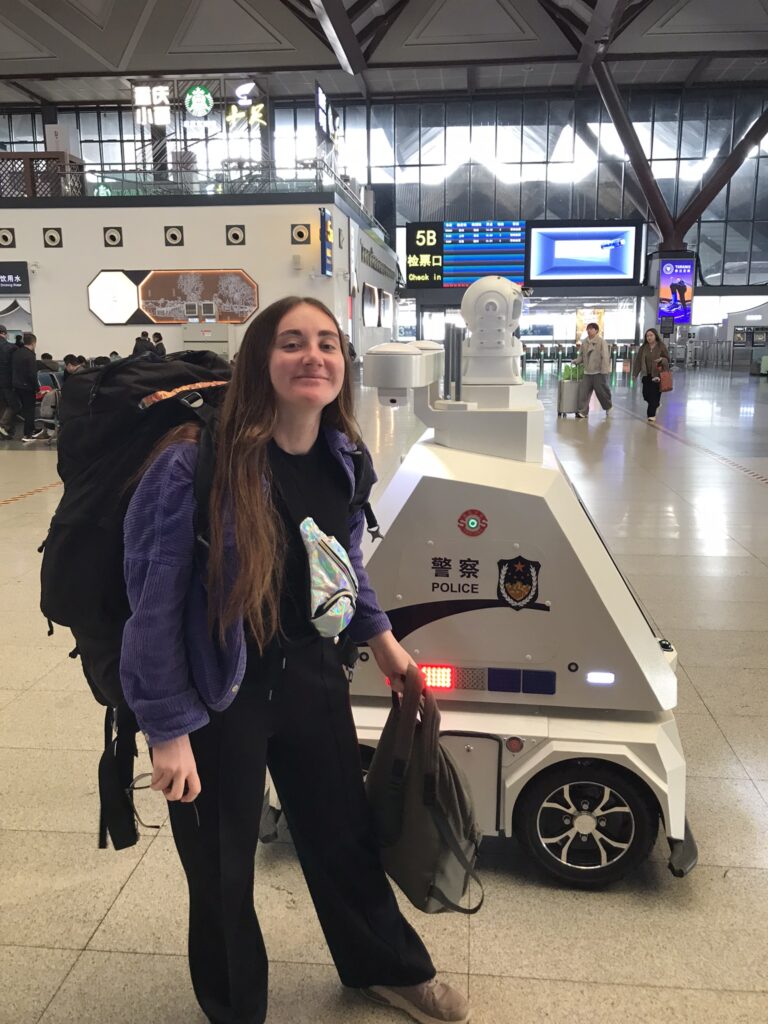
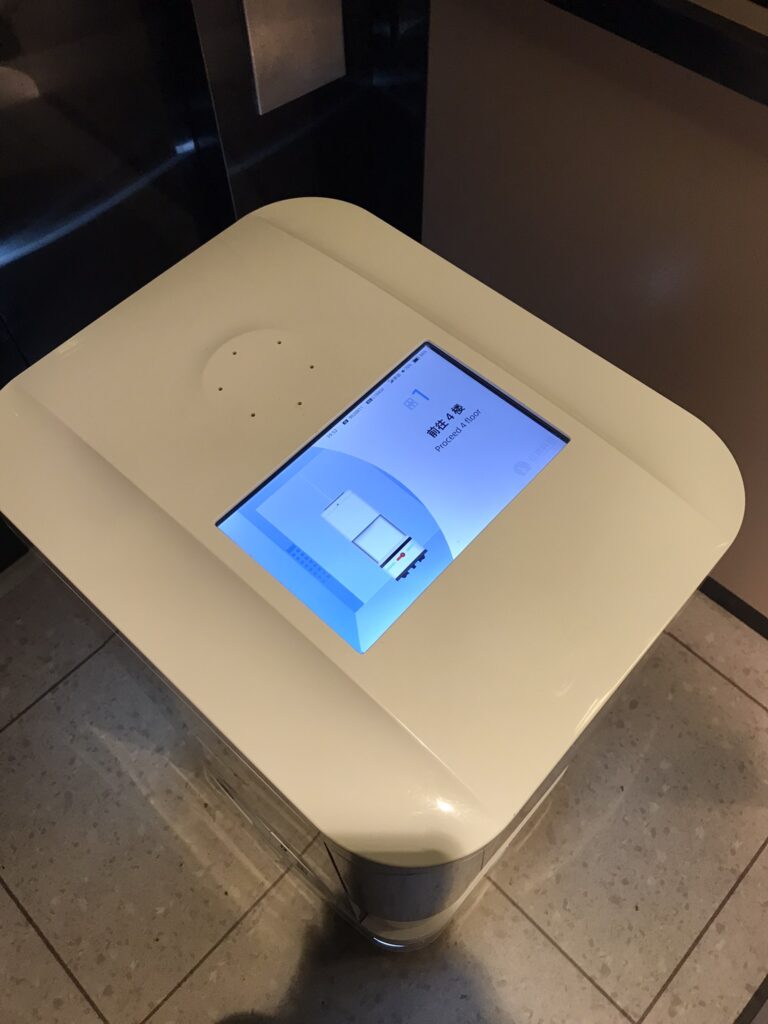
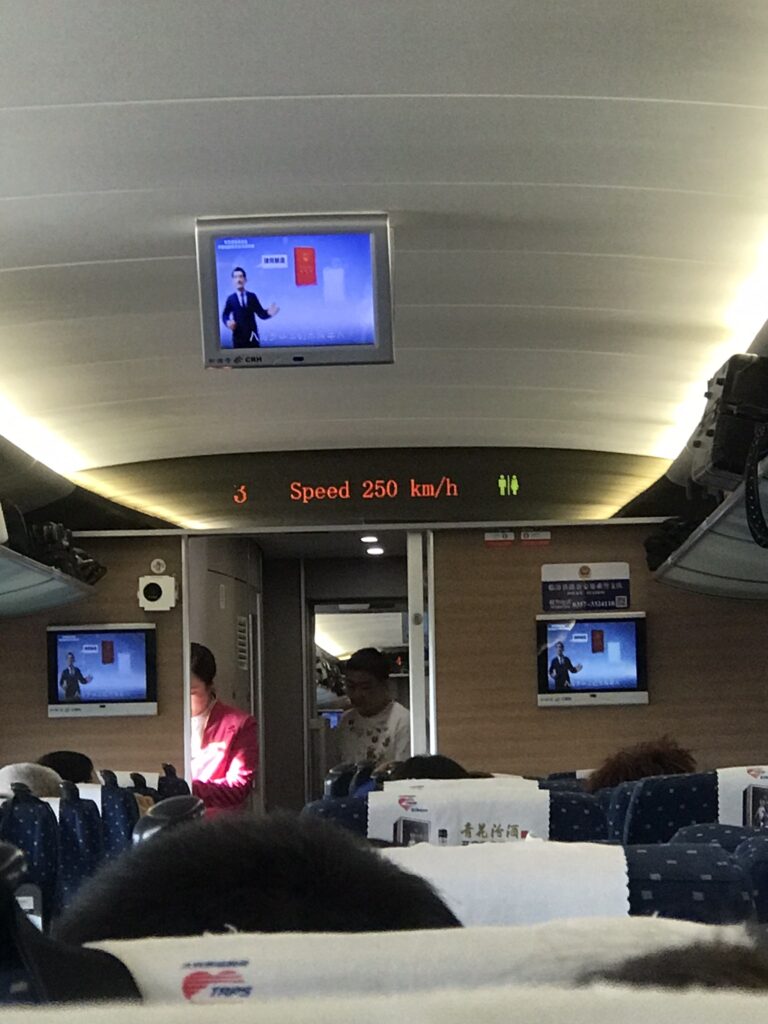
China is incredibly technologically advanced: from ultra-modern metro systems, robot baristas making your morning coffee, payments made via QR code, robot cops patrolling train stations, robots making room deliveries in hotels and bullet trains travelling at 250kmph
China, as a nation, gets things done: drastic air quality improvement since the 2008 Beijing Olympics, improvement of cities by adding green spaces and constructing efficient metro and public transport networks, beautifying of urban spaces, modern high-rise developments replacing older shanty-type buildings (although sometimes at the expense of the destruction of heritage buildings). The continuity in governance means that longer term goals for the betterment of the people are pursued (the Chinese Communist Party works in terms of 5 year plans).
A big misconception by the west is that there is no religion anymore in China, and that it was swept away by Mao’s Cultural Revolution. However from our own experience this appears to be a myth. We personally witnessed Taoist devotees climbing thousands of steps up Mount Tai to offer prayers and gifts to the Jade Emperor and Bixia, Buddhist adherents performing rituals and lighting incense at countless Buddhist shrines and Muslim members of the Hui group praying at mosques in Xi’an. Religion seems to be alive and well in China as it was before the Communist Revolution. We were told that the government stance has shifted since Chairman Mao’s death and particularly over the past few decades – the position now seems to be that as long as people don’t go against the government and obey the laws they can practice whatever faith they want. Of course our understanding of this is only surface-level based on our own observations, but the amount of cultural and religious diversity on show was definitely an eye-opener and preconception-buster.
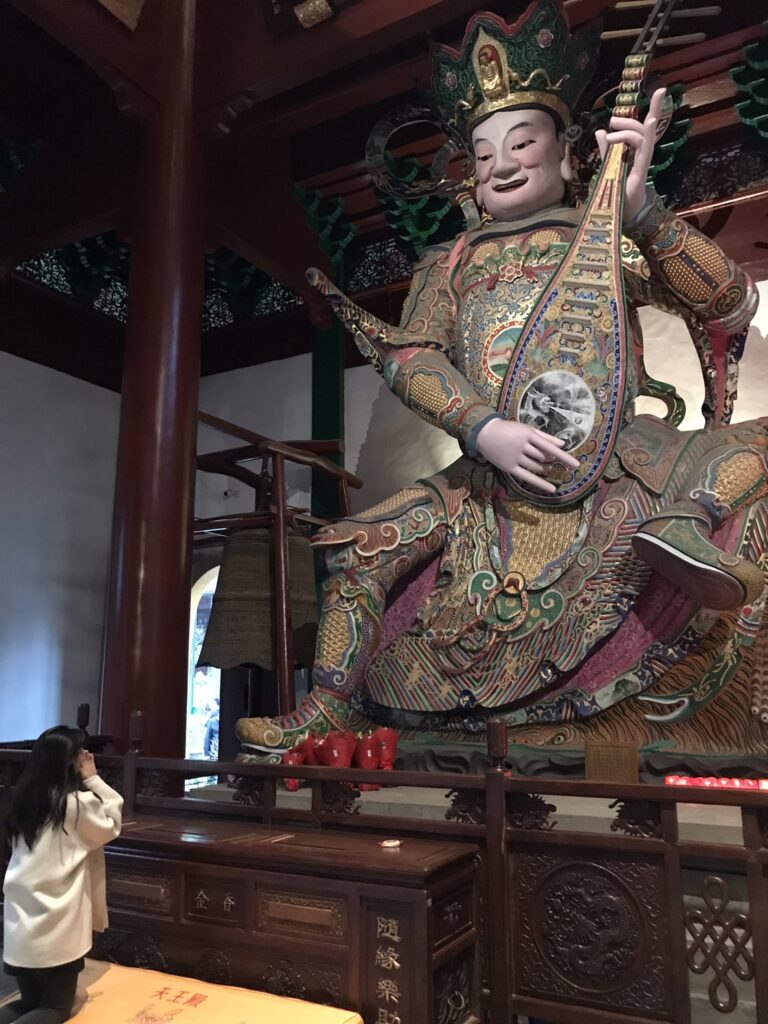
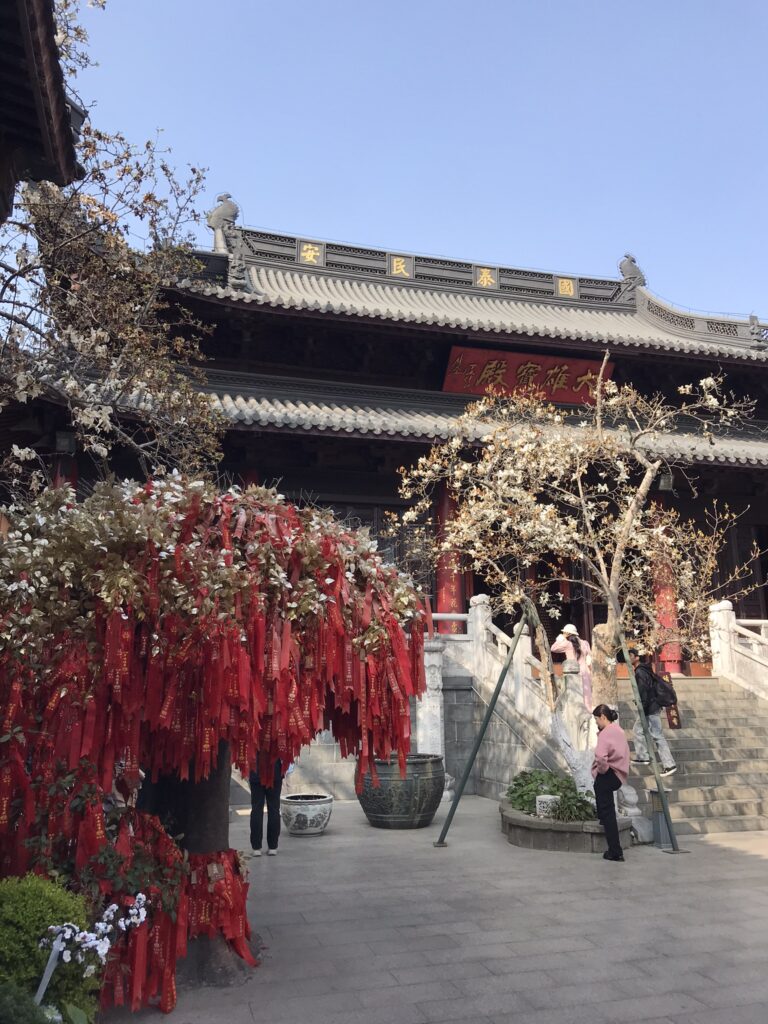
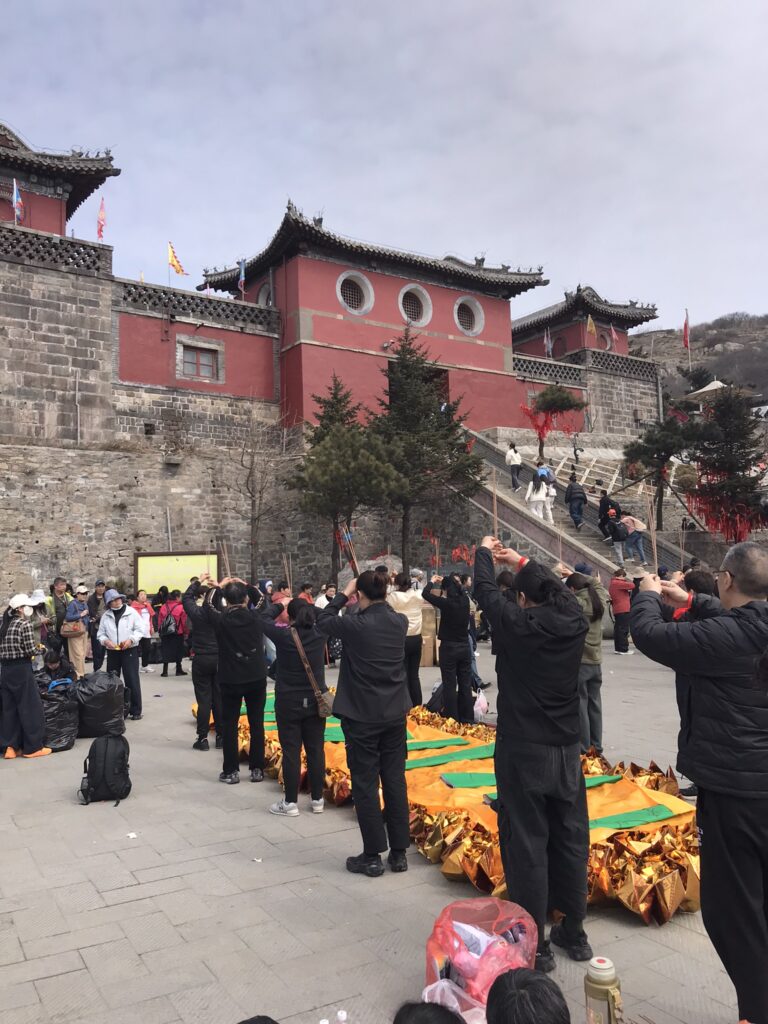
Buddhist devotees at Lingyin Temple (Hangzhou) and Linguu Temple (Purple Mountain, Nanjing); Taoist followers at Mount Tai, one of the most sacred mountains in Taoism
Shanghai
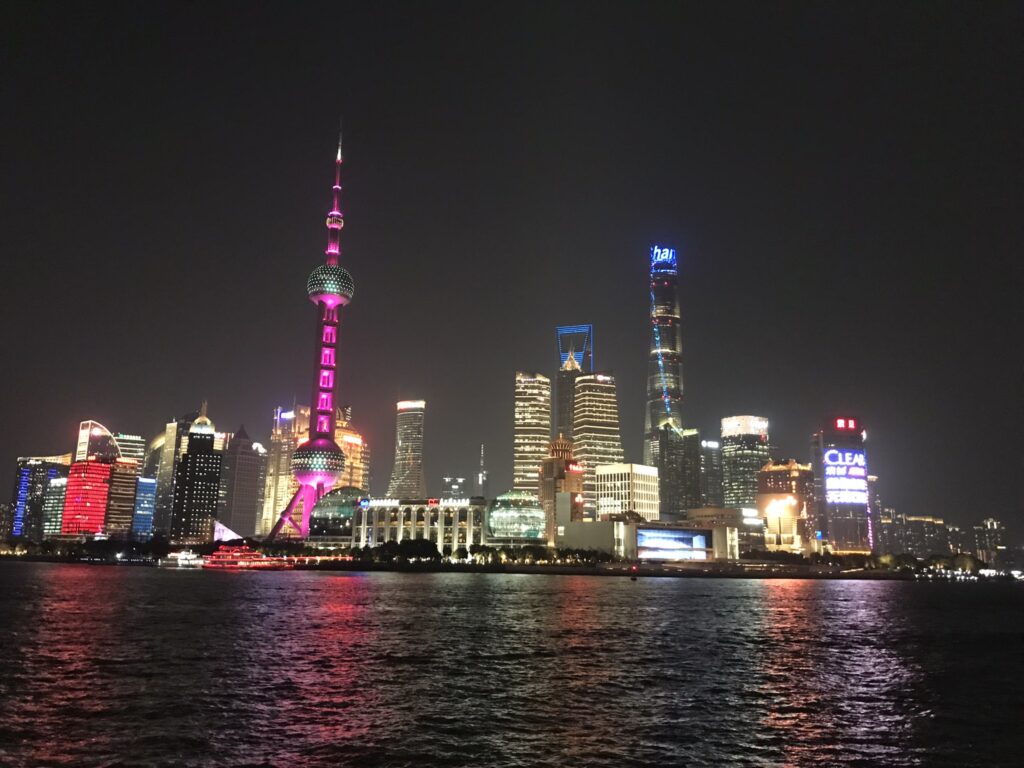
With a staggering 30 million residents, Shanghai is one of the most populous cities in the world, a cultural and economic powerhouse of China. The Huangpu river bisects the city, separating the riverfront Bund from the glitzy new Pudong area to the east. The skyline of Shanghai is iconic, especially the Oriental Pearl TV Tower, Shanghai Tower (tallest building in China and highest observation deck in the world) and Shanghai World Financial Center.
Shanghai is fundamentally different from most Chinese cities in that it doesn’t have a storied ancient history to speak of. During China’s dynastic heyday the city was a virtual non-entity. The growth and development of Shanghai is intrinsically linked to the period of history post-Treaty of Nanking (1842), when China was forced to open up to international trade with the West and Shanghai became a designated ‘treaty port’. Western colonial powers carved up large sections of the city for their own ‘foreign settlements’ – specifically the French Concession and the International Settlement, which existed in parallel to the ‘Chinese’ area of the city. In these small designated parcels of land foreigners lived and worked, formed local councils and were directly responsible for services such as policing, street lighting, sewage and construction of buildings – essentially functioning as self-contained microstates with no influence from the dynastic Chinese government. Foreign businessmen brought capital, industrialized processes for manufacture and domestic markets hungry for Chinese products, leading to rapid modernization and population growth as intellectuals and aspiring local people flocked to the booming and cosmopolitan port in search of better living standards and opportunities. We’ve heard similar stories about foreign settlements which developed in places like Kobe and Hakodate in Japan, but Shanghai far eclipses all others. As a major international export hub for China’s wares, Shanghai had become an international commerce powerhouse by the dawn of the 20th century and the city continues to dominate in the fields of finance, technology, trade and manufacturing to this day. To keep up with the amount of capital flowing in and out of the city through trade, numerous financial institutions were set up – many of these old foreign buildings are still visible along the Bund, a riverside stretch which is one of Shanghai and China’s most iconic sights. At its height, 70% of investment in Shanghai was foreign, with 68 bank buildings from 9 countries including Belgium, Japan and Russia.
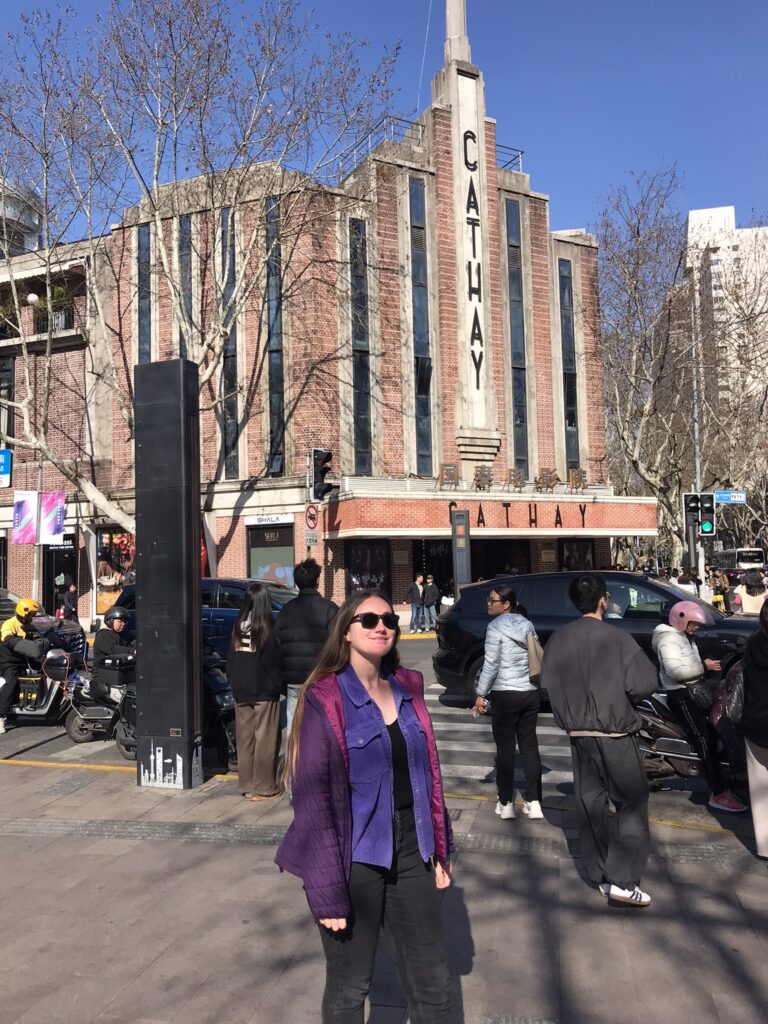
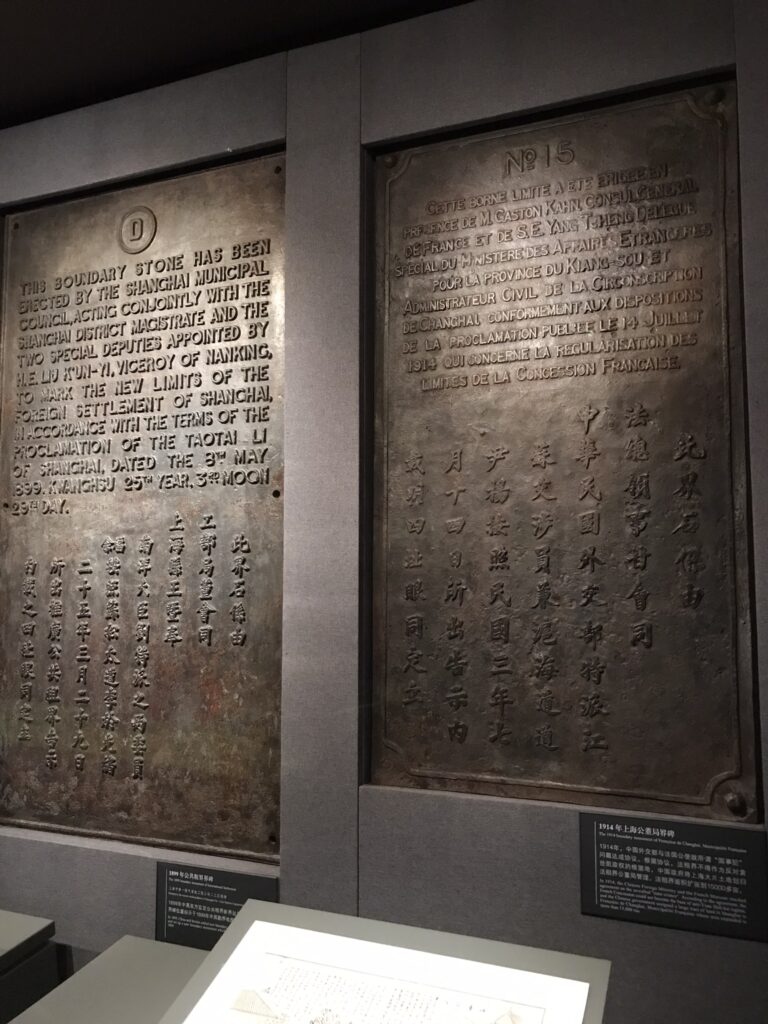
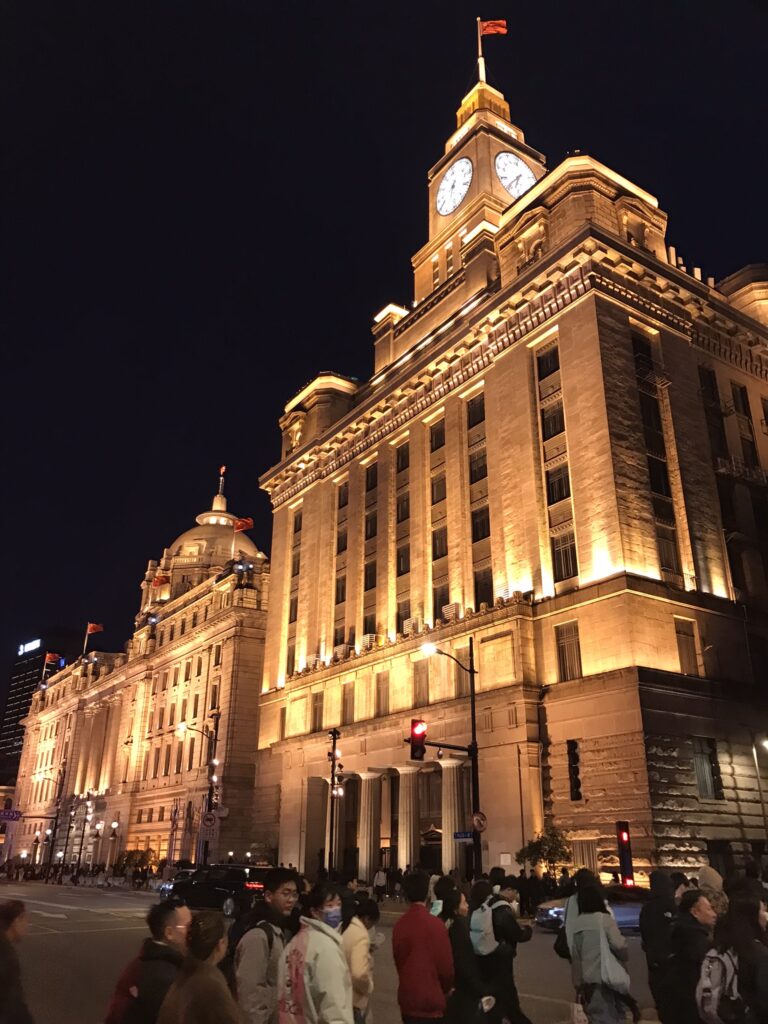
Examples of colonial architecture are still visible in Shanghai such as the Cathay Theatre in the French Concession, boundary markers of the foreign settlement preserved in the museum and the regal ‘Bund’ overlooking the Huangpu river
Because of its history and rapid development as an international hub, Shanghai has a very cosmopolitan reputation. It’s said that Shanghai is more ‘Western’ than other Chinese cities, and most of the sights in the city relate to its colonial past or modern status as an economic and cultural focal point. Shanghai has plenty going on – it’s said that more people speak English here than many other cities in China (although we’re not fully convinced that this is true). The city is spotlessly clean, modern and vibrant, with lots of malls containing top international brands and a super-efficient metro system which we found was easy to use and not overcrowded at all in comparison with some other major cities in East Asia.
As a burgeoning cultural and intellectual hub, Shanghai played an important role in the fall of the dynastic regime in the early 20th century as the middle classes started to favour a move towards democracy. Later, the first conference of the Chinese Communist Party was held in the city and it’s possible to visit the place where this occurred, as well as other historical buildings relating to the CPC including the former house of the Premier of the People’s Republic of China, Zhou Enlai. Today, the city is mainly filled with glitzy high-rise buildings interspersed with a few older estates that still retain a bit more character. We learned that many of the older neighbourhoods are being demolished to make way for new developments – the local residents welcome this, as they receive handsome pay-offs from the government and potentially a shiny new apartment. As with most of China, many of the touristy ‘historical’ areas of the city have been redeveloped and are mostly modern recreations. The exception is the Bund, which is quite a sight to see and feels unlike anything else we saw in the country.
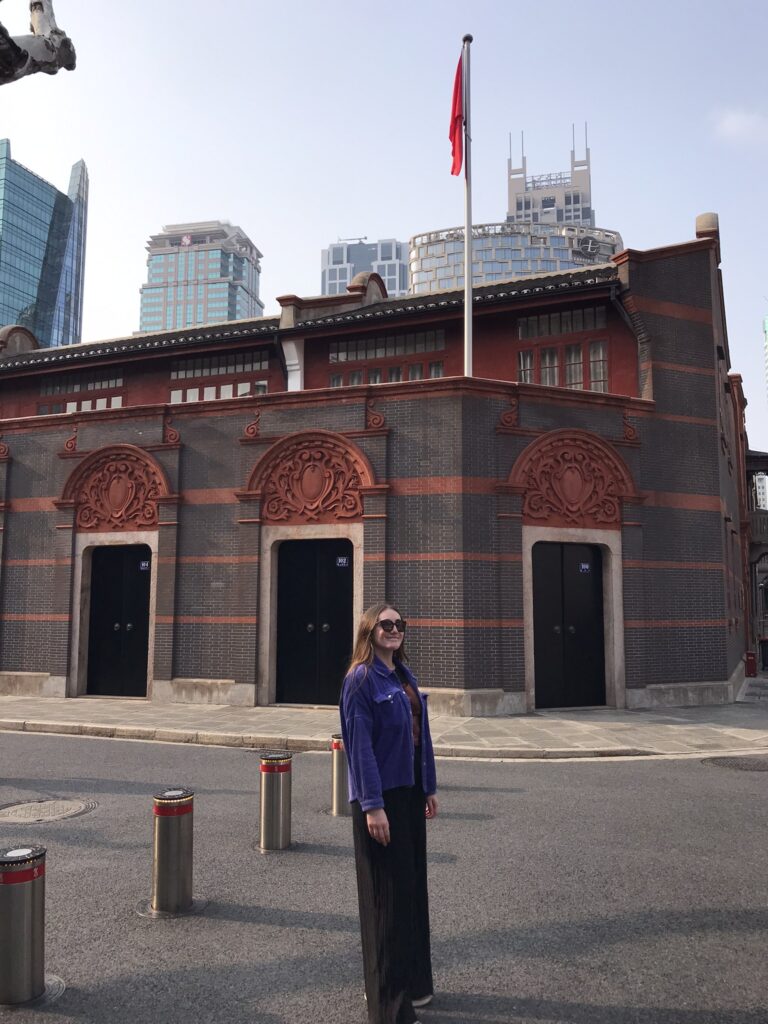
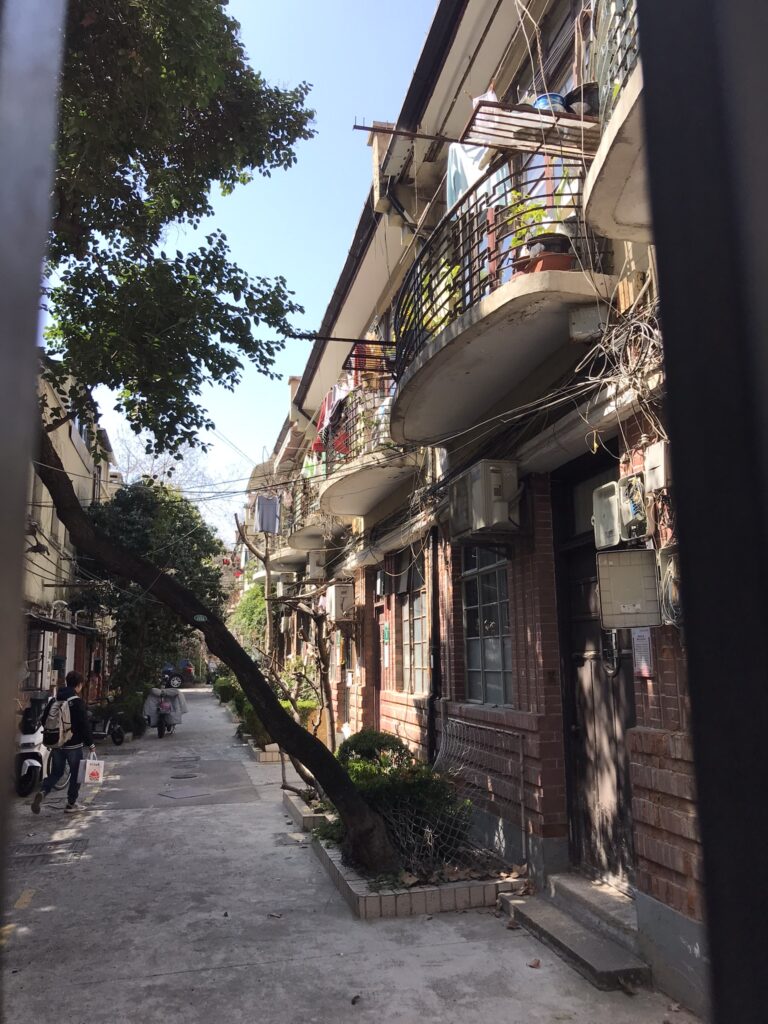
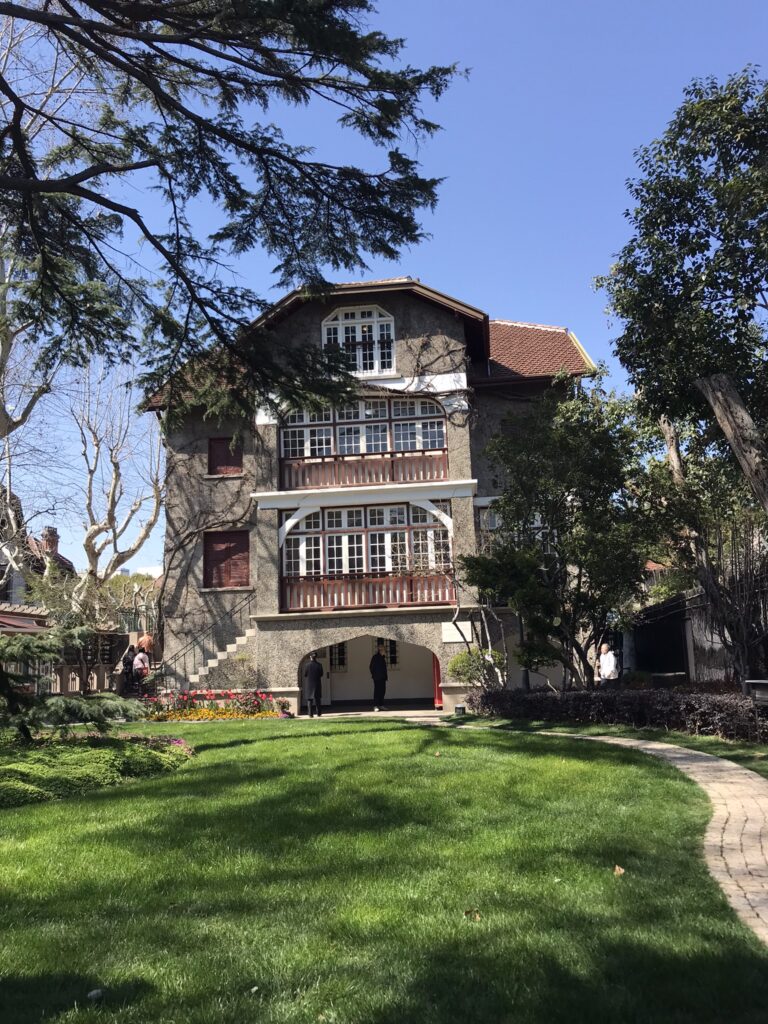
Historic buildings in Shanghai: the building where the first Chinese Communist Party Conference took place, a residential street in the French Concession and the one-time residence of Zhou Enlai
In all honesty, our time in Shanghai was a bit of a blur as we were battling jetlag and finding our feet in terms of travelling in China. It’s a pretty easy city to navigate and so makes a good base for first-time visitors to China, but it’s also quite unlike other Chinese cities and I wouldn’t say you’ve really experienced China per se if you only travel to Shanghai.
Top tip: If you find yourself in need of a Chinese SIM card, visit the China Mobile store in People’s Park. The store workers speak a little English and they’re experienced with helping foreigners to get SIM cards – something that is absolutely essential in China if you don’t have an e-Sim compatible phone.
Accommodation
Huamin Youth Hostel (Shanghai Bund Branch) – whilst the location is pretty good, just off Nanjing Road, around the corner from a metro station and within walking distance of People’s Square and the Bund, the accommodation itself was a little shabby and low budget. We picked this place as it was the best option available when we booked at the very last minute. I would advise picking somewhere else if possible. The hostel is located on the 4th floor of an apartment block with no elevator, it’s literally just some rooms off a corridor and then some tables in the reception area: no hostel vibe and limited facilities. This was also one of a few places we stayed where a Chinese phone number was required in order to access the wifi – luckily we got hold of a SIM card from China Mobile in People’s Park.
Foodie Places
One quirk about China and Shanghai in particular is that lots of restaurants are located in the basement food courts within mall complexes. If you’re hungry, just wander into the nearest mall and go to the basement level – I can pretty much guarantee there will be numerous little eateries inside. However this sometimes makes things difficult when you’re looking for a specific place you’ve spotted on Amaps – you often need to navigate the mall and the myriad of other food joints. Not easy especially if you’re ravenous and you’re trying to match up the Chinese script or colours of the particular place you’re looking for.
Ajisen ramen – located in a basement level shopping mall in close proximity to the Shanghai Museum. It was suspiciously quiet during lunchtime – we’re not sure why exactly. Aijisen ramen serves up tasty Japanese fare at half the price you’d expect in Japan. We found it to be pretty good quality and easy to order by scanning the Alipay QR code on the table.
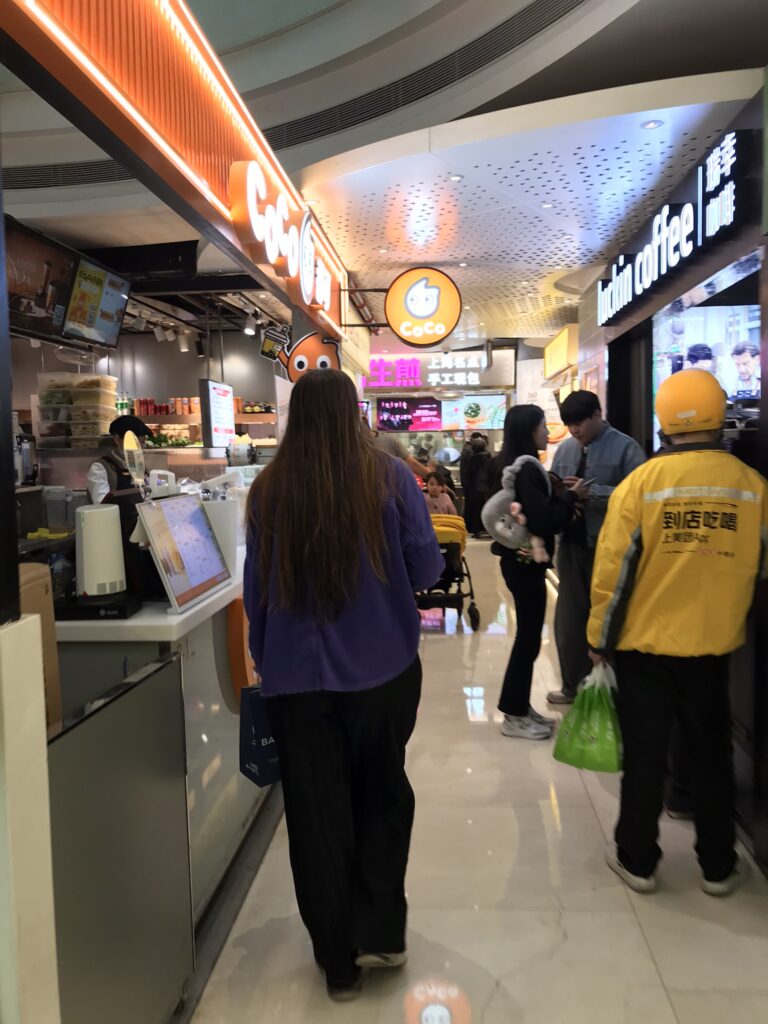
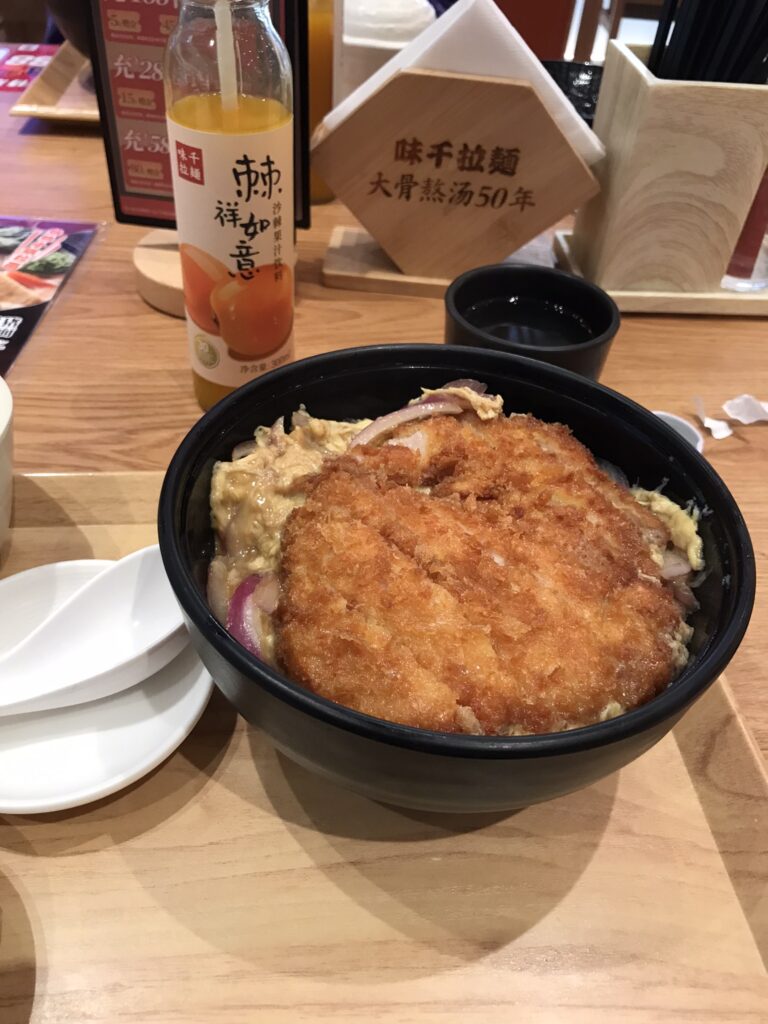
Basement level food courts are all the rage in Shanghai, Ajisen ramen is a prime example
Zhanglala Beef Noodles – again located in a shopping mall in the French Concession near to the Cathay Theatre. We thoroughly enjoyed the refreshing beef noodle broth, although we needed WeChat to order here and unfortunately the translation didn’t work properly.
Chenxianggui Lanzhou Beef Noodle – a short distance away from China Art Museum, this mall eatery serves up steaming hot lanzhou style noodles (thick cut) for a budget-friendly lunch after visiting the China Art Museum. It’s a little tricky to find the entrance to the mall but once you’re in it’s plain sailing.
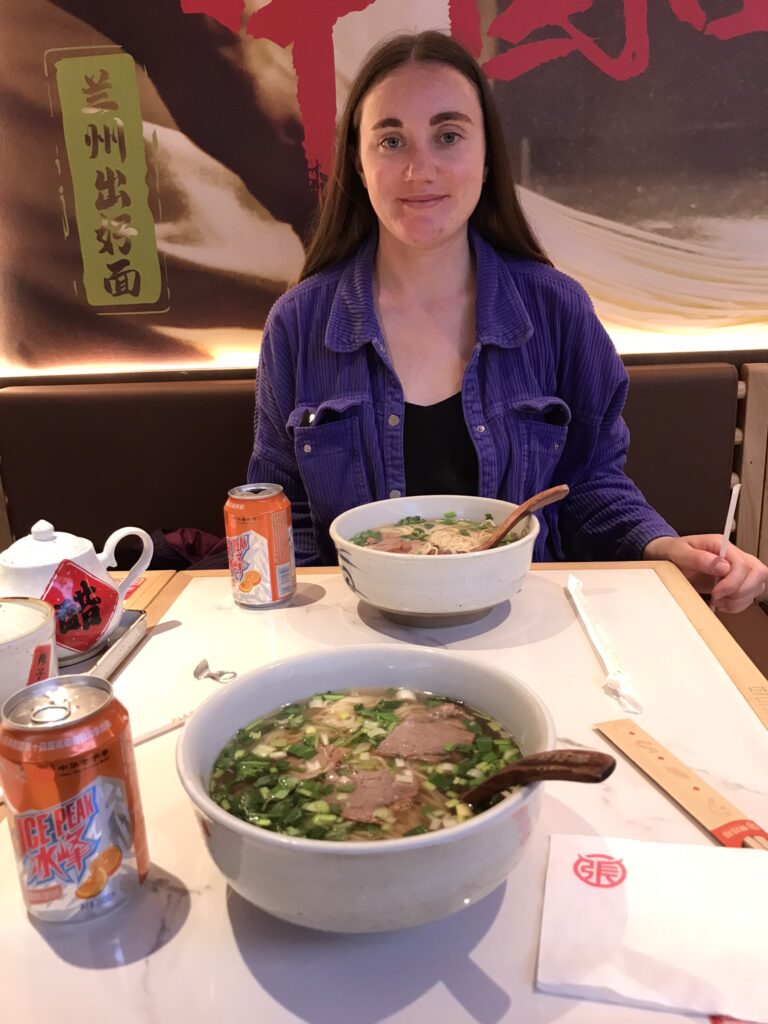
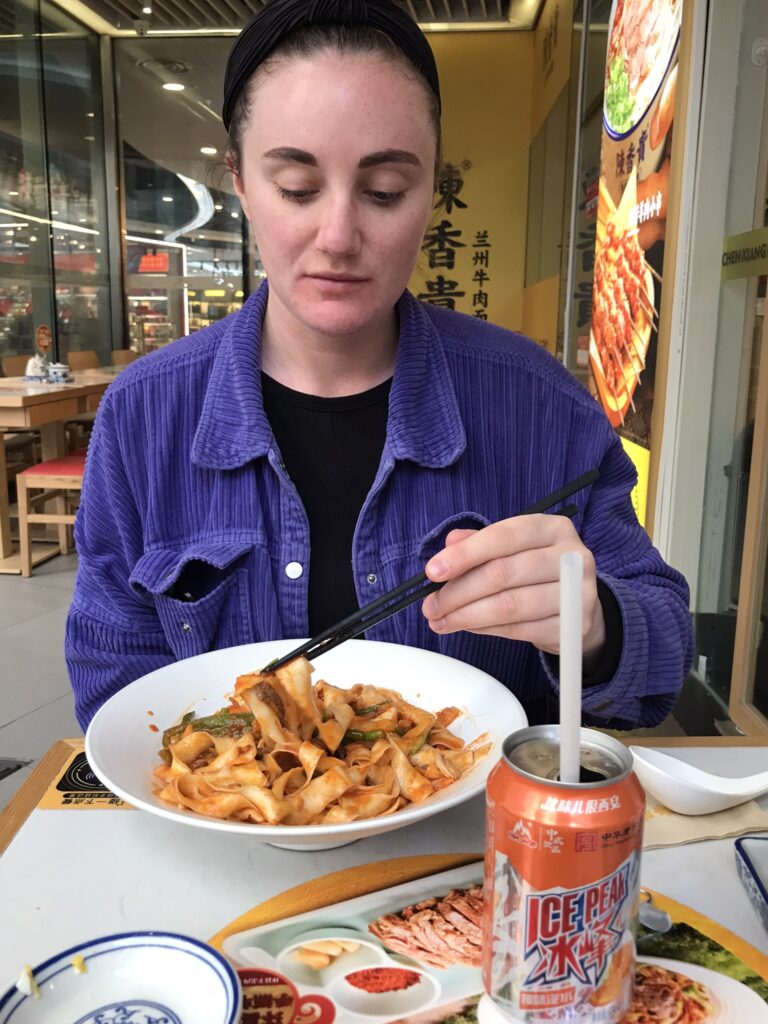
You really can eat your way across China without leaving the food court of a shopping mall!
Five Guys on Nanjing Road – again located in a shopping mall. A hugely popular fast food chain restaurant serving up juicy high-quality burgers; more than your regular McDonalds or KFC fare. I have a soft spot for Five Guys and as the prices are about half the price that we would be charged back home we couldn’t help ourselves.
Subway – we have tried Subway in almost every country we’ve visited and indulged again in Shanghai. It’s a convenient and familiar meal, and we figured we may not get the opportunity in some of the less westernized cities of China. Again, this was located in a mall basement close to our accommodation. Interestingly there did not seem to be any chicken on the menu here – a first for Subways worldwide in our experience.
Activities
Shanghai Museum in the People’s Park – somewhat disappointingly this museum is more along the lines of an art gallery rather than a traditional museum charting the history of the city. The museum consists of various gallery rooms displaying fine art without much in the way of historical context. Unfortunately, many of the exhibits seemed to be closed at the time of our visit and we later discovered that they’ve been transferred to the new East Building in Pudong. There were still a couple of interesting galleries here – one was full of amazingly-carved rhino horns, while another exhibited minority ethnic attire and crafts including some particularly garish carved wooden masks from Tibet, Inner Mongolia and Yunnan (i.e. from the Dai and Bai ethnic groups). The museum contains some exquisite artefacts and is worth a visit, but it wasn’t exactly what we were expecting. For an excellent overview of the history of Shanghai, head to the nearby Shanghai History Museum (People’s Square) instead.
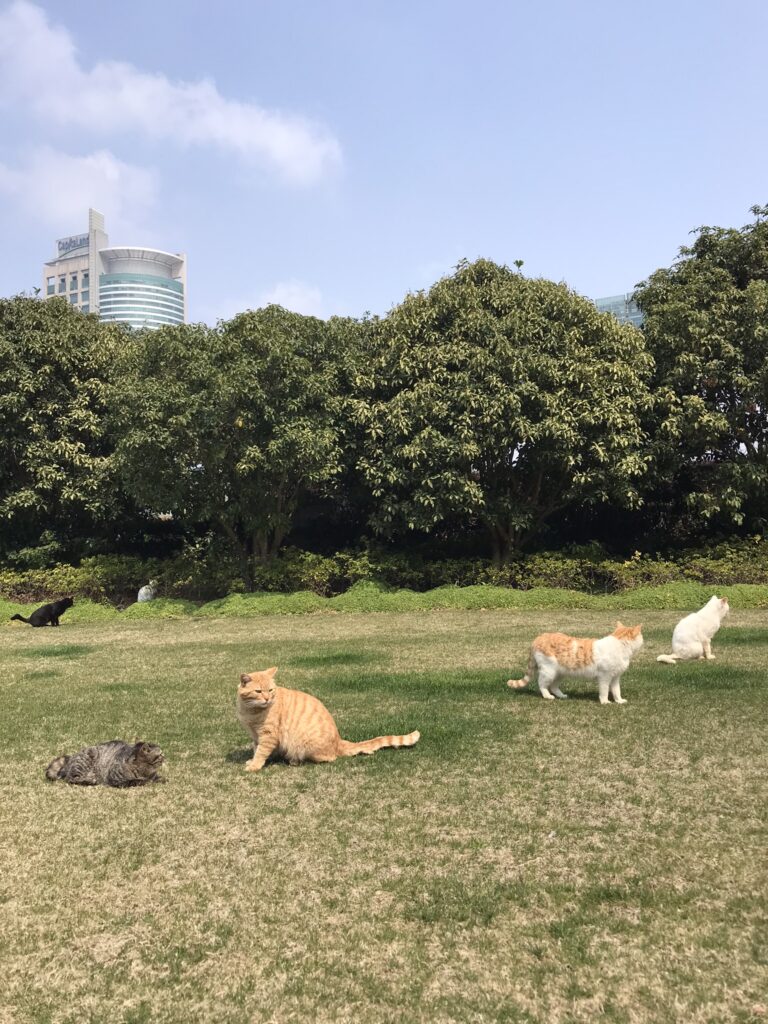
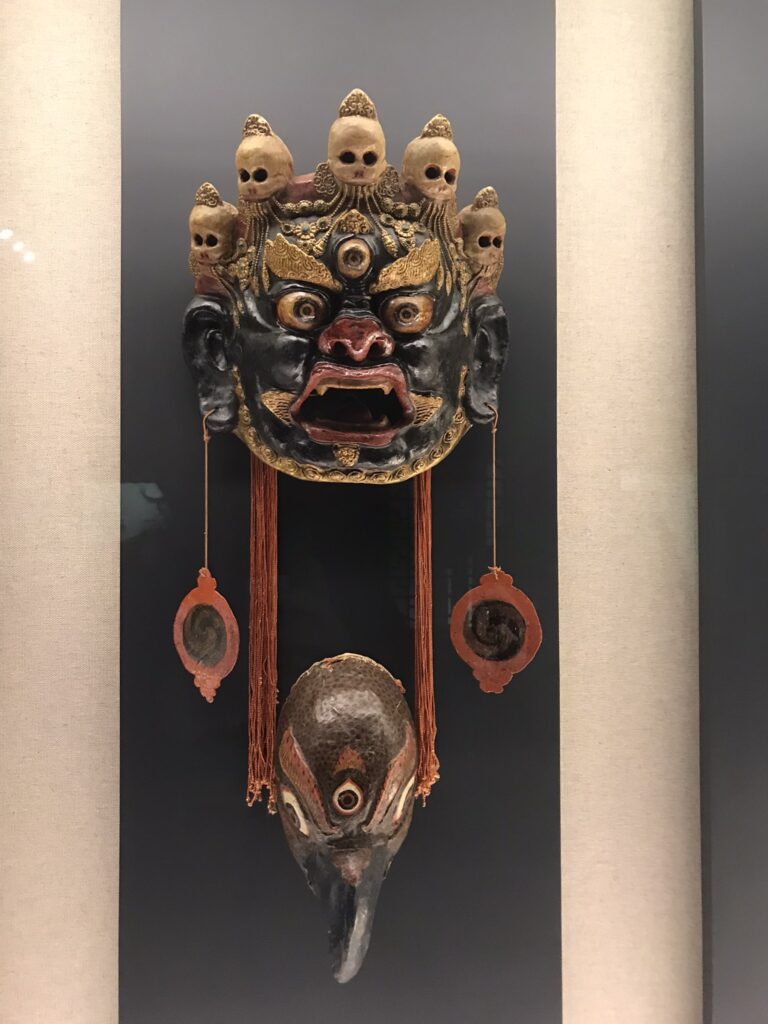
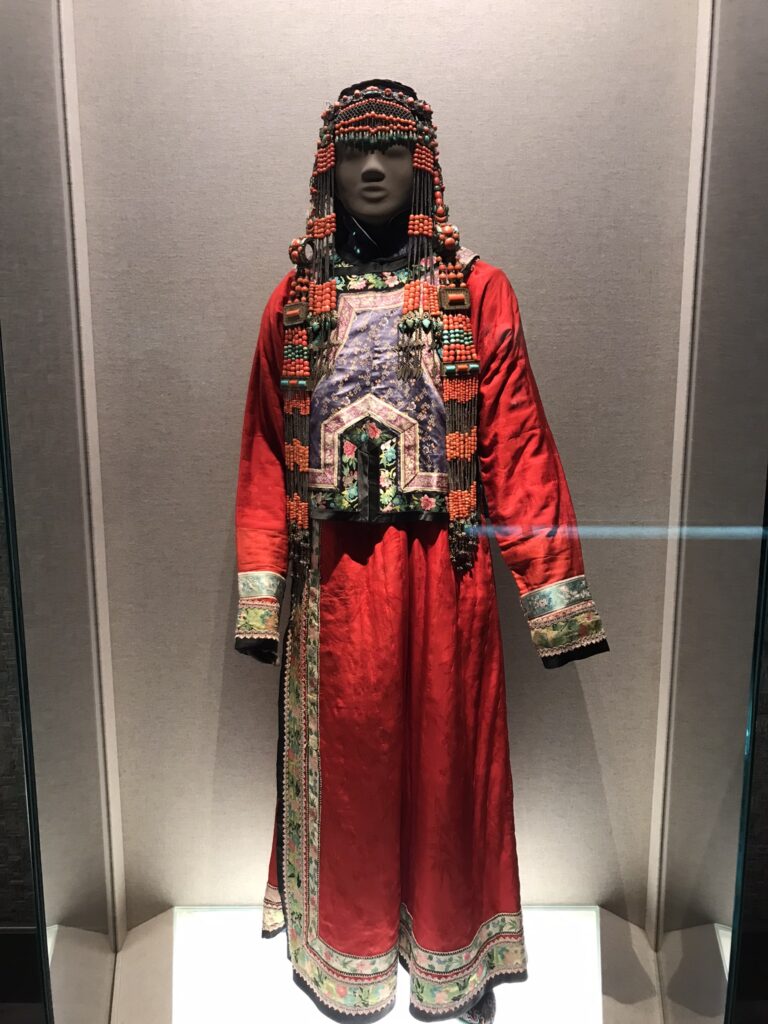
Furry felines were the star attractions outside the Shanghai Museum whilst the galleries inside contained some interesting ethnic minority artifacts
The People’s Square and adjoining People’s Park are a central focal point in the city. The People’s Park was originally a racecourse harking back to the British colonial days. Both areas are actually very large, much larger than they look on the map.
Xintiandi – a former neighbourhood of old ‘shikumen’ houses, now reincarnated as a bustling leisure area filled with fancy restaurants and trendy clothing boutiques catering towards those with cash to burn. Most of the traditional style buildings aren’t original, sadly. The main attraction for the historically inclined is the building that held the first Chinese Communist Party Conference in 1921. After a quick search, you can enter the building free of charge and amble around looking at the black-and-white photographs. The building also contains an exhibition which is mainly focused on the Long March, which took place in the 1930’s as the communists fled persecution by the Kuomintang (Republic of China) forces, escaping by walking long distances through difficult terrain. The general theme of the displays is the struggle and sacrifice of the communists. Understandably the gallery is mainly aimed at Chinese visitors rather than foreigners, and all of the information is in Chinese. Make sure you have a translation app handy if you want to understand the context.
Confucius Temple – apparently one of the most important temples in the city, however when we visited it was being renovated so we couldn’t go inside. According to our information (perhaps out-of-date) we expected the area surrounding the temple to be crammed full of street food stalls, but now it just looks like all of the surrounding buildings are boarded up and about to be demolished. This area signifies the fast pace of renovation and development within the city.
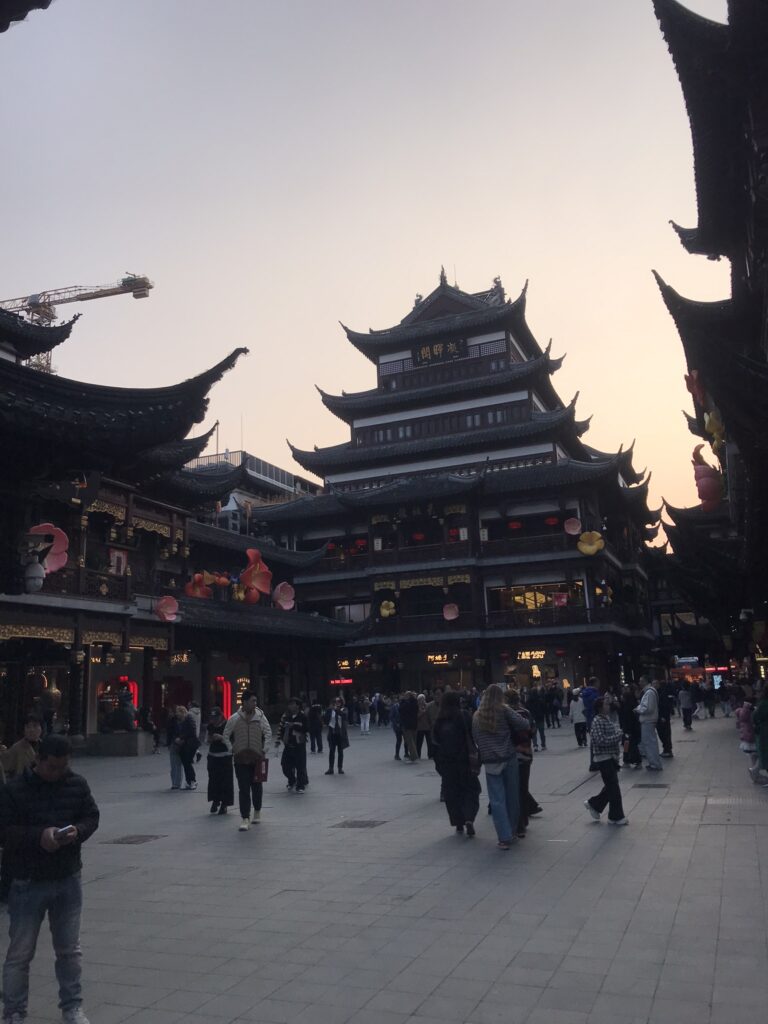
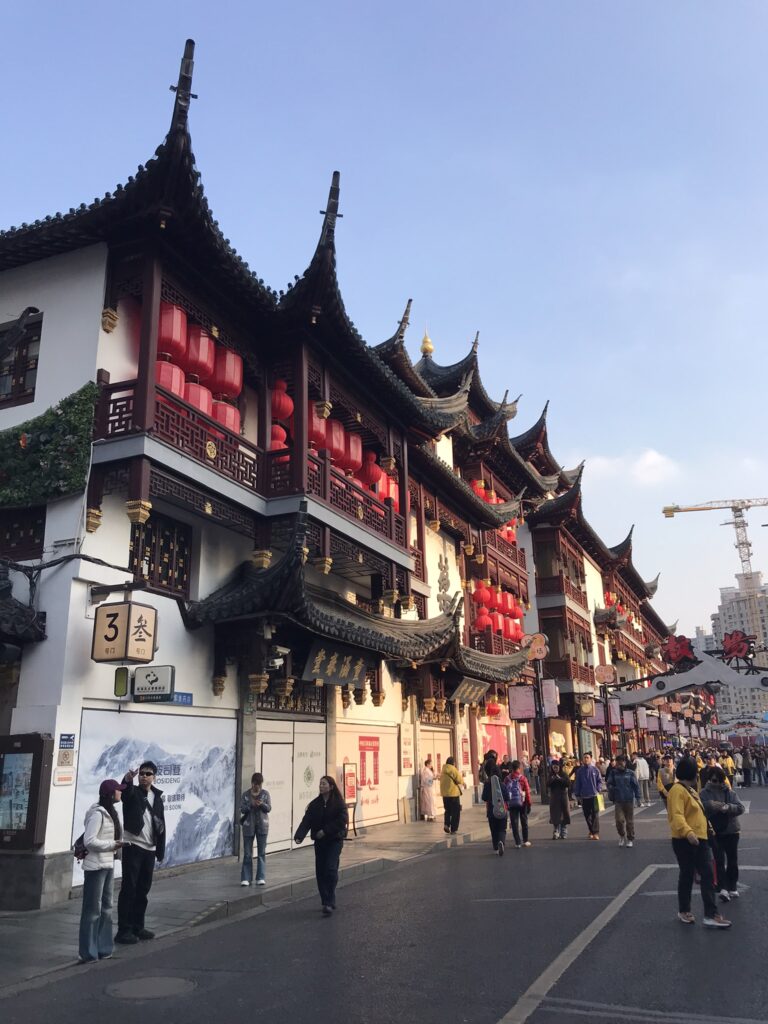
The area surrounding the Temple of the City Gods features recreated traditional Chinese architecture in a bustling shopping district
Temple of City Gods – Shanghai’s main Taoist temple. Traditionally every city in China had a Taoist shrine dedicated to the patron god of the city – this was considered very important for the prosperity of the city. Admission is free and although it’s a somewhat touristy location, the temple is still functioning. Inside you’ll spot many people bowing in all 4 cardinal directions with lit incense and leaving offerings to the various gods and deities depending on their prayer/request. For us it was interesting to see depictions of the many Taoist gods, varying in fierceness. The temple is close to Yuyuan Gardens in a bustling touristic area, which has been heavily jazzed up with picturesque traditional-style houses crammed with loads of souvenir shops.
Yuyuan Gardens – not far from the Temple of the City Gods, this 16th century traditional Chinese garden was created for the enjoyment of an imperial administrator and is one of the few attractions in Shanghai that predates the Treaty of Nanking. Filled with small courtyards and narrow walkways, the garden is generally bustling with tourists both foreign and domestic. Chinese gardens diverge in design from European ones as they place more emphasis on rockeries and natural pools rather than flowers and foliage. They favour intriguing and thought-provoking rocks and recreating the natural environment with miniature streams and rivers. It’s fascinating to consider that this garden has stood the test of time and survived intact when much of the surrounding city has been flattened by developers. Of particular interest are the two stages for dramatic performances and the terracotta roof charms. Look up to spot the myriad of horse-mounted warriors and other colourful characters on the roof. Within the garden there are plenty of pavilions and rooms with original rosewood furniture alongside ample descriptions about the uses of each building on plaques (with handy translations in English). Apparently one such room was the meeting place for the Short Sword association. Admission to the garden was 30RMB at the time of our visit.
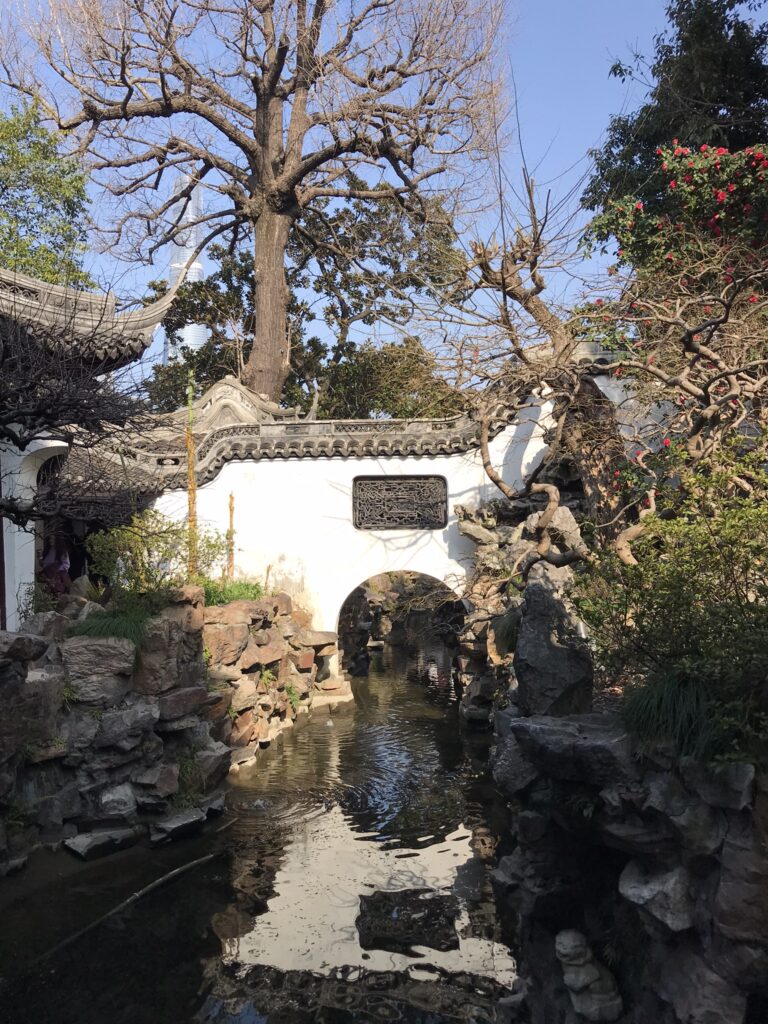
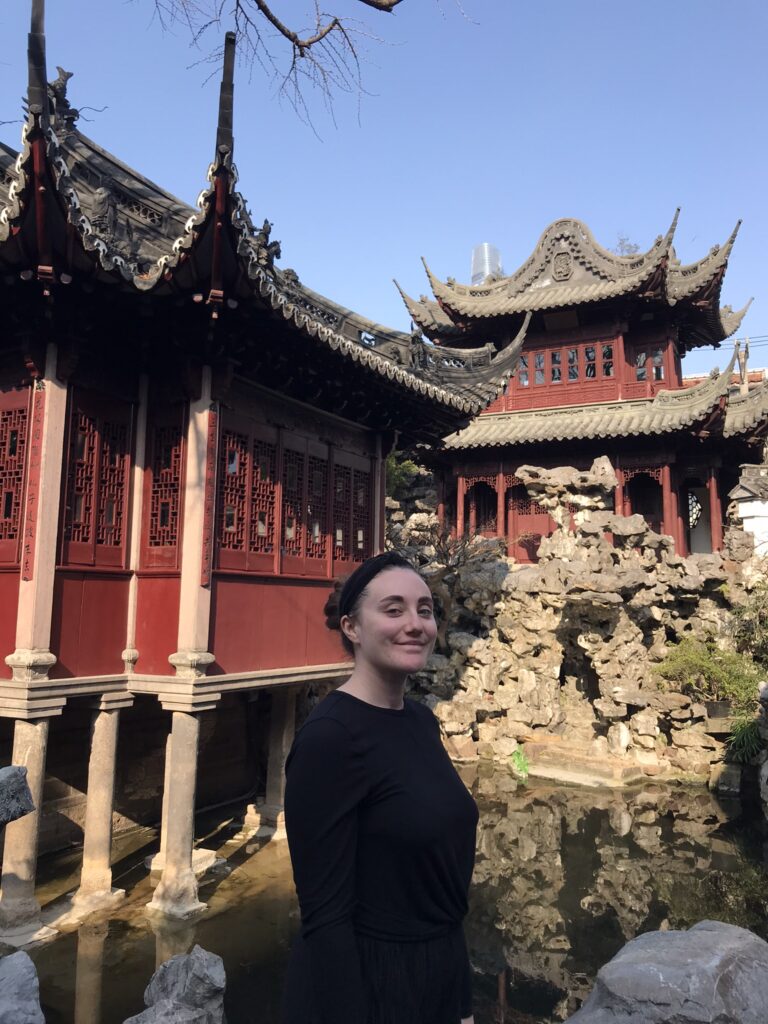
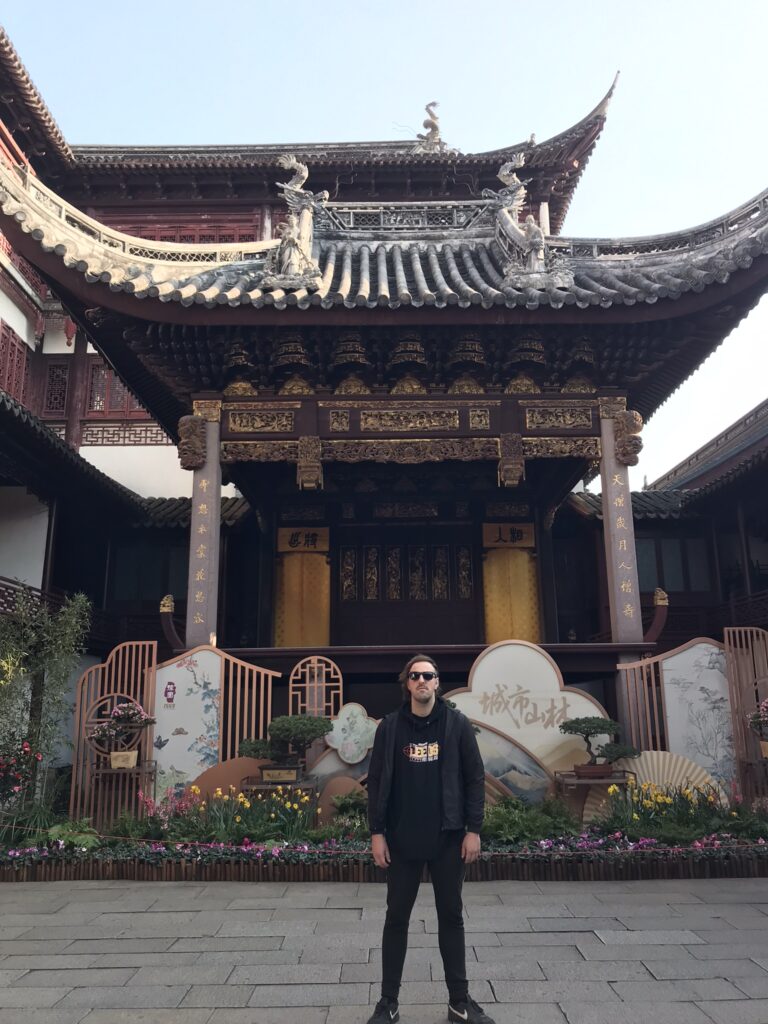
Scenes from the Yuyuan Gardens
Guruwalk Food Tour with Bill – sometimes it can feel quite isolating to travel in China, as most people you encounter aren’t able to communicate with you. Meeting Bill and trying various Shanghai delicacies with a group of likeminded individuals was a fantastic activity as it allowed us to ask questions and muse with other foreigners about travelling in China and its unique quirks. Highlights included trying various soup dumplings including duck egg, green scallion noodles, blood pudding and an unexpected surprise of a roasted quail with head and eyes intact.
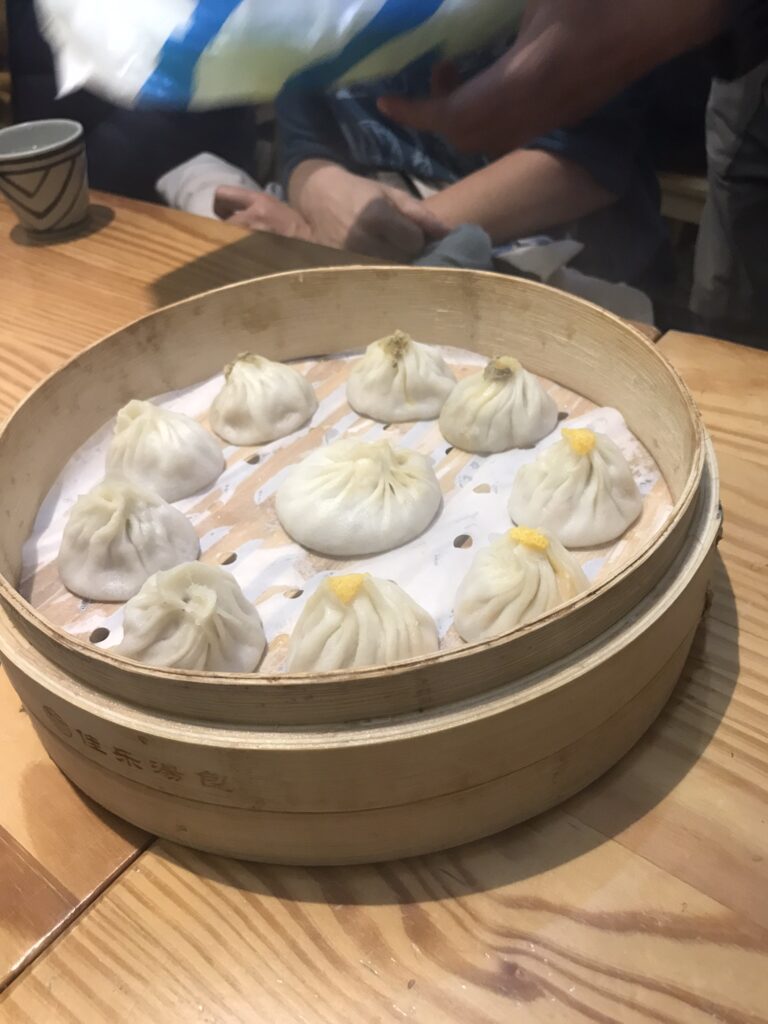
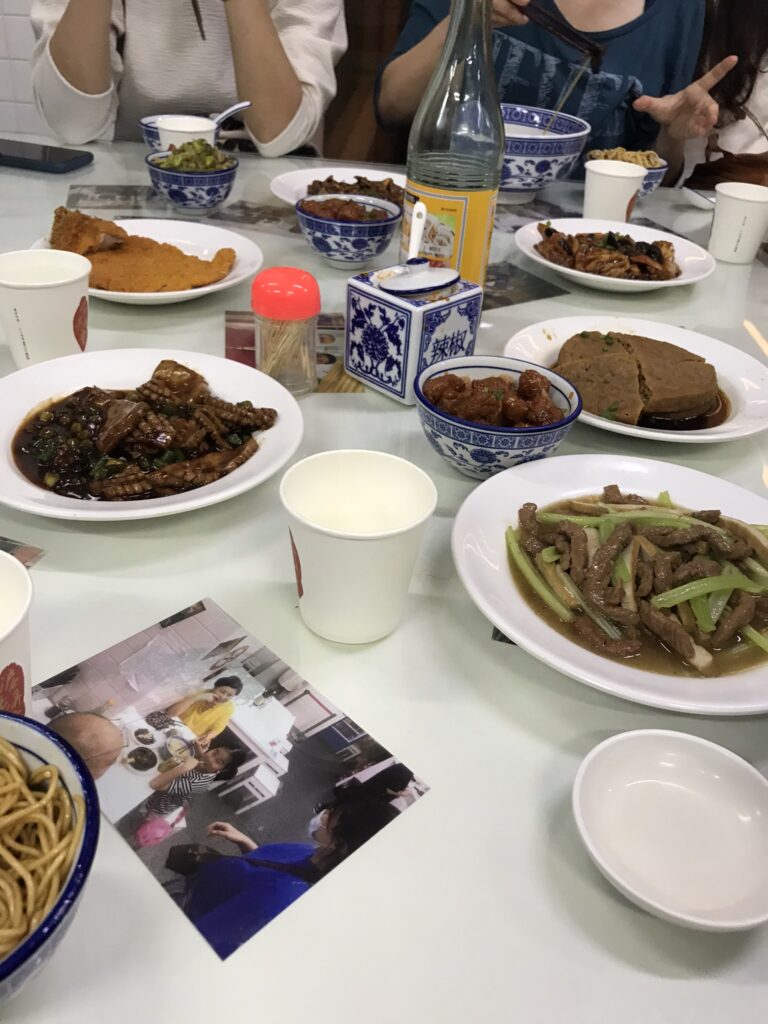
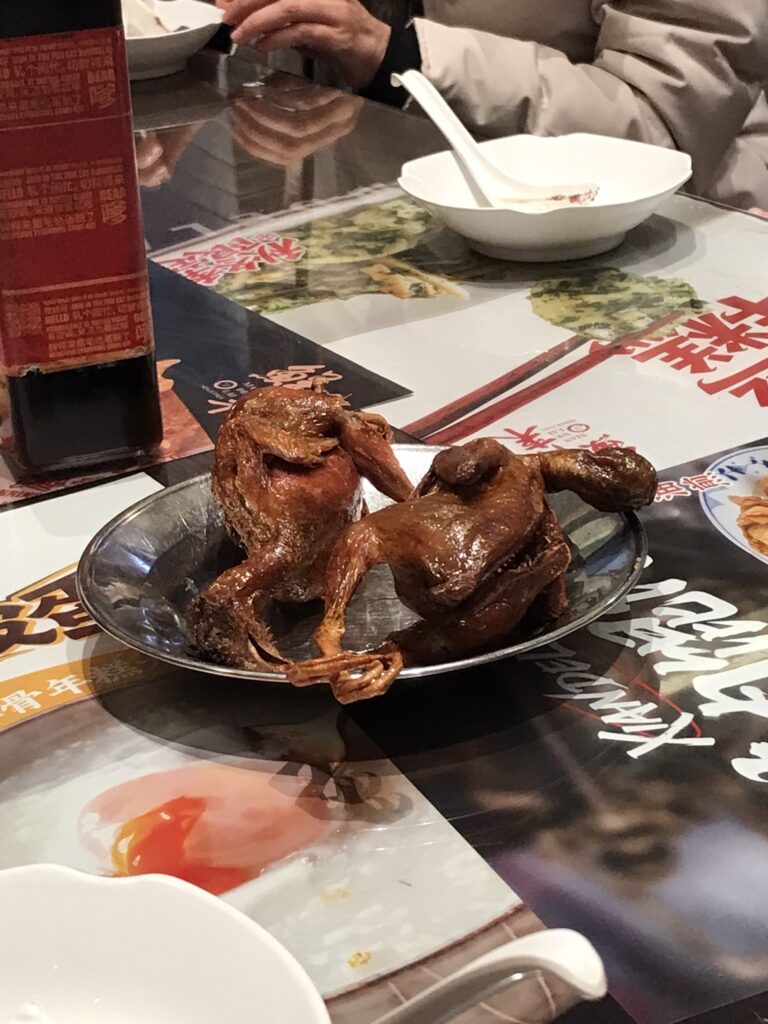
Foodies should hit up Bill on the platform Guruwalk to experience local Shangainese cuisine
The Bund – a very grand sweeping row of 52 preserved neoclassical-style buildings from the early 20th century, most of which served as hotels, merchant houses or bank buildings. The name, Bund, comes from a Hindi word meaning wharf along a muddy shore. All of these establishments were owned by and for the benefit of foreigners during the golden days of the foreign settlement. The striking neoclassical architecture is especially impressive after dark as lights cast the buildings in a soft glow. The Bund attests to the wealth of Old Shanghai and its prominence as an international trade and financial hub. Taking a stroll here is a must when in Shanghai – you can walk along the riverfront promenade looking towards ultra-modern Pudong across the river and its many colourful skyscrapers lit up after dark while also marvelling at the heritage buildings on the Bund. It’s almost like looking at the past and the future. There’s a GPSmycity self-guided walking tour of the Bund which is useful for those looking to learn more about the history and original use of each building.
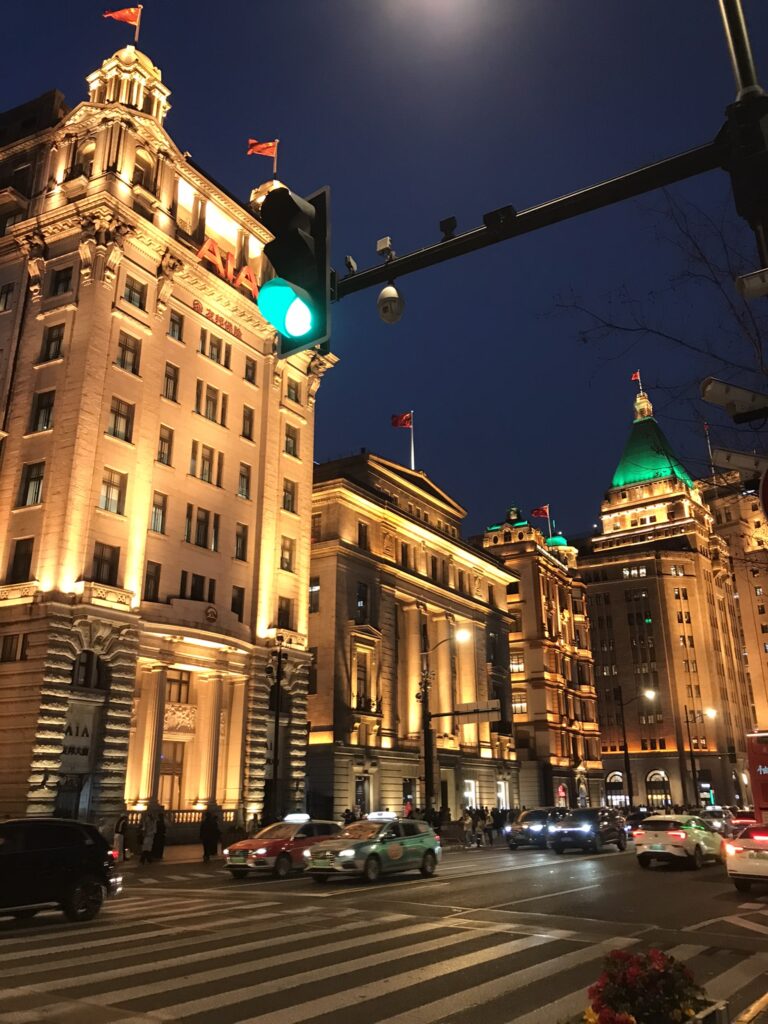
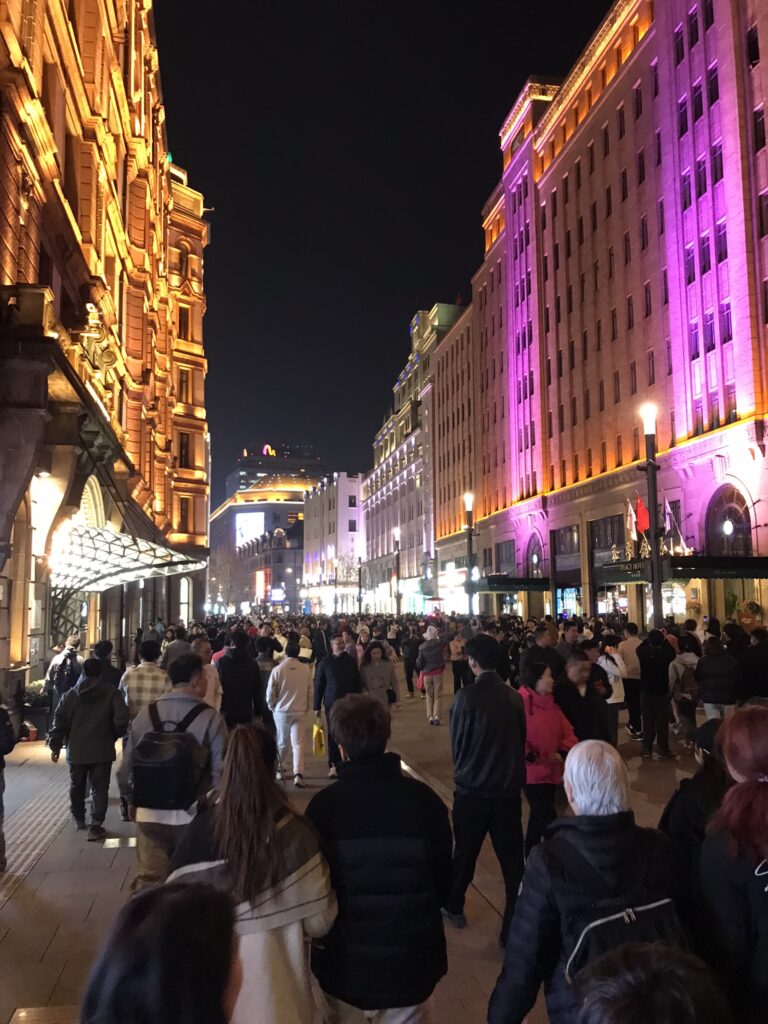
Nanjing Pedestrian street ends at the majestic Bund
Shanghai History Museum (People’s Square) – situated in an old racecourse building, this museum traces the history of the city from the various cultures that originally called the area home to migrations of other groups. There is also some incredibly old pottery on display from 4000BCE. Part of the gallery focuses on the opening of Shanghai port to foreigners after the Nanking Treaty, raising both negative and positive aspects of the foreign settlement such as new capital, trade opportunities, western education and new scientific ideas, modernisation in line with Europe, investment, telegraph services, electrical street lighting, roads, trams, factories etc. It was fascinating to learn that Chinese-owned banks didn’t emerge until the dawn of the 20th century with capital mostly in foreign hands. A large section is devoted to the rise of the Communist Party, opposition to the Kuomintang and struggle for representation in the 1920’s/30’s. One section even focuses on social issues such as gambling, gangsters, opium dens and prostitution alongside artifacts and photographs from the time. The brutal Japanese occupation of the city is also covered in depth. Don’t miss the rooftop terrace for a breath of fresh air and views over People’s Square at the end of the exhibition. Entry is free and English explanations are plentiful. I highly recommend this museum for all first-time visitors to the city – don’t get it confused with the Shanghai Museum which is more of an art gallery!
Nanjing Road Pedestrian Street – the bustling heart of Old Shanghai leading from the Bund, this ultra-modern and cosmopolitan thoroughfare is super busy at all times of the day. Head here to experience the essence of modern Shanghai.
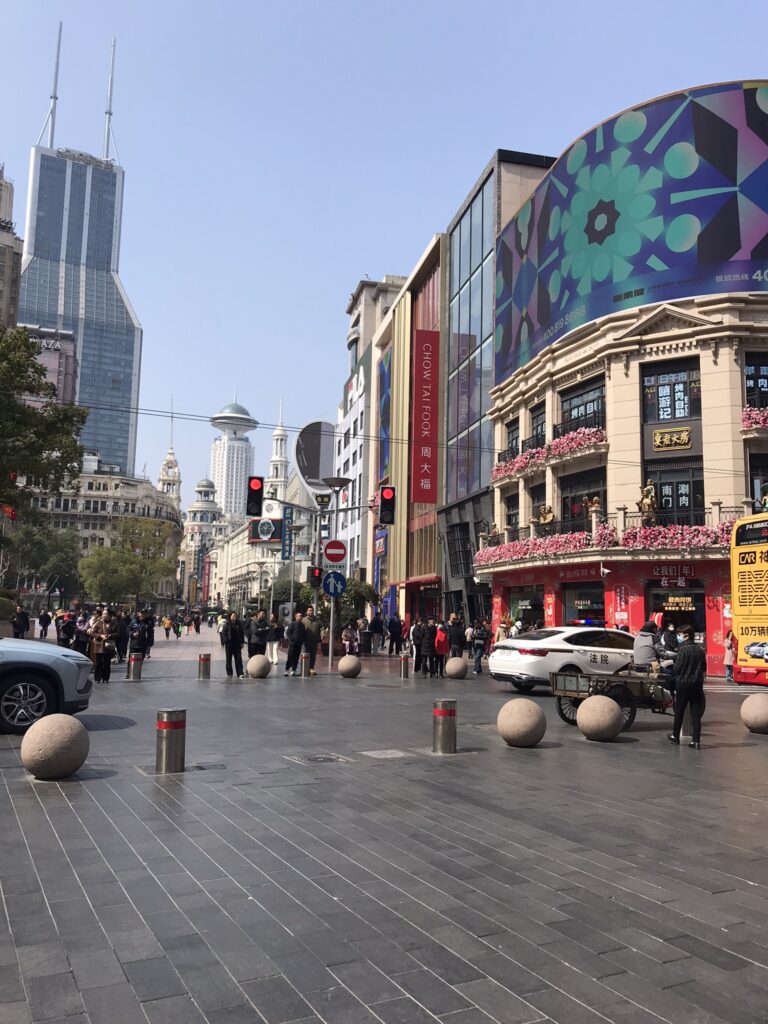
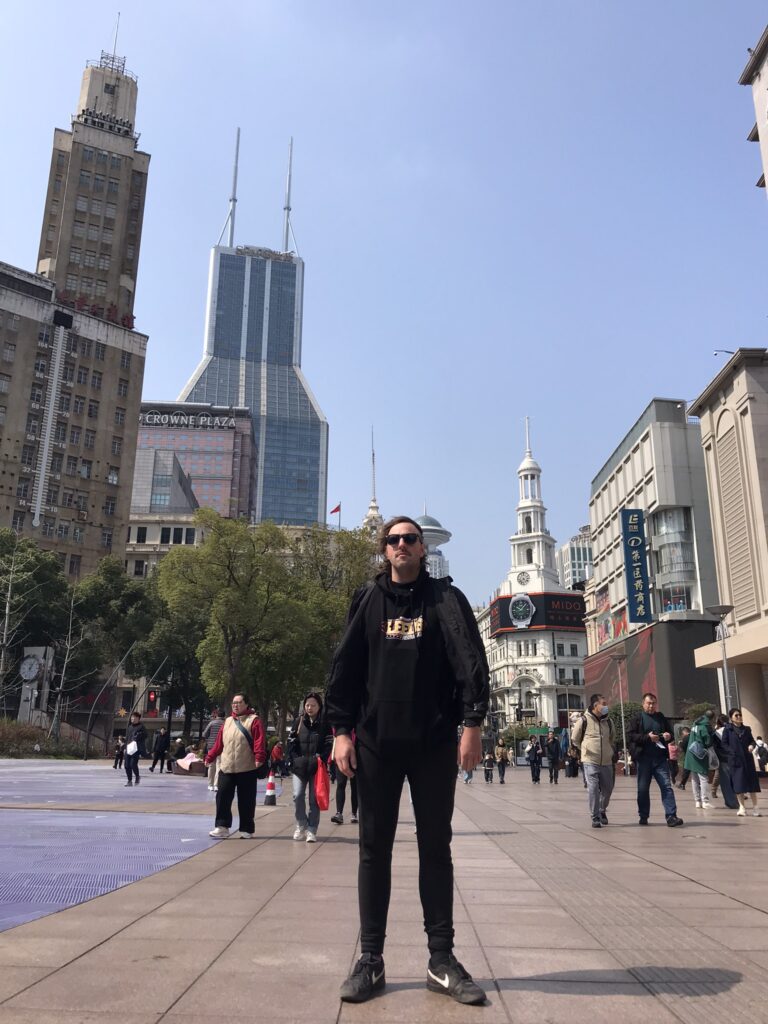
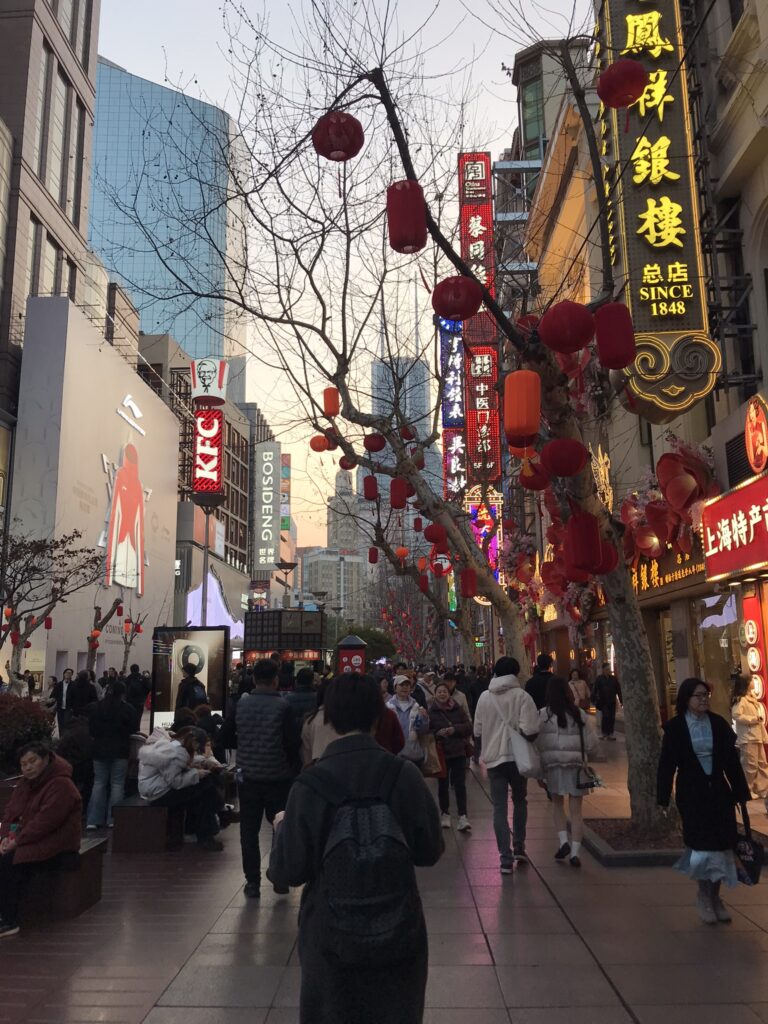
A visit to Shanghai isn’t complete without a walk along Nanjing Road
China Art Museum – although this art gallery is slightly further from the center of the city than others, we picked this one because firstly it showcases only Chinese works of art (unlike some other galleries with their mainly European/Van Gogh exhibitions) and also because it’s free to visit. The gallery is housed alongside an architectural masterpiece called the China Pavillion Building which was originally commissioned for Expo 2010 (a major world expo). Beyond the iconic building design, inside are many different galleries exploring different modern art and design mediums such as lamps, tableware, clothing, a robotic band, high-tech cars, a VR section and a large collection of monumental metal sculptures and ethnic minority sculptures. This place is absolutely huge with seemingly endless galleries to explore. Well worth a visit if you have time!
Tianzifang – a touristic alleyway complex which is way more authentic than Xintiandi in terms of small community vibe and heritage buildings. The area is concentrated around lanes 220 and 248, which are north-south running narrow alleyways with touristy shops, cafes and trendy boutique clothing shops. The lanes all link together with narrow side passageways. Traversing this bohemian artsy neighbourhood is quite atmospheric, it almost feels like stepping back in time. As opposed to Xintiandi, local residents still live within this area. The French Concession is right on the doorstep so visiting both makes sense. Bear in mind that crowds can be an issue at weekends.
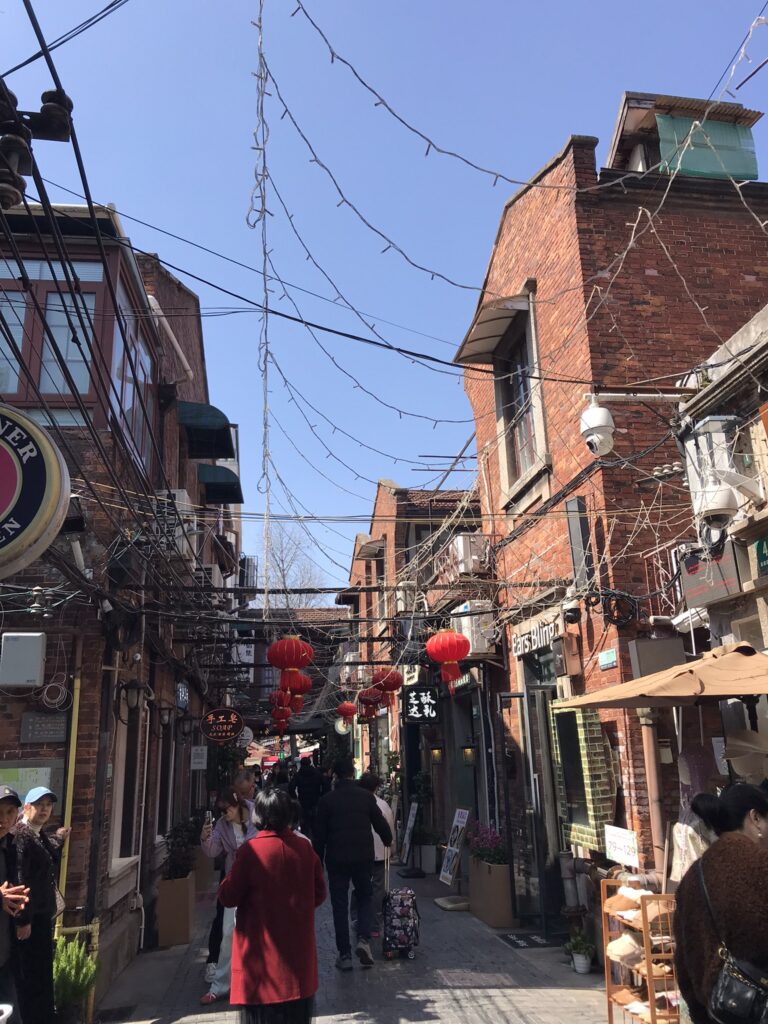
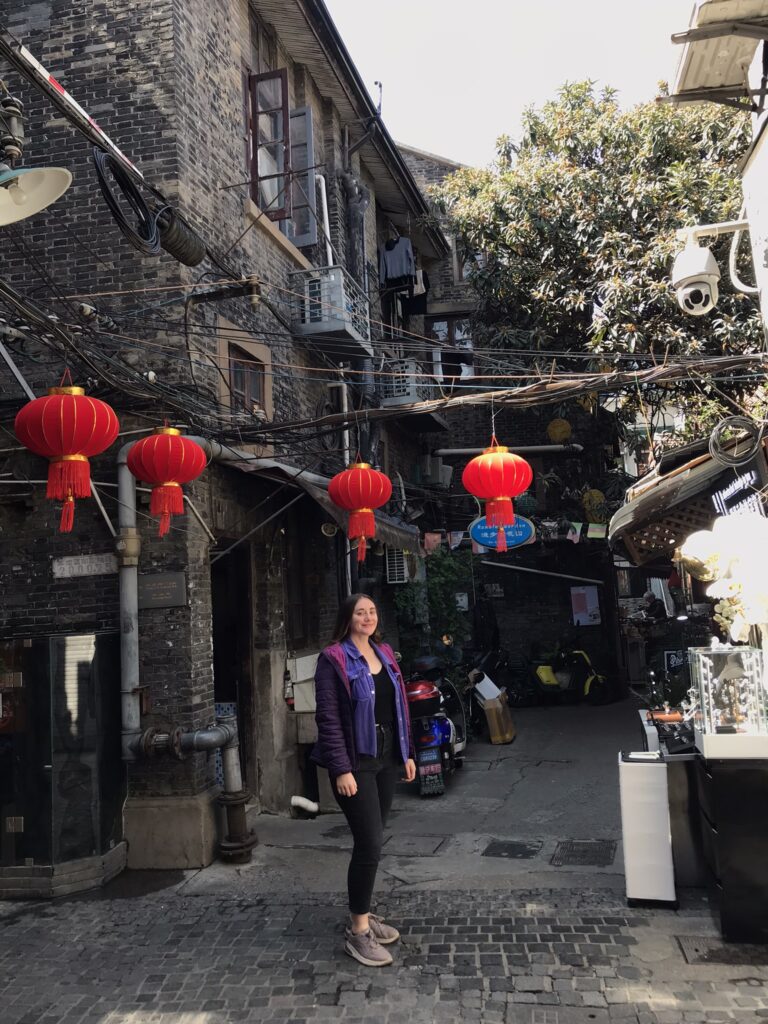
Tianzifang was much better than Xintiandi in our humble opinion
French Concession – the former French foreign settlement was a little disappointing for us. We expected streets stacked with French-style mansions and a European feel to the neighbourhood. However we encountered mostly new developments, flashy shopping malls and high rises with few remnants of the colonial past. The heritage buildings are spaced quite far apart which makes walking between them quite the trek: Sinan Mansions, Cathay Theatre, St Peters Church, Courthouse and Police Station are the main colonial highlights. Information about each building is hard to come by; we even asked at the tourist information center for a map of the French Concession and apparently one doesn’t exist! It may be beneficial to join a Guruwalk tour here as information plaques are non-existent. Fuxing Park is a great place to rest your legs mid-walk around the French Concession.
The best surviving examples of French architecture are the Sinan Mansions, a series of 55 restored French-style detached houses from the early 20th century. This complex includes Zhou Enlai (Chairman Mao’s right-hand-man)‘s former residence. This building was also the Shanghai Communist Party headquarters for 10 months between 1946-1947, a transitional period when the Kuomintang were cracking down on communist activities. Visitors can now enter the house free of charge to see the building as it would’ve been during this period. As well as the historical architecture, there are also communist remnants including a printing press room which was used for disseminating seditious information about the underhanded tactics of the Kuomintang, dorm rooms for female and male party members and an exhibit about the life and times of Zhou Enlai. Sadly, information is solely in Chinese so be prepared to translate.
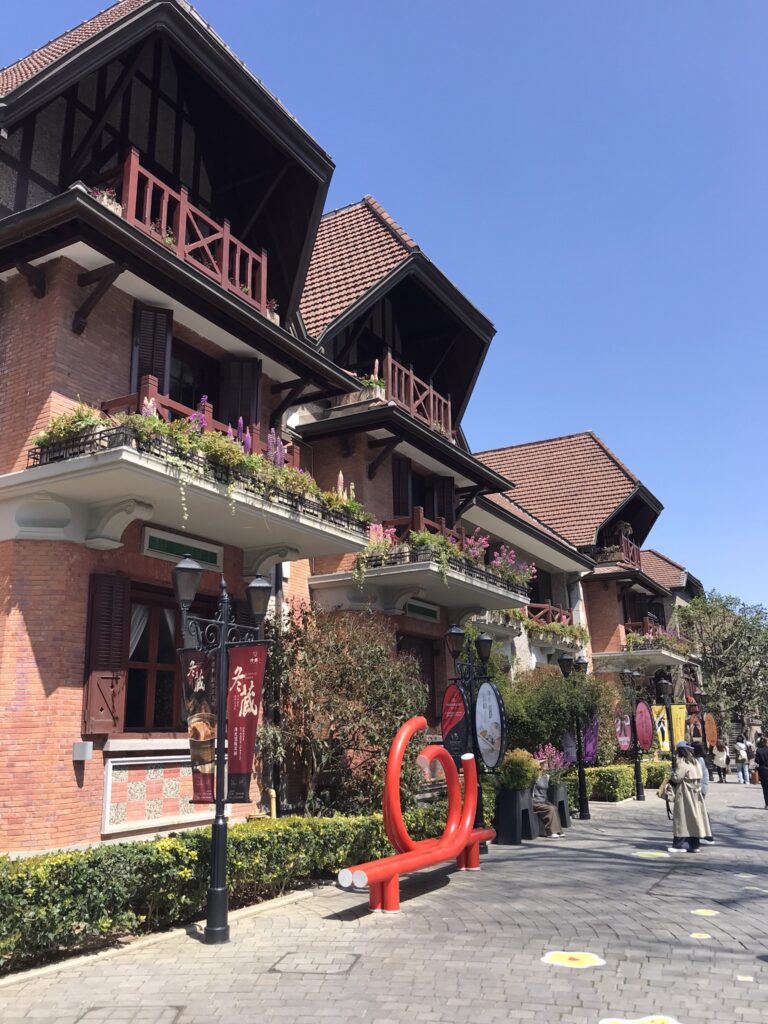
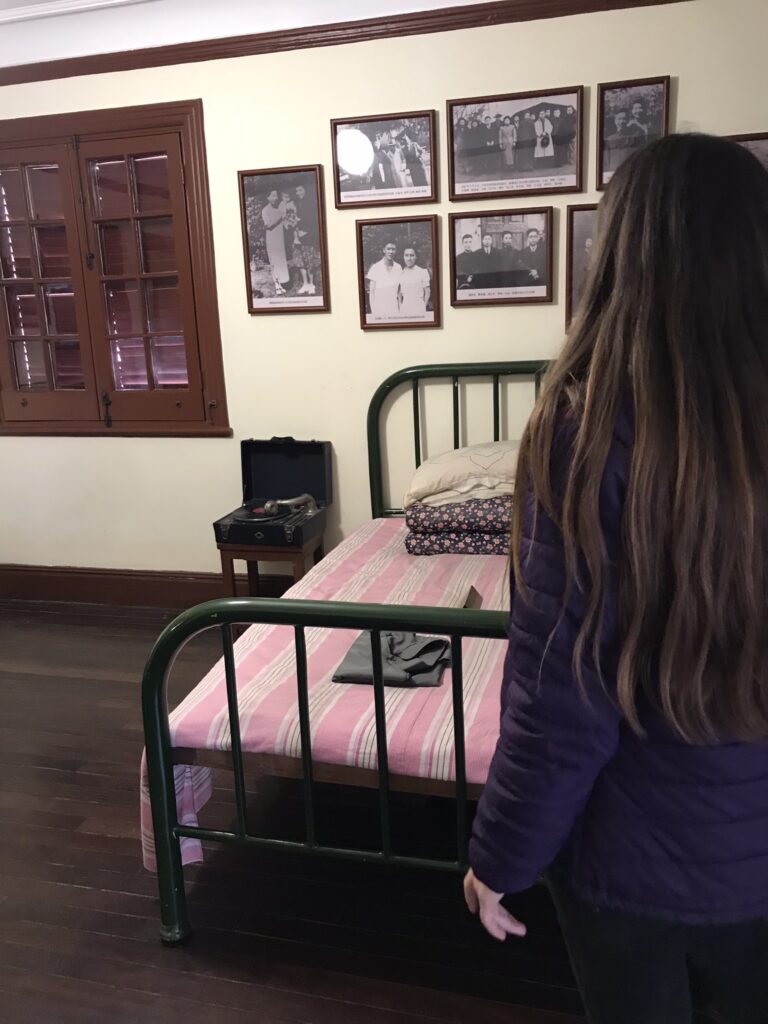
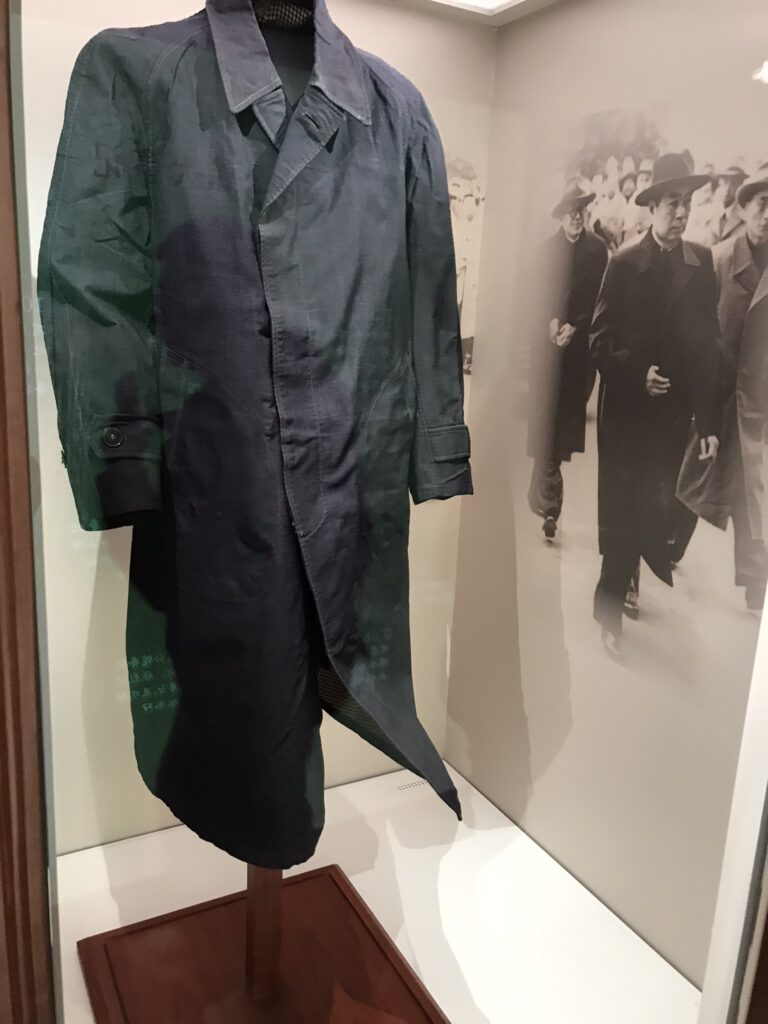
Sinan Mansions and the former residence of Zhou Enlai, a pivotal figure in the early CPC, are both worth checking out in the French Concession
Hangzhou
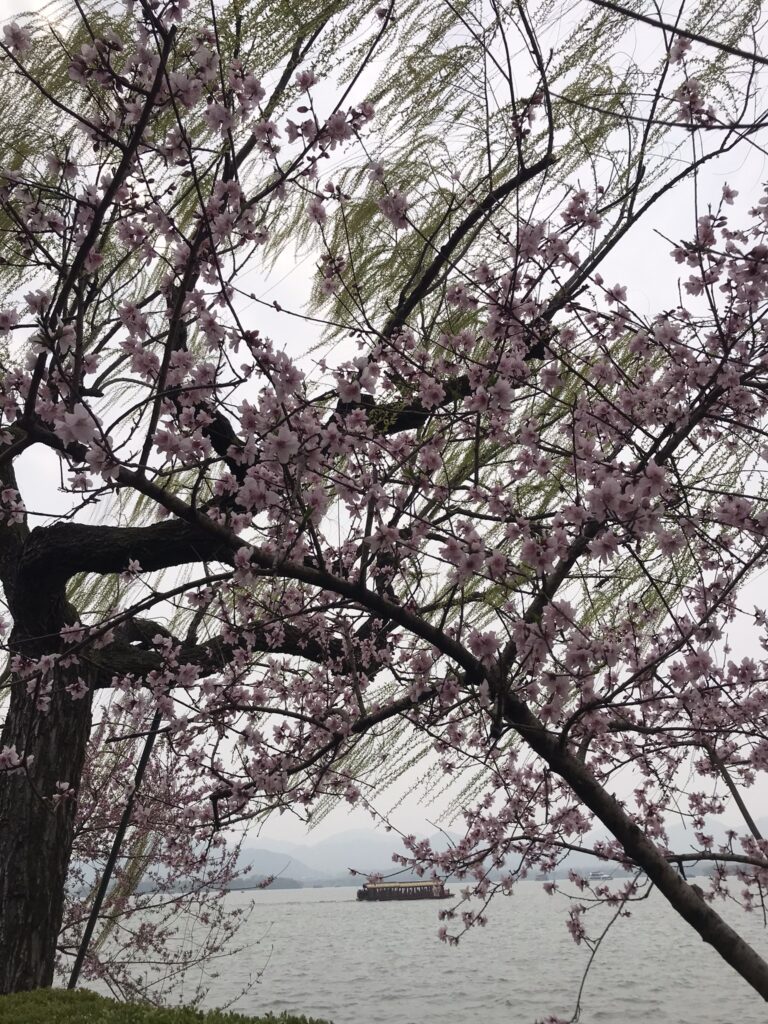
An unexpected gem largely ignored by international tourists, Hangzhou is a super underrated destination with heaps of imperial history, historic temples and unique local specialities. Located a relatively short distance from Shanghai, this former walled city is historic China at its finest with bucketloads of history, culture and beautiful scenery. The touristic focal point of the city is the West Lake, a UNESCO World Heritage Site, which is located to the west of the modern city, consisting of historic walkways, gardens, temples and pavilions.
Hangzhou is one of seven ancient capitals within China alongside more well-known cities such as Nanjing, Xi’an and Beijing. Hangzhou claimed the title of capital twice, firstly during the 10th century as the capital of the Wu-Yue kingdom and then later as capital of the Southern Song Dynasty after the split with the northern territory. Domestic tourists flock to the West Lake and its many scenic areas to meander around the lakeside gardens, muse about the 10 whimsically named scenic views, snap shots of the weeping willows, elegant bridges, flowering magnolias and sweeping views of the mist-covered West Lake. According to historical records, the recreational areas around the lake were originally created around the 8th century but really came to prominence as a place of leisure for the emperor and imperial court during the Southern Song Dynasty. The lake was also the venue for dragon boat races – a favoured imperial past-time. Most of the wooden pavilions and bridges standing today are modern recreations meant to evoke past splendour.
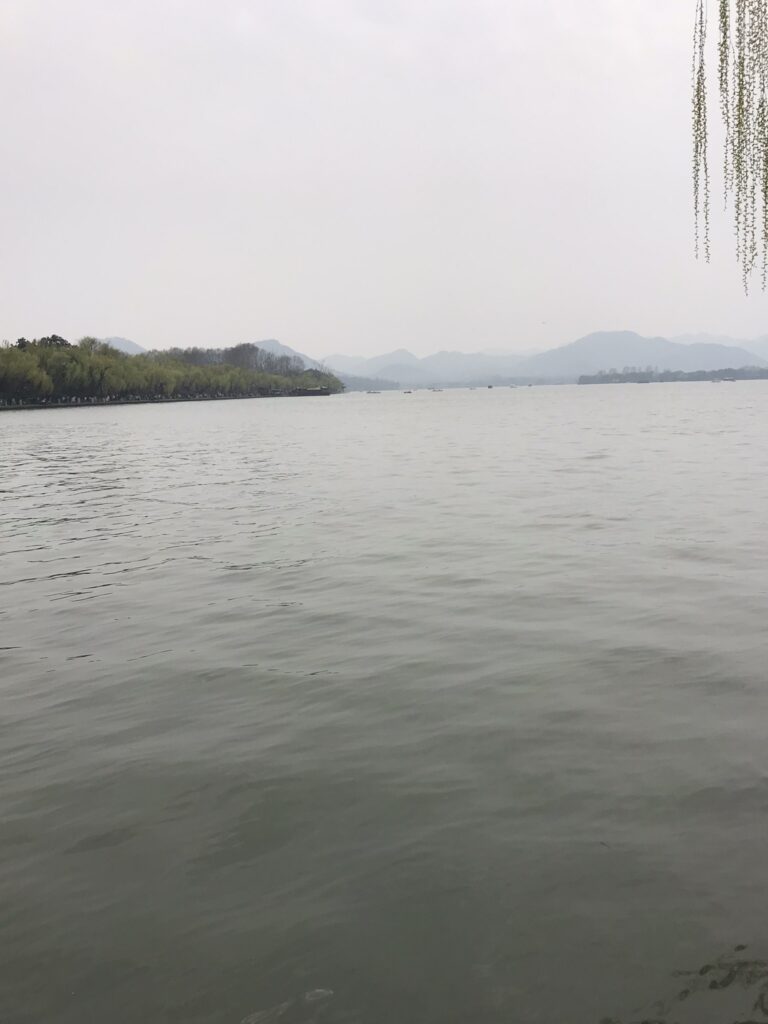
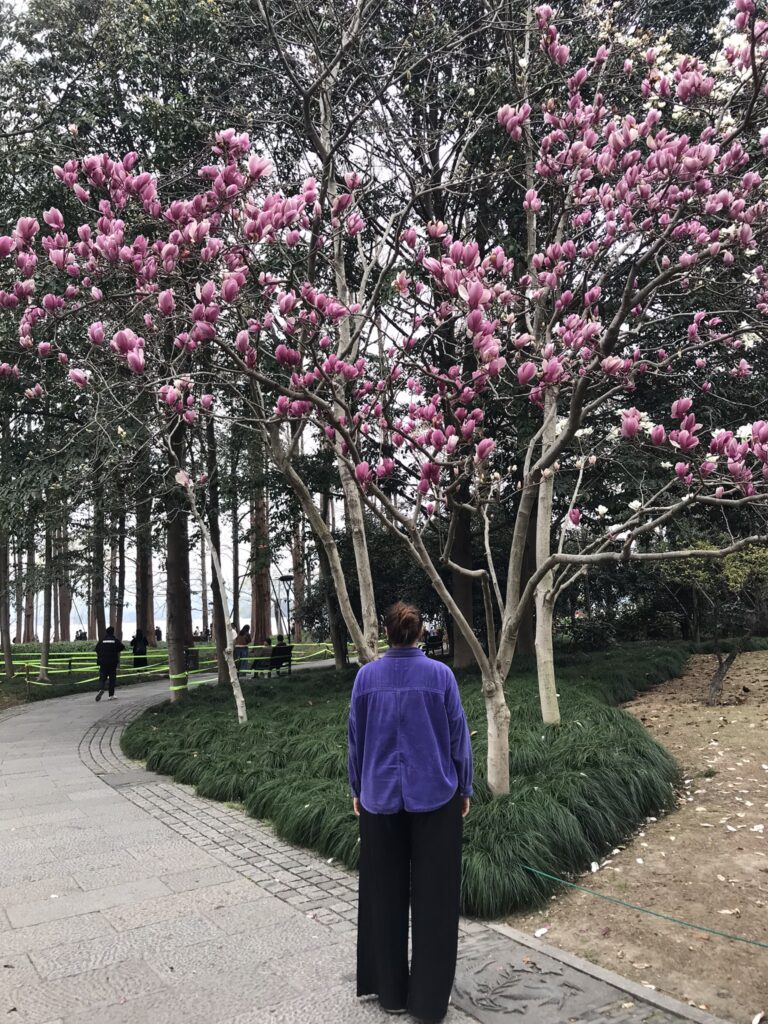
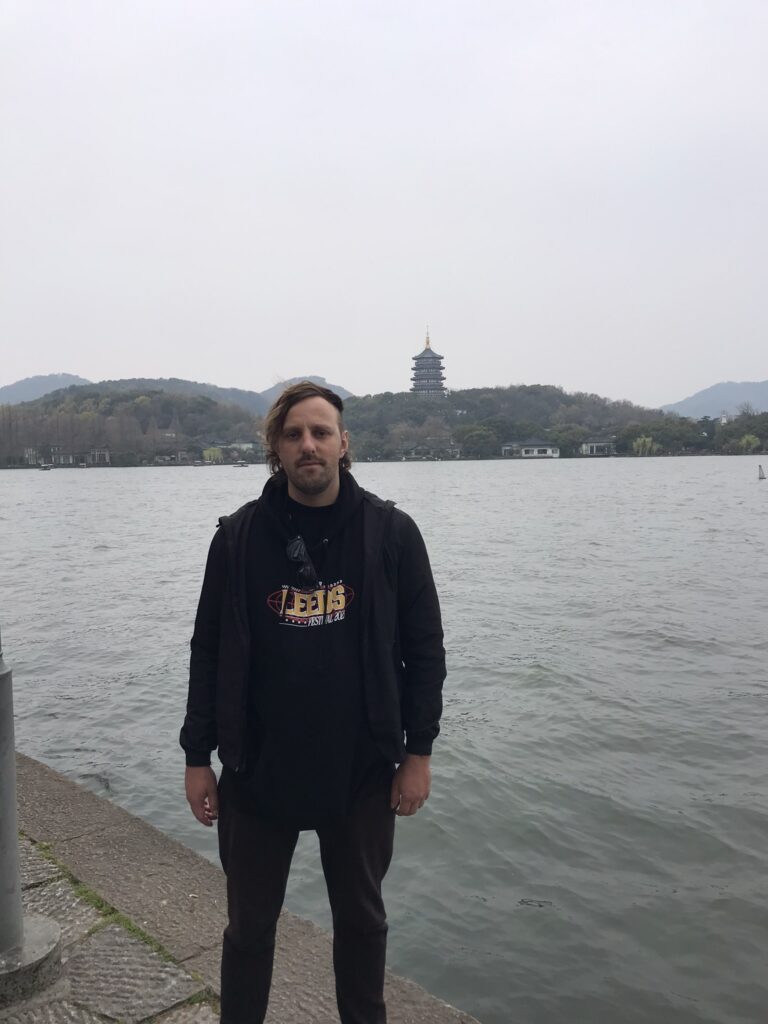
Boating, admiring the blossoming flowers and ambling along the lakeside paths are top activities for visitors to the West Lake
Hangzhou is an especially popular weekend destination for Shanghai residents as the train journey is relatively short. Bear in mind that the city and particularly the West Lake area can get very busy at weekends; crowds tend to converge on the eastern side of West Lake, especially along the route to Leifeng Pagoda. Hangzhou city is on the eastern side of the lake, meaning that this side is more accessible with metro stations nearby. The west side of the lake is not accessible by metro, however there are regular buses and taxis hanging around and it’s also possible to walk for those who don’t mind an extended stroll.
As well as its imperial history, Hangzhou is famous throughout China for producing Longjin tea. Buddhist monks harvested tea in the temples surrounding nearby Longjin village, hence the name. Hangzhou has a long history of growing tea, as documented by Lu Yu in the Classics of Tea – a literary piece dedicated to all things tea which was written in the 8th century during the Tang Dynasty. Lu Yu meticulously researched tea processes for 20 years before writing a massive treatise about growing, preparation and consumption, even including information about tea growing regions. Longjin tea is renowned throughout China as a sweet and fresh green tea. To the west of the lake are many tea plantations which visitors can enter and walk through freely. At points the plantations extend right up to the road. A visit to the National Museum of Tea in this area is a must for any tea affectionados.
Another tourist hotspot of Hangzhou is Lingyin Temple, an ancient Buddhist temple further inland to the west side of the lake. This area can get incredibly clogged with tourists, there’s even a police blockade between 9am and 5pm preventing taxis from dropping off visitors directly at the temple. Recently, the rules have changed and visitors to the temple now have to book an entry slot in advance on WeChat in order to deal with the increased traffic and crowd management measures. Apart from the Lingyin Temple, the west side of the lake seemed to be slightly less crowded with plenty of pretty scenic areas and lakeside paths to follow, punctuated by brightly coloured pavilions and quaint bridges.
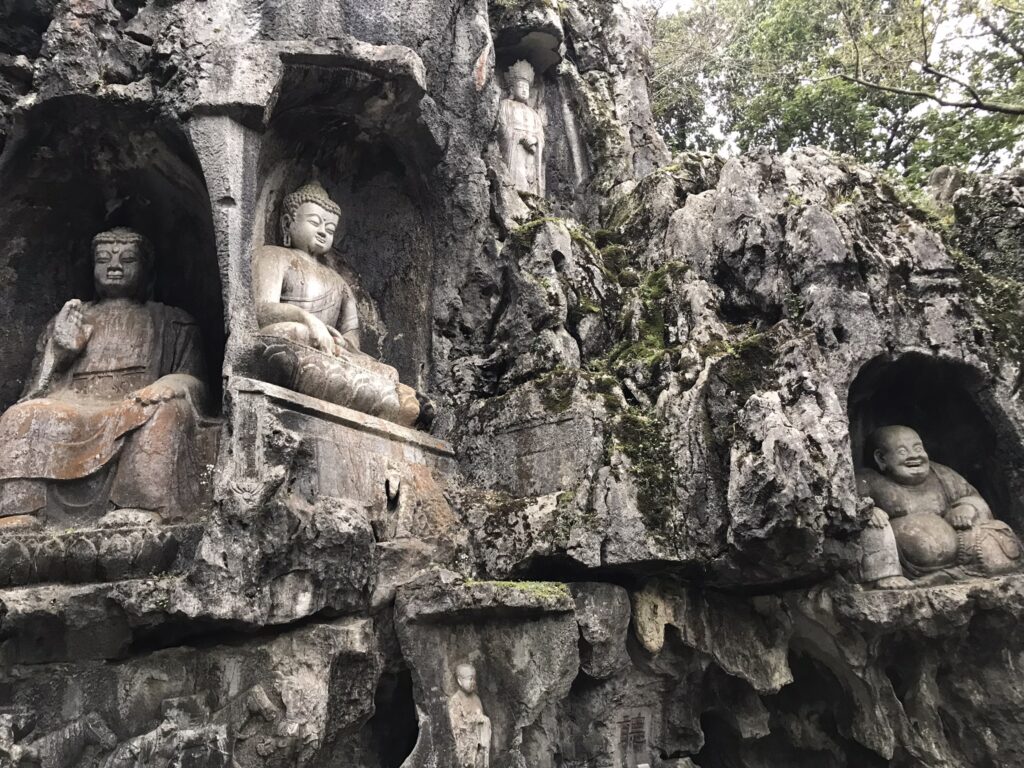
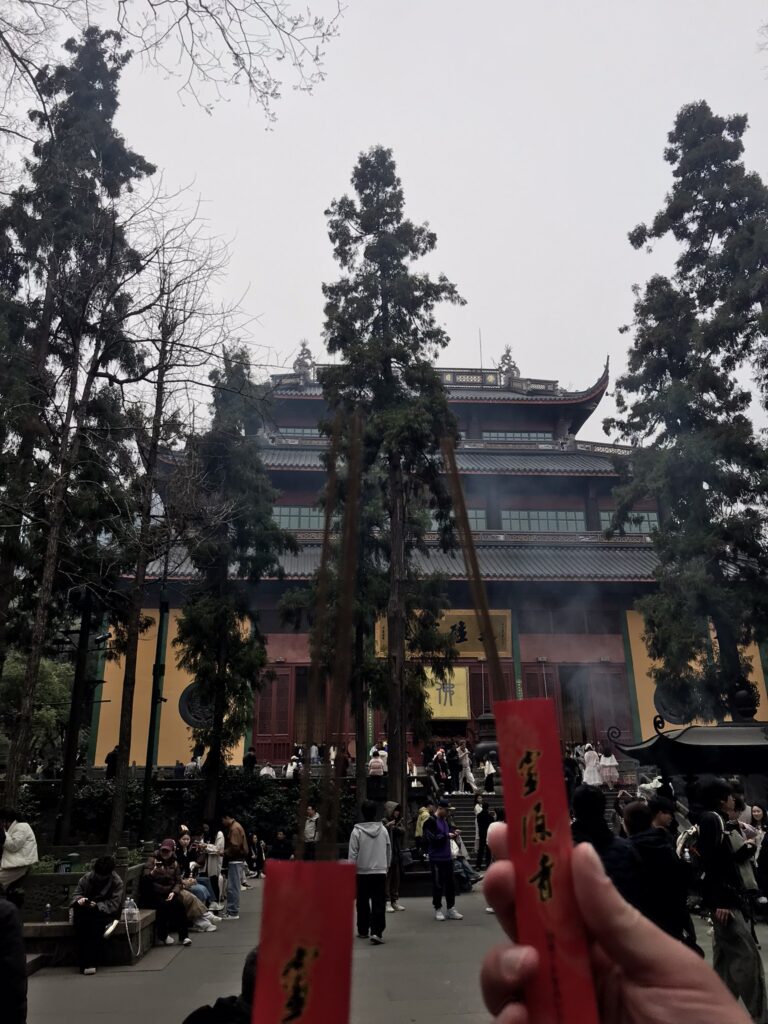
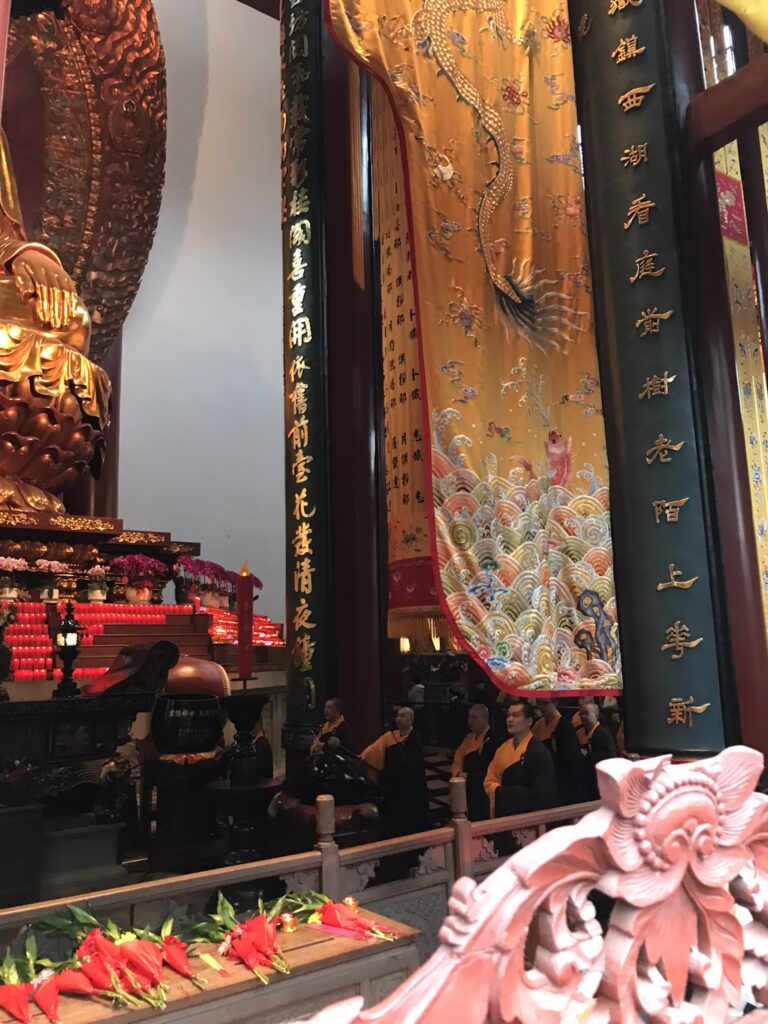
Expect rituals involving incense and real Buddhist monks at Lingyin Temples
There are two interesting man-made causeways cutting through the middle of the lake – both are decorated with twinkling lights which make for an atmospheric feel after dark and provide great views of the bright city in the foreground and Leifeng Pagoda and Chenchung shining like bright stars in the dark hills. A popular activity for visitors is attending the West Lake show; although we didn’t do this we did sneak a peek and it looked pretty impressive with dancers emerging from the lake. All in all, we found that there was so much to see and do in Hangzhou. We felt like we could’ve spent at least 4 days looking around here rather than the two we’d planned for.
Accommodation
Hangzhou Qiyue Westlake Culture Hotel – one of our favourite hotels in China (once you get past the slightly dodgy entrance). The hotel boasts excellent soundproofing (amen!), spacious rooms, comfy beds and the added quirk of having its own indoor stone bridge, which is a bit bizarre as it’s on the 4th floor of a multi-use block. It’s right next to the West Lake, so close in fact you can even see the lake from the rooftop seating area. The Chinese buffet breakfast didn’t disappoint either. It’s a winner at a ridiculously cheap price including breakfast!
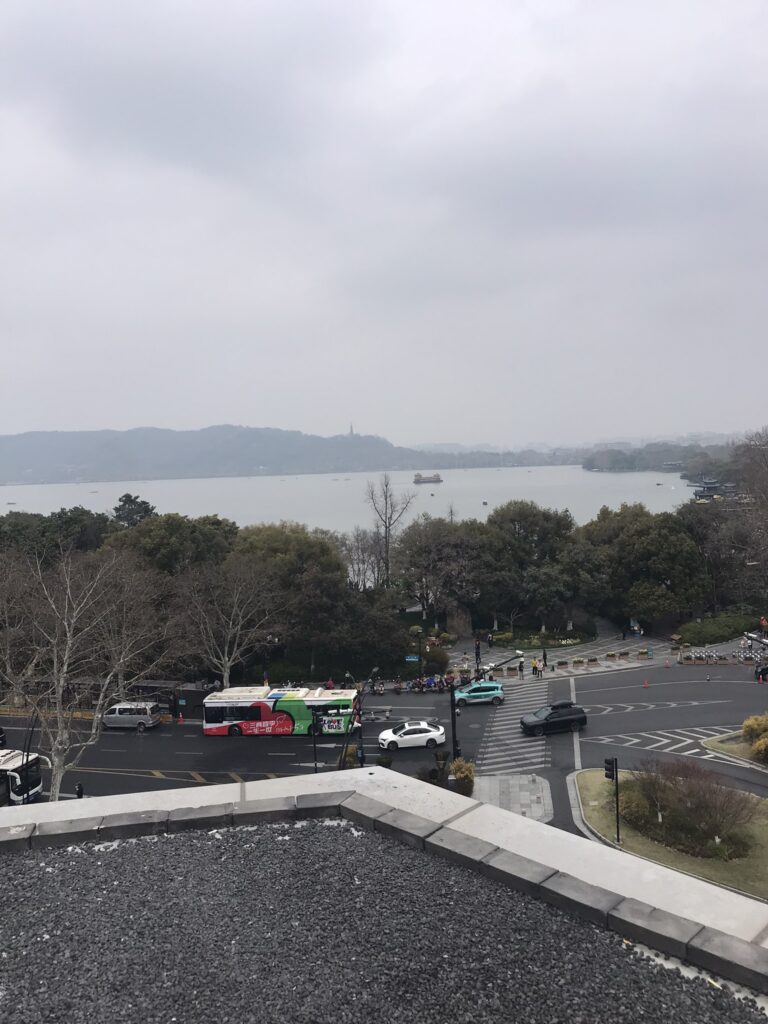
View of West Lake from the rooftop of Hangzhou Qiyue Westlake Culture Hotel
Foodie Places
Katsuya – situated in a shopping mall close to our hotel, this place offers the full Japanese experience at a fraction of the cost it would be in Japan. With fab Japanese-quality katsudon (katsu bowls), the meal deal with pork katsu, cabbage, rice and miso soup was excellent value here and even came with fried eggplant as a side. A cute quirk is that the staff say arigato gosaimass and call out when you leave, exactly like in Japan. An ideal place to fill up with a balanced meal at a cheap price. An added bonus is that the tea is free too!
Xinbailu – an incredibly popular Zhejiang/Jiangsu fusion restaurant which is also located in the shopping mall close to our hotel. There always seemed to be a queue when we visited, however there was a shorter queue for the dinner service than lunch and we didn’t mind waiting. This is a great place to try Hangzhou classics like fatty dongpo pork (very tasty but mostly consists of a layer of gelatinous fat, Dan claims the texture was similar to creme caramel), fish with vinegar sauce (we didn’t realise that the fish was in fact a whole fish and not just a fillet, oops) and ‘lions mane’ (pork meatballs in broth). We ended up ordering a feast of different dishes. When you arrive you have to go to the counter and get a ticket with your number in order to queue up – keep an eye on the screen as your number will appear when it’s your turn to enter the restaurant. Orders are placed via Alipay, which translates the menu into English.
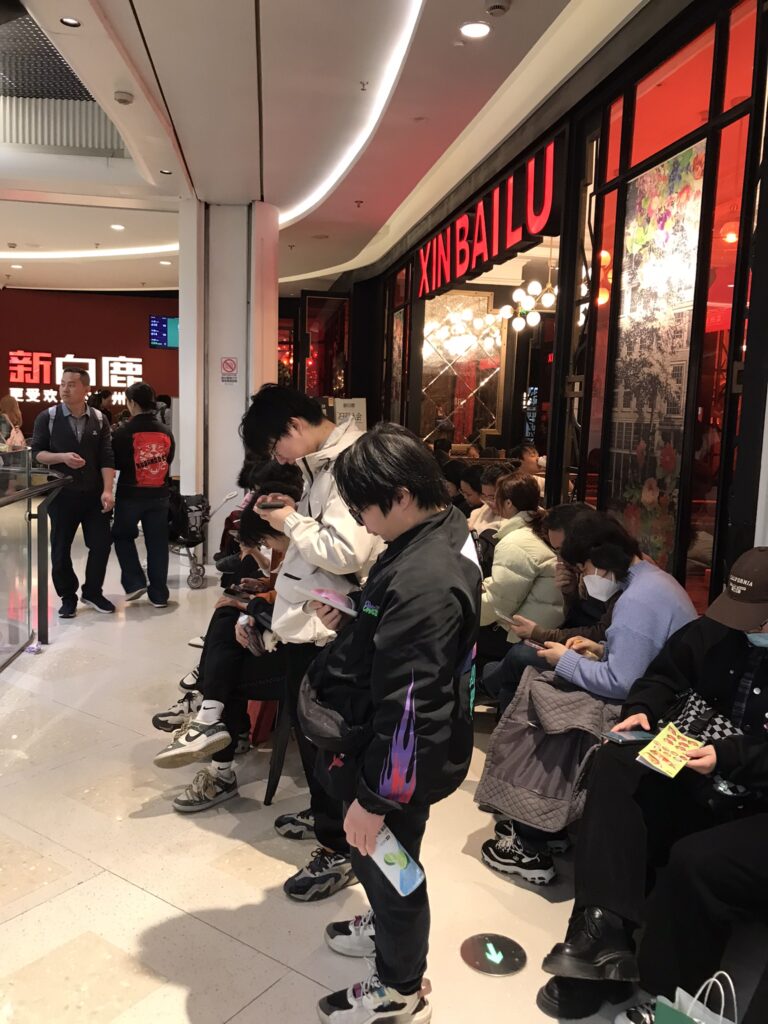
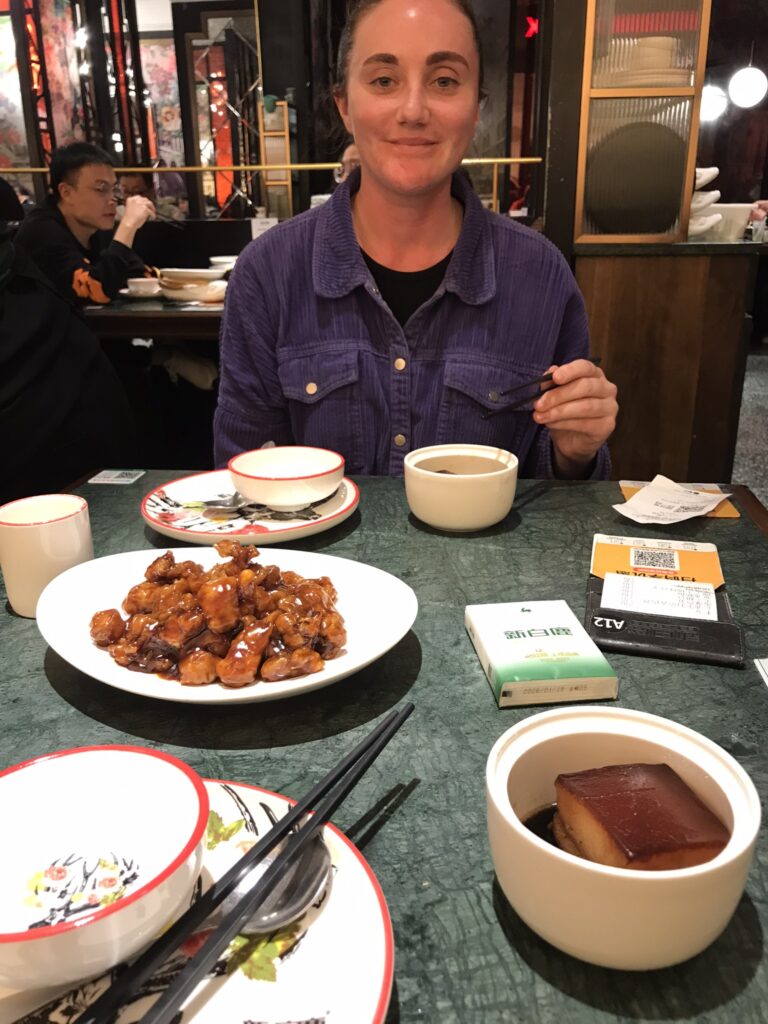
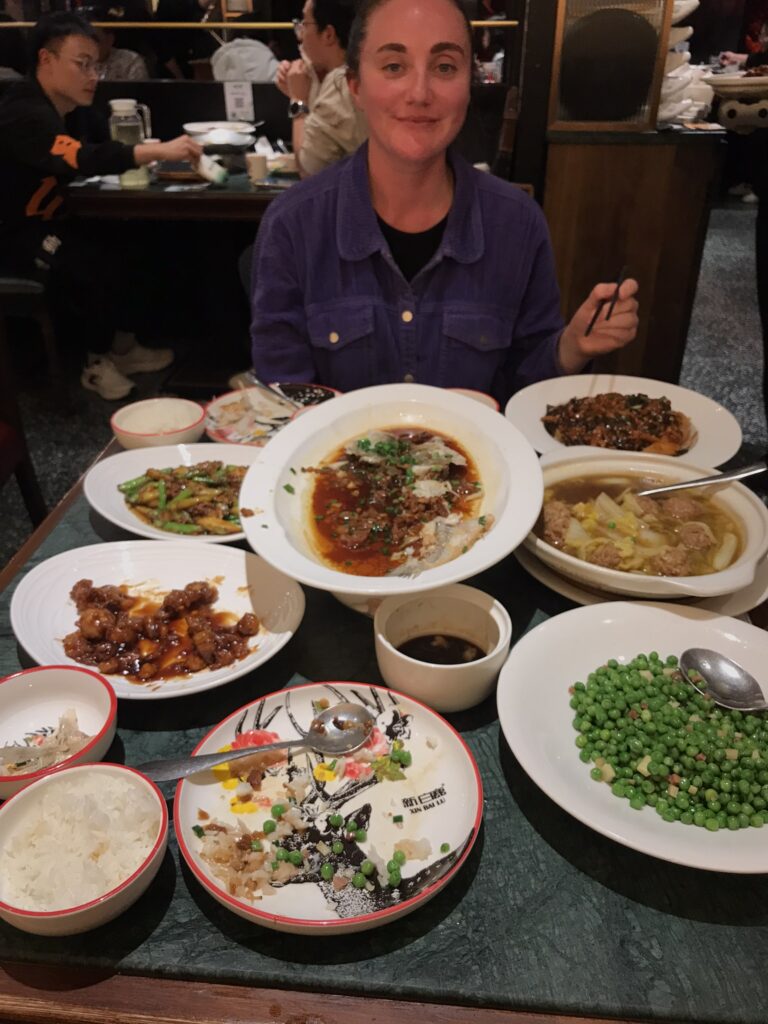
It’s fair to say we massively over-ordered at Xinbailu – oops!
Dayin Qingxin Vegetarian Cafeteria – we found that many of the food joints near Lingyin Temple have a low rating so we decided to visit this vegetarian buffet place. It’s not the easiest place to find as it’s located on the second floor of a food court/shopping precinct with multiple entrances. My best advice is to look at the photos on Amaps and try to match the entrance text. This place is ideal if you’re short on time and looking to fill up on a hearty veggie meal. For 30 RMB you can eat as much vegetarian fare as you want, with plenty of choices such as noodles, vegetable dishes, tofu and some desserts as well. This felt like a classic Chinese experience, definitely not a place that sees too many foreign tourists.
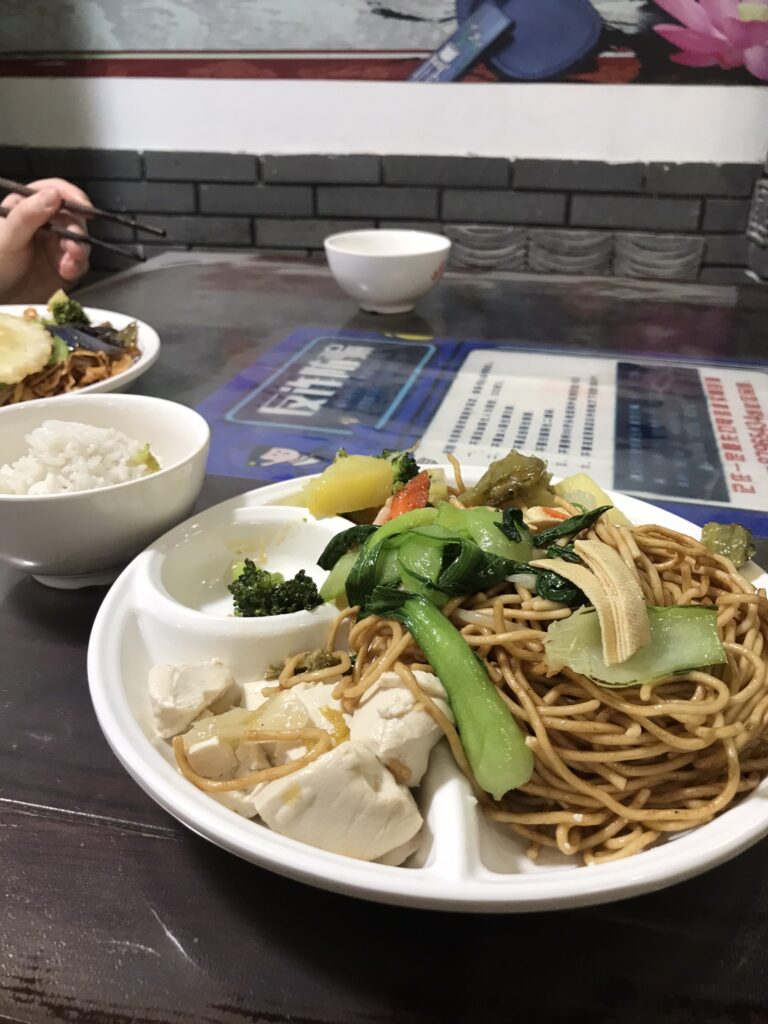
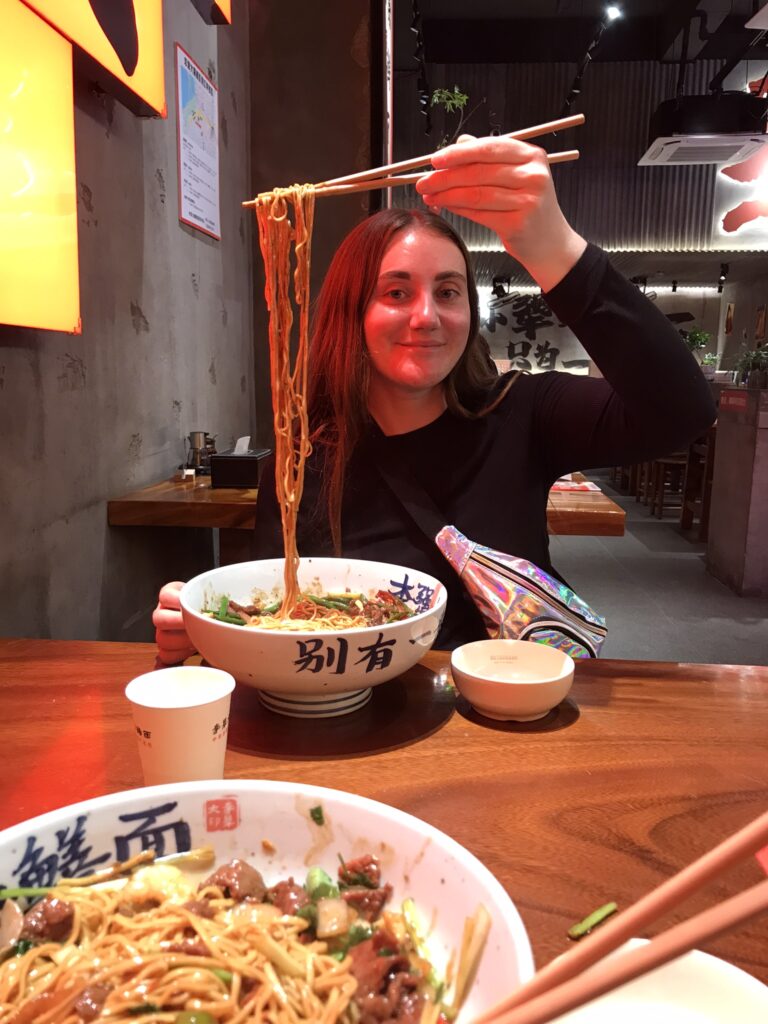
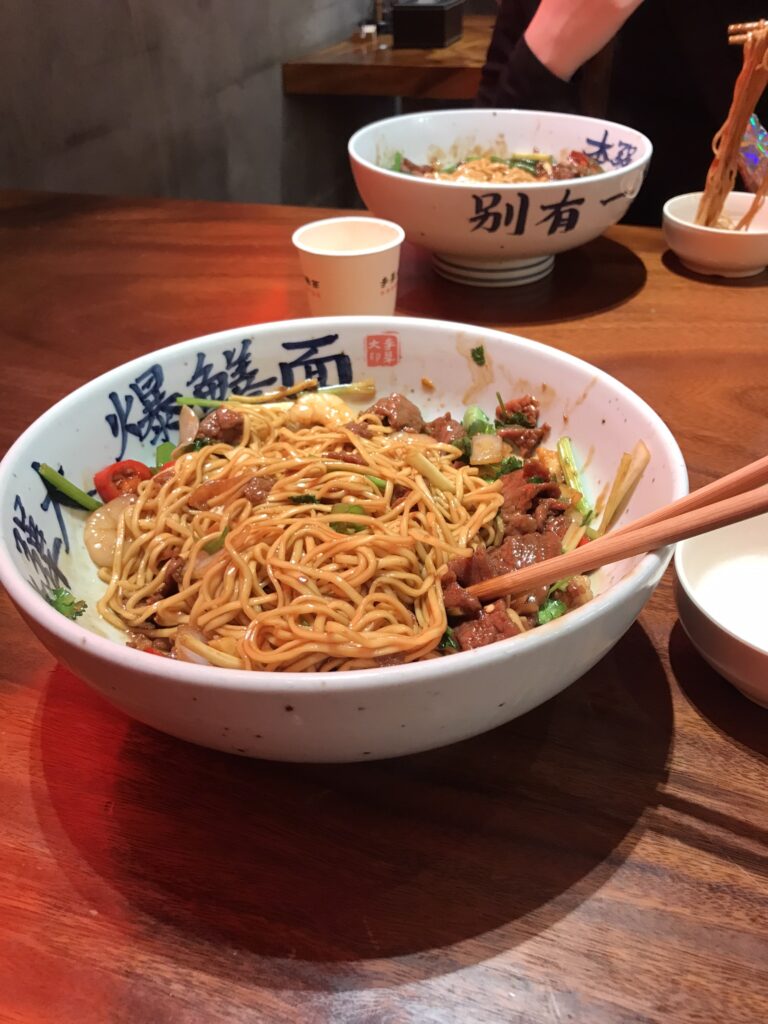
Dayin Qingxin Vegetarian Cafeteria near Lingyin Temple and Lijiangda baoshanmian (noodle place near our hotel) were a hit with us!
Lijiangda baoshanmian – located right next to our hotel, we were surprised to find out that they have an English menu – even the waiter spoke a little English! It’s slightly more on the expensive side for a noodle joint but still super tasty.
Activities
West Lake – the West Lake area is massive with a number of scenic areas and attractions (temples, paths and points of interest) on both the east and west sides of the lake. However many of the main lakeside attractions are situated along the lakefront between the east and south sides. We used this GPSmycity walking tour guide to get acquainted with the following attractions: Shrine of Qian, Confucius Temple, Chenghuang Temple, Leifeng Pagoda, Jingci Temple. You can easily access the east side of the lake via metro from anywhere in Hangzhou city – the urban sprawl pretty much ends at the shore of the lake.
For your first introduction, it’s probably best to walk clockwise from Jixian Pavillion to the Leifeng Pagoda. There’s a jovial atmosphere around the east side of the lake, particularly on weekends. Keep an eye out for the large gatherings of older folk dancing in the pavilions; there must’ve been 20 couples bopping to the music when we visited. We’re not sure if these groups are impromptu or organised in advance. In one area we spotted 4 separate people howling out karaoke to seemingly no audience, and also a group of elderly jivers walking in a conga circle holding feather dusters, which was a peculiar sight. After some coaxing, we opted not to join them.
Shrine of Qian (Qian Wang Temple) – dedicated to the Qian imperial family, a short lived dynasty (lasted only 5 generations) which formed the Wu-Yue kingdom in the 10th century. Inside is an exhibition about Qian Liu (the 1st ruler) – a peasant who rose to become a prominent military captain and then king after defeating an enemy, he is remembered as a peaceful and fair ruler. The last Qian ruler submitted all of his territory to the Song Dynasty and so peacefully unified the kingdoms. Interestingly the temple has a gallery dedicated to the prominent descendants of the Qian royal family and their dispersal throughout China and the world.
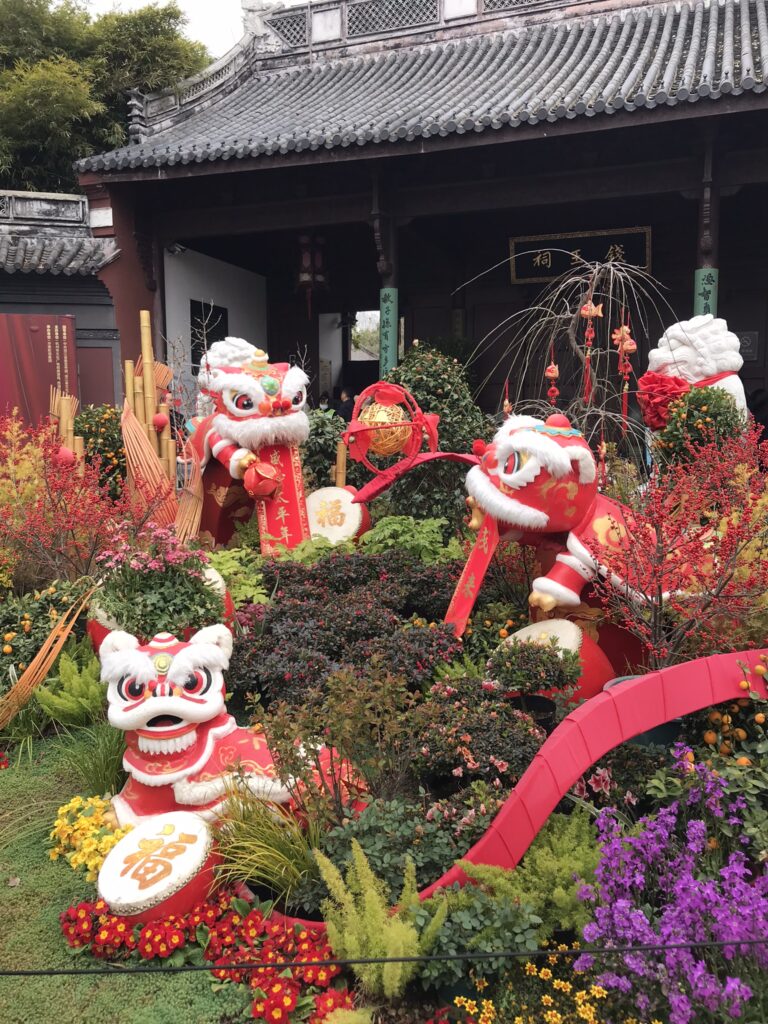
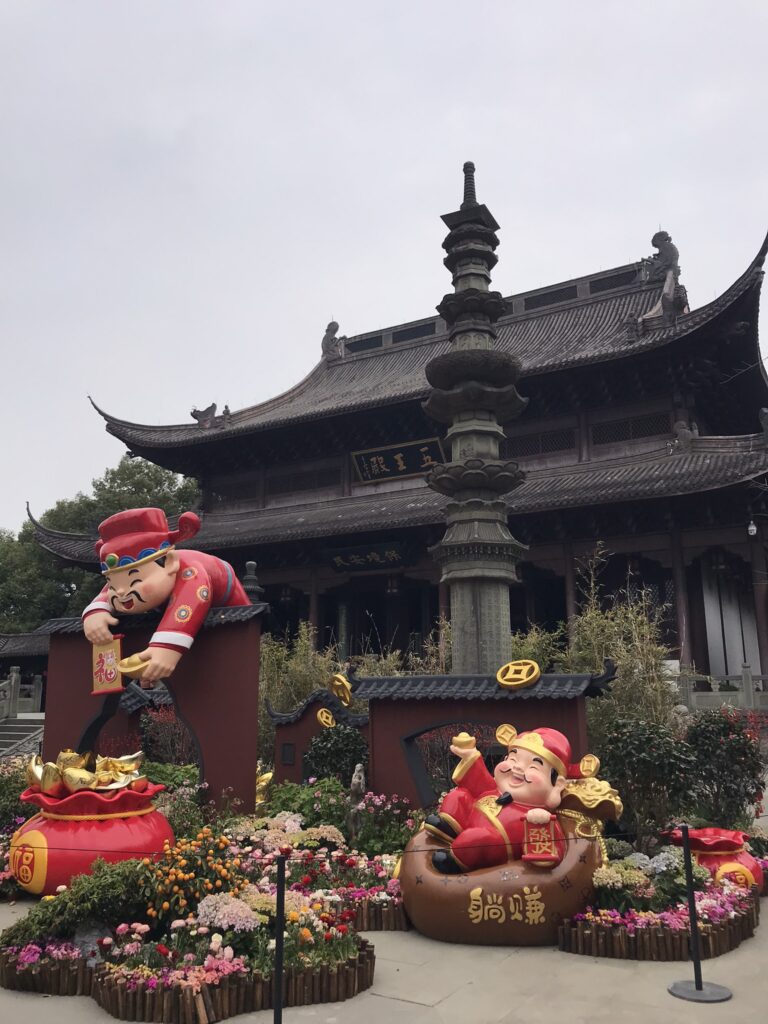
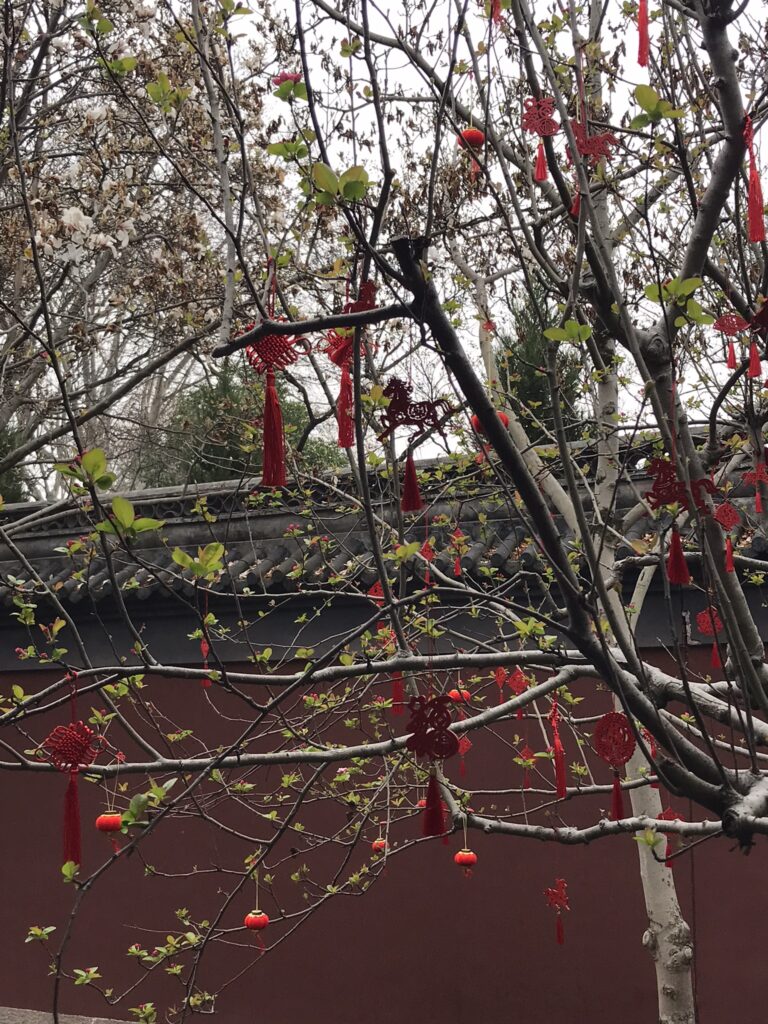
The Shrine of Qian was still decorated for Chinese New Year
Leifeng Pagoda – an icon of the city of Hangzhou and eminently visible at the south side of West Lake. The original Leifeng Pagoda was constructed in the 10th century but unfortunately didn’t survive the long years, eventually collapsing in 1924. The current pagoda is a modern reconstruction (built in 2002) with a strong steel structure and internal elevator situated on the site of the original Leifeng Pagoda. Visitors can see the remains of the original pagoda below the new one. The pagoda is a popular tourist attraction – queues can be long for the lift to the top, but it’s also possible to skip this queue by walking up the stairs. On one of the levels is a display about the Legend of the White Snake, an ancient and popular folk tale centred around Leifeng Pagoda. The observation deck on the top floor provides great views over West Lake. The viewing area can get very crowded, but the crowd thins out if you descend one floor below, providing a much more relaxed atmosphere. It’s also worth checking out Jingci Temple which is across the road from the Pagoda.
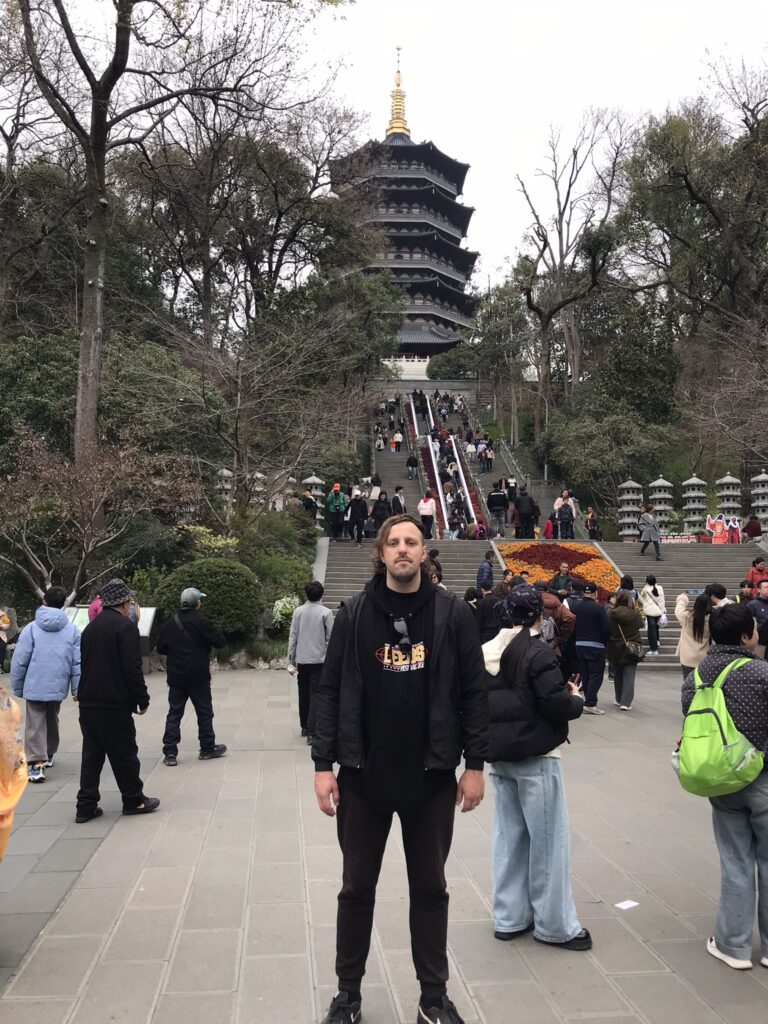
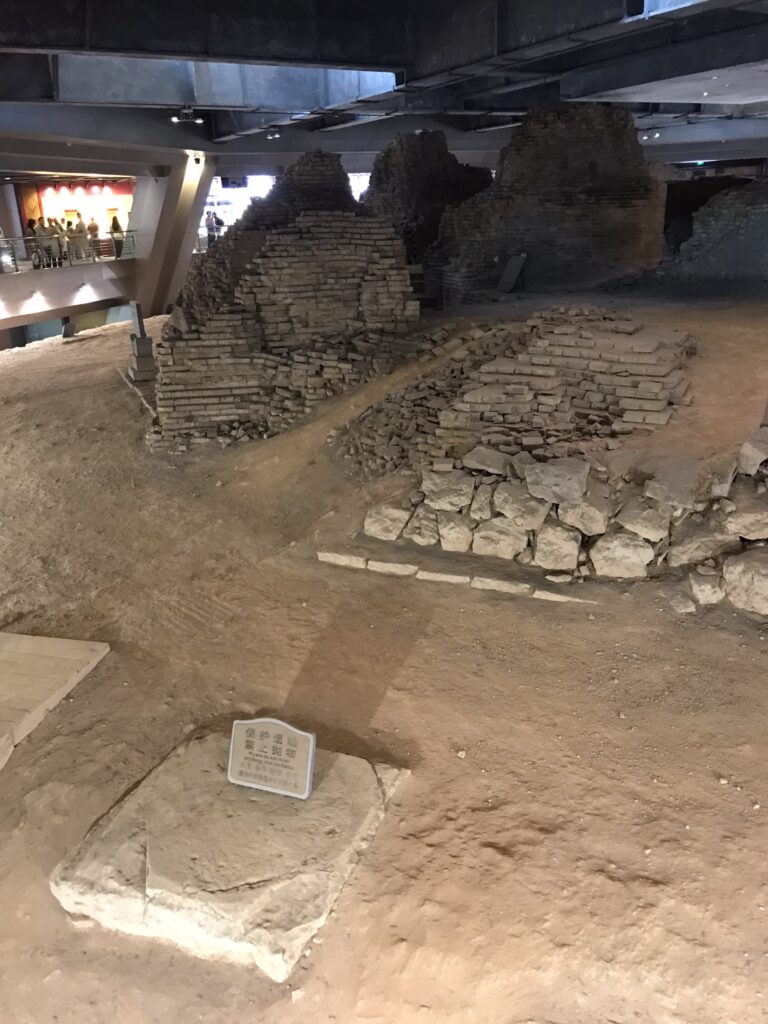
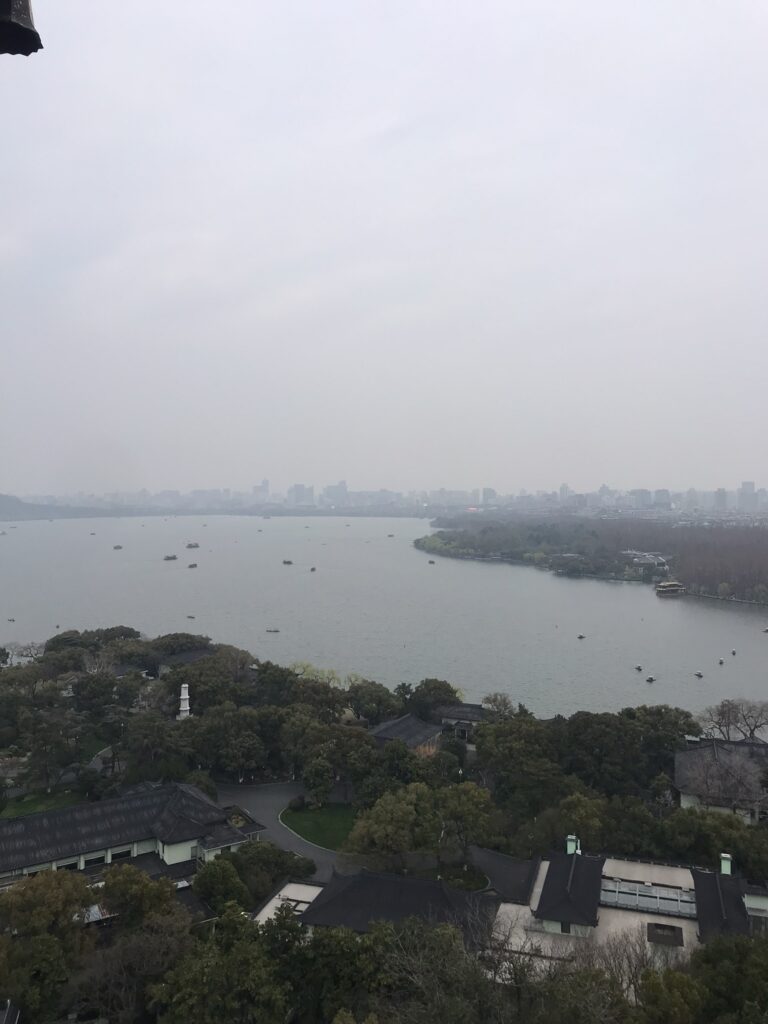
Leifeng Pagoda provides excellent aerial views of the West Lake and nearby Jingci temple
Chenghuang Pavillion & Temple (Wushan Scenic Area) – this temple complex is located on the top of a hill nearer to the city centre. The main temple in the area is the City God Temple and adjoining Chenghuang Pavilion which overlooks West Lake, however there are numerous other temples and shrines dotted around the scenic area including one temple dedicated to an important man who practised medicine and a Taoist shrine to the god of Mount Tai. Inside the many tiered Chenghuang Pavillion are some galleries, including one which has an incredibly detailed diorama apparently created in the 1980s which features a street scene from the Southern Song Dynasty. This is probably the best diorama we’ve ever seen, stretching the whole length of the room with literally thousands of individual figures in homes, at work, leisure and interacting. Within the pavilion is a quaint tea shop and restaurant on the upper levels should you need refreshment. The Chenghuang Pavillion is open til 8pm, and we recommend visiting at dusk so you can see the city in the last rays of the day and after dark when the lights are turned on. From here, it’s easy to walk down to Southern Song Road.
Southern Song Road (Nan Song Yu) – originally the king’s road leading to the imperial palace; take note of the stripe in the center of the roadway which symbolises that it was the king’s route. The imperial road stretches for 6km in a straight line. At the southern end of the route is a myriad of impressive heritage buildings (some marked with plaques), now forming a vibrant pedestrianised walking area with upmarket restaurants, boutiques and millions of coffee shops. Keep an eye out for the elegant neoclassical buildings, we even spotted an old oriental medicine shop amid the commercial shopfronts. There’s an excavated section of the original road on display which is at a much lower level than the current street. A traditional Drum Tower and ornately carved gate marks the entrance and exit of the scenic area. There are plenty of dining options if you find yourself nearby during meal times.
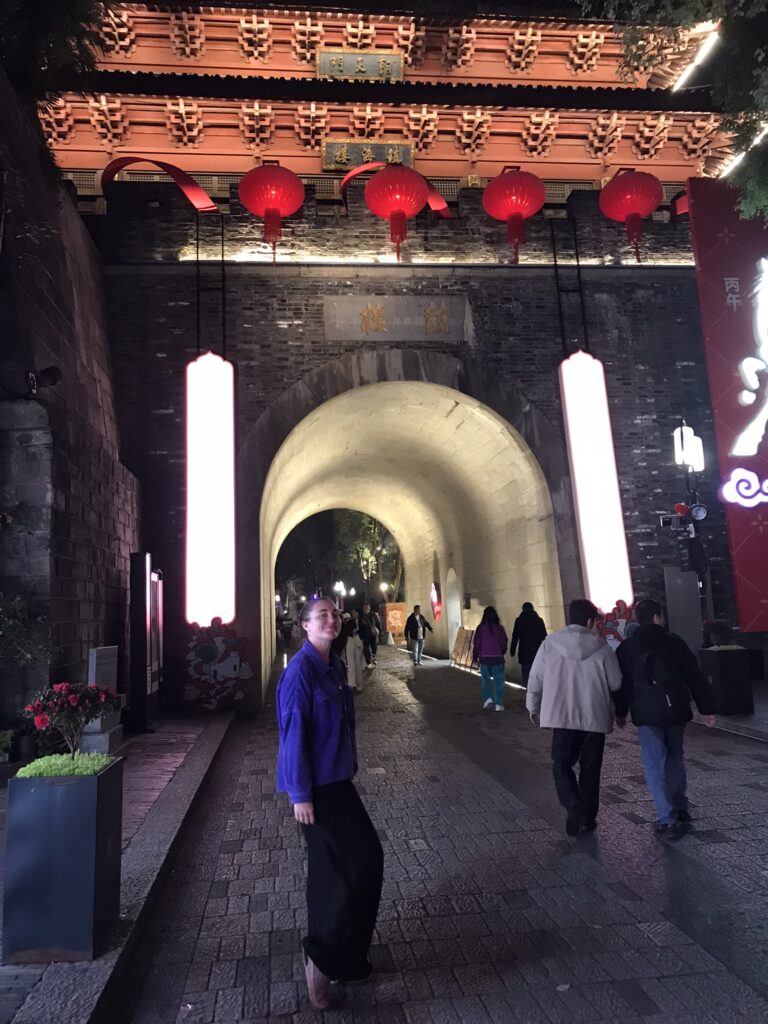
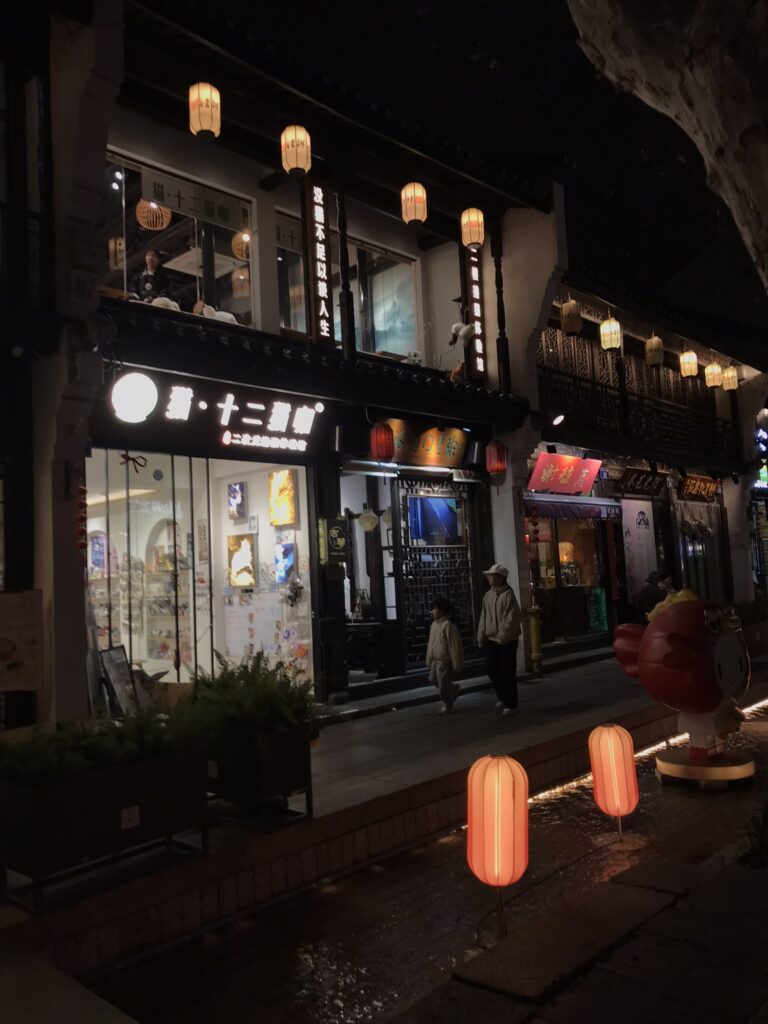
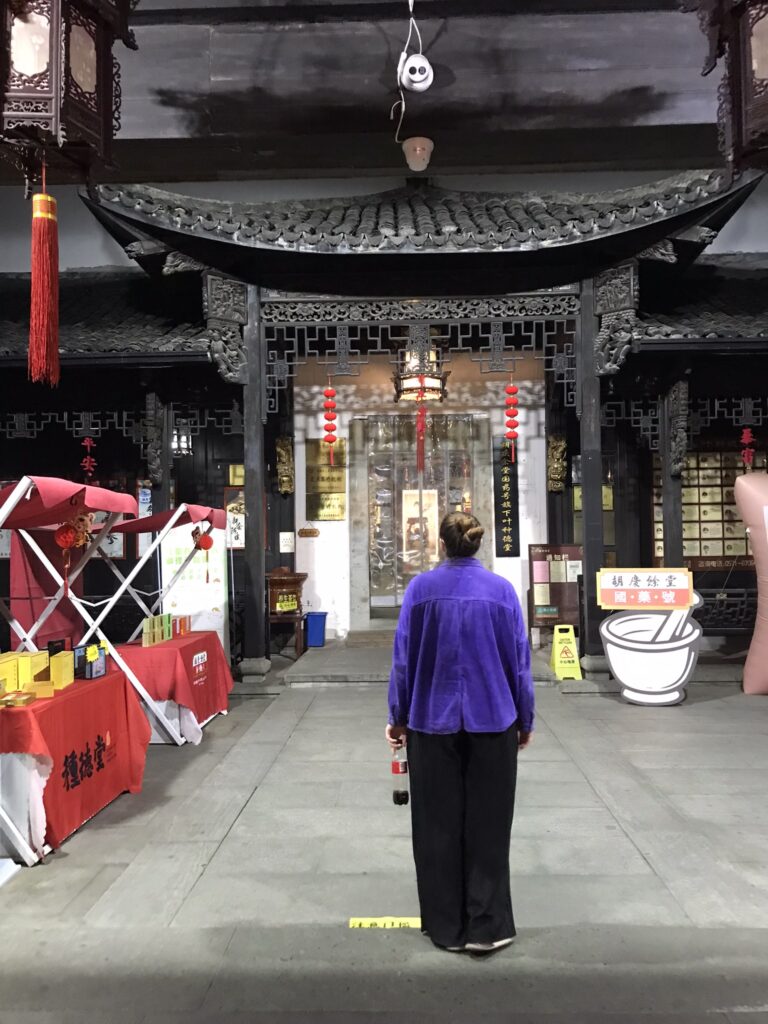
Southern Song Road comes to life after dark with a warm glow emanating from the heritage buildings
National Museum of Tea – a modern museum dedicated to the history of tea in China. The museum displays are incredibly comprehensive and innovative – you can even smell different types of teas and flower scents. Tea plants are native to southwestern China and China was the first nation to discover that tea plants could be turned into a refreshing beverage. There’s some debate about whether tea was first used as a food, drink or medicine, however brewed tea is said to have emerged in the form we know it in the Warring States period (400BCE-300BCE). The museum introduces archaeological evidence for the first use of tea in China and traces the spread of tea from the Sichuan area to other parts of China, and then on to Japan and Korea before taking root in Europe in the 17th century. Displays feature an array of artefacts that have been used in the preparation and consumption of tea throughout the ages, such as a grinder for chopping the tea leaves, a stove for heating the tea pot and various drinking vessels. China is the only country where all types of tea can be grown: yellow, green, white, red and dark tea. We didn’t realise that there were so many different types of coloured tea. China dominated the tea trade market from its inception as a drink to the 19th century, when India under the control of the British took over as the premiere tea growing country.
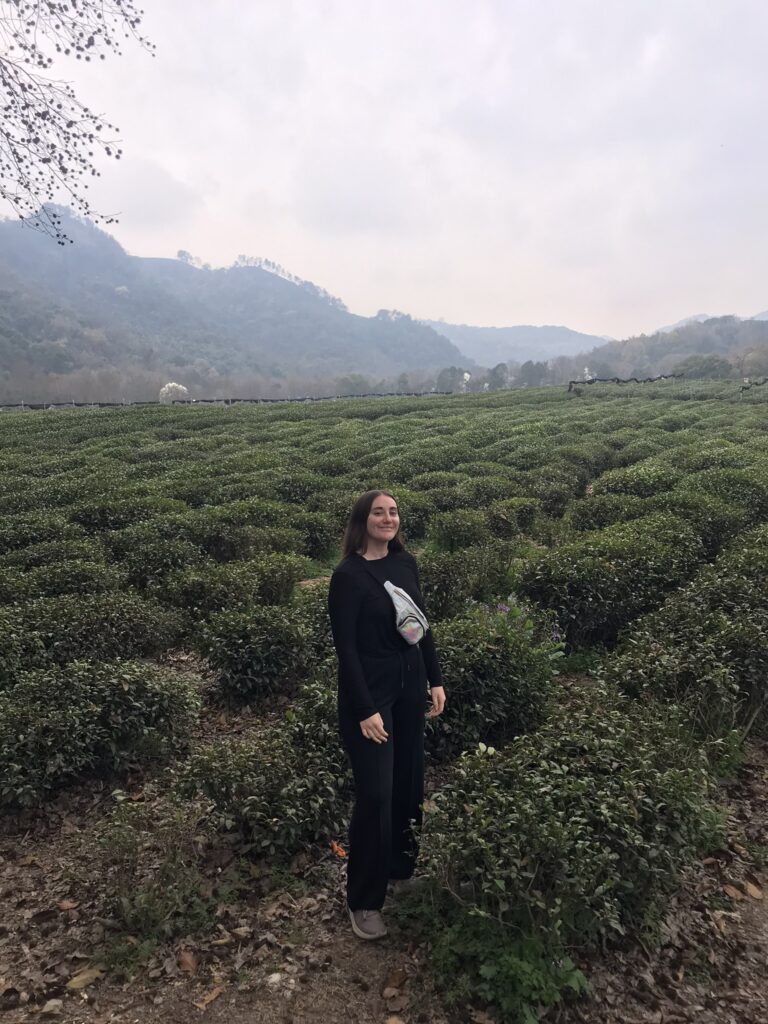
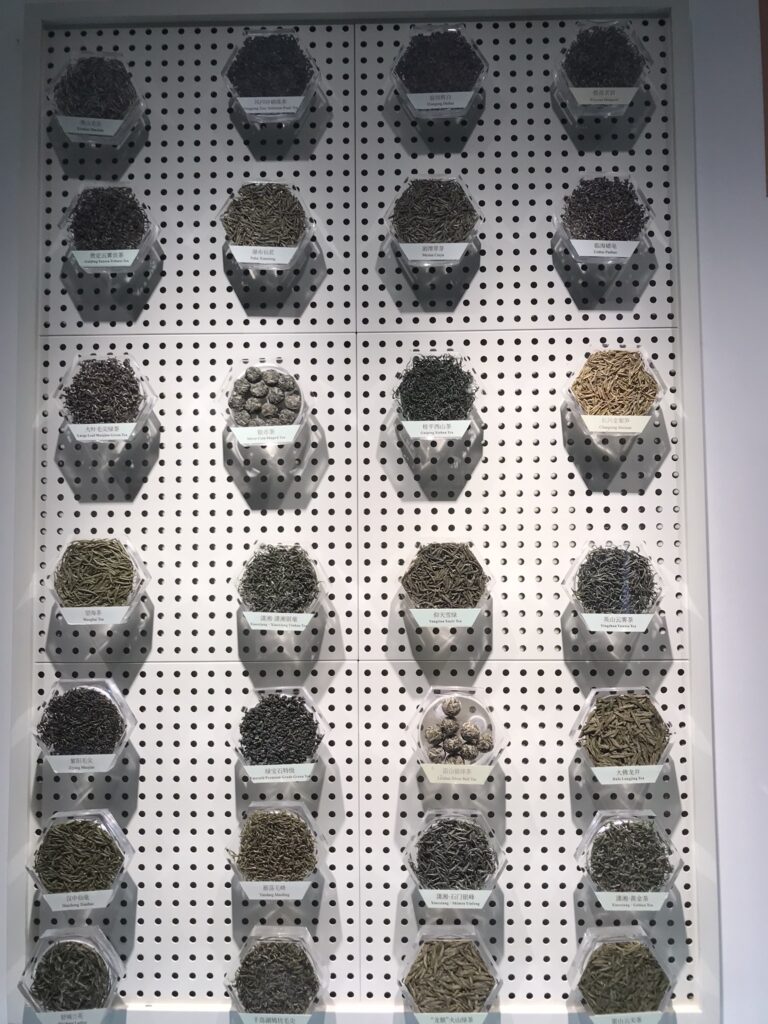
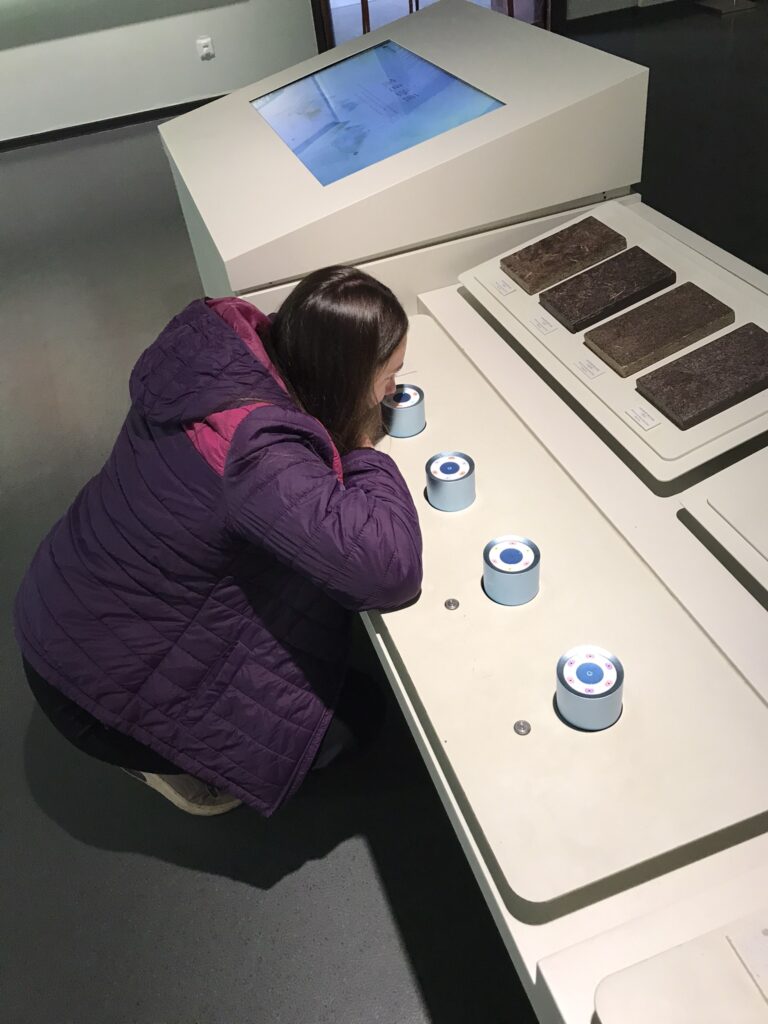
The National Museum of Tea has it all: tea tasting, history and photo opportunities in adjoining tea plantations – you can even smell some of the exhibits
Other interesting items on display in the museum are various packaging methods for tea, such as compacted huge medallions with a hole through the middle and long rods. The museum also focuses on poetry and artwork dedicated to tea and the cultural importance of tea in China throughout history. The entire museum complex is free to enter and in the Longjin Exhibition Building visitors can try Longjin tea for free from the gift shop – a lady carefully prepares the tea in a traditional manner. A number of quaint traditional tea rooms are spread over the complex, however these are overpriced at 88 RMB for a set of three teas. A highlight is the small tea plantation outside the entrance, which you are free to walk around and take photos in.
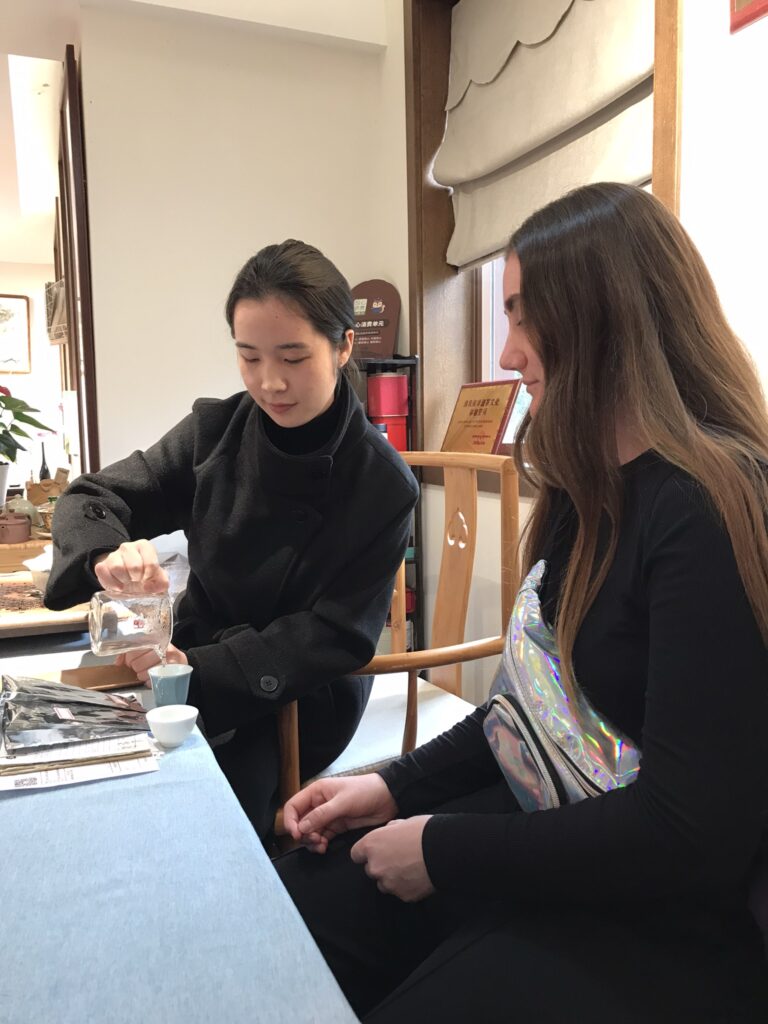
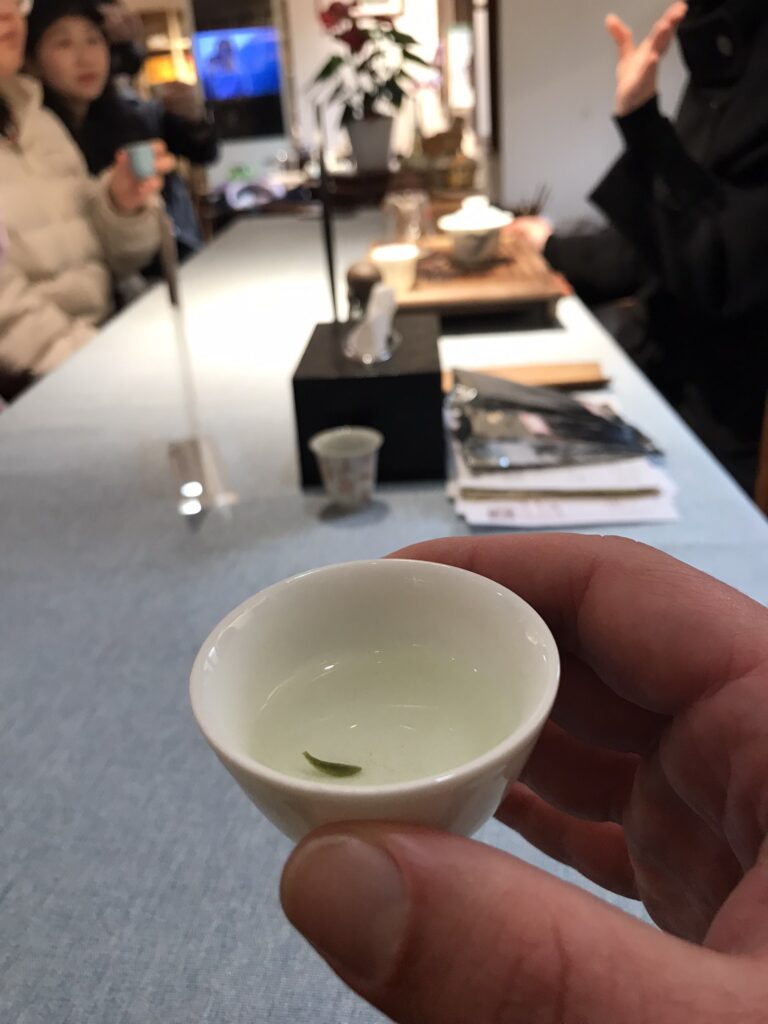
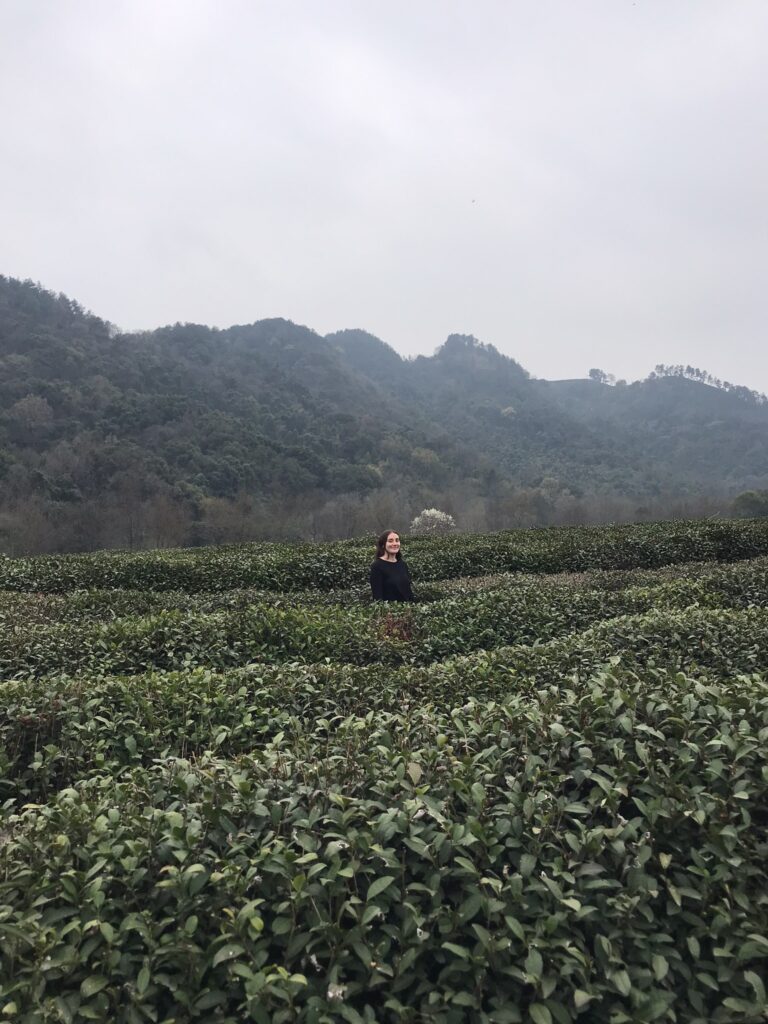
The free Longjin tea tasting was a real highlight at the National Museum of Tea
Lingyin Temple – apparently founded by an Indian monk who came all the way to China to spread Buddhism in the 4th century CE. You MUST book tickets at least one day in advance via WeChat and entry includes 3 sticks of incense which can be collected at the entrance. The temple is an active Buddhist monastery – when we visited entry was restricted to the Medicine Buddha Hall and Great Hall as the monks were performing their prayers (just before dusk), an enchanting and mesmerising experience to witness. For history buffs, keep an eye out for the intricate Southern Song Dynasty rock carvings situated in grottos just after the entrance. The Laughing Buddha is especially prominent, we didn’t realise that this Buddha is laughing at the snobbery of others and has a large belly to contain all the intolerable things in the world. You can spot other important Buddhist figures along the way too. There are many food joints around the entrance to the complex but none inside, so make sure you stock up on food before entering. There are plenty of information boards outside the various buildings inside the temple..
Visiting Lingyin really changed our perspective that China is a purely secular country as so many people were conducting Buddhist rituals, bowing three times in each direction with incense raised, bowing, kneeling and praying at the Buddhist images. Plenty of devotees were praying too – some even offered flowers.
Other areas we checked out:
Quyuan Fenghe Scenic Area & Zhaogong Causeway – less busy walking trails on the west side of West Lake, this is a picturesque area to admire the fantastic West Lake scenery and architecture without the crowds of the eastern side.
Gushan Island – an island in West Lake also known as ‘Solitary Hill’, which is linked to the mainland by several causeways
Suzhou
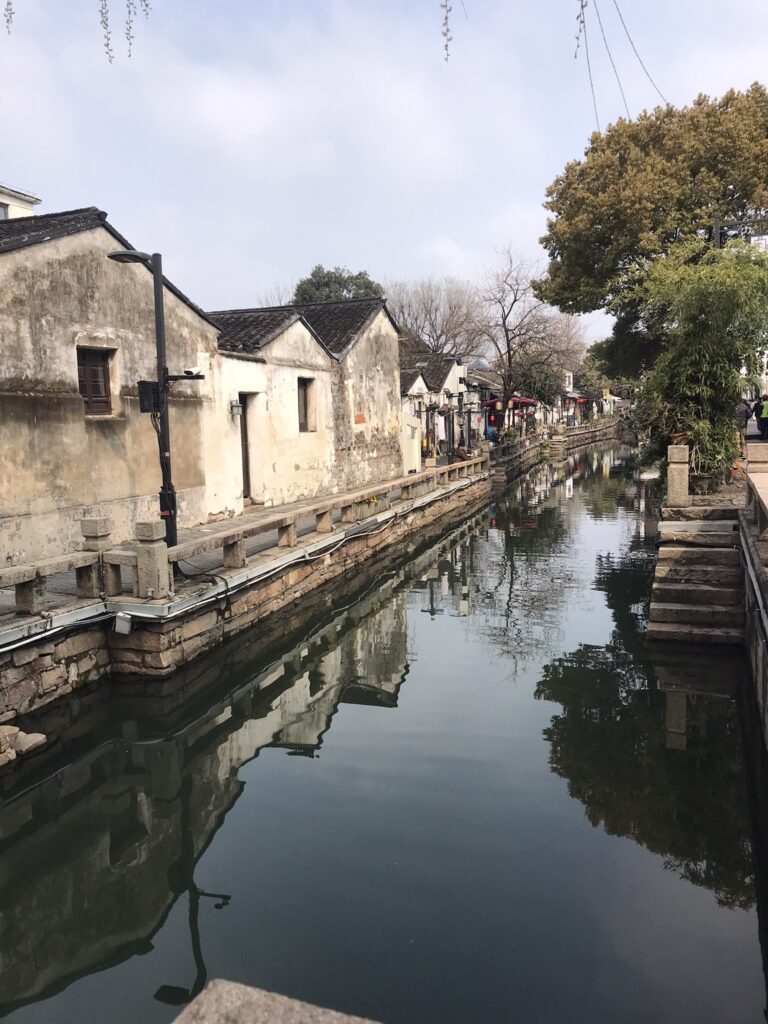
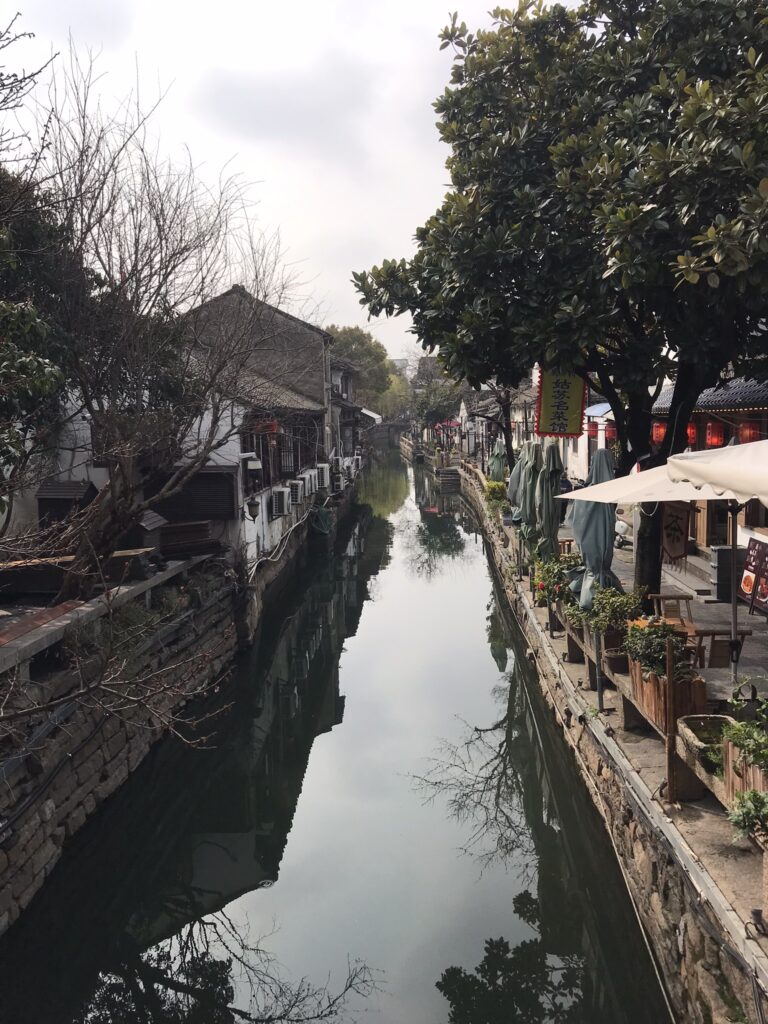
A city known for its exquisite refined beauty, canals and cultural heritage, Suzhou has been given various nicknames over time such as Venice of the East, City of Gardens and Capital of Silk. Marco Polo is reputed to have visited the city in the 13th century and marvelled at its likeness to Venice. An old Chinese proverb states: “Up above there is heaven, down below there are Suzhou and Hangzhou”, and it’s easy to see why it was lavished with such praise. The city is known for its numerous traditional Chinese gardens, tranquil waterways, heritage of silk production and close proximity to popular ‘water towns’ such as Tongli and Zhouzhuang. Extensive canal networks connected the city with other bustling trade centers, leading to prosperity in the region and a flourishing culture which hit its halcyon during China’s later dynastic period.
Throughout its history Suzhou has been known for fine crafts and particularly silk, having been one of the three major silk producing cities during the Ming dynasty. The imperial bureau of silk based in Suzhou was the producer of silk garments for the emperor and imperial officials, even playing host to the emperor on his official visits to the region. Suzhou gained acclaim and prosperity due to its silk production, with exports from the city making it all the way to Europe and further afield via the Silk Road.
Outside of its silk heritage, it’s safe to say that the top attractions for most visitors to Suzhou are its famous traditional Chinese gardens. There are a total of nine UNESCO-listed gardens in Suzhou, distributed throughout the city. These Chinese-style gardens do not resemble typical gardens by the Western definition, in fact ‘garden’ is a bit of a misnomer in this case. The gardens of Suzhou are actually enclosed former private residential complexes featuring various courtyards and rooms interspersed with water pools, sculpted rock formations and flora, usually created by or for the benefit of a wealthy patron, scholar or public official.
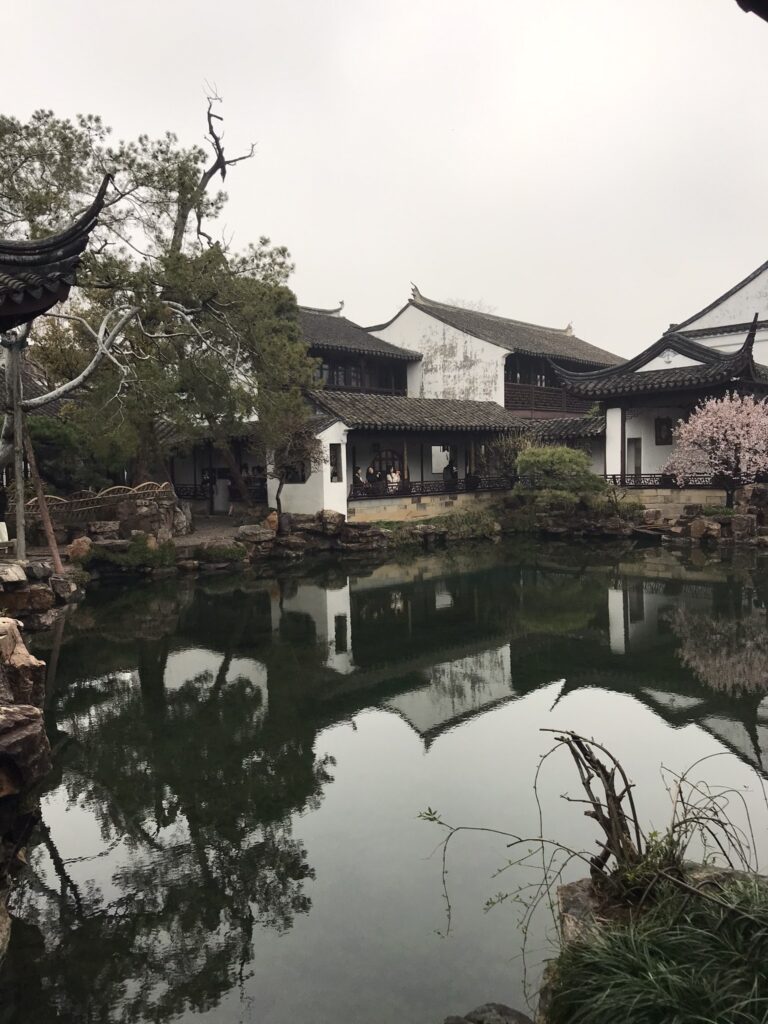
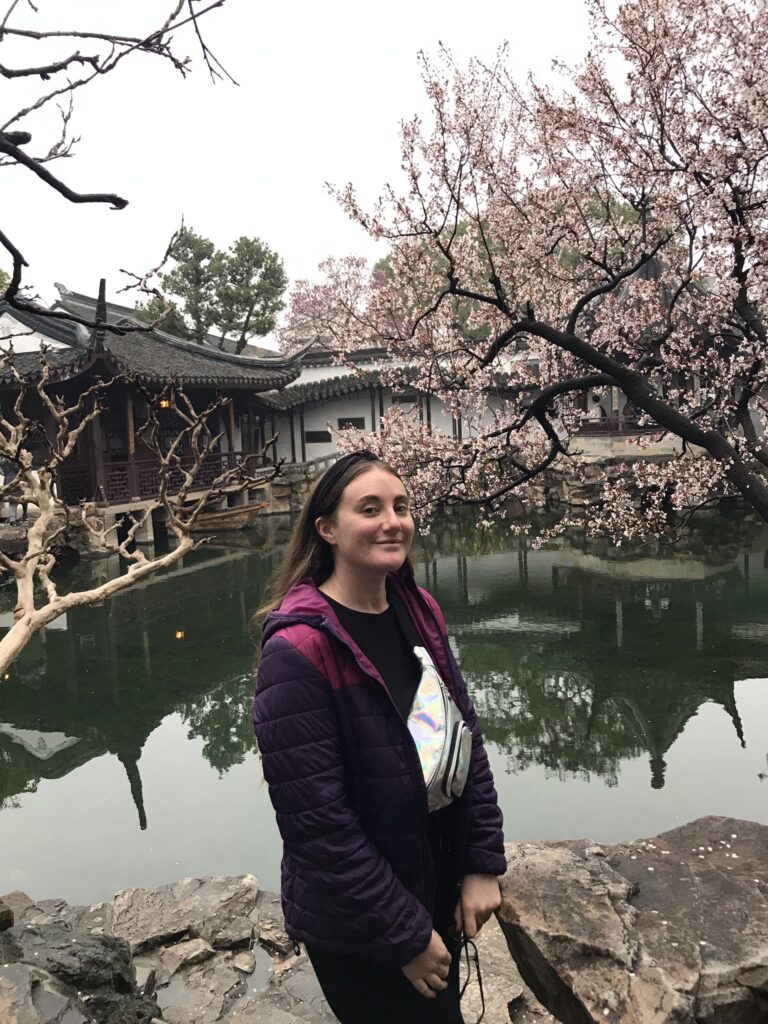
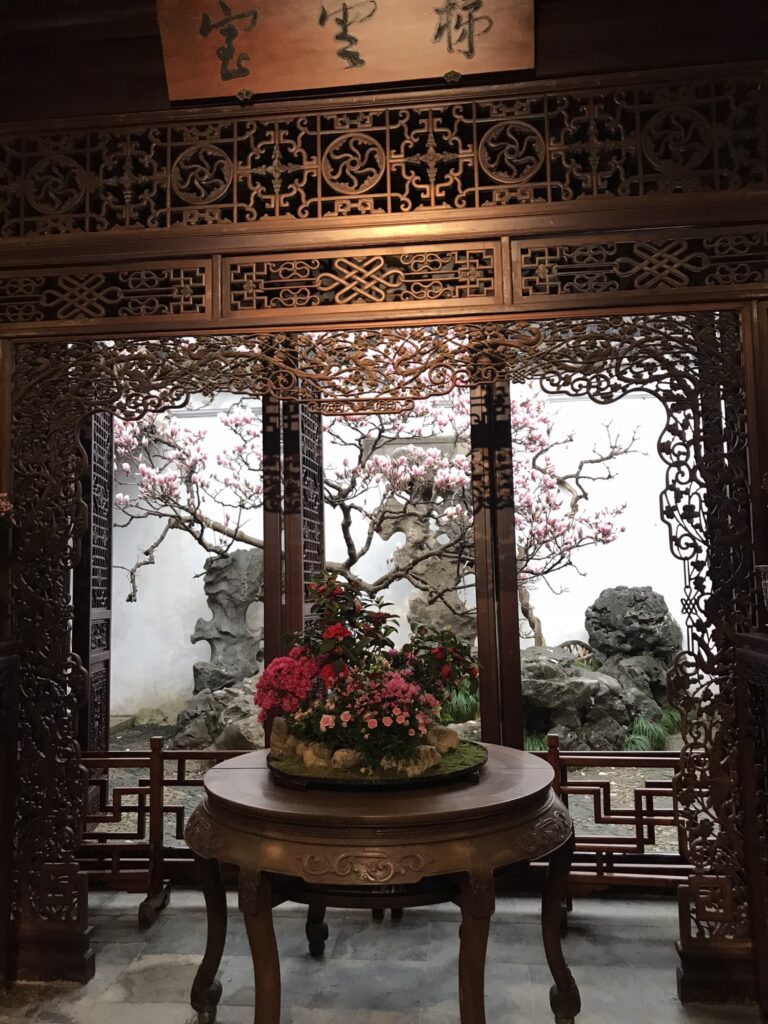
‘Master of the Nets’ garden is lesser visited quaint garden in the center of Suzhou
Essentially the idea behind the gardens was to incorporate living quarters into a secluded pastoral garden setting made up of four elements: rocks, water, buildings and plants. 80-90% of buildings are next to water, it’s a really important element. A lot of thought and effort goes into every element of the garden; it’s said that small gardens are intended to be viewed motionless (sitting down), whilst large gardens are designed to be viewed in motion (walking around). The purpose behind them is to receive poetic, creative and artistic inspiration from nature and the tranquil setting. The gardens are manmade creations imitating natural landscapes with elements such as zig-zag paths meant to replicate waves on water.
Garden rooms retain their names from previous owners or are named after special items in the room, stories, lines of famous poems or views from the windows – mostly whimsical poetic names. Chinese traditional gardens are not like a typical English garden with regimented flower beds and manicured lawns, they’re focused on imitating natural landscapes and the beauty of imperfection; allowing the owner to retreat into nature and pursue intellectual activities. Gardens are created to be viewed in all seasons – blossoms in spring, flowers in summer, foliage in autumn and snow in winter.
Some of the gardens in Suzhou are quite small and relatively quiet, while others such as the Humble Administrator’s Garden are huge and heaving with tourists. It’s tempting when in the city to try to squeeze in as many of the gardens as possible, but unless you’re a Chinese garden enthusiast I don’t think it’s particularly necessary to visit all of them – we visited three and felt that we got a good enough appreciation from that.
The whole region surrounding Suzhou is waterlogged with a myriad of lakes, rivers and canals. As well as the attractions in the city itself, the surrounding region has 8 traditional ‘water towns’, many of which can be easily accessed by public transport. These old canal towns have been repurposed for modern tourism and provide visitors a glimpse of China from the past before old neighbourhoods were torn down in a mass movement of modernization and progression – albeit they are now mostly filled with modern cafes and souvenir shops. We took a day trip to Zhouzhuang, said to be the ‘No.1 Water Town’, and it didn’t disappoint.
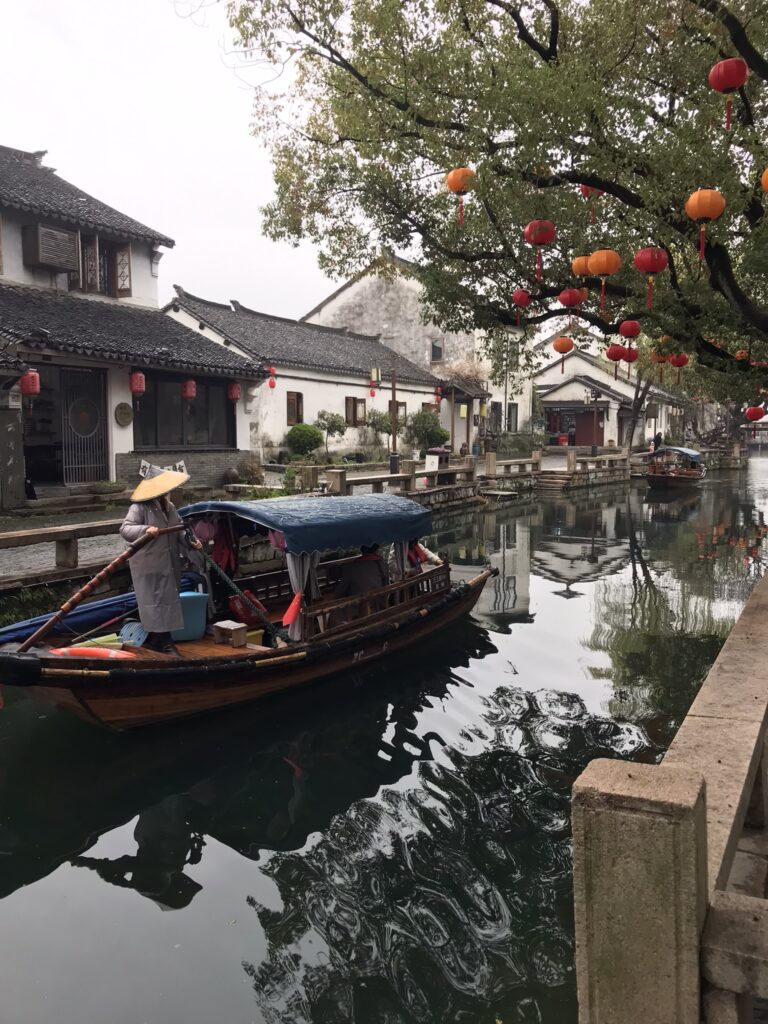
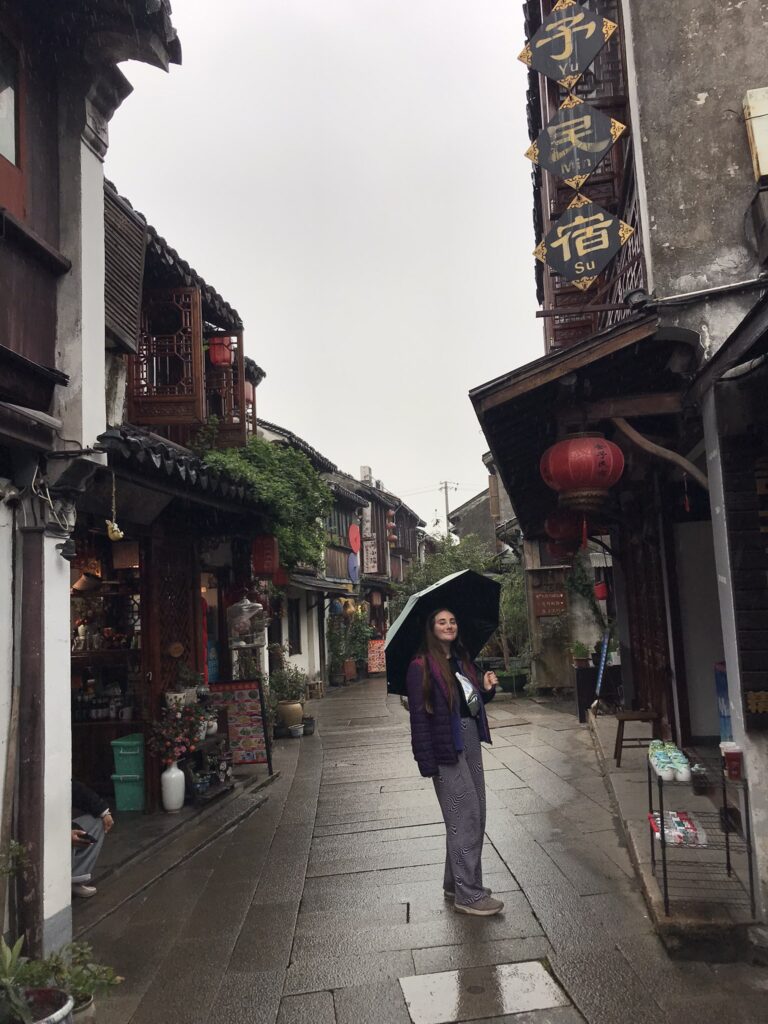
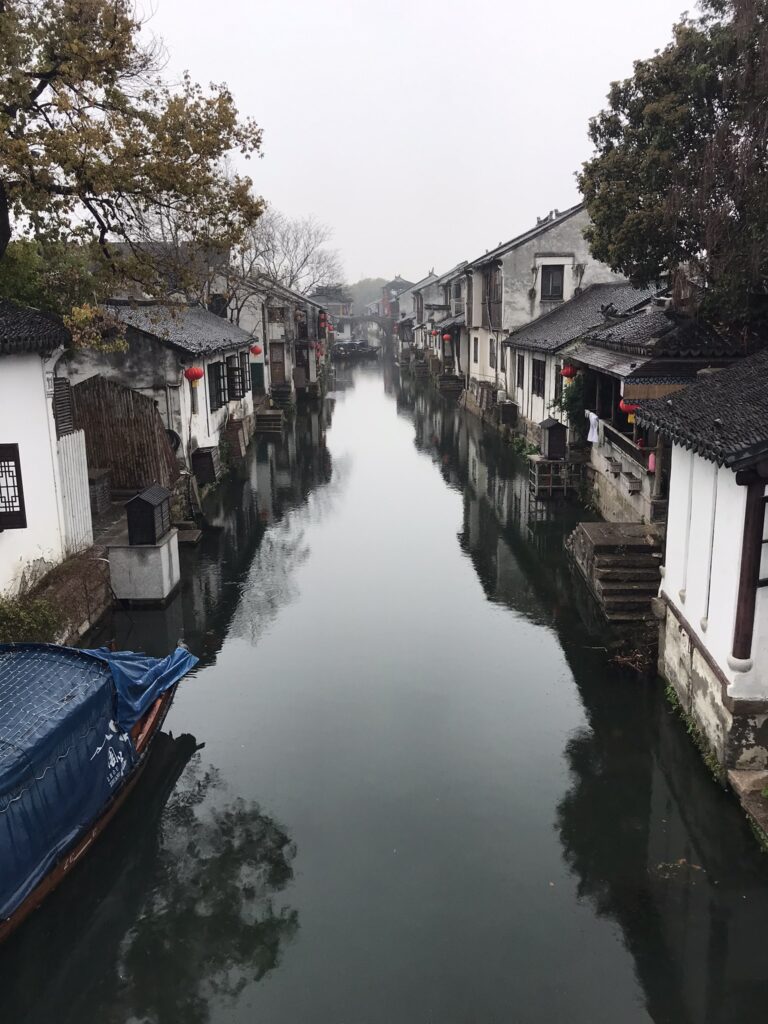
If visiting Zhouzhuang, it’s best to visit mid-week on a day with bad weather as this discourages the crowds
Suzhou is relatively close to Shanghai and many tourists choose to visit on a day trip, but I don’t think this would do it justice at all as there is so much to see. We found this guide on Wechat and it’s really useful.
Accommodation
Fillmore Hotel (Suzhou University Guanqian Street Pingjiang Street) booked via Trip.com – this hotel seemed to be in the middle of a rebrand. We weren’t sure what the actual name of the hotel was as it had branding for Moma Hotel but was called Fillmore on Trip.com and also called Feiman Hotel (Soochow University Guanqian Street Pingjiang Road Branch) on Amaps. This confusion over the correct name led to issues when we tried to get a Pizza Hub food delivery. Except for the weirdness about the name of the hotel, it was actually really good with memory foam pillows and a massive TV in the room. The hotel is ideally located close to the main pedestrian canal street (Pingjiang), a stone’s throw away from the nearest metro station and overall quiet with modern facilities. The breakfast buffet was better than others we encountered with more continental western food items including croissants. The wifi was also free to access here without a Chinese phone number.
Foodie Places
Wushengxing Suzhou Zhousha Steamed Dumpling Xiehuangmian (Pingjiang Road Branch) – directly opposite our hotel. Unfortunately you can’t order on Alipay, which wasn’t ideal as we had to translate the menu on the wall and then point at which dish we wanted – we ended up with shrimp wonton when we actually wanted pork after accidentally pointing at the wrong menu item. The Suzhou-style fried dumplings were excellent, especially with the vinegary soy sauce – the tea was also really good and you can help yourself to as much as you want. They also serve crab noodles which is a local Jiangnan delicacy. We paid about 55RMB for the whole lunch order, so it was very affordable.
Grande A’moo (Renheng Cangjie Branch) – Sicilian-style pizza and pasta joint situated in a very fancy upscale designer outdoor shopping mall. We felt pretty fancy walking past all the designer shops in search of authentic pizza. We couldn’t believe our luck when we spotted the knives and forks on the table. No chopsticks in sight! This place was definitely a more suave dining venue than we usually pick, but we fancied some western food and it was still cheaper than England!
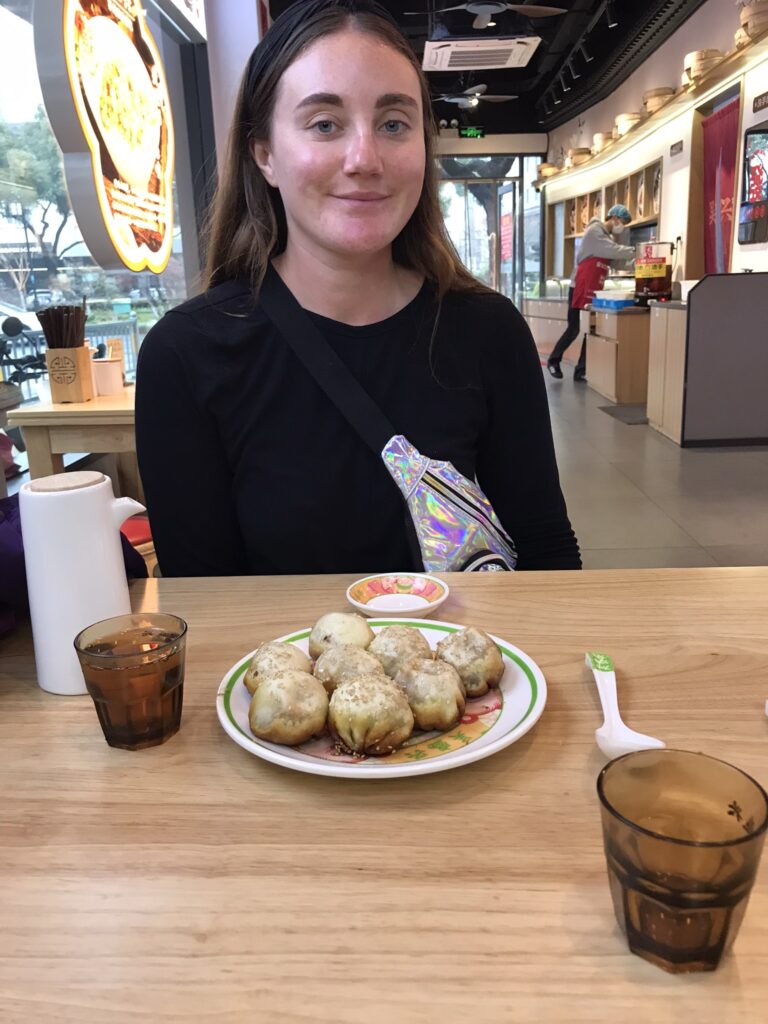
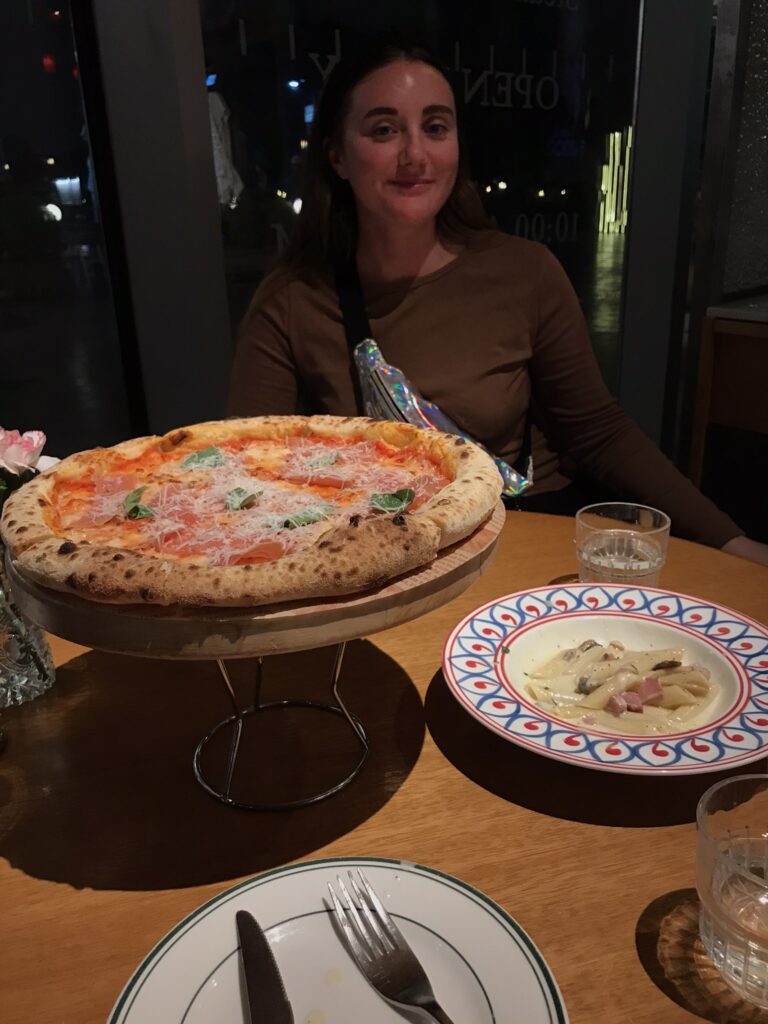
Traditional dumplings at Wushengxing Suzhou Zhousha Steamed Dumpling Xiehuangmian and pizza at Grande A’moo
Beijiang Restaurant (Ganjiang Road Branch) – a positive aspect of many major Chinese cities is the variety of regional restaurants, meaning you can often try various regional cuisines without actually needing to visit the region. We were eager to try Xinjiang fare and this place hit the spot! The menu is very meat-heavy with plenty of lamb dishes – not great for veggies. Portions are massive and the food is extremely tasty. What’s not to love? They even had a Gobi Desert BBQ dish on the menu. We tried the fried lamb with onions, naan bread topped with meat and saturated with a fatty slightly spicy sauce, skewers of lamb and fried potatoes which had some interesting herbs and chili seeds on. The bread reminded us of Uzbekistan/Central Asia – round bread with a pattern in the middle. Attached to the restaurant is a bakery where you can watch the chefs actually baking the fresh bread. The restaurant also had an English menu, which was a huge surprise to us.
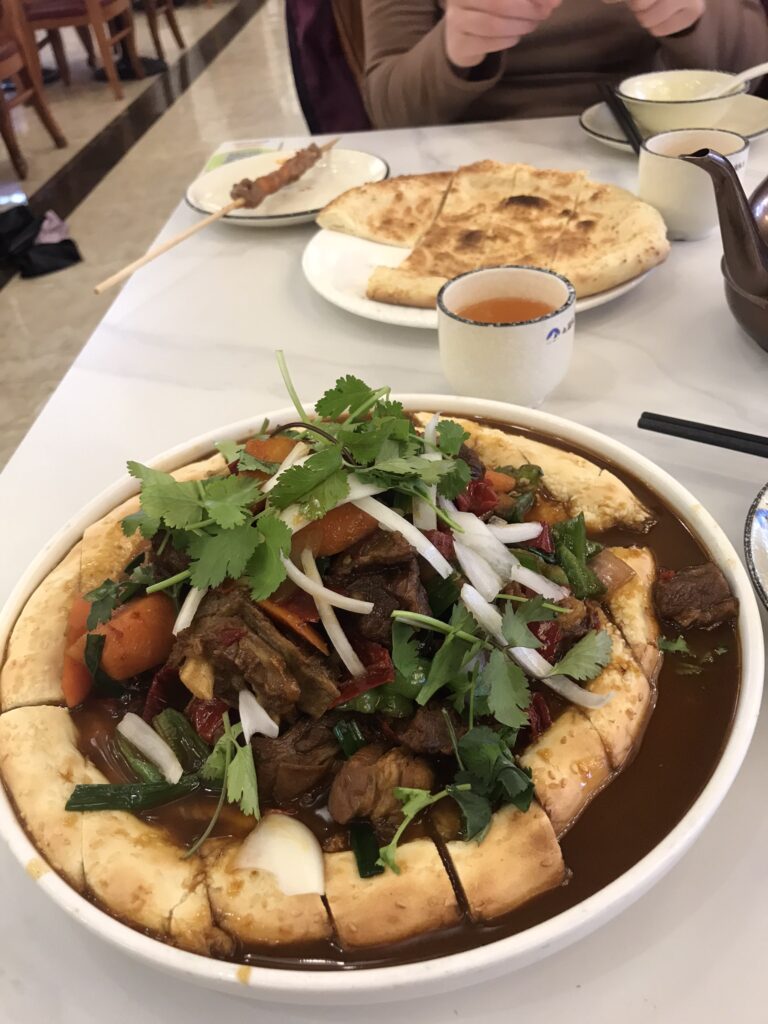
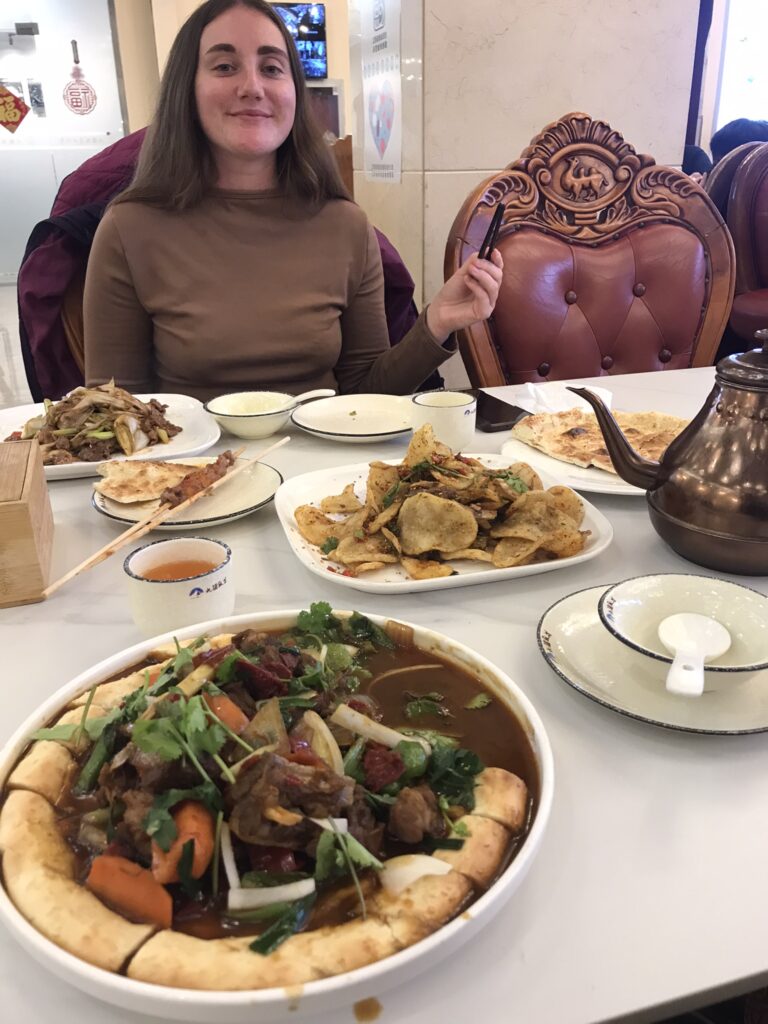
Over-ordering delicious Xinjiang fare at Beijiang Restaurant
Shantang Old Street Xiehuang Franchise Store (Humble Administrator Garden Branch) – it’s best to avoid all the restaurants directly outside the Suzhou Museum and Humble Administrators Garden, as the prices are massively inflated in what is a very popular tourist area. This restaurant is located just off the main street and has much more reasonable prices. It’s a local dumpling and noodle joint run by some hardworking ladies. The pork soup dumplings and pork noodles were incredibly tasty – the best we’d had so far. Watch out for the dumplings as they tend to burst when you bite into them. It’s best to take a nibble first and then suck out the soup from inside the pastry otherwise you’ll end up coated in fatty pork juice like me! We highly recommend this local eatery.
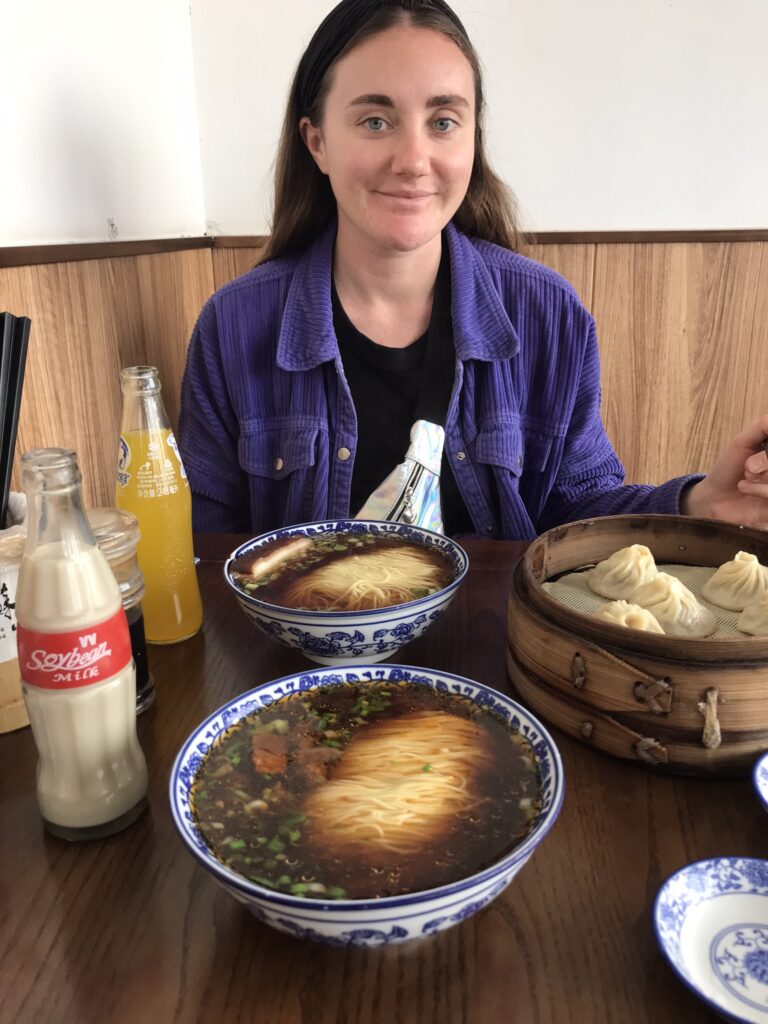
For local cuisine head to Shantang Old Street Xiehuang Franchise Store
Activities
Silk Museum – this museum provides a fantastic overview of the history of silk production in China. Apparently rudimentary silk production started 6000 years ago; the cultivation of mulberry trees, selective breeding of silk worms and processing and weaving techniques have gradually advanced with time. There are some interesting artefacts on display including jade silk worm cocoons and a terracotta pot featuring depictions of people picking mulberry leaves and spinning silk. Silk production came to prominence in China during the Warring States period (around the same time as tea production), and Suzhou became renowned for its high-quality silks. The museum contains original and replica silk garments from as early as 300BCE with impressively complex patterns. There are some impressive imperial robes featuring embroidered dragons – only the emperor could wear a dragon emblazoned on his chest with 3 turns of its body. Most of the oldest artifacts are replicas but there are some original pieces.
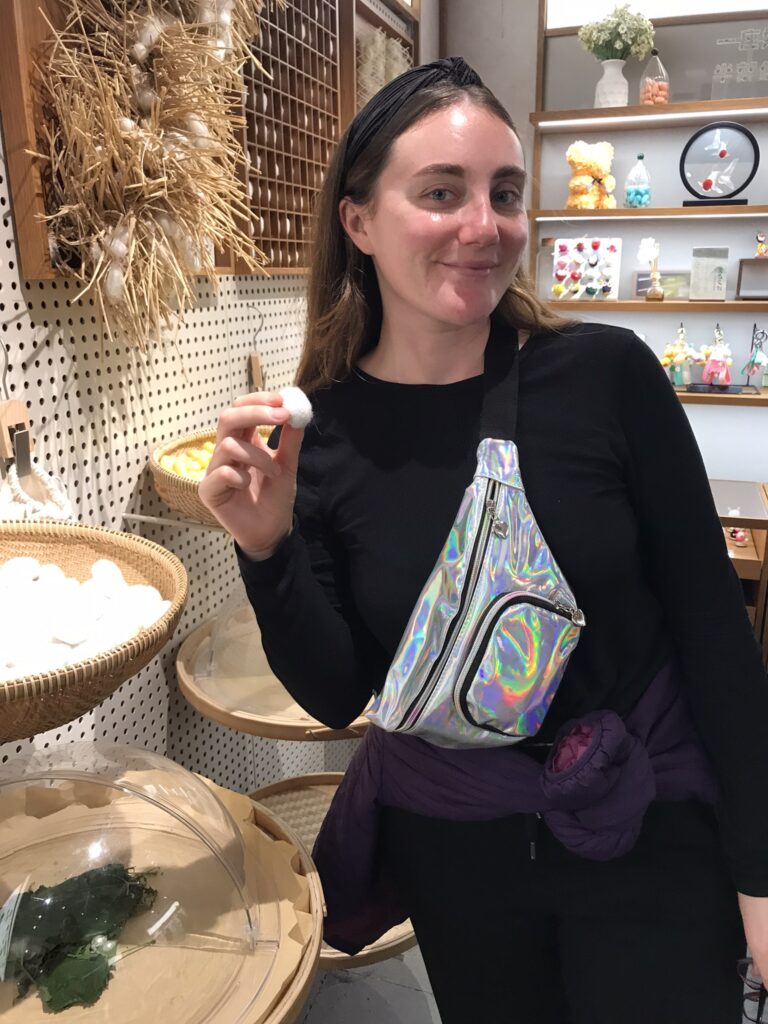
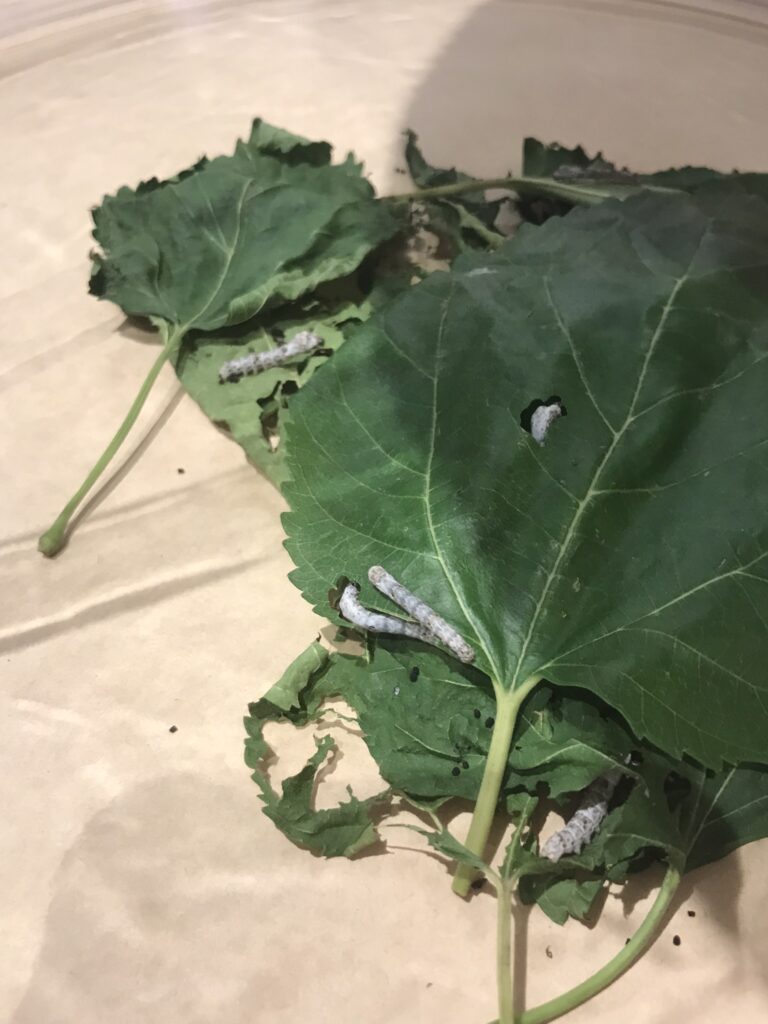
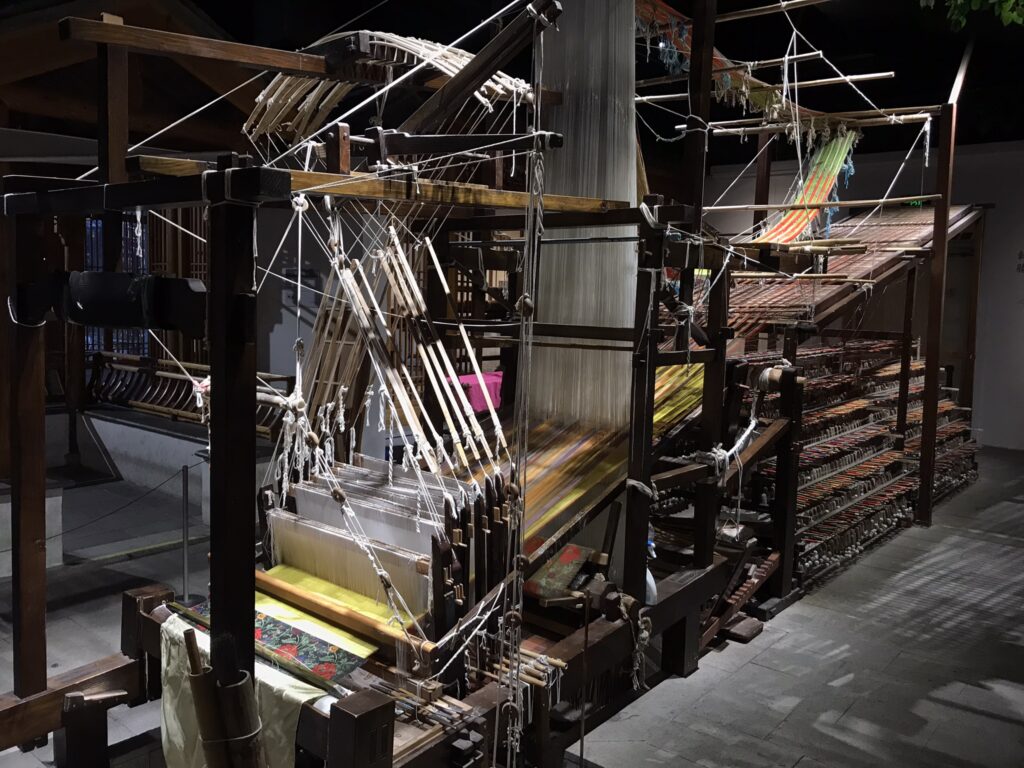
The Silk Museum is the best place to brush up on your silk history!
The best part about the museum is that there are live silk worms on display, nibbling at mulberry leaves in the gift shop, as well as silk cocoons and illustrations of the various life stages of the silk worms. Apparently silk worm droppings are used for chlorophyll extraction. Within the museum are a handful of silk shops, although we bypassed these quickly. There’s also an interesting gallery containing early models of weaving machines which look extremely complicated. China used these machines hundreds of years before they reached European shores.
Pingjiang Road – a picturesque and bustling street which preserves the original ‘water town’ charm of the city. Many hanfu wearers will undoubtedly be having photoshoots at all times of the day here. Pingjiang Road runs parallel to the canal with an assortment of old bridges linking the two sides of the water. The streets are packed with quirky cat and dog cafes with cats lounging on the roof, artisan shops selling rice wine in traditional pottery containers, elegant silk shops, silk weaving and embroidery craft shops alongside plenty of food and drink options such as Starbucks and independent places as well, sweet shops and street snacks galore. You might have to dodge the many hanfu photographer hustlers waiting around for business. Along the street you can find a number of ‘Pingjiang boxes’ – little street stalls that open up in the late afternoon. We found that crowds converge on the street in the afternoon and especially around dusk, with fewer crowds and a more relaxed vibe in the morning. To avoid the crowds, visit in the morning or brave the crowded streets for a thriving atmosphere at dusk.
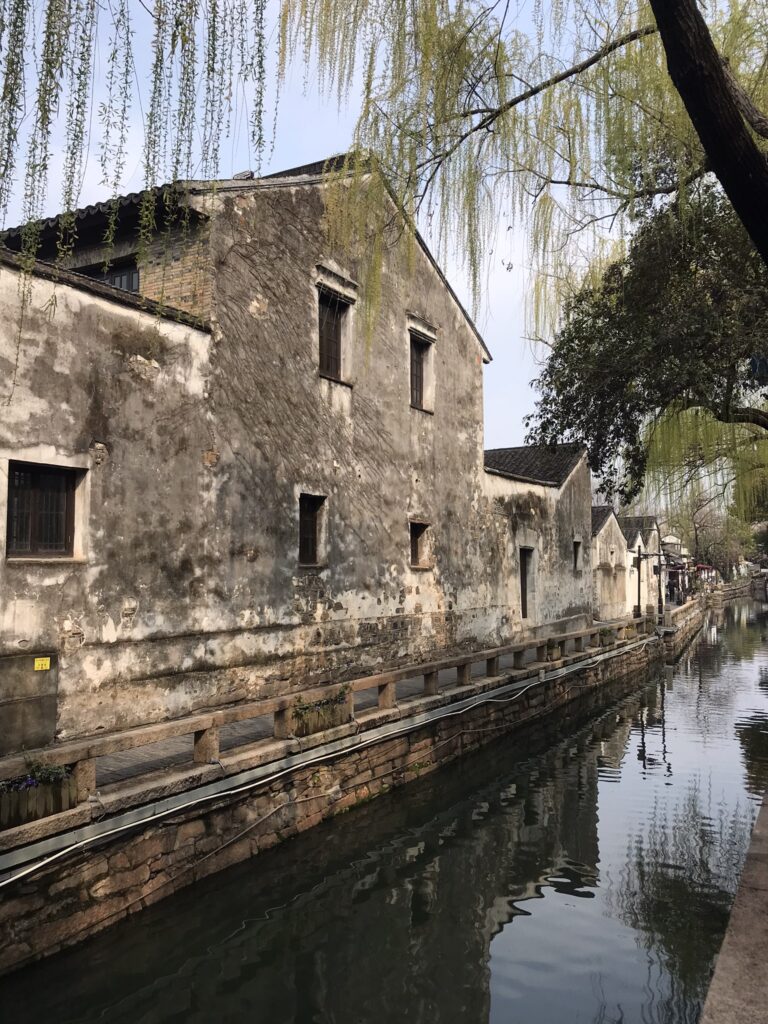
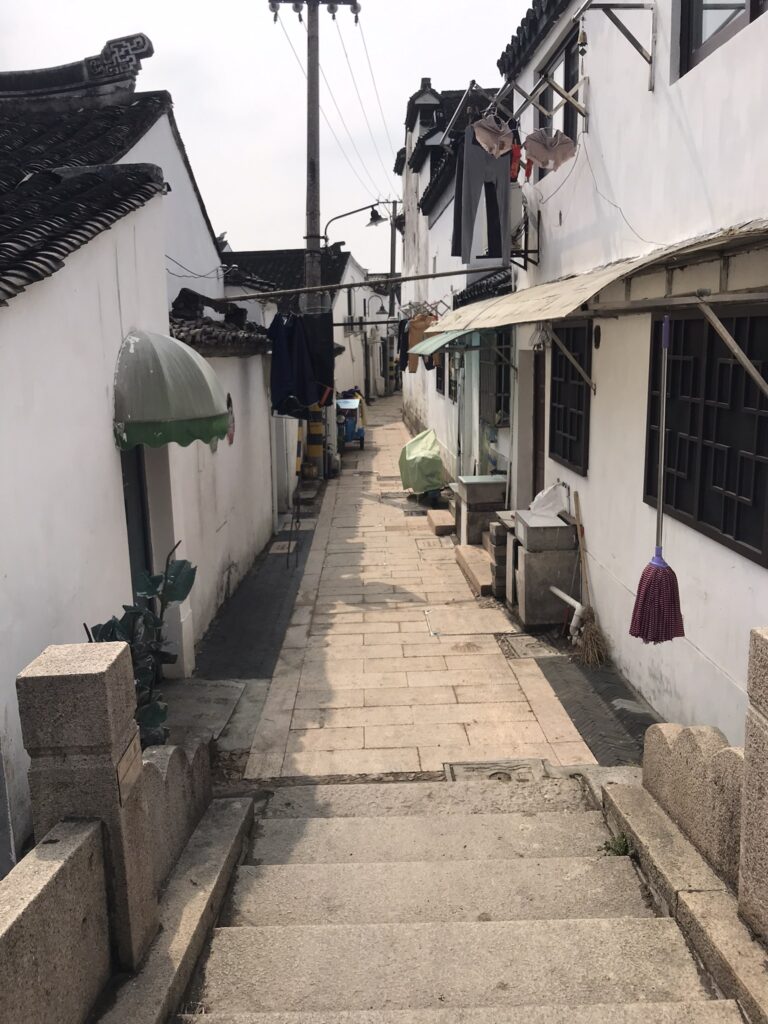
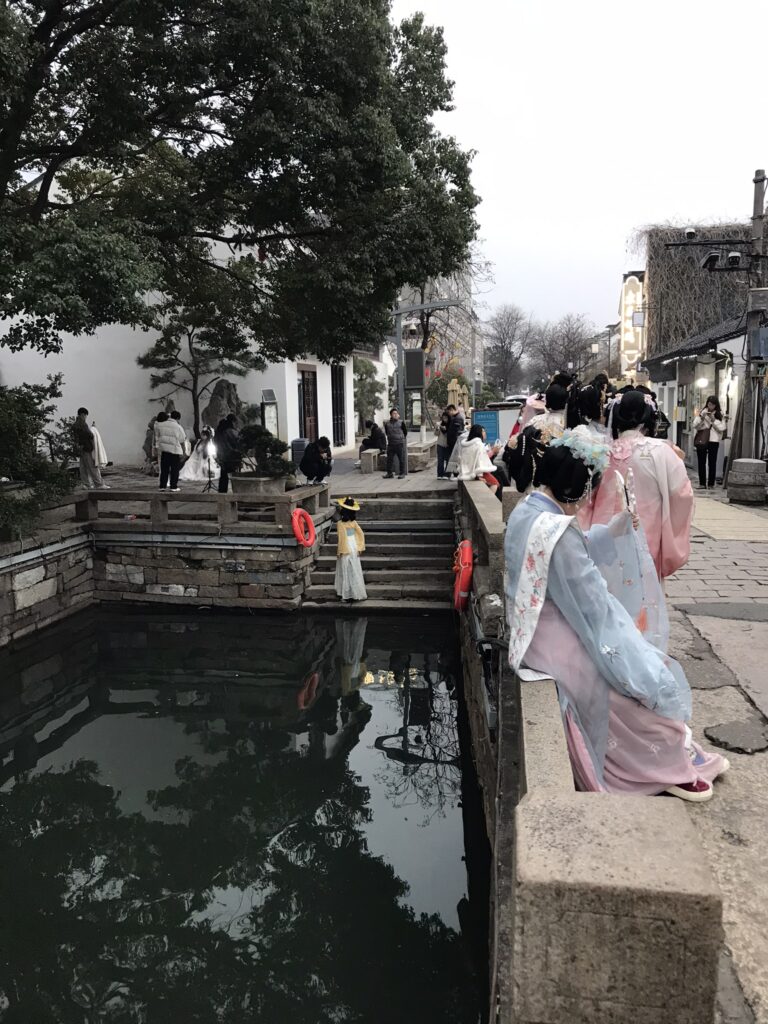
Interesting canal-side buildings, narrow side streets and the proliferation of hanfu wearers all add to the charm of Pingjiang Road
Temple of Mystery – an old Taoist temple that traces its history back to the Song Dynasty. Sadly we didn’t find out why it has such a striking and mysterious name. The temple has been rebuilt many times and currently stands near the bustling Guanqian Street shopping area. It’s worth a peek if you haven’t overindulged in Taoist temples already.
Humble Administrator’s Garden – one of the largest of the renowned gardens in Suzhou, this garden was originally commissioned by an imperial administrator in the early 16th century, hence the name. This is probably the best-known attraction in the city and is situated right next to the Suzhou Museum, which means crowds congregate both outside and in. You don’t need to pre-book for the Administrator’s Garden, just head to the ticket office and purchase a ticket using one of the screens (there are attendants there to help as you need to scan your passport, your passport is then your ticket in – there’s no physical ticket). It’s super touristy and crowded inside – you’ll probably end up stuck in a queue of people filing into a building or waiting to cross a bridge, dodging out of the way of budding photographers and posing visitors. Honestly, if you can take a photo inside without a single person in the background then you should buy a lottery ticket. Large tour groups really cluster up and clog the walkways and we thought the numbers should probably be capped or limited a little bit more. It’s not really a tranquil place for solitude and thought, although we still felt relatively calm after walking around having already experienced two smaller and quieter gardens. The garden is split into Eastern, Western and Central sections which each form their own garden within the wider complex. There’s a particularly informative video in the small exhibition room located at the rear of the garden explaining the concepts behind traditional Chinese gardens.
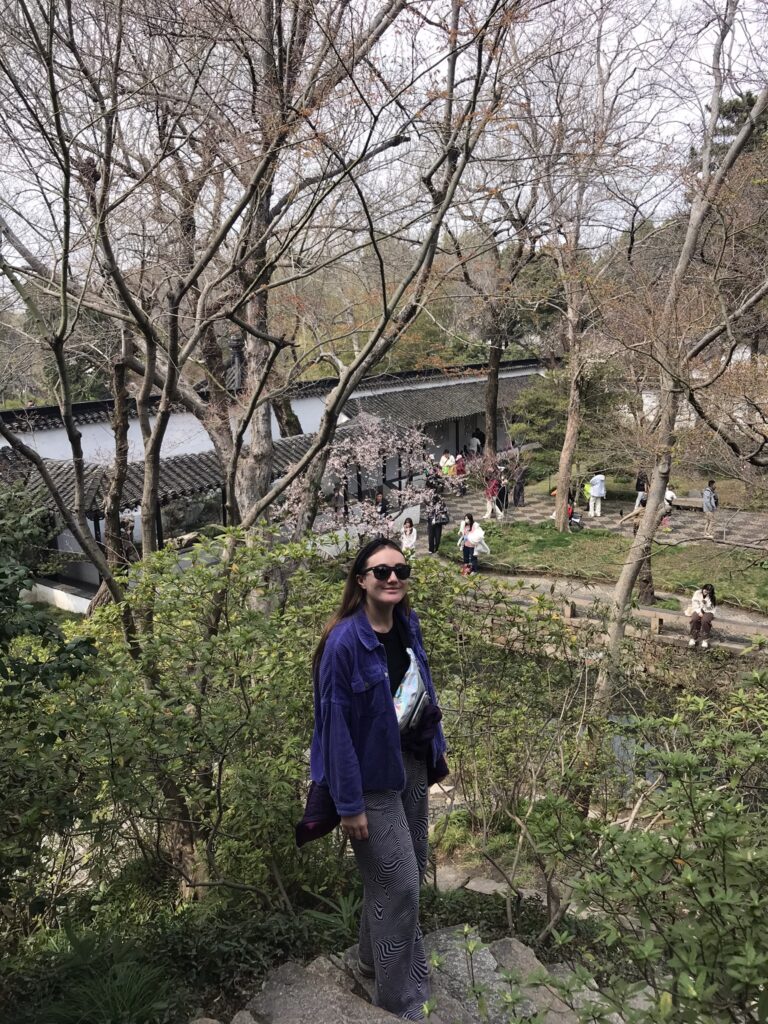
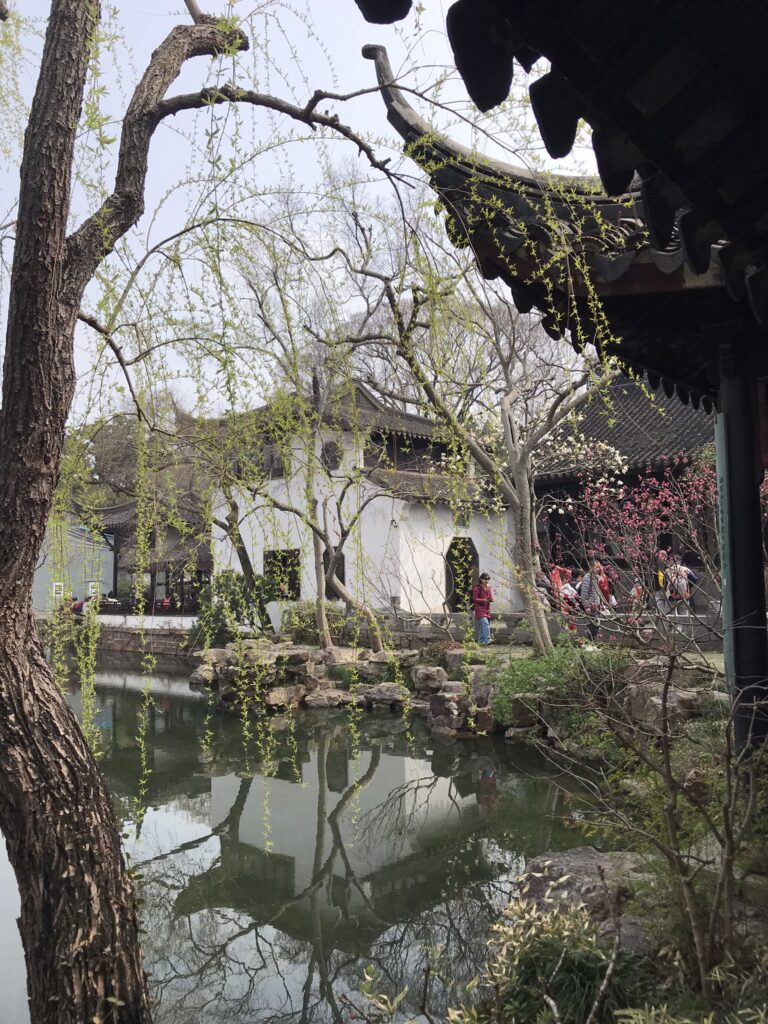
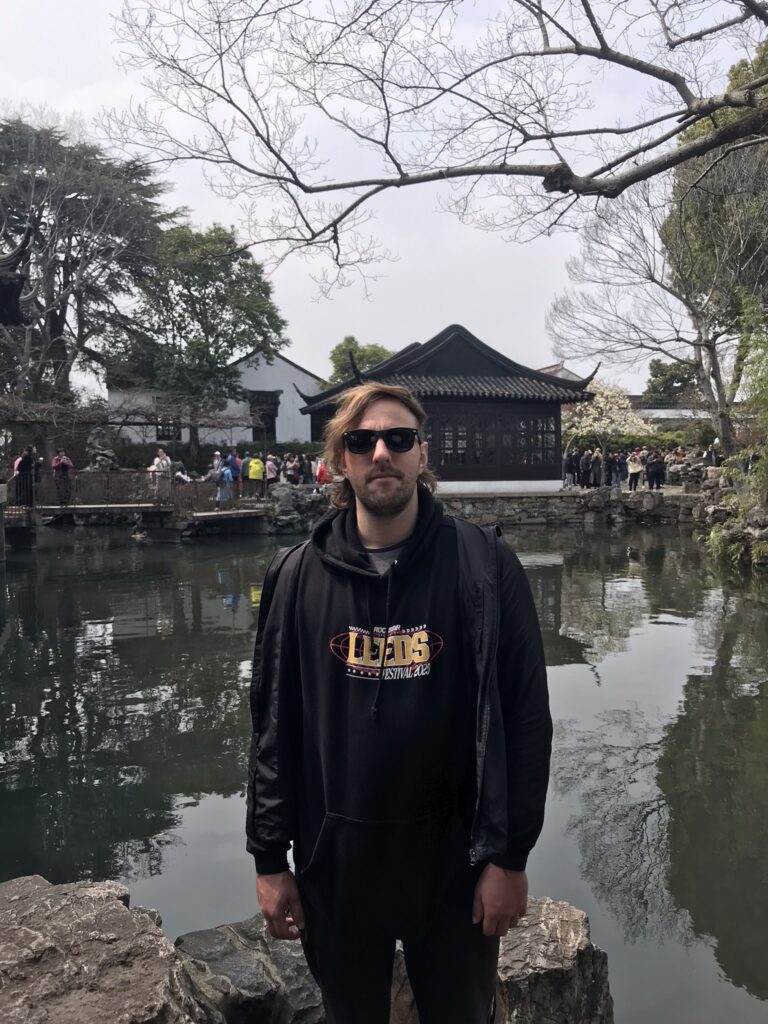
It’s impossible to get away from the crowds in the Humble Administrators Garden
Master of the Nets Garden – one of the smaller gardens open to the public in Suzhou. The garden was originally created/owned by a retired public official who then took up fishing – not sure if he was necessarily a ‘master’ but the name stuck. This garden is on a much smaller scale than the Humble Administrator’s Garden. Visitors need to purchase an entry slot via Alipay by scanning the QR code on a board outside the front entrance. As with other traditional gardens in Suzhou, this incorporates living quarters, tea rooms, a place for hosting guests (reception rooms), music rooms and libraries. The garden showcases the simplicity of natural landscapes and thought-provoking rock formations alongside delicate flowering magnolia and elaborate well-crafted rooms which are dispersed throughout. In the early 20th century, the owners raised a tiger cub in the garden and the tiger is depicted in various paintings and drawings, some of which are displayed in a gallery within the grounds – there’s even a black and white photo of the tiger with its eccentric owner.
Couples Garden – not much larger than the Master of the Nets Garden and much less visited than the Humble Administrator’s Garden, this is another UNESCO-listed typical Suzhou garden. It’s so-named as it is said to inspire the viewer to retreat with their partner to live a reclusive life together. This garden is situated along a side canal from Pingjiang Road and makes a nice small detour for those exploring this scenic part of town.
Tiger Hill Scenic Area – easily accessed by metro from central Suzhou, this 5A scenic area is a must-visit in my opinion. According to legend, King Helu of the Wu (a ruler in the 5th century BCE during the Spring and Autumn period) was buried on this hill and after two days a white tiger was sighted on the burial mound, hence the name. The main draw here is the enormous ‘Cloud Rock Pagoda’, a leaning pagoda at the centre of the scenic area which has an elevation of 47 meters and around 3 metres tilt. It’s been described as ‘China’s Leaning Tower of Pisa’ but in actuality it was built hundreds of years before the Leaning Tower of Pisa, having been constructed in the 10th century during the Song Dynasty. The pagoda is seriously impressive and a sight to behold from all angles of the scenic area. Although it has been stabilised, the structure itself has not been fully restored, which adds to its charm. Sadly it isn’t possible to enter or climb the pagoda – apparently every level is slanted except from the top layer, which is perfectly straight.
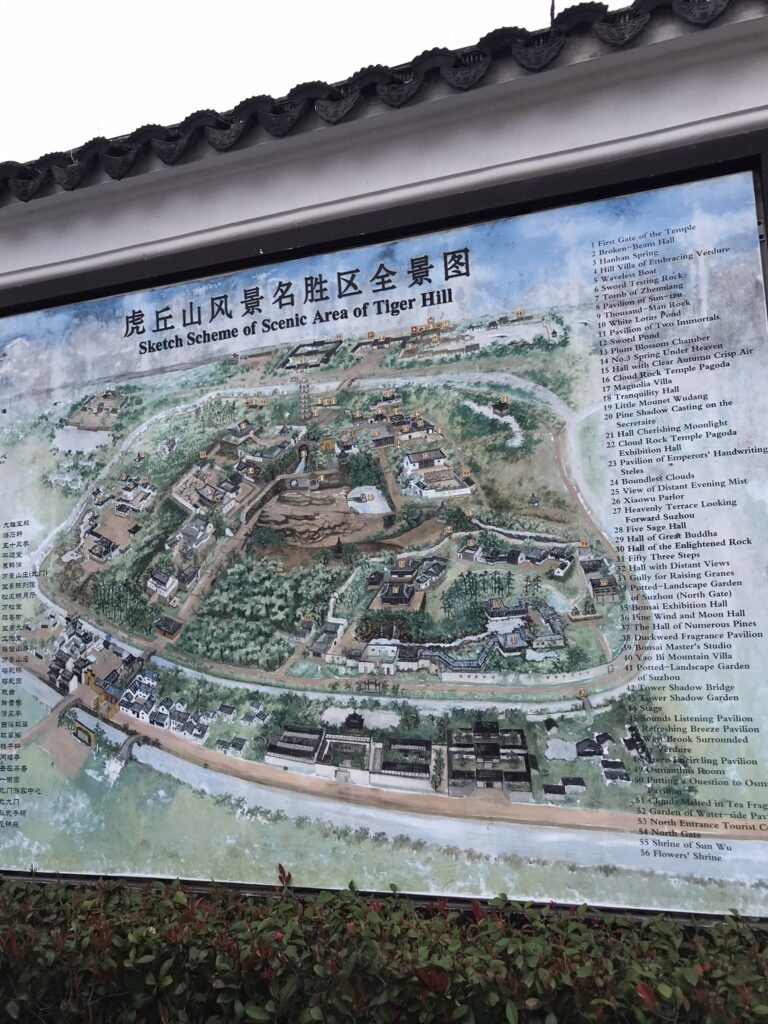
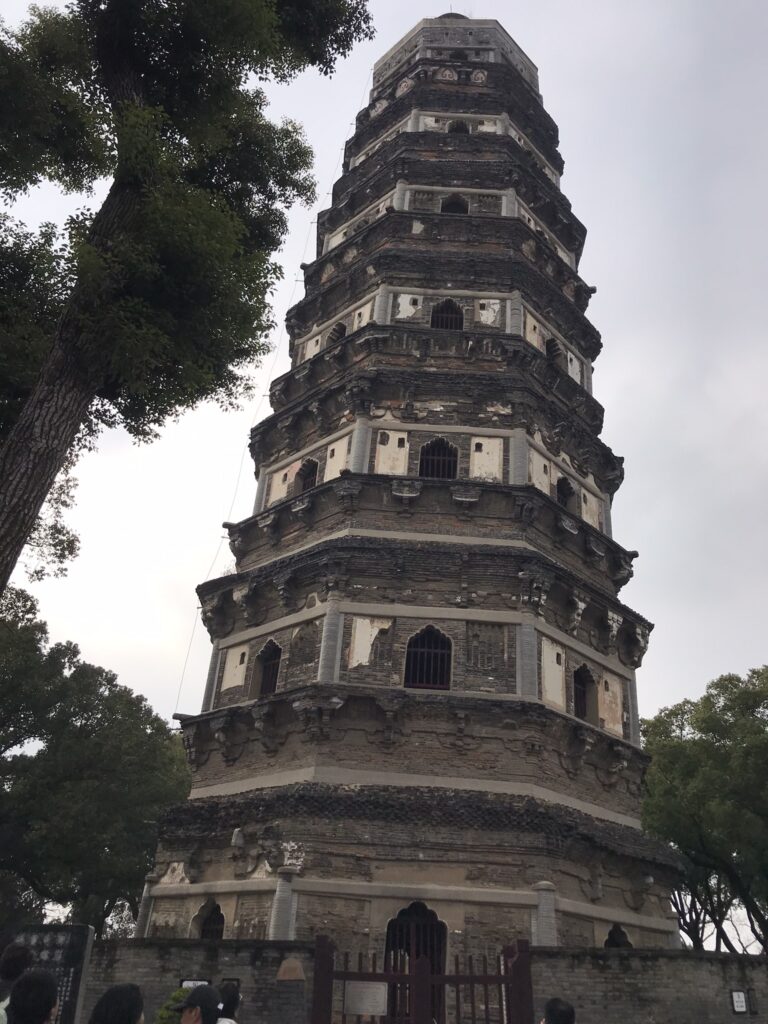
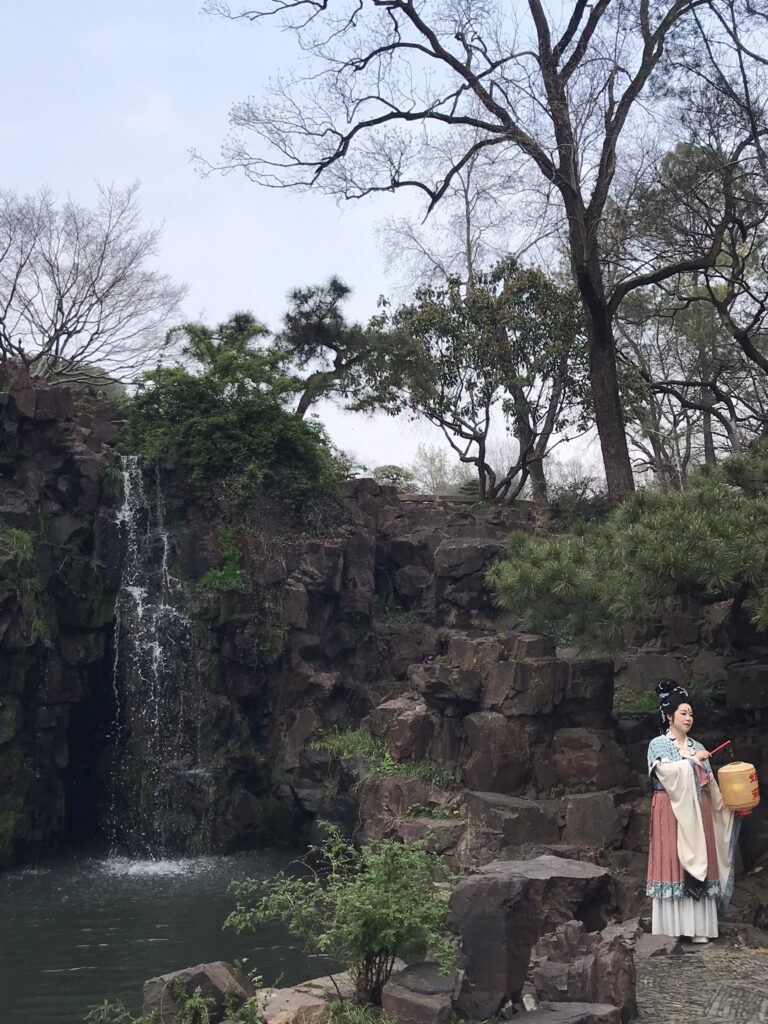
Tiger Hill Scenic Area is less crowded than other attractions in Suzhou
As well as the pagoda, there are some truly beautiful spots dotted around the scenic area including tea fields gently curving down the natural slope of the hill, masses of pretty purple flowers creating a fairytale-like scene and several gardens which seemed popular for hanfu photoshoots. It’s such a large area that it’s easy to get away from the buzzing crowd and find a secluded spot. Tiger Hill is not overflowing with tourists like Suzhou Museum and the Humble Administrator’s Garden; some of the trails you can wander around without seeing another soul, for at least a few minutes anyway. There’s also a Buddhist shrine at the top of the hill close to the pagoda.
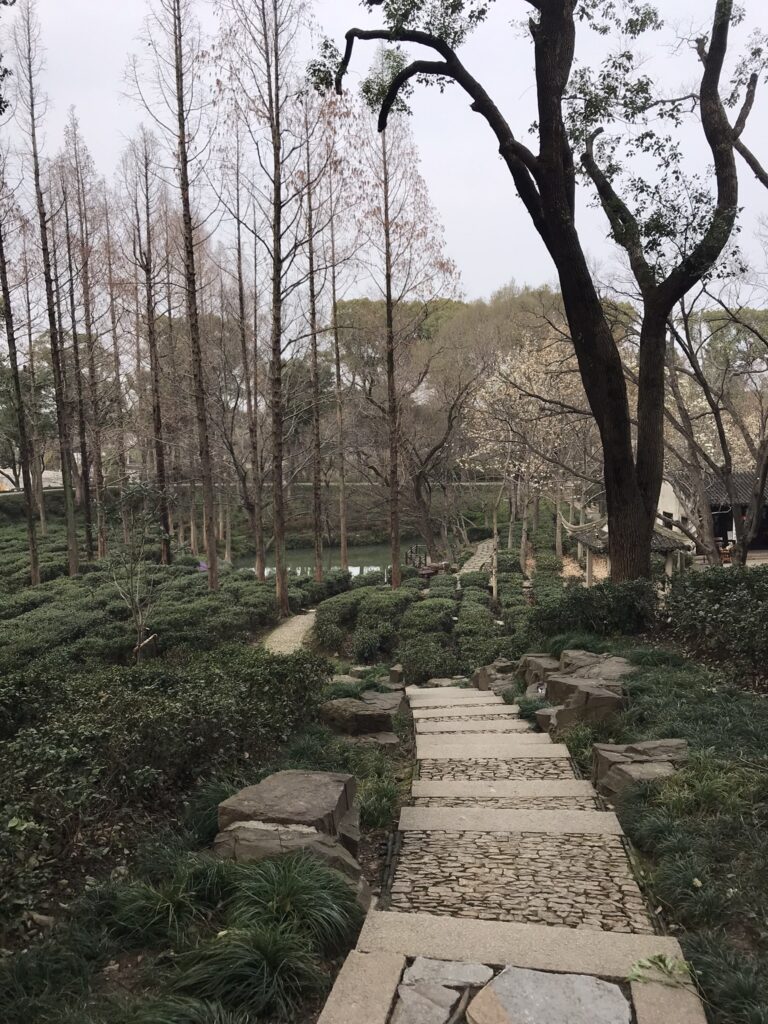
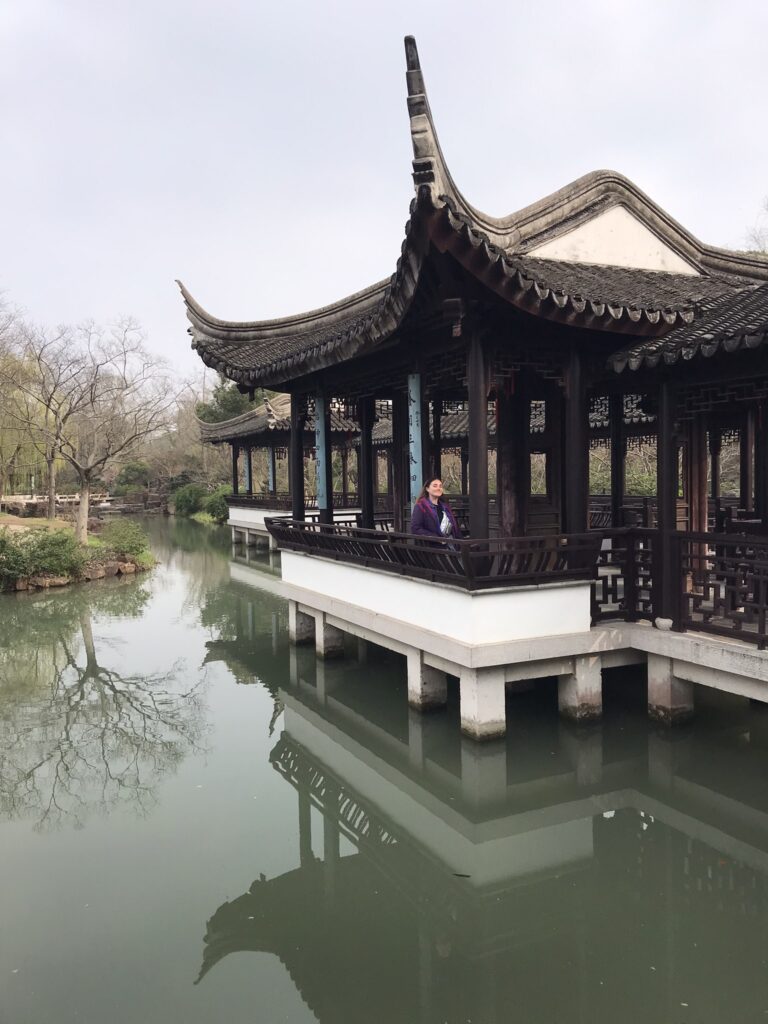
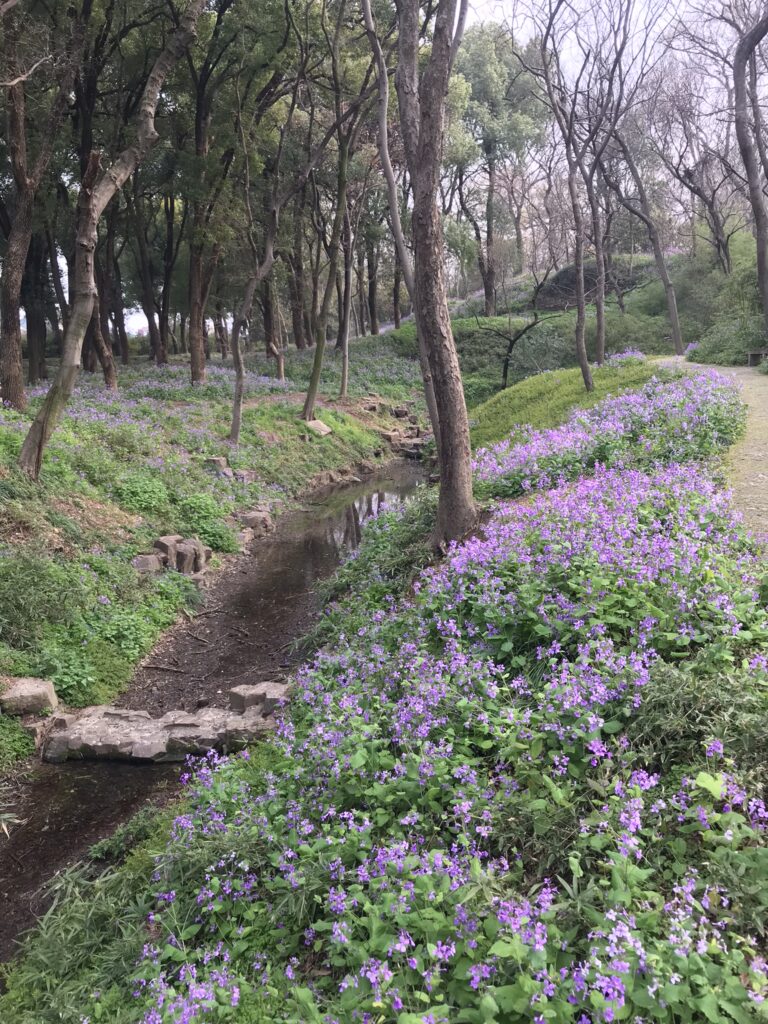
You really can immerse yourself in nature in the extensive grounds of Tiger Hill Scenic Area
Zhouzhuang Ancient Town
Reputed to be the most popular and best preserved of all the nearby water towns. Zhouzhuang Ancient Town was reputedly founded in the 11th century, although most (possibly all) of the remaining houses are from the more recent past i.e. the 18th century onwards. This water town in particular is crazy popular with domestic tourists (we’re talking about one of the top tourist destinations in the whole of China for the Chinese), although it remains relatively neglected by international visitors. The town gets slammed with domestic visitors during weekends and holidays in particular. The ticket price reflects the demand – the listed entry price for the town is 100RMB, but as we visited midweek it only cost 50RMB – an unexpected bargain! The town’s ticket office is located some distance away from the main entrance, at the parking lot and the area where buses from Suzhou drop off. There’s a shuttle bus from the ticket office to the town entrance for an additional cost but it’s only a 20 minute walk so I recommend walking.
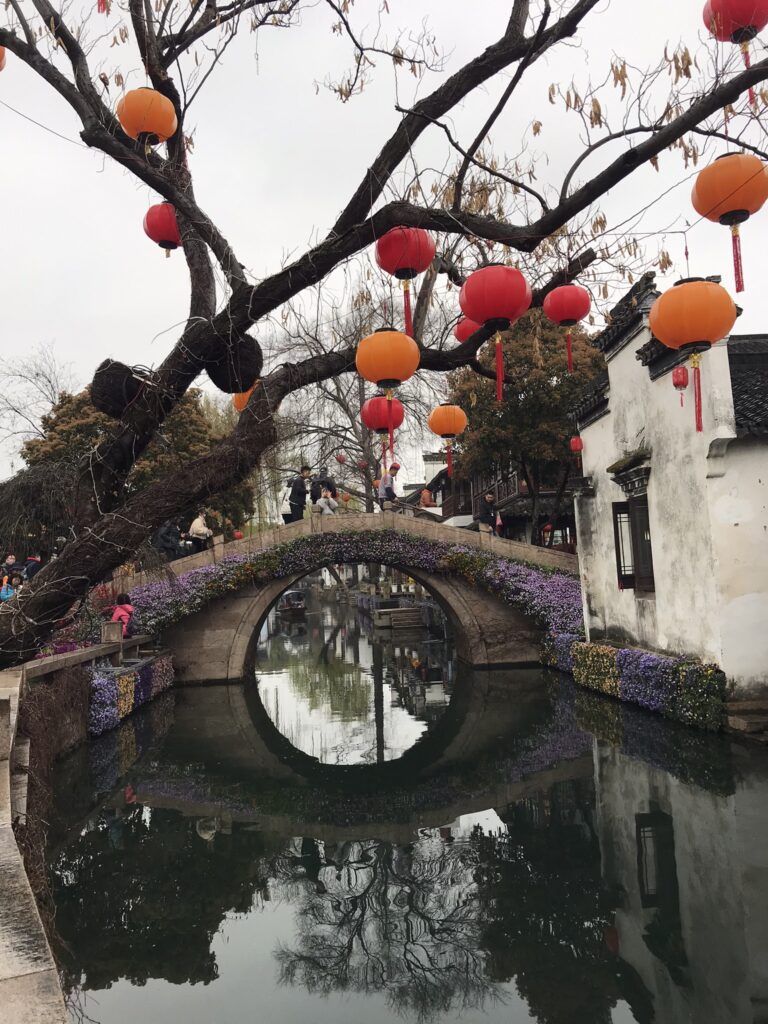
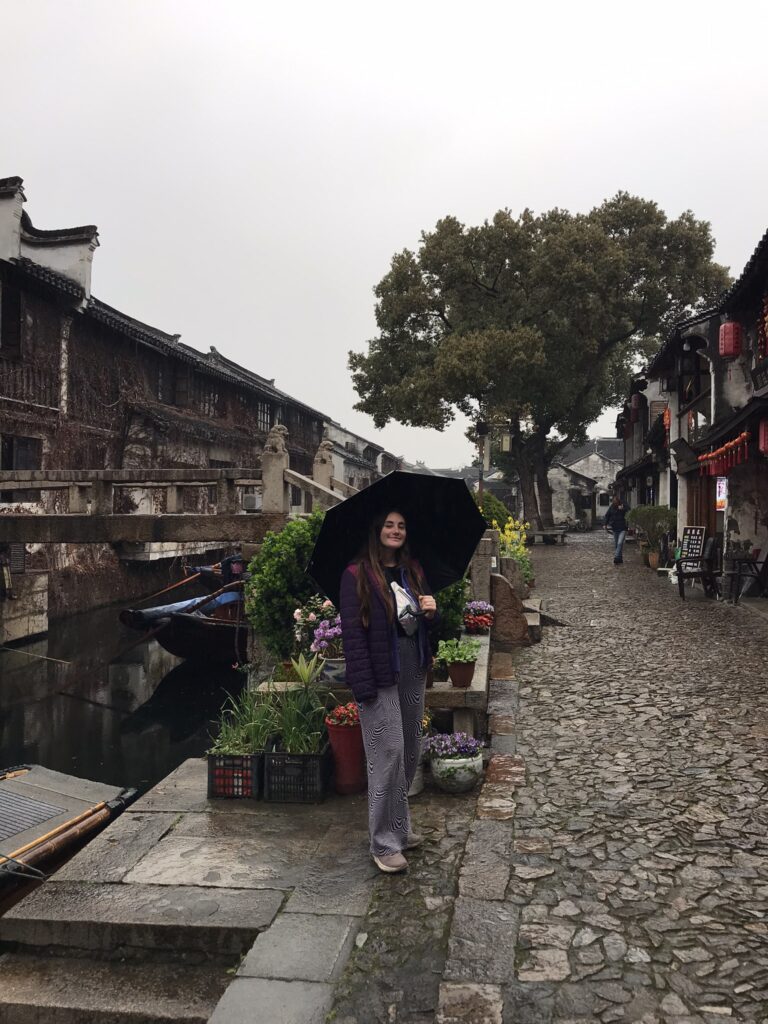
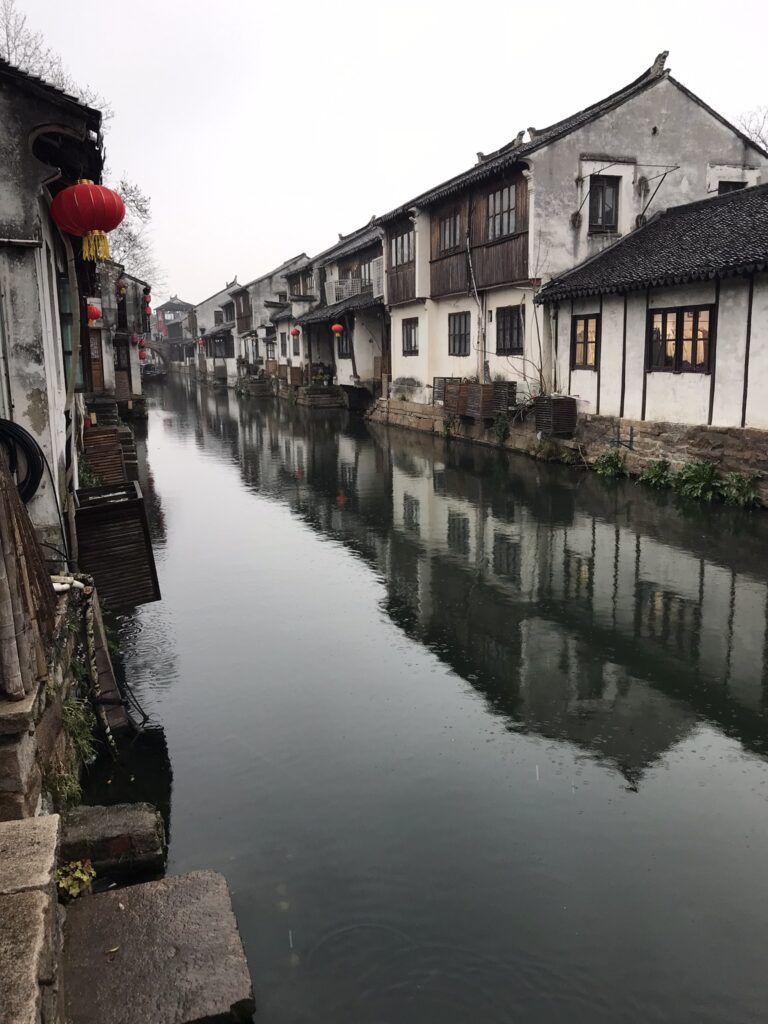
Zhouzhuang is a prime example of a traditional Chinese water town
It sounds counter-intuitive but our top tip for visiting Zhouzhuang is to pick a day when the weather isn’t very nice, as this greatly decreases the crowds! We visited on a rainy overcast midweek day in mid-March and crowds were minimal. At points we were the only people around for a brief moment. There are more secluded areas within the water town where you can escape from the large tour groups which tend to bunch together and clog the narrow lanes. Inside the ancient town are many artisan boutique-type shops selling rice wine, bamboo art, woven bags, horn combs, hanfu hire places and traditional silk dresses, with restaurants overlooking the canals offering local cuisine and guesthouses tucked away from the main routes. Most importantly there are no beeping mopeds, bicycles or silent electric cars in sight. The whole area is pedestrianised. We heard beforehand that the restaurants and eateries in the ancient town are overpriced, however this wasn’t particularly the case in our experience – we managed to find somewhere that specialised in dumplings and wontons for a reasonable price.
Unlike many other areas which have been lost to time or destroyed to build modern houses and apartment blocks, Zhouzhuang retains its original charm and character. The idyllic town is bisected with many canals, picturesque bridges and heritage houses. A top activity for domestic tourists is to take a boat ride along the canals, although we expect that the waterways become clogged with boats on busy days. A great cultural activity which is completely free of charge is to visit the Opera House Theatre for a kunqu opera performance. Kunqu originated in Suzhou in the 14th century and claims to be one of China’s oldest musical theater forms. This was particularly memorable for us as we stood outside in the courtyard during torrential rain listening to the delicate melodies and elegant movements of the female performer wearing highly stylized makeup. Kunqu opera has UNESCO heritage status and is well worth experiencing for free when in Zhouzhuang.
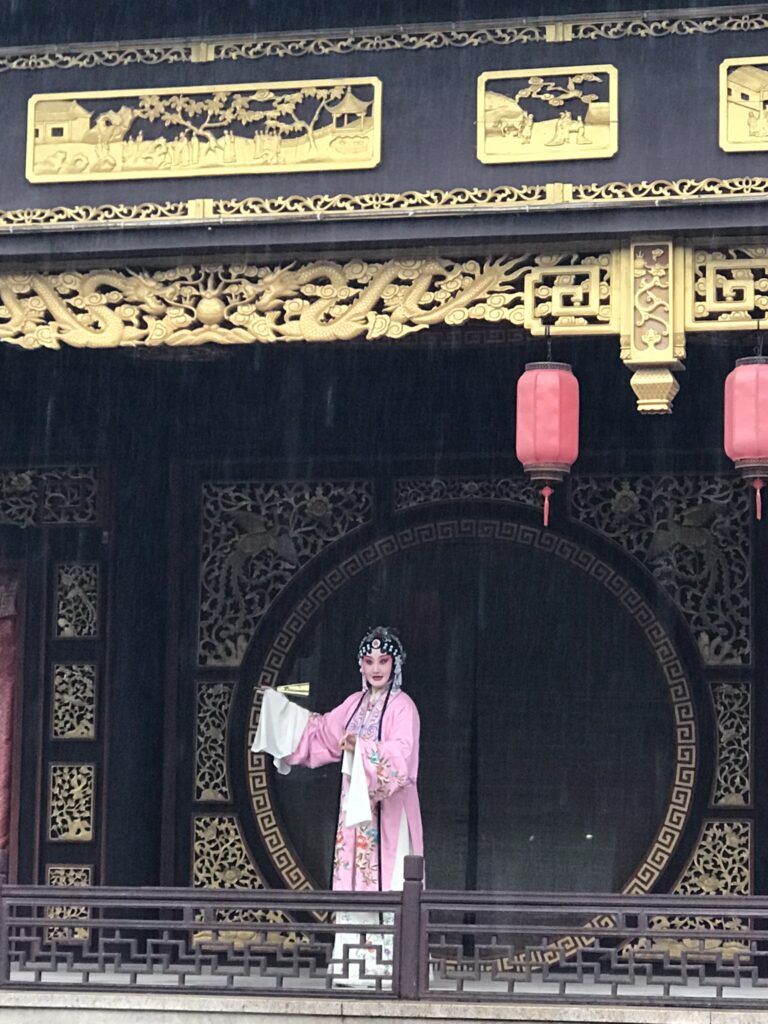
The Kunqu performance in Zhouzhuang was mesmerizing
From Suzhou, Zhouzhuang can easily be reached by bus from the North Square bus station which is next to Suzhou Railway Station. It’s a special tourist service, timings seemed to be a tad irregular on weekdays however perhaps the service is more regular at weekends. We were lucky and arrived a few minutes before the bus was due to leave, so had no wait. Just ask the guy at the ticket counter (using translate of course) for a ticket to Zhouzhuang Ancient Town – it should cost around 13 RMB for a one-way ticket. Make sure to scan the QR code at the front of the bus as this has the return bus times. Don’t forget to take note of the return bus times – you can ask at the Zhouzhuang bus station ticket office as they also have the bus timings. We mistimed the return bus and just missed it – don’t make the same mistake as us. Thankfully, there is another easy way to reach the water town; by taking the Suzhou metro line 4 to the final stop at Tongli and then taking a Didi taxi the rest of the way to Zhouzhuang (the Didi from Tongli to Zhouzhuang cost 41RMB). The bus is slightly cheaper and faster, but this method is also tried and tested by ourselves. Those who get an early start may also be able to visit Tongli water town as well as Zhouzhuang on the same day using this method.
We visited Zhouzhuang as a day trip. If you do decide to stay overnight in a guesthouse, make sure to arrive after 9pm as you can skip the admission fee and get free entry to the water town this way.
Foodie Places
Xinzhenyuan Zhouzhuang Branch – the view from the upstairs dining area over the historic higgledy-piggledy rooftops was ace. We particularly enjoyed the rose flavoured dumpling, red kidney bean soup and the aptly named ‘nectarous elixir of osmanthus rice milk under the moonlight, as pure as Taibai’, a non-alcoholic milky rice drink. 90RMB for lunch wasn’t terrible.
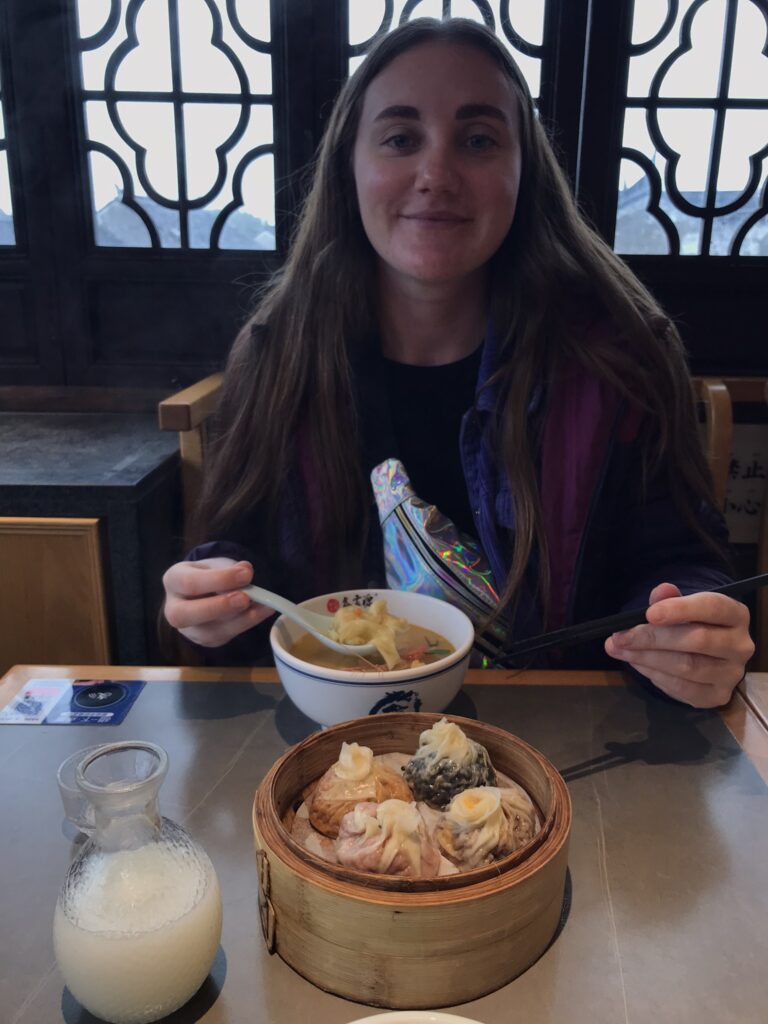
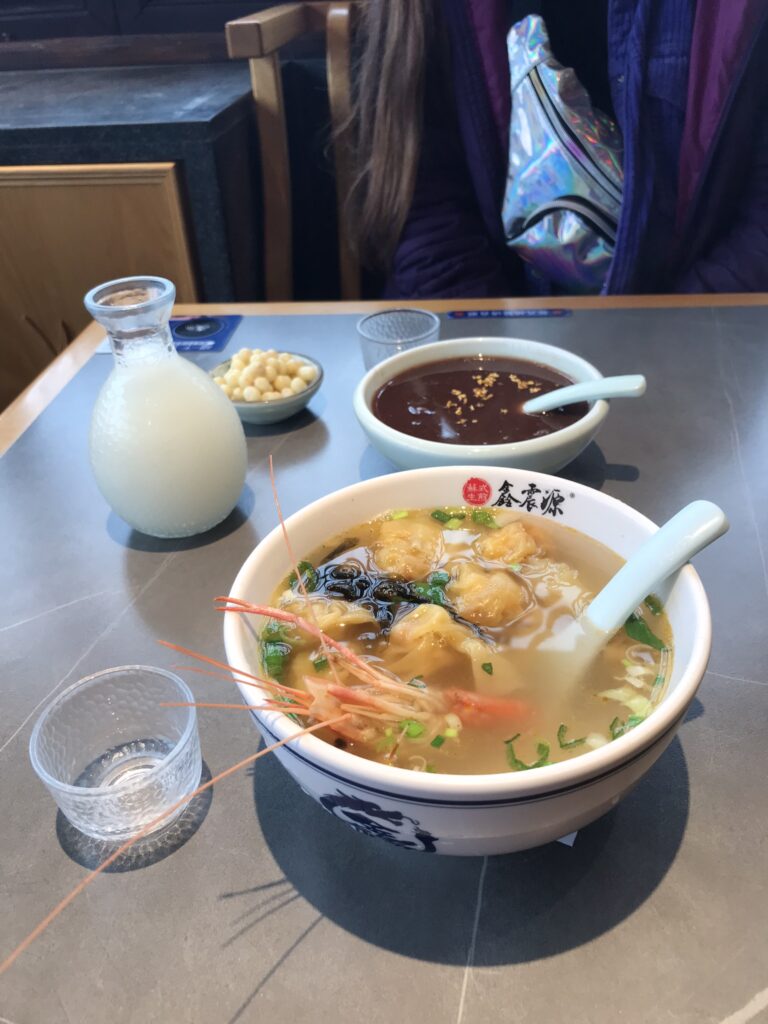
For a low-cost lunch and some enchanting elixir head to Xinzhenyuan Zhouzhuang Branch in Zhouzhuang
Click here for our full walking tour of Zhouzhuang!
Nanjing
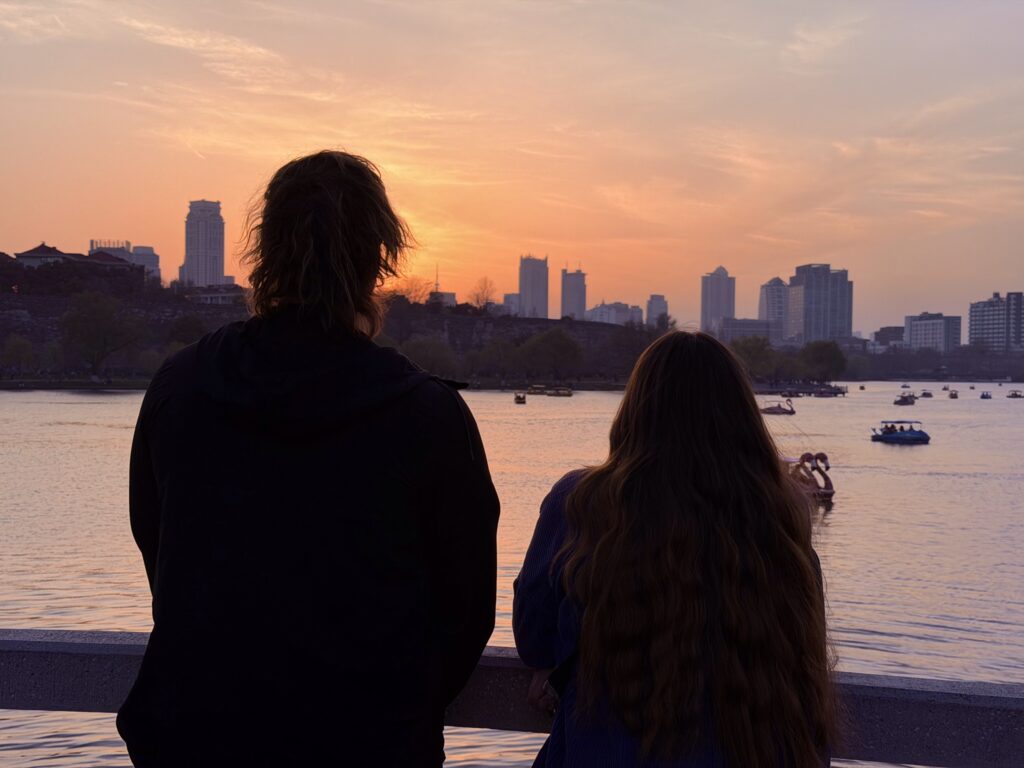
Recognised as one of the four great ancient capitals of China, Nanjing literally translates as ‘southern capital’, while Beijing is ‘northern capital’. A city which has played a key role in China’s history over the ages, it was the centre of many regional kingdoms and became capital of China in the early Ming dynasty (before the capital was moved to Beijing). It was the seat of the Heavenly Kingdom during the Taiping Rebellion and national capital again during the Republic of China period in the early 20th century, before the capital was returned to Beijing in 1949.
Internationally the city is synonymous with the Nanjing Massacre, when Japanese invaders took control of the then-capital and brutally murdered 300,000 people in a matter of 6 weeks in 1937. Westerns may also recognise the city by its colonial era name: Nanking. It’s the location of the notorious unequal Treaty of Nanking, signed between the British and Chinese in 1842 which led to the ‘century of humiliation’ for China. However these awful events don’t define the modern city. Nanjing is a vibrant and bustling place, one of the few cities remaining in China that still has intact city walls and with plenty of history, culture and scenic areas to explore. It is generally regarded as a very pretty city – particularly the Xuanwuhu scenic area.
Nanjing is a natural stopping point on the route between Shanghai and Beijing. Strangely, however, we saw very few other foreigners here – we could probably count the number of western faces we saw on one hand. There are plenty of attractions to keep visitors busy for a few days, from historical sites such as Nanjing Museum (a world-class institution), Presidential Palace (for more in-depth information about the Taiping Rebellion and Republic of China), Purple Mountain (Mausoleum of Sun Yat-Sen, Ming Xiaoling Mausoleum) and the City Walls, as well as leisure activities in the Laomendong area, Confucius temple area and at Xuanwu Lake. Attractions are spread out across the whole city so it’s best to base yourself near to a metro station. We had problems in the city with the hordes of electric bikes clogging up pedestrian walkways and creating a hazard on the streets – this was a problem in several places we visited in China but it was particularly bad in Nanjing.
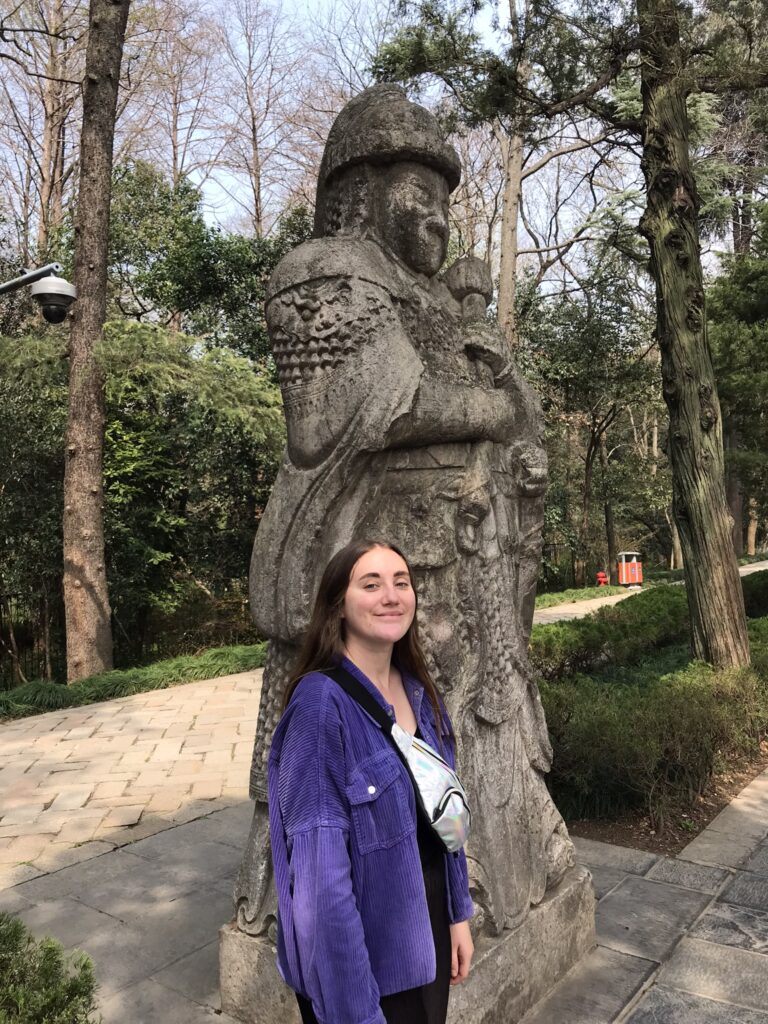
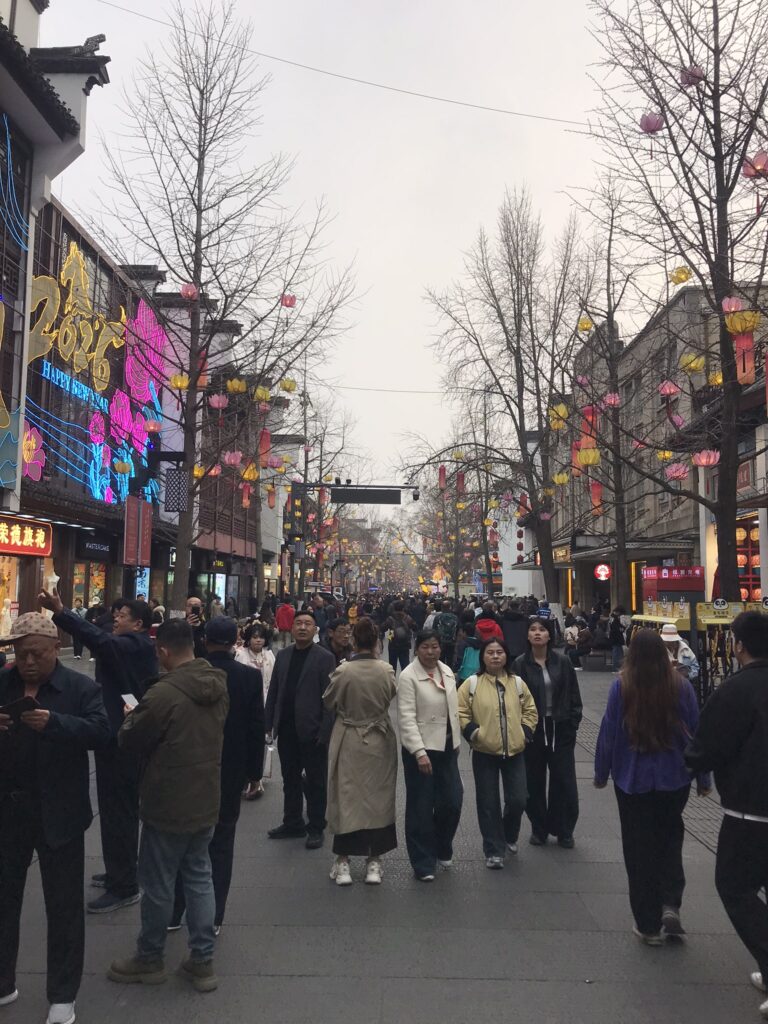
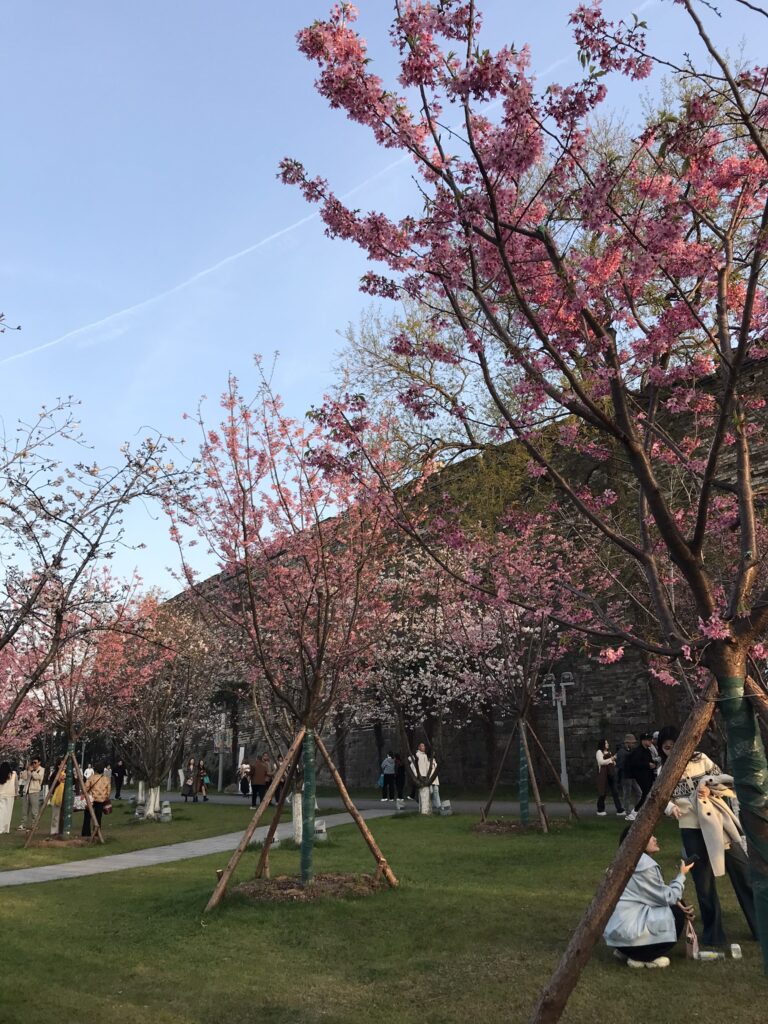
Highlights of Nanjing: Ming Tombs at Purple Mountain, the Confucius Temple area and the city walls at Xuanwu Lake
Accommodation
Homeinn Plus Hotel (Nanjing Confucius Temple Baixia Road) – located near the Confucius temple area, it was slightly further away from the metro than we’d have liked and the entrance is a tad bizarre as it’s not directly on the street; instead you have to venture down an alley and pass the entrance to a seedy-looking billiards club. Despite this, the hotel seemed professional and clean and the room itself was really nice – spacious and comfortable for the price. Generally this place was pretty decent for a few nights. Wifi was also accessible here without a Chinese phone number. FYI: Homeinn belongs to a budget hotel chain which has a good reputation in China.
Foodie Places
Bread channel – a European-inspired bakery with the added twist of serving up Chinese style baked goods too. The bread is actually real bread (hallelujah) as opposed to the unnaturally sweet stuff that you tend to find in Chinese convenience stores! The cinnamon buns were a real treat plus the server could speak English which was a perk. This place is somewhat expensive however.
Yingtian daming wangchao Nanjing cai (Laomen east branch) – just outside the crazy busy Laomendong area, in fact just a few minutes walk away from the epicenter of the crowds. This restaurant specialises in Jiangsu fare such as whole fried fish, roasted duck and a myriad of other dishes which we didn’t have the nerve to try. It was relatively budget friendly and we particularly enjoyed the stir fried pork with peppers and roast duck.
Jiming steamed dumping daxinggong kexiang alley branch – a proper locals joint which has been open since the 1950’s. Unfortunately we couldn’t use Alipay to order and instead had to translate the menu and order at the counter. The noodles with pork ribs were super filling and tasty, however it can get crowded at lunch time on weekends.
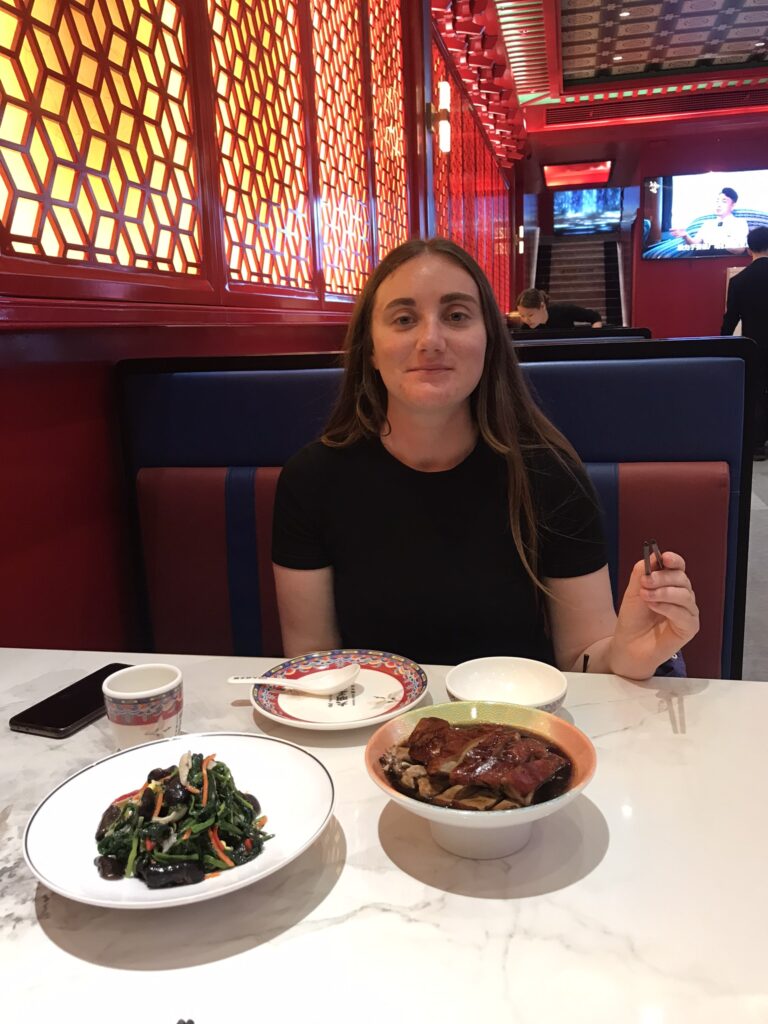
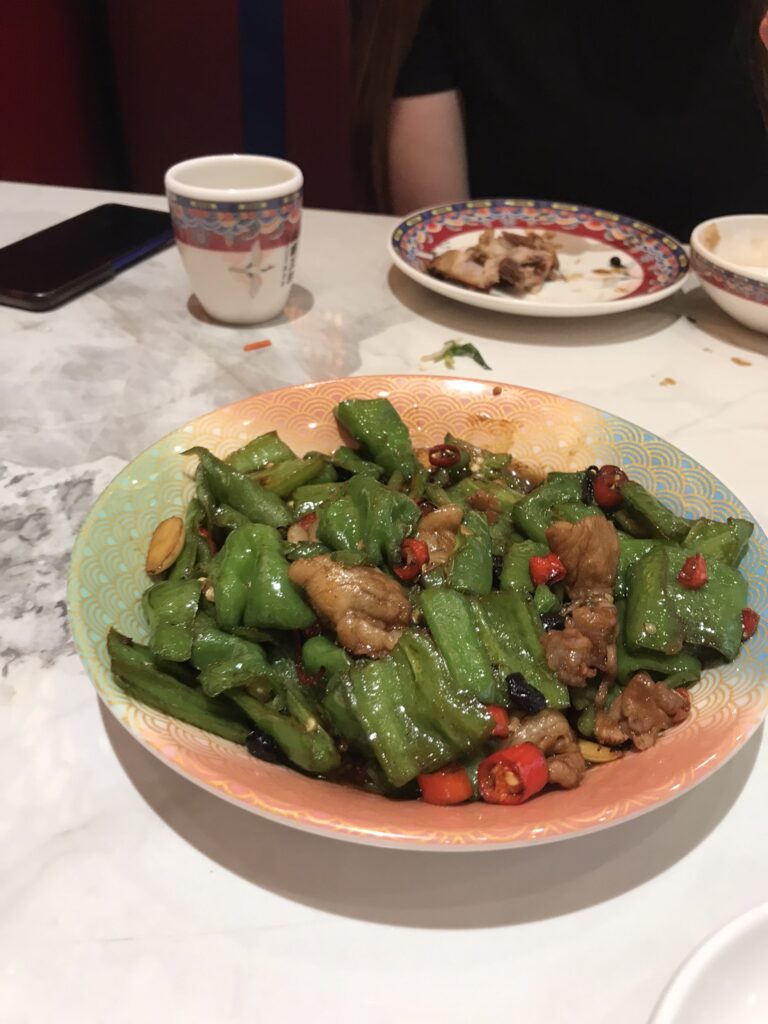
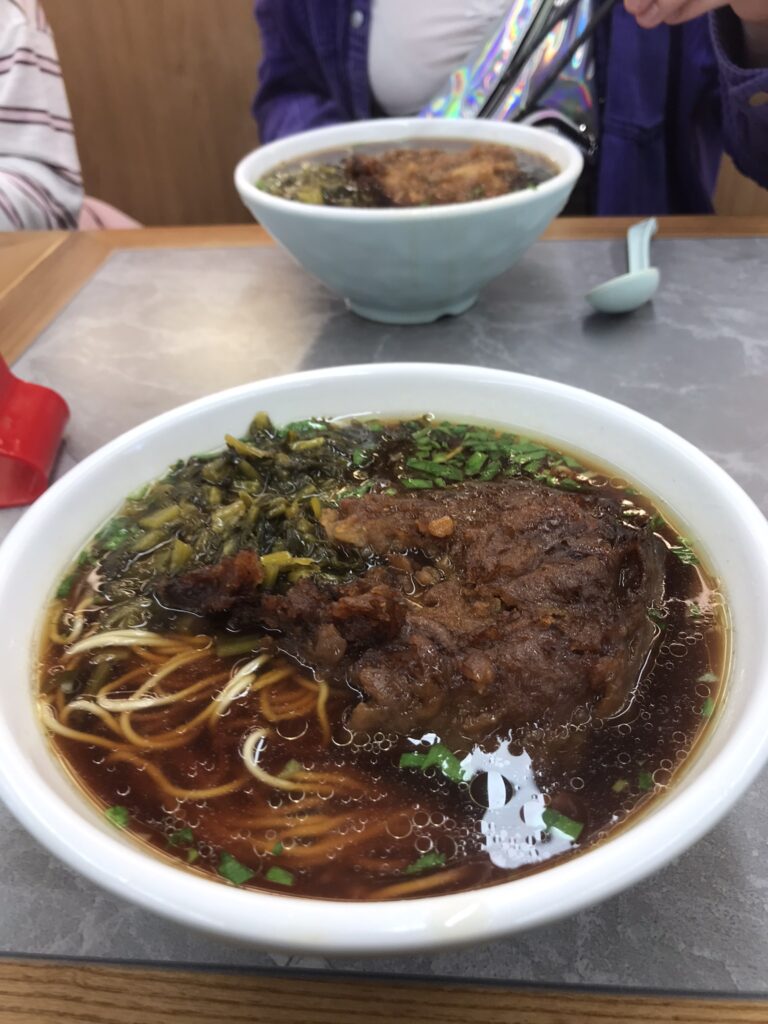
Jiangsu cuisine at Yingtian daming wangchao Nanjing cai (first two photos) and Jiming steamed dumping daxinggong kexiang alley branch
Tastien China Hamburg (Baixia Road Branch) – a chinese fast food chain – the meal deals are super cheap and include a drink. Weirdly, unlike in other countries, fast food isn’t actually served very quickly in China. There’s a lot of waiting around until your order is ready. A hassle-free choice if you’re craving unhealthy western fare such as chicken burgers.
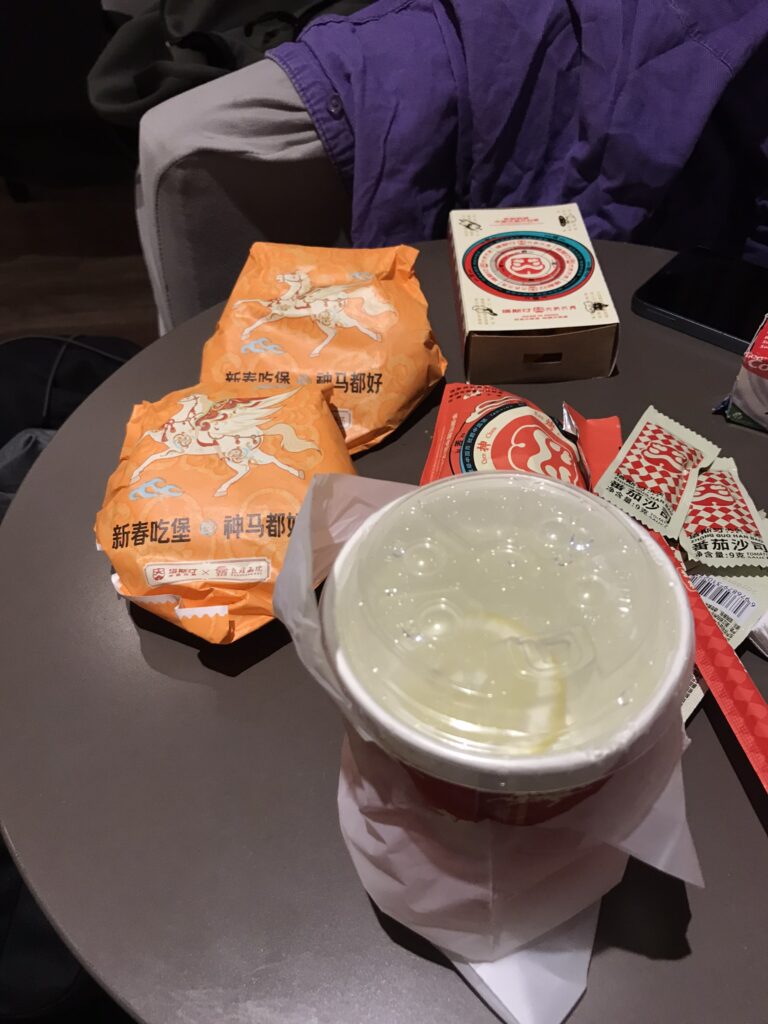
Sometimes you just need some fast food – it was interesting to try Chinese fast food at Tastien China Hamburg
KFC outside Sun Yat-sen’s mausoleum – this seemed like the cheapest and safest option on Purple Mountain as most other retailers in the vicinity of Sun Yat-sen’s Mausoleum seemed to be overpriced and generally not of great quality. If you’re looking for a snack while sightseeing at Purple Mountain there are a plethora of stalls selling sausages on sticks (wildly popular), instant noodles, snacks and other street food treats.
Ganpopo Jiangxi side dish (nanjingdian) – we mistook this restaurant for serving Jiangsu cuisine when it actually specializes in Jiangxi dishes. We quickly discovered that Jiangxi food is super spicy, with generous handfuls of sliced chillies. We made a bit of a blunder after ordering ‘duck three ways’ (we thought it would be three cuts of meat – oops!) and found, much to our initial dismay, that it actually consisted of duck feet, intact duck heads chopped in half (including brains) and mysterious other duck bones with morsels of meat. It’s interesting to try but not for those with weak stomachs or the tender hearted. It wasn’t easy to find ‘normal’ food on the menu and most customers were happily gnawing on innards and feet. A good place to try cuisine from a different province, however I definitely recommend ordering with low or zero spice (we ordered low spice and as experienced spice eaters it was still way too much). The waiters tried to help us order which was much appreciated and assisted with getting utensils and rice.
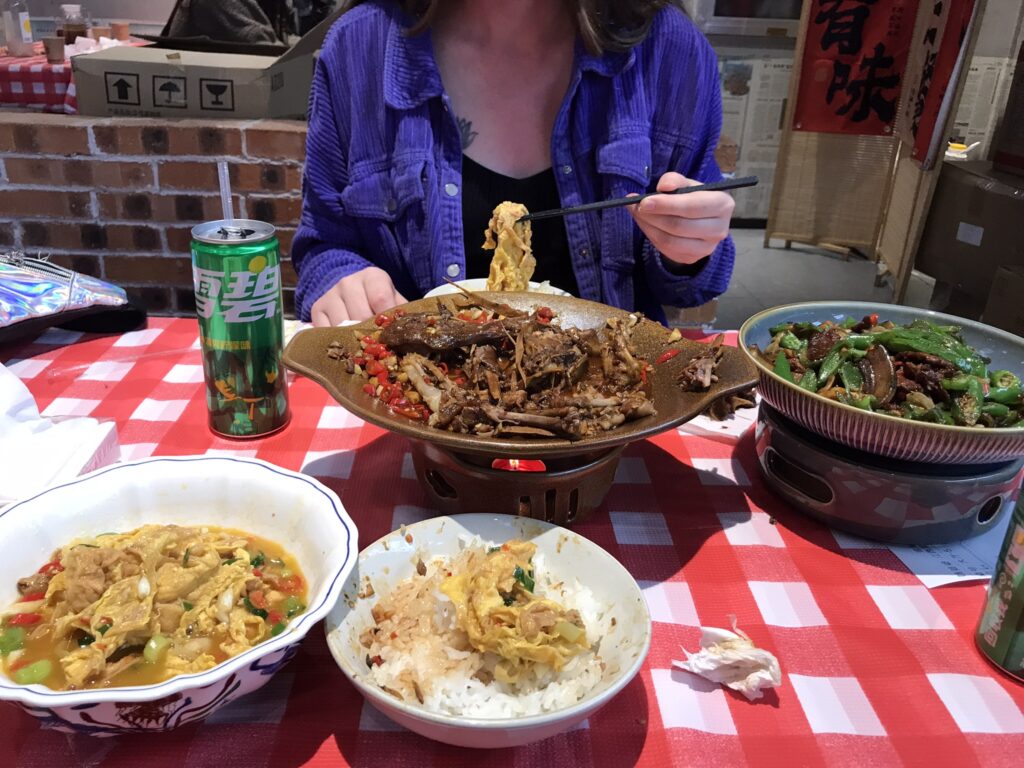
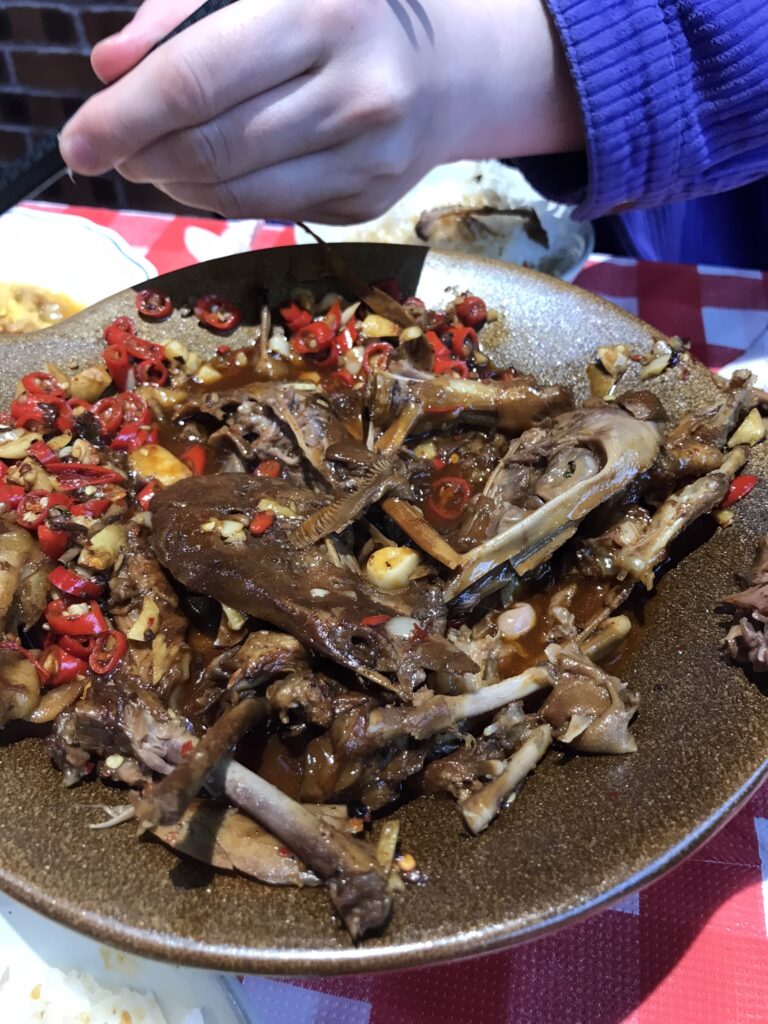
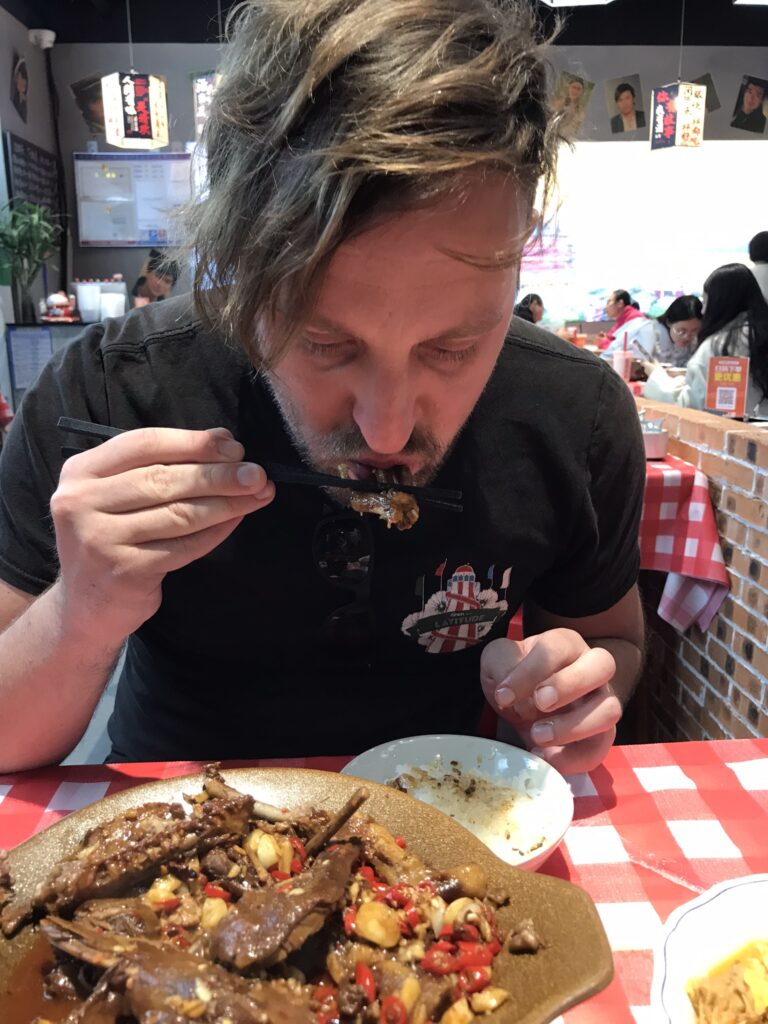
We certainly learnt to be more careful with what we ordered in restaurants after accidentally ordering duck head and feet at Ganpopo Jiangxi side dish
Activities
Nanjing Museum – a standout history museum guiding visitors through thousands of years of Chinese history in a clear and concise manner with exhibits in chronological order. There’s a summary of each period at the beginning of each display if you’re not too sharp on your Chinese dynastic history.
The galleries are super crowded, perhaps because it’s free to visit with only a reservation on WeChat required (make sure you book in advance, you won’t be able to get in without it). I’ll be honest, it was difficult at points to see the artefacts on display as crowds cluster around the more interesting/renowned items such as the full jade burial garment with gold thread from pre-Tang dynasty. Massive group tours are also cumbersome as usual. Expect a certain amount of jostling for position when viewing the items on display. The amount of people inside can be a tad frustrating and annoying if you prefer not to be completely swamped with other museum goers.
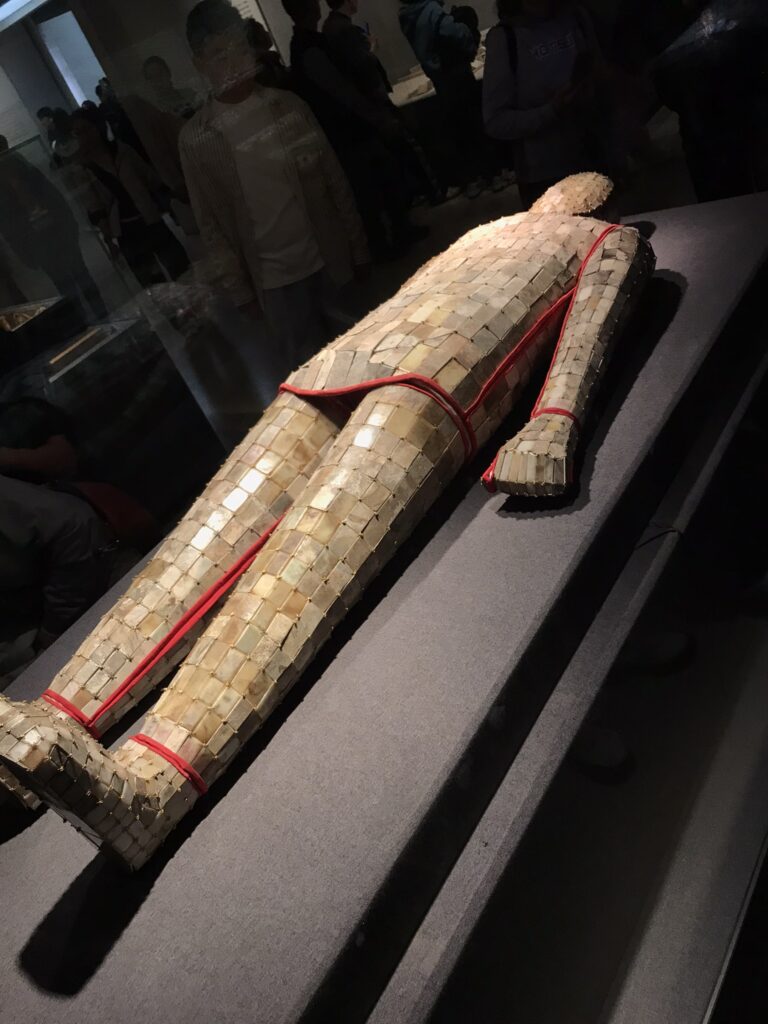
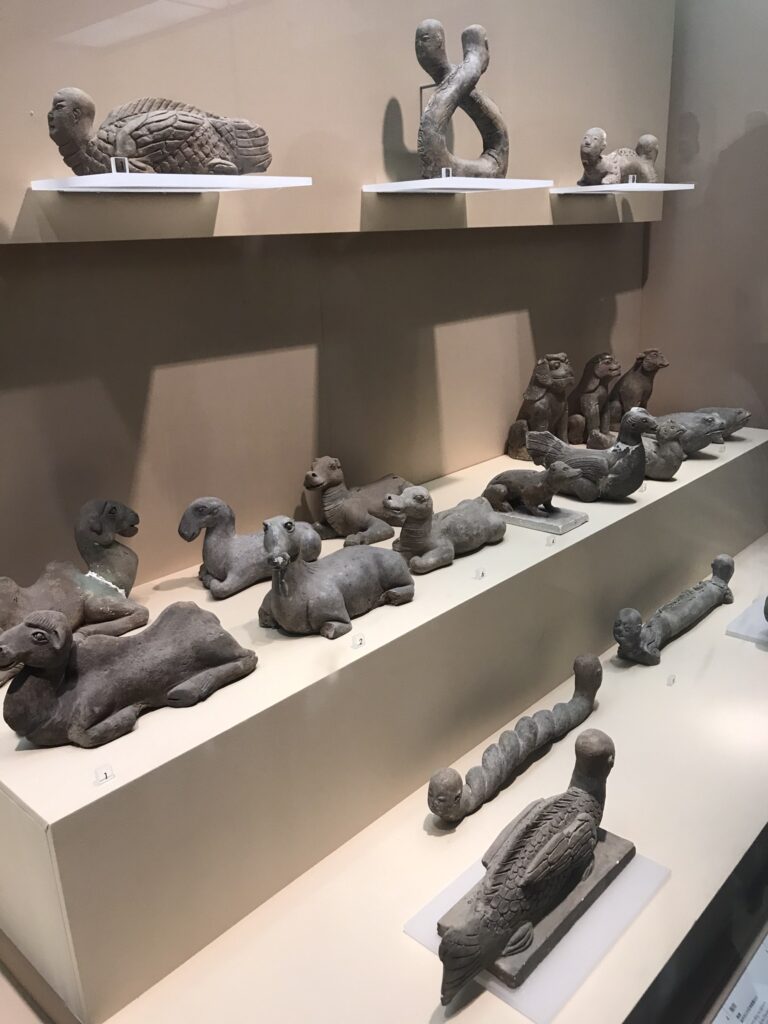
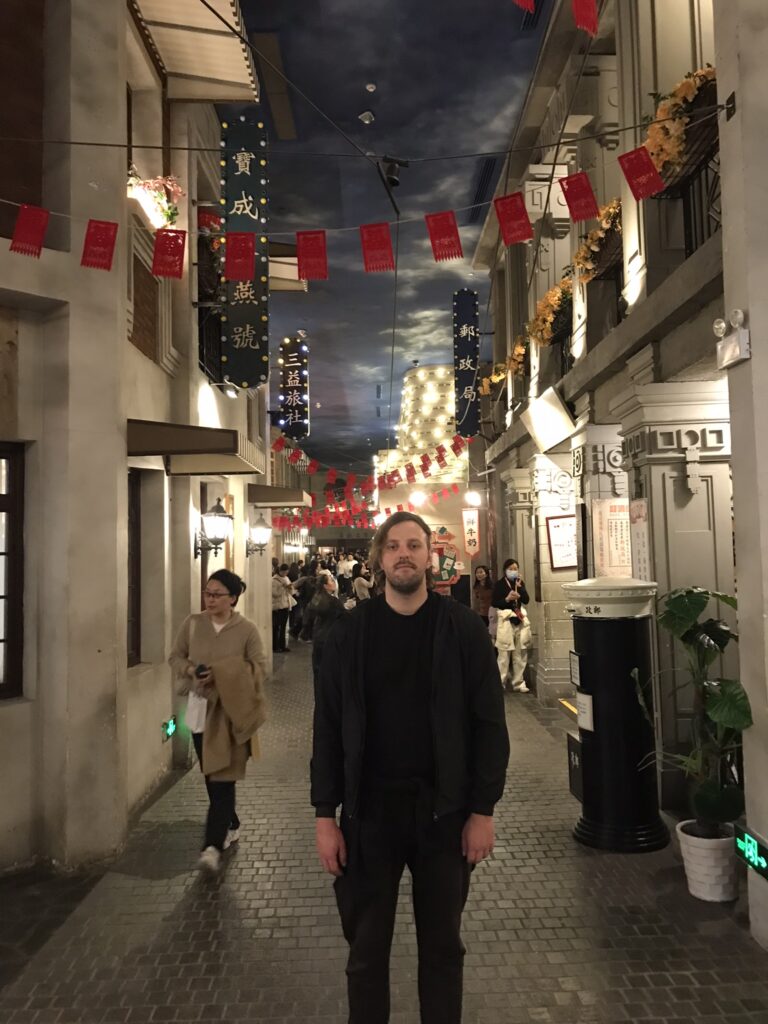
Nanjing Museum: weird and wonderful artefacts on display as well as a full recreation of a Republican-era street
The history gallery is the most popular part of the museum by far and is the focal point of the complex. We especially liked the 2000-year-old miniature pottery pig pens, dog kennels and chicken coops on display, as well as the rather creepy Tang dynasty pottery snake with two baby heads at each end, next to a dragon with a human (baby) head – weird! The museum has a rich collection of burial goods including a full skeleton and ornate jade coffin lid for those into the macabre.
Other areas of the museum to explore include an art gallery section and a republican era section featuring a reconstructed 20th century street, as well as some more abstract and obscure galleries. These areas are slightly less crowded than the history gallery. The full scale reconstruction of a republican-era street complete with post office, oriental medicine shop, restaurants, a theatre with a food court and even a train station with a real life steam train is pretty impressive. Within the republican street area are gift shops (pretty standard in China), cafes and restaurants cleverly situated in the old-timey shops. The art gallery holds some exhibits with work from Jiangsu local artists who made an impact on the art scene in China.
Confucius Temple Scenic Area – don’t expect a serene temple complex, this is a glitzy (if a tad on the garish side) bright shopping street near the old Confucius temple. When we visited there were loads of colourful lanterns on display from the recent lantern festival at the end of the Lunar New Year celebrations. It’s safe to say there’s a lot going on and it was pretty crowded on a Friday night. It’s definitely worth walking through for the buzzing atmosphere and lovely lanterns casting the street in a warm glow. Unfortunately big tour groups also congregate here, adding to the chaos.
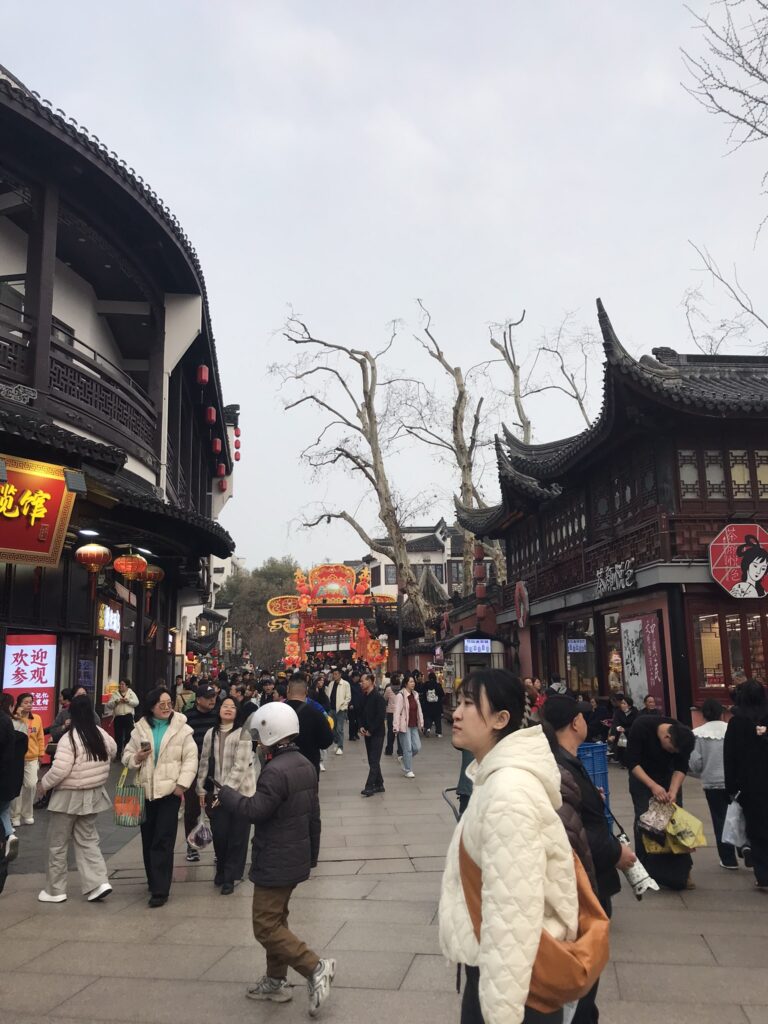
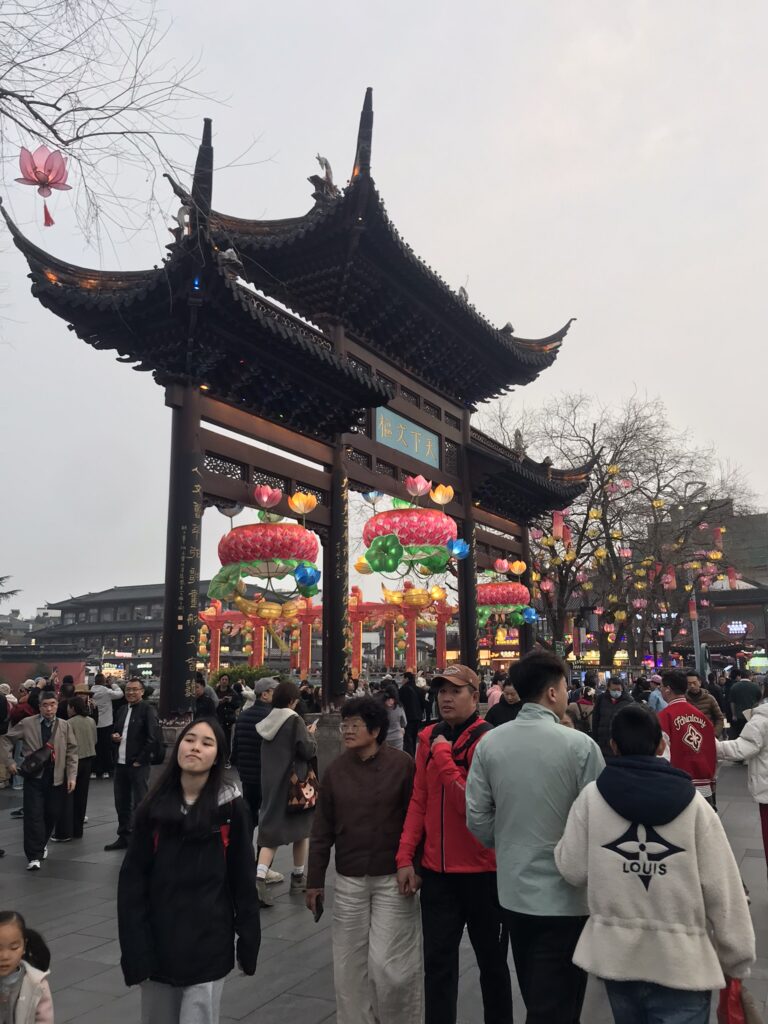
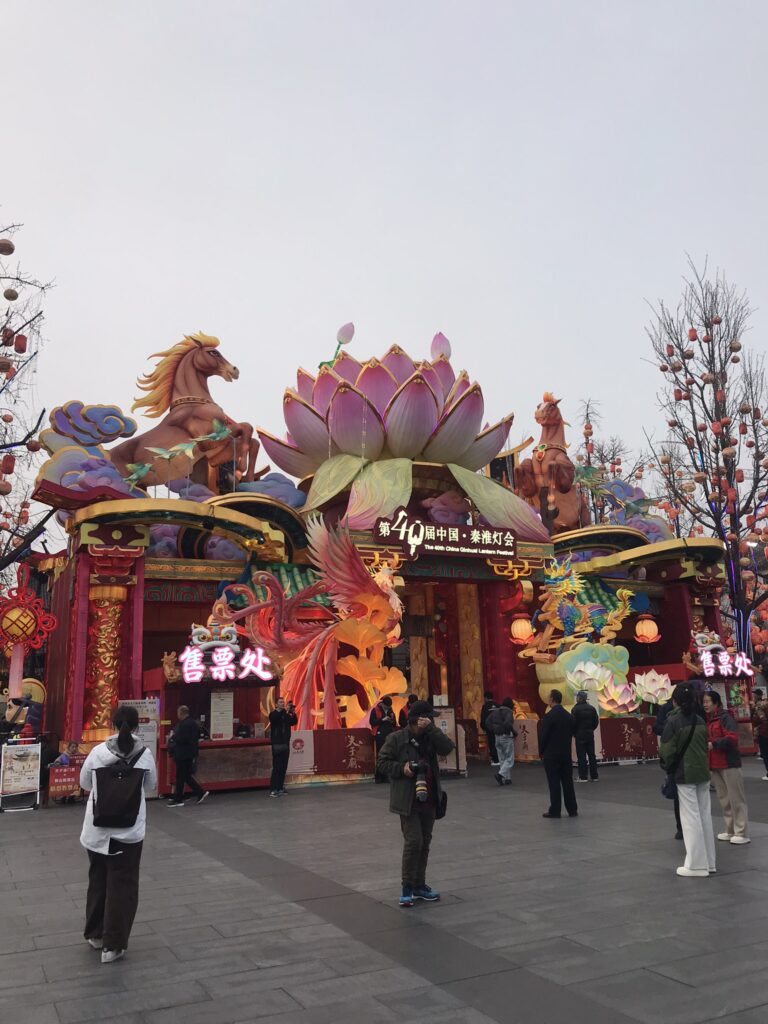
Expect crowds in abundance at the Confucius temple area
Laomendong area – a charming area with heritage houses and quaint old-style residences ingeniously repurposed into a premier shopping and leisure zone packed with shops, coffee joints and restaurants. The area has been meticulously decorated and is especially charming at night, with fairy lights in trees, a glowing flower tunnel and a stage hosting performances. It’s best to leave the area if you’re looking for a cheap meal, as the restaurant prices are higher within this area. Popular restaurants also have long queues as this is a favourite place for families and Chinese locals/domestic tourists. Laomendong is located close to Zhongua Gate, one of the most important and iconic gates of the Nanjing city walls. Note that ticket prices to walk on the wall around Zhongua Gate increase after 5pm so be sure to time your visit accordingly (it’s around double the price as the evening admittance also includes a light show).
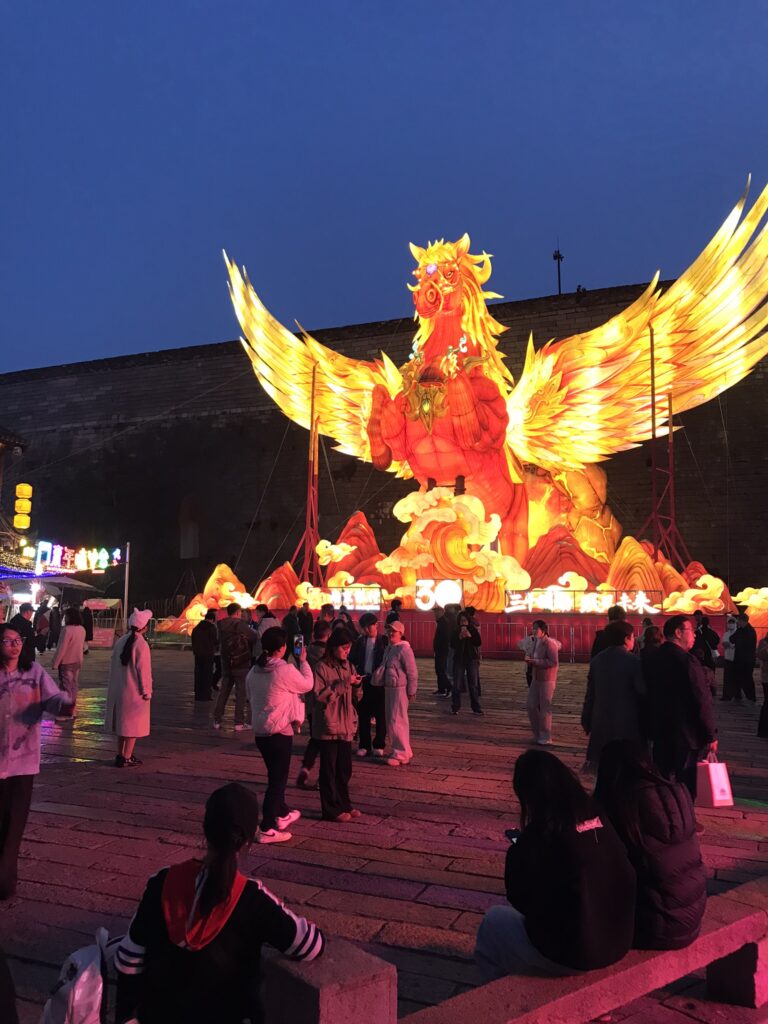
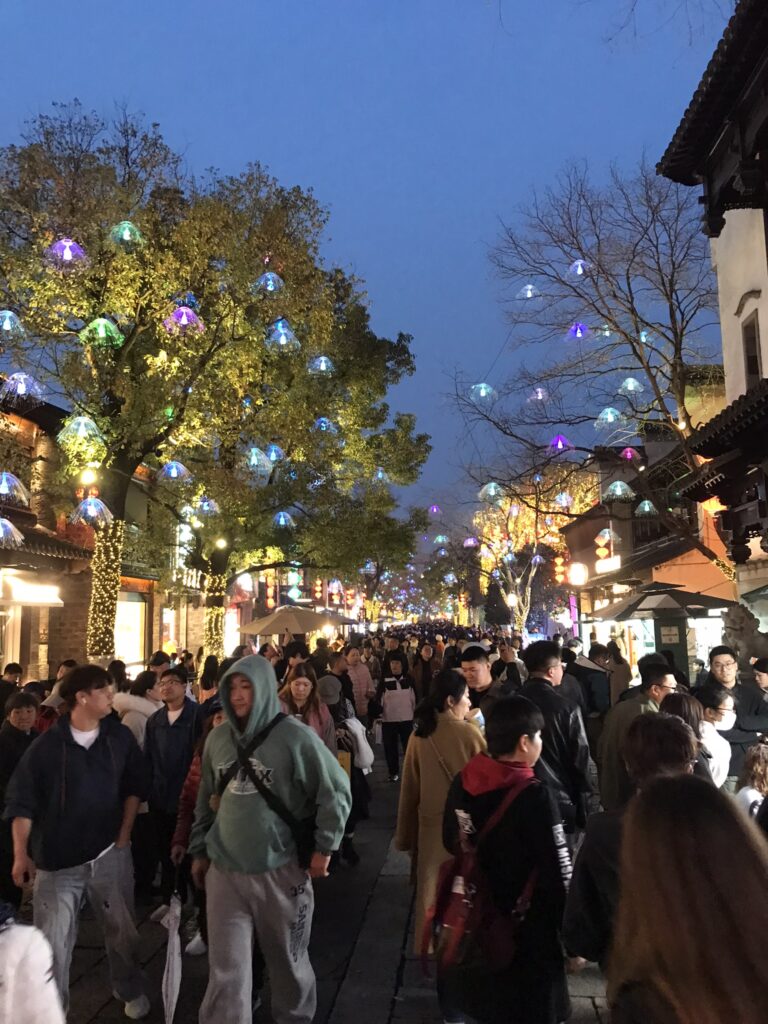
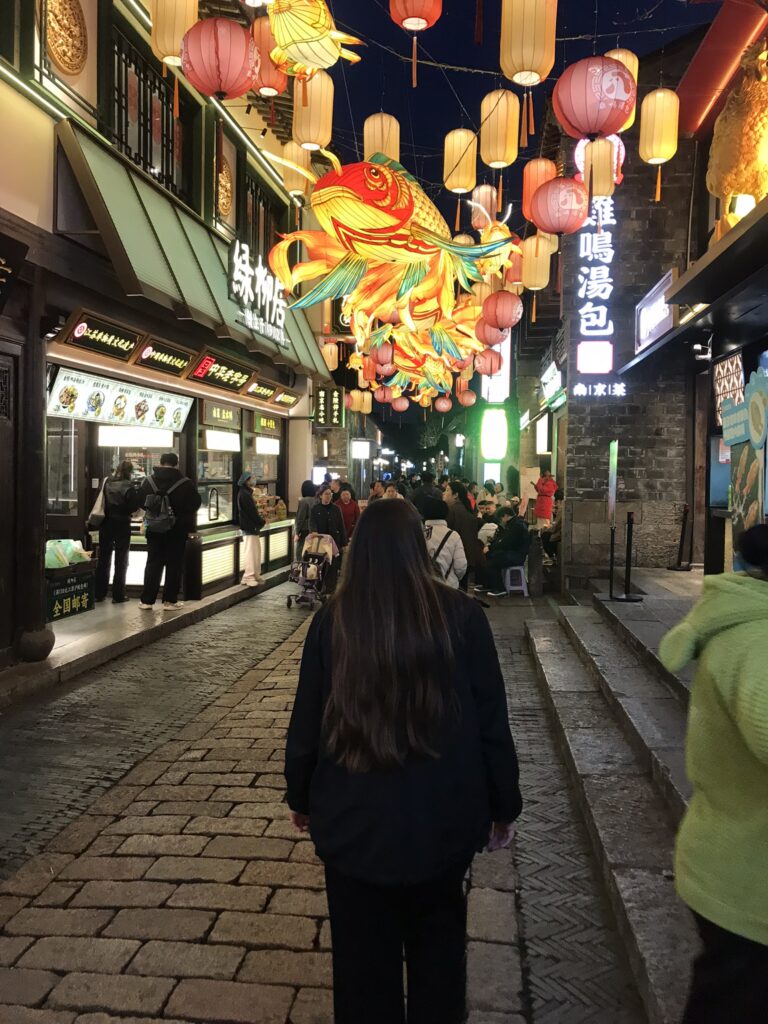
Laomendong area after dark attracts crowds of domestic tourists and local families
Nanjing Massacre Memorial Hall – a must-visit museum to learn about the Massacre of Nanjing, when a staggering 300,000 Nanjing residents lost their lives at the hands of brutal Japanese invaders over a 6 week period in 1937. The Memorial is built on a mass grave of 10,000 bodies – in one section you can see the remains of some of the bodies, with skeletons of young children and bullet holes in skulls. The museum is incredibly popular with visitors so make sure you book well in advance via WeChat – reservations are definitely required. Unlike most Chinese museums, the atmosphere here is understandably quite sombre and people are discouraged from talking loudly to respect the victims. It’s a hard-hitting museum with distressing photos and personal testimony about very cruel offenses like civilians used as bayonet target practise, beheading, burying alive, burning of houses and people, shooting of babies, rape and bodily harm of women and stories from those who experienced the worst kind of sexual assault.
The first gallery charts the Japanese invasion of China from the Mukden incident in 1931 (northeast China) to the full invasion in 1937 and progression towards Nanjing (capital at that time). There are plenty of photos depicting the aerial bombardment of China and Chinese air force martyrs who tried to stop the invading Japanese forces. Emphasis is placed on the brave and wholly outmatched Chinese soldiers who tried to defend Nanjing, who then ended up being rounded up and killed when the Japanese stormed into the city alongside many other innocent civilians suspected of being soldiers. The museum tries to explain that it was the Japanese militarism of the time that ended up resulting in the invasion of China for expansionist reasons.
The next gallery describes what happened during the massacre, alongside photos taken by foreign residents (most notably an American missionary) documenting the atrocities committed by the Japanese military: mass killings of suspected soldiers, which then ended up as the killing of civilians, women and children, police officers, mass looting and burning of buildings (over 1/3 of Nanjing was destroyed). Following their invasion of eastern China, the Japanese wanted to make an example of Nanjing as it was the capital during that time, hence the excessively harsh treatment and wanton destruction. It’s pretty shocking to see real photos and read personal testimony from the survivors and to see photos of the mass execution sites.
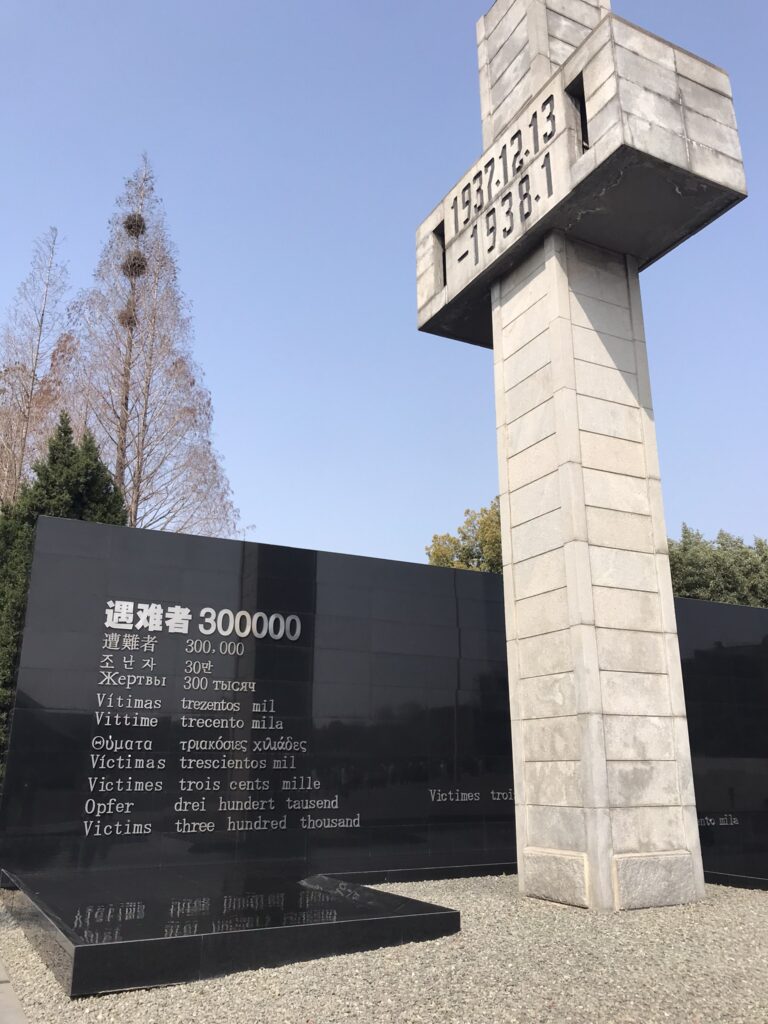
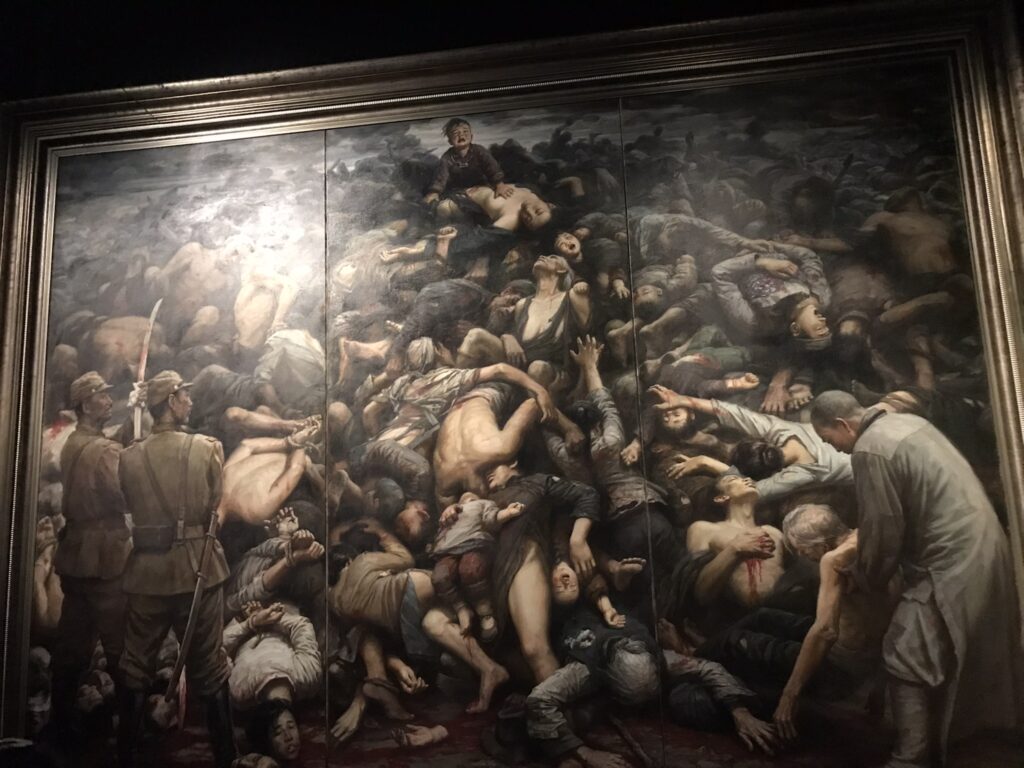
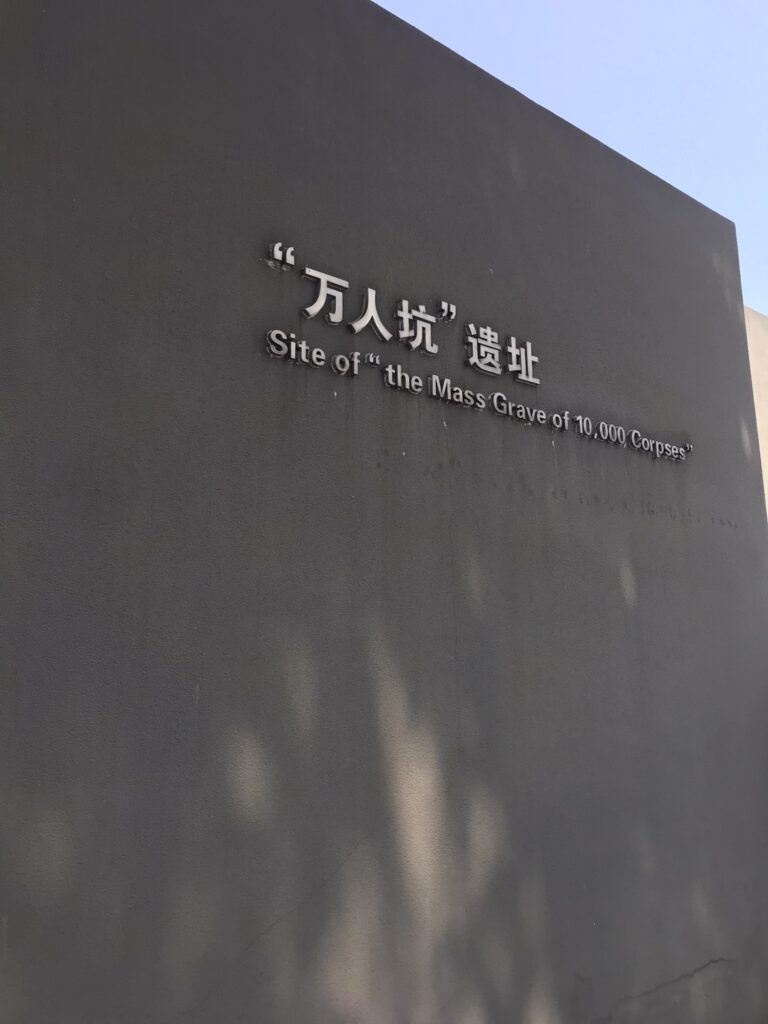
Taking photos inside the Nanjing Massacre Memorial Hall felt inappropriate
We were surprised to find a large section about foreigners who stayed during the massacre, documented the atrocities, continued practicing medicine in hospitals and treating the wounded, petitioned the Japanese government to stop and even set up refugee camps to protect Chinese civilians. It’s interesting that such a large section is devoted to foreigners who showed compassion for their fellow man and stayed to help. It’s also interesting that the world knew about the war crimes being committed in real time – foreign residents sent letters to relatives and international newspaper journalists reported about it within weeks of the Japanese entering Nanjing. There were even reports from survivors who survived their own executions. The history gallery continues all the way to the final war crimes tribunal and eventual execution of the worst Japanese offenders post WW2. Generally the museum promotes a message of peace and forgiveness, as opposed to hatred of the Japanese.
Presidential Palace – another important attraction in Nanjing, this complex is best known as the former headquarters and main presidential building of the Republic of China during Nanjing’s time as the national capital in the early 20th century. However it has actually played a varied and important role in several different chapters of recent Chinese history.
Most of the current buildings in the complex are closely associated with the Republic of China period and the revolutionary figure Dr Sun Yat-Sen, who resided, was sworn in and worked here as the president of the provisional government from January to April 1912 before the eventual surrender of the Qing emperor (who was only a child at the time), marking the end of China’s millennia-long dynastic rule. Inside you can view Sun’s residence and nearby traditional Chinese garden. Following a period of turbulence, the Kuomintang seized control of the country in the late 1920s and re-established their authority in the palace, with Chiang Kai-shek taking up residence here as Premier. Chiang and the rest of his Republic of China government later fled to Chongqing and then Taiwan as the Chinese Communist Party and their People’s Liberation Army seized Nanjing and raised the communist flag over the palace, emerging victorious in the Chinese Civil War and establishing the People’s Republic of China with the capital moved to Beijing.
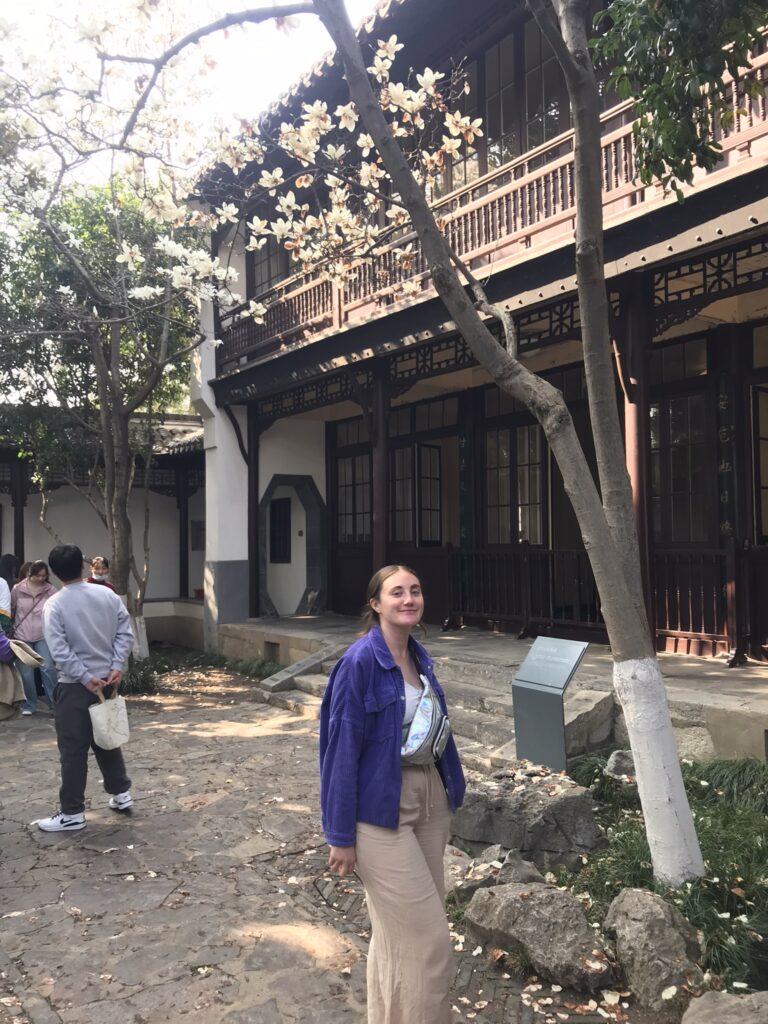
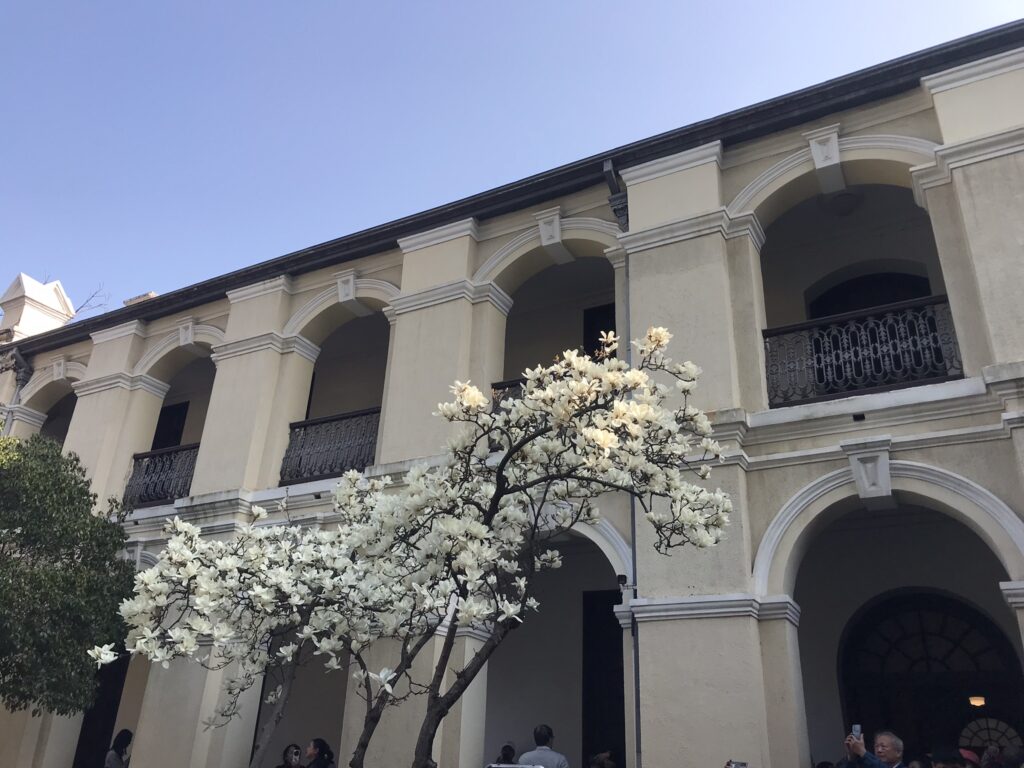
Dr Sun Yat-sen’s residence and the presidential offices of Chiang Kai-shek on the grounds of the Presidential Palace
Although it’s mainly known for its 20th century history, the Presidential Palace was a place of great consequence several decades before the Republic of China period. Initially a local government complex for the regional viceroy during the Ming and Qing dynastic eras, the complex then became the site of the so-called Celestial Palace when it was captured by the forces of the Heavenly Kingdom during the Taiping Rebellion. This seldom-mentioned episode is very interesting as a quasi-Christian cult-like denomination essentially took control of large parts of China between 1851 and 1864, headed by a delusional (probably psychotic) visionary who thought he was the brother of Jesus Christ. 20-30 million people died in the civil war and resulting famine as a direct result of the internal conflict between the forces of the Heavenly Kingdom and the Qing imperial forces – more casualties than World War One, which is crazy to imagine. The leader of the Heavenly Kingdom (Hong Xiuquan) ended up becoming a recluse for 10 years, ruling by decree from this palace before perishing in part due to the fact he was eating weeds from his own garden in a belief that it was ‘manna from heaven’ while under siege from imperial and international forces. Such a bizarre situation! This episode along with a few other rebellions greatly undermined the Chinese dynastic rule, pre-empting the fall of the Qing and the establishment of the Republic of China a few decades later. The Celestial Palace was burned down shortly after Hong Xiuquan’s death and the complex was rebuilt in a neoclassical style to house the local Governor-General at the end of the Qing period prior to the overthrow of the dynastic rule.
Today, the sprawling palace complex contains rooms and elements from all of the different and varied periods of its history. Some of the rooms from the Palace of the Heavenly Kingdom have been recreated, including the throne room (with an impressive gold throne), study and aptly named ‘secret room’. There are also Viceroy-themed rooms from the later Qing dynasty, as well as the compound which was used by Sun Yat-sen, presidential offices of Chiang Kai-shek and several galleries relating to the Communist Party’s conquest of the building and victory in the civil war. All in all, there is a huge amount of history and a huge amount to see and learn here. Make sure you have a translator ready as most of the information is in Chinese. An audio guide might be helpful.
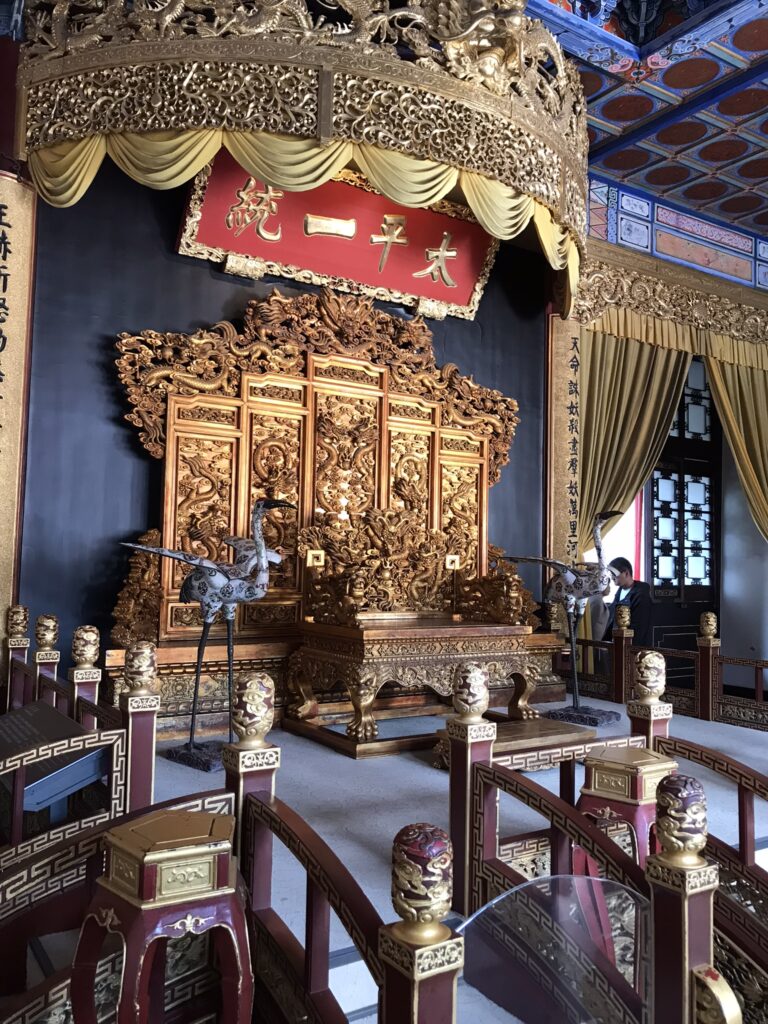
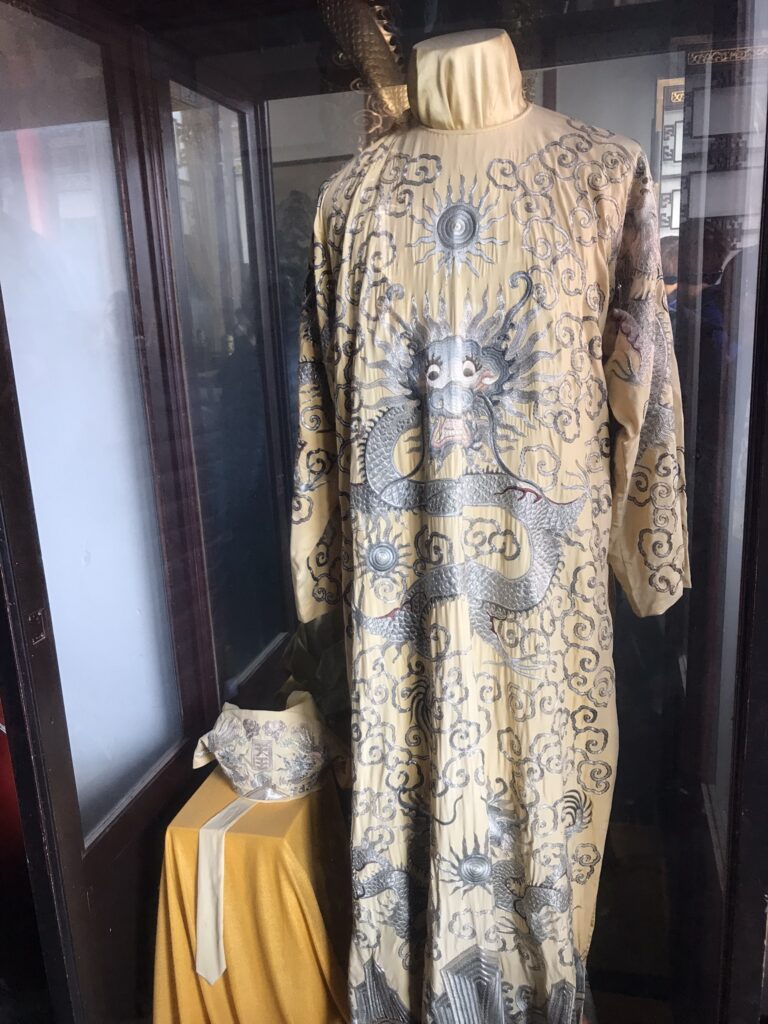
A recreation of the Heavenly Kingdom throne room and robes worn by Hong Xiuquan
Xuanwuhu scenic area and nearby city walls – especially popular with families, picnicking friends, lovey-dovey couples and fitness junkies who all wander the circular route around the edge of the lake and over the islands and causeways. Expect excessive crowds at the weekends, so much so that the police implement crowd control measures at the nearby metro station. The area is particularly lovely to visit at sunset as the sun dips below the skyline of the city, creating a fab golden glow outlining the high rise buildings. The crowds swell during cherry blossom season as young local women flock to the area for photoshoots along with budding photographers and flower enthusiasts. The city walls perfectly frame the delicate blooming blossoms.
Another popular pastime in this area is hiring a pink flamingo or yellow duckie boat and floating around the lake. After dark, the colourful lights and lanterns spring to life creating an animated and lively atmosphere. You can combine a meander around Xuanwuhu scenic area with a walk on the immense city walls, but be aware that admission closes at 5pm (at least it did during our visit) so get there early.
Xuanwuhu is the perfect place to unwind after stuffing your brain full of information in the Nanjing Museum or Massacre Memorial
Purple Mountain – located to the north-east of the city, this area hosts a collection of attractions including Dr Sun Yat-sen’s Mausoleum, an imperial Ming Tomb, Linguu scenic area and Meiling Palace. It’s best to devote a whole day to sightseeing here.
Purple Mountain (known locally as Zhongshan), so called because the purple rocks reflect a golden light, also has some stunning natural scenery and is a breath of fresh air from bustling built-up Nanjing. It’s accessible on the metro but really feels like you’re in the midst of nature. The whole area is very popular on weekends. At the entrance to the Zhongshan scenic area, we recommend purchasing the 4-in-1 combi ticket for 100 RMB as it includes the Open Air Music Hall, Ming Tomb, Linguu Scenic area and Meiling Palace; it’s the best deal price-wise. You need a separate free booking for Dr Sun Yat-sen’s mausoleum, which can be sorted later when you’re at the entrance to the mausoleum.
The main draw for Chinese visitors here is Dr Sun Yat-sen’s grand mausoleum, which was constructed shortly after his death. Apparently he specifically said he didn’t want such a grandiose mausoleum, but it was erected in his honour anyway. This has become a pilgrimage site for all Chinese people (even Taiwanese) regardless of political leaning, as Sun Yat-sen is seen as the man who abolished the imperial dynasty and led the way in the transition to a modern Chinese state. Respected and admired by both the Chinese Communist Party and their nationalist Kuomintang rivals, Sun Yat-sen freed China from its imperialist chains and, as Xi Jinping said, reversed China’s fortunes and world standing: China would no longer let itself be bullied. There’s a huge seated statue in the uppermost hall of the man himself atop an eye watering amount of stairs. Some particularly admiring followers place flowers on the top plinth.
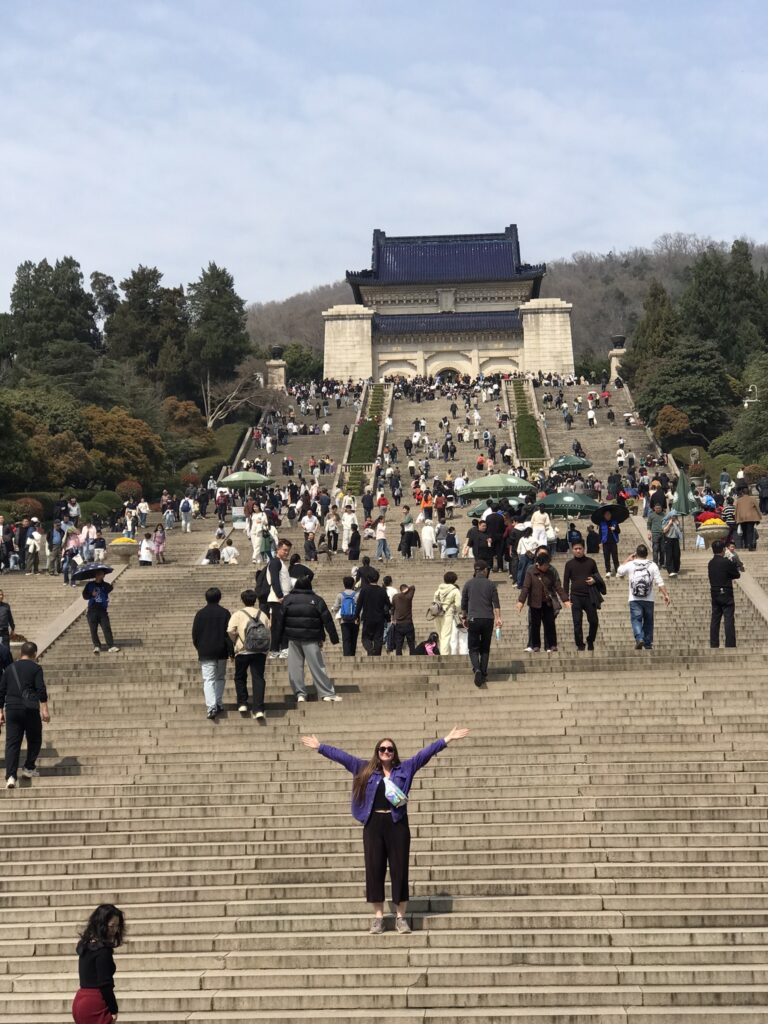
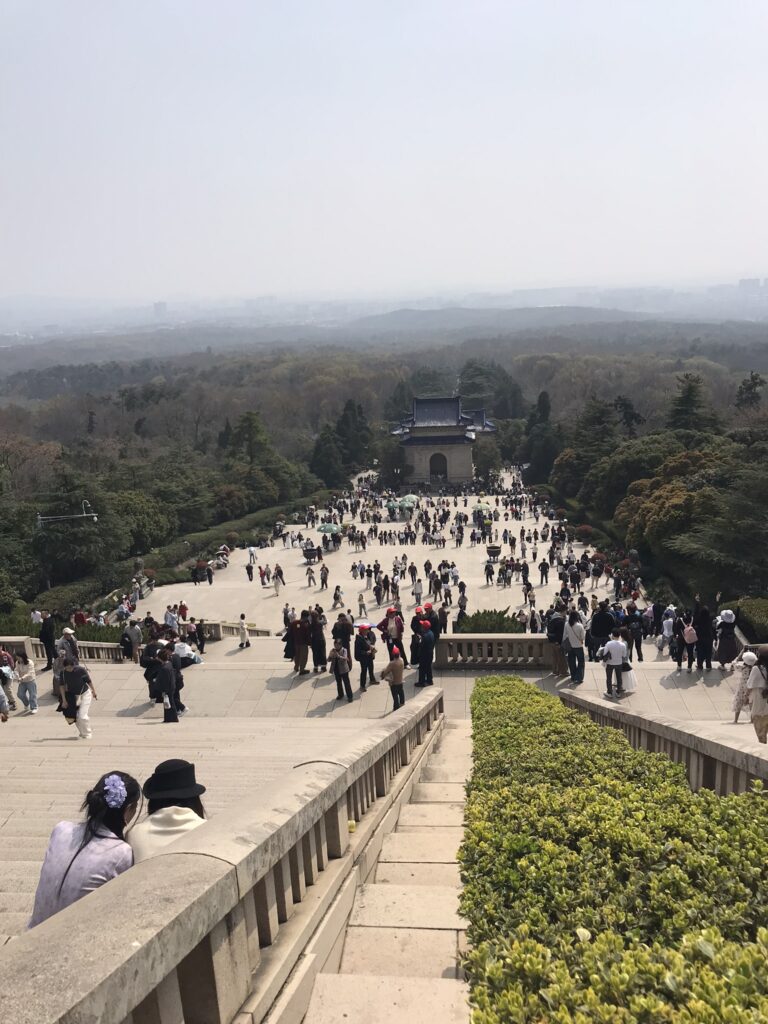
Head to the nearby Tourist Center to book a slot before entering the Mausoleum of Dr Sun Yat-sen
Entry is free but you must reserve an entry slot when you get to the entrance. For foreigners, it’s best to head to the tourist information office near to KFC as they’ll book a slot for you and give you a ticket with a QR code. We tried using the QR code to book on WeChat but as it was linked with Meituan (which didn’t work for us) we were unable to book a slot by ourselves. Like most sites in China it’s set up for domestic tourists and not foreigners so there are many hoops to jump through.
Ming Xiaoling Mausoleum – Purple Mountain is home to the mausoleum of the first Ming emperor, as Nanjing was the imperial capital for the first 50 years of the Ming dynasty before being moved to Beijing. This royal tomb set the precedent and was used as a prototype for later Ming and Qing royal tombs. It’s also the final resting place of the consort, Empress Ma. The stone figurines marking the processional route to the entrance are pretty cool including camels, elephants, horses, mythical creatures and stern warriors and statesmen – all protecting the resting emperor. Keep your eye out for plaques explaining the different halls and foundations of the buildings. The actual tomb beneath the ground has not been evacuated but there’s a VR experience in the Ming tower that allows visitors to virtually explore the underground complex. All standing buildings in the area have been reconstructed as the original ones were destroyed during the Taiping Rebellion.
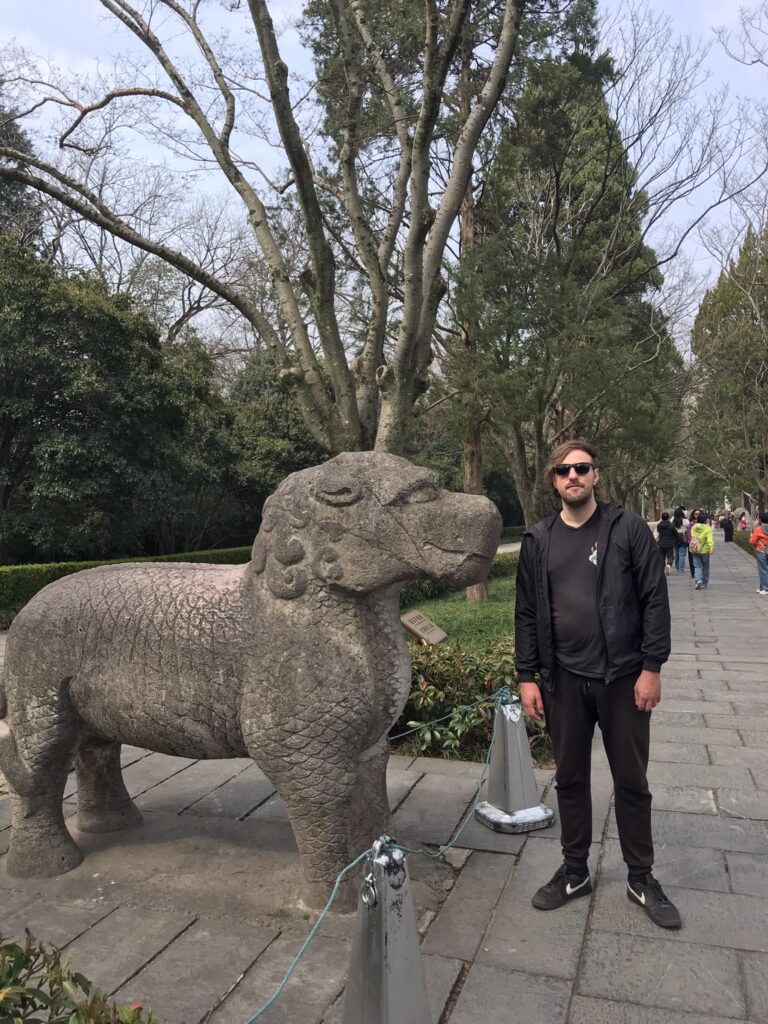
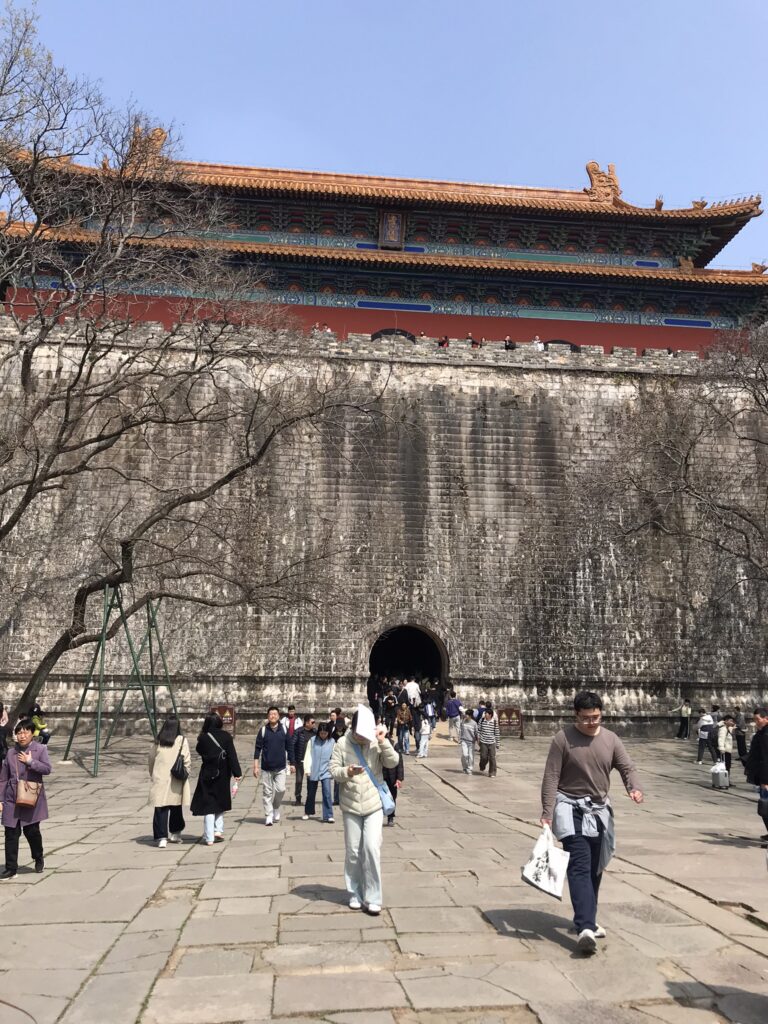
The Ming Tomb is less crowded than the Mausoleum of Dr Sun Yat-sen
Linguu scenic area – a lesser-visited area of Purple Mountain which includes a cemetery and memorial gateway for the revolutionary soldiers killed in action while defending China during the battle of Shanghai after the initial Japanese invasion in 1931. The main focal point is the 9-tiered pagoda, again built to commemorate the glorious dead lost during the fight against the Japanese occupation in the 1930s. The top level offers impressive views over the treetops and cityscape beyond. Be aware there is no elevator to the top, just concrete spiral stairs, but it’s worth the trek up for the views. Situated in close proximity is a functioning Buddhist temple with a long history.
Meiling Palace – a mansion building with a modern 20th century design, this was a summer retreat for the preeminent Republic of China and Kuomintang leader Chiang Kai-shek and his wife Mei Ling, after whom the palace is named. Apparently the house was originally built for visiting dignitaries who were paying their respects at Sun Yat-sen’s mausoleum, but after sustaining damage during the Japanese occupation it became a private residence of Chiang and his wife. The building follows western standards rather than a traditional Chinese layout. It’s very opulent, with stately decor including a formal grand dining room, fancy sitting room and large spacious bedrooms, office space for Chiang and his confidential secretary as well as a downstairs guard quarter, kitchen and scullery. The interior has been outfitted as it originally would’ve been during the Chiang family’s time in residence. There’s even a showy classic car outside, which was Chiang’s official vehicle. The residence shows the decadence and despotism of the discredited Republic of China leader. There’s a cafe inside as well as a few gift shops hidden in plain sight.
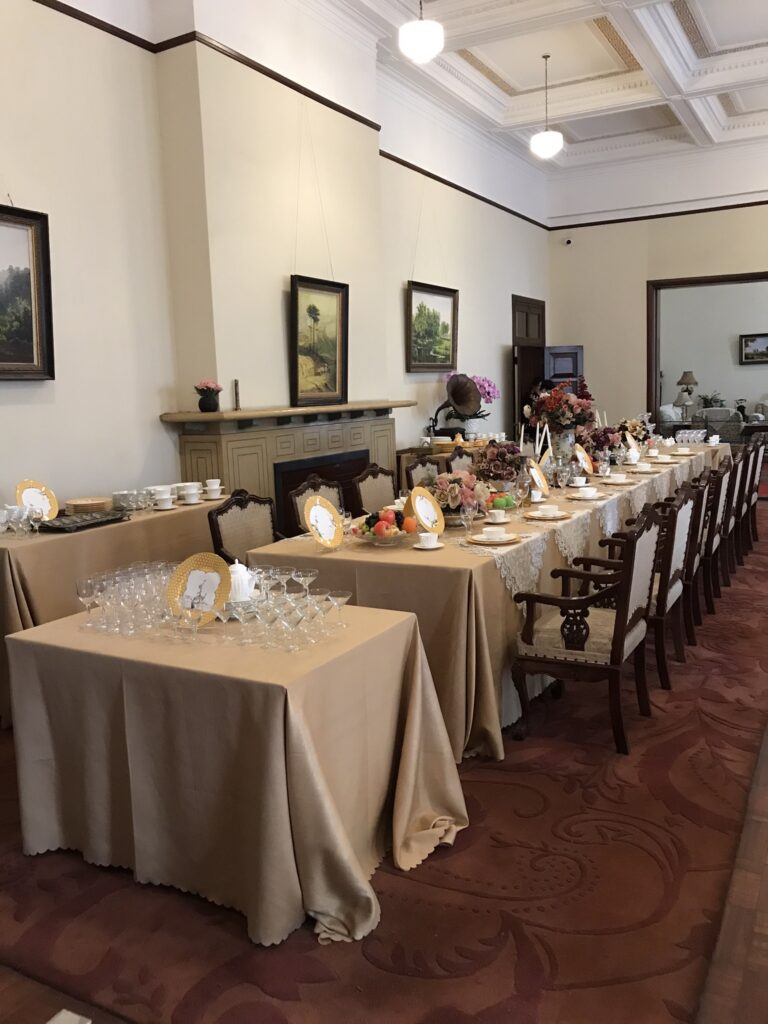
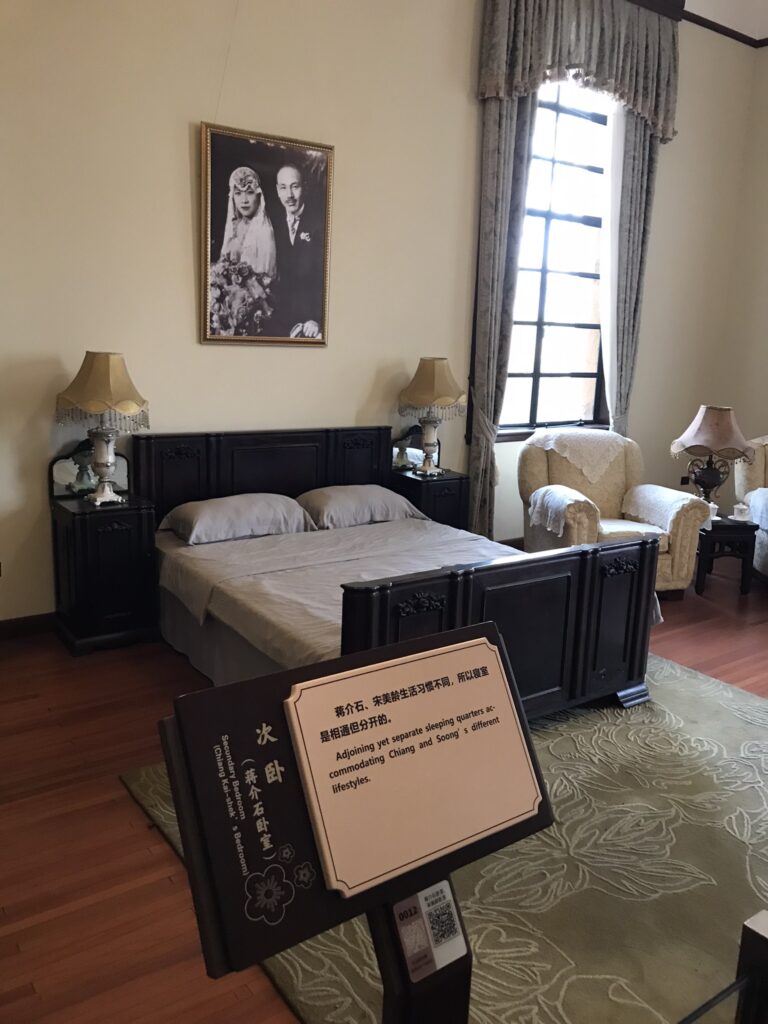
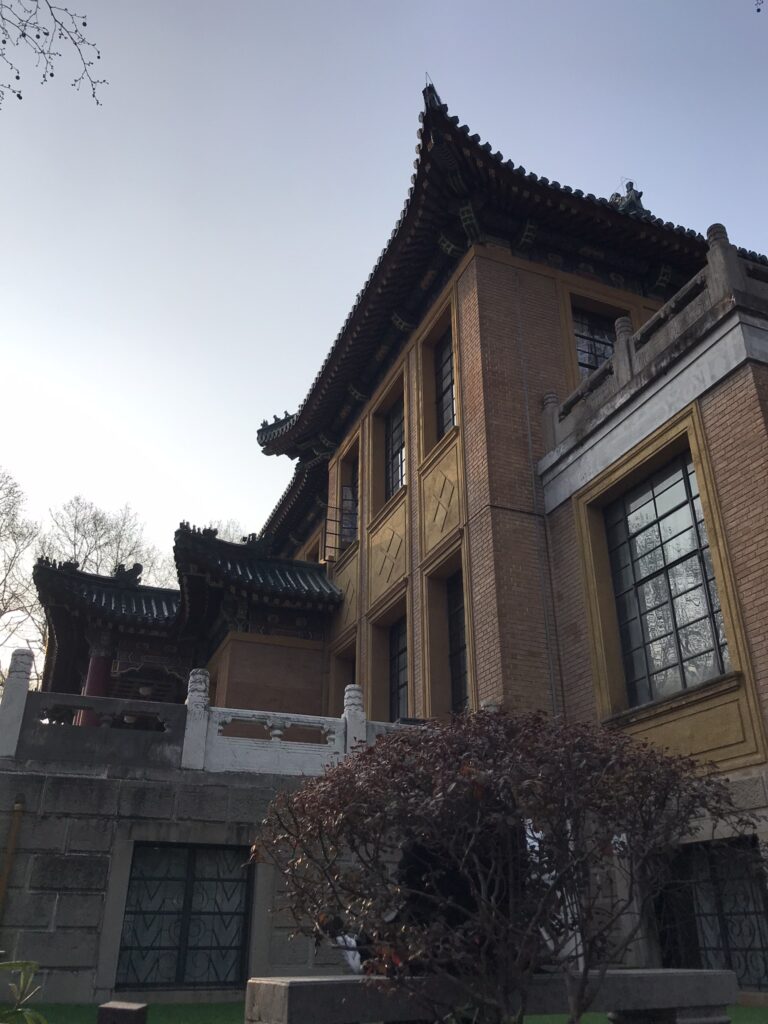
Expect western opulence and finery at Meiling Palace
Open Air Music Hall – we checked it out as it was included in the combi ticket. An open air amphitheatre near to Sun Yat-sen’s mausoleum. We weren’t sure of the event schedule as nothing was happening when we visited, just loads of Chinese visitors taking cute photos with the stage and some classical music playing in the background. Strangely there is a pigeon recuperation centre behind the stage, with little sheds and pigeon holes for the pigeons.
Click here for our self-guided walking tour of Purple Mountain!
Yanzhou
Not to be confused with the much more famous Yangzhou in Jiangsu province! Yanzhou is a nondescript town near to Jining city in Shandong province. It’s firmly off the tourist trail but is well connected on the train line between Nanjing, Beijing and Zhengzhou. As such, it makes a great base to explore some of Shandong’s highlights, namely the sacred Taoist mountain Taishan and nearby Qufu, the hometown of Confucius. We had originally planned to stay in Qufu but opted to stay in the town of Yanzhou instead as we planned to get an early morning train to Mount Tai and wanted to cut out the travel time from Qufu to the station.
Whilst we mainly used it as a base for day trips and so didn’t venture into the town of Yanzhou too much, it’s safe to say there are zero foreign tourists here. Residents were openly surprised to see us walking on the streets and it seemed like many locals had never seen a foreign person before. We received a shocked and warm welcome everywhere we went, making for a pleasant few days in the town. Yanzhou is quite developed (the population is around 400,000 so it isn’t a tiny place) and there are plenty of local restaurants, hotels and facilities, but the only point of interest we spotted in the town itself was a monumental Buddhist structure which seemed to be closed when we drove past.
Accommodation
Ni Hao Hotel (Yanzhou Railway Station Xinglong Cultural Park) – another trusty chain hotel, this one seemed to have only recently opened when we visited. It’s just around the corner from Yanzhou train station, making it an excellent choice to dash from to catch an early morning train to Mount Tai. The facilities, service and breakfast buffet were all faultless. We enjoyed ordering takeaway here and being served by the robot. Wifi access is also free without the need for a Chinese phone number.
Foodie Places
Senlin Restaurant – not far from the train station. We were won over by the English language descriptions on some of the photos on Amaps, however when we got there we couldn’t order with Alipay and had to literally stand at the entrance and translate the menu on the wall whilst the waitress lingered around waiting for us – just a tad stressful as the translations from the app were subpar to say the least. We tried our best to order dishes which didn’t have intestines, animal heads or feet as we were feeling pretty burnt after our Jiangxi experience in Nanjing two nights previous. This local place serves typical Shandong cuisine with a Yanzhou flare. The waiting staff and possibly chef seemed genuinely happy to see us; based on their reaction we seriously doubt any other foreigners have ever visited before. The female waiters seemed positively abuzz with excitement, while another seemed to be video calling everyone on her contact list and tried multiple times to engage in conversation with us in Chinese without success. The food here was great and the portions were massive! We ordered sweet and sour breaded pork, eggplant fried with juniper berries (a piney taste which was pretty interesting and quirky it reminded us a little of bathroom cleaner), pork pancakes which came with pork strips, cucumber and carrot and sweet and sour cauliflower. At one point a passing older woman appeared from the street and literally just stood there staring at us while smiling and pointing at her eyes (perhaps my blue eyes), before abruptly leaving and peddling off on her bike. After the lovely meal we made sure to use a translation app and had an exuberant chat with one particularly chatty waitress and the chef. They were curious about where we were from and asked how the Yanzhou food was. At one point the waitress even said she was lost for words. It was really nice to interact with local people who were genuinely happy to see us. The meal cost a grand total of about 120RMB and was easily enough food for 4 people or more people. A great experience.
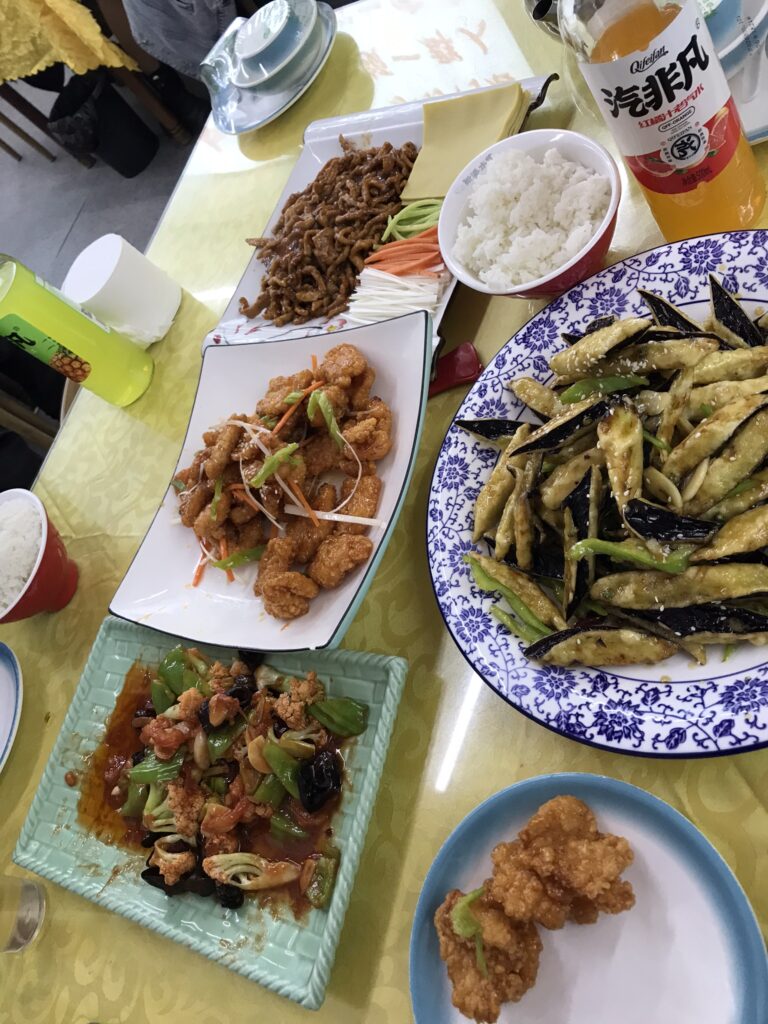
We received a very warm welcome at Senlin Restaurant in Yanzhou
Pizza Hut – our faithful friend in China, Pizza Hut along with KFC is pretty much everywhere and it’s super easy to get a delivery. A reliable option. Some of the pizzas have a Chinese twist!
Mount Tai (Taishan)
Number one amongst the five Taoist sacred mountains of China, Mount Tai is a dual UNESCO World Heritage Site both for its cultural and historical significance and also for its status as a natural geopark. Legend states that 72 Chinese emperors have climbed Mount Tai to perform special ceremonies, with 5 emperors performing the highly esteemed fengshang ritual (an imperial sacrifice ceremony paying homage to earth and heaven). It’s an incredibly popular pilgrimage site for Chinese Tao adherents who climb the mountain and offer prayers, tokens and donations to various gods – particularly Bixia and the Jade Emperor (the main deity in Taoism). The temple of the Jade Emperor is right at the summit of the mountain.
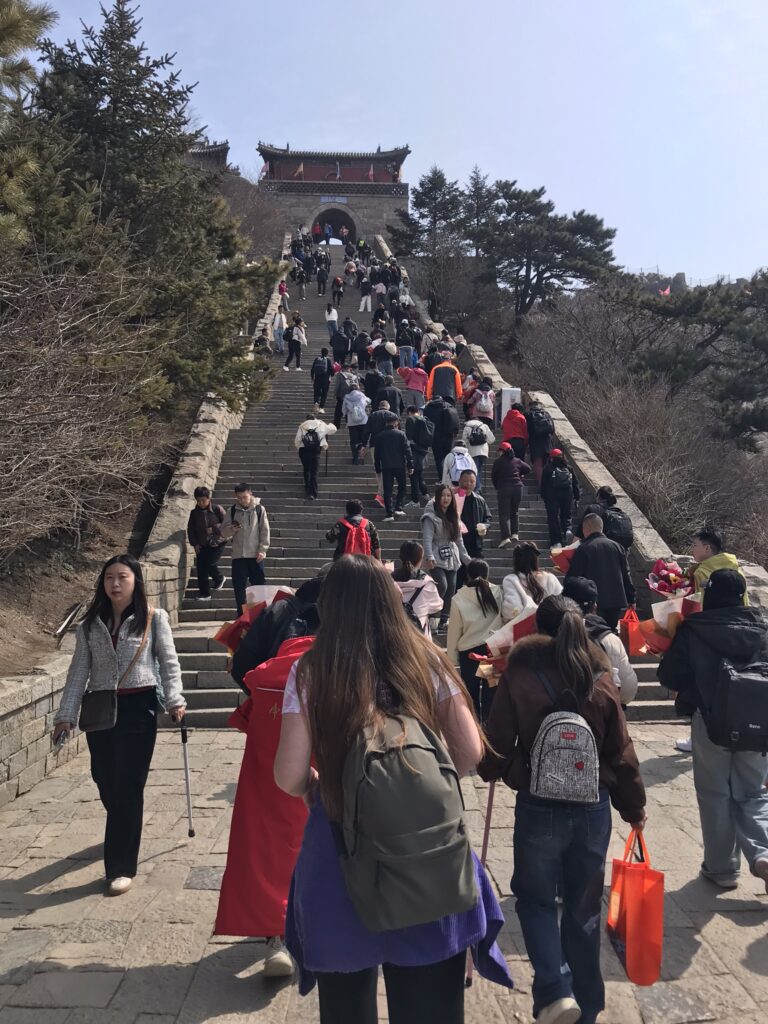
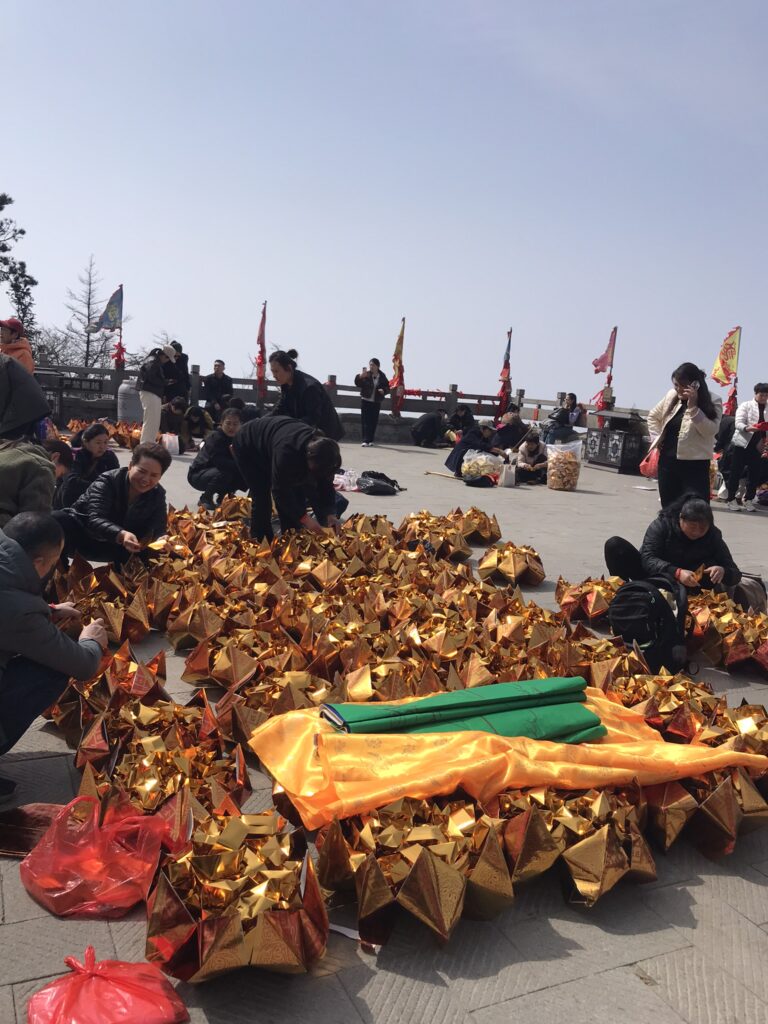
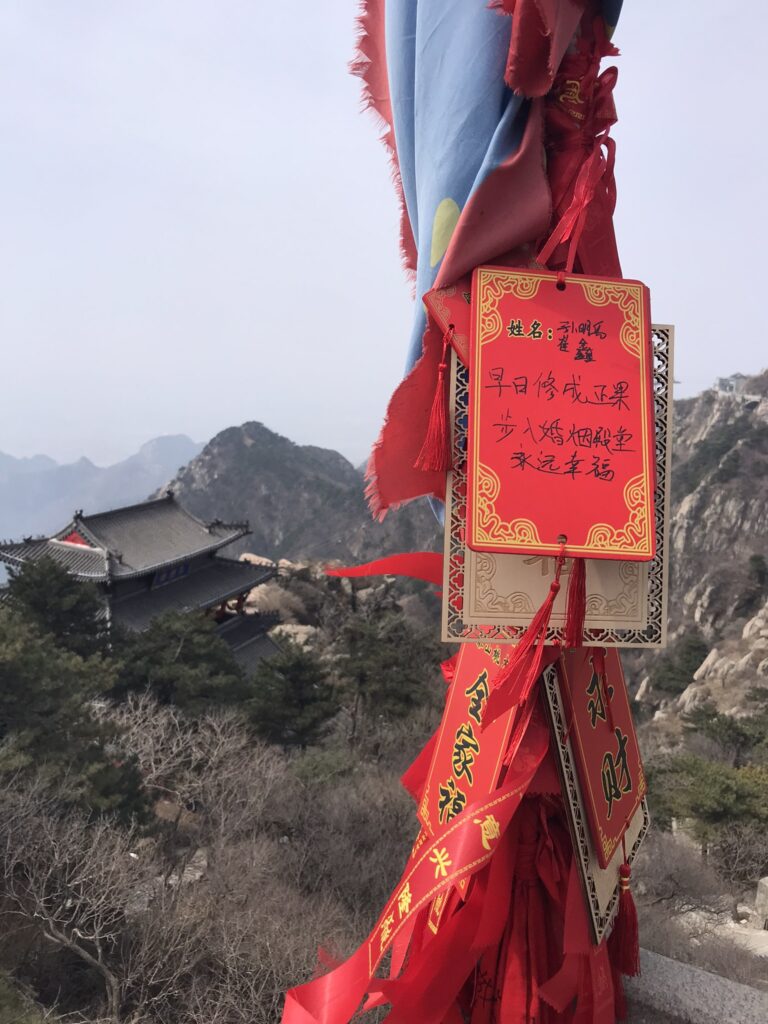
Mount Tai is a place mired in mystery and ritual
Mount Tai is located in the vicinity of the city of Tai’an in northern Shandong and can easily be reached by train from multiple locations, including Yanzhou from where we were visiting. Chinese blogs rave about seeing the sunrise and sunset on Mount Tai – there’s even a viewpoint at the summit for those sunrise fans and also a hotel near the summit. We however opted to go during the day as we couldn’t face an early wakeup call, returning to Yanzhou by train in the evening.
It’s said that those who climb the pilgrimage route to the top of the mountain will live to the age of 100. We skipped this promise of longevity and opted to take the cheat way up. After leaving the train station, we took a Didi taxi to Tianwaicun tourist center and paid the 115 RMB park entry alongside the 40 RMB one way bus ticket to the midway rest stop at Zhongtianmen. From there we took a cable car (100RMB for a one-way ticket) which drops off most of the way up the mountain, bypassing the 600 metre climb! It’s a little pricey and skips the ‘fun’ of walking up the mountain, but we were happy with the decision we’d made.
From Zhongitanmen, it’s basically steep stairs all the way up along the aptly named ‘18 bends’ to the top. The stairs are tiny and not made for people with big feet. From the expressions and demeanour of the walkers we saw on the way up it looks pretty taxing, exhausting and challenging. Personally we felt it wasn’t worth the hike up the awful stairs – unless you’re a Taoist pilgrim, mountain climbing enthusiast or like torturing yourself with endless tiny stairs then just take the cable car and bus combo; your legs and feet will thank you later.
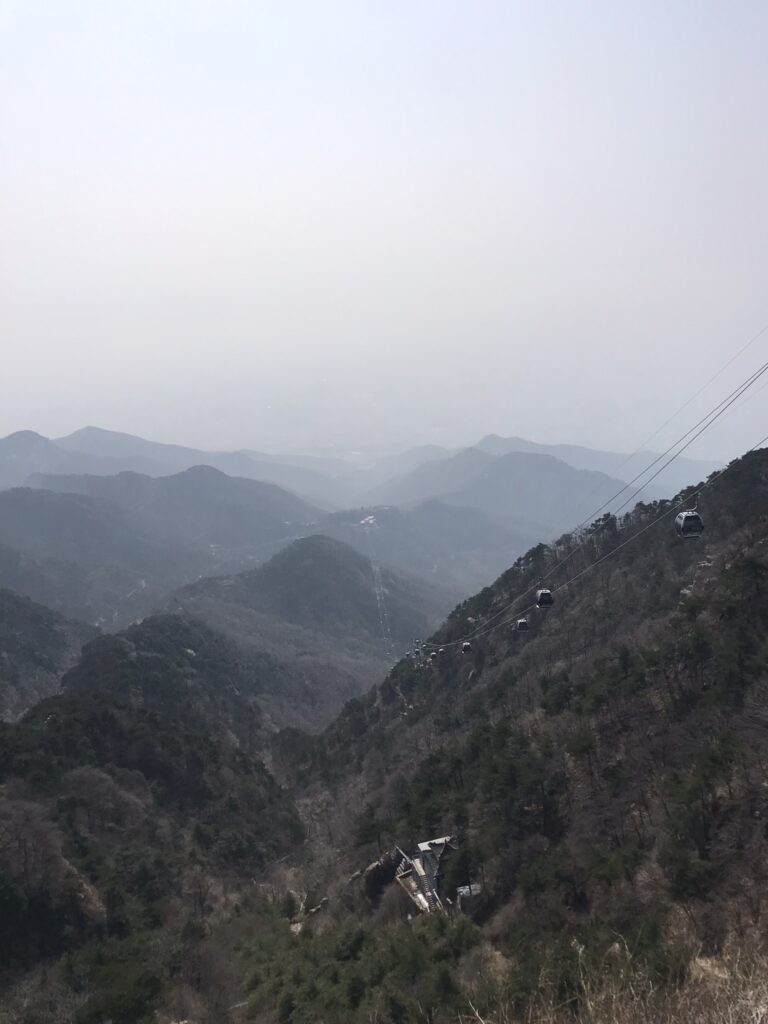
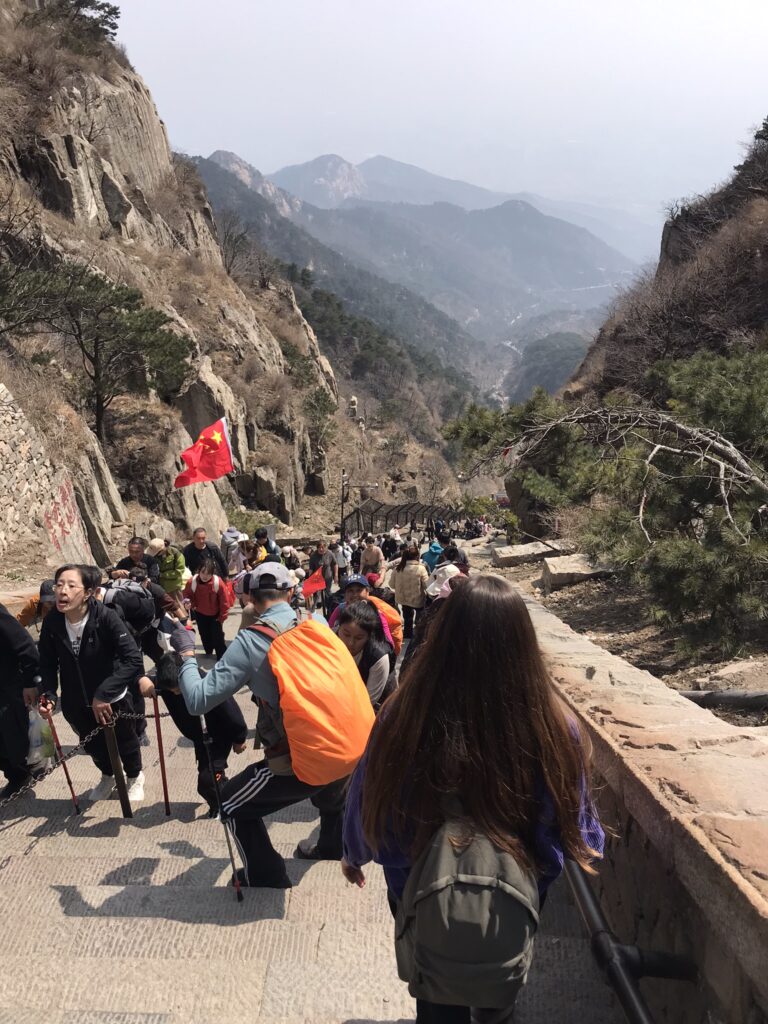
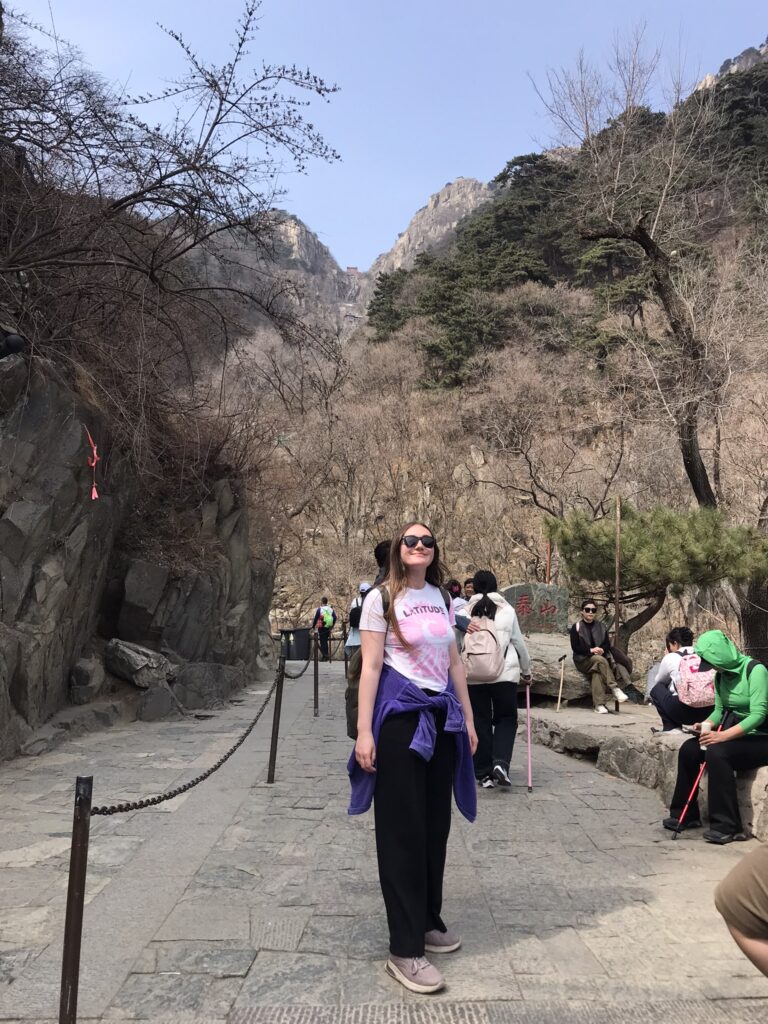
View from the top, midway up the 18 bends and at the bottom of the steep stairs up
From the cable car drop off point there’s still a bit of a climb to reach the summit of the mountain. Along the route are loads of rest points with vendors selling hot dogs on a stick, corn on the cob and instant noodles at inflated prices. We personally witnessed porters having to carry all the goods up the mountain on a pole, so that’s probably the reason for the price increase. At the summit are a multitude of shops and food stalls varying in size, with even one or two professional looking restaurants to choose from. We decided to bring our own lunch up with us rather than risking the restaurants and street food vendors.
Mount Tai is a pretty serious religious place. People were bowing and kneeling, praying and performing rituals. Devotees seemed to be very devoutly praying at the various temples; we even saw one woman openly crying and wailing. It got pretty intense at times (however not as much as the sacred mountain we visited in Guatemala). At Bixia temple (Goddess of the Blue Dawn or Mother of Mount Tai) devotees offer bag loads of golden paper conical origami creations which are thrown into a furnace as part of the ritual alongside incense and other offerings. The price for these ritual offering bags is not cheap – the belief is that giving larger donations will bring better fortune and answers to the prayers. At the summit sits the Jade Emperor Temple (the most important temple), where people throw coins into a dish with the aim of ringing a central bell. There’s also a temple where Confucius is enshrined and worshipped.
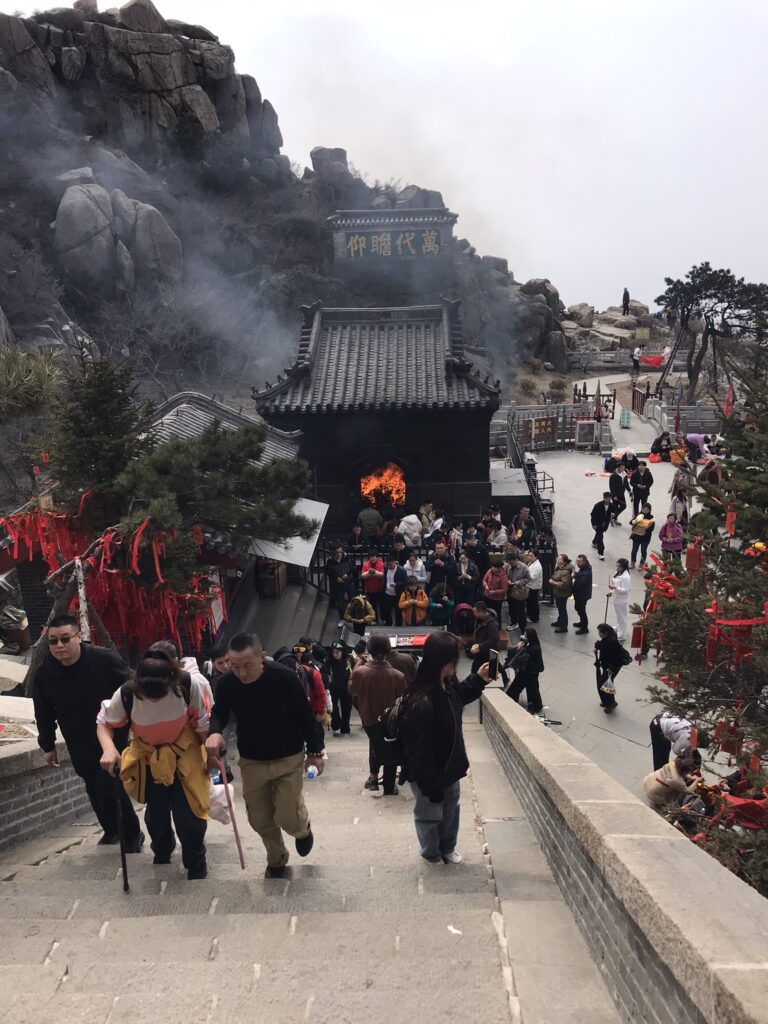
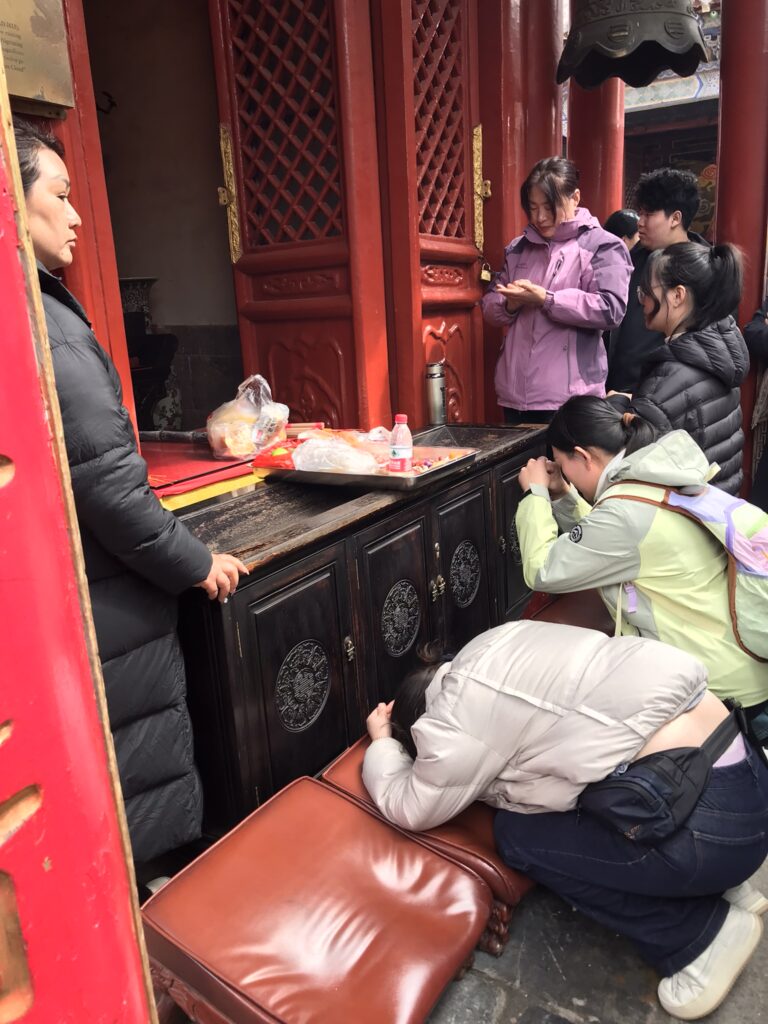
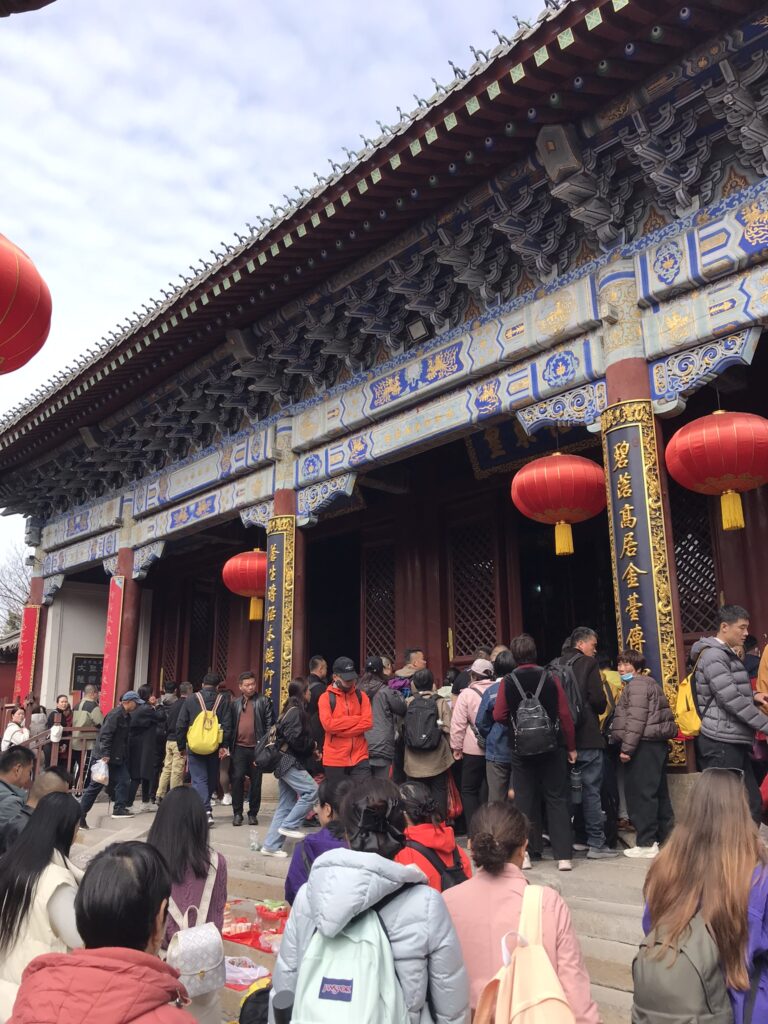
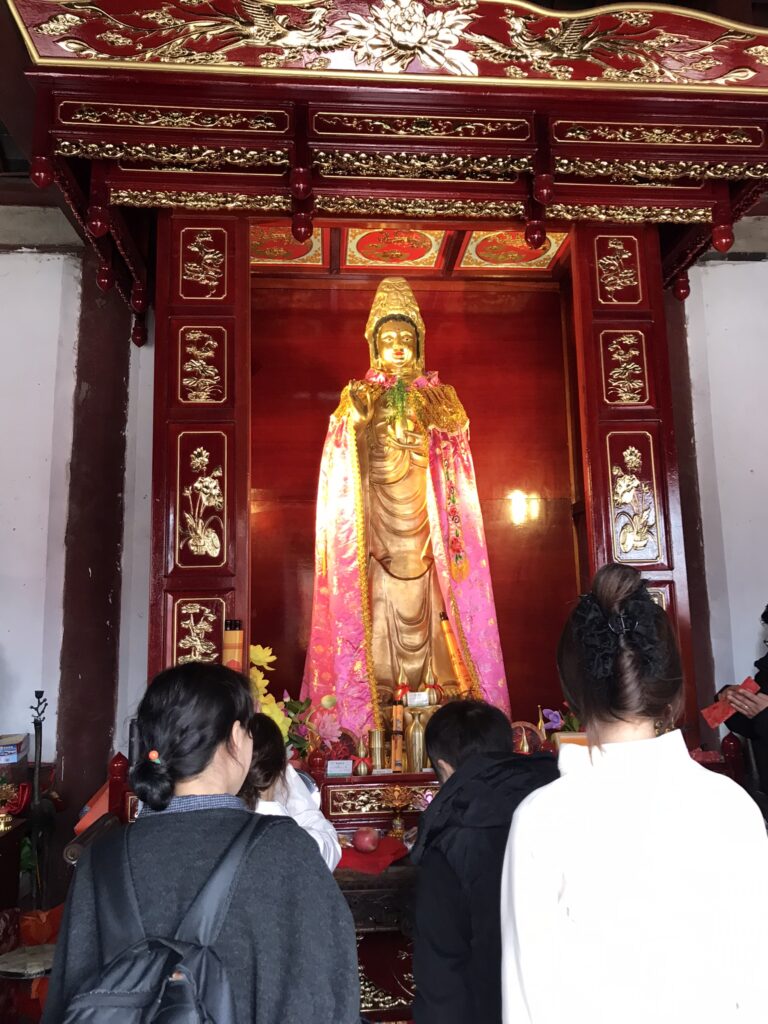
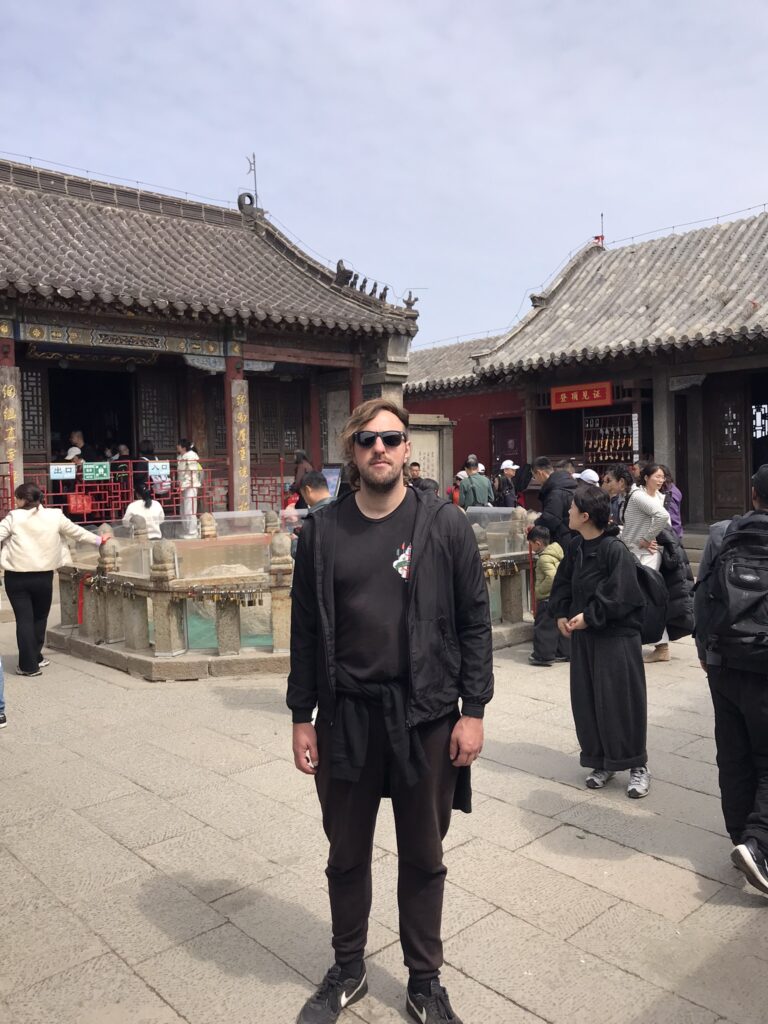
Outpourings of emotion, devotion and prayers are publicly practised at the summit of Mount Tai
We decided to walk from the summit back down to Zhongtianmen via the stairs to save money on the cable car and found it equally rewarding with impressive and daunting views of the stairs from below. Even this was tiring however and our feet and calves were sore by the end. Keep your eye out for the numerous souvenir stalls selling everything from Tianshan rocks to charms, tokens and jewellery. We were amazed to find a western toilet at every toilet block!
Don’t expect to see any western tourists at all here. Generally people were a little curious to see us but we were generally well received, with some passing climbers saying hello and one or two wanting to take selfies. It was super cloudy when we visited but apparently on a clear day you can see all the way to the sea from the summit. Something which seemed slightly strange to us was that there were numerous signs around that said the mountain is not a religious place and donations are not accepted, when we observed the complete opposite.
We guessed it was especially busy as it was relatively early in the lunar New Year, however when we visited midweek it wasn’t as bad as we’d expected crowd-wise. From the visitor centre at Tianwaicun it’s quite a nice walk back to the station through the city. Within the city itself is a large and notable Taoist temple, the Dai Temple, however we didn’t have time to visit. All in all a good day trip from our base in Yanzhou.
Qufu
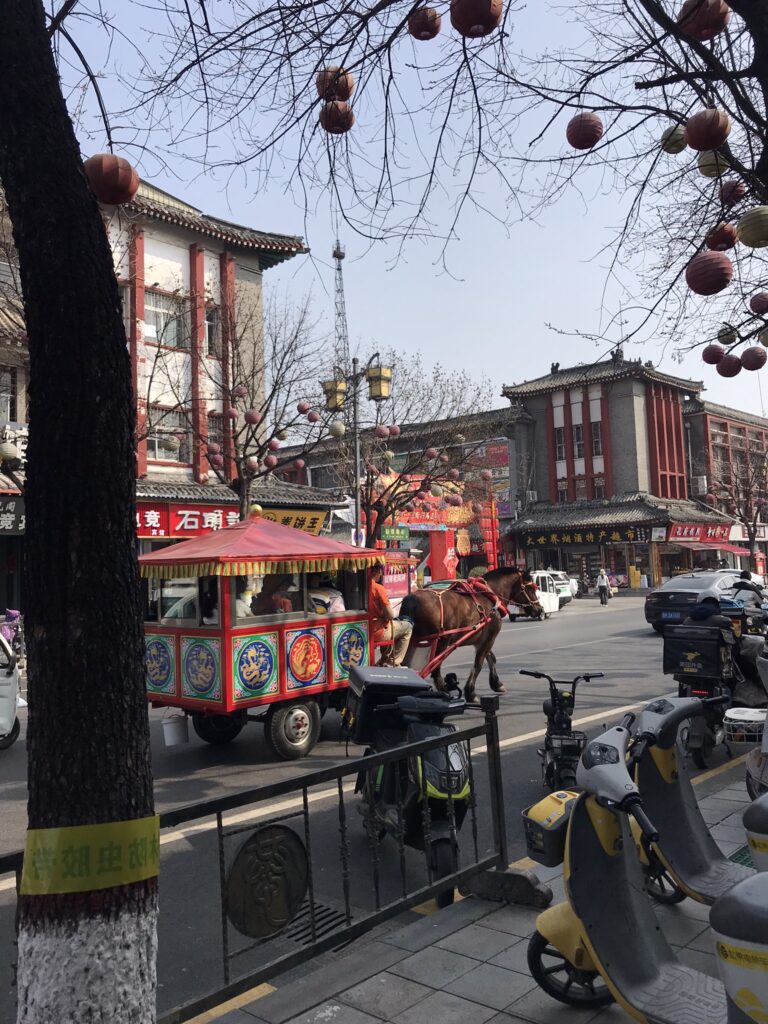
A hugely influential figure in China and beyond, the man known as Confucius (real name Kong Qiu) was born in Qufu to an upper class bureaucratic family around 500BCE. Promoting a code of ethics which included an emphasis on filial piety amongst other things, his teachings formed the backbone of state philosophy during the Chinese dynastic period and also shaped the moral code in many other nearby countries, with his influence still prevalent in places like Japan, Korea and Vietnam to this day.
Confucius is called Kongzu (Master Kong) by the Chinese; Kong is Confucius’ family name and the aristocratic Kong family held a great deal of power and influence for generations due to their relation to Confucius. Interestingly, Confucius himself lived a fairly unremarkable life. He never wrote anything down but wandered around different courts in China promoting his philosophy and code of ethics. It was his grandson and disciplines that wrote down his sayings, actions and stories in the Analects, forming the quasi-religion known as Confucianism (and later Neo-Confucianism). During his life Confucius took on some local and regional bureaucratic roles such as crime commissioner in the nearby town of Lu, before resigning due to conflict with other officials. It was only posthumously that his ideas received recognition. In the 11th century during the Song Dynasty, the Kong family and the direct descendants of Confucius were honoured with the title of Duke and given a fiefdom, which they maintained until 1948 when the incumbent Duke at the time (Kong Techeng) aligned himself with the Kuomintang and fled to Taiwan following the defeat of the Republic of China in the Chinese Civil War. There are still many descendents of Confucius in mainland China – our walking tour guide in Beijing was named Kong and told us she was a 77th generation descendent!
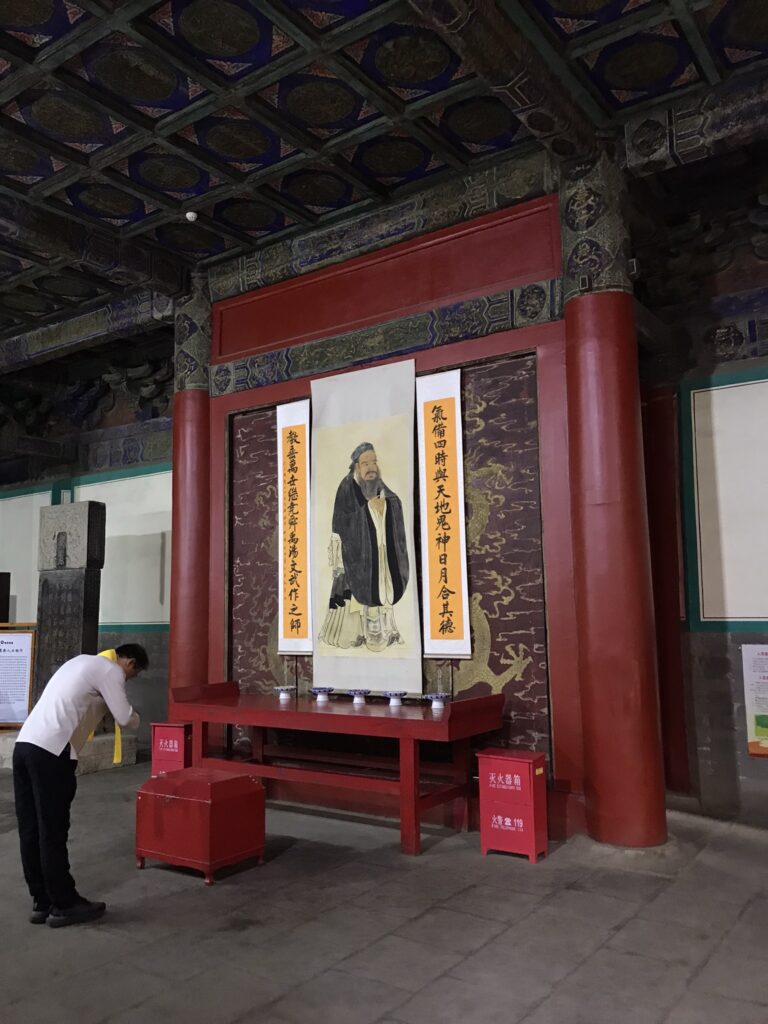
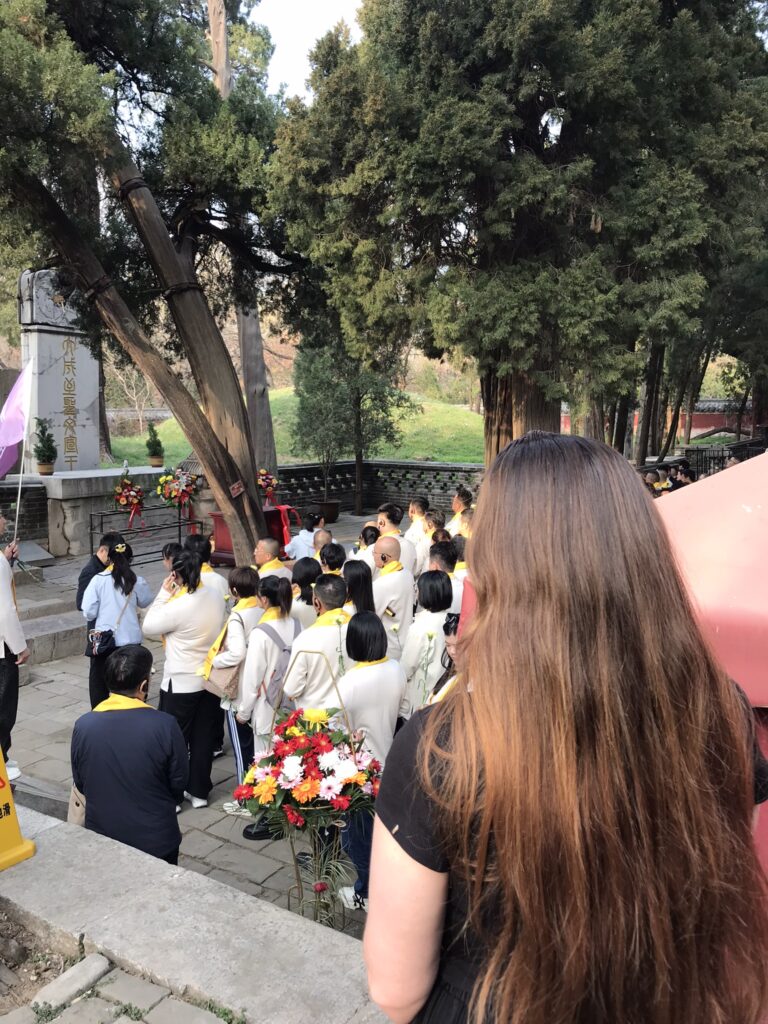
Visitors flock to the grave of Confucius to pay their respects – even though he lived around 2500 years ago!
Qufu today is a sleepy little town with an economy built on Confucius tourism. Visiting tourists seemed to be the main source of income for many businesses, and other than being the hometown of Confucius and his descendents there seemed to be very little else here. We mused that it might still be a rural settlement if Confucius hadn’t been born here.
The three main Confucius sites in Qufu are the Kong Family Mansion, the Temple of Confucius and Cemetery of Confucius. All three form one combined UNESCO World Heritage Site. The combo ticket cost 140 RMB at the time of our visit and covered entry for all three sites. I recommend visiting the Temple of Confucius first, followed by the Kong Family Mansion and then the cemetery as this is the logical walking order without needing to double back on yourself. All three of the sites are walkable from each other, although local hustlers trying to sell rickshaw or horse drawn carriage rides will probably try to tell you that they’re not.
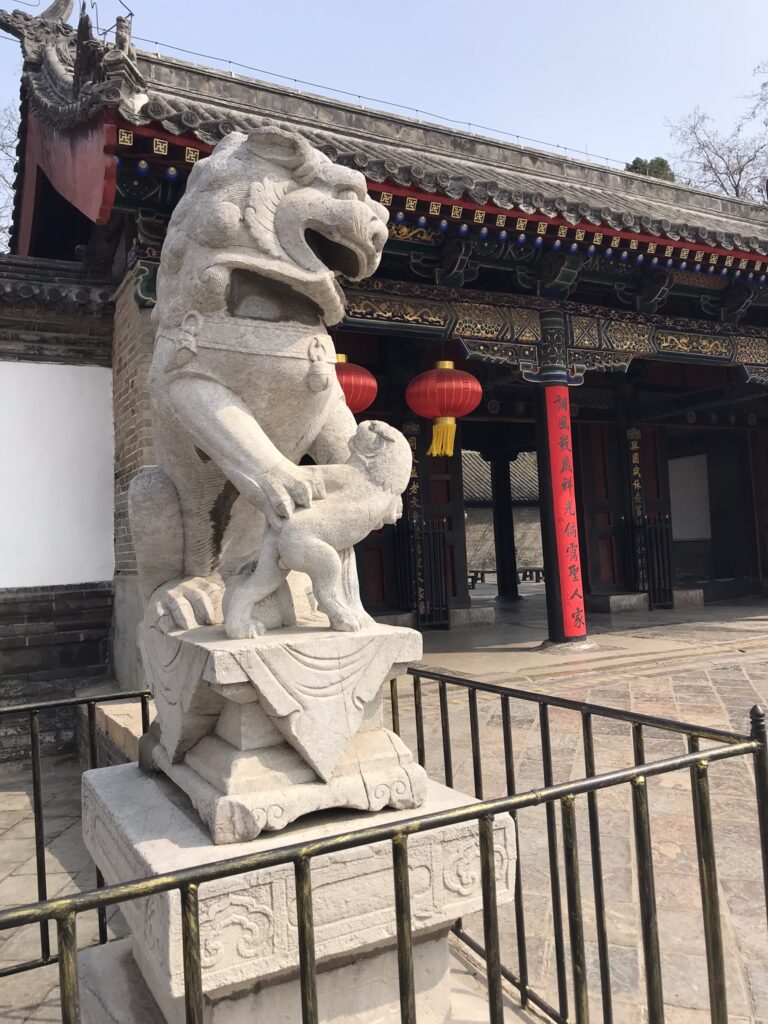
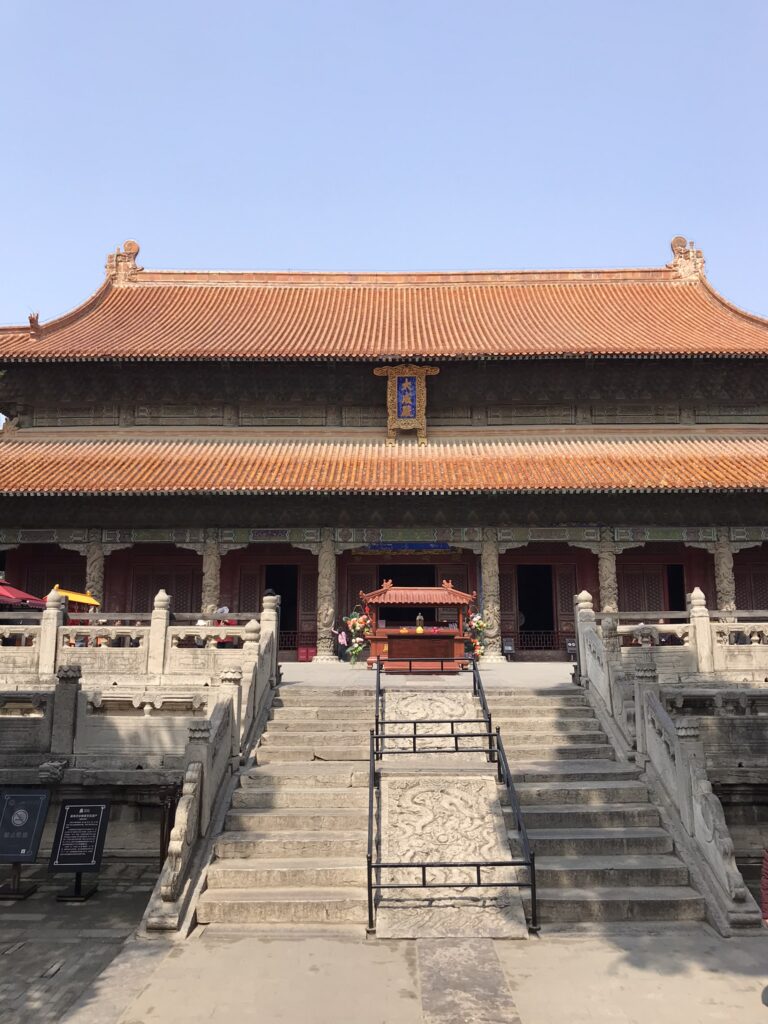
The top three sites associated with Confucius in Qufu are the Kong Family Mansion, Temple of Confucius and Cemetery of Confucius
We noticed more wealth inequality in Qufu than many other places we visited in China, the street sellers seemed a bit more pushy and in greater numbers than we’d experienced so far. There were plenty of hawkers around including souvenir stall sellers trying to peddle photos of Chairman Mao and other communist figures like Lenin, Stalin and Kim Il-Sung, horse and carriage guys lurking outside the Kong Mansion and Temple and persistent taxi people. We hadn’t really experienced any pushy hustlers previously in China as they seemed to generally focus on domestic tourists and shy away from foreigners. This wasn’t the case in Qufu – we were fair game. One woman even tried to put her moped key in Dan’s hand and followed us for a minute or two. Foreigner tourists are pretty much non-existent here (we literally saw none at all), and to be honest the number of visitors in general was pretty low, which may explain the desperation of the local people.
We headed to Qufu on a day trip via Didi taxi from our base in Yanzhou – the cost was around 40RMB each way. There is also a train station in Qufu, but it’s a significant way out of town away from the main sites so you’ll likely need to get a Didi regardless.
Activities
Temple of Confucius – sitting on the original site of Confucius’ house, this is the largest and most revered temple complex dedicated to Confucius in East Asia and one of the biggest temple complexes in China. Historically many emperors travelled to Qufu (some on their way to Mount Tai) to offer sacrifices and pay homage to Confucius; this is attested to by the many tortoise steles in the grounds of the temple (we reckon these were just a way for the emperors to say ‘I was here’ and ‘I’m a fan of Confucius’). The temple was continuously extended outwards, with many emperors wanting to leave their mark on the property by constructing a new elaborate structure or entrance gate.
The total area of the temple is very extensive although it’s mainly large open courtyard space and not all filled with buildings. There are many ancient trees inside the complex (mostly Chinese Juniper) which are classified according to age. Some are over 400 years old. The main shrine is a very grand wooden hall in the traditional Chinese style with an image of Confucius and disciples as well as ritual items like a drum, musical instruments and other items. There is a nearby stall selling votive offerings like flowers, incense, plaques and other items which visitors can purchase to offer to Confucius. We thought it was odd that Confucius was being worshipped almost as a deity; maybe we just aren’t able to comprehend the intricacies of it all.
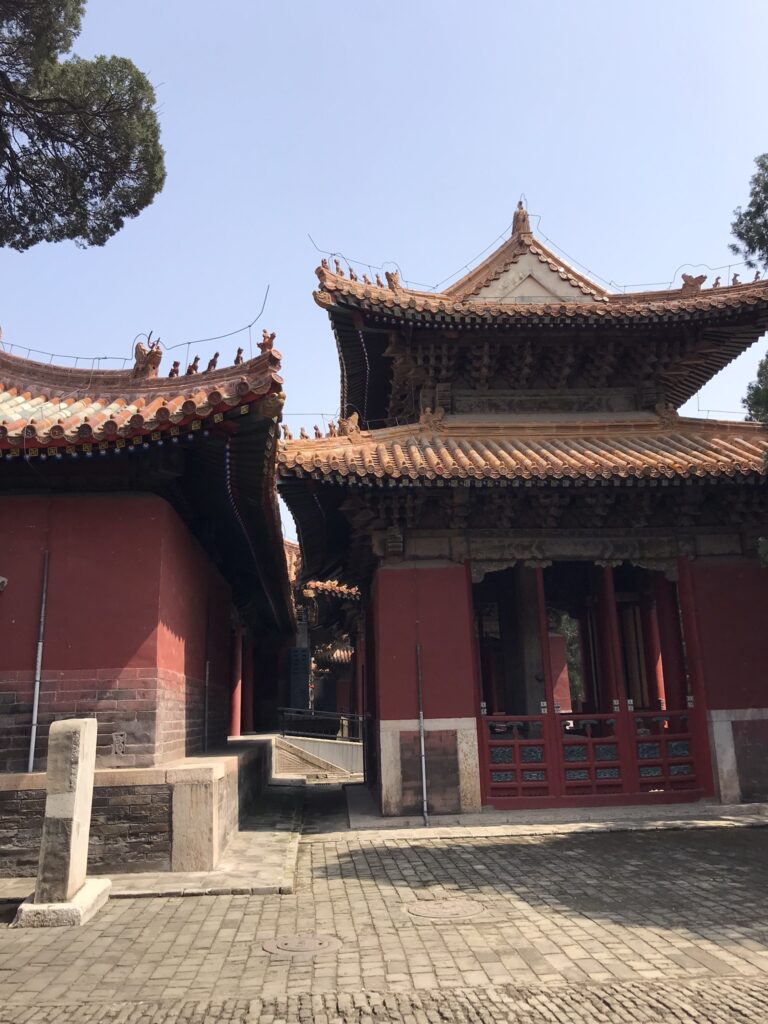
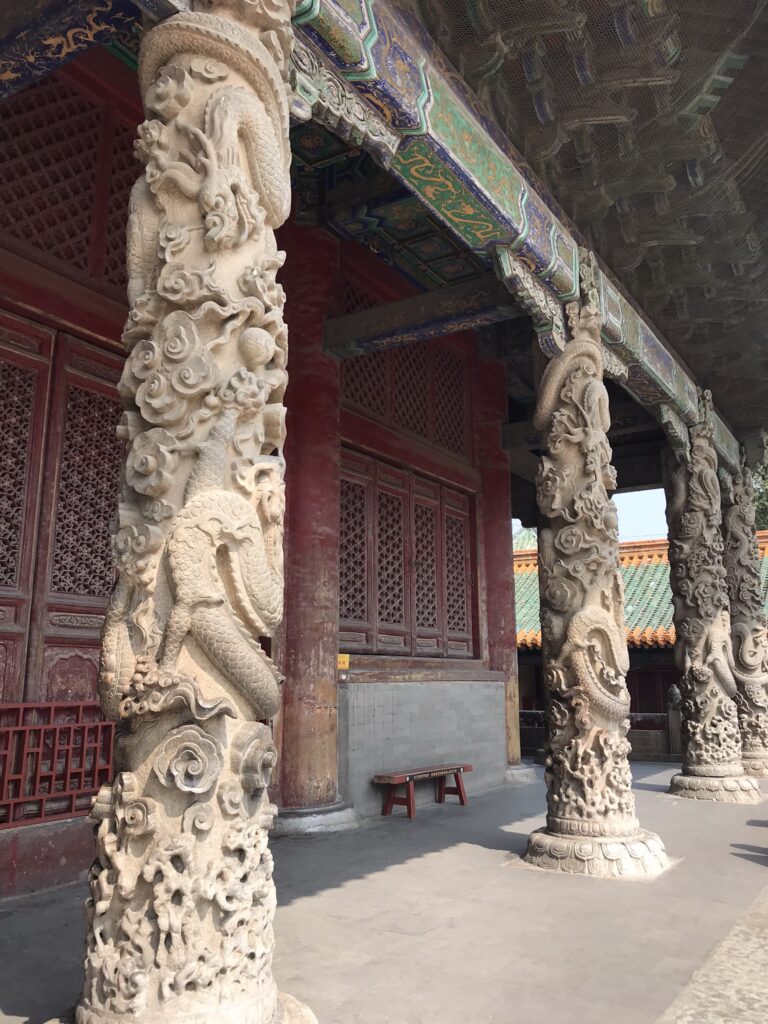
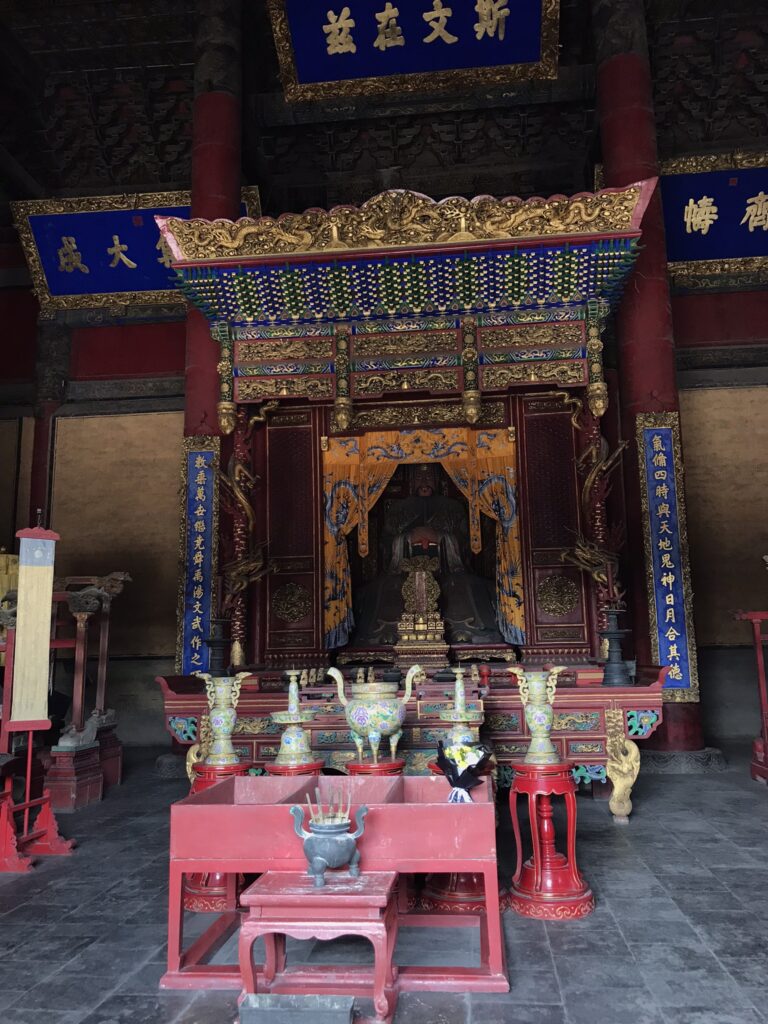
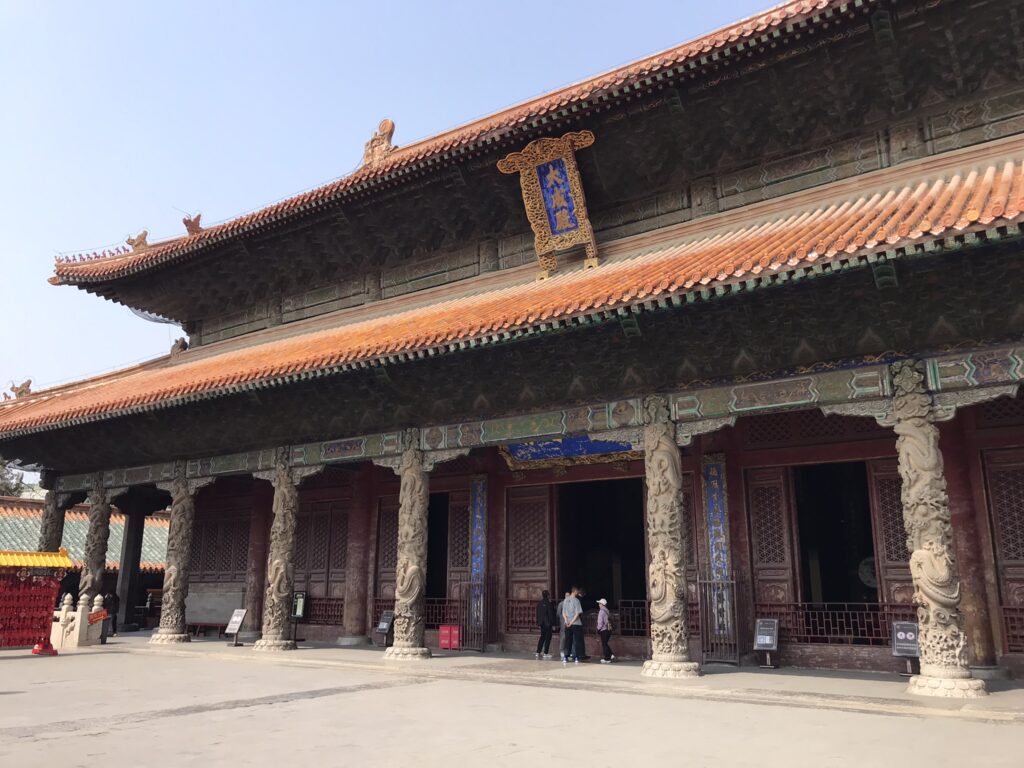
Scenes from the Temple of Confucius including the main shrine and elaborately carved individual stele and pillars
Kong Family Mansion – the clan house of the Kong family and former seat of their aristocratic fiefdom, which was established in the 11th century CE and passed down for generations through the eldest son. The house contains private residential areas at the rear and bureaucratic offices at the front for various fiscal purposes. There’s also a tranquil traditional garden at the rear of the property.
The Kong family were allowed to collect tax and mete out justice in their domain independently of the emperor. We found it a little bizarre as this dukedom was established many hundreds of years after Confucius lived and seemingly had very little to do with the man himself. We also thought it was quite strange that loads of gift shops are now located in the original buildings of the mansion – sometimes you accidentally wander into a gift shop without even realising. There are plenty of Confucius souvenirs and calligraphy shops around.
The mansion has limited information in English but there are plenty of plaques in Chinese for those with decent translation apps. It was unclear how old the buildings are as they seem to have been rebuilt numerous times since the Ming period. The private residence still has furniture seemingly trapped in a time warp from the 1930s when the Kong family fled firstly to Chongqing and then Taiwan after the invasion by the Japanese and later Communist takeover.
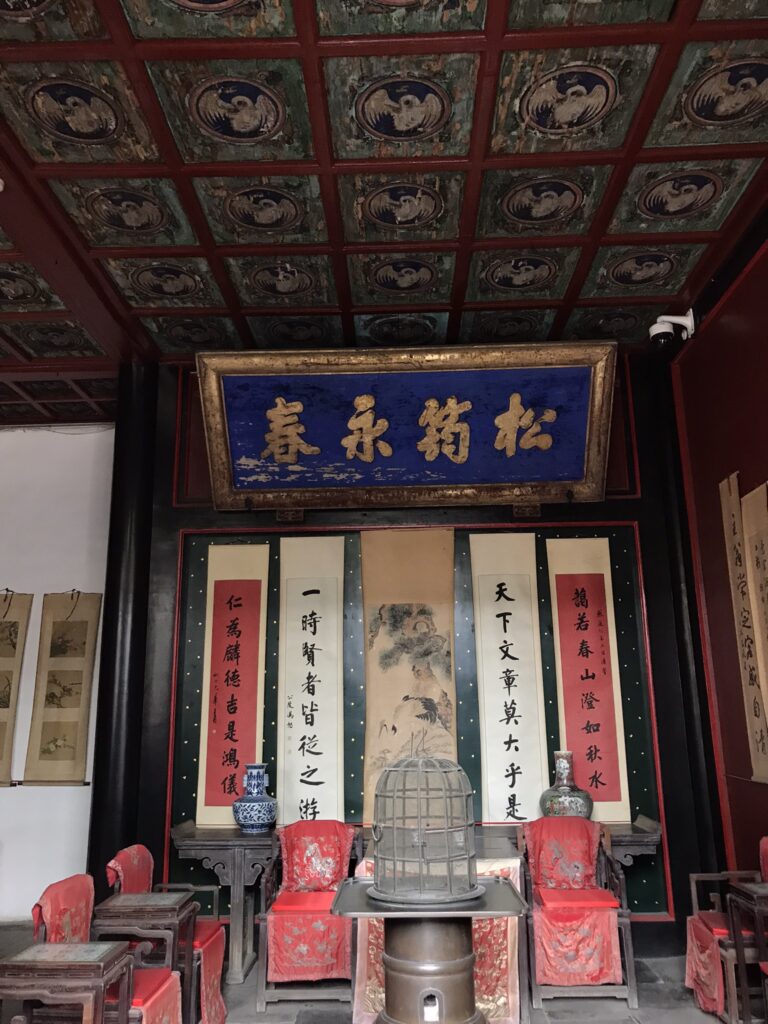
Highly decorated rooms in the Kong Family Mansion
Cemetery of Confucius – a large meadow/wooded area with burial mounds of the descendants of Confucius. Only Confucius’ direct male descendants can be buried here. You can spot many graves of Dukes and distinguished Kong family members through the ages from the multitude of stone statues of rams, mythical creatures, horses and warriors lining the pathways to the funerary stele. There are graves big and small here, with a number of winding paved and unpaved paths running through the extensive area. The main circular walking route only takes an hour or so to meander around and we encountered barely any other people. Information plaques are few and far between in the cemetery, but that isn’t really important as the whole place has a very peaceful and somewhat mysterious and long-forgotten feel to it. The main focal point is the grave of Confucius as well as his son and grandson (important disciples), which are located close to the entrance to the cemetery. We saw a large group of around 200 followers all taking part in a ritual and laying yellow flowers on the grave. It’s obvious that Confucius is still a prominent and much revered figure in China.
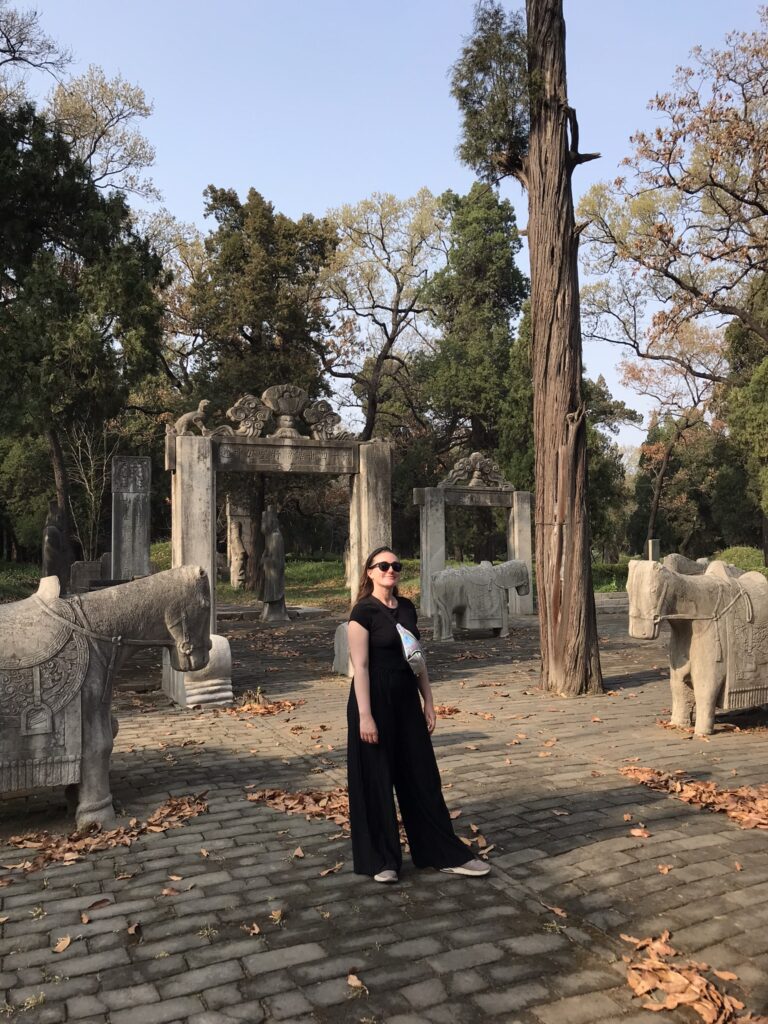
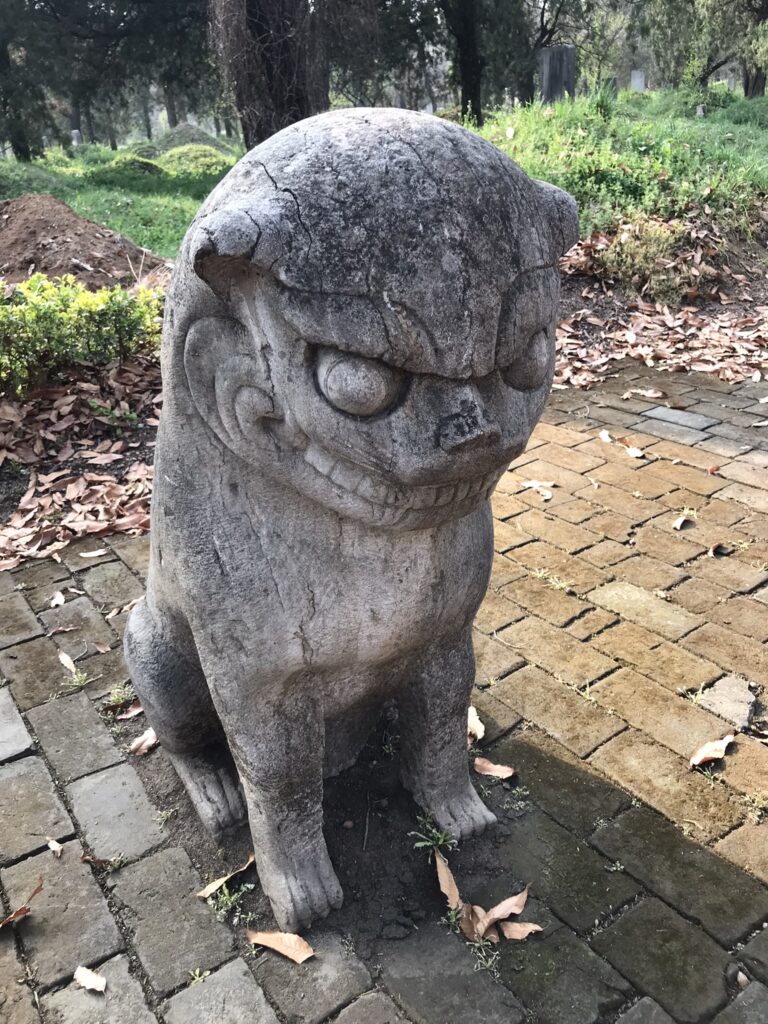
Interesting if slightly creepy statues from the Cemetery of Confucius
There’s a mini tourist land-train that makes a full circuit of the cemetery but it speeds around and doesn’t stop at all – you can’t really appreciate the serenity and tranquility of the place from a speeding vehicle and you also miss exploring and walking through the beautiful flora (blooming purple flowers) and peaceful scenery. I do recommend taking the time to wander about the cemetery and not just take the train or rush in to the grave of Confucius. There is a very atmospheric vibe here.
Foodie Places
Jiediliang Dried Potato Powder (Jining Qufu Baiyi Shop) – we picked this place specifically so we could order on Alipay. Despite the strange name, it’s a pretty modern and somewhat trendy noodle and fried rice place. We opted for the chicken fried rice combo and it was cheap and cheerful. Most of the restaurants in the centre of Qufu seemed to be set up for tour groups and serving more elaborate touristy fare, so this was probably the best option for a quick and easy lunch. FYI this restaurant is not in the half-abandoned shopping mall opposite – don’t make the same mistake we did and wander in there!
Luoyang
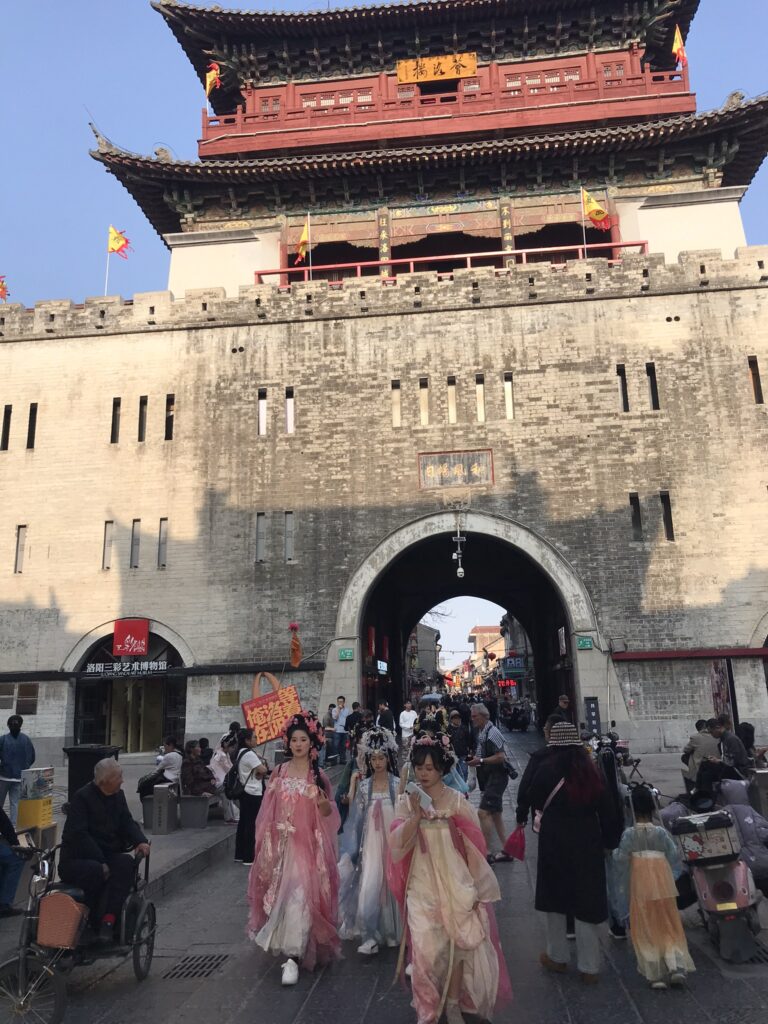
Luoyang is one of the four principal ancient capitals of China, along with Beijing, Nanjing and Xi’an. Of these cities, it is by far the least well-known and least visited by foreigners. Luoyang served as the capital on-and-off for periods during the Eastern Zhou, Eastern Han, Northern Wei, Western Jin, Tang and several other dynastic eras, roughly from 770BCE to about 900CE. Often during these times Luoyang was the primary capital while Xi’an was secondary capital or vice-versa, with power fluctuating between the two depending on the prevailing conditions and trends at the time. Although few original structures remain in Luoyang from this period, the city has a plethora of recreated historical areas which pay tribute to its storied history and transport visitors back in time to those days; the difference being that the streets are now filled with modern cafes and shops selling handicrafts and tourist tat. Today Luoyang is the second-largest city in China’s central Henan province, with a population of around 5.5 million.
Luoyang is a little less sanitised than other major cities we’d visited to the east. I found it was more like the China I’d imagined, with backstreets filled with street food stalls, tables and plastic chairs on the pavement. It wasn’t as flashy as Shanghai or Beijing, a bit more rough around the edges. We couldn’t believe how many street food stalls lined the main avenues on Lijingmen and around Ancient City, rows upon rows of vendors offering local cuisine, sushi, pancakes and all manner of offerings. It’s best to base yourself close to the Ancient City as the area comes alive at night with soft glowing lanterns, music performances, hungry diners feasting on Mongolian hotpots and local Henan specialities and hanfu-wearing hordes. Hanfu was crazy popular here, our hotel even offered free hire! In every nook and cranny in the Ancient City there seemed to be a photoshoot with young guys and gals dressed up in period dress – really taking it seriously with full makeup and props and an army of expensive camera toting ‘photographers’ who always seemed to be advertising their services to passers-by. We thought it was quite nice that young people were getting so involved with history and culture in this way.
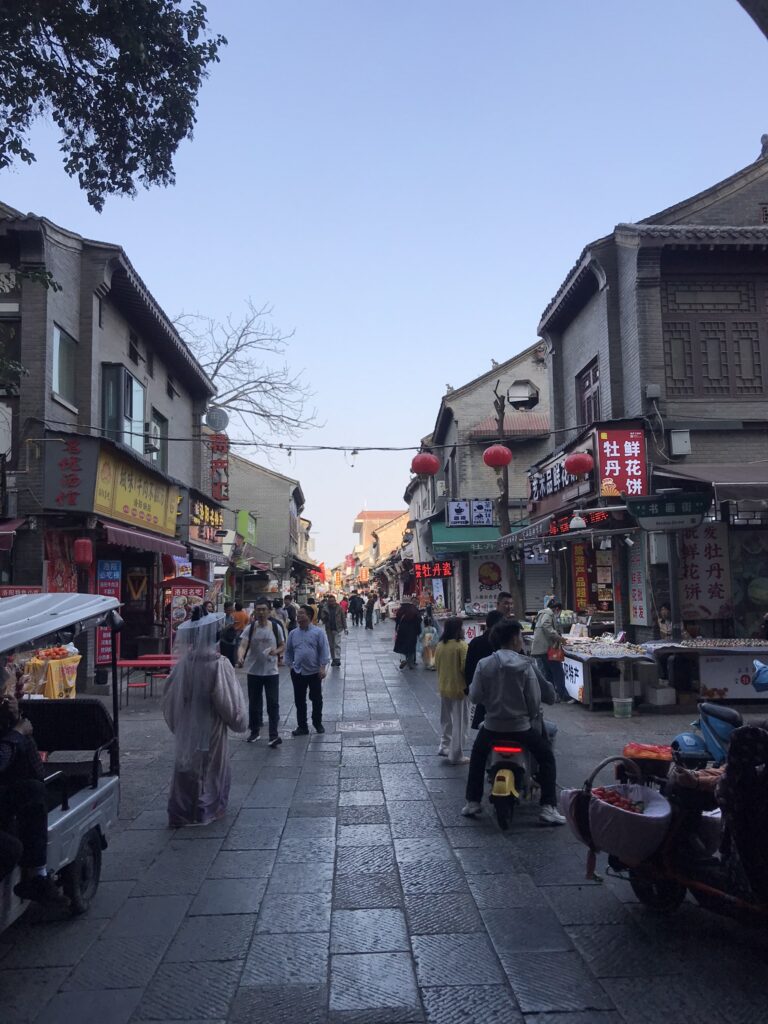
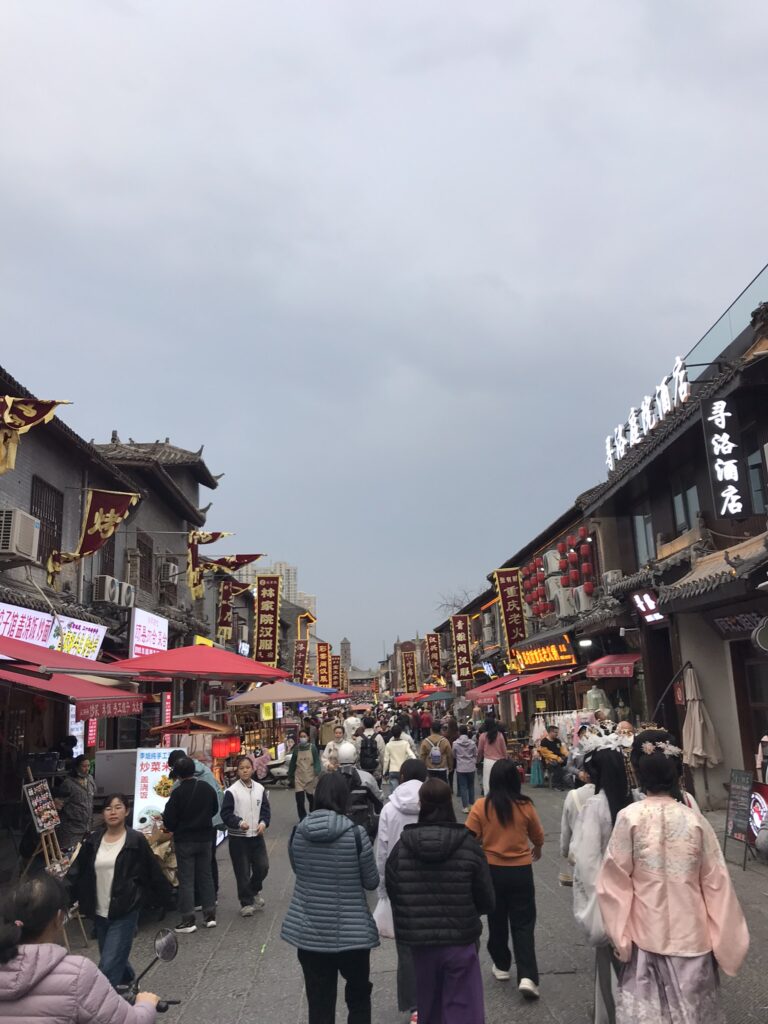
Lijingmen pedestrian street is a bustling thoroughfare
As well as its status as a former capital, Luoyang is best known for its close proximity to the Longmen Grottoes, a seriously impressive array of ancient Buddhist carvings in the side of a ravine. A UNESCO World Heritage Site, this area requires a Didi taxi to reach from the centre of Luoyang as it’s sadly not on the city’s metro line. Luoyang along with nearby Zhengzhou is also one of the bases to visit the infamous Shaolin Temple, which is roughly equidistant between the two cities and can easily be reached from Luoyang by bus. Hordes of kung-fu fans descend on the Shaolin complex to marvel at the daily demonstrations by novice monks, and Luoyang itself is full of taxi hasslers screaming ‘Shaolin’ at any and all passers-by who set foot outside the bus or train station. To be honest, the Shaolin Temple is ultra-touristy to the point where we felt it was bordering on a tourist trap. There are better things to do in Luoyang itself.
Accommodation
Luoyang Yunyi Hotel (Luoqi Ancient City Branch) – this hotel looked really good in the promotional photos but was a tad disappointing as it was slightly too close to the lively Ancient City ergo pretty noisy at nighttime, it wasn’t quite as spacious or clean plus breakfast was a bit of a miss compared with other similar hotels we visited in China.
Foodie Places
Shizi Tower Shuixi – this restaurant is situated on the main Lijingmen avenue and serves up tasty Henan cuisine – according to the menu some of the dishes are intangible cultural heritage dishes. The staff were pretty patient with us as our phones were lagging while we were trying to order. We picked the lion’s mane meatballs served with rice and gravy and a cumin lamb dish served with tortilla wraps, which were both excellent. It’s also pretty simple to order using the Alipay app with menu translations.
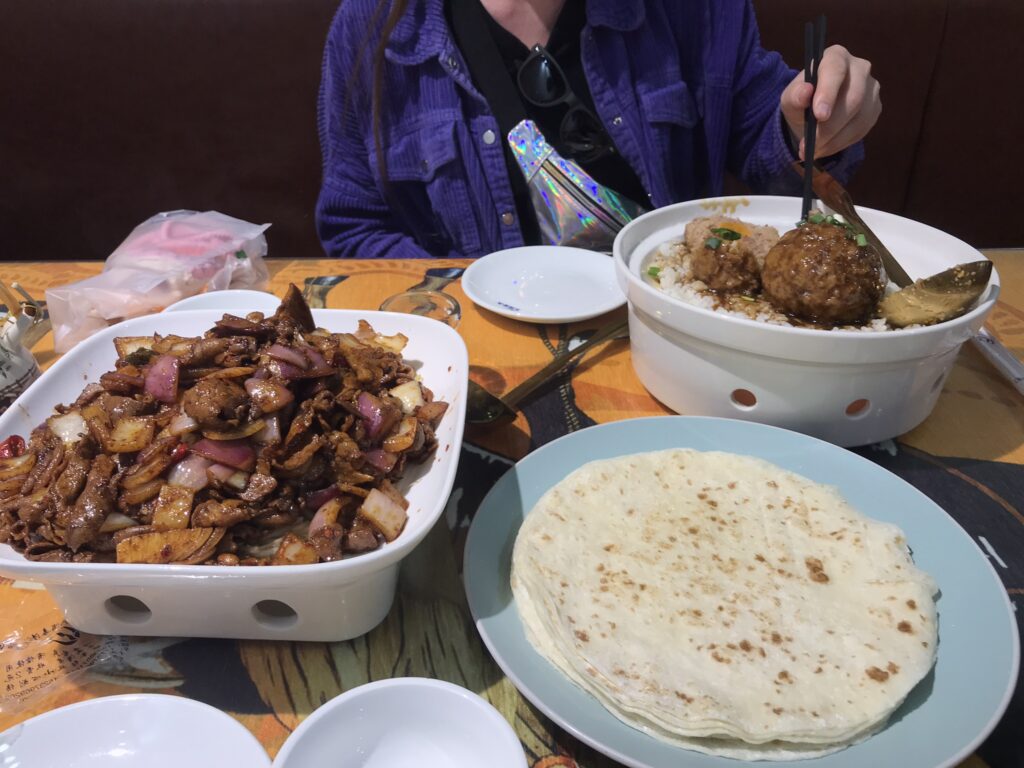
Shizi Tower Shuixi: super delicious food, massive portions and reasonable prices – what’s not to love!
Laobaisha mutton stewed noodles feiyi mutton soup (longmen grotto) – near Longmen Grottoes, this place is located in a warren of other food joints near the entrance to the UNESCO site. This eatery specialises in mutton noodle broth. The broth itself is very hearty and spice fans can add extra chilli for umph. The noodles here are hand stretched – we personally witnessed an older lady stretching them by hand. Flaky bread with minced meat, gyoza and baked bread also seemed to be popular options. Prices are reasonable for the location and the staff were very humble and understanding with us. We had to physically point at the option we wanted on the menu board behind the till as you can’t order with Alipay. A great place for a hearty and delicious lunch before or after visiting the UNESCO site.
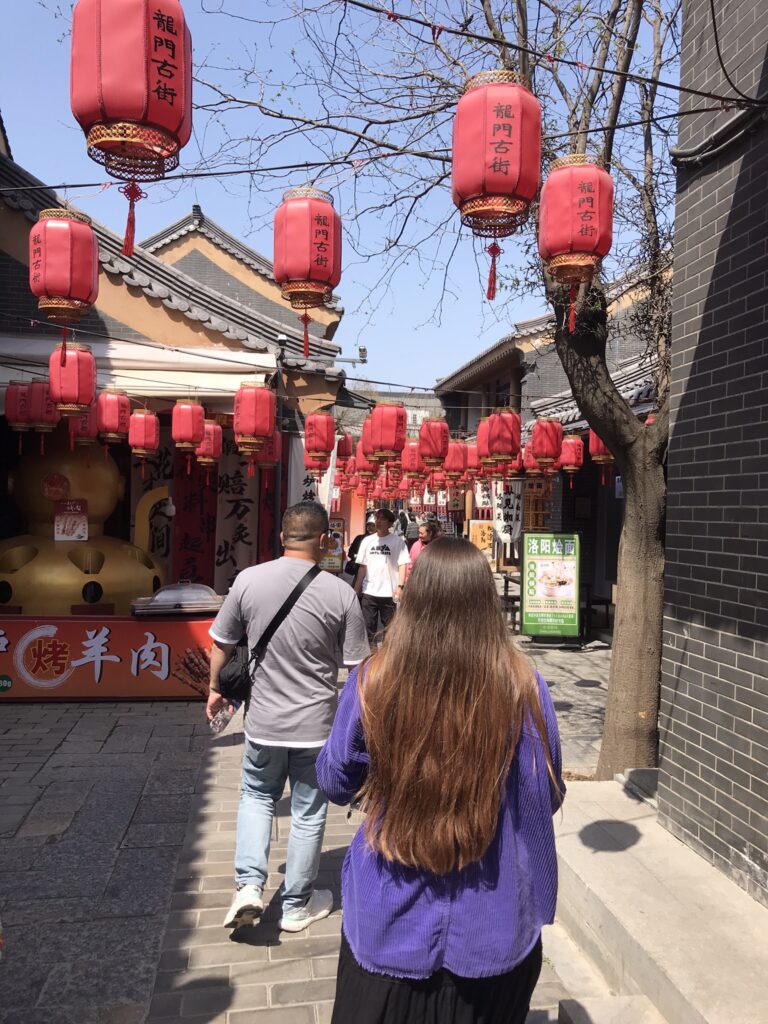
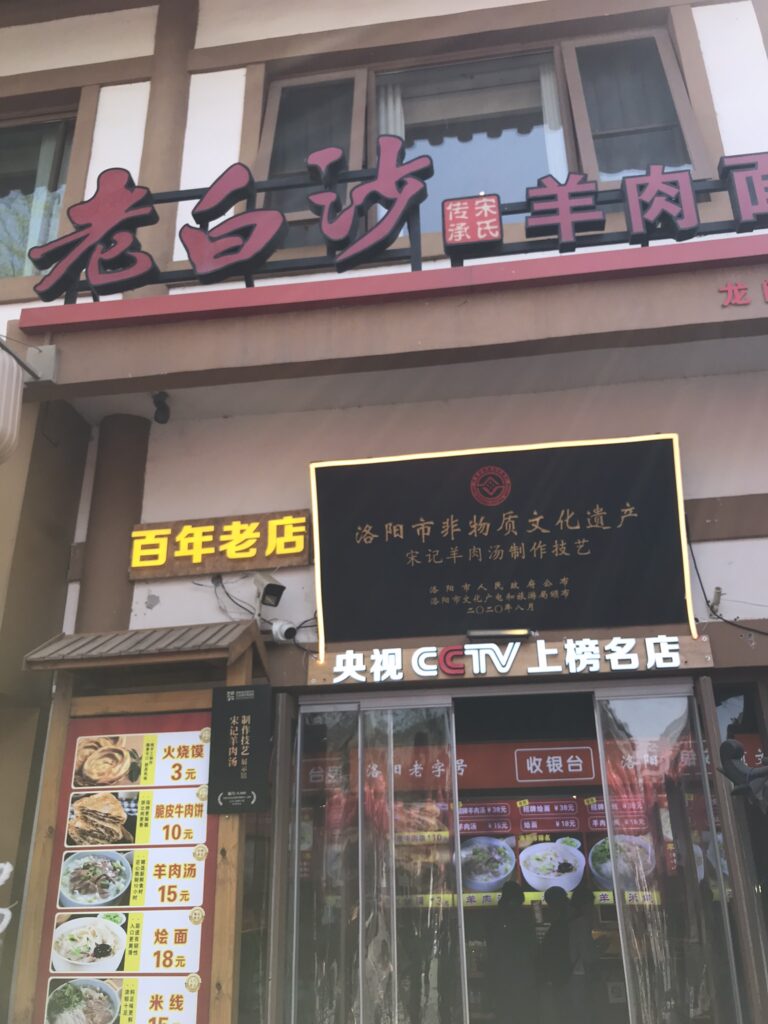
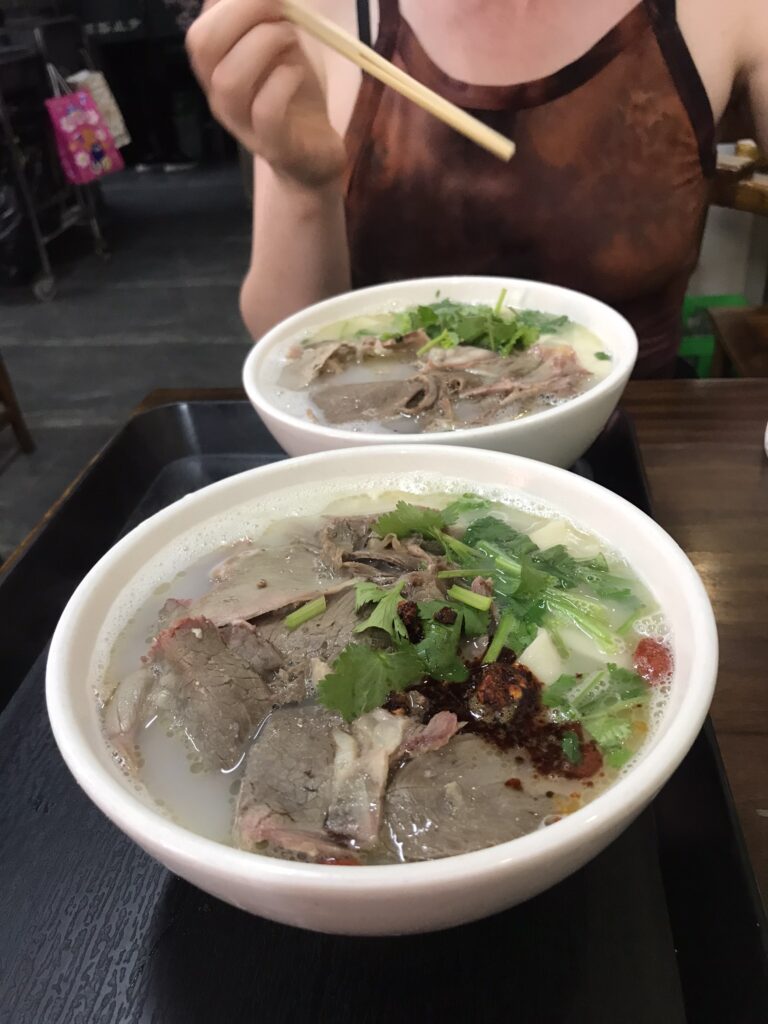
On the hunt for lunch outside the Longmen Grotto
Dinner at Chulaoguai (xingjie branch) – a super popular sit-down restaurant serving up Henan cuisine just outside the Ancient City area. We found the food not too spicy and there were many ‘normal’ meat options on the menu – no feet or bisected heads thankfully! We enjoyed the pork belly served with bao buns and mustard greens, kung pao chicken and fried diced potatoes. Even though we accidentally ordered a huge bowl of rice (enough to feed 4 people) the whole meal only cost about 110RMB for the two of us. Be aware that the platters are for sharing and are not small portions at all. The staff seemed genuinely pleased to see us here and tried to help out as much as they could. I was able to communicate with the front desk lady purely with hand gestures.
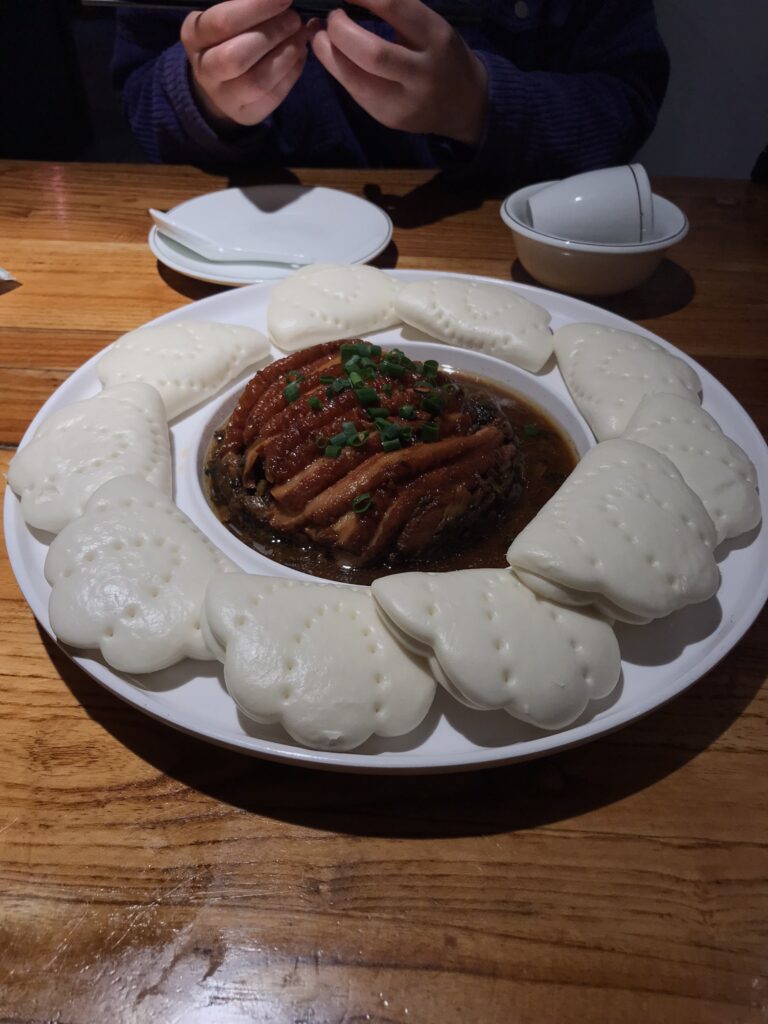
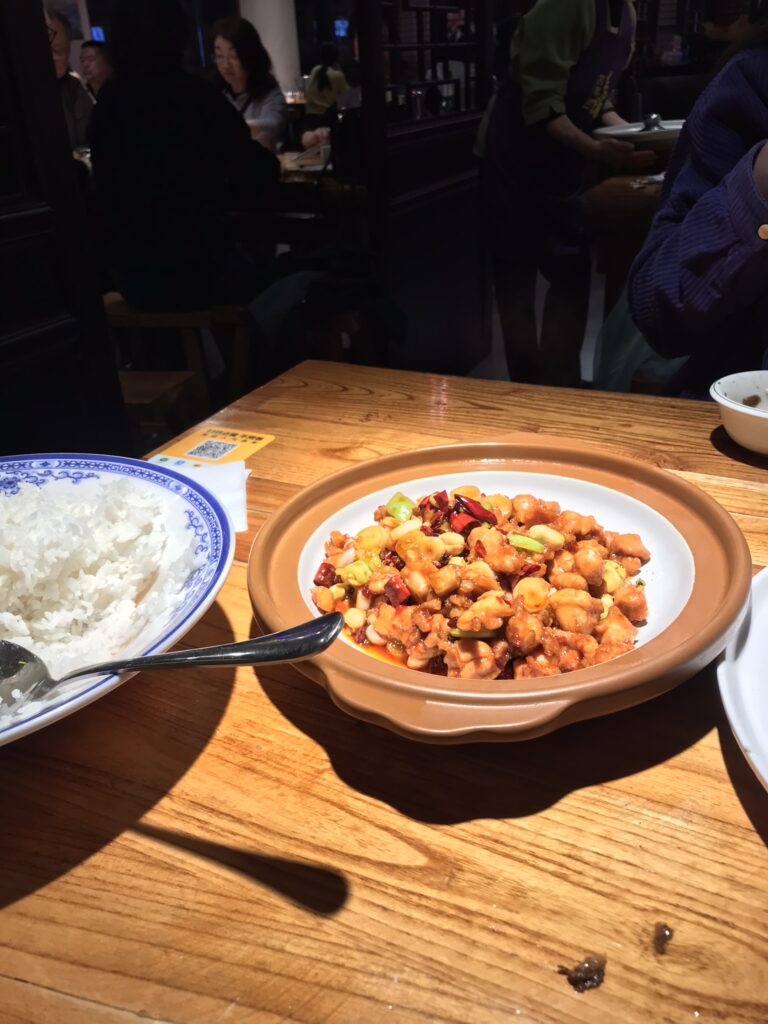
The bao buns with fatty pork were to die for at Chulaoguai!
Activities
Mingtang Paradise Scenic Area & Yingtianmen Gate – we stumbled upon this area while wandering around before heading to Lijingmen. This is a central area of the old city with reconstructed monuments which resemble buildings and structures from that time. The Mingtang area looked to be a tourist park with paid entry (around 90 RMB) which seemed a tad excessive, but the other side (Yingtianmen) was free to visit and didn’t require a reservation – just walk up to the turnstile and the gate opens. Mingtang has an iconic circular pagoda and temple complex which seemed to be modern and newly built. On the other side of the road is the Yingtianmen North Square, a huge square in front of a modern reconstruction of a Sui dynasty imperial gatehouse/palace built upon a massive pedestal which provides the backdrop to numerous hanfu photoshoots. Apparently the original Yingtianmen dates back to 605CE and there are some original architectural remains within the modern reconstruction, but we didn’t go inside to see them. The likes of Luckin Coffee, KFC and Chagee (tea chain) all have stores in the square – we particularly liked Chagee as they serve delicious orange and jasmine ice tea and you can choose the level of sweetness and quantity of ice. It was pretty cool to hang around at sunset and just watch all the girls and guys pose dramatically for their hanfu pics. Yingtianmen North Square is a great people watching spot with not a foreigner in sight!
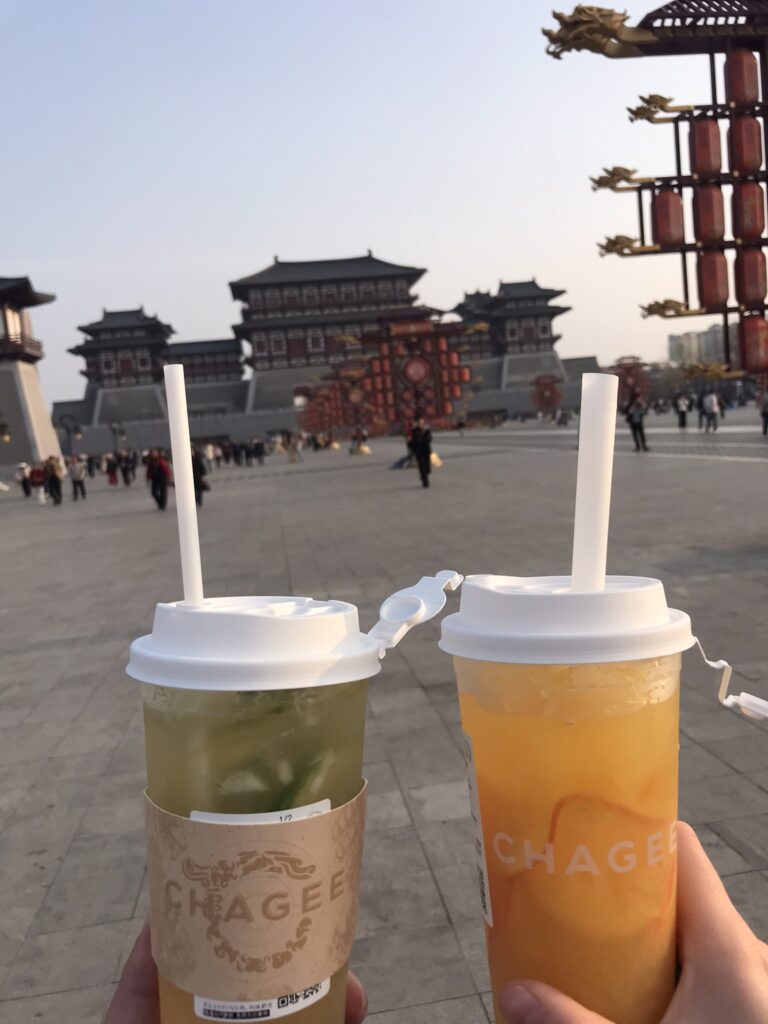
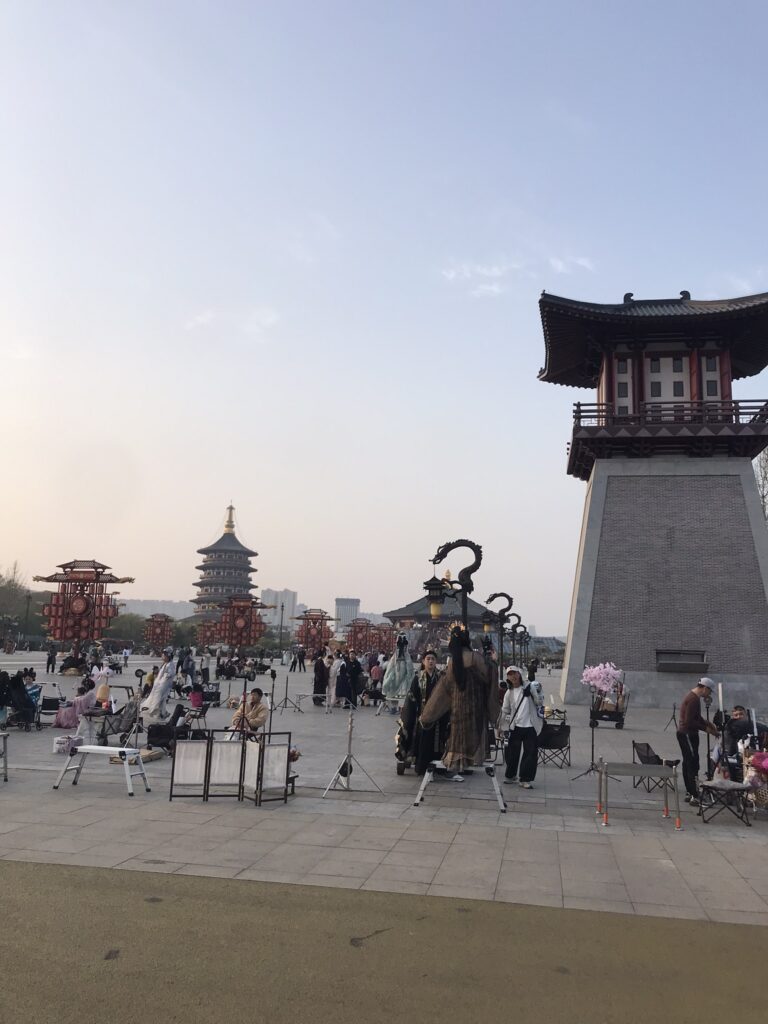
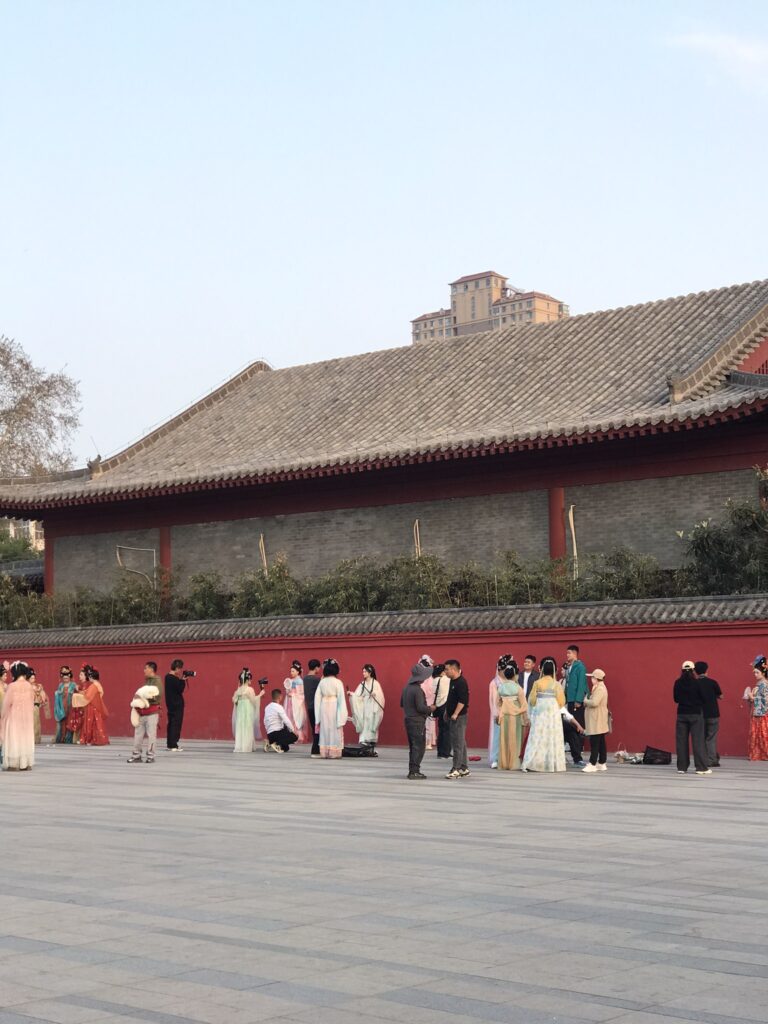
We couldn’t believe how many people were taking part in hanfu photoshoots at Yingtianmen
Lijingmen Scenic Area – an impressive bastion-style gatehouse marks the beginning of the mostly pedestrianized road which runs through the scenic area. Lijingmen is the heartbeat of the old-town area of the city and is incredibly popular with domestic and the occasional foreign visitors. The main avenue is lined with stalls selling trinkets, local delicacies and food aplenty. Dusk is a great time to visit as it adds to the ambience of the place. There are many highly rated restaurants that aren’t too overpriced along the main road or just off the main drag. The avenue extends all the way to the Ancient City where the two join up.
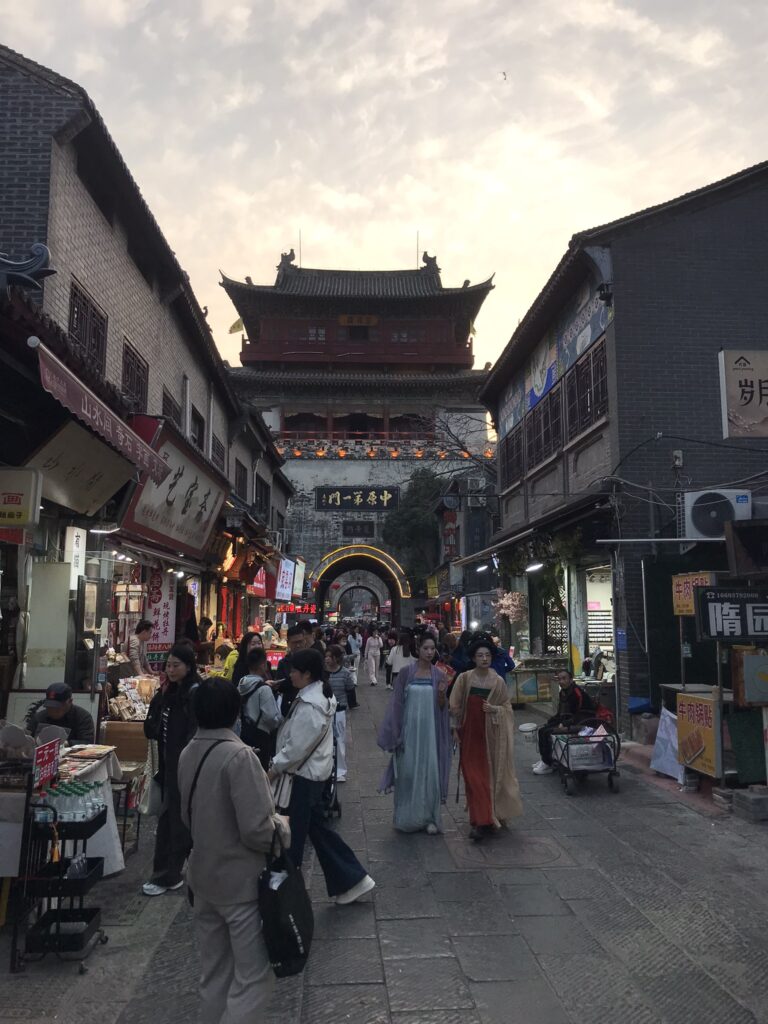
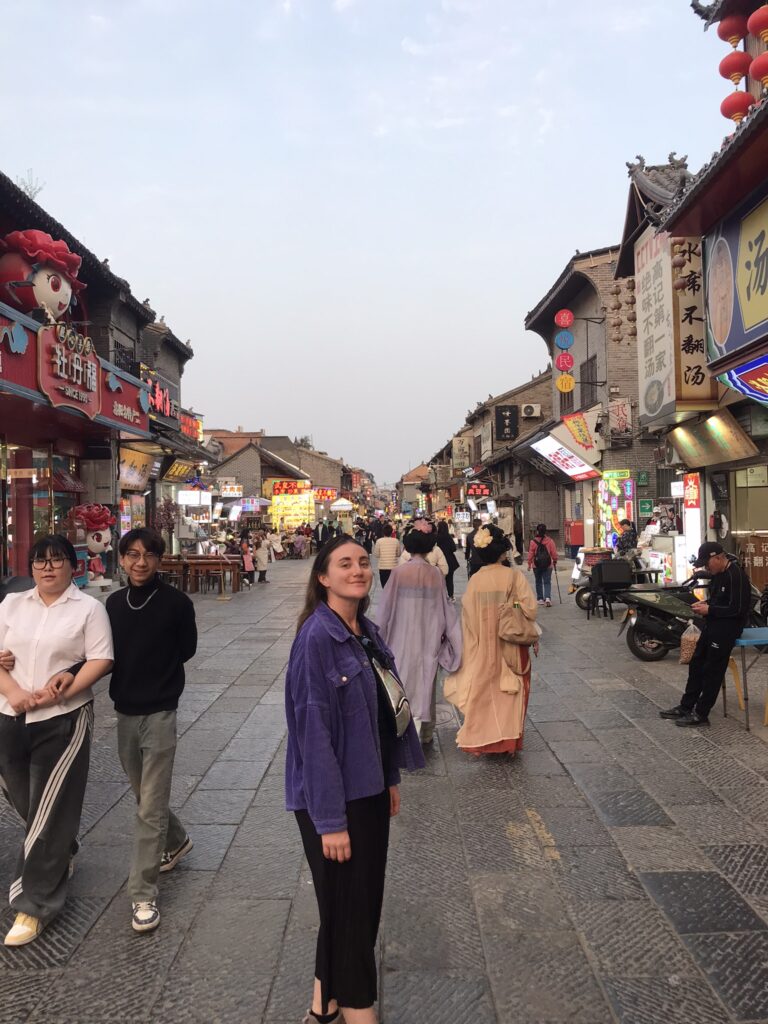
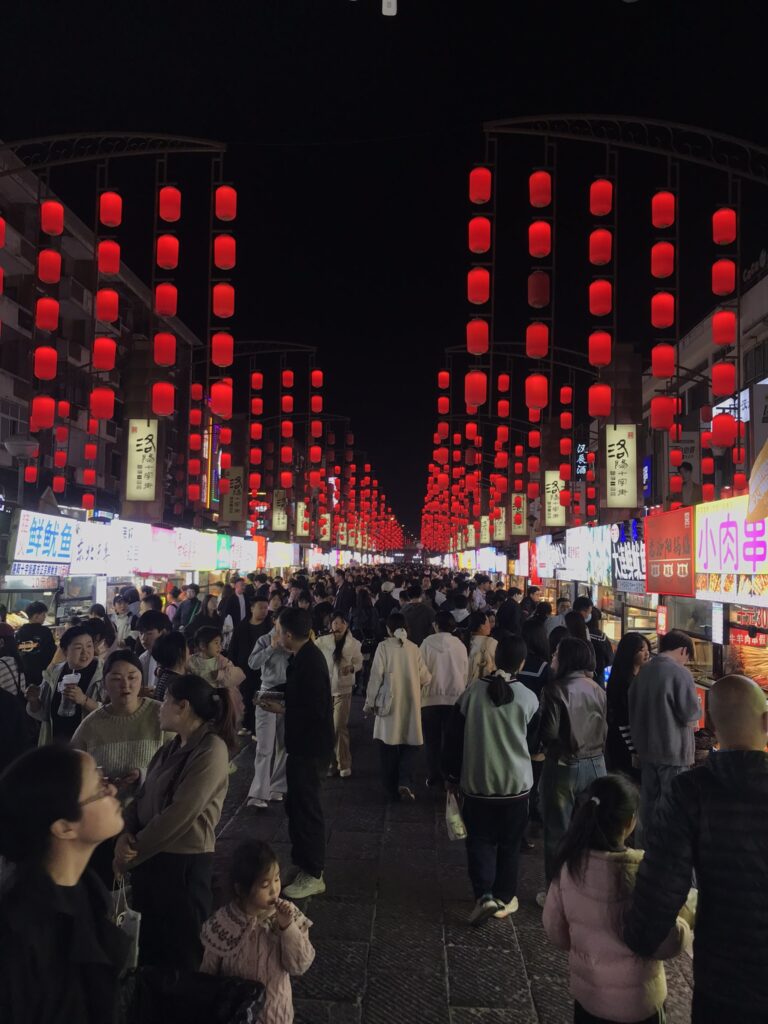
Lijingmen is ‘the’ place to go in search of culinary delights, local snacks and gifts to take home
Luoyi Ancient City – for some reason, maybe crowd control, you have to make a reservation (free) using the QR at the entrance gate. We had issues with this and managed to convince the gruff security guard to let us in after explaining using translate that the booking system wasn’t working. This is the original location of the old city – inside are many historic-looking buildings however this area seems to be entirely recreated and rebuilt for tourist purposes. Although not original or authentic, this is still a scenic place with a super lively and vibrant atmosphere especially after dark. It was definitely the place to be on a Saturday night and a hotspot for Hanfu wearers.
Longmen Grottos – the most popular and well-known attraction in the city of Luoyang, you must book in advance for this UNESCO site due to its overwhelming popularity amongst visitors. This attraction gets super busy particularly at the weekends so be prepared for crowded conditions – it was extremely busy when we arrived at 9am on a Sunday.
The site consists of a myriad of Buddhist devotional rock carvings which vary in size, complexity, style and creation date, with the oldest carvings from the late 5th century CE (Northern Wei Dynasty) and others from the Tang dynasty. The most popular carving is the Losana Buddha statue which is said to depict Empress Zu Weitan (the only female empress in Chinese history who was sadly deposed after 15 years), who was patron of the work. Some of the carvings are tiny (about the size of the palm of your hand), while others are colossal. Most statues depict Buddha and his Boddhivistas. The most imposing and impressive carvings are situated along the west bank of the River, whilst there are also a few on the east bank alongside a historic Buddhist Temple and a traditional garden dedicated to Bai Juyi (a retired Tang bureaucrat turned poet/recluse who lived in the temple during the early 9th century).
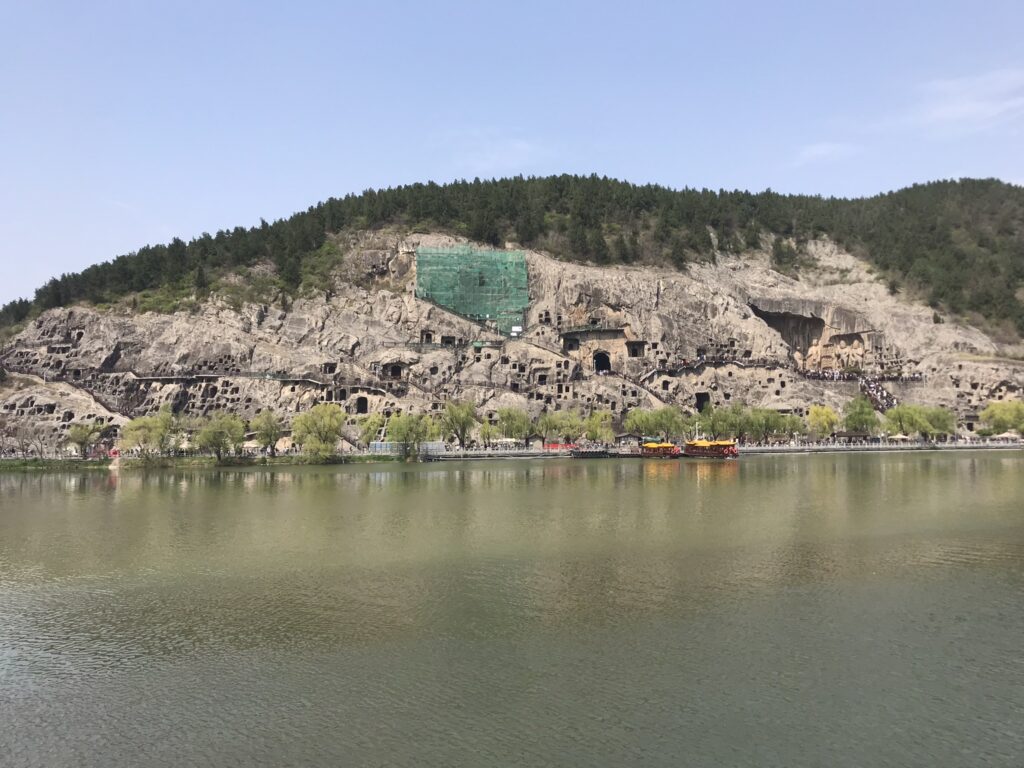
View of the west bank from across the river – you can really get a sense of the scale and difference in size of the carved niches
Many of the ancient Buddhist statues and carvings in the grotto area have been defaced during waves of anti-Buddhist fervour over time, including the Cultural Revolution in the 20th century. The lower down the niche, the higher the likelihood of a missing head or a gouged face. Most of the larger statues such as the Losana Buddha still have their faces intact. Some people seemed to be offering prayers to the statues – we even spotted a group of mantra-chanting Buddhist nuns on a group tour at one point. Interestingly, one of the grottos features medical prescriptions from the Tang dynasty on the lintels.
There are information boards in English but you’ll need to be patient or use your elbows to be able to read them as they’re often very close to the ground and locals tend to stand in front of them. Expect chaotic crowds and queues to go up the stairs to view the various monumental carved niches, as well as large tour groups that linger and loiter in prime position, preventing access for others. It’s not the nicest experience at the weekend crowd-wise however we met quite a few friendly Chinese visitors, some of whom were English teachers and so we were able to have a chat with them (one of them even had their students in tow). There’s such a variety of people visiting that foreigners will probably notice a fair few shocked looks or receive some stares (usually from older folk or little kids); these are totally harmless and not meant to be perceived negatively, they simply are not used to seeing foreigners. At one point an old fellow just stood in front of me in complete surprise, mouth wide open and stared for a good few seconds before moving on.
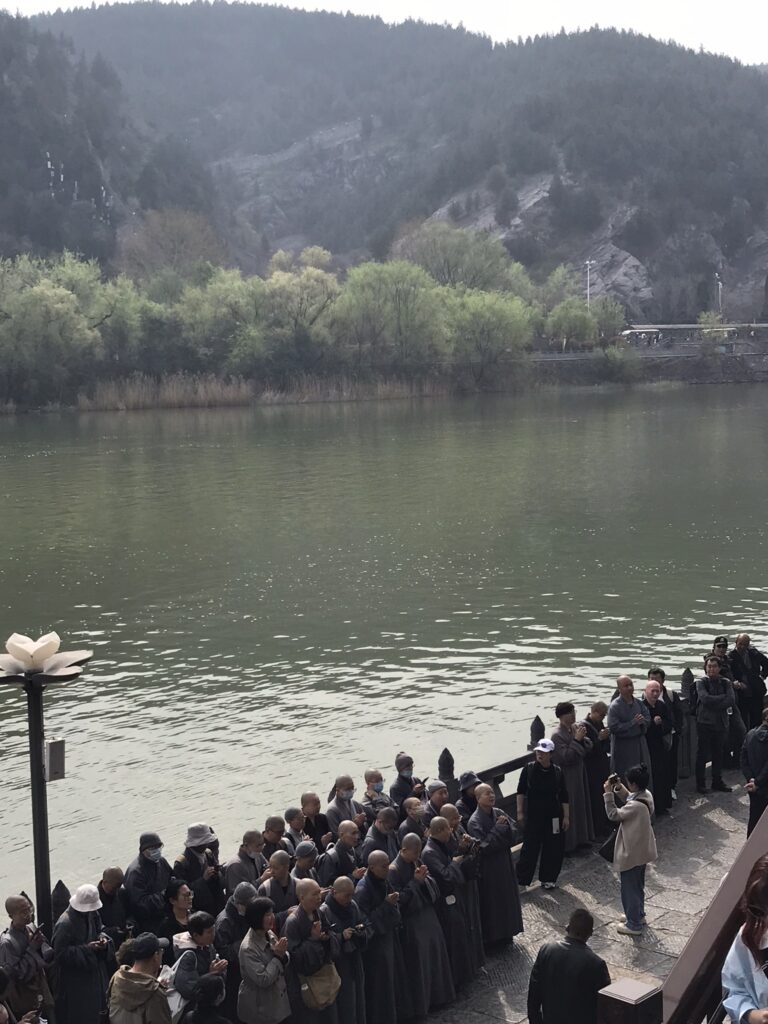
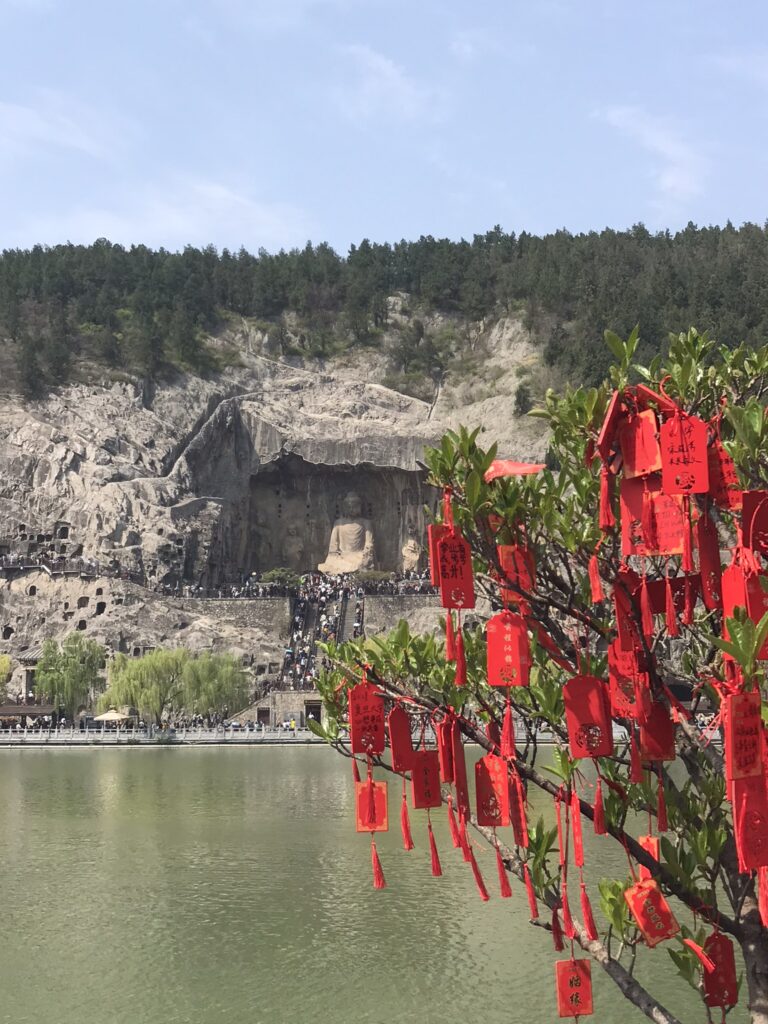
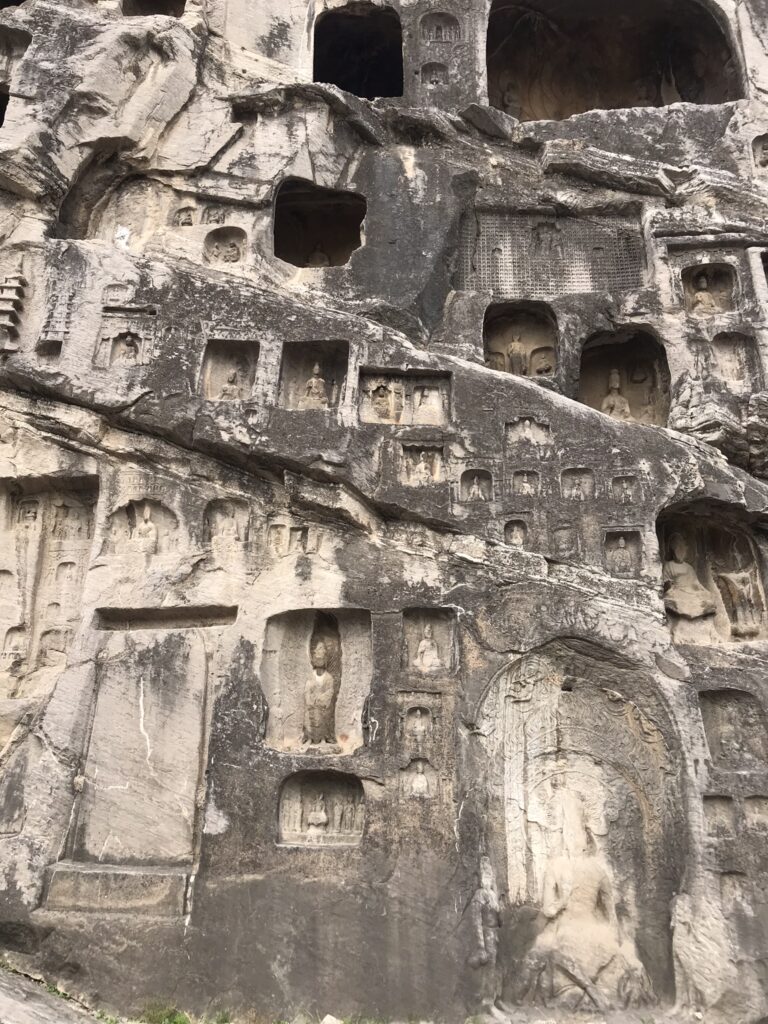
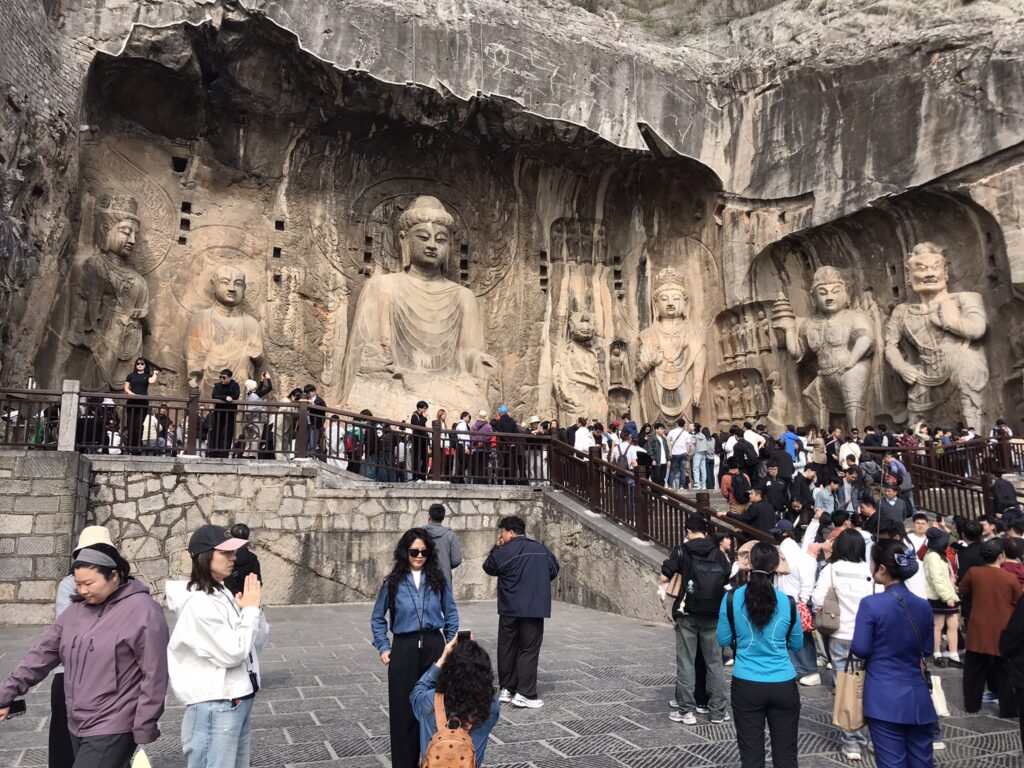
Expect the Longmen Grotto to be packed with visitors and even the occasional group of Buddhist nuns peacefully praying!
Bear in mind that all of the attractions at Longmen are located on the side of a hill and are spread out over quite a distance along the riverbank, so a bit of walking and a fair few stairs are involved (particularly for the temple and garden on the east side). The rock carvings on the east side are much less frequented by visitors – it was pretty hot under the unforgiving sun and we felt we’d seen our fair share of carvings on the west bank so skipped the walk up to these. The temple sits next to one of the many houses of the former Republic of China/Kuomintang leader Chiang Kai-shek and his wife Mei Ling – it’s a fairly standard house featuring impressive views over the valley and river area. We’re still not sure why he needed a house in the grounds of the temple.
There are a few basic snacks stalls inside the complex but it’s best to head outside the main entrance for food on the West Side as there are plenty of eateries situated there.
Museum of Ancient Tombs – we struggled to make a reservation online so just turned up and the female steward waved us in without completing any registration info. Entry is free for this unique museum which has information about various tombs, their layouts, grave goods, architecture and murals, from lower class burial sites (including slaves and human sacrifice) to imperial and high class sites scattered throughout Henan province. Even for those with a fairly decent grasp of Chinese history, it can be tricky to get your head around the various dynasties described in the museum as there are some regional variations which were prevalent in Henan during the likes of the Northern and Southern Dynasties and Sixteen Kingdoms periods.
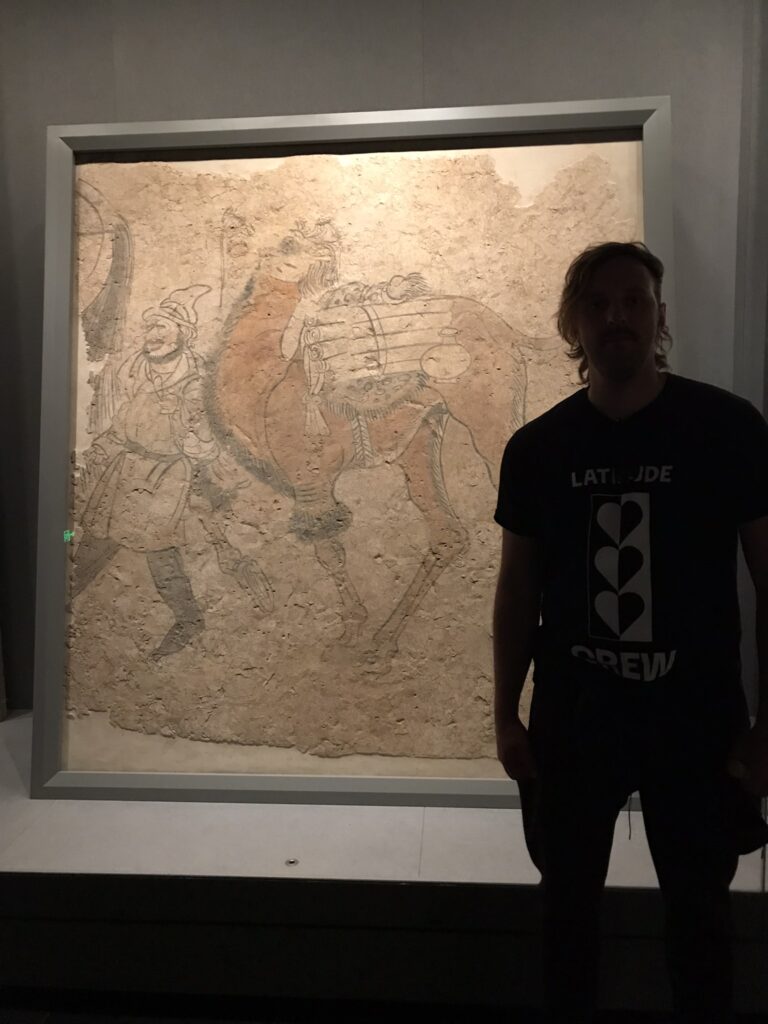
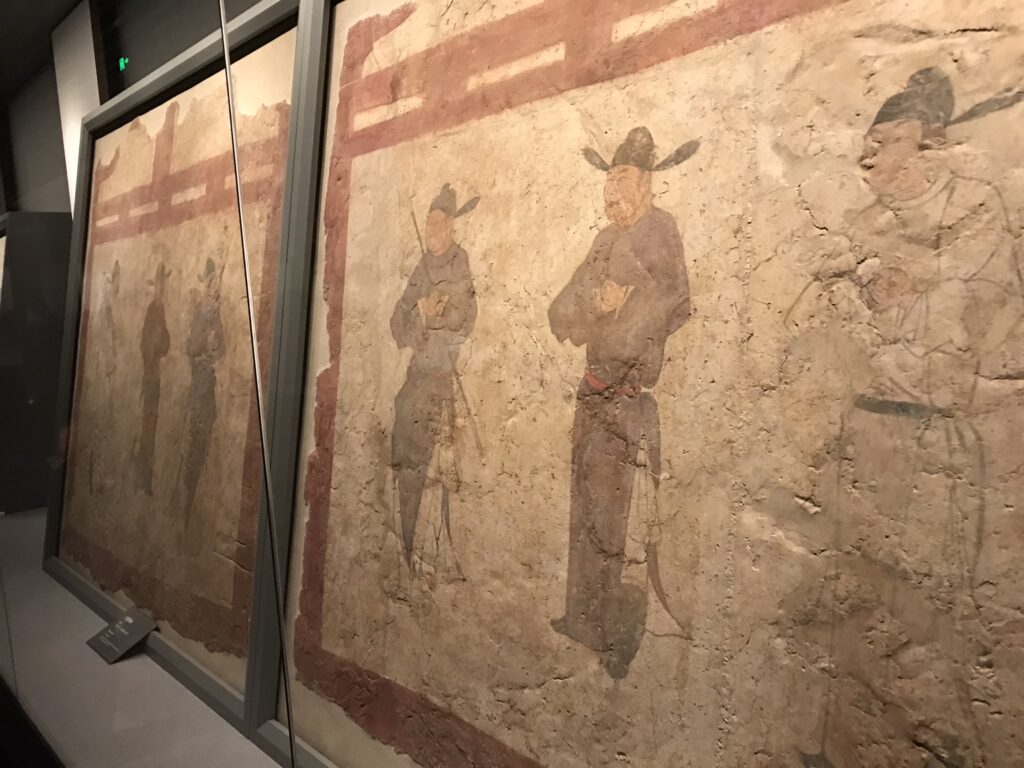
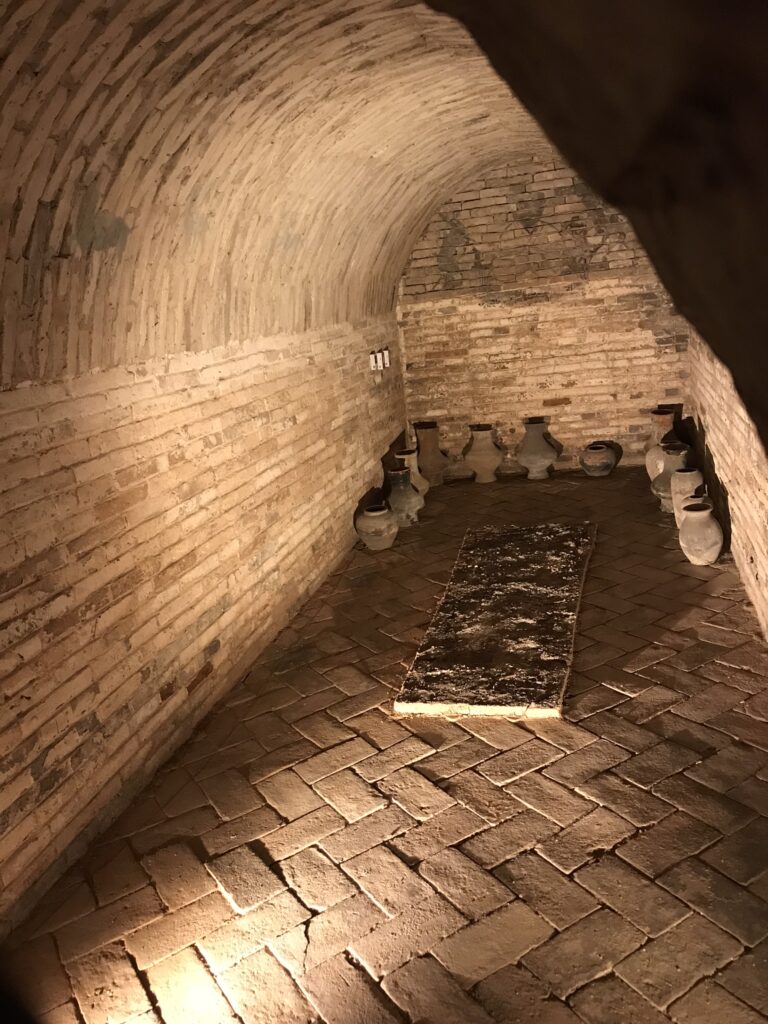
The Museum of Ancient Tombs has some impressively preserved wall murals as well as recreations of various tombs discovered in the Henan province
The first section of the museum provides general information about historical burial practices in the region – displays are mostly in Chinese, with small summaries in English. The most popular part of the museum is the second section which features 25 recreated tombs from various periods, however this can become pretty crowded as the tombs are small and often crammed with people. Expect some queuing to get into the most spectacular tombs and large tour groups muscling their way in and blocking up the whole tomb for everyone else – frustrating at times. Grave goods, outlines of bodies, painted murals and bricks have been carefully reconstructed inside the tombs, faithfully reproduced based on the state in which they were originally discovered. It’s pretty interesting to see these recreations in real life. The third section of the museum features tomb wall paintings (mostly from the Tomb of Lady Tang), including a Persian looking barbarian with camel and door guards. The vast scale and vibrance of the paintings is really impressive. There’s also a section about brick murals, with interesting designs such as musical instruments and modes of transport which were meant to provide the dead with everything they needed to be comfortable in the afterlife. In early Chinese history (i.e. during the Shang dynasty) human and animal sacrifices were practised for this purpose, however this was later replaced with design motifs and replica pottery items to avoid the slaughtering of people and livestock.
At the end of their visit, visitors are directed underground to view the main chamber and carved central coffin. We think that the location of the museum is due to the discovery of this tomb on the premises, however we’re not sure of the specifics as we ended up rushing through this in the last 5 minutes before closing.
Shaolin Temple @ Dengfeng
The Shaolin Temple is hugely popular with domestic tourists who turn up in their droves, mostly in coloured hat tour groups, before being shuffled around by a guide. We managed to get there on public transport via a public bus from Luoyang bus station (next to the central Luoyang railway station), which is easy enough if you know what you’re doing. We encountered loads of touts waiting outside the metro station and bus station shouting ‘Shaolin’ – we presumed these were taxi guys trying to drum up business, trying to catch flies in their web. Ignore them all, keep your nerve and head straight to the ticket counter in the bus station. The bus we took was scheduled to depart at 8:50am and cost 25RMB per person at the time of our visit, with a journey time of about 2 hours (including a casual fuel stop and late departure). There appeared to be a few touts inside the bus station building; we later discovered that these were actually helpful station volunteers rather than slippery taxi guys. Once you’ve bought your ticket, one of these volunteers will escort you to another counter where foreigners need to register your passport details again for unknown purposes. The bus we took was quite dirty and the service was poor, with a strange surly conductor woman taking tickets and a driver who was speeding and constantly sounding his horn. The bus drops off on the road directly outside the car park for the Shaolin temple – go back there when you want to leave and wait around for a bus. We went back at around 3pm and managed to jump straight on a bus – the driver will ask you to pay via Alipay if you don’t have a ticket. The Chinese characters for Luoyang are displayed on the bus – it’s helpful to be able to recognise them so you know which return bus to take.
This is the correct bus to take between Luoyang and the Shaolin complex at Dengfeng
We decided to book entrance tickets for the Shaolin temple itself via Trip.com, as it was difficult to book on Alipay and the price appeared to be the same. Like other Chinese tourist attractions there are plenty of refreshment options like Luckin Coffee and fast food joints outside the entrance to the scenic area, but little inside apart from some highly questionable vendors selling corn on the cob and a strange type of handmade sweet cracker (both of which we ended up eating several times). I recommend stocking up on food before entering.
The reason that the denomination is called Shaolin is that the mountain where the temple is located is called Shaoshan (meaning young forest). The areas where the real Shaolin monks live, worship and train are off limits to tourists unless you want to join them for an extended period and take part in a course. We saw a documentary on Chinese TV about the monks and learned that there’s a foreigners section where people from all over the world learn kung-fu and partake in daily Buddhist life.
Critics accuse the temple and show of superficiality and commercialism – it’s for sure a touristy and seemingly inauthentic experience. Crowds were big when we visited on a weekday and we predict that it’s probably overrun on weekends. We found the whole complex to be lacking in information or educational value especially as we were keen to understand the actual practices and history of the Shaolin monks.
Shaolin Martial Arts Performance – a highlight for most visitors, these regular performances are hosted throughout morning and early afternoon, generally lasting 30 minutes. These shows are incredibly popular so make sure to arrive at least 15 minutes early to join the massive and chaotic queue. Once the doors open be prepared for some pushing, shoving and general jostling as there aren’t any visible stewards or crowd control measures; it’s a bit of a dog eat dog situation. When it comes to seats it’s basically sit or stand wherever you can – organisation is a bit of a mess with people running all over the place, crowding emergency exits and sitting on the floor. There is also no information about the show in English, only Chinese commentary. Entry to the performance is included with the entrance ticket but we worked out that it’s possible to purchase VIP seats for around 40 RMB – there’s a designated VIP seating area in a central box which avoids the jostling.
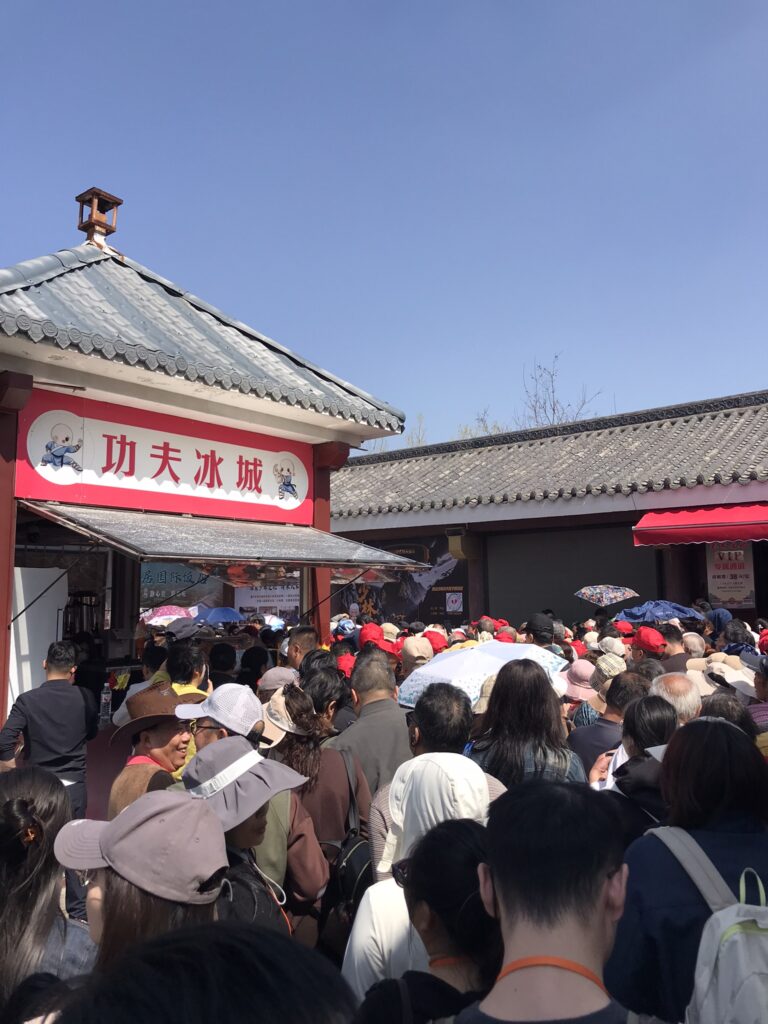
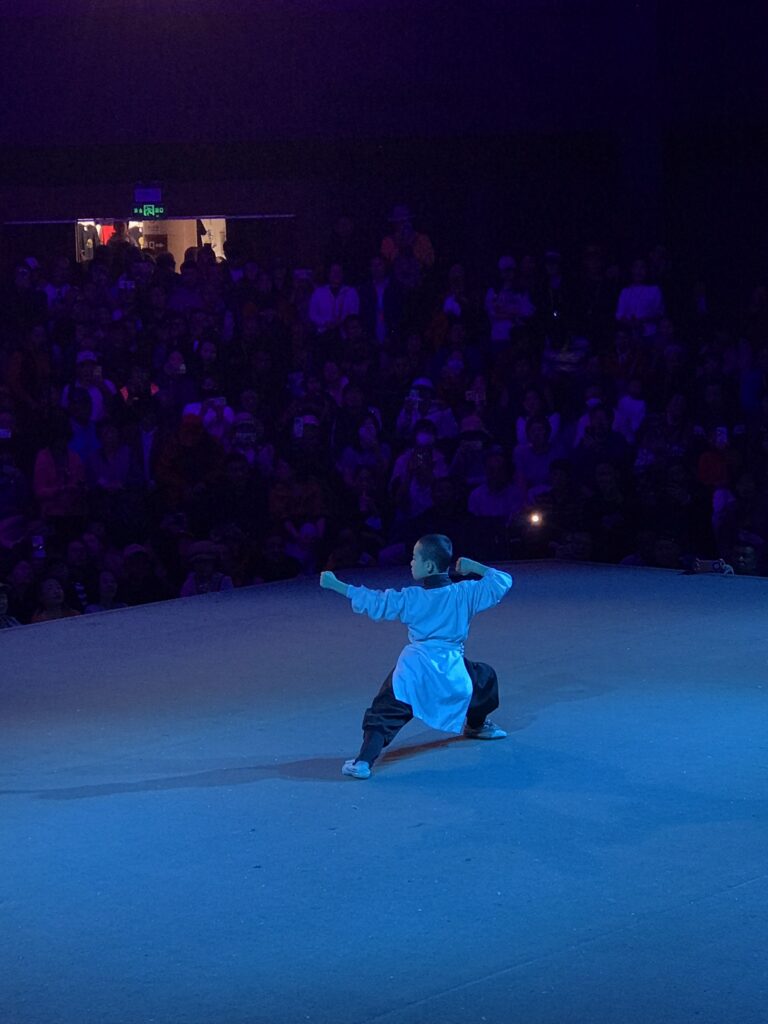
Chaotic queue to get inside the performance hall; a baby Shaolin monk demonstrating moves and stances
The show is very touristic and reminded us of something that you might see in an all-inclusive resort somewhere. Novices who are not yet fully fledged monks demonstrate feats of agility, flexibility and athleticism before flailing around with various weapons and objects. Three members of the audience got a mildly funny lesson on basic moves and positions, including roly-polys and cartwheels. It didn’t really seem very authentic and felt a bit like something from a cruise ship – I don’t think dancing and doing the worm is a legit kung-fu move, but then we aren’t experts. The Chinese crowd seemed to like it.
Shaolin Temple – not your typical historic temple complex, most of the buildings were destroyed by a rampaging warlord in 1928 and since their destruction have undergone full restoration in the 1980s. It might be a good idea to hire an audio guide or real life guide for explanations as there’s a noticeable lack of information inside. We noticed quite a few monks keeping watch outside various temple buildings. A highlight is the Burmese white jade reclining Buddha which was gifted by Myanmar, as well as some interesting wall frescos. It seemed like all and sundry were inside the temple including dog walkers and chainsmokers, a tad strange to us. Keep an eye out for depictions of Damo (also known as Dharma), the wandering Indian monk who brought Zen Buddhism to China. He lived and died at the Shaolin temple after founding the Zen Buddhist sect. Apparently there’s a myth that he was spotted in the Pamir Mountains of Central Asia carrying one shoe following his death, which confused the monks here as they’d already buried him. Because of this folk tale, the figure of Damo is often depicted carrying one shoe. There are statues of him inside the temple complex. There’s also a Shaolin school attached to the temple and we saw the school kids in the yard practising rolls and flailing – probably the most authentic thing we saw at the complex to be honest.
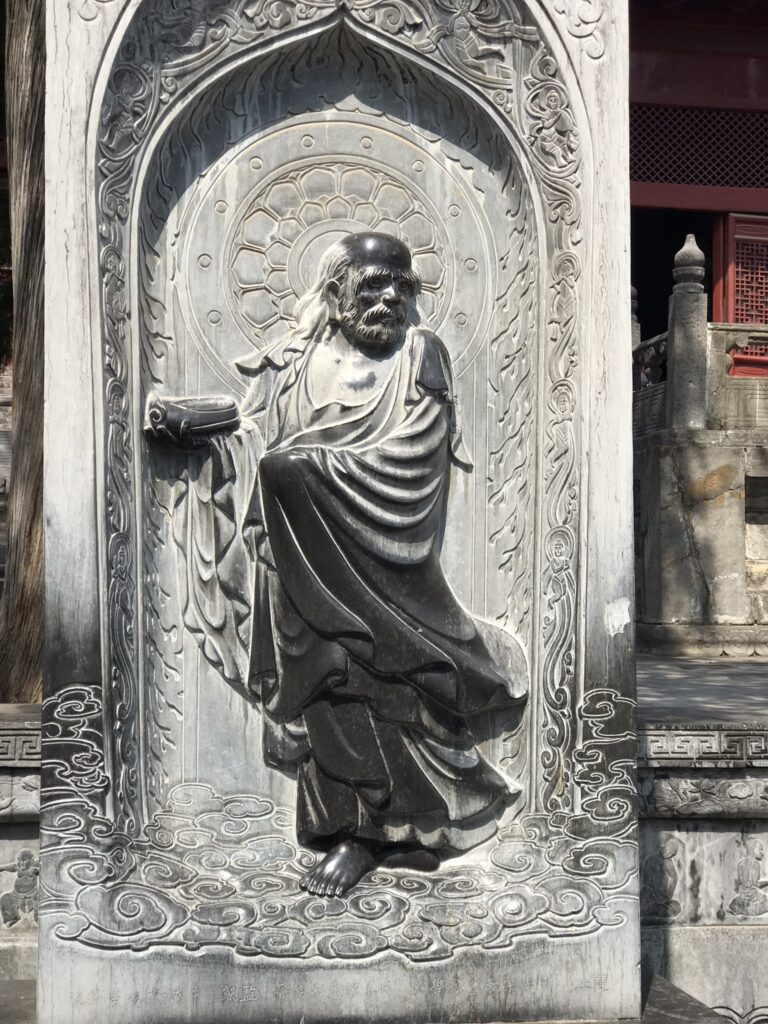
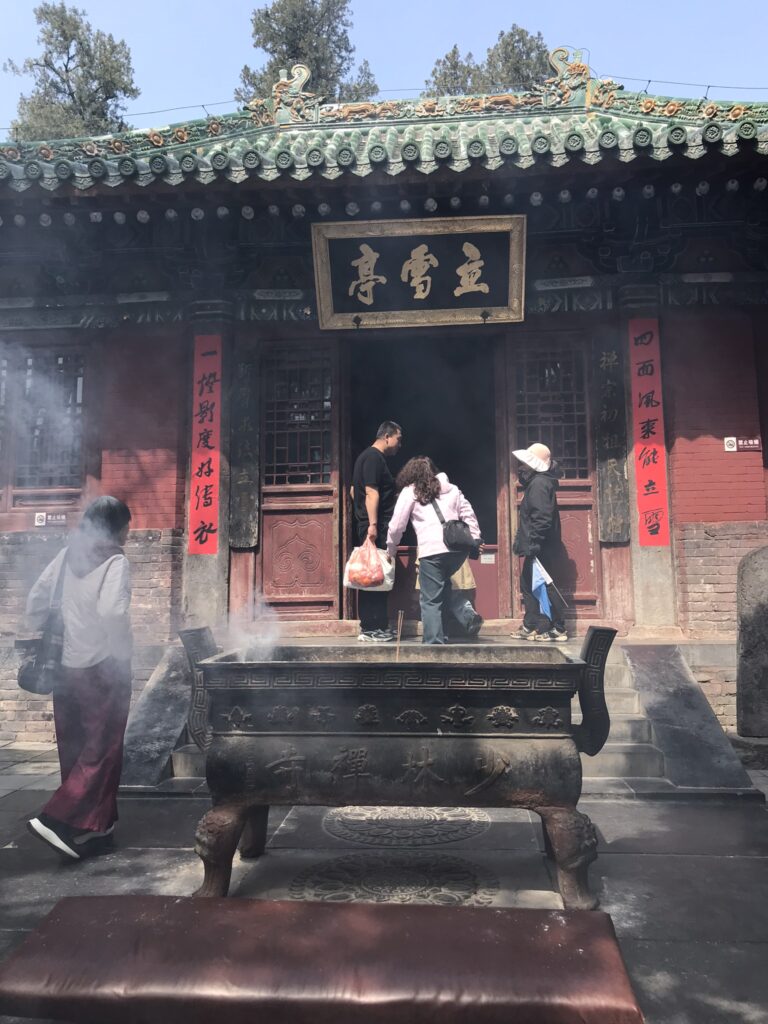
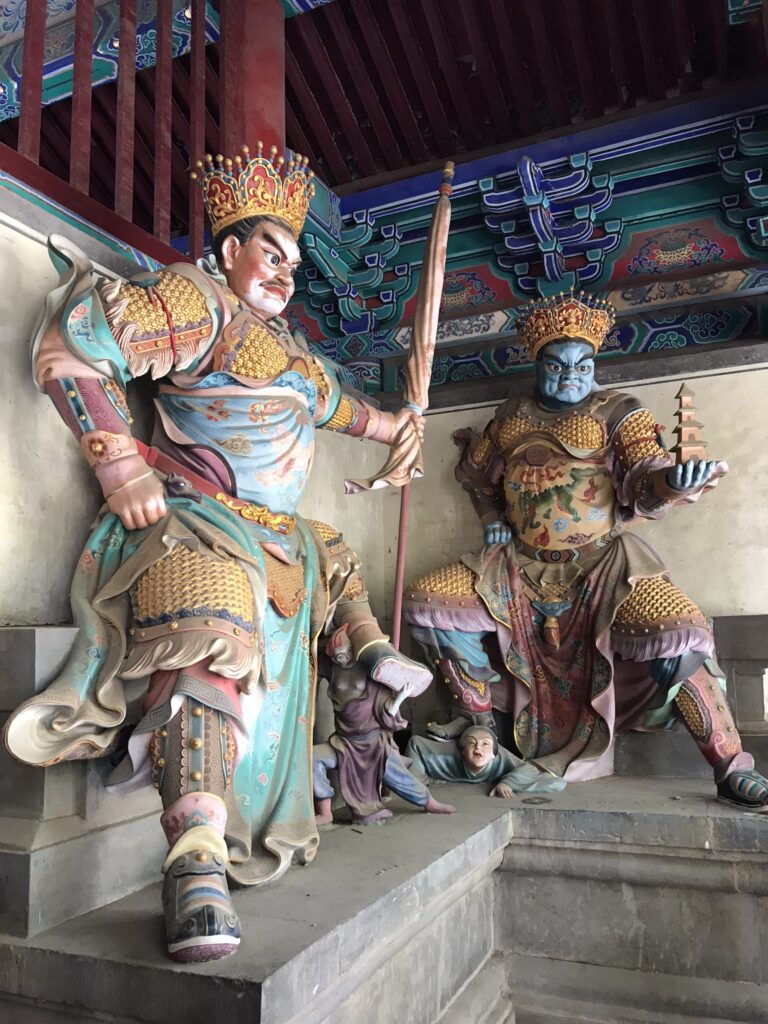
The wandering figure of Damo is omnipresent throughout the Shaolin Temple
Pagoda Forest – near to the main temple are over 200 brick and stone pagodas constructed from the Jin dynasty to the Qing dynasty – all of these structures are dedicated to eminent monks associated with the temple, containing their ashes. It’s worth a visit to admire their interesting architecture, design and calligraphy.
Chuzu Temple (Convent) – on the trail to the Cave of Damo, it’s still an active nunnery with private quarters for the nuns at the rear and a quaint vegetable garden within the complex. The nuns are pretty private and apparently shout at visitors who try to take photos of them. The main hall is an original wooden building from the 12th century. It’s much quieter and more authentic here as tour groups don’t bother visiting. Although it’s nothing to do with kung–fu, I recommend walking up here if you want a more legit experience at the Shaolin complex.
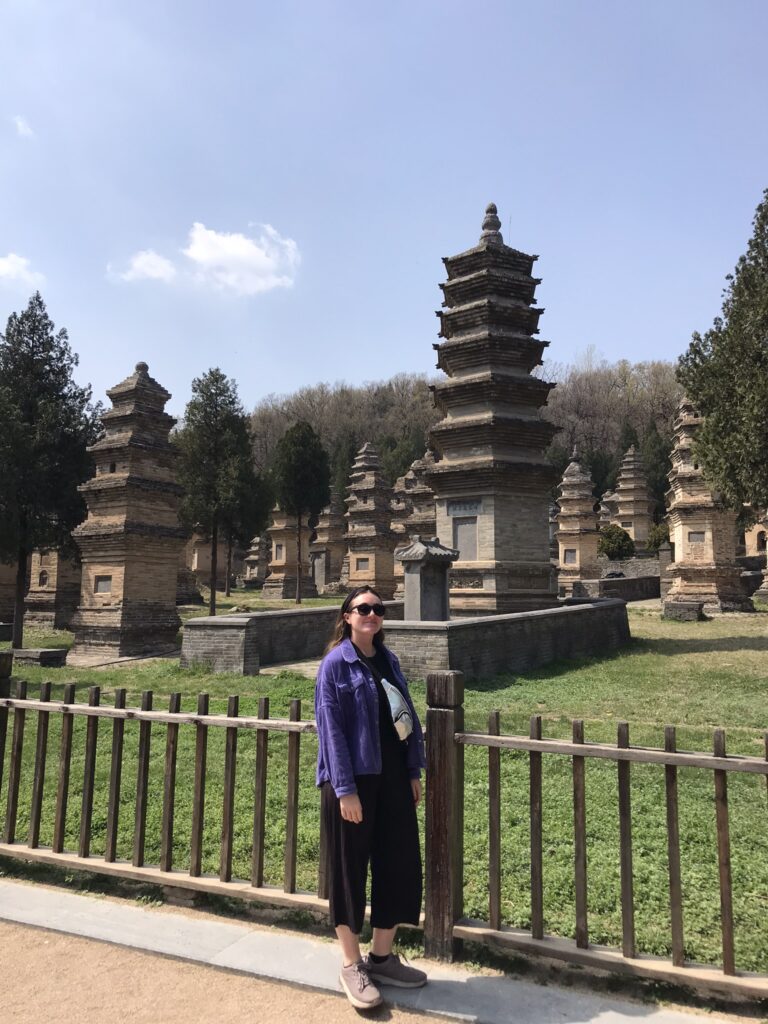
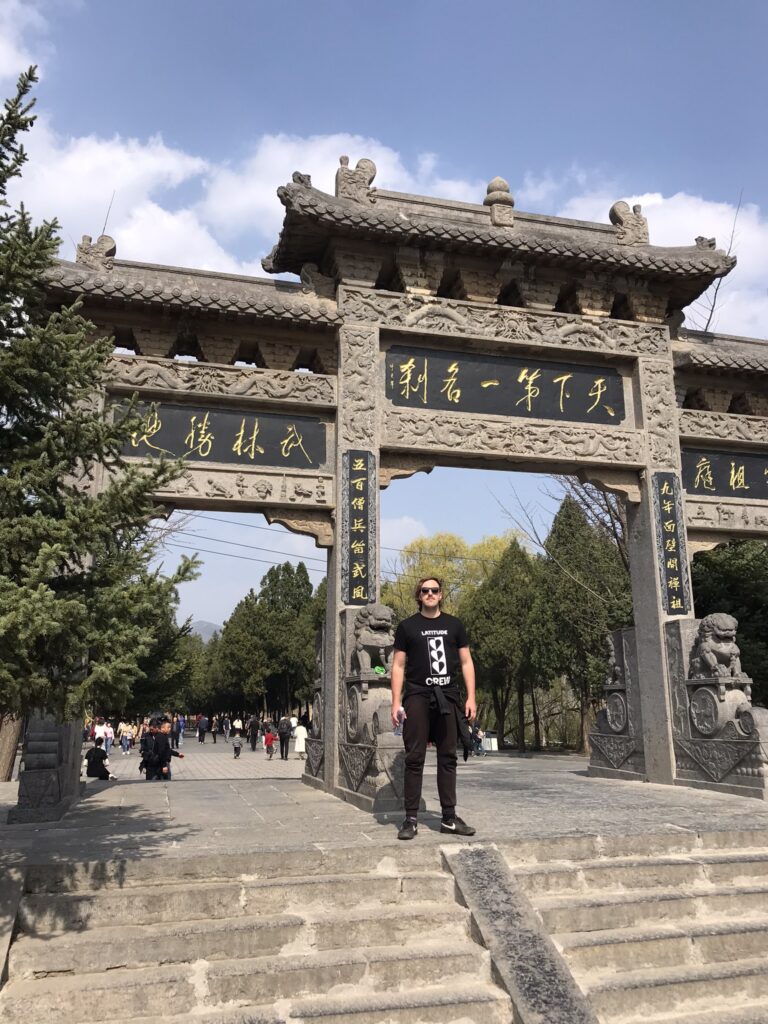
The Pagoda Forest, contemplating the challenging hike up to the Cave of Damo and the entrance way to the Shaolin Complex
Cave of Damo – according to legend, this is the place where the monk Damo sat and stared at a single spot on the wall for 9 years, presumably while meditating. There are plenty of water and refreshment stalls along the route so no need to worry about lugging water up. It’s located 80% of the way up the mountain and is quite an uphill trek, so most casual visitors skip it. After glimpsing the stairs and steep ascent we decided to also forgo the uphill slog.
Xi’an
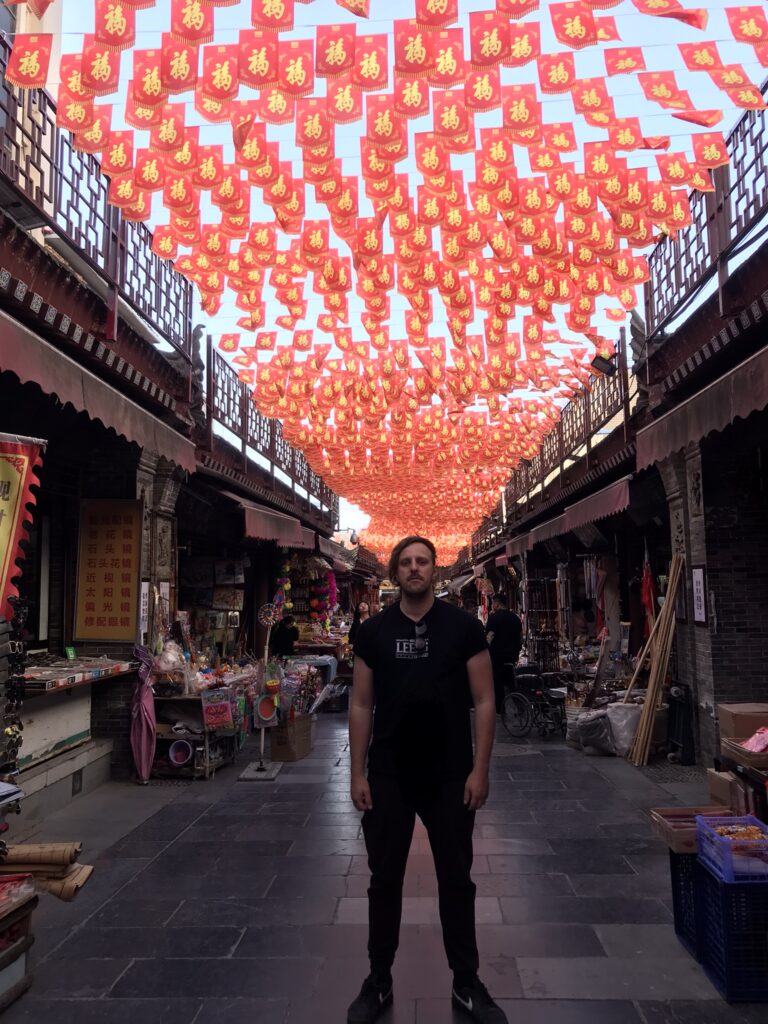
Shaanxi province, with its capital of Xi’an, is reputed to be the birthplace of the Chinese nation and Xi’an itself is considered one of China’s Four Great Ancient Capitals, along with Beijing, Nanjing and Luoyang. Thirteen different Chinese dynasties made Xi’an (or Chang’an as it was known) their imperial capital, including four particularly influential dynasties; the Zhou, Qin, Han and Tang. The city and its surrounds served as capital on-and-off for around 1,200 years between roughly 1046 BCE and 907 CE, often alternating with Luoyang. During the Han and Tang dynasties, the city rose to prominence as the starting point of the Silk Road, the hugely influential trade route between Asia and Europe via Central Asia and the Middle East.
Historical Chang’an was a symbol of eastern civilisation and often referred to as the Rome of the East. It was known as an international and cosmopolitan metropolis with a significant cultural exchange due to travelers and merchants arriving from the Silk Road. The city boasted a staggering population of over 1 million residents during the Tang dynasty (around 750 CE), making it one of the largest cities in the world at the time. During this period it was renowned for its inclusivity, openness and for being a multi-ethnic melting pot. Symbols of the east-west fusion are still visible in the local Hui (Chinese muslim) population, Islamic architecture such as the Great Mosque of Xi’an which was built in 742 CE and the thriving Muslim Quarter of the present-day city. Xi’an is very different from other Chinese cities we visited in terms of food, culture, religion and even the way people were dressed (we spotted numerous Hui residents with skull caps and head coverings). This multi-culturalism is an ever-present and unique aspect of Xi’an.
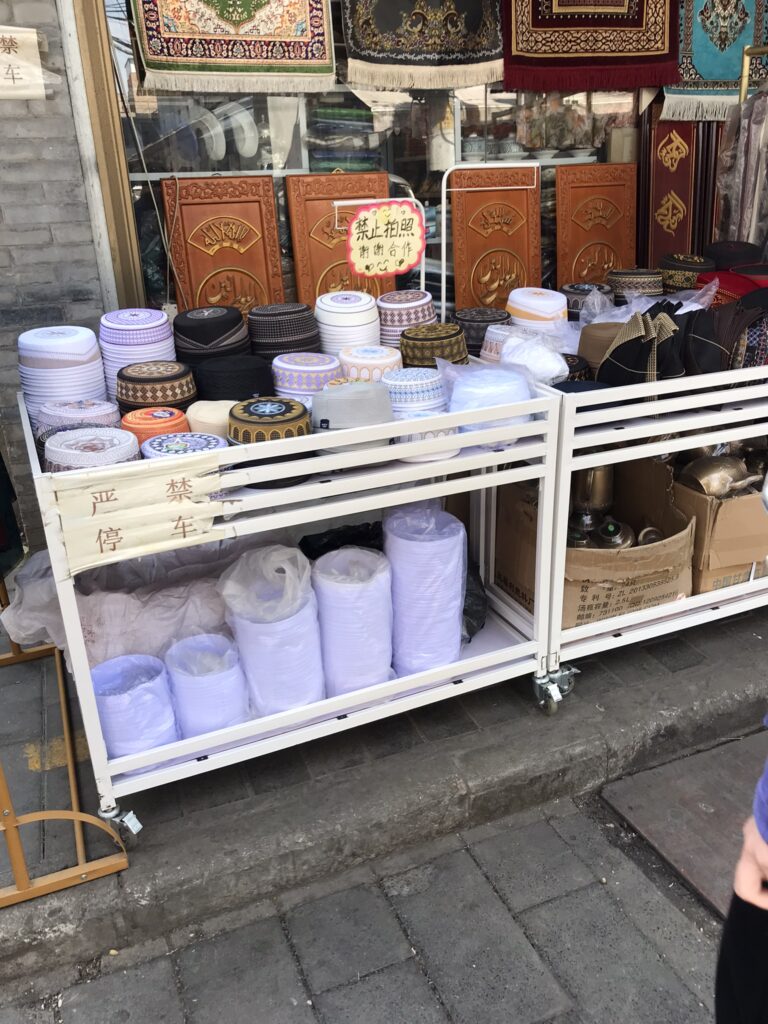
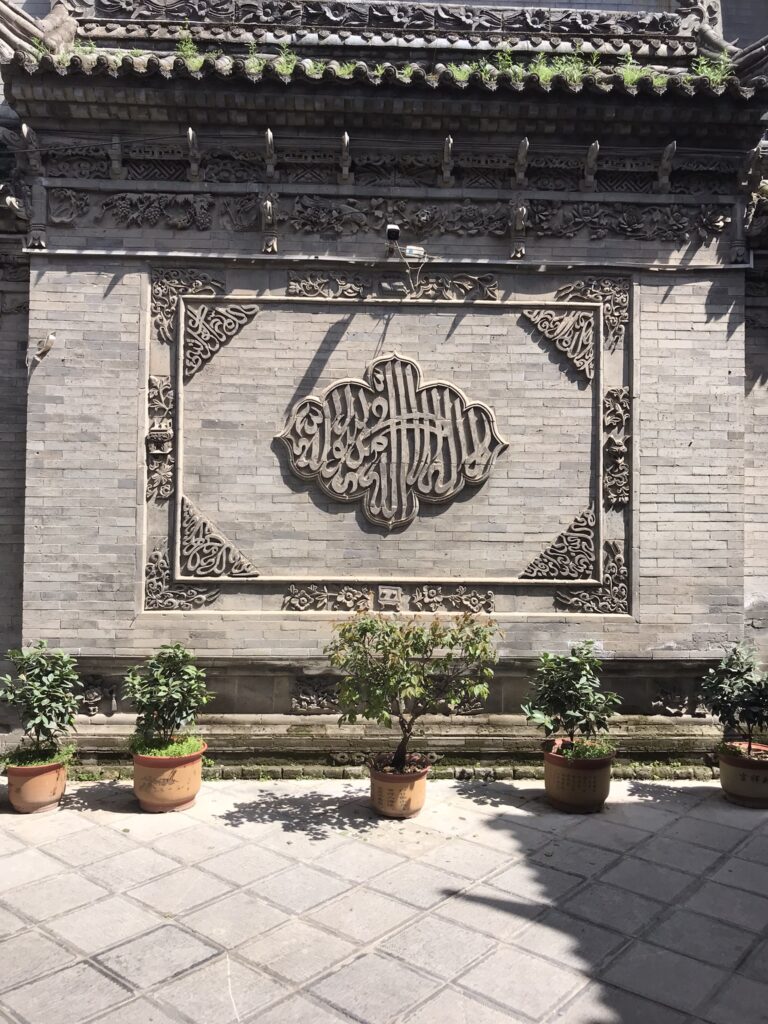
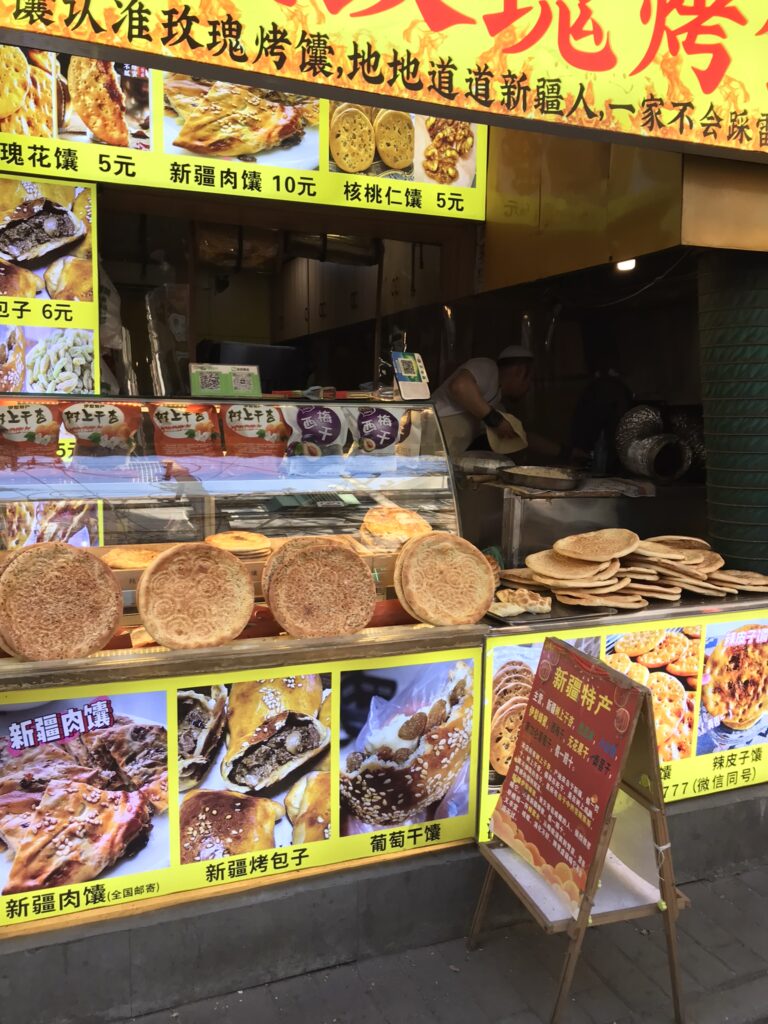
Skull caps, Arabic writing and Uzbek-style flat breads in Xi’an
The centre of Xi’an sits within an enormous rectangular walled perimeter on a north-south facing axis. Xi’an claims its iconic city walls are the most intact and best preserved city walls in the whole of China (although I’m sure residents of Nanjing would argue with this). The original city walls were built to encircle the Imperial Sui-Tang city around 1,400 years ago, although the current city walls are a much later construction (Ming dynasty during the 14th century). Interestingly the earlier city walls encircled a much larger area than the present day walls, reflecting Xi’an’s decline from national capital to a regionally important provincial centre after the fall of the Tang dynasty. The view from these walls has vastly changed over time, from the ancient imperial capital to the modern city of today.
Today Xi’an is one of the most popular destinations in China for international tourists, who flock to the area predominantly to see one thing: the world-famous Terracotta Warriors, which are located a short distance from the city in the Mausoleum of Qinshihuang (Emperor Qin). The first emperor to unite all of China as one kingdom, by the year 221 BCE Qin had conquered all of the nearby fragmented states, unified the territory and established the first multi-ethnic dynasty of centralized authority in Chinese history – the Qin dynasty. But it’s not his achievements during his lifetime that draw crowds to his tomb; it’s the discovery in nearby underground pits of over 8,000 lifesize clay warriors and horses in battle formation, brandishing 40,000 bronze weapons, that really enthrall visitors.
The Terracotta Warriors were created as part of an ‘underworld kingdom’ commissioned by Qinshihuang for his own use following his death. In other words, it was a complete recreation of Emperor Qin’s imperial domain for use in the afterlife. This enormous complex consisted of the imperial city (his mausoleum/underworld palace), an inner and outer city including gardens, stables, government offices (and officials themselves) as well as the most famous aspect, an entire replica army to guard the emperor – the Terracotta Warriors. The complex provides a snapshot of Qin dynasty military, art, technology, culture and great insight into the funerary practices and beliefs of the time. It was presumed that the emperor would also be king in the afterlife and so would need a court, army and all the related infrastructure. A monumental undertaking, it took 37 years and 700,000 workers to complete the project. The ‘underworld kingdom’ survived hidden under the earth for millennia until it was discovered in 1974 by a farmer digging a well.
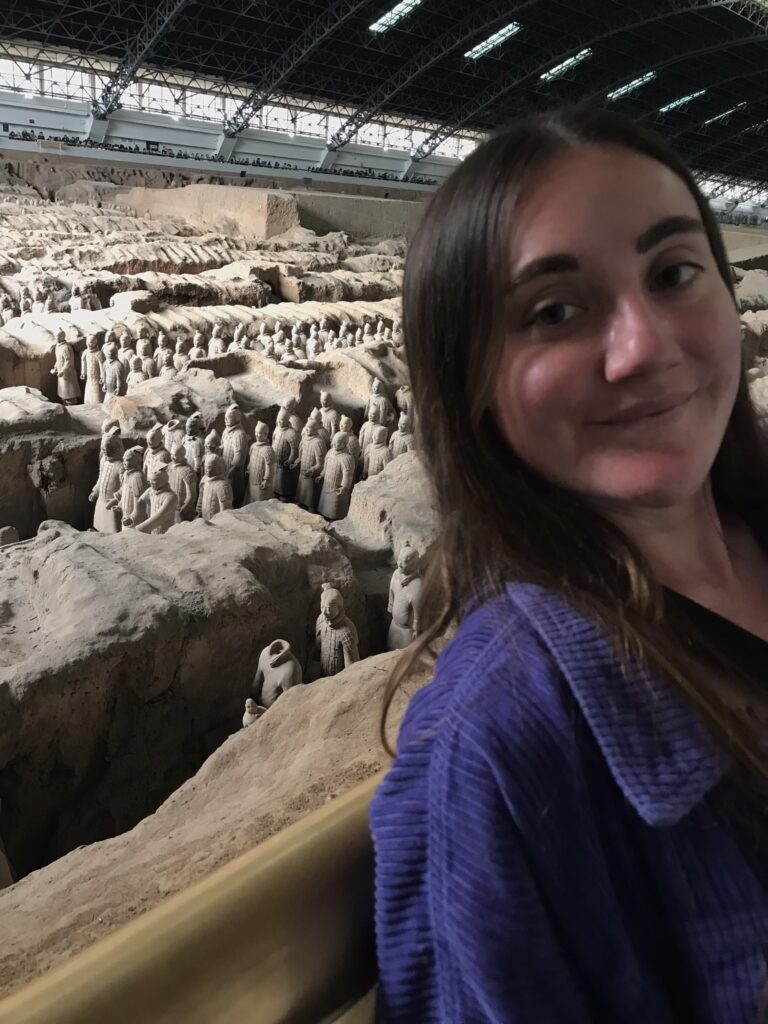
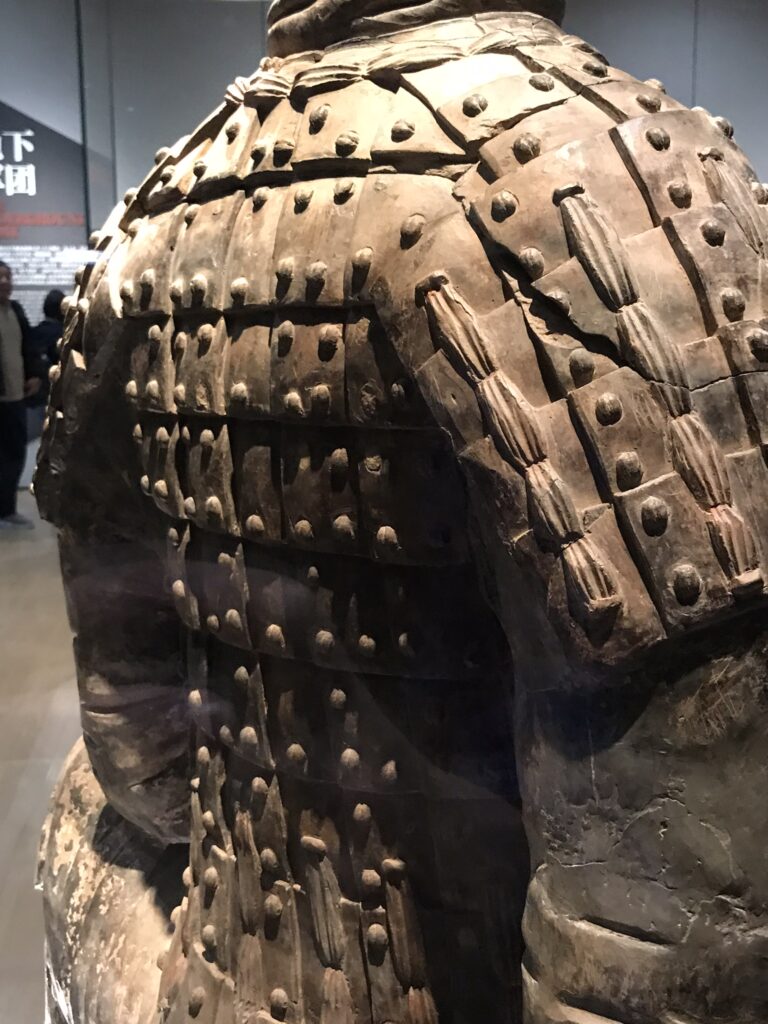
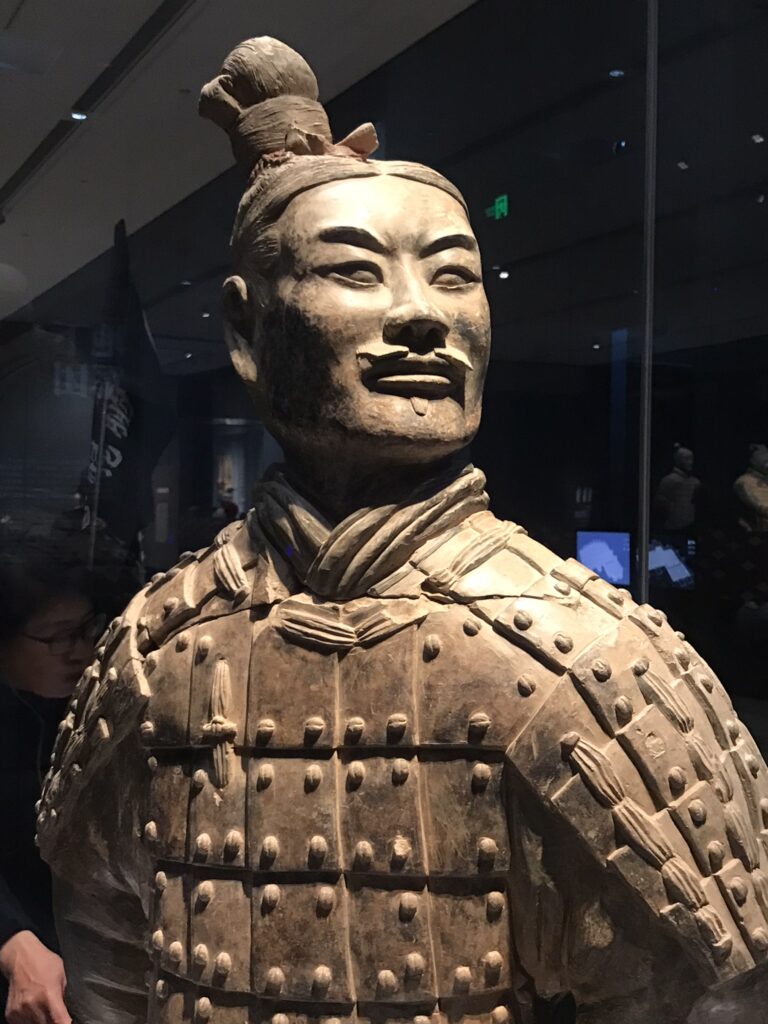
The level of individuality and intricate details really stand out on the Terracotta Warriors!
Now a UNESCO World Heritage Site and frequently dubbed the ‘eighth wonder of the world’, the Terracotta Warriors are easily visited from central Xi’an. The best way to visit independently is via Didi taxi – the city’s metro network doesn’t reach far enough for the site itself, but it’s possible to save a bit of money by combining with a trip to the nearby Huaqing Palace, an interesting scenic and historical site in its own right which is located on the Metro Line 9 close to Huaqingchi station. We took a Didi from the city centre to first visit the mausoleum, then took a Didi to visit the Palace and got the metro back to the city centre from there – all easily doable in a day.
Because of the influx of visitors mainly to the Terracotta Warriors, Xi’an is very tourist-friendly. We saw more Western tourists here than just about anywhere else in China, although the numbers were still dwarfed by domestic and other Asian tourists. Xi’an is linked by high-speed train to Beijing, a popular line for tourists with limited time in the country and those who want to head onwards to Sichuan, Yunnan and the southwest.
Today, very few historic buildings from the Tang period and earlier remain in the city itself (they were made of wood). The only surviving structures from the city’s heyday are the two Wild Goose Pagodas which are located south of the walled area, while other historic structures such as the Great Mosque, Bell/Drum Tower and city walls are from the Ming period, by which point Xi’an was a provincial centre rather than national capital. The city centre still makes for a unique and interesting place to explore, particularly for its vibrant Hui culture – just don’t expect too many historic structures from its Tang zenith.
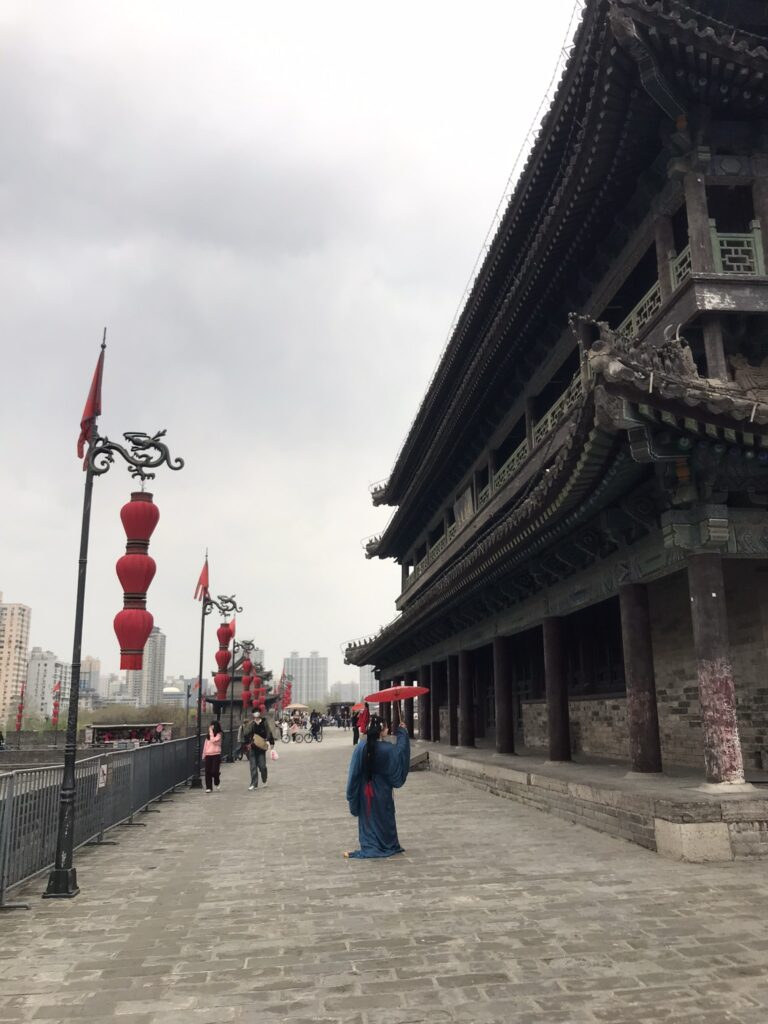
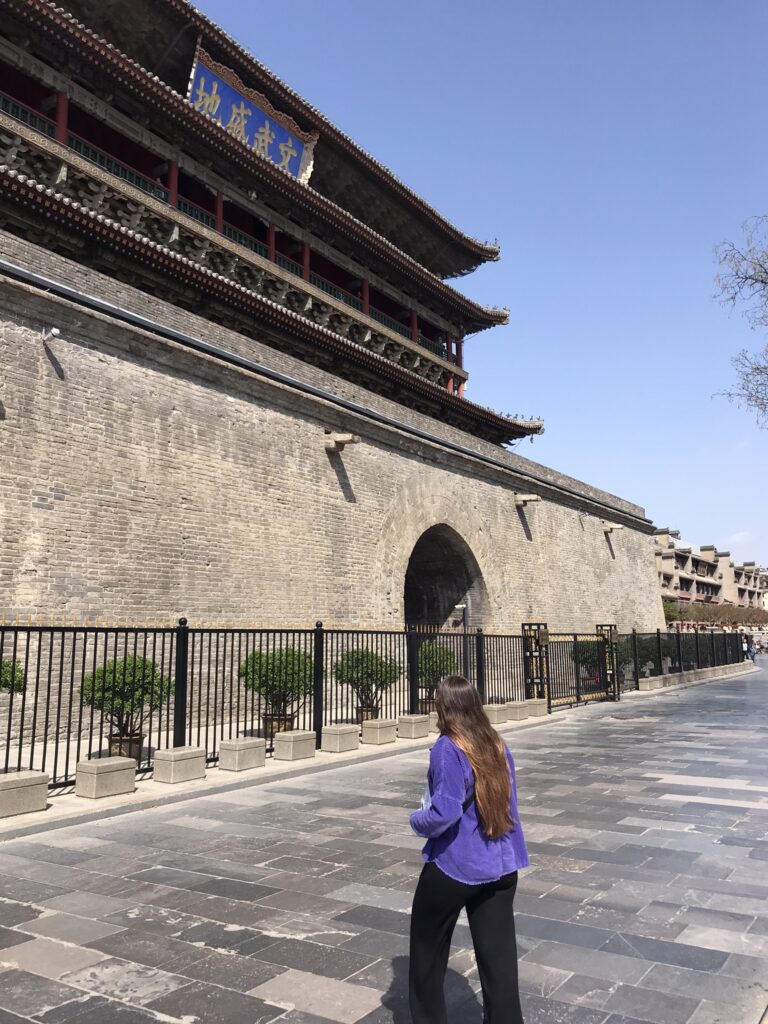
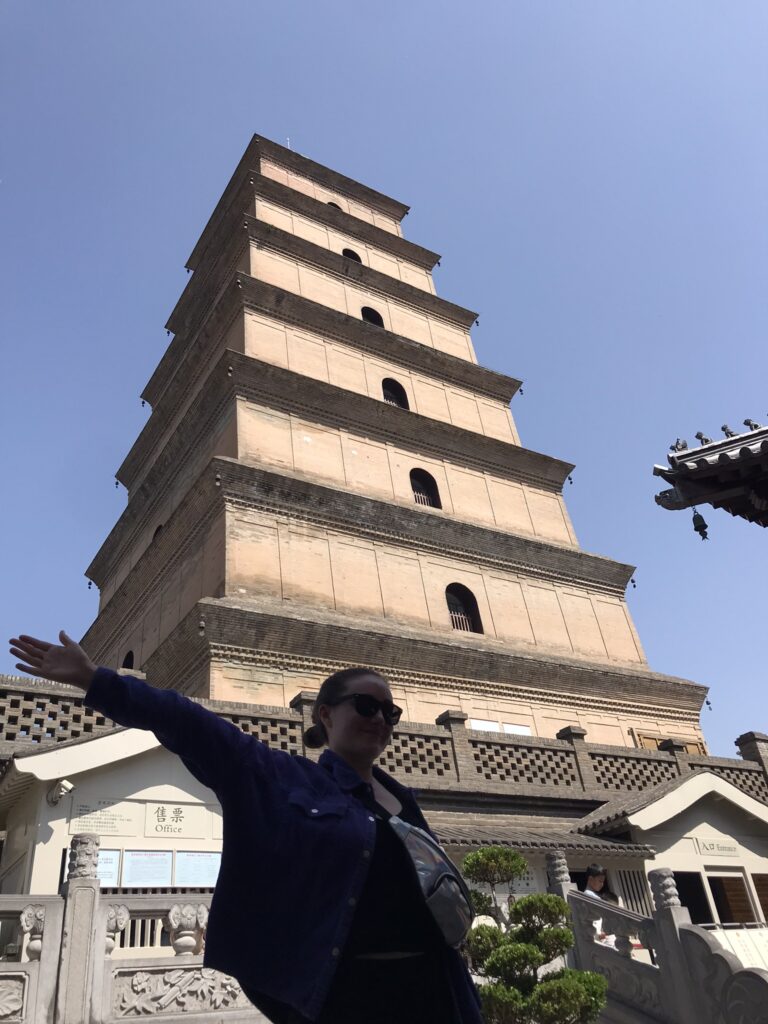
Just a few of the surviving historical remnants in Xi’an: the Xi’an City Walls, Drum Tower and Great Wild Goose Pagoda
Accommodation
Fillmore Hotel (Xi’an Bell Tower Subway Station Huimin Street) – situated in an ideal location near to the Muslim quarter and Drum/Bell Towers. Overall a good choice for a short stay as it’s right next to the metro station and relatively quiet away from the main road. This is the same hotel chain that we used in Suzhou – again, there seemed to be some confusion around the name as it is listed as ‘Feiman’ in some places.
Foodie Places
Big Pizza Self Service (Xi’an bell tower Kaiyuan branch) – an all-you-can-eat buffet located in a trendy shopping mall opposite the Bell Tower. The shopping mall is an impressive 7 levels including many upmarket designer brands – level 7 is the food court floor. Payment is taken at the entrance (75RMB when we visited) and grants unlimited access to the pizza, pasta, salad, ice cream, drinks and dessert buffet stations. There are interesting flavours of pizza including durian, crayfish and sweet flavours like marshmallow too. Non-pizza options like Korean tteokbokki are also available as part of the buffet. The chocolate fountain was a particular highlight. Unfortunately the quality wasn’t always fantastic, but the quantity was great!
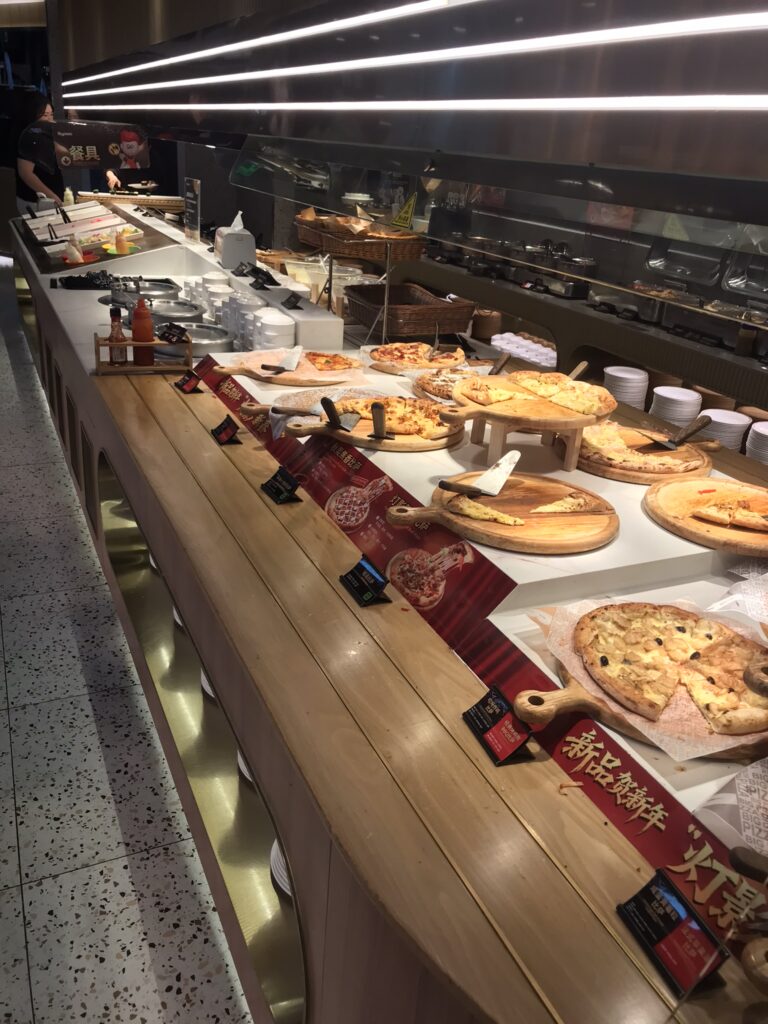
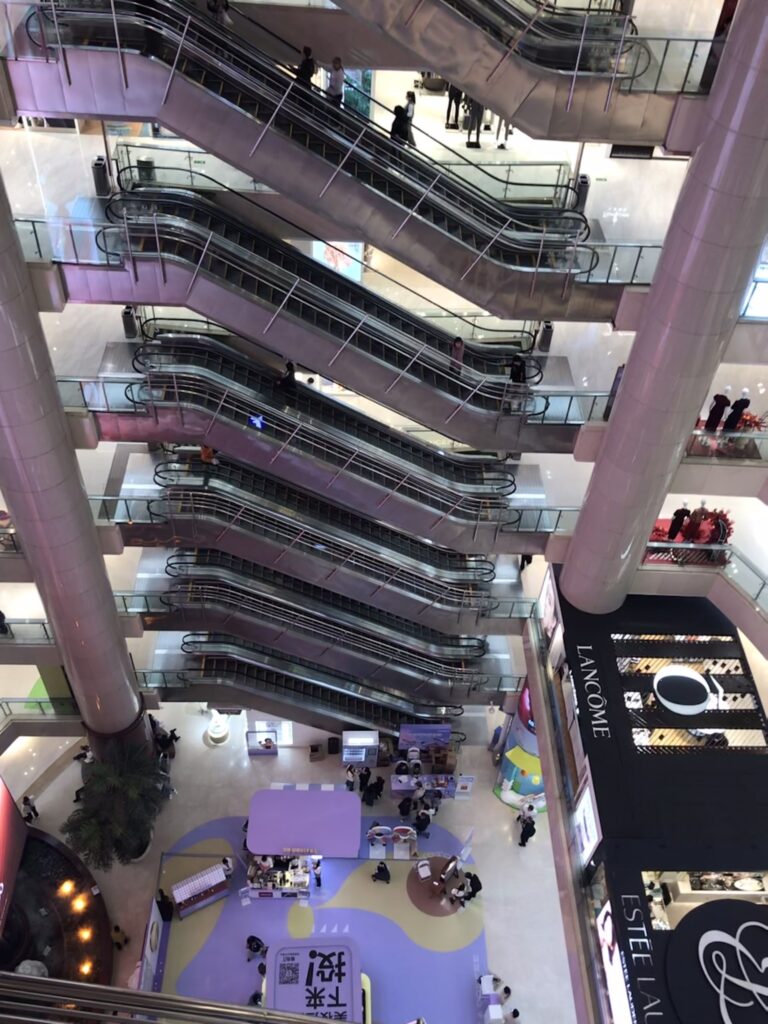
Good luck trying to reach the 7th floor for Big Pizza Self Service
Xian Jiasan Steamed Bun Stuffed with Juicy Pork Huifang Snack Muslim Fried Dishes (Beiyuanmen Head Office) – serving up really tasty Muslim Xi’an fare in the bustling Muslim district. This restaurant has the ‘time honoured Chinese brand’ status which means it’s a long standing institution in the area and usually guarantees quality. The staff seemed to be used to foreigners visiting and even had an English menu. Popular dishes include the cold sesame noodles (incredibly tasty), and ‘Chinese hamburger’ (pulled pork marinated in spices sandwiched between two halves of a fluffy white steam bun – delicious when dipped into the cold sesame dip from the noodles). It’s probably best to know what you’re going to order before entering the restaurant as the waitress hovers around while you read the menu, which puts pressure on you to order immediately.
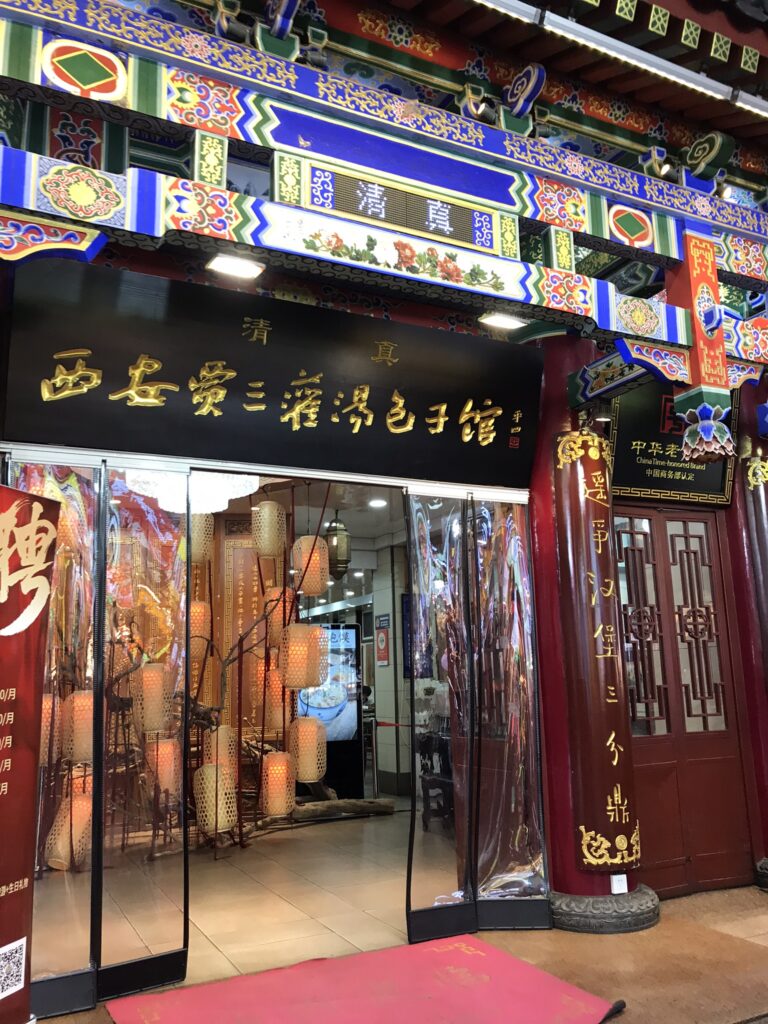
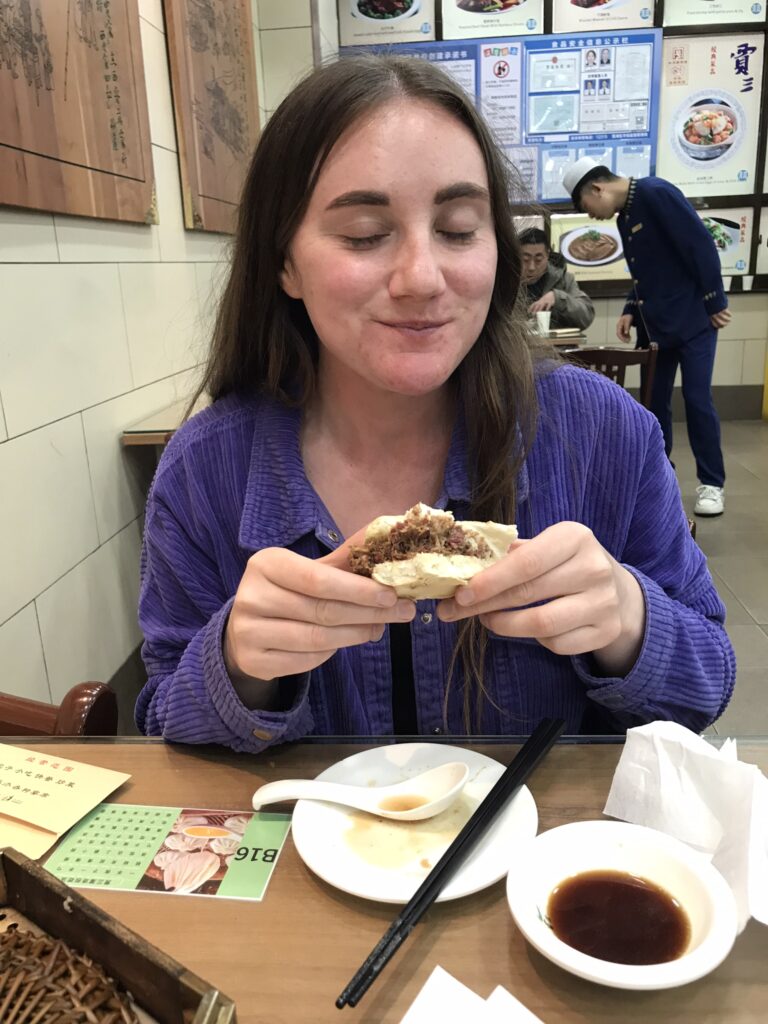
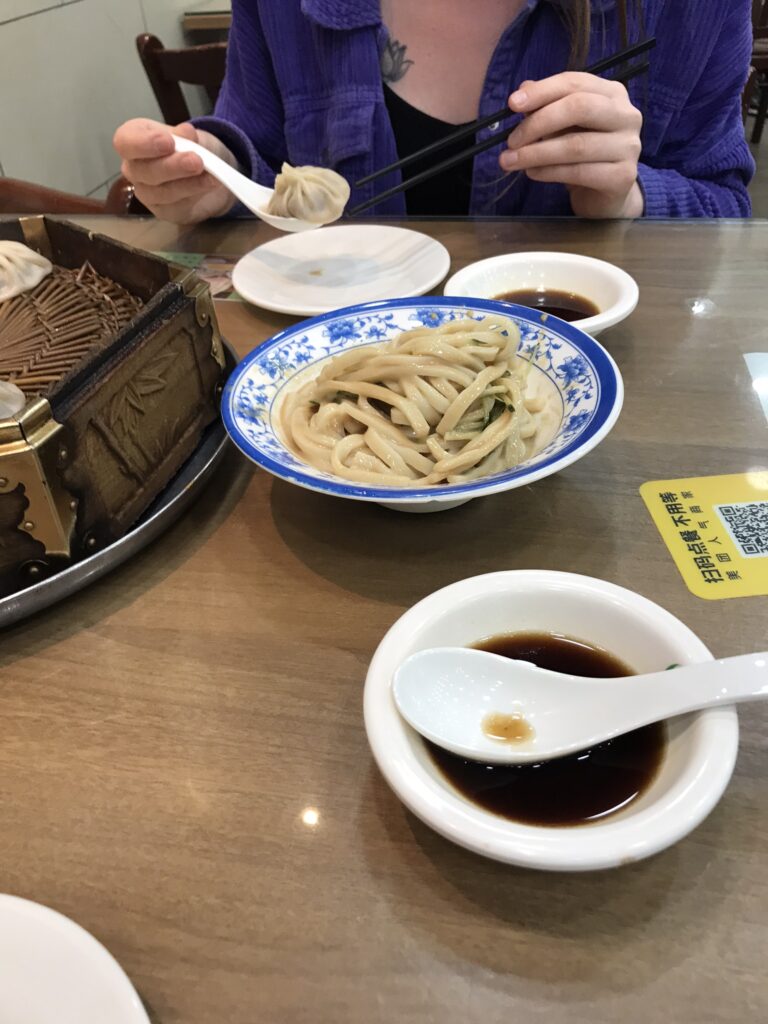
Chinese Hamburger and cold sesame noodles were a hit with us at Xian Jiasan
Laowujia Characteristic Side Dish Shredded Pancake (Dapiyuan Shop) – a very local joint which was recommended to us by a street food walking tour guide as she was unable to conduct the tour. Locals head here enmasse for the pitta bread soaked in soup which is served with beef. We also tried the mutton stir-fry which was tasty if also slightly tingly on the tongue (we’re not sure why exactly). The meals are very budget-friendly, filling and the staff did their best to help us out when explaining how to properly eat the pitta bread soup (first tear the bread into chunks, then add the soup).
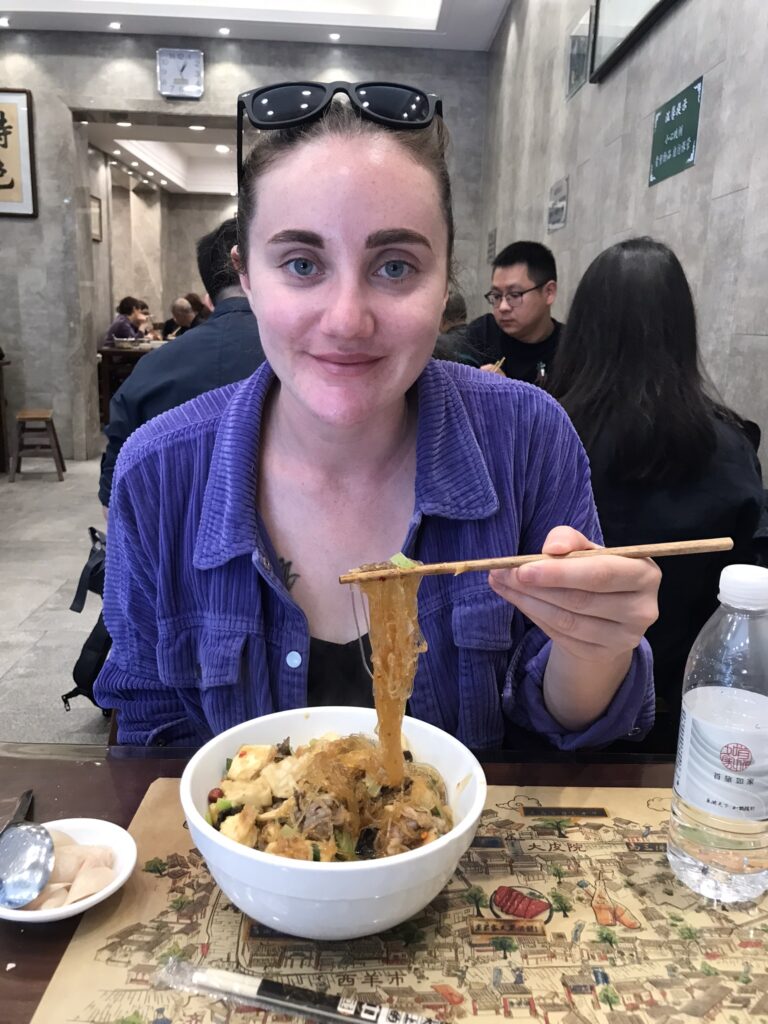
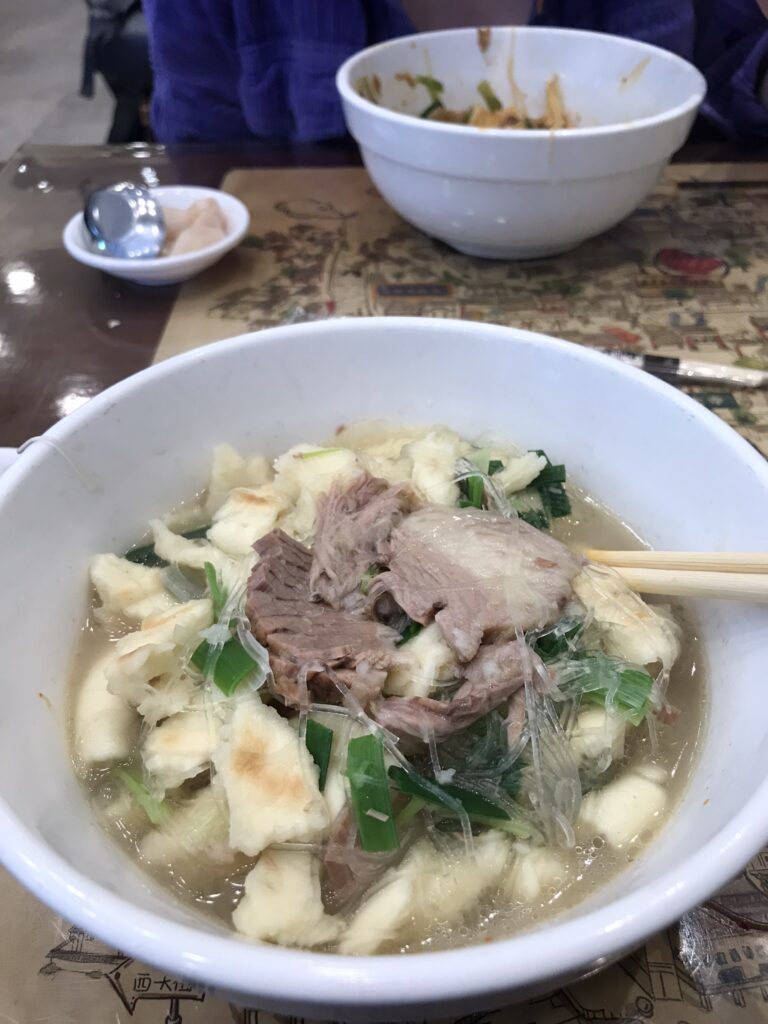
Xi’an is a foodie paradise, with treats such as pitta bread soup at Laowujia
Muslim Shengzhiwang Majiang Niangpipu (Head Office) – a real foodie jem in the Muslim quarter, again a recommendation from a local food guide. Make sure you visit early in the day as the sesame noodles sell out by 2pm or 3pm in the afternoon. This place is famous for its sesame noodles which are the complete opposite of what you’d expect: soggy noodles in a warm milky broth with dried fruit and scrambled egg. It sounds weird but it’s actually really tasty. They also serve a mean Chinese hamburger too! It’s a super local place, not often frequented by foreigners.
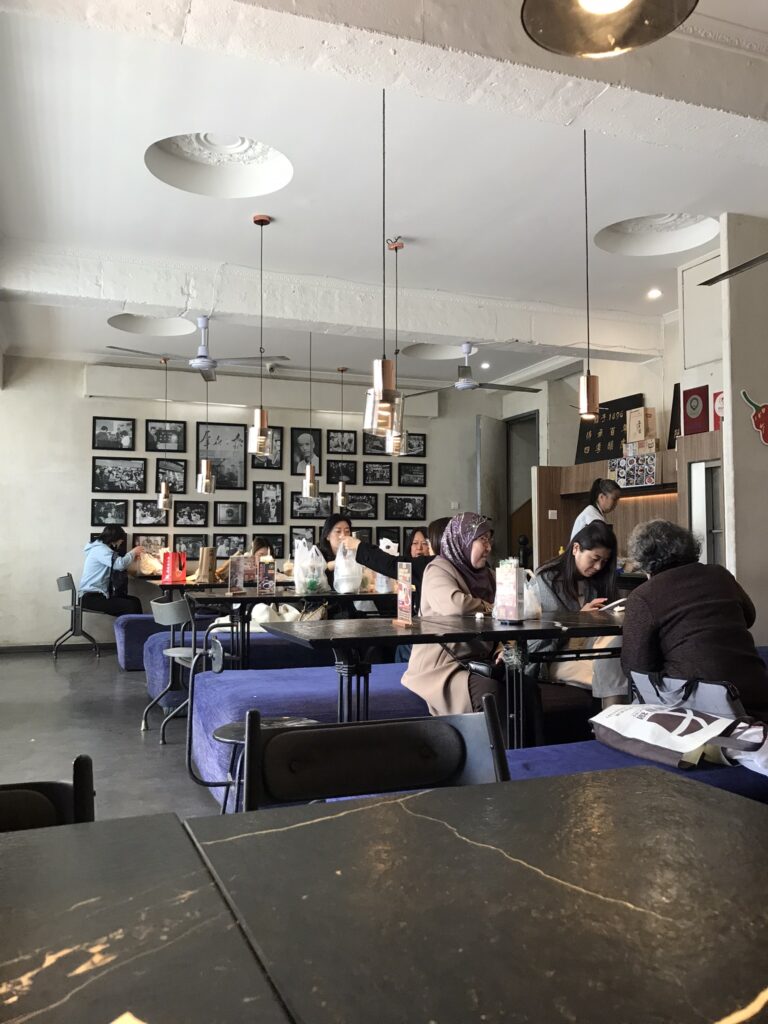
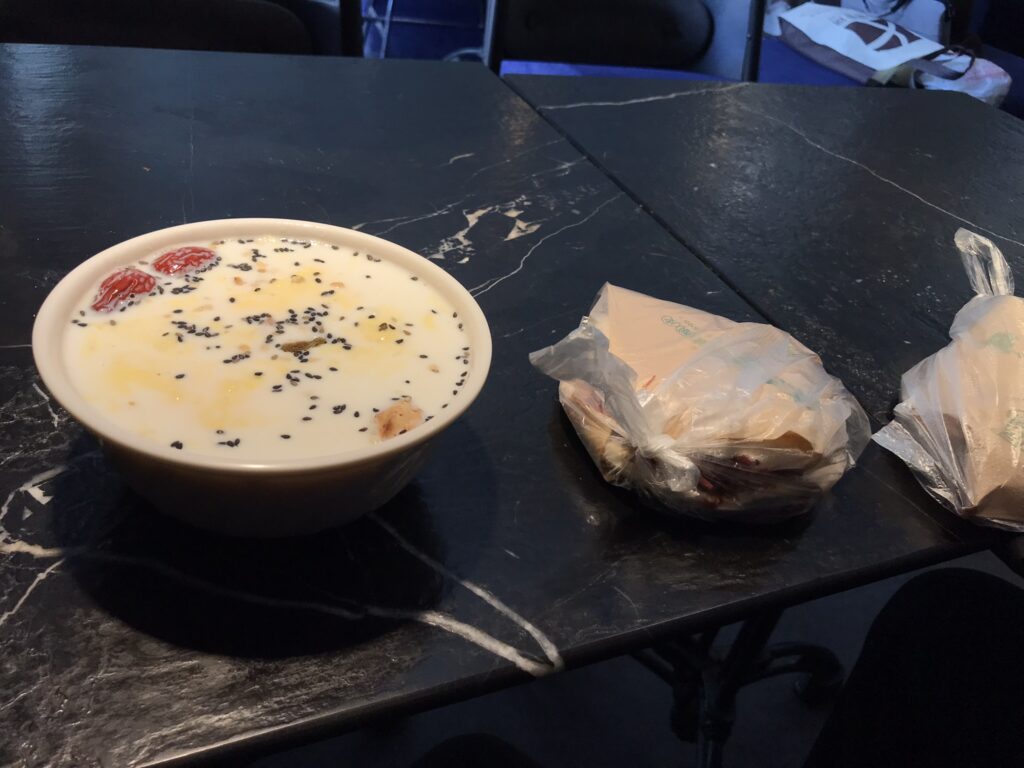
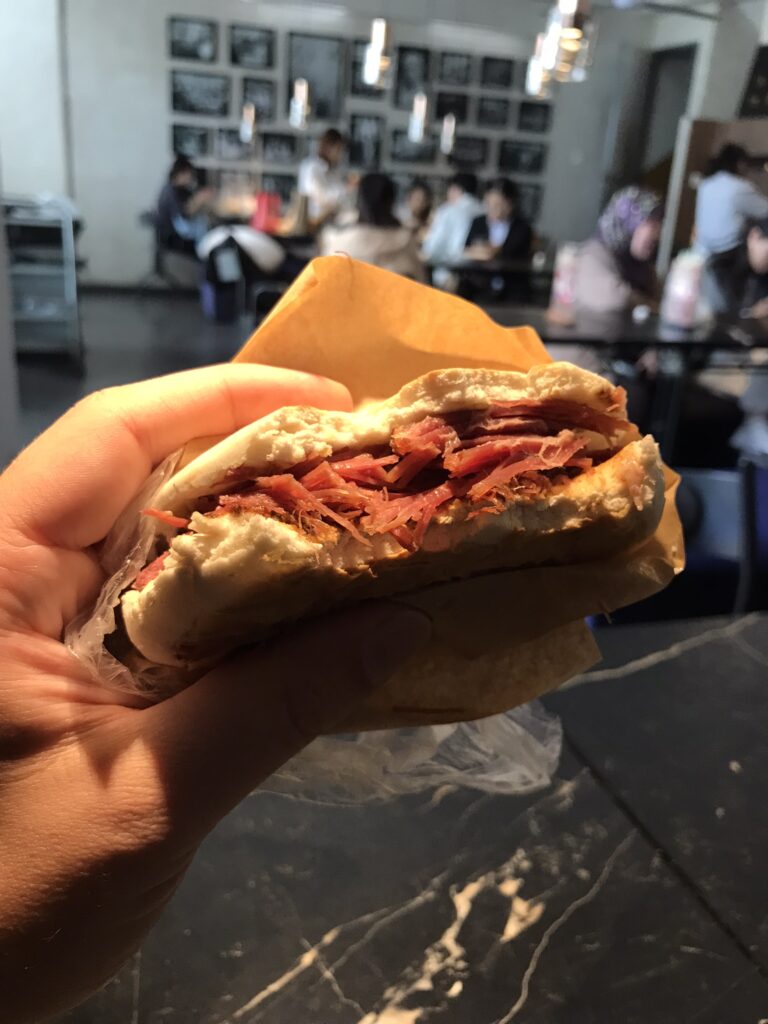
To avoid the tourist hordes and try some local Hui dishes, head to Muslim Shengzhiwang Majiang Niangpipu
Muslim Ma Peak Barbecue (Elementary School Xi North Alley Shop) – another recommendation from the street food tour guide. This BBQ place is located in an alley amongst a multitude of other similar joints, specializing in all things kebab. The kebabs aren’t like the ones you would find in Turkey – here they are slender slices of meat on thin metal skewers which are expertly cooked by a grill guy. There’s a minimum order of 20 small skewers of meat: chicken, lamb or beef. Don’t be put off by this as the skewers themselves are tiny – we ordered about 30 for a decent meal. I recommend ordering an initial variety to start with and then ordering more depending on which ones you like. FYI the skewers are served right off the BBQ, so be careful not to burn your face on the metal skewer like me and end up looking like the Joker. We ordered masses of kebabs and it only cost 55RMB for everything including nan bread as well. The premises seemed really clean and hygienic.
Huanainai Suanmeitang – a sour plum tea roadside stand which was recommended to us by a local food tour guide. Sour plum tea is a popular local drink and delicacy of the region. It was cheap, super delicious and refreshing – we went back for seconds.
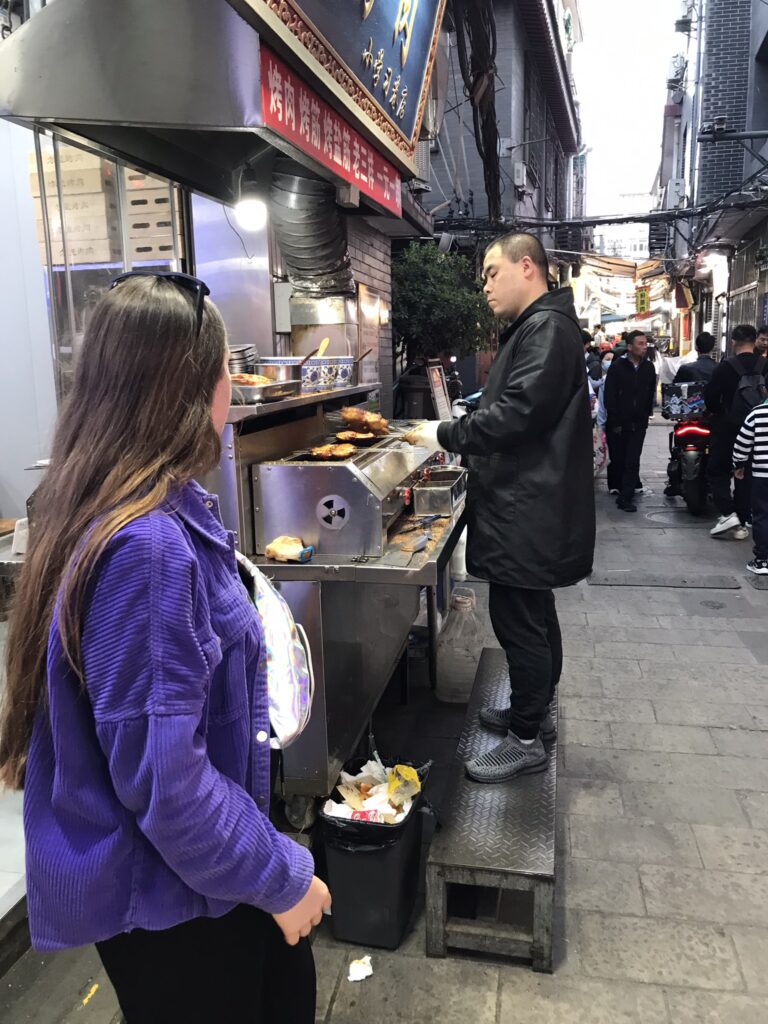
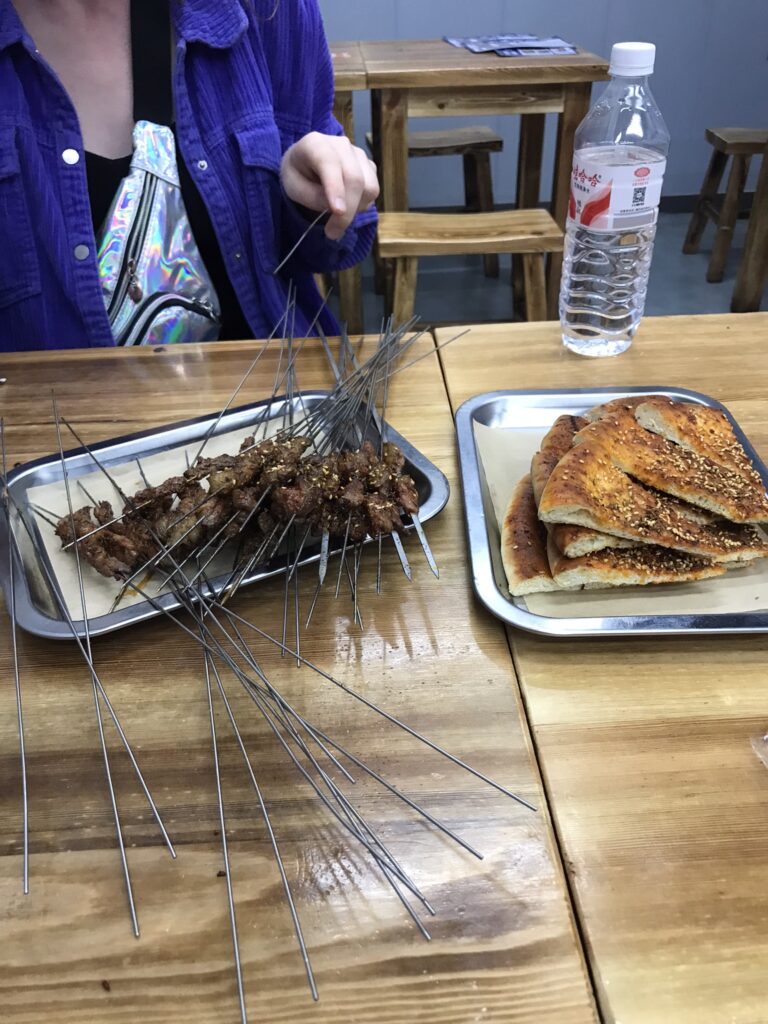
Sour plum tea from Huanainai Suanmeitang and a barbecue feast at Muslim Ma Peak Barbecue
Dicos (outside Terracotta Warriors Museum) – a perfectly reasonable Chinese fast food chain mimicking KFC. The pastry fish with red bean paste was a unique aspect. Outside the Terracotta Warrior Museum are many typical fast food dining options such as Starbucks, McDonald’s and KFC as well as local delicacies such as Muslim cuisine and well-known Chinese chains.
Activities
Shaanxi History Museum – a popular museum showcasing the history of the region, mainly focusing on the prehistoric era and Zhou, Han, Northern and Southern and Tang dynasties. The museum features lots of great ancient artifacts and info on social history, customs and the development of the Silk Road etc. Understandably there is less focus placed on the post-Tang periods. The museum is not too big and not overcrowded compared to other similar museums that we visited in China such as Nanjing Museum. We entered at the earliest timeslot which probably helped in that regard. Entry to the museum is free, but reservations are strictly required – it’s possible to book via WeChat or the QR code on trip.com.
City walls – we booked tickets via trip.com and were able to choose which gate we wanted to enter the walls. The busiest and reputedly the best section of the wall is located between the east and south gates, so we chose to enter at the north gate (Anyuan Gate) and walk clockwise around to the south. The current city wall dates from the early Ming dynasty, having replaced the much larger previous Tang-era wall. There are numerous watch towers, pavilions and grandiose monumental gates sporadically positioned along the walls. Reports online suggest it takes 4 hours to walk a complete circuit, but it took us around 3 hours to walk at a casual pace from just the north gate to the south gate (half the circumference). There are mini-exhibitions in many of the pavilions and lookout posts along the wall, typically themed around local arts and culture such as shadow puppetry, opera, traditional paper cutting and brick moulding. Most have an English-language video playing with further information – well worth a peek if you have time.
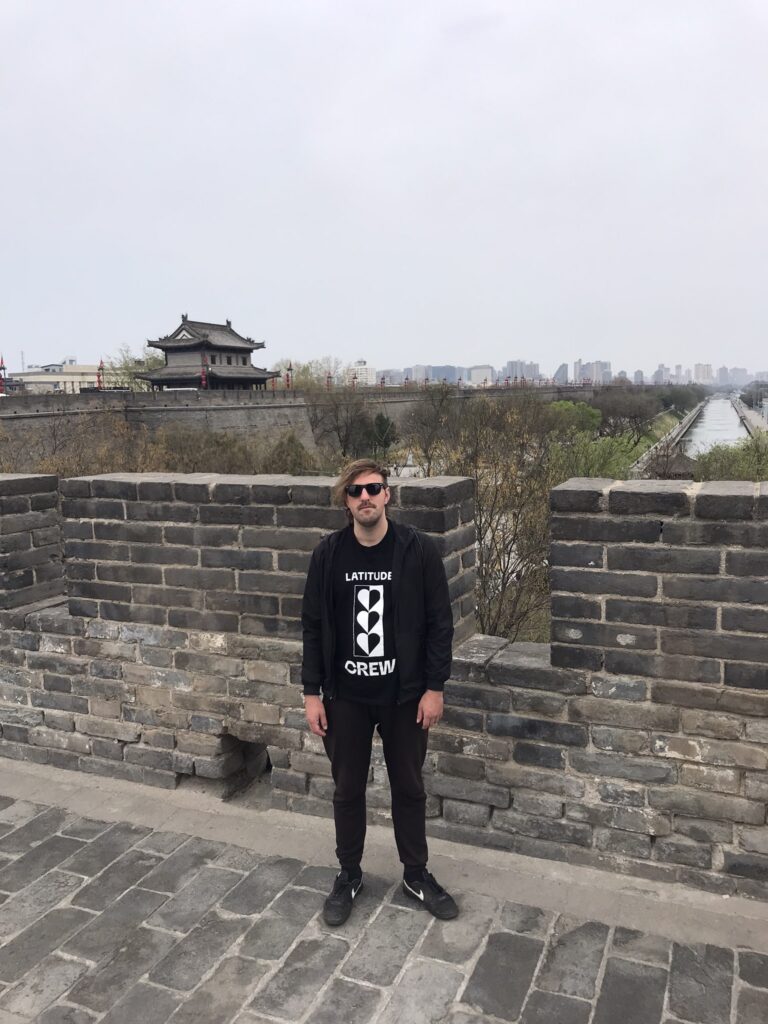
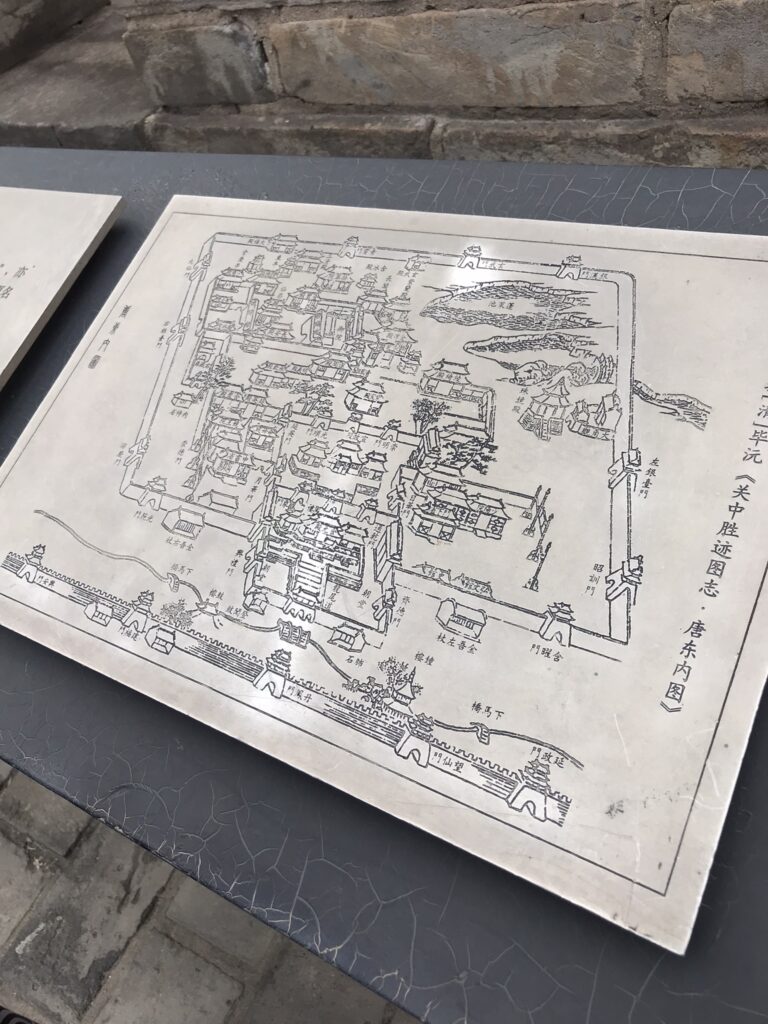
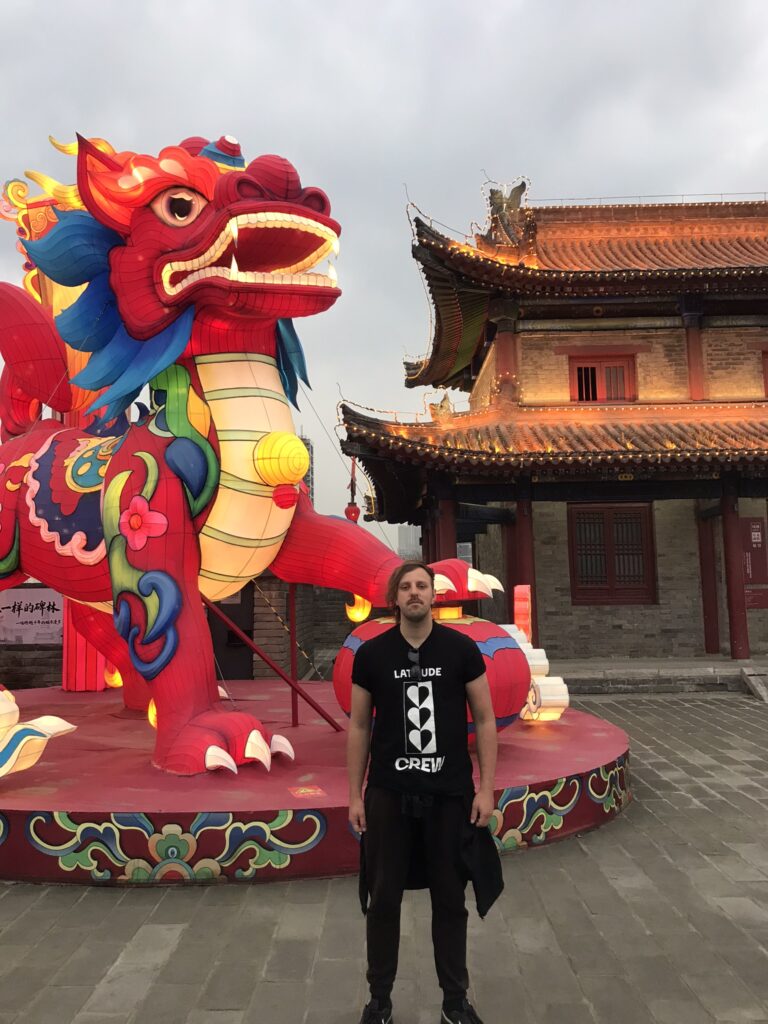
The city walls have plenty of historical information on boards dotted along the route
Cycling the complete circuit seemed super popular with locals, and hiring a 2 person bicycle (cute idea for couples) or normal bicycle is possible at the various gates. Some of the cyclists go quite fast along the straight, flat walls, so watch out. We paid a small additional fee to walk through a Chang’an lantern festival section on the south side of the wall, which featured a myriad of colourful floats depicting fire horses, ancient proverbs as well as a gourd-themed section inspired by historical artefacts from the city. It’s unclear if this is a permanent fixture or was just a seasonal thing – either way, we couldn’t avoid paying the extra fee as this was the only way to continue walking on the walls.
Drum & Bell tower – historically most major cities and settlements in China had both a bell and drum tower – these were used as a guard post, to signal the time of day or night and to raise the alarm if needed. The Drum and Bell Towers in Xi’an were built around 1380 and are located in close proximity to one another (in fact you can actually clearly see one from the other). Both iconic structures can now be visited and ascended for views of the busy city streets as well as the sister tower. You can buy a combi ticket to visit both towers (50 RMB when we visited), which is a small saving from visiting them separately.
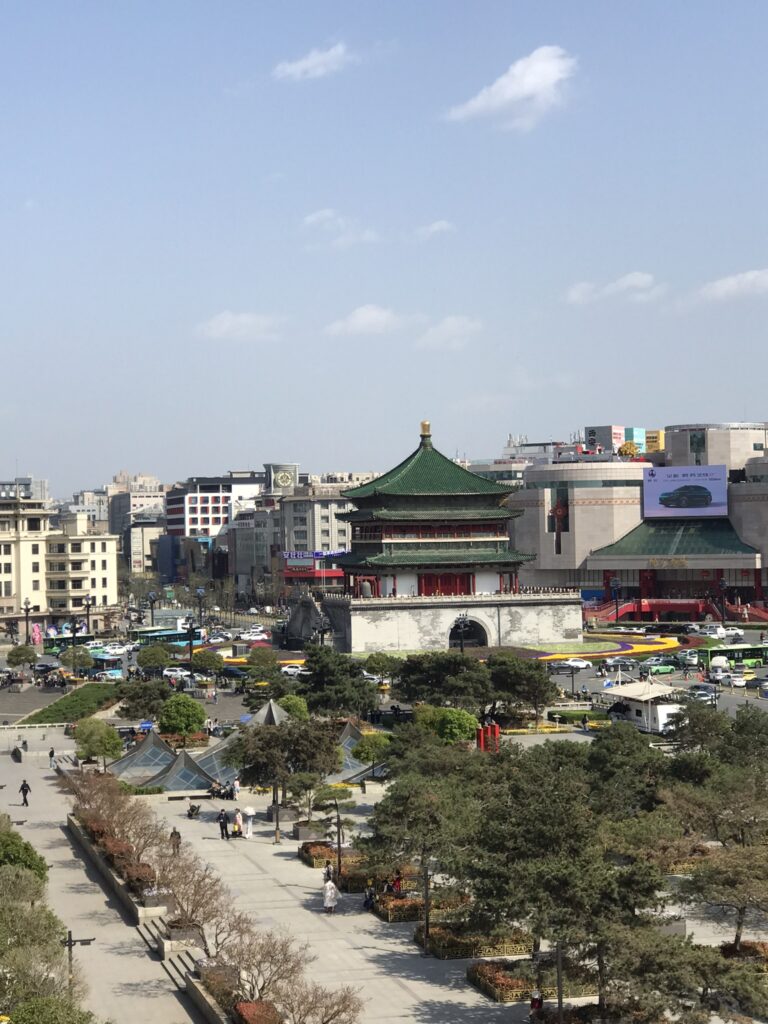
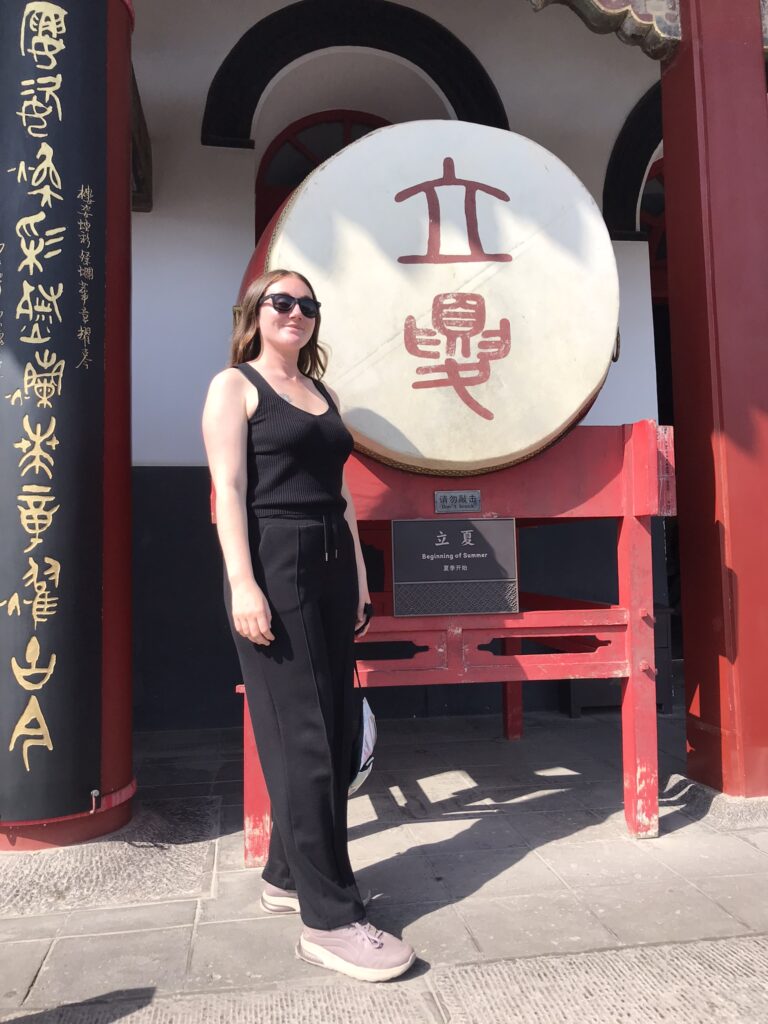
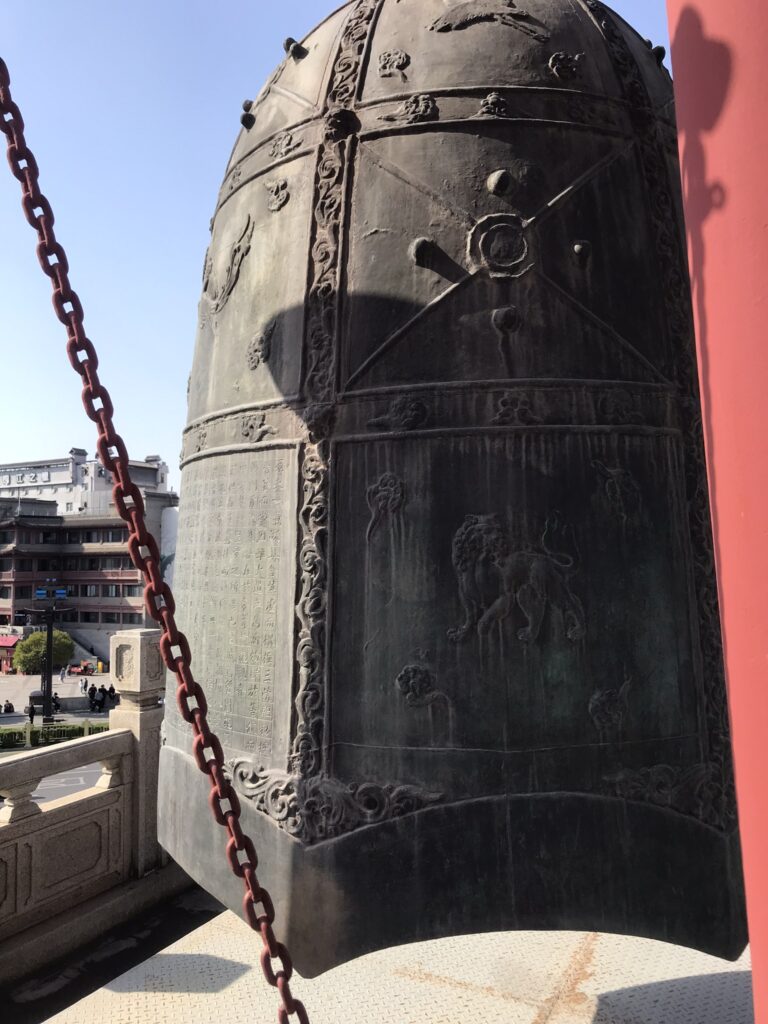
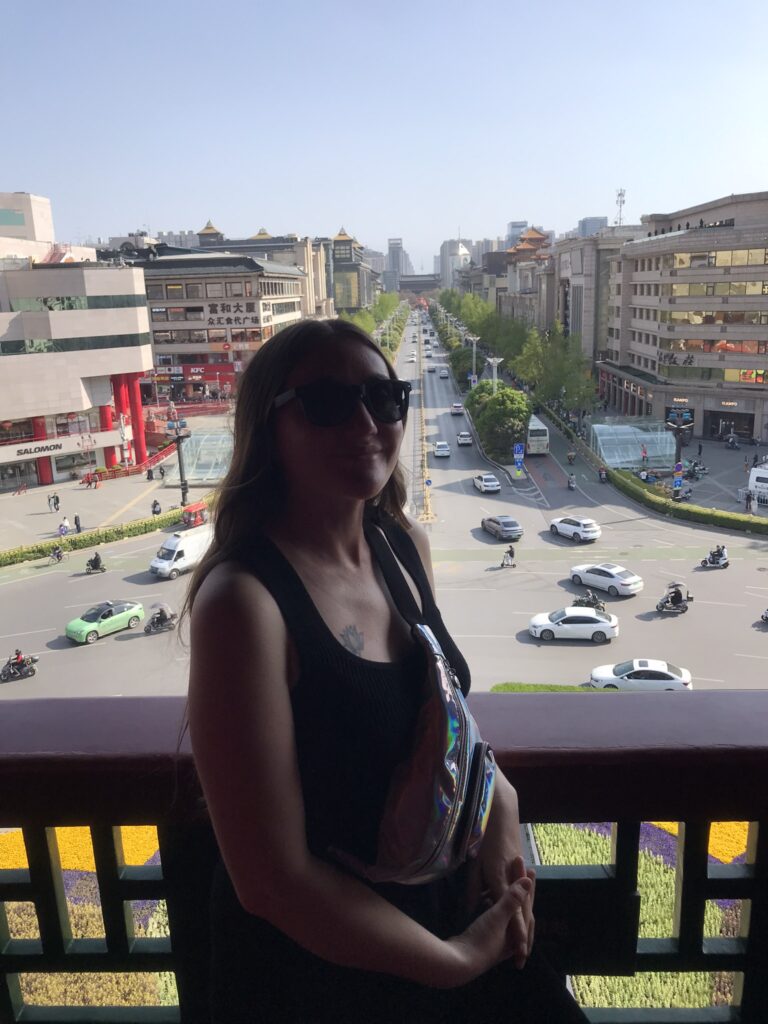
Clockwise from top left: view of the Bell Tower from the Drum Tower, replica drum at the Drum Tower, replica bell located at the top of the Bell Tower and view of the circular intersection from the Bell Tower
The Bell Tower was moved in the 16th century to be in a more central location, and is now encircled by a busy road (access is via the large underpass which sprawls around the intersection). Both towers feature small exhibitions inside – the Drum Tower has a Qing furniture collection on the top floor and a colorful tile display exhibition on the ground floor, while the Bell Tower has a porcelain collection display on the top floor and an exhibit on the bottom floor about how the towers were created and how the Bell Tower was later moved. Both towers have replica drums and bells respectively to illustrate the size and craftsmanship of both.
Muslim Quarter – a large section of the inner city which is probably the most interesting and atmospheric area. This is the traditional home of the Hui population – Chinese Muslims who are genetically no different from the Han Chinese but who historically follow Islam, have a distinctive culture and have therefore been classified as a different minority ethnic group. This distinctive part of the city felt very different from other Chinese cities, with a more Central Asian/Middle Eastern vibe. Amidst the busy streets you can spot many Hui men with their distinctive white skullcaps rushing to the mosque or manning kebab fry stations, and ladies with headscarves operating food stalls. It’s a lively, bustling area especially around meal times and after dark with many foodie curiosities like barbequed testicles (yes, actual animal private parts), fried squid on a stick, Uzbek-style round bread loaves displayed out in the open like works of art, pastry pies, walnuts, dried persimmons and a special type of red rice dessert with sticky dates alongside other tempting food offerings. Within this area we tried traditional sesame noodles (scrambled egg in a creamy milk dessert with candied fruits and some rice pudding style rice), sour plum tea (a local drink which was very sweet and delicious) from a roadside stall, and yangrou paomo (pitta bread broken into small bits in a rich broth with mutton). Check out Yunyun’s food tour of the Muslim district on Guruwalk – she gave us recommendations on the foodie places in the area as she wasn’t able to conduct the tour in person due to a private booking.
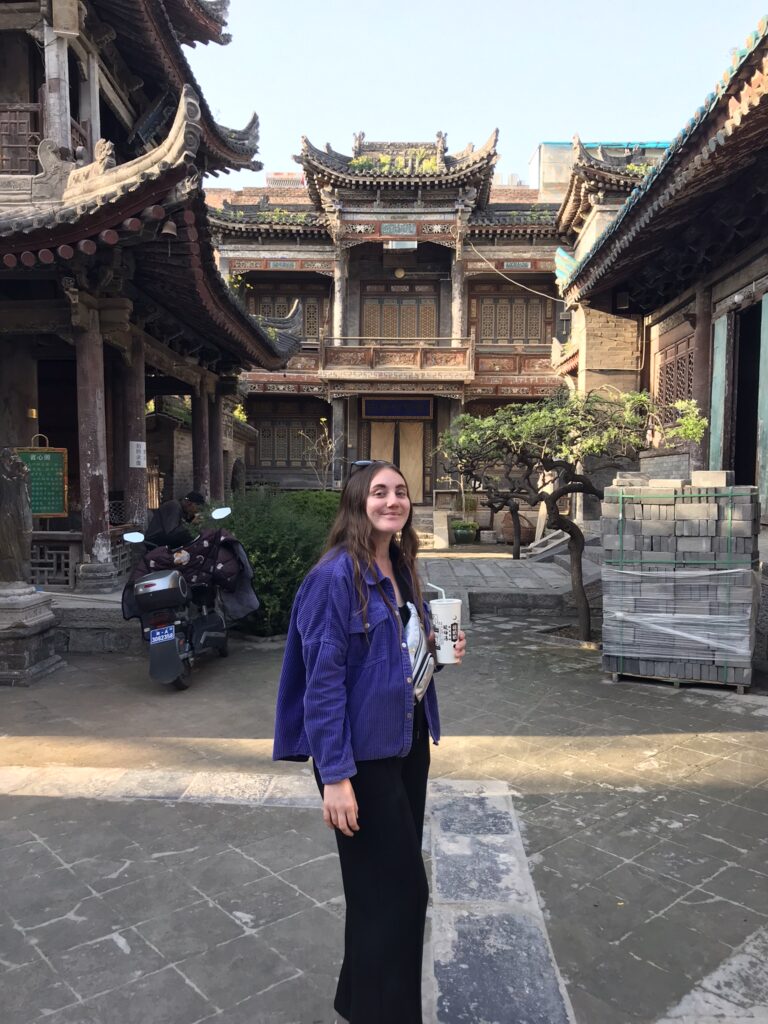
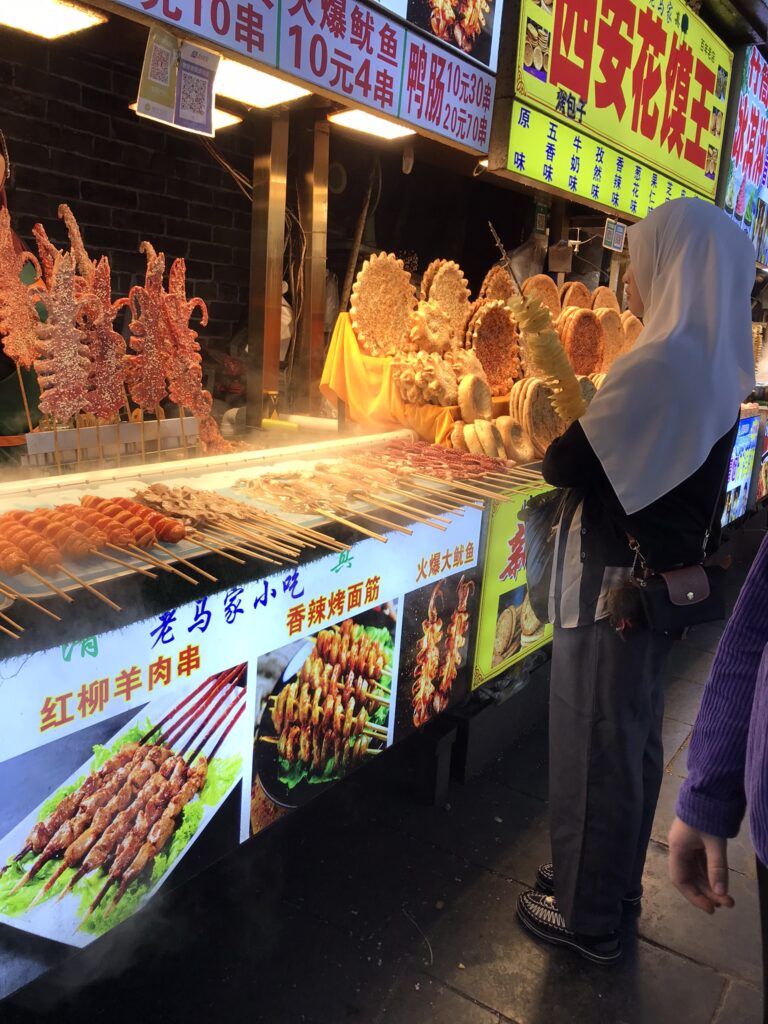
In the Muslim district, we stumbled upon an old mosque which was being renovated and many street-food stalls manned by Hui residents
Great Mosque of Xi’an – with a history spanning 1,300 years, this active mosque nestled in the Muslim Quarter is renowned for its mix of Chinese traditional wooden architecture with Buddhist and Islamic influences, such as the pagoda–style wooden minaret in the central courtyard. There’s a small entrance fee for tourists and access to the prayer hall at the rear is prohibited for non-Muslims (although you can see inside through the open doors). The ticket price includes an information pamphlet. Unlike other mosques around the world, visitors here are not required to cover their hair. It’s quite a touristy site and we saw plenty of foreigners inside, mainly on group tours with a guide. Interestingly, there were few if any Chinese tourists here – it was by far the highest ratio of foreigners vs Chinese visitors we saw anywhere in China. The mosque still welcomes devotees, although we didn’t hear the call to prayer while we were there so I assume perhaps this isn’t broadcast through loudspeakers.
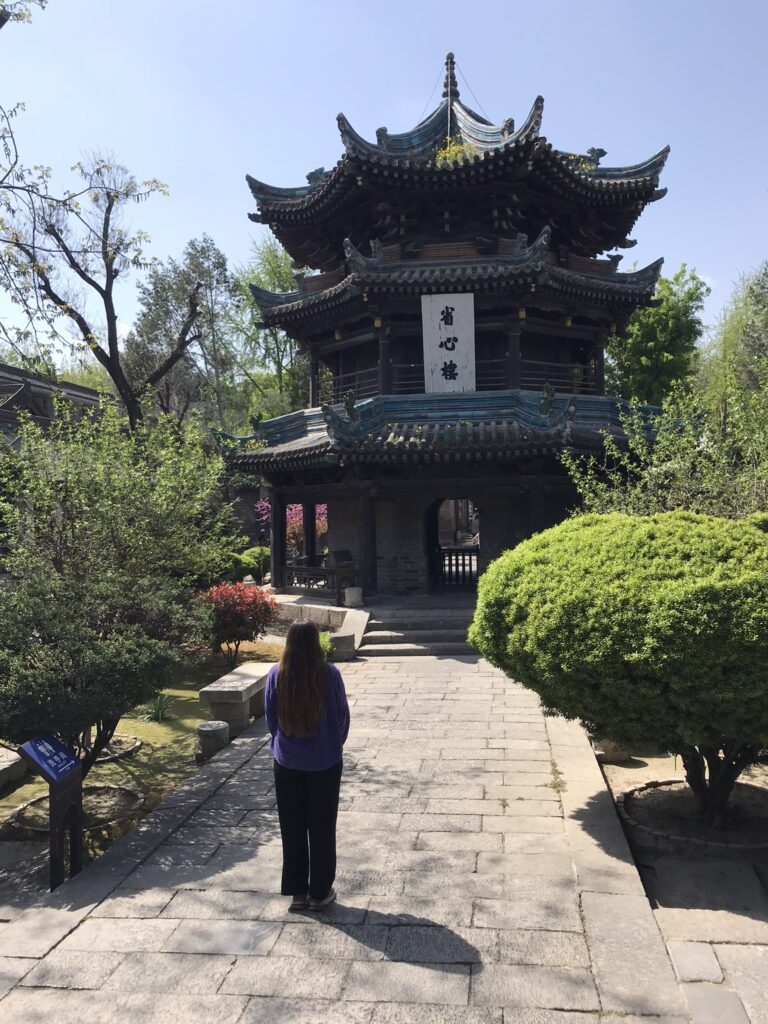
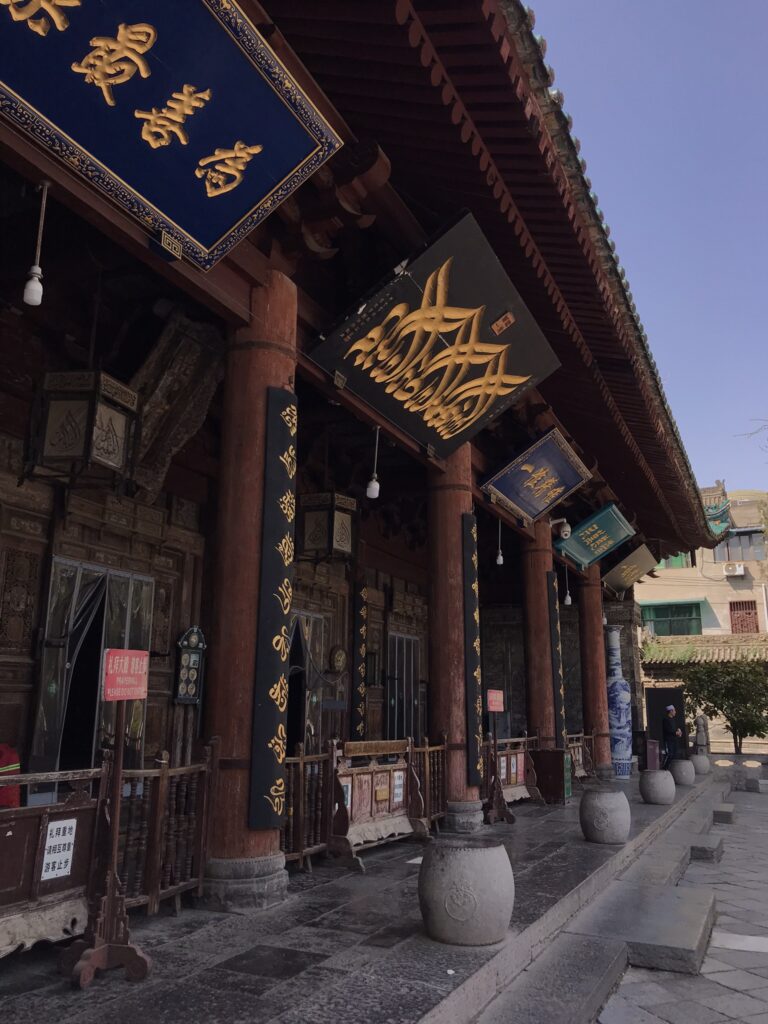
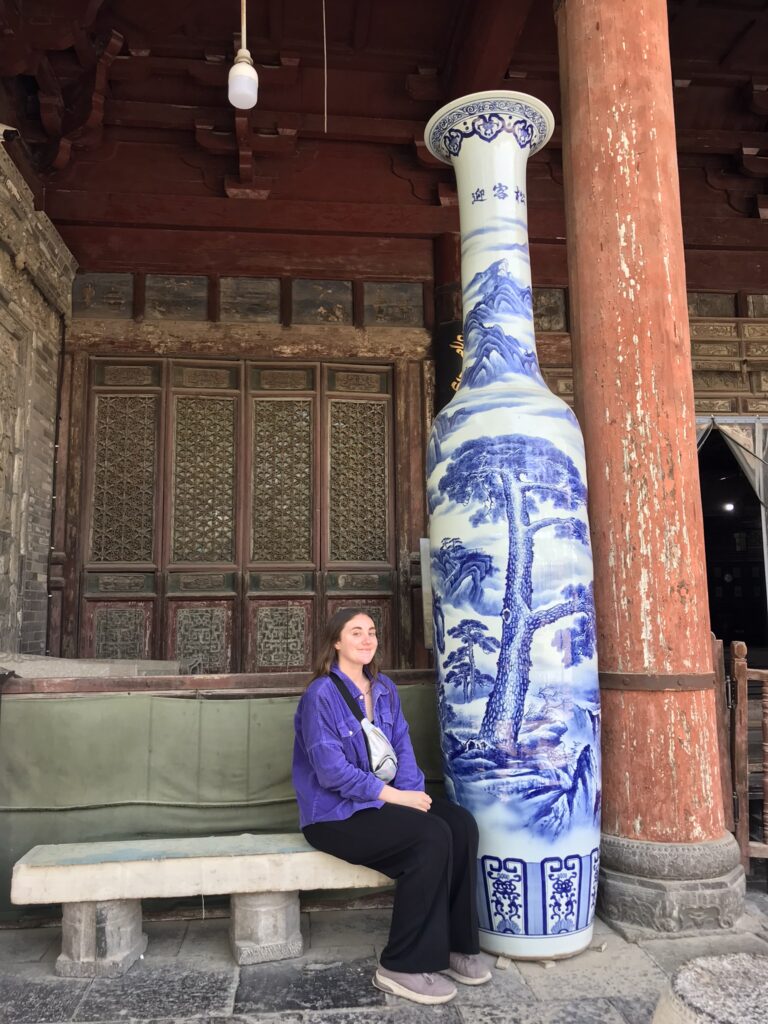
Scenes from the Great Mosque in Xi’an
Small Wild Goose Pagoda – unfortunately we couldn’t get too close as the whole park complex including the Xi’an Museum is closed on Tuesdays – we didn’t know this until we were outside the entrance! You can sneak a peek at the pagoda but the view is mostly blocked by trees and bushes from the outside. It’s one of only two Tang-era buildings remaining in Xi’an (along with the Great Wild Goose Pagoda), so worth checking out – just not on a Tuesday.
City God Temple – in close proximity to the Muslim district, this typical Taoist temple dedicated to the city gods is free to enter without a ticket or reservation. Info plaques are dotted about with English translations, which is a nice touch.
Great Wild Goose Pagoda – the pagoda sits within a wider temple complex which has been given 5A scenic area status by the Chinese government, the highest rating available. The pagoda, which appears mostly restored when compared with the Small Wild Goose Pagoda, was built around 600CE to house the sutras from an Indian monk who came to Xi’an and translated a number of Buddhist texts, some of which are used to this day. It’s acclaimed as a great example of the sinicization of Indian Buddhist architecture, in other words a Chinese twist on the imported designs from India. The scenic area is ticketed but entry is cheap. Visitors are able to enter and climb up the brick pagoda, but this is an extra cost so we didn’t do it as we were pushed for time. Next to the pagoda is an active Buddhist temple (Daci’en Temple) with various buildings holding depictions of gods and goddesses, such as the God of Wealth. Nearby is a tranquil peony garden area which is worth a wander around. Just outside the scenic area we came across a fountain show which was timed to classical/dramatic music, also worth checking out when you’re in the area. This area is in fairly close proximity to Shaanxi History Museum, so it makes sense to combine the two.
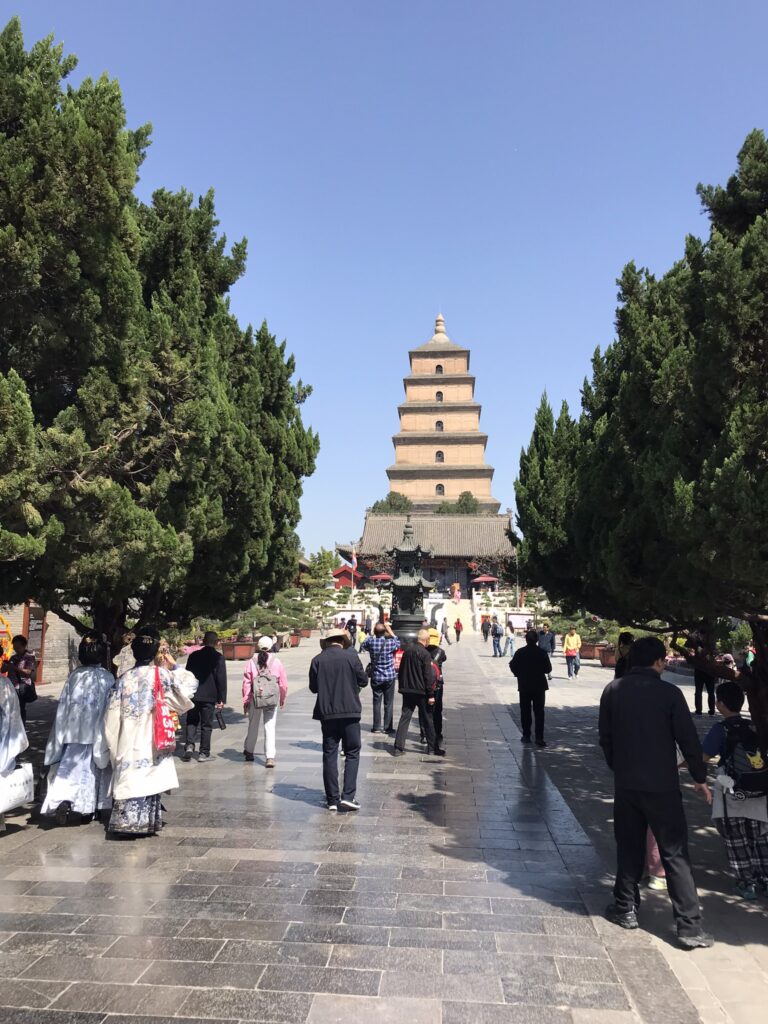
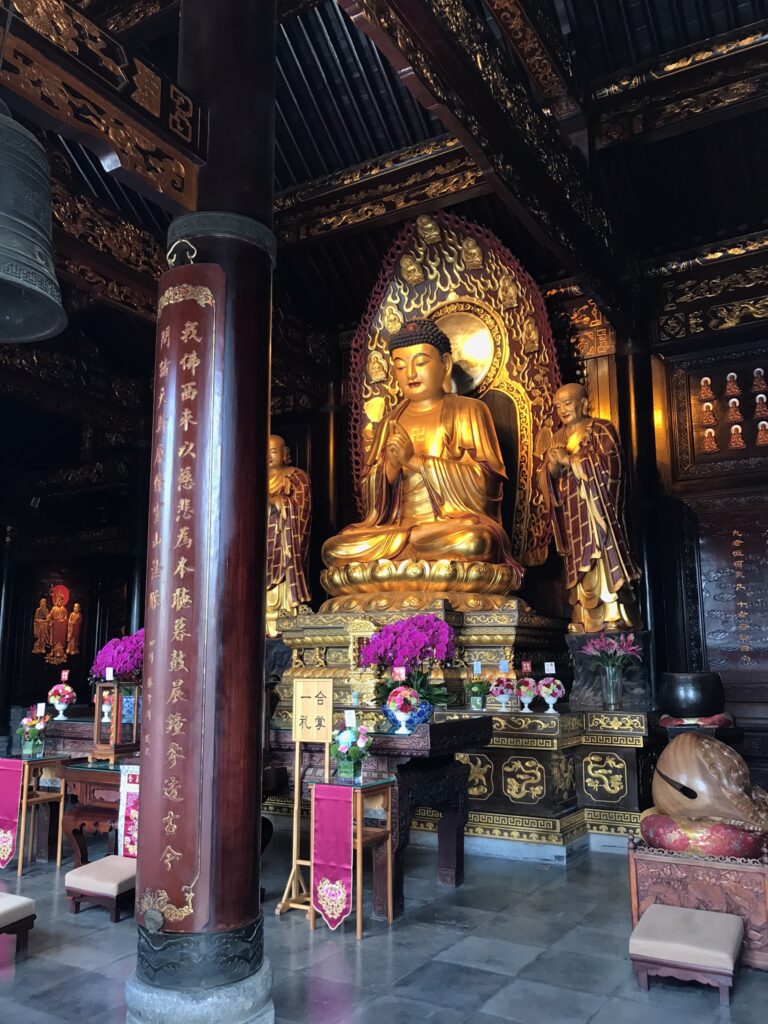
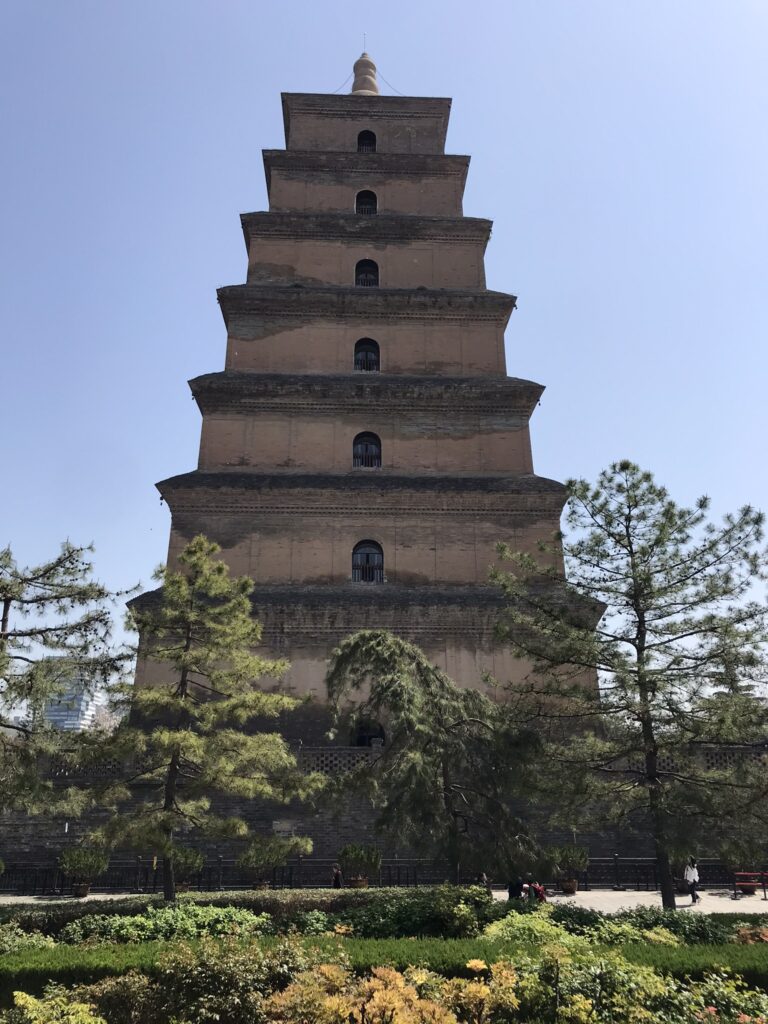
The Great Wild Goose Pagoda is a popular attraction in Xi’an
Museum of the Mausoleum of Qinshihuang (otherwise known as Terracotta Warriors or Army)
In recent times there has been a move away from calling the site ‘Terracotta Warriors’ and more emphasis placed on the buried emperor, Qinshihuang. There are two separate sites here: one with the terracotta army and adjoining museum, and the other which is the actual mausoleum complex of Qinshihuang, known as Mount Lishan. The terracotta army is located 1.5km east of the mausoleum and the two are connected via a free shuttle bus.
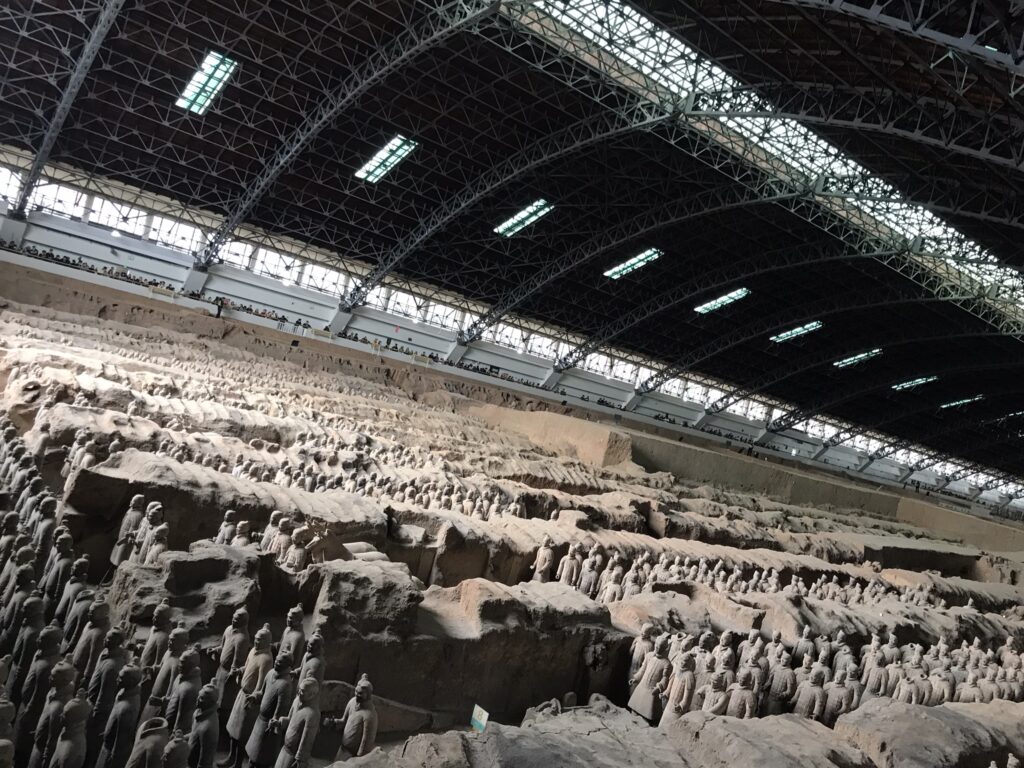
What strikes you is the vast scale of the Terracotta Army!
You MUST pre-book tickets as this is an incredibly popular, ergo crowded attraction. We decided to use Trip.com as the price was about the same as online and we didn’t have to pick a time slot – we got a combo ticket with nearby Huaqing Palace and it was a pretty good deal for both attractions. We decided to take a Didi to the Mausoleum site as we wanted to get there as quickly and early as possible, but you can also get the metro to Huaqing and taxi the rest of the way. Despite our efforts to get an early start, the site is seemingly crowded at all times during the day. The crowds at points can be slightly unpleasant as people push their bodies against you to take photos. It’s pretty difficult to get a good photo with the warriors as crowds will walk into shot, with little politeness or civility. Unfortunately this is to be expected in such a popular attraction.
Terracotta Warriors – essentially there are three open viewing areas (or ‘pits’) within the main complex where you can view the clay warriors in situ. Pit 1 is the largest, displaying 2,000 warriors at a time out of the 6,000 discovered (most are fragmentary and have been pieced back together, as they were crushed when the ceiling of the pit collapsed). It’s an impressive site as lines of infantrymen, chariot drivers and horses (minus the chariot) stand in battle formation. Tour groups can be intolerable here, but they move on quickly and crowds thin out as you move further around the edges of the pit.
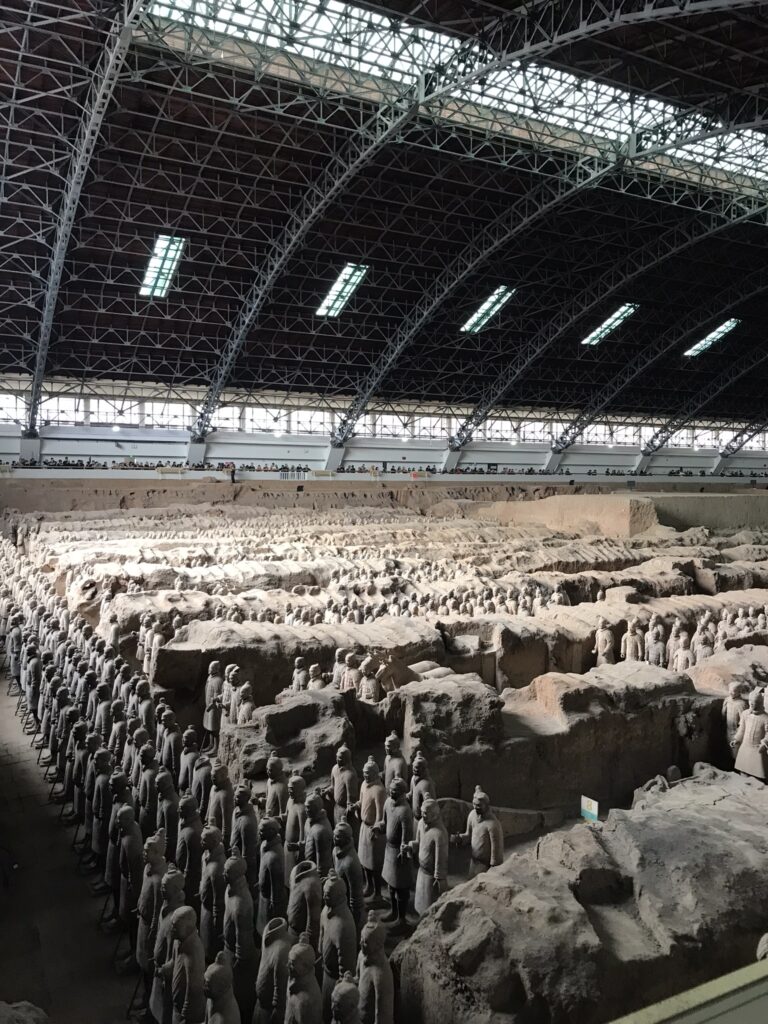
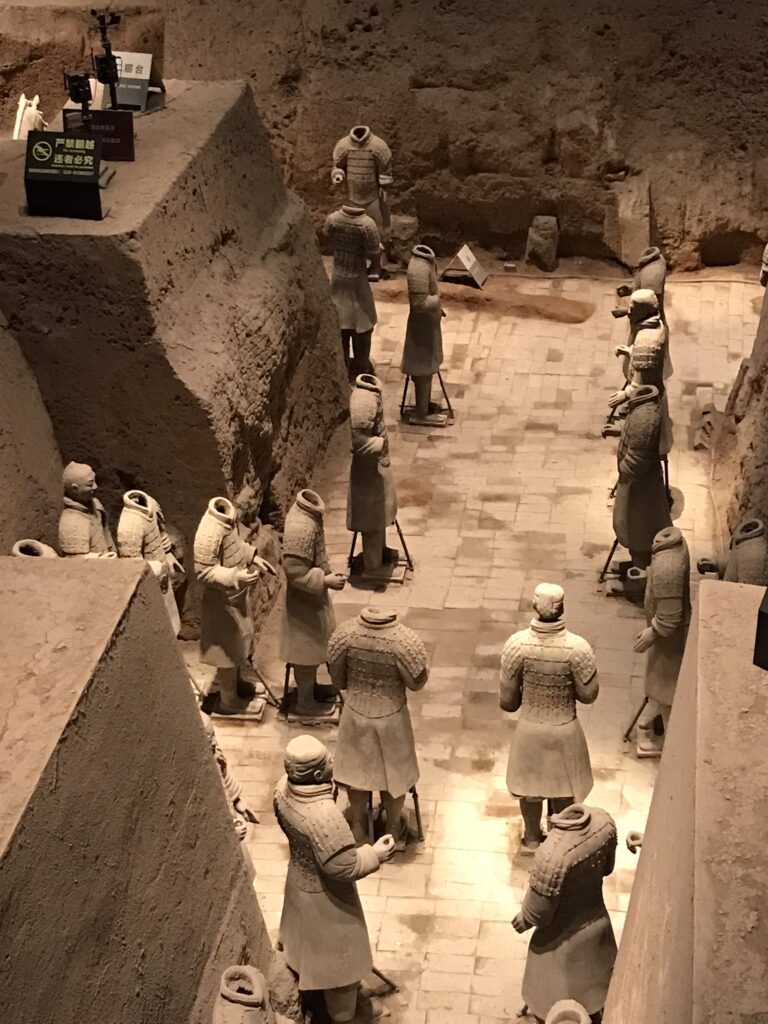
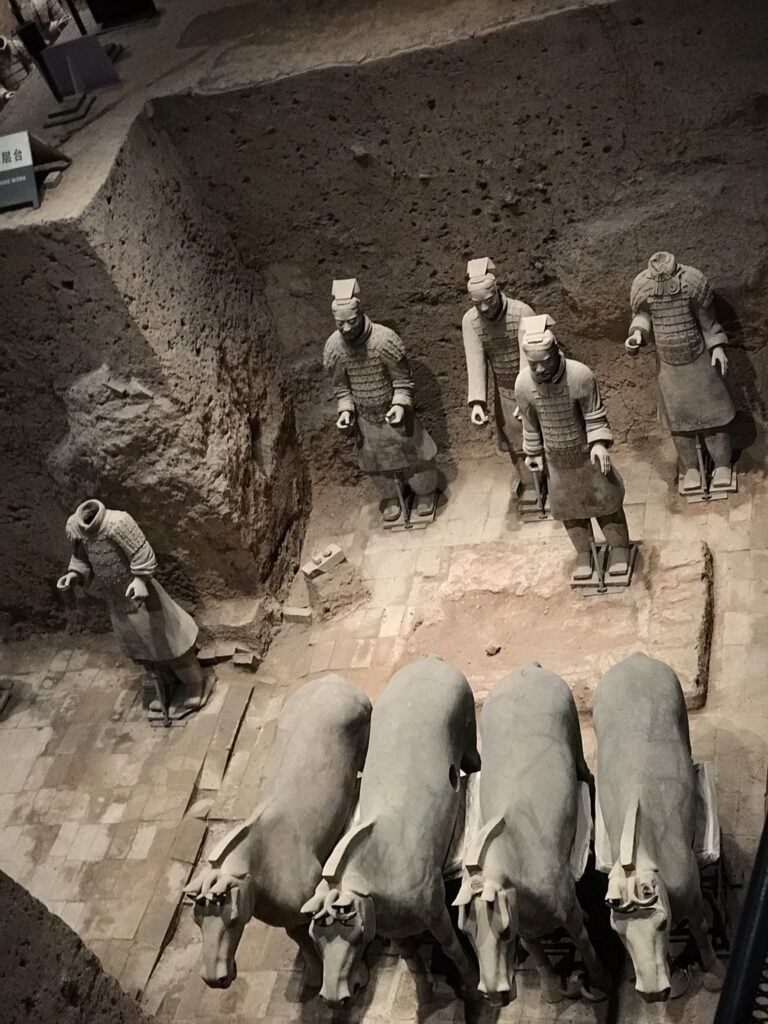
Pit 1 (first photo) is by far the most impressive of all the ‘Pits’ whilst Pit 3 contains high ranking military officers
Pit 3 contains the ‘command center’ of the army, with high ranking officers, generals and leading chariots. This pit shows evidence of grave robbers. Pit 2 is the most unimpressive of the three pits and the most damaged of the three, and as a result looks almost unexcavated with mainly just post marks and packed dirt visible. It’s best to focus most of your time in Pit 1 as it’s the largest and most extant of the three pits.
Information in both Chinese and English is provided on plaques dotted around the pits. Apparently a local farmer was buried in the middle of Pit 1. After visiting the pits, an on-site museum contains a trove of information about the warriors, their creation and design. Each warrior is unique with an individualised posture, hair style, facial hair and facial features, and the type of armour and hat is faithfully recreated to define the rank of the soldier. It’s not just foot soldiers buried in the pits but archers, chariot drivers and high-ranking officers. Other pits contain non-military figures including bureaucrats, acrobats, performers and stable hands. The warriors get most of the attention, but the other clay figures are just as interesting.
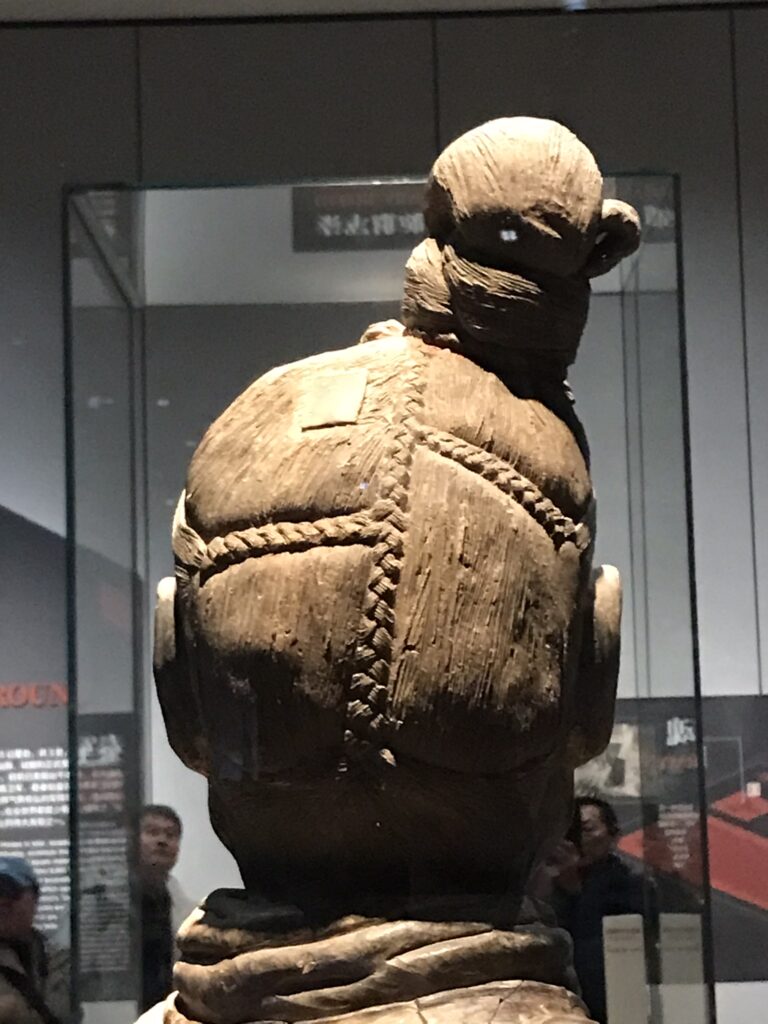
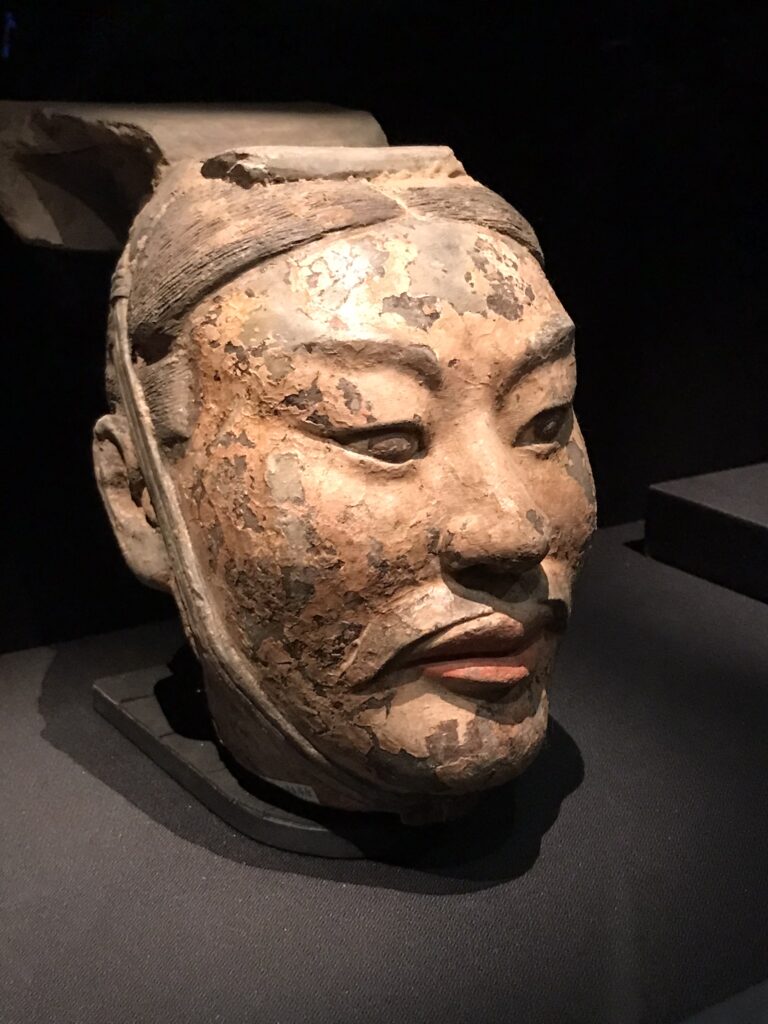
You can really get a closer look at the warriors in the nearby Museum – there’s even some examples of soldiers with coloured pigment still visible
While the pits only provide views from afar, you can get a closer look at some of the individual warriors in the museum and examine their features, outfits, shoes, hair, hats, facial hair and some remnants of colour pigment. The level of detail is amazing, such as strands of hair in buns, facial hair and even shoe tread. The warriors originally carried weapons such as long pikes/axes, spears and swords, some of which are on display in the museum. The museum also traces the history of the Qin dynasty and elaborates about all aspects of the mausoleum complex, including a particularly fascinating display of bronze water fowl and terracotta gardener figurines which would’ve been found in the imperial gardens of the underground city. All bases were covered when creating this underworld kingdom for Qinshihuang – it was believed he would require all of these things in order to function successfully as king in the afterlife.
Lishan Gardens i.e. actual location of the underground imperial mausoleum complex –
A free bus from the Terracotta Warriors to Lishan Garden departs from outside the exit of the complex, opposite the grand statue of the emperor. The main mausoleum complex remains unexcavated although archaeologists have used technology to make underground surveys. According to historical sources, within the mausoleum were gems in the ceiling to recreate the heavens, stars, sun and moon and rivers of mercury to recreate the rivers and seas. High levels of mercury found in the ground attest to this. The vast majority of the site is now covered in woods and grassland, although there’s a noticeable tomb mound which is fenced off to the public (presumably the burial location of the emperor). Interestingly, the emperor was not alone in his vast complex. Tertiary tombs of close high ranking officials have been uncovered nearby, presumably to accompany the emperor in death.
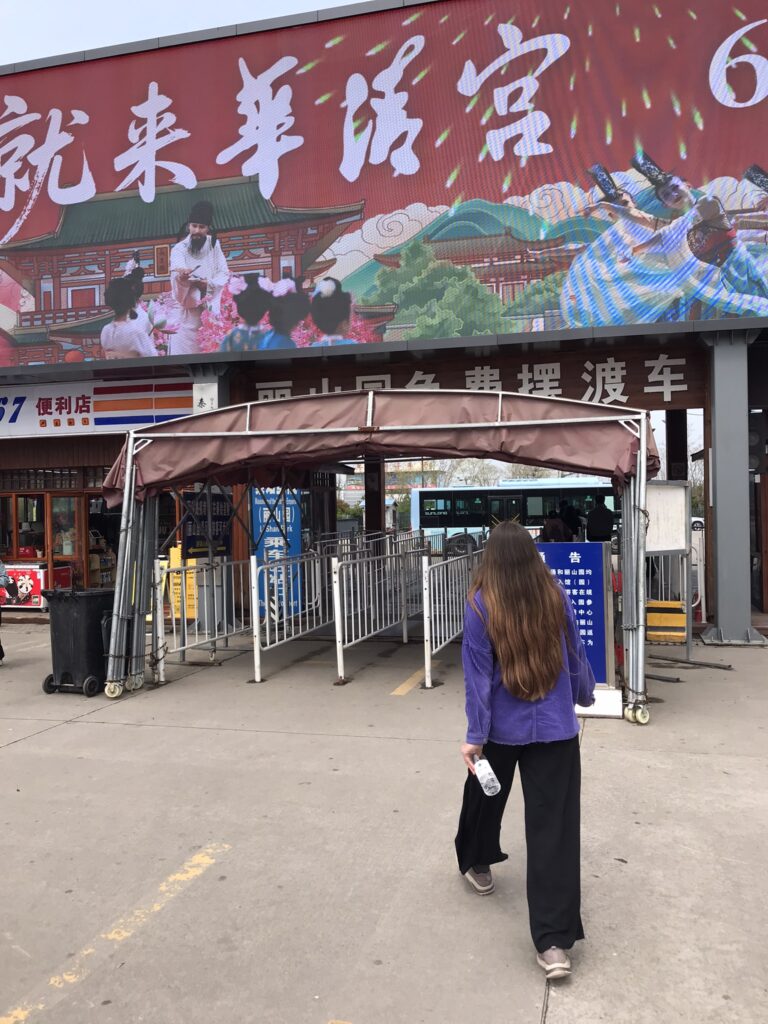
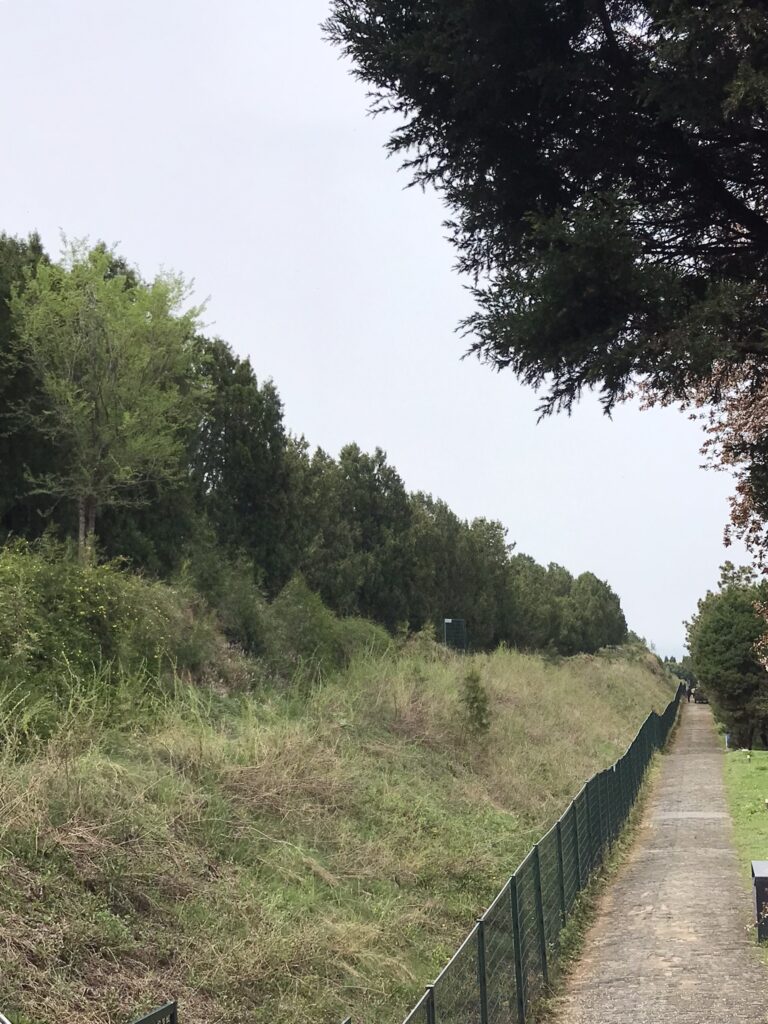
Location of the free shuttle bus to Lishan Gardens and what we presume to be the burial mound of Emperor Qinshihuang at Lishan Gardens
The grounds of Lishan are fairly large and most visitors seem to jump on an electric tourist bus/golf buggy at the entrance (additional cost for service although we’re not sure about how much exactly) in order to get ferried around and dropped off at various points in the park. The main attraction here is the Chariot museum featuring two intricately constructed bronze chariots which were crafted for the emperor to use in the afterlife – arguably these are the singular most impressive artifacts discovered in the mausoleum complex. The site also includes a couple of pits which contained non-military terracotta figures, including Pit K0006 (featuring terracotta civil officials and skeletons of horses which were potentially sacrificed) and Pit 9901 (showcasing clay acrobatic performers and a rather rotund weightlifer).
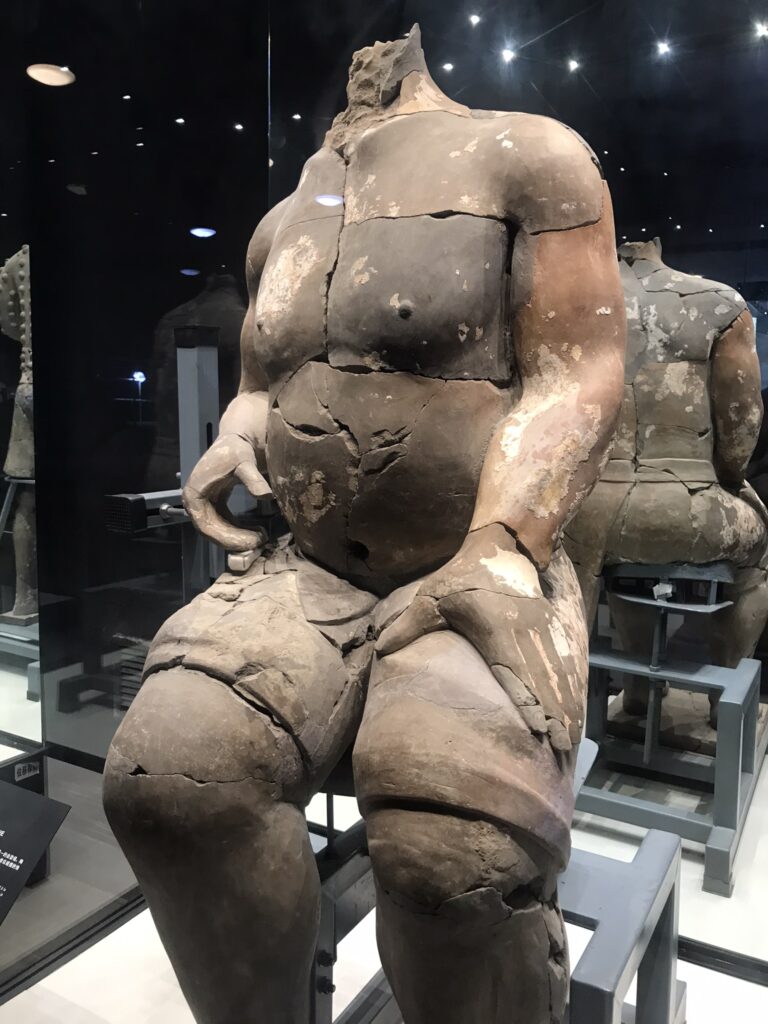
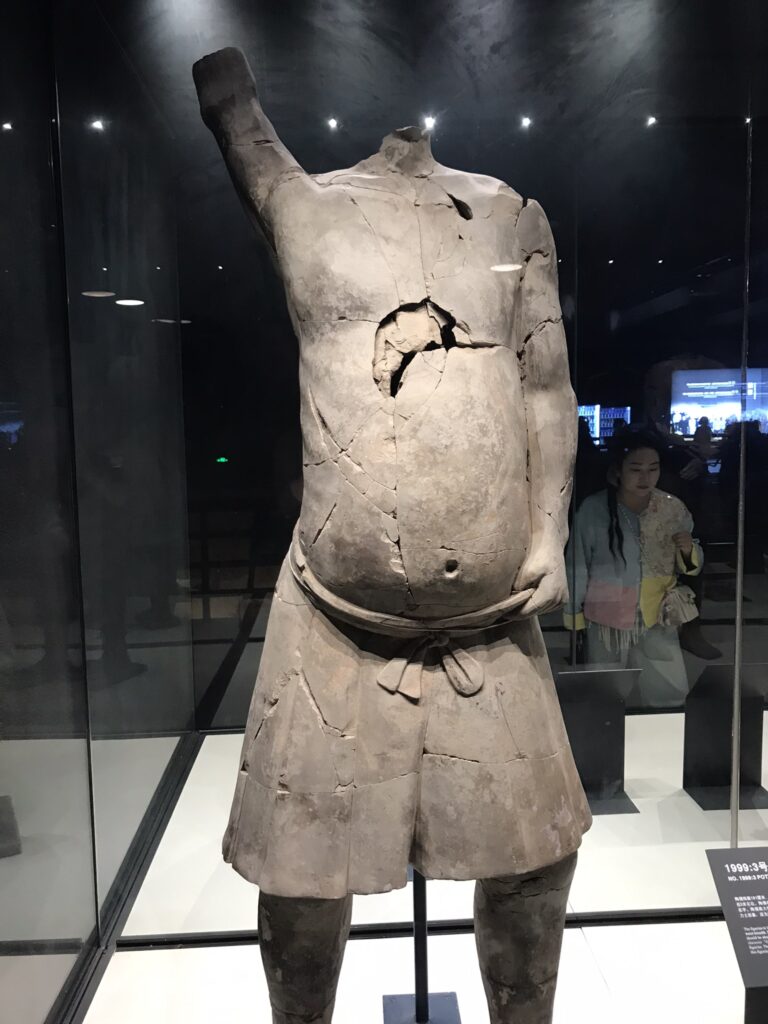
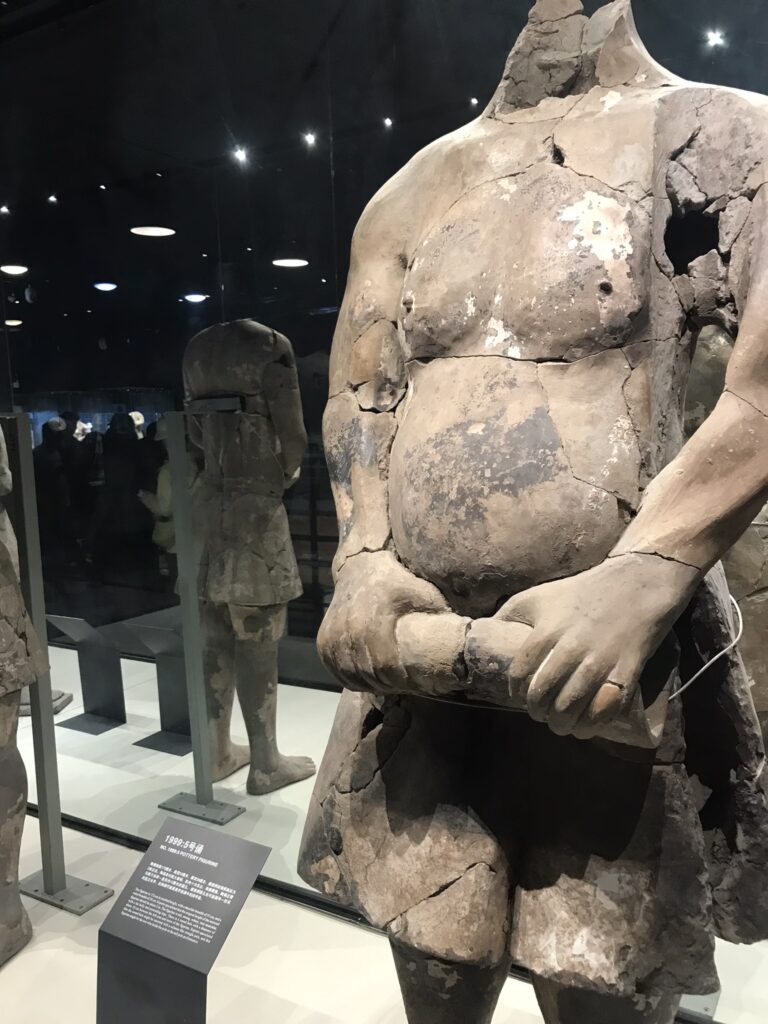
It’s not just soldiers that we were faithfully reproduced in clay but acrobats, weightlifters and performers as well – visible in Pit 9901
Large tour groups make a flying visit to see the intricately reconstructed bronze chariots and clog up the exhibition space. One is a standing type chariot with pre-Qin design, mostly used for military purposes and hunting with the inclusion of a miniature crossbow and arrows. The other is a seated chariot for transport, featuring a more private separate compartment for the passengers away from the chariot driver and including a window for air, an intricately made wineskin bronze bottle, an arrow box and other equipment inside the chariot. The level of detail is amazing, such as the wine skin container with sewing marks, cross bow and arrows, bamboo whip and remarkable harness and reins of the horses with gold and silver adornments – such a faithful miniature bronze recreation. The painted motifs are still visible on the exterior and interior of the chariot. Apparently it took around 8 years to fully reconstruct the bronze fragments of both chariots.
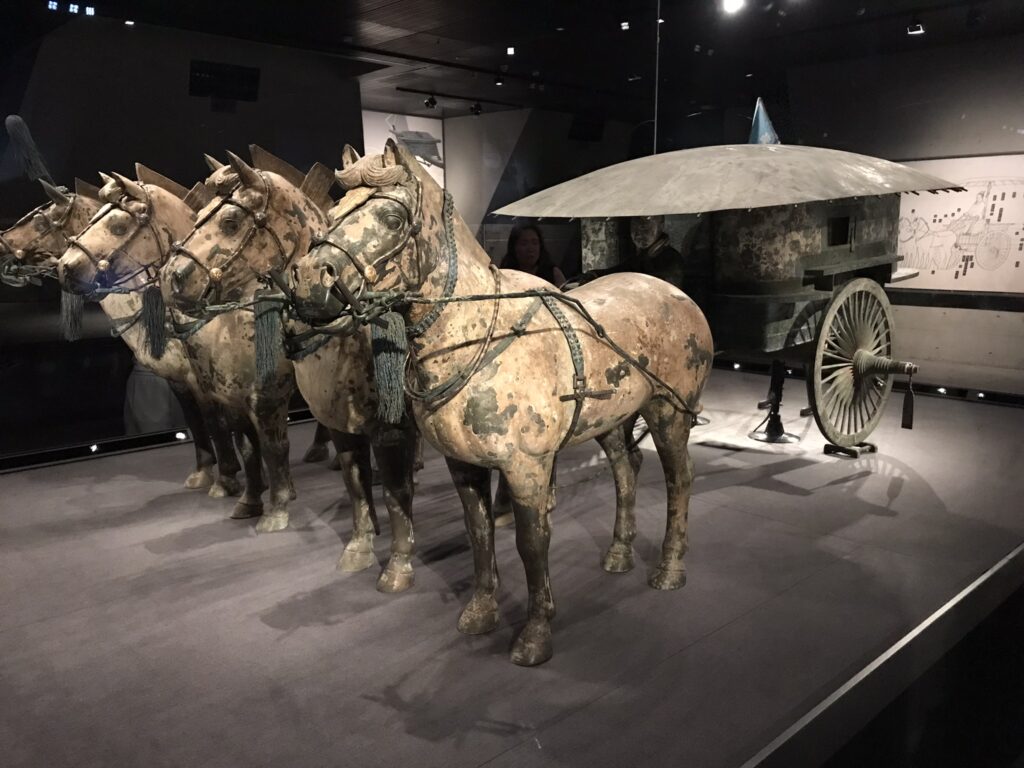
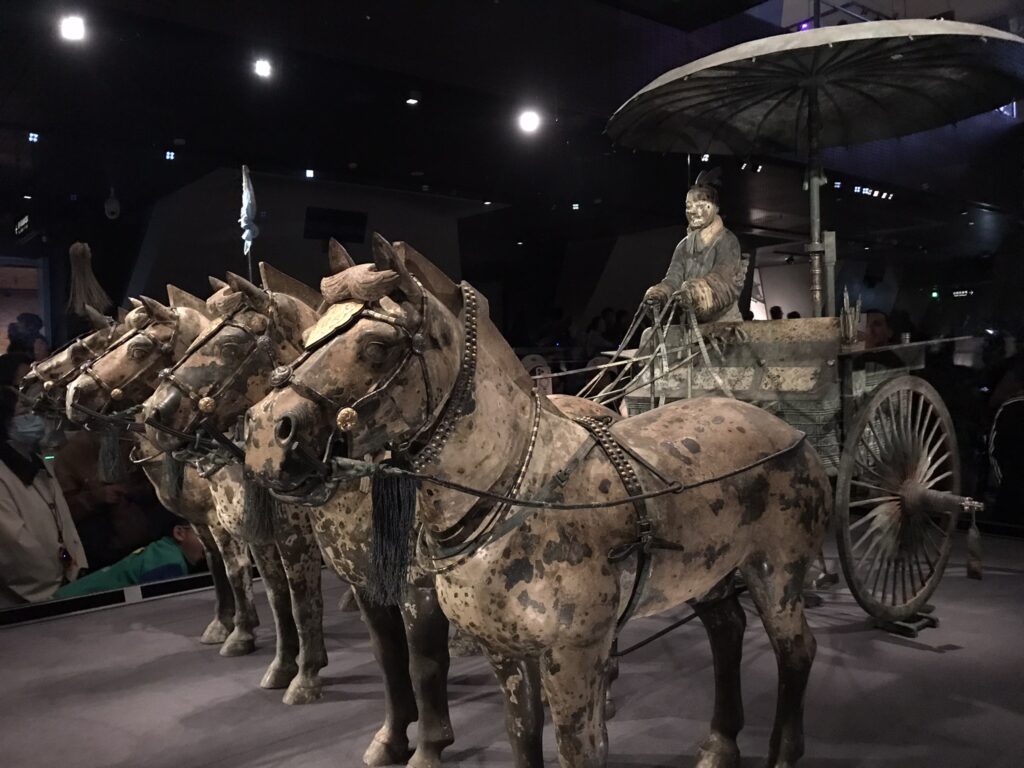
The two bronze chariots are by far the biggest draw at Lishan Gardens
With the exception of the Chariot Museum, Lishan Gardens are much less crowded than the main site, particularly if you choose to walk rather than paying for the shuttle bus. We barely spotted anyone else walking the grounds like us. Some of the paths inside the garden complex were blocked off at the time of our visit as excavations were ongoing, which made finding the exit a little tricky.
Huaqing Palace – located not far from the Terracotta Warriors site but completely unrelated, this historical palace, garden and former hot springs resort is a 5A scenic area, a place of scenic beauty and also great historical importance. An imperial summer retreat during the Tang period, the palace became relevant once again in the 20th century when it bore witness to the shocking arrest of Kuomintang leader Chiang Kai-shek by rebellious generals in 1936, something which later became known as the Xi’an Incident. Essentially there are three different areas/stories for visitors to explore here – a museum area with preserved Tang dynasty imperial bath houses, an area related to the infamous love story between Tang Emperor Xuanzong and his consort Yang, and an area relating to the Xi’an Incident. The admission ticket to the palace complex covers all three areas and visitors are free to wander around and explore at will. There is also a cable car which runs up nearby Mount Li and an evening dramatic show for additional cost, although we didn’t partake in either of these activities.
The Xi’an Incident occurred in 1936 in which Chiang Kai-shek, who was staying at the palace while conducting military inspections in the area, was arrested by two of his own generals with the aim to force him to combine his forces with the Chinese Communist Party in order to defeat the invading Japanese. Initially the generals had been sent to Xi’an to destroy what was left of the communist forces after the Long March, however in a complete u-turn the generals switched sides and arrested Chiang after agreeing with the CPC that their attention should be focused on resisting Japan rather than fighting against each other. Chiang finally agreed to the proposal after encouragement from his wife Mei Ling – had this not occurred it’s possible that the remnants of the Chinese Communist Party would’ve been wiped out by Chiang’s forces, so it’s considered a pivotal moment in Chinese history. The generals were prepared to kill him if he refused and even held him prisoner for 2 weeks. There are visible bullet marks from the incident in the Five Halls section where Chiang stayed during his time at the palace. Apparently when Chiang was seized at 5am he tried to escape by climbing out of a window while missing a shoe and his false teeth, before fleeing in the snow and being discovered hours later suffering from an injured back somewhere on the mountain. We didn’t do so but it may be possible to visit Chiang’s hiding place – a local lady told us this was possible and recommended catching a sightseeing bus, so it must be quite uphill from the main palace site.
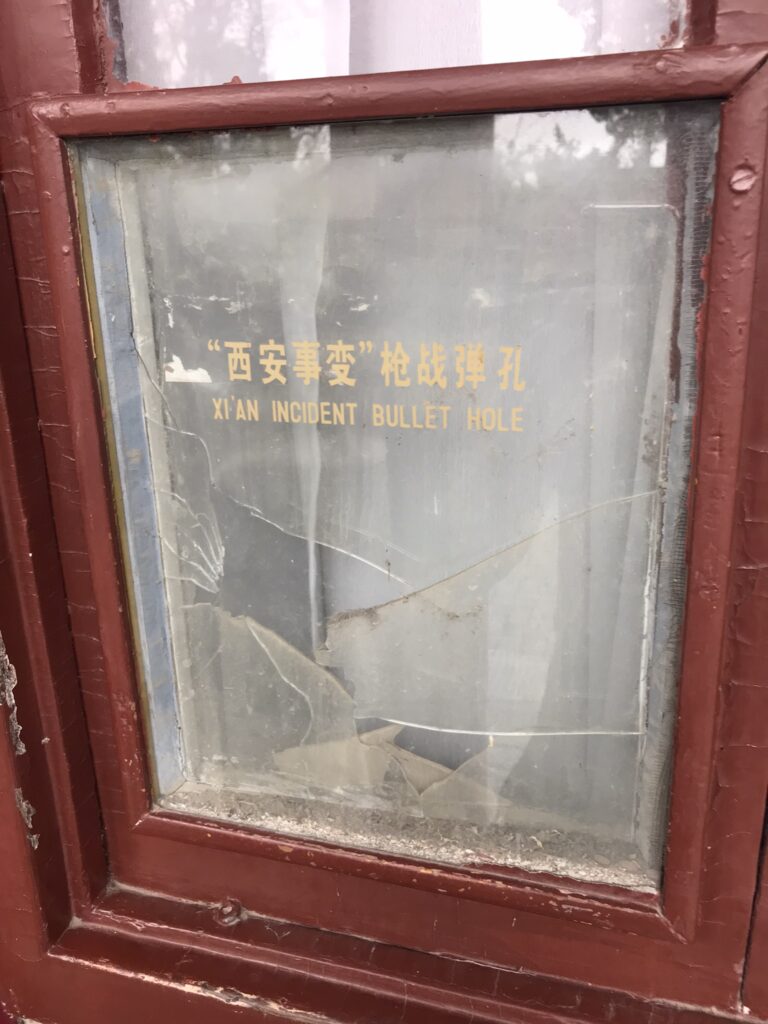
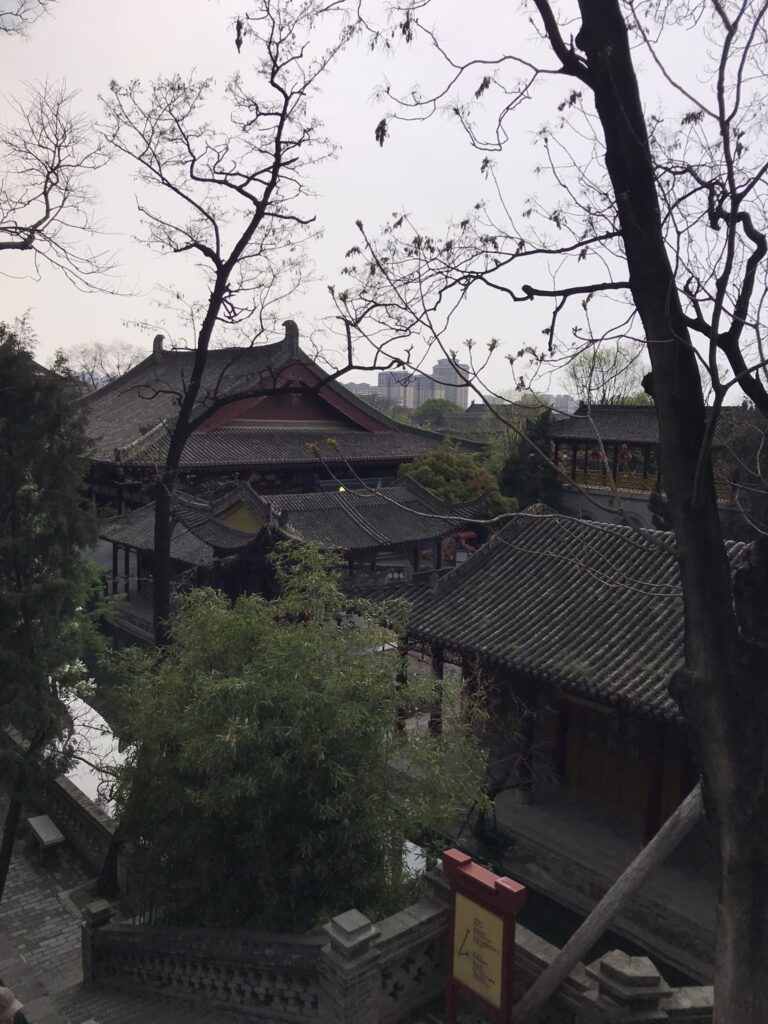
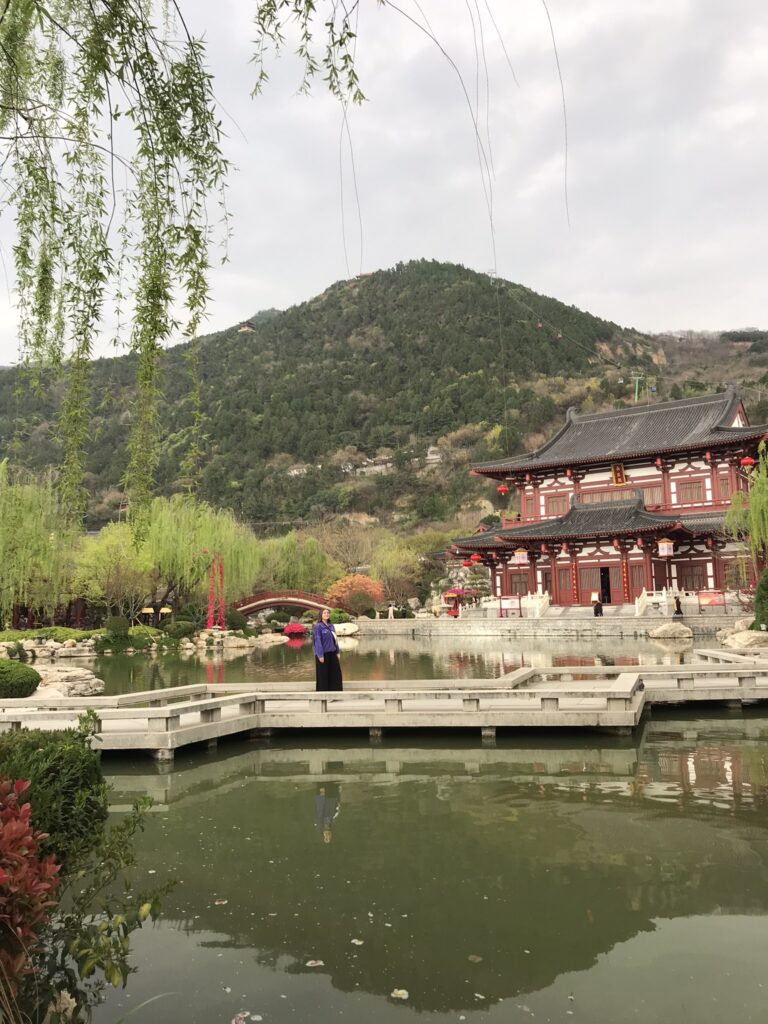
Bullet hole from the Xi’an Incident, view above the Five Halls and location of the infamous love story between Emperor Xuanzong and his consort Yang
The history of the palace goes back much further than this incident as it was a summer resort for Tang royals who visited to enjoy the natural hot springs and built luxurious bath houses, several of which can be visited today. Each of the baths has its own name, such as lotus pool and starry pool – one pool was only for officials whilst the emperor had his own private bath house, and one was even built for an imperial concubine (Yang). Visitors can put their feet in the hot springs at an outdoor patio area or wash their hands under the naturally warm and mineral abundant water.
Huaqing was also known as the setting of a fatal Tang-era love story between Yang and Emperor Li Xuanzong. Yang was a leading beauty during her time and was initially married to the emperor’s son before the emperor forced her to become a nun and then finally his concubine. They spent 8 years in the love nest at Huaqing leading a decadent existence. The emperor pandered to Yang’s every whim, plying her with lavish gifts and apparently having lychee brought over 1,000 miles as it was her favourite fruit. Growing frustrated with the emperor’s distraction and decadence, Yang and her family were blamed by imperial guards for the emperor’s weakness in the midst of a violent rebellion and she was forced to commit suicide with a silk robe in an attempt to restore the emperor’s focus. This tragic love story led to the eventual breakdown of the Tang dynasty for a brief period. There’s a nightly dramatic show on the lake at Huaqing which recreates these events – the show seemed to be starting around 6pm when we visited and was an additional cost, so we didn’t stick around.
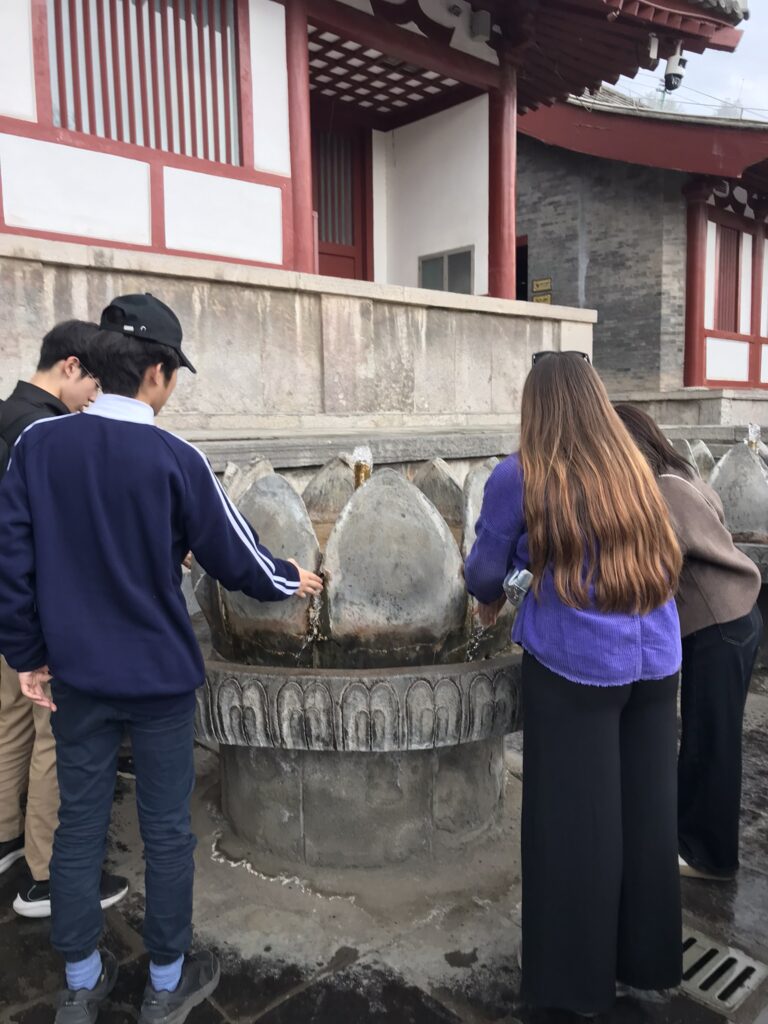
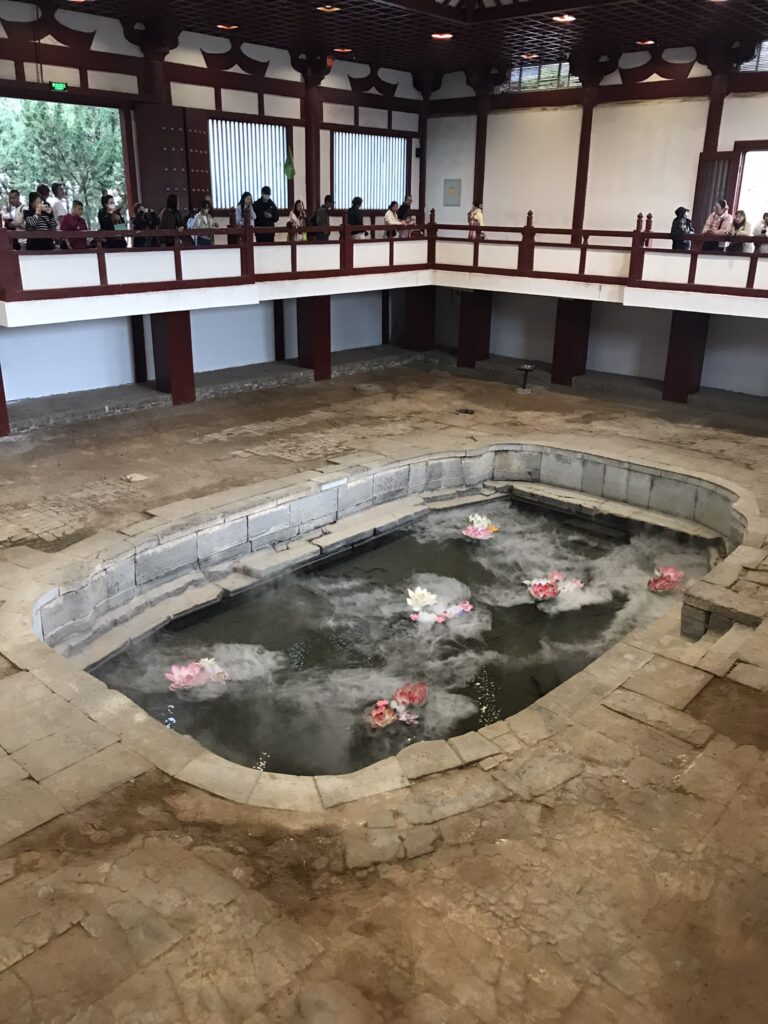
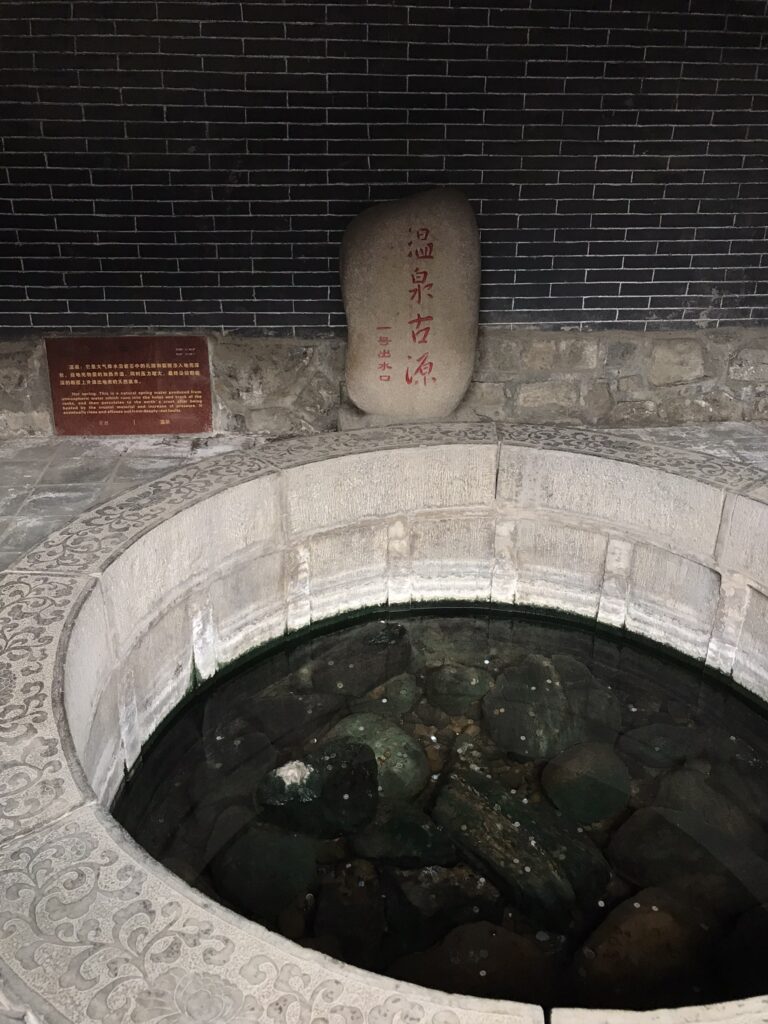
Visitors can literally touch the warm spring water before exploring the aptly named Tang dynasty pools
Huaqing can easily be visited in its own right from central Xi’an via Line 9 of the city metro, and it’s only a short Didi ride away from the Mausoleum of Qinshihuang.
Pingyao
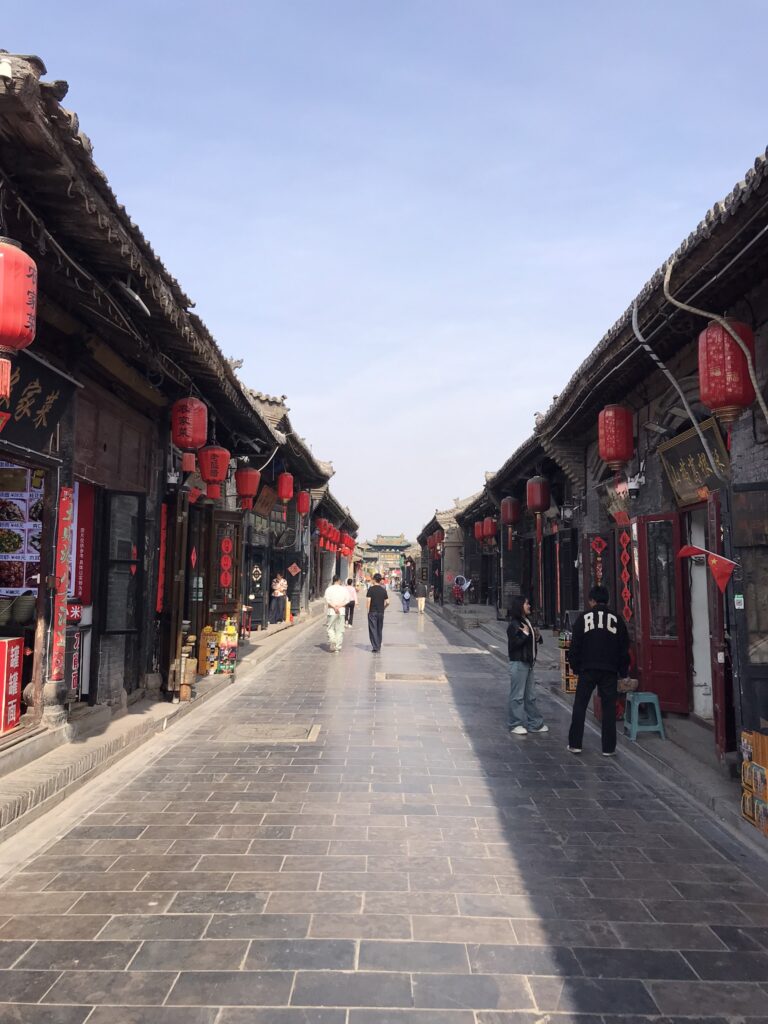
One of two ancient towns awarded UNESCO World Heritage status in China, Pingyao was probably my favourite place in China. This charming turtle-shaped old town is jam-packed with single-storey heritage properties lining the major north-south and east-west thoroughfares, as well as little lanes jutting out in all directions. Most of the buildings are designed as heritage properties and display wooden plaques signifying this special status. The historic walled city is extremely walkable and when darkness descends the town exudes an aura of mystery reminiscent of the China of bygone eras. It’s a bit of a rabbit warren inside the old town, although once you find one of the main north-south or east-west avenues you can always find your way.
Pingyao is actually made up of a fairly nondescript modern city as well as the walled ancient town (also known as Pingyaogucheng), which is surprisingly large. Located in Shanxi province, the town is easily accessible by bullet train in a couple of hours from both Xi’an and Beijing – Pingyaogucheng station is located a little way from the ancient town and so a Didi taxi is required. It’s safe to say most of the houses within the walled town are heritage houses, with dark coloured bricks, ornately carved wooden fronts and an old-timey feel. Many of the opulent former family residences have been turned into guesthouses to accommodate visitors. We did notice that some houses on the fringes of the old town were in need of repairs (in fact some were almost falling down). It’s evident that real working class people still live in these heritage houses alongside the more commercial areas geared towards tourists. Pingyao has not yet become ‘Disney-ified’ or sanitised, however its protected status by UNESCO means that there are plenty of public toilets dotted throughout the walled city and inside every attraction.
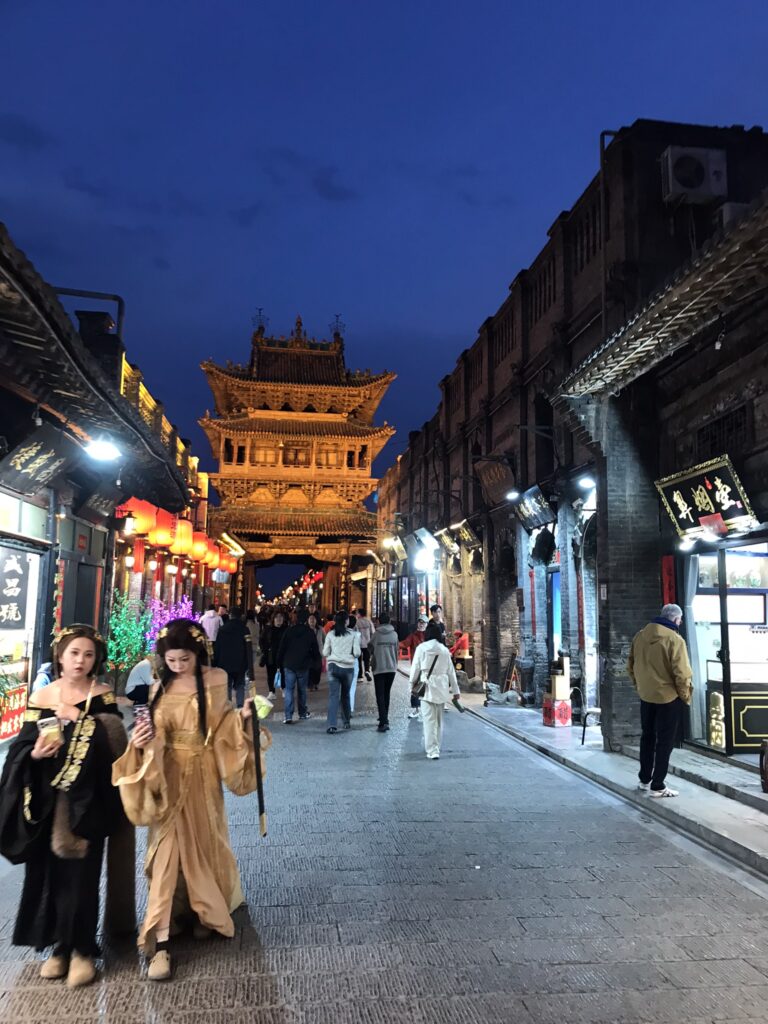
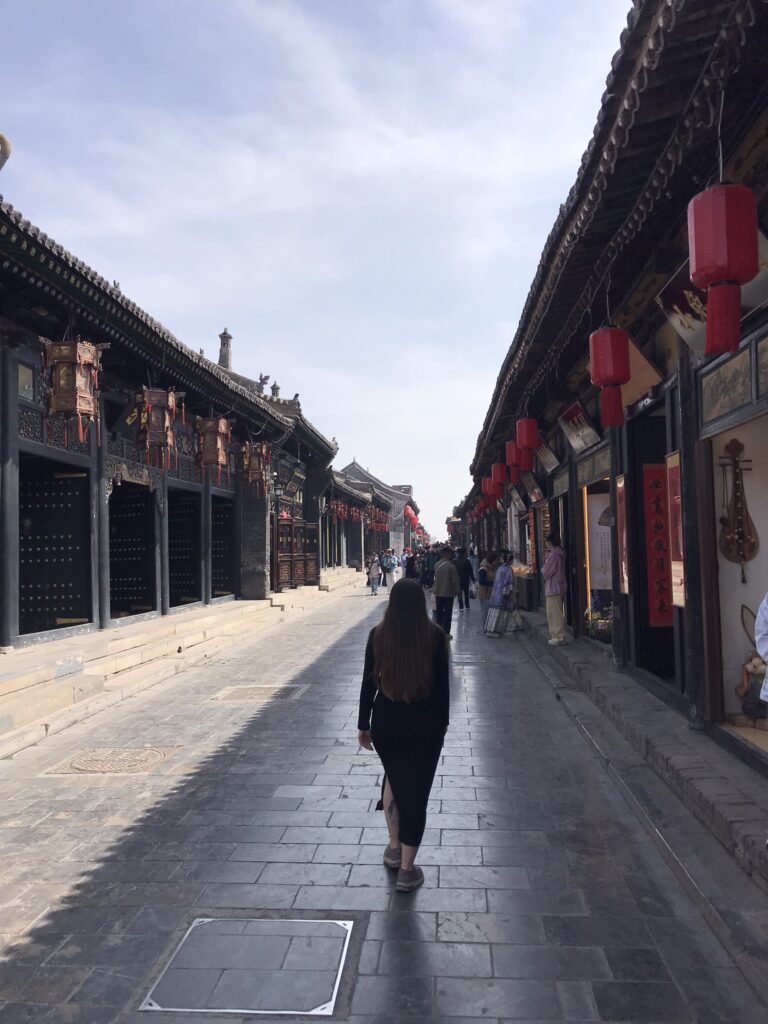
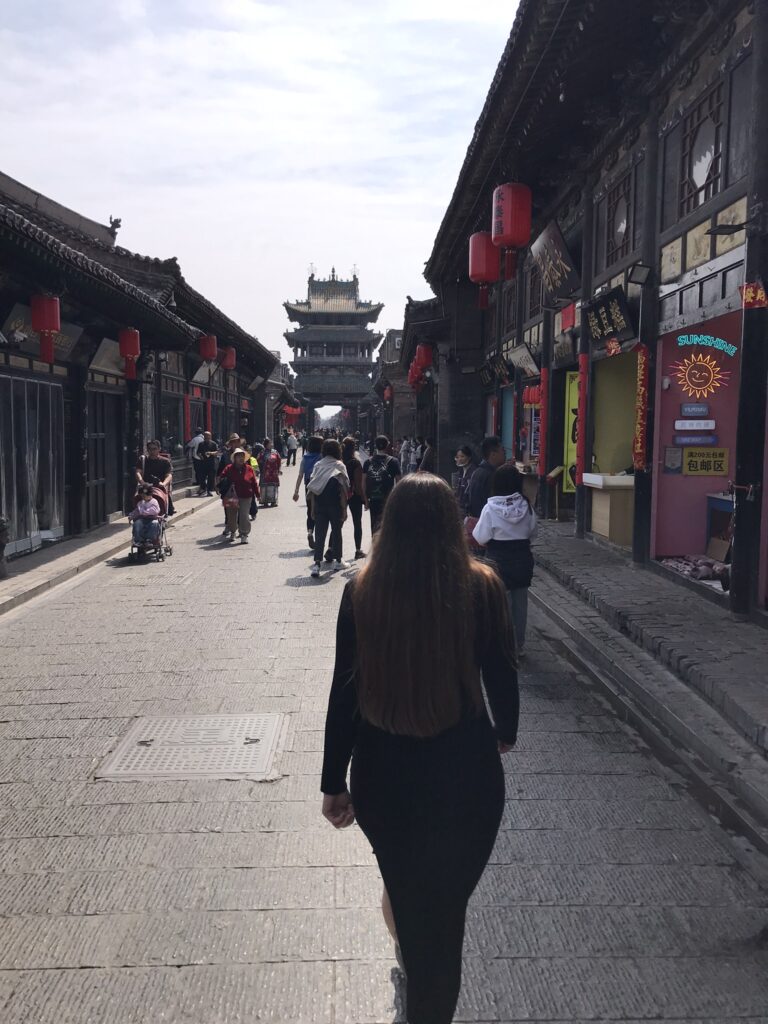
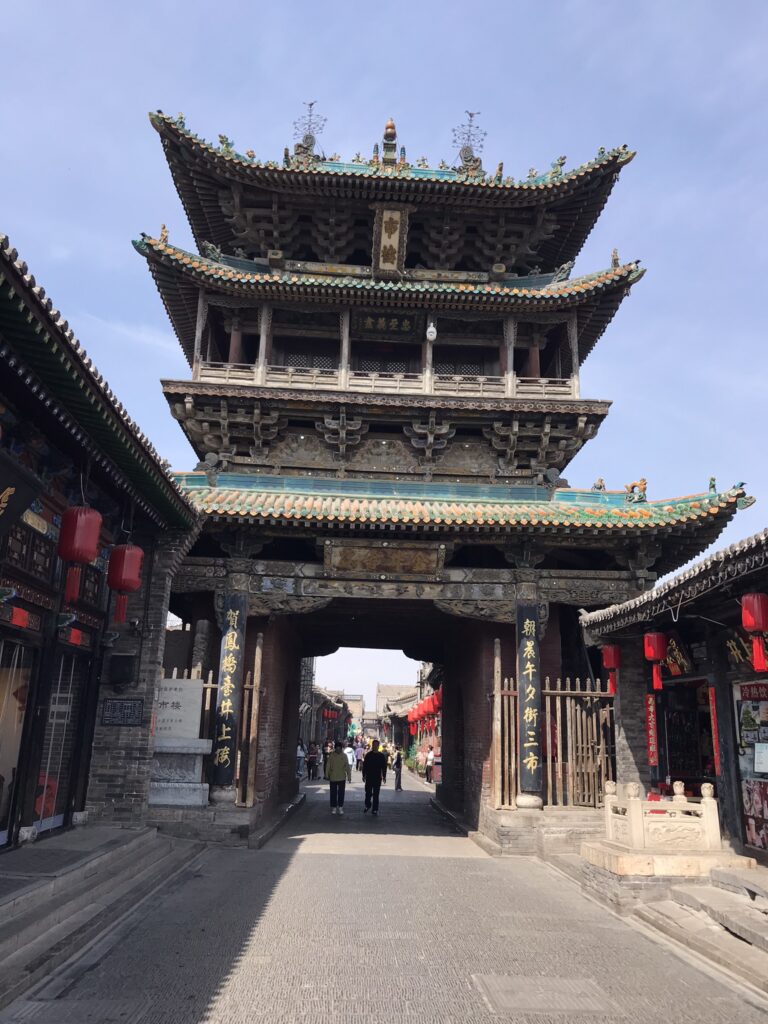
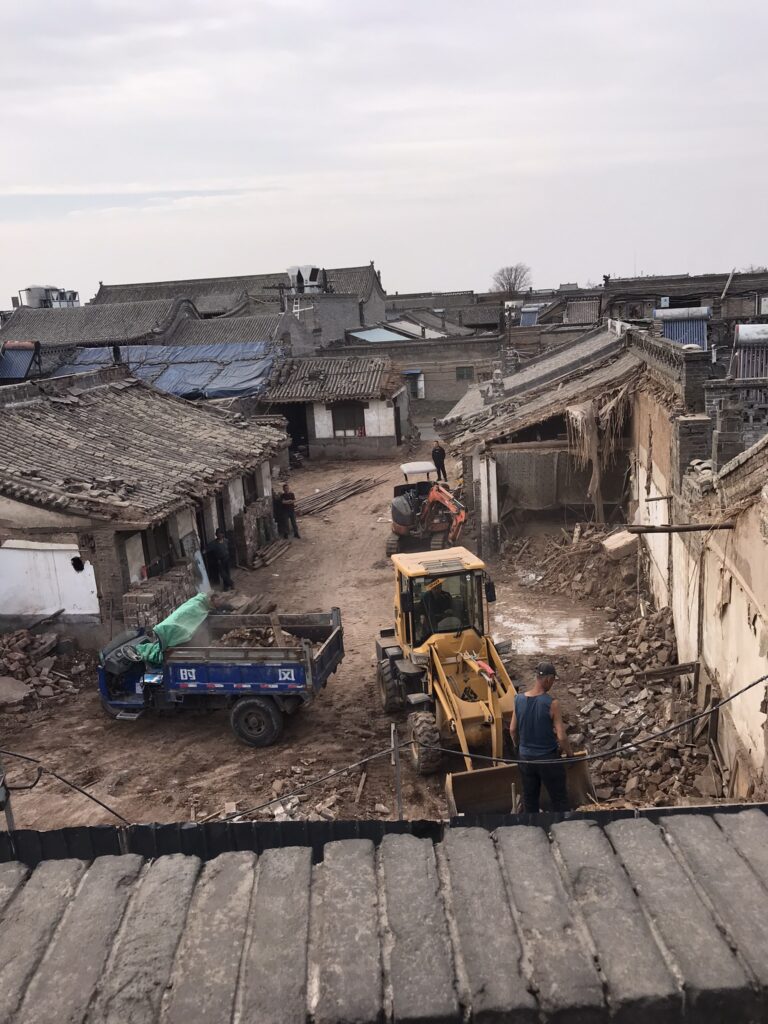
The best thing to do in Pingyao is simply wander about!
Despite its billing as an ancient town, Pingyao isn’t actually that old by Chinese standards – its heyday was the late 19th and early 20th centuries, when the town developed as a major financial center. It was the first place in China that had draft banks owned by Chinese businessmen (as opposed to the impressive foreign owned banks on the Bund in Shanghai). There are many attractions within the town relating to the banking heritage and associated infrastructure, including security companies (known rather unfortunately as ‘escort agencies’) which featured martial arts masters and practitioners. Most of the attractions are covered by a single combi ticket (125RMB when we visited) which is valid for 3 days and allows one-time access to all the main attractions in the town – 22 in total. It’s possible to buy a physical ticket from the ticket office on the corner near Haiyan Coffee.
Cars are prohibited in the ancient city, however the same cannot be said for mopeds and electric golf carts that whizz around at breakneck speed. Taxis are only allowed to drop off at the main gates and cannot enter into the walled town. There are two pedestrian-only sections around the centre of the walled area in which all vehicles (except funny-looking robot mobility scooters) are banned. As with most ancient cities, there are loads of shops geared towards tourists such as lacquerware shops, rice wine (we think), ice cream parlours, a plethora of hanfu fancy dress boutiques (we spotted some interestingly unique hairdos by hanfu wearers), traditional fans and not so traditional massage and fish foot spas, as well as restaurants and coffee shops galore. We even saw a piglet on a leash outside a white pork scratching shop and an inquisitive goose on a lead on another street. Vinegar in huge traditional porcelain jars seemed to be a pretty prominent product everywhere in Pingyao.
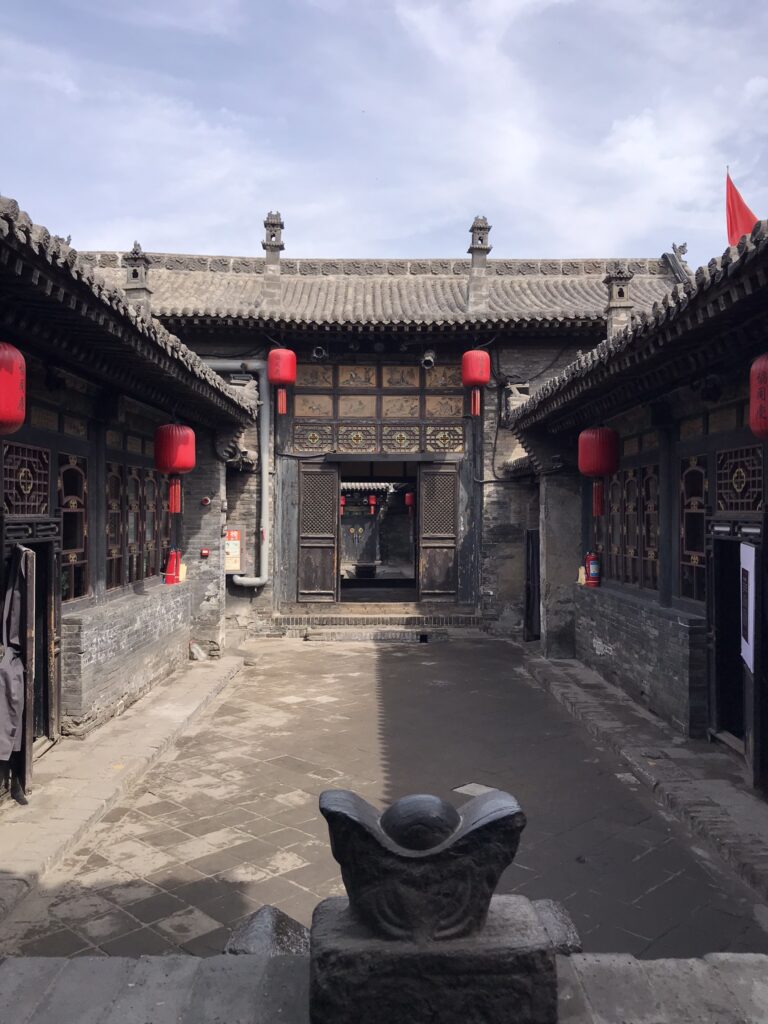
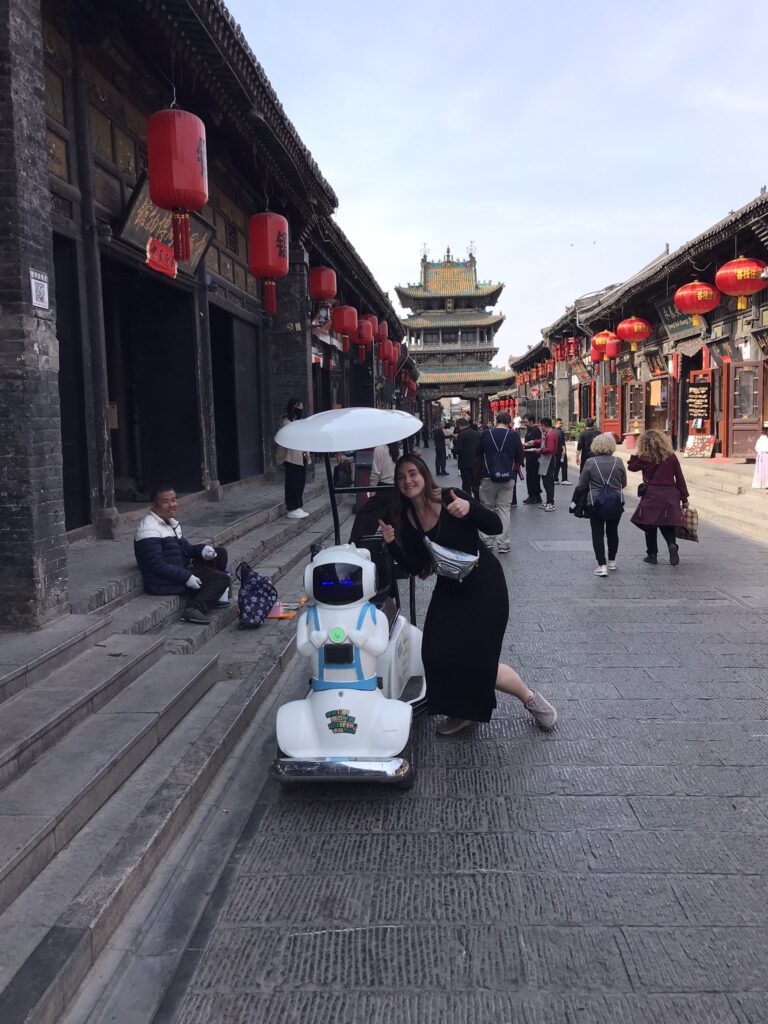
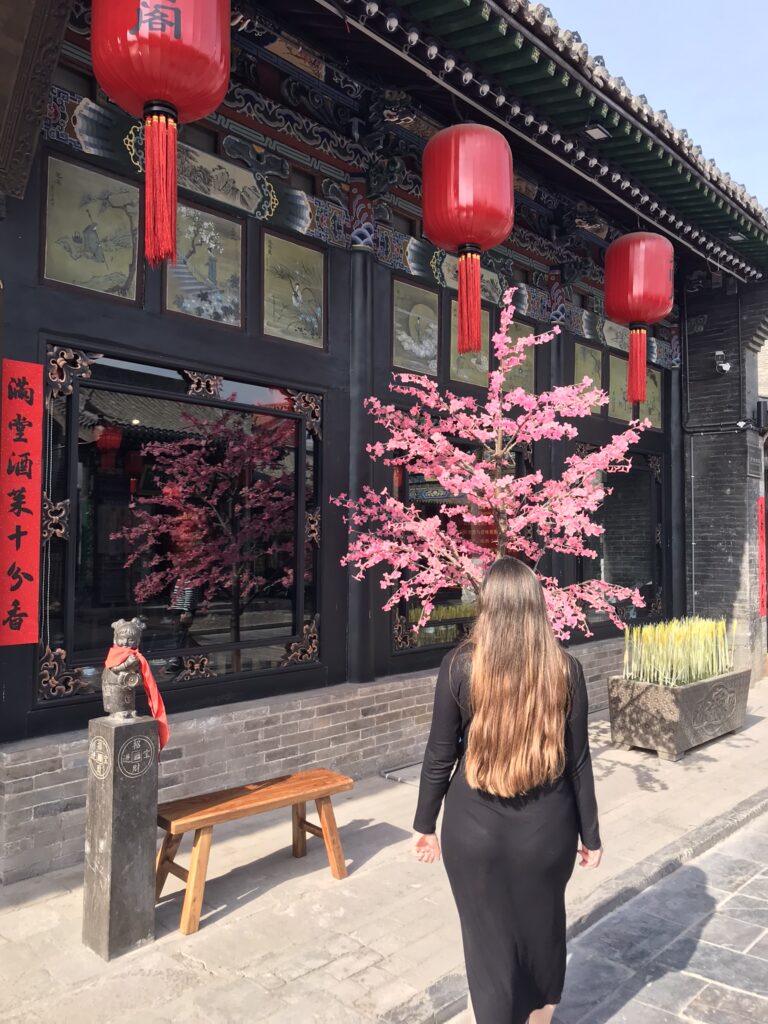
There are 22 heritage buildings that you can visit with the 3-day combi ticket including banks, escort agencies, temples and more
The streets were unusually quiet at points when we visited midweek, we can only speculate that the tourist hordes usually descend at weekends and holidays. At some points there were more shops than people. While walking the town’s streets, expect to be approached by salespeople offering samples or trying to drum up business – they’re not shy about approaching foreigners here. Interestingly there were more foreigners than we’d anticipated in Pingyao. We were taken aback when some of the touts even spoke to us in English.
There’s a free nightly audio-visual performance outside the South gate (Yingxun Gate) at 8pm-8:18pm – those staying in the old town need to leave through this gate by 7:30pm as it’s then closed by the police in preparation for the show. Patterns, old maps and other shapes are projected onto the gate tower and wall to create a visual feast for the eyes. It’s very edgy, innovative and creative and takes the viewer on a journey, with rave music in the middle before an introspective ending. There are plenty of vendors selling popcorn, ice cream, light up headbands, even cardboard squares for viewers to avoid sitting directly on the cold hard concrete, as well as brightly coloured sabres and tempting tat for kids. Make sure you get a seat in plenty of time as the bleacher area really fills up – the show is very popular with visitors. After the show, follow the crowd to another south gate to re-enter the ancient city. There is also apparently a paid commercial show near the East Gate which is over an hour in length, but we didn’t investigate this further.
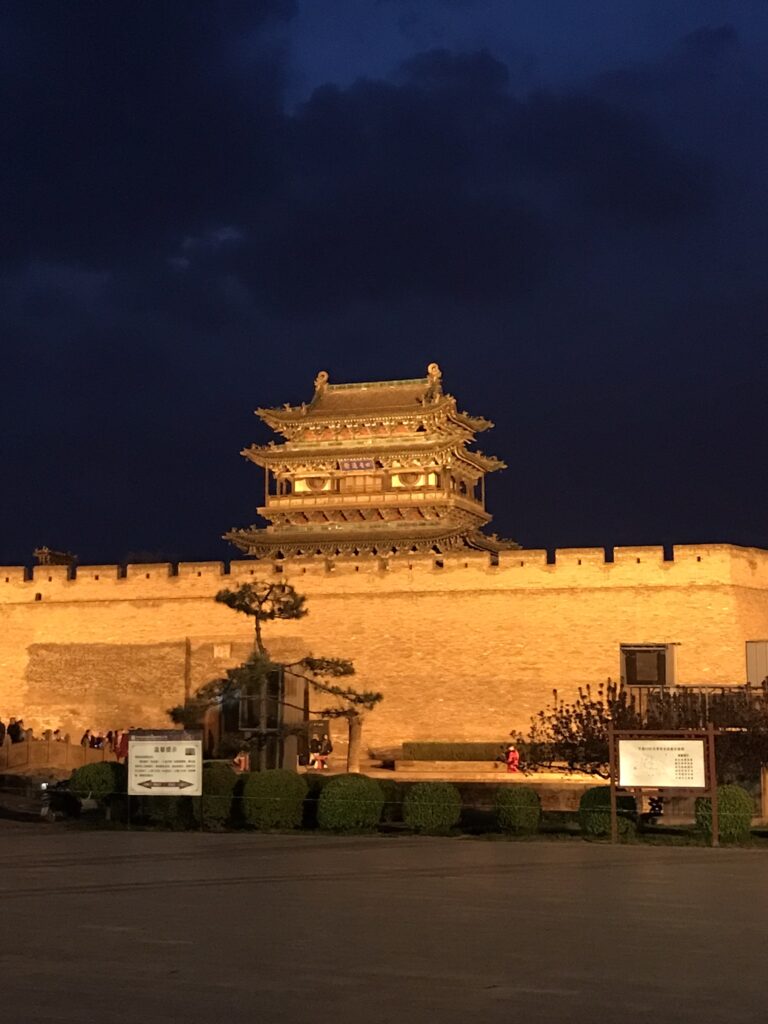
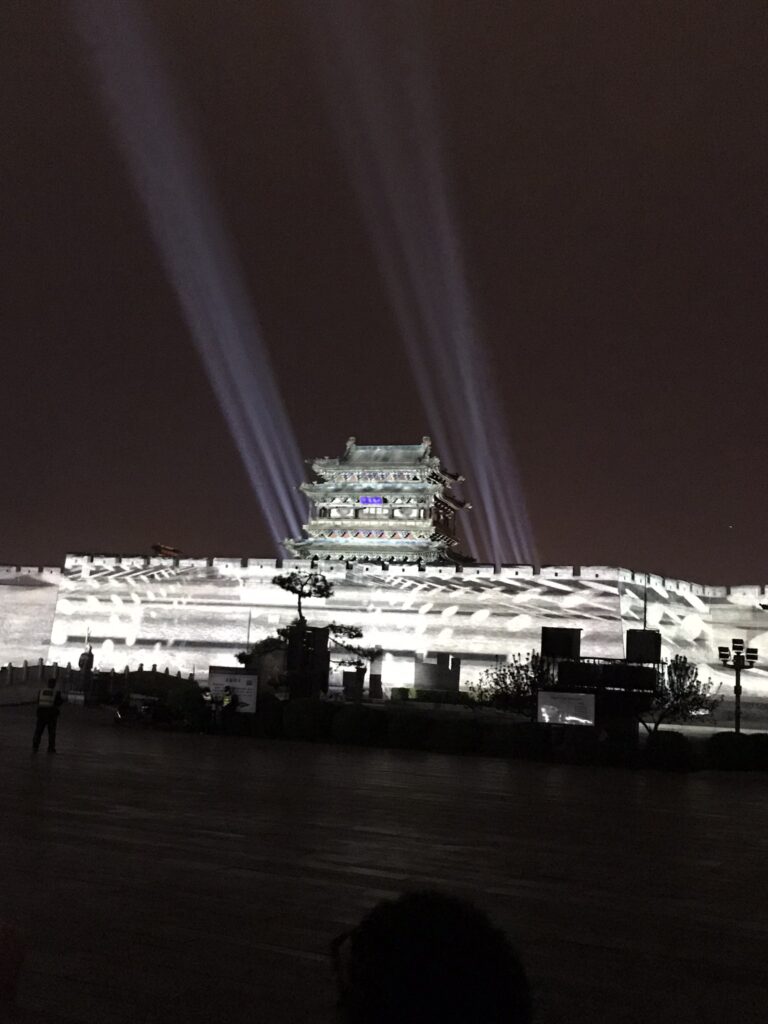
Sit back and enjoy the show at the South Gate in Pingyao!
Accommodation
Jin Boshe Inn – tucked into a side alley just outside the main pedestrianised north-south road. Luckily this narrow passageway doesn’t get many noisy tourists or mopeds flying past so it remains relatively peaceful when compared to other busier areas. The female receptionist organised to pick us up from the taxi dropoff point outside the North Gate and gave us a lift all the way to the accommodation in a makeshift tuktuk which was a nice touch – we would’ve struggled to find it otherwise. The guesthouse is located in a quaint heritage house/courtyard residential complex. We couldn’t believe our luck when we were upgraded to a cave room with a traditional futon style bed, which apparently used to be the master’s room. The receptionist was really eager to help even though she didn’t speak English – she provided a short introduction with a translator and was super responsive via WeChat. The breakfast was also really memorable as it was made by the resident auntie and consisted of about 6 separate Chinese breakfast dishes in one. Overall a homely guesthouse offering a unique experience.
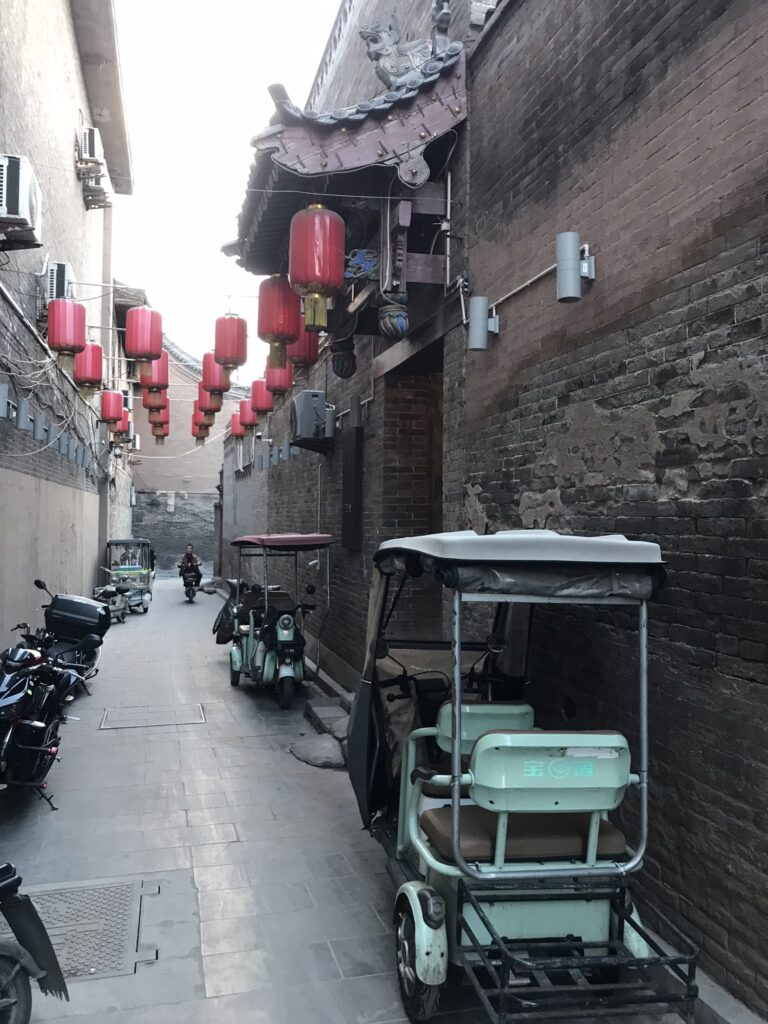
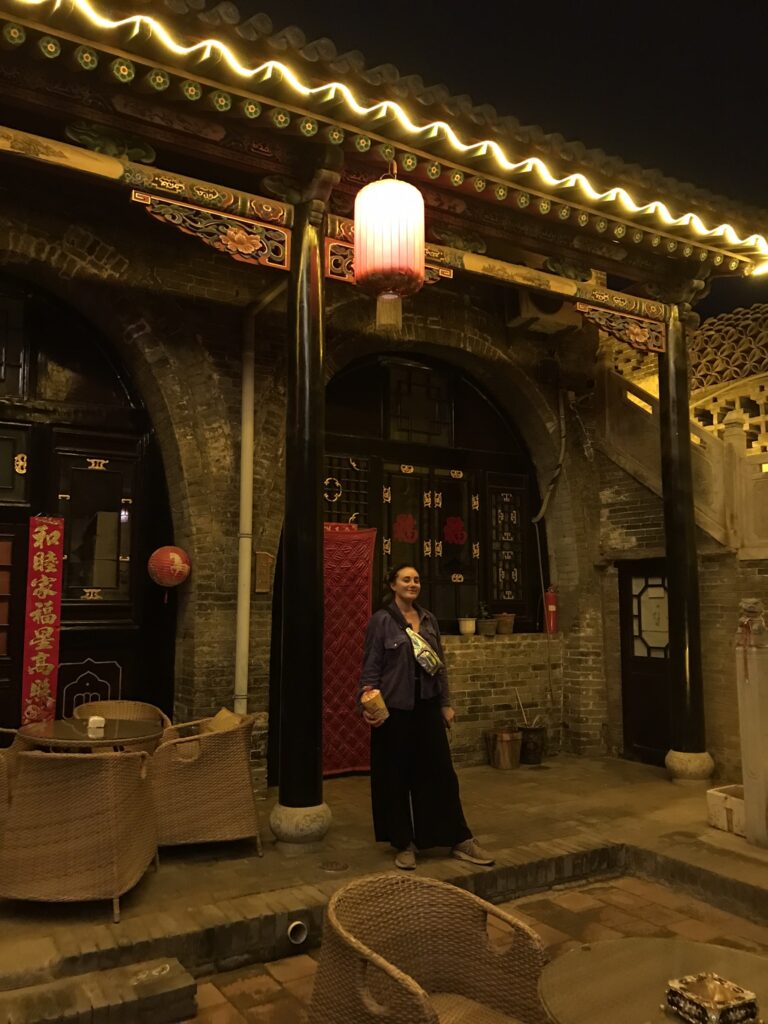
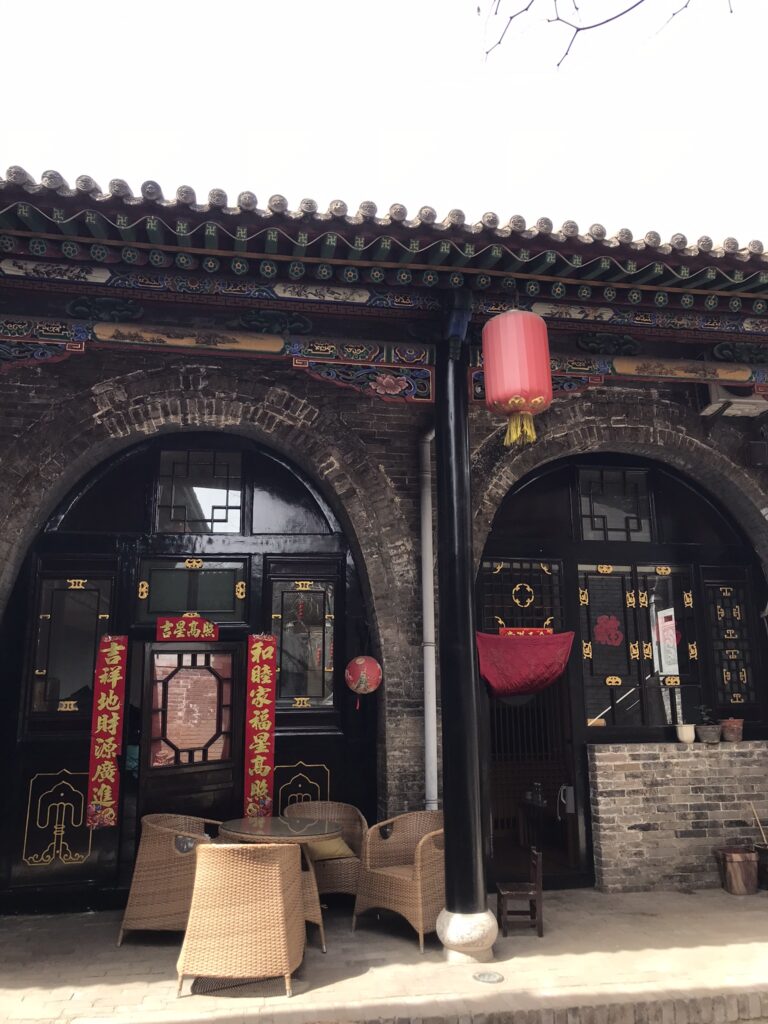
Our cosy home-away-from-home in Pingyao: Jin Boshe Inn
Foodie Places
It’s important to mention that prices are much higher in the walled city area. We saw a great variation in prices between restaurants on the same street, sometimes as much as 20RMB difference for the same dish. It’s very straightforward to find cheaper places in the touristy areas, as most places have menus with prices on the wall or menus displayed. Pingyao is known for its Shanxi cuisine, in particular handcut noodles and a type of braised beef stew with vinegar sauce.
Kangqianji Restaurant – a lively restaurant right on the main pedestrian avenue. Prices are a tad on the high side but they serve up Shanxi classics alongside buckwheat craft beer from Pingyao (a really great find). The waiters bring a tablet to order from which has both the Chinese menu and English translations.
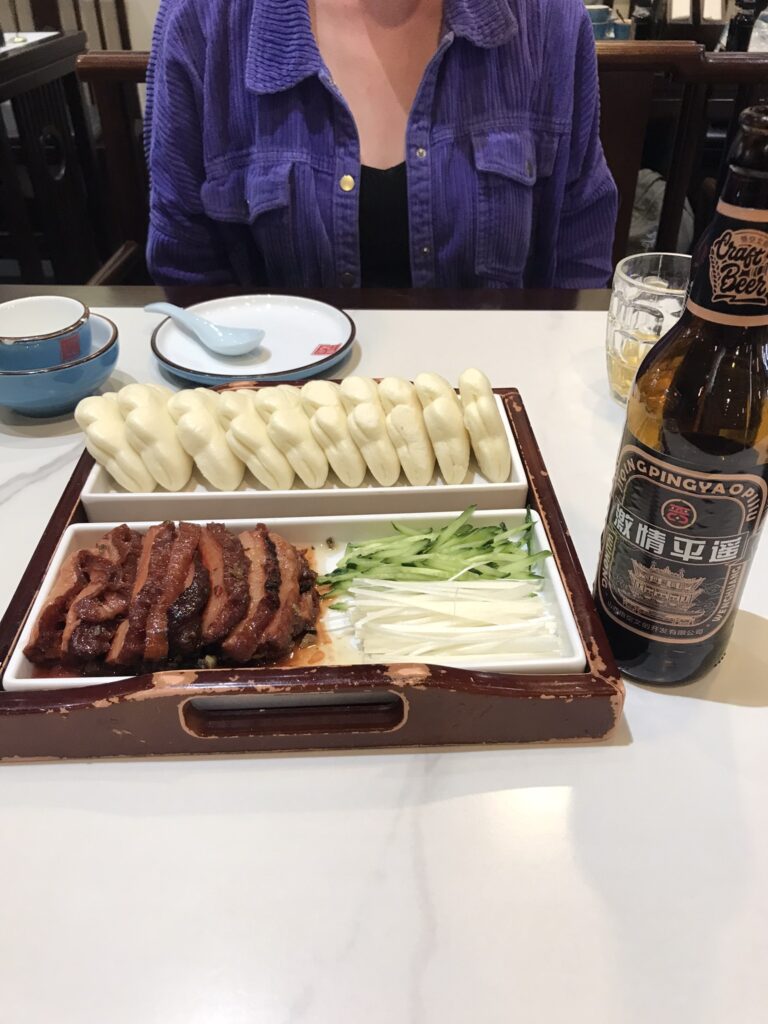
Kangqianji Restaurant didn’t disappoint!
Baishanxi – further towards the south gate than Kangqianji restaurant, this restaurant has an elegant and suave interior, again serving up Shanxi favourites. Again, it’s necessary to use a screen (with English translations) to order dishes. Somehow our order was still messed up here and we received smaller portions than expected – luckily we were still full from lunch.
Haiyan Coffee (Pingyao Ancient City Branch) – basically the Chinese version of Starbucks, think overpriced fancy coffee like jasmine latte and various matcha drinks. Some sandwiches are also on the menu which seemed reasonably priced. The staff speak English and the menu is in English too. I can vouch for the iced latte (deffo on the expensive side) and mango boba drink. Expect to see a lot of white faces inside. This place seems to be a hit with foreigners.
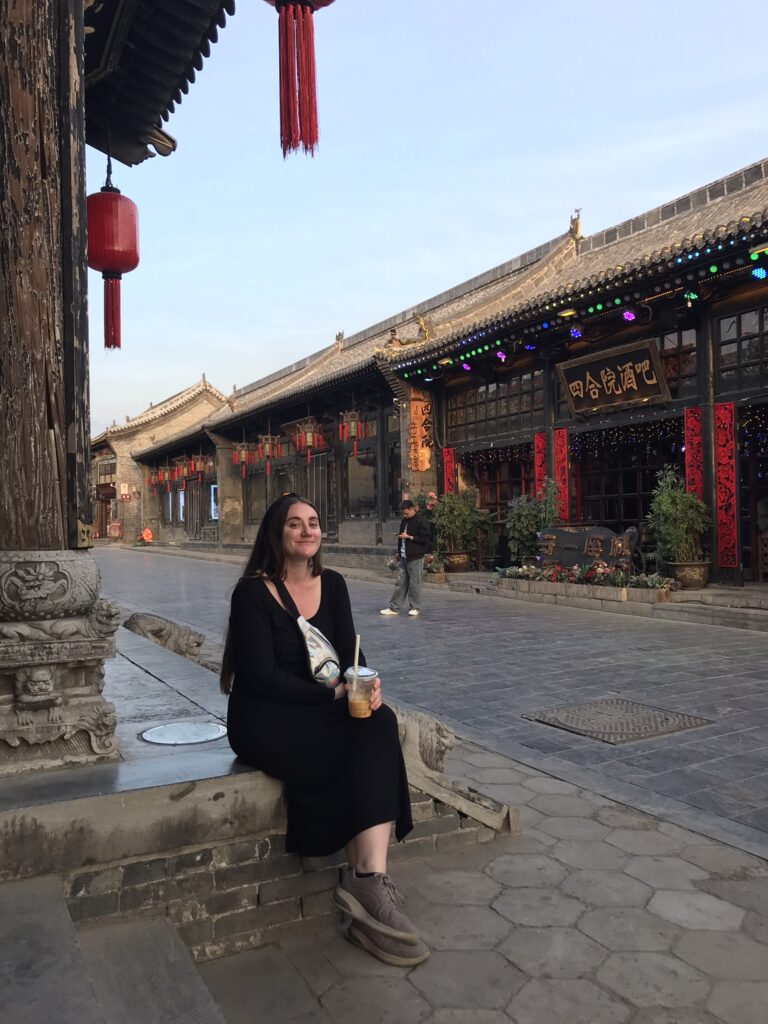
Fancy coffee with a view at Haiyan Coffee
Xilai Yaojincai (Shilou Shop) – a really enjoyable experience as the ladies seemed really eager to help us pick dishes – it can be a bit overwhelming being fussed over but they only had positive intentions. The servers here were very enthusiastic about us trying local specialty dishes, making recommendations and offering up various choices for each dish using a translator tool to communicate. It was definitely more of a local experience as they seemed genuinely eager to advise us, gave us some free local soup and even offered to let us take some home which we politely declined. We picked two cold noodles dishes – one was oat and the other was traditional Pingyao style, braised beef in vinegar with cutesy quail eggs and a big dish of tomato and egg hand cut noodles. Delicious, affordable and a chance to interact with friendly local residents!
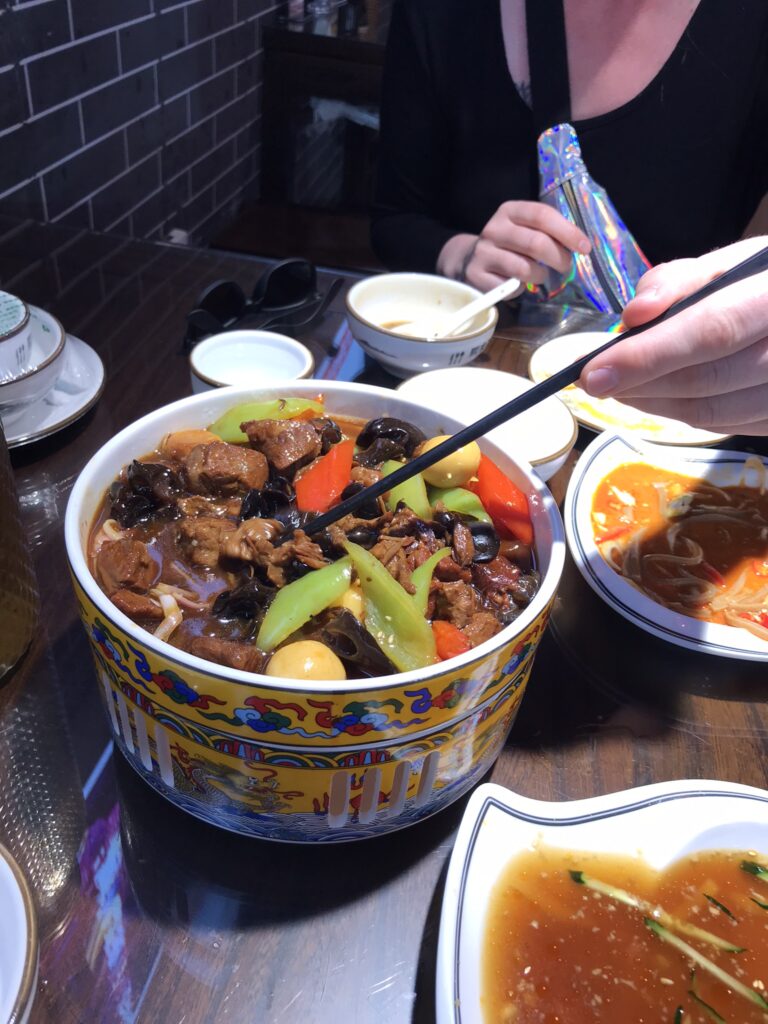
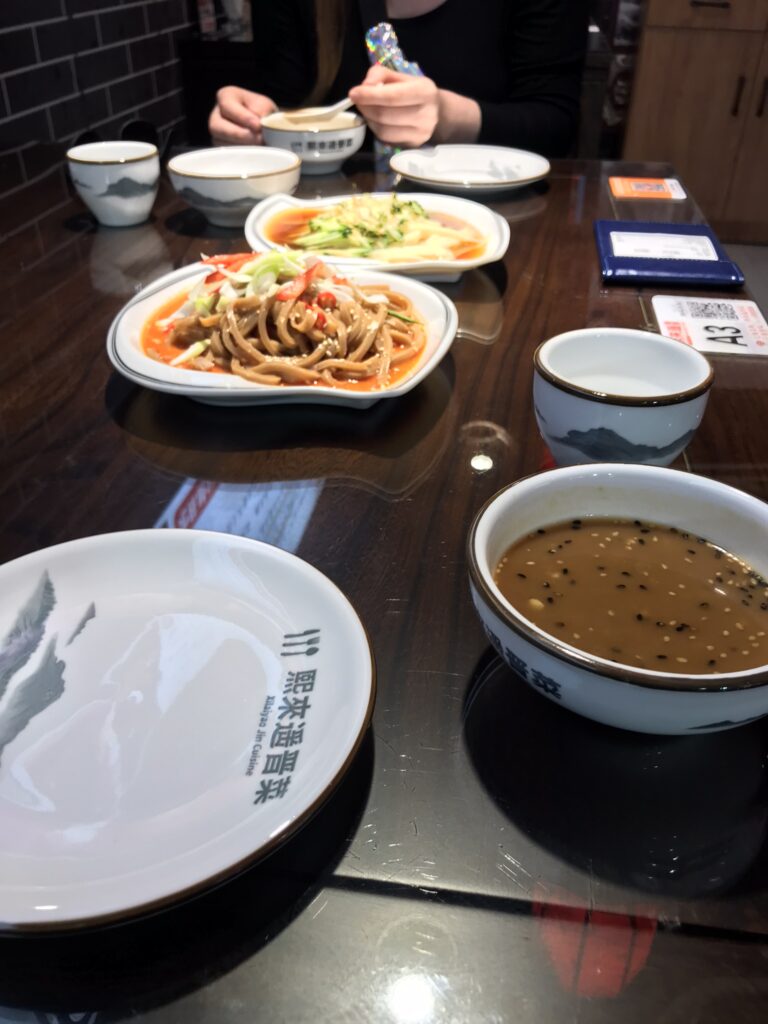
Sampling local dishes at Xilai Yaojincai
Activities
Ancient city – the main activity in Pinyao is simply to meander around and explore the old streets. The combo ticket provides entry to 22 museums and historic buildings – it’s not possible to visit them all in a day, but we were able to visit 4 banks (including the oldest draft bank in China) and 2 escort security companies. It was fascinating to learn all about the founding of the first escort company, providing security services to stationary businesses and on the road for deliveries and personal protection – all based on trust and the reputation of the martial artists and the master in charge. The town also contains a small martial arts museum featuring really old photos of local masters performing moves and the training of practitioners used by escort agencies. Other sites include the Temple of Confucius, City God Temple, City Government Museum (featuring an interesting jail section, Immortal Fox shrine and lively reenactment performance of a magistrate sitting in judgement and meting out justice) and the City Walls (the best section is from the South to the West gate – we found barely anyone else on the walls here, it was nice to get away from the crowd and marvel at the myriad of rooftops). Most of the info in all of the attractions is in Chinese, so non-speakers will need to use a translation app to understand. We also found it quite nice to wander away from the main streets after dark – the place has a timeless feel to it with nobody around.
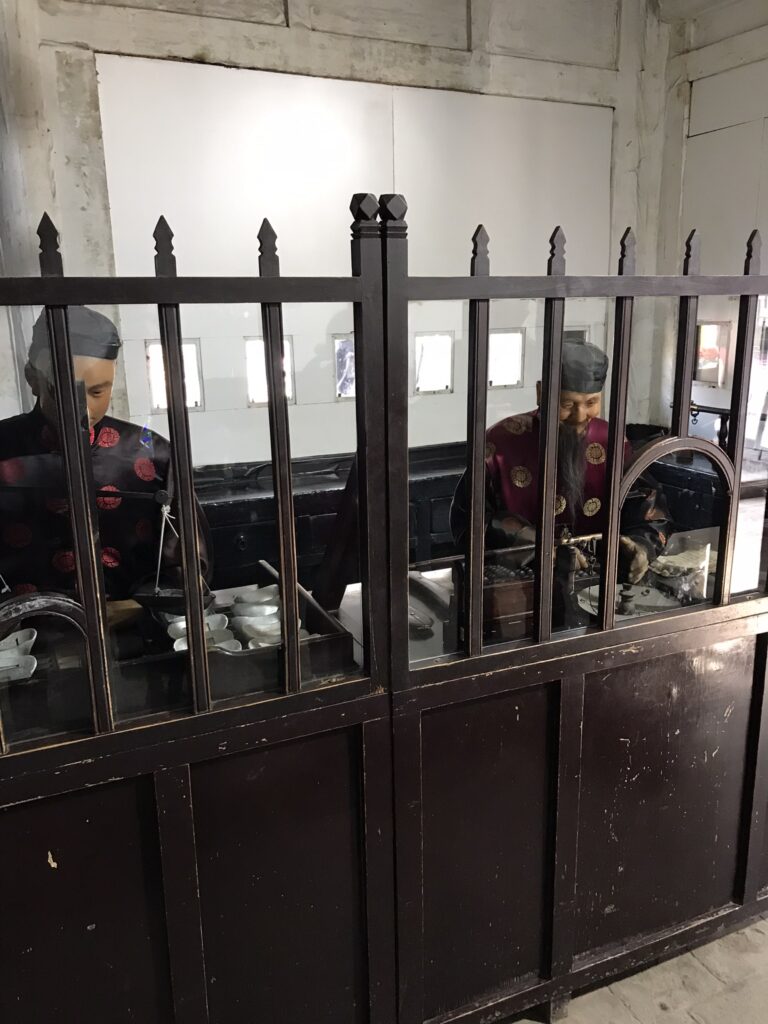
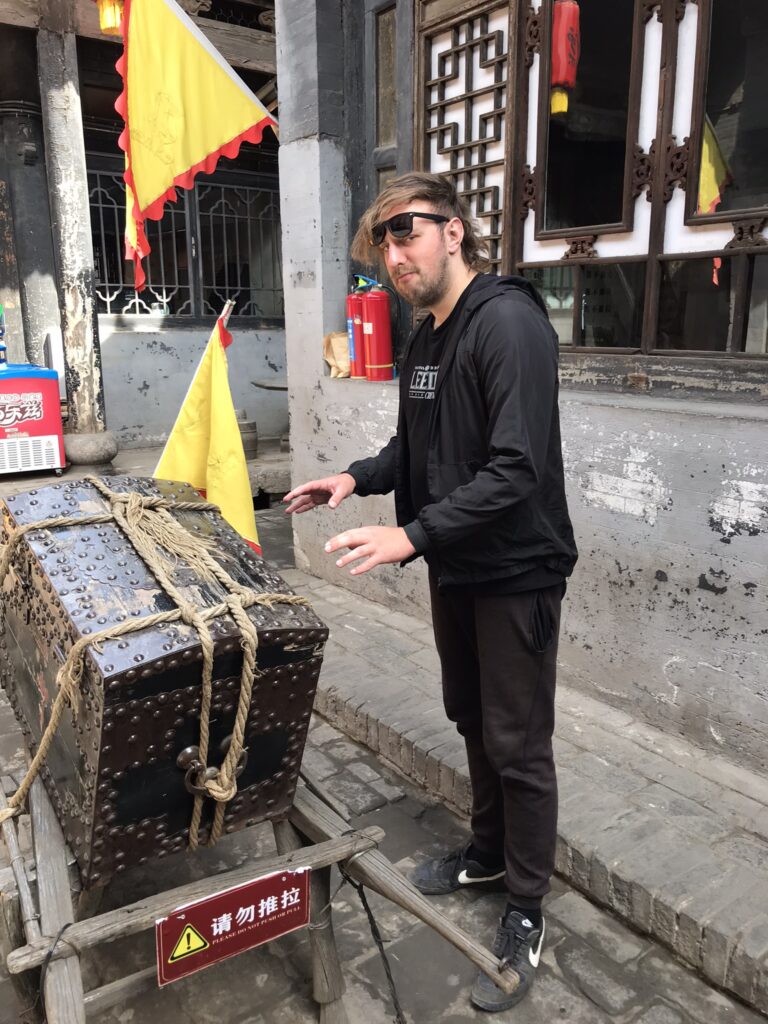
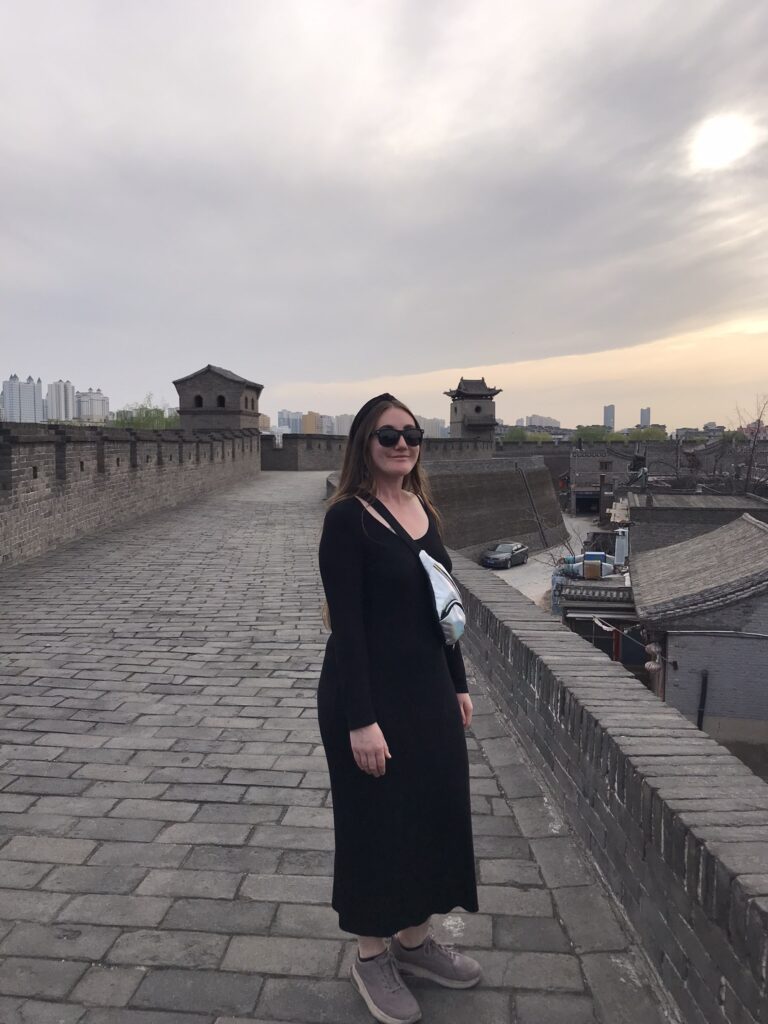
Highlights in Pingyao: bank clerks at one of the draft bank museums, an escort company complete with treasure chest and the city walls at dusk
For our walking tour of Pingyao, click here!
Beijing
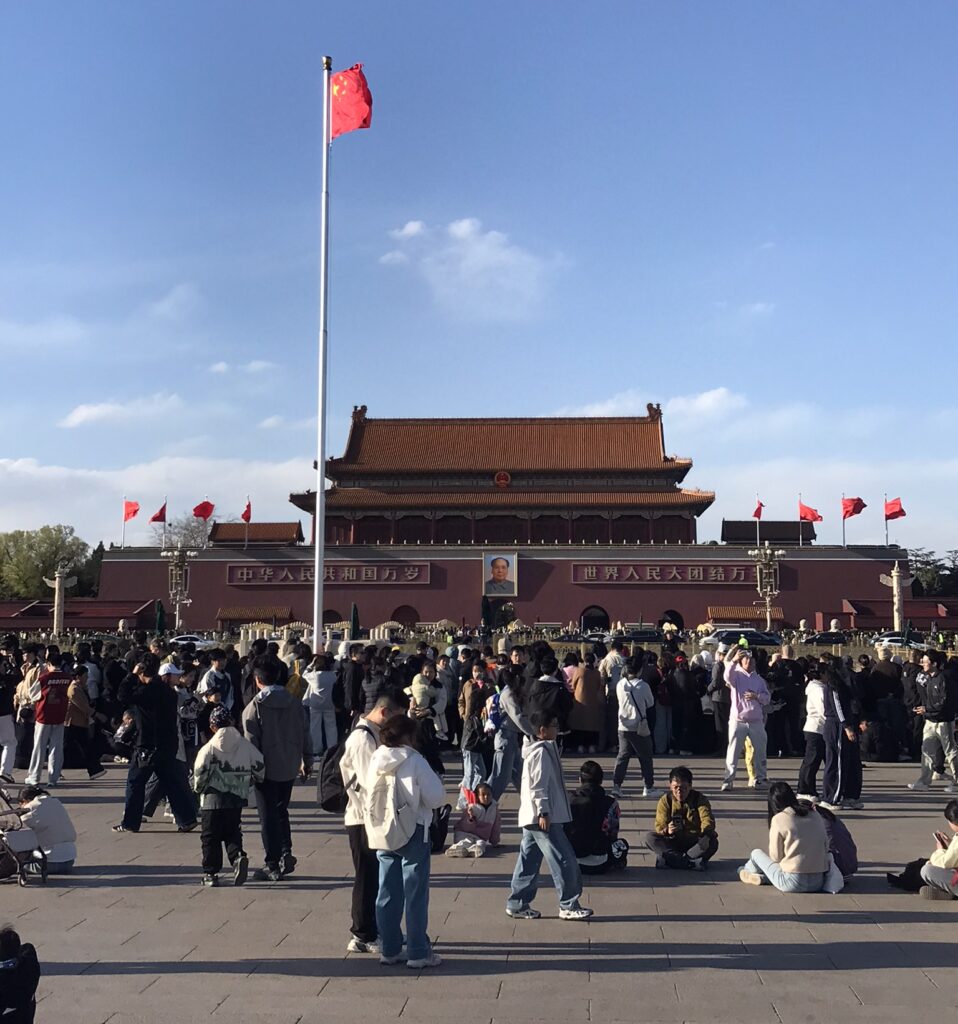
Directly translating to ‘Northern Capital’, Beijing is the newest of China’s four ancient capitals; a political, cultural and economic powerhouse since the early Ming dynasty, Beijing was the undisputed capital of China between 1421 and the end of the dynastic period in 1912, and again from 1949 onwards following the rise of the Chinese Communist Party. Now one of the largest cities in China and the world, there are a staggering eight UNESCO World Heritage sites in and around Beijing, these being the Forbidden City, Temple of Heaven, Summer Palace, Ming Tombs, Zhoukoudian (discovery site of the prehistoric Peking Man), Beijing Central Axis (including Tiananmen Square), Grand Canal (a historic route linking Beijing to Hangzhou) and sections of the Great Wall of China. As well as some of the grandest and best preserved imperial palaces, traditional gardens and revered temples, visitors are drawn to the city’s traditional ‘hutong’ neighbourhoods for their authentic charm; these are old sections of the inner city which retain their traditional single-storey housing style. There are plenty of foreign tourists in Beijing, but as is often the case in China the numbers are swamped by domestic visitors at most of the main attractions.
In recent years, effort has been put into beautifying the city and reducing the formerly sky-high rates of air pollution that once threatened the health of the city and its residents. In the early 2000s the air quality in Beijing was notoriously poor, especially during the 2008 Olympics when the marathon event had to be postponed due to air pollution. This is most certainly not the case now – the air in Beijing was some of the cleanest we have experienced and the city itself was filled with greenery and sculpted walkways that mimic being in the countryside. Right next to our hotel was a lovely greenbelt path featuring blooming blossoms of varying shades of pink – you can almost forget you’re walking 10 metres away from a major four-lane city highway. There seems to be a real focus on improving the quality of life for residents. Even public behaviour has drastically changed – one member of our Guruwalk group said he last visited in the late 2000s and public hygiene and sanitation standards have improved immeasurably since then.
The greenbelt walkway close to our hotel in Beijing
Along a central axis within downtown Beijing sit most of the major attractions such as Tiananmen Square, the National Museum of China, Forbidden City and the Drum and Bell Tower. Tiananmen Square and the Forbidden City are amongst the most well-known spots in China and the world, with Tiananmen instantly recognisable as the place of the infamous anti-government protests in 1989. The Forbidden City was the official residence of 24 emperors for almost 500 years starting in 1420, claiming the title as the largest palace complex in the world.
Beijing is also known as a gateway to the Great Wall of China. There are a few sections located close to the city which are incredibly popular with tourists such as Badaling, as well as less visited and more ‘wild’ sections further afield for more adventurous types. We chose to take an organised bus tour for a self-guided visit to the lesser-visited Jinshanling section of the wall located a few hours outside of Beijing, which proved to be a great idea in order to beat the crowds.
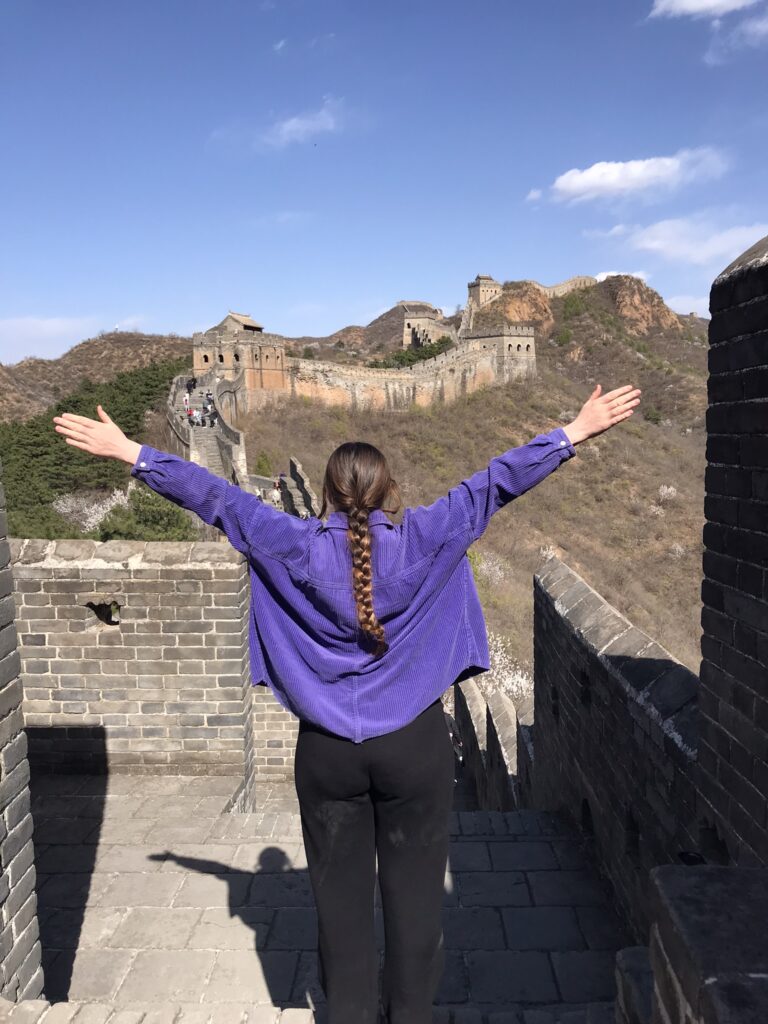
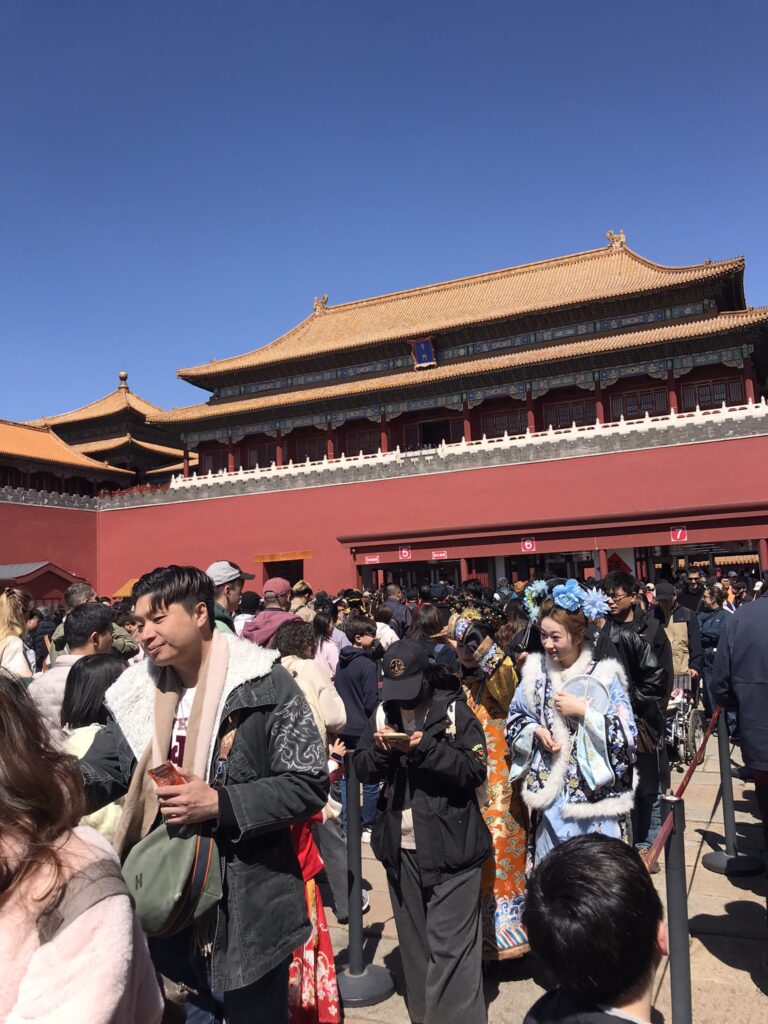
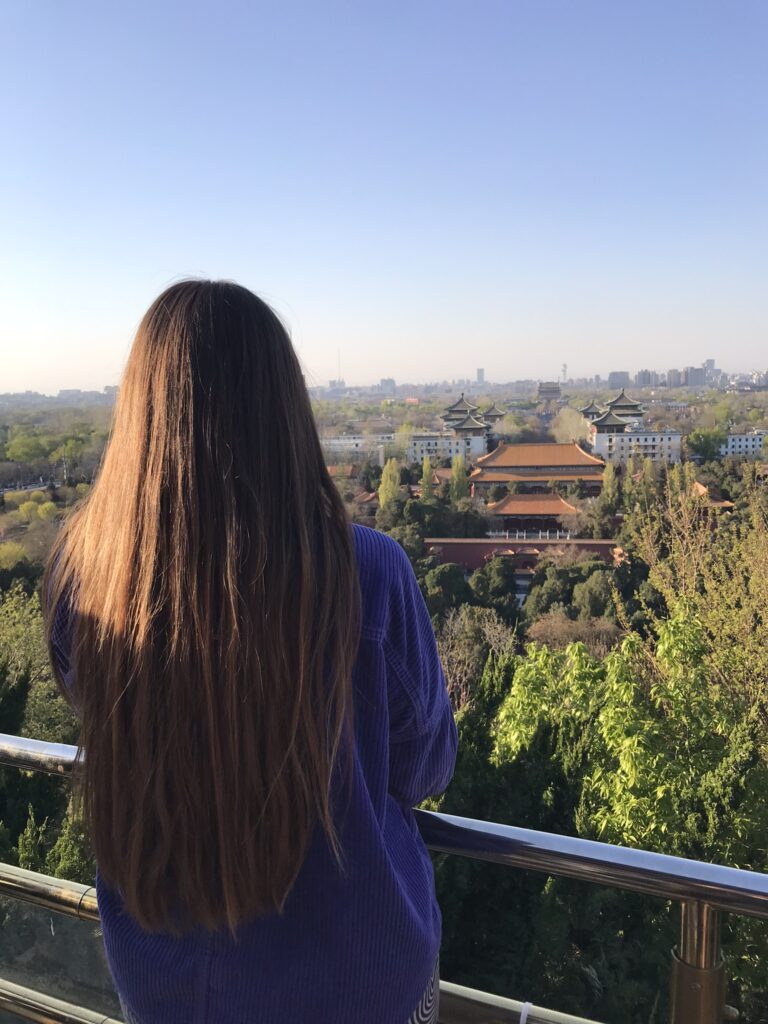
Jinshanling section of the Great Wall, crowds outside the Forbidden City and the central axis running through Beijing
The Beijing metro is a life-saver for getting from A-B, however we found that the metro in Beijing was super crowded in comparison with every other city we visited in China (it was more like the metro in Tokyo). Interestingly, we saw police performing mandatory ID checks at several metro stations – again, something we had not witnessed elsewhere in the country.
Unfortunately we visited Beijing during a public holiday (Qingming, where residents tidy up the graves of their ancestors) so hotels and attractions were teaming with people. It’s actually really difficult to avoid the crowds on a public holiday as literally every attraction is fully booked and queuing is havoc. Understandably the Chinese are really adept at implementing crowd control measures which means you often have to take long diversions or end up in a snaking Disney queue.
Accommodation
Mannsic Hotel (Beijing Jianguomen Capital Institute of Paediatrics) – we had quite a strange experience here. Mannsic is one of four hotels side by side that all use the same apartment block with adjoining receptions. The breakfast here was pretty terrible – we barely found enough food to eat every morning as it seemed to have been ransacked whatever the time. The rooms were noisy and quite cramped, plus the closest metro station was a 15 minute march away through a rather pretty greenway path. Overall I wouldn’t recommend staying here.
We couldn’t help but notice the amount of Russian supermarkets, Russian people hanging about and apartment blocks with cyrillic script near to our accommodation – it was a tad bizarre and not something we’d seen elsewhere.
Foodie Places
Dayali Roast Duck大鸭梨烤鸭 – an excellent choice for those wanting to sample delicious Peking duck. The restaurant was packed with both foreigners and Chinese locals treating themselves to the decadent dish. The restaurant also had robot waiters that ferried dishes from the kitchen to the restaurant floor. However the peking duck was the star of the show!
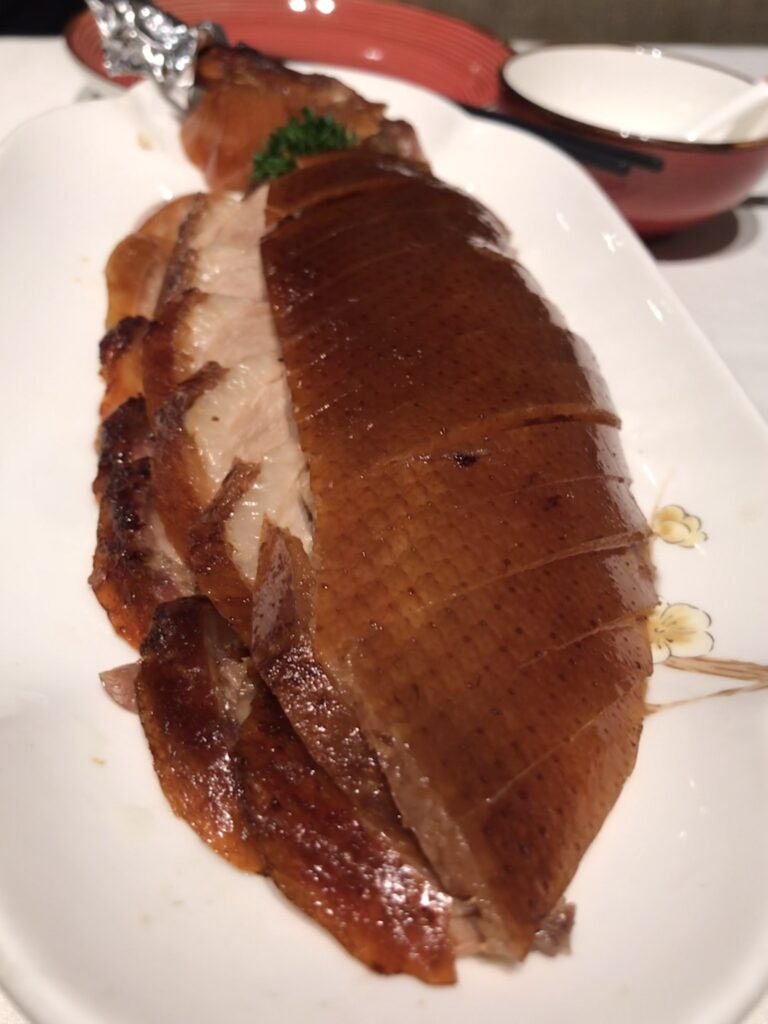
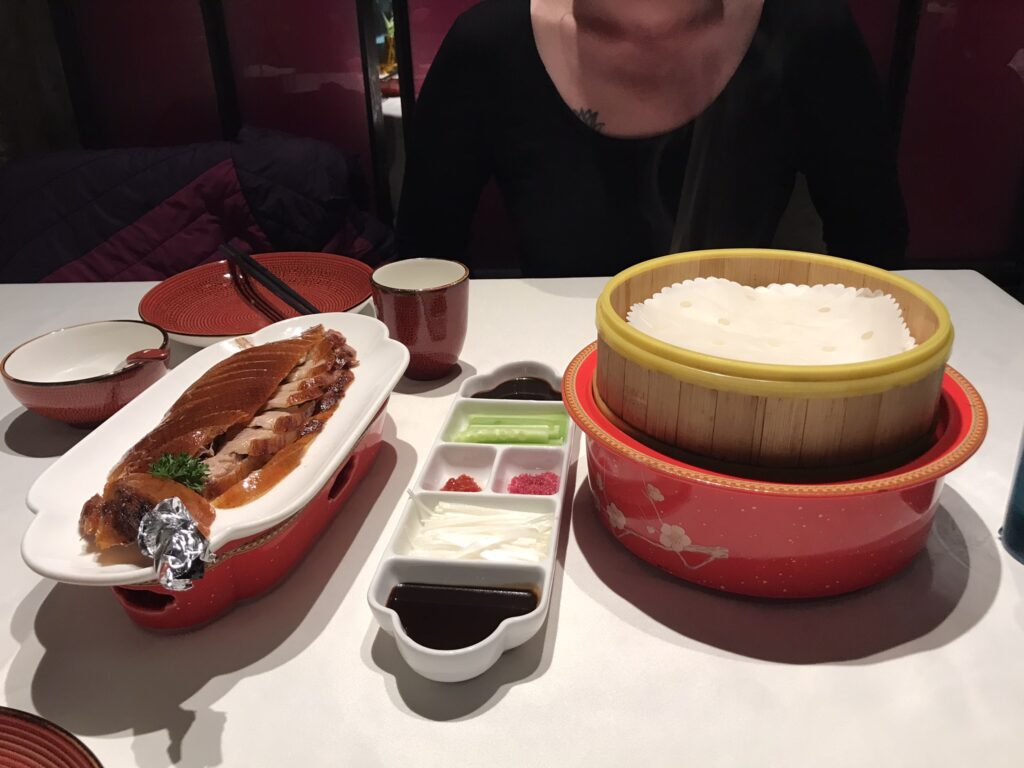
Deliciously decadent Peking duck at Dayali Roast Duck
Yoshinoya – a chain close to our accommodation offering filling and cheap Donburi Japanese meals.
Papa Johns – by this point in our travels we were in need of takeaway pizza. The order we placed here tasted just like it does in England, without any local flavour meddling (unlike Pizza Hut!)
Paris Baguette – we were huge fans of Paris Baguette during our time in South Korea, however sadly we were quite disappointed with this chain in China. Like other convenience stores, the bread used for sandwiches was sickly sweet, however the sweet pastries and cream donuts were nice.
Takeaway ordered on ele.me: Beruta a la Dolce & Gabbana (pesto pasta was ace and freshly made, proper authentic Italian pizza), Miss me shawarma (a pretty good meal deal)
Activities
National Museum of China – if you only visit one museum in China, pick this one! Tickets are free but it’s crucial that you book in advance via WeChat as the entry slots sell out for this highly acclaimed museum. We spent 4 hours solely in the basement level Ancient China exhibition – this section is the most popular, providing a good overview of Chinese history from the semi-mythical Xia dynasty through to the Qing. We spent over an hour queuing just to enter the gallery, however it was a public holiday and the museum is free so naturally it was crowded. There’s an interesting narrative in the Ancient China gallery charting the development of art within ethnic minority groups, as well as displaying some artifacts from these previously overlooked minority groups. The gallery really pushes the narrative of multi-ethnic unity, the exchange of ideas and development in conjunction with one another regarding Chinese culture and art. Highlights include the Shang-era oracle bones featuring very early Chinese script, many impressive bronze wine vessels and magnificent bronze dings, early coins shaped like spades and knives from the Warring States period, an early bronze plate for printing paper money from the 12th century, a full jade burial suit and early paper from the Western Han dynasty. There are so many interesting items on display as well as plenty of English language info boards to get your teeth into.
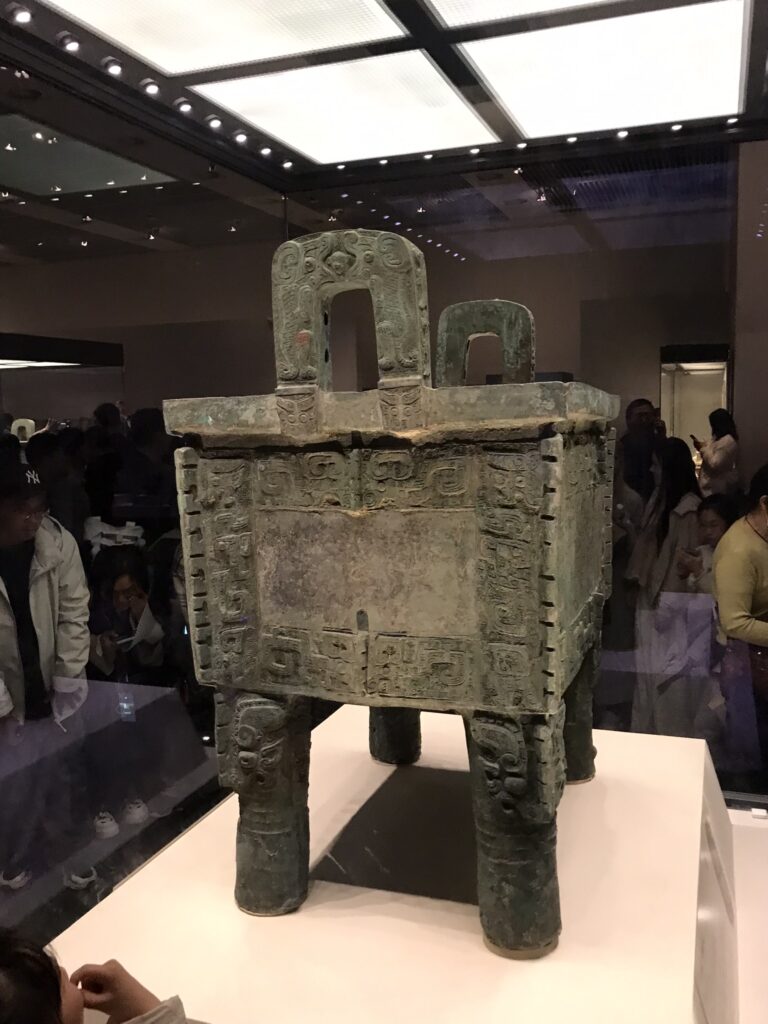
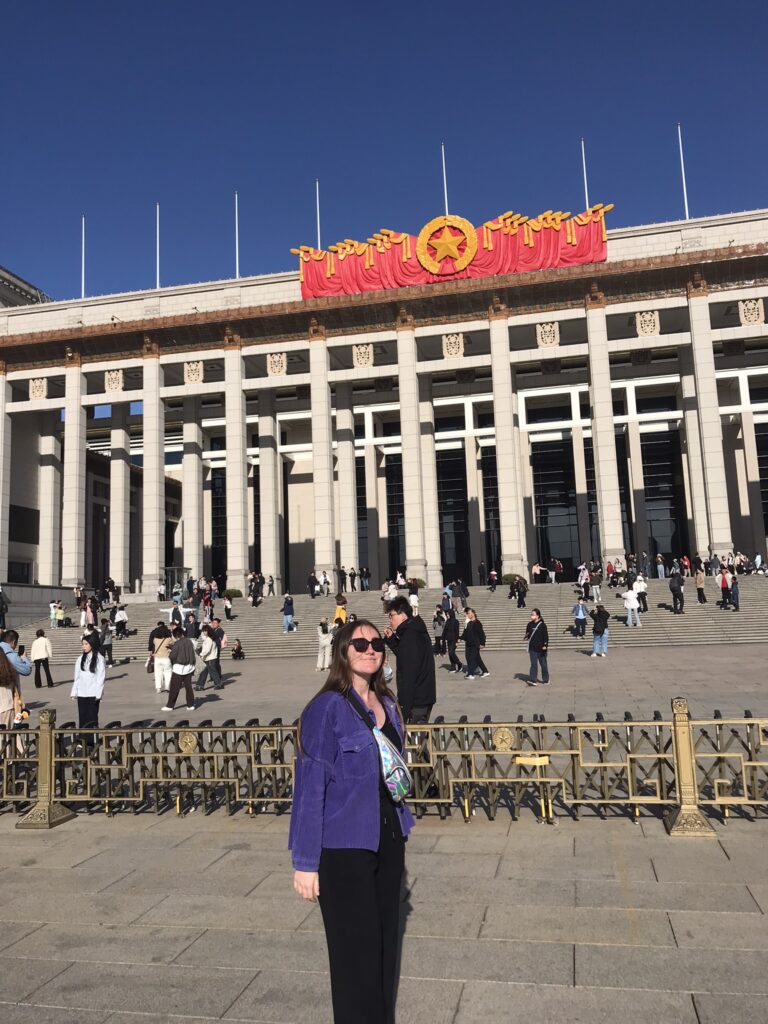
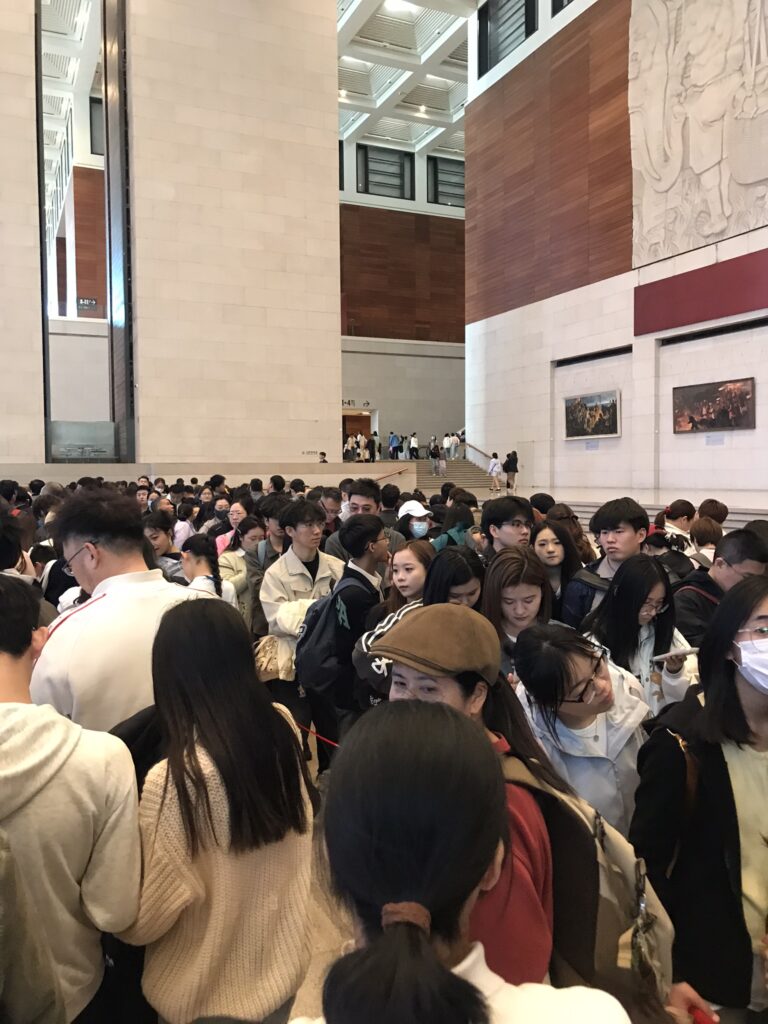
National Museum of China: countless bronze dings and never-ending queues!
There are numerous other galleries in the museum which we didn’t have time to really visit. In the main lobby is a display about the Chinese Communist Party’s latest five year plan for those interested in the concept of continuity and attainment of long term goals. There’s even an exhibit on Pompeii strangely. You really need a full day to explore the museum at a leisurely pace, but make sure you bring food with you as we couldn’t see anywhere to eat inside.
Entry into the museum gives visitors immediate access to Tiananmen Square without needing another reservation (the museum literally exits into the reservation area of the square). We got slightly confused by this and tried to find the entrance to the square in order to show our reservation, only to realise we were already inside.
Tiananmen Square – a vast concrete square featuring brutalist architecture and an austere majesty. It’s a no-frills public space with no flowers or trees, just endless concrete, monumental buildings and armed security patrols. We got a very Soviet-esque feeling from it.
The focal point of the square is a portrait of Chairman Mao displayed on Tiananmen Gate, the entrance to the Forbidden City. Like Lenin in Russia, Mao is still very much a revered public figure in China for his role in the founding of the People’s Republic of China. The monument in the centre of the square features a plaque written by Mao to commemorate the heroes of China (i.e. everyone who died in the fight for freedom from the 1840’s colonial takeover onwards, it’s quite all-encompassing) – on the rear is a statement written by former Premier Zhou Enlai. Chairman Mao’s Mausoleum is also located within the square and his embalmed body can usually be viewed by prior booking, although it was closed for refurbishment when we visited. Various communist-style statues flank Mao’s Mausoleum and surrounding monuments.
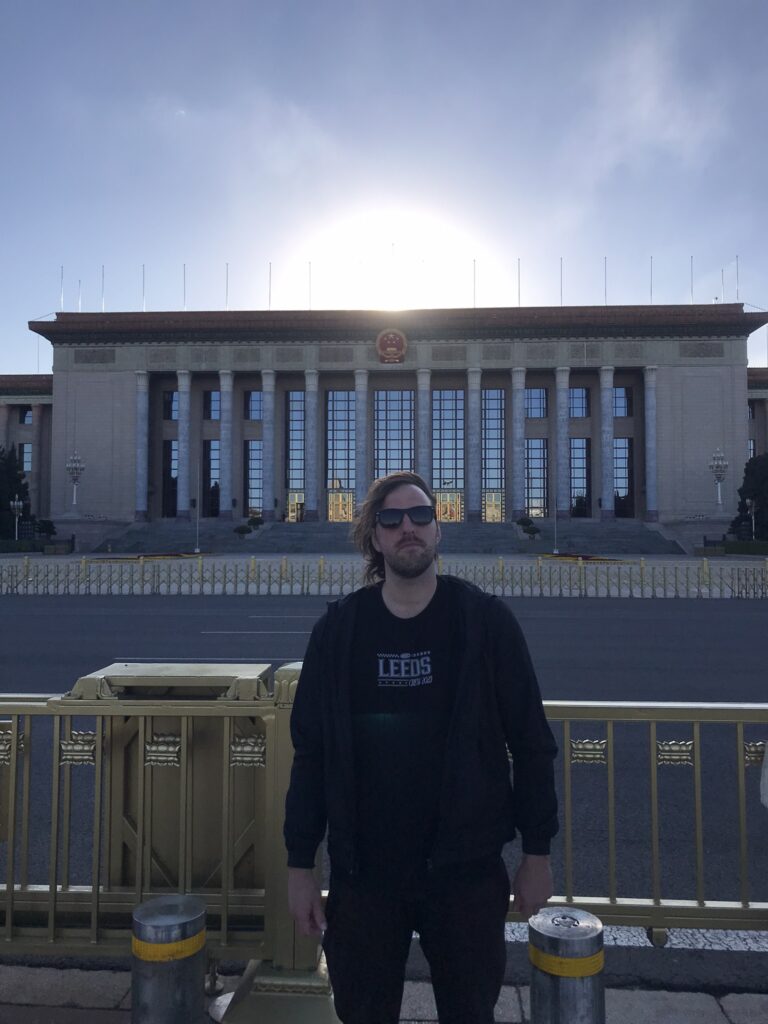
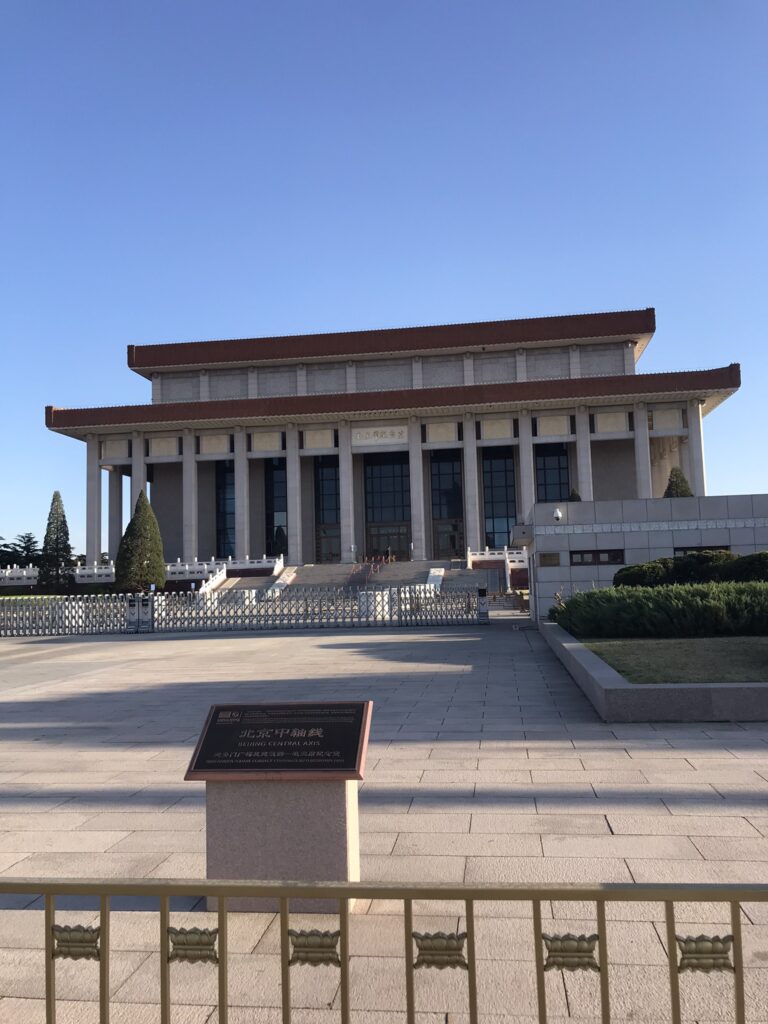
Two fixtures in the square are the Great Hall of the People and the Mausoleum of Chairman Mao
You can’t miss the heavy police/security presence around the square. All visitors must have their bags checked before entering, although this is also normal practice when entering the subway and other attractions. As well as the buildings and monuments relating to Chairman Mao, visitors can also view the outside of the many monumental buildings which surround the square including the Great Hall of the People – the main government house where legislative representatives from across the country (around 2,800 people) meet annually each spring to set an agenda and elect executive representatives, and where a smaller body meets bimonthly to discuss legislative matters. The square also features a ceremony at sunset and sunrise when the flag of the People’s Republic of China is raised/taken down, although we weren’t sure about the exact timings of this. Tiananmen is on the central north–south axis of Beijing alongside the Forbidden City and the Drum/Bell Towers.
Forbidden City – the Forbidden City, first built in 1420, was the imperial seat of 24 Ming and Qing Emperors. The name Forbidden City comes as ordinary people couldn’t enter without the permission of the emperor. In China the complex is more commonly referred to as the Palace Museum. Visitors MUST have a prior reservation in order to enter and MUST use the correct entrance gate.
It can’t be underestimated how vast the complex really is, an imperial city in its own right. The palace complex is completely symmetrical; sitting on the central axis are the main ceremonial halls and on the west and east flank are the various concubine, dowager and empress palaces whilst at the rear is the imperial pleasure garden. The palace complex has been a museum for over 100 years, following the eviction of the final Chinese emperor Puyi.
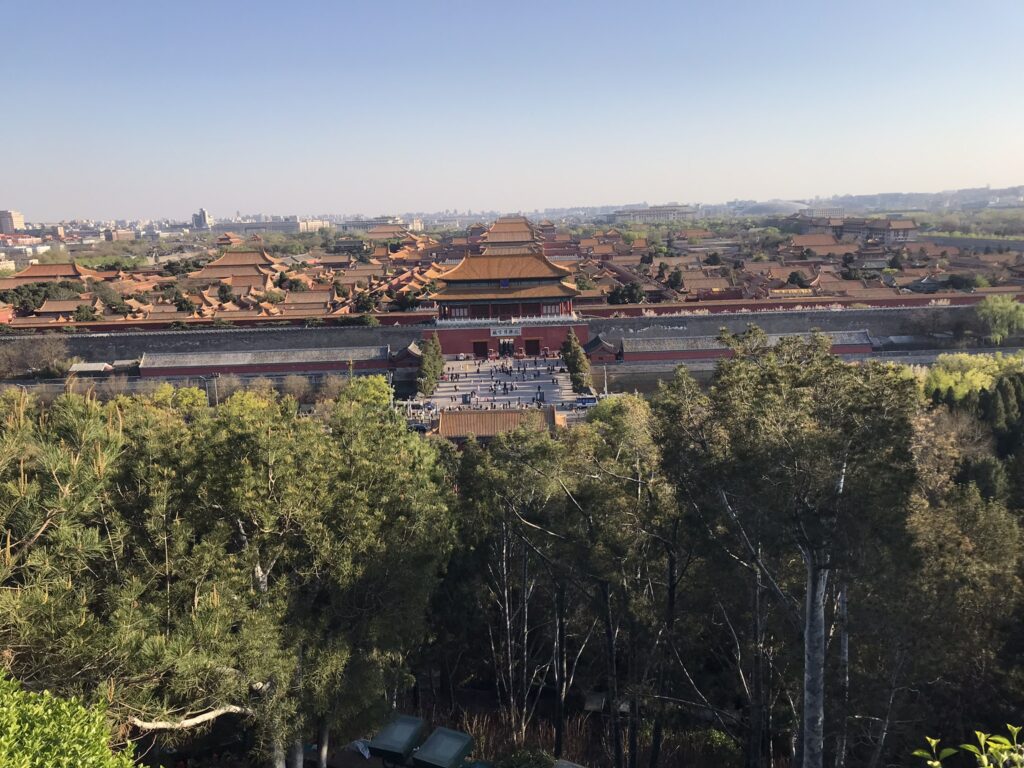
The Forbidden City as seen from the Jingshan Scenic Area
None of the rooms in the various buildings are open for visitors to enter – you can peek at the thrones and elaborate ceilings from outside and look through the windows to marvel at the original opulent furniture still in situ (that’s if you can see through the nose smudges on the glass). Many of the palaces have whimsical names inspired by classical literature and Confucian ideals. You can easily spend all day here looking around and still not cover everything – inside some of the palaces are separate exhibitions covering things like porcelain, jade and medical instruments, as well as other galleries showcasing the imperial collections.
You’ll be shocked at the size of the queue when you first arrive at the complex but it moves quite quickly. We opted to get the audio guide for 40RMB which automatically activates when you get close to a point of interest, it was also helpful to refer to the map on the reverse. If you’re on a tight budget you can get by with just reading the info plaques inside but we particularly liked the audio guide as it gave additional info not covered on the info boards, such as tales of court intrigue, the downfall of the Qing dynasty and its final emperor Puyi, who was crowned in the palace aged 3 and apparently cried because he didn’t understand what was going on. Puyi’s story itself is quite interesting and tragic – as an adult he was coerced into becoming a puppet leader by the Japanese invaders during World War 2 and he was then captured, imprisoned and re-educated by the Chinese Communist Party before spending the final years of his life working as a hapless public gardener in Beijing – apparently he visited the Forbidden City as a tourist.
The imperial palace was plundered during the Boxer Rebellion in the late 19th century and you can still see the scrape marks on the huge pots where they tried to scrape away as much gold as possible.
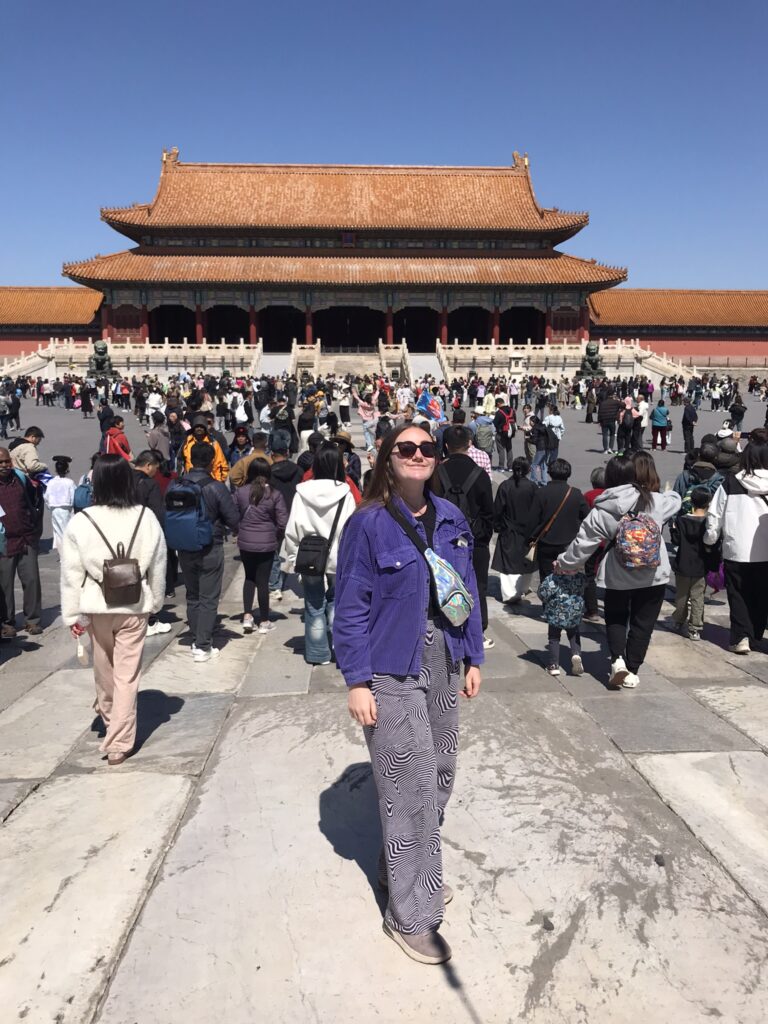
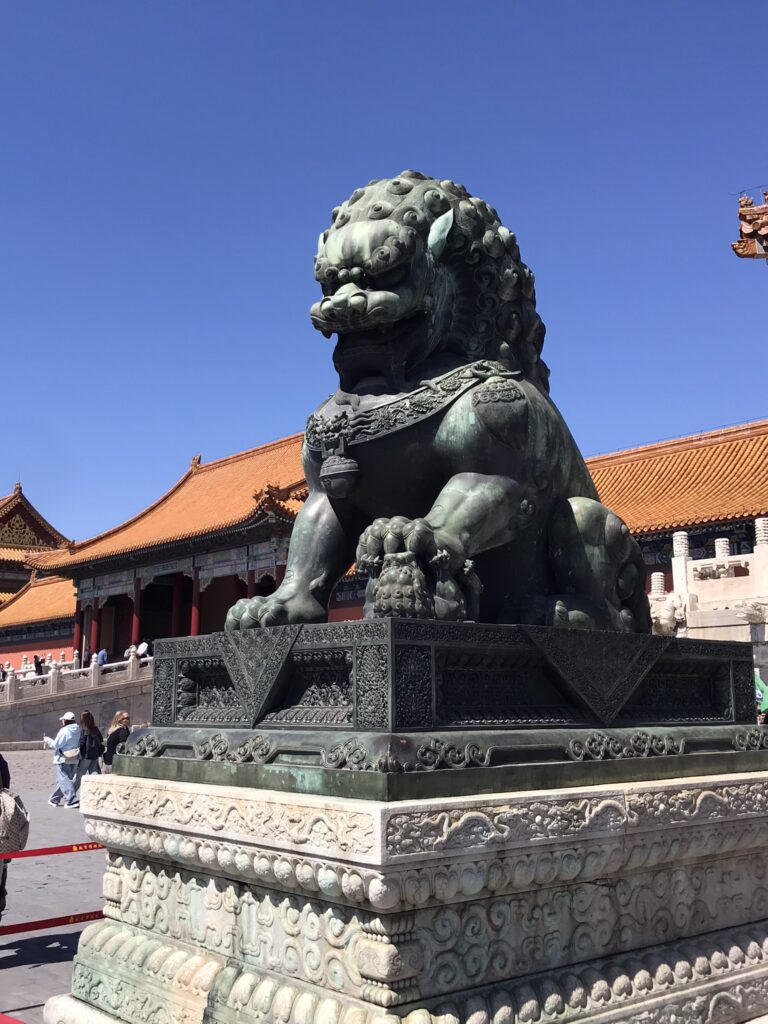
The Imperial Palace has so many fascinating elements such as the gold fire-fighting water pots that were ransacked by the Boxers
It’s important to bear in mind that there are barely any food vendors inside – maybe this is to encourage people to swiftly exit when they start to feel hungry. The few restaurants inside the complex seemed to be closed when we visited. We scoffed some sweet egg rolls from the gift shop in desperation. I recommend bringing your own food with you if you want to take the time to fully explore the complex, as there’s a ridiculous amount to see.
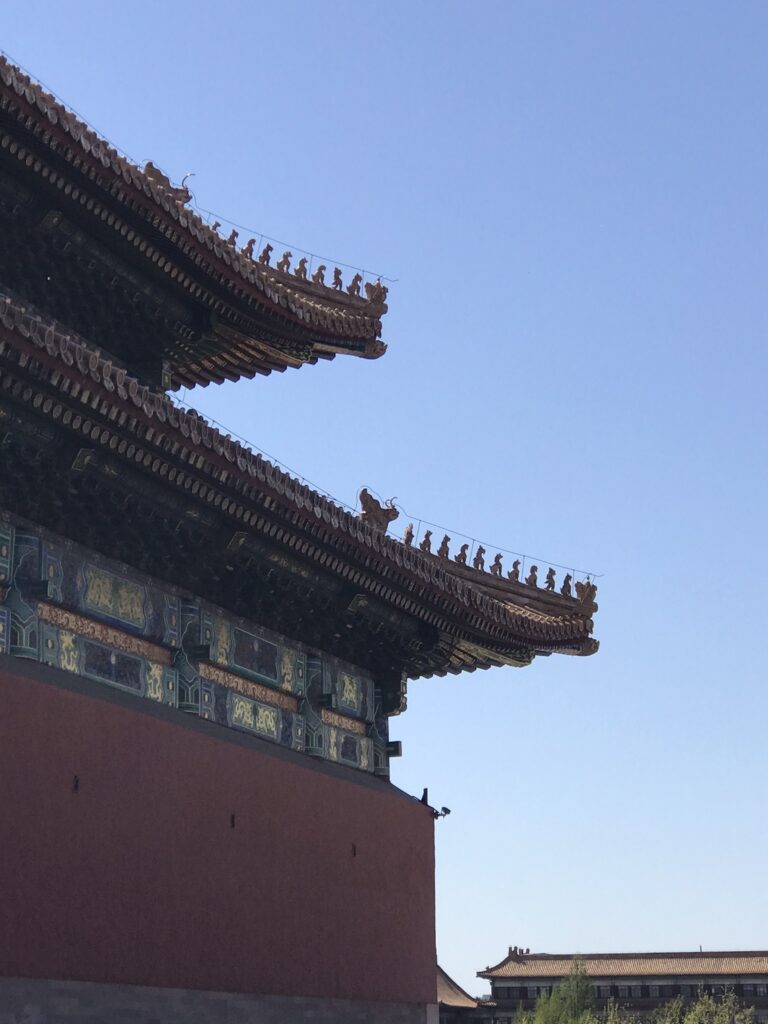
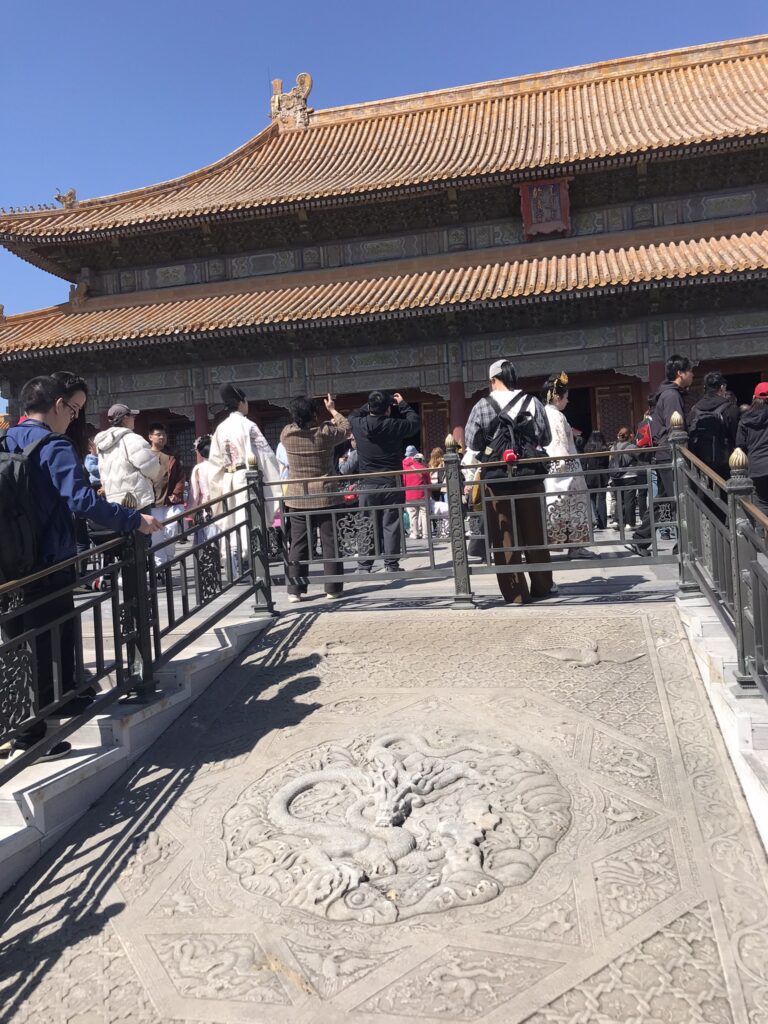
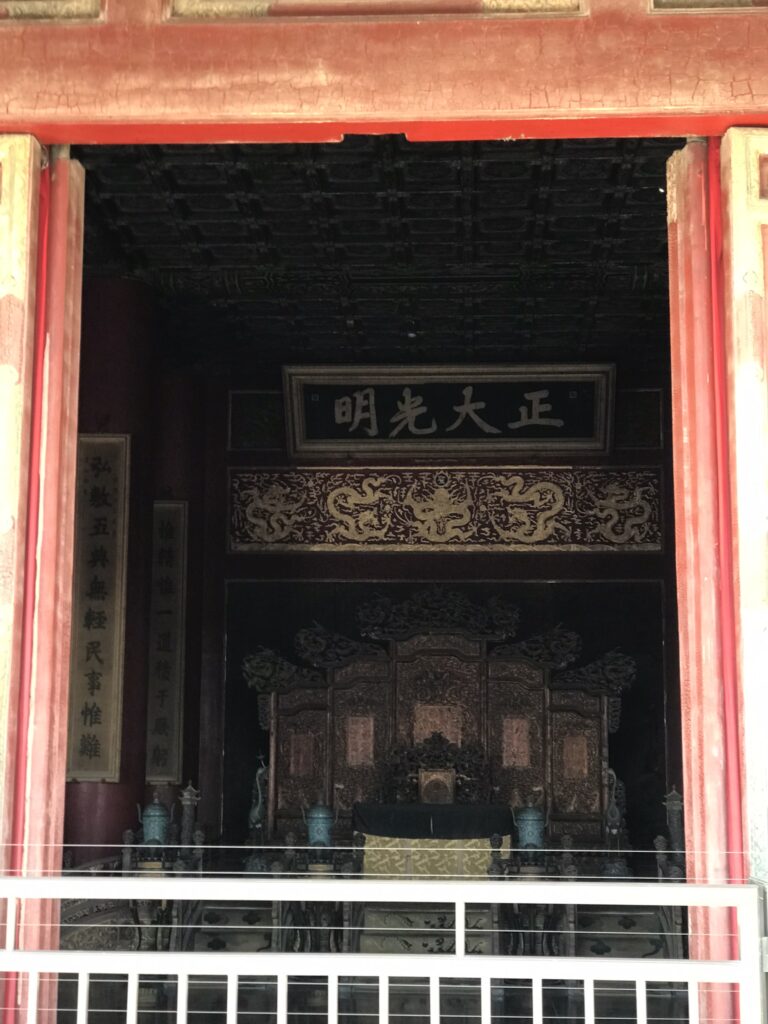
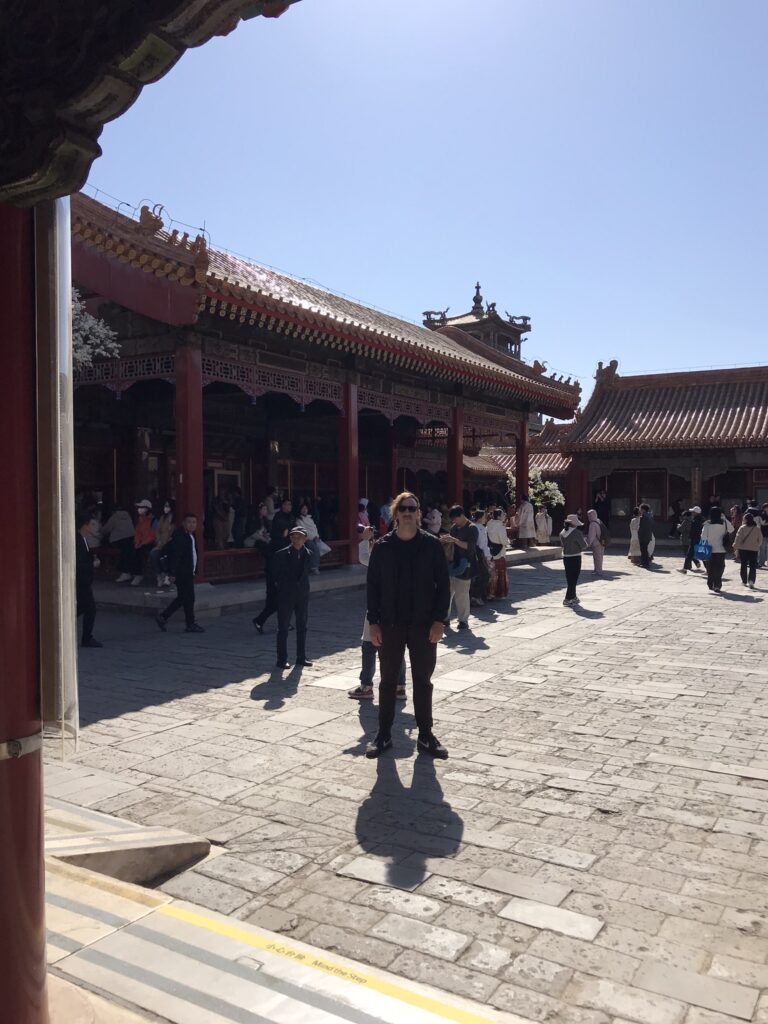
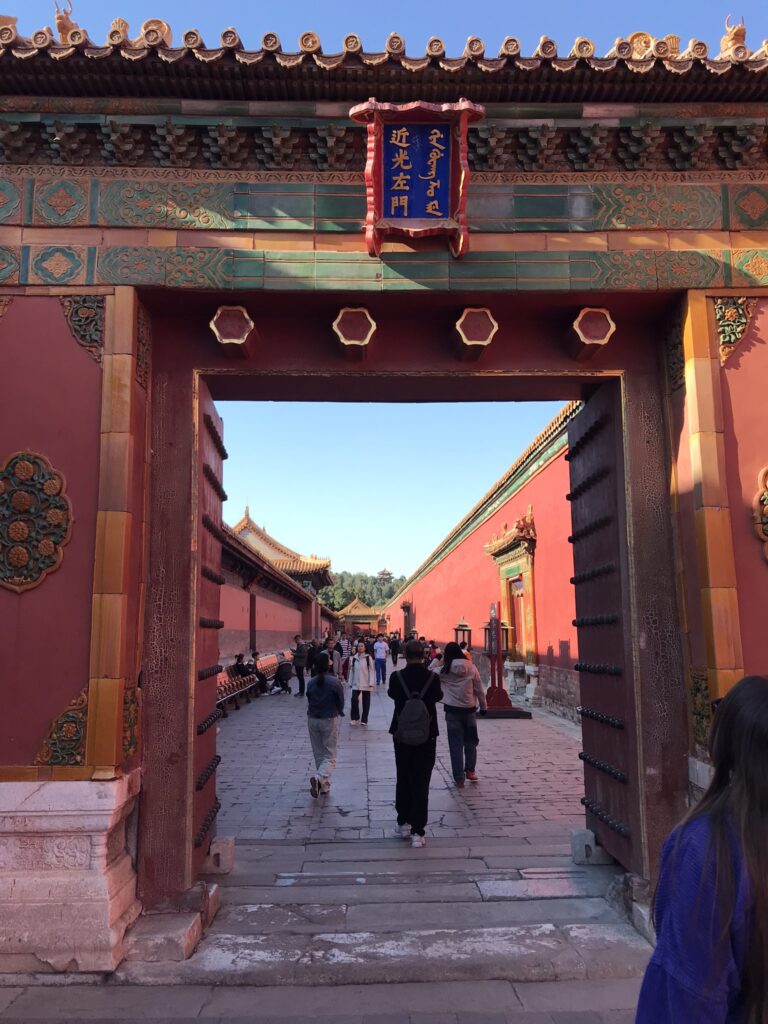
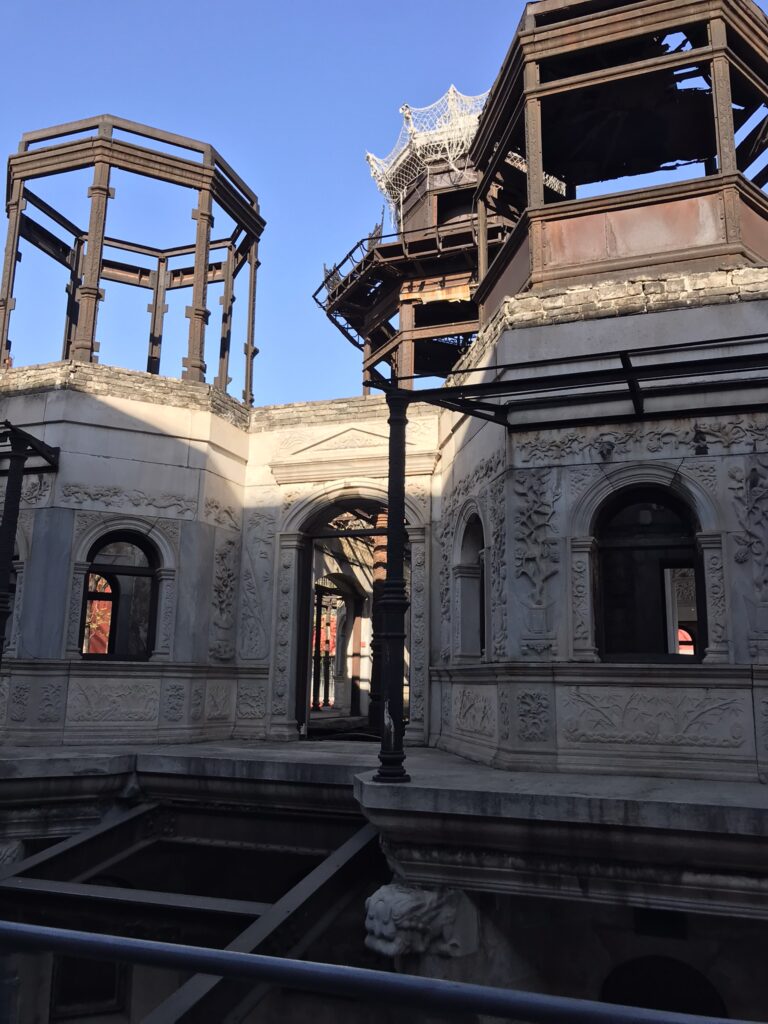
You really can spend all day in the Forbidden City!
Jingshan Scenic Area – on the Central Axis overlooking the Forbidden City, most visitors opt to climb this hill after visiting the Forbidden City as its entrance is directly opposite the exit of the Forbidden City. It’s very popular as you can view the Forbidden City from an aerial perspective and really admire the symmetry of the Central Axis as well as the Bell/Drum Tower along the same line. It’s only 2RMB for a ticket, which can be purchased online by scanning a QR code at the entrance or at the ticket counter. It gets super crowded after the Forbidden City closes as the crowds converge on the viewpoint for sunset. The Jingshan scenic area features various pavilions along the way and used to be an imperial garden in the Ming and Qing dynasty.
Guruwalk hutong tour – a good way to explore Beijing’s traditional hutong neighbourhoods and gain more information and a proper introduction to the city, including a free calligraphy workshop at a regenerated hutong space. Interestingly our guide Susie was a descendent of Confucius (77th generation), although she modestly told us that a million people have the Kong surname and that she can’t be buried in the Kong family cemetery in Qufu as she’s a woman. Susie was really approachable and we were able to ask all of our burning questions. It was also nice to have a snack break midway through the tour.
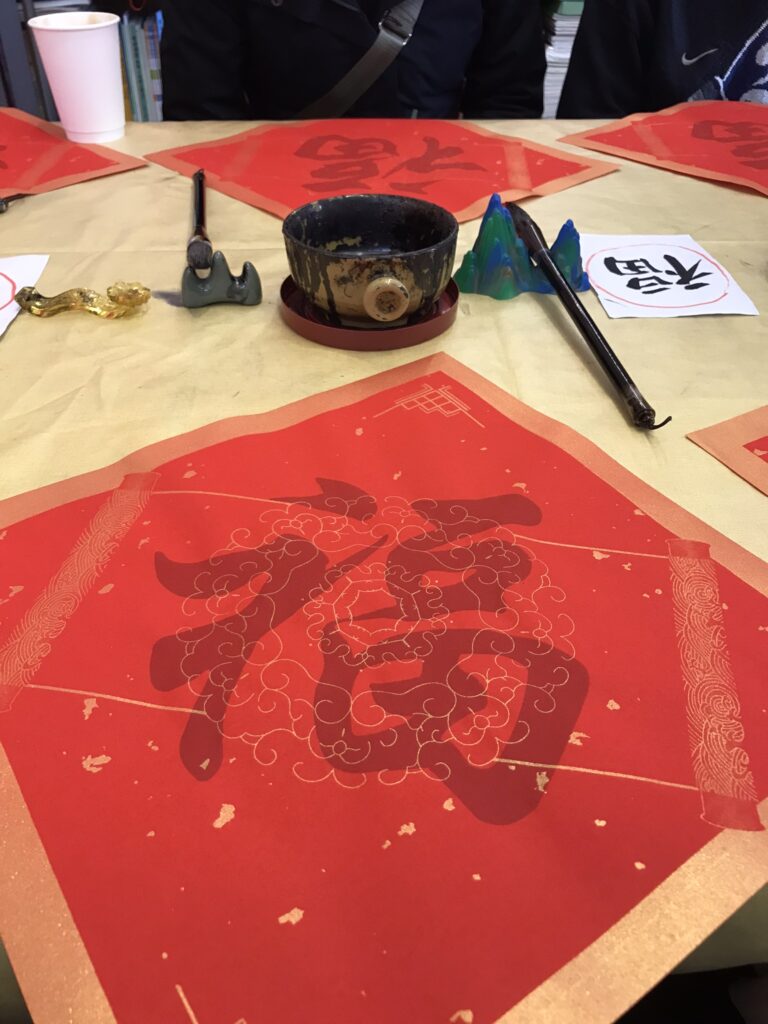
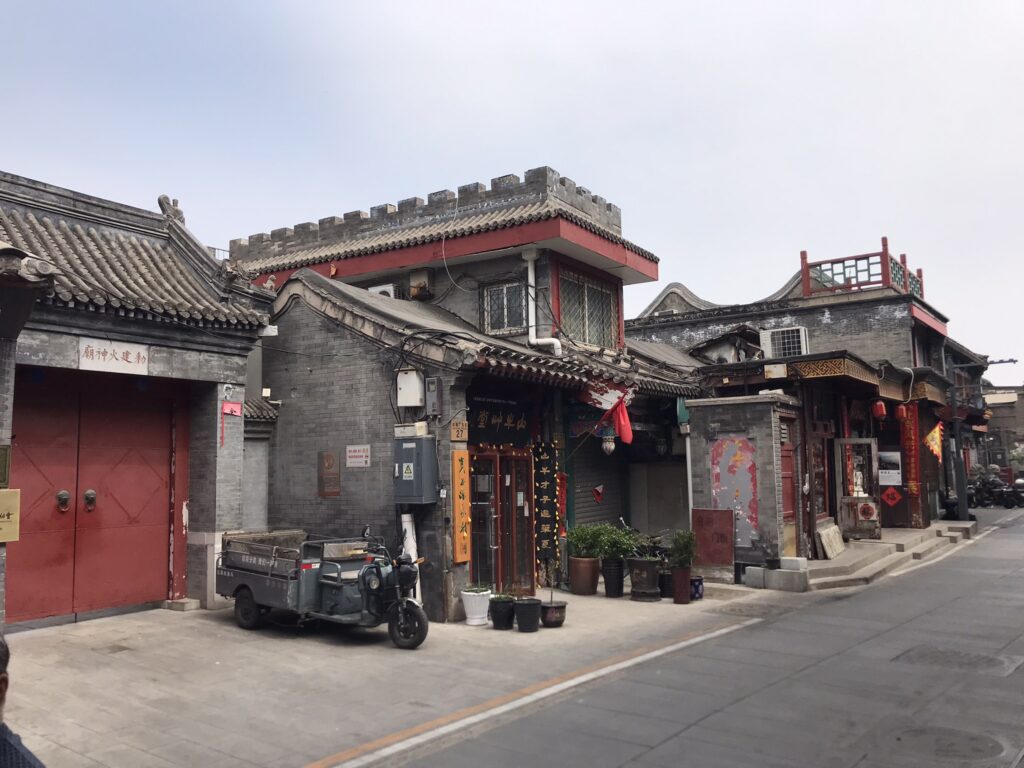
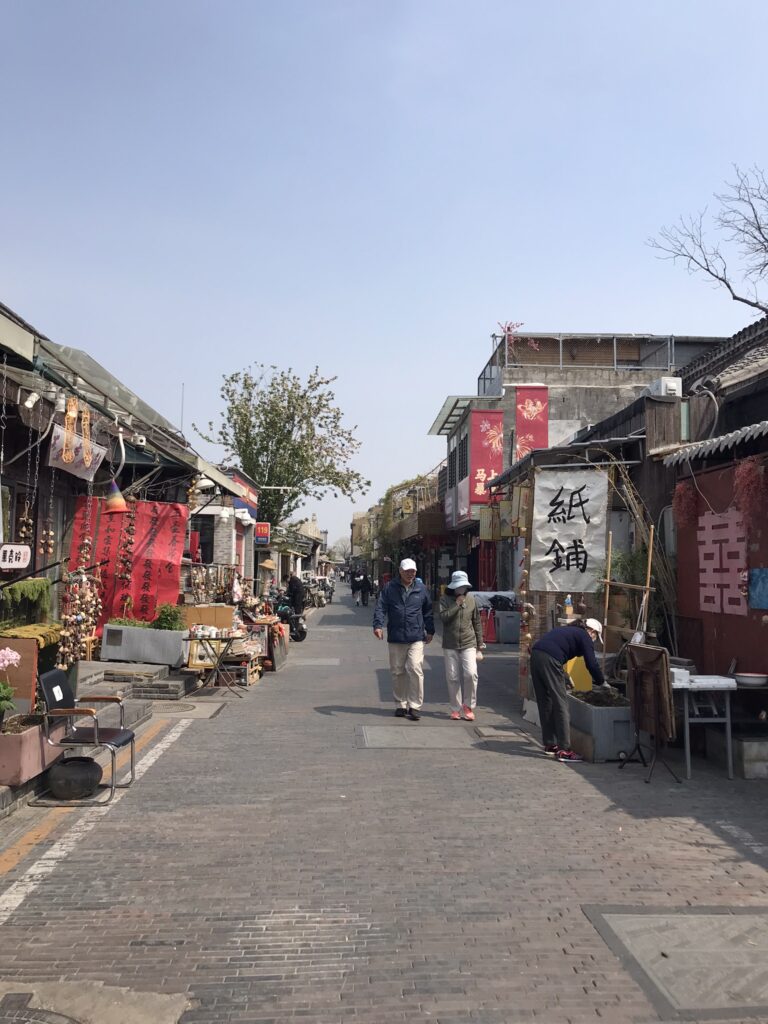
Hutong neighbourhood in Beijing
Summer Palace – the summer residence of the imperial family during the Qing dynasty. Its claim to fame is being the largest and best preserved imperial garden. This vast complex is centered around Kunming lake. Although it was originally constructed in 1750, it had to be resurrected from the ashes in the late 19th century after being burned down by the French and British forces during the second Opium War in retaliation for the torture of foreign citizens by the Qing imperial government. It’s nice to walk along the covered lakefront walkway and sit in the pavilions which are shaded from the sun in order to admire the beautifully painted designs on the wooden interior.
You can buy a basic ticket which includes access to the lakeside and Imperial Hall, or go for the all inclusive ticket which includes The Incense Pagoda (most of the halls were closed but you can climb to the highest level for fab views over the lake and admire the pagoda structure more closely), Summer Palace Museum (consisting of five galleries containing porcelain, jade items, miniature flower arrangements and plants, foreign gifts from visiting dignitaries. Apparently the premises was used to house Empress Cixi’s personal porcelain collection. There’s tons of info about imperial patronage of porcelain and foreign technology introduced to China through gifts to the imperial family. The Empress Cixi was gifted an entire Japanese steam ship for the lake which was fitted and altered by a top team of Japanese engineers – this model is on display on the banks of the lake) and the Garden of Harmony (the largest traditional theatre stage in the whole of China. It still has the original boxes for prominent guests and the hall for Empress Cixi to enjoy performances whilst reclining)
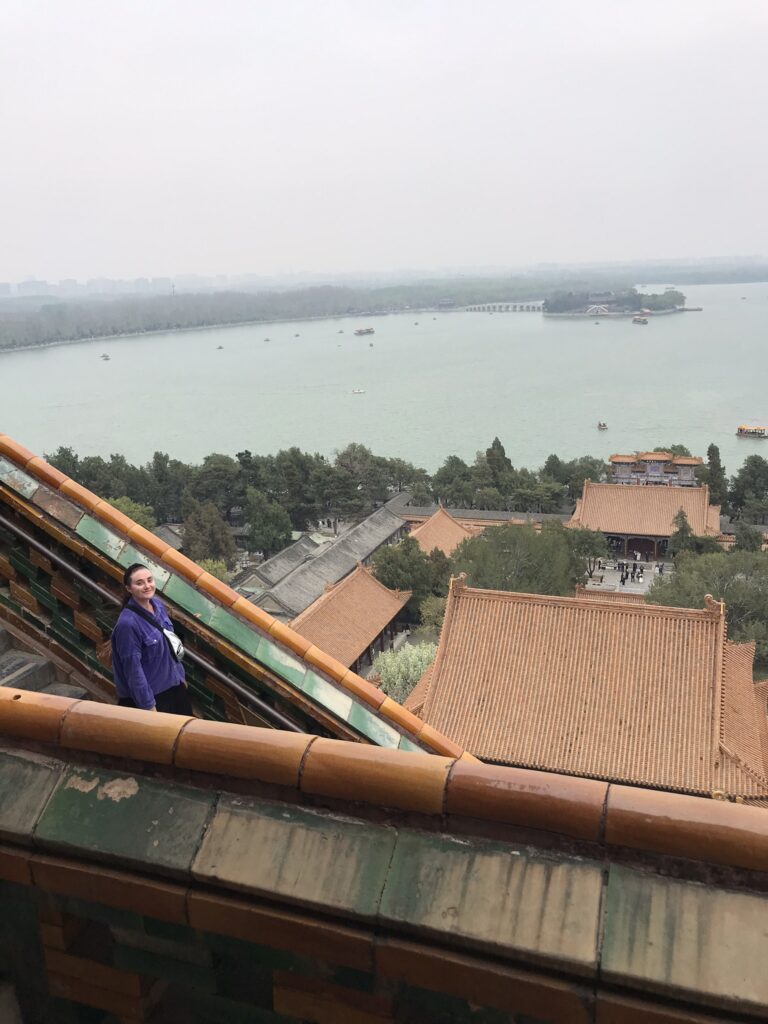
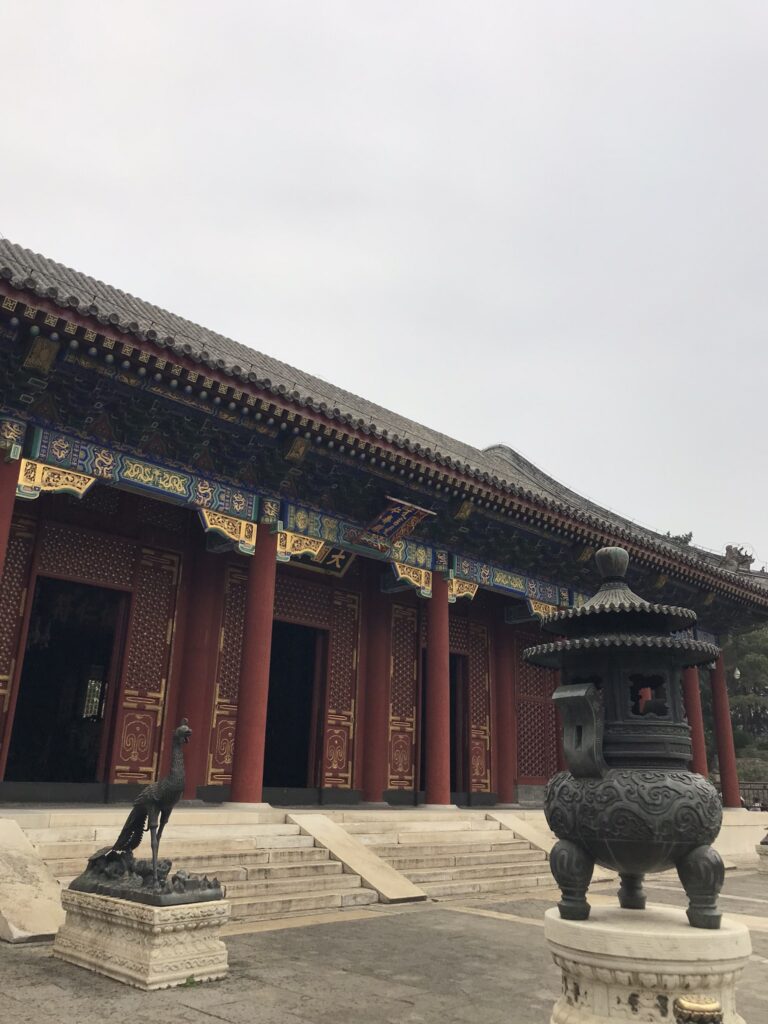
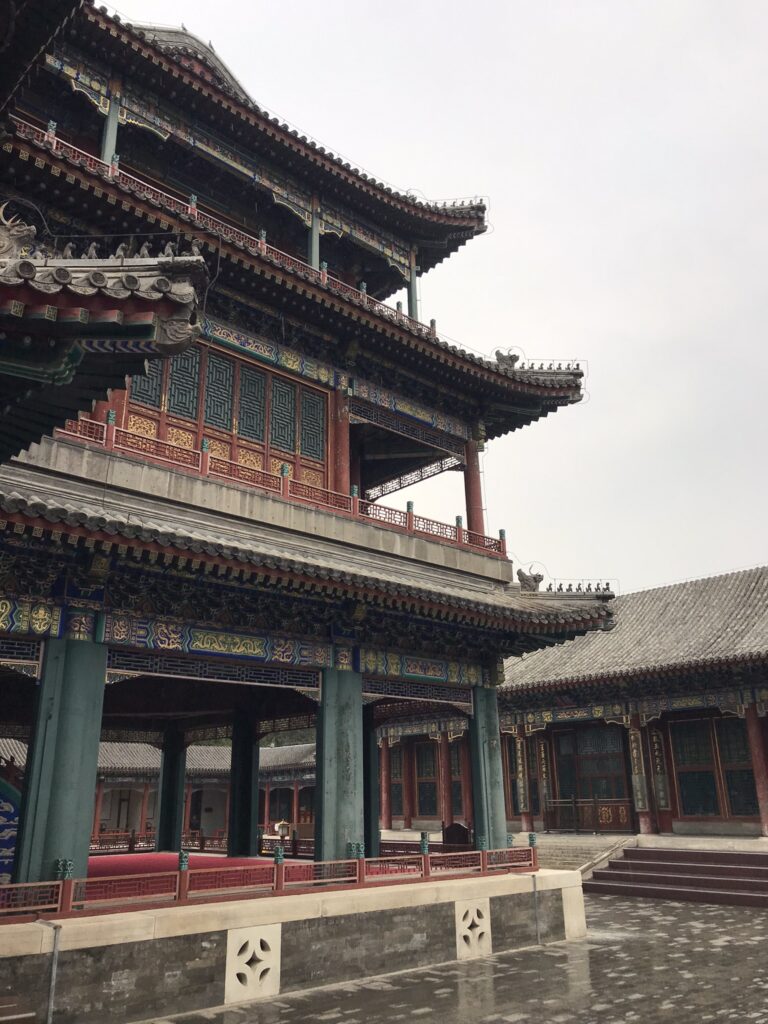
Kunming lake from the Incense Pagoda, the Main Hall and the Garden of Harmony featuring the largest traditional theatre stage in China
Old Summer Palace – now more commonly known locally as Yuanmingyuan Ruins Park. Although it’s not as grand as the Summer Palace, I’d argue it’s more interesting because of its current state. Formerly considered the most beautiful and spectacular imperial complex, it was initially destroyed by the British and French during the Second Opium War in a similar fashion to the Summer Palace, before being trashed and destroyed again in 1900 by a force representing 8 unified colonial powers in response to the Boxer Rebellion. The site was plundered not only by colonial forces but also by enterprising locals – some of the marblework has been found at the University of Peking and also at a guesthouse.
There are three separate gardens at Yuanmingyuan, all of which are quite similar. It’s quite easy to get lost as the paths are winding and snake around the lakes. The site is enormous, with a couple of specific points of interest. The first is the retirement palace of Emperor Qianlong; this is now mostly just the foundations, but it’s possible to see the outlines of the buildings with plaques about what each structure was used for, giving visitors a good idea of the scope of the complex.
The second point of interest (by far the most popular with tour groups and visitors) is the Western-style crumbling ruins of the Xiyang Lou area. You can really get an idea of how grand the palatial complex was in its heyday from the exquisitely carved marble columns, facades and fountain sections. All that remains today is decaying ruins from what was once a decadent palatial complex with neoclassical inspiration. The information boards are pretty extensive and helpful when filling in the blanks about each building. We were surprised to find out that one such building was used as a mosque by a concubine called ‘the fragrant one’. A maze near the entrance to the ruins area has been fully restored, much to the glee of children and perhaps those who haven’t encountered one before.
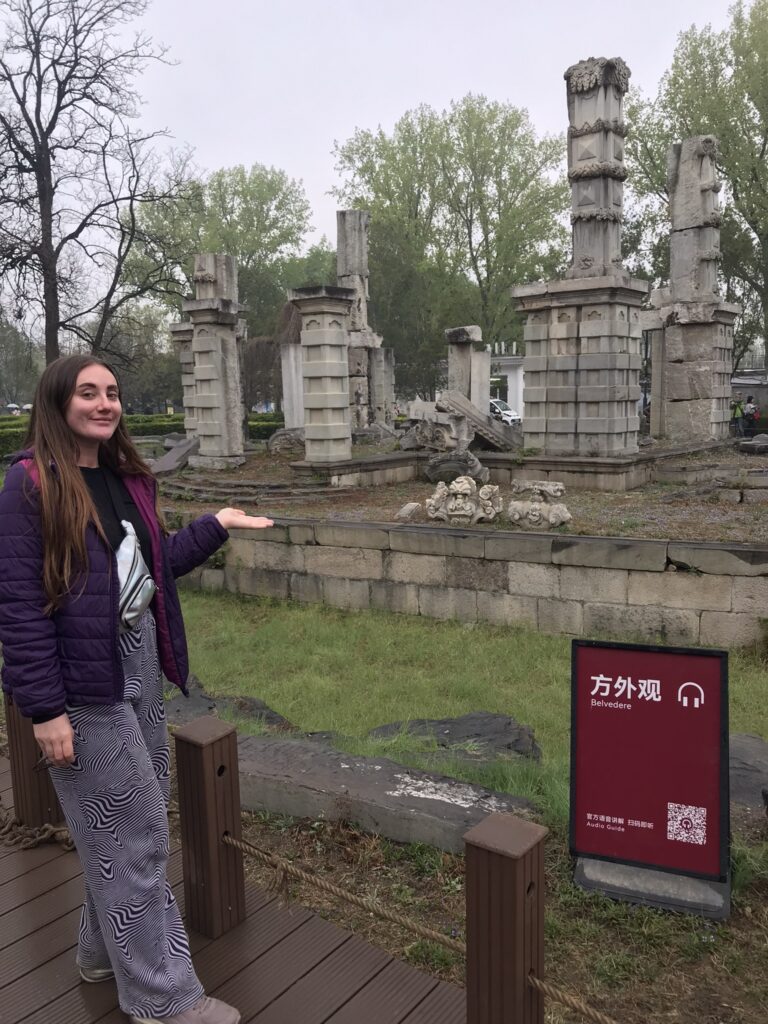
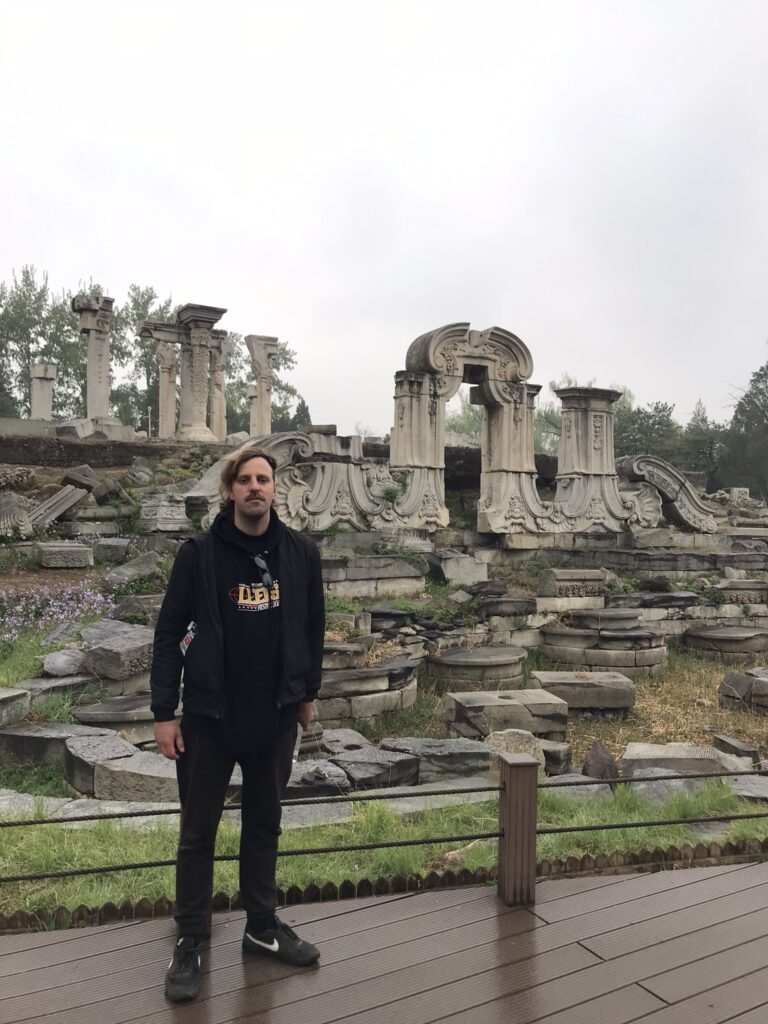
Xiyang Lou ruins at the Old Summer Palace
Other than these two areas, the enormous sprawling park generally consists of mostly small/barely visible ruins amid beautiful lakes and scenery. We spent 4 hours exploring it all on an overcast and misty day, which was super atmospheric. It’s probably not necessary to spend that long and you can skip to the highlights if you’re short on time. We are aware that Yuanmingyuan Park and the Xiyang Lou area in particular is used as a symbol by the Chinese to epitomize the ‘century of humiliation’, when China was at its lowest point and dominated by foreign powers. Other than Xiyang Lou ruins, the rest of the park was quiet and mostly devoid of visitors on a weekday when we visited.
Olympic Park (Birds Nest and Water Cube) – a real highlight for Dan, this site reflects a seminal moment in the modern history of China as the nation took to the world stage by hosting the Olympics in 2008. It marked the first time in history that the summer Olympics was hosted by a ‘developing’ nation and for China it was seen as a reintroduction to the whole world as a leading power. The Olympic complex has been kept intact and is open to the public, its now a 5A scenic area and a source of national pride. There’s a wide walkway where visitors can amble along, marveling at the quirky modern architecture such as the iconic ultra-modern Birds Nest stadium without the paths becoming clogged up. We spotted quite a few tour groups with various coloured hats visiting the area, as well as plenty of shops selling Olympic-themed souvenirs. China’s sports programs which were turbo-charged for the 2008 Olympics are still producing world-class athletes and competitors; the nation is now on par with the USA as regularly earning the most gold medals in the Olympics.
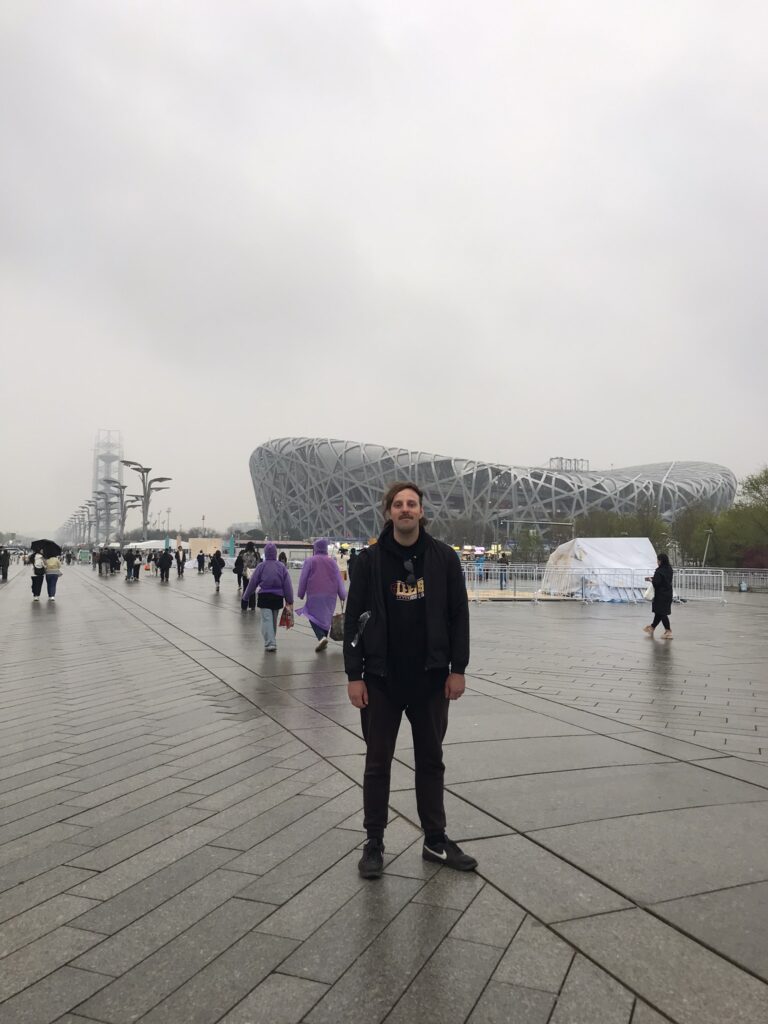
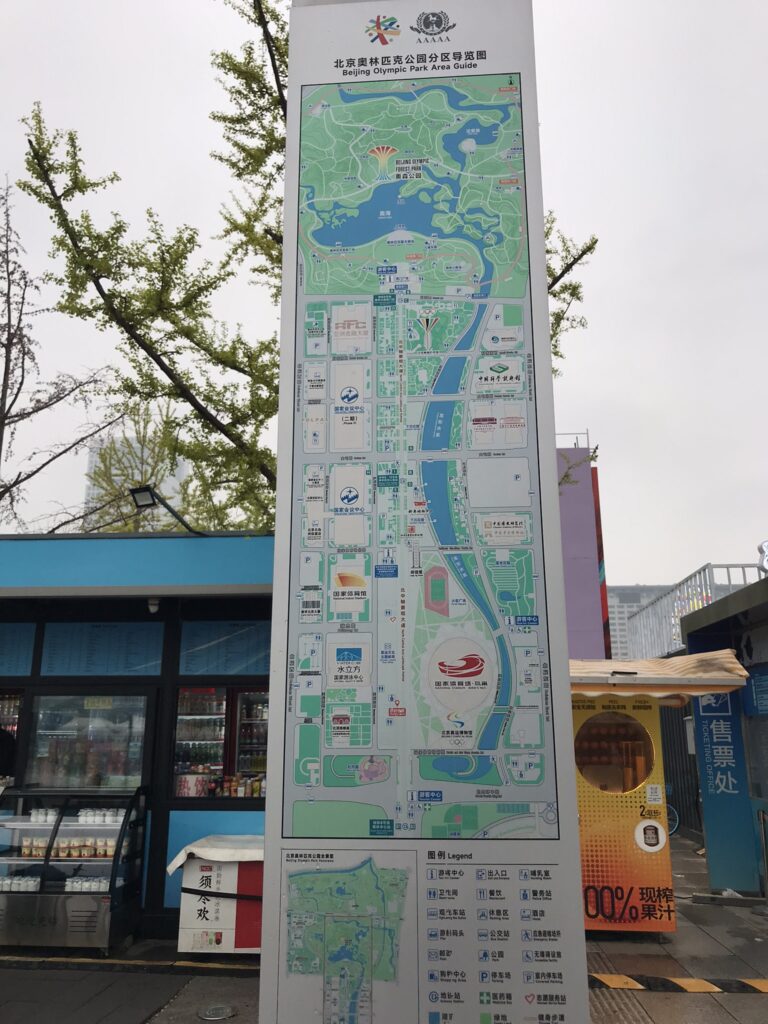
The Olympic Park is very much a modern attraction in Beijing
Great Wall of China – Jinshanling section
Recognised as one the most impressive architectural feats in history, the Great Wall of China was built over a 2000 year period starting in the 7th century BCE, with the existing shorter sections being joined up by Emperor Qinshihuang (of the Terracotta Army fame) around 200 BCE. Sections of the wall were continuously extended, repaired and remodelled right up until the Qing dynasty. The wall was constructed to be a defensive barrier and lookout against hostile invaders, primarily coming from the northern steppes (such as the Mongols). In the event of an attack, soldiers stationed on the wall used smoke signals during the day and fires at night to signal an attack – the number of signals indicated the severity of the invading force.
The Great Wall stretches for thousands of miles, right through to Gansu province in the west of the country. Most of the popular sections of the wall close to Beijing are from the Ming period. The closest and most convenient sections to visit are generally the most crowded – masses of Chinese and international tourists converge on the Badaling section daily. We were told that approx 60,000 people visit in a single day during a public holiday, making it pretty difficult to get a nice photo without a grandma popping up in the background. We decided to visit the wall at Jinshanling (which is located in Hebei province approx 150km away or 2 and a half hours drive from Beijing) in order to avoid the crowds and visit an unrestored section of the wall. It’s super difficult to reach Jinshanling independently without a car so we opted to go on a group tour booked via Trip.com. The tour essentially just provided round-trip transport and some information on the bus, and we were then free to explore at will. We were given approximately 5 hours free time to walk the wall alongside recommendations for routes. Overall we found it to be an excellent service, with an organiser/guide who spoke good English and was happy to answer questions. It’s super affordable to take a tour versus getting a taxi and the package tour that we took also included the entrance ticket. This trip really caters towards foreigners who want as much time as possible to hike the wall.
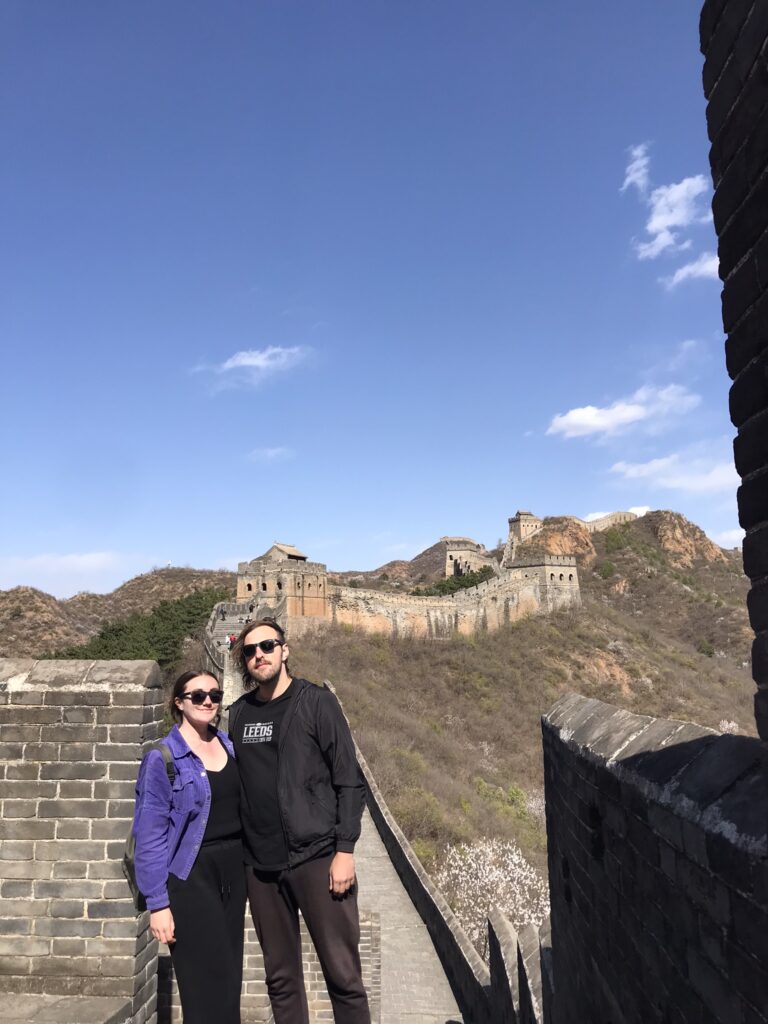
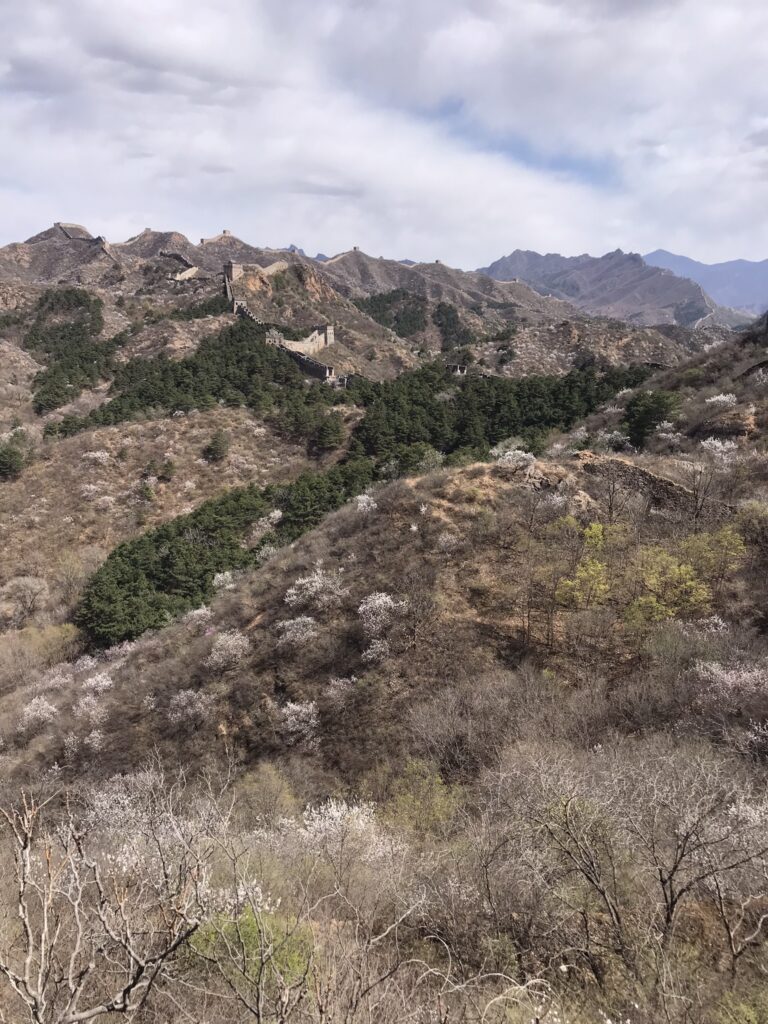
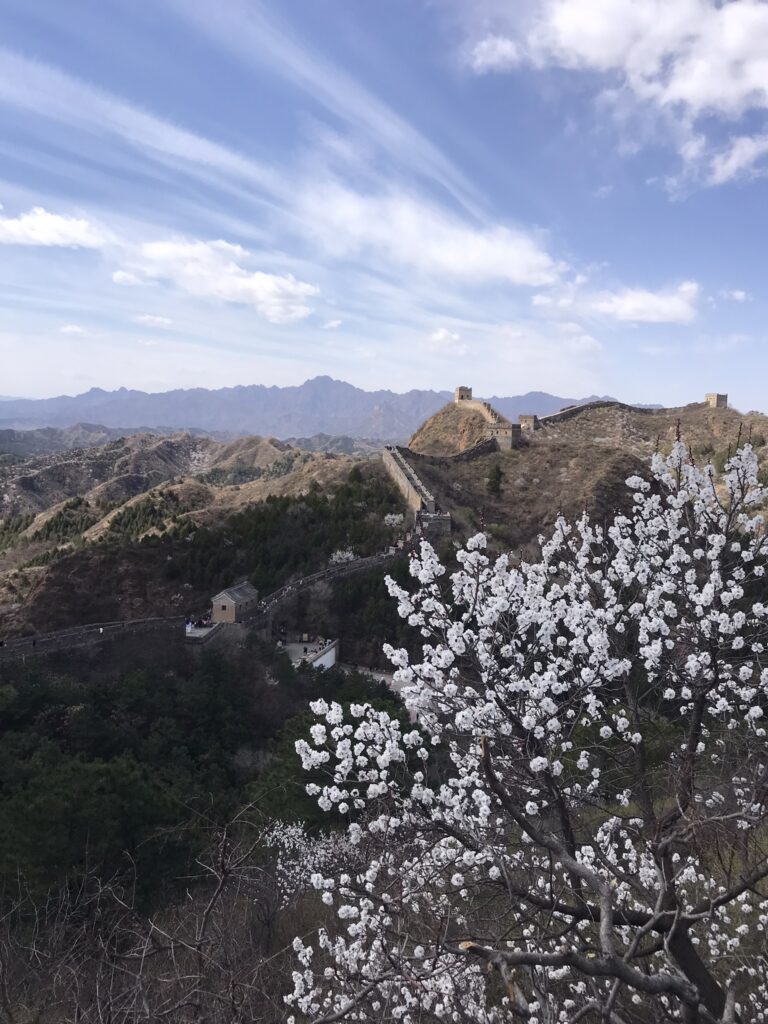
Jinshanling was just what we were looking for: wild, remote and less crowded than other sections
Jinshanling is in a very remote location, but we were surprised to find a modern visitor center and numerous stalls selling sandwiches, snacks, drinks and souvenirs near the entrance – there’s even a Dicos fast food joint. We brought a packed lunch with us so we didn’t have to stop at one of the restaurants in order to maximise our trekking time, but there were plenty of options available. As it was a public holiday it was a tad busier than usual, but we still had some sections of the wall to ourselves for a very short period. Jinshanling is ultra-scenic with great vistas and there is an unrestored stretch of wall to the east side which is super interesting to see. The walk itself is very up and down with loads of stairs, as the wall goes across the mountain tops – you can see it like a spine snaking off along mountain ridges in the distance.
There are various loops around the Jinshanling section of the walls including 2.5 hours or 4 hour loops, before leaving from the east gate. We were told to skip the west side as it is reputed to be less impressive. Most Chinese visitors seem to take the 2.5 hour route or get the cablecar back down so the crowd really thins out towards the eastern side. We managed to make it to the Flower Tower before turning back – it was great to see the unrestored stretch to the east and have it mostly to ourselves. We were really glad we chose this tour.
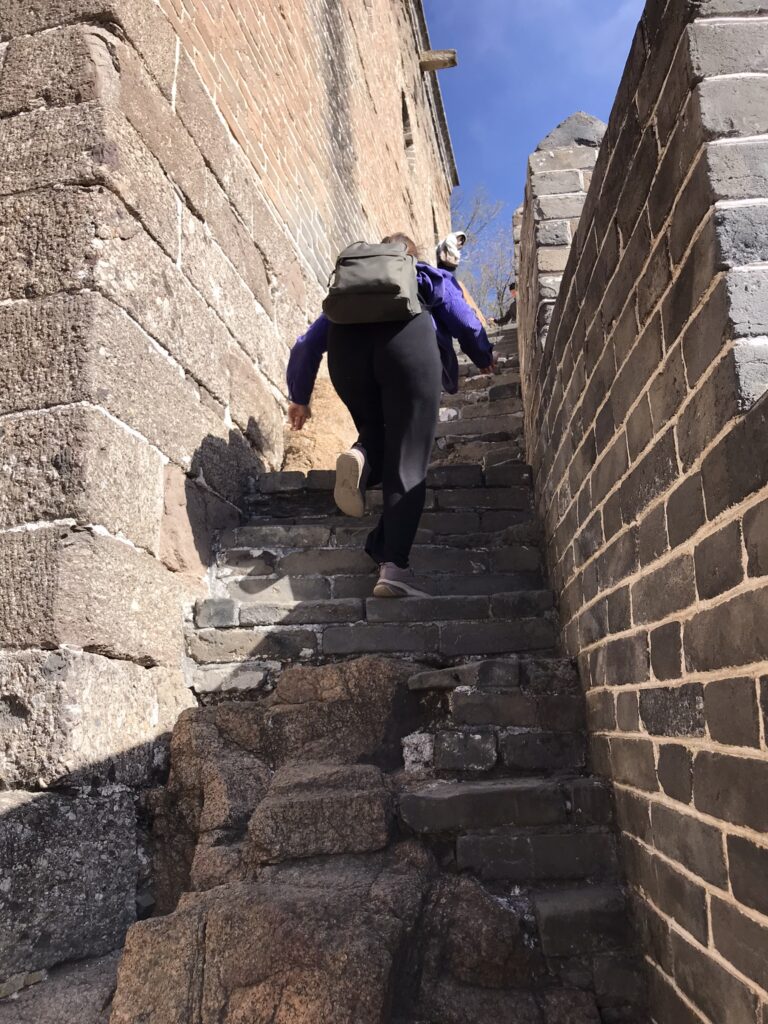
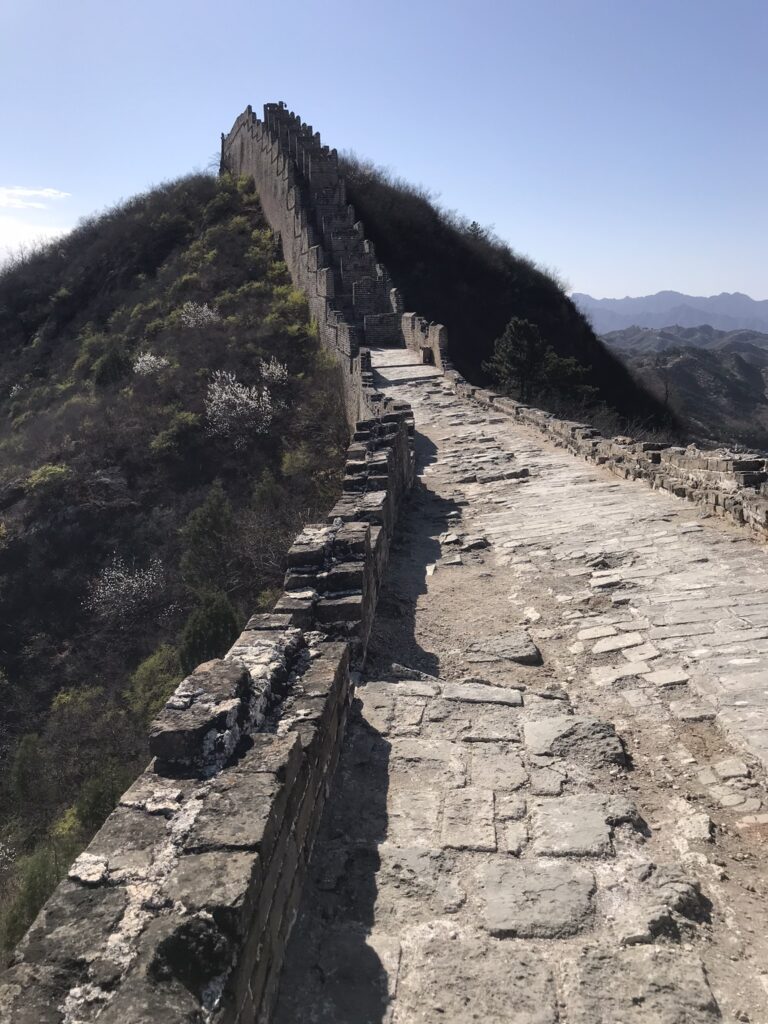
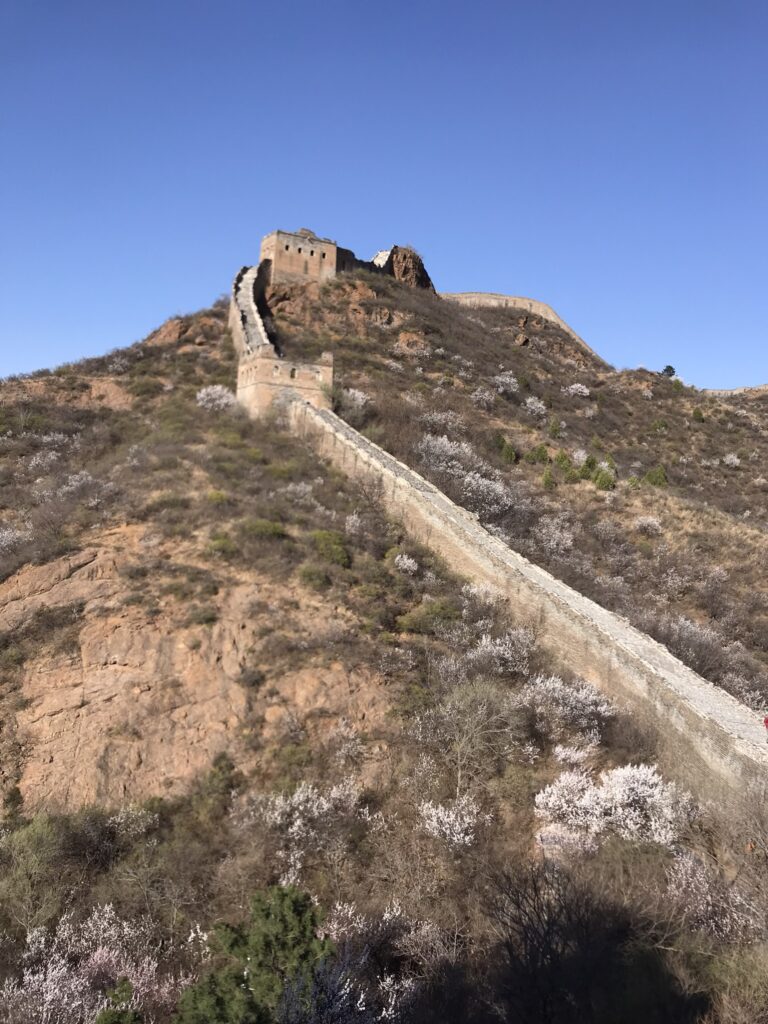
Prepare yourself for uneven paths and endless stairs!
China is enormous and we only covered a very small portion – there is so much more to see and explore. We hope to be back!