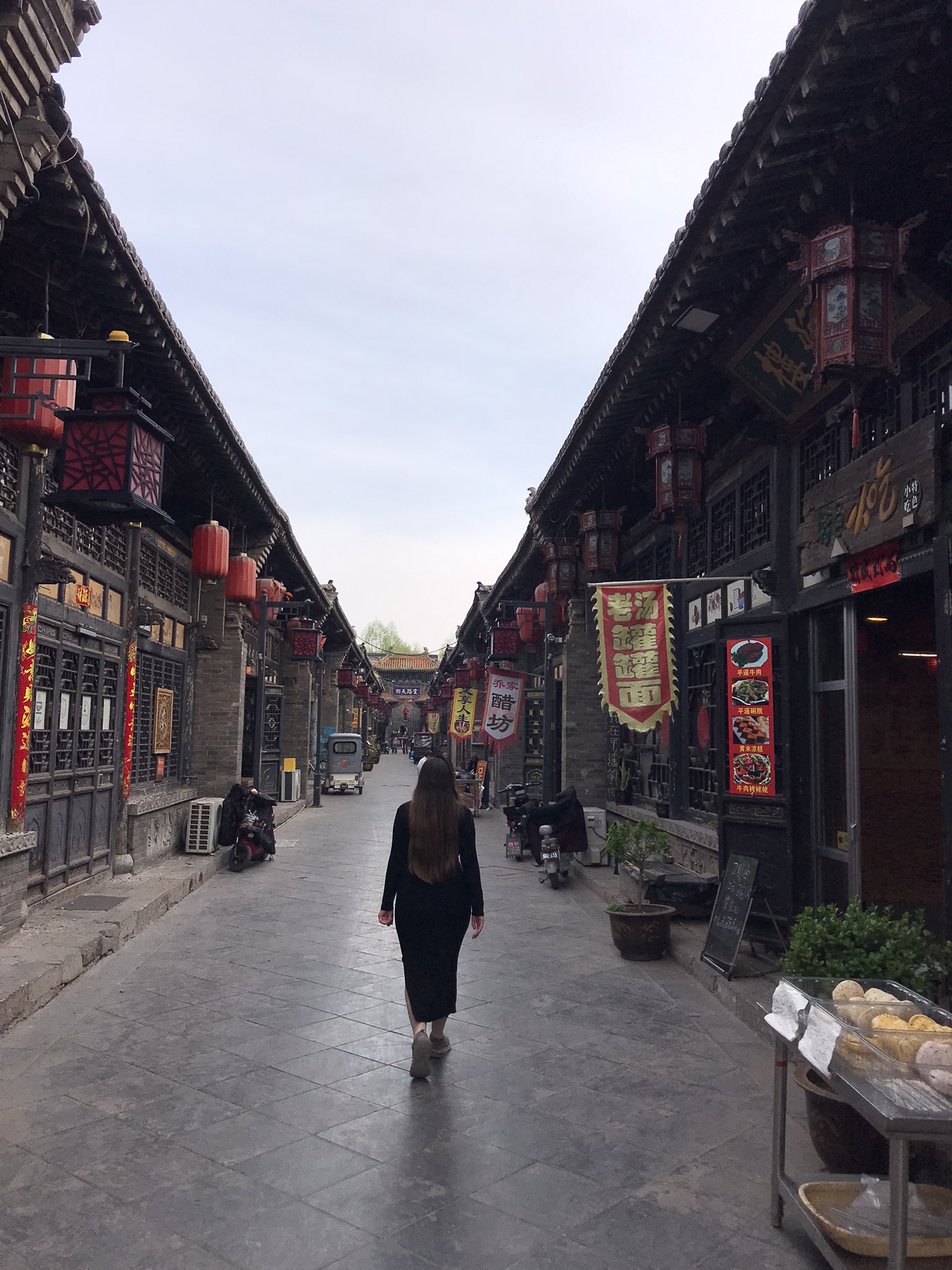
A regional trading settlement since ancient times, the town of Pingyao in China’s central Shanxi province had become known as a regional financial hub by the 16th century and hit a boom period during the late Qing dynasty in the 19th century, when a number of influential banks and financial institutions sprang up in the area. By the end of the 19th century, the small town of Pingyao was said to be the financial hub of the entire Qing Empire, filled with prosperous banks, financial speculators, wealthy merchants and renowned martial artists who worked as security guards to protect the town’s financial establishments and riches within. The period of prosperity lasted roughly until the fall of the Qing dynasty in the early 20th century, and Pingyao reverted to a sleepy settlement for several decades before attracting renewed attention due to its Ming/Qing-era urban planning and plethora of heritage buildings. The walled ‘ancient town’ of Pingyao is considered to be one of the best-preserved heritage towns in China, a UNESCO World Heritage Site since 1997 and a 5A-rated tourist attraction as designated by the Chinese government.
Today, Pingyao is a major tourist destination within Shanxi province. Gone are the financial institutions and martial arts masters – in their place are gift shops, bars, massage parlours and restaurants catering to the tourist crowd. Luckily, many of the important heritage buildings within Pingyao have been preserved and are now open as museums. A single combination ticket lasting for several days provides entry to all of the historical museums and sites within the walled city. This walking tour covers most of them. It’s recommended to purchase a ticket either online via WeChat or in person from one of the ticket offices in the town before starting the tour. Be aware that a lot of the information plaques in many of the museums and heritage buildings are in Chinese only and do not have English translations – non-Chinese speakers may want to make sure they have a decent translation app.
Begin the tour at arguably the most important old building in Pingyao, Rishengchang
This building is the former headquarters of the first draft bank in China, founded in 1823. The development of draft banks allowed users to transfer money and make payments via banker’s drafts, rather than having to transfer physical currency. Originally a dye company, the Rishengchang banking operation initially began internally as a way to more easily transfer funds from one branch of the company to the other, eventually developing into a standalone financial institution in its own right which greatly eclipsed the original purpose of the business. As a much safer and more convenient alternative to the status quo of physically transporting large amounts of copper coins or silver over long distances, the draft bank concept (known as piaohao) was hugely popular and numerous other such institutions developed in the area, establishing Shanxi and Pingyao specifically as the financial capital of China during the late Qing period. At its height, the Rishengchang bank was said to have controlled around 50% the entire economy of China, with over 30 branches nationwide. The bank was scaled down considerably following the end of the Qing dynasty in the early 20th century, but continued its operations until the 1930s when it finally fell victim to the Great Depression.
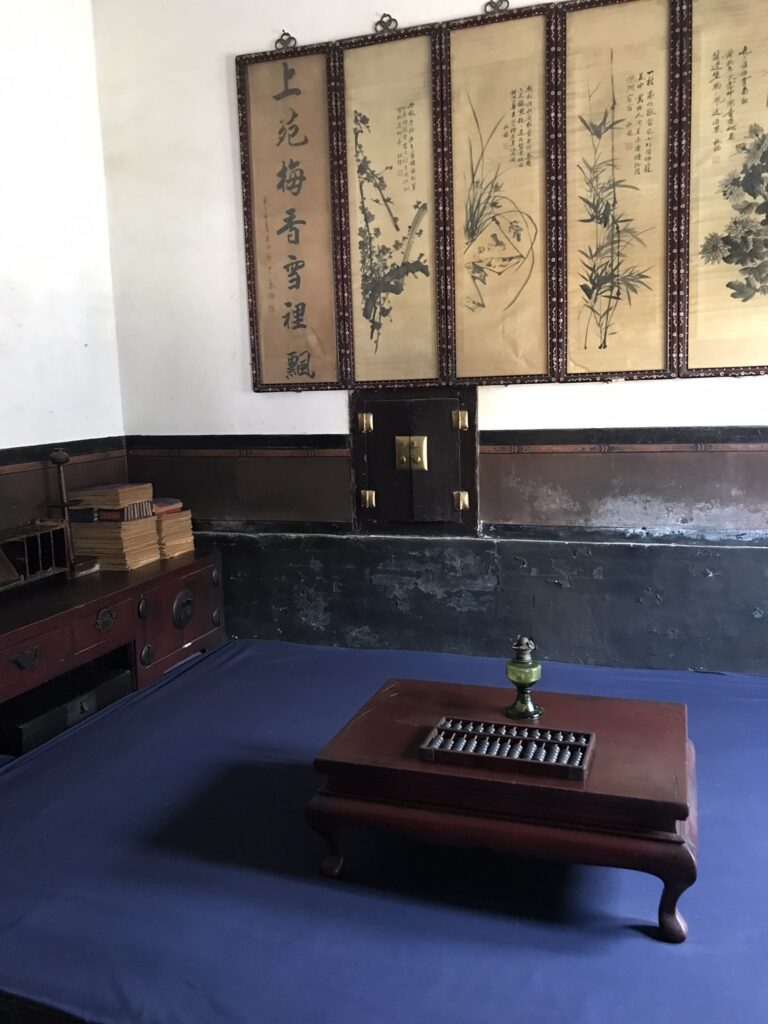
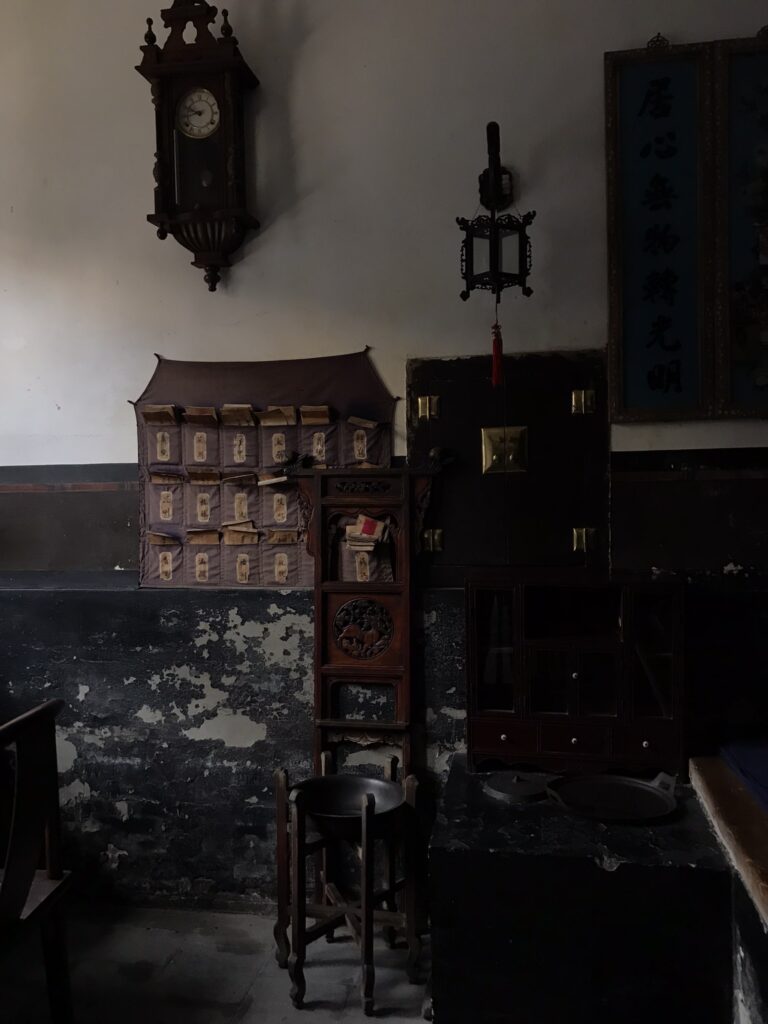
Original decoration and banking equipment can be found in Rishengchang’s various offices and rooms
Today, the former Rishengchang building is a museum dedicated to the bank itself and Pingyao’s wider banking heritage and culture. The museum complex is extensive as it also contains the former premises of Pingyao’s second draft bank, Weitaihou, and seventh draft bank, Rixingzhong, which are located right next door to Rishengchang. Interestingly, Weitaihou and Rischengchang were direct competitors and rivals – during their heyday, the two were only physically separated by a small cake shop. The complex in total contains almost 40 rooms across the three former banks for visitors to explore.
Directly across the road from Rishengchang is Huiwulin. This old Ming/Qing-style residential building contains a fairly comprehensive martial arts museum, paying homage to the tradition and legacy of the many respected martial artists who worked and operated in Pingyao in order to provide security services to the various fiscal institutions in the town. The museum contains several rooms with small exhibits about various Chinese martial arts disciplines such as Shaolin Kung Fu and Tai Chi, info on prominent local martial arts masters and a more general overview of martial arts culture and many of its associated elements. The exhibits also contain displays of martial arts armour and weaponry.
Across the road from Huiwulin, located just to the east of Rishengchang is the Ancient Residential Buildings Expo. A former merchant family home, this small complex provides an insight into the lives and lifestyles of Pingyao’s elite at the peak of the town’s prosperity. The complex is also extremely photogenic, with elaborately-decorated rooms and courtyards providing a classic example of Pingyao’s elegant heritage houses.
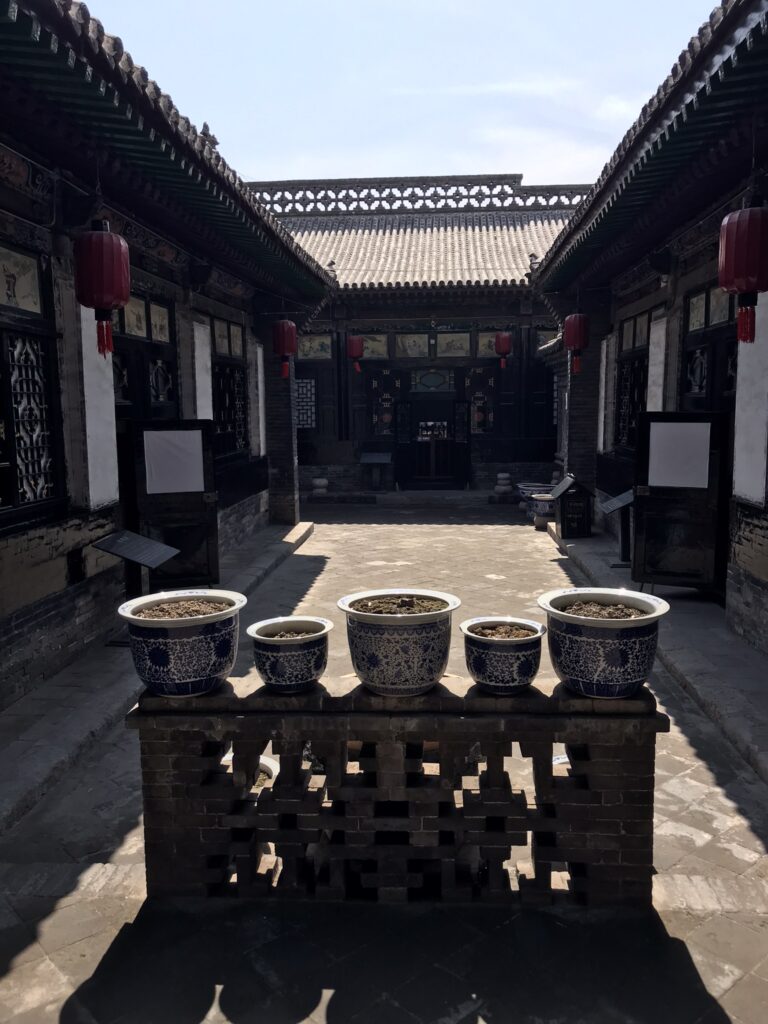
The Ancient Residential Buildings Expo provides a chance to explore a well-to-do Pingyao residential household
Head further east and then turn south on Pingyao’s main thoroughfare, South Street (also known as Ming Qing Street). On the right hand side you will reach Weishengchang. Another former draft bank (piaohao) which has been converted into a museum, Weishengchang is one of the oldest draft banks in Pingyao and China, having opened in 1826. The museum provides information about Shanxi merchants, their banking system and the prosperous local trades in which they participated. Inside are historical documents, collections of seals and stamps as well as calligraphy, paintings, artwork and antiques from the draft banking era.
Further south along South Street, across the road from Weishengchang is Tianjixiang. An old commercial property, this was once the headquarters of the Changshengwei company, an international trading corporation which had branches throughout China and as far afield as Russia and Mongolia. Considered to be the only international trading house in Pingyao, this is a prime example of a prosperous Shanxi merchant house from around the turn of the 20th century. Today, the property is open as a museum with exhibits including antiques, calligraphy, paintings and furniture from the period. Visitors can explore the complex and its various rooms and offices, admiring the heritage architecture and learning about the operations of what was a major business at the time.
Continue south along South Street and you will pass under Shilou (also known as the City Tower). This iconic watchtower marks the intersection of South Street (Ming Qing Street) and East/West Street, two of Pingyao’s main thoroughfares. Initially serving as a lookout post for guards and security personnel during the town’s heyday, the current tower is said to have been built in the 17th century during the Qing dynasty and is an enduring symbol of Pingyao. The surrounding area was once known as the ‘Wall Street of China’ for its many banks, merchant houses, prestigious company headquarters and the lively atmosphere which it retains to this day.
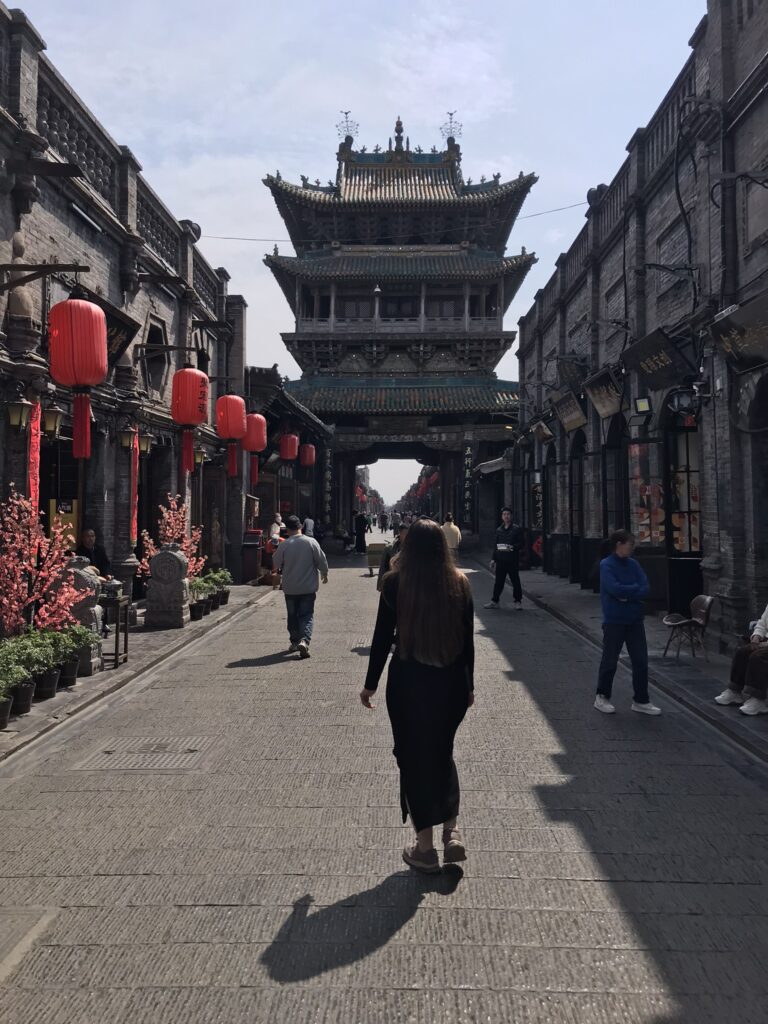
Shilou – an iconic symbol of Pingyao
Just south of Shilou on the right hand side of the road is Xietongqing (Chinese Banking House Museum). Another old banking house, this bank was open between 1856 and 1913. After its closure, the building was briefly used as a maternity hospital during the mid-20th century before being renovated and re-opened as a museum. As well as providing information about the bank’s history and operations and its various vaults and rooms (with reasonably good English translations), the museum is notable in that includes an open underground vault which visitors can explore. Interestingly, martial arts experts were stationed here to guard the vault and its contents at all times – surely one of the more cushy jobs for the workers of the local security agencies.
Further south along South Street is the China Escort Museum. This museum focuses on the martial arts-based security companies which were prevalent in and around Pingyao during the town’s heyday. Known as ‘escort agencies’, these companies initially developed in order to accompany and provide security for messengers and couriers who were at risk of being attacked by bandits while traveling on the treacherous roads between towns during the Qing dynasty. They later branched out to provide personal and private security to Pingyao’s many draft banks, merchant houses and esteemed townsfolk. Escort agencies employed established martial artists to work and train under the supervision of a renowned and reputable master/owner, who attracted clients based on his reputation for toughness, discipline and trustworthiness. This museum contains information about prominent masters and agencies within Pingyao during the town’s golden period, as well as wider info about the typical operations and procedures of escort agencies, the development of the industry and some of the common techniques that were used by the escort guards of the time.
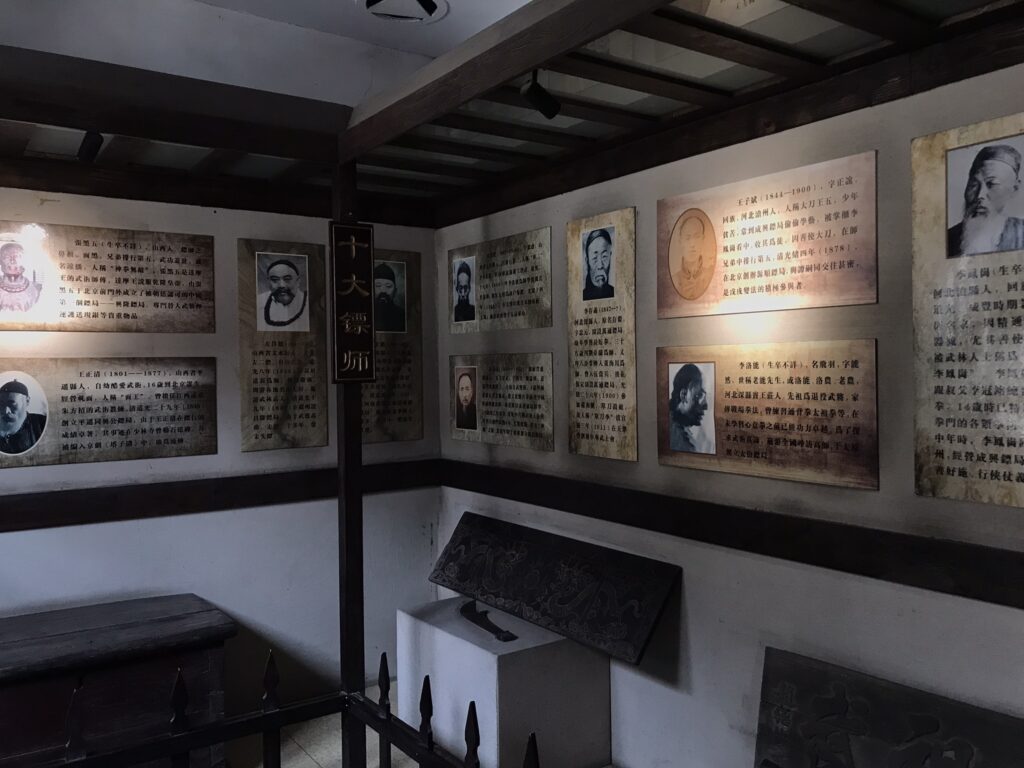
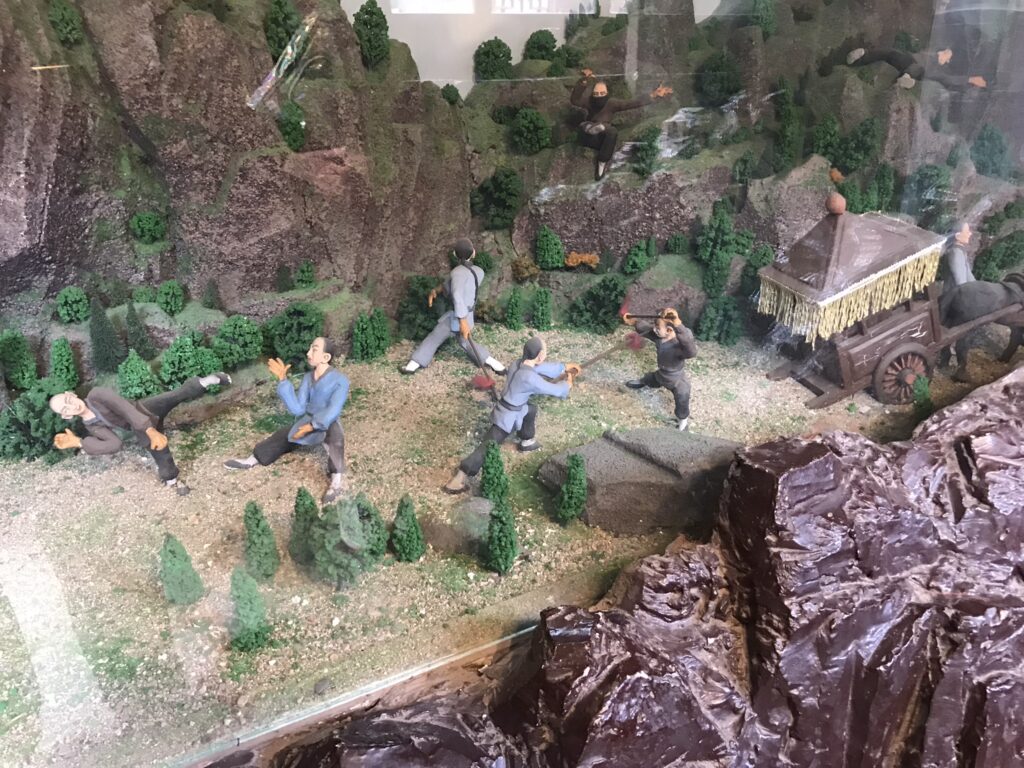
The China Escort Museum is filled with information about renowned local martial artists and techniques
Continue south along South Street and you will reach the Tongxinggong Escort Museum. This is the former headquarters of one of the largest and most prominent escort agencies of Pingyao. Established in 1849 by the martial arts master Wang, the Tongxinggong agency enjoyed the best reputation in town and was even enlisted to help the Empress Dowager Cixi and imperial family on occasion. The company’s former base is now a museum where visitors can learn about the business, exploring various areas of the complex including master and employee rooms and a martial arts training yard.
Continue south along South Street, then turn right and head west along Yamen Street – you will reach the Pingyao County Government Complex. Dating back to the Ming dynasty, this large complex contained the local government offices of Pingyao and was also the judicial centre of the town, serving as its main court complex. The compound includes various magistrate offices and courtrooms which were used for resolving criminal and civil disputes, offices for local government workers and bureaucrats and even a small prison, which was still in use until the 1960s. Within the extensive network of rooms and offices are several small museum displays which mainly relate to the justice and governmental system of the time, including displays of ceremonial robes and some gruesome punishment implements for those found guilty of serious crimes. Costumed re-enactments of court proceedings also take place here at various intervals throughout the day – we stumbled across one such display and enjoyed watching the boisterous proceedings, even if we couldn’t fully understand the spoken Chinese.
After exiting the government complex, double back and head east towards South Street. Cross over the bustling street and continue east until you reach the City God Temple. Said to be one of the largest and best-preserved Taoist complexes in the region, this temple dates back to the 10th century and the Song dynasty. The temple has undergone several renovations over the years and the current structures were mainly constructed during Pingyao’s heyday in the late Qing period (mid-19th century), after some of the previous temple buildings were damaged by fire. The temple contains a number of halls and sub-temples dedicated to various Taoist deities, with the main hall said to resemble a courtroom where the City God passes judgment on those that enter. Also notable are the temple’s side halls, some of which contain gruesome depictions of Taoist hell and the various tortures and punishments that banished souls could expect to endure there before being allowed to be reincarnated.
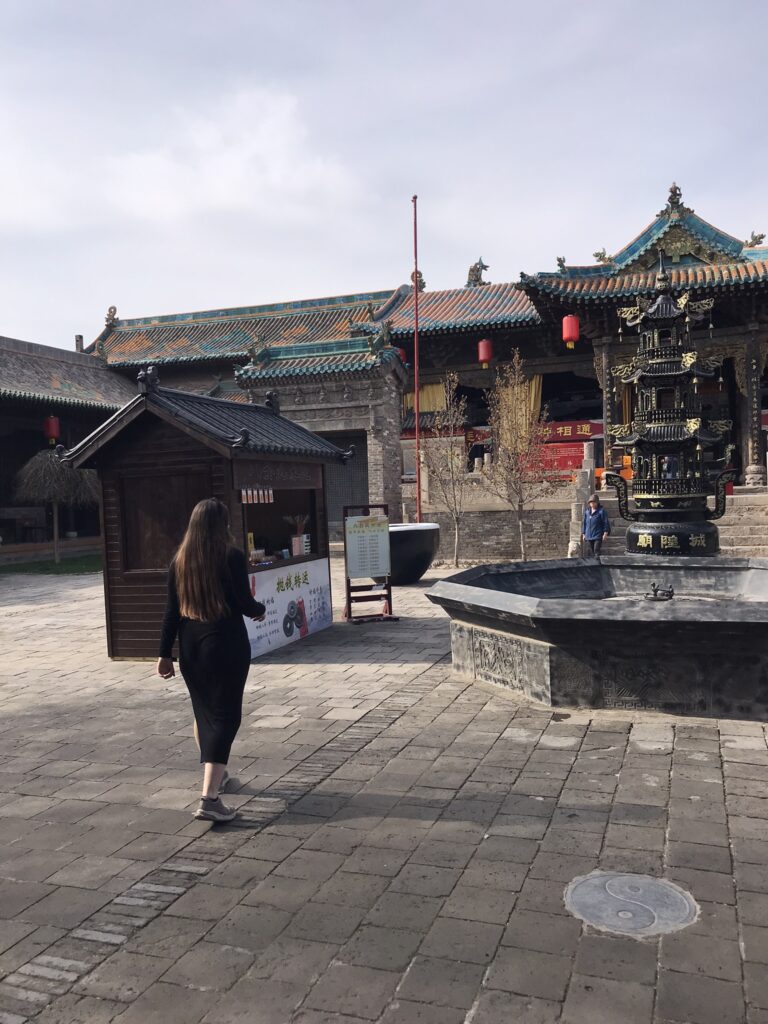
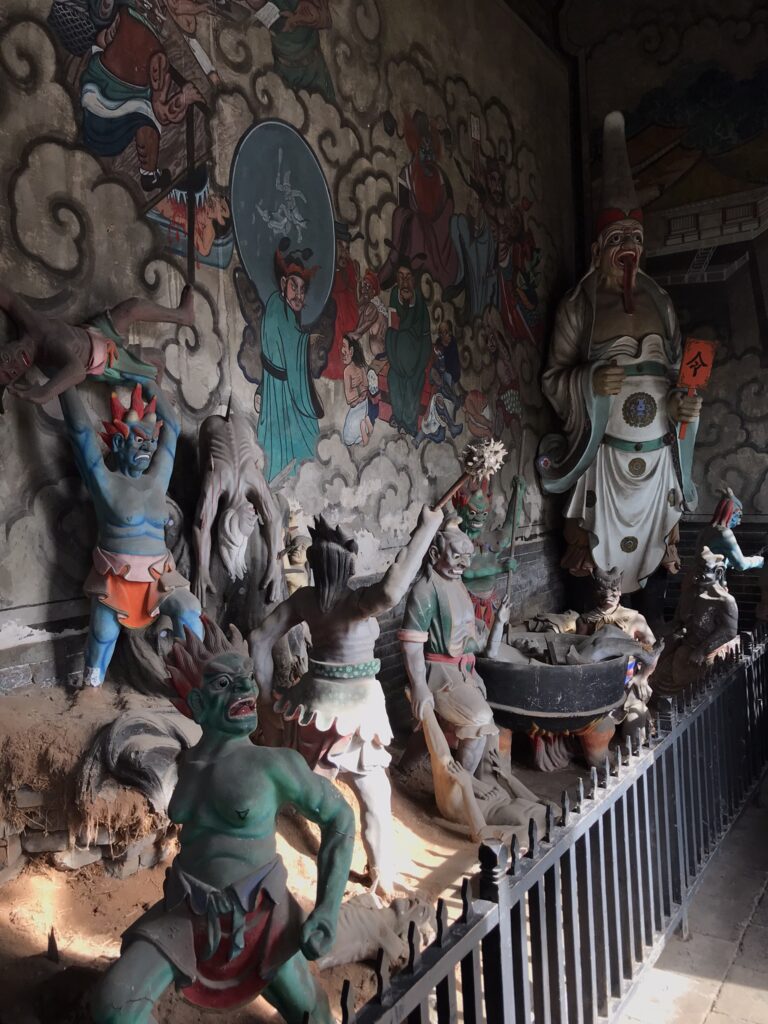
The City God Temple – gruesome fates await in Taoist hell
After exiting the temple, continue east along the same road (Chenchuangmiao Street) and you will see Anjia Catholic Church near to the eastern city walls. This imposing Christian church was constructed at the behest of European missionaries in the wake of the Boxer Rebellion in the early 1900s, providing a vivid illustration of the foreign Christian influence within China during the early 20th century. During the Cultural Revolution of the 1960s and 70s the church was closed and suffered from vandalism and neglect, before being restored during the 1980s when religious worship was permitted once again.
Entry to the church is not always possible for tourists, so it may only be possible to observe the church from outside. After checking out the church, head south along the namesake Anjia Street and follow the curve around to the right until you reach the entrance to the Pingyao Confucian Temple.
Also known as the ‘Literary Temple’, this large complex venerates the legendary philosopher Confucius, whose ideals formed the backbone of Chinese state philosophy for centuries. The temple’s central Dacheng Hall was constructed in the 12th century, making this one of the oldest and best-preserved Confucian temples in China. Inside the hall is a large statue of Confucius, who interestingly is depicted with dark skin – a quirk of 11th and 12th century Confucian iconography which developed after Emperor Zhenzong of the Song dynasty had branded Confucius as the ‘Dark Sage’, alluding to his mystical and profound truths.
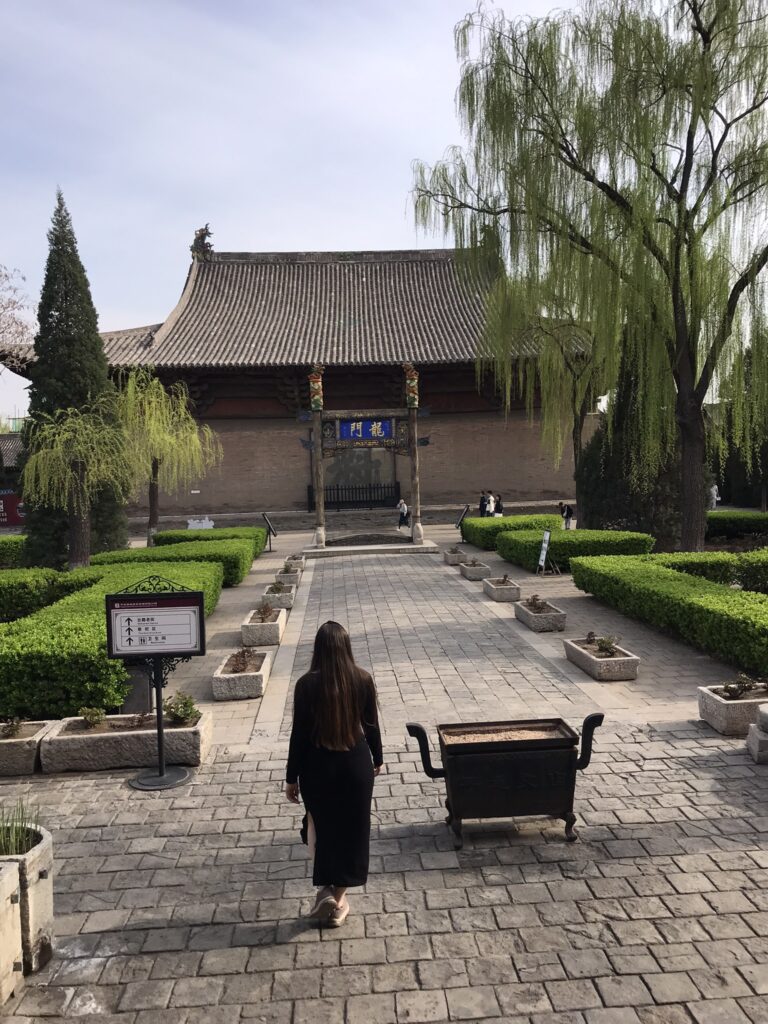
Pingyao’s Confucian Temple is one of the oldest and grandest surviving temples outside of Confucius’ hometown, Qufu in Shandong province
As well as the main hall, the complex also contains a small exhibition about the life of Confucius as well as displays of art and calligraphy. The rear of the temple complex contains an exhibit about the Imperial Exam – a test of Confucian texts and ideals which was used to determine entry into the Chinese civil service for centuries. Situated in an original examination hall, this museum is said to contain the only surviving original Ming-era Imperial Exam paper in China.
After exiting the temple complex to the rear, you will find yourself back on Chenghuangmiao Street near to the City God Temple. Head back to South Street and follow the street south to reach the Yingxun Gate (South Gate) of Pingyao’s city walls.
Built in 1370, Yingxun Gate is the largest and most elaborate of the Pingyao’s gates and is considered to be the ‘main entrance’ to the ancient town, representing the head of Pingyao’s turtle-shaped walls. This is one of two locations for visitors to be able to access and walk on the walls – the other is the north gate at the opposite end of town. The circumference of the city walls in total is approximately 6 kilometres, and large sections of the wall are usually accessible for visitors.
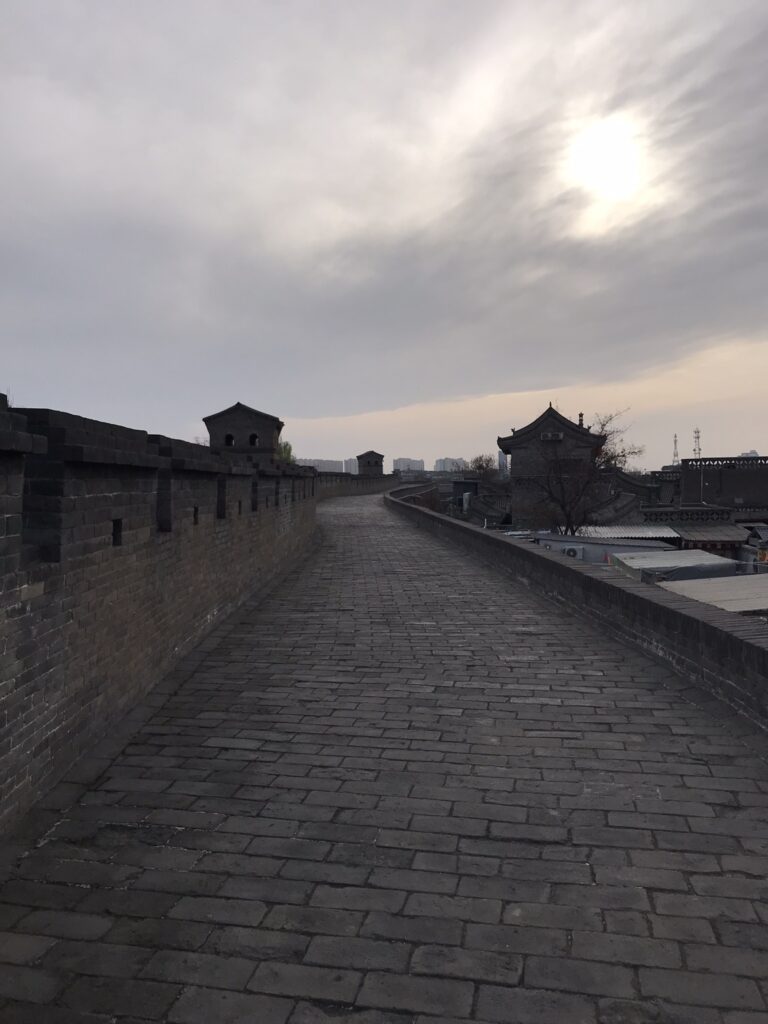
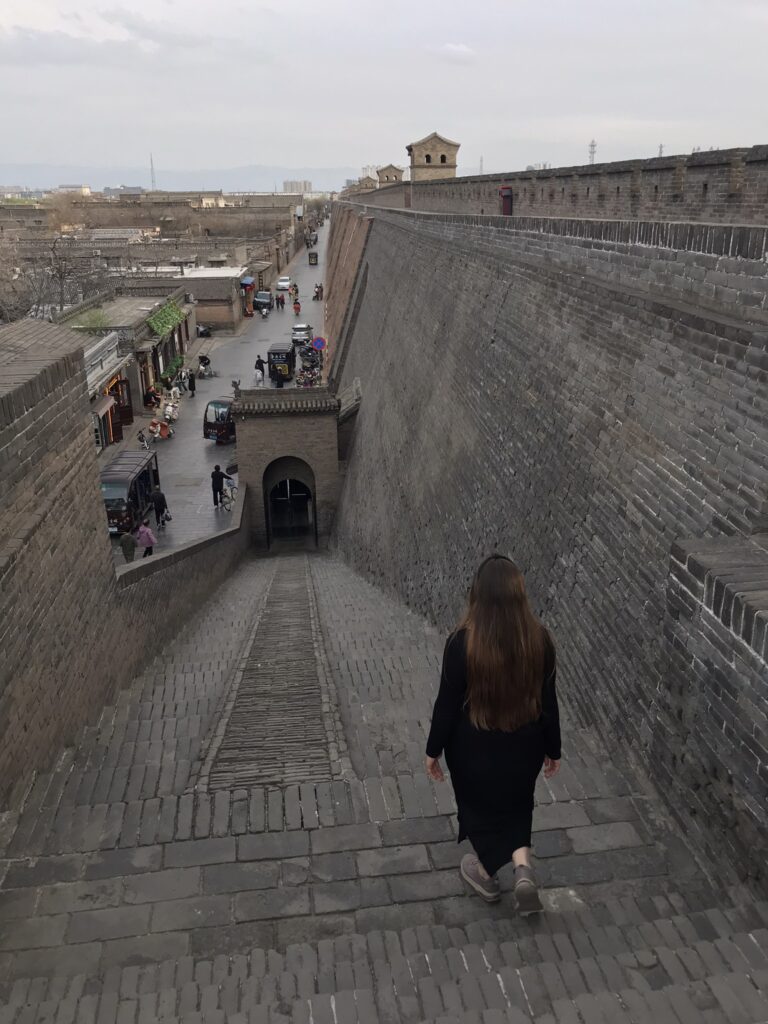
Walking the city walls is a classic Pingyao experience
The Pingyao combo ticket only allows a single admission to the walls so it’s best to make good use of it while you’re up there! The stretch of walls between the south and west gates is often considered to be the most scenic and tends to see fewer visitors than the often-busy area immediately around the south gate, so it’s recommended to walk a little further to this section for the best experience.
The walls are particularly scenic around sunset. For those that want a longer stroll, it’s usually possible to enter at the south gate and exit the walls at the west gate (Xiaximen, which is normally exit only), or continue all the way around to the north gate if this section of the walls is open.
This tour has covered the main historical and cultural highlights, but there is a lot more to see in Pingyao – wandering and soaking up the atmosphere is most of the fun here. If you’re staying overnight in the town then be sure to check out the bustling and vibrant South Street (Ming Qing Street) after dark! The imposing city walls outside Yingxun Gate also play host to a free nightly sound and light show, which is well worth checking out. For more China content, click here!