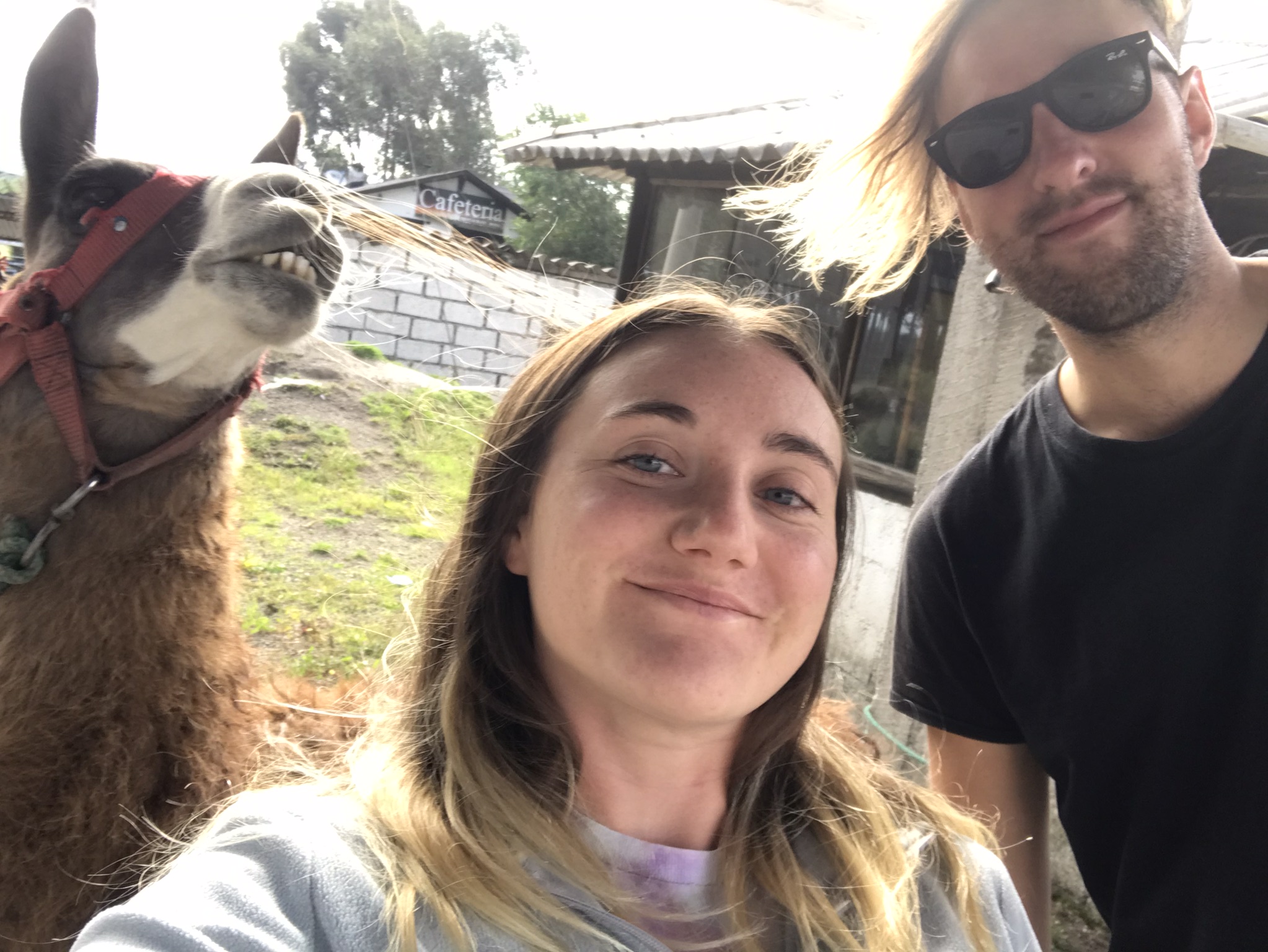
A country the size of a continent, filled with countless wonders and countless problems. A country where travel can be both insanely rewarding and maddeningly difficult. India is almost too vast and overwhelming to put into words. Check out my India travel experiences below.
Mumbai, Ahmedabad, Mount Abu, Udaipur, Bundi, Agra, Fatehpur Sikri, Gwalior, Orchha, Khajuraho, Bhopal, New Delhi, Lucknow, Varanasi, Bodhgaya, Kolkata, Chennai, Mahabalipuram, Puducherry, Thanjavur, Bengaluru, Mysuru, Kalpetta, Kochi, Munroe Island, Patiala, Chandigarh, Shimla, Dharamshala, Amritsar
India is a big place and this page is pretty long – click on the above links to skip to each city!
We spent months in India and still only skimmed the surface – we didn’t visit most of the typical tourist spots in Rajasthan such as Jaipur and Jodhpur, Goa, most of Maharashtra and Karnataka including Hampi, the northeastern states, Sikkim or any of the Telugu-speaking areas, to name but a few places. This is hardly an exhaustive guide. However we did visit 29 cities across 15 different states/union territories independently, and so got a pretty thorough introductory experience of the country. This page is my own legitimate thoughts and experiences, good and bad. There are many amazing things to see and a lot of negatives too – this is the reality of independent travel in India, by far the most complicated and contradictory place I have ever been.
Independent travel in India is tough, to put it mildly. Expect constant noise, overwhelming pollution and poverty, little to no enforcement of rules and simultaneously unfathomable bureaucracy. If you’ve never visited India before and think you’re ready, you aren’t. It’s by far the hardest place I’ve ever travelled independently, much more so than its lesser-visited neighbours Pakistan and Bangladesh. I wrote a pretty extensive blog post about the hassles of independent travel in India, which you can read by clicking here.
A major and justified concern for travelers in India is food hygiene and the possibility of getting food poisoning. The infamous ‘Delhi Belly’ has been a scourge of travelers for a long time. I can happily report that neither myself or Dan were sick from the food at any point during our time in India. This required intense research and vetting of everywhere we ate, only eating vegetarian food unless we were 100% sure we could trust the meat, avoiding street food completely and only drinking bottled water. In India, many restaurants are veg only and non-veg options are clearly demarcated so it’s pretty easy to make an informed choice and limit your diet accordingly (although you may end up with a paneer overload like us!). India is a difficult enough place without food poisoning, so not getting sick was a big plus – although we both still ended up feeling ill with cold/flu symptoms on multiple occasions due to close contact with very large numbers of people, something that can’t be avoided in India. A small bottle of hand sanitiser is highly recommended!
When researching places to eat as well as attractions, accommodation etc, we often rely on Google Maps reviews as a rough baseline indicator of quality. In India, this is a much more difficult and complicated process than in pretty much any other country. Firstly, the number of reviews in India in most cases is exponentially higher than elsewhere. We saw some restaurants with literally tens of thousands of reviews, a very large percentage of which contain, frankly, non-relevant information such as locals complaining about ‘bad behaviour’ of the staff or that the quality of a particular dish didn’t match their own home cooking. Sifting through this sort of stuff to find relevant information is quite time-consuming. Additionally, fake reviews are prevalent in India. We experienced this first hand – Dan ordered a takeaway lassi while on the train and was later messaged by the cafe offering a payment of 20 rupees per review. If you’re a regular user like us, you really need to take Google ratings with a pinch of salt in India and look closely at the reviews themselves if you’re unsure. It’s a real minefield. I’ve listed all of the places we ate in each city below, and as we weren’t sick I guess I can vouch for all of them.
When ordering food in India, a useful app is Zomato. It has pretty good coverage throughout the country and we used it on dozens of occasions without ever having a bad experience.
Although India was a British colony and English is one of the official languages of the country, don’t be fooled into thinking that it is widely spoken and understood. The reason that English is the language of India’s judiciary is that it is considered to be a neutral language, i.e. not indigenous and so not favouring one state or region over another. In reality, English is a second language at best for everyone in India and so the general levels of English are really no higher than any other non-English speaking country. The language barrier can be a real thing here. It’s a contradition, as India is said to have the highest number of English speakers of any country in the world and there is written English as well as ‘Hinglish’ everywhere, which can lead to a false sense of security with the language. You’ll find many fluent speakers, but equally a great many people that don’t understand a single word.
Inter-city transport within India is actually one of the easiest aspects of travel in the country once you’ve got the hang of it. India has an extensive and somewhat notorious rail network, but our experiences were mostly positive. There is also an extensive bus network within the country. Check out my guide by clicking here!
Now for the good – India’s history and culture is incredibly rich. Each region of the country has its own story to tell, with an interwoven history of countless local dynasties as well as more prominent powers such as the Marathas, the Delhi Sultanate, the Mysore Kingdom and the Mughal Empire. The territory was then conquered by the British, leaving a legacy of grandiose colonial architecture, transport infrastructure and the famous Indian obsession of cricket. The country is home to an almost unendingly wide variety of languages, cultures and religions – it contains sacred places of pilgrimage and key sites for many major religions, including Sikhism, Buddhism, Christianity and Hinduism.
The north and south of India provide vastly different travel experiences. Generally, the southern states and in particular Kerala and Tamil Nadu are considered to be much easier and less chaotic, and this was our experience too. The mountainous far north provides something completely different again. There’s pretty much a bottomless treasure trove of unique things to do and see within the country’s borders.
Mumbai
What can be said about Mumbai? One of the world’s major cities, like most of India it’s a place of extreme contrasts. Glitzy high-rise buildings and penthouses belonging to some of the world’s wealthiest people sit side-by-side with some of the world’s largest slums. Home to the Bollywood film industry, Mumbai is the swanky heartbeat of modern Indian pop culture, art and fashion, while simultaneously being the gritty home to street hustlers, grifters and grizzled manual labourers all trying to make it in the big city.
The heart of Mumbai sits on an island-cum-peninsula, meaning there is a finite amount of space – for this reason the city has developed upwards in the form of skyscrapers, rather than just continually expanding outwards like some other large India cities such as New Delhi. This gives Mumbai a dazzling skyline with a look more akin to major cities in the USA or East Asia. Because of the lack of space, the city’s urban area spreads out to the north of the peninsula – an area known as the Mumbai Suburban District – while a new city (Navi Mumbai) was created in the 1970s across the water to the east in order to try to relieve some of the housing pressure. The main historical city area is sometimes now referred to as South Mumbai to differentiate it from other parts of the wider urban area.
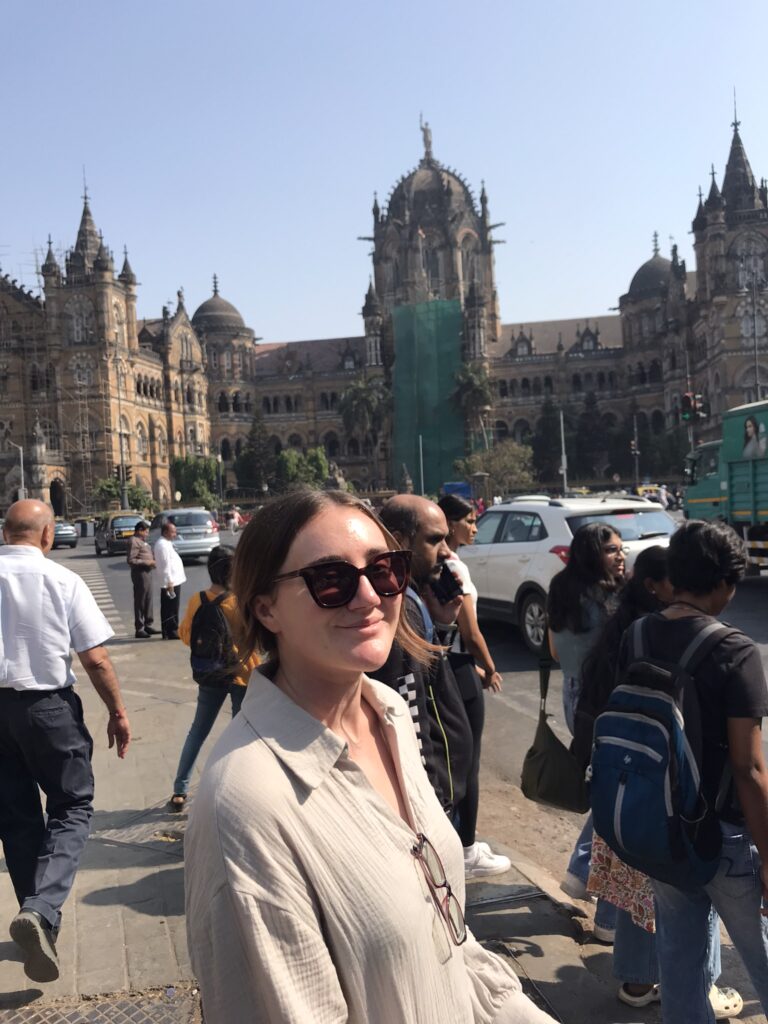
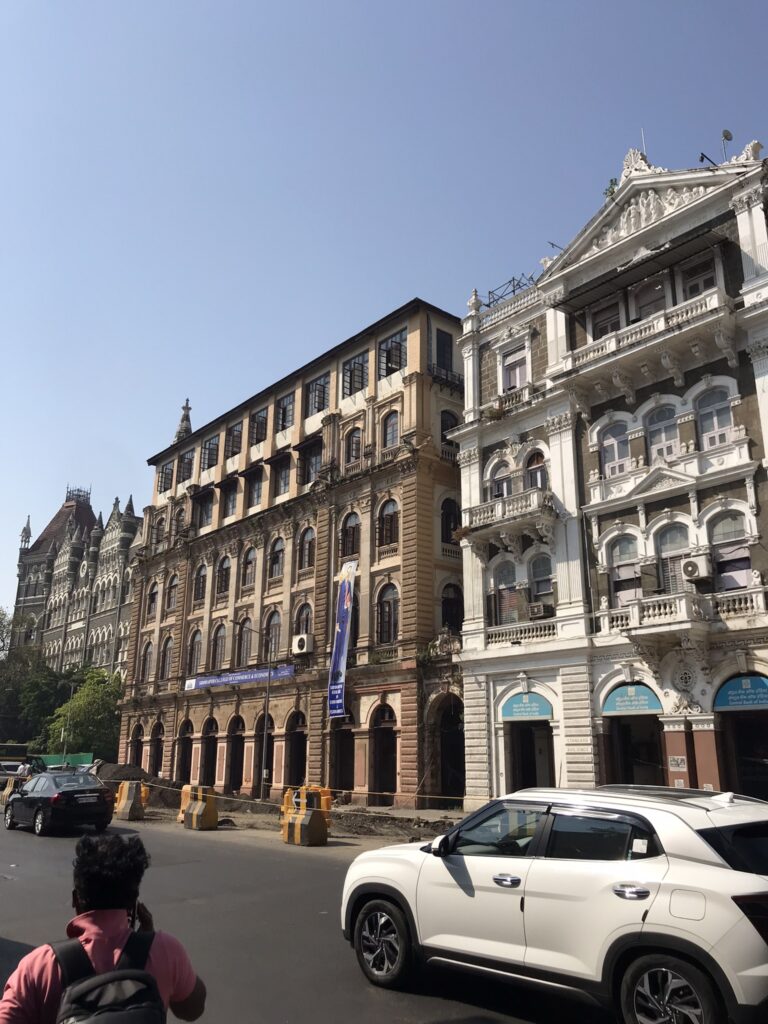
South Mumbai is full of British colonial architecture
Mumbai was our arrival point to India – we had been told to prepare ourselves for chaos and carnage, but honestly it wasn’t really all that that intense or overwhelming compared to many of the other places that we later visited in India. Uber works pretty well in Mumbai, the road system is decent and auto-rickshaws (tuktuks) are banned in South Mumbai, making it a relatively sterile environment compared to a majority of Indian cities. In the Mumbai Suburban areas it’s a different story although there are still plenty of more well-to-do neighbourhoods outside of South Mumbai, including Bandra which is known to be home to several celebrities and Bollywood stars. The urban sprawl of Mumbai also contains numerous slums, including the infamous Dharavi which houses over a million people in a tiny geographical area and gained worldwide attention as a filming location for the movie Slumdog Millionaire.
Sandwiched between Mumbai Harbour on one side and Back Bay on the other, South Mumbai is full of iconic sights, from grandiose colonial architecture to religious buildings. The famous Marine Drive boulevard overlooking Back Bay is a popular spot for sunset, as is the bustling and semi-chaotic Chowpatty Beach – both can be found cram-packed with locals on most nights. On the west side of Back Bay jutting out into the Arabian Sea, the Malabar Hills neighbourhood is one of the most affluent in Mumbai and all of India.
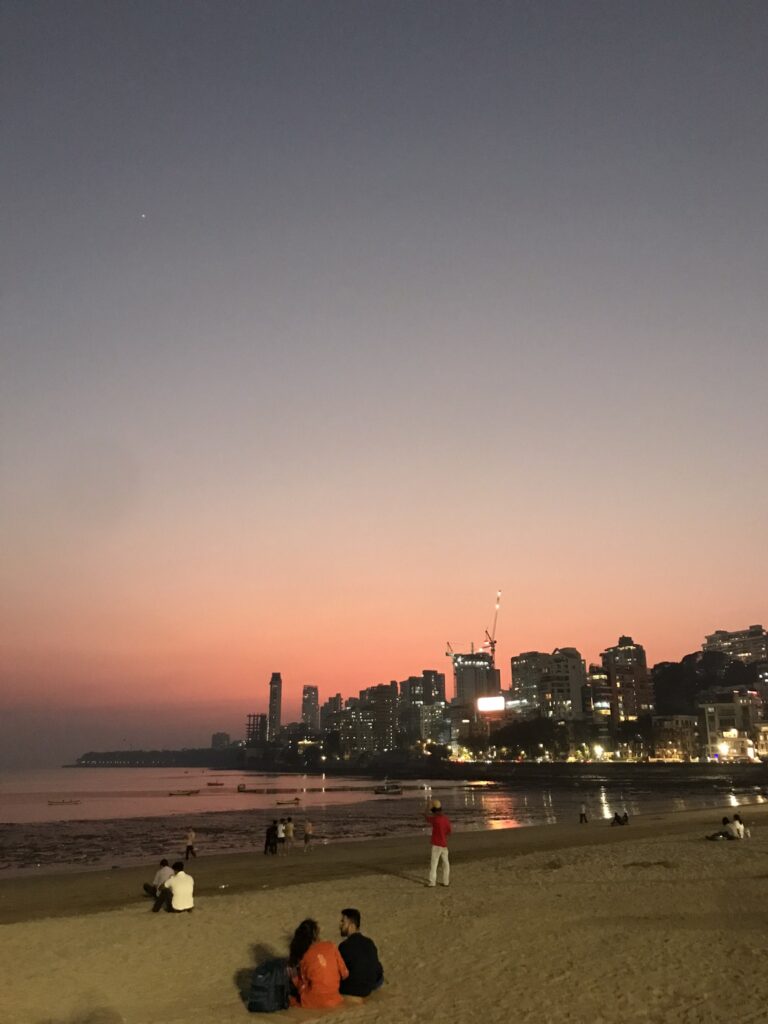
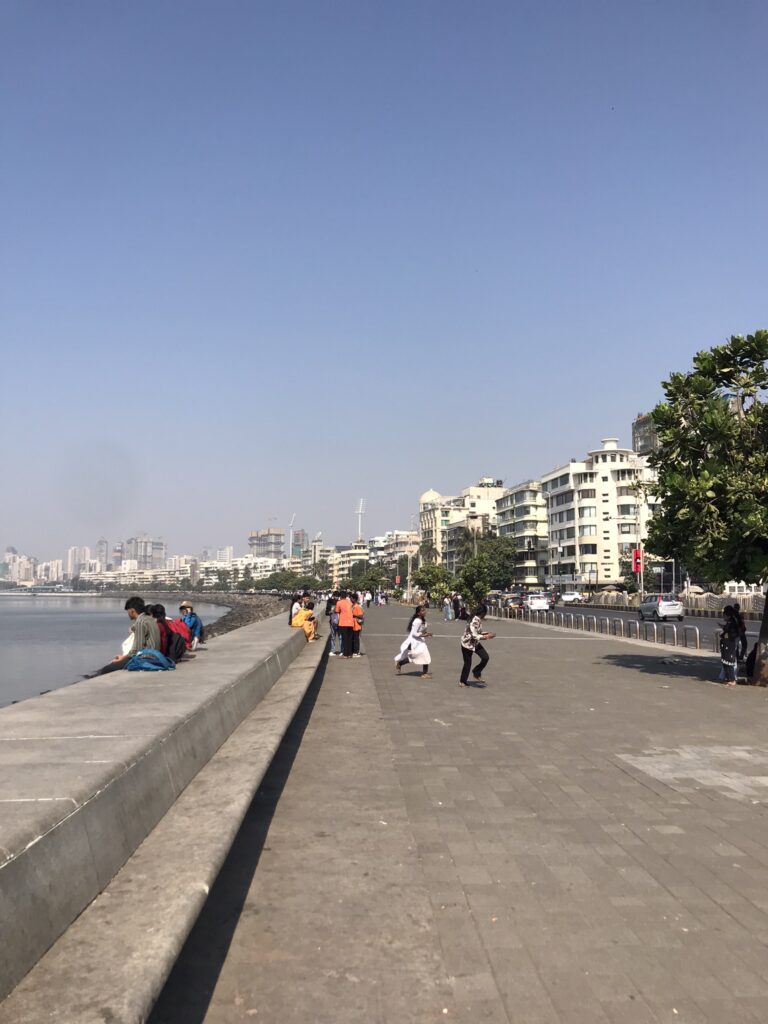
Chowpatty Beach and Marine Drive, two popular sunset spots
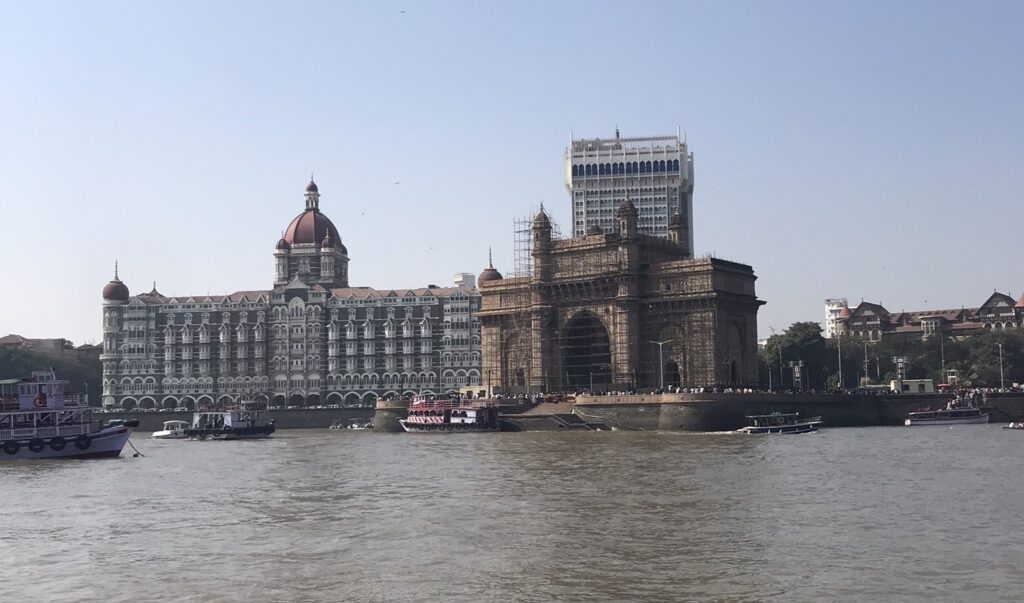
The Fort and Colaba areas of South Mumbai in particular are home to many historic British-era buildings. Notable landmarks include the Chhatrapatai Maharaj Shivaji Terminus (CSMT, formerly the Victoria Terminus) – one of the most impressive railway stations in the world and a UNESCO World Heritage Site, as well as the Gateway of India, a ceremonial structure created for the arrival of the British King George V in the early 1900s. The Gateway of India was also the ceremonial departure point of the last British officials from India following the nation’s independence. Next to the Gateway is the Taj Mahal Palace Hotel – arguably the most famous and iconic hotel in India which overlooks Mumbai Harbour and dates back to the time of the British Raj.
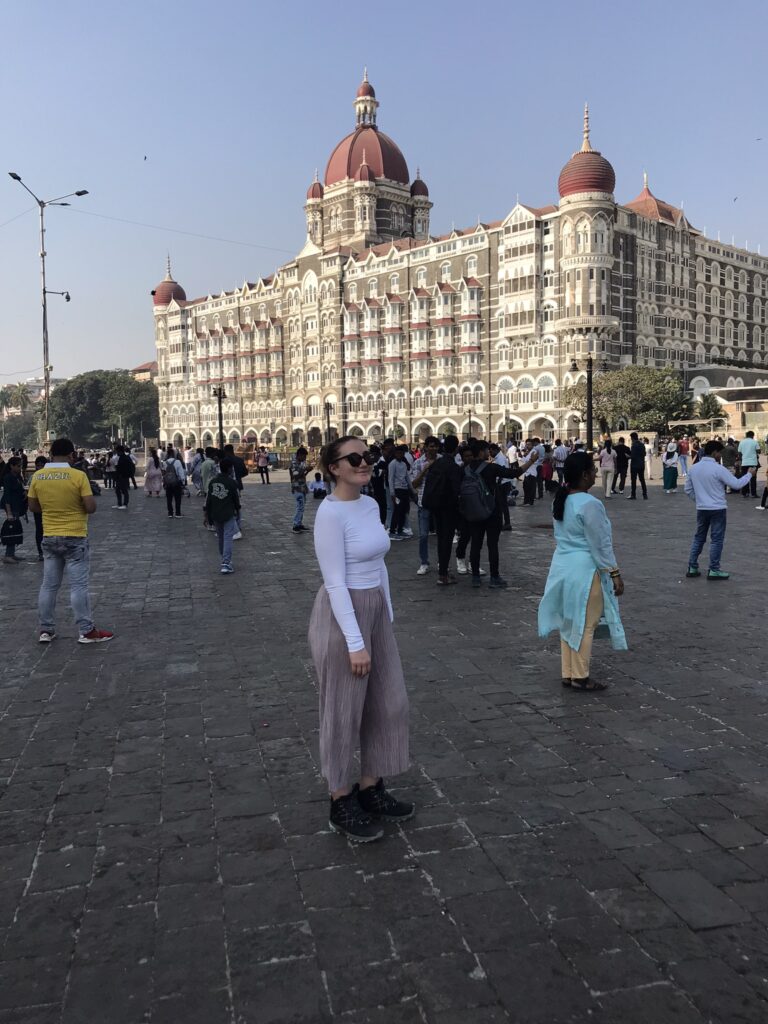
The famous Taj Mahal Palace
Because of its popularity with tourists, the area around the Gateway to India has a few scammers and unsavoury characters. There are also typically many excited domestic tourists from small towns who are eager to interact and take photographs with foreigners. Around this area we were approached on a couple of occasions by female scammers who attempted a common trick – asking visitors to buy food for their baby, only to lead them into a specific shop with massively inflated prices. It’s pretty easy to spot and avoid – simply put, if anyone tries to lead you somewhere, hand something to you or asks you to give them money for anything then just don’t do it. Other than these annoying scammers around the Gateway area, we weren’t really approached or hassled at all elsewhere in Mumbai.
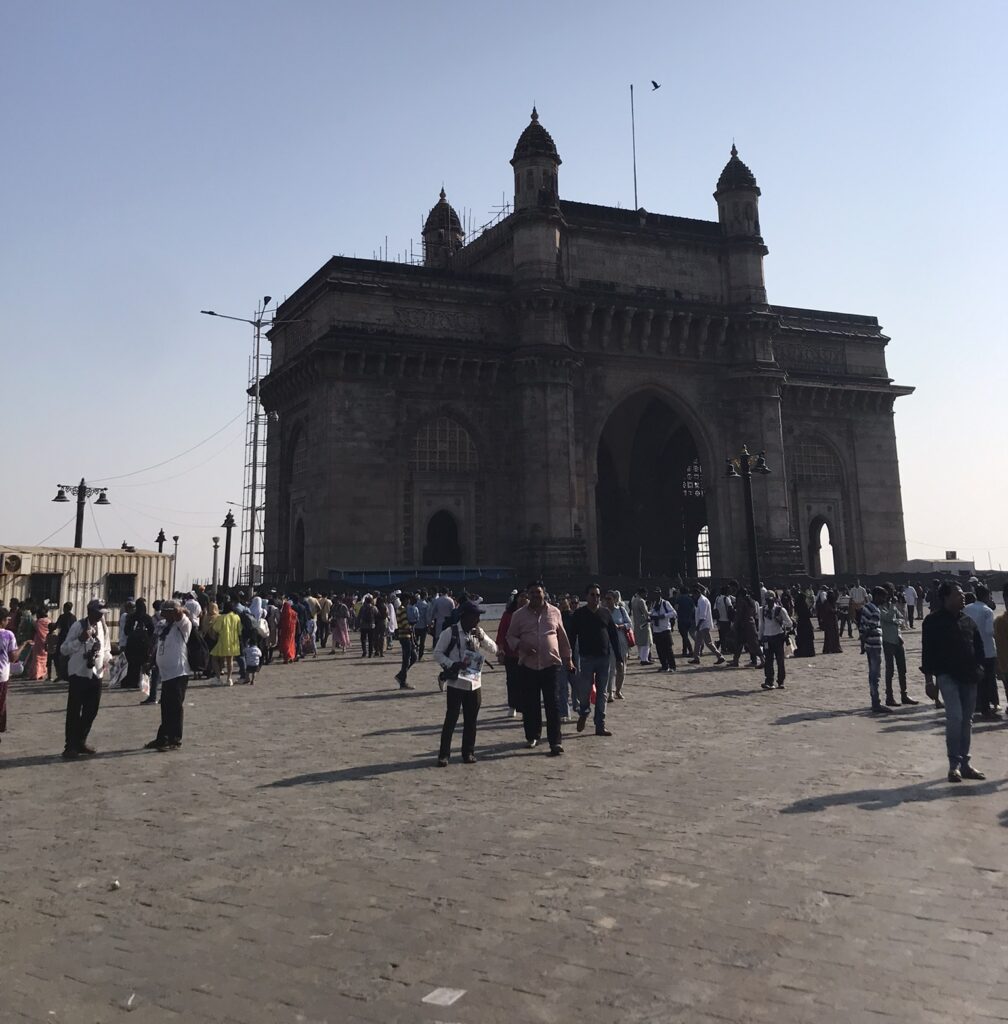
The Gateway of India is a pretty chaotic place
We did have some difficulty in Mumbai finding both accommodation and reliable places to eat. Normally when traveling we use Google reviews as an aid – in Mumbai this was much more difficult due to a proliferation of fake reviews as well as masses and masses of questionable reviews from locals and domestic visitors who may not be looking for the same things as us. Although it’s a such a large city, the number of places that we felt like we could trust to not make us sick was severely limited. I can vouch for everywhere that we ate in the end – see the foodie places below! Mumbai is also known for its street food, particularly the famous vada pav sandwich, but we didn’t partake – again due to fear of questionable food hygiene standards.
Accommodation
We chose to stay in the historic and famous Colaba neighbourhood – strangely we struggled to find decent budget options in this part of Mumbai and saw very few other foreigners in this area, despite it being within walking distance of a number of attractions. We also couldn’t find many decent places to eat nearby and so relied heavily on Zomato for dinner.
Hotel Antique Colaba – this seemed to be the best budget accommodation option that we could find, more of a motel really located off a side street next to the main Colaba Causeway. Friendly staff who tried their best but the rooms were a little shabby, had a bit of a strange smell to them and were also a little noisy at times.
Foodie Places
South Mumbai has a proliferation of veg-only lunch places for office workers/locals with cheap prices that do set thali-style meals served on a metal tray. Very few foreigners use these establishments but we found eating here to be both the best value and the most authentic experience.
Anna Idli (Fort) – a busy, hygienic sit-down restaurant which is an interesting place to try various South Indian street food-style dishes such as dosas, uttapam and many other tasty regional treats with names that I sadly can’t remember or pronounce. Still budget friendly but it’s a bit more of an upmarket place – outside of the restaurant they were providing catering to a film crew.
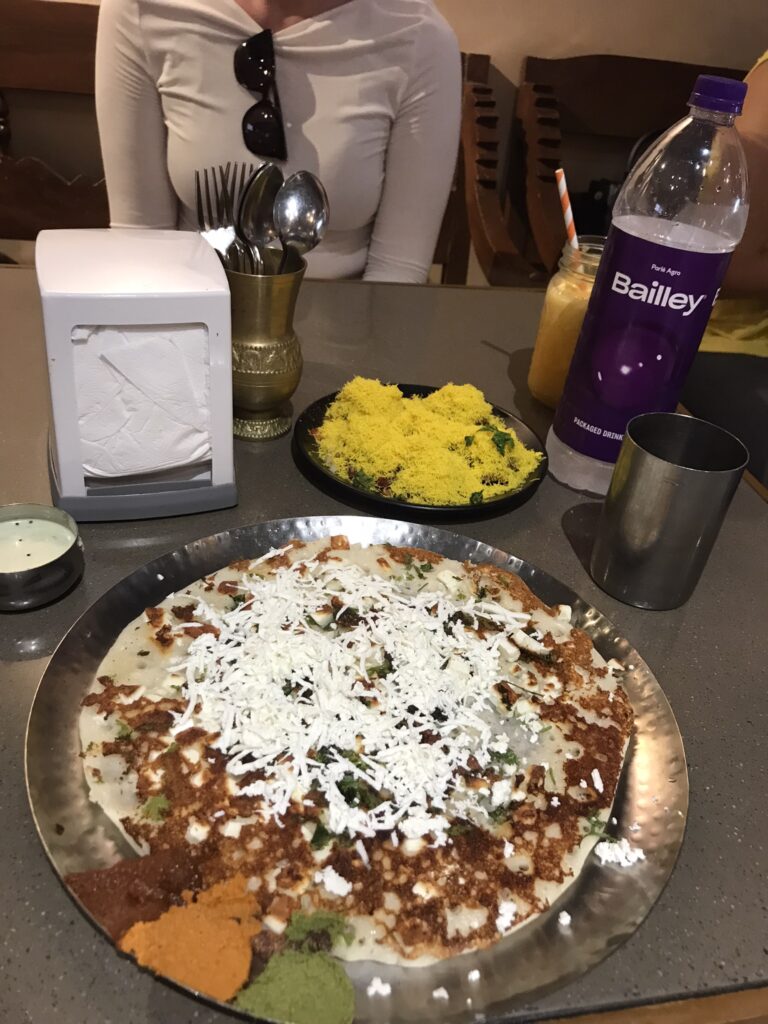
Southern Indian delicacies at Anna Idli
The Mumbai Masala – a good place to try a local specialty, pav bhaji. We were ushered into a more exclusive, air conditioned back room by the server which was appreciated. We over-ordered here but it wasn’t a problem as the food was ridiculously cheap.
Poornima – a very non-touristy place – although it’s located within walking distance of the Gateway of India, the locals and staff were surprised to see us. A small and rustic place with limited seating serving authentic local food, we encountered an overly friendly drunk guy inside who kept trying to talk to us in limited English. Some other patrons escorted him away unprompted as they didn’t want to give us a bad impression – they even gave us a free bottle of water afterwards! I can’t really fault this place, the food was good and both the servers and patrons (apart from the drunk guy) were pretty chill.

Tasty paneer curry at Poornima
Third Wave Coffee – a coffee chain similar to Starbucks which is prevalent in many cosmopolitan Indian cities. The coffee here is decent. I made the mistake of ordering a spicy chicken sandwich on our first evening in India – don’t do this as the spice was a lot more than expected!
Starbucks – we resorted to Starbucks to buy sandwiches a couple of times as it was close to the Gateway of India and a safe option where we were pretty confident of the hygiene standards. Quite expensive though and a pretty boring choice.
Smokehouse Deli (Zomato) – we ordered delivery several times from this place using Zomato – typically a meal box with pasta, wedges, vegetable, paneer and brownie. A balanced and filling meal for dinner that we could eat in our room and had many times without making us sick.
Activities
Guruwalk (Fort) – on our first day we took a Guruwalk tour of the Fort area, covering landmarks from the CSMT rail station to the Gateway of India. A good introduction after arriving in the big city. The tour included a stop for some local ice cream – mango is the best flavour. A refreshing treat on a hot day. The guruwalk also took in a free art gallery (Jehangir Art Gallery), which I enjoyed. After visiting this area, we also enjoyed walking through Fort and Colaba in the evenings to see the colonial buildings lit up after dark.
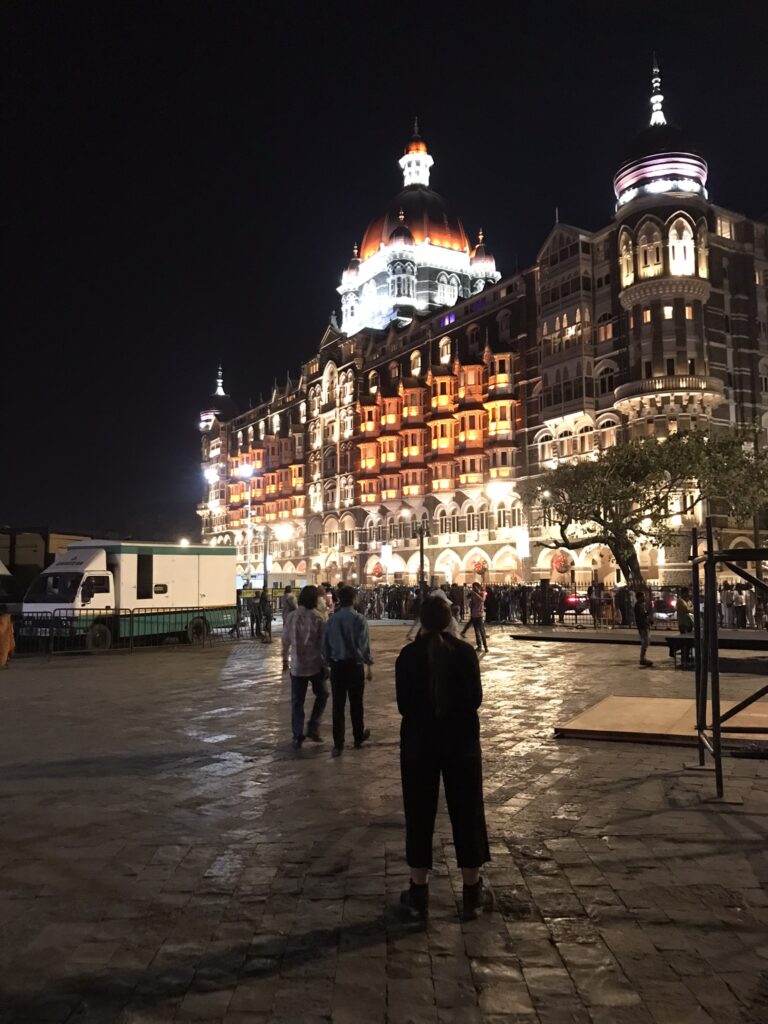
Colaba and Fort are pretty spectacular after dark
GPSMyCity self-guided walking tour – Malabar Hills – we took a self-guided walking tour of the Malabar Hills area – arguably Mumbai’s most upmarket neighbourhood. We enjoyed this walk, although be aware that access to the Tower of Silence is strictly forbidden for those outside the Parsi community. We attempted to visit but were turned away by the guard.
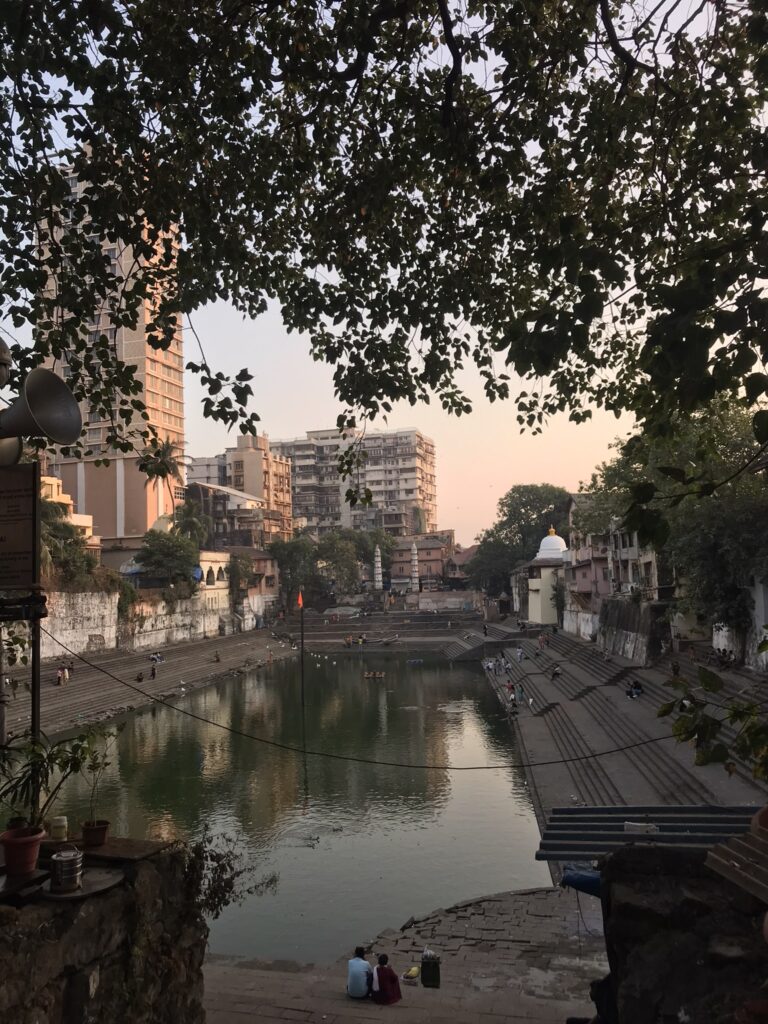
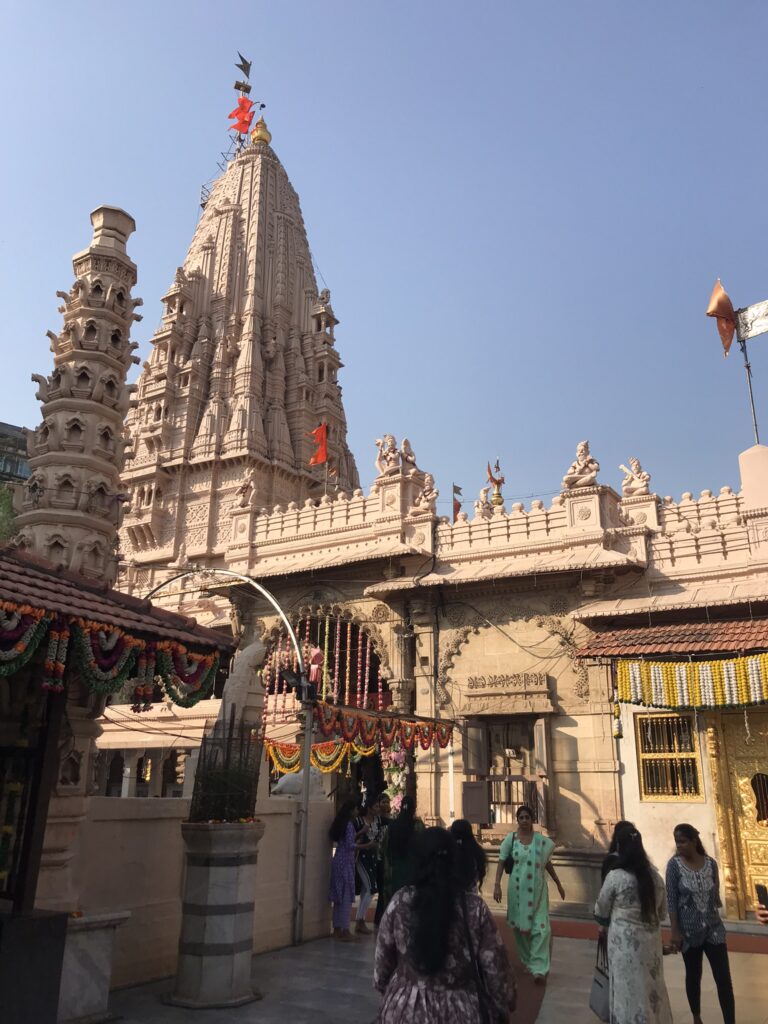
Sights of Malabar Hills
Mani Bhavan Gandhi Sangrahalaya (Gandhi house) – located near to the Malabar Hills area, this was Mahatma Gandhi’s residence in Mumbai. It is now full of exhibits about Gandhi, telling his story via correspondences and quotes. The museum houses personal items including Gandhi’s writing set and you can also see his little study area. Gandhi didn’t actually stay for that long in this house – most places that Gandhi either lived or stayed in India are now museums.
Chowpatty Beach – Mumbai’s iconic beach located on the shores of Back Bay. This is a very dirty place, we saw rats running along the beach and the water looked to be extremely polluted. There were hundreds of families sitting on the beach having picnics regardless. This is a very busy area, filled with many vendors and food stalls of questionable hygiene. There is a real vibrant, carnival atmosphere here, particularly around sunset and in the early evening – the beach is full of people and families, even after dark.
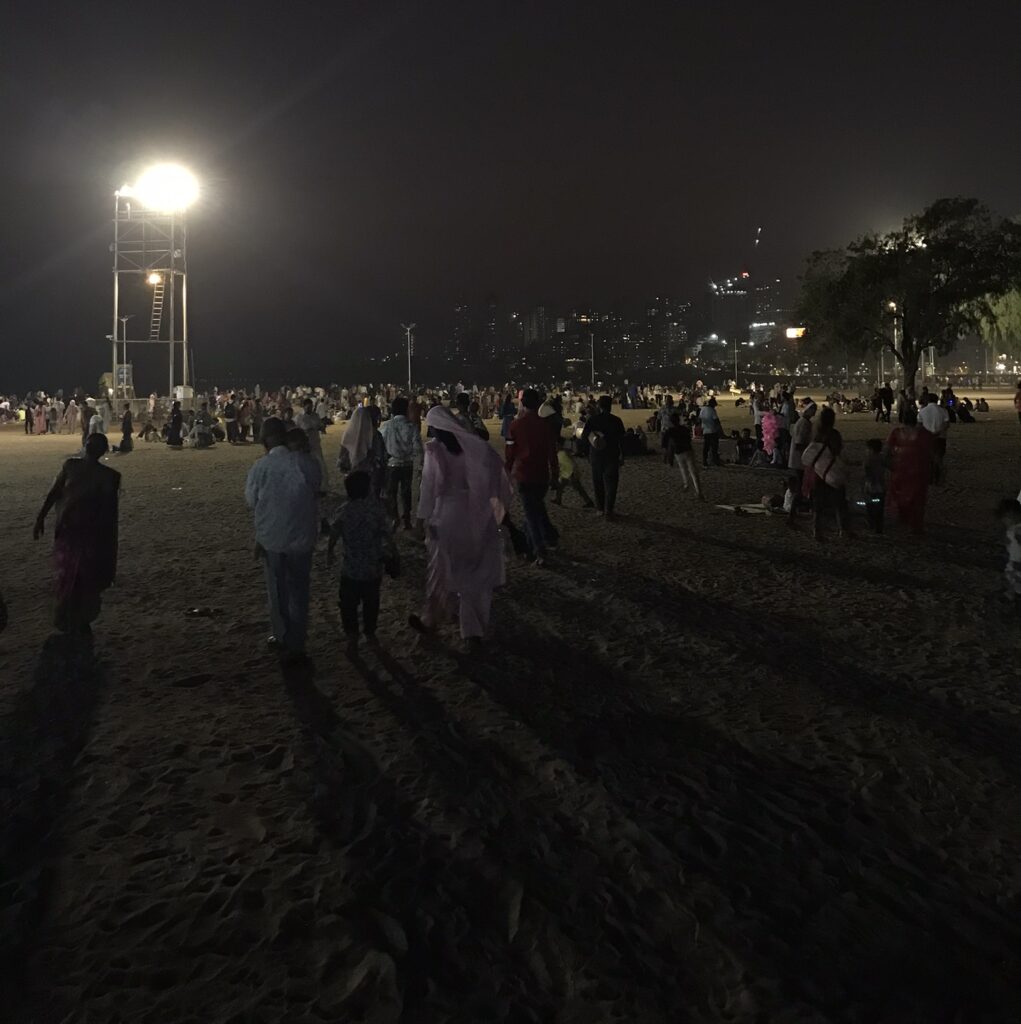
Chowpatty Beach is bustling in the evenings
Chhatrapati Shivaji Maharaj Vashtu Sangrahalaya (Museum) – an iconic museum in a grand colonial building. The museum contains a wide array of sculptures and artefacts – religious art and sculptures relating to Hinduism, Buddhism, Jainism as well as miniature paintings, paintings on grain of rice, entrepreneur Ratan Tata’s collection of porcelain etc… There is plenty to see and you can easily spend several hours here. Special mention for the museum’s audio guide which is excellent – one of the best audio guides I’ve ever used.
Sassoon Docks – this area in the south of Colaba is known for its enormous fish market, with catches coming in from Mumbai Harbour. We arrived about 10am, the market was already finished and they were clearing up. There were still many workers around, women shelling prawns and fishing boats lined up ready to head back out, so it wasn’t a wasted trip by any means. Unsurprisingly this area is really stinky – closed toe shoes are needed as fish guts and bloody water is all over the floor.
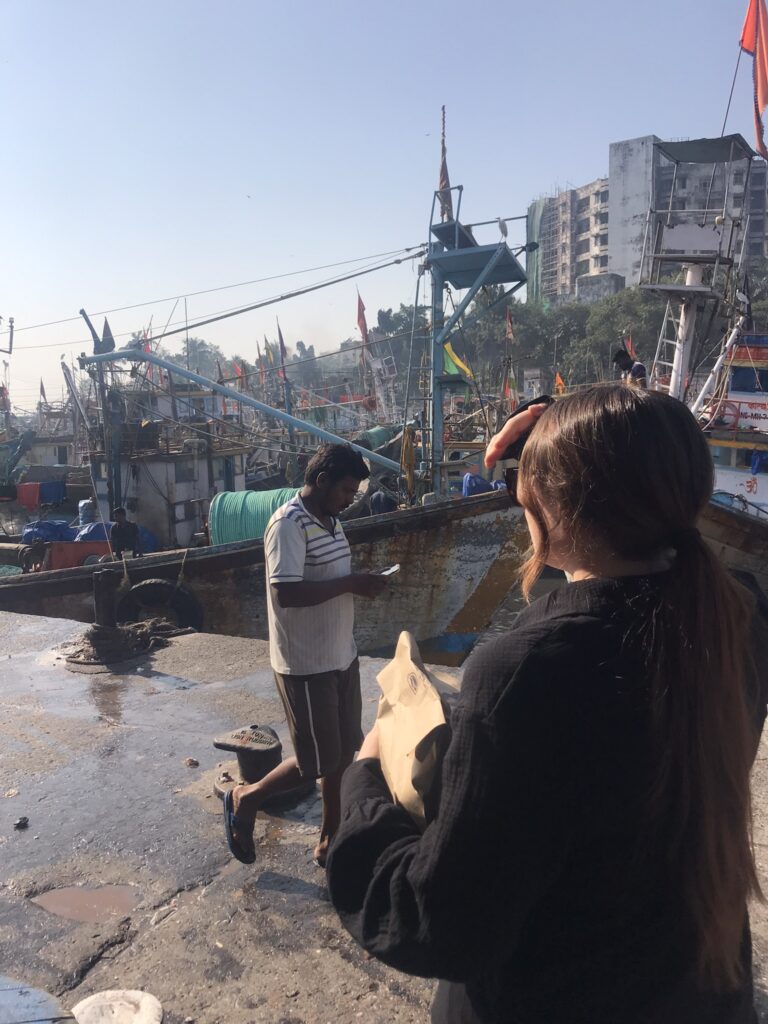
We missed the market but Sassoon Docks were still busy with boats
Guruwalk – Dharavi Slum – although people raise valid concerns about the ethics of slum tours and so-called poverty tourism, a tour of the slum with a local guide can be a valuable experience. We used Guruwalk and our guide was an enterprising local guy from the slum who was respected in the area and conducted the tour while maintaining the dignity and respect of the local people (we did a similar thing when visiting a favela in Rio de Janeiro).
We were struck by how industrious and entrepreneurial the people of Dharavi were. With over a million people, it really is a city within a city, containing everything that is needed for people to live – shops, temples, playgrounds and schools. We learned that most people living and working in the slum are originally from outside of Mumbai, and moved there to make money to send back in remittance to their family. There is plenty of industry here, which all takes place in small, cramped backrooms each with a handful of extremely hard-working and laborious guys doing the work. We saw a plastic processing area that feeds a whole economy, with the slum workers recycling plastic which is collected and brought to them by homeless people on the city streets. In other rooms men sew recycled material to create bags, and create ‘black soap’ from shards of soap which have been discarded by local hotels – this new product is then sold on as detergent. Conditions are hard, but we heard that many of the workers are thankful to be making money and have a job.
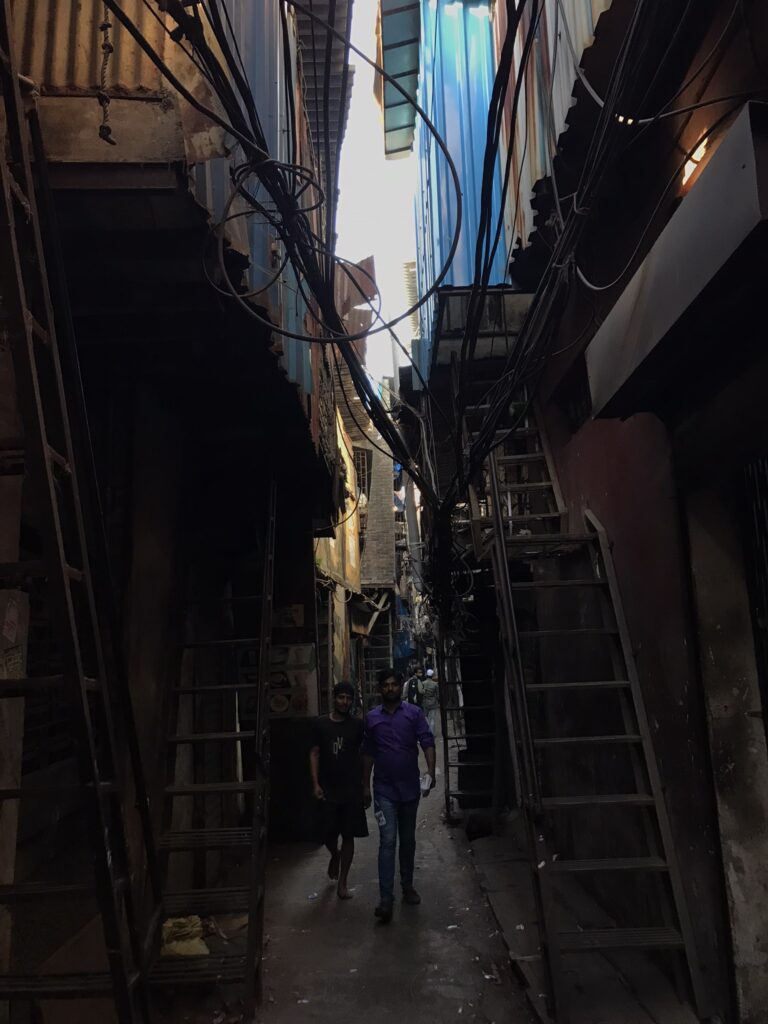
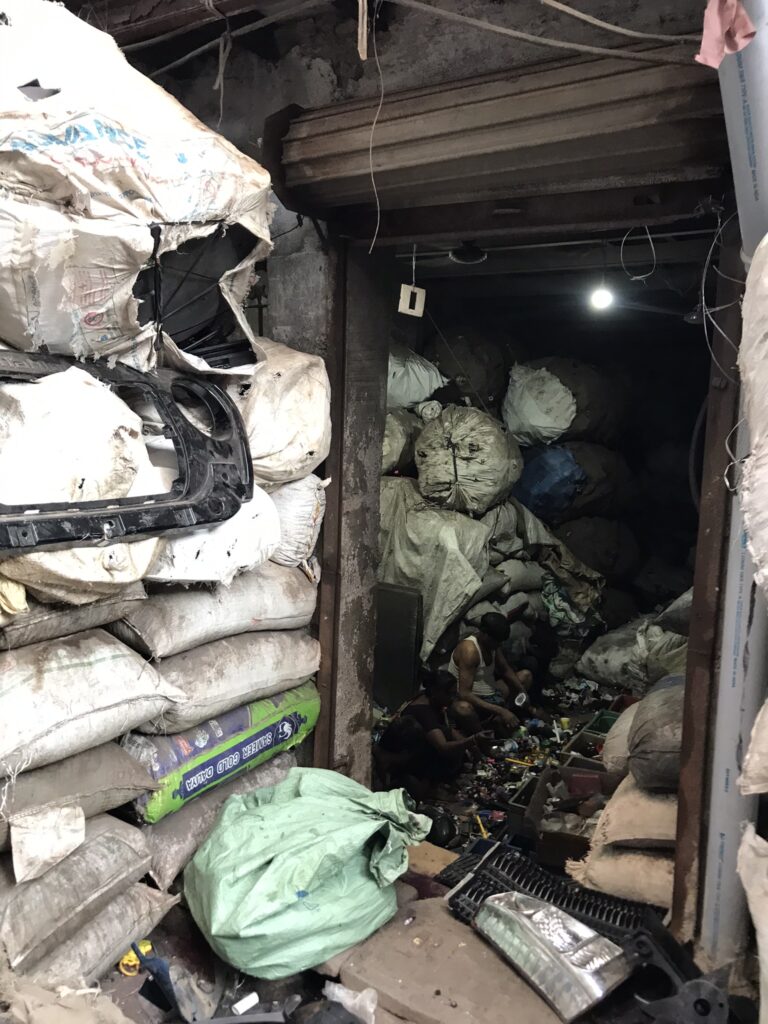
A thriving community and economy exists within the slum
The slum is split into industrial and residential areas, and also split into Muslim and Hindu areas. The winding residential streets are full of dark, narrow passageways where it is difficult to see where you are going. Homes and electricity are extremely ramshackle, with people literally living on top of each other. It’s a tough existence but we came away with an appreciation and understanding of the people living here and in other similar communities. After the tour, in order to return to Colaba we needed to hail a tuktuk to take us to the nearest station and then get the local train back to CSMT.
Elephanta Island
One of Maharashtra’s most famous archaeological sites, Elephanta Island is one of a number of small islands to the east of the city of Mumbai in the middle of Mumbai Harbour. This island is recognised as a UNESCO World Heritage Site as it is home to some of India’s most impressive cave temples. Dating back to around the 5th-7th century CE, these caves are filled with enormous carvings of scenes mainly relating to the Hindu deity Shiva. There is an entire complex of caves on the island and the scale of the carvings is immense, with so many fine details present.
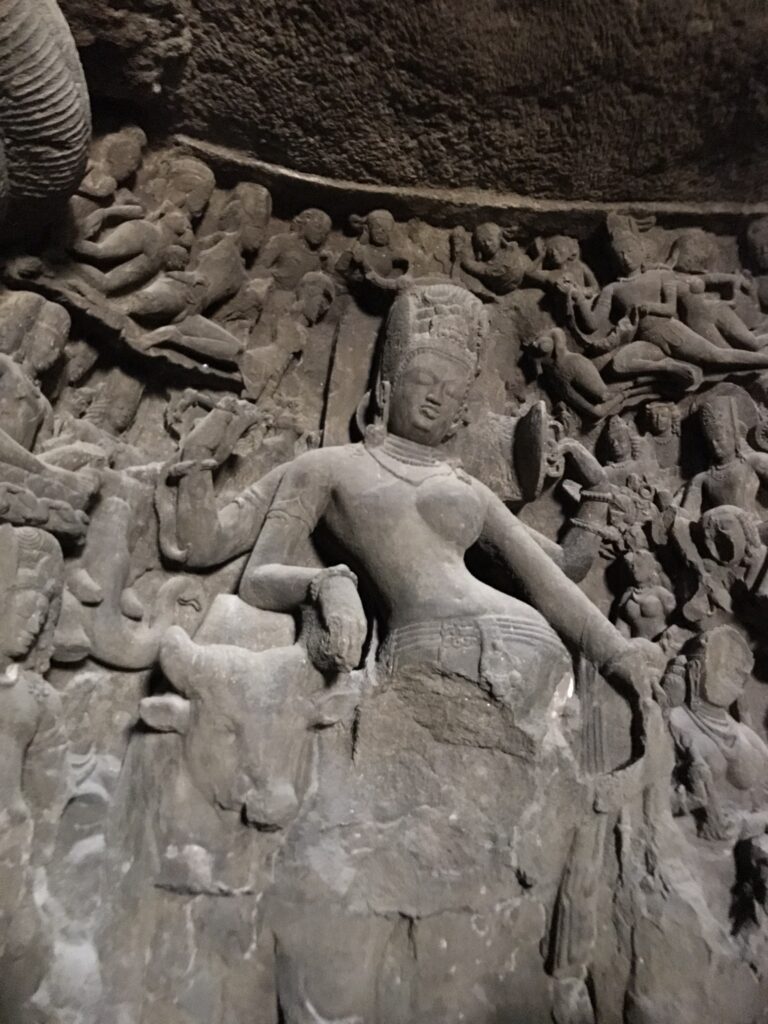
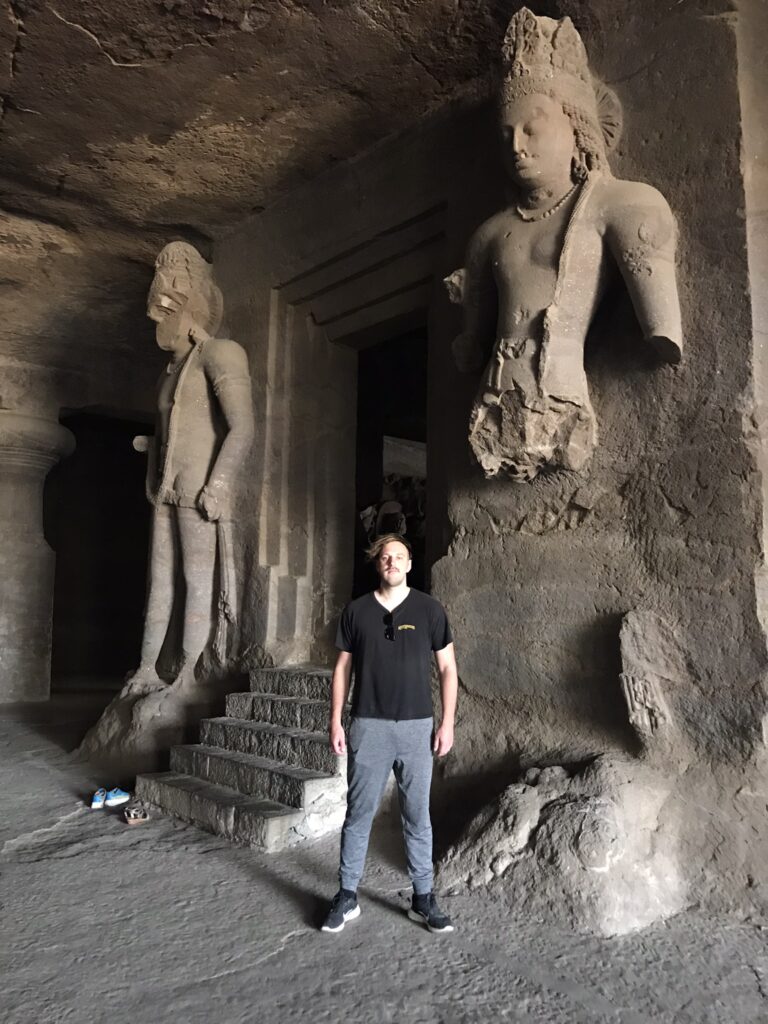
The impressive rock carvings of Elephanta Caves
Getting to the Elephanta Caves is surprisingly easy. You can get a boat from the Gateway of India – boats depart from just behind the Gateway and there are many guys milling about the area selling tickets. You may need to wait until the boat has filled up before departing, this shouldn’t take long as the caves are very popular with domestic tourists visiting Mumbai. Surprisingly we were the only foreigners on the boat so got plenty of attention – most people just wanted to shake Dan’s hand and all were pleasant and respectful. The boat journey lasts for about an hour and it’s sometimes possible to go on the top deck of the boats for better views – you may or may not be charged for this depending on the boat and crew. On our trip out to Elephanta it was not permitted to go on the top deck, but on the return a friendly domestic tourist from Odisha paid for us to go on the top deck with him (it was only 20 rupees and he refused to let us pay him back!).
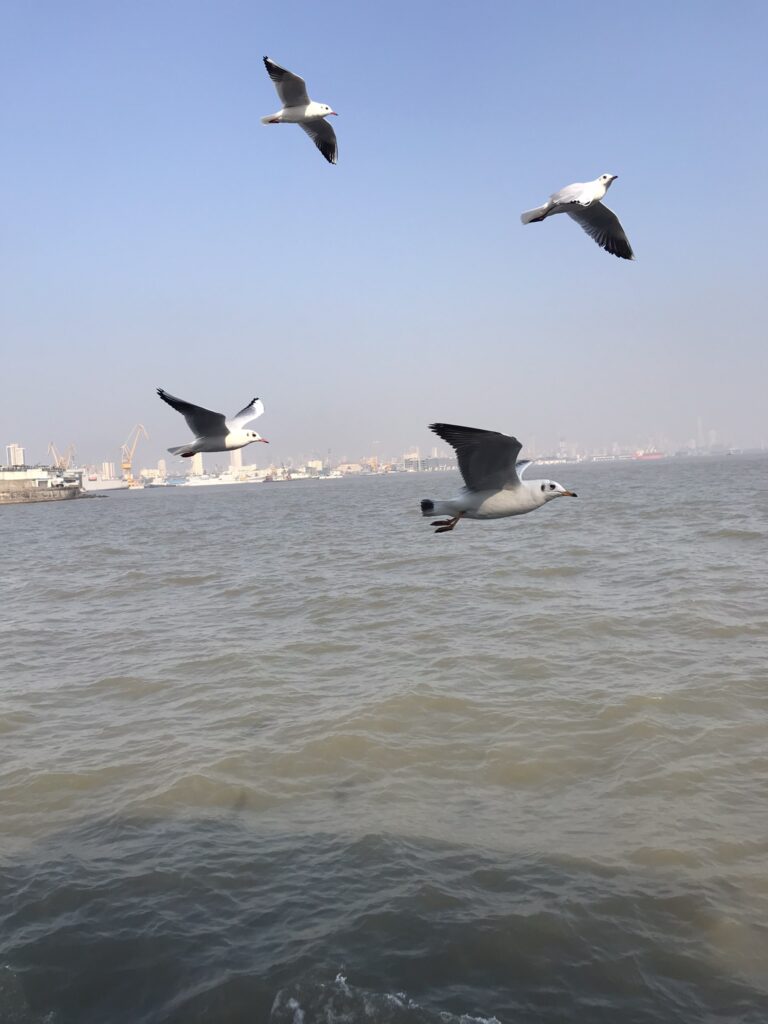
Seagulls accompany the boats on the journey through Mumbai Harbour
Feeding the seagulls out of the boat windows was an activity that seemed to enthral the domestic tourists while passing the time on the way to the island – I must admit that the seagulls were quite good at catching food mid-flight. After arriving at Elephanta, there is a short walk along a pier to get to the island itself and then a long flight of stairs to get up to the caves. A small train runs along the pier to the island, which is clearly a total gimmick but seemed to attract most of the tourists from the boat. It’s not necessary to take this train at all unless you want to, as it is a short and pleasant walk along the pier – we actually got there before the people who took the train. There are plenty of food vendors and small restaurants on the island, but from the looks of things I would be extremely suspect about the hygiene standards as they didn’t seem to have fridges or proper food storage.
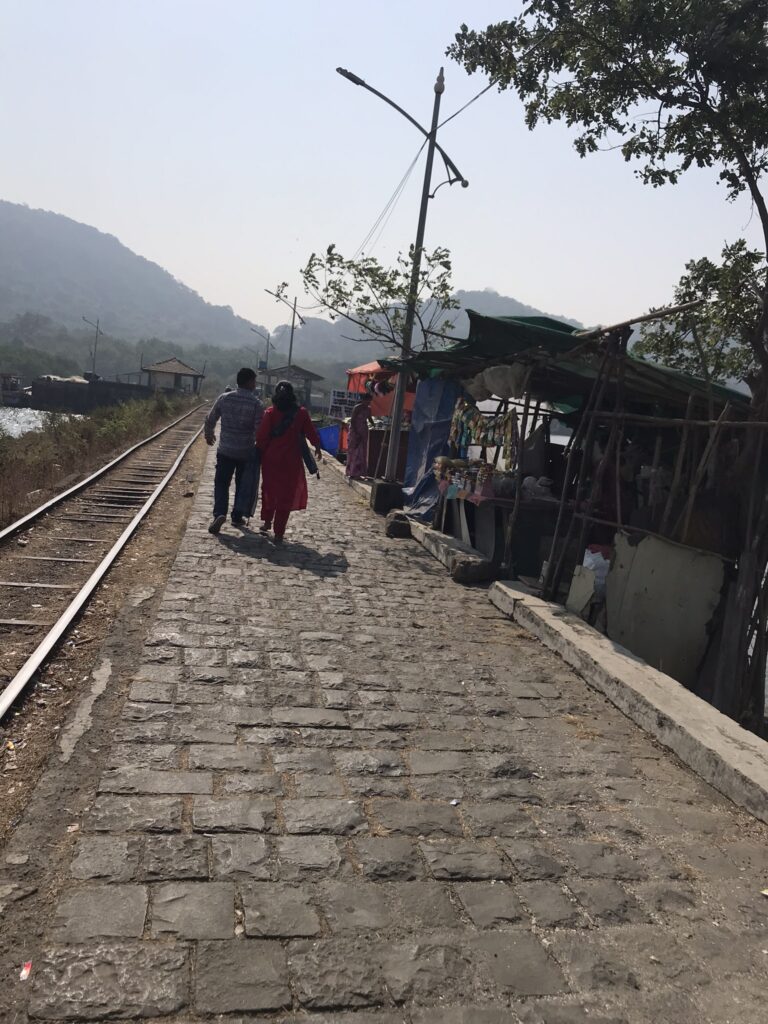
The train is a bit of a gimmick – it’s an easy walk from the boat
The stairway up to the caves is lined with vendors selling all manner of tourist tat – laser pens, Pikachu merchandise, Lionel Messi bobbleheads as well as elephant sculptures and typical novelty souvenirs. Be careful if you do purchase anything as both the archaeological site and the wider island are populated by some rather daring monkeys – we saw them repeatedly trying to steal bags, water bottles etc from unsuspecting tourists. Security guards with sticks chase away the monkeys at the UNESCO site but they were very bold – I’d recommend not bringing food or a bag if possible.
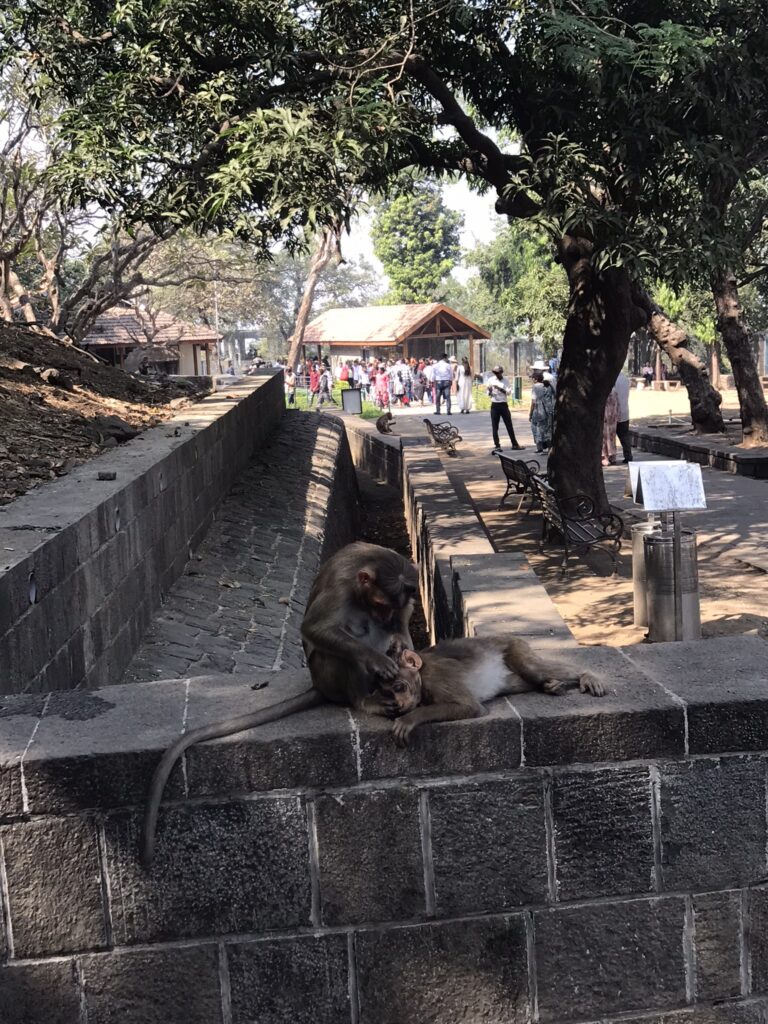
Watch out for the monkeys at Elephanta! Although these particular monkeys were harmless
The caves themselves are very impressive. There are info plaques about all of the sculptures in English so there’s no real need for a guide, although it may be best to try and gain some basic knowledge of Hinduism and the story of Shiva beforehand as otherwise the descriptions on the plaques can be quite intense and difficult to follow. There are many carvings depicting Shiva in various forms, as well as his wife Parvati – be prepared for lots of carved boobs on display!
We were worried about overcrowding or pushy hasslers on Elephanta Island after reading some reports but the whole experience was fine and actually really quite civilised. We got to the Gateway of India just before 10am on a Sunday, were at the Elephanta Caves by 11.30am by which time it still wasn’t really too busy at all, and we experienced minimal to no hassle on the island compared to what we had mentally prepared for.
Ahmedabad
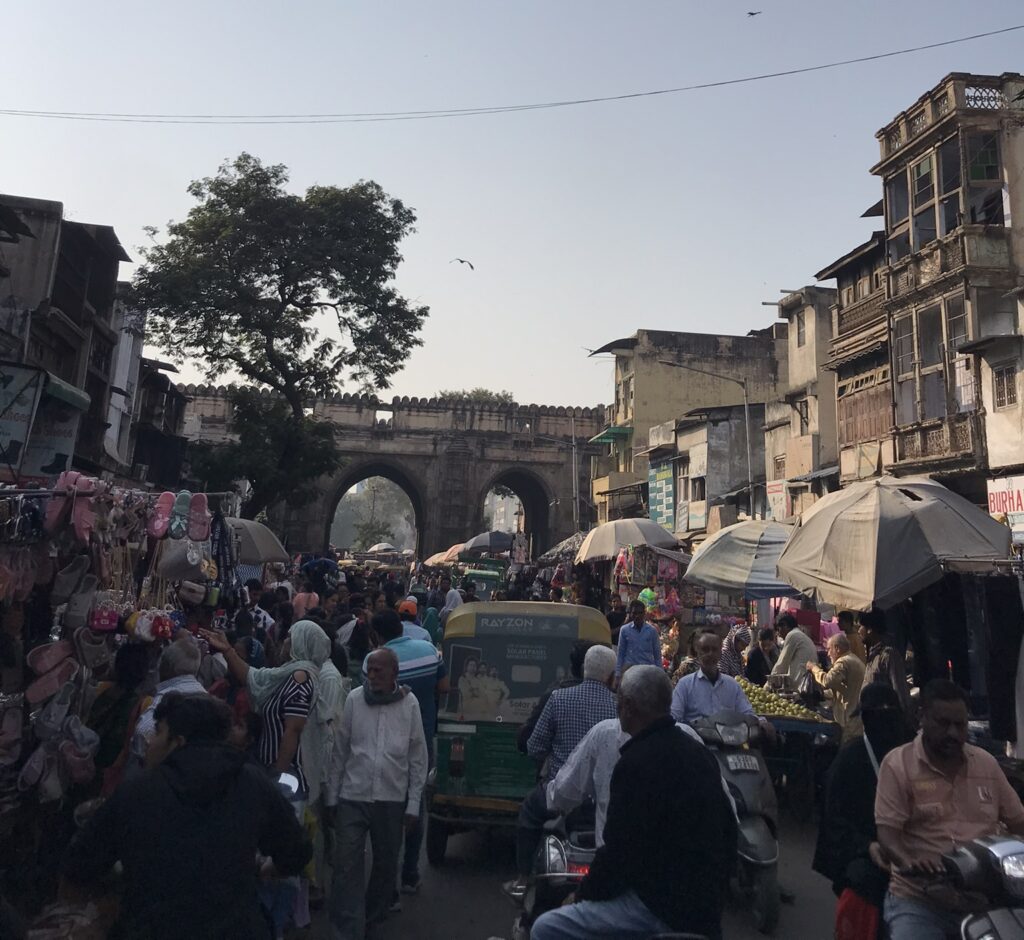
Gujurat’s largest city and one of the largest in India, Ahmedabad flies under the radar for many travelers. Ideally located on the route between the popular destinations of Mumbai and Rajasthan and with fantastic rail connections, we couldn’t miss the opportunity to spend a few days in this major developing city, and to experience the Gujurati culture and hospitality.
Ahmedabad, sometimes called ‘Amdavad’ or ‘Ahemdabad’ by locals, is a city of two halves. Separated by the Sabarmati River, the area to the west is the new city, a modern tech hub and one of India’s fastest growing economies, filled with high-rise buildings and high-flying office workers. The area to the east of the river is the old town – an unbelievably chaotic, hectic area filled with heritage buildings which has been designated as a UNESCO World Heritage Site. To say the difference between the old and new city is like night and day is an understatement. The two halves of the city are linked by a number of bridges across the river – walking isn’t really an option so your best bets are to take a tuktuk or the city’s modern metro system.
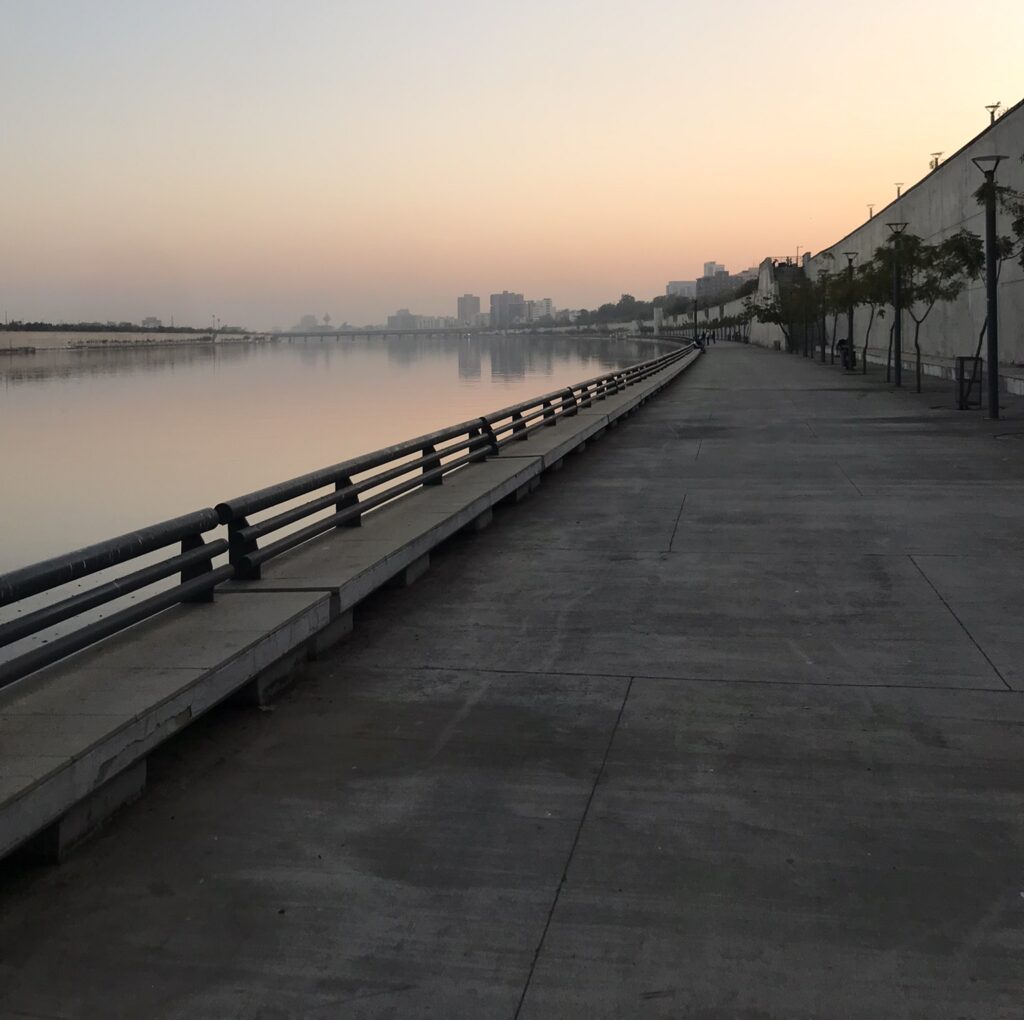
The Sabarmati River runs through the centre of Ahmedabad
Ahmedabad is known across India as one of the major bases of Mahatma Gandhi. Gandhi set up an ashram (commune) on the banks of the Sabarmati River and lived there for 12 years along with his wife and many of his followers. It is from this location that he began his famous Salt March, an act of open civil disobedience against the British colonial rulers which was seen as a key moment in the developing Indian independence movement. Today, Gandhi’s Sabarmati Ashram is an in-depth museum into his life, which is free to enter and is only a short trip via tuktuk or metro from the city centre. We attended a few Gandhi museums and sites in India and this was by far the best and most comprehensive.

On the way to Gandhi’s house
While most business visitors stay in modern hotels on the west side of the river, we chose to stay in a haveli (a traditional heritage house) in the old town which we found through Airbnb. After initially struggling to locate our accommodation in the jumbled, narrow and chaotic streets, we ended up having a great time staying with Suresh and family – a 90-year-old Gujurati man who was extremely welcoming and whose family were eager to share the Gujurati culture and cuisine with us. We were interested to learn that Gujurat is a dry state, meaning alcohol is prohibited. Nonetheless, Suresh’s grandson told us he knew a place where we could get hold of some alcohol if we wanted any! (we didn’t partake)
The old town of Ahmedabad is, without doubt, one of the most chaotic places I have ever been in my life. The area seems to be one enormous, permanently-congested market. People, mopeds and auto-rickshaws are absolutely everywhere – it’s a huge sensory overload. Step away from the overcrowded main streets and you find yourself in a labyrinth of quieter backstreets, filled with havelis and heritage buildings to discover. The old town of Ahmedabad is a historic walled city dating back to the times of the Gujurat Sultanate in the 1400s and there are plenty of remnants from that era as well as the Mughal and British periods, all hidden amongst the cacophony of noise and swarms of people and motos.
Although it’s utter chaos, we didn’t find the old town of Ahmedabad to be unpleasant place for a short period – the many people we encountered were always friendly and respectful. However the area is heavily polluted – myself and Dan could both really feel the fumes and pollution in our throats after walking around the old town for only a couple of days.
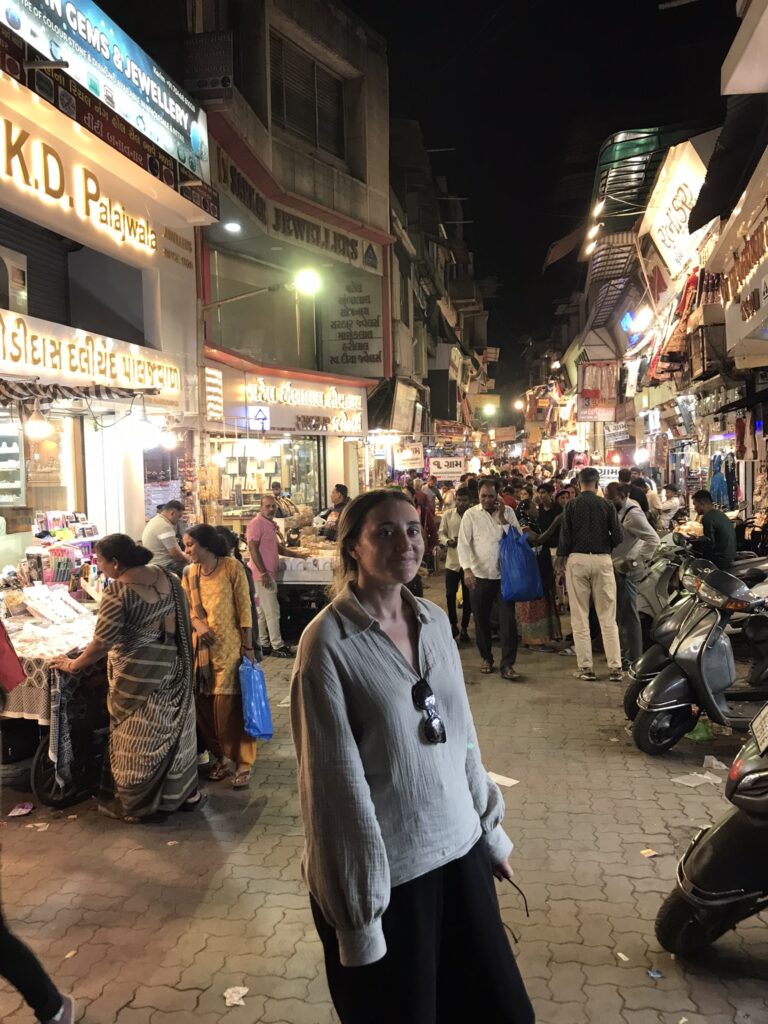
Amidst the chaos of the old town
We used tuktuks a couple of times in Ahmedabad and the drivers seemed to be quite honest. On the advice of our host we got tuktuks from a rank just south of Raipur Gate on Swami Vivekananda Road – as the drivers are in a rank, they aren’t prowling for customers and are less likely to try to inflate the fare.
Accommodation
Hidden Jem in Ahmedabad Savitabaanihaveli (Airbnb) – we struggled to find decent accommodation in Ahmedabad so opted for a homestay on Airbnb. This was a great, authentic experience and a chance to stay in a heritage haveli. It felt like visiting family, we ate together with the family who made us Gujarati meals and were eager for us to try all the different local foods such as black chapatis made with aubergine. The homecooked food was a real treat. Not a sterile hotel-style environment, there was constant movement and bustle in the lively family home. Suresh, the elderly patron (over 90 years old), was a very kind man, jovial and eager to chat with us – the grandson spoke good English too and managed the bookings on Airbnb.
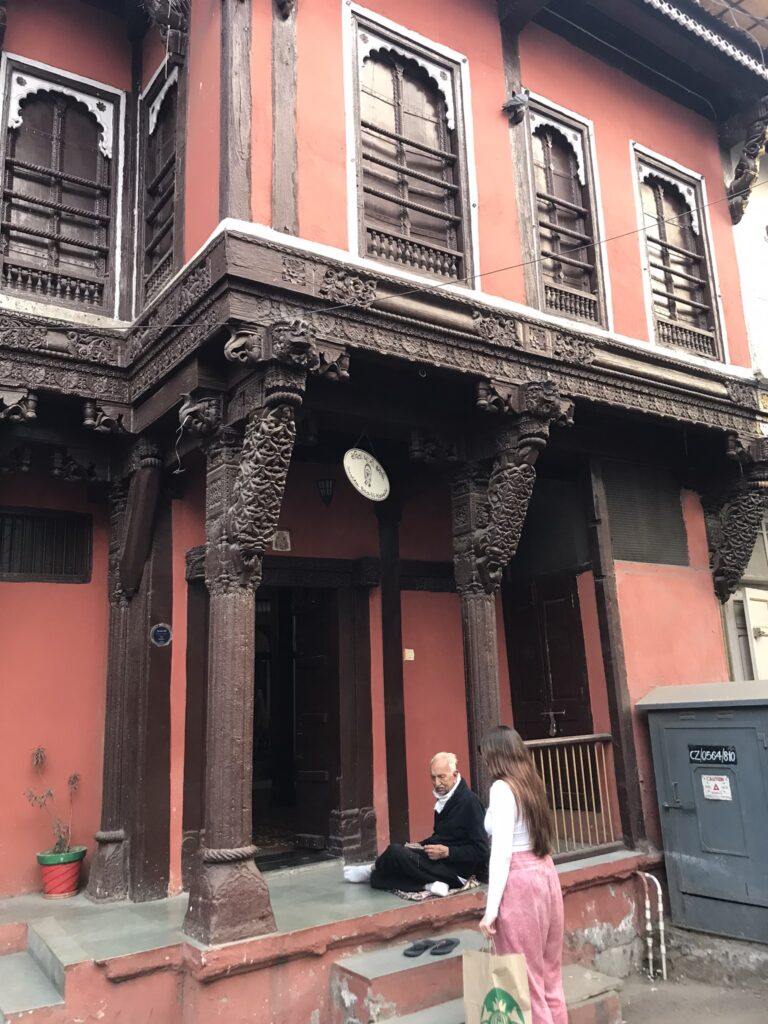
Our host, Suresh, outside his haveli
Foodie Places
Nutan Restaurant – located just outside Teen Darwaja in the old town, this is hands-down one of the best curries we had in the north of India. Exceptional garlic naan. The restaurant seemed to be one of the smarter places in the old town, the setup was a little strange as there was an overkill of service staff – there seemed to be 2-3 waiters per person and loads of guys just standing around doing nothing. Still, we couldn’t complain as the food was great. There were no foreigners here and the staff treated us like locals rather than tourists, which was appreciated. Prices were good too.
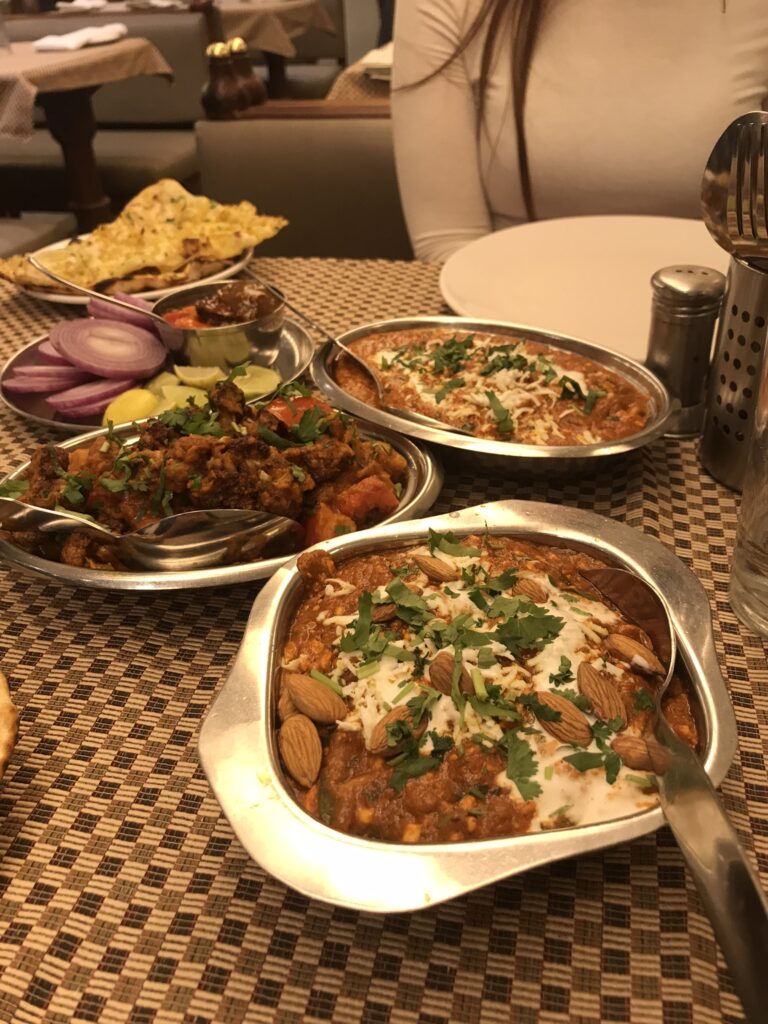
Quality curry at Nutan
Starbucks – located on the west side of town, we aren’t really fans of Starbucks at all but sadly this was the only safe and reliable place we could think of to pick up decent quality sandwiches for the following day’s bus journey to Mount Abu.
Activities
Sabarmati Ashram (Gandhi Ashram) – extremely detailed museum in Gandhi’s former dwelling with immense amounts of info about Gandhi’s life and work. The museum include quotes and a picture gallery, info about Gandhi’s role in the independence movement, the Salt March as well as an extensive chronological exhibition about Gandhi’s life. We spent several hours and still couldn’t see it all. You can also see Gandhi and Kasturba’s house and walk in their rooms. Entry is free. The ashram is located on the river banks of new city and we went for a walk along the river afterwards.
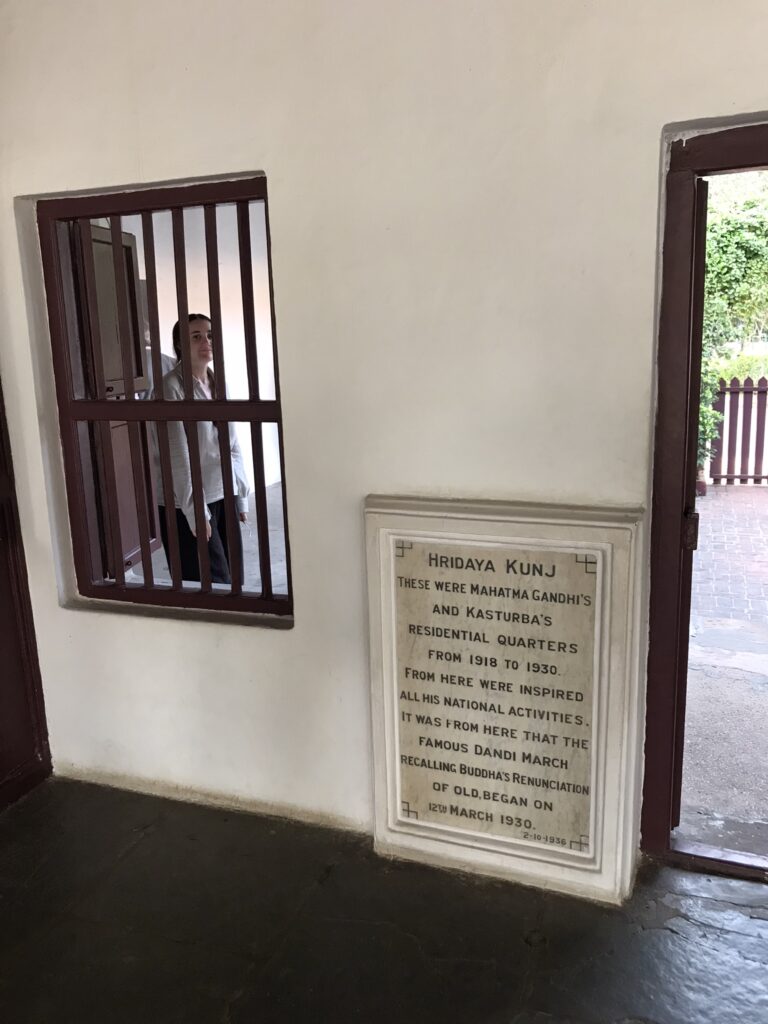
Inside Gandhi’s house
Walking around the old city – Ahmedabad’s old town is a UNESCO World Heritage Site and it was great to explore the old town on foot, looking at the havelis in different states of repair and exploring the many nooks and crannies as well as the following landmarks:
Hutheesing Jain Temple – extremely intricate and ornate carvings – the level of detail is mind-blowing. As it’s a Jain temple, strict rules need to be followed when entering and menstruating women are not permitted inside.
Shree Swaminarayan Mandir – one of the major temples of the Swaminarayan sect of Hinduism. The temple was very colourful – the elaborate paintwork and colourful decoration in some ways reminded us more of the Dravidian-style temples in the south of India.

The Swaminarayan temple is full of colourful decoration
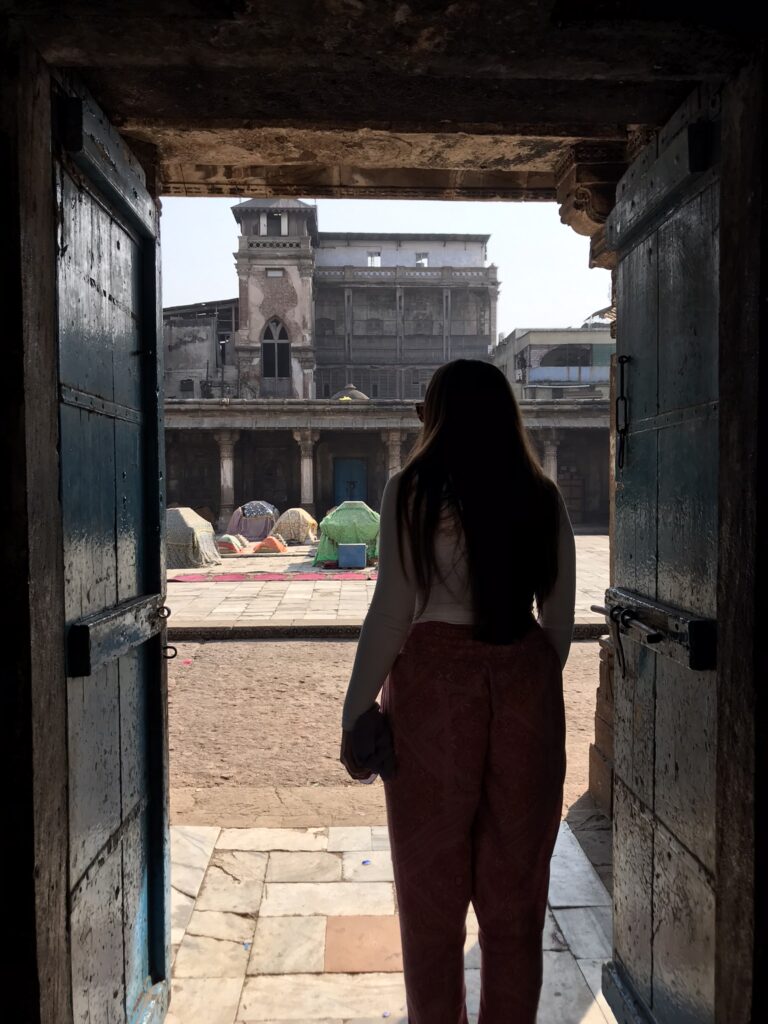
Jami Masjid – a typically grand Friday mosque which was constructed in 1424. A plaque outside claims that it is considered by some as the most beautiful mosque in the east – for us it’s not comparable to the grand Mughal mosques such as the Jama Masjid in Delhi or the Badshahi Mosque in Lahore, but it’s no doubt a nice place to visit in the city and also a good relief from the intense crowds. The mosque is said to be representative of the Gujarat style of Indo-Islamic design, given that it takes influence from Hindu and Jain architecture.
Rani no Hajiro (Queen’s tomb) – a historical mausoleum building dating back to 1445. In the midst of the chaotic market area through narrow passageways, this hidden tomb is surrounded and engulfed by the market. It was quite contradictory as despite the chaos surrounding it, no people were around the actual tomb itself. We couldn’t go inside the courtyard containing the tombs but could see through the latticed windows.

Rani no Hajiro, also known as Rani ka Hazira, is pretty low-key – it’s in a poorly maintained and barely-advertised square in the middle of a crowded market area
Bhadra Fort – slap bang in the middle of another chaotic market area. It was really intense outside with the market stalls and crowds. After fighting through the crowds, we were allowed inside the fort entranceway by a guard – again, there was barely anybody inside, completely at odds with the manic chaos outside. There isn’t really much to see other than the imposing walls and the British-era clock, but it at least provides a good escape from the crowds.
Sidi Saiyyed Mosque – a small mosque which is famous for its intricate lattice windows. The caretaker was giving information in Gujarati when we arrived and a family of local tourists were kind enough to translate for us. Women aren’t allowed into the main area, but you can still see the main attraction (the lattice) from outside.

The famous Tree of Life lattice at Sidi Saiyyed Mosque
Click here for my self-guided walking tour of Ahmedabad’s old town!
Mount Abu
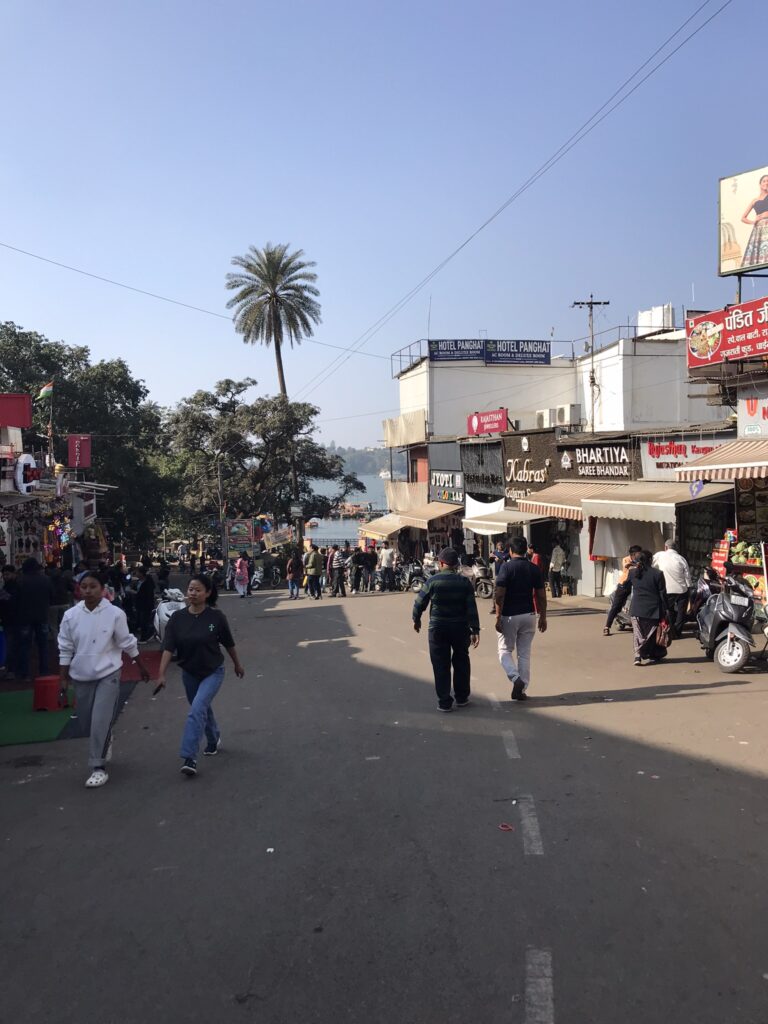
Rajasthan’s only hill station, Mount Abu is located just over the border from Gujarat state. With a cool climate and picturesque views, the town is very popular with domestic tourists. As a result, Mount Abu has developed into somewhat of a resort town, with a carnival/party atmosphere particularly at weekends. The town is especially popular with visitors from nearby Gujarat – as Gujarat is a dry state (meaning the sale of alcohol is prohibited), many locals and groups of friends flock across the border to Rajasthan in order to spend a long weekend partying and drinking. On paper Mount Abu is a peaceful and serene place, but if you’re looking to avoid the beer-drinking masses then maybe it’s better to visit during the week.
The town of Mount Abu itself is quite small, consisting of a couple of main roads and backstreets with an economy that is mostly geared towards the domestic tourism industry. There are plenty of guesthouses around while several large resort-style hotels are visible in the hills surrounding the town. The main ‘strip’ area containing many of the bars, shops and restaurants is pedestrianised, but when we visited on a Saturday and Sunday it was still quite chaotic, with throngs of people milling about. There are plenty of carnival-style hustlers trying to drum up business, but as foreigners I can say we weren’t really approached much or treated any differently to anyone else during our time in Mount Abu.
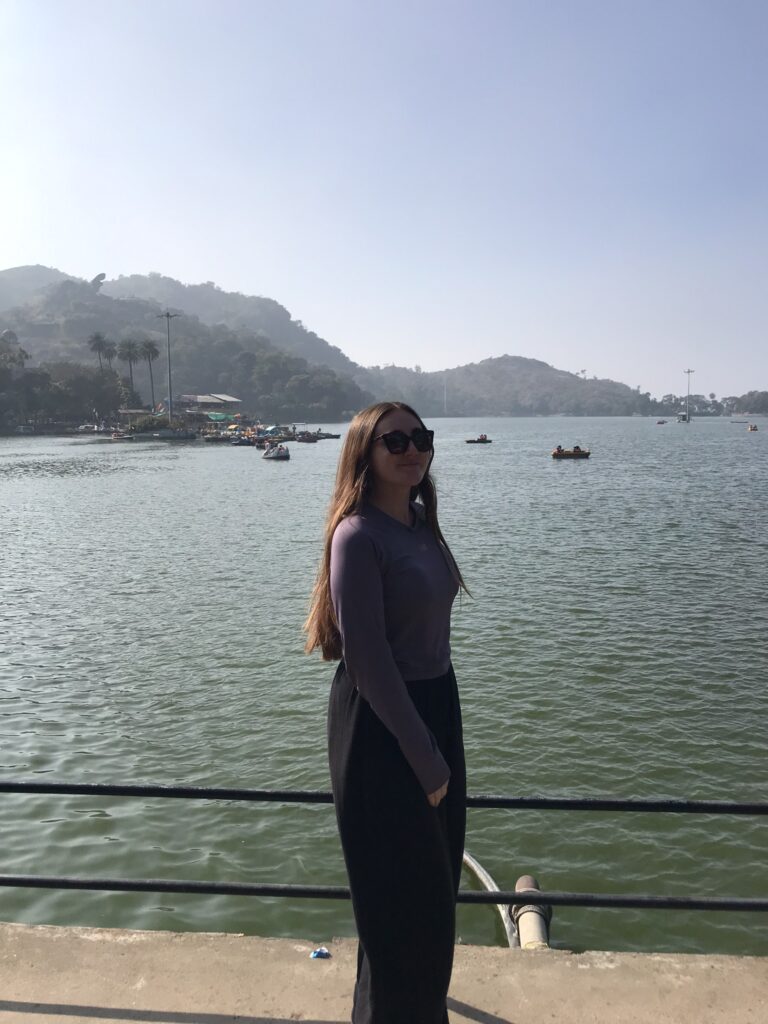
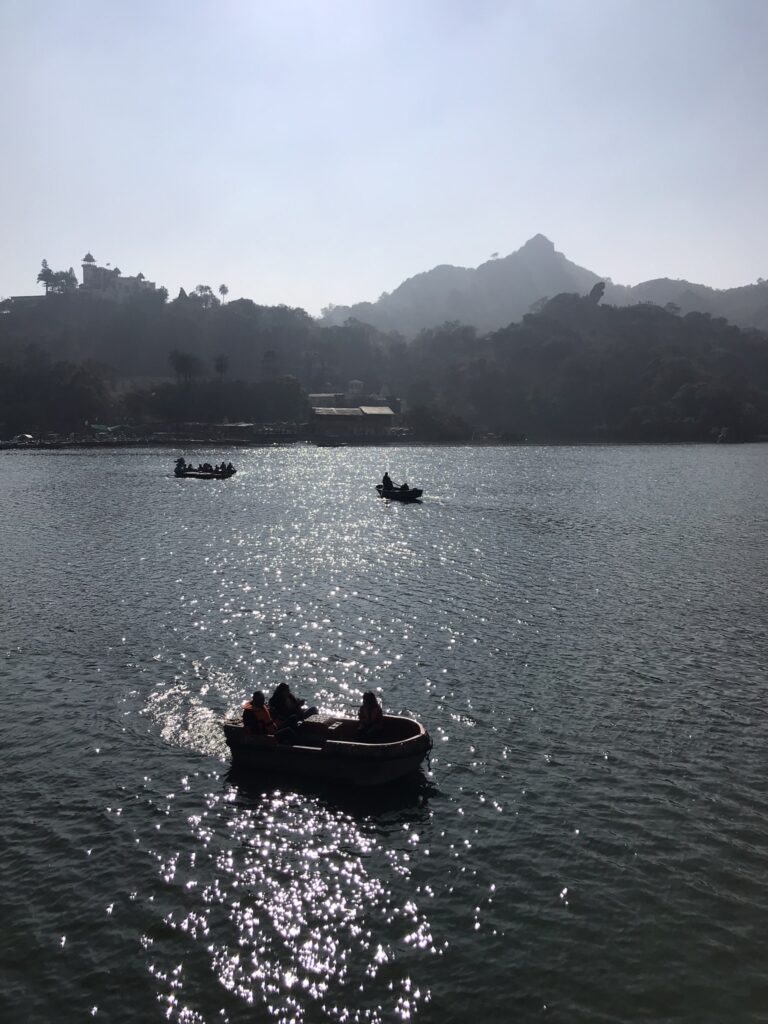
Nakki Lake is a hub for both watersports and tranquil walks
The focal point of the town is Nakki Lake, a large artificial lake surrounded by hills and rock formations including the famous ‘toad rock’ – an odd-shaped boulder atop a hill which looks like a toad that is about to hop into the lake. A home for gentle watersports such as boating and zorbing which launch from a carnival-like dock area, away from that Nakki Lake can be quite tranquil and atmospheric even when the town’s bars are busy with beer-drinkers. There is a well-maintained path around the lake which takes around 45 minutes to circumambulate, with several rest stops and small parks along the way.
There are several natural sights and popular treks and viewpoints around Mount Abu. A guide is required to visit the majority of these places and complete the treks, ostensibly due to the risk of wild animal attacks. There are plenty of tour companies that organise treks, but we wanted to take it easy during our time in Mount Abu so didn’t partake.
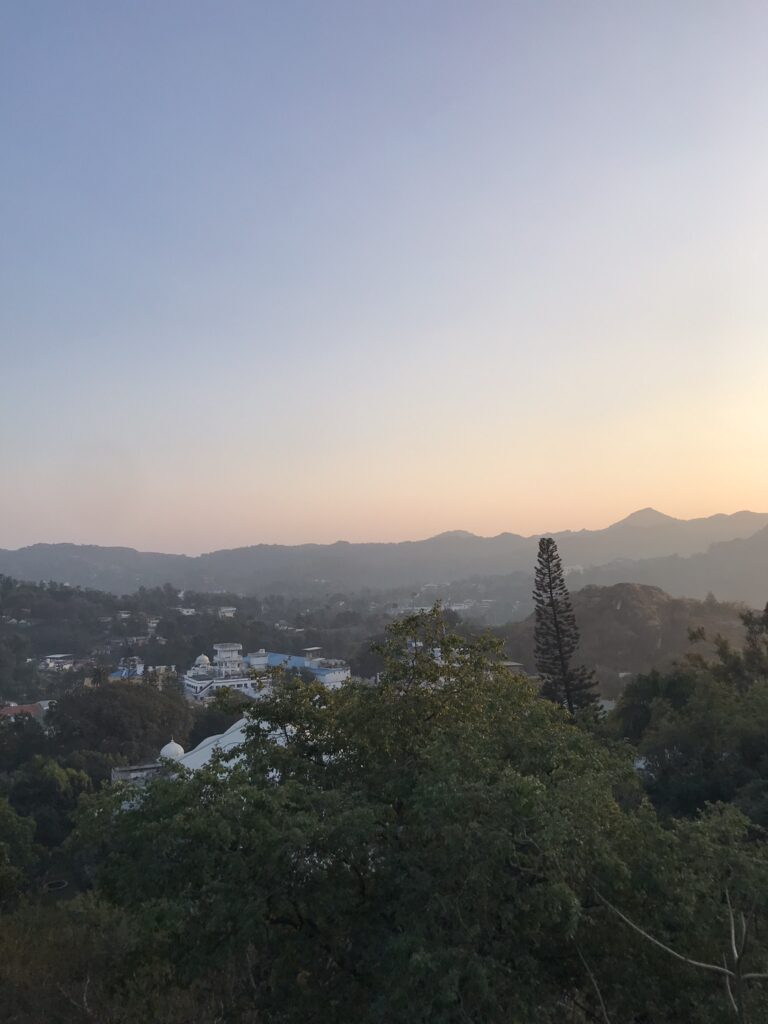
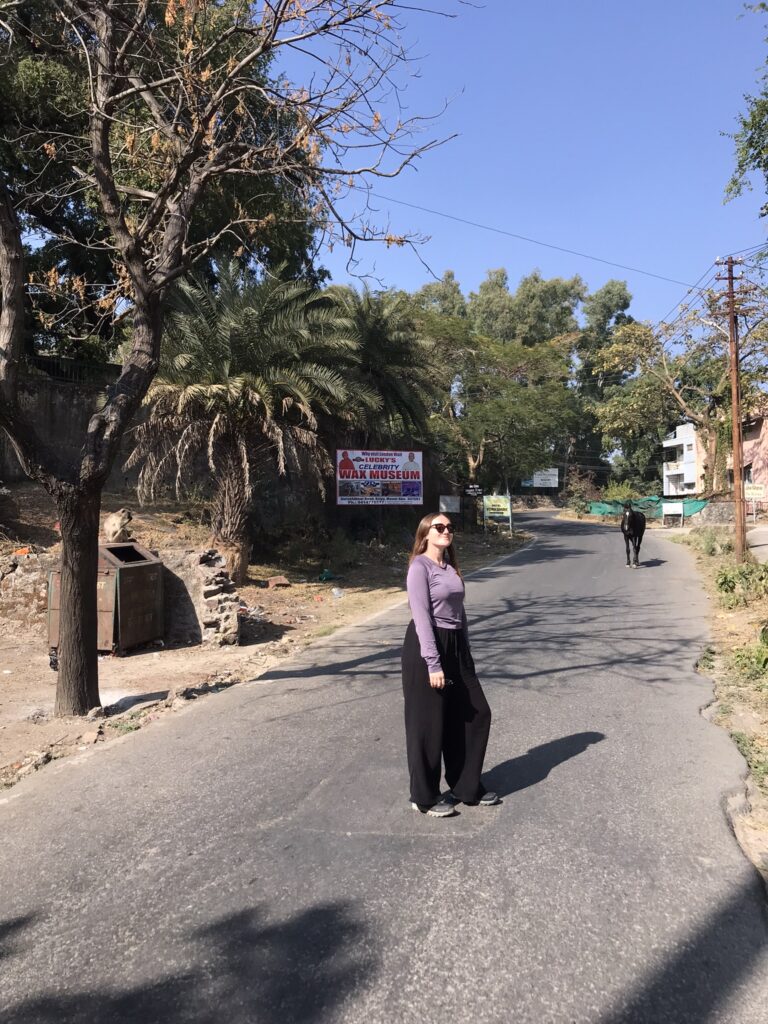
Mount Abu is surrounded by nature and wildlife
One downside to visiting Mount Abu was the presence of some extremely persistent beggar children at various points around Nakki Lake, stopping and hassling passers-by to ask for ‘tolls’. It was quite sad as the parents of some of these children (presumably from a disadvantaged background) were present and visibly encouraging the children in many cases to hound passing tourists. The area could probably use some form of tourist police to prevent this sort of behaviour.
Mount Abu is not accessible by rail – the closest train station is in a town called Abu Road, which is at the foot of the mountain around 25km away from Mount Abu. While buses typically pass by Abu Road and pick up customers along the way, it’s also possible to get direct buses to Mount Abu from many regional cities. We were able to get a bus from Ahmedabad via the company Gujarat Travels, and then a bus onwards from Mount Abu to Udaipur with RP Rajasthan Travels. While the bus from Ahmedabad was great, the bus to Udaipur was less so – the driver was quite reckless, constantly sounding the horn and driving too fast around tight corners, which eventually resulted in a child being sick all over the bus and several other passengers.
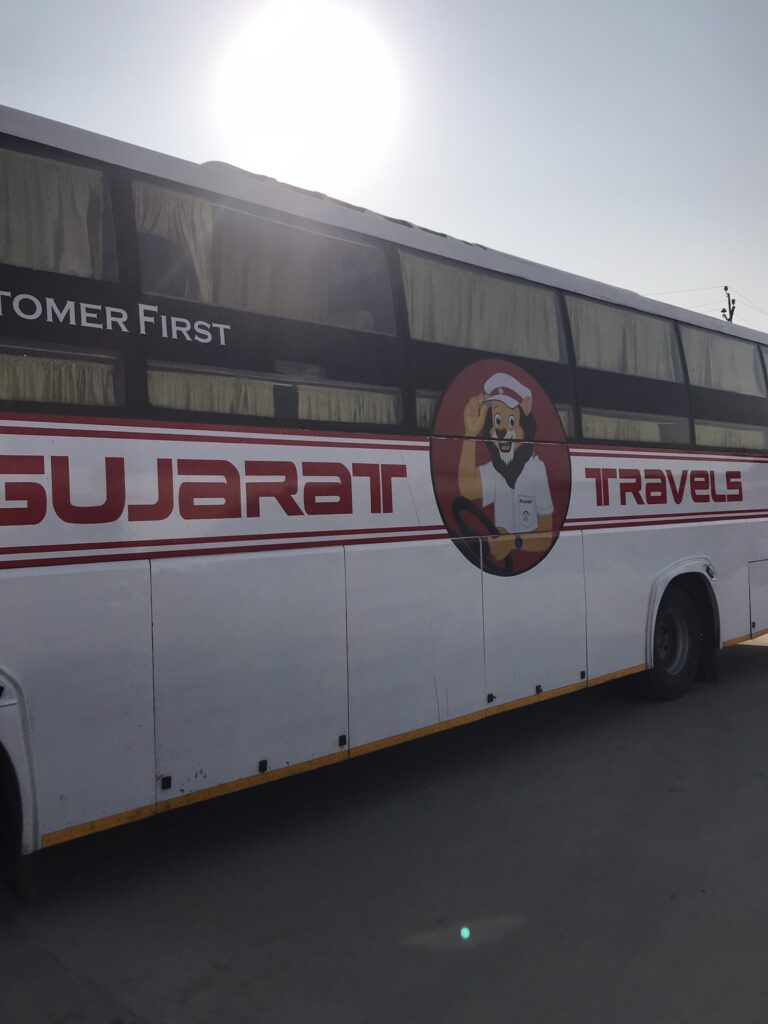
We had a pretty good experience with Gujarat Travels on the way to Mount Abu from Ahmedabad
Accommodation
Shaleen Elegance Homestay – an ok place with a good location near to Nakki Lake. Unfortunately we were in a room right next to the reception and were kept awake late at night and early in the morning by a phone ringing, which was quite annoying. The staff (‘boys’) apart from the owner spoke no English but tried their best to help with carrying bags etc, but were also a little noisy chatting in the reception area outside our room which didn’t help matters. I think we were unlucky with room location. After this we learnt to always book the deluxe rooms in India, and to ask to switch rooms if near to reception.
Foodie Places
Joji Bar & Restaurant – a beer/sports bar type place, we ate here numerous times as it was one of the few highly-rated places in town. The food was pretty decent – classic Indian curry/paneer options and also typical sports bar/beer food such as fried chicken etc. Cricket or kabaddi was pretty much constantly on TV. We only visited for food and didn’t stick around at night, but plenty of groups of guys seemed to be congregating to watch the sports and drink beer each evening.

Beer ‘o’ clock at Joji – when in Rome!
Pino’z Pizza – average takeaway-style pizza chain with Indian-inspired options such as chicken tikka, paneer etc. It isn’t terrible as a last resort in a place with few other reputable choices, but don’t expect great pizza or pasta by Western standards.
Activities
Delwara Jain Temple – located in the Delwara township, it’s possible to walk here in about 45 minutes from the centre of Mt Abu. Entry to the temple is highly controlled – photos are strictly prohibited and phones must be handed in before entering. There is super strict enforcement of the rules here with bag searches at entry – we were turned away and forced to use the cloakroom (which cost 50 rupees) to store our phones before entering. The temple is extremely impressive inside, with unbelievably intricate white marble carvings. This is probably the most impressive Jain temple that we visited in India.
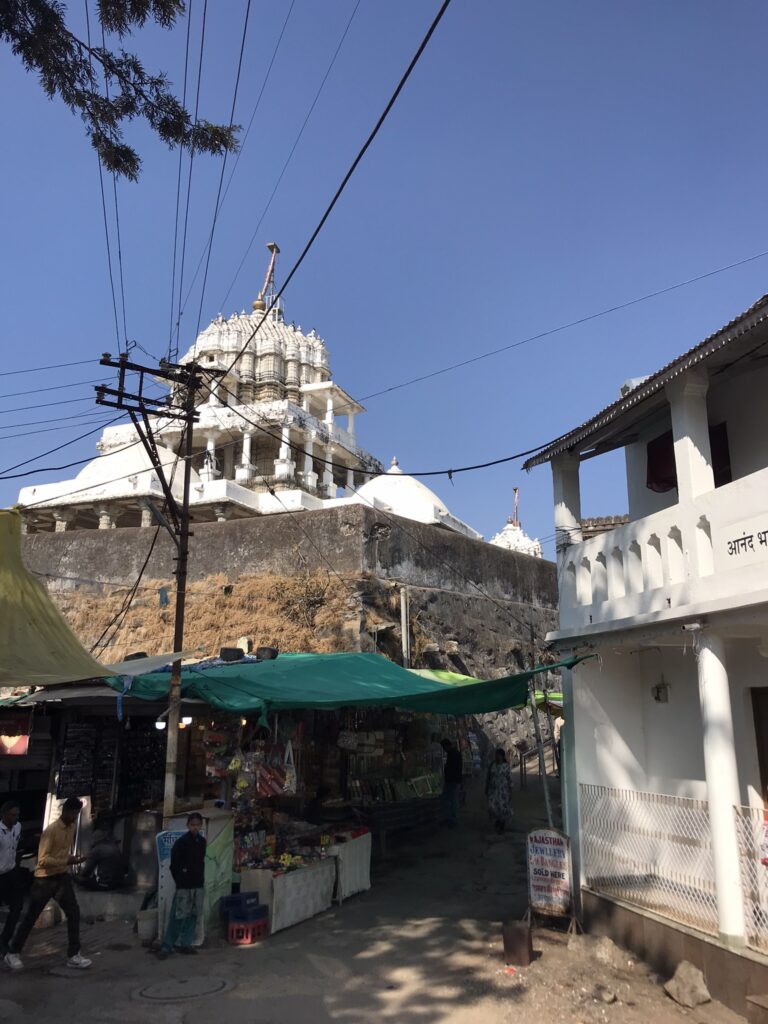
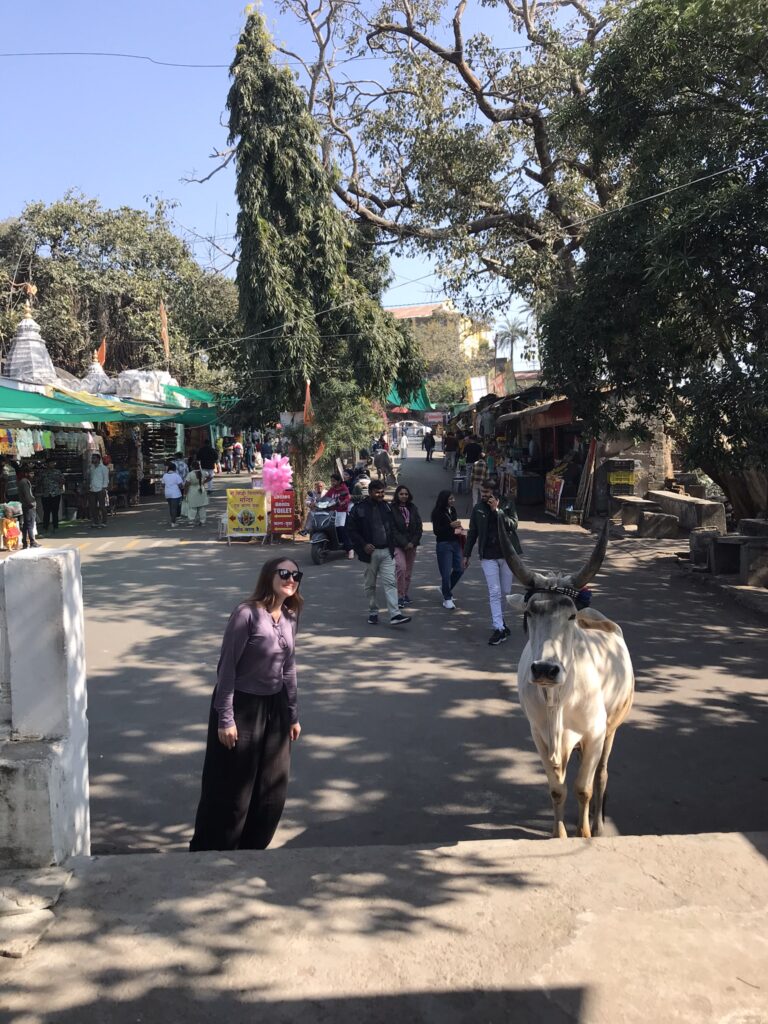
Sadly photos inside are strictly prohibited, but you can just about see the top of the temple from the outside. This friendly cow was loitering outside the temple.
Nakki Lake – the major attraction within Mount Abu, the lake plays host to novelty activities such as boating, kayaking, zorbing, bungee etc. There is a path around the lake which is free to walk if you don’t want to partake in the adventure activities. The pathway is well looked after and the entire area is well maintained, picturesque and not polluted with litter or noise. At various points there are rest stops, mini parks and places to sit and enjoy the view. We enjoyed seeing a family of monkeys jumping and running in one of the small parks. There are also a few little Hindu shrines along the way.
Toad Rock – a famous site overlooking the Nakki Lake. It’s an easy enough climb up with really good views at the top of the rock. The area at the top was crowded, but not overwhelmed with people when we visited. There is a little stall selling drinks etc nestled into the rock, which we thought was a pretty good idea.

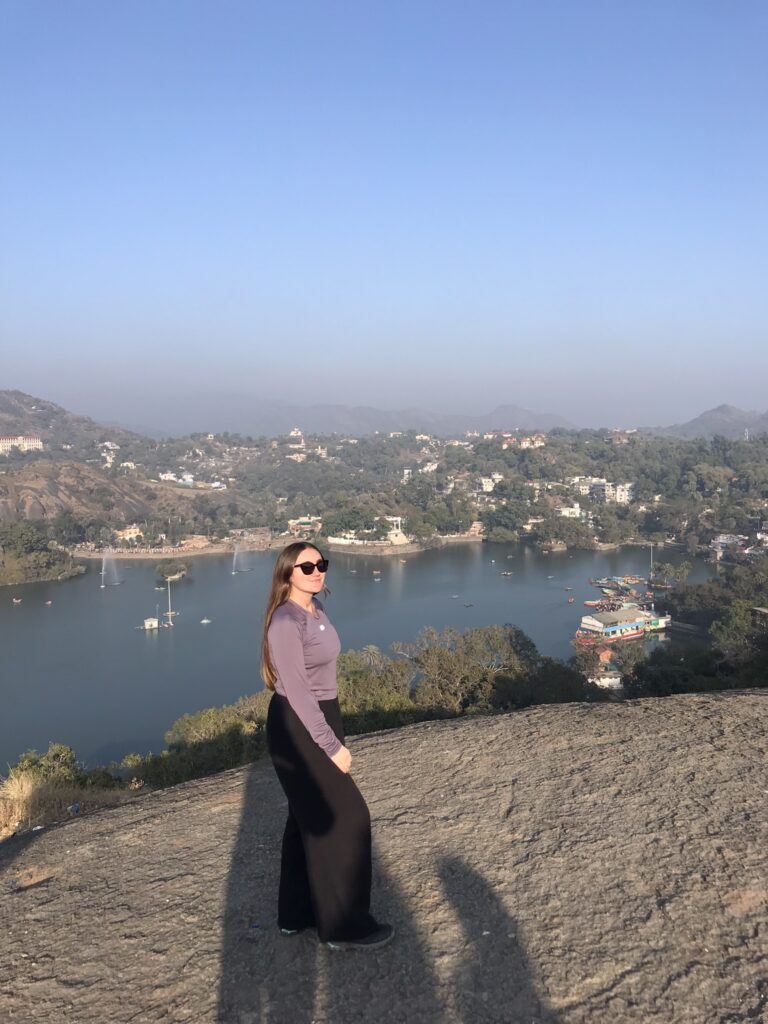
Views over Nakki Lake from Toad Rock
Honeymoon Point – a popular sunset spot, this viewpoint looks down over the plains to the west. The trail and viewpoint is a continuation of the path around Nakki Lake and is free to access, in comparison with the more well-known Sunset Point which you have to pay for. When we visited for sunset the viewpoint was very busy – randomly some groups of excited children on school trips were even milling about. Unfortunately it was also misty and so there was no view at all. We walked back via the nearby Ganesh Temple and then accidentally stumbled into and got lost in the nature reserve above Nakki Lake to the north, which is supposedly off limits without a guide. This isn’t recommended as the reserve contains dangerous wildlife and carries a threat of fines for unaccompanied walkers.
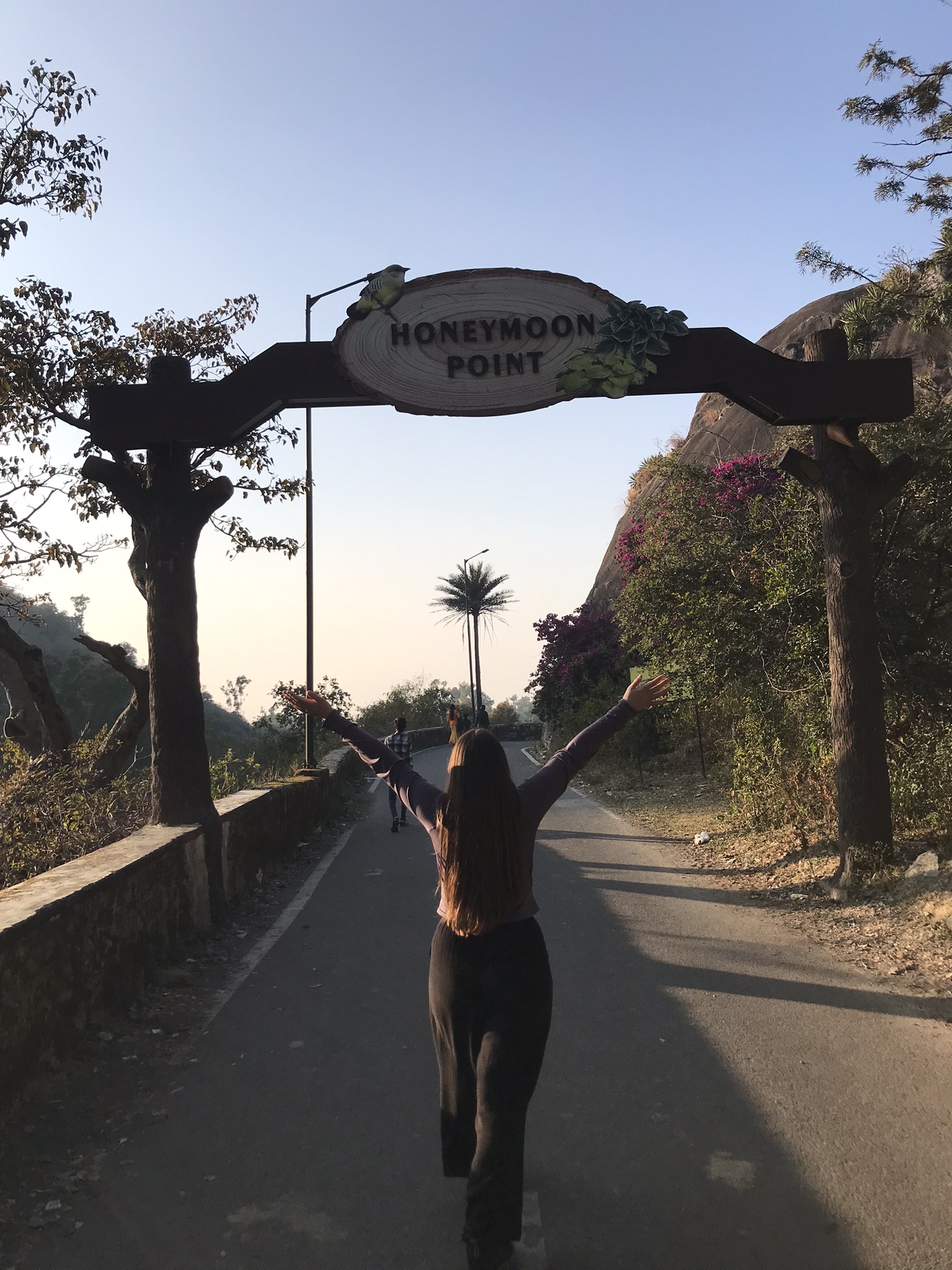
Expectation vs reality at Honeymoon Point
Udaipur
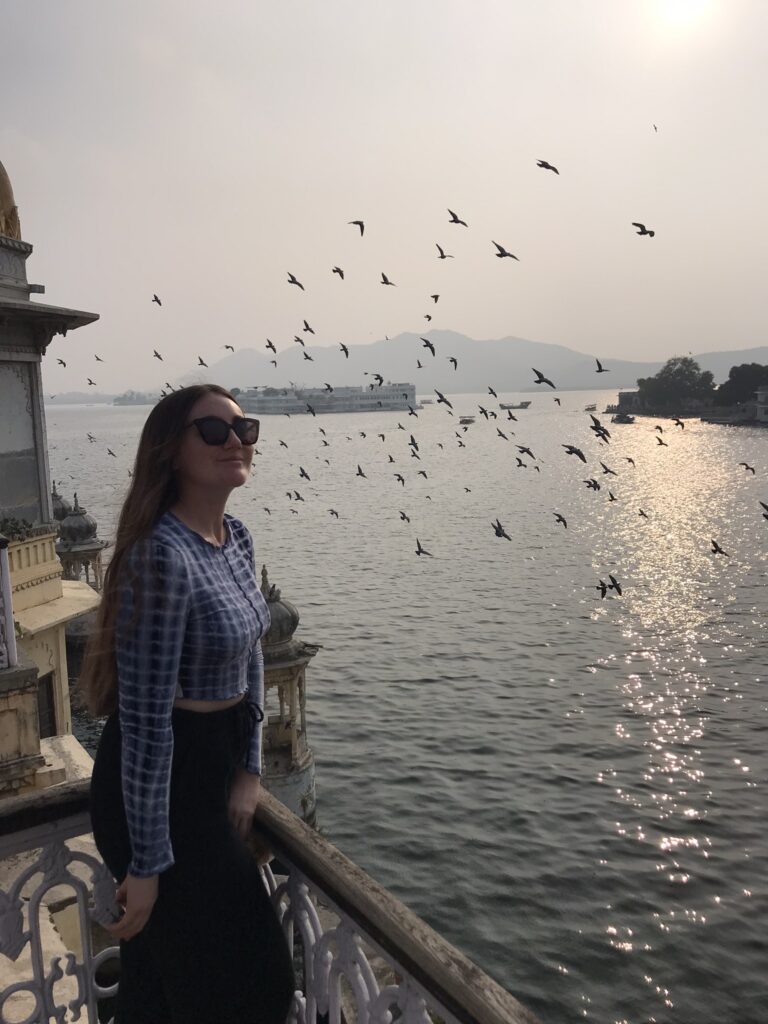
The former capital of the princely state of Mewar, Udaipur is a classic Rajasthani city. Known as the city of lakes, it is dominated by a series of artificial lakes, the biggest of which (Lake Pichola) borders Udaipur’s City Palace. City Palace is undoubtedly the focal point of Udaipur – a huge complex, it houses museum displays, public galleries and even has sections which are still in use by the descendants of the former royal family. The City Palace is not constructed in a uniform fashion – it is a mishmash of styles with a somewhat scatterbrained layout, the reason being that the original construction has been added to and modified repeatedly over time.
Outside of the overly touristic area around the City Palace, the backstreets of Udaipur are much more quiet and relaxed. We took a Guruwalk tour which visited the less-seen residential areas, and this was probably the best thing we did in Udaipur. The contrast with the hectic waterfront area (filled with scammers, hustlers and weirdos) and the overcrowded Palace was night and day.
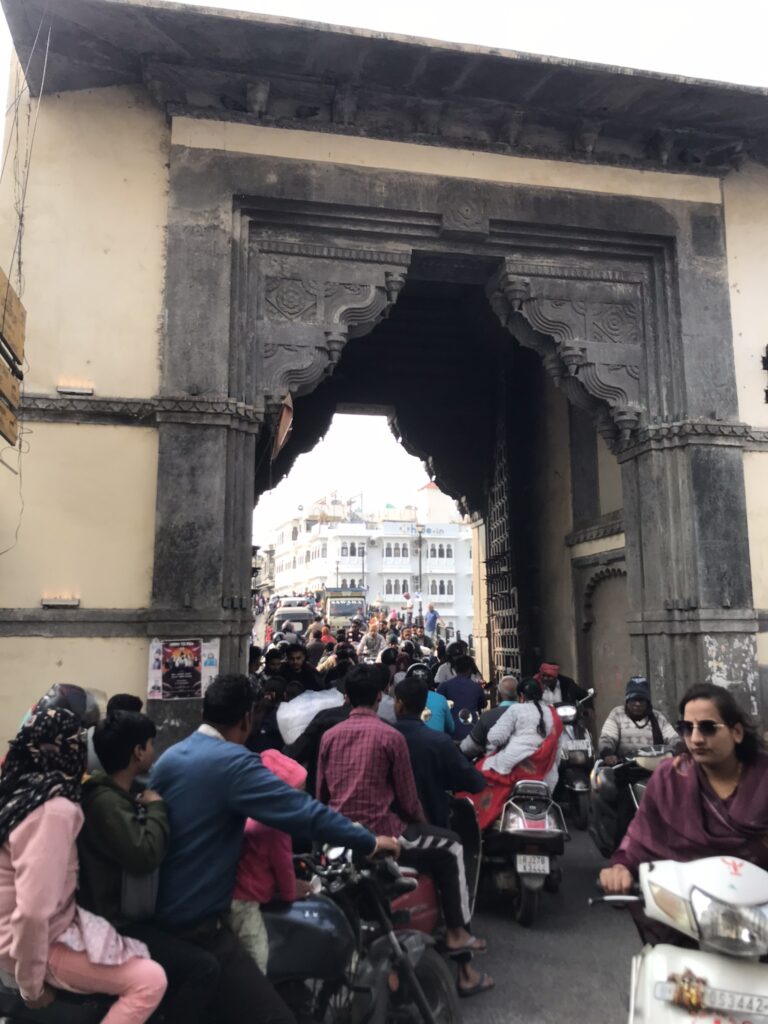
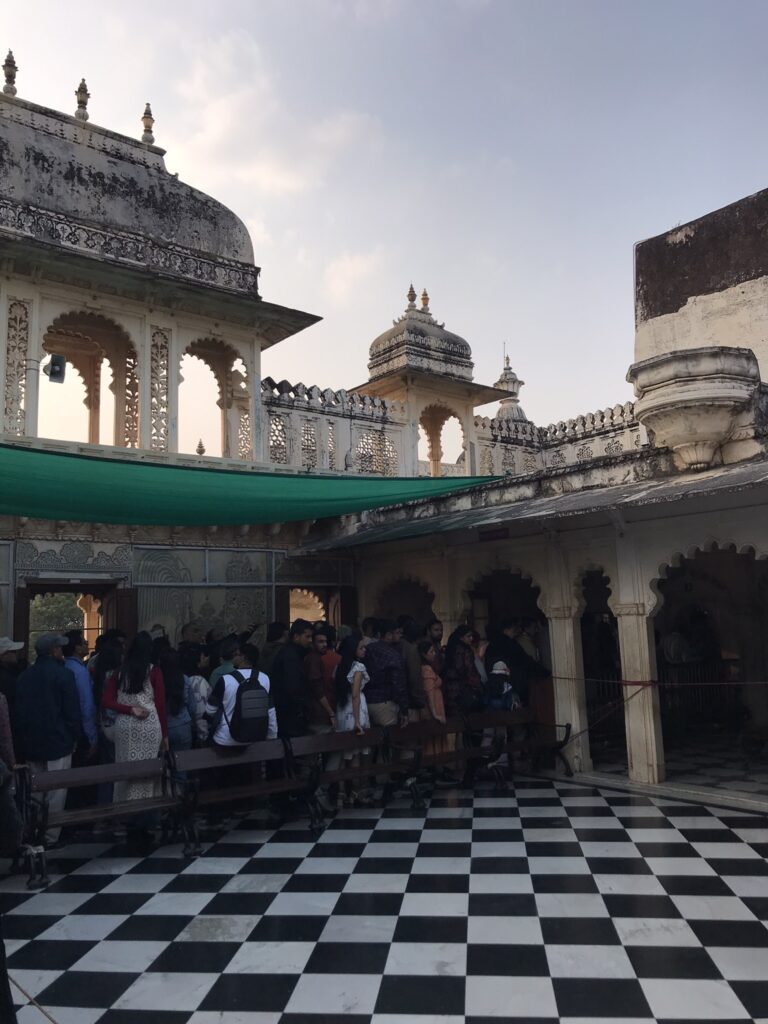
Udaipur was wayyy too busy when we visited over the Christmas holidays
I’ll preface by saying that our view of Udaipur is probably clouded by the timing of our visit. We were in Udaipur over Christmas, which in hindsight was a big mistake. Not only is Christmas not really celebrated in Rajasthan, it’s a time of national holiday throughout India, meaning everyone is off work/school and places like Udaipur become completely packed and overrun with domestic tourists. During this time Udaipur is overly-chaotic, crammed full of reckless moto drivers, honking horns, rowdy drunken groups of men and massive overcrowding at every attraction. I can imagine it would usually be a charming city, but walking around the narrow streets in the Chand Pole area was bordering on dangerous during the time of our visit due to the prevalence of speeding mopeds and there were some very suspect characters around the streets, particularly after dark. The place had a pretty sinister atmosphere to it and we were glad to leave.
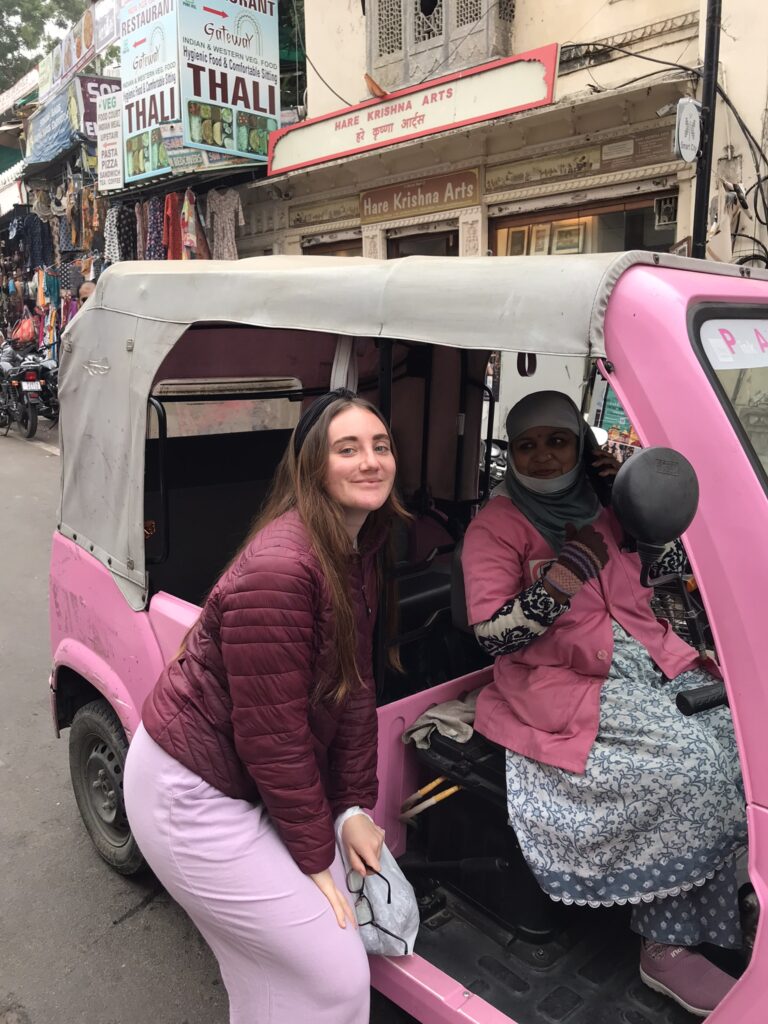
This pink female-only tuktuk driver was a surprising and welcome find
Accommodation
Raahi Backpacker’s Hostel – weirdly quiet when we were there considering it was a holiday period. A friendly owner and a nice rooftop area with great views over the lake. We didn’t see any other foreigners here – the dorm rooms seemed to be mostly occupied by younger Indians who were there to party and get drunk. We stayed in a private room and could hear drunken people throwing up in the dorm bathroom next door. I couldn’t complain about our room itself or the service we personally received.
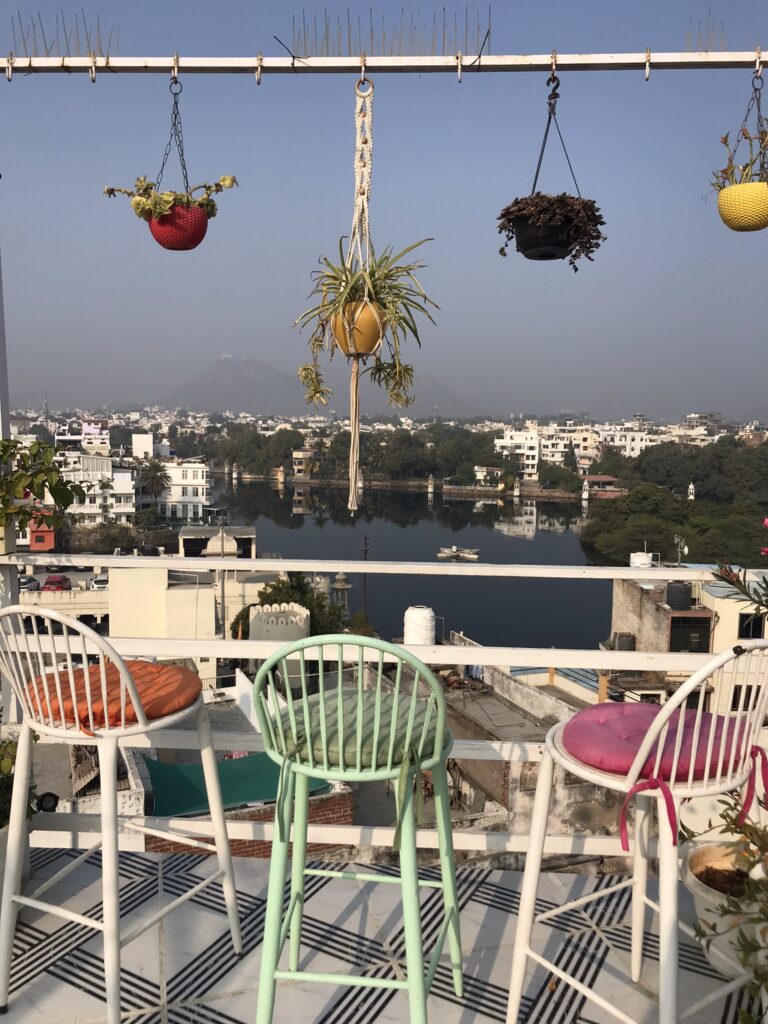
The rooftop view at Raahi – there are many similar hostels with rooftop terraces
Foodie Places
Cafe Grasswood – a very informal lakeside place with a chalkboard menu, serving basic fare like sandwiches.
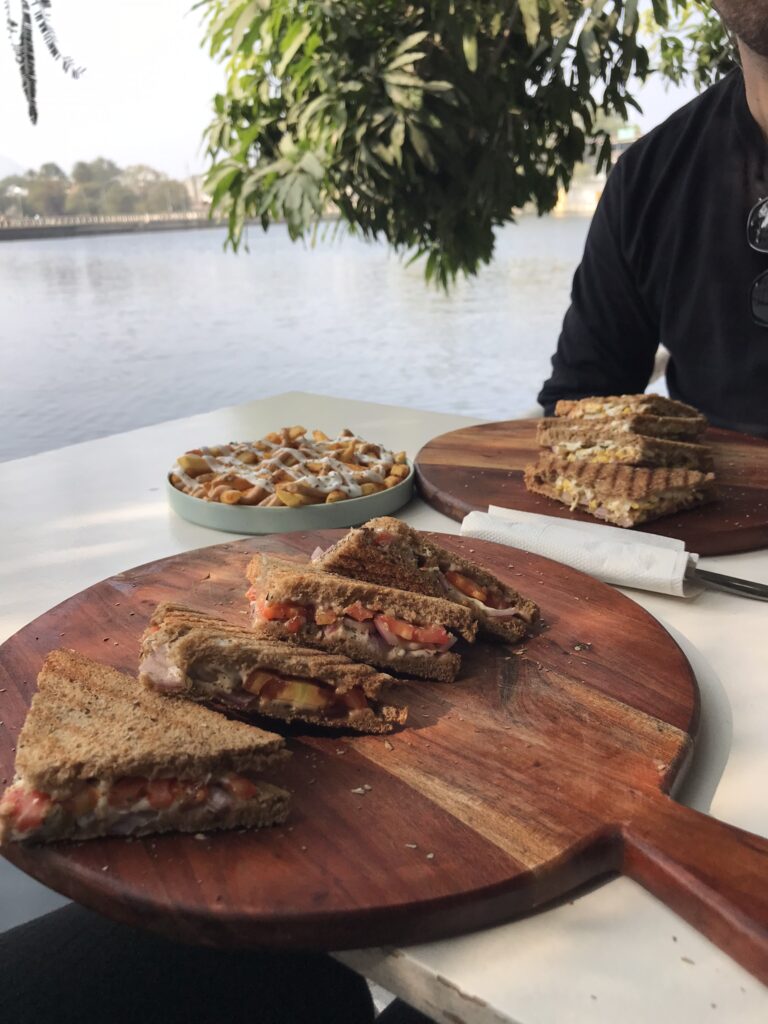
Sandwiches by the lake at Cafe Grasswood
Lake Street Restaurant – we enjoyed the thali which was hearty, tasty and a good price. Strangely, despite the crowds in Udaipur at the time of our visit there was nobody else in here at all. I don’t understand why as it was a nice restaurant.
Chirag Rooftop Restaurant – tables on a balcony area overlooking the lake. Typical northern Indian cuisine, pretty standard.
Qalaa – a high-end restaurant in an old haveli, the interior is beautifully decorated. We visited on Christmas day. The food served is world cuisine – the mushroom and goat’s cheese ciabatta was fantastic as was pesto and burrata. A very instagrammable place, many locals were entering just to pose with the exquisite decor.
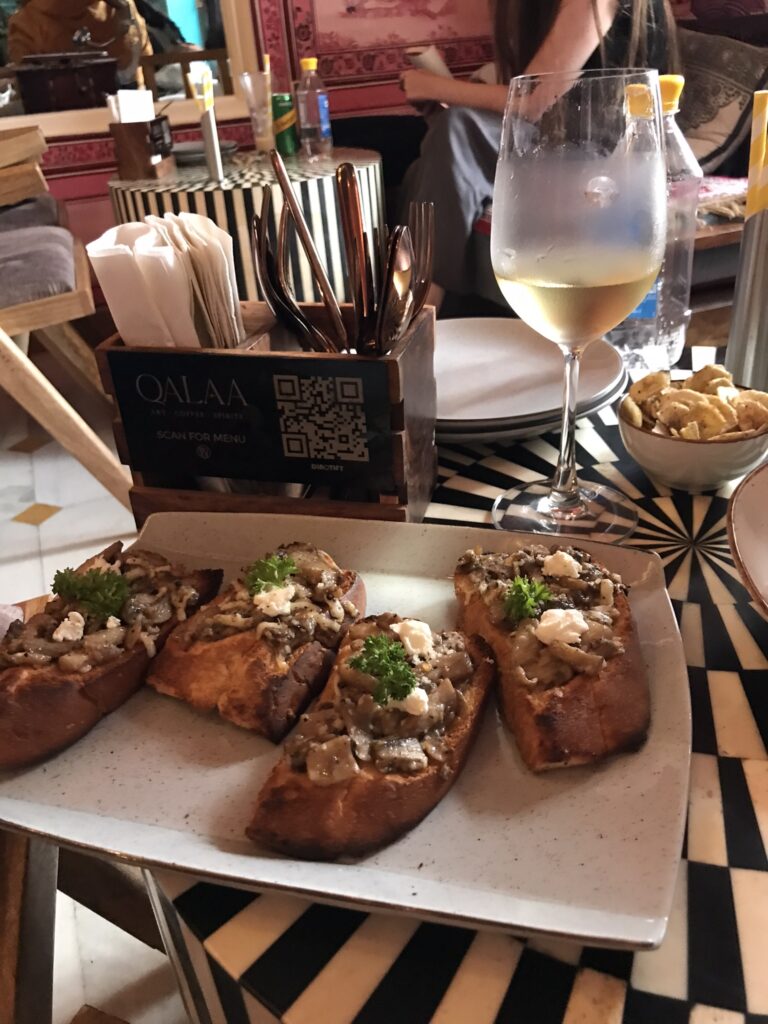
High-end international food at Qalaa
Athenas Cafe – located at the top of the Moustache hostel. A modern place but we were a little disappointed as many items on the menu were unavailable when we visited. At one point we tried to visit at lunchtime and they weren’t even serving food. It can’t really be classed as a cafe.
Activities
City Palace – a very extensive property, the palace contains many different galleries and different themed rooms. Possibly as we visited over the Christmas break, the palace was extremely and almost dangerously overcrowded and queues and crowd management were appallingly bad. The crowds made it difficult to fully appreciate the palace. We enjoyed seeing the historical weapons on display including my favourite, the punch-dagger.
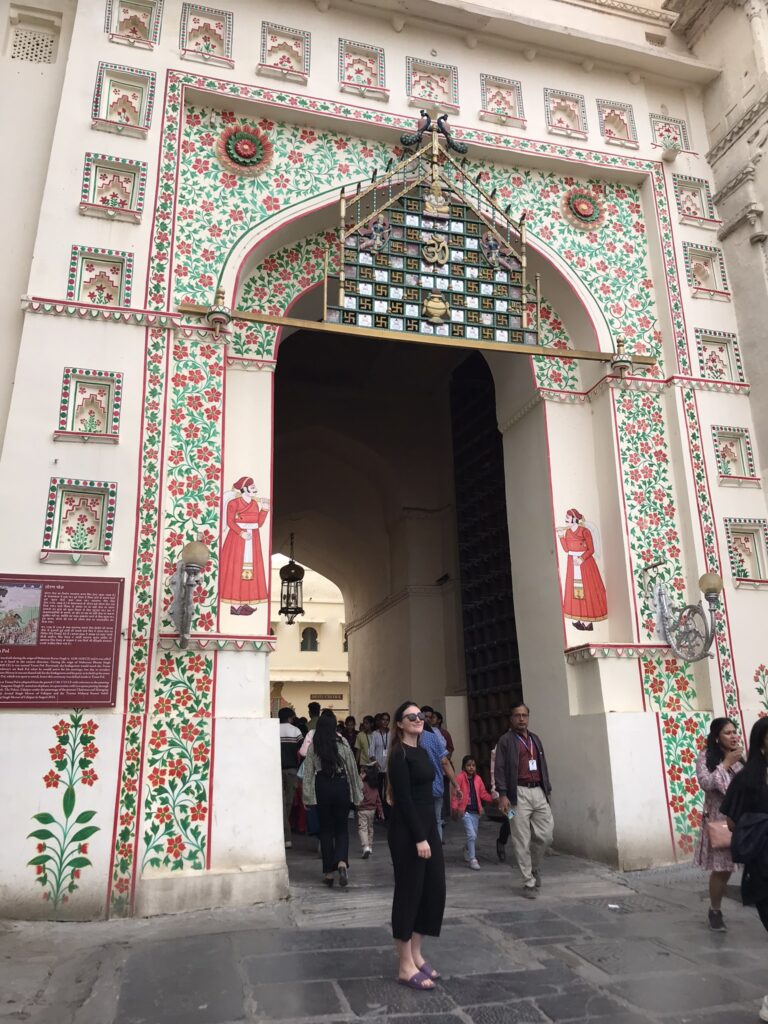
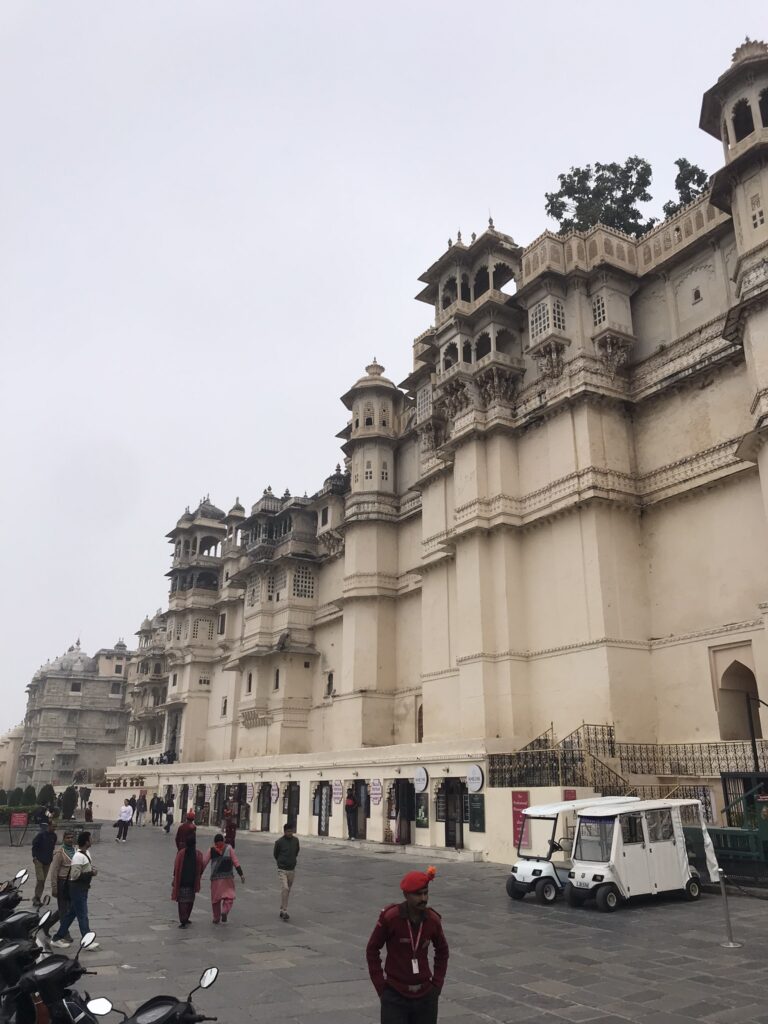
City Palace is a huge, impressive building with lots to see inside
As well as the palace itself, there are museum-style galleries relating to all sorts of topics such as old maps, silver, royal marriage ceremonies, musical instruments and many other things. It is possible to spend hours exploring the various museum rooms alone. We enjoyed these rooms a little more as the overwhelming hordes of domestic tourists didn’t seem to be as interested (they mostly seemed to just want to take photos inside the palace rooms), so we were able to explore more freely without being barged out of the way and crushed like sardines.
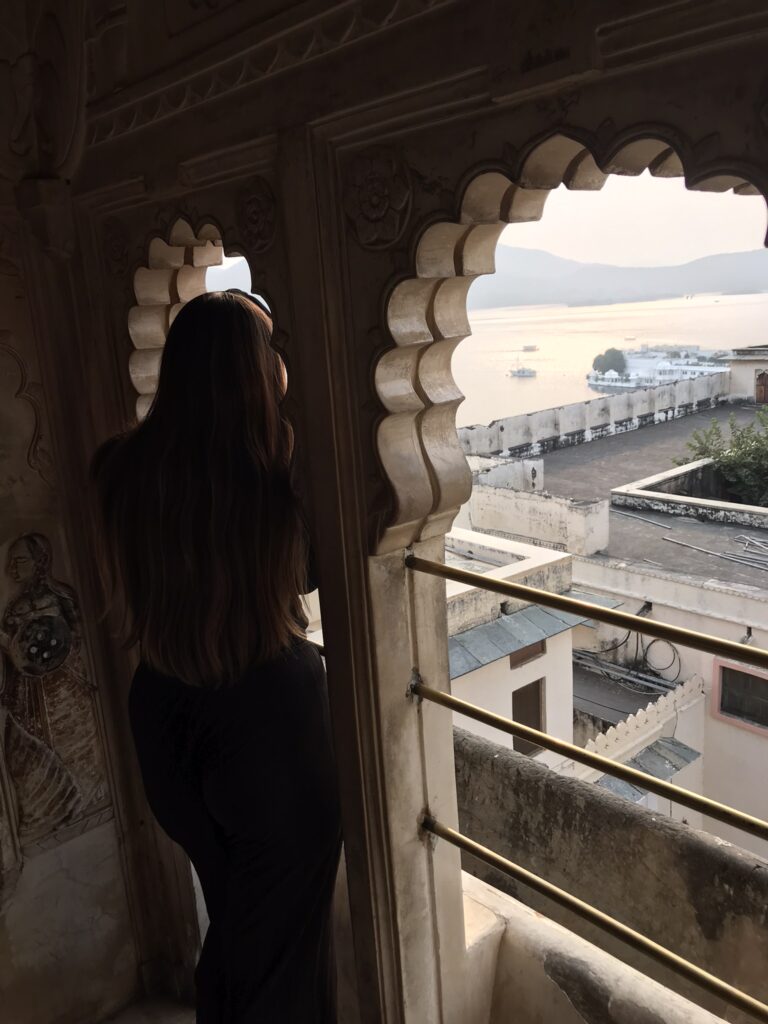
The views out of the palace windows over the lake were also a highlight
Guruwalk – mostly focused on the social history of the region, it was good to see the everyday local life and the residential area which was much more quiet and pleasant than the overly chaotic area around the lake. We were interested to see residential houses which were newly-painted with murals in a local style, apparently to signify a wedding in the family. We also saw market and pottery areas as part of the tour.
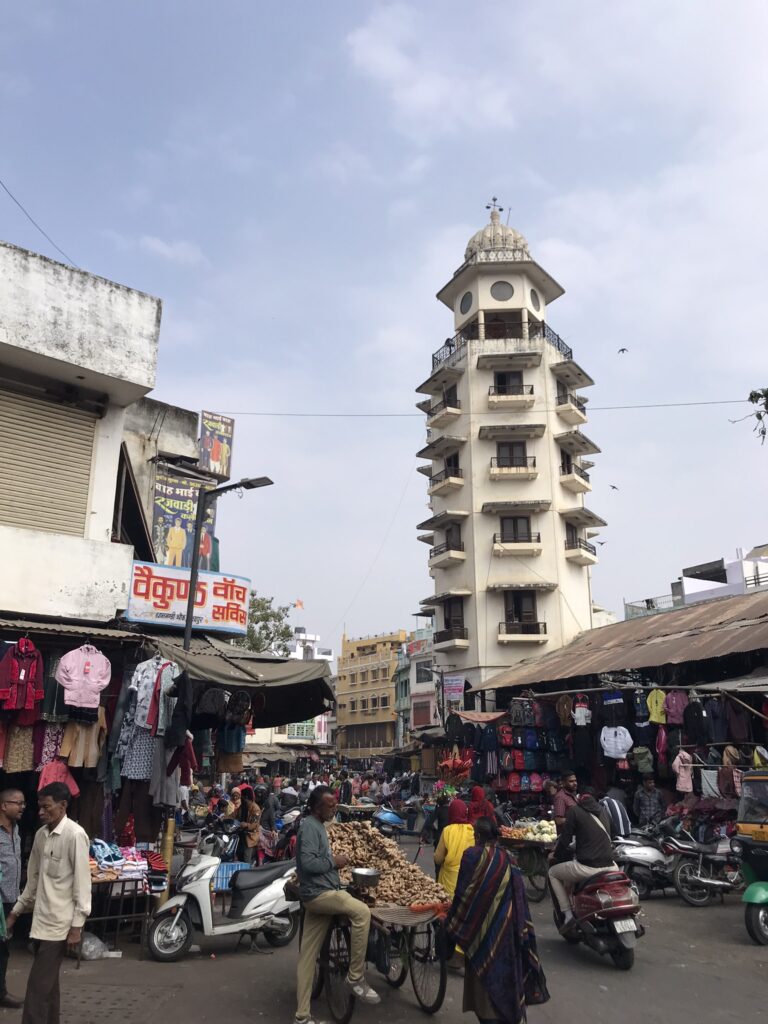
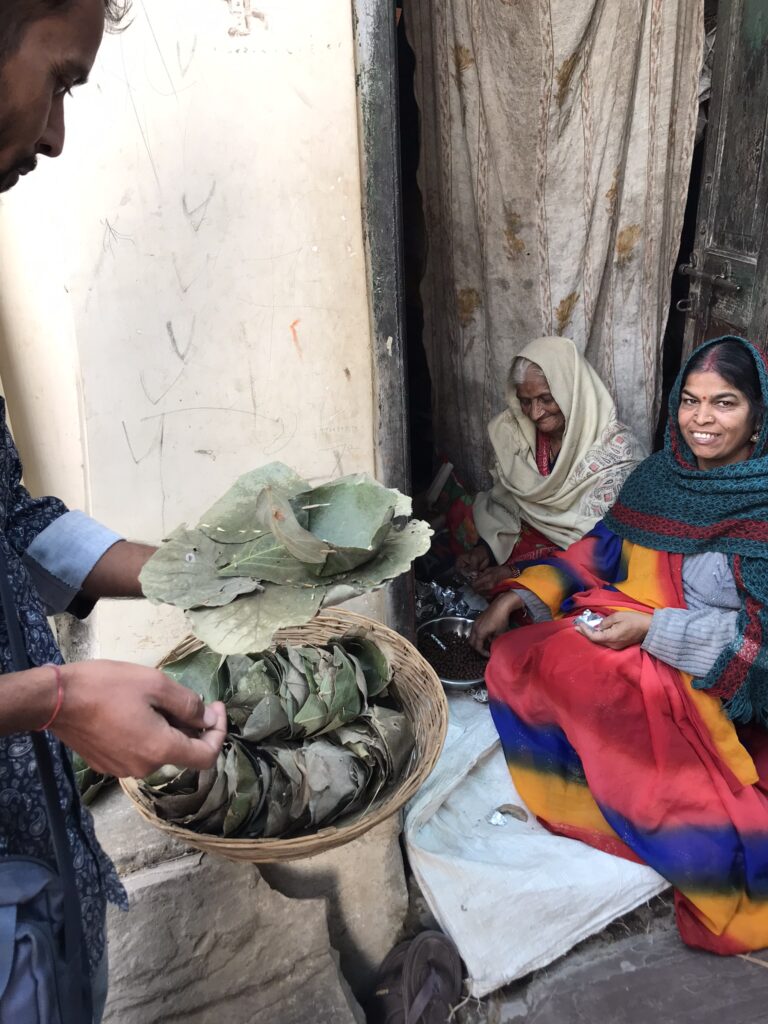
Exploring the lesser-visited market and residential areas was a highlight for us given the massive crowds elsewhere
Jagdish Temple – as part of the Guruwalk tour we visited this landmark Hindu temple at around 10am. The worshippers inside were singing and making devotional music, which was interesting to see. The temple façade with depictions of dancing ladies and elephant fights was impressive.
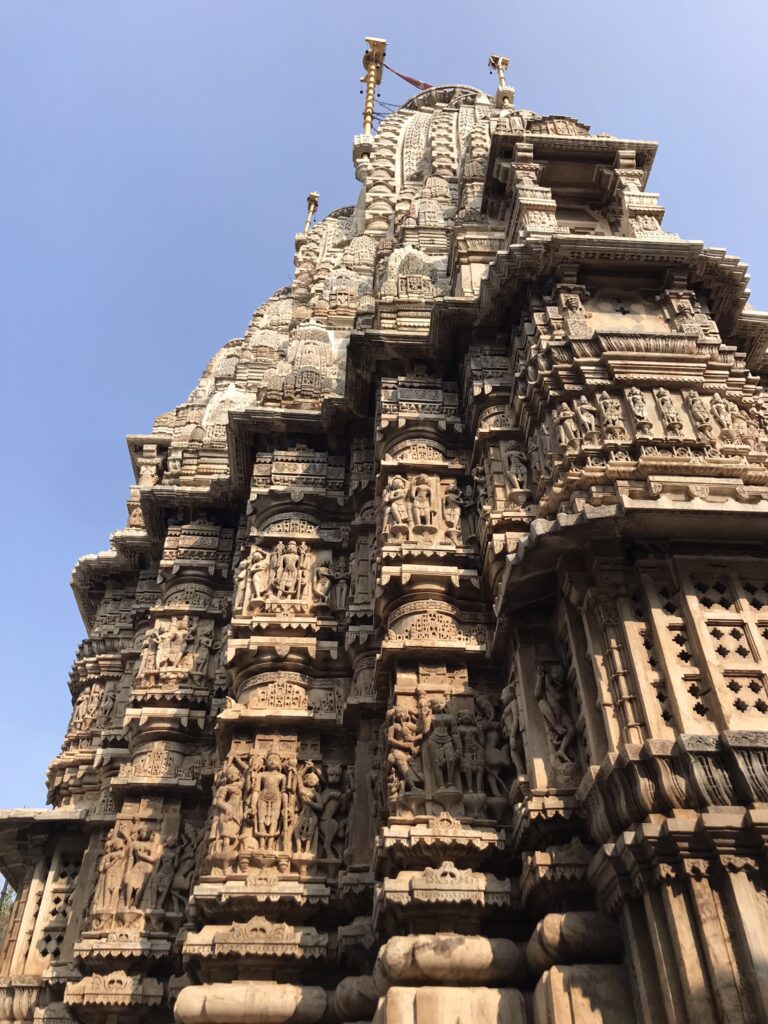
The intricately-carved temple is right in the heart of the city
Bagore-ki-Haveli – a former residence of one of the top ministers of the ruler of Udaipur. The haveli-cum-palace contains some artefacts as well as good lakeside views. It’s not always in the best state of repair, but as a historical building we found it more enjoyable than the City Palace as it was less polished/restored and there were far fewer crowds. We also enjoyed the turban gallery here, which includes one of the world’s largest turbans. This is also the location of the Dharohar Folk Dance Show, so it’s good to combine the two activities – we found that you can also get priority entry to the show if you are already in the haveli at the end of the day.
Dharohar Folk Dance Show – we struggled to buy a ticket online so ended up queueing up at the ticket office near Bagore-ki-Haveli, which opens just prior to the show. The whole queueing process for tickets was a chaotic and disorganised mess as locals charged forward, pushed and jostled to try and get to the front of the line – this may be because of the increased demand as we visited during the Christmas break. Workers were trying their best to manage the unruly masses in the queue. You can purchase a photo pass for a small additional fee and receive an orange sash entitling you to take pictures and videos of the performance – although most of the domestic tourists at the show didn’t purchase this pass and were feely taking photos and videos anyway with nobody stopping them. There is usually one one performance per day which takes place in the late afternoon, although there were two performances per day when we visited over the Christmas break due to the higher demand.
The show itself was gimmicky but fun with a narrator explaining proceedings, traditional musicians, dancing and even a puppet show. The highlight and climax of the show was a lady performing stunts while balancing an unbelievable number of pots on her head – truly as bizarre and wonderful as it sounds. The excited local tourists in the crowd invaded the stage to create an impromptu dance party at the end of the show, giving tips to the performers in a public display of generosity and hearty Indian spirit.
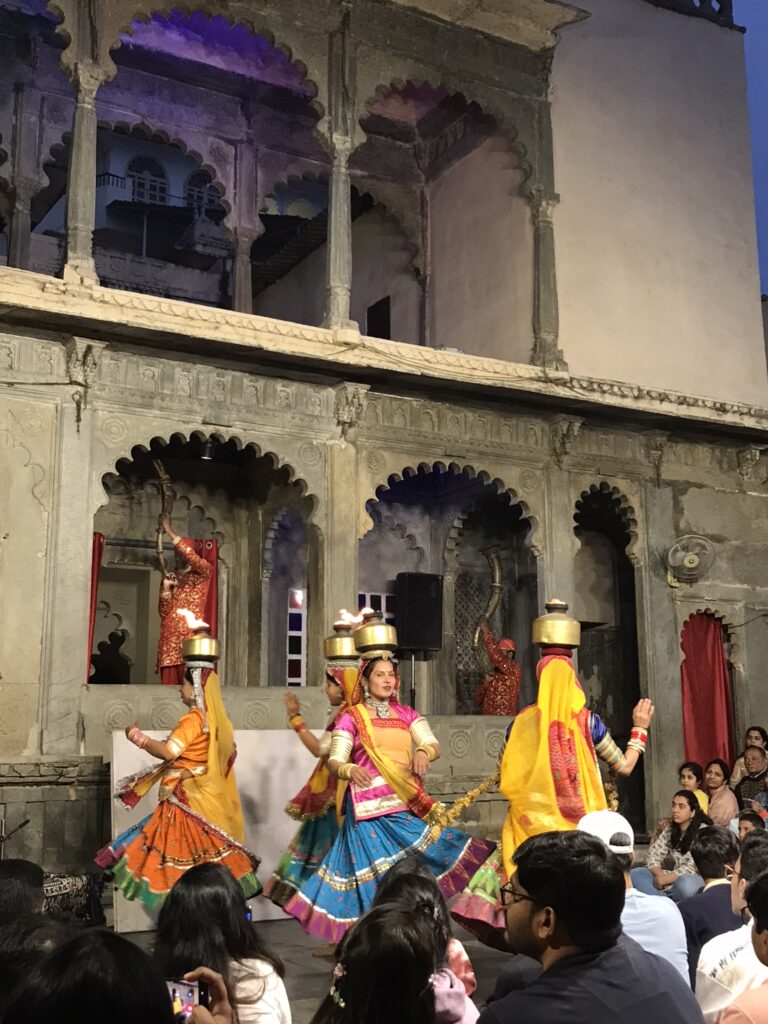
Wild goings on at the Dharohar Folk Dance Show
Gangaur Ghat – a lakeside stepped platform (ghat). An iconic site in the city, although there is not much to see other than the views across the lake. This is an important site for celebrations such as Diwali.
Boat trip to Jagmandir – Jagmandir is one of the islets in the centre of Lake Pichola and contains a 17th century palace, which is now a hotel. As a result it is a common destination for boat trips on the lake, which leave from a dock next to the City Palace. In order to take the boat, you must first buy a boat ticket at the ticket office for the City Palace and then walk through the palace grounds to get to the dock. The boat goes past the very exclusive Taj hotel and then on to the Jagmandir island. The best part is the approach to the Jagmandir island, with its famous elephant sculptures. There isn’t too much to do on the island apart from visit a small cafe and look at the outside of the palace structures – you can walk around the entire place in about 15 minutes. We would’ve been happy enough to just stay on the boat but were made to briefly get off on the island, which seemed like a ploy to try and get tourists to buy drinks from the cafe on the island.
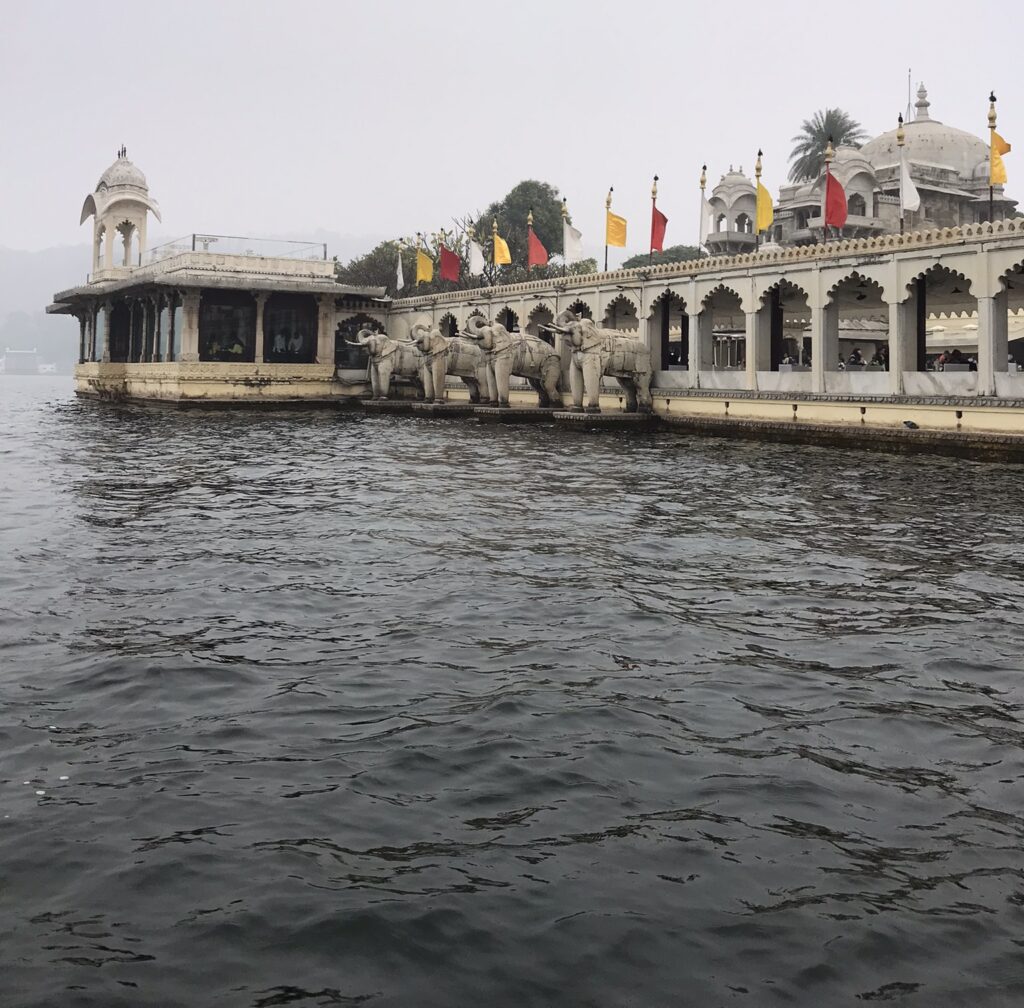
The palace at Jagmandir is similar in design to Udaipur’s City Palace, but much smaller
Bundi
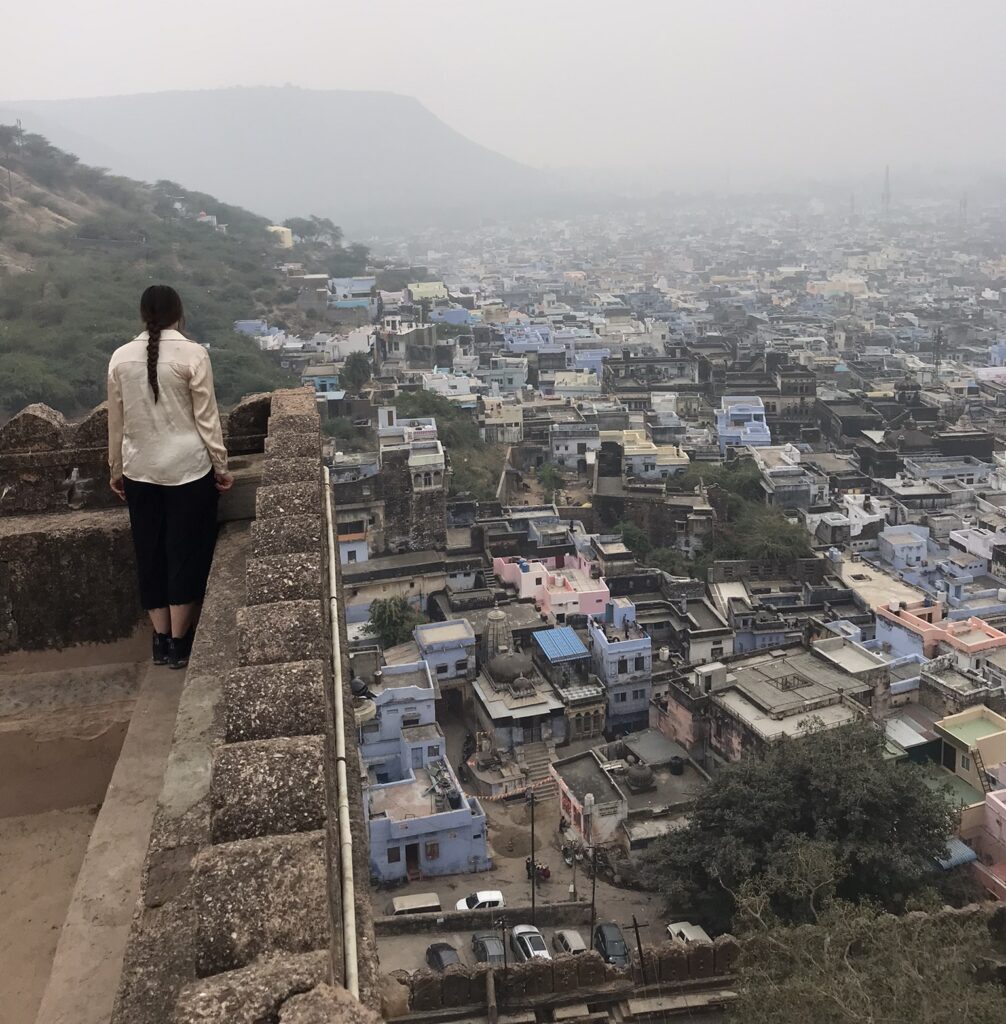
A small town in southern Rajasthan near to the city of Kota, Bundi is known for its slower and more relaxed pace, particularly in comparison to many of the frenetic larger cities in the area. Lesser-visited by tourists, this is a great place to get away from the hordes and chaos while also exploring the classic Rajasthan architecture and regal history.
Historically, India as a whole and the state of Rajasthan in particular was a patchwork of small kingdoms and local dynasties. While not all of them dominate the pages of Indian history today, they all held royal power and influence within their own little domain. This is evidenced by the grand palaces, commissioned artwork and imposing fort that can be found in Bundi, courtesy of the local Rajput dynasty that ruled the small kingdom from the 13th century right through until the time of India’s independence in 1949 – often as a vassal state of larger or more powerful kingdoms or empires such as the Mewars, the Mughals and the British.
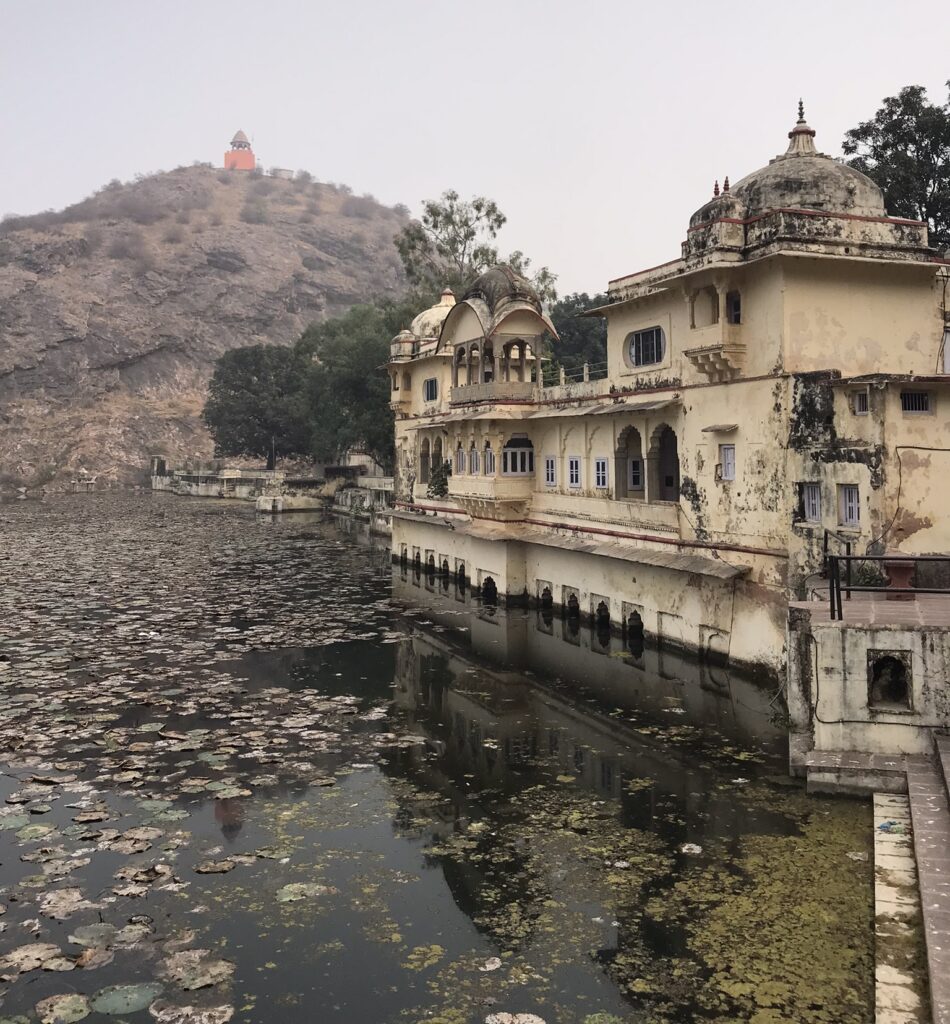
Classic Rajasthani charm at the summer palace
Bundi is known as the ‘city of stepwells’. If you aren’t familiar with stepwells, they are basically enormous wells which are surrounded and accessed by multiple small staircases built into the walls. Stepwells were a common construction in this part of India during the dynastic periods in order to store and preserve water for the dry season. Bundi does indeed have many stepwells, which were built with royal patronage and now stand in various states of preservation. As well as the stepwells, Bundi is also home to a number of palaces and an impressive fort, which is built into the mountainside and towers over the town below.
Most of the attractions and historic places in Bundi are maintained but not fully restored, which makes them feel much more authentic. They are typically quiet, not overrun by mass tourism or disneyfied. The town centre itself is also quite atmospheric, with haveli-style houses and winding streets. Many of the main attractions around the city are covered by a single combined ticket, while another ticket covers the area within the boundary of the fort.
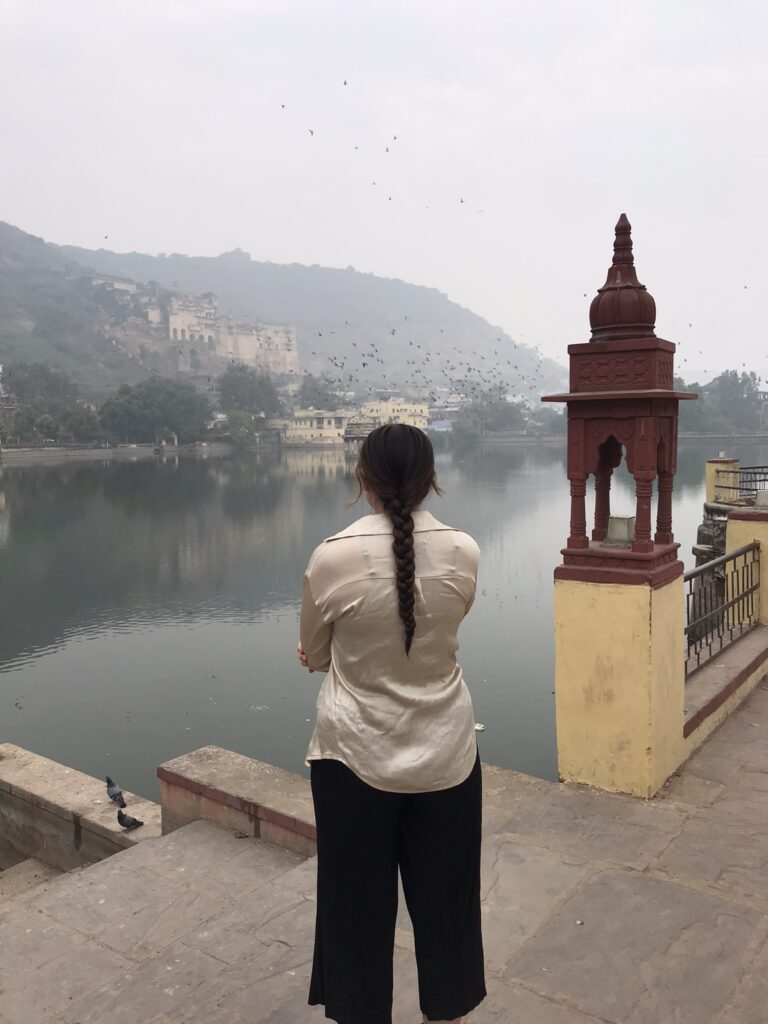
Like most of Bundi, the Sunken Temple is quite an atmospheric palce
Bundi itself is located in quite a rural part of the state. We saw wild pigs while walking to the Sukh Mahal. Our host at the Haveli Bundi Inn told us that the area had only got consistent access to electricity within the last 20 years. Rogue monkeys roam freely around the rooftops near to the fort. Many of the rooftop terraces and restaurants near the fort are surrounded in bamboo cages to keep out the monkeys. Away from the fort area, the streets are a little more ramshackle and less developed. Walking though local neighbourhoods we encountered many excited children and meandering cows.
The train station in Bundi is a little way out of town. After arriving we were concerned about getting to our accommodation near the fort, but the tuktuk drivers waiting in the station car park were actually decent and honest, they didn’t try to rip us off. While in Bundi we saw virtually no other foreigners and the city felt far removed from the chaotic, overcrowded tourist hotspots of the Golden Triangle. We were surprised at the quality of cafes and places to eat here as well as the friendly, welcoming and down-to-earth locals. Bundi ended up being one of our favourite places in this part of India, a real hidden gem.
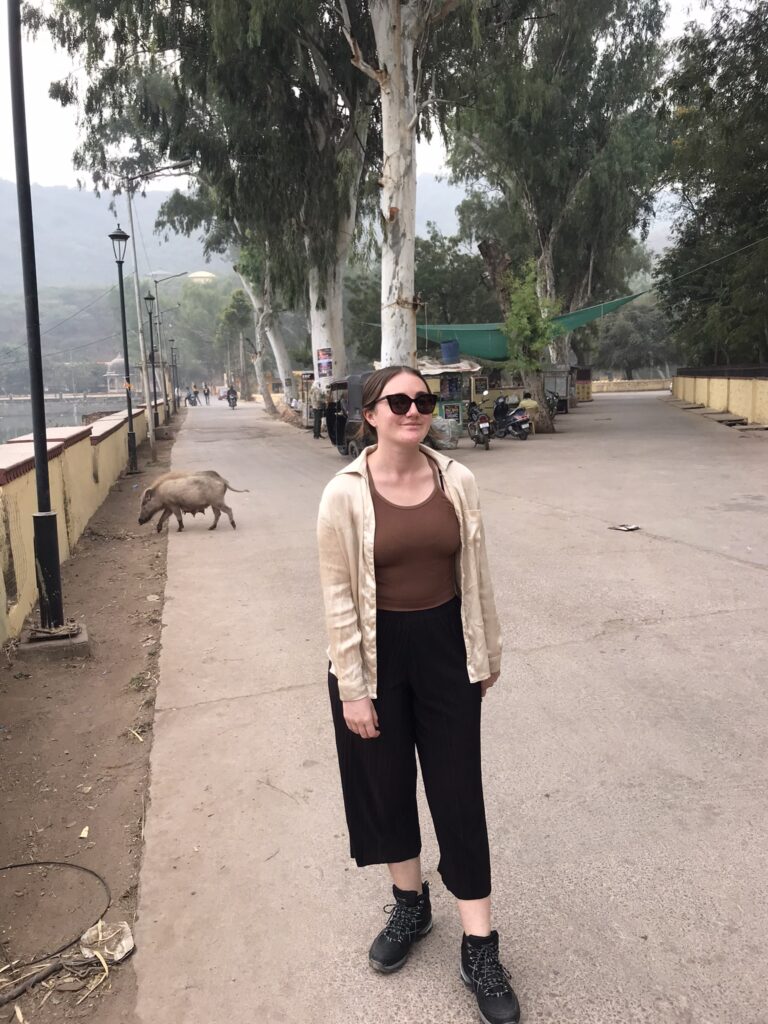
Monkeys and wild animals roam the streets of Bundi – we even saw a huge snake at one point
Accommodation
Haveli Bundi Inn – run by a very friendly, well-to-do couple with familial links to the former ruling dynasty. A charming, well-maintained heritage house complete with old-timey wooden doors, the property is in a great location with convenient access to the fort and other attractions. The rooftop terrace provides great views of the fort and surrounding areas. The on-site kitchen here was able to provide a tasty dinner for us – a good option for evening meals even for those that aren’t staying at the property.
Foodie Places
The Burg Cafe – if you’re looking for your fix of avocado on toast, or peanut butter and banana breakfast combos then this place will be a hit with you. It certainly was with us! We were taken aback by the quality which was much higher at this small cafe than anywhere we visited in any of the major cities nearby. A friendly, down–to-earth place, the owner was chatting to us while preparing the food and giving recommendations of places to visit – he even gave us a map of the local attractions. If you’ve just arrived in Bundi this is a pretty good place to start!
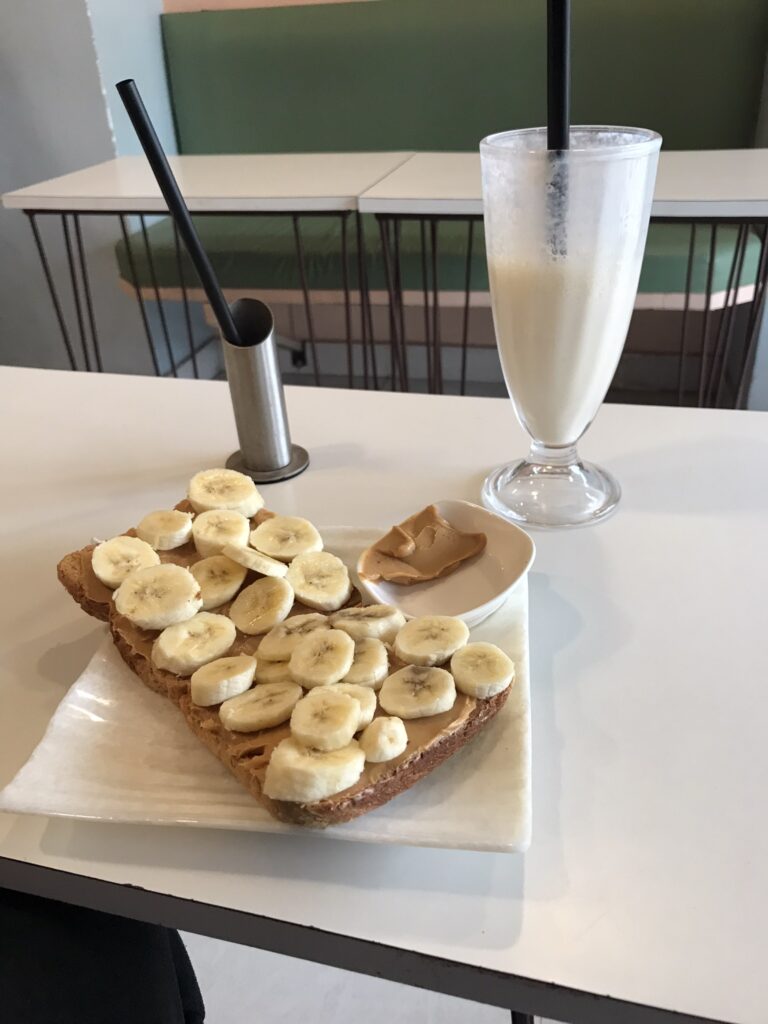
This was very much appreciated
Energy Family Restaurant – a real local family-run place on a rooftop terrace near the fort. We had to wake up the waitress and the chef as they were taking an afternoon nap when we arrived! Great quality Indian curry and very tasty lassi. The chef emphasised that everything was cooked fresh to order and so the food would take a little longer than usual. Slight hippie vibes here with a floor seating area and Bob Marley references around the place.
Activities
Raniji Ki Baori – the most famous stepwell, elaborately carved with some intricate decoration. The water inside the stepwell is extremely stagnant and there are many pigeons living in the roof and hiding in the many holes in the walls, which can provide a hazard to exploring freely. You may have to dodge flying poop. When we visited there were very few people around. Like most of the attractions in Bundi, this was definitely an unfiltered experience.
84-pillared Cenotaph – next to a private school with high security, presumably to stop tourists accidentally wandering into the school. The cenotaph features carved sculpture decoration and a painted roof, with fish designs and depictions of winged mythical creatures inside. It is possible to climb to the top of the cenotaph. We were unsure whether or not to take off our shoes when visiting – some locals did and some didn’t.
Dabhai Kund – an open stepwell, very impressive and vast. The symmetry of the steps is quite pleasant visually. There is not a lot of maintenance here – entrance is through a type of door-cum-gate and weird exoskeletons of unidentified flying creatures line the walls.
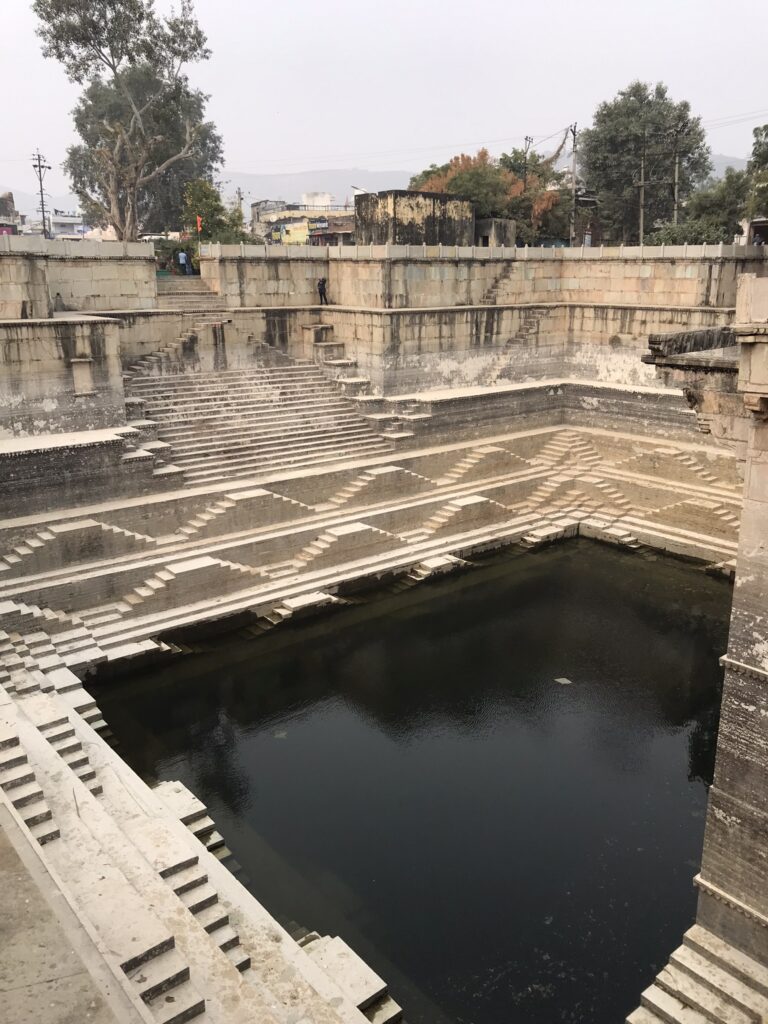
The beautiful symmetry of Dabhai Kund
Nagar Sagar Kund – a small stepwell next to the market – we needed to ask some traders to go behind their stall in order to view the stepwell. There was also some rubbish around the water – the dirtiest of the stepwells we visited.
Sukh Mahal – slightly out of town but walkable from the centre of Bundi. This was a summer palace for the ruling dynasty. There are nice views over the lake, although the lake itself looked quite badly polluted. The exterior of the palace is unrestored and seemed a little grimy, however if anything this gave it a kind of old-worldy charm. The famous British writer (and avid colonialist) Rudyard Kipling stayed here and there is a room dedicated to Rudyard within the complex. There is also a small museum on-site which features religious sculptures and miniature paintings.
Bundi Fort – the main attraction in the town, it stands imposingly on the hillside and dominates the centre of Bundi. The fort is nicely lit up in the evenings, adding to its prominence – at night it reminded me a little of Hogwarts. The fort’s exterior looks worn and neglected but inside is more renovated and maintained. There isn’t much information or many exhibits per se inside the rooms, it’s essentially just walking through the structure and the empty rooms. Some of the faded painted frescoes and wall decorations can still be seen – these are unrestored so very authentic.
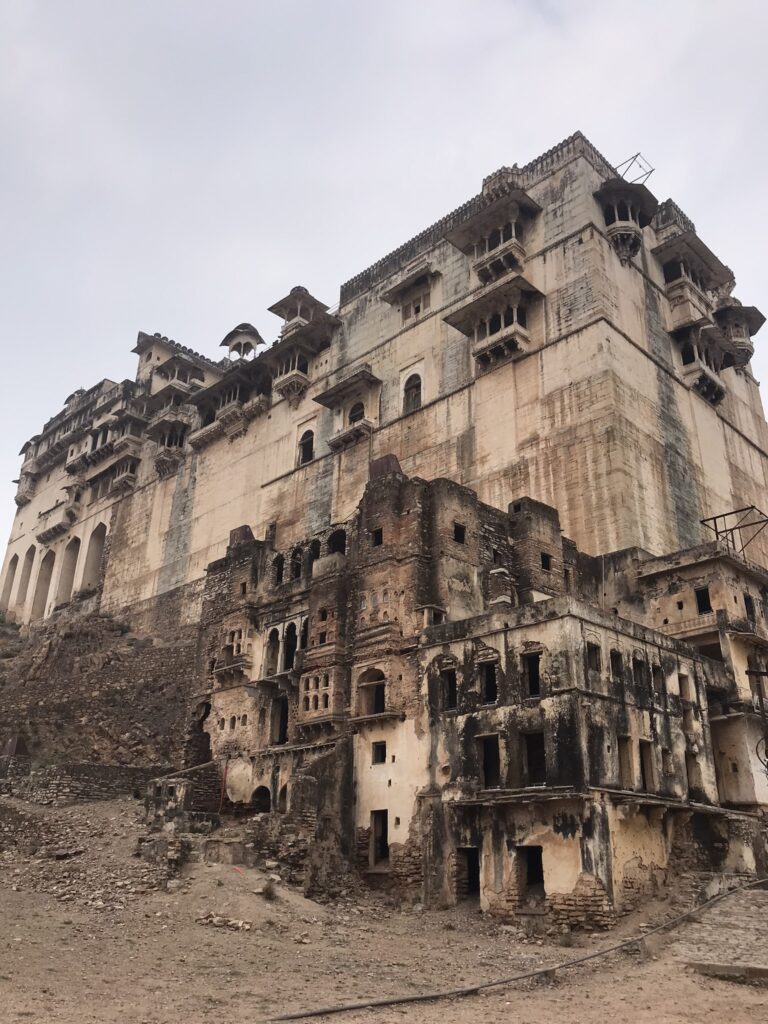
Bundi fort is a pretty dramatic structure to say the least
There are many layers to the fort, built upwards into the hill. A steep cobblestone path leads up to the entrance to the fort. The ticket includes the main fort, Chitrashala building and the Taragarh fort/Rani Mahal area at the very top of the hill. We wanted to get lunch but couldn’t leave as there was no re-entry with the same ticket, which was a little annoying.
Chitrashala (wall paintings) – further up the path from the main fort entrance, this is a separate area which is technically free to enter although the guards still asked to see our fort ticket before they let us in. This area contains only a few rooms with extremely detailed turquoise wall paintings. The paintings depict mythological, quasi-religious scenes featuring various deities as well as local royalty and courtly scenes. A huge military procession is depicted around the entire upper border of the wall. We spent a very long time looking at the paintings and taking it all in – it’s almost like a picture book. The rooms really stood out for the quality and quantity of the wall paintings which are still so vivid. Some of the most detailed and best preserved fresco artwork we have seen anywhere in the world.
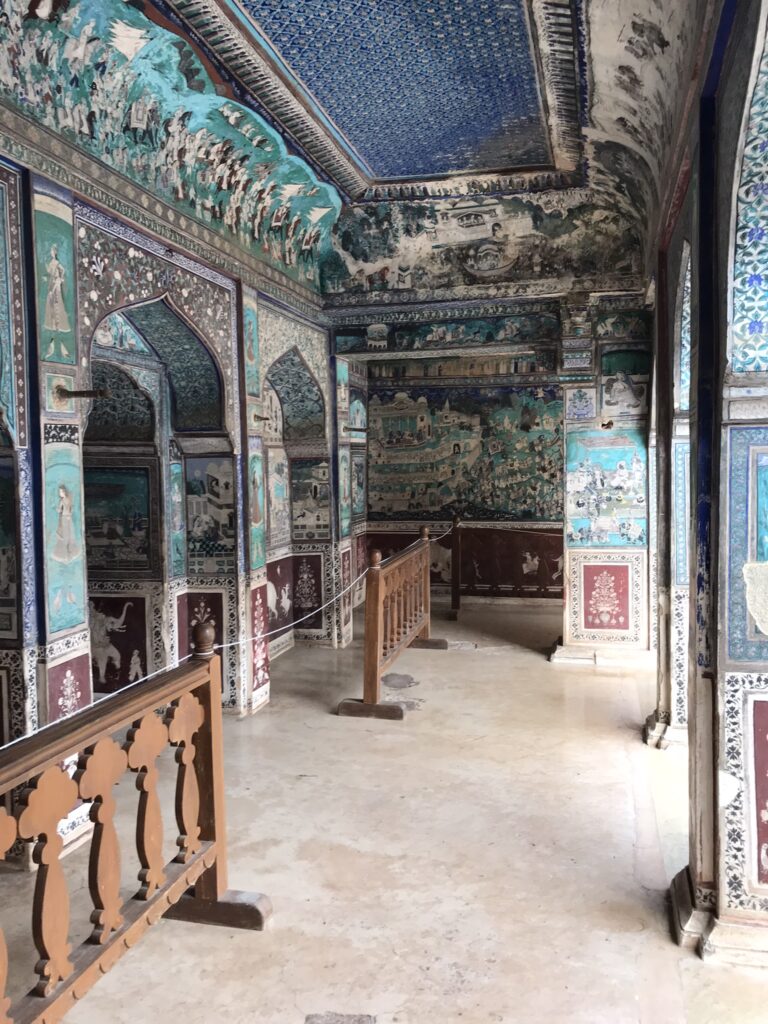
The wall paintings at Chitrashala really are something special
Taragarh Fort & Rani Mahal – the highest point of Bundi, this complex of buildings is located right at the top of the hill and accessed from the same entrance as the main fort – you can get there just by continuing to follow the path upwards. It is quite a tiring and arduous uphill hike from the main fort entrance. We were warned to take care in this area due to a dangerous wildcat which had been spotted at the top of the hill – our guesthouse hosts even (very sincerely) warned us against going up.
The Taragarh complex includes several buildings and structures including a dilapidated palace (Rani Mahal) as well as water tanks, bastions, watchtowers and even a stepwell. Most of the structures are now in various stages of decay and ruin. A large fortified wall surrounds the crest of the hill which is clearly visible from the top, along with excellent views over the entire city. This is by far the least-maintained and restored part of the fort area and also the least visited as most don’t make it all the way up the hill. If you’re into abandoned historical buildings like us then it is definitely cool to explore, but others expecting a beautiful sparkling palace may not think it’s worth the tough walk up the hill.
Nawal Sagar (sunken temple) – while walking here we saw a huge snake! The temple and pond is a very atmospheric place to walk around, with great views of the fort
Click here for my self-guided walking tour of Bundi!
Agra
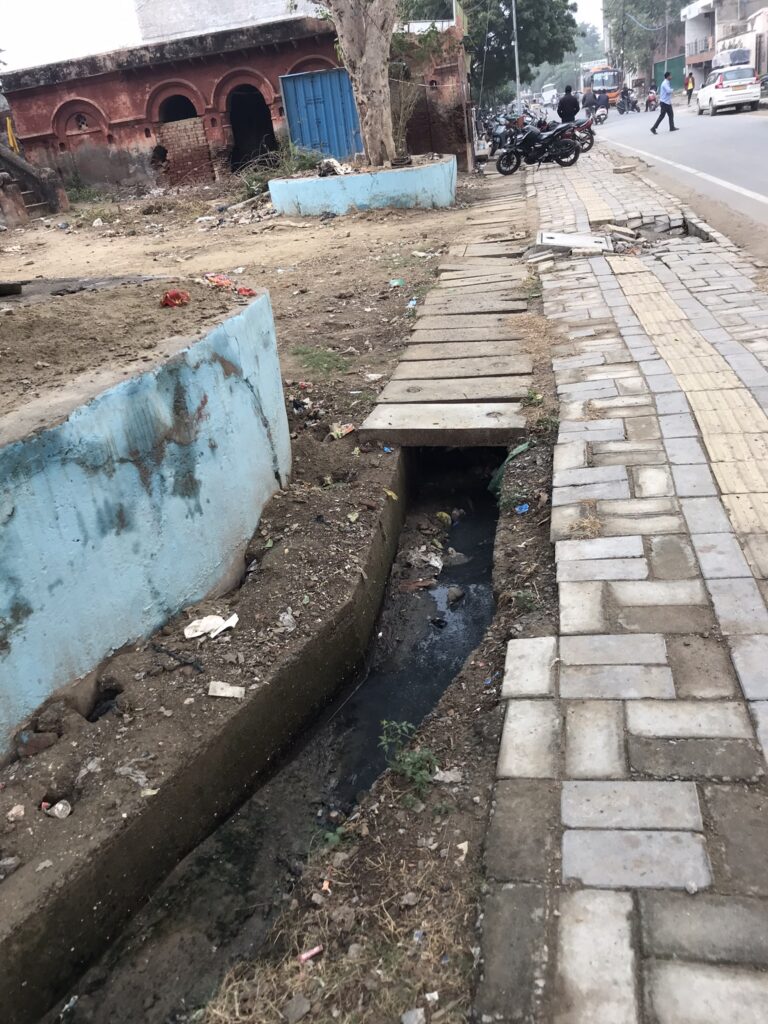
I knew it was going to be bad as soon as we spotted the sea of rubbish visible from the train.
I can’t really speak about Agra in any sort of positive light at all. From my experience, it’s an utter dump. Problems are numerous but the biggest and most egregious is probably the lack of basic sanitation, hygiene and self-respect on very public display. Agra is an extremely dirty city even in supposedly upmarket or touristic areas. We were staying in Taj Ganj, around 1km from the Taj Mahal, and even there the streets were filled with open sewers, human and animal faeces all over the road. Public urination and defecation are prevalent and bordering on endemic in the city. We literally saw a man defecating in the street in Taj Ganj. In other parts of the city this problem seemed to be even worse.
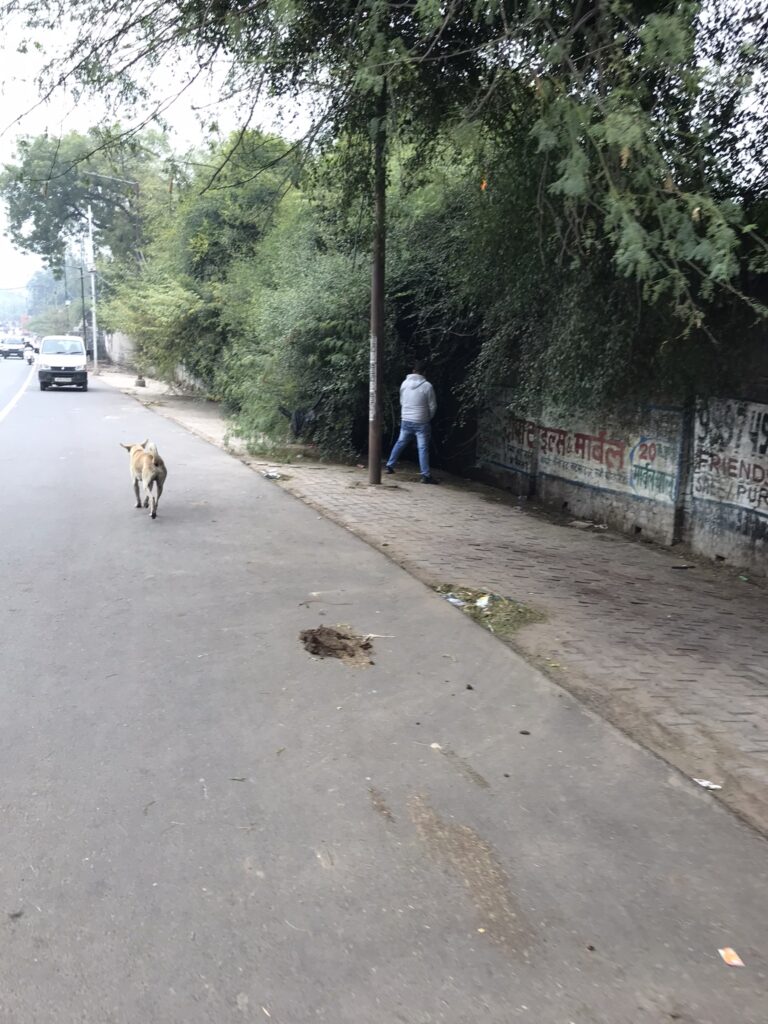
It’s really bad
Agra is part of India’s ‘Golden Triangle’ of tourist destinations, along with Delhi and Jaipur. The 3 million tourists that visit each year mainly just go to see the Taj Mahal. Because of this influx of tourism into a poor area with significant social problems, Agra is a very scammy place too. Uber barely works and almost all of the drivers we encountered tried to scam or hustle us in some way. The route to the Taj Mahal was awful to walk, with scammers, hasslers, beggar children at the roadside dressed up like clowns being forced to perform circus tricks. The area around Agra Cantt train station is just a sea of poverty and misery, with beggars and homeless people literally surrounding and encircling passing cars on the street. The inside of the station is little better.
Sadly, we spent a few days in Agra because it has a strong Mughal heritage (it’s one of the former imperial capitals) and there was quite a lot we thought we wanted to see. Others had advised us just to visit Agra on a day trip to see the Taj Mahal and Agra Fort and then get out, and I wish we’d listened. Don’t stay longer in Agra than absolutely necessary. Speed through as quickly as possible.
This is just my subjective view. Maybe some other people like Agra. But I’ve visited quite a lot of places and I can honestly say that this is the least favourite city I’ve ever been to in the world. We were completely depressed by the end of our short time here.
Accommodation
Five Dimension – a very approachable owner who helped with organising a birthday cake for Dan and spent some time chatting to us. The hotel is in a gated area with relatively clean and well-presented rooms, providing a safe haven from the city outside. The only downside was the loudly banging internal doors, and the breakfast which was a little bizarre. I asked for fried egg and one of the young hotel workers tried to fry a boiled egg. I’ve never seen anything like this before or since.
Foodie Places
London Coffee Club – a modern, chic European-style cafe that almost seemed out of place in the dirty streets of Agra. We enjoyed our avocado toast.
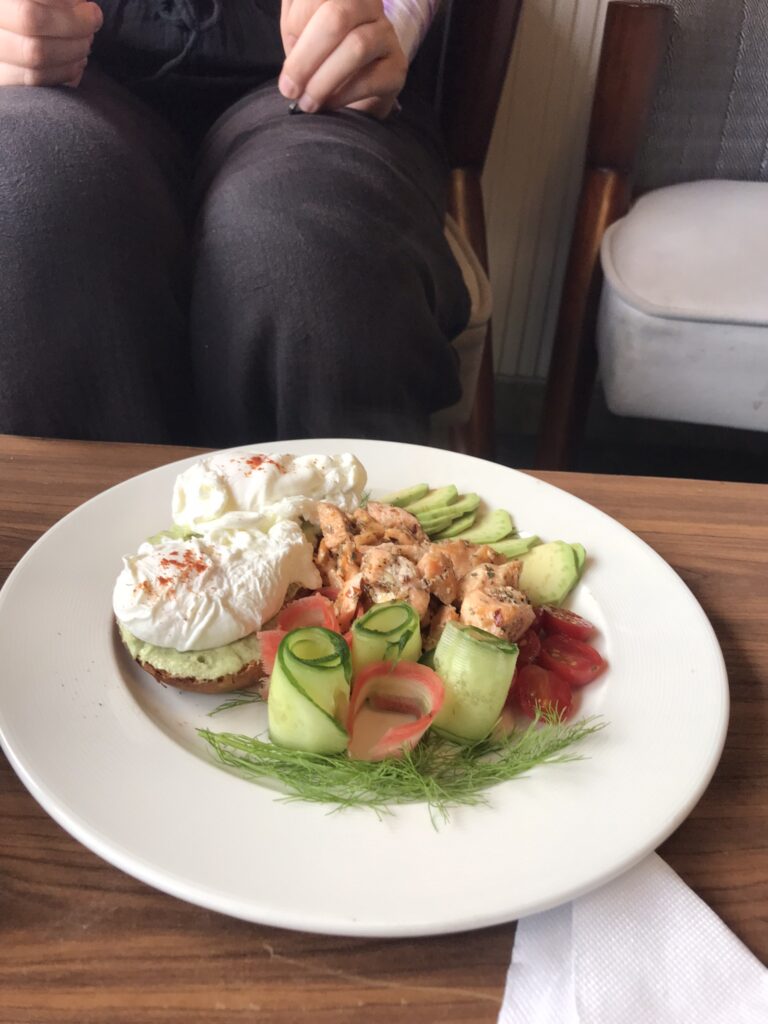
Bougie brunch at London Coffee Club
Good Vibes Cafe – non-authentic curry near our accommodation in Taj Ganj. The curry was served within a minute of us ordering and was bland, with no real spice or flavour depth. This place felt like a tourist trap.
Taj Terrace – a slightly more upmarket restaurant located at the top of a 4* hotel on the road leading to the Taj Mahal. It seemed to be mostly hotel guests eating there and the servers were a little confused when we told them we weren’t staying at the hotel. This was one of the few restaurants in northern Indian where we felt it was safe to try the non-veg option. Annoyingly, the server set the card machine to pay in our local currency rather than rupees, which meant that the meal cost more than it should’ve done.
Sheroes – a cafe-cum-shop with the aim of raising funds and providing stable work opportunities for the survivors of misogynistic acid attacks, which are sadly prevalent in this region. All of the waitresses are survivors of these attacks. Apart from the good cause, the food here is also pretty tasty and we legitimately enjoyed our burger and shake. The price is not set, you choose what to pay at the end in the form of a donation. We chose to pay about double what we would’ve paid elsewhere for the food, but felt it was worth it for the good cause.
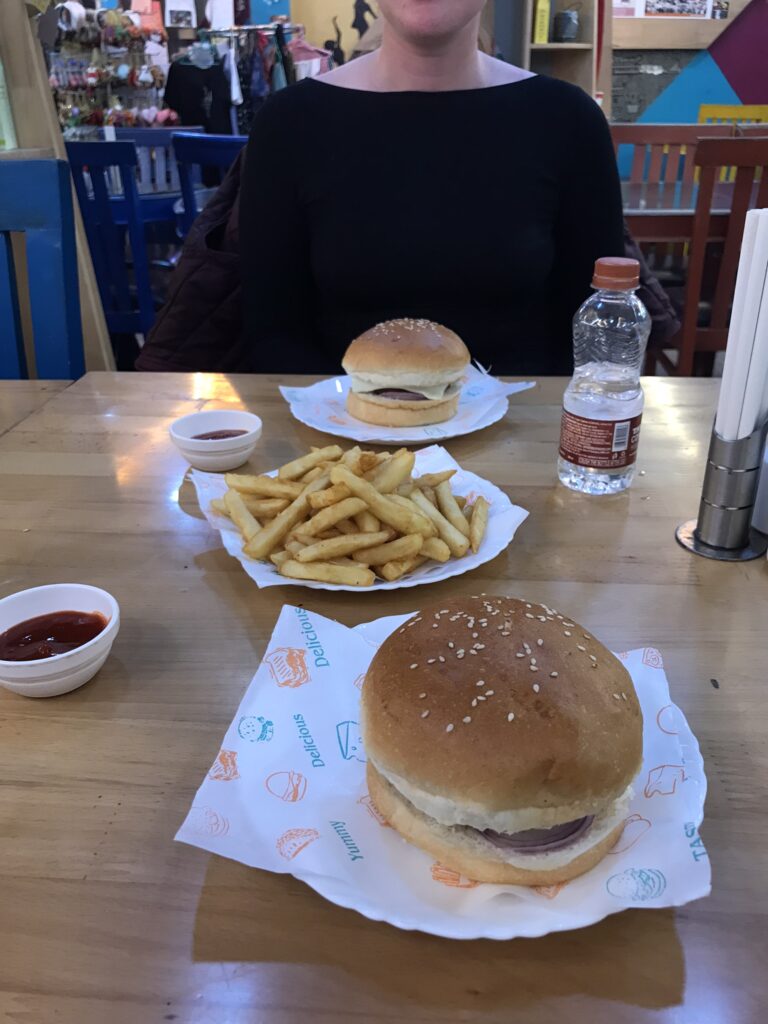
Aside from being a good cause, the food at Sheroes was legitimately pretty good
Masala Darbar – a highly-rated place within walking distance of Agra Fort. The restaurant is in a hotel basement with no windows, but the food was decent and the staff were helpful. Unfortunately the streets surrounding the restaurant on the way to the Fort are very unpleasant, basically walking past huge mounds of rubbish and cesspits full of human and animal waste.
Pino’z Pizza – we were familiar with this pizza chain from our time in Mount Abu and got it as a takeaway on Zomato one night. It’s not the best but not the worst.
Activities
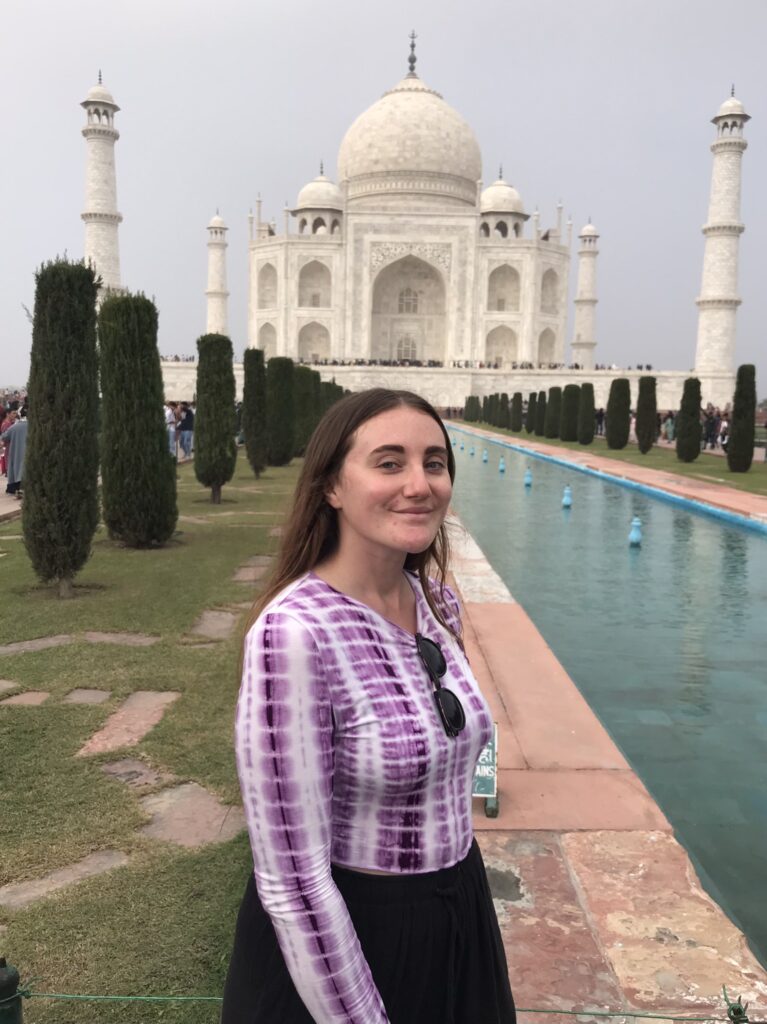
Taj Mahal – built by the Mughal Emperor Shah Jahan for his wife, this is one of the world’s most famous buildings and one of the 7 Modern Wonders of the World. While the rest of Agra is a dump, the Taj Mahal is pristine (although the Yamuna river which runs alongside it is also very polluted). We heard that heavy industry in and around the city was banned as the Taj was becoming discoloured.
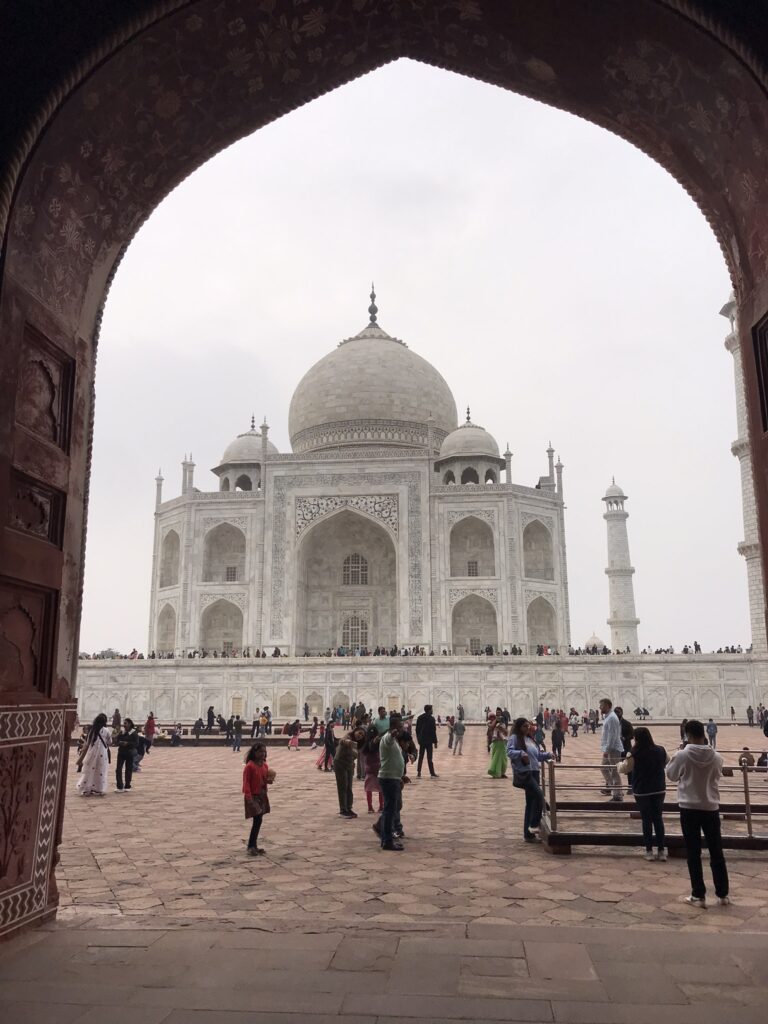
The Taj Mahal – definitely a sight to behold from all angles
There are all sorts of strange people outside the entrance to the Taj Mahal. A weird guy in an official uniform tried to scam us at the ticket booth by telling us to go with him and buy some sort of different or additional ticket which would supposedly give us priority entry blah blah blah – we told him to get lost. Just buy the ticket and ignore what other people say. It was a bit surprising as this guy looked 100% legitimate with his uniform and was doing this directly in front of the official sellers, literally as we were trying to buy tickets from them.
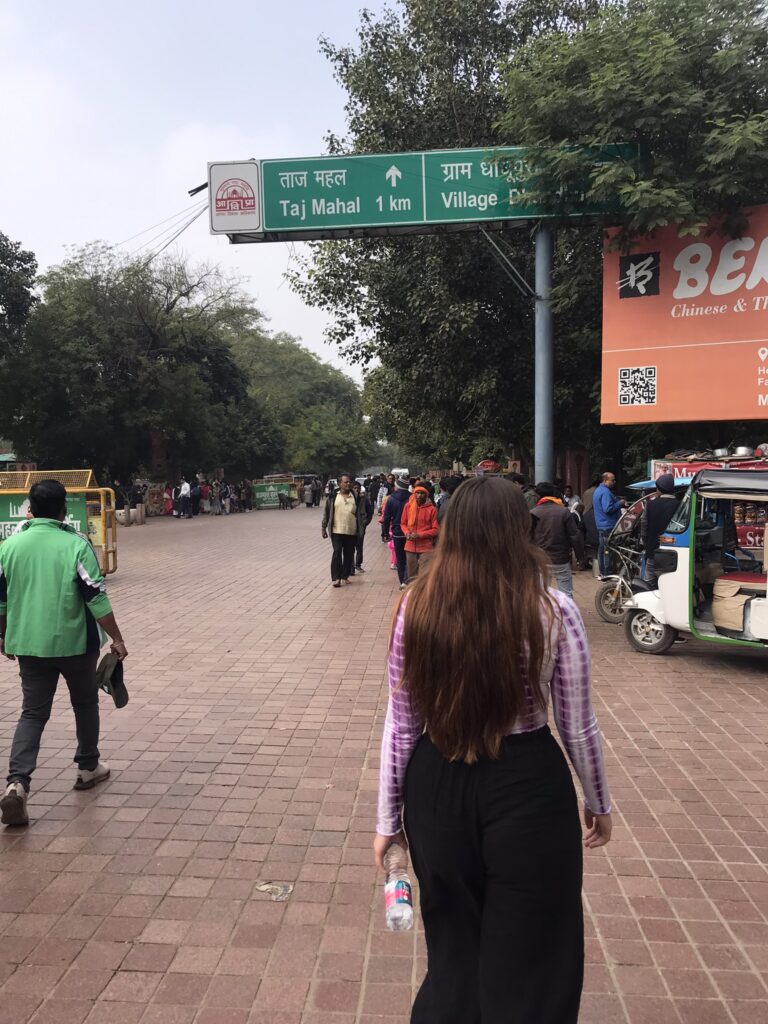
The walkway from Taj Gang to the Taj Mahal is a strange place – keep your wits about you
There are several ticket booths along the route walking from Taj Ganj, I don’t know how legitimate they are. Go to the closest one to the entrance as I can confirm that we were able to buy legitimate tickets from there. The foreigner ticket is much more expensive than the ticket for domestic tourists but it also includes a free bottle of water, complimentary shoe coverings and a different entrance which means you can skip the long queue of domestic visitors. If you aren’t given these things when you get the ticket then ask for them. Tickets are exchanged for a token, and men and women then queue in separate lanes for the security checkpoints after the ticket check. The whole process can take a while.
We visited in the middle of the day during the Christmas holiday period and the entire Taj Mahal complex was ridiculously busy, mainly with domestic tourists. I think we were unlucky with the timing of our trip as other travelers told us that the site had been pretty quiet when they went. As it is, we spent a lot of our time there either being elbowed or elbowing others out of the way. Many of the domestic tourists seemed to want to congregate for lengthy photoshoots immediately after entering through the gate and seeing the Taj Mahal for the first time. There are many better places for photos by moving past this logjam.

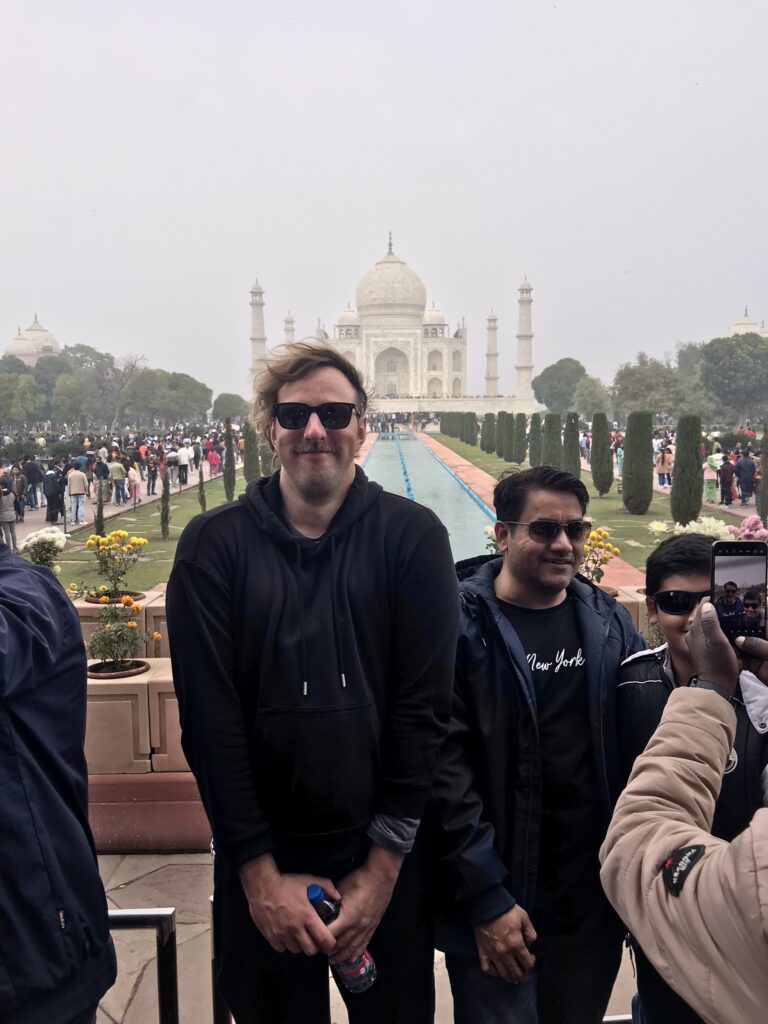
Expectation vs reality at the Taj
You can enter the inside of the Taj Mahal itself, but as it was so busy when we visited this included lots of pushing, shoving and being literally squashed in the queue to get inside the building. The whole place is exceptionally grand as expected, even the entrance gate to the complex. There are many intricate details within the design to maintain the symmetry that the building complex is known for. We were impressed by the pietra dura and the delicate filigree screens inside the Taj. Shah Jahan and his wife Mumtaz are buried inside, although apparently the visible tombs are just for show – the actual bodies are underground in a crypt. There are other buildings in the complex including two grand red sandstone mosques flanking the Taj, as well as the extensive gardens and a small museum in a building at the cardinal west point.
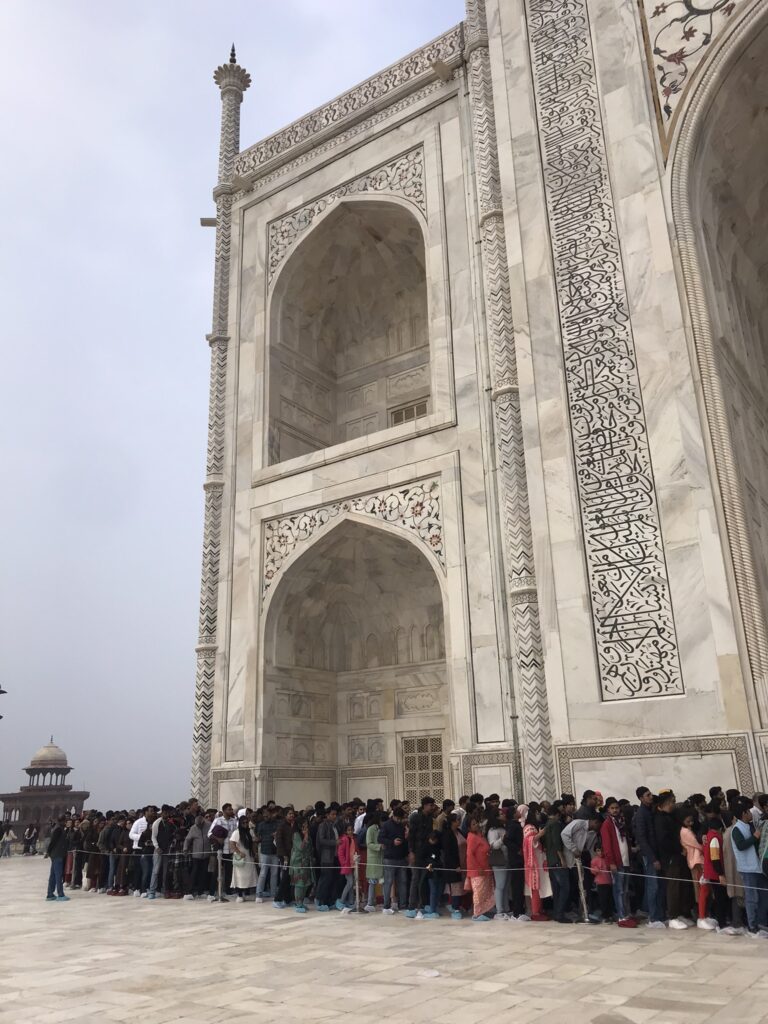
Big queues to get inside the Taj – to be fair it’s probably a lot less busy outside of the holiday periods
Agra Fort – another iconic Mughal spot in the city which was also packed with crowds when we visited. It’s quite similar to other large Mughal forts such as Lahore Fort – an extensive complex with lots of separate palaces and other structures. Beautiful exteriors, however a lot of the structures are now just the bare bones and mainly feature empty rooms.
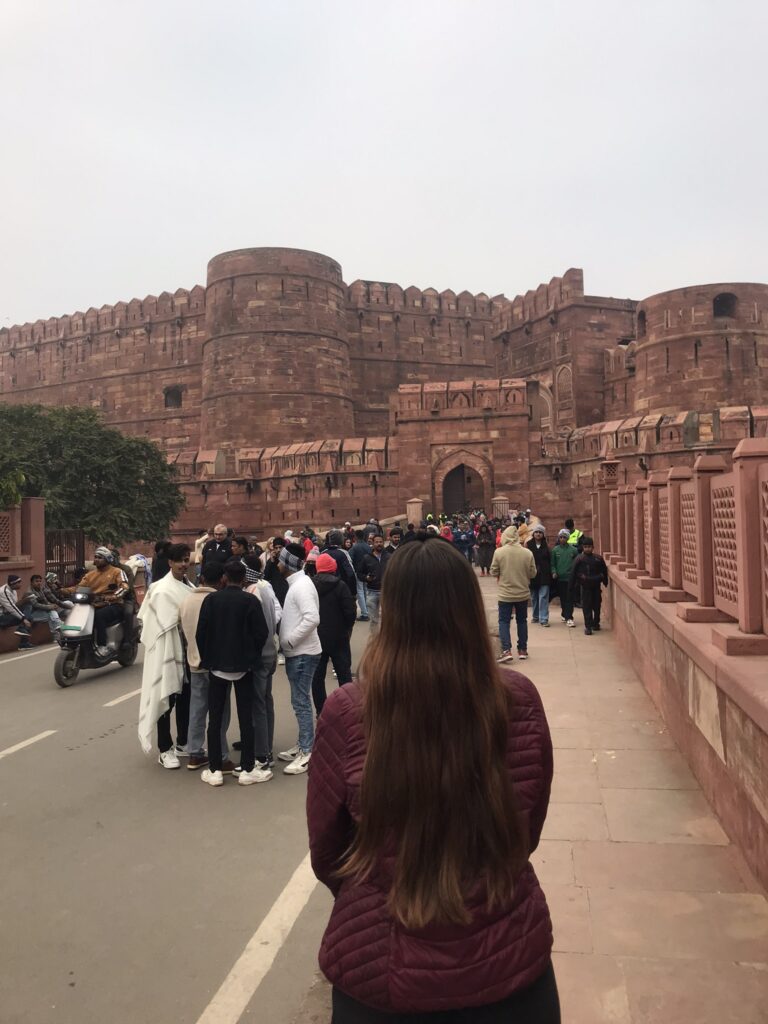
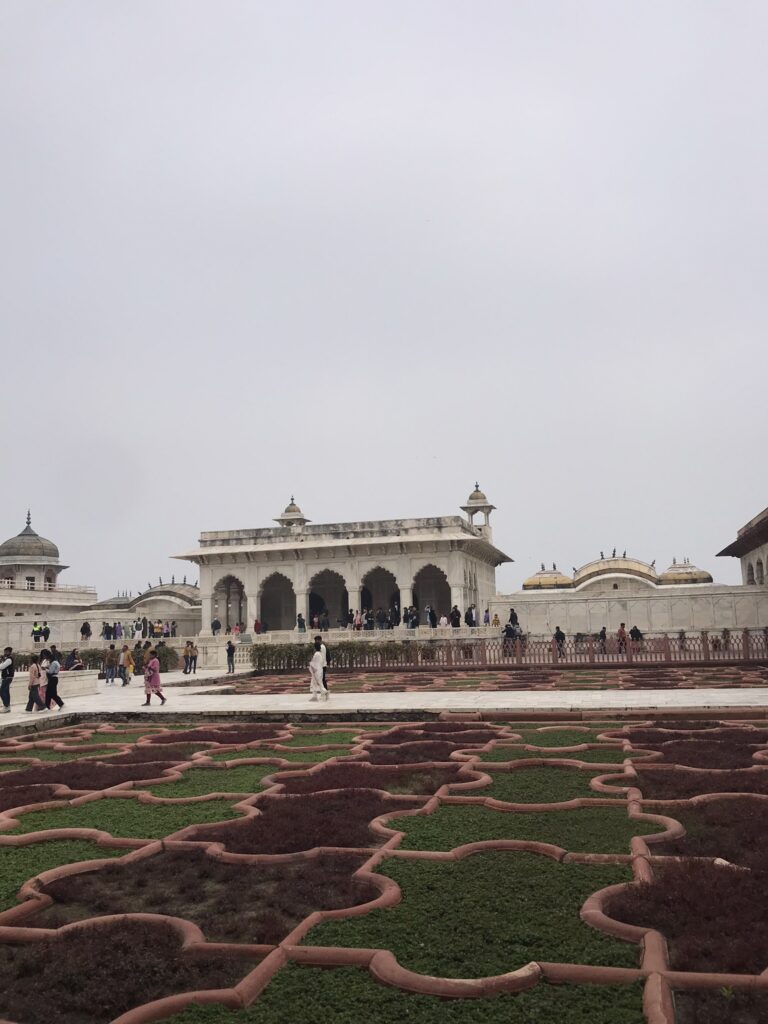
Agra Fort is massive with many interesting buildings and features inside
One of the highlights of the fort is the view across to the Taj Mahal. After being overthrown by his son, Shah Jahan was imprisoned at the fort and you can see the place that he was held, ironically overlooking his finest creation. The fort was also used by the British during the colonial period and there are some remnants of that era – we found it amusing to see domestic tourists queueing up to take photos with the grave of a colonial administrator named John Russell Colvin. Possibly because it was the Christmas period, inside the fort we also witnessed many local families not paying any attention to the rules, with children running all over the grass and being whistled at by ineffectual security guards.
Tomb of I’timad-ud-Daula – known as the ‘mini Taj’. Sadly we had quite a negative experience with the staff here – we were not provided with shoe coverings on entry as the staff that were supposed to be distributing them were AWOL, and a female member of staff inside the complex then started hassling and harassing visitors who did not have the shoe coverings despite the fact that nobody had been there to give them out. We had to walk back to the entrance along with several other people to get the shoe covers.
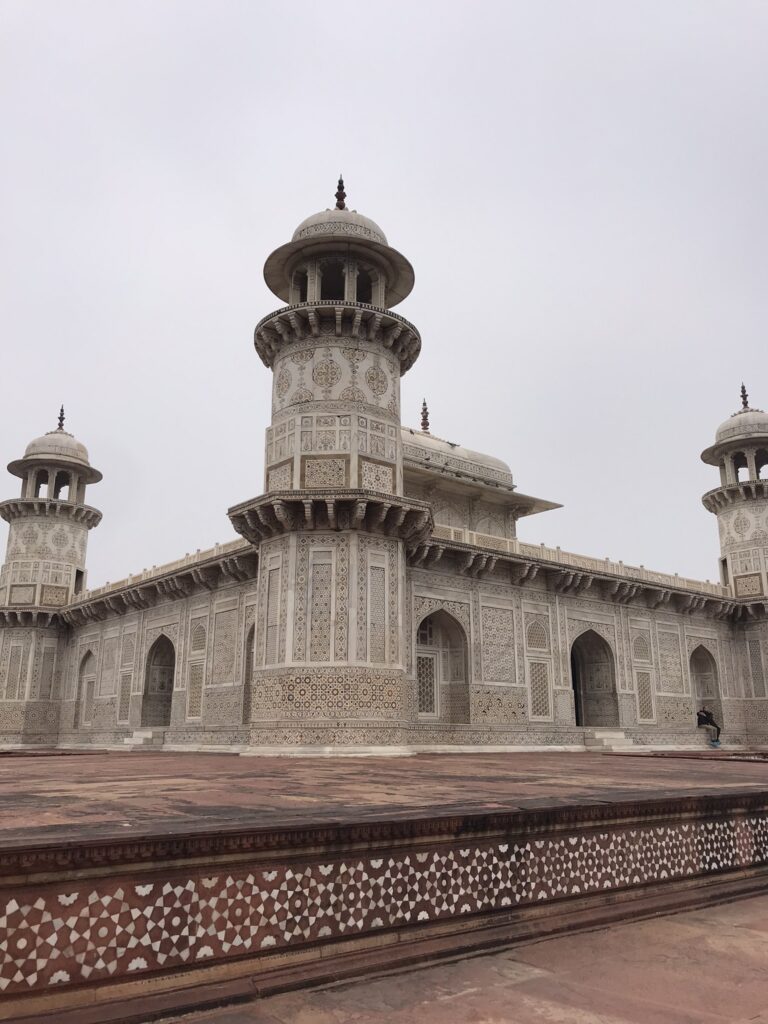
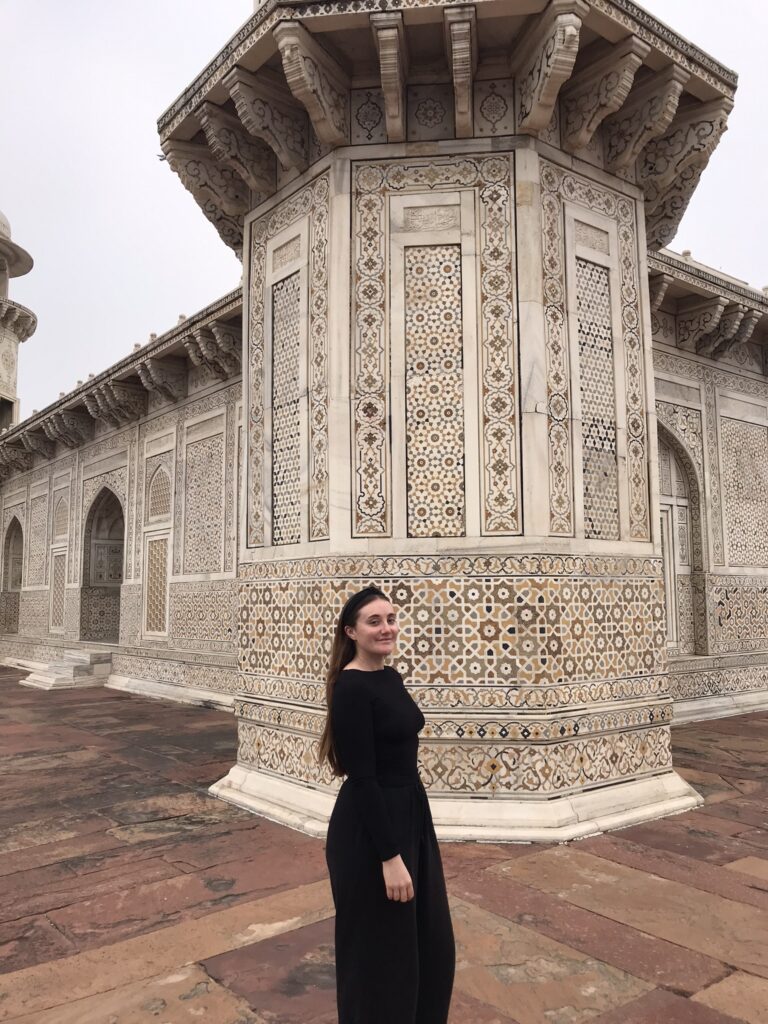
The mausoleum itself is really nice, for what it’s worth
The mausoleum itself is stunning with intricate pietra dura. Very photogenic. The inside is unrestored so you can see the original paint. The site is obviously less high-profile and so was much less busy than the Taj Mahal, which was appreciated. We had a look out of the window across the Yamuna river and saw two boys on the riverbank far below trying to hustle for money from people who were taking photos out of the window. A sad sight.
Fatehpur Sikri
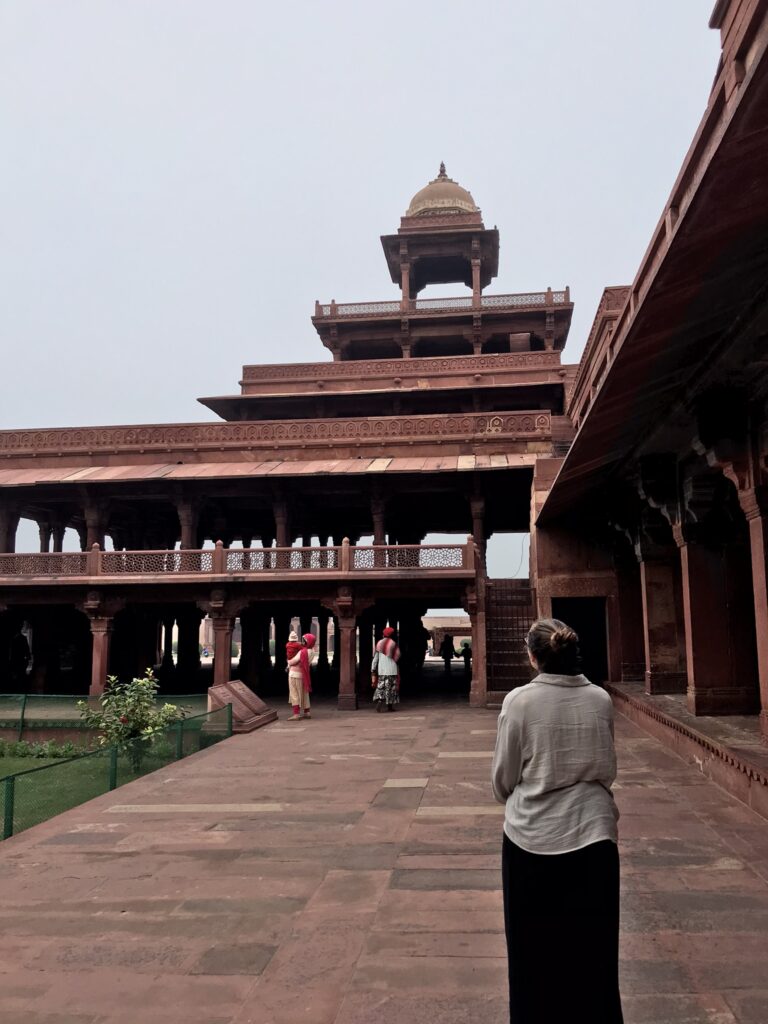
Fatehpur Sikri is a former capital and imperial city of the Mughal Empire, having briefly replaced Agra as the Mughal capital during the reign of Emperor Akbar in the 16th century. In those days Fatehpur Sikri was a larger city than London and contained an iconic monumental red sandstone citadel and mosque complex, constructed and developed on the orders of Akbar to give a grandiose feel to his new capital. Although it was later abandoned and the modern town of Fatehpur Sikri is relatively small and undeveloped, the citadel remains and is now a UNESCO World Heritage Site which makes for an easy day trip from Agra by bus.
From Agra, you can take the no.24 bus to Fatehpur Sikri from the Idgah Bus Stand, located here. The Uber driver in Agra that took us to the bus stand tried to scam us by telling us that there was no bus – even maintaining this lie when we were in visible sight of the bus. The bus trip to Fatehpur Sikri takes about an hour from Agra and isn’t too bad, we were a little crammed in but everyone was friendly and we had some nice conversations with domestic tourists on the way there and back.
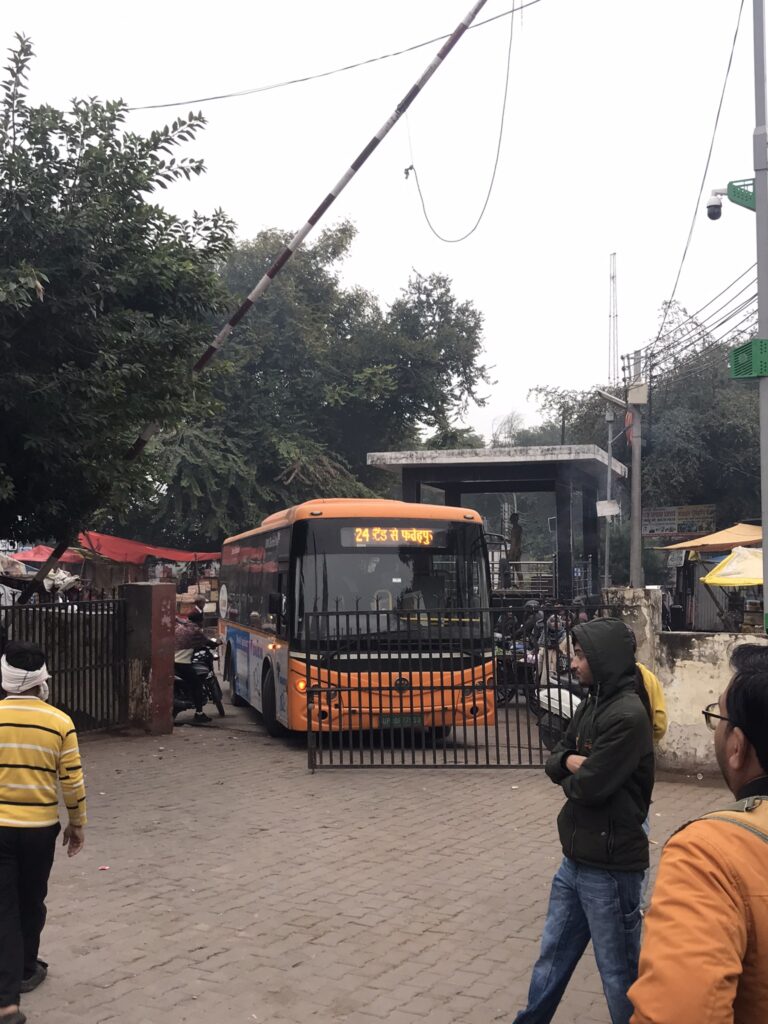
The number 24 bus – don’t listen to anyone who tries to tell you it doesn’t exist
When arriving at Fatehpur Sikri we were a little disoriented and entered the monumental area through the Jama Mosque first, which is not really the proper way to access the UNESCO site – the actual entrance is here, which takes you straight into the citadel. The citadel complex is a typical UNESCO site, well-maintained and barriered off with ticketed entry, while the mosque is still a functioning place of worship so is outside of the ticketed boundary. Footwear must be removed before entering the mosque – we took our shoes off and carried them with us so we could walk through and exit at the other side. The mosque is predictably grand and also includes various smaller shrines dotted about, although some of these shrines may involve a forced donation if you try to go inside so watch out.
The citadel is a perfect model of Mughal-style architecture, although it was only used by the Mughals for a relatively short period of time – infrastructure problems meant that the capital was moved back to Agra after less than 20 years. The complex is quite big and I recommend either gathering some sort of info beforehand or hiring a guide, as there are very few information plaques inside and many interesting details that may be missed otherwise. We had an old Lonely Planet with us and would’ve been lost inside without it.
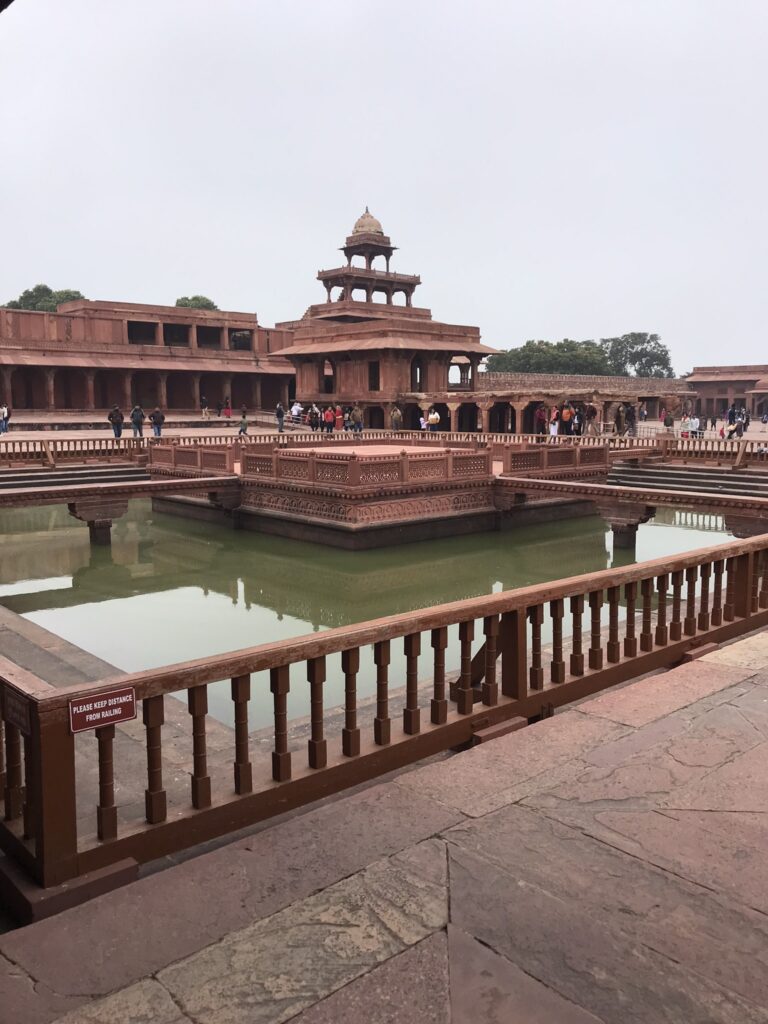
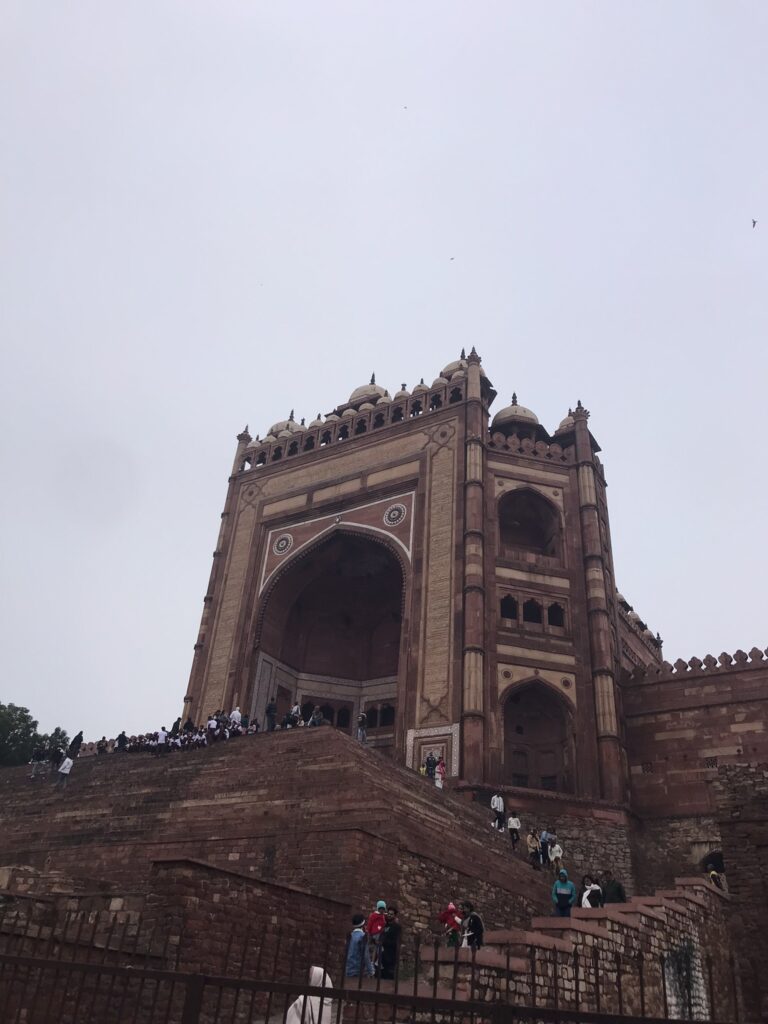
The UNESCO site at Fatehpur Sikri is really impressive, with lots to see – having a guide book or some sort of info beforehand is definitely recommended
Highlights of the site include markings for a human board game on the floor – I didn’t think these were actually a real thing. The houses of the wives are particularly ornate, with wood carvings depicting pomegranates and grapes. The servants’ courtyard/dormitory was also interesting, with the servants designated to sleep in little cubby holes.
We had a little walk through the streets of Fatehpur Sikri town on the way back from the UNESCO site to the bus stand – you can tell that few tourists go that way, as locals seemed taken aback to see us. To get the bus back to Agra, head to this spot. We had to wait for quite a long time in the bus station area for the bus to actually arrive, and then there was a clamour and crush to actually get on the bus when it did.
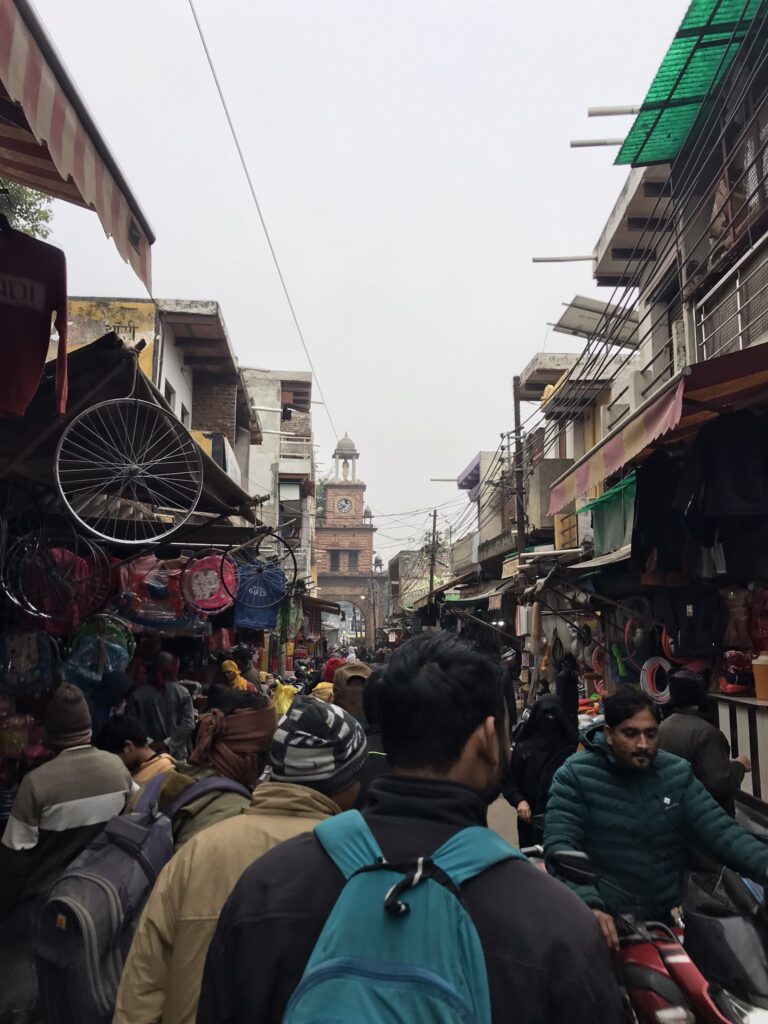
On the streets of Fatehpur Sikri
Foodie Places
Jodha Restaurant – a decent enough place serving typical northern Indian fare. This restaurant seemed to be linked to a hotel and we saw other Western tourists eating here too. No complaints from us, it seemed like it was probably the best choice for lunch in Fatehpur Sikri.
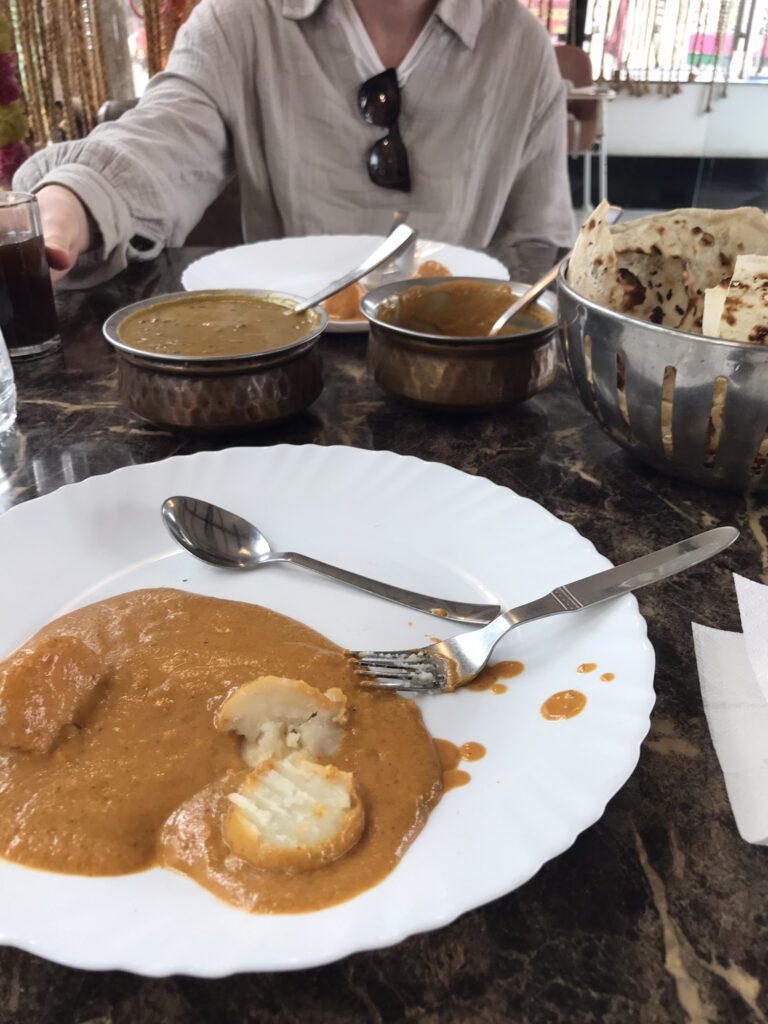
Agreeable food at Jodha
Gwalior
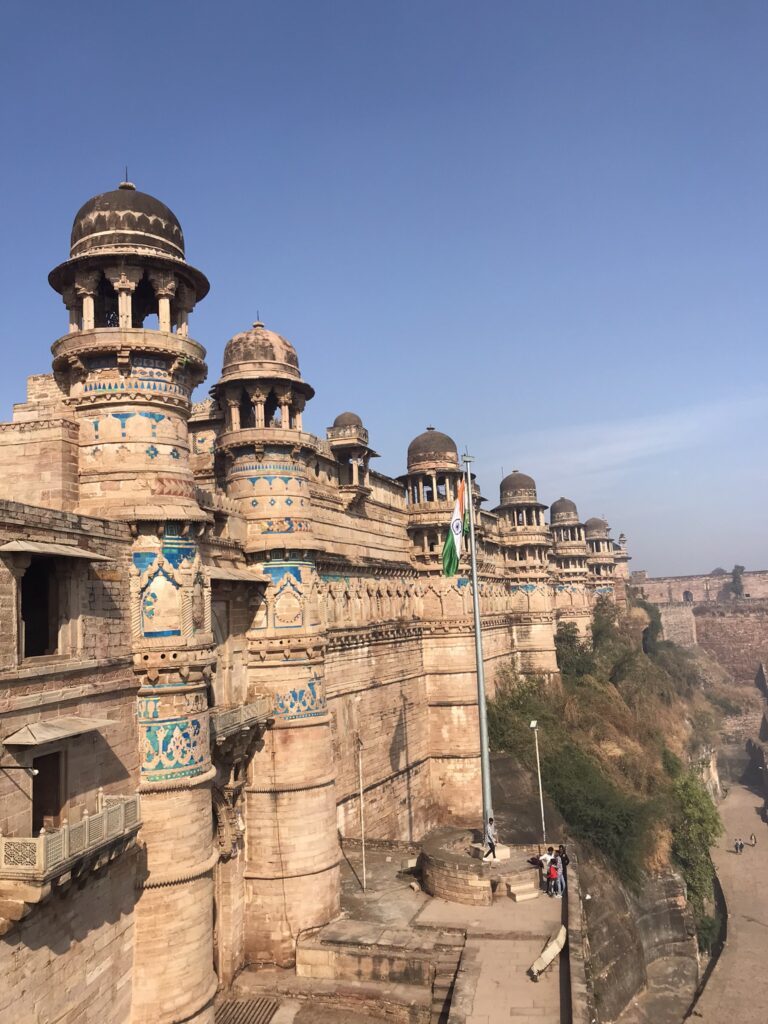
Click here for my Gwalior content!
Orchha
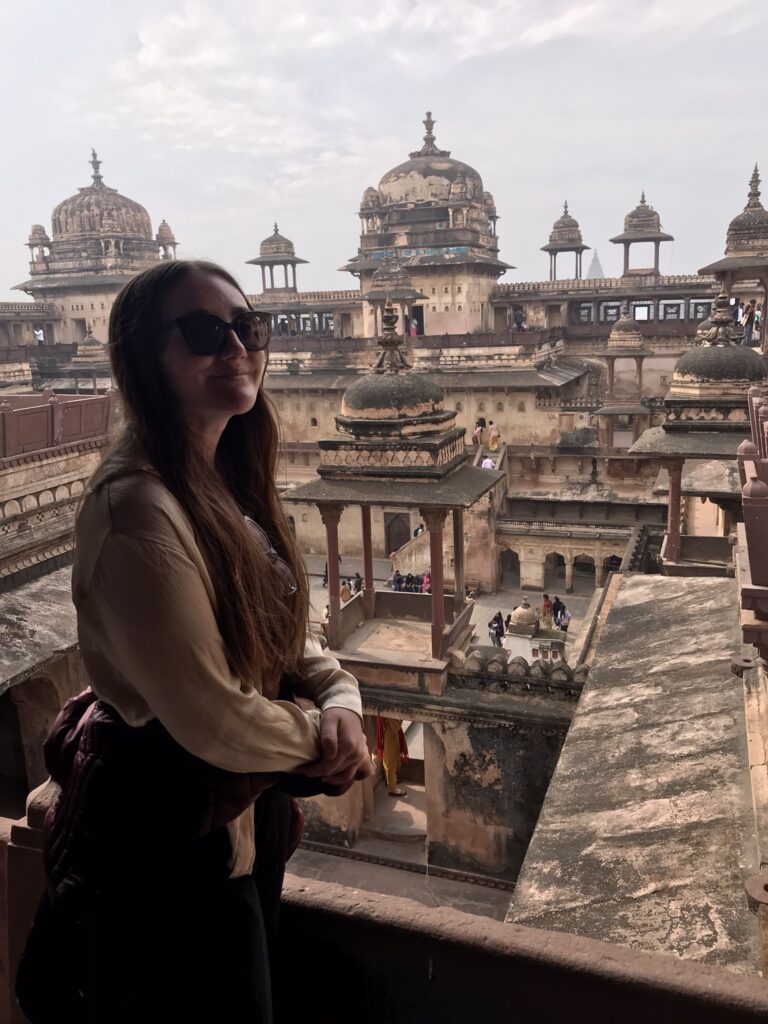
For my Orchha content, click here!
Khajuraho
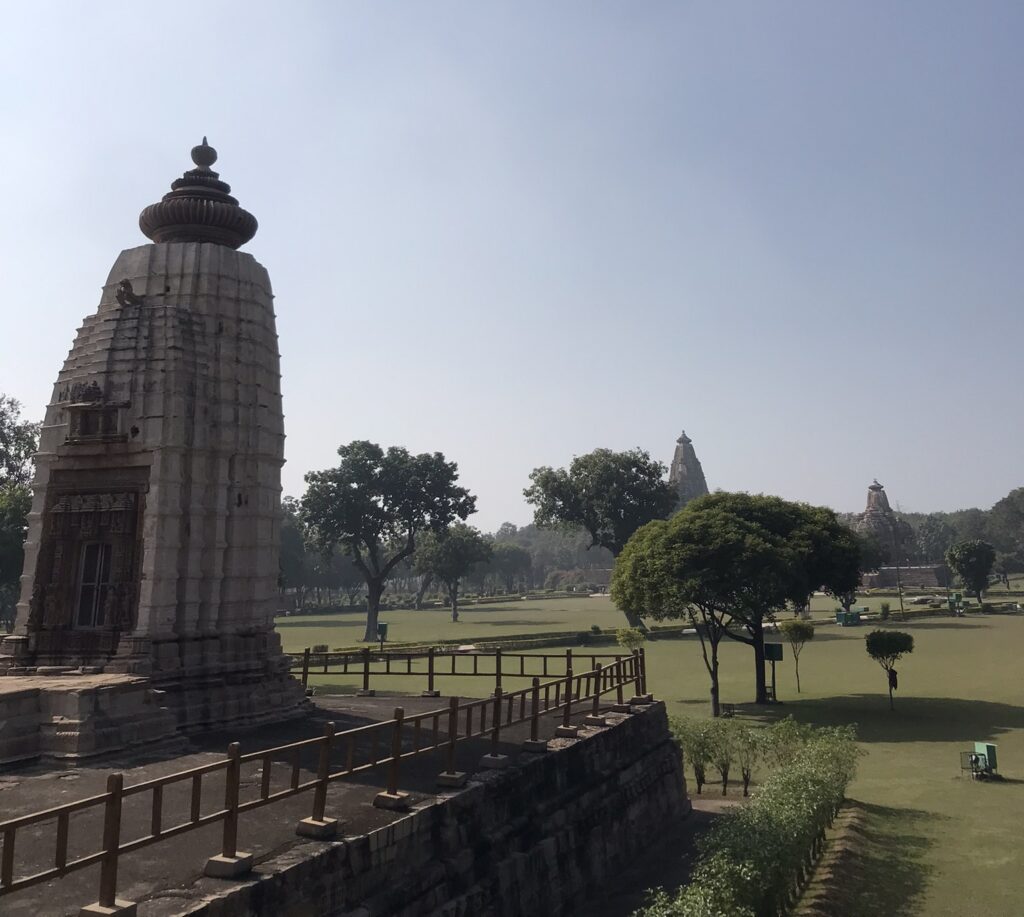
Click here for my Khajuraho content!
Bhopal
Click here for my Bhopal content!
New Delhi
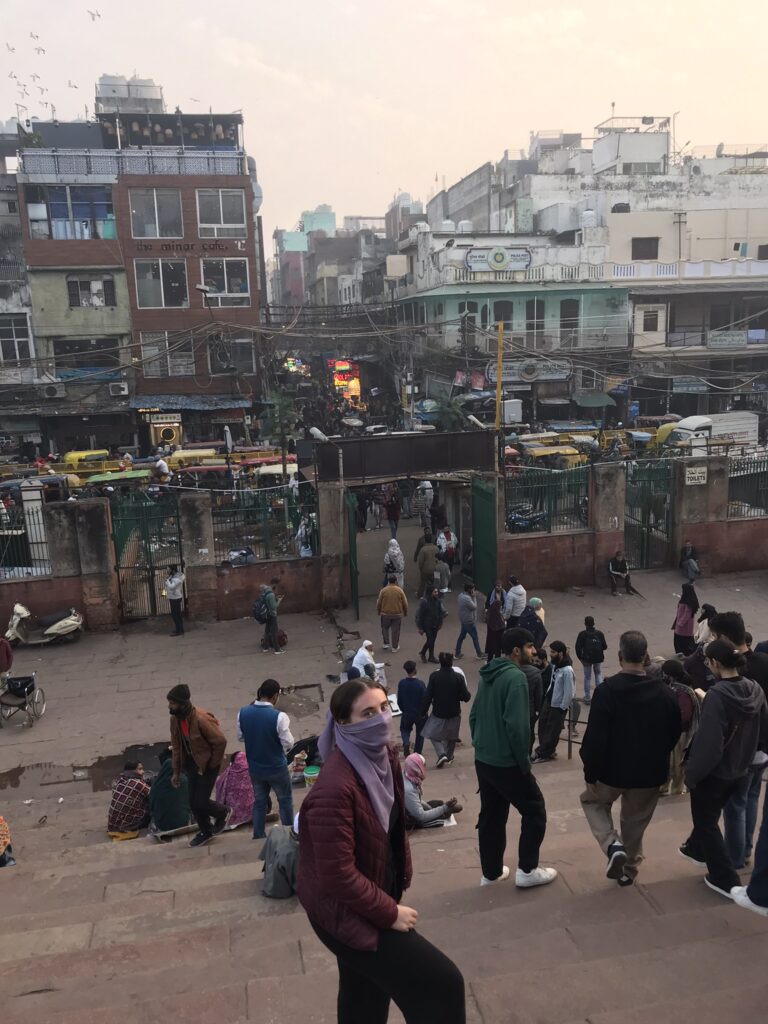
Pretty much everywhere we went in India we were warned by locals that Delhi was the worst of the worst, the most congested, polluted, chaotic city, full of criminals and scammers, a veritable hell on earth where unsuspecting visitors are exploited and fleeced for everything they are worth. People were constantly warning us about ‘scammers in Delhi’ and telling us to watch out when visited. Everywhere we went, locals always wanted to know if we had visited Delhi, what we thought and if we made it out in one piece. They seemed like they were expecting horror stories. Truthfully, our experience in Delhi didn’t really match this at all.
To be honest, we didn’t find Delhi to be a bad place. Hasslers and scams in Delhi were no more prevalent than the many hasslers and scammers we had to deal with on pretty much an hourly basis almost everywhere else in the north of India. If anything, in Delhi they probably seemed to be less prevalent. It’s true that the city is extremely busy and there were times we got caught in human traffic jams, particularly in the area around the Jama Mosque, but this was far from the only place in the north of India that we experienced this. Sometimes tuktuk drivers were overly forceful and annoying outside of some of the main tourist attractions (we had to physically push one guy out of the way who was literally screaming ‘tuk tuk’ in our faces outside of Humayun’s tomb); again, we were already fully accustomed to this sort of thing after spending weeks in India so it wasn’t a big deal. And in some areas of the city motorised tuktuks are banned with only cycle-rickshaws allowed, creating a much more peaceful and relaxing atmosphere for walking around.
One area that is particularly prevalent for scams and scammers is Connaught Place, which happens to be where a majority of foreigners seem to stay. You can also typically find weirdos and hasslers outside pretty much every major tourist attraction in the city. On the other hand, we felt totally comfortable walking the streets, riding the metro and generally being among the people in Delhi. The majority of people we encountered in the city seemed to be a little more worldly and used to foreigners than in some other places, creating a slightly easier and more comfortable experience for us (requests for selfies were at a minimum). I imagine the city and particularly the more chaotic areas such as Chadni Chowk might be overwhelming for people who have just flown into India and are experiencing it for the first time, which may be the reason for Delhi’s bad reputation. For us though it was totally fine.
Delhi does have issues with air quality and smog, particularly at certain times of the year. We visited in January and again in March and didn’t experience any issues with this, at least in comparison to some other highly-polluted areas such as the old town of Ahmedabad, where we were struggling to breathe after a couple of days. We also didn’t experience the infamous ‘Delhi belly’; like with everywhere else in India, if you’re sensible and cautious with food choices then you should be fine.
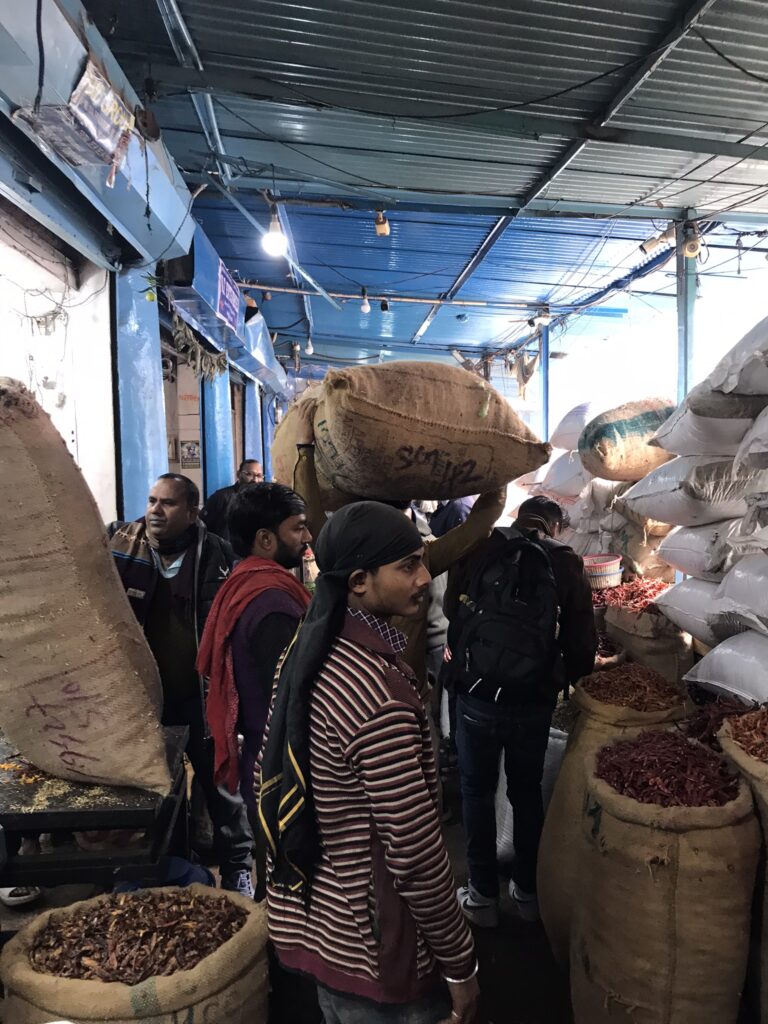
Hard workers at the spice market in Chandi Chowk
One of the main saving graces of Delhi is the extensive and well-developed metro system, which makes transportation around the city virtually hassle-free. Despite it being a huge metropolis spanning a large area geographically, we were easily able to get to everywhere we needed to go in Delhi much more quickly and easily than in cities a fraction of the size. The metro is cheap and, most importantly, there isn’t any possibility of being ripped off. It’s also clean and quite well-maintained – posters around the metro stations warn of fines for antisocial behaviours such as spitting and walking across the rails, which can often be the scourges of public transport in other cities in India. The feeling of safety on the metro is also greatly improved by the fact that there’s a women’s only carriage at the front of each of the trains.
With such an extensive history spanning multiple dynasties and empires, Delhi has a plethora of historically significant sites and attractions. There are no less than three UNESCO World Heritage sites here. From Mughal tombs and structures associated with the Delhi Sultanate right through to the British Empire and the 20th century history, there is almost too much to see and you may have to pick and choose the highlights if on a tight schedule.
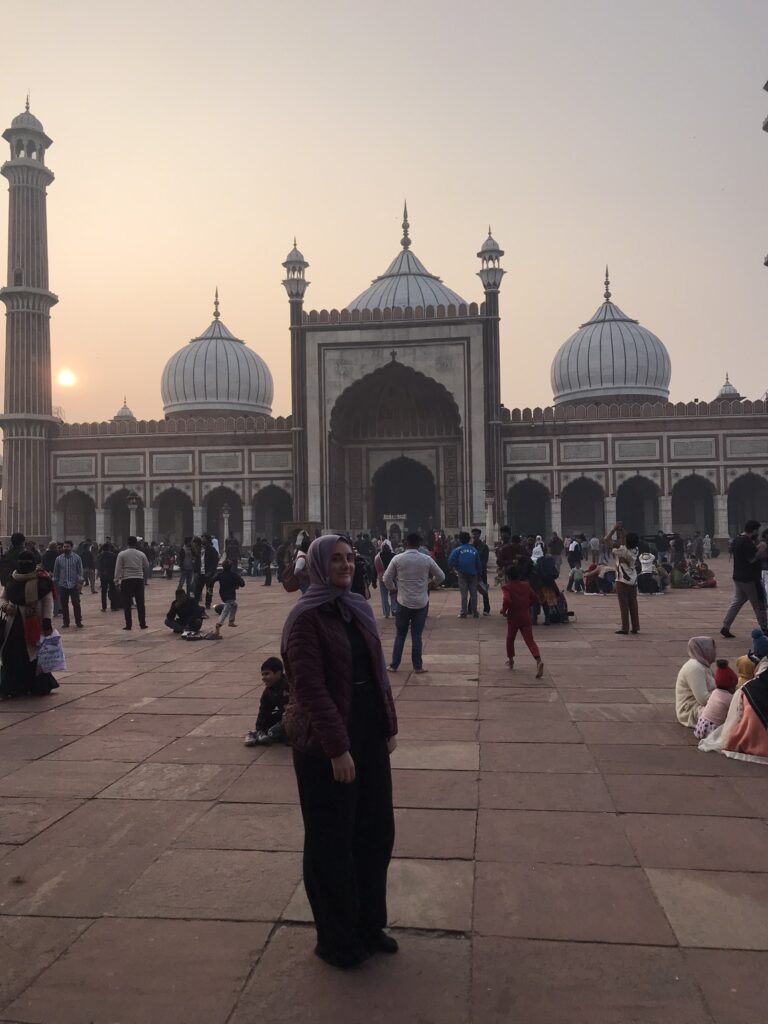
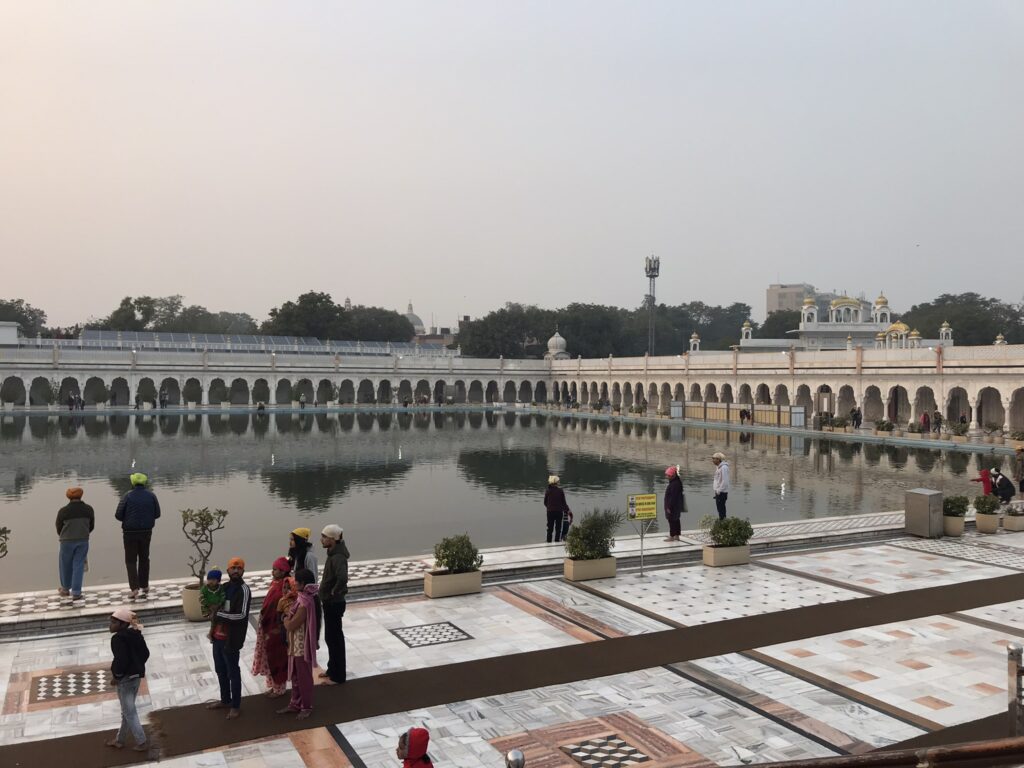
Delhi is home to magnificent religious buildings like Jama Masjid and Gurdwara Bangla Sahib
We like to visit the national houses of parliament/leader’s residence in every country we visit, but this was really difficult in Delhi due to the high levels of security. I believe it is possible to access the grounds of the Rashtrapati Bhavan as a tourist, but you need to obtain prior permission (‘express online permission’ according to the guard) and I’m not really sure how to go about this. We tried to enter without it but were turned away. The route from India Gate to the Rashtrapati Bhavan was also closed off for a parade when we visited. I’m not sure if security is usually this high or we were just unlucky at the time of our visit.
As Delhi is so large, we had some dilemmas as to which part of the city to stay in. We ended up settling on Karol Bagh, an area with a number of affordable hotels which seemed to have decent enough ratings that seemed to be legitimate enough. We were dreading it a little, but honestly the hotels were fine and we actually really liked it in Karol Bagh. The bustling market area really comes alive at night, however a lot of the hotels are tucked into side streets away from the main market area, providing an unexpectedly tranquil and quiet location in the big city (until you step outside!). Unbelievably, we actually had some of our best nights of sleep in the north of India here. Karol Bagh is easily accessed via the metro. For us, it ended up being an ideal base. We saw no other foreigners around this area at all.
Accommodation
Panicker’s Residency – no need to panic as this was actually decent enough, a relatively comfortable hotel within walking distance of the Karol Bagh metro station. It’s right in the middle of the busy market area and we were worried about the possibility of noise, but the hotel is tucked into a side street and we were able to get a pretty good night’s sleep here without disturbances, which was a huge surprise to us as we were expecting nonstop commotion in Delhi. Don’t expect top-quality 5* luxury, but as a budget option this was fine for us.
Hotel The Gold Inn – Karol Bagh – slightly cheaper than Panicker’s and in a similar location, we found that the hotel was again relatively quiet and comfortable.
Foodie Places
Parawthe Wala – a famous area serving specialty stuffed parathas with various flavours. We visited on the Guruwalk tour.
Cafe Tonino – pretty good takeaway veggie burger
The Spicy Stove – one of the few reputable restaurants in the Karol Bagh area, serving typical northern Indian curry options. A small establishment, I ordered the thali which was absolutely massive and really spicy – we probably should’ve guessed from the name. This is clearly not a tourist hotbed – there were no foreigners anywhere else around here, although it felt pretty cosmopolitan, the staff were laid-back and welcoming and we weren’t treated any differently from the locals inside.
Blue Tokai near Qutb Minar – a premium, high-end coffee chain serving French-style patisserie goods. Coffee culture is growing in India and Blue Tokai is always a good place to get strong coffee for caffeine junkies like me. Blue Tokai also serve a range of sandwiches, wraps and light meals; a good, safe option although not cheap. The branch near Qutb Minar is conveniently located and has a nice rooftop seating area.
Activities
Guruwalk of Chandni Chowk – one of the best introductions to the city. The tour includes street food tastings, exploration of the market area, visiting the Sikh temple (I helped out in the community kitchen making chapatis), spice market (the air was so thick with spice that you could taste in in your throat, we learned that the workers can only work three of every six months to allow them to recover from inhaling the spice fumes, you may have to dodge out of the way of porters who are lugging huge sacks of wholesale spice) and a cycle rickshaw trip ending at the Red Fort.
Red Fort – aptly named, the striking red fortified walls create a huge perimeter. The fort was the scene of one of the defining moments in the history of India when the Indian flag was raised here following independence. Entrance is on the north side of the fort – we walked all the way around to the south only to have to then walk all the way back.
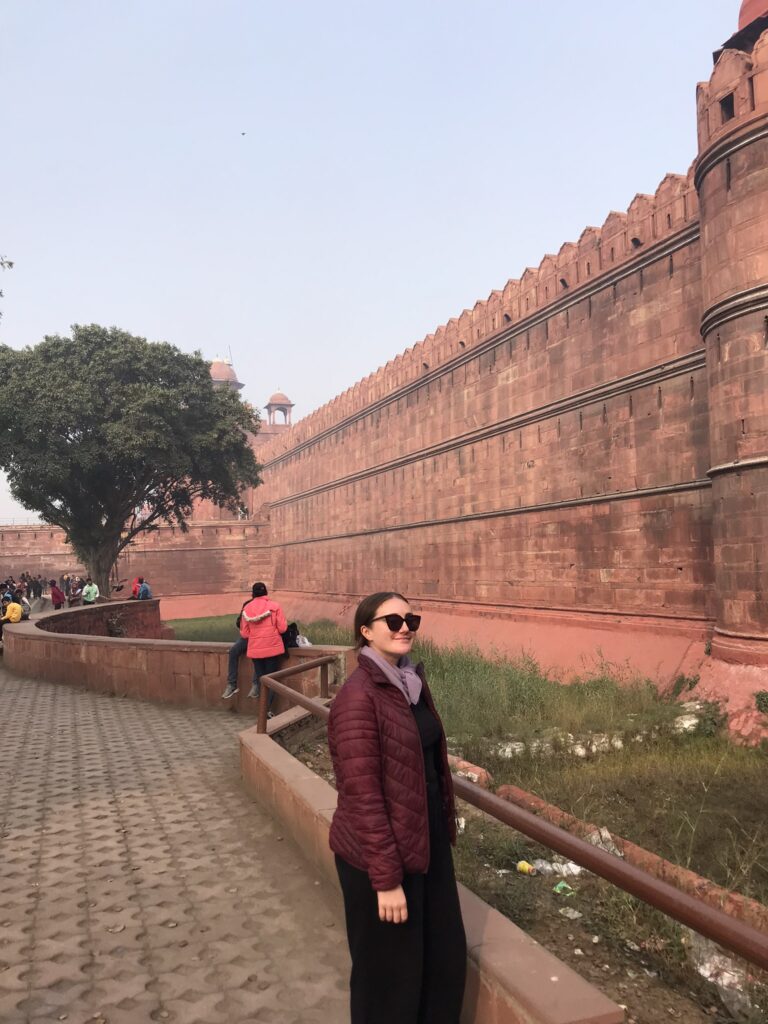
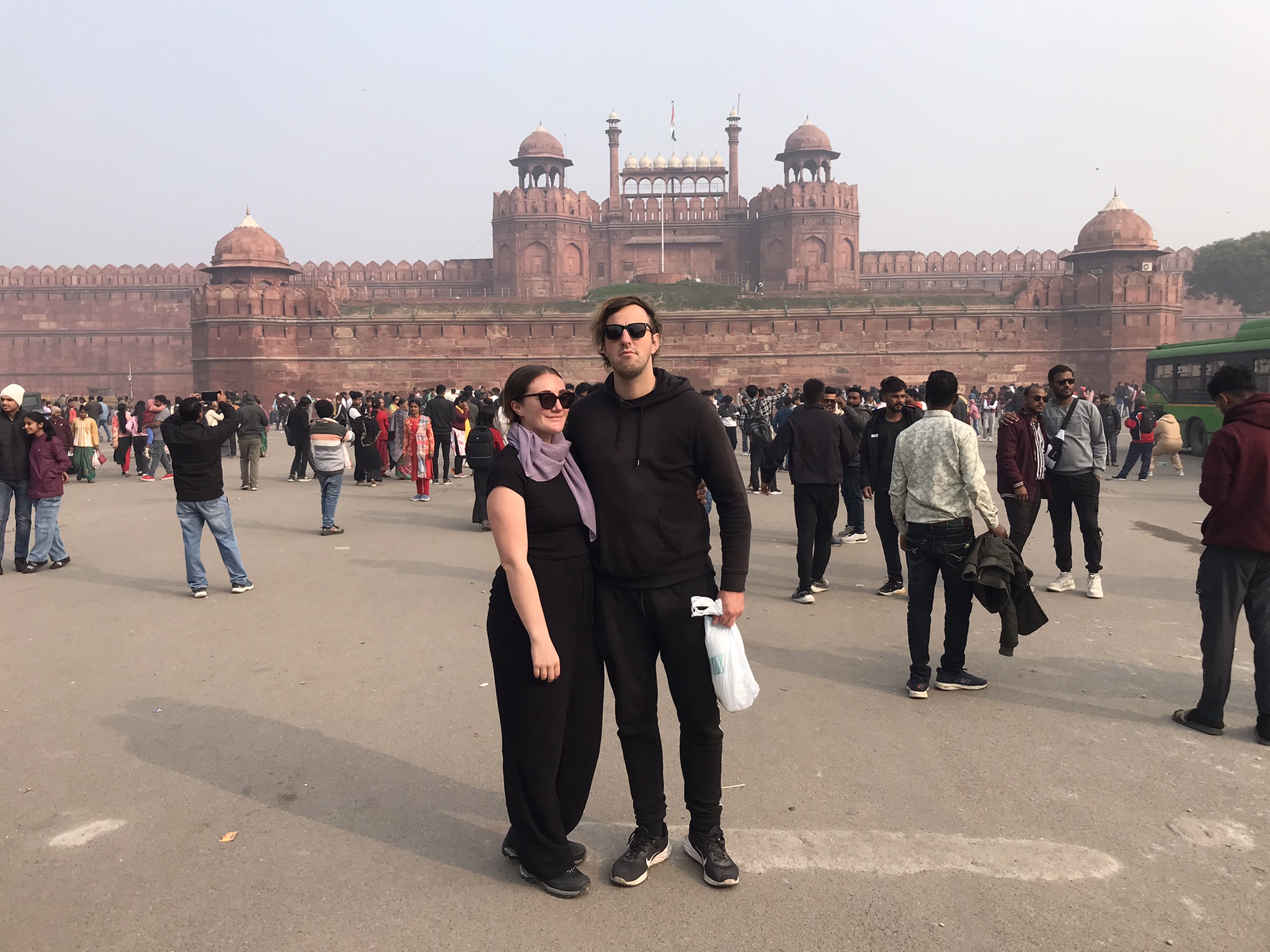
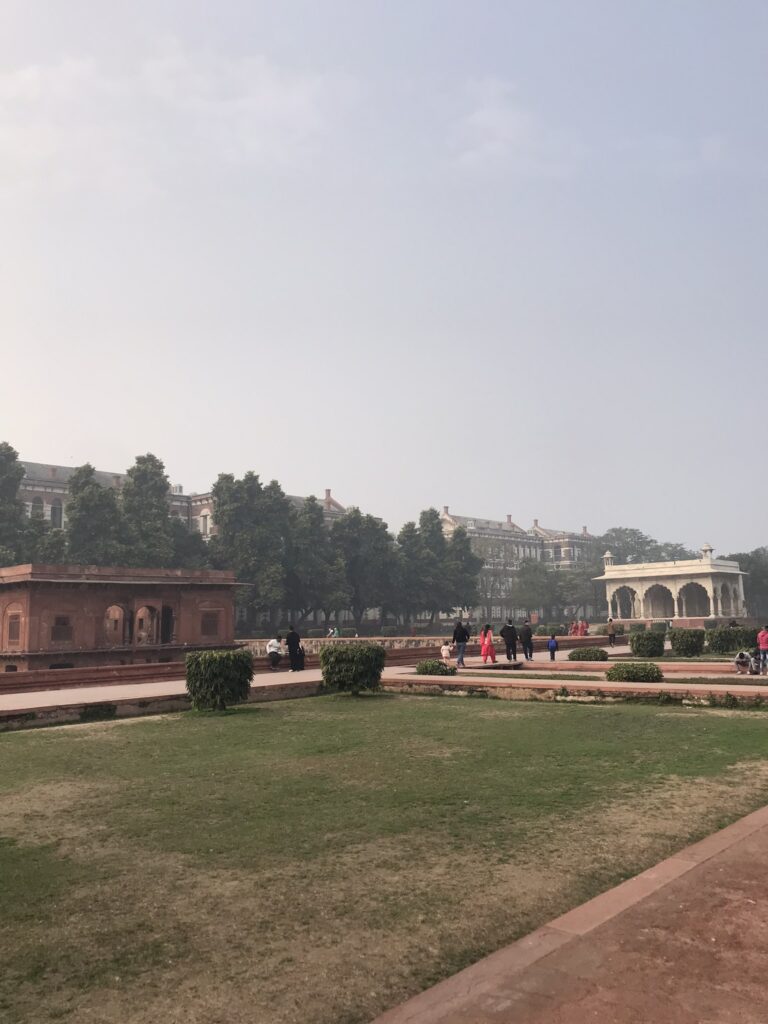
The Red Fort is really impressive from the outside, but is actually quite sparse inside
Inside the fort are a number of small historical palaces and halls, however it is actually quite sparse inside when compared to other grand Mughal forts like Agra and Lahore. One interesting feature is the presence of a number of colonial-era British military barracks buildings. Quite a lot of the fort feels like it is not really designed for tourists – you can walk around freely but at parts it almost feels like a desolate wasteland.
Jama Masjid – surprisingly we found quite a lot of Hindu tourists inside this iconic mosque, many of whom seemed to want to take pictures or make reels for instagram. A typical beautiful Mughal-style mosque, but it didn’t have the usual feeling of a mosque due to the hordes of tourists rather than worshippers. Supposedly it has been possible to climb one of the minarets at certain times but we didn’t attempt this. The area outside of the mosque was extremely congested.
Gandhi Smriti – also known as Birla House, this is the site of Mahatma Gandhi’s assassination by a Hindu extremist in 1948. There is an in-depth exhibit about Gandhi and his final days, which were spent in this property. The museum includes a series of dioramas about Gandhi’s life, which we also saw in the Gandhi house in Mumbai. You can trace Gandhi’s final steps from the house to the site of his murder, a lawn area which now contains a small shrine. Entry is free. This is a poignant place to visit.
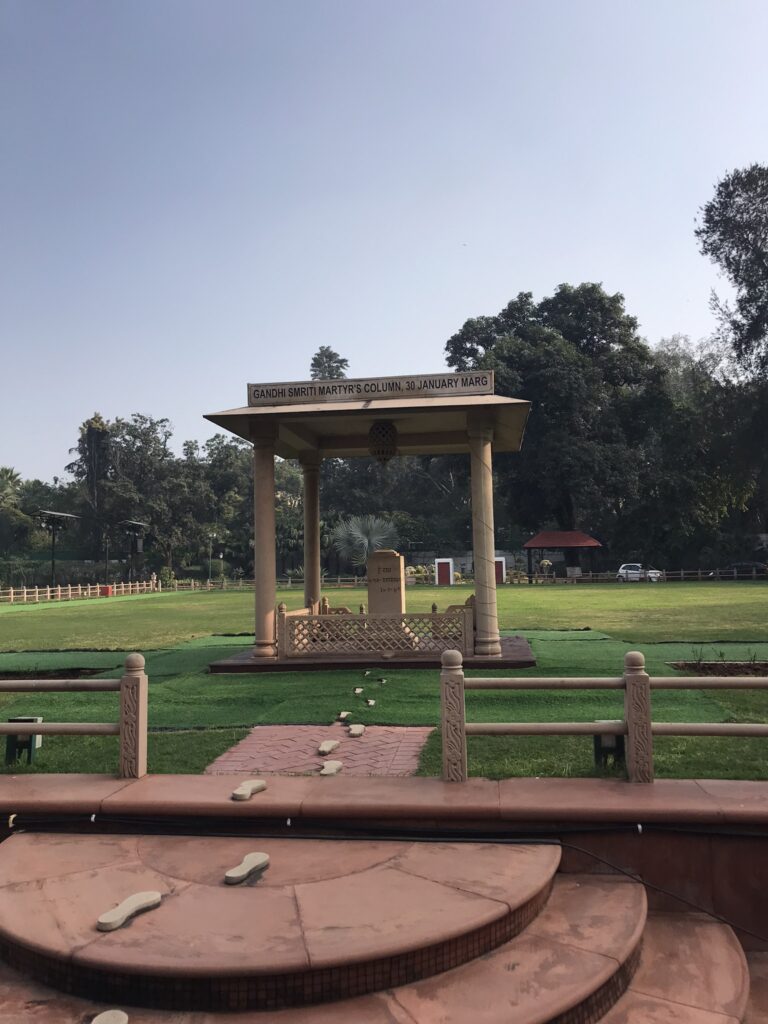
Footsteps lead to the spot where Gandhi was shot
Lodhi Garden – a pleasant, serene park which contains several large structures and tombs dating back to the pre-Mughal dynasties of Delhi. The park is well-maintained, full of lush greenery with an absence of litter. A nice place to take a stroll amongst the historic, medieval architecture.
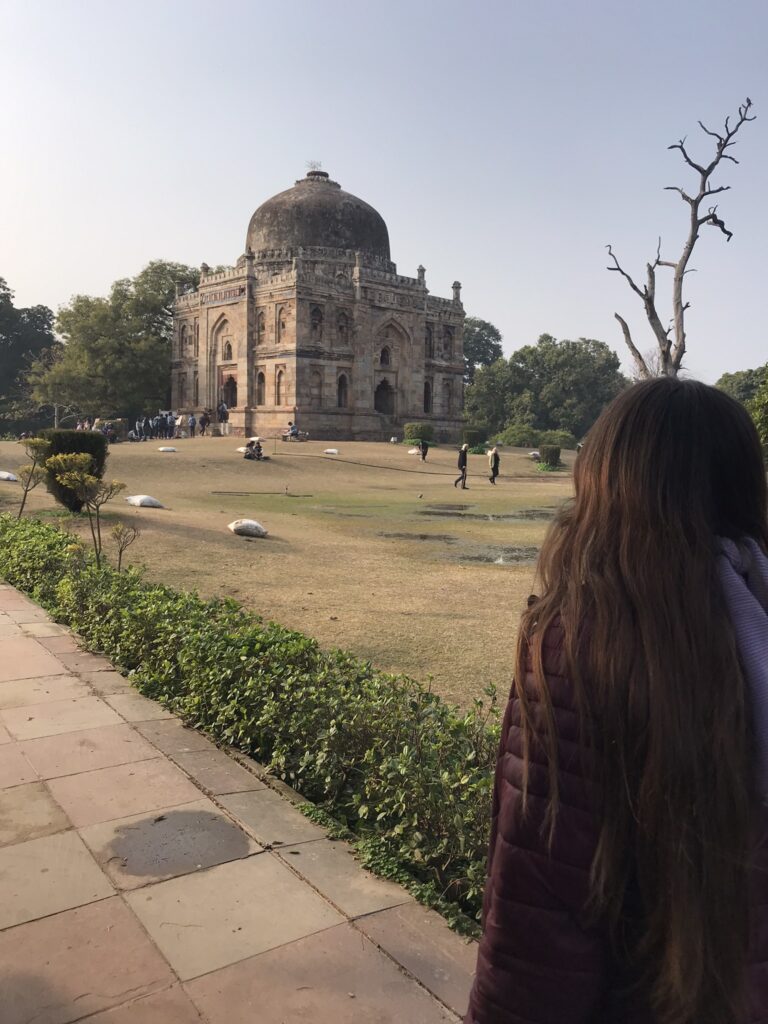
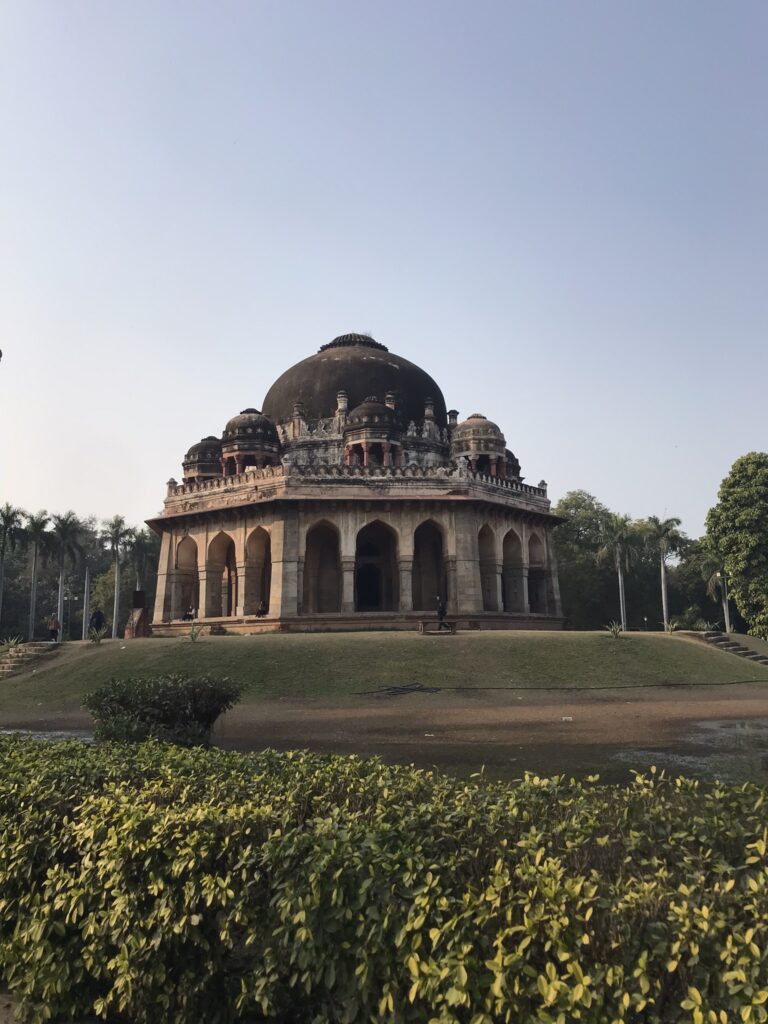
Lodhi Gardens is a nice place for a stroll and contains some really interesting pre-Mughal structures
Gurdwara Bangla Sahib – one of the largest Sikh temples in the city. Expect the typical features of a Gurdwara such as spear-carrying turbaned guards, ablution pools on entry and a community kitchen. The water tank here is of particular importance to the Sikh community.
Swaminarayan Akshardham Temple – a complete waste of time due to the OTT security checks. We were waiting in queues at security for over an hour to get inside for a 5 minute visit. No electronic devices are allowed inside, including phones which need to be handed in. This is a modern construction and felt more like a theme park than a temple. There was loud drilling inside when we visited and very little of value to see. We were not impressed at all and regretted visiting.
Tomb of Humayun – one of the grand Mughal tombs dotted around the subcontinent, this tomb houses the second Mughal Emperor, Humayun. There are a couple of other noteworthy sites and tombs within the wider complex, such as Asa Khan’s tomb, as well as a small museum with some information about the Mughals and the building itself. This mausoleum complex was considered an inspiration for the Taj Mahal. It shares architectural and design similarities such as the pietra dura work, although it is made from the typical Mughal red sandstone rather than white marble, and crowds here are much thinner than the Taj Mahal.
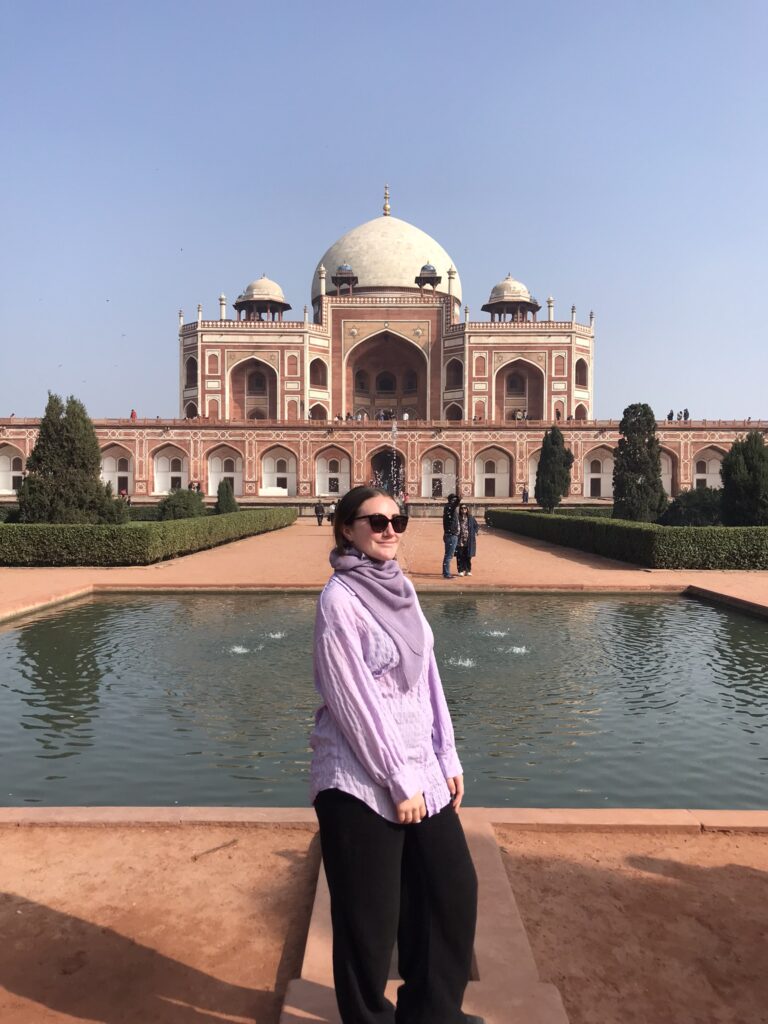
Humayun’s tomb – a classic Mughal site
Qutb Minar – harking back to the days of the Delhi Sultanate, the huge tower dating back almost 1000 years is the most distinctive landmark in this historic complex. At the time of its creation this was one of the tallest buildings in the world. We were amazed by the intricate detail of the tower considering its age; the calligraphy on the tower remains intact and it is a real spectacle, particularly at sunset when the tower is basked in a golden hue. It’s hard to resist the temptation to take hundreds of photos of the tower from different angles. A true feat of engineering at the time.
As well as the tower, the complex contains numerous notable historical and ruined buildings and relics including the Iron Pillar of Delhi (a Sanskrit-covered, rust-resistant pillar which is said to date back to the 4th century CE), as well as the remains of one of the oldest mosques in India, the Quwwat-ul-Islam Mosque. As with the Qutb Minar tower, some of the crumbling archways and columns of the mosque and various other structures are extremely photogenic. Interestingly, the complex also contains the foundations of another tower which was intended to be twice as tall as the Qutb Minar – it never came to fruition as the Sultan died before completion. The complex also contains some small remnants of the British Raj, such as ‘Sanderson’s Sundial’.
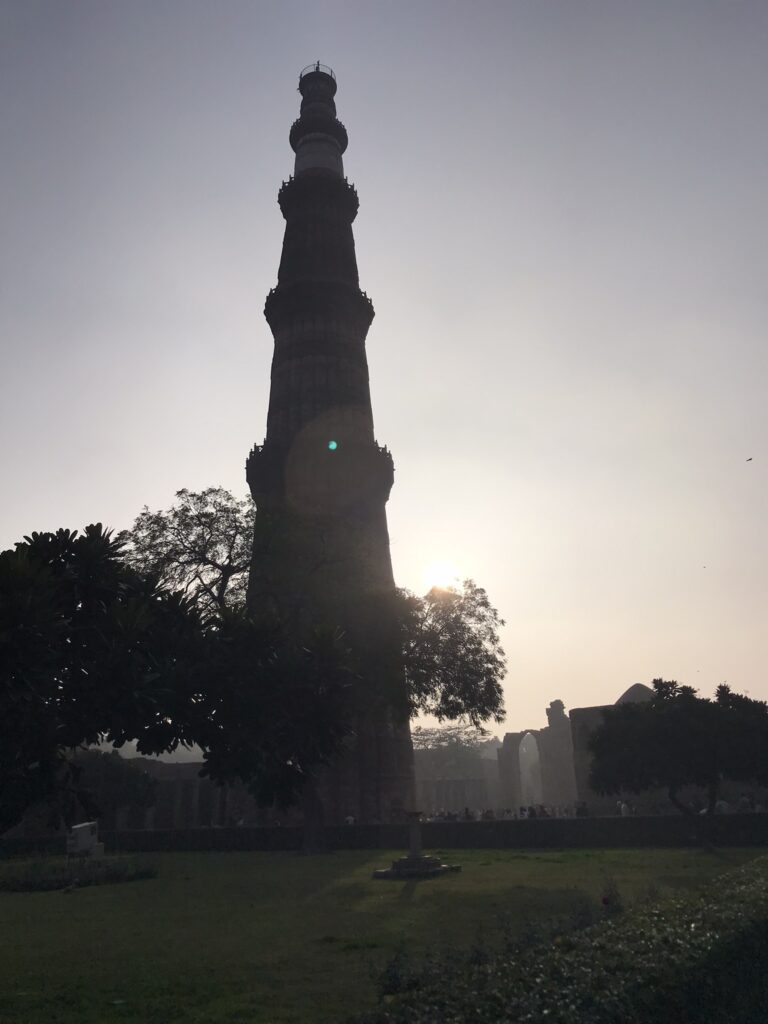

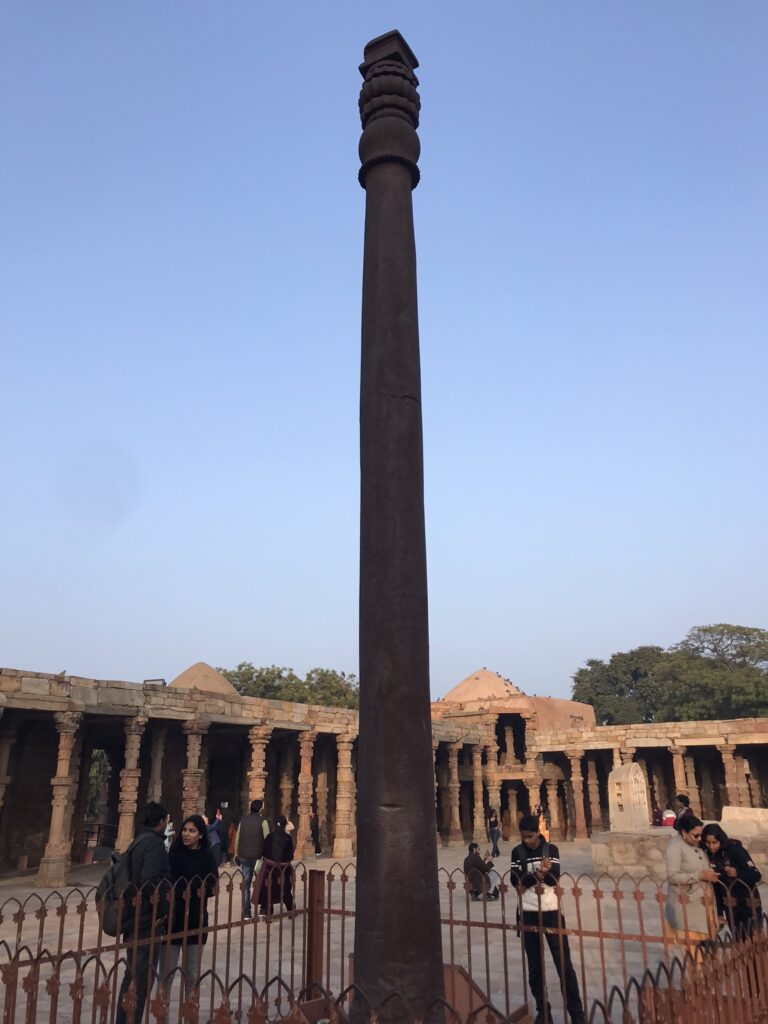
Qutb Minar is insanely impressive, epecially considering its age – don’t miss the other interesting features of the site such as the ancient Iron Pillar
To get to Qutb Minar, we took the metro to Saket station and then walked the rest of the way. The walk takes about 30 minutes but is easy enough, and we enjoyed walking along the Old MB Road and seeing the daily life and goings-on in another part of the city.
Lucknow
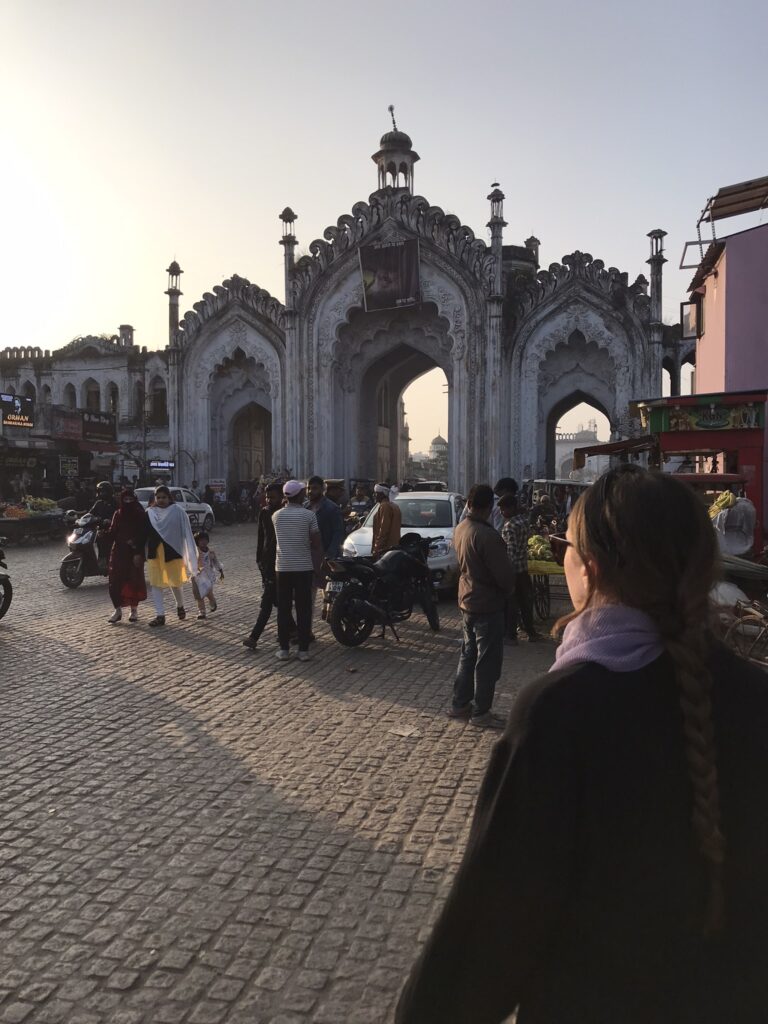
A large city in Uttar Pradesh which is less visited than many of its close neighbours, Lucknow nonetheless makes a great stop on the route between Delhi and Varanasi. As well as being a modern, thriving city which is the 11th largest in India, Lucknow has a strong cultural heritage as the former capital of the princely state of Oudh. Established in the early 1700s during the decline of the Mughal empire, the state of Oudh was ruled by a Nawab dynasty of Iranian descent. As a result, the city has a strong and visible Shia Muslim heritage – a rarity in India – although Hinduism is still the majority religion.
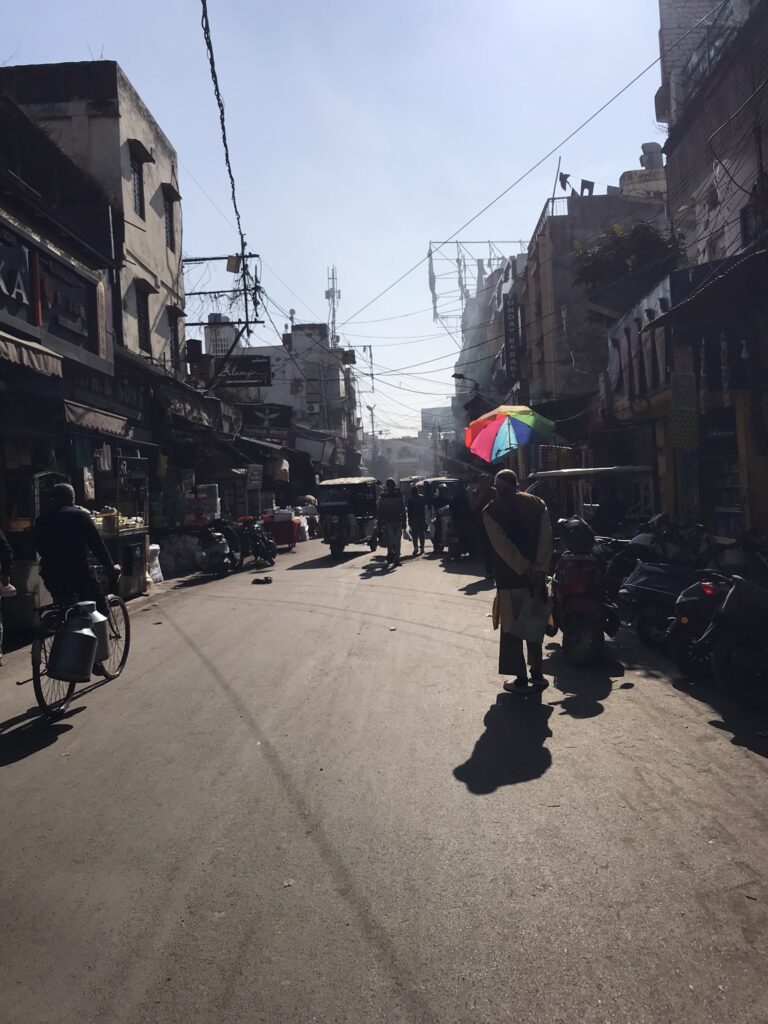
Lucknow street scenes – we came across this huge, palatial old building which seemed to be abandoned
Lucknow also has historical importance as a major epicentre of the 1857 uprising against British company rule in India. At the time, local soldiers in the service of the British began to mutiny in various territories across the north of India, with Oudh becoming one of the major flashpoints. Lucknow was the scene of intense fighting between the British forces and the Indian rebels – a particularly notable incident was the Siege of Lucknow, in which the British officials in the city were surrounded and trapped inside their fortified complex (known as the Residency) for several months. The uprising was eventually quashed, but it directly caused the abolition of company rule and subsequent establishment of the British Raj in India.
While it isn’t seen as a major tourist destination, Lucknow has easily enough historical and cultural attractions to fill a busy day. The city is filled with classic north Indian architecture, with many grand historical buildings – some are restored while others are in a state of disrepair. Due to the city’s Islamic heritage, kebabs are a local specialty in Lucknow. The kebabs in Lucknow are characterised by their particularly tender and succulent meat – they are said to have been developed in this way to meet the tastes of one of the local Nawabs, who enjoyed lavish eating but had weak and poor quality teeth.
Lucknow is a major regional rail hub and public transport in the city is possible via a newly-built metro. The Lucknow metro was efficient but very quiet when we used it, with only one line which didn’t go towards most of the main tourist attractions. Luckily, the attractions we visited were all just about walkable – the Hussainabad area containing the two large Imambara buildings (Shia gathering halls) is of particular interest.

The Imambara complexes of Hussainabad are really impressive
Accommodation
Hotel Ganga Maiya – a newly-renovated and quite modern premises with professional staff, this small hotel also offers room-service meals. We were really impressed with this hotel. It was within walking distance of the railway station and the metro. We were worried when we arrived as the hotel is nestled on the corner of a very loud and busy road, but the noise didn’t make it to the room and we were able to sleep undisturbed.
Foodie Places
Tunday Kababi – an institution in the city and one of the top places to try the famous kebabs. There are a few branches and kiosks dotted around but the restaurant located here (Aminabad) offers more of a sit-down dining experience. The restaurant was really busy and a little bit manic inside, there were no free tables when we entered but we were invited to dine with a kind older Indian couple from Delhi and enjoyed chatting with them.
Lucknow-style kebabs at Tunday Kababi – we shared our table with a lovely couple from Delhi
All classes of people seemed to be eating here, from well-to-do visitors and businessmen through to local tuktuk drivers and manual labourers. The couple we were dining with warned us against drinking from the cups in the restaurant, as they may not have been washed up properly – drink from the bottle instead. The Lucknow kebabs are not the traditional Turkish-style that we are used to; the meat here comes in small, flat circular pieces served with onions, lime and a green sauce. Highly recommended with sides of paratha. Service in the restaurant was quick and the food was succulent.
Hons – a swanky, upper-class restaurant with al-fresco dining and international food options. The mushroom risotto was a real hit.
Activities
The Residency – this complex housed the local British Resident during the period of British company rule in India. The Resident was essentially an official observer who was involved in the court of the local dynastic leadership and represented the British interests, acting as eyes and ears during the colonial times. This complex was the epicentre of the British presence in the Lucknow, containing a church, graveyard, barracks, a doctor’s house and even a mosque for the local workers in the service of the Resident. During the uprising in 1857, the British retreated into this fortified complex – a mix of soldiers, officials and civilians including women and children were then besieged for months by the mutineering Indians. Numerous battles were fought and many died within the complex. Eventually the surviving colonialists were rescued when British reinforcements arrived after several months. Most of the ruined buildings are still standing, covered in bullet holes and marks from shells that were fired.
Today it is possible to explore the vast site, which functions as a memorial to the dramatic events of the time and pays homage to those on both sides of the conflict. The site is well-maintained as a tourist attraction, although it was very quiet when we visited. There is a small museum/gallery inside the main Residency house but most of the other buildings are now semi-derelict shells. Many of the different buildings have names relating to the colonialist occupants of the time of the uprising, such as Germon’s Post, Aitken’s Post and Gubbin’s House. There are chivalrous tales surrounding many of the buildings. The British-style church and graveyard was particularly interesting to us – in the heart of Lucknow, it reminded us of something from the English countryside.
Bullet marks are still visible in the walls of the old buildings
The uprising is portrayed by some as one of the first steps towards the struggle for Indian independence, although at the time that wasn’t really the goal at all – it was more of a military mutiny based on the poor treatment of local soldiers and a lack of respect for their customs. After the uprising was quashed, the British crown took over direct control of India, establishing the British Raj.
Bara Imambara – a huge Shia Muslim complex, this is among the most grandiose buildings in the city. Entry to the complex is paid, there is a ticket booth near the entrance which helpfully is divided into separate queues for men and women. Dating back to the 1780s, it was said that this complex was built during a period of famine, and was designed in such a grand manner mainly to provide ongoing employment for the locals working on its construction. It is said to be one of the largest Imambaras (Shia gathering halls) in the world. The complex contains a congregational hall/palace and a stepwell of sorts, as well as a mosque. The mosque was closed off when we visited, but it was possible to explore the rest of the site.
The most interesting part of the complex is the ‘labyrinth’, which is essentially a mishmash of rooms and corridors on the top levels of the palace building. We were under the impression that guides would be compulsory to enter the labyrinth (there was even a sign that said this was the case), but for some reason we were able to enter without a guide and explore on our own. We were able to find our way up to the top without losing our way, but then did get a little bit lost on the way down.
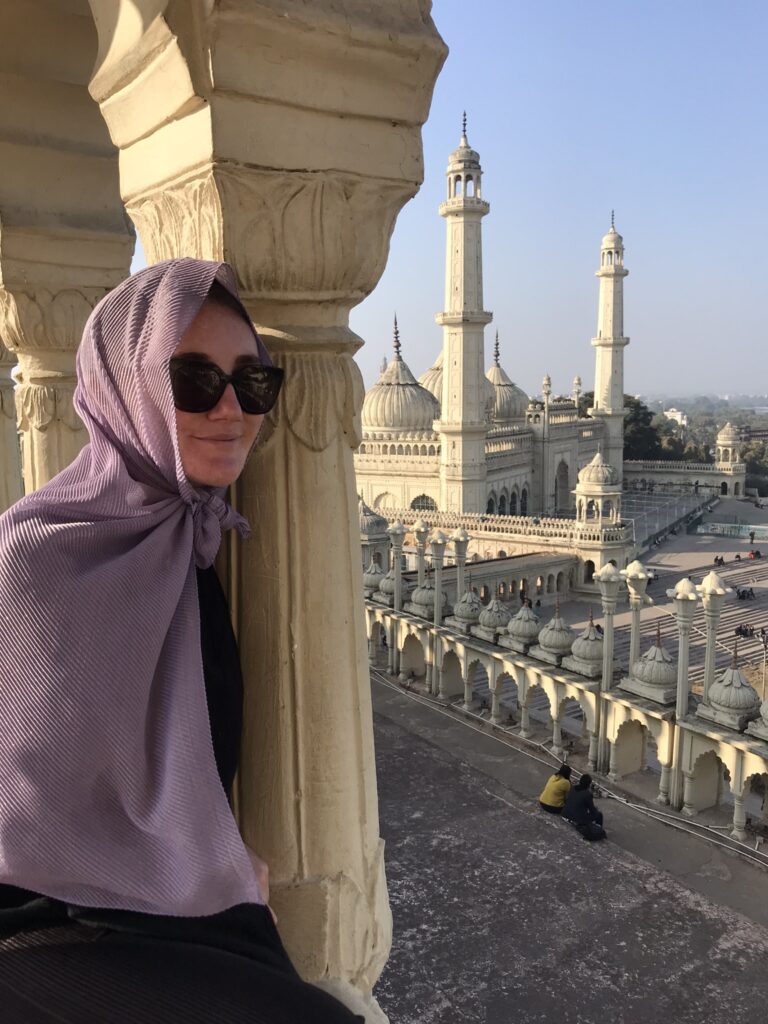
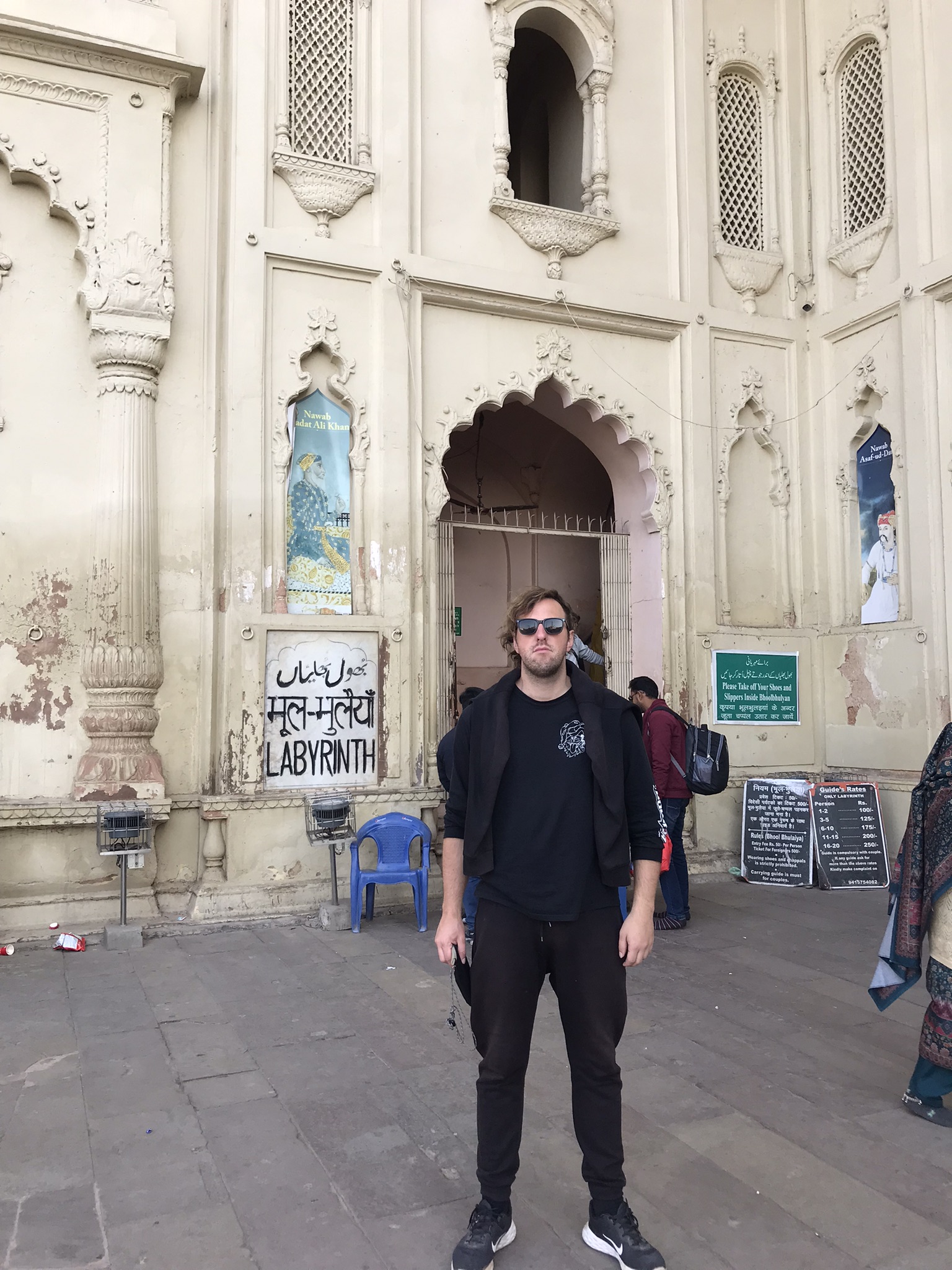
Bara Imambara and its so-called labyrinth
For some reason it is necessary to remove shoes to enter the labyrinth, which was a little odd and the floor didn’t seem particularly clean. There is a shoe deposit area to the right hand side of the Imambara complex – we totally missed this and just left our shoes outside the entrance to the labyrinth, which was not ideal. There are some fantastic views over the Imambara complex and the city outside from the area at the top of the labyrinth.
Chota Imambara – another grand Shia complex built by the Nawabs, albeit on a slightly smaller scale than the Bara Imambara. The main building has a distinctive black and white design with striking calligraphy work on the façade, and inside is a huge collection of chandeliers and various other displays. Men who were loitering inside the main building (unsure if they were workers?) followed us around trying to talk to us instead of letting us look freely which was a little annoying – we repeatedly rebuffed them as we weren’t sure of their intentions but they wouldn’t leave us alone. The man who was looking after shoes outside also tried to scam us by trying to make us pay twice, so be mindful of this.
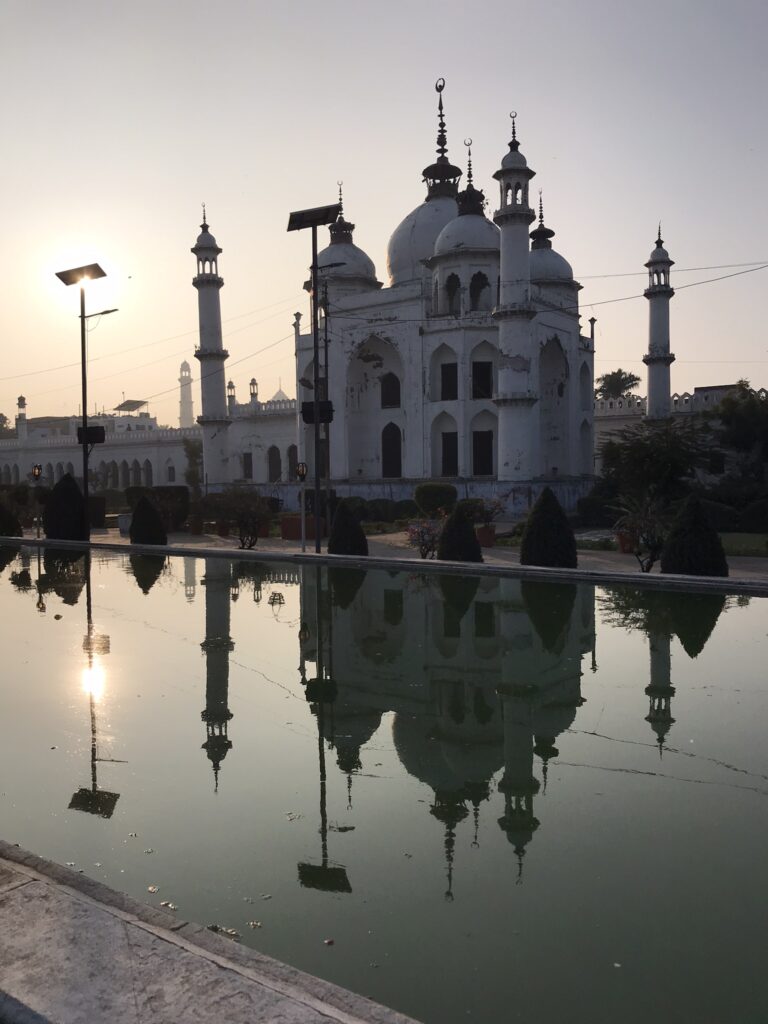
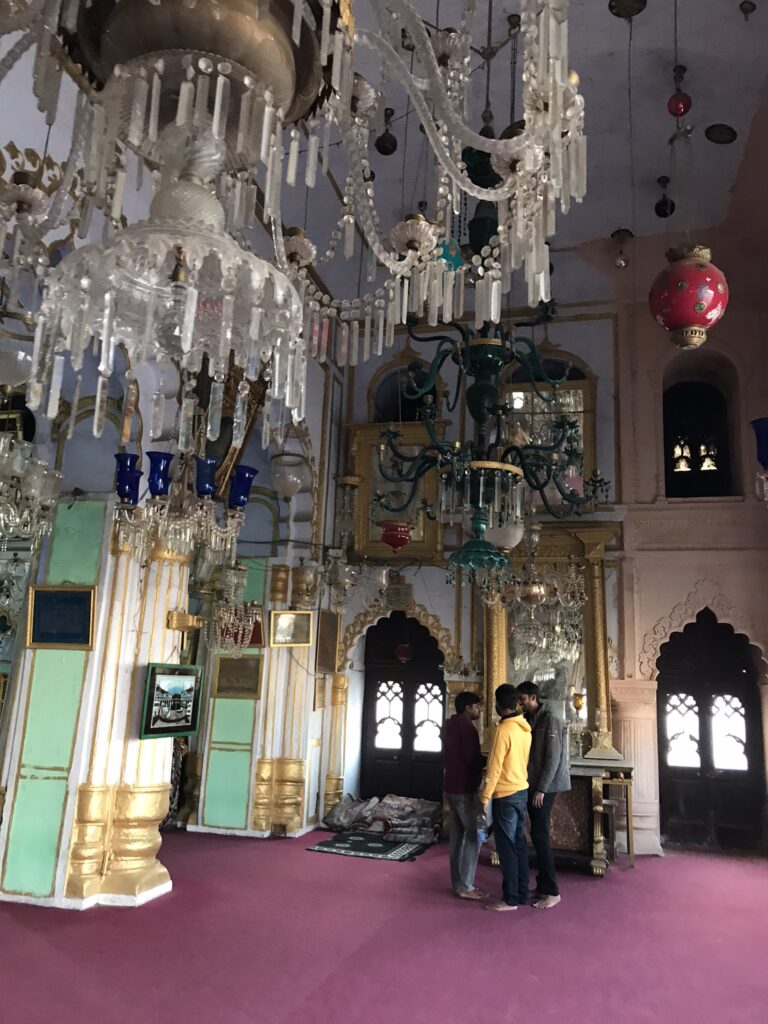
Chota Imambara is really nice, although there were some scammy people around
Varanasi

A sacred centre of Hinduism, Varanasi is one of the oldest continually-inhabited cities in the world. Located on the banks of the Ganges River (or Ganga to locals), it is a major pilgrimage site for Hindus, for whom the Ganges holds major religious significance. Hindus believe that bathing in the Ganges is a form of spiritual purification, while funerary and death rituals involving the river provides the deceased with a higher chance of escaping the cycle of reincarnation. For that reason, Varanasi is widely known as a place associated with death, where funerary rites and cremations are conducted almost continuously in public view along the banks of the river. Many elderly people visit Varanasi in order to spend their last days and die near the Ganges. We were told that it was a problem for local hotel owners at one point.
Cremations take place on the banks of the Ganges 24 hours a day – it’s a constantly repeating process involving a ritual of bathing the body in the river, drying it, carrying to the funeral pyre, covering in a white shroud and then burning. The pyre is typically perfumed to cover the smell. We were told that the closest male relative conducts the ceremony and has to shave his head, and that the family is responsible for buying the wood for the pyre. The area is managed by members of the lower-caste Dom community, who assist with the funeral rituals and maintain the eternal flame which is used to light the pyres. We were told that there is a ‘king’ (Dom Raja) who oversees it all.
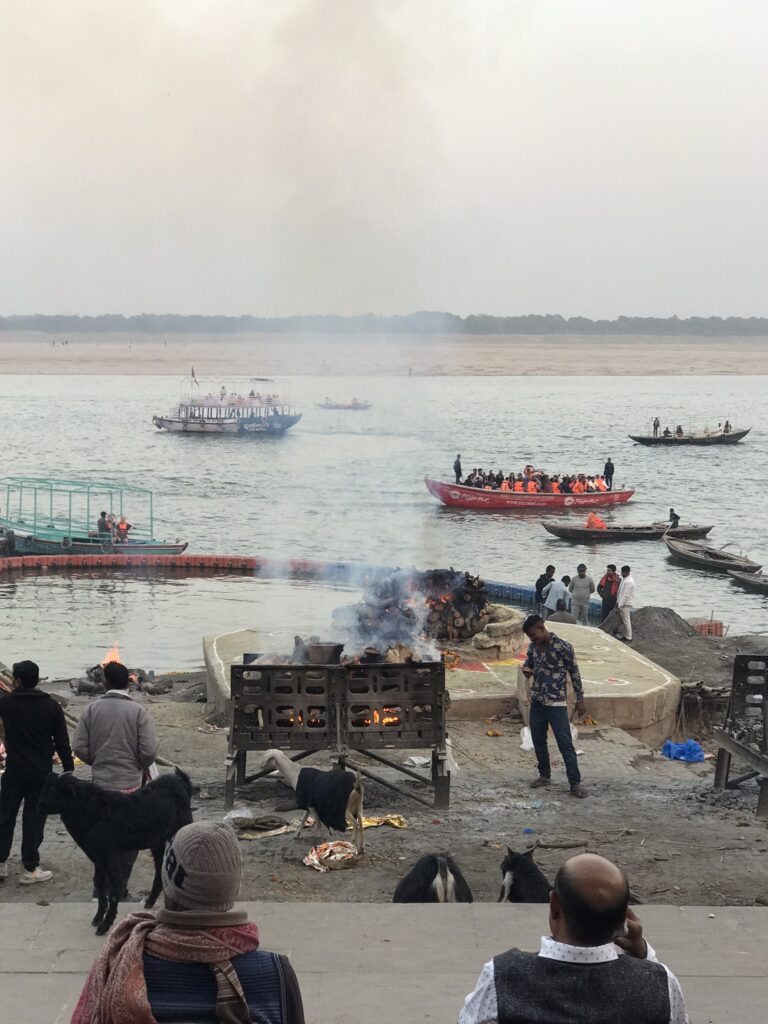
It really is quite an unbelievable sight
The burning ceremonies were fascinating to witness, but also macabre and almost distressing. It was difficult to look away. Burnings only take place at two specific ghats – Manikarnika Ghat and Harishchandra Ghat. We saw mass burnings at Manikarnika and also a more individual burning at Harishchandra. The ceremonies are not private, crowds of mourners are joined by passing tourists and other random curious people. Sometimes goats try to eat the grass from the funeral pyres. We saw some groups of young Indian guys who seemed to be gawking and taking up-close photos and videos of the bodies, which seemed to be a bit disrespectful.
Outside of the death rituals, Varanasi is split into two distinct areas – the crowded more modern city area, and the old town area near to the banks of the river. While the majority of urban Varanasi is a typically chaotic and congested Uttar Pradesh city, the old town is very different. A maze of very narrow alleyways and passageways make up most of the area surrounding the ghats (the famous stepped docks that line the Ganges). The streets are too narrow for cars or tuktuks and so are mostly pedestrianised, however quite often mopeds will come speeding through, which can be a bit hazardous as there is very little room. Some of the streets and alleys are barely wide enough to fit a bike.
The narrow streets amplify the noise and so can sometimes be loud at nighttime when mopeds drive through. After passing through the labyrinthine streets, there are many different ghats along the bank of the Ganges. It is possible to walk for several kilometres along the various ghats – the ghats are all named and differentiated, although for the most part they just blend together one after the other. Other than the two cremation ghats, they are mostly just used for ritual bathing and prayer purposes. Numerous temples line the ghats, while the waterfront itself is filled with small boats and enthusiastic boatmen offering rides on the river. Interestingly, across the river there is very little development – just a large white sand beach.
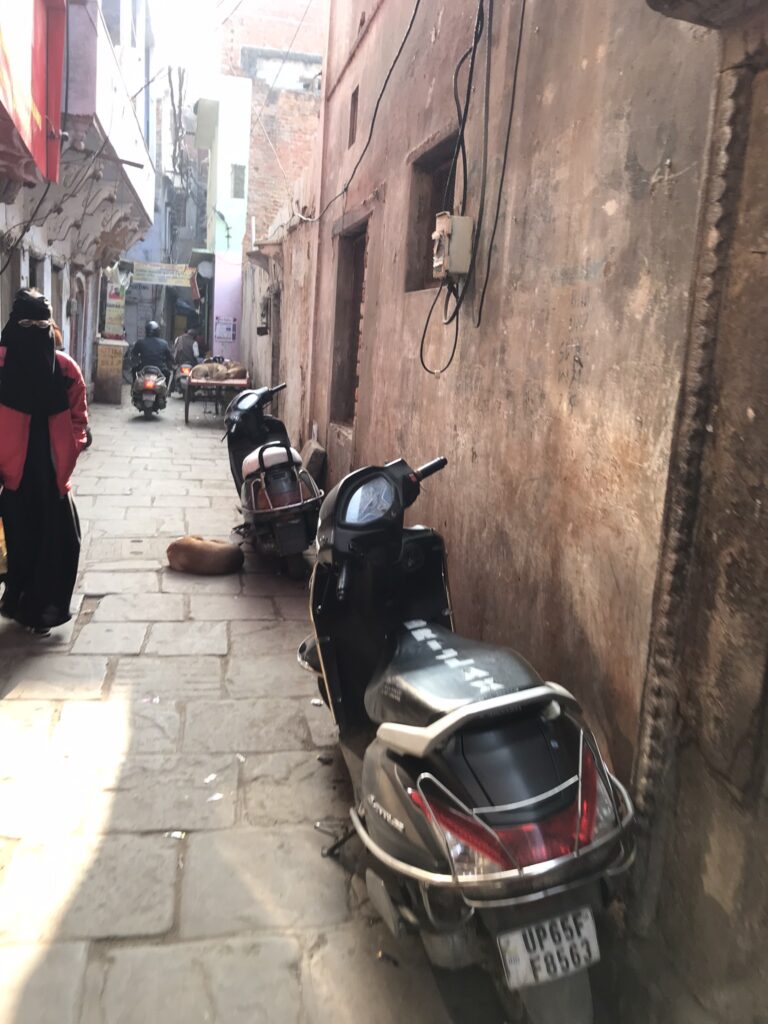
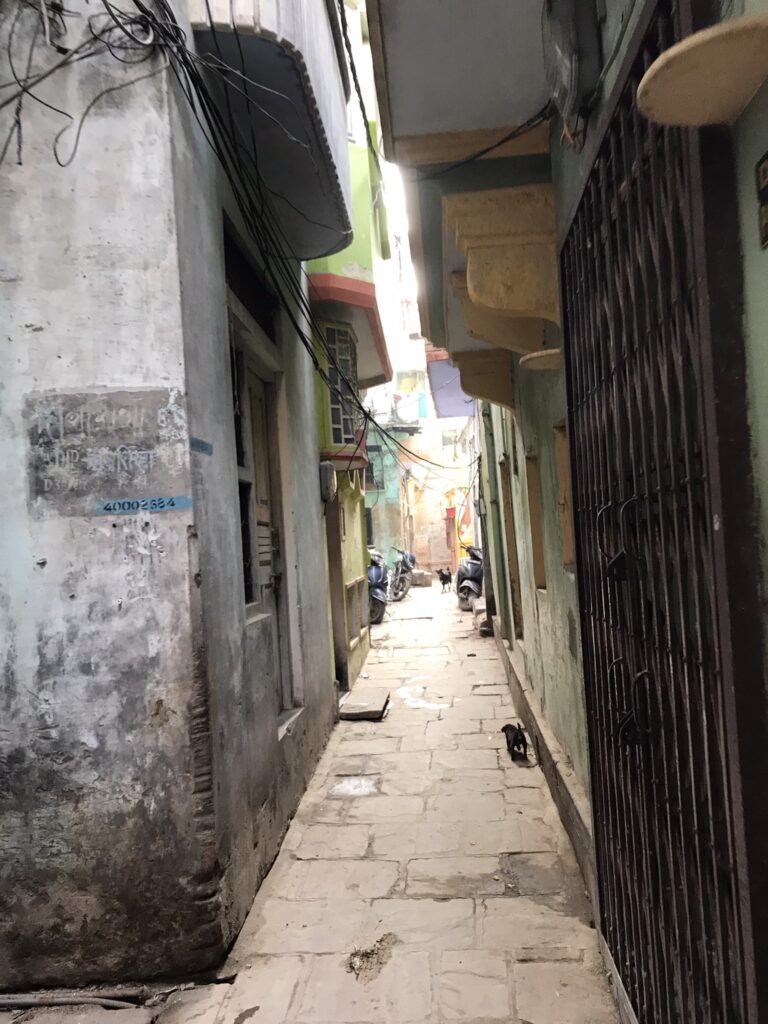
The labyrinthine streets of the old town
Due to the large and continuous presence of outside visitors in the city, Varanasi has a reputation for being pretty scam-heavy (although we didn’t experience anything untoward personally). There are plenty of fake sadhus around (homeless people or beggars posing as religious ascetics), but locals tend to treat them equally and not call them out as people are worried about accusing a real sadhu of being fake. Boat rides on the Ganges are a common activity, but you will probably need to haggle pretty hard to get a decent price.
Understandably, most people think of Varanasi as a spiritual place. It is certainly very atmospheric and evocative along the Ganges and in the winding, narrow streets. However it is also quite a dirty and squalid place. Cow faeces is everywhere, with pilgrims walking barefoot amongst the cow poo and people urinating just metres away from the Ganges where families are submerging themselves for the holy dip. It’s difficult not to step in cow poo almost continuously in the narrow streets. Varanasi is definitely a spectacle to behold and one of the most intense places I have visited, but not really so much of a spiritual experience in my opinion. You really need to experience it for yourself to judge.
Accommodation
Anand Kanan – owned by an interesting guy who was a theological scholar specializing in Tantra. Located in the narrow alleys close to the ghats, the rooms were comfortable – the only downside was the overly-loud mopeds speeding in the alleyways at night, which I’m sure were pretty loud and annoying for everyone. We also ate several of our meals in the on-site restaurant at the hotel, and enjoyed the typical north Indian food.
Foodie Places
Sushi Cafe and Continental Restaurant – there are a number of these small, European–style cafe-cum-restaurants tucked away in the winding alleys. I didn’t see any sushi here but we had masala chai, paneer burger and chips, which was fine.
Terracotta Cafe – a popular cafe with foreigners. We were a little hot inside due to the lack of AC. Again, pretty good paneer burgers.
Activities
Guruwalk – as always, an interesting way to explore and learn more about the city from a local. Highlights were visiting the burning ghat, underground temple, sunken temple, the Nepali temple and the final resting home for women who had traveled to Varanasi in order to die near the Ganges.
Sunrise on Ganges – we found a quiet spot along the ghats and enjoyed people watching, observing the bathing and early morning boats going by. A guy started to sing devotional songs near us. Quite an atmospheric experience. A lot of people want to attend the morning Aarti ceremonies at Assi Ghat but we didn’t do this.
Walking on the ghats – you can’t really visit Varanasi without taking a stroll along the river, watching life along the Ganges and the happenings on the many different ghats. A myriad of different people can be found, from ascetic sadhus clothed in vibrant orange garb, Hindu devotees and dreadlocked hippies to groups of older sunburnt white tourists. A place for all and sundry.
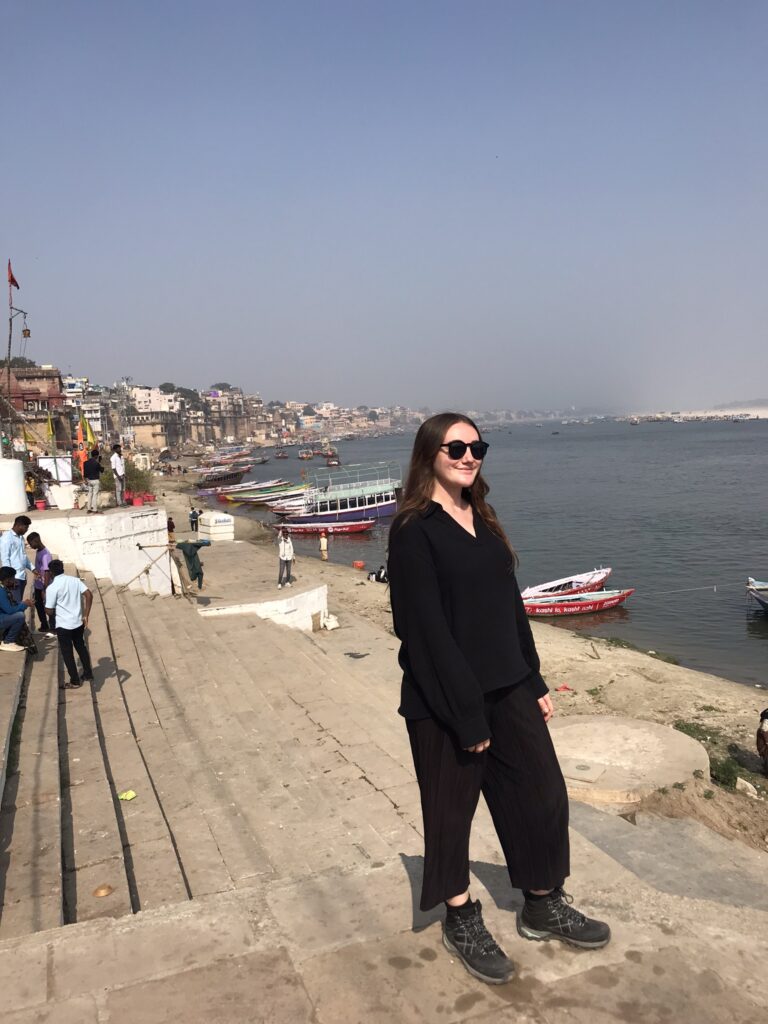
The never-ending ghats are surely one of the most interesting places in the world
Nighttime Aarti ceremony/boat ride – the evening Aarti ceremony is one of the most popular activities in Varanasi – this is a ritual where Hindu priests and holy men light ceremonial lamps to pay tribute to the holy river Ganges. The Aarti takes place each evening around 6-7pm at Dashashwamedh Ghat and is extremely busy – you may need to turn up hours before if you want to get a good spot. One way to experience the Aarti is to take a boat trip and watch the ceremony from the river itself.
We paid 400 rupees each for the evening Aarti boat ride – maybe a little too much but we already haggled the price down a lot. We got the boat from a random ghat – many boatmen are offering rides and you can play them off against each other for the best price. Boats usually have around 20-30 people each, and if you’re lucky they will come equipped with life jackets. We were the only foreigners on the boat, the captain/guide was speaking fully in Hindi for the duration but also tried his best to make us feel welcome and the other customers on the boat were all warm, friendly and seemed happy to see us there.
It’s important to understand just how many boats there are at the Aarti – the water around the ghat literally becomes crammed with boats, which physically bash and jostle each other to wedge into position around the ghat. The boats are all covered in colourful lights which adds to the excitement and chaos. Our boat did a little tour of the different ghats as the sun was setting before going to the Aarti, which I think is common.
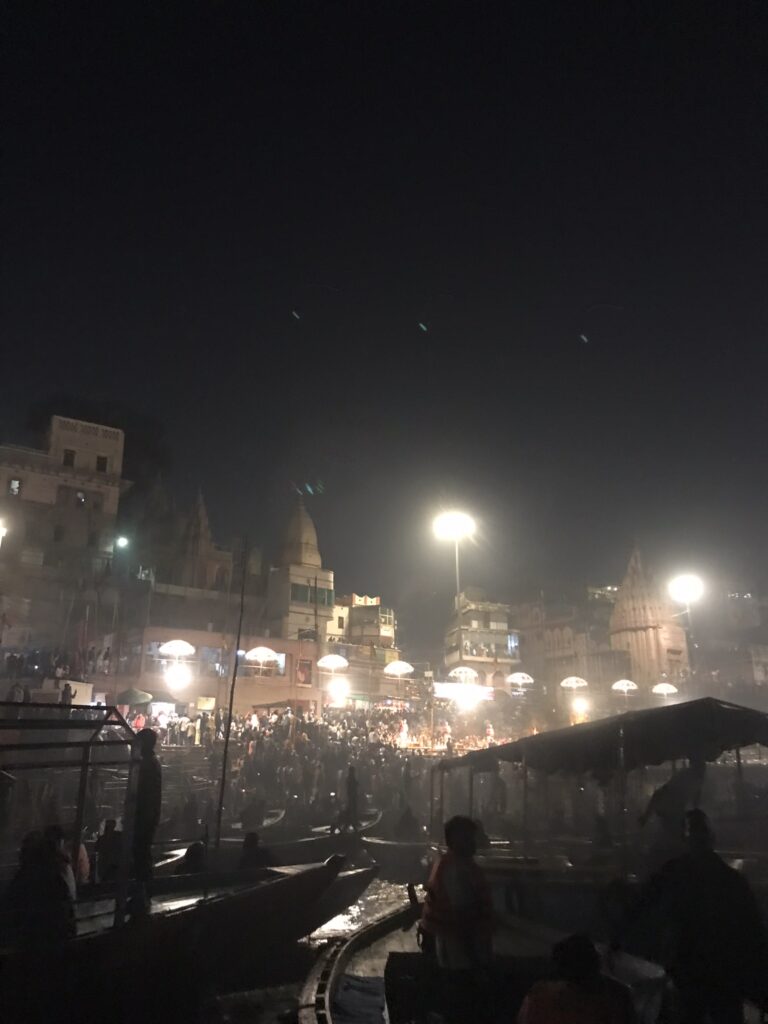
The extremely evocative Aarti ceremony
Watching the Aarti almost felt like being at a concert. It was a bit of a struggle to see what was going on but some of the locals on the boat tried their best to fill us in with the details. Vendors sell ready-made offerings made from candles inside flowers, which can be lit and then floated along the Ganges at the culmination of the ceremony. I struggled to put mine into the water as it was quite a drop from the boat and the flame went out. The others on the boat seemed to do a lot better than me.
Bodhgaya
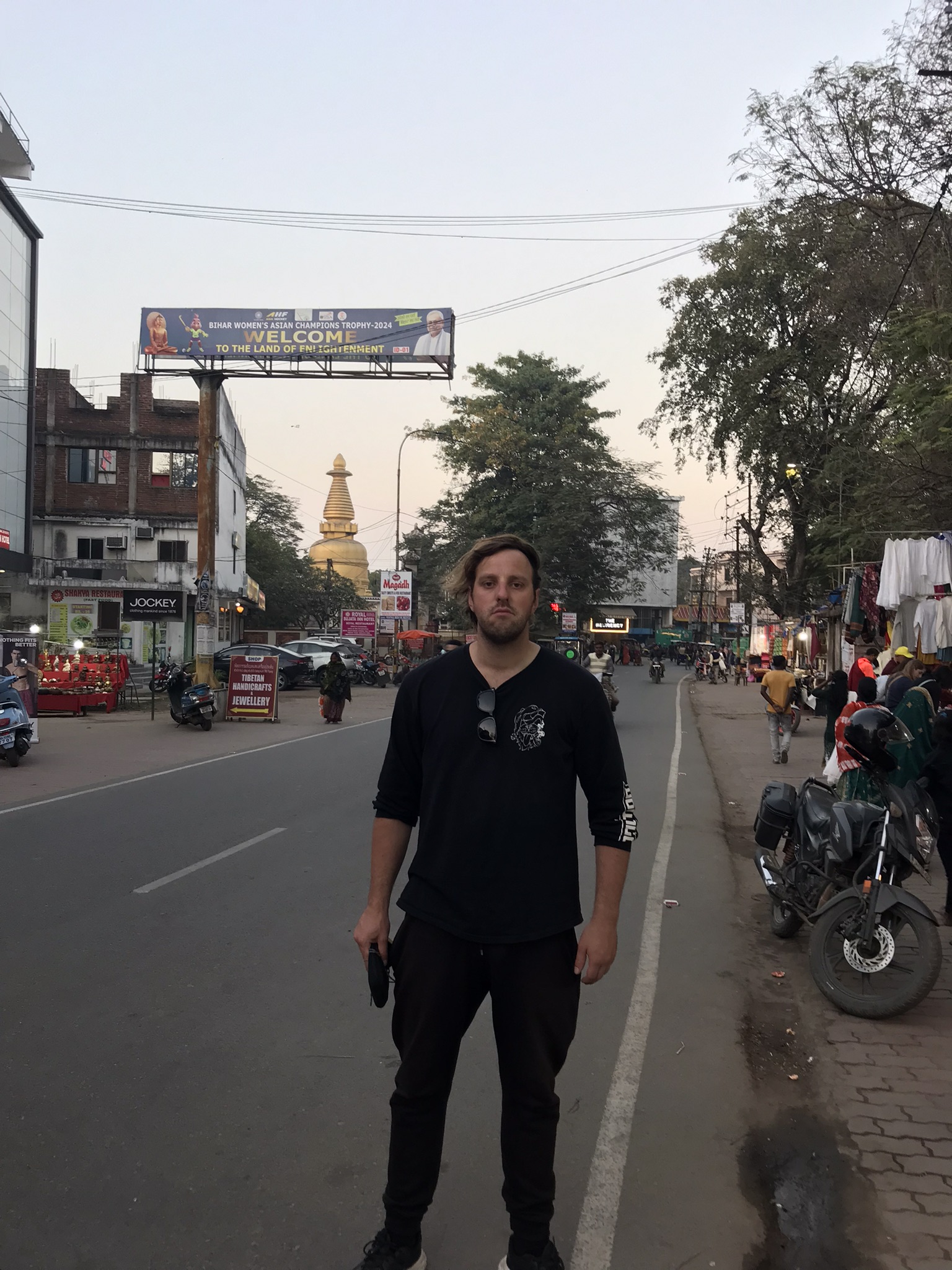
A small town in Bihar, India’s poorest state, Bodhgaya is known worldwide as the place where Buddha attained enlightenment in the 5th century BCE, and the location of the sacred Bodhi tree under which he sat. The central Mahabodhi temple containing the Bodhi tree is the focal point of the town. Although this is the original site, the current Bodhi tree is actually a replanting, grown from a sapling of the original tree. The Bodhgaya tree has been destroyed several times over the centuries – the oldest surviving Bodhi tree is actually now in Anuradhapura, Sri Lanka, which was grown from a sapling of the original tree in Bodhgaya and in turn provided a sapling to regrow the tree in Bodhgaya as it is seen today.
Bodhgaya is a major pilgrimage site for Buddhists. As well as the central Mahabodhi temple which is a focal point for all pilgrims, the town is filled with numerous different temples from throughout the Buddhist world. Each major Asian Buddhist nation is represented with a temple in Bodhgaya – Thailand, Vietnam, Tibet, Bhutan, Myanmar, Japan, China and many others. All of these temples are built in the relevant local style and customs as well as housing a monastic community of monks from their nation. We had a great time exploring the different temples, which almost feels like temporarily being transported to the different countries. Decoration, architectural style, rituals and even the statues and depictions of Buddha vary between the temples. Some of the temples are centrally located, while others are further out of town and a little harder to reach.
There is no train station in Bodhgaya and public transport is limited. The nearest rail station is in the city of Gaya, which is around 10 kilometres away. Gaya is a chaotic, congested Bihari city. Bihar state in general has a poor reputation in India – it’s the second most populous state, but is said to lag significantly behind in terms of development and basic infrastructure. We were told that people from Bihar can sometimes be looked down upon or discriminated against in other parts of the country. We did witness at least two physical fights break out between locals in our short time in the state, including a brawl on the train platform in Gaya. However the Bihari people we encountered were polite and respectful towards us – they seemed happy to help and didn’t bother or hassle us at all.
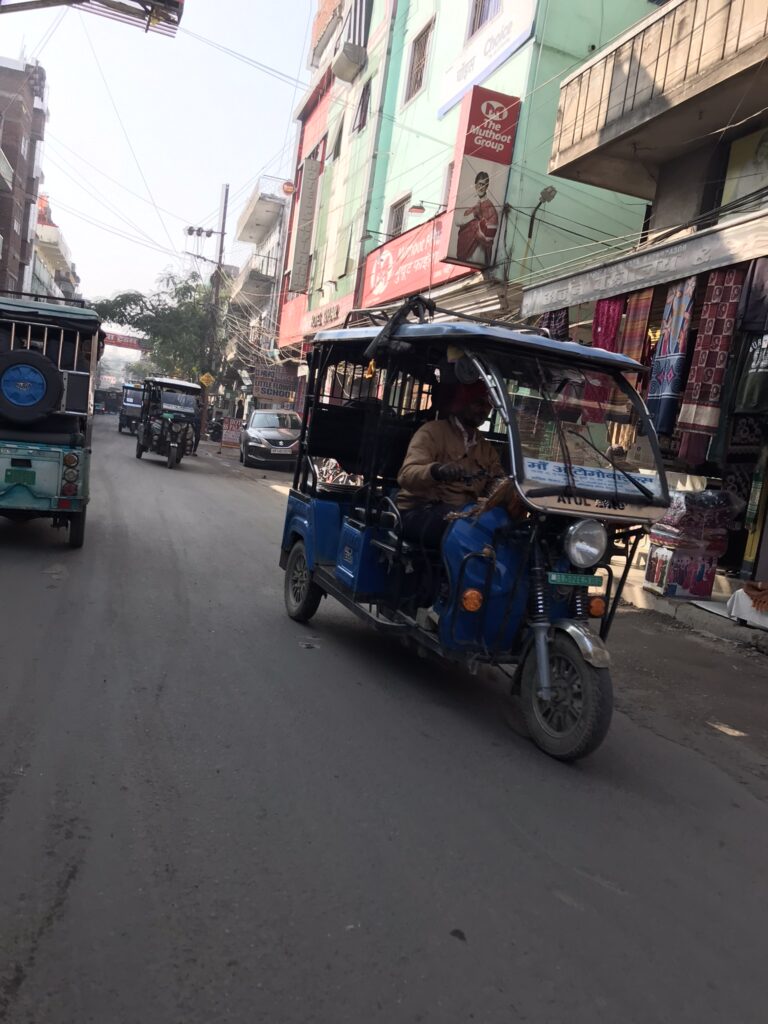
The state of Bihar doesn’t have the best reputation
In order to get to Bodhgaya, it is necessary to take the road which leaves the city of Gaya and passes through some nice countryside along the route. Although it’s not a long distance, the journey by tuktuk from Gaya took us over an hour due to the heavy traffic leaving the city. We organised tuktuk transport to and from Gaya rail station through our accommodation in Bodhgaya in order to ensure a trustworthy driver – I highly recommend this, as well as traveling during the day as the road from Gaya doesn’t have the best reputation for safety. Bodhgaya itself is a more peaceful place, full of pilgrims and monks of various denominations as well as the local Hindu communities. Be careful with the water here – were told that the groundwater in Bihar is often contaminated with arsenic!
The Falgu River passes alongside Bodhgaya, but I don’t recommend swimming as it is said to have high levels of arsenic
Accommodation
Rajhat Maranao House – a very kind and welcoming Muslim owner, he arranged transport to and from the train station in Gaya for us, offered us tea and even made us a local vegetable soup for free. The rooms were good, great hospitality and a good location close to all the major temples.
Foodie Places
Carrot Cake & Coffee – a decent place for lunch. Reasonable prices and a friendly owner, we didn’t have change but he allowed us to come back and pay later. As the name suggests, you can get carrot cake and also other varieties of cake here as well as savoury options.
Tibet Om Cafe – there is a local Tibetan community in Bodhgaya because of its importance to Buddhism, with many places serving typical Tibetan food like momos. I was really impressed by the portion size here and the quality of the momos. The café is inside a large hall which also includes cultural items for sale.
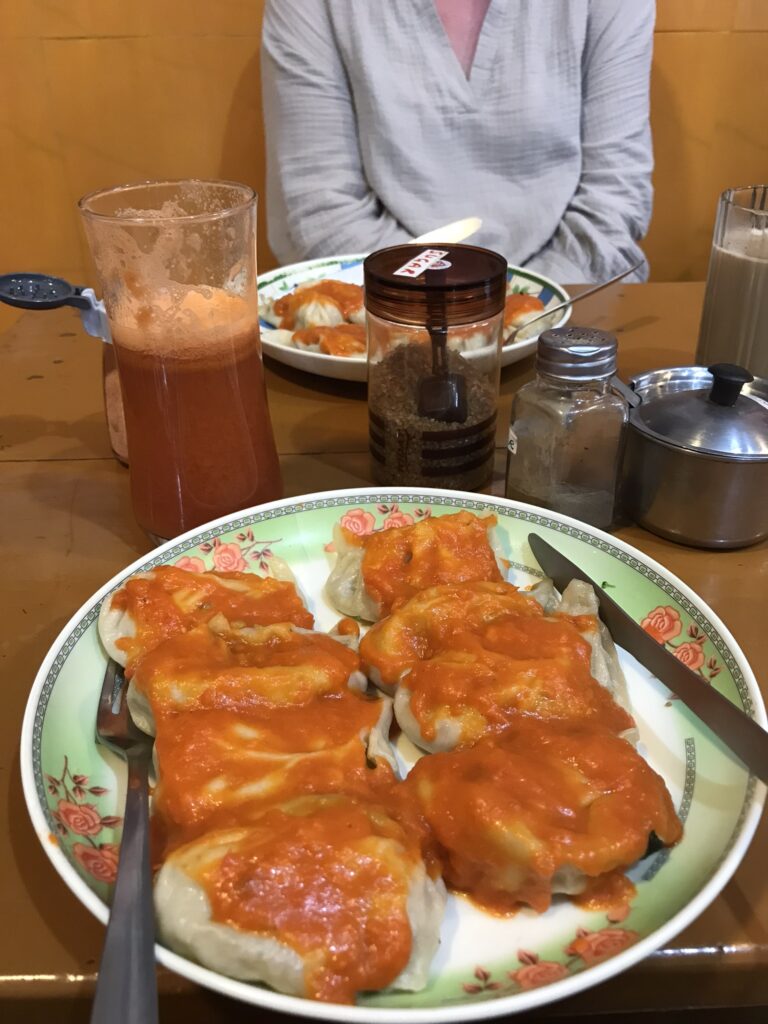
Head to Tibet Om Cafe for the best momos in town
Activities
Mahabodhi Temple – the main attraction in the town, this temple complex contains the famous and sacred Bodhi tree. Security at the temple is high as there were terrorist bombings here in 2013. It is forbidden to take a phone or backpack into the complex – there is a free deposit counter outside the main entrance. It may be possible to take large cameras and even video cameras inside if you buy a pass, but phones are a no-go.
Once inside the complex it’s possible to wander and look around freely. There are people inside from all over the Buddhist world and many of the different communities have their own specific areas and goings-on within the complex. It’s also possible to enter the main temple and to sit freely under the Bodhi tree which is behind it. We saw many people here reading, chanting, meditating, praying and prostrating.
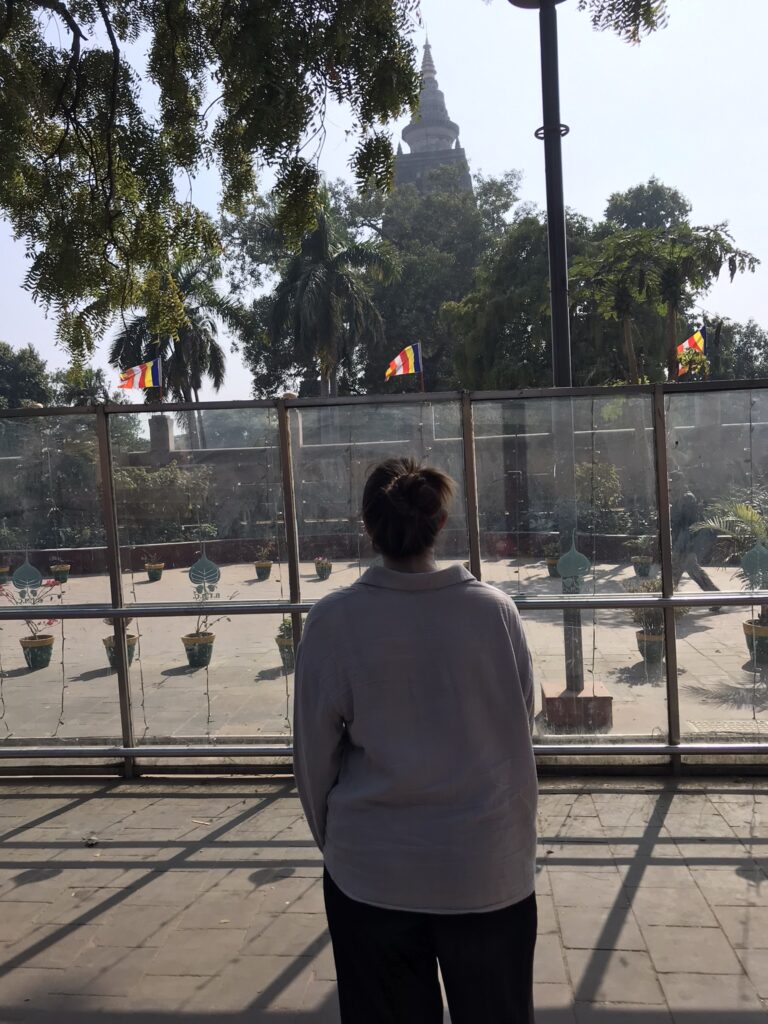
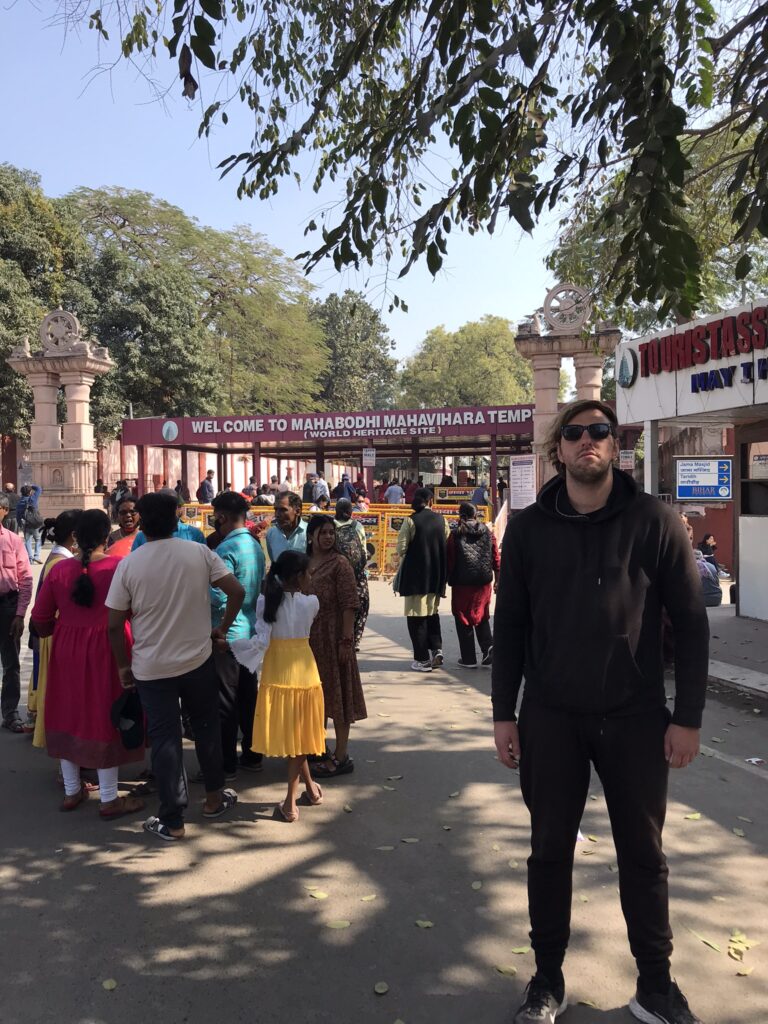
We could only take photos outside the Mahabodhi Temple complex; expect queues outside the free depository
The temple itself is actually very small inside – just a room with the idol and people being rushed through by security. Inside the complex there seemed to be a disproportionate amount of Indian visitors from the 7 Northeastern states – I’m not sure why this was. We met people from Tripura state, which was a first for us.
Great Buddha Statue – an impressive Buddha statue in a park, the statue is located at the end of a tree-lined boulevard with many smaller statues of Bodhisattvas along the route. Supposedly opened by the Dalai Lama, the statue is very grand and striking on approach.
The Great Buddha statue is well worth a visit when in Bodhgaya
Temples of different countries – it’s interesting to admire the different architectural styles of the various national temples which are dotted around the town. Each has its own local decorative style, customs and monks from the country it represents. Most of the temples are open to visit, with chanting rituals performed at different times in the different temples. We stumbled across a musical ritual in the Tibetan ‘karma’ temple which was very impressive.
Many countries are represented with a temple in Bodhgaya, even Bangladesh! Visiting the various temples is like walking into snapshots of the different countries. These are working temples and not tourist attractions, so be respectful if you go inside. In addition to the Tibetan temples, we were also interested to come across a temple from China which is often considered outwardly to be a country which shuns religion. The Chinese temple is one of the more difficult to access. The Japanese temple was very elegant with a classical minimalist vibe.
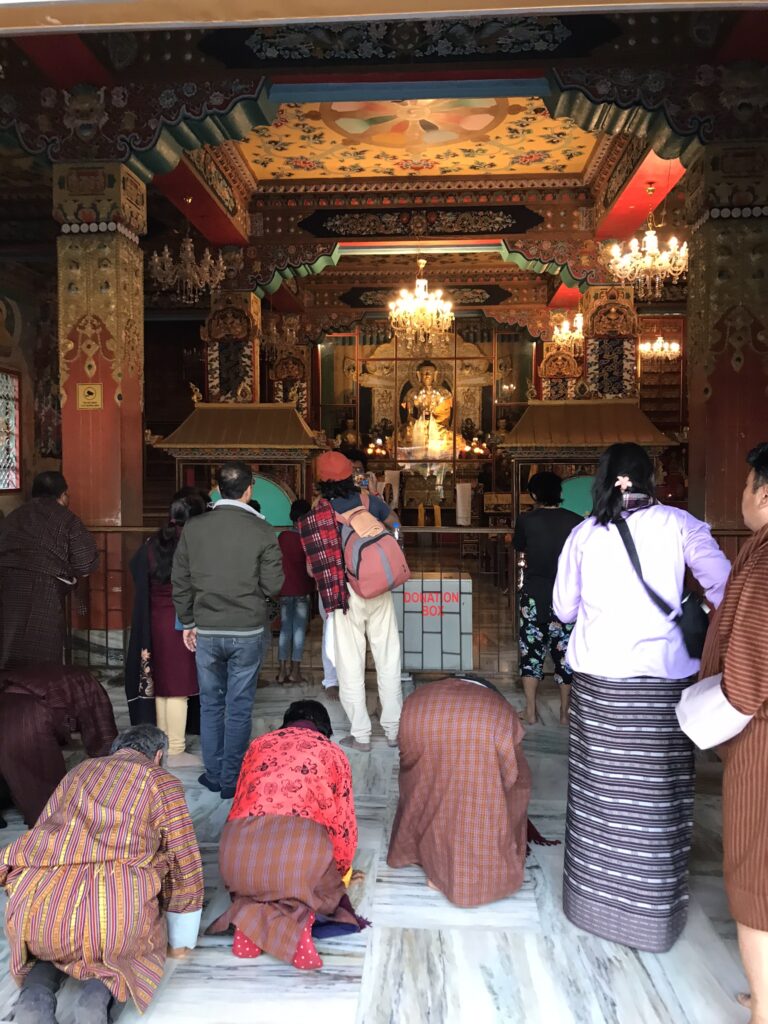
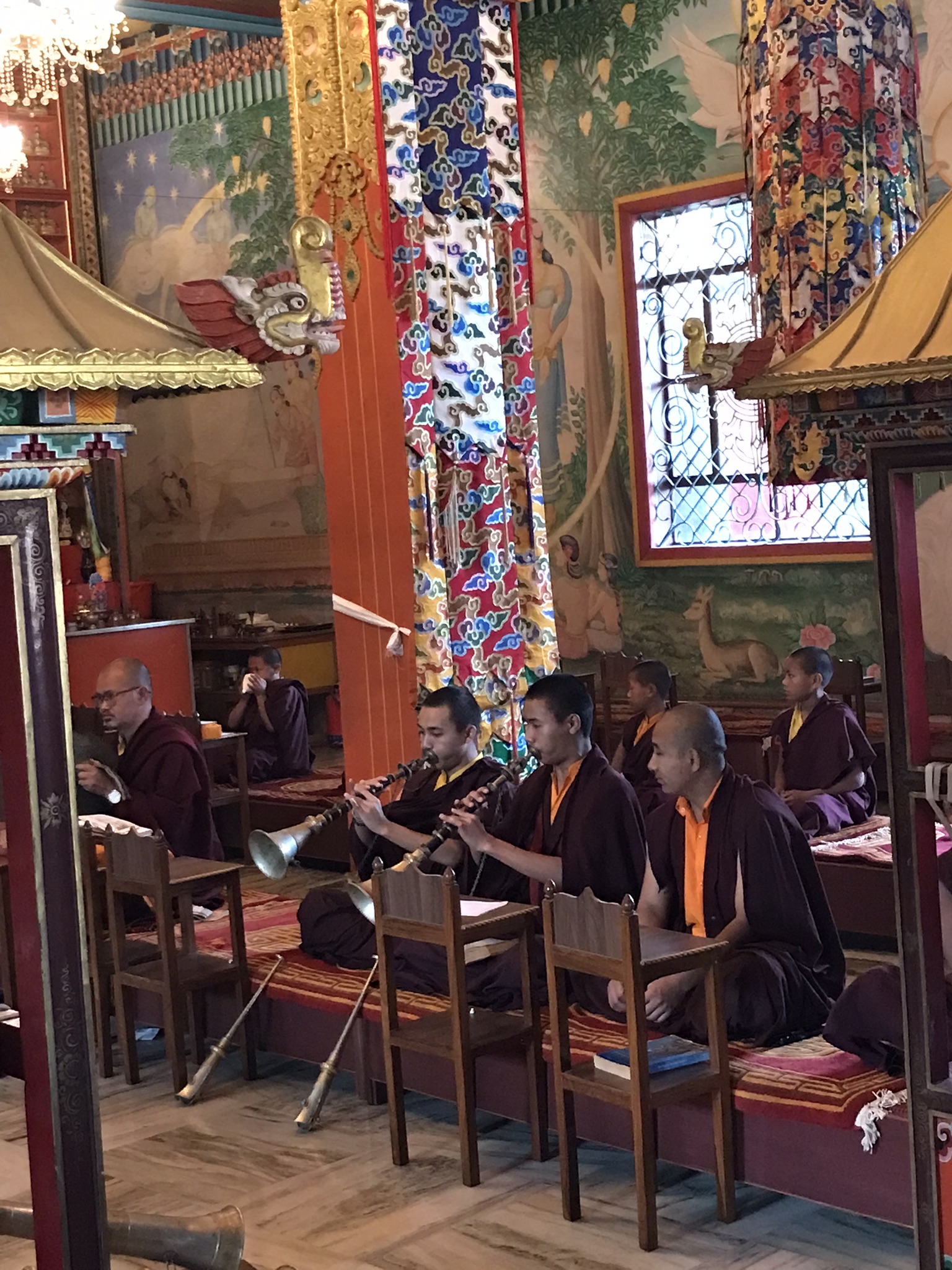
Some of these temples in Bodhgaya close in the afternoon for a short period between 12pm and 2pm
All of the temples require footwear to be removed before entry. When exploring the many temples it’s best to wear slip-on shoes if you can. I was wearing hiking shoes and it was a pain in the neck to constantly take my shoes off and then put them back on again at each stop.
Kolkata
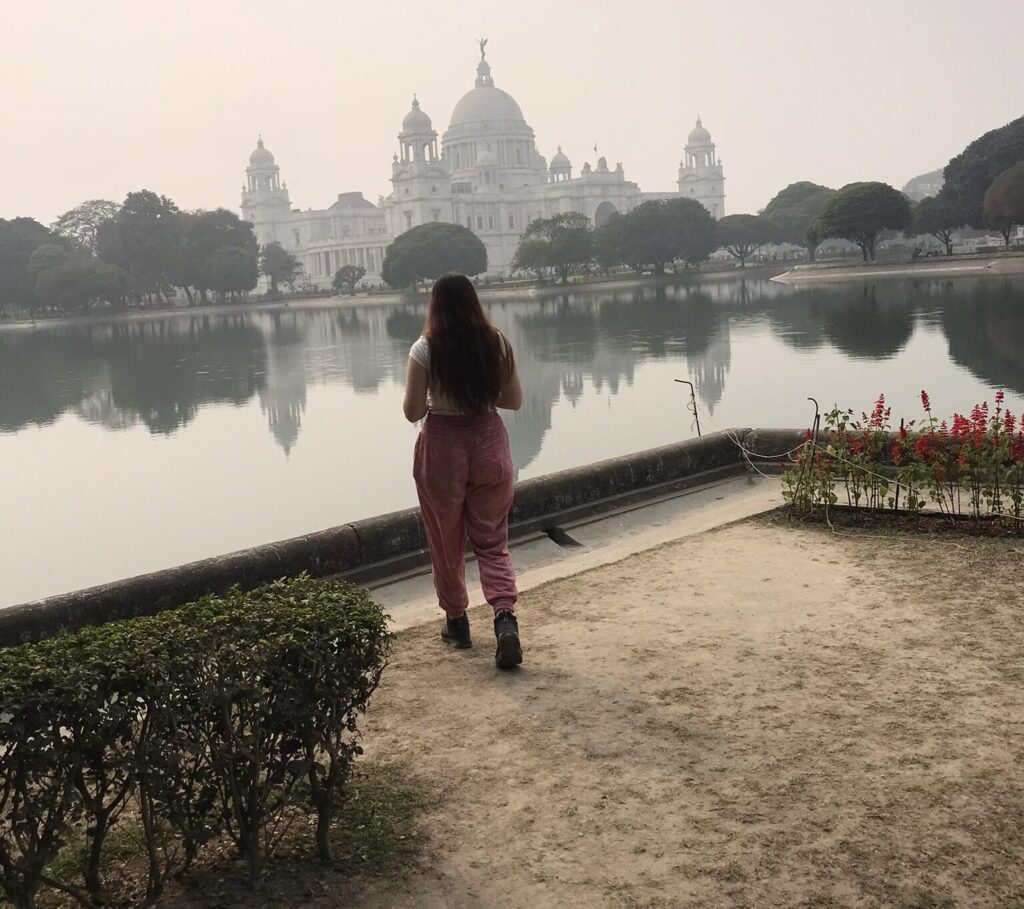
Under its former name of Calcutta, Kolkata was the headquarters of the British East India Trading Company and the former capital of colonial India during the British period. The colonial administrators left an indelible mark on the Kolkata of today, with many churches, administrative buildings and institutions from those days still remaining and shaping the city’s culture and landscape. Today, it is a bustling metropolis which ranks as the third largest in the country after Mumbai and Delhi.
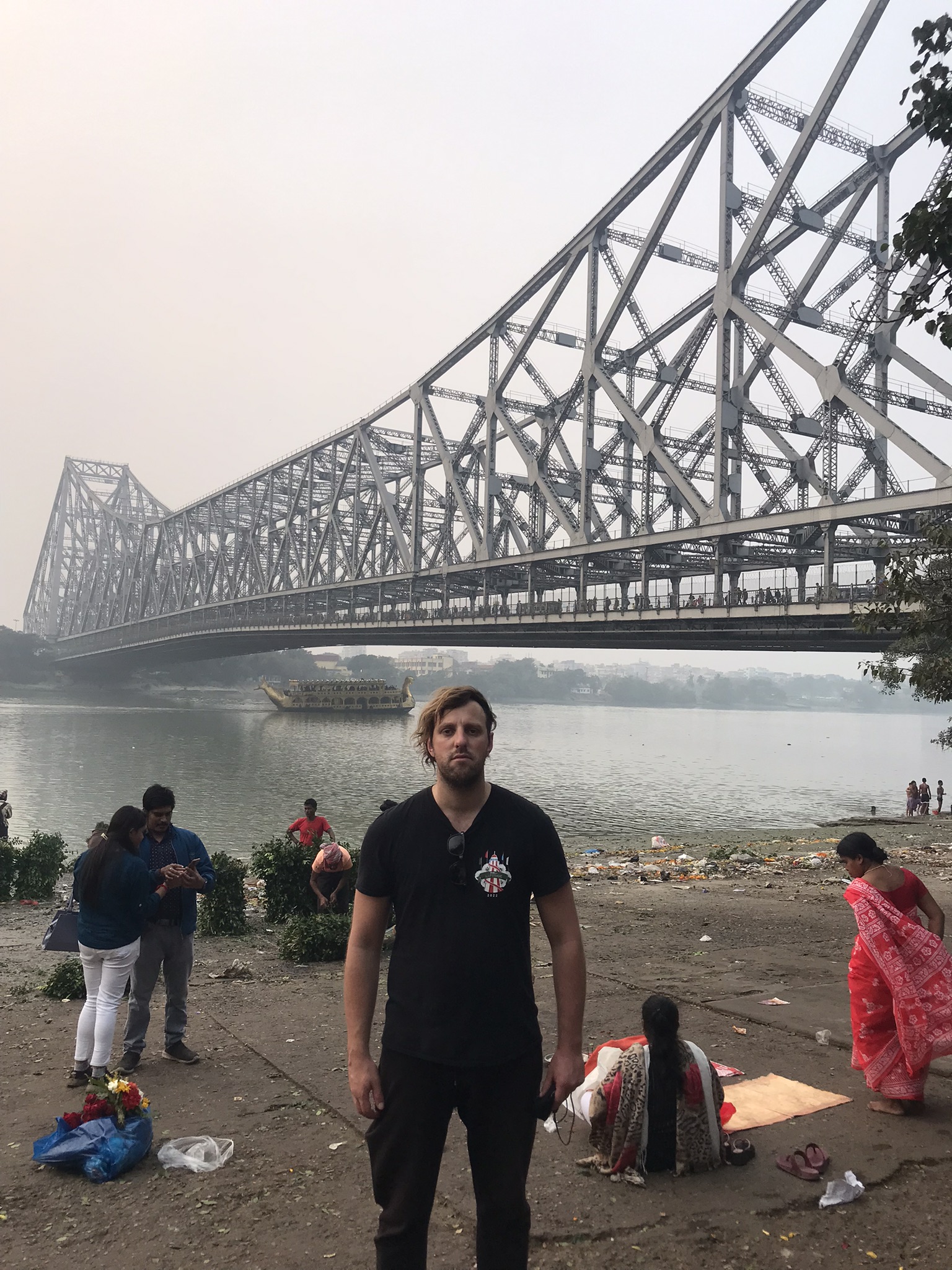
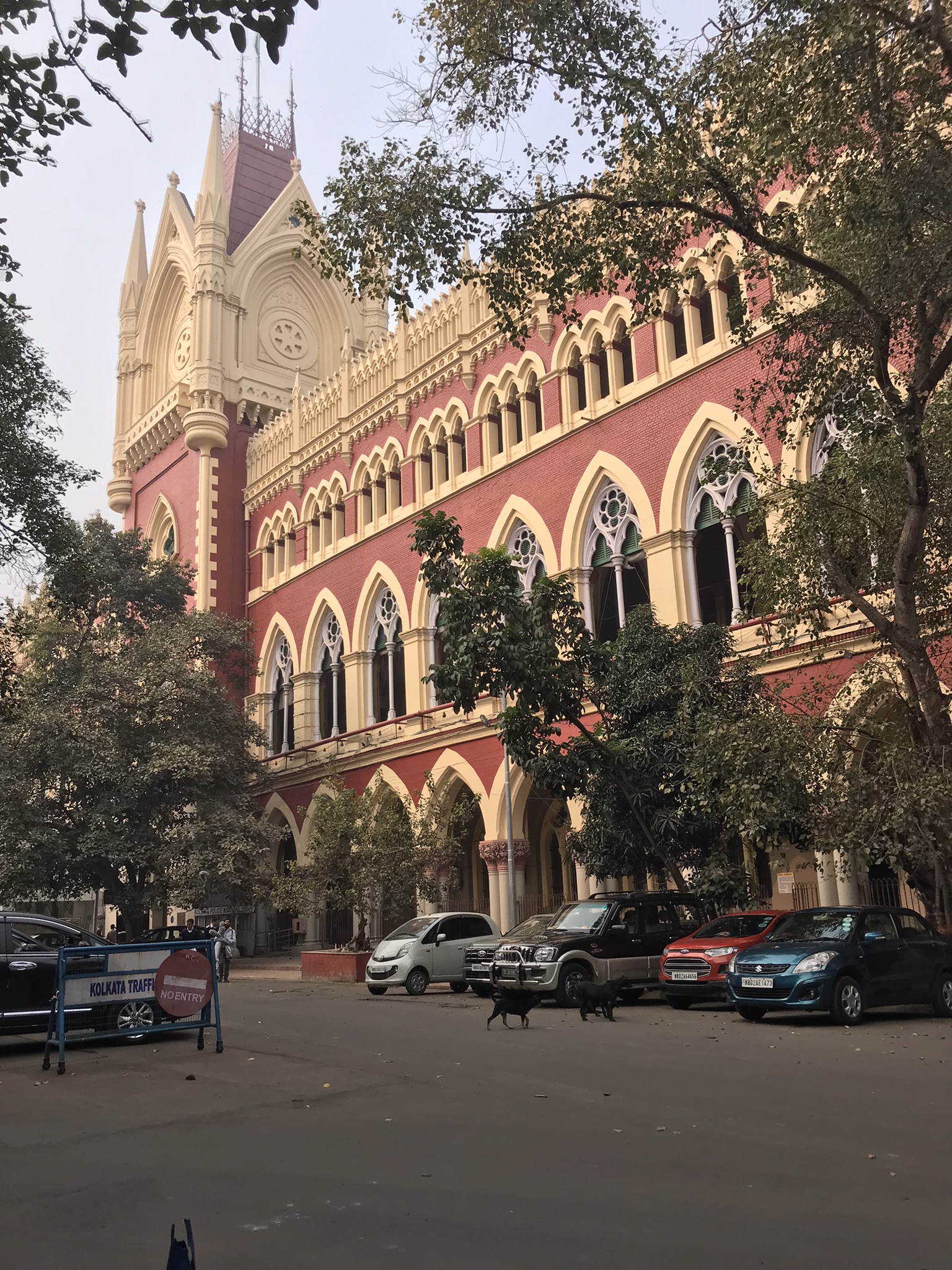
Howrah Bridge and the colonial buildings of BBD Bagh are among the famous local landmarks
Aside from the colonial influence, Kolkata is known for its Bengali heritage. As the largest city in West Bengal, it shares some cultural and linguistic similarites with nearby Bangladesh. Interestingly, we found that during the Partition of India, the city of Calcutta was almost included within East Pakistan (which later became modern-day Bangladesh). Bengali is the spoken language and there are many distinctive Bengali elements within the cuisine and culture of the city.
Historically, Calcutta has been synonymous with poverty, particularly following the Partition in the 20th century. However the area we were staying around Park Street was actually quite affluent – it almost felt similar to parts of London, a pretty cosmopolitan place. Other nearby parts of the city that we visited such as the old Chinatown and the area around Mallick Ghat were much less developed. The city also became known in the 20th century as the home of Mother Teresa, who established her base, spent most of her life and later died here. The Motherhouse, the place where she lived, died and was buried, is a convent which is still functioning today.
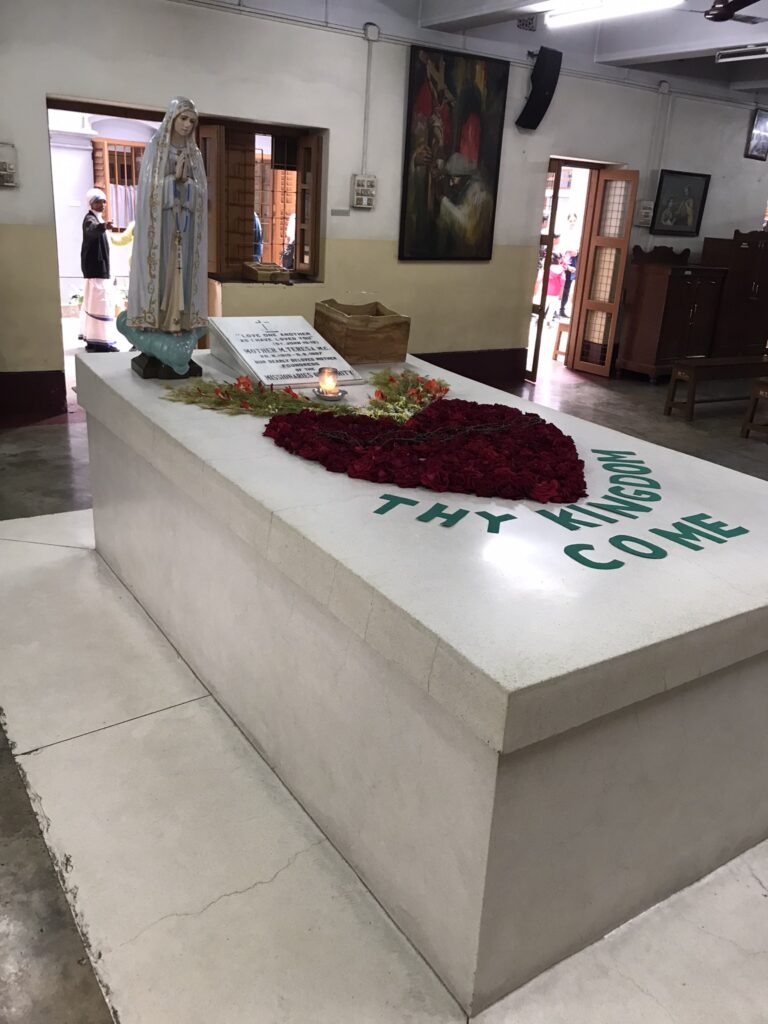
Mother Teresa’s grave
Kolkata is home to the largest railway station in India, Howrah Junction. Within the city, we found that Uber worked pretty well so it was easy enough to get around. Kolkata is also pretty close to the border with Bangladesh – read my guide to crossing the Petrapole/Benapole border here!
Accommodation
Redbrick Residency 4 – Heritage GH (Airbnb) – we booked this property on Shakespeare Sarani Rd via Airbnb and were really impressed. A self-contained, spacious apartment with colonial-era charm in a heritage building. It almost reminded me of a men’s smoking room from a bygone era.
Foodie Places
Hot Kathi Roll – a well-known street food stall serving the local favourite, kathi, which is basically a wrap in a flaky flatbread with fillings such as chicken and egg. A convenient place to get a quick bite to eat.
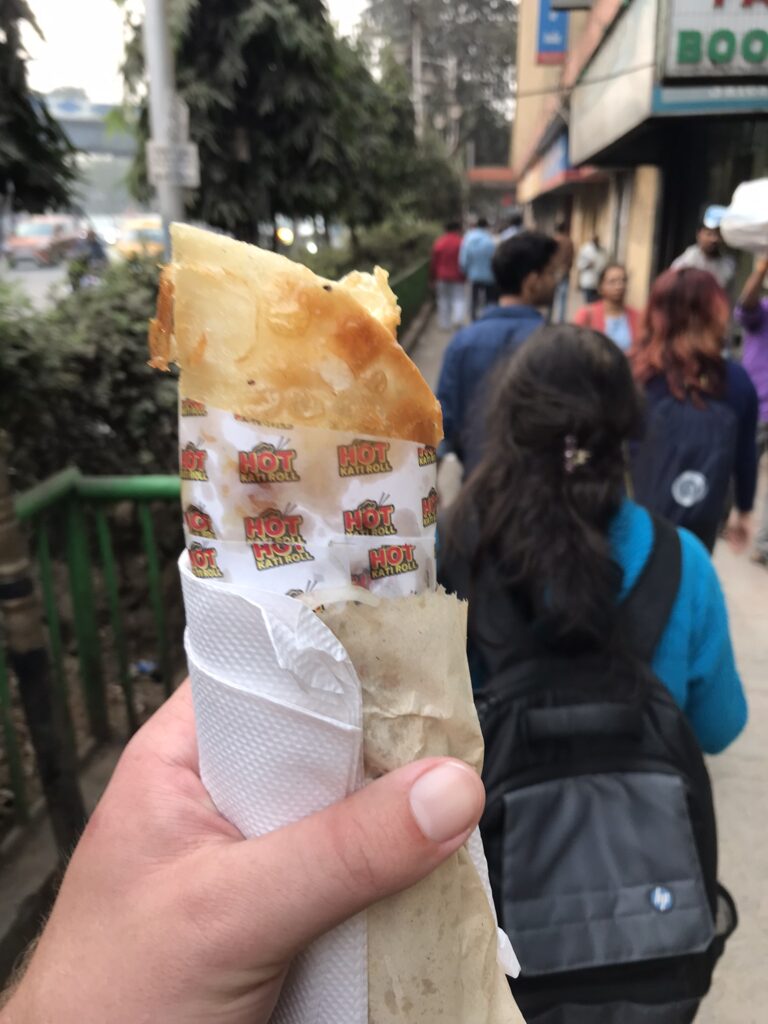
The famous Hot Kathi Roll
Cocoa Bakery – a posh cafe serving French patisserie-style treats and continental main meals. The ‘crookie’ (croissant with a cookie on top) had us hooked at the first bite! We felt that the croissant here was on par with something you’d find in France – temperature and texture were perfect.
Oh! Calcutta – we ordered on Zomato, classic Bengali food such as Bhetki Maacher Paturi (fish wrapped in a banana leaf) and Rui Maachar Dom Jhol. The food and tastes seemed to be quite mustard-heavy, with strong flavours
Balaram Mullick Desert Shop – a great place to try classic Indian sweets – we were able to buy a pick-n-mix box to try a number of local favourites. Ras malai is particularly worth trying as a Bengali treat.
Activities
Colonial monuments – Click here for my self-guided tour of many of Kolkata’s colonial-era monuments, including the Victoria Memorial, Maidan, St John’s Church and BBD Bagh!
Mother Teresa Motherhouse – this was both the home base and final resting place of Mother Teresa. It’s still a working nunnery but also functions as a visitor centre, which is free to visit and operated by the nuns. Three rooms are open to visitors; the room containing Mother Teresa’s tomb, her bedroom (in which she died) and an exhibit with many of her possessions and information about her life. The bedroom is up the stairs and not well signposted, don’t miss it! It was interesting to observe Mother Teresa’s tomb so close to the loud, chaotic road outside. There was a homeless person right outside the Motherhouse.
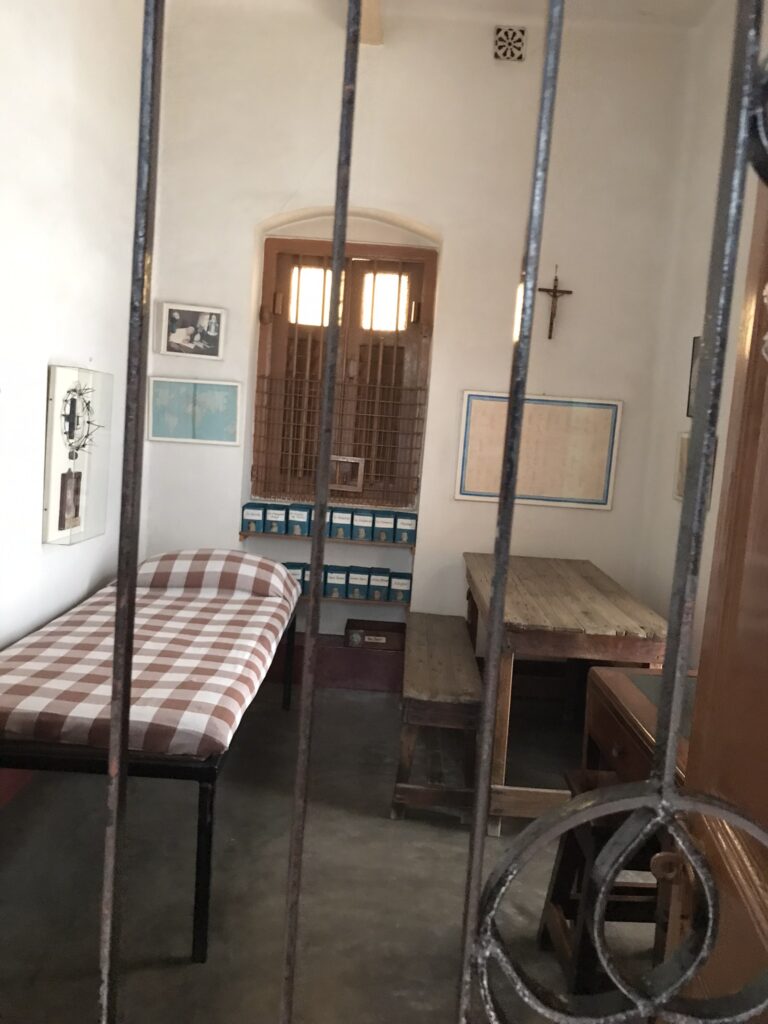
Mother Teresa’s bedroom/deathbed
Mother Teresa was originally assigned to a different convent in Calcutta before forming her own order which is focused on charitable outreach and helping the local people. It’s a popular spot particularly with Catholic pilgrims who come to pay homage.
South Park Street Cemetery – a somewhat spooky, dilapidated cemetery containing the ornate tombs of many notable British colonialists and their families. A very interesting place to explore but I wouldn’t recommend visiting after dark! We noticed that a lot of the people buried in the cemetery died at a relatively young age. Many of the gravestones contain poems and some also include interesting tales about the lives and demise of the occupants.
The very eerie Park Street Cemetery
Chinatown – not much is left of the original Chinese immigrants that it is named after. It is now filled with poor Muslim traders, a shanty town with many people living in temporary shacks at the side of the road. There are many small shops tightly crammed together within the street. Not a ‘nice’ area of the city, but interesting to visit.
Mallick Ghat (Flower Ghat) – located next to the Howrah River, this area contains the largest and one of the oldest flower markets in India. It’s walkable from BBD Bagh but there are some very congested roads on the approach – we were stuck in a human traffic jam for a while. The ghat area itself is quite disorganised and most of the vendors were selling flowers in wholesale for celebrations and religious use – it’s probably not the place to go to buy a bouquet.
The flower ghat is a pretty intense place
There’s a bit of a labyrinthine quality to the streets surrounding the ghat, with flower sellers in garage-like storage units crammed together along dark alleyways, flower debris and leaves all over the floor. We worked our way through with much trepidation and ended up at the water’s edge, where there is a view of the Howrah Bridge. Quite a few locals were gathered on the ghat and it seemed like some of the flower workers were taking a dip in the river under the bridge. The flower ghat is not pretty or a sanitised tourist spot – a gritty, local place.
Chennai
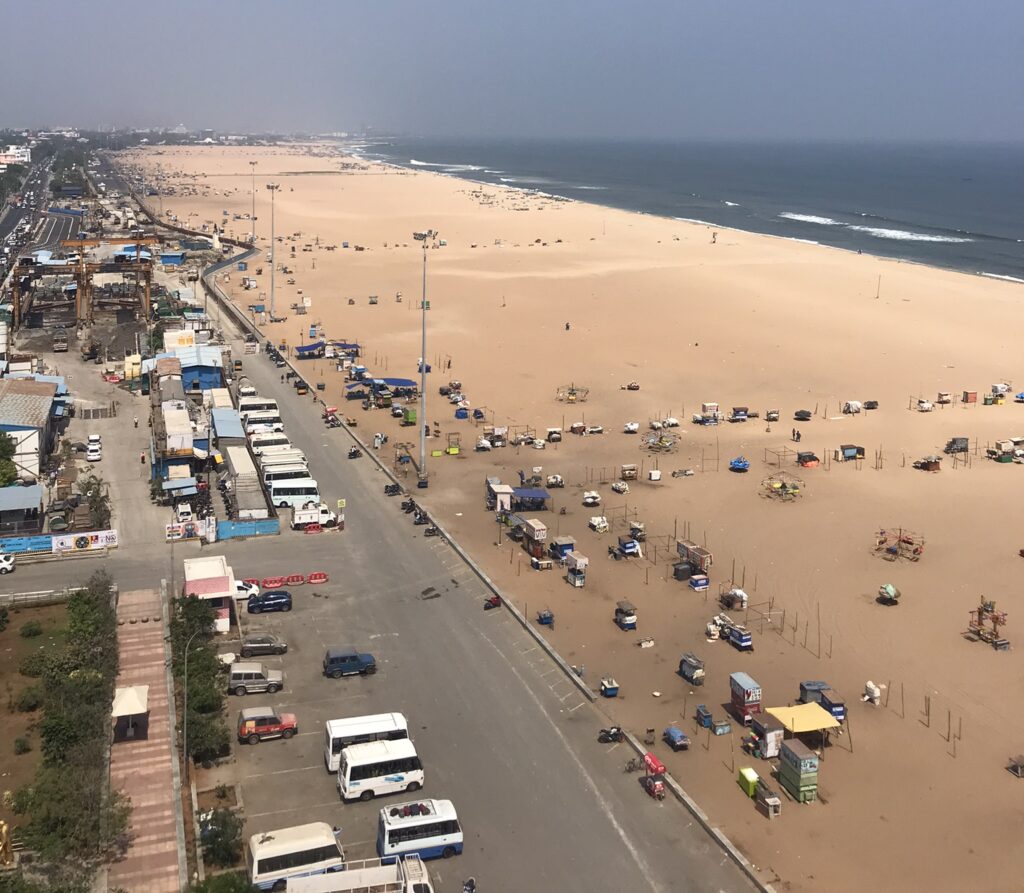
For my Chennai content, click here!
Mahabalipuram
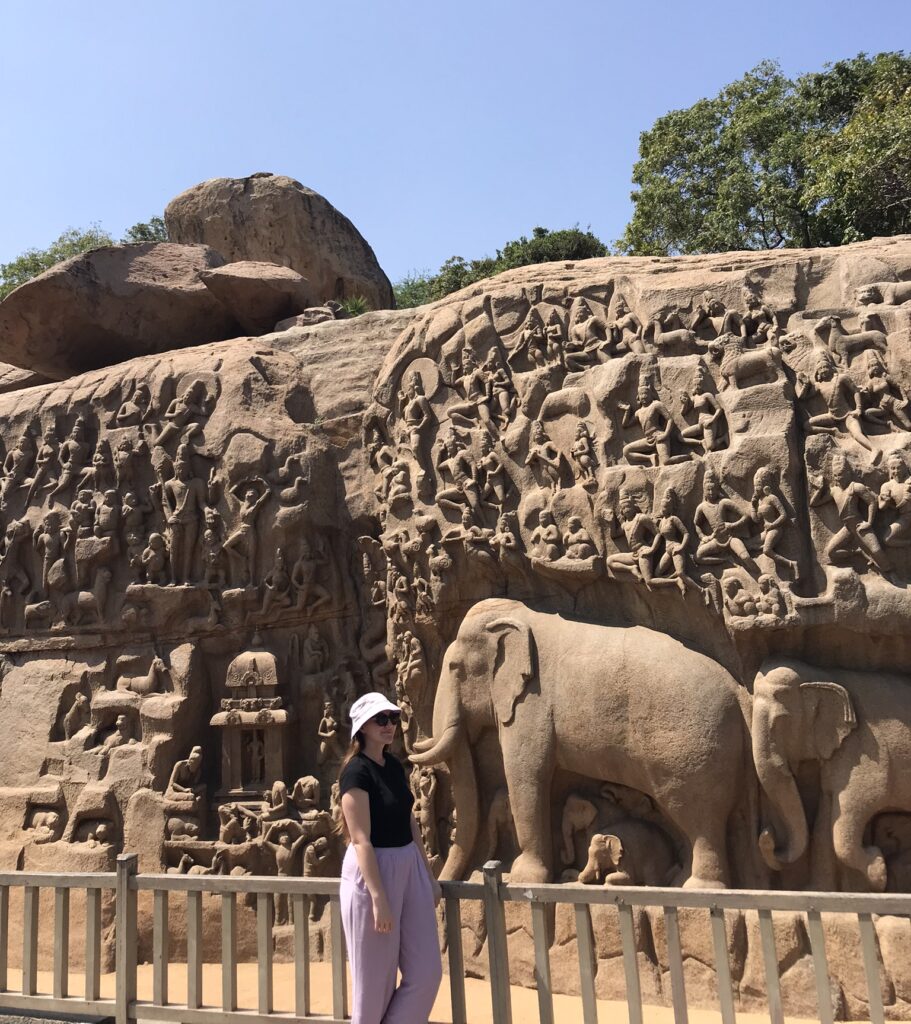
Click here for my Mahabalipuram content!
Puducherry
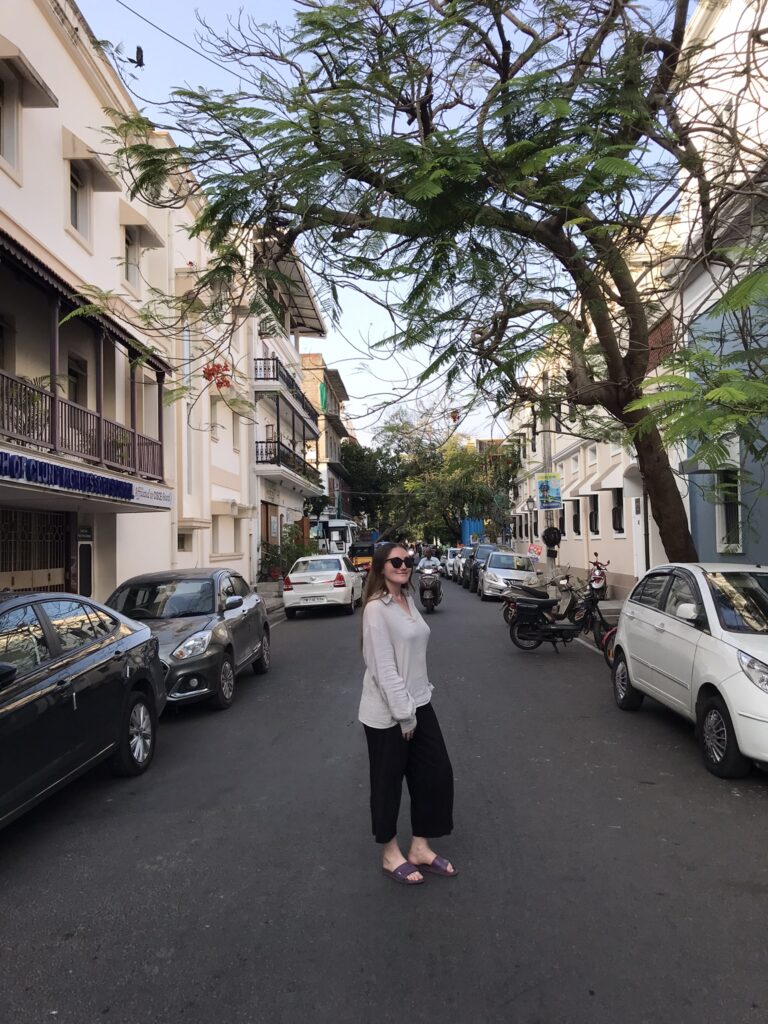
For my Puducherry content, click here!
Thanjavur
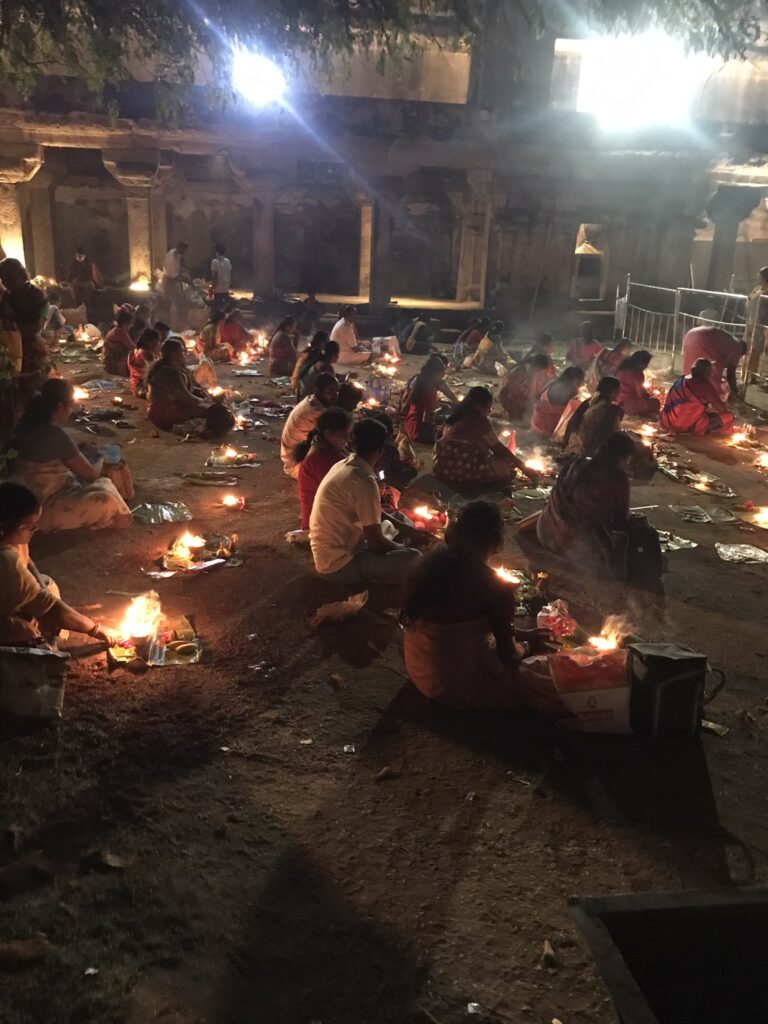
Click here for my Thanjavur content!
Bengaluru
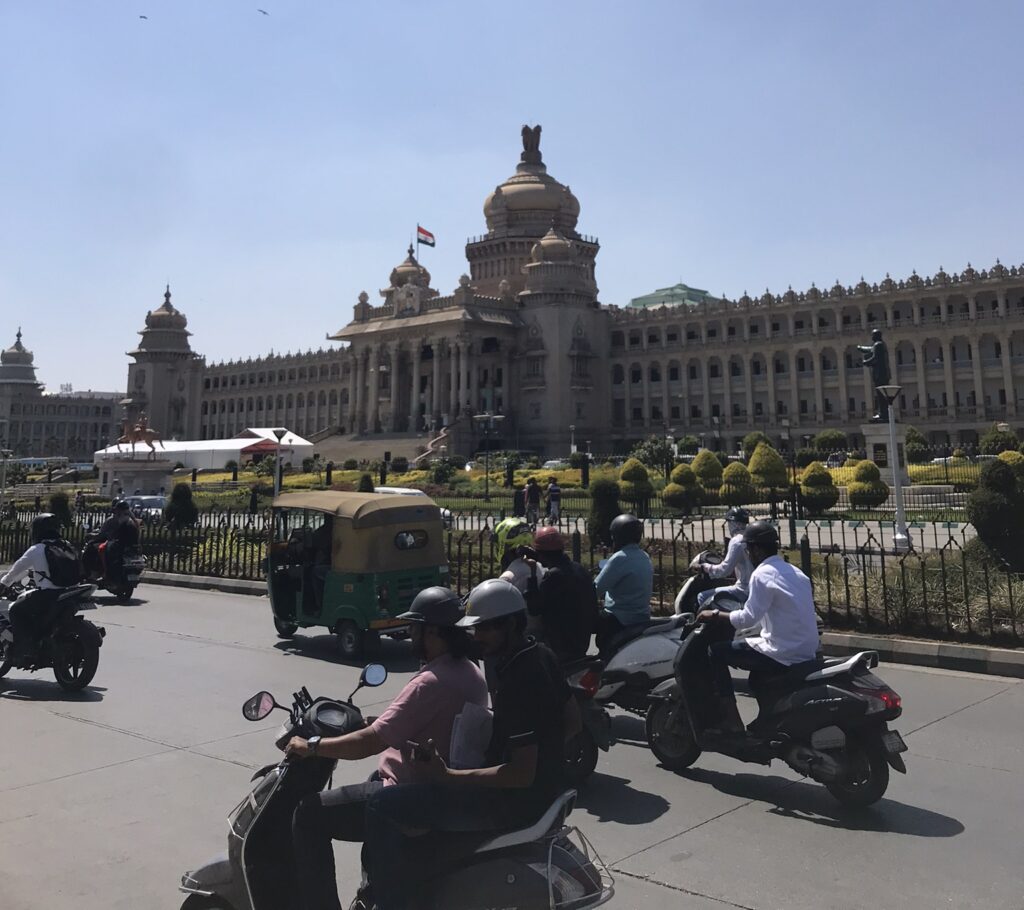
Known as a modern tech hub, Bengaluru (formerly Bangalore) is one of the largest cities in the south of India. The city gained prominence when the administrative functions of the princely state of Mysore (one of the major kingdoms in the south of India and later a British vassal state during the colonial era) were moved to Bangalore by the British as a result of mismanagement by the state ruler in the capital, Mysore (now Mysuru). Bangalore subsequently became home of the British garrison in Mysore and grew exponentially as a result, becoming the state capital following India’s independence.
Modern Bengaluru is a very cosmopolitan city by Indian standards. Living standards are relatively high for such a large city and the local economy is booming – it’s known as India’s Silicon Valley. Plenty of global brands and international food options can be found, and locals rave about the city’s pleasant, warm climate. The centre of Bengaluru did feel somewhat more westernised than many of other places that we visited in India. Despite this, we found that it was still pretty difficult to stand in one place for more than a few seconds without being approached by quite persistent tuktuk drivers. Luckily, Uber worked quite well within the city so we didn’t have to rely on these dodgy tuktuks. Bengaluru has a functioning metro, but at the time of our visit there were only two metro lines so it was still pretty difficult to get to many of the city’s attractions by public transport.
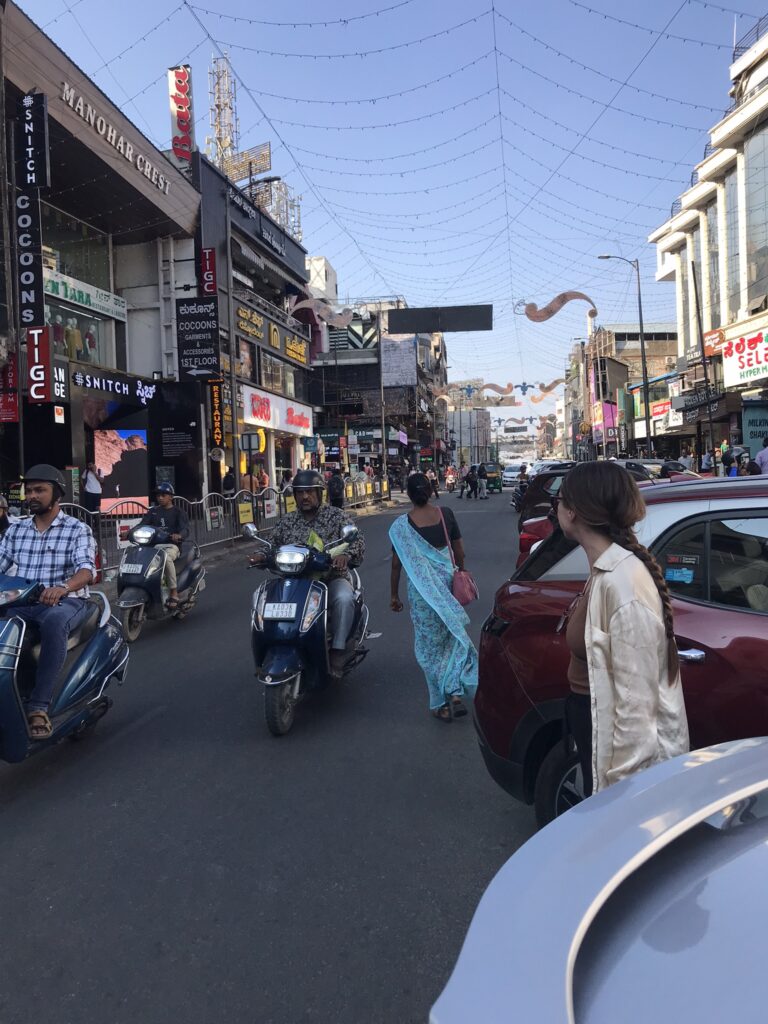
The streets of Bengaluru are a little more cosmopolitan than some other Indian cities
Although it has a strong heritage as part of the Kingdom of Mysore and later a major city within the British Empire, Bengaluru has a surprising lack of historical buildings. There is a 19th-century palace from the British era and a fort which was developed during the time of the Muslim leaders Hyder Ali and Tipu Sultan and their battles with the British, but we didn’t have time to visit. Instead, we spent most of our time around the Cubbon Park area. For us it was a good place to rest and enjoy the home comforts for a day or two before moving on.
Accommodation
Casa Cottage – a little more expensive than our usual accommodation but this is a well-established boutique hotel and we felt it was worth the extra cost. They are accustomed to hosting foreign guests and we saw plenty of foreign tour groups passing through. We had a smooth experience here, the hotel functions like a well-oiled machine. We had a great room with a balcony. There is a downstairs seating area for the buffet breakfast. They had a QR code with local recommendations. The only downside was the location, which is a little bit of a walk from the metro station.
Foodie Places
Brik Oven – Italian-style stone-baked pizza. We had prosciutto and goat’s cheese. A really good quality, authentic pizza, unlike the capsicum-loaded pizzas in the north.
Chinita Real Mexican Food – a burrito as big as a baby! We ordered two burritos and a burrito bowl between two people, which ended up being way too much because of the generous portion size. Decent Tex-Mex food, which is a rarity in India. It was nice to have a different kind of spice!
Now this is a burrito
Amintiri – quite a fancy cafe, we went for lunch but most people inside just seemed to be having a cake and a coffee. A stylish bakery and cafe with an array of light lunch options as well as indulgent cakes and desserts.
Activities
Karnataka Chitrakala Parishath (Art gallery) – we were a little confused at first as this is also an art college and it was unclear where to go. We walked into the shop, the lady printed us out a ticket and then told the guard to let us in the gallery. We were the only ones in the gallery. The gallery was actually really good. A mix of mainly 20th century and some more modern art, which included some really creepy and disturbing pieces inside – nightmarish to hang on the wall at home. There were some religious works as well. Particular highlights were the political cartoons by Gaganendranath Tagore. There is a small canteen outside where we bought some kulfi.
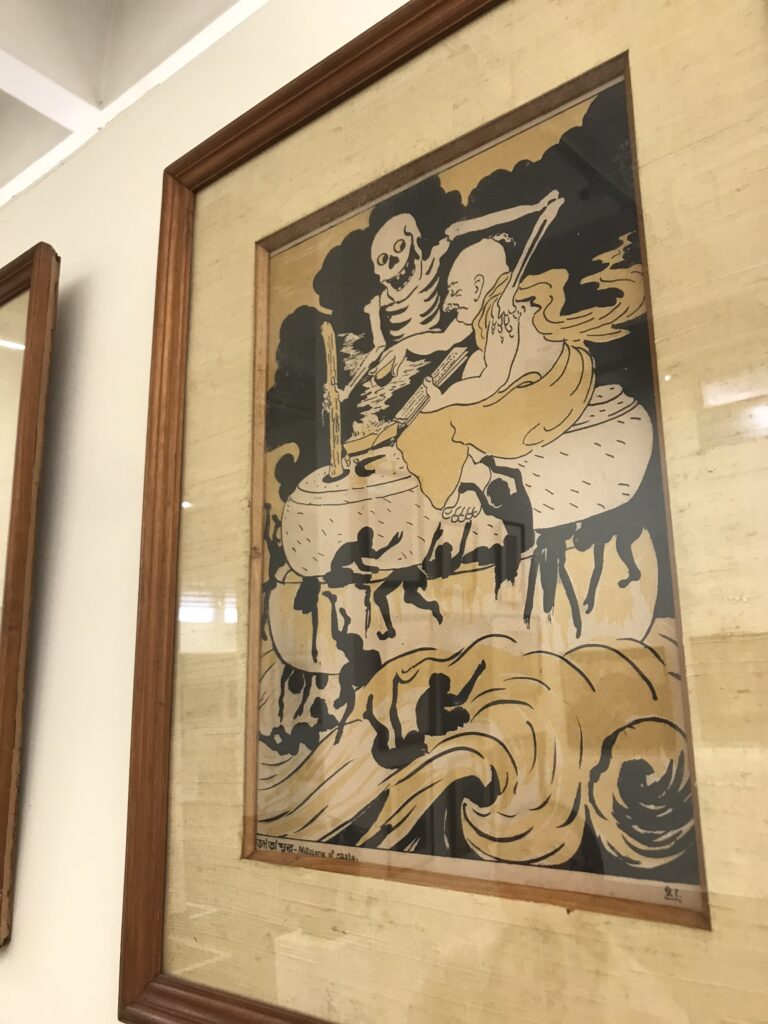
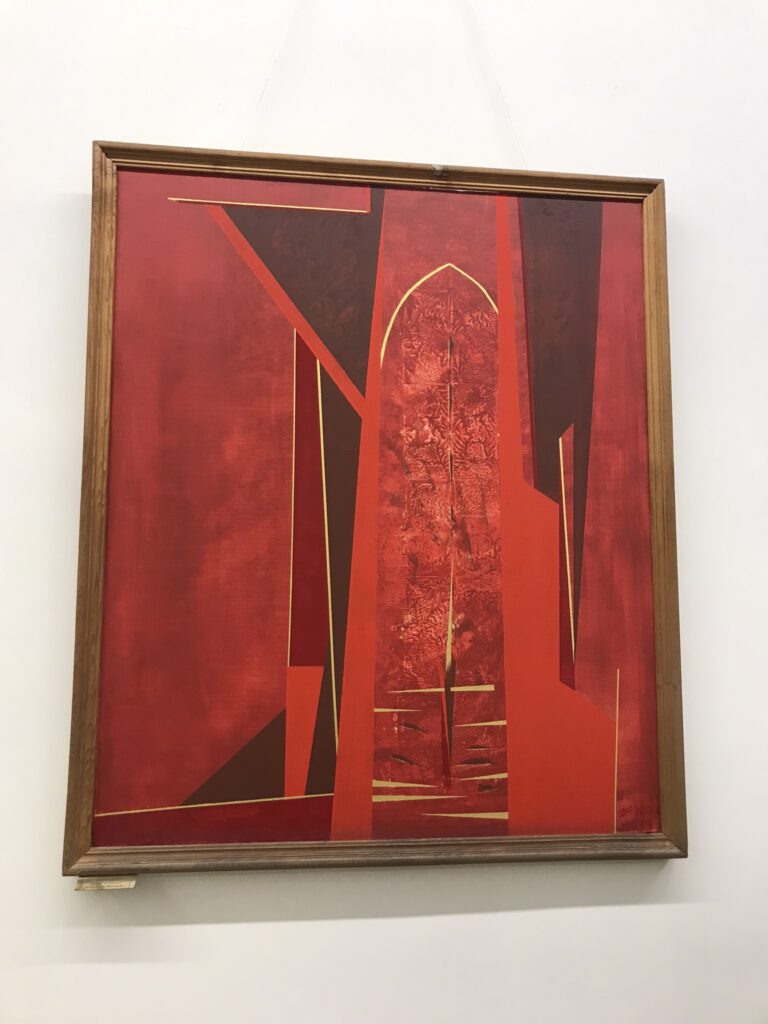
We encountered some really freaky and disturbing artwork in the gallery
Cubbon Park area – click here for my walking tour of the area around Cubbon Park!
Mysuru
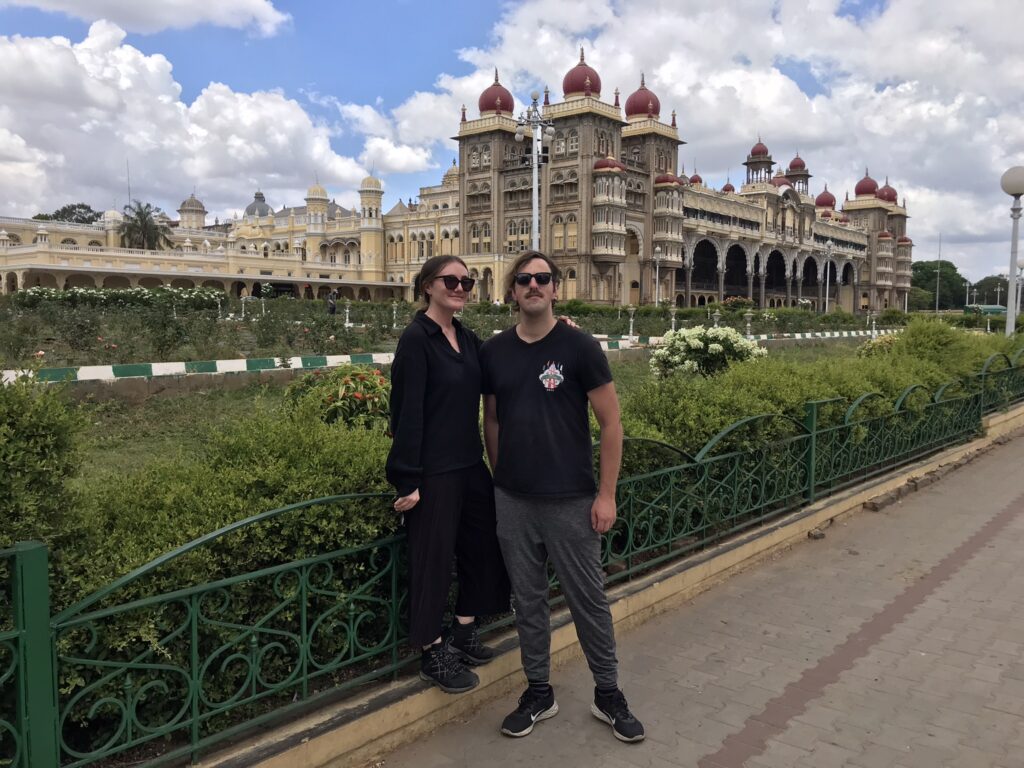
Formerly known as Mysore, the city of Mysuru is notable as the former capital of the Mysore Kingdom. A princely state controlled for most of its history by the Wadiyar family, the Mysore dynasty ruled over a vast swathe of southern India, becoming one of the most prominent princely states within the region and forming the basis of the modern state of Karnataka. The Wadiyars were briefly overthrown by the Muslim rulers Hyder Ali and Tipu Sultan in the late 1700s, but were later returned to power by the British and Mysore and became a strong collaborator and vassal state of the British Raj throughout the 1800s and through to India’s independence.
As a result of its royal heritage, Mysuru is known as the ‘city of palaces’ as it contains many grandiose buildings from the dynastic era. While most of the palaces have been repurposed for a variety of uses and so can only be viewed from the outside (many now house local government buildings), a few of the palaces have been maintained including the largest, Mysore Palace, which is considered one of the premier tourist attractions in India.
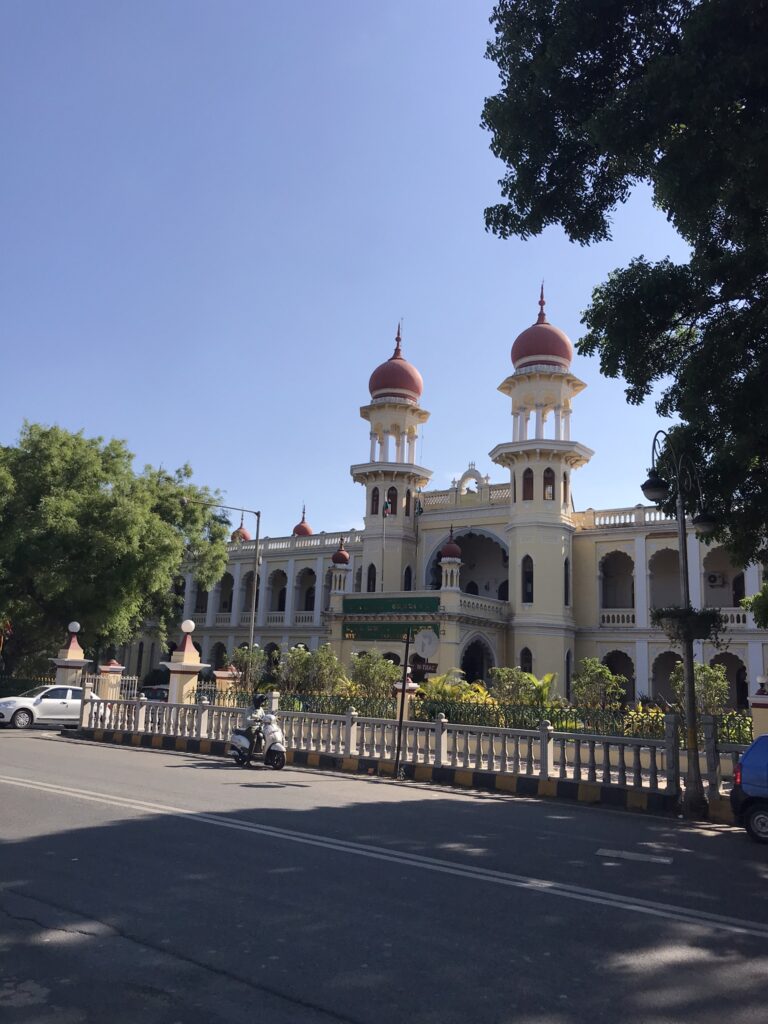
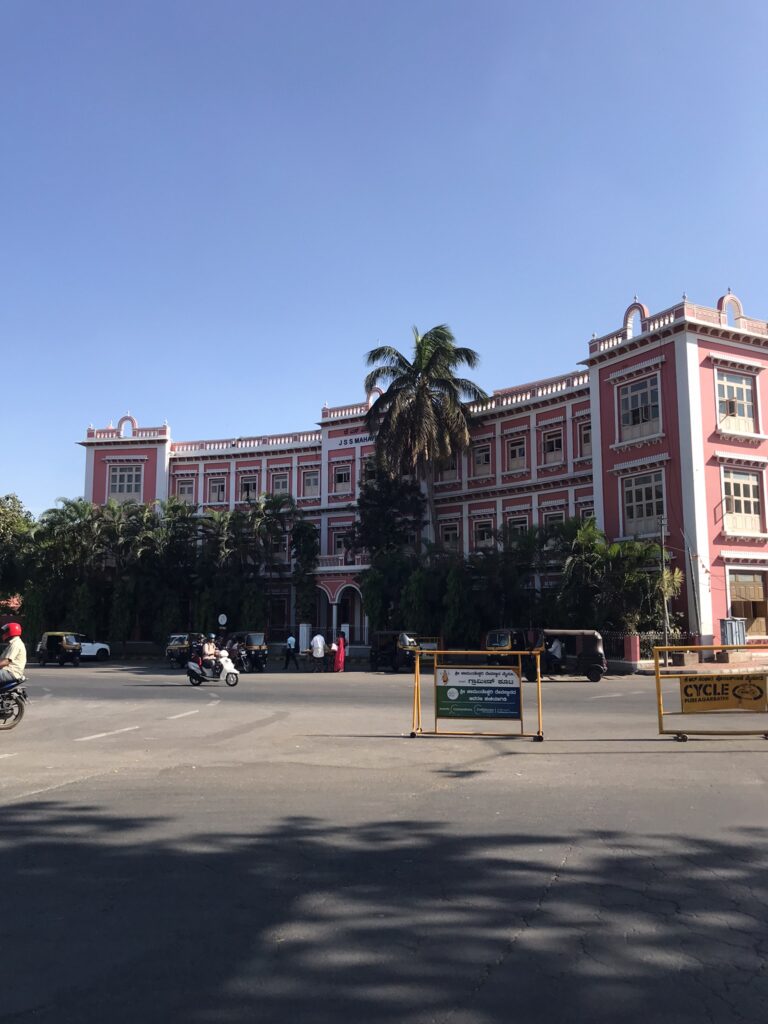
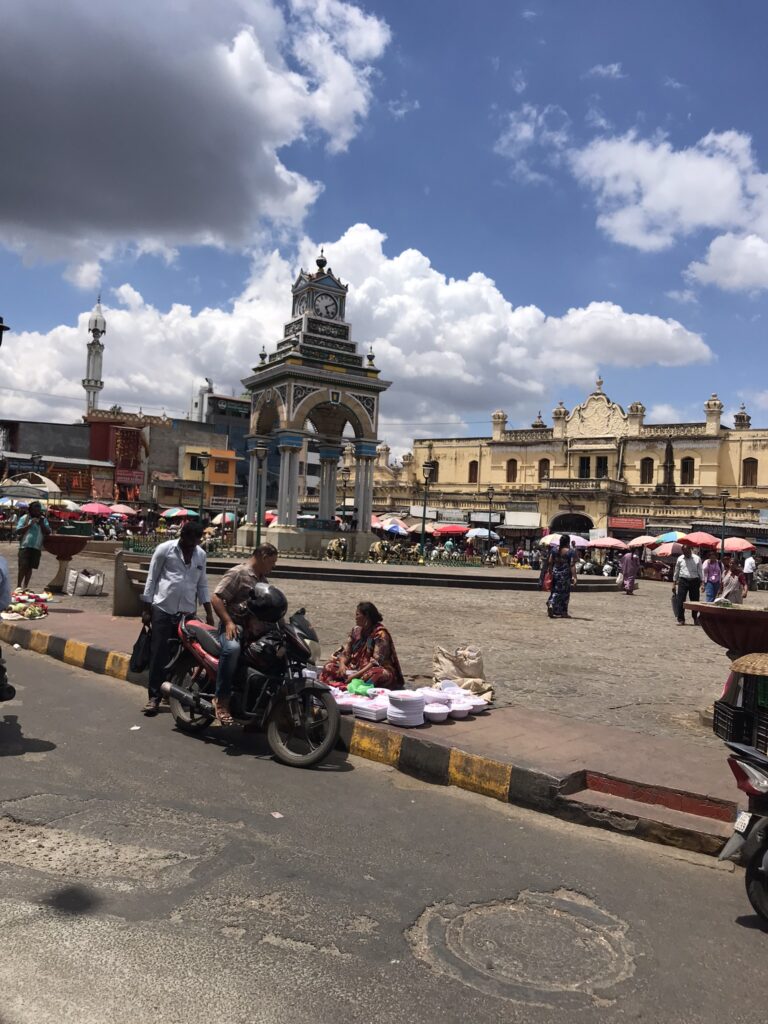
Most of the old palace buildings have now been repurposed; the streets still have a bit of a chaotic feel
Although it’s firmly in the south, Mysuru felt more like a northern Indian city to us. The streets and general vibes were a little more chaotic than most of the other southern Indian cities we visited. We saw zero other foreigners here and the city didn’t feel remotely touristy or sanitised. Mysuru reminded me a lot more of Rajasthan or Madhya Pradesh than Tamil Nadu or Kerala. There were cows roaming everywhere, congestion in the streets and some pretty persistent and annoying tuktuk drivers. On the plus side, most of the streets in Mysuru have pavements, so walking around was at least a little better than many of the northern cities.
Mysuru isn’t all that well connected by train as it doesn’t sit along a main route. Trains run frequently from Bengaluru, while we were able to get a direct bus onwards to Kalpetta in Kerala from the KSRTC Bus Stand.
Accommodation
Soho Boutique Hotel – a business-style hotel with clean rooms and professional service. We ate most of our meals in Mysore in the attached restaurant. The hotel contains both a rooftop cafe and a sitdown restaurant, serving both typical Indian and Western options.
Foodie Places
The Old House – this seemed to be one of the most upmarket places in town, they even had terrapin turtles in a pool next to the outside seating area. Cosmopolitan food options like goat’s cheese pizza, date and almond milkshake and hummus. Quite a suave atmosphere with outside and inside dining areas.
Bougie food at The Old House
Activities
Mysore Palace – supposedly the second most visited attraction in India after the Taj Mahal, the current Mysore Palace was constructed in the late 1890s and opened in 1912. It served as the seat of power of the Mysore Kingdom, which dominated much of this part of southern India. The current palace was built with the help of the British to replace a previous wooden palace on this site, which burned down during a wedding celebration.
The palace complex is very large. Once inside the grounds, you enter the palace itself through a side entrance. When we arrived we tried to go around the front to get a good view and photo of the palace before going in, but were hollered at by guards who wanted us to go inside the palace first. The staff were annoying and seemed to be poorly-disciplined and ill-trained. Visitors need to remove shoes before entering the palace, which we found a little strange as this wasn’t the custom at many of the other palaces we visited in India.
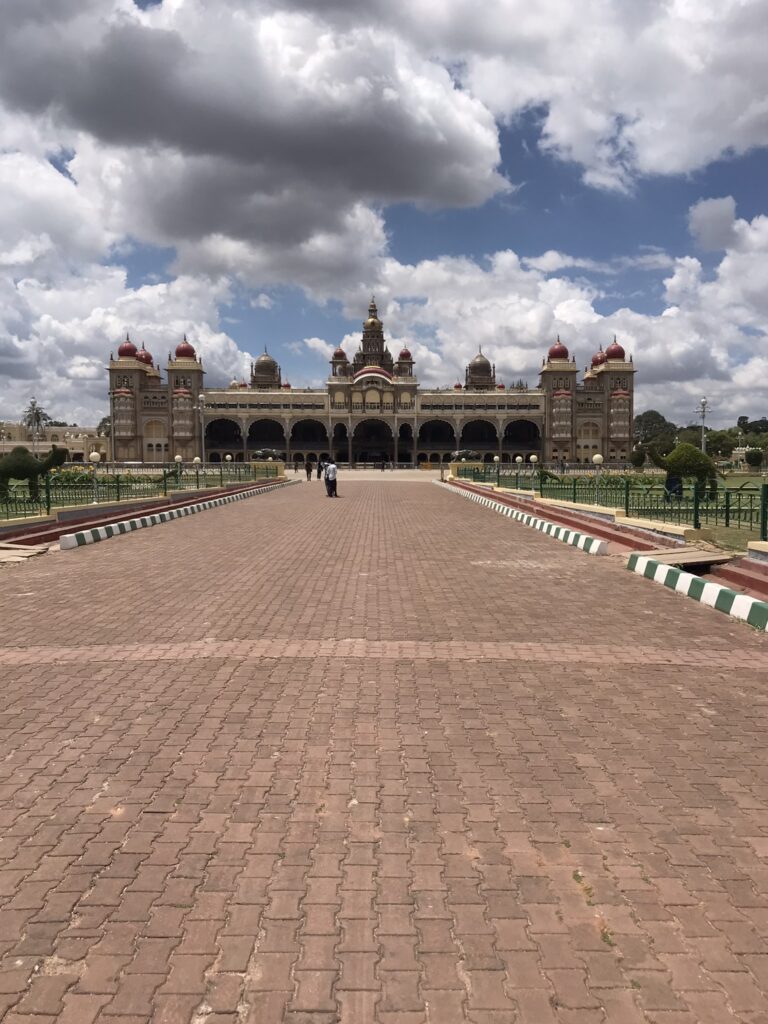
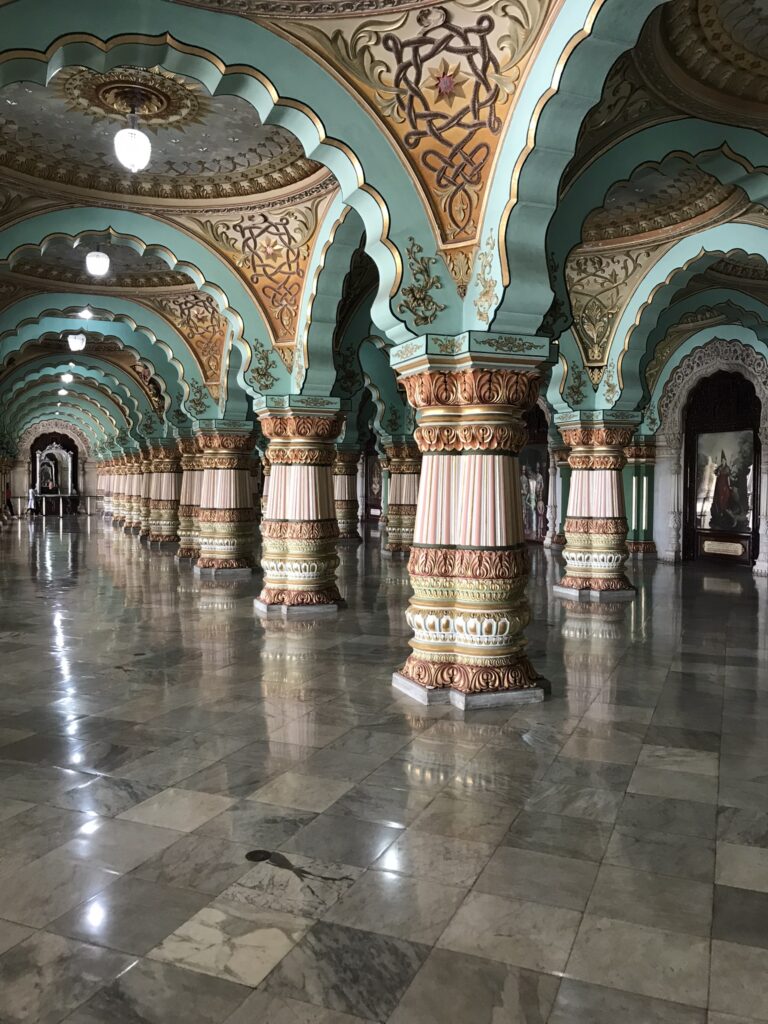
Palatial is the word
It’s very grandiose but I didn’t personally think the palace was super beautiful from the outside. Inside is a jumble of different styles, as the palace was renovated and added to over time. We enjoyed looking at the paintings of the different military regiments – some of them included depictions of real people that had been inserted by the artist. There is also a portrait gallery of the ruling Wadiyar family. Some of the audience halls and the throne room inside the palace are quite luxurious and impressive. The emblem of the Mysore dynasty can be seen all over the palace.
Visitors inside the palace follow a set route through the various rooms. It didn’t actually take us very long to go around the route and see everything inside. The entry fee for foreigners is relatively high here and to be honest I thought the palace was quite expensive for what it is. There are some amusing animal-shaped hedges in the grounds. There are also some temples on the palace grounds, which we didn’t visit.
Jaganmohan Palace – although the local dynastic ruling family are no longer in charge, they still have a presence within Mysuru and the wife of the family’s patriarch is the main benefactor of this palace-cum-gallery. We actually enjoyed Jaganmohan Palace more than Mysore Palace – it’s unrestored, with cheap entry and virtually no other guests when we visited.
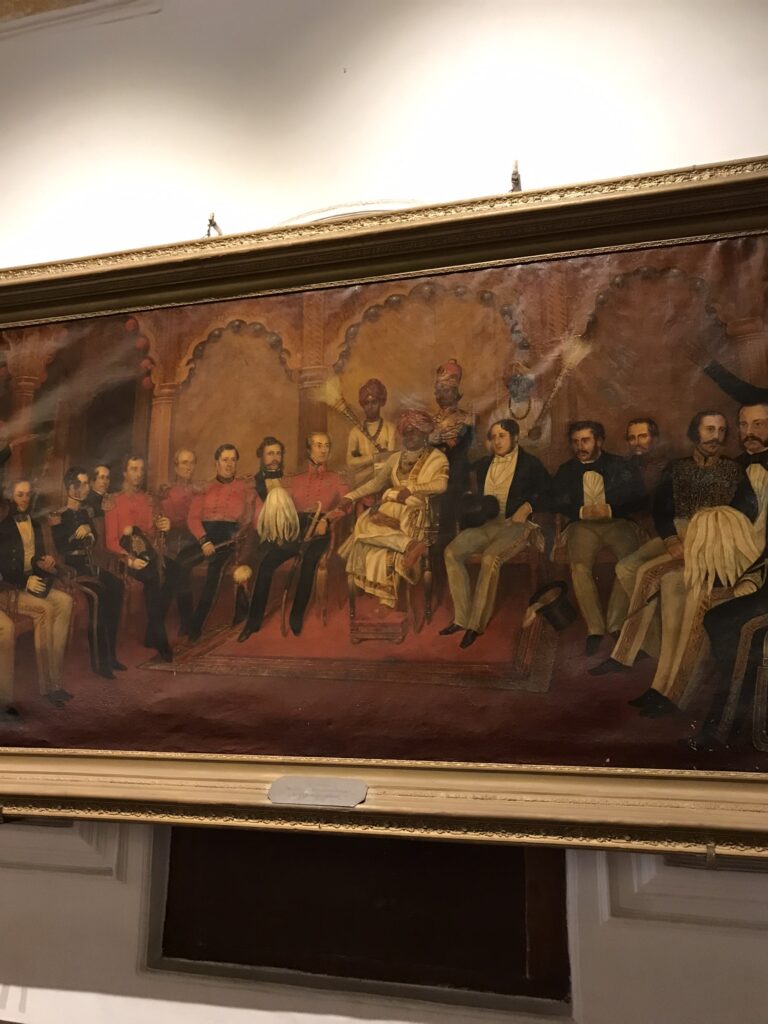
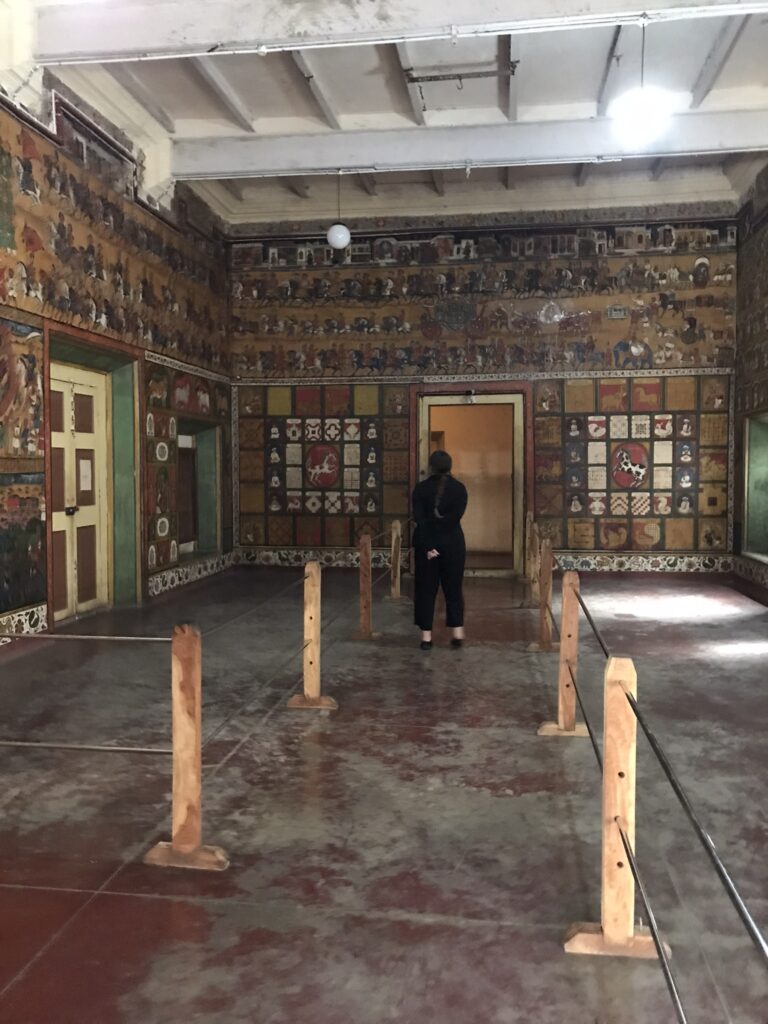
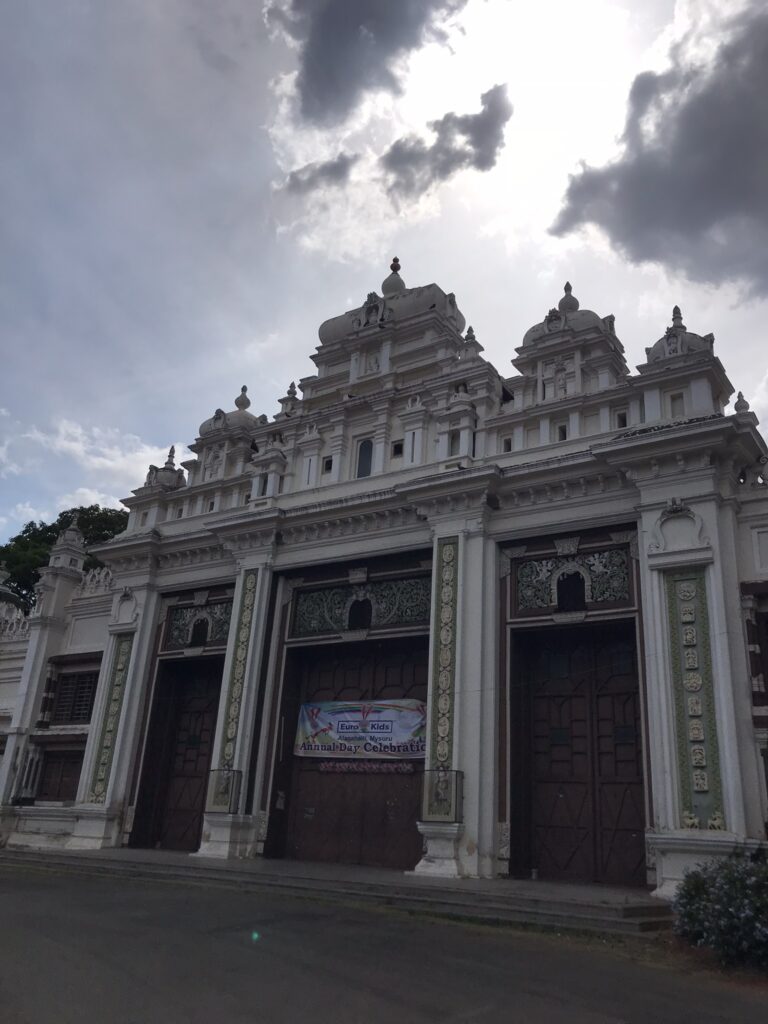
The Maharaja-centric artwork in Jaganmohan Palace is pretty interesting
Jaganmohan Palace is one of the ‘7 palaces of Mysore’, and served as the home of the royal family when Mysore Palace was burned down in the late 1890s. The palace contains a lot of artwork, including many portraits of the Maharaja and his family as well as portraits of British officers and an assortment of other artwork. The top floor has an interesting, unrestored room with a huge painted frieze all over the wall. There is also an interesting painting of British gentlemen crowding around the Maharaja. The public entrance is located around the side of the building, and not obvious when you first enter the complex. Again you have to take shoes off to enter the palace.
Chamundi Hill – the highest point in the area, with great views overlooking Mysuru city. It is apparently considered one of the eight most sacred hills of southern India. This area seems to be popular with Hindu devotees – there are several Hindu temples and we saw very long queues to get into most of them. There are many stalls around catering to the pilgrims and visitors. Other than the temples, there isn’t too much else to see in the small settlement at the top.
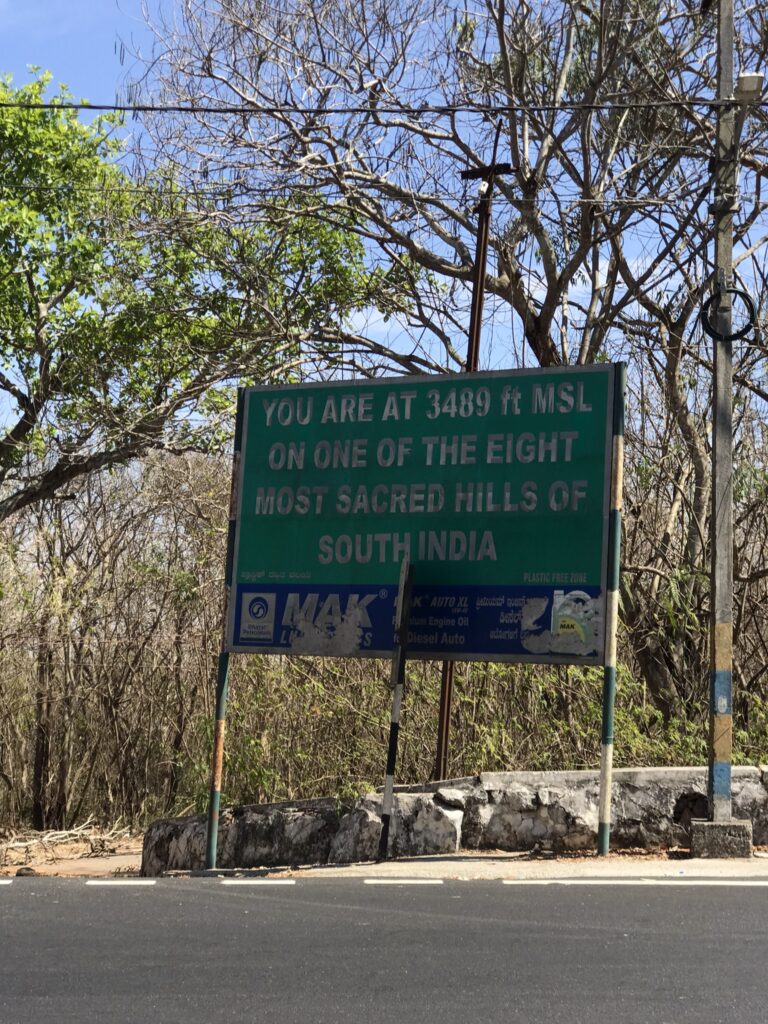
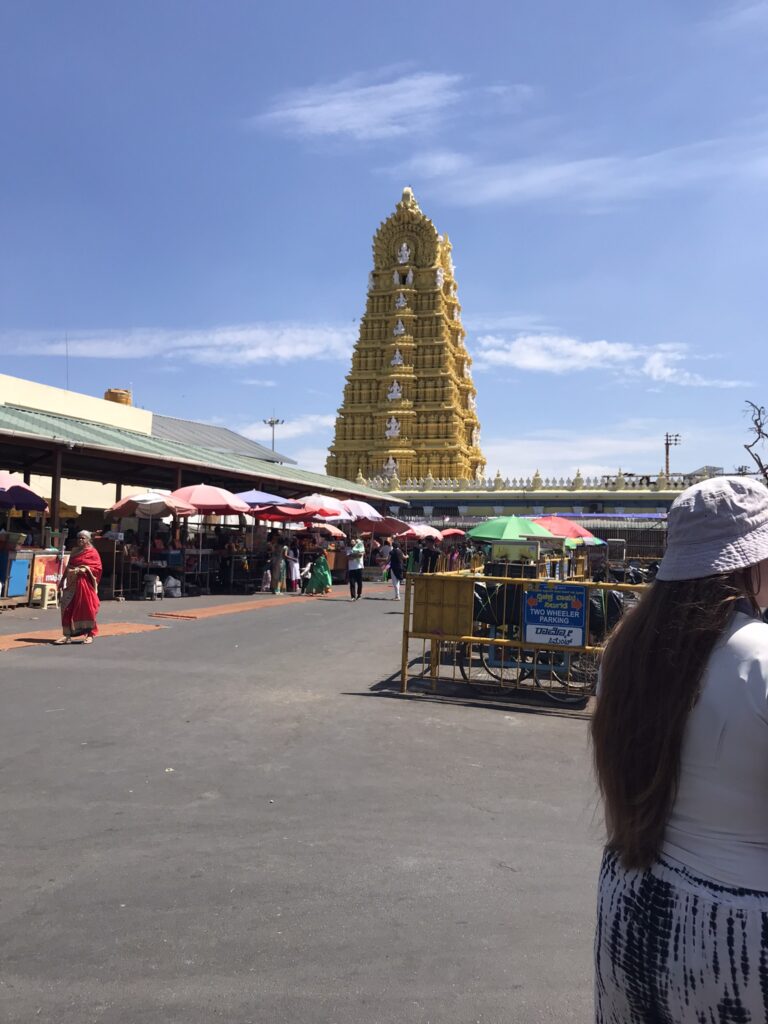
The top of Chamundi Hill – apart from the temples, there isn’t really that much to see or do up there
The best viewpoint overlooking Mysuru city is located along the main road, about a 15 minute walk downhill from Chamundi town. It’s a very small viewpoint/viewing platform with quite a lot of rubbish around. The viewpoint was quite quiet when we visited, with people just passing by and briefly getting out of the car.
To visit Chamundi, you can take bus 201 which departs regularly from the City Bus Stand near Mysore Palace. The bus goes right to the top of Chamundi hill, and also passes near to the Sand and Shell museums. The bus also passes the afore-mentioned viewpoint, so after visiting the viewpoint it’s possible to flag down a passing bus to head back to Mysuru without walking back up the hill.
Sand Museum – the sand museum is located on the road at the foot of Chamundi Hill, you can get there by taking bus 201 from the city centre. It isn’t really a museum, this is a gimmicky place inside a circus-style tent with large sculptures made from sand. The sculptures include a giant Ganesh and a fat Buddha as well as various themed displays such a Halloween scene, a display featuring underwater animals and even a Christmas-themed display with a sculpture of Santa. The sculptures are large and actually quite impressive. Children would probably like this place. It’s a fun novelty, not worth going out of your way to see but worth visiting if you’re passing by.
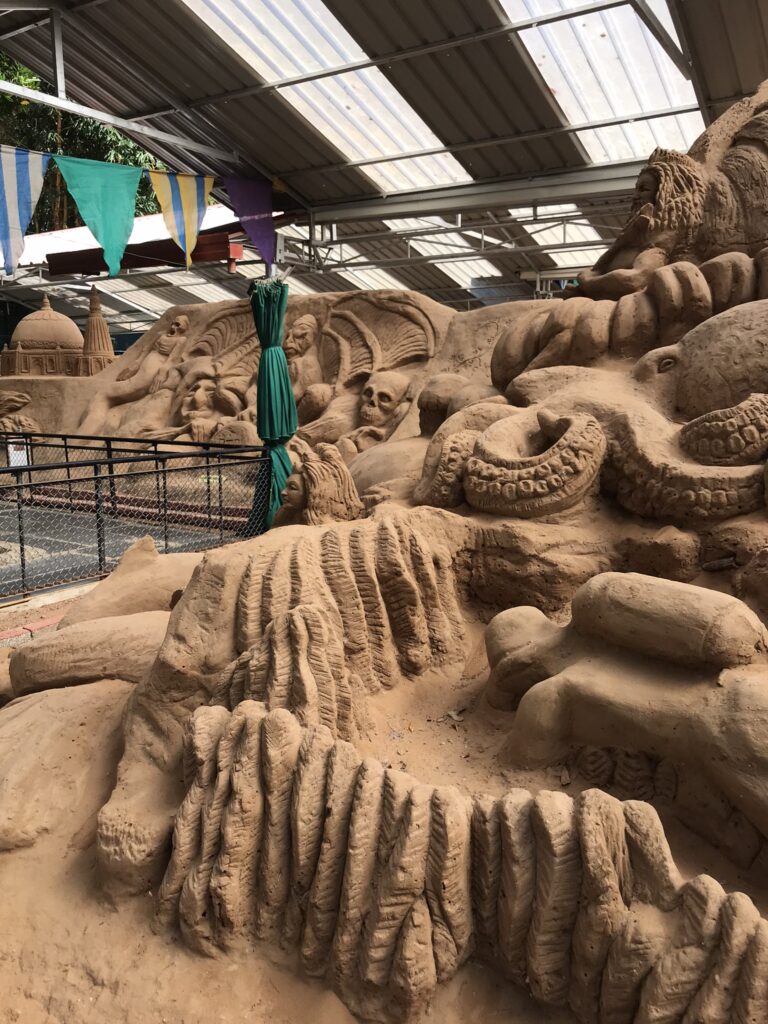
The sand museum has a circus-like feel to it
Shell Museum – located opposite the Sand Museum on the other side of the road. The Shell Museum has much greater artistic value than the Sand Museum. Inside are some truly spectacular, enormous displays made entirely of shells. The most impressive displays include a large shell sculpture of Ganesh, as well as shell versions of the Taj Mahal and St Philomena’s Church. The Ganesh sculpture is listed in the Guinness Book of Records. The sculptures were created by a singular female artist whose story is also told inside the museum – apparently she spent years creating some of the pieces. There is also a section with mock flowers made from random throwaway items like onion skin, again created by the same artist. This is definitely a unique place to visit and a hidden gem in many ways.
The shell museum was way better than expected – there’s even a Guinness World Record holder in there
Kalpetta
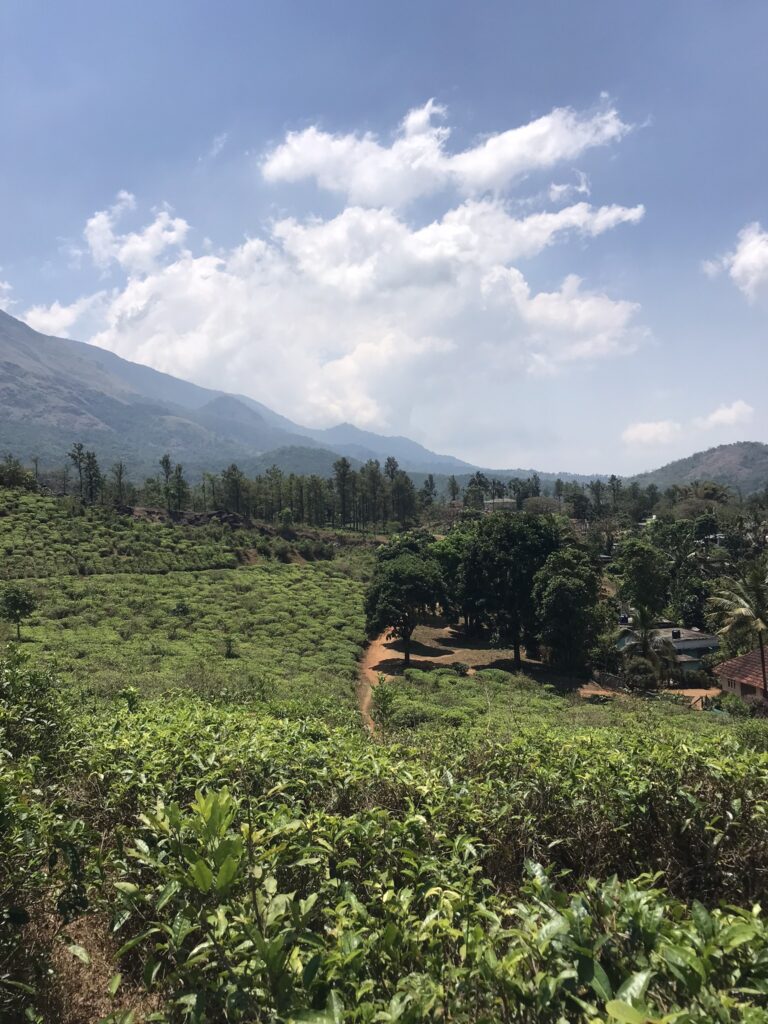
Click here for my Kalpetta content!
Kochi
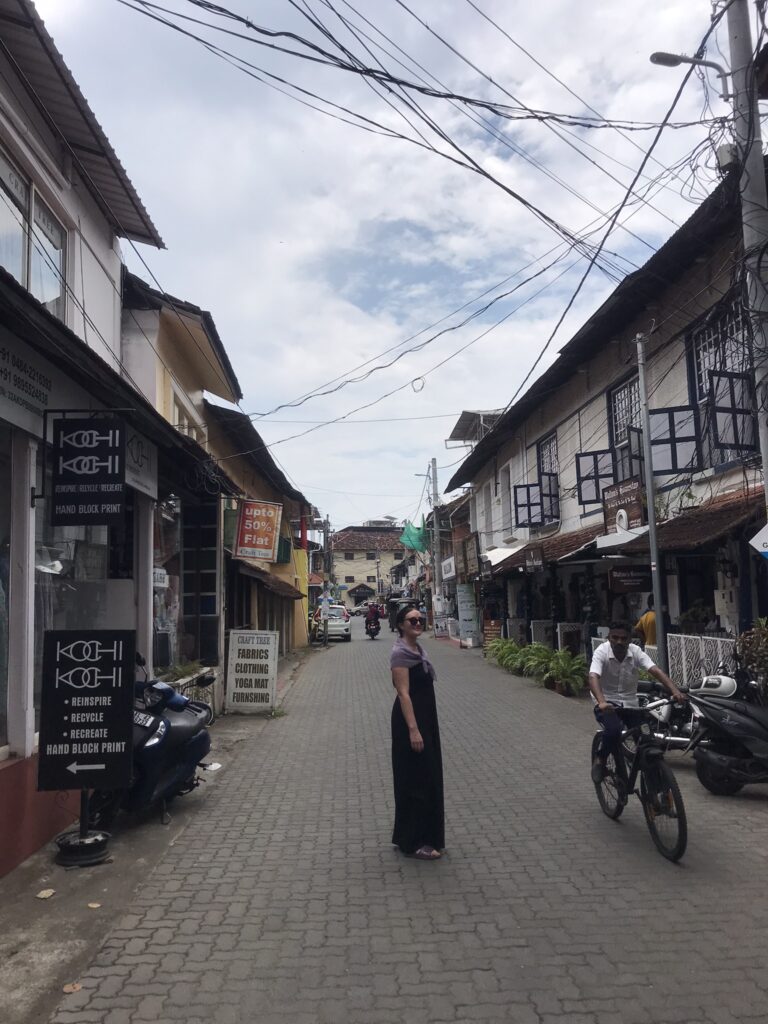
Click here for my Kochi content!
Munroe Island

For my Munroe Island content, click here!
Patiala
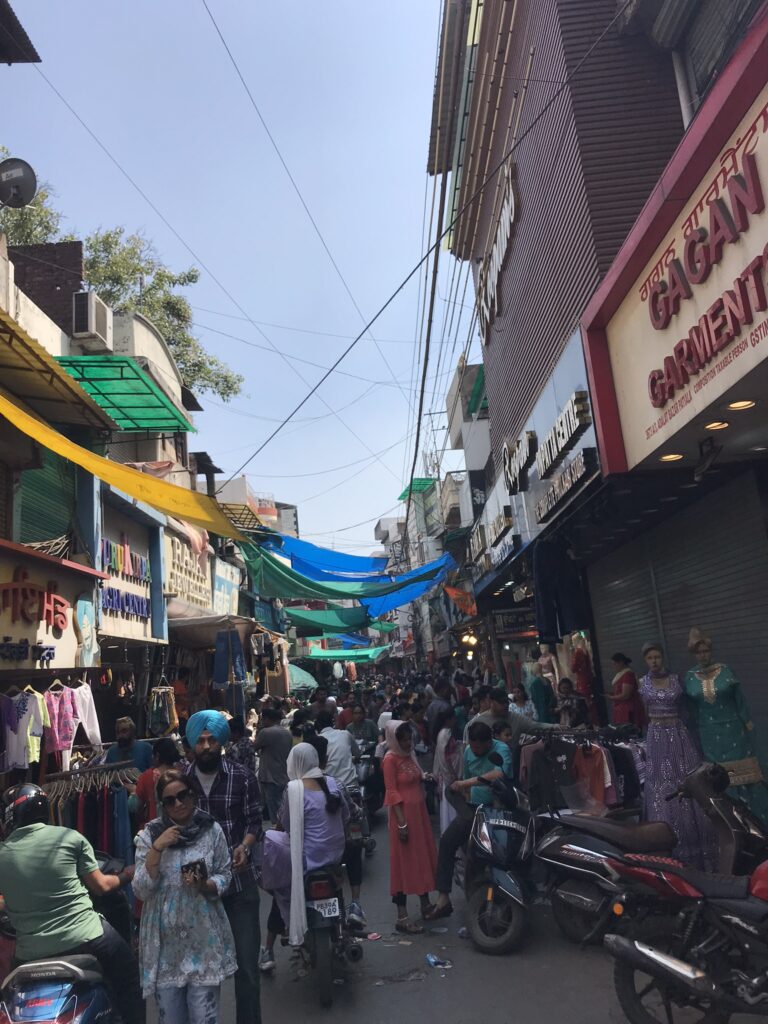
Click here for my Patiala content!
Chandigarh
For my Chandigarh content, click here!
Shimla
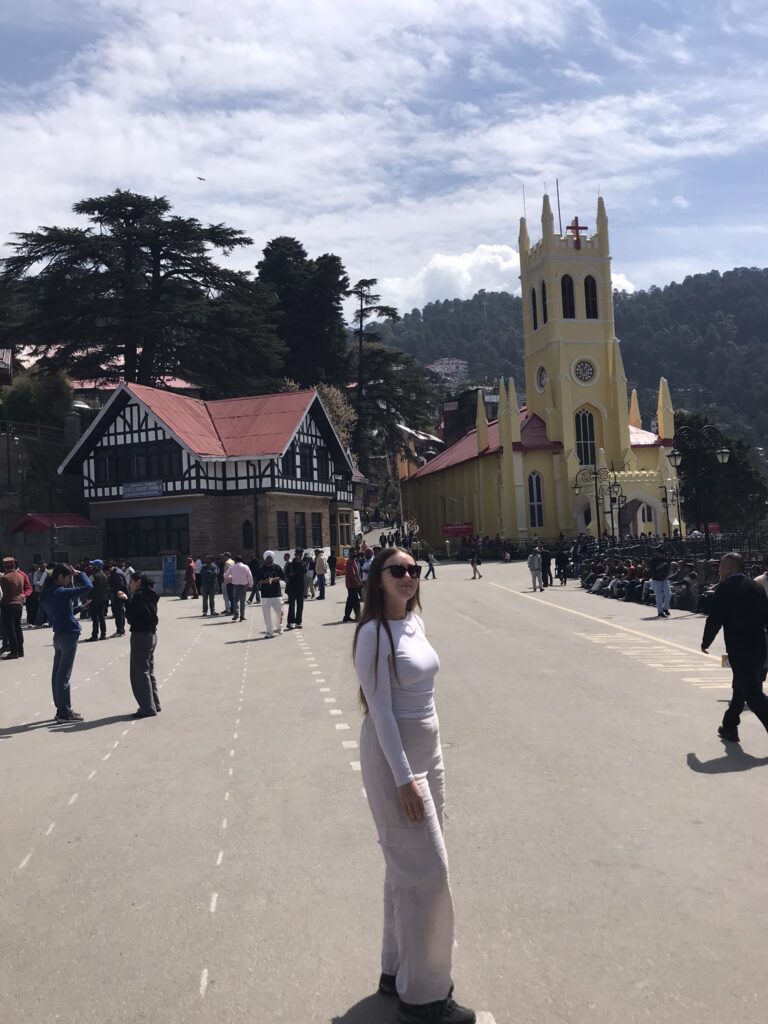
The capital of Himachal Pradesh state and former summer capital of British India. As a major city during the colonial period, Shimla retains a lot of British colonial character of that era with many historical buildings such as the Gaiety Theatre, Bantony Castle and Christ Church, as well as the former Viceregal Lodge. Most of the heritage buildings have now been repurposed for modern governmental functions, but they retain their original architecture and design, standing as a testament to a unique period when the area was populated with British aristocrats and rife with excess and chivalry.
Shimla is a much bigger place than I expected – a city perched onto the hilltop. Most of the city is spread out along a ridge, with buildings stacked atop one another – a contrast to the surrounding mountainous forest areas. The landscape almost reminded me of a Brazilian favela, but with colonial-era British buildings. It was quite interesting and almost surreal in a way.
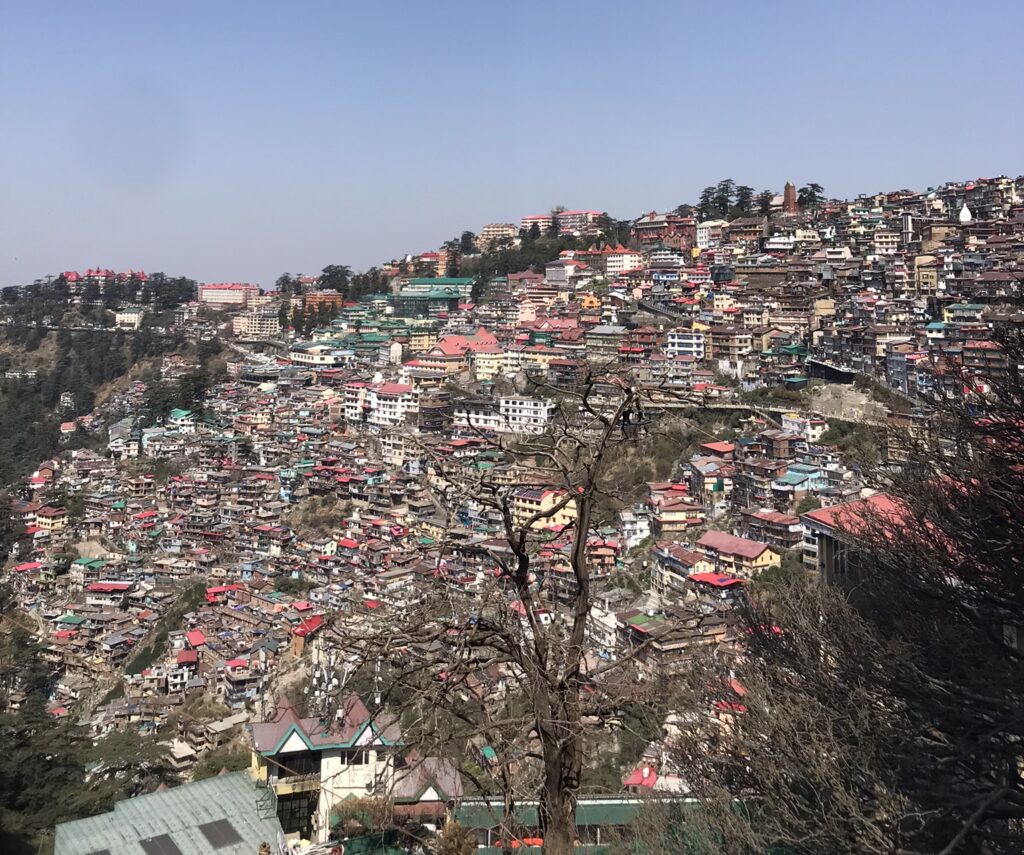
Shimla is seriously stacked into the hills
Due to its cool, mountainous climate, Shimla is a thriving destination for domestic Indian tourists, particularly during the hot summer months. The main streets, the Mall and the Ridge, are pedestrianised and lined with shops and souvenir stalls. We appreciated the pedestrianised streets, the lack of traffic chaos and also the fact that the city had a number of clearly defined rules, such as no smoking or spitting in public, and that there were actually police around enforcing these rules. As a result, Shimla felt like one of the cleanest and most civil places that we visited in India. We barely experienced any hassle here and the people we met were friendly and relaxed.
While the pedestrianised Mall and Ridge are great, other streets in Shimla without the same level of regulation can be treacherous both for pedestrians and cars, particularly the infamous Cart Road. Many of the streets are narrow, winding and mountainous and can often become overcrowded with traffic. Some of these roads have metal gangways for pedestrians, but those without can be borderline unsafe to walk around, particularly when vehicles hurtle through at high speeds.
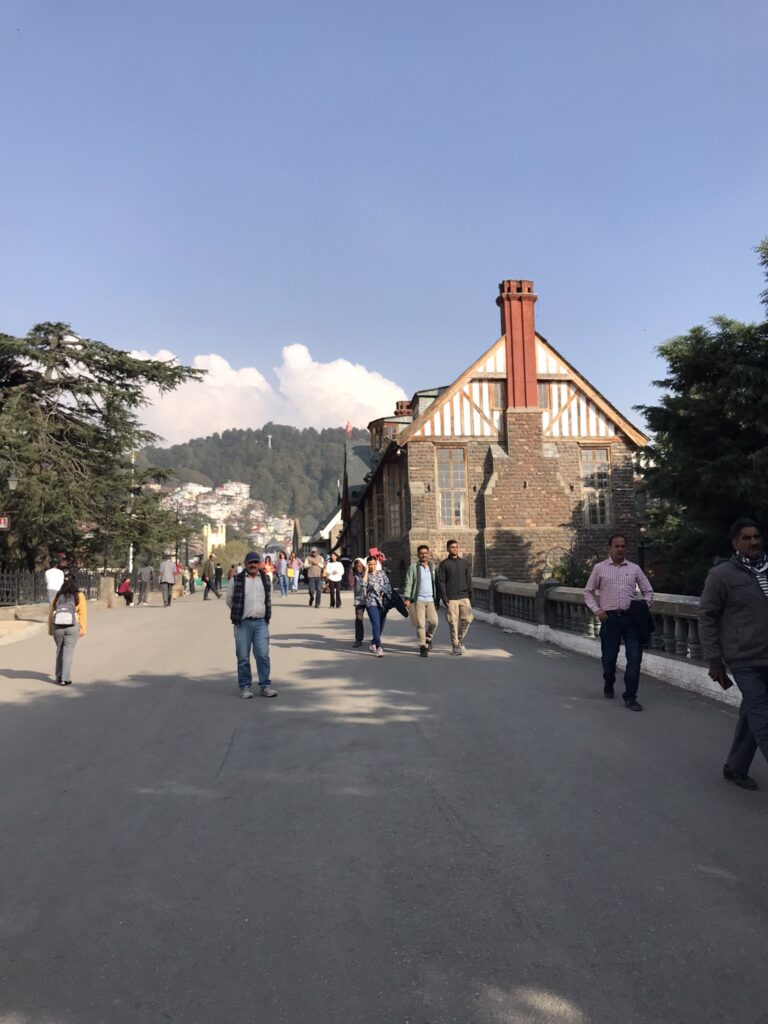
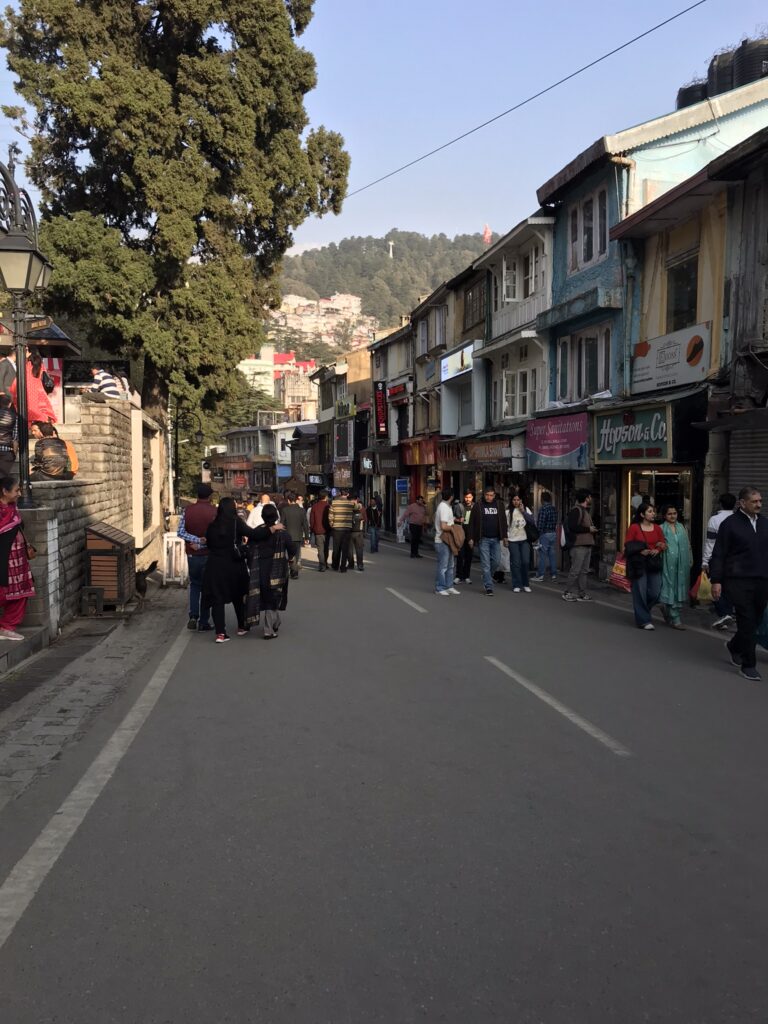
The clean, pedestrianised streets of The Mall and The Ridge are a great place for a stroll
Many people like to get the ‘toy train’ to Shimla, one of Indian’s iconic mountain railways. However this sells out weeks in advance and is not logistically the easiest method to get there. We just got the bus from Chandigarh, which was much easier and cheaper. Sadly, the bus station in Shimla is probably the worst part of the city – unwelcoming, inaccessible and difficult to get to from the main part of town. Local buses were unhelpful and we ended up having to take a taxi from the prepaid taxi stand next to the bus station, which was quite expensive (550 rupees to our accommodation in Chotta Shimla).
The mountainous region around Shimla is well known for apple production. We bought some apple wine from a local shop – the Shimla Wyne Company, which is located on the Mall. The apple wine was really more like a British cider. The Mall itself is quite a busy, bustling area – the shops here are the most expensive as it’s the most touristy part of town. Monkeys roam freely among the pedestrianised streets and can be a scourge. We were attacked by monkeys while walking on the paths up to the Ridge – the monkeys here are among the most brazen and vicious we encountered in South Asia. Be careful!
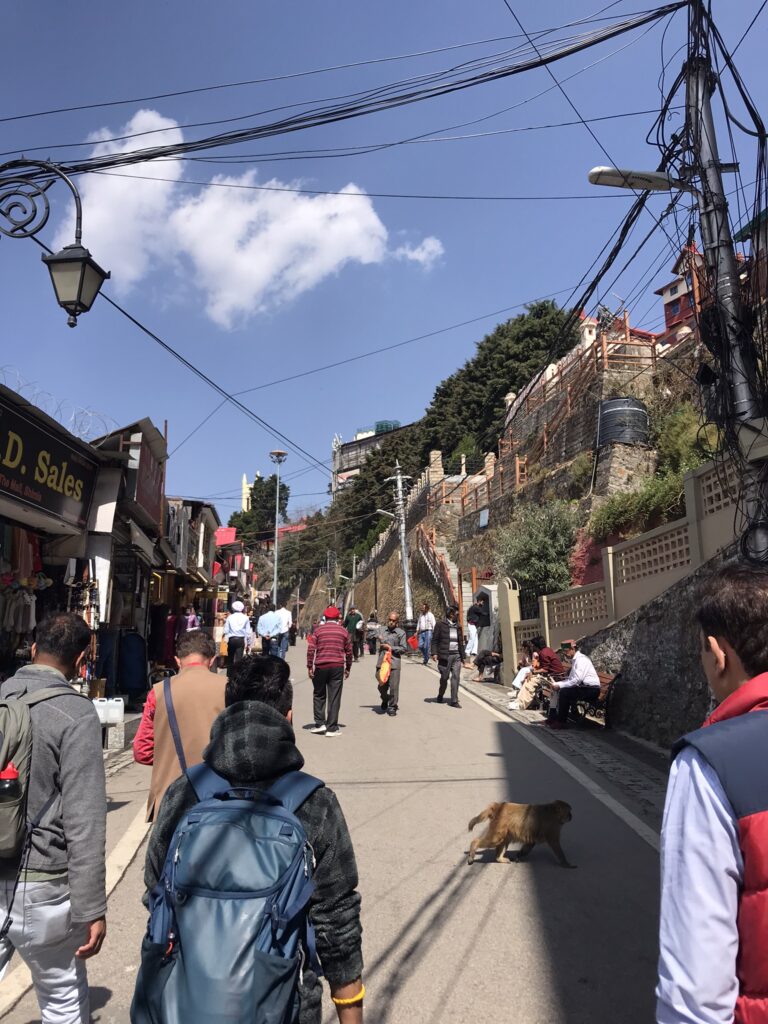
Shimla’s monkeys are fearless
Accommodation
The Edgeworth – this property was apparently owned by a British aristocrat, Lady Edgeworth, before being sold to a local family following India’s independence. A classic colonial house – the family still live on the top floor and there are a handful of guest rooms on the ground floor. This place has an upper-class family house feel – we were greeted by the matriarch of the family and made to feel welcome. The location is pretty good, a 20-minute walk from the Mall and the Ridge and they offer a takeaway food service from a restaurant which is also owned by the family, so we enjoyed eating at the accommodation in the garden. The owners were also happy to send their helpers to fetch alcohol and other supplies if wanted, and arranged a tuktuk to the intercity bus station for us when we were leaving.
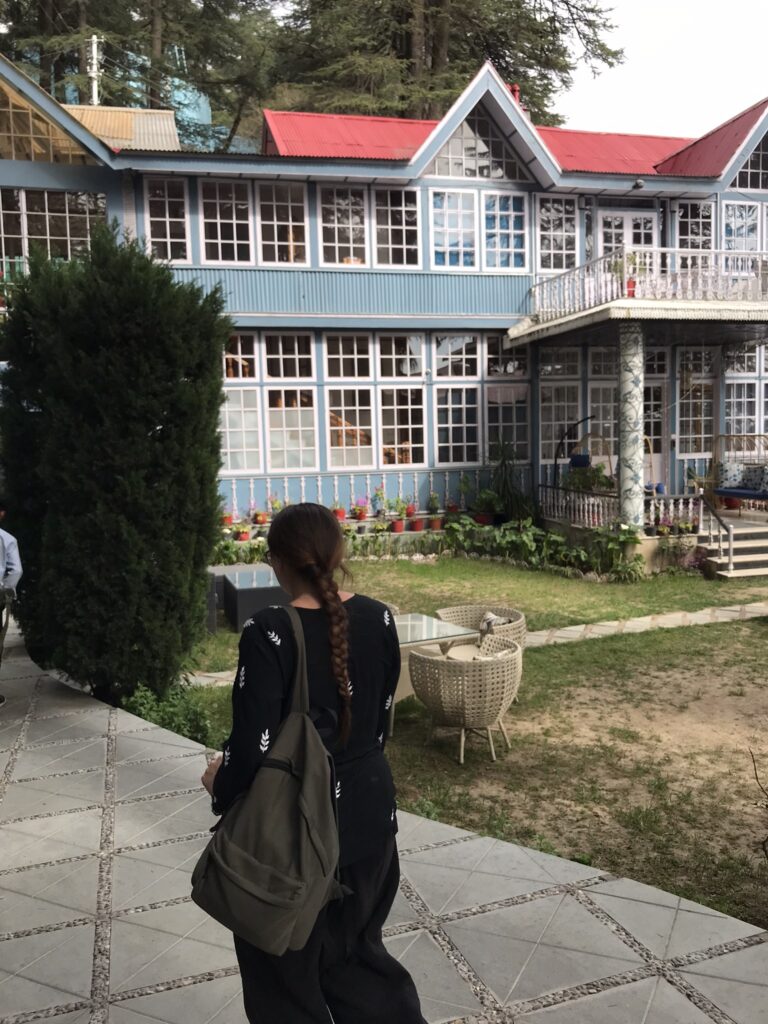
We enjoyed staying at The Edgeworth – a classic colonial property
Foodie Places
Cafe 103 – randomly this is an ice-hockey themed cafe, the waiters wear hockey jerseys. Apparently Shimla was the first town in India to have a skating rink and I believe the cafe is owned by a former player. A decent place to get paneer burgers with great views over the hills. It’s relatively close to the Viceregal Lodge, however it is located down the hill on the somewhat congested Cart Road – a bit of a walk down from the Mall.
Amayaa restaurant – this restaurant is managed by the family that owned our guesthouse – we never actually went inside the restaurant but had plenty of meals delivered to us at the guesthouse. Good northern Indian food and more reasonably priced than many other places on the Mall and the Ridge.
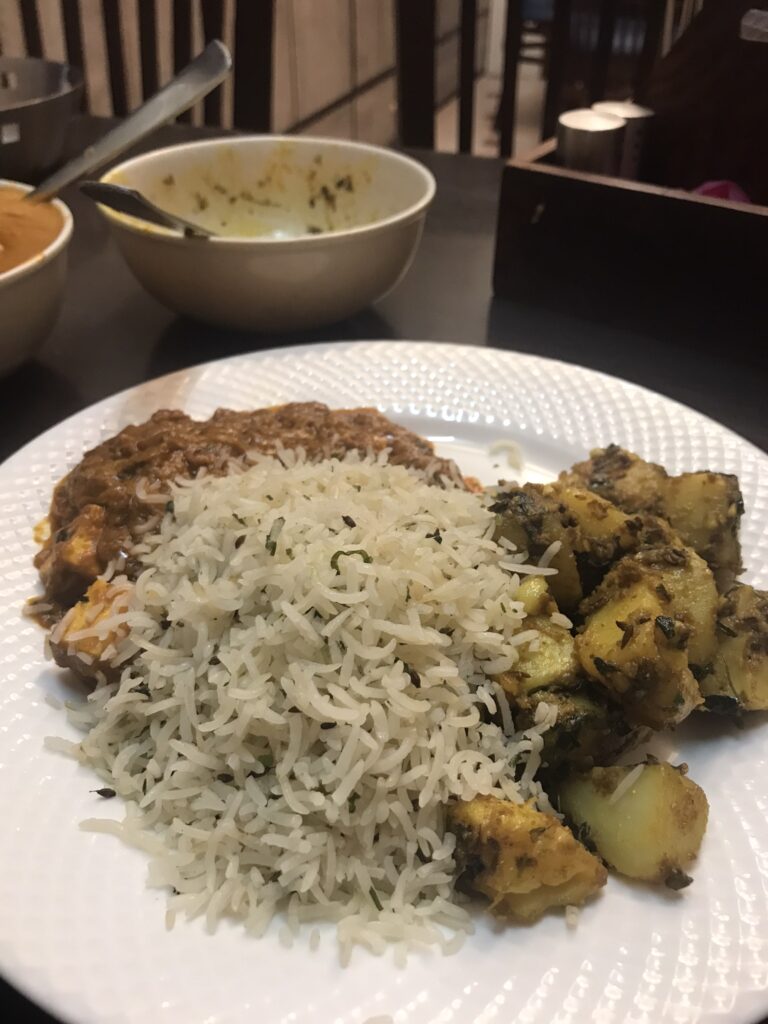
Pretty good local food delivered to us from Amayaa
Cafe Honey Hut – we popped in for some cakes and sweet treats – a popular place, however honestly these were not the greatest cakes we had in India.
Activities
Viceregal Lodge – the former summer residence of the governor of India during the British colonial period. A Scottish-style baronial castle made up of grey stone, the lodge is very reminiscent of a castle that you’d find in the Scottish countryside with features including turrets, a weathervane and coat of arms. Entry to both the grounds and the house itself is paid, although it’s much cheaper to enter the grounds only and look from the outside than to do the tour of the inside of the lodge. Walking on the grass in the grounds is strictly prohibited. Aside from the lodge itself there isn’t much to see in the grounds, although the gardens contained a very interesting ‘missing’ sculpture to represent Partition which was worth checking out.
It’s only possible to enter the inside of the lodge as part of a guided tour. Tours depart every 30 minutes and are 10x more expensive for foreigners than domestic tourists. Photography is prohibited inside the building. The tour groups can be very large (up to 60 people). The tour that we took was in Hindi and lasted around 30 minutes, covering only a few small photo gallery rooms inside the lodge as well as a grand hallway. There were only 2 other non-Hindi speakers and we were all a little frustrated that information was not really forthcoming in English despite us paying 10x more for the tour. The guide made minimal effort to translate, providing us with just a few quick lines in English as opposed to several minutes of explanation in Hindi. Honestly, for the price involved I’d say the tour is skippable.
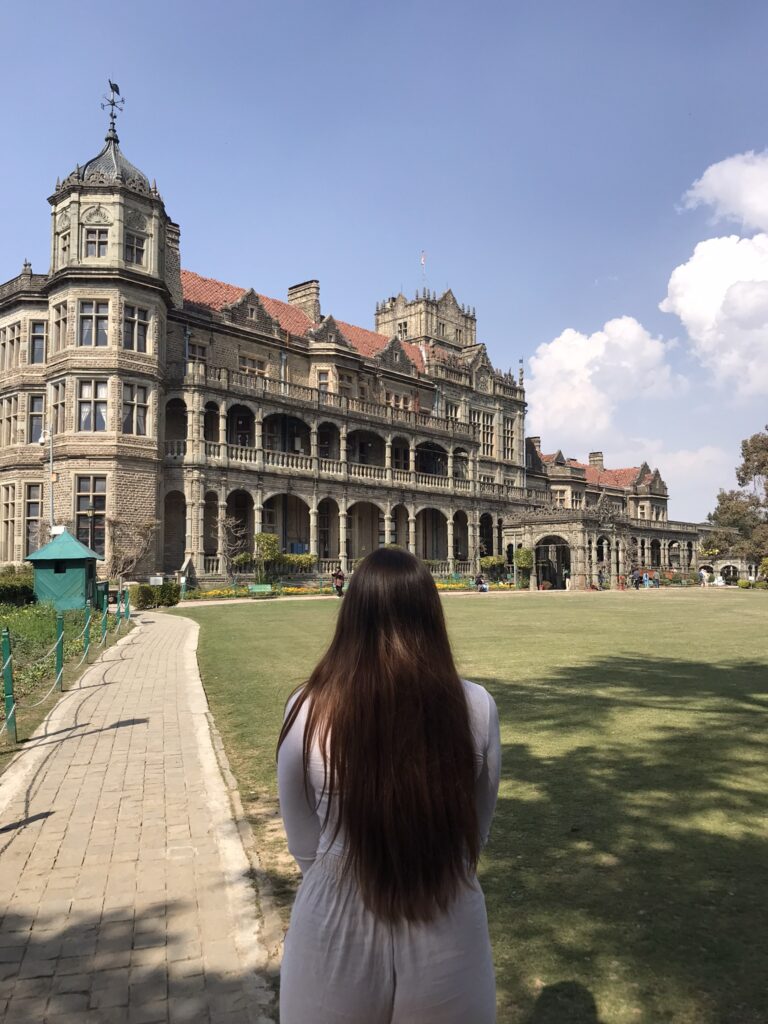
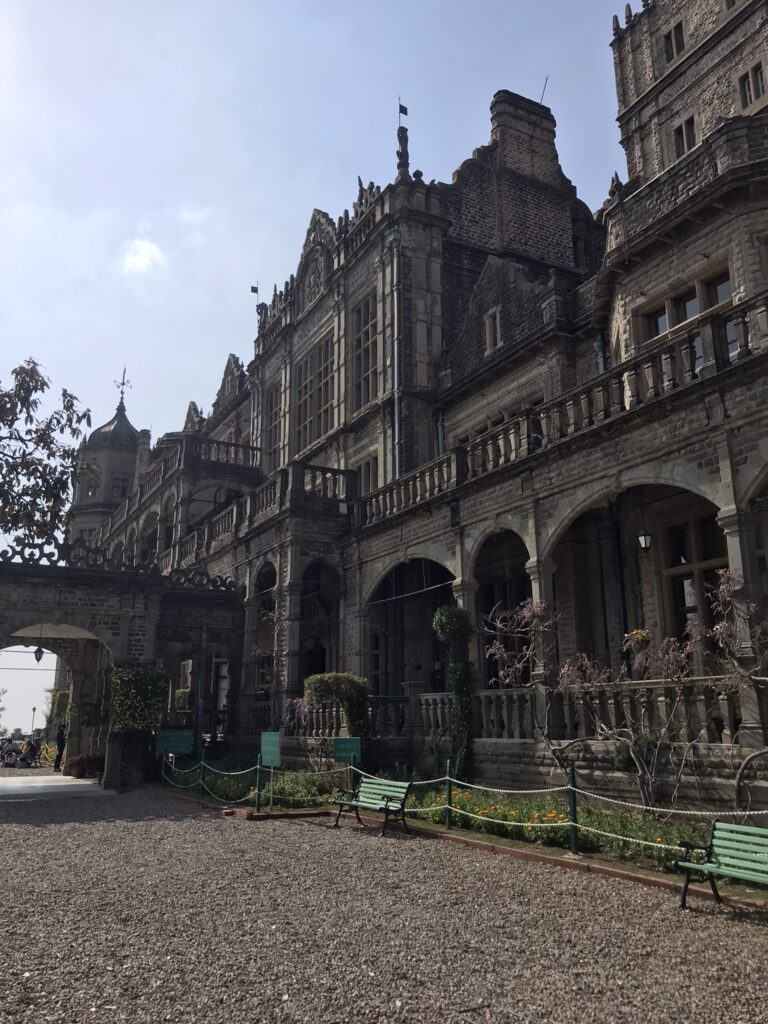
The majestic Viceregal Lodge – it’s better outside than in
The lodge was repurposed following India’s independence and is now a higher education facility. It is therefore known to most locals as the Advanced Studies Institute rather than the Viceregal Lodge. The PHD students from the Institute are the only ones who are free to walk around inside the lodge and access the building’s library etc.
Gaiety Theatre – a heritage theatre with the original seats and boxes, the setup of the theatre remains intact from the colonial era. We took a short tour of the theatre for 200 rupees each with a friendly guide using the service offered at the reception. We were explained the history of the place and got to go into the Viceroy’s box, on the stage and backstage, as well as into an archive room upstairs to see old photos, including a picture gallery of the British colonialists taking part in amateur dramatics and stage performances which was quite interesting and amusing.
Entry to the heritage theatre building is from the Mall (lower road); the entrance on the Ridge is for the conference rooms where small events/concerts and performances take place.
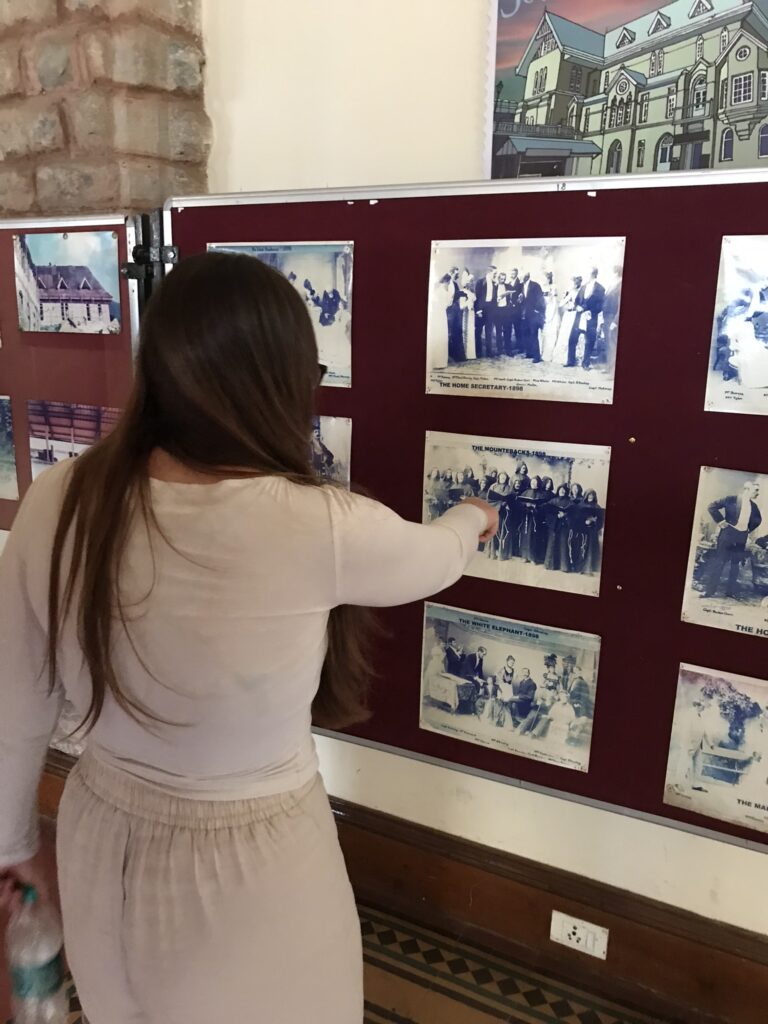
On stage and in the photo gallery at the Gaiety Theatre
Bantony Castle – a pretty good museum set in a historical building, containing lots of information about the history of Shimla and its role as the summer capital of the British Raj, as well as some displays about the wider region. We were unsure about going in but enjoyed it, the displays were quite thorough. Entry is cheap.
The Mall – we walked all the way along the Mall Road, starting from Christ Church through to the Viceregal Lodge. It’s quite a walk but filled with interesting landmarks and buildings. Check out my self-guided walking tour here!
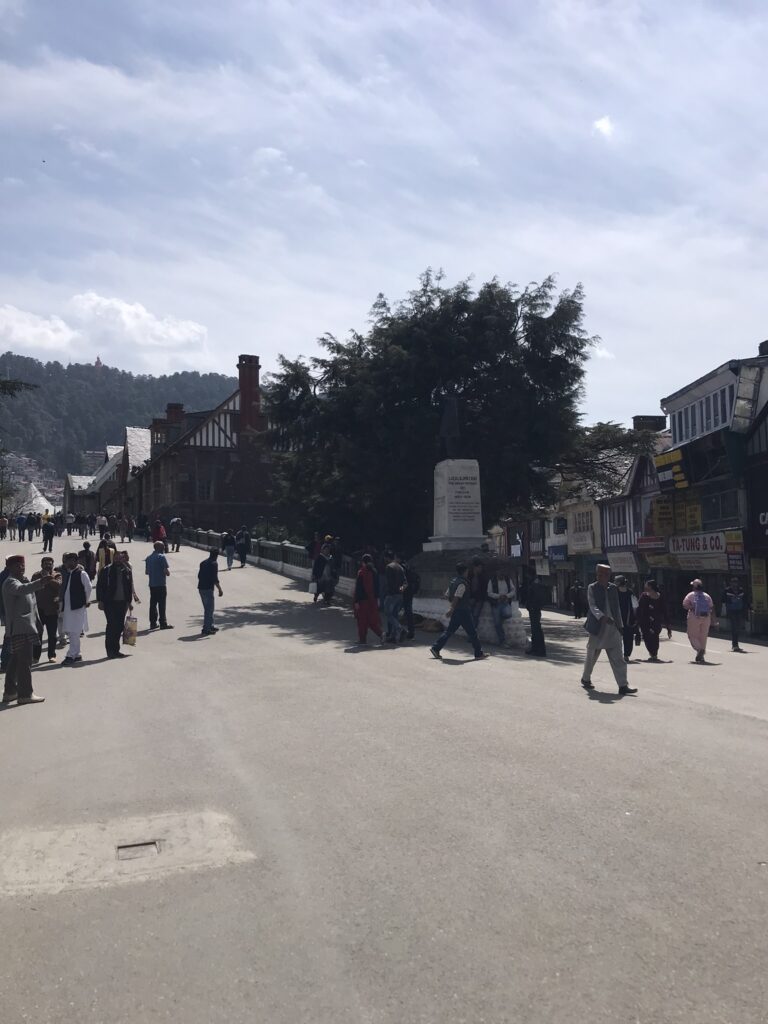
The spot where The Mall and The Ridge meet is known as Scandal Point, harking back to Shimla’s days as a hub of gossip and chivalry
Dharamshala
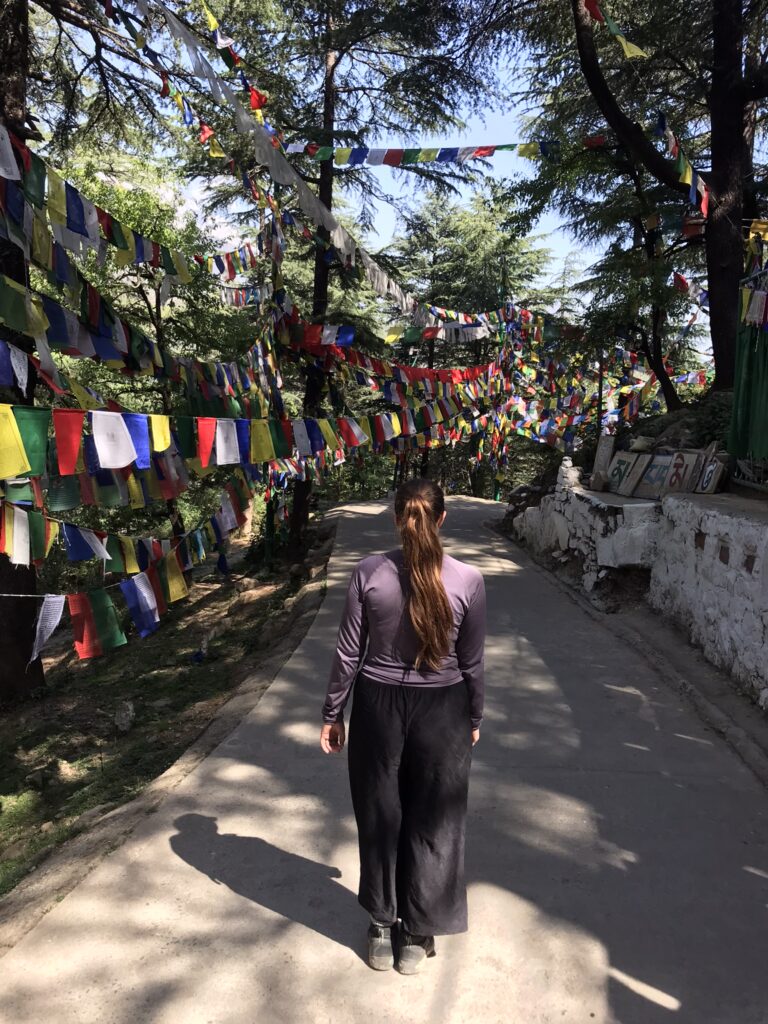
Located in the Kangra Valley amidst the Dhauladhar Mountains in northern Himachal Pradesh, Dharamshala is mainly known as the home of the Tibetan government-in-exile and their leader, the Dalai Lama. The area is home to a sizable Tibetan refugee population, many of whom are the descendents of those that fled to India in the 1950s and 60s when China seized the region of Tibet and began a forced assimilation and repression of their culture, language, religion and way of life. ‘Free Tibet’ is often found graffitied on walls around Dharamshala, and there is a lot of visible Tibetan writing and many Tibetan flags on display, something which is outlawed in China.
‘Dharamshala’ is often used as a blanket term for several distinct settlements in this area which stretch out upwards into the mountain. The area is now home to an eclectic mixture of displaced Tibetans, local Hindu Indian residents, partying domestic tourists, Western spiritual and cultural tourists, hippies and Buddhist monks. Plenty of Tibetan food and culture can be found here, while there is also some great nature and scenery in the surrounding region. We saw some huge monkeys in the woods near Dharamkot. The area attracts lots of Indian tourists for boozy weekends, as well as Western visitors for hippie activities like meditation, yoga, ecstatic dance and spiritual mountain retreats.
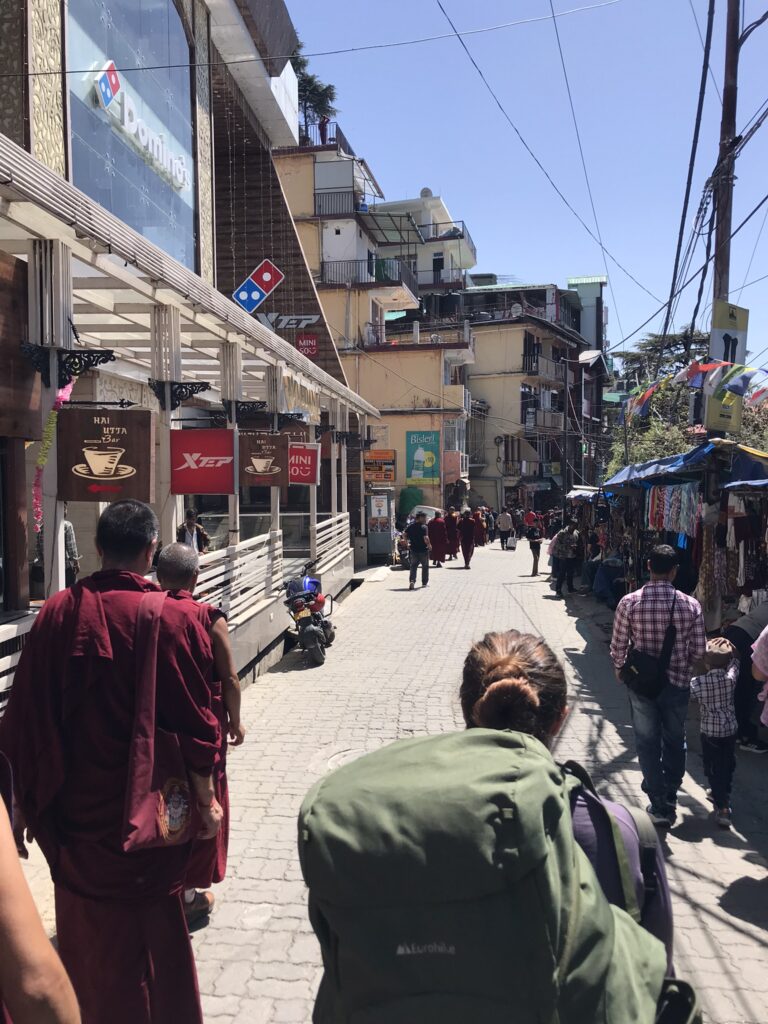
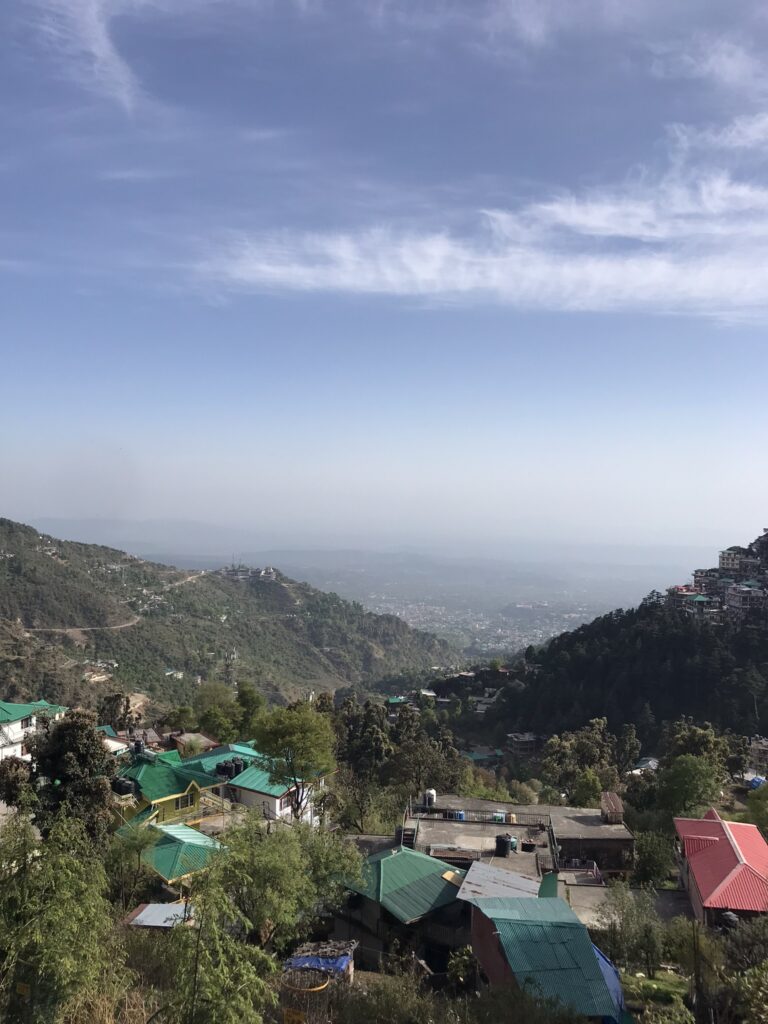
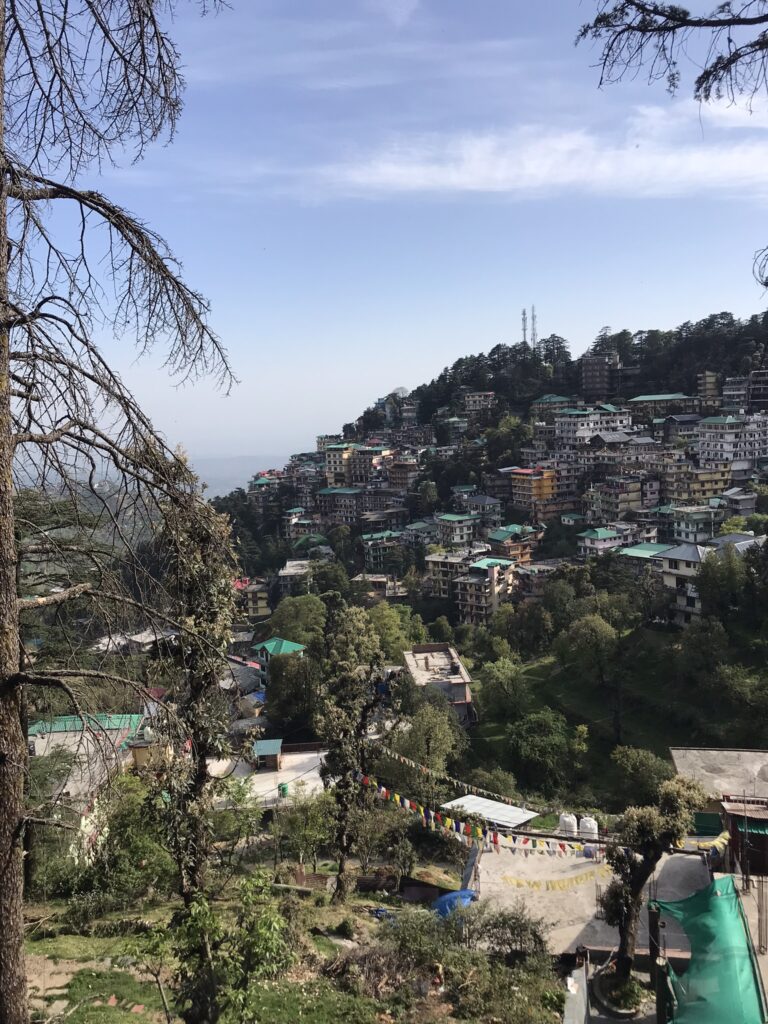
Views around McLeod Ganj
Dharamshala itself is a typically congested Indian city located at the foot of the mountain, with little visible Tibetan influence for the most part. However the Tibetan government area (apparently called Gangchen Kyishong) is located at the top end of Dharamshala. It’s possible to see the Tibetan ministry and parliament buildings, as well as the Tibetan museum which is located here.
The area that most tourists are interested in is McLeod Ganj – located further up the mountain from Dharamshala, this is the residence of the Dalai Lama and location of his temple complex (Tsuglagkhang). Other than the temple, McLeod Ganj is a small mountainous area filled with lots of roadside tourist stalls and many visible monks, with narrow streets that can become congested with traffic.
Further up the mountain from McLeod Ganj are the settlements of Dharamkot and Bhagsu. Dharamkot is a quiet place with more backpacker facilities, lots of cafes and a particular emphasis on Israeli food. There is one main strip running from Open Heart Cafe to Dharamkot Studio Road, which contains many decent places to eat. Dharamkot has a reputation for yoga, meditation, spiritual healing and other hippie stuff, but we didn’t find it to be in-your-face and the area was generally pretty laid back. Bhagsu is another small settlement near to Dharamkot, with plenty of tourist facilities and hostels. This area seemed more popular with domestic tourists, particularly the nearby Bhagsu Waterfall.
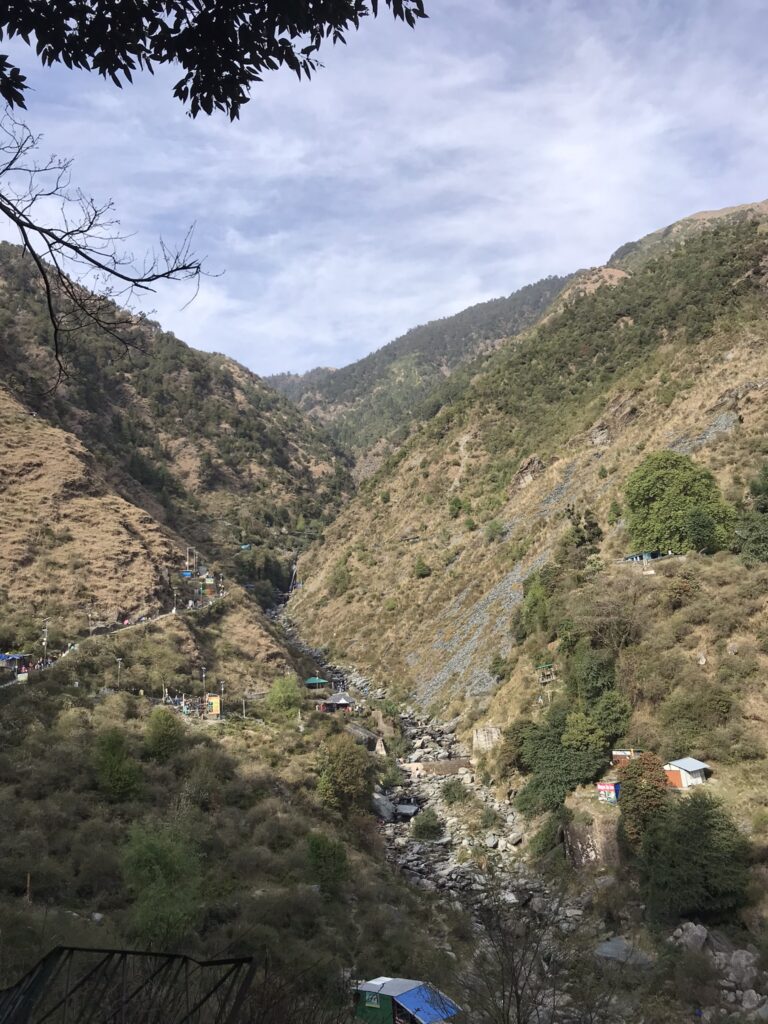
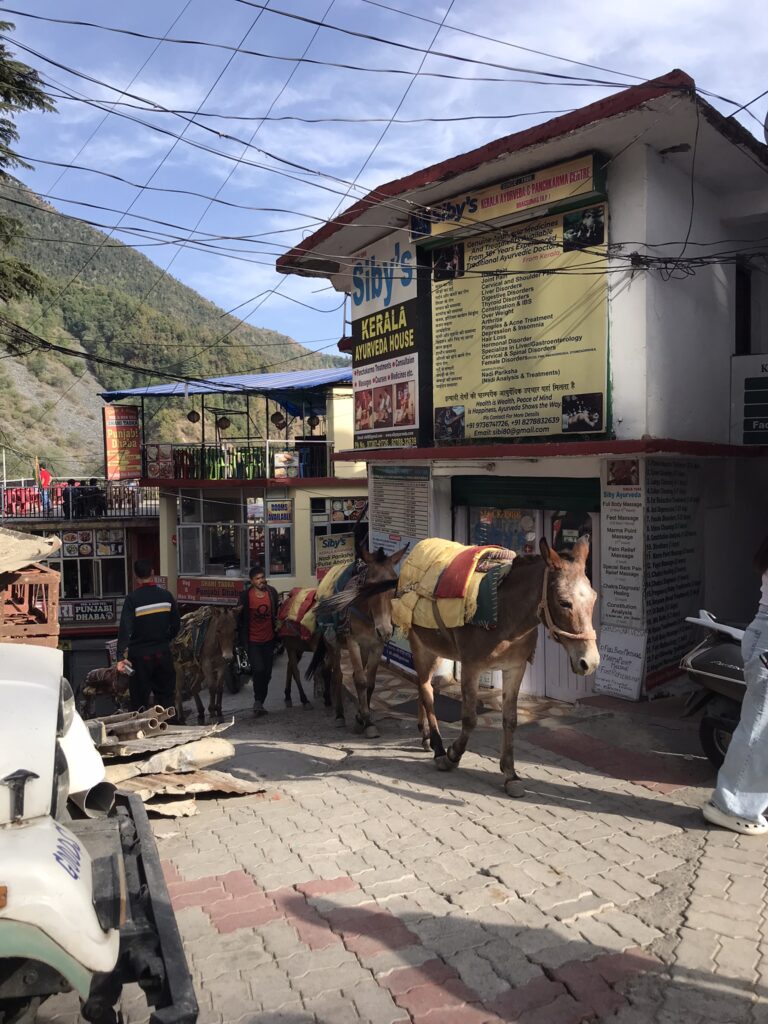
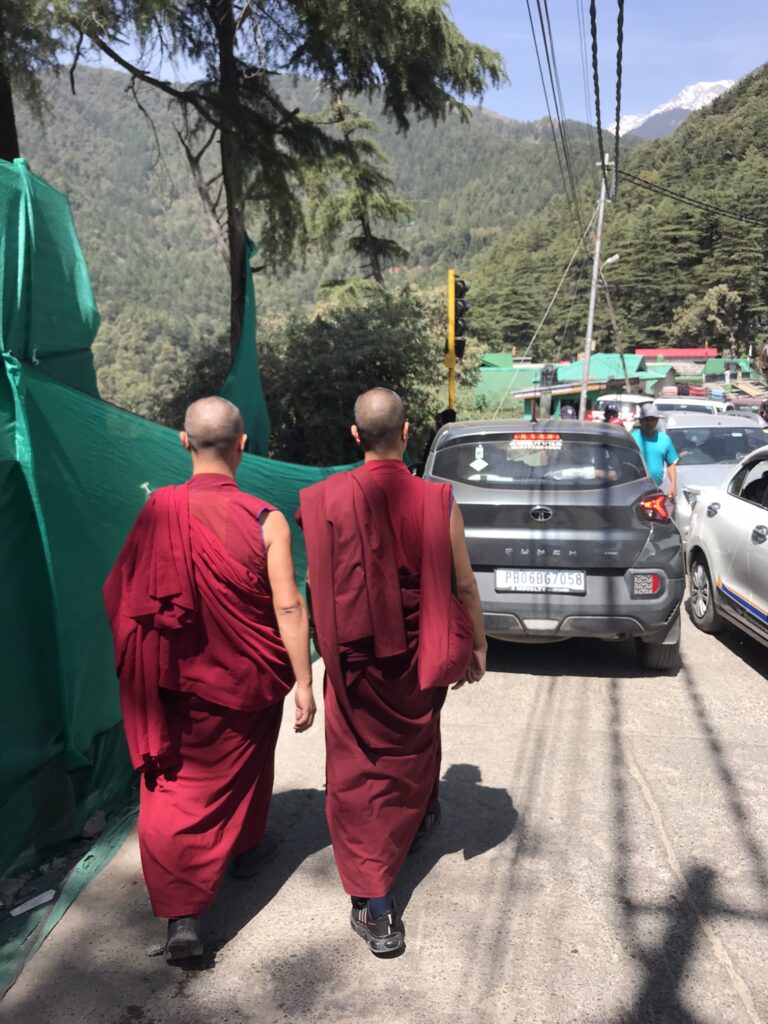
Bhagsu waterwall, the main street through Bhagsu and congestion on the roads nearby
As Dharamshala is in the mountains it doesn’t have a train station, although the city is pretty well connected by bus. We took a direct bus from Shimla, although it was a pretty uncomfortable and arduous journey. After a minor breakdown and tyre change in a random village we arrived much later than scheduled. We were also able to get a direct bus from Dharamshala to Amritsar, again this wasn’t the most comfortable journey as the bus departed very early in the morning and had several drunken domestic tourists, including one guy who was sick on his friend.
Dharamshala itself has some accommodation options but is a pretty nondescript place, so most visitors opt to stay in McLeod Ganj, Dharamkot or Bhagsu. If this is the case, you will need to think about how you’re getting from Dharamshala to these areas as they are significantly uphill and not walkable upwards. A taxi from Dharamshala to lower Dharamkot cost 600 rupees from the ‘servicemen taxi stand’ next to Dharamshala bus station when we visited. Another, more expensive option is to use the Skywalk cable car, which runs between McLeod Ganj and Dharamshala bus station and operates during daytime hours only. Many domestic tourists rent mopeds to get around and also to explore the wider region.
While it isn’t really possible to walk uphill from Dharamshala, walking downwards is fine – we walked from Dharamkot to McLeod Ganj and McLeod Ganj to Dharamshala via the Tibetan government area. It was nice to walk down from McLeod Ganj along the pathway leading from the Dalai Lama temple, which is filled with flags and prayer wheels. It’s also possible to walk to McLeod Ganj from Dharamkot/Bhagsu and back, which we did several times. We did find that Google maps is not accurate at all for walking in this region. There are lots of little paths and routes around the hills that save a lot of time, but they can be hard to spot.
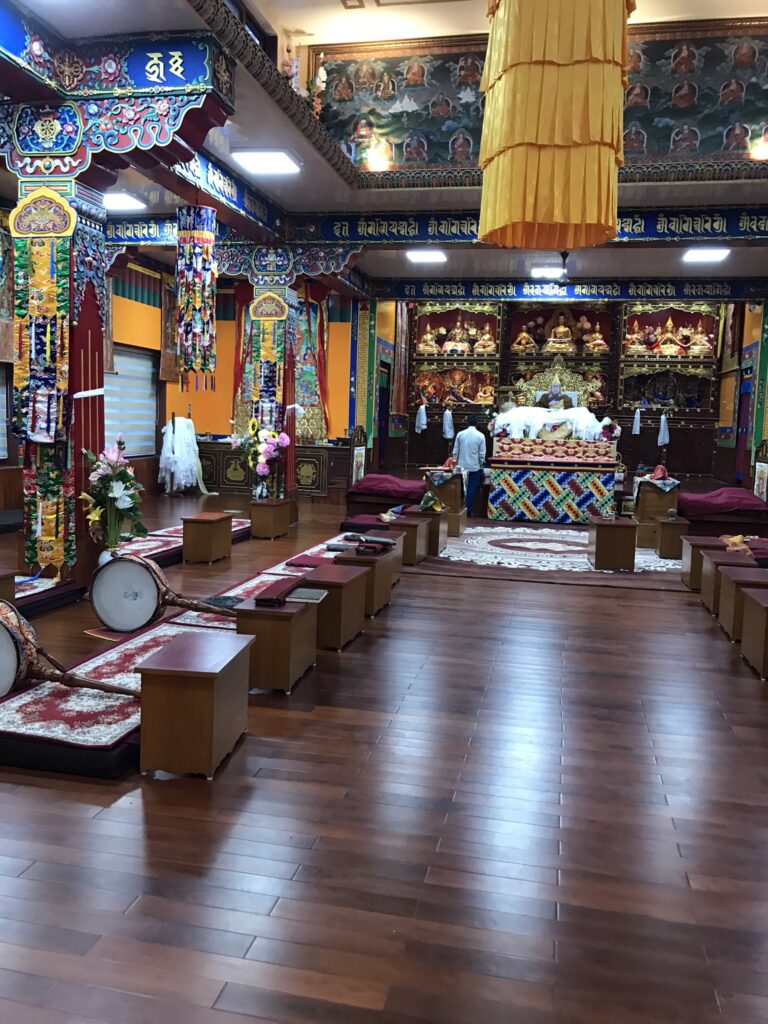
The Tibetan government-in-exile area is very interesting to explore, especially the Parliament and Museum
Accommodation
Eevolve Dharamkot – a self-described eco hostel in Dharamkot with a cafe and a somewhat social atmosphere. There are pros and cons to staying in this sort of accommodation but it was the cheapest decent option we could find in Dharamkot. Many of the hostels in Dhamrakot are party locations filled with drunk Indian tourists but this was not, it is a more chilled and laidback place. We had a private room which was surprisingly comfortable and quiet. The guests here were mostly Western tourists, many of whom seemed to be into meditation retreats/ecstatic dance etc which was to be expected. There were a good selection of smoothies in the cafe and we enjoyed the breakfast as well as the friendly hostel dog.
The Panda – located within walking distance of the bus station in Dharamshala, we spent a night here before getting a very early morning bus to Amritsar. Dharamshala is very congested and loud but the hotel is far enough away from the main road that it is peaceful and quiet enough. We ate dinner at the hotel, the curry provided was pretty decent. The owner is a chatty and nice guy, the property is well-maintained and the rooms were fine for us.
Foodie Places
Moonlight Cafe (Dharamkot) – a trendy café that seemed to be geared towards foreigners, particularly Israelis as there were many Israeli items on the menu. A varied menu including Thai, Italian, Israeli and local food. We enjoyed the classic rock playlist in the café.
Buddha Delight (Dharamkot) – a local cash-only place run by a Tibetan family. They had a traditional-style seating area where you could sit on cushions on the floor, as well as tables and chairs. Again, many Israeli options were on the menu such as hummus platters and laffa.
Hearty portions of Israeli food in a relaxed environment at Buddha Delight
Ama Laphing (McLeod Ganj) – right next to the Dalai Lama temple, a basic street food shack with a very small seating area within the shack. The main item is laphing (noodle dish) and rice momos – the rice momos have a more of a consistency of steamed buns with vegetables inside. The server asks how much spice to add. Not the tastiest momos I’ve ever had, but a very authentic and inexpensive lunch on the go.
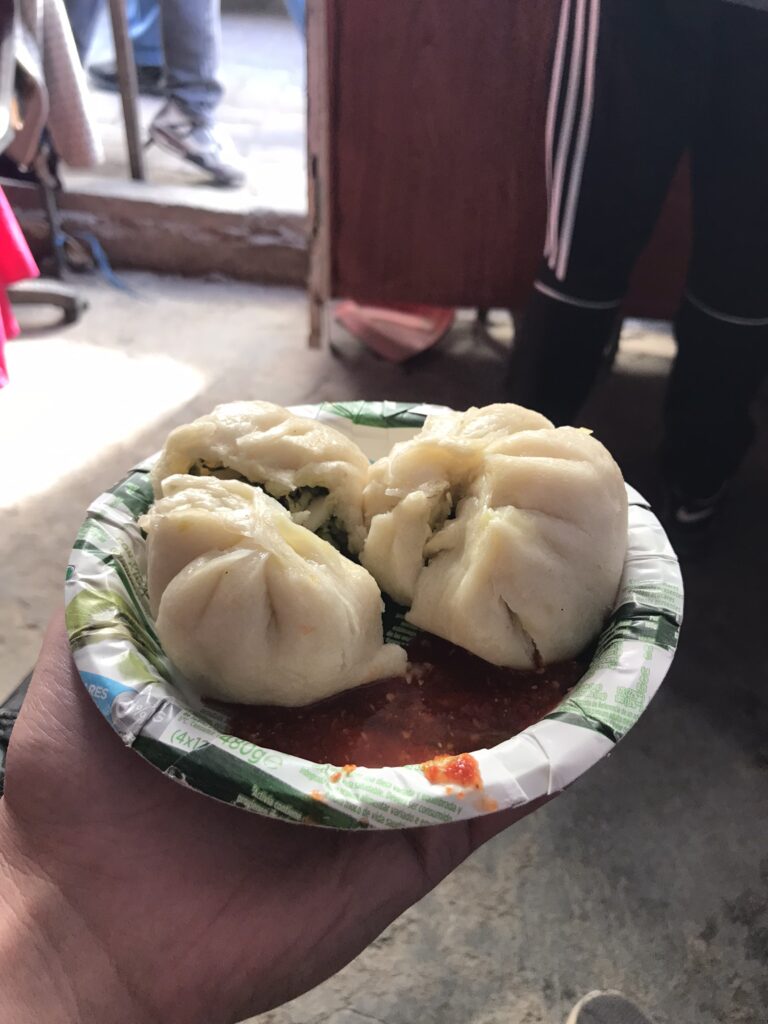
Tasty street food from Ama Laphing
Subway – located in McLeod Ganj near to the Dalai Lama Temple. The only branch of Subway I’ve ever visited which has pictures of the Dalai Lama behind the counter.
Activities
Kalachakra Temple – a small, compact temple located in McLeod Ganj, not too far from the Tsuglagkhang complex. It’s possible to enter the small temple rooms here while the monks are doing their thing. The focal point is a highly-decorated stupa. In the upper level is a craft workshop with monks creating Buddhist devotional items. At the very top is another area with a seated Buddha
We were a bit hesitant to enter at first as we didn’t see anyone other than the monks inside and weren’t sure if we were trespassing. We saw monks in a room chanting the mantras and performing devotional music. After popping our head in, they motioned us to go inside and watch while they chanted. A very unique and special experience.
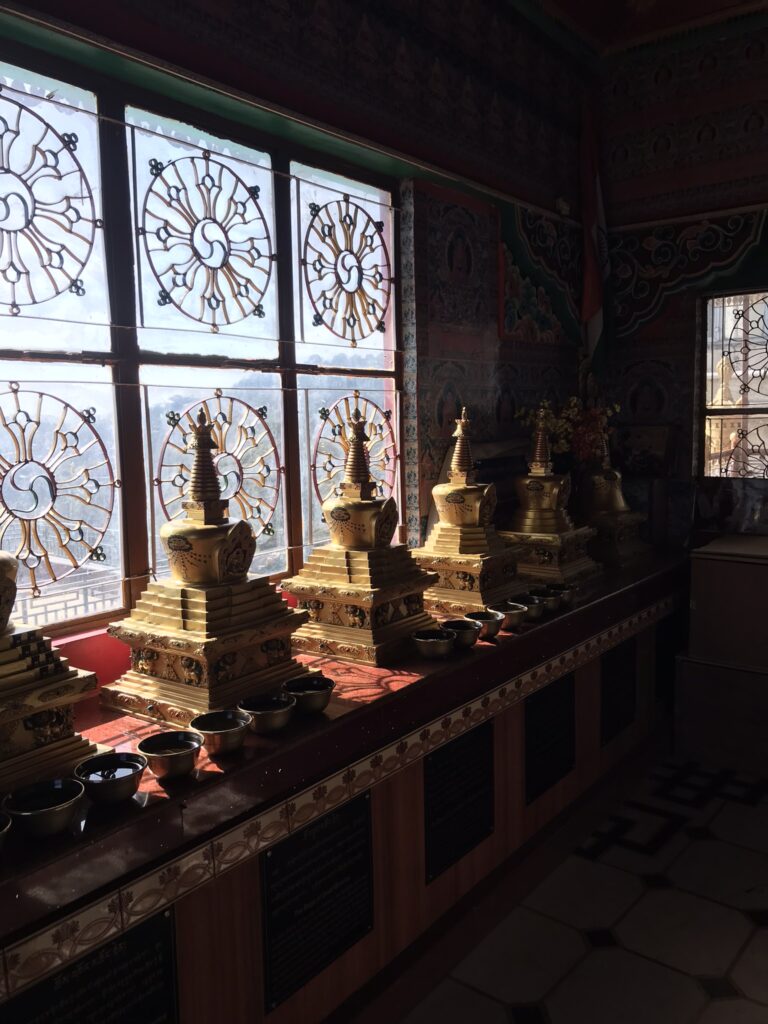
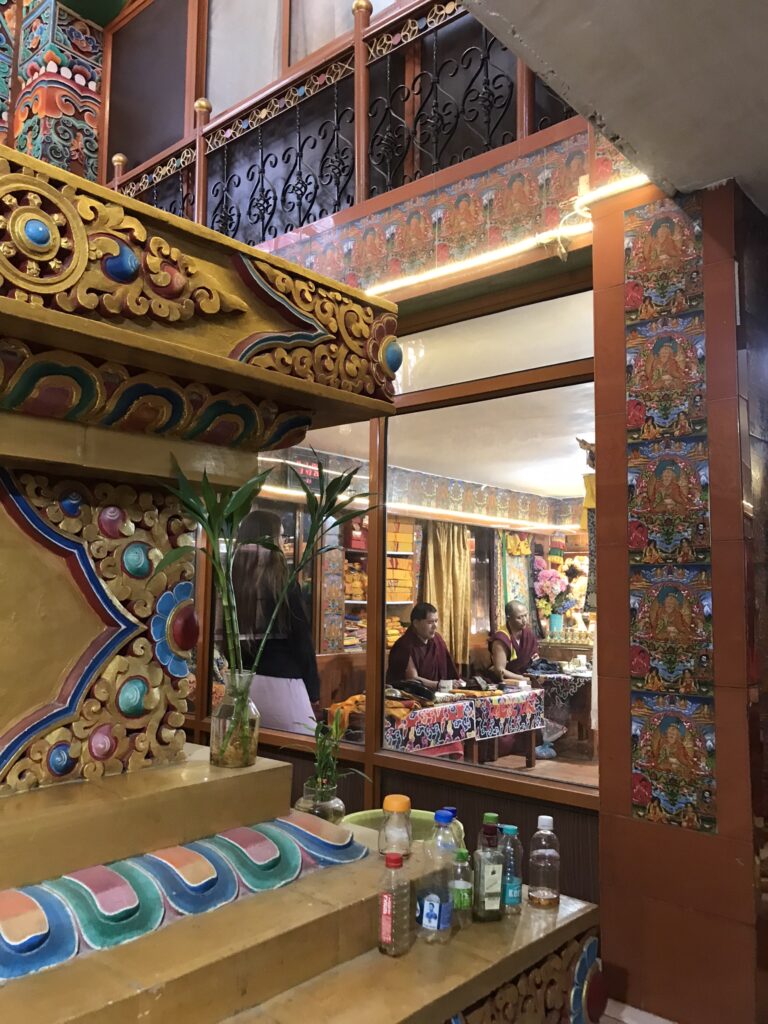
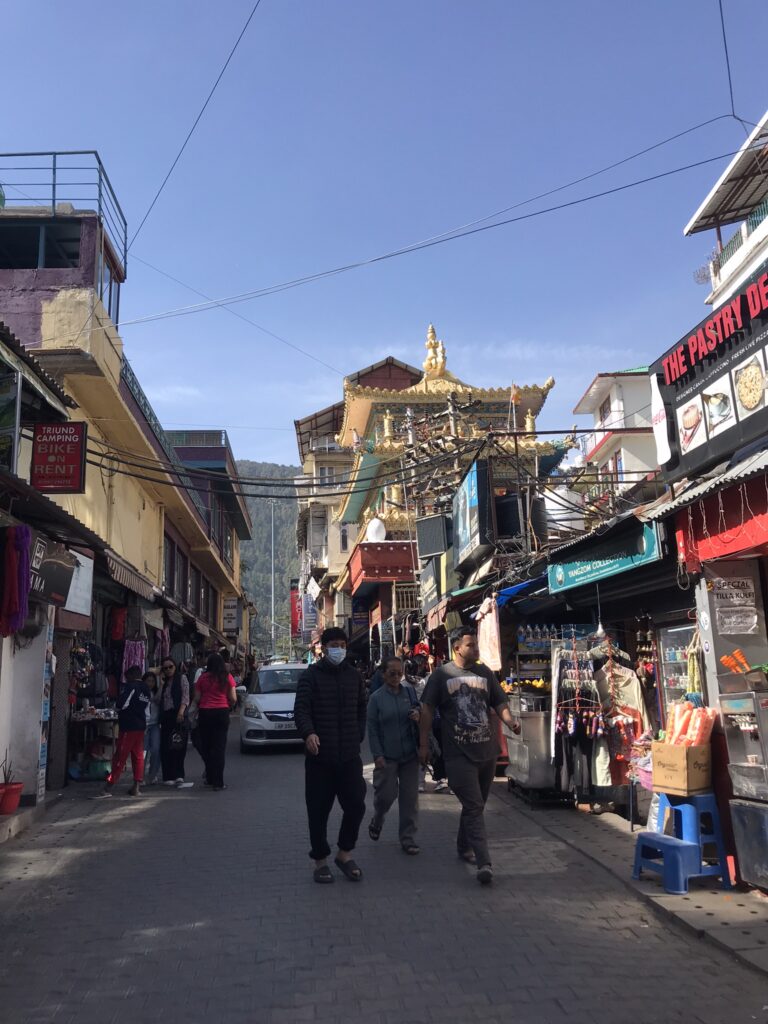
Don’t miss out on visiting Kalachakra Temple which is super close to the Tsuglagkhang complex
Dalai Lama Temple (Tsuglagkhang complex) – the official residence of the Dalai Lama, the spiritual leader of Tibet. You can wander about inside and explore the small complex and temple area. The actual temple was smaller than we expected – the main highlights are the Dalai Lama’s throne and the inner sanctum with images of Buddha. The temple is part of a wider complex which includes residential quarters, which are off-limits.
Many people who travel to Dharamshala hope to meet or see the Dalai Lama, but this is very unlikely. The Dalai Lama’s website states when he will be making appearances and speeches – to actually see the man himself may involve being very flexible with itineraries and booking well in advance.
A gathering was taking place when we visited; the area around the temple was crammed with hundreds of Buddhist monks and also some foreign visitors participating in chanting and rituals lasting for hours, which meant we couldn’t go in the main temple room.
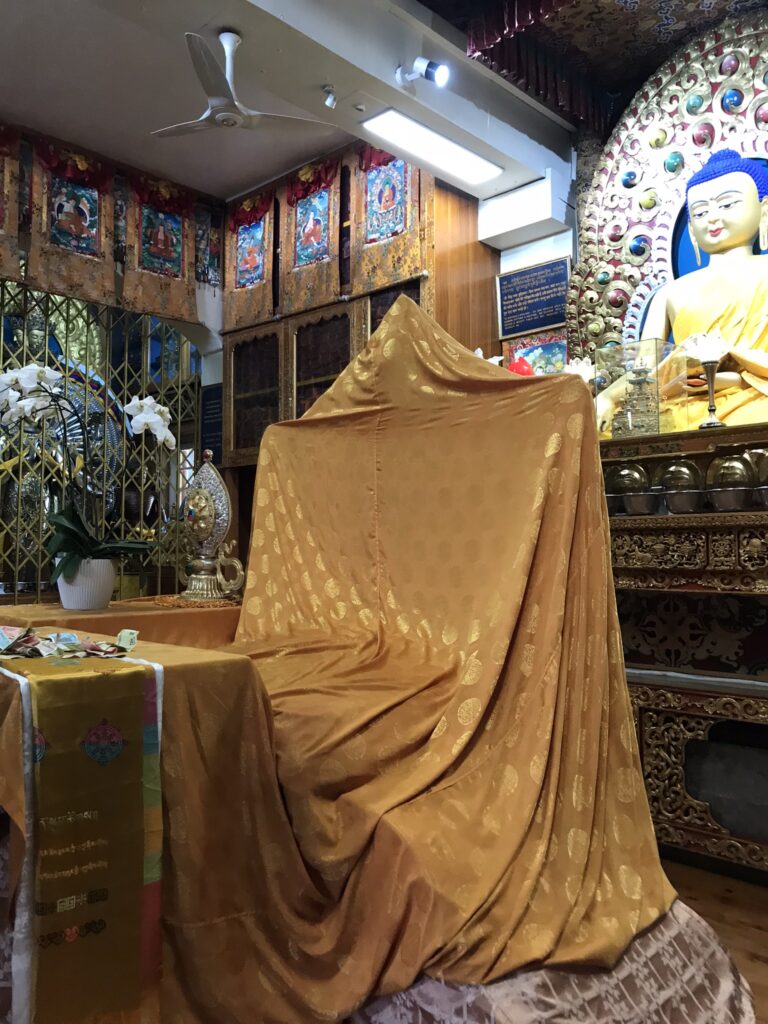
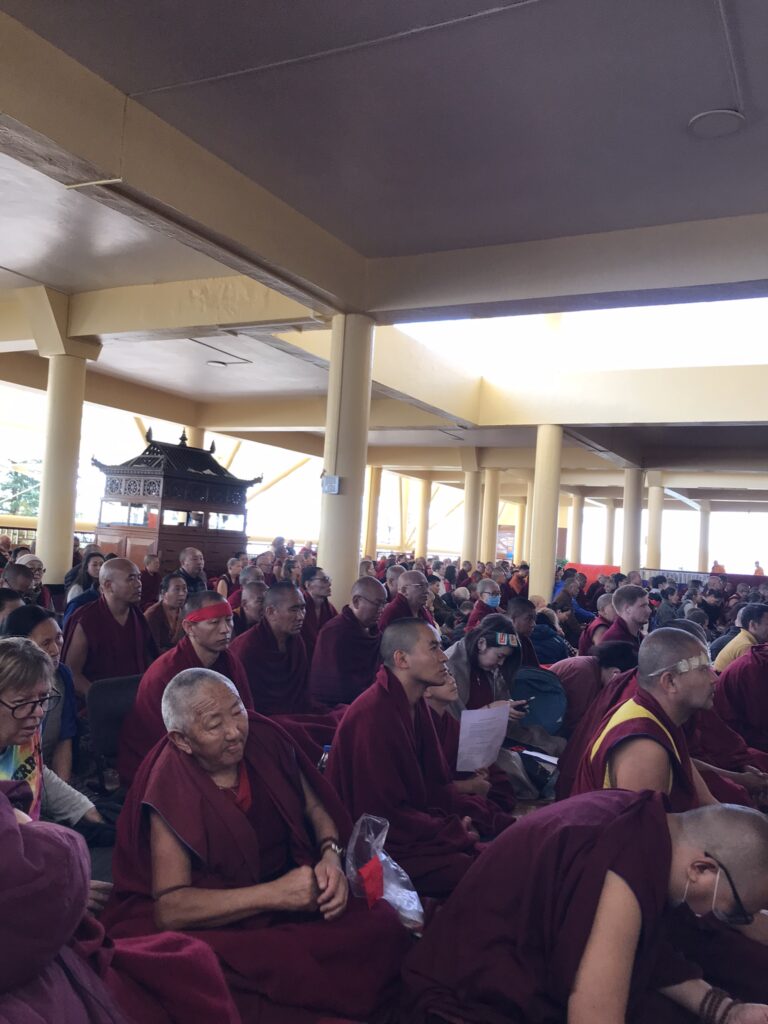
Inside the Tsuglagkhang complex
The Tibetan National Martyrs Memorial is outside the entrance to the temple – a memorial to those who have been killed in Tibet’s ongoing fight for independence from China. Outside the temple complex were many Tibetan handicraft and food stalls run by refugees.
Bhagsu Nag waterfall – hugely popular with domestic tourists, it is possible to walk from the centre of Bhagsu via Bhagsu Nag temple. Interestingly, the temple has a typical water tank which has been turned into a public outdoor swimming pool, very unusual for a Hindu temple. When we visited, the waterfall was quite dry so we didn’t bother walking all the way to the top.
Skywalk – a cable car between Dharamshala and McLeod Ganj, built post-Covid and somewhat expensive by Indian standards which means it isn’t heaving with locals yet. When we visited it was possible to buy a return ticket for a cheaper price than two singles, although this was only valid for use on the same day. This is the most scenic way to get between Dharamshala and McLeod Ganj, with great views over the distant mountains and lush greenery below. We had our own private cabin both times we used the Skywalk, which we appreciated. It’s useful both as the most convenient means of transport between Dharamshala and McLeod Ganj and also as an activity in its own right. We saw some Indian families riding the Skywalk for fun.
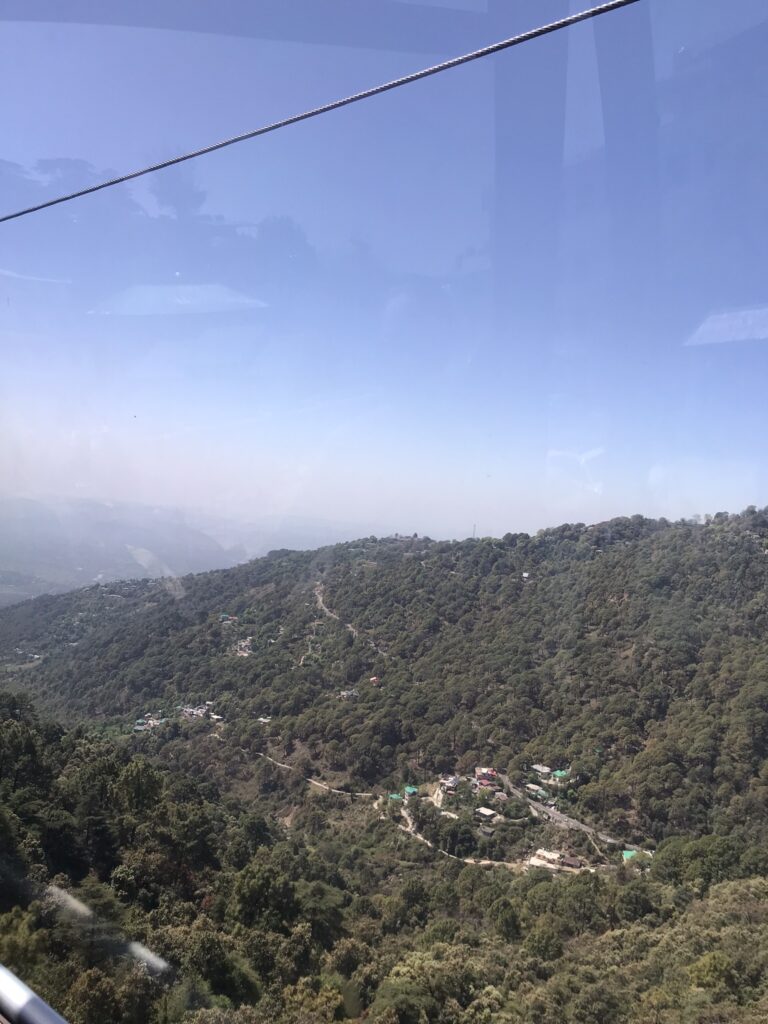
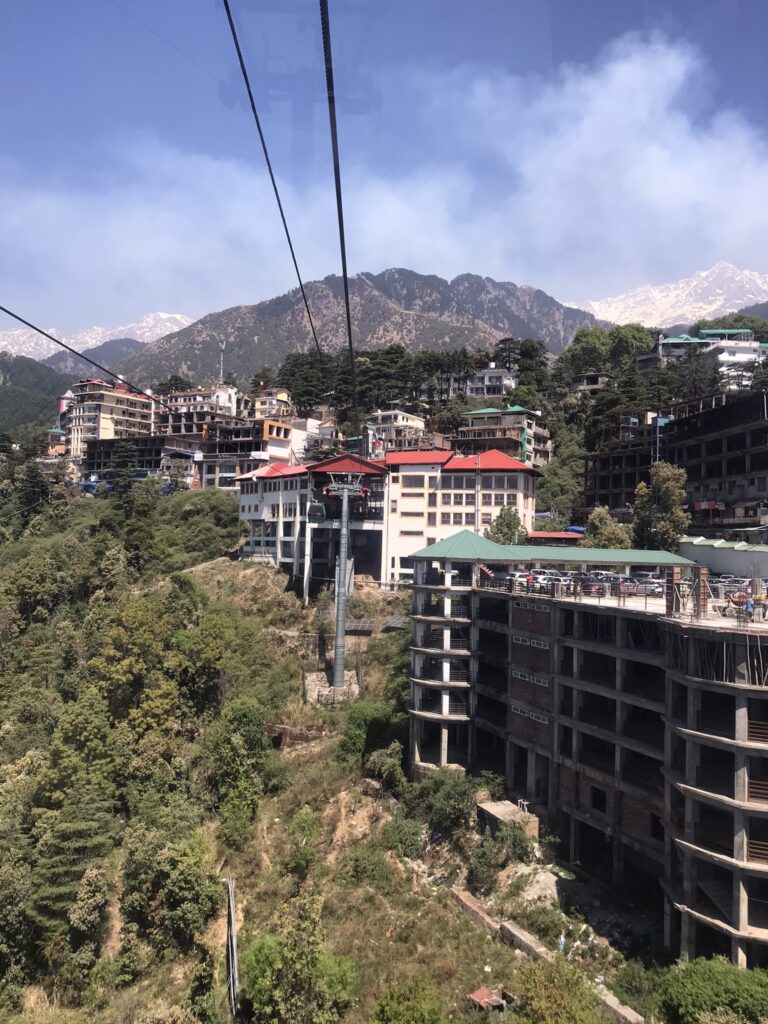
Aerial views of McLeod Ganj from the Skywalk
Tibet government area – located at the top end of Dharamshala before the road up to McLeod Ganj, this area is home to the Tibetan government-in-exile and for a few blocks it almost feels like a little Tibet. It was interesting to see buildings relating to the different government ministries (Department of Health, Supreme Justice Commission etc). A figure of the Dalai Lama is in the parliament area. The Tibet Museum is also located in this area.
Tibet Museum – a very interesting museum aimed at giving a voice to the voiceless. They made it clear at the entrance that the museum is not attempting to be balanced or neutral, this is purely the subjective Tibetan point of view which portrays the Chinese as unwanted occupiers and tyrants. The museum describes the key facets of Tibetan culture in great detail, as well as events surrounding the occupation, exile and protest movements. A section focuses on the Dalai Lama – it was interesting for us to learn the selection process and how the current Dalai Lama had been selected at such a young age. The museum also goes into detail about the oppression of the Tibetan people and atrocities committed by the Chinese. There are not that many original artefacts in the museum – most of the items that are on display were carried by Tibetan people who were fleeing.
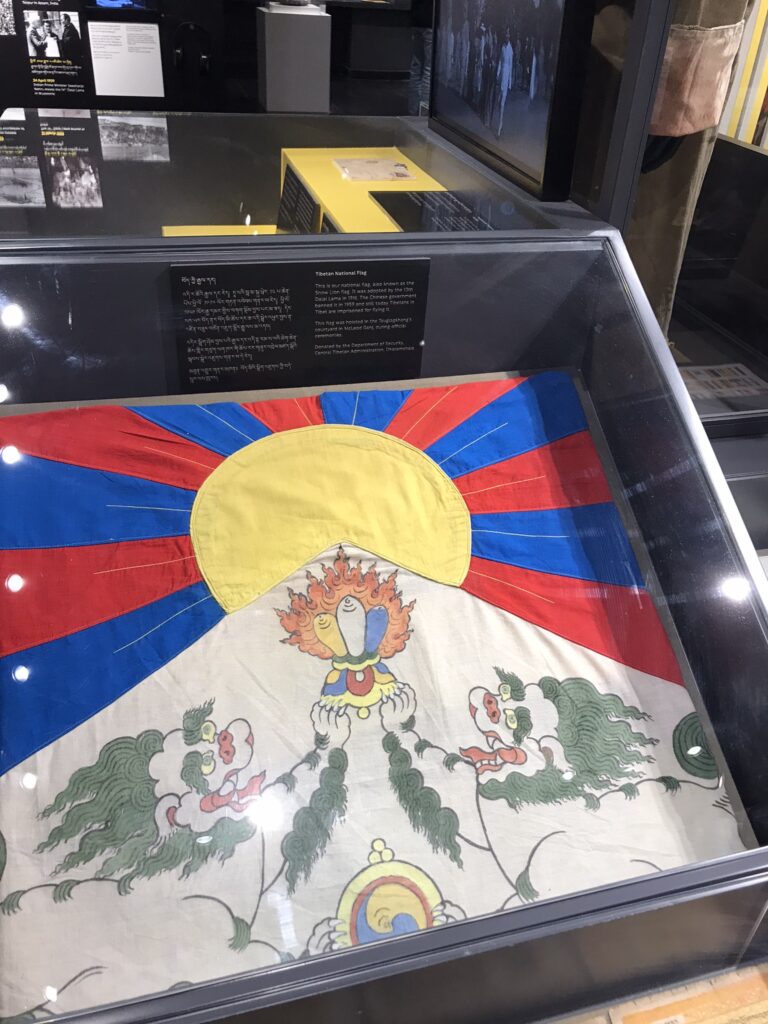
The flag of Tibet as seen in the Tibet Museum – this flag is completely banned in China and Tibet now
Amritsar
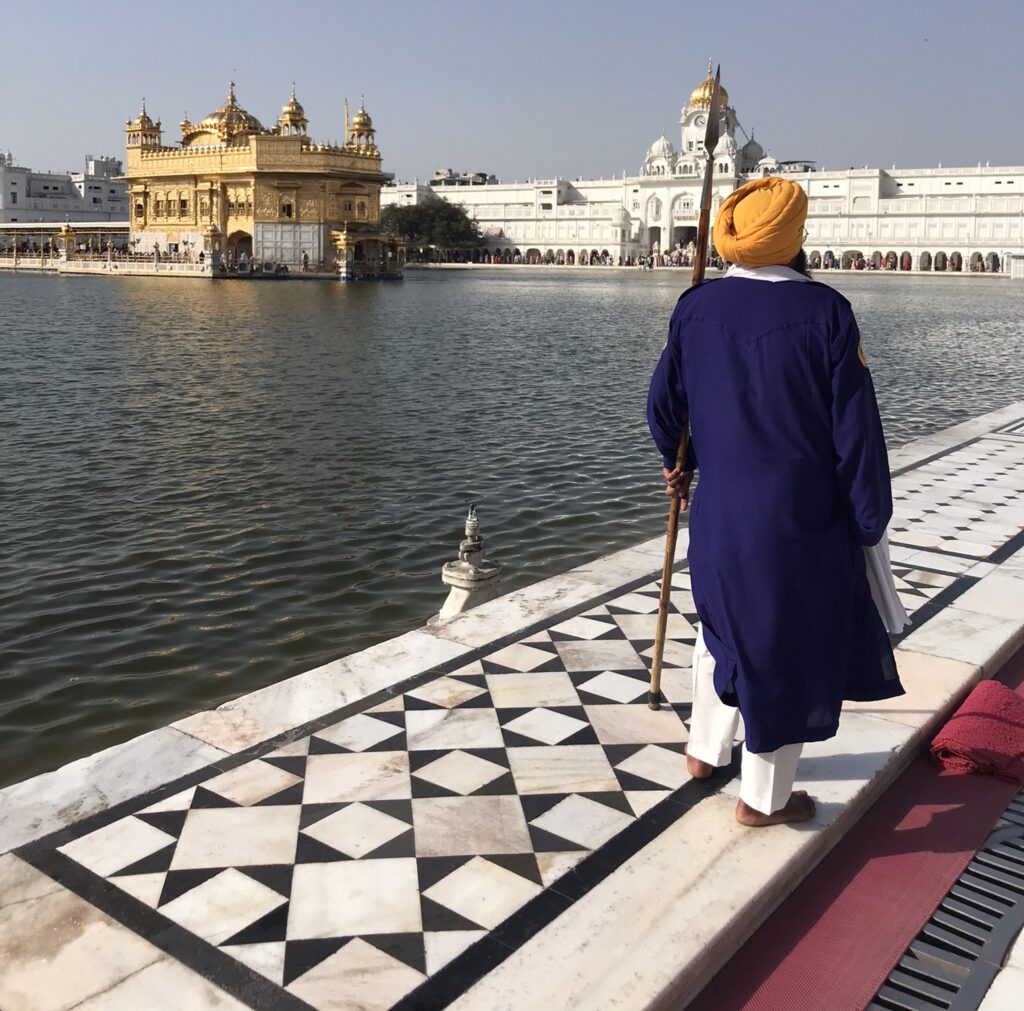
For my Amritsar content, click here!
After visiting Amritsar, we crossed the Wagah Border into Pakistan!