For an authentic and hassle-free Rajasthan experience, look no further than Bundi! The former capital of a small princely state, Bundi boasts classic Rajasthani architecture and history without the over-tourism, scams and hustlers that plague some of its more well-known neighbours. This walking tour covers the main attractions – you can choose to do it in one day, or split into two if you want to go at a more leisurely pace!
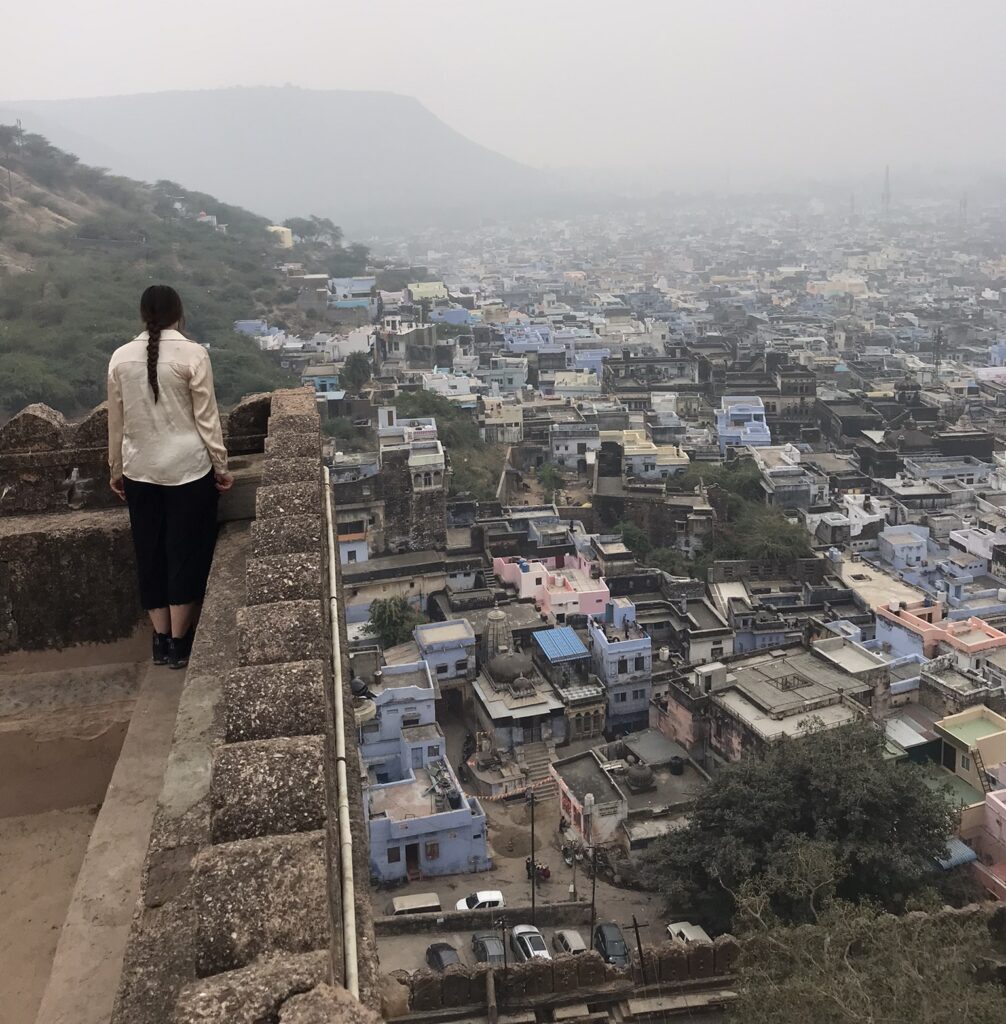
Bundi was ruled by a Rajput dynasty as the capital of a princely state from the 13th century right through until India’s independence in 1949. The local dynasty maintained control of their own small domain by co-operating and serving as a vassal of whatever the dominant regional power was at the time – be it the Mewars, the Mughals or the British. As a result, although in relative terms it may only be a footnote in the pages of India’s history, Bundi is filled with royal architecture and infrastructure befitting a small capital city.
Bundi is known as the ‘city of stepwells’, after the relatively large number of grand, ornamental wells that were built throughout the area by the local rulers over the years in order to store and preserve water supplies. Bundi is said to contain 52 stepwells in total of various sizes and scales, as well as several manmade lakes.
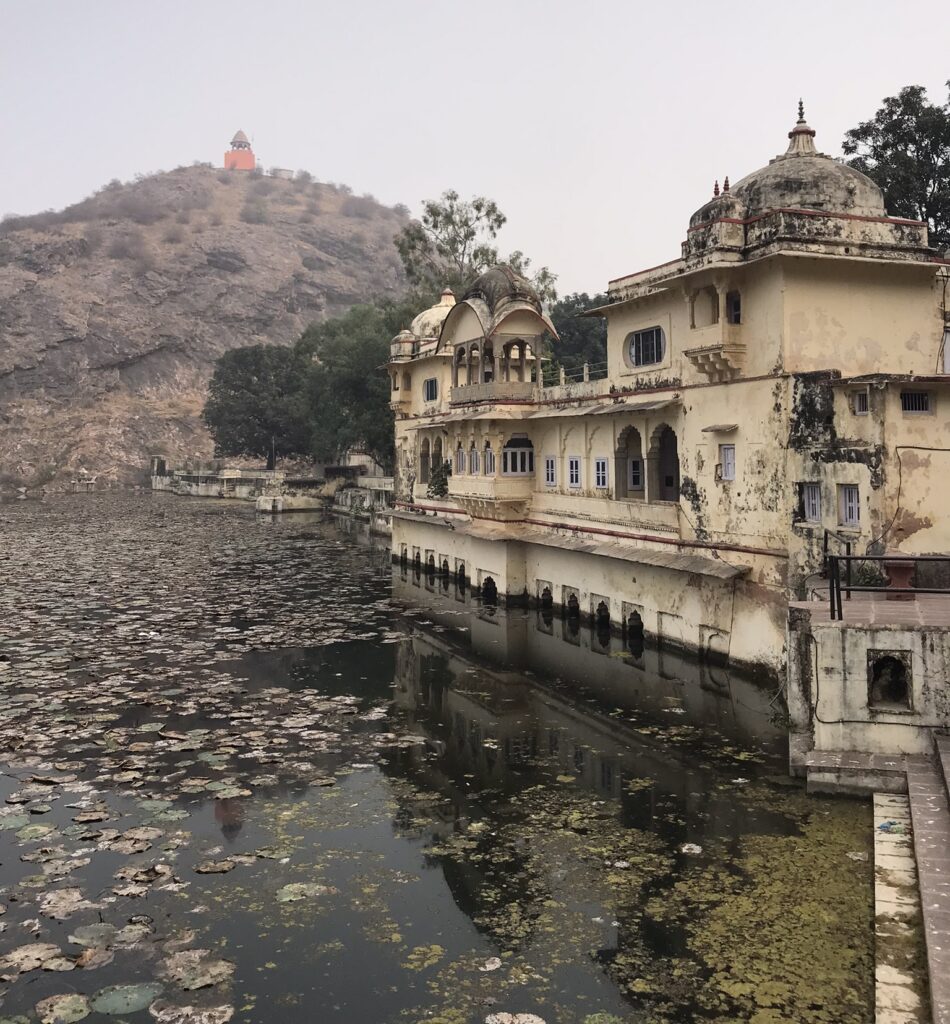
Start at the Sukh Mahal.
Built in 1776, this was the summer palace of the rulers of Bundi. Later, Sukh Mahal played host to the British colonial writer Rudyard Kipling, who spent some time in Bundi during his youth, and was said to be an inspiration for his novel ‘Kim’. Located next to the Jait Sagar lake, today it’s possible to explore the Sukh Mahal complex, including Kipling’s former room and a small museum room with local and regional religious sculptures and art.
Entry to the Sukh Mahal is paid, but there is a combined ticket which also includes two of Bundi’s other attractions – Raniji Ki Baori and the 84-Pillared Cenotaph.
From the palace, it’s around 25 minutes walk into the town of Bundi and the main fort complex. If you don’t want to walk, there are sometimes autorickshaws waiting outside the Sukh Mahal.
Bundi Fort & Palace
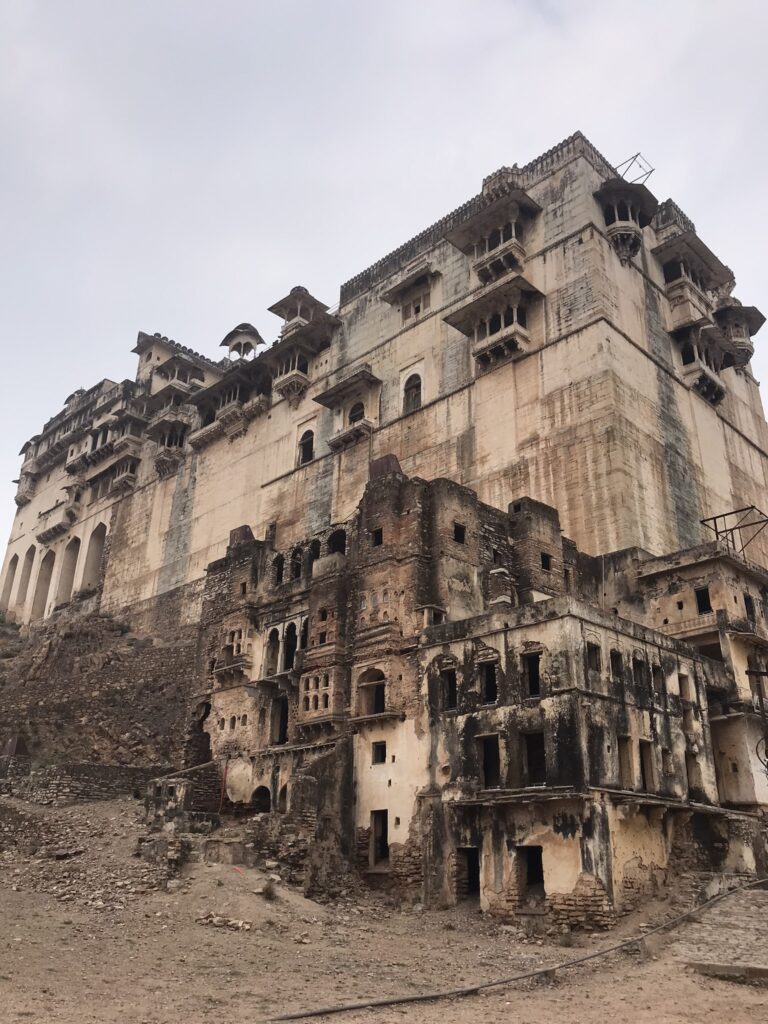
The former royal residence and complex, Bundi’s huge palace and fort dominates the city’s skyline. There are three distinct areas inside the complex – the Garh Palace, which is the largest, most visible and first structure you come to after entering the complex, the Chitrashala, which is located slightly up the path from the main palace, and the Taragarh Fort area which is located right at the top of the hill, approximately a 25 minute uphill walk from the main fort entrance. All of these areas are covered by the single entry ticket but be aware, tickets cannot be reused – if you leave the fort complex you will need to pay again to get back in!
The fortified structure that is now the Garh Palace dates back to the 14th century and the ruler Rao Var Singh. Over the centuries subsequent rulers have added their own rooms and small palaces to the larger complex, creating the enormous, many-faceted structure which stands today. After entering through the grand gateway known as Elephant Gate (Hathia Pol), it’s possible to explore the various rooms and areas, all of which remain authentic and unrestored. Included are the typical public and private audience halls, as well as chambers of various uses which were constructed by various leaders. Along the way you can find some great views and vistas over the city below.
Further up the hill from the main palace complex is the Chitrashala. Arguably the most impressive part of the complex, this area is known for its extremely extensive and detailed wall paintings and frescoes. Created during the 18th century during the reign of Mahrao Umaid Singh, most of the artwork covering the ceilings and walls is related to the lives of the Hindu figures Radha and Krishna and features a distinctive turquoise colour. During the era of the princely state, Bundi had a proud reputation as a minor hub of the arts and that tradition is on broad display here. This small, self-contained area of the fort complex is easy to overlook – make sure not to miss it!
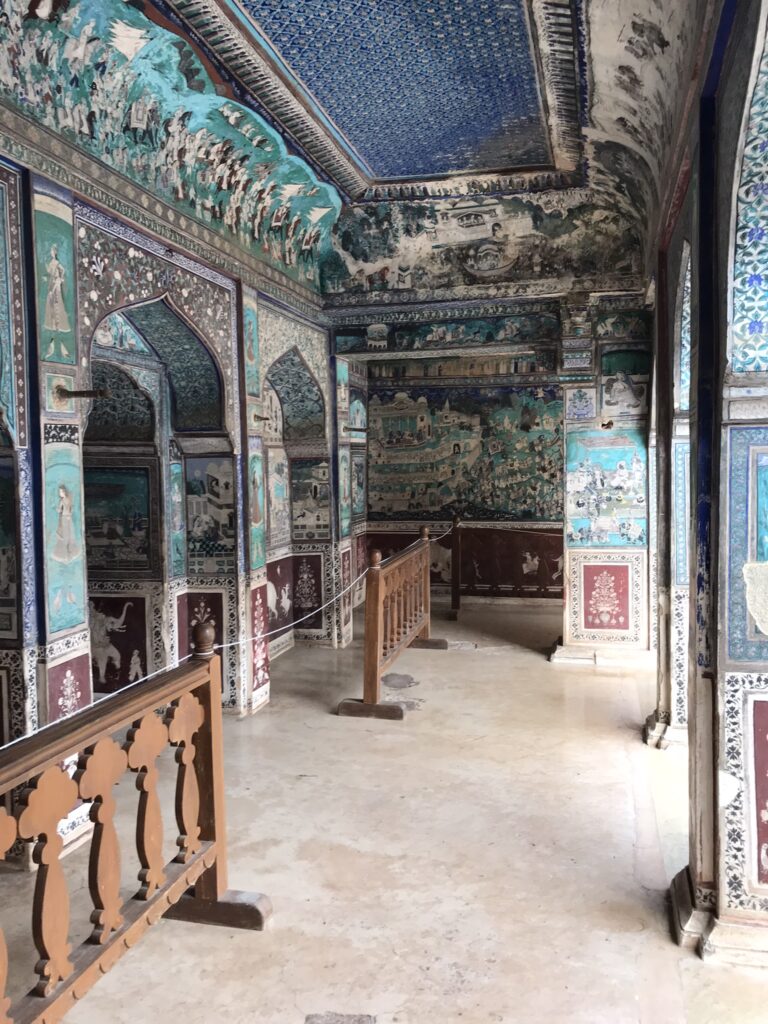
The magnificent artwork in the Chitrashala is a sight to behold
At the very top of the hill is the Taragarh Fort complex. This is a challenging uphill walk along the path that runs upwards from the Chitrashala. After finally reaching the top, visitors can find another unrestored palace (Rani Mahal) as well as ruined fortifications, bastions and other related infrastructure including the remains of a stepwell. As it’s so difficult to access, this area sees few visitors but those that do make it to the top will be rewarded by majestic views over the city and the wider landscape.
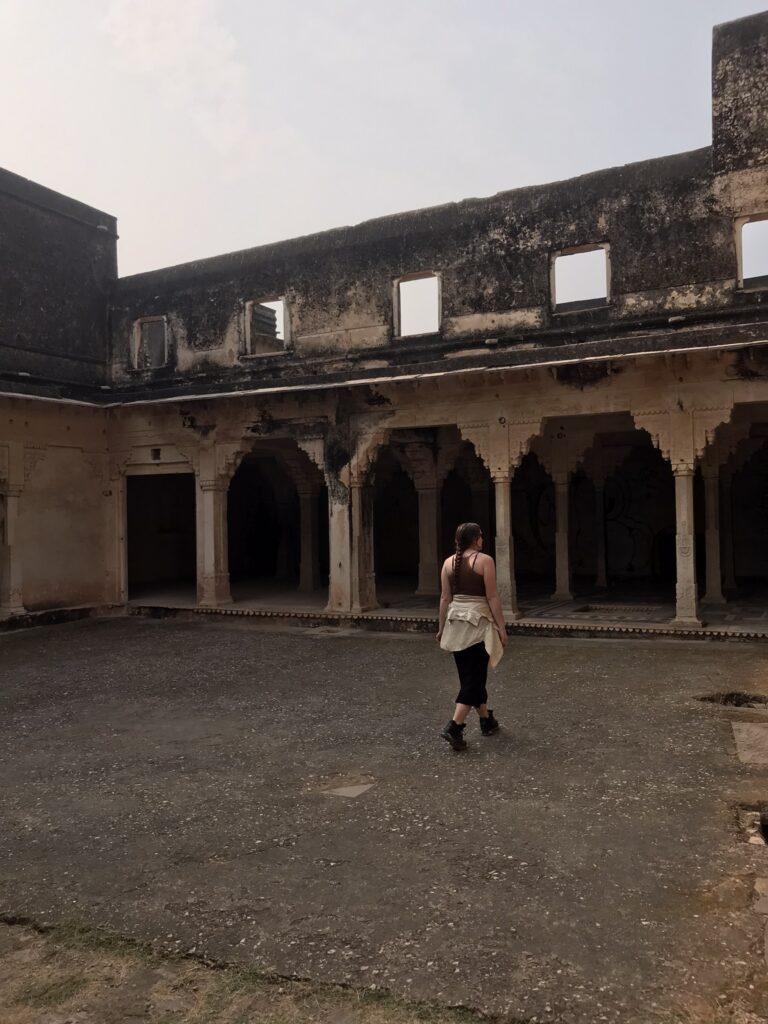
At the very top of the hill, Rani Mahal is unrestored and truly a bare-bones visiting experience
After visiting the fort, head back into the old town and turn right to visit the Nawal Sagar lake. This small artificial lake is known for both its sunken temple and excellent views of the palace and fort complex above. The temple, which dates back to the 18th century and is dedicated to the Hindu deity Varuna, becomes submerged at times of high water. The lake is situated in the heart of the old city, surrounded by havelis which once belonged to the subjects of the local dynastic rulers.
From Nawal Sagar, head east along Sadar Bazaar through the historic old town area. You will eventually reach the bustling market area of Lal Bihari Ji Ka Chowk and Nagar Sagar Kund.
Nagar Sagar Kund refers to a pair of twin stepwells located at the heart of Bundi next to the market. You may need to go behind some of the traders to see the stepwells themselves! Two of the largest stepwells in the city, they are no longer in use and are not well maintained today, but nevertheless provide a clear visualisation of the historical importance of stepwells within the city given their location right at the centre of the bustling neighbourhood.
From Nagar Sagar Kund, head directly south through the market street and you will reach Raniji Ki Baori. Arguably the most famous stepwell in Bundi, this stepwell dates back to 1699 and is considered to be the most ornate in the city. Known as the Queen’s stepwell, it is known for its intricate carvings including depictions of elephants which stand guard at its entrances and corners. Today, the stepwell is also home to numerous pigeons who live in the various nooks and crannies – keep your eyes peeled up above when visiting! Admission to the stepwell is paid, although entry is covered by the combined ticket which also includes the Sukh Mahal and 84-Pillared Cenotaph.
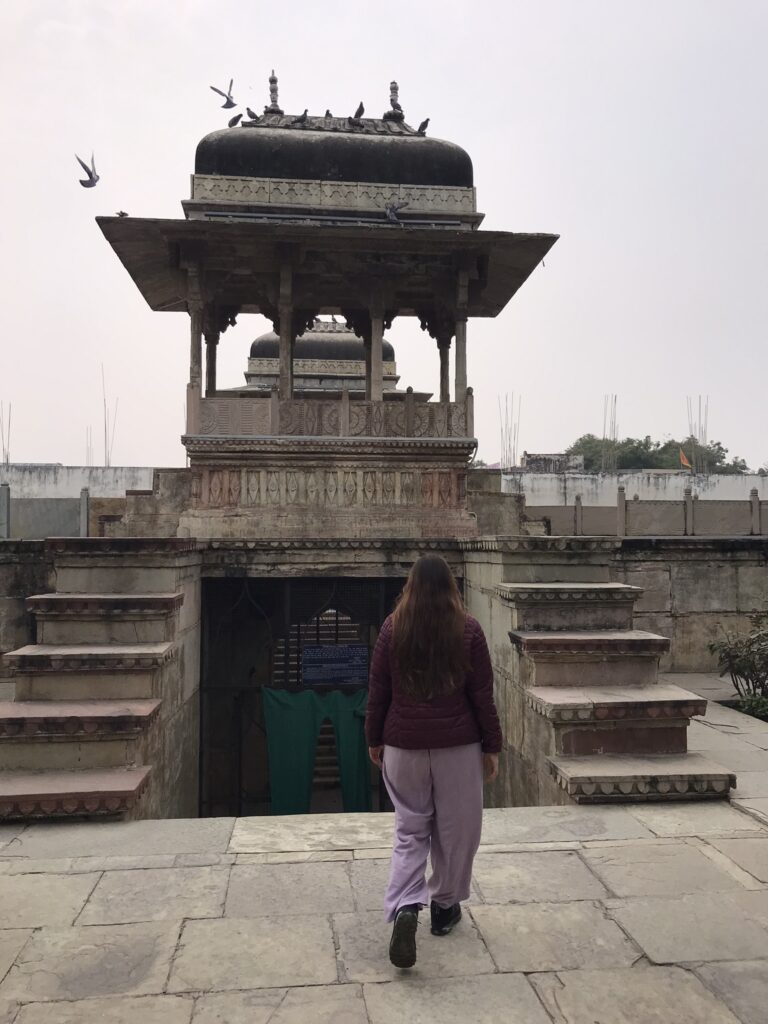
The entrance to Raniji Ki Baori – watch out for the pigeons!
After visiting Raniji Ki Baori, continue to head south along the main road and then turn left after about 500 metres and you will find the entrance to Dabhai Kund. The largest stepwell in Bundi, this is completely open and unrestored, providing an unfiltered experience. Entry is free, although you may have to climb through a small door within the larger gate to gain access to the site. Once inside, it’s possible to walk around the stairs and fully appreciate the true scale of this huge 17th-century construction.
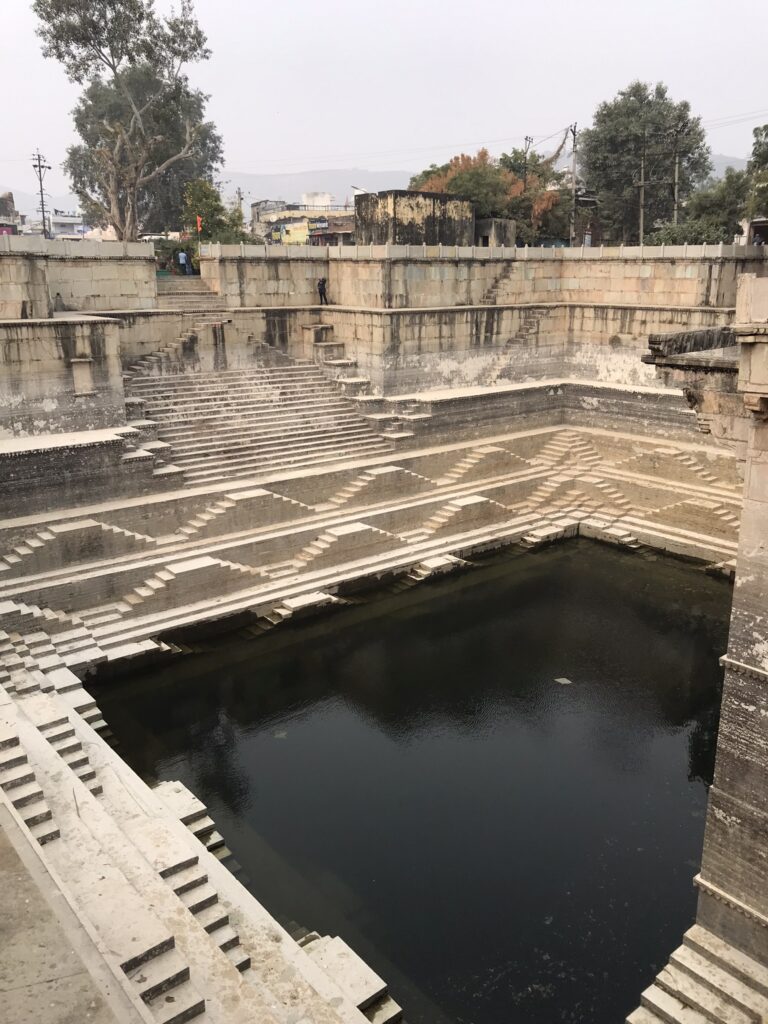
Bundi’s largest stepwell, Dabhai Kund
From Dabhai Kund, head south, east and then south again and you will eventually reach the 84-Pillared Cenotaph after passing through some residential streets. The cenotaph was constructed in the 1680s and is somewhat unique in that it is not dedicated to a god, a king or nobleman, but instead is dedicated to the son of the ruler’s childhood wet nurse – a commoner.
The monument features detailed and nuanced architectural design, including the eponymous 84 columns. It is not intended to be a religious monument, but it is treated with religious reverence by many visitors who remove their shoes before entering and walking on the structure’s platform. It’s possible to go inside, climb to the top and get a closer look at the intricate decoration. Entry to the complex is paid, but it is covered by the same combi ticket as the Sukh Mahal and Raniji Ki Baori.
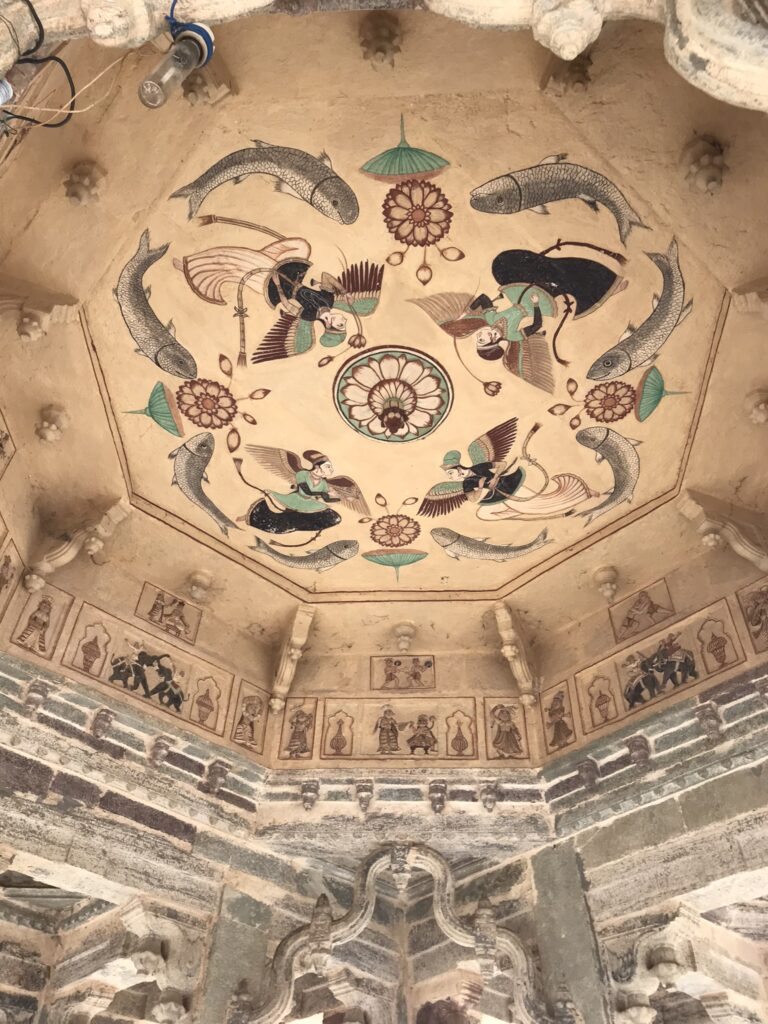
Don’t miss the classic Bundi-style fresco artwork inside the 84-Pillared Cenotaph!
Finish! For more India content, click here!
This article is also featured on GPSmyCity. To download this article for offline reading or create a self-guided walking tour to visit the attractions highlighted in this article, go to Walking Tours and Articles in Bundi.