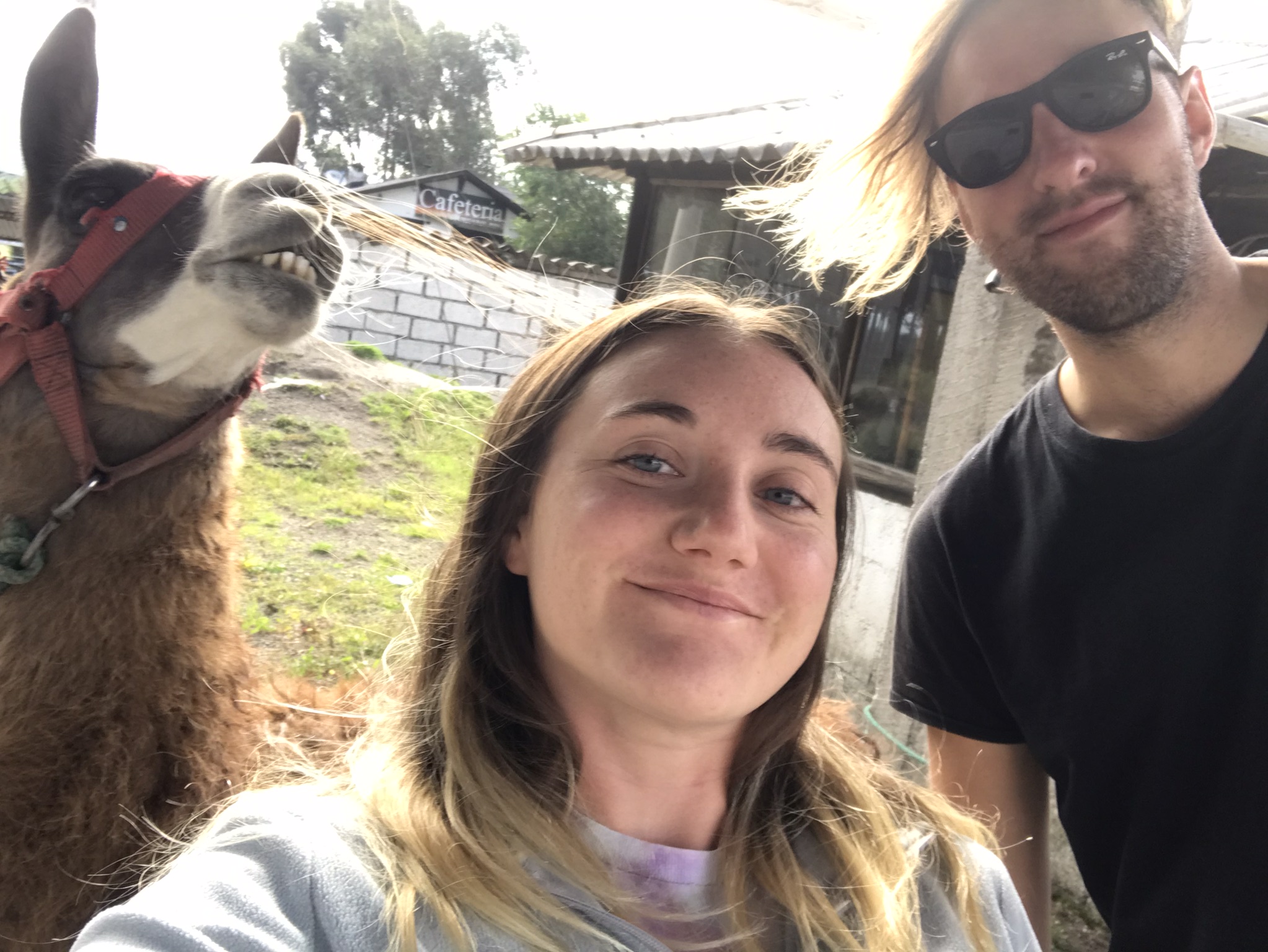
Japan’s Tohoku region comprises the northern part of the nation’s main island, Honshu. Much less touristic and with a more laid-back feel than many other parts of the country, this area north of Tokyo contains history, culture and rugged scenery to rival any other region of Japan – often without the crowds. After arriving from Hokkaido, we had a great time traversing the landscapes between Aomori and Sendai. Check out our Tohoku travel experiences below!
Aomori, Hirosaki, Morioka, Hiraizumi, Sendai, Yamadera, Matsushima
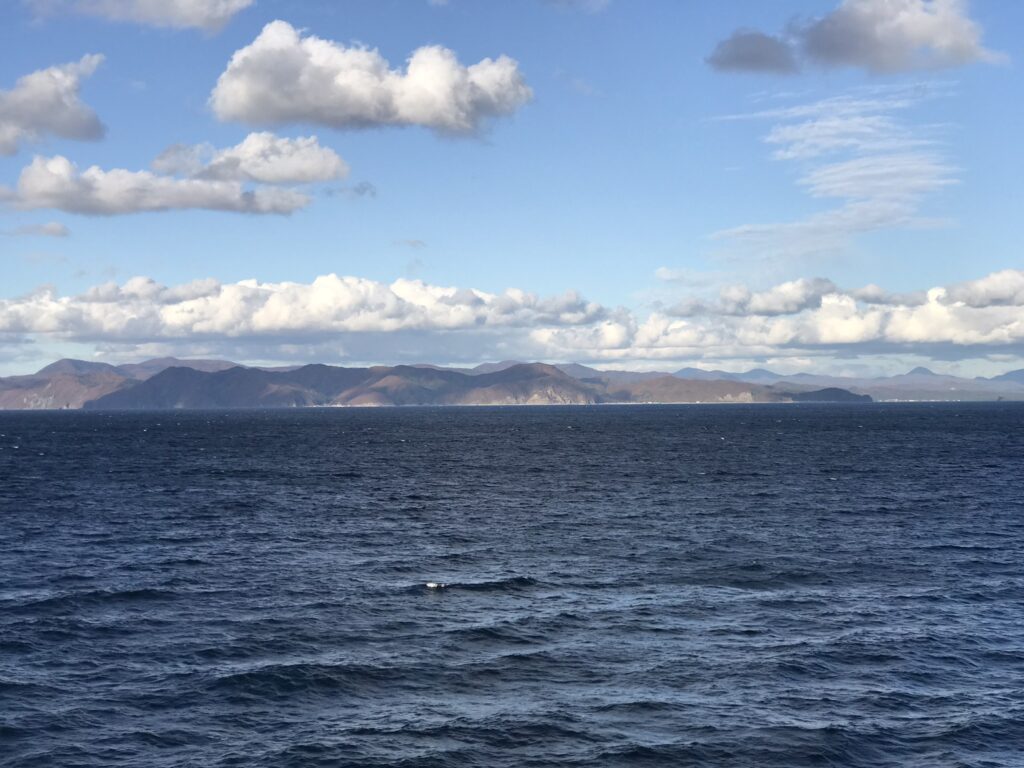
Approaching Honshu island through the Tsugaru Strait
We took the ferry from Hakodate in Hokkaido to Aomori – for more info on that journey click here!
Aomori
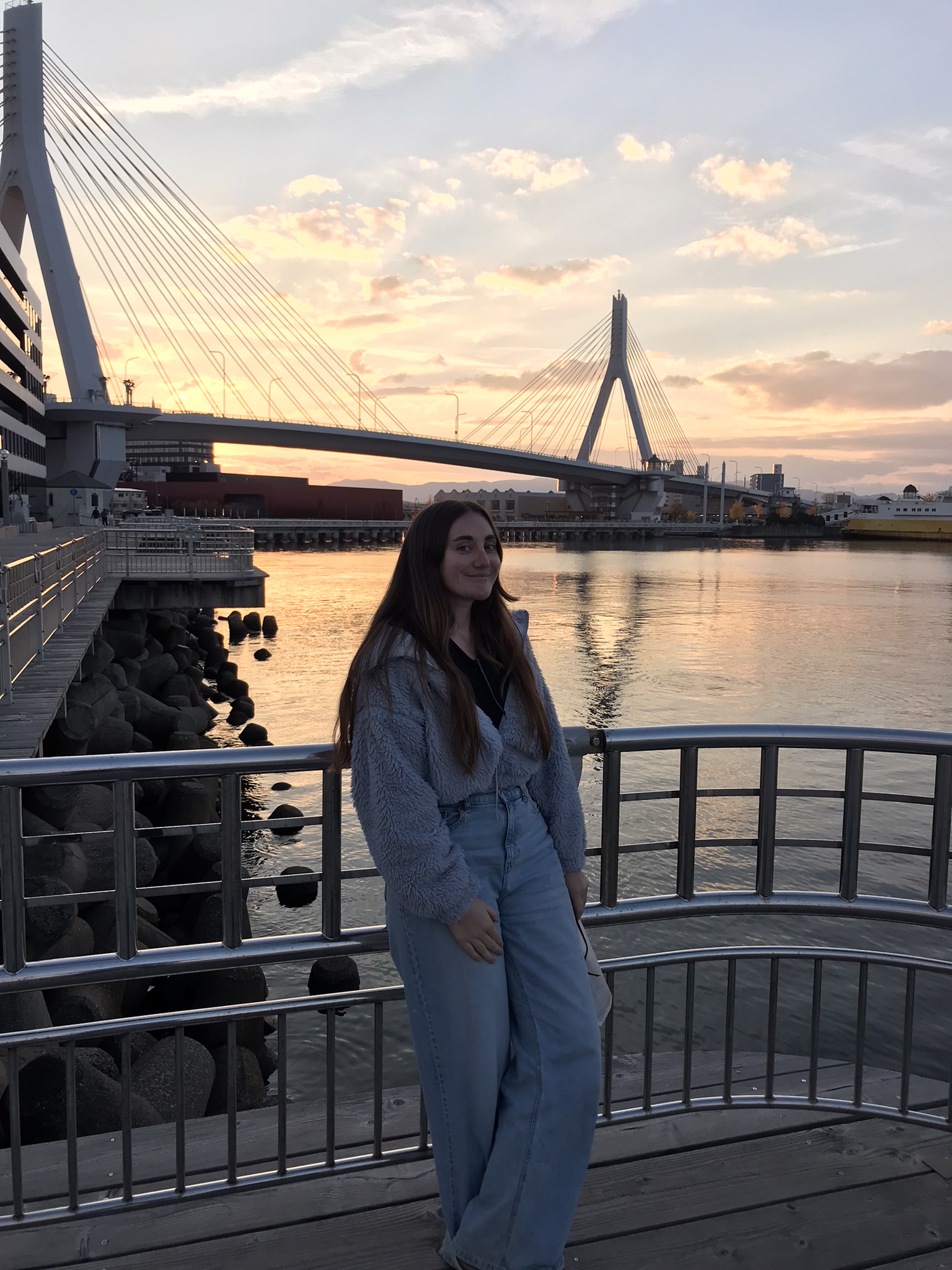
The northernmost city of Japan’s ‘mainland’ Honshu island, Aomori is located on the northern coast of Honshu in the sheltered Mutsu Bay and is the capital of the wider Aomori Prefecture.
Aomori is synonymous with five things: maritime heritage, apples, Nebuta, Jomon and snow. Known for centuries as a frontier town during the isolationist Edo Period in which Japan’s northern island of Hokkaido was seen as ‘Ezo’ or foreign lands, Aomori’s importance as a port was bolstered by the introduction of a ferry service from Aomori to Hakodate in Hokkaido, which began in 1872. This later came to be known as the Seikan Ferry. The construction of a railway line in 1891 between Aomori and Tokyo further reinforced Aomori’s importance as the main transit hub linking the island of Hokkaido with Honshu. The Hakkoda-maru, a now-decommissioned ship which used to service the Aomori-Hakodate route, is an enduring symbol of the city and sits proudly as a museum within Aomori’s harbour today. Since the 1980s, passengers have been able to travel to Hokkaido via train following the construction of the Seikan Tunnel and Hokkaido Shinkansen, but Aomori remains the main gateway for boat travel across the Tsugaru Strait.
The Aomori region is renowned for its abundant apple production, with its apples considered to be the best in Japan – a result of the region’s rich, fertile landscapes and extreme variations in temperature. The world-famous Fuji Apples are named after the town of Fujisaki in Aomori Prefecture, a few miles from the city of Aomori, and the region is said to account for over 50% of Japan’s total apple production. Apples are a big deal here – you can find references to apples throughout Aomori and apple-related products make popular omiyage souvenirs for visitors to the city.
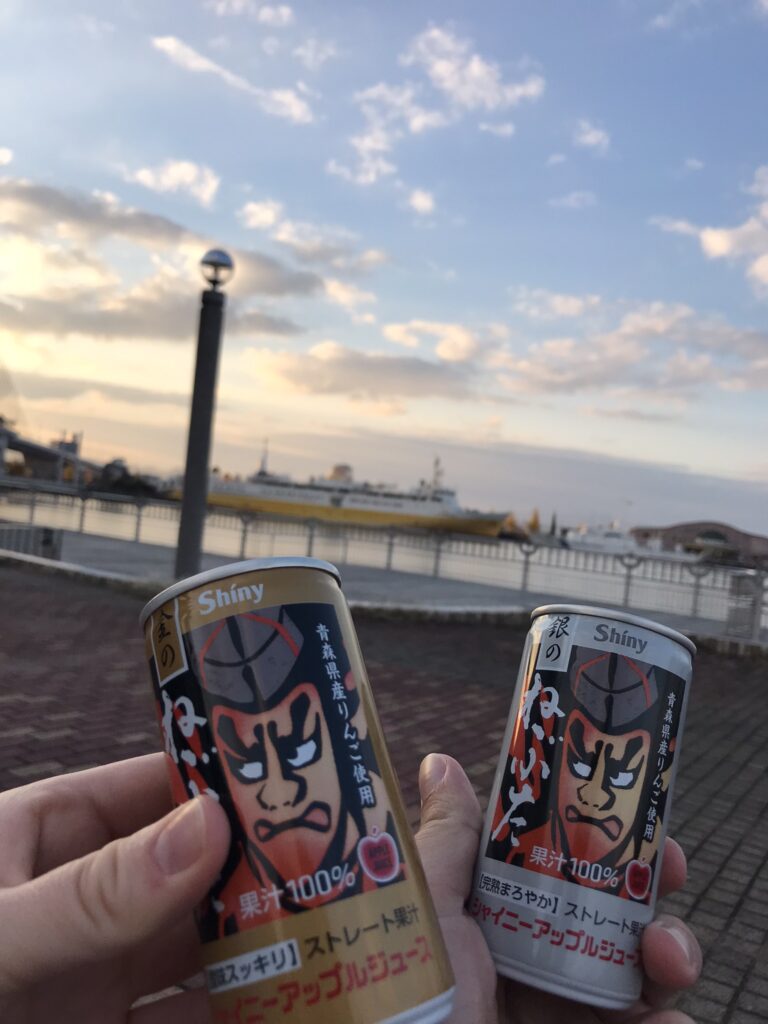
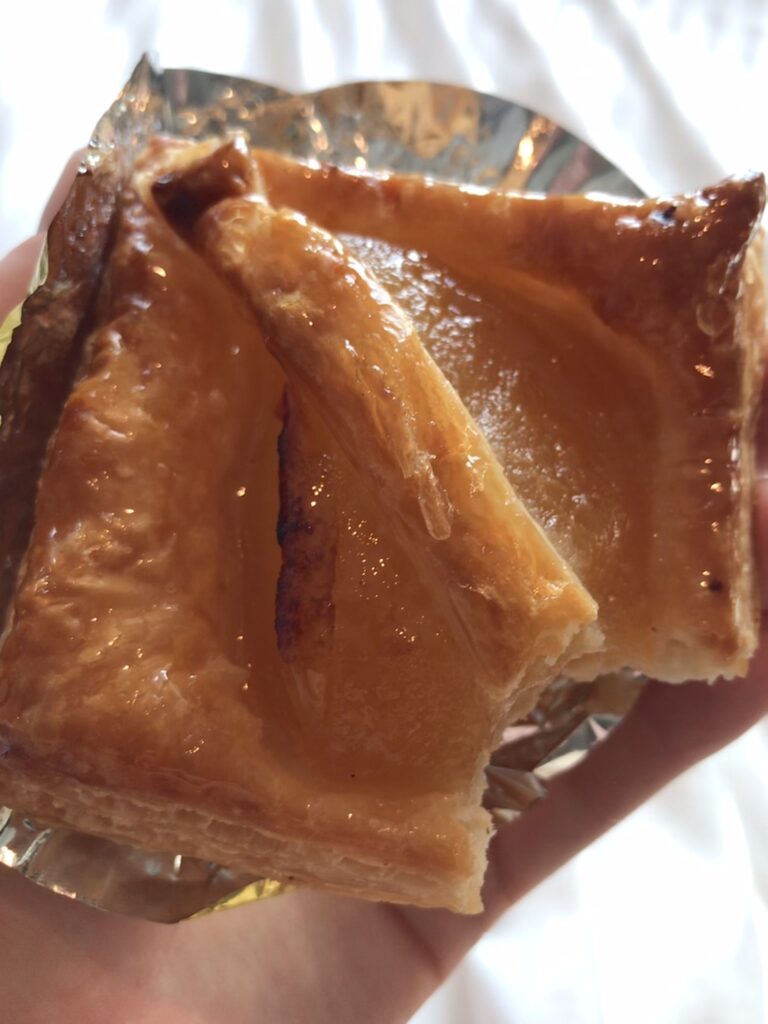
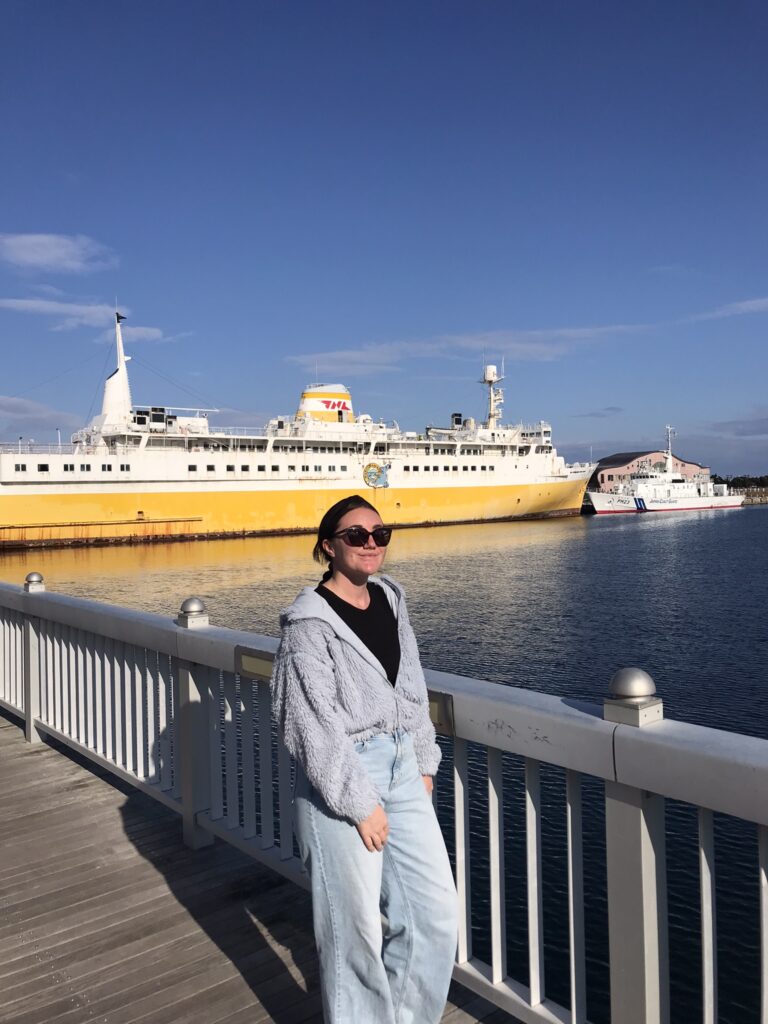
Nebuta-themed apple juice, the famous ‘Aomori apple pie’ from A-Factory and bayside views of the Hakkoda-maru
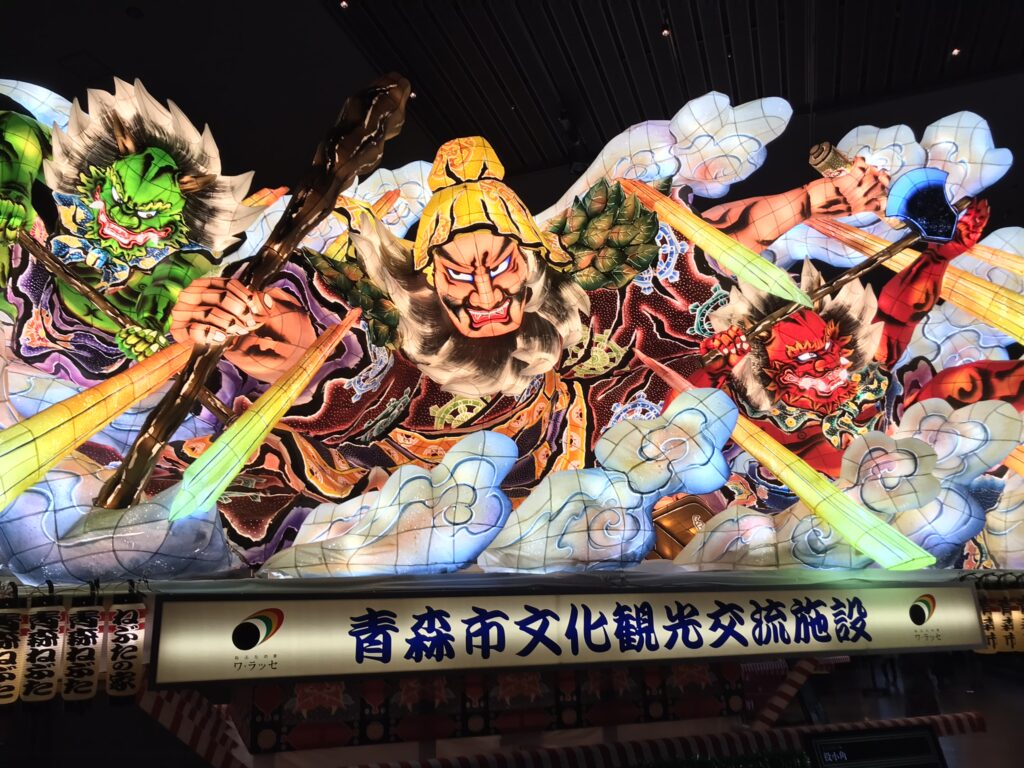
Nebuta is an annual summer festival which takes place in Aomori and the surrounding region. The festival is notable for its amazingly intricate floats, painstakingly constructed from metal wire, wood and traditional paper. Artists take the whole year to design and create the floats, which often feature mythological scenes from Japanese and Chinese folklore and classical literature. Red or green-faced demons and daring warrior heroes are popular themes. Nebuta is considered to be an ‘Important Intangible Folk Cultural Property’ of Japan, and is famous throughout the country.
Many nearby towns and villages within the region have their own Nebuta festival, but the Aomori Nebuta is considered to be the biggest and best in the area, drawing the most crowds. In Aomori, each float is sponsored by either one or multiple companies. Groups of 20 or more men are tasked with dragging the floats along the streets, whilst dancers wearing ‘haneto’ costume make up the rest of the procession alongside musicians (mostly drummers). The dancers perform a specific dance move, similar to a hop and skip. The floats are illuminated from the inside, creating a striking image at night. In recent years, the light source within the floats has evolved from hazardous candles to lightbulbs.
The Jomon Era, the earliest era of Japanese history, ran from 14,000-300 BCE. The Jomon were a hunter-gatherer society who lived in loosely-affiliated sedentary communities, and are best known for their rope-patterned pottery (known as Jomon pottery, from which the era takes its name). They developed sophisticated stone tools for hunting and fishing, as well as pit dwellings and trade networks with other communities.
Whilst Jomon sites can be found throughout Japan, Aomori has a particularly prevalent Jomon heritage. The archaeological site of Sannai Maruyama is easily accessible for visitors due to its location within the city itself (30 minute bus ride from the centre) and throughout the city you will spot depictions of the Jomon-era clay figurine known as a dogu, which functions as almost an unofficial emblem of the city.
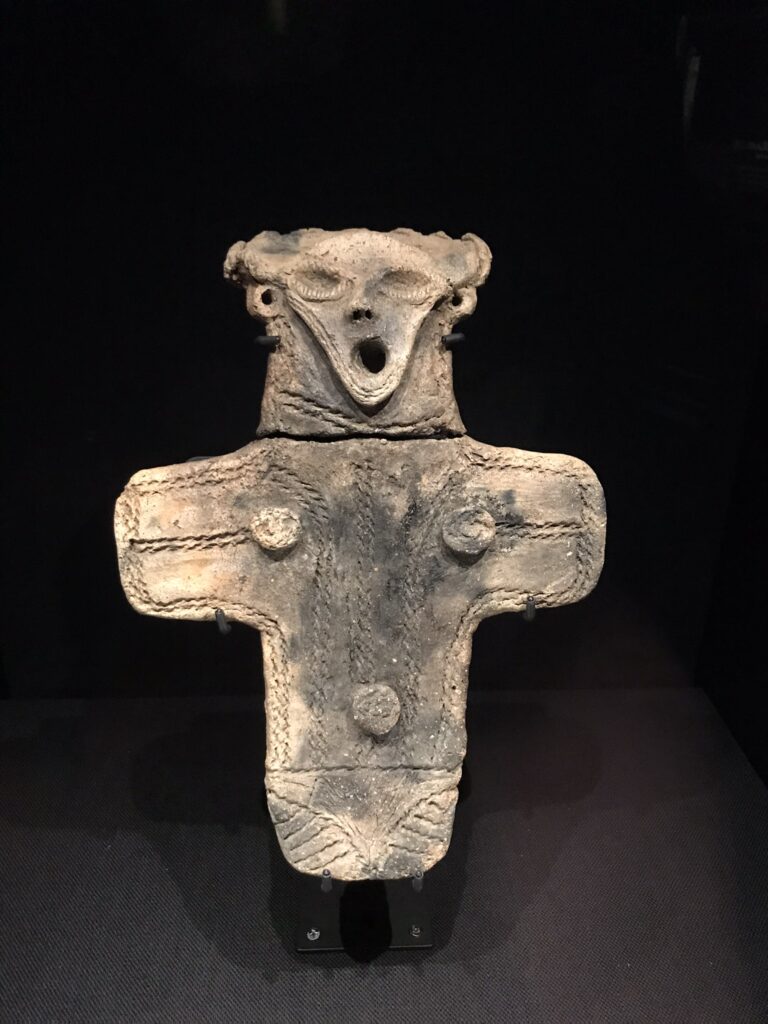
Jomon dogu figurine from the Sannai Maruyama museum
Aomori is also considered to be one of the snowiest cities in the world, due to the influence of Siberian winds blowing from across the northern sea and weather fronts meeting the mountains surrounding the city. In recent history, Aomori was the backdrop of one of the most disastrous cold-weather incidents in the world, the Hakkōda Mountains Snow-Marching Incident, in which 199 men perished in sub-zero temperatures in the nearby mountains during a military exercise in 1902 – something which is memorialised within a museum in the city.
Accommodation
Art Hostel Aomori – a pretty standard Japanese business-style hotel, with a slight twist – the lobby is filled with Nebuta-style decorations! The service was pretty good here as we accidentally booked a smoking room and were changed to non-smoking free of charge during check-in. They also took and stored a delivery of mail for us. Good price and location within walking distance of Aomori station and the city’s main attractions. Overall we were really happy with this place. Just make sure not to book a smoking room if you’re a non-smoker!
Foodie Places
キッチン〜Aja〜- a great place to experience the ‘izakaya’ culture in Japan, particularly as a foreigner. Izakayas (essentially a local Japanese tavern or pub) can be intimidating places for foreign visitors – in many cases tourists or non-Japanese speakers are simply not welcome in local izakayas, however this is one izakaya that does welcome foreigners. It also happened to be located just across the road from our hotel. Usually you may end up spending more than planned in an izakaya as there is an additional cover charge – a standing charge per customer which is added automatically onto any bill. This is common practice at most izakayas throughout Japan, but this wasn’t the case at Aja – there are notices inside the establishment which explain that they do not charge foreign visitors a cover charge as it is a cultural difference that may lead to confusion and uncomfortable situations. We thought this was quite fair. Despite not paying a cover charge, the proprietor still offered us free snacks such as edamame beans and sliced persimmon – much appreciated by us. He even apologised at one point for the loud and drunken behaviour of some of the other patrons in the izakaya! The place was packed with customers when we visited including a group of particularly boisterous businessmen downing highball after highball (whiskey cocktails). We weren’t bothered by this at all – it comes with the territory and if anything it added to the experience. Overall we had a good time here, and the food was a hit with us as well.
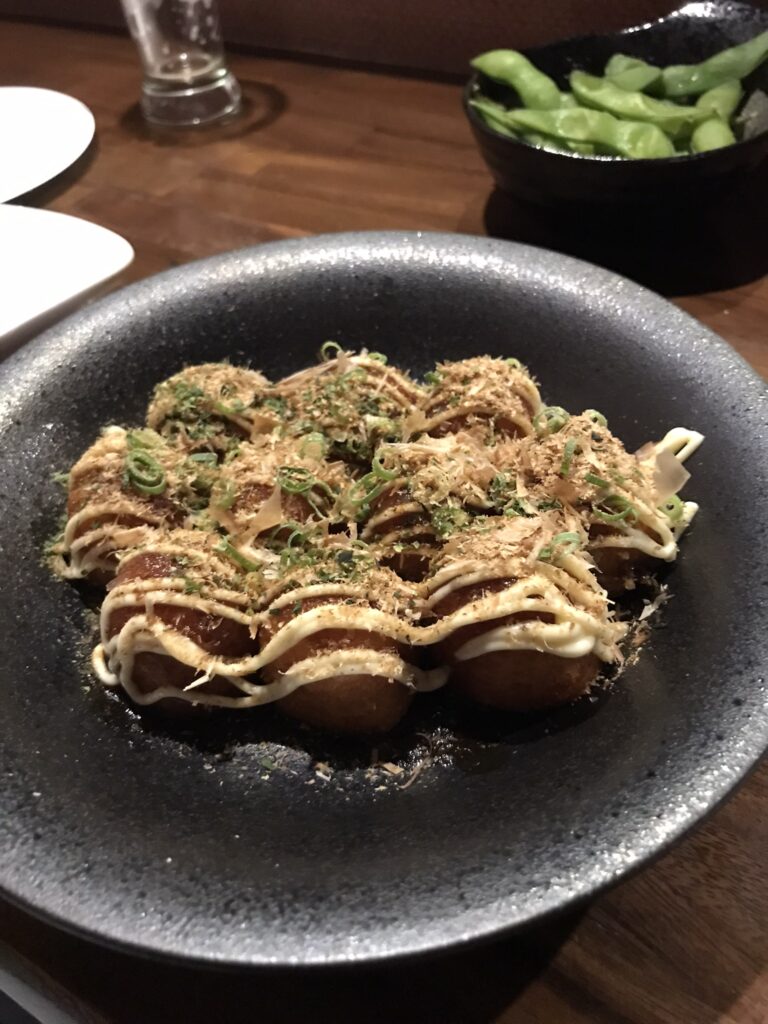
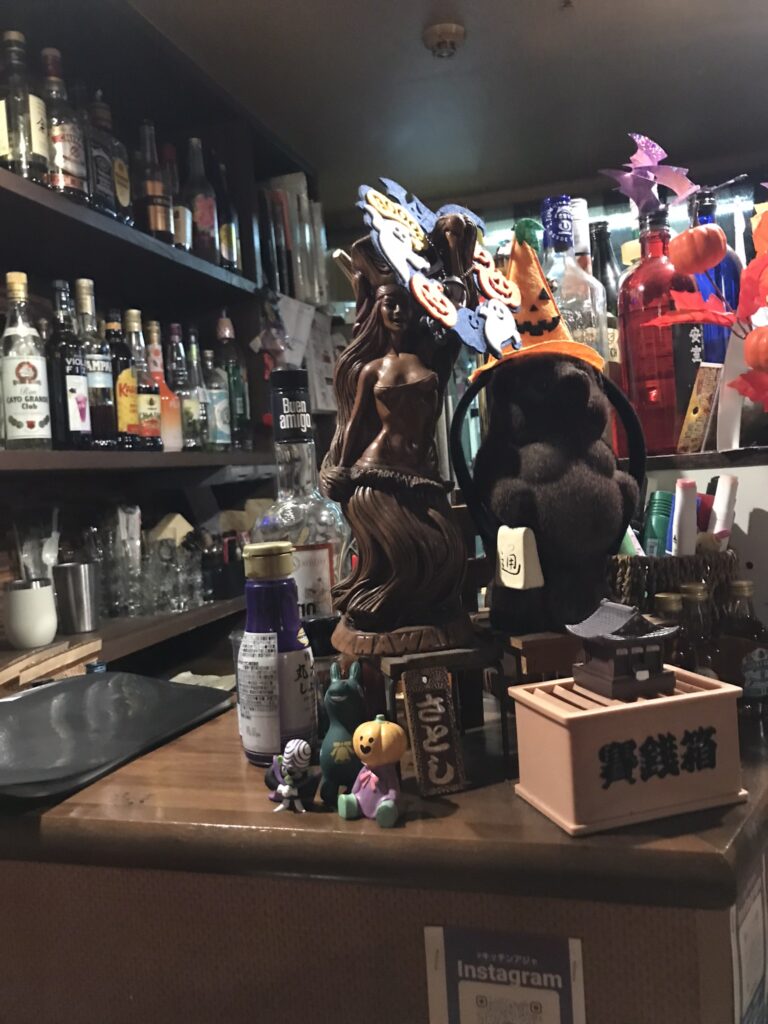
Come for the party atmosphere – stay for the delicious street food snacks at Aja Izakaya
Nounours – a restaurant-cum-izakaya serving Italian food, the food itself was nice but we were a little underwhelmed by the size of the pizza and by the fact that you had to order a drink with your meal and also pay a cover charge – a double whammy of extra costs.
にぼ節 – a tightly-packed lunch place popular with office workers, serving delicious steaming bowls of noodles topped with tempura. Expect generous portions and reasonable prices at this very local joint which is within walking distance of Aomori station. You need to order at a vending machine which is outside the front of the eatery before handing the ticket to the lady inside.
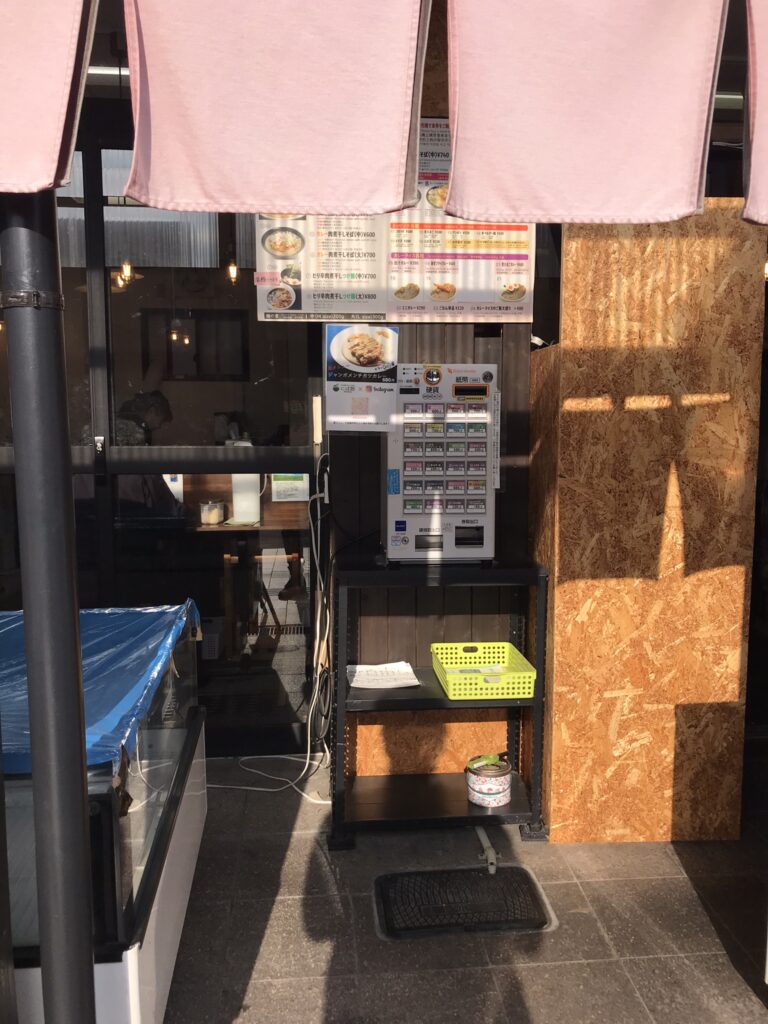
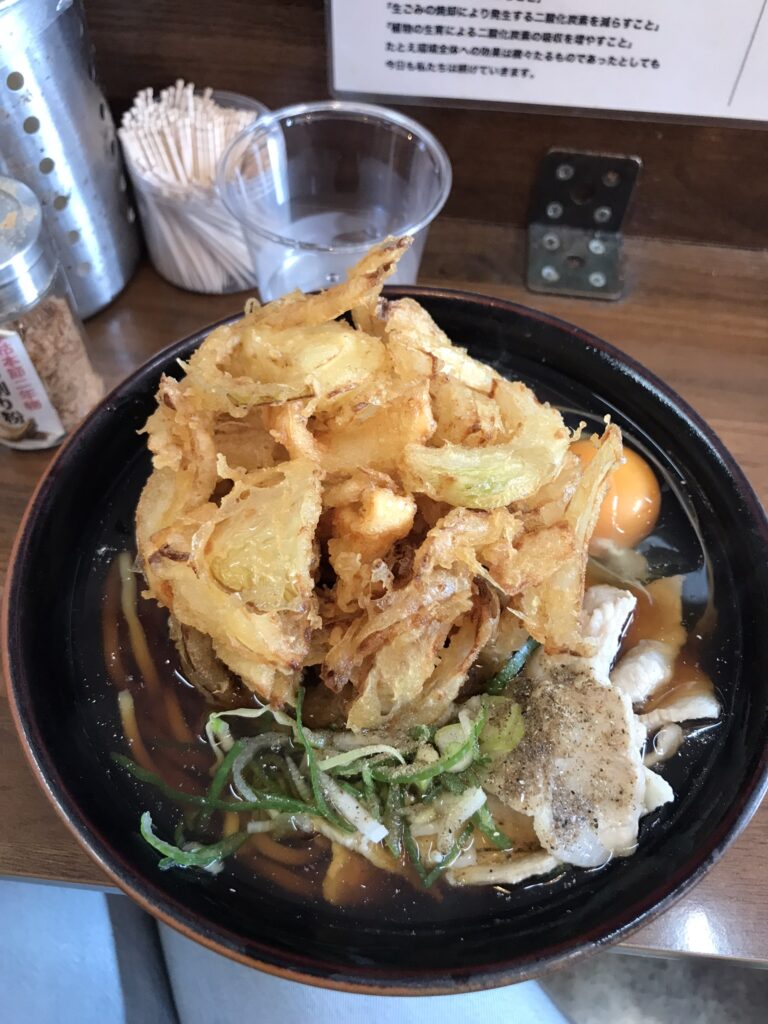
Don’t forget to order at the vending machine before heading inside at にぼ節
Aomori Gyosai Center (Aomori Nokkedon) – for a set fee (2,200 yen at the time of our visit) this market offers build-your-own seafood bowls known as nokkedon. Although a little pricey, this is an excellent opportunity to create your own seafood bowl from market-fresh seafood – especially ideal for us as we really wanted to avoid the glowing salmon roe! Head straight for the counter at the front where you can exchange your cash for 12 tokens. After that, you need to exchange a token for rice from the appointed stall – keep an eye out for signs as the rice provider changes constantly. You can then browse the various stalls within the market and exchange your tokens for whatever takes your fancy, be it scallop, fish soup, raw salmon or tuna, sea urchin or abalone. Most of the seafood is in pre-portioned trays with the price in tokens clearly displayed, which means that deciding what you want is simple and hassle-free. Some of the more intricate items are worth two or more tokens, so you can decide on your own mix of quality and quantity. There are seating areas within the market which are equipped with wasabi, soy sauce, chopsticks and hand sanitizers.
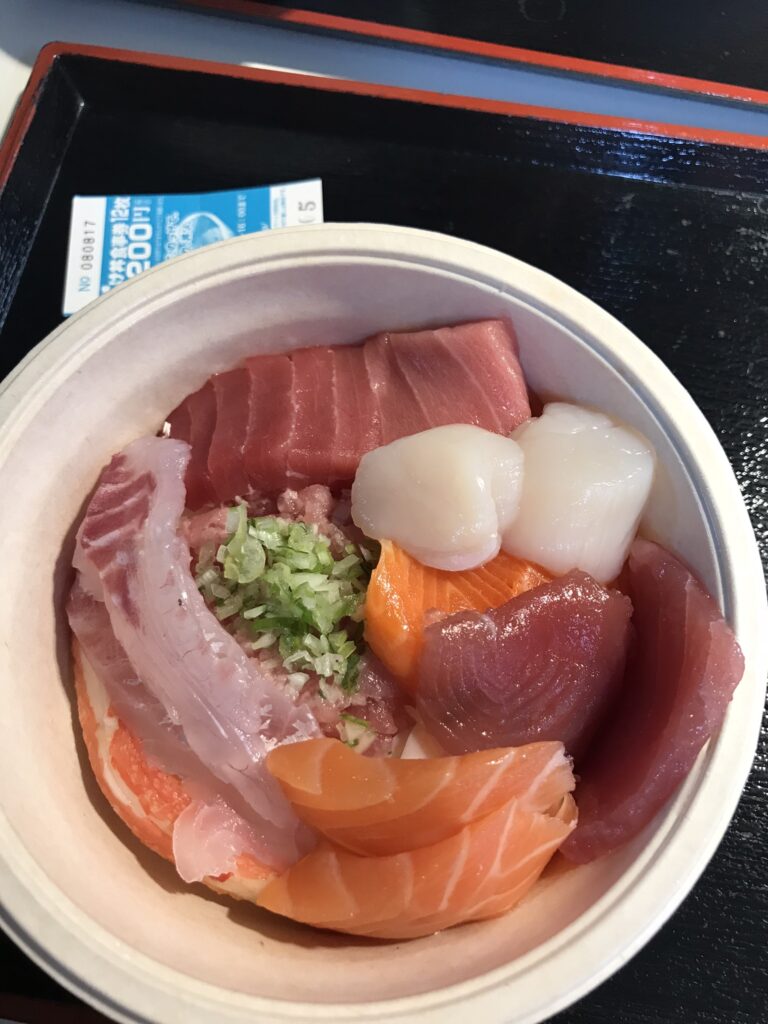
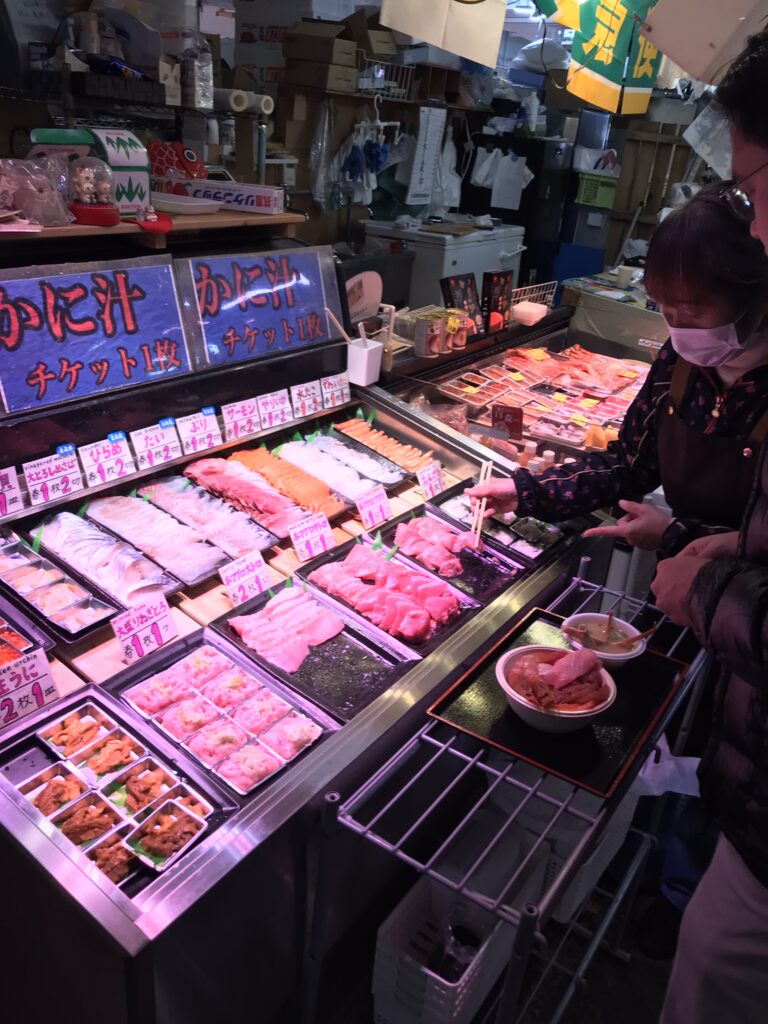
Pick and mix your own nokkedon seafood bowl at Aomori Gyosai Center
A-Factory – a one-stop shop for all things apple-related, with cider tastings, an apple themed restaurant featuring apple burgers, a cafe selling apple patisseries and the famous Aomori ‘apple pie,’ an ice-cream stall selling apple ice-cream and an extensive shop selling apple flavour souvenirs and gifts. It’s no wonder this place is packed with tourists stuffing their shopping baskets with apple-related items.
Vie de France – a French inspired bakery in close proximity to the train and bus station. Well-worth a visit to stock up on provisions before a long bus/train journey. The paninis were a hit with us!
Activities
Special Historic Site Sannai Maruyama – a UNESCO World Heritage Site, this ancient site is almost certainly the best place to learn about the Jomon period in Japan. The complex contains an extensive museum as well as a reconstructed in-situ Jomon village, where visitors can really get a sense of what life would’ve been like during the heyday of this period 4,000 years ago.
After entering the building and paying the admission, visitors are directed first to the field containing the Jomon village. Before exploring the area, visitors can borrow wellies and an umbrella from the main museum building completely free of charge, which struck us as very thoughtful.
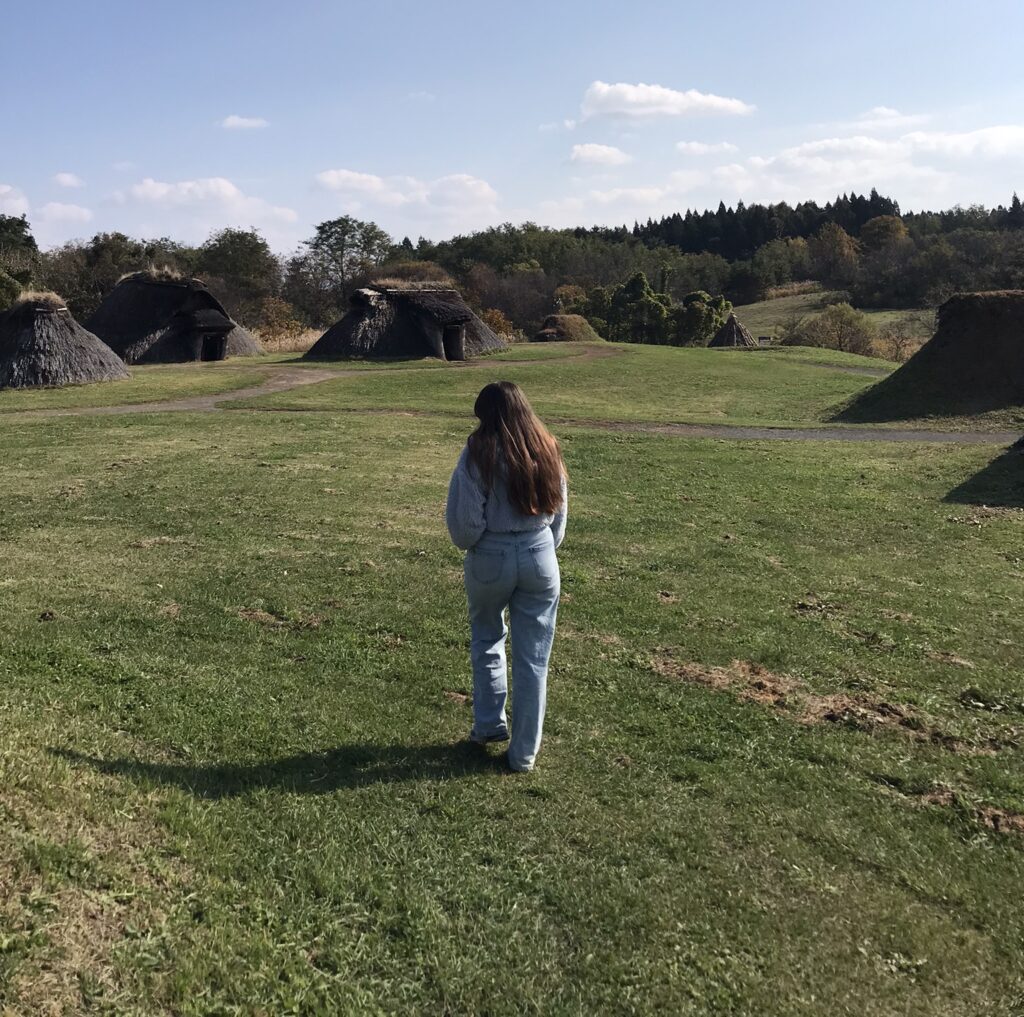
Part of the fun is going inside the reconstructed dwellings at Sannai Maruyama archaeological village
An active archaeological site, the village contains a variety of different types of reconstructed thatched wooden buildings which vary in size and function. Some are attributed to residential use, others are for public purposes such as a meeting hall and grain storage facilities (raised from the ground on stilts), and there are also more mysterious structures including a huge, many tiered tower of which archaeologists can only speculate about the official function. These structures have been faithfully restored using archaeological evidence such as post holes and remnants of recovered materials. Visitors can actually go inside most of the rudimentary buildings to get a sense of the living history – from the prevalent smell of smoke we deduce that demonstrations may sometimes take place there as well.
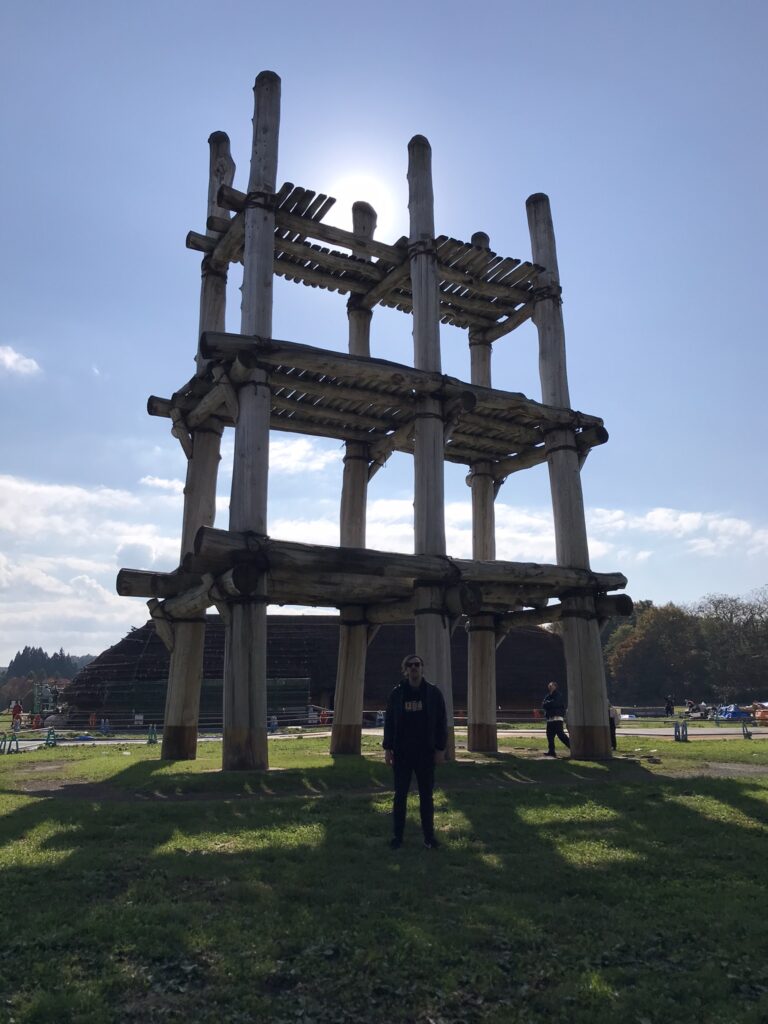
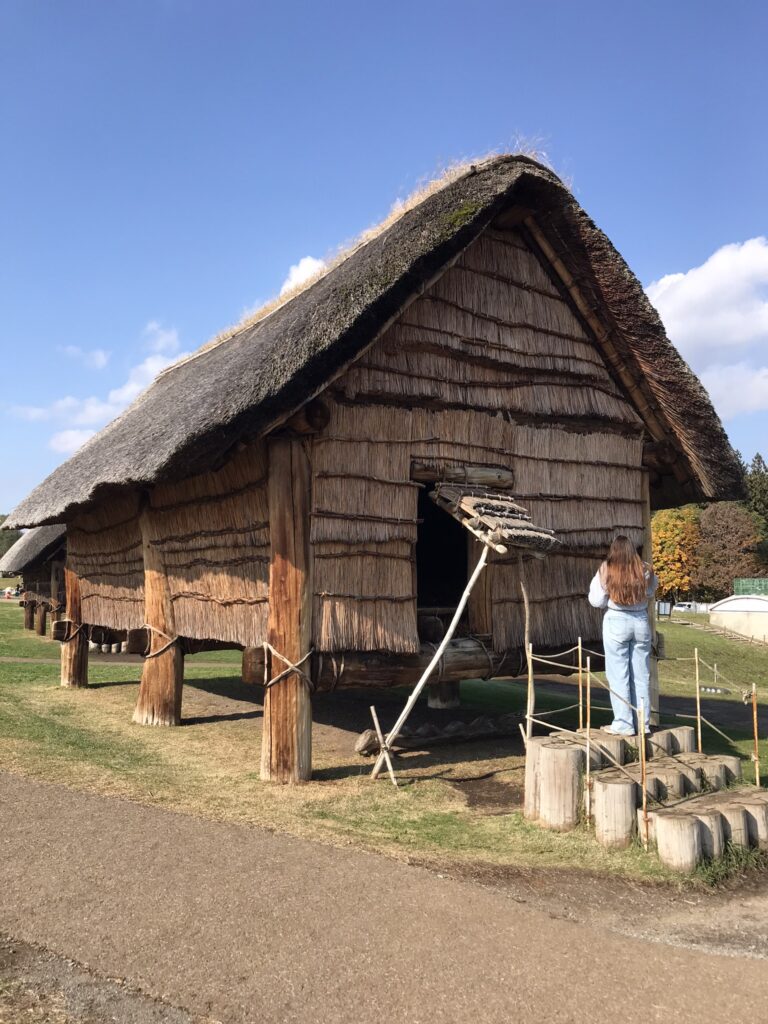
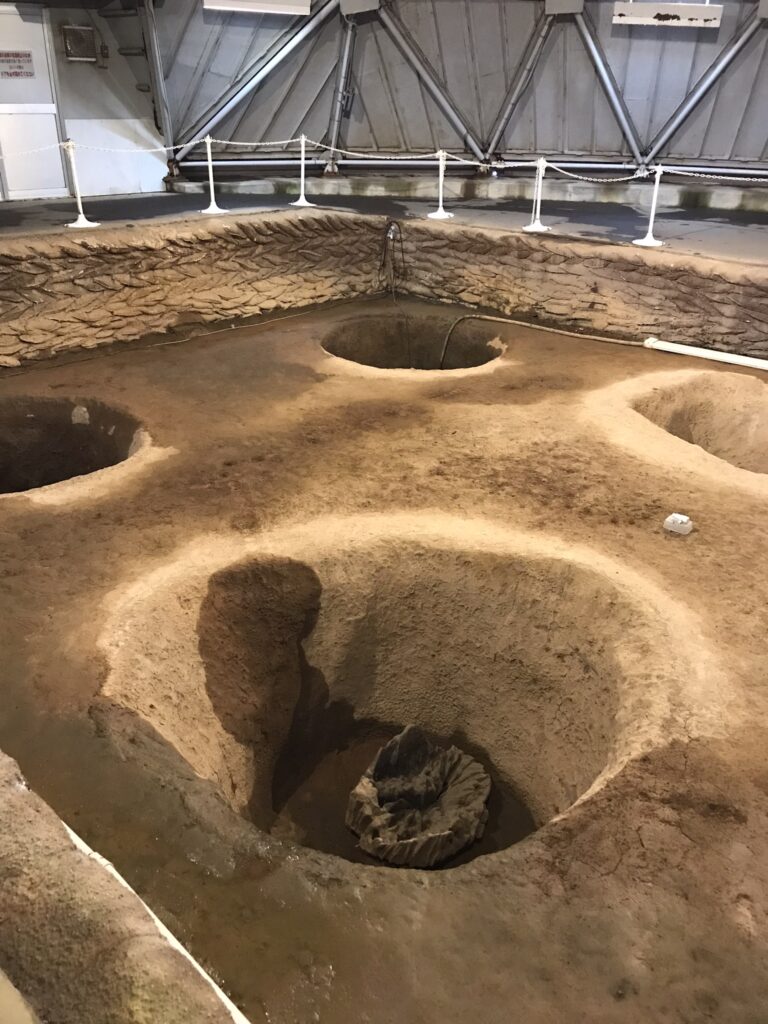
The mysterious three-tiered tower, the raised storehouse and the remains of the original posts
Some of the ongoing archaeological surveys are open for viewing in covered areas – it’s possible to see the original layers of earth, pottery shards in the dumping area and millenia-old wooden posts still situated in holes where structures used to stand. There are also a number of graves lining the main road into the village and around the periphery.
After visiting the reconstructed village, visitors can then head to an extensive museum gallery for more information about the lives of the Jomon people. In the museum we were blown away by the artifacts on display, which are some of the oldest that I have ever seen. One intricately-woven bark basket within the museum is almost 6,000 years old and still preserved in excellent condition. The museum displays are grouped around themes such as hunting, fishing and pottery, and contain interactive screens where visitors can learn more about the various artefacts and the way of life during this ancient era. The Jomon people were the original occupants of Japan, ancestors of the indigenous Ainu who were gradually displaced by the northward expansion from the Korean lands of the Yayoi people as well as intermixing and marriage between immigrating cultures, creating the Japanese population as it exists today.
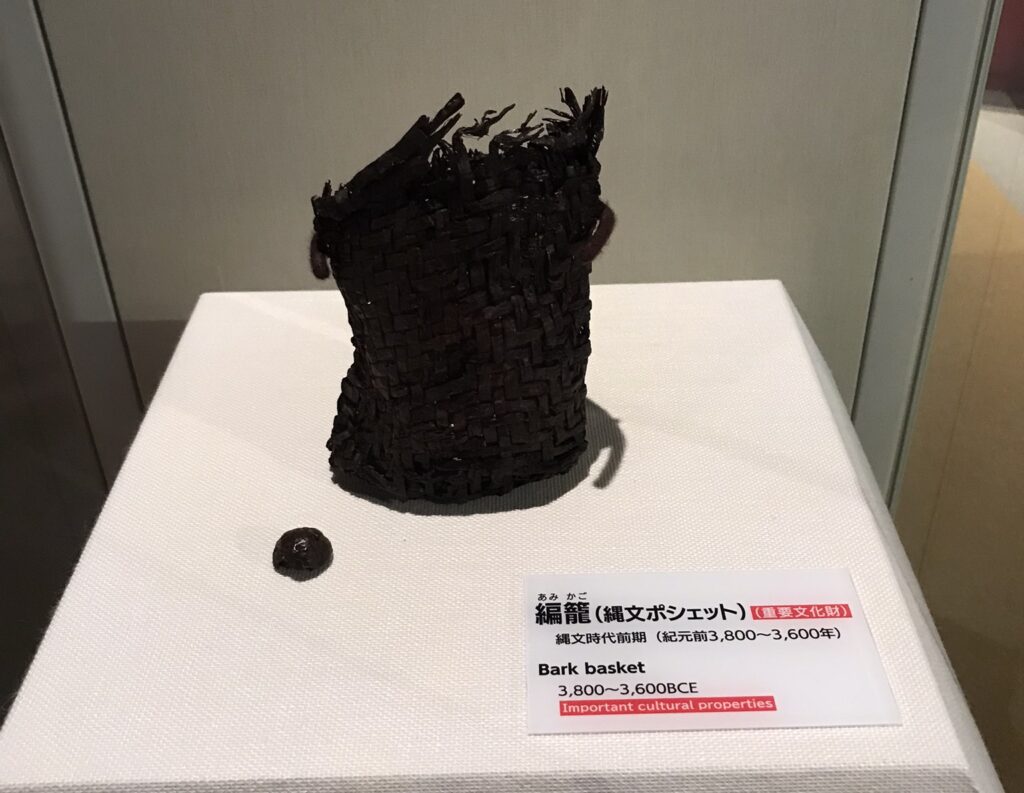
Take a closer look at the intricacy of the weaving on this almost 6,000 year old artefact
The Sannai Maruyama Site is easily accessible from the centre of Aomori by bus. In the vicinity of the archaeological site is the Aomori Museum of Art, which sadly was closed for exhibition changeover during our visit.
Wa Rasse Museum – the best place to learn about and experience Nebuta outside of the festival time itself. The museum contains videos of the Nebuta festival, photos of various Nebuta floats throughout history and information about some of the more famous designers. You can even design your own Nebuta face using an interactive screen. Shining a light on how the floats are constructed, it’s possible to see the inside of a float and actually touch the washi paper. This is then followed by an exhibition centre containing the best Nebuta floats of the previous year. These floats are considered to be the cream of the crop – not every float makes it into this gallery. Drumming performances and demonstrations also take place in this gallery at certain times. Near the exit are many Nebuta heads from various artists over the years – we even spotted two by female artists.
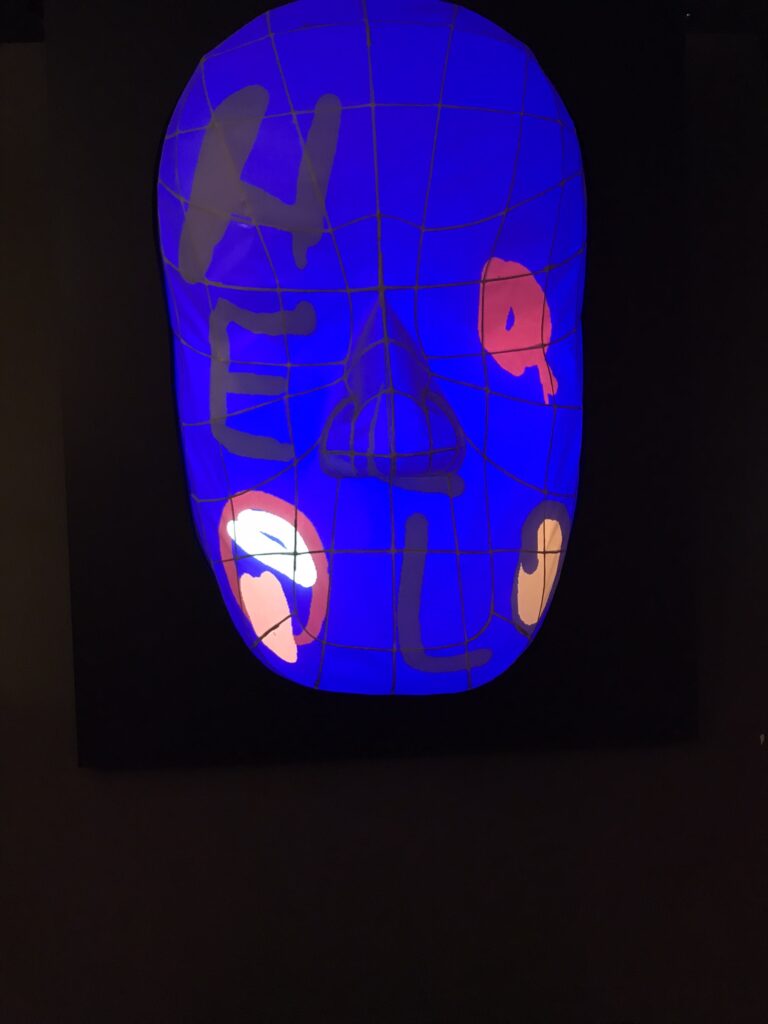
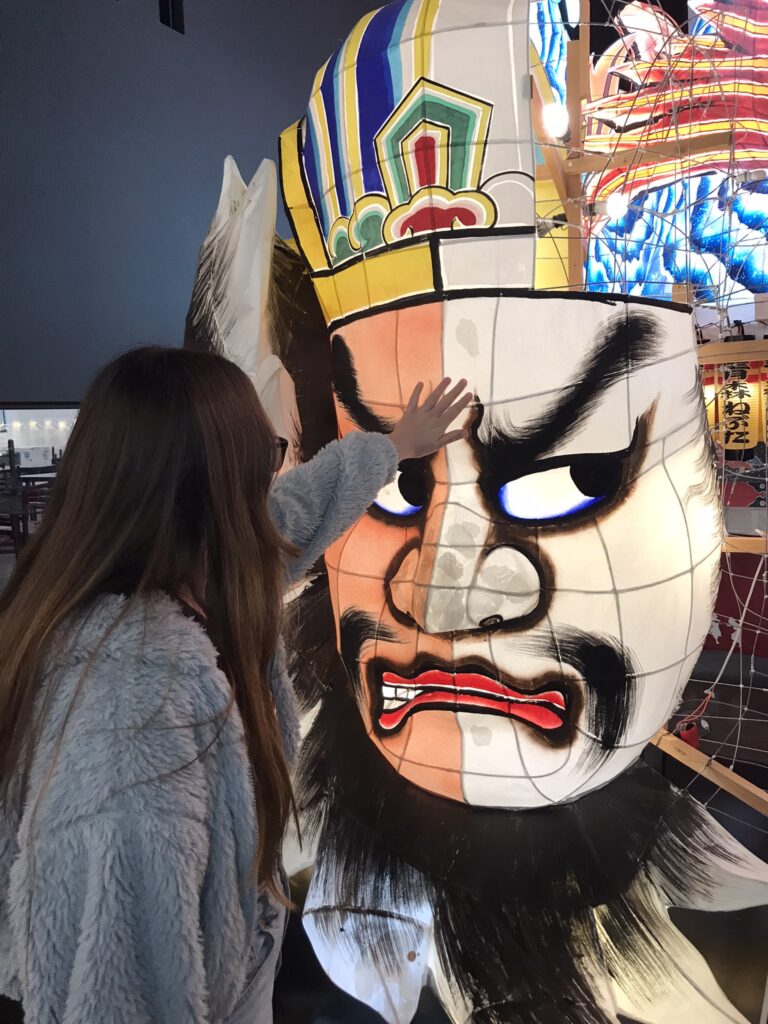
Some of the hands-on interactive displays at the Wa Rasse Museum
Hakkoda-maru Museum – permanently docked within the harbour, the Hakkoda-Maru is now a fully-immersive museum which provides a fascinating insight into the maritime heritage of the city. Delving into the bowels of this decommissioned piece of Japanese history, you can visit the bridge which has been preserved in full working order, the captain’s personal quarters in their original condition, the top deck for sweeping views across the bay, the below-deck where the rail carts were stored, the control room and the enormous engine room. This ship museum also features displays about the history of the city, including black and white photos from the past as well as recreations of street scenes, a tram car, market scenes and a train station waiting room. The recreations really bring to life the various characters and their daily existence within the heyday of the Seikan Ferry during the late 19th and early 20th centuries.
It was super interesting to us to see how rail carts were driven straight onto the ferry rather than having their cargo unloaded and then reloaded again. You can even spot the old railway tracks ending at the harbour.
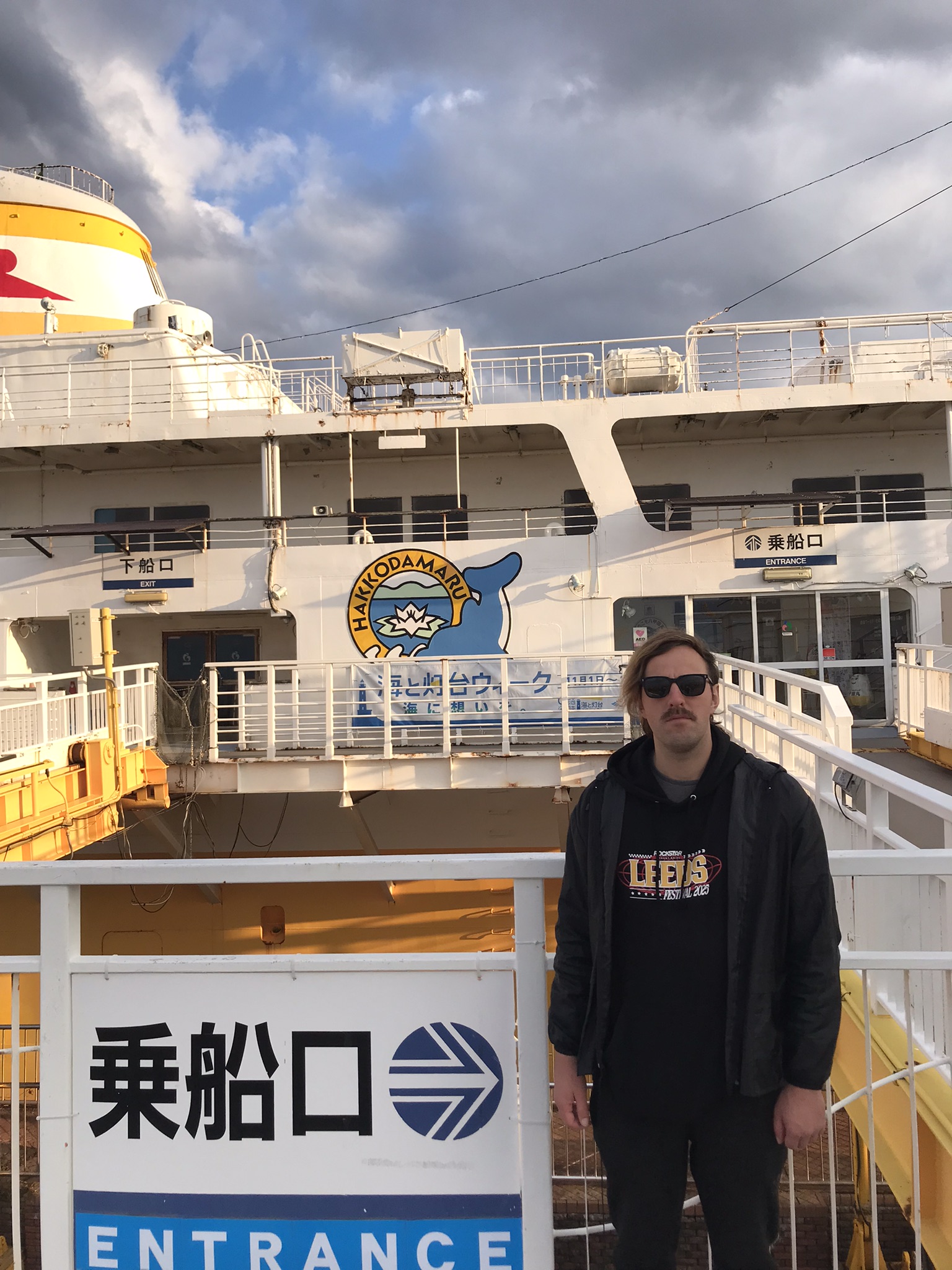
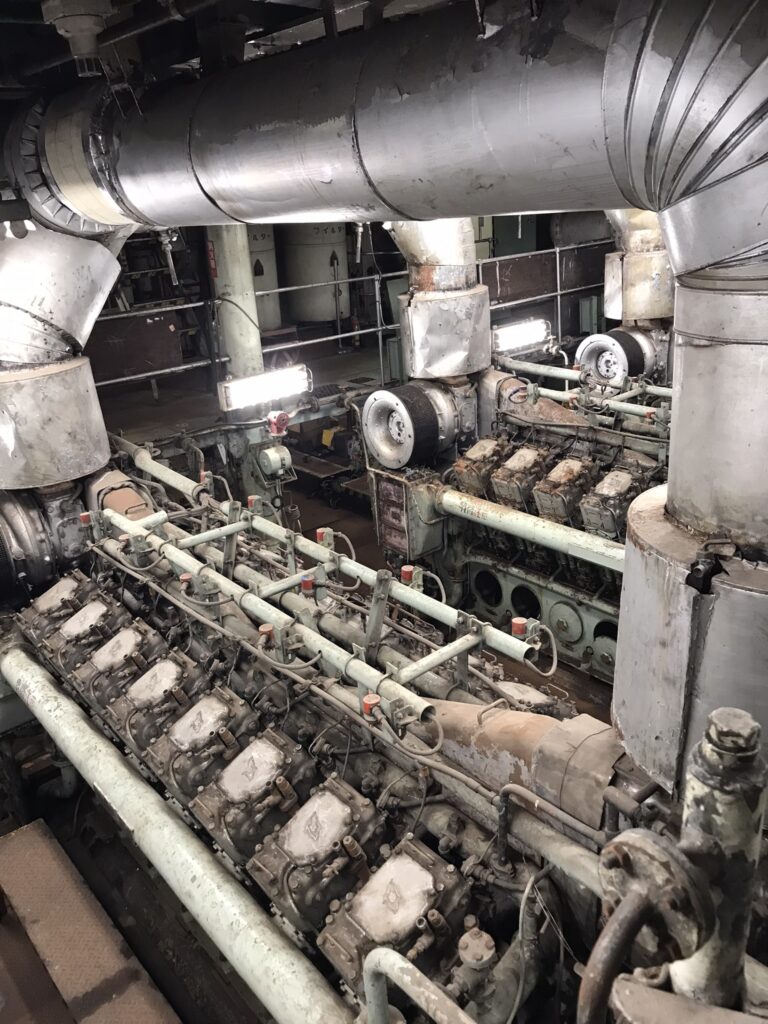
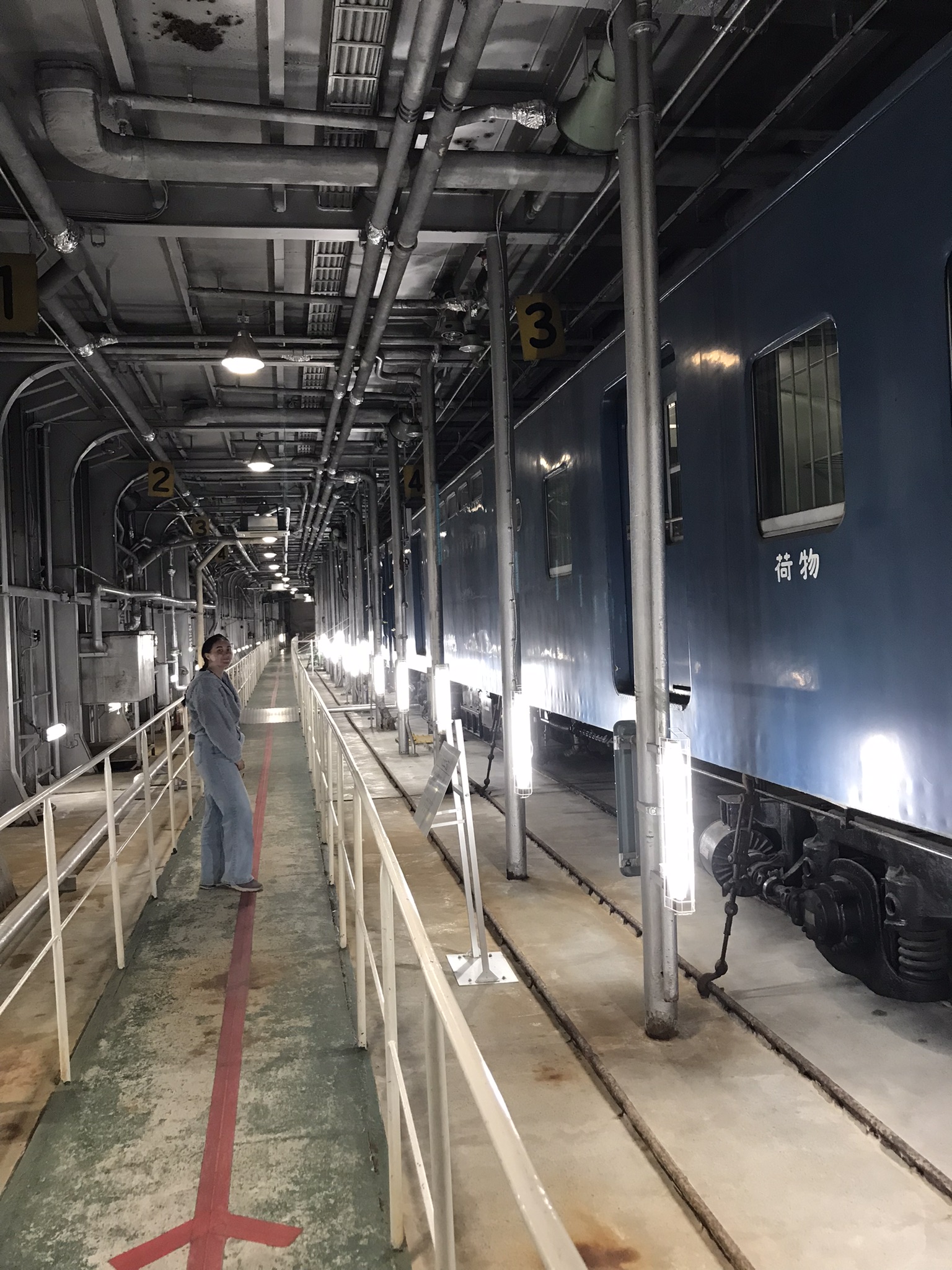
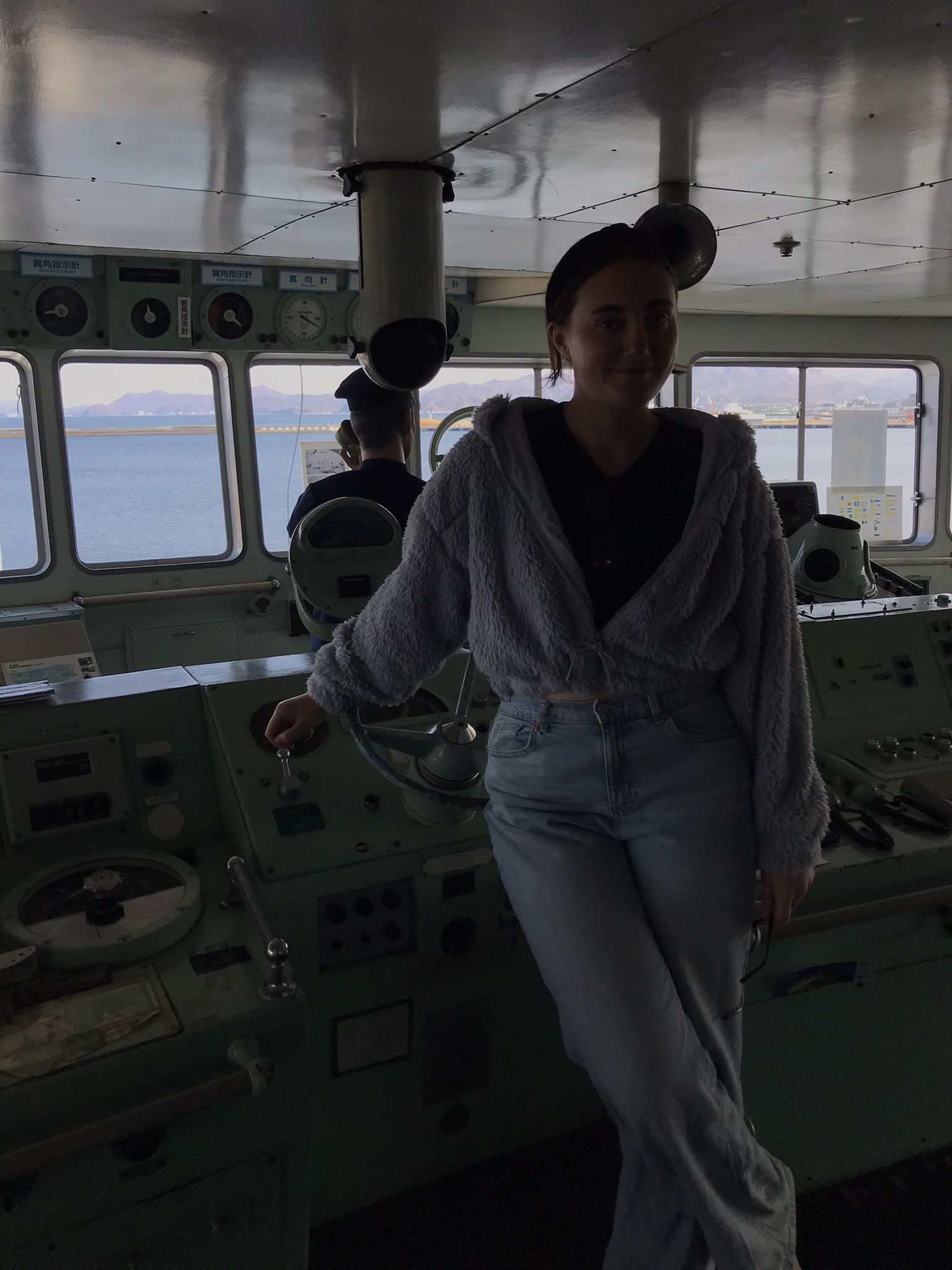
Highlights of the Hakkoda-maru Museum
Hirosaki
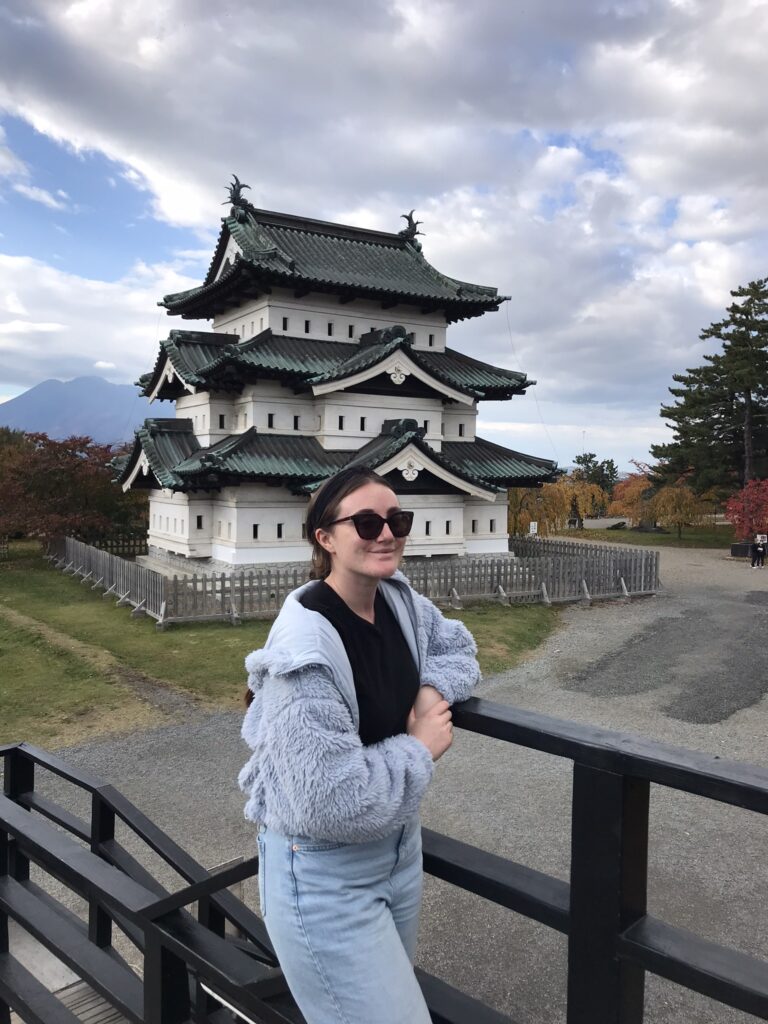
Hirosaki is a castle town located around 40 kilometres from Aomori, making for an easy day trip with frequent trains running from Aomori Station. The castle and other main attractions in Hirosaki are just about within walking distance of the train station (we walked), however it’s a good 20 minutes or more and so some visitors may prefer to take the bus from the station. Most of the town’s attractions are located in or around Hirosaki Park, which contains the castle and its former grounds.
Activities
Hirosaki Castle – as the seat of the ruling Tsugaru clan during the Edo Period, Hirosaki Castle was built in 1611 in the typical castle-fortress style of the time; 3 defensive moats around the inner compounds, impressive earthen walls, multiple grand entrance gates and distinct areas such as the Honmaru and Ninomaru. The original tenshu (main keep) only survived for 16 years before being struck by lightning and destroyed, however it was rebuilt much later in 1810. Although most of the original buildings have been lost to time, the tenshu dating from 1810, 5 original gates and some guard towers have survived – all are considered National Important Cultural Properties.
Interestingly, the tenshu was moved from its previous position at the corner of the honmaru (central bailey) to a more central location in 2015 to prevent it toppling over due to structural weaknesses. The entire building was elevated and wheeled over to its new position in an extremely complex operation. Today, visitors can enter the tenshu for a small fee – inside are a few small displays about the process of moving the historic three-story building, including a video of it actually being moved. There is also information about its original 17th century layout. You can ascend to the top for excellent views over Mount Iwake.
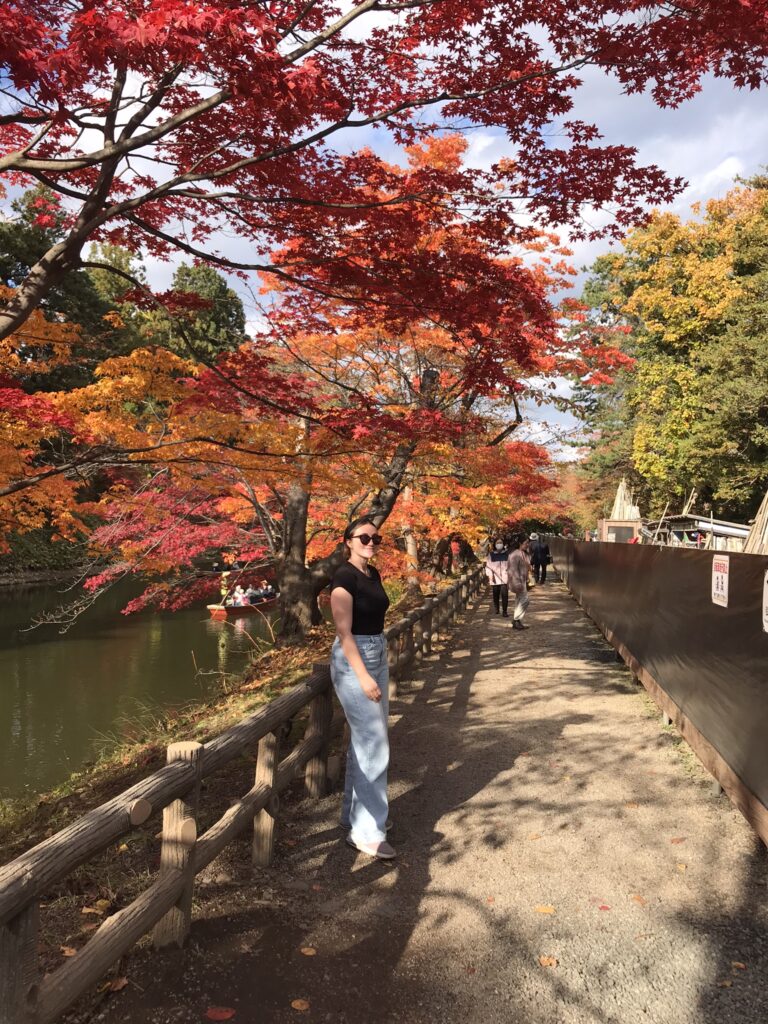
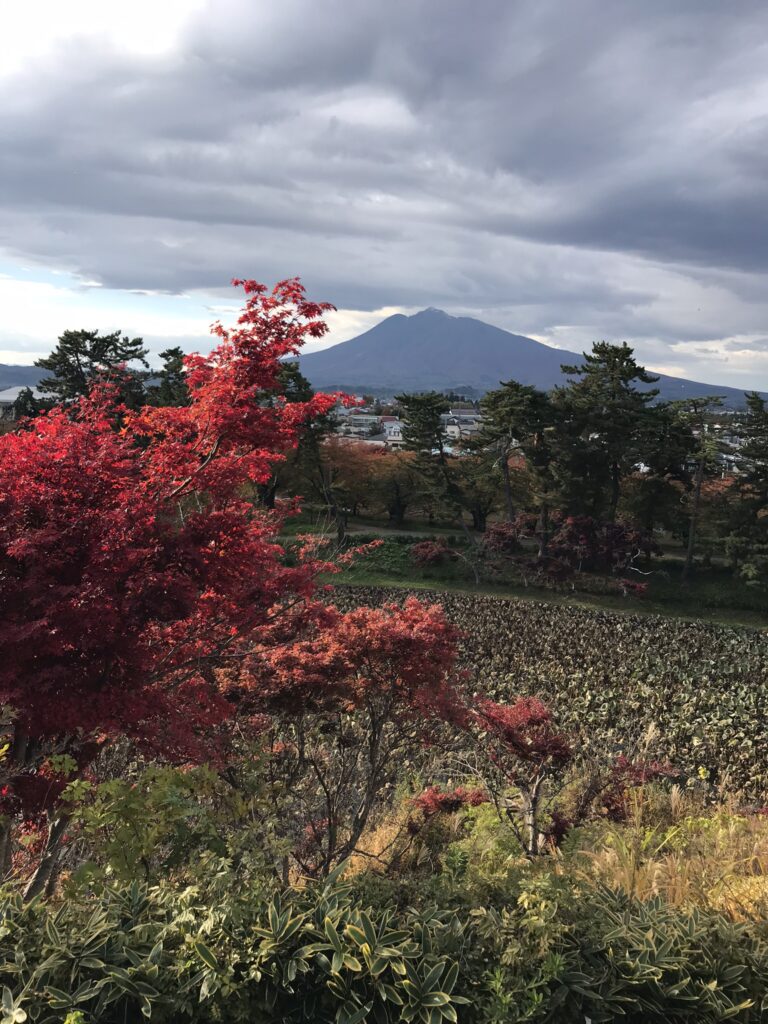
The trees in the Castle Park almost looked like they were on fire – the autumnal colours were so vibrant
The wider castle grounds are now a park, which is a vibrant place for tourists and visitors. Popular activities include viewing of the cherry blossoms in spring or the blazing autumn foliage in October and November, as well as boat rides around the castle moat. The 2,600 cherry trees lining the moat of the castle were donated by citizens of Hirosaki. The castle grounds also feature a botanical garden, although there wasn’t much to see inside at the time of our visit in early November. A combo ticket covers entry to both the castle and botanical garden, as well as the nearby Fujita Memorial Garden.
Fujita Memorial Garden – located near to the castle park, this picturesque complex was developed by a local businessman in 1919 and is included as part of the combo ticket with Hirosaki Castle and the botanical garden. The upper terrace features two properties – a traditional Japanese residence and a western-style mansion. Visitors are able to explore the inside of the Japanese-style house and marvel at the simplistic yet elegant interior design. Mount Iwake is the borrowed scenery forming the backdrop to the quintessential Japanese gardens, which span two levels. The lower garden terrace contains a pond complete with elegant bridges, a traditional tea house and a waterfall.
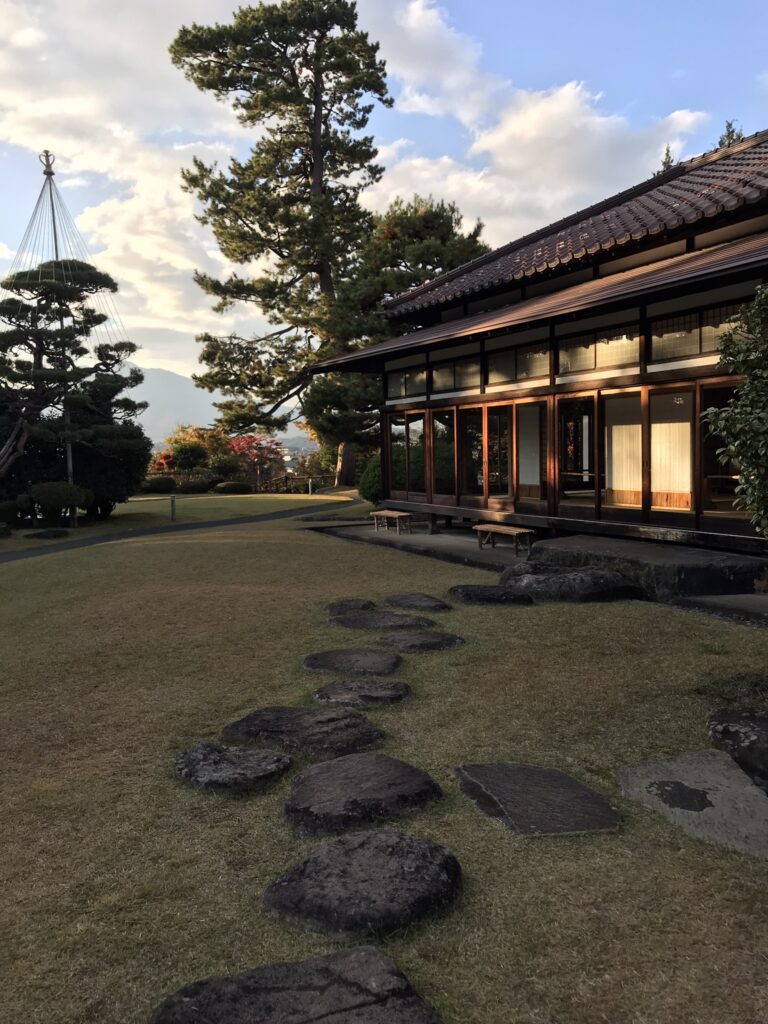
The old and the new sit side by side at Fujita Memorial Garden
Morioka
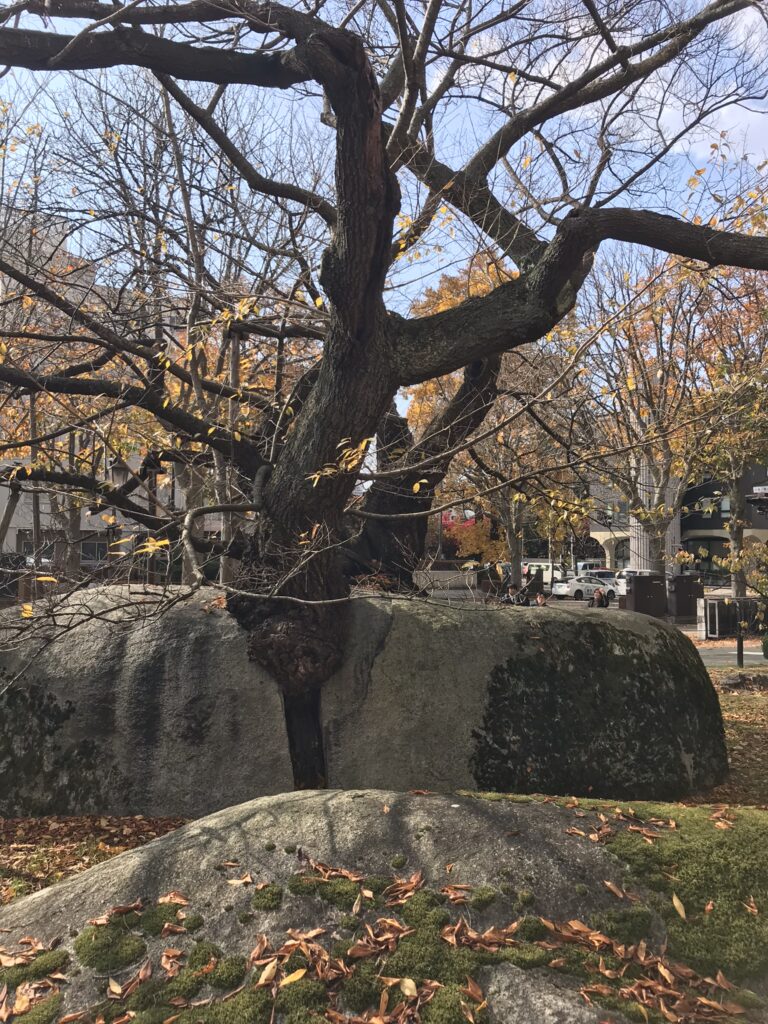
Capital of Iwate Prefecture, the small city of Morioka makes an ideal stopping point to break up the journey for those traveling north from Tokyo or Sendai to Aomori or Hokkaido. Although there are not too many obvious major sites, the city has numerous ‘low-key’ sightseeing attractions dotted around which make it a pleasant place to spend a day. Such sights include the Rock Splitting Cherry Tree (an impressive feat of nature), Morioka Castle grounds (of which only the foundations remain but have now been turned into a public park at the heart of the city), the Bank of Iwate Red Brick Building (a historic icon of the city) and, for art-lovers, the Iwate Museum of Art. Mount Iwate, an active volcano, is an ever-present sight to the northwest of the city, emblematic of the natural beauty surrounding Morioka in the eponymous Iwate Prefecture. Morioka also makes a great base for those making a day trip to the UNESCO World Heritage site of Hiraizumi.

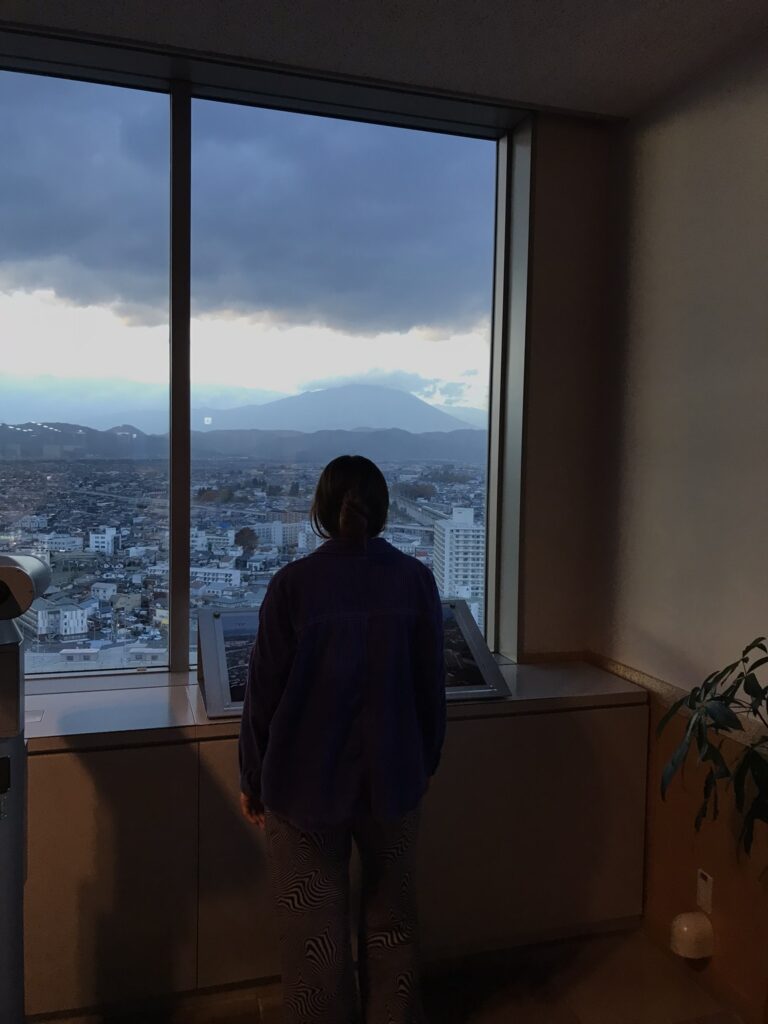
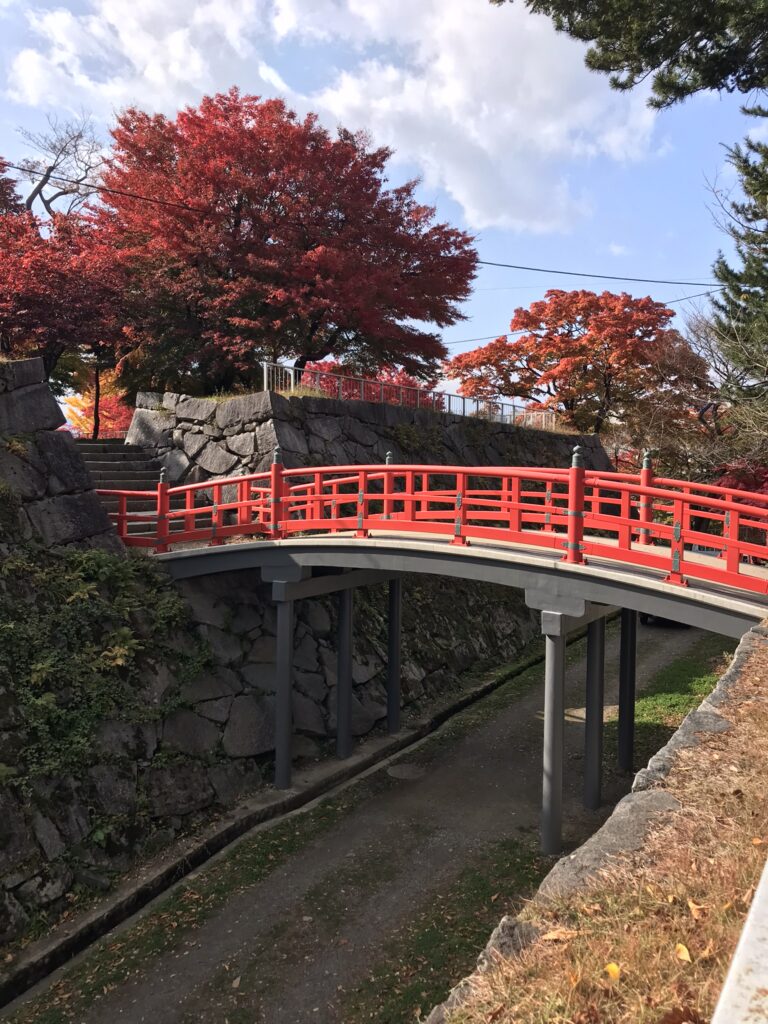
Low-key sightseeing in Morioka
A foodie city, Morioka boasts not one but three local specialty noodle dishes: jajamen (grey/green paste noodles), reimen (a cold noodle dish often topped with fruits such as pear or watermelon) and wanko soba (buckwheat noodles served in small bowls which are constantly refilled). Wanko soba forms the basis of an eating challenge, one of the things that Morioka is best known for outside of the region. To participate, the challenger simply needs to consume as many bowls of wanko soba as possible. One bowl contains just over a single mouthful and 15 bowls equates to a normal serving. This challenge is considered to be a local rite of passage. Condiments are offered and the servers are usually very enthusiastic, cheering participants on. According to the locals, a woman actually holds the record for the number of bowls consumed; 753 bowls.
Accommodation
Hotel Ace Morioka – close to the Cherry Tree Splitting Rock and Morioka Castle, this is a standard business-style hotel with the addition of a cafeteria located next to the lobby, which means that guests can heat up their bento box and sit to eat at a table rather than in a compact hotel room. The cafeteria also served free rice balls to guests in the evenings during our time there. Another quirk is that the hotel somewhat randomly contains a whole library of manga books, which guests can borrow during their stay. We were impressed by the sheer quantity of books on offer.
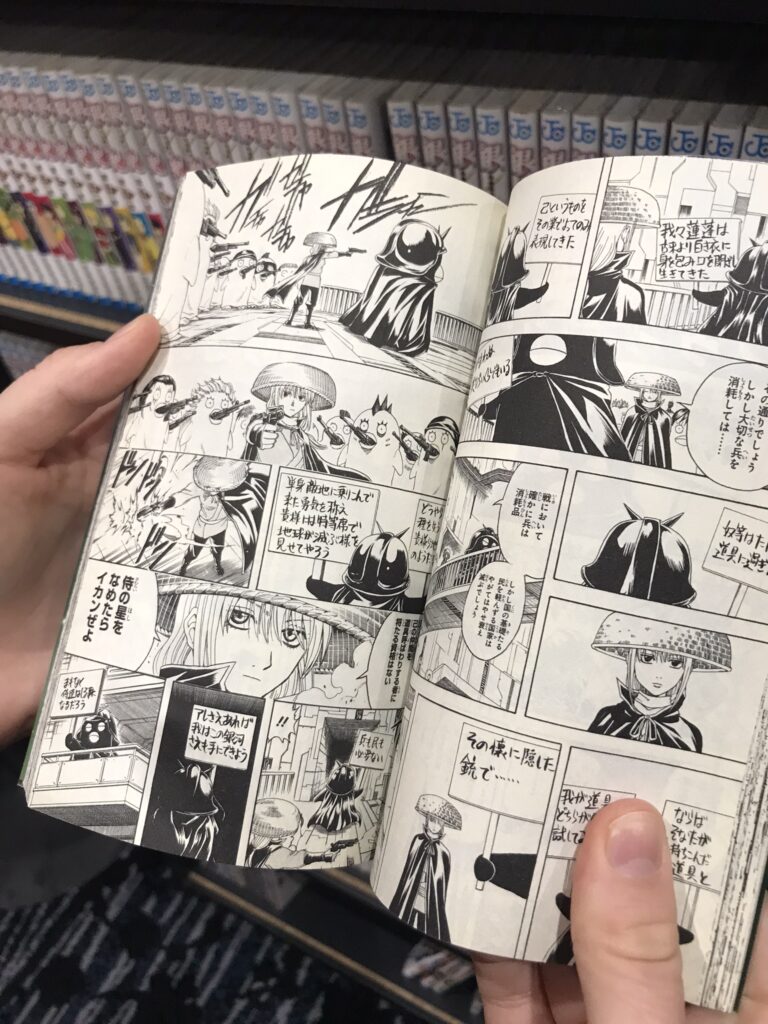
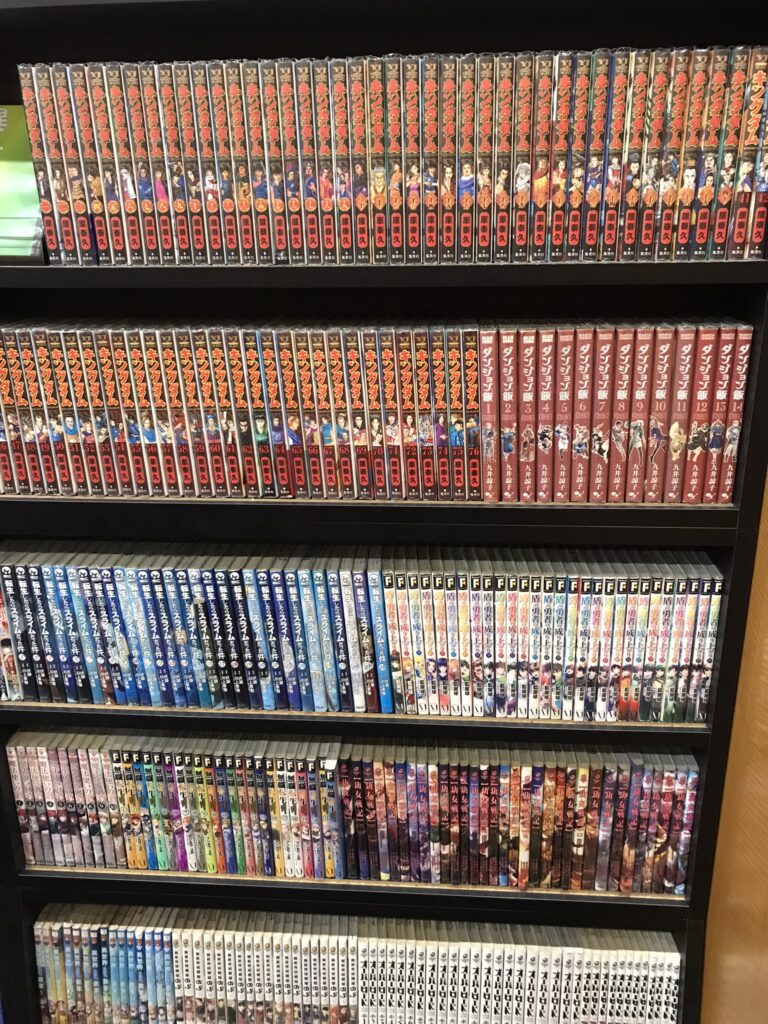
Sadly for us, the entirety of the manga collection in Hotel Ace Morioka happened to be in Japanese
Foodie Places
Kozukata Jajamen – located in what at first appears to be a second-rate deserted underground shopping arcade, keep an eye out for the bright green curtains outside the entrance. It’s a real challenge to find the stairs leading to the basement level but once you arrive you’ll be rewarded with next-level jajamen noodles by a very elderly pinny-toting lady who acts as both the server and chef. At first we struggled slightly with the language barrier, but we manged to figure it out in the end. Orders must be placed with cash in the vending machine at the entrance, although due to our general confusion when first entering the lady just took our order and payment. The trick is to order the additional egg option, which involves cracking an egg in a small amount of leftover noodles and sauce before the lady adds more stock and jajamen to create a flavourful eggy soup. I can honestly say that these noodles were some of the best we had in the whole of Japan, second only to the tsukemen noodles in Kamakura.
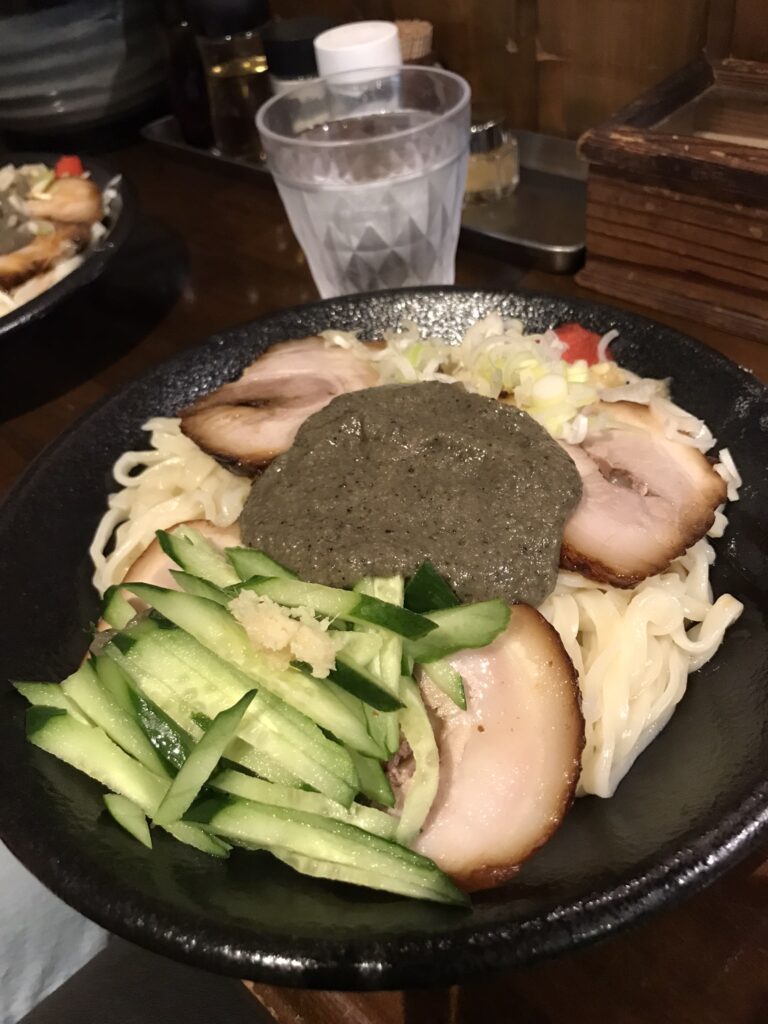
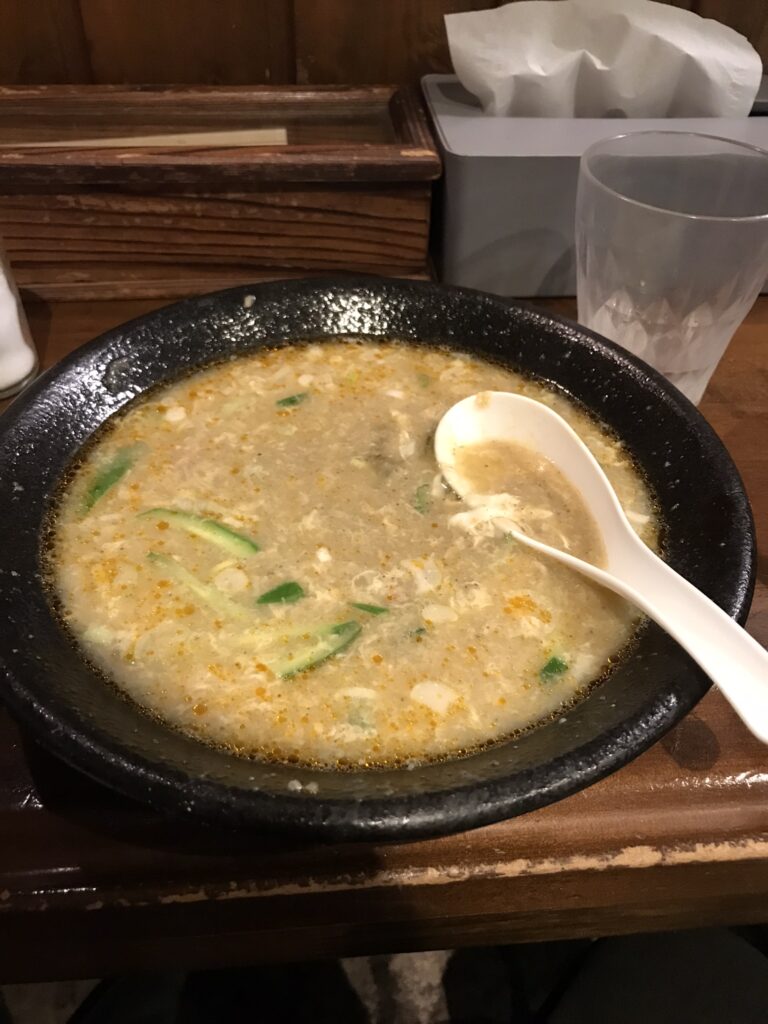
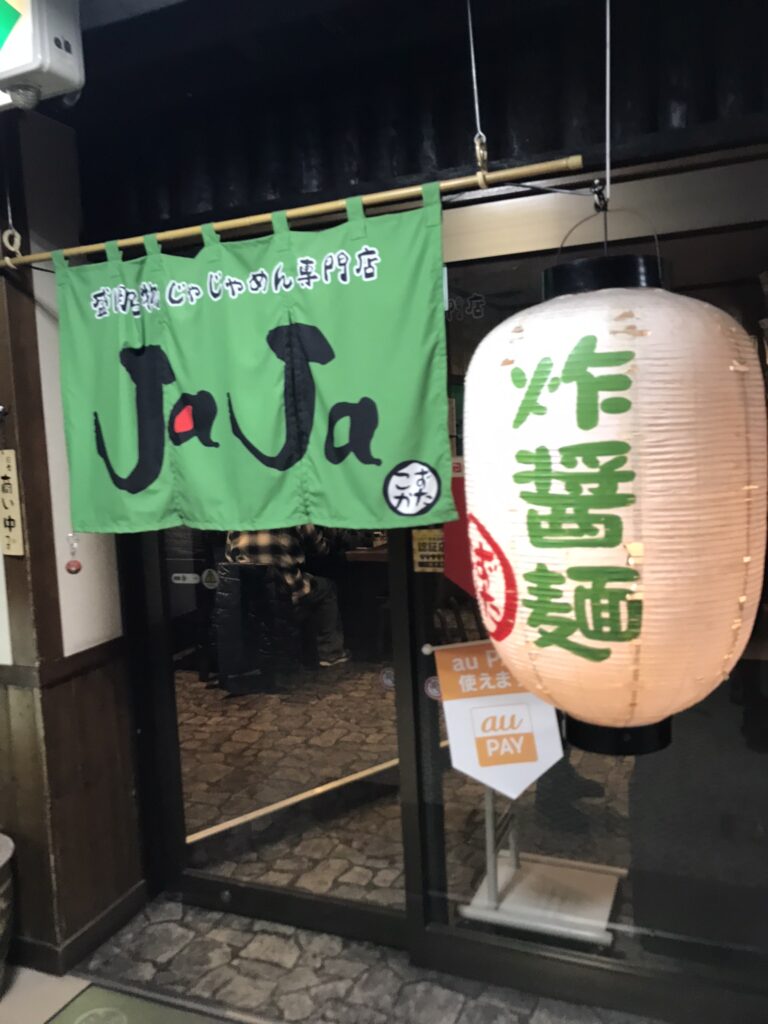
The green curtain marks the entrance to this treasure trove of jajamen
Sunoya Minamiodori – our first and only conveyor belt sushi experience in Japan. Take a seat at the bar surrounding the conveyor belt and grab anything that takes your fancy. The colour of the plate corresponds to the price of the sushi dish – price list and colour code are displayed prominently. It’s mostly cheaper dishes like salmon and tuna sushi on the conveyor belt but you can request a more expensive dish by looking through the menu and indicating to one of the servers and/or sushi chefs, and they’ll then prepare it especially for you. At the end, the server will calculate the cost of the meal from the colour and number of plates that you’ve stacked. We didn’t realise but the wasabi is actually inside most of the sushi so it’s ready to eat without needing to add any more – sometimes it blows your head off! There were also desserts on the conveyor belt. We particularly enjoyed watching the chefs making the sushi in the centre. Coming here was a really positive and budget-friendly experience, and a bucket-list activity in its own right. We received a very hearty goodbye from all the sushi chefs when we left.
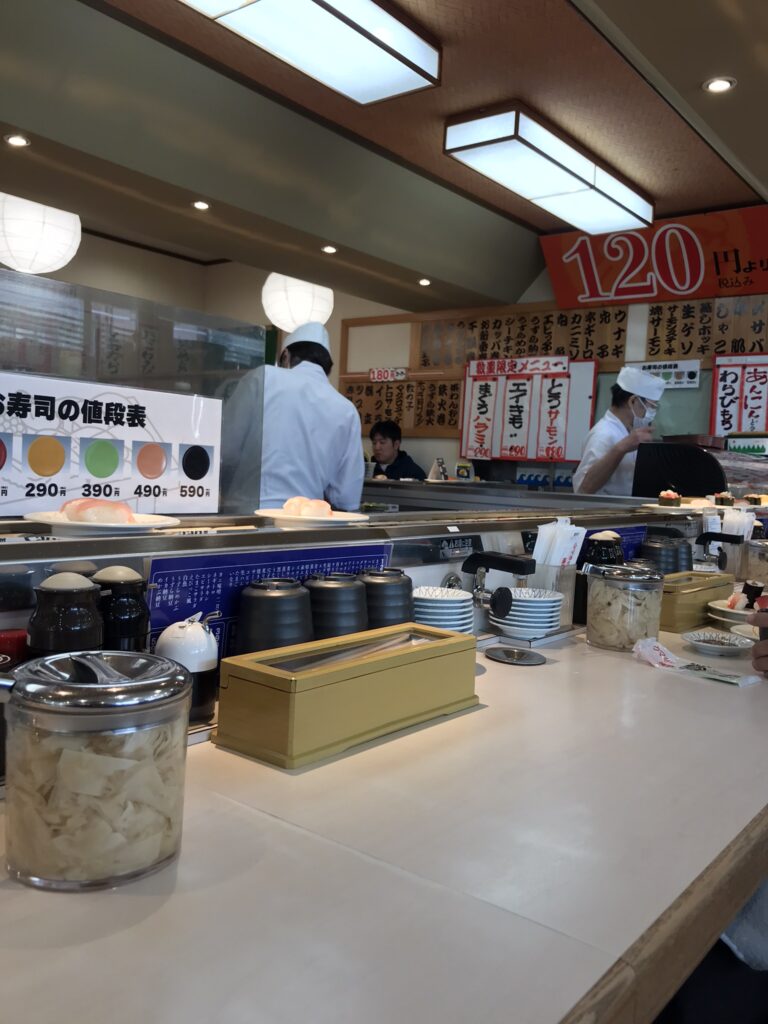
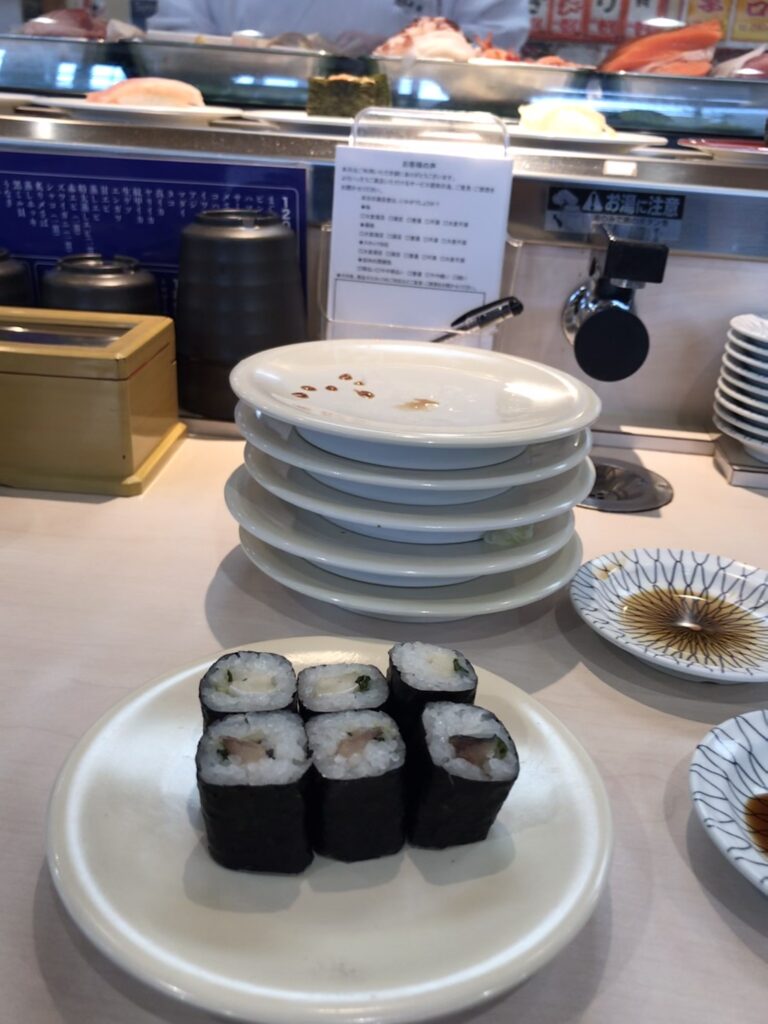
Our grand total was about 15 plates at Sunoya Minamiodori
It’s rare to find an inexpensive local sushi place with such high ratings. We scoured the whole of Japan for another place like this but couldn’t find one – I’m sure they exist but maybe not in the areas that we were primarily based in.
Nanshoso – the tearoom within this tourist attraction makes for a great and relatively inexpensive place to try matcha tea.
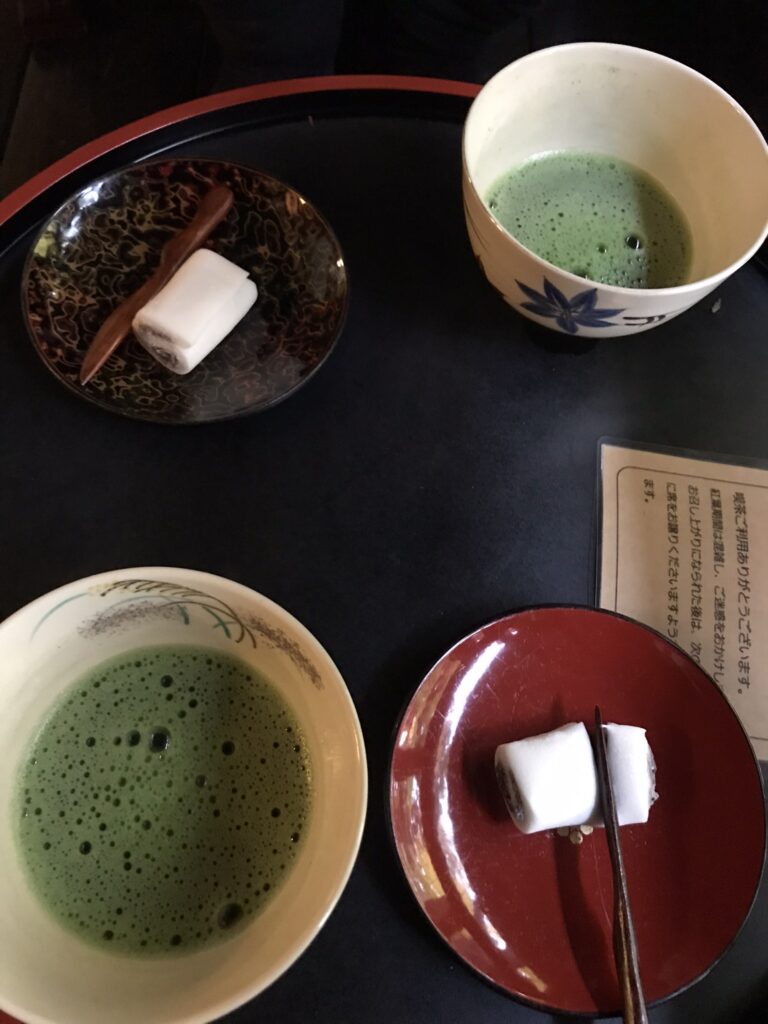
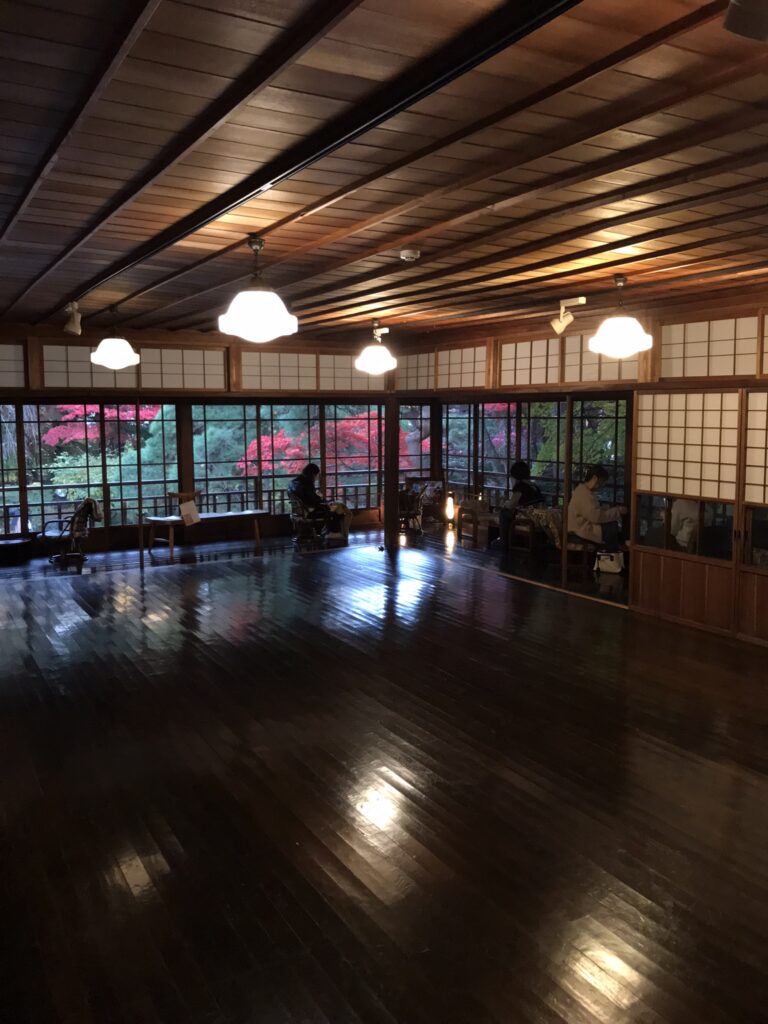
Nanshoso has a very refined atmosphere to sip on matcha tea and nibble at a traditional Japanese sweet
Activities
Self-guided walking tour with stops including: Ishiwarazakura – The Rock-Splitting Tree, Morioka Castle, Morioka History and Culture Museum, Bank of Iwate Red Brick Building, Morioka Takuboku and Kenji Museum, Seiryusui Spring, Hara Takashi Cemetery, 16 Arhut Statues, Morioka Machiya-Story Museum (haunting women singing opera), Daiji-shimizu Spring, Former Governor Ishii’s Residence, Nanshoso, Birthplace of Inazo Nitobe, Kaiun Bridge and Malios 20th Floor Observation Room.
Dan has generously created a replica of our walking route with all the fascinating attractions along the way – click here to view our ‘low-key sightseeing walking tour.’
Iwate Museum of Art – containing a fascinating collection of portraits and other artworks by Japanese artists. It was basically empty when we visited just before closing – we more or less had the place to ourselves. There is an added bonus of extra information in English about particularly interesting works of art, available on handy lamented placards. As is the norm in Japan, the special exhibition costs much more than the smaller permanent exhibition so we stuck with the permanent collection.
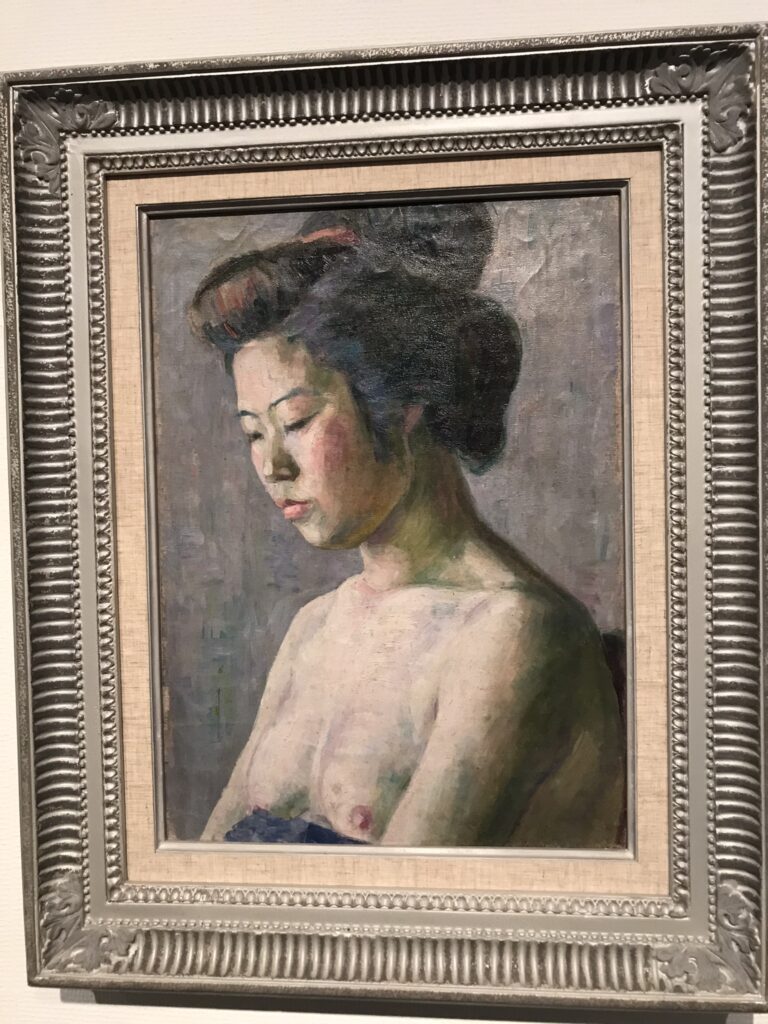
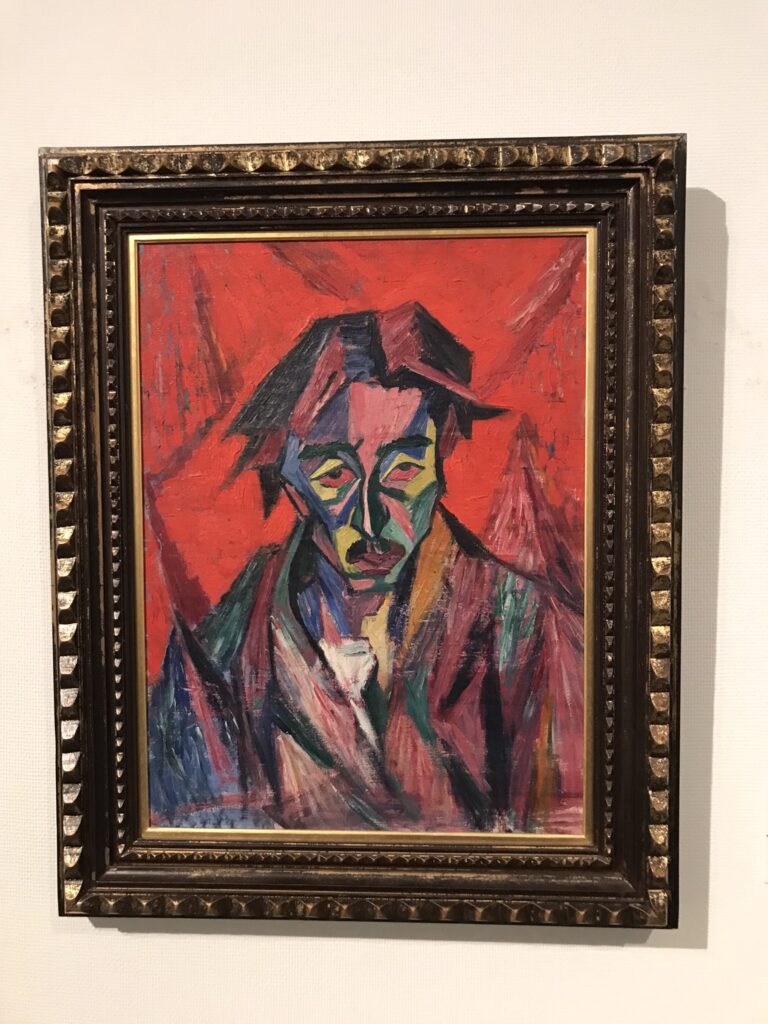
Striking portraits at Iwate Museum of Art
Hiraizumi
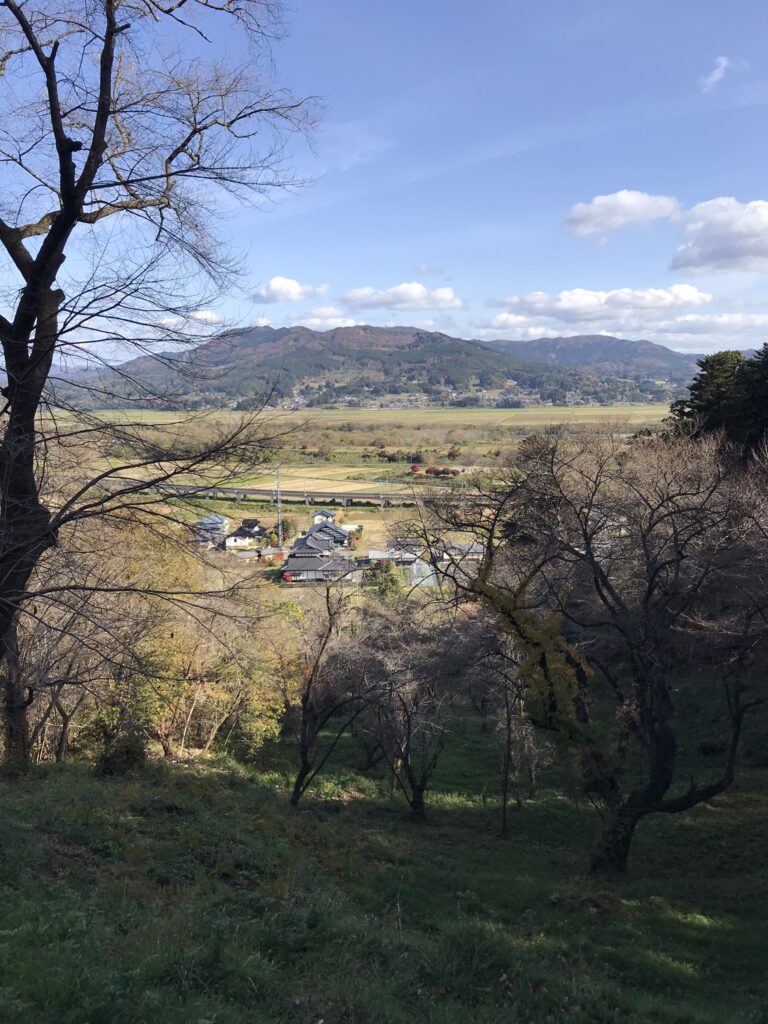
The UNESCO World Heritage site of Hiraizumi is an easy and inexpensive day trip, with direct local trains running from Morioka. We chose to visit en-route from Morioka to Sendai – we took the train from Morioka to Hiraizumi and stashed our bags in the lockers at Hiraizumi station while exploring the area. Once we were finished, we took the train from Hiraizumi to nearby Ichinoseki, and then took a cheap highway bus from outside Ichinoseki train station onwards to Sendai. This trip was really easy to complete and buses and trains are frequent so I feel like it could easily be done in the other direction too.
Modern-day Hiraizumi is such a peaceful and quaint village that you would never believe it was once the center of political power in northern Japan, home to 100,000 citizens at its zenith. The most popular attraction for visitors is the Chuson-ji temple complex, containing historic wooden shrines lining the route up Mount Kinkei. We found the complex’s Noh stage to be a particularly interesting feature. There are some stunning countryside vistas on the steep hike up over the surrounding verdant valley. Halfway up we stumbled across a lovely thatched teahouse offering refreshments. Most of the site is free to visit, with the entrance ticket covering the Treasure Gallery and Golden Hall (a shrine entirely covered in gold leaf with gold decoration and Buddhist statuary inside), both of which are definitely worth the money (although sadly photos are not allowed inside either). We definitely spotted a few Shinto features such as a white thunder-shaped ‘shide’ decoration and red torii gates.
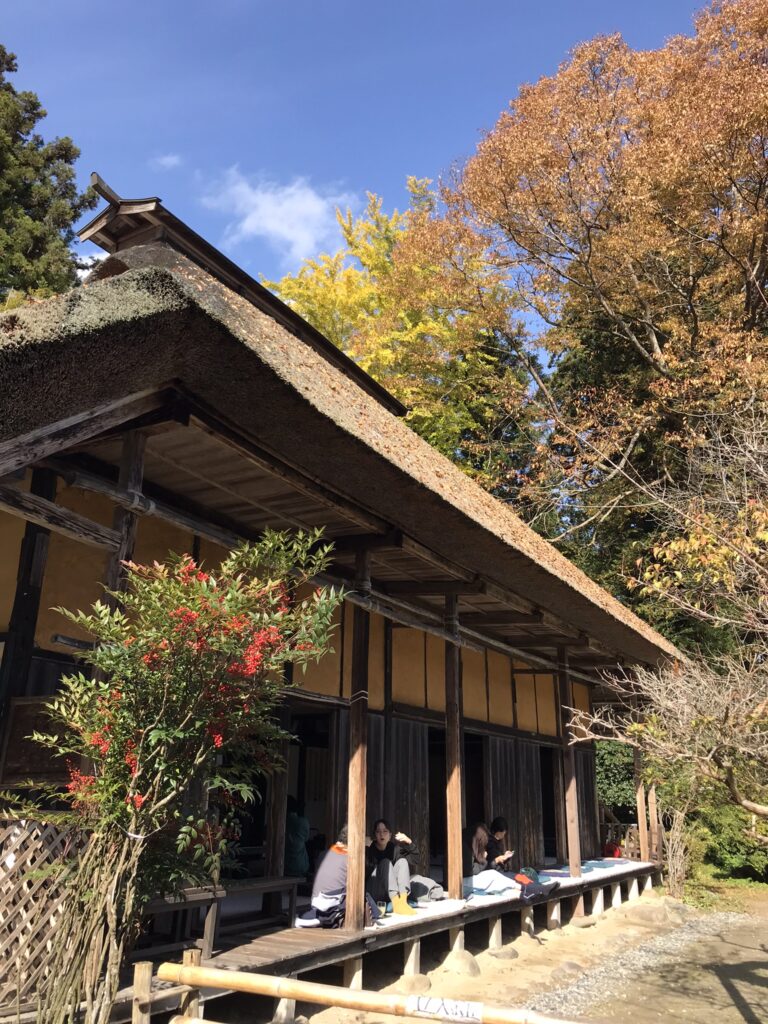
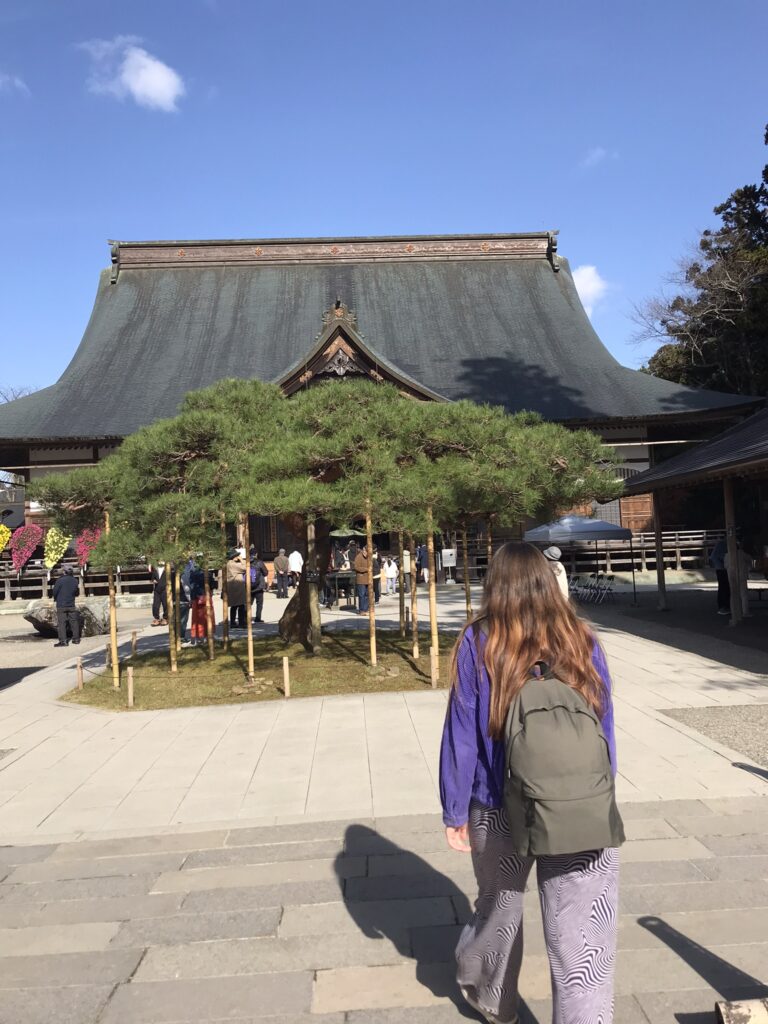
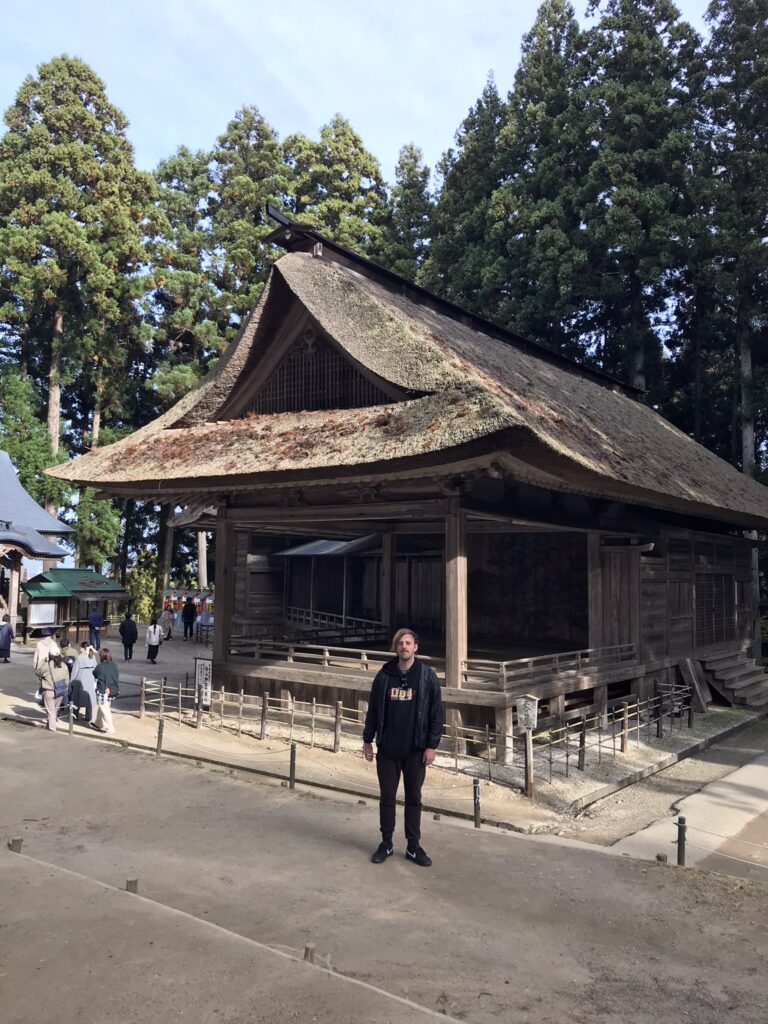
There are so many thatched structures at Chuson-ji including the tea house, temple and noh stage
Other sites in Hiraizumi include Motsu-ji (nothing historical still standing but the lake is quite pretty) and Takadachi Gikeido. To follow our self-guided walking tour of Hiraizumi – hit this link.
Be on the lookout for stray bears in the area – we encountered multiple warning signs about possible bear activity, although it seemed improbable given the number of people around.
While waiting for the train to Ichinoseki, we stopped off at Yoshino-ya (super close to the train station) for a slice of cake and ended up with a free cup of tea included as well. This was a nice local cafe that really had a ‘grandma’s house’-type vibe.
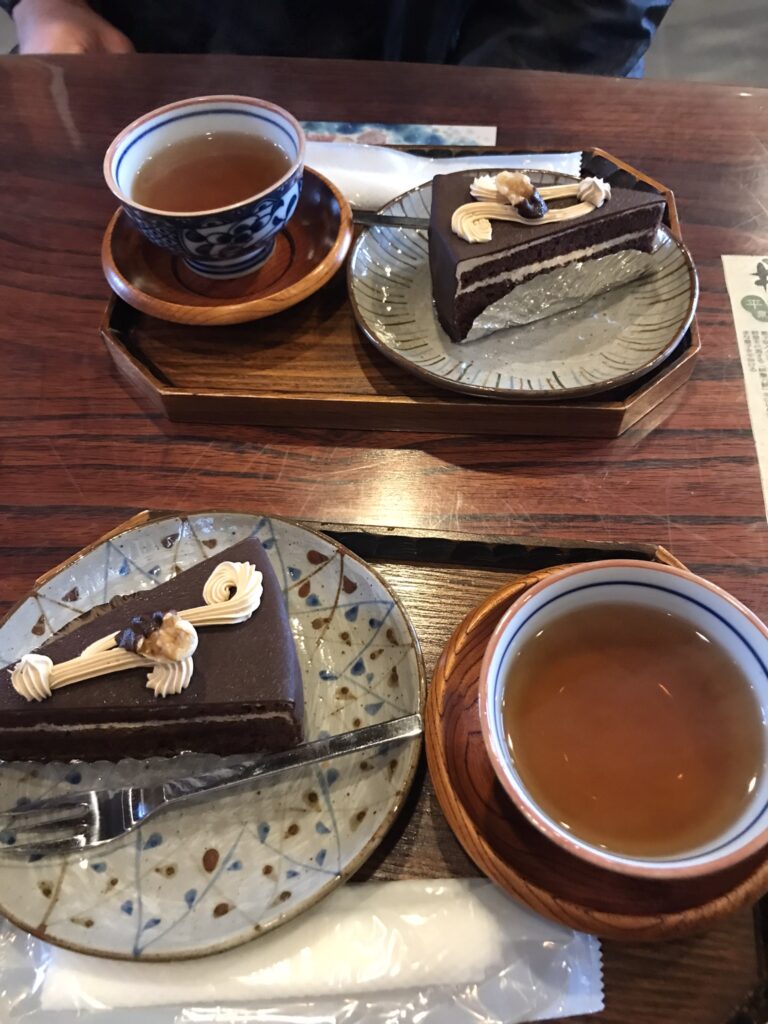
Sugar overload at Yoshino-ya cafe
Sendai
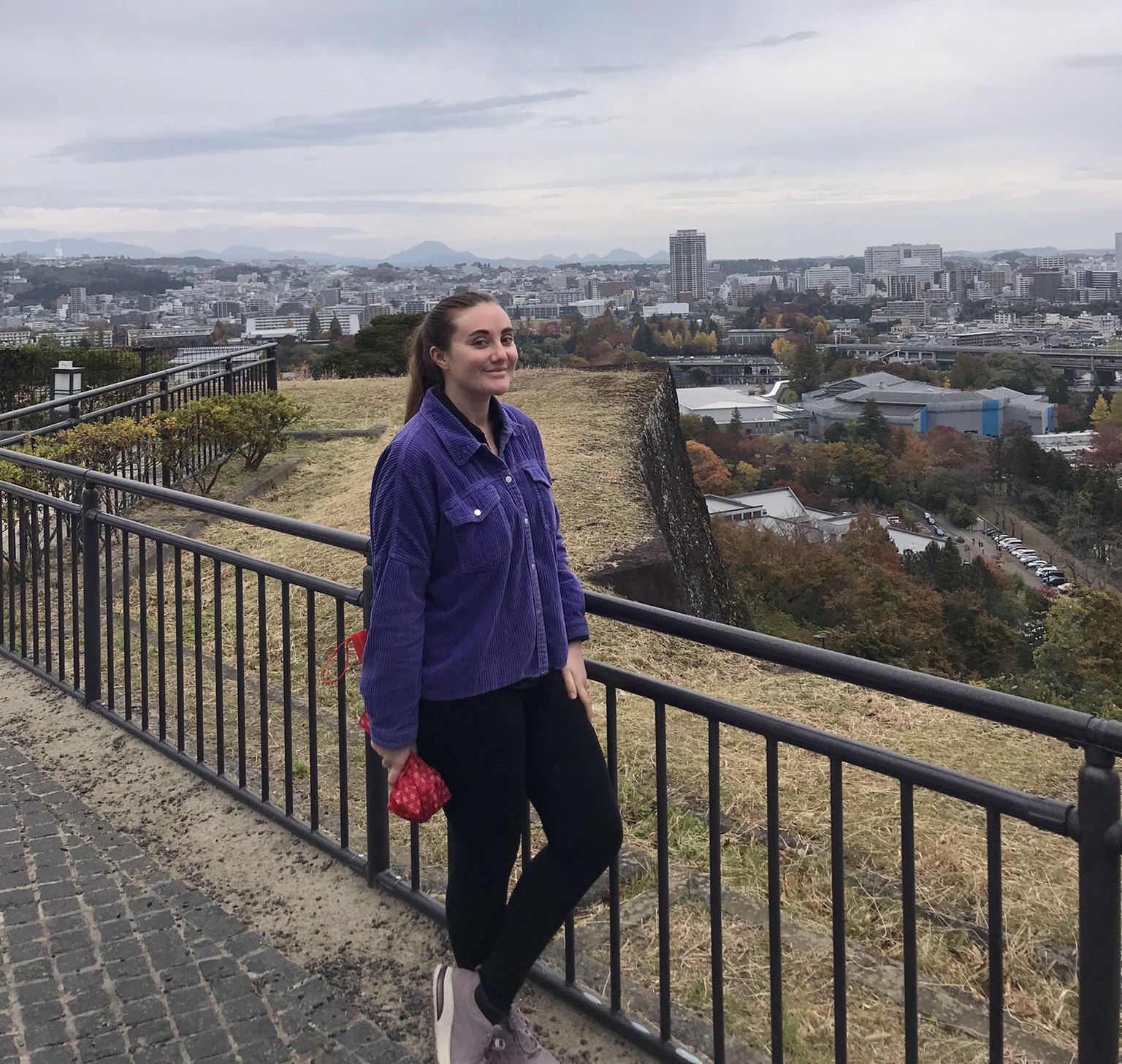
The largest city in the Tohoku region and capital of Miyagi Prefecture, Sendai was founded by Date Masamune in 1600 as a castle town. Date Masamune is a well-known figure in Japanese history, bridging the gap between the unstable Warring States period and newly established Tokugawa Shogunate. He featured in some of the most epic battles in this period of transition and was a trusty lieutenant of the shogun in the north, establishing a dynasty of daimyos in the region. In the late 1600s, the Date clan experienced upheaval as a result of the Date Sōdō – a scandalous incident which entered Japanese folklore and has been an inspiration for artwork, literature and kabuki performances for several hundred years. The city of Sendai is synonymous with the Date clan – it seems like everywhere you look there is something Date-related!
A large city of over a million people, Sendai was our first experience of a typically bustling and chaotic major Japanese train station, with commuters dodging in all directions. The city centre is very cosmopolitan and feels similar to some of the downtown districts of Tokyo. Interestingly, Sendai’s skyline when viewed from afar doesn’t actually look too imposing, which seems improbable when you’re in the midst of city streets. The area surrounding Sendai can be quite earthquake-prone and you will probably feel a few tremors if you stay in the city for an extended period, particularly if you find yourself atop a high-rise building (like we did). Don’t worry, these structures are extremely resilient! The city suffered badly as a result of the Great Japan Earthquake in 2011, however regeneration has been swift and there is little sign of that disaster within the city today.
Although it is a little off the beaten track for foreign tourists, Sendai is a rich destination with plenty of sights to see in both the city itself and the surrounding region. Within the city, a sightseeing bus known as the ‘Loople’ connects the main tourist attractions. Although we usually avoid tourist/sightseeing buses, the main sites in Sendai are somewhat dispersed and the Loople bus provides direct connections between them. It’s also quite good value for money, making it by far the best way to get around when sightseeing in the city. Loople bus stops are located directly outside the front of most of the city’s major sites, so there’s no need to traipse around trying to find a local bus. The buses make a continuous loop, with buses every 20 minutes on weekdays or 15 minutes at weekends. Purchasing a ‘Loople’ day pass also grants the user special discounts at some attractions such as Zuihoden Mausoleum Complex and City Museum. Historical commentary along the way is also a feature of the ‘Loople’ buses, in English as well as Japanese. Tickets can be purchased from the ticket office, situated at bus stop 16 outside Sendai station. Buses can get pretty packed at weekends and there was quite a long queue to buy a ticket when we visited – if using the bus on a weekend, we’d recommend starting your day early to beat the crowds queuing at Sendai station.
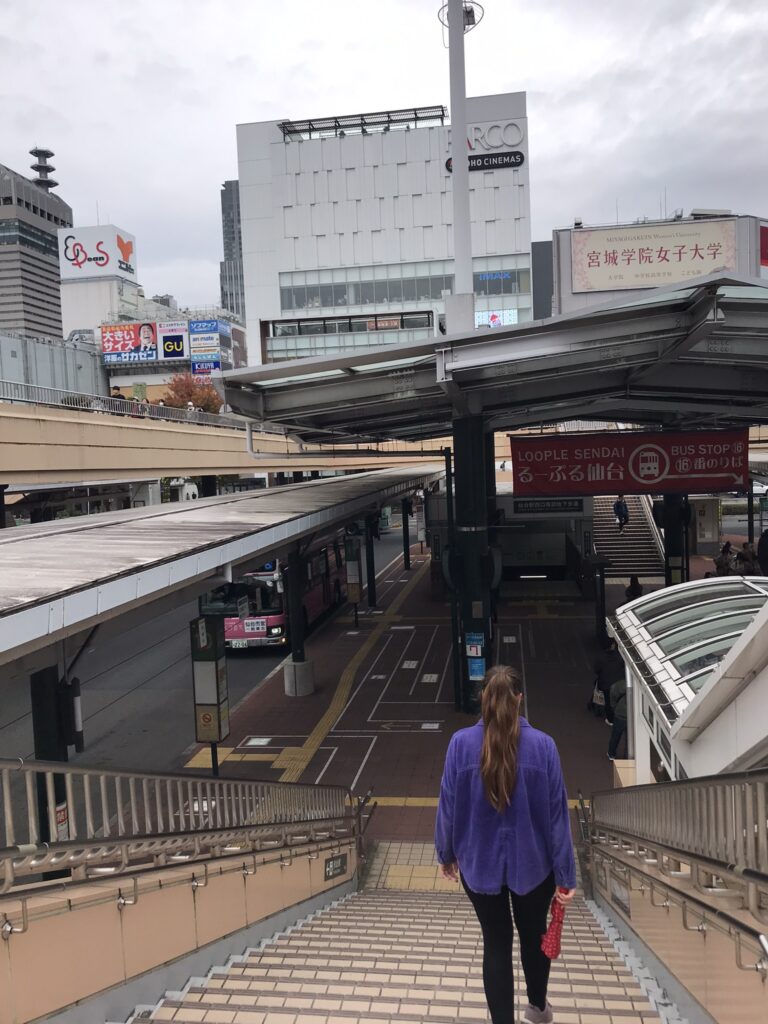
Just before we spotted the massive queue for the Loople Bus at Sendai Station
Outside of the city, Sendai is a gateway to some of northern Japan’s most renowned and scenic locations, such as Matsushima Bay and Yamadera temple. This region was immortalised by the famous 17th century poet Matsuo Basho, who spent time in the area during his tour of Tohoku and was inspired to write many of his most popular haikus.
Sendai is also renowned throughout Japan for its specialty dishes of beef tongue and sweet edamame bean desserts. Whilst we consider ourselves pretty adventurous when it comes to trying new foods, we decided to skip the beef tongue. Head to the entertainment district, Kokubuncho, to try this local delicacy!
Accommodation
KOKO HOTEL Sendai Kotodai Park – a pretty standard high-rise business-style hotel within walking distance of the train station and entertainment district. We experienced a magnitude 5 earthquake while on the 12th floor of this hotel, and while there was a little shaking involved I can confirm that the building seems to be pretty sturdy!
Foodie Places
油そば春日亭 仙台店 – although it says on Google Maps that this is a ramen joint, it actually specialises in fatty pork noodles and not wet noodles. The noodles themselves are out of this world. Months later I can’t stop thinking about how good they were. With a grand total of about 10 seats in this typical hole-in-the-wall style eatery, this place was really special and the guys working there were pretty cool as well, with an ace alternative rock soundtrack.
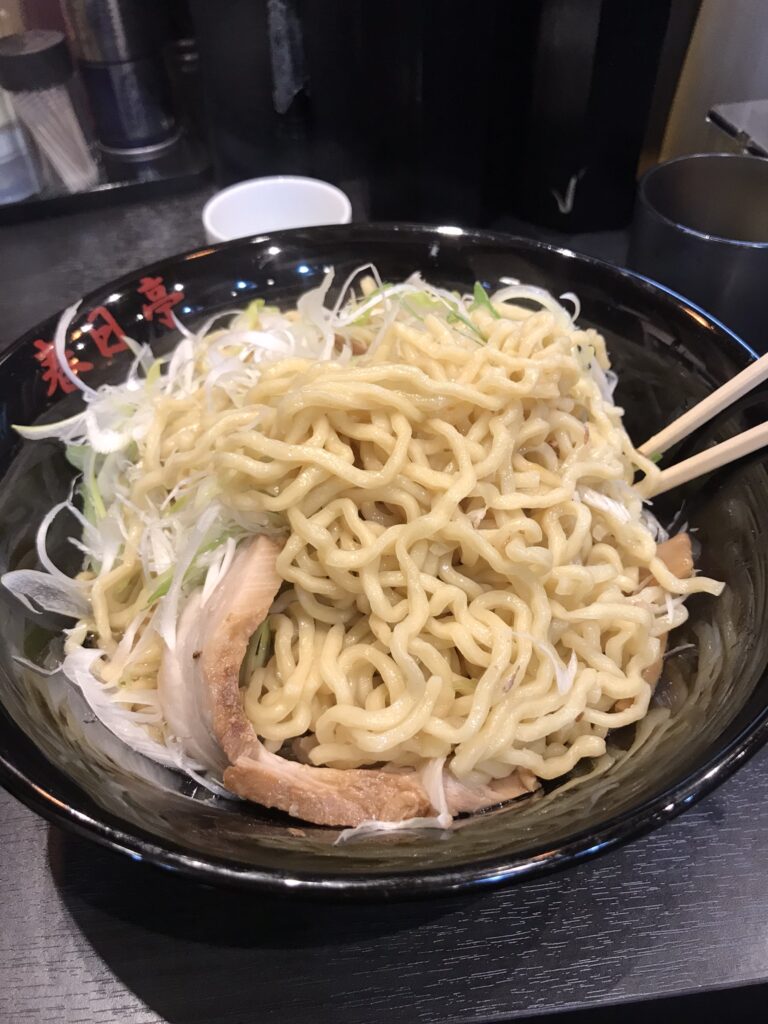
I don’t know what wizardry the chefs use at 油そば春日亭 仙台店 but the noodles are to die for!
Katsudon no Katsudon-ya – not a foreigner in sight at this very local tonkatsu joint, within walking distance of Zuihoden Mausoleum and the Sendai City Museum. Excellent value lunch deals – when we visited it was around 1000 yen for a tonkatsu set including rice and miso soup. Non-Japanese speakers will breathe a sigh of relief to know that there are photos on the menu, so you can point to whatever dish you’d like to order. The tables are more communal here, with diners from different parties seated together – a difference from the solitary nature of many Japanese restaurants.
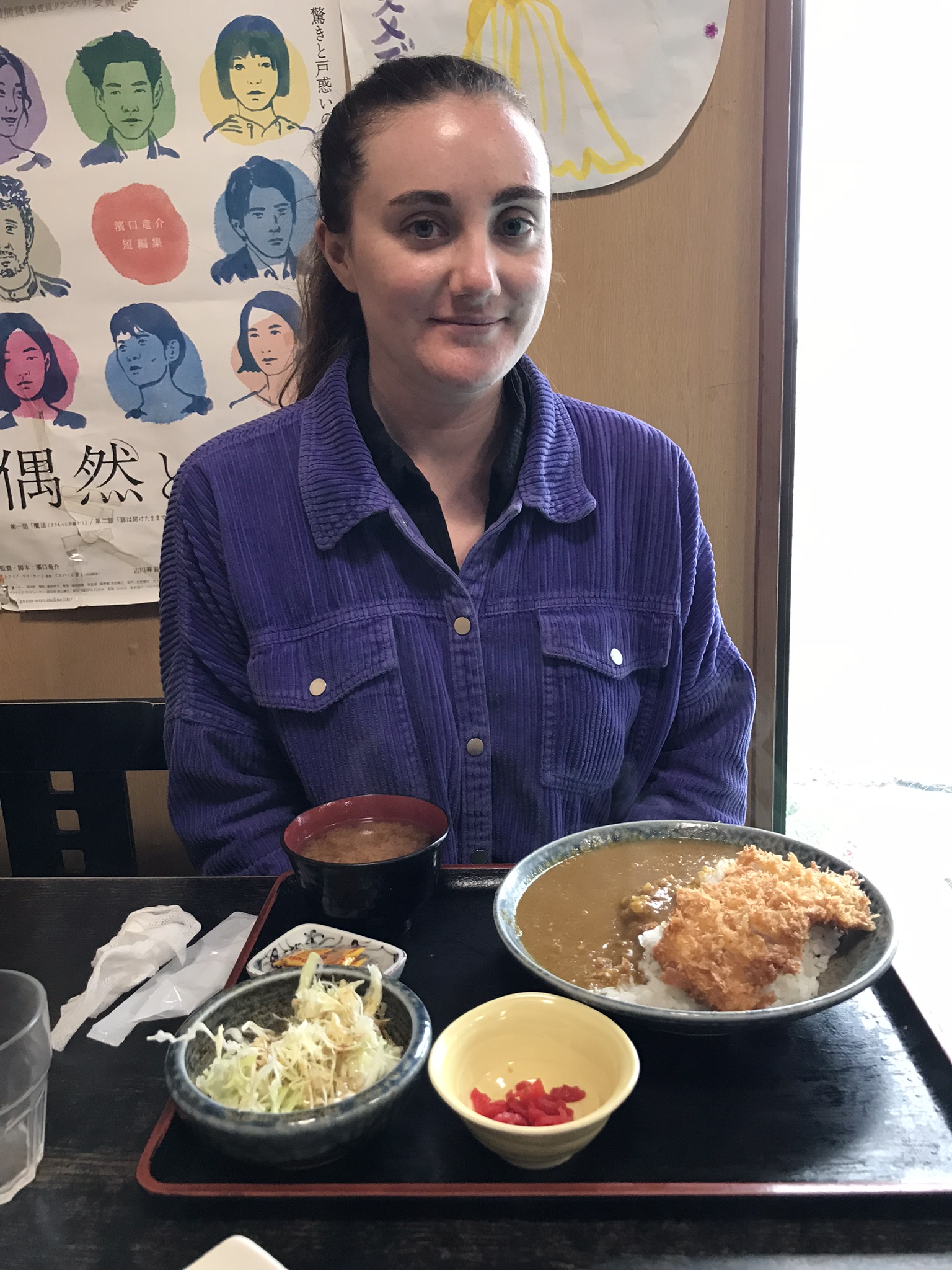
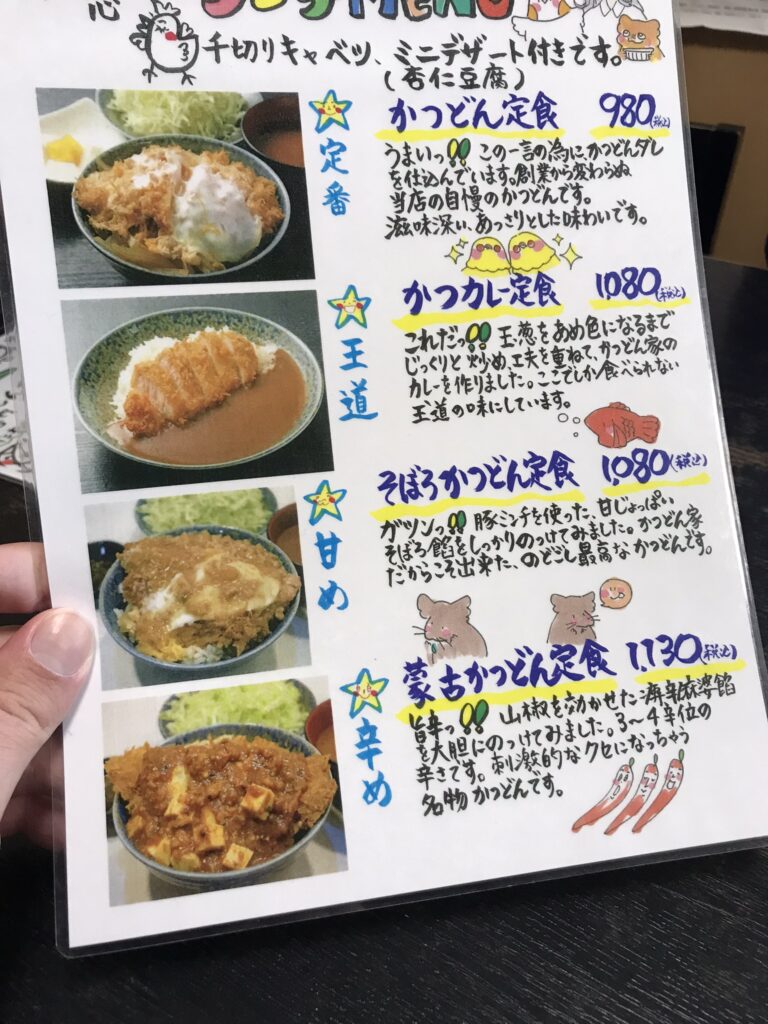
We were mesmerised by the swirling miso soup at Katsudon no Katsudon-ya
Mos Burger – a popular chain with many branches country-wide. We scoffed a burger before watching the joshi wrestling at Sendai Pit. Mos Burger offers the fast food classic of burger and fries, with the option to have a burger topped with a healthy twist such as avocado or tomato salsa.
Asaichi Market – close to Sendai station, this is a great place to sample some fresh local seafood. As with other seafood markets we visited in Japan, morning or early lunchtime is the best time to visit and business here tends to taper off in the afternoons. By around 2pm we found that many places were already shut. We took the opportunity to try the raw oysters, which are heavily promoted here and are much cheaper than we would find back home. We padded the oyster out with some croquettes, which we found for under 200 yen each at one of the market stalls, with a variety of different flavours available. A cheap, hearty lunch.
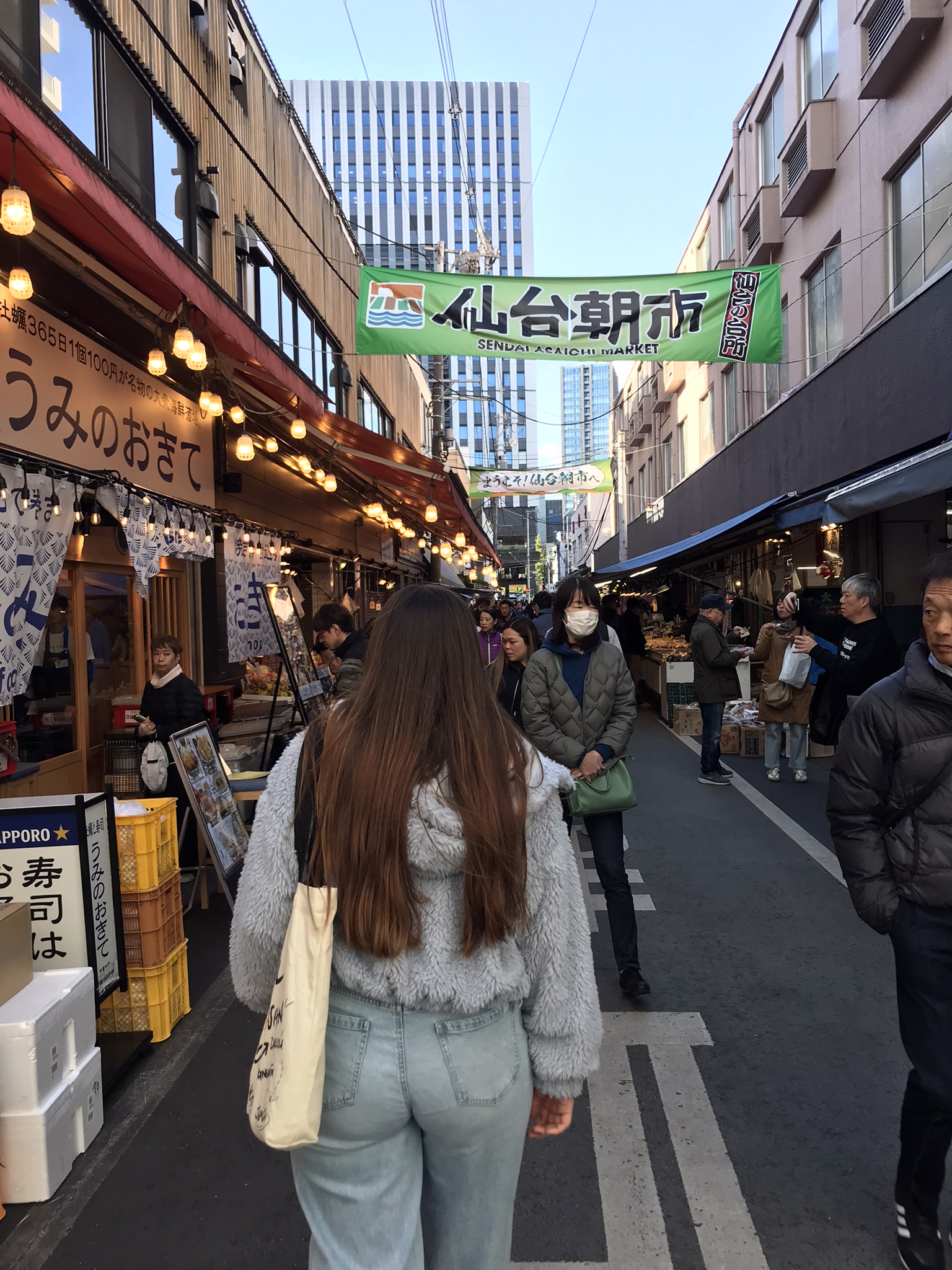
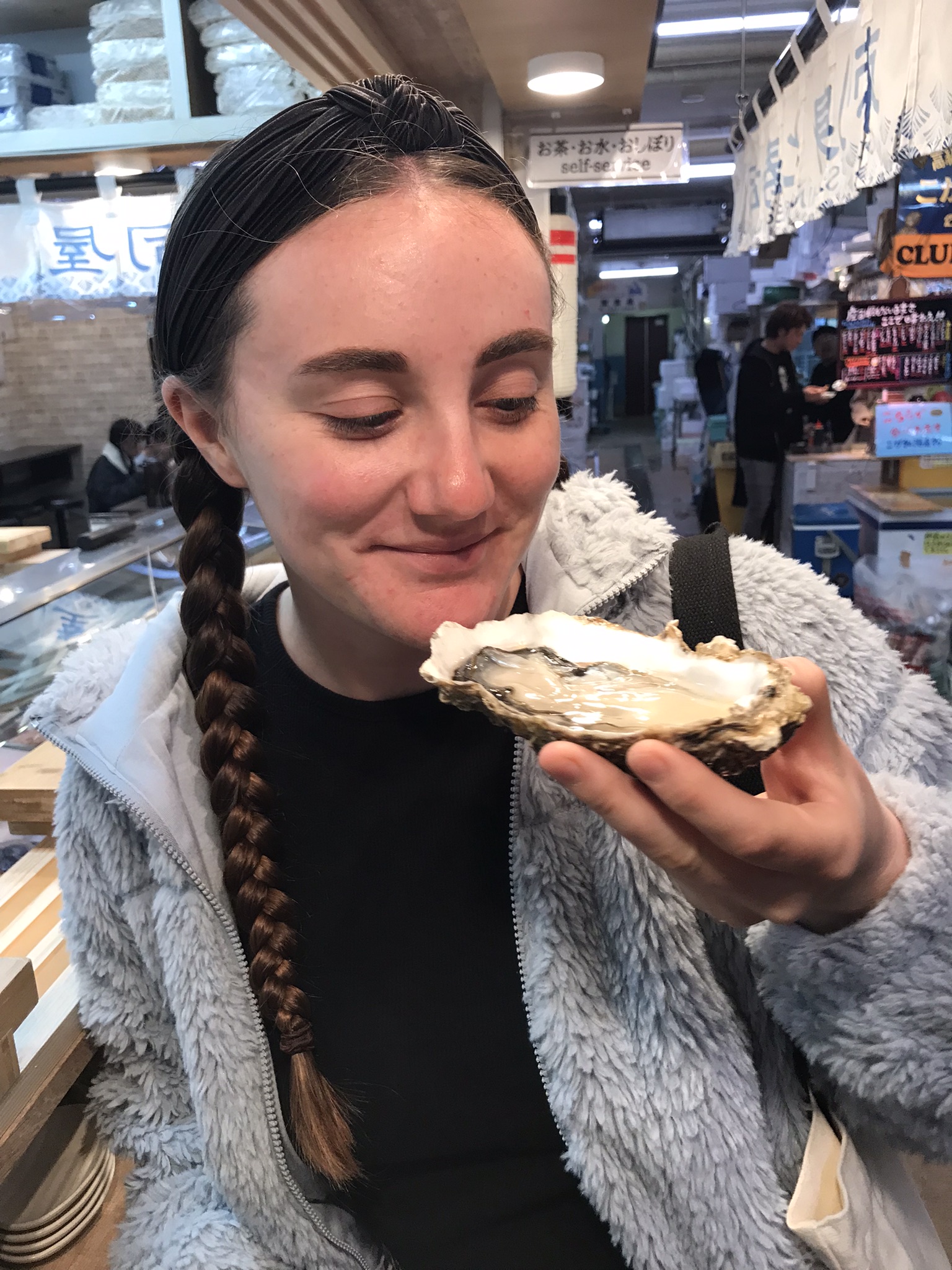
Contemplating how to eat this massive oyster in one mouthful at Asaichi Market
Activities
Zuihoden Mausoleum – this is the cemetery complex of the highly powerful and influential Date clan – the local ruling dynasty of Sendai during Japan’s feudal era. There are three main elaborate mausoleums inside the complex: the Zuihoden, which is dedicated to Date Masamune (founder of the city of Sendai and one of the most powerful feudal lords of the period), the Kansenden built to commemorate Date Tadamune (son of Masamune) and the Zennoden built to entomb Date Tsunamune (grandson of Masamune). There are also a number of other less elaborate tombs for other Date clan descendants. The mausoleums are particularly notable for their Momoyama-type design. Some of the original mausoleums built in the 17th century were sadly destroyed in the air raids of World War 2, but they have since been faithfully reproduced on their original sites. The ornate design and bold colours are striking features of these mausoleums.
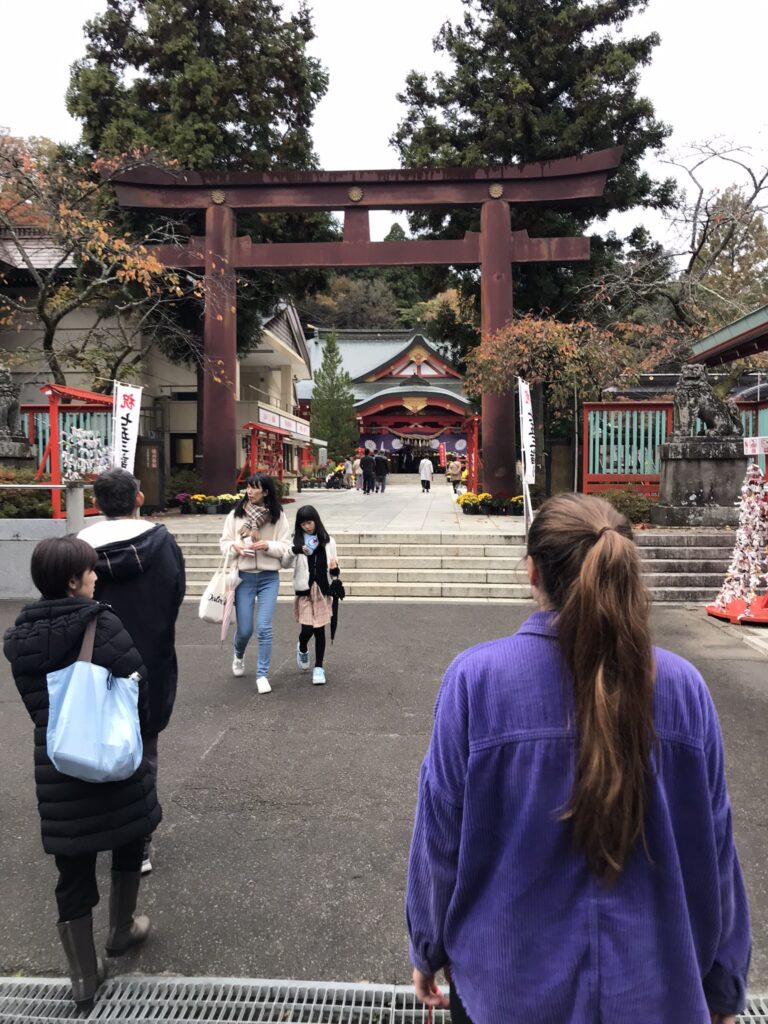
Osaki Hachimangu Shrine – the original shrine here was founded in the early 9th century, but Date Masamune was responsible for the construction of the current shrine in 1607. The Date clan were dedicated patrons of the shrine, which stands as a shining example of the Momoyama architecture of the period. The red lanterns along the route to the shrine and red torii gate are particularly poignant.
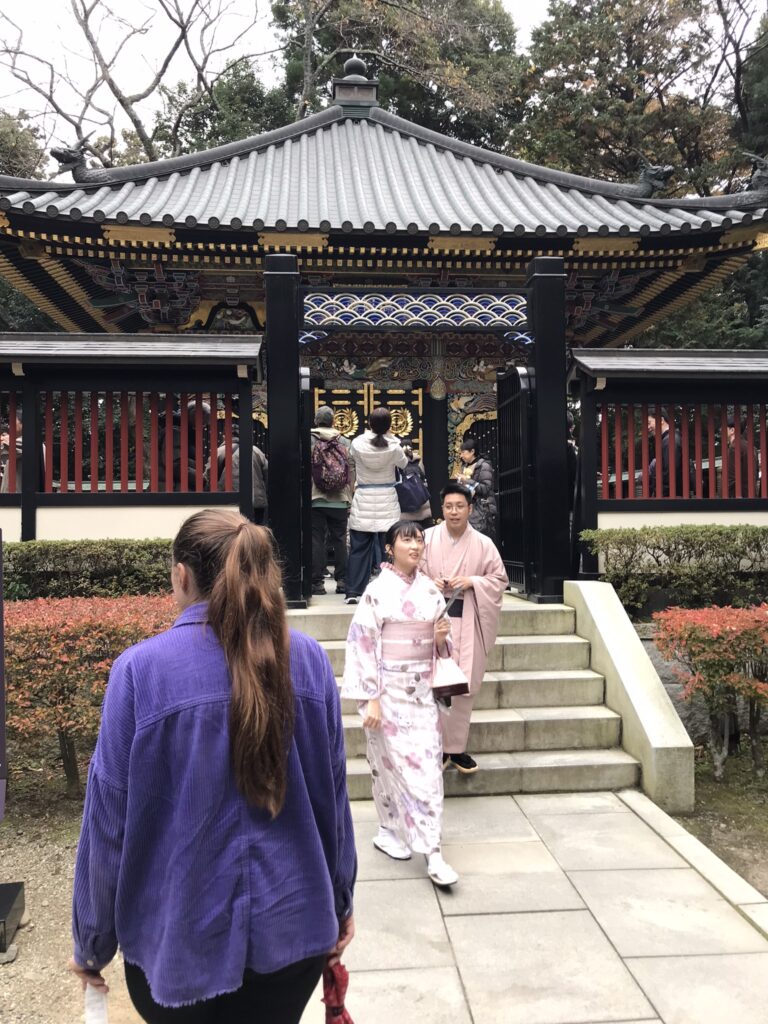
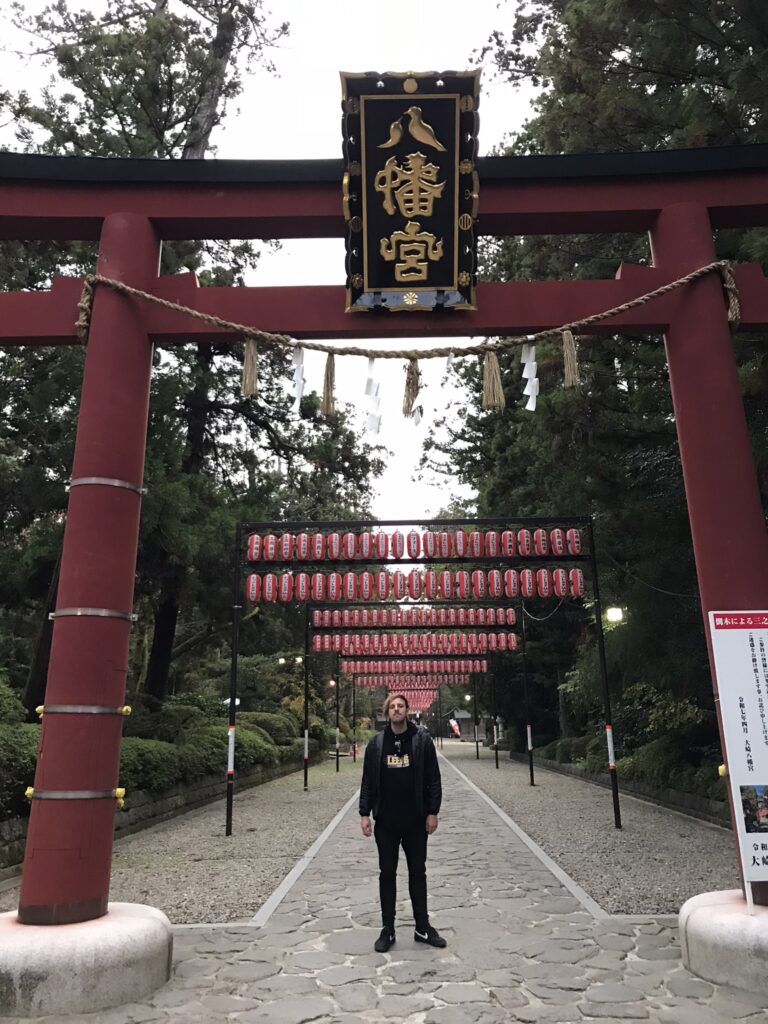
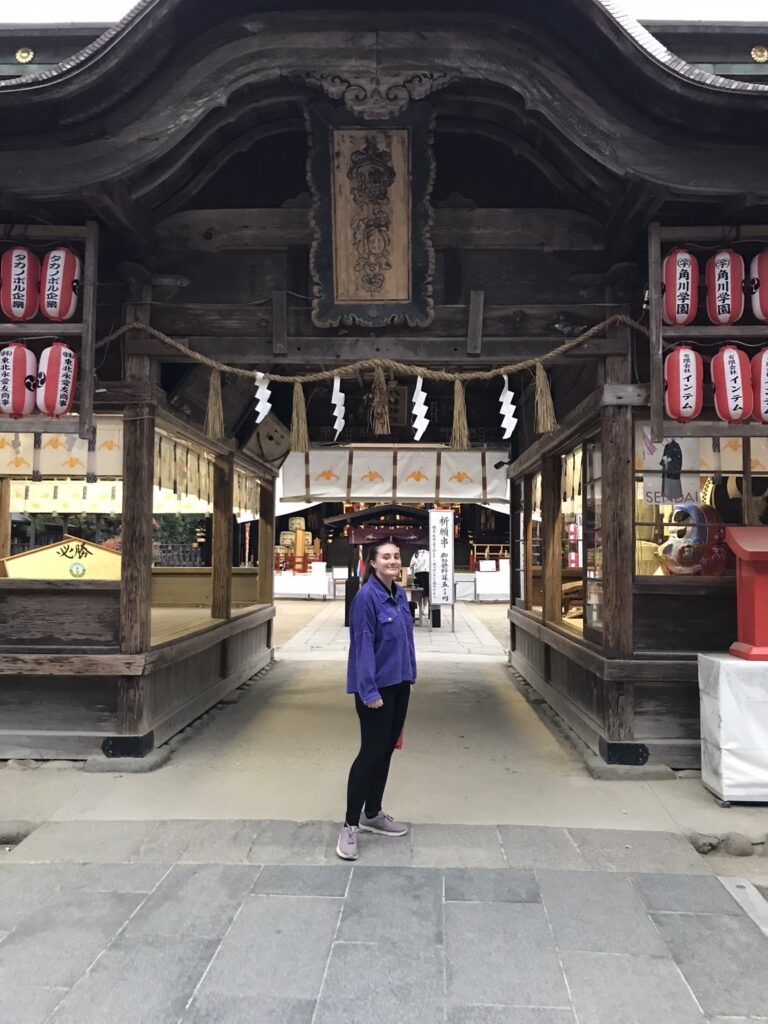
Zuihoden Mausoleum (left photo) and the grand apporach to Osaki Hachimangu Shrine (middle and right photo)
City Museum – located in the second level of the three-tiered castle complex, this is a pretty standard Japanese city museum – modern, high-quality and with plenty of information about the city and region’s history as well as a very comprehensive audio guide.
Sendai Aoba Castle – located high up on a hilltop overlooking the city, nothing visible remains from the glory days of this Edo period castle except the post holes which made up the former main hall of the castle complex. From these remains, you can get an idea of the grand scale of the buildings which once adorned the castle peak. The uppermost layer of the castle (Honmaru) provides a great vantage point to admire the Sendai cityscape from across the Hirose river. Visitors also can admire the grandiose equestrian statue of Date Masamune, looking out to behold his domain. See if you can spot the colossal white statue of Kannon in the distance along the Sendai skyline.
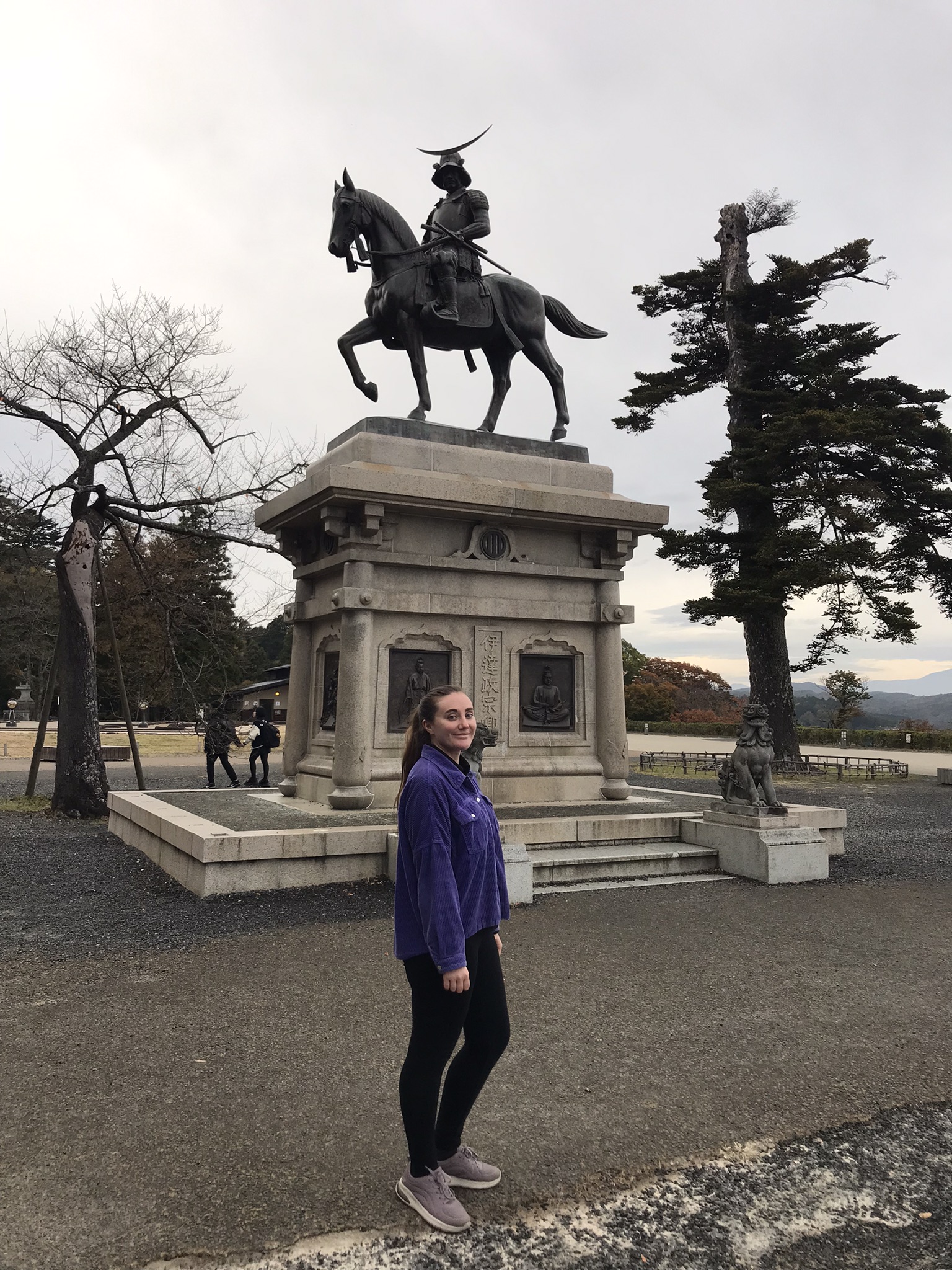
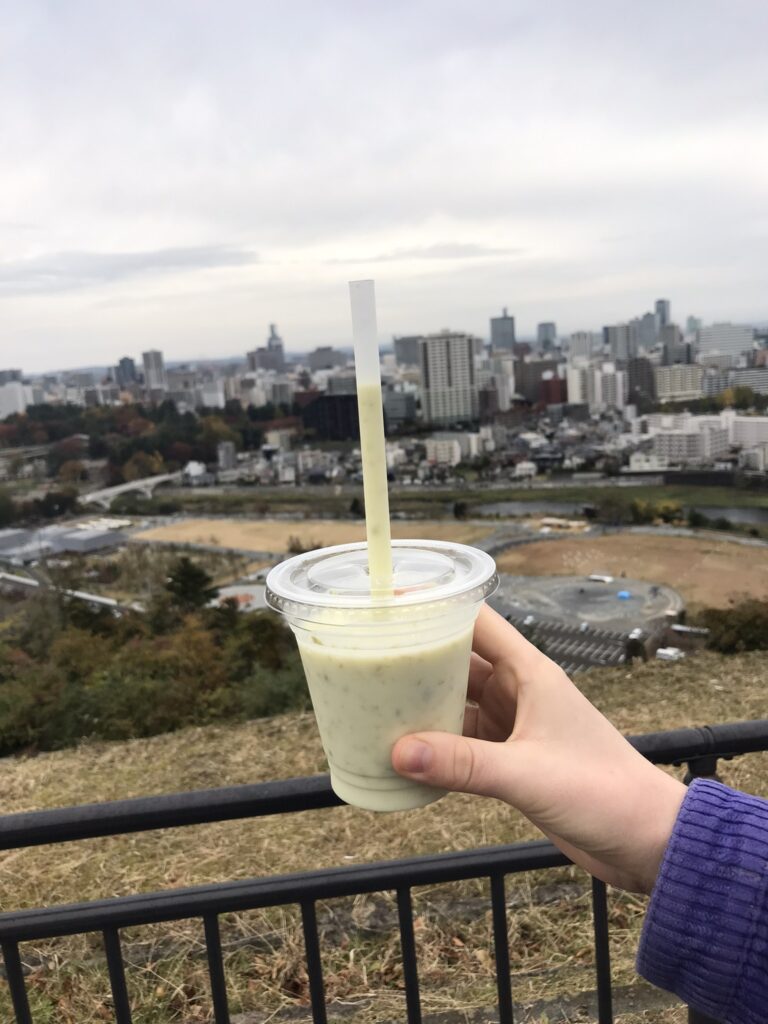
Top views, an excellent edamame bean milkshake and a rather roguish statue of Date Masamune atop Aoba Castle
While exploring the former castle, you can also visit the shinto Miyagiken Gokoku Shrine and the Aoba Castle Honmaru Hall, which apparently recreates the castle as it once was in VR. There are also a number of gift shops and cafes offering local sweets and milkshakes. After some initial hesitation, while we were up here we decided to see what all the fuss was about and opted to try a ‘Zunda shake’, otherwise known as sweet edamame bean milkshake. Although the green colour was a bit odd, the milkshake was delicious and the flavours worked really well together. It’s free to access the former castle site – I highly recommended to get the ‘Loople’ bus to the top of the castle as it’s a pretty tough ascent on foot.
Kokubunchô – this entertainment district offers thrill-seekers a chance to sample the Japanese nightlife, holding the award for being the largest entertainment district in the region. Slap bang in the corporate heart of the city and within a stones throw of Sendai station, it stretches between Jozenji-dori and Hirose-dori avenues. At weekends it attracts hordes of tipsy office-workers and students looking to drink the night away with business colleagues or friends in a convivial atmosphere. It’s best to head there after dark to really get a feel for the area. We noticed that there were quite a few touts as well as ‘girlfriends’ and ‘boyfriends’ outside establishments trying to hustle customers into various nightlife spots. Some shady characters seemed to be milling about at some of the intersections, acting as bouncers/lookouts.
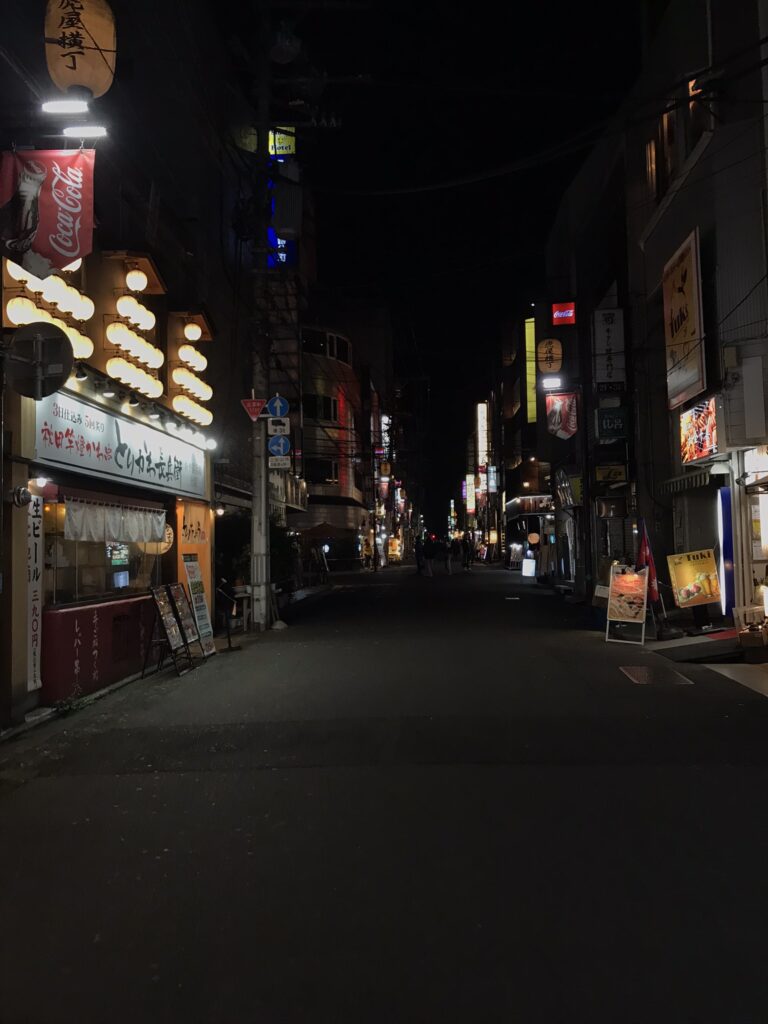
Kokubunchô is empty early evening but starts to get busier as the night progresses
Sendai Dai Kannon (White-Robed Colossus) – standing in a nondescript area next to a run-down looking hotel on the outskirts of Sendai, this baffling construction is one of the largest statues in the world. An enormous white behemoth, the statue depicts the popular Buddhist figure Kannon. At the time of its construction in 1991 it was said to be the largest statue in the world, standing at over 100 metres tall. Way off the beaten track, for some reason this is not mentioned in any of the city’s tourist or promotional literature and remains unknown by the majority of visitors to Sendai, but it is a truly staggering sight. Access is pretty easy from the centre of Sendai, we took the local 910 bus which drops off very close to the statue.
As well as admiring the mammoth structure from the outside, it’s possible to enter the statue and go all the way to the top. After paying the small admission fee, visitors enter a room filled with depictions of the zodiac animals before taking the elevator to the 12th floor and then walking all the way down a seemingly-endless spiral slope to the bottom. The interior is completely open, creating a bizarre and somewhat creepy echo chamber. Along the way are 108 Buddhist statues of various design. As non-Buddhists we were frankly baffled by the statues here, which didn’t seem to align with anything we’d seen before in our own limited knowledge and experience of the religion. As well as the intriguing and somewhat bewildering displays inside, visitors can also get a great view over the city of Sendai from a small window at the top.
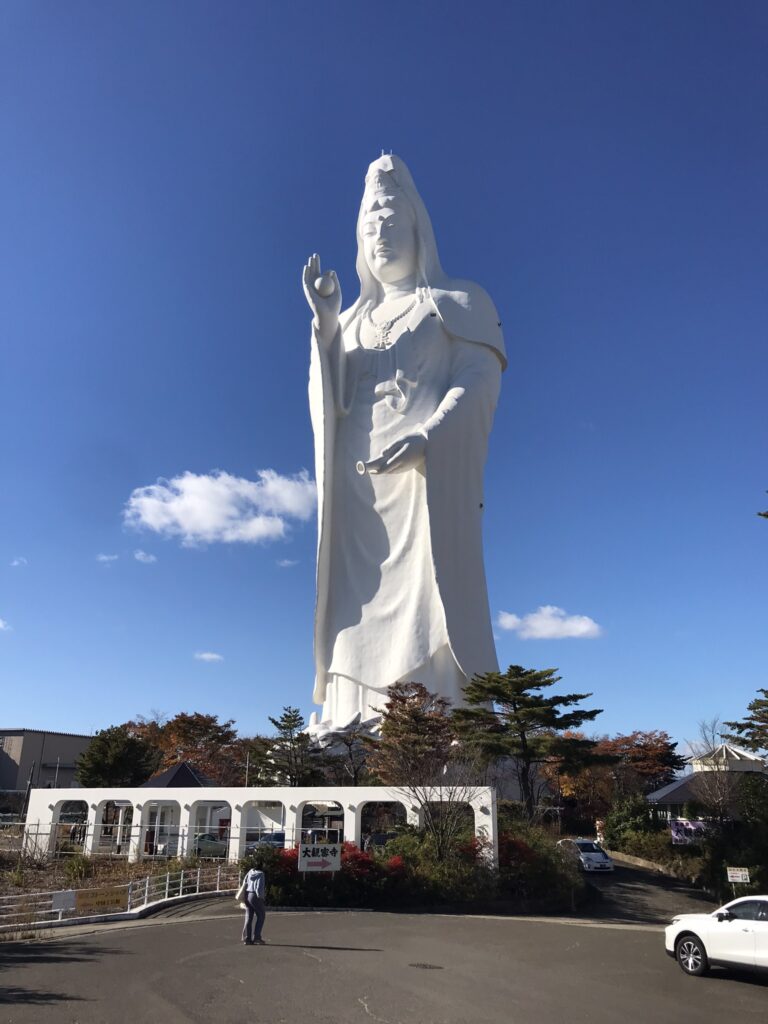
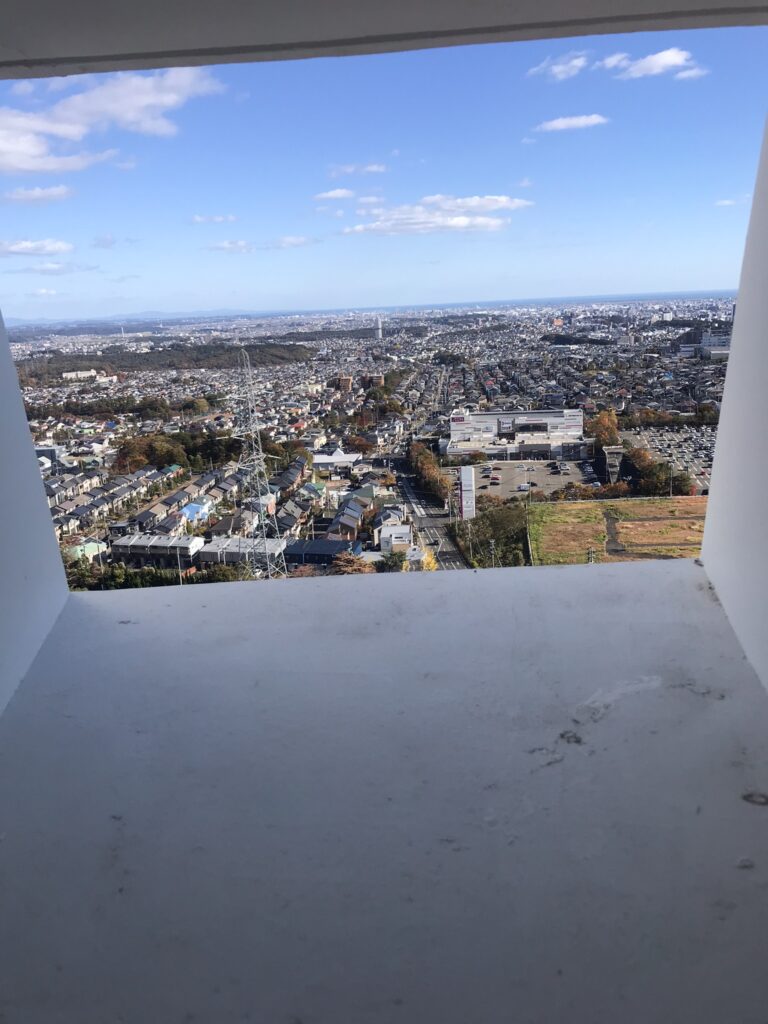
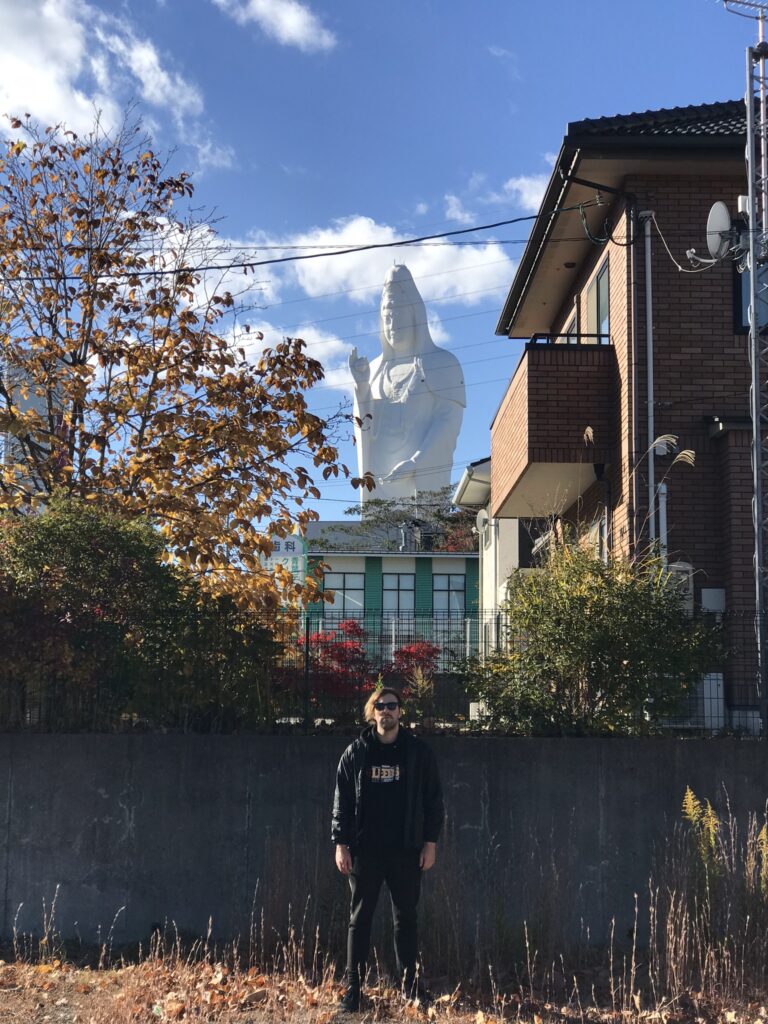
Sendai Dai Kannon: why this exists and what its purpose is remains unclear to us, but it certainly is a sight to behold.
The statue absolutely towers over the residential streets around, a truly gargantuan sight. For comparison, it is approximately three times taller than the famous Christ the Redeemer statue in Brazil. You can see all the way to the sea from the top.
Stardom Wrestling Show at Sendai PIT – while many outsiders might associate professional wrestling more with the USA or Mexico, it is also a very big deal in Japan. ‘Puroresu’, as it is known, is a thrilling spectacle – the Japanese are known for their hard-hitting style, with lots of striking adding a layer of intensity and realism. Within Japan, female wrestling is known as ‘joshi’ and the women are just as technical, athletic and hard-hitting as the men. Wrestling promotions in Japan tend to be more segregated than in other countries and there are numerous joshi promotions, with Sendai being a particular hub as the home of one of the larger independent joshi promotions, Sendai Girls. The largest and most prominent joshi promotion is Stardom, a nationwide touring promotion which is home to some of the top female pro wrestlers in the world. We were lucky enough to catch a Stardom show during our time in Sendai, which was a great experience.
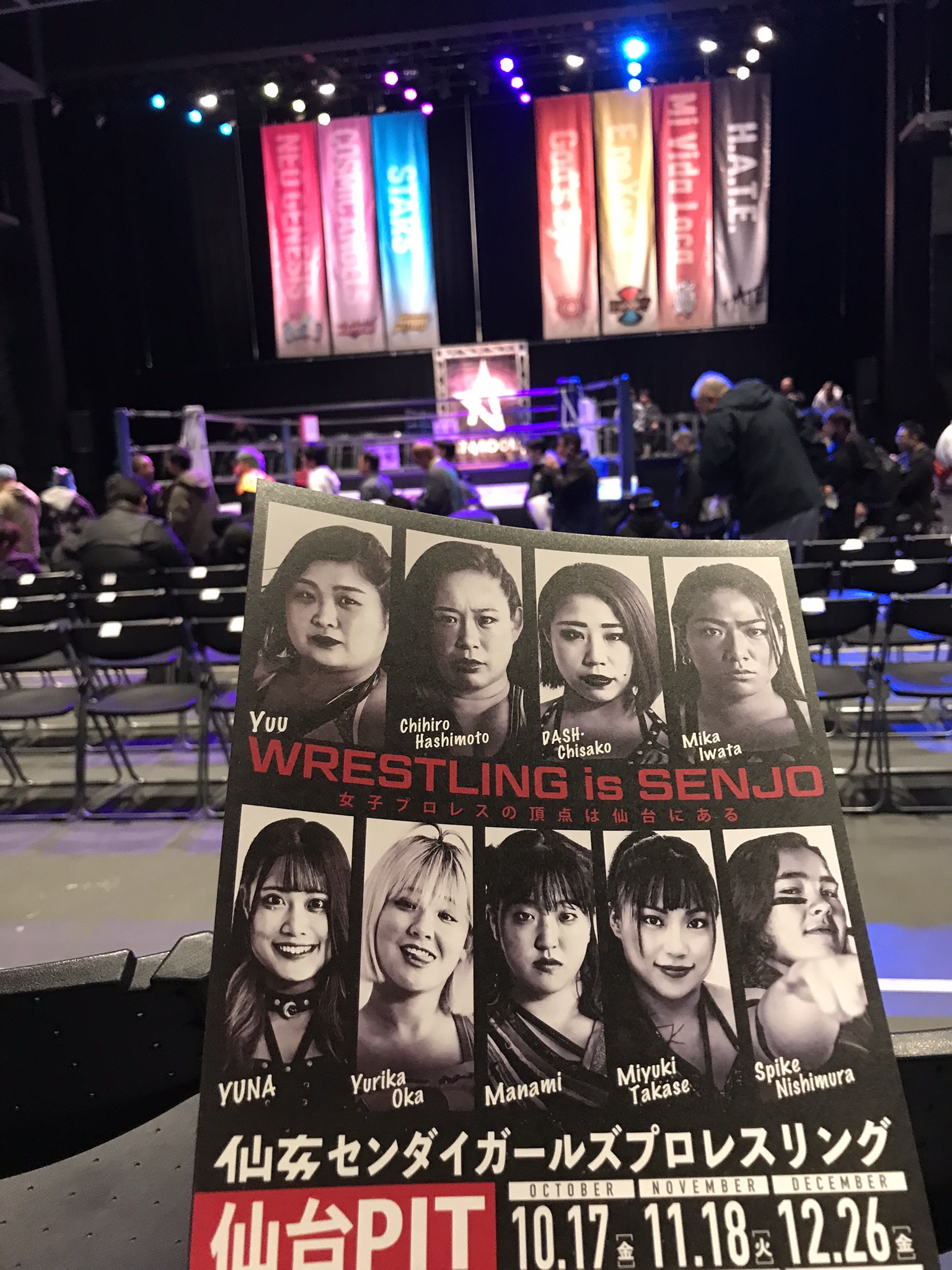

Delve into the alternative by watching a ‘joshi’ wrestling show somewhere off the beaten track like we did in Sendai
Attending a pro wrestling show in Japan was a little different to our experiences of lucha libre in Mexico. The crowd in Japan tends to be on the quiet side, allowing them to appreciate the noise from the vicious strikes. The audience members also tend to call out for their favourite wrestler, reminiscent of the calls in Kabuki. Like in Kabuki, these calls are very well-timed and contribute to the action – the Japanese have definitely perfected the art of being able to shout out at the right time.
The venue itself, Sendai PIT, is quite a small and intimate venue which is also used for live music events. We had to pay an entry fee to the venue on top of the ticket price, and in return we were given tokens which we ended up being able to exchange for a free drink – a little odd but we were happy to go with it. The Japanese wrestling promotions are big on merchandise and the whole merch process is quite organised – we were handed a list of merch options beforehand while queueing outside. Major promotions don’t like video recording due to the quite particular ideas about copyright that exist in Japan, although photos were allowed at this show. We were the only foreigners in the crowd in Sendai, although that was not the case when we attended pro wrestling shows in Tokyo.
Purchasing tickets for events in Japan can be a bewildering process for foreigners. For more info about how we got our tickets in Japan, click here
Yamadera and Nikka Whisky Factory
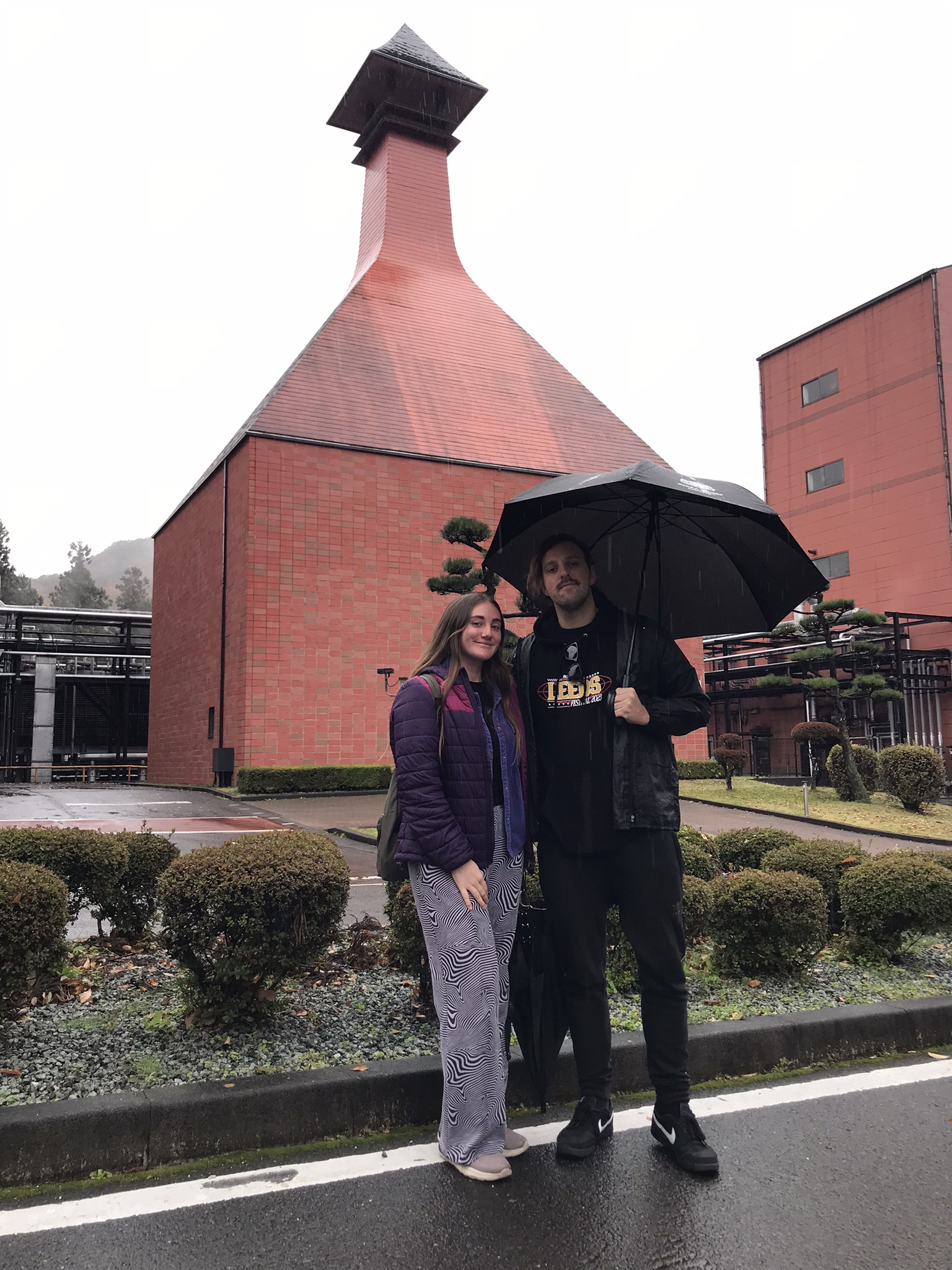
From Sendai we spent a day heading out to Yamagata Prefecture on the train, visiting Yamadera temple and the Nikka Whiskey distillery.
Nikka Whisky Factory Miyagikyo Distillery – located on the direct train line between Sendai and Yamadera, stopping off at the Nikka Whisky distillery makes for a fantastic side quest along the way. Nikka is the pre-eminent whiskey brand in Japan, and this is one of its two factory locations (the other is in Hokkaido). The distillery is located in a very verdant, somewhat cold and rainy environment – said to be as close to Scotland as could be found in Japan. These environmental conditions along with the purity of the water in the local river drew the founder of Nikka to pick this somewhat remote location for his factory.
Japanese-language group tours are conducted around the factory grounds and are completely free of charge, including a free whiskey tasting at the end! Whilst the tour is mainly focused on the history of the Nikka company specifically, there’s also loads of info about the production process of whiskey in general. For foreigners, an audio translation service is offered (which didn’t really work for us) and a friendly assistant also held up translations on a placard so we could follow what was going on – especially useful for understanding the technical jargon and production processes involved in the whiskey making.
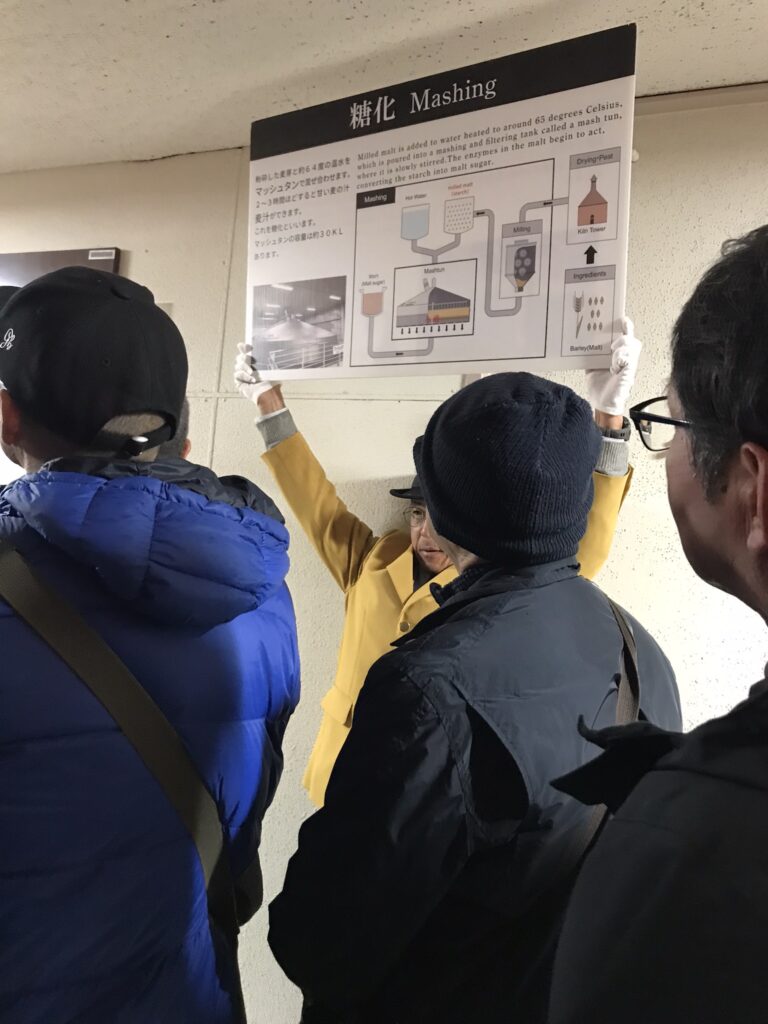
The star of the show, this gent really helped us out by holding up English translation signs, he even offered to take our photo!
As well as the guided tour, there is a very in-depth display about the process of distilling whiskey in the foyer which you can browse while you wait – you can even smell various hops and whisky scents with different types and lengths of distillation. We were particularly fascinated with the colour change of the whisky depending on the length of time it was stored in a cask (aging process). The company was founded in the 1930s by Masataka Taketsuru, a Japanese man who traveled to Scotland to study whiskey making, married a Scottish lady and then returned to Japan to set up his own business. All the casks are handmade using traditional cask-making skills passed down throughout the generations, including shaping the wood, casting the metal and burning the inside of the barrel. There was also some rare and fine Nikka whiskey on display – one bottle was from 1940!
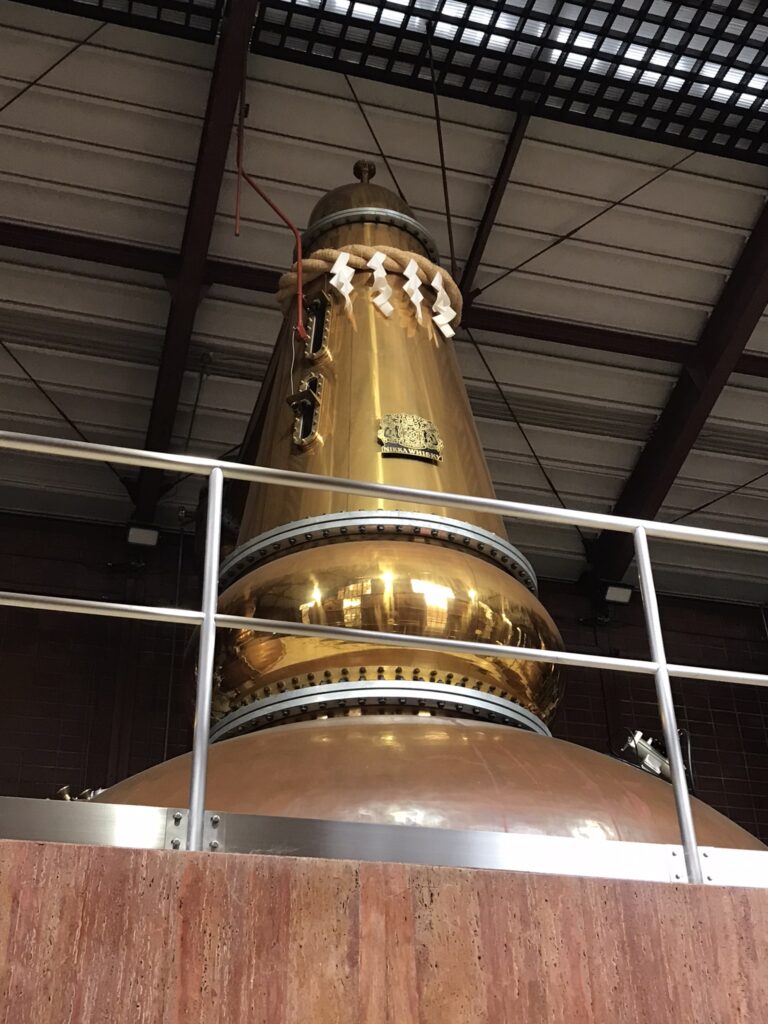
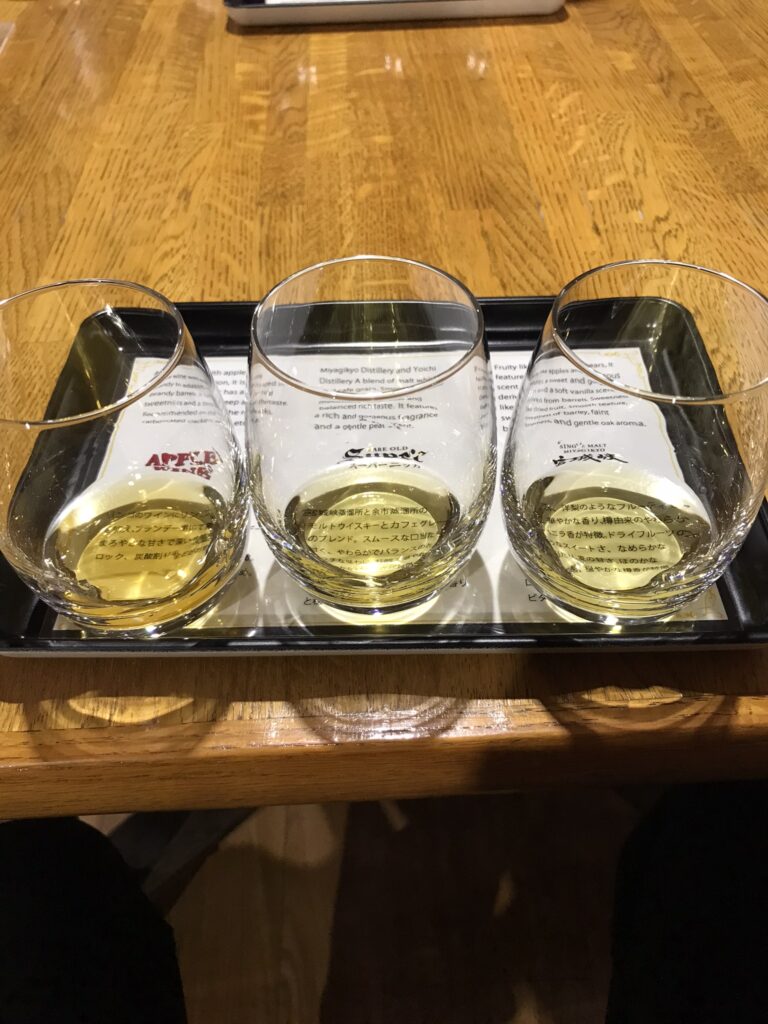

These distillation canisters even had Nikka whisky branding; our free whisky tasting samples and the Nikka whisky man himself
Although it’s quite remote, accessing the factory is actually pretty easy. Take the train to Sakunami station (halfway between Sendai and Yamagata on the Senzan Line) and from there it’s around a 30 minute walk to the distillery. Apparently at weekends there’s a free shuttle bus from the train station to the distillery, which we can’t verify as we visited on a weekday. However we did notice that the staff are very careful about making sure visitors who are driving don’t drink!
On rainy days, umbrellas are available to borrow from the reception for the duration of the tour. The complementary tasting is at the end of the tour and just so happens to be right next to the gift shop so you can purchase a bottle your favourite whisky to take home. There are also mini-tasting bottles which you can purchase; these are much easier to carry if you’re tight on space or don’t want to lug around a full-size bottle. Although the tour and tasting is free, you must book a slot online in advance of your visit using the official website. Be aware that sessions can fill up quickly, particularly on weekends, so plan ahead to make sure you don’t miss out!
Yamadera
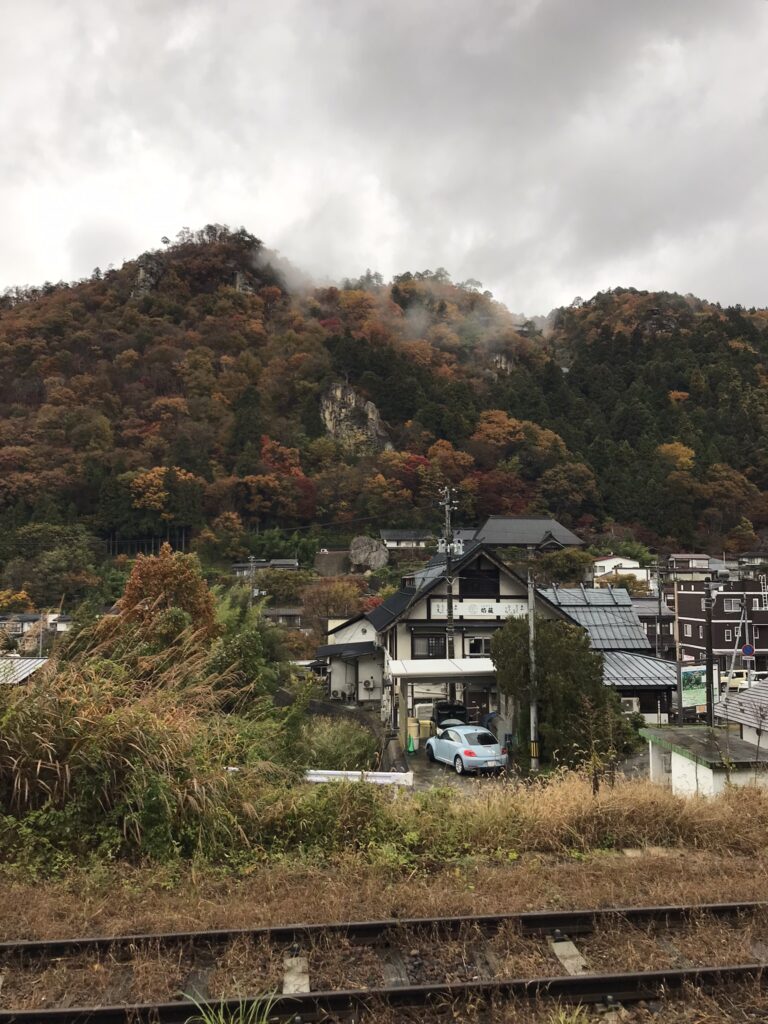
The view from Yamadera train station
Yamadera literally translates to ‘mountain temple’ – this pretty much describes things. This area contains exceptionally scenic Buddhist temples which are dotted on the mountainside in a somewhat rural setting. Buddhist temples sequestered away on remote mountains seem to be a running theme in Japan and this is a particularly spectacular example, making it a popular day trip for visitors from as far away as Tokyo. We were surprised at how many foreign tourists we saw here – by far the most of any place we visited in Tohoku.
From Yamadera train station it’s a roughly 5 minute walk to the start of the trail up the mountain. You can actually spot the precariously-perched temples hidden on the verdant green slope from the platform of Yamadera station, often wreathed in a mysterious fog.
The temple complex was founded in 860CE as part of the Tendai Buddhist sect and officially named Risshaku-ji. During that time, Yamadera was considered to be a frontier region to the far north of Japan. For fans of the 17th century Haiku poet Basho, he is said to have visited Yamadera and composed this haiku poem about the place:
‘Such stillness / sinking into the rocks / the cries of cicada’
A monument with his poem and statue of Basho sit at the foot of the mountain.
The oldest temple building is actually located on the lower reaches of the mountain – you don’t have to pay any entrance fee for this section (including the monument to Basho). The Konponchudo or Main Hall contains a sacred flame which is said to have remained burning since the founding of the complex and was brought from the Enryakuji temple in Kyoto, headquarters of the Tendai sect.
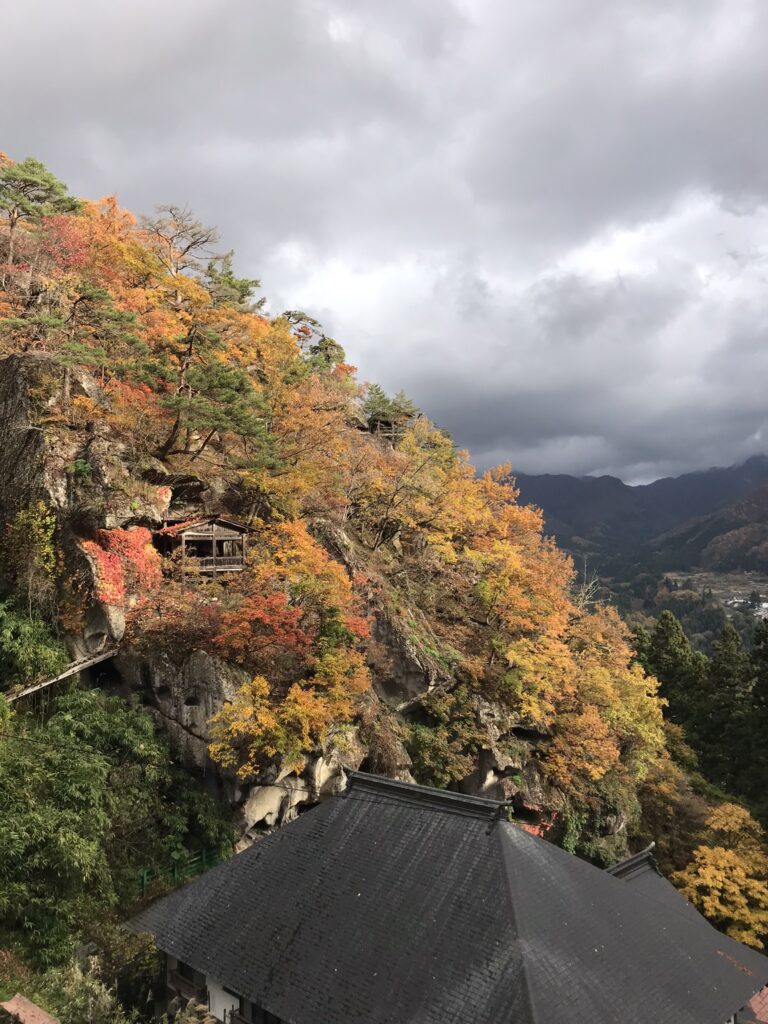
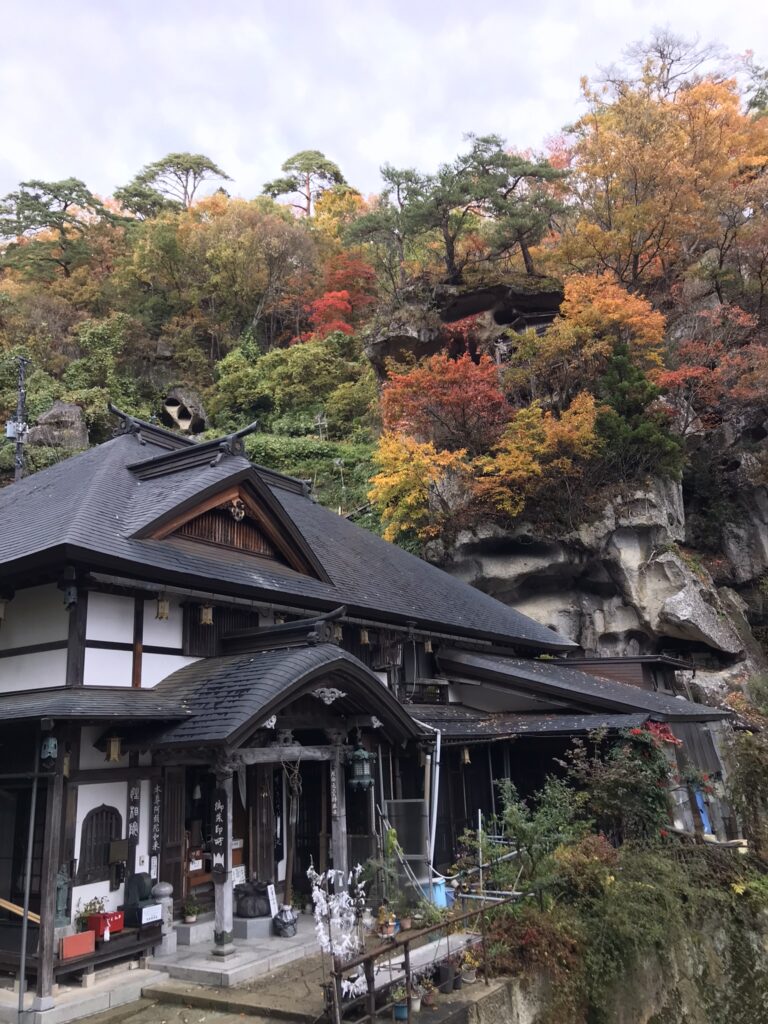
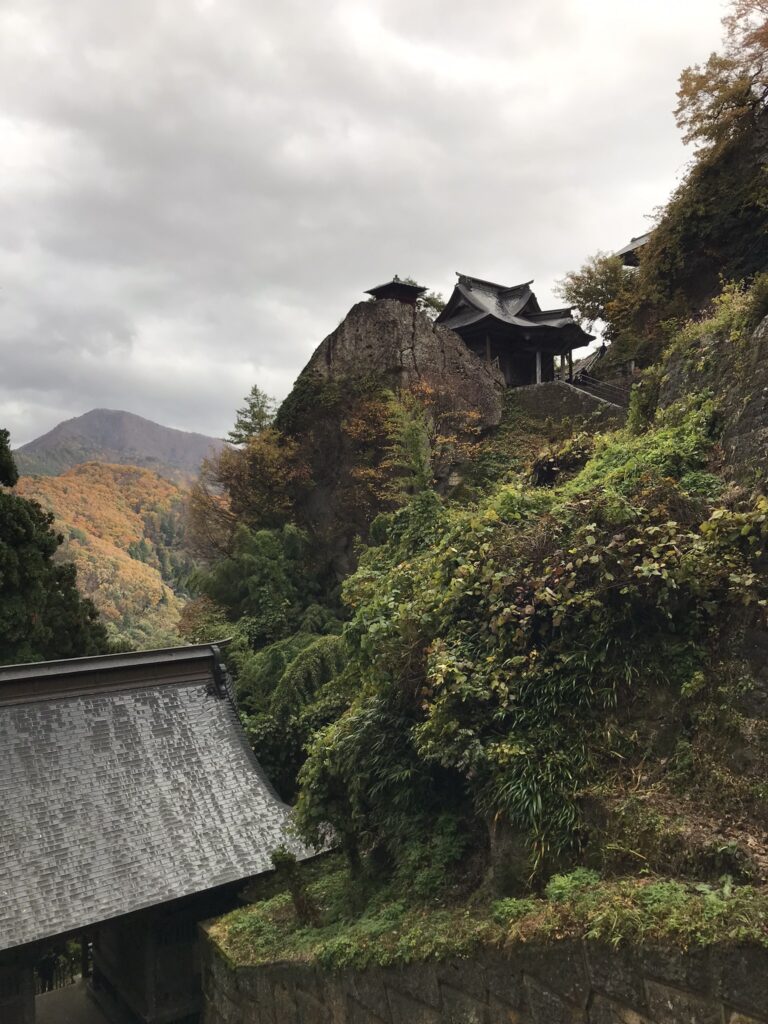
Some of the shrines were so remote we didn’t even know how the devotees would be able to reach them except perhaps by rock climbing
The main attraction however is the paid area at the top of the mountain. The climb up is quite steep, but we didn’t find it to be too difficult. Many little statuettes with varying levels of water damage are hidden in nooks and crannies along the route up to the upper reaches of the complex – these are left by devotees. Along the route up the mountainside are also numerous grave markers and smaller shrines, including one particularly terrifying shrine which seemed to contain a horror movie type mask. As is a common feature in Buddhist temples throughout Japan, some of the statues are adorned with a bright red bib and matching bonnet. Once reaching the top, there are predictably amazing views over the plush valley below from the lookout point. Interestingly, we spotted a sign reading ‘don’t clap your hands, this is a temple’ – warning visitors against performing the clapping/bowing ritual which is common in Shinto shrines.
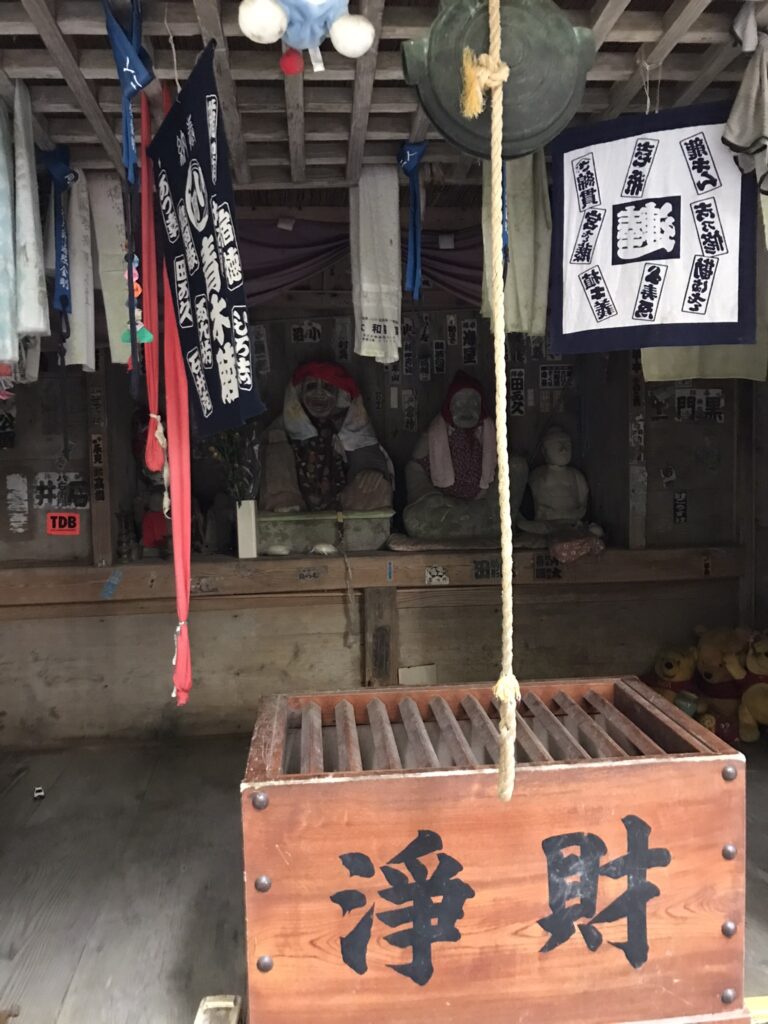
The stuff of nightmares, spotted on the route up to the top of Risshaku-ji
Foodie Places
Taimenseki – there are many down-to-earth soba noodle lunch places to choose from in the small village of Yamadera between the train station and the route up to the shrines. We opted for Taimenseki due to its fantastic views over the river and we weren’t disappointed by either the meal or the traditional vibe of the place. Soba noodles, stews and tempura are the main items on offer here; the stew with mountain vegetables was a real standout.
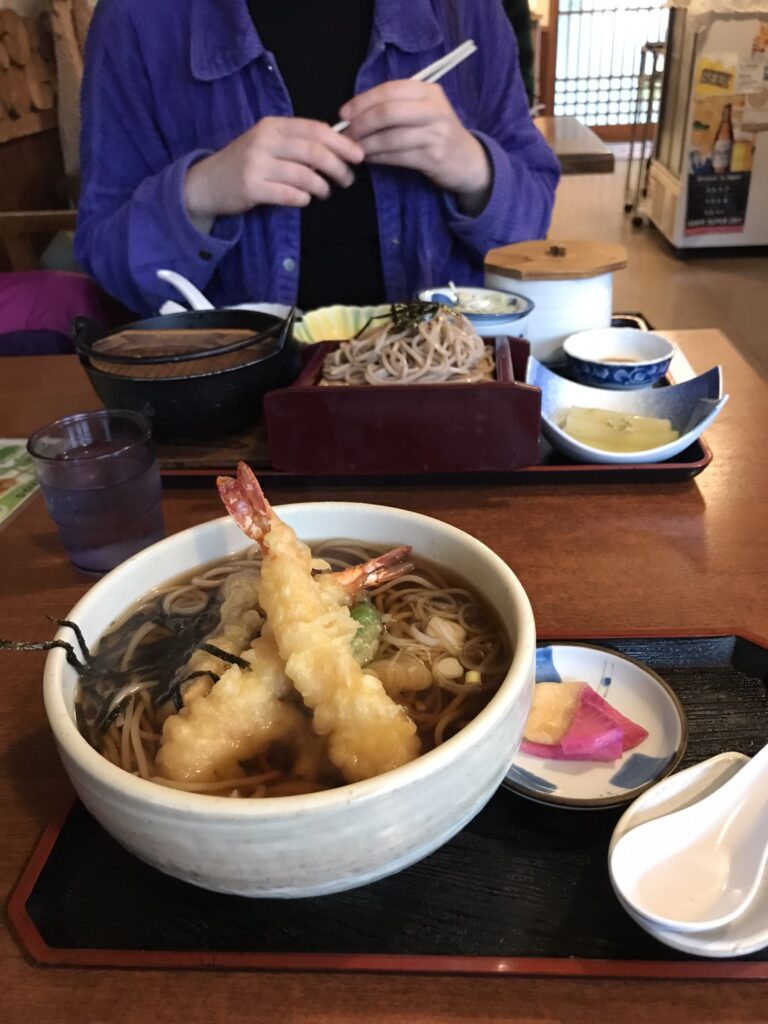
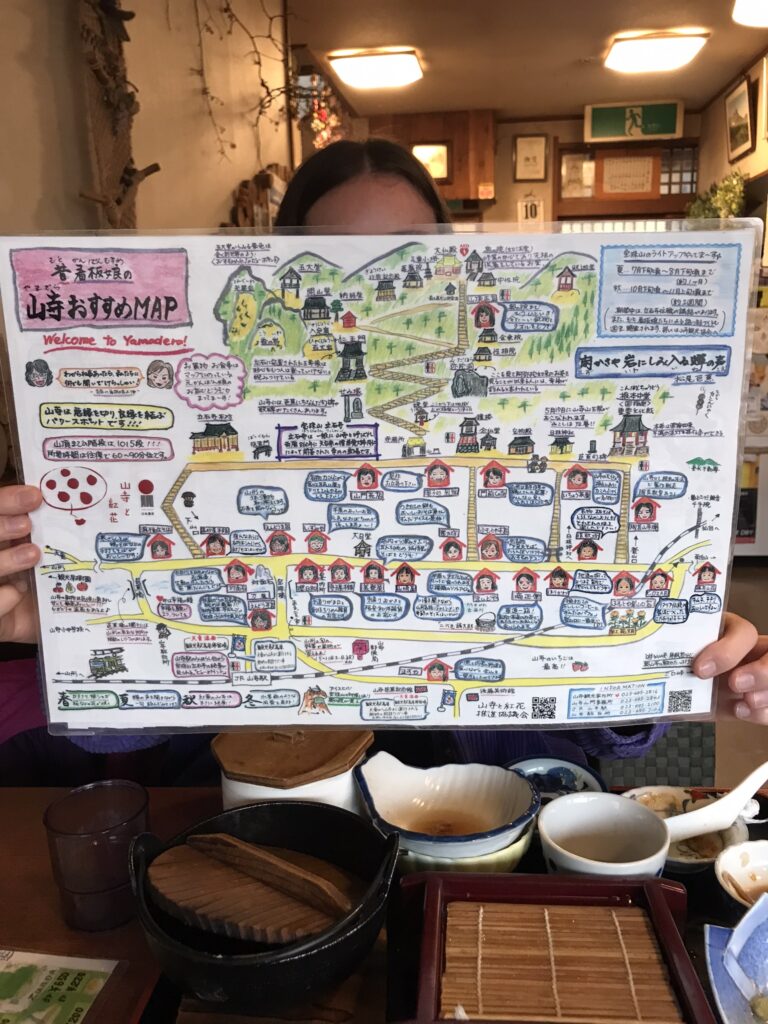
We were impressed by the hand-drawn map of the village at Taimenseki, with miniature portraits of the residents who lived in each house – a very personal touch.
Matsushima
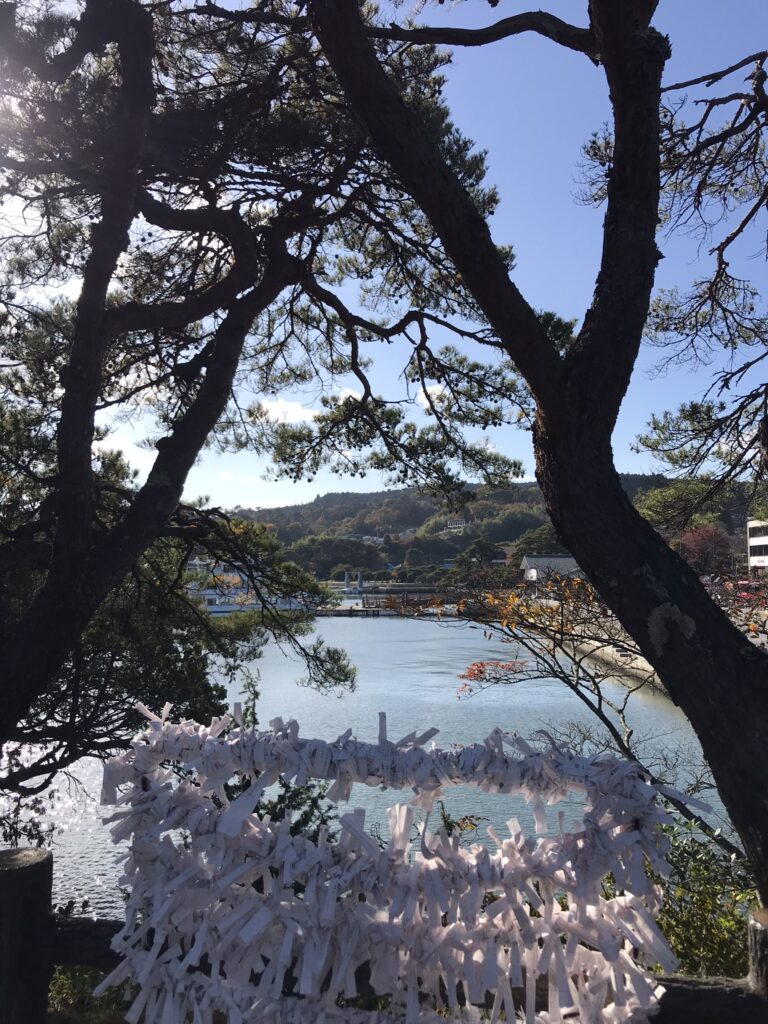
A stunning bay filled with small islands and tiny islets, the bay of Matsushima is one of the most popular and well known tourist spots in the Tohoku region. As part of the Japanese obsession with creating various ‘top three’ lists, Matsushima has been designated as one of the top three scenic views in the country. With over 260 islands of varying sizes, it definitely lives up to the billing. Matsushima is really easy to access, around 40 minutes on the train from Sendai with plenty of direct trains per day. The scenic bay and islets actually stretch quite far along the coastline, but we stuck to the area nearest to Matsushimakaigan train station, which is where most of the action is. You can easily explore this area on foot, including a couple of the islands which are linked to the mainland by bridges. Boat trips around the wider bay also run from this area. As well as being scenic, the area is also very historic and many of the islands are filled with statues, temples, graves, shrines and stories about the old feudal lords and wandering monks and poets who came here centuries ago.
Foodie Places
Grill Tamaya – a touristy restaurant located on the waterfront. We had the seared tuna rice box, which was absolutely fantastic. The tuna was so tender, barely cooked but seared to perfection. A little more expensive than our usual meal but definitely worth the splurge. There’s always something nice about sitting by the sea and eating fresh, high-quality seafood.
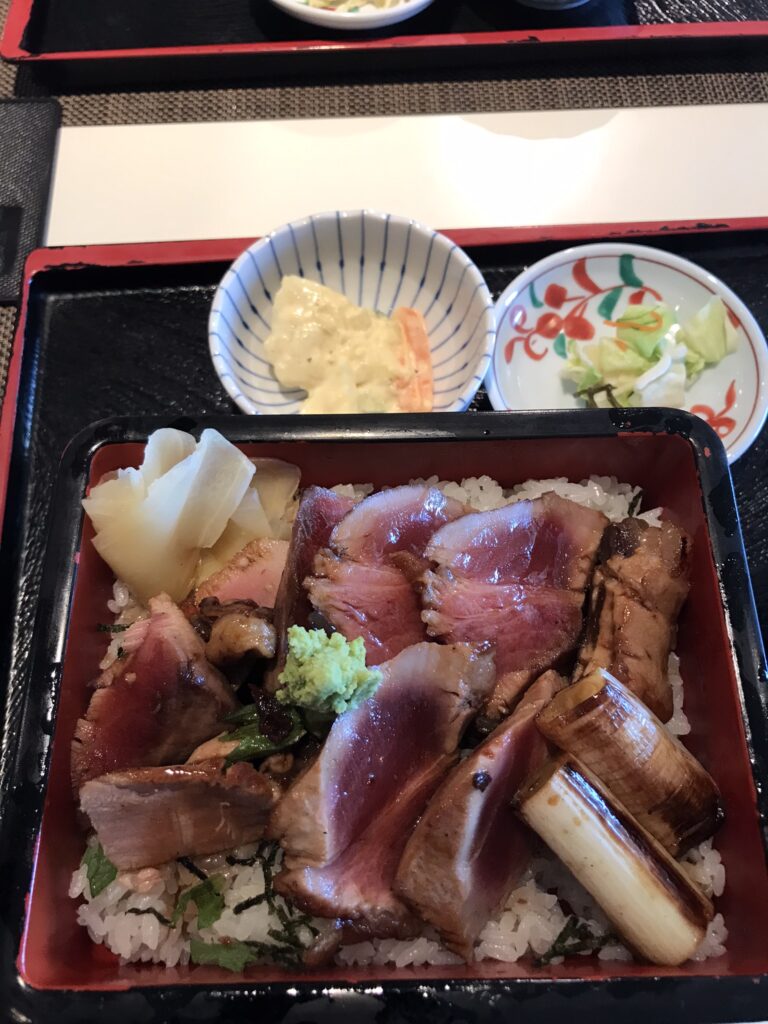
The tuna rice bowl really hit the spot at Grill Tamaya
Activities
Boat trip on Matsushima bay – the vast majority of people who visit Matsushima go on a boat trip around the bay, it’s a quintessential activity really. There are hustlers around the waterfront and dock areas selling boat tickets and drumming up business – this is pretty much the only place we saw these kind of hustlers in Japan, however unlike in almost every other country this is not a rip-off or tourist trap. The prices offered by the boat hustlers are pretty uniform across the board and the boats themselves are super legit. The tourist boats are large, modern yachts capable of carrying hundreds of passengers. We found the boat trip to be professional and well-organised, with recorded narration in both Japanese and English which provided information about the different islands as we were passing by. We also saw boat guys cleaning the windows in between trips to ensure that visitors could clearly see the islands – a lot of care and thought seemed to go into the whole thing, as is always the case in Japan.

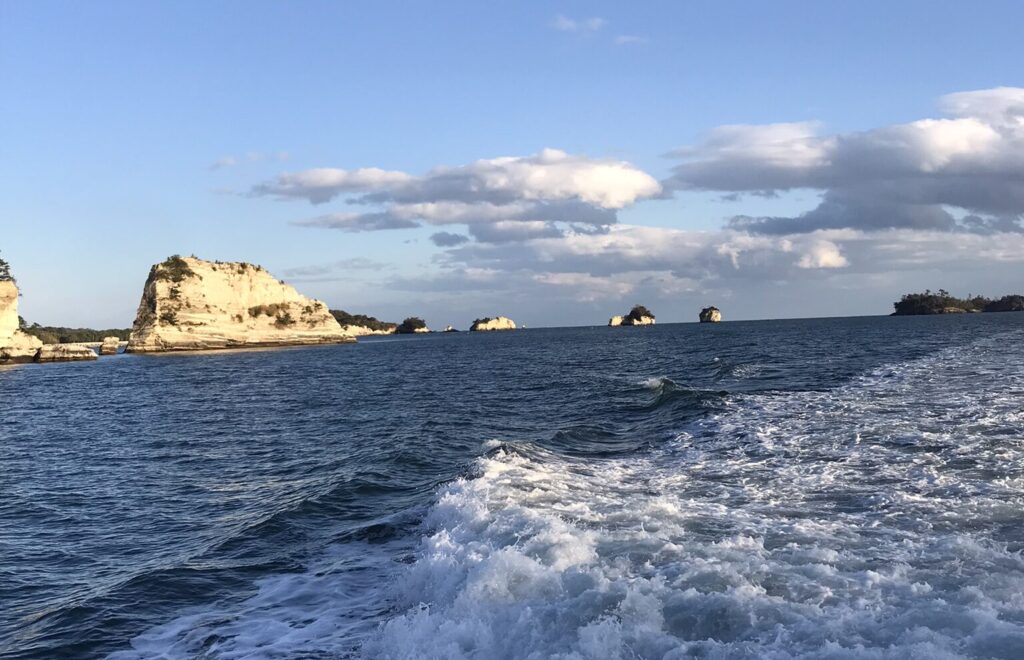
Views from the dock at Matsushima Bay
At the time of our visit boats were departing every hour on the hour from morning until sunset. We visited on a weekday and were able to just walk up and purchase a ticket for the next departing boat, although the sunset cruise seemed to be much more popular and did sell out in advance. We paid 1000 yen per person, which we found to be pretty good value for money. The trip which lasted around 45 minutes and did a full lap of the bay. Boats are busy and seats are unreserved, it’s first come first serve so queue up early if you want to get a good window seat. It’s possible to pay more to go on the top deck (which we didn’t do), and you can also stand outside at the back of the boat if you don’t want to sit or fancy a more open-water experience. The pier at Matsushima is numbered with various different boat departures; make sure you get on the right one!
Fukuurajima Island – the largest island which can be accessed on foot in this area, Fukuurajima is connected to the mainland by the iconic red Fukuraabashi bridge, which is over 250 metres long and is apparently nicknamed ‘encounter bridge’ as you might meet a special person along the way. You have to pay a small fee to cross the bridge and access the island on foot. The island has several walking trails and plenty of great views of the bay. We even spotted some origami at one point.
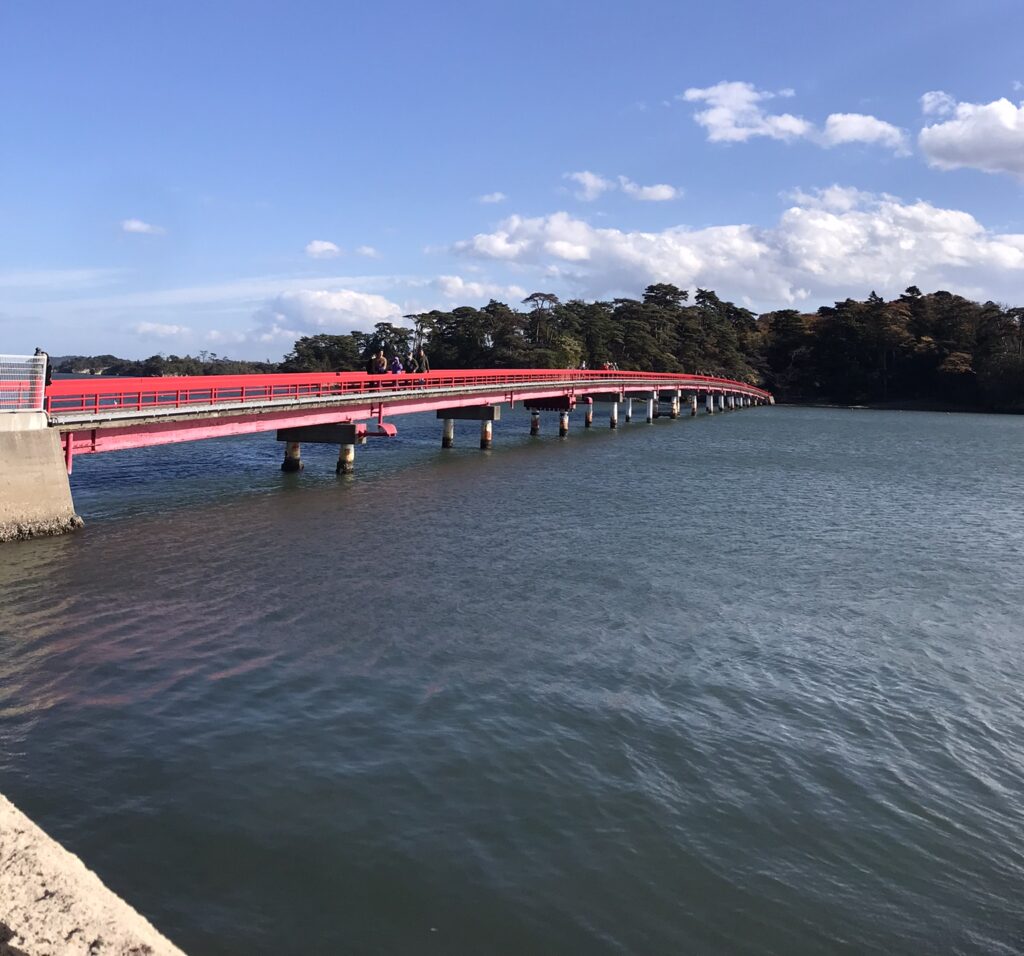
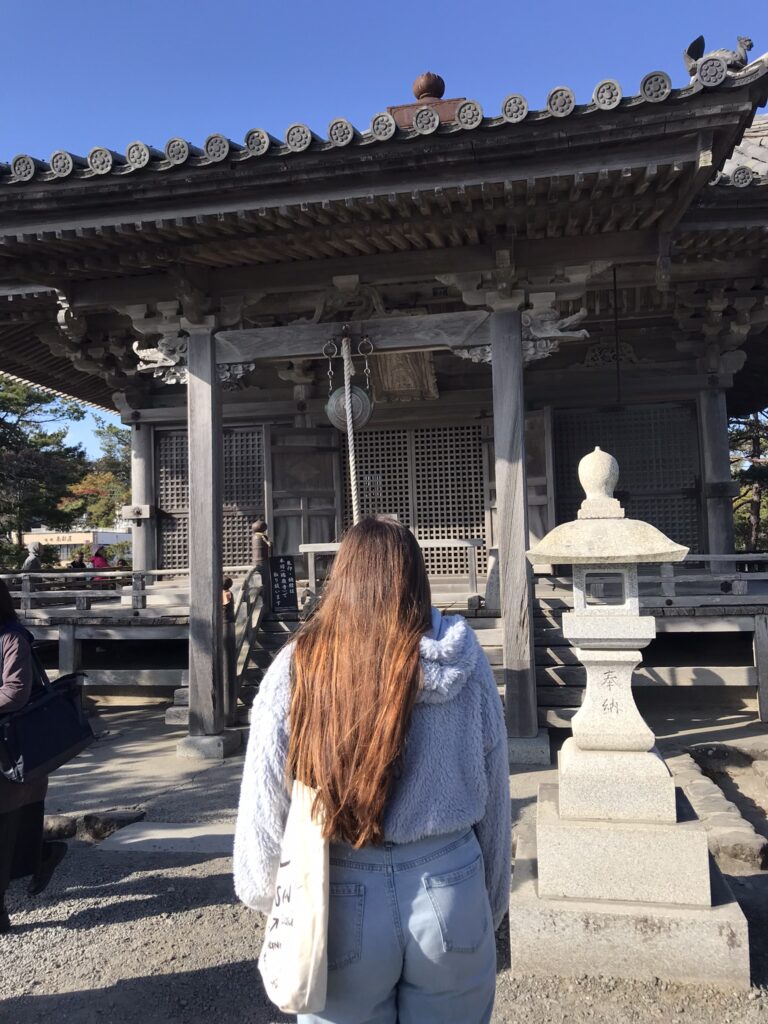
The iconic red bridge to Fukuurajima island and the spiritual Buddhist shrine of Godaido
Oshima Island – another island that can be accessed by bridge. Unlike Fukuurajima, this island is free to visit. There are remnants of shrines and caves on the island which were apparently created many centuries ago by an ascetic monk. The island is very close to Matsushimakaigan station, and it makes a peaceful and atmospheric place to hang out for a while on a sunny day although some claim that it can be a bit spooky at night.
Zuiganji Temple – one of the top sights in Matsushima, annoyingly this temple was closed for preparations for an evening light trail when we visited. We had to settle for the dramatic tree-lined approach and meditation caves within the grounds. The temple dates back to the 9th century, although it was restored by the founder of Sendai, Date Masamune, in 1609. The temple’s influence extends further out into the bay, with a shrine (Godaido) on an island which we were able to visit earlier in the day.
Godaido – this iconic shrine on a small island was said to have been founded by the same monk as Zuiganji, and is considered to be a twin temple. Visitors can freely access Godaido and the small island that it stands upon via a rickety wooden bridge from the main harbour.
Retro Museum – our first taste of a Japanese ‘retro museum’, which surprisingly is quite a common and popular phenomenon throughout the country. Located in a strange building that looks like an old gas station, this museum is a treasure trove of memorabilia and gadgets from the mid to late 20th century, the Japanese Showa Period. From old magazines and toys to broken-down electronic devices and musical instruments, lots of quirky items can be found here. We saw some sumo wrestler trading cards and enjoyed playing with the pinball and mini pachinko machines. Visitors are free to touch, hold, play and mess about with the items on display. It really gives a nostalgic feeling, transporting visitors back in time. The museum is apparently owned by an eccentric old chap who enthusiastically greets visitors, however he sadly wasn’t there at the time of our visit. If you’re at a loose end or have an hour to spare, I highly recommend visiting this place for a bit of fun.
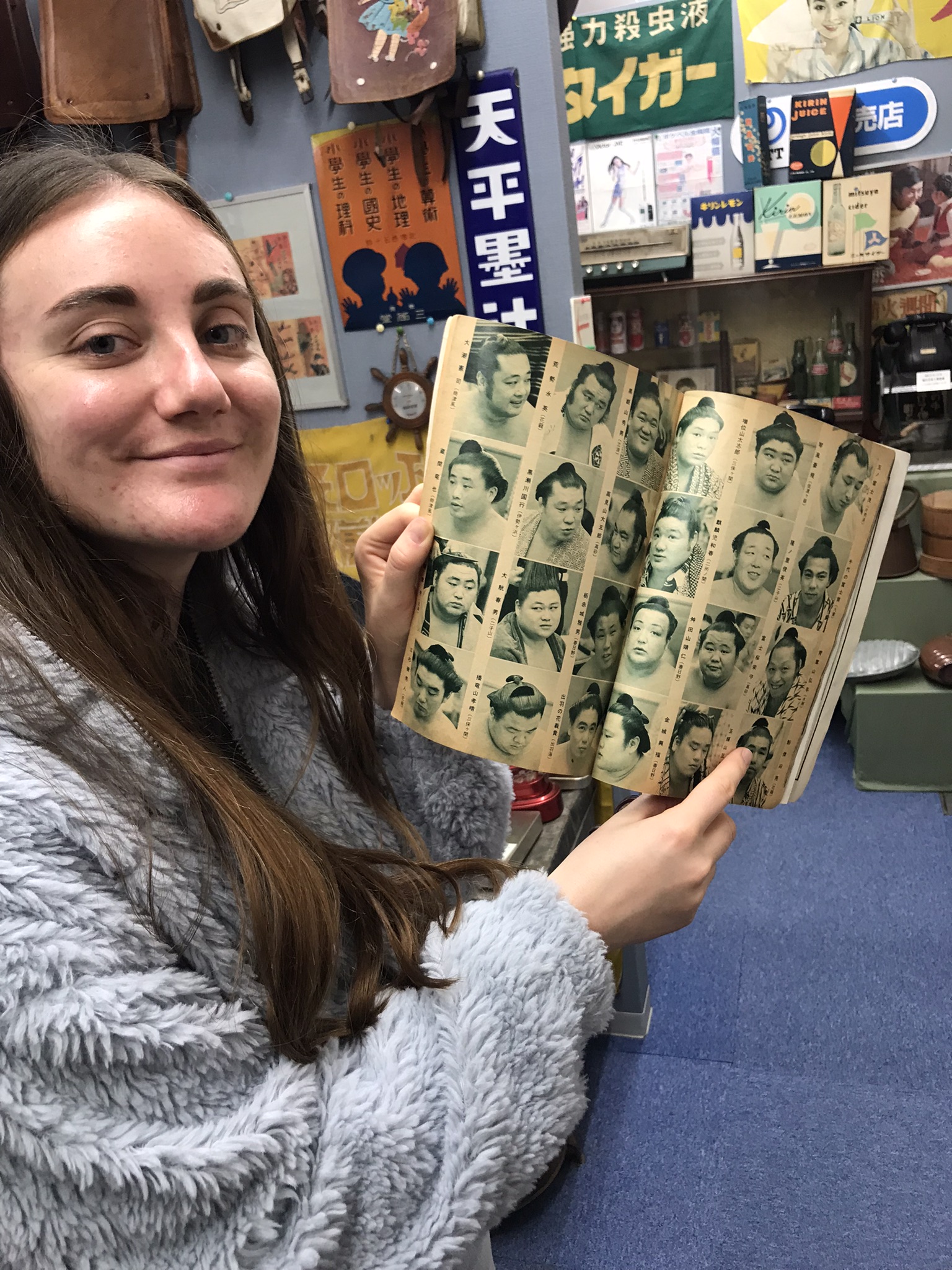
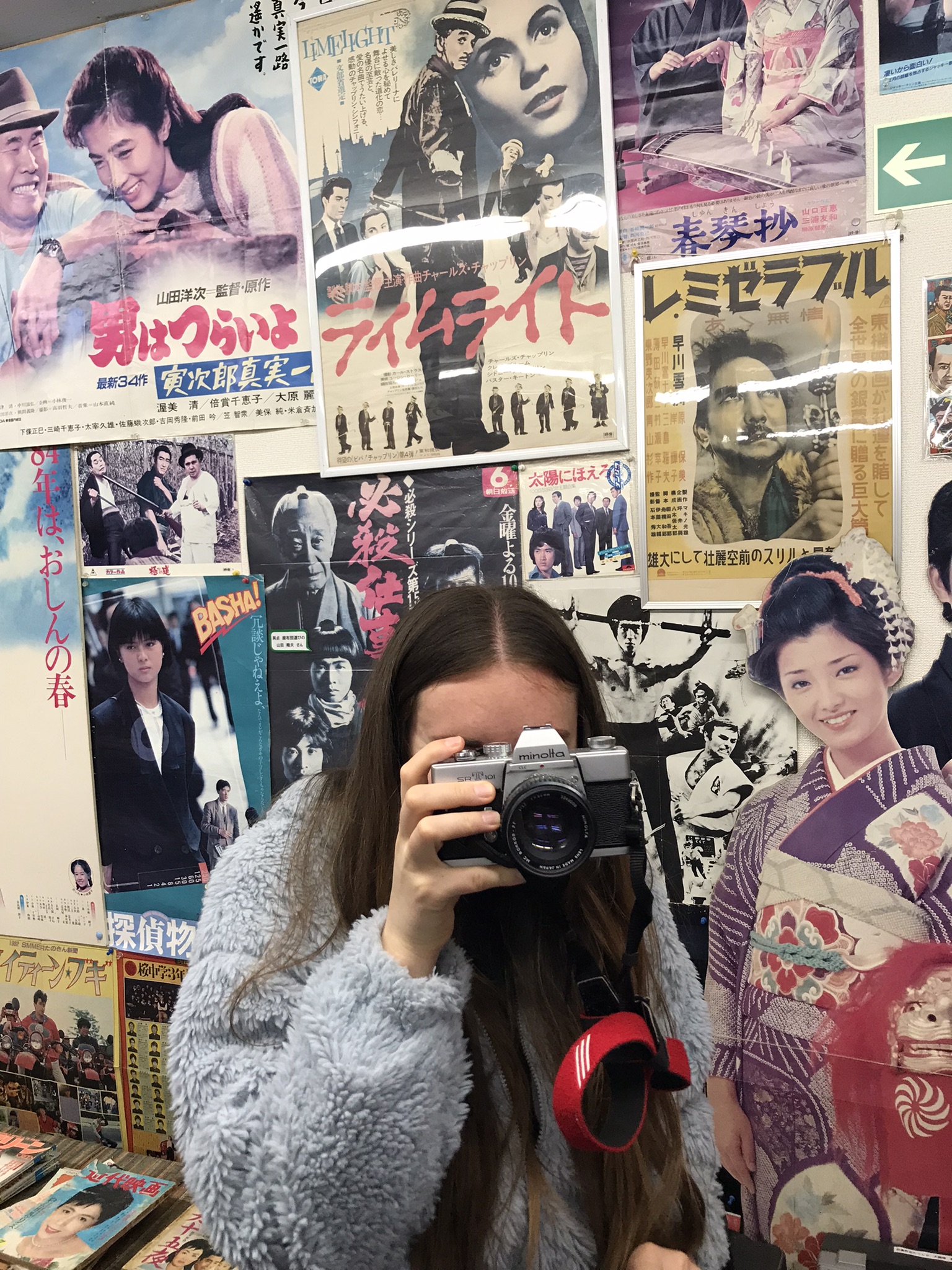
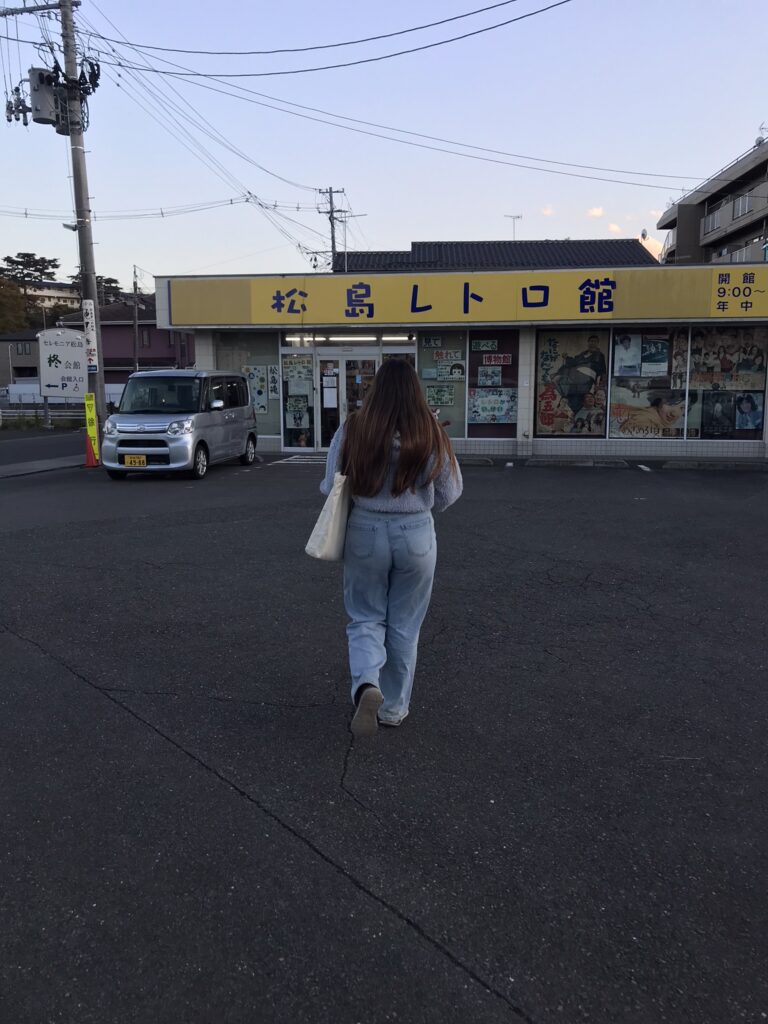
Having way too much fun at the Retro Museum in Matsushima
For our self-guided walking tour of Matsushima, click here!
From Sendai, we took a direct bus to Tokyo. Click here for more Japan content!