Arguably India’s most laid-back state, Kerala is very different to the overcrowded and chaotic north of the country. A tropical and exotic strip of land at India’s south-western tip, Kerala is known for its coastline, hill stations (mountain towns) and backwaters. With some of the highest levels of development in the Indian subcontinent, the state of Kerala is swiftly becoming one of the region’s premier tourist destinations. Check out my Kerala travel experiences below!

Kalpetta, Kochi, Munroe Island
Kerala has a unique culture with many distinct local traditions. The region has a history of maritime trade and export of spices as well as a heavy reliance on the fishing industry to provide work and income for much of its population. The Portuguese, Dutch and British were all present as major colonial powers in the region, although most of the area that comprises the modern territory of Kerala continued to be ruled by local Maharajas and operated as vassal states during the time of the British Raj. Kerala is home to the Malayali ethnic group and Malayalam is the dominant language – it’s a Dravidian (southern Indian) language with some similarities to Tamil.
Kerala is a majority Hindu state, but Hinduism is far less dominant here than in other parts of India. The state has a large Christian population – the Christian shrines dotted around the state are reminiscent of Hindu shrines, but with Christian saints or images of the Virgin Mary. The history of Christianity in Kerala is said to go all the way back to Biblical times, as Thomas the Apostle allegedly landed in Kerala in 52CE and brought the religion to the region with him. Kerala also has a large Islamic minority, while Kochi previously had a small but significant Jewish population.
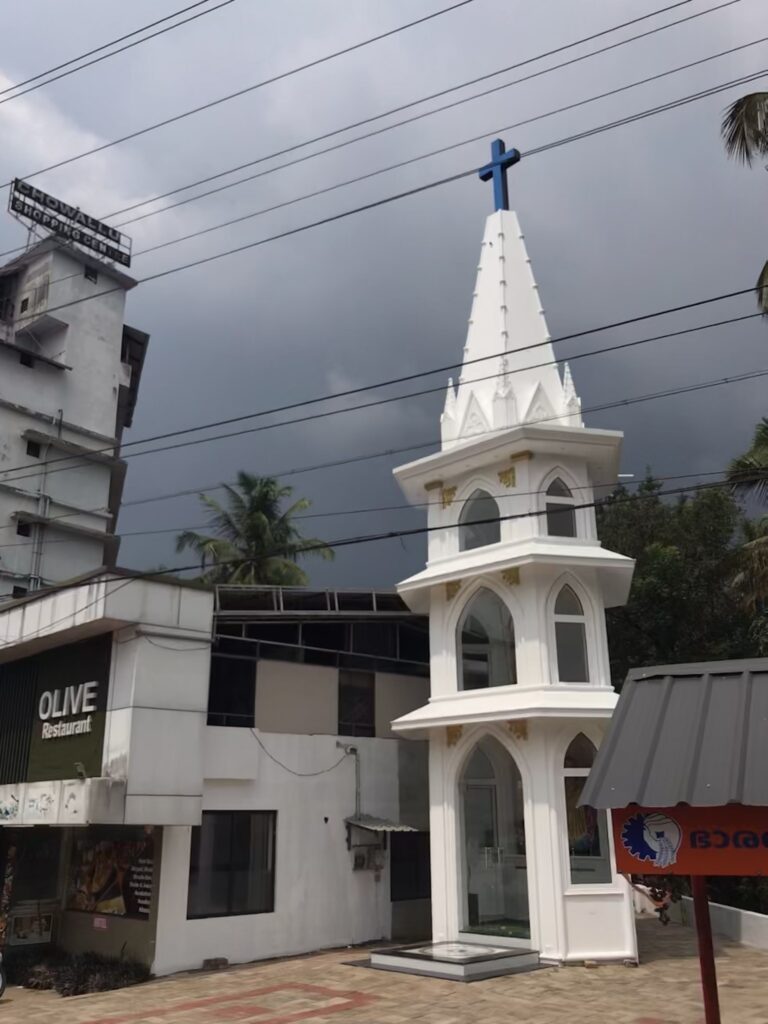
It’s not uncommon to see Christian as well as Hindu shrines in Kerala
Kerala is known as having some of the highest standards of living, education and human development among all the states of India. Ironically, the state is also suffering from a brain drain as there is a perceived lack of opportunities for young people in developing sectors such as finance and tech. Many youngsters now move to the megacities in the north or east for work – Kerala has the lowest population growth of all Indian states as a result. We read newspaper articles where local officials were encouraging people in Kerala to have more children, which seems counter-productive given the massive overpopulation in India as a whole.
Possibly due to the higher levels of education and improved standards of living, Kerala is also a much more relaxed state in comparison to the manic, overcrowded north of the country. We were shocked when a tuktuk driver that we hailed on the street in Wayanad actually used his meter – a first for us after months in India! The levels of ‘nonsense’ are minimal here; although it still exists, you won’t find anywhere near as much traffic congestion, honking horns, scammers and overbearing locals, pushy beggars, litter or men urinating in the street. We found Kerala to be probably the easiest state in India to travel around independently of the 14 that we visited.
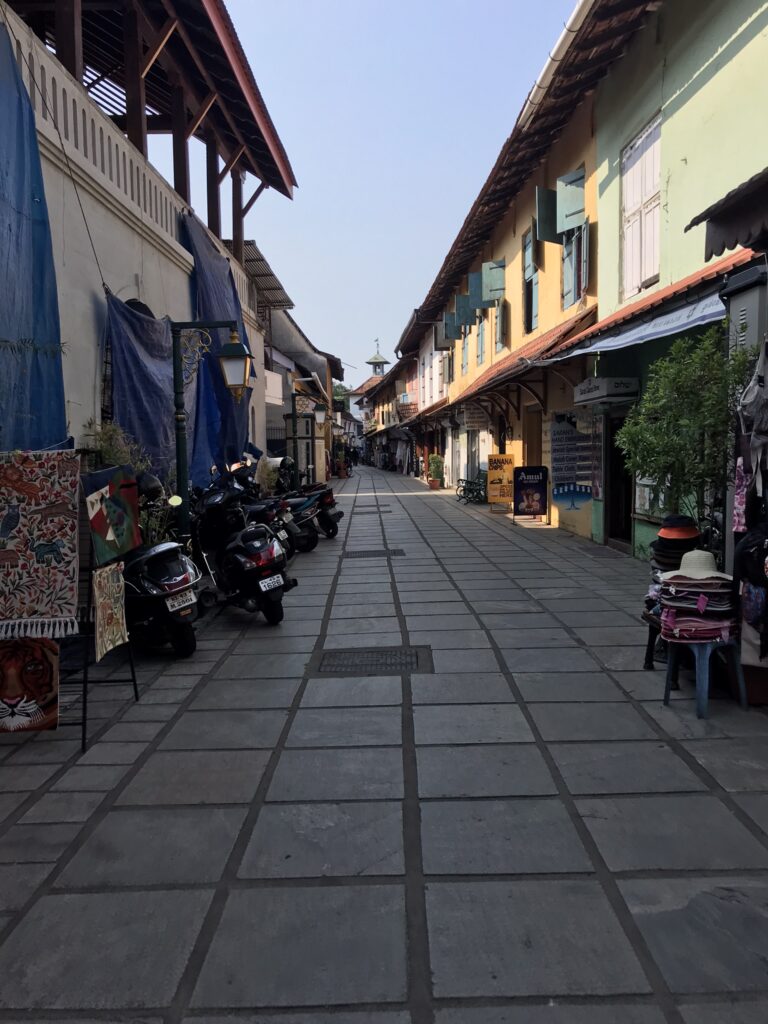
Kerala is generally much more laid-back than many other Indian states
Kerala is framed by the Malabar coastline to its west and the Western Ghats mountain range to its east. Within these mountains are a number of hill stations (mountainside towns) which not only provide stunning scenery, but also a respite from the oppressive heat and humidity of the coast. Regions such as Wayanad, Munnar and Periyar as well as the likes of Ooty and Kodaikanal in nearby Tamil Nadu have become popular resort destinations for domestic and international visitors alike.
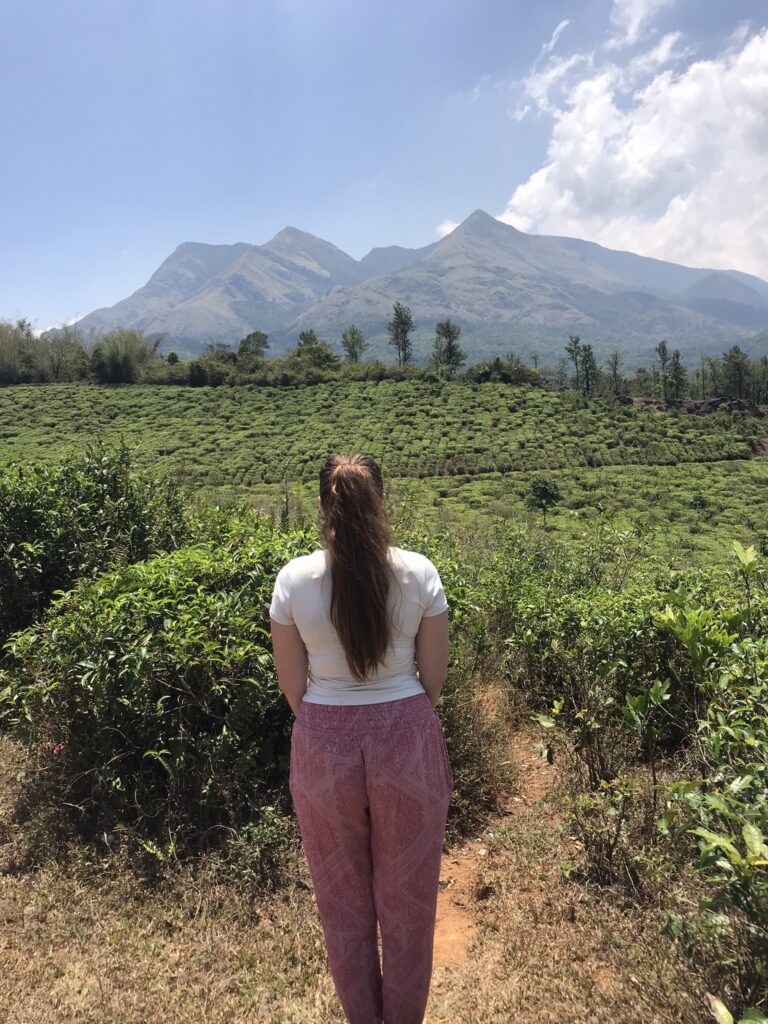
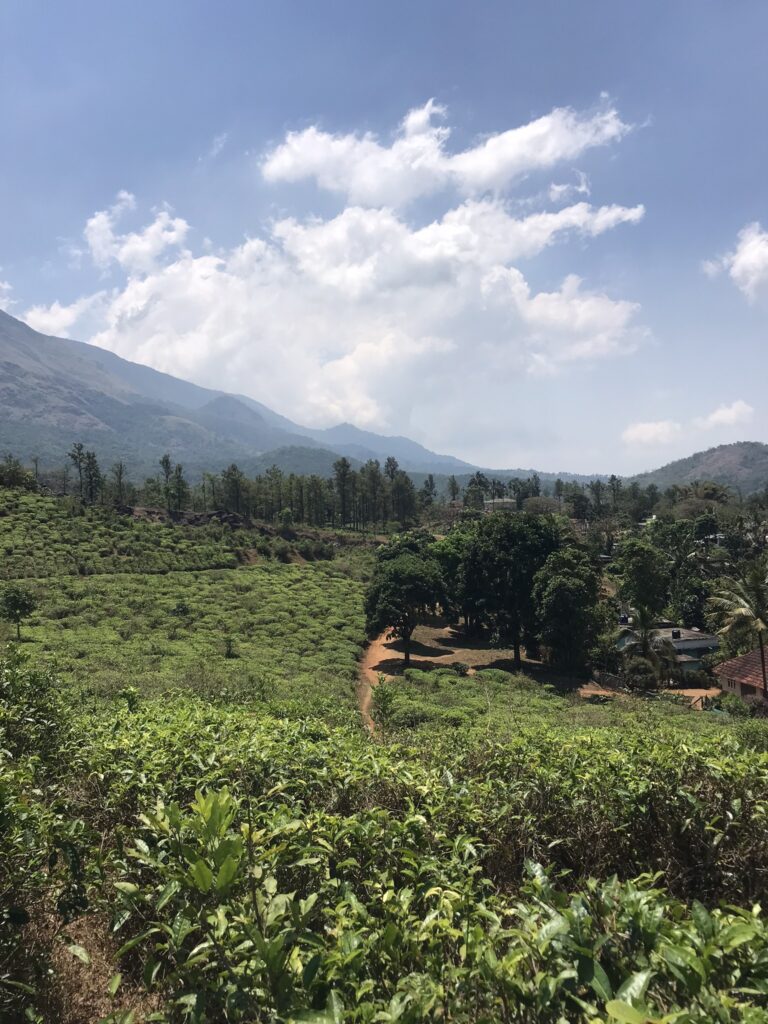
Wayanad is a ridiculously picturesque tea and coffee growing region
Kerala is also known for its ‘backwaters’ – a large number of interconnected waterways, lagoons, rivers and canals stretching inland from the coast. These backwaters historically served a means of transport for exports coming from further inland as well as providing a lifeblood for the many local fishing and trading villages along the routes. Taking a boat tour of the backwaters and experiencing the laid-back rural life of the state is a quintessential activity for visitors to Kerala.
Kerala is tourist-friendly, with tourism becoming an important part of the state’s economy. We saw more white faces walking the streets in Fort Kochi than just about anywhere else that we visited in India. Luckily, mass tourism hasn’t dampened the region’s culture and appeal and there are still plenty of lesser-visited places to explore for those that like to escape the crowds. We chose to visit Munro Island and Kalpetta rather than the more popular and touristy Alleppey and Munnar – although we heard good things from fellow travelers about those places too.
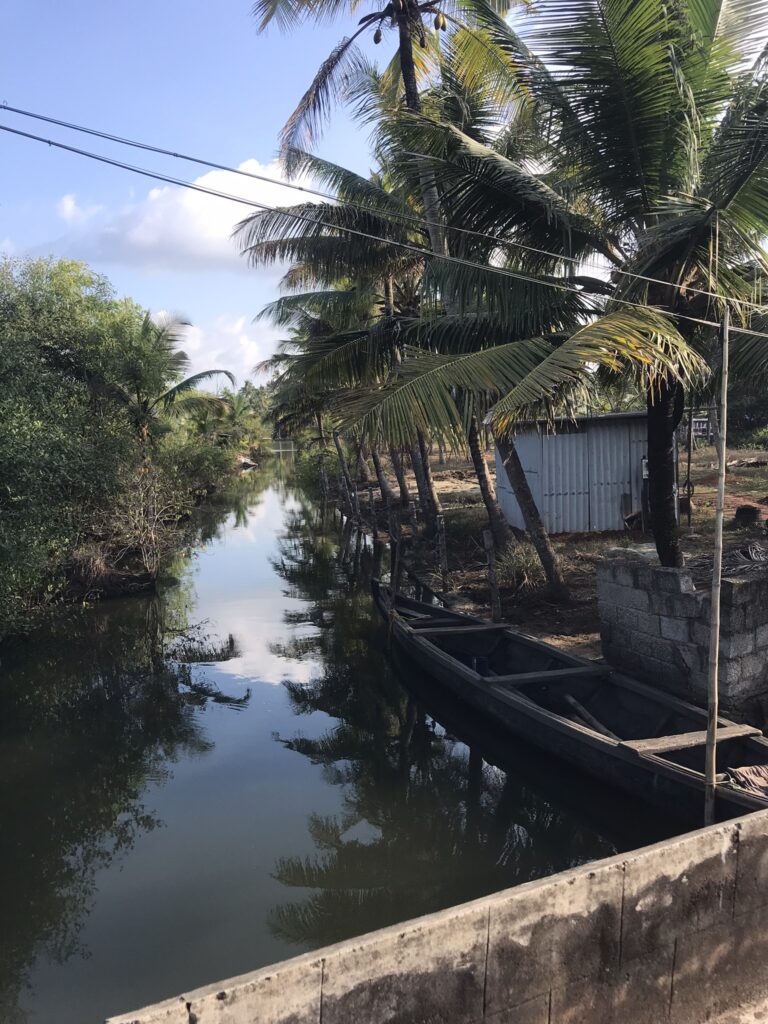
Kerala’s backwaters are one of the major attractions of the state – we chose to visit Munroe Island
Kerala was extremely hot and humid when we visited in mid-March, to the point that it was difficult to leave the air-conditioned room for more than an hour or two at a time. When I asked some local girls in Kochi if it was always this hot they told me that it was, however the internet states that weather conditions might be a little more bearable around December-January time. Either way, rooms with A/C are a must when visiting Kerala!
Kalpetta (Wayanad)
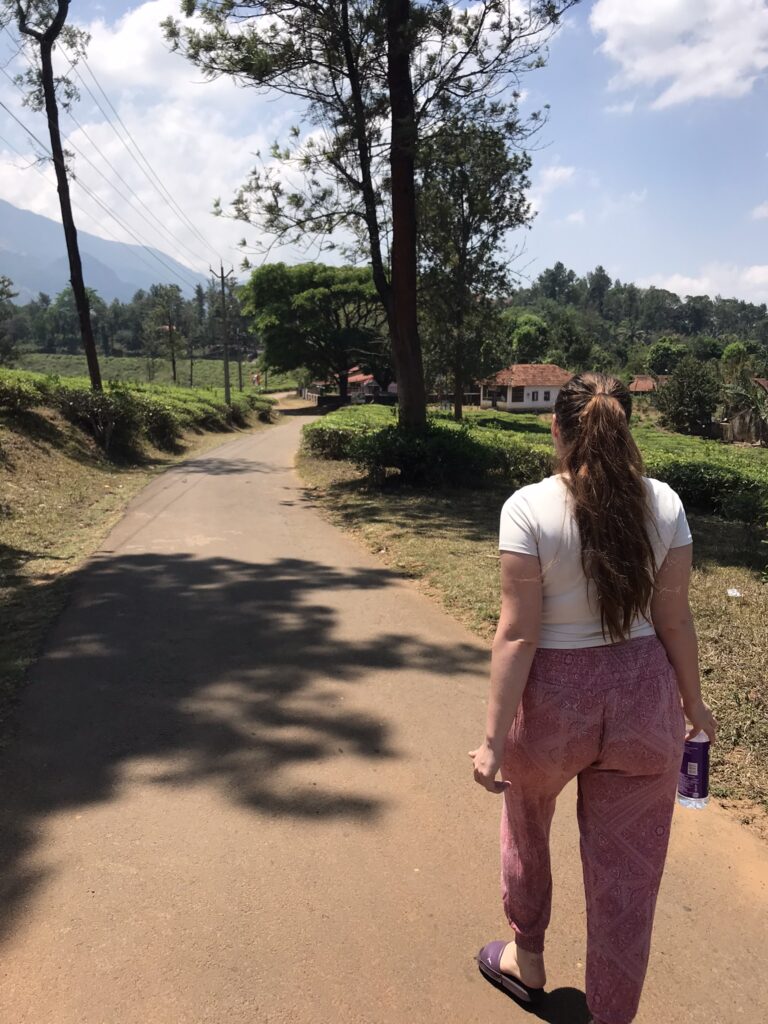
Kerala’s northern Wayanad region is one of the most scenic parts of the state. Carpeted with a layer of lush greenery, there are many hills and valleys filled with small villages to explore. The region is known for both tea and coffee production and is filled with lower-altitude tea and coffee plantations, which form a picturesque backdrop to the undulating landscape.
The Wayanad region is surprisingly well-populated, home to almost a million people, but you wouldn’t realise due to the great nature surrounding the area. It’s very serene and peaceful away from main road/settlements, with bird and monkey noises providing the soundtrack. The region is quite decentralised, with only a few moderately-sized towns which serve as regional hubs and then many smaller settlements and villages scattered throughout the landscape. Many of the hotels and accommodation options in the region are located several kilometres outside of the main settlements, in the midst of the nature.
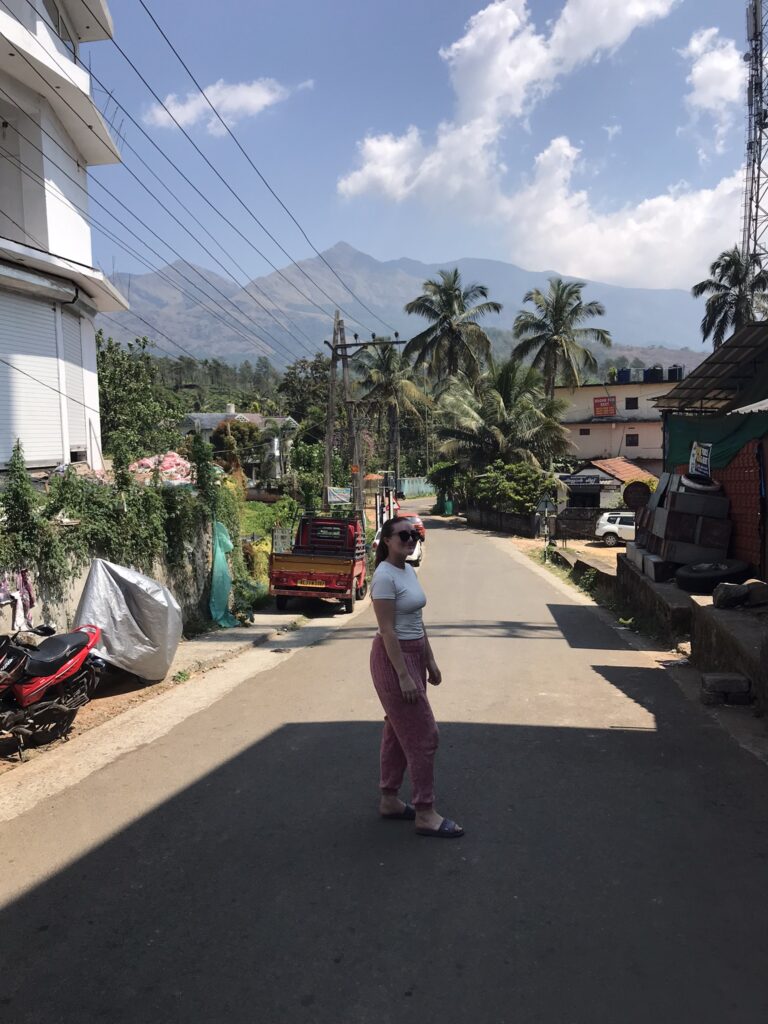
Wayanad is full of hills, valleys and smaller settlements such as Chundale
Wayanad can be a popular resort destination for domestic visitors on weekends, although there seemed to be very little in the way of international tourism. I don’t think our hotel had ever had foreign guests before as they didn’t seem sure what to do with the check-in procedure.
The three major towns in the Wayanad district are Mananthavady, Kalpetta and Sultan Bathery. We chose to stay near to Kalpetta, which is also home to the region’s central headquarters. Kalpetta is regional hub with good transport connections; we were able to get a direct bus from Mysuru and onwards to Kochi. Although it’s only a very small town by Indian standards, the centre of Kalpetta is relatively well-developed, with some large supermarkets and two bus stations.
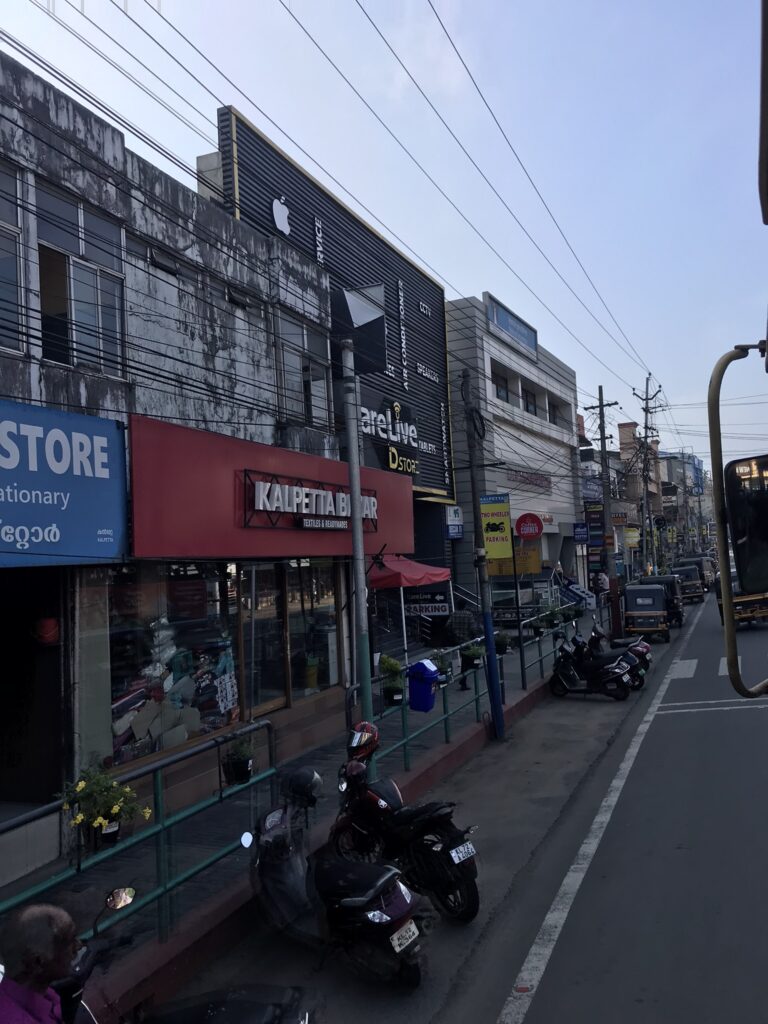
Downtown Kalpetta
As the region is so decentralised, there are advantages to having your own transport when visiting Wayanad, particularly if you’re interesting in partaking in the region’s trekking or adventure activities. If not, tuktuk drivers here seemed quite honest and unlikely to overcharge – this was the only place in India that a driver we hailed on the street actually used the meter! There are a couple of tuktuk stands in the centre of Kalpetta that you can use if you want to get a fair and reputable service.
While the region is full of hilly vistas and is at relative altitude compared to the coast, Kalpetta is not a classic hill station. Temperatures can still be very high here. We struggled to walk long distances because of the heat; you can become overheated very quickly walking up and down the undulating terrain.
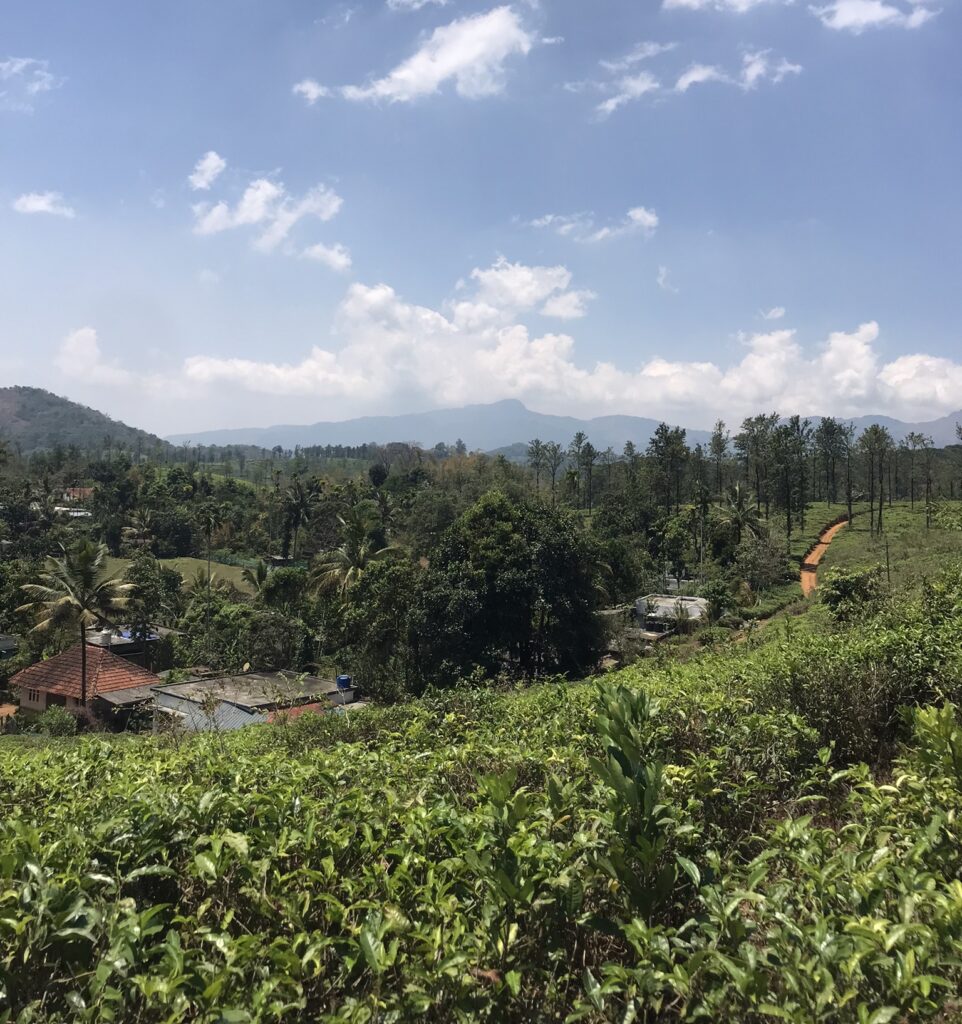
The Wayanad region varies between 700m and 2000m above sea level, so temperatures can still get really hot in the lower areas
After our time in Wayanad we took the local non-AC bus from Kalpetta to Kochi, which also called at the coastal city of Kozhikode on the way. The bus was ridiculously cheap but also ridiculously uncomfortable, a cramped and overheated 8-hour journey. There are lots of hairpin bends on the road down from Kalpetta to the coast, which didn’t help matters. The bus departed from the centre of Kalpetta and called at both of the town’s bus stations before departing. We had to ask for some help from locals to find the correct bus as the bus signs are all written in Malayalam script.
Accommodation
A resort or hotel with an on-site restaurant is preferable in Wayanad. If not, as accommodation is often not located within urban areas you may have to walk long distances or rely on food deliveries if without your own transport.
Lush Hills by Benchmark – about 5km from the centre of Kalpetta, this boutique accommodation is quite secluded, nestled into the side of a hill overlooking the valleys and other hills. It’s quite a small property with only a handful of rooms. We liked the balcony and the infinity pool, which was great for cooling down and preventing overheating. Although the facility was great, breakfast timings were a little strange and there are no restaurants or food shops nearby so we had to rely on Zomato for food deliveries each evening. This meant that we were limited to a small handful of places and had to order before 7pm each evening or we would not be able to get any food. If you have your own means of transport this wouldn’t be an issue.
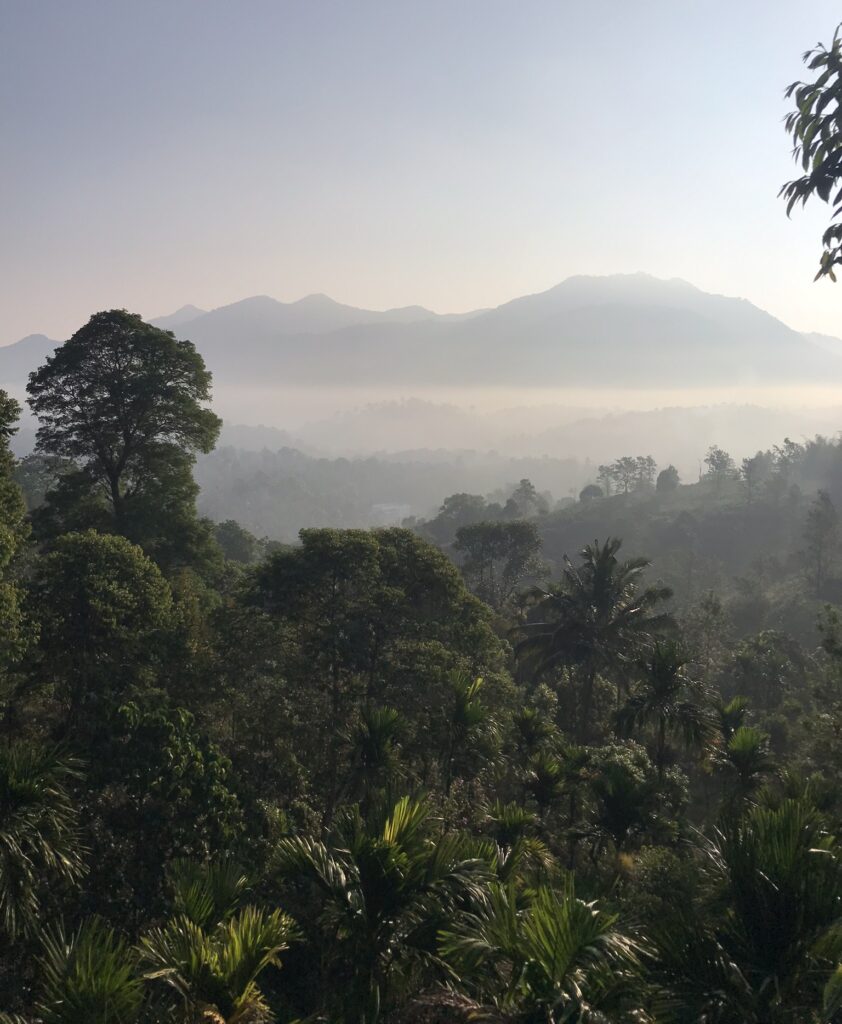
The morning view from our room – the mist quickly burns off in the heat of the day
Foodie Places
Chicking (Zomato) – as we were reliant on Zomato for food, our options were limited and we had to resort to Chicking on a couple of occasions. It’s a typical Indian fast-food style chicken place, not dissimilar to Burger King. The chicken burger and fries meal was ok.
1980s Nostalgic Restaurant (Zomato) – one of the only options on Zomato apart from Chicking, we ordered paneer masala which seemed like the safe choice. A reasonable enough curry, not outstanding.
The Walnut Cakes Chundale – we stopped for cold drinks and samosas on the walk down to Chundale. A nice enough little cafe along the main road and the samosas filled a gap.
Activities
There are plenty of treks, waterfalls and adventure activities in the area surrounding Kalpetta but we wanted to take it easy so spent most of our time relaxing around our accommodation and going for a couple of short walks in the beautiful surroundings.
Walking to Perumthatta View Point – from our accommodation we walked along Vellaramkunnu Odathode Road – a relatively flat track through the neighbouring tea plantations with spectacular views across the hills and Glad Valley. The tea plantation may be private property (there was a gate) but we were able to enter with no problems and have a nice walk around. It was funny to see cow’s heads occasionally popping up out of the tea plantation – later we saw them being rounded up by the herder.
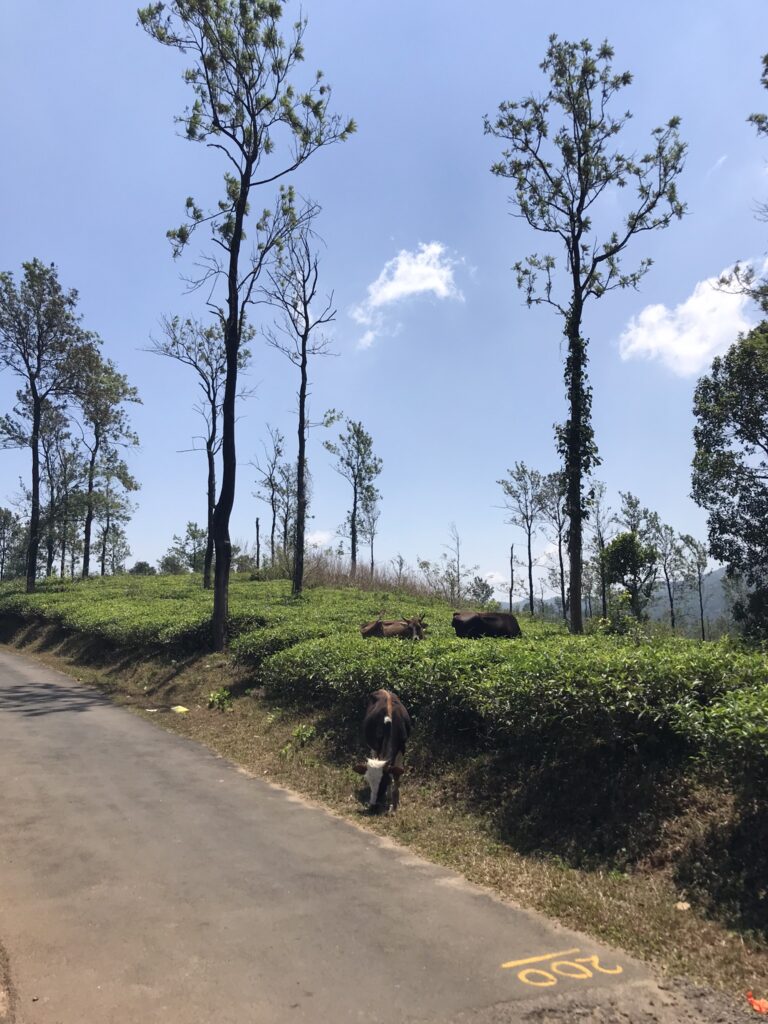
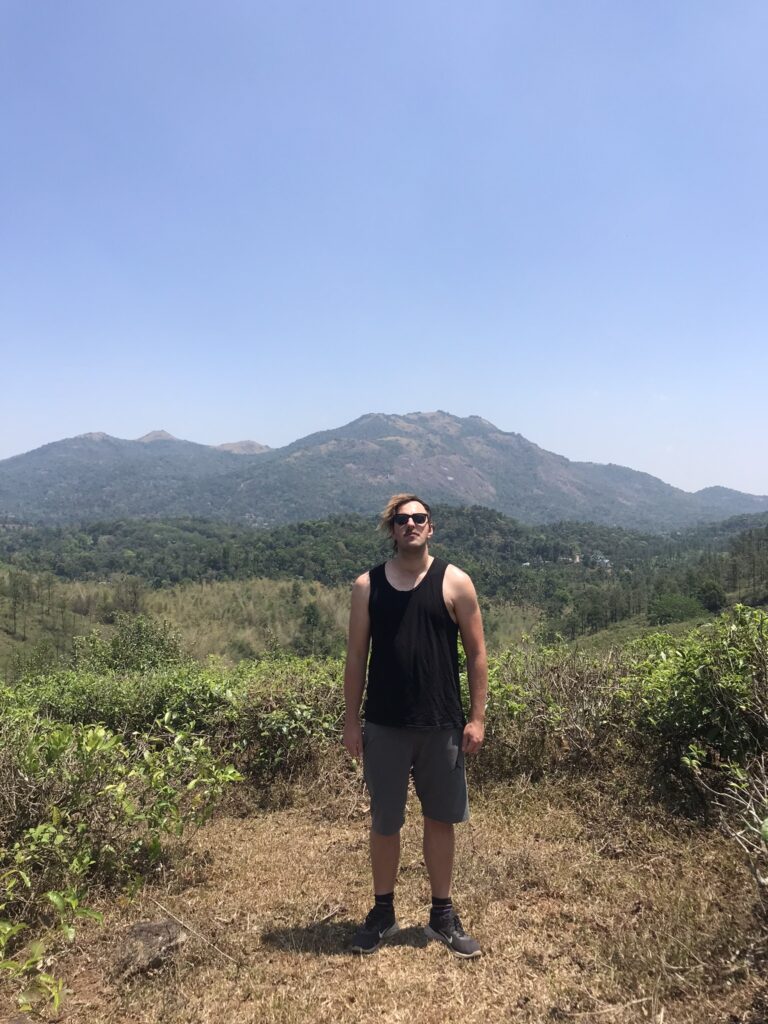
The cows were an unexpected addition – I’m not sure they were supposed to be in there
Walking to Chundale village – a steep downhill walk from our accommodation, the walk was a little hazardous as there was no real pavement on the main road. We walked down to Chundale mainly to see the HML tea plantation, but when we arrived it was locked up and seemed to be off limits to the public. We ended up walking to St Jude’s Church, a typical Keralan-style church, and had a little look around the village before getting a tuktuk back up the hill.
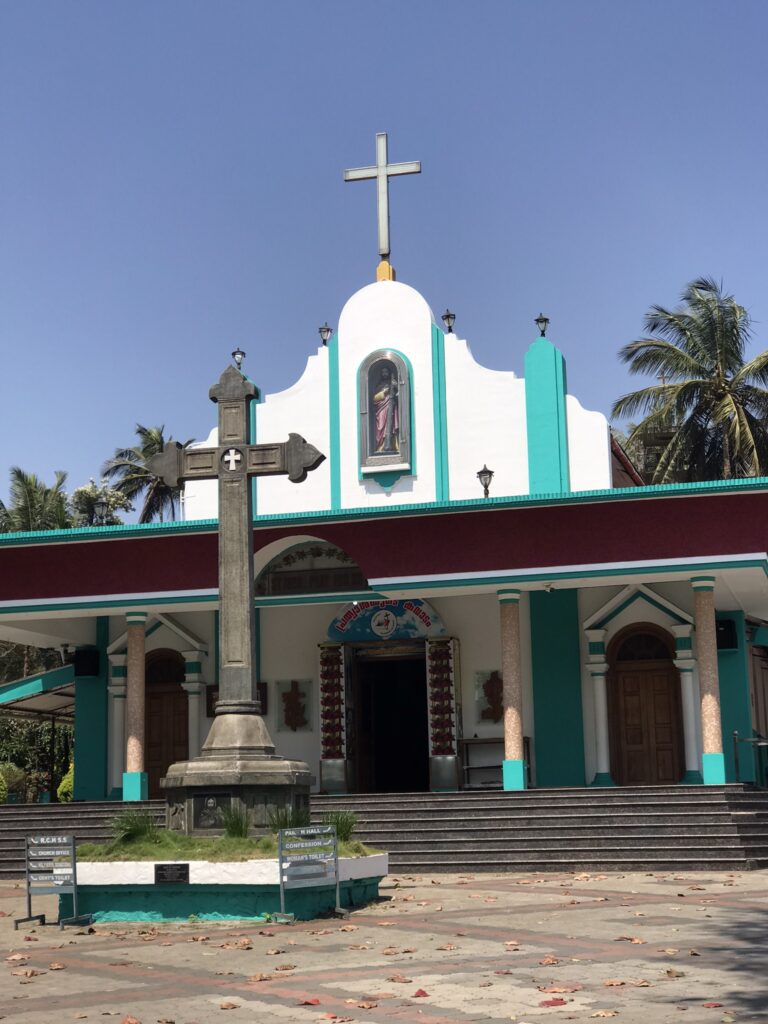
St Jude’s in Chundale
Kochi
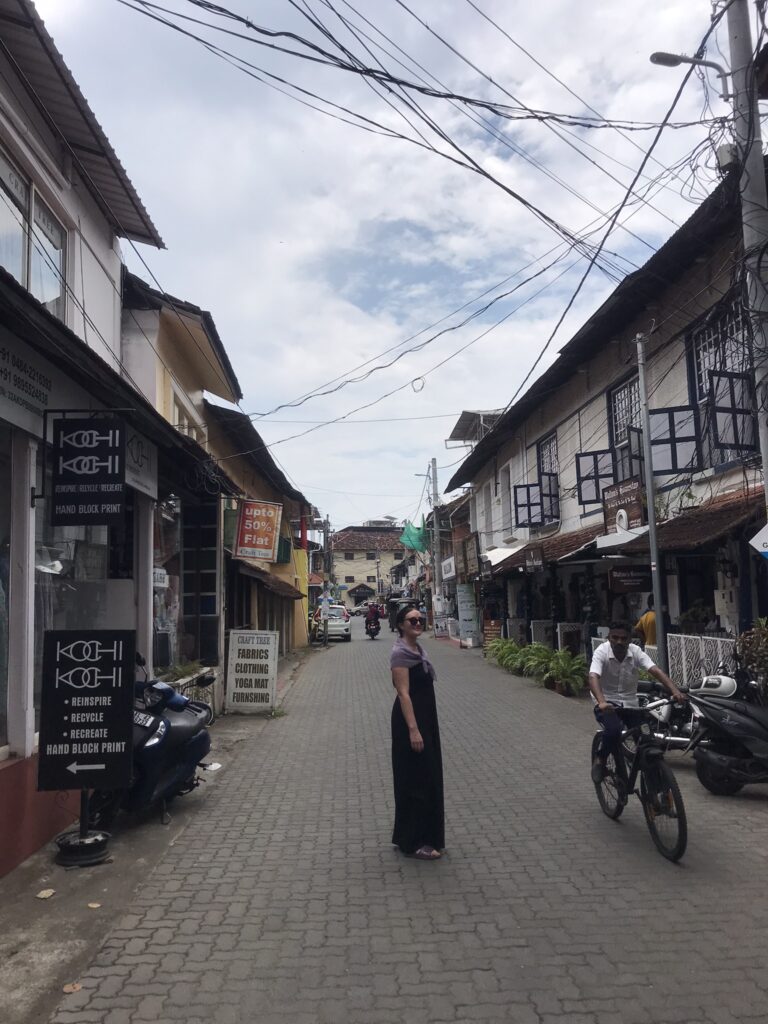
The largest city in Kerala, Kochi has been one of southern India’s major trading ports for centuries. Ruled by a dynasty of maharajas as the princely state of Cochin for most of its history, the 16th and 17th centuries saw the presence of the Portuguese and Dutch, who created and developed the area now known as Fort Kochi, while the princely state came under paramountcy of the British during the time of the British Raj. For most of these periods the city was a diverse trading community, home to a wide variety of different merchants and groups. Interestingly, the local Cochin kings mostly tended to choose to work with the various colonial powers rather than against them, signing treaties and alliances which allowed them to maintain sovereignty over their own domain.

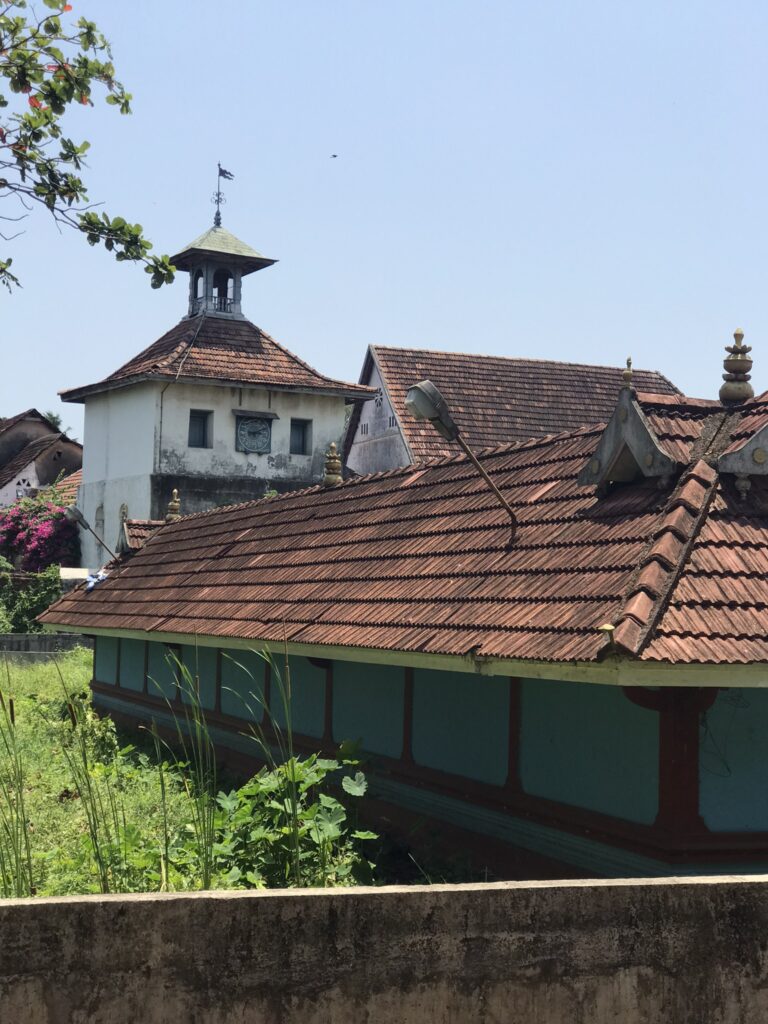
Paradesi Synagogue in Mattancherry is one example of the city’s diverse heritage
Today Kochi is a large urban area consisting of several distinct districts, including Fort Kochi, Mattancherry, Ernakulam and surrounds. It really can be considered a city of two halves – the mainland area of Ernakulam is the business hub and home to most of the modern developments and infrastructure, while the historical areas of Fort Kochi and Mattancherry are located on an island/peninsula and are full of maritime heritage and colonial-era charm.
The city’s primary tourist district, Fort Kochi is like stepping back in time to a Portuguese colonial port, filled with colonial buildings and historic churches. Foreign tourists are commonplace here – we saw more white faces on the streets in Fort Kochi than anywhere else we visited in India. Because of the tourist presence there are plenty of souvenir stalls, hawkers selling tourist tat and also plenty of annoying tuktuk drivers looking to drum up business, although thankfully they aren’t as pushy as those in some other parts of India.

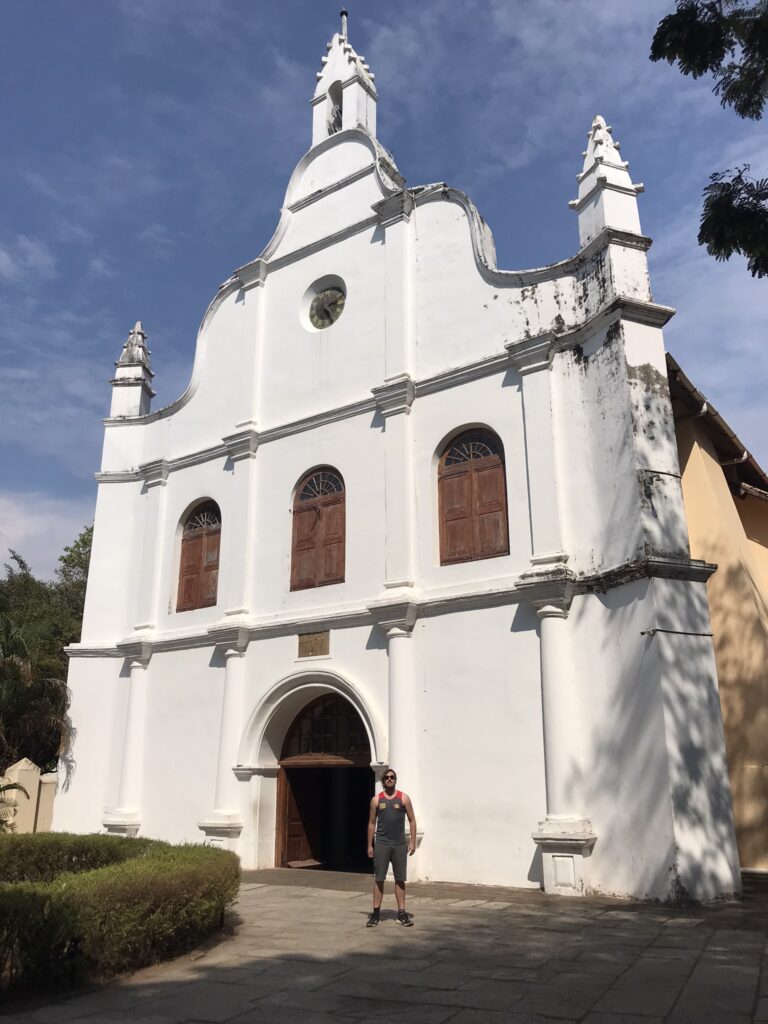
Fort Kochi is full of colonial buildings and churches like Santa Cruz Basilica
Other than the historic buildings and churches, there are not actually all that many attractions in Fort Kochi itself. The small beach in the area is not really even worth thinking about. However Fort Kochi is home to a myriad of really great European-style cafes. The food quality here was excellent and the best Western-style food we had in all of India. For weary Western travelers on long trips such as ourselves it was a bit of a foodie haven, particularly after spending months in the north of the country and being limited to paneer butter masala for almost every meal. Interestingly it was quite easy to find beef on the menu in Kochi (like in Puducherry) – probably a result of the region having relatively large Christian and Muslim populations.
From Fort Kochi, it’s possible to either walk or get a tuktuk to another historical district, Mattancherry. I recommend walking along Calvathy Road and Bazaar Road via the rustic, dated spice warehouses – a testament to the thriving spice trade of the past, these still-functioning blue-collar areas are far less touristic and give a more authentic picture of local life.
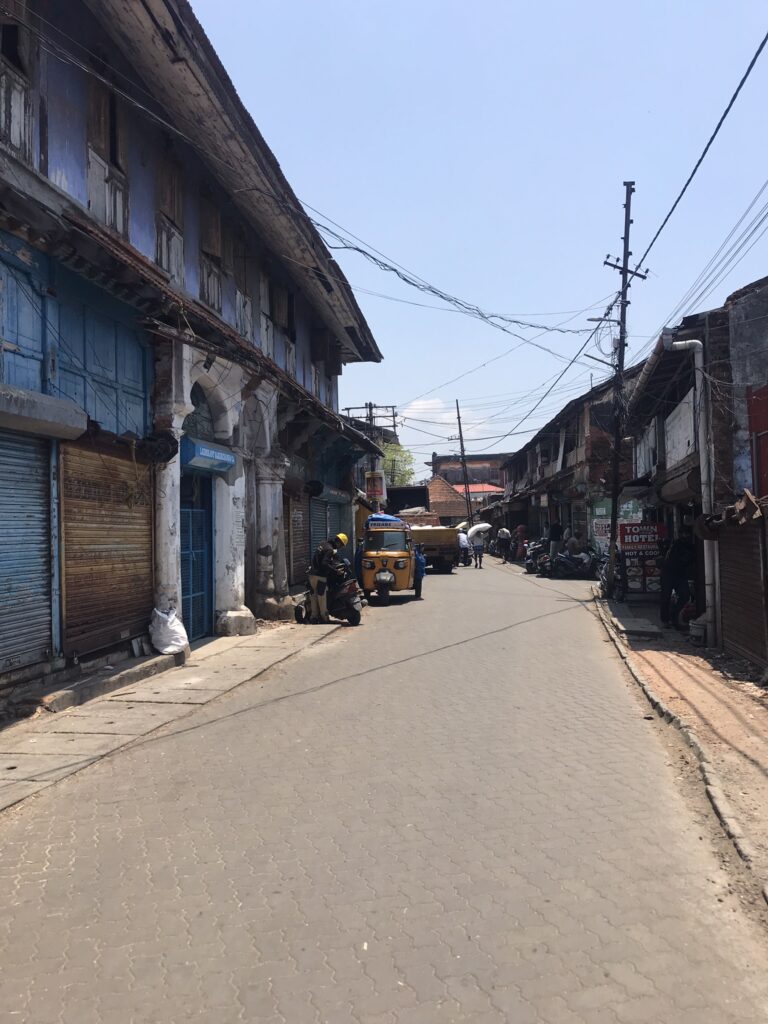
Bazaar Road is a much more gritty and less sanitised part of town
As well as being the former headquarters of the princely state, Mattancherry was previously home to a large Jewish population, who were centred around the area now known as Jew Town. We thought the name Jew Town was a little odd, but this sort of naming practice was quite common in those days (the French area of Puducherry was known as ‘White Town’, for example). Although the Jewish community has now all but disappeared, there are plenty of remants in the area including a still-functioning synagogue which doubles up as a historical monument to the community. Mattancherry Palace, former home of the maharajas of Cochin, is another notable landmark in the area that is definitely worth a visit
The airport and most of the city’s transport links are on the mainland in Ernakulam. Ernakulam has a very good metro system, but unfortunately this doesn’t go to Mattancherry or Fort Kochi. Fort Kochi is best accessed from Ernakulam by local ferry, costing 6 rupees and departing from this location which is within walking distance of Maharaja’s College Metro Station and Ernakulam Junction rail station. Getting the ferry from Ernakulam to Fort Kochi is an experience in itself – we saw dolphins frolicking in the sea alongside the boat.
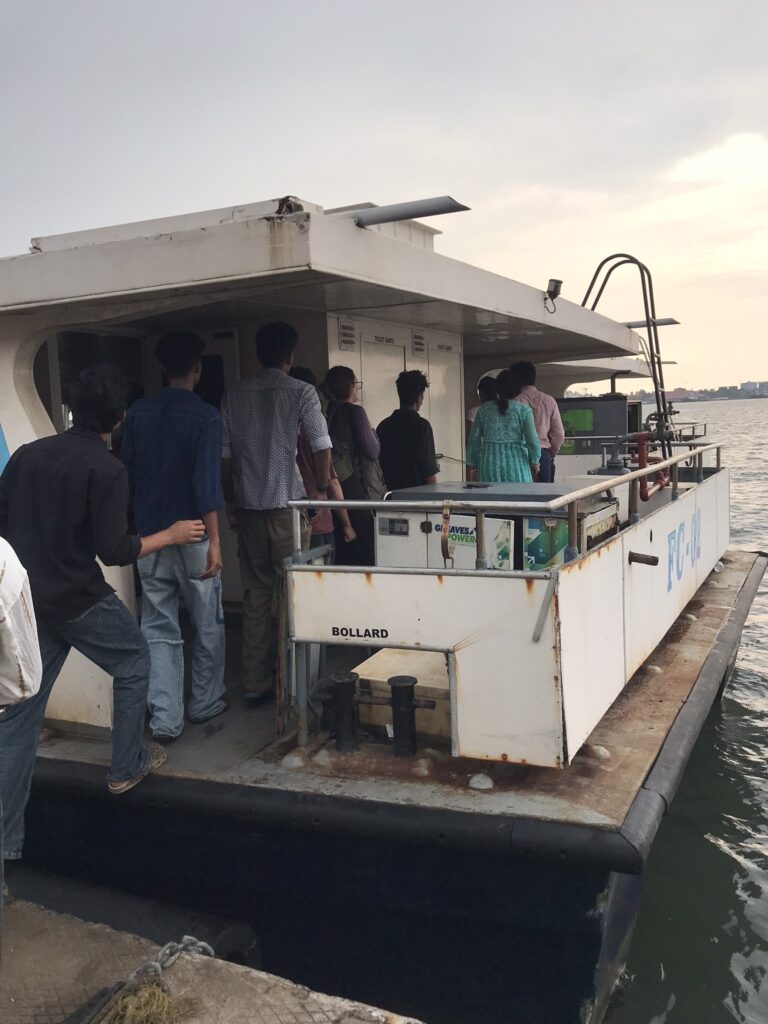
Boarding the boat to Fort Kochi
Kochi is home to Kerala’s main airport, which has good domestic and also pretty good international connections. The airport is a little way out of the centre of town but thankfully getting there is really easy using the Ernakulam metro. Just take the metro to Aluva (the northern end of line) and there is then an airport shuttle bus which departs from outside Aluva Metro station every 30 minutes. The bus cost 80 rupees for a ticket when we visited.
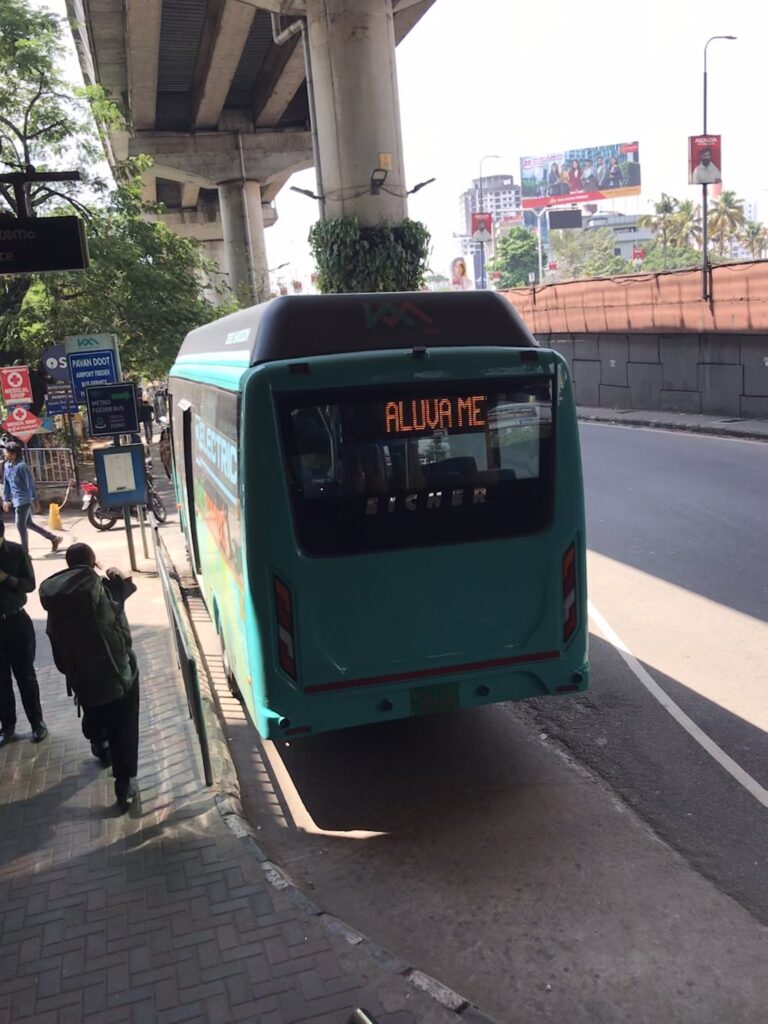
The airport shuttle bus outside Aluva Metro station
Try to stock up on cash in Ernakulam if you can. Strangely, we had some difficulties finding a working ATM in Fort Kochi – most were out of service and the one working ATM was randomly inside a military barracks so we couldn’t go in to use it! We ended up having to go to Mattancherry and found a working ATM near Mattancherry Palace.
I also must highly recommend the nightly cultural performances at Great K V Kathakali Centre in Fort Kochi – a huge highlight for us and one of our best experiences in India, these performances alone made us want to spend more time in the city.
Accommodation
Elzas Fort Inn – A family-run guesthouse in a great location within Fort Kochi. The owners were welcoming and sweet, the room was comfortable and most importantly had fantastic air conditioning! This was an absoulte lifesaver for us given the heat and humidity outside.
Foodie Places
The Lily’s Stories – an outstanding cafe with a cozy atmosphere, friendly servers and absolutely superb food. The juicy beef steak served with excellent mashed potatoes was a real treat – honestly some of the best steak we have had anywhere in the world outside of Argentina!
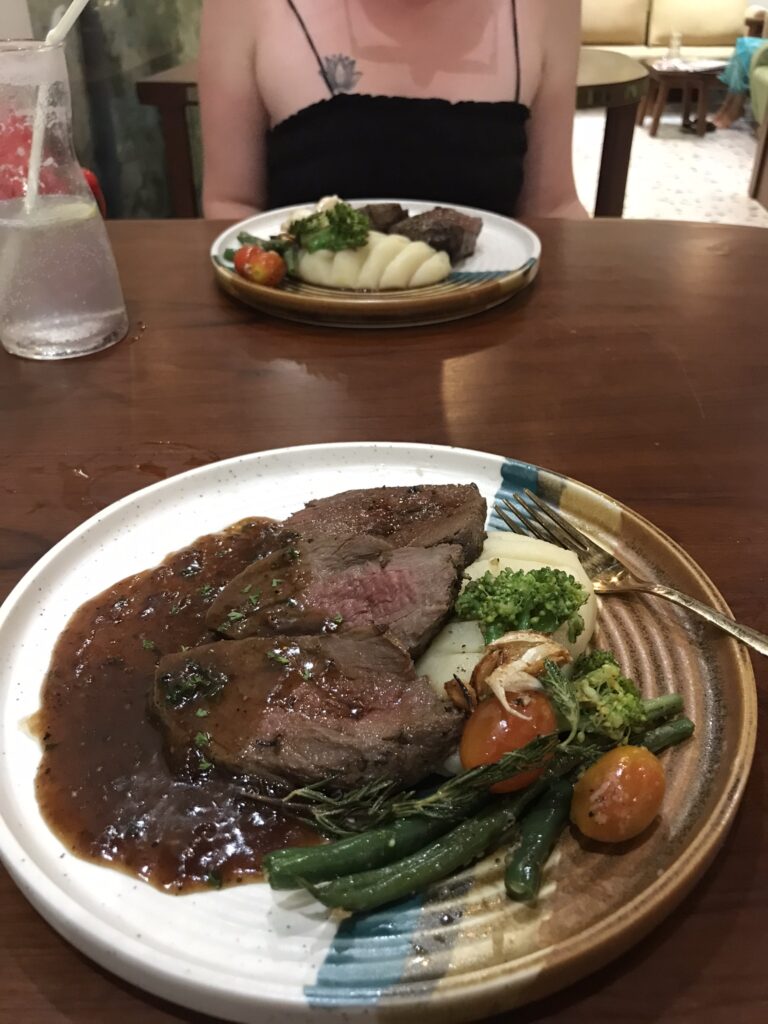
Perfect steak at The Lily’s Stories
Lila – Curated Experiences – an interesting building; a large restored colonial property with a cafe downstairs and more of a restaurant setting upstairs. It had quite a fancy, classy feel to it. Very quiet when we visited in the mid-afternoon. Prices are slightly high but the quality of food was great – the Turkish eggs meal was a particular highlight.
Kerala Cafe – a nice outside courtyard seating area. We showed up late after the classical musical performance at the Kathakali centre but they still accommodated us. We had a traditional prawn coconut curry – typically south Indian although not the most flavourful. Service was great, friendly guys although the food was a little on the expensive side.
Kochi Kapital Kafe – we had fish tacos which were absolutely delightful, and also tried a traditional Keralan dessert. They were still open late after the musical performance at the Kathakali centre, which was a plus as many other places were closed.
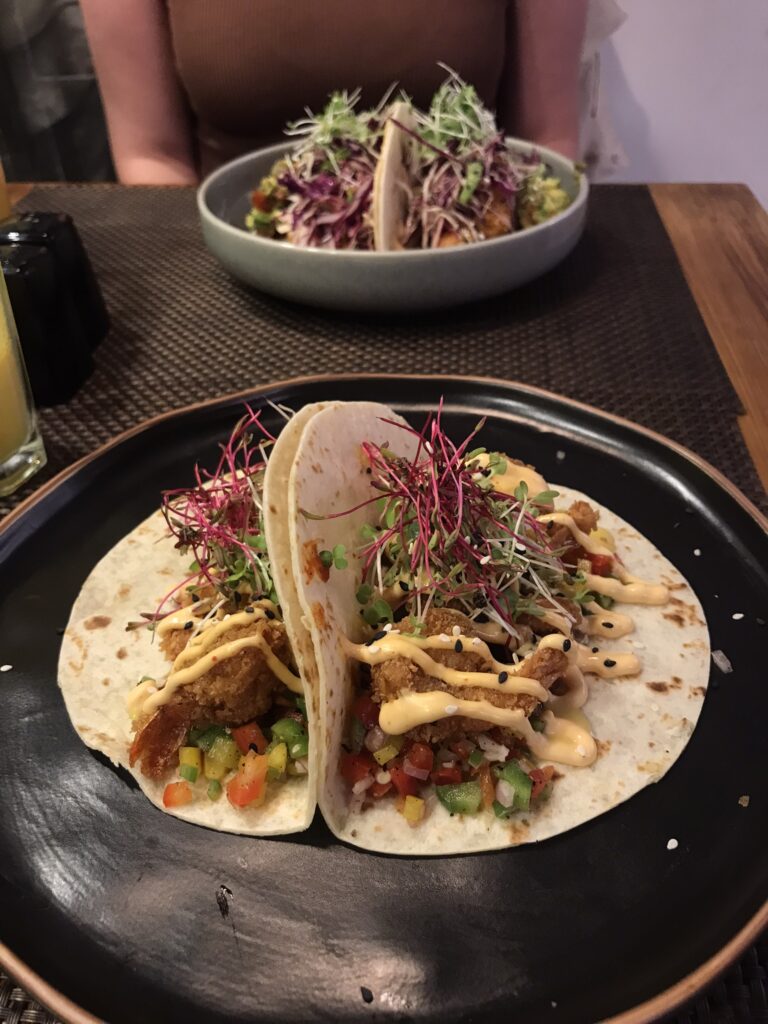
These fish tacos were great!
Loafers Corner Cafe – our go-to breakfast place serving delicious omelettes, freshly baked bread and fruit bowls with yoghurt. The cafe is on the first floor of on old colonial building, a spacious room with large wooden shuttered windows overlooking the street below. Although the windows provide some air circulation, they don’t allow for proper air conditioning so it can be a little stuffy inside.
Nosh Haus – Mattancherry Jew Town – located off the main shopping street in Jew Town, this cafe was quite expensive and only had a limited selection of food – just a few sandwiches available mostly on artisan sourdough bread. It did the job for a light lunch but is probably a better place just for a drink or a coffee. The cafe seemed to be in the middle of an arts and craft gallery, which was quite interesting.
Activities
St Francis Church – originally constructed by the Portuguese in 1503, this is one of the oldest churches in India. A bell-shaped church, it was taken over and developed by the Dutch following their arrival in the region. Inside the church you can find gravestones in Dutch as well as old-fashioned wafting devices to cool the worshippers in the pews. The church is also notable as it contains the original tomb of the legendary Portuguese explorer Vasco da Gama, who died in Kochi. Although the body was later returned to Portugal, the original tomb still remains and is visible inside the church.
Dutch and Portuguese colonial graves can be found inside St Francis including the original grave of Vasco da Gama!
David Hall – a historic building constructed by the Dutch which dates back to 1665. During the British period the building came under Jewish ownership, leading to its current name. Today it’s a cultural centre with a small art gallery inside which displays modern art by local Keralan artists, as well as a trendy, artsy cafe with a wide selection of pastries and cakes. The gallery is free to enter – inside, a man approached us and give us a leaflet about the local artist’s work which was being displayed.
Fort Kochi Beach – a small beach which didn’t look particularly clean. Signs say swimming is prohibited but we saw some locals in the sea anyway. We also saw one white foreign woman sunbathing on the beach – this didn’t really seem to be a great option in my opinion.
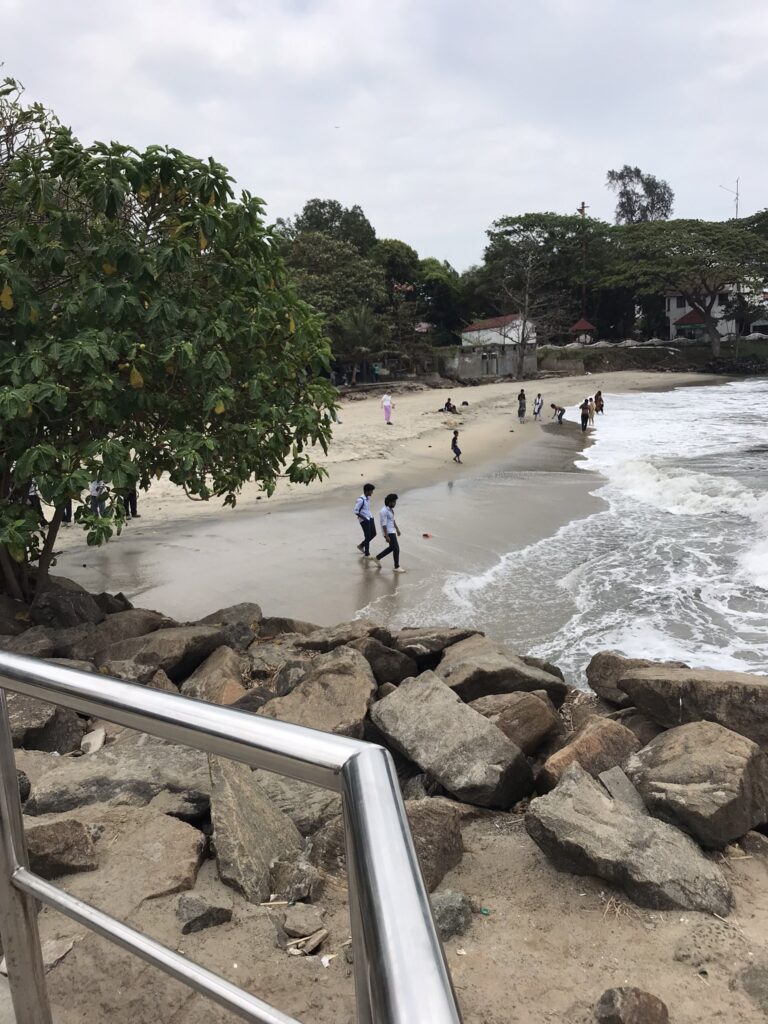
The beach is not the highlight of Fort Kochi
Dutch Cemetery – this historical cemetery sadly was locked when we visited. It seems to be no longer open for visitors.
Fort Emmanuel – Located along on the path between Fort Kochi Beach and Mahatma Gandhi Beach, this the last visible remnant of the Portuguese Fort although barely anything remains other than a few cannons mounted on a small ruined wall. You could easily walk by and not realise what this is or that it is here.
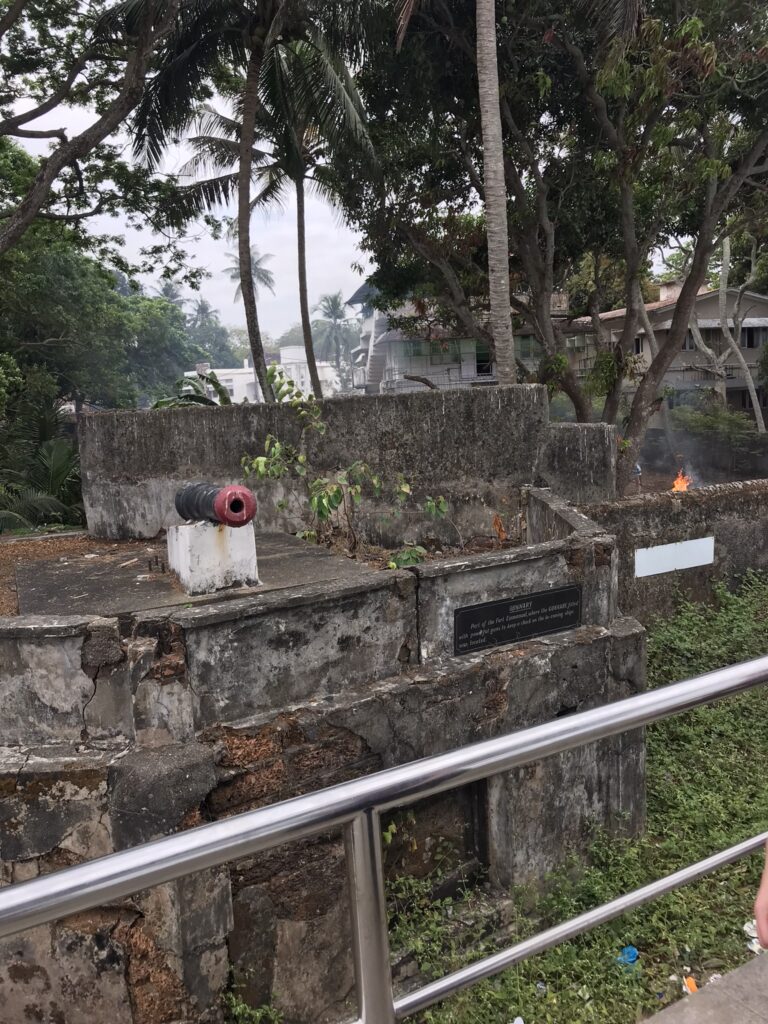
All that remains of Fort Emmanuel
Santa Cruz Basilica – the largest and most impressive church in Kochi. A Catholic church was originally established on this site by the Portuguese in the early 1500s but it was later converted to a warehouse by the Dutch and then demolished by the British. The current building was constructed in the early 20th century and is one of the most grandiose structures in the old Fort area.
Chinese Fishing Nets – these large Chinese-style fishing nets are said to have been introduced to the area by Chinese traders in the 1400s and are considered one of the iconic sights of Kochi, but honestly they aren’t anything special. The nets seemed to be more of a gimmick for tourists than anything else – the fishermen would dip their nets for foreign tour groups that paid them. There were lots of locals milling around the area selling fish and tourist tat. The beach next to the nets (Mahatma Gandhi beach) is absolutely disgusting, piled with littler. A really dirty beach that is a blight on the area.
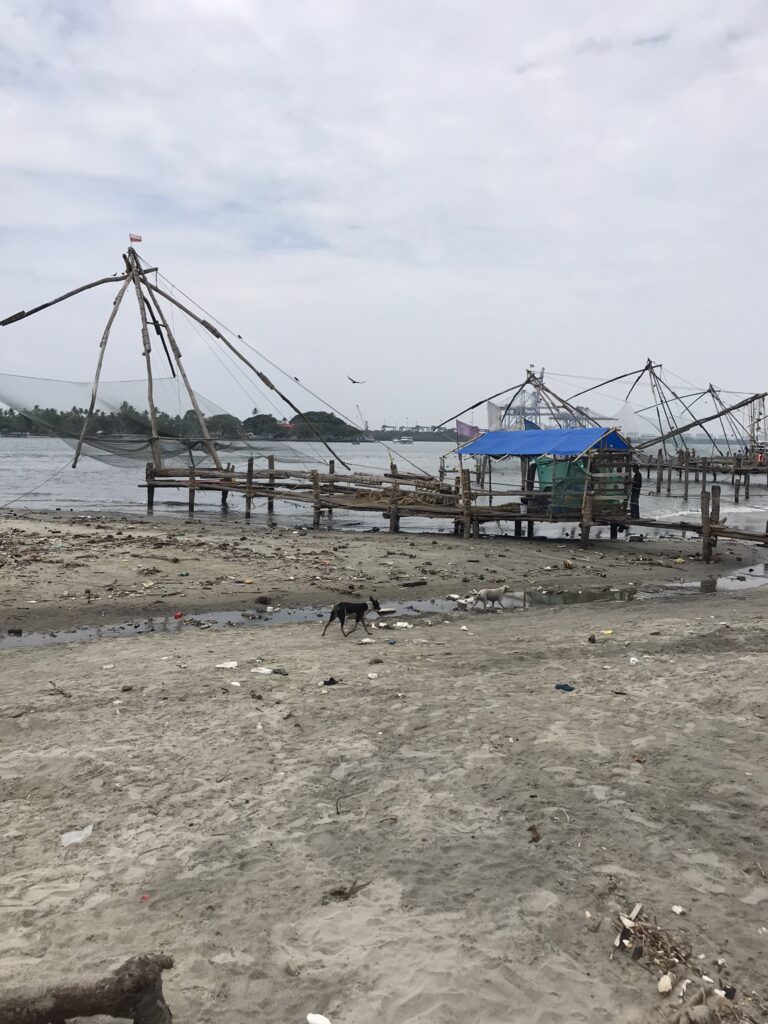
The area around the nets is probably the worst part of town...
Mattancherry Palace – a Keralan-style palace dating back to the 16th century which now houses a really good museum of the history of Fort Kochi and the princely state of Cochin. The museum contains masses of information about the history of the palace itself and the local area, a picture gallery and lots of information on the local dynasty of Maharajas, the local martial art Kalaripayattu, the local Jewish community and synagogue, and just about everything in Fort Kochi.
As well as the museum displays, the building itself has an interesting history. The palace was originally built by the Portuguese and gifted to the local ruler of Cochin as an apology after merchants desecrated a local temple. A particular highlight is the wall fresco paintings in the building, featuring mythological scenes, deities and demons with plaques providing detailed descriptions of the scenes being portrayed. Entry to the palace was only 5 rupees for both locals and foreigners when we visited – this is one of the only places we found in India where the price was the same for everyone, rather than foreigners being charged 15-20x the price as is the case at many attractions in other cities.
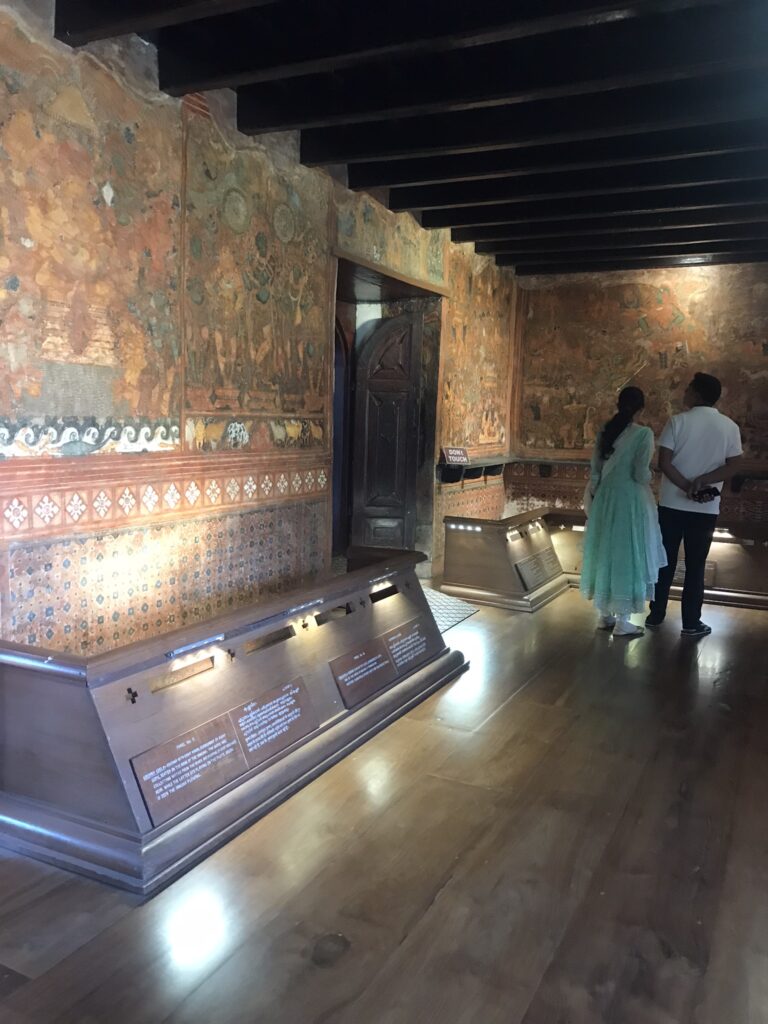
Learn about local history and check out the wall art in Mattancherry Palace
Jew Town – the old Jewish neighbourhood is an an interesting place to walk around. Although the Jewish community has departed, there are many Jewish symbols visible such as the Star of David on the side of buildings and shops. The Jew Town clock tower near to the synagogue and Mattancherry Palace is also interesting – each face of the clock tower displays a different script which is relevant to the direction it is facing. Reflecting the area’s diverse nature, the numbers on the clock are displayed in Latin, Roman numerals, and the Keralan script for the side of the clock tower which is facing the palace.
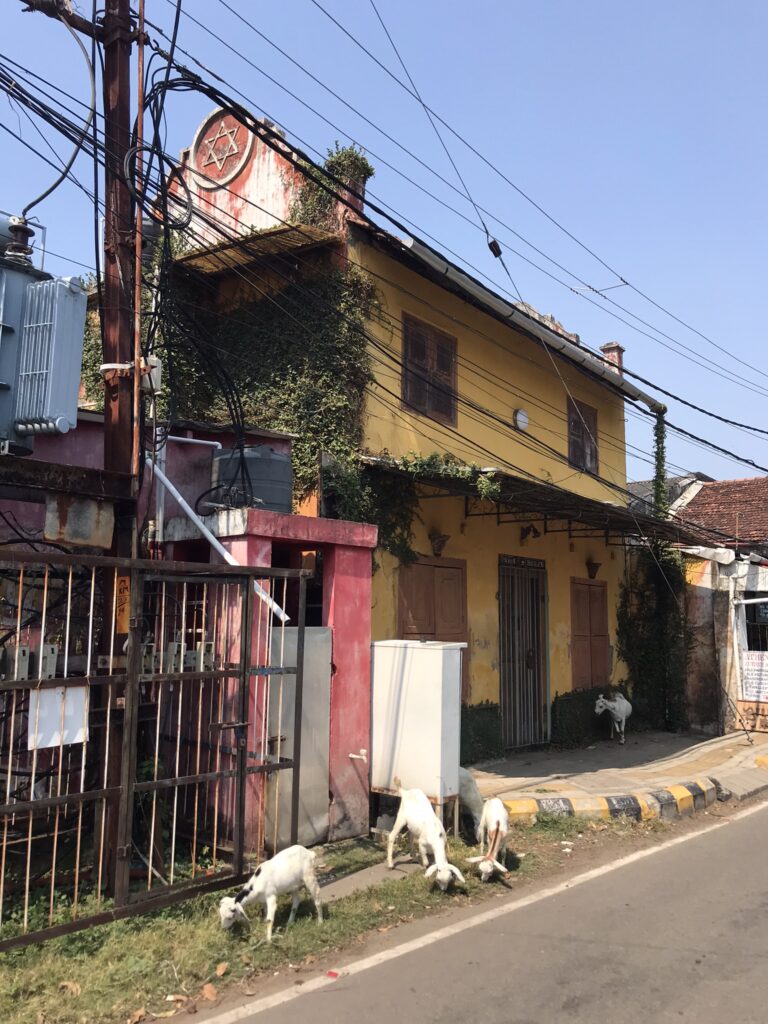
The Star of David is still visible in Jew Town
Jew Town is a good place to indulge in some souvenir shopping or just admire the picturesque streets and colonial architecture. There are some shops dating back to the colonial times selling old-timey handicrafts such as candlesticks and embroidered cloths.
The area also contains lots of spice and fragrance stalls. I visited the Museum of Essential Oils and Perfumes. It’s a shop rather than a true museum, however there were probably more than 100 samples of different fragrances and pure oil extracts that were available to try. They had scents like jasmine and lotus. The workers would even assist if you wanted to make your own perfume by mixing two of the extracts together. The shop is owned by a female entrepreneur and the ladies working there were very kind and helpful. I couldn’t resist buying some scents for a good price.
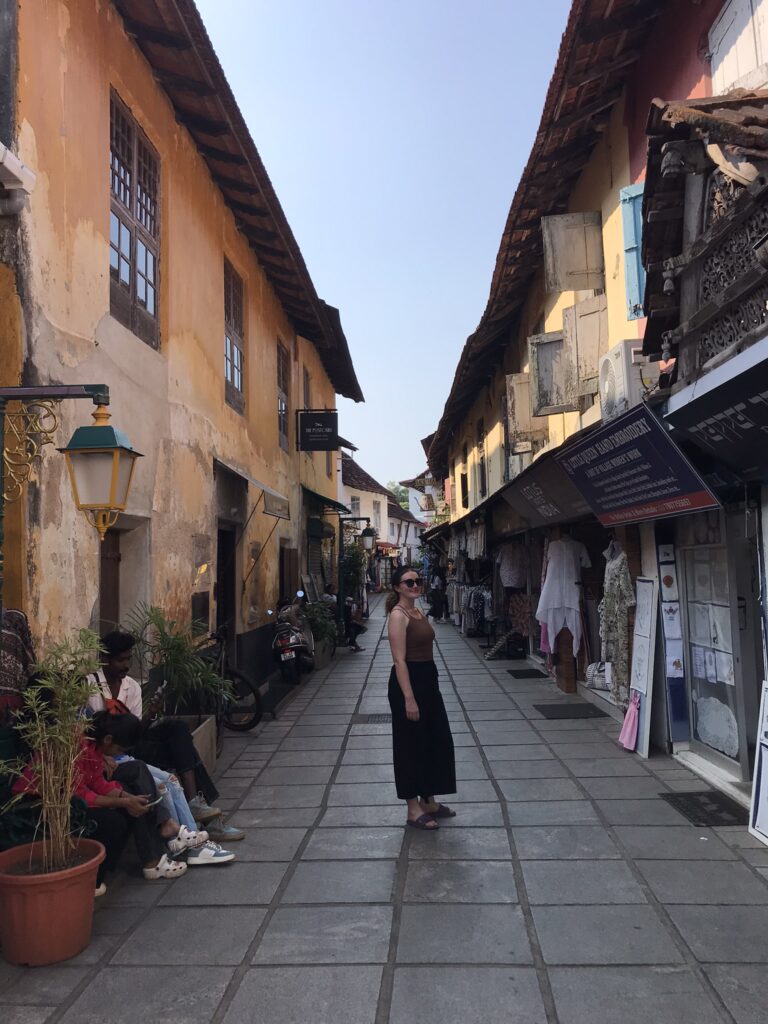
The pretty streets of Jew Town
Paradesi Synagogue – quite a small building but very interesting. This synagogue dates back to the 16th century – no significant Jewish community exists in Kochi today, however this is still an active synagogue which does hold Jewish services. There is a small fee for entry, and visitors must dress respectfully. Inside is a small exhibition explaining the history of Jewish people in Kochi and the wider region, info about the building itself as well as some antique items that have been donated over the years. A highlight is the hand-painted blue and white Chinese ceramic floor tiling inside the synagogue.
Jewish Cemetery – located in Jew Town, sadly we couldn’t explore this historic cemetery as it was closed and locked up.
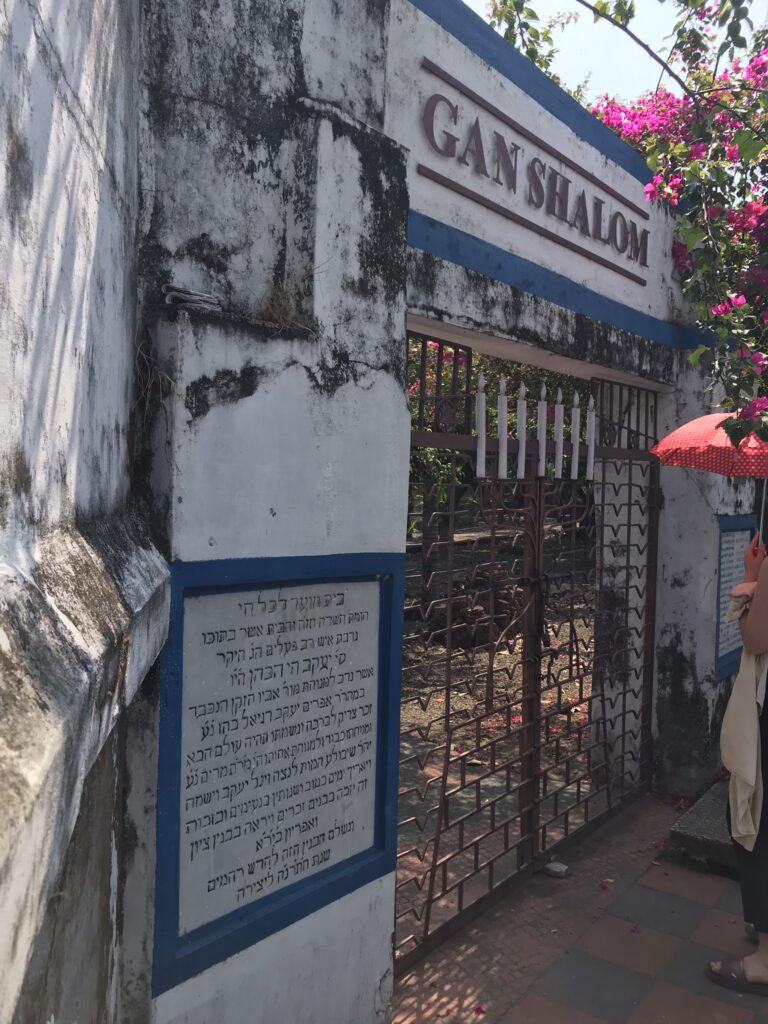
Sadly visitors are not permitted in the Jewish Cemetery
Great K V Kathakali Centre – you may see flyers around Kochi advertising workshops and performances at this community venue, which was established in 1994. The venue hosts yoga and meditation classes during the day and cultural shows in the evening, including a nightly display of Kathakali (an ancient Keralan form of theatre/performative dance). We attended on a whim after seeing a flyer, and honestly I can’t speak highly enough of our experience here. This is a fantastic place to witness the Keralan culture. A must-visit when in Kochi.
At the time of our visit, there were three separate performances per evening. Firstly a Kathakali performance, followed by a demonstration of the ancient Keralan martial art of Kalaripayattu, and finally a live Indian classical music and/or dance performance. I highly, highly recommend checking out all of these shows. At the time of our visit, shows were taking place every day with Kathakali between 5pm-7pm, martial arts from 7.15 to 8 and then the music show between 8-9pm. Separate tickets were required for each of the three shows which could be purchased at the venue in advance or on the door.
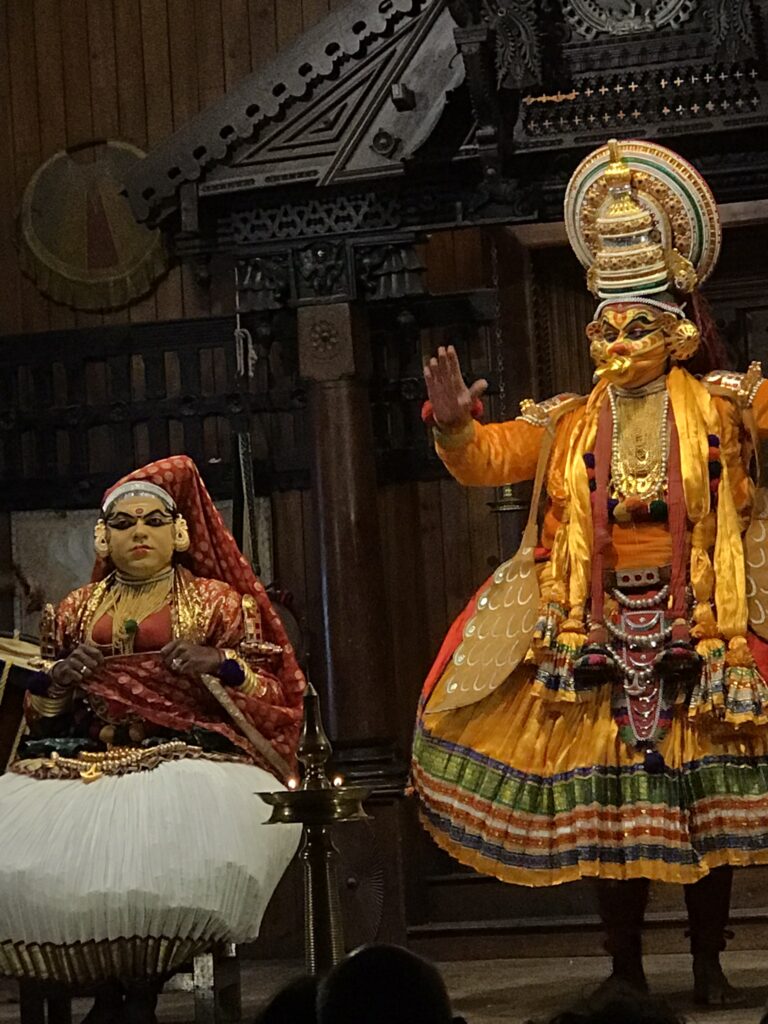
The Kathakali performance is highly theatrical and flamboyant
During our time in Kochi we attended the Kathakali, martial arts and two musical performances. We didn’t really know what to expect but there were quite a lot of people in the crowd for the Kathakali – it seemed like several foreign tour groups were bussed in for the show. Slightly less people were in the crowd for the martial arts, and then the musical performance on both occasions was just us and one or two others.
Kathakali show – it’s hard to describe what Kathakali is – it’s a bit like mime, with a small number of actors non-verbally acting out a traditional story with elaborate makeup and dramatic movements. In this Kathakali show, the first hour from 5-6pm just features the actors preparing and applying their makeup in front of the audience, then the actual show starts around 6pm. The makeup and clothing is very striking and eccentric, bold and big. There are elaborate costumes and headdresses – it’s quite outlandish.
It was interesting to see the actors and helpers creating and applying the makeup and accessories using traditional techniques. One of the actors performed a demonstration of the different eye and hand movements, illustrating how to convey the different emotions nonverbally.
The Kathakali show featured all-male actors, even the female ‘princess’ role. It was interesting to see slightly overweight, middle-aged men applying the makeup and then portraying characters such as a feminine princess or a golden bird. The actors perform a different portion of the traditional story each night – a flyer describing the evening’s story is distributed to the audience members before the show so that they can make some sense of what is going on. A backing group contributes to the show with drums and musical vocalisations. Kathakali is recognised by UNESCO as protected cultural heritage of Kerala, and it was definitely an interesting (if a little baffling) experience to witness.
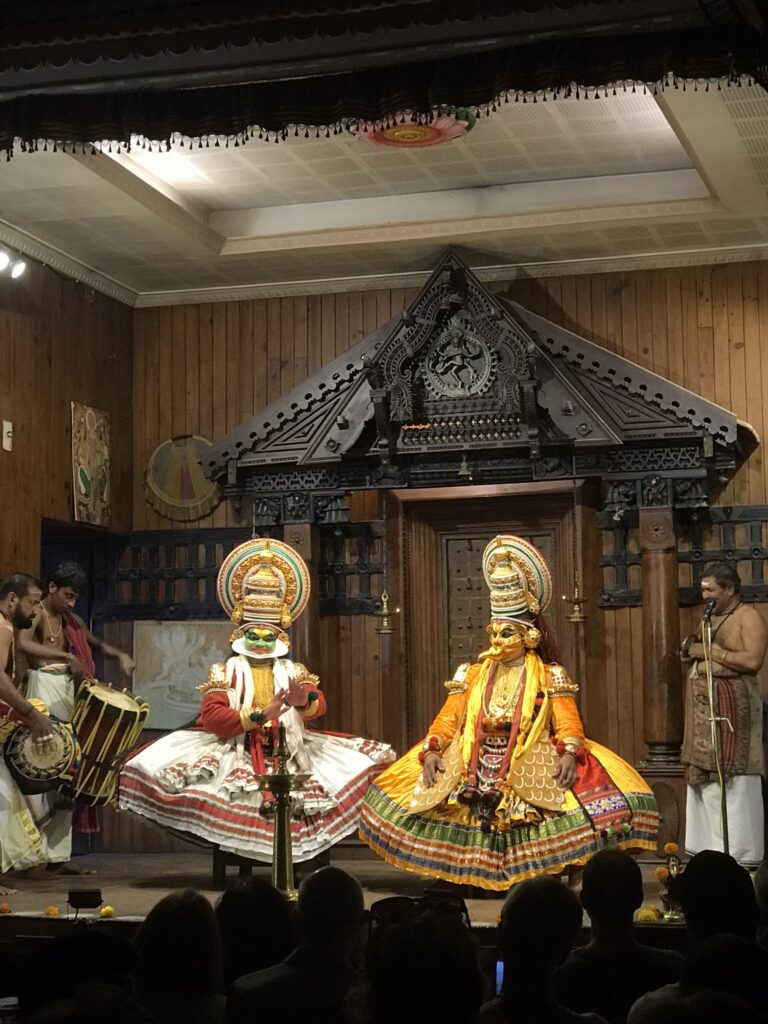
An information pamphlet is provided to help the audience understand what’s going on
Kalaripayattu Martial Arts – this ancient Keralan martial art was banned by the British during the colonial period as they feared it would be used against them in an uprising. Efforts are now being made to restore it as it is part of Kerala’s cultural heritage. As part of this show, the narrator provides an explanation of the discipline and meaning behind the martial arts. The practitioners then perform short demonstrations of fighting with hands, bamboo sticks and a knife, showing a variety of different techniques. There is also a demonstration of fighting with a fearsome metal flail – we were told that practitioners of Kalaripayattu require a special permit to carry this flail, as it is considered to be a deadly weapon.
The display was very impressive with fast-paced, energetic movements. Lightning speed! At the end they asked for volunteers to come up on stage and learn self-defence techniques – I partook and ended up on the stage being taught how to defend from being strangled!
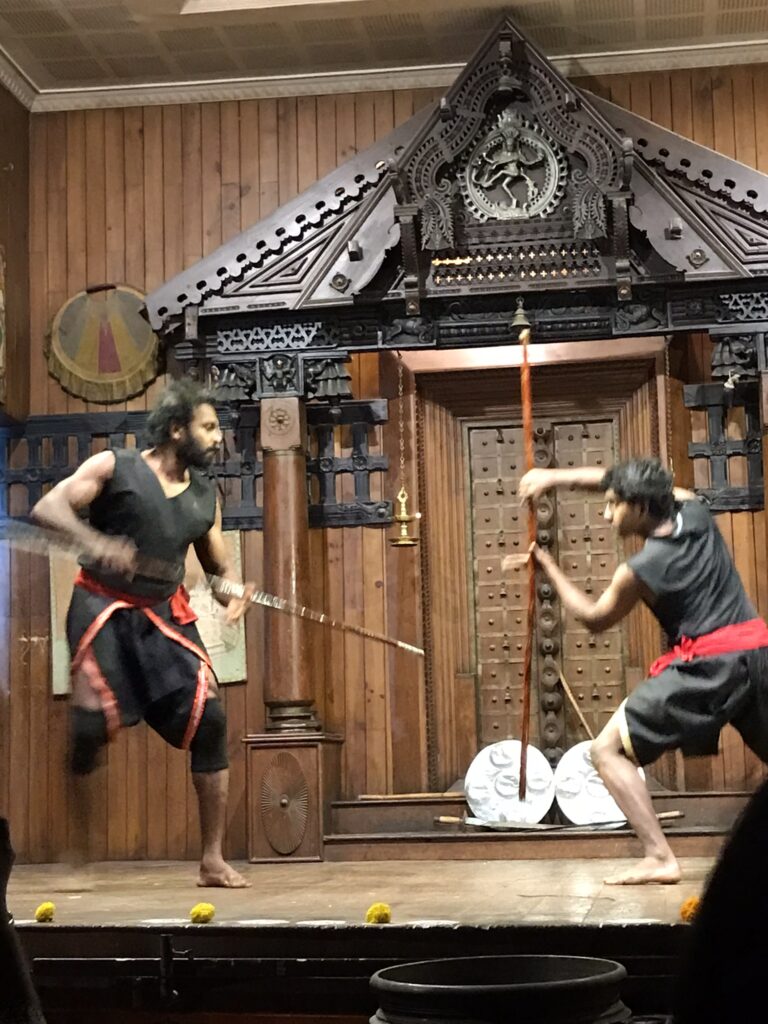
The Kalari fighters put on a fearsome display of hand-to-hand combat
Classical music performance – this nightly show features local musicians performing in the classical Indian style. The performances are mostly comprised of long ragas – semi-improvised music riffing around specific musical motifs. A demonstration of great skill and the ability to improvise. Musicians perform in an authentic traditional style, sitting cross-legged on the stage. The music program changes every night so there is a different instrument or musical medium being showcased.
We went to two performances – female vocal & drum, and then bamboo flute & drum. Both performances were absolutely enthralling and fantastic. We hadn’t expected them to be as good as they were. A musical partnership forms between the lead and the drummers, who create amazing accompaniment from traditional handheld drums. We became carried away in the performance, almost entering a trance-like state. The theatre was virtually empty both times we went, which made for a great experience. I can honestly say that this is the best-kept secret in Kerala. We wanted to stay in the city longer just to watch more of these mesmerising musical performances. It was a very intimate and special experience. I would happily go every single night.
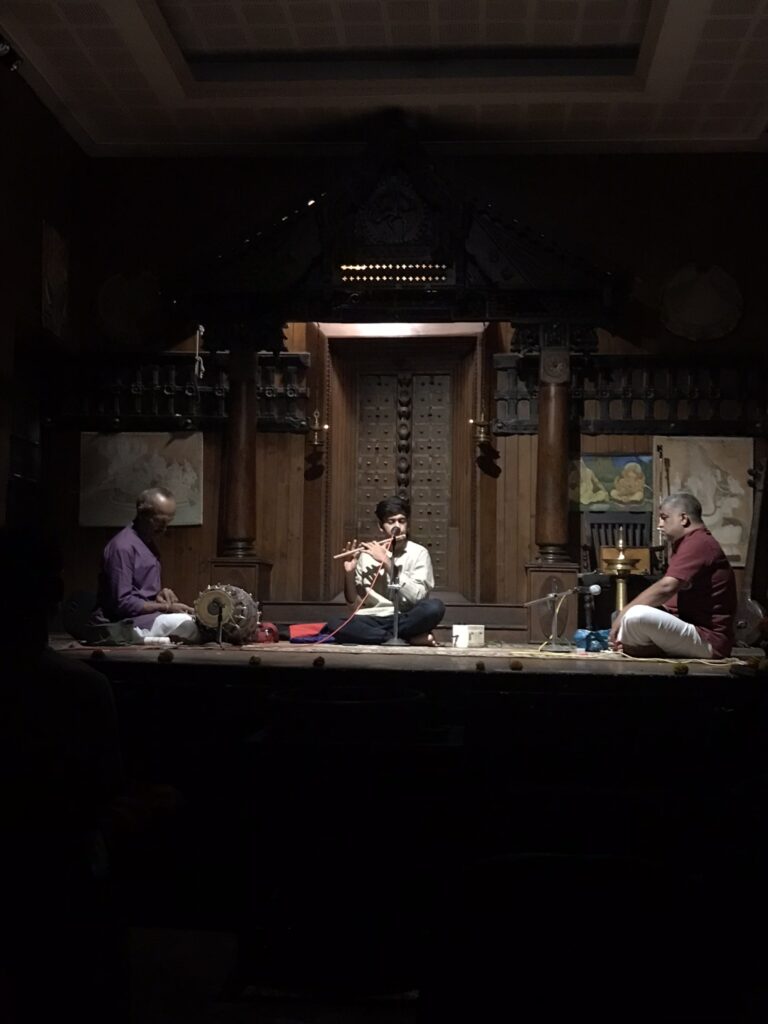
The musical performances were a mesmerizing experience
Munroe Island
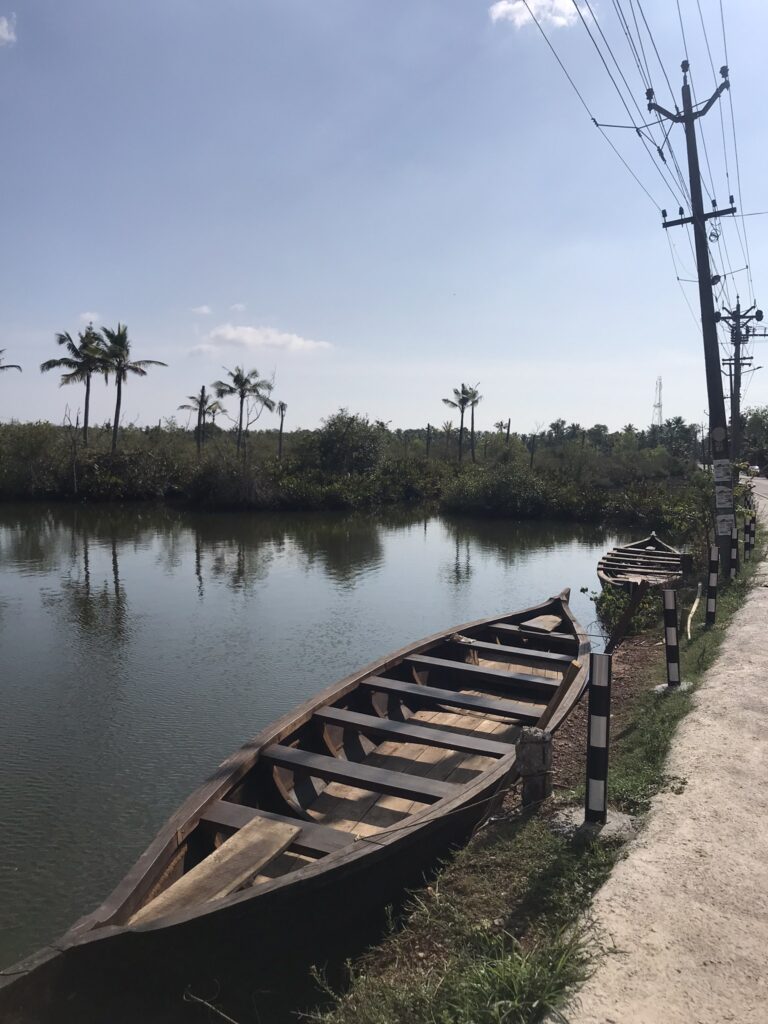
Located in the south of Kerala near to the city of Kollam, Munroe Island (or Munrothuruthu) is actually a series of islands which are part of the delta of the Ashtamudi Lake wetlands system. A very peaceful and laid back place with fewer visitors than tourist hotspots like Allepey, this small settlement is a great option for a more authentic, less-crowded backwaters experience.
While tourism is an important part of the local economy and there are plenty of hotels/homestays in the area, Munroe Island does not feel touristy at all. Although it’s an island, it almost felt to us like being in the middle of a jungle – very green with flowing waterways and canals all around. This was the most peaceful and least chaotic place we visited in India, with friendly and welcoming locals and a relaxed vibe. The region is remote, quiet and secluded, however it’s not underdeveloped and there are plenty of facilities and modern amenities. We spotted quite a few luxury resorts along the lakefront for those wanting a more fancy experience.
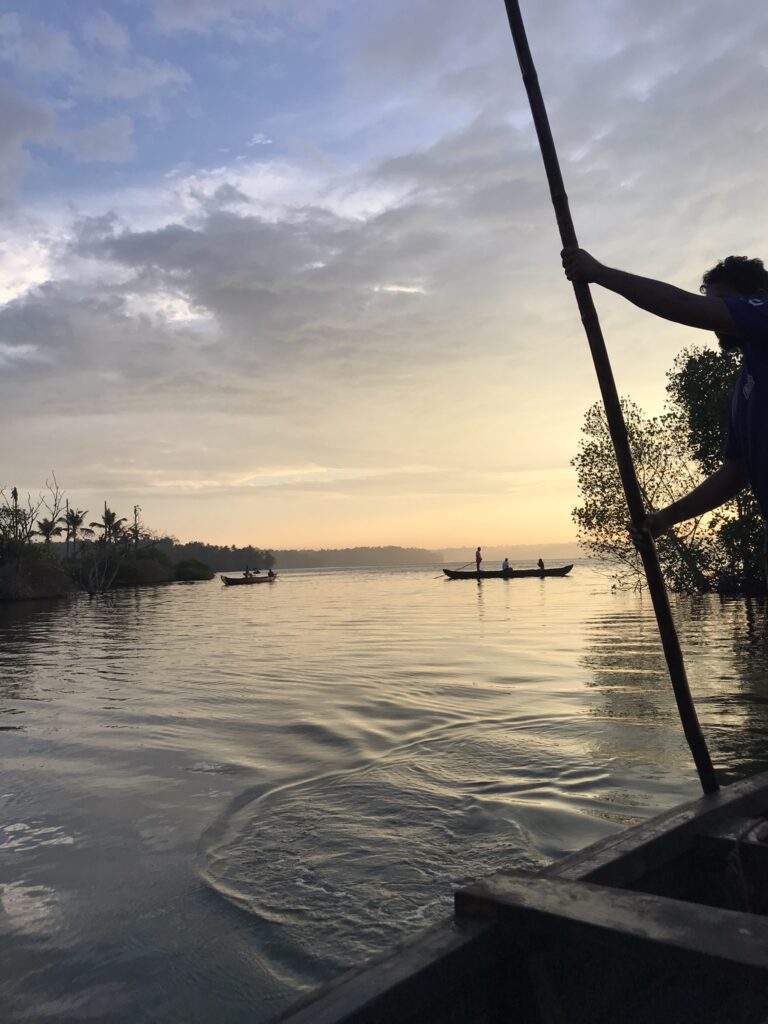
Boat trips on the lake and backwaters are a quintessential Munroe Island experience
Aside from tourism, the economy of Munroe Island is mainly agricultural. There are many prawn farms in the area, so prawns feature prominently on the menu in most restaurants and guesthouses. The town has a number of canteen-style local restaurants, which are a great option for tasty and cheap meals. Typically these restaurants serve pre-prepared thali; a selection of vegetable accompaniments (curry/sauces etc) on a metal tray with unlimited rice and a choice of either meat or fish/prawns. We weren’t sure what all of the accompaniments were but I can vouch for their tastiness!
The climate in Munroe Island was very hot and humid when we visited, with torrential tropical storms every evening. Our guesthouse recommended an early morning boat trip on the backwaters to avoid both the heat and rain, and this was definitely a good option. Walking around during the heat of the day quickly left us drenched with sweat and needing a rest.
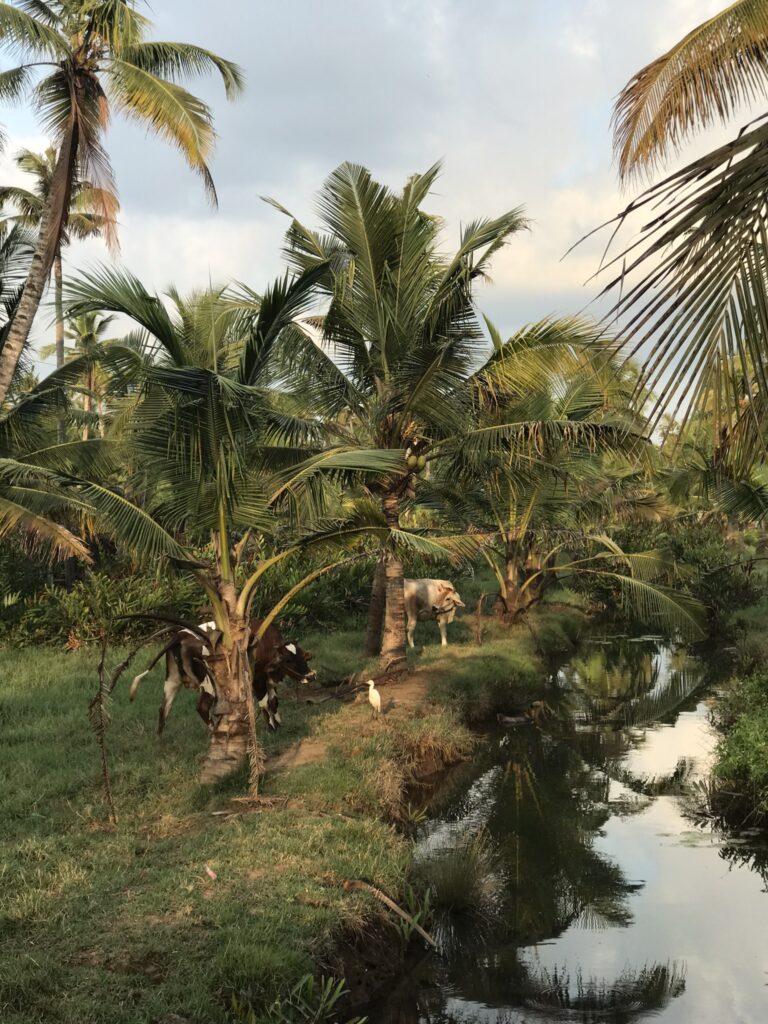
Munroe Island is very, very green – it’s sometimes hard to remember you’re in civilisation
The best way to access Munroe Island is by train, specifically via the MEMU (local unreserved train) which runs between Ernakulam and Kollam. As these are unreserved trains, you can just show up at the station and buy a ticket which typically costs less than 100 rupees each. The railway station in Munroe Island is called Munroturuttu and is within walking distance of the main settlement (it isn’t a big place). We took train 06170 departing from Ernakulam Junction at 9.50am, and returned to Ernakulam a few days later on train 06169, which left Munroturuttu at 6.18am. Trains don’t run every day, but most – check schedules online or at the station beforehand
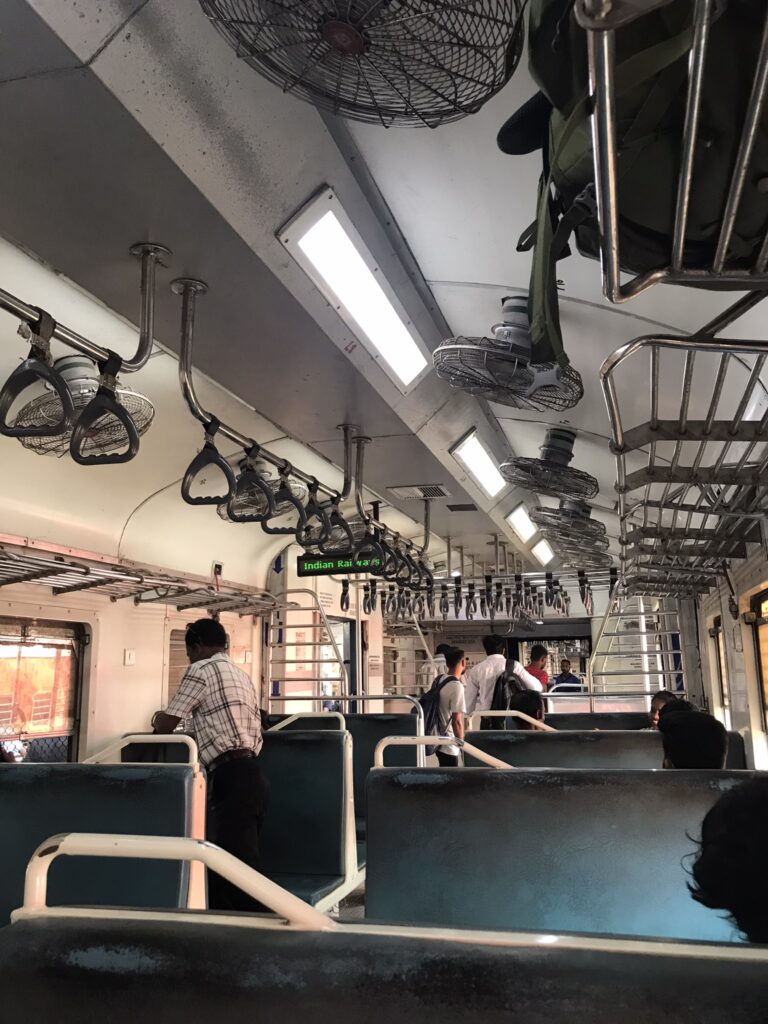
On the MEMU train from Ernakulam to Munroturuttu
Accommodation
Munro Meadows – a comfortable guesthouse with a friendly female owner who was able to assist with our queries via messages beforehand. The guesthouse provided breakfast and dinner – a typical Keralan dish of rice, chapati and curried seafood which we could eat on the veranda outside our room. We also organised the sunrise boat trip through our guesthouse – this seemed to be the cheapest and most trustworthy option, and was a great shout in the end.
Foodie Places
Mundro Riverside Restaurant – we walked in exhausted, hot and sweaty with our bags after walking from the train station. The guys in the restaurant spoke little English but ushered us into a side room with air conditioning, which they switched on especially for us – a very welcome respite from the suffocating heat. There was no menu, we were just provided with the thali and they asked whether we wanted chicken with it, to which we said yes. A good, authentic option which was also ridiculously cheap. Not remotely a tourist restaurant – down-to-earth local food for local people, just the way we like it. I can’t fault this place at all.
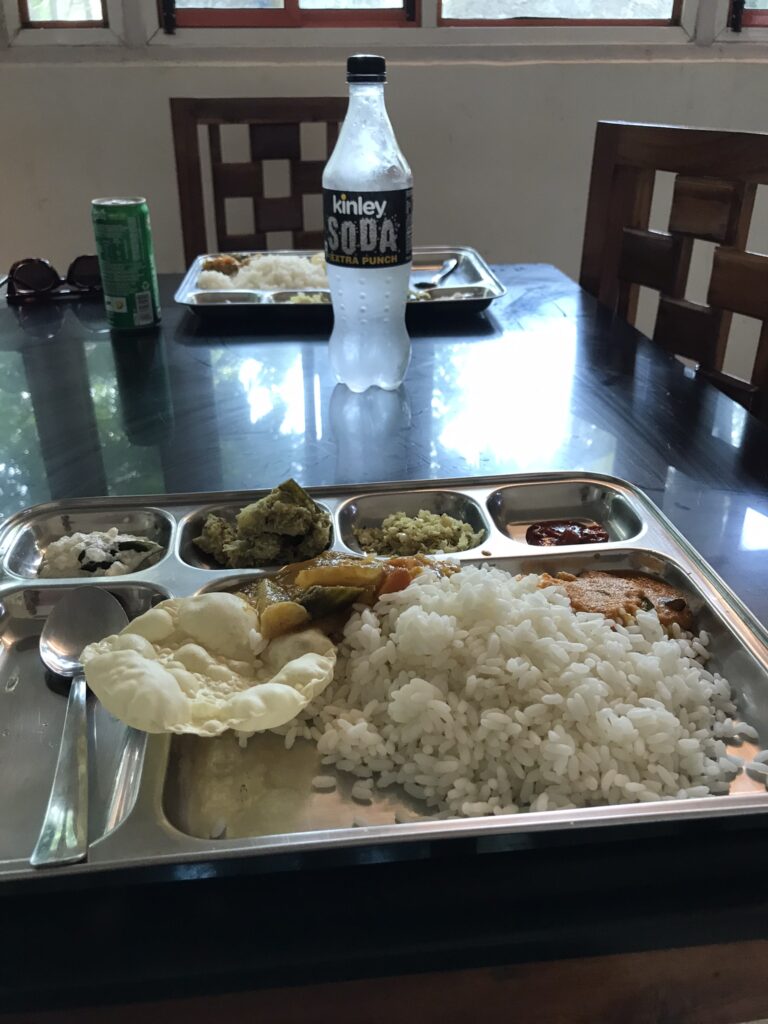
Thali at Mundro Riverside
Dil Kush – this place seemed to be even less accustomed to foreigners than Mundro Riverside. There was no menu, we again had thali and they brought us the accompaniments in big metal pots. We asked if we could have prawns with the thali and I think they went to pick them up from somewhere – a few minutes later a member of the family showed up on a bike with the prawns. The prawns ended up being much more expensive than anything else on the thali, but the meal was still really cheap.
Activities
Sunrise boating – well before sunrise we started off the day with both myself and Dan riding on the back of the boatman’s single moped after he came to pick us up from our guesthouse – typical Indian style! The boat ride was marvelous, meandering through the backwaters and canals listening to the dawn chorus of the birds and wildlife as our boatman pointed out different islets and landmarks. Seeing the sunrise over the lake and watching the locals going about their morning routine was great. Some of the bridges are very low, barely big enough for the boat to fit under. We had to duck right down into the boat to pass under the bridges, which was interesting to say the least.
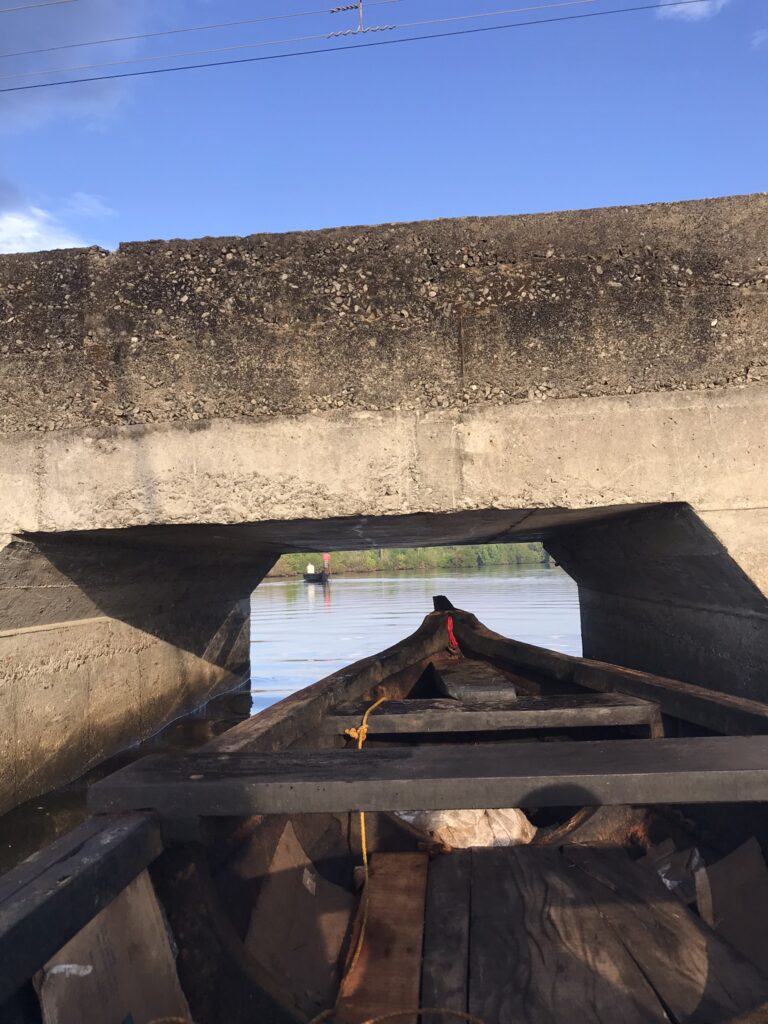
The boat passes under some low bridges – mind your head!
We organised and paid for this activity through our guesthouse; the boatman’s name was Rahul – Mundrowave. He didn’t speak much English but did his best to engage and point things out to us, took loads of photos and did a great job overall. Although it’s an early start, I recommend the sunrise boat trip over one later in the day – not only is it a special experience to watch the sunrise over the lake, but I can imagine the boating wouldn’t have been anywhere near as pleasant in the direct sun and heat
Munroe View Point (located here) – a nice place to walk and look out over the lake. There were plenty of local guys with small boats offering impromptu boat rides around here, but we didn’t partake.
Dutch Church – across the train tracks from the main settlement, this is an interesting place to visit. After walking through a seemingly undeveloped area you come across a glistening white building which stands out from the lush greenery which surrounds it. The church has a marker on the front which suggests it was built in 1878. Despite being in an otherwise deserted area, there were a surprising number of worshippers/local people milling about the church, most of whom seemed to be using it to shelter from the sun. The church is right next to the waterfront and has a small dock with occasional passenger ferries.
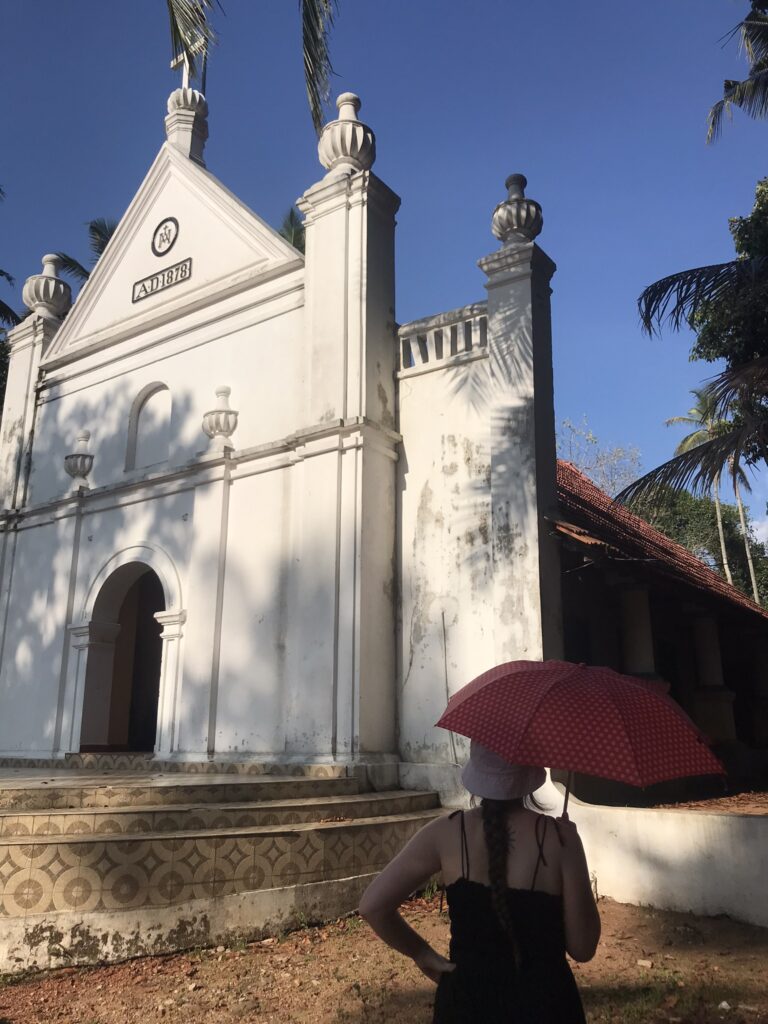
The Dutch church, a hidden landmark in Munroe Island
For more India content, click here!