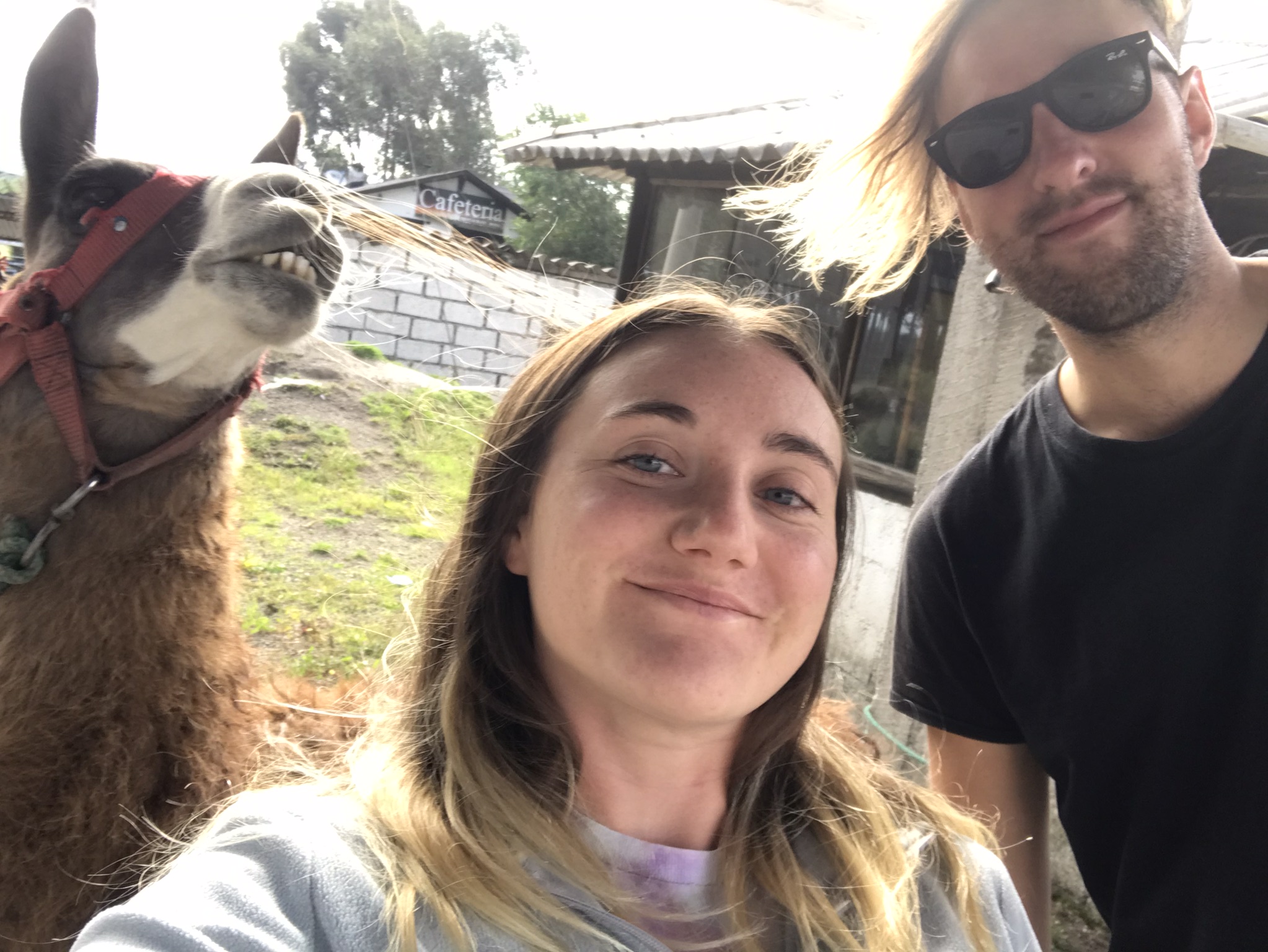
Often referred to by locals as “MP”, Madhya Pradesh (meaning ‘central province‘ in Hindi) can in many ways be considered the heartland of India. Located right in the centre of the country, it is one of the largest Indian states – second by area and fifth by population. Despite having a treasure trove of unique sites and pretty good transport links, strangely Madhya Pradesh is not really on the radar of most foreign tourists and traveling in this region provides an unfiltered northern Indian experience. Check out my Madhya Pradesh travel experiences below!
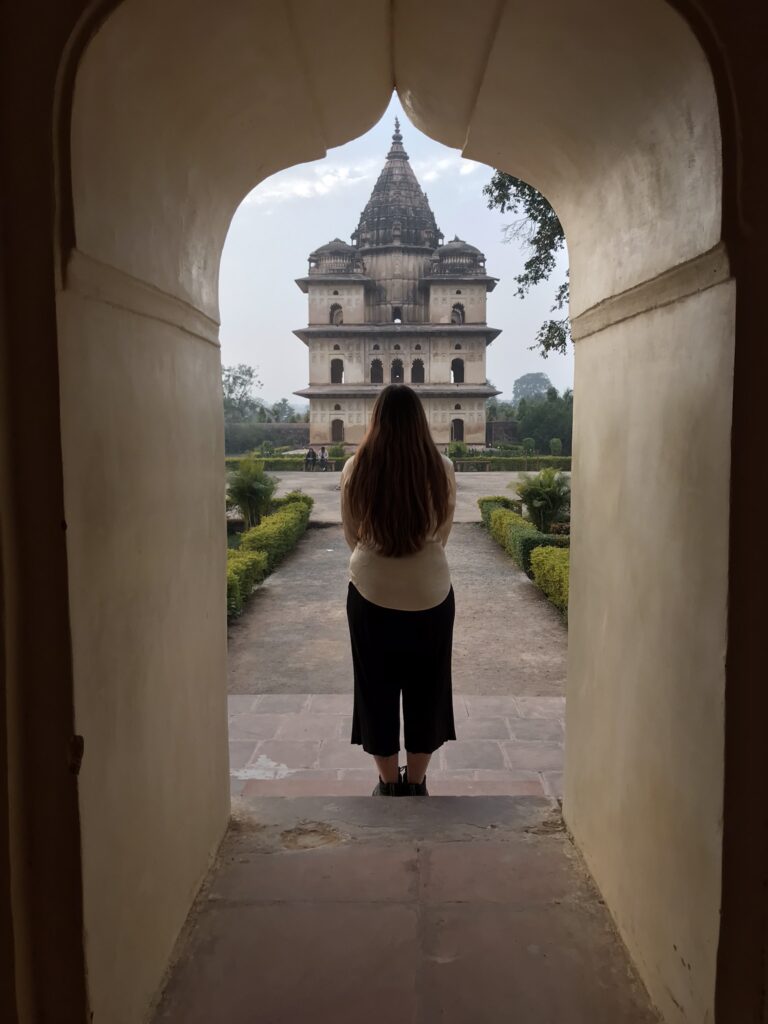
Gwalior, Orchha, Khajuraho, Bhopal, Sanchi
The culture and history of Madhya Pradesh is typically north Indian. Inhabited for millennia, the territory of modern day MP has throughout history been ruled by a variety of local dynasties and princely states, each with their own ruling lineage of maharajas or Nawabs. The Mughal Empire, Marathas and the British were all present, although MP was not considered to be a key heartland for any of them and control was largely maintained through vassal rule.
Today, Madhya Pradesh is a Hindi-speaking state with a culture not dissimilar to neighbouring Uttar Pradesh. Although it contains some large and congested cities, MP is a predominantly rural state with strong tribal culture. There are over 46 distinct tribal groups in Madhya Pradesh and MP has the highest total tribal population of any state in India, mainly living in villages among the region’s fertile plains and rivers.
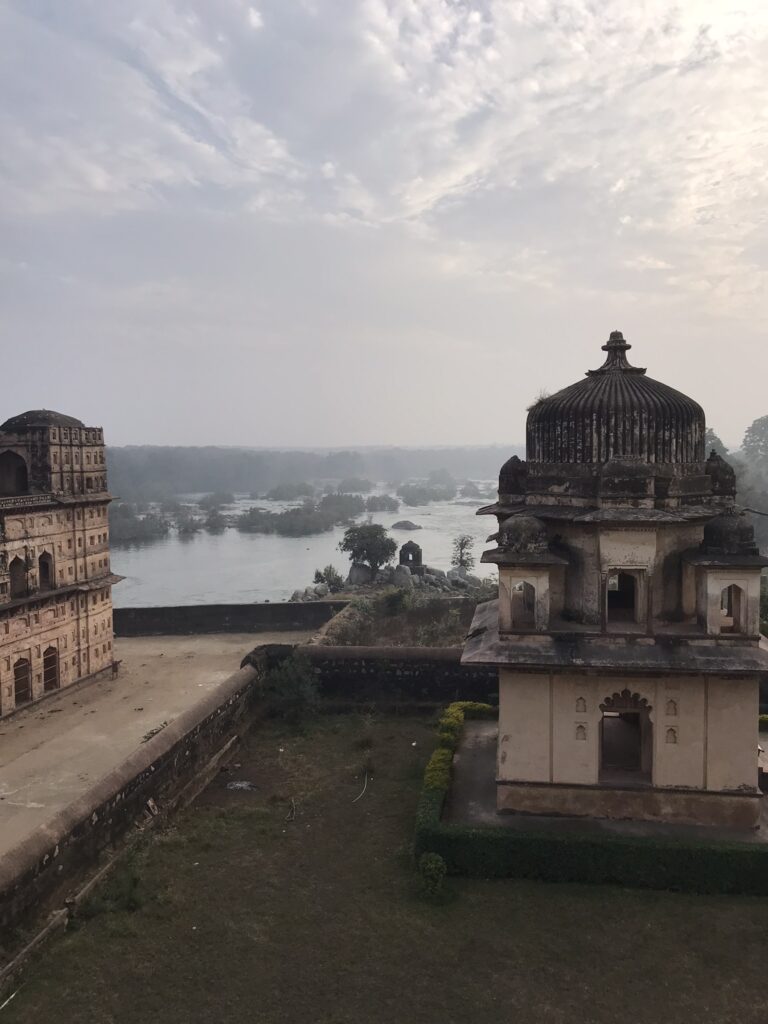
MP is full of classic northern Indian architecture, palaces, forts, nature, food, culture and chaos
Despite its close proximity to the (in)famous Golden Triangle, Madhya Pradesh for some reason is way off the beaten track for foreign tourists to India. I’m not sure why so few make it here as there is so much to see, from the erotic temple art at Khajuraho to the prototypical Buddhist stupa at Sanchi and the various tiger reserves in the region which are much less crowded than the touristy Ranthambore in Rajasthan. Madhya Pradesh is atmospheric, culturally rich and has everything you need for a classic northern Indian experience, without the crowds of the more well-known cities and states.
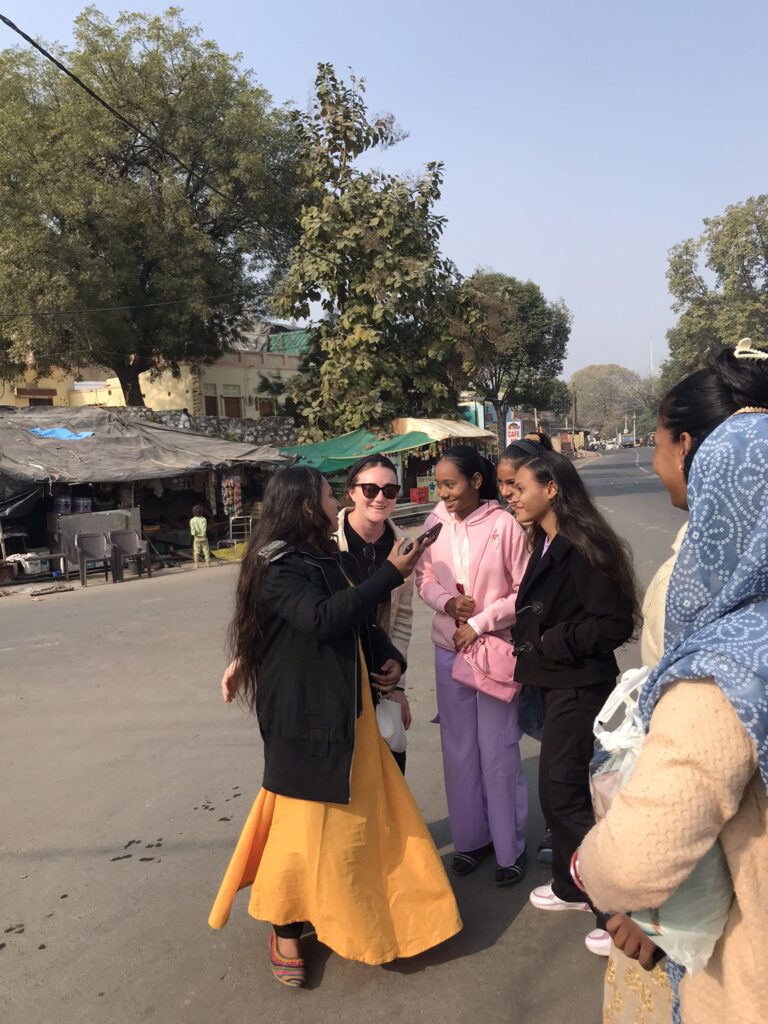
The people of Madhya Pradesh are very curious and friendly
However because of the relative lack of tourists, travel in this region can sometimes be challenging. Foreigners are a rarity and we were constantly asked for photos at major sites – more so in MP than anywhere else in India and even the entire Indian subcontinent (Bangladesh was tame in comparison). 99% of the interactions were well-intentioned and innocent but be aware if you’re a foreigner that you may get swarmed. Towns such as Orchha and Khajuraho do have some tourist infrastructure but still do not see such the same levels of domestic tourism as some of the popular cities in Rajasthan, for example, and far fewer foreign visitors. English is not widely spoken and it’s usually best to get your accommodation to help with transport, as communication with local drivers etc can be difficult for non-Hindi speakers.
Sadly, as a typical northern Indian state there is also plenty of ‘nonsense’ in MP – expect traffic congestion and noise, occasional strange or creepy behaviour from overbearing men, a lack of pavements or safe places to walk on the roads, scammers and hustlers at most touristic sites, cows roaming around the streets eating garbage etc. Independent travel for foreigners in this region is not for the faint of heart and I wouldn’t recommend it for those who are uninitiated with northern India. For those brave enough, there is plenty to discover.
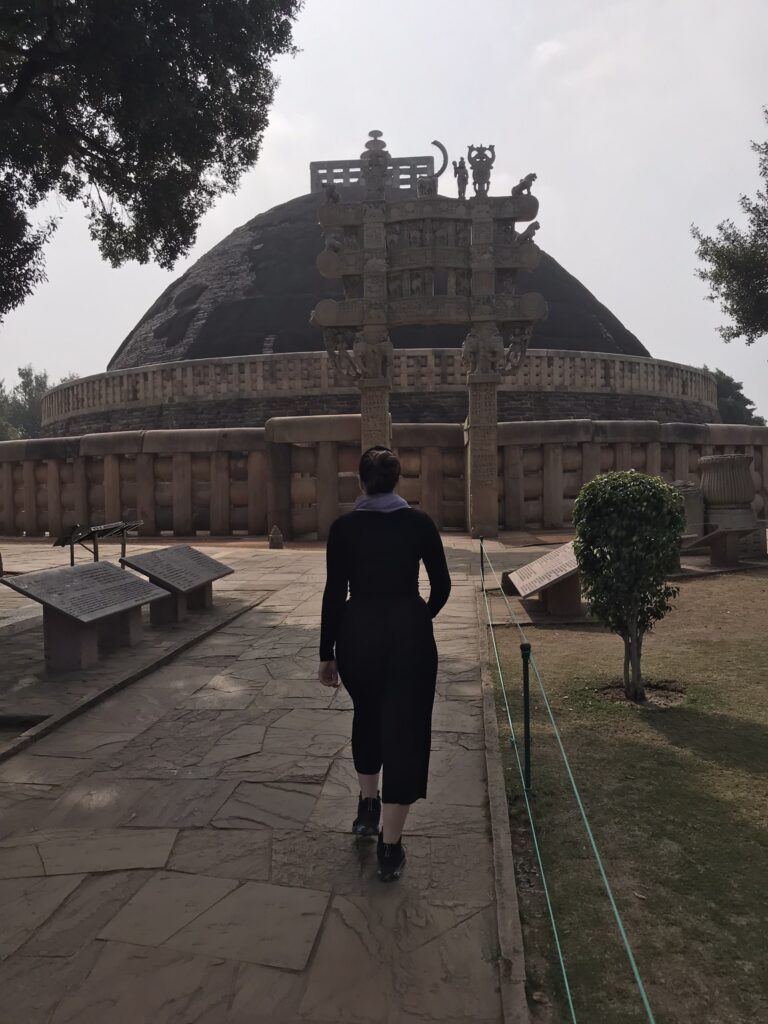
Sanchi Great Stupa, one of India’s most important historical sites, is located in Madhya Pradesh near to the city of Bhopal
Gwalior
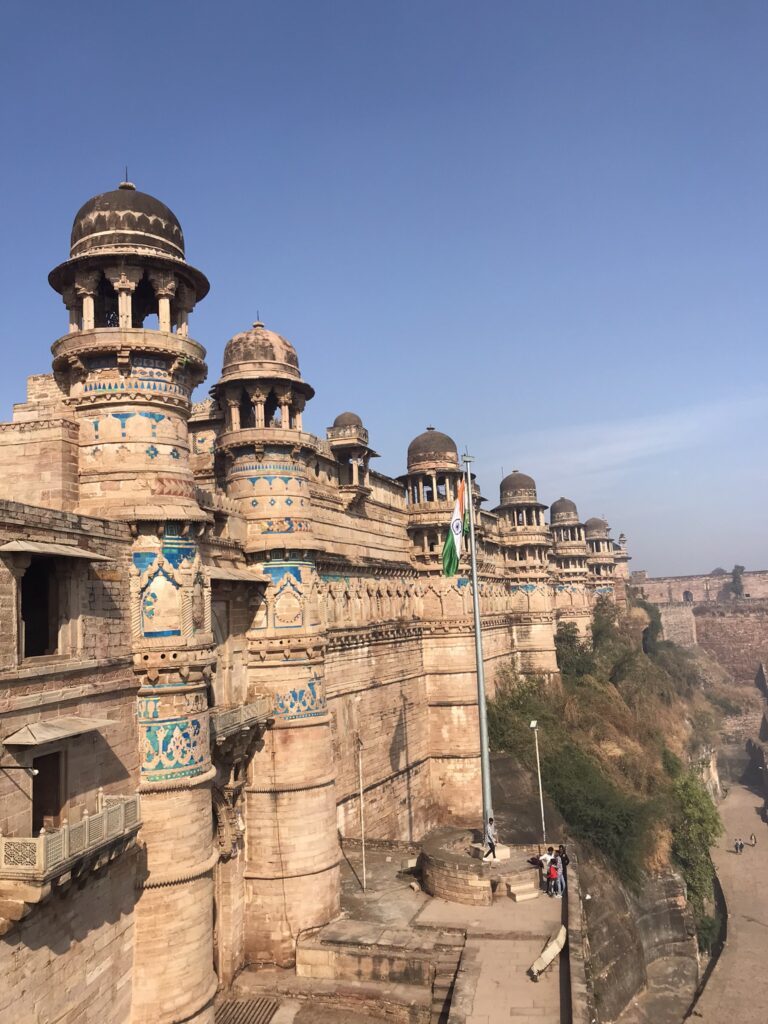
A city with over a million inhabitants, Gwalior is mostly known outside of the region for its fort. Located high atop a rock dominating the town’s skyline, this is one of the most magnificent forts in India. Considered to be virtually impenetrable due to its location, the fort has been in existence for over 1000 years and has passed through the hands of many many local rulers, dynasties and empires during that time. It even plays a key role in Sikhism – the sixth Sikh Guru, Guru Hargobind, was said to have been imprisoned in the fort for a time during the reign of the Mughal Emperor Jahangir.
Aside from the fort, Gwalior is also known for its musical heritage. Tansen, a classical music composer from the Mughal era with a borderline-mythical status, was born in Gwalior and his tomb is a notable landmark in the city. The local ruling dynasty during the British period, the Scindias, also left a significant mark on the city and maintain a degree of influence even today, as they have successfully transitioned to democratic politics following India’s independence.
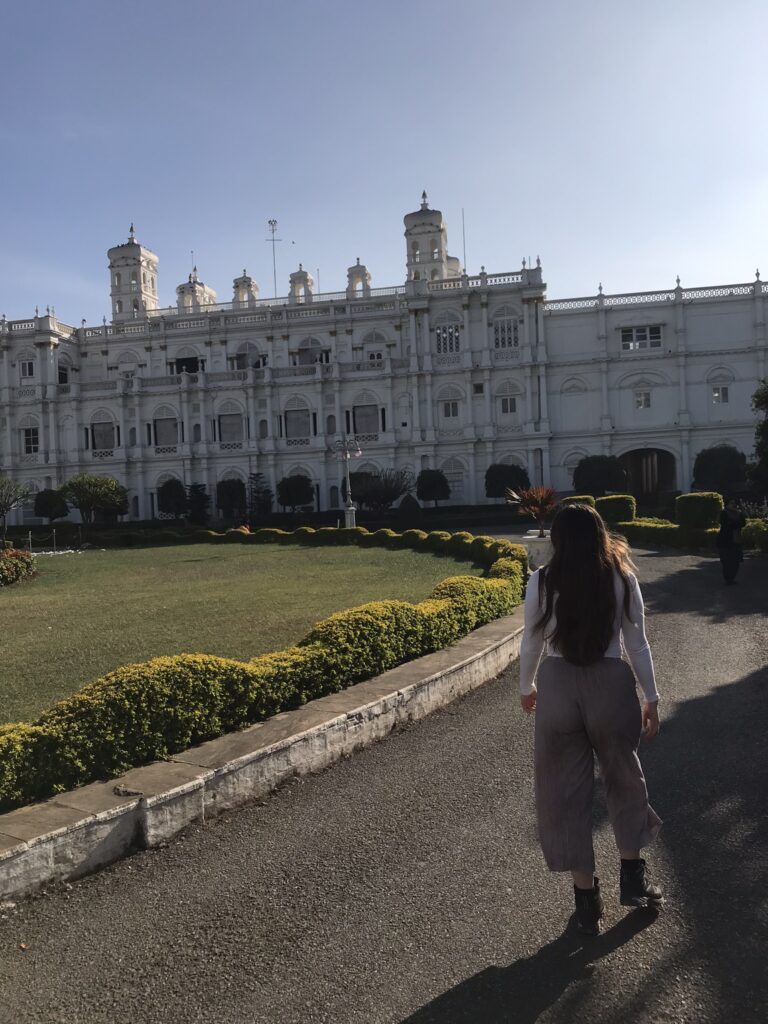
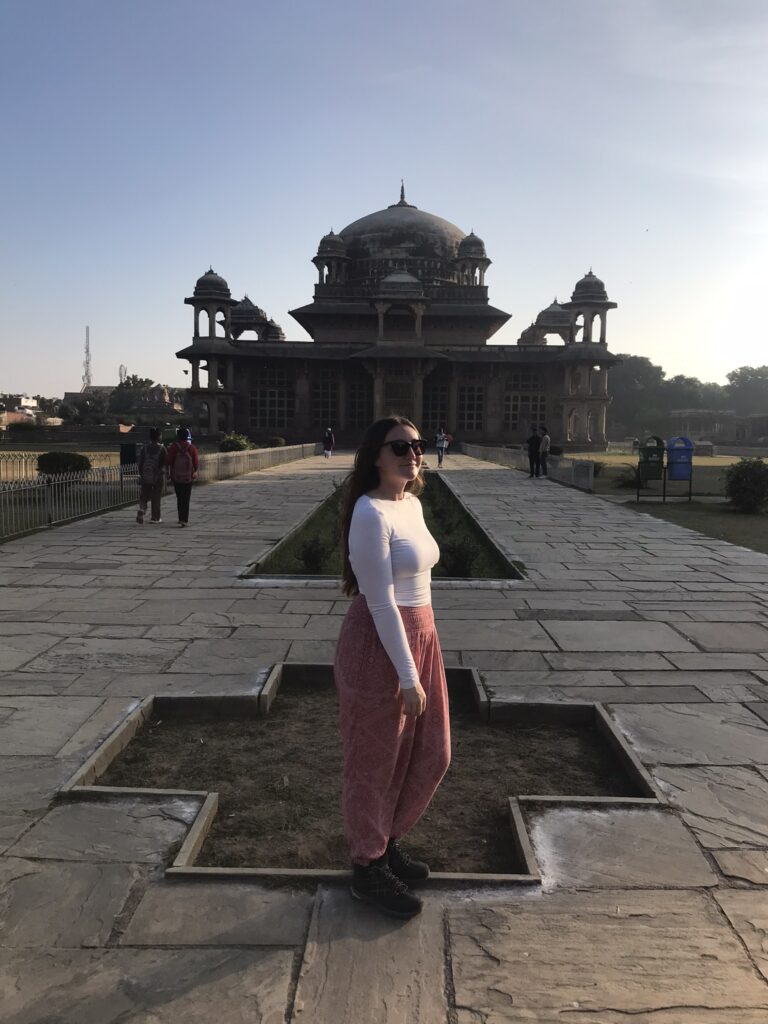
As well as the fort, don’t miss Jai Vilas Palace and the Tomb of Tansen
Gwalior is just over an hour from Agra and India’s ‘golden triangle’ by train, but it felt like a different planet. Many locals seemed like they had never seen Westerners before in their life. One guy at Gwalior Fort asked Dan if he was from China. People were in awe and constantly wanted to take pictures with us. We were completely swarmed by people at the fort, more than anywhere else in the Indian subcontinent. We’re pretty hardy but it was a little too much even for us; we were saved by a tour group of Italians who ushered us in for safety in numbers.
The word for fort in Hindi is ‘kila’ – it’s useful to know as the levels of English in MP are among the lowest we encountered in India. We flagged down a tuktuk driver and asked him to take us to the fort, several locals also stepped in to help translate and the driver then proceeded to take us directly to the train station – we had to walk back and weren’t best pleased. Luckily this guy actually gave us a really fair price for the journey to the train station – a pity it wasn’t where we wanted to be.
Gwalior itself is quite a big, busy and crowded city. However it’s not a dump like Agra – we found that generally it was cleaner and unlike Agra, we did not encounter waves of beggars and men urinating everywhere. There were some nicer shops and restaurants in the city centre. Gwalior is still most definitely north Indian in its feel, but the levels of chaos were a little more manageable than some other cities that we visited.
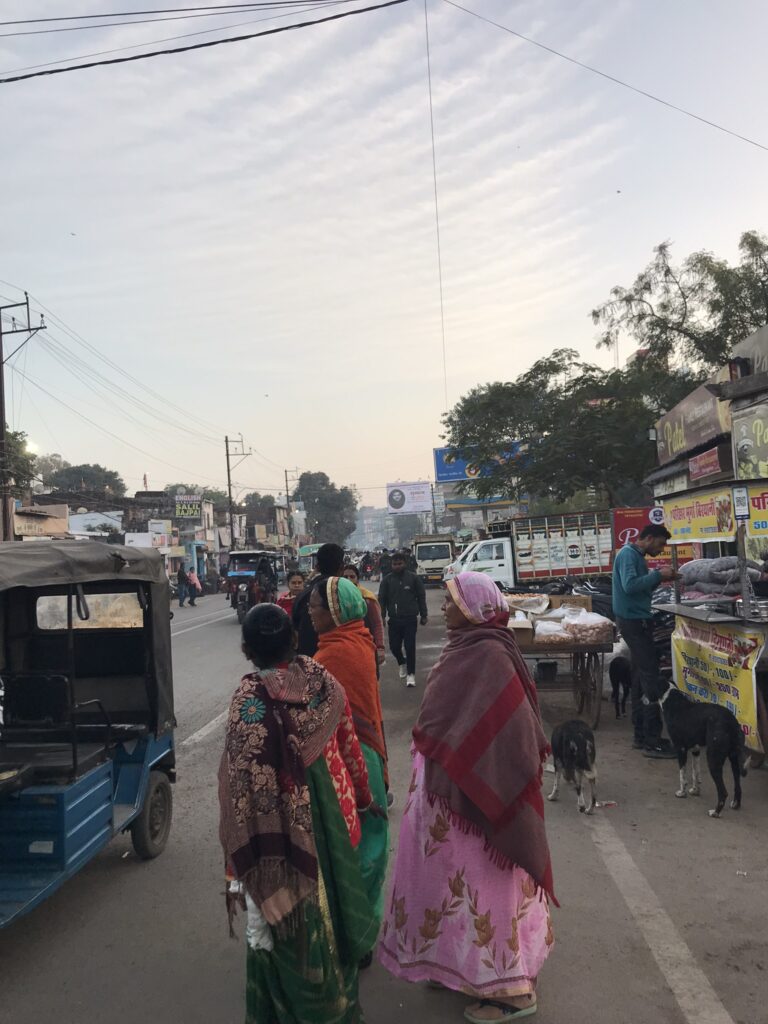
Gwalior city is a busy and hectic place, but it’s not unpleasant
Don’t try to use Uber in Gwalior. It won’t work. Save yourself the misery. The best way to get around the city unfortunately is by tuktuk. After the earlier train station mishap, we were able to organise a tuktuk to the fort through the really helpful guys at our accommodation, which also stopped us from being ripped off. Most of the sites in the city are just about walkable for fit and able travelers, although we chose to get a lift to the western gate of the fort to see the fantastic Jain sculptures on the way up.
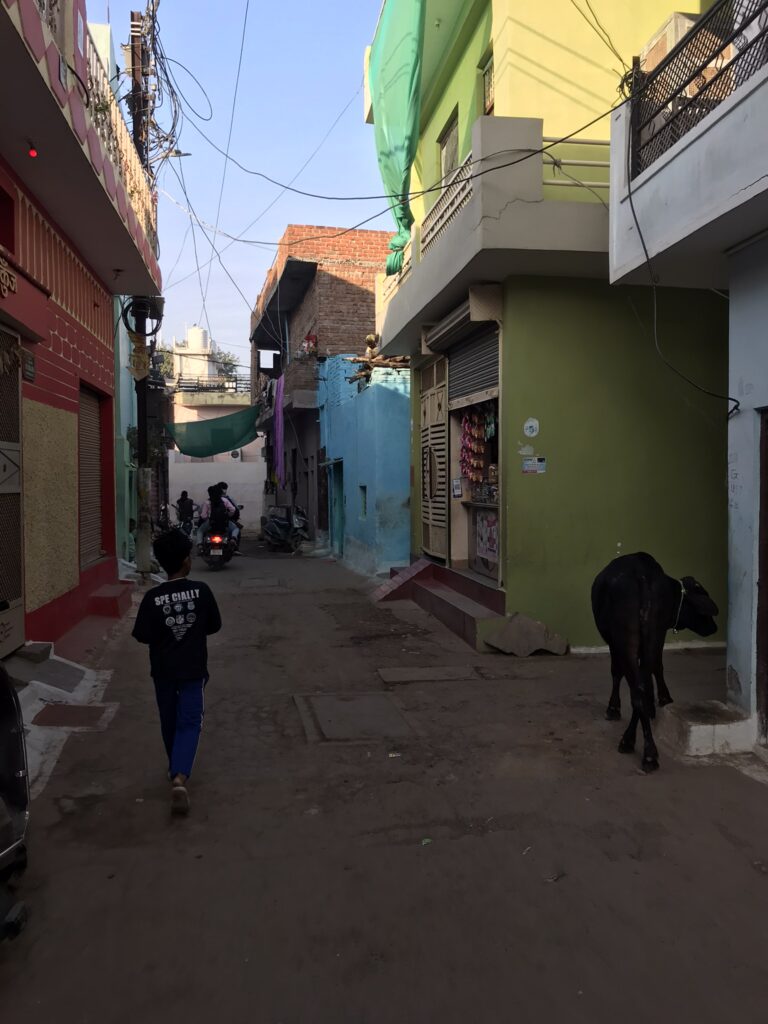
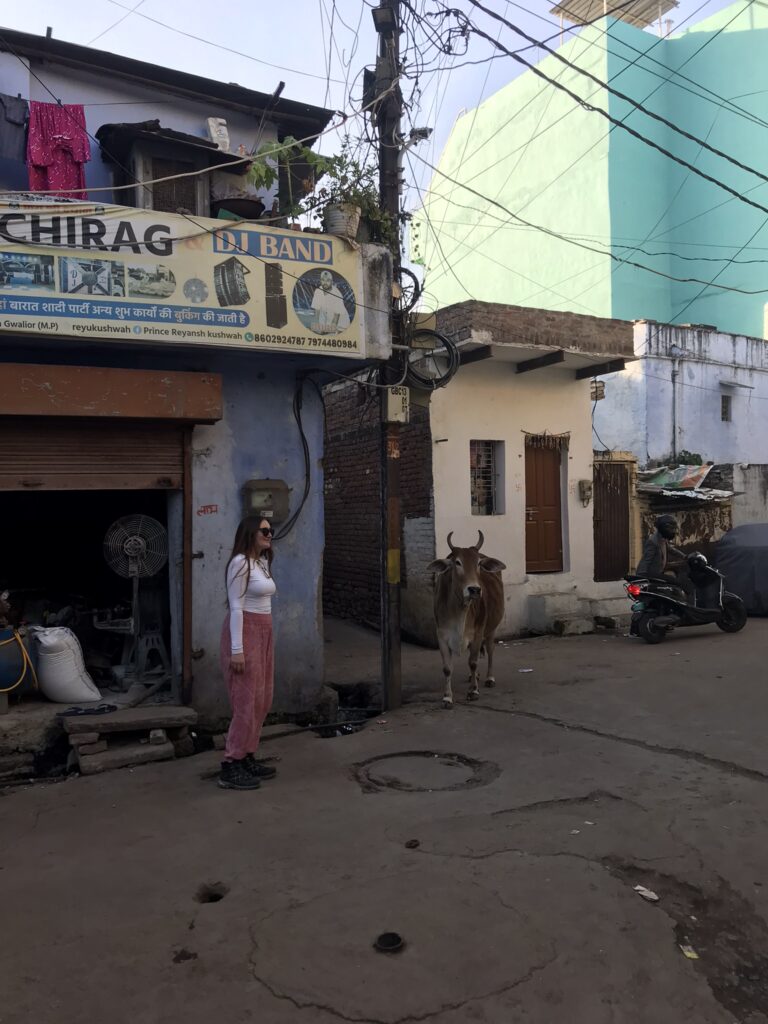
The back streets of Gwalior near Tansen’s tomb
Accommodation
Dera Haveli – Heritage Homestay – we liked this place, a grand haveli building with only a few rooms. The helpful staff spoke good English. We really liked the food served at the hotel and the rooftop with great views of the fort. We ate breakfast on the roof every day – quite a romantic setting
Foodie Places
Cafe Dream Arena – very randomly this is a Harry Potter themed cafe with wands, broomsticks and themed menu items such as ‘Dumbledore burger’. A novelty place which seemed to be popular with Gen Z customers. We enjoyed the burgers here, some of the better Western-style (non-curry) food we had in the north of India. However the food did take quite a long time to come – not an ideal place for those in a hurry.
Molecule – a swanky rooftop bar for elites and high-flyers. We almost felt out of place as we weren’t fancily dressed, as foreigners we got away with it but it definitely seemed like a place to make an effort with appearance. It almost felt like a nightclub atmosphere. This is an exclusive place with security guard and bouncers before you even enter the building. A very extensive array of alcohol was on offer. The waiter was very attentive and clearly trained for a high standard of service. Prices match the experience – it’s expensive relative to other places in the city, but was still relatively cheap by European standards.
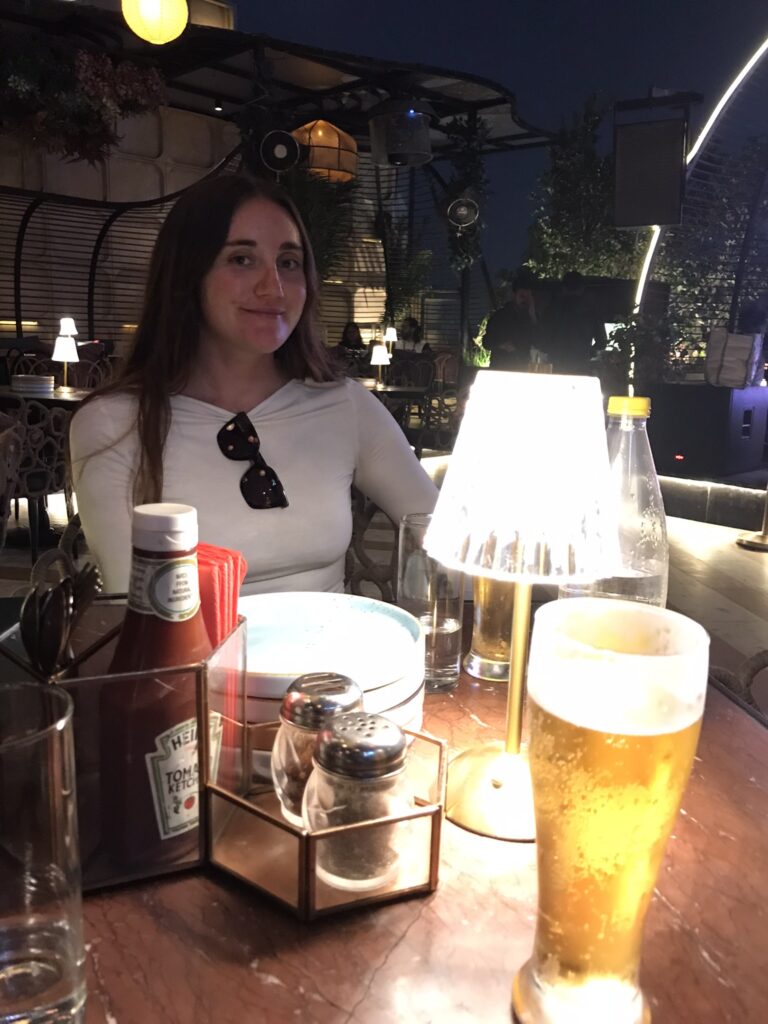
Living the high life at Molecule
Activities
Gujari Mahal Museum – a musty museum in an old palace located at the foot of Gwalior Fort on the north-eastern approach. The museum features an abundance of statues and sculptures in the typical north Indian style.
Jai Vilas Palace – an unexpected treat. A European-style palace belonging to the influential Scindia dynasty, who ruled over Gwalior for generations as vassals of the Marathas and then the British. With ornate facades and beautiful, well-kept grounds, the palace contains a very large and in-depth museum covering all aspects of the local ruling dynasty and life of the Maharajas. We couldn’t believe the amount of information here. It didn’t feel self-aggrandising. We greatly underestimated the amount of time needed to get around and had to rush through the last section.
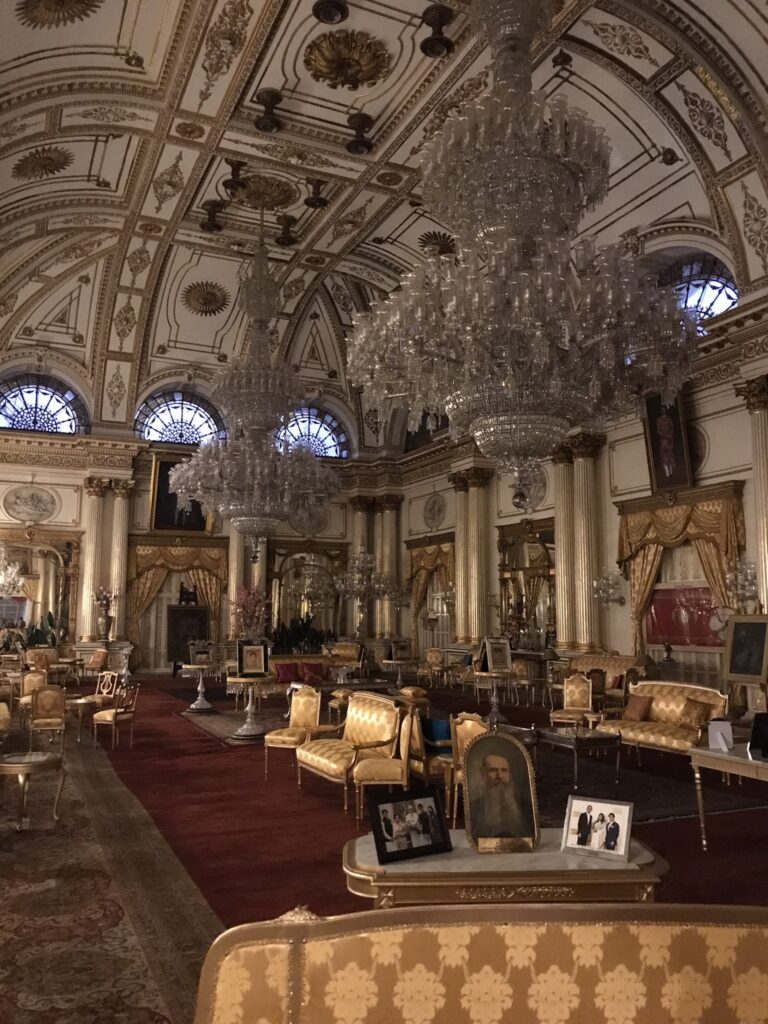
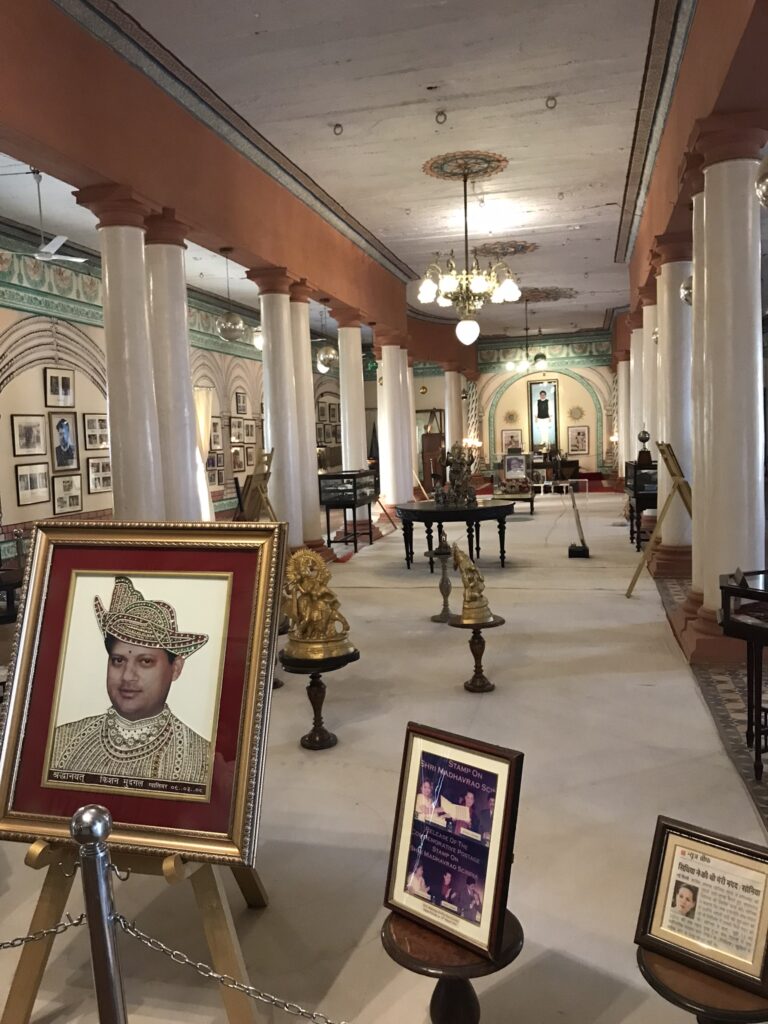
Jai Vilas Palace is seriously impressive inside and out – don’t sniff at the admission fee, this is one of our favourite palaces in India
We liked the display of turban folding, royal garments and the photo gallery of the Scindias graduating from British universities and taking part in sports. There is even a miniature train on display that apparently the Scindias used to inspect their lands. The last section features palace rooms that are fully restored with all the furniture. There is a European durbar and banquet hall and also a local durbar and banquet hall, both set up in traditional styles. Even though they have lost princely ruling power over Gwalior, the Scindias are an example of a family that then made the successful transition into elected Indian politics.
Gwalior Fort – it’s best to approach from the west side, by walking up the hill via the Gopachal Jain statues. These rock-cut statues are varying in size; some are small while others are absolutely enormous. Dating from the 15th century, the sculptures depict Jain Tirthankaras and can be found all along the route. Some of the sculptures are damaged by water. They follow a typical Jain style with a pyramid shape in the centre of the chest, which differentiates them from other similar statues such as Buddhas.
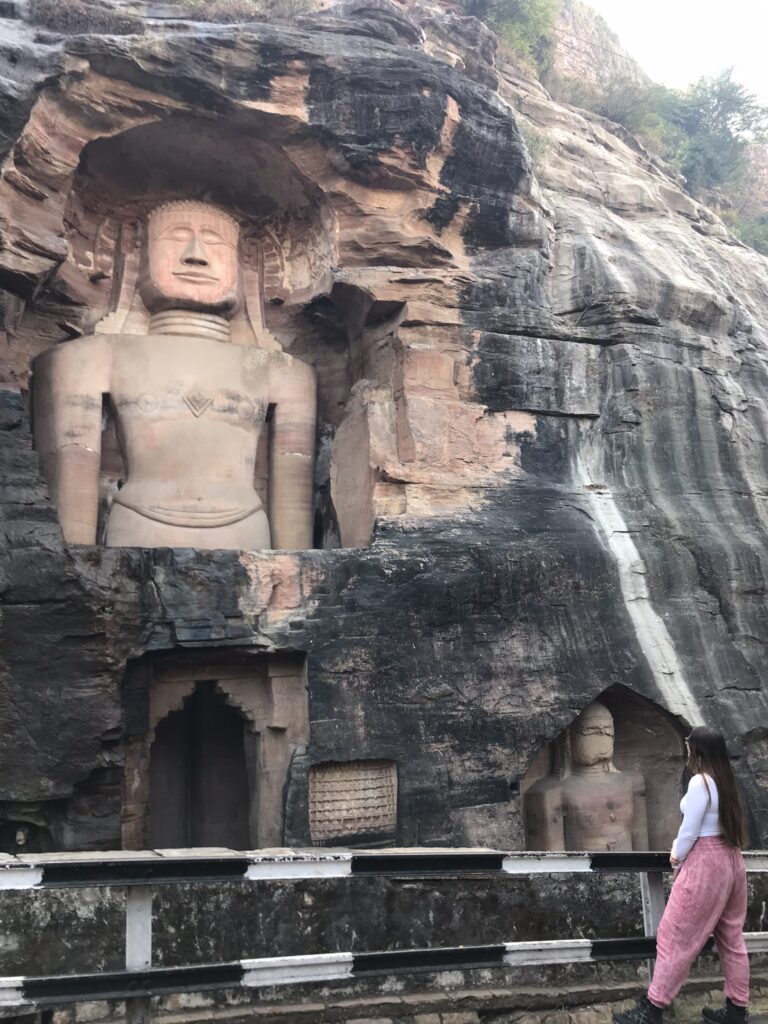
The huge Jain sculptures on the western approach are definitely worth the detour
The walk up to the top is quite steep, but the western approach is gradual and the Jain statues provide plenty of natural opportunities to take a break. We were worried about the lack of food options at the top of the fort as it’s a large area to explore and a fair walk back to the ground, but there are stalls selling drinks, crisps and ice cream.
The facade of Gwalior Fort is notable for its depictions of yellow ducks – almost comical given the imposing nature of the fort. As far as we could ascertain, there isn’t really any particular relevance or reason for the ducks.
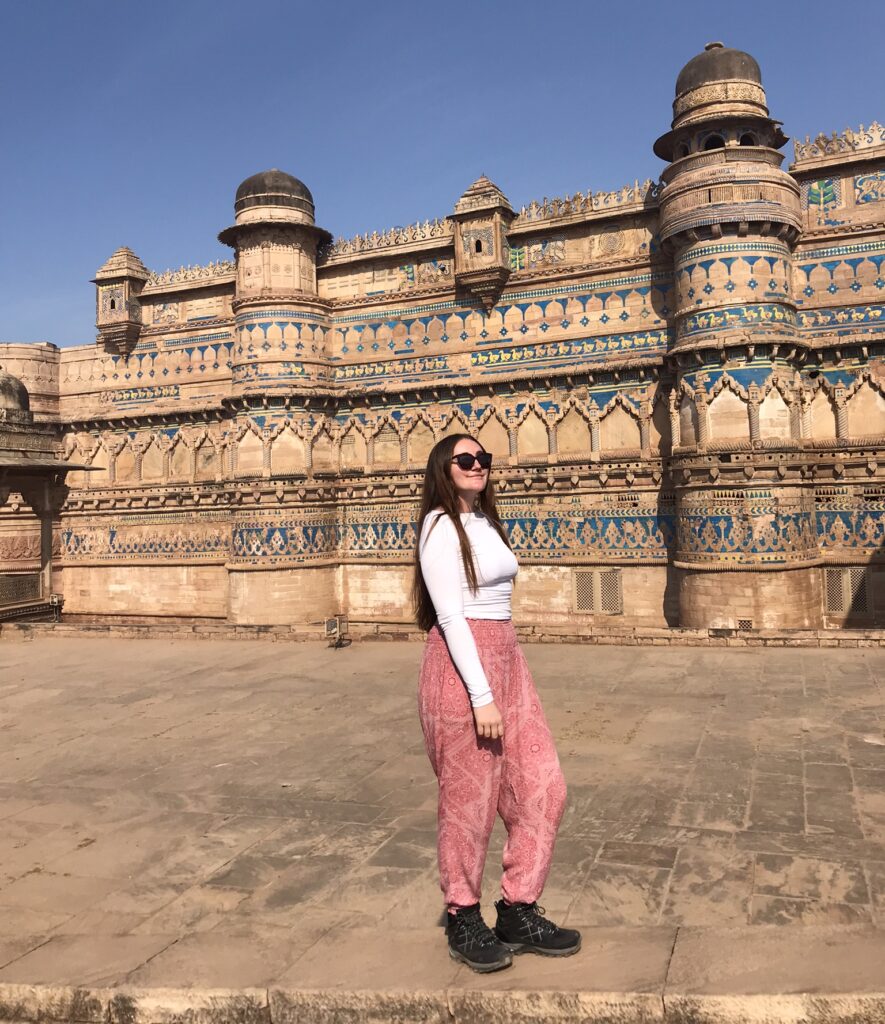
This wall must’ve left enemies quacking in their boots
The area at the top of the rock contains several distinct structures, including the ruins of the fort and a couple of small palaces and temples which were also part of the complex. There are two tickets which need to be purchased at the fort ticket counter; one for the fort itself and the other for the Man Singh Palace, which is also part of the fort complex. The ticket situation was a little confusing at first and isn’t well signposted or explained.
The actual fort section isn’t all that impressive inside compared to the façade. It’s mostly just dusty crumbling walls and empty rooms. Additionally we were getting a lot of unwanted attention from locals inside the fort, which made it difficult to explore independently. We were saved by an Italian group who saw that we were being mobbed and let us join along with them. Unofficial guides hang around outside the entrance to the fort trying to drum up business and the Italian group had hired one of these guides; as expected the guide wasn’t great, there were some clear historical inaccuracies in the information he was providing and he then asked for quite a lot of money at the end. I wouldn’t recommend using these guides.
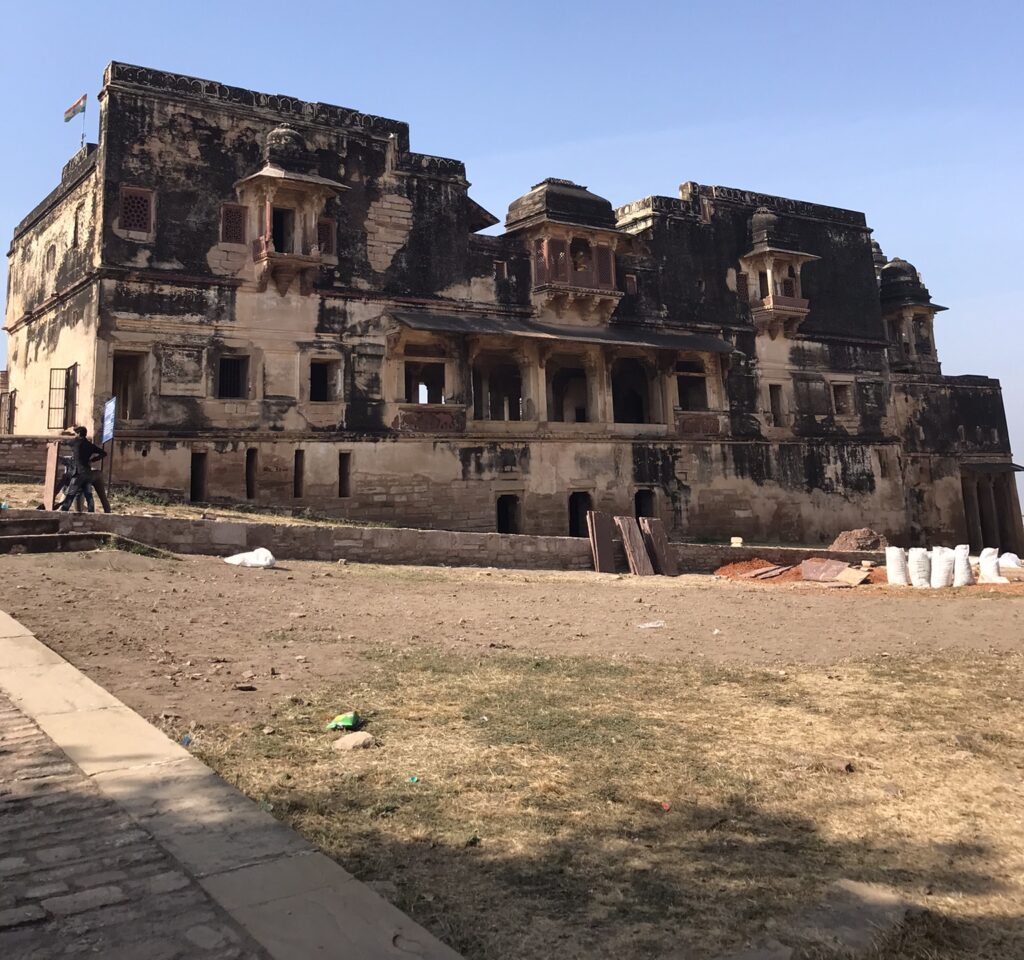
The inside of the fort contains plenty of empty, semi-derelict palaces and structures
The Man Singh Palace is a four-storey complex with many winding, narrow passageways. It is fun to explore but also can be a little confusing to navigate. There are several other historical structures in the area too outside of the palace and ticketed fort complex, including a Sikh Gurudwara and the Sahastrbahu Twin Temples, which are located at the south of the fort rock.
Make sure you visit all areas at the top before walking down. We missed the Sahastrbah Temples, which were included in the Palace ticket, as we didn’t realise where they were – by the time we had walked all the way down we didn’t want to go back up. The walk down via the eastern approach is scenic, and includes a small temple that is said to contain the world’s second-earliest recorded use of a zero as a written digit.
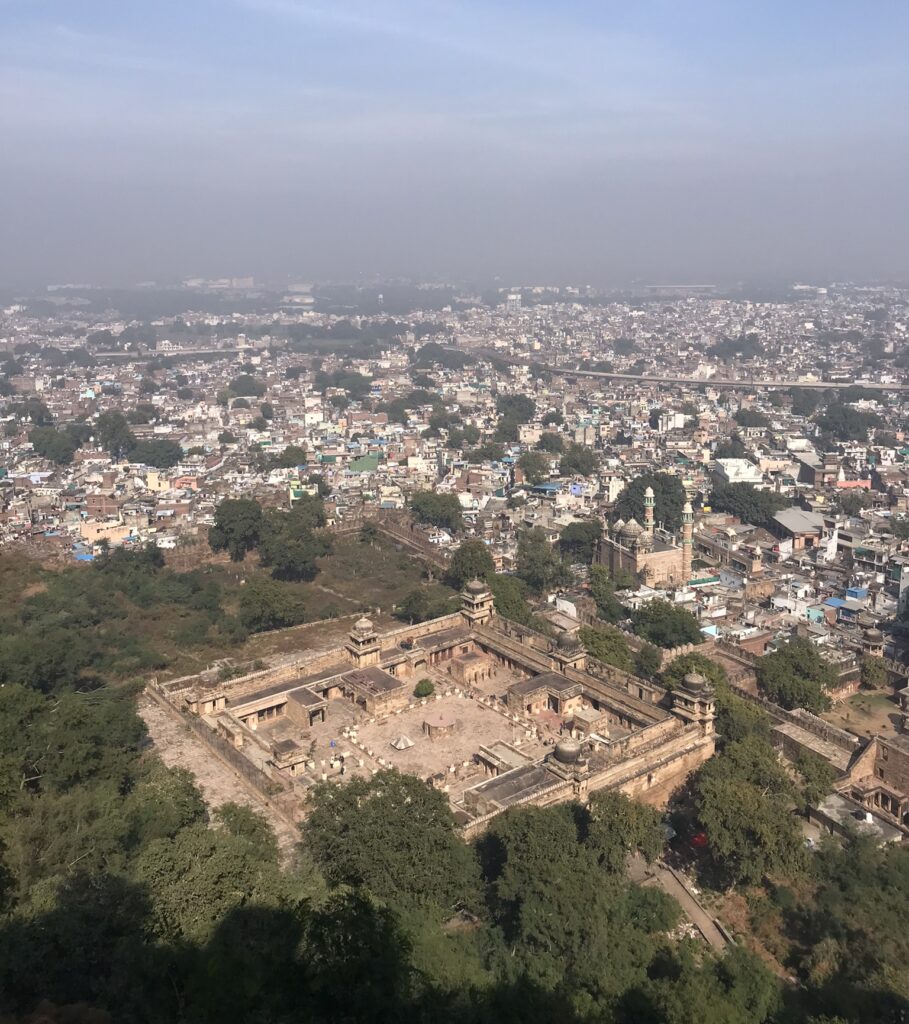
The view from the top of the fort over the city of Gwalior – the Gujari Mahal Museum can be seen below
Tomb of Tansen – although it’s advertised as the Tomb of Tansen, the main focal point of this complex is actually a different mausoleum – the tomb of Muhammad Ghaus, a Muslim Sufi saint. Tansen’s tomb is a smaller structure off to the side. We were ushered inside the tomb of Muhammad Ghaus, encouraged to donate and then given a blessing by the Imam which we didn’t fully understand. The tomb is well-decorated, with some exquisite filigree on display. The gardens were peaceful, quiet and free of rubbish and pollution, making for quite a nice place to sit and enjoy the tranquillity. Entry is free and the complex closes at sunset.
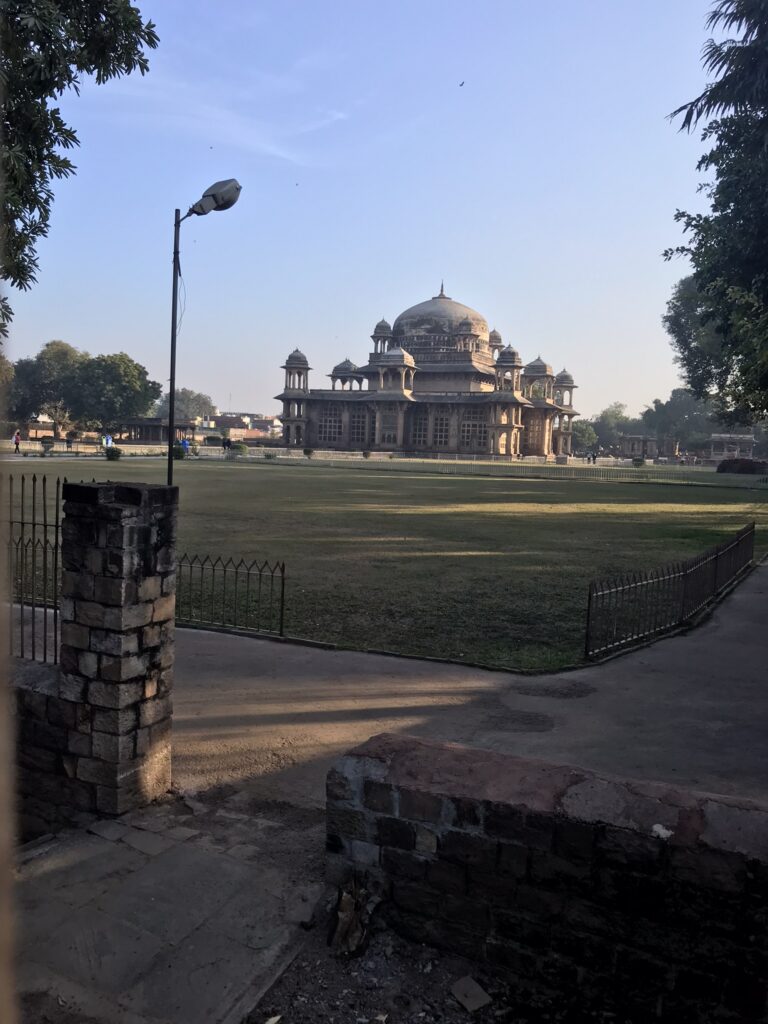
Tansen’s tomb complex is a haven of peace and quiet
Italian Garden – a green area located near to the Jai Vilas Palace, this is a nice enough place with a small water tank/pond to walk around. We struggled to find the way in at first. Again, many excited locals wanted to interact with us here.
For my self-guided walking tour of Gwalior, click here!
Orchha
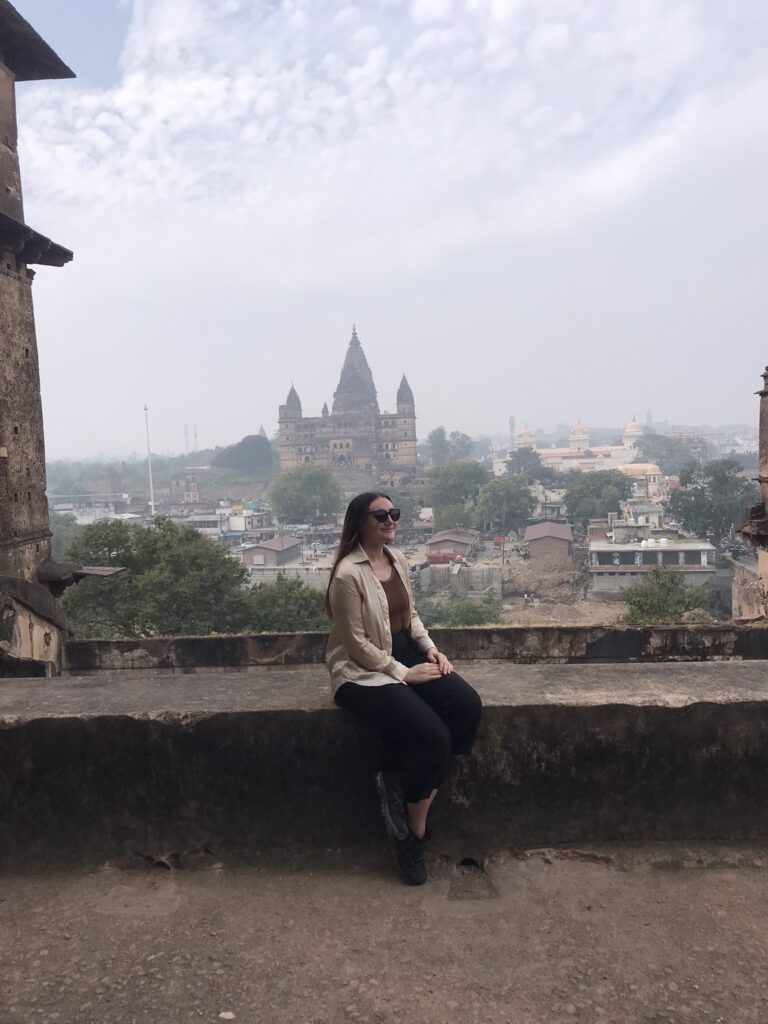
Within the rural heartland of Madhya Pradesh close to the border with Uttar Pradesh, the small town of Orchha lies on the shores of the Betwa River. Locals will claim this is the cleanest river in India, but it most definitely is not. Orchha was initially founded and ruled by the local Bundela dynasty in the 16th century – 100 years later, the Bundelas were overrun by the rampaging Mughals. Numerous grandiose and atmospheric structures dating back to those times can be found throughout the small town, including Orchha Fort, the Chaturbhuj Temple and the town’s Royal Chhatris.
Orchha is known among locals as a pilgrimage site for the Hindu deity Rama. The story behind this is quite long and convoluted, suffice to say Rama is considered to be the ‘king’ of Orchha. Locals in Orchha often use ‘Ram Ram’ as a greeting instead of the usual ‘namaste’. The Ram Raja temple in town is the focal point of the Rama worship, drawing many thousands of domestic visitors each year. We even saw a completely naked Jain monk making a procession down the street near to the temple.
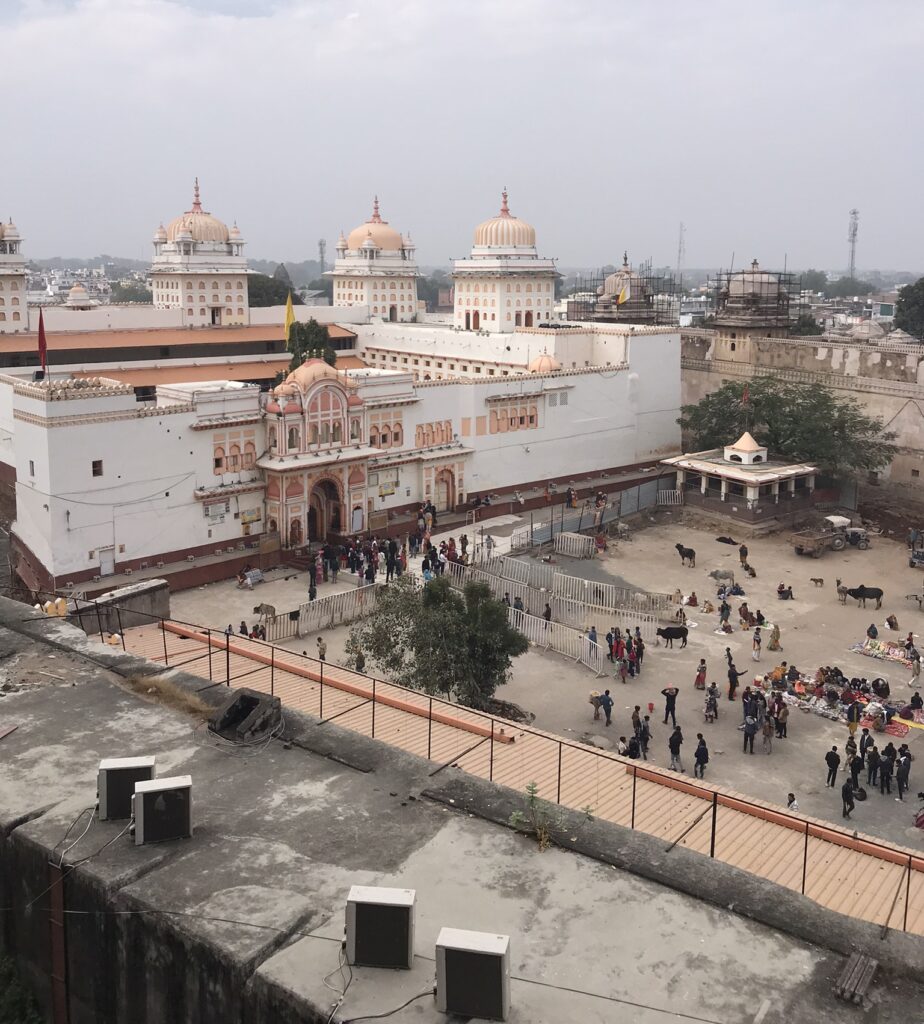
Ram Raja temple and the general kerfuffle outside
Despite its large and impressive attractions (not the monk…), Orchha still has a small–town feel. The main street through town (Tikamargh-Jhansi road) can be crowded with traffic, a little noisy and chaotic, however away from that there is a relatively peaceful and relaxed atmosphere. The backstreets are mainly residential areas, full of children playing and older women chatting in doorways who will often greet passers-by with a friendly ‘Ram Ram’.
As it’s located in such a rural area, Orchha takes a little bit more effort to get to. There is a small train station on the outskirts of Orchha but services are limited. The nearest major station is in the nearby city of Jhansi, which technically is across the state border in Uttar Pradesh. Most hotels and guesthouses in Orchha offer pickup and return services from Jhansi station in either car or tuktuk for a pretty cheap price, so you shouldn’t have too much trouble arranging a lift through your accommodation. Driving through the rural green fields on the way from Jhansi felt a world away from the sprawling metropolises like Mumbai and Delhi (and even Bhopal).
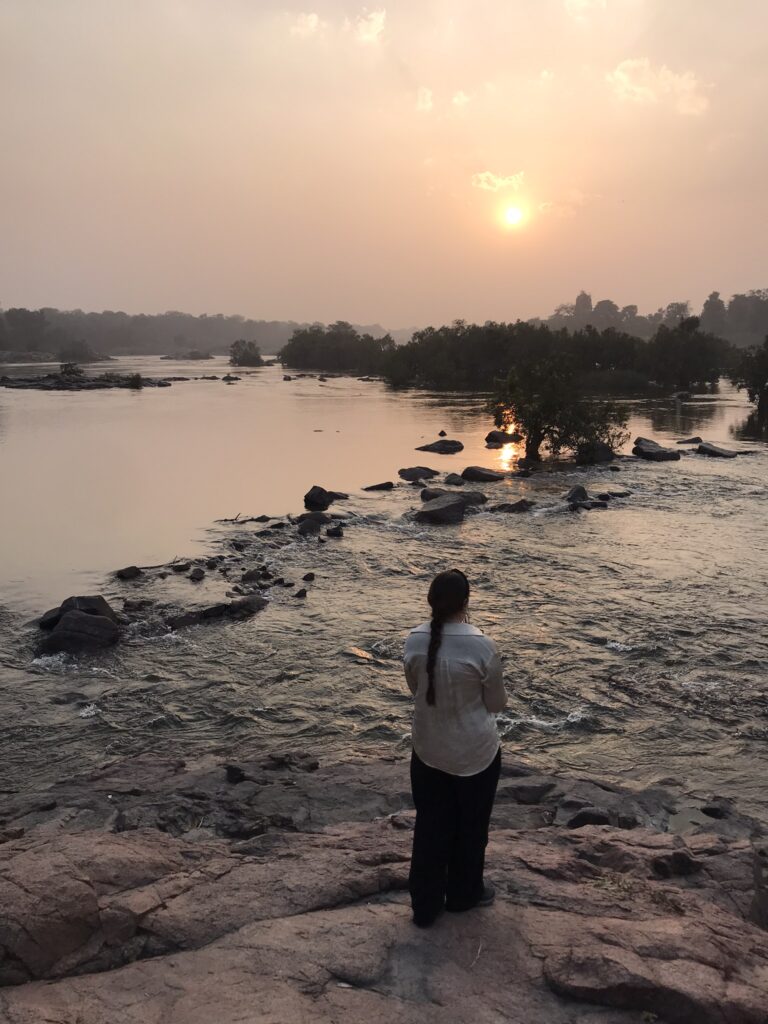
The Betwa River runs adjacent to the town of Orchha
Most of the main attractions in Orchha (the fort complex, Chhatris and Laxmi Temple) are accessed via a combined ticket. This can only be purchased from the ticket office at Orchha Fort. I don’t think it’s possible to buy individual tickets to these attractions. The combined ticket is valid only on the day of purchase, which is annoying as there really is too much to see in a single day without rushing through.
We managed to see the Fort and Chhatris in one day, then the next day we paid a little extra to the guard to sneak us into the Laxmi Temple so we didn’t have to purchase the full combined ticket again. Hopefully in the future this will be extended to a 48-hour ticket as the present day ticket almost seems counter-productive if you want to see all the sites and explore them properly.
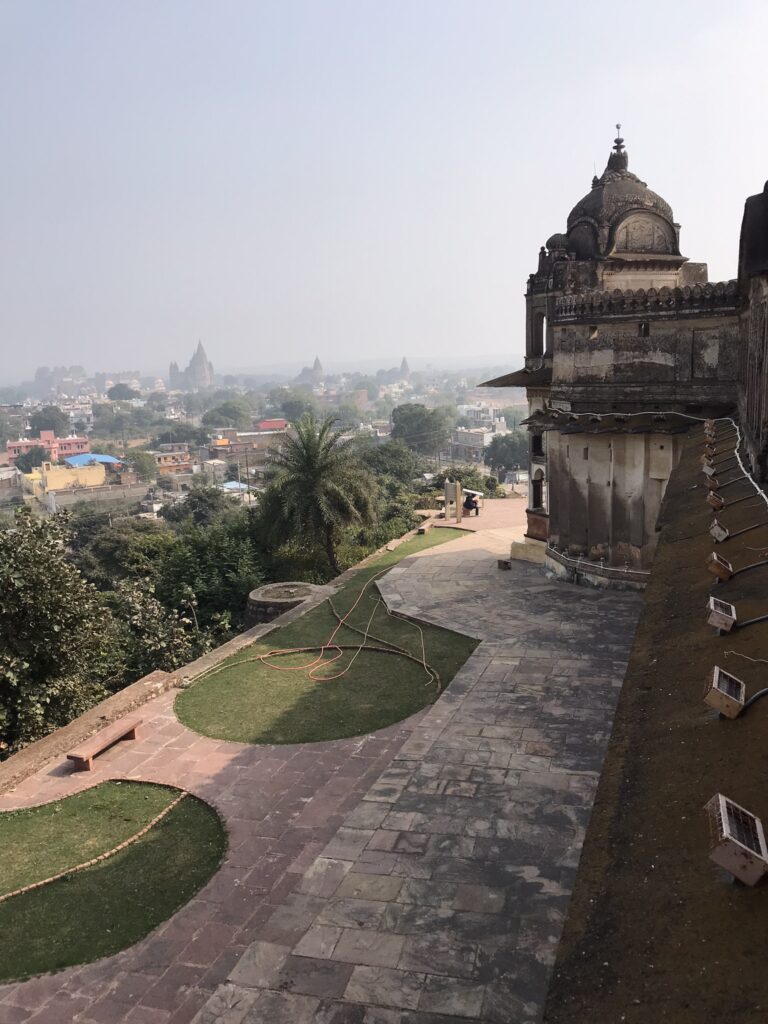
Orchha packs a huge amount into such a small town
Accommodation
Hotel Sunset – very affordable rooms and friendly, honest and accommodating staff. They helped us to arrange transportation to and from the train station in Jhansi. It’s not a big commercial hotel, there’s more of a hostel feel really. The hotel is walkable to all of the main sites in Orchha – although that probably applies to pretty much everywhere in town
Foodie Places
Open Sky Restaurant – an honest family-run restaurant in a good location along the main street. Outstanding food and good prices. We loved the brinjal masala (eggplant curry). They also serve pretty decent breakfast options.
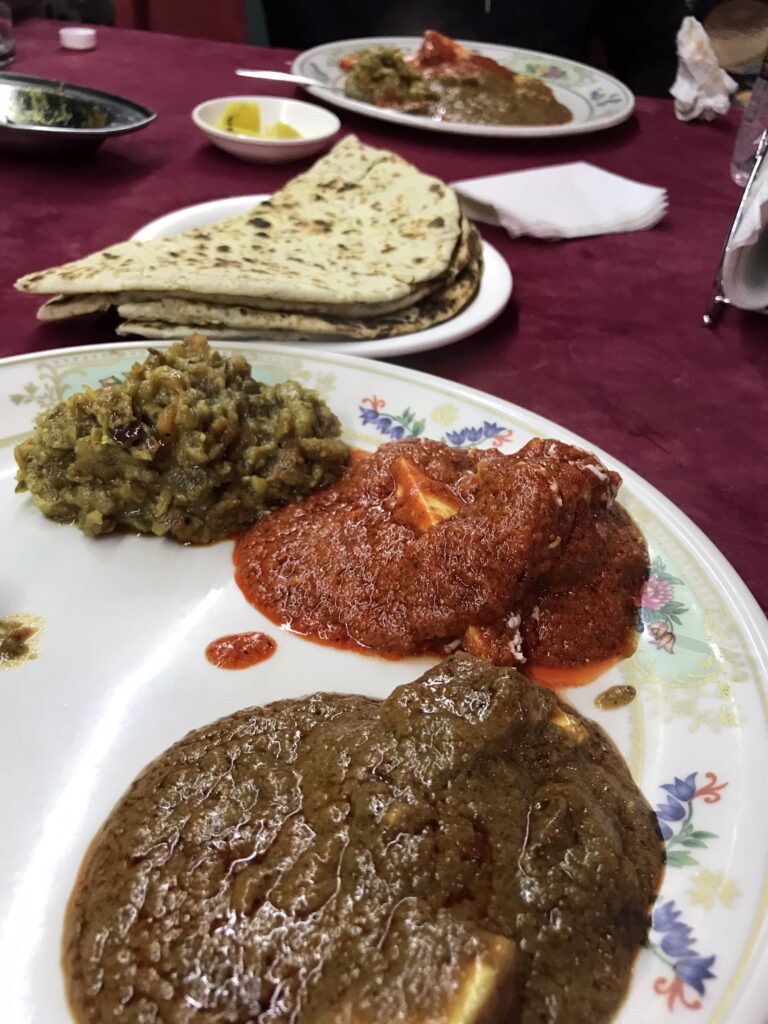
Good honest food at Open Sky
Indiana Restaurant – a tourist trap restaurant located near the Orchha Fort. We were a little confused as the prices were much higher than we were used to for standard Indian fare, yet there seemed to be plenty of locals eating there. We discovered later that the restaurant had a different menu that they give to foreigners with almost double the prices. A shame as we couldn’t fault the food or service. The owner was all smiles and friendly chatter which made it even worse that they were blatantly ripping us off. Later while walking past we saw a white tour group being herded into the restaurant – lambs to the slaughter. I highly recommend going elsewhere.
Activities
Orchha Fort – the fort complex dominates the skyline from the main road in town, looming across the Betwa river. Access is via a walkway and drawbridge which also seemed to be a popular hangout spot for monkeys. A guard at the entrance told Dan to let him know if we had any problems or hassle inside, which was reassuring after we were swarmed at Gwalior Fort. In the end though it was fine – lots and lots of people inside wanted to take photos with us, but generally it was more manageable and we actually had some nice chats with locals.
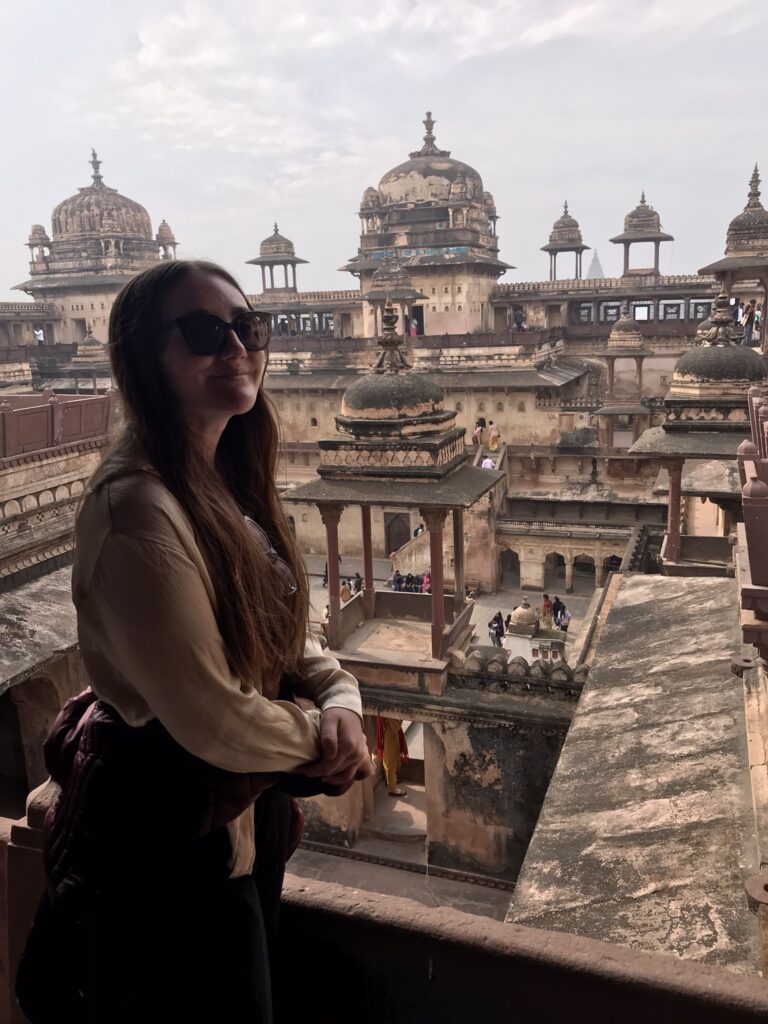
It’s not an optical illusion
The fort complex includes two main palaces with many labyrinthine passages and various staircases. We got lost on several occasions while exploring the staircases. The palaces are built in a distinctive Mughal style, many decorative features are still intact and there are also some interesting painted rooms inside. The palaces also offer great views back across the river to the Chaturbhuj Temple and other monuments. There are some plaques around with info about each of the buildings.
Around the back of the main palaces are a number of other smaller buildings to explore, which are less well preserved and far less busy. These include the hammam building and a ruler’s wife’s palace, which has been somewhat renovated. Many of these buildings were virtually empty when we visited despite the main fort and palace area being quite busy.
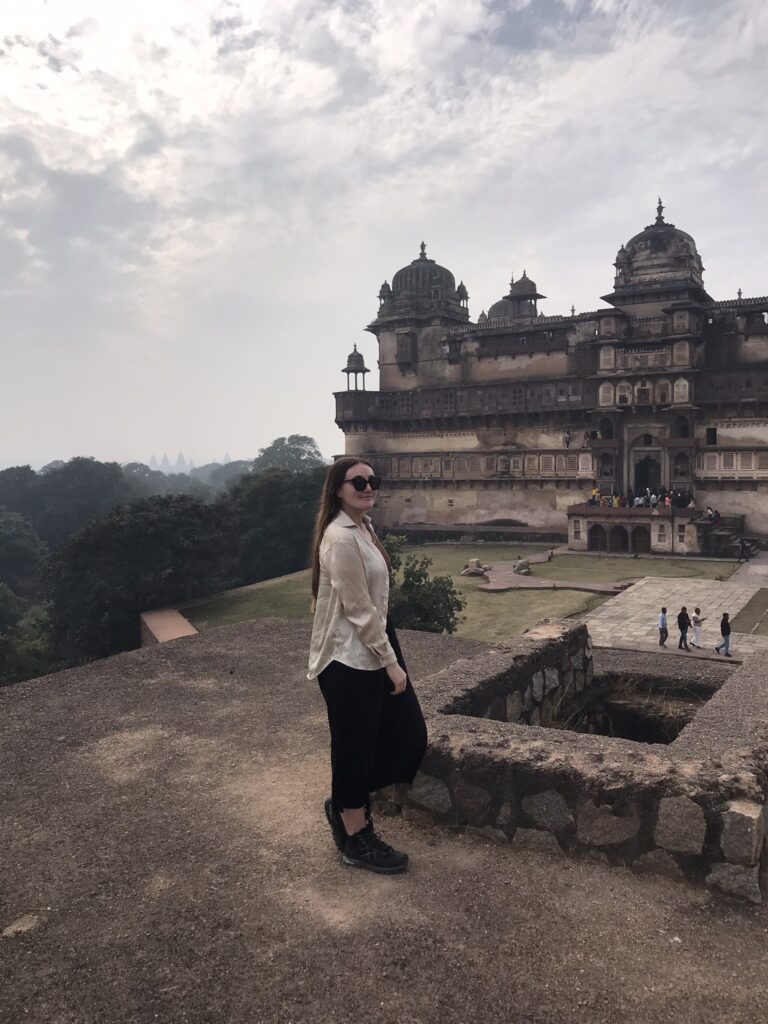
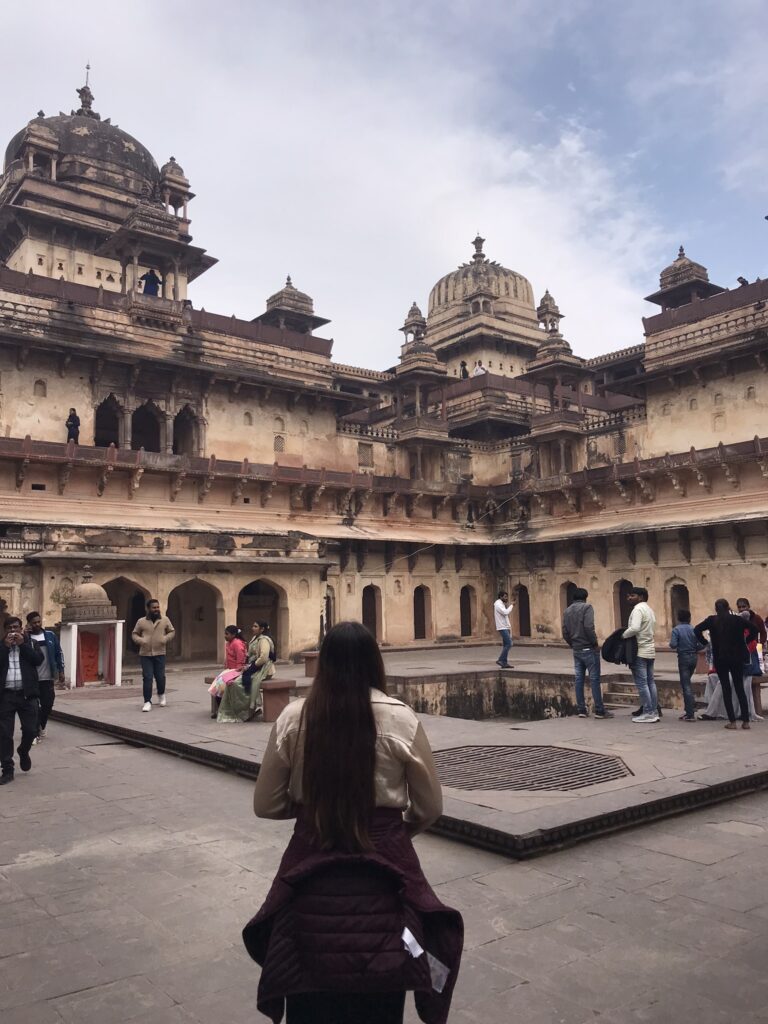
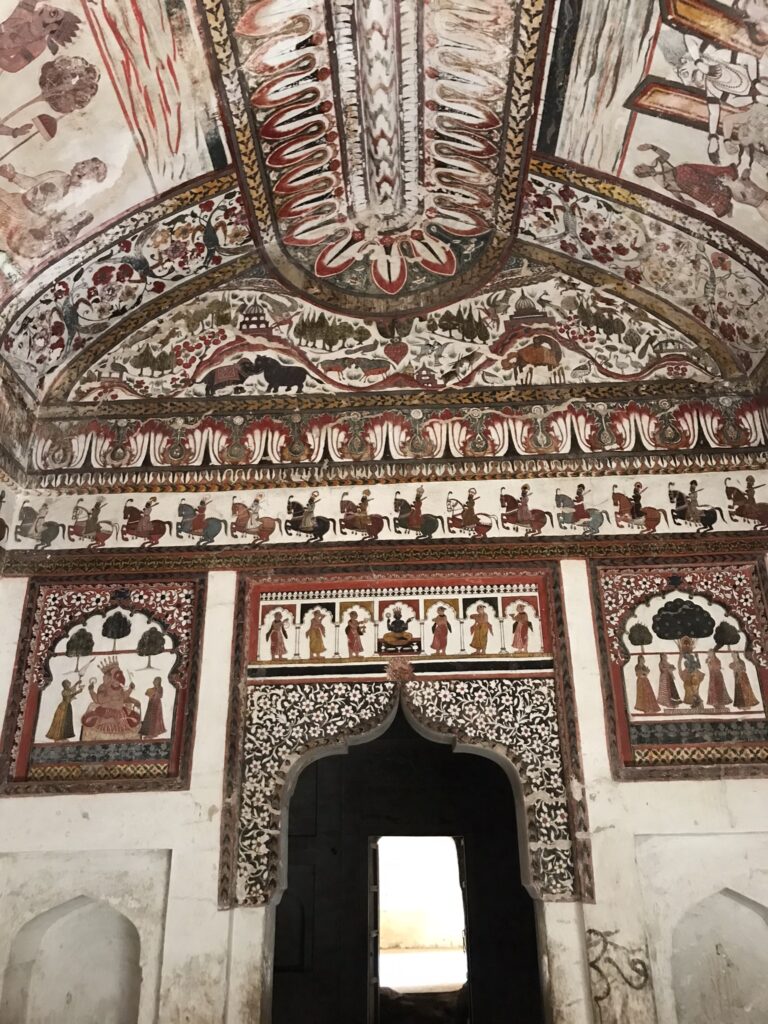
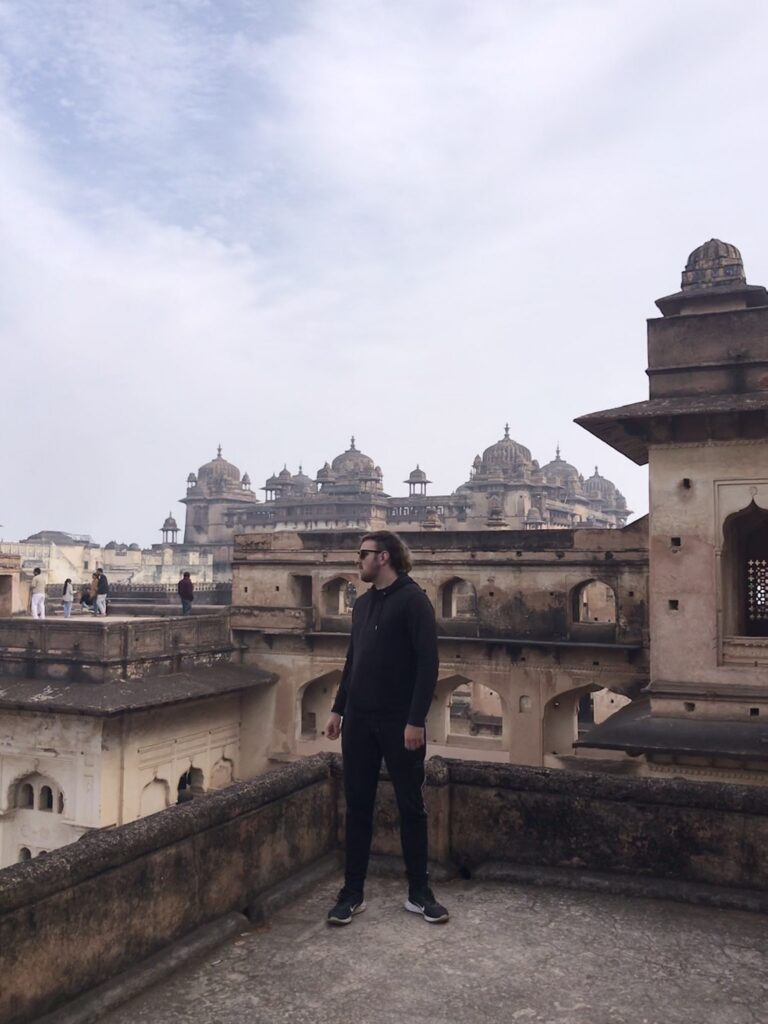
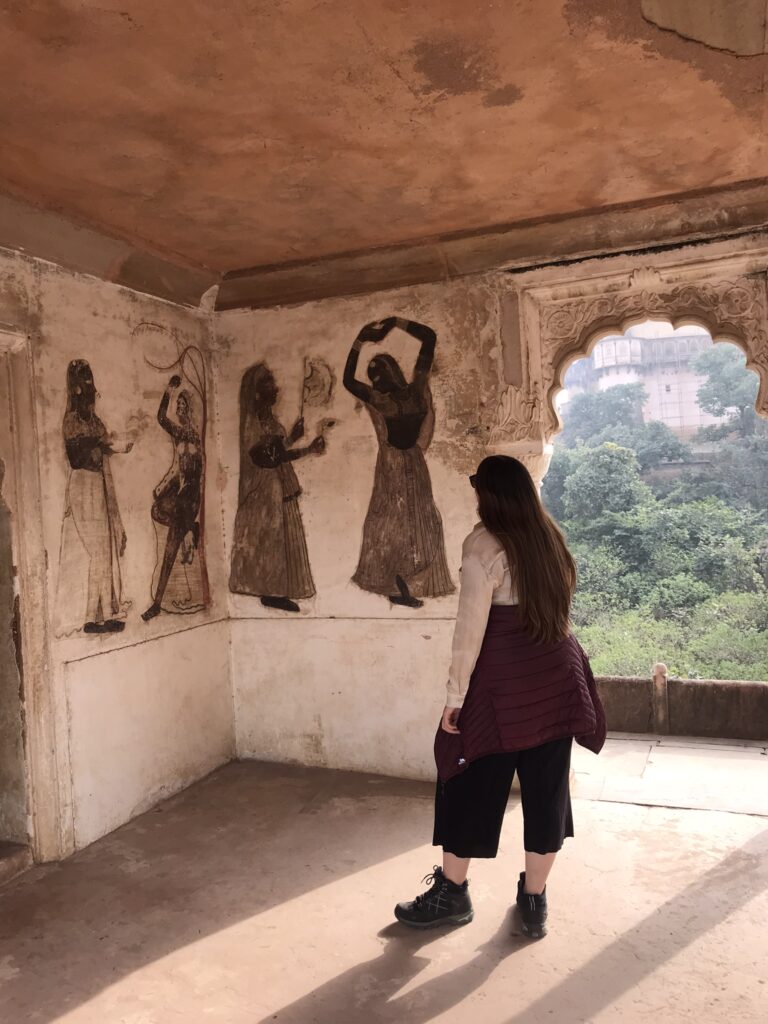
There is so much to see inside the fort complex
Chaturbhuj Temple – a huge, imposing temple which dominates the skyline of the town. It’s impossible to miss, however visiting is a strange experience. Entry is free but this only gets you into the ground level, there is then a locked trapdoor to access the upstairs area which seems to be controlled by a questionable bunch of guys who sometimes demand money to allow people up. It isn’t really clear what authority these guys have or how legit this is.
We weren’t asked for money to go up, but an older man who was dressed like a sadhu lept in and went before us. He then demanded that we followed him and wouldn’t leave us alone despite us clearly having expressed no interest at all in any sort of guide and actively trying to get away from him at points. Eventually we had enough of him and left in a huff.
A few minutes later when we’d calmed down we re-entered the temple, tagged onto the back of some locals who were being allowed up through the trapdoor and were then free to explore on our own like we had wanted, without the strange old man in a loincloth following us around and trying to tell us what to do.
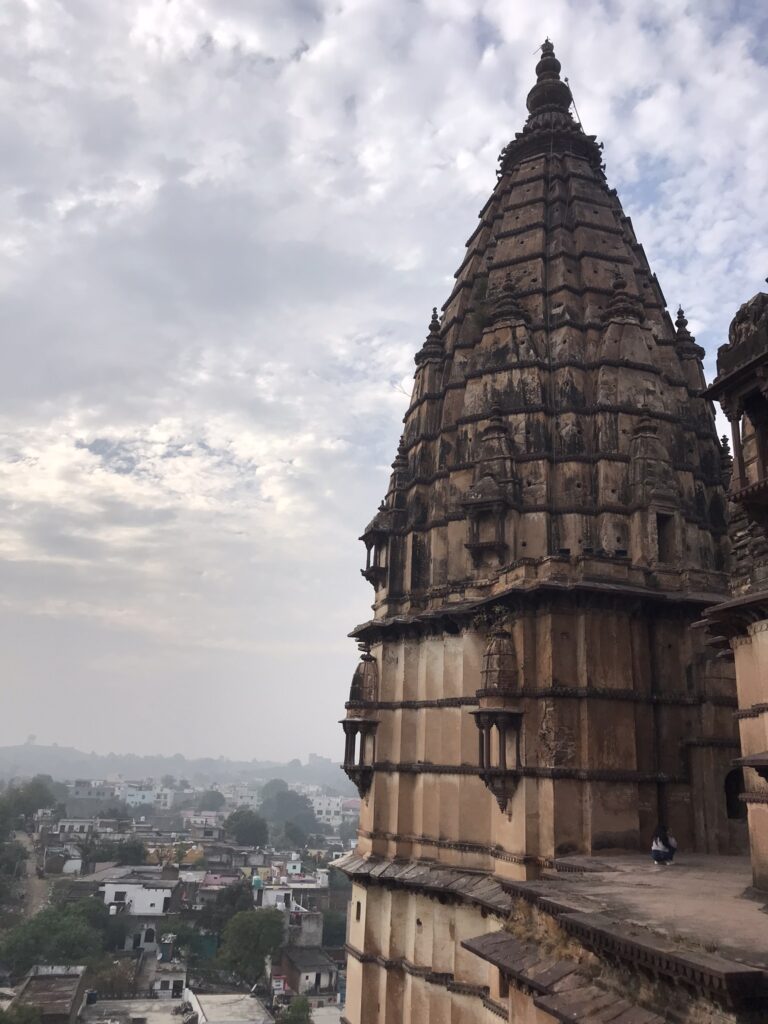
Finally on the roof
The temple layout is actually quite complicated and we did get lost a couple of times while trying to find our way back up to the top. I’m still not sure if the wannabe-sadhu guy was trying to help or scam us, either way his presence was not welcome. It didn’t help that the stairs were quite steep and I was worried about seeing the guy’s junk.
The roof of the temple is the best place to view the dramatic steeple-like towers, as well as the fort and surrounding landscape. There are no safety barriers on the roof so watch out!
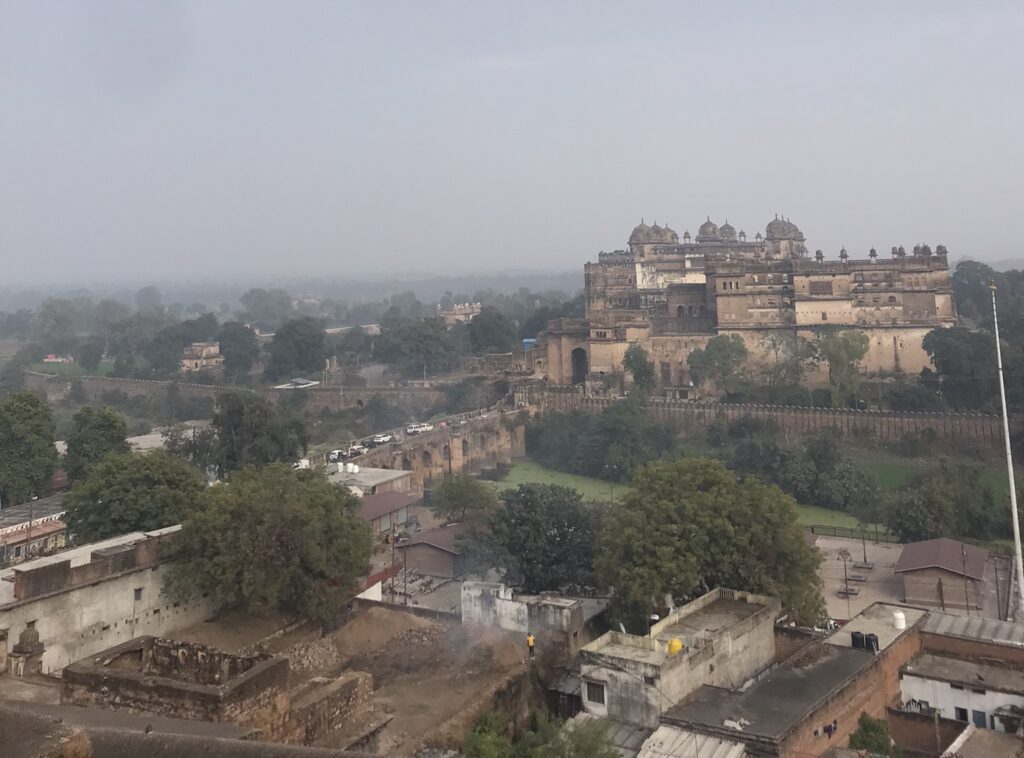
Views of Orchha Fort from Chaturbhuj Temple roof
Chhatri Cenotaphs – a royal garden-cum-cemetery with a series of distinctive mausoleums (called chhatris) for members of the ruling dynasty. A guy with keys offered to clandestinely let us inside and onto the roof of one of the chhatris for a small tip. He also pointed out some nesting vultures.
The chhatris are split into two areas, separated by the road. There is also a singular chhatri building outside of the paid complex, in a tourist area near the bank of the river. This area was the highlight of Orchha for me, particularly stunning and atmospheric at sunset and dusk. Look out for the white rabbits scurrying around the grounds.
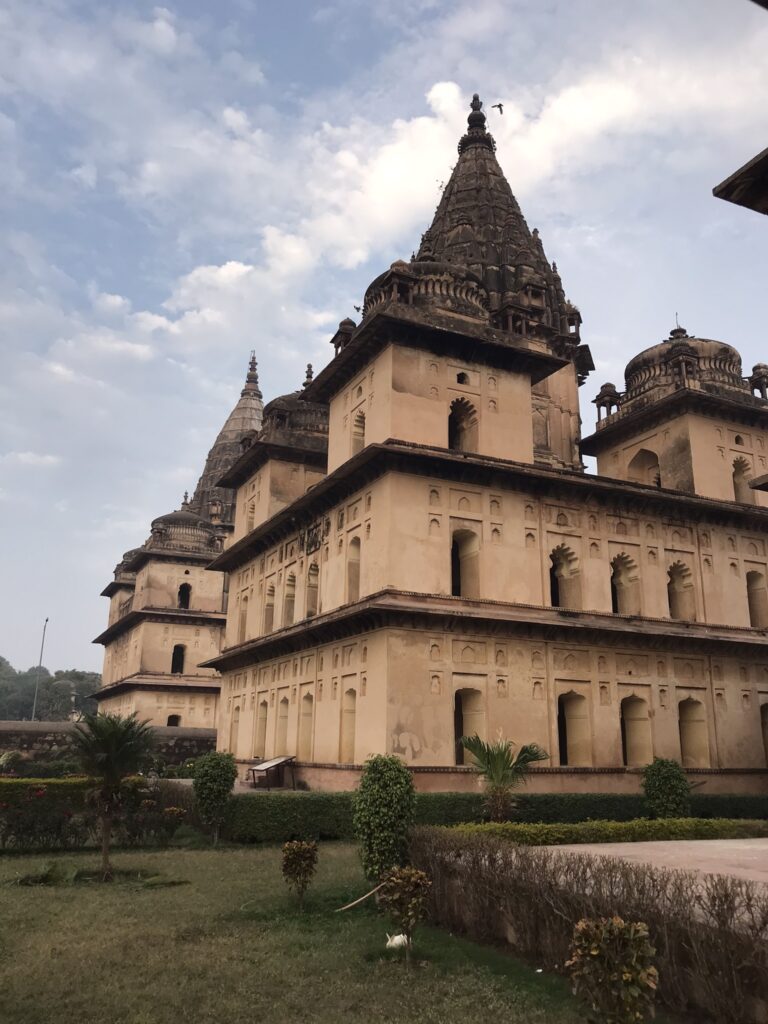
Don’t miss the white bunnies in the Chhatri gardens!
Laxmi Narayan Temple – it seemed more like a historical attraction than a working temple – we didn’t have to take our shoes off to go inside. Because our combined ticket had expired, we offered to pay a little extra to the guard just for this attraction and he agreed to let us in. Probably not a legit way to access.
While the temple architecture is impressive, what stood out to us were the abundant painted walls and ceilings inside which included depictions of mythological demons and even some caricatures of British soldiers drinking wine. As with many of the other attractions in Orchha, you can climb to the top of the tower here for a great view.
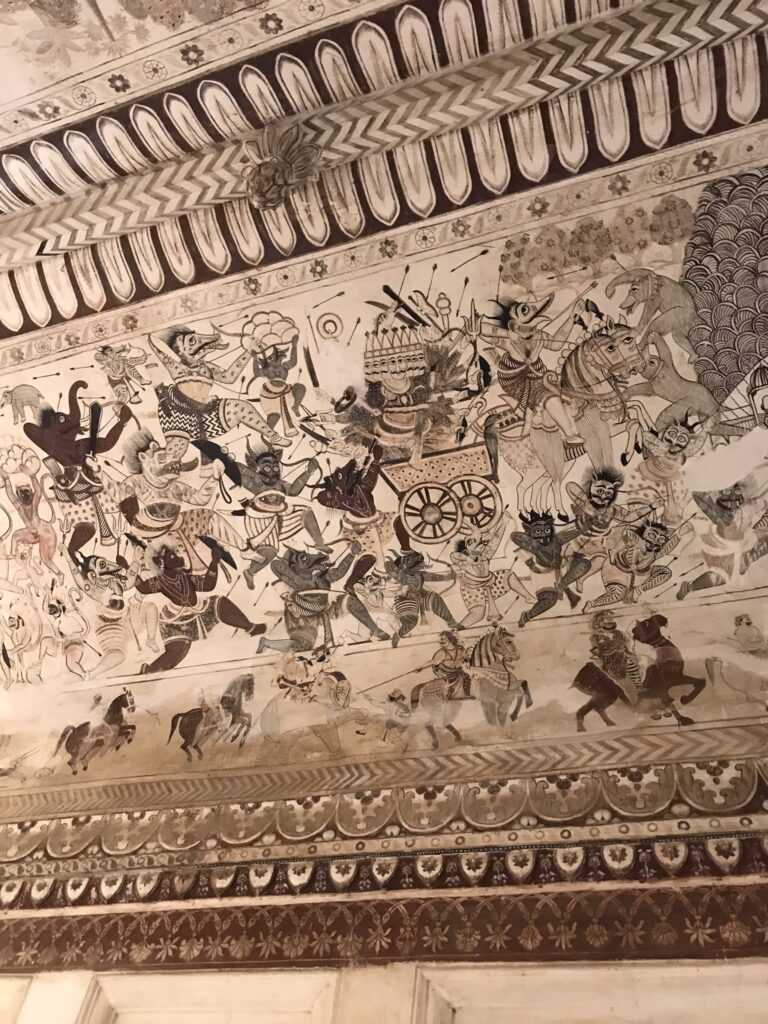
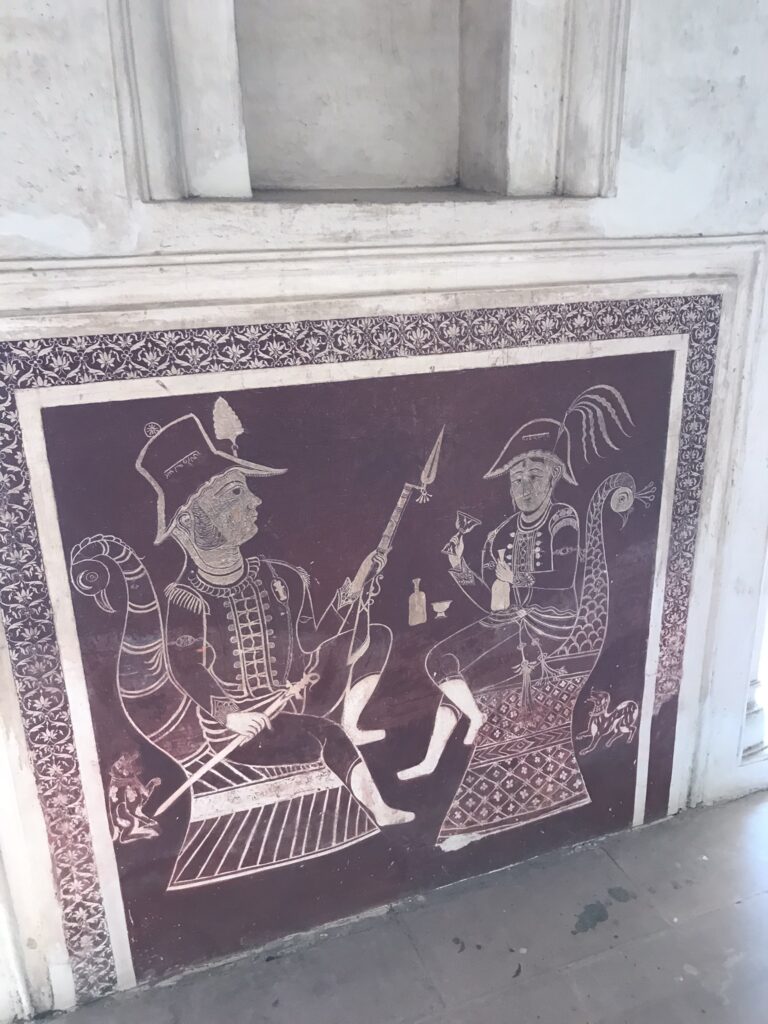
The cartoony wall art in the Laxmi Temple is extensive – look out for the comical depictions of British colonial officers
Orchha Wildlife Sanctuary – this nature reserve is a great place to get away from the general noise and chaos that is so prevalent in the north of India. This was the first truly quiet place we had been in weeks. The reserve is well maintained with easy-to-follow trails and minimal litter.
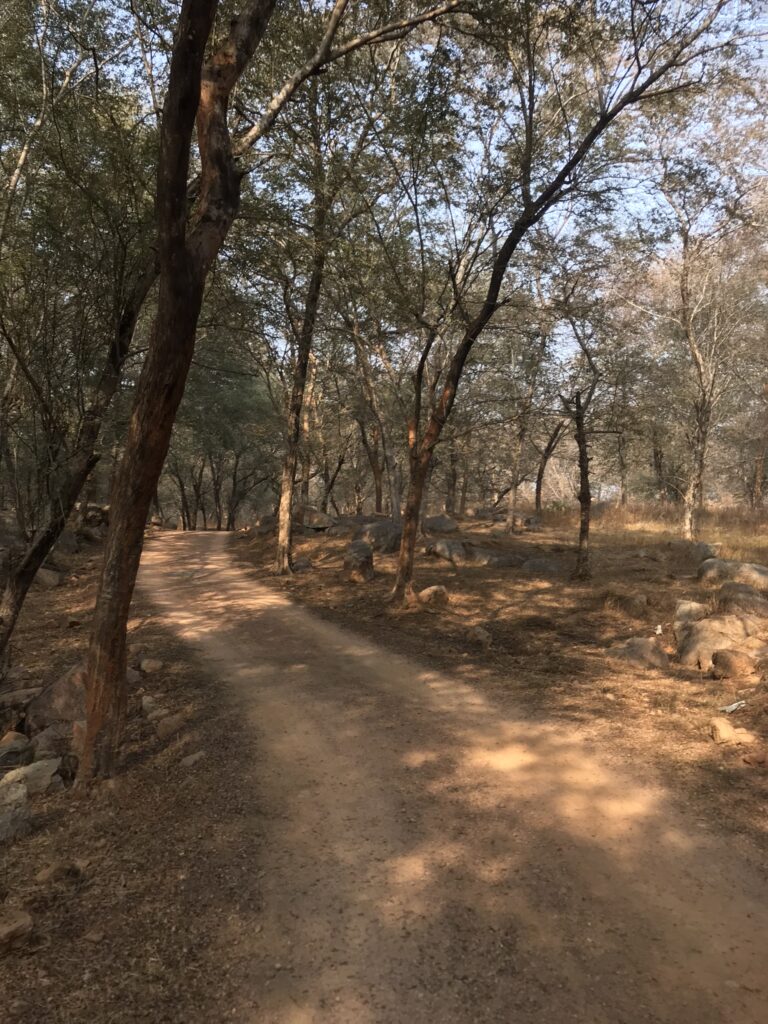
Inside the Orchha Wildlife Sanctuary
Getting to the nature reserve involves crossing the bridge over the Betwa River to the south of town. There is a footbridge next to the main vehicle bridge. While crossing the bridge, you can get a pretty good view of the Chhatri complex across the water.
The reserve spans both sides of the road – the east side is the largest and contains most of the nature trails. We didn’t see much wildlife outside of a few monkeys and peacocks, but it was nice to walk through the nature to find the banks of the river.
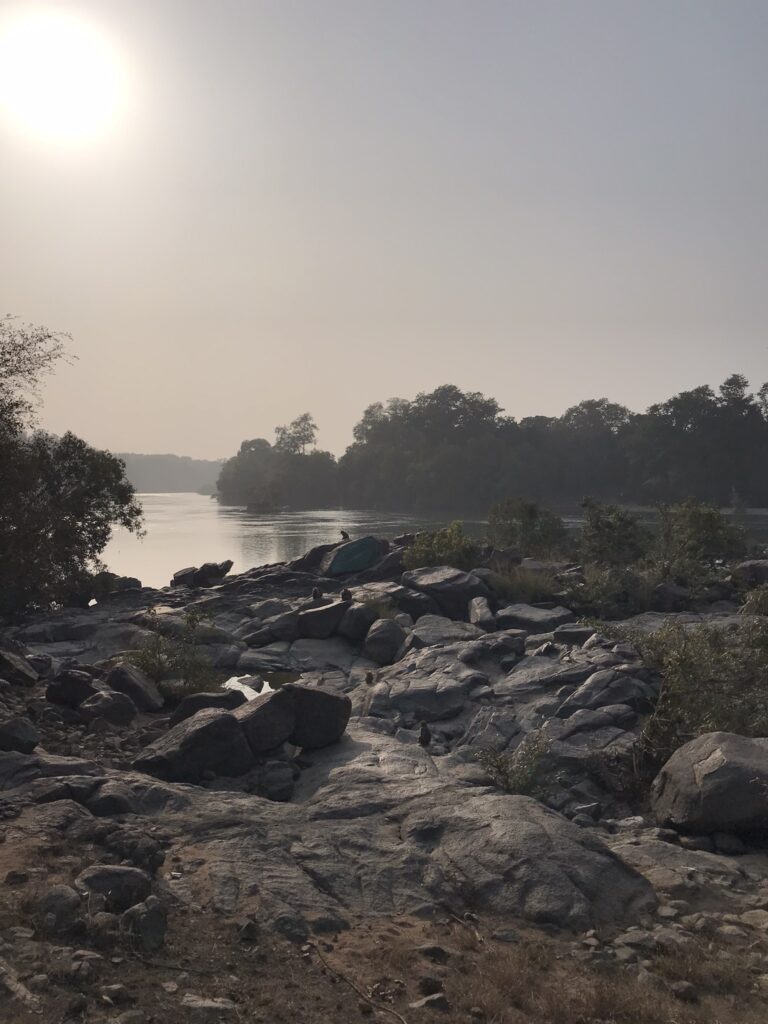
Just the monkeys for company
A focal point of the eastern side of the reserve is the confluence of the Betwa and Jamuni rivers at the northeastern tip of the reserve island. Most locals seemed to enter the reserve in a car or on a moped and drive straight through to this point – we sometimes had to jump out of the way of passing cars or bikes. We saw monkeys stealing water from the saddle bags of a parked moped at the confluence point.
The western area of the reserve, along the banks of the river, is open later than the east. It provides some great views of the Chhatris across the water and is a great place for sunset, although the trail on the west side is less well marked and a little more difficult to follow.
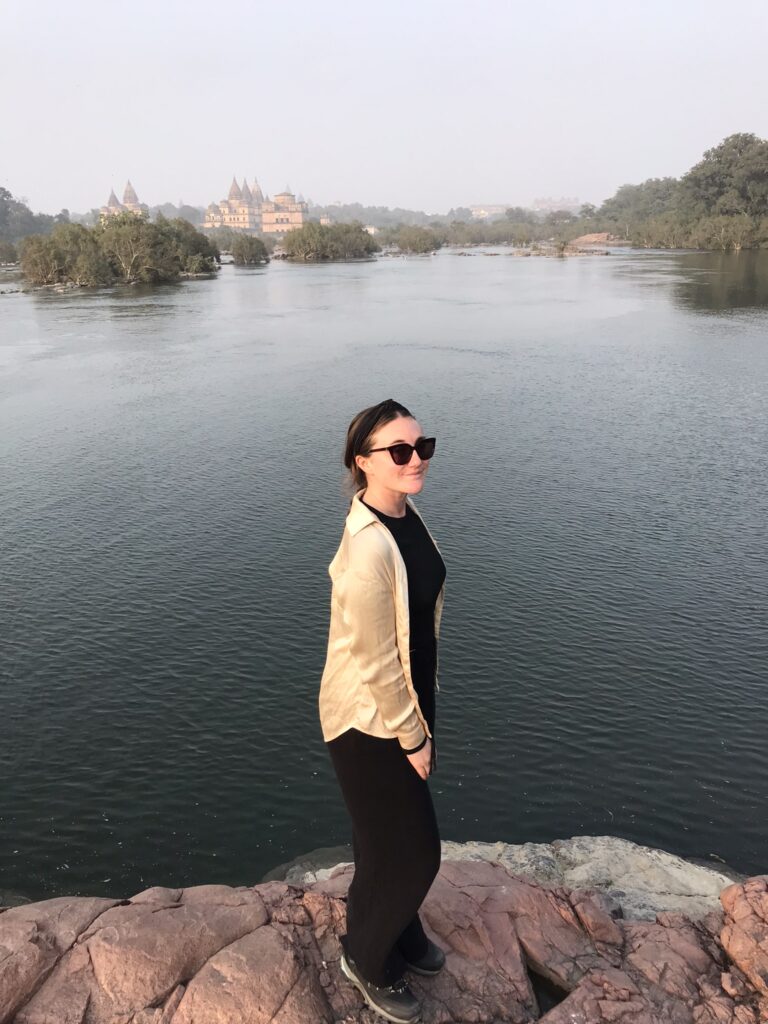
Chhatris across the Betwa
To enter the reserve on foot cost only 30 rupees – much cheaper than with a motorbike or car. If entering on foot, make sure you leave enough time to complete the trail. We cut it close and were worried about getting locked in.
Ram Raja temple – there is apparently an impressive evening puja ceremony here but we struggled to get a straight answer on the correct time to see this. We were told several different times by different people and by the time we arrived it seemed to already be over. We just hung out inside the temple for a while – there were still people around, ceremonies going on and it was a pretty relaxed place.
During the day there are lots of hustlers outside the temple area trying to make a quick buck, including children who can unfortunately be very persistent. We saw a group of older white tourists on a guided tour being absolutely hounded here. Simple things like having your face painted or shoes guarded come with a fee even if you don’t consent to it, so don’t agree to anything at all from anyone who approaches if you don’t want to pay.
Khajuraho
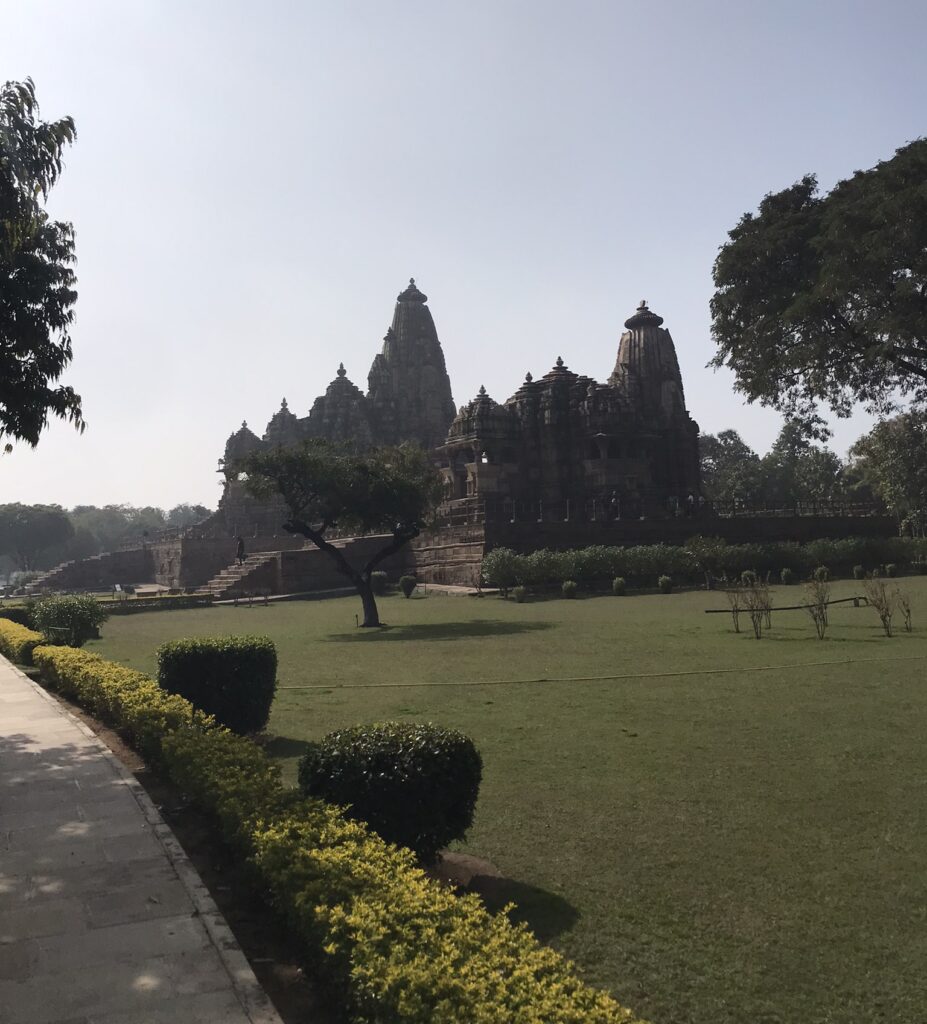
A small, rural town of just over 20,000 people in the middle of the Madhya Pradesh countryside, Khajuraho is renowned for its extensive array of Hindu and Jain temples, which date to around the 10th-11th century and the local Chandela dynasty. What makes these temples stand out is not only their intricate detail and levels of preservation, but also the fact that they are covered in semi-lewd erotic carvings. The temples are listed as a UNESCO World Heritage Site and considered to be one of India’s premier tourist attractions. The modern town of Khajuraho has developed around the temples.
The main UNESCO complex with most of the large erotic temples is an enclosed area with paid admission, fenced off and well maintained, but this is only a small portion of the wider array of temples in the region. There are many other smaller temples of the same style and design within the town of Khajuraho and the surrounding area that can be visited for free (although not all of them have the famous erotic carvings).
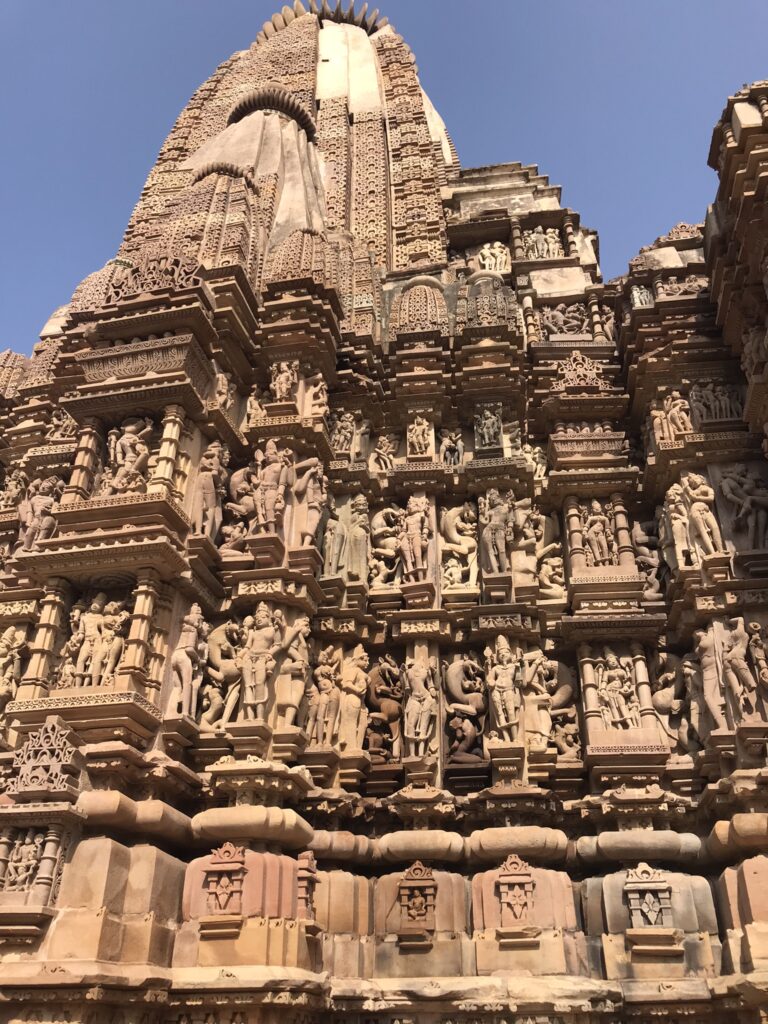
The temple carvings are exceptionally intricate
As well as the temples, Khajuraho is a good base to visit the surrounding natural landscapes. There are no major cities around – the town is in the midst of an area filled with tribal villages and rural landscapes, valleys, hills and waterfalls. Nearby Panna National Park is a popular spot for tiger safaris.
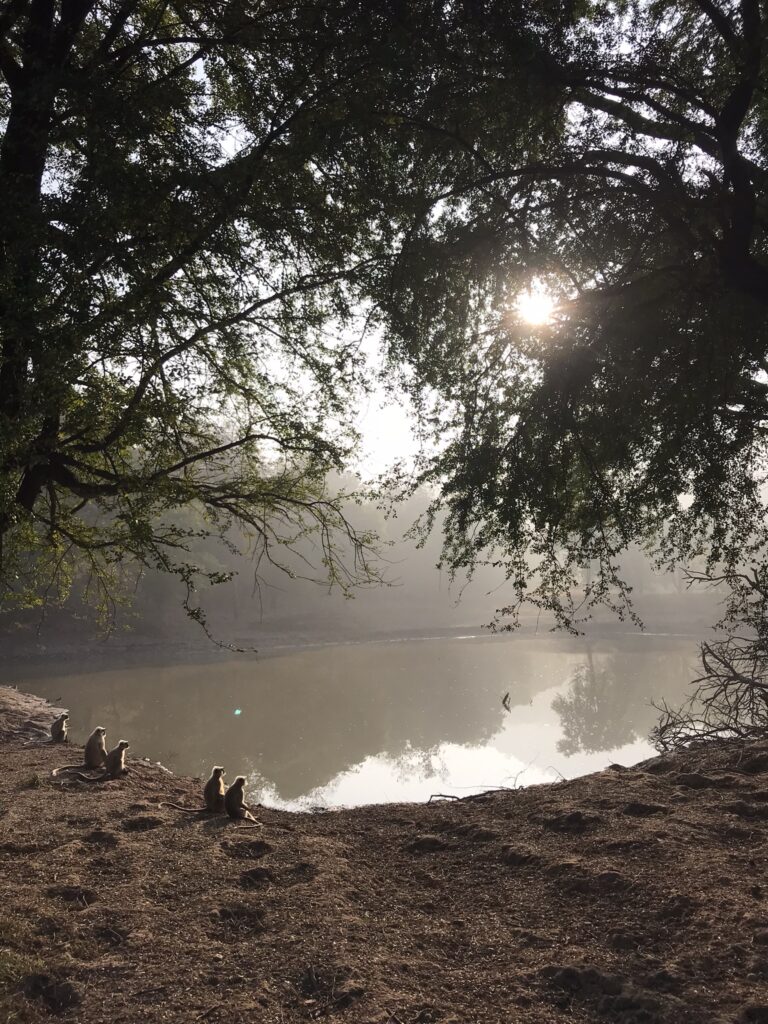
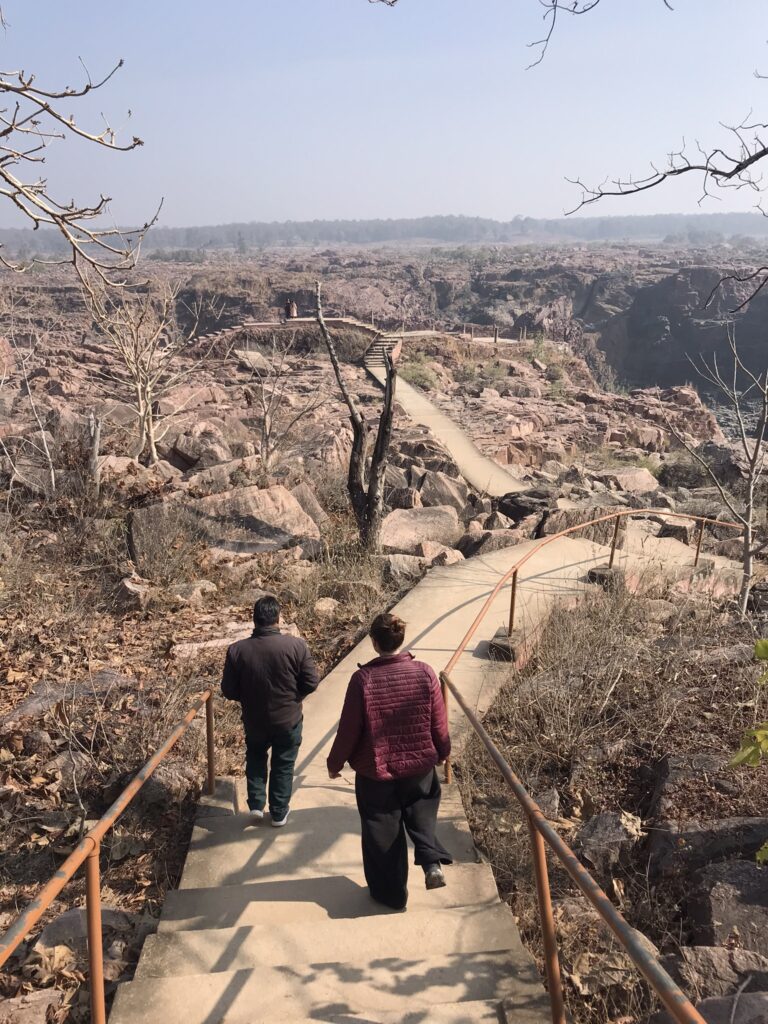
Panna National Park and Raneh Waterfall are two of the popular natural sites that can be easily accessed from Khajuraho
We enjoyed the laid-back nature of Khajuraho – it was one of the less chaotic places we visited in India, with wide streets which were easily able to accommodate the number of vehicles on the roads (sounds simple but sadly lacking in many Indian towns and cities). The area around the main UNESCO temple site contains a number of rip-off restaurants and plenty of touts who immediately pounce on anyone leaving the temple complex. However, away from that area we found that Khajuraho was actually a pretty relaxed place by northern Indian standards. A few local kids approached us to try and practice their English and/or ask for sweets, but we weren’t really hassled at all apart from that.
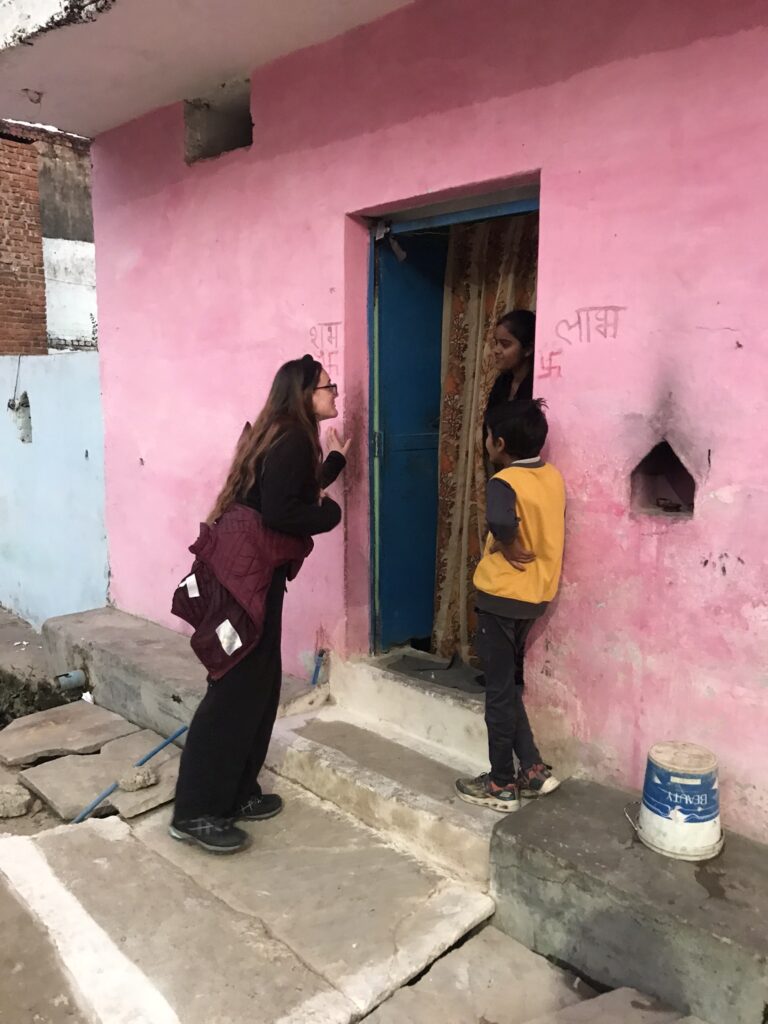
These local kids were eager to show us their house
Khajuarho has a train station which is fairly well connected, but it is quite a long way outside of the actual town so transport is required – our hostel arranged a tuktuk to pick us up. This driver was actually really helpful and ended up taking us to most of the major sites outside of the town via our hostel, a real gem. Because of its popularity with tourists and lack of major nearby settlements, there is actually an airport in Khajuraho too so it’s possible to fly in or out.
Most of the main sights in the town are walkable, but there are plenty of attractions outside the town limits that can only really be accessed via tuktuk. We were really interested to just drive through the landscapes and see the rural way of life on the way to and from some of these sites.
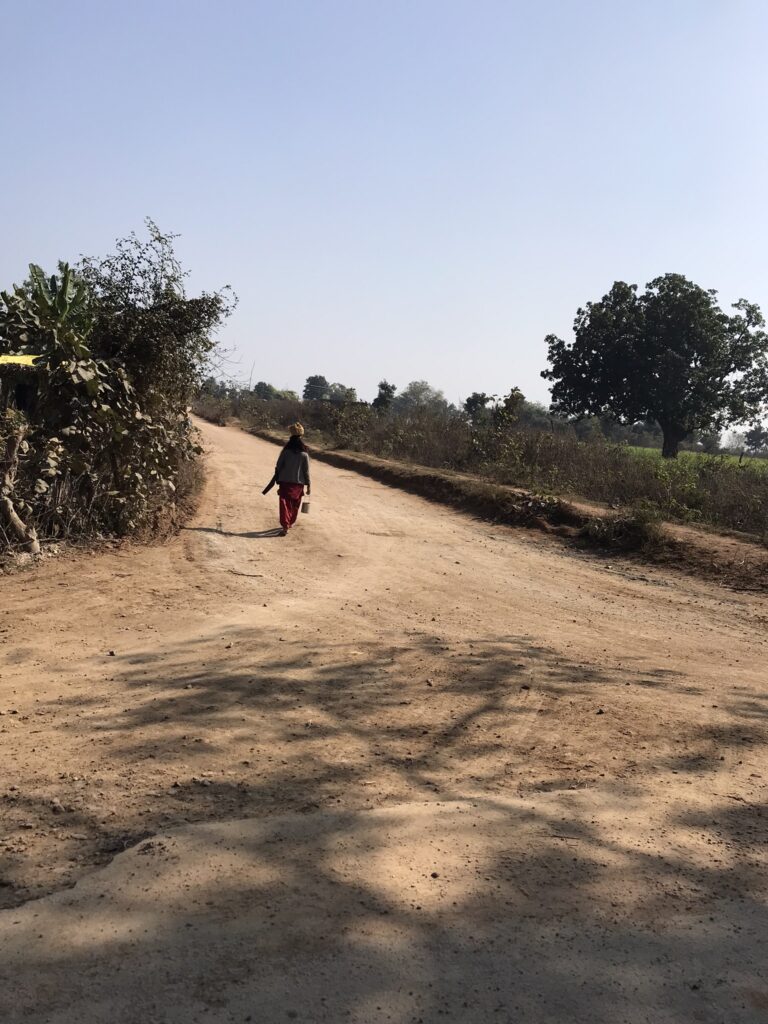
Witnessing authentic rural life while passing through the tribal villages surrounding Khajuraho was a personal highlight
Accommodation
Moustache – a franchise hostel chain which can be found in many cities throughout India, this was our one and only experience staying at a Moustache and to be honest it was pleasant enough. The owner was helpful and arranged the Panna tiger safari for us, as well as transport to and from the train station. The tuktuk driver provided by Moustache was the real star of the show; an honest, amiable character.
Foodie Places
Raja Cafe – a tourist restaurant next to the temple complex which provides Western as well as Indian food options. Honest staff, decent food and the prices are fair enough considering the proliferation of tourists. The terrace dining area has views across to the temple complex; we saw a little bit of the sound and light show in the evening from here.
The Brown Poles Restaurant – a local restaurant away from the main tourist strip, there were seemingly very few customers and the staff seemed surprised to see anybody that walked in. I’m not sure why it was so quiet as we really enjoyed the food and the price/quality ratio was the best we found in town. The restaurant is located above some sort of gym/shrine which was blasting deafeningly loud dance music at one point, making it difficult to hear anything inside the restaurant. Luckily this wasn’t happening the second time we visited.
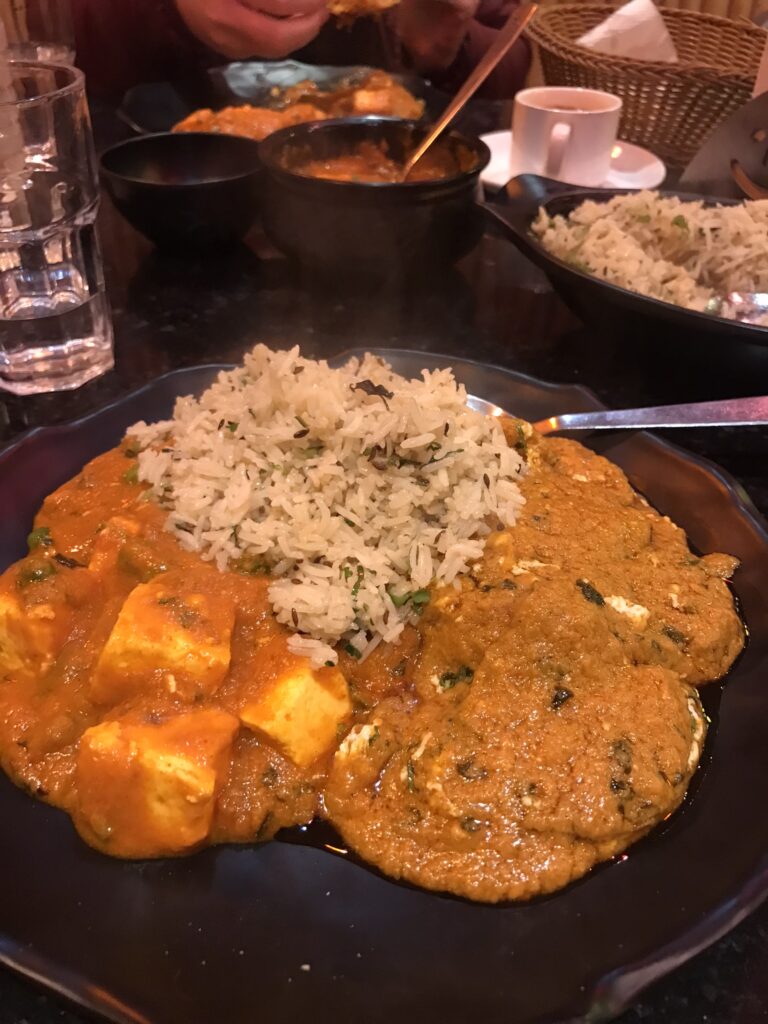
A paneer feast at Brown Poles
Activities
Khajuraho Western Temples Complex – Khajuraho’s main temple complex containing the largest and most impressive temples, along with most of the erotic carvings. This UNESCO-funded area is fenced off and spotlessly maintained compared to the area outside. Entry is paid and the site is accessed via a gate located here, at the far side of a water tank. At the time of our visit it was not possible to pay for admission with cash, only via digital bookings which could either be made online beforehand or on the spot using a QR code. In the evenings this temple complex hosts a touristy sound and light show, we didn’t attend this and by all accounts we didn’t miss much.
The temples are covered in intricate carvings. Look closer and you’ll start to spot the erotic imagery which is enough to make a prude blush. There are carvings depicting orgies, various sexual positions and even bestiality. We were quite interested to see how sexuality was so brazenly depicted in Hinduism, especially in comparison to other religions which often promote chastity. Deities, dancing girls, processions and musicians are also featured on the temple façades.
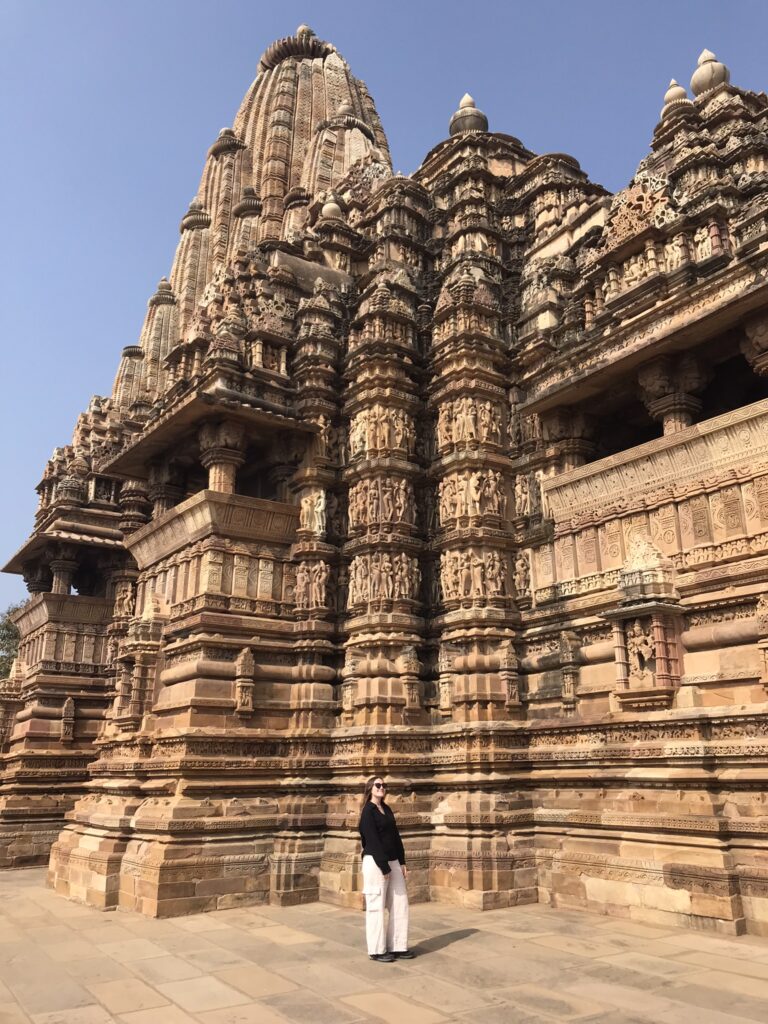
The level of detail is mind-boggling
There are numerous temples of various sizes to explore and it takes a couple of hours to get around them all. As well as the scale and quality of the carvings, we really appreciated the laid-back and well-maintained surroundings inside the enclosure. We weren’t hassled at all here, it was a quiet and peaceful place to relax.
You can enter most of the temples in the complex and the inner sanctums contain yet more intricate carvings. It is required to remove shoes to enter the temples – in one temple we saw a dead bird on the dark floor behind the shrine so watch your step!
Touts know exactly where the exit from the temple complex is, prepare to be swarmed with hasslers as you leave the site. As well as the historical temples, there is also a working temple (Mantagheswar Temple) located directly next to the complex and visible from the Lakshmana Temple. This is free to visit, although it is most definitely a working temple for the local people rather than a tourist attraction.
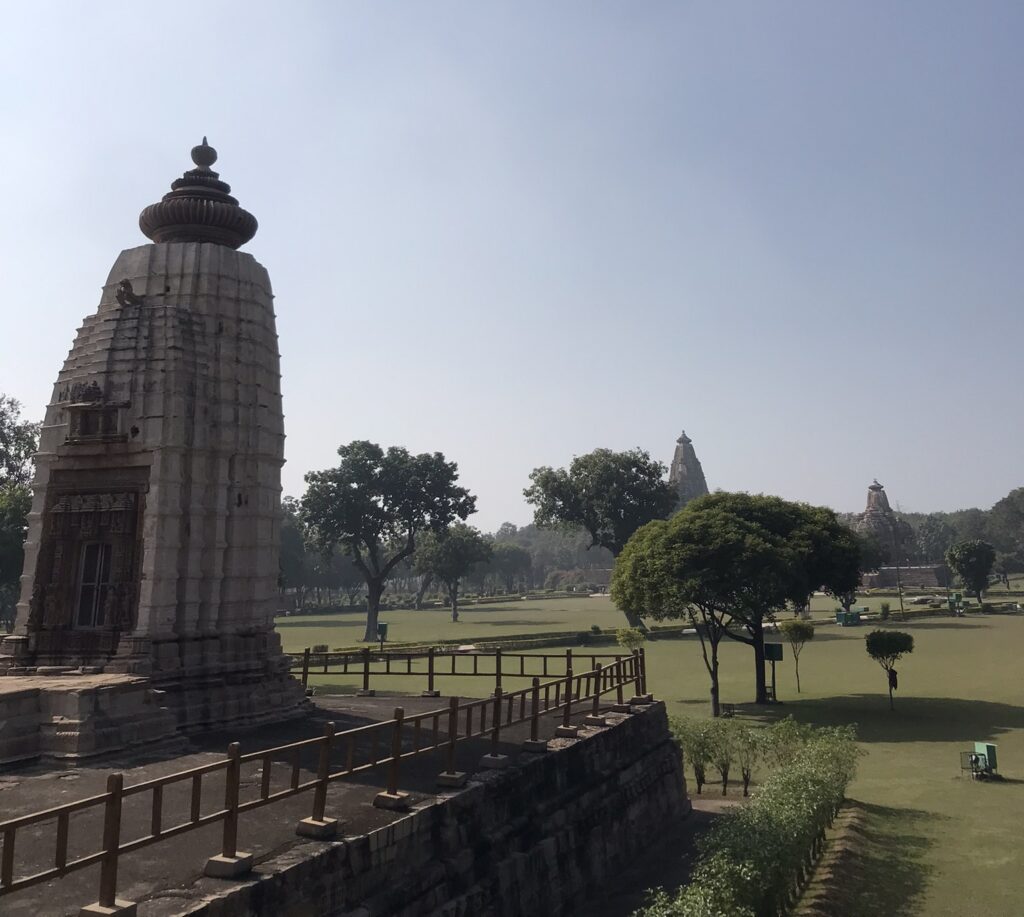
The enclosed temple complex makes for a serene and pleasant environment
Archaeological Museum – a typical north Indian archaeological museum filled with ancient Hindu sculptures. Within walking distance of the Western Temple Complex, the museum was really quiet with few other visitors when we were there. It isn’t huge and doesn’t require a long time to get around it all.
Aardivat Tribal Museum – a great place to learn about the indigenous communities of Madhya Pradesh. Within the museum grounds is a mock cultural village showing typical houses of various local tribes. You can enter the houses and look at typical utensils and objects used by the tribal peoples, which makes the experience much more vivid. The complex also contains a small outdoor section with sculptures focusing on religion and traditional beliefs as well as a pretty good cultural/art museum.
The information plaques in the museum complex tend to be a little overcomplicated and wordy but you can usually get the gist even without prior knowledge. Some of the artwork in the museum was created using a dot technique, which reminded us of indigenous art that we have seen in some other countries.
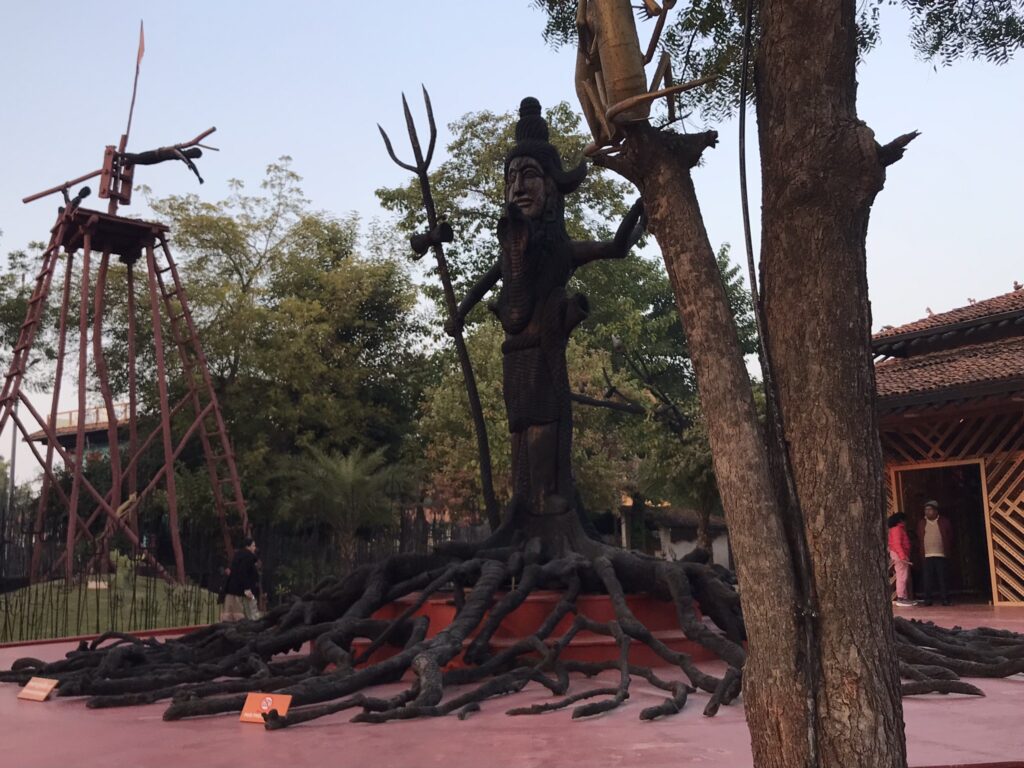
Some of the sculptures look a little creepy and bizarre but there is a deeper meaning behind them
The complex is a celebration of tribal life and culture through art and architecture. We learned a lot about the many local tribal groups that we previously had no idea about. Annoyingly, there is an extra charge to take photos inside the museum complex, even with a phone. I’m not sure why this rule is enforced so strictly in this particular museum.
Panna Tiger Reserve – we arranged our visit through our hostel, which included transport to and from the park. This was much cheaper than using any other third party or booking agent. National park bookings can be overly complicated and convoluted in India, so asking at your accommodation is usually the best way.
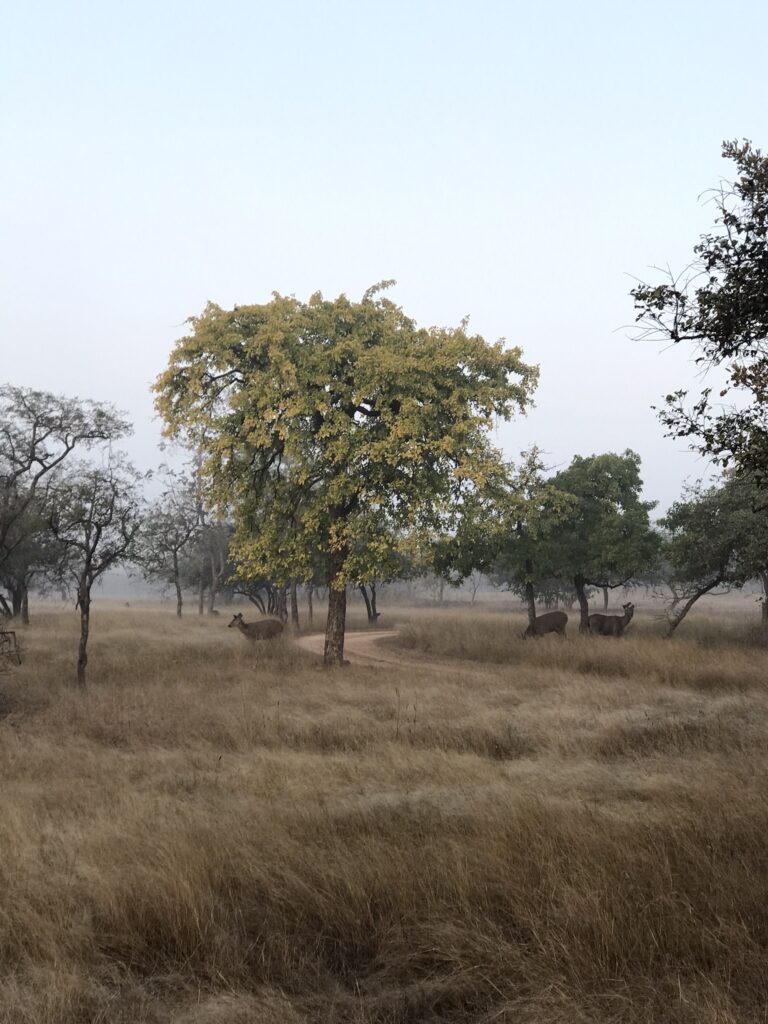
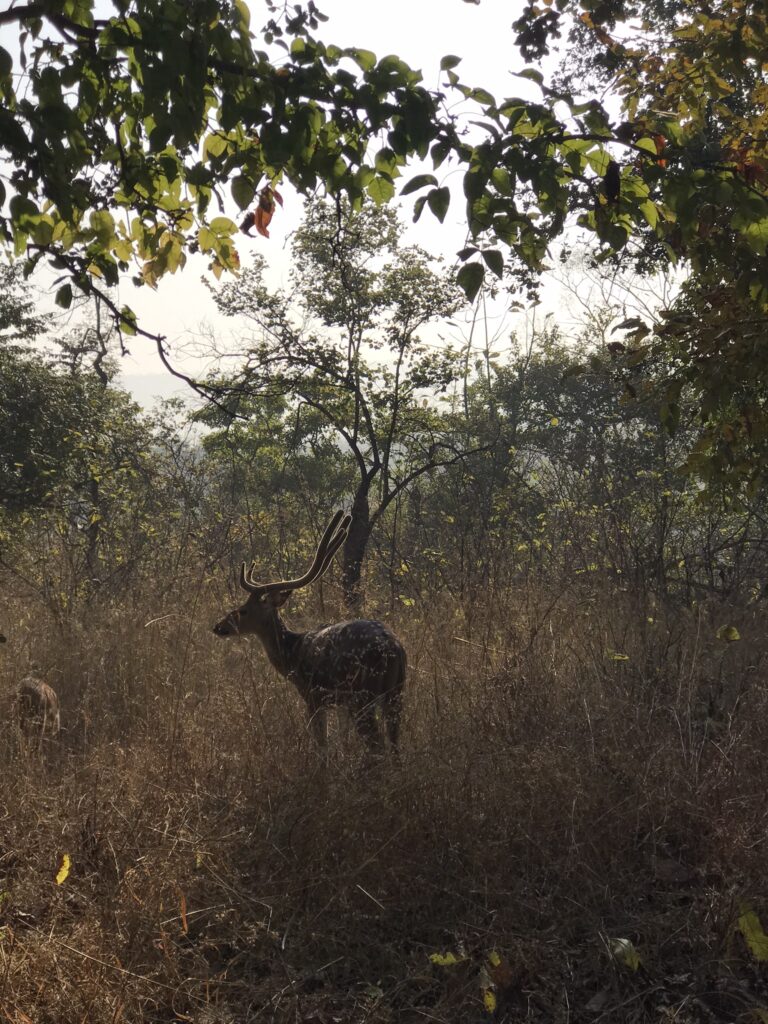
Wildlife and landscapes in Panna National Park
We had a very early start and were absolutely freezing on the tuktuk journey to the park – wrap up warm if you’re visiting in the winter months. I really appreciated the coffee place across the road from the main entrance to the park. There was a fair bit of chaos and confusion around with many local groups descending when we arrived, but the tuktuk driver that had been arranged through our hostel was able to complete the check-in process on our behalf which took away all of the hassle. Make sure to take your passport when visiting the park, it’s a requirement.
As there were only the two of us, we had to wait a while for other visitors to make up a shared jeep. It’s possible to get a private jeep if you want to pay a lot more money and leave straight away. There is a small museum focusing on the local fauna and conservation that we were able to look at while we were waiting. Eventually we were called and our jeep left. There were 6 of us in total in the jeep; the two of us, an Indian family of three and a lone guy from South America. The jeep also included a wildlife guide who seemed to be pretty knowledgeable.
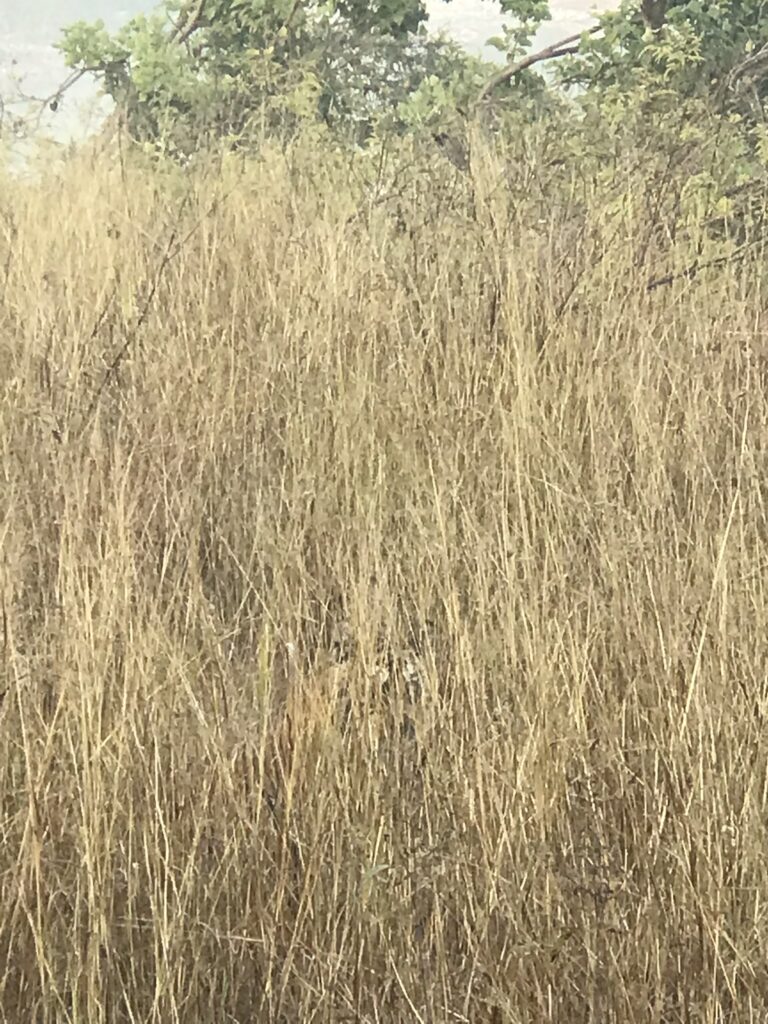
Spot the tiger
Unlike other countries, a safari in India can be a noisy experience as local families can be excitable and often tend to shout and cry out, potentially spooking the wildlife. Despite this, we were able to see a good amount of wildlife including the main attraction, a family of tigers with young cubs. We also saw plenty of deer, including a pair of stags fighting. The wildlife and even the tigers seemed to be quite at ease with the noise of the jeeps. At most points we were part of a convoy of other jeeps jostling for position, it was not exactly a private experience but enjoyable nonetheless.
Strangely the safari took a break halfway through, not something I have ever experienced on any other safari. We were also taken to a small dock with an ‘optional’ speedboat ride to see crocodiles for an extra fee; the boat ride wasn’t really optional as the alternative was just standing around while everyone else took the boat. Thankfully the boat ride wasn’t expensive and we did get to see plenty of crocodiles lazing about, which was an added bonus.
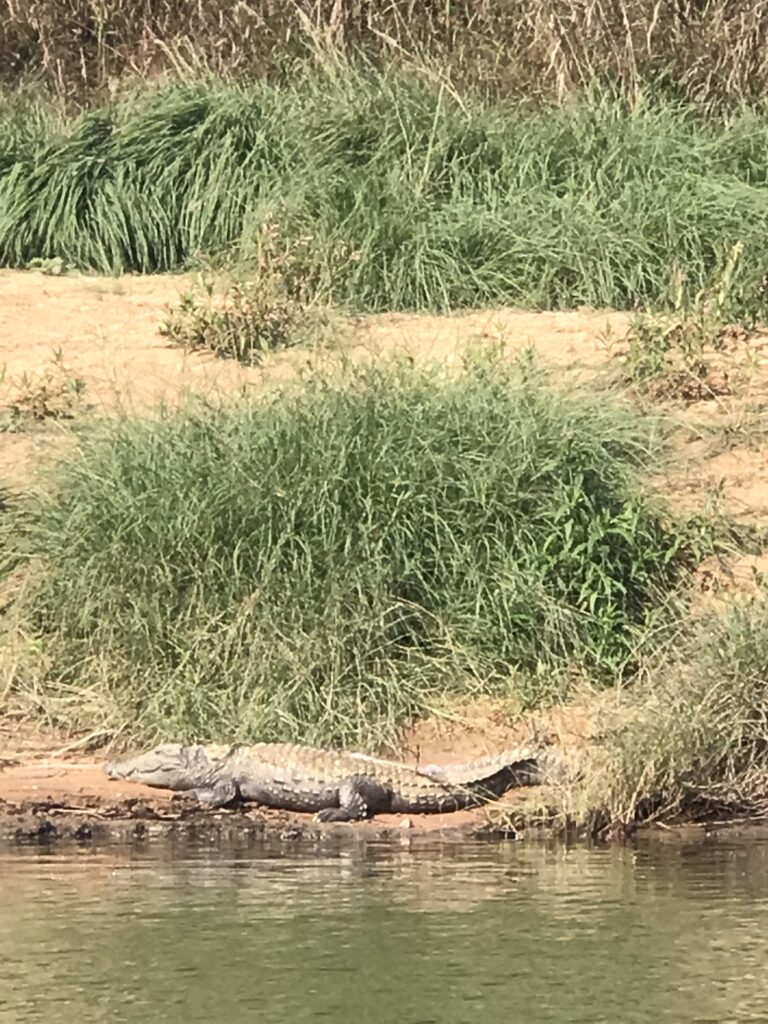
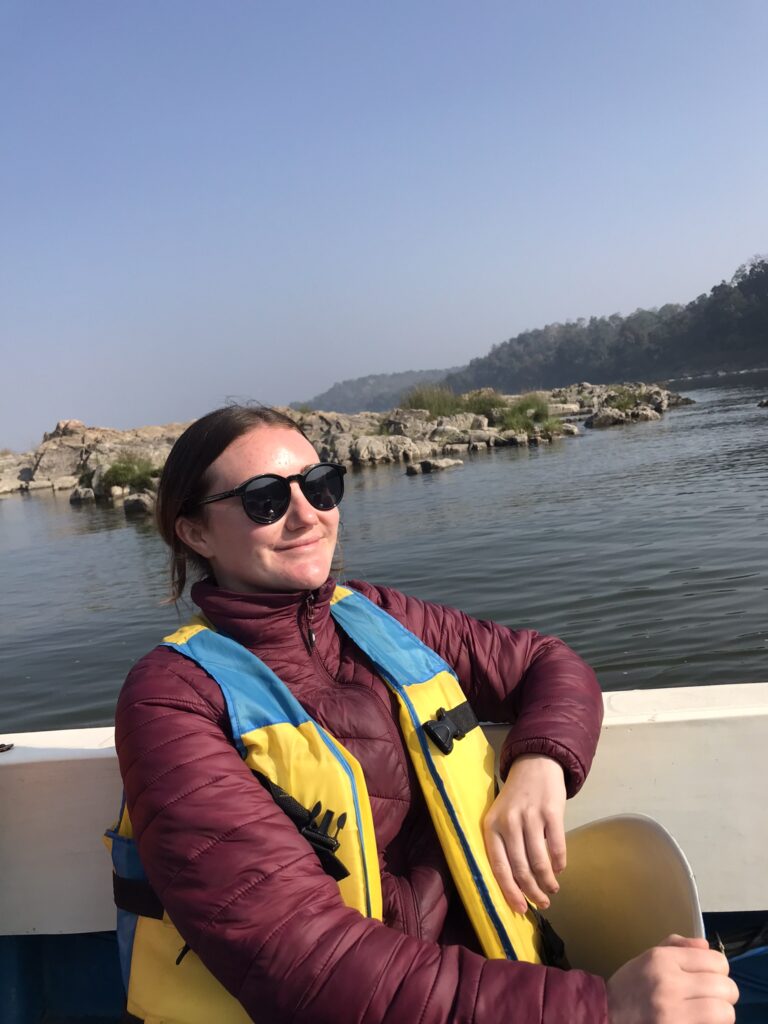
On the ‘optional’ boat ride to spot some crocs
On the way back from the national park, our tuktuk driver took a more rural route through small tribal villages filled with industrious locals and herds of water buffalo – a great way to witness rural life and a real treat after visiting the tribal museum in Khajuraho the previous day.
Adinath Jain Temple – the Jain complex is located on the east side of town, walkable from the main Hindu temple complex. There is a modern main building containing information about Jainism and its customs along with many, many photographs of naked Jain monks. To the rear of the site are a collection of Jain temples with the same intricate carving style as the more famous Hindu temples of Khajuraho, the major differences being that they contain a Tirthankara rather than a Hindu deity and lack the erotic imagery. Some of these Jain temples have been fully renovated and painted white.
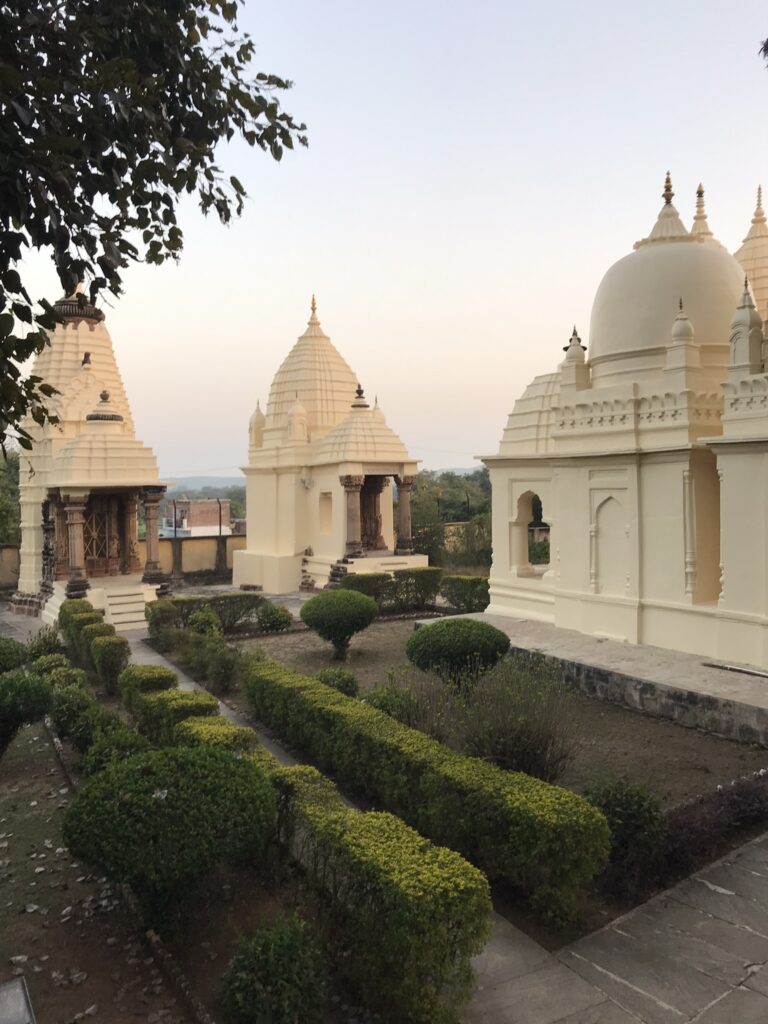
Some of the temples in the Jain complex are whitewashed while others are more reminiscent of the Hindu temples in the area
Chaturbhuj Temple – a small temple in rural surroundings which contains the same intricate style of carvings as those found in the other Khajuraho temples. There was a small group of forlorn-looking hawkers outside the temple who were really desperate for us to buy their trinkets – presumably not many of Khajuraho’s tourists make it this far out.
Ghantai Temple – a small Hindu temple in the vicinity of the Jain complex. This temple seemed to be overrun by local neighbourhood children who wanted us to give them chocolate.
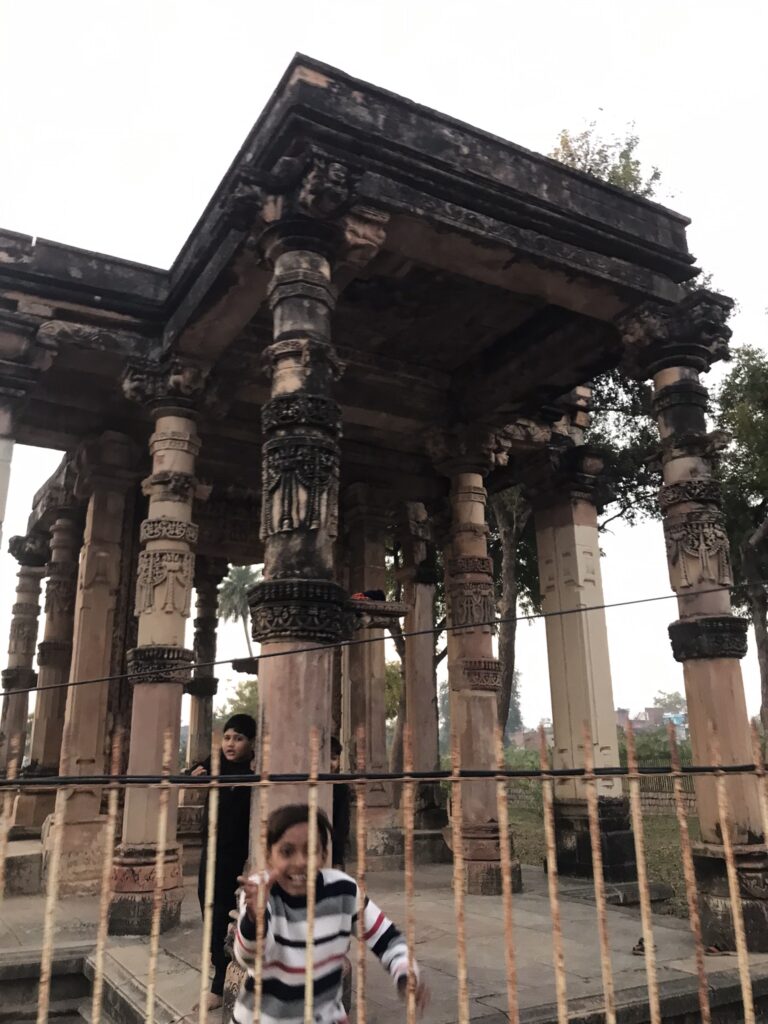
Unruly youngsters at Ghantai Temple
Vamana Temple – yet another temple carved in the typical Khajuraho style. Free to access, this is a small temple area with nothing you can’t find at the other, larger and more impressive temples. Worth visiting if you have time and want to see absolutely everything, but not a must-see.
Raneh Waterfall – located around 40 minutes away from Khajuraho by tuktuk. A very dramatic landscape, the waterfalls are much more spectacular during the rainy season when the water level rises significantly but they were still worth visiting even when dry. A guide is now compulsory to accompany visitors around the short trail following several accidents involving domestic tourists. This could’ve been an annoyance, however the guide was actually a really nice and professional guy who spoke great English, gave us as much information as possible and even doubled as a photographer for us. It’s only a short trail, don’t expect to be there for a long time.
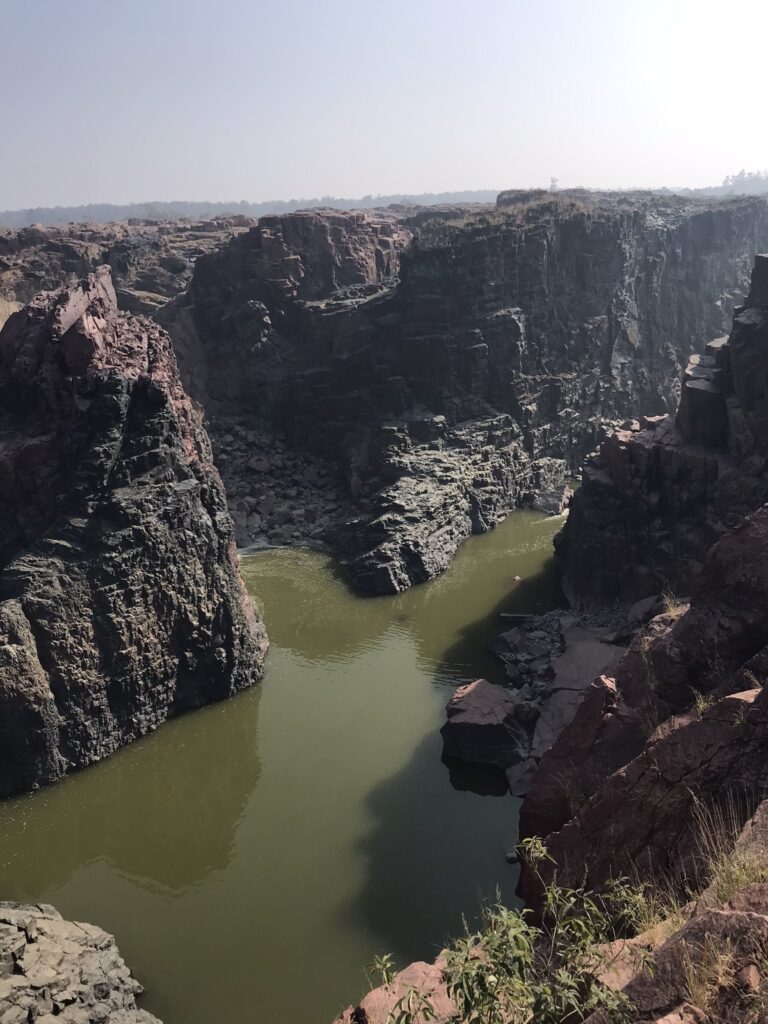
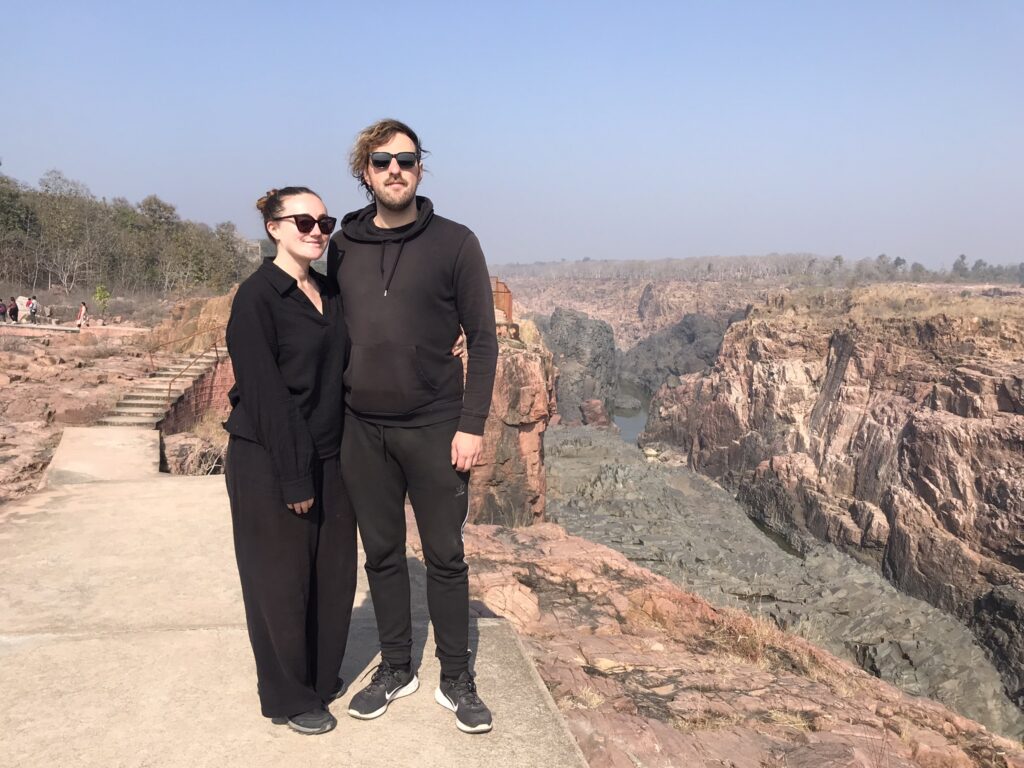
Water levels are low outside of the rainy season but the canyon is still pretty impressive
This waterfall is one of a number of natural attractions in the area, a good place to experience the rural beauty of Madhya Pradesh particularly if you’re all templed-out from Khajuraho.
Bhopal
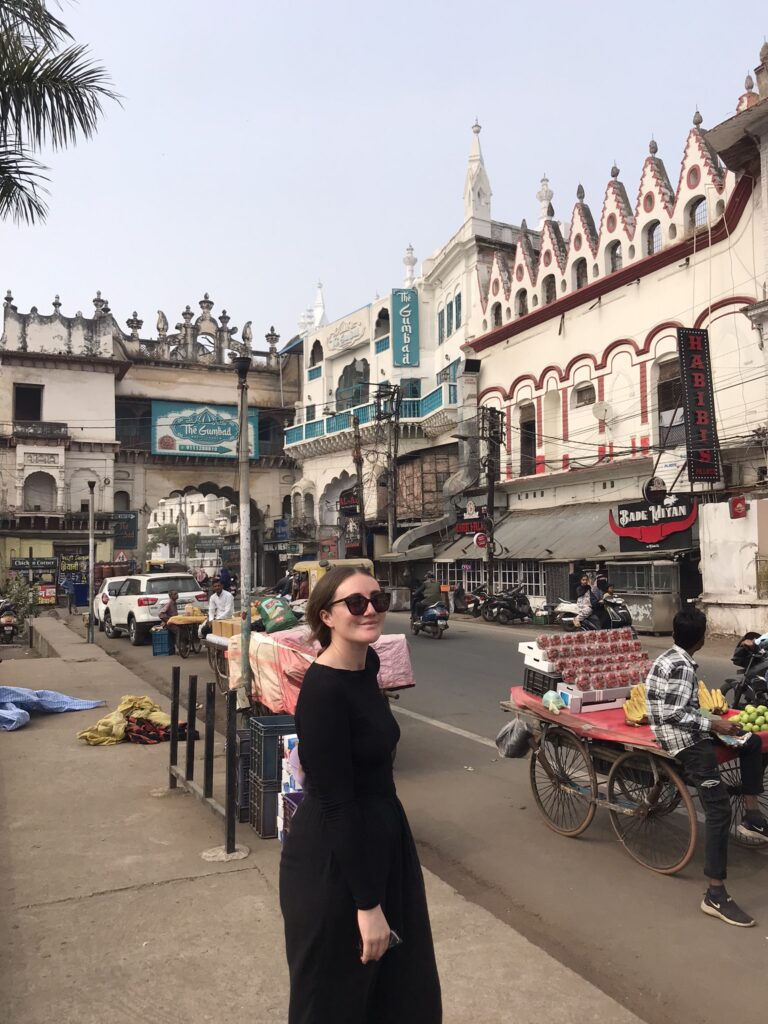
Bhopal is one of the two largest cities in Madhya Pradesh along with Indore – it also happens to be the state capital too. Bhopal is a relatively modern city, having only been founded in the 1700s by a Muslim soldier originating from Afghanistan who first came to the region as part of the Mughal army. The dynastic rule that developed would later become the princely state of Bhopal, ruled by a dynasty of Nawabs as a vassal state of the British.
Interestingly, between 1819 and 1926 Bhopal was ruled by a succession of four female leaders, known as Begums. The city today is filled with dilapidated palaces which are a testament to the royal heritage. The palaces have been left to rot for years; nobody wants to pay the astronomical restoration costs. While a few of the palaces have been somewhat repurposed to hotels, what could be major attractions mostly just stand as eyesores instead. Today Bhopal is mostly known for the gas disaster in the 1980s, when negligent malpractice at a local chemical works caused poisonous gas to be released over parts of the city, causing thousands of deaths.
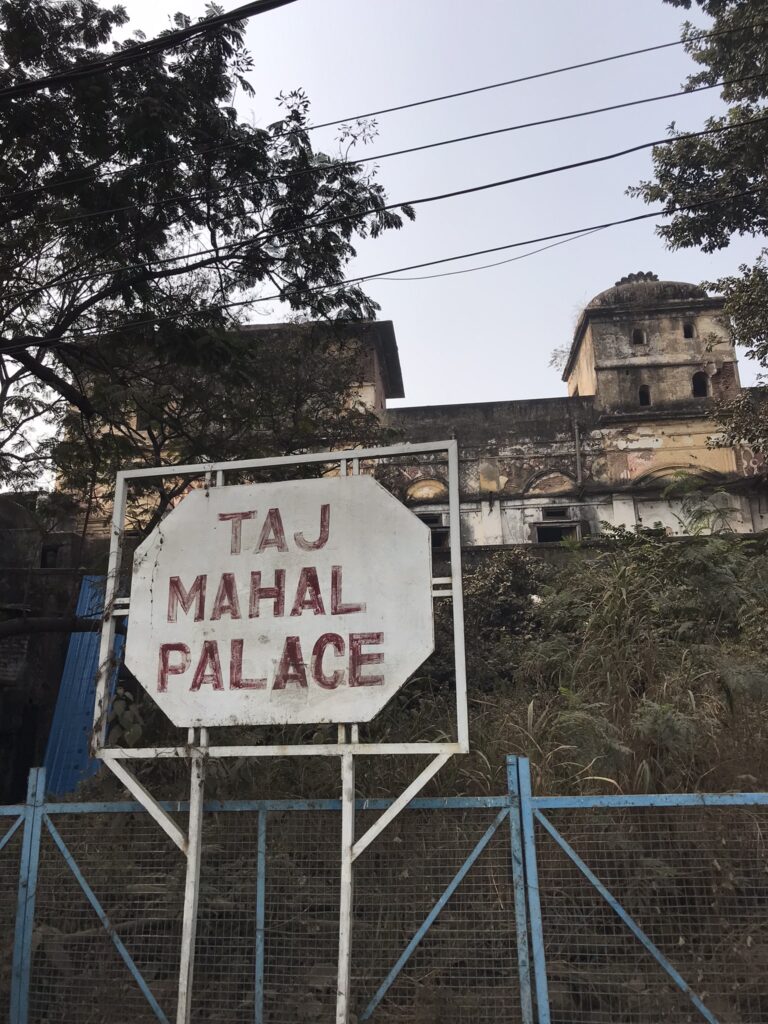
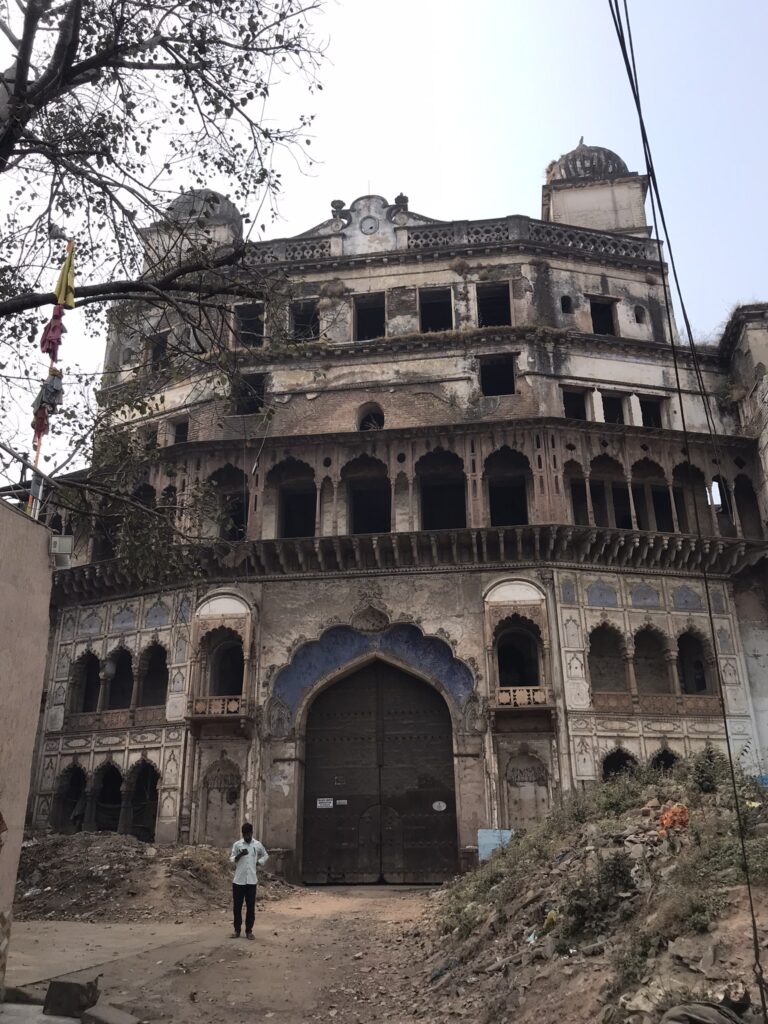
Bhopal’s many palaces have sadly suffered years of neglect
Because of its Muslim heritage, Bhopal is also known for its mosques, particularly the Taj-ul-Masjid which is the largest mosque in India and one of the largest in the world. The city is also a convenient base for a trip to Sanchi stupa – an important Buddhist site nearby which is considered by many to be the prototype for Buddhist stupas and is featured on the Indian currency.
Our visit to Bhopal was definitely an interesting experience, to put it mildly. Bhopal is a city of contrasts. We found the area around Arera Colony to be quite upmarket, with an excellent variety of Western style food, hipster places and some large mansion houses in gated, well-maintained areas. Bhopal was one of the few cities in India where Uber worked perfectly and it was really easy to get around.
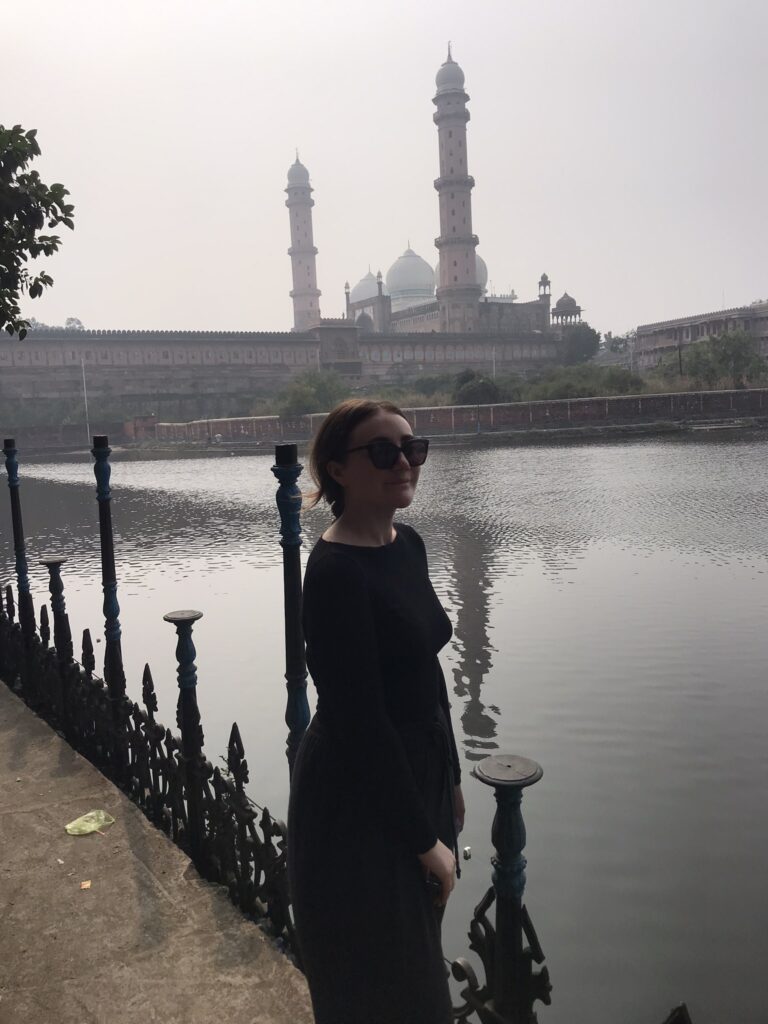
Taj-ul-Masjid is one of the city’s major landmarks
On the other hand, poverty and a lack of development is also really evident. We passed an enormous slum (Hasnat Nagar) on the way to the Tribal Museum. Bhopal is known as a city of lakes and the large Upper Lake is promoted to locals as a tourist attraction, however the lakes are quite polluted and dirty. The many palaces in the city are all privately owned and run down.
Very few foreigners visit Bhopal and we found that the levels of English spoken and understood here were probably the lowest of anywhere we visited in India. Near to the Chowk Bazaar and Nadra Bus Station we were involved in what I can only describe as a human-vehicular traffic jam where we physically couldn’t move for several minutes. This was more intense than anything we encountered elsewhere in the Indian subcontinent, even in notoriously crowded cities like Dhaka in Bangladesh.
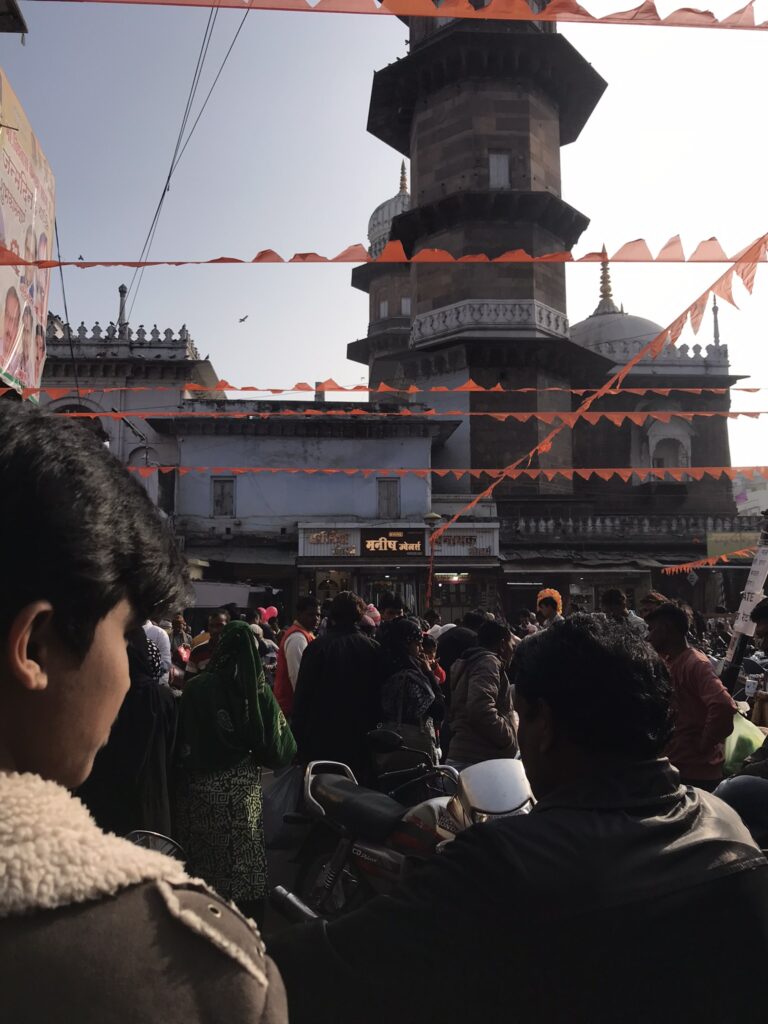
Amidst the chaos
Accommodation
Aaranya – we stayed a few nights here, however I don’t recommend this accommodation for female travelers as we had a negative experience concerning the conduct of the manager.
Giovanni House – close to the train station and the more affluent area of town, with plenty of gated communities and cosmopolitan restaurants around.
Foodie Places
Jaffa Shwarma – an unexpected delight, this takeaway shawarma place has no indoor seating or hand-washing facilities but you can lean against some tables or eat on a nearby bench. We ordered the vegetarian shawarma but were given the chicken anyway – thankfully it was really tasty and (more importantly) didn’t make us sick. The shawarma came with chips and excellent garlic sauce. The stall also sells tasty baklava.
Oliver Bistro – a world-cuisine restaurant famous for serving pasta out of a parmesan wheel, with much flourish from the chef who wheels the cheese over on a platter and heats it with a blowtorch before lovingly tossing the pasta and coating with more parmesan. It’s a bit of a gimmick but some of the best pasta we had in India. There are not many tables, it seemed like quite an exclusive restaurant with a classy and refined ambiance. They even had a valet parking service.
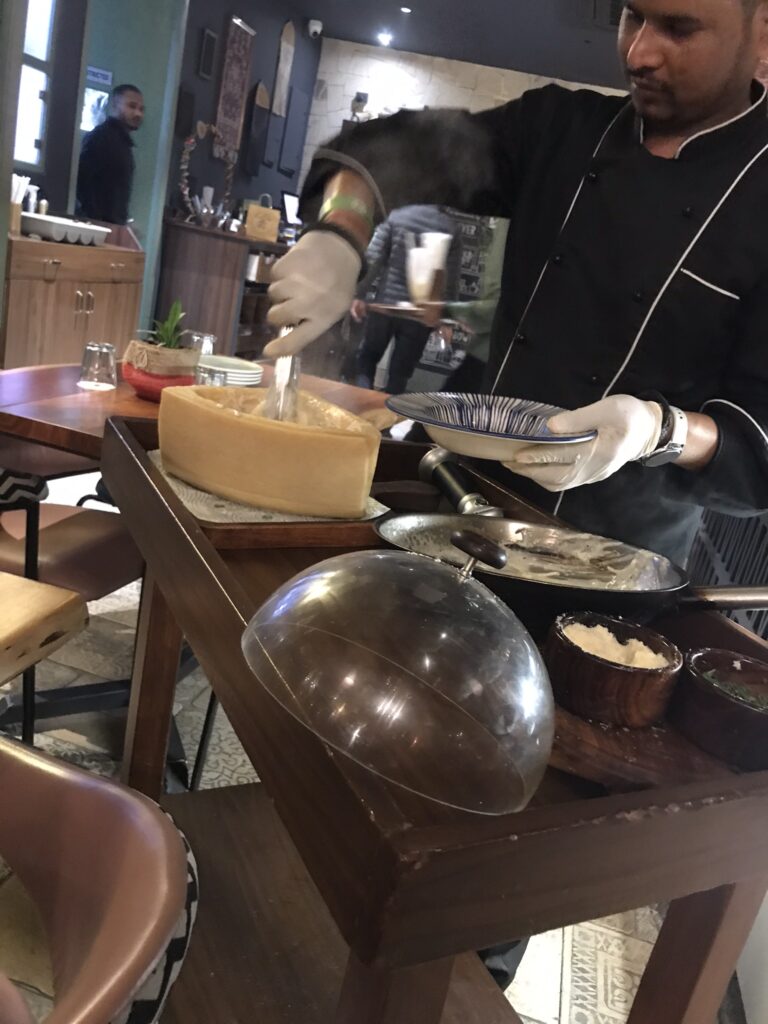
The famous cheese wheel at Oliver’s
Bhopal Bakehouse and Coffee – a modern, trendy coffee shop with nice cakes available and food options including pizza, burger, sandwiches, fresh bread.
Poppin’ Deli – another trendy, hipster-style place with a slightly alternative vibe. The Mexican rice bowl, burrito and mac ‘n’ cheese went down a treat with us. This was some of the best Western food we had in the north of India.

Bafflingly, the variety and quality of non-Indian food in Bhopal was the best we experienced anywhere in northern India
Activities
Golghar Museum – a museum in a circular building which was constructed during the era of the Begums. The museum contains plenty of information and a picture gallery regarding the local dynasty of Nawabs and Begums. It was interesting to see images of the Bhopal palaces in their glory days and compare them with the dilapidated and neglected ruins standing today. This is one of the few places where it is possible to learn about the royal history of the city. I think admission is supposed to be paid, but for some reason we were allowed in for free by the kindly lady at the entrance.
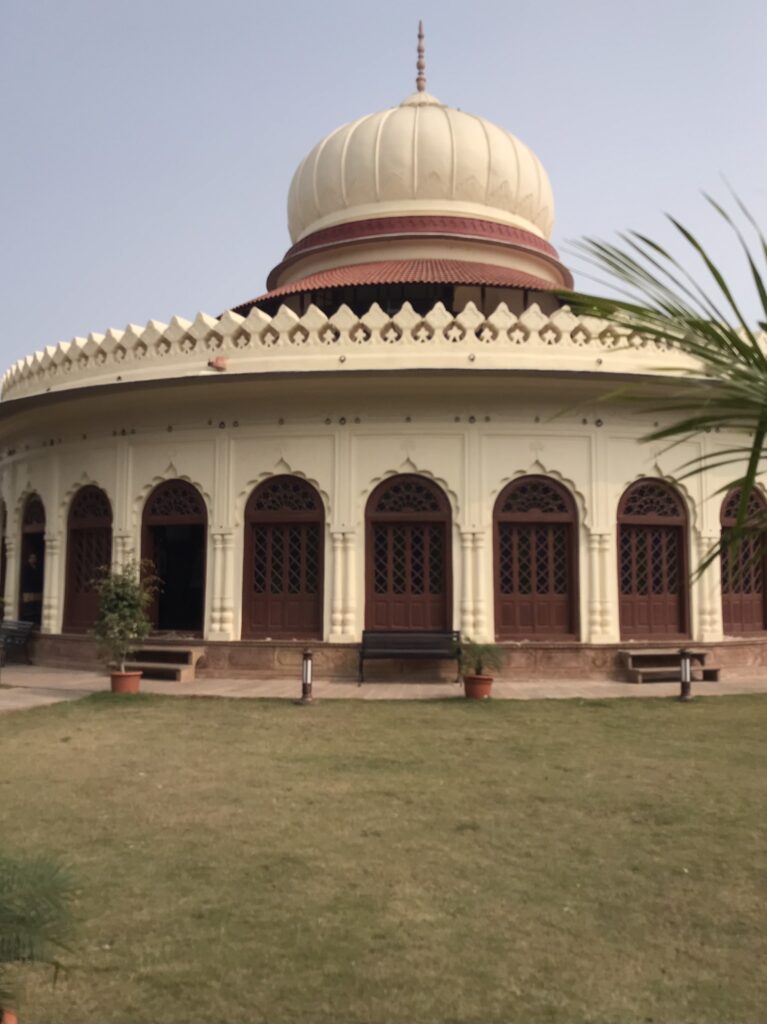
The Golghar Museum – definitely worth a visit if you want to learn about the city’s royal history
State Museum – the museum contains themed rooms relating to different topics and time periods. The rooms follow pretty standard themes such as sculpture, numismatic, calligraphy etc – a pretty typical museum. We were given a leaflet on entry which had translations of the plaques in English, which we appreciated. The museum is a little bit out of the way from the centre of Bhopal – walking there involves passing along a road overlooking an enormous slum, a visual demonstration of the poverty in the area.
After visiting the State Museum we were looking forward to visiting the Tribal Museum next door. However when we arrived at the entrance we found a guard who didn’t understand a word of English. Usually in these situations communication is still possible by pointing and gesturing, but not in this case. We tried several times to ask him where we could buy tickets, even using Google Translate on our phone, but had no luck. The guy didn’t even seem to know the name of the place that he was working. After a while we just gave up and left without visiting the museum.
Taj-ul-Masjid – the grand mosque which is considered to be the largest in India and one of the largest in the world. Built in the 1800s by the local Begum, it is a typical Mughal-inspired mosque complete with a vast courtyard, three bulbous domes and towering minarets in each corner.
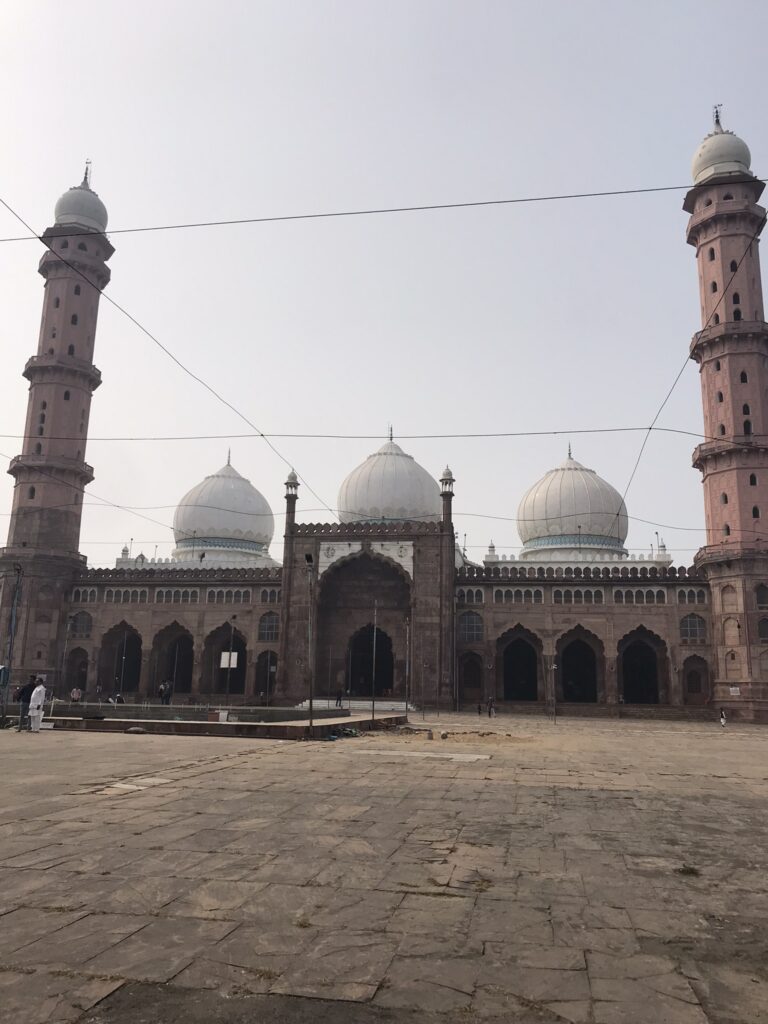
Although it was built after the Mughal period, the Taj-ul-Masjid follows the typical Mughal design
Sanchi day trip
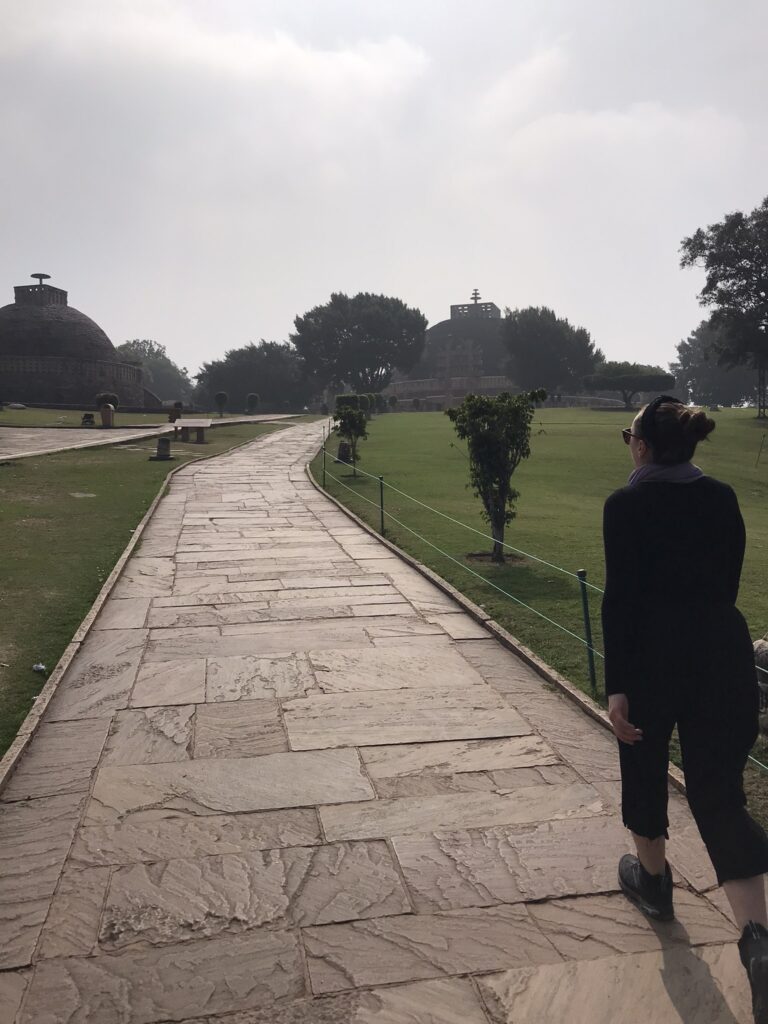
The small town of Sanchi is located around 60 km from Bhopal. Sanchi is known for its famous Buddhist stupa complex, a UNESCO World Heritage Site which is said to have been a prototype for Buddhist stupas.
The stupas at Sanchi were created by Emperor Ashoka in the 3rd century BCE and are among some of the oldest standing structures in India. The Great Stupa is the focal point of the site, surrounded by highly-decorated archways at each cardinal point featuring intricate Buddhist symbols and scenes from the life of the Buddha. Such is its importance that the stupa is depicted on the Indian 200 rupee note. You can walk to the top and circumambulate the Great Stupa. The wider complex also contains an array of other Buddhist stupas and monuments dating back to the time of Ashoka.
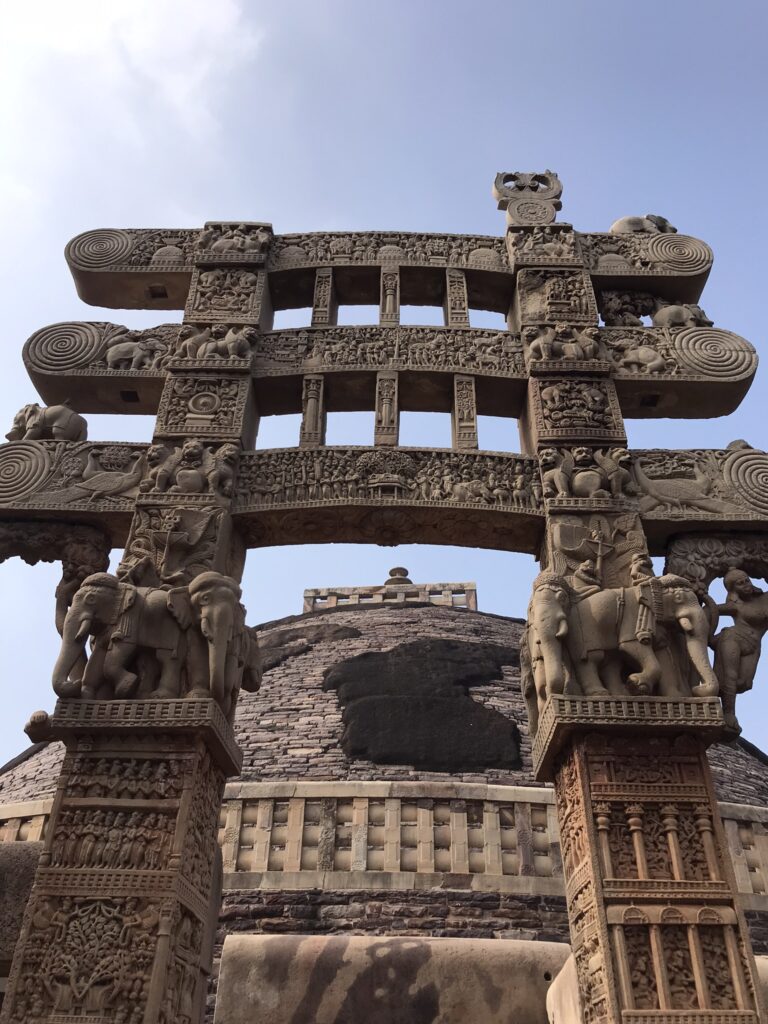
The toranas surrounding the Great Stupa date back to the 1st century BC and are richly carved with scenes from the life of the Buddha
From Bhopal, you can easily get to Sanchi by train from Bhopal Junction station or by bus from the Nadra bus stand. We took the train there and then got the bus back. It’s important to note that the train goes from Bhopal Junction, not the larger Rani Kamalpati station in Bhopal.
The train from Bhopal runs a couple of times a day, it is an unreserved train and when we visited it was crammed full with many people sitting on the floor – a stereotypical Indian train experience. We managed to find seats and the people on the train around us were quite pleasant and friendly. Sanchi train station is very small with no real platforms. When alighting at Sanchi we literally just had to jump down from the train. The bus back to Bhopal picks up from here in Sanchi – just ask some of the locals who are also likely to be waiting, or flag down a passing bus and ask if they are heading to Bhopal.
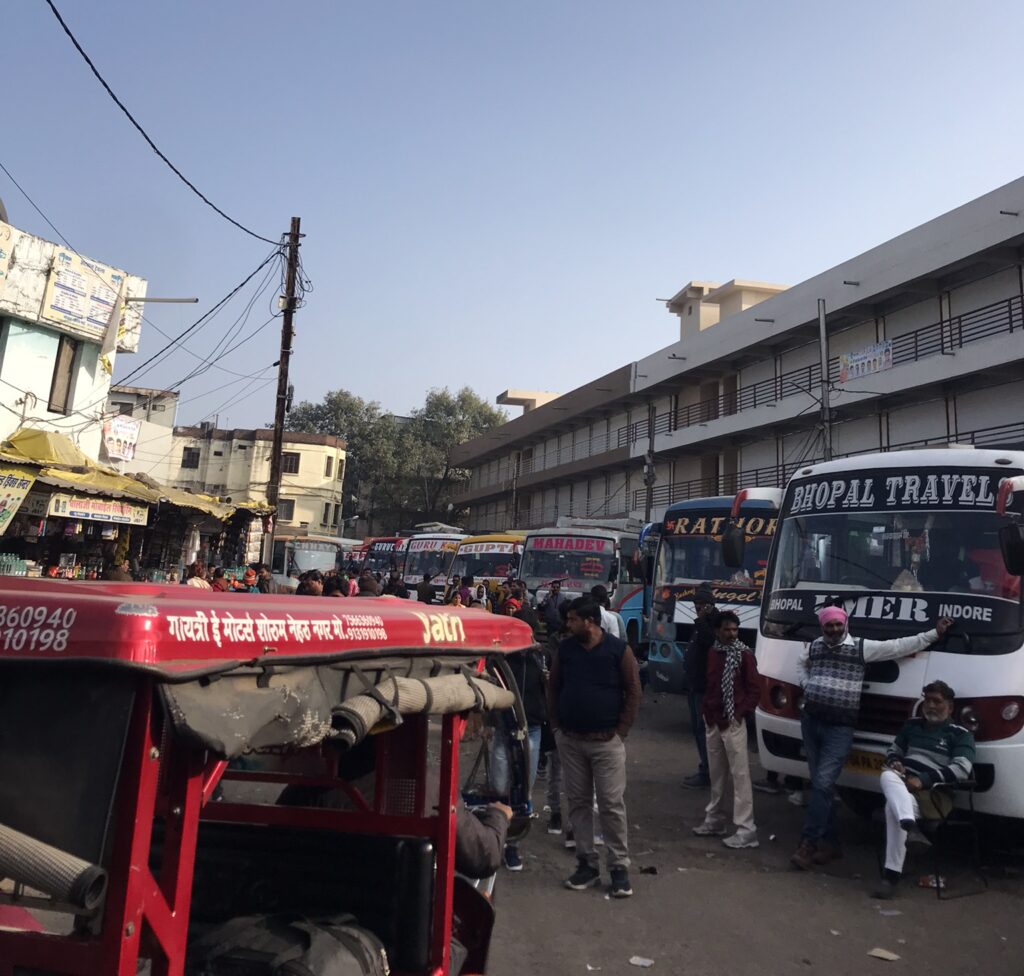
Nadra bus stand in Bhopal – it can be a little hectic so I recommend getting the train to Sanchi and then the bus back
Once arriving at Sanchi it’s only a small walk from the bus and train stops to the area of the stupa complex. There is a small archaeological museum in a colonial-style building at the bottom of the hill next to the ticket booth for the stupas, which houses sculptures and artefacts from the era.
We didn’t make it to Bhimbetka Rock Shelters near Bhopal, but would’ve liked to. Within Madhya Pradesh we also wanted to visit Indore and Mandav, but after our time in Bhopal we were frankly worn out and didn’t make it – we headed to Delhi instead. For more India content, click here!