Located just over an hour from Agra by train, Gwalior is a classic northern Indian city. With a rich cultural heritage, it also boasts one of the country’s largest and most iconic forts. Despite this, Gwalior is way off the established tourist trail for most visitors to India. Check out this self-guided walking tour which takes in the highlights of this lesser-visited Indian gem!
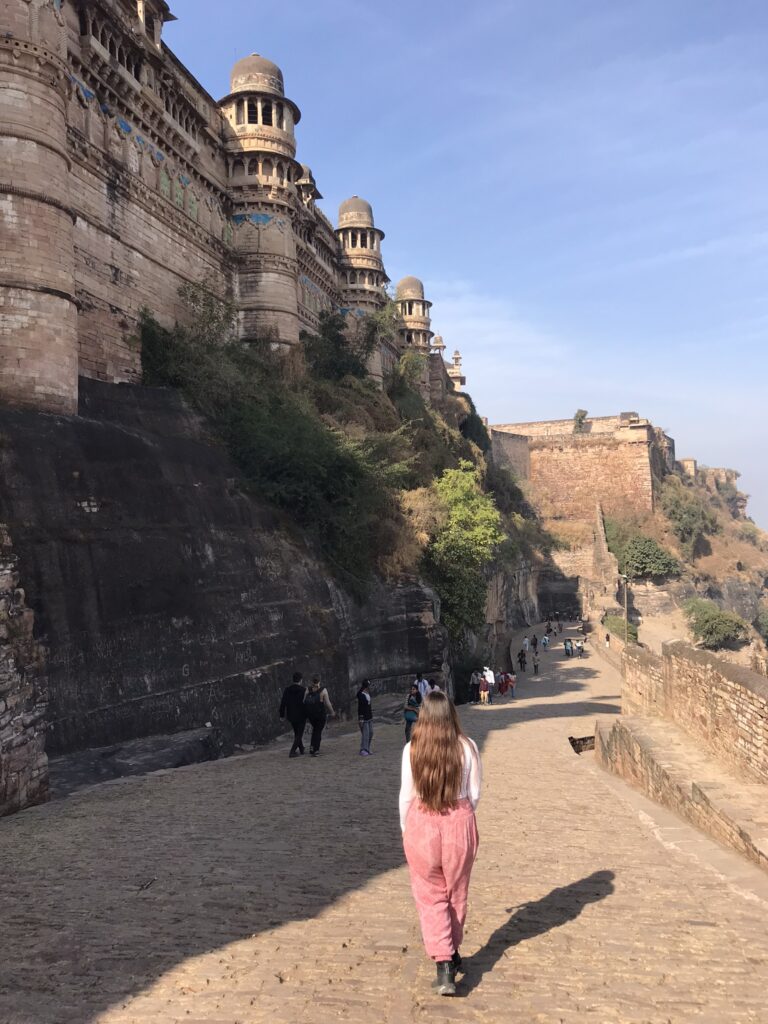
A modern city of over one million people, Gwalior developed around Gwalior Fort, which was likely first built somewhere around the 6th century CE. Over the centuries, control of the fort has passed through numerous local and regional dynasties including the Delhi Sultanate and the Mughals, shaping the character of the city that grew around it. As well as being one of the most imposing fortresses in India, Gwalior Fort is also known for its distinctive blue and yellow decoration, which bafflingly includes depictions of rows of yellow ducks!
Following the decline of the Mughal Empire, the fort came into control of the Scindias, a Maratha dynasty who ruled the region as a princely state during the period of the British Raj. The Scindias subsequently entered elected politics following India’s independence, and still have a significant influence today with multiple family members being elected to the Indian parliament (Lok Sabha).
Start at the fort’s Western Gate (Urvai Gate)
The fort’s western gate is lesser-visited than the east but can easily be accessed by tuktuk. The western approach to the fort contains a number of huge Jain sculptures carved into the rock, known as the Siddhanchal Digambar Jain Temple Caves. Dating back to the 14th and 15th centuries, these sculptures depict Jain Tirthankaras, the central figures of the Jain religion. You can admire these enormous Jain carvings while catching your breath along the walk up to the top of the fort.
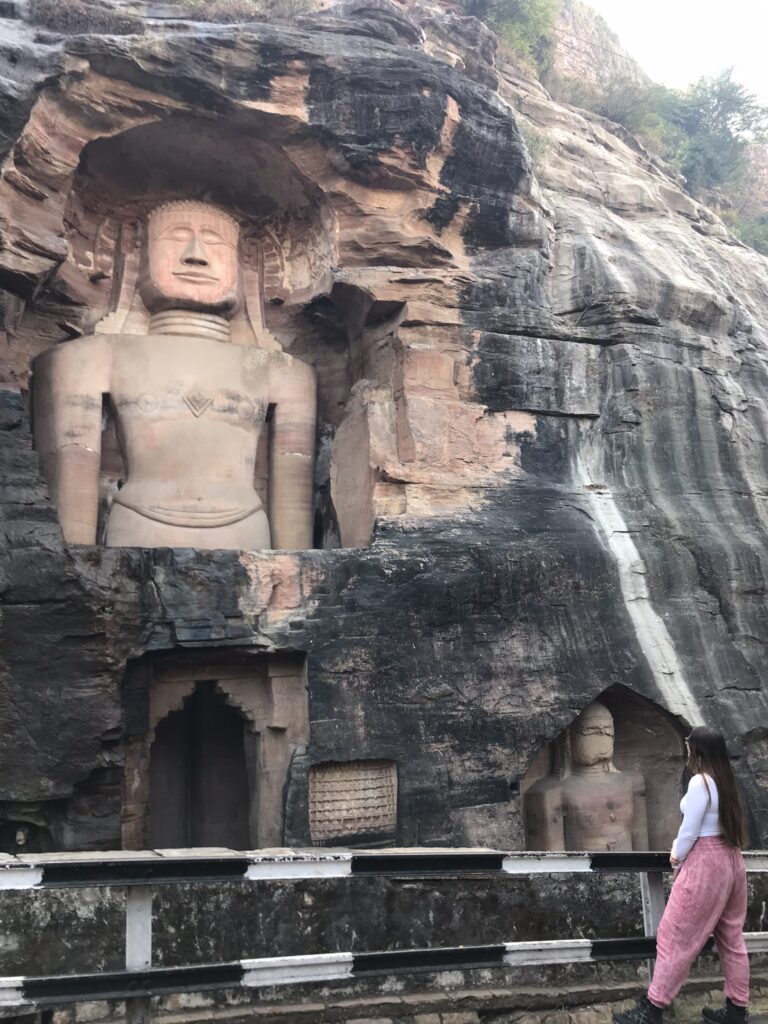
These Jain carvings are huge!
The top of the fort is almost a small city in itself with numerous temples, shops, cafes and even a school. To access all of the historical sites, you will need to purchase two tickets – one for the fort ruins, and one for the Man Singh Palace. After purchasing the tickets, first head south to check out the Sahasrabahu Twin Temples and Teli Temple, which are both included in the main ticket price. Dating back over 1,000 years, these Hindu temples contain intricate carvings. Sahasrabahu is notable for its twin design, while the Teli Temple is a rare example of a Dravidian (typically south Indian) style.
As well as the Hindu temples, in this area you can also find a Sikh Gurudwara – Gurudwara Data Bandi Chhod Sahib. Gwalior Fort is an important pilgrimage site for Sikhs, as the 6th Sikh Guru, Guru Hargobind, was imprisoned here for several years by the Mughal Emperor Jahangir. The legend states that upon his release, Guru Hargobind demanded that 52 Hindu prisoners who has been detained alongside him for opposing the Mughals were also released – Jahangir agreed as long as they were physically holding onto the Guru when he walked free, so the Guru had a special gown created with 52 hems for each of the Hindu prisoners to hold.
After exploring the religious area, head to the Man Singh Palace. This labyrinthine palace was built in the late 15th century by the ruler Man Singh of the Tomar clan that controlled Gwalior at the time. The palace contains some exquisite carving and decoration, as well as several underground floors and chambers – try not to get lost!
Adjacent to the Man Singh Palace, you can enter the main body of the fort citadel. This sprawling area contains several palaces, water tanks, fortifications and associated structures from various eras and dynasties, including the Rajput and Mughal periods. Most of the structures now stand empty and semi-derelict. As well as the historical architecture, this area also provides great views over the city of Gwalior.
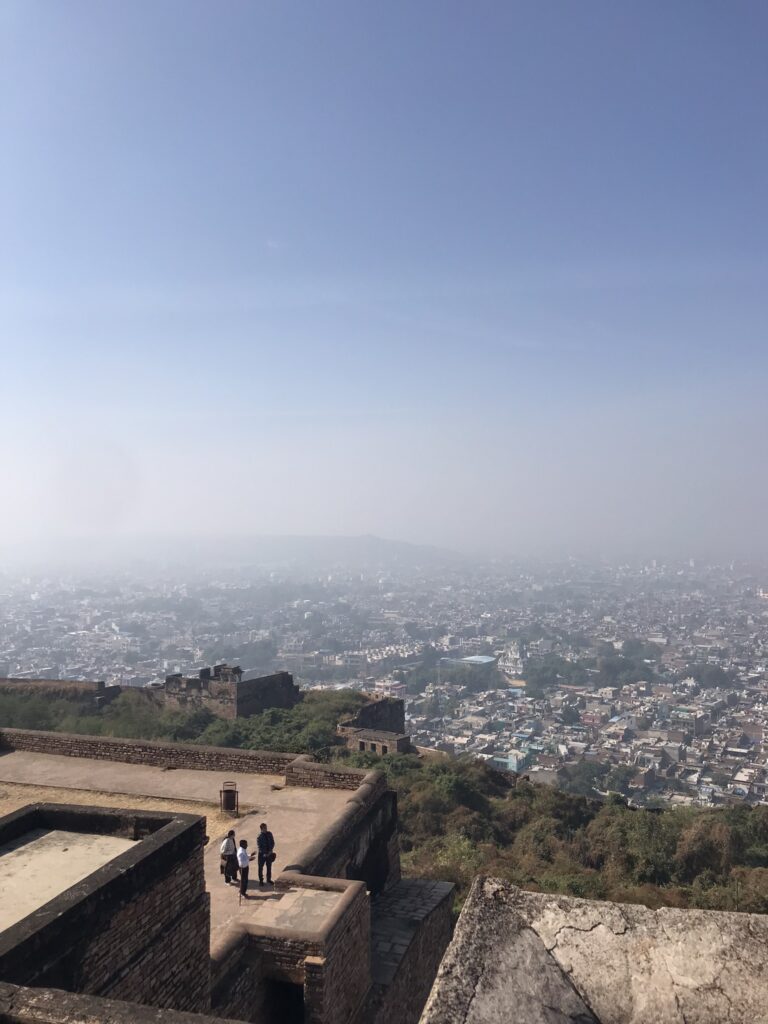
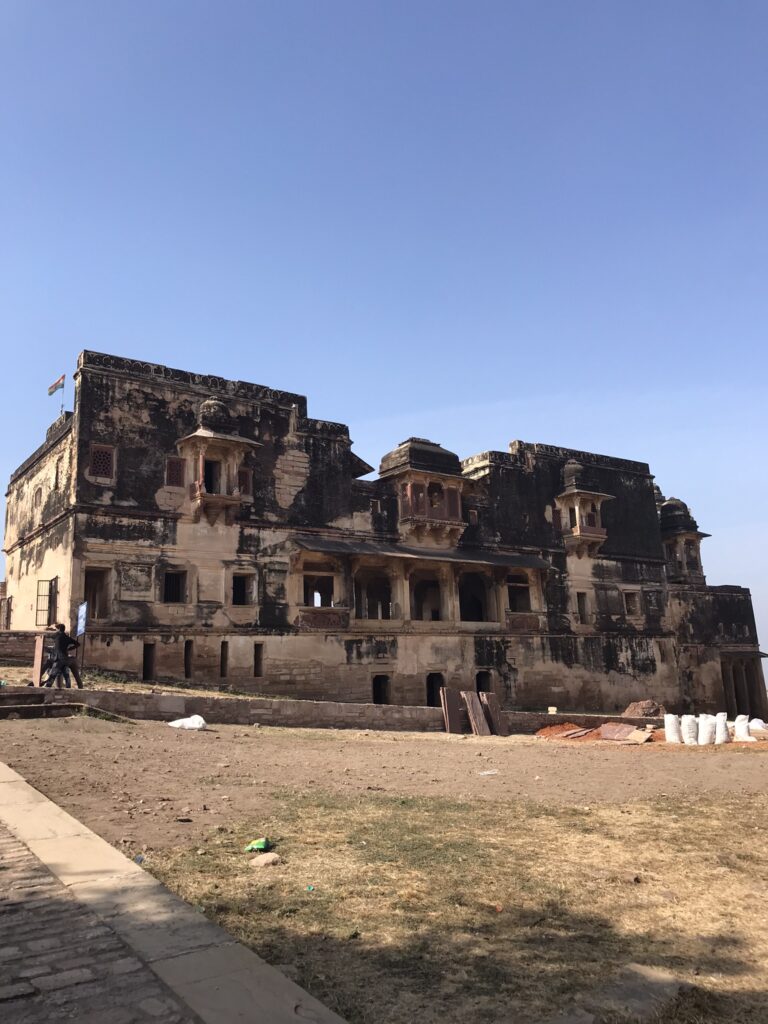
Views from the fort
After visiting the fort, head down via the eastern approach which provides some stunning views of the city and the imposing fort walls. On the way, call at the Chaturbhuj Temple – a tiny structure carved into the rock, this small temple has a bizarre claim to fame as it is said to contain the second-earliest recorded use of the character ‘0’ to represent the numerical concept of zero. The zero in Chaturbhuj is found on an inscription within the locked inner sanctum of the temple, and so sadly is almost impossible to spot.
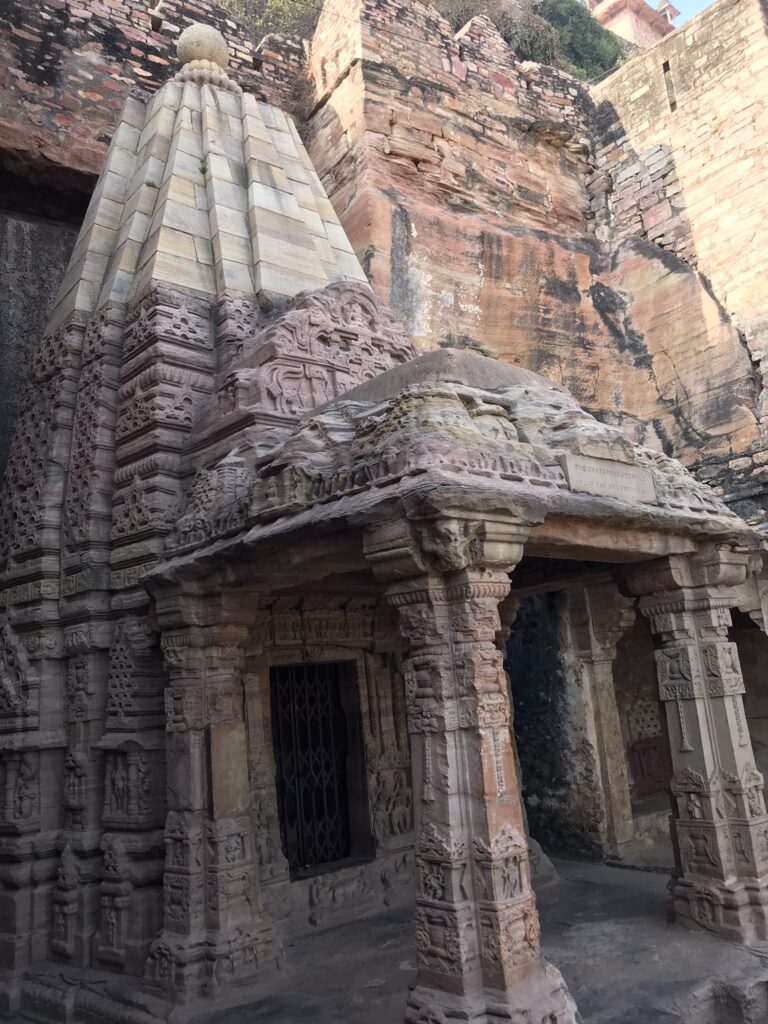
Chaturbhuj Temple – the famous zero is inside
At the bottom of the hill is the Gujari Mahal. This palace was originally built for the wife of Man Singh Tomar and is now a museum, filled with dusty artefacts, paintings and Hindu and Jain sculptures in a typical north Indian style.
From the fort area, head east along Kila Gate Road – in about 15 minutes you will reach the Tomb of Tansen. A classical musician who lived in the 16th century, Tansen is considered an important figure in the development of Indian classical music and the subject of many legends and myths. He was said to have initially performed for the local ruler Man Singh Tomar, before later drawing favour and joining the court of the Mughal Emperor Akbar, who may or may not have influenced him to convert to Islam. Tansen is buried in Gwalior alongside the mausoleum of Muhammad Ghaus, an Islamic Sufi master.
Although it is advertised from the outside as the Tomb of Tansen, the focal point of the complex is actually the mausoleum of Muhammad Ghaus, which is far larger and more ornate. Tansen’s tomb is away to the side. The complex itself is free to enter and is well maintained, quiet and peaceful. Be careful when entering the mausoleum of Muhammad Ghaus as you may be invited inside for a blessing, along with the customary baksheesh (tip) to the Imam at the end!
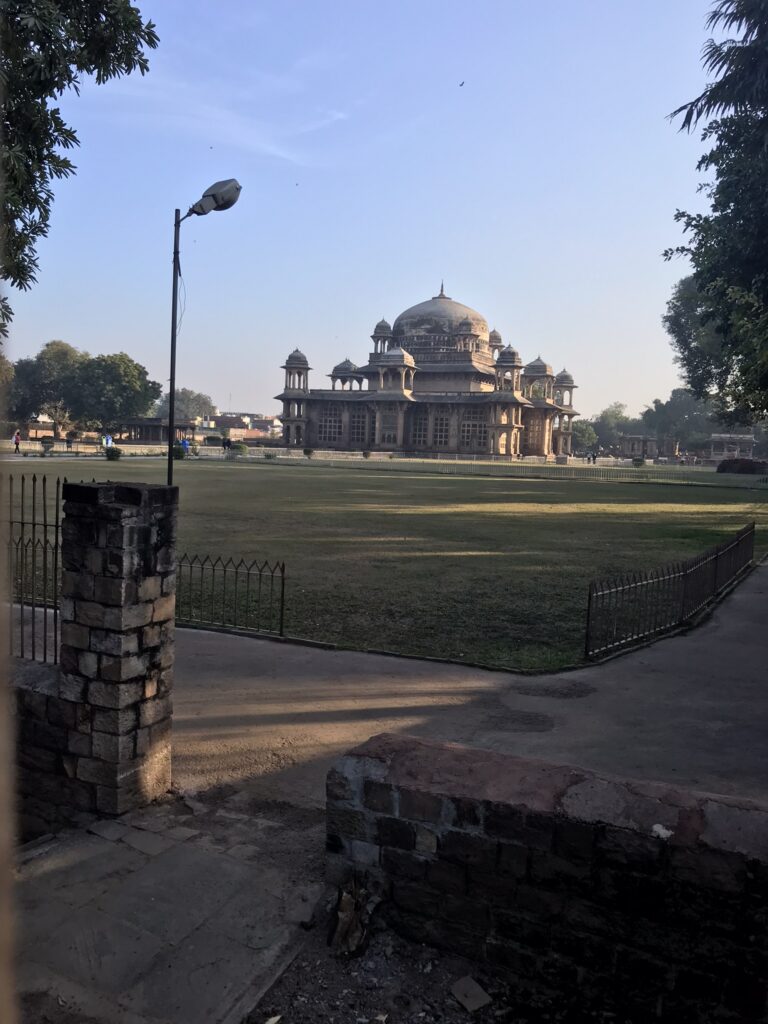
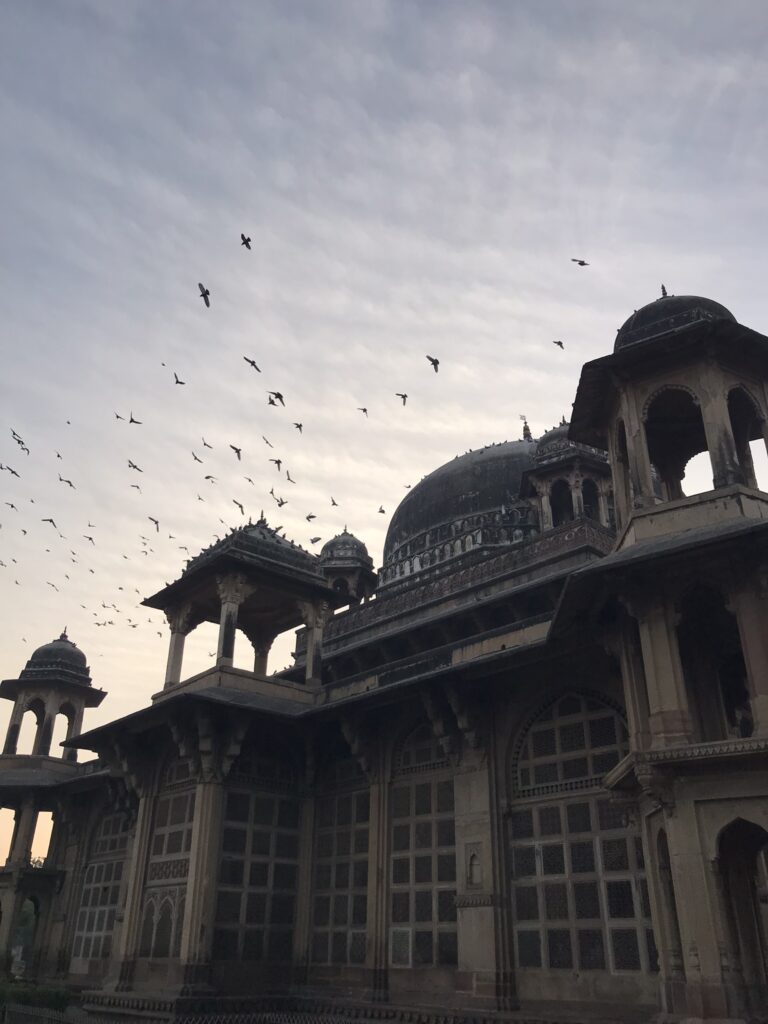
The Tomb of Tansen, more accurately the tomb of Muhammad Ghaus ft Tansen
From Tansen’s tomb, you can walk south for about 35 minutes or take a tuktuk to the Gopachal Jain Parvat. This area features more large 15th-century Jain sculptures carved into the south-eastern rock face at the foot of Gwalior Fort. Along with the Siddhanchal group, these statues were damaged and defaced following the conquest of Gwalior by the Mughal Emperor Babur.
After visiting the Gopachal statues, walk south-east for 15 minutes to the Italian Garden. Although there isn’t too much Italian about it, this green area features a water pond, a bandstand and several columnated structures, making it a pleasant place for a rest or a quick stroll.
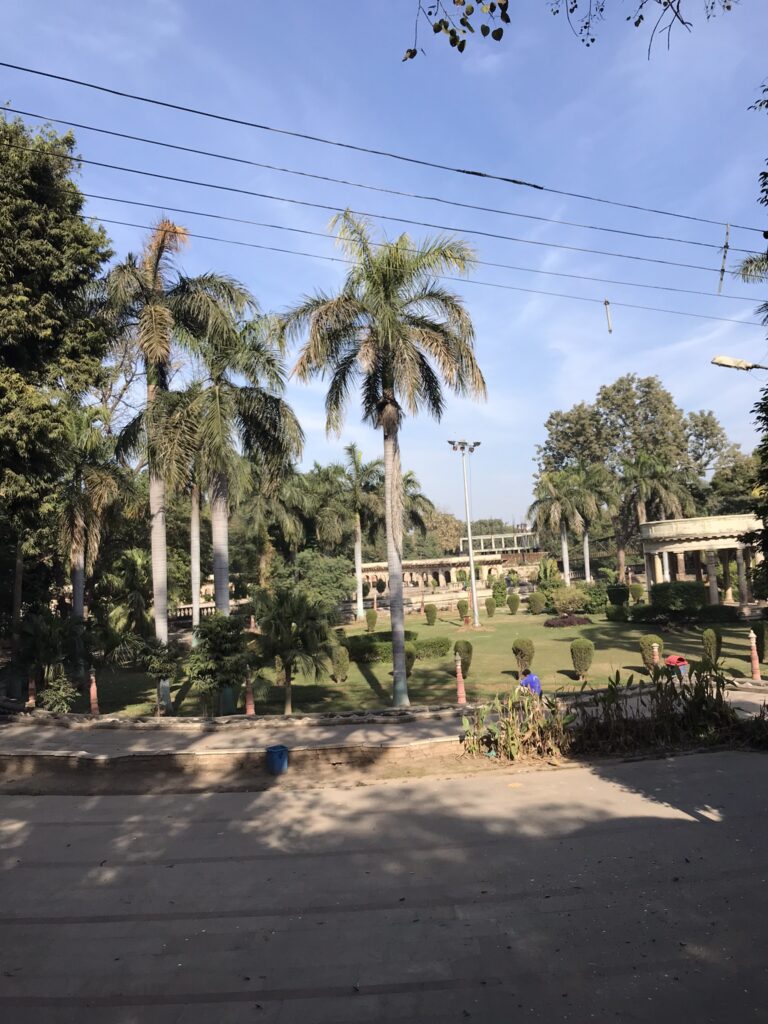
The Italian Garden is a nice space to relax
Head south from the Italian Garden and you will get to to Jai Vilas Palace. Note that you will need to enter the palace complex from the western approach, off Maharani Laxmibai Marg. Constructed in the 19th century, Jai Vilas Palace is the residence of the Scindias, the ruling dynasty during the time of the British Raj.
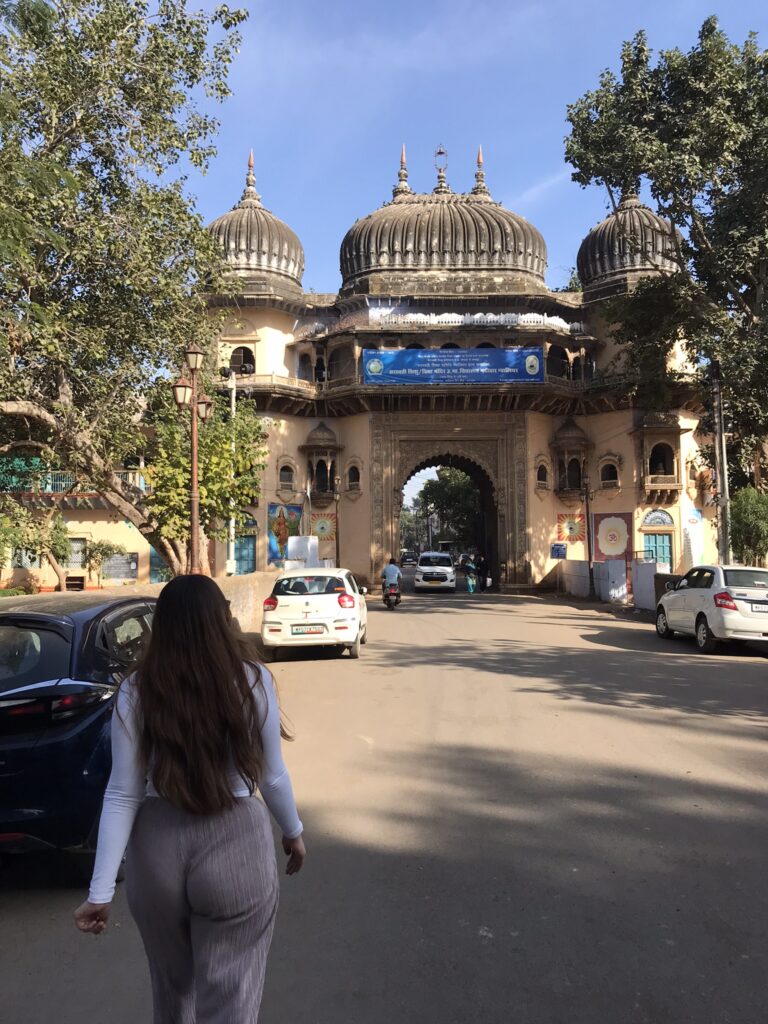
This gate to the west marks the entrance to the Jai Vilas Palace complex
As well as a perfectly-maintained building and grounds, this grand European-style palace now contains a vast museum with a huge amount of detail relating to the era of the princely state and the life and times of the local dynasty of Maharajas, filled with informative displays and artefacts accumulated by the family over the years. You can find robes and regalia, ornate decorations, British-era antiquities, photos of the Maharaja meeting the likes of Fidel Castro and Saddam Hussein and many more weird and wonderful items. Make sure you budget enough time to visit, we spent several hours in the palace and still weren’t able to see it all!
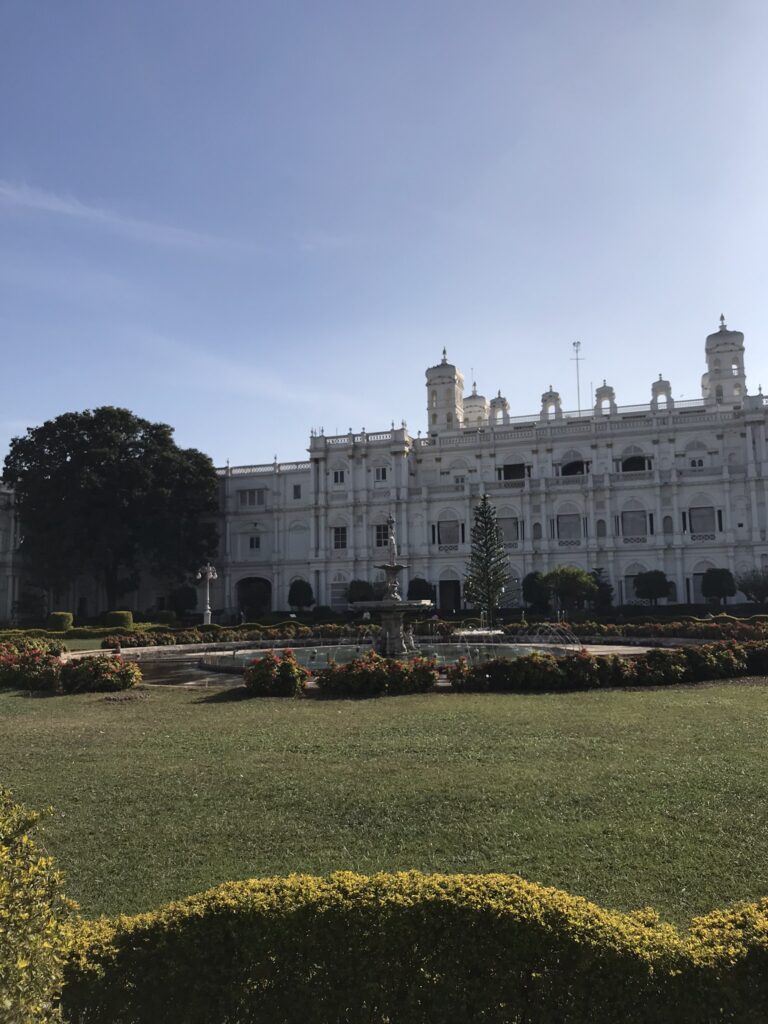

Jai Vilas Palace is a treasure trove of information and artefacts
Finish! For more Gwalior and Madhya Pradesh content, click here!
This article is also featured on GPSmyCity. To download this article for offline reading or create a self-guided walking tour to visit the attractions highlighted in this article, go to Walking Tours and Articles in Gwalior.