

Travel in China is very different from any other country. A lot of preparation and preplanning is required and there are plenty of hurdles to overcome. However once you’re set up and know what you’re doing, things become surprisingly easy. The country is set up for domestic travel and tourism, with convenience as the number one priority. This guide will hopefully help to fill you in on what to expect. The following tips, quirks, observations and practical recommendations are based on our own experiences of visiting China as independent budget travellers.
Internet
By far the biggest challenge of visiting China is trying to navigate the differences in the tech world. Most of the apps and services that we tend to rely on so much in other countries are blocked in China, replaced by home-grown Chinese equivalents as part of the nation’s ‘Great Firewall’. This means that independent travel in the usual way can be a bit more tricky.
Google and many other Western websites are blocked in China – this includes Google Maps, Google pay services etc as well as the likes of Facebook and Youtube. It’s important to understand that the usual services aren’t available on the internet and you will need to work with a completely different technological ecosystem.
Modern China runs almost entirely on apps. However many of the Chinese apps are not really set up for foreign users (although this is improving), and finding even relatively basic information can be a struggle at times.
Additionally, cash payments are not a thing in China – cash does still exist, but we barely touched it during our time in the country. Credit card payments are not really a thing either, and I doubt foreign cards would be accepted even if they were. From high-end malls to street vendors, almost all payments in China are made via mobile phone through one of two apps – Alipay and WeChat. This means that connectivity is absolutely essential. We don’t always buy a local SIM card and usually manage without roaming data in the majority of countries that we visit, but this just isn’t possible at all in China.
There are three options for getting online in China: buy a local SIM card, purchase a physical SIM card with roaming data before entering the country, or use an eSIM. The third option, eSIM, is by far the best, as this allows users to completely bypass the Great Firewall and access the internet as they would in their own country. If your phone is eSIM compatible, this should resolve things for you straight away. However, eSIM isn’t always available on older phones. As frequent travellers we don’t have expensive phones, and so eSIM wasn’t an option for us.
Dan purchased a physical SIM card from a company called CMLink in the UK. This is a service that seems to be a regional offshoot of the main China Mobile network mostly targeted at Chinese students studying abroad. This SIM provided several gigabytes of roaming data in China and allowed browsing as though it was connected in the UK (so access to Google, WhatsApp etc was possible without a VPN). I’m not sure if this loophole will be closed if more people get to know about it, or if an equivalent company/service is available in other countries. I’ve seen prepaid China SIM cards advertising a similar service on Amazon, but I can’t vouch for their reliability. But for us, this CMLink SIM worked really well.
I purchased a Chinese SIM card from the China Mobile shop at People’s Square in Shanghai. This shop has English-speaking staff who are well-versed in providing SIM cards for foreigners. This was quite a bureaucratic process and took over an hour of filling in forms, but I was then able to get a SIM card with a local phone number – great for accessing most of the Chinese apps and services which require a Chinese number to register. The SIM connected well, however the downside was that it was behind the Great Firewall and so did not have access to WhatsApp etc without a VPN. The SIM also cut off at the end of the calendar month. I probably would’ve had to go to a local China Mobile shop to try and restore it – luckily we were near the end of our time in the country and Dan still had data on his SIM so I didn’t bother.
Between the two SIM cards, we were able to get around and function well enough throughout our time visiting China.
Public wifi in China is a mixed bag. Generally, wifi in public spaces such as restaurants and malls is accessed via a Chinese phone number, so it may not be easily accessible for foreigners. This can also be the case in some hotels. Most of the hotels that we stayed in did not require a Chinese phone number to access the guest wifi, but a few did. If you’re unable to access the hotel wifi, the front desk may be able to help – it depends on the receptionist! All public wifi is subject to the Great Firewall, meaning access to western apps and services is not possible without a VPN.
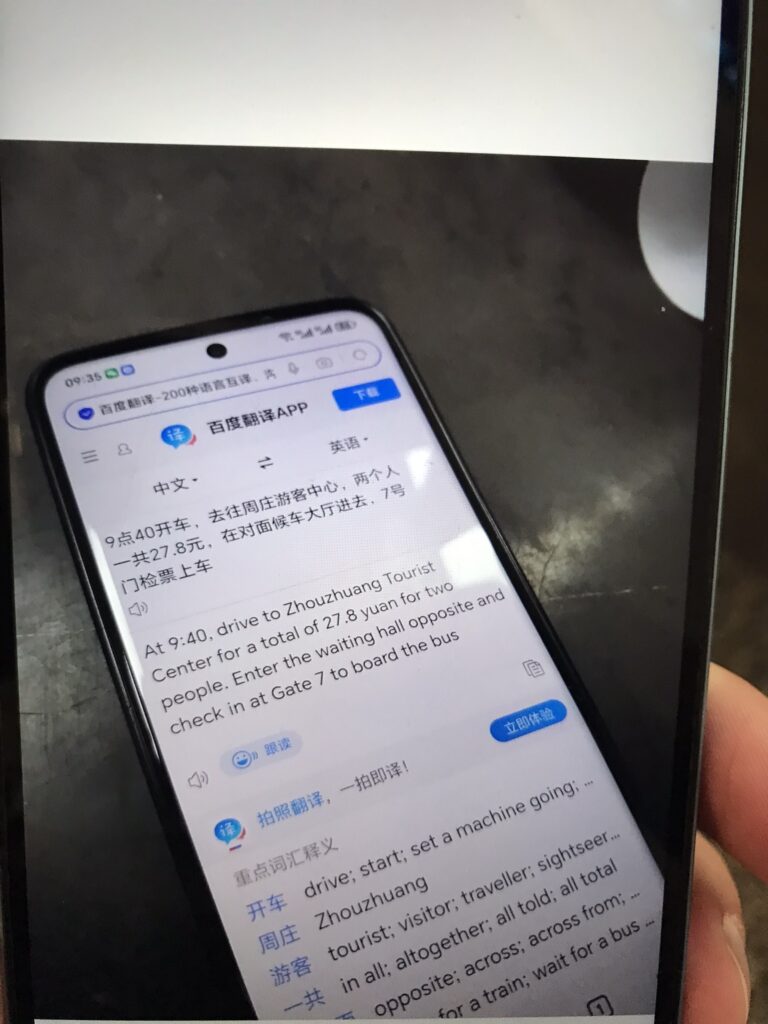
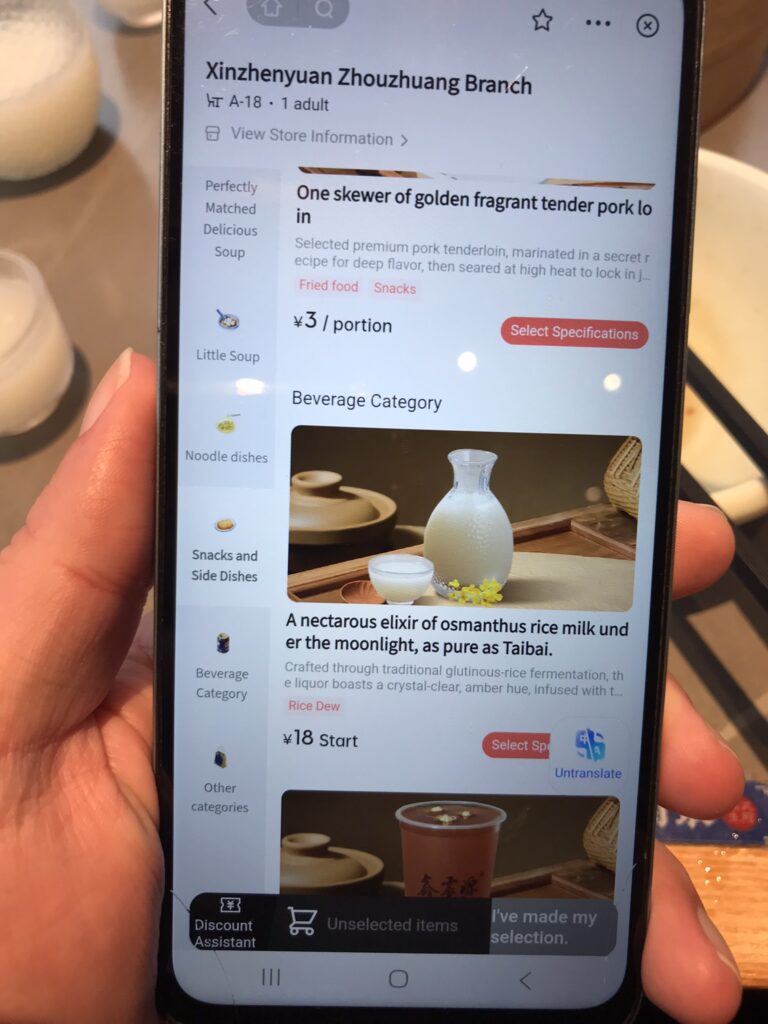
From using translation apps to communicate with locals to ordering food, connectivity is essential in China – you won’t manage without it
Apps
Just about everything in China is done on mobile phones, from scanning metro cards on the subway to ordering meals at restaurants. It’s unavoidable. You will rely heavily on Chinese apps and it’s essential when visiting China that you have a phone with data and a working camera that can read QR codes.
Before you arrive, I recommend downloading and activating the following apps:
- Alipay – one of the two main apps in China along with WeChat. Used for public transport, paying for goods in almost every shop/restaurant, ordering food in restaurants, ordering taxis via the Didi mini-program (the Chinese equivalent of Uber), the app also offers a translation service and more. This is a go-to app and is pretty much mandatory to survive when visiting China.
- WeChat – another omnipresent app, sometimes known locally as Weixin. This can be used for making payments in shops and ordering food in restaurants in a similar way to Alipay. We found that several merchants and restaurants used WeChat only rather than Alipay, so having both apps installed is a must. WeChat is also the go-to app for booking attractions via mini-programs – small independent apps that can be accessed via the main WeChat interface. It is also useful for ordering food deliveries using the ele.me mini-program. As the name suggests, WeChat is also a messaging service similar to WhatsApp in the west – it can be used to communicate with local people, and hotels may also offer to add you as a friend in order to send messages and communicate with the reception. The app does now include a translation feature for foreign users, although some of the translations can be a bit dodgy to say the least. Sometimes foreigners have difficulty verifying their WeChat account. Dan was fine and activated his account with no problems before entering the country, but I was unable to access my account without verification from an established user in China. If this happens to you, all I can suggest is asking a local for help. I don’t think there’s any other way around it.
- Trip.com – this platform is fantastic for foreign travelers in China. We found that this was the best app to browse and book hotels (with far more choice and availability than booking.com), and we also sometimes used it to reserve tickets to attractions if the WeChat mini-programs were too complicated. Trip.com also provides travel guides and reviews of some attractions. It’s a trustworthy site that we have used may times.
- Amaps – this mapping service is the best we could find in China. It isn’t perfect by any means, but it’s good enough that you can mostly get around. Chinese people use a mapping app called Baidu which seems to be far more detailed and accurate, but the interface is currently in Chinese only so it’s impossible to use for non-speakers. Amaps provides decent enough navigation, particularly when using the metro in large cities. It’s supposedly linked to Apple Maps, so users with iPhones may be able to use their built-in maps service (although we can’t verify). Full access to Amaps may require verification with a Chinese phone number – the maps shown without this may not be as detailed, particularly when accessed outside of China. We used Amaps as a substitute for Google Maps – for navigation purposes and to find nearby restaurants.
- 12306 – this official app allows direct booking of trains in China. It’s also possible to book via a third party such as trip.com, but this tends to add additional fees which can make things expensive for those making multiple journeys.
- A decent translation app – apparently Baidu is the best but only works on iPhones, so we were unable to use it. We mainly used an app called DeepL, which was okay but not perfect. Dan also used Alipay’s built-in translator on occasion, and was able to use the speech to text translation function on the app which was helpful. The downside was that the translation on Alipay was often very slow.
- Reliable VPN provider such as LetsVPN – if you don’t have an eSIM or roaming data, a VPN allows you to bypass the Great Firewall and access western social media apps such as Whatsapp, Instagram, Facebook and Google. Use of a paid VPN such as LetsVPN rather than a free VPN is pretty much essential, and this must be set up before entering China. Use of a VPN is technically illegal in China, but many of the laws are specifically vague in order to allow authorities to arrest people suspected of anti-government activity. Foreigners using a VPN in order to access home services will most likely be fine as long as you don’t act in bad faith or commit subversive acts.
Strangely, we found that our phones lagged quite a lot in comparison to locals when using these Chinese apps – we both have Android phones so maybe this is the common factor, however it was something we noticed and became a slight annoyance at times.
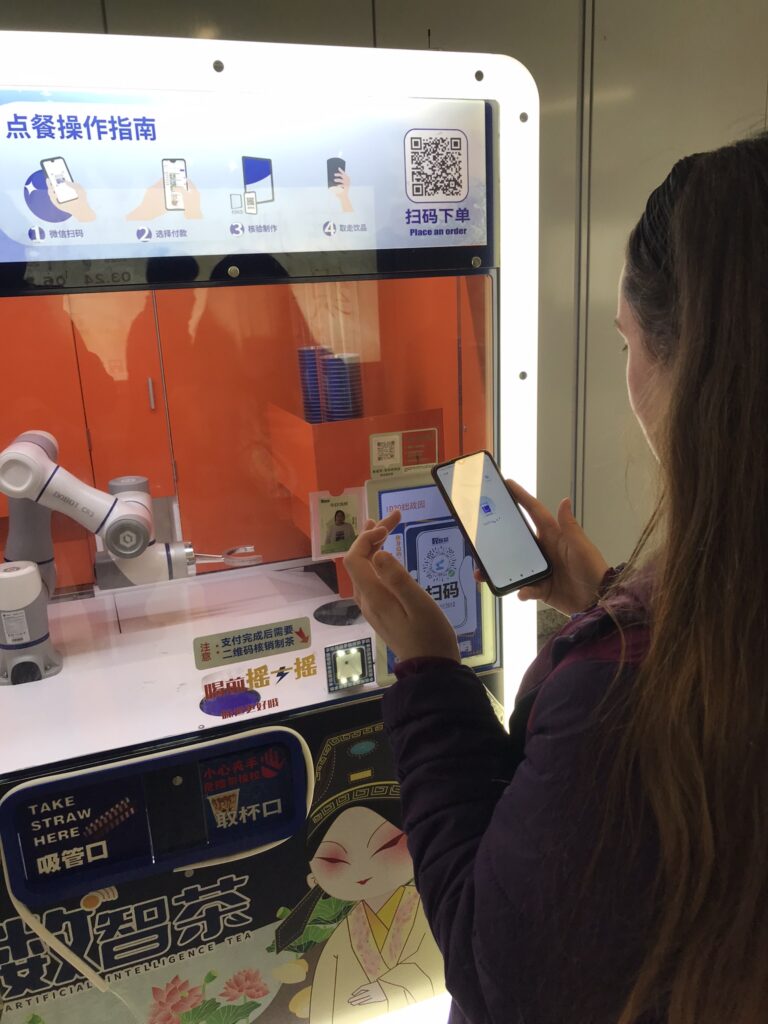
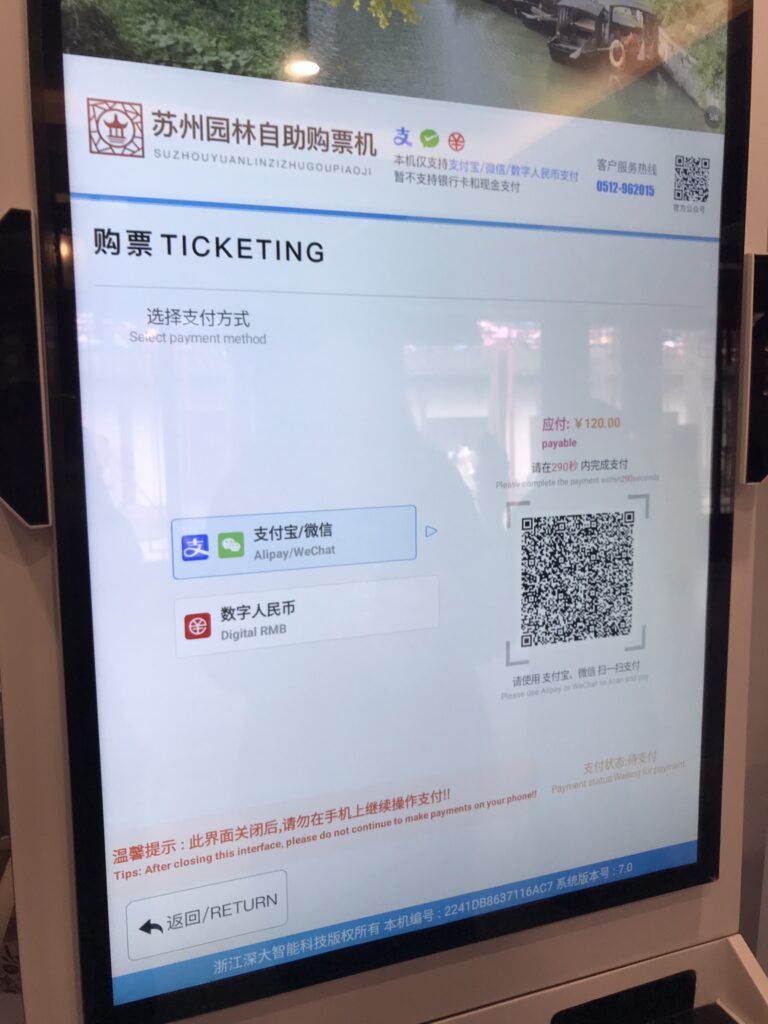
Mobile phones are used for everything, and I mean everything in China – from purchasing tickets to using vending machines
Food
Every state/province has its own culinary specialities, so ‘Chinese’ food as a concept doesn’t actually exist. Instead, there are a plethora of regional dishes which can even vary from town to town. Don’t expect to know what everything is! When visiting China there is some element of going with the flow when it comes to the food. Most of the time, you’ll probably be eating local dishes. Western options throughout most of China are pretty much limited to Pizza Hut and especially KFC, which is absolutely everywhere and can be a lifesaver at times when you’re looking for something reliable and familiar (and we aren’t big fast food eaters).
Portion sizes in China tend to be on the larger side, especially at local restaurants where dishes are often designed to be shared rather than being solely for the individual. Food can often be quite cheap giving the illusion of smaller portions, but maybe think twice before you order 5 dishes between two people. We made this mistake in Hangzhou and ordered a number of items including what we thought would be a small fish fillet, only to be served the whole fish! The pictures of menu items on Alipay and WeChat can be deceptive when it comes to the actual size of the portion!
What westerners would consider to be ‘weird’ or offputting food items can be pretty common in China. Expect to see animal innards, feet, duck heads and all manner of similar things on the menu. Additionally, items on menus in some restaurants can often have whimsical names which may not fully explain the actual content of the dish. Our best advice is to fully translate the menu before ordering – it may look nice in the photo until you find out that you’ve actually ordered duck head, duck feet and wing combo (this happened to us when we ordered an item called ‘duck three ways’). Less desirable meat cuts (trotters, heads and brains) became popular as peasant food and never lost popularity, now considered delicacies by many locals. It can sometimes be hard to find restaurants serving actual meat as opposed to the feet and organs!
Finding reliable places to eat can be tricky without Google Maps (our usual go-to resource when traveling). There’s also an overwhelming amount of choice in terms of restaurants and places to eat. You will probably just need to find somewhere nearby with a decent enough rating on Amaps and go for it, or use the traditional method and ask a local for recommendations. We did get sick in China on a couple of occasions sadly as we couldn’t do our usual vetting of the places we were eating.
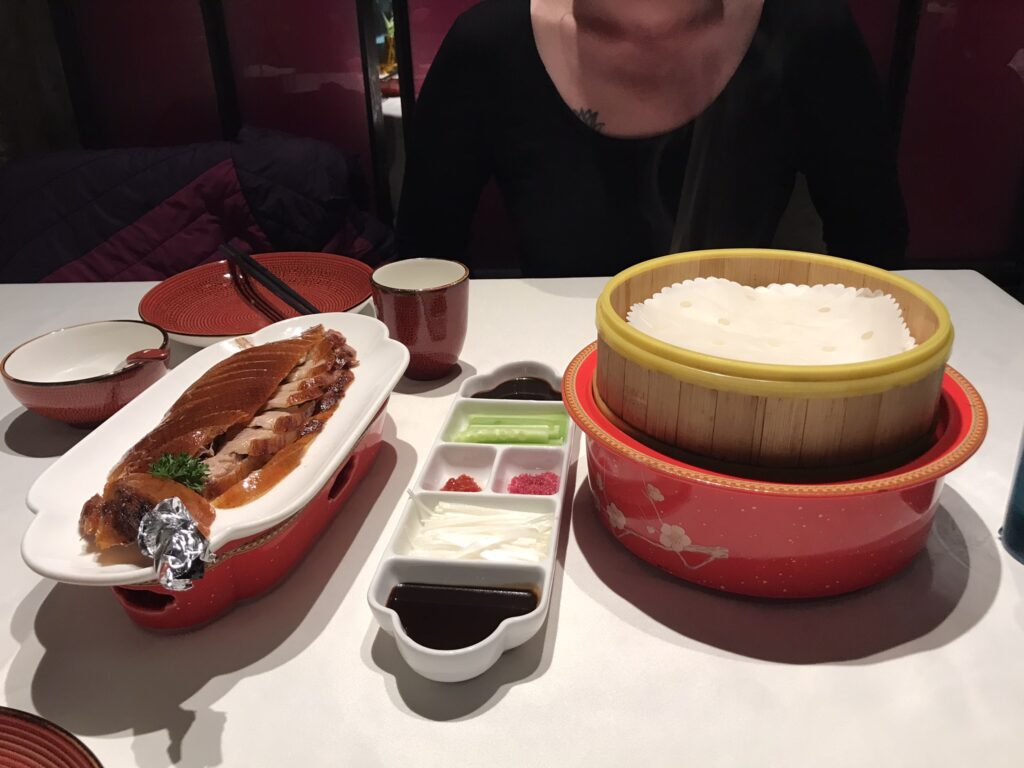
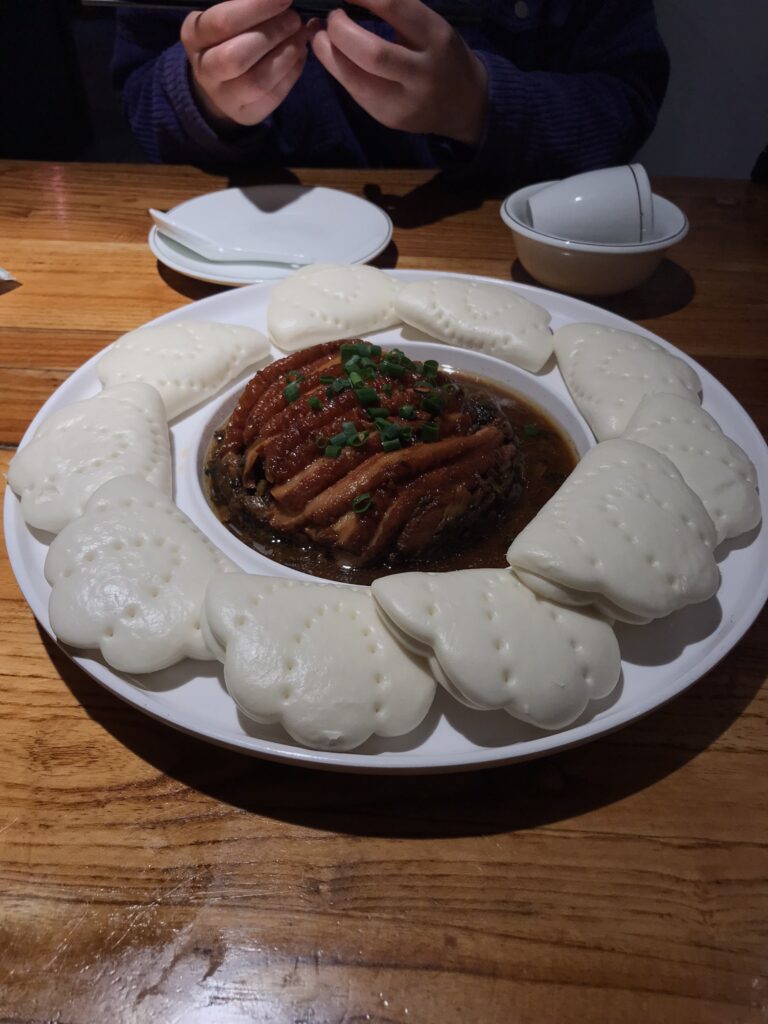
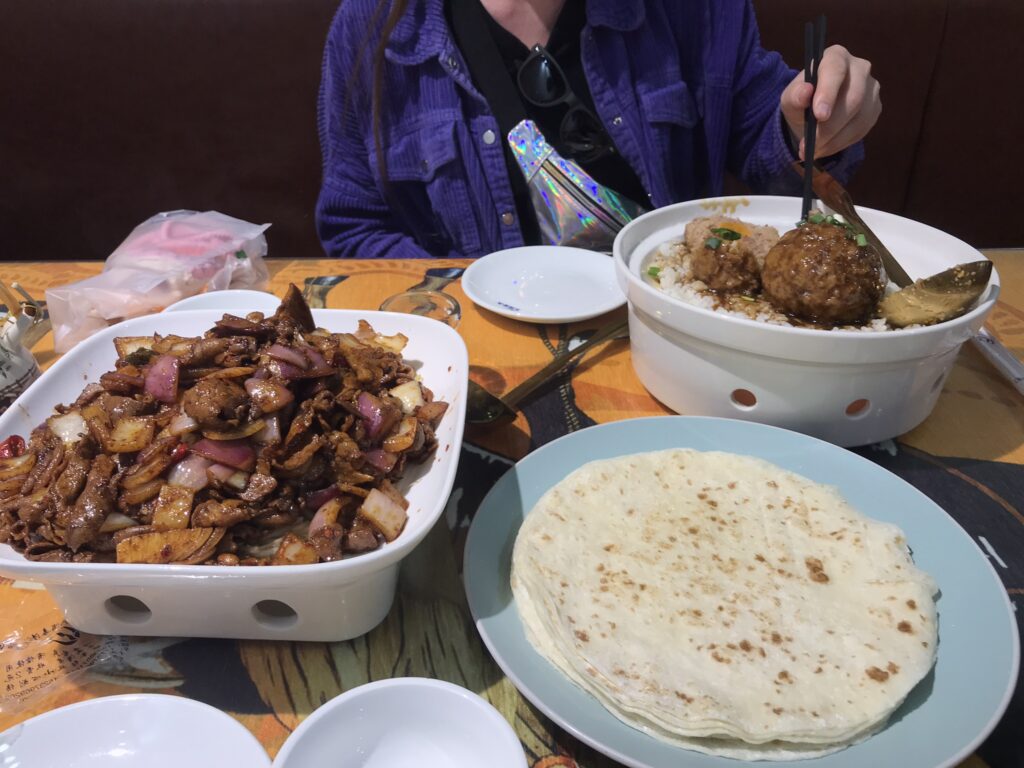
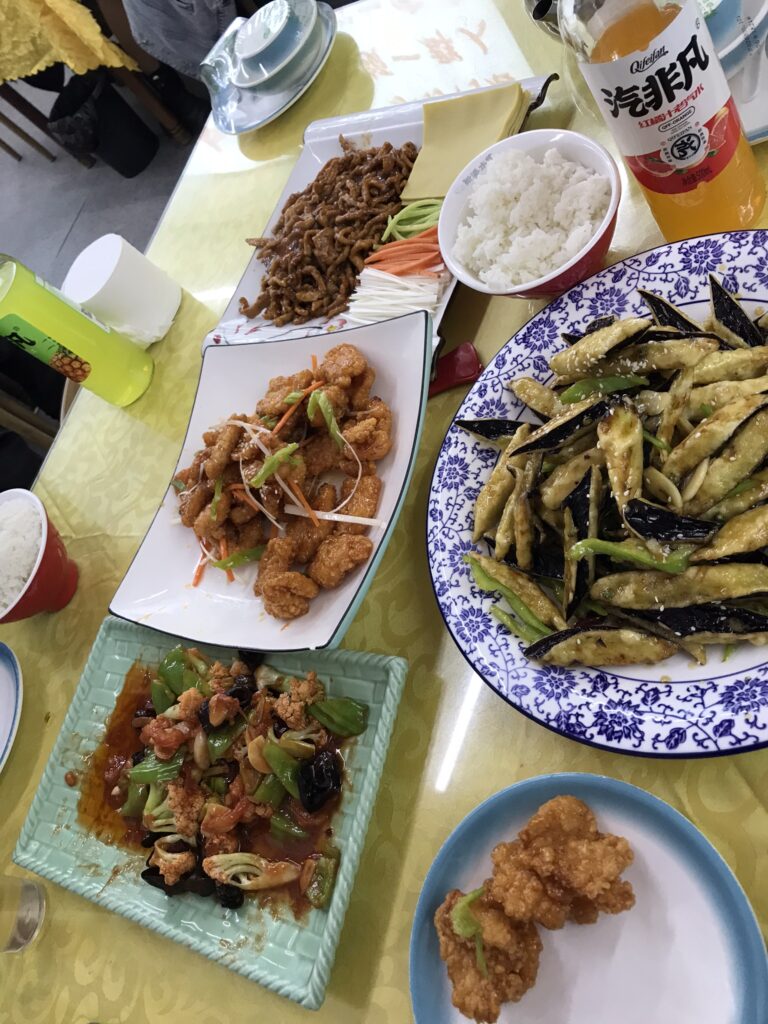
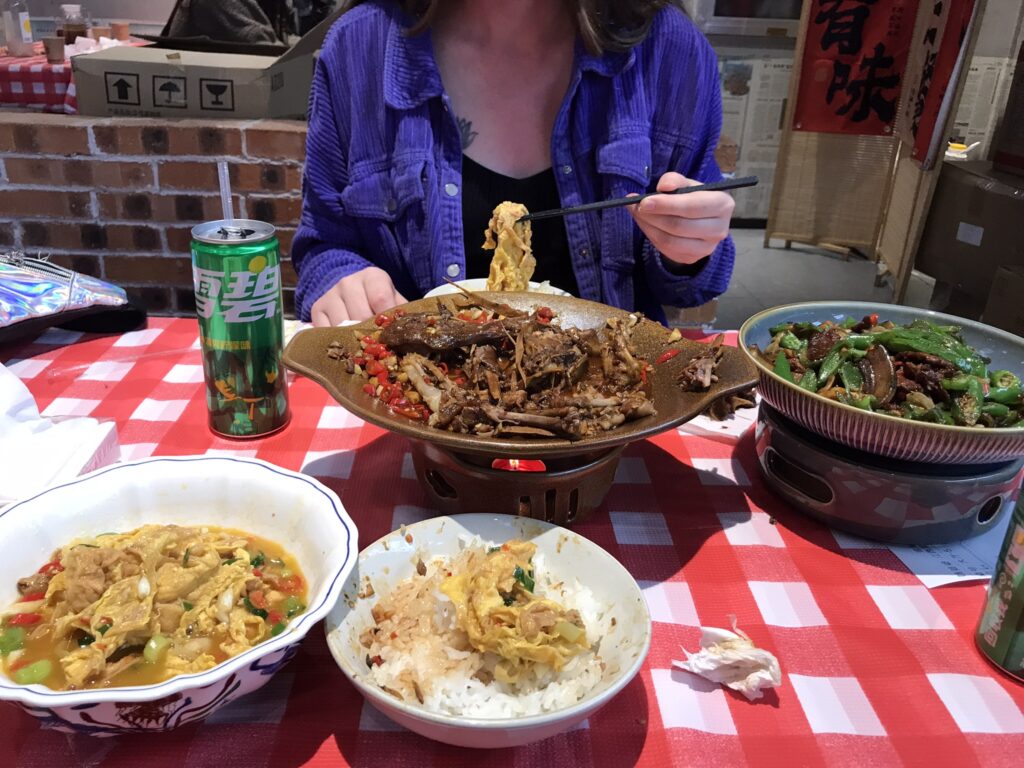

Food in China is super regionalised – from well-known classics like Peking Duck in Beijing to much lesser-known dishes which are local to other provinces, the variety is immense and it’s never boring
Misc
It’s important to remember that China is a huge, relatively isolated country and most parts of China do not receive many (if any) foreign tourists. Most foreign travellers usually stick to the classic Beijing-Xi’an-Shanghai route, or visit the south-western parts of the country around Yunnan and Guilin. In major cities and touristy places, most locals are used to seeing foreigners. In less-visited regions and towns expect some stares, curious locals wanting to practice their English and maybe even a child pointing and shouting excitedly to their parents! Few foreigners venture deeper into the central, western, northern or southern regions of the country. Additionally, there are so many worthwhile places to visit in China that it’s super easy to get off the beaten track into a place where the locals may have never seen foreigners in person before.
In the small town of Yanzhou in Shandong province (used as a base for visiting Qufu and Mount Tai) we visited a local restaurant and had quite the experience as the first foreigners to visit. The waitress video-called everyone on her contact list and excitedly tried to get them to talk to us – she was so excited she didn’t realise we couldn’t understand a word of what she was saying! In the end we used a translation app to chat to her – she was so happy that at the end of the short chat she said she was lost for words! In this same restaurant, at one point a passing old lady literally came into the restaurant just to have a look at us before pointing at her eyes (I have blue eyes), smiling and leaving promptly on her bicycle. The response we got from locals in China was usually super welcoming and wholesome. People in smaller towns and less-visited places often seemed genuinely happy to see us.
English is not widely spoken in China. In short, don’t expect anyone (except guides and high-end international establishments) to speak English – it’s best to just approach people with the translation ready and then show them your phone with whatever you want to say. Don’t count on hotel staff speaking English either. English is taught in schools and we did encounter some local people who could speak English to a relatively good level, but the proportion is very, very small compared to the wider population. We encountered far more people who really wanted to chat with us but didn’t speak a word of English. They kept chatting away in Chinese without realising that we didn’t know what they were saying!
Look out for ‘5A scenic areas’ – this is the top Chinese classification for attractions i.e. designation of excellence as awarded by the Chinese Ministry of Culture. There are more than 300 5A attractions throughout the country. While 5A is the top score, 4A scenic areas are often also worth checking out. Beauty spots and notable attractions are usually referred to as ‘scenic area’ – such an area may include a number of individual sites and attractions.
In China, traditional themed areas are quite popular i.e. old neighbourhoods rebuilt in a traditional way. ‘Ancient towns’ are prevalent throughout the country, and most of the time these are heavily restored and repurposed for commercial tourism. Westerners might find these reconstructed sites to be inauthentic or garish, but the Chinese really like them as it gives a taste of what it would’ve looked like in the past, with the addition of modern chains such as Luckin Coffee and KFC.
Hanfu (traditional dress) is a popular pastime for the younger generations, who wander around scenic areas often posing for long protracted photo shoots. You can usually spot prop-bearing photographers hovering around hotspots, waiting for Hanfu-clad customers. We have experienced similar things in South Korea and Japan, but the Chinese take it to the next level with some supremely elegant looks.
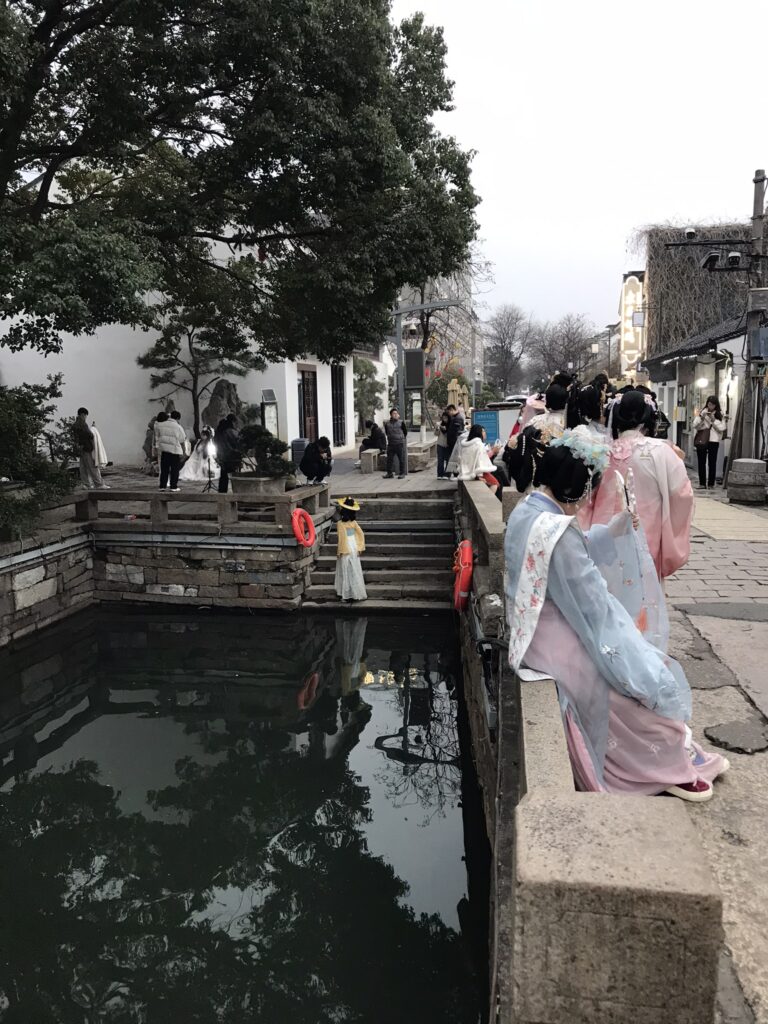

Hanfu is a big thing in China – we appreciated and felt that it really added to the atmosphere at a lot of the scenic areas
Squat toilets are extremely common in public restrooms. Regular western public toilets are sometimes considered to be unclean, as Chinese people stand on the seat to squat and then the seat becomes dirty. Some public loos have one western toilet (I can only imagine it was installed for foreigners), and these are often used as store cupboards by the cleaners. On more than one occasion I had to skirt around a mop or broom to use the toilet! The upside of this is that there is often no queue for the western toilet – local people tend to prefer to queue to use the squat rather than the western toilet, and I was often invited by locals to skip ahead as a result. Within private homes, western toilets are more standard. Toilet roll is also scarce in public toilets, so be sure to bring your own.
Chinese drinks chains are great: two examples are Chagee (for premium jasmine iced tea) and Luckin Coffee. In the past, high quality products were not usually associated with China however this is changing rapidly. These establishments are everywhere in Chinese cities and we predict they will soon spread to the west. As well as modern chains, you can often find traditional establishments in China that have a seal describing them as a ‘China Time-Honored Brand’. This is an official designation awarded by the government to indicate a trusted local establishment which has been in business for more than 50 years, preserving their traditional standards and methodology. When visiting China, it’s highly recommended to seek out these places for the most authentic local experiences.
Hotels in China tend to be inexpensive and high-quality. There isn’t much of a hostel or backpacker scene in the country, but budget business and tourist hotels are generally pretty inexpensive, especially if you have somebody to share a double room with. Many Chinese hotels and chains tend to not be available on booking.com – there’s a far greater choice using trip.com. Make sure to check the terms and conditions, as some hotels in China do not accept foreigners (although this is rare). Our best advice is to pick a hotel near a metro station so you can get about more easily in cities.
Bicycles and e-bikes can be pretty treacherous in China. A driving license is not required to be able to ride two-wheeled electric bikes, and they are viewed the same as pedestrians i.e. they can drive on the pedestrian walkways, cross at pedestrian crossings and bypass red lights. This can be pretty hazardous for those walking on the paths, as e-bikes hurtle towards you at great speed meaning you have to jump out of the way. These bikes are super quiet, so often you don’t get much notice that they’re coming except for the occasional beep. Delivery drivers tend to use these bikes and their deliveries are often highly timed and regulated by the apps meaning they are always in a rush, which doesn’t help matters. Hordes of parked electric and pedal bikes can usually be found stacked up on the sidewalks of major cities, which means pedestrians often have to walk on the road or step over them. The situation regarding bikes on the pavement is definitely one aspect that we hope will be assessed by the government in the future – it was by far the most dangerous thing we encountered in China which is otherwise an extremely safe country.
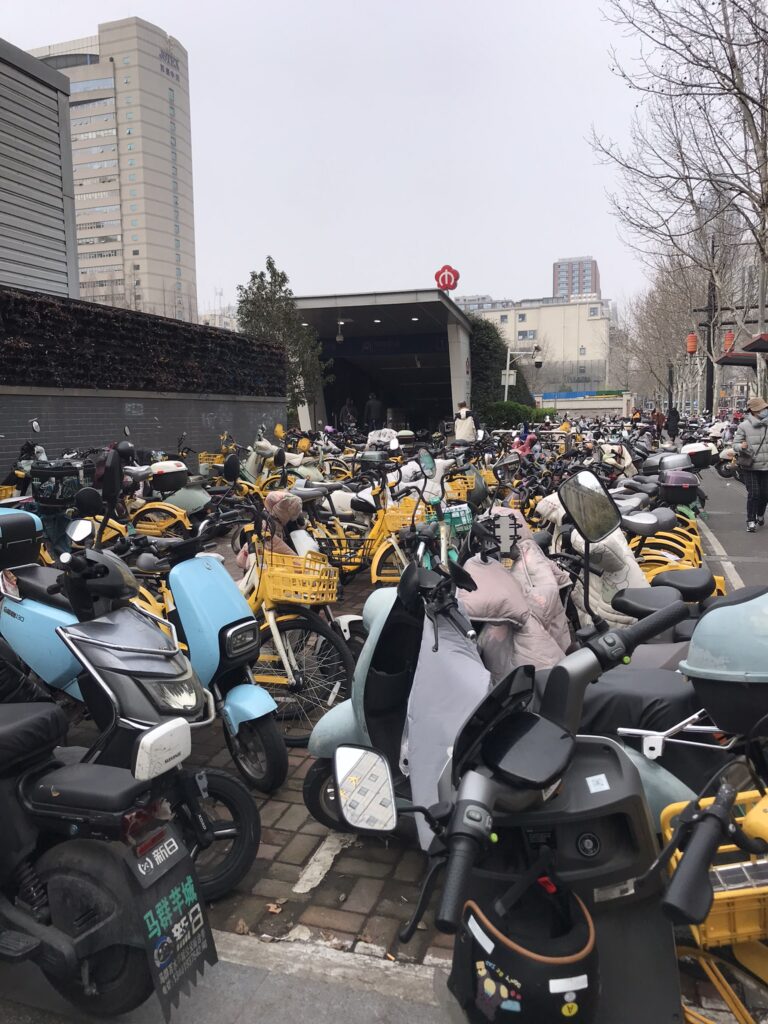
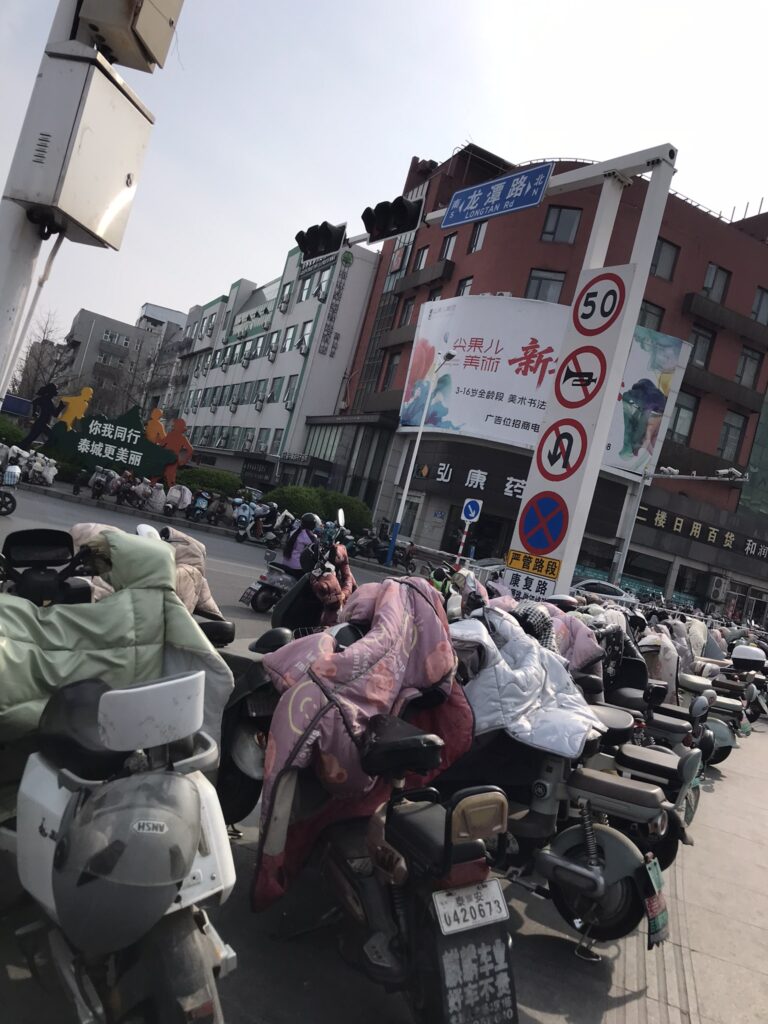
Bike-mageddon – the bicycles help to reduce pollution and congestion on the roads, but it can be a little hazardous when e-bikes come speeding down the pavement
China has a mandatory ID card system for its citizens, and foreign visitors will need to carry their passports at all times. Your passport is not just for ID – modern scanning systems mean that it acts as an entrance ticket for attractions, a train ticket and it also may be requested at any time for sporadic checks. Constantly carrying the passport can be a bit of a pain in the neck at first, but you quickly get used to it.
Don’t be put off by all the hurdles, China is an amazing country with so much to see and explore. Hopefully this guide has been of some use! For a full breakdown of all the places we visited and our experiences of traveling in China, click here!