Tokyo, Japan’s capital, is one of the largest and most vibrant cities in the world. At the heart of Japan’s Kanto region, you could spend weeks here and not see everything. As well as the ultra-modern metropolis of Tokyo, the wider Kanto region (now more or less synonymous with Greater Tokyo) contains dramatic landscapes, historical settlements and iconic sites of its own – a quintessential microcosm of Japan. Check out our Kanto travel experiences below!
Tokyo, Kamakura, Manazuru, Hakone
Greater Tokyo doesn’t just include the city proper or even the vast urban area. Kanto is home to nature, history and scenery stretching from the famous Nikko shrine in Tochigi Prefecture right down towards the Izu peninsula to the south. Mount Fuji, an emblem of the city, actually sits roughly 100km to the southwest. When visiting Tokyo for an extended period, one of the best things you can do is get out of the city sprawl for a day or two! This advice was particularly useful for us as we found that reasonably priced accommodation in the city centre was almost impossible to come by on the weekends. Take the opportunity to get out and about – there are plenty of hidden gems within the vast surrounding region to explore.
Tokyo
Tokyo, formerly known as Edo, first gained prevalence during the Tokugawa Shogunate in the 1600s, which later became known as the Edo Period. During this period, power was in the hands of the shogun, a hereditary military dictator, with the Emperor of Japan taking a back seat with a more ceremonial role. Although the court of the Emperor remained in Kyoto, Edo became the nation’s capital in all but name as the permanent seat of the shogun – the defacto ruler of Japan. Regional lords and rulers who operated underneath the shogun (known as daimyo) had to make the arduous trek to Edo every other year as part of their feudal pledge, which stipulated that they were to reside in the city for the entire year before returning to their own territory. As a result Edo developed exponentially, growing to contain many opulent residences and facilities for these wealthy daimyos and their entourages when they were forced to spend every other year in close proximity to the shogun. The shogun ensured loyalty amongst his retainers by continuing to hold the daimyo’s families close to him in Edo in the years when they returned to their seat of power, creating a powerful upper class in the city. By the apex of the Edo Period in the 18th century, Edo was said to have become one of the largest cities in the world.
After the Meiji Restoration in the 19th century ended the era of the shogun and restored direct power to Japan’s Imperial family, the former official seat of the shogun (Edo Castle) became the Imperial Palace – confirming the transition of the imperial capital from Kyoto to Edo, which then became known as Tokyo. The names of the cities, Kyo-to and To-kyo are formed from the same sounds but in a different order – Kyo meaning ‘capital’ and To- in this case translating as ‘east’.
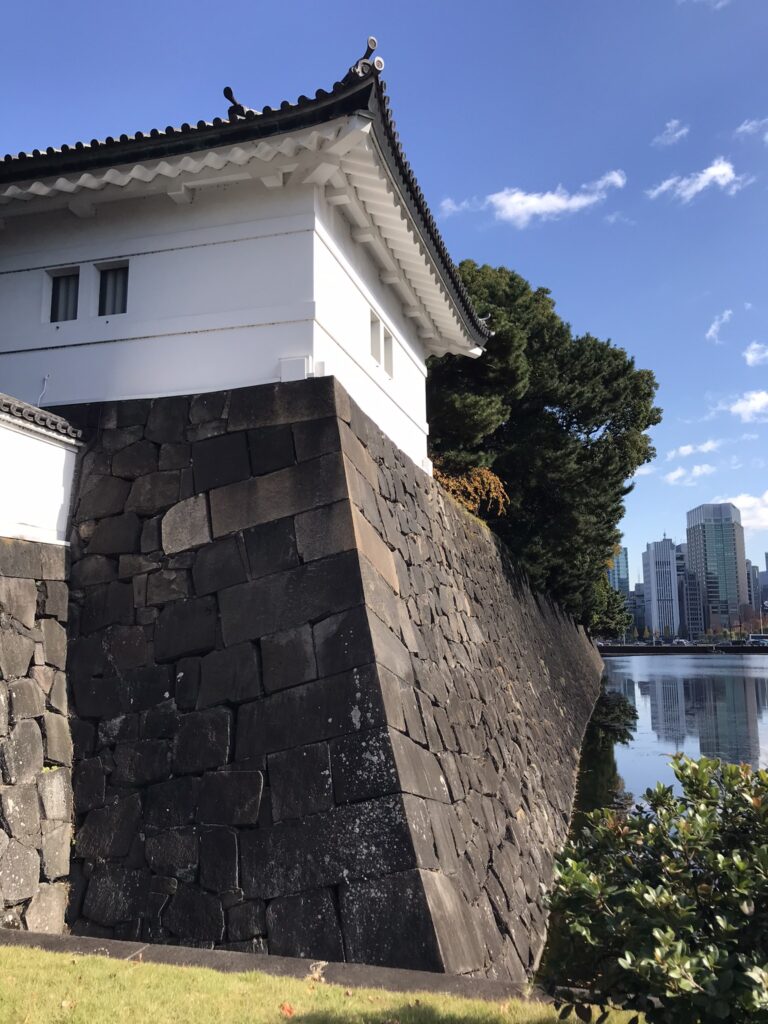
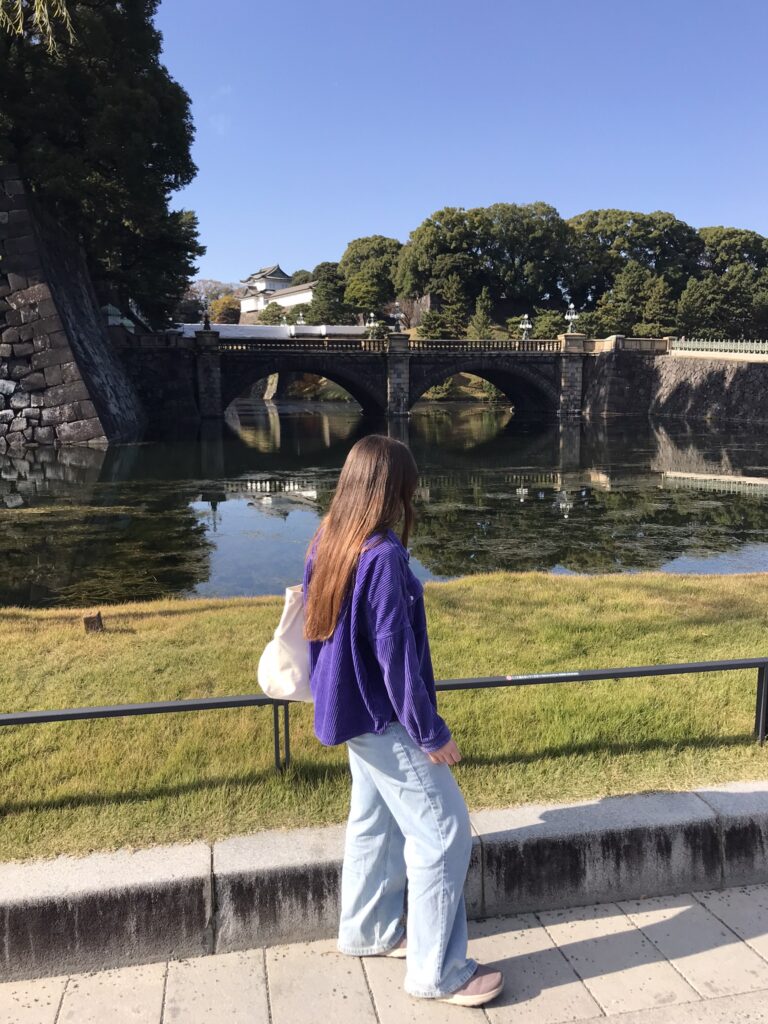
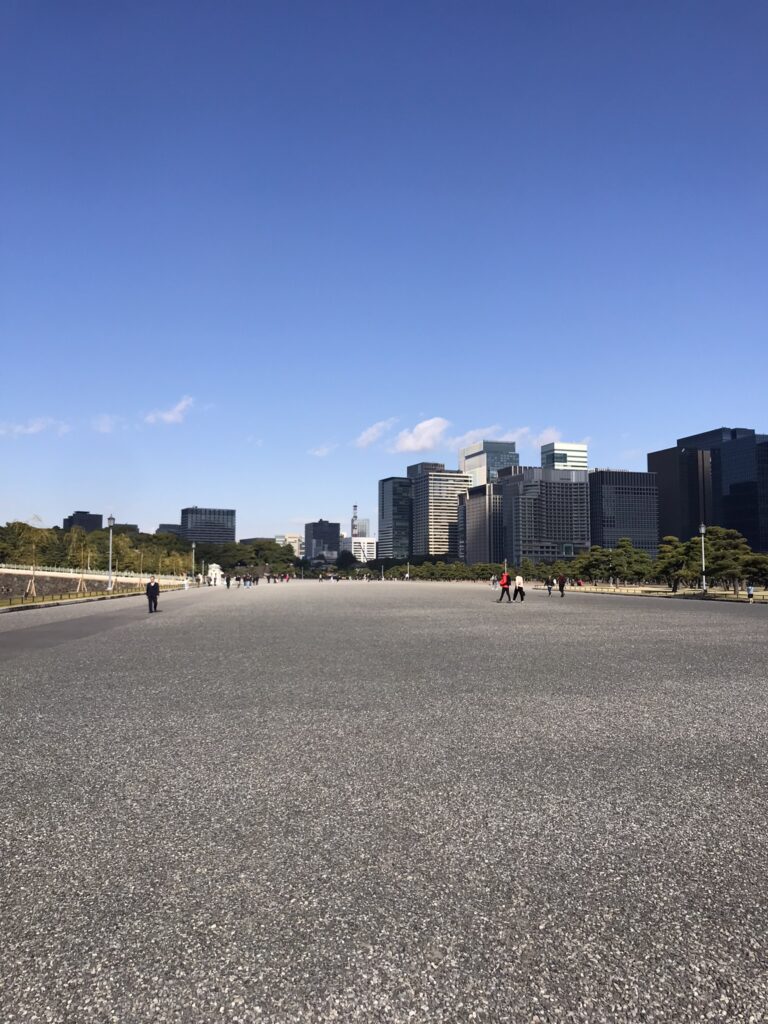
The Imperial Palace is a bridge between the old Edo-era castle and new high-rise city
Tokyo is unrecognisable today from its pre-industrial appearance, which previously consisted mostly of wooden machiya-type buildings. The modern skyline is peppered with high-rise buildings and magnificent skyscrapers such as the Tokyo Skytree, which is the third tallest structure in the world. After the catastrophic fire-bomb raids which destroyed much of the city during World War 2, Tokyo was rebuilt and emerged from the ashes like a phoenix, rapidly restructuring and expanding to become what it is today – an ultra-modern city and modern-day economic miracle. As it continued to grow, the Greater Tokyo urban area gradually consumed several nearby cities such as Saitama, Kawasaki and Yokohama, creating what is now the largest urban area in the world with a combined population of over 40 million people. The entirety of the surrounding Kanto region is now considered to be Greater Tokyo.
In many ways, Tokyo is symbolic of the ‘old’ and ‘new’ worlds coming together. The city contains ancient temples such as Senso-ji in Asakusa, which was founded in 645 during the Asuka Period and has continued to function as a Buddhist temple for almost 1,500 years. On the other hand the city is a pop culture juggernaut, the object of many popular Western songs such as Gwen Stefani’s 2004 ‘Harajuku Girls’ and the 2009 song by Mini Viva ‘Left My Heart in Tokyo’. It’s the center of all things kawaii (Takeshita Street, Harajuku), otaku and anime-related geek culture (focused in the Akihabara area) and high-end fashion (in areas such as Ginza and Harajuku). Tokyo is the home of Godzilla – the iconic 1950s movie features the city being destroyed by a prehistoric dinosaur-type sea creature which emerges from the depths of Tokyo Bay after atomic testing awakens it – an allegory to fears of the Japanese people following the atomic bombing of Japan just a few years earlier.
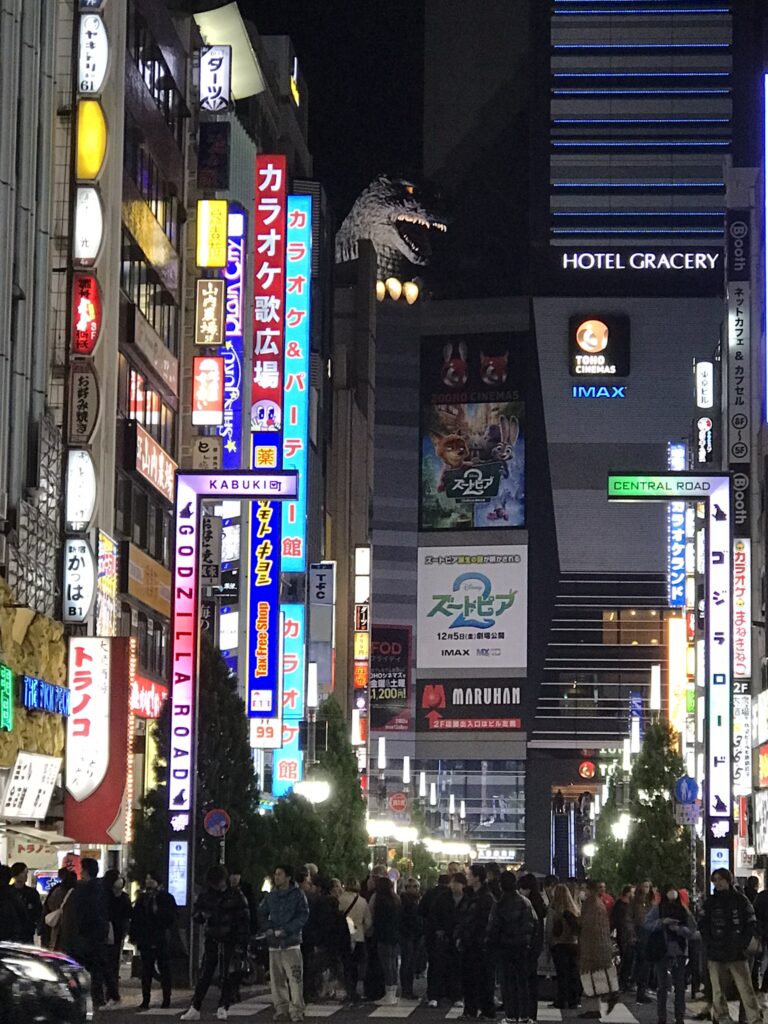
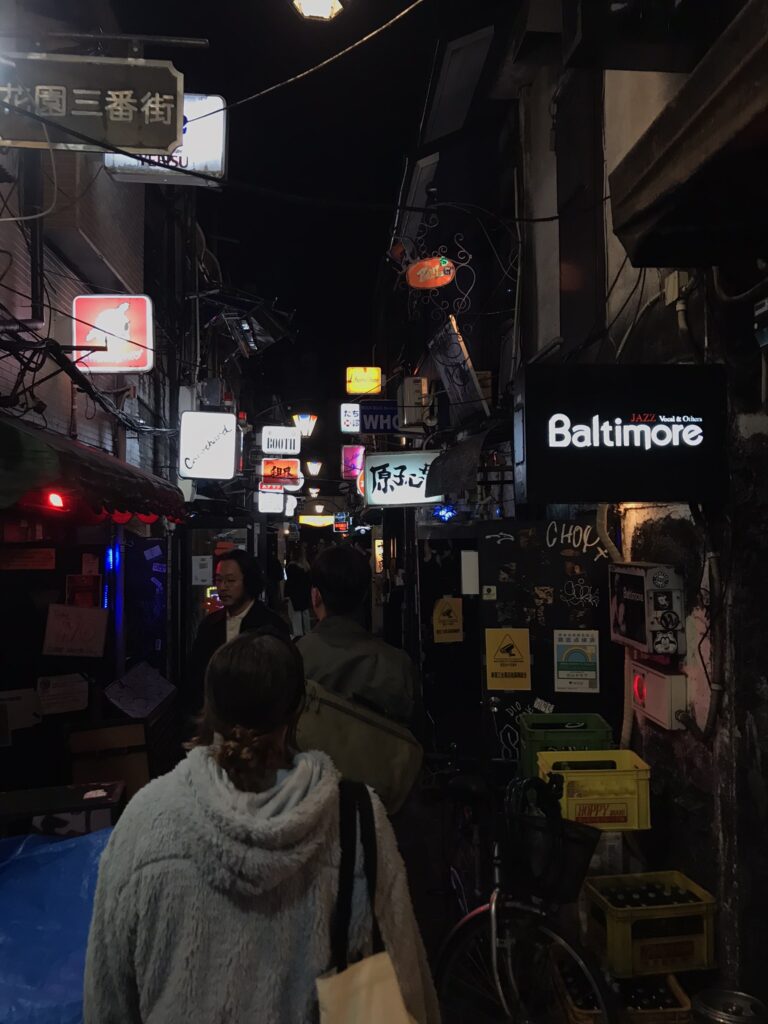
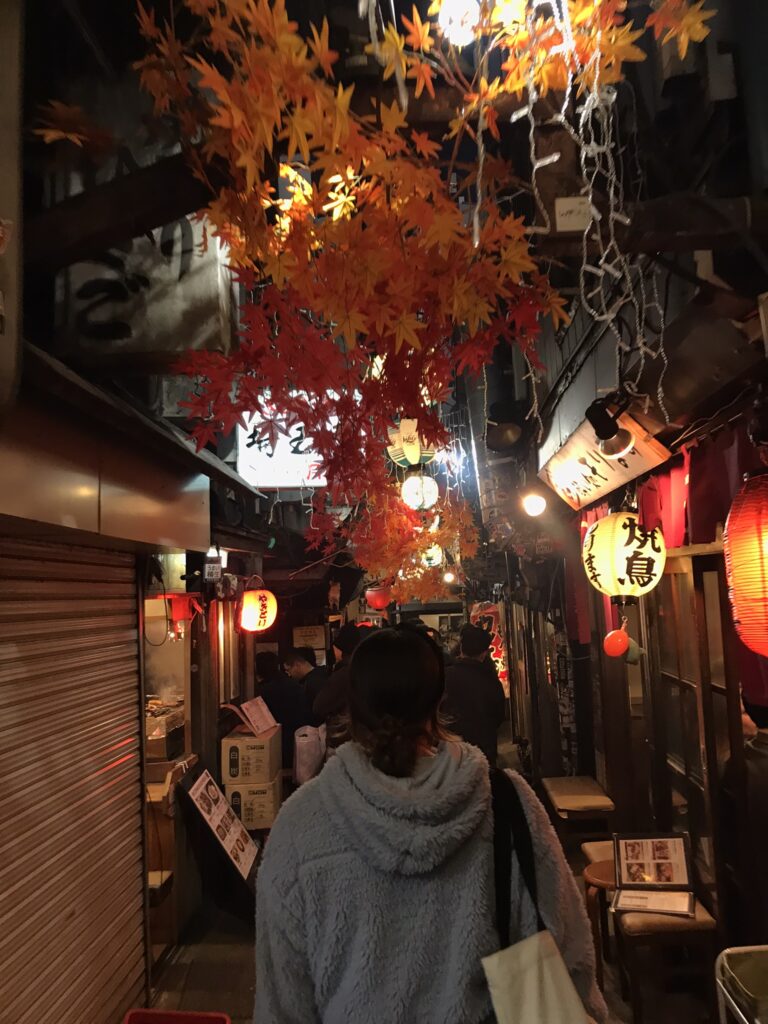
Tokyo is a place to party (in particular the neighbourhoods of Shibuya and Shinjuku) or to study in Jimbocho. The city has pretty much everything you could imagine and a whole lot more, often in garish excess.
As one of the most iconic cities in the world, Tokyo is an extremely popular destination for tourists. Even with the huge local population, parts of Tokyo almost seemed to be overrun with foreigners at times, particularly around the main tourist hotspots. The good thing is that Tokyo is so large and has so much to see that you can easily get off the beaten track and away from the tourist crowds, who for whatever reason mostly seem to stick to the same handful of places. We generally focused on more obscure and lesser-known places during our time in the city and found it way more enriching than being amidst the crazy queues and tourist hordes – but if you want to visit to TeamLabs, go to the top of the SkyTree, drive go-karts around the city in a Pikachu onesie (it did look fun) or eat seafood from Tsukiji market then that’s great too.
As it’s such a huge city, attractions in Tokyo are vastly spread out and so using the metro and local trains is a must. The train network in Tokyo is hopelessly complicated, a result of the rapid development of the city which coincided with many private companies building their own separate rail lines all at once. Don’t worry too much about trying to get your head around the various lines and networks – Google Maps is your friend when it comes to working out which train to take and where to change.
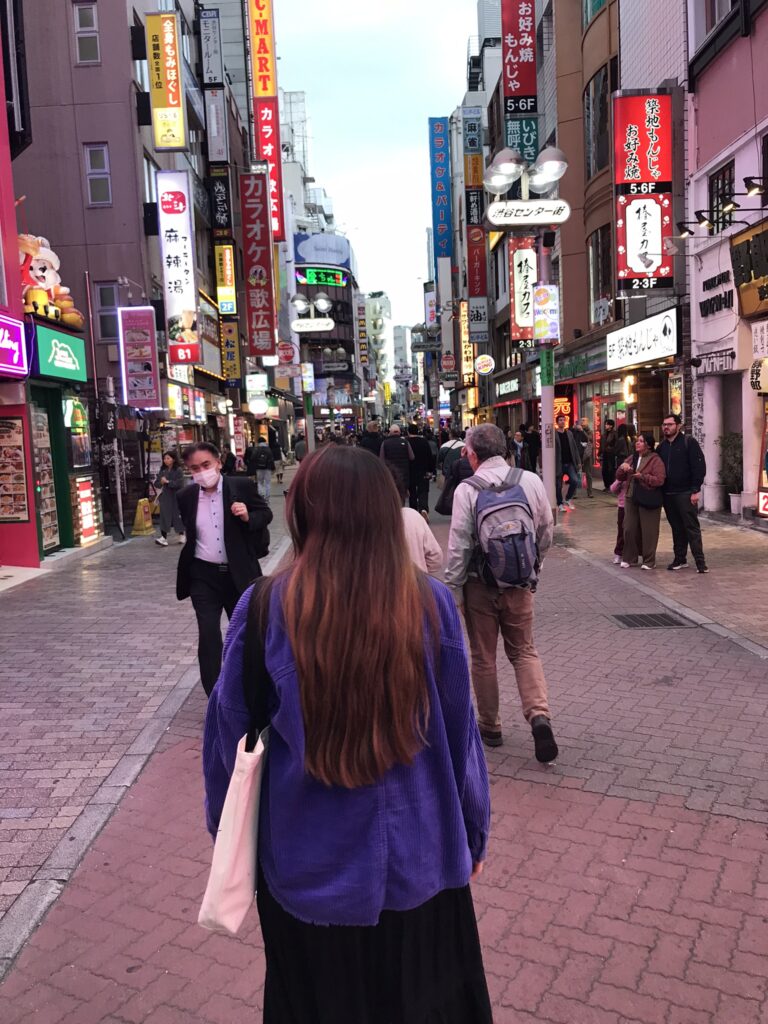
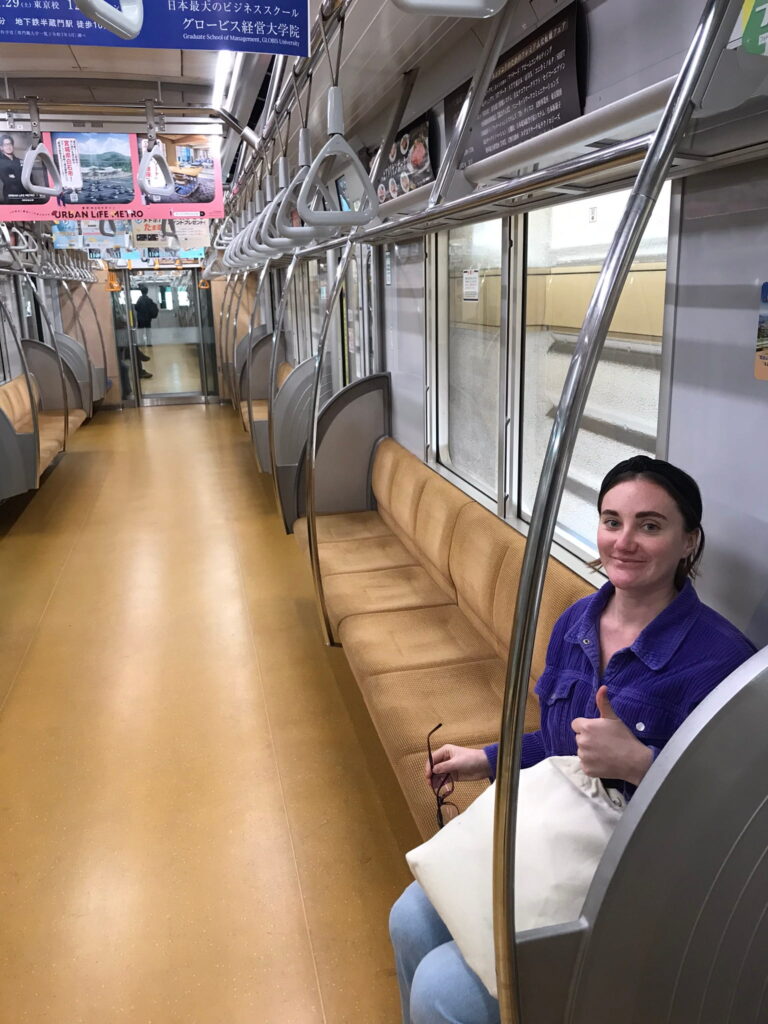
Walking and taking the metro are the best forms of transport in Tokyo
Public transport can be super busy at peak times and stations are often packed with commuters rushing in all directions. For tourists and even experienced travelers this can be a bit of an overwhelming experience. Some travel guides recommend against travelling at rush hour on the metro, but this just isn’t realistic if you want to pack in as much as humanly possible into your days like us. We braved rush hour on the metro and although it was a tad uncomfortable being crammed like sardines into the carriage, we survived to tell the tale. The trains get you from A to B – just don’t expect a seat or much personal space. Travelling with luggage can be pretty awkward, especially if it doesn’t fit in the overhead rack (medium-sized backpacks can fit but anything bigger will be a struggle). To make the experience less hellish, I really recommend using an IC card – Japan’s name for a travel card. Even short-term visitors can pick up a free card (known as Welcome Suica) from the information centre at Tokyo Station – this is valid for four weeks and allows tapping on and off at public transport, a huge bonus at busy times. The Welcome Suica also works in other cities in Japan – anywhere an IC card is valid.
Accommodation
Wherever you stay in the city, you’ll inevitably end up spending quite a lot of time on the metro getting around. Consider which is the best area for you by checking out which attractions you want to visit first before booking a hotel. You may end up having to stay further away than you’d like but public transport is extremely regular and reliable so there’s no problem getting around. I highly recommend booking your accommodation in Tokyo as early as you can as it sells out fast – we couldn’t find anywhere at all in Central Tokyo or the Shibuya/Shinjuku area and we were looking a month in advance.
Flat on Airbnb located 15 minutes walk from Tokyo National Museum – this apartment was pretty basic but by far the cheapest option we could find in Central Tokyo. The wife of the owner made us sandwiches and left them outside the front door every morning which was a nice touch – she even made sure to leave snacks as well! It has everything you need for a flying visit to the city but it’s not luxurious by any means. It’s also linked to a Kendo martial arts dojo next door, so you can partake in a Kendo experience if you dare (more on that later).
Universal Haneda in Ota City – located way out of the city centre, the commute to Central Tokyo was around an hour which meant our already long days got even longer. The hotel is situated in a residential area within walking distance of two stations – it’s not the most convenient location for sightseeing but the rooms were very generously sized and the price was the best we could find within our budget. It’s very close to Haneda airport (which we didn’t use), but if you’re flying in or out of there then it would probably be ideal too.
Foodie Places
Bannin Riki – a pretty standard local ramen place near to Asakusa. There were a couple of other foreigners but it wasn’t a touristy place at all – a decent, relatively cheap meal.
Milonga Nueva – one of Tokyo’s many ‘listening bars’, this is a snapshot in history dating back to a brief period in which there was a local craze around Argentinian tango. This place has been around in various guises since the 1950s and, as it always has done, plays nothing but continuous old-school tango music on repeat. As is customary, patrons are encouraged to sit quietly and listen to the music, speaking only in hushed tones if at all. We had lunch here, there is a limited food menu and the pizza that we wanted was unavailable but we enjoyed our curry main. Really though this place isn’t about the food, moreso the suave vibe and historical ambiance. The cafe is located close to the Jimbocho neighbourhood, and makes a good break from exploring the many book shops.
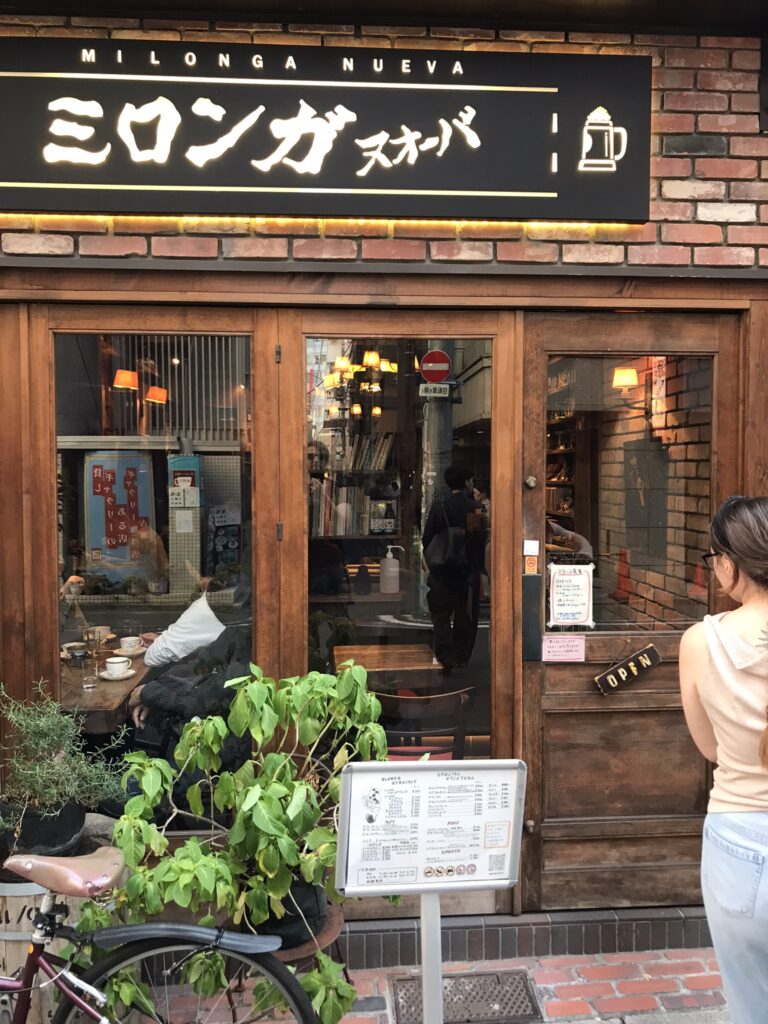
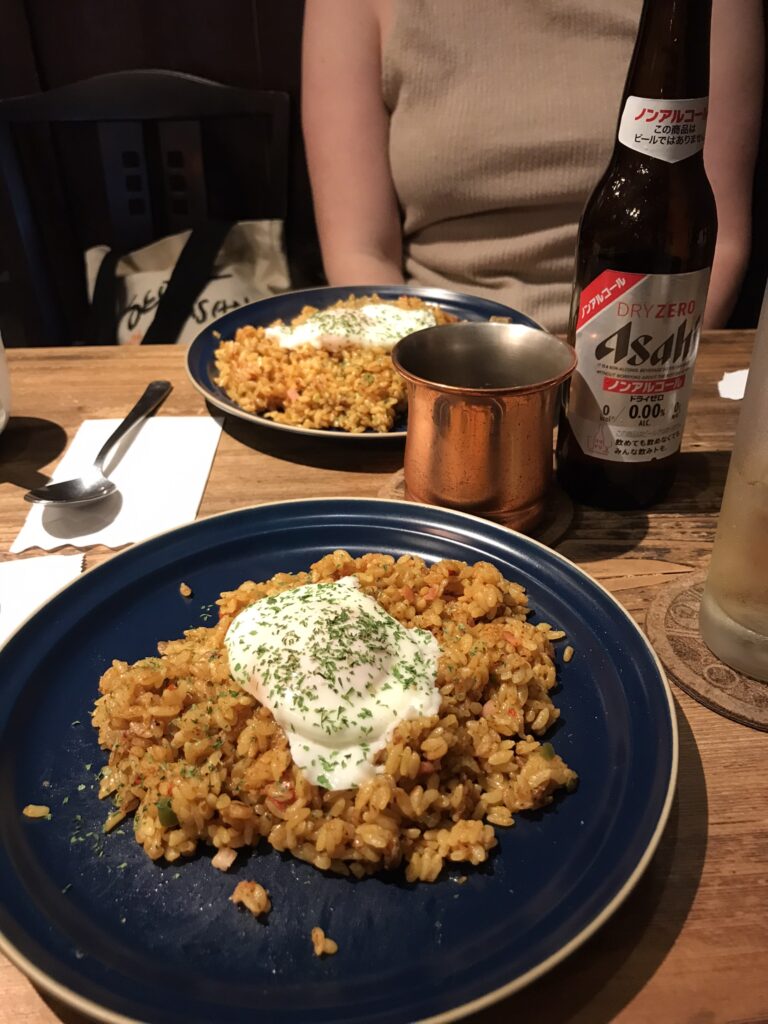
Head to Milonga Nueva for a suave atmosphere and to try their tasty ‘dry curry’
Subway – we were able to continue our tradition of having a Subway in virtually every country we visit with a quick sandwich near to Akihabara before heading onwards to Korakuen Hall. The sandwich didn’t disappoint. It seemed like the Japanese consider the normal serving for one person to be a 6-inch sub rather than the usual footlong – we had to order two each.
Tsujita Suidobashi – a good place for tsukemen in the area near to the Tokyo Dome complex. A typical local chain noodle place, orders are placed from a vending machine outside. The friendly chefs here gave us free orange juice.
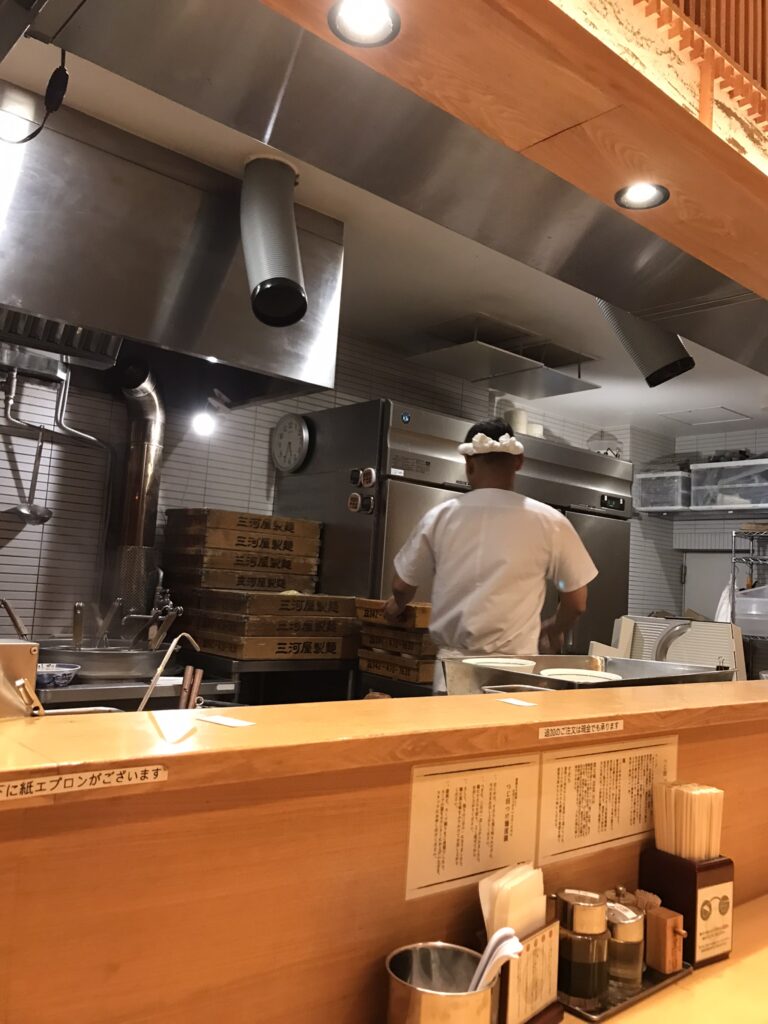
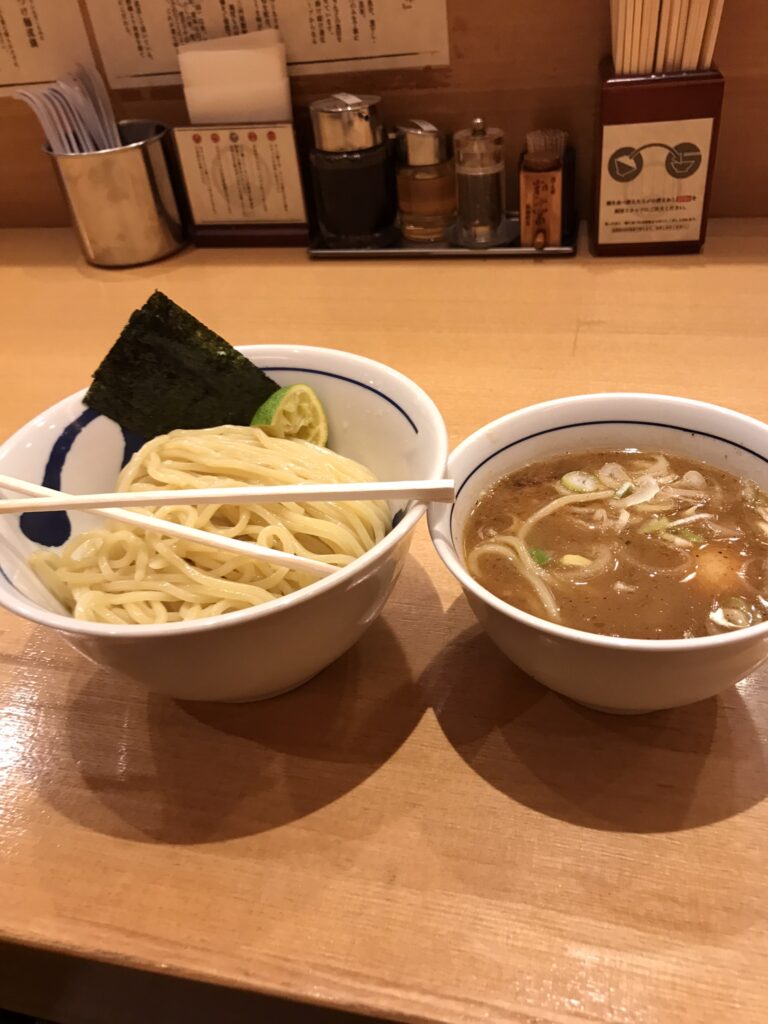
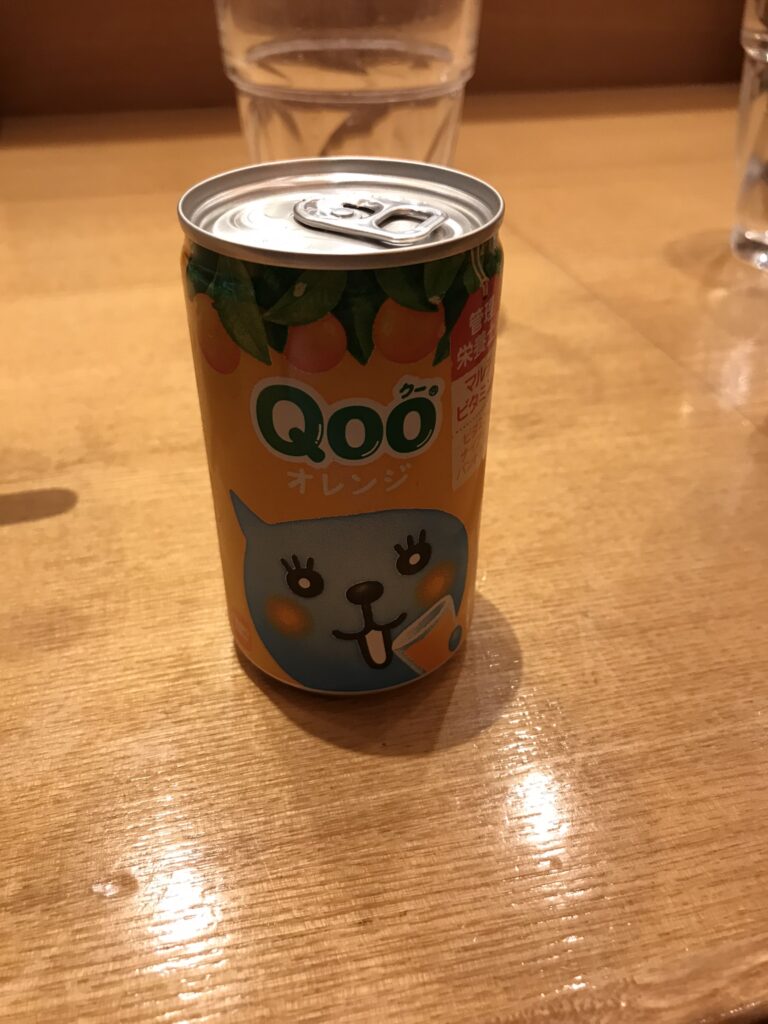
Tasty and affordable tsukemen from Tsujita Suidobashi
LIFE – I wanted to give a shoutout to LIFE supermarket – this was the best supermarket we found in Japan, stocking a huge variety of fresh bento boxes and sushi for a great price. We ate from here numerous times and I can’t fault it at all.
Activities
Tokyo is enormous and each part of the city has something different to offer. Let’s break it down into districts:
Asakusa: Centred around Senso-ji temple, the wider Asakusa neighbourhood surrounding the temple is a very busy touristic area with a huge amount of restaurants and souvenir shops both quirky and tacky.
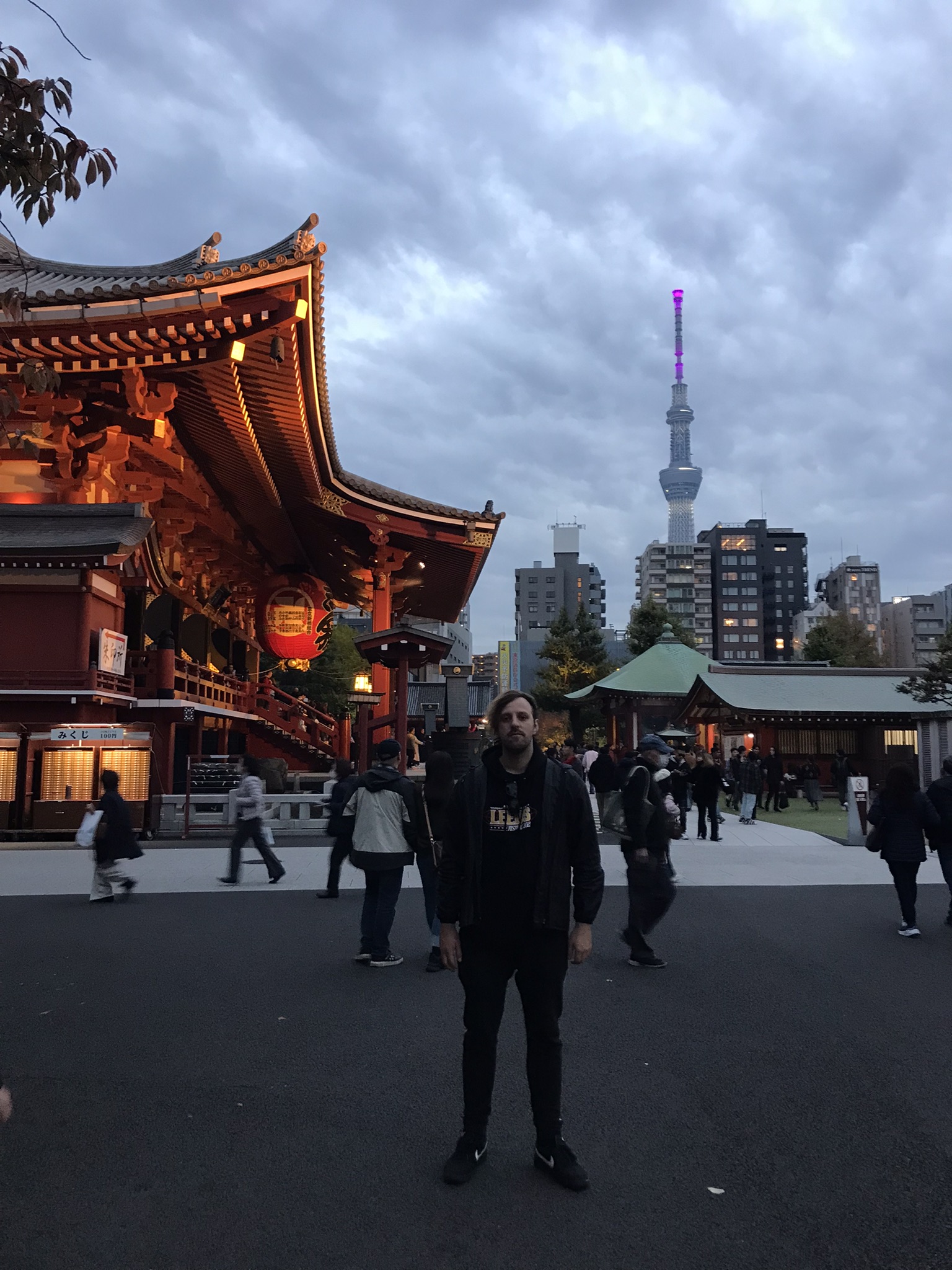
Senso-ji Temple – the oldest and one of the most important temples in Tokyo, this was by far the busiest temple that we visited in Japan. Outside are lots of shops in a huge arcade area – it consumes much of the Asakusa neighbourhood. It seems like every tourist visiting Tokyo heads to Senso-ji, so prepare for crowds and an onslaught of selfie sticks. We visited at the end of the day, around sunset. This was good as it allowed us to see the temple in the daylight and also lit up at night. The big lanterns were a pretty cool feature. Apparently the temple was founded during the 6th century during Japan’s Asuka Period, close to the time of Buddhism’s introduction to Japan. An opulent and ornate gold inner sanctum and smaller temples and structures stand within the grounds.
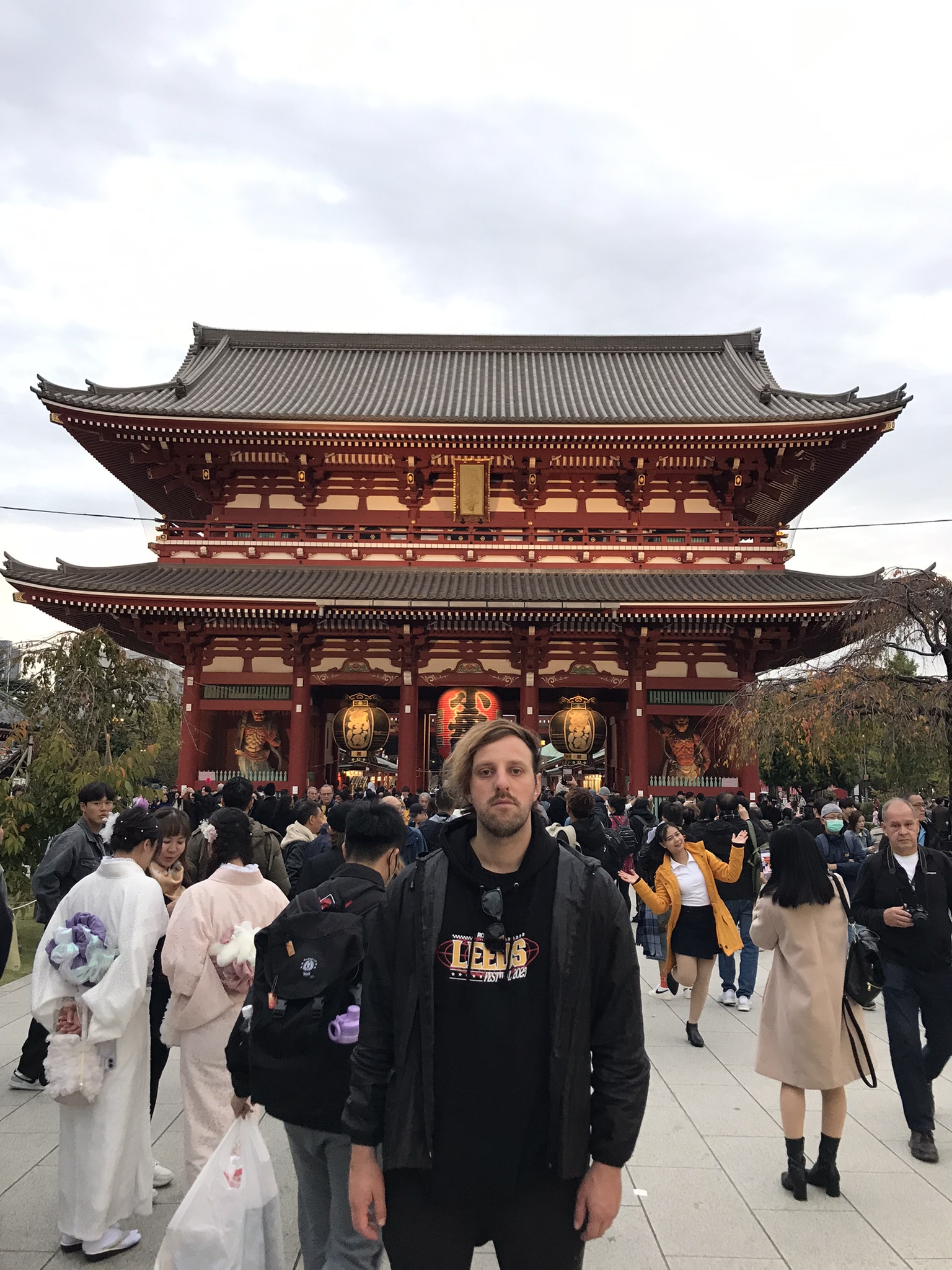
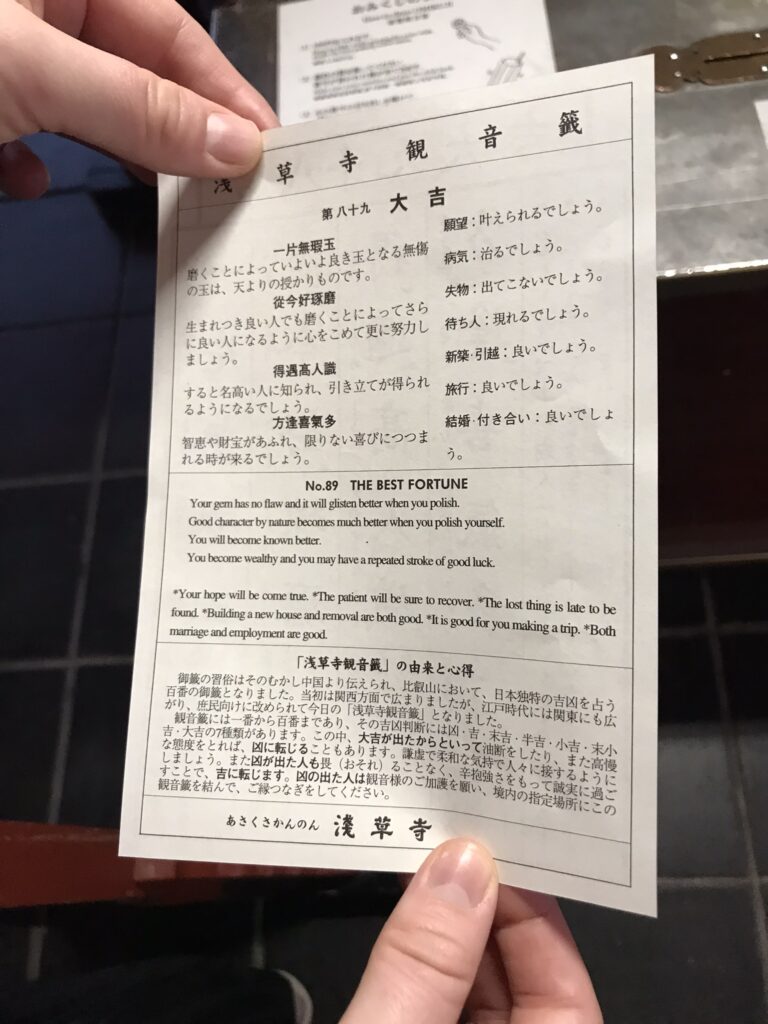
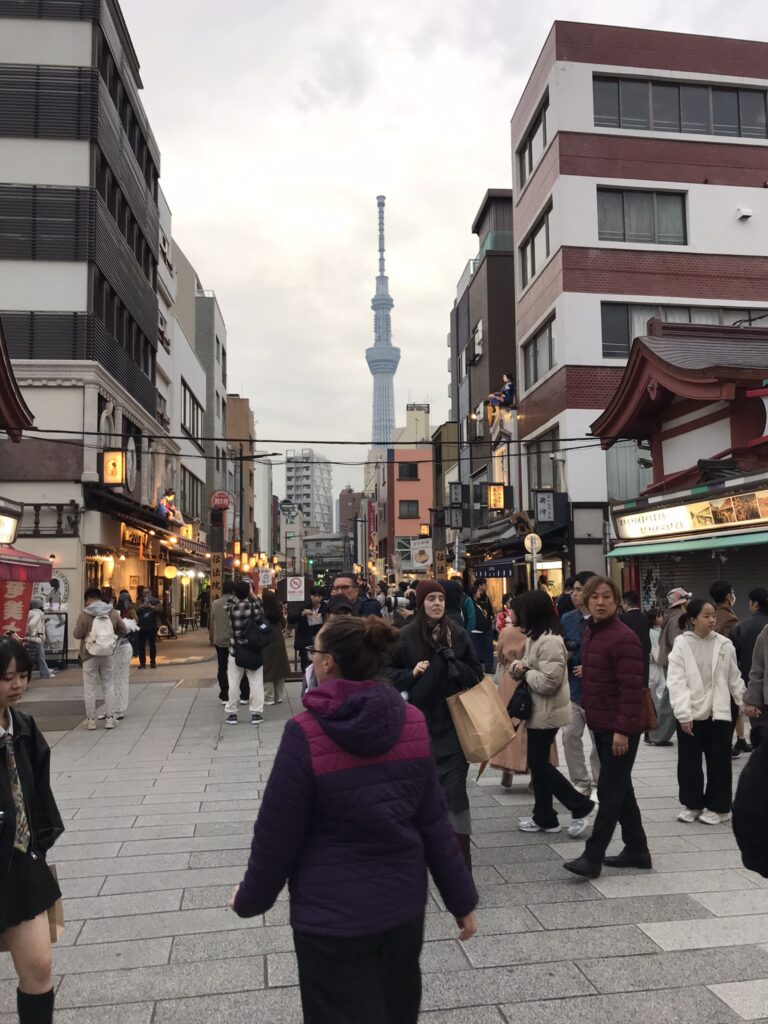
Asakusa is a lively area, especially Senso-ji temple – don’t forget to grab a kuji (fortune)
A popular tourist activity here is omikuji (fortune telling). You can get a kuji (fortune) in English, Japanese and other languages – just shake the metal box and pick one out. Negative fortunes can be returned as per the ritual.
Asahi Group Head Office Superdry Hall – the headquarters of the world-famous Asahi beer. This skyscraper has a bar on the top floor with fantastic views across the city, all for the price of a beer. We had to wait a few minutes for a table to become available, after that we were able to enjoy a cool Asahi from this spectacular vantage point. A great place to come in the evening after sunset. The beers aren’t overpriced and they don’t mind you ordering just one per person if you aren’t planning on making a night of it. Bizarrely, several of the beers were sold out when we visited, which didn’t seem to make a lot of sense given that it’s the headquarters. This is a great alternative to the expensive and insanely touristy Tokyo Skytree. You actually get great views of the Skytree from this point.
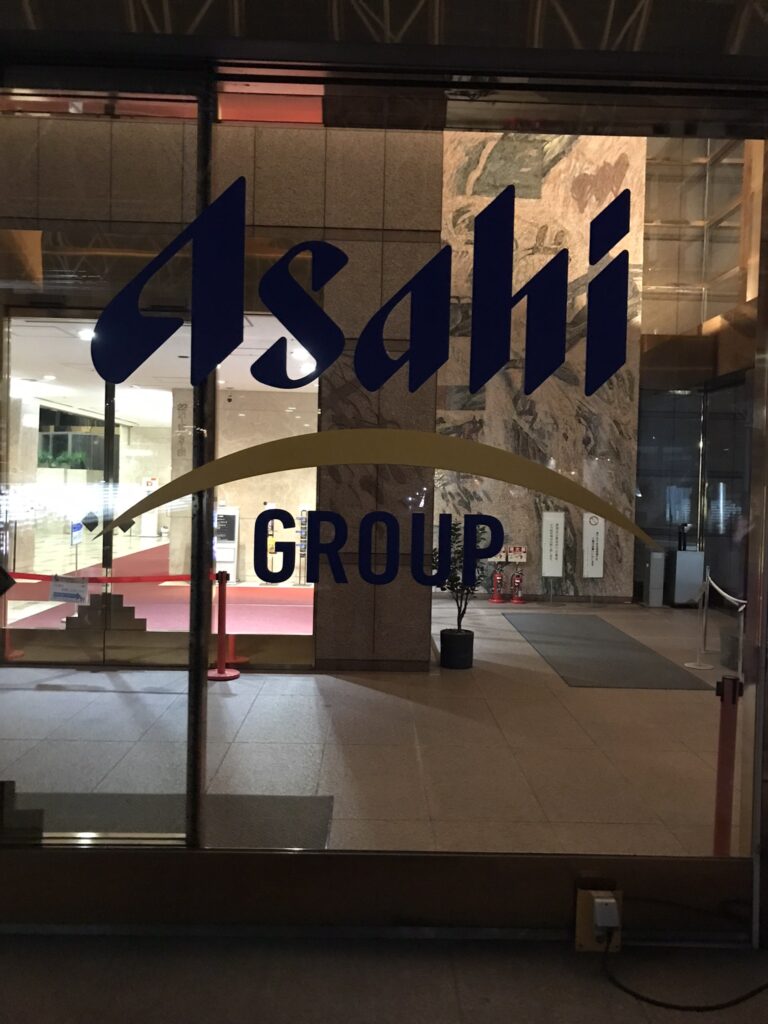
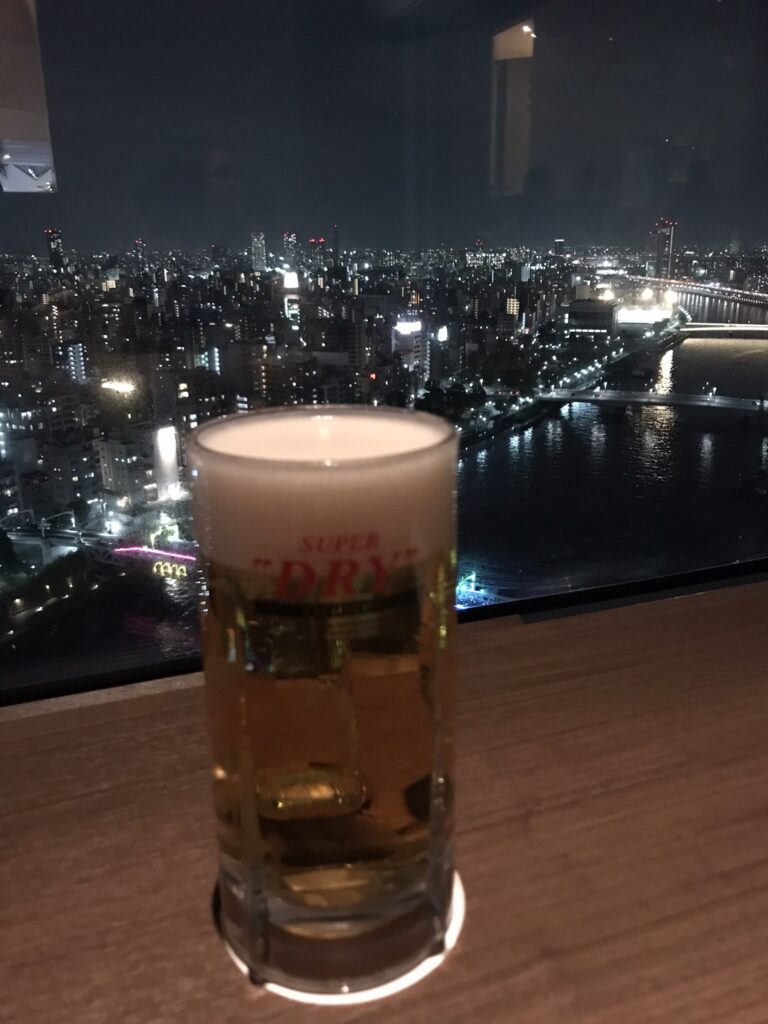
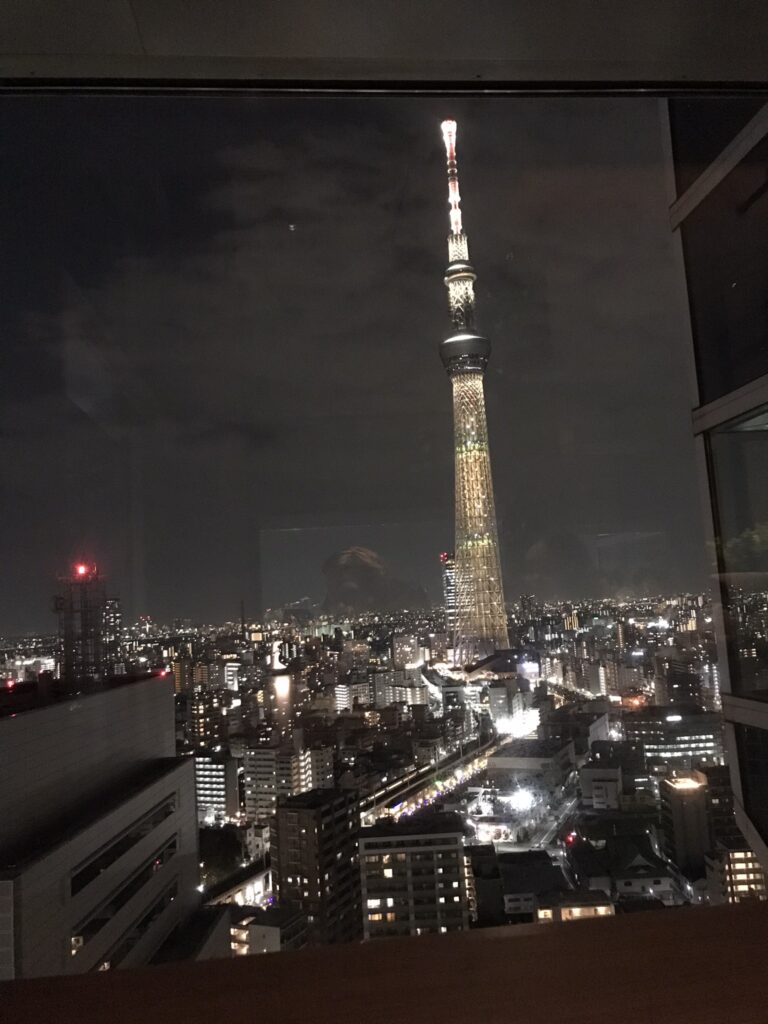
Top prize for night cityscape views goes to Asahi HQ
The Asahi HQ is a notable local landmark in part for the strange yellow ‘flame’ design on one of the buildings, which is visible across the nearby river. This isn’t actually the building with the bar and observation deck – you need to head into the office-looking building behind the one with the yellow sculpture on top and then take the elevator to the top floor.
Ueno: a central area known for its many museums, which are focused around Ueno Park.
Tokyo National Museum – the main attraction of the various museums in Ueno Park, we predictably ended up spending all day here. The museum complex consists of quite a few different galleries which are all covered by the same admission ticket. There are some tea houses and food traders on the museum grounds too. The main focal point for most visitors here is the Honkan (Japanese gallery). Other major galleries are Toyokan (Asian gallery, featuring artifacts from China and other (non-Japan) Asian nations) and the gallery of Horyu-ji treasures. Free coin lockers are available for visitors within the museum for a refundable 100 yen.
The Honkan walks visitors through 13,000 years, encompassing the Paleolithic, Jomon, Yayoi, Kofun, Asuka, Nara, Heian, Kamakura, Muromachi, Momoyama, Edo, Meiji and modern periods – the entirety of Japanese history. Despite the depth of information, the museum is actually (deliberately) quite sparse in terms of actual artifacts – only a few selected items of the enormous collection are on display for each area, which are periodically rotated to keep the exhibits fresh. Highlights for us were the impressive gallery of samurai swords and armour, as well as the displays of exquisite kimonos. There is also a whole room devoted to the famous Japanese tea ceremony, and another for performing arts such as kabuki and noh. There are also small sections dedicated to the Ryukyu kingdom (Okinawa) and the Ainu (Hokkaido). The gallery is extremely thorough, providing a huge amount of information and an invaluable insight for first-time or returning visitors to the country.
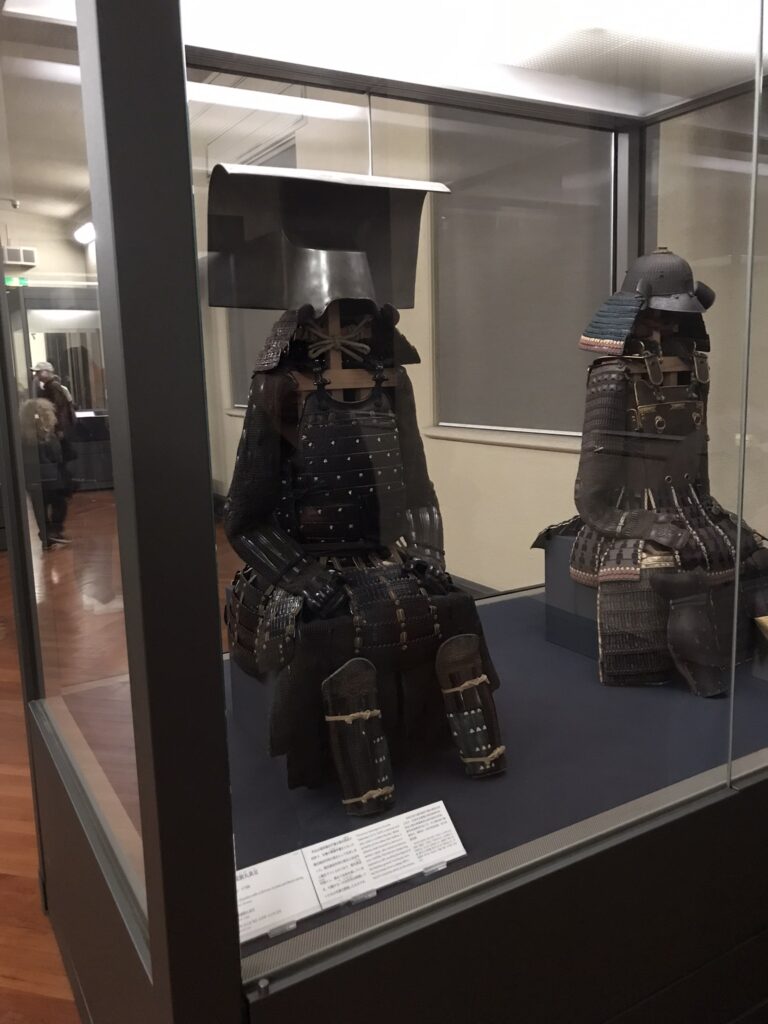
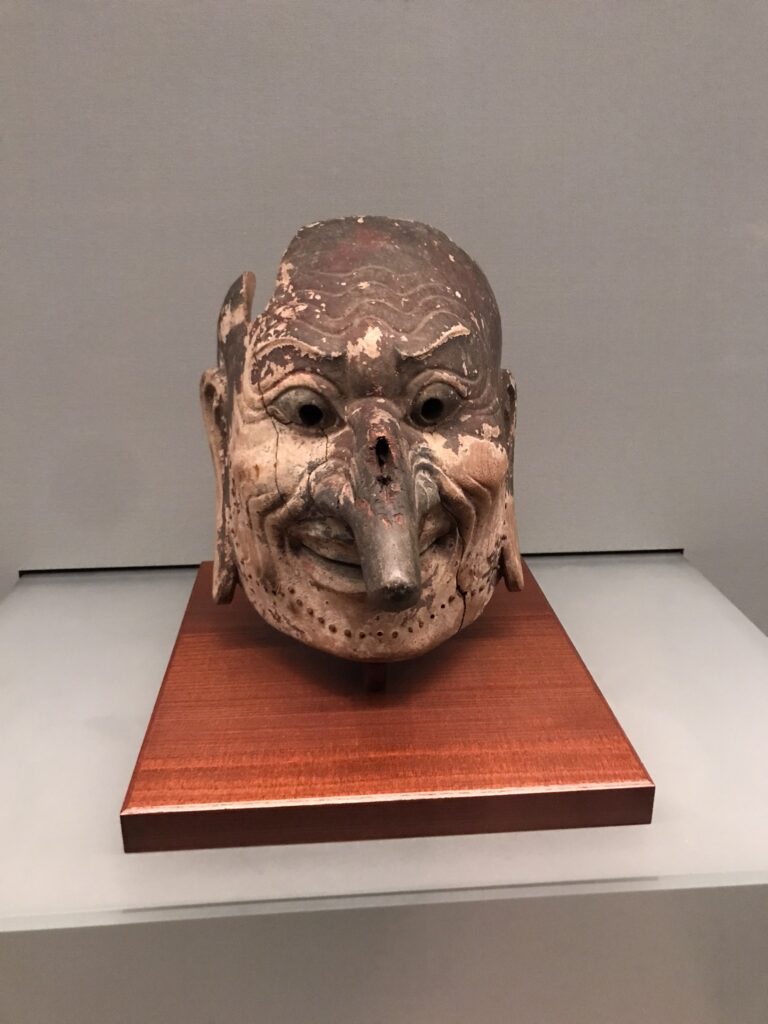
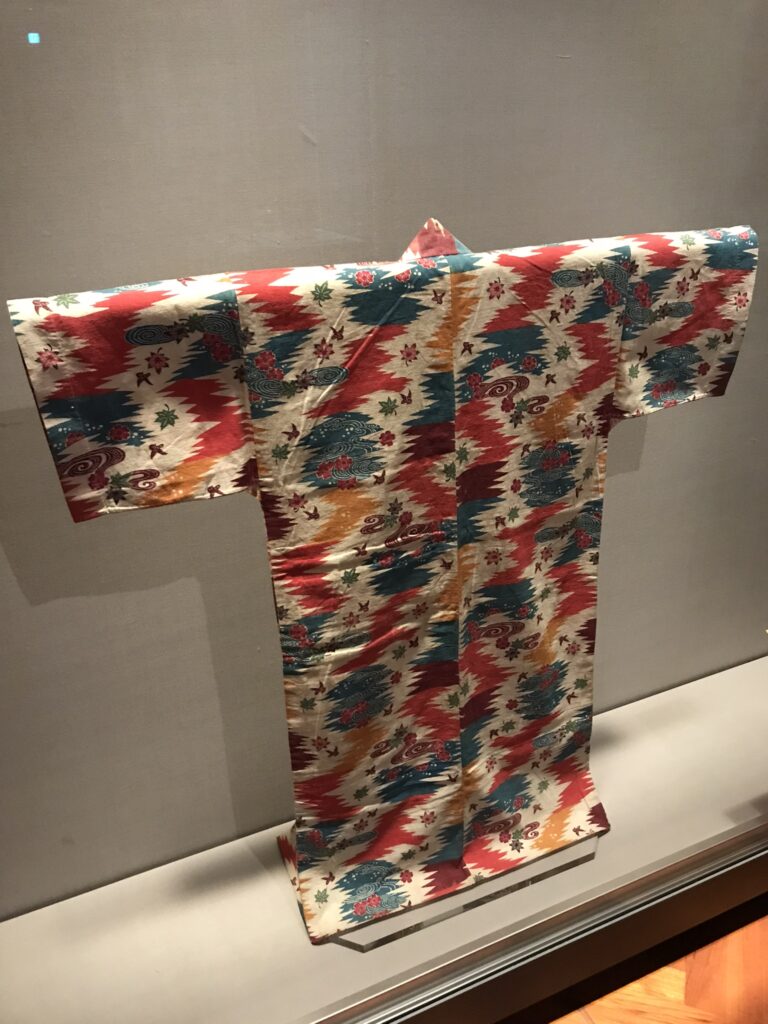
Unusual samurai amour, wooden masks from the 7th century and a colourful Ryukyu kimono were all on display at the National Museum
The Horyu-ji gallery is the most impressive part of the museum in terms of artifacts – a huge collection of intricate works and religious reliquaries dating back well over a thousand years. We were particularly impressed by the garish 7th century wooden masks – it was unbelievable to see such old wooden items preserved in this state. This gallery definitely gave us a greater understanding and appreciation during our later visit to Horyu-ji (a major historic temple complex near to the city of Nara).
Ueno Park – there are many museums here and even a zoo. We spent all day in the National museum and so weren’t able to visit any of the others as we had run out of time (we tried and failed to visit the Metropolitan Art Museum). The park itself is quite a vibrant place, with plenty going on. We took a quick walk to Shinobazu no Ike Bentendo – a reconstruction of a 17th century Buddhist temple on an island, surrounded by ponds filled with lotus flowers which is quite a surreal sight in the midst of the bustling city. It reminded me of some of the Buddhist temples in Colombo, Sri Lanka. Sadly, at the time of our visit the lotus wasn’t at its best – it looked a bit like a dead swamp.
Kendo (booked through our accommodation) – as we were staying in an Airbnb which was linked to a kendo dojo and having seen that they were affiliated with a company which offered a tourist ‘kendo experience’, we (somewhat stupidly) asked the master if we could participate. We ended up with a one-on-one session with the kendo master. At the same time, an intermediate or higher-level session was taking place next to us involving the regular kendo practitioners. There was lots of shrieking involved from the other sparring practitioners, and we were the only tourists/beginners/foreigners so it was pretty intimidating.
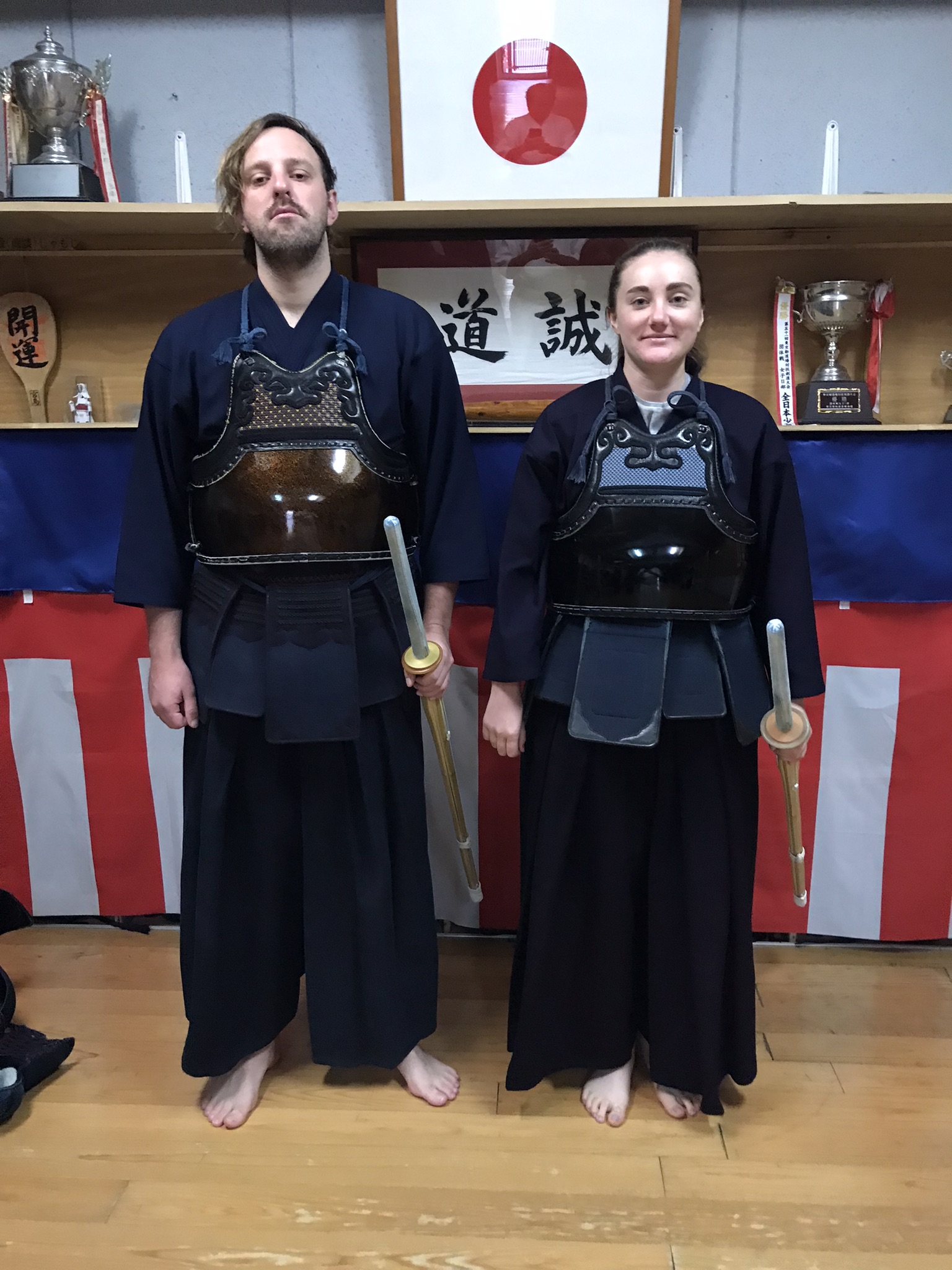
Quaking in our boots (we actually had bare feet!) at the Kendo session
Kendo is treated as a sacred discipline, descended from ancient kimura and swordsmanship techniques. There are many rituals involving displays of respect to the master and the other participants – it’s forbidden to wear shoes in the hall and specific attire is required which was provided for us. The wizened old sensei was a very serious and stern man, and part of the training involved us bonking him on the head with the kendo sticks! After training, Dan and I were then allowed to spar with each other. Naturally, all of the training went out of the window at this point and I ended up giving Dan multiple whacks on areas where he wasn’t protected by the armour. The sensei seemed less than amused by our performance! Luckily we weren’t made to spar with the more experienced local fighters, which we had been worried about and definitely would’ve ended badly for us.
This experience definitely gave us an appreciation of Japanese swordsmanship, discipline and martial arts. For a presumably much less intense experience, I think you can book a tourist introduction session at this place through this website.
Yanaka: this area is a little like going back in time, with no skyscrapers and a very relaxed, small-town feel for a neighbourhood in the middle of the city. There’s a totally different vibe here from most of the other bustling and glitzy areas of downtown Tokyo.
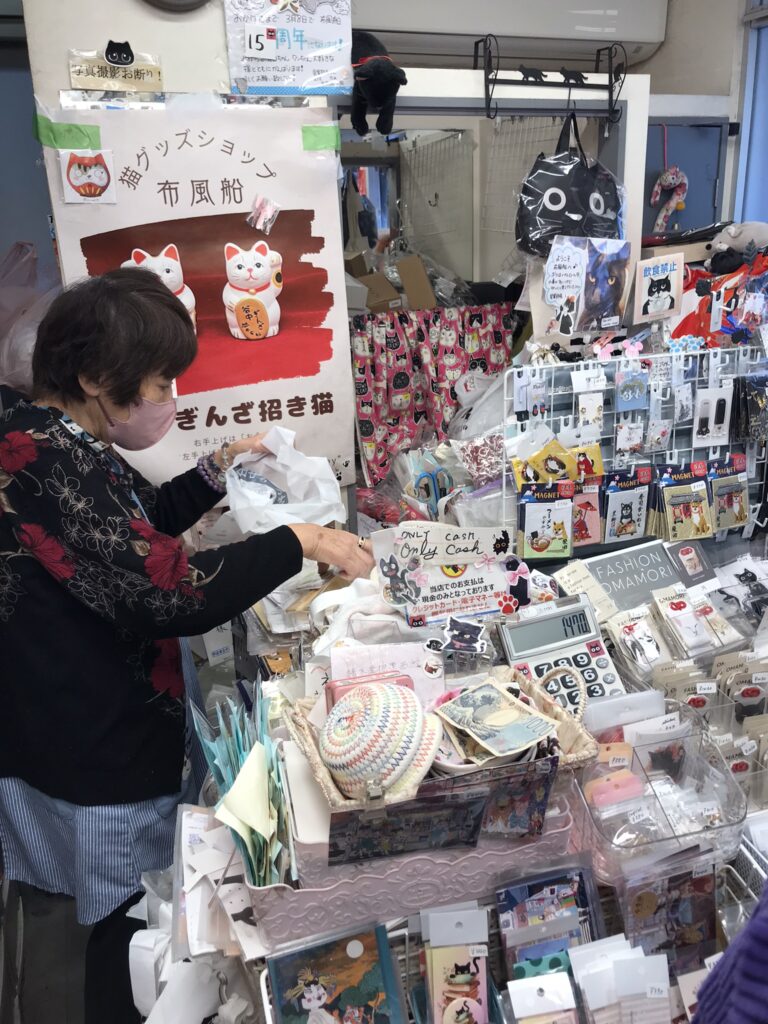
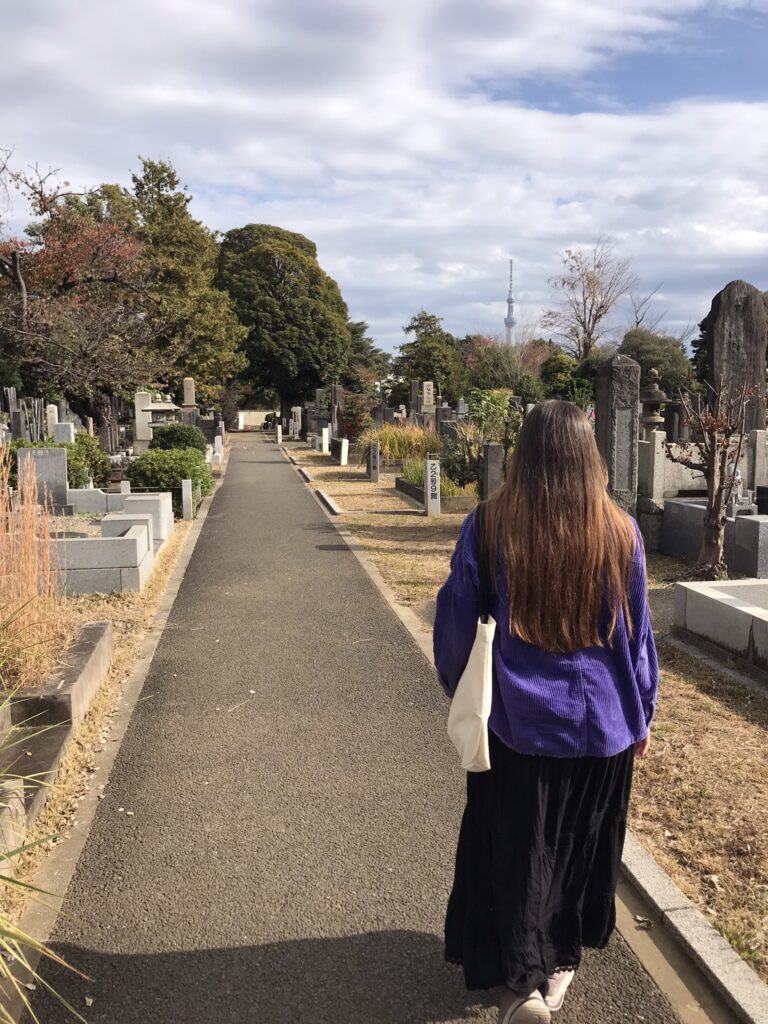
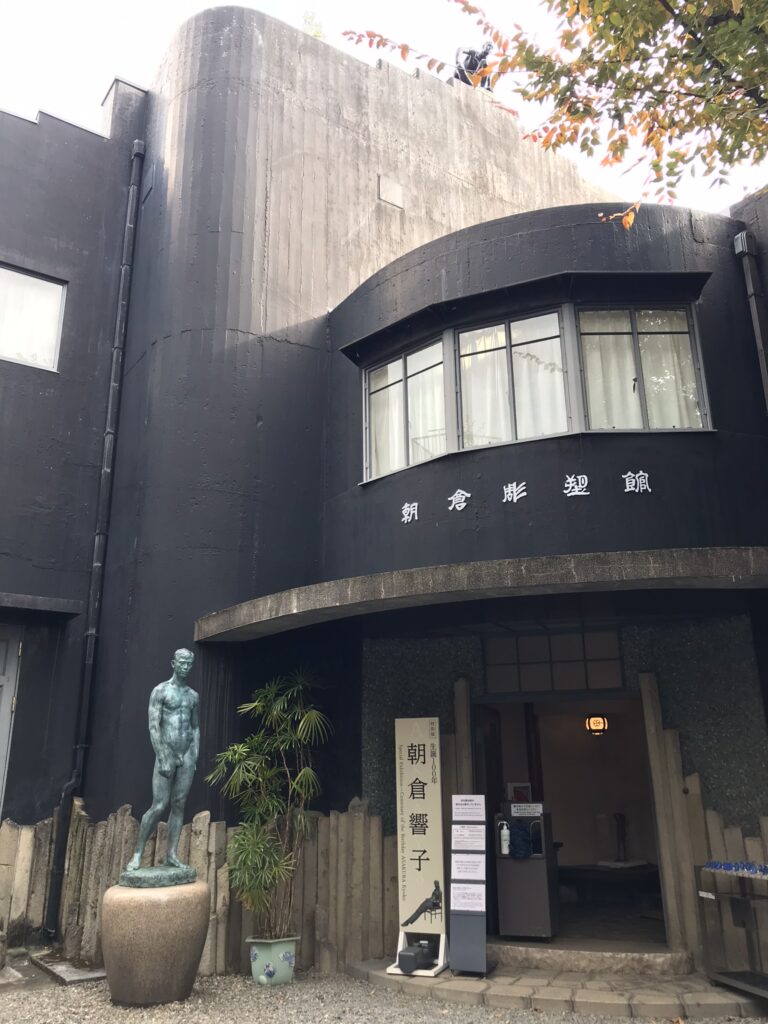
Cute cat-themed shop, creepy Yanaka Cemetery and the outside of Asakura Museum of Sculpture
Yanaka Ginza – a very touristy shopping street. This is a pretty good place to buy some quirky souvenirs – we entered one cat-themed shop, and I’m sure there were many others. Be prepared though as the place was absolutely heaving with European tourists when we visited.
Yanaka Cemetery – it’s a little macabre and probably not for everyone but we always find it interesting to visit cemeteries and graveyards in the various countries we visit. In my opinion it provides an interesting insight into local culture. A huge and atmospheric complex, I imagine this place was quite spooky at night. The Sotoba (wooden sticks) made an eerie sound when clattering together in the wind. It was also interesting to see the Tokyo Skytree looming in the background here.
Asakura Museum of Sculpture – this was the house and studio of the artist Fumio Asakura, although the sculptures on display inside are mainly works by his daughter. The statues are mostly bronzes, full-length and Western-looking in design. Photos are only allowed at two points within the museum and it’s also required to remove shoes and carry them around inside. There are some enthusiastic and engaging volunteers inside who are eager to have a chat. The rooftop also gives a nice view over the surrounding area, including the huge graveyard next door!
Tokyo Station area: this is the centre of the city, containing the sprawling Imperial Palace grounds.
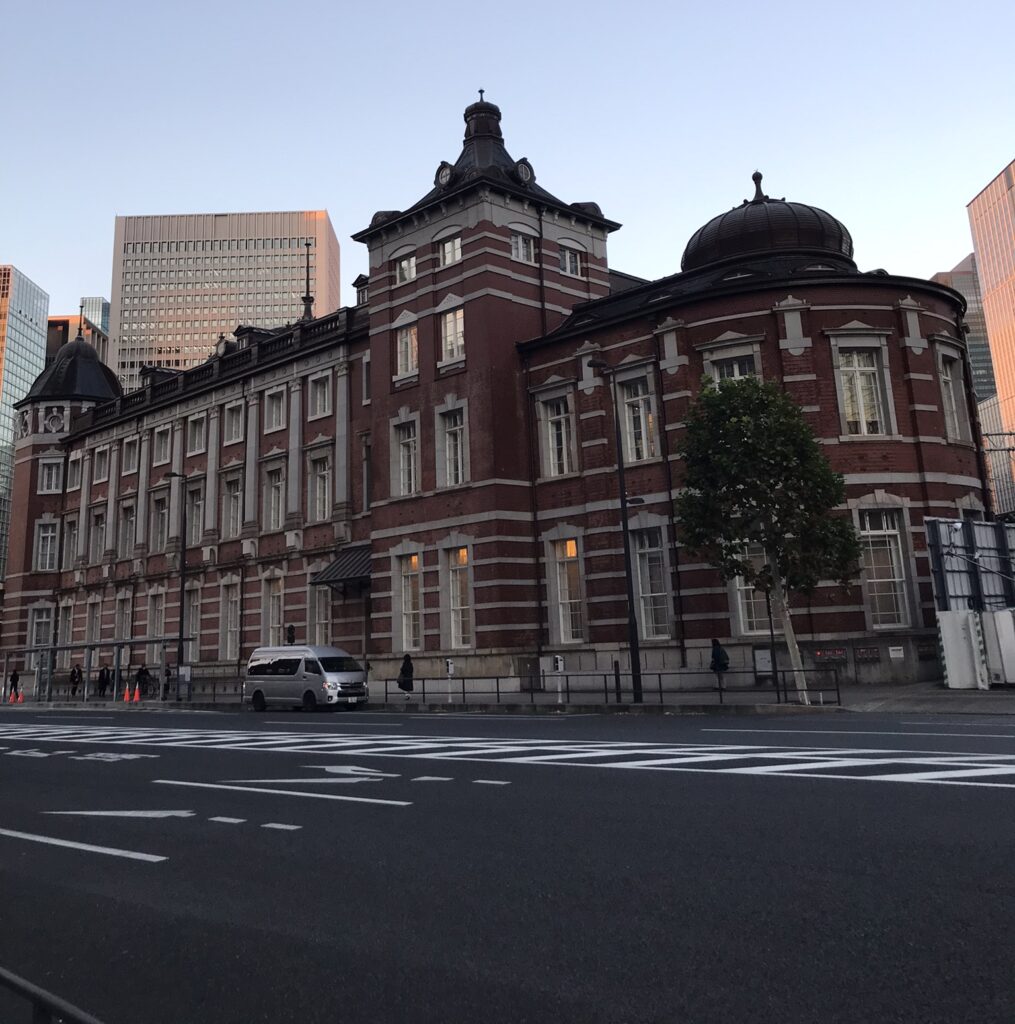
Grand Tokyo Station at dusk
Imperial Palace – the former Edo Castle and symbolic seat of power since the 1600s, this is the official residence of the Emperor of Japan. The actual palace is understandably off-limits for visitors, but there is still plenty to see in the extensive and historical grounds which can be freely explored. The palace complex creates a huge green space at the heart of the city and the external moat surrounding the palace is quite a scenic running/strolling route, with the National Diet (Japanese parliament building) just down the road.
Outside, the huge open gravel courtyard is a stark contrast to the green interior and the surrounding skyscrapers. Security checks and bag searches are conducted before visitors can enter the East Gardens of the palace. Only a few structures remain inside, including the base on which formerly stood the tenshu of Edo Castle (the former castle keep). We followed the GPSmyCity walking tour of the Imperial Palace grounds, which is a pretty comprehensive overview.
National Museum of Modern Art – located near to the Imperial Palace, this museum contains plenty of funky, interesting and thought-provoking artwork from the 20th century onwards. We were particularly interested in the paintings depicting scenes during World War 2 in Japan, which contain subtle allusions to local dissent at the time. The museum is really extensive, including realist and much more abstract pieces. There is also a great view over the Imperial Palace from the lounge inside the museum.
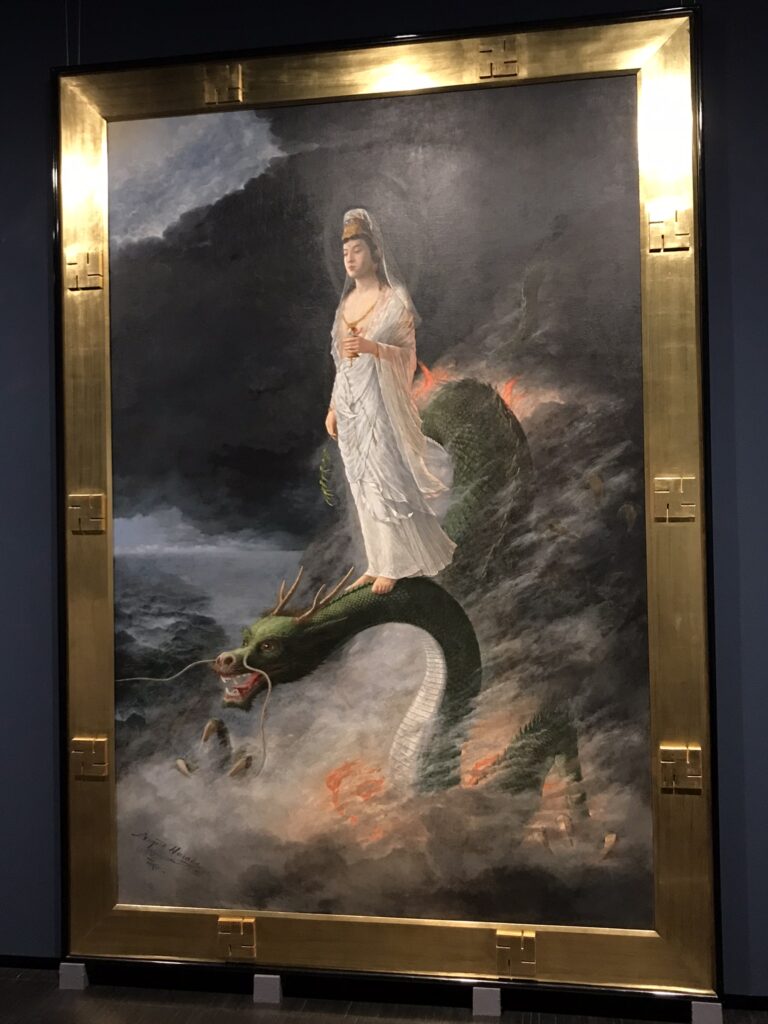
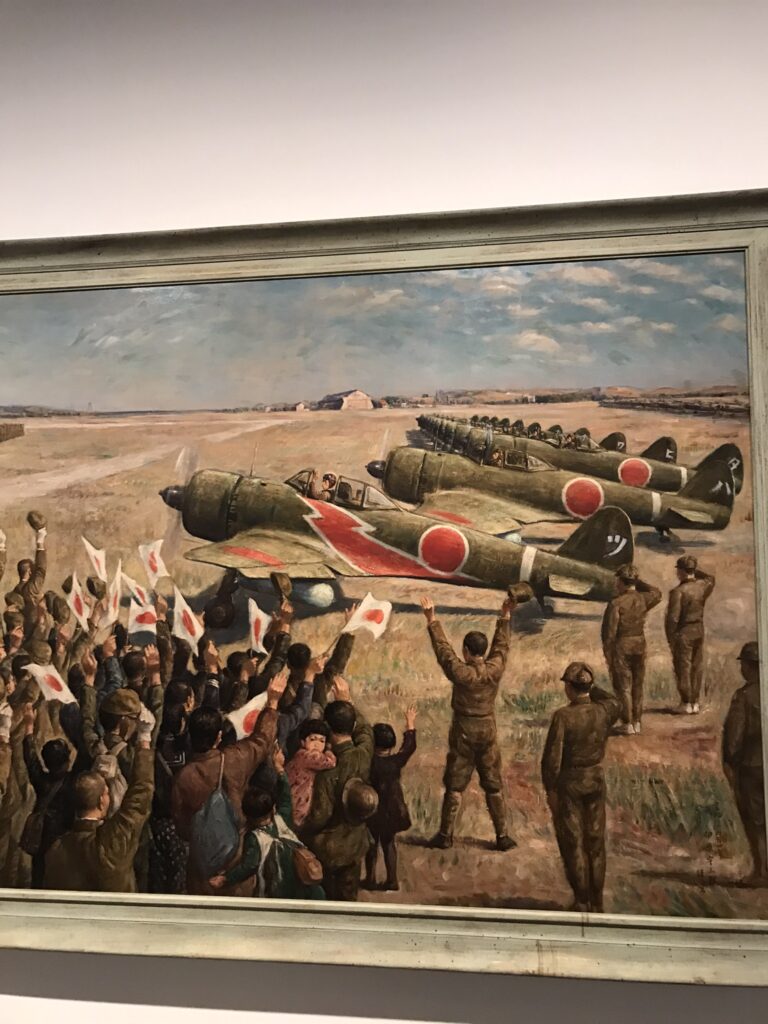
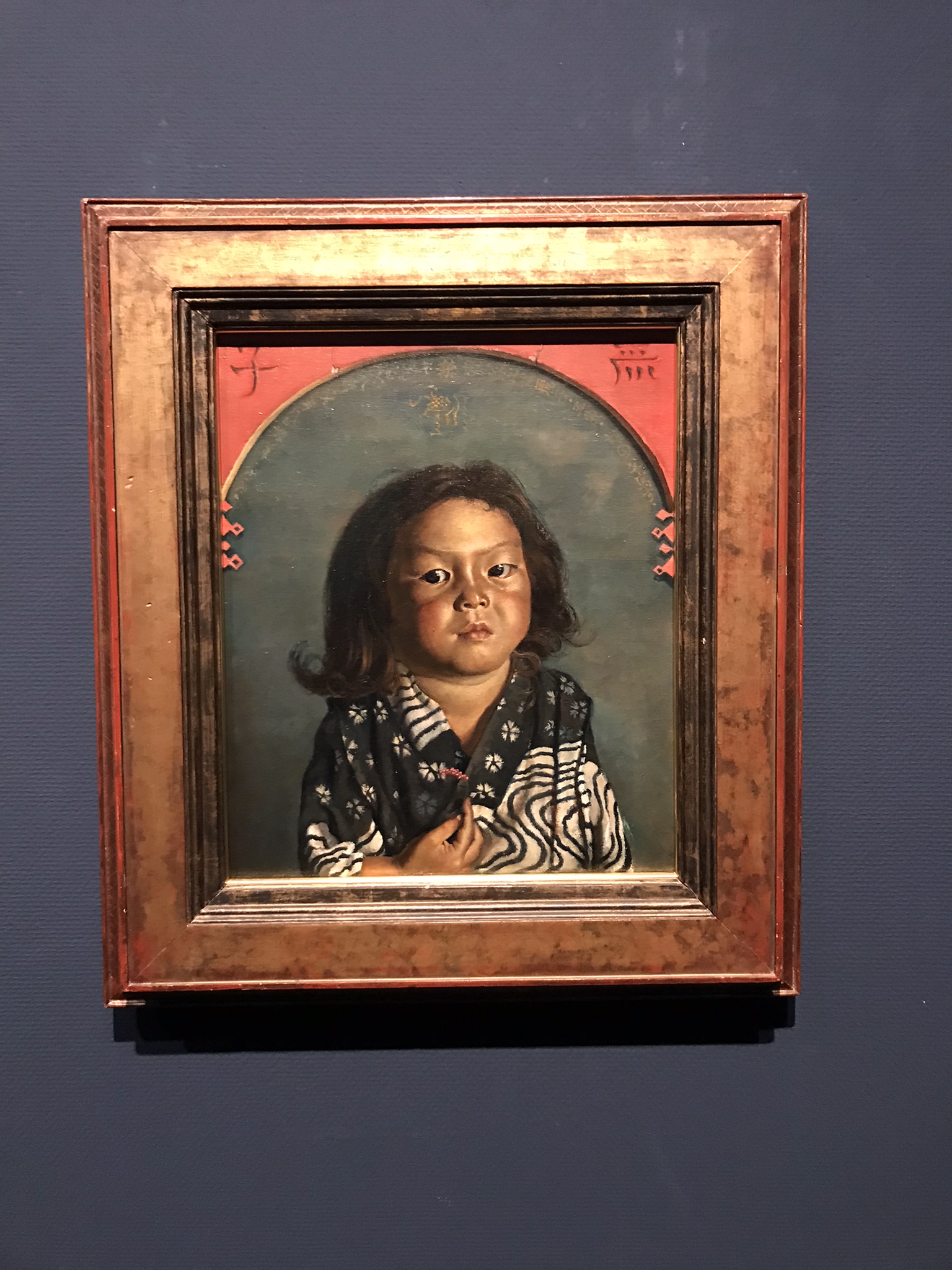
Some thought-provoking pieces from the National Museum of Modern Art
Tokyo Station Building – an iconic historic redbrick building which stands in stark contrast to the modern skyscrapers around. The designer of the station was a prolific architect, creating other structures around the country such as the Bank of Iwate Red Brick Building in Morioka.
Intermediatheque – situated on the second and third floors of the KITTE high-rise building around the corner from Tokyo Station’s main Marunouchi building, this is best described as a very obscure hall of curiosities. The ‘museum’ is free to enter and is filled with assorted specimens of minerals, fossils, busts of old scholars, taxidermied creatures, old maps, archaeological artifacts, 20th century mechanical models and much more, which are presented without context. It’s a very bizarre and wacky thing to encounter in a swanky shopping mall. You feel like you’re walking into some sort of antiquated mad professor’s lair.
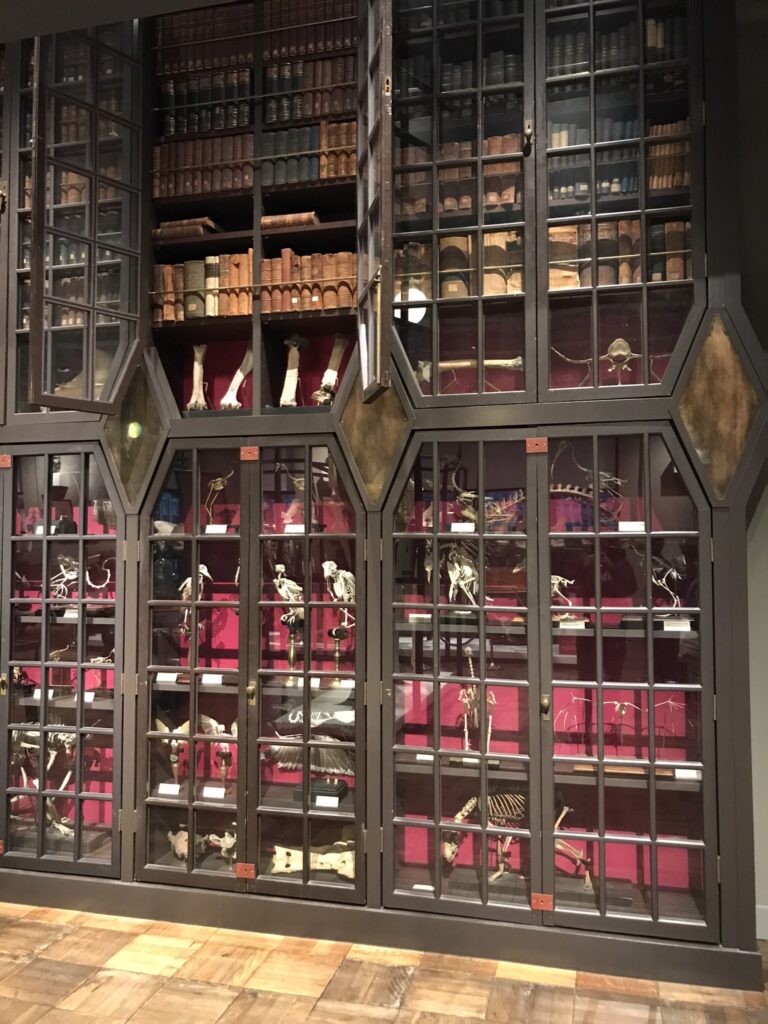
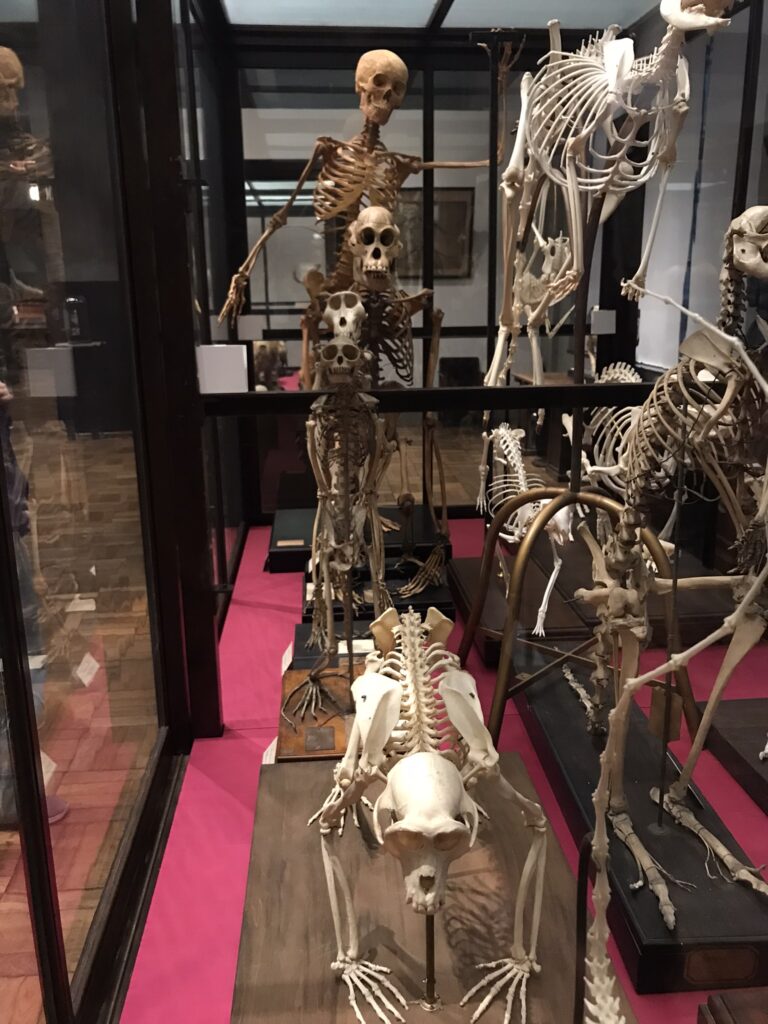
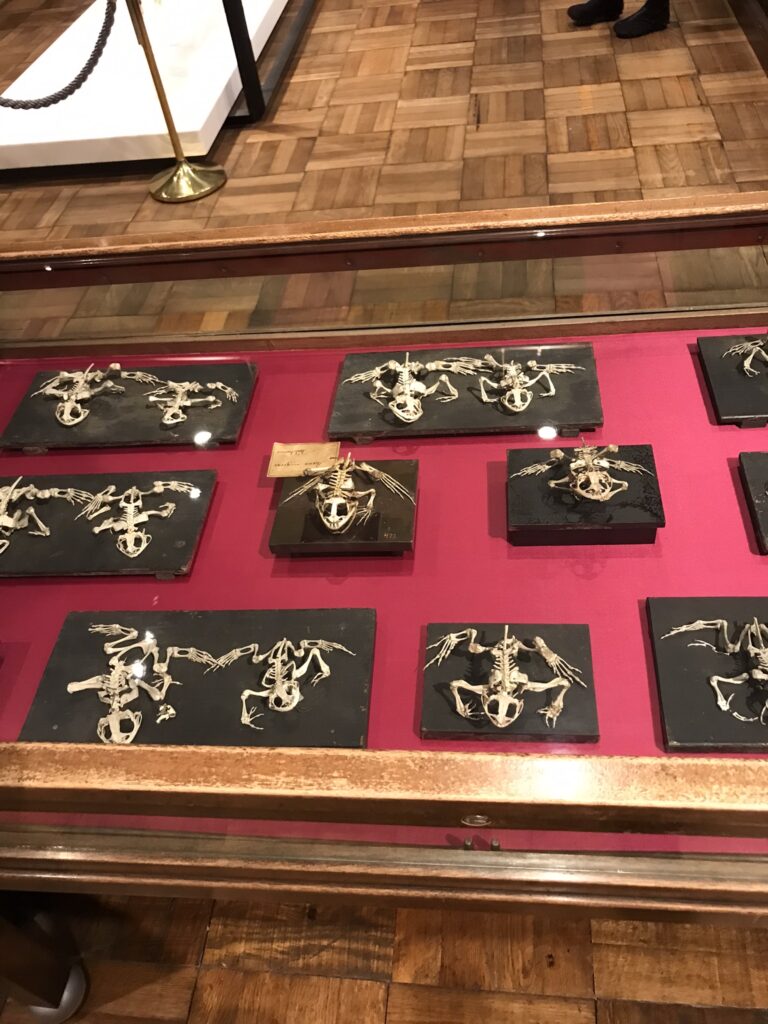
Intermediatheque: taking bizarre to the next level
Ginza: a sleek and glitzy area filled with very bougie department stalls and top brands. A popular hangout for the rich and famous, Chuo-dori street feels like a veritable wonderland for shoppers with big wallets. Ginza has always been a wealthy area – ‘gin’ translates to silver and this part of town has a history of commerce and coin minting. There are similar ‘ginza’ districts in many other cities in Japan but this is definitely the most prestigious and well-known.
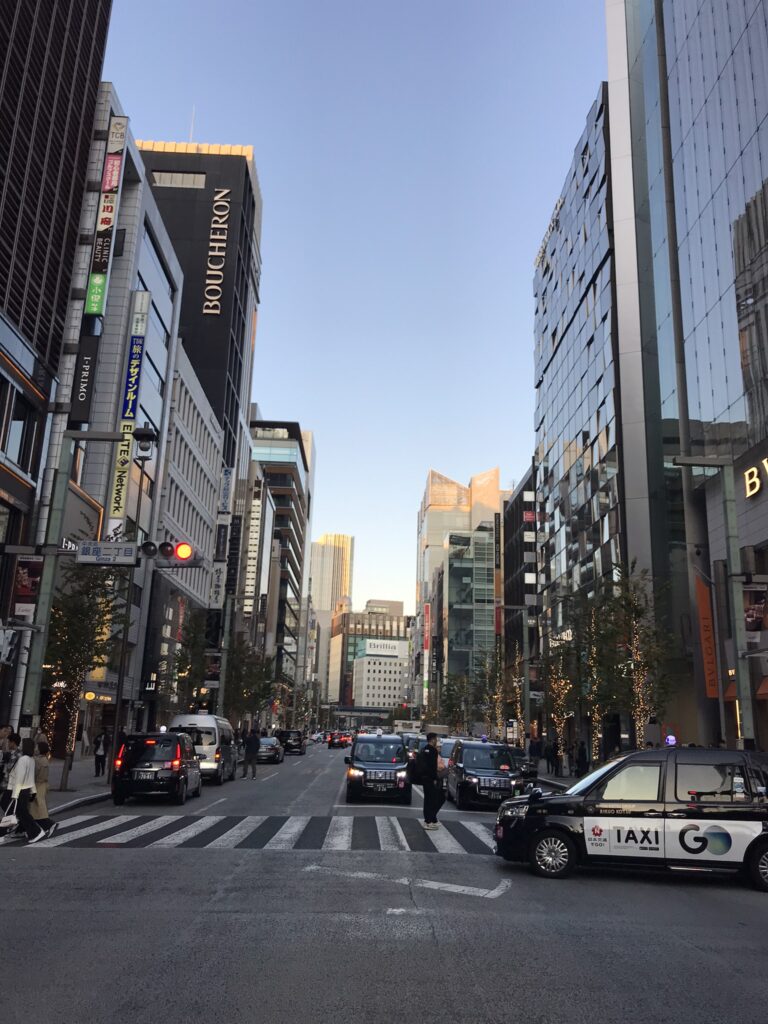
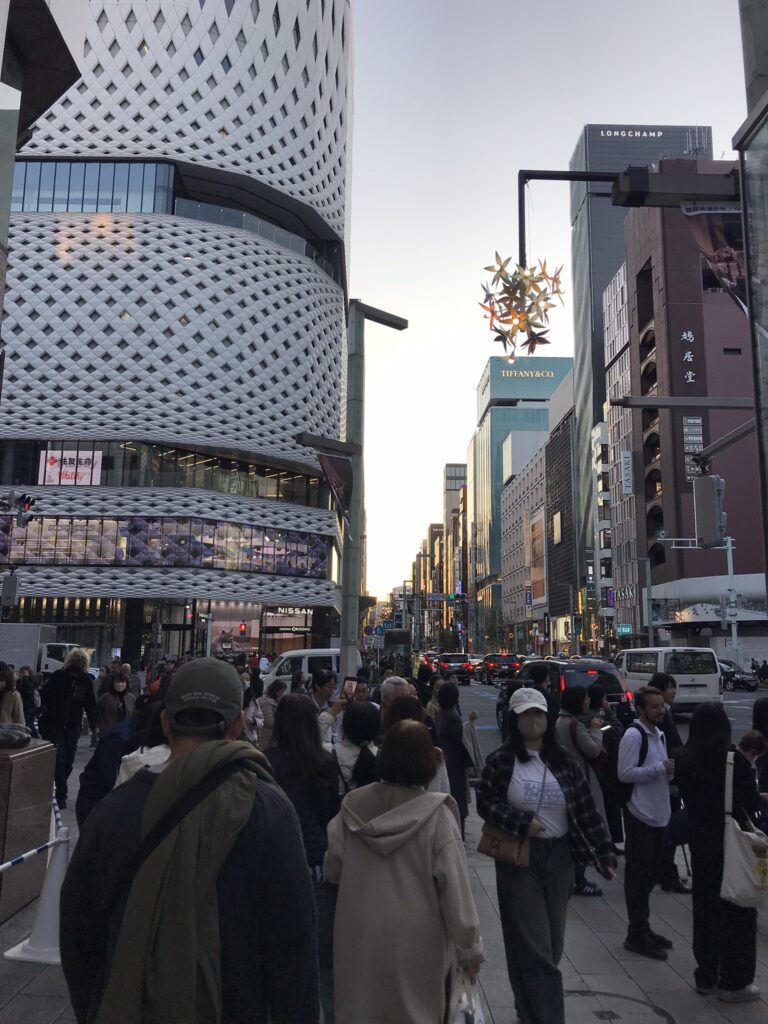
Glitzy Ginza at dusk
Ito-ya – one of the prominent high-rise stores on Chuo-dori in Ginza, this is a heaven for stylophiles. The store has 12 floors completely dedicated to stationery. There is a mind-boggling collection of pens for sale here, from cheap biros to luxury pens costing thousands of dollars, along with virtually anything else you can think of stationery-wise. It’s quite representative of the Ginza area, glitzy and with some very high-end products on display.
Public Utility Conduits – a personal favourite of Dan’s, the Public Utility Conduits of Ginza were constructed in 1968 and include electricity, telephone, gas, water and sewerage pipes, built within a single tunnel conduit which stretches underneath the sidewalks for a total length of 2 kilometres. The development of these conduits means that the streets are completely clear from cables and associated clutter, and also makes it easier for engineers to carry out repair works. You can view the conduits through a glass window in the basement of the Matsuya department store. It’s not the most exciting thing in the world, but a great insight into the infrastructure and inner workings of a modern mega-city like Tokyo.
Hodo-Inari Shrine – located in the midst of the Ginza neighbourhood, this tiny shrine is notable for the bizarre monkey statues which point visitors down the narrow alleys along the way. The shrine originally stood in Edo Castle before being brought to Ginza, where locals have credited it for the neighbourhood’s prosperity. We were interested to find a shrine even here amidst the swanky, ultra-modern buildings.
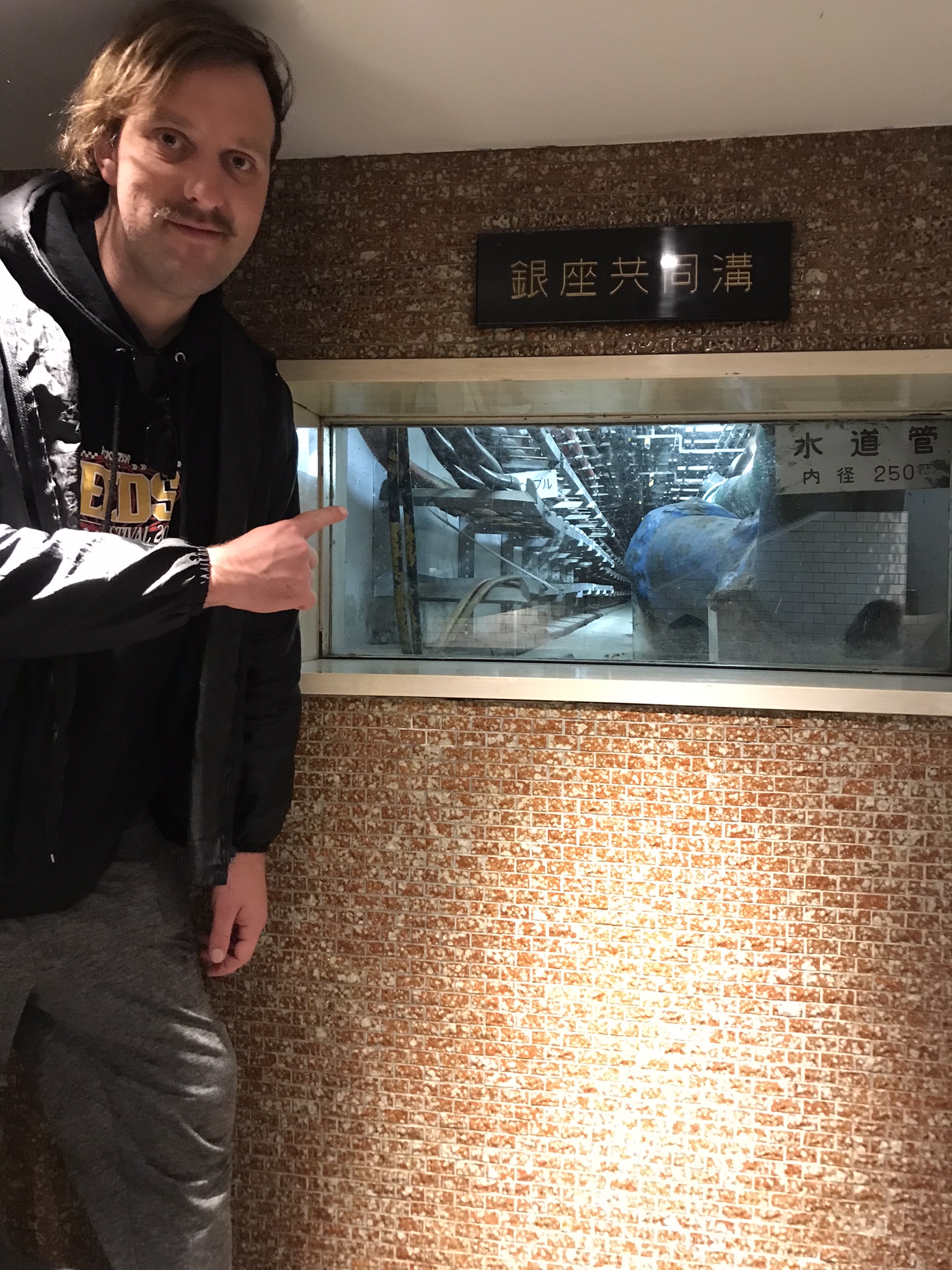
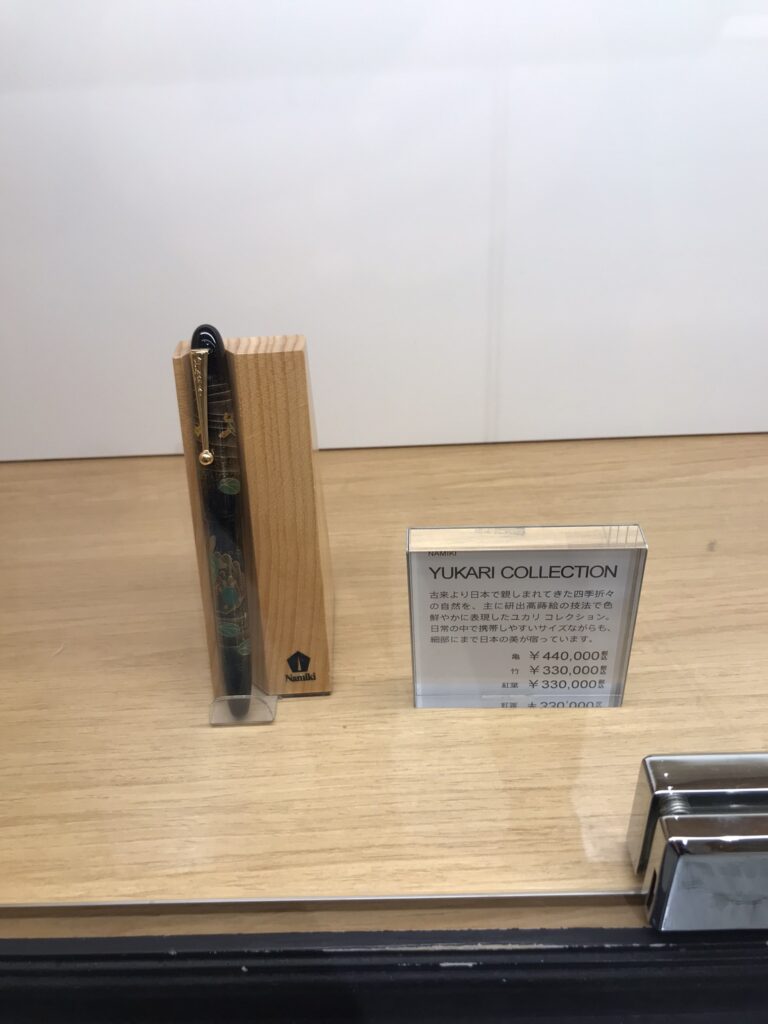
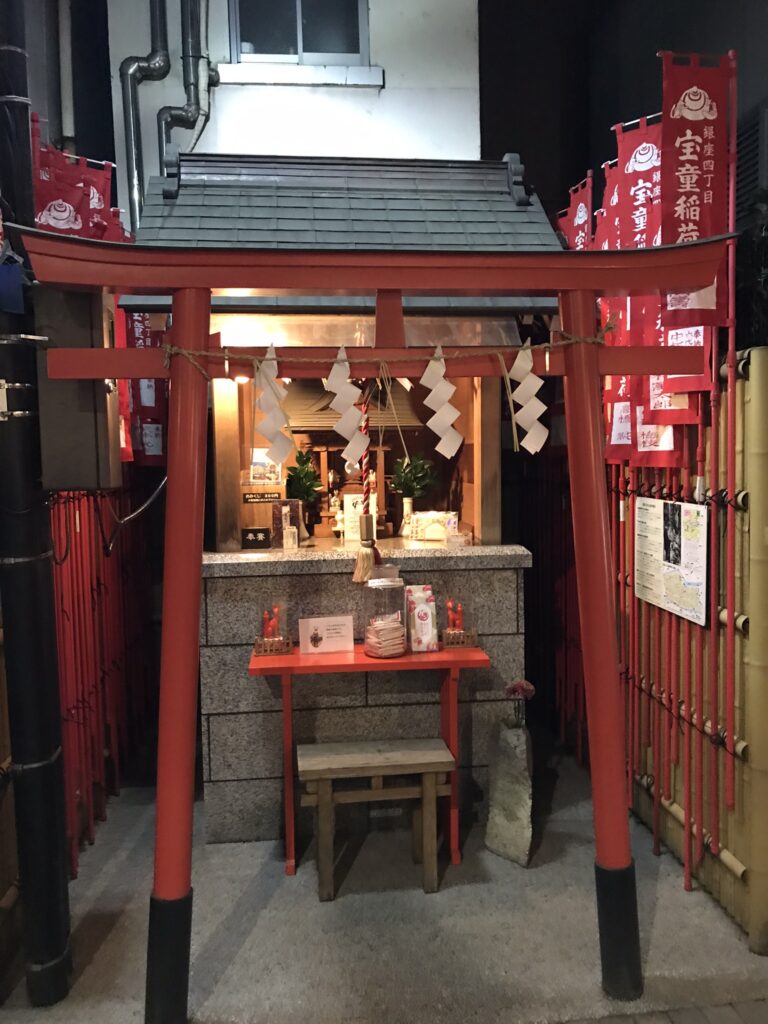
Dan’s favourite spot in Ginza, the Public Utility Conduits, a pen worth over $2800 at Ito-ya and the Hodo-Inari hidden shrine
Kabuki-za theatre – this is one of the premiere kabuki venues in Japan, and also the most accessible for tourists. For those who are unfamiliar, kabuki is one of the two major historical forms of Japanese theatre (the other is noh, which is much older). Kabuki originated in Kyoto during the 17th century, and is now recognisable globally due to the iconic masks and facepaint as well as the dramatic performances of the actors. A prominent feature of kabuki is that the cast is exclusively male, with male actors also portraying the female characters. These actors (known as onnagata) typically have long wailing monologues and a very odd tone to their voice.
Kabuki performances tend to be quite long and expensive to attend, split into different scenes or acts which can last for an hour or more each. For those who just want a small taste, it’s possible to buy single scene tickets to the regular performances at Kabuki-za for very reasonable prices. Tickets are available to purchase online at this website – the tickets go on sale at midday each day for the following day’s performances. The single-scene tickets are exclusively sold for the 4th tier seats, right at the top and back of the large theatre. It isn’t a great view but this is the price you pay for not splurging to watch the entire performance.
When attending on a single-scene ticket as we did, you need to arrive to the venue ahead of time. It’s not an exact science as the scenes sometimes take longer than expected, and visitors are made to wait outside in the corridor until such time as they are ready to be let in. The ushers are friendly but the whole setup inside the theatre is also quite serious and stern. Photos of the performance are very strictly prohibited, as is leaning forwards during the performance due to potentially blocking the view of someone to the side or behind you. We witnessed multiple people being told off by the ushers inside the theatre for this. Somewhat paradoxically, shouting and calling out from the audience is a major part of the show, although it seemed like there is a very specific art and ritual surrounding this.
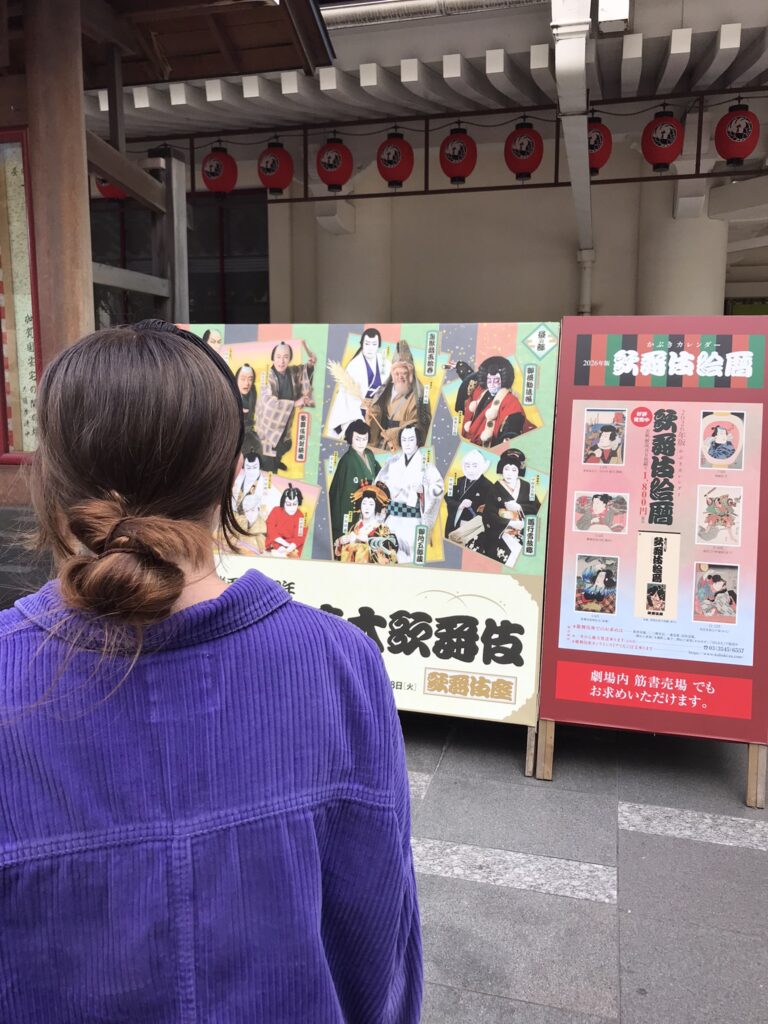
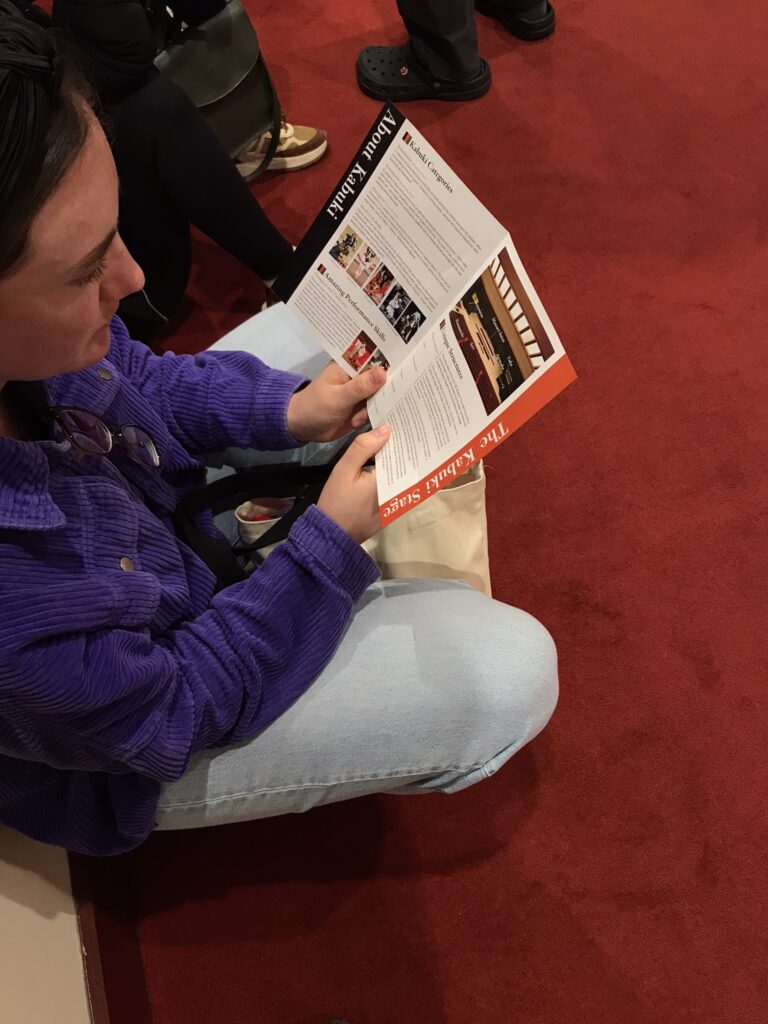
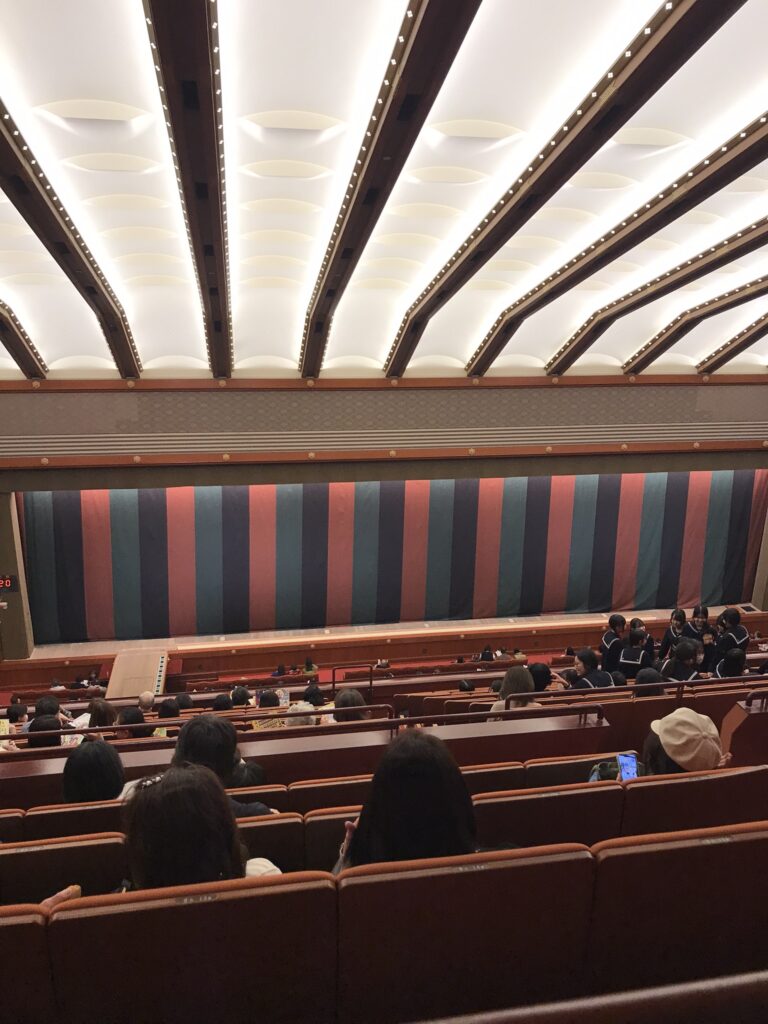
The performers wear highly stylized costumes for Kabuki; waiting in the corridor to be let into the theatre and our ‘rafter-view’ seats
Contrary to popular foreign perceptions of kabuki as a type of physical theatre/interpretive dance, there are actually four different types of kabuki, which are described on a leaflet that visitors receive when entering the theatre. These types are historical dramas (plays about real-life figures and actual historical events, usually relating to high-ranking figures such as shoguns, samurai etc), domestic dramas (a fictional drama set in an everyday/commoner setting during the Edo period), dance-drama (an interpretive dance set to music, which is probably most similar to common perceptions of kabuki amongst foreigners) and ”modern” kabuki (plays composed during and after the Meiji period, so mid-1800s onwards). The performance we watched was a domestic drama. Contrary to our expectations, it was very dialogue-heavy – we considered that maybe it was a bit similar to a Japanese version of a Shakespeare play. Sadly, as a result we didn’t really have any idea what was going on. Translation screens are available for foreign visitors for an additional cost (1,500 yen at the time of our visit) and we regretted not purchasing this. I think it would’ve improved the experience a lot.
Tsukiji Fish Market – if you want to join the tourist hordes and eat grossly overpriced seafood then this is the place for you. Tsukiji was once a fisherman’s hub and the location of the famous tuna auction, but this was moved to Toyosu Market in 2018. As a result Tsukiji seems to have lost all authenticity and is now quite a soulless tourist trap-type place, mainly filled with foreigners who have been herded there to buy overpriced seafood which could be purchased much cheaper in a more authentic setting elsewhere. It’s a historic area but apart from observing white people being ripped off, there isn’t really much worth seeing here.
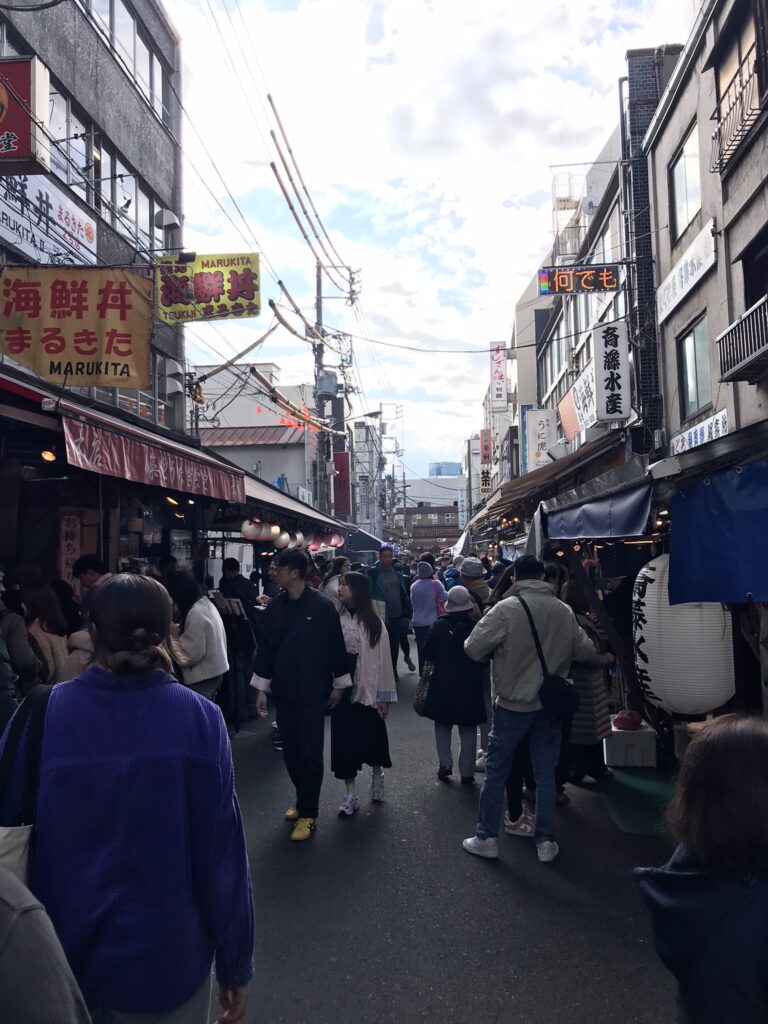
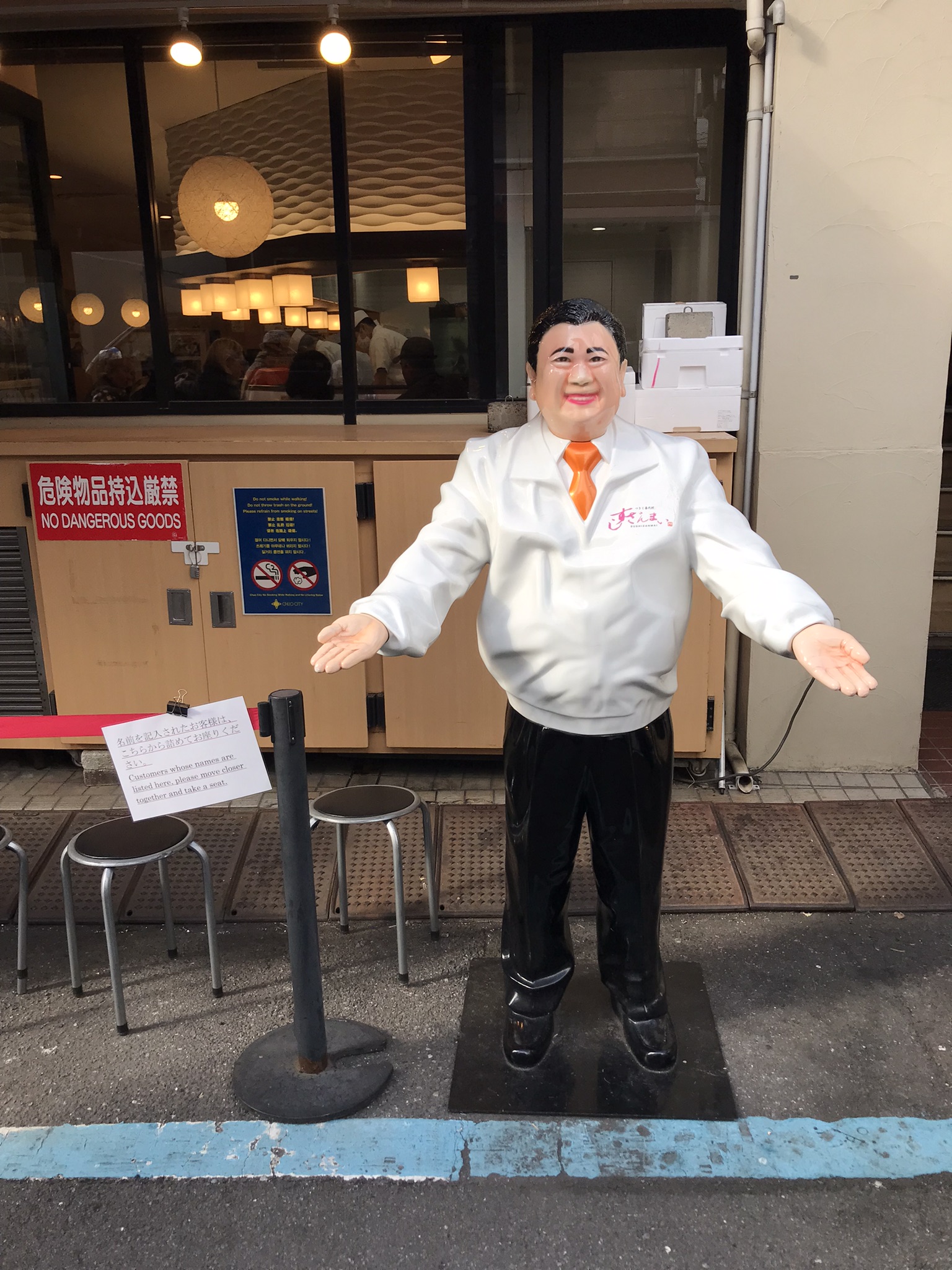
This seemed like the only honest guy left in the Tsukiji Fish Market
Akihabara – before it became the anime and gaming hub it is today, Akihabara was a district known for selling electronics. Now it’s a place where otakus and wide-eyed tourists alike flock to soak up the garish atmosphere and browse the shelves of the many stores and establishments dedicated to anime, manga and all things geek. To us Akihabara seemed a little PG compared to some similar places that we visited both in Tokyo and elsewhere, although maybe we just didn’t dig deep enough. We wandered through a couple of the buildings including Animate, the popular chain containing anime, manga and gaming memorabilia, as well as playing some old school Street Fighter and zombie arcade games at a Taito Station. Music-based games (guitar hero, dance mat etc) seemed to be particularly popular here, as well as the ubiquitous claw games and capsule toy arcades. There were some seriously hardcore players within the Taito that we could only stand back and admire. The machines are coin-operated and change machines are available to split up larger notes, so it can become quite expensive if you don’t drag yourself away!
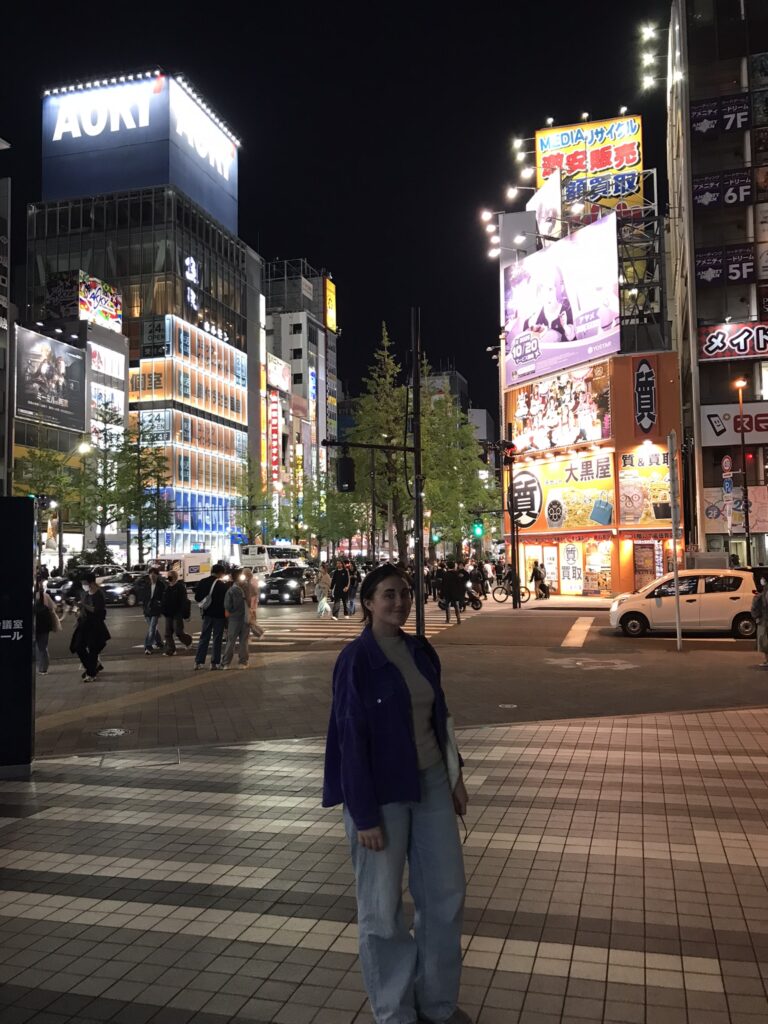
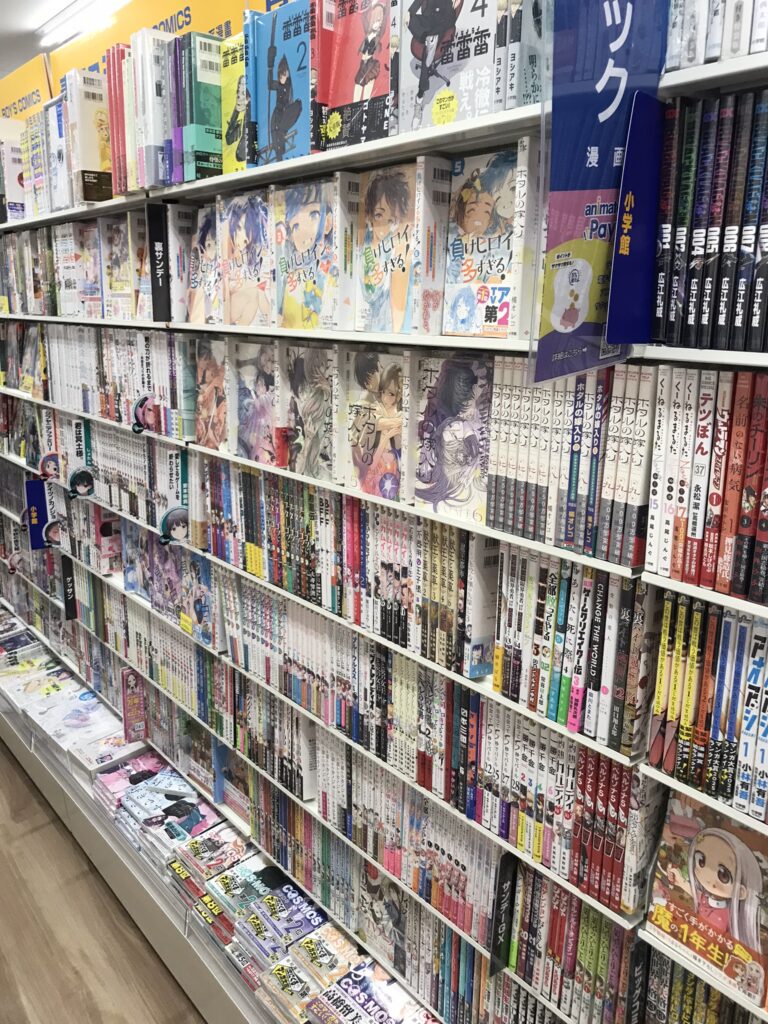
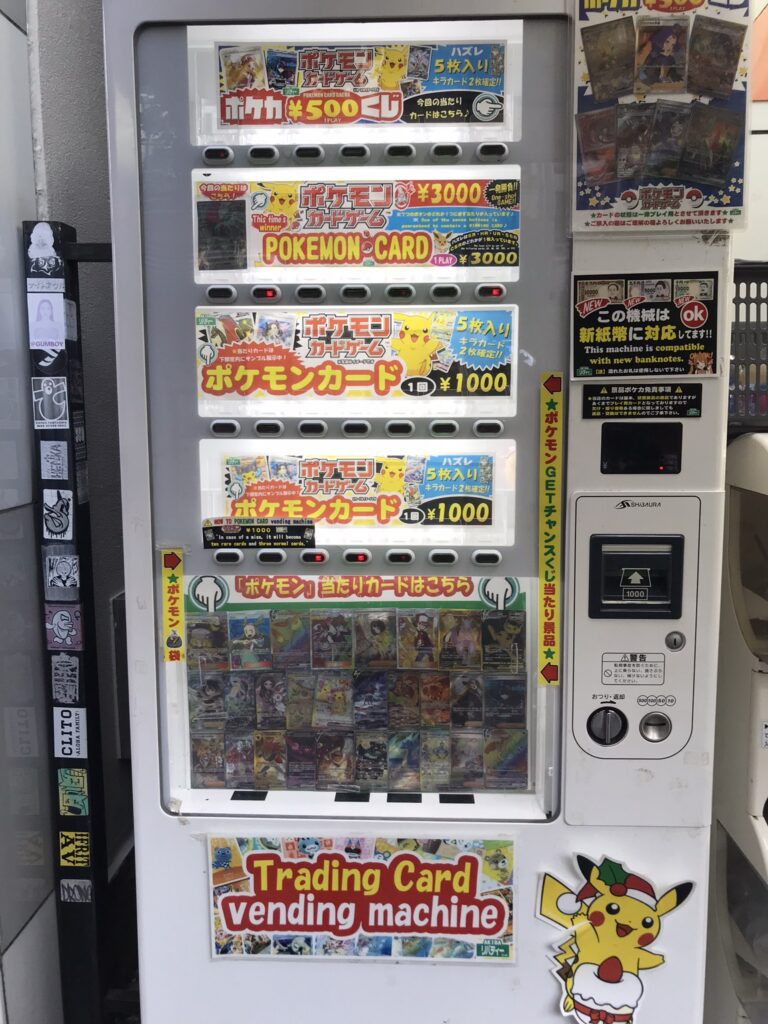
Akihabara is the place for anime fans and gamers
It’s important to note that like many major Japanese districts, Akihabara spreads out vertically as well as horizontally. Most of the buildings have at least 6 or 7 floors, each crammed with different items and themes. This can be a bit mind-boggling for foreigners like us who aren’t used to these sort of claustrophobic layouts.
Jimbocho:
Jimbocho Book Town – allegedly the world’s coolest neighbourhood (according to a random flyer on the street), Jimbocho is known for its huge abundance of second-hand book shops. It’s said that this area contains around one third of all of the second hand book stores in Japan and the highest concentration anywhere in the world. You could spend hours here browsing the various stores with their many oddities and hidden gems. Unsurprisingly most of the books are in Japanese, but there are plenty of English-language titles as well if you look for them. We spotted some very bizarre books here. Many of the shops prohibit photography inside, which is probably for the best in order to stop gawking tourists like us taking up too much room.
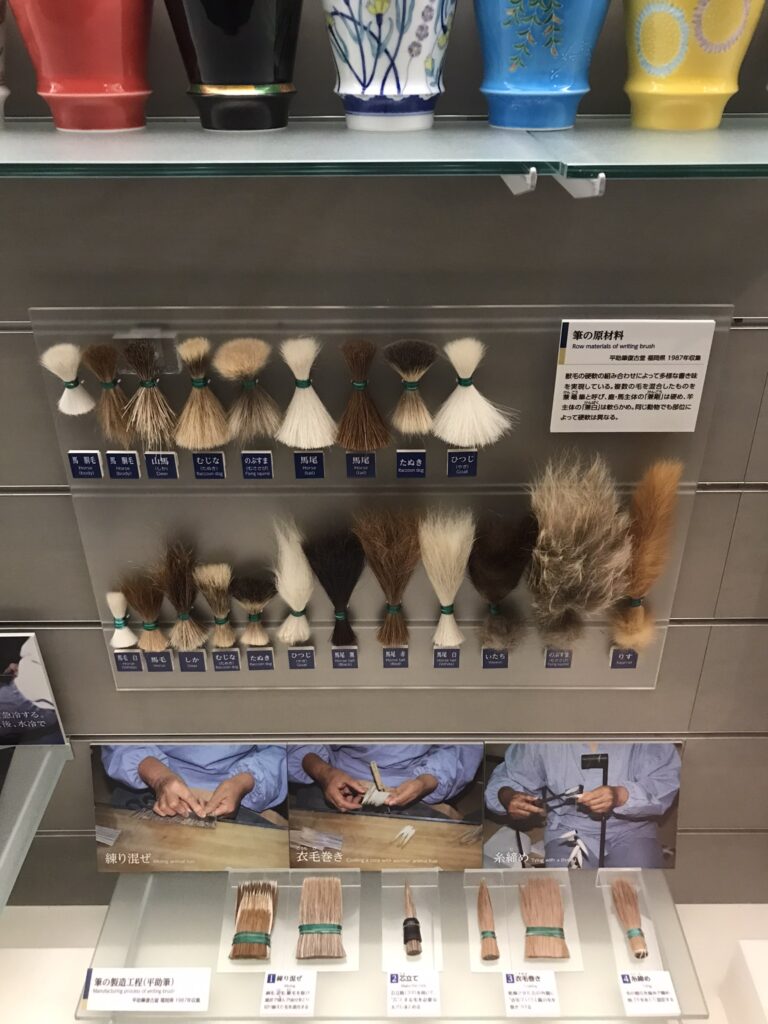
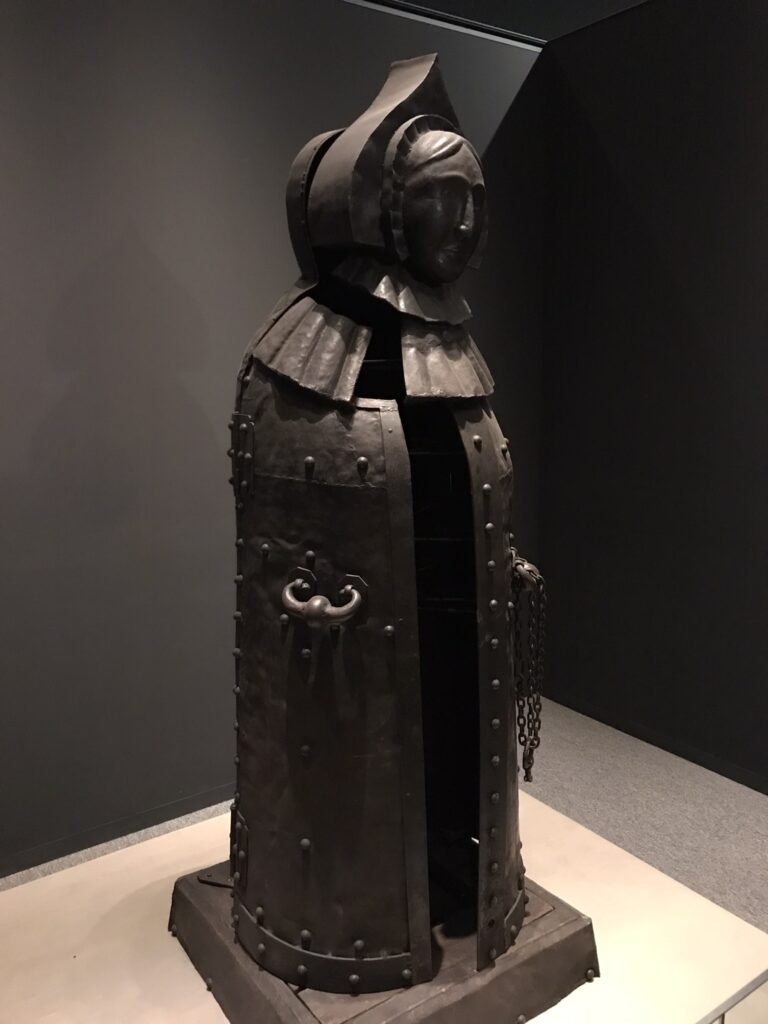
Meiji University Museums features a replica Iron Maiden and various types of calligraphy brushes
Meiji University Museum – a free museum which is located in the basement of the university building, to get there you have to walk through the university lobby filled with the many students studying or hanging out. There are various exhibits in the museum including information about the university itself and small displays on traditional arts and archaeology, but the main attraction here is the section on crime and punishment. There are some gruesome displays describing the torture and execution methods of feudal Japan, culminating in a replica of a European-style iron maiden. According to the museum, public execution was deemed to be the worst form of punishment due to the humiliation element – something we’ve also come across in accounts of historical Chinese methods of torture and punishment. Somewhat bizarrely, the exhibit was compiled by the university’s school of law.
Origami Museum – free to enter, this isn’t really a museum per se. There is a small display of some complicated origami designs in the lobby and then a temporary exhibit on the first floor, which at the time of our visit featured a style of pop-out Christmas cards developed by a Spanish designer. You can also take the elevator to the higher floors, which contain a studio for paper dying and a large shop containing many origami books. Most of the books here were written by a single author – the origami master, Mr. Kobayashi. Kobayashi actually spends a lot of his time hanging out in this place, signing books and giving free origami demonstrations to the curious and slightly bewildered visitors. We were lucky enough to encounter him here, and he provided a little origami Santa for us free of charge.
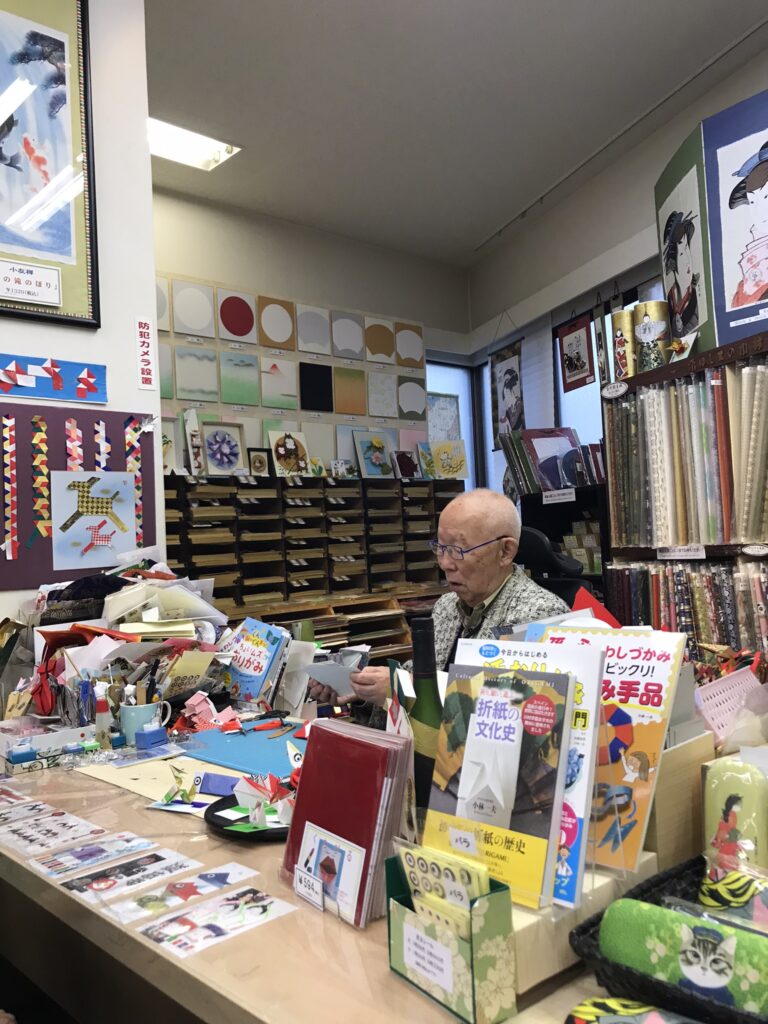
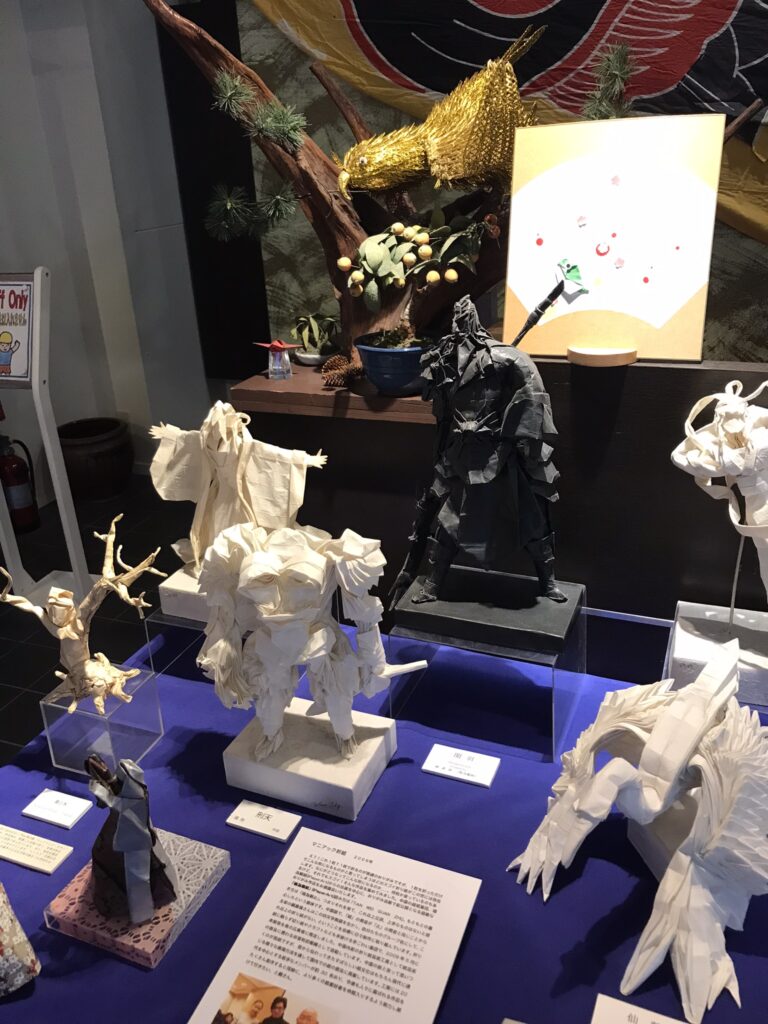
Meet the origami master himself at the Origami Museum gift shop
Pro wrestling at Korakuen Hall – located within the famous Tokyo Dome complex, Korakuen is a legendary combat sports venue in Japan with a long history, having opened in 1962. We watched two separate professional wrestling shows here: Marigold (an upcoming all-female promotion) and New Japan Pro Wrestling – the largest and most famous wrestling promotion in Japan and one of the most prestigious pro wrestling promotions in the world.
Access to Korakuen Hall is a little odd, as you need to either go up a lift or some grubby fight club-style stairs to get to the venue lobby. The hall has a variety of different ticket options, and unless you pay a premium for ringside then it’s best to get the cheaper seats as you’re pretty much guaranteed a good view wherever you sit in the venue. The cheapest seats are usually on both the North and South sides of the venue – the north has bleacher-type seats (quite uncomfortable as we ended up with numb bums by the end) and the south side has seats that do have backs, but are super narrow so again not the most comfortable. We found ourselves sitting behind the commentators in the north side for the Marigold show, which was fun as we were frequently featured on the live feed.
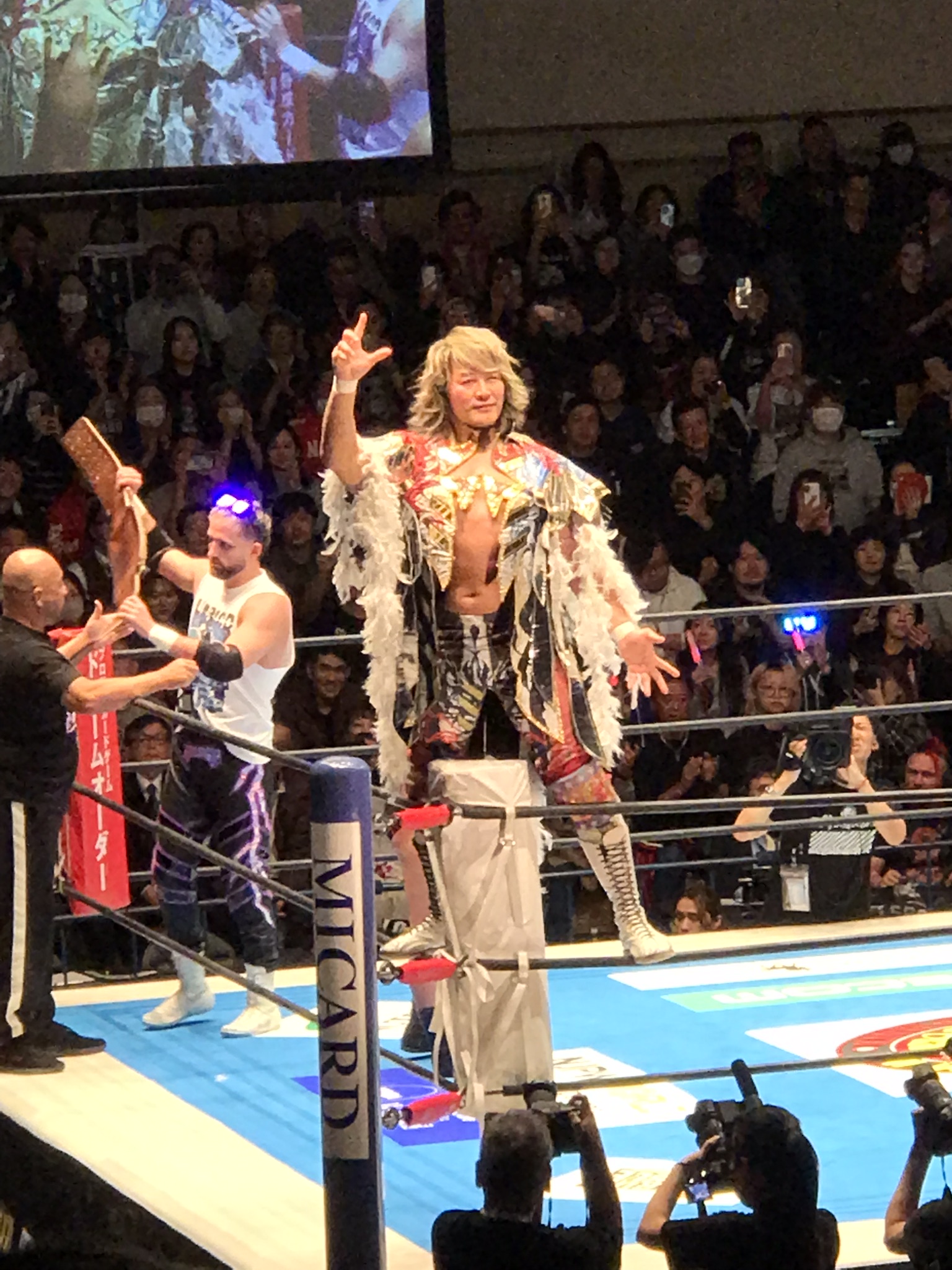
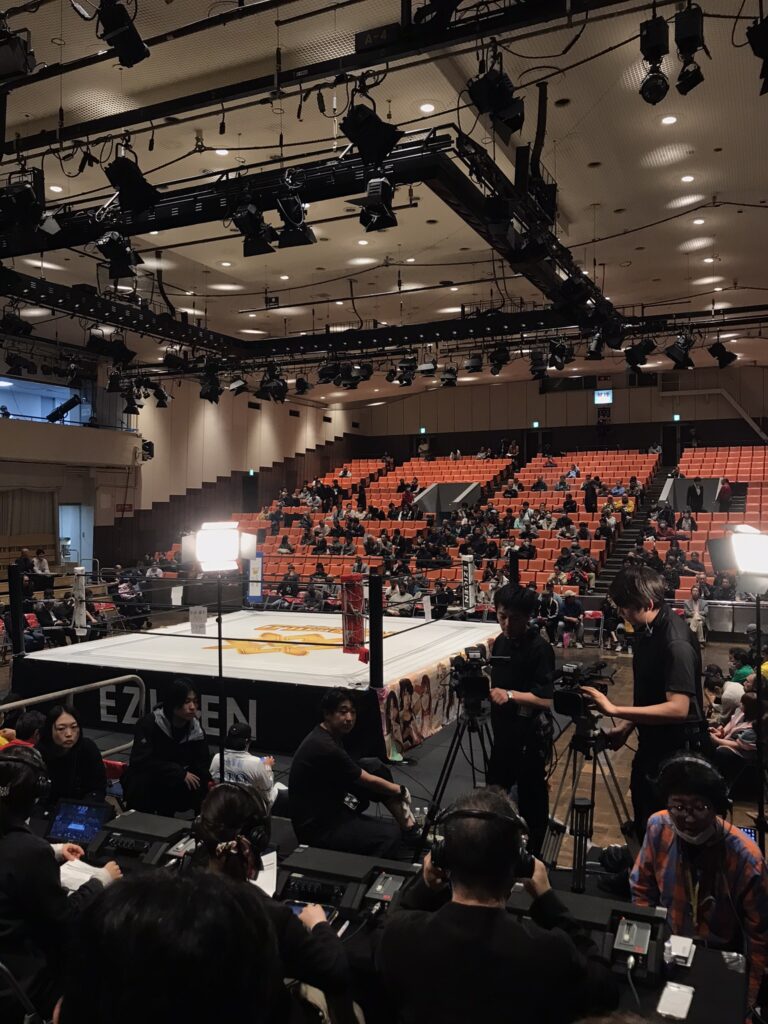
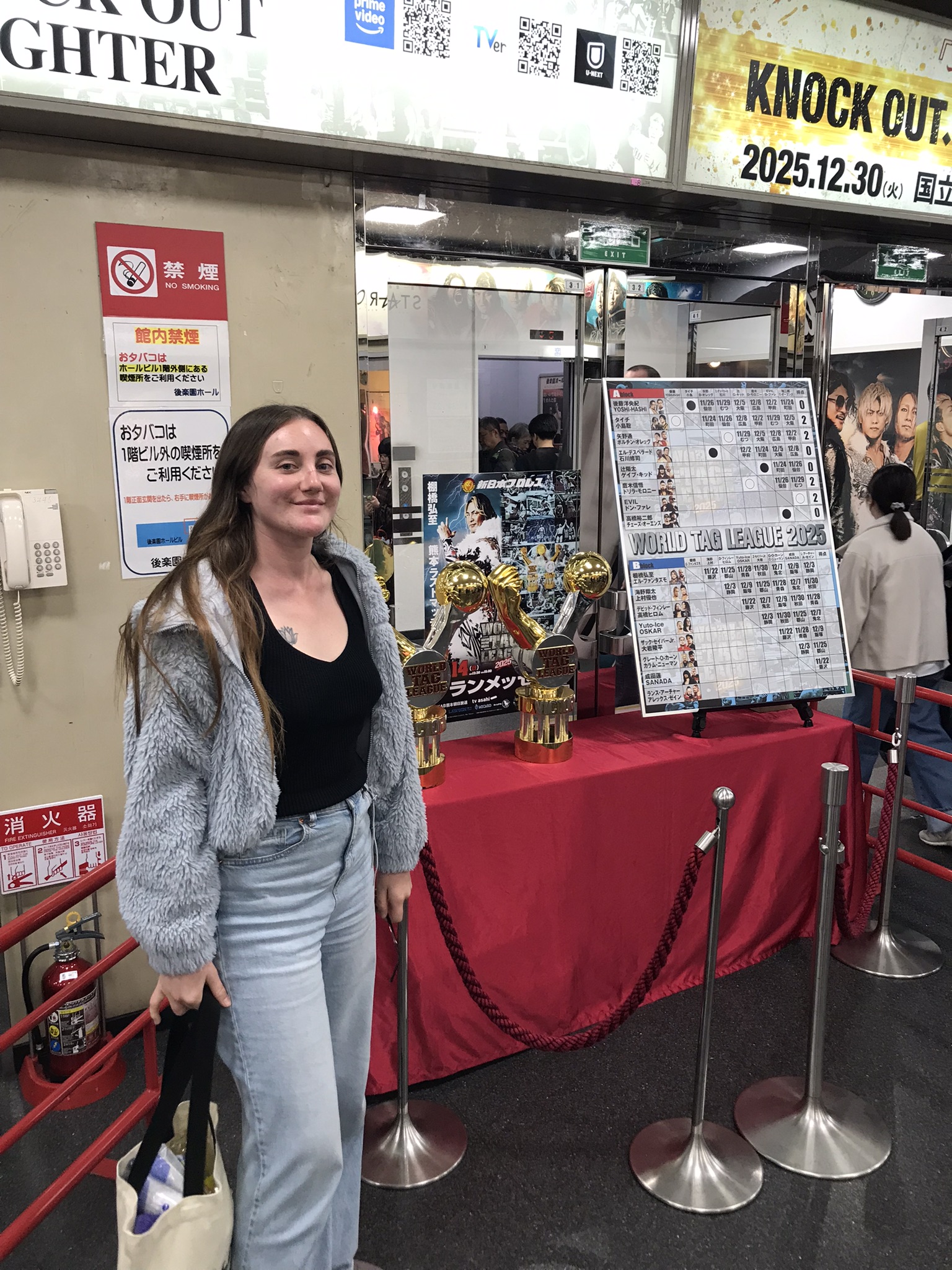
Highlights for us were featuring in the background of the live feed and watching the wrestling legend Hiroshi Tanahashi grapple
The Korakuen crowd was more lively than the crowd at the Stardom show that we attended in Sendai. There seemed to be quite a lot of lary business guys who had come straight from the office, particularly for the NJPW show. There were also a couple of other foreigners in the crowd here unlike in Sendai, but the audience was still at least 95% locals. The shows themselves were fast paced and hard hitting. Those unfamiliar with puroresu and the Japanese strong style of pro wrestling would likely be thrilled and terrified in equal measure – it’s a pretty exhilarating and intense spectacle to experience live. For more info on how to purchase tickets for pro wrestling as well as other concerts and events in Japan, click here!
Shibuya:
Shibuya Crossing – a famous site of Tokyo next to Shibuya station, this is supposedly the busiest pedestrian crossing in the world. It’s fun to stand for a while and watch the chaos unfold. The crossing is actually super well organised and efficient, definitely a spectacle to witness. There’s a good vantage point of the crossing on the first floor of Shibuya station, nearest to the exit. You’ll spot more than a few wannabe-influencers trying to run out before the crossing hordes in order to get the best shot for Instagram. Near to the crossing is the famous statue of Hachiko, the beloved dog who faithfully waited outside Shibuya Station for 10 years in the 1920s and 30s following his owner’s death at work. Typically the statue attracts big queues of tourists, all wanting to snap a photo with the loyal mutt.
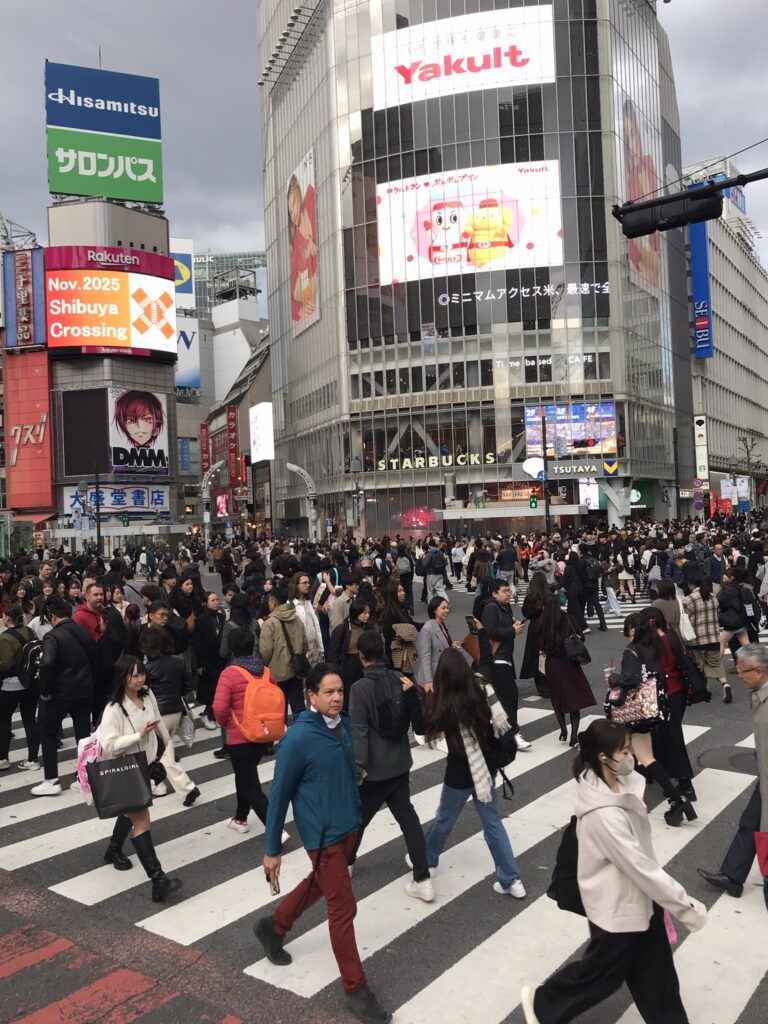
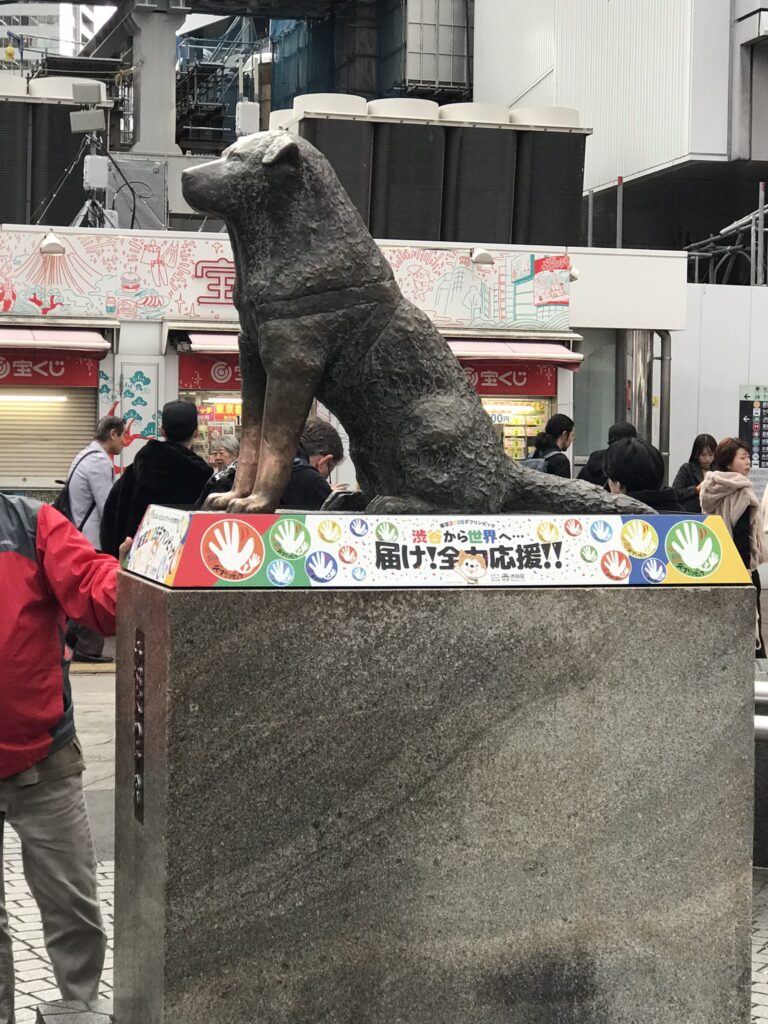
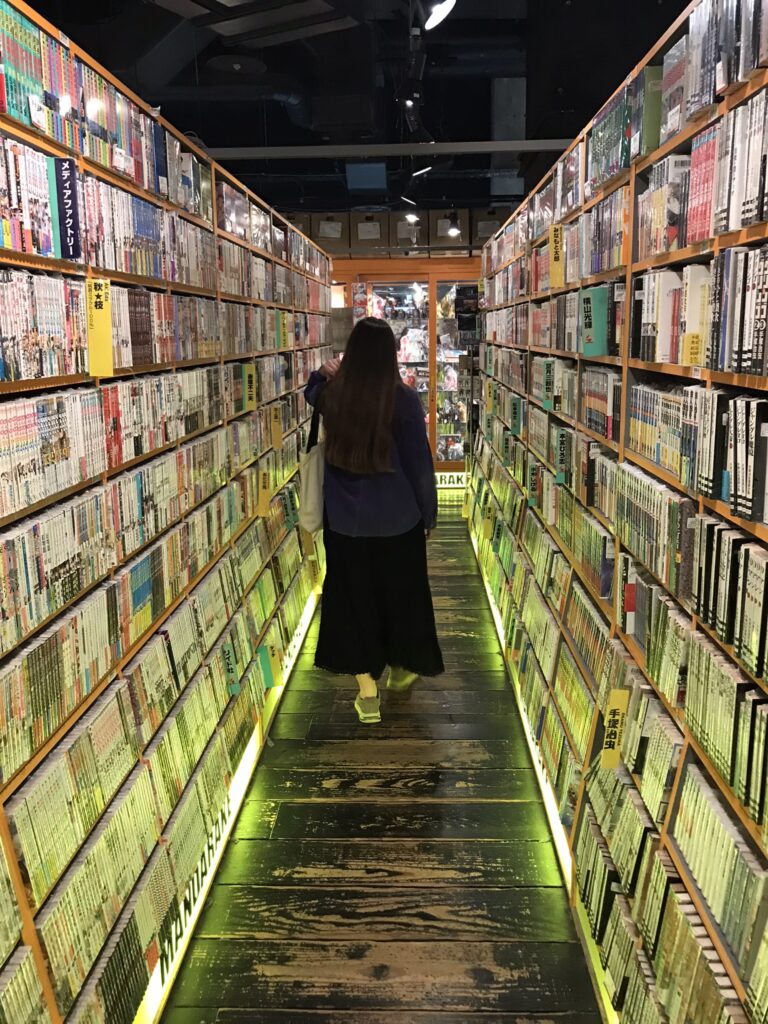
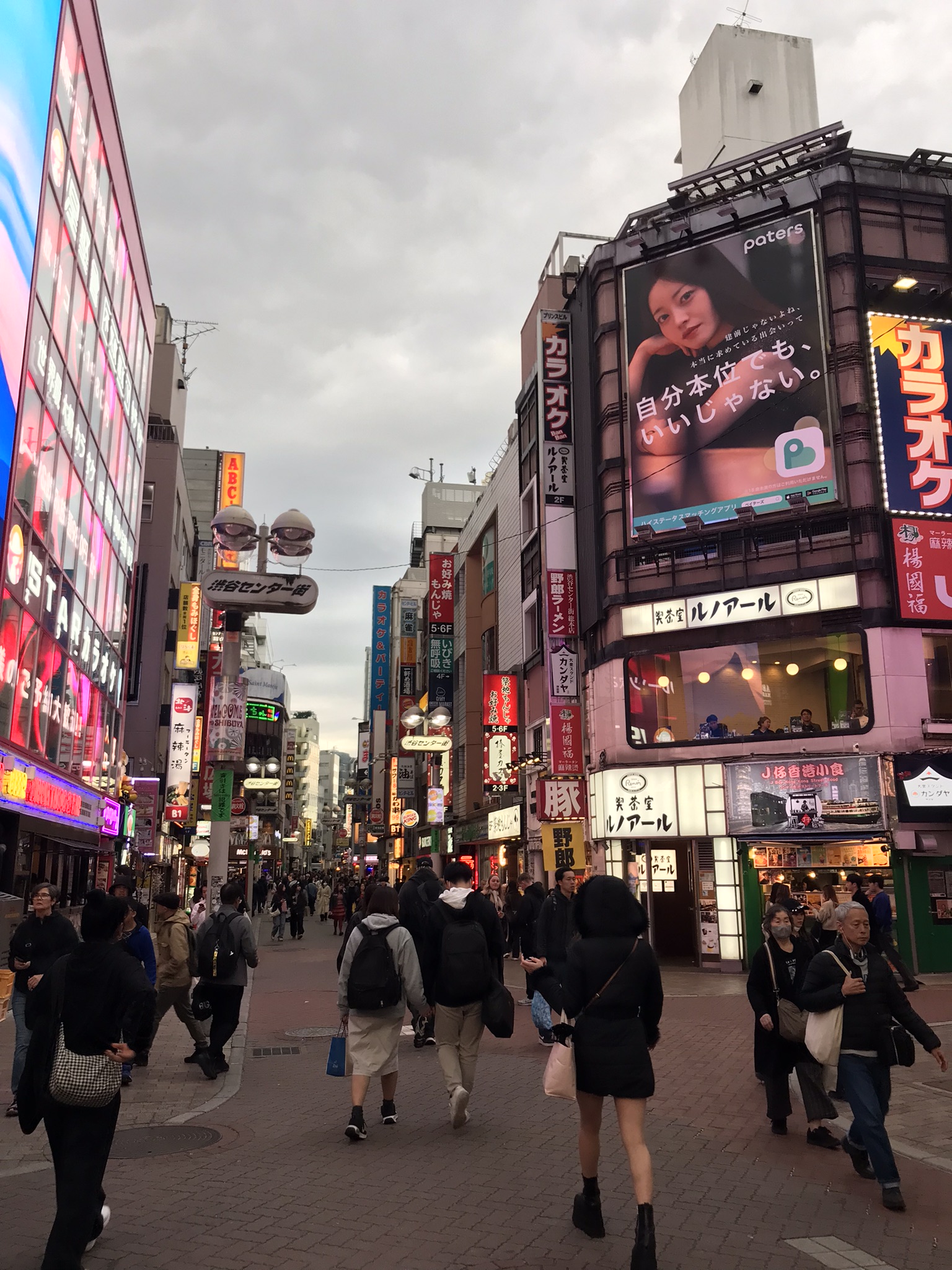
Wandering around Shibuya is a great way to spend an afternoon
We followed this GPSmyCity walking tour of Shibuya and Harajuku, which covers most of the major sites. Make sure you start early – we didn’t make it to the final stop, Meiji Jingu, as it was closed by the time we arrived.
A highlight of the area is Mandarake, an underground den of manga, gaming, anime and a whole lot more. In this huge dungeon-like store we stumbled, among other things, upon Western occult and witchcraft books and a very large hentai section. This is definitely not a place for the faint hearted!
Harajuku: A veritable mecca for fashionistas looking to splurge on the latest high-end fashion and independent kawaii boutiques. This is the home of the kawaii look, popular throughout Japan and famous throughout the world, synonymous with modern Japanese culture. Think fluffy baby-pink coats, sailor suits, gothic-looking skirts and corsets, crazy-high platform boots and military-style jackets. Takeshita Street is the epicentre of the kawaii movement, an ultra-vibrant pedestrianised street which also features animal cafes – we spotted a capybara and a micropig cafe amongst others. Bizarrely we saw numerous large groups of older white tourists on Takeshita Street, who seemed to have been taken or dropped off there as part of a group tour and looked totally confused and overwhelmed.
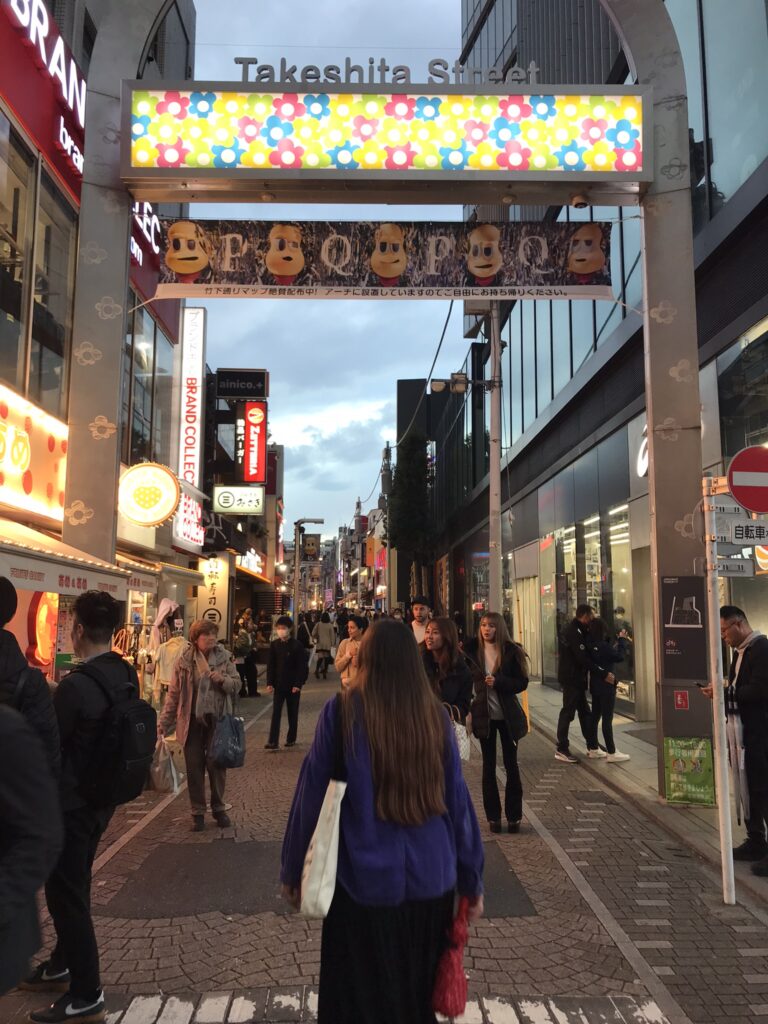
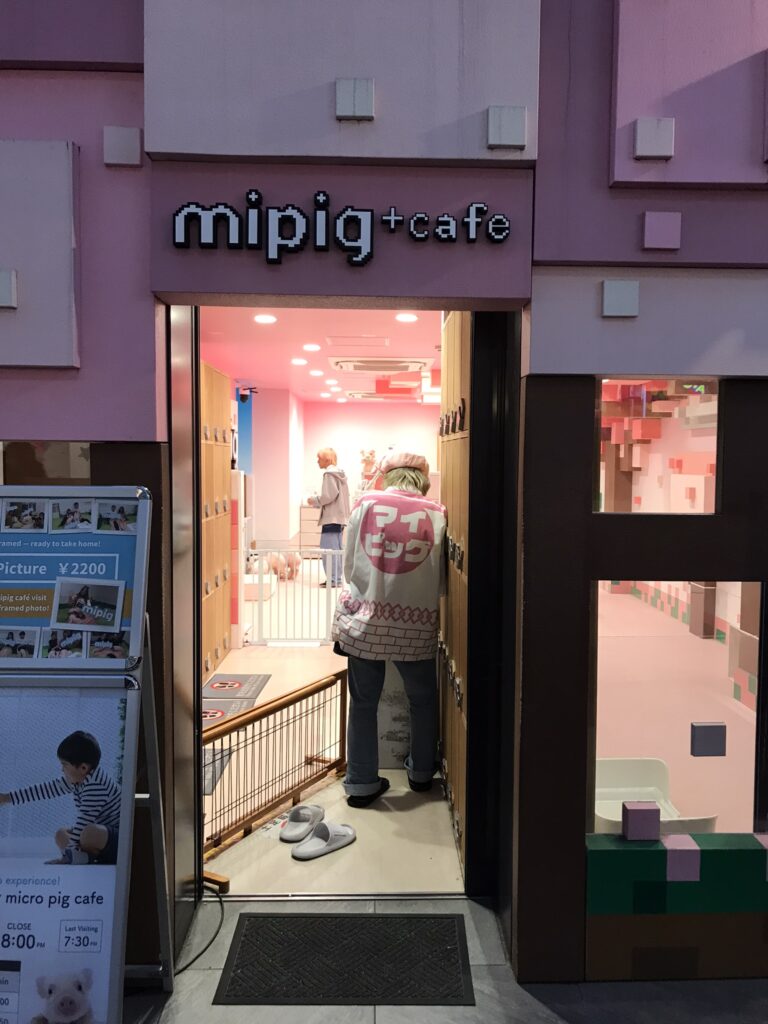
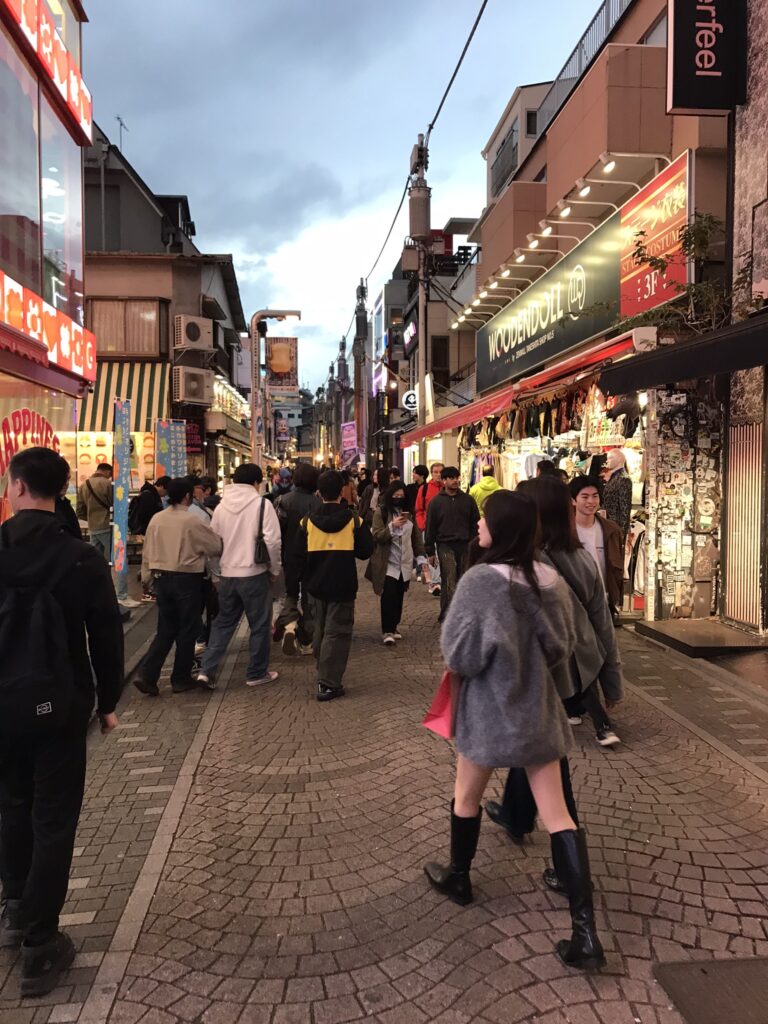
Takeshita Street in Harajuku is the epicenter of the kawaii culture
Shinjuku: the top spot for nightlife in Tokyo, Shinjuku is a sight to behold after dark with its ever-present glow of huge neon signs and advertising boards. The area is filled with all-hours clubs, entertainment and drinking establishments great and small. Even if you don’t plan on drinking or going to any of the bars or clubs (we didn’t), this is still a memorable place to wander and drift through after sunset.
Shinjuku Golden-Gai – this is an iconic area of Shinjuku, an intersecting series of narrow alleys featuring countless small hole-in-the-wall type bars. Some of the bars are literally only big enough for the bartender and one or two customers. Many of the bars advertise that there is no cover charge in order to attract foreign patrons. We wanted to visit one of the most famous bars here, Deathmatch in Hell, but had no chance as it was completely crammed full.
Kabukicho – another famous area of Shinjuku where people flock for the nightlife, this is where you can find the iconic Godzilla statue towering above the skyscrapers. Across the main road from Kabukicho is the famous 3D cat video, where crowds gather to see the bizarre sight of an enormous, lifelike 3D cat atop the glitzy high-rise buildings.
Omoide Yokocho Memory Lane (Piss Alley) – another infamous hotspot of tiny bars and izakayas. You can find grilled meat aplenty in this lovingly-named alley.
Other attractions outside of these main areas:
Vowz Bar – a really unique bar on the train line between Ginza and Shinjuku. This bar is run by practicing Buddhist monks, who also serve as the bartenders. We didn’t think Buddhist monks were allowed to go anywhere near alcohol, but here we are. The cocktails have Buddhist-inspired names such as ‘Nirvana in the Pure Land’ and ‘Love and Hate Leading to Hell’ – the drinks are tasty and are actually quite good value. The only downside is that there’s a cover charge to drink here, but we were happy to pay under the circumstances. The bar also serves a limited selection of vegetarian Buddhist food, but we just stuck to the drinks.
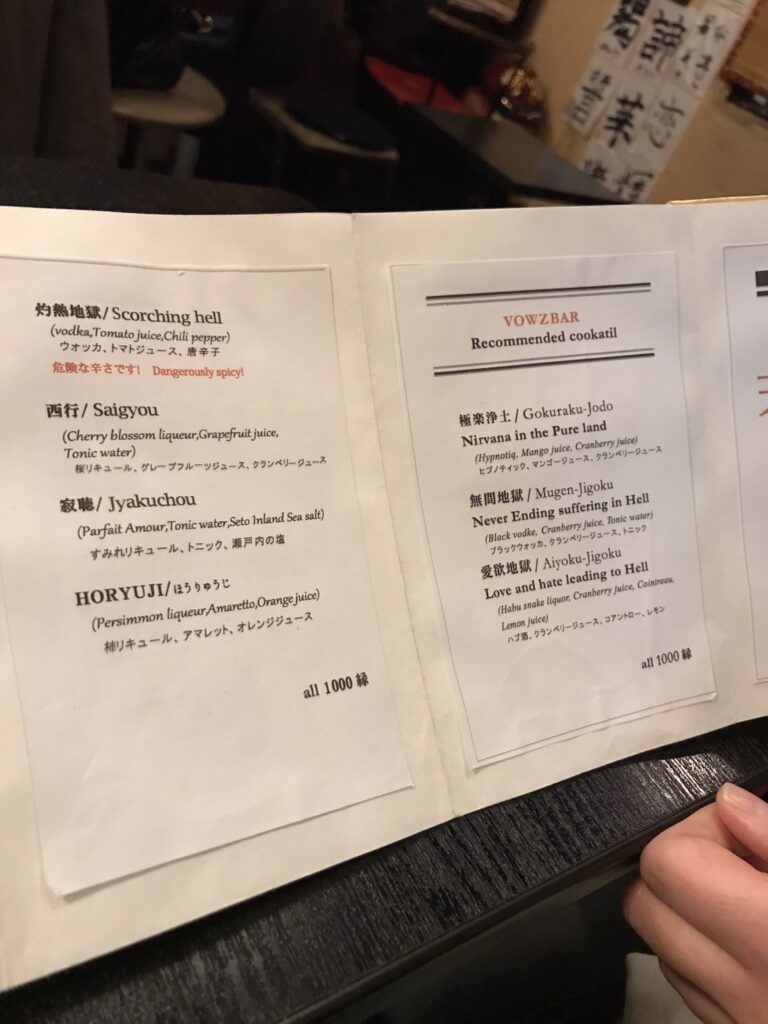
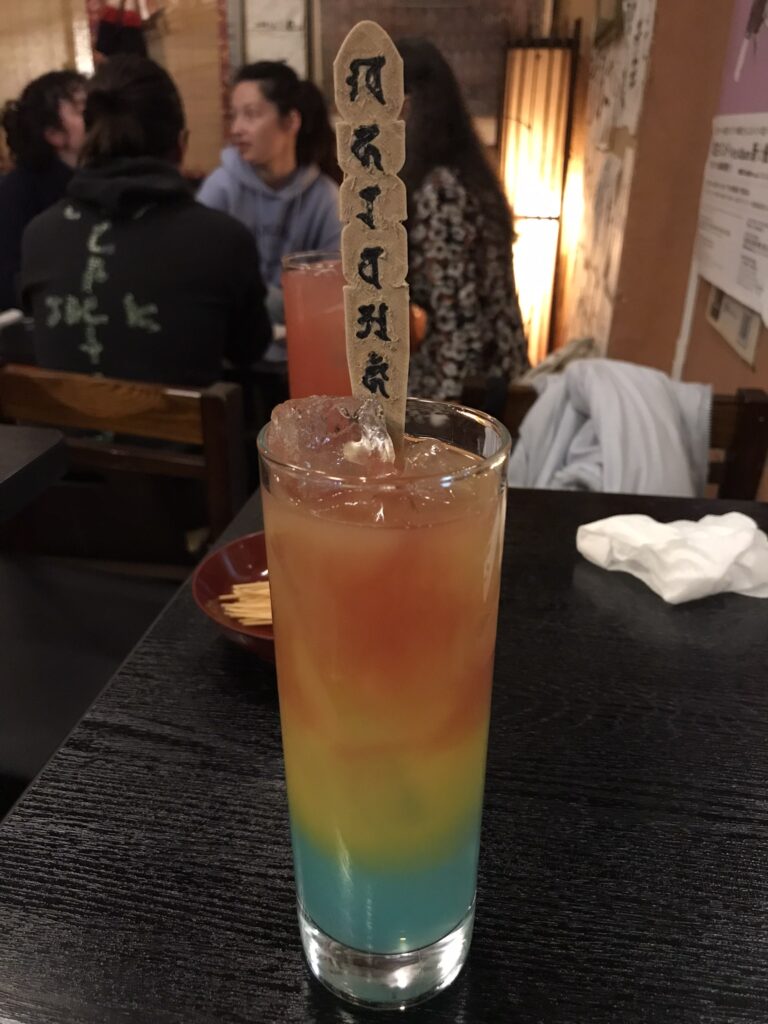
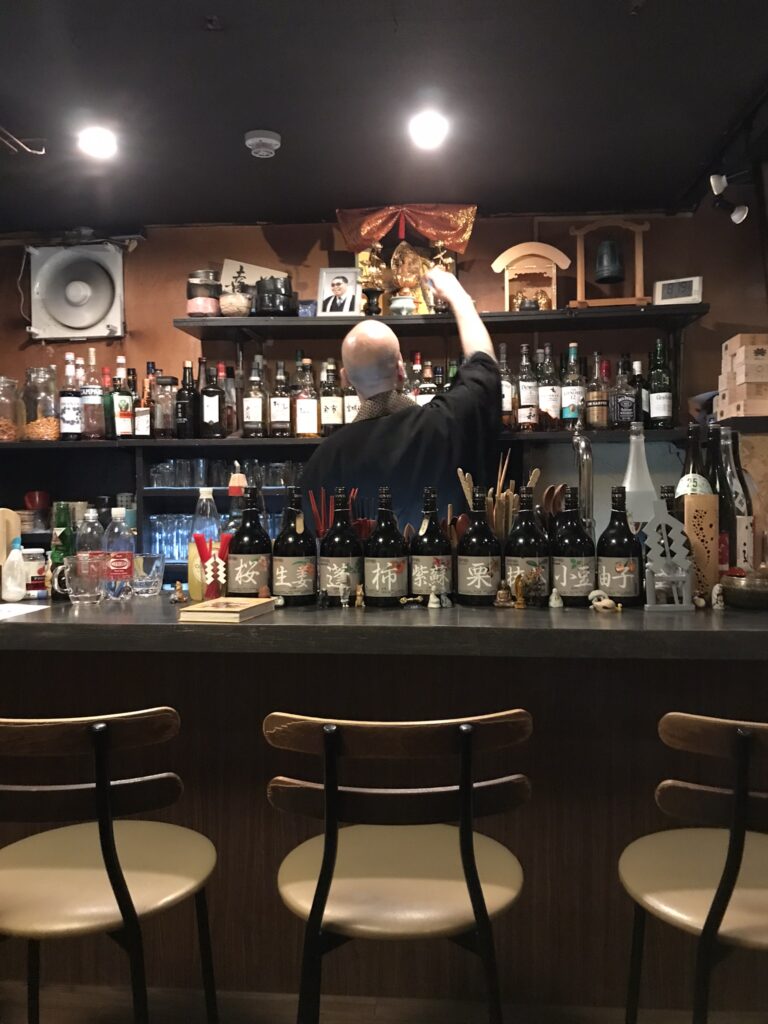
Ace cocktails with some added Buddhist chanting – there’s no better way to start your evening than at Vowz
As well as the great cocktails, part of the fun is that the monks offer patrons an opportunity to create their own calligraphy in the form of copying of characters. The monks also occasionally ask for quiet to partake in their ritualistic chanting – in these situations customers are given a printout with the phonetic translations in English and are encouraged to chant along. The monks even did a demonstration of Zen Buddhist meditation techniques at one point and Dan was whacked with a stick. As well as running the bar, the monks also have a band and are eager to show visitors their music videos on Youtube. We’ve never encountered anything like this before anywhere else in the world.
Fukagawa Edo Museum – a complete recreation of an Edo-period neighbourhood, located within a warehouse-type building. It has more of a focus on social history and the lives of everyday people during this era. Visitors can literally touch the past here by going into the various recreated houses and structures, be they residential properties, vegetable shops, businesses or rice storehouses. The attention to detail is second-to-none – all of the buildings and structures are fully decked out with authentic original-style items – old-school lamps, desks and all manner of trinkets that would’ve been used at the time. Visitors are encouraged to pick up, hold and interact with the objects, which is great for curious souls like us. You can pick up replica pieces of sushi and compare them with modern sushi. There is even an animatronic cat!
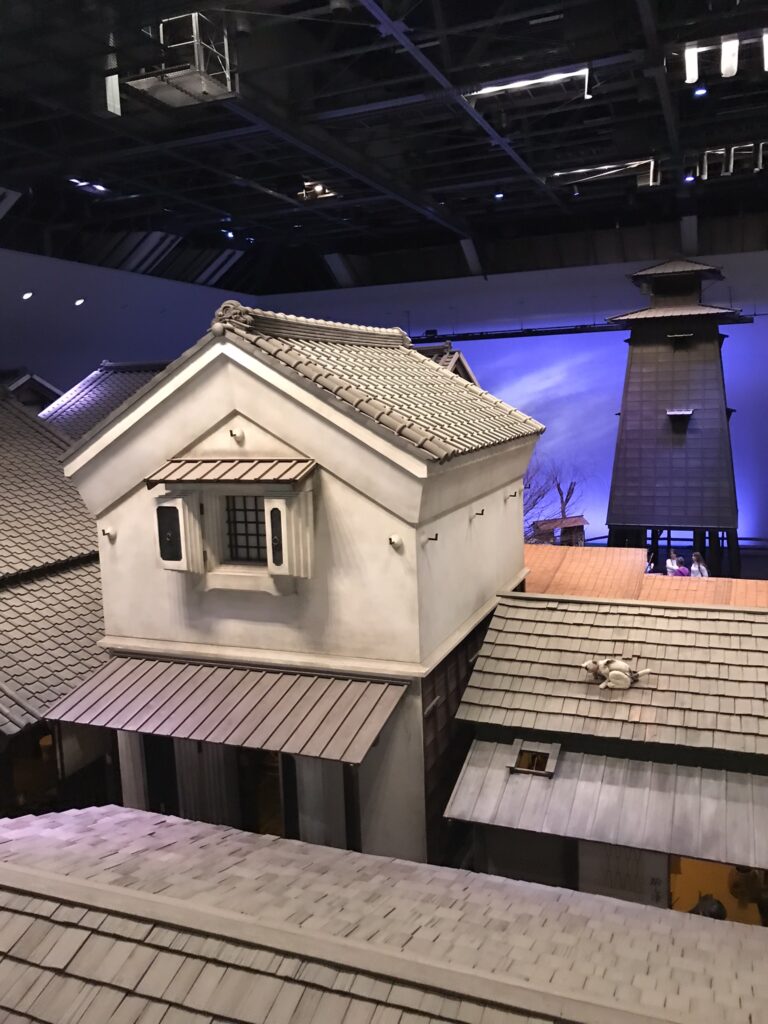
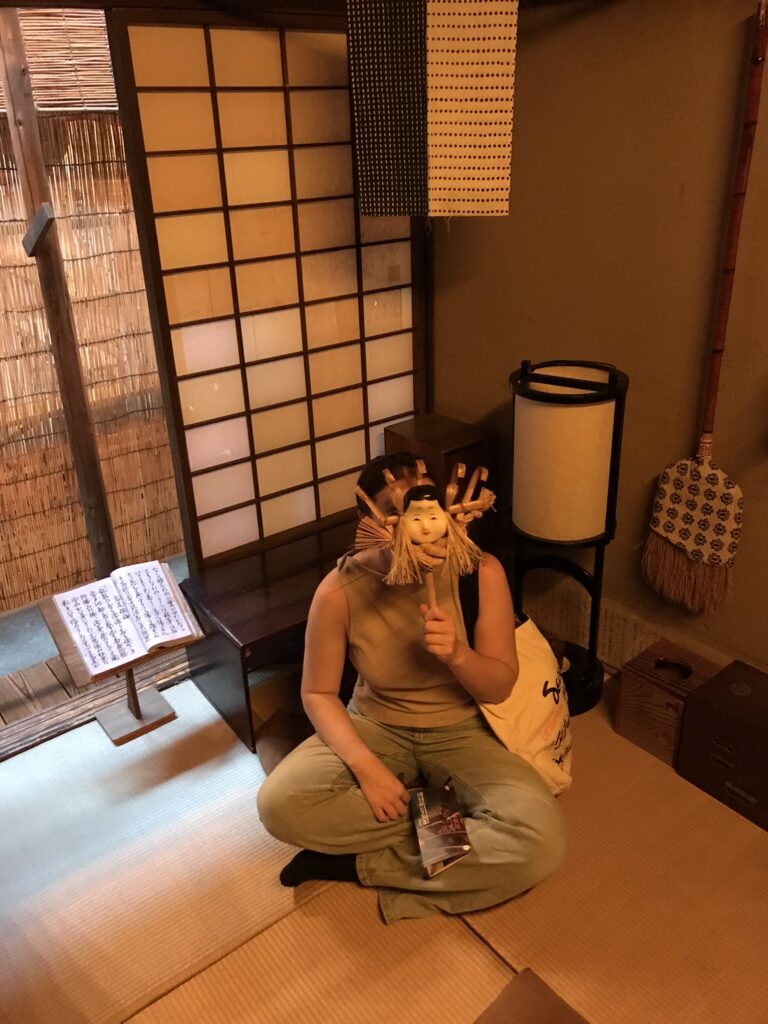
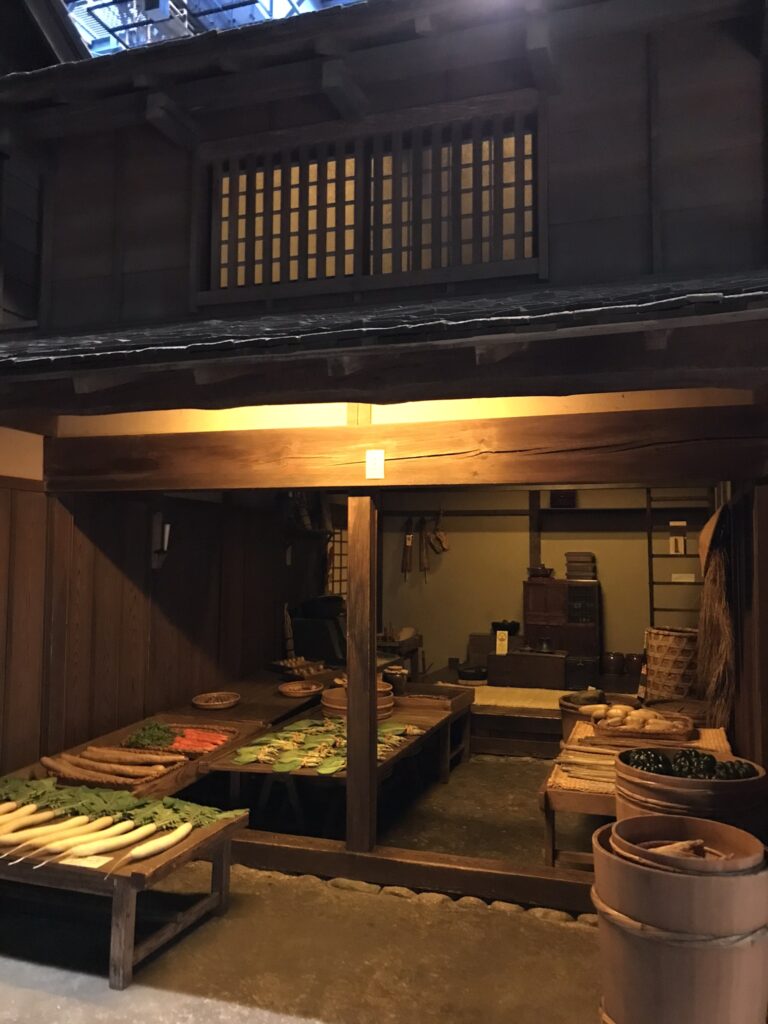
Explore this full-size replica of a neighbourhood in historic Edo at Fukagawa Edo Museum
As was customary at the time, many of the buildings contain both a Buddhist and Shinto shrine, which was fascinating to us. The whole area turns periodically from night to day, complete with authentic sounds of the neighbourhood. This place really gives a great illustration of the everyday people’s daily lives at the time. We also appreciated the helpful and friendly volunteer guides within the streetscape, who were extremely knowledgeable and happy to answer the many questions we had about the various buildings, items and their uses.
Sengaku-ji temple – this temple contains the graves of the fabled 47 Ronin. In a legendary tale of vengeance, these 18th century samurai sought revenge after their master had been unjustly persecuted and forced to commit seppuku (ritual suicide) by a powerful court official. The now-masterless samurai (ronin) hatched a protracted plan, eventually ambushing and killing the court official a year later before committing seppuku themselves. This tale has been immortalised in the folklore of Japan and beyond, even becoming a Hollywood movie starring Keanu Reeves. Sadly, the temple itself is a major disappointment. In order to actually see the graves of the ronin, visitors are forced to pay over the odds for incense by pushy attendants who refuse to permit entrance to those that don’t pay. We heard reports of Japanese visitors who brought their own incense also being turned away. There is also an overpriced museum, and strongly-worded signs all around the temple try to force visitors to make additional donations. The whole thing is clearly aimed at extracting money from visitors and leaves a bad taste in the mouth. It would be much better to charge a flat entry fee to visitors, as many other temples do – this would at least be upfront and honest, and we would’ve been happy to pay in that case. As it is, the place just felt very pushy and scammy so we left without seeing the graves of the ronin. This was the only place we visited in Japan that felt like a very obvious tourist trap, which is quite ironic as there was nobody else there when we visited.
Meguro Parasitological Museum – showing that one man’s dream is another man’s nightmare, this free museum in the Meguro area contains over 300 preserved specimens of various parasites which have been extracted from both animals and humans. Established in the 1950s by the doctor Satoru Kamegai, specimens inside are meticulously arranged and colour-coded according to the type and classification of the parasite. The ‘highlight’ is an 8.8 metre tapeworm which was extracted from a man in the 1980s, complete with an interactive display so visitors can appreciate its full length. Casual observers will likely find this museum intriguing, shocking and revolting in equal measure. We definitely didn’t have much of an appetite after visiting.
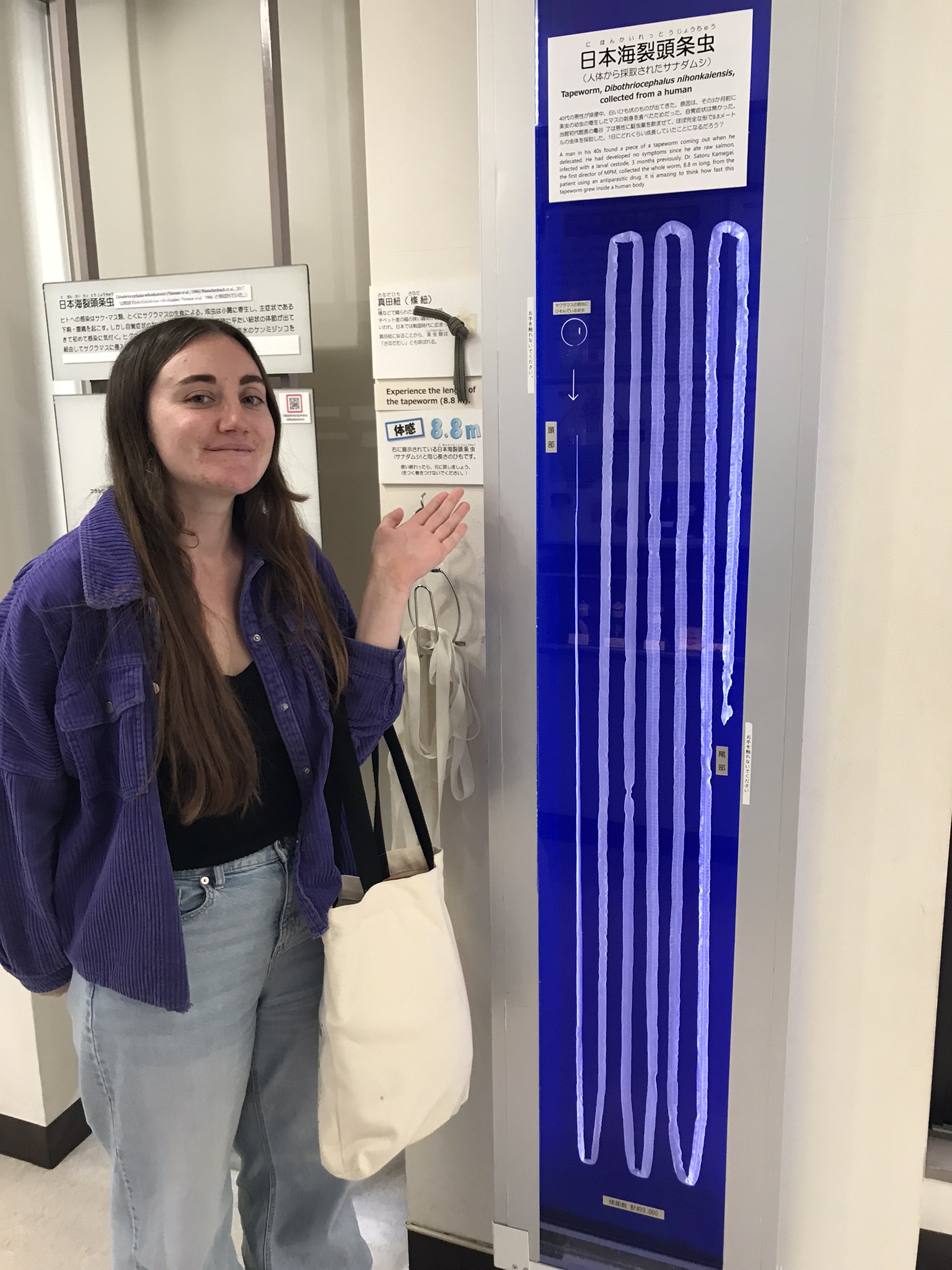
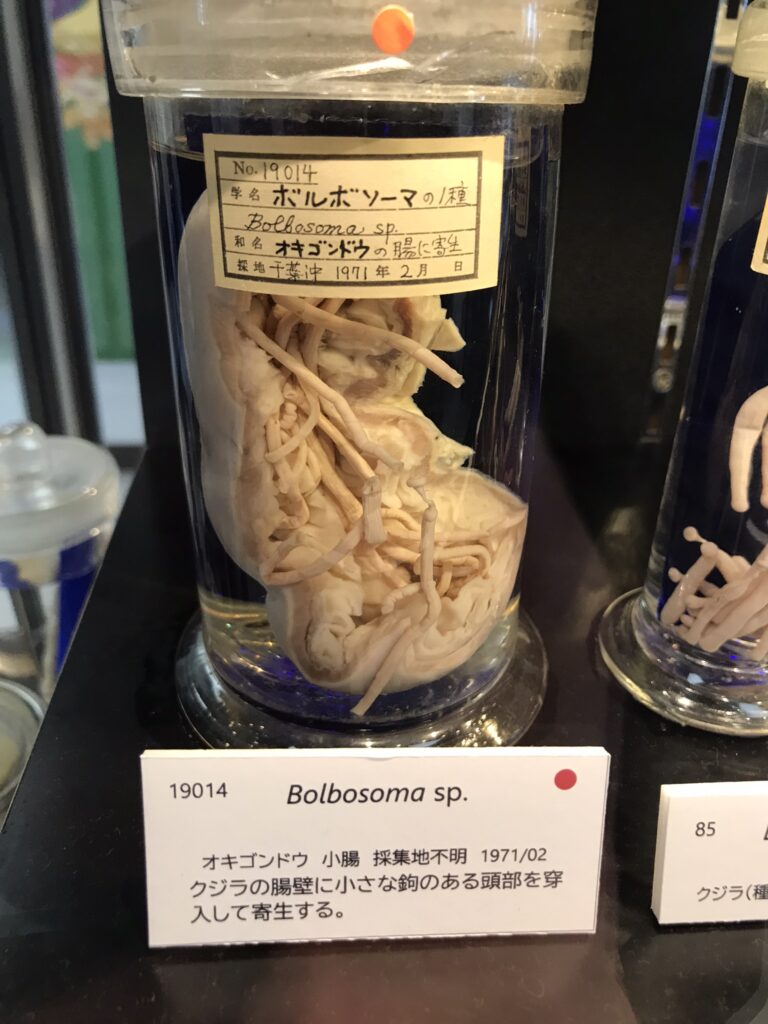
Gross yet oddly mesmerising – the Meguro Parasitological Museum
Daigo Fukuryumaru Exhibition Hall – this free exhibition hall was by far one of our favourite museums in the whole of Japan. The exhibition focuses on the story of a Japanese fishing vessel, the Fukuryu-maru (Lucky Dragon), which experienced the after-effects of an American hydrogen bomb test near the Marshall Islands in 1954. This was the first hydrogen bomb to be tested globally and was more than 1,000 times more powerful than the atomic bomb that was dropped on Hiroshima a decade earlier. Although the fishing vessel was not initially in the danger zone, it ended up experiencing radioactive fallout from the testing. White ashes, which the crew initially believed to be snow, began to rain down on the fisherman. These were actually the radioactive remains of vaporised coral. Known as the ‘Ashes of Death’, these radioactive ashes caused burns and symptoms of radiation poisoning for the crew. As a result of this incident the crew members were hospitalized, and unfortunately one crew member died with others later developing cancer and other related illnesses.
This incident caused a mass hysteria within Japan, as the tuna catch from the boat (which had already been distributed and sold at the market) was found to be radioactive. Later, a significant amount of seafood from around Japan was found to have traces of radioactive contamination as a result of the American nuclear testing programme in the Pacific. This prompted an economic downturn in the Japanese fishing industry and resulted in the deployment of government inspectors with geiger counters at all affected fishing ports and markets.
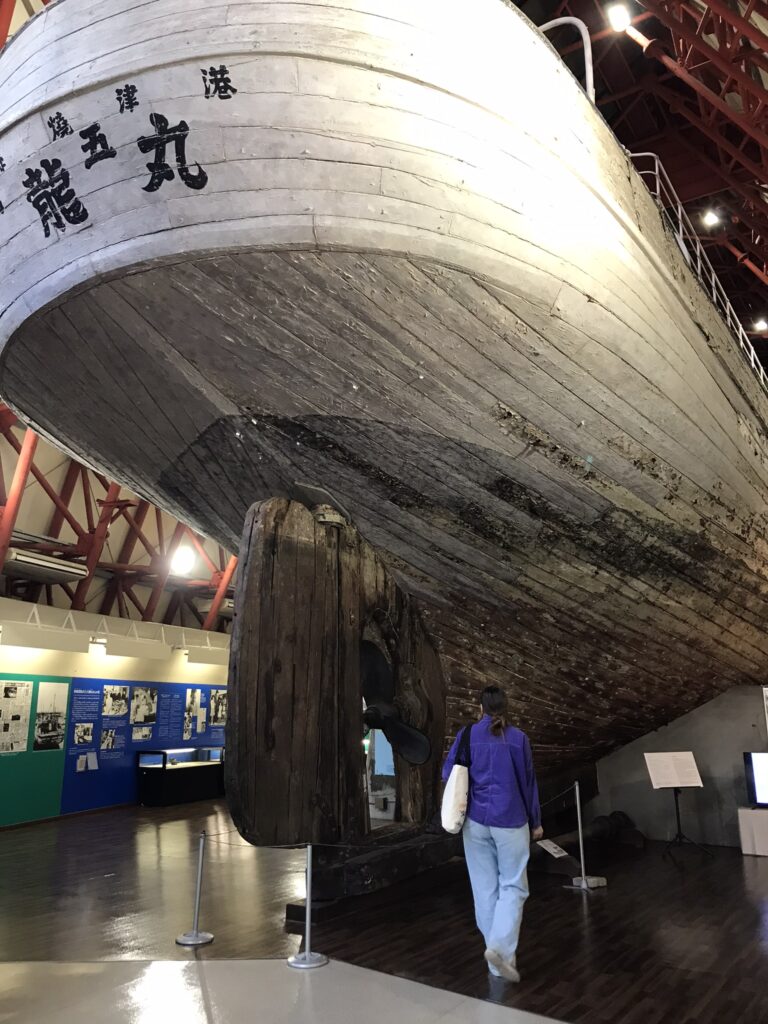
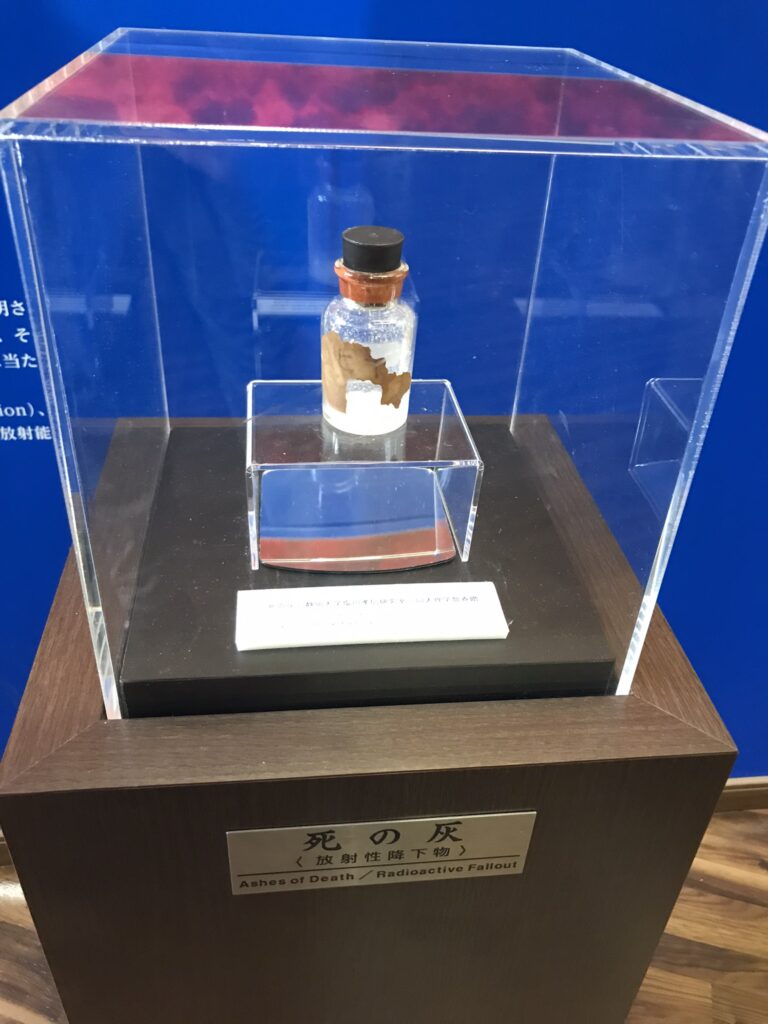
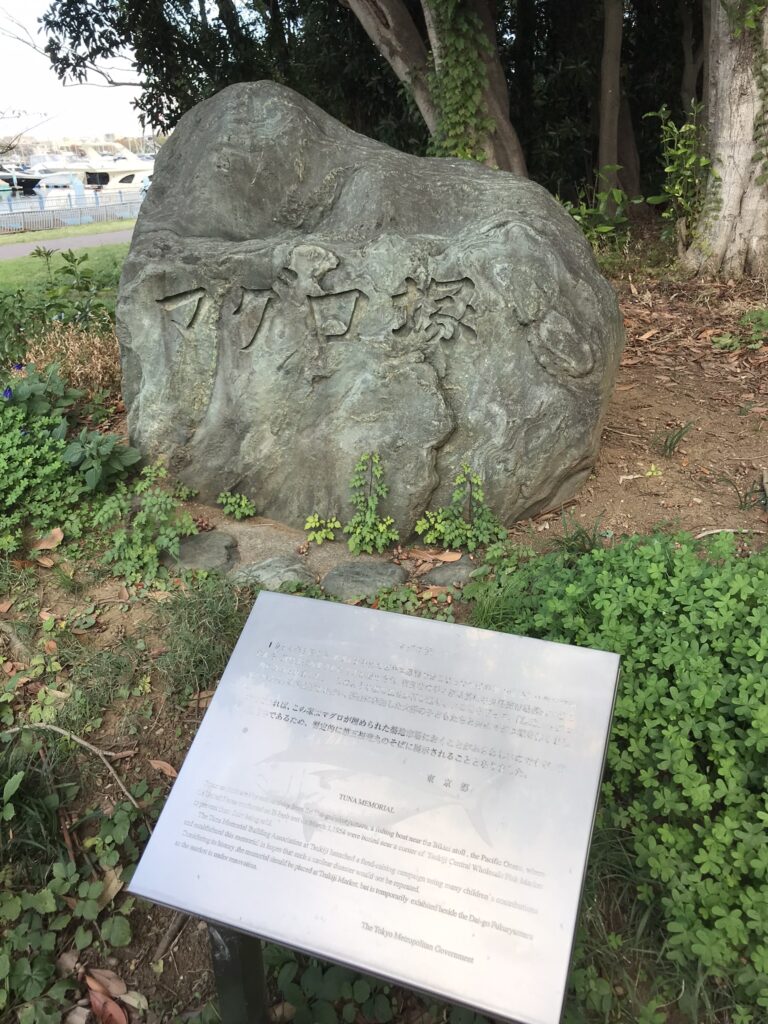
The Fukuryumaru is no longer radioactive but we’re not sure about the ashes of death on display. Outside the exhibition is a monument to all the wasted tuna as a result of this incident
Within the museum you can actually see the original fishing boat, the Lucky Dragon, as well as a sample of the Ashes of Death. There are lots of photos and displays with clear English translations throughout. The gallery is strongly anti-nuclear and promotes general disarmament of nuclear weapons. It also spotlights the experience of the inhabitants of the Marshall Islands, who suffered greatly as a result of the USA’s nuclear testing regime in the Pacific. Outside is a monument to the discarded Japanese seafood. The museum is located where it is because this is where the Lucky Dragon was originally dumped after it was decommissioned. This little-known incident is a sad and fascinating chapter of Japanese history, shining a spotlight on the dangers of nuclear testing.
As well as the museum itself, the surrounding area here is quite interesting. The museum is located in Yumenohima – quite an obscure area a little further out of town which is easily reached from the Ginza area on the Yurakucho subway line. Yumenoshima is one of the many artificial islands made from waste landfills in Tokyo Bay. It’s now mostly used for sports and recreation. With a strange, somewhat industrial vibe, this place seems a world away from the bustling downtown areas even though it’s just a few stops on the train. There’s a huge greenhouse structure containing a botanical garden just behind the Fukuryu-maru museum, which we didn’t visit.
Kamakura
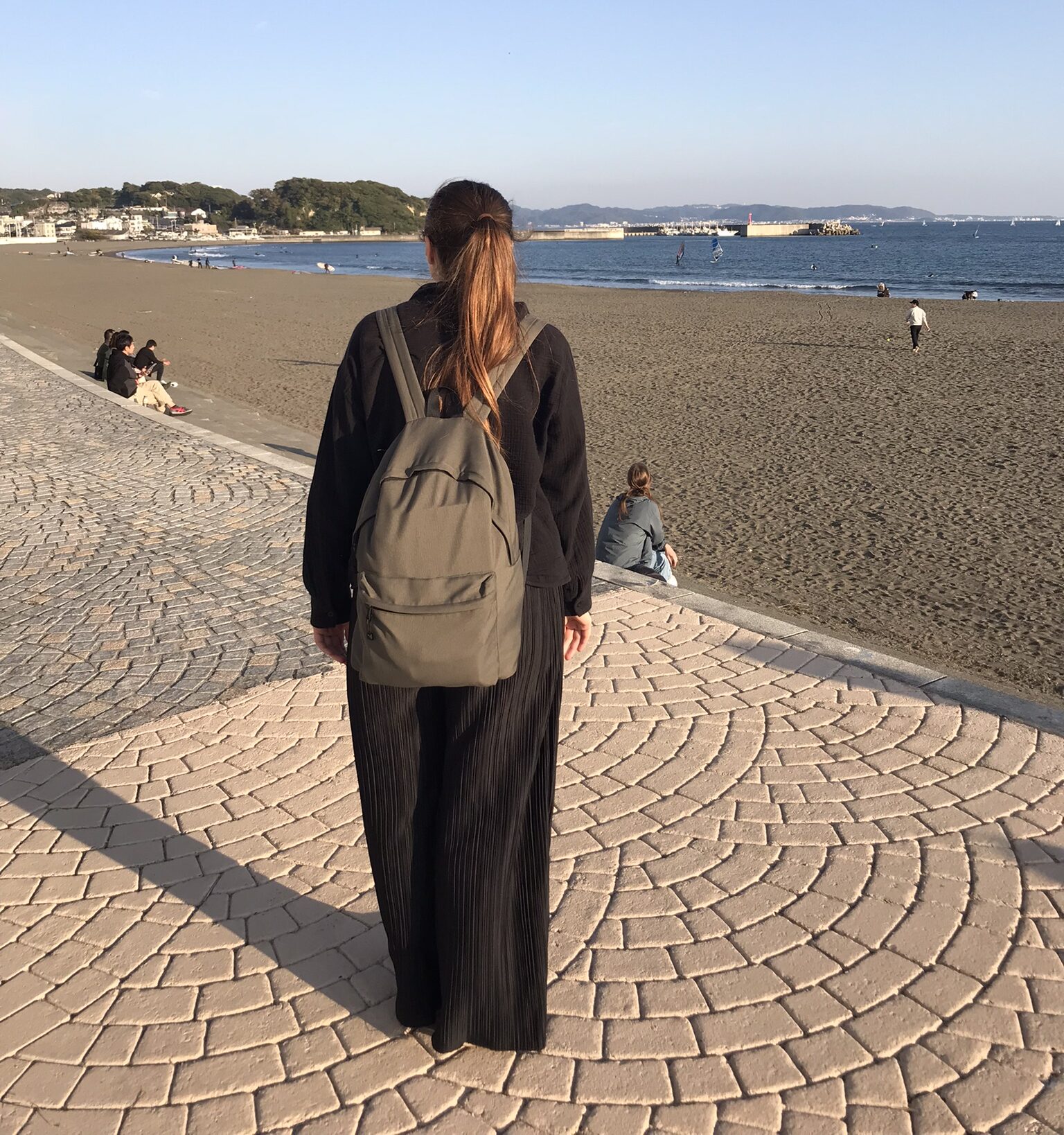
Kamakura is a hop, skip and a jump on the train from the centre of Tokyo. A hit beach destination for Tokyoites, visitors flock here to frolic in the waves during the stifling summer months, partake in watersports or hike the historic temple route for spiritual purposes. The famous Daibutsu (Great Buddha statue) is a huge draw for tourists and is easily the busiest attraction in the area. The Hachimangu (samurai warrior) shrine in Kamakura is another favourite for visitors.
A former capital of Japan, Kamakura was the base of the Kamakura Shogunate which ruled the country between 1192 and 1333. This was the first time that Japan was ruled by a shogun – a powerful warlord who acted as a defacto military dictator, with the Emperor remaining as the official head of state but taking a more passive role. The Kamakura shogunate marked the beginning of the era of the samurai and the feudal system which dominated most of the millennium in Japan. Today, Kakamura is home to many historic temples and remnants from that era.
Kamakura has it all: history, culture, spirituality, hiking opportunities and brilliant beaches. We decided to leave Tokyo to avoid the steep weekend prices, and Kamakura provided an excellent escape from the city. It’s easily accessed on the train from central Tokyo, and the scenic coastal landscapes feel a world away from the throb of the big city even though this is still technically part of the Greater Tokyo area.
Accommodation
B&B Surf Rider – a hostel-type place located within walking distance of Kamakura station. Private rooms with a shared bathroom, the facilities were actually really good here with a shared kitchen, lounge area and plenty of toilets and showers. They stored our bags too both before and after checkout. It was also very peaceful and quiet by hostel standards – maybe we just got lucky with other guests being respectful, but there didn’t seem to be issues with sound insulation. I would happily stay here again.
Foodie Places
Ichikanjin – this unassuming place specialises in tsukemen – cooked wheat noodles in an extremely rich, hearty broth with pork. We couldn’t believe how good the food was here. This is the single best place we ate at in the whole of our time in Japan. We were absolutely blown away by this. I can’t accurately put it into words. The portions were enormous too. After eating here, we constantly sought out tsukemen places in virtually every city we visited to try and replicate this experience.
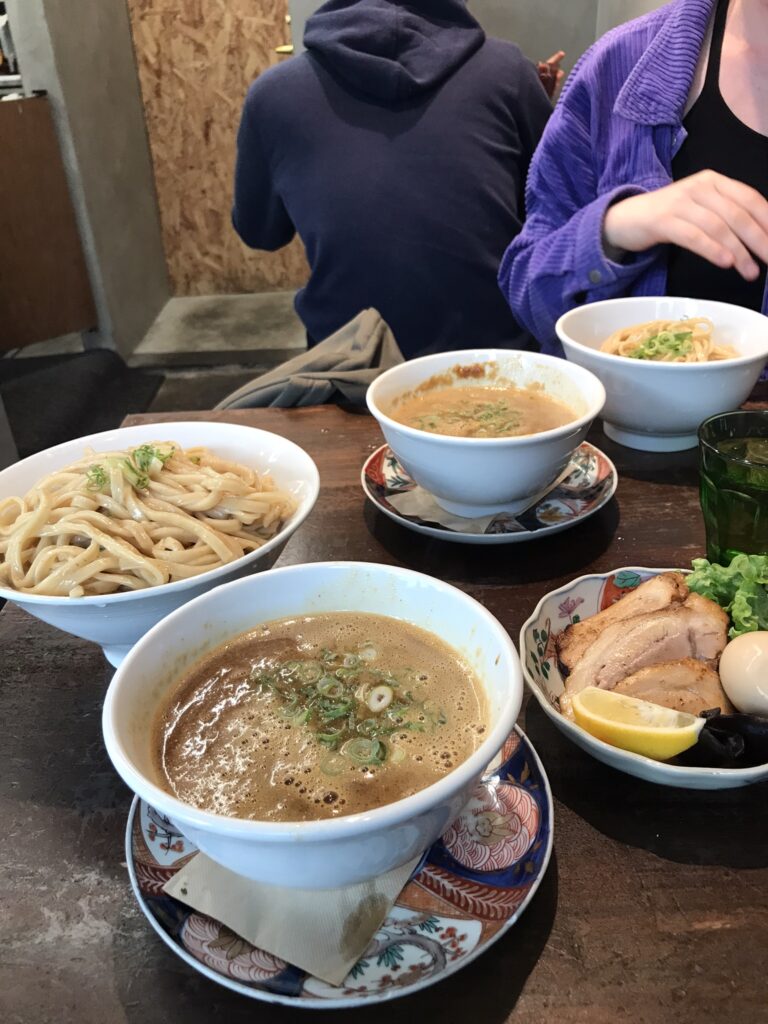
The tsukemen served at Ichikanjin made it onto our list of top three meals in Japan
Activities
Daibutsu – a huge statue of Buddha dating back to the mid-13th century, this is by far the most famous landmark in Kamakura. It’s very rare to see a Buddha statue like this outdoors – the reason for this is that the wooden hall which housed the statue was repeatedly destroyed over and over again for a period of 150 years, with the monks eventually giving up and deciding to leave the Buddha exposed. It has stood out here in the elements since 1498. Look closely at the ear of the Buddha, as you can still see hints of the gold leaf which once covered the whole statue.
Kotoku-in, the temple housing the Daibutsu, is extremely crowded with tourists. We encountered some pretty obnoxious people here (mainly foreign tourists), elbowing each other out of the way for selfies. Luckily it’s pretty easy to get a good snap of the famous statue as it’s so big.
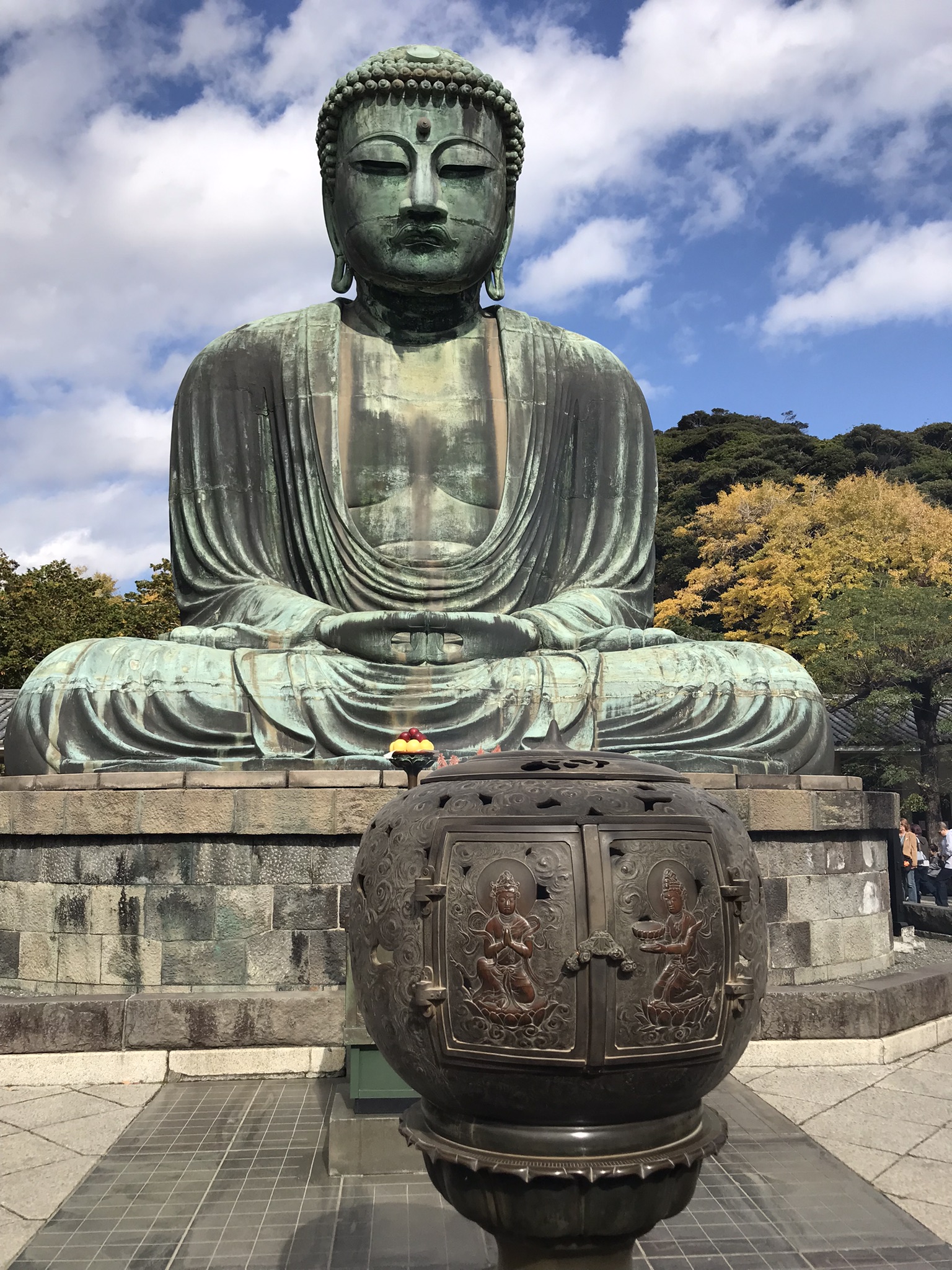
Many visitors come to Kamakura just to stare into the eyes of the giant Buddha at Kotoku-in
Temples of Kamakura – we took a hike through the landscape and some of the historical temples of Kamakura, including Hasa-dera (shrine featuring a cave section and a spinning book rack), Kotoku-in (home of the famous Daibutsu), Zeniarai Benten Shrine (money washing shrine), Genjiyama Park (featuring a statue of Minamoto no Yoritomo, the first Kamakura shogun), Kazuharaoka Shrine (plate smashing shrine) and Hachimangu Shrine. We were intrigued to see the different rituals taking place at some of these shrines – foreigners are welcome to take part and I partook in washing money for good luck at Zaniarai Benten and smashing a few plates at Kazuharaoka. We also spotted a Shinto wedding taking place at the Hachimangu Shrine. There are many, many other ancient temples and shrines in the Kamakura area – you would probably need a few days to visit them all. Check out our self-guided walking tour by clicking here!
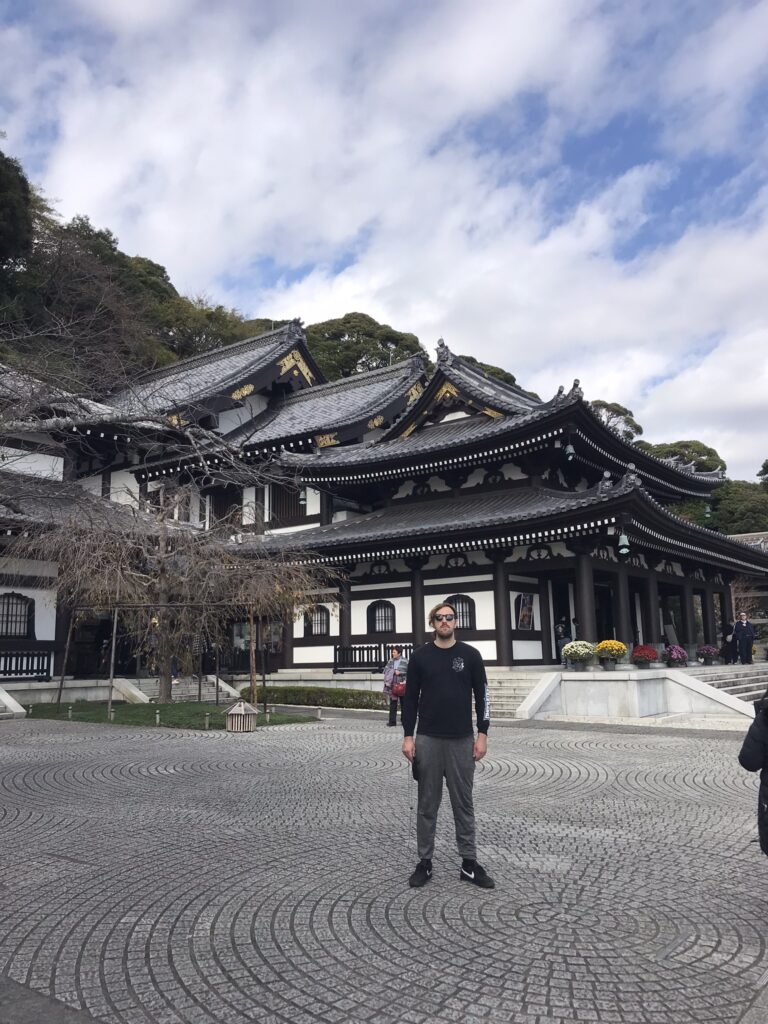
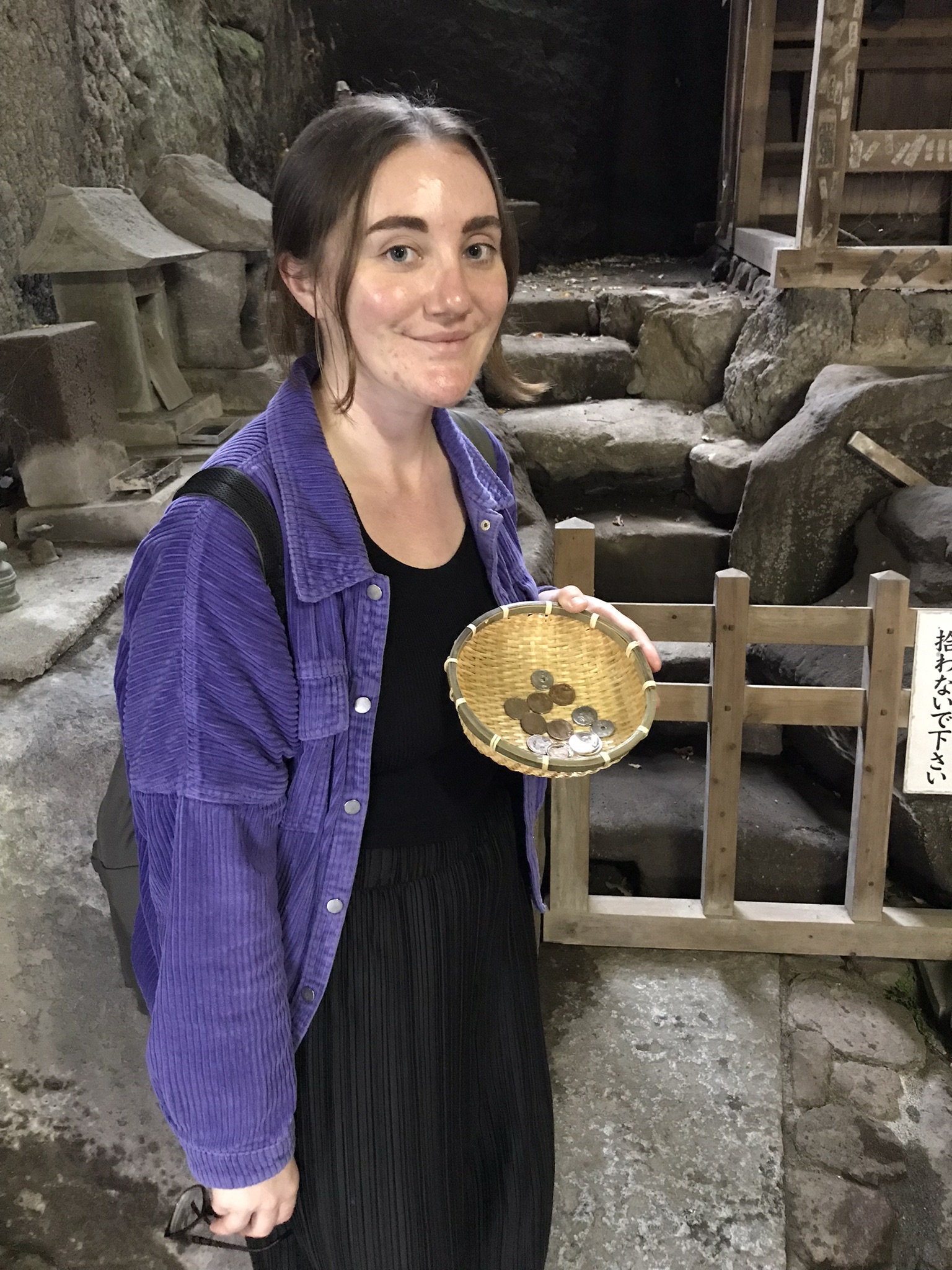
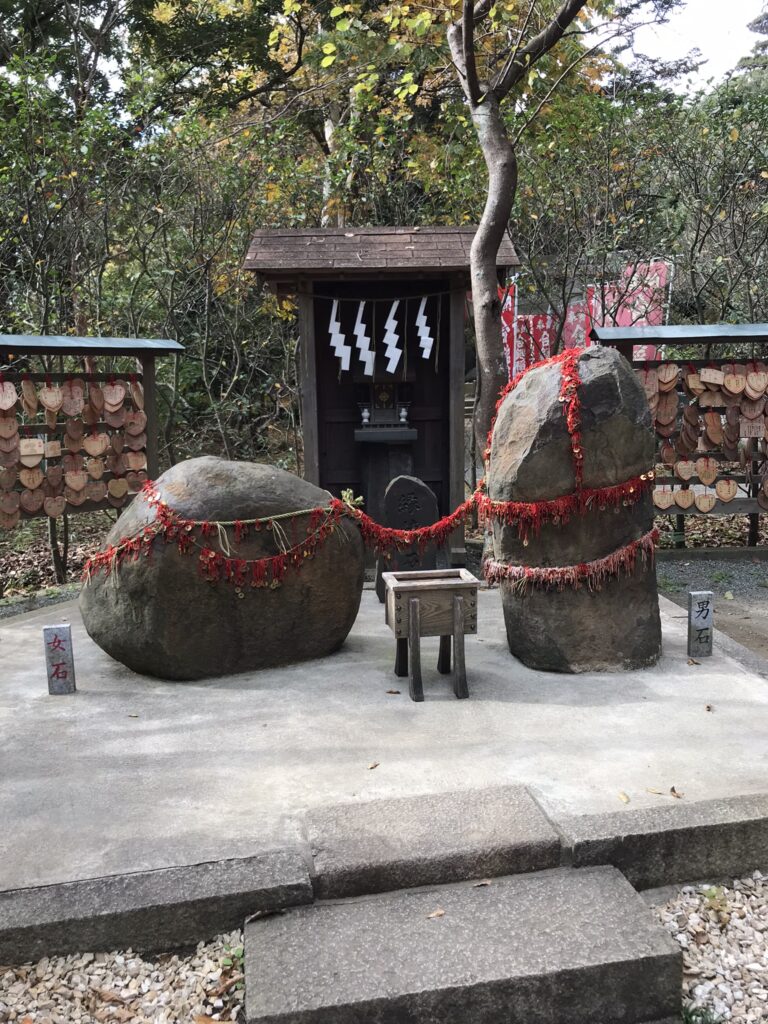
Hase-dera, washing money for good fortune at Zeniarai Benten Shrine and Kazuharaoka Shrine, the lovers shrine
Enoshima Island – located a little further along the coast from Kamakura, this island is a renowned scenic and spiritual spot and makes a great afternoon excursion for visitors to Kamakura. Visitors can get here by taking the Enoden Line train to Enoshima Station and then walking for around 20 minutes, past the beaches and across the bridge onto the island. The Enoden Line is a very old-school electric train line which almost seems more like a tram. The trains are small and can get exceptionally crowded at busy times, although we visited on a weekend and found it to be no worse than the majority of busy trains in Tokyo.
When arriving across the bridge, you’re immediately in the midst of Benzaiten Shopping Street – a super-busy thoroughfare filled with eateries and tourist souvenir shops. Benzaiten is a Shinto-Buddhist water goddess – an interesting namesake for the street. In local mythology, Benzaiten is said to have created the island of Enoshima in order to placate a dragon that was terrorising the area. Benzaiten Street leads up the hill towards the centre of the island. Further towards the island’s interior are a number of historic shrines, including Hetsumiya and Okutsumiya. The centre of the island has a modern lighthouse with an observation deck – Enoshima Sea Candle. Entrance to the viewing deck is paid and we didn’t go up, but apparently you may be able to catch a glimpse of Mount Fuji from up there.
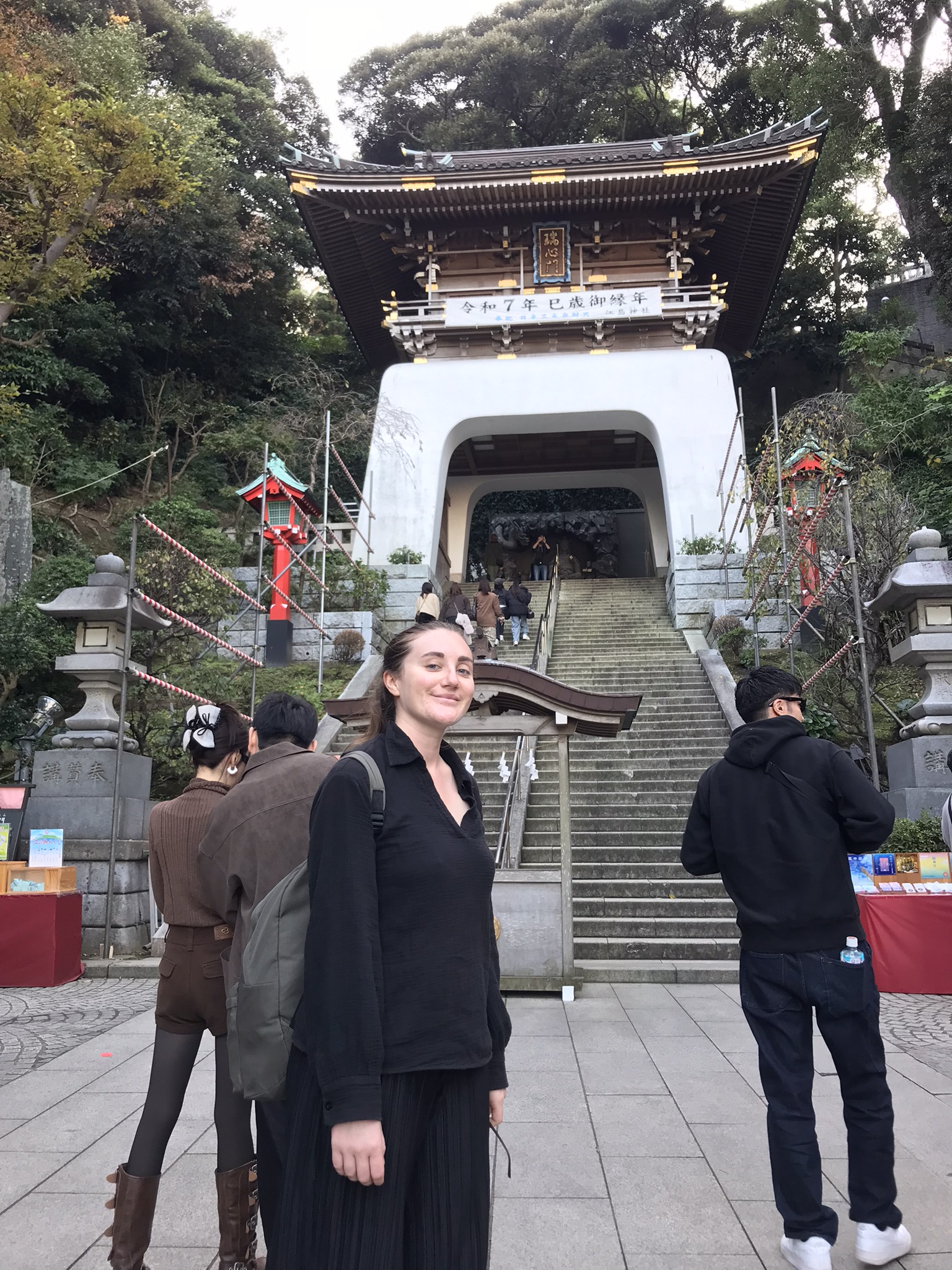
Visiting the shrines dedicated to the sea goddess is an incredibly popular activity for visitors to Enoshima
It’s a pretty self-explanatory walking route to the far west of the island, where you can find the Iwaya Caves, a series of rocky caves through the island’s interior which have historically been used for Buddhist practices. Admission to the caves is paid. There are a lot of stairs along the walking route across Enoshima, both up and down. It’s possible to pay to take an escalator up to certain parts of the island and avoid the stairs, but we chose to walk which was a pretty good leg workout.
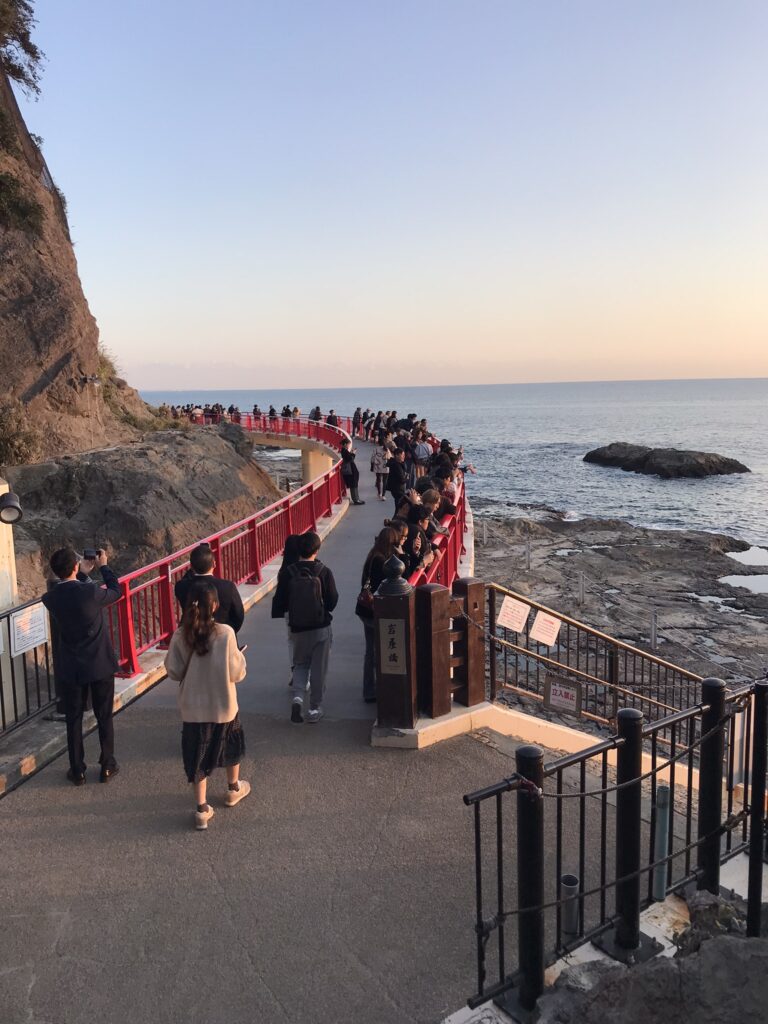
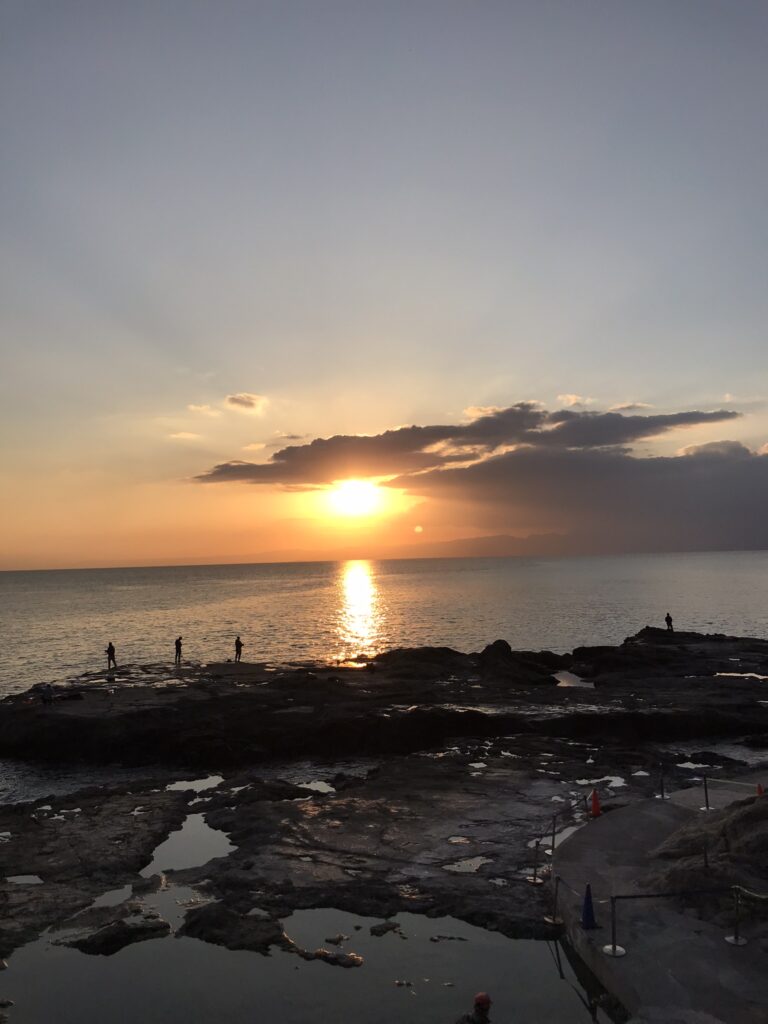
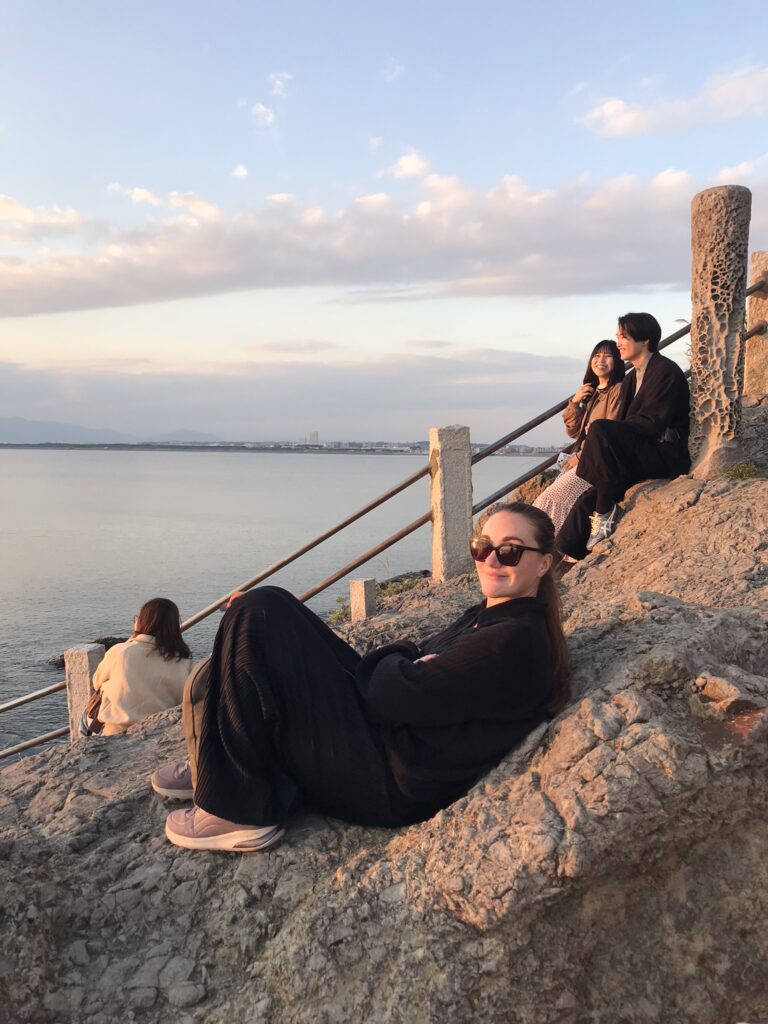
I recommend visiting Enoshima in the afternoon/early evening. We arrived to make sure we would be able to see the sunset.
It’s best to head to the far west of the island for this, near to the Iwaya Caves, where there are a number of rocky outcrops to sit and look over the water. From this vantage point, if you’re lucky you might be able to see the sun setting over Mount Fuji in the distance.
Manazuru
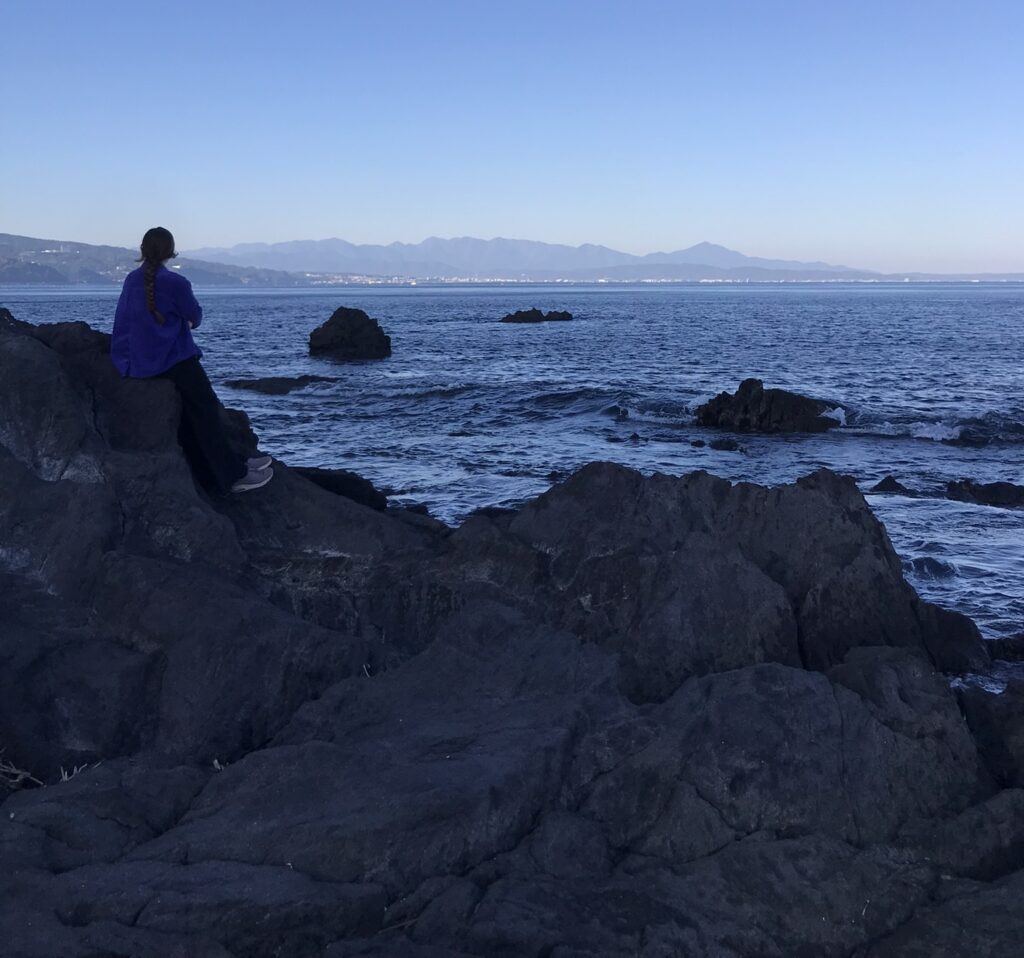
A small, sleepy village at the head of the Izu Peninsula, you won’t find Manazuru in any travel guides. This tiny place is emblematic of small-town Kanto – quiet, laid-back and borderline depopulated, with only elderly people pottering about the streets. Even the local bus driver seemed to be an octogenarian. It really shows another side of the region.
We chose to stay in Manazuru for two reasons – firstly because we found cheap accommodation there by regional standards, and secondly because it was within striking distance of Hakone as well as some other well-known local spots such as Atami, Odawara and Cape Manazuru.
Accommodation
Room on Airbnb – 5 minutes walk from train station, this was a quiet enough place with a shared kitchen and bathroom facilities. There was only one shower here, which was a pain, and the bed was too small to fit both myself and Dan. Still, the place was cheap and clean.
Foodie Places
プラシッダ真鶴店 (Prasiddha) – a Nepalese-Indian curry house located next to Manazuru train station. Decent enough Indian-style curry and reasonable prices, with meal sets of curry, naan and rice on offer. Manazuru is a small place with limited food options and the nearby Kenny Pizza seemed to be closed ridiculously early each day, so we ended up eating curry a few times here. The guys inside seemed to be very welcoming and grateful. I’m not sure how this group of Indian/Nepalese immigrants ended up here in the small town of Manazuru.
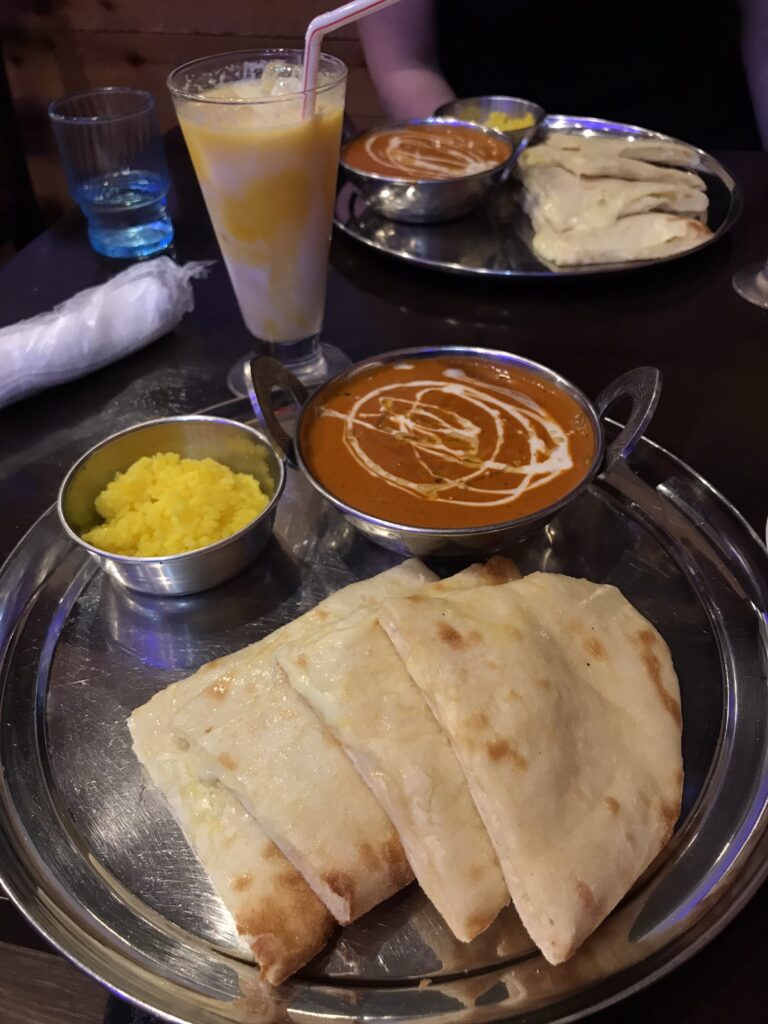
Prasiddha: the only Indian restaurant in this quaint town
Activities
Cape Manazuru – Cape Manazuru is a volcanic landscape which was created by an eruption of Mount Hakone. The cape is known for the rock formation out to sea, Mitsuishi rocks. We were blown away by the natural environment here, spending a good while peering into the volcanic rockpools. The place was very quiet, with barely a handful of other people there. Very secluded, it almost felt like we had the coast to ourselves. This is a great place to take a breath, with a calming and peaceful, somewhat other-worldly atmosphere and unbeatable views around the coast. You can spot the skyscrapers of Tokyo in the distance, which is very surreal.

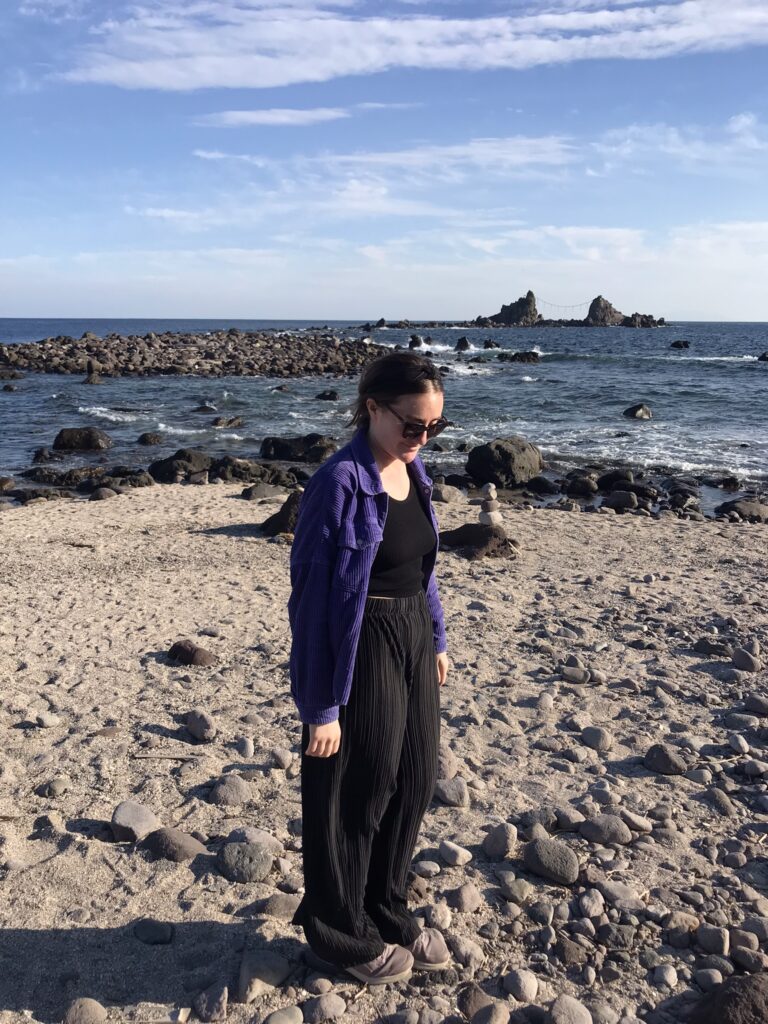
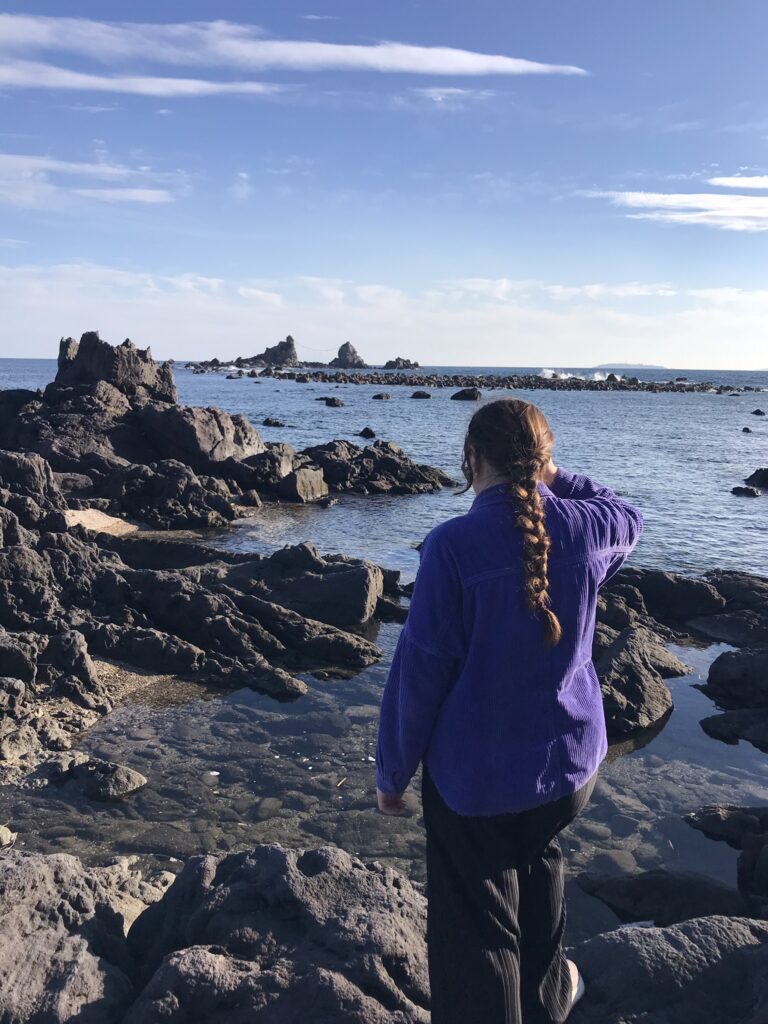
Manazuru Cape beach – very rugged and rocky
To get to the cape we took the bus from outside the train station, which drops off at the Nakagawa Kazumasa Art Museum (which was closed when we visited). From there it’s an easy enough hike to the cape. The trails are easy to follow, with plenty of information boards and signs. Eventually we reached the cape’s visitor centre/cafe, which seemed to be borderline closed and had an odd vibe even though we were there on a weekend. Behind the visitor centre building is the staircase leading down to the shore.
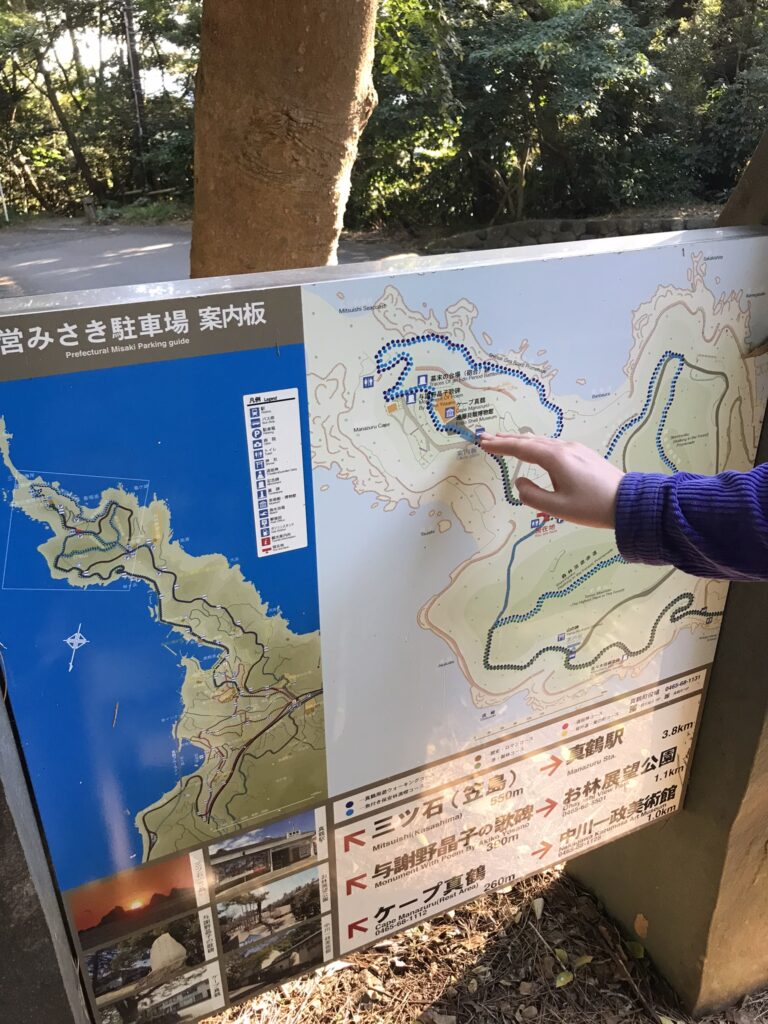
A handy map of Cape Manazuru
Hakone day trip
Hakone is one of the most popular natural areas in the vicinity of Tokyo and a classic getaway from the city, famed for its dramatic volcanic landscapes featuring sulphur fields and views of Mount Fuji. As well as its natural sights, Hakone is a place of historical value as it was once home to a villa for Japan’s imperial family, as well as the location of an old security checkpoint for those traveling to Edo during the time of the Tokugawa Shogunate.
Tourism in Hakone is a well-oiled machine, with the classic ‘5 methods of travel’ tourist loop being the most popular option for most visitors. The loop involves a train from Odawara or Hakone-Yumato station, followed by a ropeway and cable car over Owakudani sulphur fields, a pirate boat trip on Ashinoko Lake and a bus back to the train station. Along the way are numerous well-regarded art galleries which are dotted around the verdant landscapes. The area is also famed for its natural volcanic hot springs, with many onsen resorts around the Hakone-Yumato area.
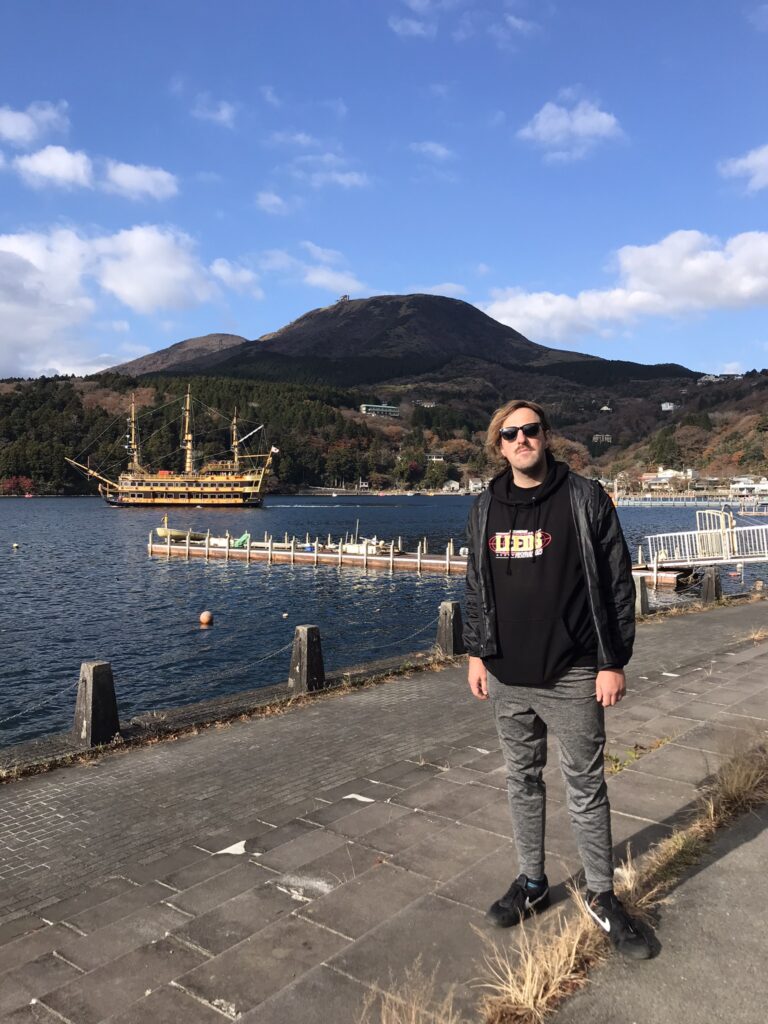
The Hakone Free Pass includes a ride on this pirate ship across Lake Ashi
Most visitors to Hakone choose to purchase the Hakone Free Pass, which covers unlimited journeys on all of the transportation associated with the tourist loop as well as discounted entry to some attractions. The pass can be purchased from Odawara train station or online, with options including a return train journey from Shibuya station in Tokyo. However the Free Pass, while a great deal for workers from the city or those on shorter holidays, isn’t super cheap for long-term budget travelers like us so we were keen to explore other options.
We did a tonne of research into whether it would be possible to visit the sulphur fields and make this loop independently. In the end, we concluded that there is not a way to do this cheaply. The Free Pass isn’t actually that expensive considering how much it includes, and it’s valid for 48 hours which probably makes it worthwhile even for budget travelers who have more time than we did. As it is, we only had 24 so skipped the sulphur fields and took the local bus from outside Manazuru station to Lake Ashi to visit the Hakone Checkpoint, Onshi-Hakone Park and Hakone Shrine, and then took the bus onwards to Tenzan Onsen, finally taking the train back from Hakone-Yumato to Odawara and then Manazuru. This was quite a lot cheaper, although obviously we missed out on the sulphur fields and the boat ride on Lake Ashi.
Although Hakone is home to many world-class art galleries, these mainly seemed to be focused on Western art. As Westerners, we probably weren’t as enthusiastic about this as the local population. Entry fees for the galleries in the area are also quite high, so we also decided to skip the galleries. We had more than enough to fill a full day even without this.
Activities
Onshi-Hakone Park – a large public park, this is the former grounds of the Imperial Villa which existed here between 1886 and 1923. On the site of the former villa now stands the Lakeside Panorama Hall, which offers visitors an insight into the building of the villa, its esteemed guests (including members of the British, Germany and Russian royal families of the time) and its eventual destruction in the Great Kanto Earthquake of 1923. According to historical records, a Western-style villa once stood side-by-side with a traditional Japanese-style residence here. Matcha tea and traditional Japanese sweets are now served in the upstairs cafe.
As well as its imperial history, the park has numerous lookout points featuring Lake Ashi as the foreground with Fuji-san peeking over the Hakone Caldera in the distance. This is said to be one of the top 100 places to view Mount Fuji, but it’s notoriously difficult. You really do need to get there in the early morning for the best chance; we were slightly delayed on the bus due to the traffic in Atami and ended up borderline missing out.
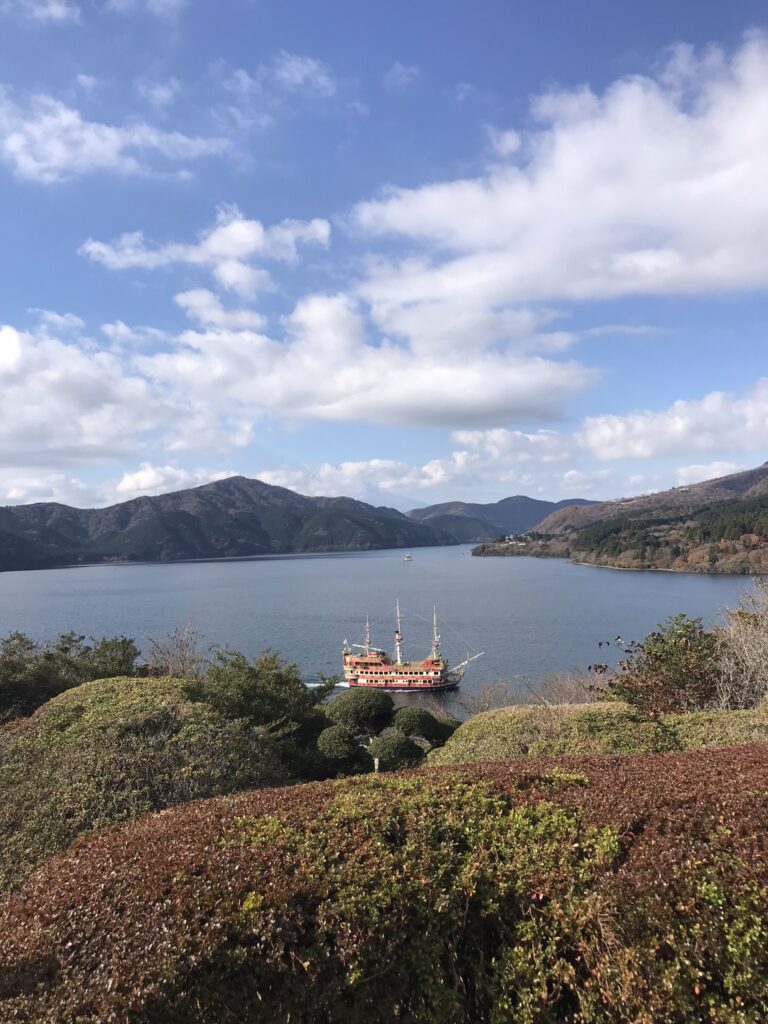
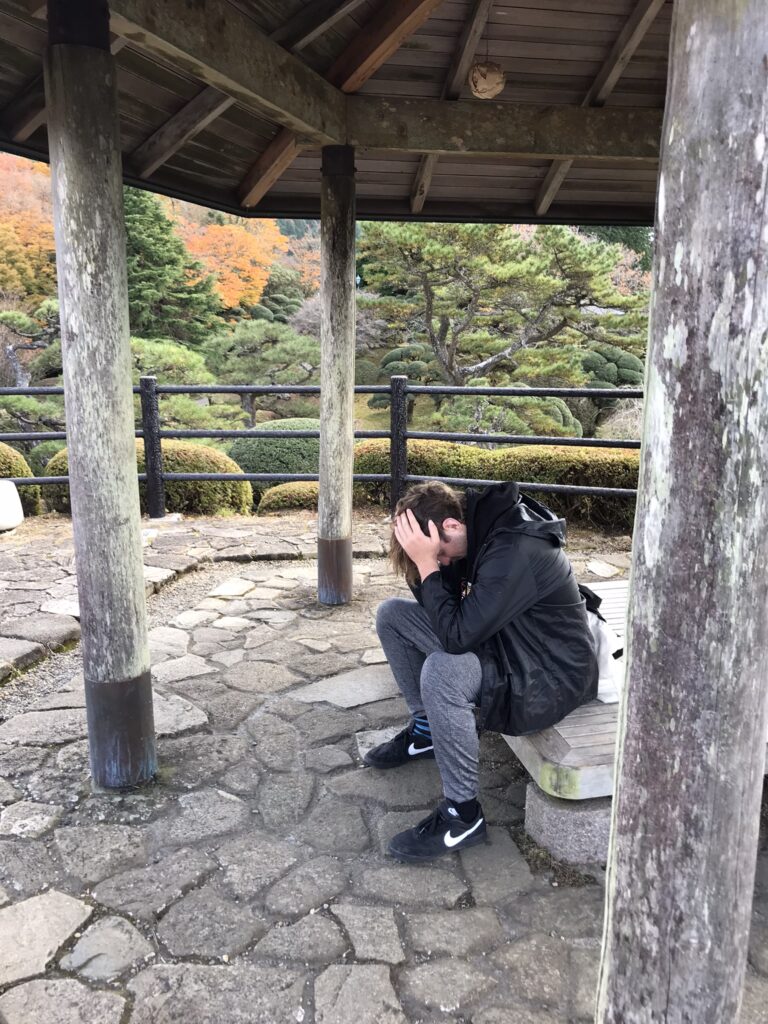
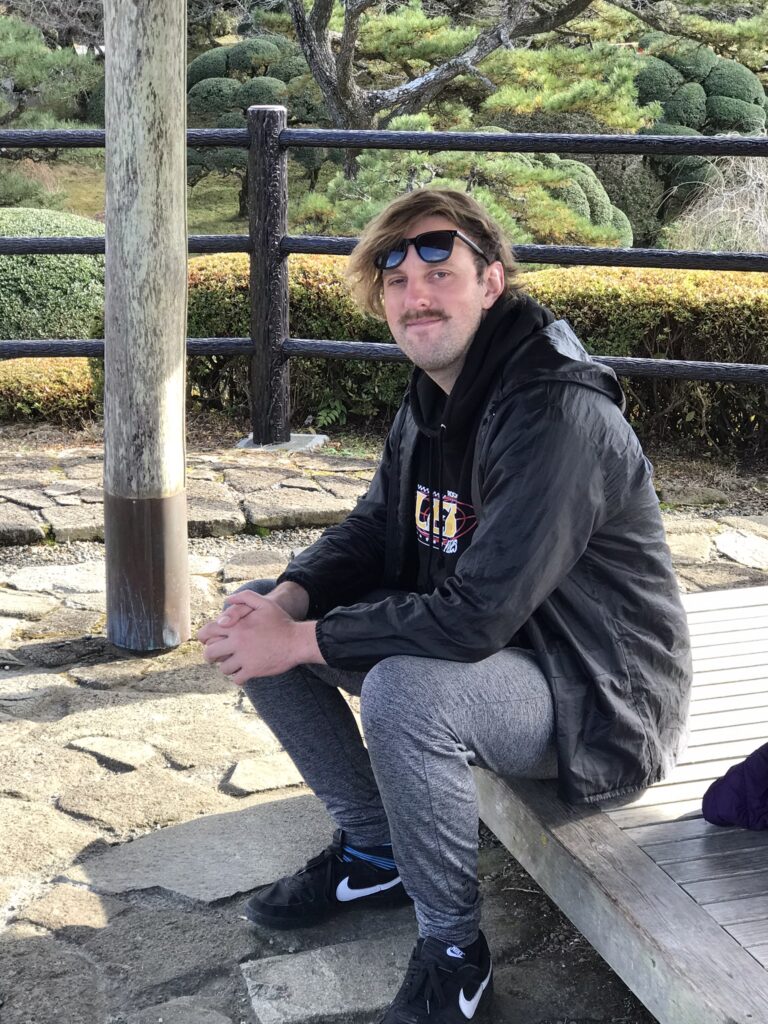
If you’re lucky you’ll be able to see Mt. Fuji from Onshi-Hakone Park; Dan in various stages of despair as we arrived late and Mt. Fuji had already clouded over.
Hakone Checkpoint – this was a spot along the route between Kyoto and Edo at which a major security checkpoint was erected during the time of the Tokugawa Shogunate. There is a small museum area with some historical info here, but our bus from Manazuru had been severely delayed and so we stormed through to try and get to Onshi-Hakone park before the clouds completely engulfed Mount Fuji.
Hakone Shrine – this shrine is best known for the torii gate on the bank of Ashi Lake. The queues to take a photo with this torii were crazy long. It was quite funny to see some oblivious tourists in a swan pedalboat on the lake inadvertently entering into shot and so ruining the photos of people who had been queueing for half an hour or more. The torii gate is located down the hill from the actual shrine, and is the subject of a local legend involving a priest who defeated a dragon by praying in this location.
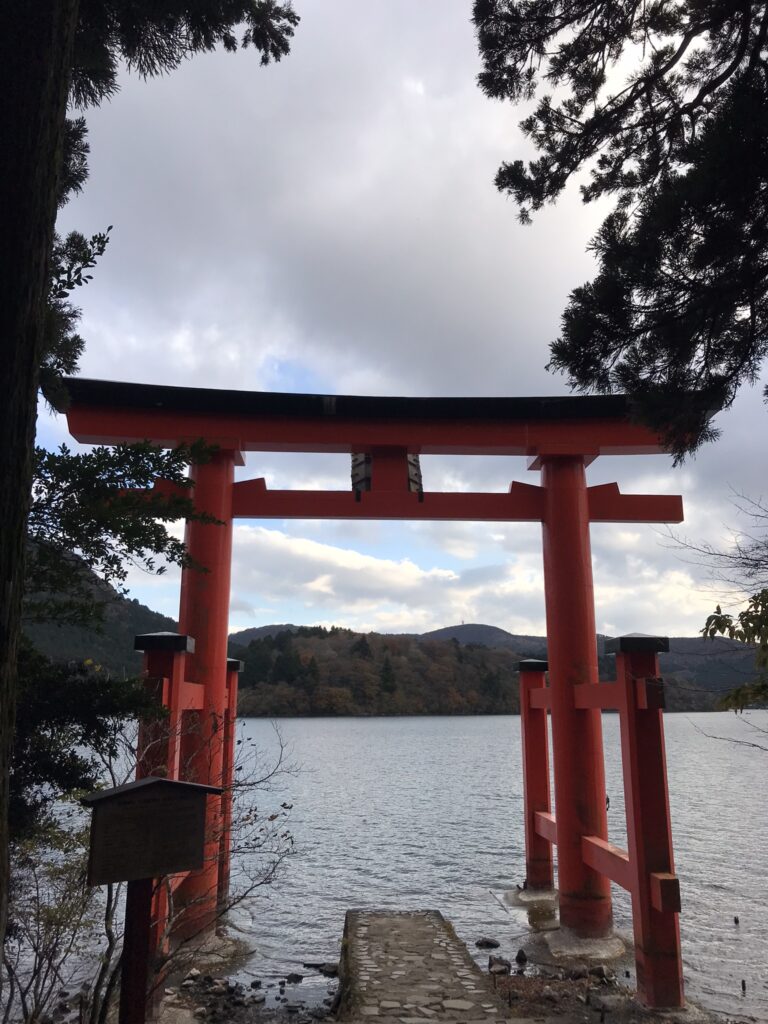
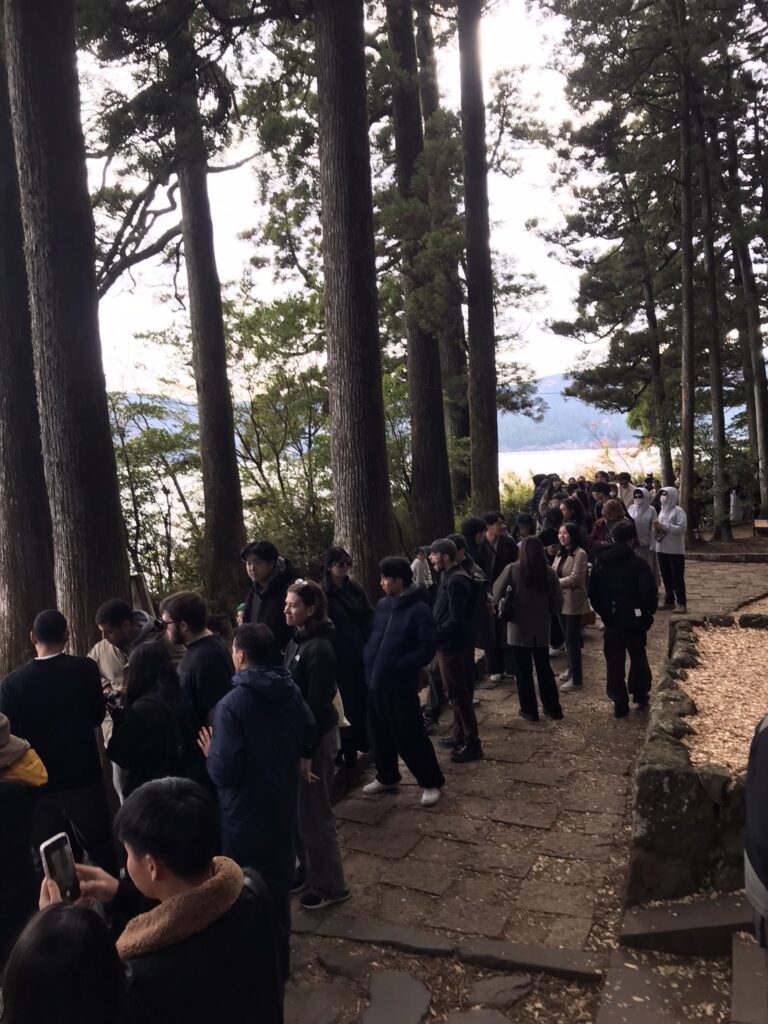
This torii gate at Hakone Shrine attracts very long queues
Tenzan Onsen – as someone with plenty of tattoos, I had resigned myself to not being able to visit an onsen in Japan. Historically, tattoos were banned in onsen due to their associations with the yakuza (Japanese mafia), and their propensity to intimidate the local population as a result. Most onsens in the country are very traditional and so stick strictly to this established custom. However Tenzan does allow solo visitors with tattoos – the caveat is that there can’t be more than one tattooed person per group (essentially they don’t want groups of tattooed people together inside, which might resemble a gang). The onsen is smart to visitors trying to get around this policy; apparently tattooed people who have tried to enter separately and then met up once inside the onsen have sometimes been asked to leave.
The onsen experience is really interesting and was very enjoyable for me. You have to be quite comfortable in your own skin as the whole thing is done completely in the nude. Swimsuits are strictly prohibited, you will be walking around naked with loads of strangers. Onsen are strictly segregated into male and female sections, each having their own separate area with various different temperature pools. At Tenzan the pools are mostly outside. Some of the pools are almost scalding hot, while others are freezing cold plunge pools. Tenzan also has a sauna and steam room. I personally enjoyed going from the sauna to the cold plunge pool, and relaxing in the hot baths.
When I visited Tenzan there were a few other foreigners, but the customers inside were mostly Japanese. People inside the onsen were mostly solitary and those in groups weren’t loudly chatting, it was more hushed voices. I did spot a couple of other people with tattoos inside so I didn’t feel too out of place, although most visitors didn’t have them. It was a nice setting and pleasant to be able to lounge outdoors naked in the thermal pools. There is a specific etiquette to the onsen, make sure you shower before and after entering the pools – there are little stools to sit on and shower. You also need to take your own towel into the spa with you, which most people keep on top of their head.
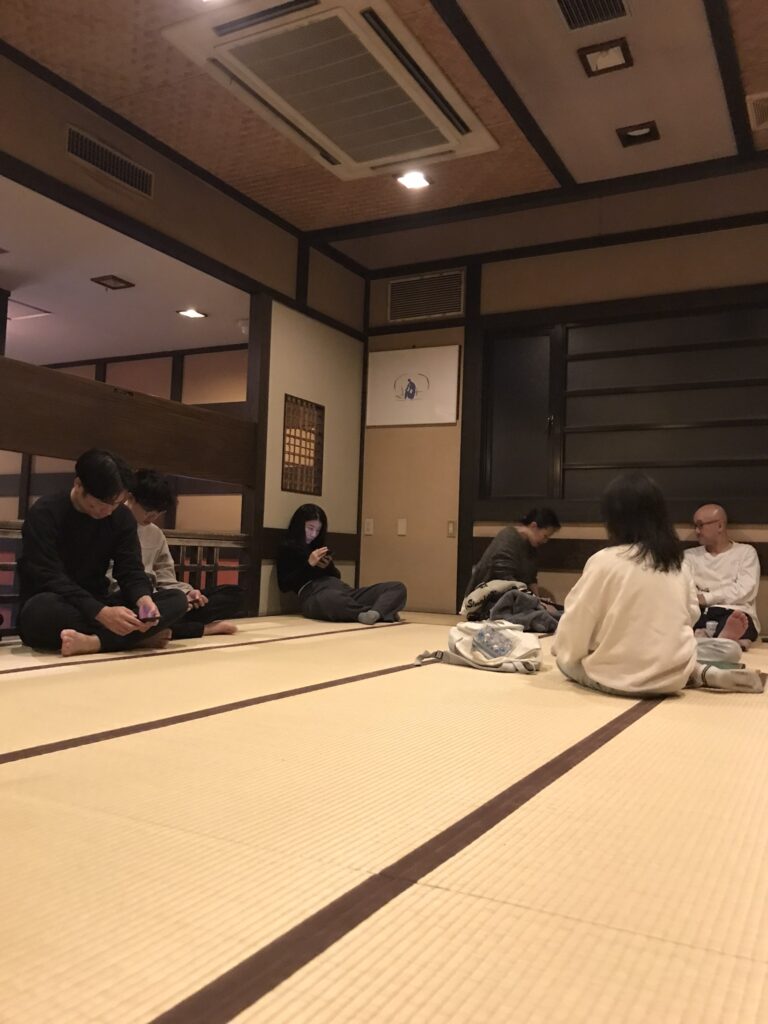
Dan managed to snap a photo of the chill area upstairs but phones inside the baths themselves are prohibited for obvious reasons
Payment at Tenzan is made at a vending machine outside the reception – it’s cash payments only so make sure you have enough! This is a day onsen rather than an onsen hotel – many tourists opt to stay at a luxurious onsen resort but this place is a simple in-and-out, giving it a more authentic feel in many ways. We took the bus here from Motohakone bus station, which is right next to the dock for the pirate boats on Lake Ashi. Tenzan is one of the scheduled public bus stops, and there is a bus timetable on their website. The last bus from Motohakone departs around 4pm, so make sure you don’t leave it too late if coming from that direction. The onsen is also within walking distance of Hakone-Yumato train station.
As well as Hakone, the towns of Odawara and Atami near to Manzauru are both popular tourist destinations for Tokyoites. Atami features in the classic 1950s movie ‘Tokyo Story’, while Odawara is known for its castle. Sadly we didn’t have time to visit either of these destinations other than for transit.
After visiting Kanto, we took the bus to Matsumoto! For more Japan content, click here!