Located a stone’s throw from central Tokyo (about 45 minutes on the train), the coastal town of Kamakura served for a period in the 12th, 13th and 14th centuries as the de facto capital of Japan. This was the centre of power of the Kamakura Shogunate, established in 1192 when the military warlord Minamoto no Yoritomo seized control of the nation and was recognised by the Emperor as Seii Taishōgun – the ‘barbarian conquering general’; Minamoto and his descendants then governed the country from this base on the east coast, far from the Emperor’s centre of influence in Kyoto. Like Kyoto, Kamakura developed as a hotbed of culture, with artisans, scholars, palaces and dozens upon dozens of shrines being established in the area. This period saw the introduction and promotion of new forms of Buddhism and belief systems which consolidated the shogun’s rule and led to the rise of the warrior class known as the samurai. Today, the plethora of shrines and religious buildings are more or less all that remains of the days when power was concentrated in this small coastal town.
This self-guided walking tour takes in some of the main highlights, starting from Kamakura station and following part of the famous Daibutsu hiking trail.
Start at Kamakura station
From the station exit, proceed straight ahead and turn left – you will be on Wakamiya-oji Avenue.
In the centre of the street to the north-east you will see Dankazura – the raised walkway which marks the approach to the largest and most important shrine in the area, Tsurugaoka Hachimangu. Both the raised walkway and the road itself were constructed at the behest of the first Kamakura shogun, Minamoto no Yoritomo, in 1182 – allegedly to pray for the birth of a male heir after his wife fell pregnant, leading to the road’s name (Wakamiya-oji translates to ‘Young Prince Avenue’). The baby was indeed a boy – Minamoto no Yoriie, who went on to succeed Yoritomo as the second Kamakura shogun.
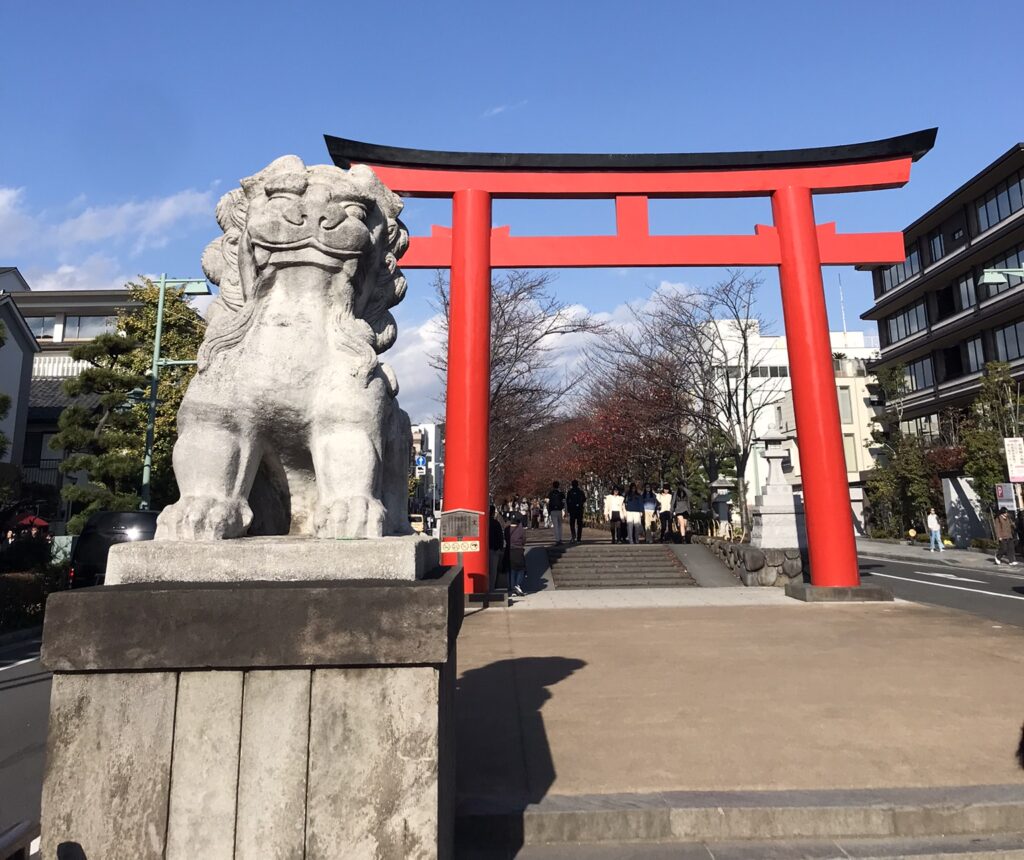
The red torii gate marks the start of the Dankazura raised walkway
Wakamiya-oji was formerly a private road and off-limits to commoners, with the raised section marking a pathway for particularly important people or those of a high status. Wakamiya-oji runs for over a mile, directly connecting Tsurugaoka Hachimangu shrine to the sea.
Follow the Danzakura pathway to Tsurugaoka Hachimangu. This Shinto shrine is the largest and most important in Kamakura. Established in the mid 11th century, it was moved to its current location and greatly expanded by the first Kamakura shogun, Minamoto no Yoritomo, in 1192. The shrine is dedicated to Hachiman – the Shinto God of War. This is considered to be one of the three great Hachiman shrines in Japan.
Within Shinto beliefs, Hachiman is said to be a divine representation of the Japanese Emepror Ojin, who lived in the 3rd century CE. The Minamoto clan, to which the Kamakura shogun Minamoto no Yoritomo belonged, was said to descend from Emperor Ojin. Therefore, Hachiman gained popularity during the first shogun’s reign, becoming widely accepted as the protector god of the now-dominant warrior class, the samurai. Not only did this deify the rule of Minamoto, it also helped to further establish his military government and the nascent samurai identity. Minamoto no Yoritomo’s grave as well as his former palace site lie nearby to the east, in what is now a residential area.
In 1219, the shrine was the site of high drama as the location where the third shogun, Minamoto no Sanetomo (the second son of Yoritomo), was ambushed and assassinated by his nephew (Yoritomo’s grandson Kugyo) as part of a family dispute over succession. Kugyo was himself immediately executed for this crime, ending the Minamoto lineage with the shogunate being transferred to a distant relative.
Today, Tsurugaoka Hachimangu remains the cultural centrepiece of Kamakura and typically has a vibrant atmosphere. You can often see weddings or other ceremonies taking place here. The shrine complex is vast, containing koi ponds, bridges, tree-lined walkways and several sub-shrines. At its centre, the main shrine is located up a steep staircase which provides great views over Kamakura from the top.
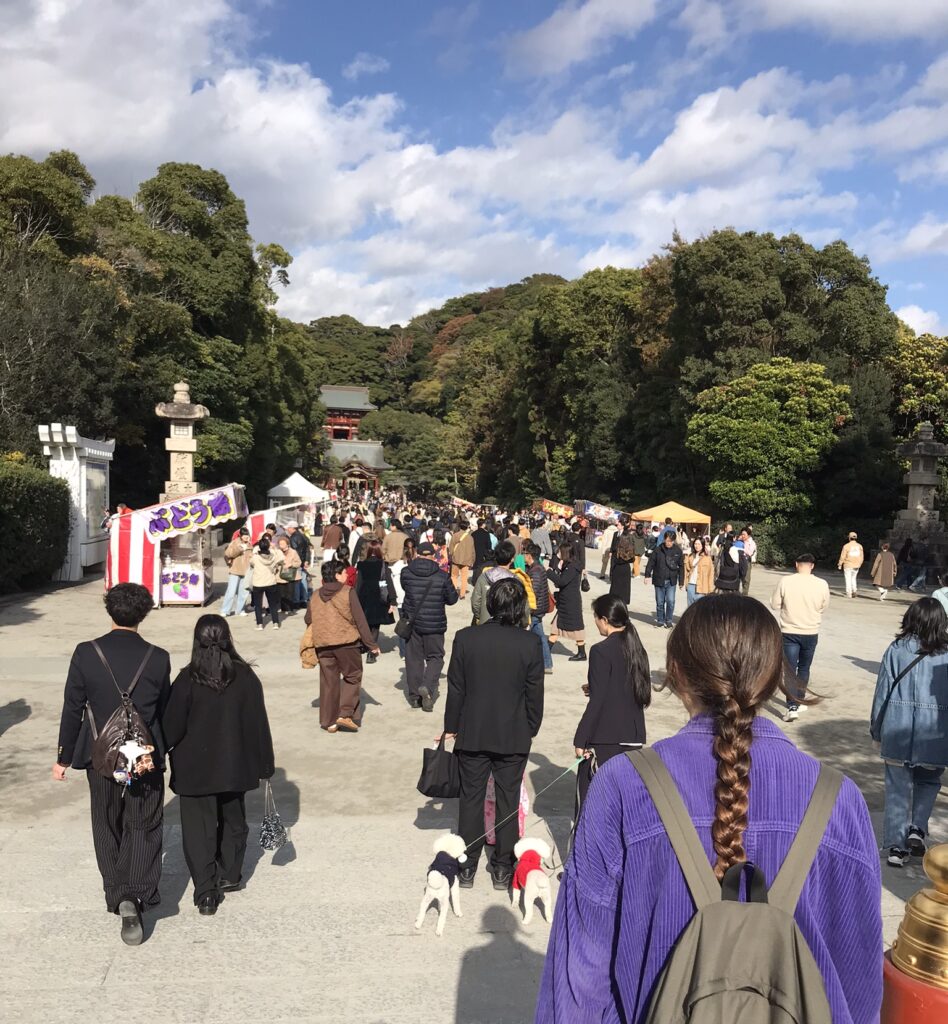
Tsurugaoka Hachimangu is usually a busy and vibrant place
Interestingly, during the 8th century Hachiman was adopted into the Buddhist belief system as a bodhisattva, as part of the fusion of Shinto and Buddhist beliefs in Japan which is known as syncretism. Tsurugaoka Hachimangu therefore functioned as both a Shinto shrine and Buddhist temple until the 1800s, when a distinct separation between Buddhist and Shinto buildings was decreed and the Buddhist aspects were therefore removed from the shrine.
From the entrance to Hachimangu, turn right and follow the road west over the train tracks. At the end of the road take the left on Imakoji Street, then take the first right. You will pass by the tiny Hainari shrine. This is an Inari shrine – the most common type of Shinto shrine in Japan. Inari is a kami (spirit deity) representing rice, agriculture, industry and prosperity. Inari is most often represented by a fox messenger known as kitsune – as is the case at this small local shrine.
Continue to follow the road until you reach a tunnel. Pass through the tunnel and turn left. Follow the paved path through the cemetery until the steps start to become more steep and you see an even steeper narrow staircase on the left. Take these narrow stairs up through the cemetery – once you reach the top, turn left and take the next set of steep stairs. Continue to follow the path at the top, then turn right and continue to follow the path as it winds upwards, eventually arriving in Genjiyama Park. This hilltop park contains a statue of Minamoto no Yoritomo, the founder of the Kamakura shogunate.
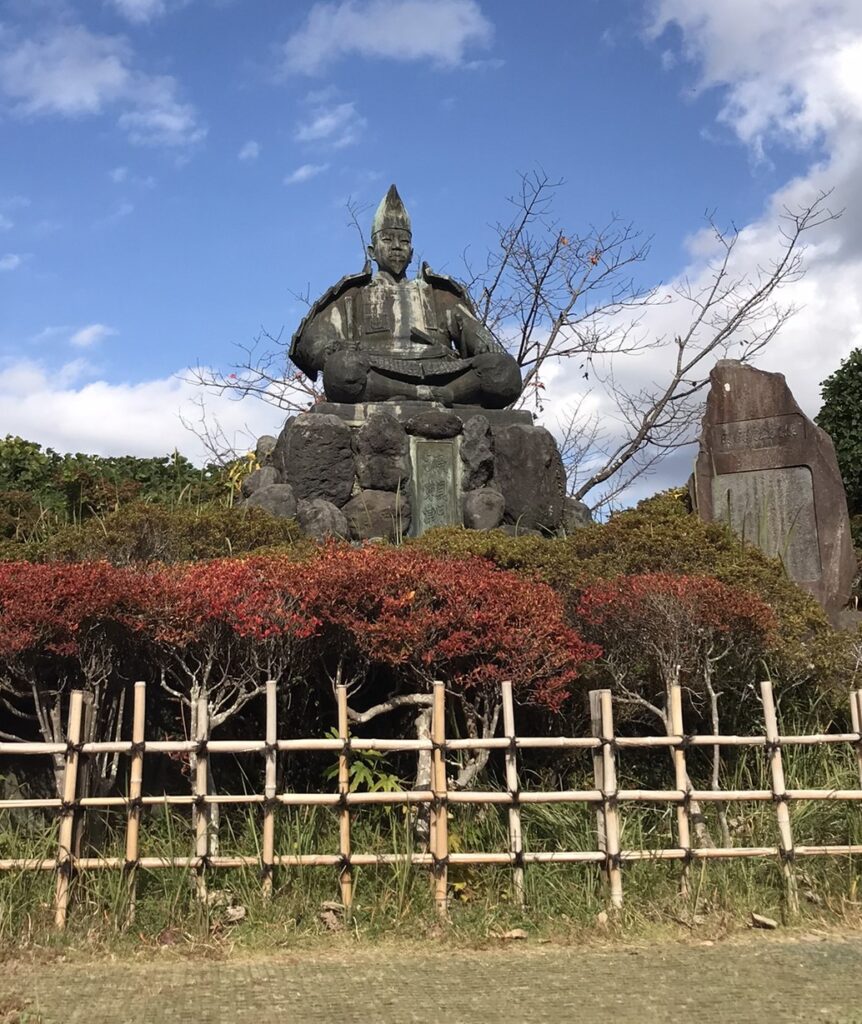
The first shogun of Japan, Minamoto no Yoritomo
Head to the park’s northwestern corner and you will find the Kazuharaoka Shrine. Before entering the shrine, you will encounter the Grave of Hino Toshimoto. Also known as Hino Toshiki, Toshimoto was an aristocrat who served as an advisor to Emperor Go-daigo, the 96th Emperor of Japan. In the 1320s and 30s, Go-daigo plotted to overthrow the Kamakura Shogunate and restore power to the Imperial Court in Kyoto. In 1324, Hino Toshimoto participated in what became known as the Shochu Incident; along with several other courtesans, he travelled around Japan in an attempt to convince local samurai to rebel against the Kamakura shogun in favour of restoring power to the Emperor. The plot was discovered and several of the participants were executed, but Toshimoto was spared. Later, in 1331, he again was caught plotting against the Kamakura shogunate on behalf of Emperor Go-daigo in what became known as the Genko Incident – this time, he was marched from Kyoto to Kamakura and executed in 1332.
Toshimoto’s efforts were not in vain, as Go-daigo successfully toppled the Kamakura Shogunate a year later in 1333, ending the Kamakura regime and briefly restoring Imperial rule before himself being ousted by a warlord only a few years later in 1336. This was the last time that the Emperor of Japan would hold direct political power until the Meiji Restoration in 1868.
Behind the grave, you can find Kazuharaoka Shrine. Unlike many of the shrines and temples in Kamakura, this is not a historical shrine. It was constructed in 1887 and is dedicated to Hino Toshimoto. Following the restoration of political power to the Imperial household in 1868, the Emperor Meiji began to posthumously honour those who had advocated for the restoration of Imperial rule over the centuries. As part of this process of revisionist history, Hino Toshimoto, formerly considered an insurrectionist and traitor, was deified and enshrined here.
Today, rather than plotting, the shrine is mainly associated with love and matchmaking. One popular ritual here is to tie a 5 yen coin to a piece of red string and hang it between two rocks, which represent a man and a woman – said to bring luck in love and romance. Visitors can also make romantic wishes on heart-shaped votive ema cards. Alternatively, visitors can also purchase small bowls and plates to smash here, which is said to ward off bad luck. To the rear of the Kazuharaoka Shrine is a small trail leading to a viewpoint, where Mount Fuji is said to be visible on a clear day – don’t get your hopes up too much though, as Fuji-san can be quite elusive.
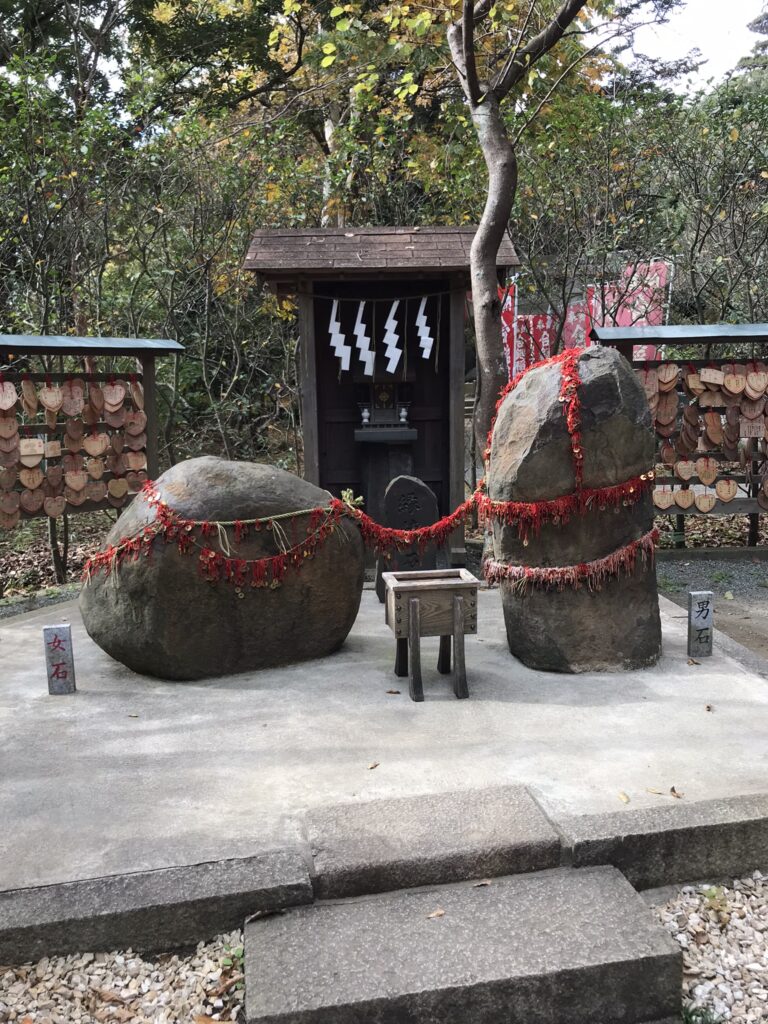
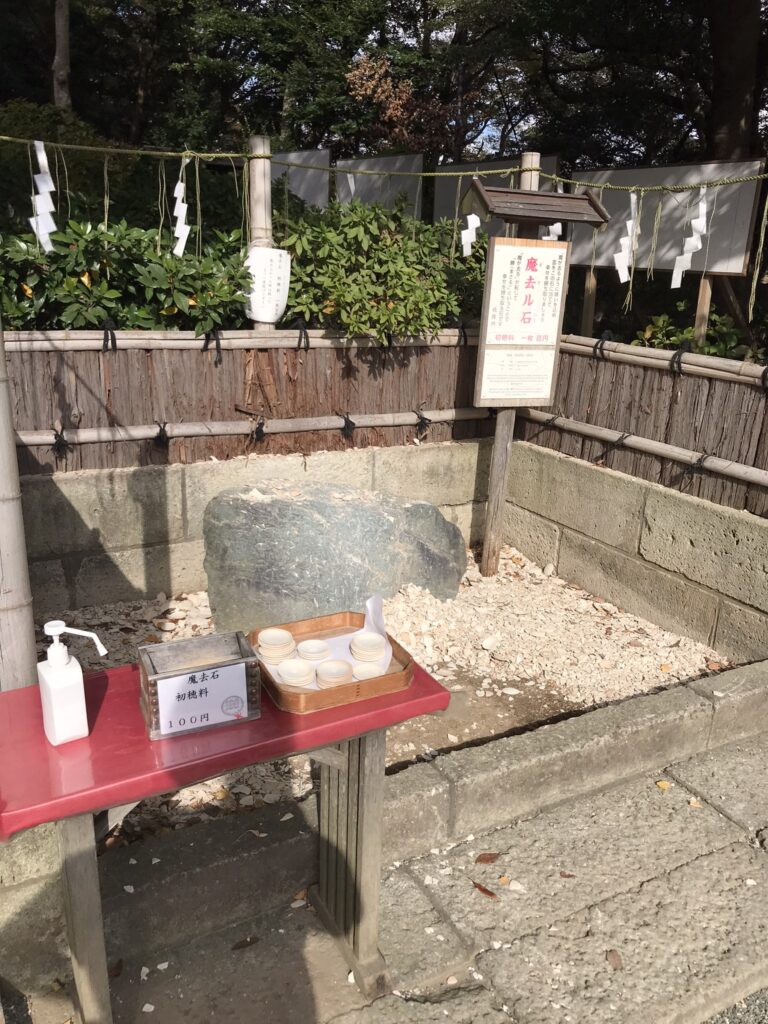
The ‘husband and wife’ rocks and plate smashing area at Kazuharaoka Shrine
From Kazuharaoka Shrine, head back out of the entrance to Genjiyama Park and continue south to the paved road. Follow the road down the steep hill until you reach the tunnel entrance to Zeniarai Benten Shrine on your right hand side.
One of the most popular shrines in Kamakura, Zeniarai Benten is known for its famous money-washing ritual, which was allegedly started by the Kamakura shogun Hojo Tokiyori in 1257. Zeniarai literally translates to money washing. According to the ritual, washing money in the sacred waters of this shrine will cause it to multiply in the future. Small bowls are provided for those that want to wash their money, although donations are expected. The shrine was constructed by Minamoto Yoritomo and is dedicated to Benzaiten, the water and snake deity whose role and persona has developed as part of a combination of Hindu/Buddhist lore and local Shinto beliefs. Interestingly, unlike Hachimangu Tsurugaoka, this shrine does maintain both Buddhist and Shinto elements – it is a rare surviving example of a syncretic shrine.
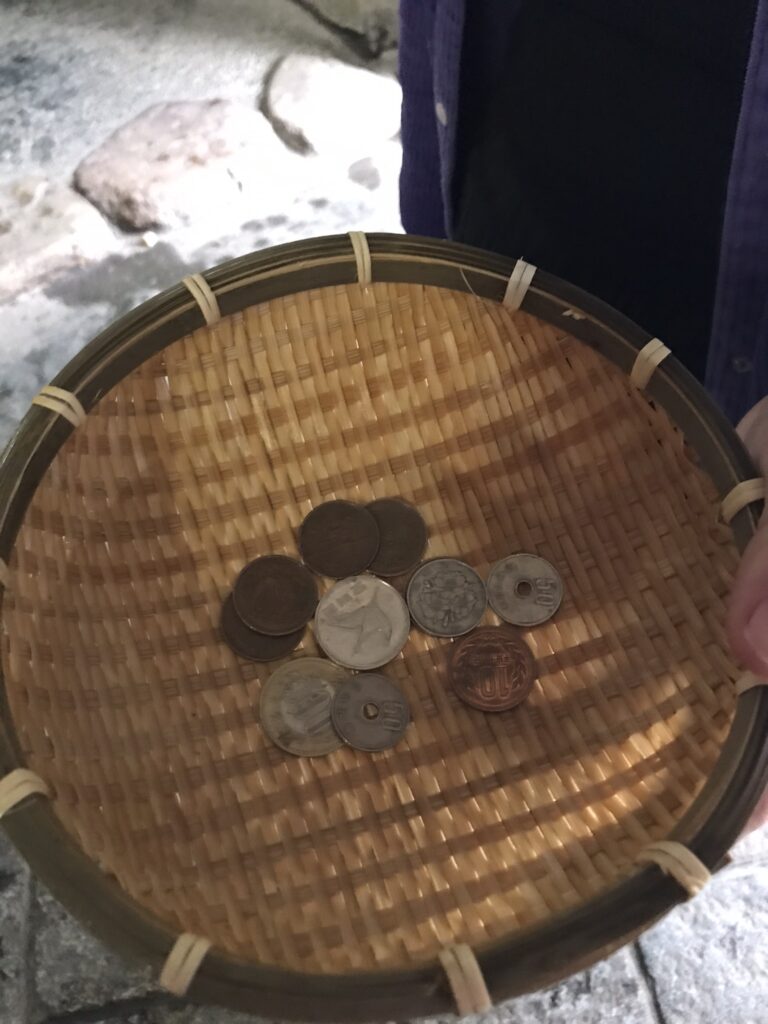
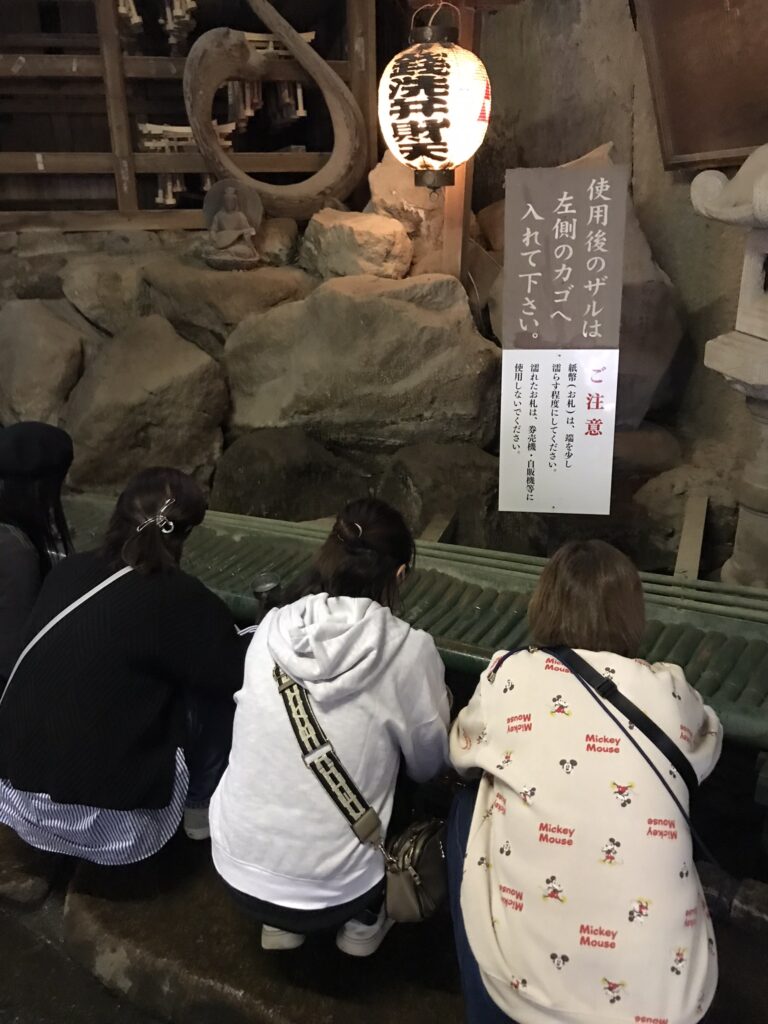
The money washing ritual at Zeniarai Benten – see for yourself if it works
From the Zeniarai Benten Shrine, head back to the road and continue down the steep hill, keeping right at the fork. Continue down the hill and take the first right along the road which leads to Sasuke Inari Shrine. Set in a forested area, the Sasuke Inari Shrine is known its many fox statues (known as kitsune) – said to represent divine messengers and an emblematic feature of Inari shrines. A legend states that while Minamoto no Yoritomo was in exile, kitsune appeared to him in a dream, convincing him to form an army to attack his enemies. Minamoto successfully followed this advice, which later resulted in the establishment of the Kamakura Shogunate, and this shrine was constructed to thank Inari at his behest. The approach to the shrine contains rows of red torii gates which are reminiscent of the famous Fushimi Inari shrine in Kyoto.
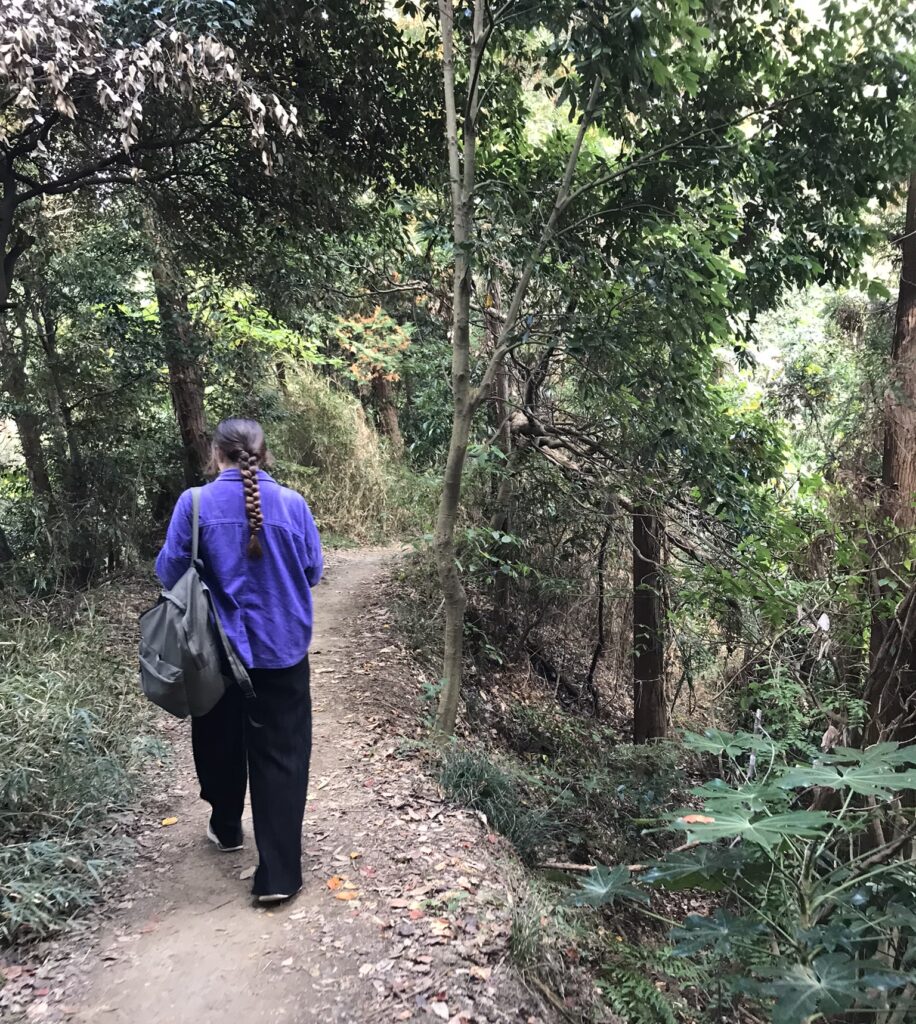
Sasuke Inari Shrine joins up with the Daibutsu walking trail in the woods
Follow the path at the rear of the shrine into the forest. You will join the famous Daibutsu hiking trail. Follow the trail downhill for around 1 kilometre until you reach the paved road, then turn left and follow the road around to Kotoku-in temple.
Kotoku-in is home to arguably Kamakura’s most famous and iconic site – the enormous Daibutsu (Great Buddha) statue. A designated National Treasure of Japan, the bronze statue dates back to 1252, having replaced a wooden statue which stood here previously.
Apart from its large and imposing stature, the Daibutsu is somewhat unique as it stands in the open air. It was previously enclosed within a hall, however the hall was repeatedly destroyed by fire and natural disasters over a period of many years. Eventually, it was decided to leave the Buddha out in the open. The statue was once covered in gold leaf, and some small golden elements are still visible near the ears.
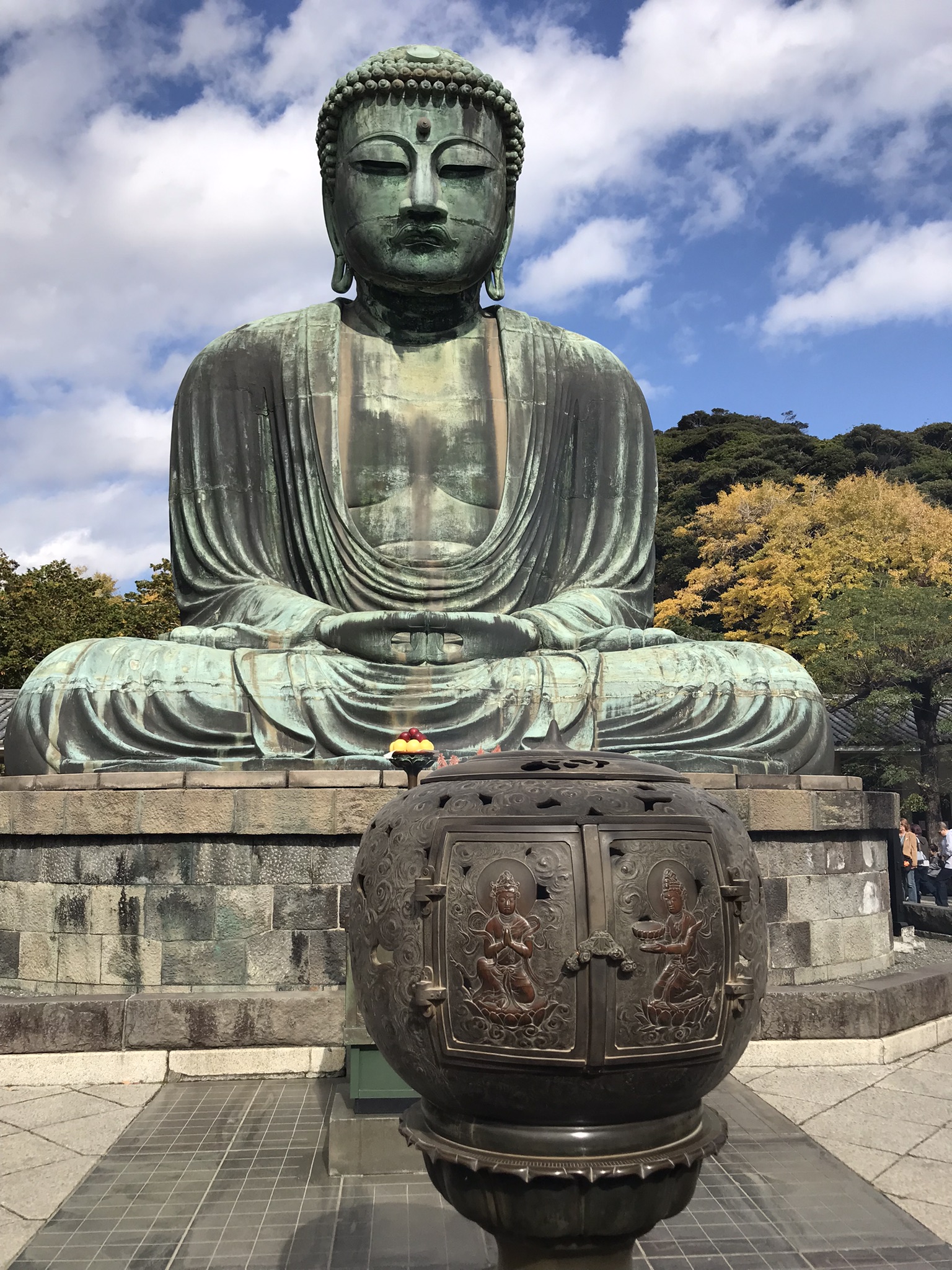
The big man himself
Entry to the Kotoku-in complex is paid. This is a very popular tourist destination, so be prepared for plenty of selfie-snappers around the Daibutsu! The Daibutsu is hollow and it may be possible to enter the inside of the statue at times for a small additional fee. Behind the Buddha statue once stood a small wooden hall named Kangetsudo, which had been brought from Korea during Japan’s colonial rule of the peninsula in the early 20th century. The hall was dismantled and returned to South Korea in 2025.
After exiting Kotoku-in, continue to follow the main road south until you reach Hase-dera.
This Buddhist complex with paid entry contains a number of gardens, sub-temples and related structures. The main attraction is the enormous statue of the popular Buddhist figure Kannon (a deity of peace and mercy), which can be found in the temple’s main hall. This gold-covered statue is said to be the among largest wooden sculptures in Japan. Also notable are the cave temples at the northern end of the complex. Hase-dera also features an observation deck with great views across Sagami Bay.
After visiting the impressive Hase-dera complex, if you have time you can take the Enoden Line electric train from nearby Hase station to explore the island of Enoshima! Otherwise, it’s an easy walk back to Kamakura station. For more Japan content, click here!
This article is also featured on GPSmyCity. To download this article for offline reading or create a self-guided walking tour to visit the attractions highlighted in this article, go to Walking Tours and Articles in Kamakura.