Japan’s northern frontier, Hokkaido is far less visited by foreign tourists and has a very different feel to the rest of the country. With its cold climate and lack of development prior to the mid-1800s, Hokkaido can seem like a harsh and inhospitable landscape in comparison to the rest of Japan, but the island contains fantastic scenery and an intriguing history of its own. Check out our Hokkaido travel experiences below!
Sapporo, Otaru, Hakodate, Onuma
The northernmost and by far the least developed of Japan’s four main islands, Hokkaido was once considered to be a foreign land by the mainland Japanese. Prior to 1869 it was known as ‘Ezo’ (a blanket term for frontier lands to the north of Honshu) and largely ignored aside from the establishment of a few ports and trading outposts. A cold and inhospitable landscape which is blanketed in snow during the winters, the island was historically occupied by the indigenous Ainu people. The Matsumae clan, appointed by the Japanese shoguns as stewards of this northern frontier, maintained a small castle on the southern coast of the island and were tasked with maintaining relations with the Ainu and keeping them at bay. For many centuries, this was more or less the extent of Japanese settlement on the island.
All this changed in the mid 1800s following the forced opening of the previously isolationist nation of Japan to the rest of the world. The modern history and politics of Hokkaido was shaped by events such as the ‘black ships’ incident (in which Commodore Matthew Perry of the US Navy coerced the Japanese to open their ports in 1853), and the Meiji Restoration in the 1860s which saw the abolition of the Japan’s feudal system and the rapid modernisation of Japanese society.
As a result of the changing geopolitical landscape of the time and a fear of Russian incursion from the north, the Meiji government heavily promoted mass migration and new business opportunities in the previously neglected northernmost lands of the Japanese peninsula, changing the name from Ezo to Hokkaido. The Hokkaido Development Commission was founded in the late 19th century to promote economic opportunities and investment on the island. Western experts were invited to share knowledge about other industries which would be better suited to the harsh environment of Hokkaido, such as beer brewing and dairy farming. Prior to the expansion of imperial influence in Hokkaido, the Ainu people had eked out an existence and traded with other similar groups in the nearby Sakhalin and Kuril Islands as well as further afield. Japan previously claimed ownership of these lands too, but they were awarded to Russia following World War 2.
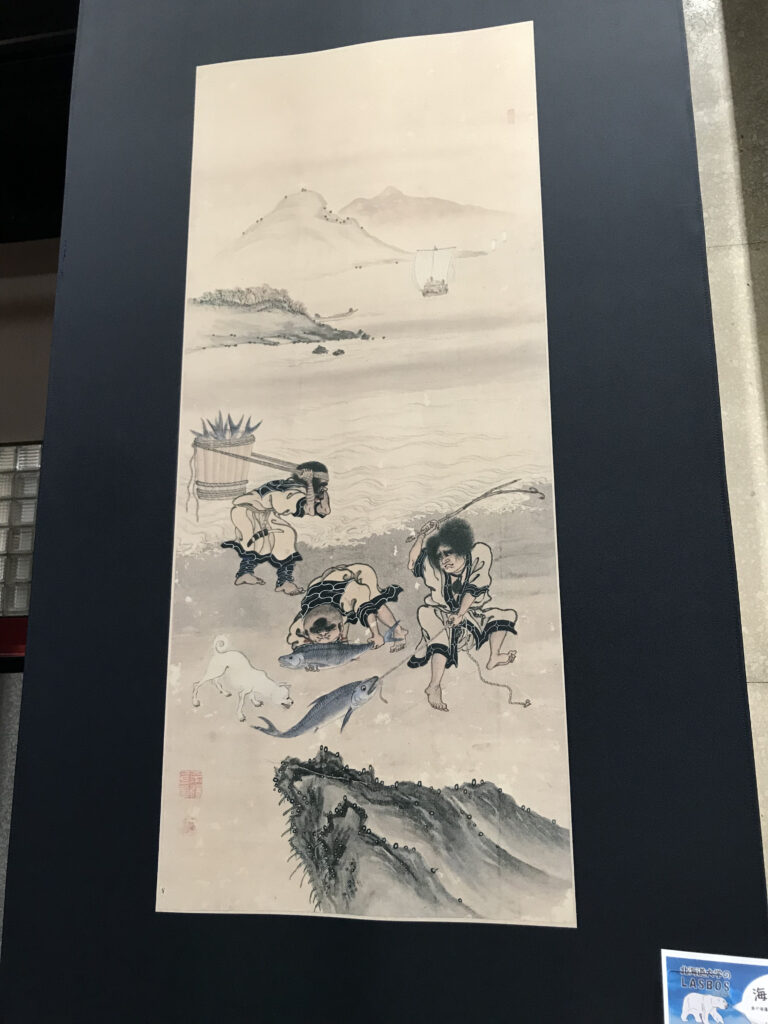
We found this scroll featuring a Japanese depiction of Ainu people in the Northern Peoples Museum in Hakodate
Hokkaido today still retains that frontier feel with vast unspoiled landscapes and untouched areas. There’s a certain wildness that remains unchanged from when the Ainu people were the only occupants of the land. The corrugated iron dwellings which are common on the island instantly brought to mind the wilds of Patagonia. Hokkaido contains around 20% of Japan’s landmass but only 5% of its population, mostly concentrated around the major city of Sapporo and other larger settlements like Asahikawa and Hakodate.
Modern Hokkaido is known throughout Japan and globally for world-class skiing, the emblematic ‘Red Star’ Sapporo beer, ultra-creamy delicious dairy products, fresh seafood delights, heavy industry, hiking and flowers in the summer and the extremely popular Snow Festival in February in Sapporo. You can also delve deeper into Ainu history and culture here, while Hakodate played a key and unexpected role in the final days of Japan’s samurai. We found Hokkaido to be a hidden gem, very different from the rest of Japan and much less visited by foreign tourists (outside of the ski resorts).
Sapporo
When most Japanese people think of Hokkaido, they instantly imagine snowy slopes, vast unpopulated terrain and an abundance of natural landscapes. Yet the city of Sapporo is as developed and modern as any other Japanese city, albeit located amidst a vast and mostly unpopulated landscape. A bustling metropolis, Sapporo is the capital of the Hokkaido Prefecture and 5th most populous city in Japan, with almost 2 million inhabitants. It is also the largest Japanese city north of Tokyo. Sapporo is the economic and political heart of Hokkaido, replacing the port city of Otaru as the leading city in Hokkaido post World War 2. The city’s prominence was determined by the fact that the Hokkaido Development Commission Headquarters were located here in 1869. While Sapporo lacks the historical buildings, shrines and feudal (pre-19th century) history of many other large Japanese cities, the city has its own unique heritage related to the expansion and development of this frontier land.
Did you know that Hokkaido is the birthplace of beer in Japan?
Prior to the full scale industrialization and settlement of Hokkaido in the late 19th century, beer was not consumed nor produced within the country. Sake and shochu were pretty much the only alcoholic beverages on offer to those looking to have a tipple. In the wave of western integration at the end of the 19th century, the Hokkaido Development Commission was looking for ways to develop new industries and the brewing of beer was seen as a viable business venture which could put Hokkaido on the map. The environment in Hokkaido was identified as being ideal for growing hops that were required in the beer making process, and beer was seen as a profitable product that could be sold on both the domestic and international markets. A man named Seibei Nakagawa was hired by the Hokkaido Development Commission to set up beer brewing operations in Hokkaido. Largely considered to be the father of Japanese beer as a result, Seibei went to Bavaria in Germany to learn about the process, equipment and fundamental ingredients needed to kick-start a domestic beer brewing industry in Hokkaido.
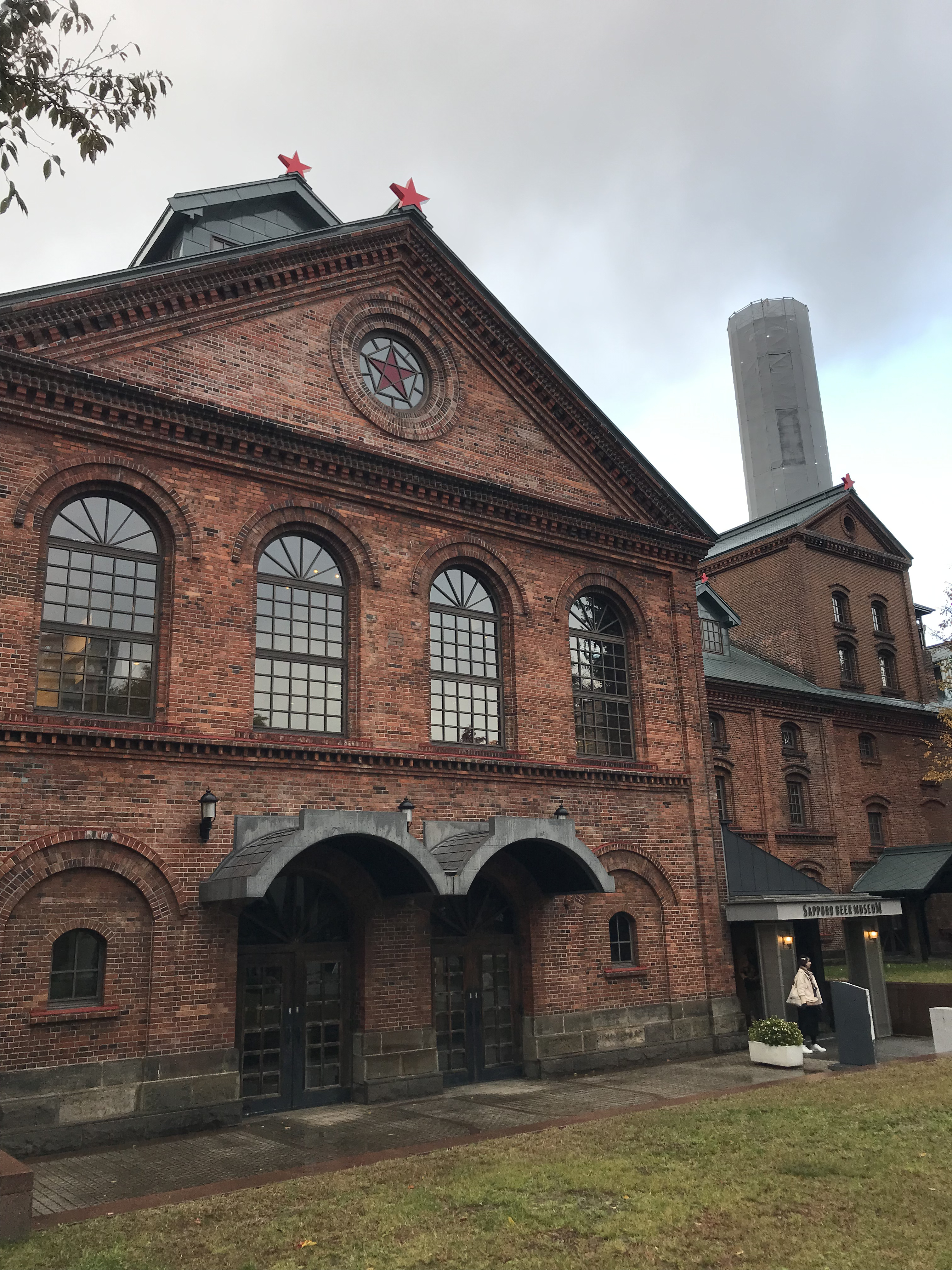
The Sapporo Beer Museum
Sapporo Beer is one of the oldest beer brands in Japan, and to this day remains one of the most popular in the country alongside Asahi. The ‘Red Star’ logo on Sapporo labels is intended to symbolise the North Star, as Hokkaido is the northernmost island in Japan. The Sapporo Beer Museum is dedicated to these pioneers in the brewing field who took inspiration from European beer brewing and fine-tuned it to create a Japanese product that could compete on the international stage alongside the established giants in the industry. Interestingly, for a number of years around the turn of the 20th century, the Sapporo brewing company had to buy back glass bottles as they didn’t have the capacity yet to create their own beer bottles.
Today, the history of Sapporo Beer is showcased in the Sapporo Beer Museum, a key part of the city’s cultural heritage. In addition to beer, Sapporo is known throughout Japan for its Snow Festival, with funky ice sculptures attracting around 2 million tourists each February. The cold weather is a major attraction here, particularly for domestic tourists from the regions of the south of Japan which don’t experience snow. As a transport hub which contains much of the island’s infrastructure, Sapporo is seen as a gateway hub to the wilds of Hokkaido. It was magical to be in the city for the first snow of the year, with a real excitement in the air.
Accommodation
Plat hostel keikyu sapporo ichiba – a centrally located hostel close to the Odori bus depot and within easy walking distance of the train station. As we came to find out throughout our trip, rooms tend to be more on the cosier side in Japan and that was definitely the case here. There isn’t really sufficient space to deposit your luggage and move around the room freely. It’s just one of the things you get used to when sticking to business hotels and budget accommodation – space costs extra.
Foodie Places
Donguri Odori – your archetypal bakery selling doughnuts, pastries, buns and all manner of other baked delights. This place was so busy even after peak hours that it was difficult to actually navigate around the other customers as there were so many in the bakery. Make sure to grab a tray and tongs as soon as you walk in so that you can start piling goods onto your tray before heading to the counter to pay – this style of self-service with a tray and tongs is common in Japan. Delicious and cheap – two of our favourite words!
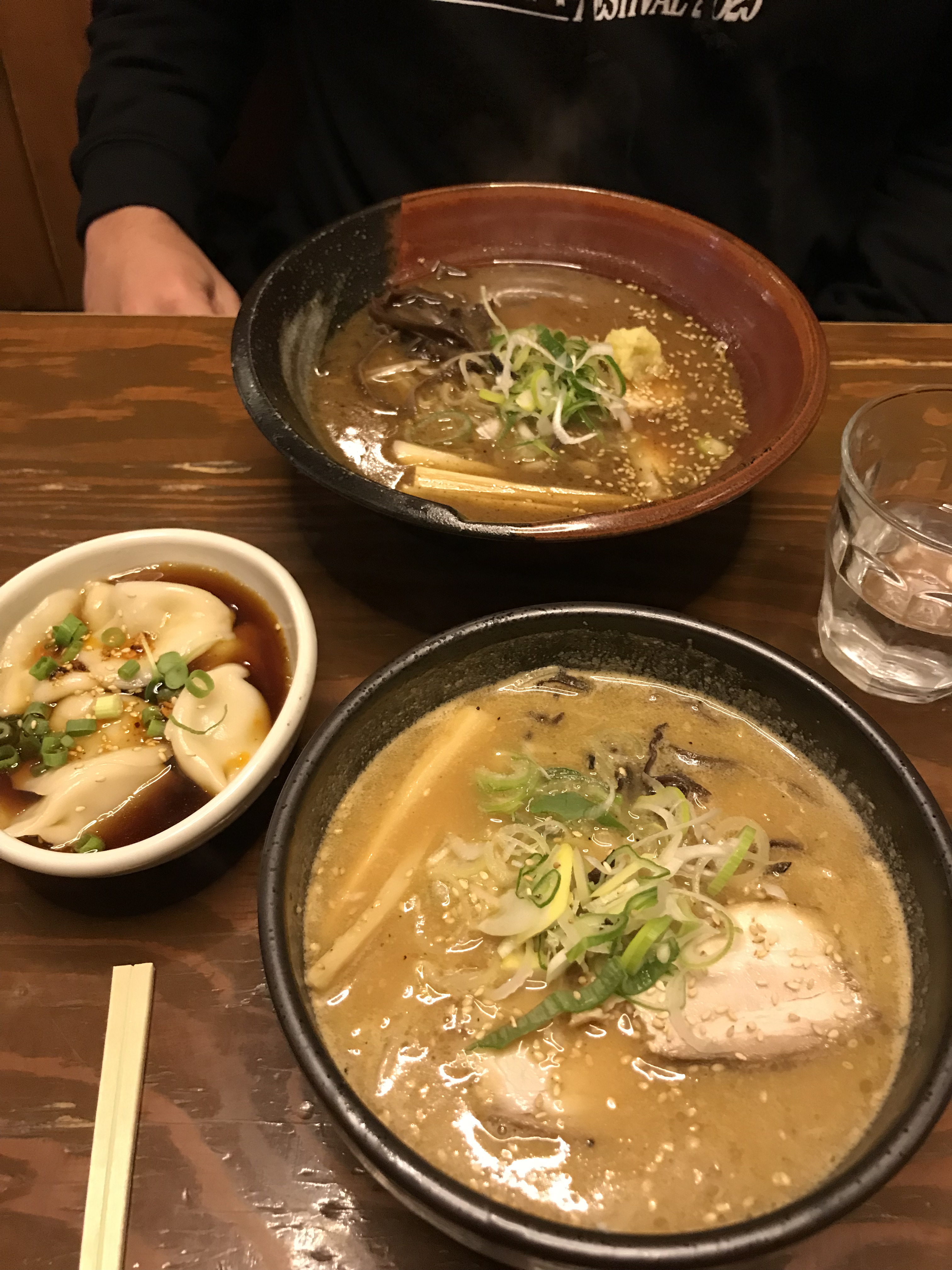
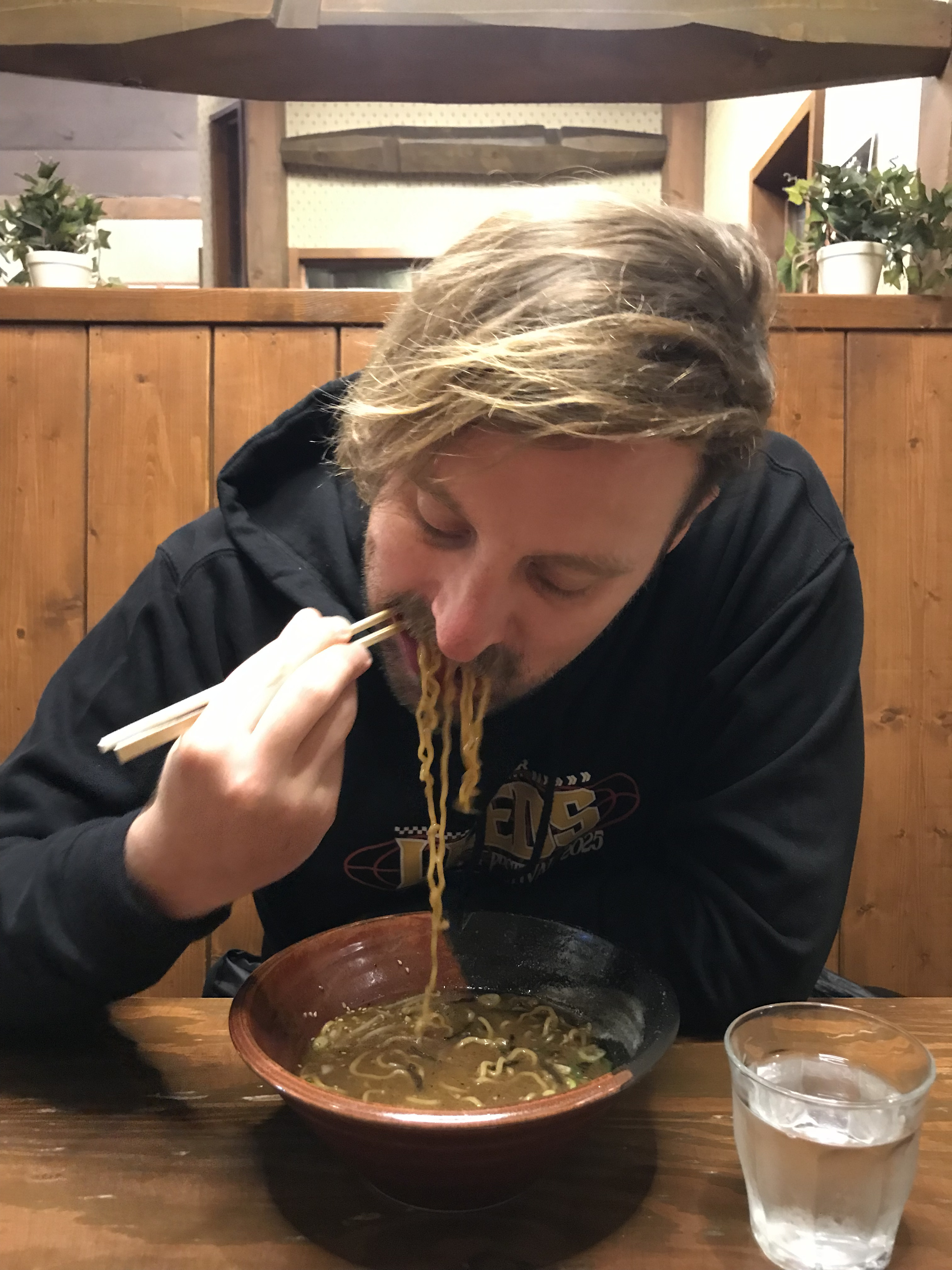
Ramen Yoshiyama Shoten Soseibashi shop – instead of splurging on a steaming bowl of ramen at Ramen Alley, we instead opted to head to the nearest ramen place to our hostel. This place did not disappoint, serving both salt and miso ramen alongside chewy delicious gyoza.
Tonkatsu Wako Pole Town – located in an underground arcade close to Susukino district, this place serves comfort food at its best. I still maintain there is no better way to end the day than with some breaded meat and rice. A set meal consists of miso soup, rice, pickles and tonkatsu (breaded pork of various weights and cuts) alongside a welcome cup of tea. Prices are very reasonable and the servers were very patient and understanding. English menus are also available.
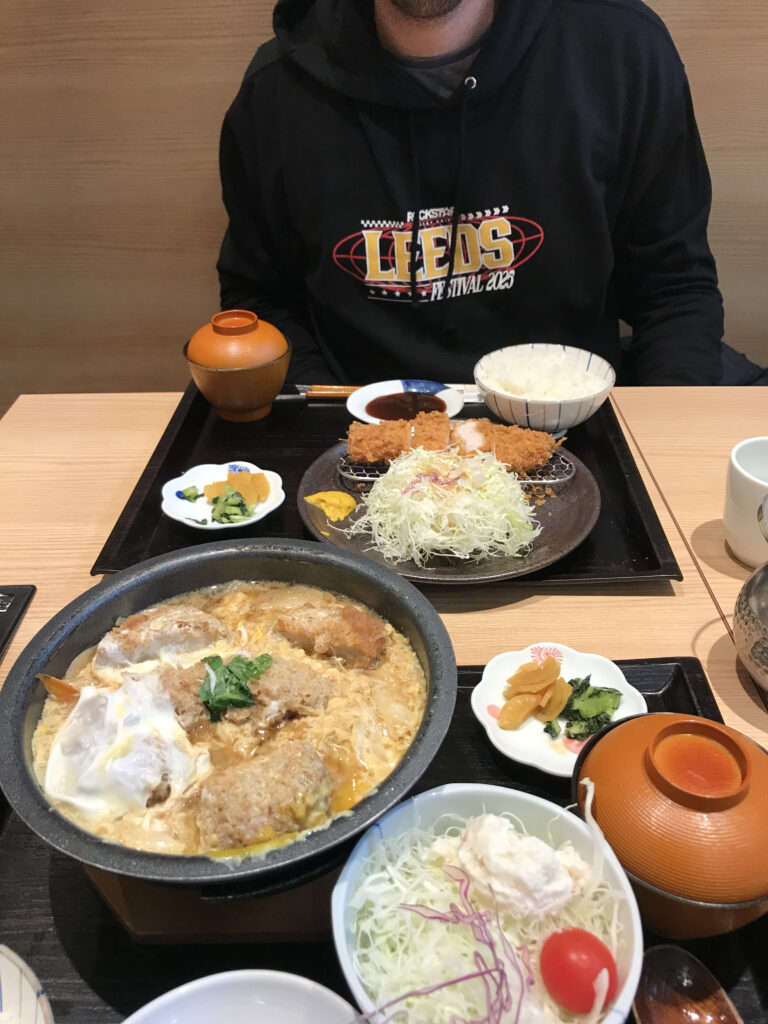
Classic tonkatsu at Wako Pole Town
Bearfoot – typical Western-style pub grub located on Tanukikoji Shopping Street. We stumbled in here at lunchtime looking for a bite to eat and were surprised at how good this place was. Friendly English-speaking servers, funky dive bar-style decor and we were impressed by the lunch deals which were fantastic value – sandwich/burger and a drink for around $7 USD. This seemed to be more of a nighttime/craft beer pub and seemed like it would’ve been a cool place to hang out.
Activities
Nijo Market – full of the bounty of the sea, this is the place to make a bee-line for if you have a hunkering for fresh seafood or feel like trying an assortment of seafood in a seafood bowl over rice – or if you are just nosy like us and want to marvel at the variety of sea creatures on offer.
Tanukikoji Shopping Street – a covered shopping arcade which is ideal to duck into if you’re trying to escape from the bitter cold wind or, like us, a sudden snowstorm. Inside the arcade there are a myriad of shops, restaurants and gaming venues to suit all ages and tastes. The added bonus is that it’s completely pedestrianised so you don’t need to watch out for cars. Some people just use it as a cut through to escape the elements rather than seriously browsing the shops.
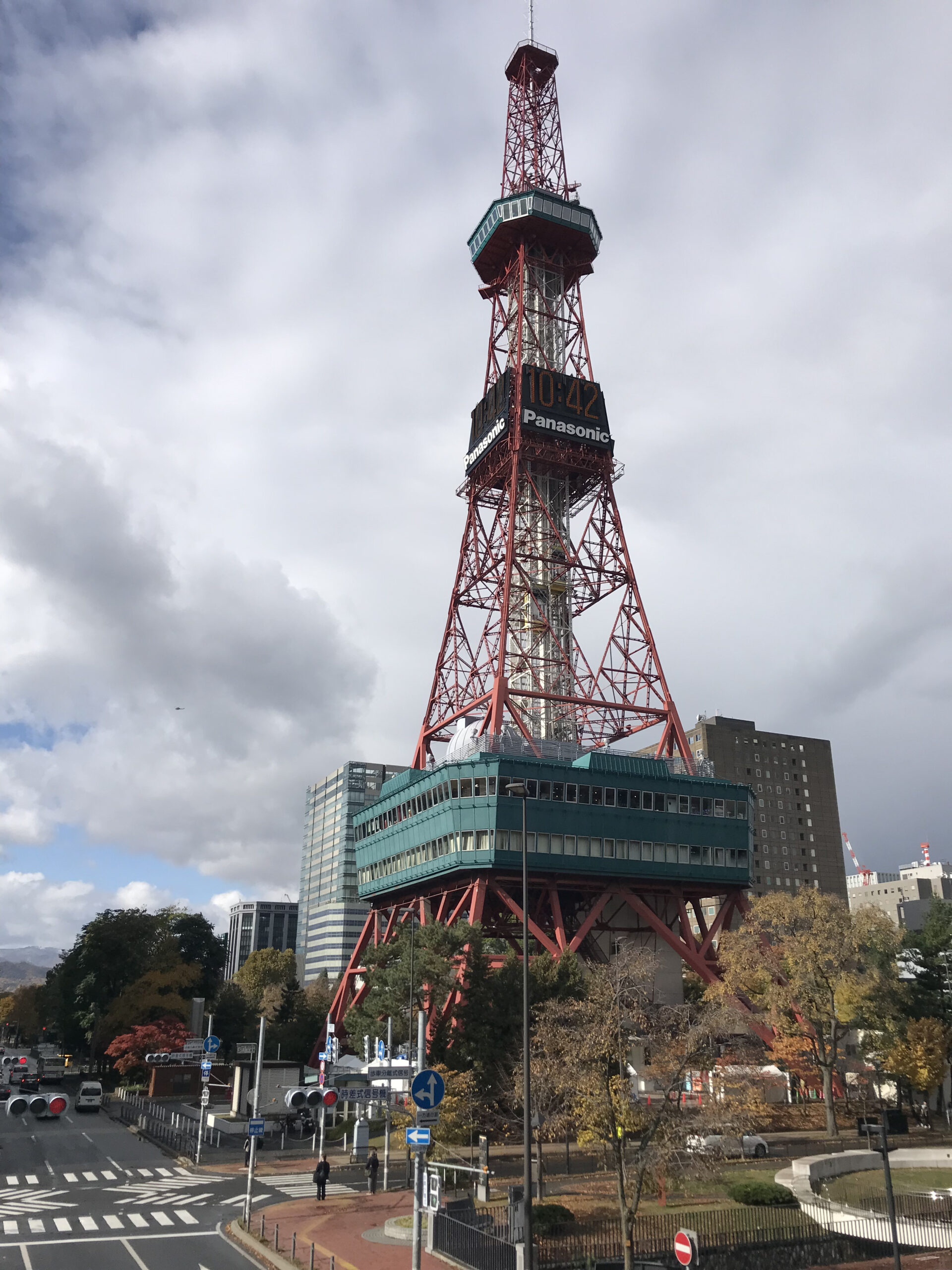
Odori Park – this landmark park splits the city in half with a block-wide green belt through the centre of Sapporo’s modern grid layout. The city has grown organically outwards from this central point. The park contains a number of small statues and monuments of various design. At its eastern edge, the looming TV tower is the focal point of the park.
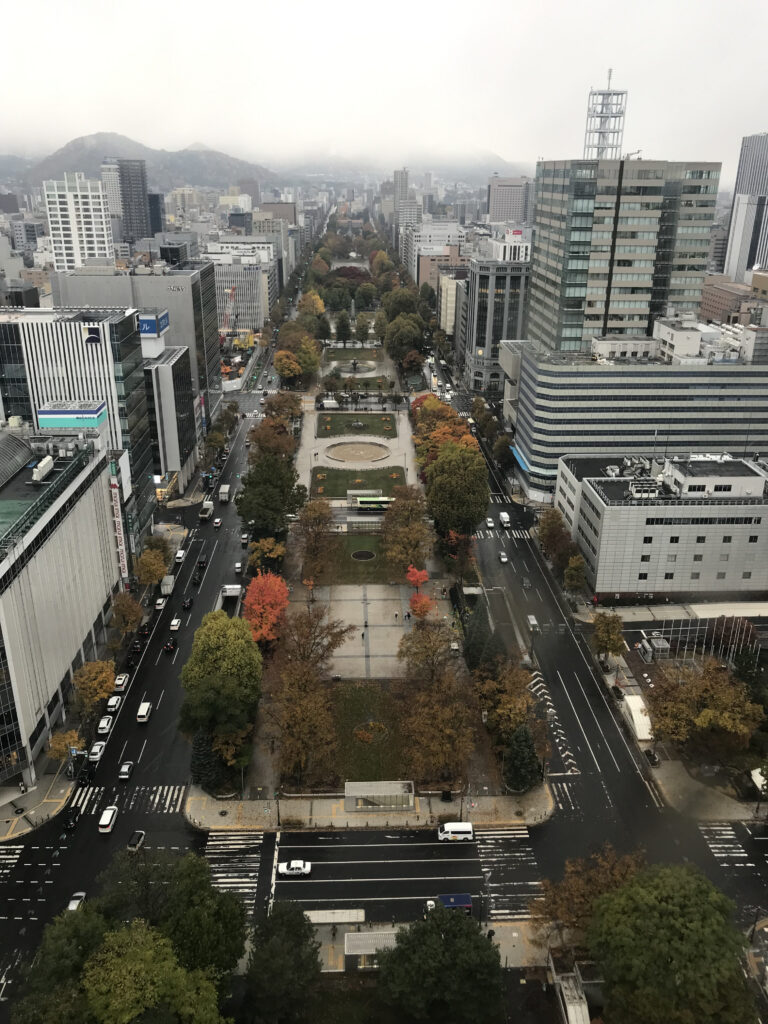
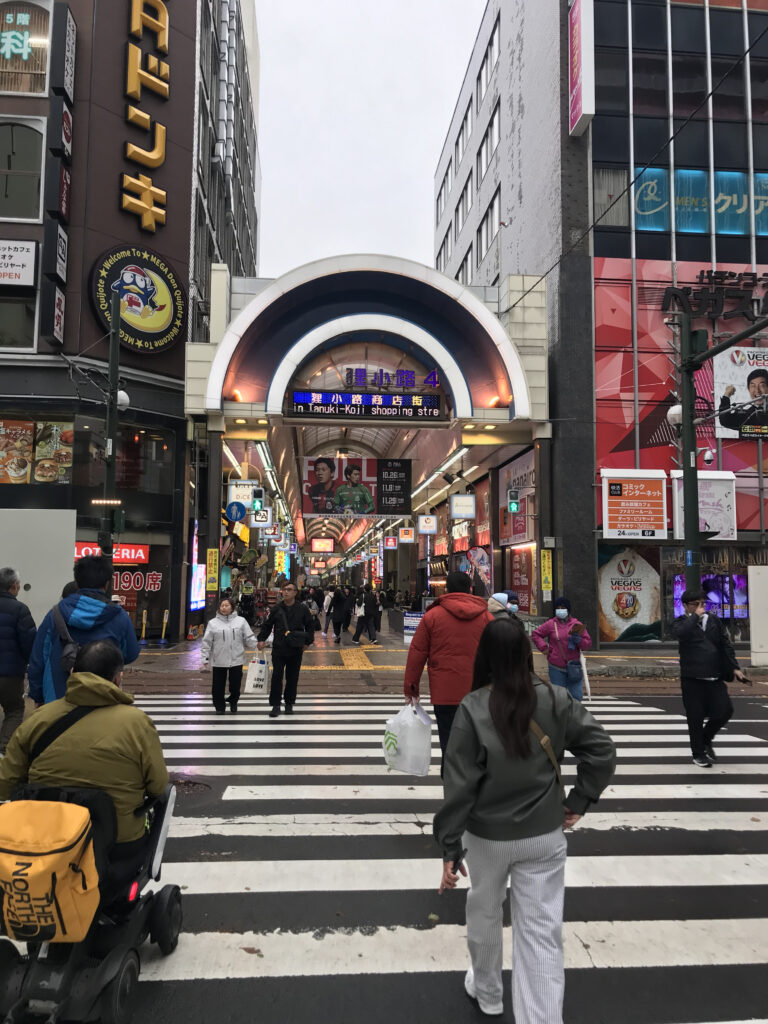
Odori Park and Tanuki-koji shopping street
TV Tower – built in 1957, the Sapporo TV Tower is an icon of the city towering over Odori Park. This unmissable megalith is known as a defining landmark in Sapporo. The tower prominently displays the time in digital format, almost functioning as a modern-day clock tower as well as broadcasting infrastructure. It’s also a well-known meeting point for locals and an enduring marker for the residents of the city. Ascending to the top observation deck 90 meters above the ground is a must-do for any visitors to the city so you can fully appreciate the impressive aerial views, pragmatic grid layout of the city and encroaching wilds of Hokkaido looming in the periphery. It’s incredible to think about how this city was only founded around 150 years ago and has risen to become such a thriving place in line with the fast-paced modernization and development of the island.
The tower was designed by the same architecture as the prominent Tsutenkaku Tower located in the Shinsekai area of Osaka, as well as the Tokyo TV Tower. The TV tower is also a fantastic place to visit when it’s snowing, as we experienced first hand – watching the snow fall on the streets below is mesmerizing. For a chuckle, search on Youtube for the legendary Hamburger Boys and their song about the Sapporo TV Tower – information about their exploits is featured near the lifts. As with most attractions in Japan, there’s also a gift shop for those in search of souvenirs and a fancy restaurant on the 3rd floor.
Sapporo Clock Tower – reminiscent of an American frontier church, this old structure was built in 1876 and was originally a drill hall for the Sapporo Agricultural College. The clock has been continually functioning since 1881 and is now an Important National Cultural Property owned by the city. Standing out amongst the sleek modern buildings which surround it, the structure is crafted entirely of wood, painted in a gentle shade of mint green and features the iconic Sapporo ‘Red Star’ emblem visible on the clock.
Susukino Entertainment District – keep an eye out for the famous Nikka whiskey sign, featuring a merry figure which reminded us of England’s King Henry VIII. This sign is a long-standing emblem of the area and provides a friendly welcome, greeting all visitors to the vibrant entertainment quarter. As with most entertainment districts in other cities, hostess bars, animatronic crabs snapping their claws at passersby from atop eateries, sleazy izakayas and tasty grilled morsels can all be found here. To appreciate it in all its neon-lit glory it’s best to head here after dark.
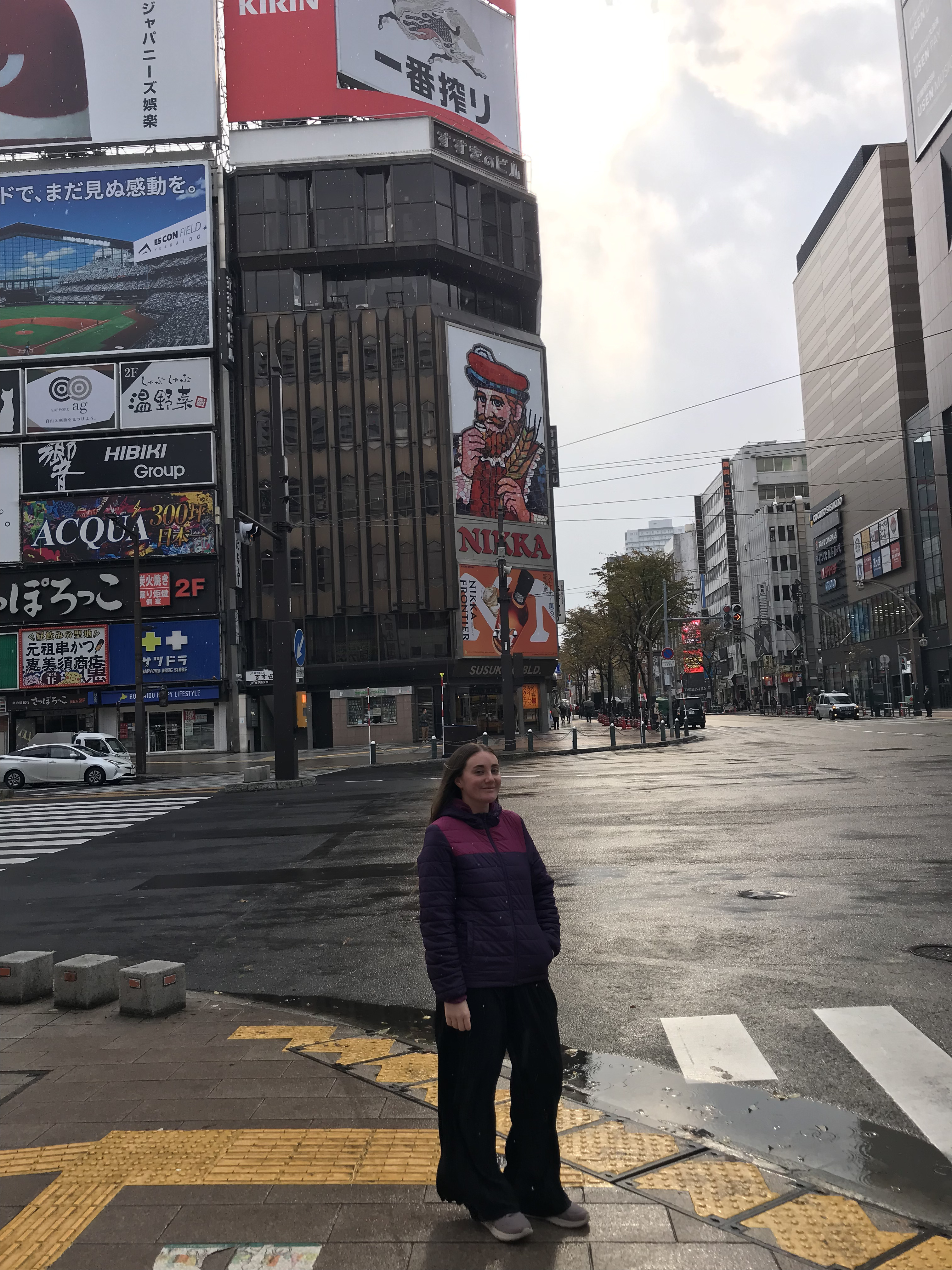
The famous Nikka man in Susukino
Ramen street (Ganso Ramen Yokocho Sapporo) – a popular cramped alley within the entertainment district, this street dating from the 1950s features a variety of tightly packed ramen joints. Most tourists make the pilgrimage here to slurp up the local speciality of ramen: miso ramen, which was invented in the 1950s and is often topped with corn. Sapporo Miso Ramen is highly sought after by ramen enthusiasts throughout Japan. After reading some reviews, we realised that this alley is mostly for tourists; locals consider the ramen here to be overpriced and not necessarily the best quality you can find in the city. It’s well-worth a walk through to experiene the atmosphere, even if you decide not to patronise any of the ramen places.
Nakajima Park – often bypassed by tourists, this expense of green within the metro area is an excellent setting to wander around and admire the fiery autumnal foliage. Situated within the grounds of the park is the Hoheikan, a western-style grand hotel built in 1880 to host the Emperor Meiji in 1881. The elegantly painted wooden facade, original plush interiors and furniture make it an interesting place to visit to experience the ornate lifestyle of the wealthy in the late 19th century. Its significance also lies in the fact that it embodies the move towards Western-style architecture and lifestyle at the time. Electric lighting, western beds and flushing toilets are symbolic of the new progressive and outward-looking era. Deemed an Important Cultural Property of Japan, for a small entrance fee visitors are welcome to tour the inside of the building and provided with a handy map with English translations which explains the purpose of each room. You can even see the room that the Emperor Meiji stayed in during his visit.
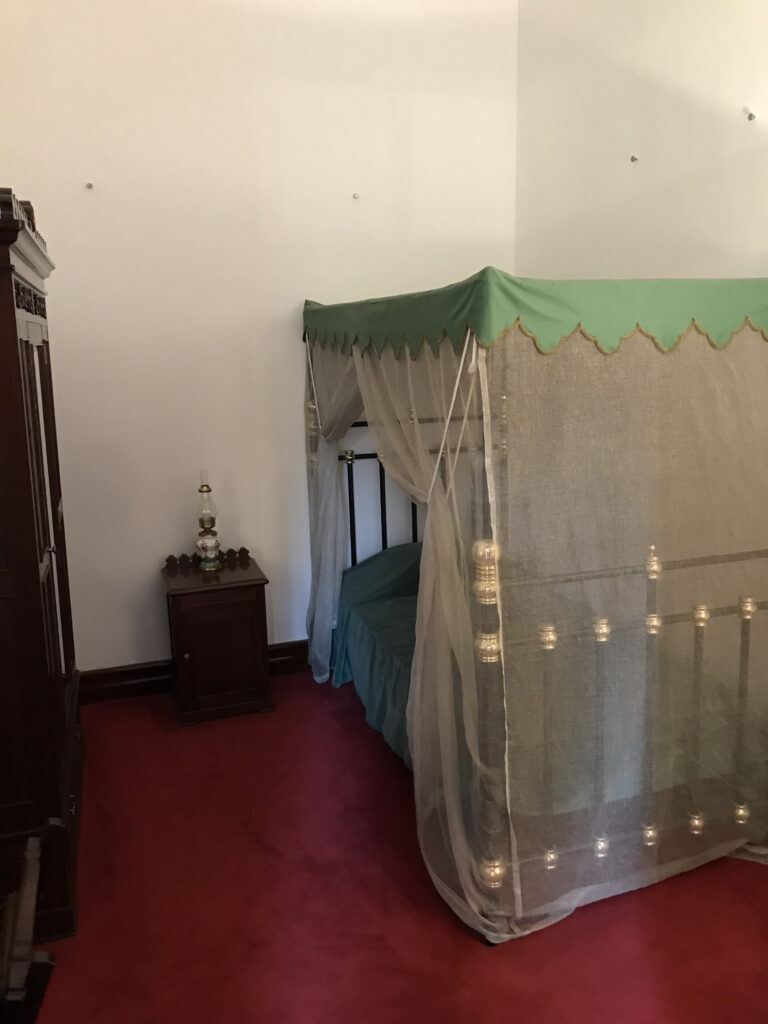
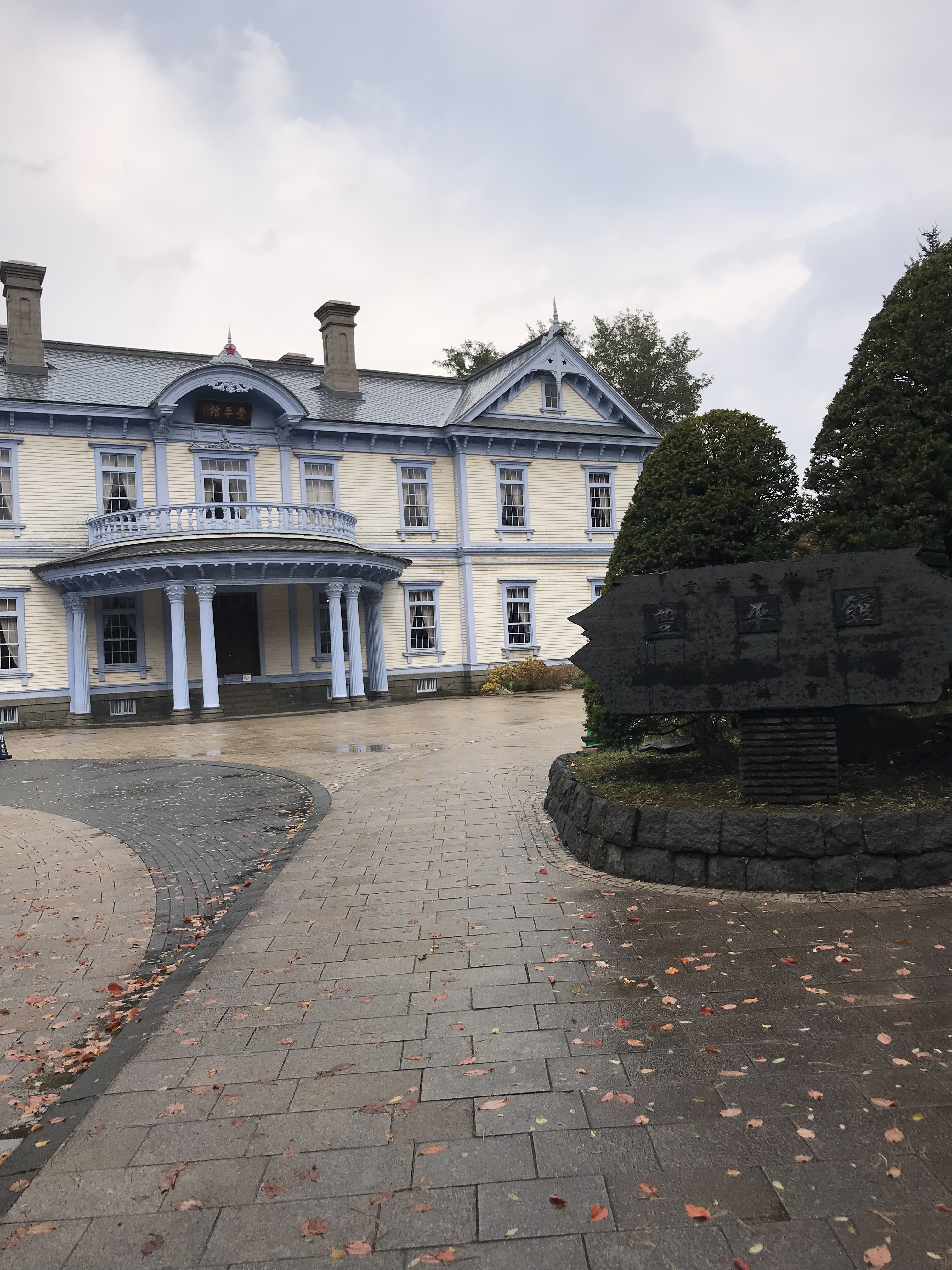
Hoheikan makes for an interesting place to explore within the park
Other buildings of interest within the Nakajima park grounds are the Observatory and the Concert Hall. A street food market was taking place when we visited, which looked quite interesting.
Sapporo Beer Museum – whether you’re a history buff or just in search of a nice refreshing beer in the atmospheric Bavarian-style beer hall, the Sapporo Beer Museum is a must-visit spot in the city. The museum exhibit walks visitors through the beer-making process, the history of beer brewing in Japan, and also has many fascinating beer advertisement posters from throughout the 20th century, often featuring sultry ladies on display. The exhibition is free to meander about on your own, or you can pay an additional sum to be taken around by a guide. We opted for the free option and found there to be ample information in English to satiate our curiosity. All of the displays in Japanese are translated into English and distributed on laminated handouts for visitors to read. There’s really no need to pay extra for the guided tour. The highlight of the museum is the beer hall at the end, where you can order a taster set of 3 beers for a pretty reasonable price, before soaking up the jovial atmosphere and comparing notes on the taste of the beers on offer.
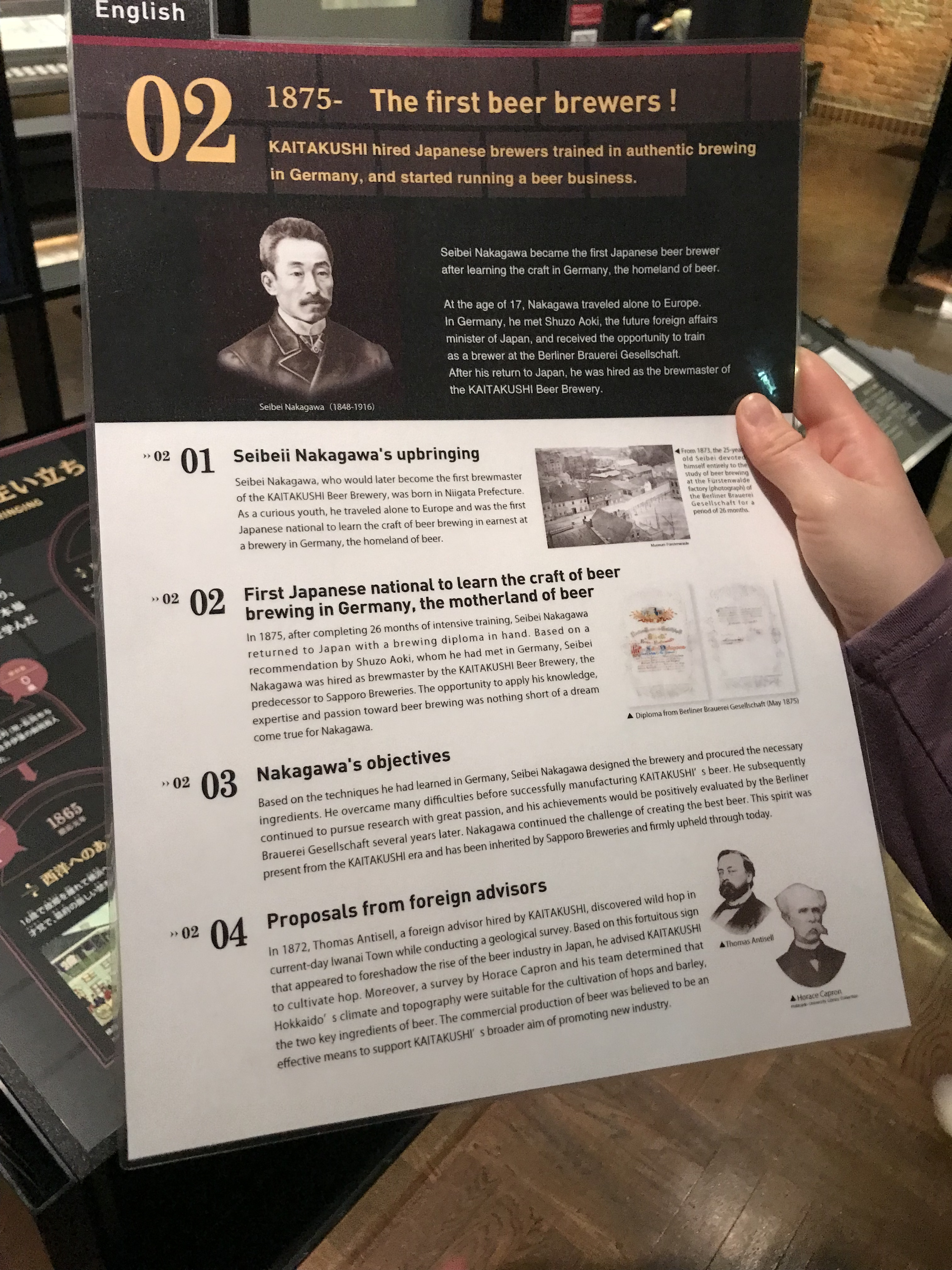
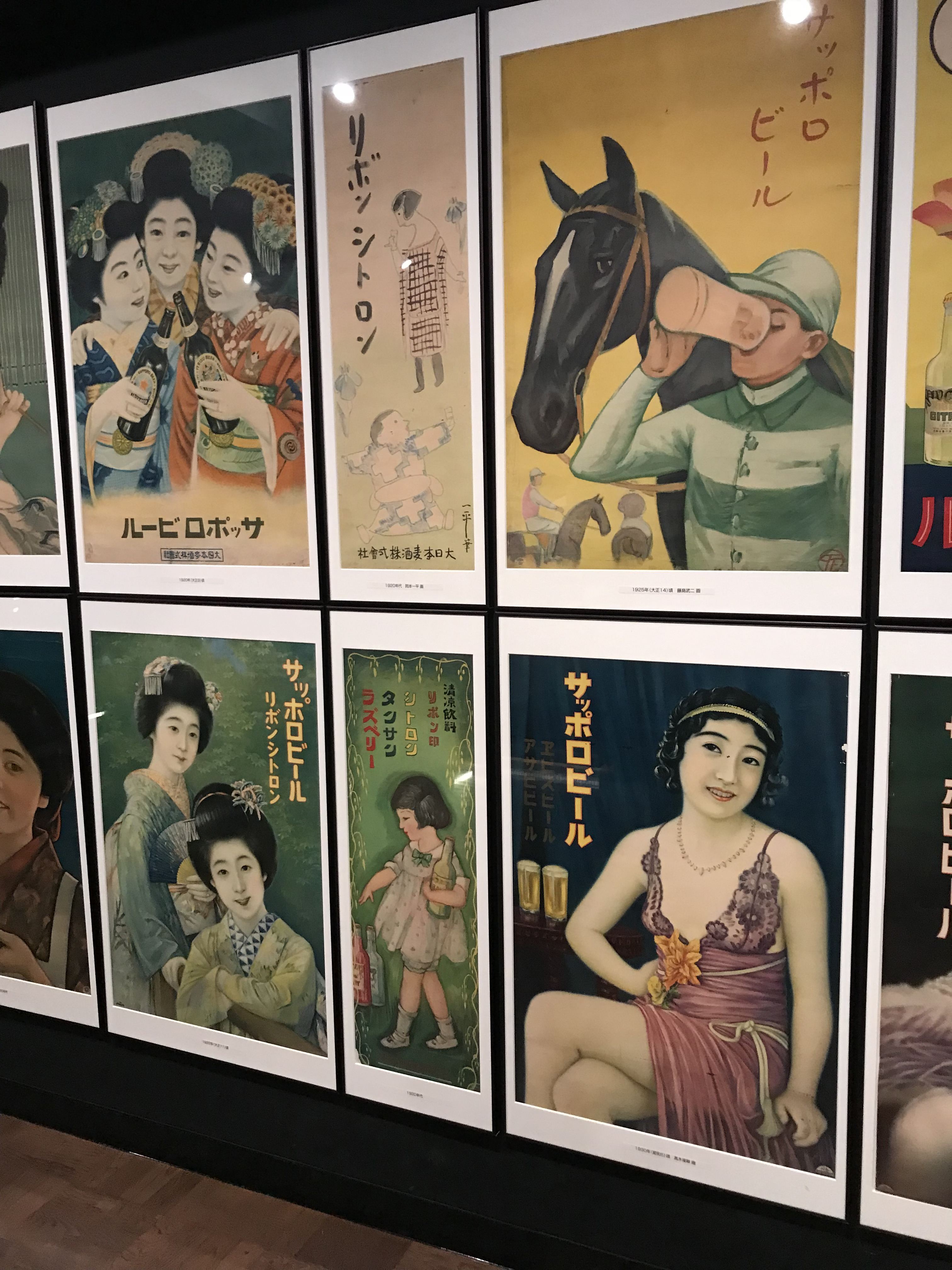
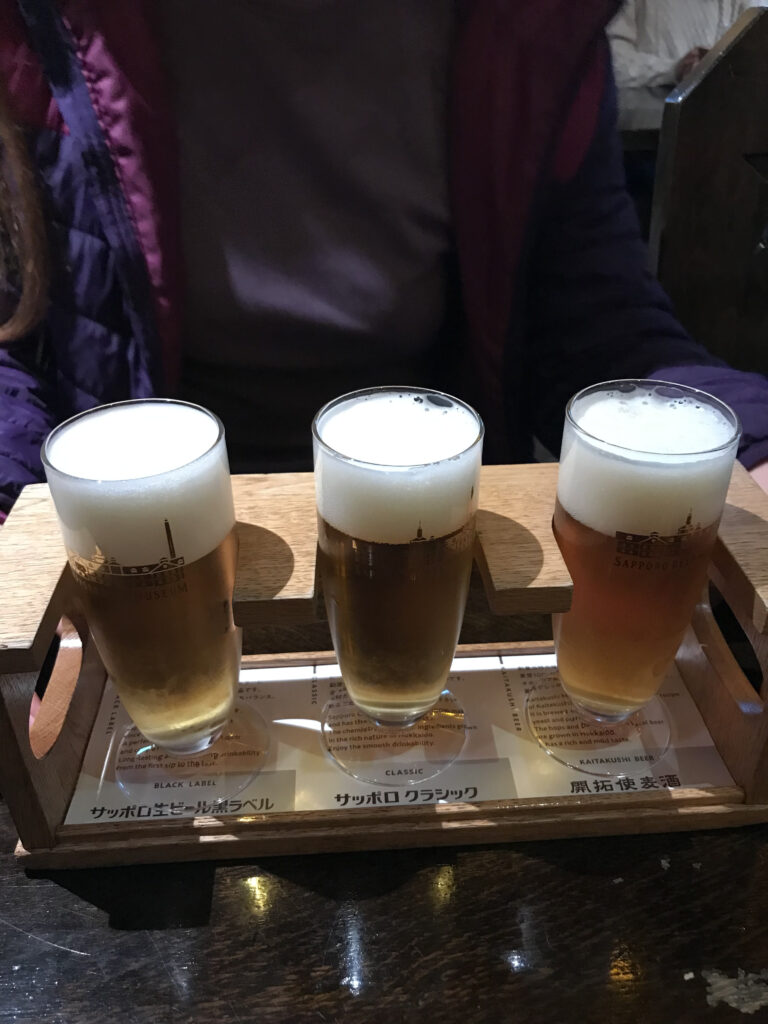
There is plenty of information, old promotional artwork and beer inside the museum
Sapporo Factory – for any visitors in need of some retail therapy, head to this modern shopping mall housed in a 19th century brewery factory – the outer façade is covered in what looks like ivy and is really photogenic.
Otaru
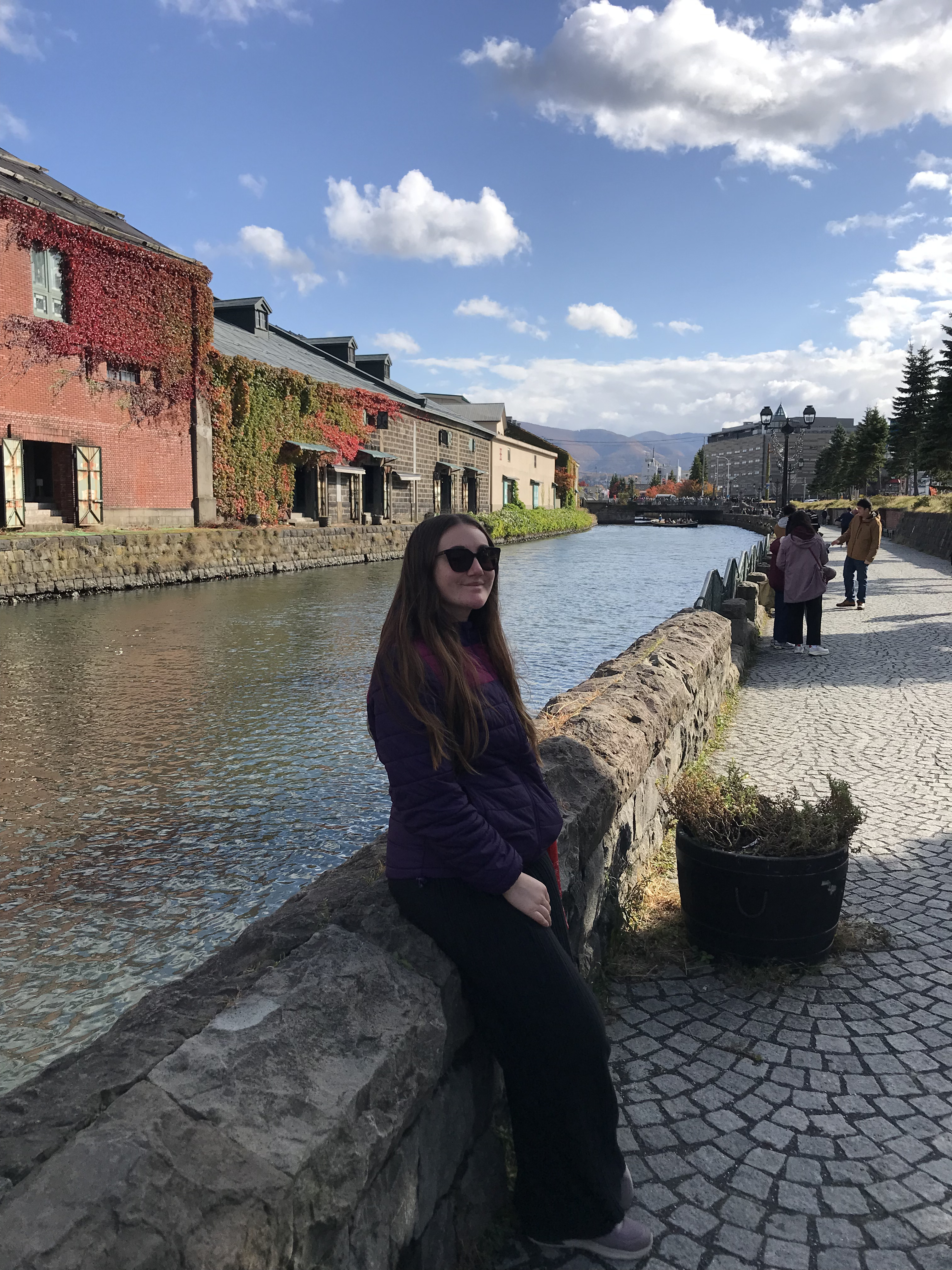
Otaru was once the economic centre of Hokkaido. A hub for exporting the island’s abundant resources to Honshu and beyond, Otaru flourished in the late 19th and early 20th centuries, particularly after the construction of a train line and canal system which greatly increased the strategic value of the port. Wealth flooded into Hokkaido via this port. Otaru was once said to be so full of wealth, with palatial banks jostling for space in the merchant quarter, that it was called ‘the Wall Street of the East’. Following the decline of the local coal mining industry, the economic power switched to Sapporo following World War 2.
Otaru is now much more known as a commuter city for Sapporo than an economic powerhouse in its own right, while the city’s preserved network of warehouses and canals have been repurposed and given a new lease of life as a tourist destination. Located to the northwest of Sapporo, Otaru can easily be reached by day-trippers via frequent rail and bus links. We found that the cheapest option at the time of our visit was to get the bus from Chuo station in Sapporo, but many visitors choose to take the scenic train which runs along the Hokkaido coastline. The train station and bus station sit side-by-side in Otaru, both within walking distance of the old harbour and most of the main tourist attractions.
Activities
Otaru Canal – Otaru is famous for its network of canals and warehouses, which were a hub of merchant and shipping activity during the city’s heyday. Sections of the canal around the harbour have been preserved, making for an ideal place for a gentle stroll. Visitors can take in the vestiges of the former brick warehouses with their fire-resistant metal doors. Many of the old warehouses have now been turned into trendy shops, cafes and restaurants. Boat rides along the canal seemed to be particularly popular with the mostly domestic tourist crowds.
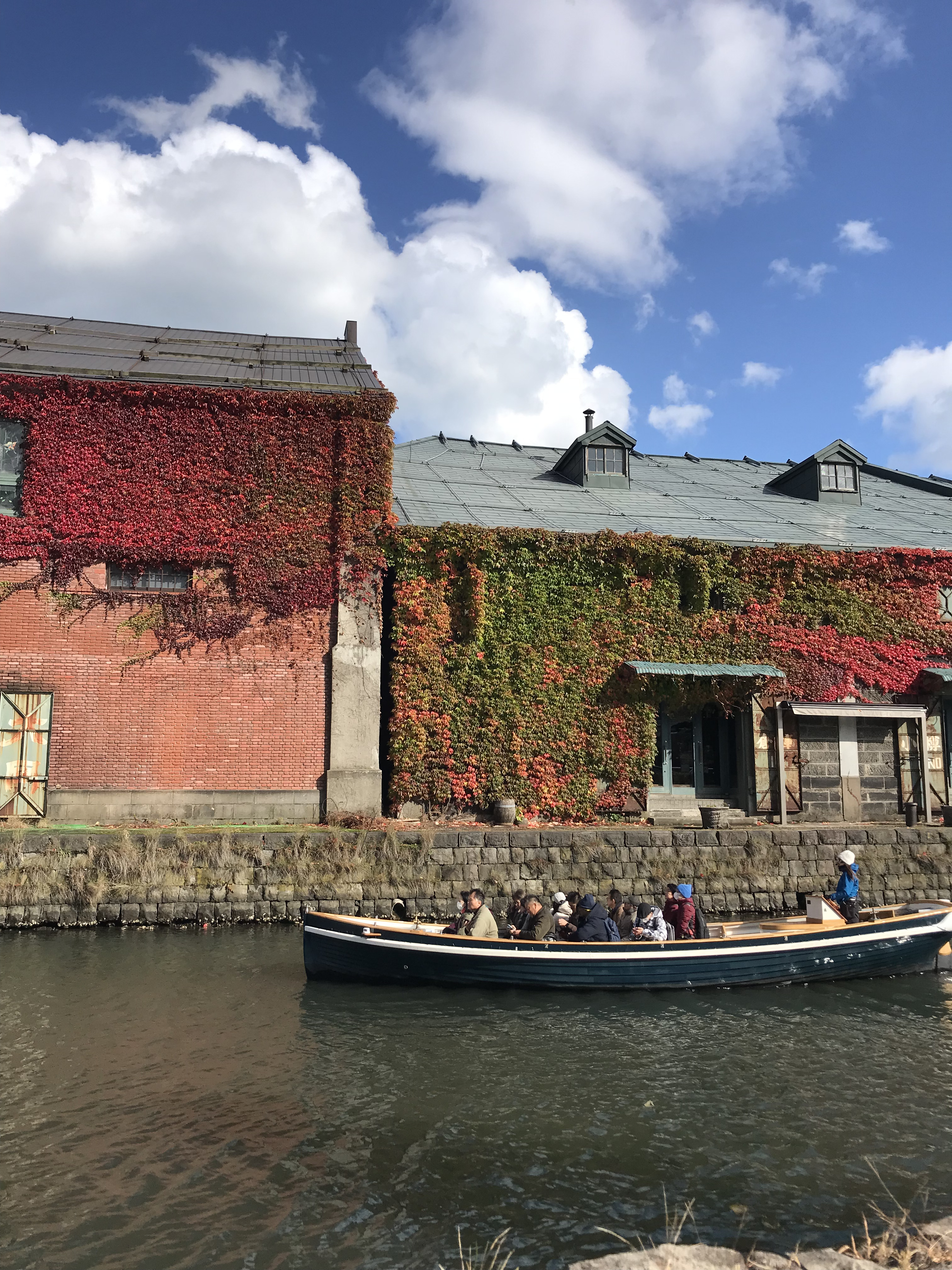
Boat rides seemed to be very popular – I’m not sure why as they really can’t go very far
Former Japanese Railways Temiya line – these now-defunct railway tracks, built in the 1880s, are located halfway between the railway/bus station and the Otaru Canal and make for an ideal stop along the way. This rail network was mainly used to ship coal until the tracks were disconnected in 1985. It’s now a popular walking area. You may find visitors forming an orderly queue to have their photo taken at this location.
Former Nippon Yusen Co building – standing proudly as the focal point of Unga Park at the northern end of Otaru Canal, this palatial building was once the headquarters of a large shipping company. One of the most impressive old buildings in Otaru, it was constructed in 1906 and is surrounded with warehouses and other ancillary structures.
House of Western Art – located next to Otaru Canal, entry to the museum itself is paid but it’s free to enter the gift shop, where you can browse various pieces and souvenirs.
Nichigin Street – this street contains many of the old merchant bank buildings from the boom era of Otaru. The banks were typically housed in very sturdy Western-style buildings. Today, these old buildings are indicated by plaques, although they are quite distinctive. You can see the former Bank of Japan (now Otaru Museum), former Dai Ichi Bank and former Mitsui Bank among others. Many of the old bank buildings have now been repurposed as offices or museums, although we didn’t go inside any of them.
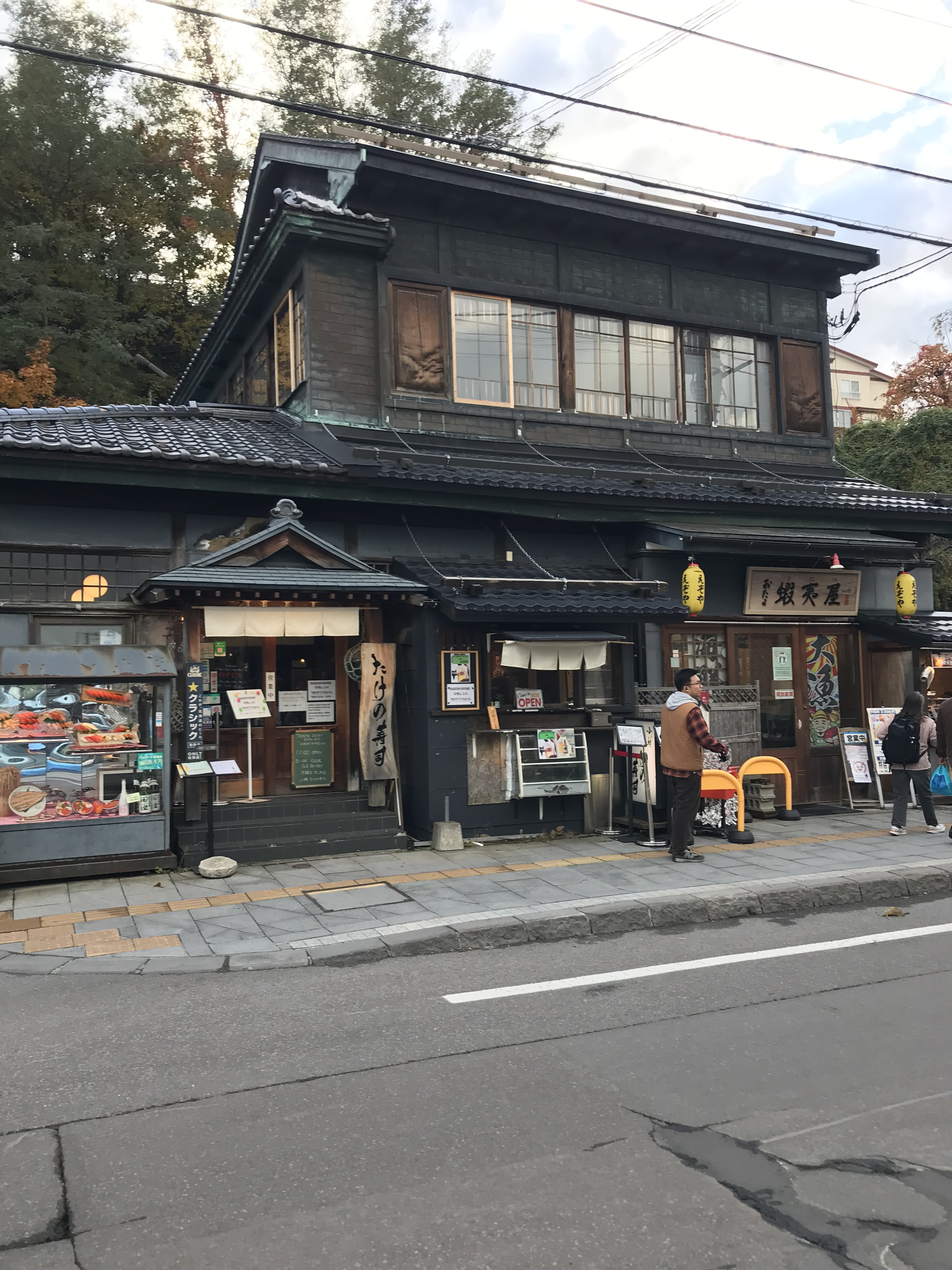
An old merchant building on Sakaimachihondori
Sakaimachihondori Street – this historic shopping street is home to many old merchant houses and buildings, some of which have residential areas at the rear. The picturesque street is now a popular shopping destination for tourists.
Kitaichi Venezia Museum – this place houses a load of Venetian-style glassworks. Entrance is free to the gift shop, which has many intricate glassworks on display that you can browse. Some are extremely expensive – be careful not to accidentally break anything! The shop area includes a display of a gondola used to ferry Princess Diana along one of the canals in Venice.
Otaru Music Box Museum – not really a museum, this is more like a massive gift shop with a plethora of miniature music boxes, almost all of which are for sale. Within the store is a constant chorus of ditty tunes playing from the music boxes – everything from classical to modern pop hits in music box form! Visitors are allowed to touch the music boxes and open them to listen to their music. There are numerous quirky designs – we spotted some various sushi-themed music boxes and lucky cat ones too!
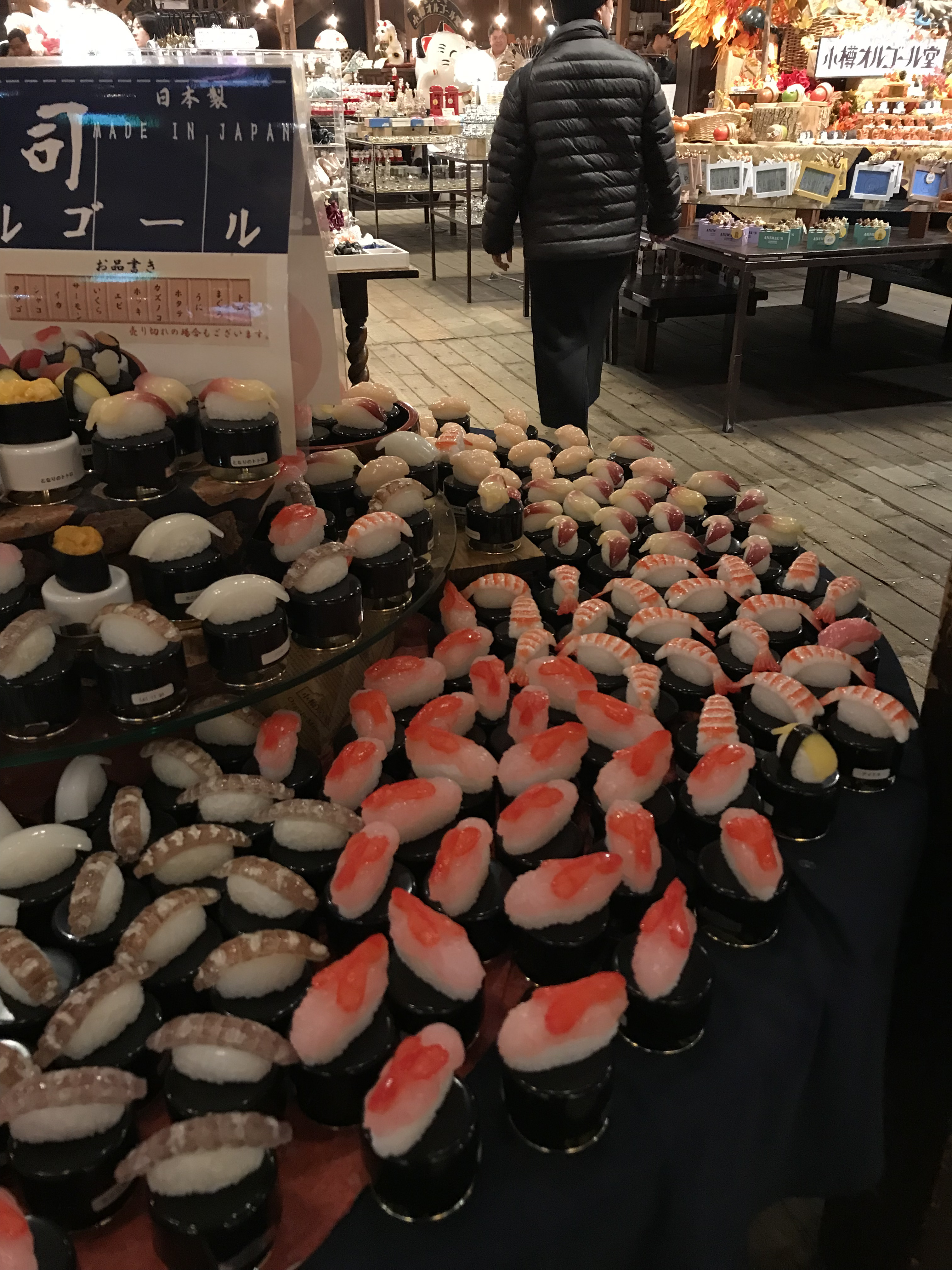
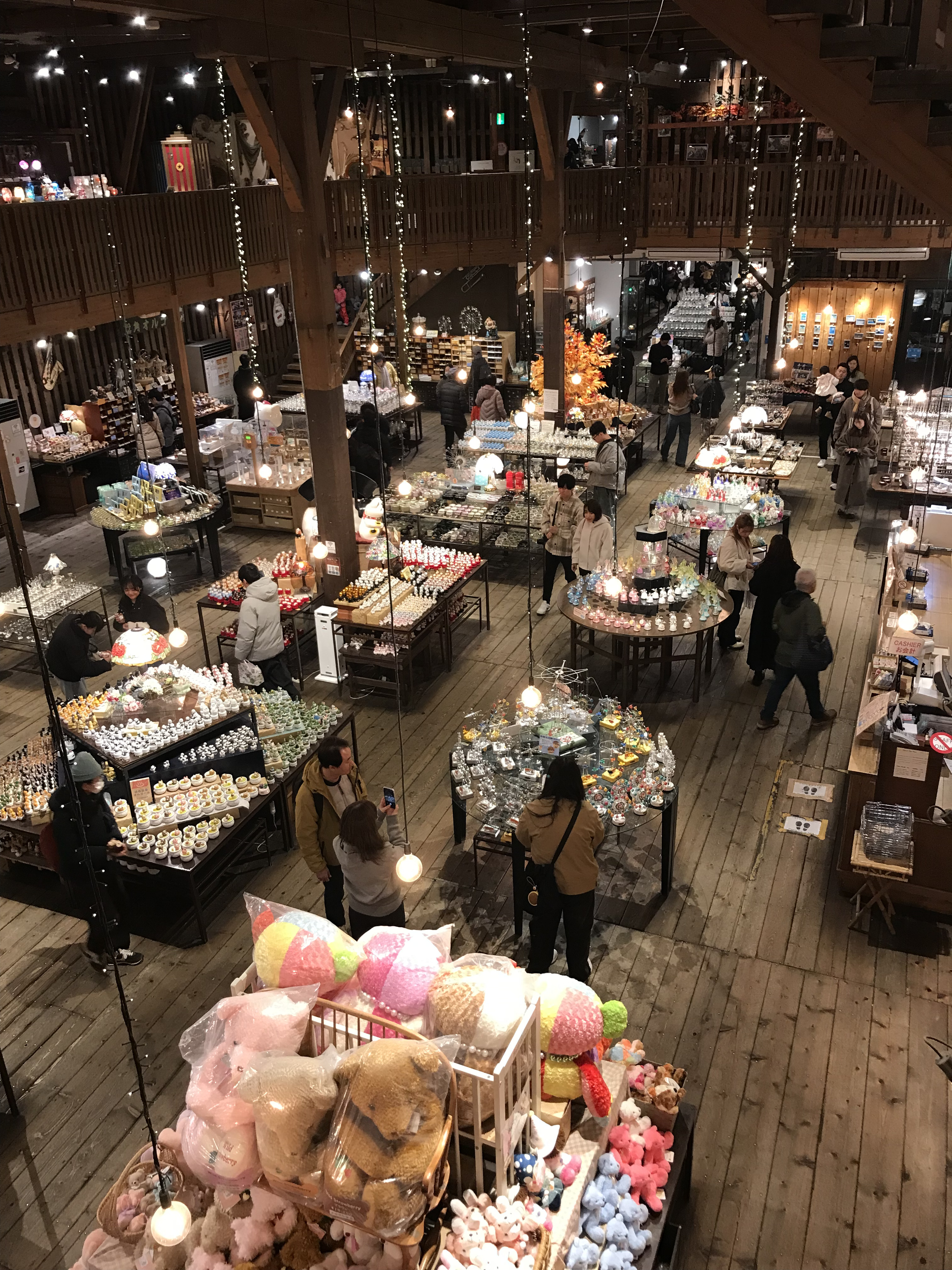
This place must be heaven for music box enthusiasts
Outside the music box museum is Otaru Steam Clock – another local landmark.
Foodie Places
Komeda’s Coffee – there are plenty of places to eat and drink in Otaru, but we decided to visit Komeda’s Coffee (a well-known chain) as it was a very budget-friendly option and casual eatery. No complaints about either the food or service here.
Hakodate
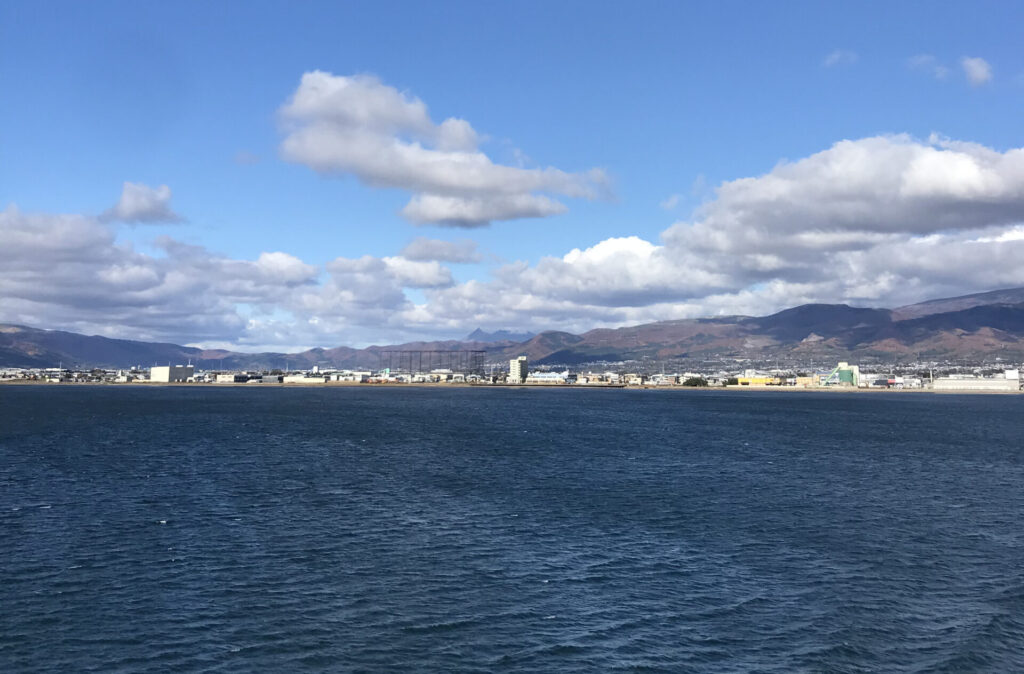
Hakodate sits to the far south of Hokkaido, on the shores of the Tsugaru Strait. The third largest city in Hokkaido, Hakodate is also one of the most important cities on the island as it provides an entry and exit point for most visitors crossing to and from Japan’s main island, Honshu. On a clear day you can see all the way across the Tsugaru Strait to Honshu. Located on a peninsula surrounded by hills and mountains, Hakodate is also known throughout Japan for its iconic viewpoint atop Mount Hakodate. Considered to be one of Japan’s top three nighttime views (the Japanese have a tendancy to make ‘top three’ lists), it’s possible to admire the glittering city lights along both sides of the cape from this high vantage point.
Hakodate has an interesting history. It was the first port in Japan to open to international trade in the 1850s, and so was one of the first places that the long-isolated Japanese were exposed to foreign influence and customs. Hakodate still maintains this cosmopolitan air in its Motomachi district, which contains lavish Western-style mansions and churches – a legacy of the early foreign influence in the city. Hakodate hosted many overseas consulates in those days in order to assist merchants and explorers from nations such as Russia and the UK. Some of these buildings remain in and around Motomachi. You can still visit the former British Consulate and enjoy a quintessential British afternoon tea. Near to the harbour, the repurposed Kanemori Red Brick Warehouses (formerly used for shipping and exports) now provide the city’s premier shopping and entertainment experience.
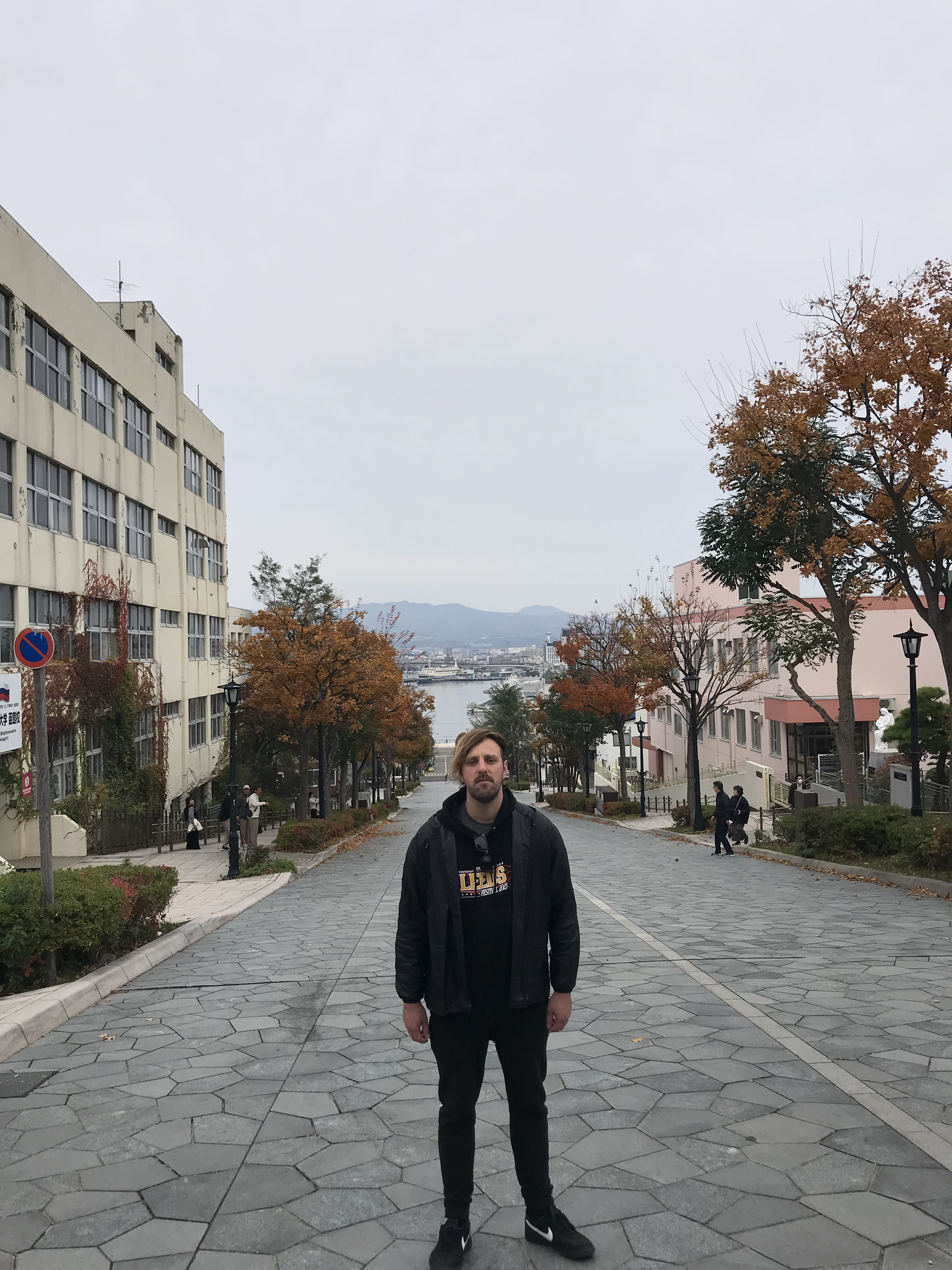
Motomachi, filled with old buildings, is located up a sleep slope at the foot of Mount Hakodate
As well as its maritime heritage, Hakodate was the scene of an important moment in Japan’s history as the unlikely location of the last stand of the samurai forces who had rebelled against the abolition of the feudal system in 1869. This was the site of the short-lived Ezo Republic, where a group of rebel samurai had declared independence from the rest of Japan in the name of the deposed shogun. Hakodate was the site of the last naval battle between the former Tokugawa Shogunate and imperial forces, and the final battle of the Boshin War took place at the star-shaped Goryokaku Fort within the city – victory for the imperial forces here essentially brought down the curtain on the era of the samurai.
Within the city itself we found that many of the streets and buildings retained a frontier-like feel – it reminded us a little of frontier and outpost cities that we have visited in places like Patagonia. I was told by a friend that Hakodate features in many famous anime scenes due to its somewhat unique landscape and vibe. The old tram network is a very visible feature of the city, and by far the easiest and cheapest way to get around. In terms of food, salt ramen is a speciality of the city alongside fresh seafood such as snow crab and squid.
Accommodation
Flat on Airbnb close to Omori Beach – we struggled to find anywhere within our budget in Hakodate but managed to snag this compact and ultra-functional apartment, which was slightly outside of the bustling centre but within walking distance from both the train station and a fab konbini (convenience store). It had the unusual twist in that it was actually on stilts above a parking garage. The apartment itself was slightly on the larger size when compared with a standard business hotel room.
Foodie Places
Ramen Syoten – this ramen joint is a one-man show with the proprietor cooking, bartending and serving customers. It had a real down-to-earth vibe and genuine feel to it – a quintessential local hole-in-the-wall ramen joint, definitely not a tourist restaurant.
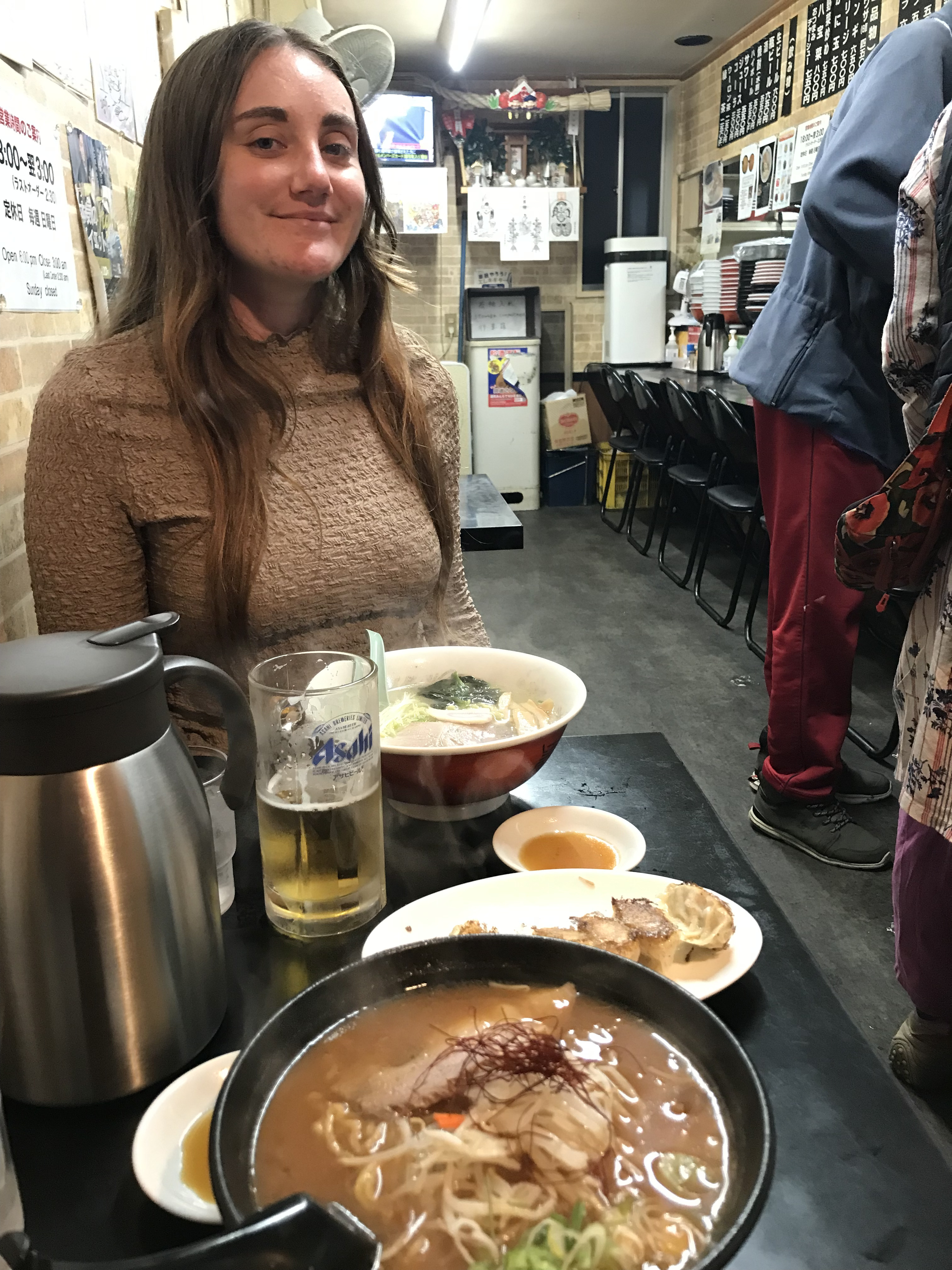
Syoten – a great local ramen place
RAYMON HOUSE Motomachi Store – a German-style hot dog store which seemingly has a storied history within Hakodate. If you have a craving for sausage, bacon and fried potatoes, this is the place for you. Orders are placed via a vending machine at the back of the store, with English language options available. The food is tasty and inexpensive but the portions aren’t that big, so you may need to order more than one (or two). Beer is also available to wash down the sausage. Upstairs is a free exhibition about the founder, a European entrepreneur who pioneered the sausage making and dried ham making industries in Hakodate.
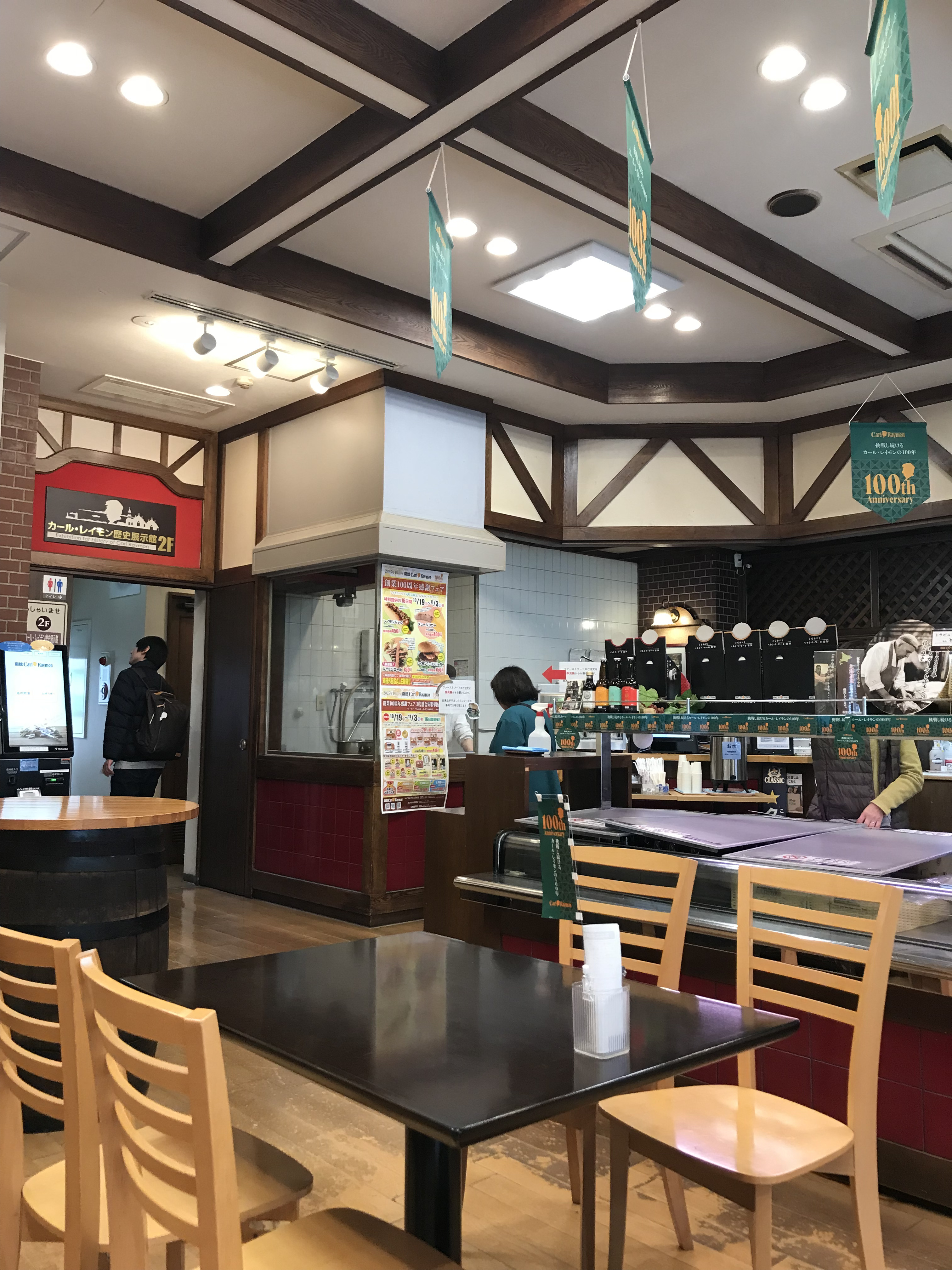
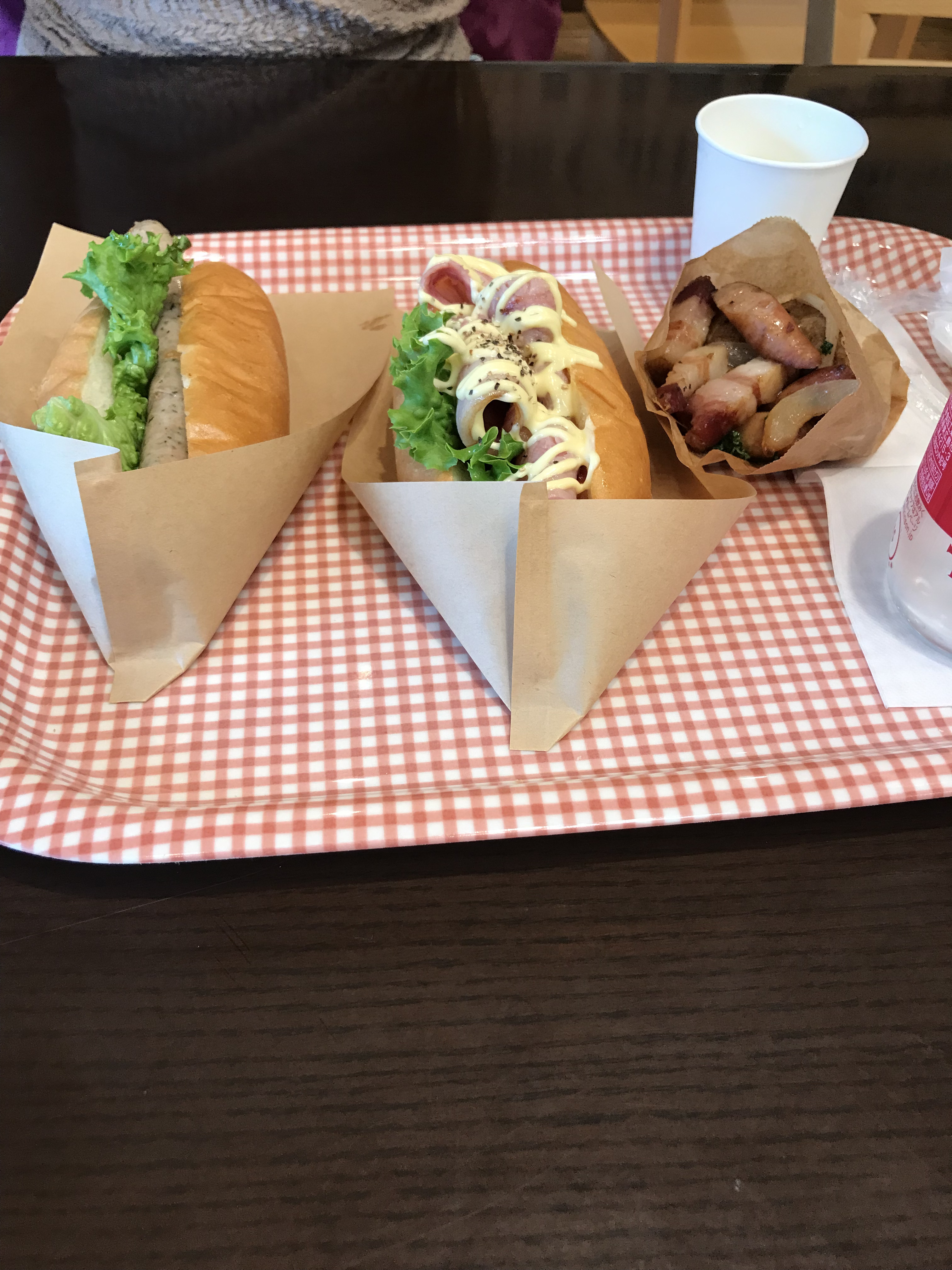
Raymon House is a place with an interesting history
Petite Merveille – located within the Kanemori Red Brick Warehouses, this is a great place to grab a piece of cake and a hot drink amidst the plethora of shopping
とんき大門店 – a no-fuss local-style tonkatsu place with friendly servers. Surprisingly, card payments were accepted here – unusual in this type of local joint.
Activities
Goryokaku Fort and Tower – this historic fort played an important role in Japanese history as the location of the final battle of the Boshin War, when in 1869 the last remaining shogunate forces made a final stand against the advancing Imperial army. This battle essentially marked the final chapter of the era of the samurai and the culmination of the Meiji restoration, paving the way for the modernisation of Japanese society. Today only the foundations of the fort remain, including the moat and some of the walls. It’s now a public park and a popular cherry blossom viewing spot in the spring, as well as a place for locals to walk their dogs. We even saw one man walking his ferret!
The fort is star-shaped, and its design reminded us of Portuguese-style forts that we have seen in various other countries, such as Galle fort in Sri Lanka. There are some buildings within the fort that seem to have been rebuilt in the original style – it seemed like visitors may have been able to enter these buildings, but we were content to look from the outside.
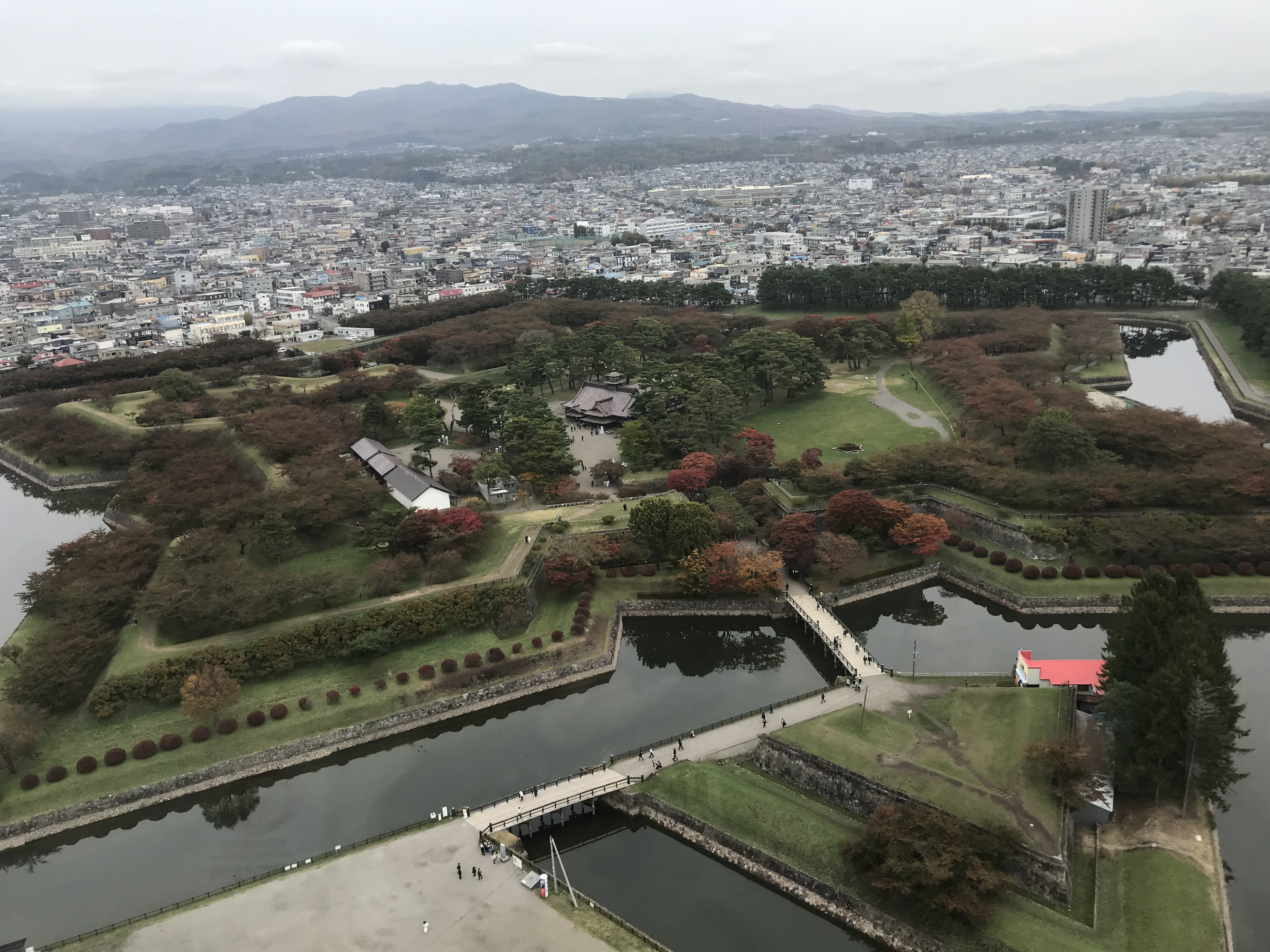
The star-shaped fort is best appreciated from above
Near to the fort is Goryokaku Tower, an observation tower which provides a great view of the star-shaped fort and across the Hakodate skyline. The aerial view of the fort is definitely worth the admission fee here. The tower also contains plenty of historical information, including dioramas featuring little figurines which act out the final stages of the Boshin War.
The fort and tower are a little way out of the city centre, but can easily be reached on the tram line.
Motomachi – at the foot of Mount Hakodate, this hillside neighbourhood was formerly the foreign settlement in Hakodate and is the location of a multitude of sumptuous European-style mansions which have been protected and maintained by the city in an effort to preserve the historic architecture. These buildings hark back to the days when the port city was a major trading post, with many international merchants and foreign residents making the city their temporary home. Some of the foreign mansions in the Motomachi area are still privately owned, while others are property of the city.
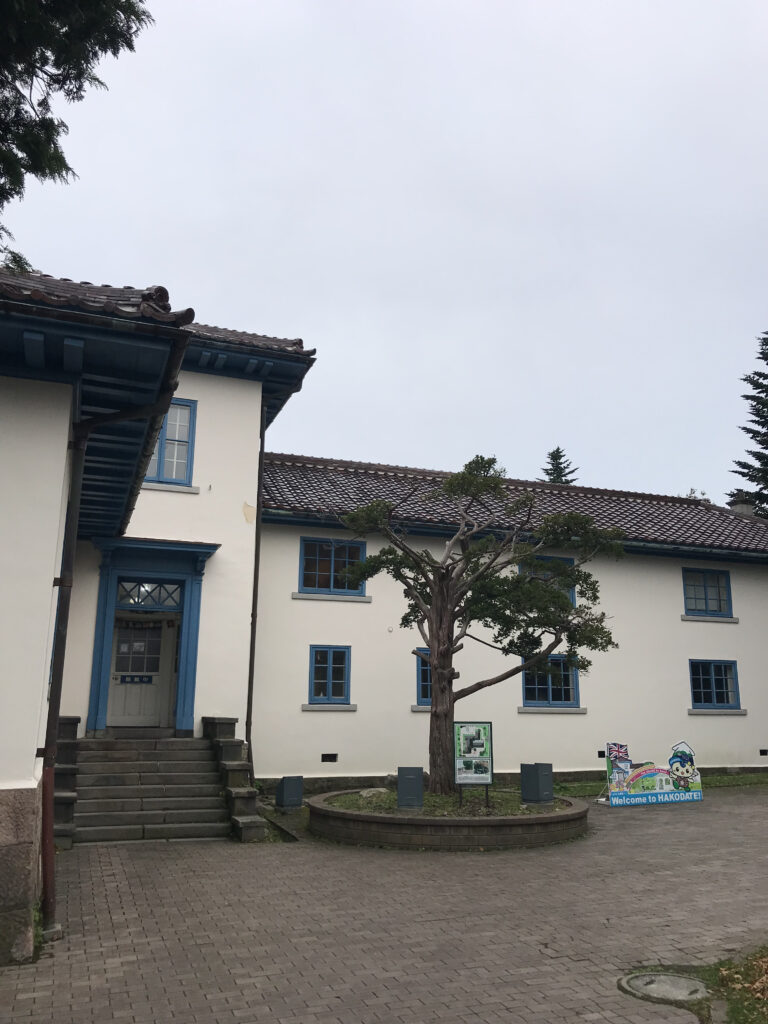
Some of the old western-style buildings in Motomachi
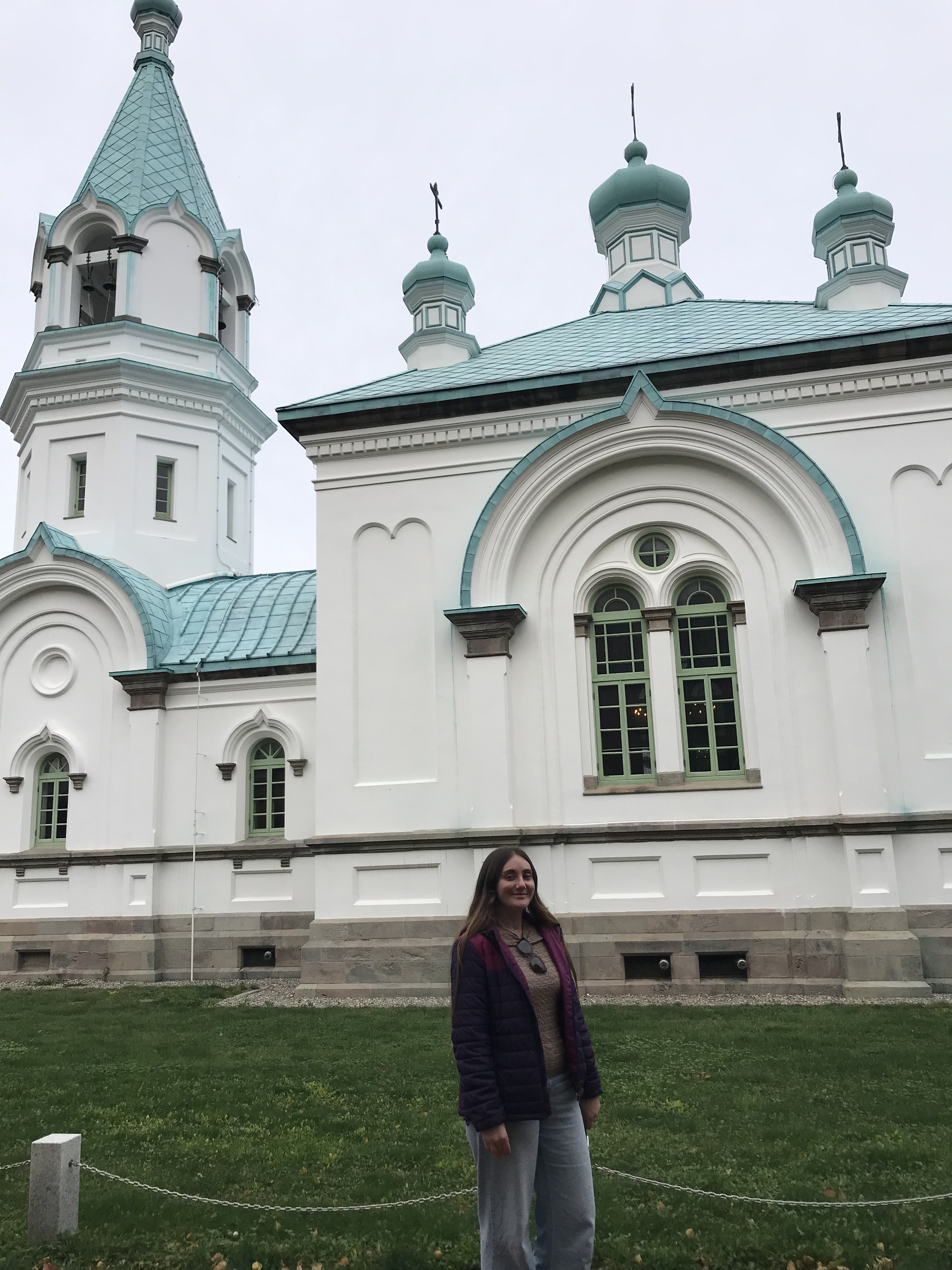
Churches – two main points of interest within Motomachi are the Catholic church and the Russian Orthodox church (which used to stand beside the Russian Consulate). The congregations at these religious institutions are no doubt negligible these days, but the buildings remain in excellent condition despite the lack of worshippers. Both are free for visitors to enter – please remember to be respectful and adhere to the code of conduct both clothes and behaviour-wise. The Russian Orthodox church was particularly impressive with its typical orthodox design, pastel–blue metal roof and pristine white exterior.
Old Public Hall of the Hakodate Ward – it’s impossible to walk past this impressive bright blue and yellow building without being awed by the sheer size and grandeur of the place. A symbol of the wealth, prestige and also the Western influence within the port town, this building dates back to 1910 and has been designated as a National Important Cultural Property. Be aware that you are required to remove your shoes before entering the hall. Of particular interest is the stately ballroom which you can waltz around (if you have the nerve!), and the picturesque balcony which overlooks the bay. Directly below the Public Hall is Motomachi Park, which oddly is mostly paved and is not a green space.
Entry is to the hall is ticketed. We recommend buying a combo ticket which includes the Old Public Hall, Museum of Northern Peoples, Former British Consulate and Museum of Literature, or any three of the four for a slightly lower fee.
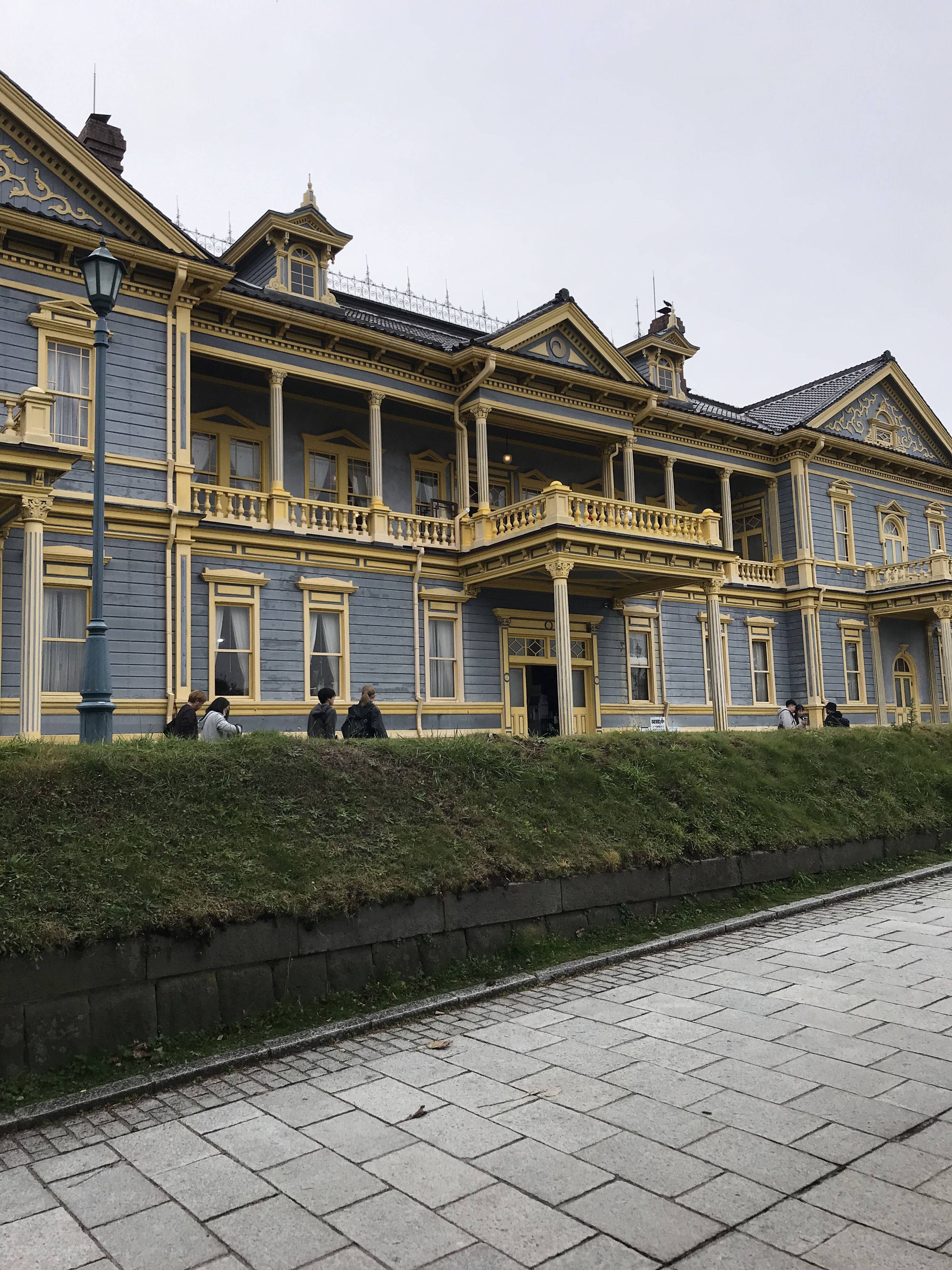
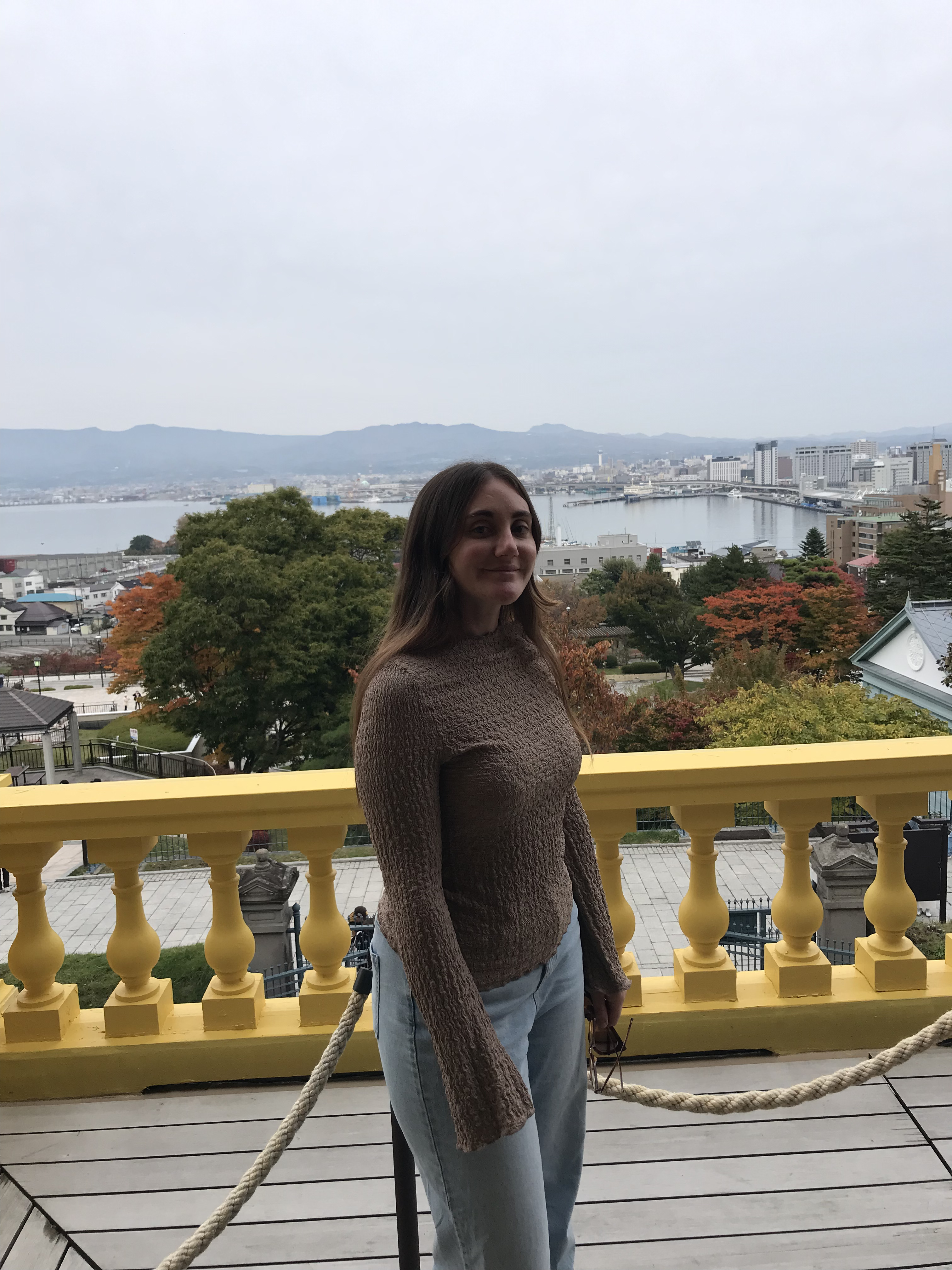
The Old Public Hall is a spectacular structure
Former British Consulate of Hakodate – along with the USA and Russia, the United Kingdom was one of the first nations to open a consular building in Hakodate. The British consulate in the city was established in 1859, the same year that the port of Hakodate was officially opened to foreign ships. This building dates back to 1913 and functioned as a consulate until 1934. After being returned to the city of Hakodate, it had various uses before being repurposed as a museum in recent years, providing a little slice of England in Hakodate. For a small entrance fee you can drift through the preserved rooms which include some quintessentially British memorabilia, including a striking portrait of Queen Victoria. One of the rooms has information about some of the progressive schemes and philanthropy that the British consul was involved with at the time. There are also museum displays about the city, a ‘British’ tea room and a little gift shop with some typical British products.
Former Hakodate Branch Office of Hokkaido Government – located near to Motomachi Park, another example of Western architecture which is worth taking a peek at from the outside.
Morning Market – it’s best to head there first thing in the morning as the name suggests, to indulge in all manner of seafood delights such as snow crab, or seafood bowls topped with almost glowing orange salmon roe.
Kanemori Red Brick Warehouse – a number of repurposed old industrial warehouses situated by the docks, these unmistakable red behemoths now contain a myriad of individual shops, fabulous outlets and kitschy cafes. From the outside you wouldn’t realise how much is crammed into these uniform-looking buildings. An added bonus is that there’s also free wifi inside the warehouses, handy for those on the go. Browsing the warehouses is a good escape from the cold weather on a chilly day. There are also some nice views across the bay from the promenade near to the warehouses.
Hakodate City Museum of Northern Peoples – this is by far the best and most comprehensive museum regarding indigenous peoples that we encountered anywhere in Japan, trumping the small displays in Tokyo National Museum anyday. The museum contains artefacts and information about the customs, beliefs and daily life of the indigenous people of Hokkaido, the Ainu, as well as the related indigenous peoples of the nearby Russian-owned Kuril Islands, Sakhalin and far north-eastern Russia. For those with an interest in the culture and ethnography of the indigenous people that inhabit these extremely inhospitable and remote regions, this museum is a treasure trove.
The building containing the museum was originally the Hakodate branch of the Bank of Japan, built in 1926, which provides an interesting and unique setting. Inside is a trove of information, relics and ethnographic items relating to every aspect of the life and society of the indigenous peoples. The displays featuring crafts and wood carvings were a particular highlight, as well as the section regarding clothing which features furs and elaborate patterned dress. Items on display included a wooden ‘sanction club’ (used for punishments), as well as examples of the Makiri Ainu knife.
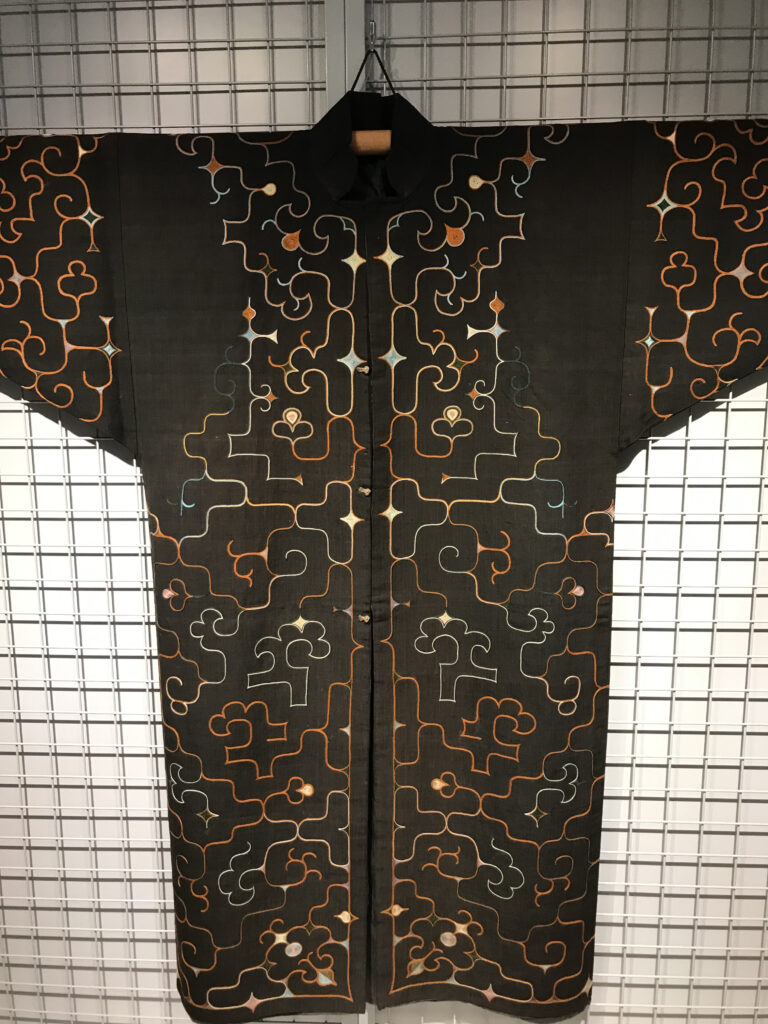
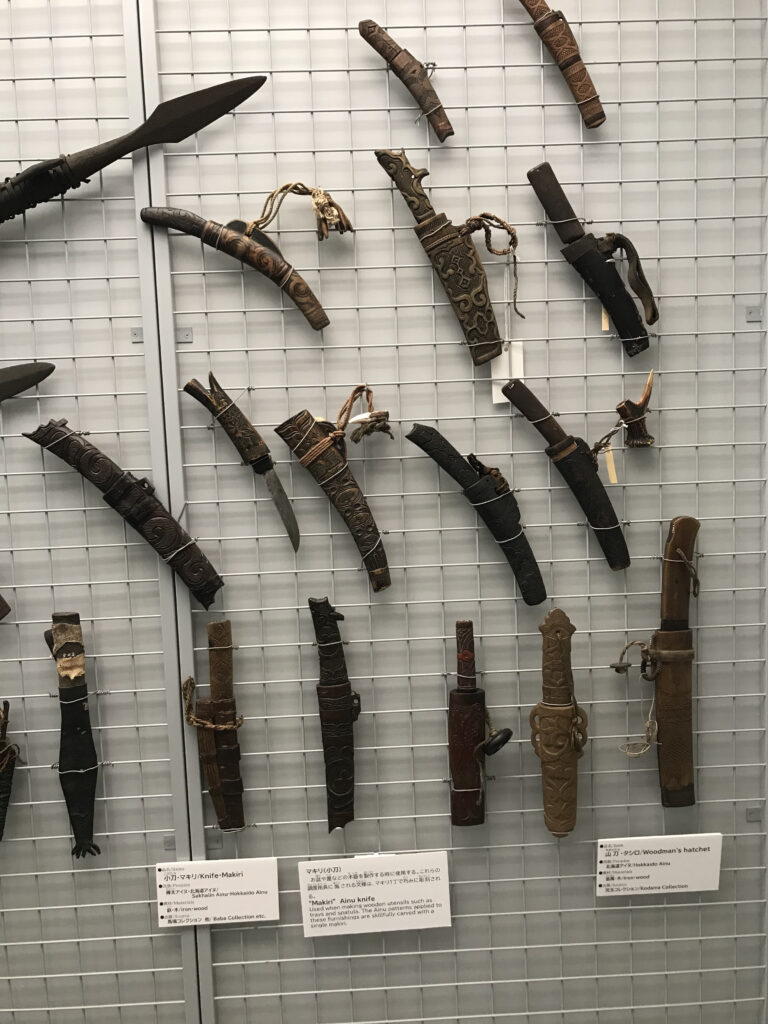
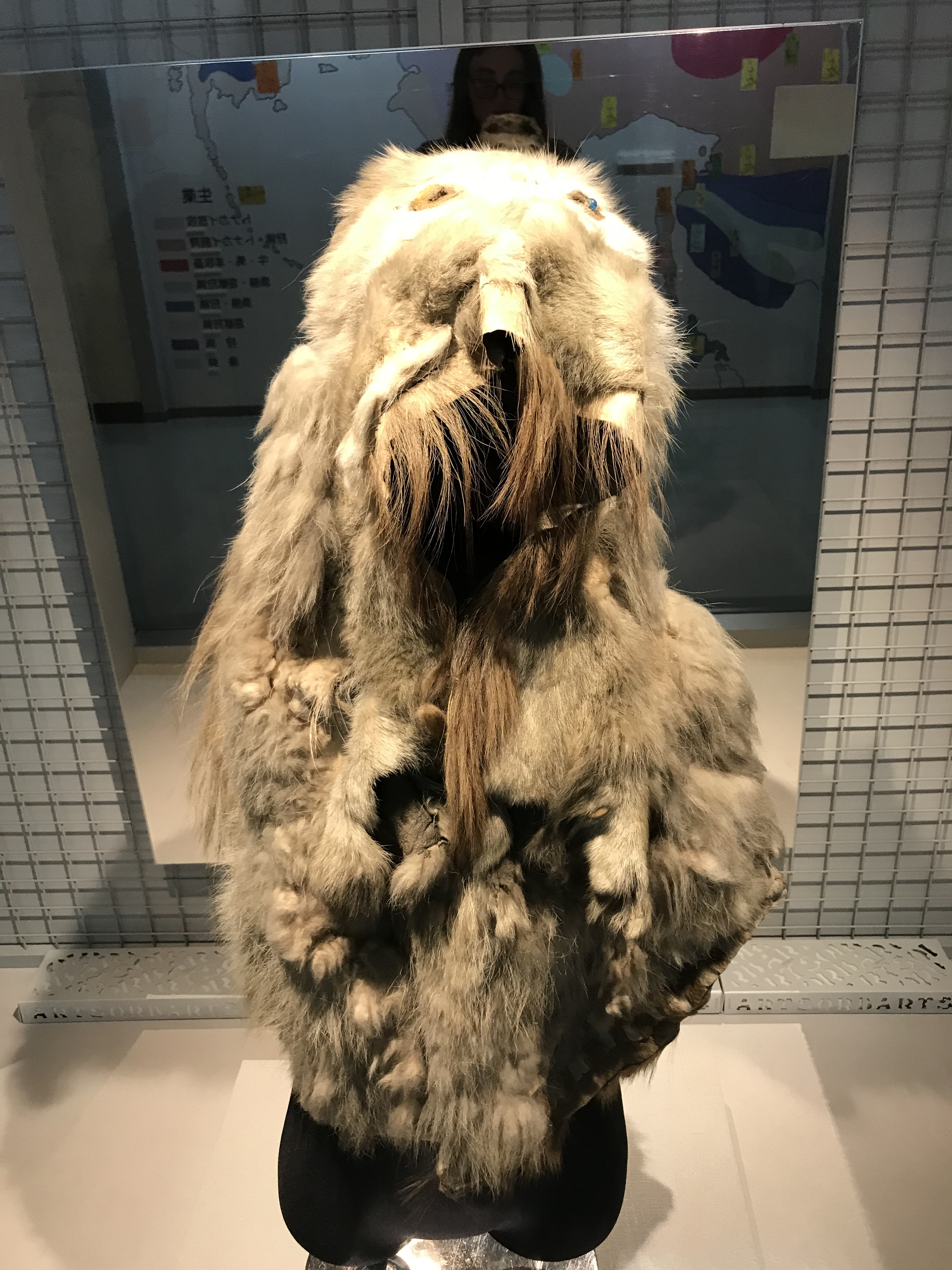
Some of the artefacts within the museum
The exhibits are handily narrated in text format by the museum’s director. The Director’s Comments included with many of the displays provides a running commentary, raising some very interesting questions – at times it almost felt like an internal monologue. The comments themselves were highly informative and at times very amusing. It’s clear to see that the Director is a very curious and conscientious individual who clearly cares about the visitor experience. Their personality really comes through in the comments. We were thoroughly intrigued – especially by the frequent rhetorical questions to the reader!
Our biggest takeaway from the museum was that the Ainu were actively trading with the rest of the world at a time when the Japanese to the south were isolationists and had shut themselves away. We were also taken aback by the caricature-like depiction of the Ainu people in early Japanese scrolls.
Mount Hakodate Observatory – this is the most popular tourist spot in Hakodate and is considered to be one of the top night-time views in Japan. The observatory has a few levels, which were all very busy when we visited. This is to be expected as it’s a very famous spot domestically; you can’t really say you have visited Hakodate without visiting the famous viewpoint. The observatory itself is free once you reach the top.
The viewpoint and observatory is usually best accessed by a ropeway which runs from the Motomachi neighbourhood, however the ropeway was closed for maintenance when we visited so the only option was to take the bus from Hakodate train station. Although it’s a cheaper option than the ropeway, the bus really wasn’t great as, due to the ropeway being closed, the demand far exceeded the supply of buses and there were big queues at both the bottom and the top. Going up was a pain as we missed the sunset, however the real problem was coming back down as the number of buses that can access the mountaintop at any one time is limited and so we had to queue for absolutely ages in the frigid cold along with the hundreds of other people at the top. I think this was just bad luck on our part, as I can’t imagine it would be this chaotic when the ropeway is functioning. If you run into the same issue as us, make sure to catch the bus up from the first stop (i.e. the train station) rather than later stops, as the bus was completely crammed full and there simply wasn’t enough room to pick up more passengers.
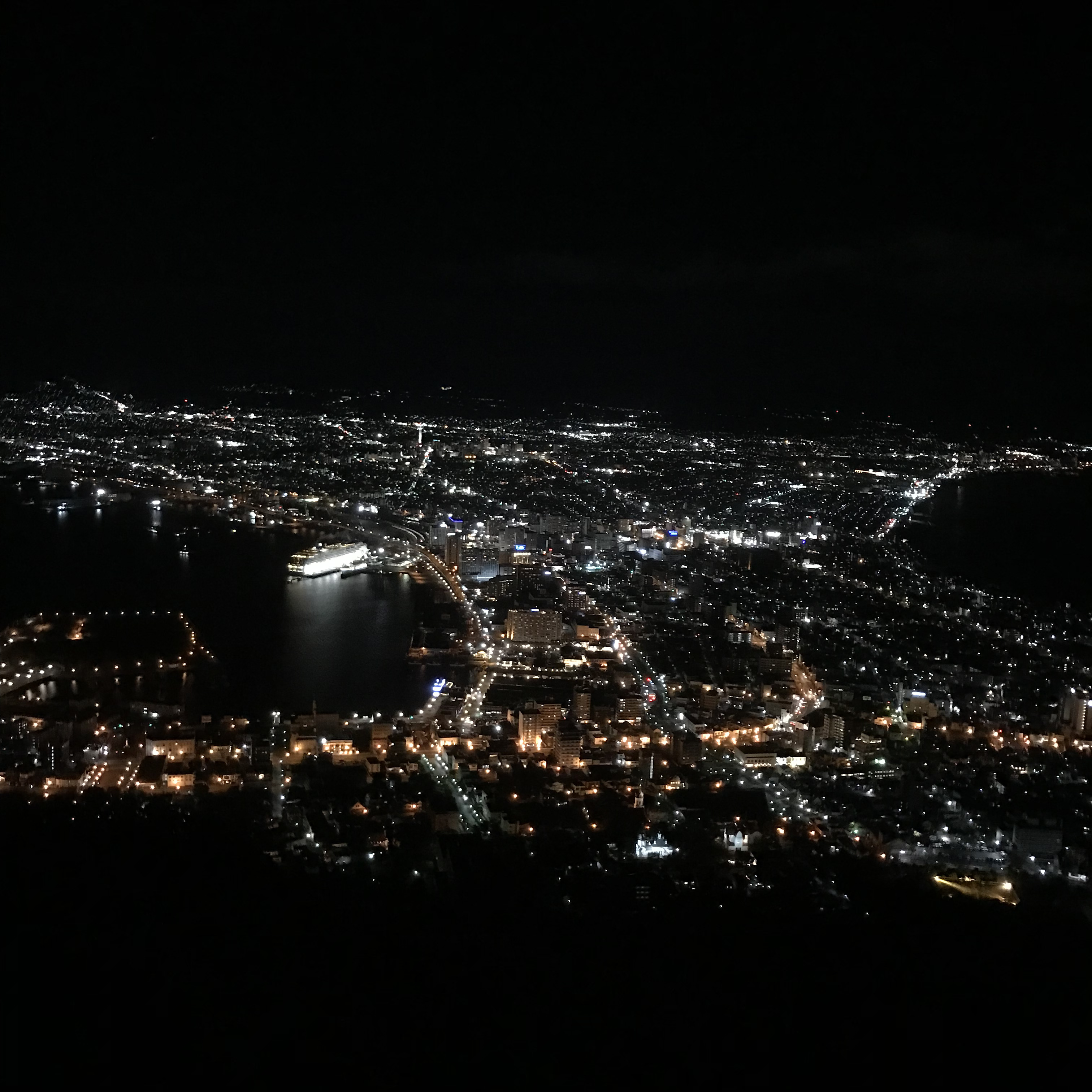
The famous night-time view
Onuma Quasi-National Park (Onumakoen)
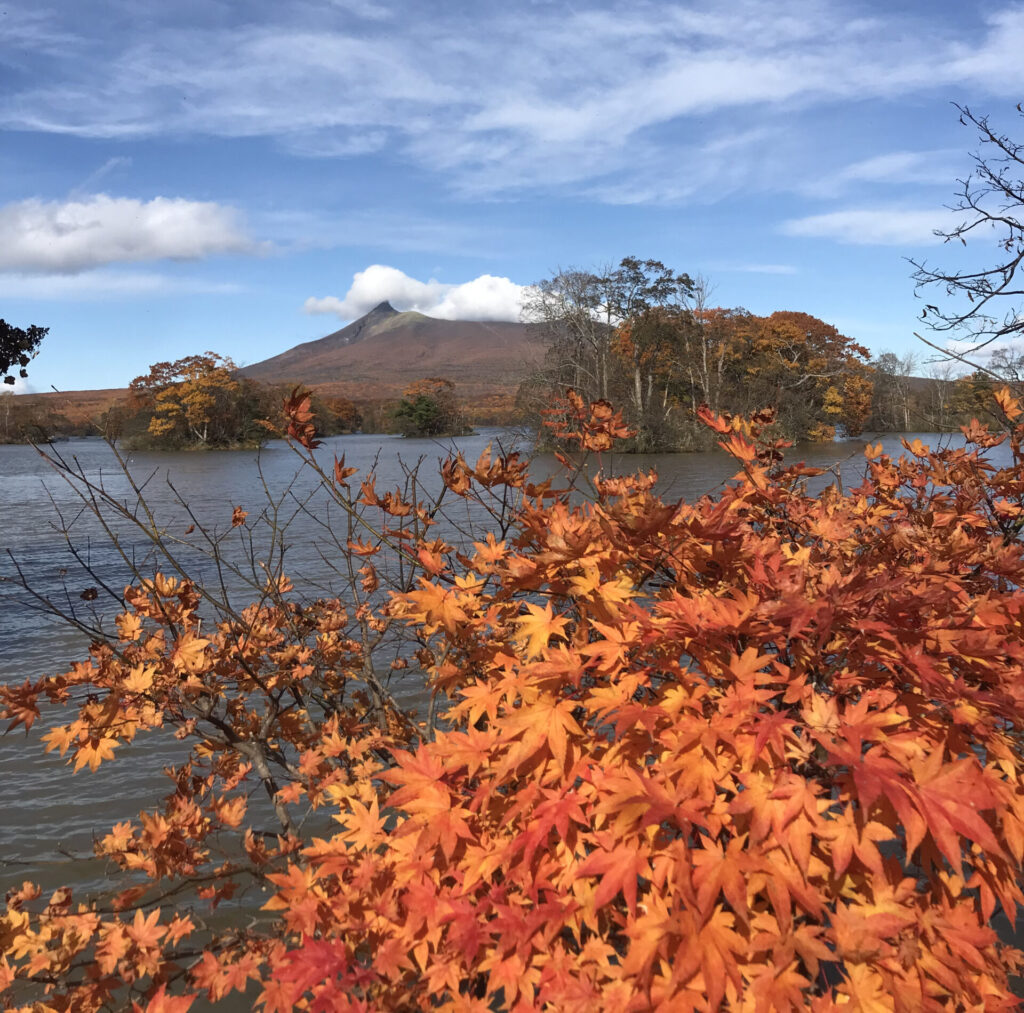
An easy day trip from Hakodate, the most striking feature of this quasi-national park is Mt. Komagatake, which forms the iconic backdrop behind Onuma lake.
The main tourist area of the park around Onumakoen station contains a number of short hiking trails which traverse the smattering of islands in Lake Onuma, many of which are linked by picturesque bridges. The trails are free to access and are well-signposted, although some are tad on the short side – we ended up joining all of the trails into one big loop and it didn’t take much longer than 2 hours to complete at a casual pace.
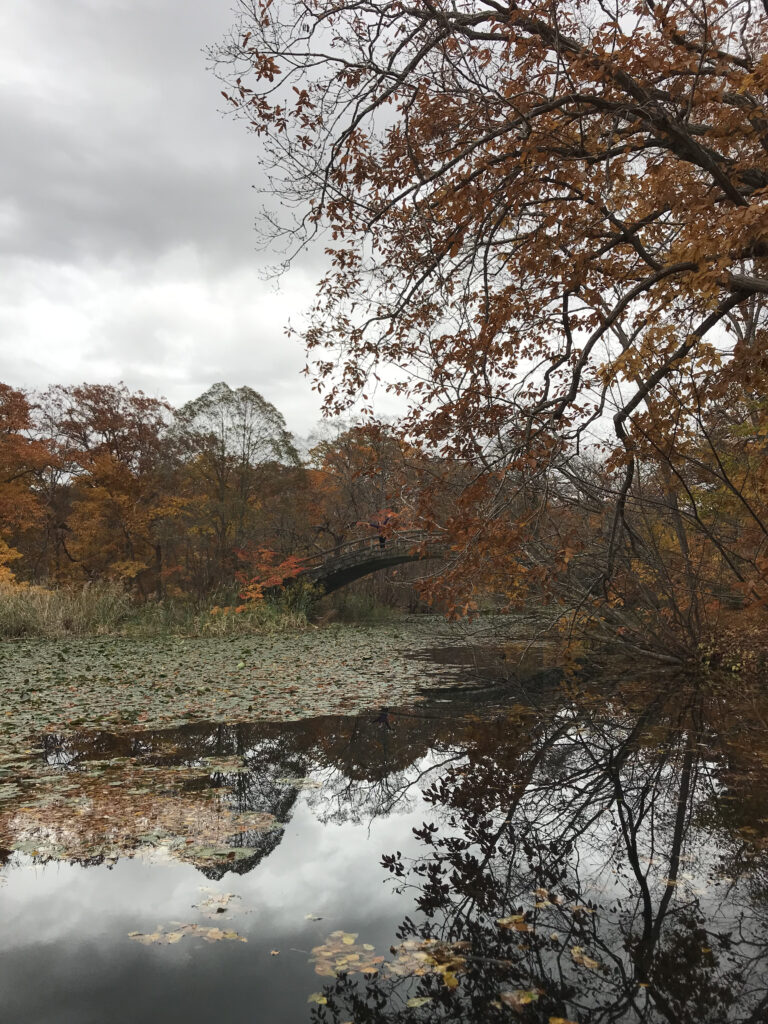
We really appreciated the breath-taking scenery and spectacular autumnal foliage of the park. Although there were plenty of other visitors, the park wasn’t crowded at the time of our visit – the purple trail in particular was virtually empty when we visited, providing a great and peaceful walking experience in the magnificent nature (although it was a little wet and boggy underfoot in comparison to the other trails).
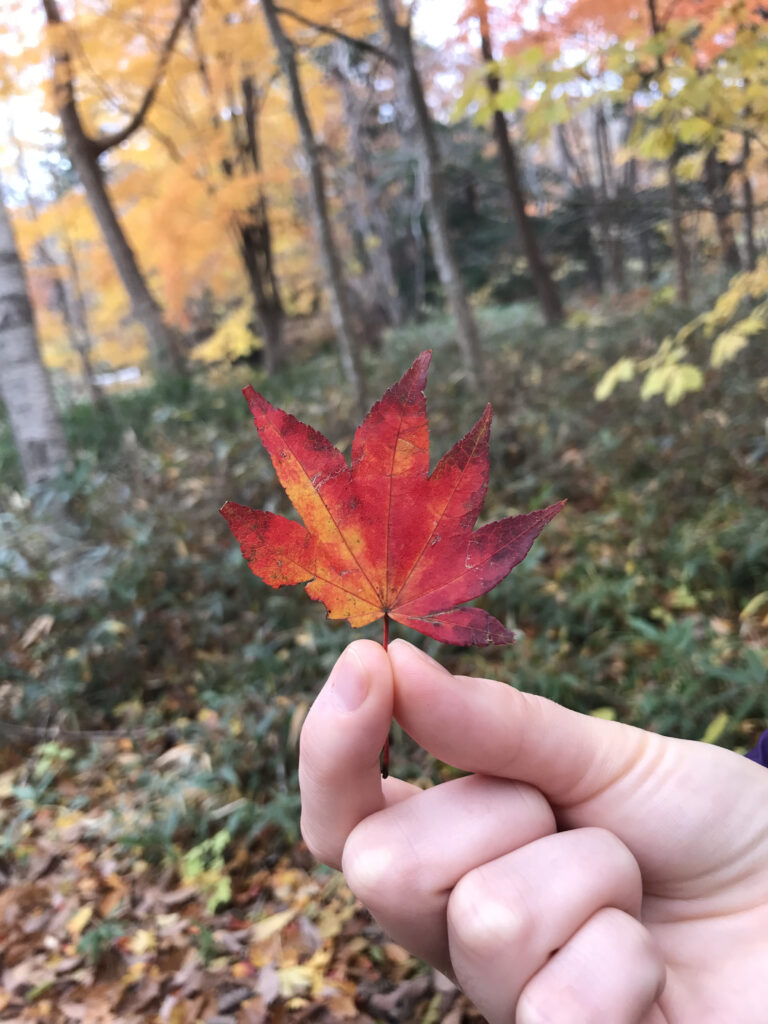
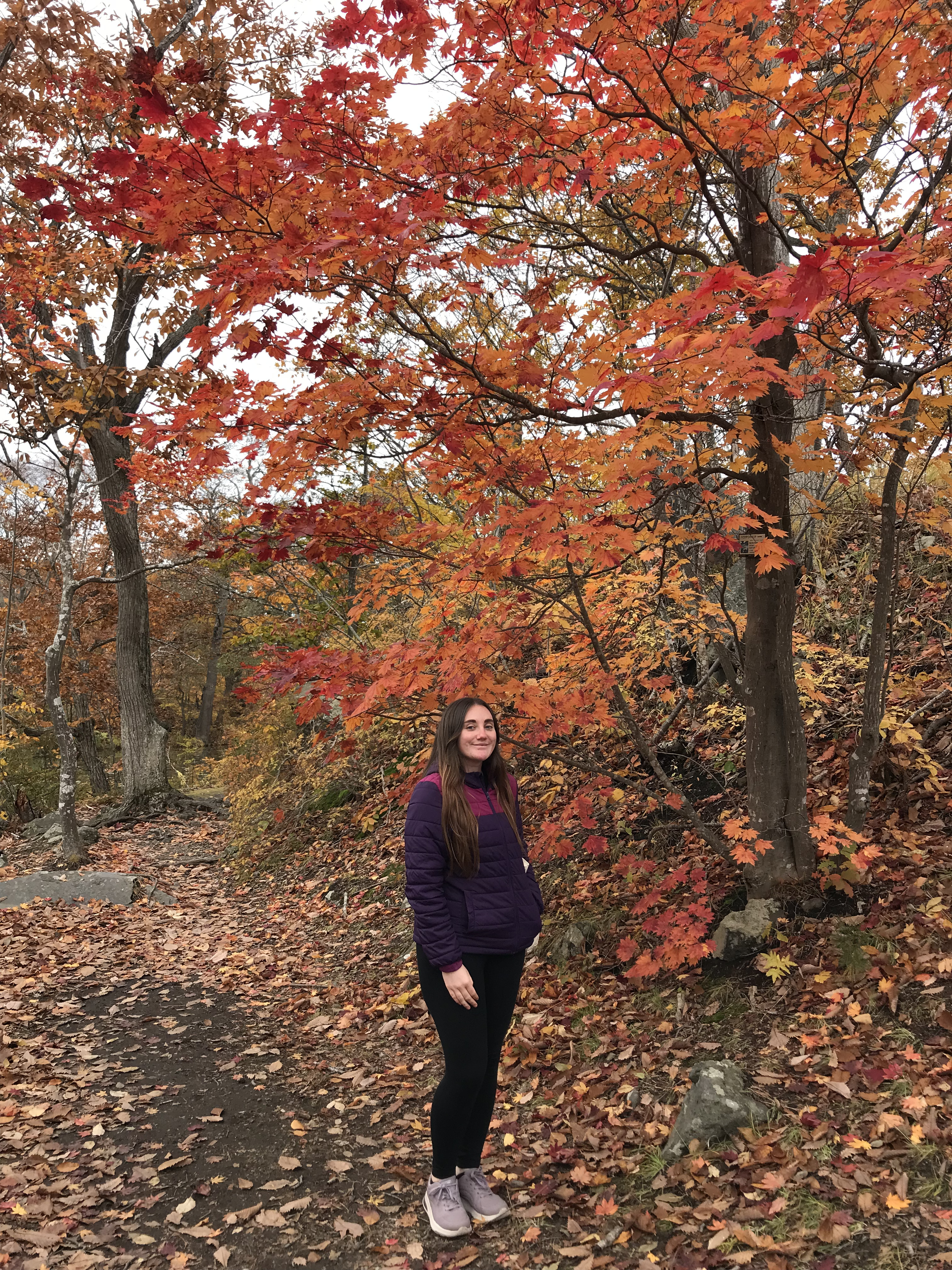
The autumnal leaves are fantastic in Onuma – we visited in early November
While we only stayed in a relatively small area of the park, it’s possible to hire bicycles and cycle the entire circumference of Lake Onuma (14km, estimated time of 70-90 minutes). Visitors can also jump on a 30-minute sightseeing boat around the lake, or make the 892m ascent up Mount Hokkaido Komagatake during hiking season (1st June – 31st October). We spotted many domestic tourists hiring swan-shaped peddle-boats and exploring the lake for themselves. Although Onumakoen itself is well-maintained and has plenty of tourist infrastructure, the area surrounding the park has a wild feel to it. You could really believe that the bears were not too far away!
It’s easy to get to the park from Hakodate, as direct trains run from Hakodate station to Onumakoen. This is a popular tourist route – Onumakoen station is well set-up for visitors and is within walking distance of the trails and tourist facilities. Getting back was a bit more of an adventure as we took a train from the much lesser-visited Onuma station, located around 30 minutes walk along the main highway from the main Onumakoen tourist area. This unmanned station felt like a completely backwoods place in comparison to Onumakoen – deadly silent and with a somewhat eerie, frontier-like atmosphere. Luckily the departure times and platforms for the trains were written on the wall within the station house.
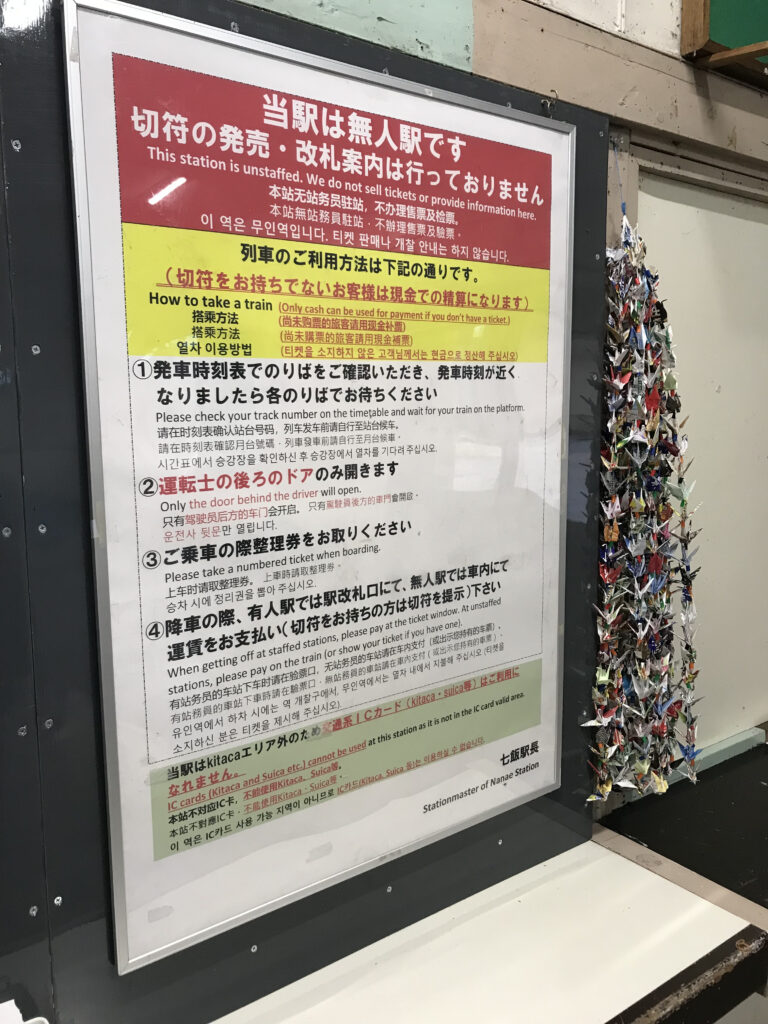
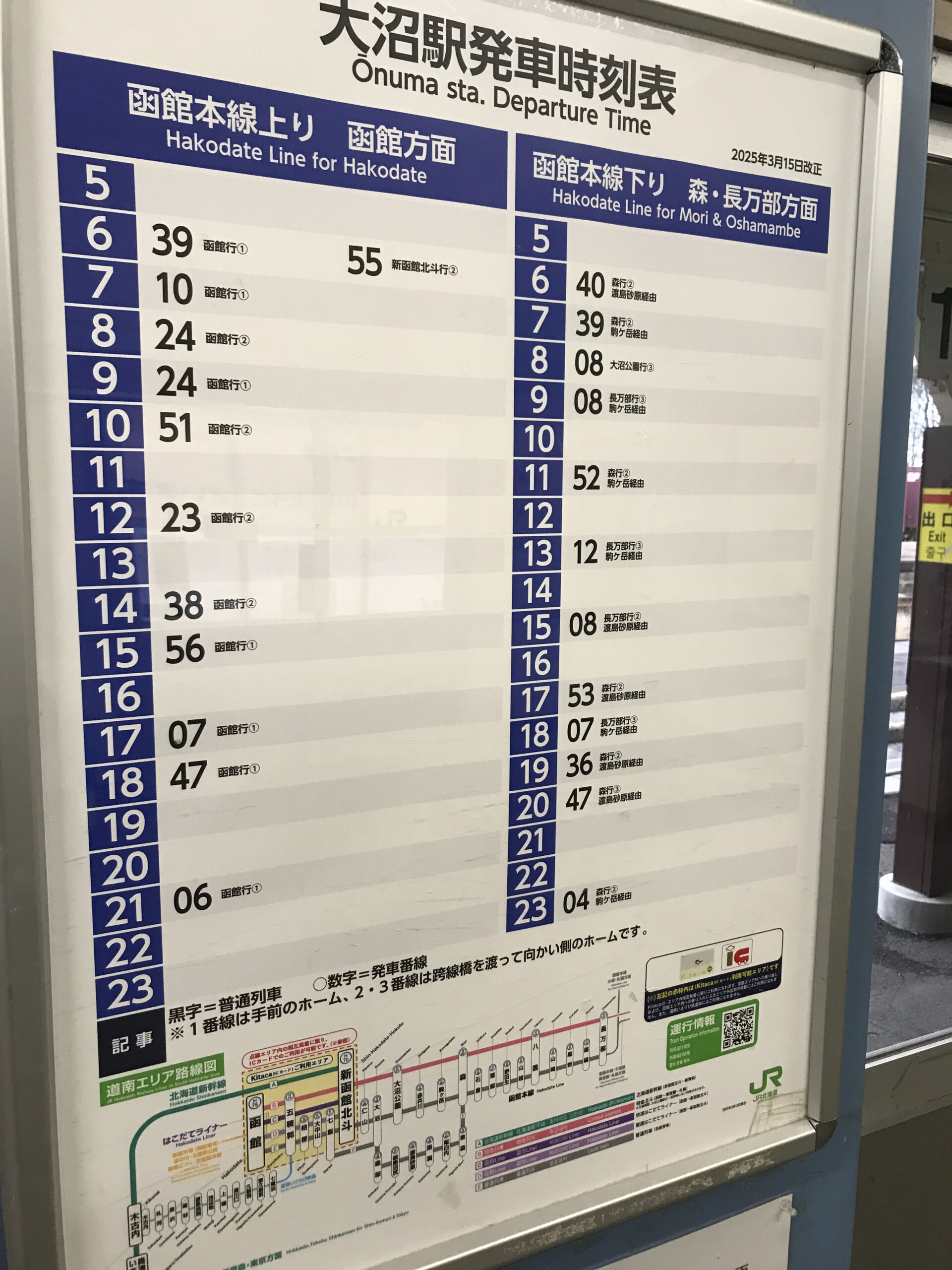
Onuma station is a desolate and lonely place
Foodie Places
Woods cafe – located in the vicinity of Onumakoen station right beside the main public car park, this wooden chalet-style eatery serves hearty portions of fried fish curry, hot dogs and fish burgers. They even ask guests how much spice they want in the curry sauce. We were really impressed with the quality of the food here. A great place to load up on carbs before hitting the hiking trails.
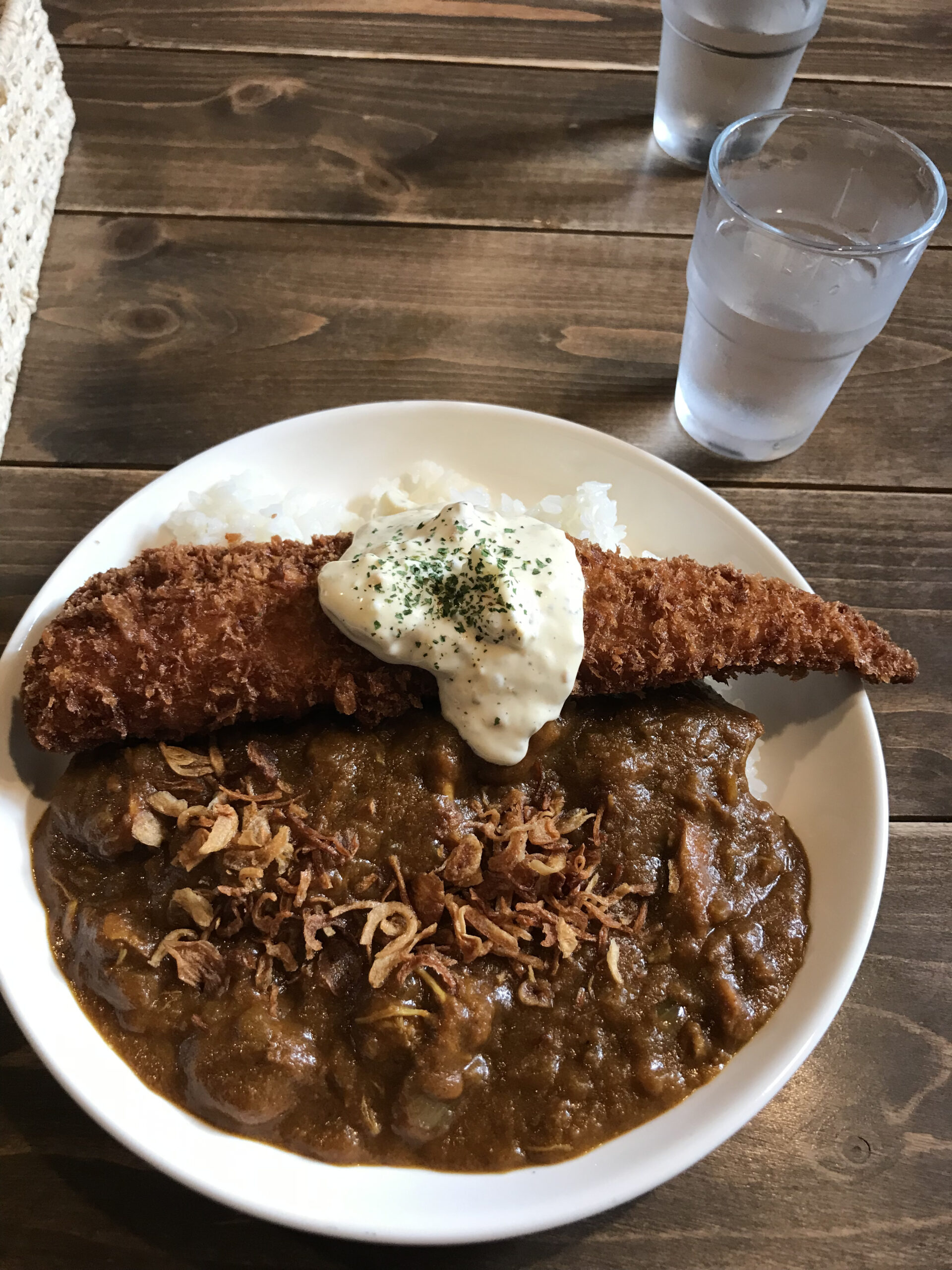
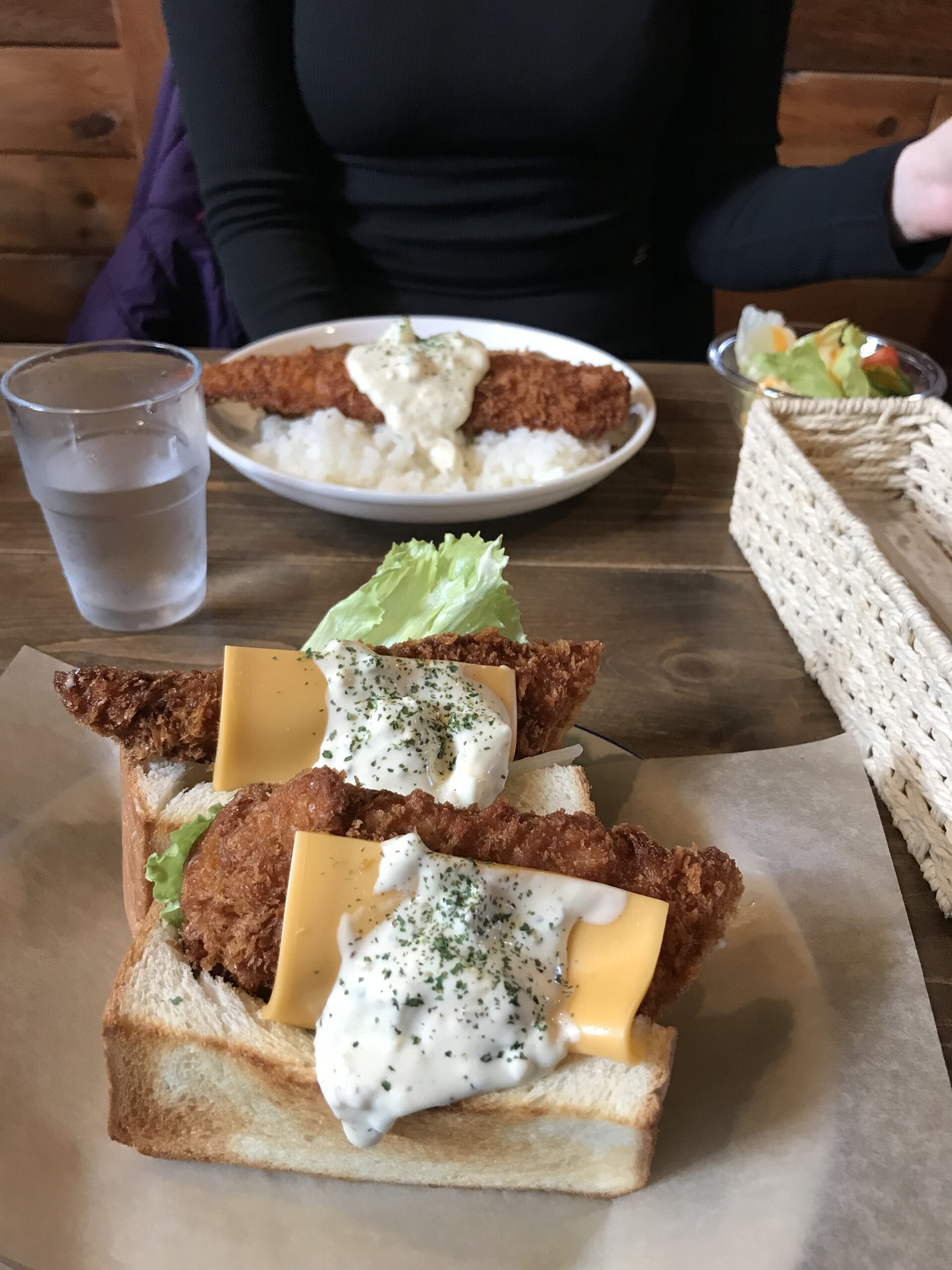
A great curry meal at Woods
Heading to Honshu
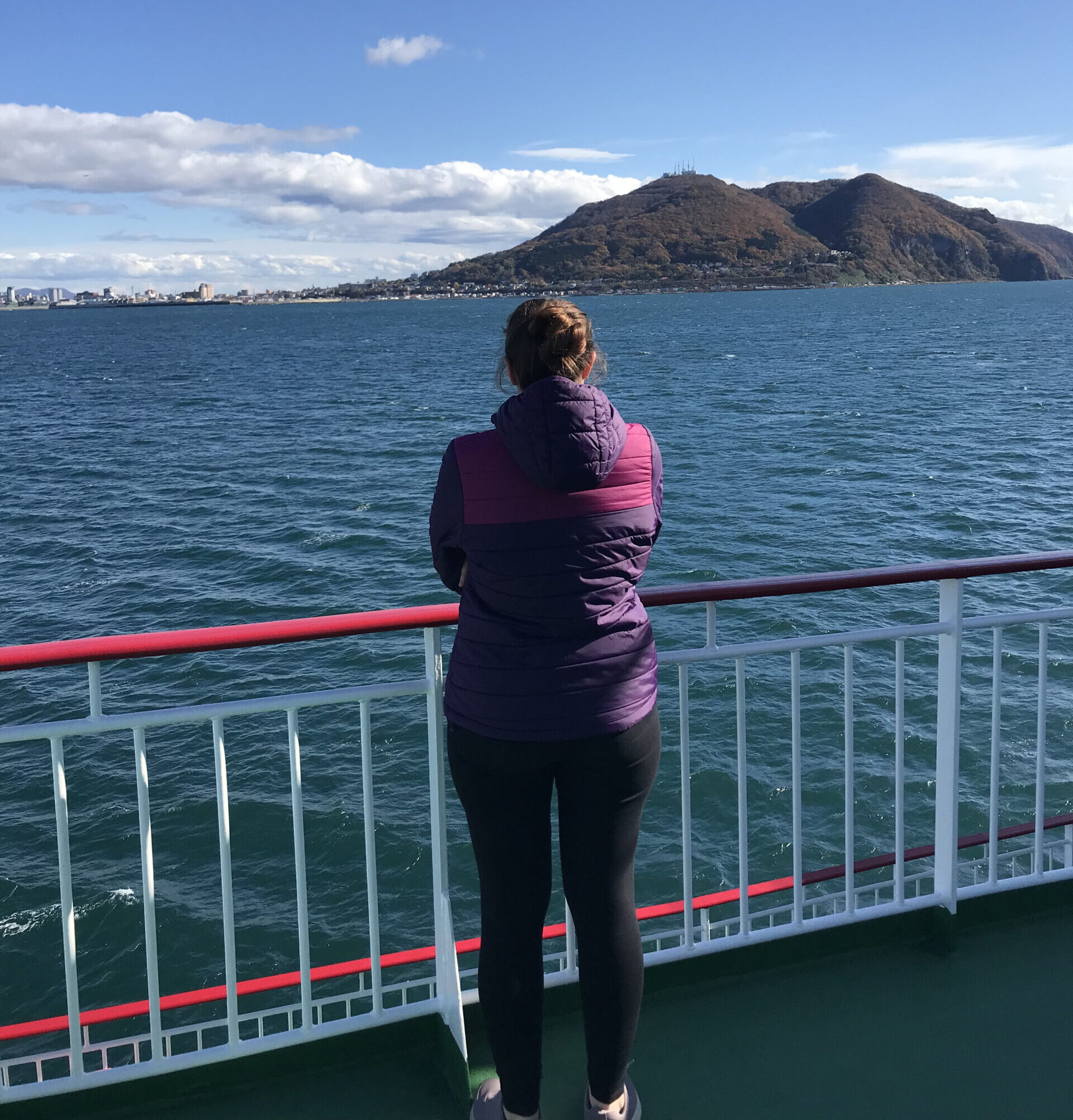
After visiting Hakodate, we headed onward to Japan’s main island, Honshu.
There are three ways to get between Hokkaido and Honshu – plane, bullet train via the Seikan Tunnel or by catching a ferry to/from Aomori. Most domestic visitors opt to take the shinkansen (bullet train). Opened in 2016, the shinkansen running through the Seikan Tunnel has cut down travel time between Tokyo and Hakodate to a very impressive 4 hours, opening the region up for domestic visitors from the capital and beyond. As a result, Hokkaido has become much more connected to the rest of the country, having previously relied on boat crossings across the often-choppy Tsugaru Strait. The bullet train is certainly the best option for those with limited time, however it can be a little expensive. We opted to take the ferry from Hakodate to Aomori as it was the most affordable option and offered a unique travelling experience for us.
We took the Tsugaru Kaikyo ‘Blue Happiness’ ferry from Hakodate Ferry Terminal to Aomori. The boat departed at 12:30pm and the journey took 5 and a half hours. The ferry terminal in Hakodate is located here, a little way out of the centre of Hakodate but easily accessible on the tram. It’s recommended that you arrive at least 45 minutes before the departure to check in. The terminal building at Hakodate was really modern and comfortable, with ample seating areas and facilities. We booked in advance using Willer travel, which is an easy website to navigate for non-Japanese speakers. The cost of the ferry was 2860 yen per person for the most basic foot passenger ticket at the time of our journey. Be aware that the ferry crossings can be weather dependent – we were lucky and experienced calm seas and blue skies when we crossed at the start of November, but this isn’t always the case! The journey was particularly memorable because an excitable Chinese tour group of older ladies were on board and spent the entire journey taking group photos – we even ended up getting dragged into some.
We found the boat crossing to be quite romantic – we spent the whole journey on the top deck admiring the breathtaking views through the Tsugaru Strait, transitioning from the looming mountains of Hokkaido to the rolling landscapes of Honshu. Entering Mutsu Bay was especially fascinating due to its shape; it almost seemed like we were in the midst of the sea, but it was actually just a very large bay. The ferry is very clean and modern, with a few quirks of its own. There are few seats for passengers with the most basic ticket, but it’s mostly just tatami rooms (which may appear like empty rooms to the casual foreign observer) where people lounge around on the floor or nap to pass the time. There’s even a family tatami room where everyone seemed to be asleep in family units on the floor – these are very much shared spaces so don’t expect any privacy unless you purchase a cabin upgrade.
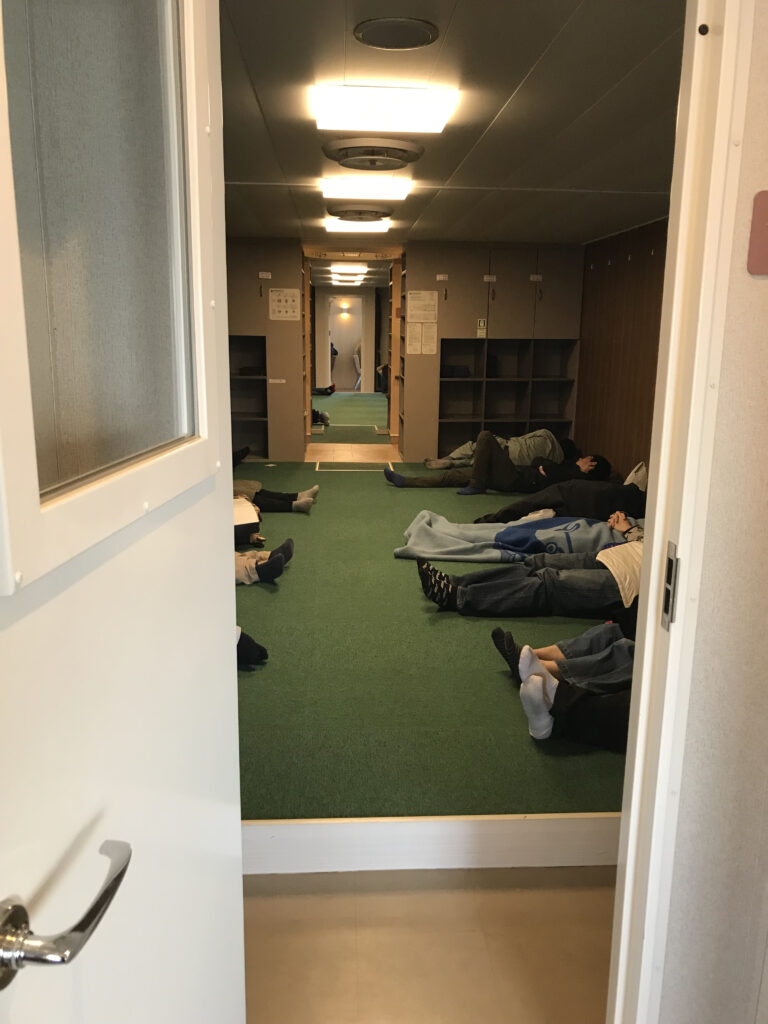
The tatami room was an surprising sight for us
After taking the ferry, we headed south through northern Japan. For more Japan content, click here!