Unlike its esteemed Kansai neighbours of Osaka, Nara and Kyoto, Kobe is a relatively modern city which developed during the late 19th and early 20th century – Japan’s Meiji era. This was one of the Five Ports of Japan – the designated ports which were opened to foreign ships following the Meiji Restoration in 1868, ending the nation’s centuries of isolation. Although the treaties of the time stipulated that foreigners should reside in a designated ‘foreign settlement’, Kobe also had significant ‘mixed residential areas’ in which foreign merchants and settlers lived side-by-side with Japanese locals. As a result, Kobe developed a cosmopolitan character and an open, welcoming nature which it maintains to this day. This self-guided tour takes in some of the main sites around the waterfront area and former foreign settlements.
Start at Kobe’s Chinatown, which is located close to Motomachi station.
Also known as Nankin-machi, Chinatown is one of the notable landmarks of Kobe. The Chinese settlement here was established in 1868 following the opening of Kobe Port to foreign ships. As China was initially a ‘non-treaty’ country (having not signed a treaty with Japan at the same time as the Western powers), the Chinese were not permitted to settle in the designated foreign settlement and so established their own separate district in the mixed residential area near to the port. The Chinese and Japanese later signed a deal in 1871 which permitted the Chinese to use the foreign settlement, however the Chinese district remained and grew over time. The area’s name, Nankin-machi or ‘nankin’ town, is a reference to the city of Nanjing in China.
Today Chinatown is a bustling area, brimming with food stalls and resplendent red lanterns. At its centre is a small square with statues which depict the Chinese zodiac animals. The area has a lively and jovial atmosphere and makes a great place to sample Chinese street food classics, with other, more high-end restaurants here too. Although it can be a busy spot during the days, Nankin-machi is surprisingly quiet during the evenings, with most of the street food vendors and market stalls closing for the day around sunset.
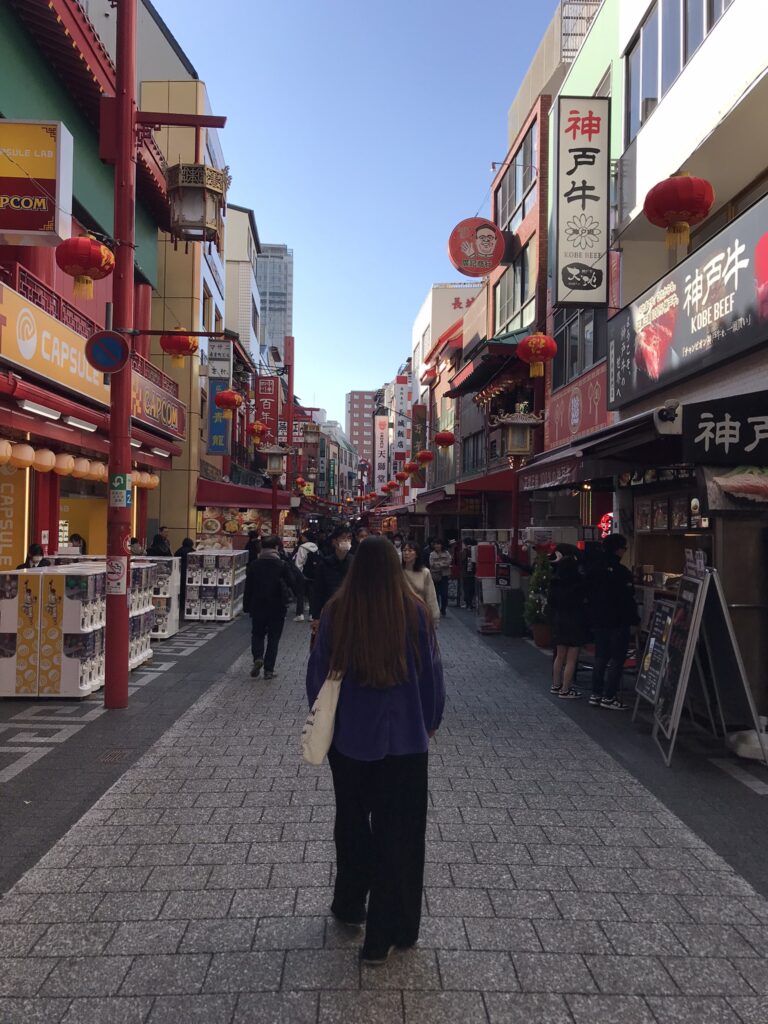
As well as Chinese food, in Nankin-machi there are also plenty of places to try the famous Kobe Beef
Exit Chinatown via Seianmon Gate to the west and turn left, heading south along Motomachi Park Road. Cross over the main road and continue south until you reach Meriken Park, which is behind the large Hotel Okura building.
Sitting on a patch of reclaimed land within the harbour, Meriken Park is a popular spot which provides views of Kobe Port and across Osaka Bay. The park’s name is a derivative of ‘American’, a nod to the former US Consulate which stood nearby. Within the park are a number of popular attractions, such as Kobe Port Tower and the city’s Maritime Museum. You can typically find plenty of locals here relaxing, hanging out, taking in the views and enjoying the fresh sea air.
At the north-eastern corner of Meriken Park is the Port of Kobe Earthquake Memorial. This is dedicated to the victims of the Great Hanshin Earthquake, a 6.9 magnitude earthquake which struck approximately 20km from the centre of Kobe on January 17th, 1995, causing extensive damage to the city and surrounding area. Although the city has now been restored, this damaged section of Meriken Wharf has been left in situ as a memorial and illustration of the devastating effects of the earthquake on Kobe’s port areas. The area also contains a number of plaques, memorials and video screens providing detailed information about the damage and victims of the earthquake, the impact on Kobe’s shipping infrastructure and the subsequent regeneration of the city.
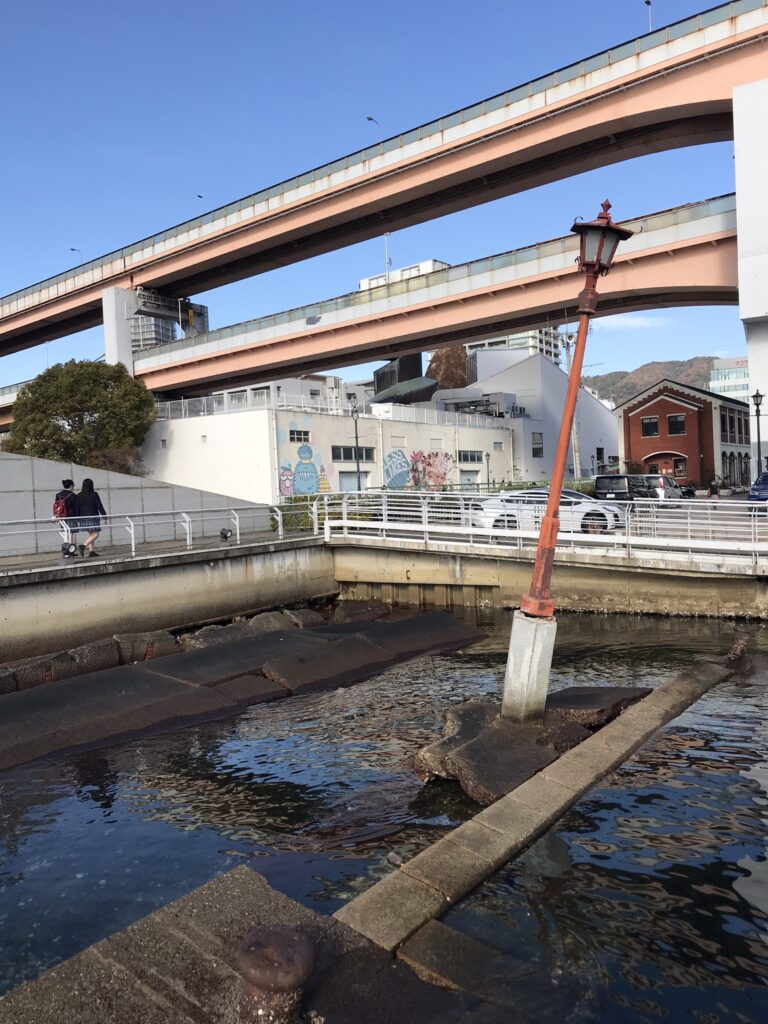
The Port of Kobe Earthquake Memorial illustrates the devastation caused by the Great Hanshin Earthquake
From the earthquake memorial, head north inland towards Meriken Road. You will see the grandiose Meriken Building on the corner. Formerly the local headquarters of Nippon Yusen, one of Japan’s major shipping companies, this building dates back to 1918 and is a testament to the city’s 20th century shipping heritage. The building was constructed on the site of the original 1868 U.S. Consulate building, from which the surrounding area took its name. This sturdy building continues to function as a commercial office block to this day, standing proudly amidst the more modern waterfront constructions.
From the Meriken building, turn right and head east for a few blocks along the main road. You will see a few more grand 20th century buildings – the Kaigan Building and the Shoen Mitsui Building. The Kaigan Building dates back to 1918 although it was heavily damaged during the Great Hanshin Earthquake, requiring extensive building and restoration, while the Shoen Mitsui Building next door was constructed a few years later in 1922 and largely retains its original form. Both are still functioning as office buildings. These buildings are emblematic of the grand shipping and commerce houses that were constructed in the early 20th century on the site of what was formerly Kobe’s foreign settlement.
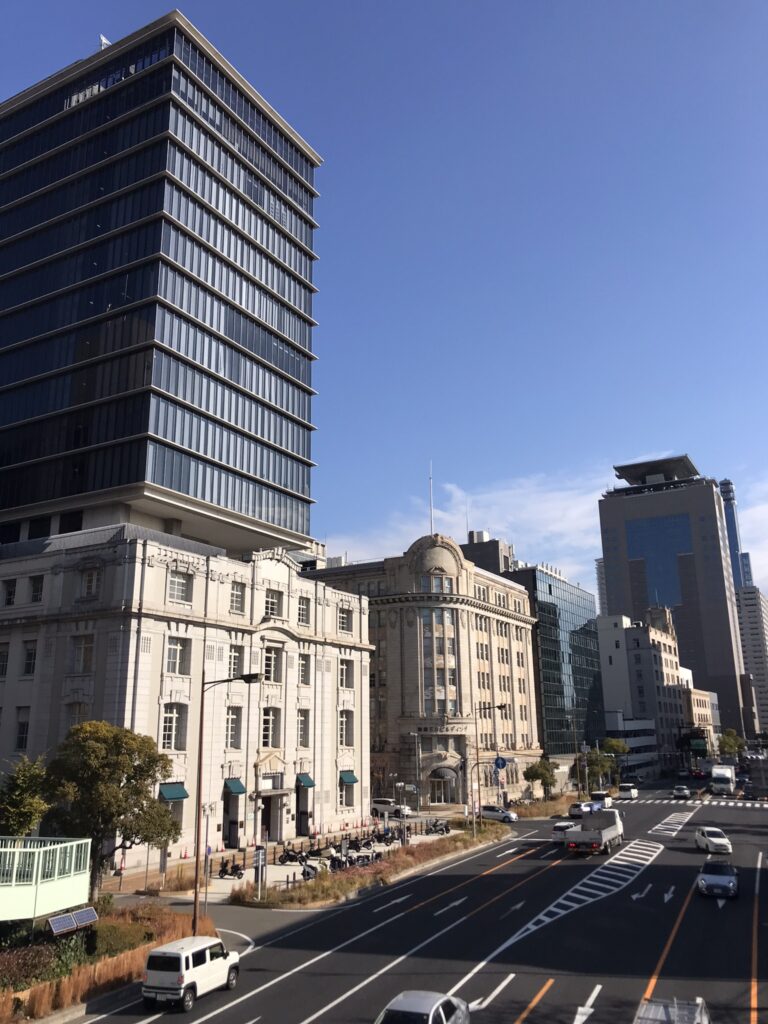
The Kaigan and Shoen-Matsui Buildings are distinctive amidst the modern glass-fronted skyscrapers
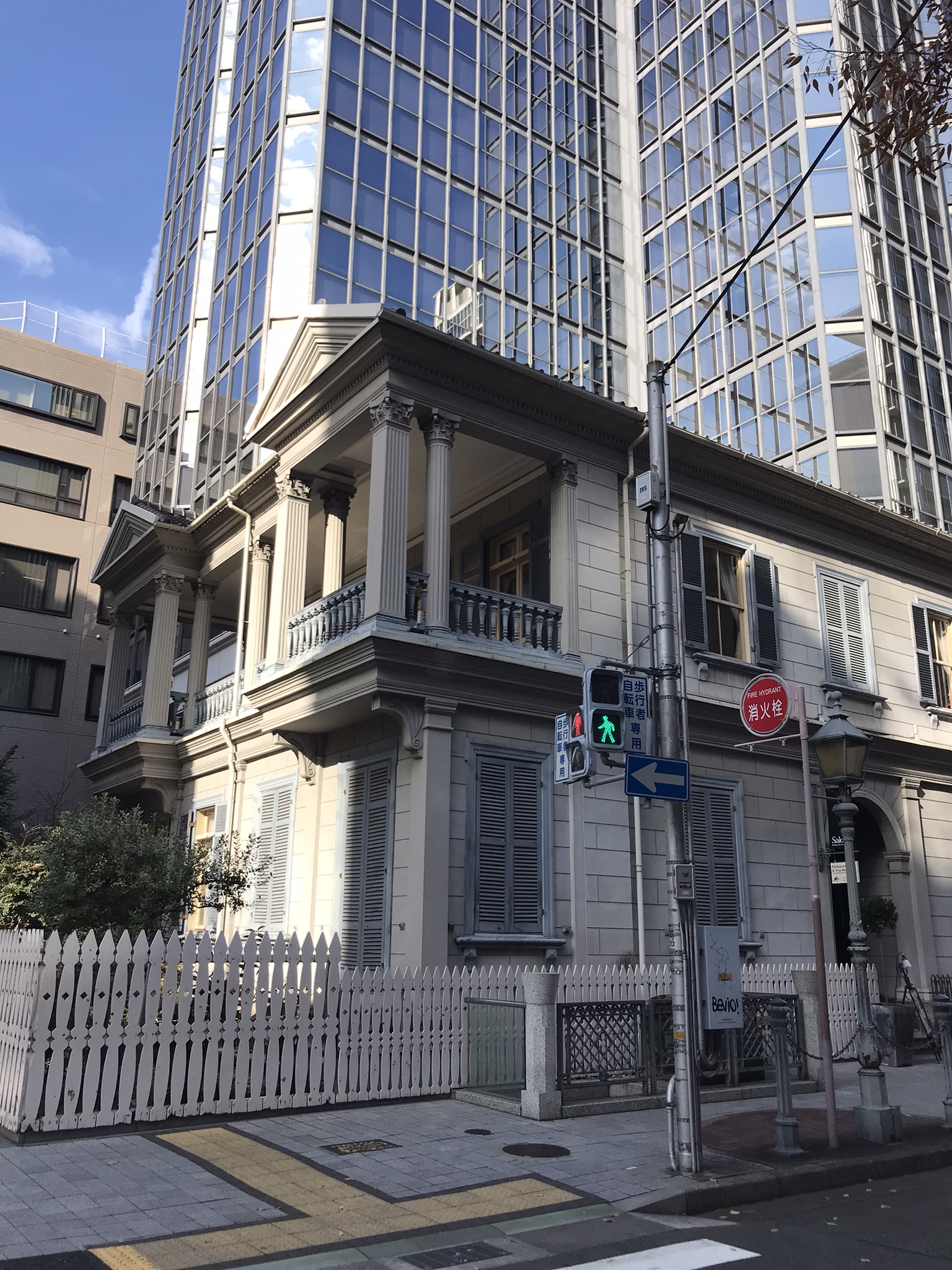
Take the road running between the two old buildings and then turn right. After a short distance you’ll see the Old Kobe Residence 15th Hall. This is the only remaining building from the era of Kobe’s foreign settlement, which stood in this area between 1868 and 1899. Designated as an Important Cultural Property of Japan, this building dates back to 1880, although it was restored in the 1990s after suffering damage during the Great Hanshin Earthquake. The building served as the U.S. Consulate for a time during the 1880s. Today it houses a cafe and tearoom, and is a popular spot for locals to have their wedding photos.
Don’t miss the exposed brick pipework on display to the east side of the building. This is an example of the sewerage system which was installed within the foreign settlement – claimed to be the first modern sewerage system in Japan and an outstanding work of civil engineering at the time. Some of these pipes still form a part of Kobe’s infrastructure today.
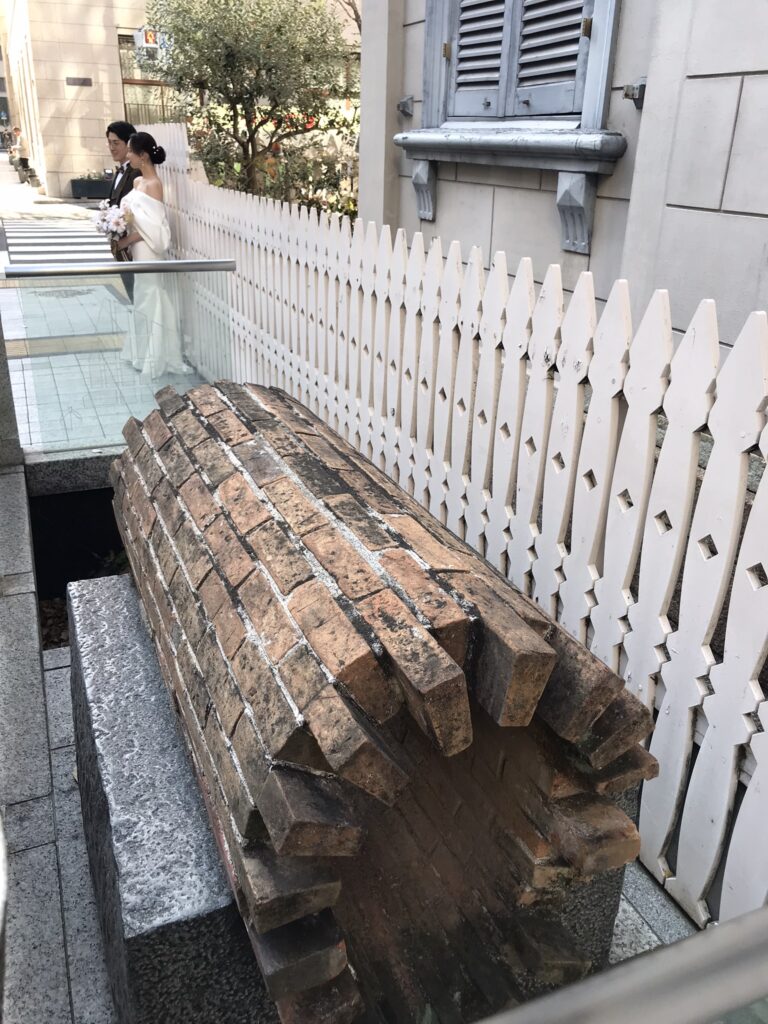
This piping was revolutionary at the time
To the east of the Old 15th Hall, you will find the Kobe City Museum. This museum hosts paid special exhibitions on the upper floors, however the ground floor contains an excellent free permanent exhibition on the city of Kobe. With clear explanations in English, the permanent exhibition provides a concise overview of the history of the city, the development of the port and the foreign settlements as well as information on the social history, customs and daily lives of the city’s residents. A visit here is highly recommended for those looking to learn more about Kobe’s intriguing cultural, commercial, social and architectural heritage. Don’t be put off by the ticket counters in the museum foyer – these are in place for the paid special exhibitions. Just ask for the free permanent exhibition and you will be pointed in the right direction.
After the museum, continue east and you will reach Higashi Yuenchi. A popular and tranquil park at the heart of the city, there are a few notable and quirky landmarks here including the flower clock to the south. Flower Road, the main road to the east of the park, is said to follow the former path of Ikuta River, which was dammed to enable the further development of the city and port around the time of the construction of the foreign settlement.
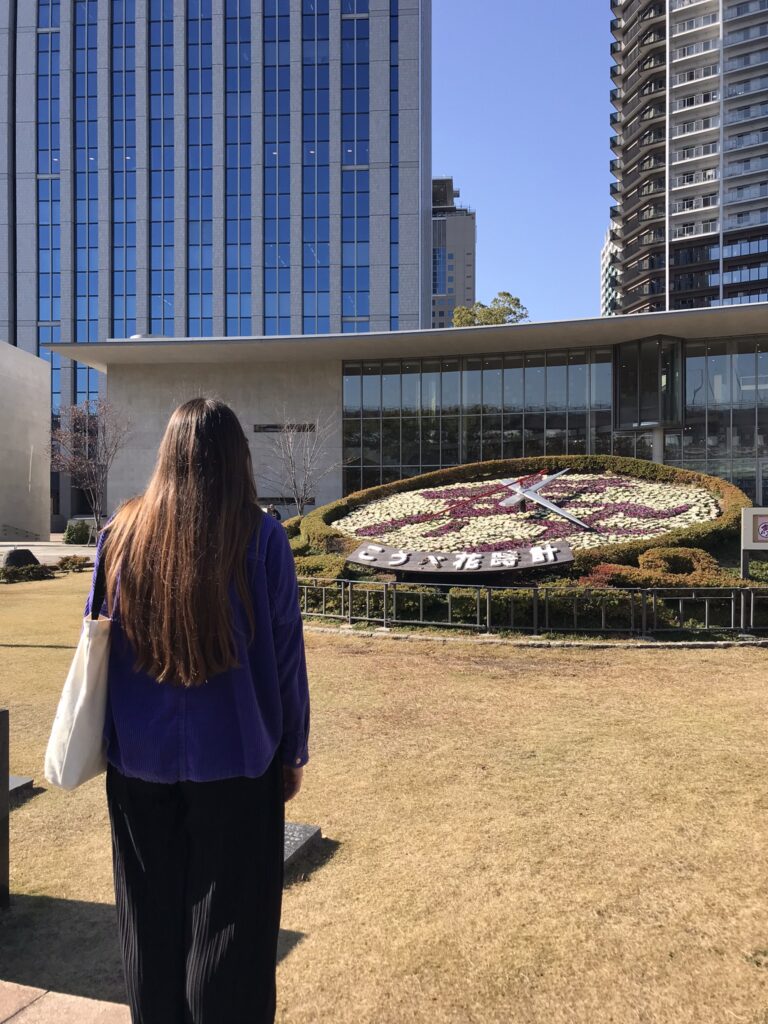
The quirky flower clock in Higashi Yuenchi is said to be the oldest flower clock in Japan
Towards the south-eastern end of the park, you can find the Memorial and Recovery Monument. While the memorial in Meriken Park mainly focuses on the physical damage and reconstruction of the city following the Great Hanshin Earthquake, this poignant memorial focuses on the human suffering caused by the disaster. The monument takes the form of a winding metal tunnel which leads to an underground chamber containing the inscribed names of those who lost their lives. There is also an eternal flame burning here – a solemn tribute to the lives lost.
At the north of Higashi Yuenchi you can find the high rise building belonging to Kobe City Hall. On the top floor of this building is an observation deck which can be accessed for free. Just walk in and take the dedicated elevator to the top. From this vantage point you can get a great view of Kobe Port and Osaka Bay to one side, while the other side provides views across the city and the mountains to the north. Information plaques next to the windows of the observation deck highlight a few of the visible landmarks. The observation deck is open until 10pm, so for a different perspective you can also come here to witness the city lights at night.
From the city hall, it’s possible to walk north up to Kitano Ijinkan-Gai – the walk takes about 25 minutes. Alternatively, you can take the train from nearby Sannomiya Station to Shin-Kobe Station and walk from there. If taking the train, don’t miss the Nunobiki Herb Gardens & Ropeway. This cable car departs from close to the south exit of Shin-Kobe Station and leads to a mountainside area with a series of themed botanical gardens. Both the cable car and gardens themselves provide excellent views over the city and out to the bay. It’s recommended to take the cable car up and then walk back down, admiring the various gardens and scenery along the way.
Otherwise, head to Kobe Kitano Ijinkan-Gai. This is the former site of Kobe’s mixed residential area – one of the designated areas where foreign settlers were permitted to lease land from the Japanese following the opening of the Port of Kobe in 1868. This mixed area was established prior to the development of the city’s official foreign settlement (which was not completed in time for the opening of the port) and continued to function as an overflow area, later becoming a popular and cosmopolitan area for foreigners to settle following the abolition of the designated foreign settlement in 1899.
Today, the Kitano Ijinkan-Gai is filled with Western-style houses and mansions, most of which were built in the early 20th century. The word ‘ijinkan’ literally translates to ‘foreign appearance’. Two Western architects, an Englishman named A.N. Hansell and a German named Georg de Lalande, were credited with the design of the majority of houses in the area. This neighbourhood once held over 300 Western-style houses – today, around 30 remain of which approximately 20 are now open to the public as paid tourist attractions.
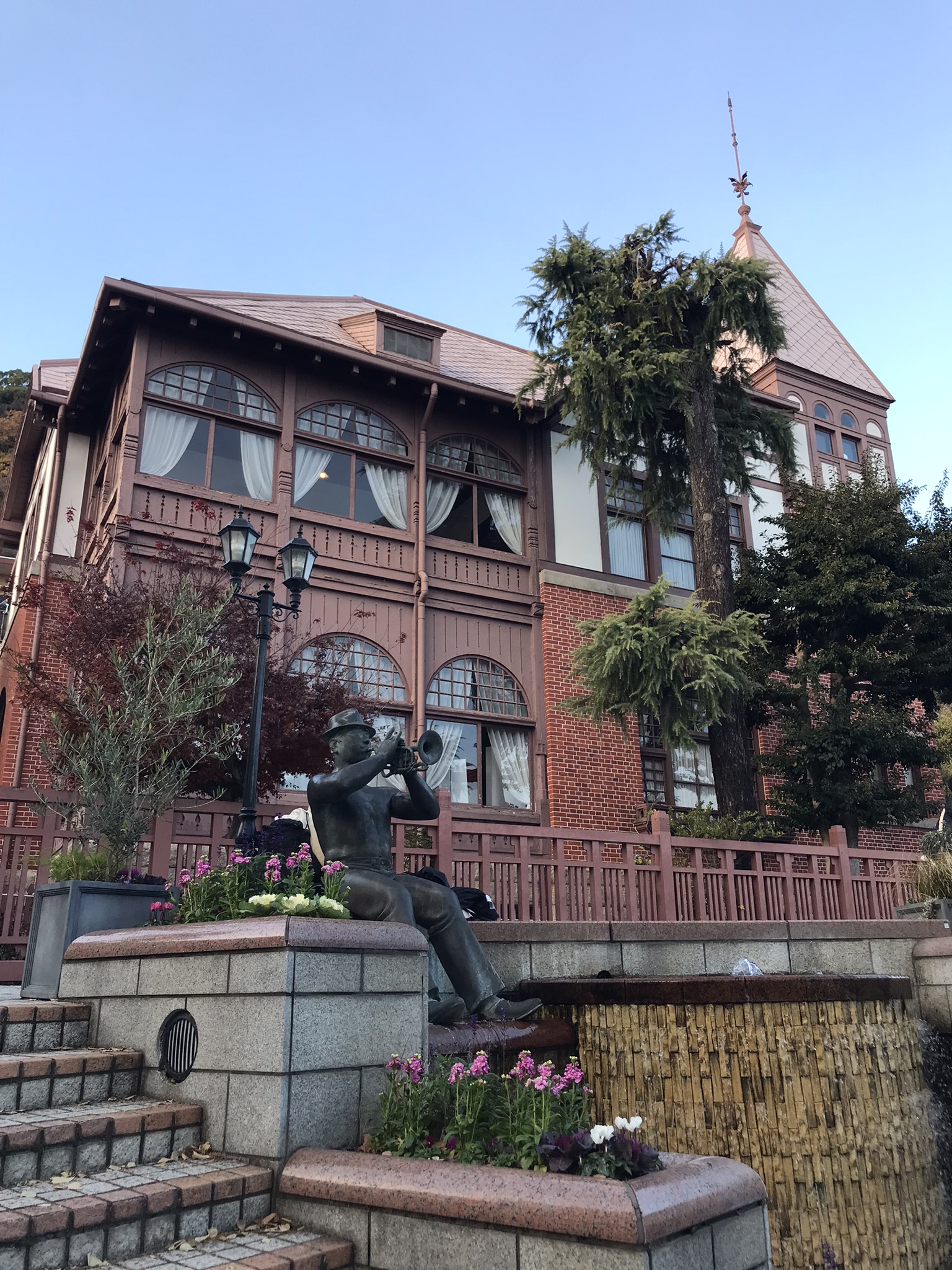
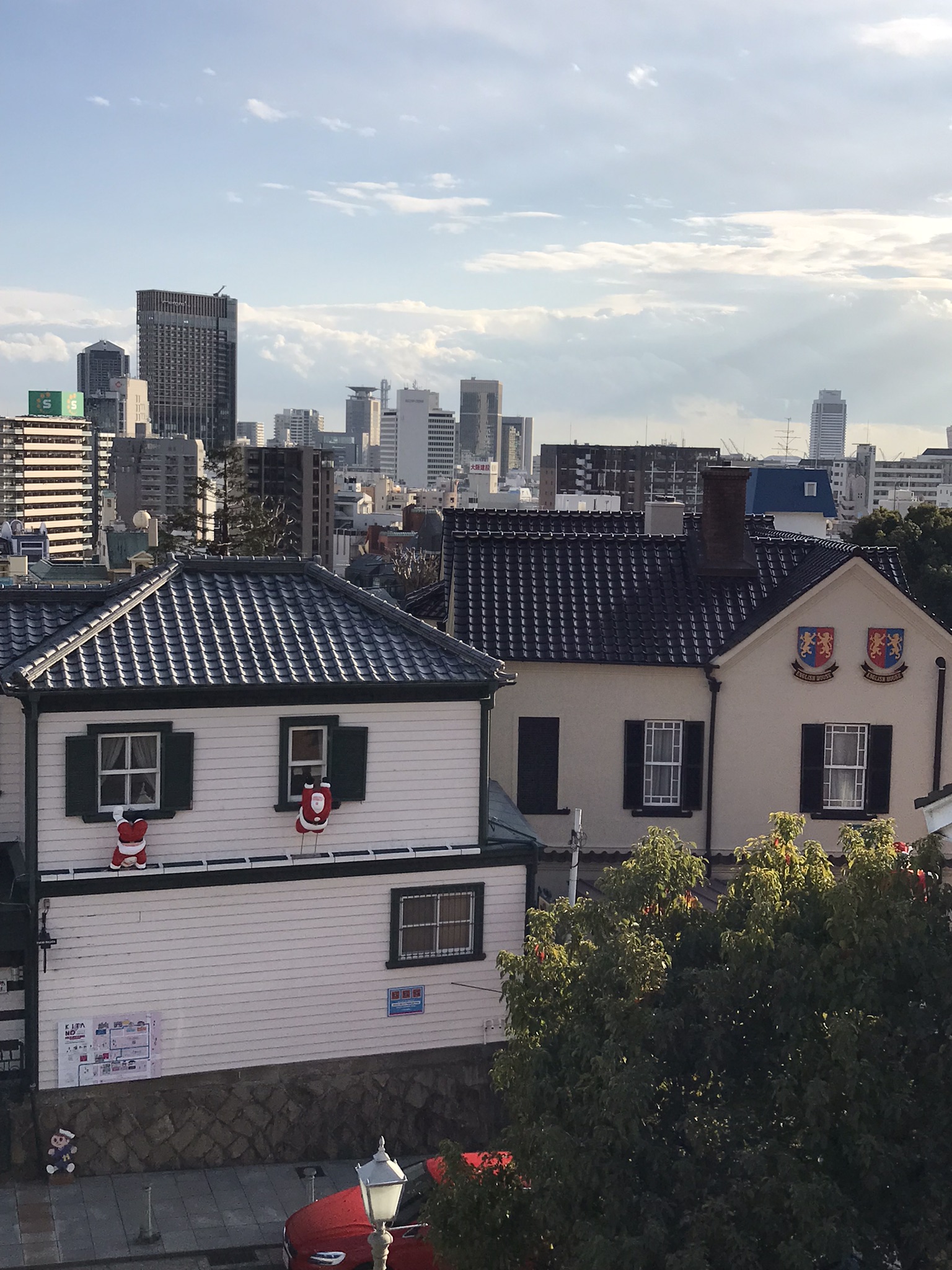
Ijinkan-gai is filled with old heritage buildings from the early 20th century
Many of the houses within the Ijinkan-Gai are themed, with houses representing some of the various nationalities which used to occupy the area (such as the English House, French House, Austrian House, Danish House, Holland House etc). Most of these themed houses are quite kitschy inside, with stereotypical elements that are designed to attract local tourists. Combo tickets may be on offer for those who want to go inside the different houses. At the top of the hill to the north, Uroko House (‘fish scale house’, named after its distinctive exterior design) was the first residence in the area to be opened to the public and contains a small collection of porcelain, art and antique furniture. To the west of the settlement, the lime-green Moegi House is the home of the former US Consul General, while the nearby Weathercock House (formerly belonging to a German merchant) is one of the largest and most striking of the old mansions in the area, and one of the only buildings to have walls made of brick.
Before making a loop of the old neighbourhood, it’s best to start with Rhine House. This old house, dating back to 1915, is the only one in the area which is free to enter. Inside it contains a small exhibit about the history of the neighbourhood. The house is so named because its final inhabitant was German, however it was originally occupied by a French lady named Josephine Drewell, so is sometimes referred to as the Drewell House. Look out for the local Starbucks nearby, which is also contained in an Ijinkan-style building.
For more Kansai and Japan content, click here!
This article is also featured on GPSmyCity. To download this article for offline reading or create a self-guided walking tour to visit the attractions highlighted in this article, go to Walking Tours and Articles in Kobe.