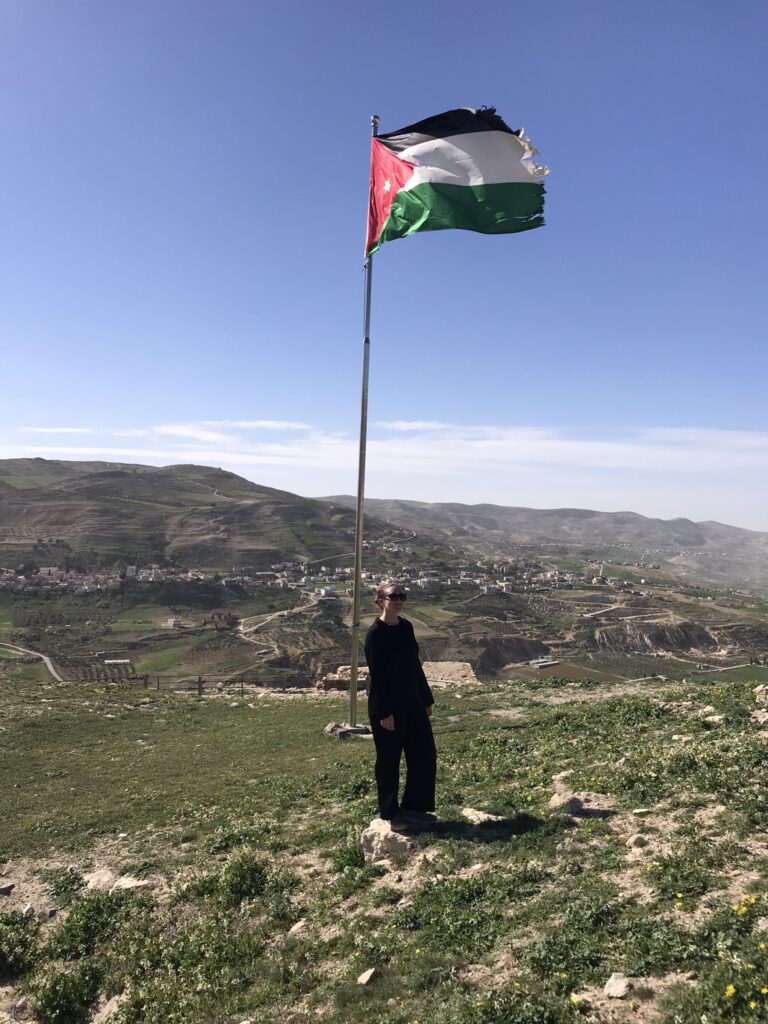
Contrary to most common portrayals, Jordan is not just a land of desertscapes but of lush greenery, steep rocky mountains, vast plains in the Jordan Rift Valley and other worldly landscapes at the Dead Sea. As Jordan was at the far reaches of the Roman and Greek empires, it has some pretty spectacular Hellenistic and Roman ruins such as Jerash, Umm Qais, Iraq al Amir, Umm al-Jimal, Umm er Rasas, Pella and the citadel and theatre in Amman. The territory also has a number of impressive castles standing as a testament to the Islamic and Crusader history of the region such as Shobak, Kerak, Ajloun, Asraq and Amra, not forgetting the brilliant Byzantine mosaics on Mount Nebo and in the ancient towns of Madaba and Umm ar Rasas. Petra, Wadi Rum and the Dead Sea also stand as timeless classics. Combined with an extremely warm hospitality and rich local culture, this means that Jordan has plenty to discover. Check out my Jordan travel experiences below!
Amman, As-Salt, Petra (Wadi Musa), Wadi Rum, Aqaba, Irbid, Jerash, Madaba, Kerak, Dead Sea, Desert Castles, Bethany
When most people think of Jordan, the iconic sandstone mausoleums of Petra, vast swathes of Martian-like desert at Wadi Rum and the experience of bobbing weightlessly in the Dead Sea instantly spring to mind, but there is so much more to the country than these three top attractions. Individually these sites are amazing, but it’s not quite the complete experience if you skip everything else Jordan has to offer. The less-explored Jordan that we discovered was a mix of magnificent castles, verdant hills and olive groves as far as the eye could see, mind-blowing early Christian mosaics which are so detailed you couldn’t help but gawk, extensive UNESCO World Heritage sites where we were the only visitors, open desert highways (especially on the Desert Castle loop in the east), looking across the river Jordan to Palestine at the baptism site of Jesus, catching a glimpse of the sea of Galilee and Golan Heights from the archaeological site of Umm Qais in the north, chatting with some excited children at Ajloun who proceeded to escort us to the bus station even though they didn’t speak any english nor us Arabic. Jordan is much more than a sum of its parts; rich in culture, history, tradition and culinary delights. It’s safe to say that the top sites of Petra, Wadi Rum and the Dead Sea are huge draws for tourists, with tourism forming a large part of the economy in Jordan, but the country has so much more to offer.
Today, Jordan is an Arab nation situated along the East Bank of its namesake, the River Jordan. The river itself marks the nation’s western border. Unfortunately Jordan is surrounded by historically problematic and unstable countries – Syria in the north, Iraq in the east, Israel and Palestine to the west and Saudi Arabia to the south. Yet Jordan remains an oasis of stability in an otherwise troubled region. Sadly, tourism in Jordan has taken a hit due to the plethora of regional conflicts and the bad reputation of its neighbours and the wider region. I want to loudly broadcast that Jordan itself is completely safe to visit and ready to warmly welcome foreign visitors! We traveled the length and breadth of the country and found the security, safety and general hospitality of the people to be excellent. There’s absolutely nothing to be concerned about in the country.
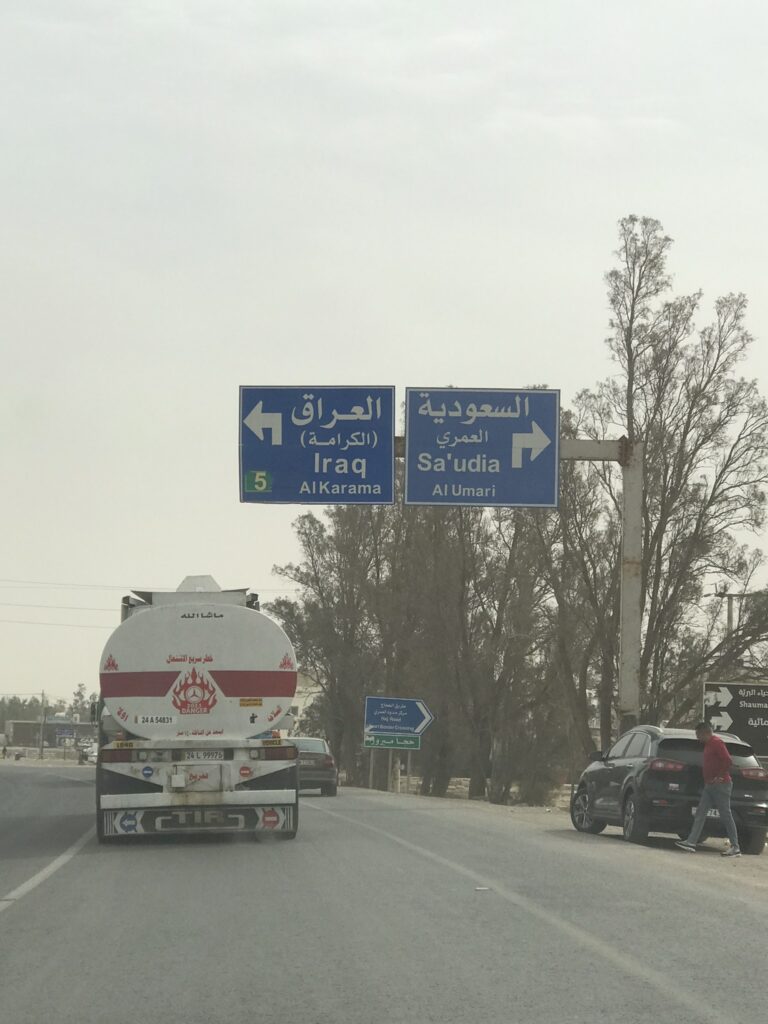
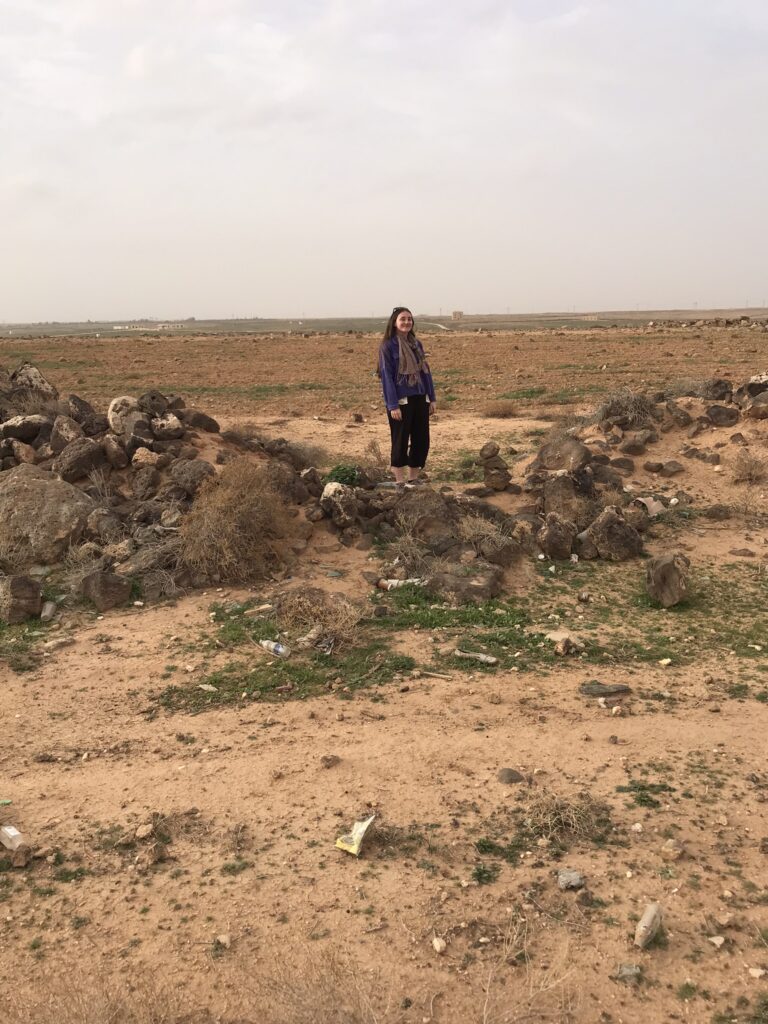
Jordan has some difficult neighbours – for the hell of it, we took a detour to within a few hundred metres of the border with Syria!
In comparison to its oil-rich neighbours to the south, Jordan is not a particularly wealthy or developed country. You won’t find the glitzy skyscrapers and luxury hotels of the likes of Dubai, Saudi Arabia or Qatar here. Instead, Jordan is the perfect place for a somewhat gritty but extremely authentic, quintessential traditional Middle Eastern experience, filled with cultural wonders and ultra-friendly, hospitable people. Given the problems in neighbouring states, this is probably the only place that is currently safe and accessible enough to allow visitors to freely experience the rich culture of this region.
Jordan has been a cross-roads of various civilisations for millennia. The country boasts a rich history, with many different dynasties having controlled the area that forms the modern territory of Jordan; from with the three kingdoms (Ammon, Moab and Edom) as mentioned in the Bible around the 9th century BCE, the Nabateans who controlled the caravan trade route between North Africa and the East/Europe and built Petra as their royal capital (around 300 BCE), the Hellenistic, Roman and Byzantine empires who made this region their eastern frontier, followed by the Muslim caliphates starting in the mid-7th century after the prophet Muhammad spread Islam to the region. The Ottomans took control of the region in the 16th century before being kicked out during World War 1 by the ancestors of the current Jordanian royal family in what was known as the Great Arab Revolt, aided by the British and particularly the prolific figure of Lawrence of Arabia. Jordan remained under British mandate until 1946 when it was finally granted independence. Since then skirmishes with Israel have occurred, but presently Jordan promotes stability, peace and cooperation with Israel and all other countries. Throughout the years Jordan has taken in many Palestinian, Syrian and Iraqi refugees as regional conflicts arose, but the nation itself has avoided problems, in part due to the steadying and dependable presence of the Jordanian royal family.
It’s impossible to miss the myriad of royal portraits of the king at every turn in Jordan, displayed on roundabouts, government buildings and even in private businesses. The omnipresence of the royal family at first seems a bit strange and potentially jarring for visitors. Usually, constant images of the leader of a country plastered all over the buildings and streets are not a good sign, potentially signaling despotism, but we came to realise that in Jordan it’s more about patriotism than tyranny. The people of Jordan are legitimately proud of their royal family and credit them for the nation’s stability and positive governance. The recurring portraits of the king vary in theme and we had fun admiring the different personas that he was able to display, from stern military man decorated with medals to astute politician and scholar, approachable family man and benevolent benefactor. Many of the roads and institutions in the country seem to be named after the king and royal family – we even spotted a cancer ward in Amman which was named after the king. The Jordanian king also seems to be relatively down-to-earth in comparison to many Western royals, getting out and about and interacting with the people. We spotted a poster in a falafel shop in Wadi Musa (Petra) of the king buying a falafel wrap from that local shop. Interestingly, the royal family also claims British heritage, as the mother of King Abdullah II was a British secretarial assistant who met the previous King Hussein on the set of the movie Lawrence of Arabia in the 1960s and became his wife. The current king of Jordan even studied at Sandhurst military academy in England for a time. The official name of Jordan is actually the Hashemite Kingdom of Jordan – a reference to the ruling house of Hashem. The family are said to be direct descendants of the prophet Muhammad through his daughter Fatima.
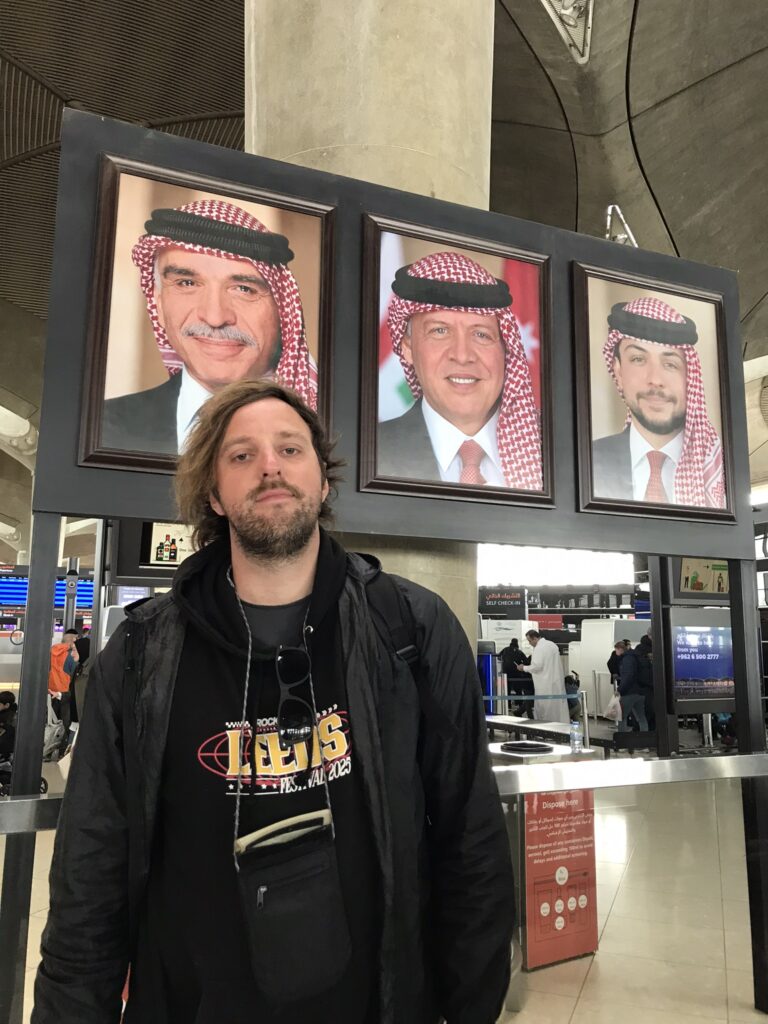
Photos of the King of Jordan are everywhere!
Although it’s an Arab country with a clear Muslim majority, Jordan is one of the more liberal and religiously tolerant countries in the Arabian Peninsula. Alcohol is widely available for tourists and Jordanian locals alike, in sharp contrast to nearby countries like Egypt. There are signs everywhere advertising Amstel beer and alcohol shops dotted throughout the country. We even spotted alcohol shops in Irbid, one of the least touristy cities in the country. Alcohol is also served in certain restaurants and hotels so it’s pretty easy to find should you want to imbibe. We were told that around 30% of Jordanians drink alcohol, which was surprising to us.
Although it’s a tolerant society, Islam is still visible and prevalent in many aspects of everyday life. Museums and local shops/restaurants may close in the afternoon on Friday for Friday prayers. As in most Islamic countries, Friday prayers are a big deal here – we witnessed the exodus of thousands of people from the largest mosque in Aqaba, while some of the worshipers were even outside on the street and kneeling on the road during their prayers. Public transport can be affected on Fridays as it’s generally accepted as a rest day. We got caught out by this when trying to reach Ajloun from Jerash on a Friday. It’s best to avoid making journeys by public transport on a Friday if at all possible as there’s likely to be a reduced service. The main tourist transport service, JETT Bus, does run on a Friday but make sure to check on their website for up-to-date running times.
Some travellers shy away from visiting Jordan during Ramadan, as businesses close in the early afternoon in preparation for the iftar (fast breaking meal after sunset) and most restaurants are shut during daylight hours in adherence to the fast. Usually, eating or drinking in public during Ramadan is frowned upon in Islamic countries as all Muslims are fasting, but many Jordanians we met were very understanding – saying that they wouldn’t care if we ate in front of them and that they make sure to provide non-Muslim guests with breakfast. If visiting during Ramadan, you may need to plan to bring lunch with you if out on a day trip, and to find somewhere private to eat and drink during the day so as not to offend the sensibilities of the local people. Although they may not object personally, it’s good to understand during this time that other people are fasting and respect that it may not help them to see others eating. A visit during Ramadan would be very much doable, but would need extra planning so as not to be caught out – there are many roadside minimarts that sell snacks if you find yourself hungry with no provisions.
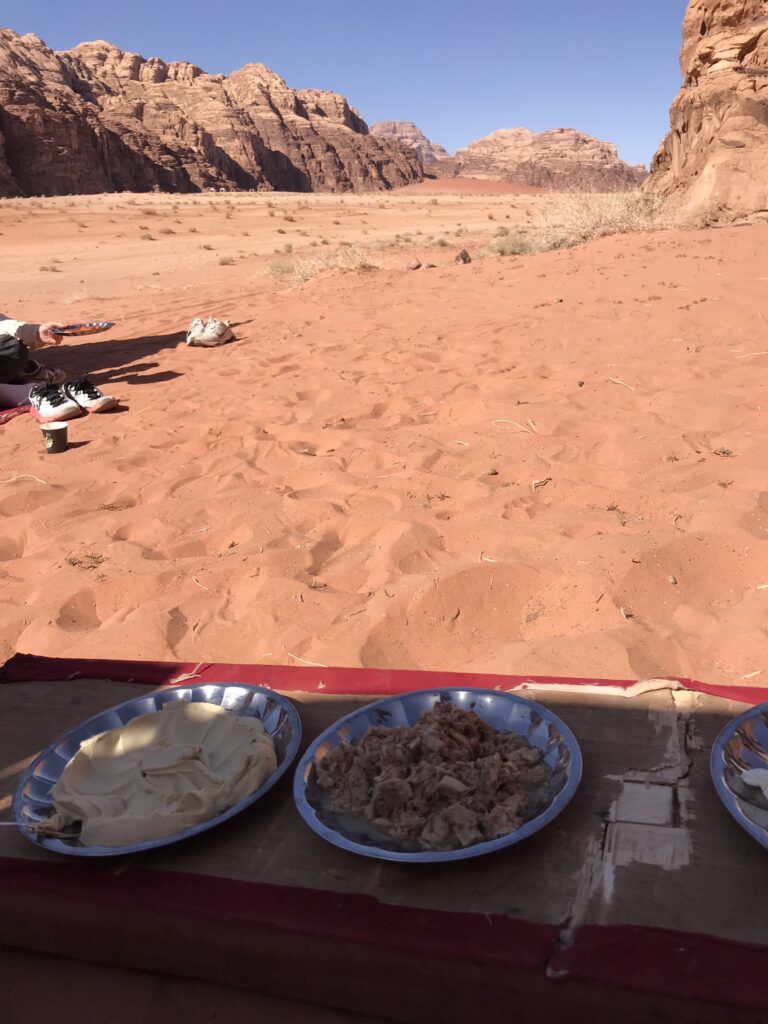
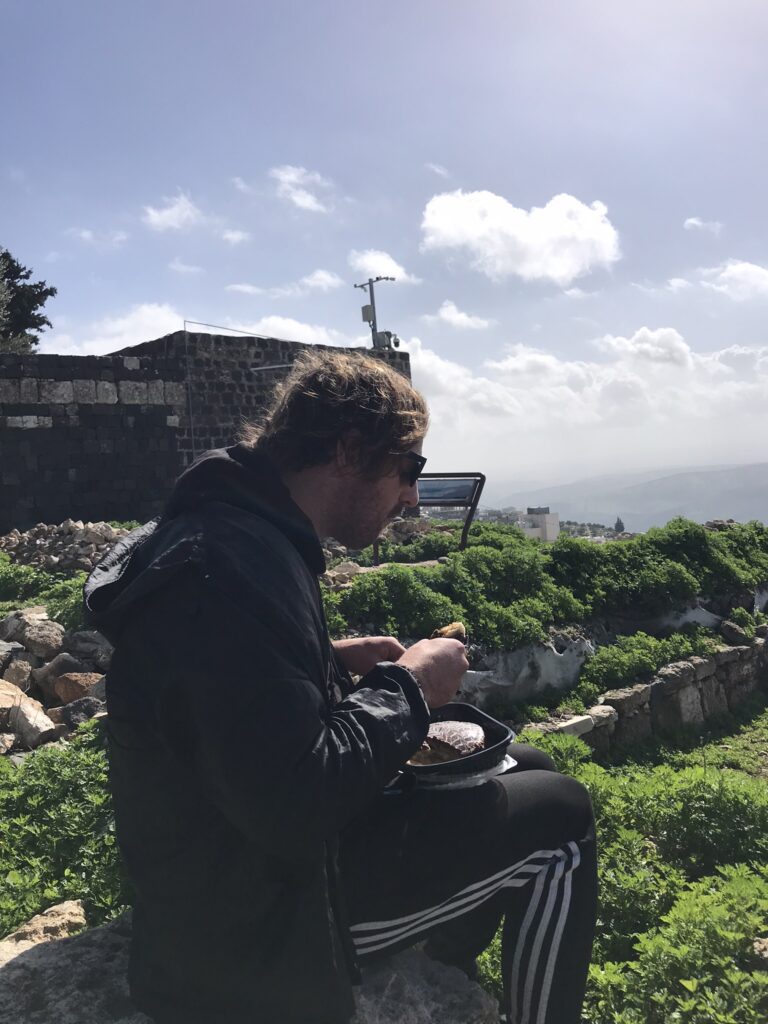
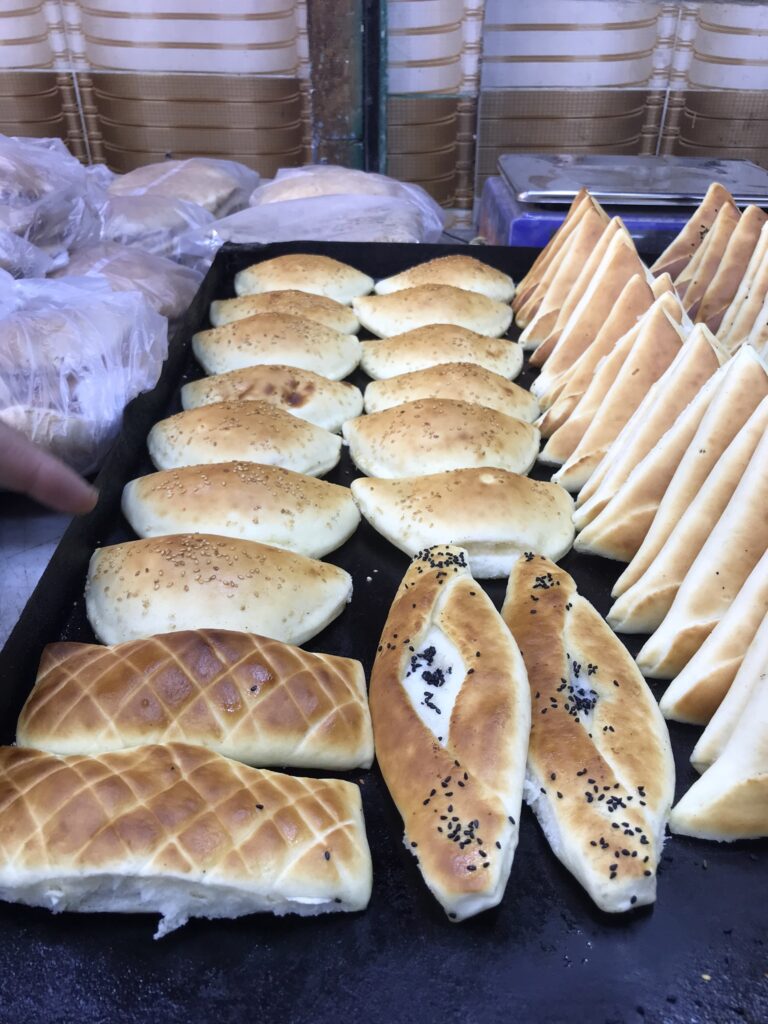
Baked goods would be ideal to stock up on during Ramadan; there are always secluded places to eat outside of the big cities
Obviously pork is not on the menu so don’t expect any real bacon or pork chops during your visit.
Jordan shares much of its culinary heritage with other countries in the Levant: think falafel, hummus, shawarma, mezze dishes like shakshouka and mutabal (similar to baba ganoush), and shish kebab. Surprisingly, Jordan is very vegetarian friendly with some restaurants specializing in mostly veggie mezze dishes and some lunch joints exclusively serving falafel wraps. In Jordan, a meal isn’t complete without flatbread and other people to share with. Meals are usually communal and traditionally served from a large platter that everyone can dive into with their hands. Most restaurants will have cutlery should you desire to avoid using your hands. Yoghurt (often quite sour), olive oil and hummus are daily staples. We ended up eating hummus at least three times a day during our time in Jordan. Hummus and falafel are commonly served at breakfast and lunch. Other interesting specialities are manakish (Arabic pizza-like bread often covered in goats cheese and za’atar herbs, best enjoyed straight from the bakery oven), kanafeh (a sweet dessert with a savory twist, one of the main ingredients is mozzarella cheese and there are two varieties – soft or crispy), mansaf (a traditional rice and lamb dish covered with sour fermented dried yogurt called jameed, which harks back to the days in which nomads preserved their dairy products so they could last the whole year. The dish is sprinkled with almonds or pine nuts and sometimes chicken versions are offered which are slightly cheaper than lamb) and zarb (a bedouin-style barbeque in which the meat and vegetable accompaniments are cooked in a hole underground before being dug up and served). We noticed that Jordan has many dessert restaurants offering baklava, kanafeh and other delicious sweet treats. Don’t get freaked out if you find strongly tasting cardamon in your coffee – this is typical of the region. Jordan is a melting pot of other regional cuisines such as Palestinian, Syrian and Yemeni, as many immigrants called Jordan home.
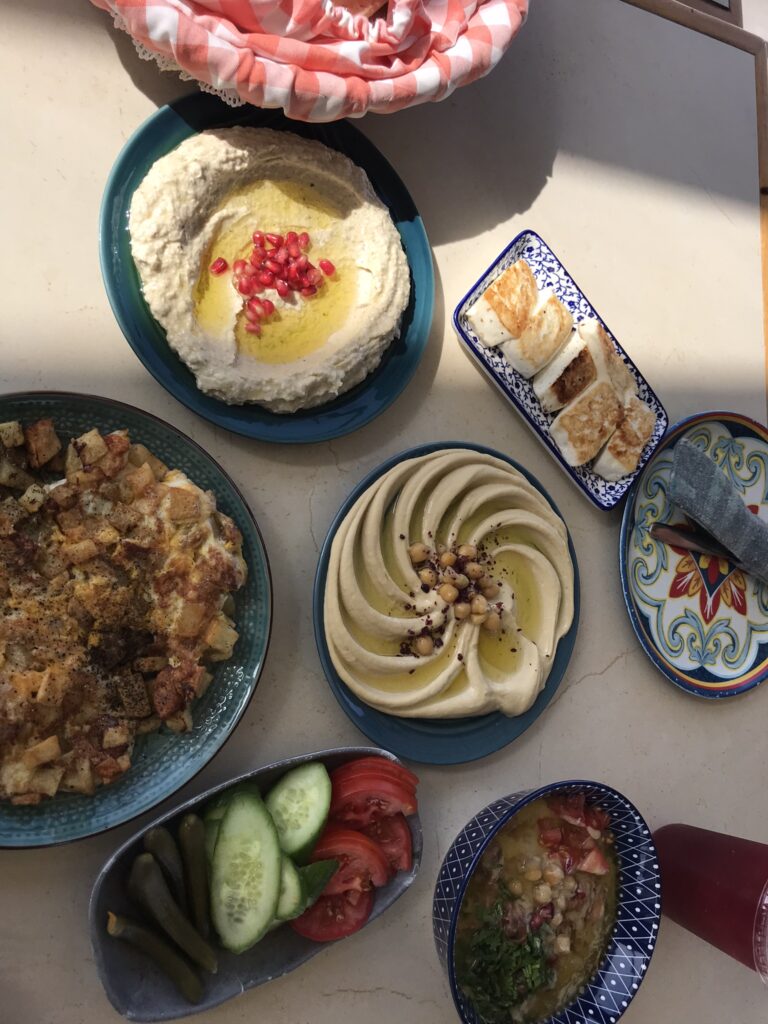
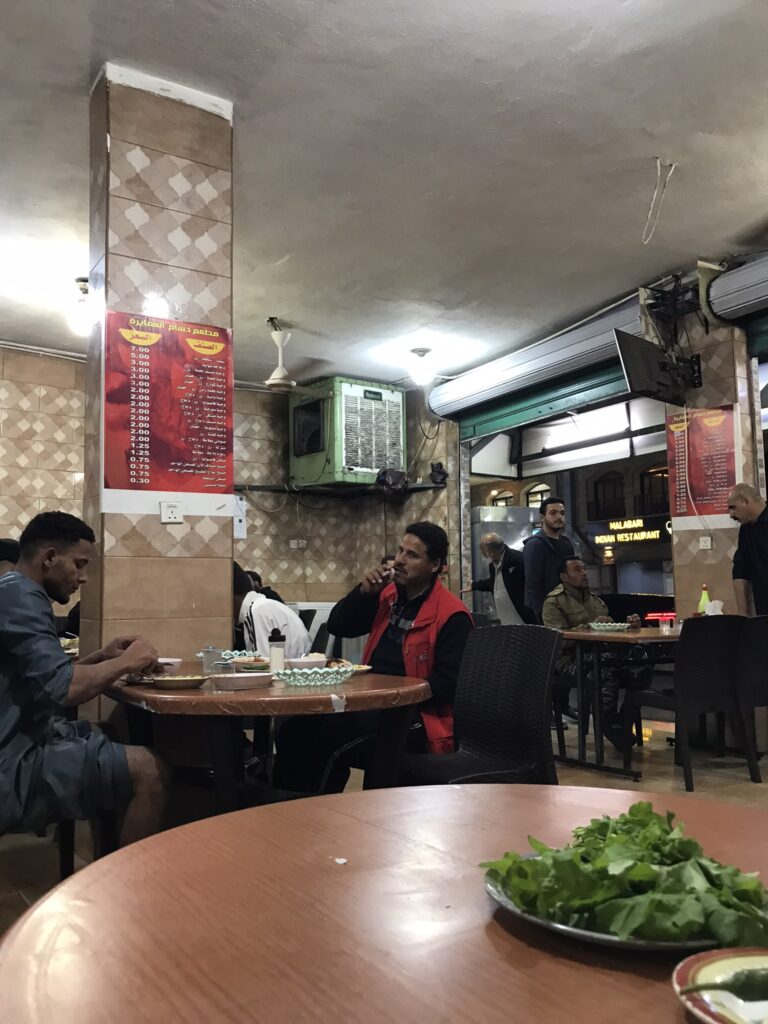
It’s impossible not to love Jordanian food! Eating at local rather than tourist restaurants provides a much cheaper and more authentic experience
Shisha is pretty much everywhere in Jordan – we saw shepherds by the side of the road smoking shisha pipes as well as locals at restaurants partaking in shisha, we even saw families having a picnic on the beach at Aqaba with a shisha pipe. It’s very much a communal activity and super popular in the country. Smoking is also incredibly prevalent, from young street kids in Amman to bus drivers who chain smoke continuously whilst driving – it’s much more visible than we’re used to. If you take public transport, you’ll no doubt end up in a cloud of smoke.
Although we can never really have a full understanding without personally living their experience, the situation for women in Jordan seems to be better than some of its neighbours in terms of the right to education, work and freedom from oppression. We saw women driving, attending university, some with uncovered hair and enjoying more freedom than they may do in other Arab countries. The owner of our guesthouse in Jerash told us his daughter was studying to become a doctor – again pointing to a more progressive and liberal atmosphere. Ibrahim, our walking tour guide in Amman, admitted that it’s common these days for a man in Amman to only have one wife rather than multiple. In terms of personal conduct, generally men avoid physical contact with women and vice versa. We noticed that sometimes men on public transport would swap seats to avoid sitting with a stranger of the opposite sex. It’s all about respect for the other person.
As a female traveller, there is always the additional dimension of considering what is appropriate to wear. I always go with the motto of dressing like a local to avoid standing out or attracting unwanted or negative attention. If you stride out of your touristy hotel in shorts and a strappy top people will stare at you; not necessarily unkindly but more inquisitively than if you abide by the simple rule of copying what other women are wearing. Although we saw foreign tourists at certain attractions wearing shorts and other typical Western attire, I chose to fully cover my arms and legs with loose clothing in Jordan to be respectful. It really helps to dress modestly if you plan on walking the streets and interacting with locals and having an authentic experience rather than being shuttled by coach from one place to the next.
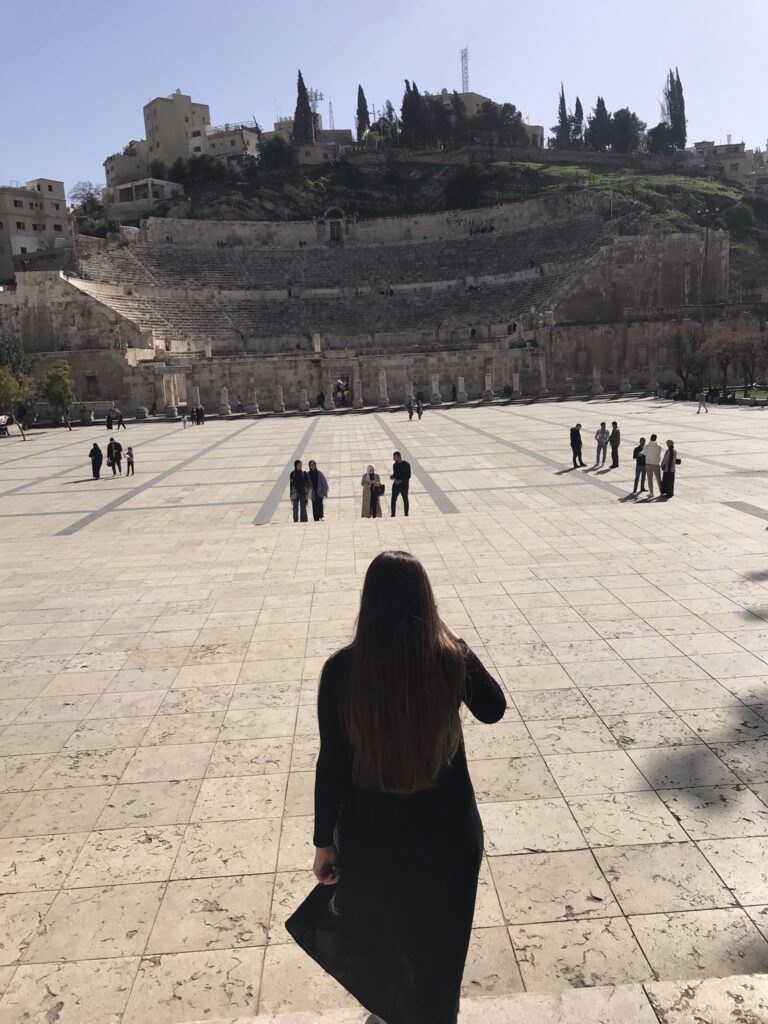
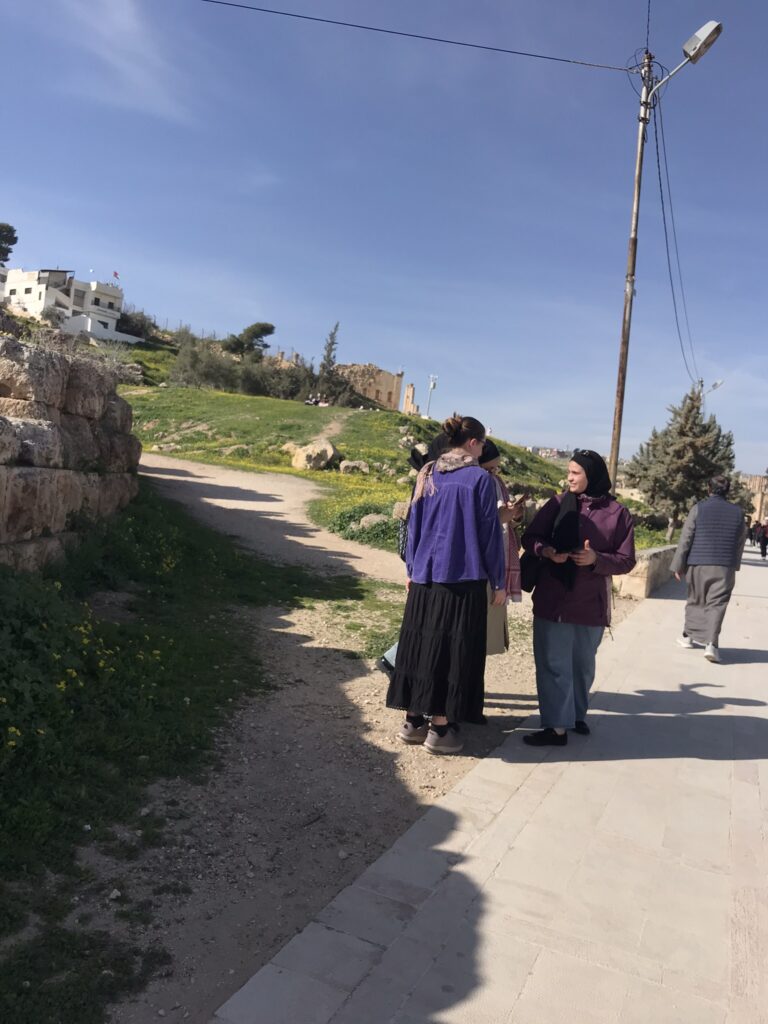
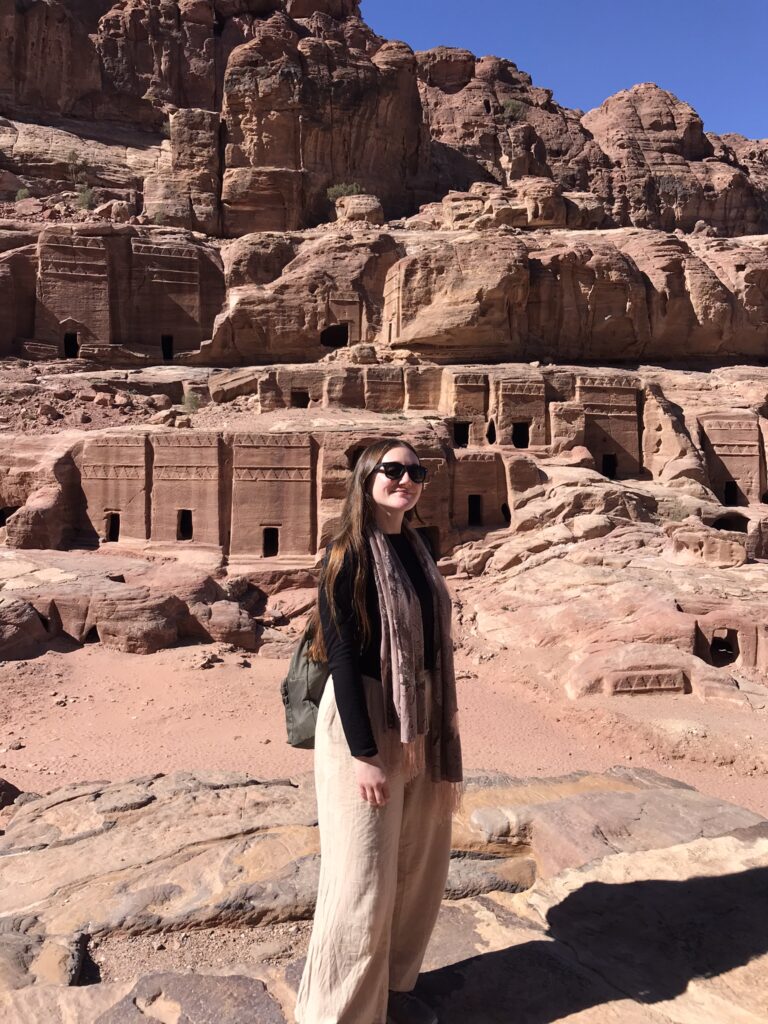
You’ll have a much better experience if you dress modestly
Although Jordan has a majority Muslim population, small pockets of Orthodox Christians do exist in some areas of the country such as Madaba. Jordan is adjacent to the Holy Lands and many Biblical events are said to have taken place here, such as the baptism of Jesus by John the Baptist at Bethany beyond the Jordan and the events at Mount Nebo where Moses is said to have died after finally glimpsing the promised land. Interestingly, we learned that one of the leading scholarly sources for the nation’s ancient kingdoms and pre-Islamic history is the Bible! Jordan has a relatively large number of churches and is a pilgrimage site for Christians due to these Biblical links. Throughout the country Christians live side-by-side with their Muslim neighbours without strife. This unity and harmony is particularly prevalent in the city of As-Salt, clearly visible in the main square as the mosque is right next to the church. Both communities respect the beliefs of the other and do not interfere with each other’s religious observances or worship – we even found Christian churches that allowed Muslims to pray inside. We were surprised to find quite a number of Christian channels on the Jordanian TV featuring kids singing hymns.
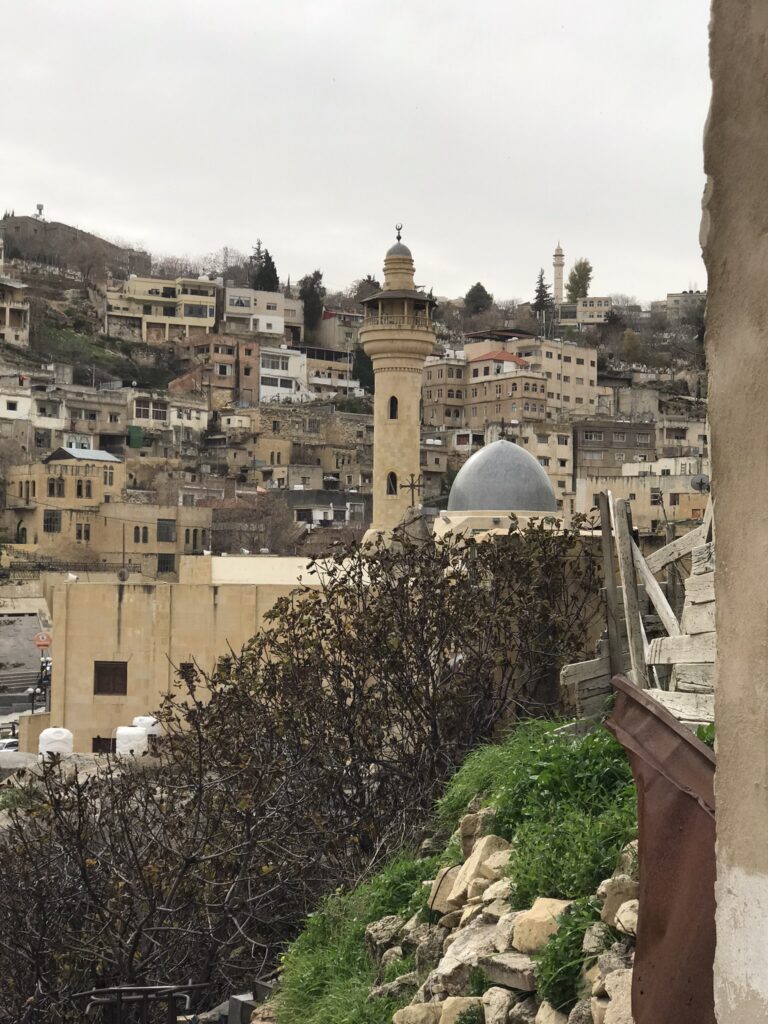
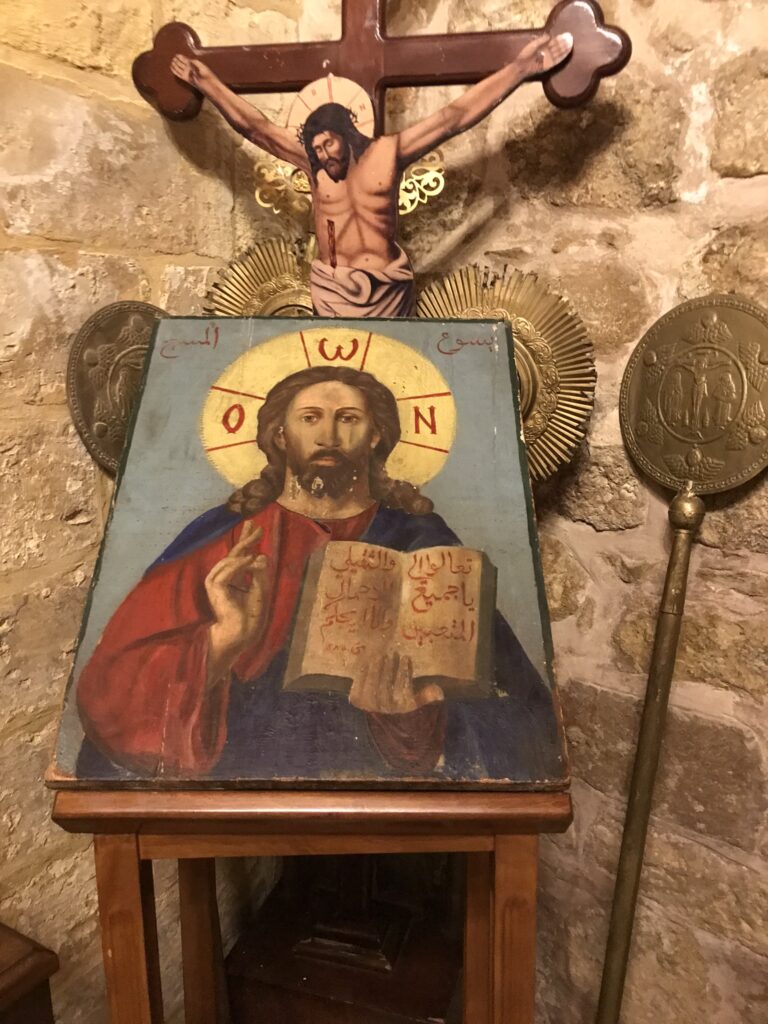
Jordan has a very strong Christian heritage, especially in places like Madaba, As-Salt and Bethany Beyond the Jordan
The nomadic Bedouin tradition of moving with the seasons and living in traditional goat-hair, black-and-white striped tents survives to this day in parts of Jordan. We spotted quite a few tented communities, mainly in rural areas, surrounded by flocks of sheep and camels. We even noticed that some people had Bedouin-style tents set up in their yards, perhaps as extra space for guests? It seems that the transition from tents to brick and mortar houses only occurred relatively recently in certain parts of the country, and hasn’t occurred at all in others. Many Jordanian museums have exhibits about the Bedouin culture and are proud of their nomadic roots.
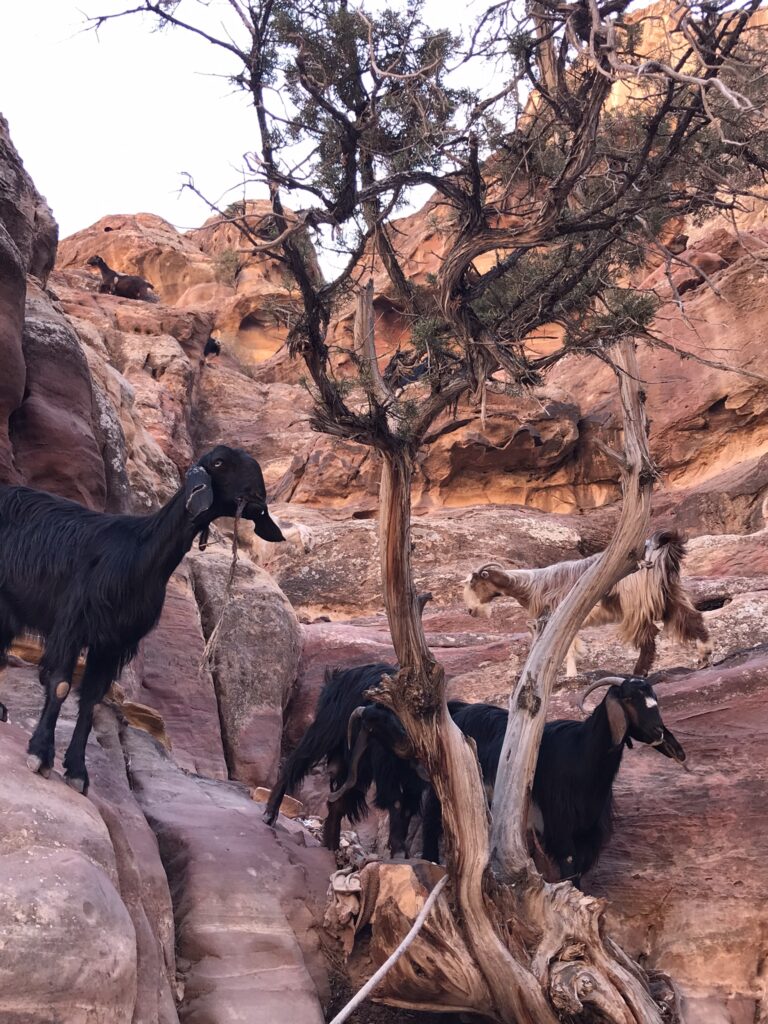
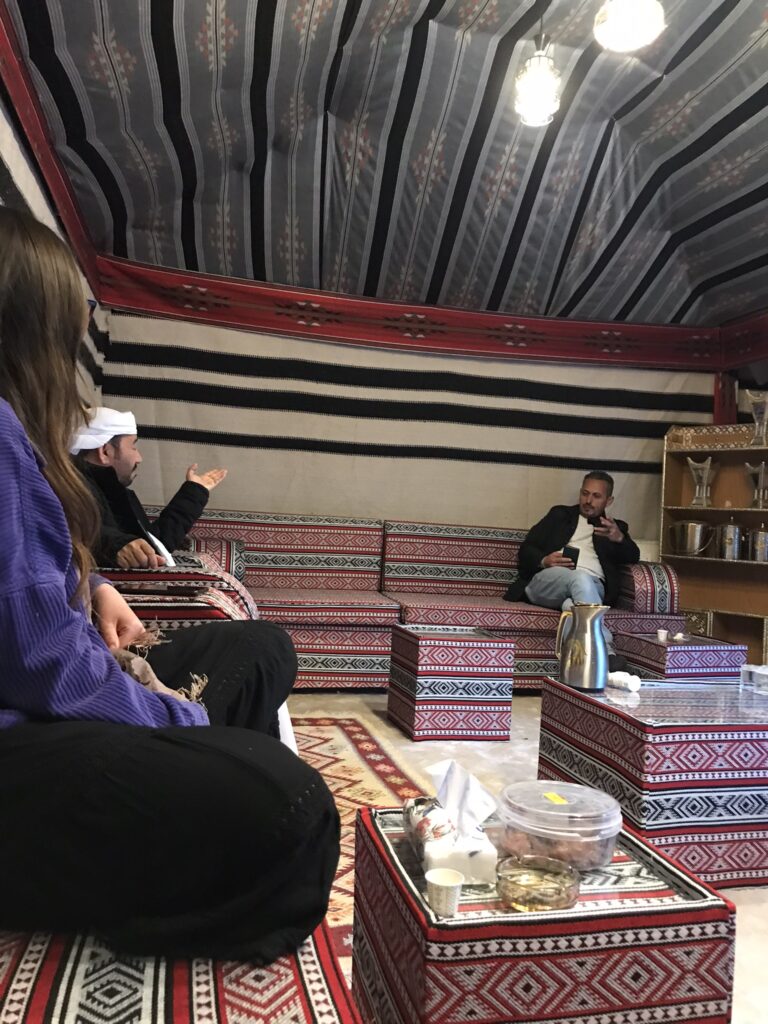
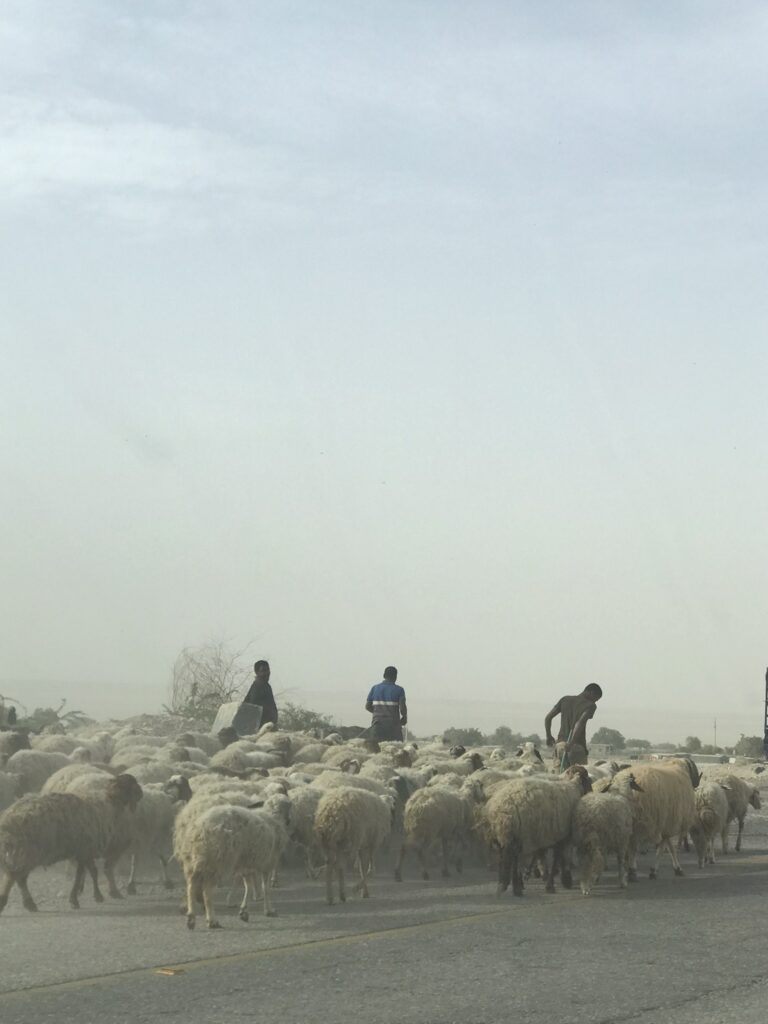
Bedouin tents alongside herds of sheep and goats are common sights in Jordan
One of the things that stuck with us the most about Jordan was the legitimate kindness and hospitality of the people. Hospitality in Jordan is next-level. The Jordanians we encountered were always willing to help, and by and large were incredibly friendly and generous people. We experienced this hospitality on a daily basis; from a guy in the bus station in Amman going out of his way to help us get on the correct bus to As-Salt, local youths in Umm Qais helping us find the bus stop to return to Irbid, a shopkeeper in Ajloun making sure we got a lift back to Jerash with a local driver, a shopkeeper literally not accepting money for two large bottles of water at a roadside minimart near Kerak, older chaps inviting us into their yard for tea and a chat with the resident lieutenant colonel in Jerash, long conversations with Mohammad, the owner at Jeeso Guesthouse in Jerash, multiple tea stops in Wadi Rum and chats with the Bedouin shopowners.
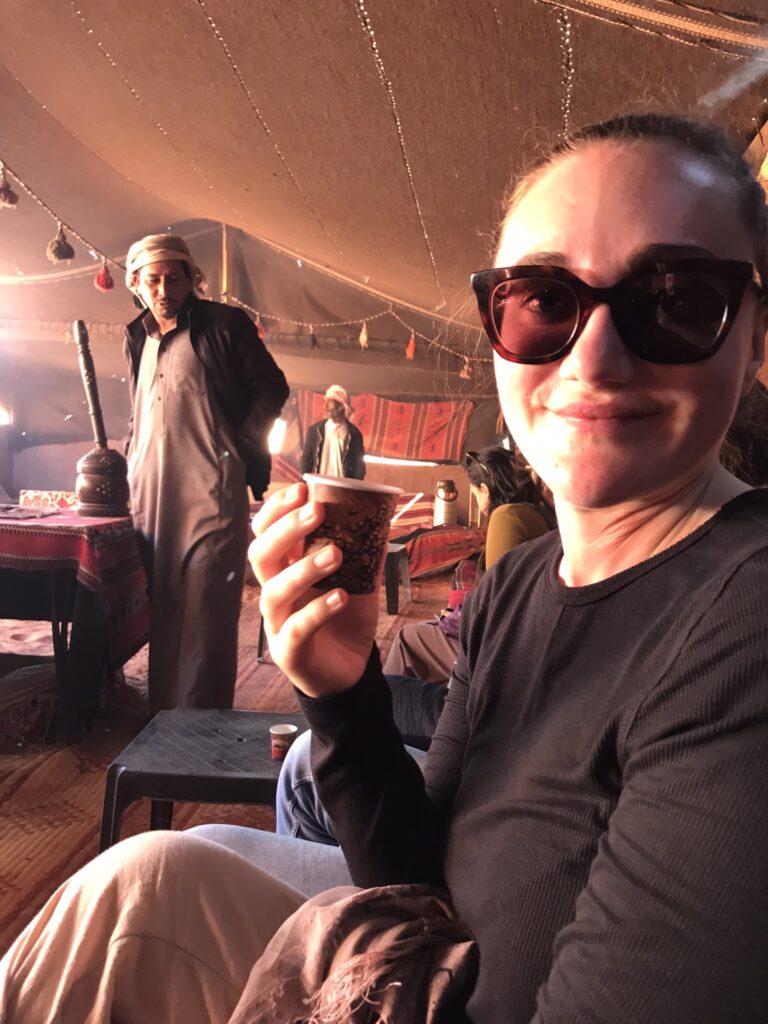
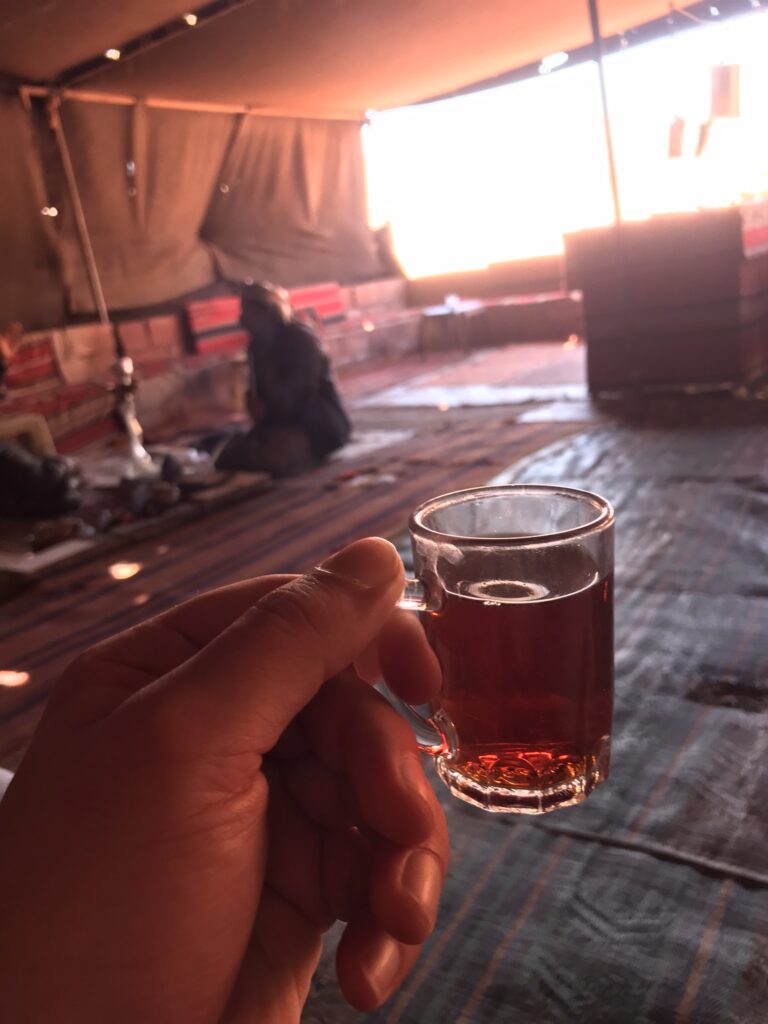
Endless free cups of tea in Wadi Rum – just one of the many examples of Jordanian hospitality
We found that most local restaurant and shop owners were honest with prices. Just make sure to avoid touristy restaurants and souvenir shops and it’s pretty easy to avoid being ripped off. Certain popular tourist destinations in the country do tend to have some hasslers, but this is nothing like the levels of a country like Egypt or India – I’d put it on a similar level to Tunisia. As long as you keep your wits about you it’s very easy to avoid being scammed, and generally a simple ‘no thanks’ or ‘la shukran’ will do the job when dealing with people who approach you to sell things. In general, you’ll get an earnest ‘Welcome to Jordan’ in return.
It’s important to say that you don’t need to join a tour to fully explore the country as it’s relatively easy to travel independently, plus you really get to interact with local people without a strict schedule or orchestrated experiences. Jordan is also quite compact which makes it possible to explore very thoroughly in just 2-3 weeks. Independent travel in the country is extremely cheap and it’s very rewarding to explore more of the country than just Petra, Wadi Rum and the Dead Sea. Once you get off that tourist trail, you experience more genuine interactions with people who are often very happy to see you and want to assist you to see the best of their country.
Most visitors to Jordan are likely to require a visa, in which case I highly recommend purchasing the Jordan Pass. This includes the visa fee and entry to many attractions in the country, including Petra. It’s a huge monetary saving in comparison to paying for the visa and individual tickets. We printed out copies of our Jordan Pass before arriving in the country, and this proved to be useful to just present and allow the ticket guys at various attractions to scan the QR code. You can possibly use your phones for this – we didn’t try, and most other people we saw also seemed to have printouts.
Transport
Many places in Jordan are easy to reach by public transport. Local buses (usually white minibuses) run between most major settlements and are ridiculously cheap in most cases. The downside is that these buses don’t run to fixed schedules – similar to colectivos in Latin America or louages in Tunisia they depart when full, so you may be waiting around for a while. Our longest wait was around 45 minutes to depart. Public buses also tend to be pretty informal and make ridiculously frequent stops to let people on or off (literally every hundred metres or so in some cases), which means that even short journeys can often take much longer than expected. An alternative to using the slower public buses is JETT, which is the main coach transport service in Jordan. JETT buses are much more formal and structured than the public buses, with online tickets and set departure and arrival times. These buses don’t run from the public bus terminals – they arrive and depart from their own dedicated JETT offices. You can check out the routes covered by JETT and buy tickets using their website. We weren’t able to buy bus tickets before arriving in the country (the app didn’t work at all either), but the JETT website did work for ticket purchases once we arrived in Jordan and we found the actual coach service from the company to be of a pretty high standard.
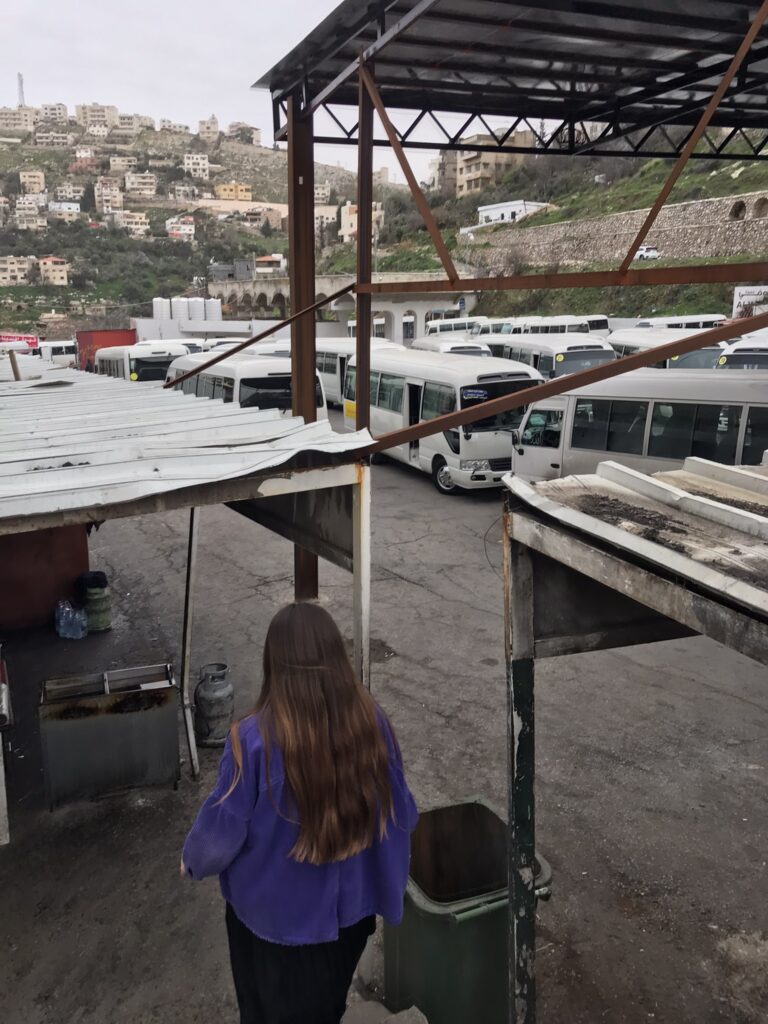
A local bus station in As-Salt
Unfortunately, not all of the sites in Jordan can easily be accessed by public transport. If you want to explore the Desert Castles in the east, the undeveloped southern beaches of the Dead Sea (where you don’t have to pay for entry to extortionate resort hotel), the UNESCO site of Umm ar-Rasas or Mount Nebo and Bethany beyond the Jordan without forking out for a tour, then hiring a car is pretty much the only option. We usually travel exclusively by public transport and avoid hiring a car whenever we travel and we completed most of our Jordan trip using public transport, however to reach some of the more remote attractions in the country we bit the bullet and hired a little Suzuki for a few days at the end of our trip from the rental company Monte Carlo in Amman. For those that can’t drive or don’t want to, then private cars and drivers can be hired from most hotels in Amman, but this is significantly more expensive than just hiring a car for a few days.
Here is a run-down of our honest opinions and experiences of driving in Jordan:
Car hire in Jordan is a bit of a minefield as most companies (even the international chains) are locally operated franchises and their reviews tend to be full of horror stories. After much deliberation we chose to hire with Monte Carlo, which is one of the largest independent hire companies in Jordan. The main reason we chose to go with Monte Carlo was that it was possible to hire from them without placing a credit card deposit, something we were concerned about given that it was a short-term hire and other companies seemed to have a mixed track record of actually returning the deposits.
From Monte Carlo, simply purchasing their ‘super collision damage waver’ for an additional 10JD per day was enough to waive the entire deposit – ideal as we were only hiring for four days. Payment for the rental could then be made via debit card, with around 50% payable in advance to confirm the booking and 50% in the office upon actually hiring the car. Monte Carlo is also a very established company, they are used to dealing with foreigners, are communicative via WhatsApp and seem to legitimately care about their online presence. As we were already in Amman we chose to hire a car via the Monte Carlo office near to the University of Jordan, rather than their more popular airport office. This avoided an unnecessary trip to the airport for us, and we also thought that it might be easier to deal with the city office and reduce the possibility of any funny business. Apart from the hair-raising drive out of Amman we experienced no issues at all with Monte Carlo or the car, everything went as planned, we haven’t been charged any additional fees and so I’d happily recommend them based on this.
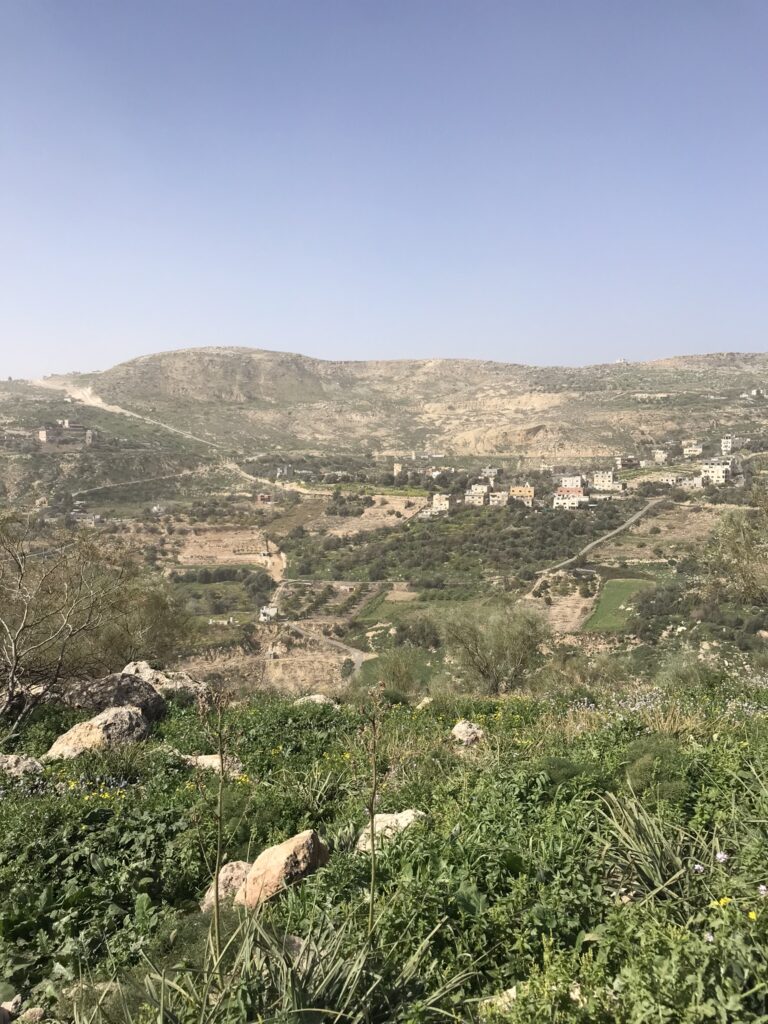
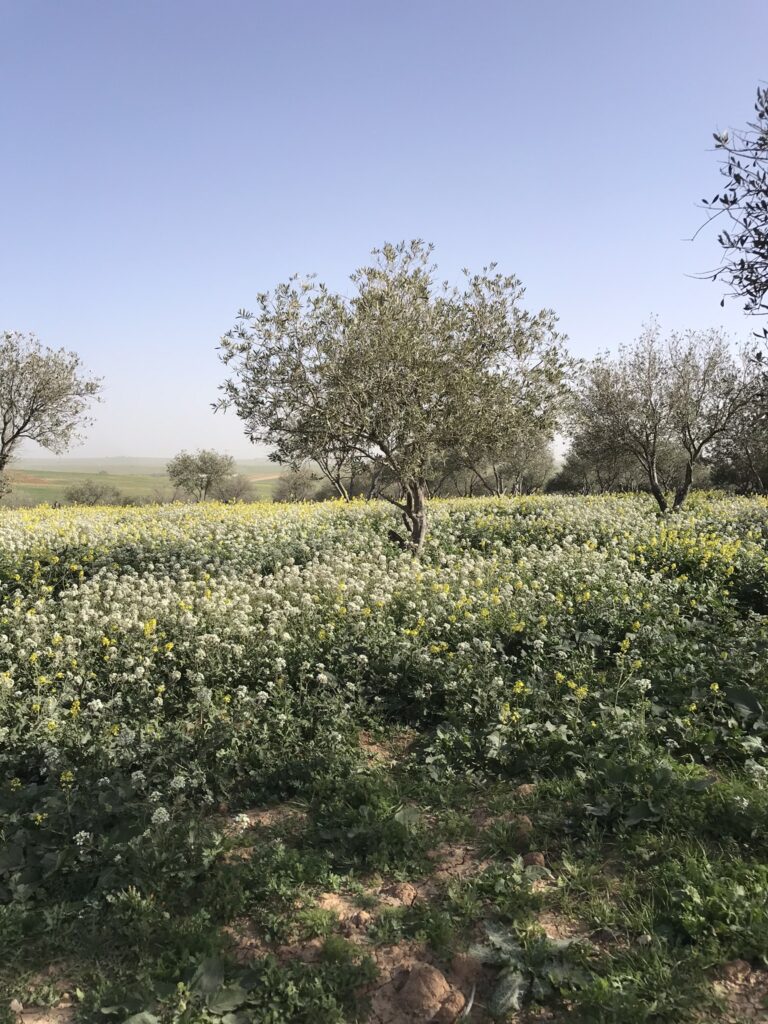
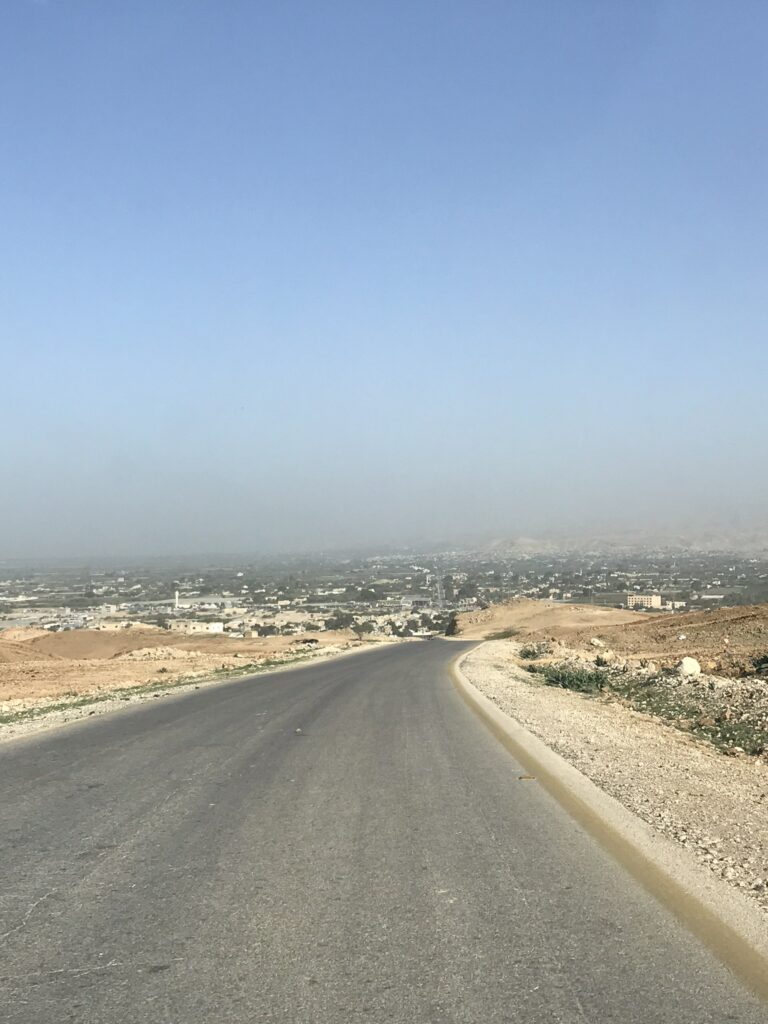
Hiring a car meant we were able to stop at particularly picturesque places along the road
Driving in Jordan and particularly Amman is pretty wild! Expect cut-throat aggressive driving, excessive lane-changing in traffic jams, no indication of intent to change direction, honking if you don’t pull out of the junction fast enough, lots of pushing in and queue jumping by driving on the hard shoulder, undertaking as well as overtaking. People are very impatient and will cut corners (literally) to get to their destination as fast as possible – patience is not a virtue on the roads here. We based ourselves in Madaba during our time with the car, which is a much easier city to get in and out of. If you can, I recommend avoiding driving in Amman as it’s stressful and traffic jams are very common in most parts of the city. You can hire a car directly from Queen Alia Airport – a much better idea if you want to use the car for the whole duration of your visit.
Other quirks to bear in mind on the highways:
- Undertaking as well as overtaking is prevalent.
- You can often find massive trucks going way above the speed limit.
- Regular police checks – police wave you over and check your vehicle registrations is in order – we clarified beforehand with the rental company which documents we needed to show and so had no problem.
- People constantly driving while using their phone.
- Cars which are clearly not road worthy being driven on the roads.
- Frequent driving on the hard shoulder, or in some cases half on the hard shoulder and half in the outside lane.
- Vehicles not stopping when merging from the slip road onto a highway, but instead expecting other vehicles to move over instead.
- Poor road conditions with plenty of pot holes and absent lane markings
- Some roads aren’t marked with the speed limit which makes gauging your speed difficult especially when lots of other cars go way above the speed limit. Be cautious as speeding tickets are apparently pretty common.
- Constant unmarked or invisible speed bumps, even on 100kph highways.
- Very windy mountain roads, particularly to get to the Jordan Valley and Dead Sea (it is the lowest point on Earth after all).
- Fuel stations mostly take card payments. JOPetrol seemed to be the most reliable, and the guys at the stations were very helpful on the two occasions we fueled up. Make sure you clarify the correct fuel for your car as there are a few different options.
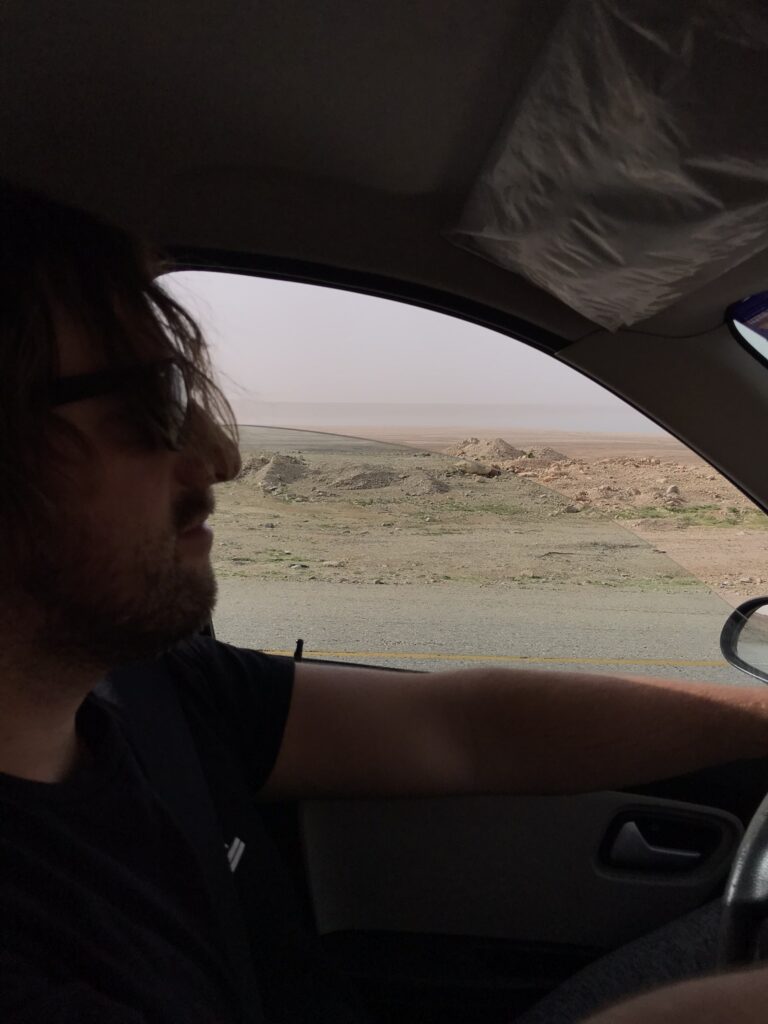
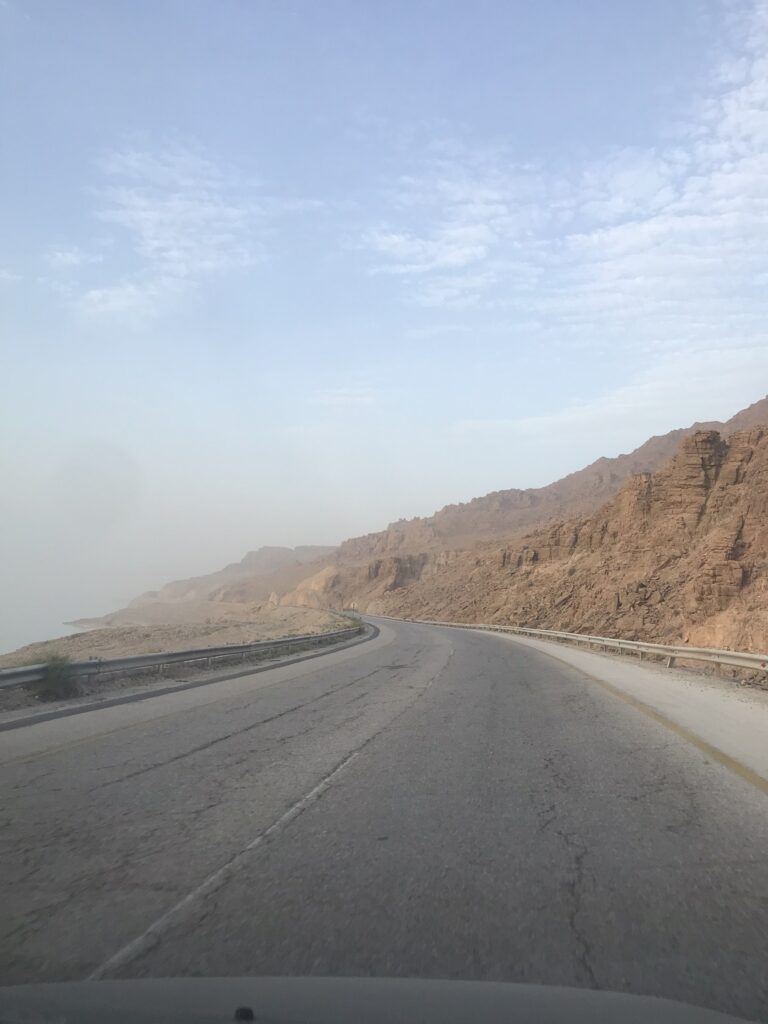
Long straight roads through the desert and winding mountain passes are to be expected when driving in Jordan
It’s safe to say that driving in Jordan can be pretty hair-raising at points! It was a great experience but I wouldn’t recommend it for the faint of heart or inexperienced drivers.
For getting around in cities, Uber works very well in Amman and Irbid, and pretty much everywhere else is walkable. If you don’t have a phone with eSim capability, I recommend purchasing a sim card upon arrival in the country in order to use Uber if nothing else – this will be a huge convenience and financial saving in comparison to trying to barter with local taxi drivers, who can be notoriously unreliable and scammy especially when dealing with foreigners. We got a sim card from the Orange stand at Amman airport, which worked well during our stay.
In terms of obtaining cash in the country, Jordan Kuwait Bank is the only bank which provides fee-free ATM withdrawals (although it seemed to charge our accounts in US dollars rather than JD, I’m not sure why). We were surprised at the number of businesses throughout the country that accepted card payments, but it’s still mostly a cash economy and so it’s always wise to carry enough cash to cover all your purchases. When withdrawing cash, try not to withdraw a round number/multiple of 50 or you may end up with a very unhelpful 50JD note, which is pretty much useless for most small purchases. We were lumbered with one such note for most of our time in Jordan and ended up having to convert it back into our local currency at the end of our trip as we couldn’t find a way to split it.
Amman
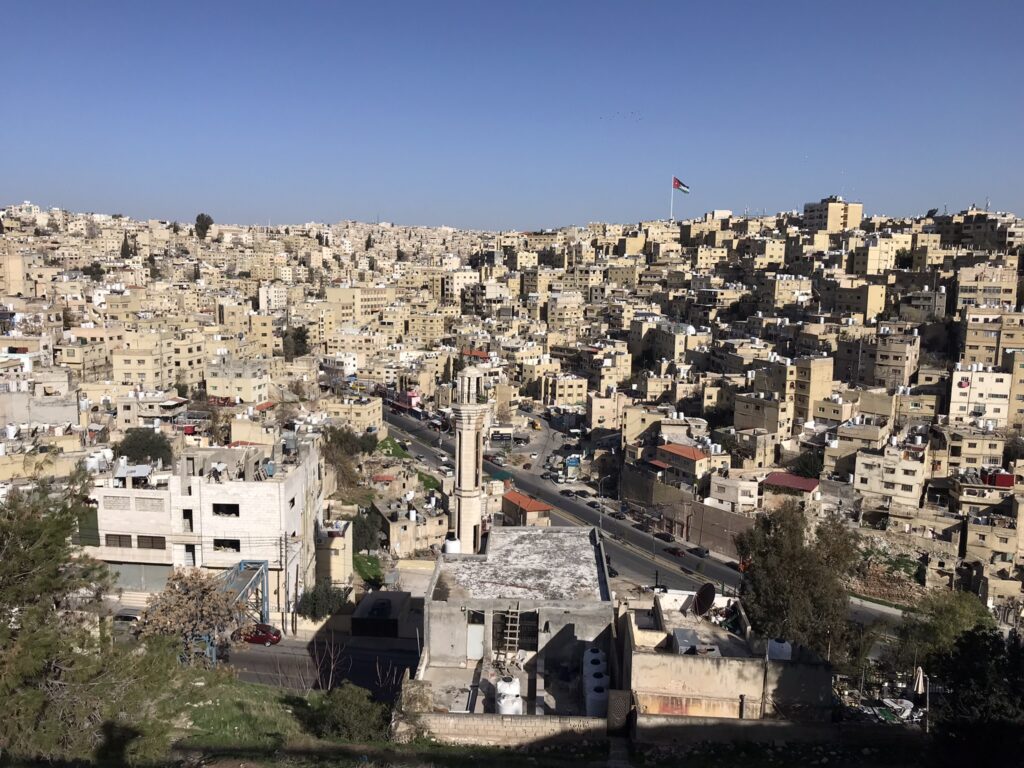
The so-called primate city of Jordan, Amman was originally built on seven hills like Rome and has since expanded outwards to encompass nineteen rocky hills. Amman is the 5th largest city in the Arab world and by far the largest city in Jordan: staggeringly, around half the population of the country call Amman and the surrounding metropolitan area home. The city’s landscape consists of steep roads and gulleys, narrow passageways, neverending staircases and pale sandstone houses clustered on craggy hills. It’s known as the City of Stairs for good reason! Be prepared for some serious stair-climbing here.
Like most places in Jordan, Amman is incredibly ancient. The city dates back to the 13th century BCE and first gained prevalence as Rabbath Ammon, the centre of the Ammonite kingdom which controlled the surrounding area during the ‘three kingdoms’ period in ancient Jordan. The city was conquered and renamed Philadelphia during the Hellenistic period in the 3rd century BCE, before being declared one of the ten Greco-Roman ‘Decapolis’ cities in the 1st century BCE, thereby receiving special status and recognition within the Roman Empire.
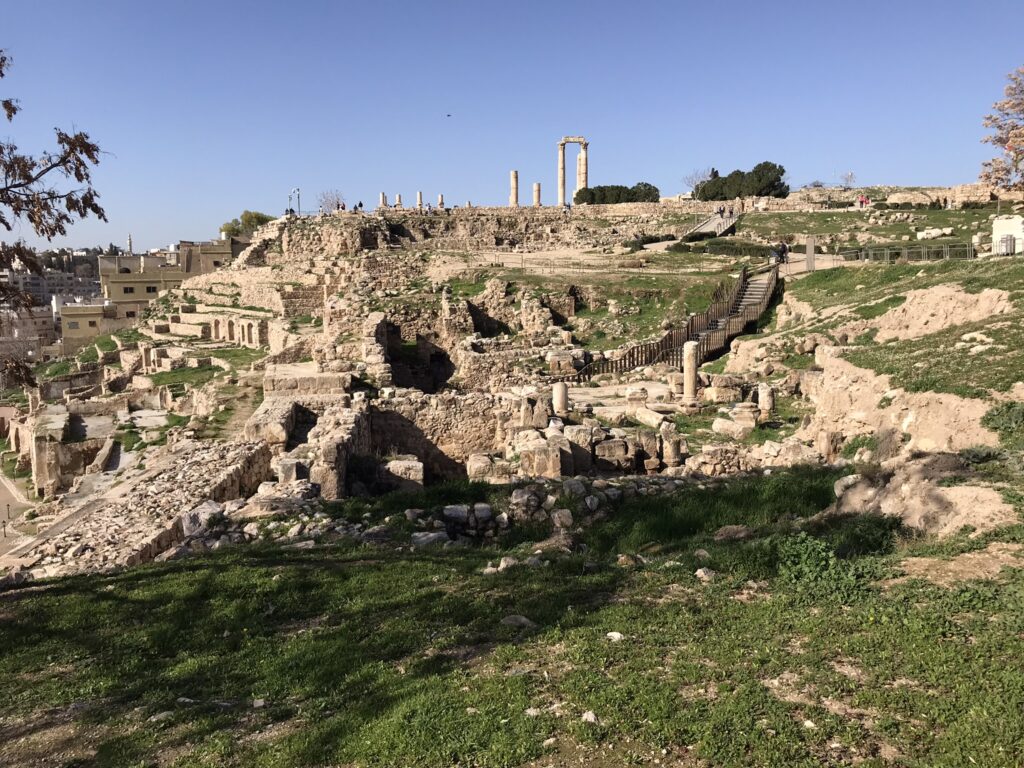
Amman’s ancient Citadel complex is said to be one of the oldest continuously inhabited places in the world
Despite its history, modern Amman only really developed after it rose to become the capital of Jordan, something that happened relatively recently (1921) after the expulsion of the Ottoman forces from the region. Prior to this, the nearby city of As-Salt served as the regional capital. Today, Amman is a typically Arab and very multicultural city, with many citizens claiming Palestinian, Syrian and Iraqi heritage. We spotted many Palestinian-style ladies dresses for sale at the market.
Unlike the glitzy and rapidly-developed capital cities in the wealthy Gulf states further south on the Arab peninsula, Amman has a gritty and somewhat rustic feel. There are a few skyscrapers and high-rise buildings to the west side of town (which is considered to be the more affluent area), however outside of that most of the city’s infrastructure seems to be quite old and there isn’t a huge amount of modern development on show. The city retains a rough authenticity as a result, making it a great place for visitors to start their Jordan adventure, getting to grips with the culture, cuisine and history before moving on.
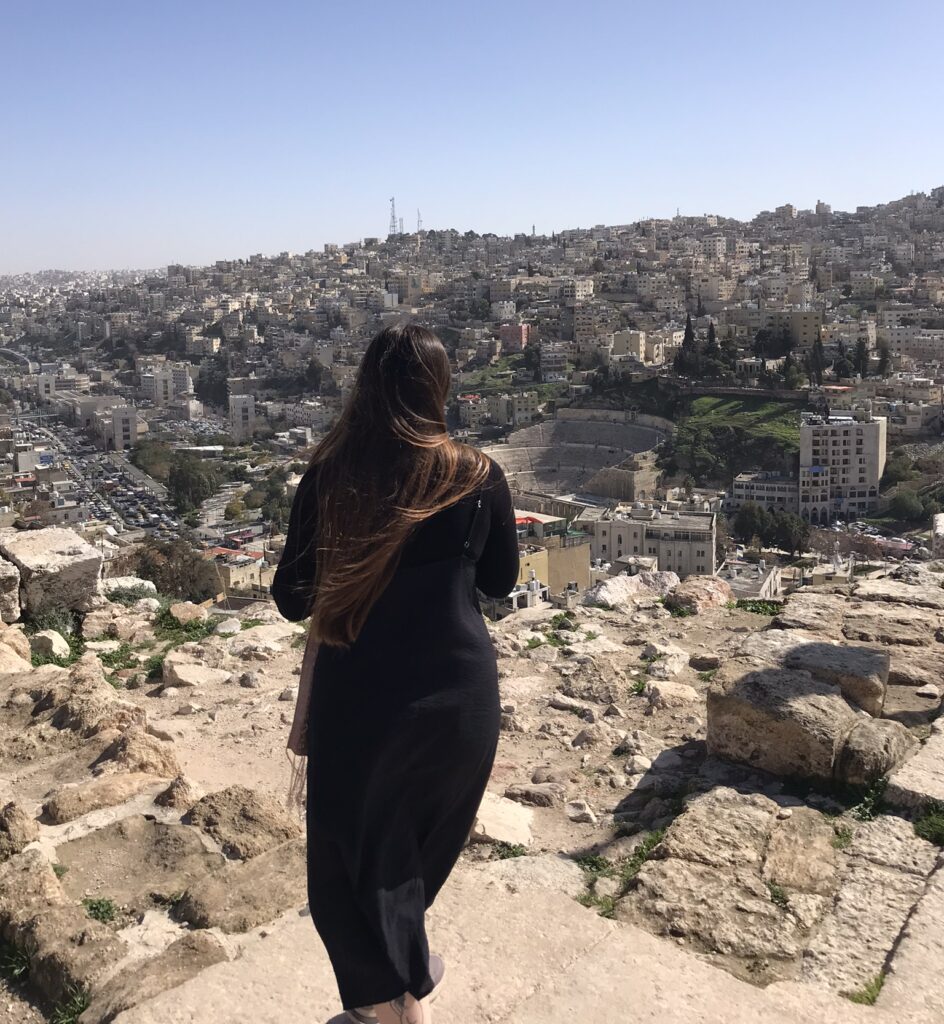
Head to the Citadel to fully appreciate how hilly Amman really is – keep an eye out for the ancient structures nestled within the modern city!
It’s worth mentioning that the traffic is particularly terrible in Amman as the city lacks urban planning and adequate public transport. Getting around the city by bus is pretty tough without speaking Arabic, while the ubiquitous yellow taxi drivers are also notoriously scammy and dishonest, particularly when dealing with foreigners. For those hiring a car, driving in the city is an awful experience. Luckily, Uber works very well in Amman and so we had no problems getting to where we needed to be, traffic aside. Onward transport from Amman to other destinations is typically via one of a number of different bus terminals. The North Bus Terminal provides regular services to and from the airport (look for Sariyah Airport Buses), while Swaileh on the north-western edge of the city is the best place to find buses to As-Salt and Jerash and the South Bus Station is the place for public buses to Madaba and Petra. Don’t expect modern, western-style bus terminals – these are just parking lots/busy roundabouts or intersections with no real logic or order. The best thing to do at these bus stops is find a reliable-looking local (not a taxi driver) and ask them to point you to the right bus. If you don’t want to brave the bus stations, JETT has a number of offices in Amman which provide a far more straightforward experience for getting to places like Petra, Aqaba and Irbid.
Most of the main tourist sites and attractions in Amman (such as the Citadel, Roman Theatre, Jordan Museum and the cosmopolitan Rainbow Street) are centred around the ‘downtown’ area, which is also known for its bustling, slightly chaotic markets and souks. Frustratingly, this part of the city is not well connected at all by public transport and is actually somewhat inaccessible due to the horrendous traffic in the city. Still, the majority of visitors will want to base themselves here as most sights and amenities are within walking distance. A few other attractions are spread around the outskirts of town (such as the tank museum and automobile museum) – these are best visited by Uber. The delivery app Talabat also works well in Amman if you fancy a takeaway rather than braving the sometimes manic streets.
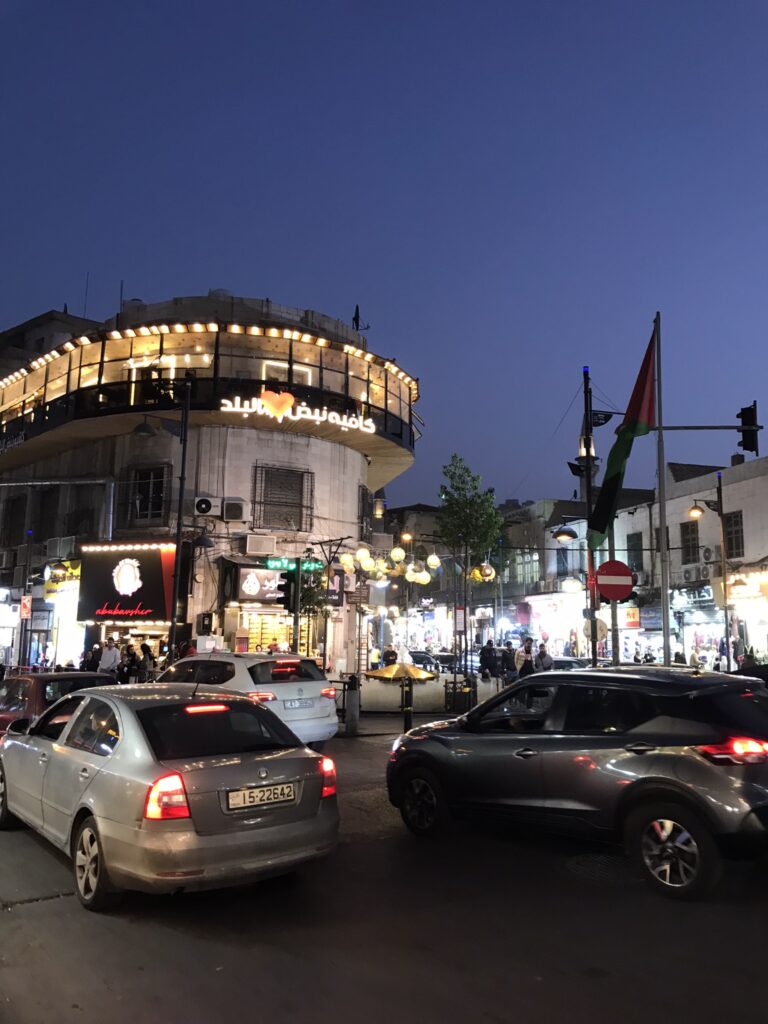
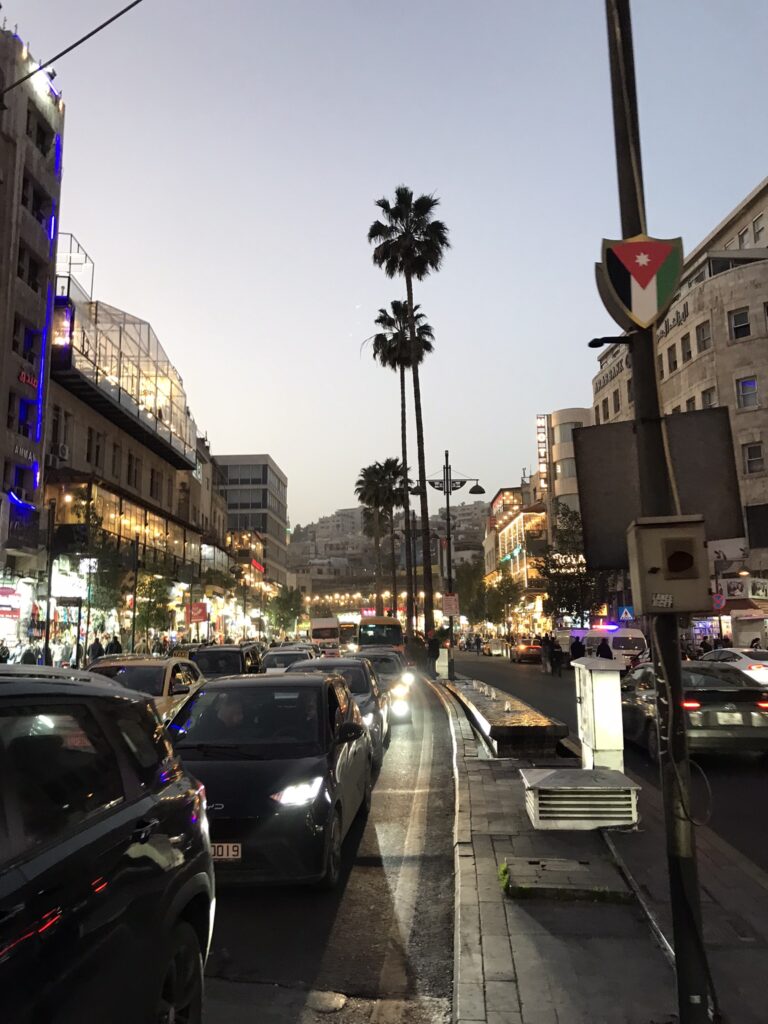
Downtown Amman is all bright lights and traffic jams!
Accommodation
Zaman Ya Zaman – in a fantastic location across from the Roman Theatre, you can literally see the theatre from the breakfast room balcony. This down-to-earth guesthouse is situated in an ideal spot to explore all the ancient attractions in the city (Citadel, Roman Theatre and Nymphaeum) whilst being within close proximity to the bustling market area. The hotel is located on a super busy and rather noisy road so don’t expect tranquillity, especially if you end up with a room overlooking the road like we did. Traffic jams and beeping horns go on quite late into the evening, not great for any light sleepers. The wifi also wasn’t good here and the building itself is a little bit old and worn (like most of Amman). This can all be forgiven as the hotel is very much on the lower end of the price spectrum, the staff were extremely friendly and helpful and the included breakfast was excellent.

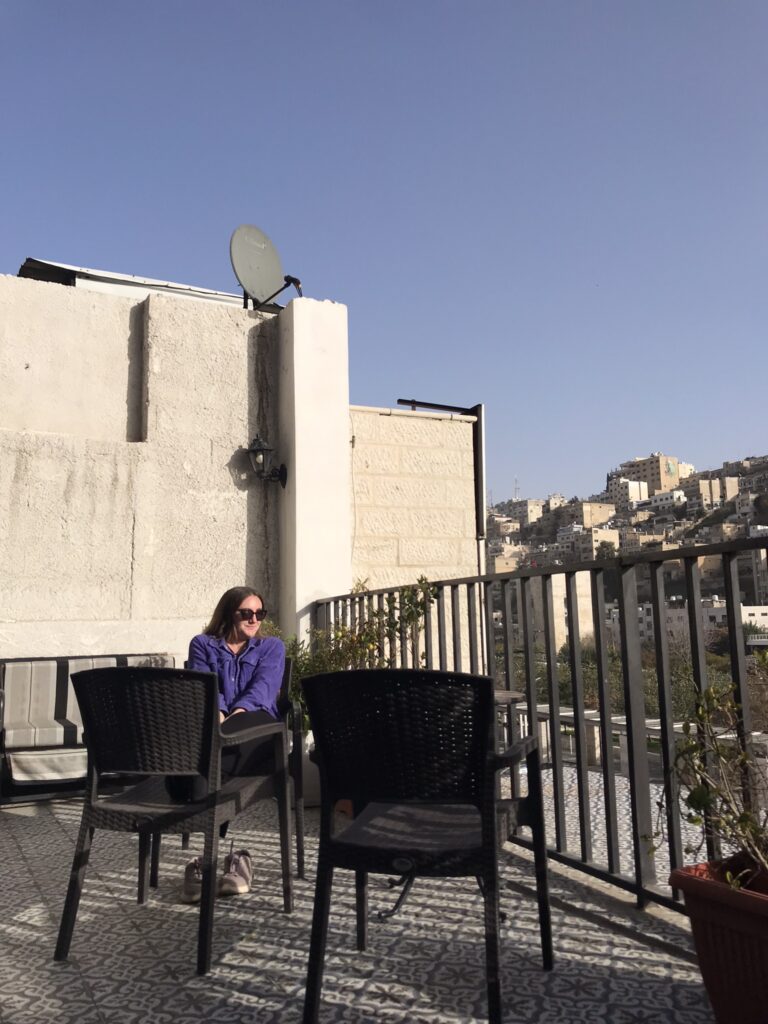
Chill lounge areas and busy roads outside Zaman Ya Zaman
The Sydney Hotel – located in a much quieter area of the city but still within walking distance of most attractions in downtown. We really felt comfortable and able to rest better at Sydney than Zaman Ya Zaman. There is a hostel feel with a common area and kitchen, the setup felt more streamlined and with more amenities such as free water, coffee and team, plus the added breakfast buffet was a fantastic way to start the day.
Foodie Places
It’s quite easy to fall into tourist traps in Amman – expect restaurants to be more expensive, especially in Rainbow Street and the tourist areas. Quite often we found that restaurants with menus in English would have higher prices, a clear indication that they’re geared towards tourists with cash to burn in their pockets.
Dar Ne’meh, Amman Citadel – right outside the entrance to the Citadel – this place makes for the perfect lunch stop after visiting the Citadel. It’s quite an uphill climb to reach this cafe-cum-restaurant otherwise, but totally worth the effort for the panoramic views of the sprawling city from the rooftop dining area. It’s especially poignant after dark when the glittering city lights create an atmospheric and rather romantic dining vibe. We visited twice, once on Valentine’s Day, and were not disappointed by either the food or the view. They mostly serve Jordanian mezze dishes like hummus, mutabal, manakish and other sharing plates. Keep your eyes peeled for their fantastic deal which includes 5 mezze dishes and bread for 10JD – perfect for sharing.
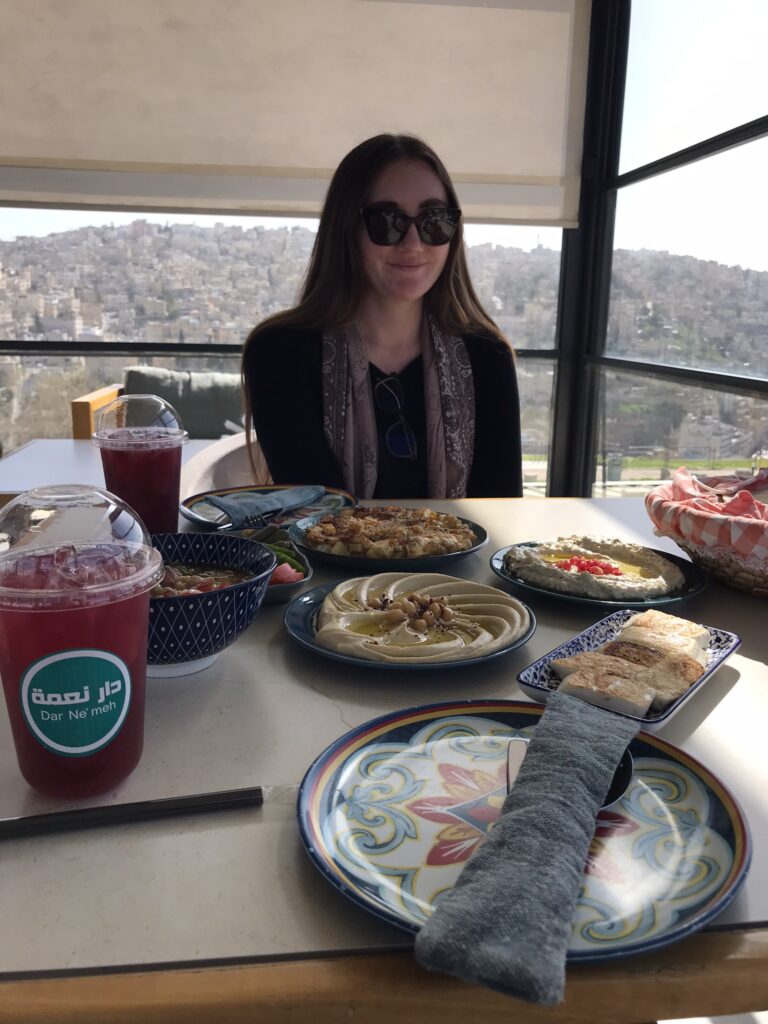
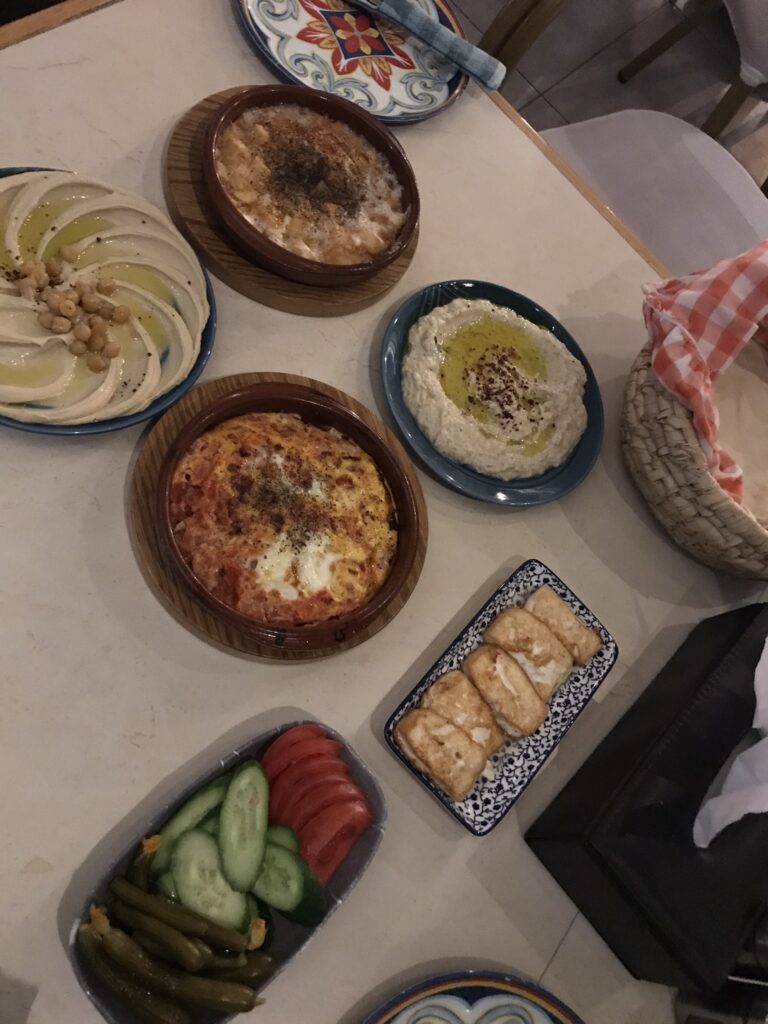
The fried halloumi was to die for at Dar Ne’meh!
Abu Lilia Restaurant – expect local prices rather than inflated tourist prices at this roadside burger stall. The guy who ran the joint was very modest, even when his neighbour came by and enthusiastically told us that he makes the best burgers in Amman. The burger meal deals are very affordable – around 3JD for burger, fries and a drink. We enjoyed sitting outside the front of the shop and watching the crazy Jordanian drivers reversing 20 meters up the street for seemingly no reason! Many curious drivers couldn’t seem to believe their eyes when they spotted us munching a burger on the street here.
Slorh Shahba Sweets – an unexpected find in the backstreets near our hotel. While eating at Abu Lilia we began talking to a friendly guy named Mohammad, who seemed to be friends with the owner of the burger joint and even helped to serve our burgers. He told us that he was the manager of a nearby sweet shop and invited us to head over to try some Syrian sweets for free after our burgers. We thought he seemed to be a pretty genuine guy and so decided to take up his offer. The shop was busy when we arrived but Mohammad went out of his way to select a few different types of popular sweet treats for us to try and sat us down outside the shop. This was an example of the exceptional hospitality of the Jordanian people that we experienced throughout our time in the country. The cheese/cream Syrian sweet was amazing and seemed to be popular with locals, as almost everyone was eating it. We made sure to purchase some sweets to take with us – the cost was less than 2JD for the large box, and Mohammad even threw in some extras for free. Overall a great experience.
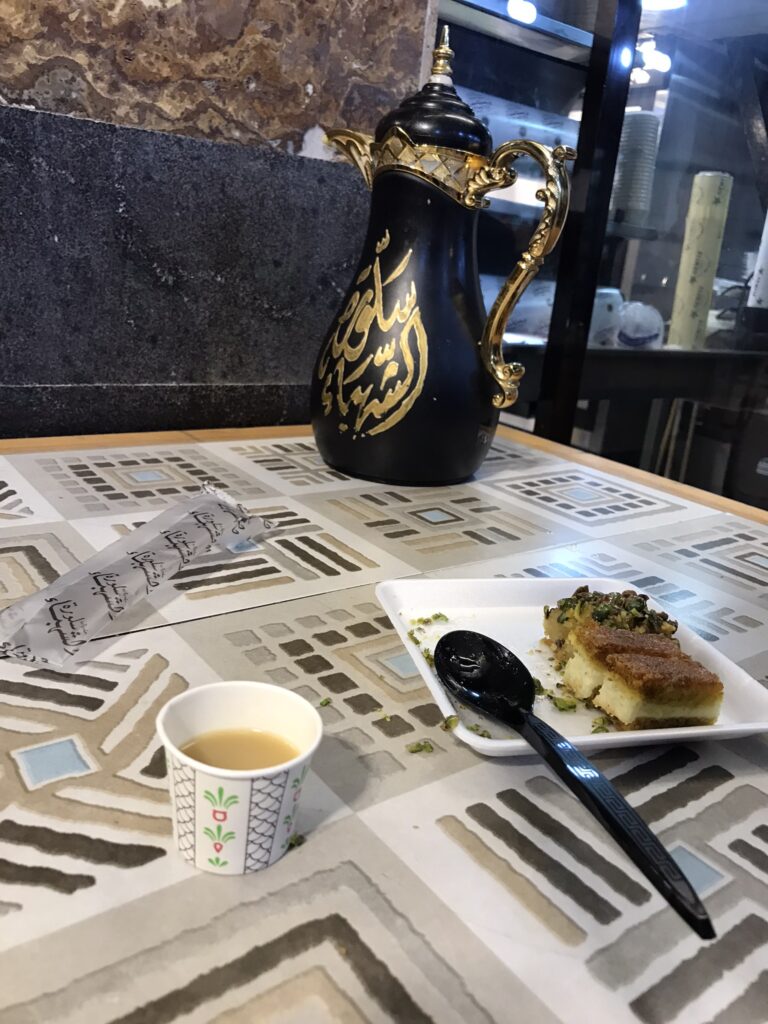
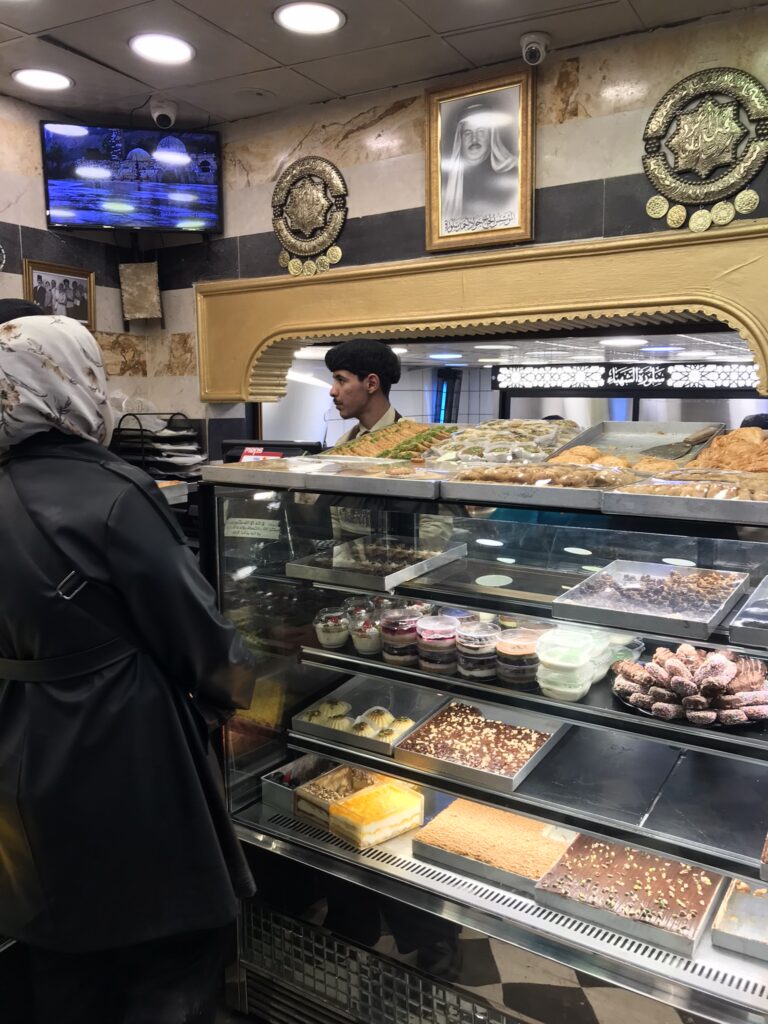
What’s not to love about a freebie at Slorh Shahba Sweets?
Asma Kitchen – our first meal in Jordan – in hindsight we realised that the prices were quite high for the dishes. The mezze dishes were very tasty and the owner super friendly but we wouldn’t visit again just because of the high prices. Very much a tourist place.
Engineers Pizza – if you need a break from the endless bread and mezze dishes, this pizza/pasta takeaway joint serves up fantastic pizza and pasta dishes. The incredibly creamy pesto pasta and alfredo pasta were highlights for us. We ordered on Talabat as it’s located far away from the downtown area where most hotels are located.
Shawarma Village & Juice Village – located on Rainbow Street, the tables outside seat customers for both the Shawarma and Juice business which seem to be affiliated. We couldn’t resist ordering both. The juice was more like a smoothie and very reasonably priced for a large bottle (3.5JD). The Shawarma meal which included chips, pickles and sauces was a fab deal and made for a cheap dinner.
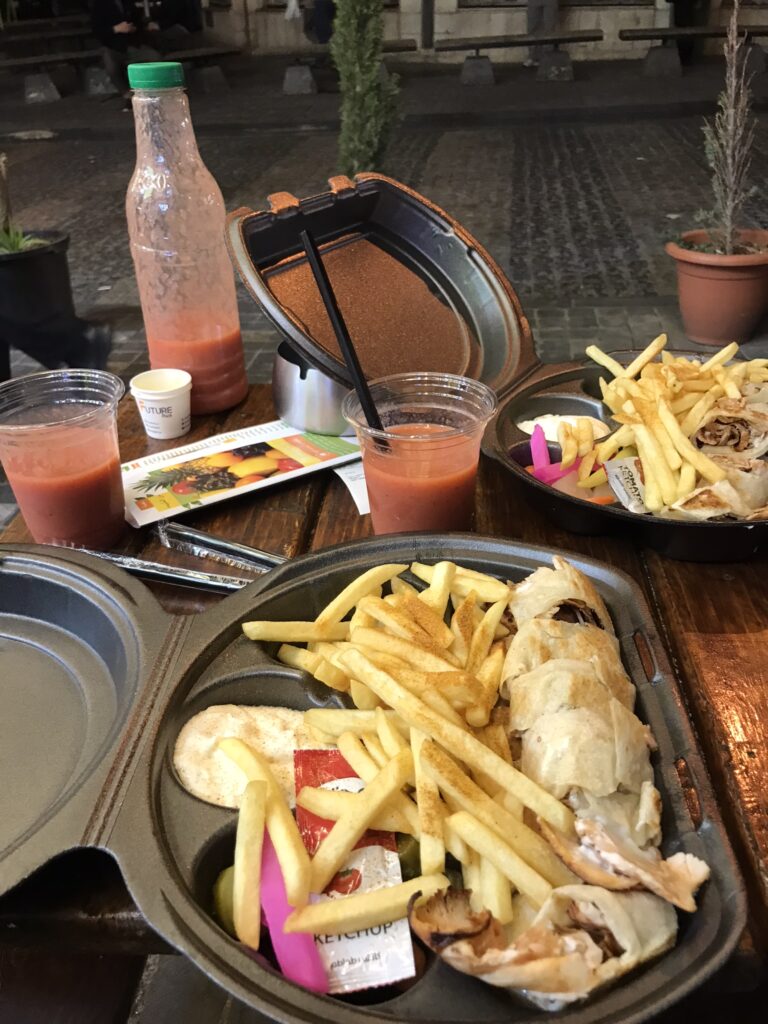
A healthy dessert of fresh juice to follow the fatty shawarma from Village Shawarma
Activities
Guruwalk with Ibrahim – the walking tour mainly focused on the Old and New Market areas rather than historical sights. Some of the highlights included getting my eyebrows threaded/Dan’s facial hair threaded which was a bit bizarre and unexpected, visiting the Nymphaeum after dark (a man with a key appeared near the entrance) and having it all to ourselves, visiting the gold shops and marvelling at the lack of security measures in place to stop thieves and trying freshly fried falafel and baked bread from a local stall. This is a great introduction for first-time visitors to Amman. It was nice to be able to ask questions rather than be struck on an overly rigid tour.
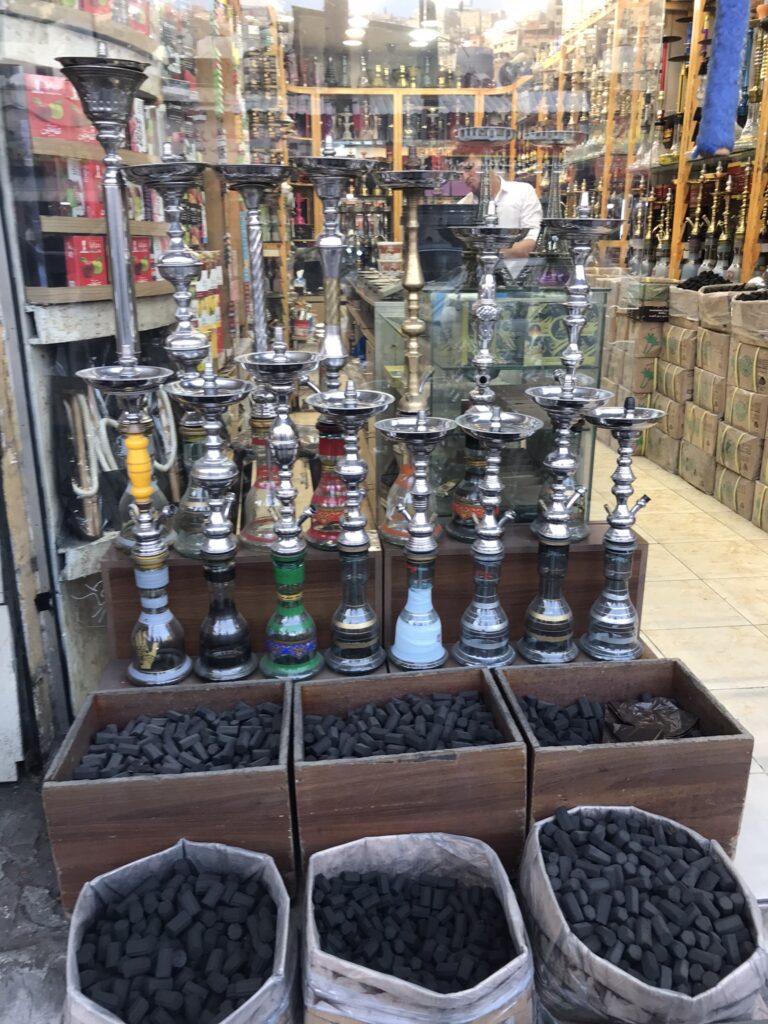
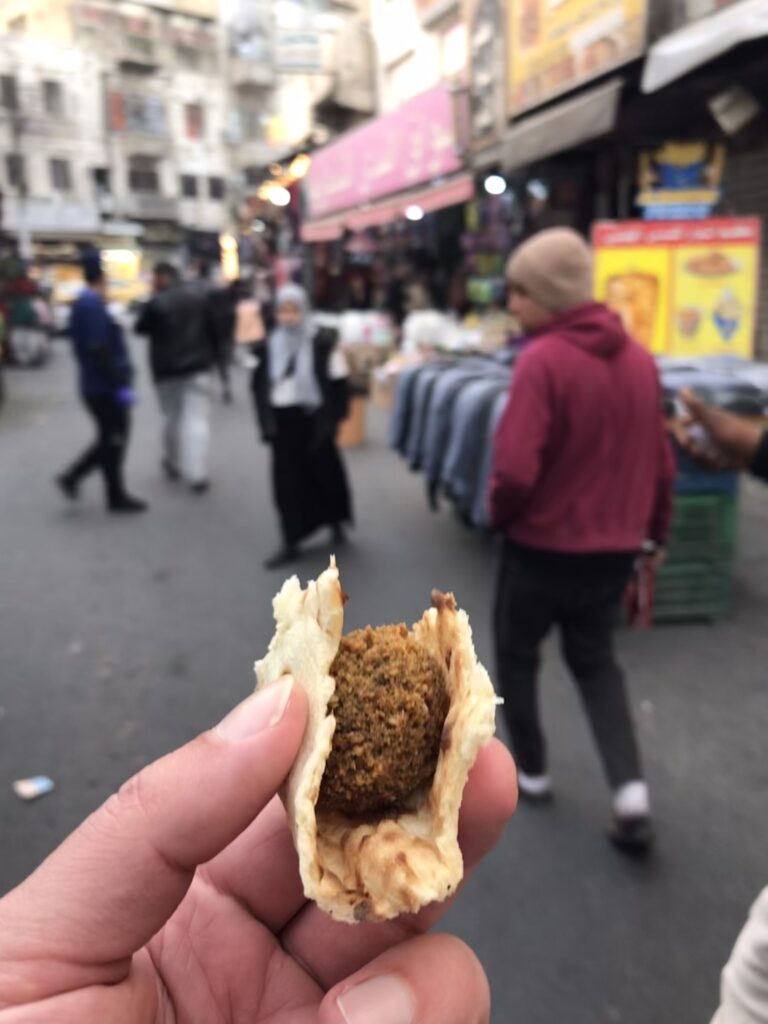
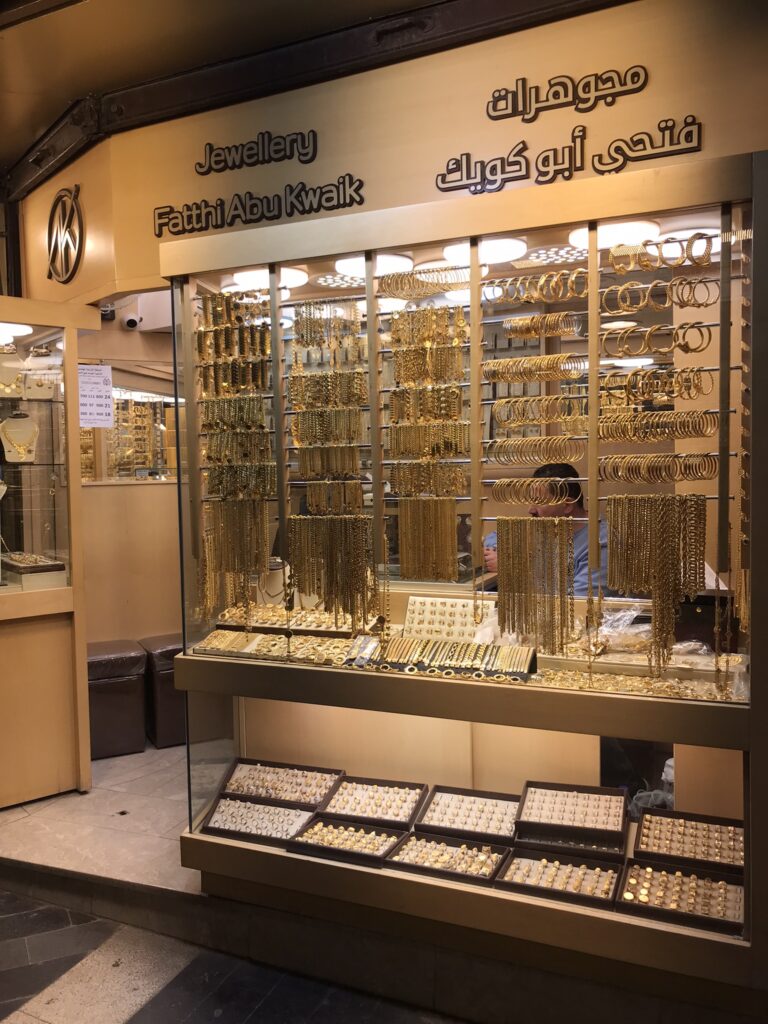
Everyday shopping scenes from Downtown Amman
Jordan Museum – the Jordan Museum is best known for its fascinating exhibition on the Dead Sea Scrolls. Originally the scrolls were discovered by a Palestinian shepherd in 1946, hidden away in clay pots in the Qumran Caves in the West Bank. Most of the scrolls are now under wraps in Israel, but a copper plate scroll and some fragments still remain in Jordan. It was great to see the real artifacts with our own eyes. The content of the scrolls is intriguing and reveals insight into a Jewish religious community that existed at the fringes of the society, hidden away in the desert – almost like a modern-day doomsday cult around 3rd Century BCE. The scrolls are an important discovery as they also contain what is considered to be the oldest copy of the Hebrew Bible.
Outside of the scrolls, the museum’s main exhibit walks visitors through the history of Jordan from paleolithic times through to the Muslim conquest, before somewhat sharply and abruptly cutting off without touching on more modern history. The museum also features an exhibit on the nation’s culture, development and issues facing the people today like water shortages, gender inequality (very much improving over time), agriculture and energy generations. There is a small display on traditional and popular music from the past and modern day (you can even listen to some with headphones). The second floor of the museum is quite interesting, although it doesn’t really pertain much to Jordan at all as it is all about Islamic scientific discoveries during the so-called dark ages in science, maths and medicine. This floor seemed to be geared more towards children than adults, with many interactive displays, but we found it interesting nonetheless. The actor Ben Kingsley even makes an appearance in the displays here. Unlike most attractions in Amman, admission to this museum is not included in the Jordan Pass.
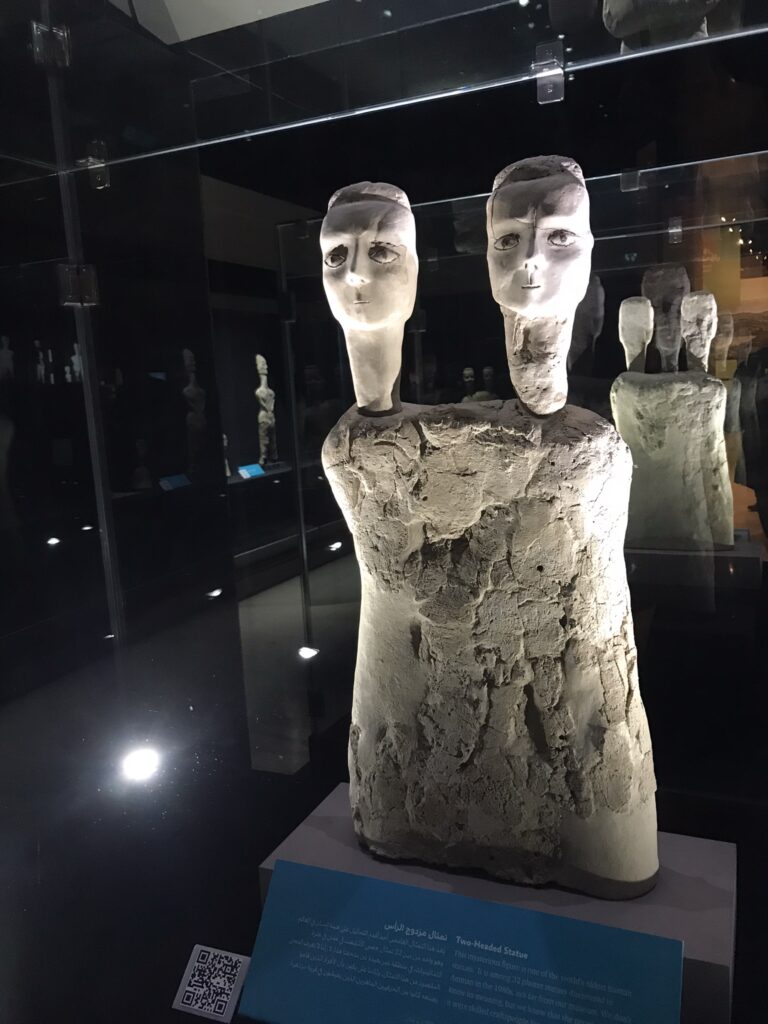
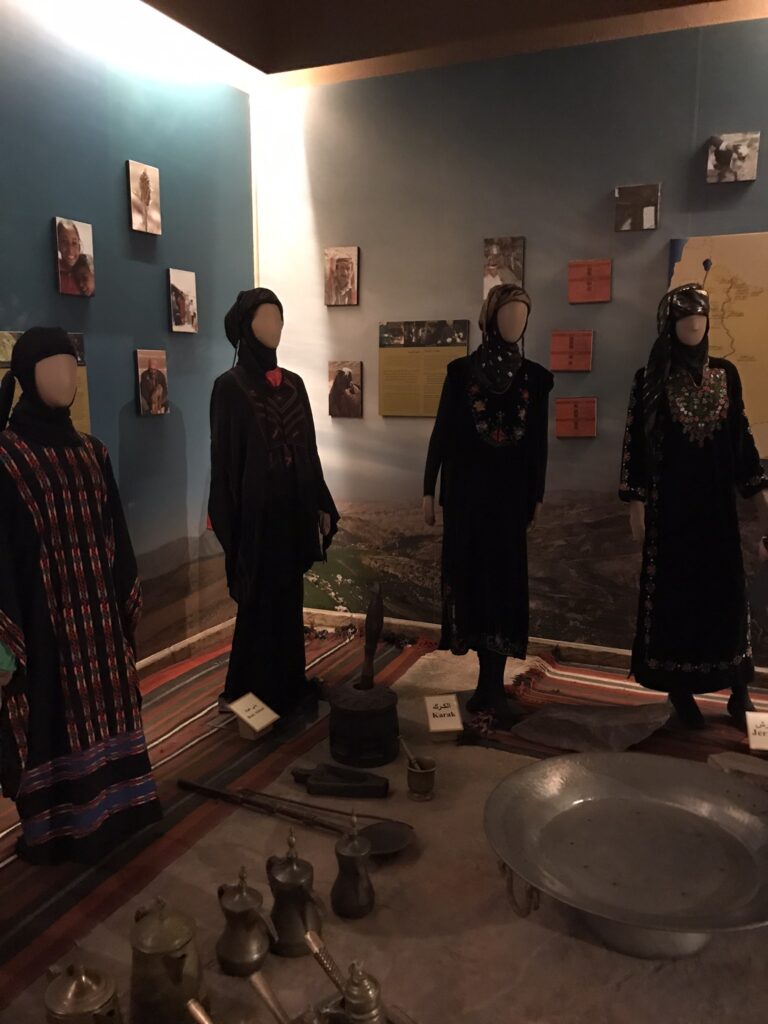
The 9,000 year-old Ain Ghazal statues were fascinating as well as the traditional Bedouin dress section
Citadel – situated atop a hill overlooking the modern city of Amman, this archaeological site contains many layers of history including a Roman Temple of Heracles (with Greek inscription), Byzantine Church and Baths, Umayyad period Mosque and Palace and Ayyubid Medieval Watchtower. This particular hill has been continuously inhabited for millennia by the Ammonites, Romans, Byzantines and Muslim dynasties all the way up to the modern era, and it is considered to be one of the oldest continuously inhabited places in the world. The dusty archaeological museum within the complex is worth a visit to have a peek at the archaeological finds from the site and other nearby digs. Prior to the construction of the Jordan Museum, this was considered to be the premier archaeological museum in the country. A sign claims that no food and drink is allowed inside the site, but we walked straight through with a coffee and weren’t challenged. There’s a small café inside the citadel after the ticket checks.
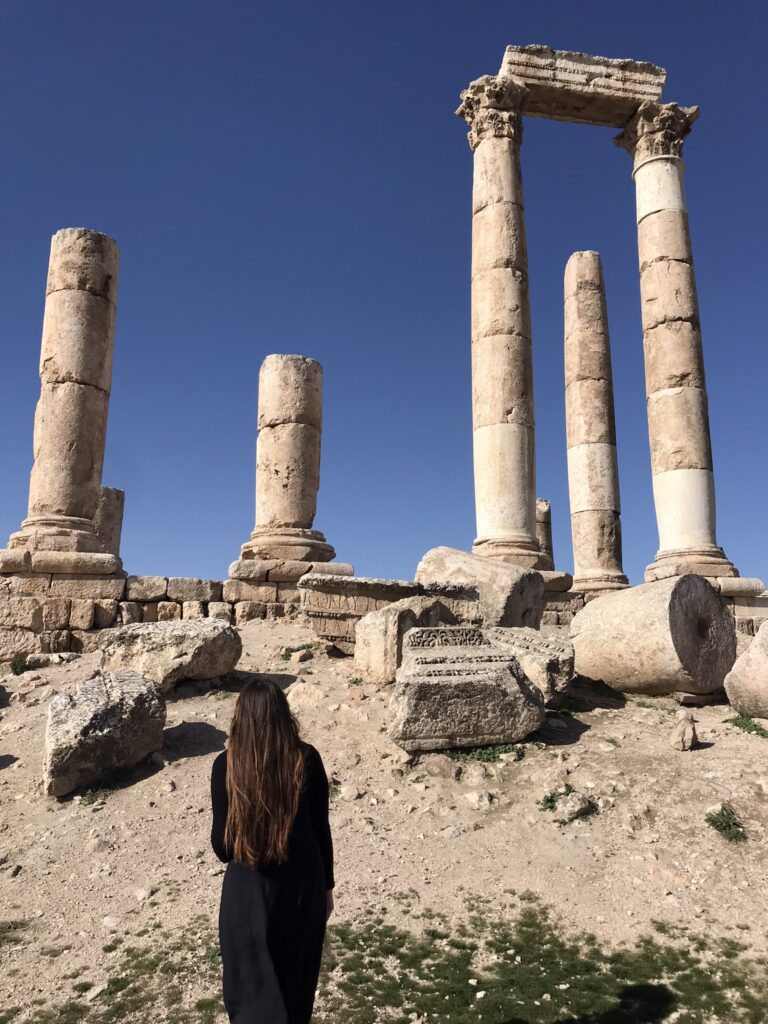
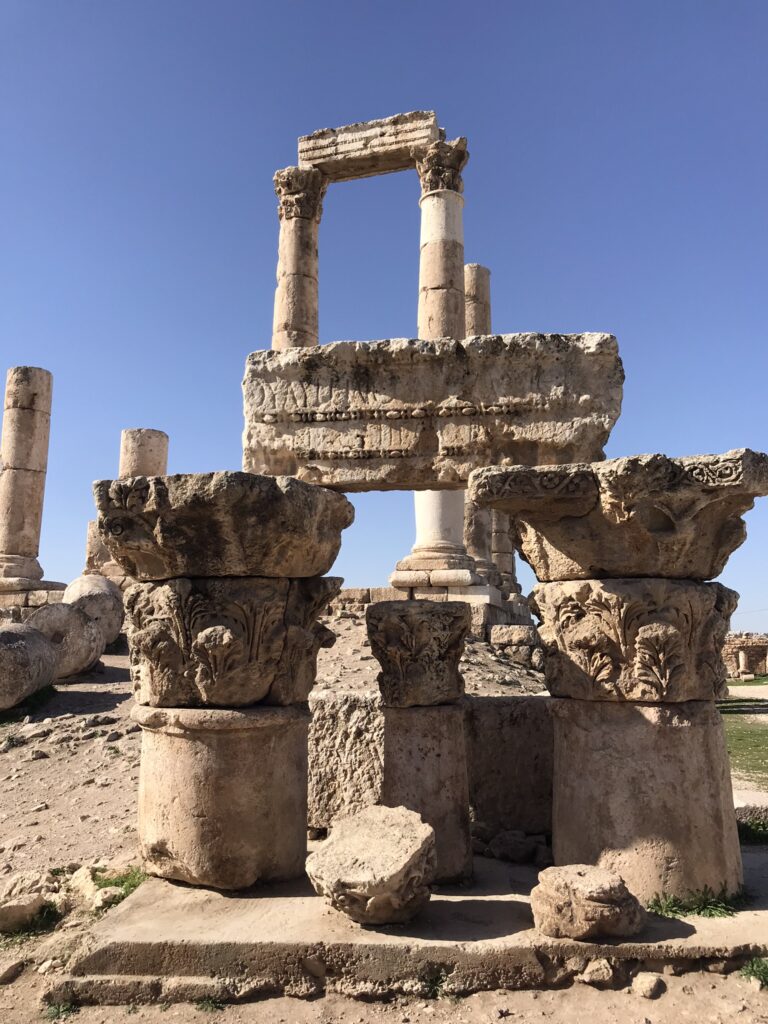
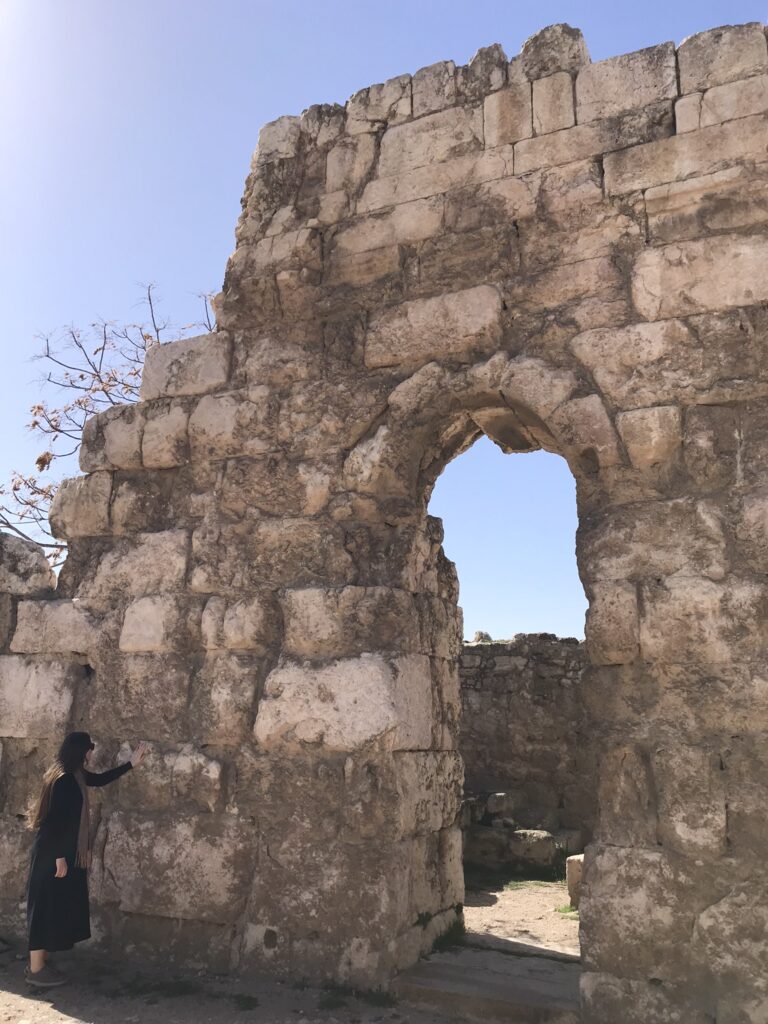
You really feel like you’ve been transported back in time at the Citadel
Roman Nymphaeum – built by the Ancient Romans as part of the water system to provide citizens with access to drinking water. Be aware that the site closes early in the afternoon (around 2pm), so it’s best to visit in the morning.
Roman Theatre – you can easily view the theatre without purchasing a ticket, however it’s best to go inside as there are two miniature museums flanking either side of the entrance featuring local traditional clothing, scenes from the daily life of the Bedouin people recreated by mannequins in traditional attire with local tools. It’s really interesting to learn more about these elusive people who spend their lives under the stars without modern conveniences, especially as their way of life is slowly dying out. The theatre is included in the Jordan Pass, so for those with the pass there’s really no excuse for not going in.
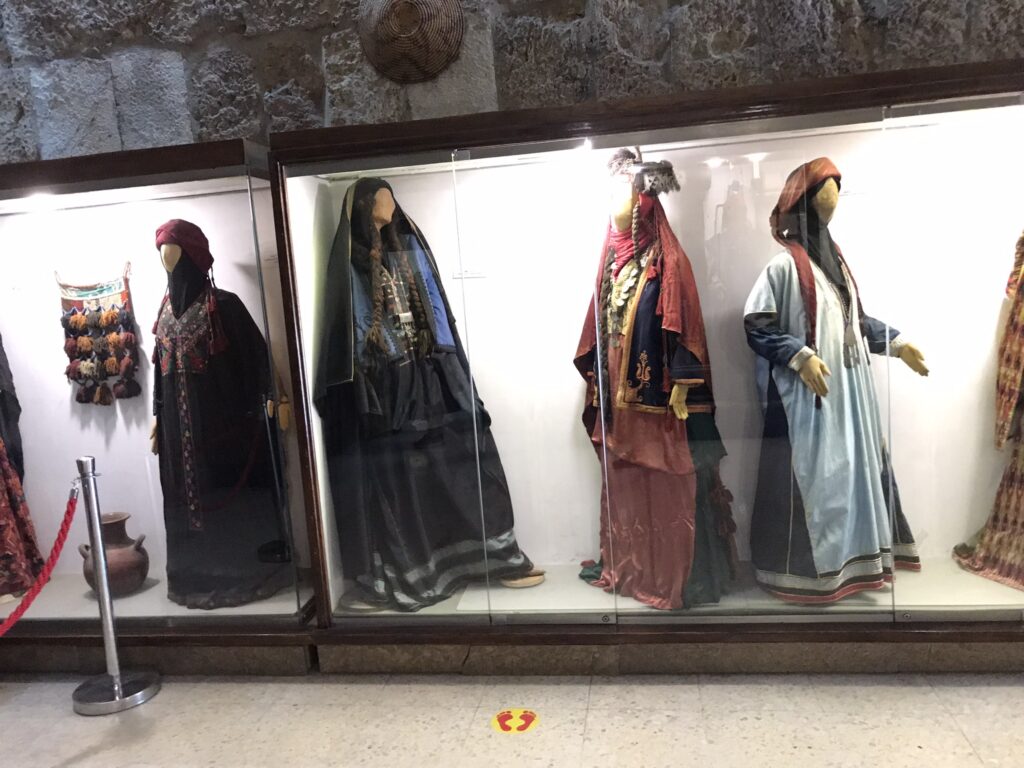
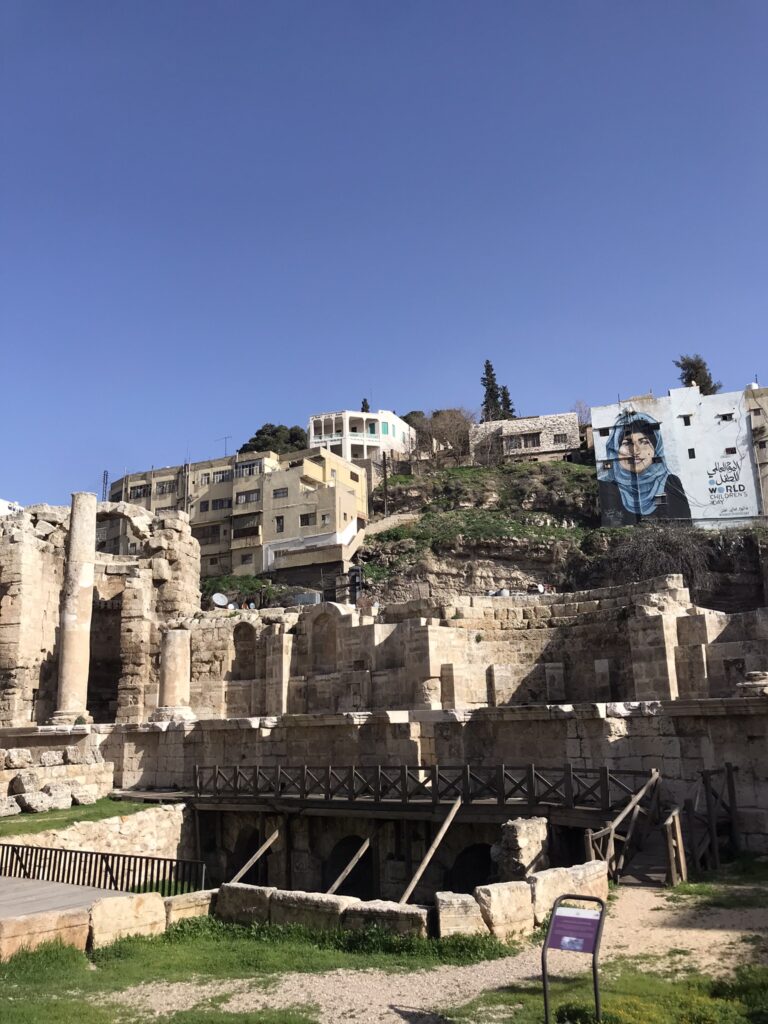
A gallery displaying traditional dress inside the Roman Theatre and the nearby Nymphaeum
Royal Tank Museum – located on the outskirts of the city, this museum traces the history of tanks right from Leonardo Da Vinci’s spherical cannon tank design in the 15th century through WW1, WW2 and the Israeli conflicts in the aftermath of WW2 with specific focus on the evolution of tank warfare in Jordan. The Jordanians were first given tanks by the British, before developing their own arsenal. There is a mind-blowing array of tanks within the museum, ranging from some of the first tanks ever created in WW1 to numerous Nazi tanks used in WW2 as well as a plethora of British, French and American tanks. Ironically, the museum itself is a huge building shaped like a tank, designed especially to house these old tanks. The information plaques within the museum are extremely detailed, with stats such as maximum speed, firing capacity, number of persons needed to operate the tank etc on display for each tank. You can even get inside a dissected tank to experience the claustrophobia of the drivers and tank operators – crammed in with very little space to move. The helicopter on display dangling from the roof was apparently flown by the King of Jordan during his military service. Overall this museum is excellent for those interested in military history, or anyone who just wants to have a look at some badass tanks. The staff held our bags for us in the entry area for free. We were slightly miffed however when we were hurried out of the museum 30 minutes before closing.
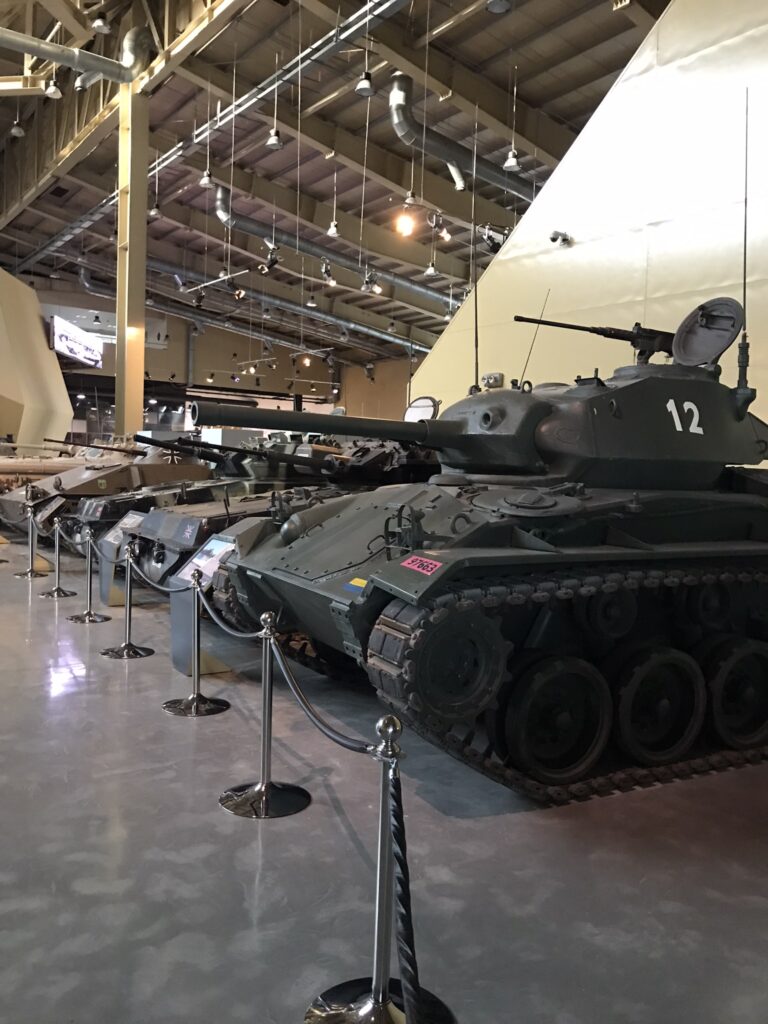
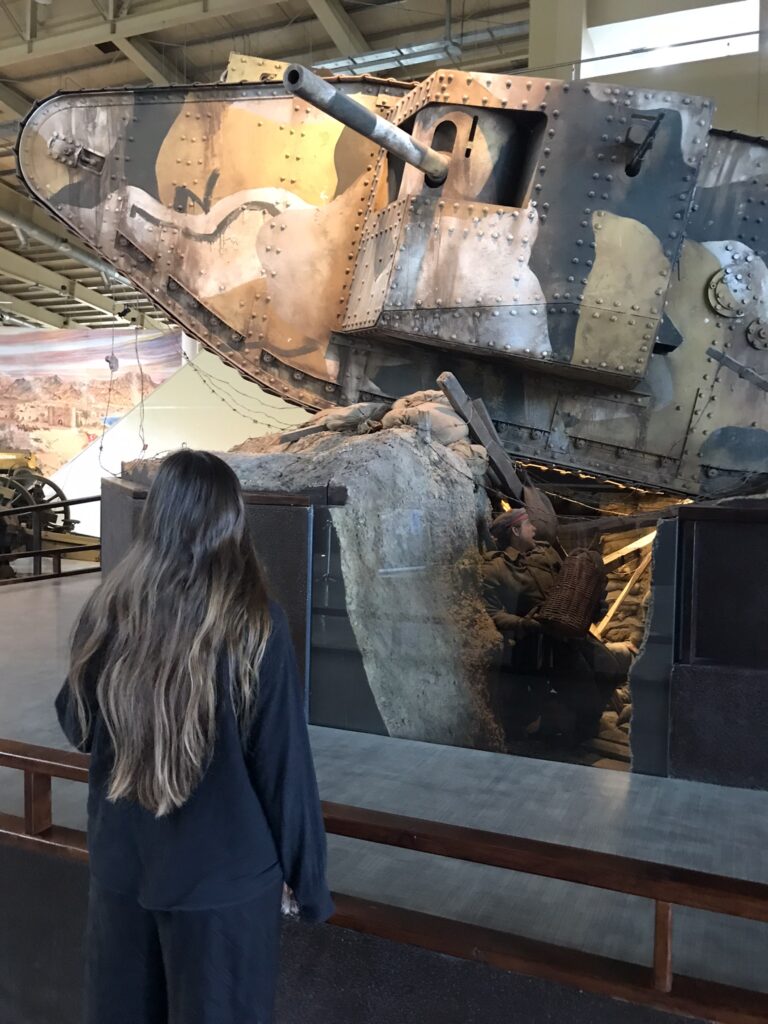
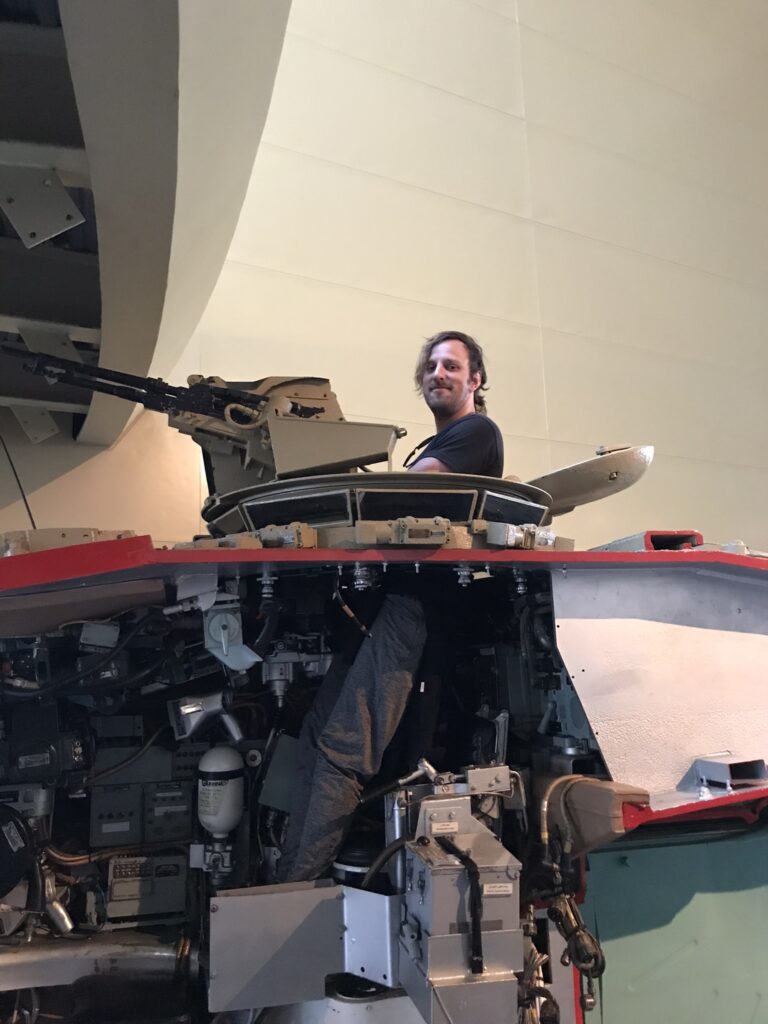
A lot of fun was had at the Royal Tank Museum
As-Salt day trip
The UNESCO World Heritage-listed city of As-Salt makes for an enjoyable day trip from Amman – it’s only about 27km away and very easy to reach on public transport.
The city of As-Salt was a thriving trading hub during the latter stages of the Ottoman occupation (1860s-1920s). Merchants flocked to the bustling city from Syria and Lebanon, bringing with them new culture, architecture and practices. At that time As-Salt was the pre-eminent city in the region – greater in wealth, trade and population than Amman, and considered to be the regional capital during the Ottoman era. The city features a mix of opulent heritage homes built by wealthy citizens, Ottoman-era architecture blending with Art Nouveau, and neo-classical styles such as the grand Ottoman mosques and historic churches serving the Christian community. The most iconic feature of the city is the yellow limestone residences that crowd the parallel ridges upon which the city is built; the yellow limestone is local to the region. We were shocked to learn that the marauding Mongol armies had apparently reached this region, as they were said to have destroyed the Islamic castle in As-Salt in 1260.
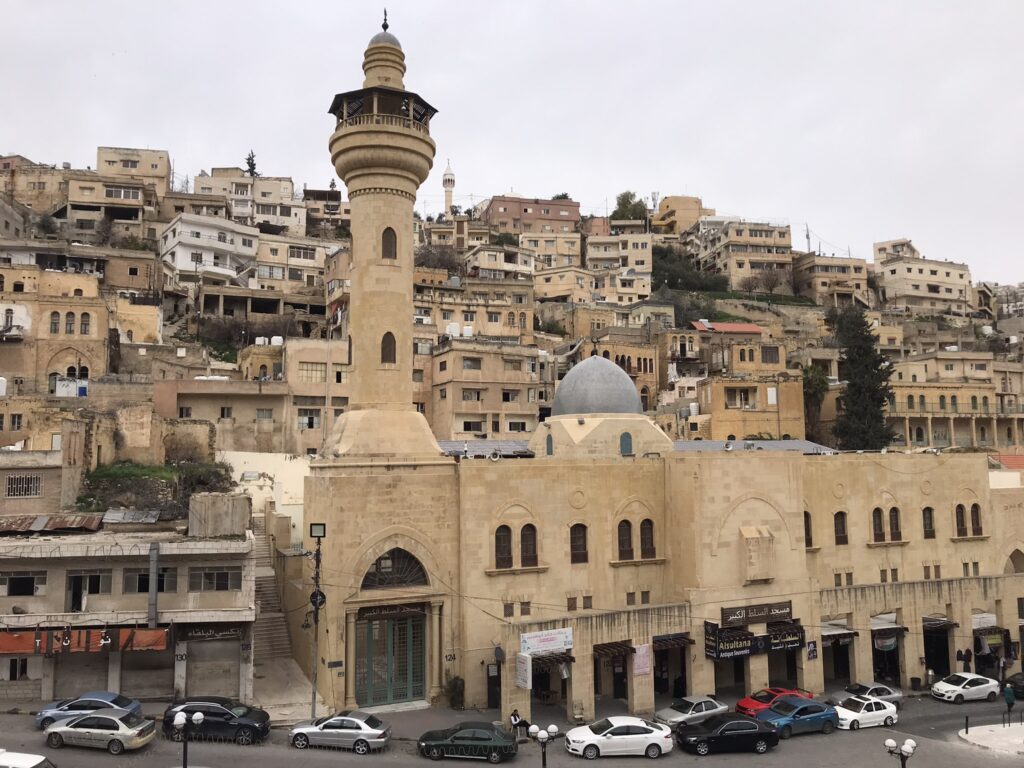
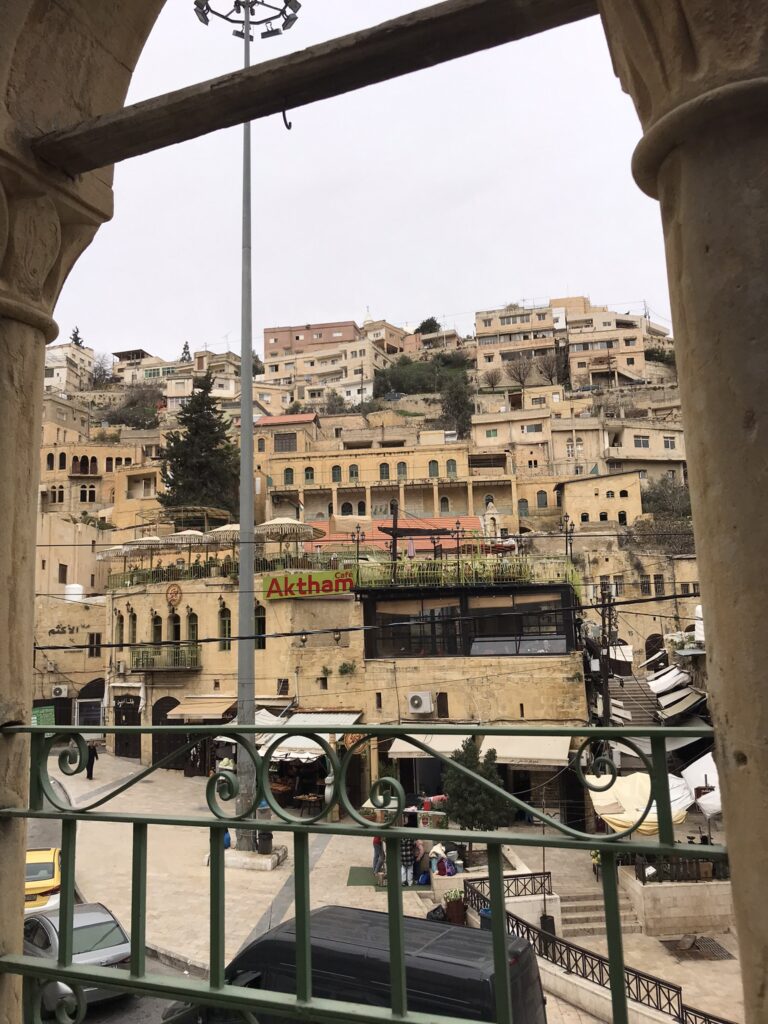
As-Salt is incredibly picturesque – perfect for a leisurely stroll!
As-Salt has been granted UNESCO World Heritage status due to the harmony between the Christian and Muslim community and traditions of hospitality and tolerance towards one another. Neighbourhoods aren’t segregated along religious lines and Christian and Muslims continue to live side-by-side amongst each other. As-Salt has a staggering 650 significant historic buildings, however only a handful are open to visitors.
The most popular loop for visitors is the Harmony Trail, a walking route which takes in most of the main historical buildings and sites in the city. Abu Jaber House, which contains the Historic As-Salt Museum, provides free leaflets with in-depth information about both the Harmony Trail and Hammam Street, which is a historic and bustling shopping street. One of the most interesting spots in the city is St George Greek Orthodox Church. St George is called Al-Khader in Arabic and is a figure revered by both Christians and Muslims. This church even allows Muslims to pray within the precinct. There is a small admission fee to enter, but the warden gives you a candle and St George token card as a keepsake. The church was built in 1682 over an ancient cave in which St George was said to have appeared to a local shepherd, asking him to build a church and offering to protect his flock of sheep from wolves in return. When the townspeople saw that the wolves did not attack the sheep, they declared it a miracle and constructed the church.
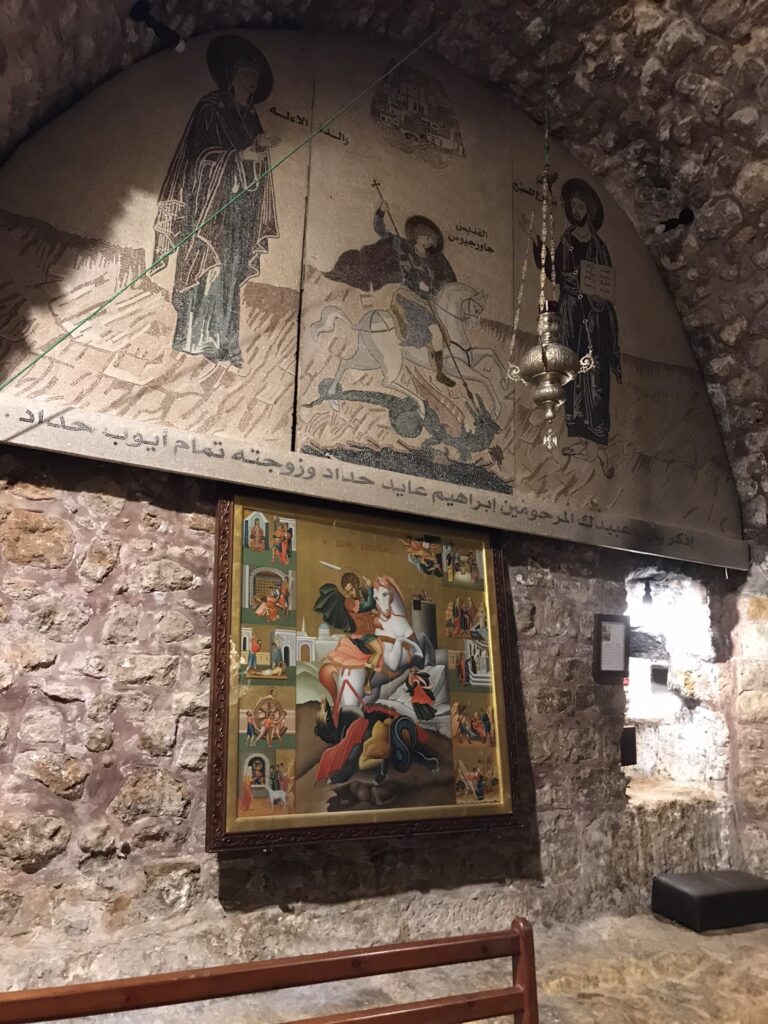
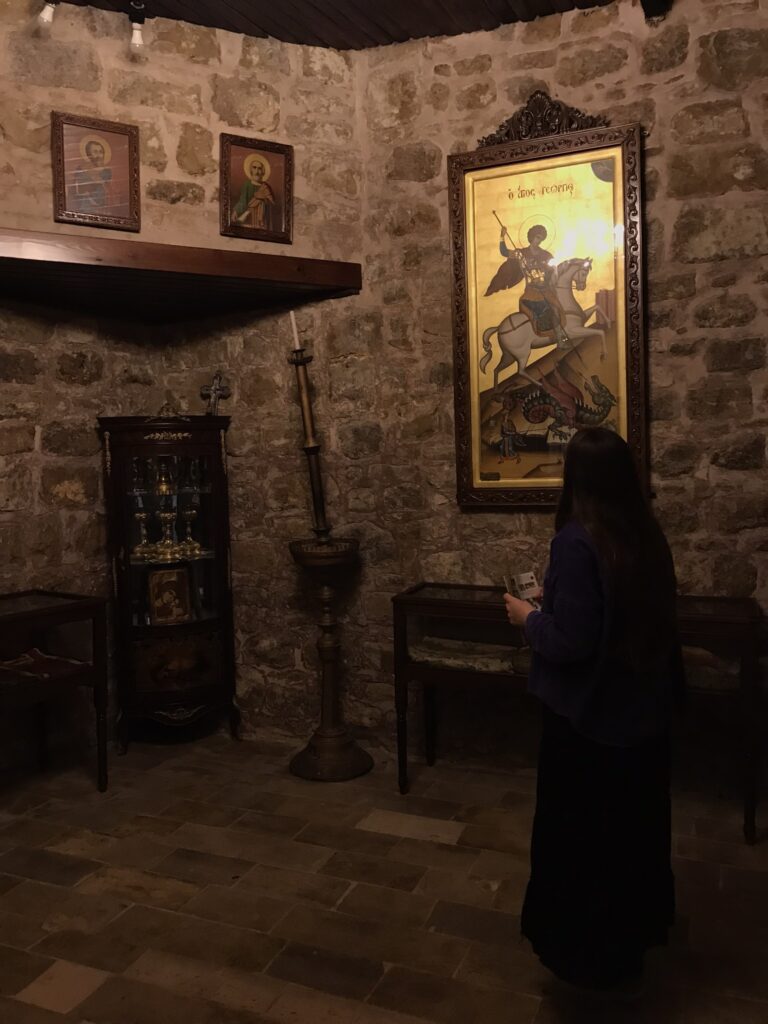
We found it very interesting to hear Christian hymns sung in Arabic at St George Greek Orthodox Church, as well as both Arabic and Greek writing on religious iconography of St George.
A concerted effort has been made to encourage tourists to visit As-Salt. Interestingly, the United States Agency for International Development (USAID) has been actively involved in As-Salt, focusing primarily on urban rehabilitation, heritage preservation, and tourism development. The pamphlet we picked up from Abu Jaber House was authored by USAID. They’ve also produced an informative leaflet about local products and crafts such as shoe-making, traditional medicine, clothing and food as well. Some of the grandiose heritage houses located here overlooking the main square seem to be derelict which was a bit sad. Hopefully they’ll be rejuvenated soon!
Oddly we found there weren’t many foreign visitors at all while we visited – perhaps this is because we weren’t visiting in peak season. We spotted a grand total of about 5 foreign tourists. Some parts of the harmony trail almost felt closed and even a tad neglected. However we did meet some very enthusiastic locals and children along the way who provided us with a warm welcome.
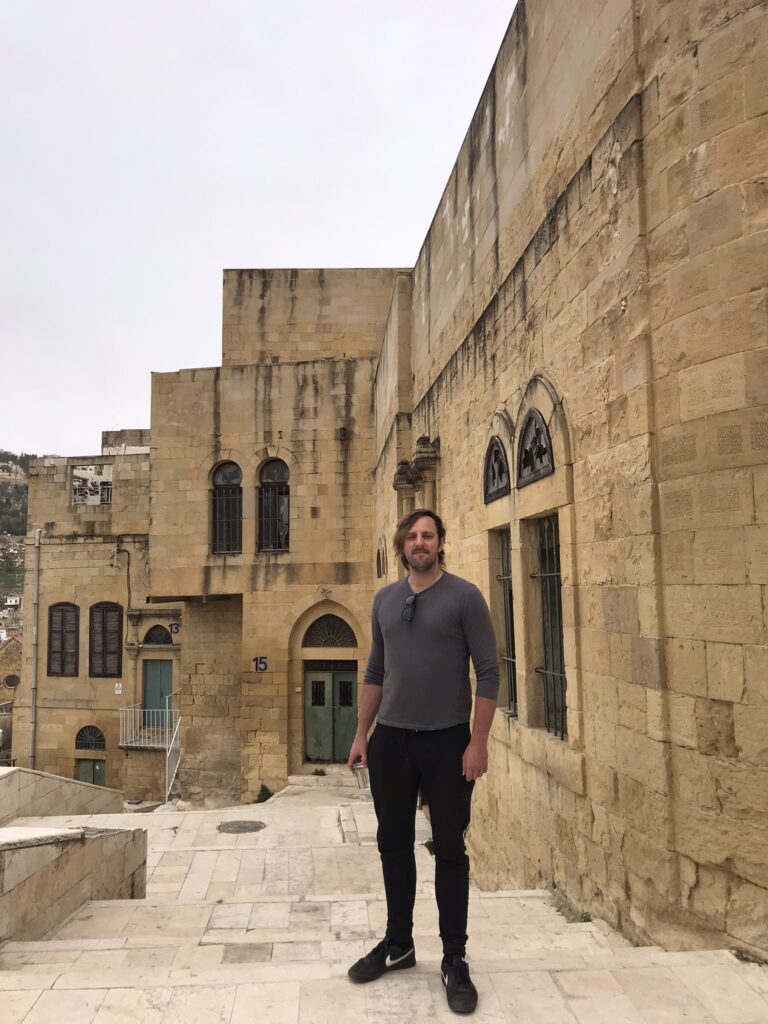
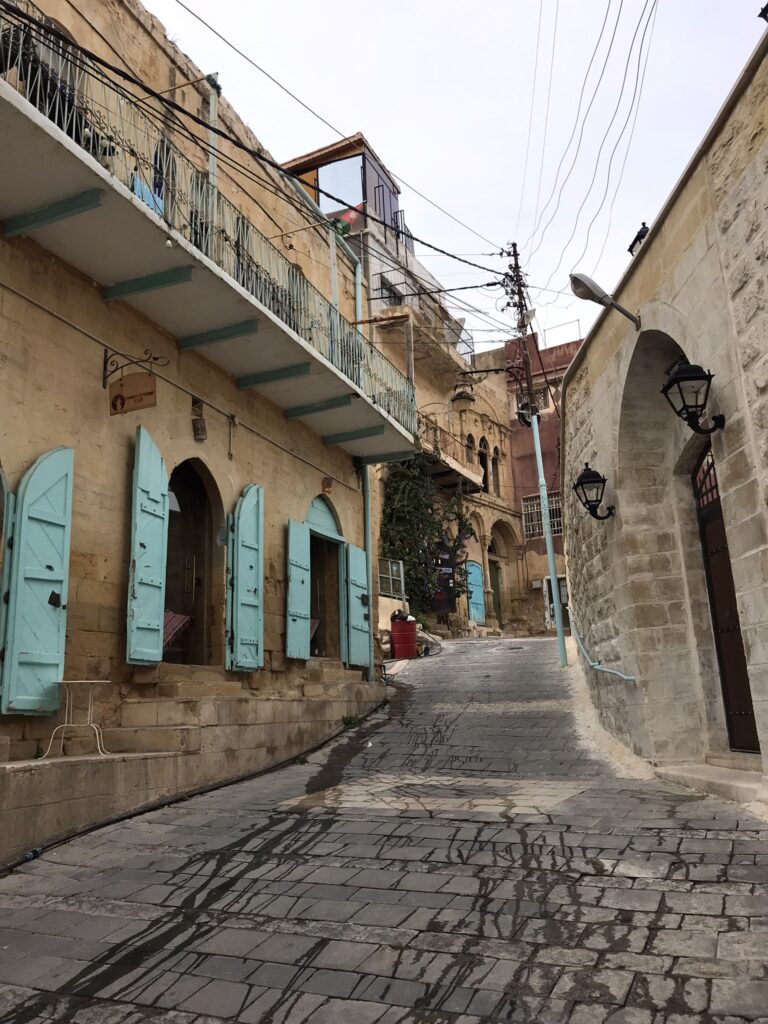
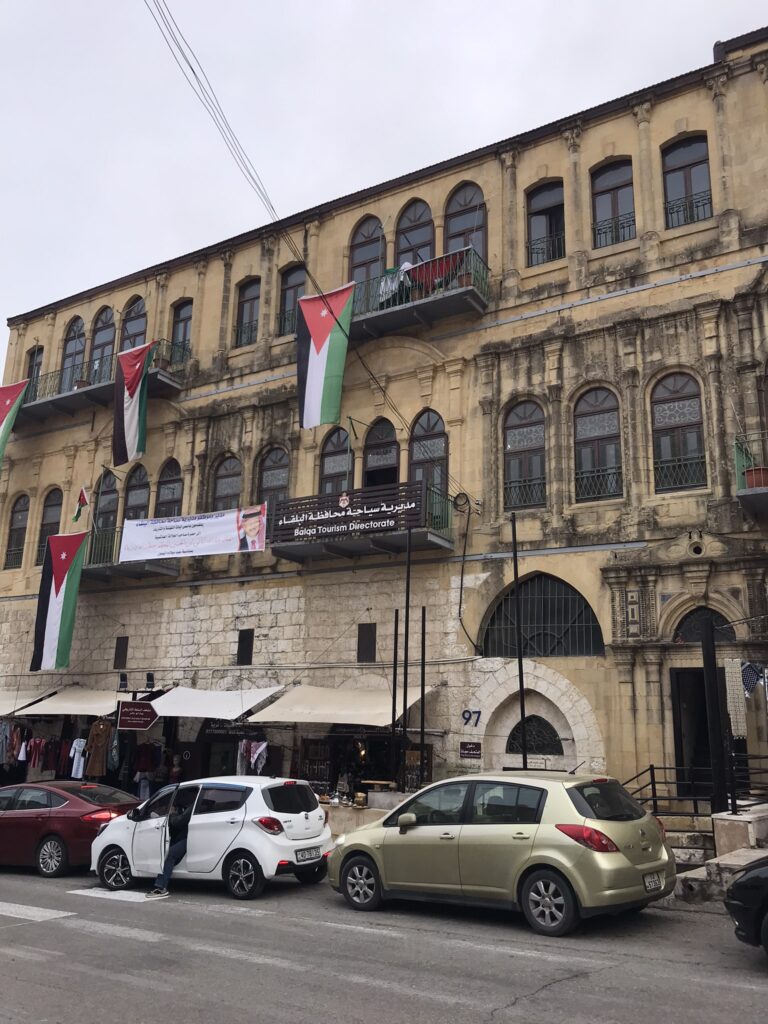
Heritage houses in As-Salt are all very unique and full of character
From Amman, the best place to get a bus to As-Salt is Sweileh interchange, at the north-western edge of the city. We attempted to get a direct bus from the Northern Bus Station in Amman, however this resulted in quite a long and complicated journey as we ended up having to change at the University. It was quite random as the minibus stopped outside the university and a man jumped on the bus shouting As-Salt – we then quickly dashed off the original bus and got onto a different one that went all the way to As-Salt. I recommend just getting an Uber straight to Swaileh and the bus from there. When you arrive, avoid the taxi hustlers at all costs as they will lie to you that there isn’t a bus to As-Salt. Just walk straight past them and approach someone genuinely waiting for the bus – most people will help you out as it’s pretty difficult to understand the bus station signage which is only in Arabic. As is usual with public buses in Jordan, expect frequent stops to pick up passengers and some faffing about, delays are to be expected. From the northern bus station we reached As-Salt within 2 hours, although it should take only about an hour by car. When returning, head to this location and just ask the drivers for the next bus back to Sweileh.
Foodie Places
We headed to Alexandrian Café for lunch, although it’s called Iskender on the signage outside which led to some confusion. The restaurant is located on Hamman Street. You have the option to eat outside or within the cave section of the establishment. Highlights for us were the fresh flatbread from the grill. The food was all very much homemade by some local ladies, Dan particularly enjoyed the mutabal.
Petra/Wadi Musa
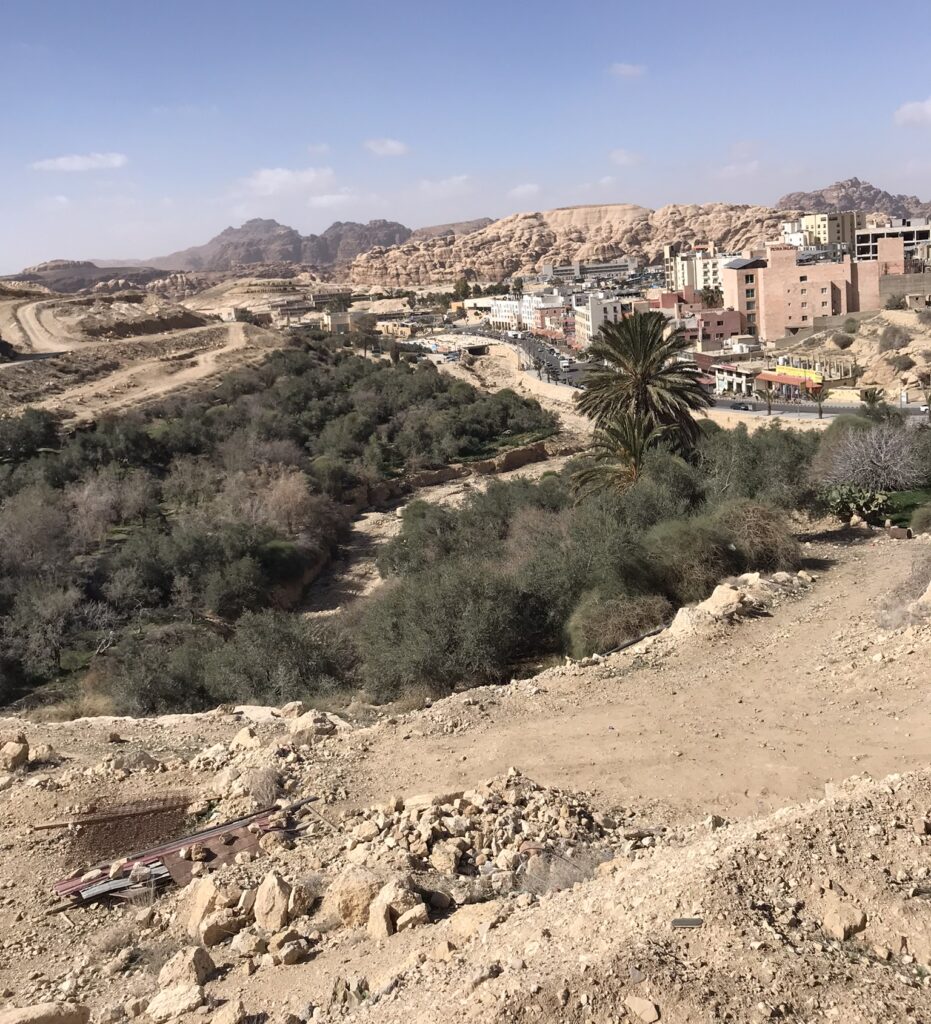
One of the seven wonders of the world and a UNESCO World Heritage site, Petra is synonymous with Jordan and incredibly well-known and highly regarded throughout the world. No Jordan trip is complete without a visit to Petra, which was the monumental capital of the Nabataean kingdom – an Arab kingdom of formerly nomadic peoples which dominated the region from the 3rd century BCE to the 1st century CE, controlling and maintaining the influential trade routes which passed through the region and becoming exceedingly wealthy as a result.
At its peak (between 1st century BCE and CE), Petra held 20,000 inhabitants. It was known as Raqmu by the Nabateans – Petra is actually its Greek name. The city came under direct Roman control in 106 CE after the death of the last Nabatean king. In a twist of fate, the once noble city fell into a slow decline due to the gradual development of sea trade routes, which bypassed the Nabatean territory. Some Byzantine churches were built in the area during the later part of its inhabitation, however by the early Islamic period the city had been completely deserted except by some nomadic herders. Petra was later rediscovered by a Swiss traveller in 1812.
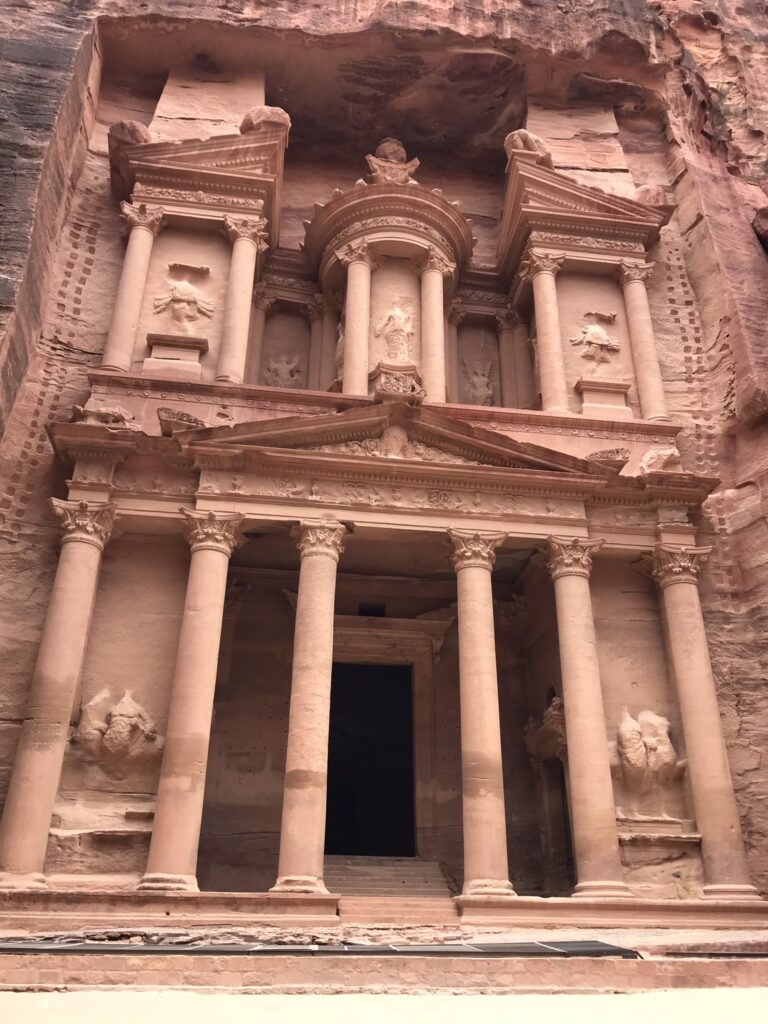
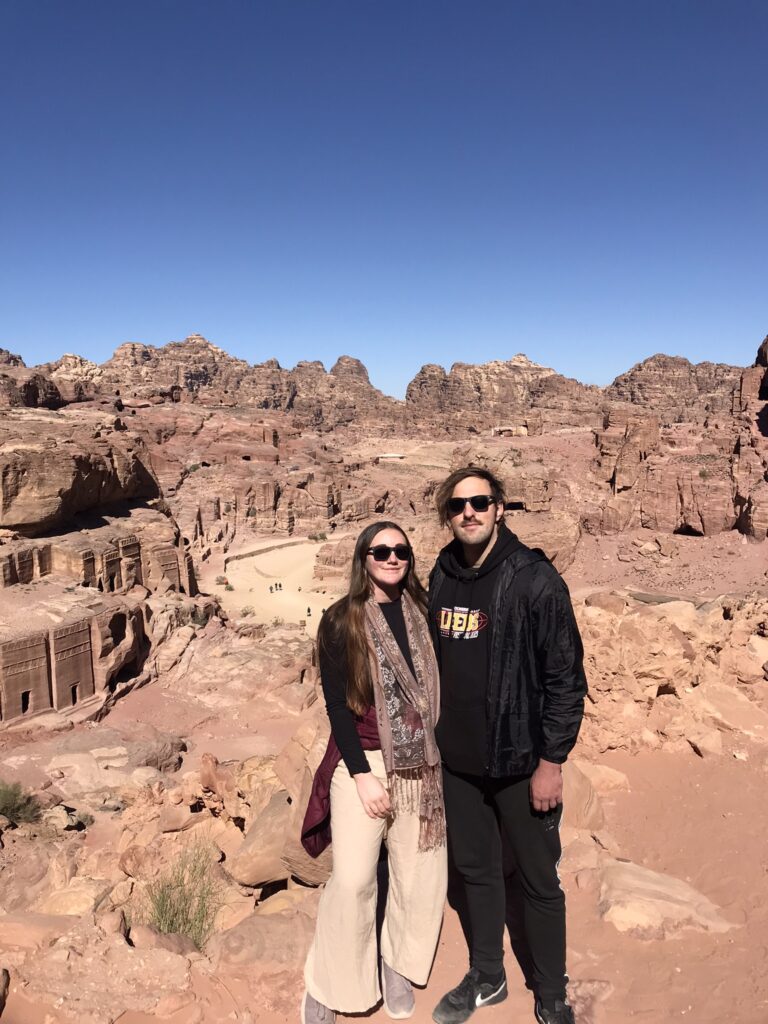
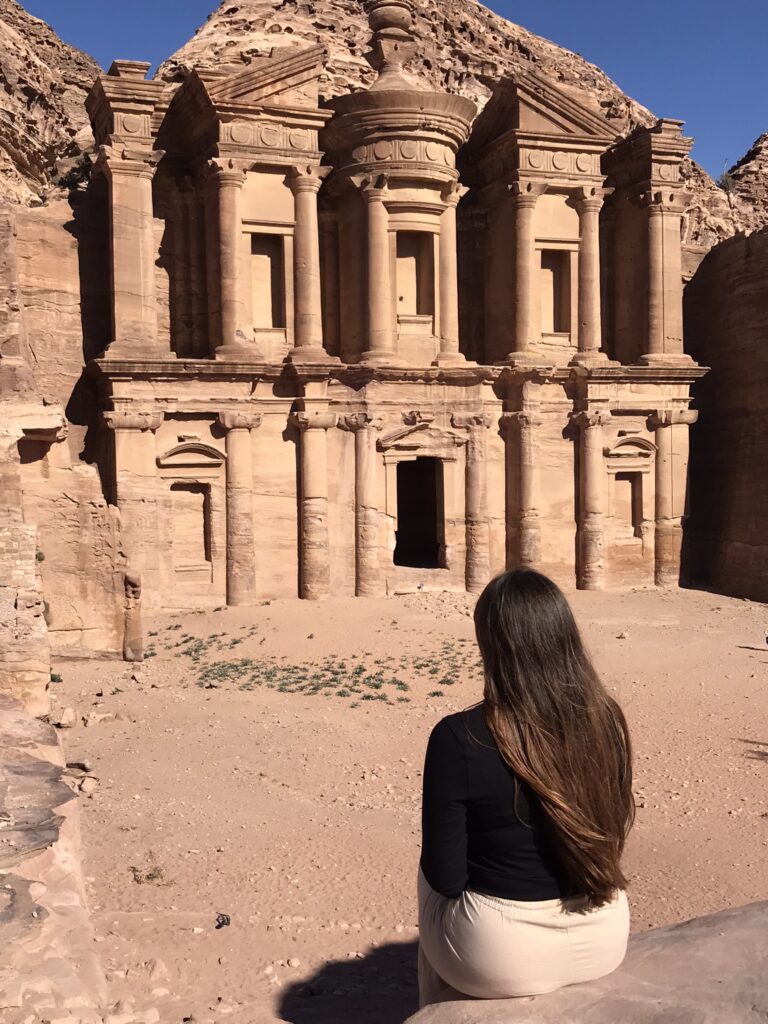
Petra highlights (from left to right): the Treasury, Place of High Sacrifice trail and the Monastery
Wadi Musa is the name of the modern town which lies at the entrance to the ancient site, and the two are largely synonymous when referring to the area. The town of Wadi Musa has developed almost completely around tourism in an otherwise poor and somewhat isolated desert region, and it’s still surprisingly undeveloped considering the prestige of Petra. As is always the case with an influx of wealthy tourists into a poor area, there are plenty of hustlers and hasslers around looking to extract as much money as they can from gullible tourists and unsuspecting visitors, and Petra/Wadi Musa is probably the most scammy place we visited in Jordan as a result. To be honest it really wasn’t that bad in comparison to many similar places that we’ve visited in other countries (absolutely nothing compared to Egypt, for example), however travelers need to keep their wits about them here moreso than elsewhere in Jordan or risk being ripped off. Both Wadi Musa and Petra are also exceptionally hilly – expect to be absolutely worn out from constantly walking up and down.
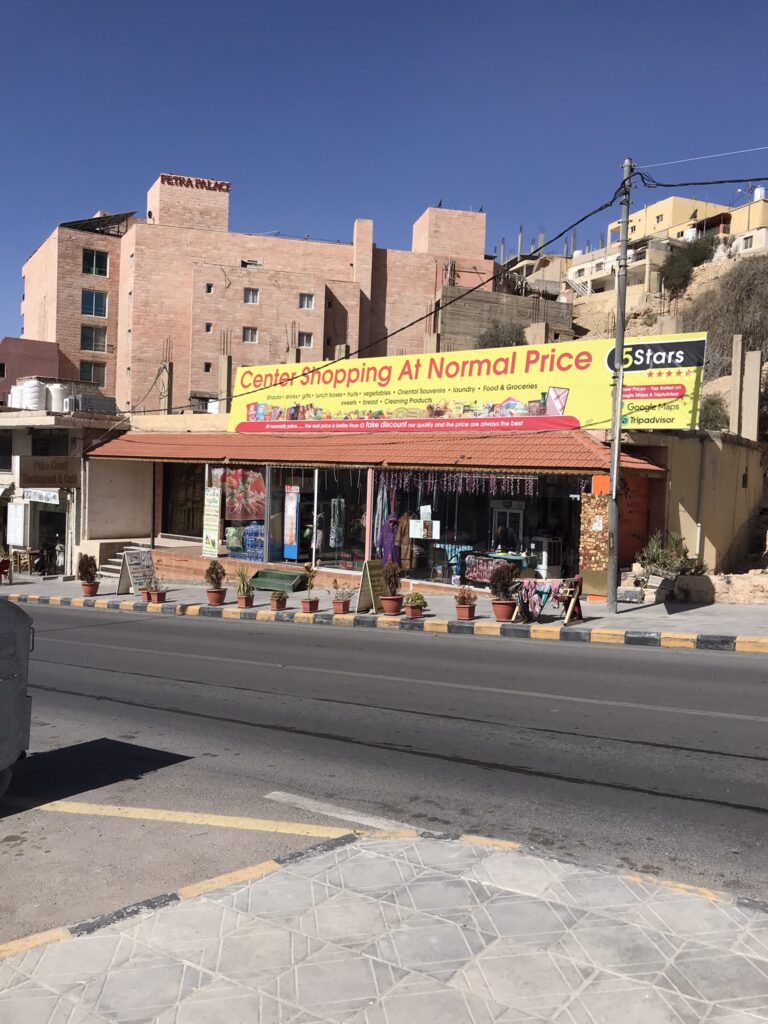
Definitely not a scam… to be fair, bottled water is a good price here – they will just try to relentlessly upsell and rip you off for everything else
Interestingly, Petra itself is still home to about 28 families who continue to live in remote caves. This community of cave-dwellers lived for generations in the area before being displaced from the archaeological site and moved to the nearby village of Umm Sayhoun. We were told that some families tried to return to their caves after being given an apartment in the village. Many of the sellers around the archaeological site are members of these communities, and they can be quite interesting to talk to if you can get past the initial sales pitch.
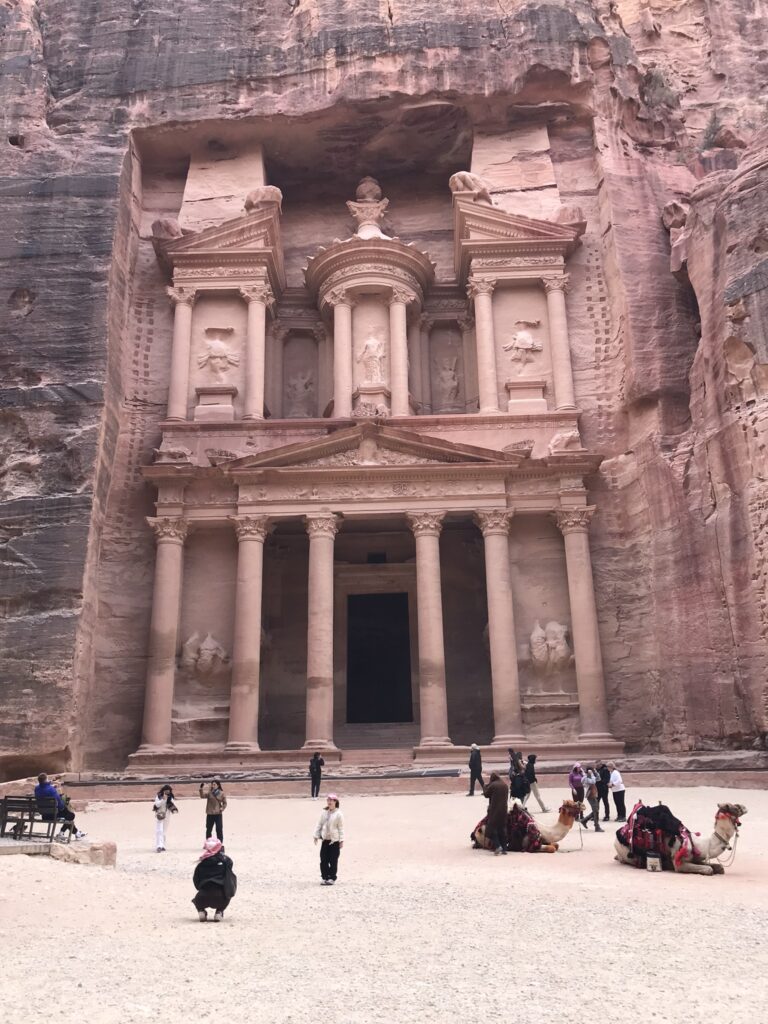
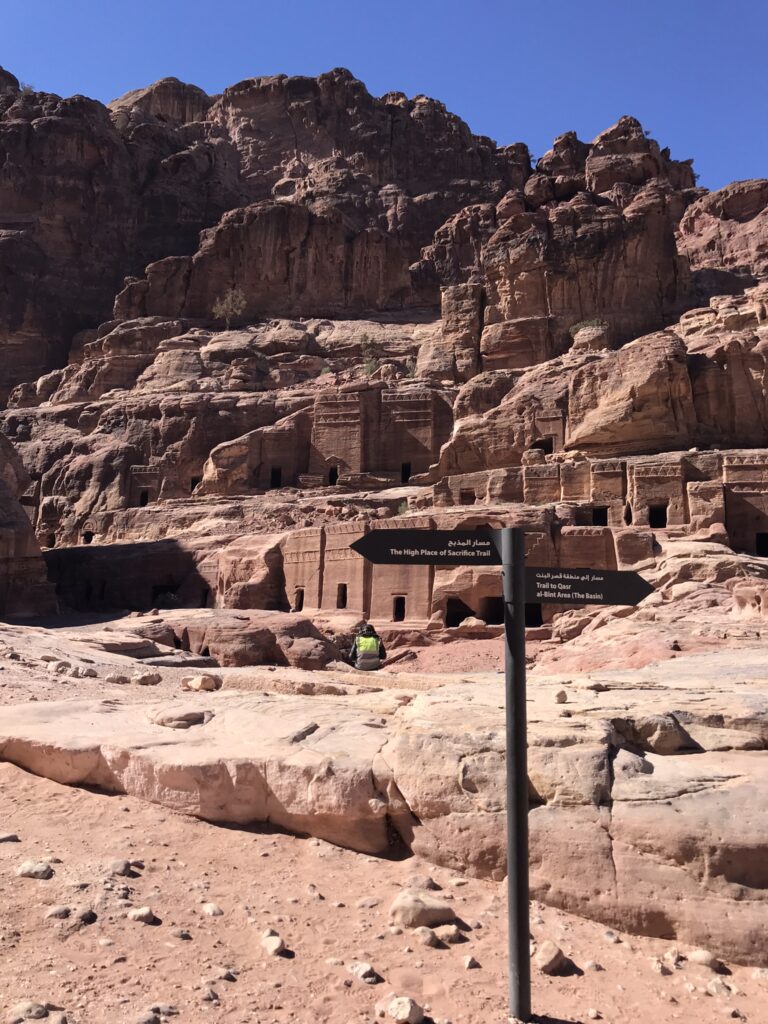
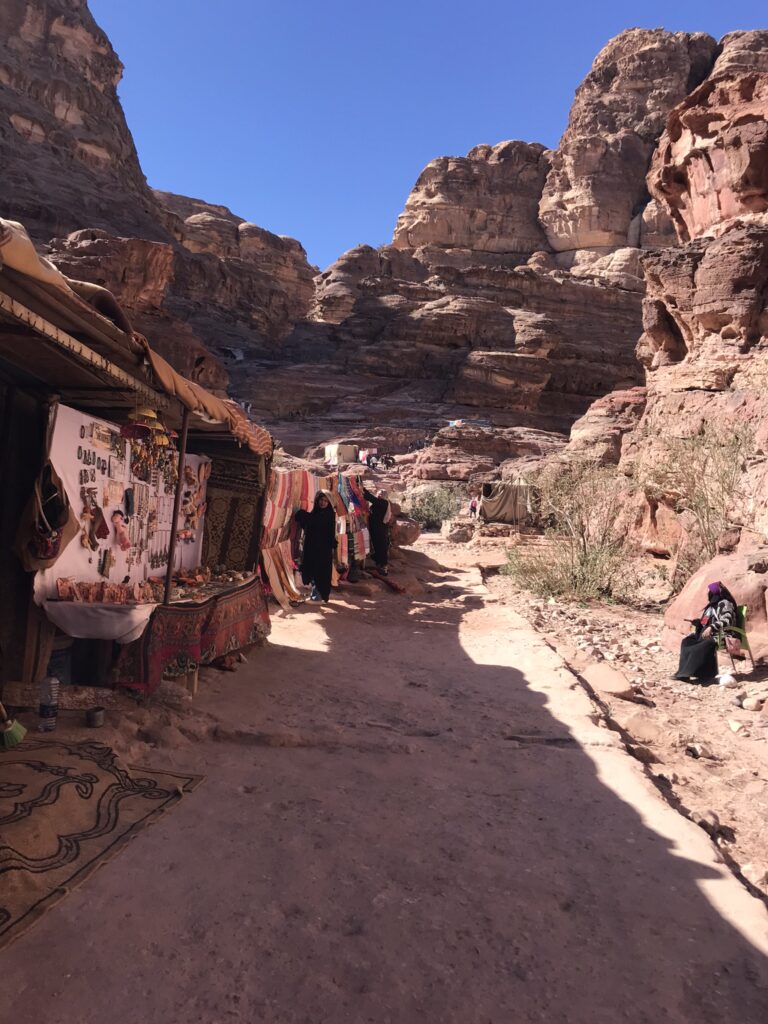
Camel hustlers at the Treasury, tombs that were most definitely homes along the main route and female stall-holders on the trek up to the Monastery
Activities
Petra – even if you’ve seen photos of Petra, that first glimpse of the Treasury emerging between cracks in the gorge will take your breath away. Petra has featured in movies such as Indiana Jones – there’s even a trail you can take that visits some of the places where the movie was filmed.
The most outstanding structures still remaining on the site are the royal mausoleums cut into the rock with such elaborate detail, the most famous being the Monastery, the Treasury and the Royal Tombs. The Monastery and the Treasury are extraordinary standalone mausoleums, both inaccurately named by western archeologists who took a guess at their original purpose. The Treasury is the first notable tomb that visitors will encounter along the main route into Petra. Also known as Al-Khazneh, the Treasury was so named after a legend in which a Nabatean king hid treasure in the urn on the facade of the monumental structure – bullet holes can still be seen as later people tried to smash the urn to get the treasure. The Monastery is at the far end of the site – to reach it you have to climb about 800 steps, which can take up to an hour and may be challenging during high temperatures. We didn’t find the stairs too taxing but I can imagine it might feel like climbing a mountain in 40C heat in the middle of summer. There are a number of other notable tombs and other structures around the site, including the Theatre, Qasr Al-Bint and the so-called Royal Tombs, which consist of a number of massive tombs standing side-by-side in varying degrees of decay.
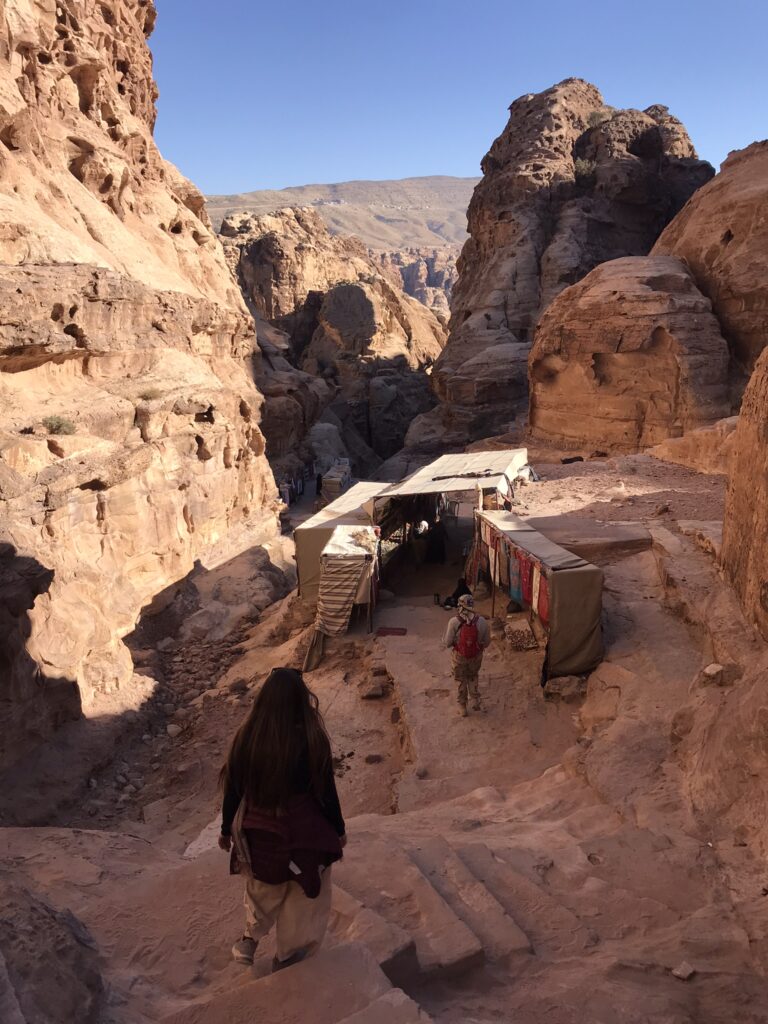
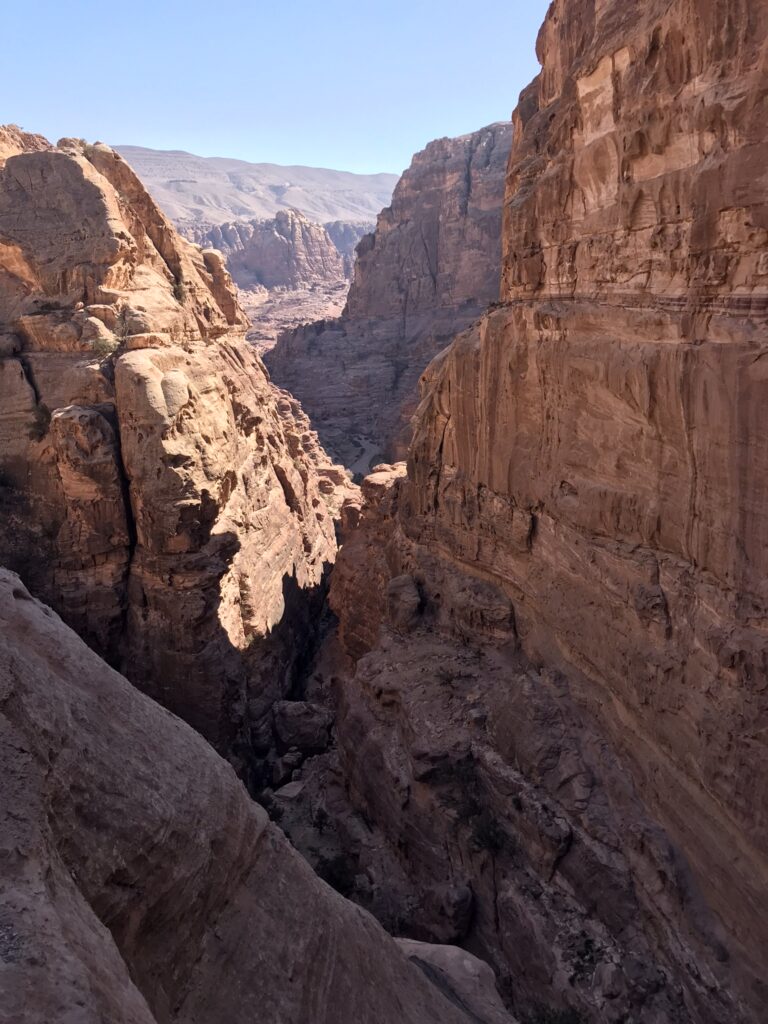
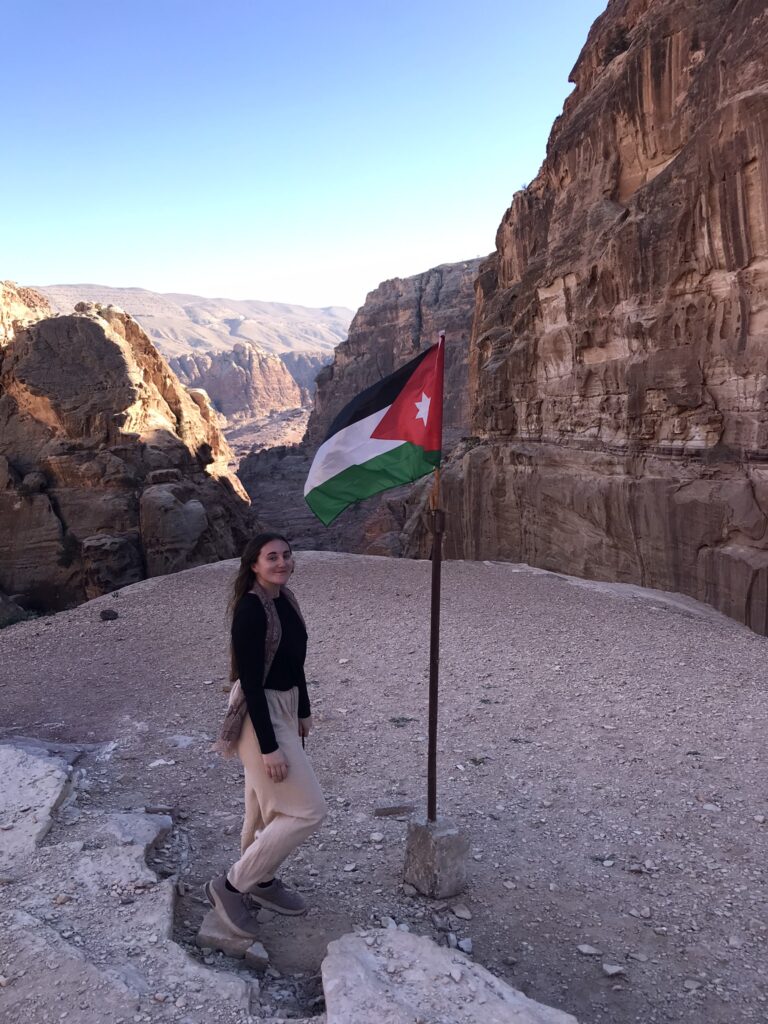
To get to the Monastery you have to climb stairs through a picturesque red-stone canyon
Visitors to Petra may be overwhelmed at first, as the site is massive with a lot to see and the best course of action upon arrival isn’t immediately clear. There are a number of different walking trails and when planning it can be difficult to work out which to follow and what to actually do with your time. The most important thing is not to get too distracted by the various trails. After passing through the main entrance, all visitors will walk down a long path, passing a few small structures before reaching the Siq – a large canyon which marks the main entrance to the ancient city. A path then leads through the Siq, past the Treasury and through the remainder of the site, passing numerous monuments along the way to Qasr al-Bint and the start of the hike up to the Monastery. This is the standard walking route which most visitors will follow and covers the highlights, with easy detours along the way to see the Byzantine Church with its mosaic floors and the Royal Tombs. For those with additional time, there are some very rewarding hikes to ancillary viewpoints and sites, which is why many people suggest spending more than one day at Petra.
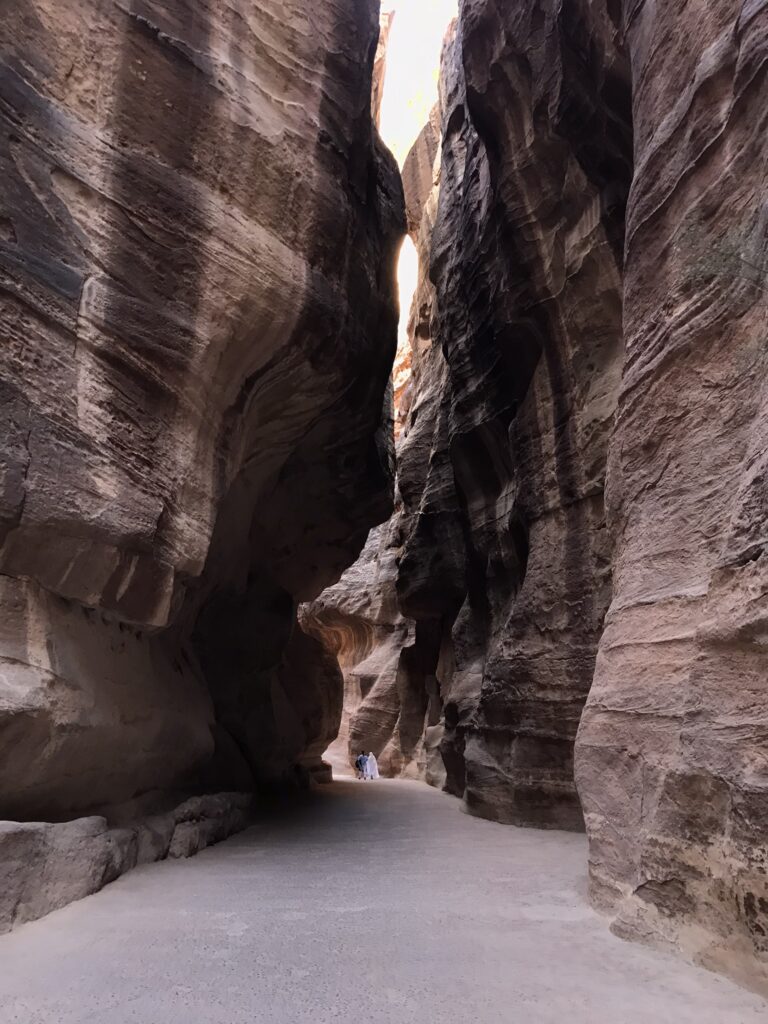
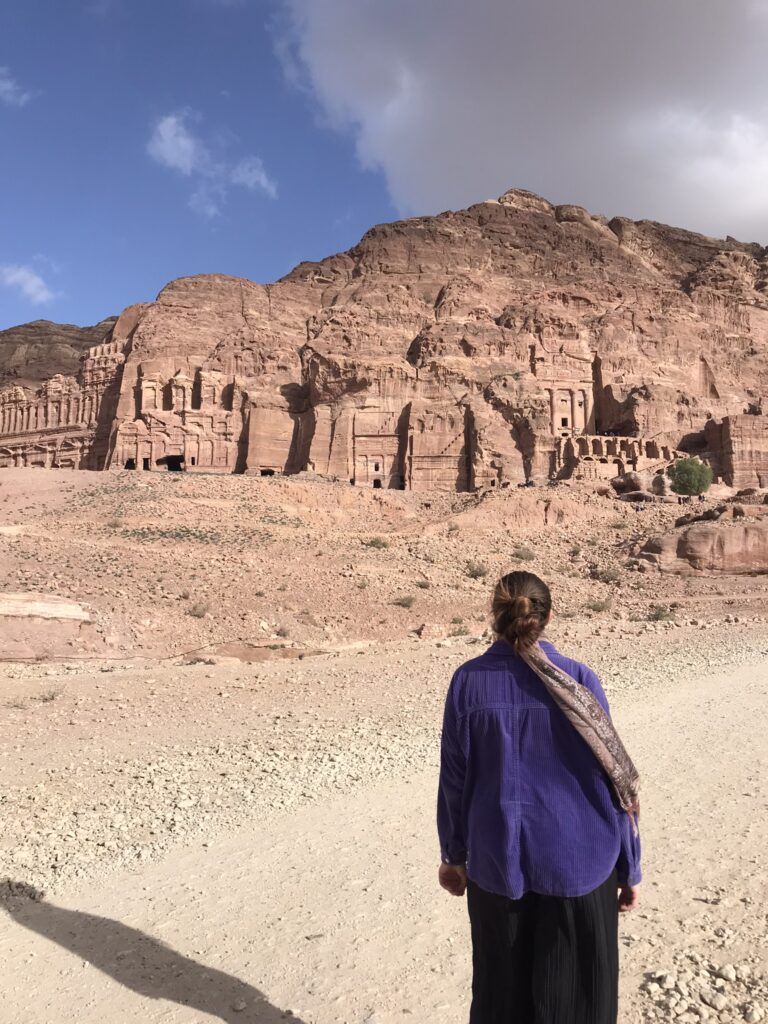
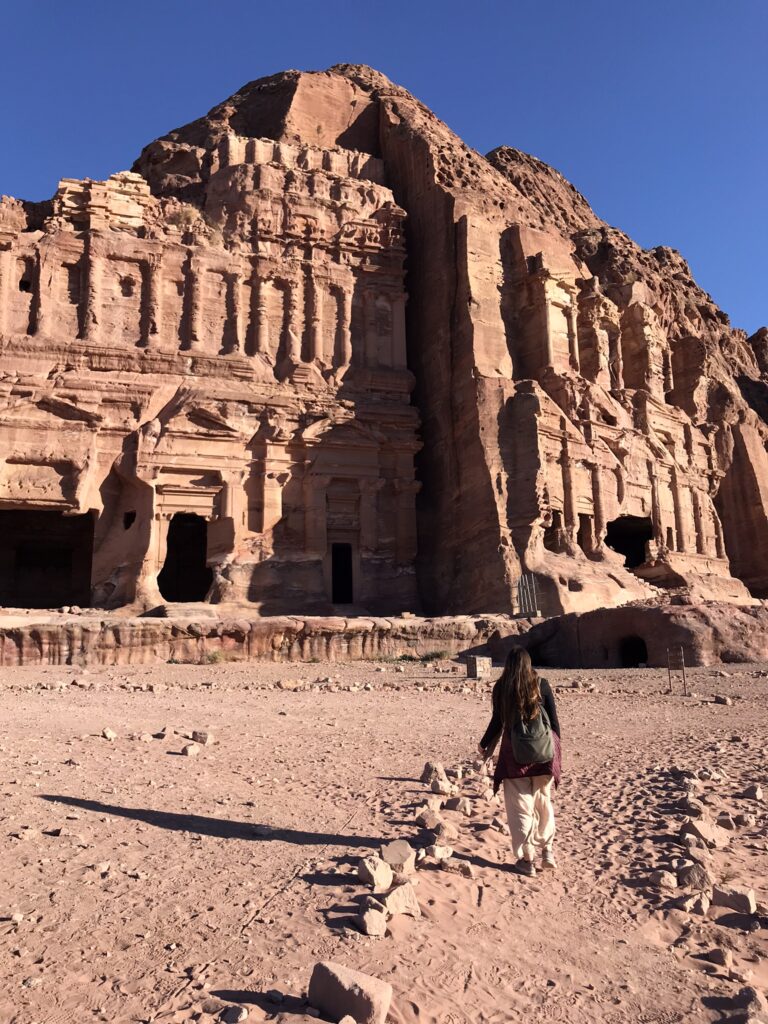
The grand Siq avenue really builds the suspense before the final reveal of the Treasury; at the end of the Siq are the monumental Royal Tombs
We felt like a day and a half was the perfect amount of time to explore the site without rushing. We caught the early morning JETT bus from Amman, checked into our hotel in Wadi Musa, had some lunch and then meandered down to the entrance to Petra, spending a few hours at Petra Museum for context before heading into the site in the mid-afternoon and walking the main route from the Siq to Qasr Al-Bint, comfortably seeing the highlights in a few hours before sunset. On the second day, we hiked the High Place of Sacrifice trail and the Monastery trail. The High Place of Sacrifice route was really interesting as we got to visit some of the lesser known sites of Petra like the Tomb of the Roman Soldier, and we even spotted some of the caves where local families still reside. We barely encountered anyone else on this trail, which made the experience even more special. The second day was more challenging than the first in terms of trekking and distances, but very much doable if you’re of an average fitness level like us. We had plenty of rest breaks, including stopping for a picnic lunch, and still managed to see everything we wanted at a leisurely pace and reach the site exit of the site around sunset. A top tip we were given by a local Bedouin-looking guy was to hang around the Monastery for sunset, as the setting sun turns the sandstone a brilliant pinkish colour. Petra is known as Rose City for this specific reason.
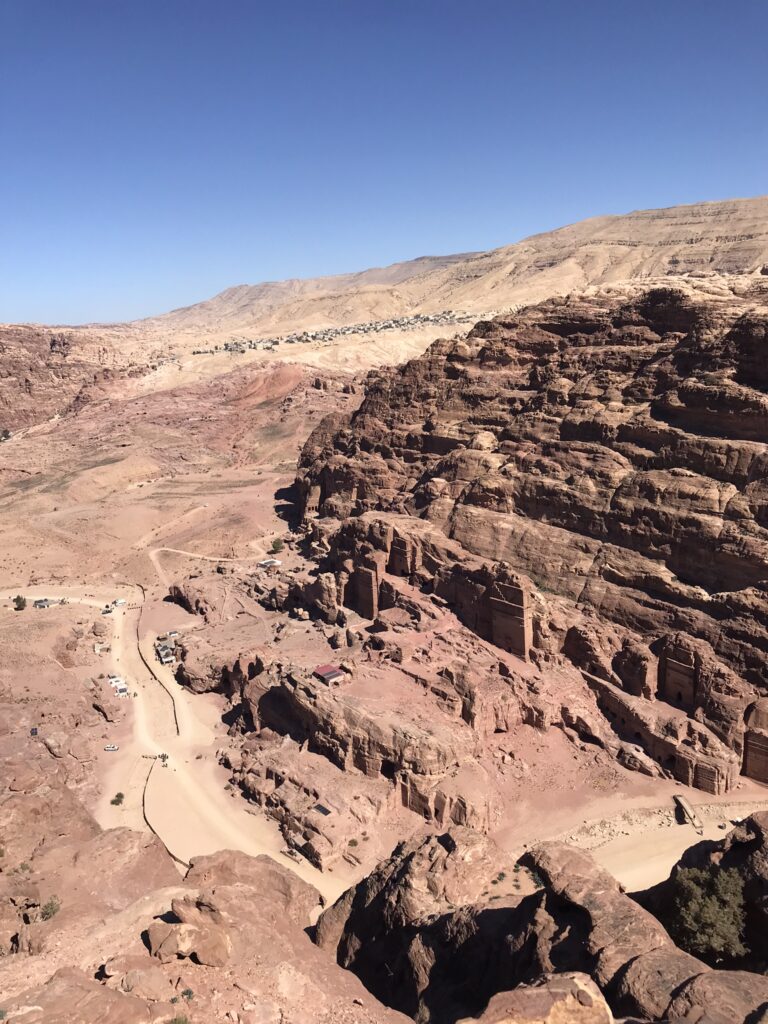
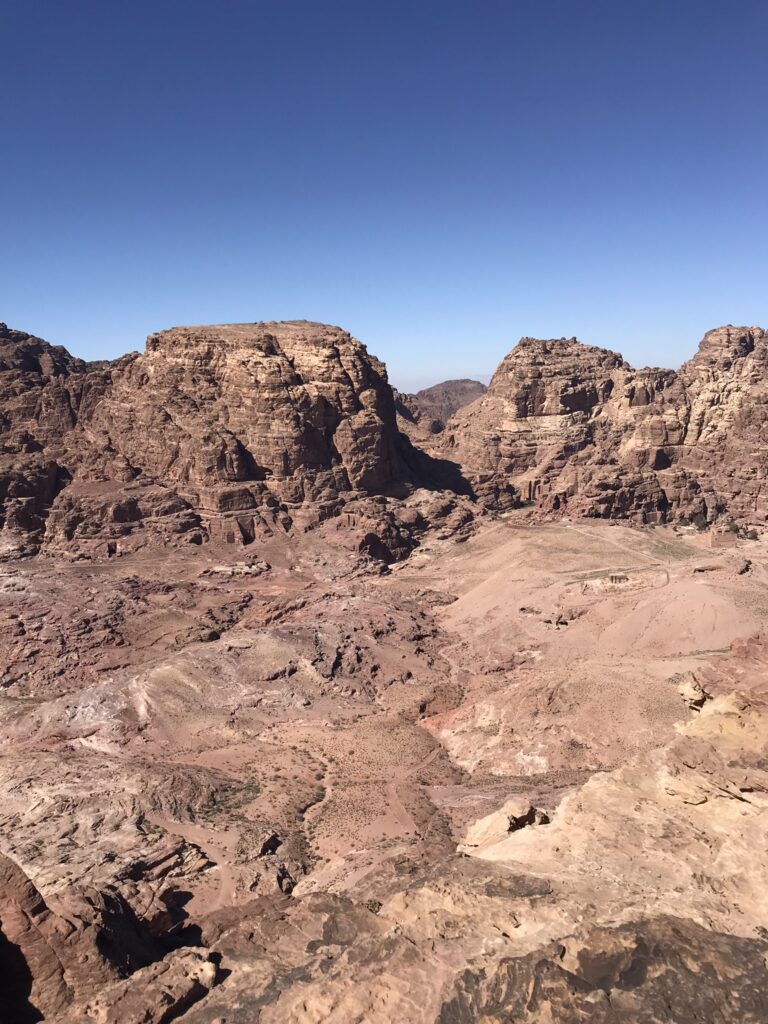
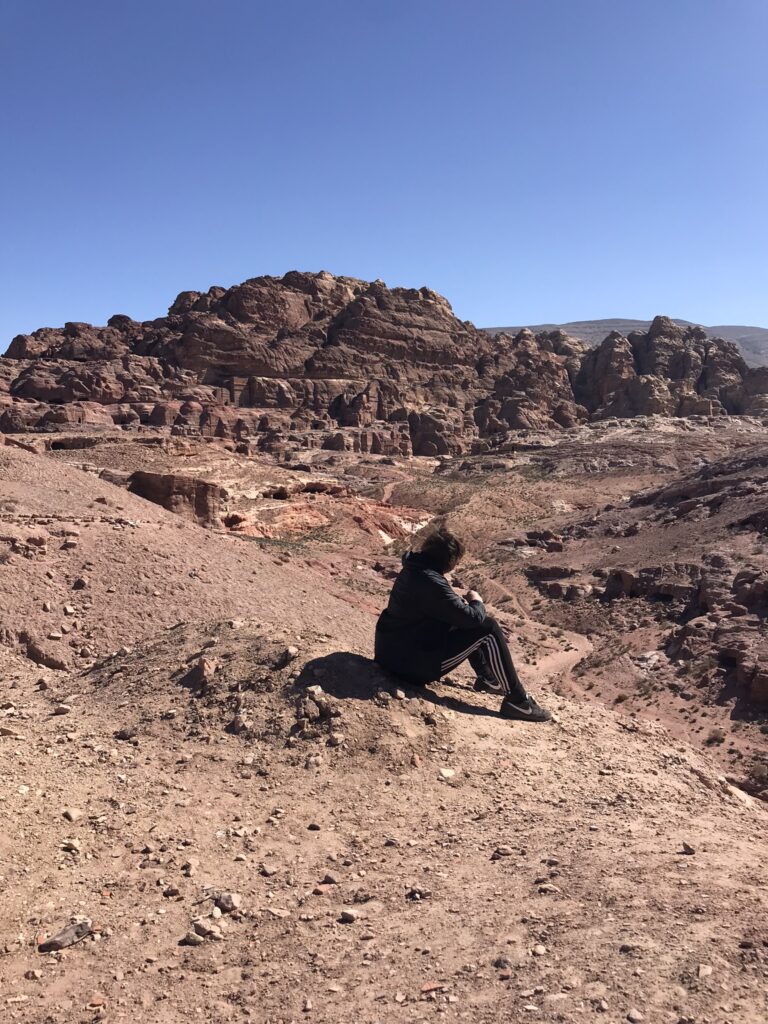
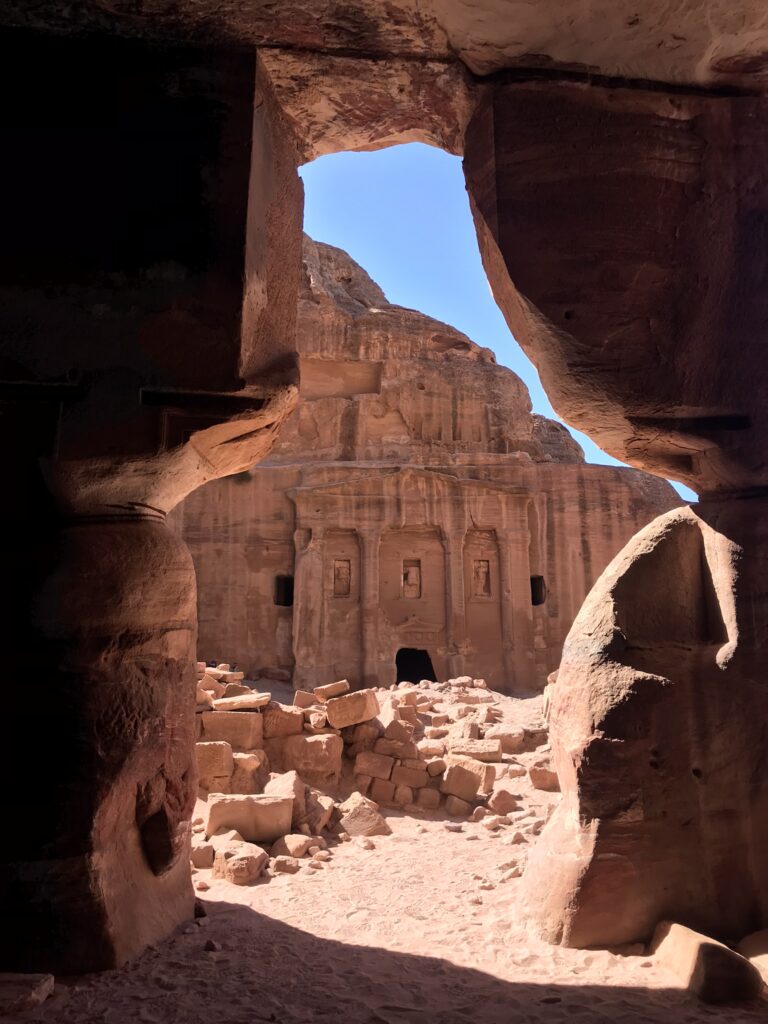
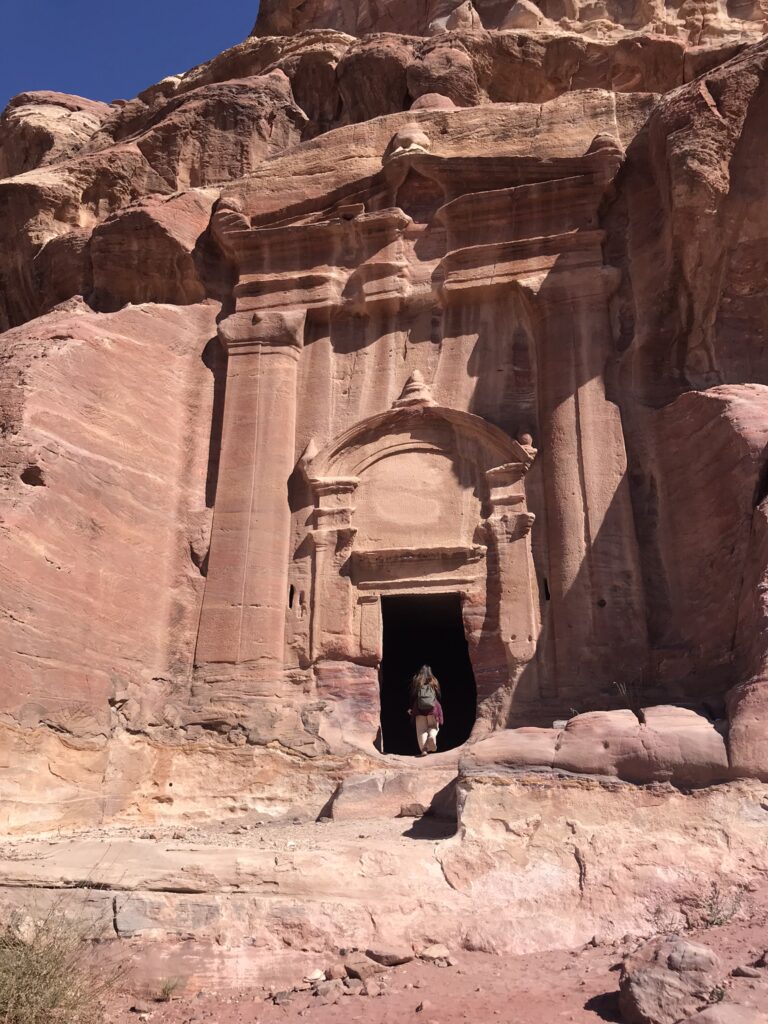
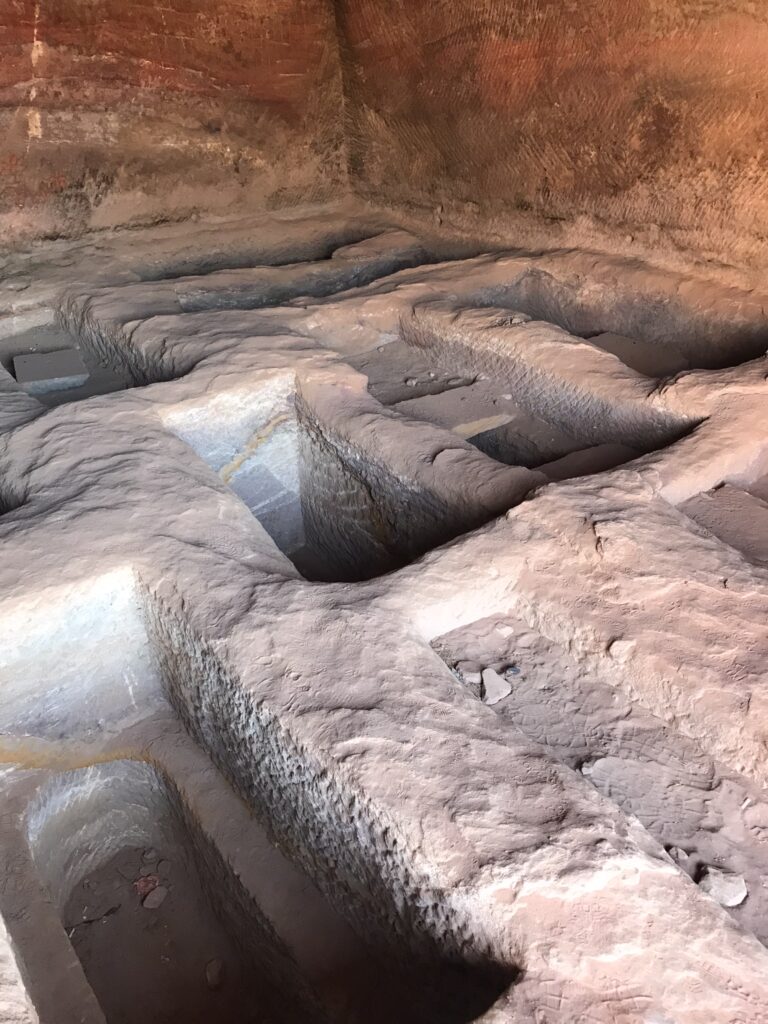
Expect breath-taking desert scenery and less-visited Nabatean tombs on the Place of High Sacrifice trail
If you find yourself in need of refreshment, there are a number of cafes dotted throughout the site, especially near the Treasury, Royal Tombs, the beginning of the Monastery trail and at the Monastery. We opted to bring in our own lunch from a falafel shop in Wadi Musa, which was considerably cheaper. Those with limited mobility may struggle a bit in Petra as the distances are vast. We saw some golf cart-type shuttles whizzing people about the site, but we weren’t sure what the deal was with these or how to arrange this. A sign was also advertising a free shuttle bus from near the beginning of the Monastery trail back to the entrance of the site – again, we didn’t use this and weren’t sure of the situation or whether tips etc are expected.
Some people decide to visit Petra at dawn or sunset in order to experience the first or last rays of the day, turning the sandstone rose-coloured and avoiding the midday heat. As we visited in February, the temperature was moderate so we didn’t feel this was necessary. It’s a good idea to visit Petra in the shoulder seasons as the weather is more mild. We found Petra in February to be unexpectedly very quiet – it was easy to capture photos with no one else in the frame – we couldn’t believe our luck.
Petra by Night is an additional activity some visitors opt to attend – at this nightly event the site is wholly lit by candlelight to create a timeless and mesmerising experience. We decided not to do this as the price is quite high and it’s not included in the Jordan pass. We did speak to some other travelers who paid to attend this, with mixed opinions.
Another thing to be aware of is that there are many pushy locals around the site trying to sell things or offering mule rides. We had mixed feelings about these guys – we were told that some don’t have birth certificates and so have difficulty finding legitimate jobs. These guys can be pretty persistent – we’re pretty well-versed in this sort of thing and clearly aren’t their target audience so we weren’t hassled too much, but we saw some groups of East Asian tourists being relentlessly followed and harassed. We also saw a group of young Spanish tourists who had obviously been coerced into taking the mules up to the Monastery and seemed to be in a bit of distress. At the entrance to Petra there are a few stalls with shop owners that offer to put scarves on visitors in the traditional Bedouin way. If you don’t want this, simply saying no is effective. If you do accept then expect to pay, as nothing is free here.
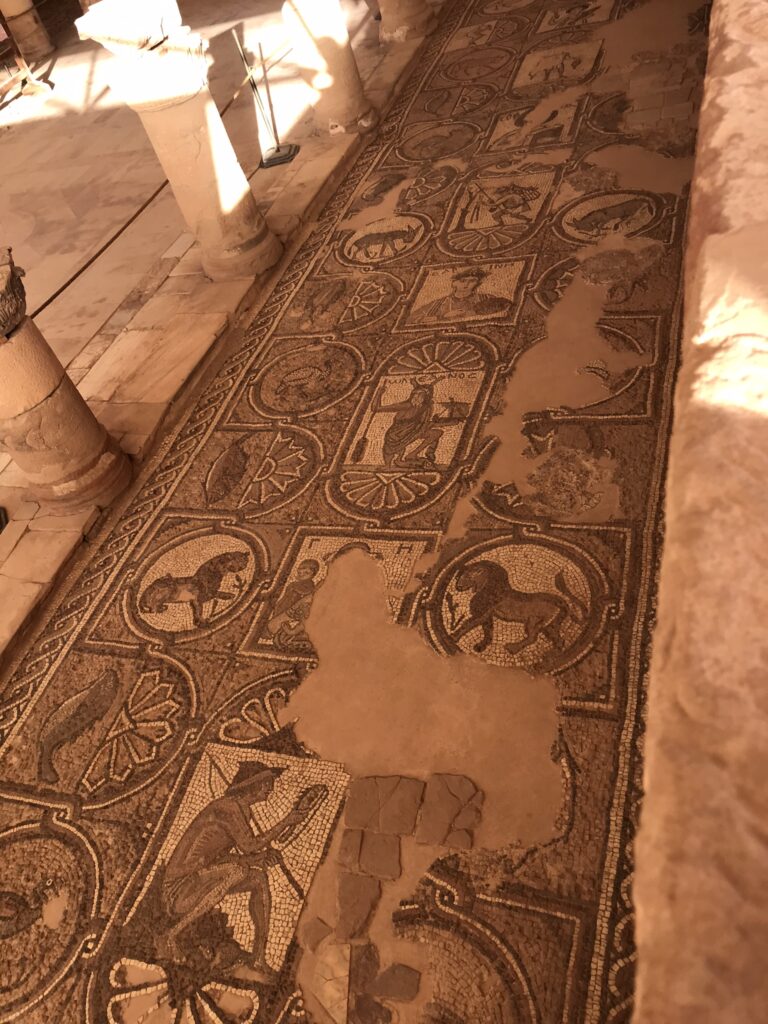
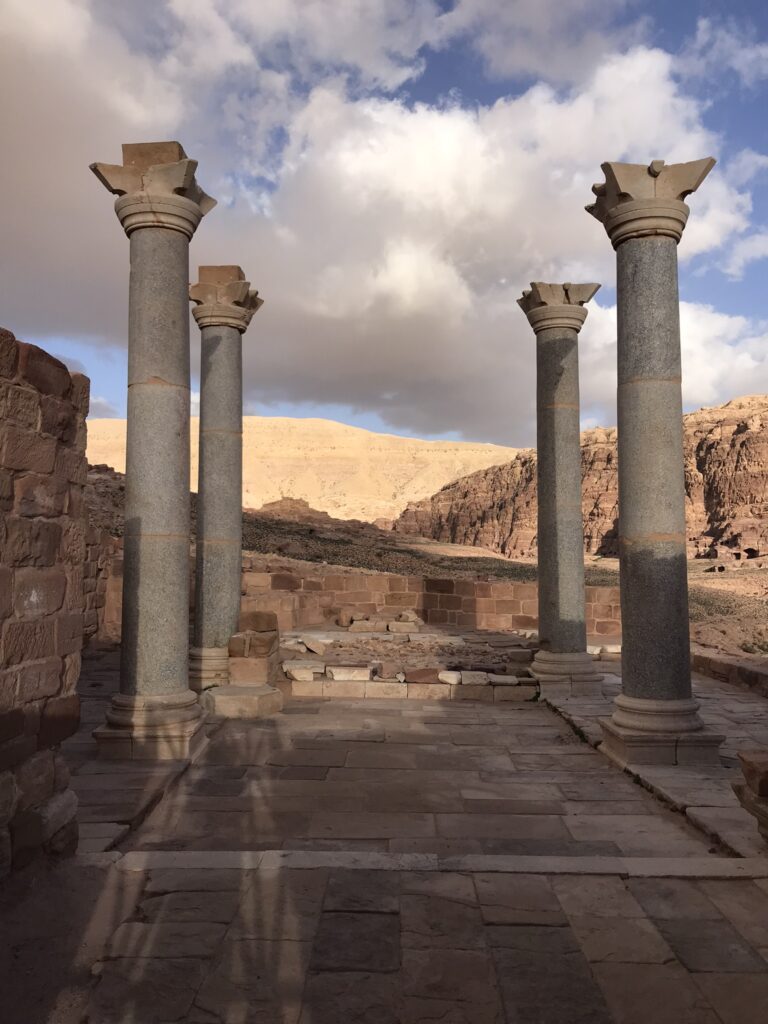
Don’t skip the Byzantine churches as they’re actually quite impressive – think intricate mosaics and Egyptian stone pillars
Petra Museum – a modern museum which was built with the help of the Japanese and is free to enter. The museum is incredibly interesting, with in-depth information about Petra and how its monumental structures were built (the rock-cut facades were in fact chiseled from top-down), as well as detailed info about the Nabatean civilisation including their history and all facets of their daily life such as their coinage (the Nabateans minted coins with kings and queens on much like many countries today), their language and writing (Aramaic but written in a Nabatean script), their religion (Arabian gods alongside Greco-Roman gods who were equated with local deities), their customs (such as funerary practices), their trade networks (inscriptions to the Nabatean prime deity were found as far as Italy and they had bases across the Mediterranean and Egypt), their architecture (a symbiosis of Greco-Roman features with a Nabataean twist), their innovative water irrigation systems (very necessary in such arid terrain, you can spot the water channels carved into the rock along Siq), and their food.
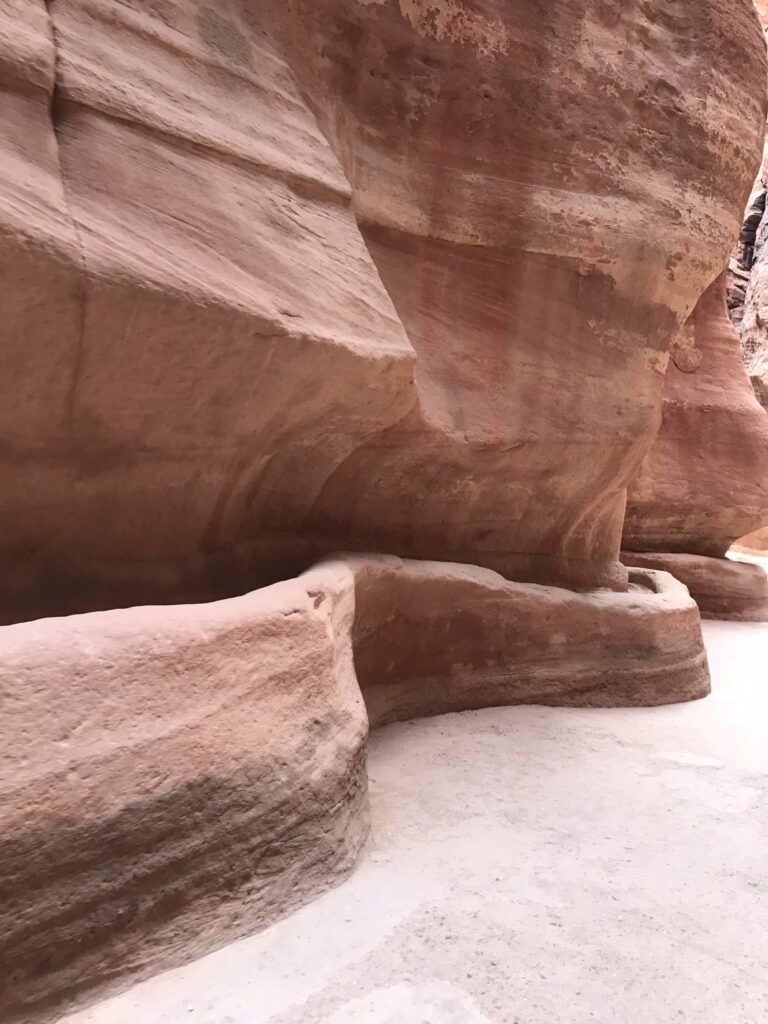
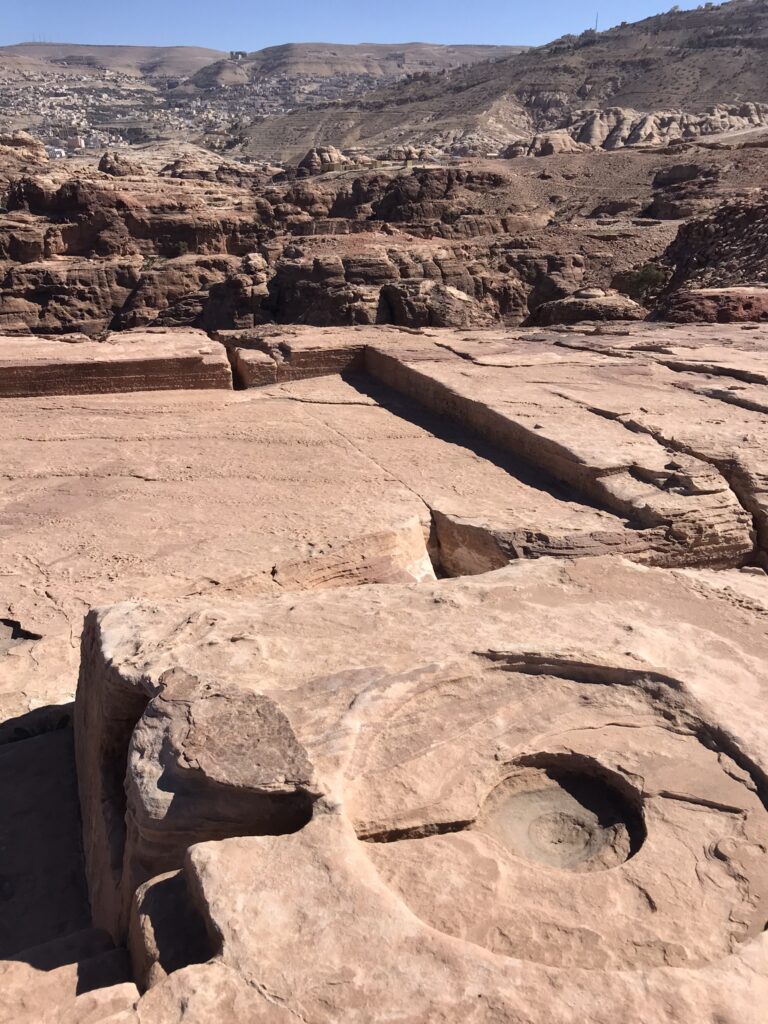
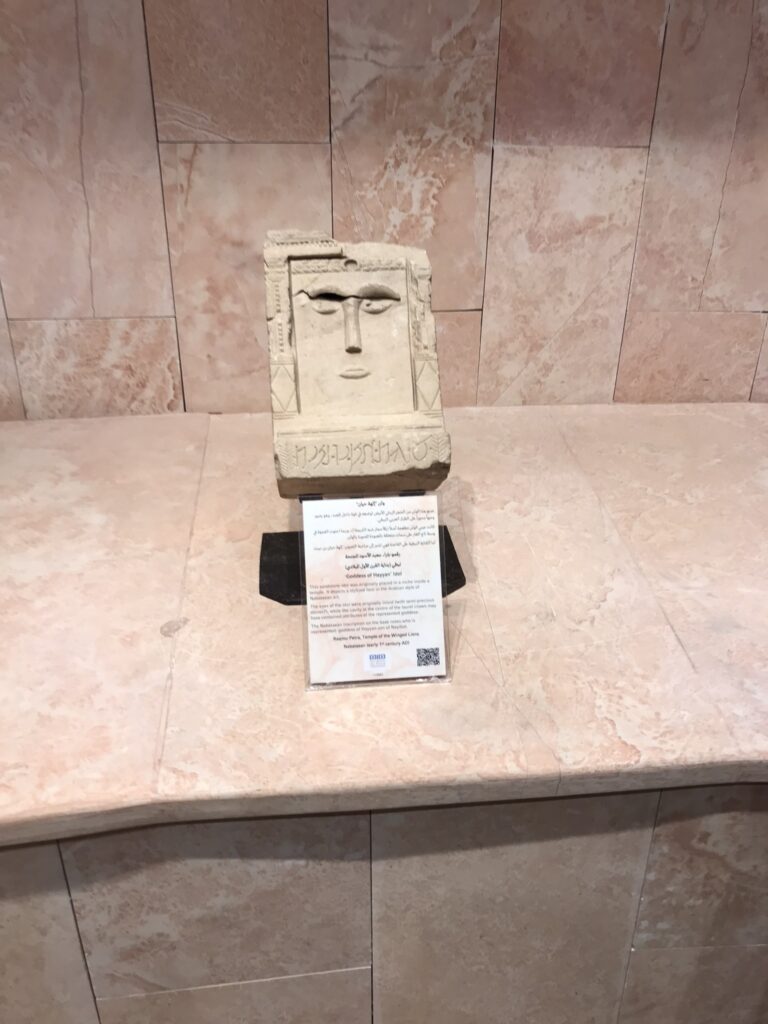
Complex water systems and pre-Islamic Arabian religion were two aspects of the Nabateans civilisation
Originally the Nabateans were a nomadic tribe who became wealthy by controlling the caravan trade in the region. All land trade between Egypt/Africa and the rest of the world went through them. In the 4th century BCE the Nabateans changed into a sedentary civilisation, founding their capital city at Petra. Such a grand city was funded by merchants travelling through their territory who had to pay a tax for protection and hospitality – the Nabateans fortified their land with rest stops and caravanserais for weary travellers, providing food and accommodation along the long desert stretches. The Nabateans were particularly prevalent in the frankincense and myrrh trades. The level of detail in the museum is staggering, particularly the interactive screens which are filled with additional information for those history buffs who can’t get enough.
Accommodation
Wadi Musa is very hilly. If you have the money, my advice is to pick a hotel within close proximity to Petra Visitors Center, thereby cutting out additional walking time (trust me, you’ll want to avoid walking any further than necessary). However, these tend to be more expensive than accommodation which is further away. We chose to stay atop a hill in the midst of the town of Wadi Musa – apart from being very tired from the uphill walking, this was a good choice as we were in a far less expensive and less touristy area.
iHome Petra – located right at the top of a massive hill overlooking Wadi Musa, the 100m climb up winding roads from the Visitors Center is not for the faint hearted and especially not ideal if you’re exhausted from traipsing around Petra all day. However there are plenty of taxis that would snatch your money away in an instant to take you to the top of the hill. The walk up does offer insanely good views of the sunset over the rocky desert landscape. The hotel itself was incredibly affordable and very homely, with fab views over Wadi Musa from the balcony. We had no complaints in regards to amenities and comfort during our stay, the guy running it was kind and communicative via WhatsApp and even allowed us to check in early to deposit our bags.
Foodie Places
Unfortunately most restaurants in Wadi Musa cater to tourists and are quite expensive when compared with the average in other parts of Jordan. The majority of places in the town fall into tourist trap territory. It’s just one of those things. We found the following three places to be budget-friendly places that were mainly visited by locals but also welcomed foreigners.
Bukhara Restaurant – serving reasonably-priced fare (for Wadi Musa standards) – mainly shish kebab and mezze options. We were drawn in by the English menu and the promise of kofta sandwiches for around 2JD. The guys here were friendly and the food was good.
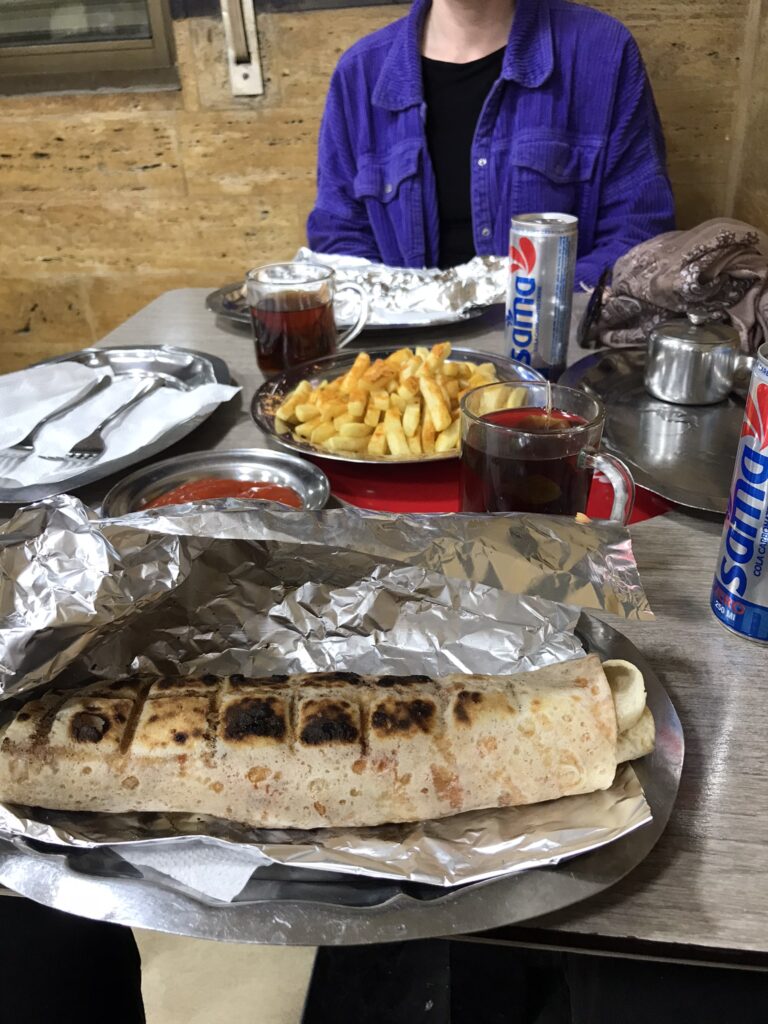
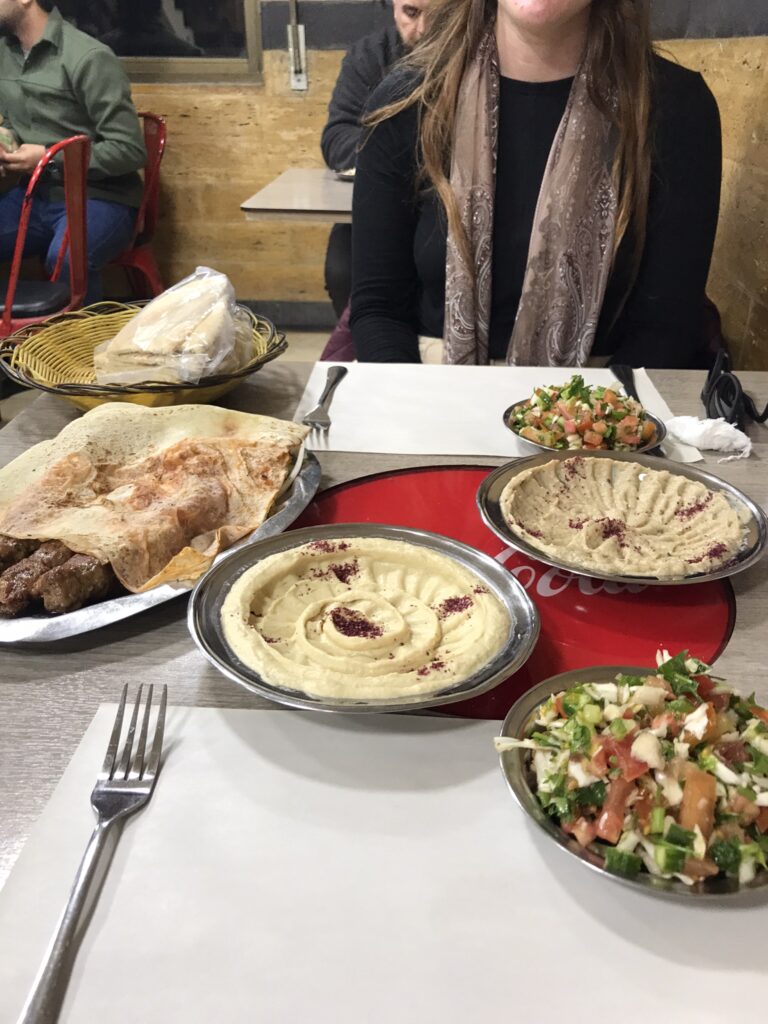
We never did discover why the restaurant was called Bukhara
Firas Restaurant – a Yemeni restaurant serving mandi – rotisserie chicken and delicious fragrant rice alongside a spicy fresh tomato salsa. This is very much a local joint and the guys didn’t speak much English at all. We couldn’t spot a menu so we simply said ‘mandi’ and held up two fingers, which worked out fine. The meal was filling and brimming with flavour – exactly what we needed after walking around Petra for hours. There’s an upstairs area with some traditional dining space for those wanting to eat on the floor and a couple of tables as well. There aren’t any prices on display, so clarify beforehand.
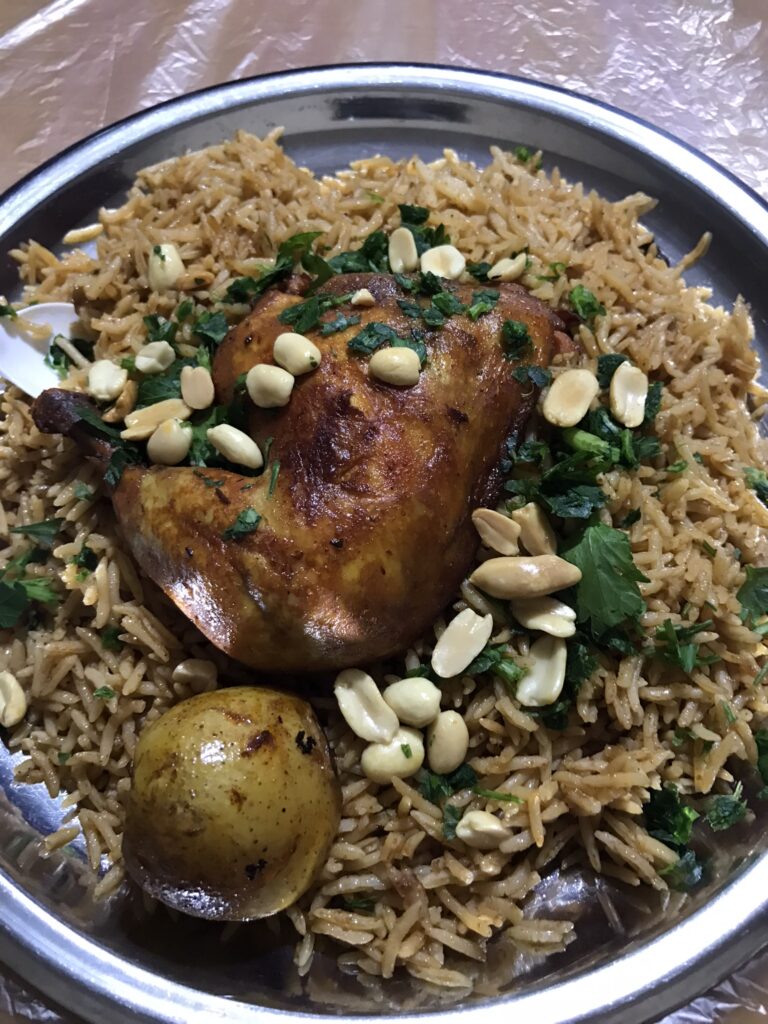
It doesn’t look like much but this platter of mandi at Firas was to die for!
Mr. Falafel – offering reasonably priced (for the area) packed lunches which included a falafel wrap, cucumber, banana and bottle of water. We were quite pleased with the picnic fare as it was super convenient to take with us to Petra.
Wadi Rum
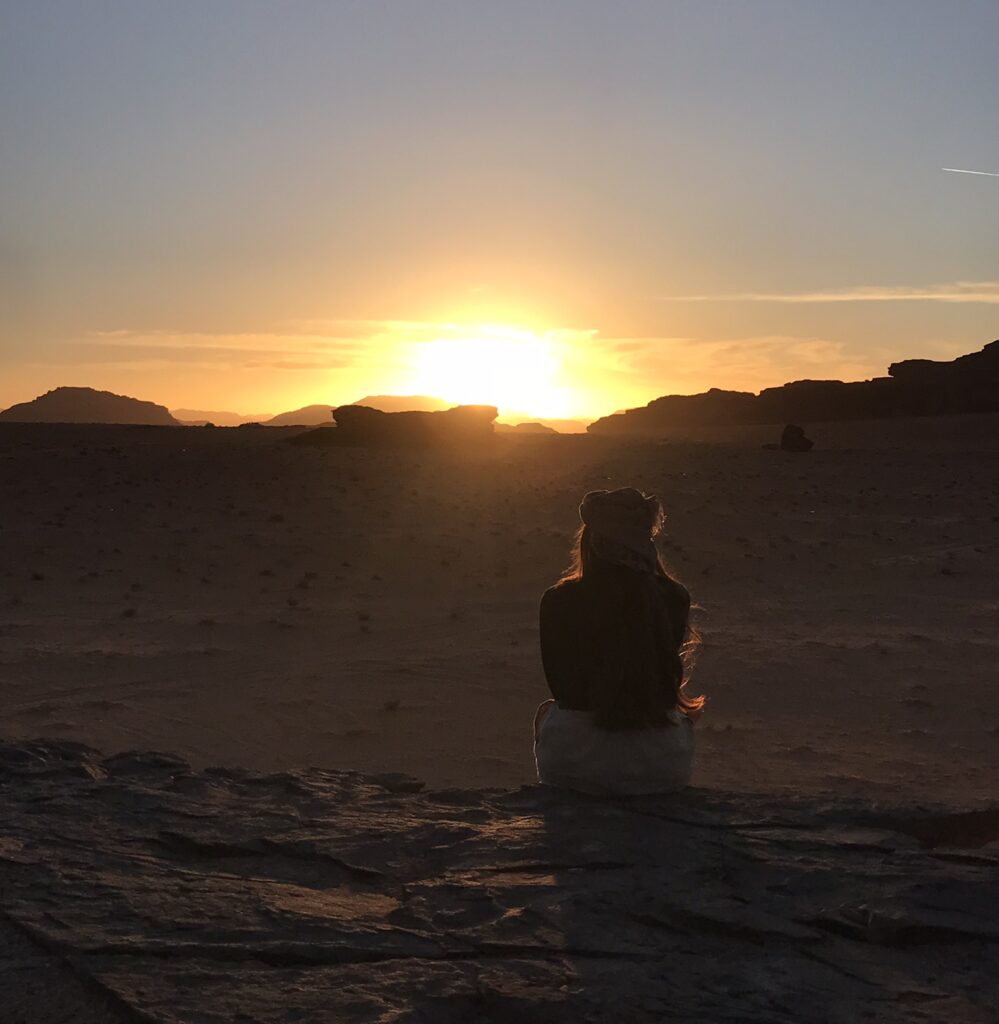
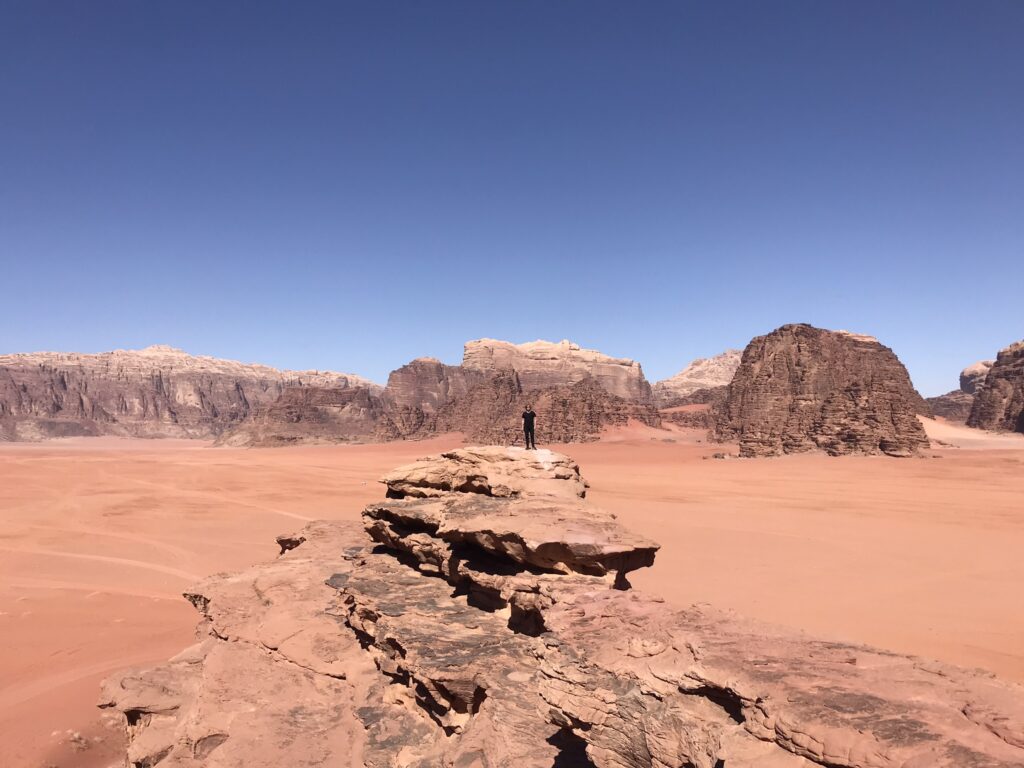
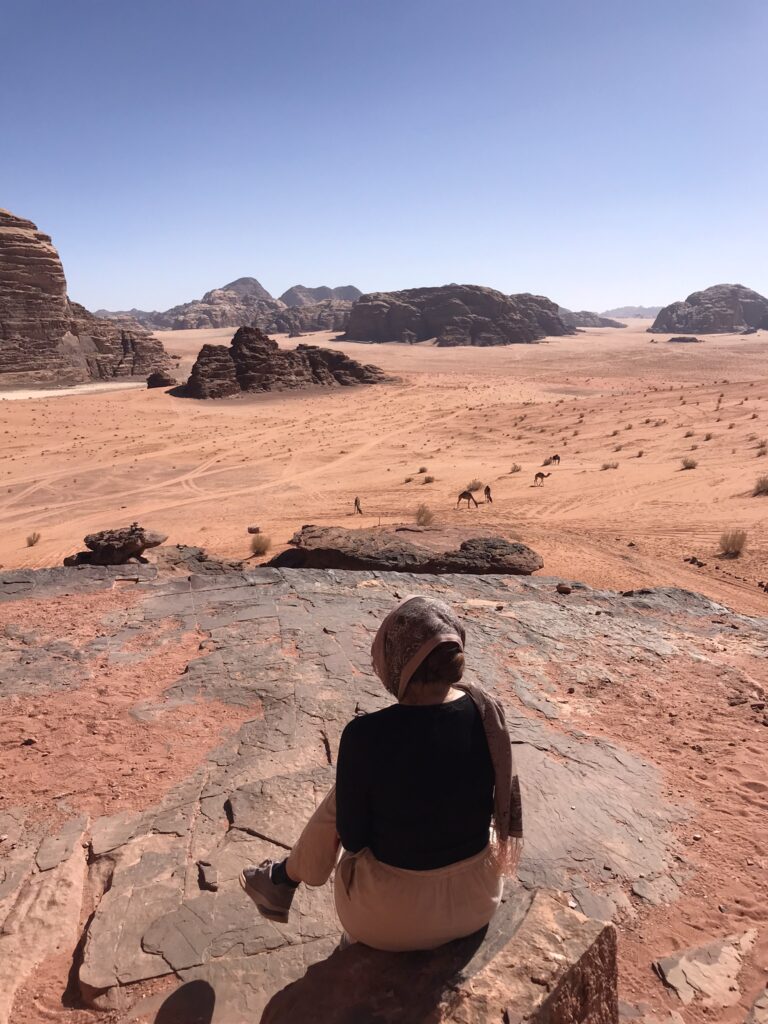
Wadi Rum is a protected desert area with UNESCO World Heritage status in the south of Jordan, approximately 60km northeast of Aqaba. The terrain can only be described as otherworldly – similar to the surface of Mars, with unbeatable star-gazing opportunities on a clear night. We asked our local guide why it’s called Wadi Rum and he said he’s down to the valley-like appearance of the area. Wadi Rum was one of the areas which was utilised by the British officer T. E. Lawrence during the Arab Revolt 1917-18. It’s been the setting for some major Hollywood movies, such as the classic Lawrence of Arabia (a must-watch if visiting Jordan) and, more recently, The Martian starring Matt Damon.
The area is undeveloped, home to a single village and nomadic Bedouin tribes who continue to migrate to the area in a continuation of their traditional way of life. Our jeep tour guide offered to take some of the group to meet his family, who still lived in a Bedouin tent and were preparing to move again. The local Bedouin tribes now take an active role in tourism as custodians of the area, acting as jeep tour guides, desert camp operators and business owners in the Wadi Rum village.
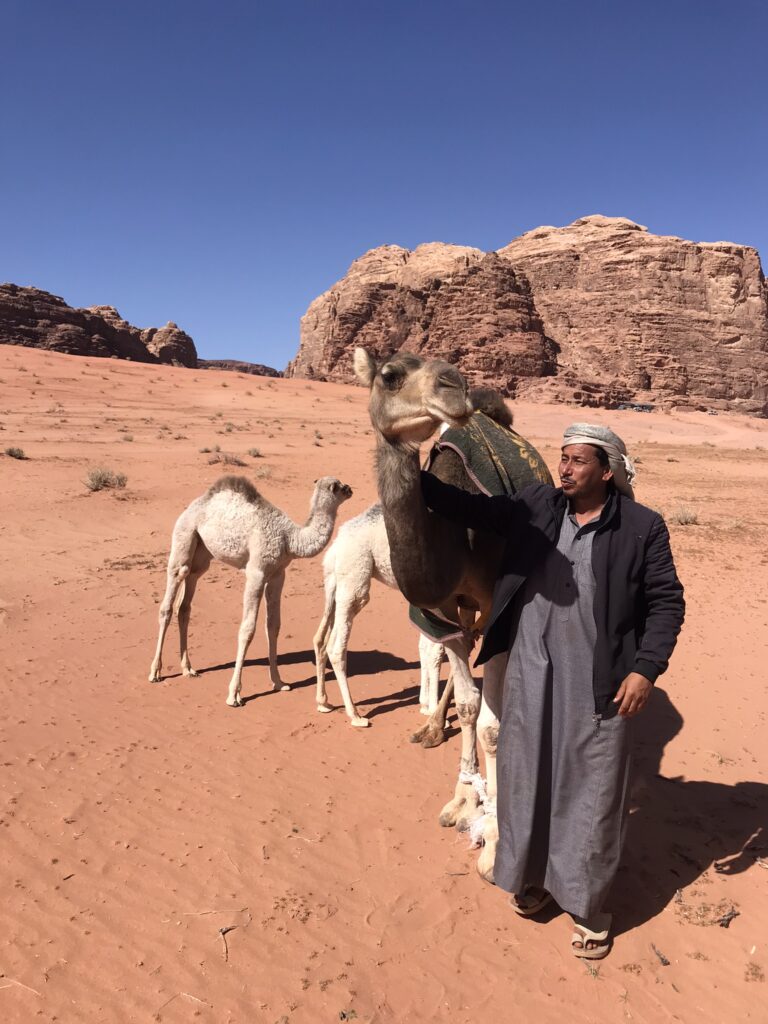
Abdulla (our driver) with a family of resident camels
Planning a visit to Wadi Rum can be a bit confusing and overwhelming at first for a number of reasons, most specifically the enormous selection of dubious-looking camps available on booking.com. I wrote a blog post detailing the best way to navigate this minefield as well as logistical and other considerations when planning your trip. In the end, we booked an all-inclusive package deal to Wadi Rum via Getyourguide – not something we’d usually do, but it was by far the best option in this case.
Accomodation
Rozana Bedouin Camp – we didn’t know what to expect when we booked the package deal as there aren’t any reviews on Google maps for Rozana, but the desert camp didn’t disappoint – in fact it was much more luxurious than we imagined it would be. Each party had their own Bedouin tent, the tents weren’t spaced too close together so you really had a feeling of privacy, the doors even had locks and a patio area facing the desert where you could gaze at the stars. The camp also featured a large communal hall which was beautifully furnished – this is where the buffet-style breakfast and dinner were served. The food was great and the buffet allowed us to eat as much as we wanted which was ideal.
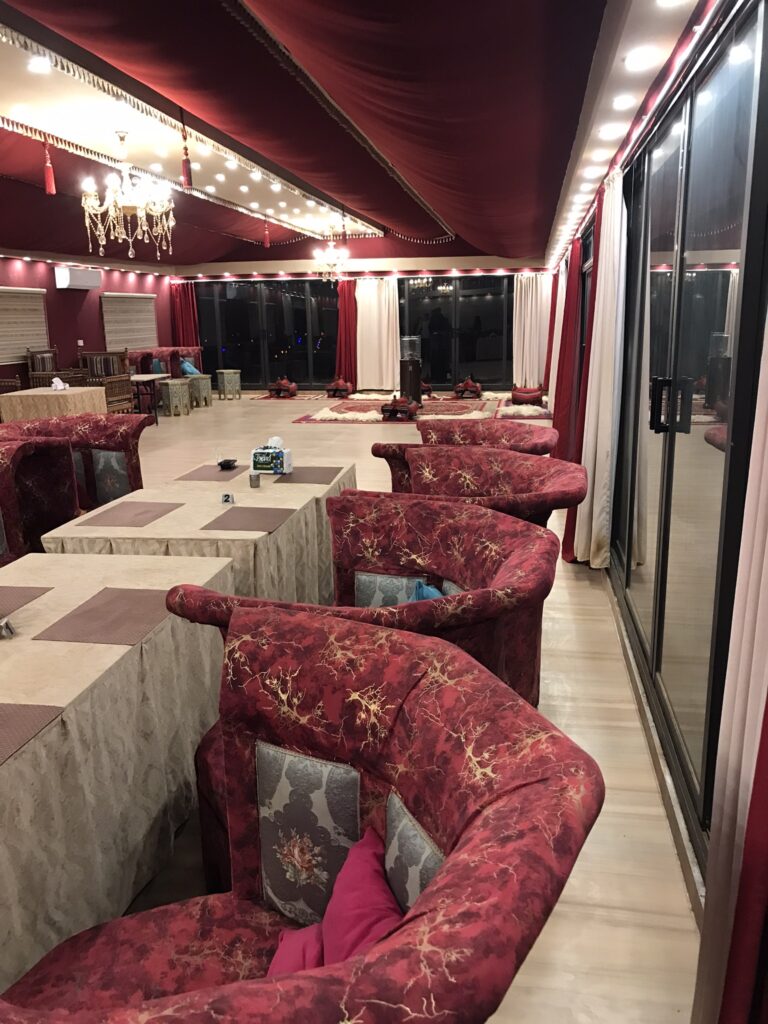
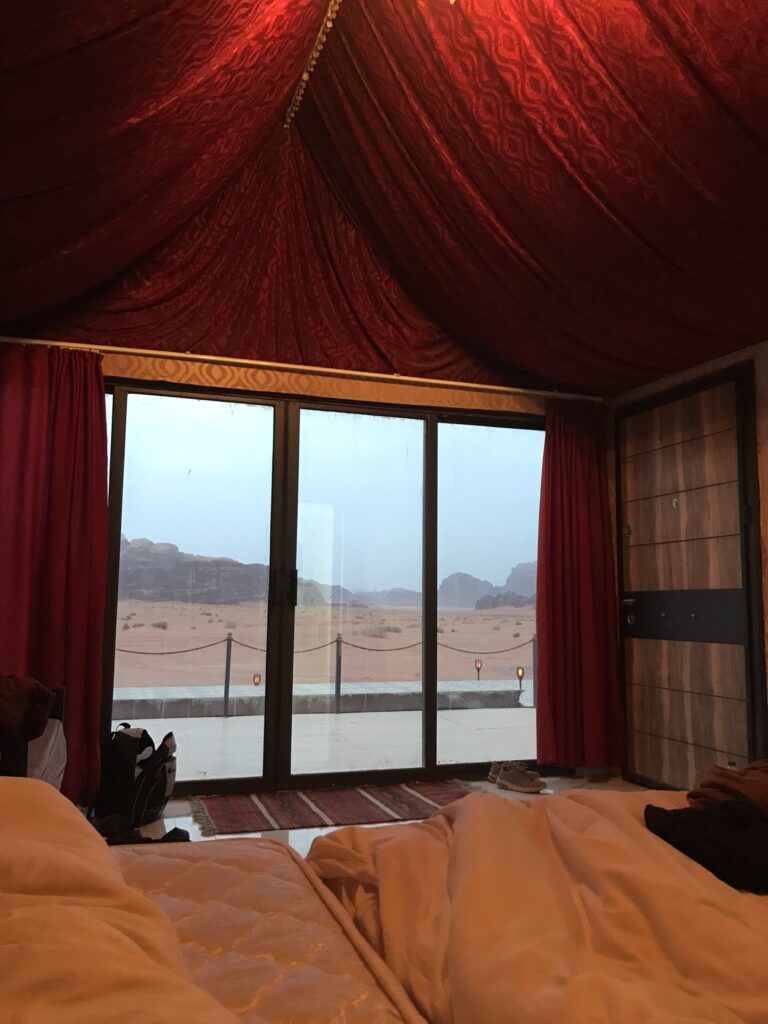
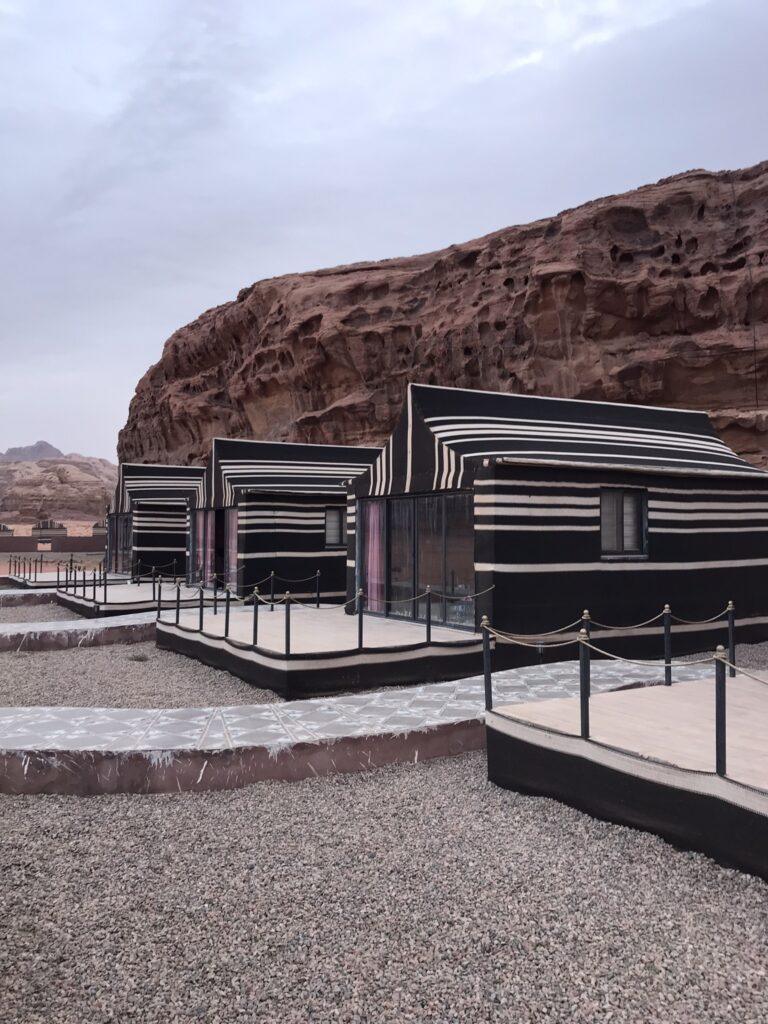
Rozana desert camp was an unexpected delight!
Activities
Jeep tour – included as part of our package which was booked through Getyourguide, taking in the following sights: Lawrence Spring, Kha’zali Canyon (featuring rock carvings of long extinct animals from the area like antelope, ostrich and Syrian elephants from the 8th century BCE, as well as early Kufic inscriptions and petroglyphs of women giving birth – apparently the gorge was used for this purpose as it remains cool during the hot summers), Burdah Rock Bridge (a brilliant photo spot with incredible panoramic views of the desertscape), Lawrence House (apparently Lawrence of Arabia stayed here sometime during the Arab revolt, although I’m not sure about the validity) and many other spots. Jeep tours in Wadi Rum typically follow the same program and so there were numerous other jeeps from various camps following the same route as us.
Below are some of my memories from the tour:
There’s something very freeing about riding in the open-air, seated in the back of a truck exposed to the elements, trundling through the endless desert, kicking up sand in our wake, encountering wild camels, seeing our guide Abdullah drink milk straight from the mother camel and watching the camels meander slowly about with their babies in tow, enjoying a simple meal of tomato stew with tangy cheese and hummus in the shade of the jeep with the other participants of the tour, the unhurried nature of the local guides who stop for endless cups of tea and cheeky puffs of shisha at any given opportunity (there’s no pressure to buy the usual tourist tat at these souvenir stalls), zooming down the sandy slopes on a board after an exhausting uphill trek to the top, watching the other guides driving like maniacs through the desert sands (at one point hanging out of the door whilst still driving), sitting on a solitary rock to watch the sunset over the vast endless plains, joining the local Bedouin guide around the fire after dark for some banter (endless ‘happy wife, happy life’ jokes and witnessing some young Japanese tourists indulging in shisha for the first time) and gazing open-mouthed at the crystal-clear stars, before tucking into an extensive zarb buffet organised by the hospitable host and retreating into our traditional black-and-white Bedouin tent for the night, diving into a comfy bed complete with heating and an en-suite bathroom. The people in our group became a little community and our experience was very much a shared one with the group.
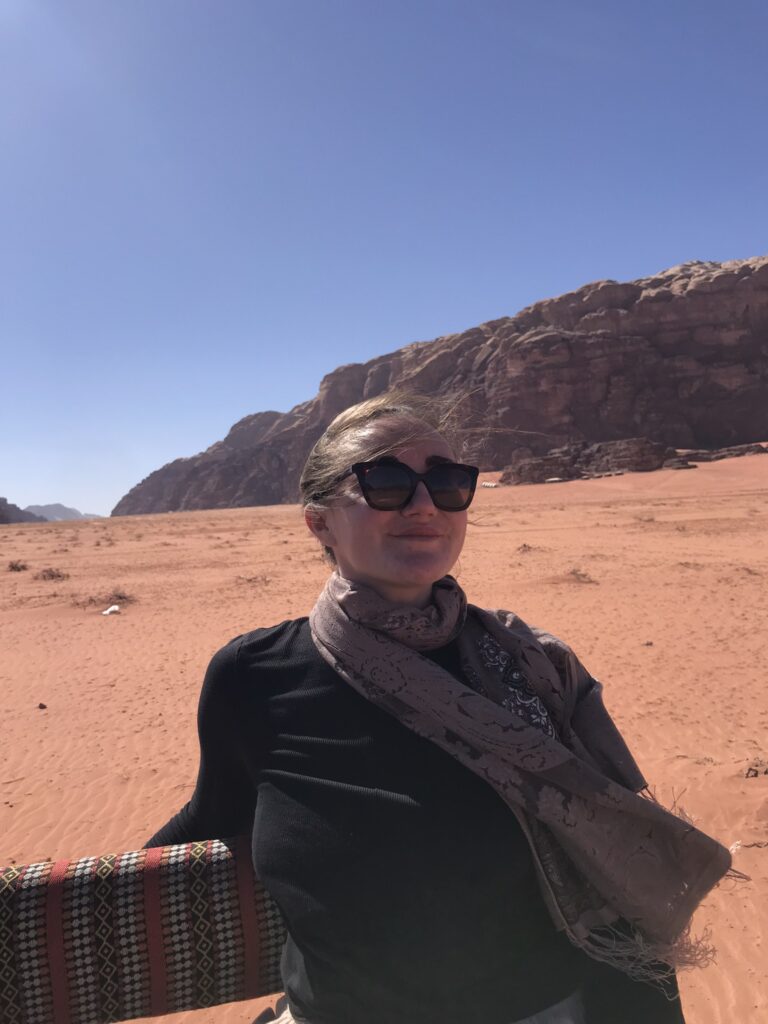
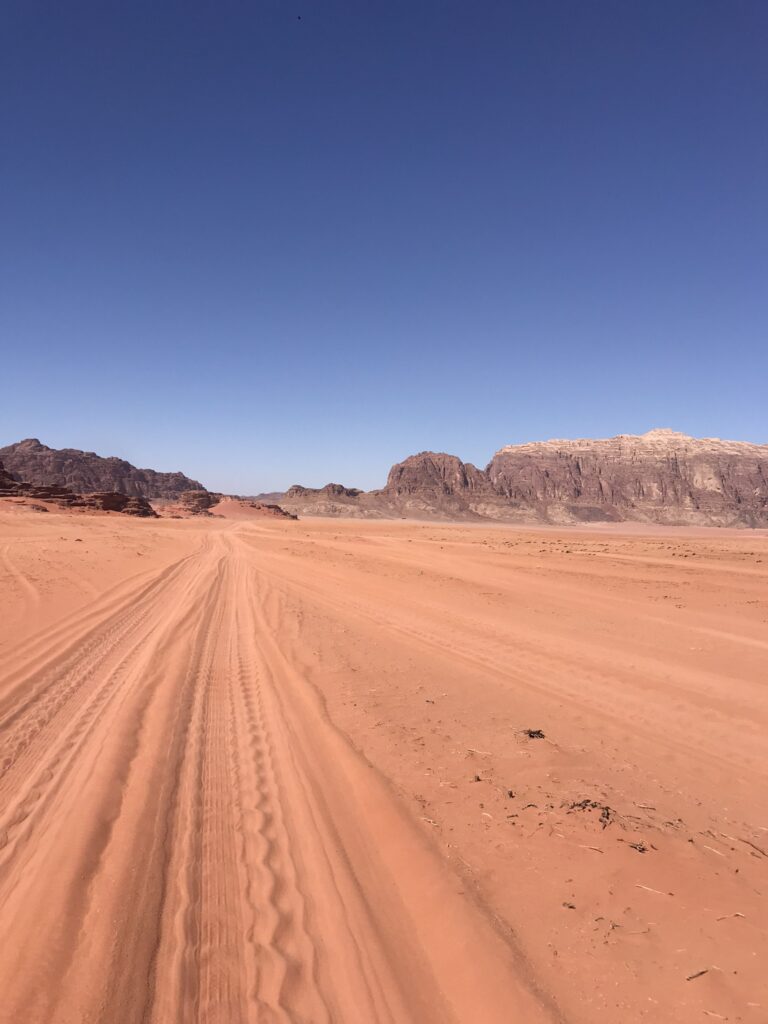
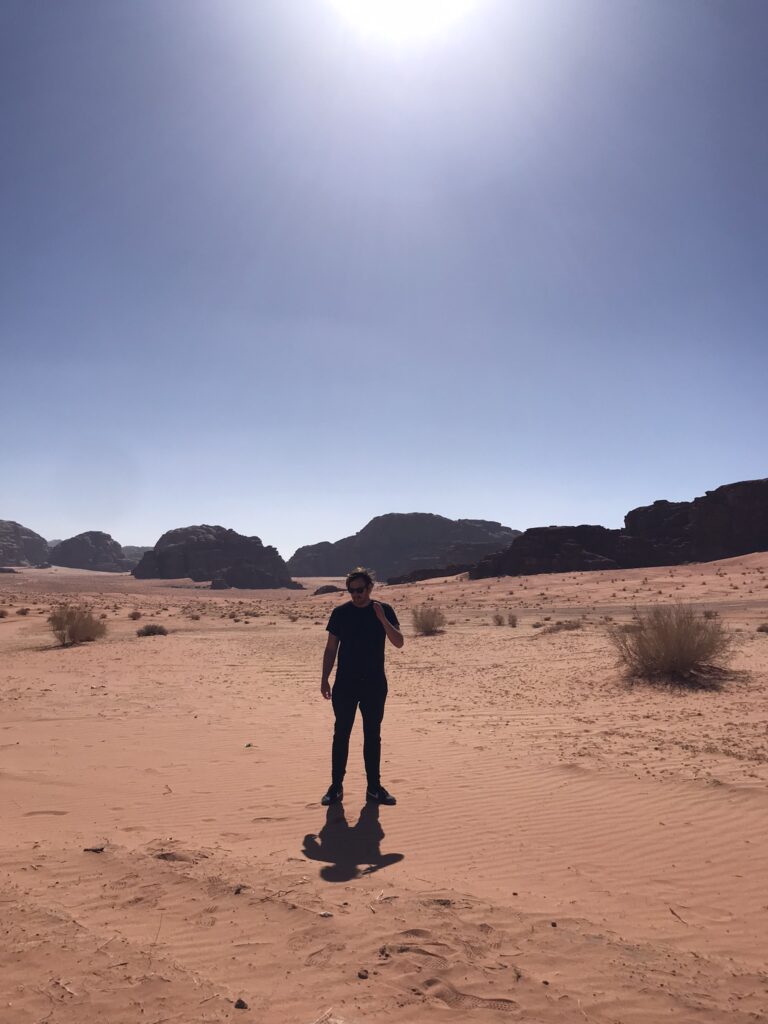
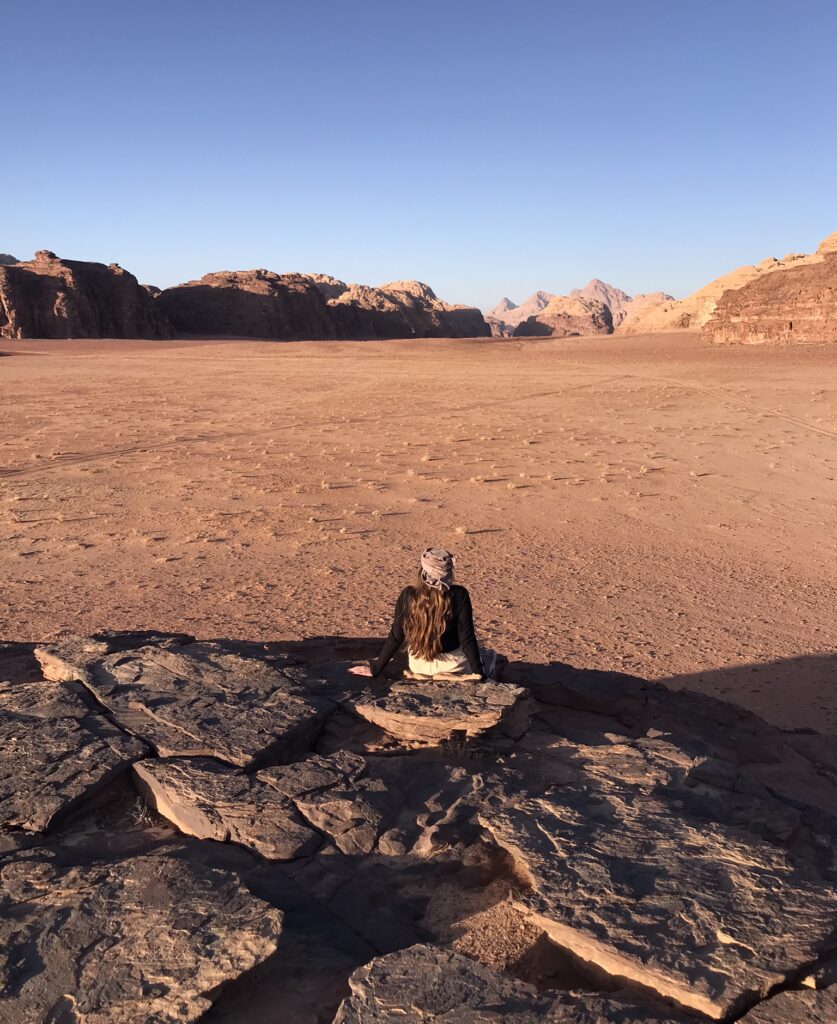
Our tour was the perfect visit to Wadi Rum!
Aqaba
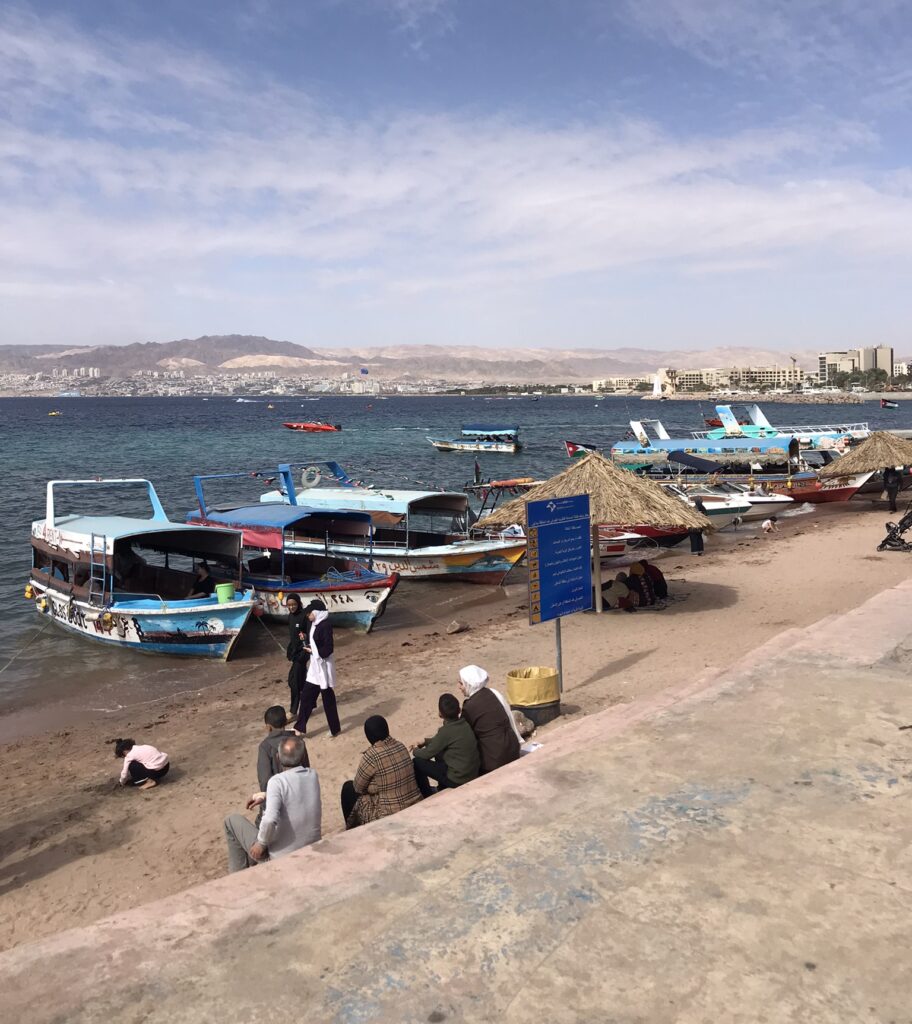
Aqaba is a coastal town in the far south of Jordan, perched at the northern tip of the Red Sea’s Gulf of Aqaba. It has the added quirk of 4 countries sitting in very close proximity – the Israeli city of Eilat and Egypt’s Sinai peninsula are just a little further along the bay and clearly visible from Aqaba, while Saudi Arabia is only 30km to the south. Aqaba is a popular seaside holiday destination for not just Jordanians but other Middle Eastern neighbours as well, offering sun, sea, watersports and relaxation in bucketfulls. The city is very much a resort town with a holiday atmosphere. As with the Red Sea regions in Egypt, scuba-diving to observe colourful marine life and coral formations is a pretty popular activity. Tala Bay to the south of Aqaba seems to be the preferred destination for those looking to escape the city for a more luxurious resort experience – apparently the beaches are nicer there than the public Al-Ghandour beach in Aqaba city. As Aqaba is a Special Economic Zone (with low tax and duty-free), expect police checks before entering the city limits. Weirdly, we spotted quite a few Indian migrants in the city – after some research, we discovered that they worked mainly in the construction and hospitality industry.
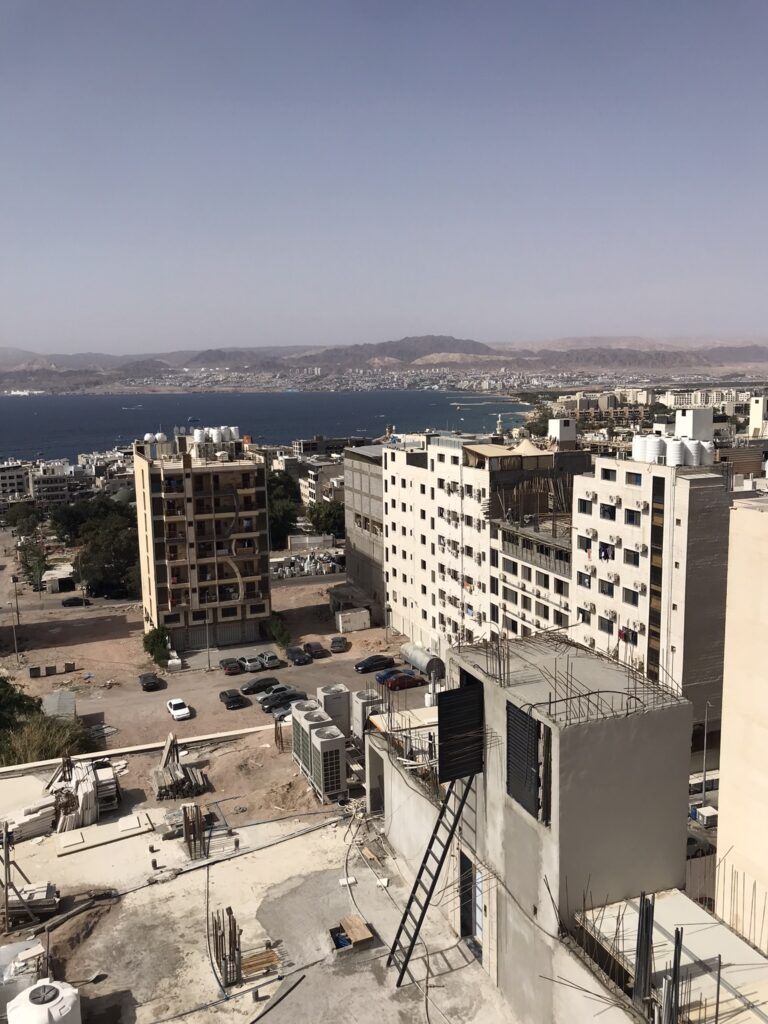
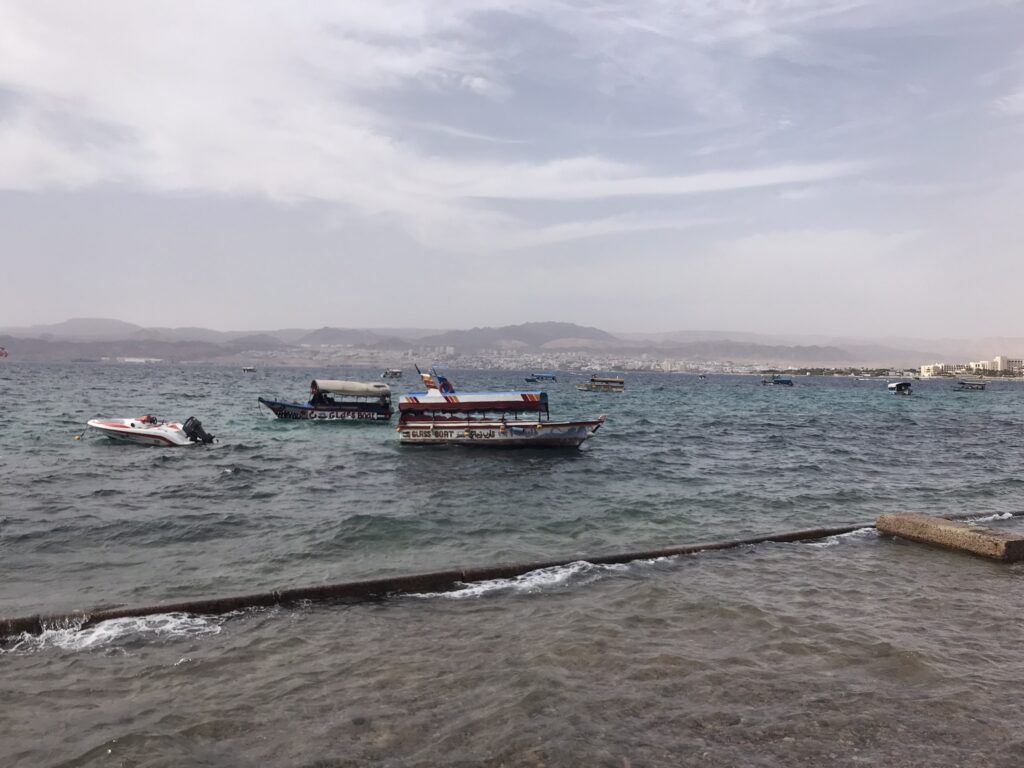
Aqaba from above and Aqaba from the seafront
Aqaba has many layers of history, from the early Byzantine church (which happens to be the oldest purpose-built Christian church in the world) to the ruins of the ancient Islamic city of Ayla (recently excavated by the University of Chicago) which claims the title for the first Islamic city founded outside of the Arabian Peninsula. The Crusaders took control of Aqaba in the 12th century, while Aqaba Fort stands as a testament to the Mamluk period having been constructed in the early 16th century as a caravanserai. The port of Aqaba has been of great significance throughout history as a major trading hub. Aqaba was also the setting for the first major victory (July 1917) in the Arab Revolt, when the Hashemite forces seized the small garrison town from the Ottomans – marking a decisive turning point in the conflict. Famously, the British officer T. E. Lawrence (Lawrence of Arabia) led the camel charge.
Aqaba is a great place to rest up for a few days after visiting Petra and nearby Wadi Rum.
Accommodation
High-end hotels are located on the western section of the shoreline abutting the border with Israel, with quite a few internationally renowned chains dotted about the area. Other resorts are dotted further along the bay, while the city itself hosts a number of other independent hotels and hostels (which we chose to stay at).
Alena Boutique Hotel – a mid-range hotel with a rooftop swimming pool and incredible buffet breakfast. The hotel was comfortable and slightly fancier than our usual budget option. Overall a good choice if you want to be close to the historical sights but not right on the seafront.
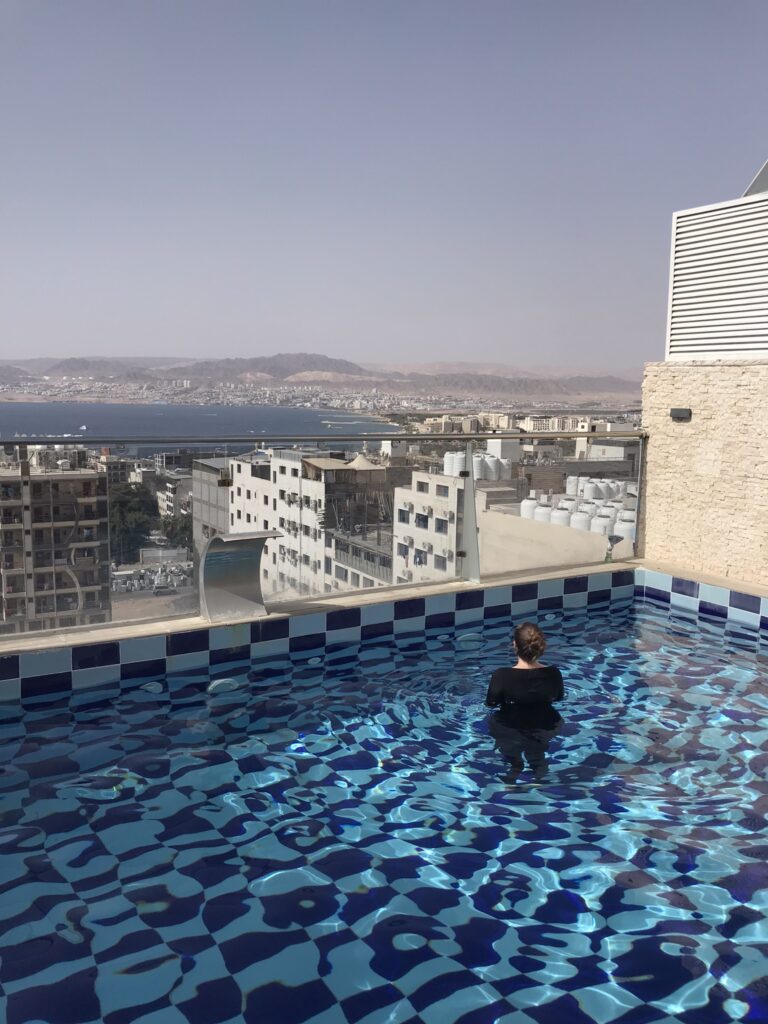
Stunning views of Aqaba from the rooftop pool at Alena
Foodie Places
Hashem Sons – super busy with locals when we visited after Friday prayers. This down-to-earth casual eatery mainly serves mezze dishes like hummus and mutabal (eggplant yoghurt dip), although we tried the shawarma and it was okay. They also have a menu in English, which makes all the difference. There’s some seating inside and also some open-air tables in the street.
Al-Basha Restaurant – very much a local falafel breakfast/lunch joint specialising in 0.55 JD falafel wraps. The wraps are pretty hearty and filling for the price. A great place to head for a cheap lunch on the go – you can then sit by the sea and watch the world go by while nibbling on your delicious wrap. It’s best to avoid at Friday prayer times as hordes of devotees make a beeline for the falafel shop, which is directly across the road from the enormous main mosque.
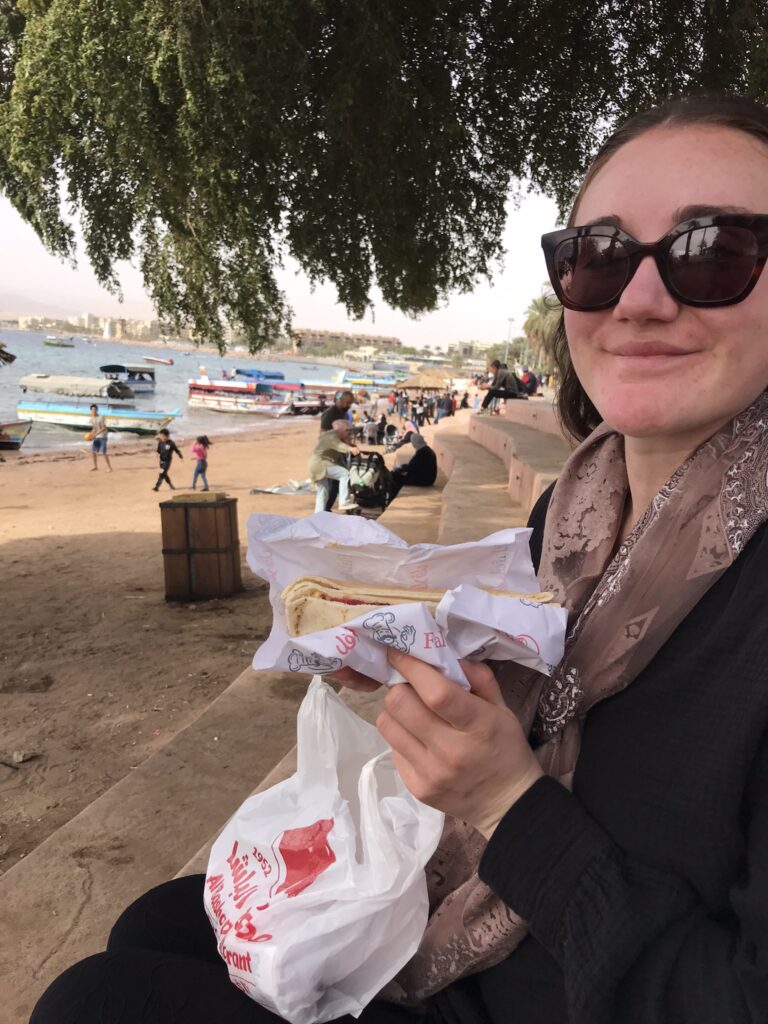
What’s not to love about a fresh falafel sandwich on the beach!
Husam Amayreh Restaurant – with many typical Jordanian dishes on the menu, this place is a hit with foreign tourists and hungry locals looking for a quick bite to eat. The chicken mansaf meal was a highlight for us and only cost 2JD, it comes with rotisserie chicken straight off the grill, sour jameed sauce, heaps of fragrant rice, flatbread, pickles and water. The prices are incredibly low (we’re talking local prices) and the meals are filling and delicious. As with many Jordanian restaurants, food is served very fast, almost straight after ordering. The english menu is on the wall which makes ordering stress-free and straight-forward. They also take card payments which is handy. The owners are very honest guys – we ate here twice during our time and never came away disappointed. On one occasion the money man even gave us back 1JD for no apparent reason.
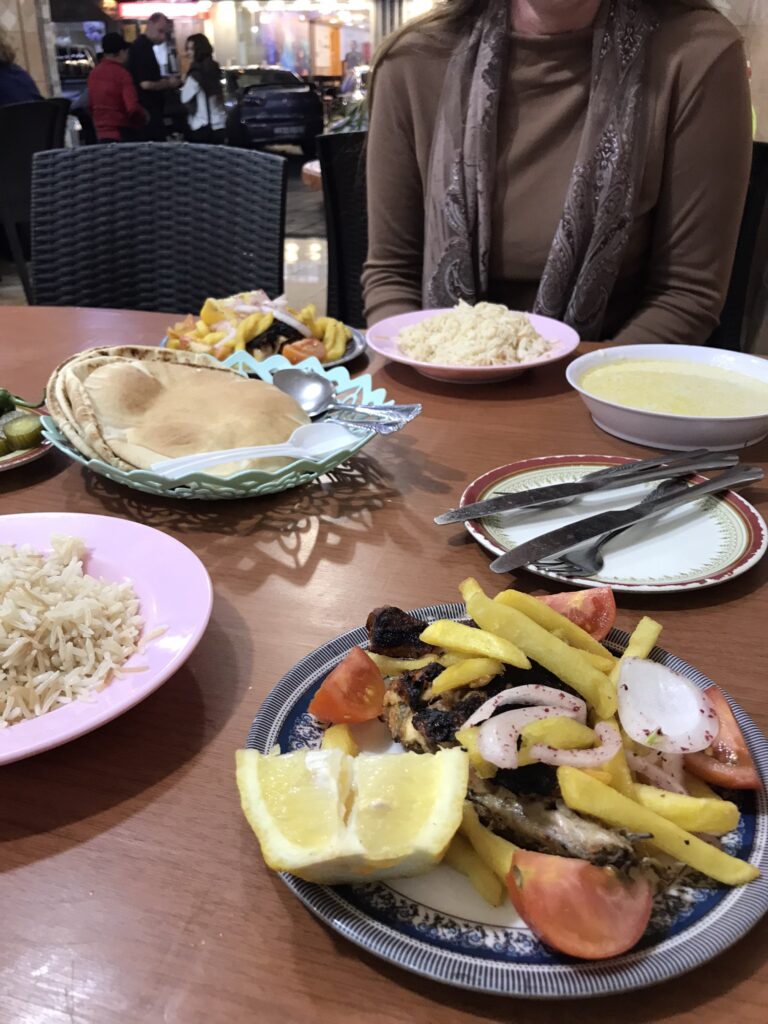
Quick, cheap and tasty – Husam Amayreh Restaurant is the ultimate all-in-one package!
Activities
Dan has created a walking tour based on our time in Aqaba with special emphasis on the historical sites – click here for the tour!
Aqaba Fort – the fort is free to enter and seems to be open all the time. It’s very atmospheric to visit at night, offering impressive views of the nearby seafront from atop the roof. The fort is very well-kept and there’s information at the entrance.
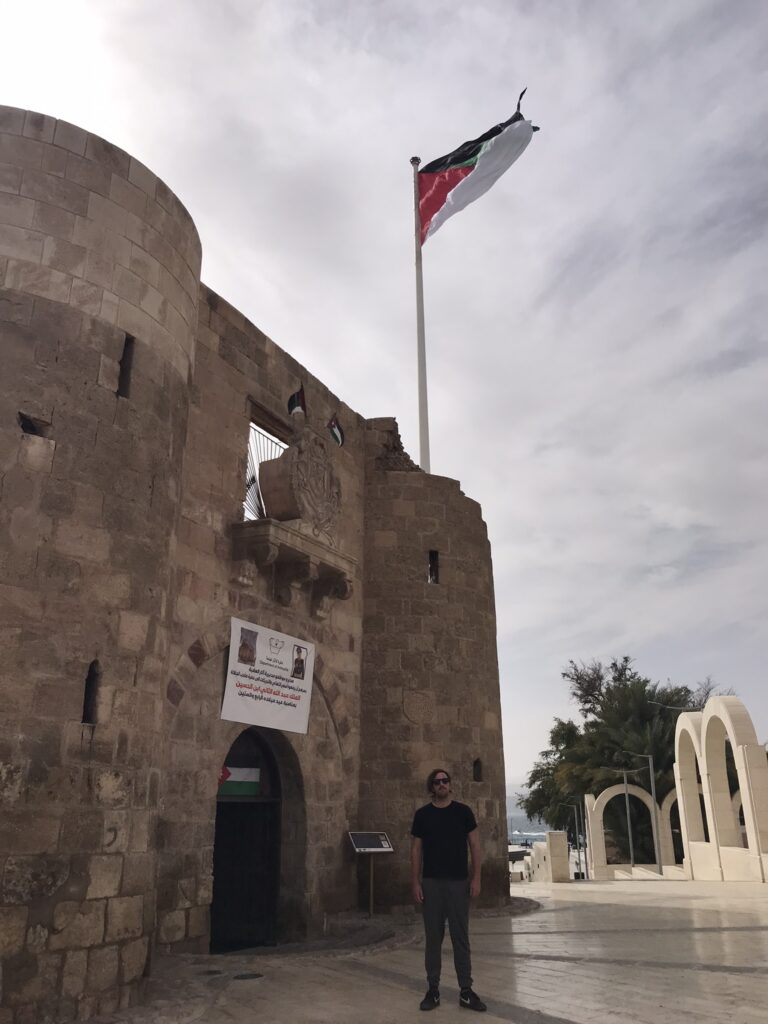
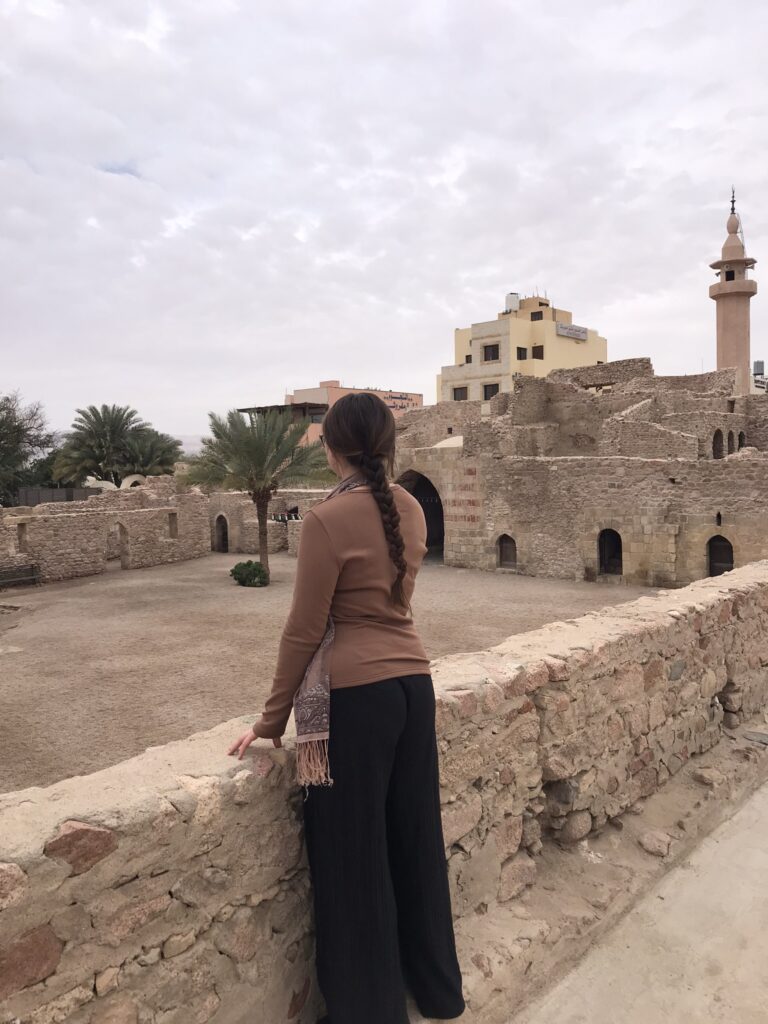
Step into the past at Aqaba Fort
Sharif Hussein’s House Museum – the best museum in Jordan to learn about the Arab Revolt, the history of the Hashemite royal family and their role in liberating Greater Syria from Ottoman control. Admission is free, but be aware that it does close on a Friday afternoon and Saturday afternoon – reopening at 5pm on both days. We spotted some lockers at the entrance so you can store bags whilst meandering around. The museum is situated in an old building which briefly housed the famous Arab leader Sharif Hussein – it formerly hosted Aqaba Archaeological Museum (now closed) and has been recently renovated to become a museum about the Arab Revolt.
Al-Ghandour Beach – located right in the heart of the city, this city beach is popular with Jordanian families who enjoy picnicking and puffing on shisha under parasols. Many sight-seeing boats crowd the beachfront trying to entice adventure-seekers for a ride around the bay.
Ancient Islamic City of Ayla – the original Islamic walled city in Aqaba, this site seems to be in the process of being excavated – there isn’t any signage or information inside the archaeological site. The gate was open at the entrance so we just walked in without seeing or speaking to anyone. It seems a little neglected but hopefully the municipal government will develop this into more of a tourist attraction.
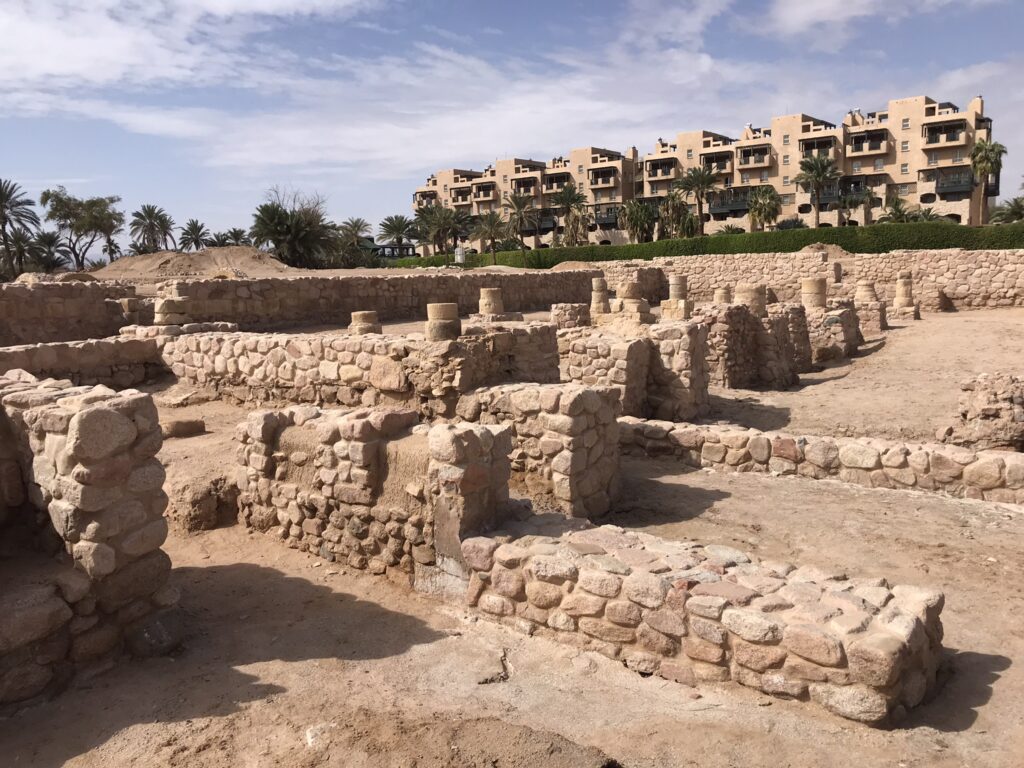
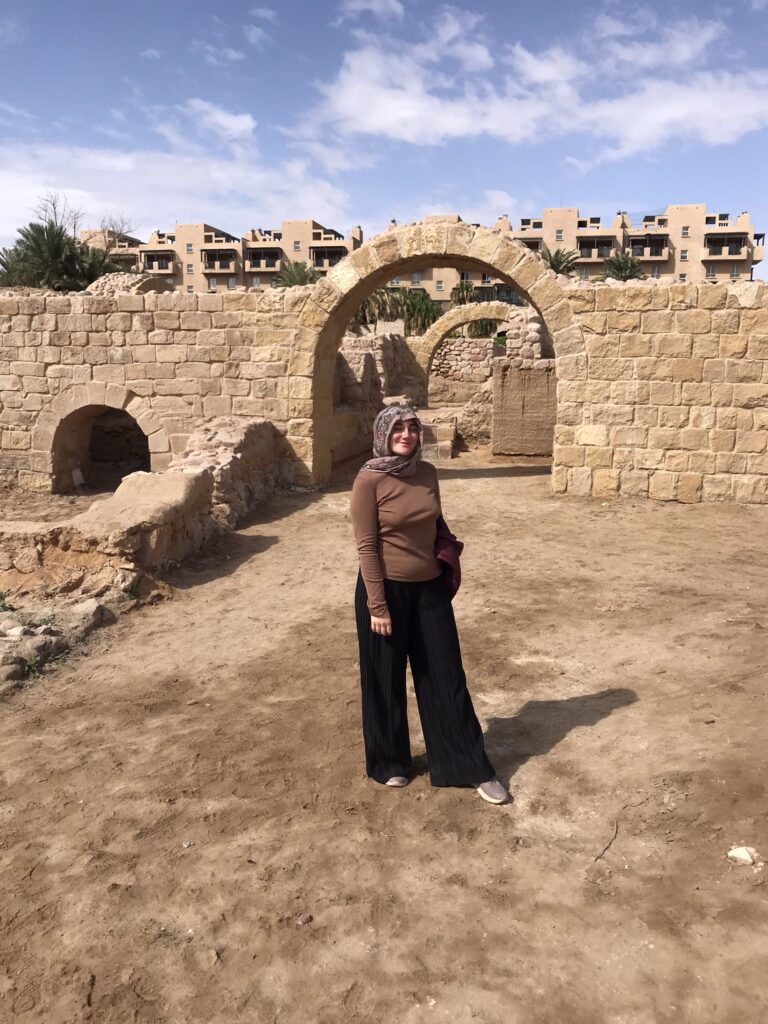
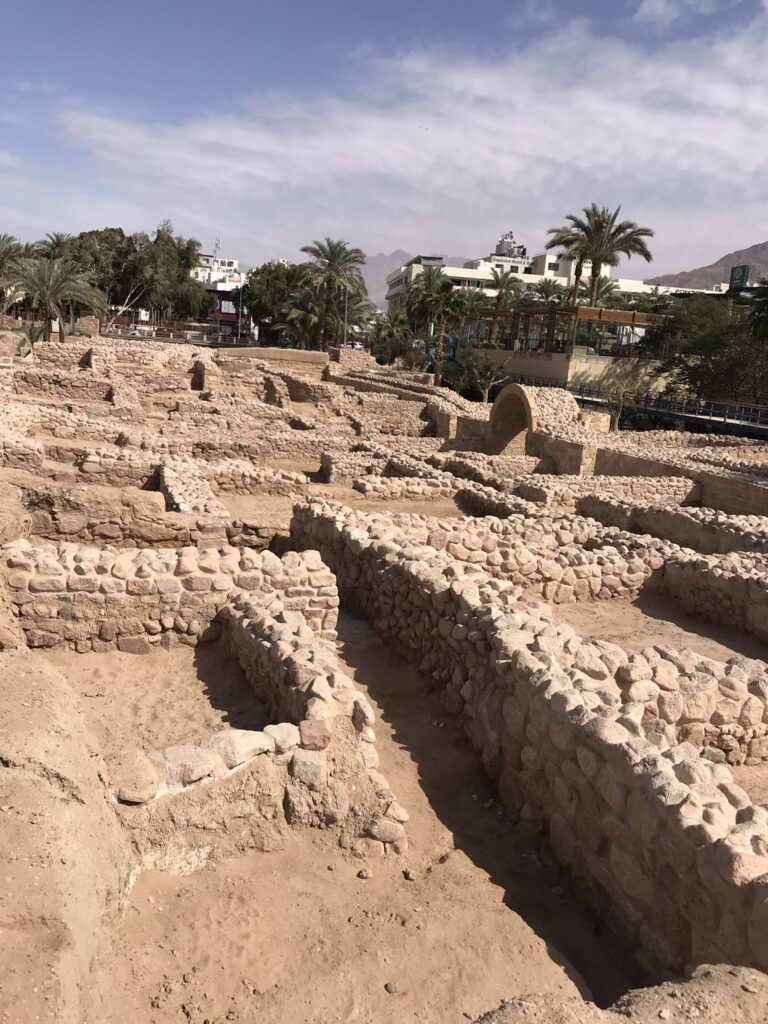
A bit of imagination is required at Ayla since only the foundations remain
Early Byzantine Period Church – this quiet archaeological site is said to be the remains of the earliest purpose-built Christian church in the world. You wouldn’t realise from the lack of fanfare; there were no other visitors when we arrived, no staff and no admission fee – we just walked in through the open gate.
Irbid
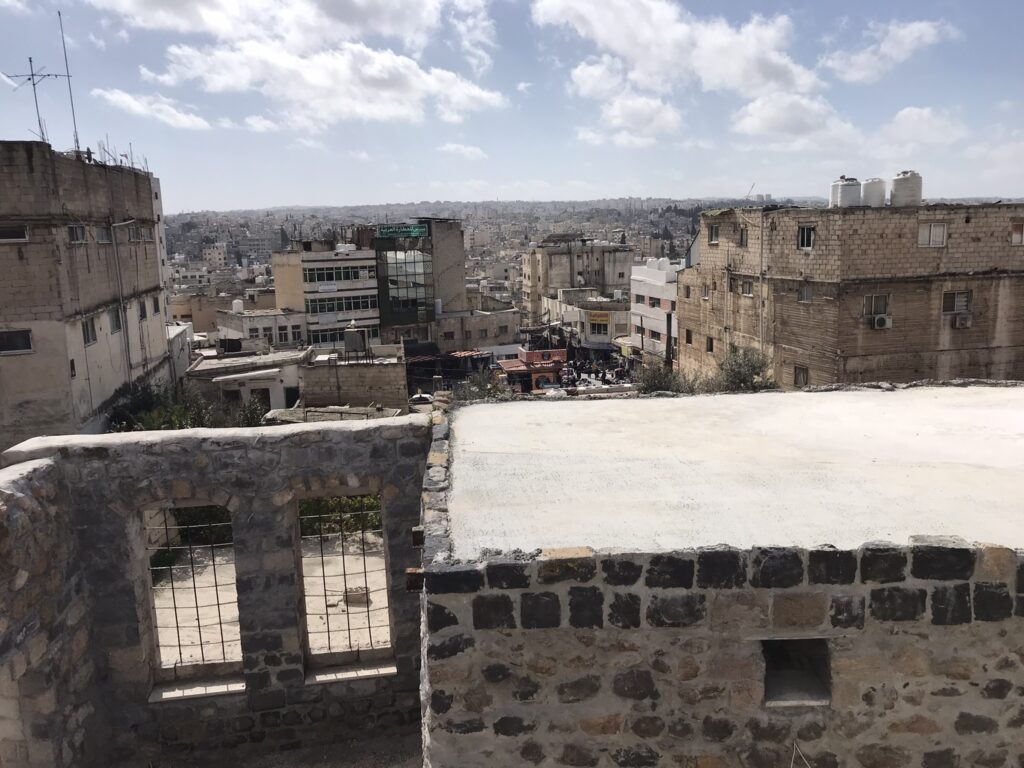
Known for its many universities and large population size, Irbid is the third largest city in Jordan after Amman and Zarqa. The city is located in the far north of Jordan around 20km from the Syrian border, and in recent history has welcomed many Syrian refugees fleeing conflict in the neighbouring country. We even spotted a road sign for a refugee camp.
Irbid is way off the typical tourist trail – we didn’t spot a single other foreign tourist in the whole time we were there. Although the city itself doesn’t have a huge amount to offer in terms of attractions, we decided to base ourselves in Irbid for a couple of nights in order to visit nearby Umm Qais. Locals in Irbid seemed genuinely welcoming and pleased to see us, as the city doesn’t witness the same huge influx of tourists as other places in Jordan such as Petra and Wadi Rum. Visiting Irbid was an authentic, unsanitised Jordanian experience, prices were extremely low, people were very friendly and we enjoyed ourselves in the city. As well as Umm Qais, there are some worthwhile places to visit in the city itself, such as the Nabulsi House, Arar’s Cultural House, Dar As Saraya Osmanli Museum, the Clock Tower and market area.
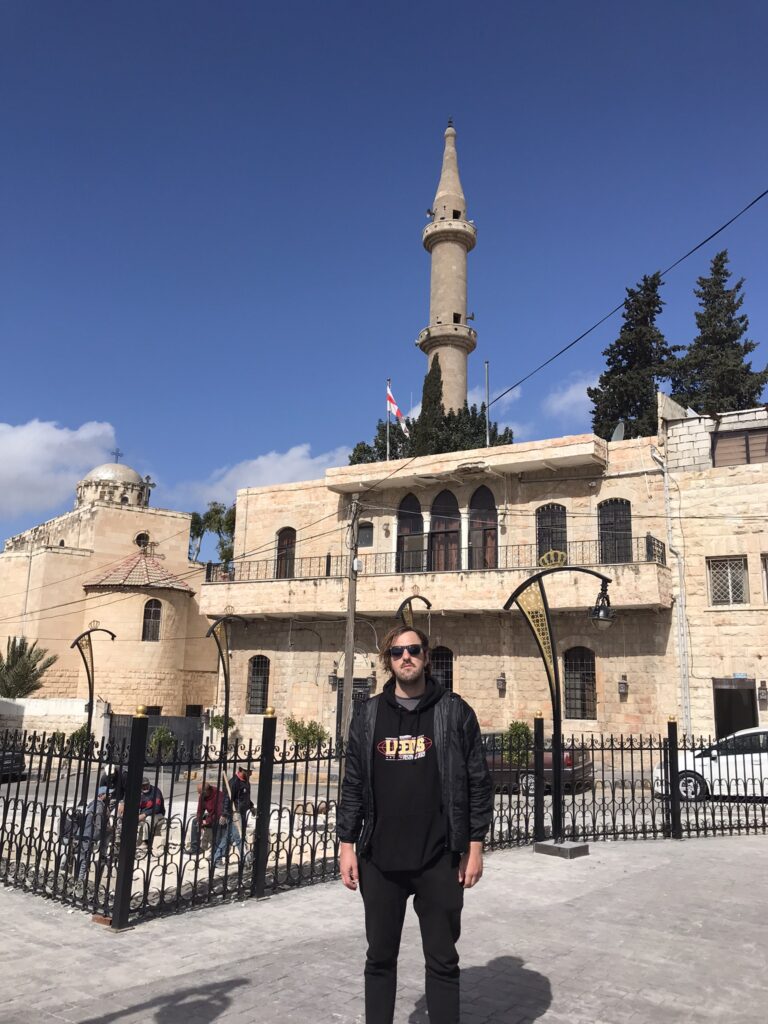
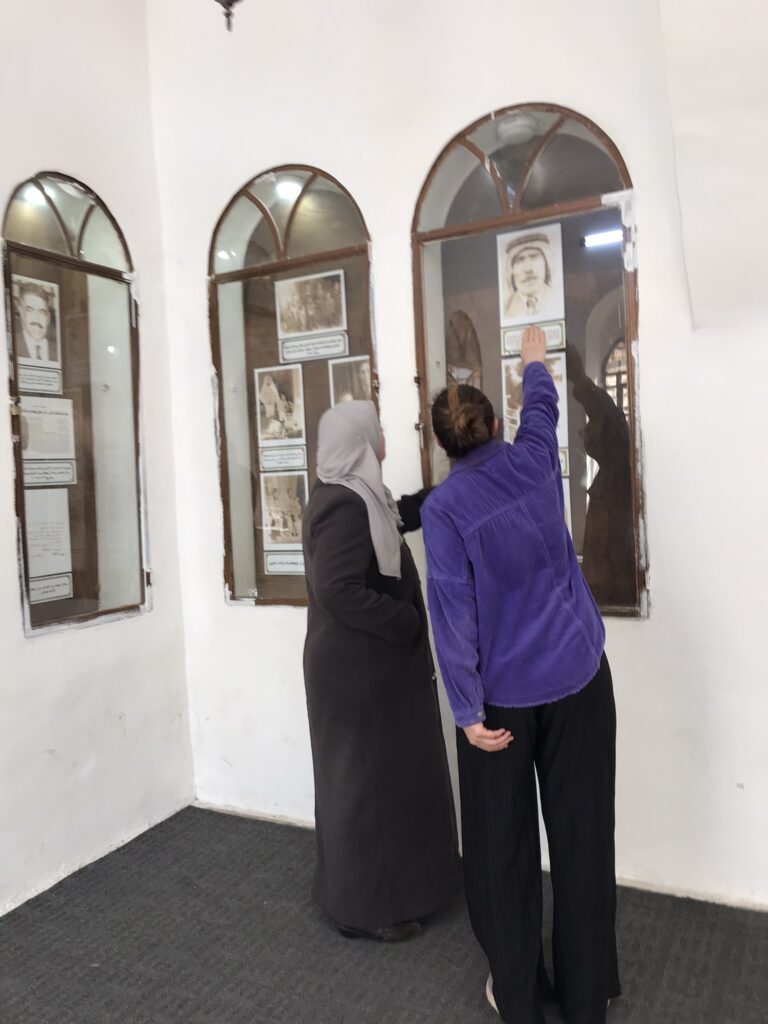
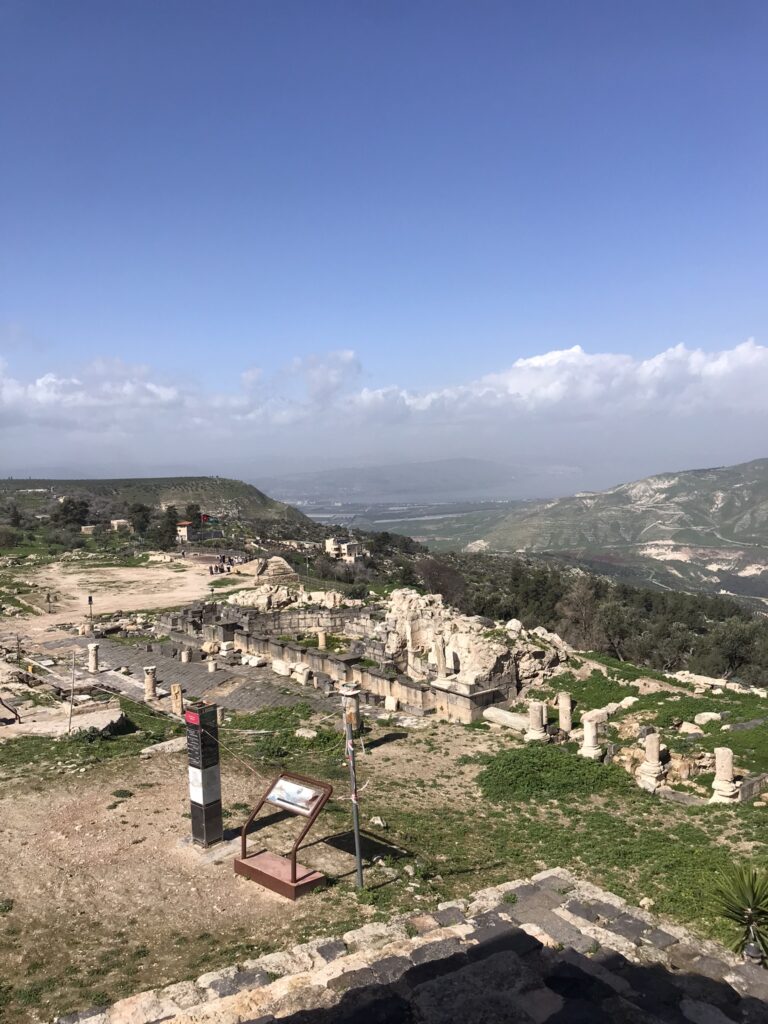
Outside the Dar As Saraya Osmanli Museum, a warm chatty lady at the Arar’s Cultural House (presumably an engagement officer) and stunning backdrop at Umm Qais
When visiting Irbid, there are two main public bus stations. This station in the south links to Jerash and Amman, and is also near to the JETT bus terminal for those wanting a more hassle-free experience from Amman. To the north of the city, this station is the place to get a bus to Umm Qais. In both cases, people at the station were more than happy to help us out by pointing us to the correct bus – just avoid the taxi drivers! Uber also worked well for us in Irbid, making it much easier to get around the city.
Accommodation
Azmal Hotel & Suites – we were unlucky to visit when they were undertaking renovations so we didn’t have the best experience with noise, but the rooms themselves were comfortable enough. Azmal is one of the few hotels in Irbid which regularly welcomes foreign visitors and just so happens to be close to the bus terminal for added convenience.
Foodie Places
If you’re looking for the local foodie experience, Irbid is an excellent place to try some typical Jordanian fare like falafel wraps and shish kebab without the hefty tourist price-tag.
Tadmor – a local grillhouse unsurprisingly specialising in grilled meat. For a staggering 2.5JD you can get a plate of 3 shish kebabs, barbequed onion and tomato, regular flatbread and a spicy tomato flatbread. It looks like a takeaway joint at first glance but seats are available upstairs, which is where the meals are served.
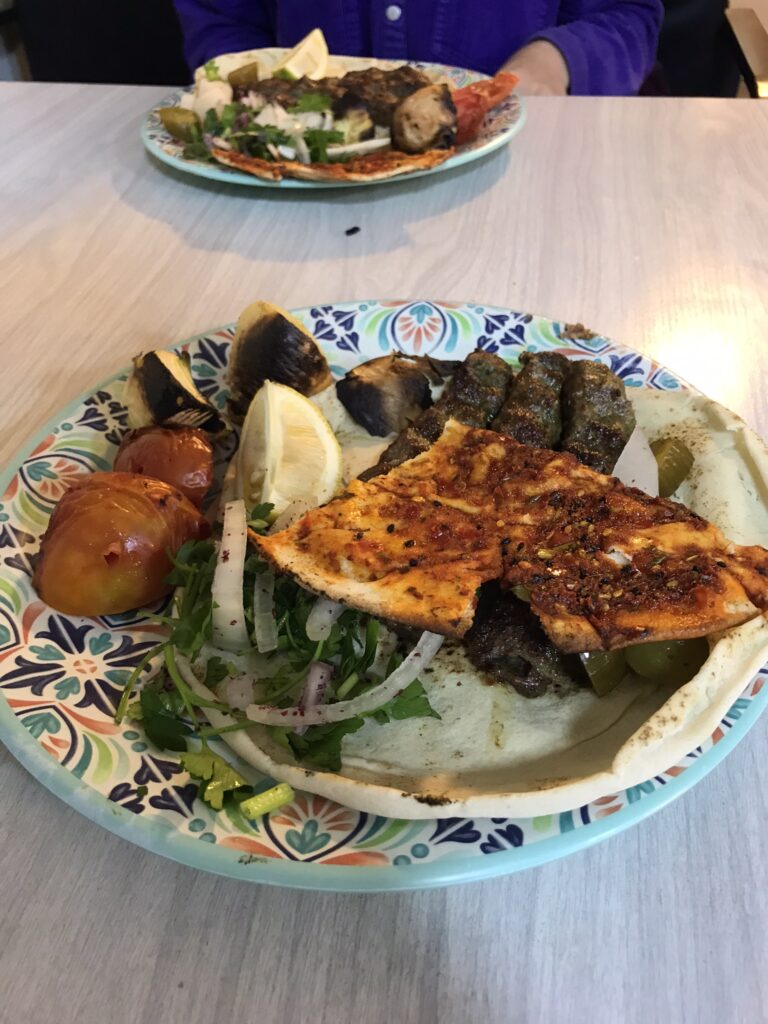
What’s not to love about such an affordable and tasty meal at Tadmor?
Shawarmeje 1 – An incredibly busy and popular shawarma joint, it’s all about the zinger meal here which consists of fried boneless chicken, chips, garlic sauce and some veggies for good measure, all squashed into a huge wrap. It’s a real game changer. We struggled to eat the wrap as it was so massive. The zinger wrap seemed to be a huge hit with locals as well judging from the queues. As with some fast-food places, you need to pay at the till first before handing your ticket to another guy at the food counter. The guy taking the orders spoke a bit of English and was super friendly and helpful (as was almost everyone we encountered in Irbid).
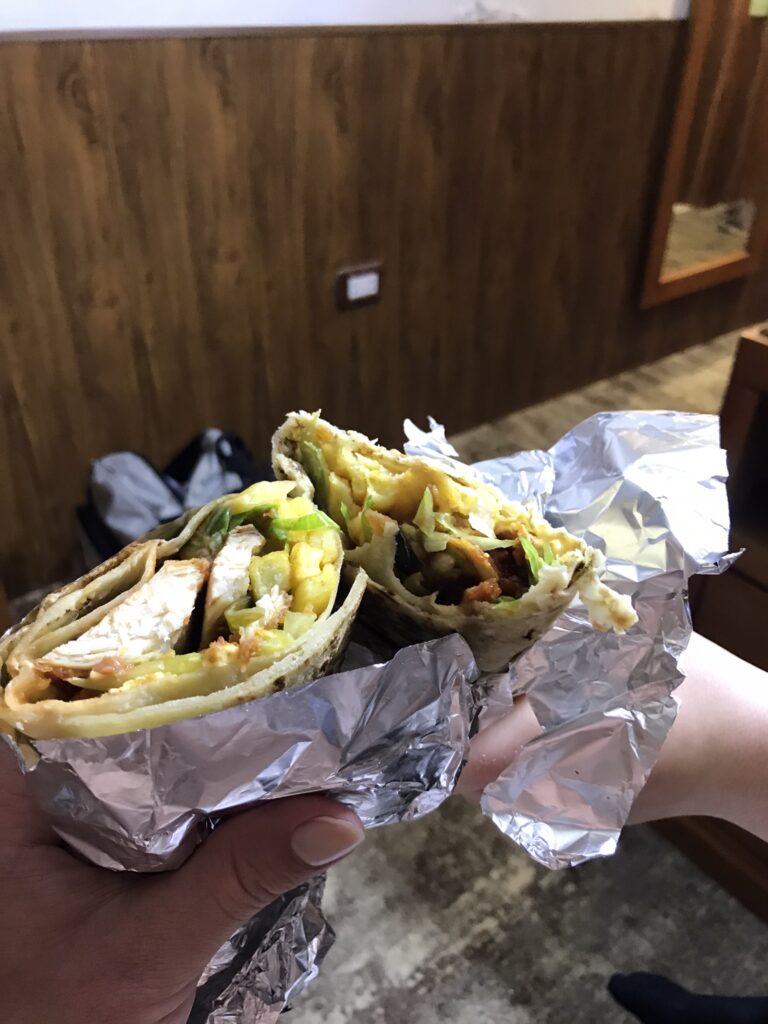
Lovely grub at Shawarmeje 1
Cafe Boba – connected with Azmal Hotel and Suites next door, this little dessert place offers decadent waffles, pancakes, smoothies and boba tea. We opted for the nutella pancake for breakfast and it was much bigger than anticipated with 5 layers of large pancakes smothered in chocolate sauce. Not cheap but extremely indulgent for breakfast.
Yassin Al Fawwal – two falafel sandwiches and two teas for 1JD – we couldn’t believe our luck especially as there wasn’t any menu and we had no idea what the price of anything was. The owner went out of his way to greet us and made our falafel sandwiches personally. We only figured out he was the owner after spotting a large photo of him on the wall. The owner’s son also insisted we take extra water with us when we left for free. You can’t really get more authentic than this place. The local diners who at first seemed a little taken aback at our presence quickly went back to normal after some initial curiosity. I can’t imagine that there is anywhere better to eat in the busy market area.
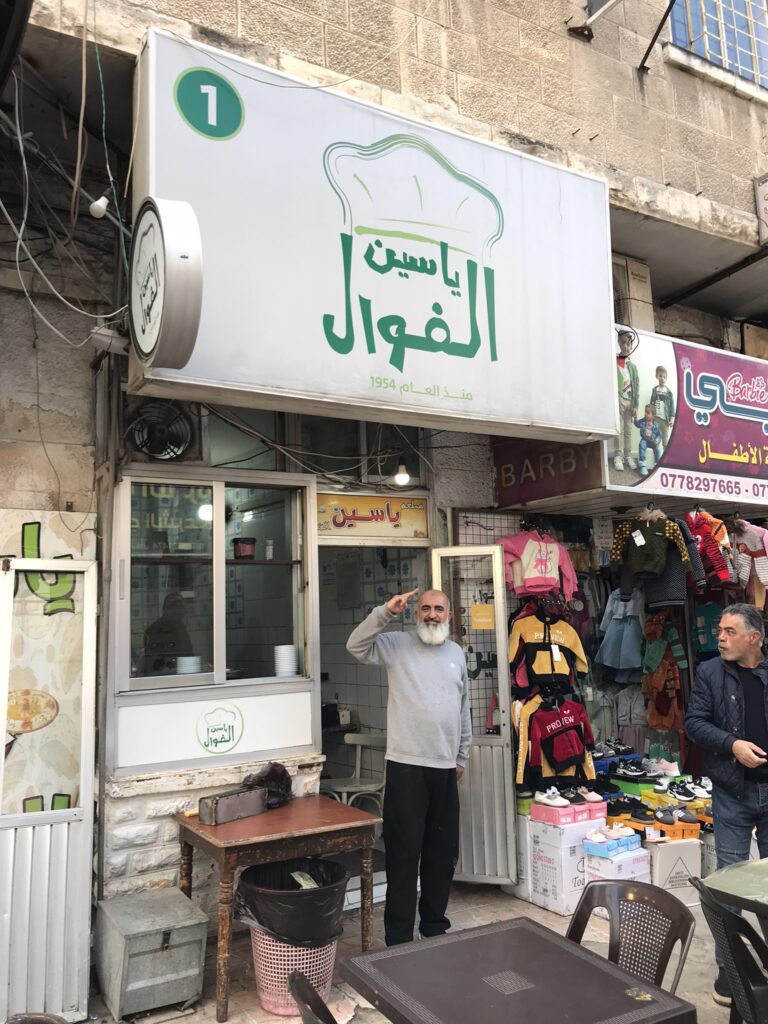
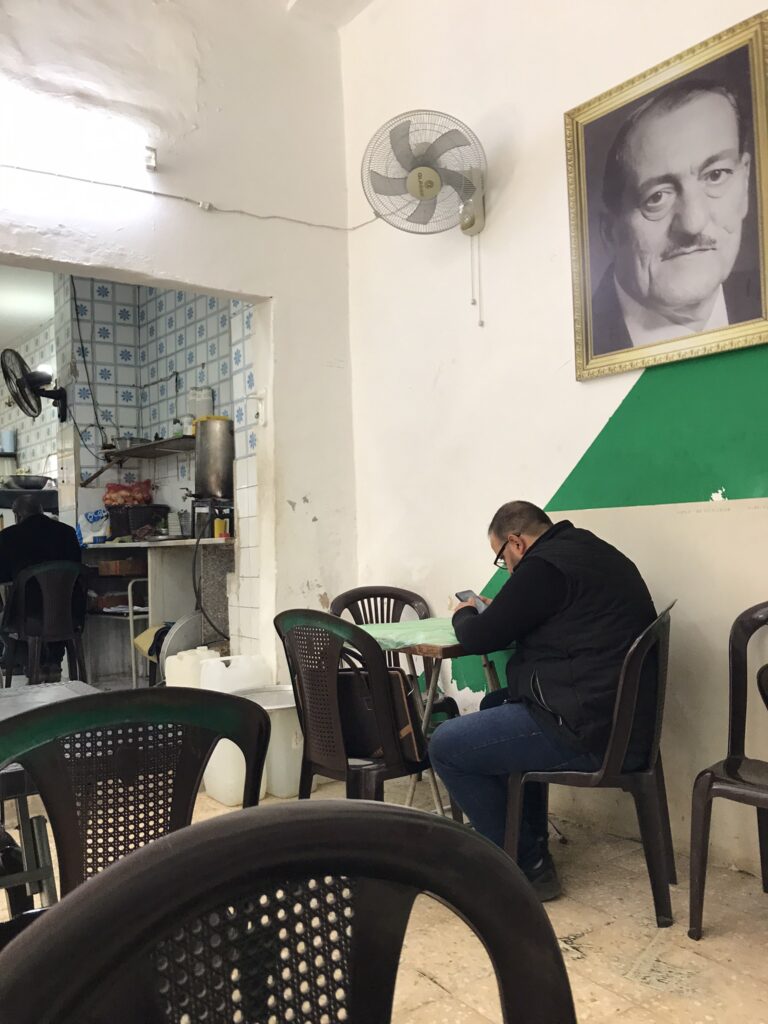
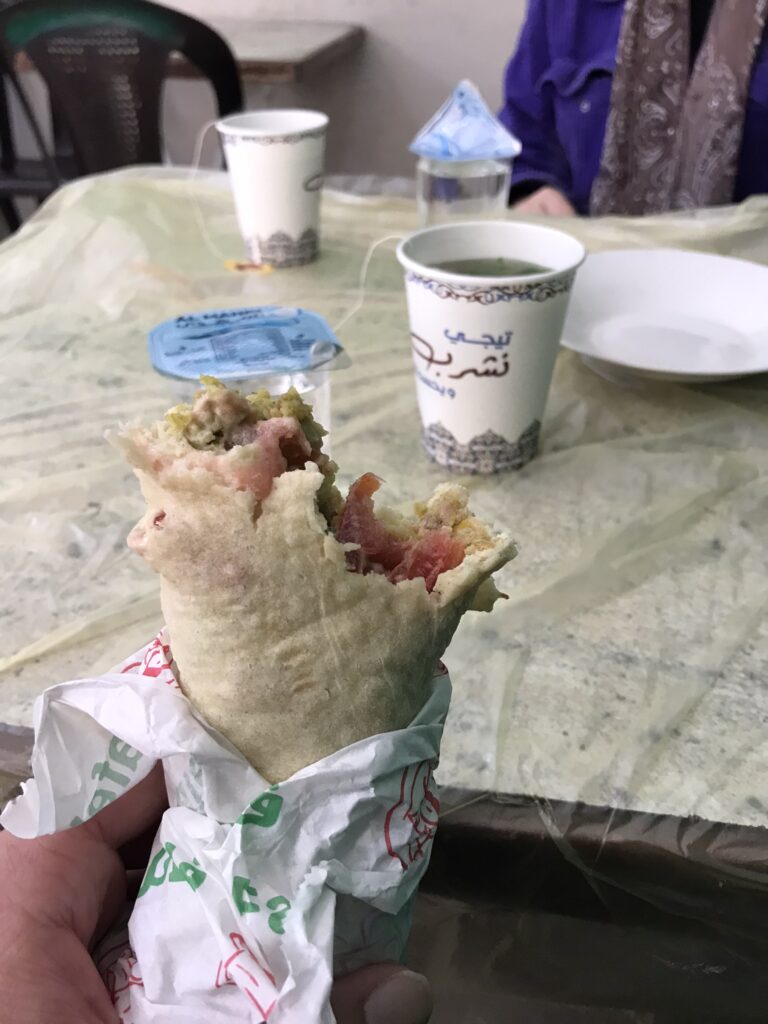
A trip to Irbid isn’t complete without visiting Yassin Al Fawwal for a falafel sandwich
Activities
The Nabulsi House – only the courtyard is open to visitors, it’s a relatively nice place to sit for a while and admire the architecture of the old house.
Arar’s Cultural House – the Syrian-style residence of the first and foremost poet in the newly formed country of Jordan, built by his lawyer father in the late 19th century. We were greeted by a very friendly lady who tried her very best to tell us about the great literary figure of Arar and explain the black-and-white family photographs in the gallery to us. There seemed to be a memorial including what looked like a grave inside the house of Arar.
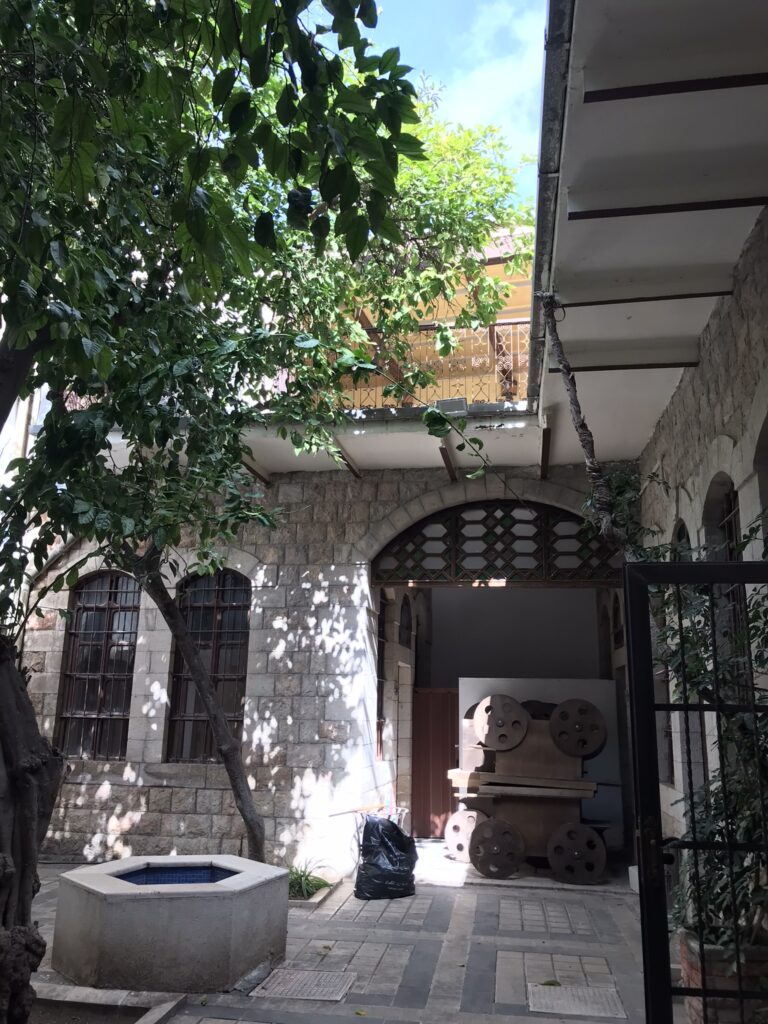
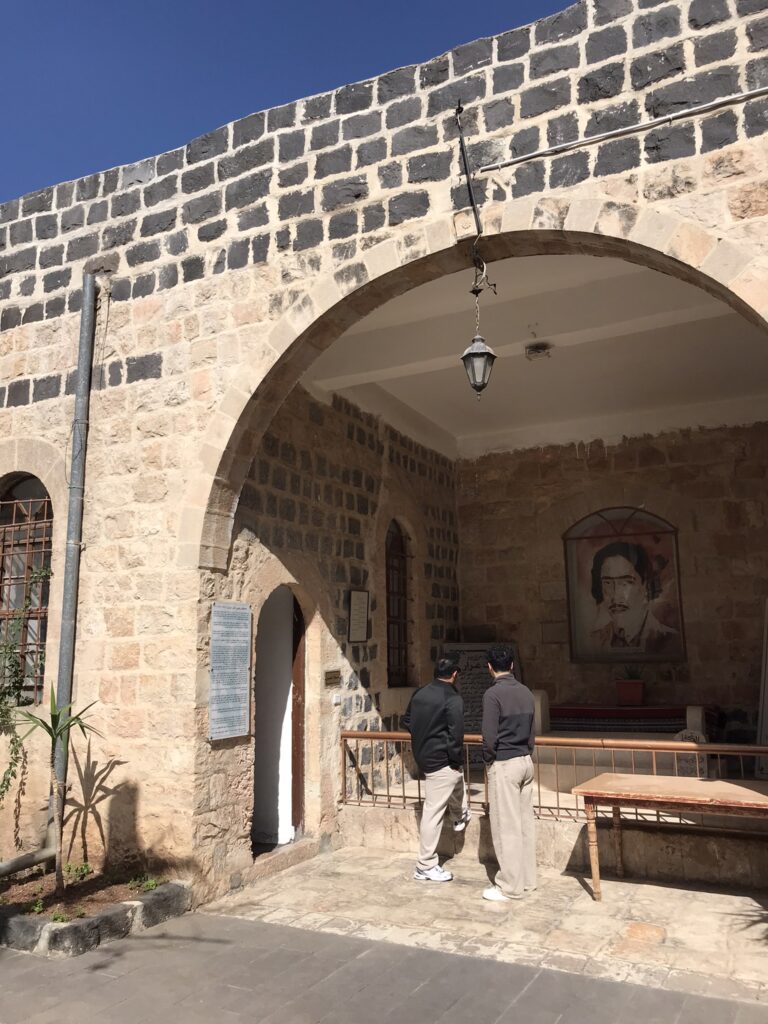
Nabulsi House courtyard and presumably Arar’s actual grave at Arar’s Cultural House
Dar As Saraya Osmanli Museum – this building was previously used as a prison, recently restored to its former glory with interesting cavern-type rooms housing the historical exhibits. All of the plaques have been helpfully translated into English. There are some brilliant mosaics in the museum. Outside the front of the museum is a viewpoint offering stunning views over the city.
Other interesting areas to visit in Irbid are the bustling market and Clock Tower area – a nice place for a stroll and to soak up the local culture and atmosphere.
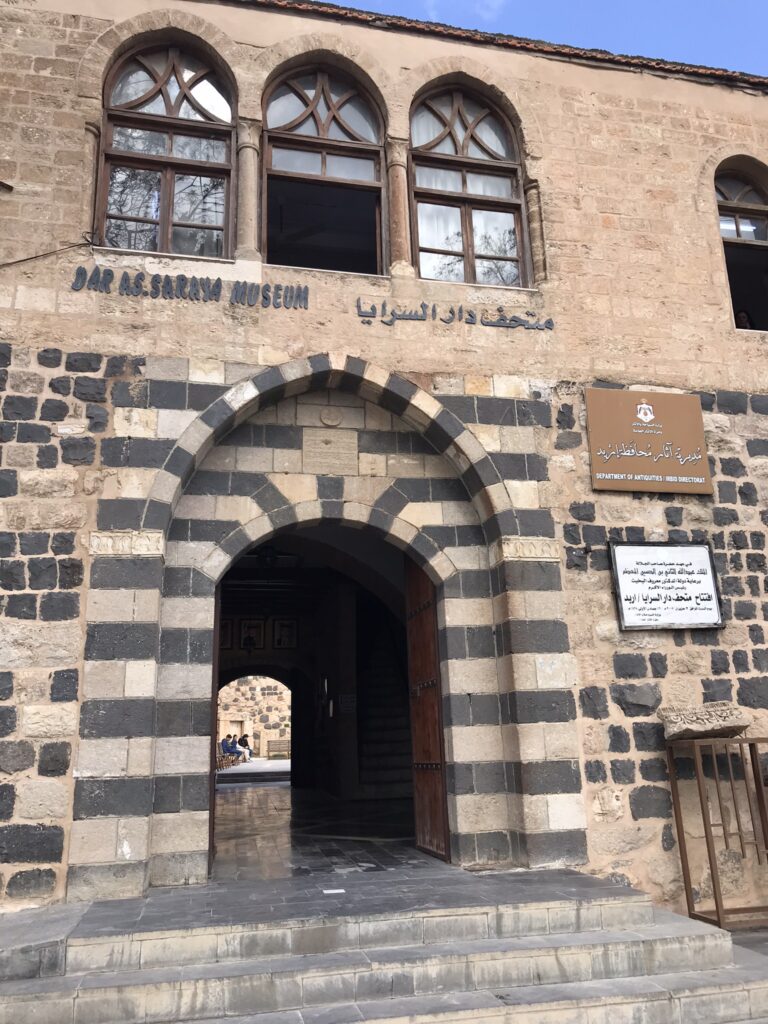
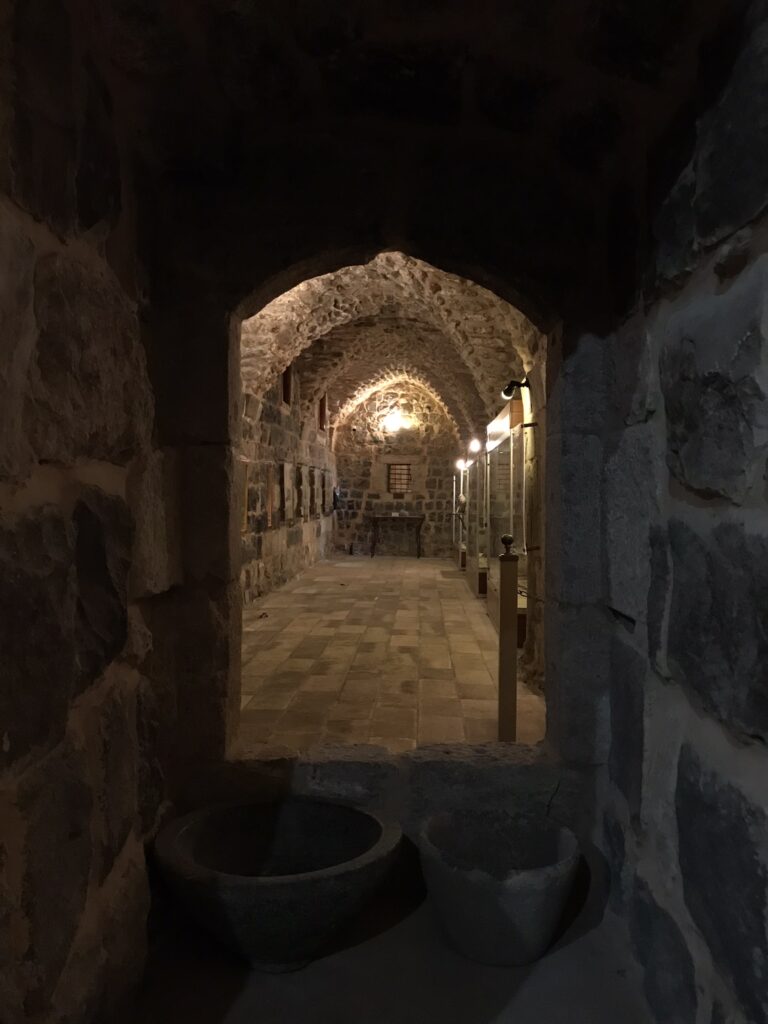
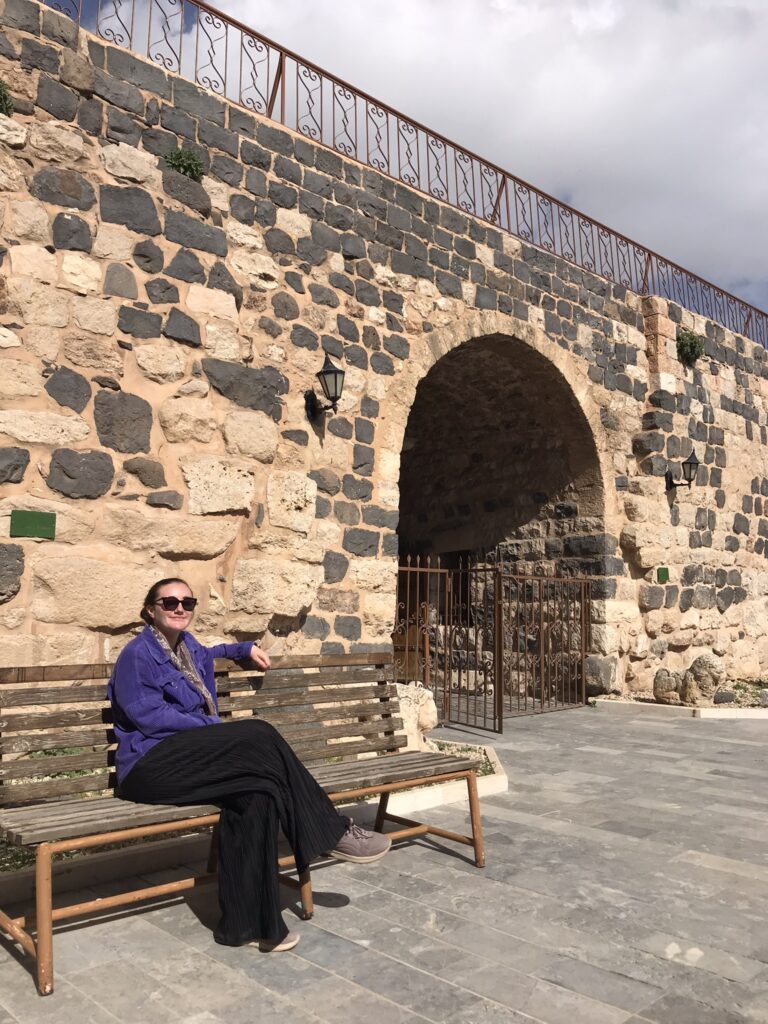
It’s all about local history and interesting architecture at Dar As Saraya Osmanli Museum
Umm Qais
Pronounced ‘um case’, this sleepy little hamlet was once the thriving city of Gadara during the Hellenistic and later Roman empire. Now all that remains of this once mighty outpost are fallen columns (although some are still standing), the outlines of once-grand monumental buildings and the rickety paved Roman road. Gadara is particularly interesting as it was one of the ‘Decapolis’, a league of 10 independent frontier cities (most are within the bounds of modern-day Jordan with a few in southern Syria) within the Roman empire which had special autonomous status. Many of the houses in the adjoining Ottoman village have been built using stone scavenged from the ruins of Gadara. Few tourists bother to visit this site, which makes it ideal for people like us who prefer to avoid the tourist hordes. As the site is perched atop a hill, there are also excellent panoramic views of the nearby Sea of Galilee and Golan Heights – you can even spot Mount Tabor in the distance.
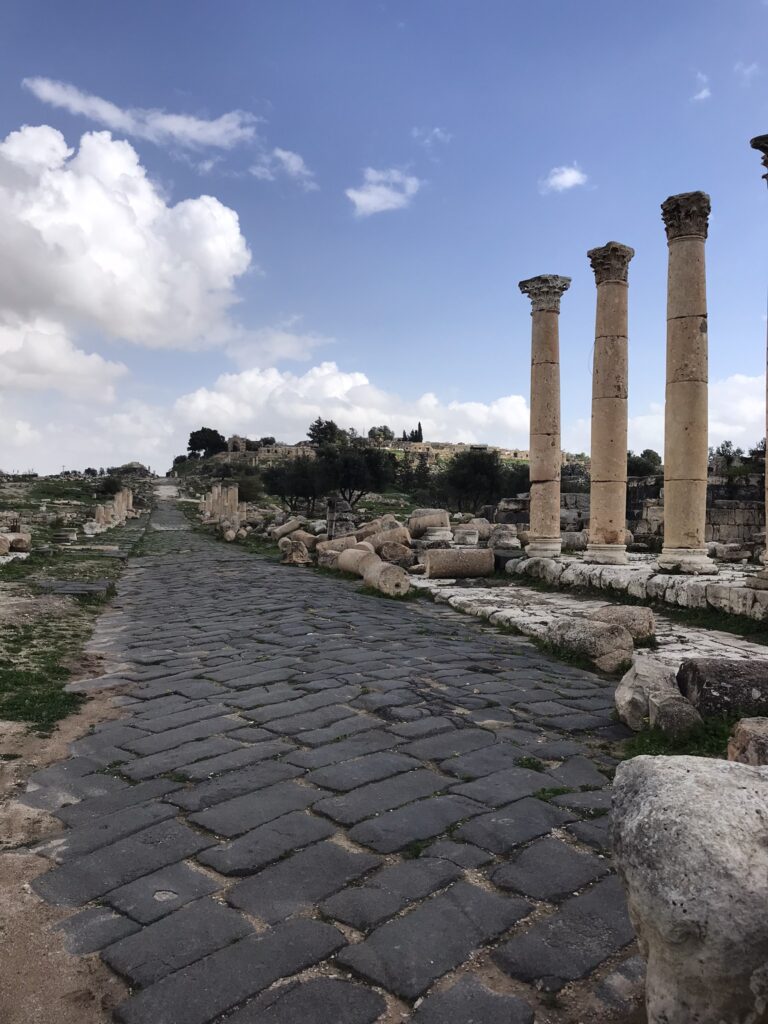
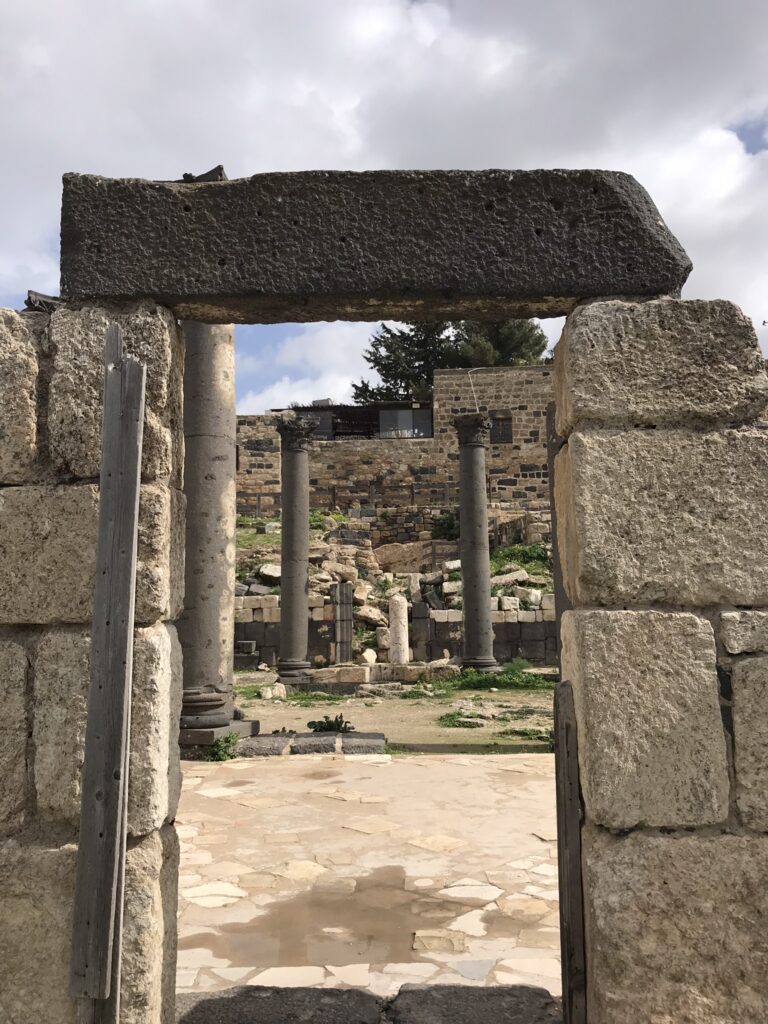
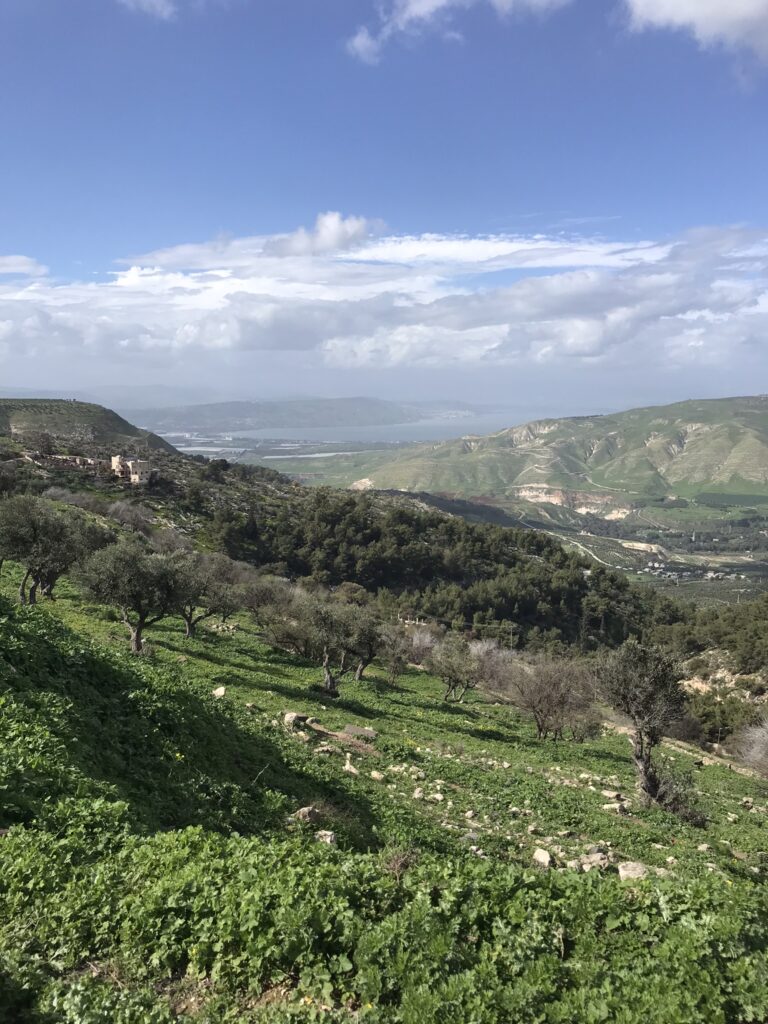
Highlights from Umm Qais include the original Roman road, temple foundations and brilliant views of the Sea of Galilee
Umm Qais museum is the best place to start your visit, housed in the former Ottoman governor’s residence. One of the museum workers was particularly friendly and wandered around with us pointing out extra details, even encouraging us to push open a stone door. He was very knowledgeable about the displays and genuinely wanted to provide informative content.
Another interesting aspect is the abandoned Ottoman village on the crest of the hill, situated within the bounds of the archeological site. It is slightly eerie as the residents were forced to leave after the site was taken over by the Jordanian Antiquities Department in the 1970s in order to preserve and excavate Gadara. The old village school is now a restaurant. Other highlights include the two Theatres (one of which is yet to be excavated and is covered with a layer of grass), the Byzantine church complex, the black basalt pillars lining the east-west road (amazingly marks from carts trundling along the roads are still visible), the Nymphaeum and the street of shops built into the exterior of the Theatre. The ruins are quite extensive and there is plenty to see and explore here. We even spotted a flock of sheep and shepherd grazing at the far end of the site.
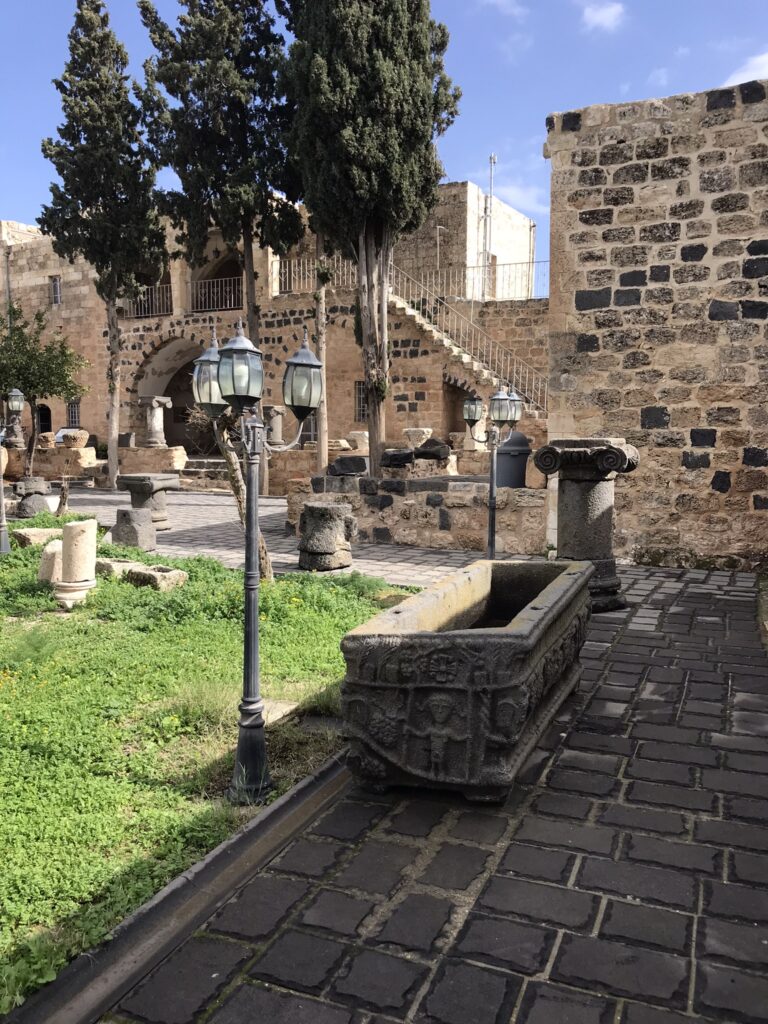
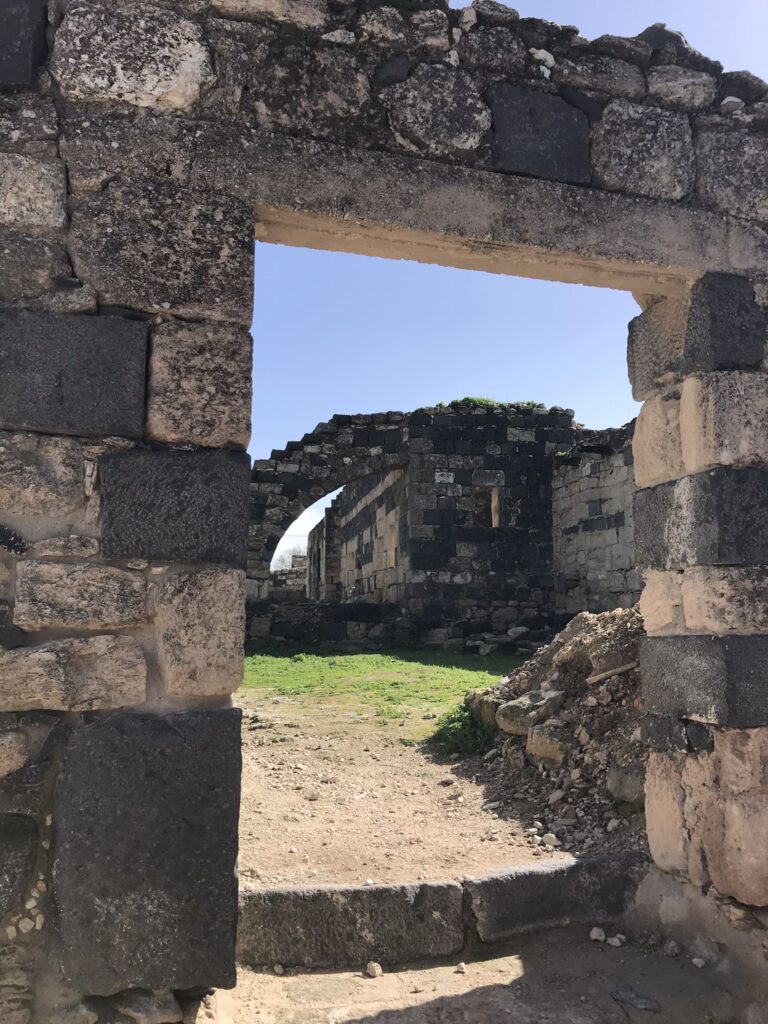
The building that houses the museum has been fully restored while the Ottoman village stands derelict
To get the local bus to Umm Qais from Irbid, you need to go to the city’s northern bus station and ask for Umm Qais. The bus cost less than 1JD. The local bus drops you off at the entrance to the ancient site of Gadara – rest assured the driver will know what to do. When heading back to Irbid, the driver will make a loop which passes the entrance to the archaeological site. It’s probably best to wait on the road around there. Somewhat foolishly, we slipped out of the archaeological site through a back exit and wandered into the nearby village to try and find a bus stop, encountering several confused locals including a group of teenage boys who did their best to help us before we spotted the bus coming past in the opposite direction.
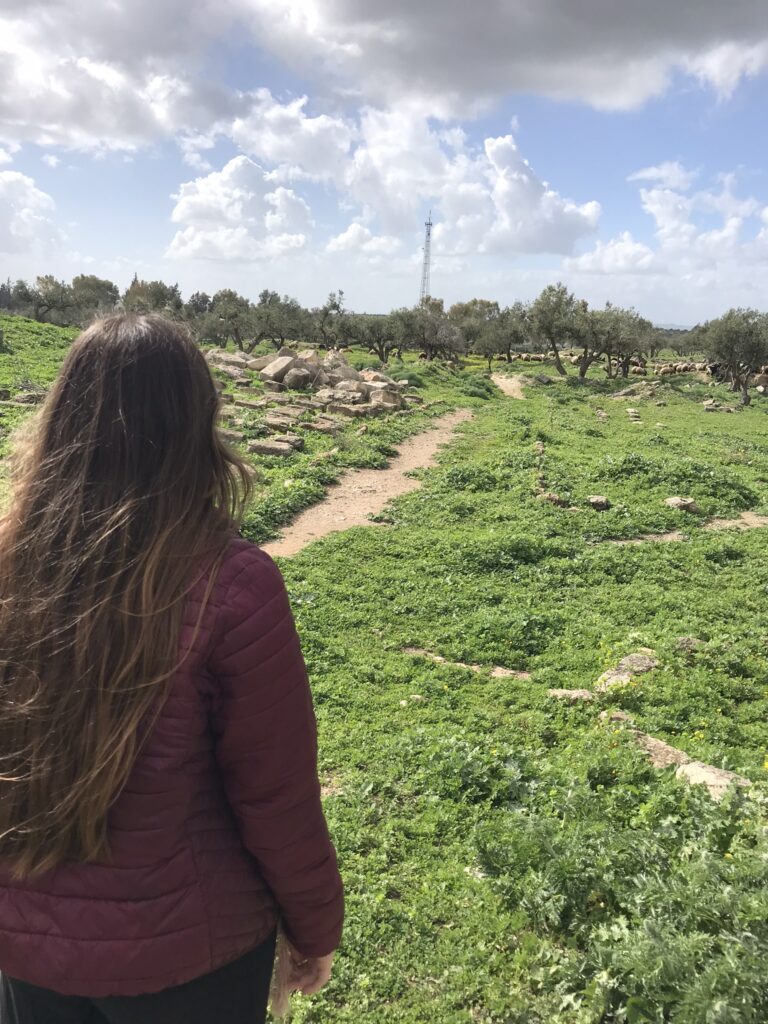
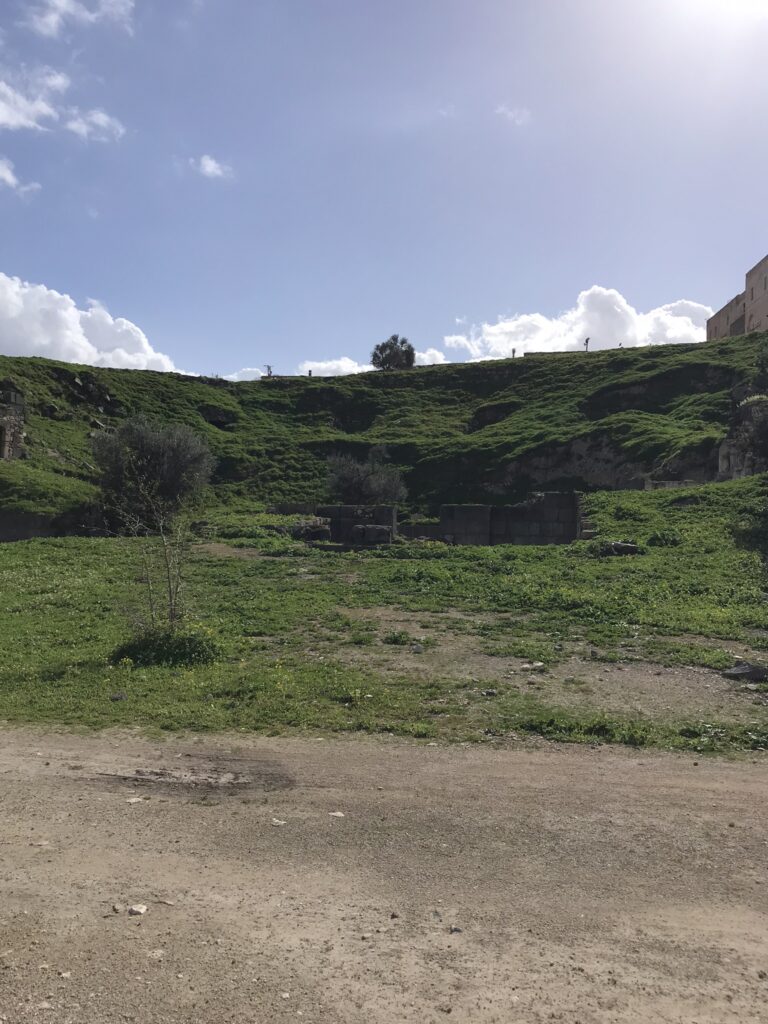
Two unusual aspects of the site were encountering a flock of sheep and spotting a completely covered theatre
In terms of food, there’s a restaurant within the site if you like the idea of splurging on lunch with unbeatable views over the Sea of Galilee. It seemed a little expensive to eat here so we brought snacks with us and waited until getting back to Irbid before eating a full meal.
Jerash
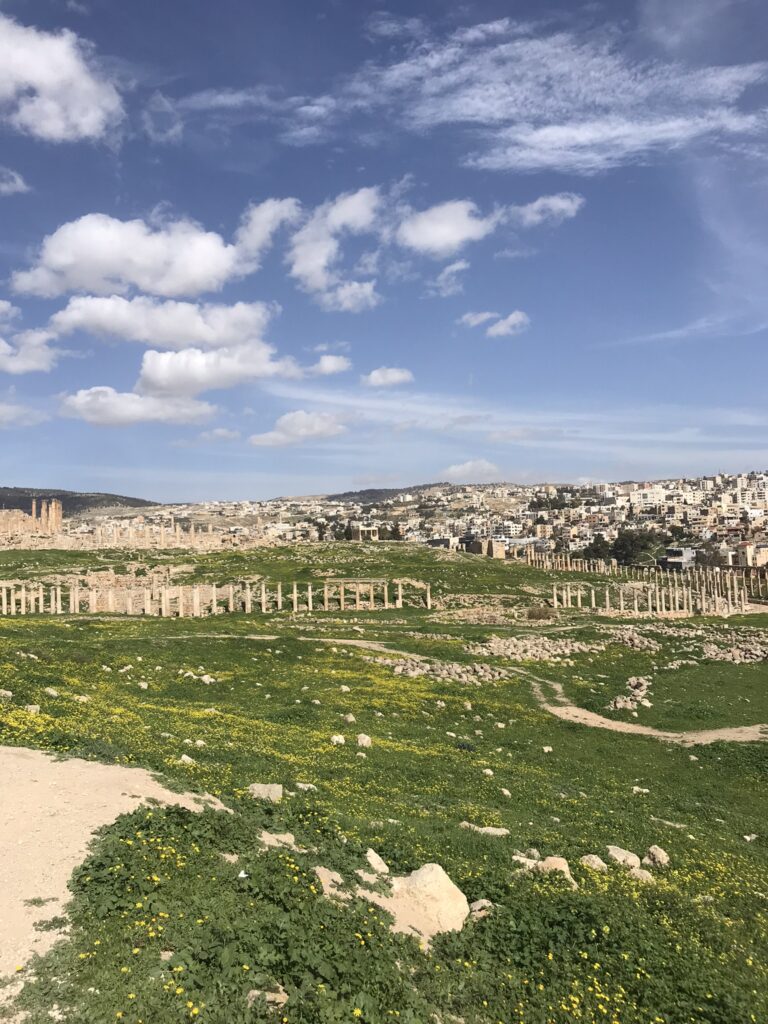
Jerash is the site of the ancient city of Gerasa, known as the city of a thousand columns. One of the ‘Decapolis’ group of cities during the Roman period, this is a remarkably intact Greco-Roman provincial city which has been nicknamed ‘Pompeii of the Middle East’ due to its immaculately preserved ruins. The formerly thriving city was all but abandoned by the 8th century, later being resettled during the Ottoman period.
The modern city of Jerash has developed around the ancient ruins which sit right in the city centre and dominate the city’s landscape. The sheer size of the archaeological site is impressive. We learned that local residents have had to be moved repeatedly as more and more remains of the ancient city were uncovered. Most of the new city buildings are now across the river from the archaeological site.
Located less than 50km from Amman, Jerash makes for an easy enough day trip from the capital (public buses are ridiculously cheap and JETT also runs a combined bus tour of Jerash and Ajloun Castle from Amman). However we chose to stay for a couple of nights in Jerash while returning from Irbid in order to also visit Ajloun Castle independently and take our time at the archaeological site in a leisurely manner. This was definitely a good decision as we really enjoyed our time in Jerash. The locals here were the most friendly and engaging we met in Jordan, and we had so many pleasant interactions during our short time in the city – from befriending a group of local girls outside the archaeological site to being invited for a cup of tea in the garden by a group of builders and an elderly local chap who was eager to tell us about his time serving alongside the British Navy. He even introduced us to the local goat herder! At one point a man who was driving past pulled over just to say hello and make sure we were ok. We experienced such fantastic hospitality and genuine warmth in Jerash, which is something that couldn’t ever really be experienced on a day tour.
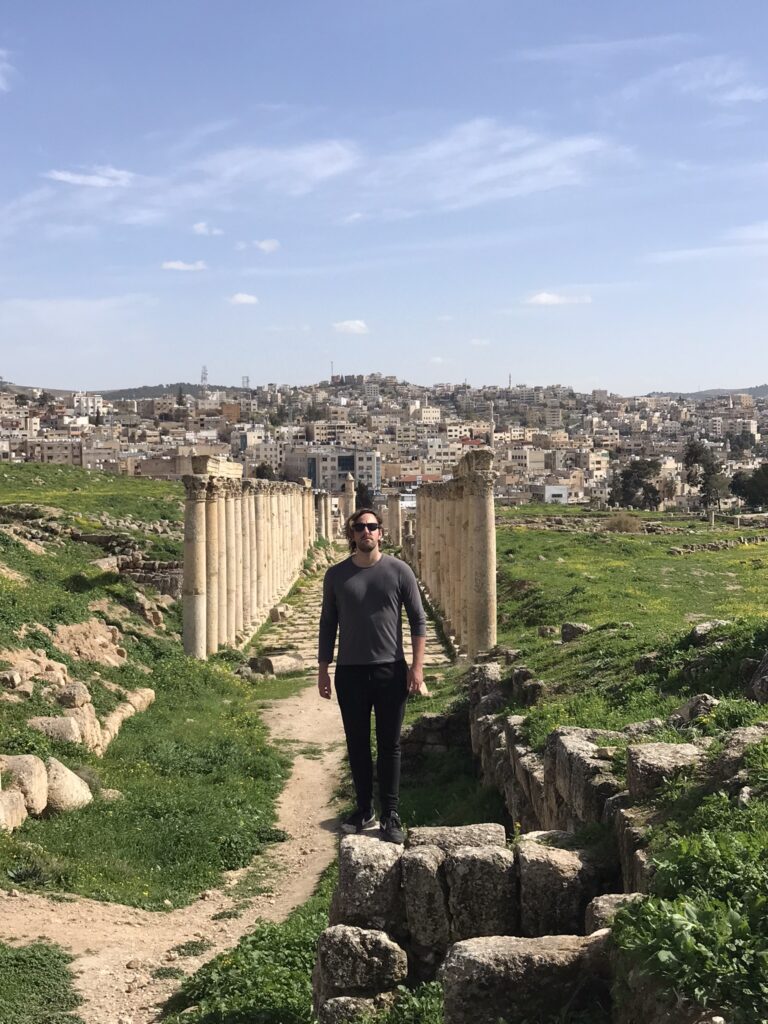
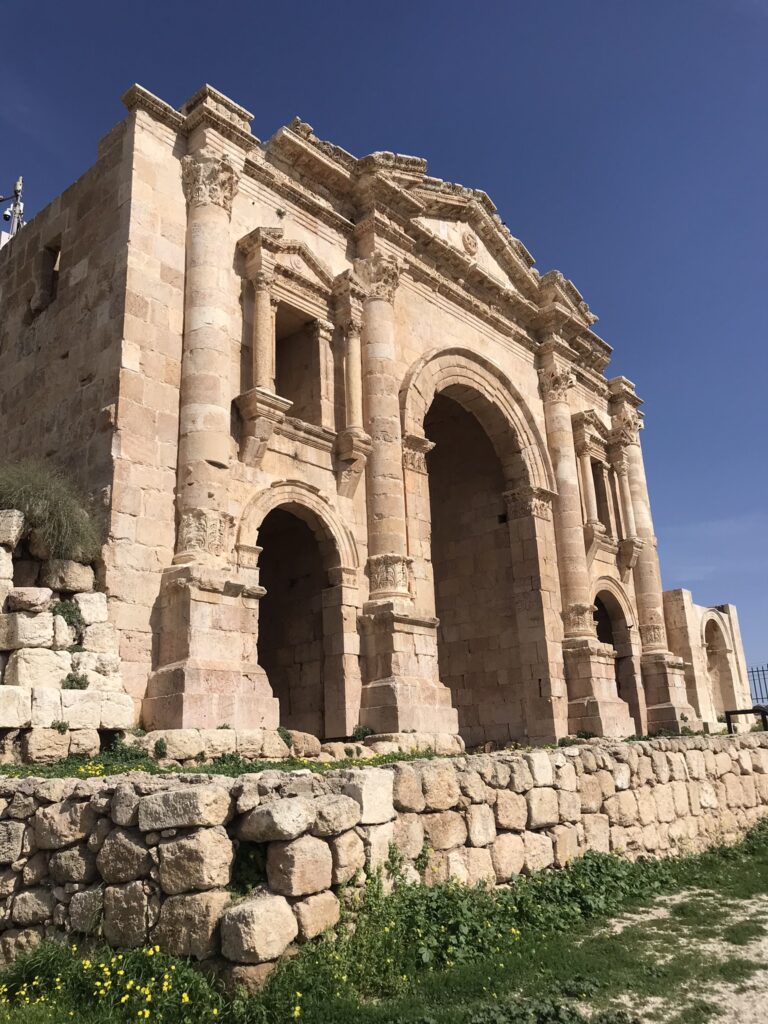
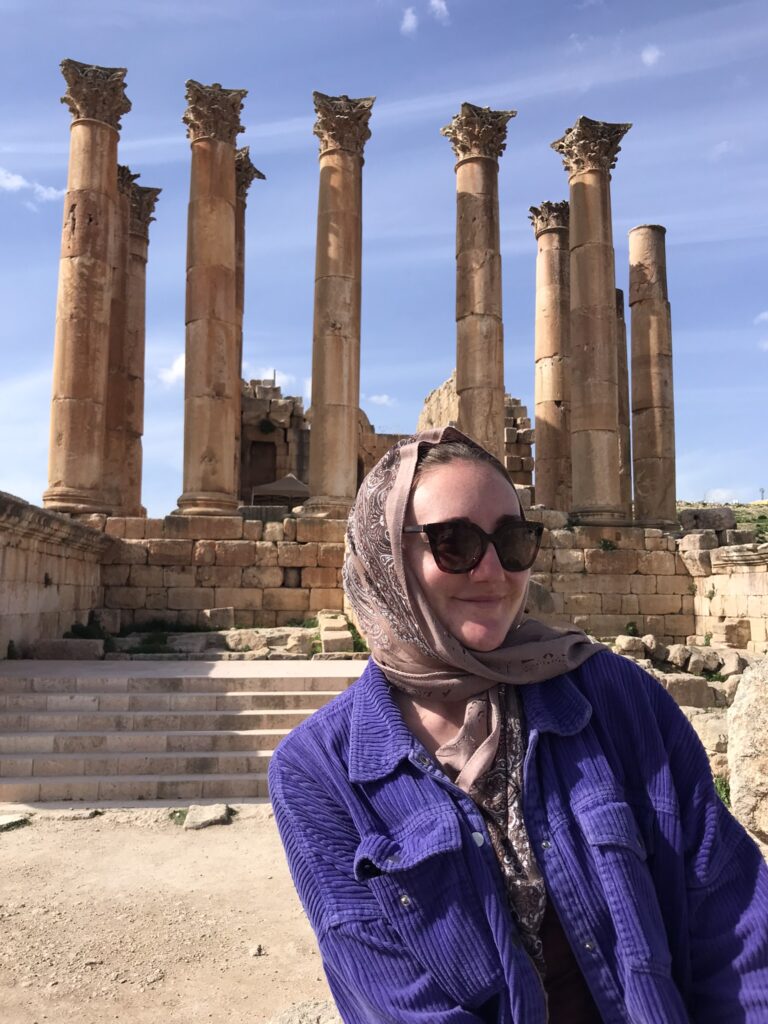
Jerash archaeological site is incredibly impressive
Accommodation
Jeeso Hotel – a newly-built, family-run hotel situated very close to the entrance to Jerash Archaeological Site. This was by far the best place we stayed in Jordan. I highly recommend this place for other international travellers as it meets all of the criteria: superb location, charismatic host and fab rooms. The quality of the accommodation and the genuine warmth of the host really made this place stand out. The rooms themselves are very generous in terms of size and super comfortable. There’s also a Bedouin tent in the garden which makes for an excellent setting to enjoy a cup of tea or coffee – made doubly great by the conversations with the host Mohammed, a friendly, kind and well-to-do family man. There are ample restaurants, bakeries and supermarkets nearby. Jeeso also offers breakfast for an additional cost.
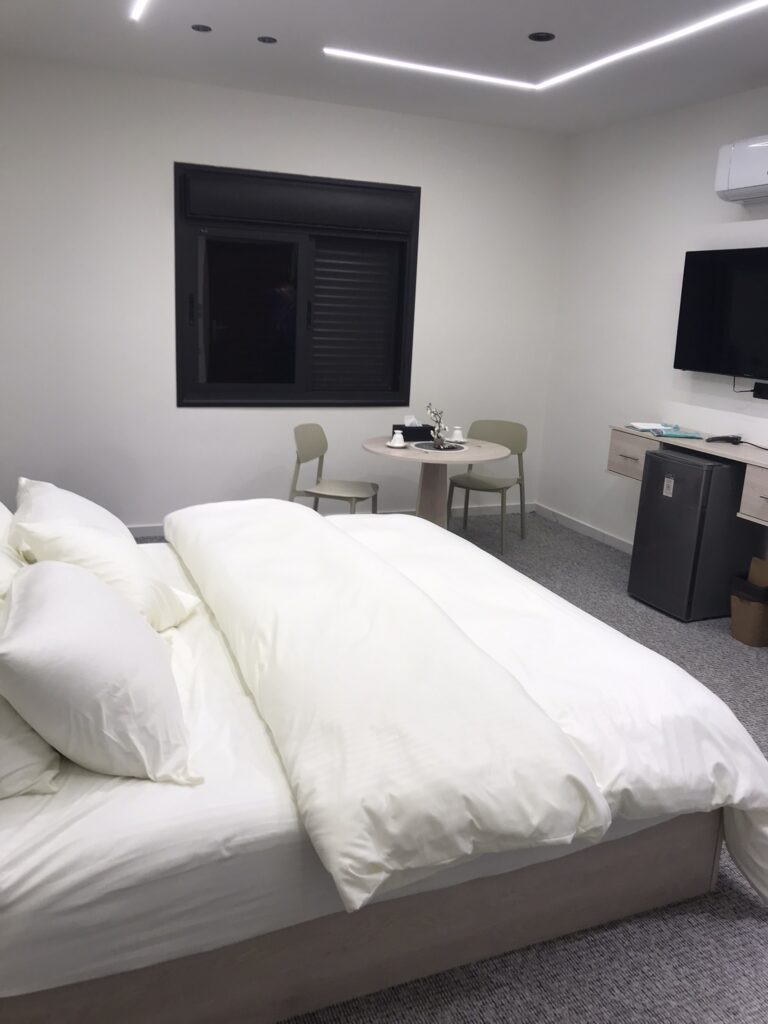
Jeeso was our favourite accommodation in Jordan
Foodie Places
All of the below places were really welcoming to us:
AlSaloon AlAkhdar Sweets – a very popular Jordanian sweet and dessert cafe on the ground level with a sit-down restaurant serving fast food such as pizza on the 1st floor. One of the servers was studying English at university so we had no problem ordering. English menu available.
داريا للمطاعم جرش -A busy takeaway joint specialising in shawarma with a family restaurant upstairs. The chicken and rice deal was fab. English menus are available in the upstairs restaurant – you need to take the elevator to reach the upper floor dining space. It’s also important to mention that the family dining room is only open to couples and families and not single men.
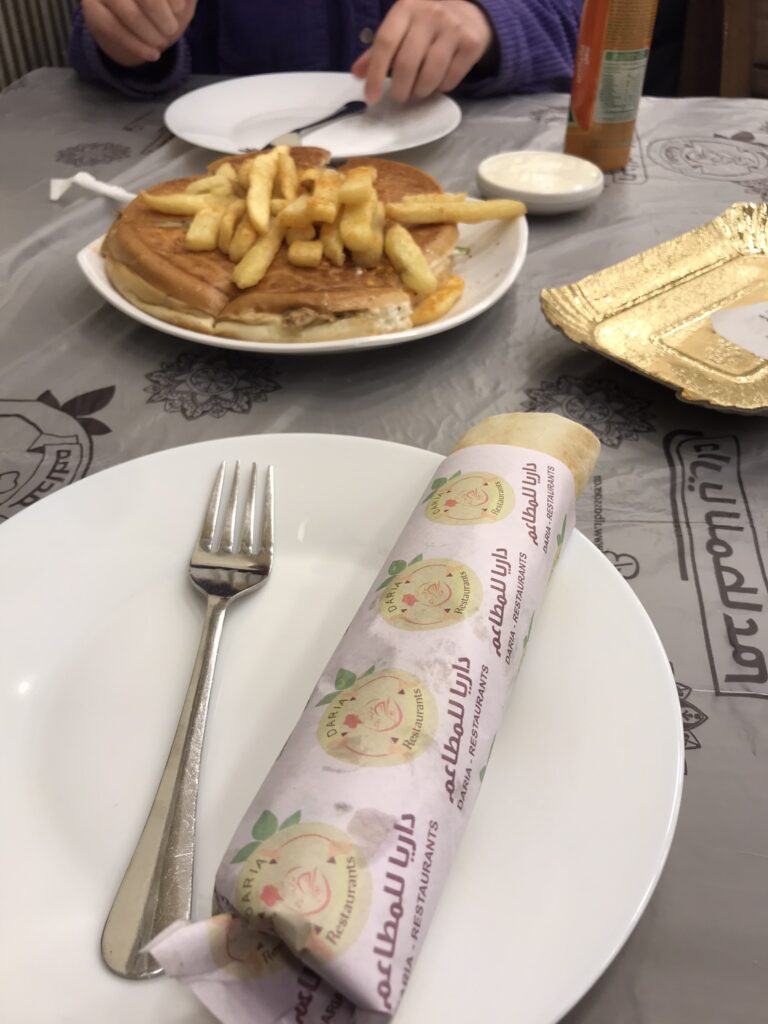
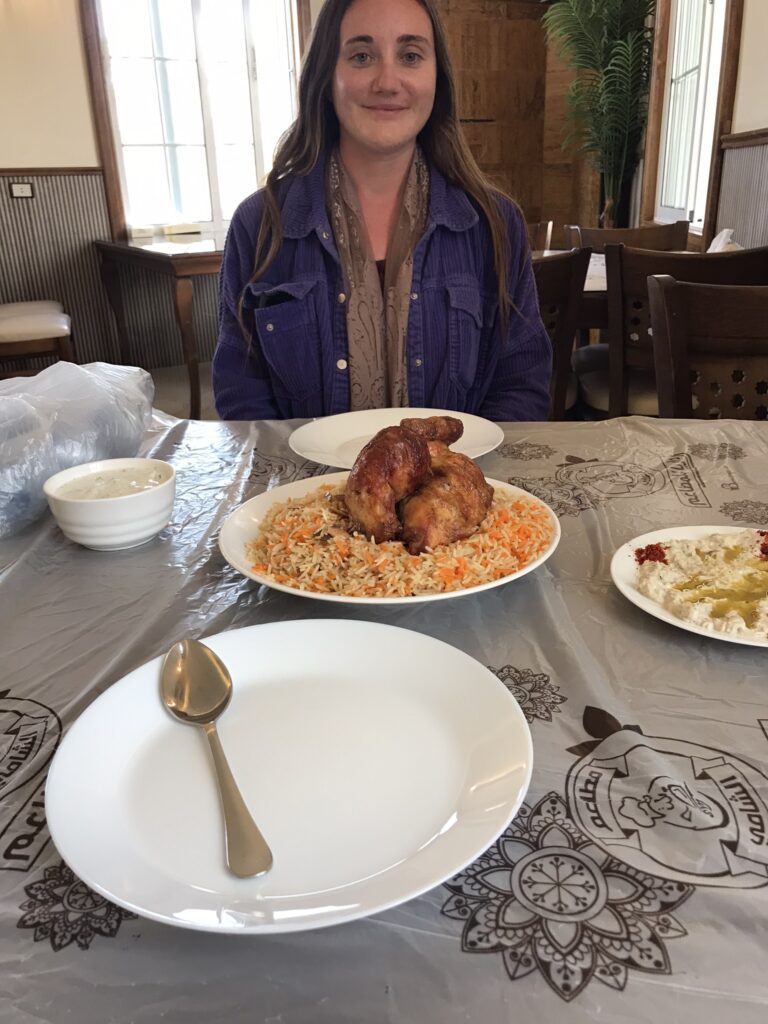
We became regular customers at داريا للمطاعم جرش while in Jerash
مخبز خوخة الحجري (bakery) – situated along the same road as the previous two foodie places – a short walk from the archaeological site. A great place to stock up on freshly baked manakish – the guys are super friendly and love an interaction with foreign tourists – take my word for it!
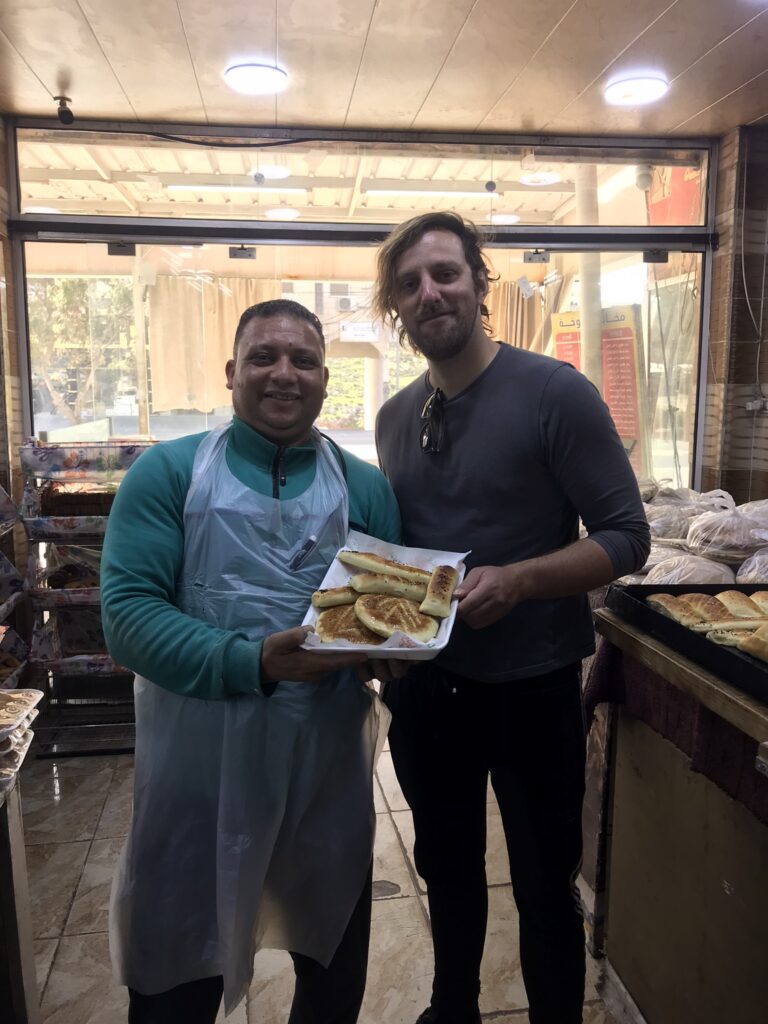
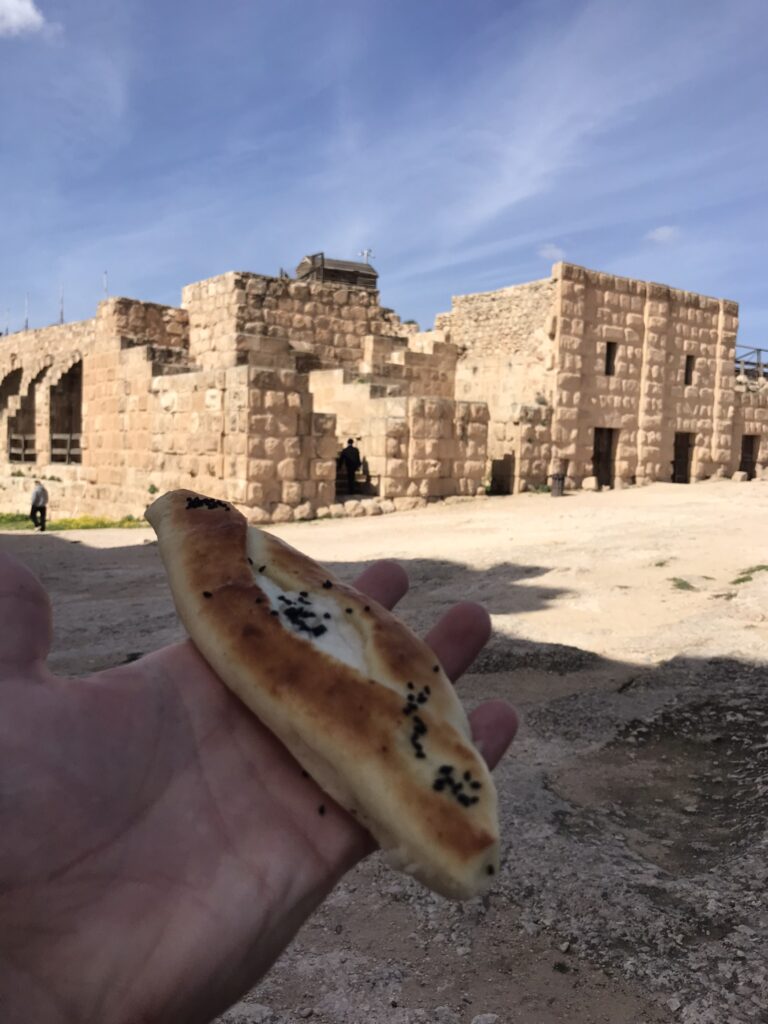
Lunch from this bakery only costs a few JD and you can take it into the archaeological site for an impromptu picnic amongst the ruins!
Activities
Archaeological Site of Jerash – the archaeological site is huge and the clear focal point of the city. Expect to spend a couple of hours here at least. These ruins are some of the most impressive preserved Roman ruins we’ve seen – up there with Dougga in Tunisia. Highlights include the Oval Forum, columnaded streets, Temples of Artemis and Zeus, Two Theatres (remains of tribe names still visible on the seats), Nymphaeum, Hippodrome, Arch of Hadrian and Eastern Bath Complex (across the bridge from the site).
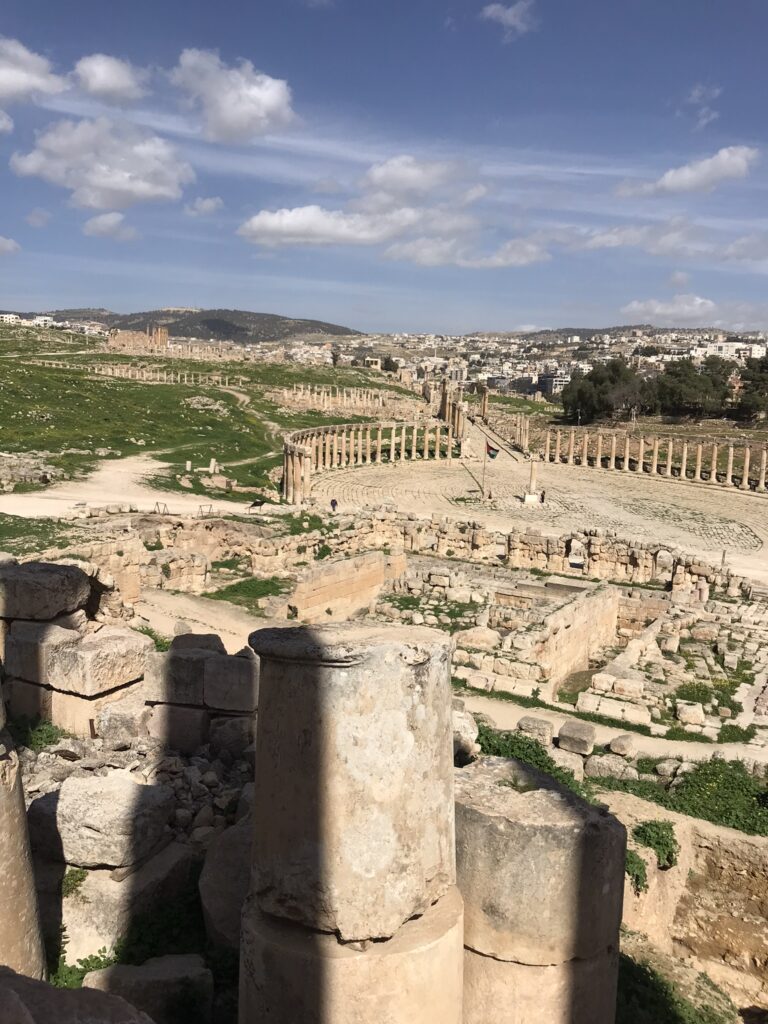
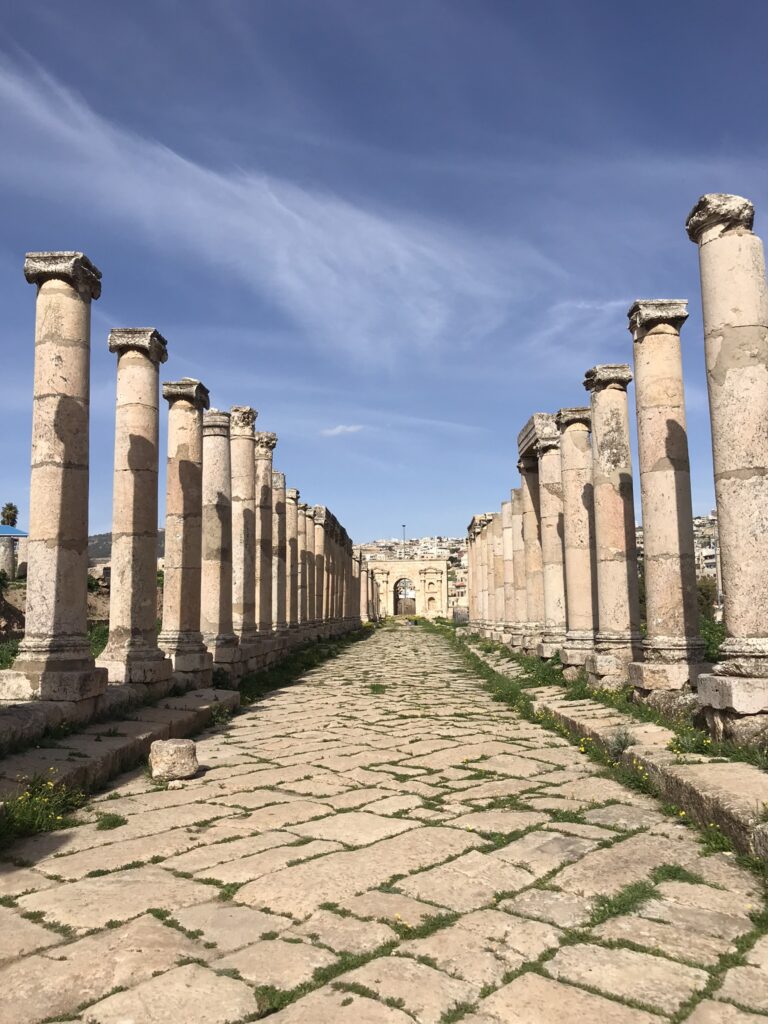
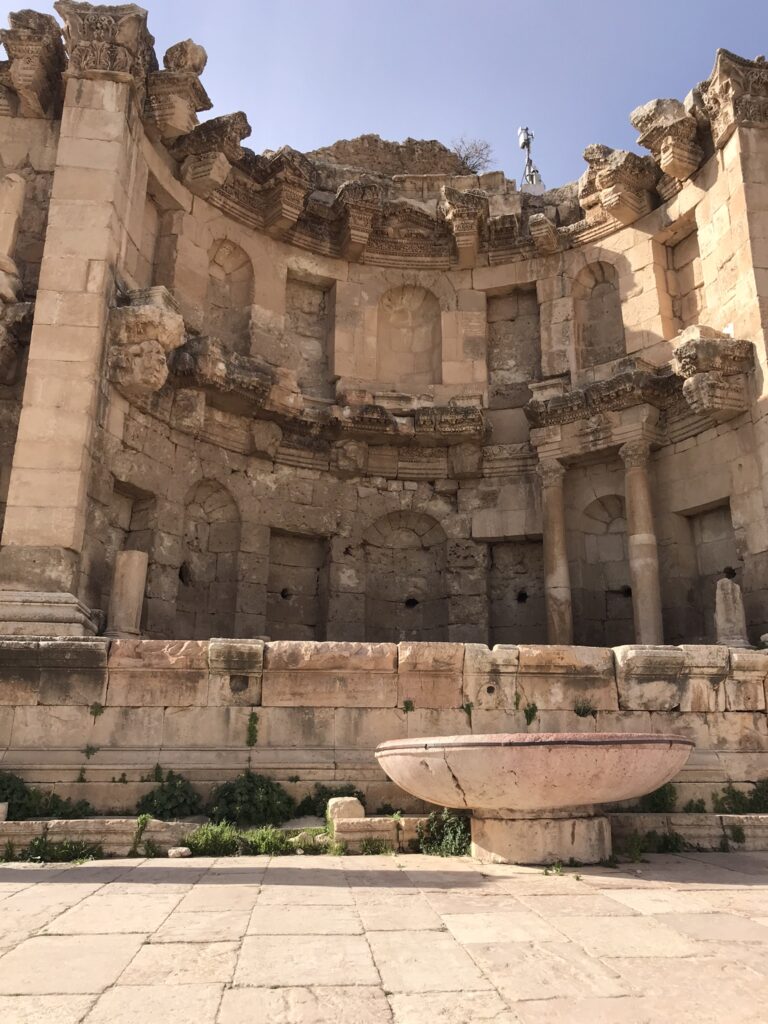
Oval Forum from the Temple of Zeus, colonnaded streets and Nymphaeum
Claimed by some to have been originally founded by Alexander the Great, the city was visited by the Roman Emperor Hadrian who stayed in the area for the winter of 129-130CE – a triumphal arch, the Arch of Hadrian, attests to his visit. Many Byzantine churches mark the later transition from polytheism to monotheism – 16 in total have been discovered. It’s amazing how much of the site remains standing despite the passage of time. Some of the mosaics are still in-situ inside the church foundations. For some reason, during our visit the on-site museum was closed way before the advertised closing time on Google, however there are plaques dotted around the site which provide some information and context. There are also licensed guides available to hire at a specific location next to the visitor center for those who deem it necessary.
In order to access the site visitors need to first pass through a tourist trap handicraft village, which is a little annoying. Some of the sellers at the handicraft village can be a tad pushy and there are also hawkers and hasslers dotted around the site that will try their best to extract money from tourists in one way or another. This almost felt like an Egyptian archaeological site at points with the amount of pushy hasslers around. Just be firm and don’t engage with them at all unless you are willing to pay something.
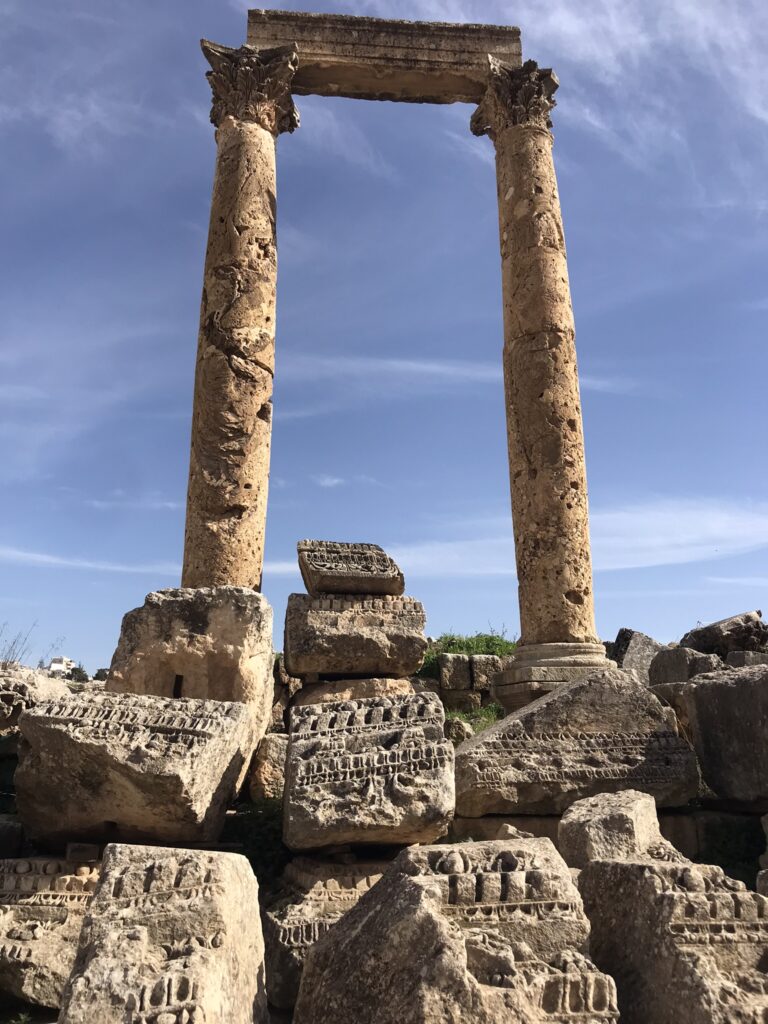
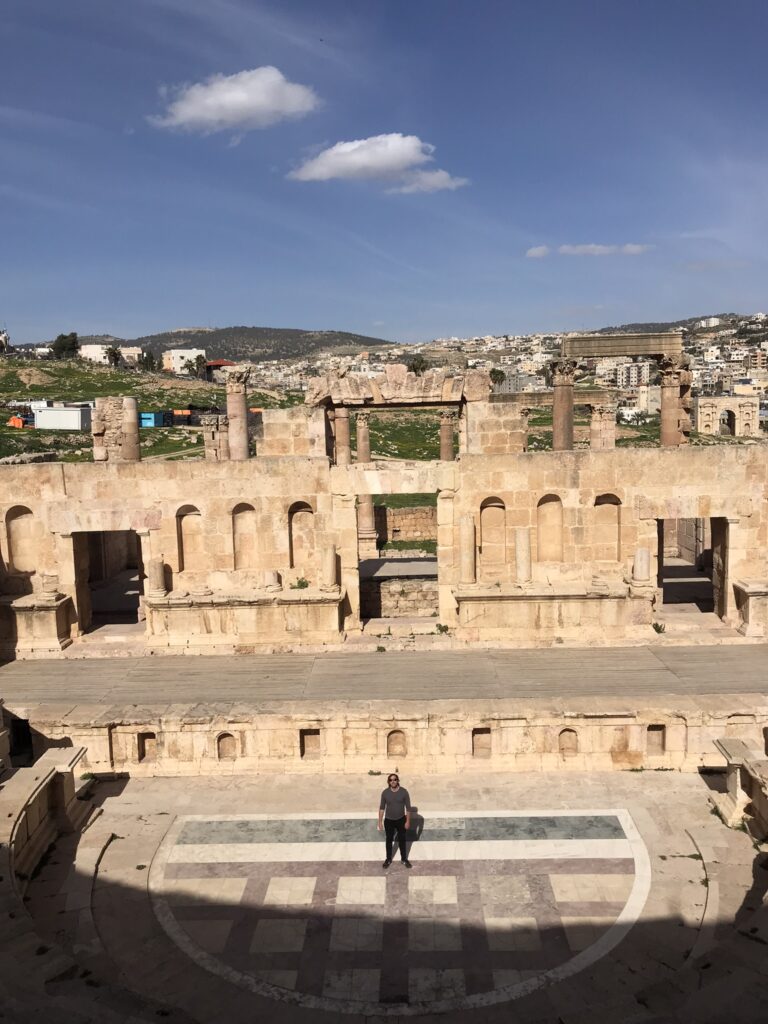
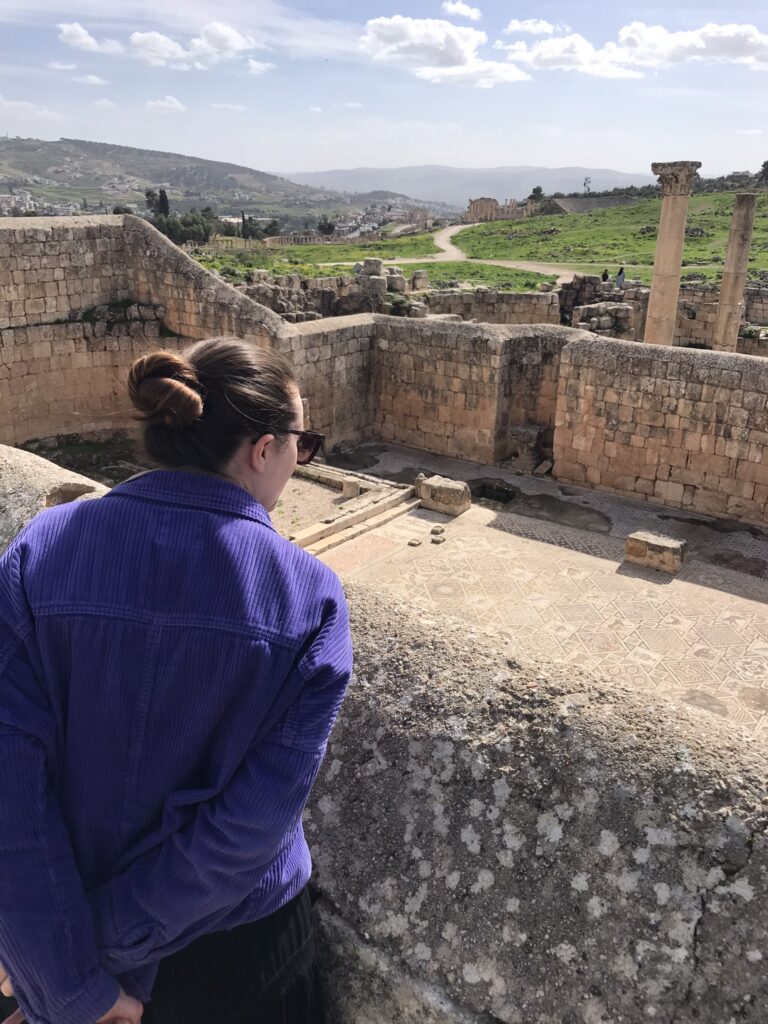
There’s so much to see at Jerash Archaeological site
Ajloun
The city of Ajloun is best known for its dramatic medieval castle, said to have been commissioned by the famous Islamic leader Saladin as a defensive stronghold during the Crusades. Sitting atop a hill with views across the Jordan Valley and into Palestine, the castle can trace its history back to a Byzantine monastery which was situated in the exact spot. Mosaics are still visible from this original structure.
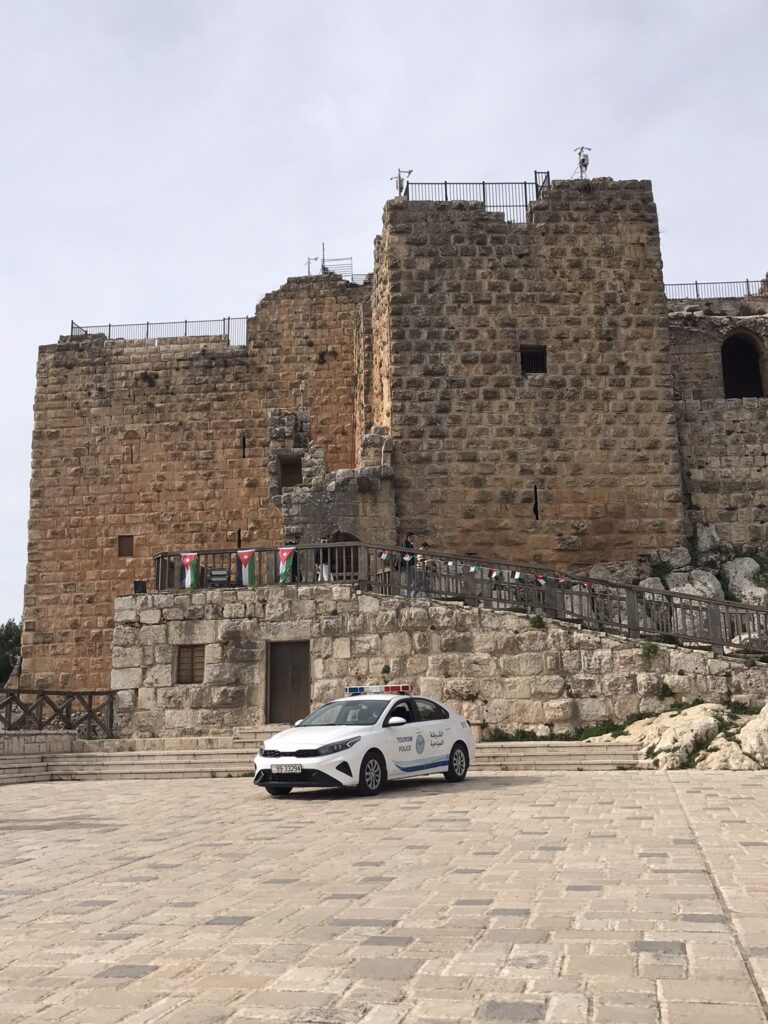
Ajloun Castle in all its medieval glory
The medieval castle that stands today was built by the Ayyubids in the 12th century to protect their realm against Crusader incursions. The castle’s strategic location and vantage point over the surrounding land gave it the edge over an invading force. The castle has many defensive features such as arrow slits in the outer walls, gaps to throw hot oil and missiles at any invading force, a dry moat, internal access to a water tank in case of siege, holes in the ceiling so people could communicate between floors and even a military academy.
The castle itself isn’t huge, it took us about an hour to explore. Inside the castle is a small museum featuring artefacts found on the castle grounds from various periods of history. There are also some displays of military artefacts, including relic cannonballs and information about bombs made from animal skin filled with gunpowder. Probably the best aspect of the castle is the stunning view from the roof. There is also a cable car in the vicinity of the castle which provides views across the valley, but it was a little expensive and we visited on a day with limited visibility, so we decided against this.
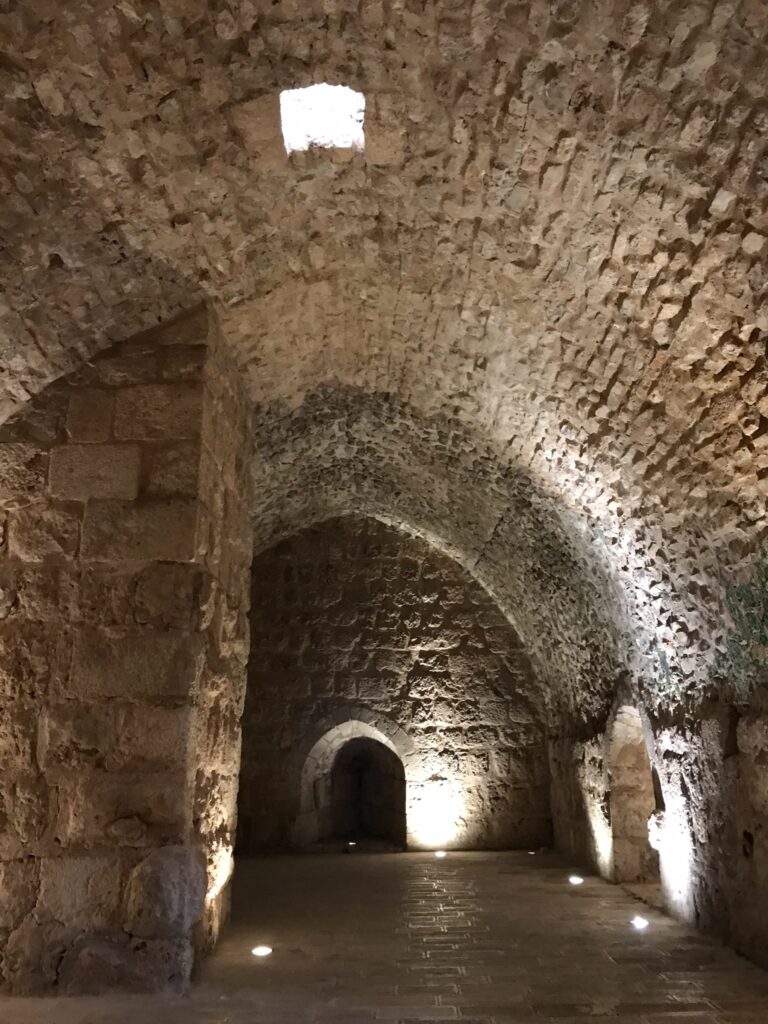
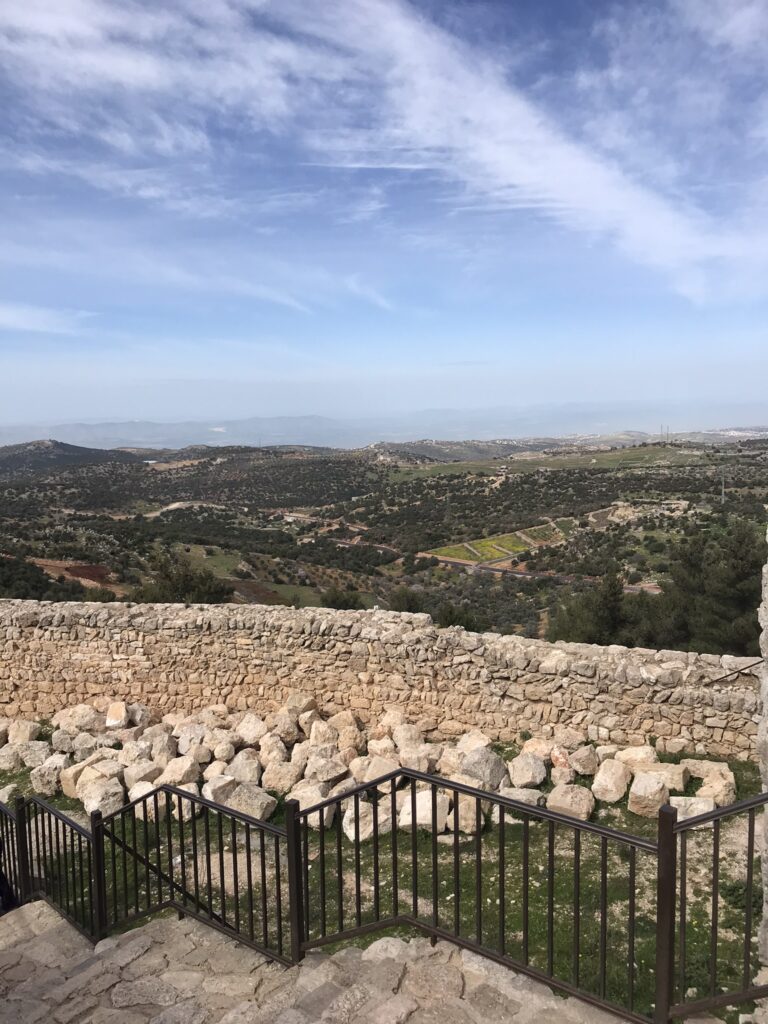
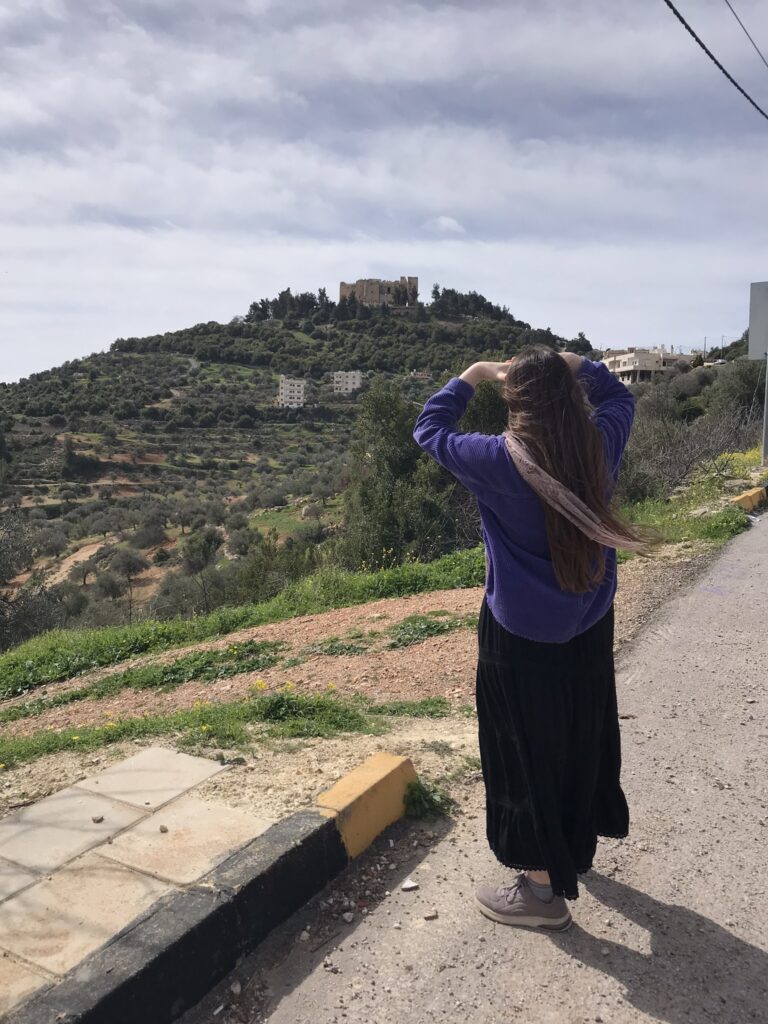
Ajloun Castle is a distinctive landmark atop the hill
Ajloun is easily visited on a day trip from either Jersash or Amman. From Jerash, it’s usually possible to take the public bus from this bus station (which is also the location for buses to and from Irbid). However we were unlucky as we visited on a Friday and, as we discovered, public buses in Jordan do not run on Fridays. Unfortunately this meant we had to take a taxi from Jerash to Ajloun, something which should cost between 6-10JD. Taxis are usually willing to wait whilst you explore the castle and then take you back to Jerash, but we decided against this as we didn’t like the idea of someone waiting for us and also don’t really like taxis in general. After walking back down the hill from the castle to the town centre of Ajloun we did manage to find a local carpool guy to take us back to Jerash for 3JD each. This was an adventure in itself which also involved secret handshakes with a couple of young local girls, a helpful shop owner who managed to hook us up with the driver and then a drive around some random villages to pick up two other people and some bits of electronic equipment which were apparently to be delivered to Amman. For a hassle-free visit, I recommend visiting on a day other than Friday. Be aware that it’s a fair walk from the bus station in Ajloun up to the castle, although there are some great views along the way.
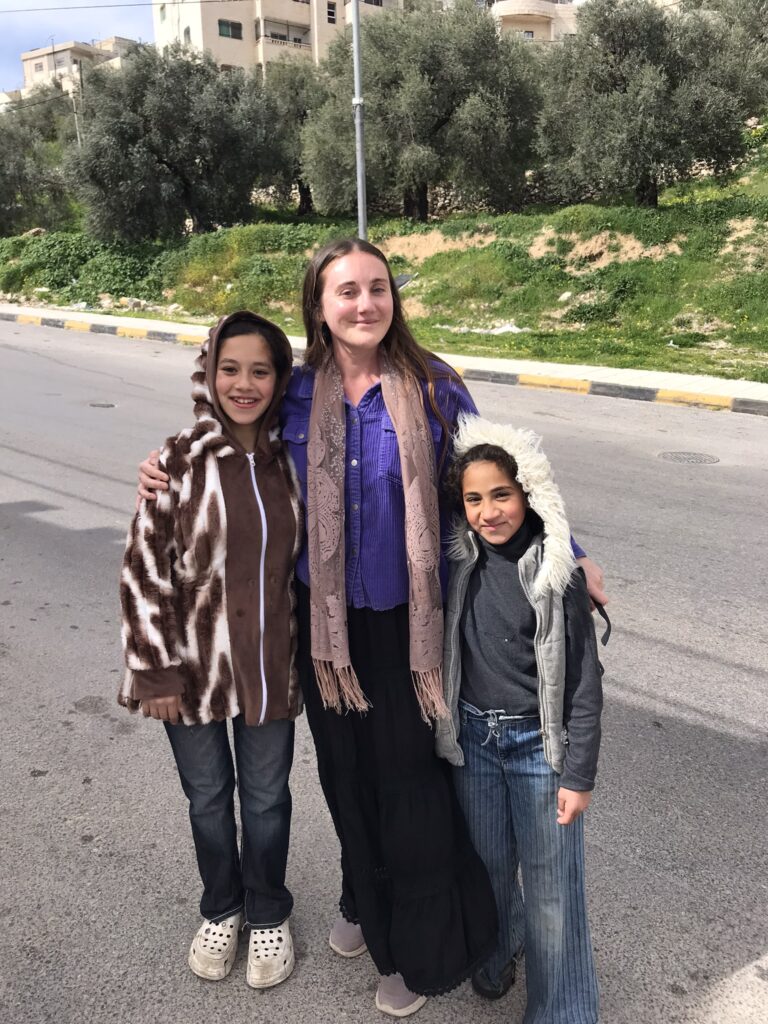
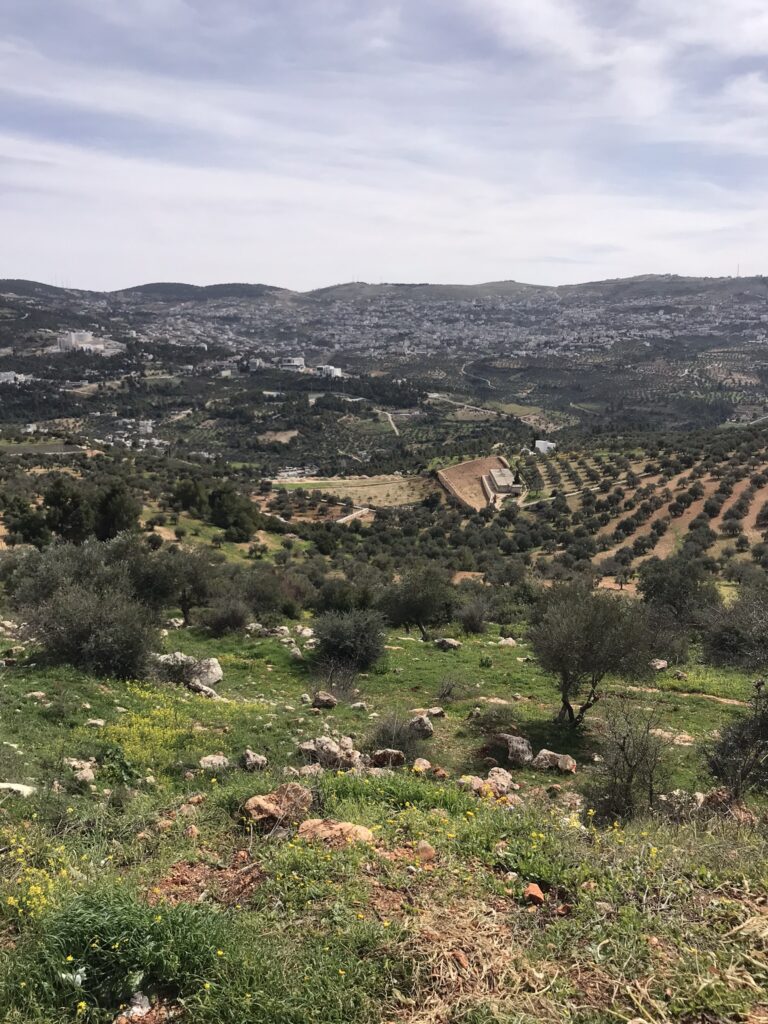
Our little friends in Ajloun
Madaba
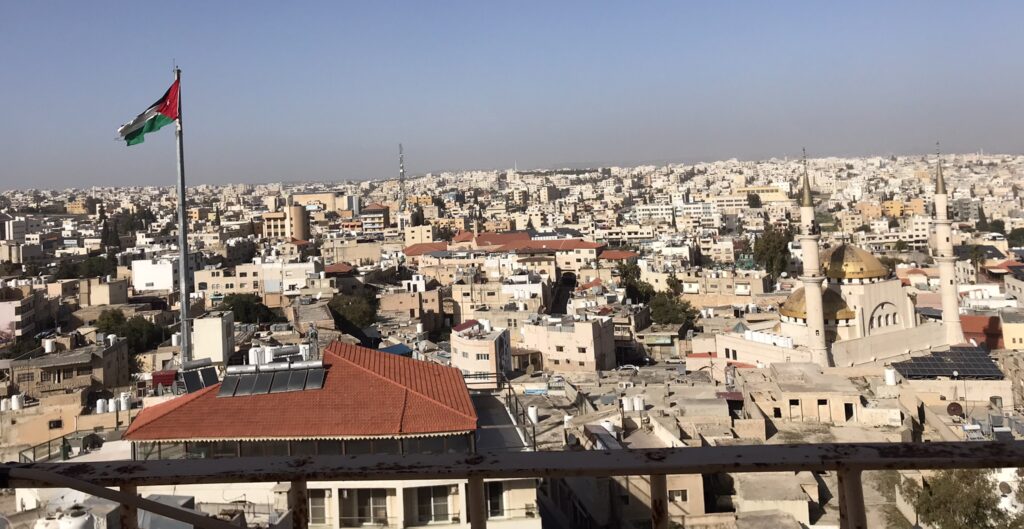
Aptly called the ‘city of mosaics’, Madaba is home to one of the largest collections of church mosaics in the world, most of which date back to the Byzantine and Umayyid periods. We found it incredibly interesting that churches continued to be renovated here after the introduction of Islam – most of the community of Madaba remained Christian despite the change in the wider region.
The city of Madaba is home to a significant number of historical buildings, ancient structures and churches. It really is all about mosaics here. Some of the mosaics were found by residents underneath their houses – they continue to be discovered by accident to this day. The wider city has a population of around 60,000 and is a busy but not overly hectic place, with plenty of facilities and amenities. Outside of the city limits, Madaba is surrounded by greenery and rolling hills, including nearby Mount Nebo which is an important Biblical site relating to the prophet Moses.
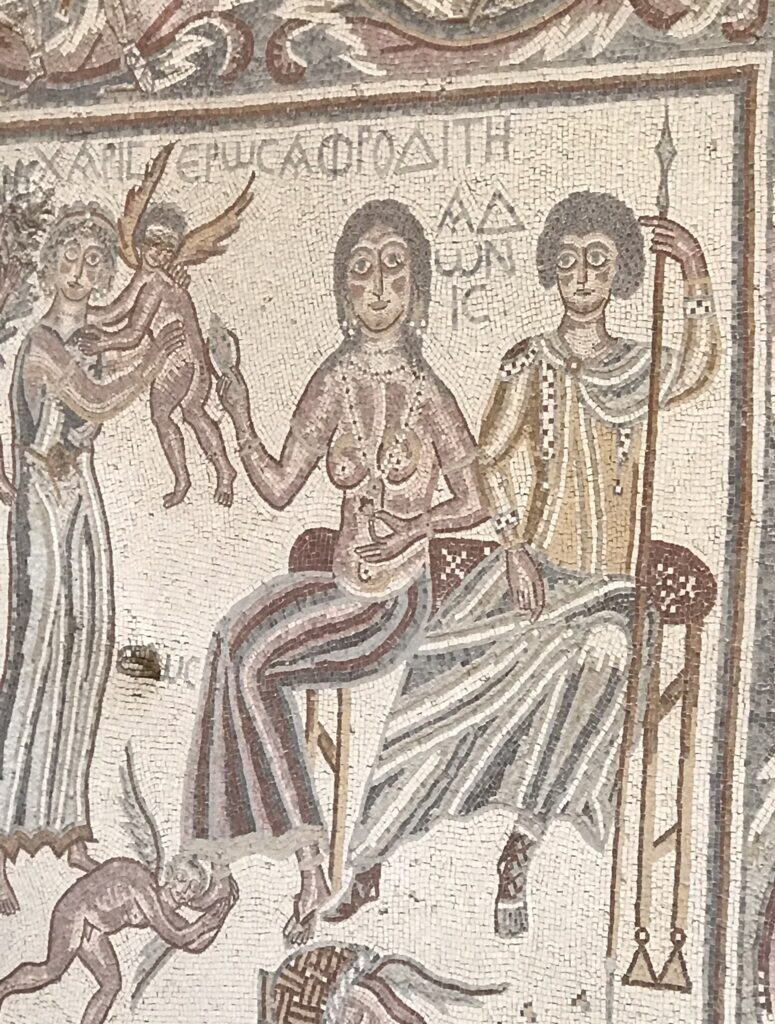
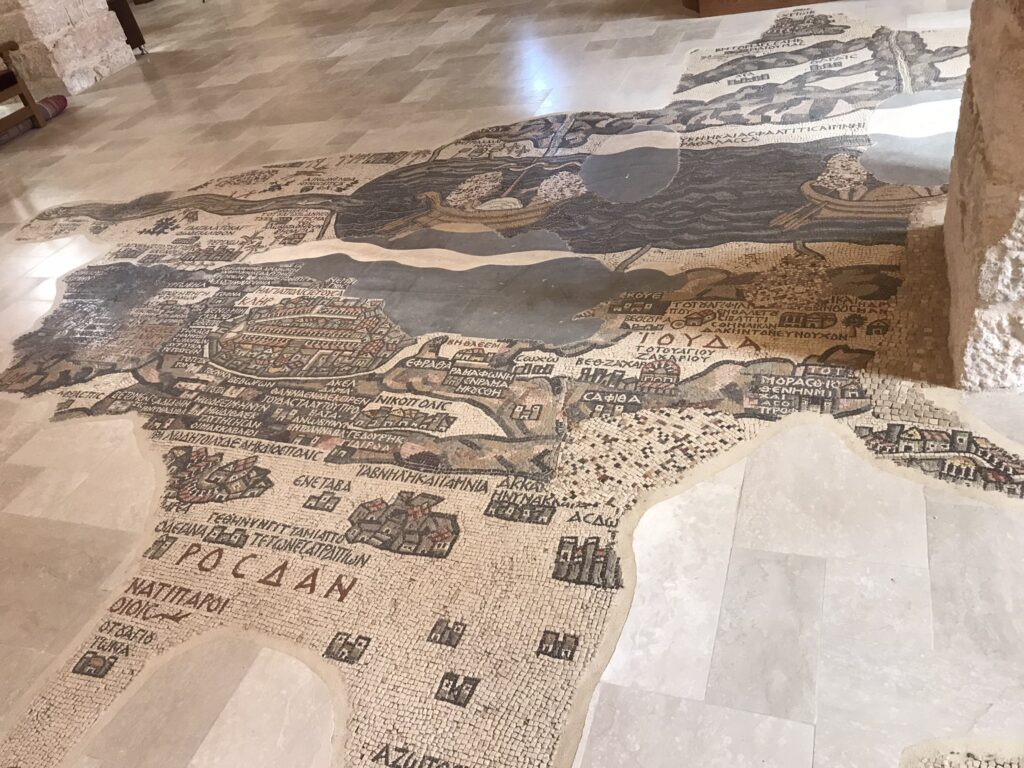
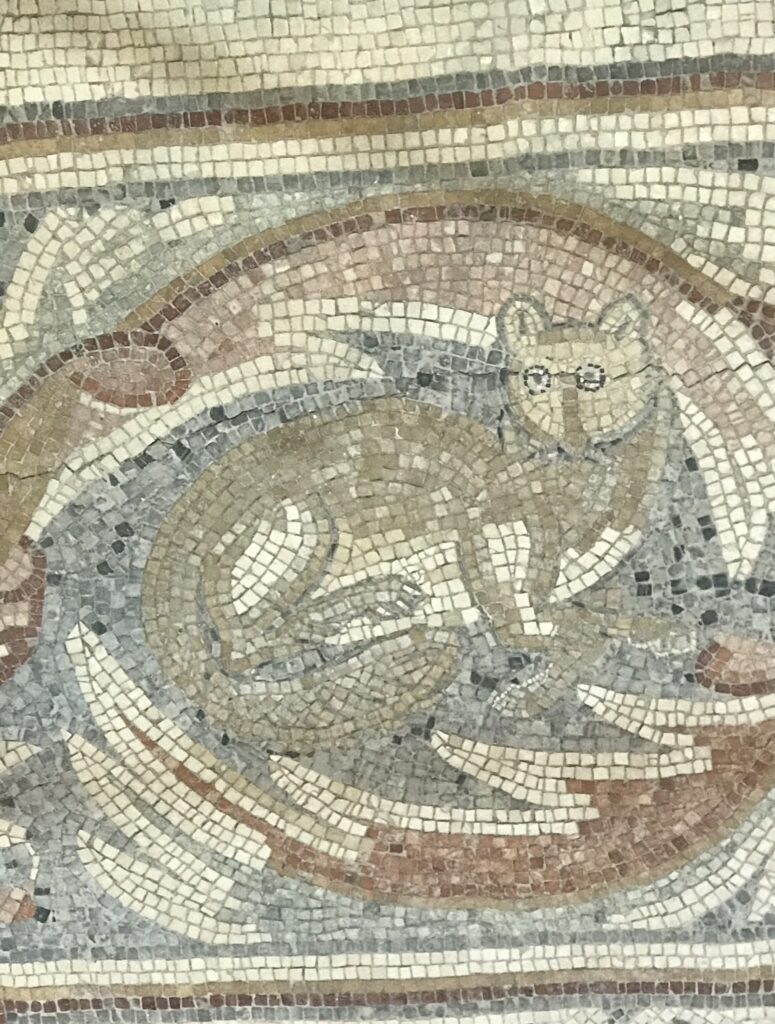
Mosaics, mosaics and more mosaics in Madaba
I recommend at least a half day in Madaba to visit and explore the various historical sites. It’s easy to visit by public bus from Amman, but we chose to base ourselves here for a few nights as we had picked up our rental car and found driving in and out of Madaba to be much easier than Amman.
Accommodation
Black Iris Hotel – a comfortable, classy hotel which seemed to be quite upmarket given the price. Friendly, helpful staff, spacious and clean rooms, a good included breakfast and we were able to park our rental car securely here which was a big plus.
Foodie Places
Hummus Loreena – our absolute go-to place in Madaba. Falafel wraps for 0.55JD make for a great takeaway lunch. We always received a warm welcome here from both the servers and often from other customers – we were invited to eat with locals who were dining here on more than one occasion.
Istanbul Turkish Kebabs – a kebab restaurant providing Turkish-style grilled meat for a decent price. It doesn’t look like much from the outside but the place has a strong reputation for good reason. A hearty, filling meal which is popular with locals. Order at the counter and then go to the seating area upstairs.
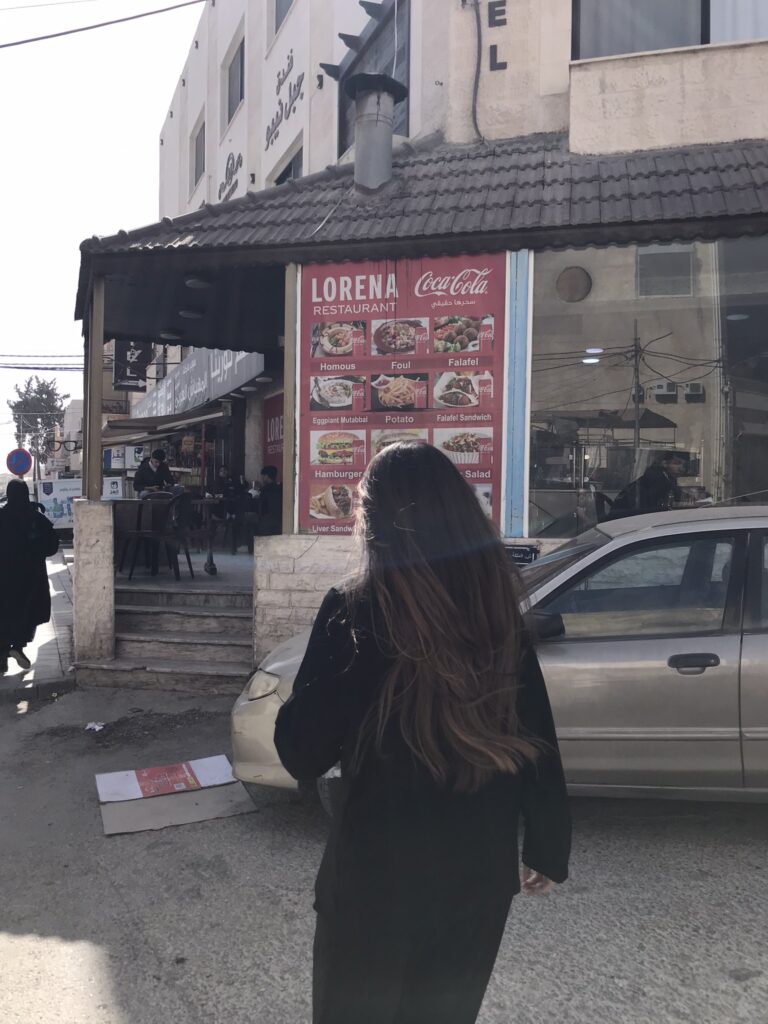
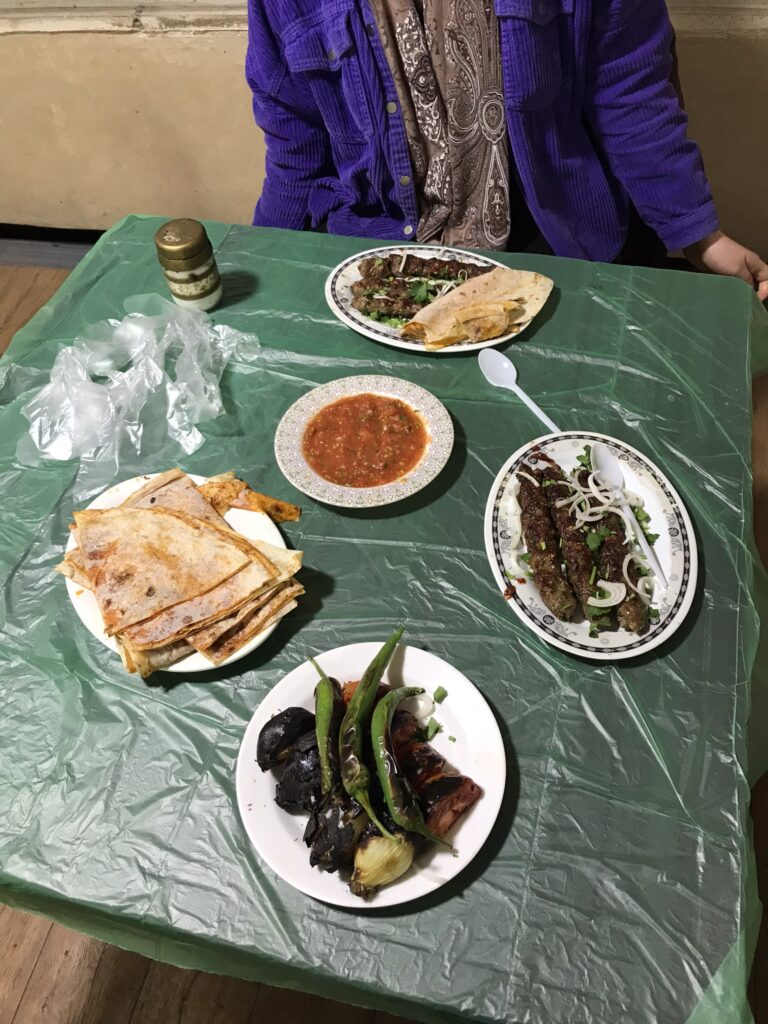
Hummus Loreena for lunch and Istanbul Turkish Kebabs for dinner – it can’t get better than that!
Jabal Kanaan Sweets – a great place to pick up local sweets. The guys were helpful in letting me try several different varieties before buying, and more importantly they were honest as the cost of a large platter of sweets was only 2JD. We heard some of the other sweet shops in this area may try to rip off foreigners, so I highly recommend Jabal Kanaan for this reason.
Crustabella – Western-style fast food takeaway which we ordered via Talabat – no complaints
Activities
Archaeological Park – an interesting site with a variety of different ruins and mosaics. Madaba is actually depicted as a monarch on the throne in one of the mosaics. The site includes the Church of Virgin Mary, which was built on top of an earlier 6th century mansion known as Hippolytus Hall, the crypt of Saint Elianus and a section of an ancient Roman road.
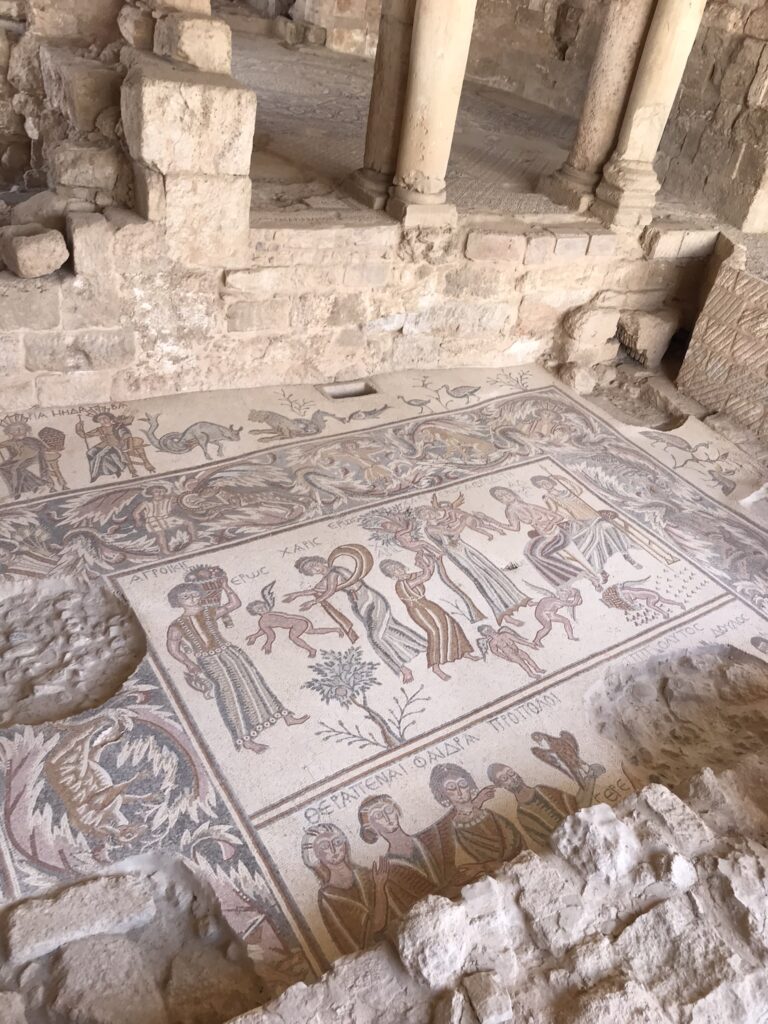
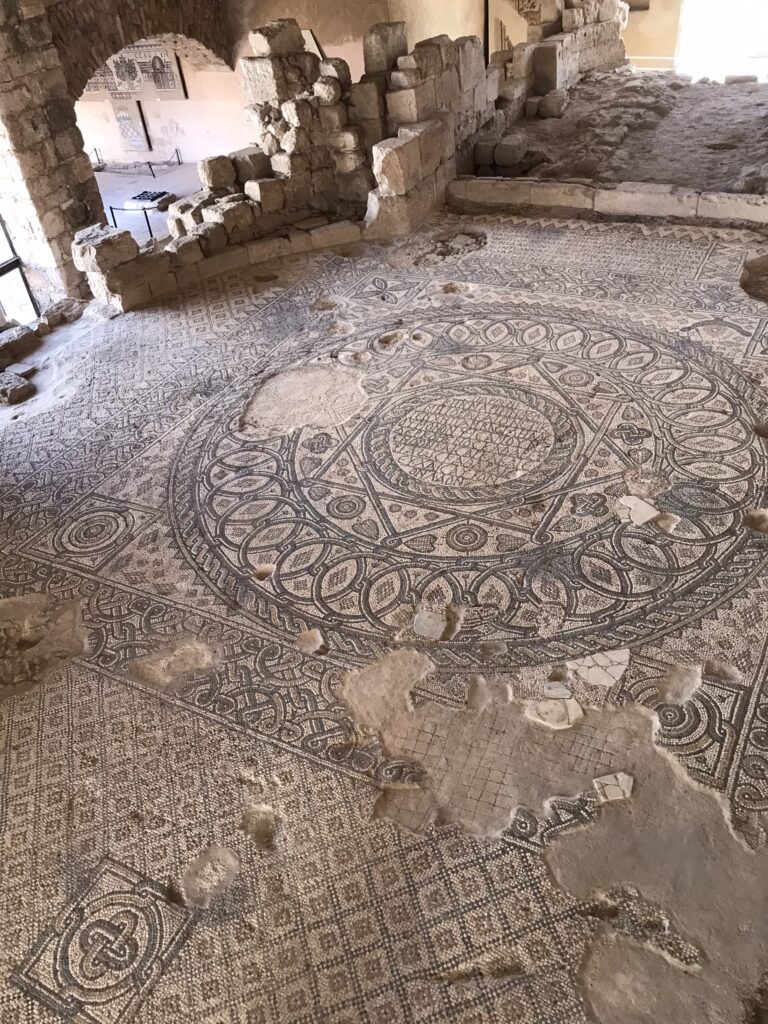
More details about the various figures depicted in the mosaics can be found on a nearby information board
St George’s Greek Orthodox Church – a modern church building constructed over a much earlier church, this is the most visited attraction in Madaba as it is the location of the famous mosaic map of the holy lands, which is considered to be the earliest map of these lands. You can spot Bethlehem, the Dead Sea, the Nile, Jerusalem, Jordan River, Mount Sinai and Kerak castle among others – the detailed depiction is amazing. There is a small admission fee to enter the church building and see the mosaic.
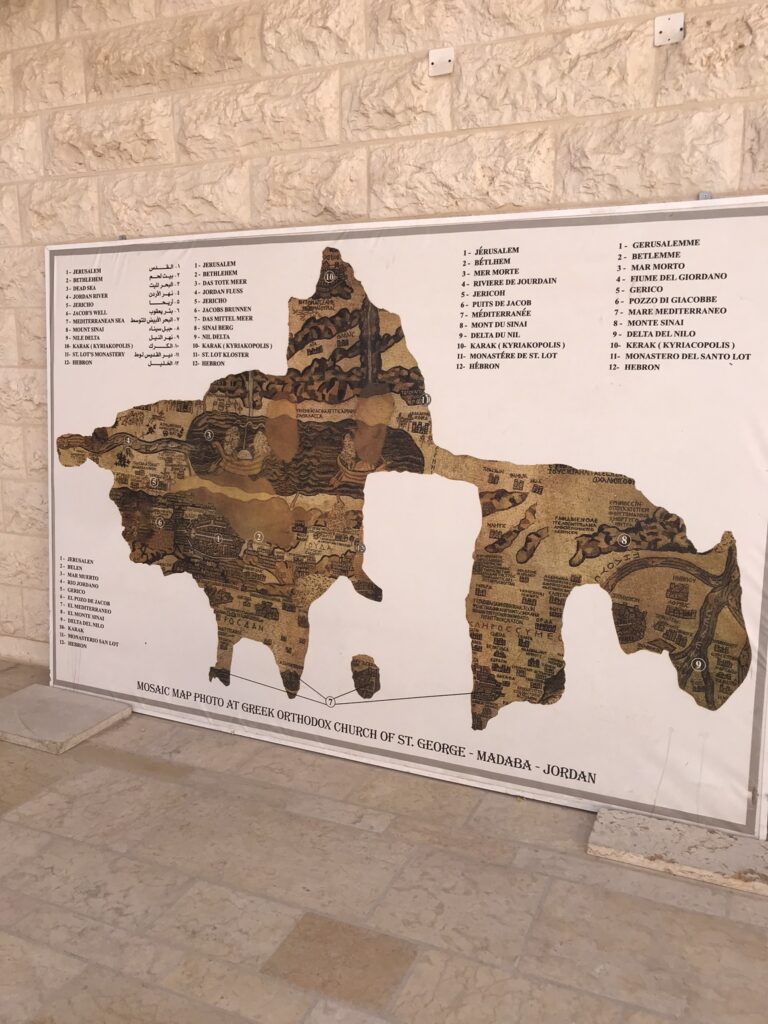
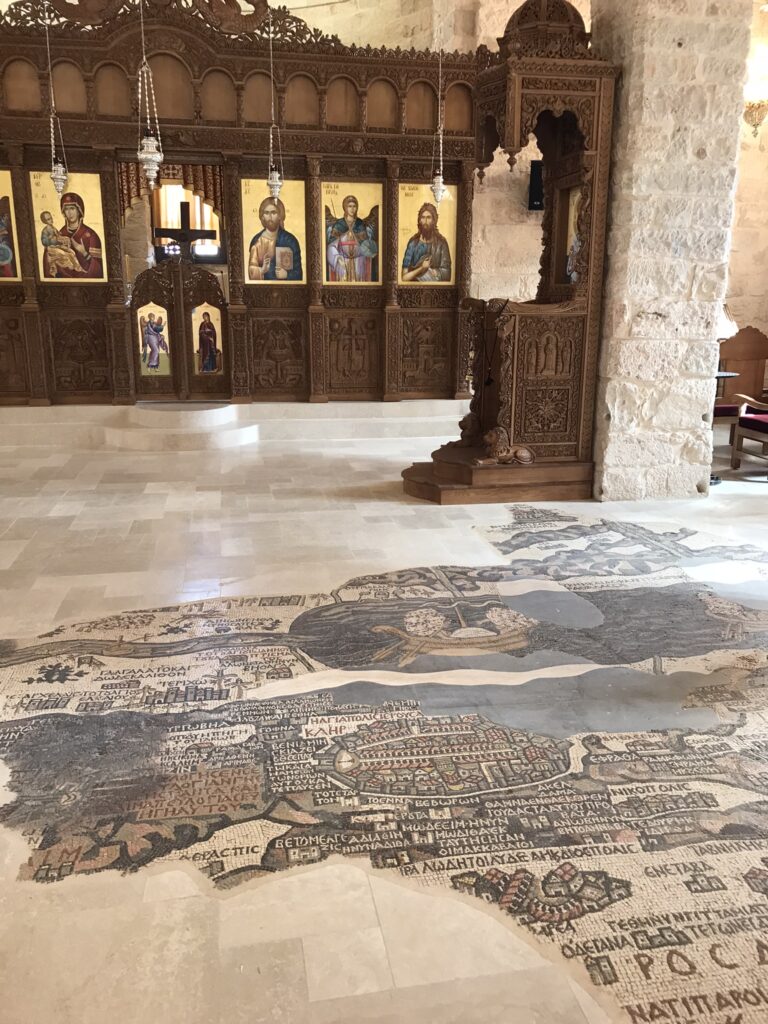
The pious chanting really adds to reverent vibe of St George’s Greek Orthodox Church
Church of the Martyrs – interesting because all the animals and humans have been removed from the mosaic floor, apparently due to a papal order stipulating that they could no longer be depicted within church buildings. The complex containing the church is a little difficult to find at first – it is accessed via a passageway on ‘tourism street’ (you’ll know the street when you see it).
Burnt Palace – within the same complex as the Church of the Martyrs, this building was covered by a layer of ash when discovered, hence the name. It was actually a residential building for the priests of the nearby Church of the Martyr
Church of St John the Baptist – the first church erected by the returning Christian community in 1883. This is less of a church and more of a bizarre, labyrinthine archaeological site. There are numerous caves, vaults and other structures, some of which contain old photos of what Mabada used to look like. Other parts are basically in ruins. You can ascend the bell tower for impressive views over Madaba – the stairs are pretty sketchy though and you have to resist the temptation to ring the bell. Another highlight is the full reproduction of the St Stephen Church mosaic at Umm al Rasas.
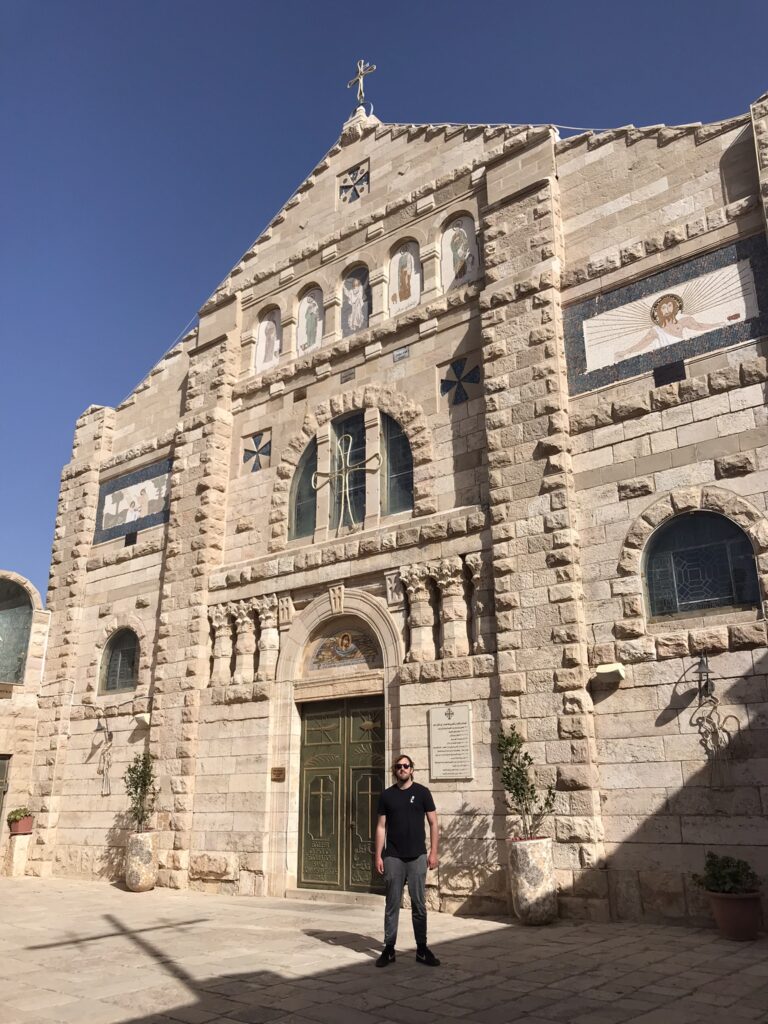
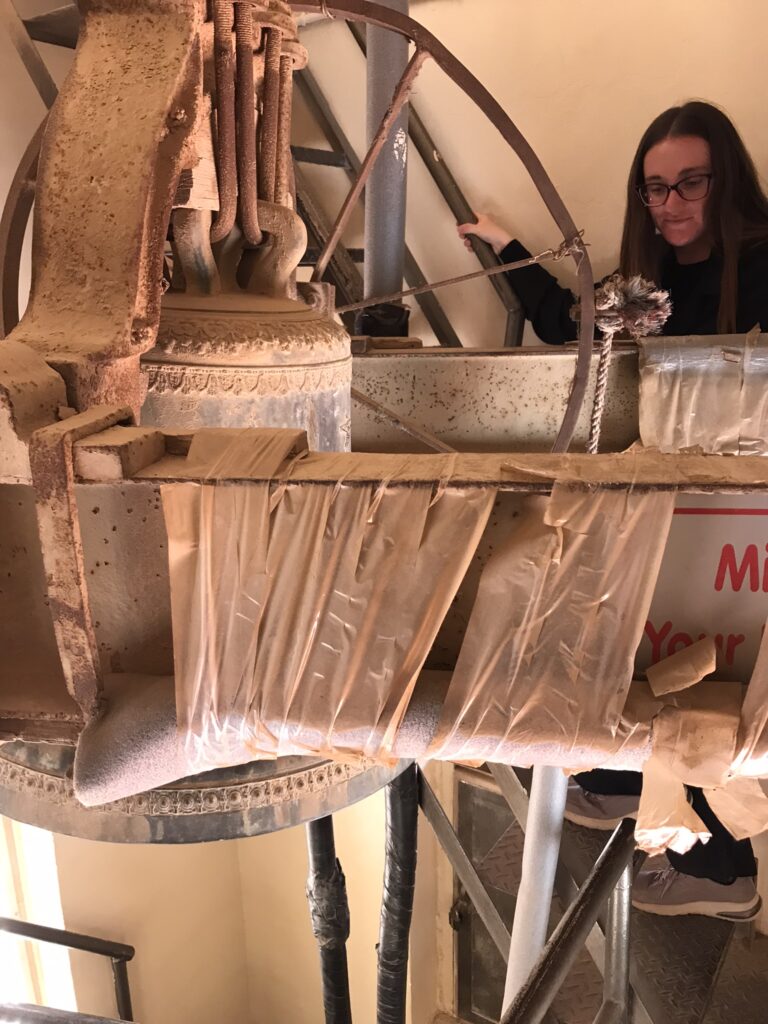
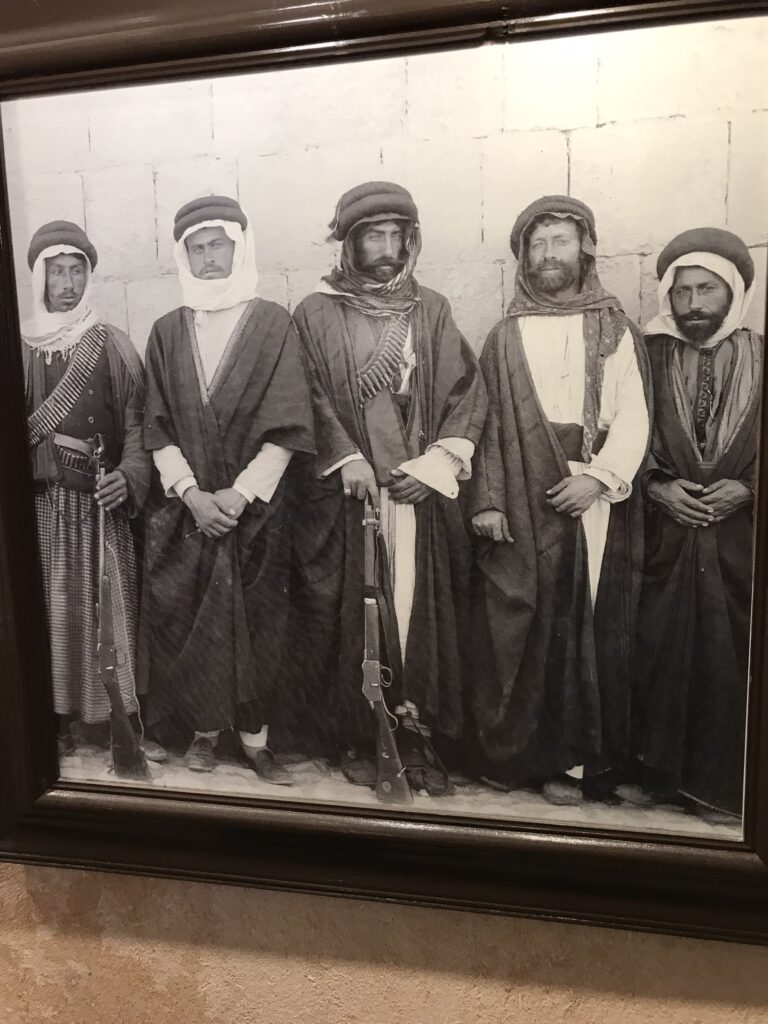
The Church of St John the Baptist was a very bizarre, atmospheric and somewhat eerie place
Church of the Apostles – a large hall with a 6th century mosaic floor which contains a personification of the sea in a medallion – a fusion of Roman religion with Christianity
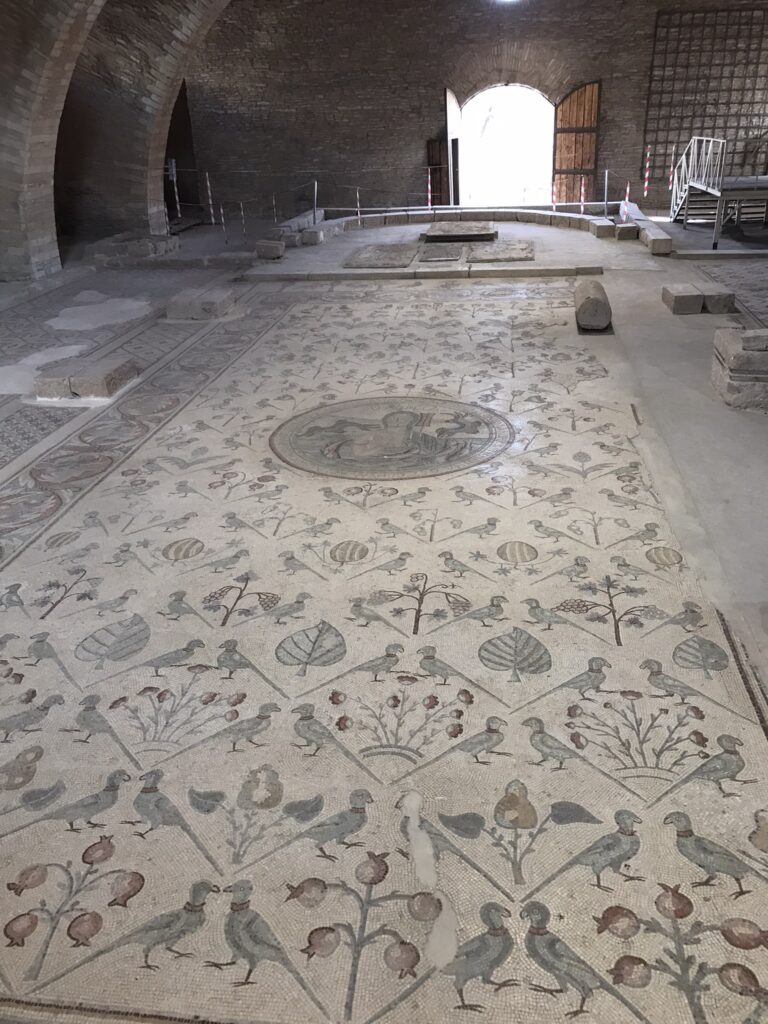
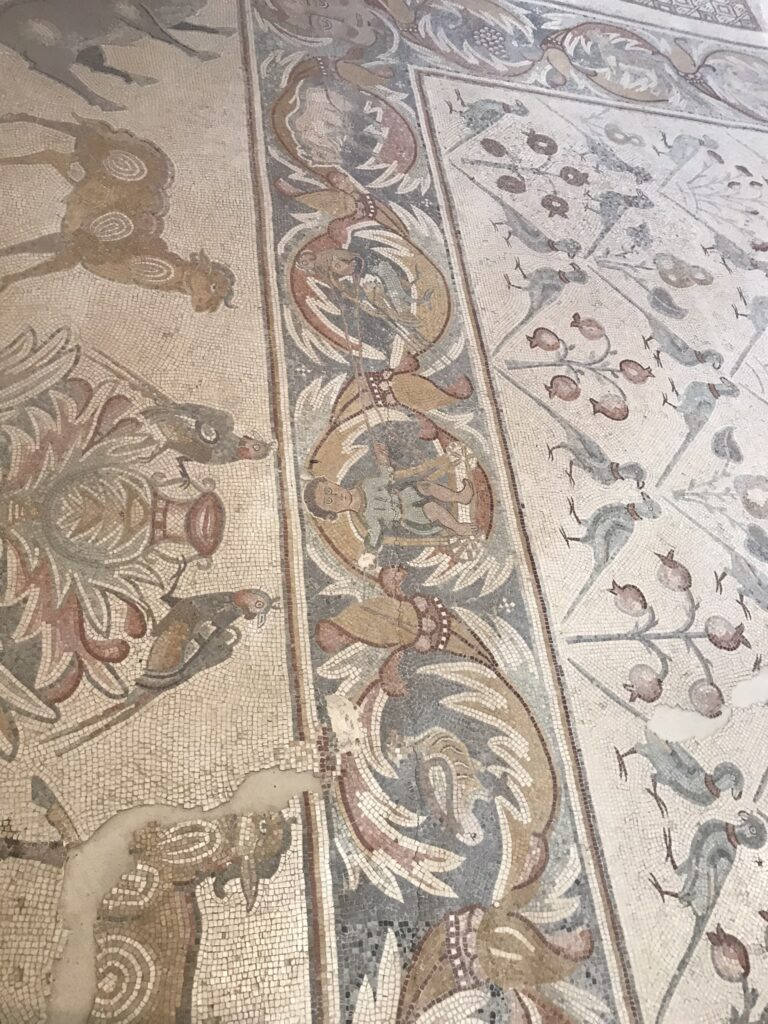
See if you can spot the mosaic cat depicted at the Church of the Apostles!
Cathedral Ruins – we walked by but these were closed when we visited.
Other places
Sadly, many attractions in Jordan are difficult to reach (or completely inaccessible) by public transport. For our final few days in the country we hired a car from Monte Carlo in Amman and based ourselves in Madaba in order to swoop up all the sites that were outliers or that we hadn’t found a way to visit otherwise. For those without a car, it may be possible to visit some of these places by public transport; Kerak can probably be visited by bus on a long day trip from the south bus station in Amman, and we also saw a public local bus driving to Iraq al Amir (although I’m not sure where or how to catch this). For the Dead Sea, tourist buses run from Amman and other places however they typically visit the hotel resort areas to the north, and visiting for the day usually involves paying upwards of 25JD admission for a sanitised experience. The cost of the daily car rental in order to visit the undeveloped southern Dead Sea beaches alone made it economically worthwhile to hire the car. For the other sites, it may be possible to visit on an organised tour or with a private driver from Amman, although this is likely to be more expensive than the cost of hiring a car.
Iraq al Amir – one of the few remaining Hellenistic palaces still standing in the region, featuring intricately depicted animals such as lions on the façade of the building. Apparently the palace was never completed and originally had two floors. Not many visitors make the journey here. The nearby Tubya caves (said to be from the Biblical times) are also worth a peek – although some people report that there are bats in some of them. It’s clear that the caves were occupied by humans in the past – some have carvings. The area is very rural and picturesque with swathes of green pastoral land and olive groves with carpets of white flowers. As mentioned, you can probably get here by bus with enough determination but it’s far easier to access by car from either Madaba or Amman.
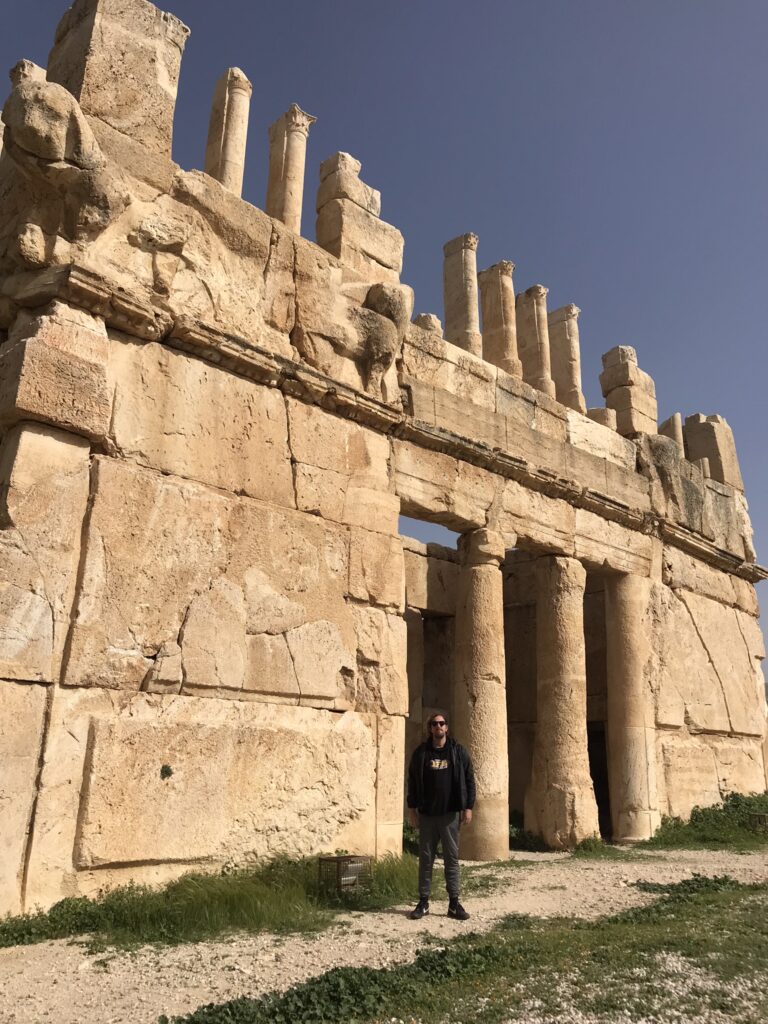
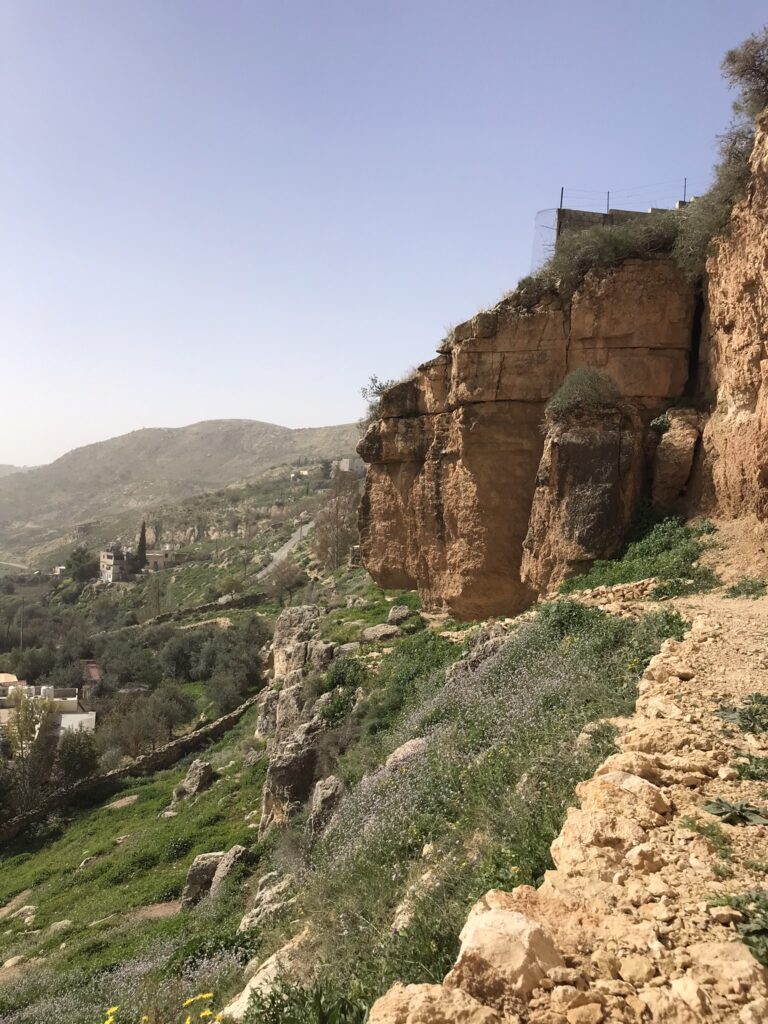
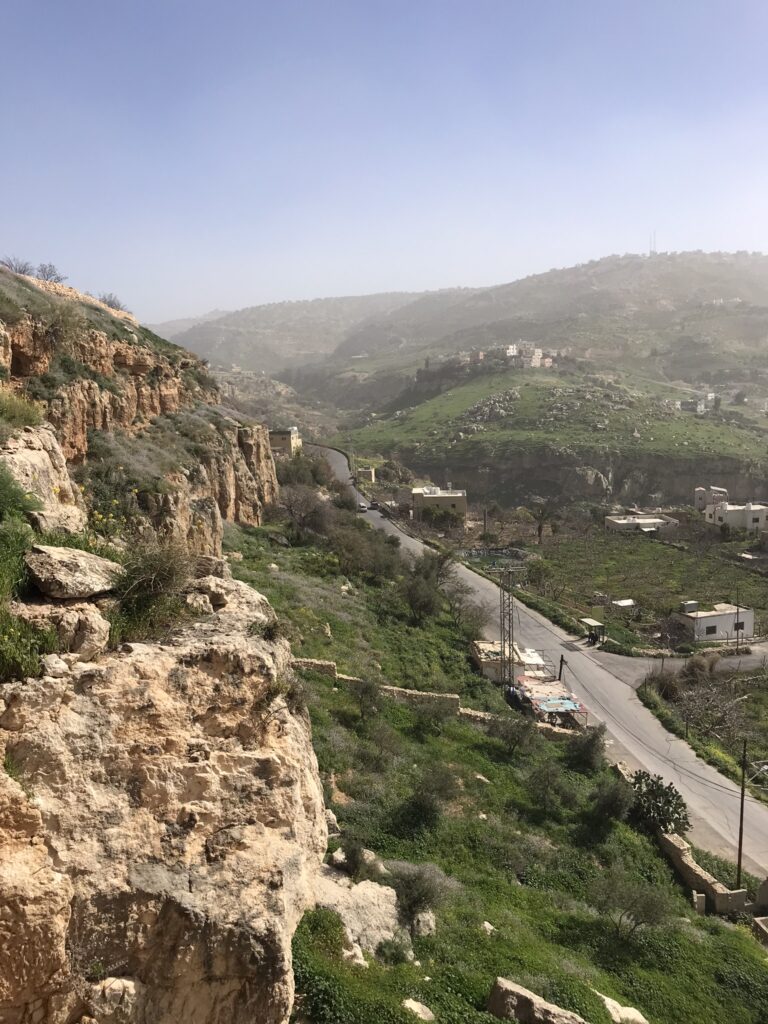
Iraq al Amir and nearby Tubya caves
Loop 1 – Wadi Mujib viewpoint (King’s Highway), Umm ar-Rasas (Old Roman City), Kerak Castle & Dead Sea Southern Beaches
Wadi Mujib Viewpoint – we drove to this location on the way to Umm ar-Rasas and parked our car on the gravel. There seemed to be some sort of industrial site here, with some guys working and a number of stray dogs, but nobody bothered us. Sadly, it was a dusty day when we visited and so there was little to no view across the canyon. Apparently it is spectacular at other times.
Umm ar-Rasas – a UNESCO World Heritage Site located between the King’s Highway and Desert Highway, this site is remote and so is basically devoid of tourists. We were the only people in the whole place. This ruined settlement started life as a Roman military camp and grew to become a town. The settlement has a staggering 16 churches – crazy for the population size.
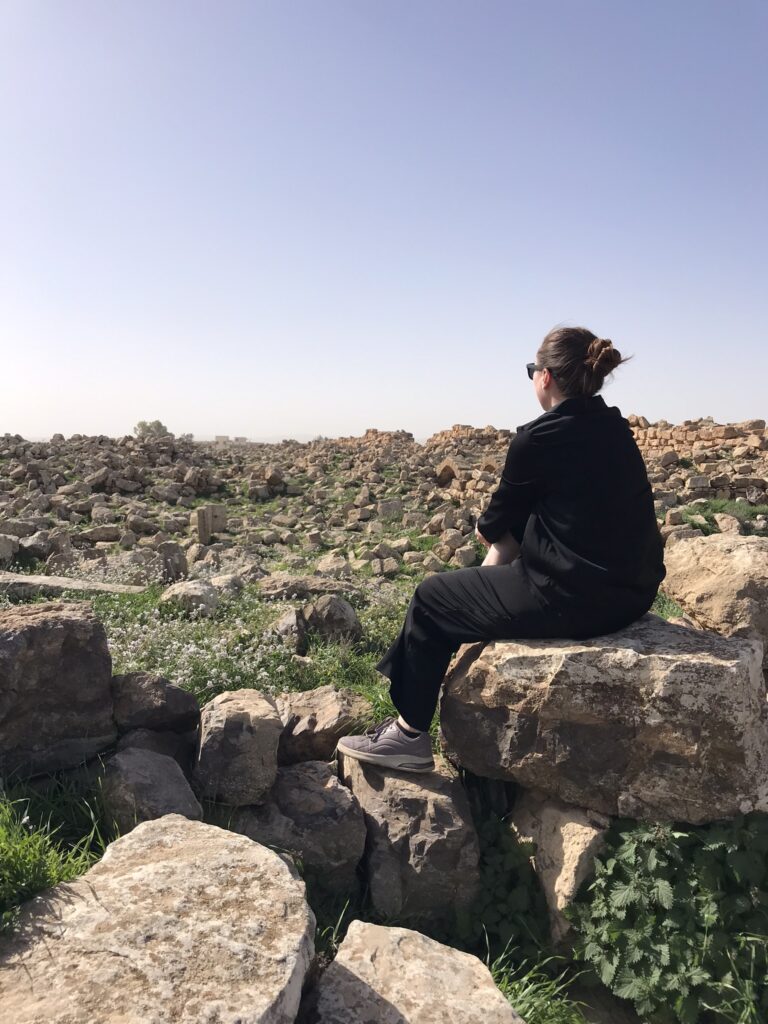
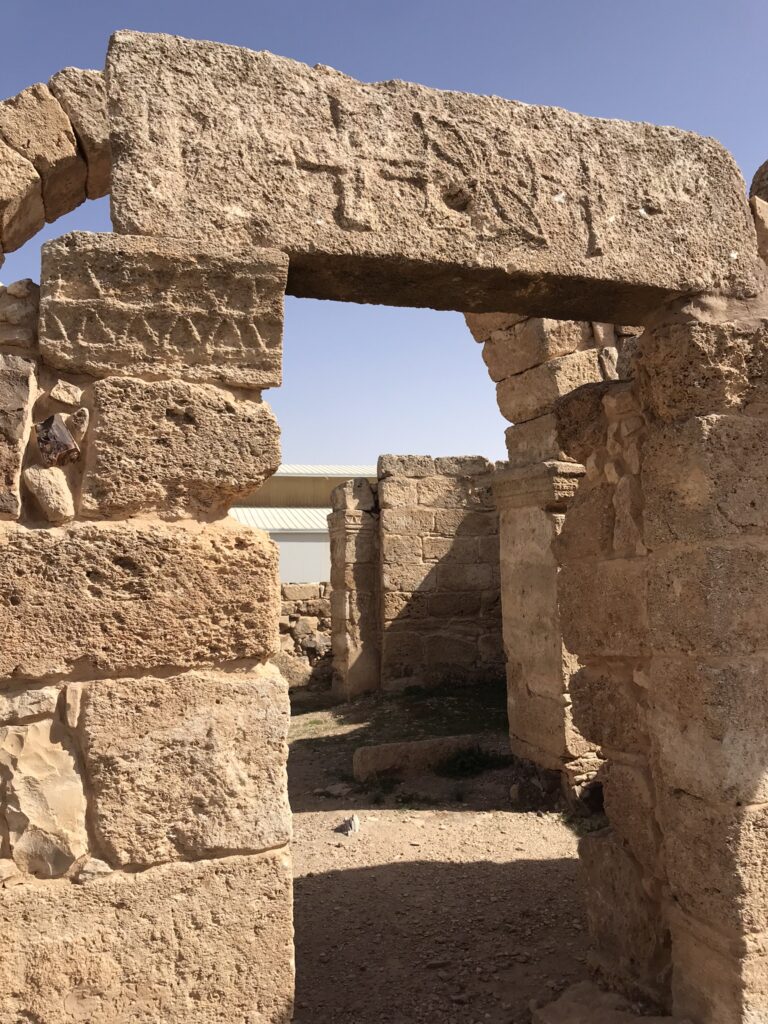
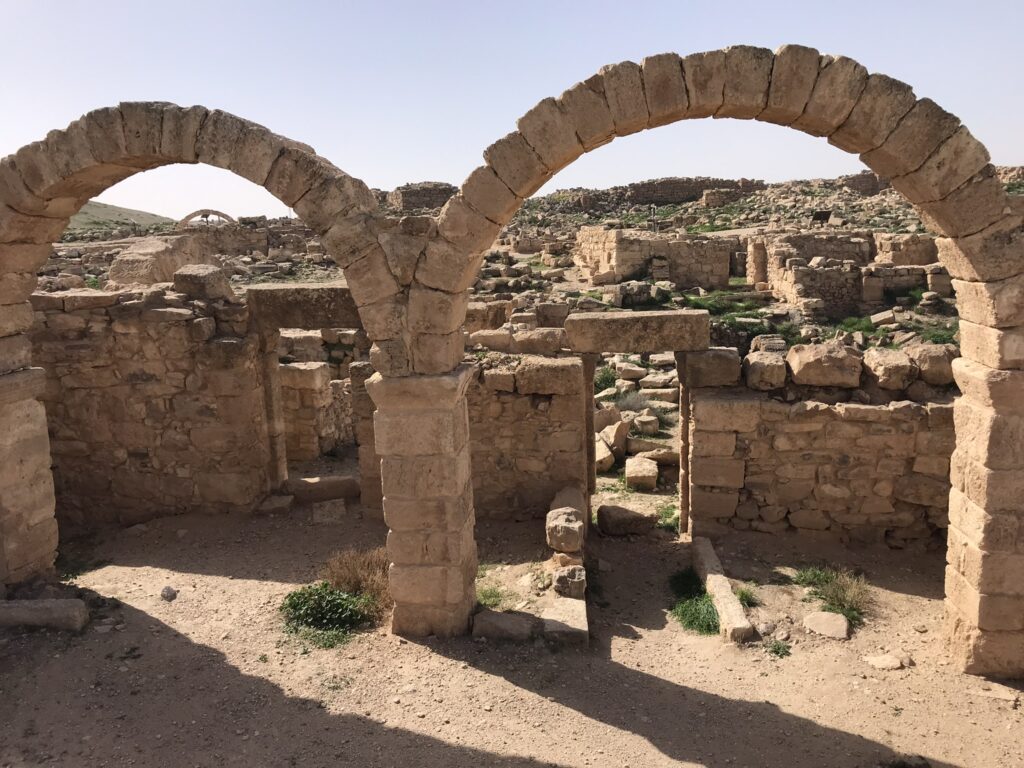
Peering over the Castrum walls and meandering around the many churches are two of the top things to do at Umm ar-Rasas
The main attraction is the Church of St Stephen, which contains the best preserved mosaic floors. This is truly spectacular and probably the best mosaic that we saw in Jordan (moreso than the famous St George Church mosaic in Madaba). The mosaic floor in St Stephen’s Church depicts cities from the east and west of the Jordan river such as Alexandria, Philadelphia (Amman) and Madaba alongside their Greek names. We were blown away by the detail and speculated that the mosaicist must have had some knowledge about what the cities looked like as each representation is different.
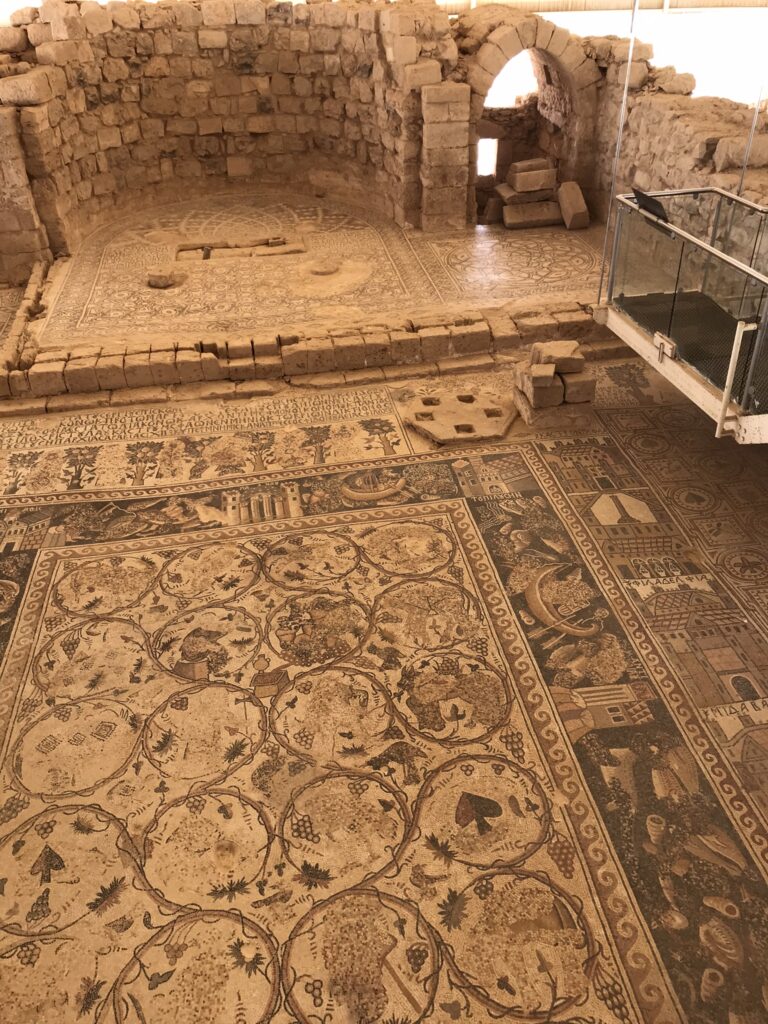
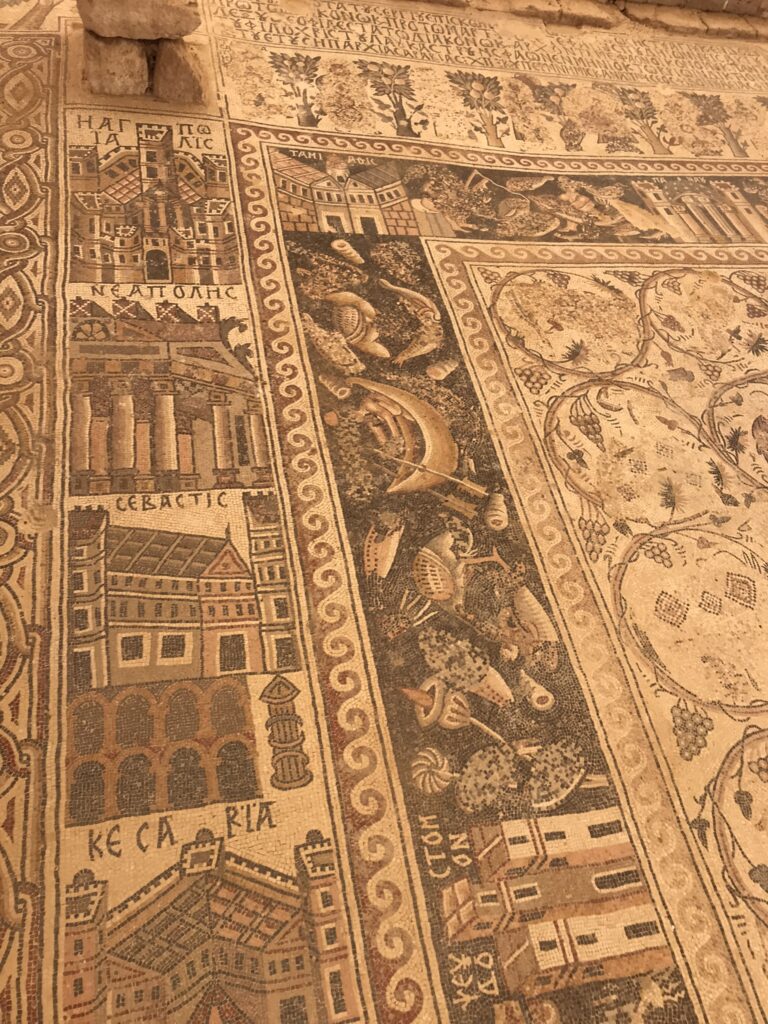
Just two small sections of the mosaic floor in what remains of the Church of St Stephen
Most if not all of the other church mosaics in Umm ar-Rasas are covered up or under a layer of sand. It’s a really large site but mainly rubble – plaques are dotted about with information about the different churches and structures. The Castrum (Roman military camp with fortified walls) was particularly interesting – it’s basically just a huge pile of rubble. We saw a small team of guys working on some of the structures here – they have a big job as a lot of preservation and development work is needed to get the site ready.
Kerak Castle – built by the Frankish Crusaders, this imposing castle towers over the modern city of Kerak. This is the most impressive castle we visited in Jordan, with enormous stone walls and spectacular views over the valley. There is plenty to see here – the castle was repurposed and expanded after being conquered by the Islamic forces, and now contains several different sections from different eras. It’s almost more accurate to describe it as a small citadel rather than a castle. The presence of arcades of subterranean shops was particularly interesting.
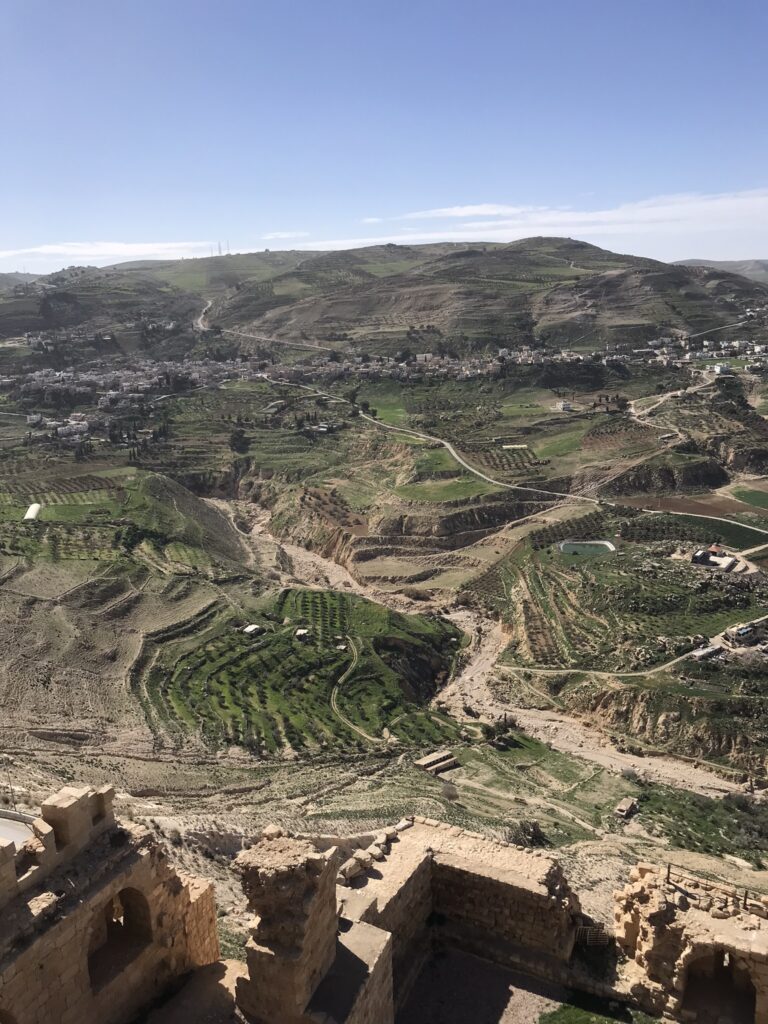
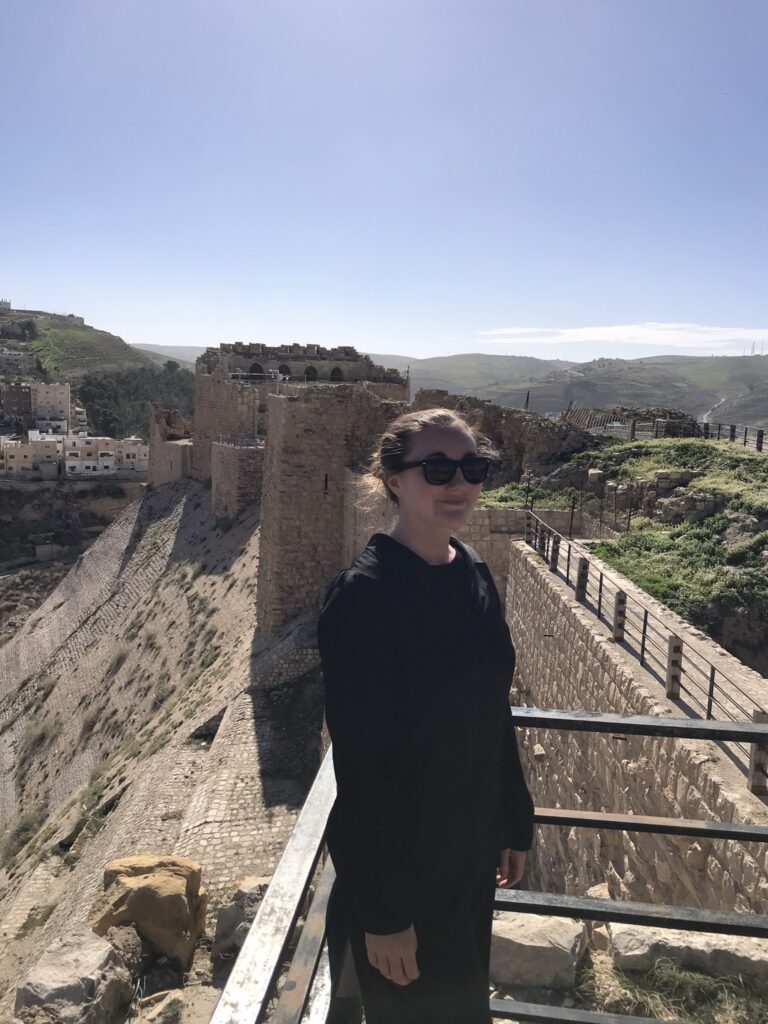
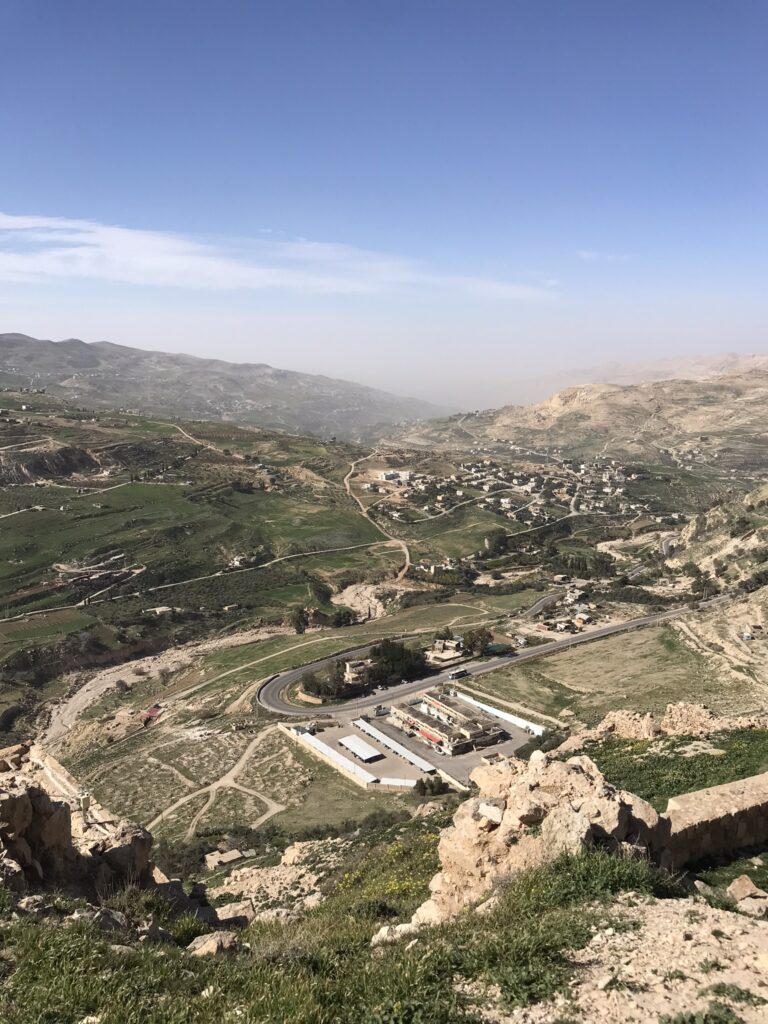
It’s not just the history that will amaze you at Kerak castle – the views are also incredible!
Dead Sea – the lowest point on Earth (about 400m below sea level), the Dead Sea is one of the iconic and unmissable sites of Jordan. Famously, this is not actually a sea – it’s a large, extremely salty lake which is fed by the River Jordan and provides buoyancy for those who enter due to its high sodium content. The Dead Sea is actually shrinking each year; we learned that Jordan has an ambitious plan to syphon water from the Red Sea, desalinate it for personal use and then transfer the rest to the Dead Sea.
Most visitors to the Dead Sea are likely to visit the touristy hotels at its northern end, and maybe spend a night or two in a luxury resort there. However for those on a budget, the southern beaches are where it’s at. These beaches are completely undeveloped and free to access. The downside is that these beaches usually have no facilities at all, and they are also pretty much completely inaccessible without a car.
We headed for the Pink Lake, which has free parking and a well-trodden trail from the road-side parking area to the waters edge via the strongly sulphur-smelling pink lake. We saw plenty of foreigners as well as locals making this short trek to the Dead Sea. Visiting here was a great experience – we were able to find our own spot with nobody else around, bob freely in the sea to our heart’s content and admire the other-worldly landscapes in virtual solitude. Further up the road running along the shore of the Dead Sea are many other places to pull over, some with rudimentary cafes and makeshift showers, and others with no facilities at all. Watching the sunset from these places seemed to be very popular as well as on the windy uphill route back to Madaba.
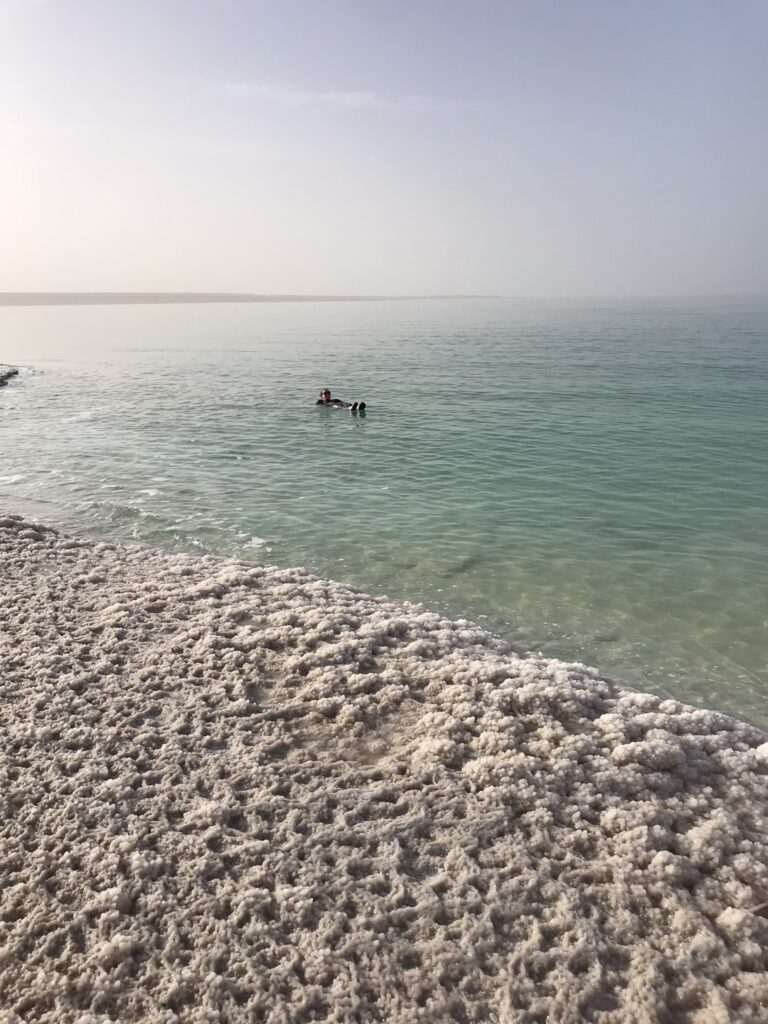
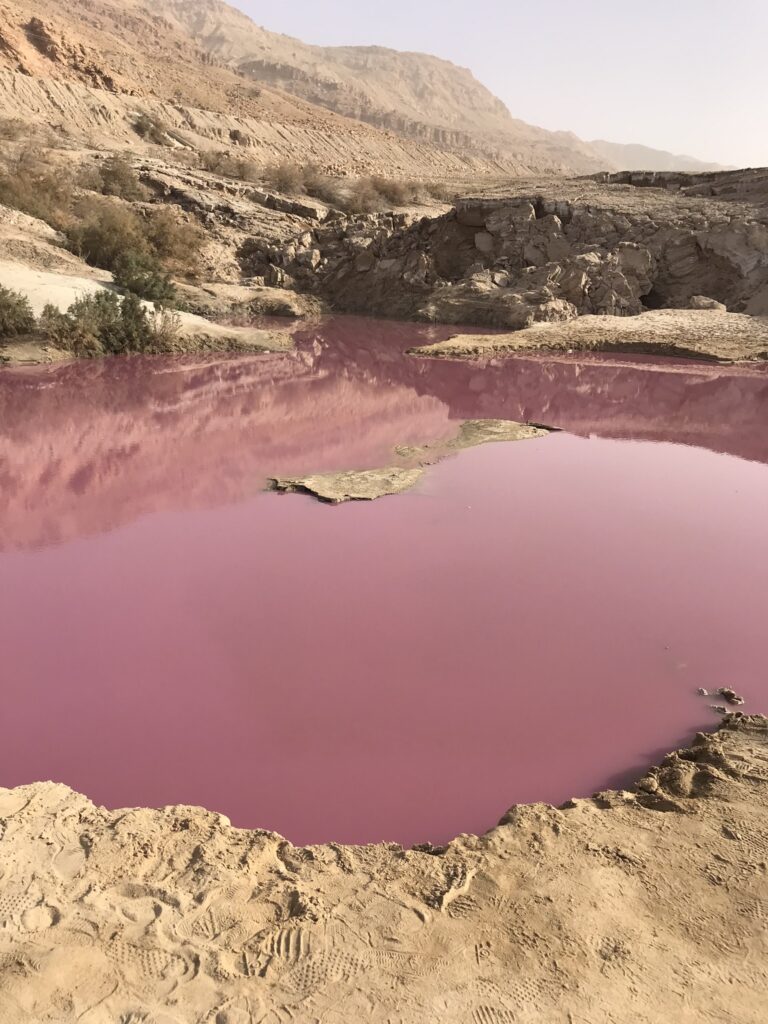
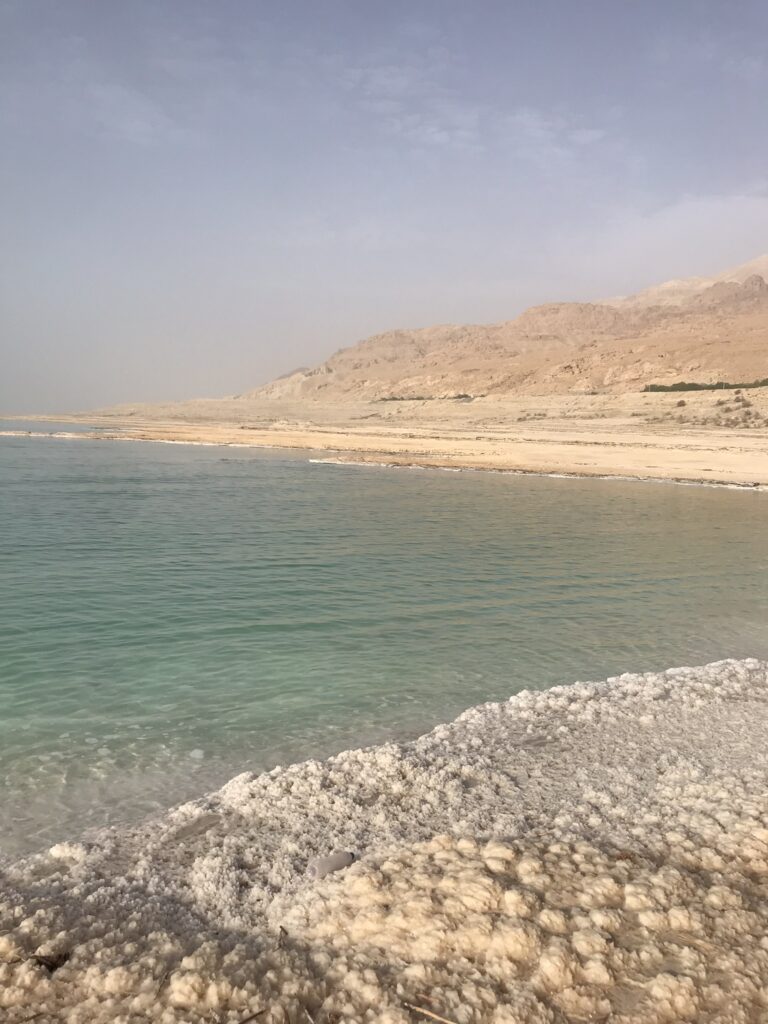
I would highly advise against bathing in the Pink Lake as it smelt pretty gross
Things to bear in mind if you decide to go to the free spots:
There aren’t toilets, showers or changing rooms. Be prepared for this! The water is very salty and it’s not very nice when it dries on you, it almost feels slimy on your hands. We decided to bring along some large bottles of water that we’d refilled from the tap in our hotel and then threw over ourselves for a makeshift shower – this worked really well. It was also quite awkward to get changed afterwards.
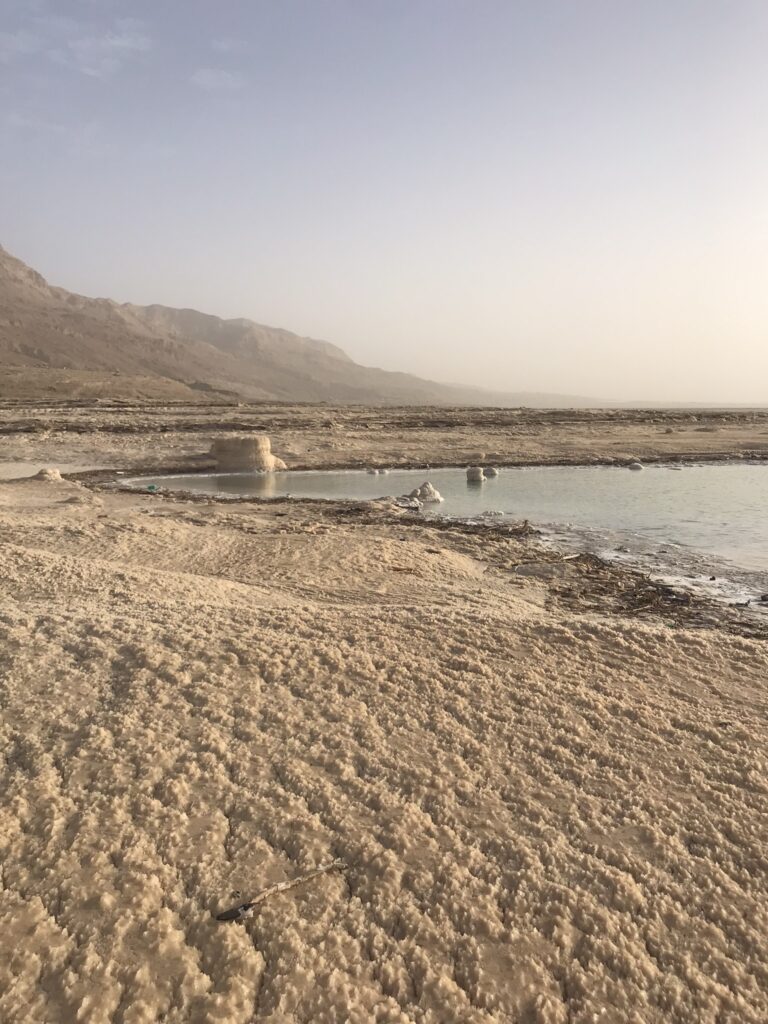
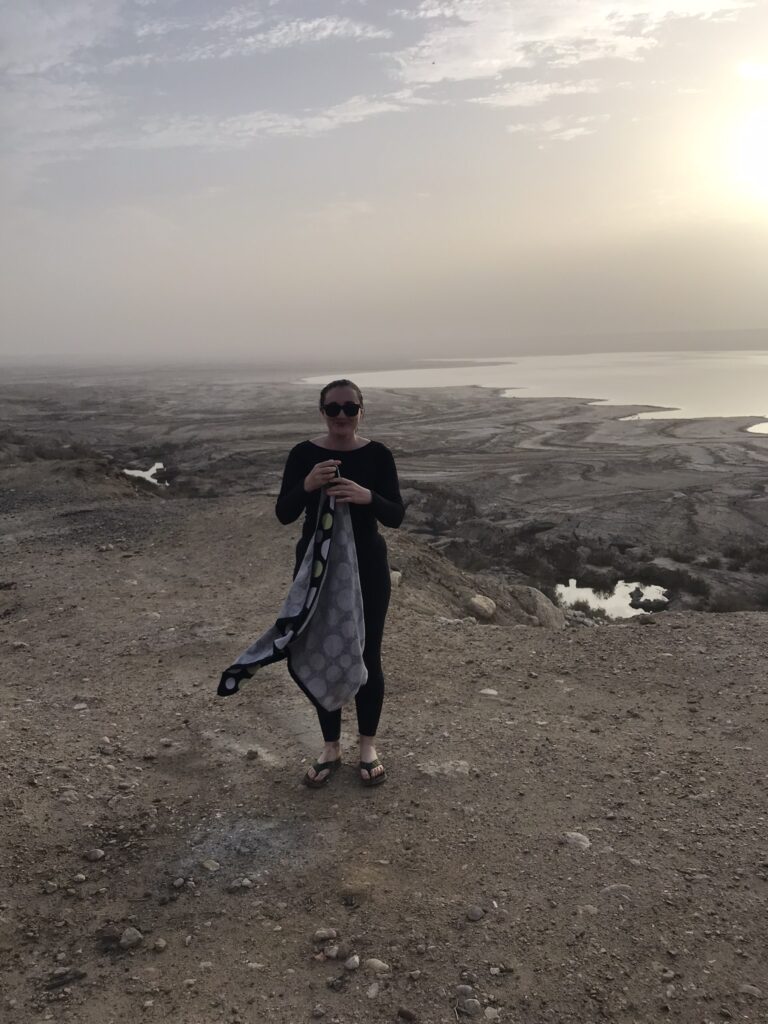
What to expect at the free bathing spots: zero facilities, dried salt literally everywhere and general awkwardness when trying to get changed
You MUST bring flip-flops or beach shoes with you as the salt formations on the beach are incredibly sharp and will cause injury to bare skin. We were told by one woman that her friend had cut her feet and Dan even managed to gash his hand while in the sea.
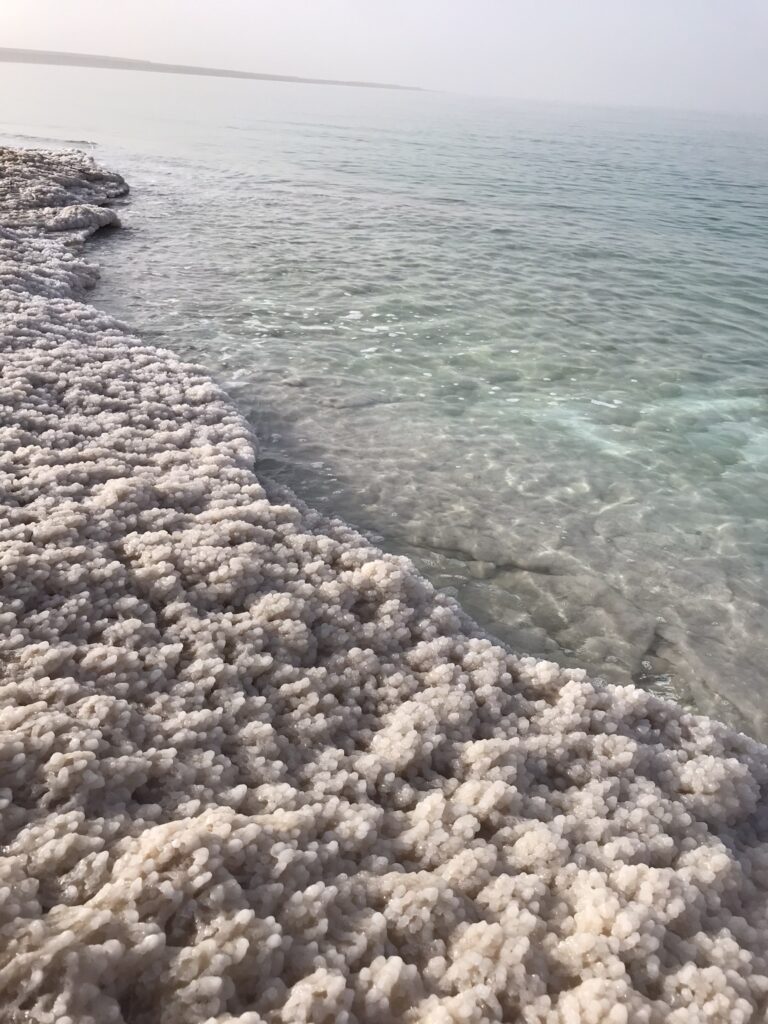
Thought it may not look like it, these salt formations are actually super sharp
As a female I felt more comfortable fully covered than wearing a skimpy bikini – however this is a personal choice and other foreign women seemed perfectly fine wandering around in Western swimwear.
It’s not advisable to put your head under the water as the high salt content in the water can sting and cause eye problems. I’d also advise against shaving on the day you plan to visit as the salty water can cause skin irritation in open wounds. There are a lot of horror stories online about this and honest, it wasn’t as bad as people made out – however it is still something to bear in mind.
It’s generally accepted that you should only spend short periods of time floating in the Dead Sea – between 5-10 minute increments to avoid dehydration or any other negative health or skin effects from the salt.
When entering the water, wade up to a point you feel comfortable at and simply lean backwards to float. It can be dangerous to lean forwards and go on your front, as your head may inadvertently bob under the water and it may be difficult to get back up. People have drowned in this way. It’s not really possible to swim in a conventional manner in the Dead Sea due to the salt – just lay back and float.
Desert Castle loop (Asraq, Amra and Umm al-Jimal)
For those without a car, it’s possible to book a tour or private driver from Amman to take you to these remote locations. Most tours visit Amra, Azraq and Qasr Al-Kharaneh rather than Umm al-Jimal. Frankly I don’t know how you would get to Umm al-Jimal without a car. For those with their own car, the flat stretch of road through the desert towards Azraq is pretty cool to drive on – endless nothingness.
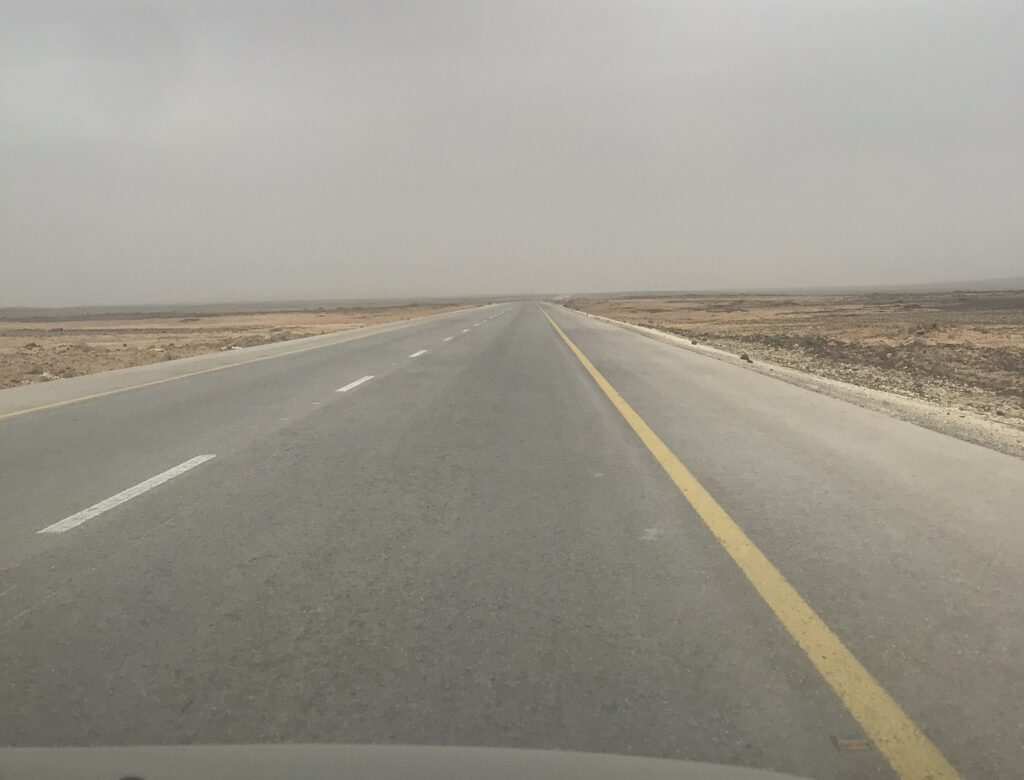
You can see for miles on the flat desert roads
Qasr Amra – this castle has been awarded UNESCO World Heritage status for its detailed figurative wall frescos. Built in the 8th century as a hunting lodge for the ruling Umayyad dynasty, at first glance this appears to be a quirky but small outpost. It’s only when you enter the main building that you understand the true majesty of this place. The frescoes inside are ground-breaking, as they are secular rather than quasi-religious in nature – with bathing and hunting scenes, nudity, musicians, depictions of craftsmen building the structure and real faces, not forgetting a bear playing a stringed instrument amongst other things. The wall murals are present inside the hammam, baths and reception hall. There’s also a functioning olive press and a huge well outside. There were few other visitors here – we were asked by the guard to lock the door and return the key to him when we were done looking at the frescoes!
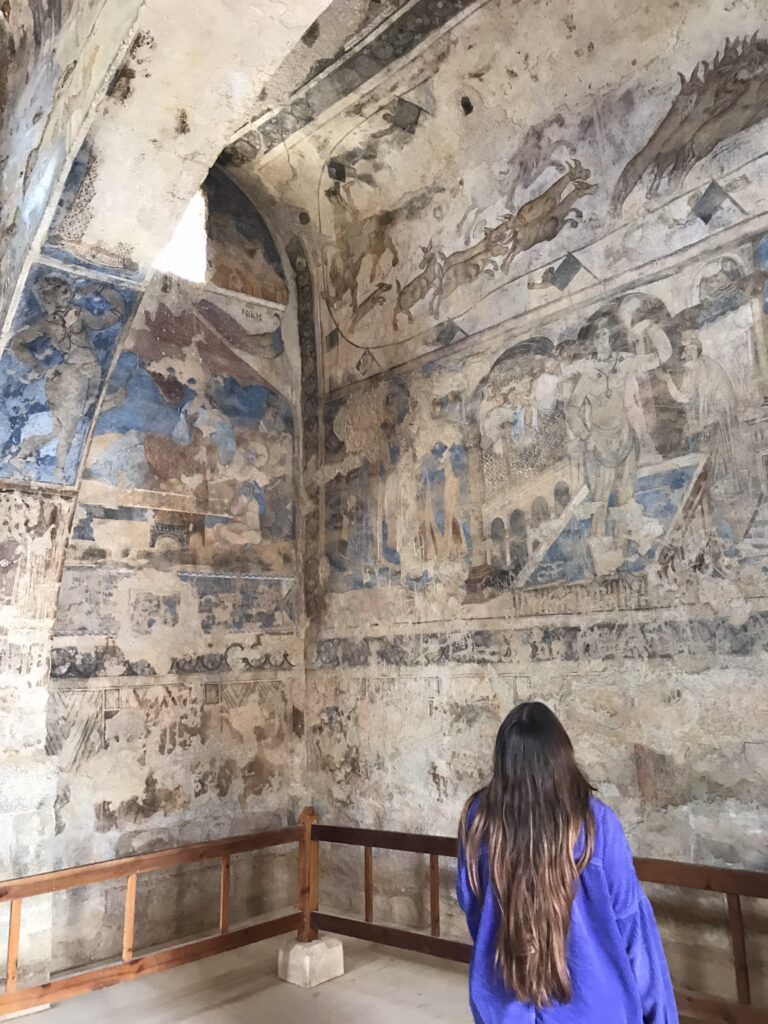
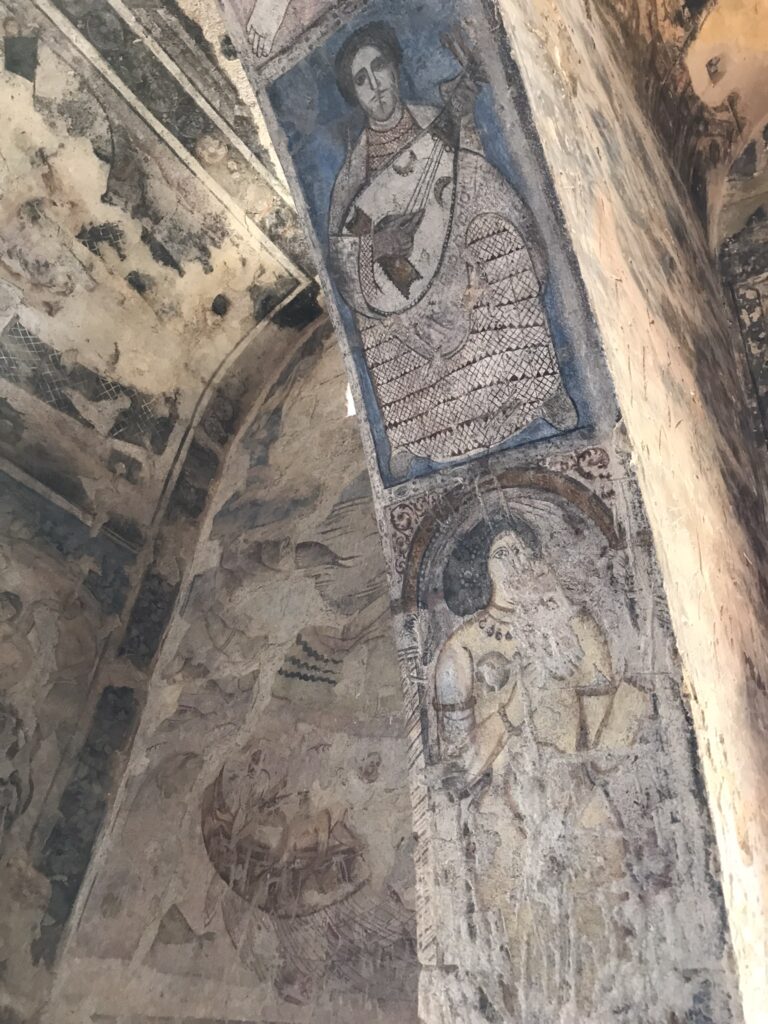
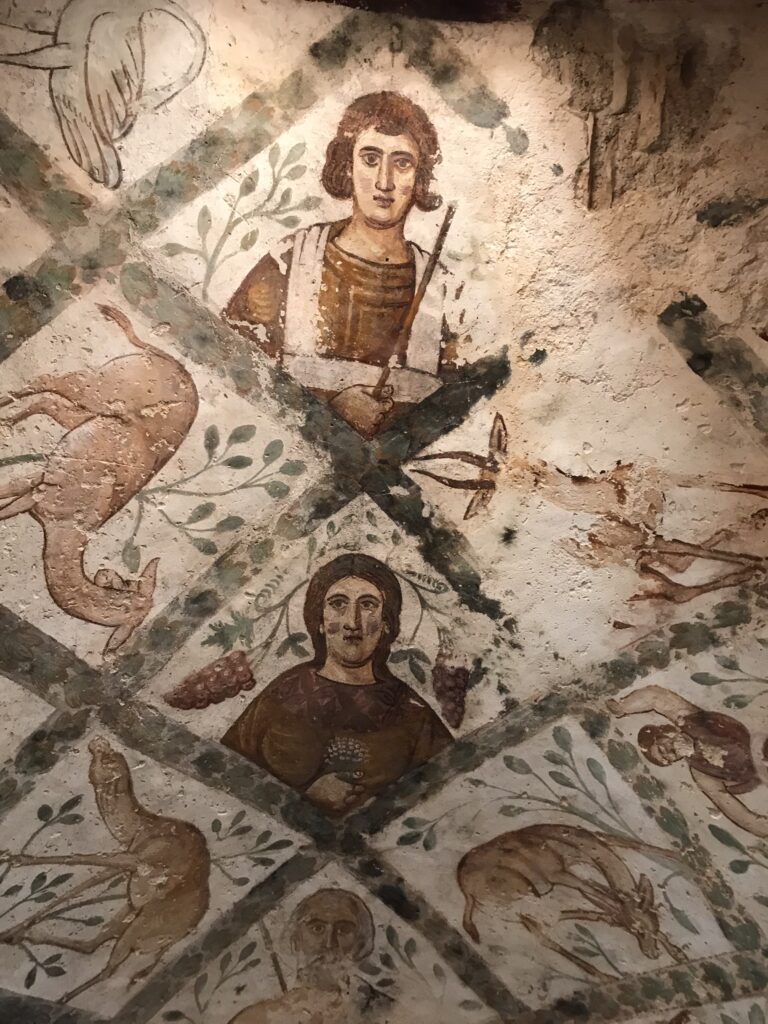
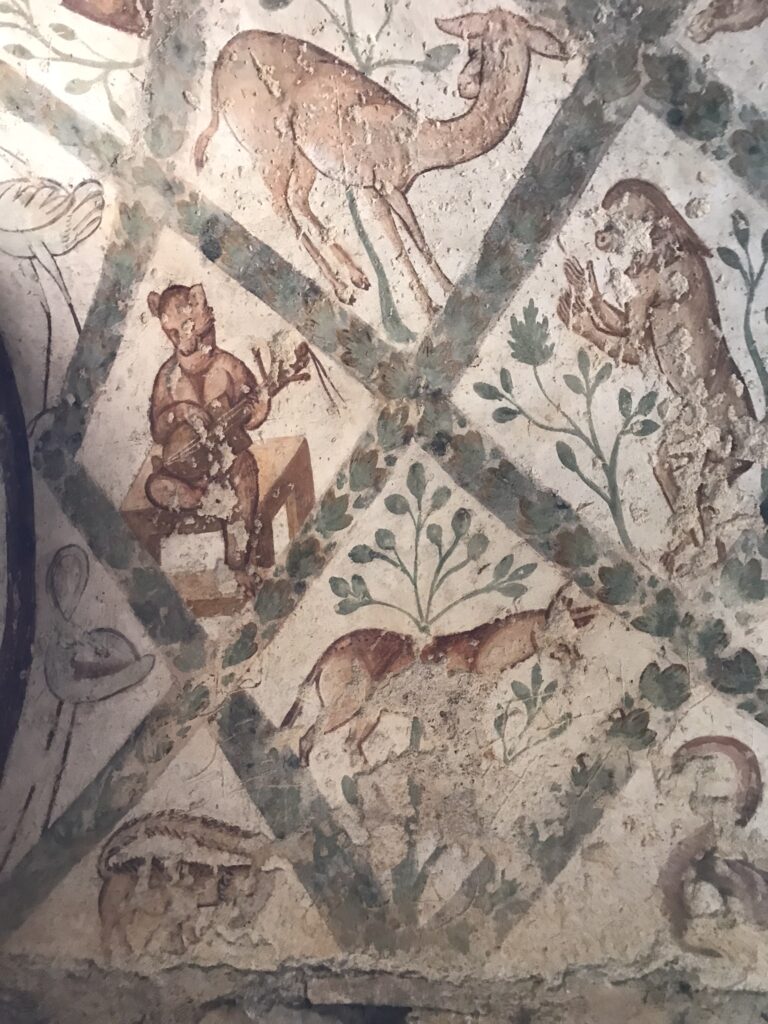
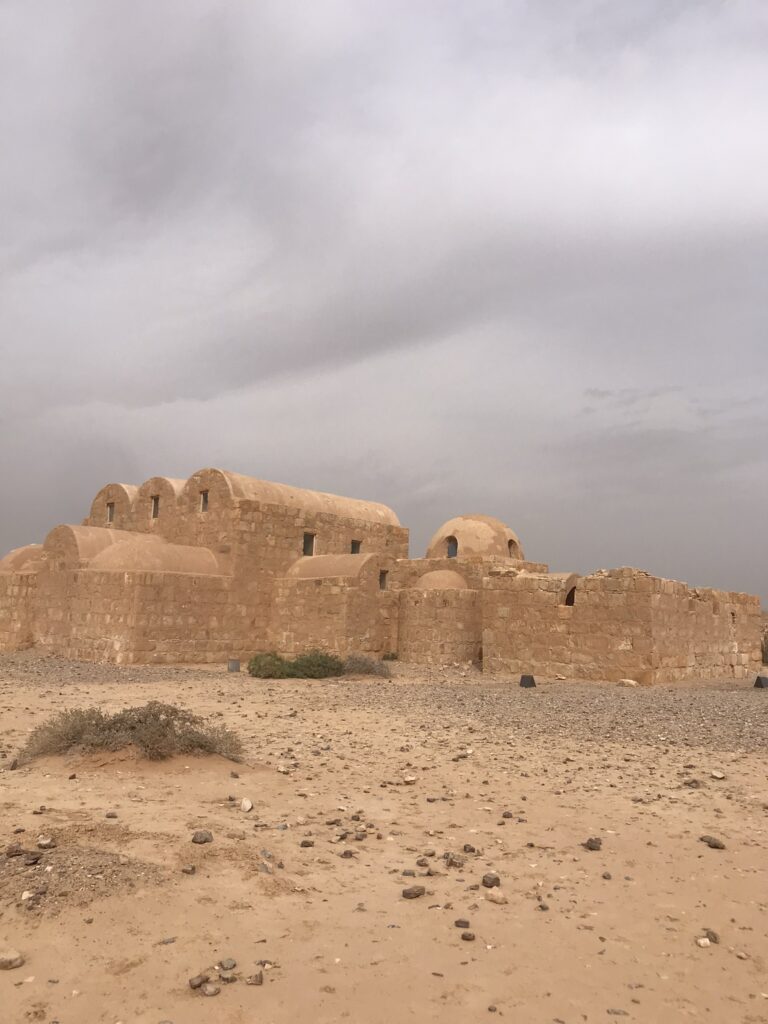
We were blown away by the life-like wall frescos at Qasr Amra
Azraq – a black basalt, imposing but partially ruined castle in the modern city of Azraq. Apparently Lawrence of Arabia used this castle as a base and stayed in the room above the main gate during his campaigns in the region. The castle structure surrounds a large, open central courtyard – the central mosque is the only intact building. There is a distinct lack of information boards or plaques within the castle, you have to use your imagination at times although the layout is pretty self-explanatory. There are remnants of plaster inside some of the rooms and one of the large stone doors is still in-situ. Azraq itself is a desert oasis, the only water source for miles around and is home to a wetland reserve/wildlife sanctuary, which we didn’t visit.
Azraq castle looks pretty gothic with black basalt fortifications
Umm al-Jimal – recently awarded UNESCO World Heritage status, this is by far the least visited UNESCO site in Jordan and most locals have never heard of it. What sets Umm al-Jimal apart is that unlike most monumental sites, this is simply the ruins of a regular Byzantine-era town. Set in the midst of a rural area, the site illustrates the daily life of the regular people at the time rather than just the rulers or upper classes. Families occupied large complexes with shared courtyard areas, and some of the houses even contained private churches.
The scale of the site is impressive – it’s a real labyrinth. At first glance it seems to be very much like a field of rubble, however closer observation reveals many different types of buildings and structures with different purposes, as well as numerous ruined churches. Some of the black basalt buildings are still standing in various states of decay, creating an extremely atmospheric vibe. Information plaques are dotted around and we were provided with some very informative leaflets at the entrance so we were able to find our way around, however it would be very easy to get lost here.
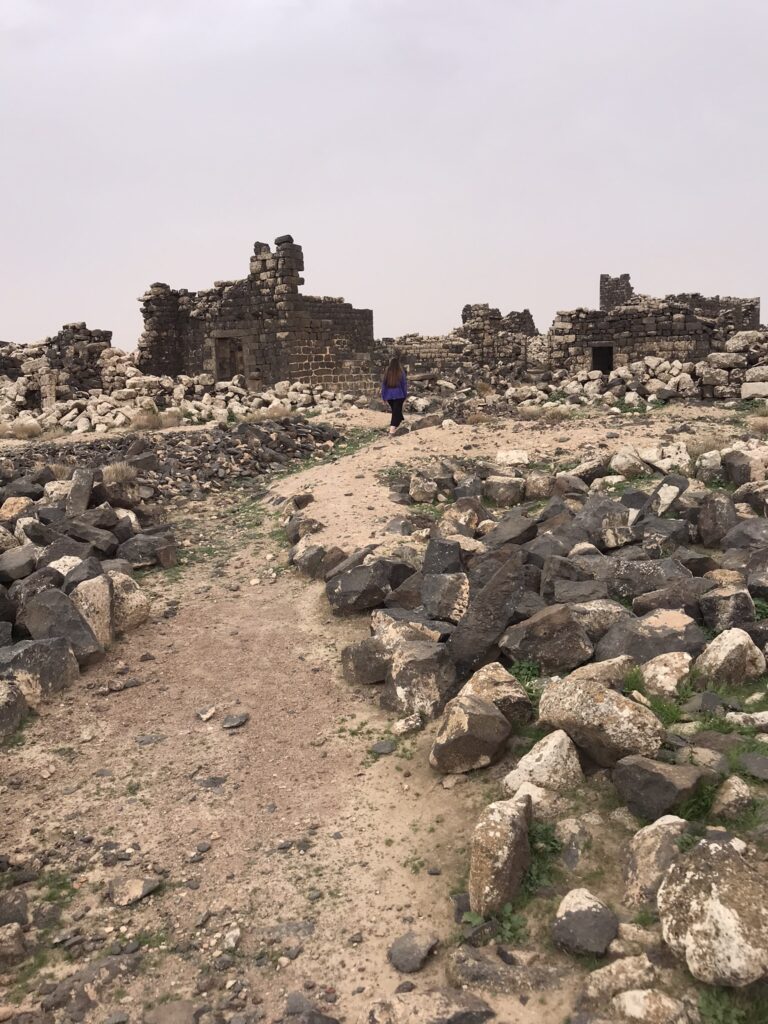
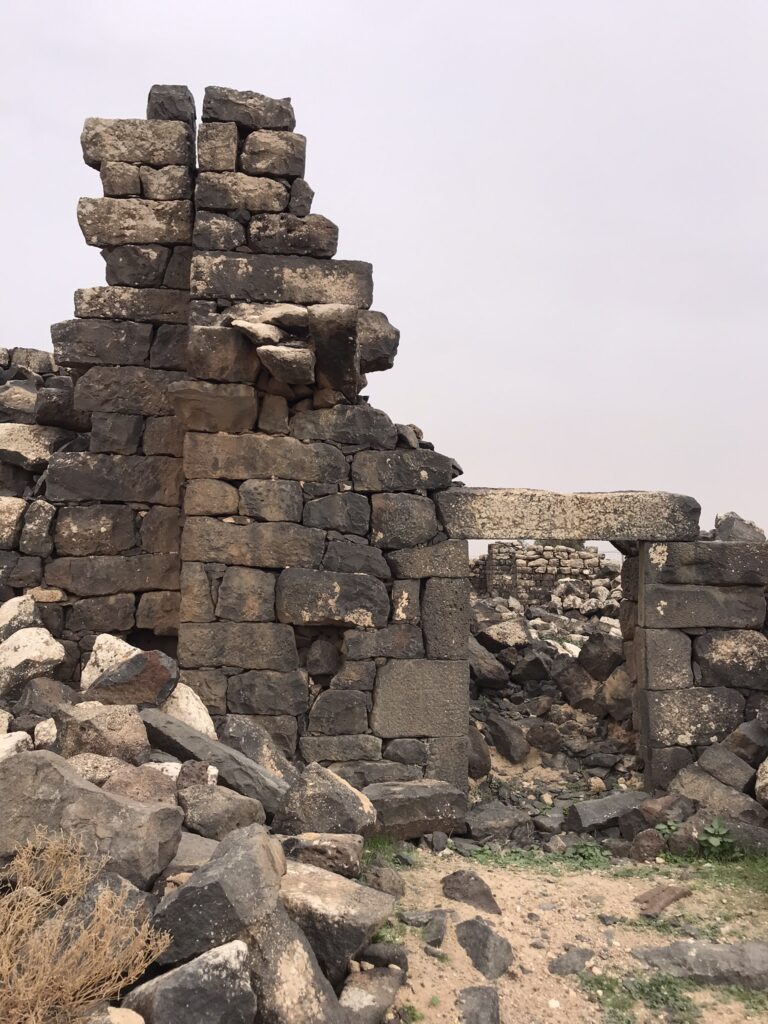
Umm al-Jimal is way off the beaten track
The ancient town was abandoned following an earthquake in the 8th century which destroyed most of the buildings. The ruins were occupied many centuries later by a local Bedouin tribe, who lived amidst the rubble until the 1970s in traditional goat-hair tents, using the remains of the intact buildings as pens for their animals. The modern town that surrounds the site was created by these Bedouin settlers. The site is completely open – we saw locals just wandering through the ruins and children playing amongst the rubble. Apparently locals of a certain age can remember their parents collecting water from the site’s ancient well.
Umm al-Jimal’s on-site museum, located in a restored building, is incredibly informative and well executed. Visitors seemed to be few and far between – the guard was so happy to see us he insisted we take two books with us for free as a gift. This archaeological site was one of the more interesting and atmospheric places that we visited in Jordan and deserves much more attention from international visitors. Although the staff offered to give us a tour of the grounds in English, we declined so we could wander around at our own pace.
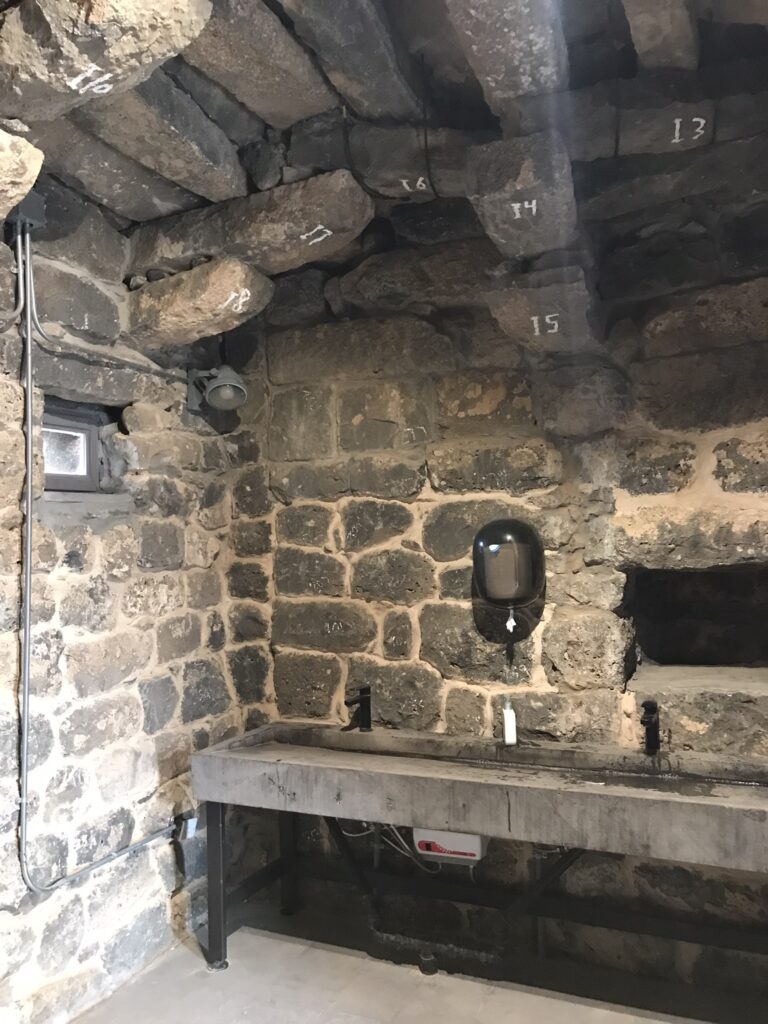
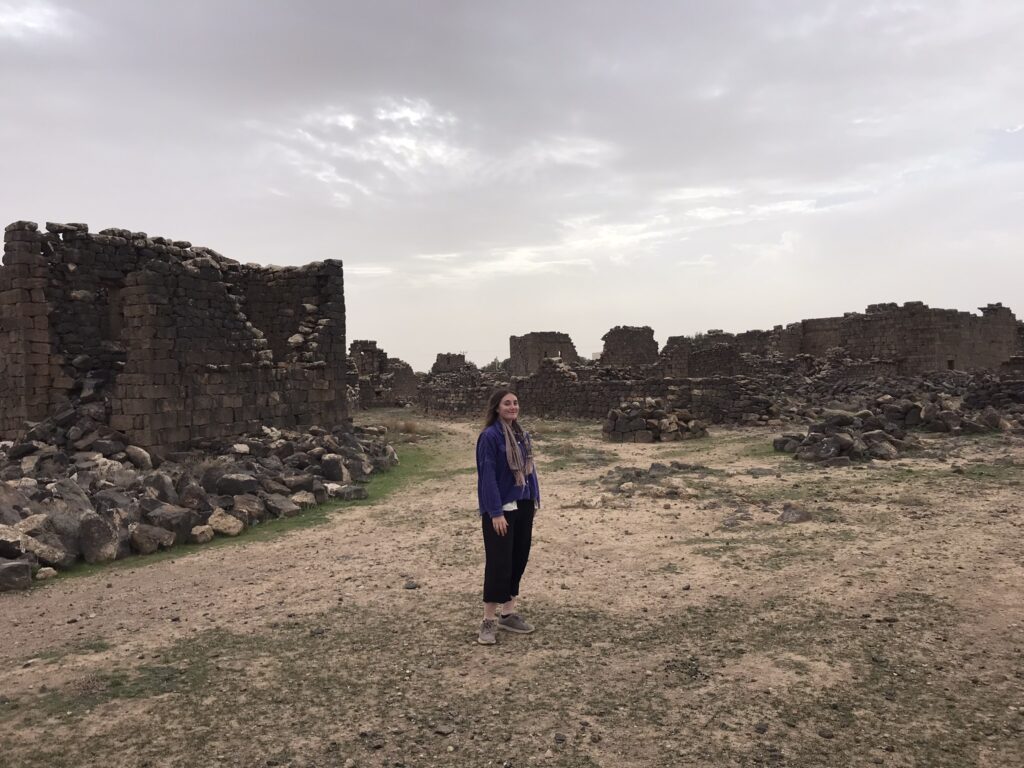
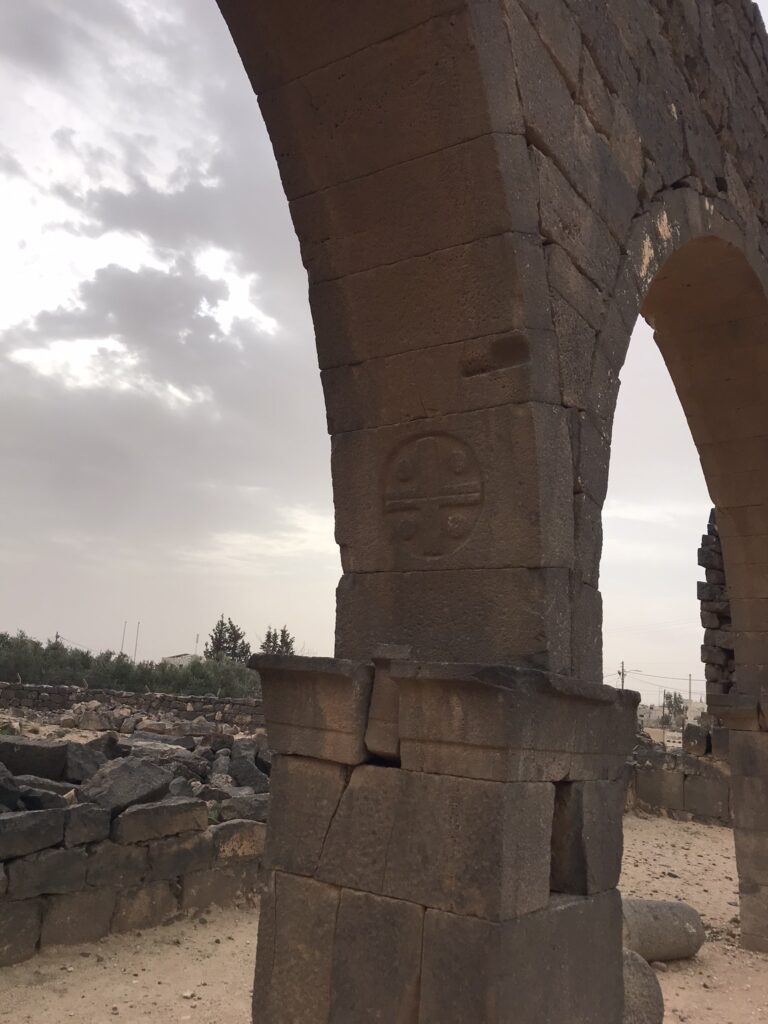
One of the most unique restrooms we’ve ever seen – it’s actually in one of the original village buildings
Dalliance towards Syria – Umm al-Jimal is very close to the border with Syria so we decided to take a short detour to drive around this rural area until we were almost on top of the border, just out of curiosity. It’s safe to say that the people in these remote villages were quite surprised to see us when we turned up in our little rental Suzuki go-kart and had to U-turn on their road. As expected, you couldn’t really see much of Syria except dry rocky desert terrain in the distance.
Salam Syria!
Bethany beyond the Jordan
An extremely green and fertile area in the Jordan Valley rift, this is the place where Jesus was said to have been baptised by John the Baptist and so is a major Christian pilgrimage site. You can actually see the font where all the Biblical action took place, as well as the cave where John the Baptist stayed. This is also the place where Saint Elijah was said to have gone up to heaven in a chariot of fire hundreds of years beforehand.
This site is adjacent to the River Jordan, which marks the border between Jordan and the occupied West Bank. It’s mere miles from the city of Jericho and you can get pretty clear views across Palestine from the top of the hill here. Because of the obvious security concerns, guided tours of this site are mandatory. Visitors must first sign in at the Visitors Centre, then wait around until a tour is ready to depart. The whole area has the feel of a DMZ. The River Jordan, marking the national boundary, was much narrower than expected here – it almost felt like you could wade across. You can see the visitors on the other side of the river and the Israeli flag flying high – think what you may about that.
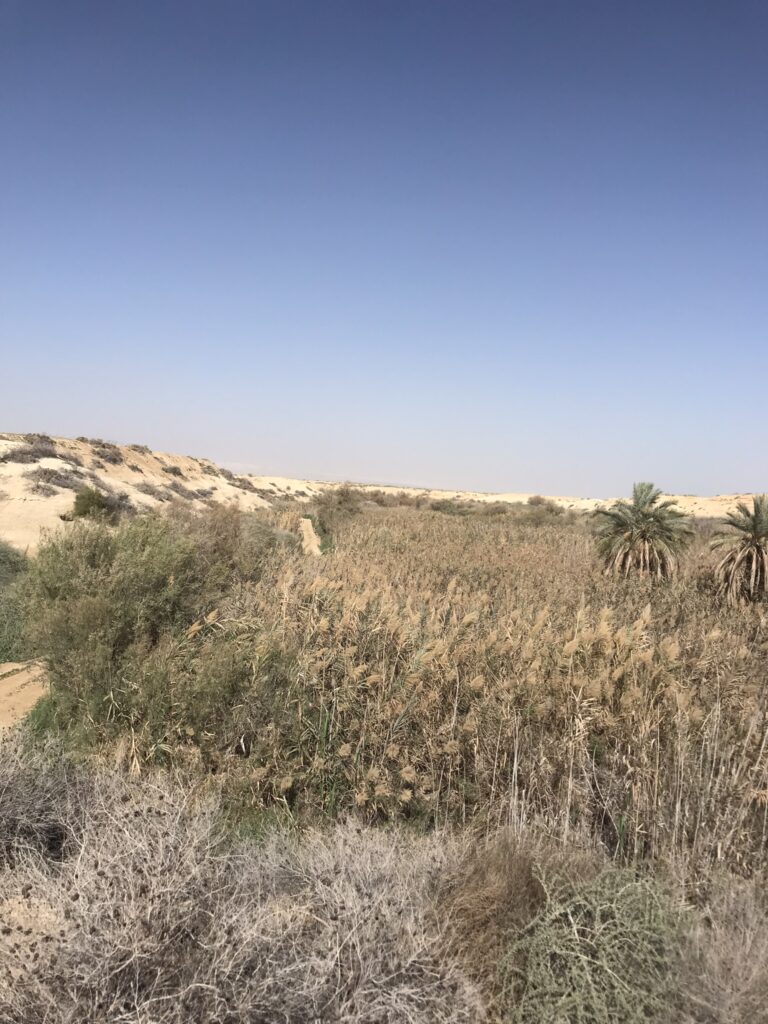
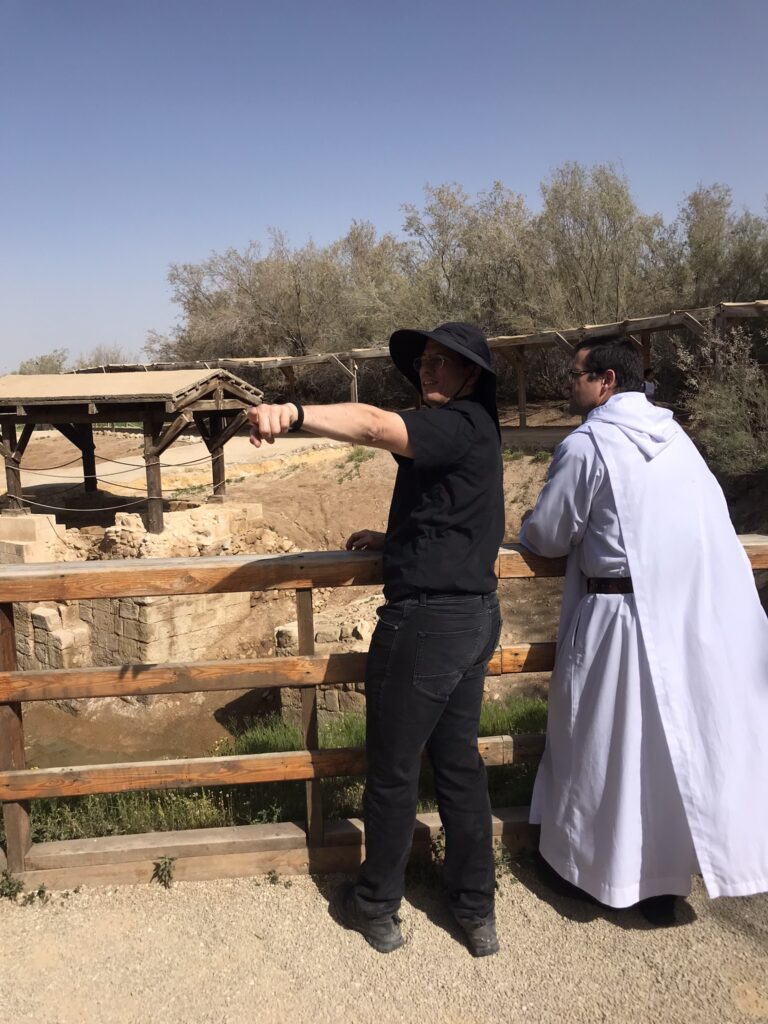
The verdant Jordan Valley rift is home to the Baptismal Site of Jesus, ergo a hit with Christian pilgrims
Included in the mandatory tour are the John the Baptist caves, the baptism site itself, entry into one of the churches in the area, some free time at the River Jordan and a visit to a ‘museum’, which was in fact a collection of photos and religious garments from different Christian denominations – it was actually quite interesting. The tour itself takes around 2-3 hours, so make sure you have budgeted enough time. Admission to the site is not included in the Jordan Pass, but you can purchase an upgrade when buying the pass which saves some money on the otherwise fairly hefty entrance fee. As it is mandatory, the guided tour is included as part of the admission.
Pilgrims flock here to be baptised in the River Jordan. We witnessed some Koreans being dunked by their minister on the West Bank side. Monumental churches of many Christian denominations, such as Russian Orthodox, Catholic, Armenian Orthodox etc are dotted around the DMZ area – regular visitors cannot enter most of them. Nobody actually lives in the area as it’s so close to the border, so these churches are purely ceremonial.
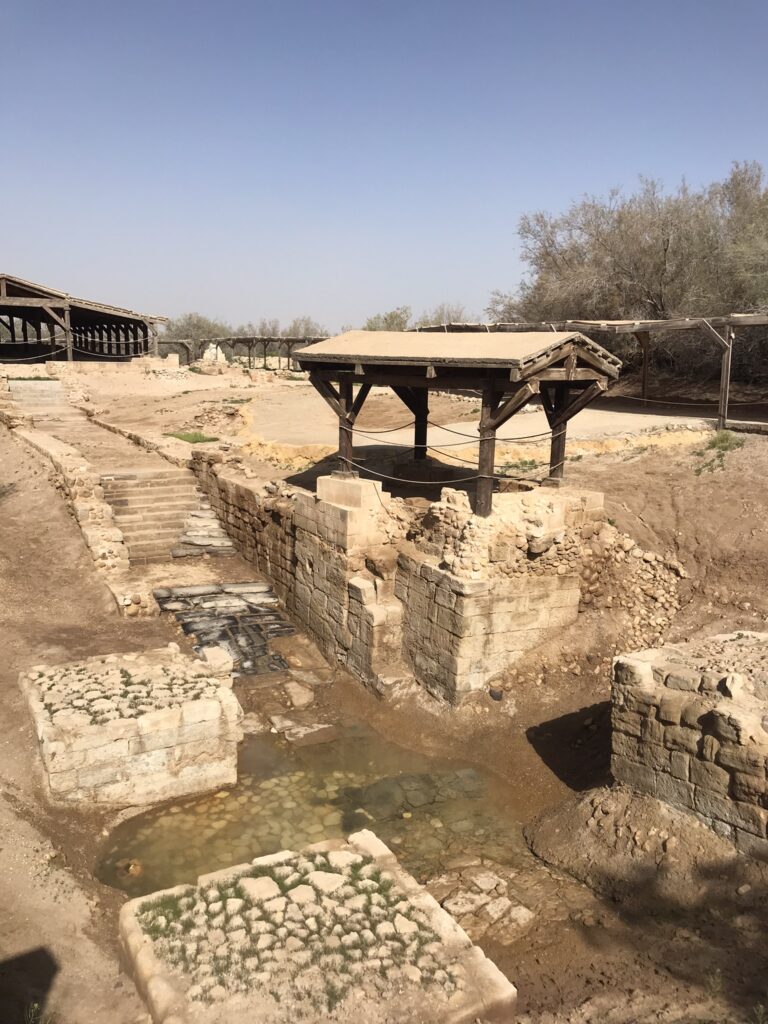
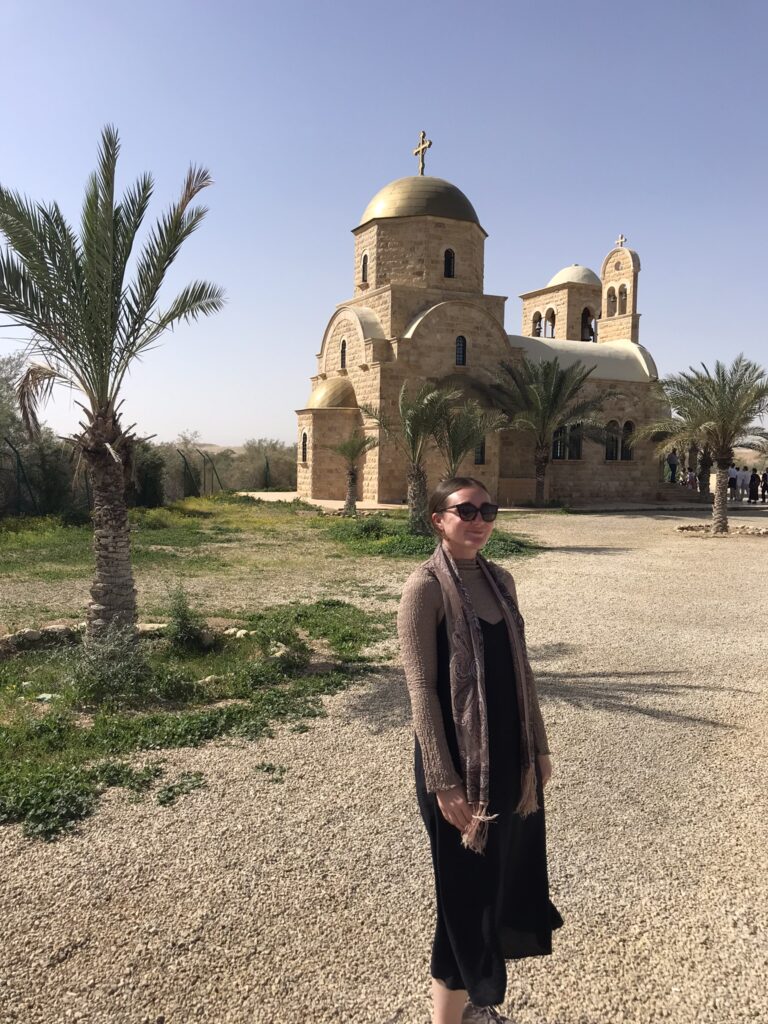
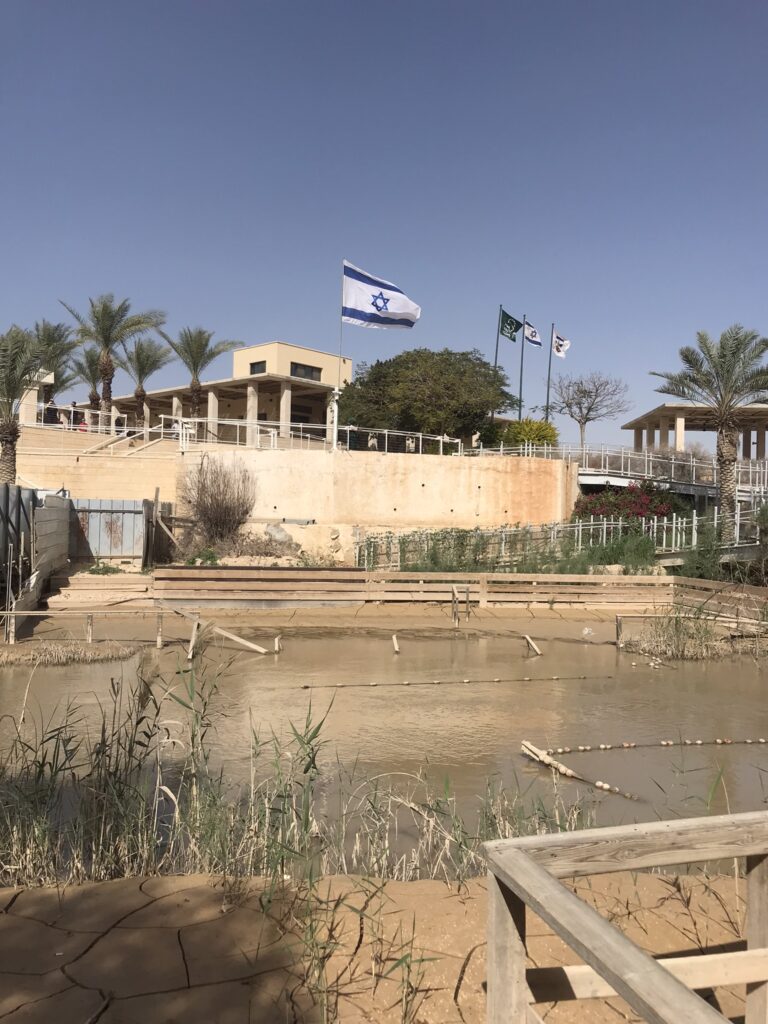
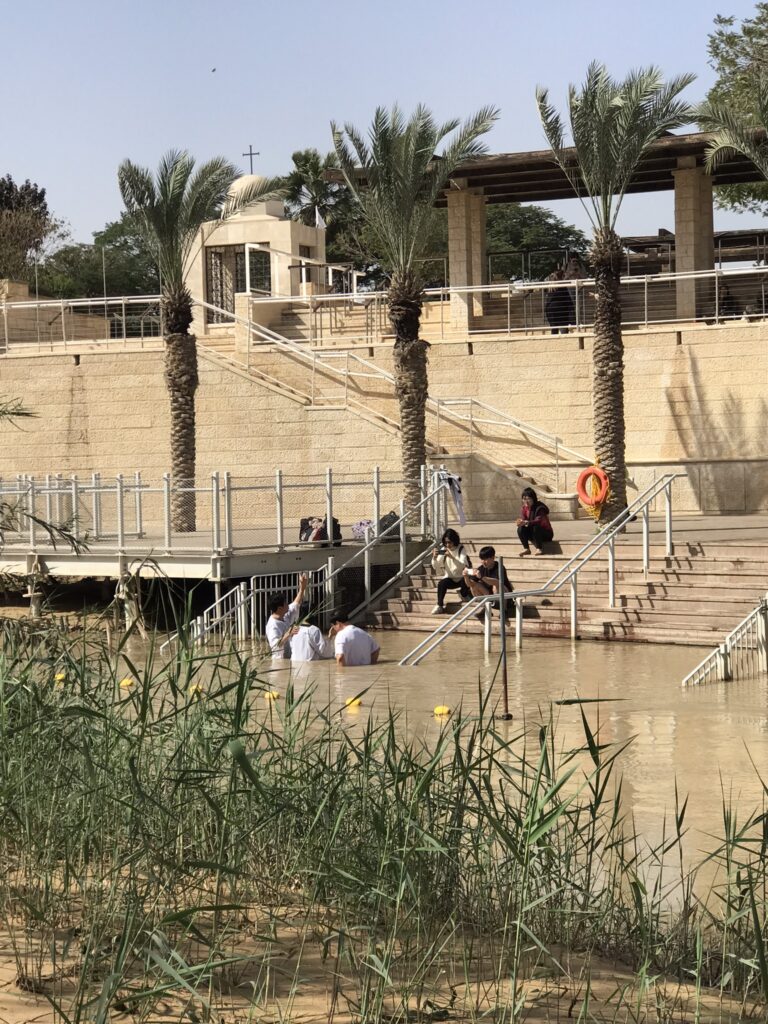
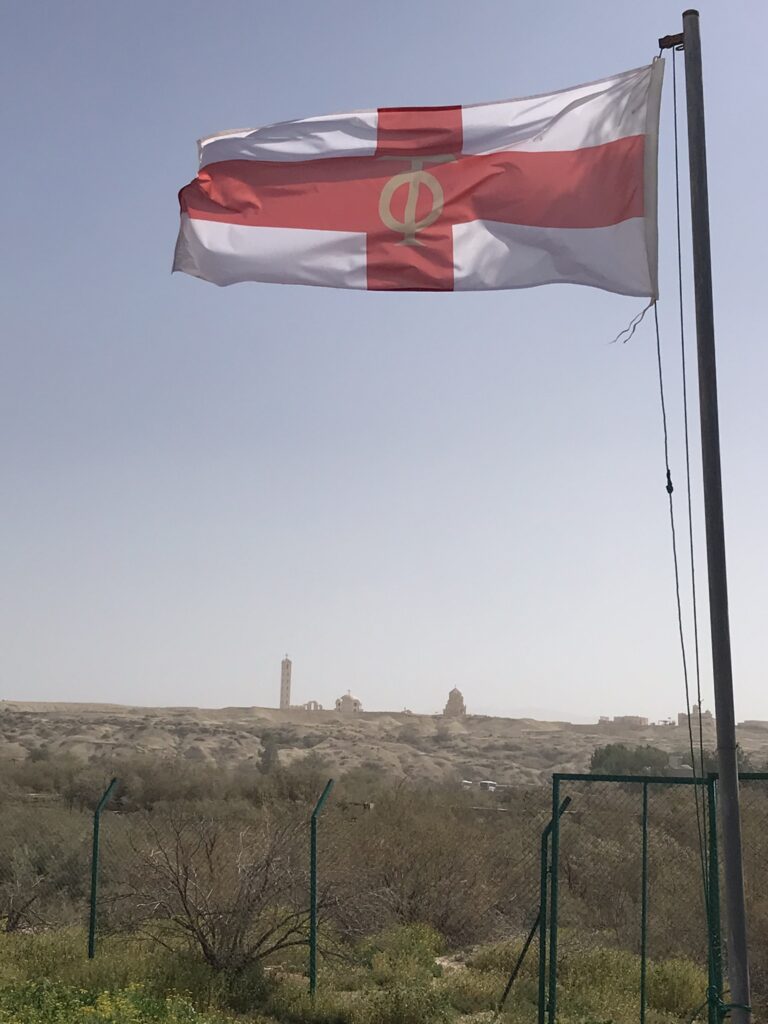
Scenes from the Bethany Beyond the Jordan
Mount Nebo – another Biblical place which is relatively close to Bethany, this is said to be the location where Moses glimpsed the promised land and then died straight afterwards. We learned that Moses is called Musa in Arabic and is honoured as a prophet in Islam, Christianity and Judaism. The site is centred around an ‘interpretation centre’ with paid entry which contains a small museum, some archaeological ruins, the fabled views over the Jordan Valley and the main attraction, the Memorial Church of Moses. There are some amazing mosaics in the church – the geometric patterns and shapes were mesmerising and there are numerous different peoples depicted in the mosaic i.e. hunters on horseback, a Persian trader holding a giraffe and zebra and subsaharan African trader holding an ostrich on a lead. In the surrounding area are a few other historical buildings and churches, although they are not well maintained.
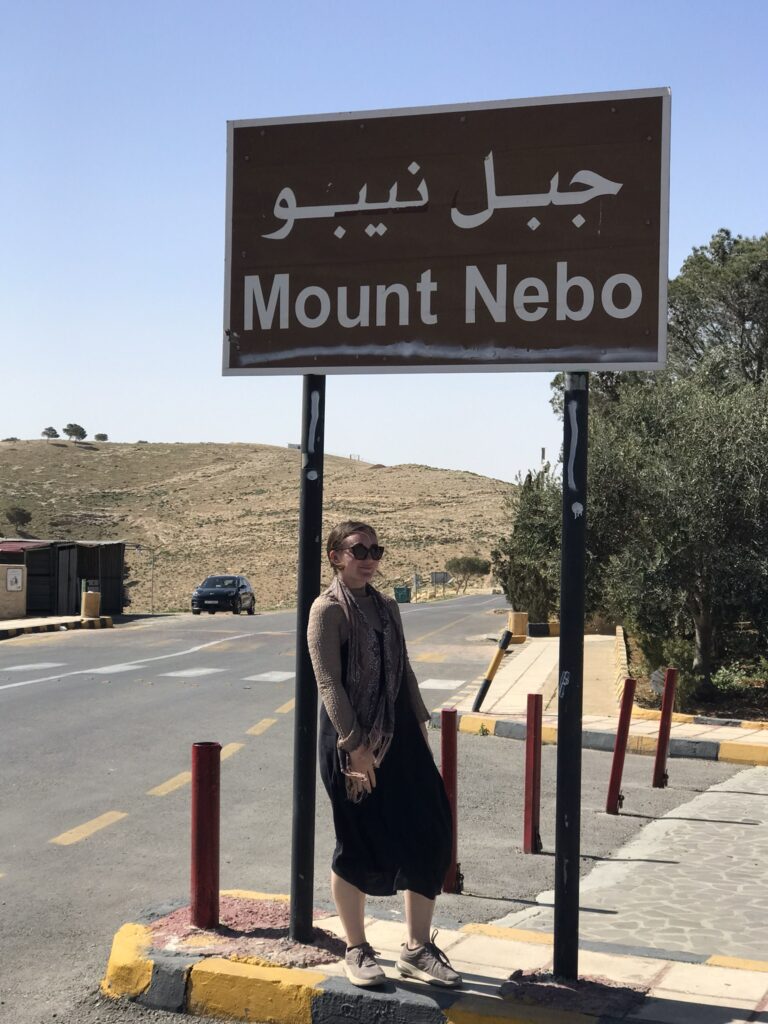
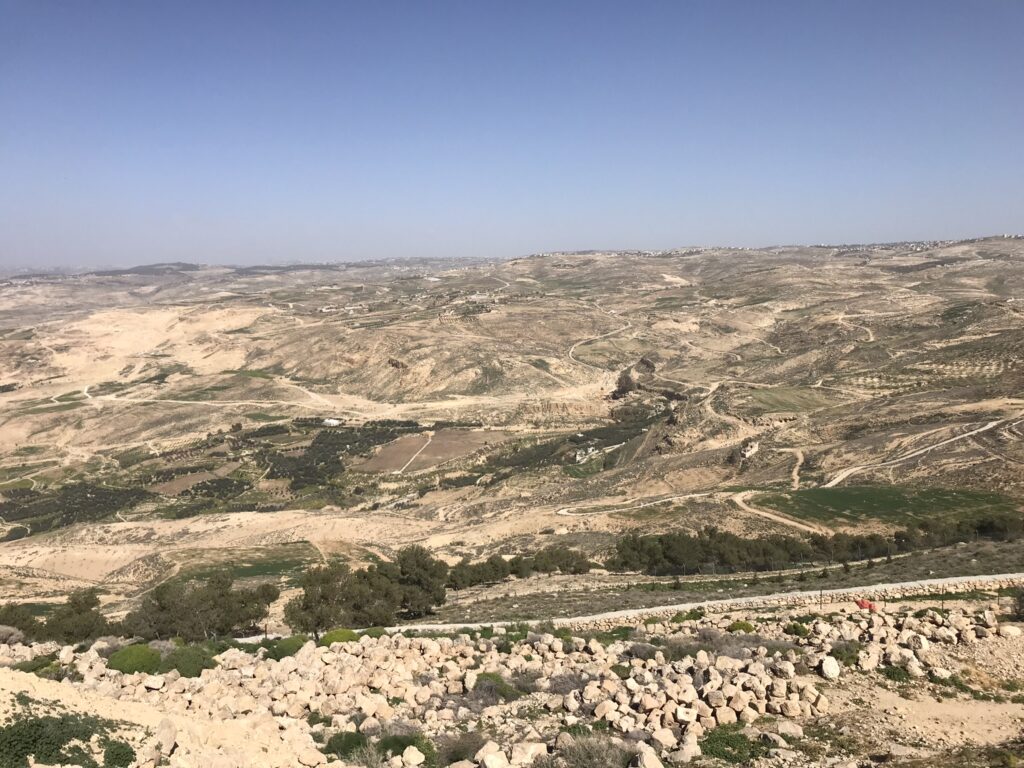
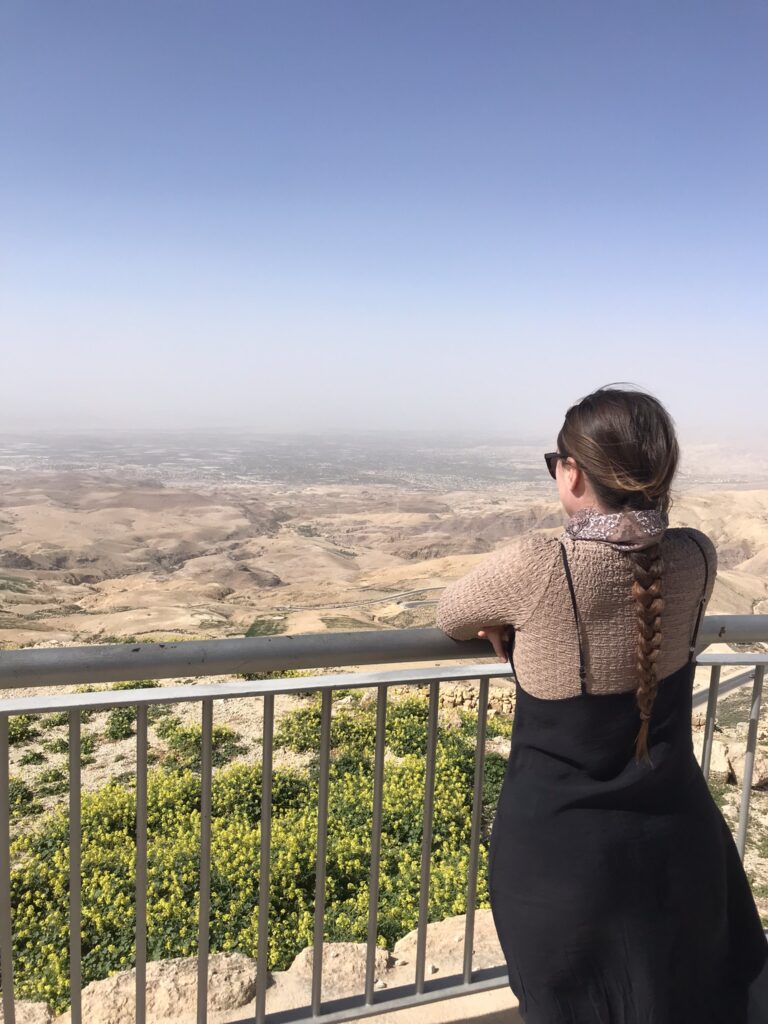
Outside Mount Nebo, view of the Valley and the biblical ‘promised land’
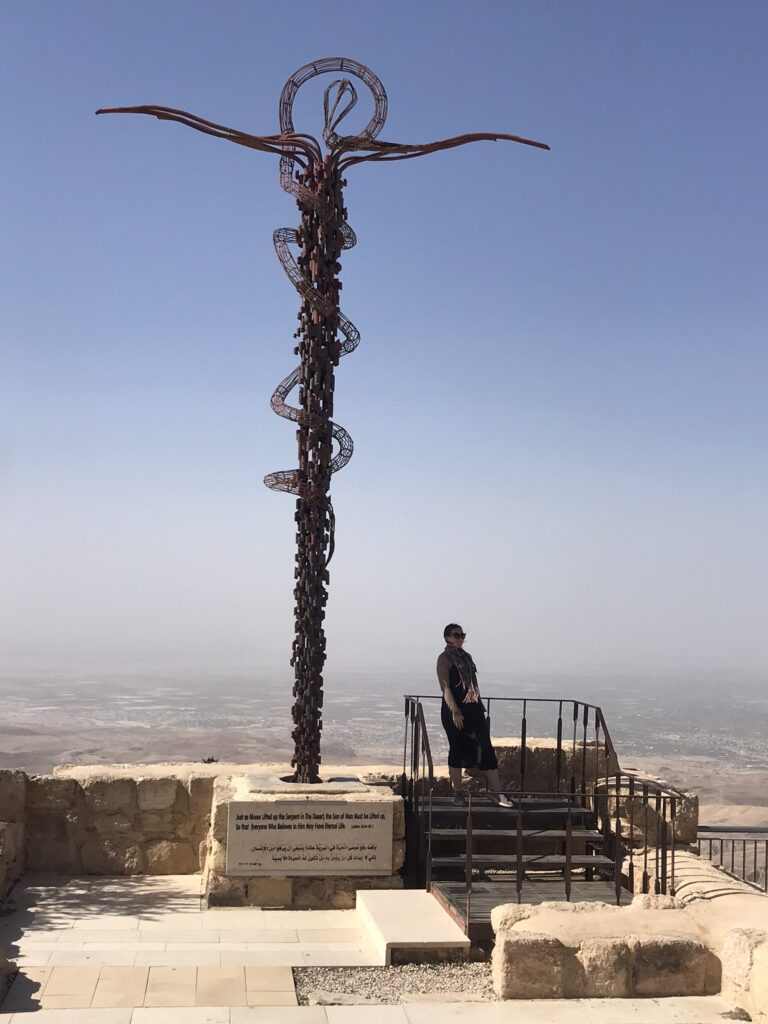
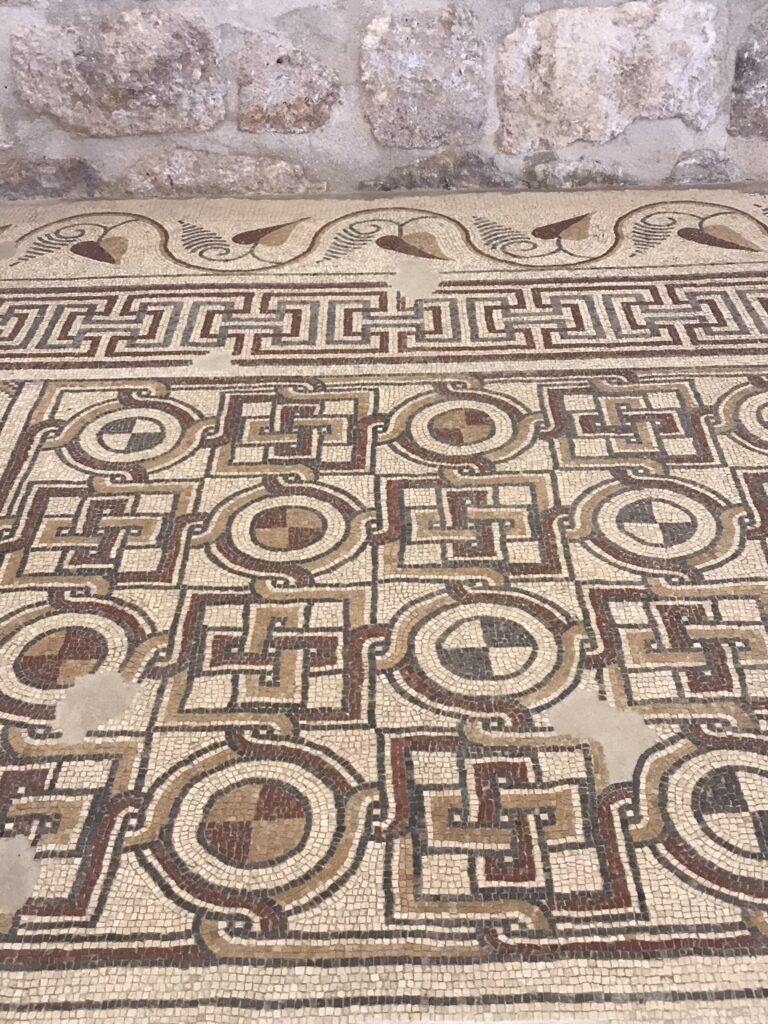
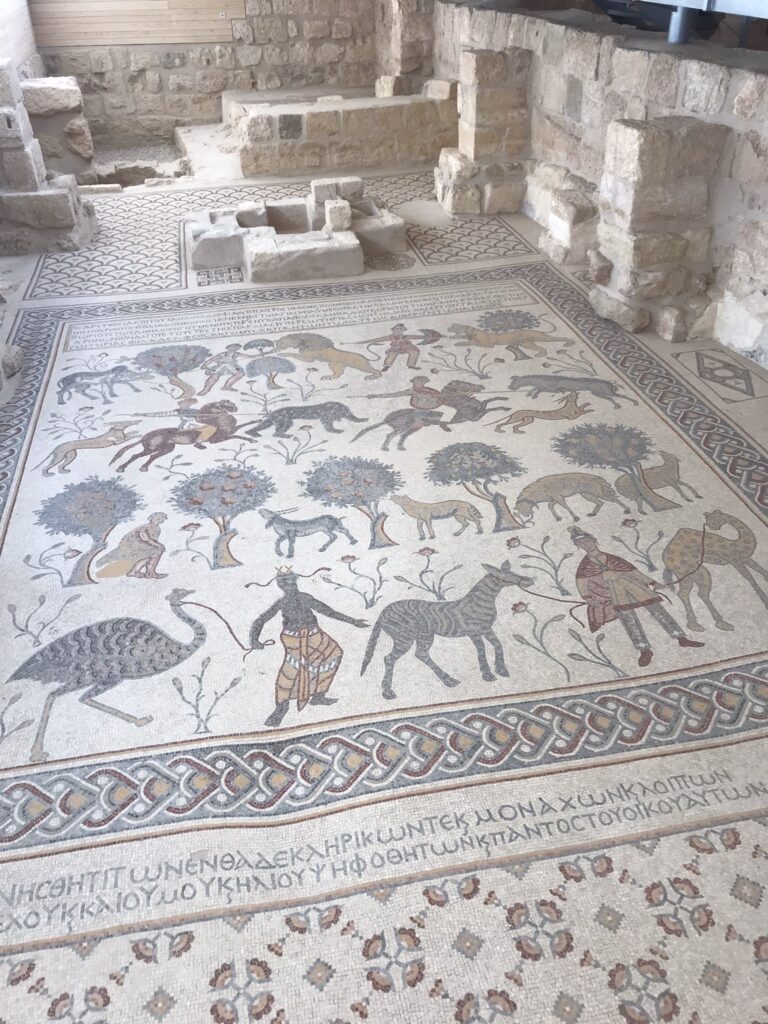
More highlights from Mount Nebo