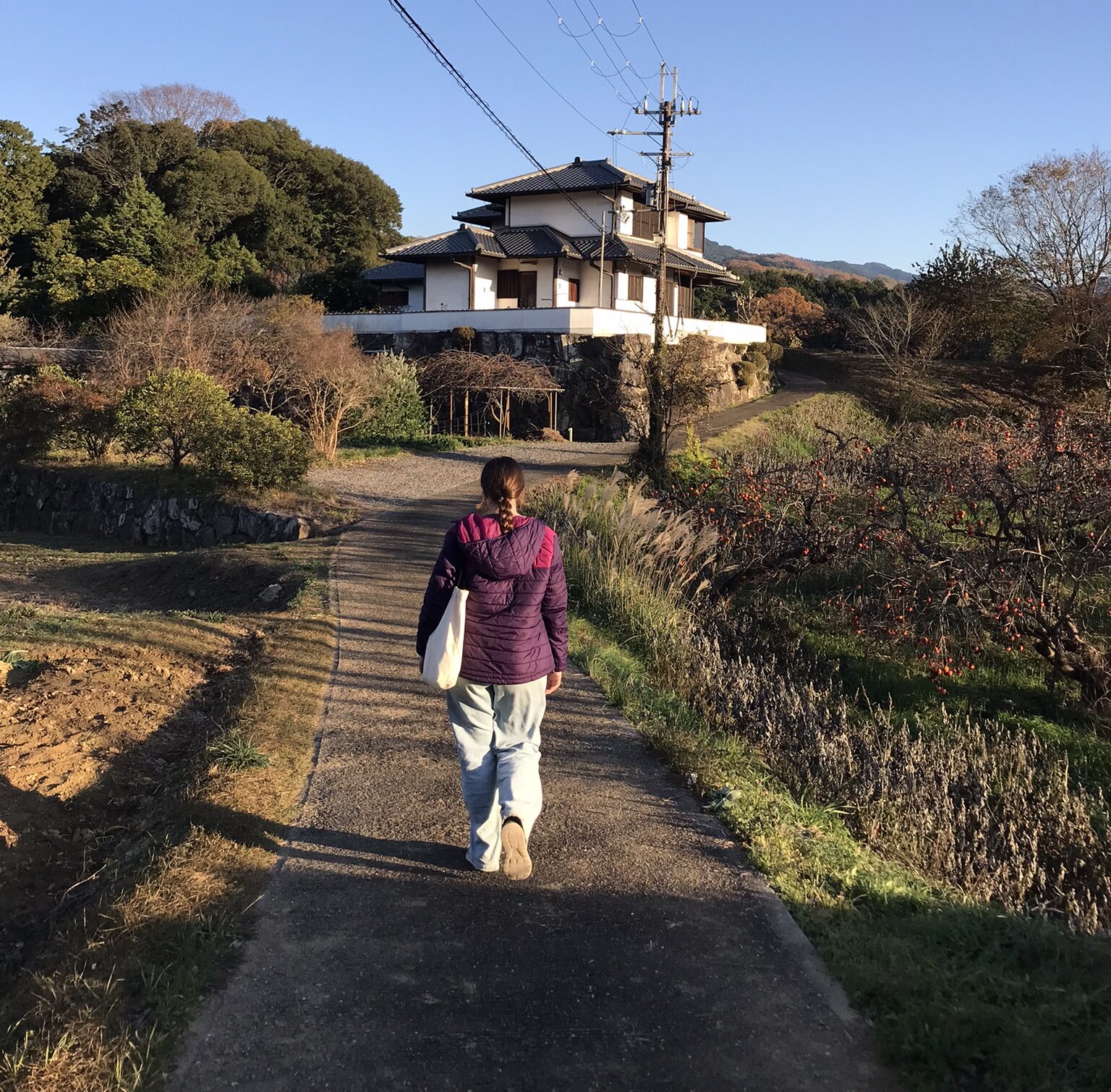
Long before the age of shoguns and samurai, Japan’s first capital was Asuka. Today this sleepy village barely registers among the nation’s more spectacular and high-profile attractions, but look just below the surface and you can find a treasure trove of interesting history mixed in with delightful rural scenery that seems a world away from the bustling city life of modern Japan.
Asuka can be considered to have been the capital of Japan between 538 and 710 AD, a time when the powerful Soga and Fujiwara clans held influence over the imperial throne. Although Asuka was considered to be the capital, traditions at the time meant that the imperial court was moved following the death of each emperor, so there are a plethora of royal buildings from this era dotted around the wider region. This period (known as the Asuka Period) saw the first historically-verifiable Emperors of Japan, the introduction of Buddhism to Japan and the development of the first real centralised state, laying the foundations for the subsequent history of Japan from the classical period through to the modern day.
Asuka today is a decentralised rural area which makes for an easy day trip from Nara or Osaka, taking just over an hour on the train. Many visitors to Asuka hire a bicycle to traverse the rural landscapes, but it’s also possible and just as rewarding to explore on foot. This walking tour takes in many of the main sites. We started the tour at Ishibutai Tumulus – to get there, we took bus 16 which departs from outside Kashiharajingumae Station every hour. Alternatively, you can get a bus to Ishibutai from outside Asuka Station, or do the tour in reverse and take the bus back to the station from Ishibutai Tumulus.
Start at Ishibutai Tumulus
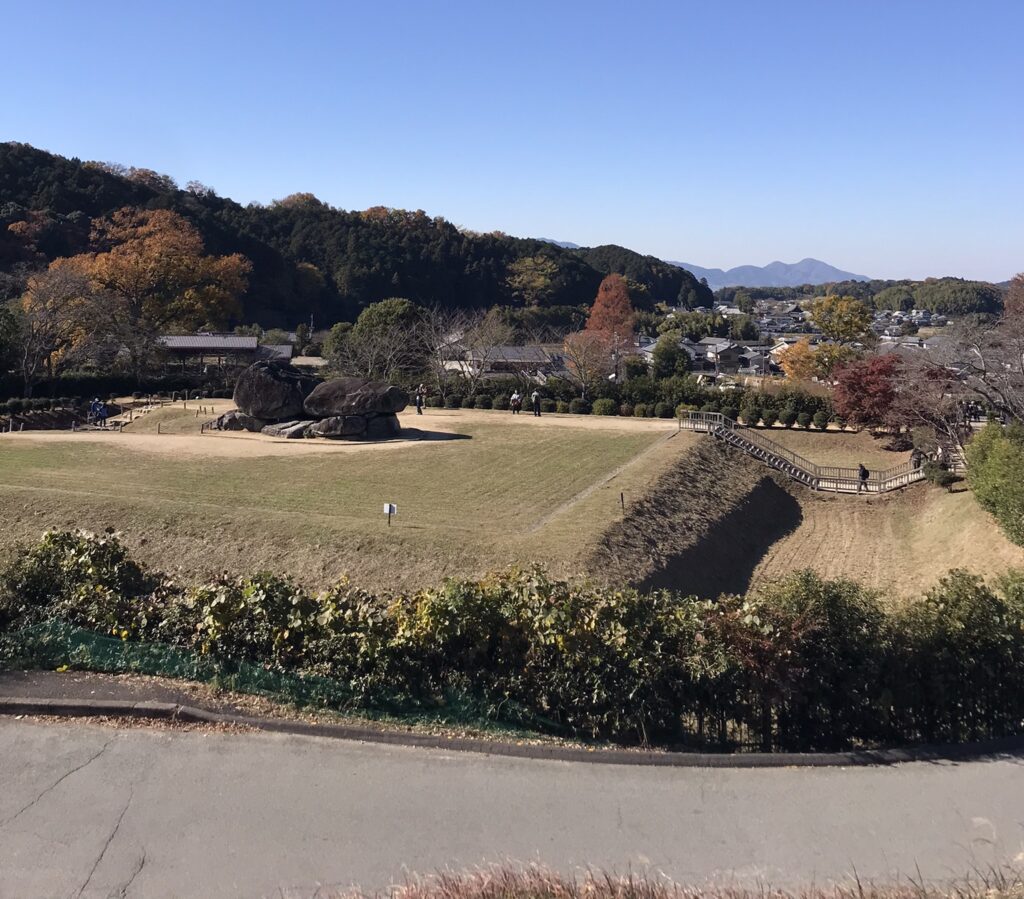
One of the most prominent kofun (burial mounds) in the region, this structure was said to have been constructed for Soga no Umako, an influential member of the Soga clan who is believed to have died in 626 AD. It is considered to be the largest megalithic structure in Japan. The tumulus was once covered by an earthen mound which has eroded away over time to reveal the stone inner structure. One theory suggests that the mound was deliberately removed by enemies of Umako in subsequent years following the dissolution of the Soga clan in 645.
Access to the site requires a small entry fee. It may be possible to buy a combination ticket here covering the few other paid attractions in Asuka, although this was not available at the time of our visit. Once inside, it’s possible to enter the stone burial chamber. The name Ishibutai translates to ‘stone stage’, a reference to the large megalithic structures which make up the chamber. For fans of video games, this chamber was said to have inspired the Ruins of Alph in the Pokémon franchise and is also featured in the Assassin’s Creed franchise.
You can get a pretty good vantage point of the structure from the hill across the road to the east. Further around the road to the southeast are some other historical structures such as the Miyakozuka Tumulus. When you’re finished in this area, head west along the main road past Ishtubai Tumulus, down the hill and into the village. Head north along the main street and you’ll pass the Inukai Man’yo Memorial Museum.
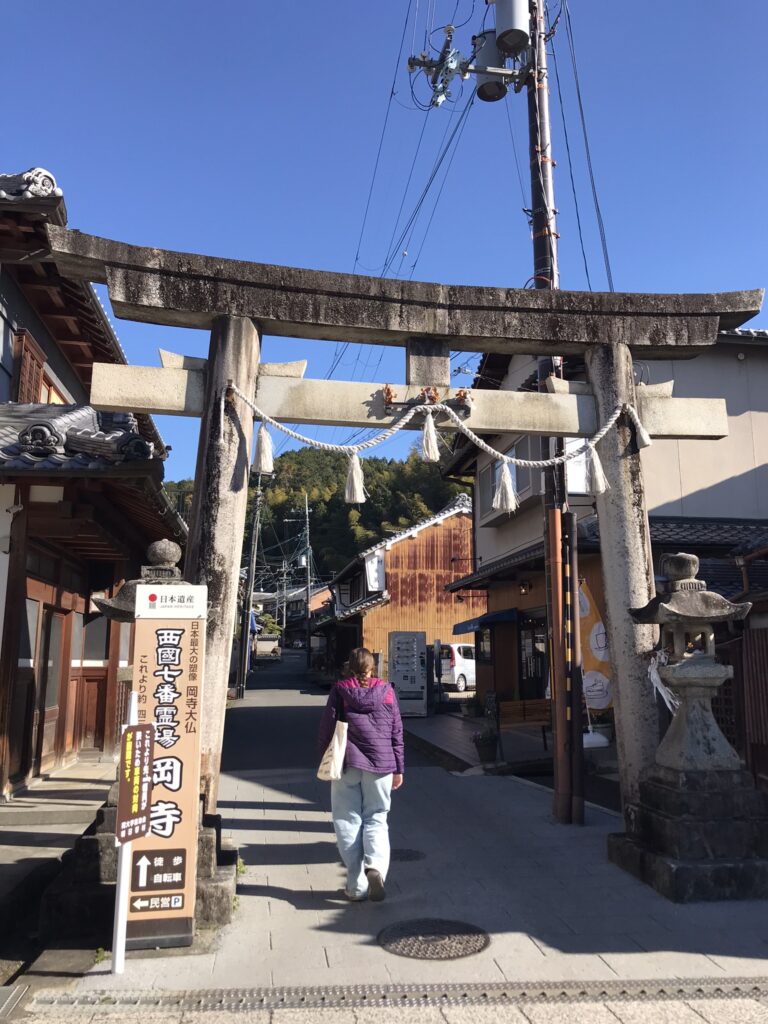
The area around the Inukai Man’yo Museum is full of traditional buildings
This small facility set in a historic building is dedicated to the memory of Takashi Inukai, a 20th century academic who helped to bring public attention to the Man’yōshū – a famous collection of Japanese waka poetry which was compiled in the 8th century and is said to be the oldest such compilation. Inukai famously gave a lecture on the Man’yōshū to Emperor Showa (Hirohito) in Asuka in the 1970s, becoming an adopted citizen of the town. The museum is free to enter and contains information about Inukai’s life and work, as well as information and poetry from the Man’yōshū. While non-Japanese speakers may struggle to understand the context, waka poetry is an important part of the cultural heritage of Asuka and the wider Nara region and WiFi is available inside for those that wish to translate. There is also a cafe and rest area here.
Head further north, turn left and the continue north along the road through the town until you see the site of the Itabuki-no-miya (Itabuki Palace) on your left. This palace was built in 643 during the reign of Empress Kogyoku. An impressive structure, it was the site of several subsequent palaces, the remains of which have been found layered on top of one another. ‘Itabuki’ refers to the structure’s wooden beamed roof, which was an unusual feature for the typically thatched palaces at the time.
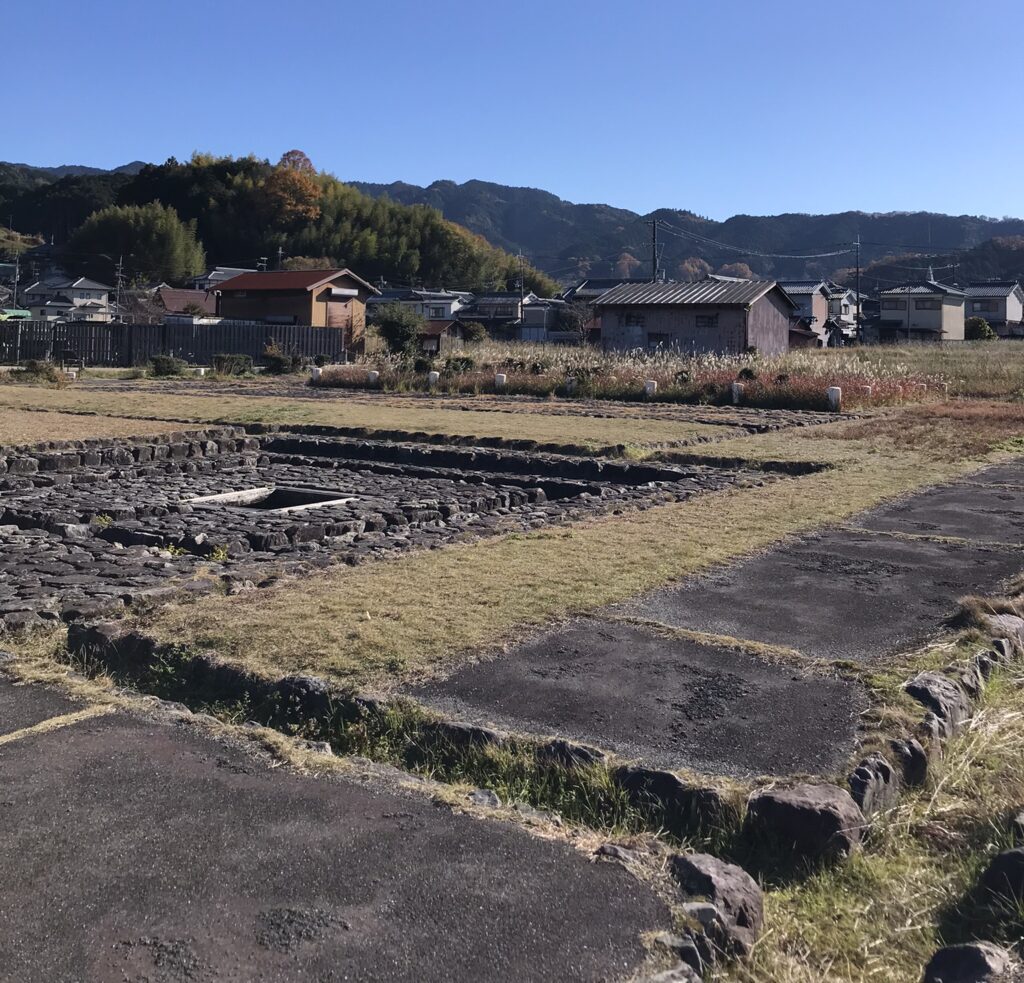
The once-grand site of Itabuki Palace
Itabuki Palace is notable as the site of a significant incident in 645 which reshaped the political landscape of the Asuka period. During the first few years of Kogyoku’s reign, the Soga clan had grown in power and influence and began openly flaunting their wealth and dictating policy to the Empress. In response, Kogyoku’s son and heir Prince Naka no Oe conspired to assassinate the Soga leader, Soga no Iruka. During a court ceremony for visiting envoys for Korea, the prince bribed guards and arranged for four armed men to attack Soga no Iruka. When the men hesitated, the prince attacked Iruka himself, badly wounding him in front of the Empress.
With Iruka begging for his life, the Empress retired to consider the events that had just unfolded, and during this time the four men who had been enlisted by Prince Naka no Oe regained their nerve, rushing in to finish Iruka off. This became known as the Isshi Incident. As a result of this, Iruka’s father Soga no Emishi (the son of Soga no Umako) committed suicide, ending the Soga clan’s lineage. Empress Kogyoku abdicated following these events and was replaced by her brother, Emperor Kotoku. Kotoku then enacted the Taika Reforms, greatly consolidating the power of the imperial court and laying the foundations for the subsequent imperial polity of Japan. Interestingly, Empress Kogyoku did later return to the imperial throne for a second time following her brother’s death (this time as Empress Saimei), and Prince Naka no Oe finally ascended to the throne himself in 661, becoming Emperor Tenji. The prince’s friend and co-conspirator, Nakatomi no Kamatari, was rewarded for his part in the affair and renamed Fujiwara no Kamatari, becoming the founder of the influential Fujiwara clan which would go on to dominate Japanese imperial politics for centuries.
Although only the foundations remain today, Itabuki Palace is a significant place within the context of early Japanese history, the development of the imperial house and the formation of the modern state of Japan.
From the palace ruins, you will be able to see a bamboo forest on a hill to the northeast. Head back in this direction along the main road. You will see the entrance to the small Turtle-Shaped Stone archaeological site at the base of the hill, but first head up the path to the right of the entrance and up the hill into the midst of the small bamboo forest. You will soon reach the Sakafune-ishi Stonework. This large, mysterious carved stone dates back to the 7th century, and its purpose has baffled archaeologists. Anecdotally, the stone is said to have been used by Empress Kogyoku during heir second reign as Empress Saimei in order to perform water-based divination rituals and ancestor worship ceremonies. Other theories are that it may have been used to assist with sake brewing (hence the name), that it may have functioned as part of some sort of water filtration or irrigation system, or that it was part of a water-based garden feature for ornamental purposes.
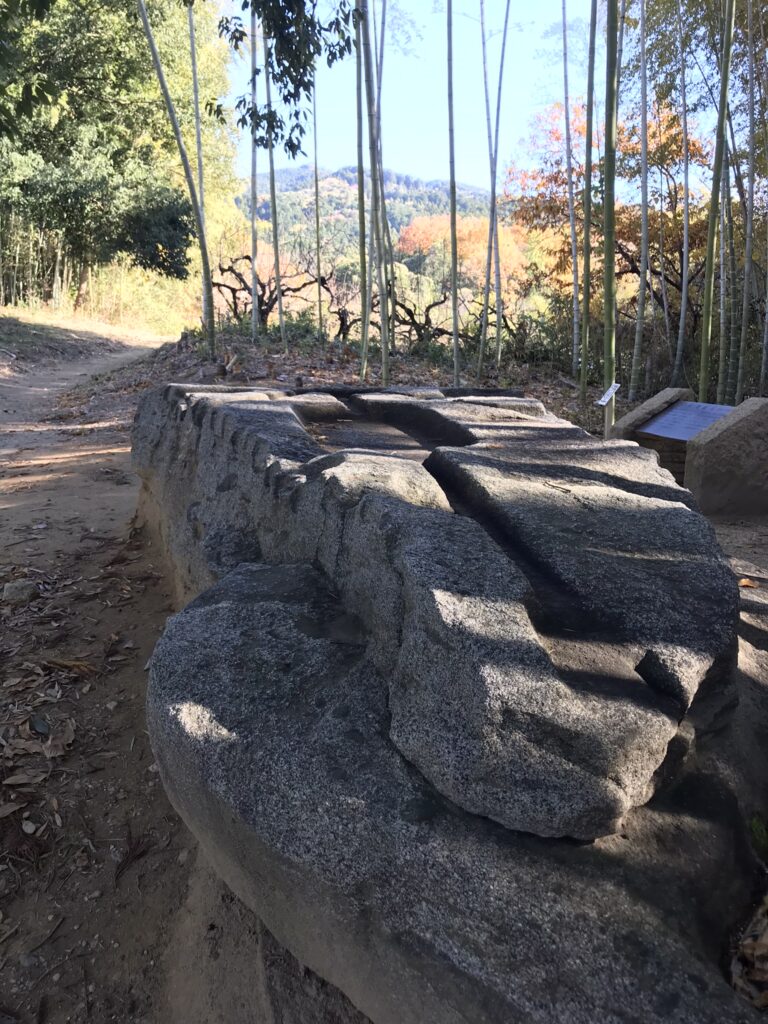
The mysterious Sakefune-ishi Stonework
After viewing the stone, head back down the hill. You will be able to catch a glimpse of the Turtle-Shaped Stone (Kamegata Stone) area from above. This structure, dating from the same period as the Sakefune-ishi Stone, is also the subject of much debate about its purpose. It appears to have functioned as some sort of well or water purification system and, like the Sakefune-ishi Stone, is also speculated to have been used for ceremonies and rituals by the imperial court. While you can freely access the hill and bamboo forest, entry to the area containing the Turtle-Shaped Stone is paid; it may be included in the combined ticket if you’re able to get hold of one.
Just up the road next to the entrance to the Turtle-Shaped Stone is the Nara Prefecture Complex of Man’yo Culture (Man’yo Museum), another cultural museum with free exhibits dedicated to the Man’yōshū. Once you’re finished here, head back to the main road and continue north until you see Asuka-dera on the left.
Dating back to the year 596, Asuka-dera (also known as Hokoji) was one of the first Buddhist temples in Japan – a plaque outside claims it to be the oldest. Constructed on the orders of Soga no Umako, it is notable for containing what it said to be the oldest Buddha statue in Japan, the Asuka Great Buddha, which has been enshrined in the temple since the year 606. The headquarters of the sect were later relocated when the capital city moved to Nara, establishing Gangoji temple there.
The original Asuka-dera complex was much bigger than it is at present, however it was destroyed by fire in the 12th century. The structures that are standing today are only a few hundred years old, however the original Buddha remains, albeit having suffered some fire damage over the years. It’s free to enter and walk around the temple grounds, although you must pay a small fee to see the ancient Buddha.
Head through the temple courtyard and out of the back exit and you will see a small monument. This is said to be the final resting place of the head of Soga no Iruka, who was decapitated during the Isshi Incident. Asuka-dera was the Soga family’s temple, founded by Iruka’s grandfather, while the Amagashi Hill in the background was the stronghold of the Soga clan, so this is a fitting spot for this memorial to both Iruka’s death and the wider clan’s demise.
From the memorial, head north and you will reach the Asuka Mizouchi Ruins. This intriguing site was the location of Asuka’s water clock, which is mentioned in the Nihon Shoki (ancient chronicles of Japan). The design of the water clock, along with the wider concept of time, was imported from China and this structure is said to have been constructed around the year 660 at the behest of Prince Naka no Oe, a year before he took the throne as Emperor. This site contains the ruins of an intricate stone foundation which was used to support a small tower, the inside of which contained a lacquered box. A complex system of piping and guttering was used to regulate a flow of water into the box, through which it was possible to measure the passage of time. The tower was constructed as part of a wider structure comprising of several corner rooms. These rooms are presumed to have been fitted with bells and drums, which attendants could use in order to publicly announce the time.
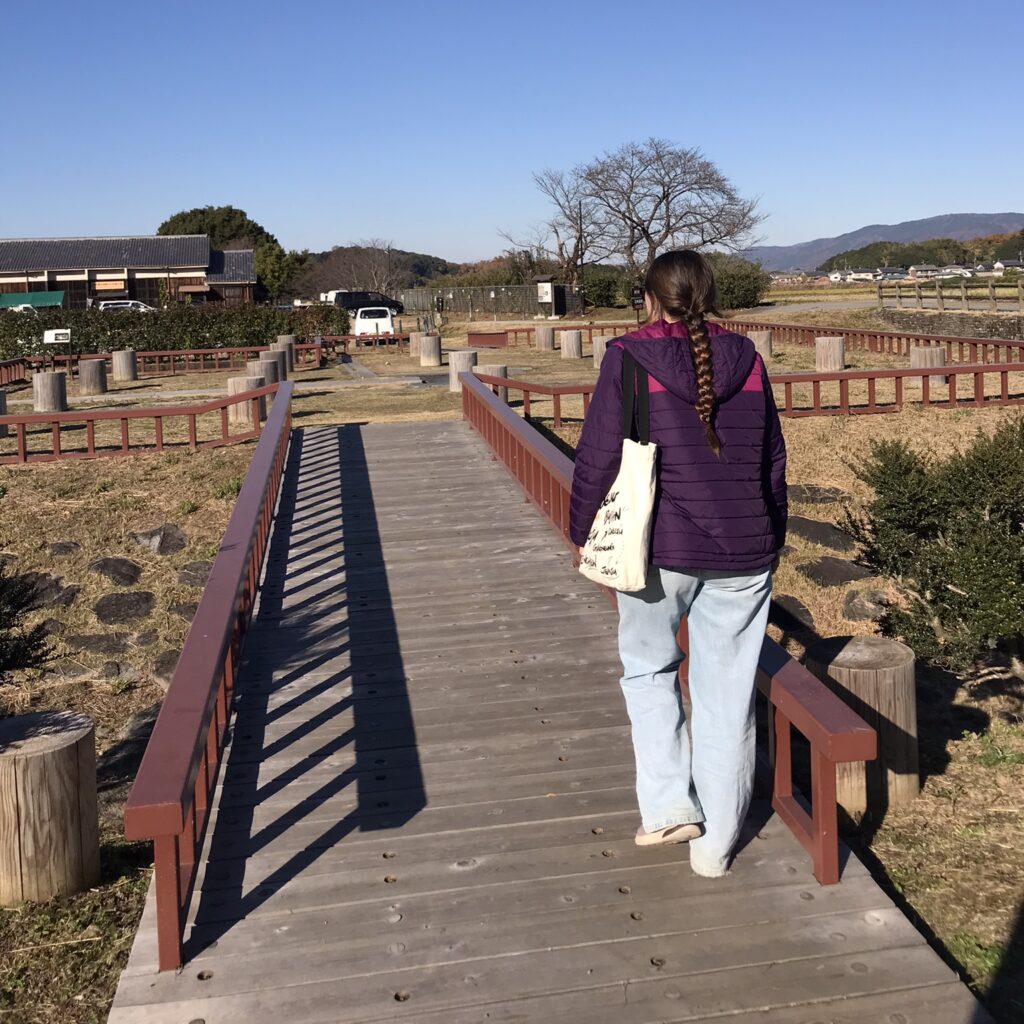
The tower was set on a number of pillars
Just to the north of the Mizouchi Ruins is the Exhibition Room of Archaeological Cultural Assets, a small museum room which is free to enter. There is also a nice farm shop next door 🙂 Just behind the museum along the track to the east of the car park you can find the site of the Ishigami Ruins – an ancient imperial guesthouse dating back to the time of Empress Saimei, although little remains today.
After checking out the ruins, head west over the bridge and you will see the pathway leading up Amagashi Hill. This hill was said to be the stronghold of the Soga clan, containing the homes of Soga no Iruka and Soga no Emishi. Follow the path up the hill until you reach the Amakashi-no-Oka Observatory. This viewpoint provides panoramic vistas of the surrounding scenery, including the three Yamato mountains which are mentioned in the Man’yōshū. From here you can see the rural Asuka landscape to the south and east, looking back over many of the area’s notable sites. To the north and west is a view over the more developed city of Kashihara – at the foot of the large visible hill is Kashihara Jingu, a Shinto shrine which honours and contains a mausoleum for Japan’s mythical first Emperor, Emperor Jimmu.
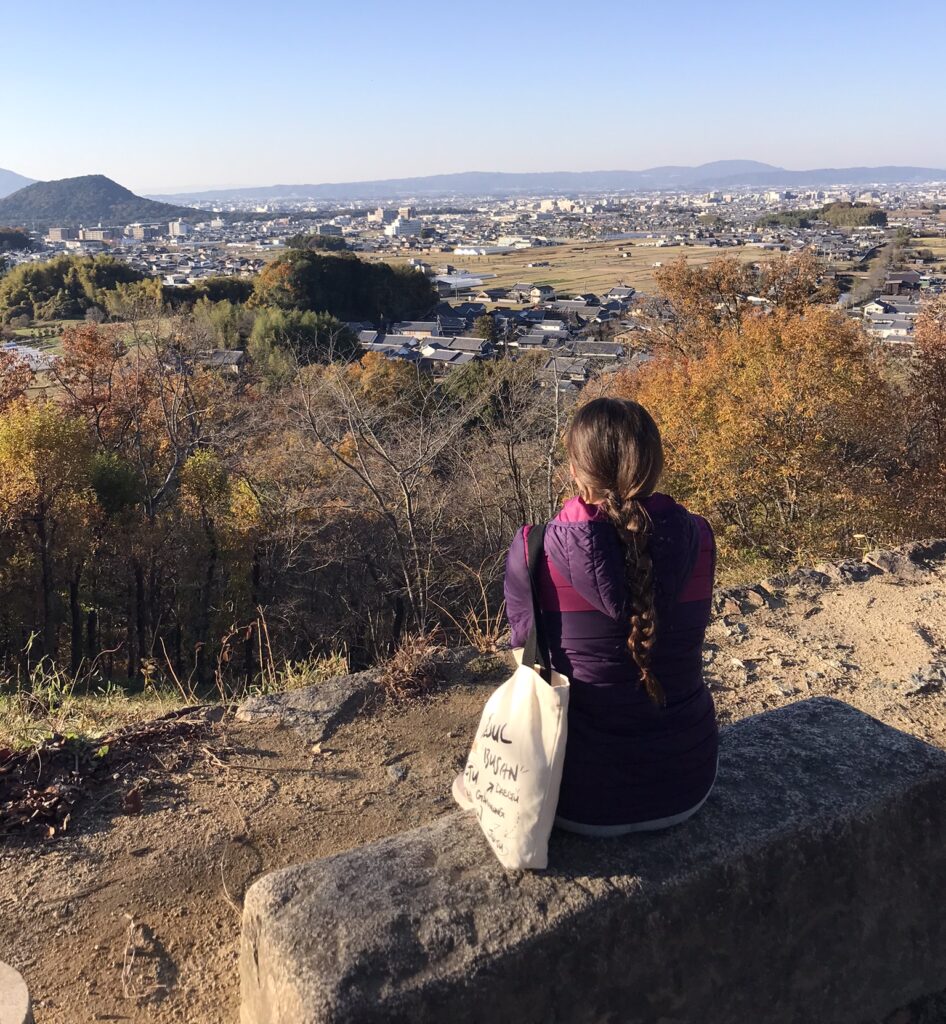
The mound in the distance contains the shrine to Japan’s legendary first Emperor
From the observatory, follow the path through the woods running along the top of the hill towards Kawahara Observatory, another viewpoint. Continue along the path, following the signs for Kameishi as you descend the hill at its south west corner.
After reaching the main road, head across the intersection and follow the road to the left hand side to find Kameishi. A popular symbol of the local area, this charming turtle-shaped rock is the subject of much intrigue. A local legend states that the rock rotates by itself – supposedly it originally faced north, but it now faces southwest which is said to bring good fortune and fertile soil to the Asuka region. The legend says that if the turtle ever faces west, then the region will become submerged in a sea of sludge and become a swamp.
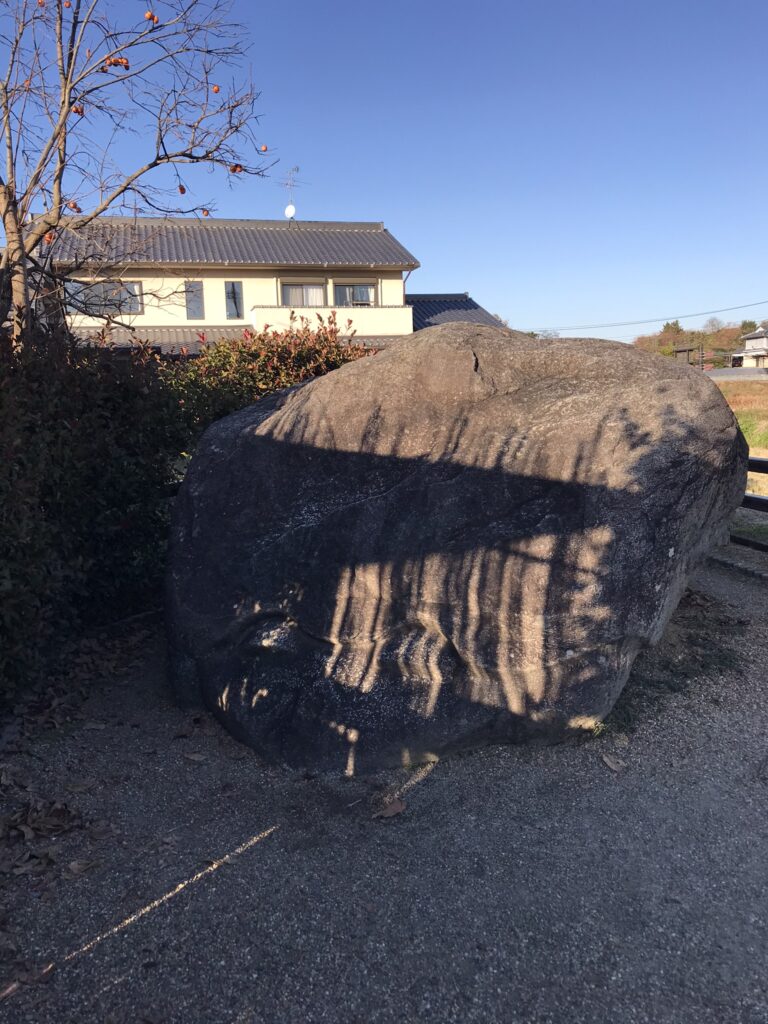
The cute (and somewhat ominous) Kameishi
After Kameishi, double back and head west along the main road for around 250 metres. Take the first right (a small road running up the hill) and then follow the track east through an overgrown field area to reach Shobuike Tumulus. Dating back to the 7th century, the tumulus themselves have all but eroded away, however this unassuming structure has been classified as a National Historic Site of Japan since the 1920s due to the intricately crafted stone coffins which can be found inside. Don’t worry if the structure appears to be closed off at first – you can slightly open the sliding door to the right hand side using the key in order to get a look at the stone coffins (make sure to close it up again afterwards). The occupants of the burial chambers are unknown, but they are speculated to belong either to members of the imperial family or the Soga clan.
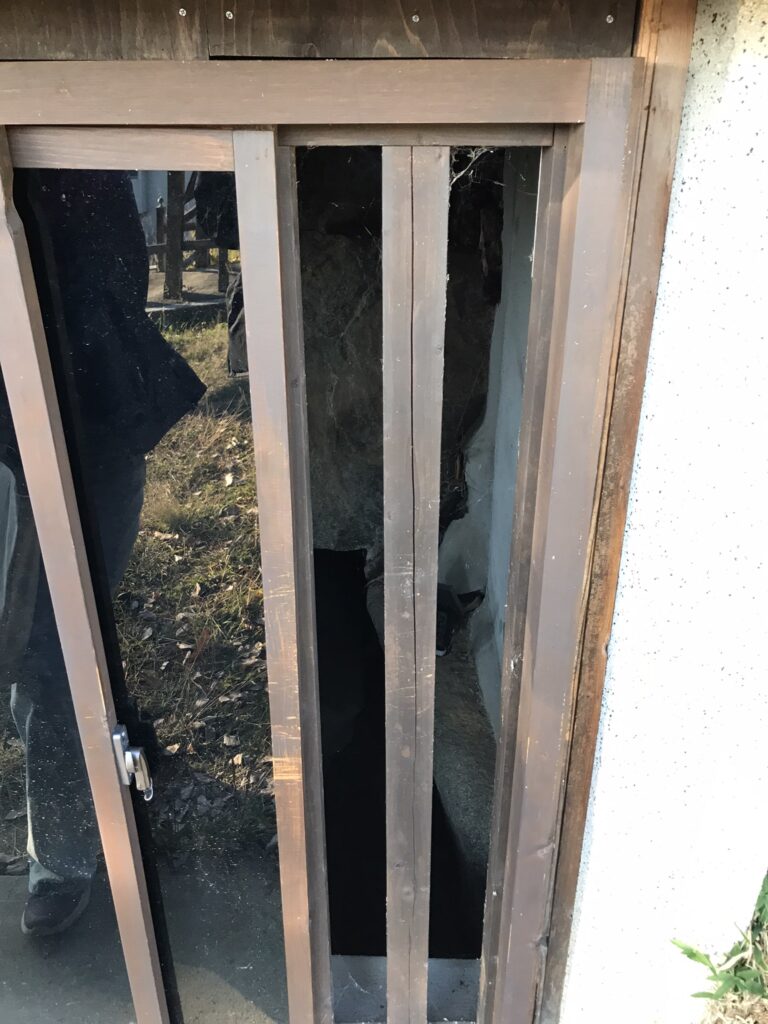
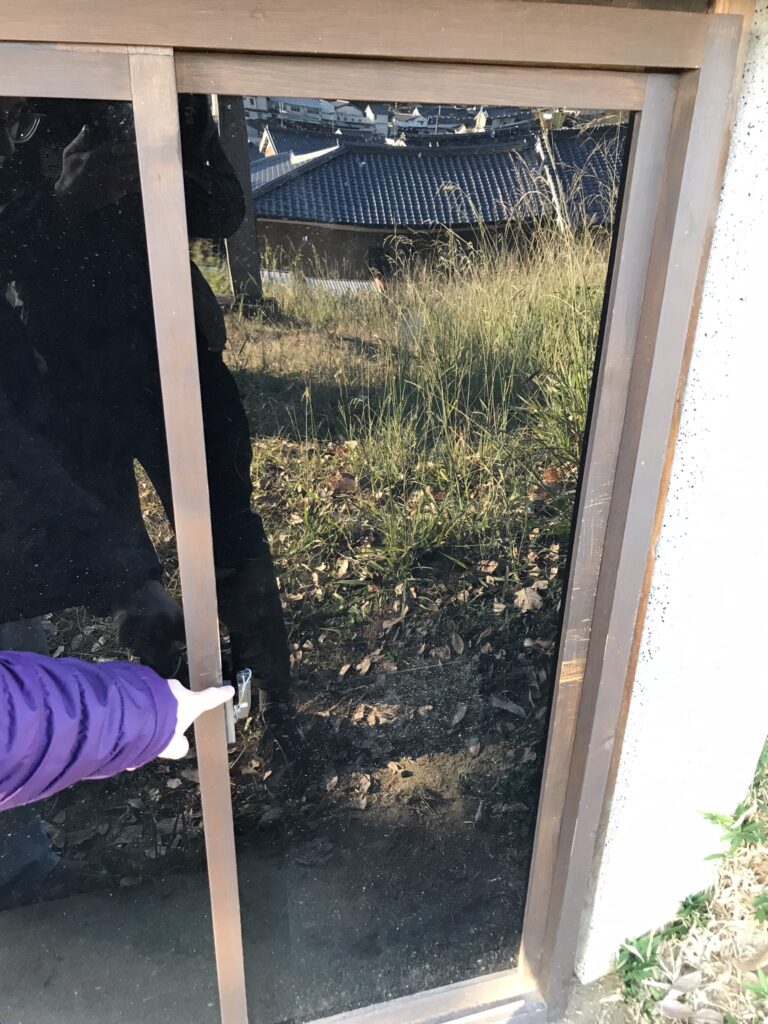
You can use this latch to open the door slightly and get a look at the coffins inside
After visiting the Shobuike Tumulus, retrace your steps and head back down the hill, then cross the main road and follow the track cutting through the field straight ahead. Turn right at the end of the track and then head along the picturesque road lined with fruit trees, taking the left which leads to the back entrance of the Mausoleum of Emperor Tenmu and Empress Jito.
The son of Empress Kogyoku and brother of Emperor Tenji, Emperor Tenmu was Japan’s 40th Emperor, ruling from 673 to 686. Following his death, his wife (and biological niece) ascended to the imperial throne as Empress Jito, ruling from 686 to 697. This is a rare joint burial site, containing the graves of two imperial monarchs. As with all imperial tombs, this site is maintained by the Imperial Household to this day. Tradition dictates that imperial burial mounds are not excavated or disturbed, however this mausoleum was targeted by grave robbers during the Kamakura period in the 13th century, which revealed that Tenmu had been buried in a laquered wooden box on a bronze platform and Jito had been cremated, her ashes placed into a silver urn which was buried next to Tenmu. Jito is therefore considered the first Japanese ruler to have been cremated.
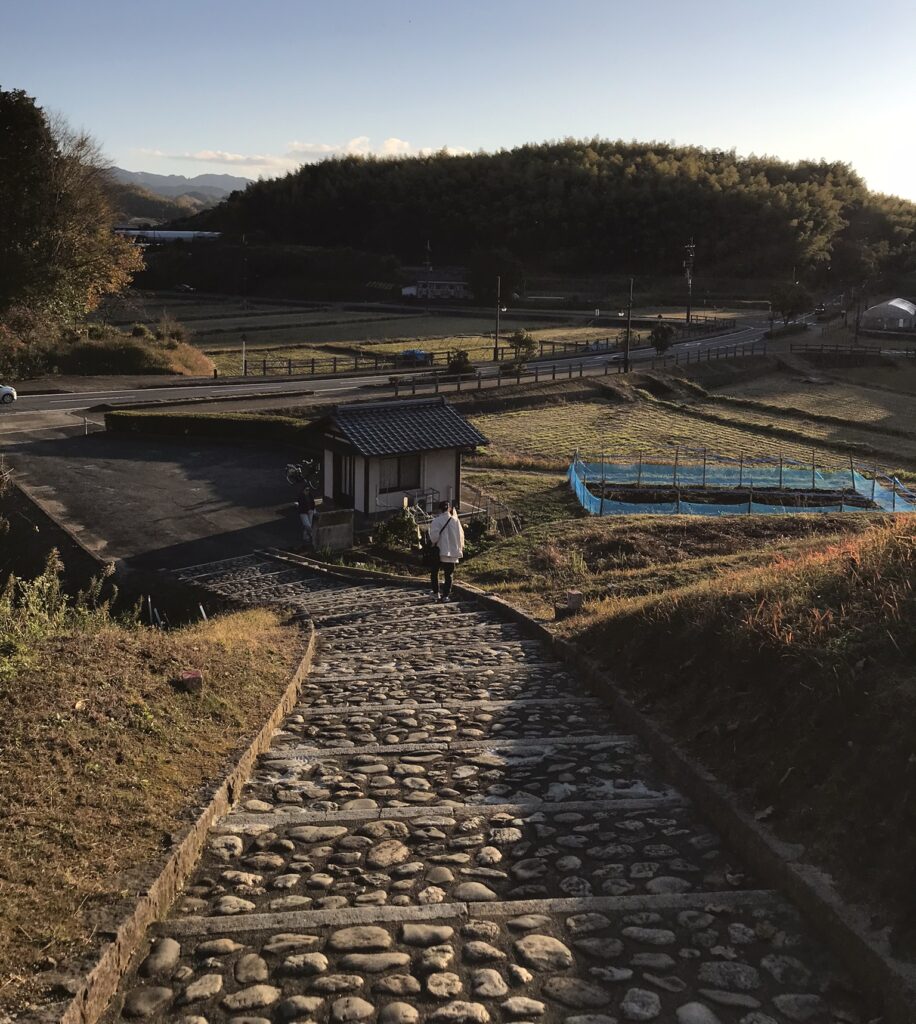
After visiting the mausoleum, follow the steps downwards and onto the main road. Head south-west along the road until you see the entrance to the Asuka Historical Park and car park on your right. You will need to enter here and then cross the main road via a tunnel to get to the historical park, which contains the Takamatsuzuka Tumulus and mural museum. Takamatsuzuka Tumulus is a burial mound which is thought to date back to the peak of the Asuka period in the late 7th century. It was rediscovered in the 1970s by a farmer who was digging a hole to store ginger, and is notable for the brightly coloured murals which were found in its interior burial chamber. The murals include a group of women known as the ‘Asuka beauties’, who are depicted wearing a style of dress which was popular at the time in northern Korea. The tomb also contains depictions of the sun, moon, stars and animal and dragon deities, reminiscent of ancient tomb decorations that can be found near to Pyongyang – an indication of the cultural exchange between the early Japanese imperial court and the powerful kingdoms of the Korean peninsula at the time.
The burial chamber’s original subject is unknown, but it is speculated that it was built for one of the sons of Emperor Tenmu. Following the discovery and opening of the tomb after many centuries, the murals were exposed to moisture, damp and mould and began to rapidly deteriorate. This led the government to close and dismantle the tombs in 2007, moving the murals to a specific climate-controlled location for preservation and restoration. Today, a small museum on the site recreates the tomb and murals within, allowing visitors to admire the murals as they were when they were discovered, as well as examples of the murals in a restored state. Admission to the museum is paid, but it is included in the combination ticket with Ishibutai Tumulus and the Turtle-Shaped Stone if you’re able to purchase one.
After visiting the Takamatsuzuka Tumulus, head south through the archaeological park and you will reach the Mausoleum of Emperor Monmu. Monmu was the grandson of Tenmu and Jito, and reigned as Japan’s 42nd Emperor from 697 to 707, before his premature death at the age of 23. Emperor Monmu was the penultimate Emperor of the Asuka period, and put preparations in place for the construction of a permanent palace and monumental capital city at Nara. Following his death, his mother succeeded him on the throne as Empress Genmei, fulfilling his plans to move to a permanent, purpose-built capital, marking the end of the Asuka Period and the beginning of the Nara Period.
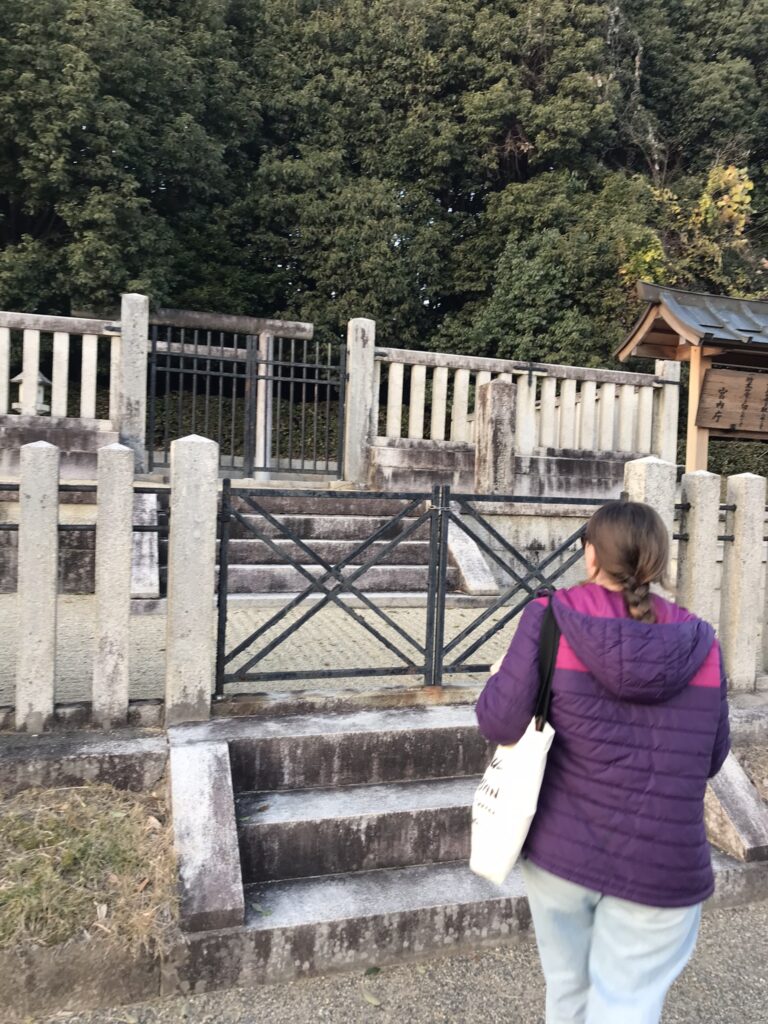
Like the other imperial tombs, you can’t get too close to the Mausoleum of Emperor Monmu
There is some speculation that the mausoleum for Emperor Monmu is not in the correct location, and that he was actually buried in the nearby Nakaoyama Tomb around 500 metres away. However this site, as with all imperial tombs, is managed by Japan’s Imperial Household and excavation or archaeological study is forbidden, so the truth of this matter remains unknown. The area around Monmu’s mausoleum is a verdant landscape, you may be able to find some fruit for sale if you’re lucky.
From Monmu’s tomb head down to the road, head west and then north through the town. You will eventually reach the Mausoluem of Emperor Kinmei and the Tomb of Kibihimenomiko. Princess Kibihime was the mother of Emperor Kotoku and Empress Kogyoku. Her simple burial mound is best known for the presence of the mysterious ‘monkey stones’ (Saru-ishi), located in an off-limits area to the left of the mound. These garish sculptures were discovered during the Edo period and their purpose is unknown.
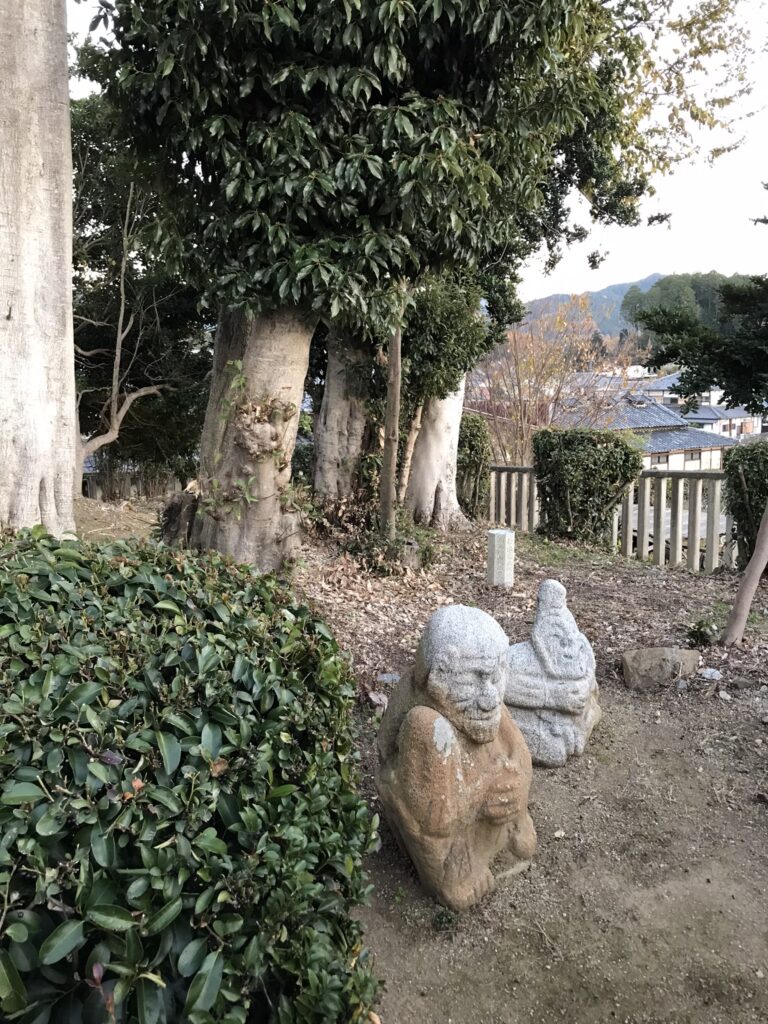
The mysterious and bizarre monkey stones
Across from the Tomb of Princess Kibihime is the mausoleum of her grandfather, Emperor Kinmei. Kinmei was Japan’s 29th Emperor, ruling between 539 and 571. As the early Japanese imperial lineage is generally considered to be mythical or legendary, Emperor Kinmei is widely acknowledged to be Japan’s first historically verifiable Emperor. His reign is also considered by many to be the start of the Asuka Period as it marked the introduction of Buddhism to Japan, although the imperial court was not actually moved to Asuka until the reign of his daughter, Empress Suiko in 592.
The mausoleum is a large, keyhole-shaped structure surrounded by a moat, a style which is emblematic of the Kofun Period which preceded the Asuka Period. This is the only example of this style of burial mound in Asuka. There have been some disputes about the actual location of Kinmei’s tomb, with some scholars claiming that the actual burial site was a different Kofun-style tomb in nearby Kashihara, however this is the official location as designated by the Imperial Household. Kinmei’s consort, Soga no Kitashihime, is also buried here.
Finish! You can easily walk back to Asuka station from the Mausoleum of Emperor Kinmei. For more Kansai and Japan content, click here!
This article is also featured on GPSmyCity. To download this article for offline reading or create a self-guided walking tour to visit the attractions highlighted in this article, go to Walking Tours and Articles in Asuka.