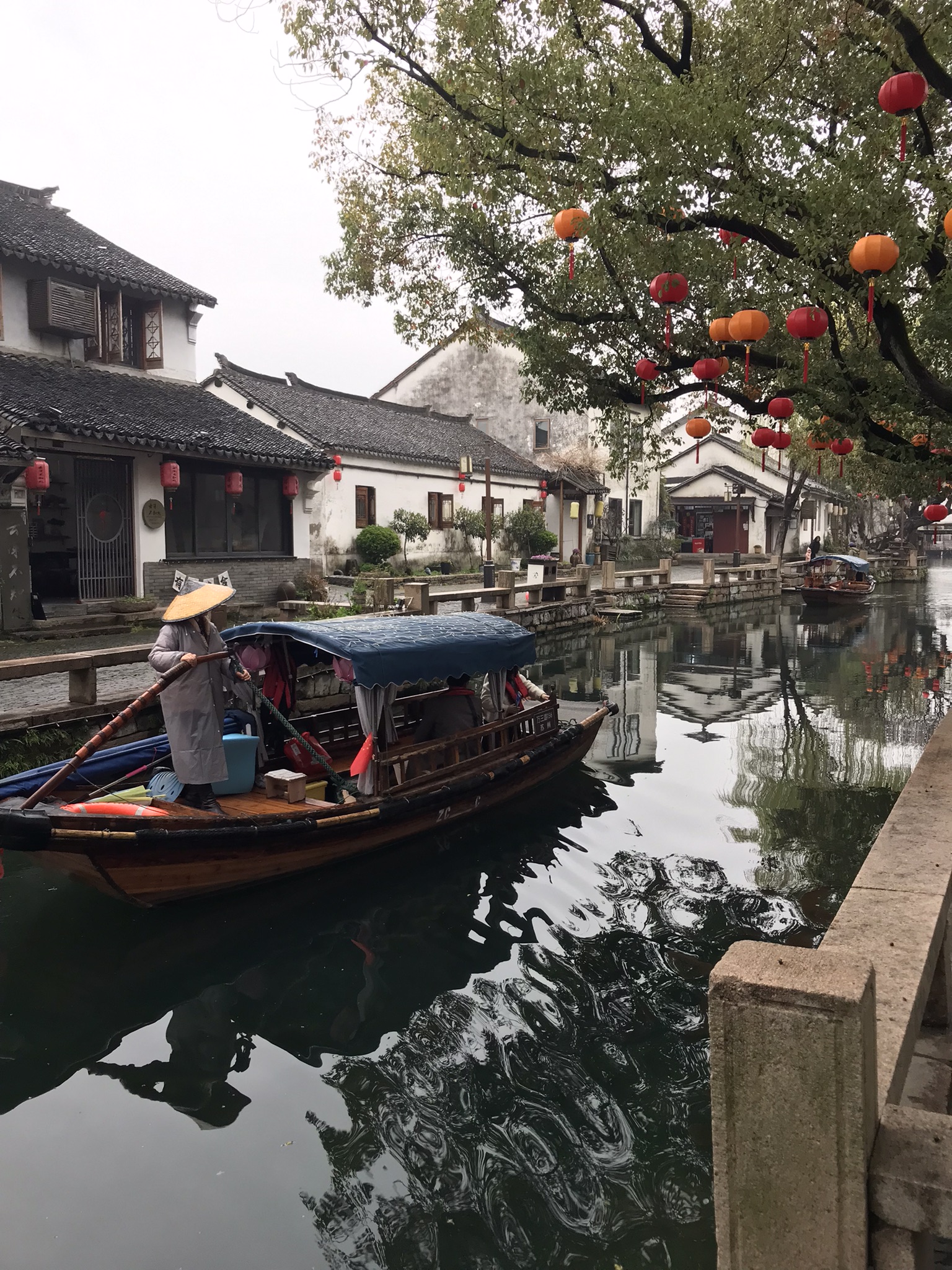
Known as ‘China’s no.1 water town’ and ‘the Venice of the East’, the ancient town of Zhouzhuang dates back to 1086, although there is evidence of human settlement in the area for millennia before that. Located a short distance from the thriving historic centre of Suzhou and the modern port of Shanghai, Zhouzhuang’s location in the basin of China’s Grand Canal and Yangtze River has made it a key port town and export centre for centuries. The town’s development accelerated in the 13th century and it became a prosperous cultural hub as wealthy merchants and tradespeople settled in the area. Today, Zhouzhuang is known for its preserved canal system and heritage architecture, one of the most representative of the Jiangnan region’s many ancient water towns. Most of the structures in Zhouzhuang’s ancient town date back to the Ming and Qing dynasties (14th-20th centuries), with a plethora of interesting sites amidst the brick houses, canals and courtyards.
Modern Zhouzhuang is on the tentative UNESCO World Heritage list, a 5A scenic area as designated by the Chinese government and one of the top tourist spots in the country, attracting over 5 million (mainly domestic) visitors per year. Although it’s now a touristic hub with the associated levels of commercialism, Zhouzhuang for the most part retains its character and its close proximity to Shanghai and Suzhou makes for an ideal day trip on the bus for those interested in local history, architecture or those who just want to experience a classic Jiangnan water town. Admission to the ancient town is ticketed, and the fee also includes entry to all of the main buildings and attractions within the town. This walking tour covers the main tourist sites, but most of the fun of Zhouzhuang is simply wandering and meandering around its many alleys, courtyards and streets, so feel free to get lost along the way!
Enter the ancient town at the northern gate (Gupailou Ticket Office) and head south to Zhouzhuang Museum.
This small museum chronicles Zhouzhuang’s near-1000 year history, containing old artefacts and items from everyday life over the centuries. The museum also features a diorama which illustrates the original layout of the ancient town. Be aware that most of the displays inside the museum are in Chinese – non-speakers will likely need a translation app to fully appreciate it.
From the museum, head west along the canal and cross the Fuhong Bridge. Meander to the southwest and you will find Ruan Yisan Studio. Ruan Yisan is a former university professor and urban planner who since the 1980s has made it his mission to protect and conserve many of China’s notable ancient towns, including Zhouzhuang and others such as Pingyao and Tongli, petitioning the government and working tirelessly to ensure that modern developments do not impact or destroy the cultural heritage. He has been recognised internationally for his work, including by UNESCO. The Ruan Yisan Heritage Foundation was set up on 2006 to aid with this mission. This building which belongs to the foundation contains information about Zhouzhuang and its heritage, the layout of the ancient town and ongoing conservation efforts, as well as a number of old photographs.
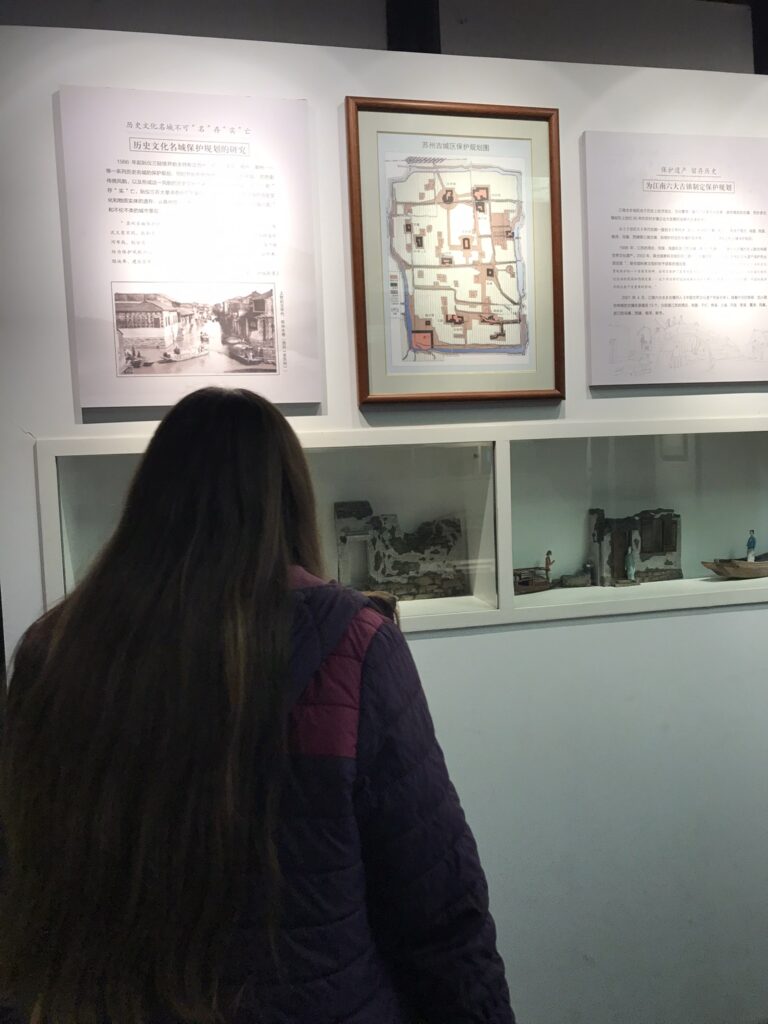
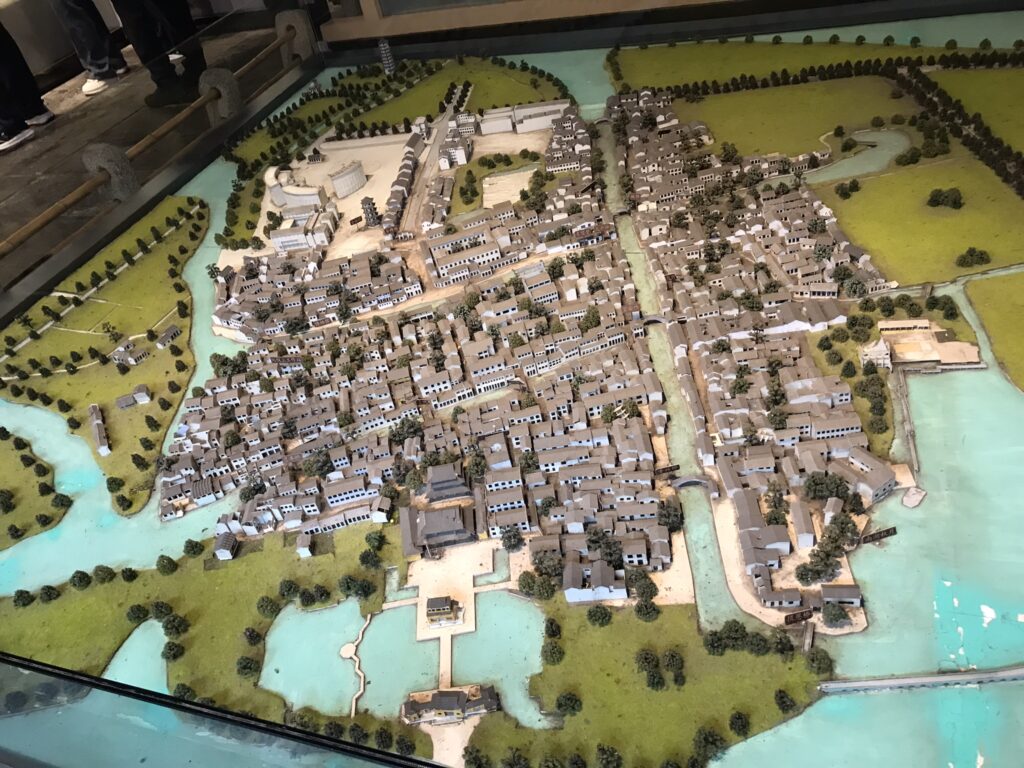
Zhouzhuang Museum and Ruan Yisan Studio provide information and context about Zhouzhuang, its heritage and conservation, but make sure to have a translation app with you if you can speak Chinese!
Southeast from Ruan Yisan’s workshop is the famous Milou tavern. This storied old tavern was known as a meeting place of the local literati in the early 20th century, particularly during the 1920s when it served as the unofficial base of the Nanshe (‘South Society’), a group of local intellectuals who drank, sang and composed poetry here, later compiling their work into the so-called ‘Analects of Milou’. At times the group’s meetings became more serious, and clandestine political discussions also took place here. The restaurant was known at the time as Deji Tavern; ‘Milou’ was a nickname bestowed by a member of the South Society, roughly translating to ‘Bewildering/Enchanting Tower’.
As well as its association with the South Society, Milou also became known thanks to the legend of the owner’s daughter, Ah Jin, who refused to partake in the widely-practiced local custom of foot-binding, earning her the name ‘bigfoot’. Despite being regarded as the most beautiful girl in Zhouzhuang and attracting plenty of suitors, Ah Jin’s parents could not bear to part with her and so she did not marry. Instead she stayed in Zhouzhuang to help run the family business, sell wine and attract customers, becoming a popular and familiar figure for patrons of the tavern, visitors to the town and the wider community as a whole.
From Milou, head northeast and you will reach Chengxu Taoist Temple. This 11th-century Taoist temple is one of the oldest structures in Zhouzhuang, dating back to the Song Dynasty. Following a typical temple design with several courtyards and rooms dedicated to various Taoist deities including the Jade Emperor, this was considered to be one of the most prominent and important Taoist temples in the region.
The temple is located just off Zhenfeng Culture Street (also known as Handicraft Street). This traditional shopping street features a number of artisanal workshops and demonstrations of traditional crafts such as embroidery, carving and weaving. While it’s a very commercialised street and many of the merchants and artisans are looking for a sale, this is still an interesting place to witness local traditional craftsmanship in action and peruse the curiosities on display in the various shops and stalls, both artisanal and not.
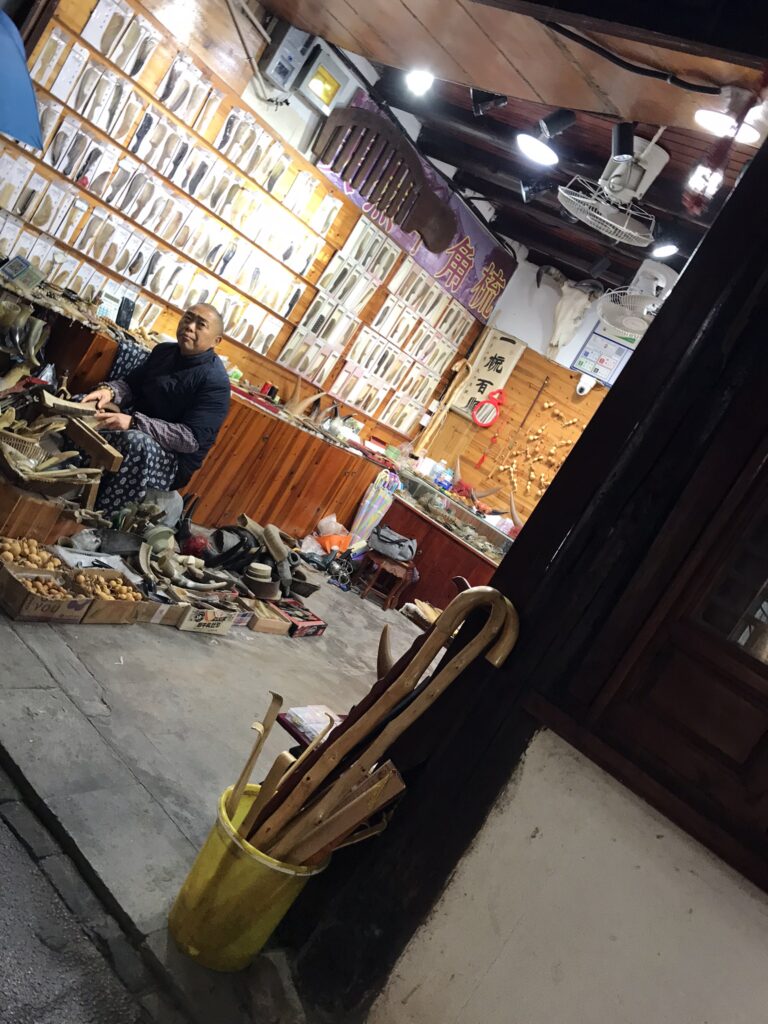
An artisan merchant on Zhenfeng Culture Street
Across the Xianyuan Bridge from Zhenfeng Street is the Former Residence of Ye Chucang. A Zhengzhou native, Ye Chucang (1887-1946) was a prominent scholar and politician during the Republic of China period in the early 20th century. An ally of the famous revolutionary figure Sun Yat-sen, Ye served in a variety of roles including Secretary-General of the Kuomintang Executive Committee and Minister of Propaganda. He was also a notable journalist and poet. Ye’s house in Zhouzhuang is representative of the area and period, following a typical design with several linear courtyards. Inside can be found a collection of his writings and journals.
Head east along the waterfront to the main canal intersection, then south to cross the Longxing Bridge. Continue to the south east and you will reach the South Lake Boardwalk. Also known as Nanhu Boardwalk, this promenade to the south-east of the ancient town makes for a peaceful area for a stroll. Here it’s possible to see the Quanfu Long Bridge (which links to the eastern shoreline and the off-limits Quanfu Temple to the west), as well as extensive views over Nanhu Bay and its many lakes, pavilions, willow trees and lotus flowers. In the evenings this area hosts an immersive sound and light show.
From the boardwalk, head back to the main central canal and continue north until you reach the Zhouzhuang Shenting (House of Shen). This is the house of the businessman Shen Wansan, a Suzhou native who lived during the late Yuan dynasty and early Ming dynasty (1300s) and became one of the wealthiest men in China south of the Yangtze River, having made a fortune in Zhouzhuang through trade and exports. A man of great influence and means within the Jiangnan region, Shen was responsible for constructing large sections of the city wall in Nanjing. His influence became so great that the Emperor of China began to consider him a threat and he was exiled to Yunnan in the south-west of China, attaining semi-mythical status among the people of Zhouzhuang as a result.
Shen’s presence and influence was a catalyst for rapid development in Zhouzhuang, and his house became a place of reverence in the town. The modern structure was constructed in the 1700s during the Qing dynasty by one of his descendants. Featuring a classic linear design with numerous courtyards and halls, visitors can now explore the complex which includes reception rooms as well as private quarters. The second floor of the house is also accessible for a small additional cost. During our time in the house we stumbled upon an organised display of traditional dancing by some costumed ladies, who appeared to be recounting an operatic tale as they passed through the various courtyards and rooms.
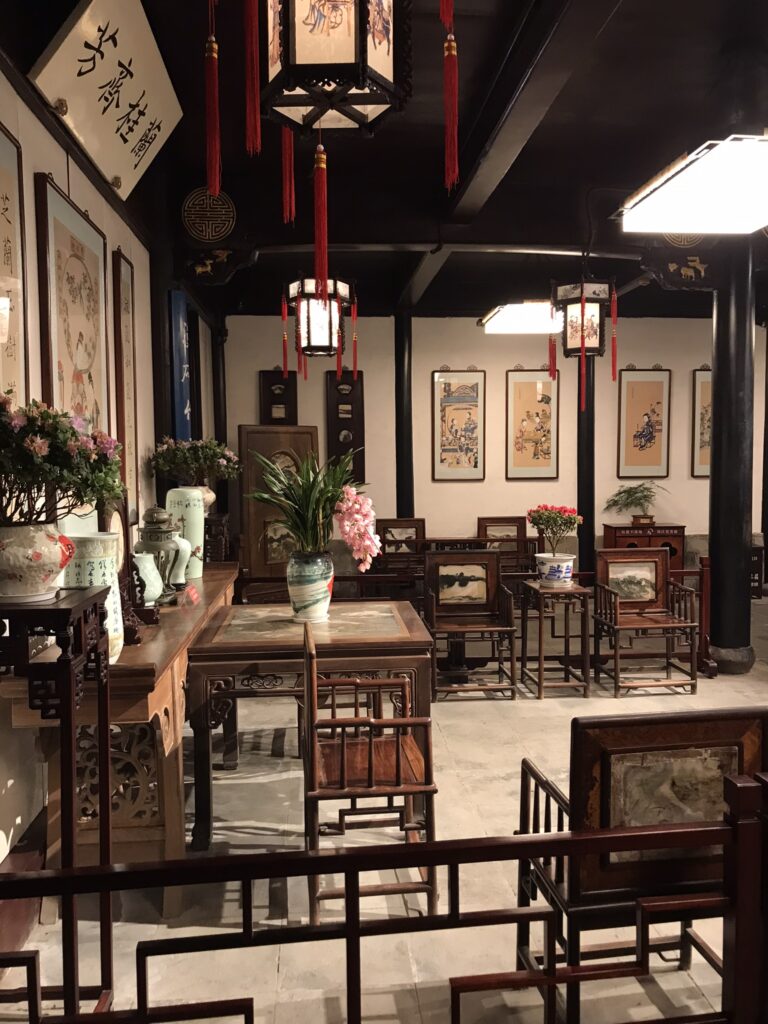
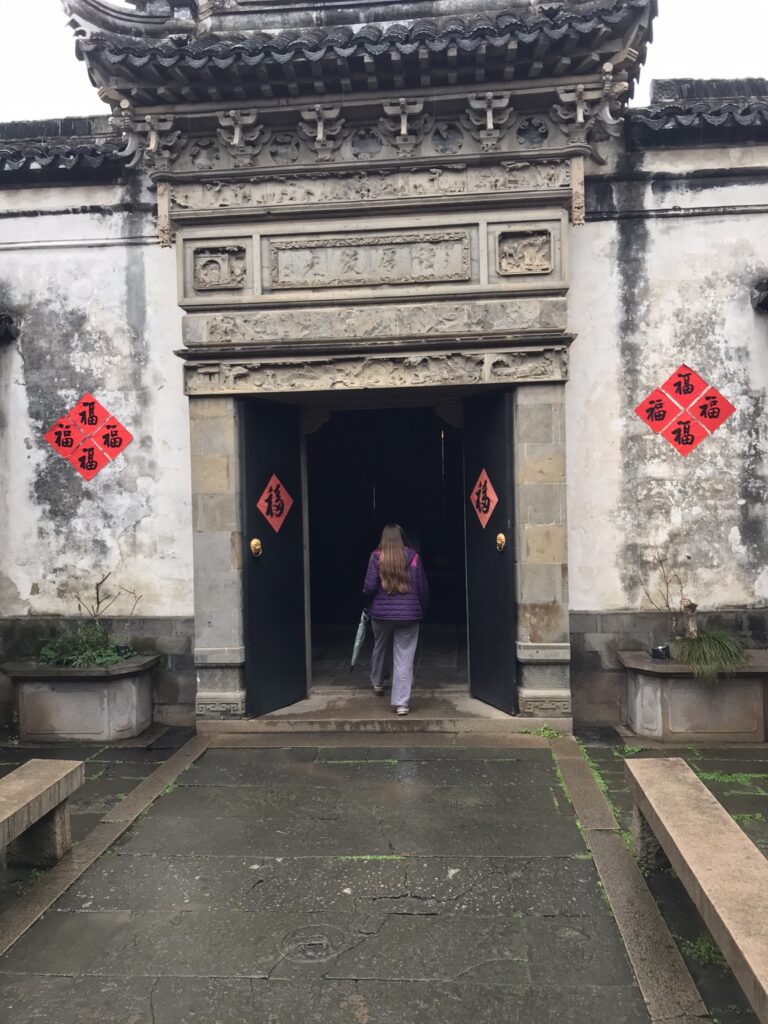
Grand courtyards and ornate interiors aplenty at Shen’s House
After Shen’s house, continue north and you will reach Zhangting Hall – the House of Zhang. This house dates back to the Ming dynasty, having been constructed during the 1440s initially by the family of a notable military general. The complex was purchased by the Zhang merchant family during the early Qing dynasty – during that time it was known as Yuyan Hall. The house is notable for its classic Ming period design, featuring six courtyards and a garden, as well as the unique built-in canal towards the rear of the complex which provides direct access to the residence by boat. Visitors can explore the various courtyards and halls which are filled with antiques, furniture and artwork, tastefully decorated according to the customs of the time.
From Zhang’s house, continue further north and you will reach the Zhouzhuang Ancient Stage. This complex contains a restored stage which hosts frequent performances of Kunqu Opera, an ancient form of performance art which developed in the Kunshan region surrounding Zhouzhuang and is recognized as an Intangible Cultural Heritage by UNESCO. Theatrical performances take place at this venue several times per day, usually in the afternoons – a performance schedule can be found at the front of the building. The performances do not require a ticket and are free to watch for those already in Zhouzhuang ancient town, making this by far one of the best and most accessible places to get a taste of this ancient and renowned art form. As well as the stage performances, the theatre complex also contains a cafe and a number of small museum displays about Kunqu Opera and its history, which can be freely visited throughout the day (the museum displays are in Chinese only, so a translation app may be required). It’s also possible to walk on and explore the stage itself and dressing rooms etc when the operatic performances are not taking place.
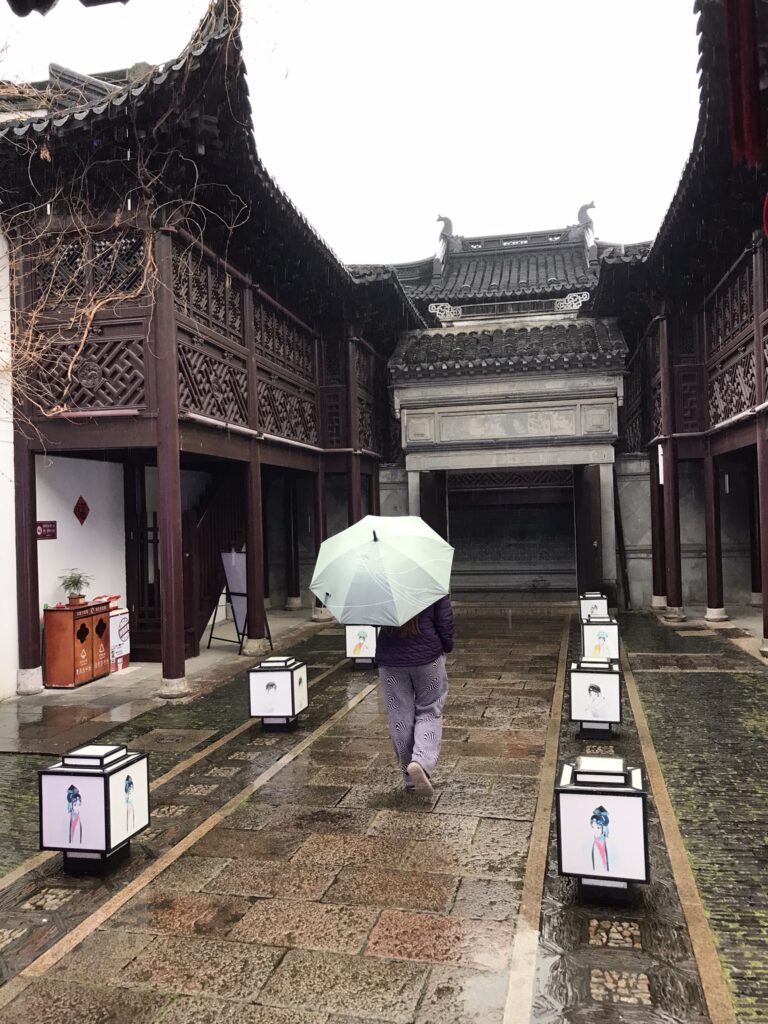
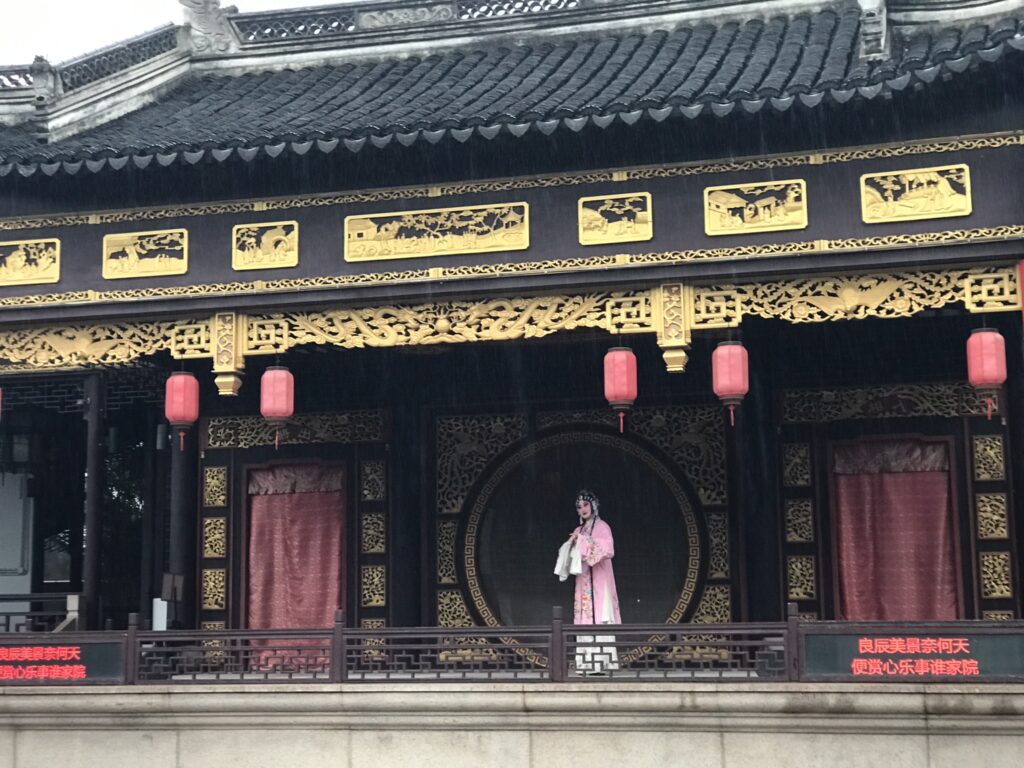
The free Kunqu Opera performances at the Ancient Stage are a real treat
From the ancient stage, double back on yourself and head south along Beishi Street. You will come to the iconic Double Bridge. Also known as Shang Quo, the double bridges of Zhouzhuang are arguably the most famous and iconic image of the ancient town, owing largely to a famous painting by a local artist which was internationally exhibited and featured by the United Nations. The twin bridges (Shide Bridge and Yongan Bridge) were constructed during the late Ming dynasty with a design resembling an ancient Chinese-style key. Today, tourists flock to the bridge to take photos and enjoy one of the most scenic and well-known views of the old town.
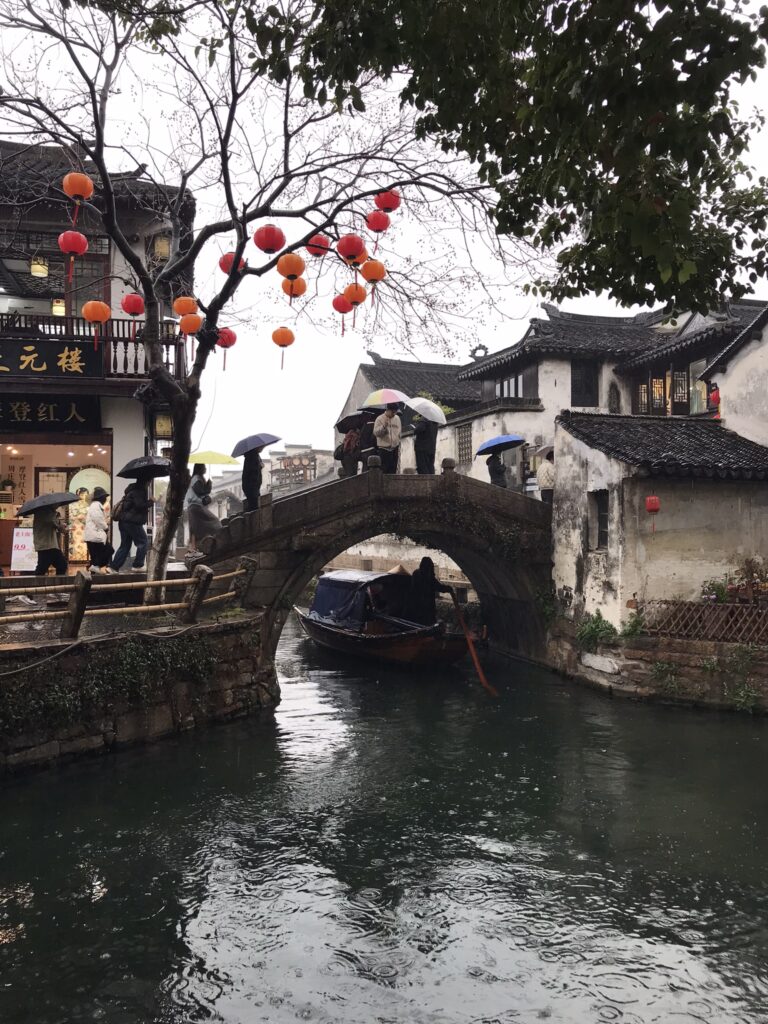
The famous Double Bridge – one of the iconic sights of Zhouzhuang
Cross the bridge and you will find Yifei Home on your immediate right hand side. This is the house of Chen Yifei, a renowned painter and artist from Zhejiang province who initially got his break by painting Mao Zedong during China’s Cultural Revolution. During the 1980s he broadened his subject matter, studying in the USA and later branching out into film direction, and he was heavily involved in painting, arts and media until his death in 2005. Chen’s 1984 oil painting ‘Memories of Hometown’, depicting Zhouzhuang’s famous double bridge, is credited with greatly increasing interest and tourism to the ancient town. The painting was purchased by American art collector Armand Hammer and gifted to Chinese statesman Deng Xiaoping, later being used as a commemorative postal stamp by the United Nations.
Located close to the double bridge, this small exhibition hall and memorial pays tribute to Chen’s achievements. The house contains a biography, photographs and selected works from Chen’s life, including a copy of the famous Memories of Hometown as well as some unexpected appearances from members of the British royal family.
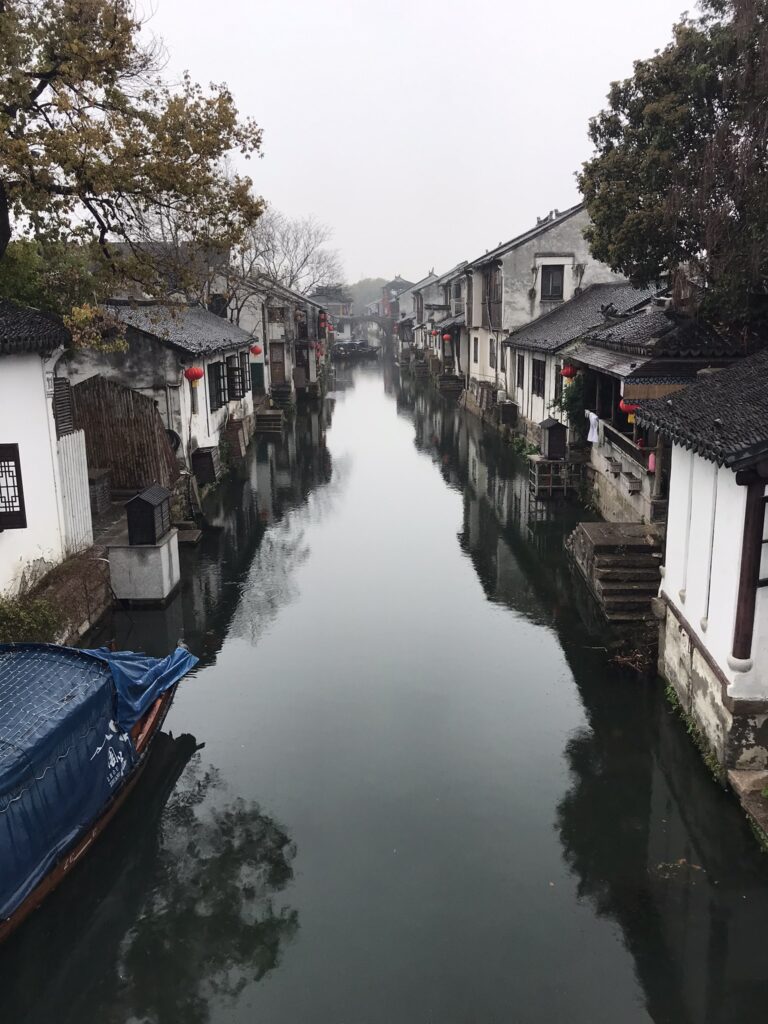
This tour has covered some of the main touristic sites, but the exploration doesn’t have to end here. There are plenty more scenic streets, alleys, nooks and crannies to discover in Zhouzhuang. For more China content, click here!