Although it’s not always considered a must-see highlight of South Korea’s tourist trail, the vibrant city of Daegu has plenty to discover for those who dig deep enough. From the country’s largest oriental medicine market to some of the earliest and grandest Christian churches in Korea, Daegu has a rich heritage. This self-guided tour takes in a few of the cultural highlights along the Daegu Heritage Trail.
Start at Daegu Yangnyeongsi Museum of Oriental Medicine.
This museum is free to enter and provides a comprehensive rundown of the history and practice of traditional herbal medicine in Korea. There are several floors filled with information and artefacts which heartily promote traditional medicine, including a few questionable claims and boasts about its apparent potency and effectiveness in comparison to Western medicine. The museum also contains a few hands-on exhibits and workshops. Most of the displays are in Korean, but there is a free audio guide app which provides English-language translations for visitors. As well as the museum exhibits, it’s sometimes possible to book a traditional herbal foot bath here for a relatively cheap price.
Opposite the medicine museum is the First Presbyterian Church of Daegu. Dating back to the 1890s and the American missionary William Baird, this is the oldest Protestant church in the city and wider region. The current church building was constructed in 1933. The first floor of the church contains the Christian History Museum of the First Presbyterian Church of Daegu, which contains a number of photos and artefacts relating to the early spread of Christianity in Daegu and is free to enter.
From the church, head northeast along Namseong-ro. This is the heart of Daegu Yangnyeongsi – Daegu’s traditional medicine market. Dating back to the 1600s, this is the largest and most established herbal medicine market in Korea. Within this area you can find many storied establishments selling all manner of herbs, natural ingredients and traditional folk remedies, as well as traditional medicine clinics. If you’re interested in undergoing acupuncture therapy or purchasing wholesale ginseng, you’re in the right place!
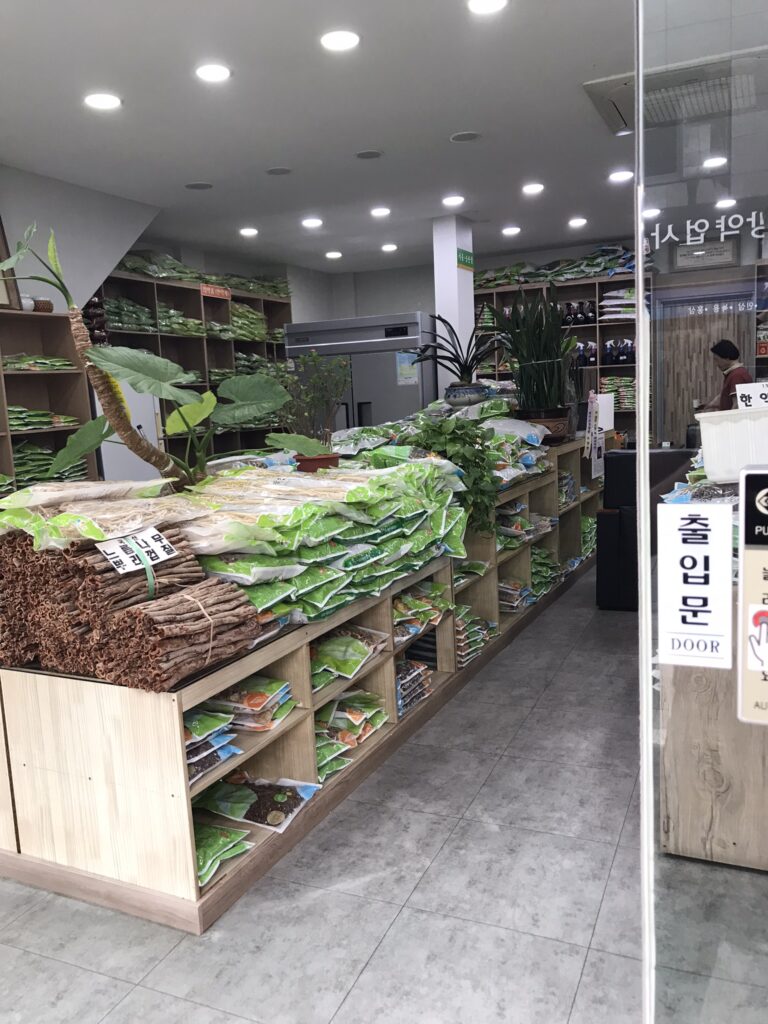
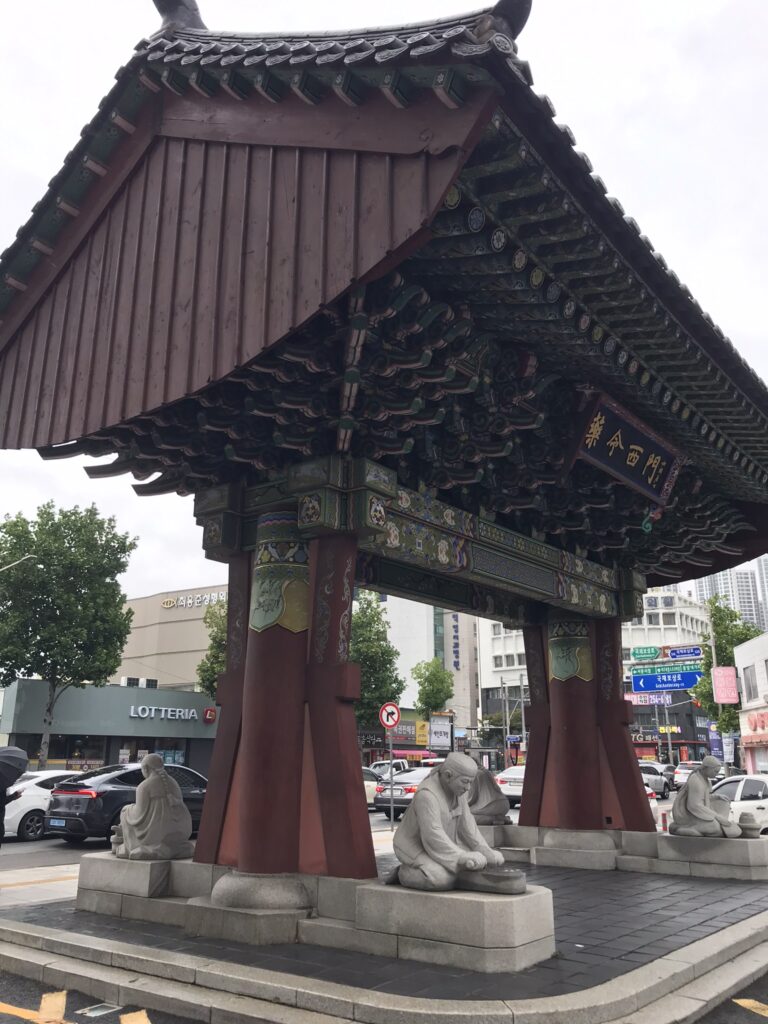
There are still plenty of herbalist shops in this area; the monumental gate marks the historic entrance to the medicine market
At the end of the street, you’ll reach a traditional gate marking the entrance to the medicine market. Turn left and head south along the main road until you reach an intersection with two towering churches. Here, turn right and head towards the larger church until you reach a stairway leading upwards. This is Cheongna Hill Stairway.
Also known as 3·1 Independence Movement Road or the ’90 steps’, this staircase played a notable role in the March First Movement of 1919 – a nationwide uprising against the oppressive Japanese colonial rule of the time. As a narrow, secluded staircase surrounded by trees, in early March 1919 this route was used as a meeting point by anti-colonial protesters in order to avoid detection by Japanese patrols. Today, the staircase celebrates the 1919 independence movement, containing memorials and photos of the events of the time and the independence activists that risked their lives and livelihoods to participate in the protests.
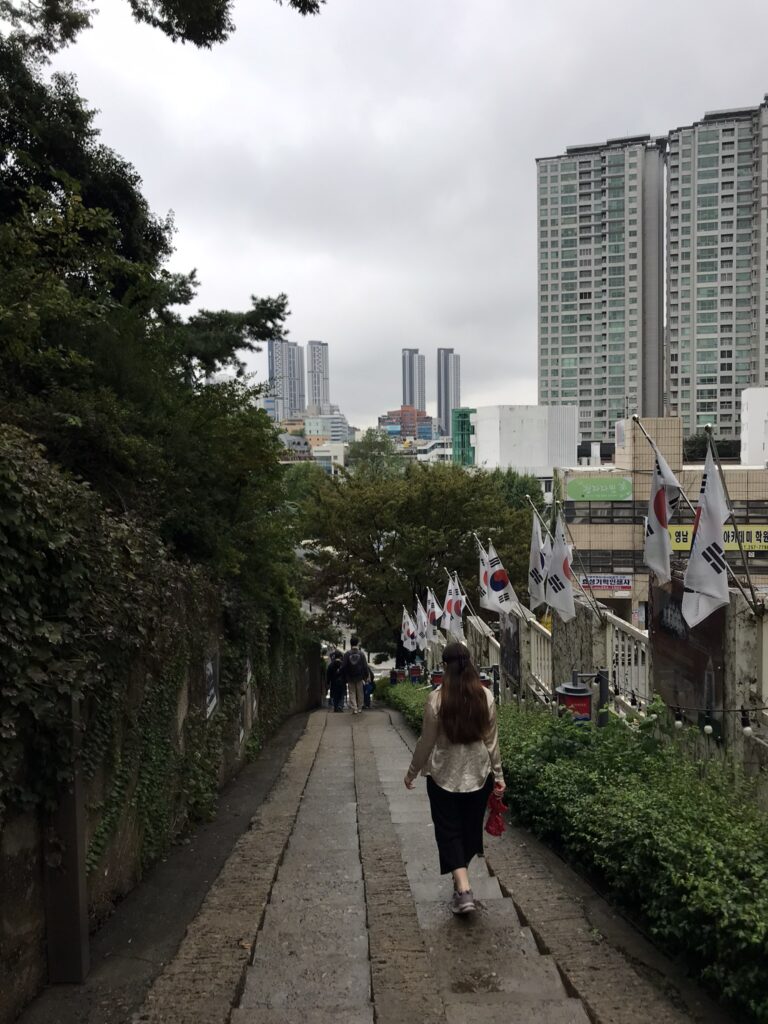
The stairway is filled with photos relating to the independence movement
Head up the stairs to Cheongna Hill, the former missionary area of Daegu. Christian missionaries arrived in South Korea from the West in the late 19th and early 20th centuries and several prominent figures settled and based themselves on Cheongna Hill. The missionaries brought with them Western education and medicine – the ability to treat and cure diseases was a key tool for evangelising the local population. They also introduced apples to Daegu, which went on to become the major producer and exporter of apples in South Korea, renowned for high-quality produce with a reputation which persists to this day. As such, the missionaries played an important role in the city’s development. Today visitors to the hill can find several preserved missionary houses from the early 20th century, as well as a large modern church and the city’s first apple grove – a humble orchard in the front garden of one of the missionary buildings which germinated from the seeds of a tree brought from the USA by one of the missionaries.
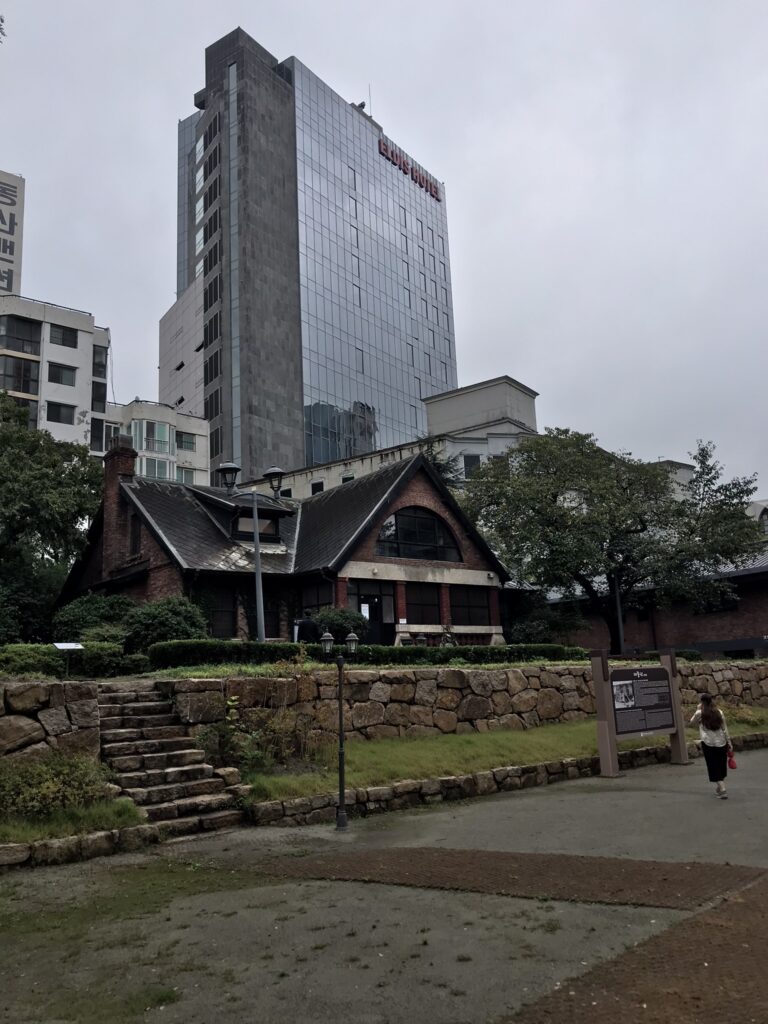
The old missionary houses stand in contrast to the modern city on Cheongna Hill
After Cheongna Hill, head back down the Cheongna Hill Staircase and continue across the road to the other large visible church. This is Gyesan Cathedral. Dating back 1902, this was the first Catholic church in the city and is one of the most significant Catholic churches in Korea, having been visited by Pope John-Paul II in 1984. The cathedral is particularly well-known for its stained glass windows, which feature Christian figures in traditional Korean-style dress.
Just to the south of the cathedral is the House of Yi Sang-hwa – this is the preserved house of the nationalistic poet and independence activist Yi Sang-hwa, who lived here between 1939 and 1943 while under surveillance by the Japanese colonial occupiers. A participant in the March First Movement as a youngster, Yi spent most of his life peacefully resisting the Japanese occupation, penning nationalistic odes such as “Does Spring Come to These Stolen Fields?”. This traditional Korean-style hanok house was his home for the final few years of his life before his death from cancer in 1943. The house was restored and opened up to the public in 2005 – visitors today can find some small exhibits and memorabilia related to Yi, the city and the independence movement in Daegu, as well as admiring the architecture and design of the traditional hanok building. Admission is free.
After visiting the House of Yi Sang-hwa, head east along Yangnyeong-gil – a narrow alley filled with colourful murals and places to eat. At the end of the street turn left and follow the roads northwards until you reach Daegu Modern History Museum, passing through more of the Yangnyeonsi (medicine market) along the way.
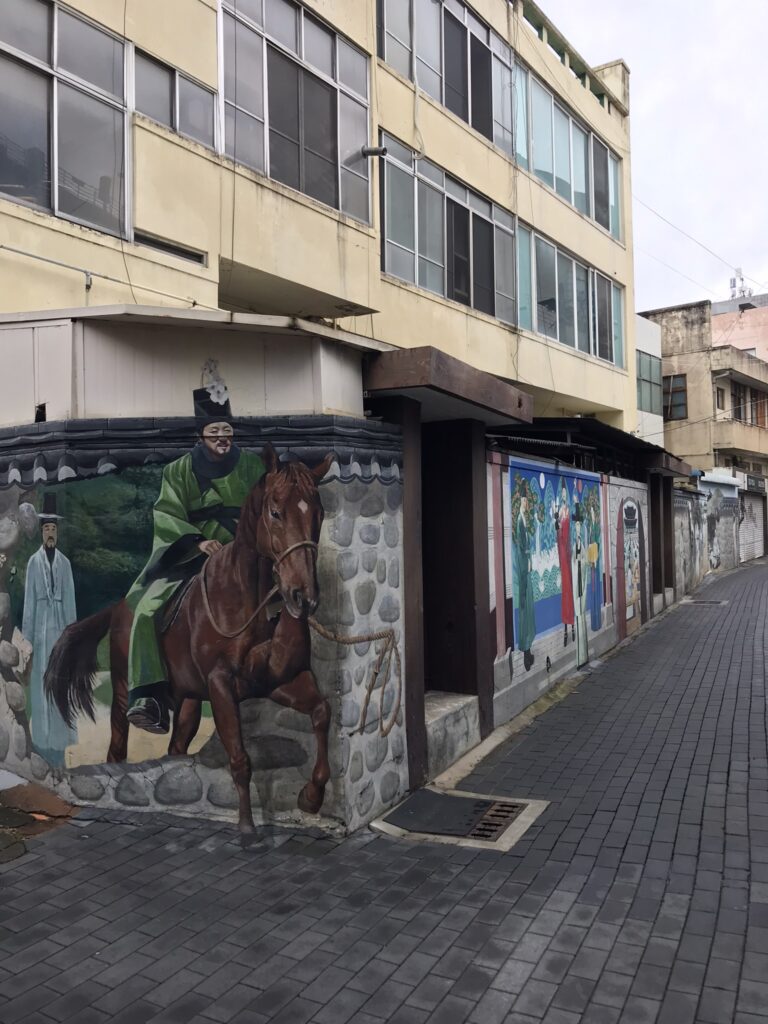
The street art of Yangnyeong-gil
Located in a former Japanese bank building, the Daegu Modern History Museum provides an in-depth look at Daegu’s recent history and culture. Exhibits focus on the city’s development in the 19th and 20th centuries, local customs and social history as well as more quirky exhibits including info on Marilyn Monroe’s visit to the city in 1954 as well as the development of the global technology giant Samsung, which began life in Daegu in the 1930s as a small business selling apples and dried fish. Admission is free.
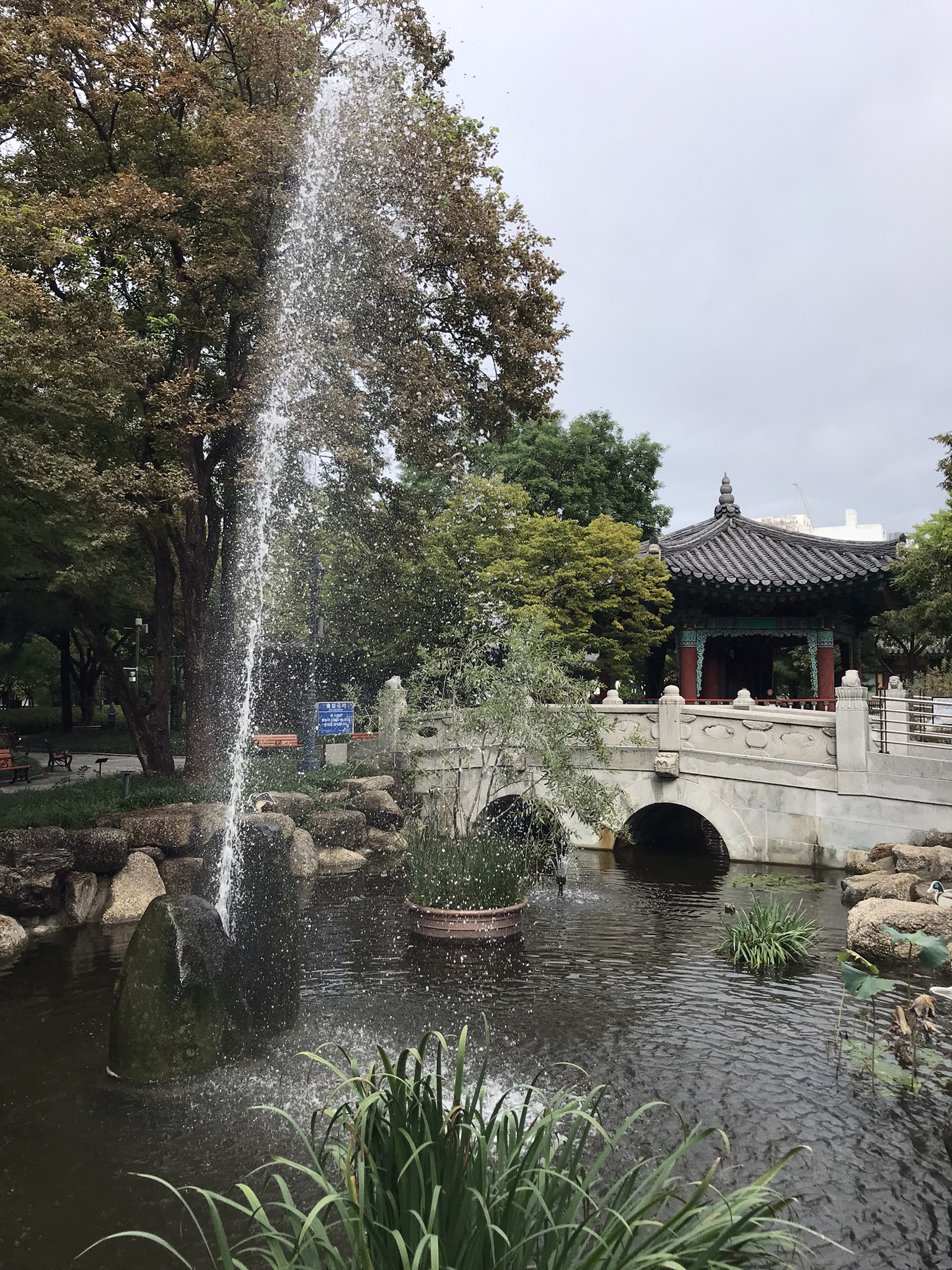
Outside the museum is Gyeongsanggamnyeong Park. This is the former site of the Joseon-era regional government headquarters and was made into a public park in 1967. A peaceful place which is popular with local seniors, the park still contains the remains of two notable former government buildings – Seonhwadang, the former head office of Gyeongsang-do Provincial Government, and Jingcheonggak, the former Joseon-era local governor’s residence. Both buildings date back to 1601 and have been renovated/rebuilt several times, most recently in the 1970s.
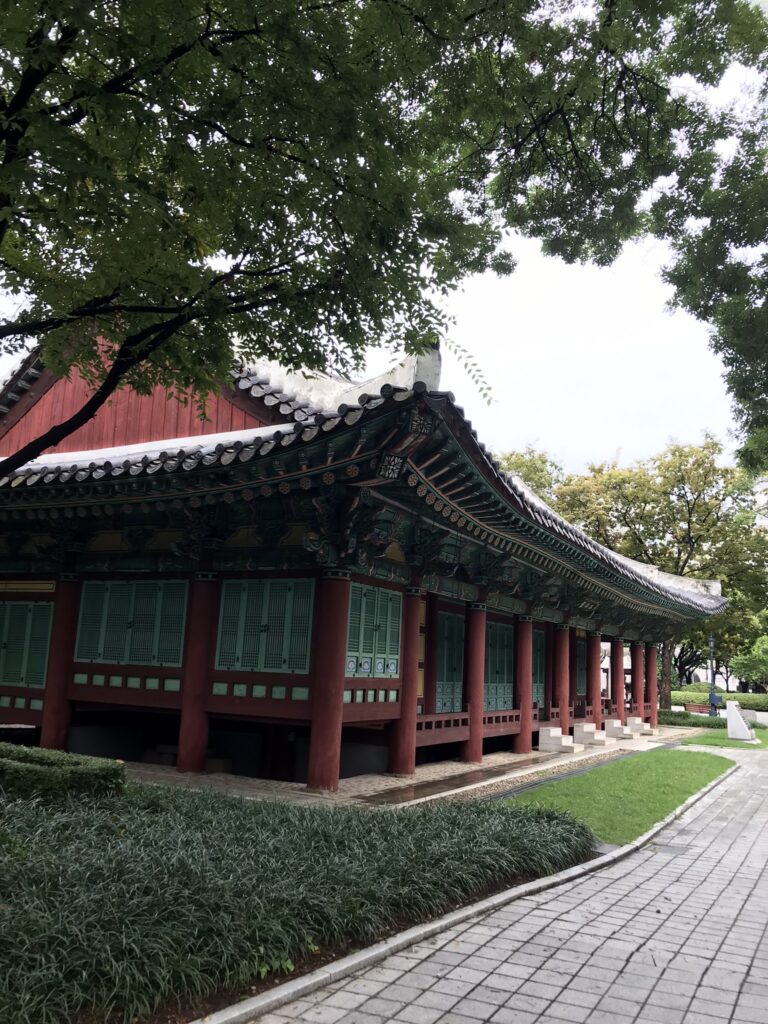
Gyeongsanggamnyeong Park contains a few ancient government buildings from the Joseon period
There are several other museums in the vicinity of Gyeongsanggamnyeong Park for those that want to continue their exploration. For more Daegu and South Korea content, click here!