A small country with low prices and high levels of development, South Korea is rich in history both ancient and modern and possesses a distinctive culture which has developed and taken the world by storm in recent decades. More than half the population lives in and around the capital, Seoul, while the rest of the country is linked pretty extensively by both bus and rail, making independent travel super easy and accessible. Many visitors with limited time in the country tend to just visit Seoul and the second-largest city, Busan, but there are plenty of other interesting places in between these two points, as well as the intriguing and unique island of Jeju. Check out my South Korea travel blog below!
Seoul, Suwon, Jeonju, Gwangju, Daegu, Jeju, Gyeongju, Oksan, Busan
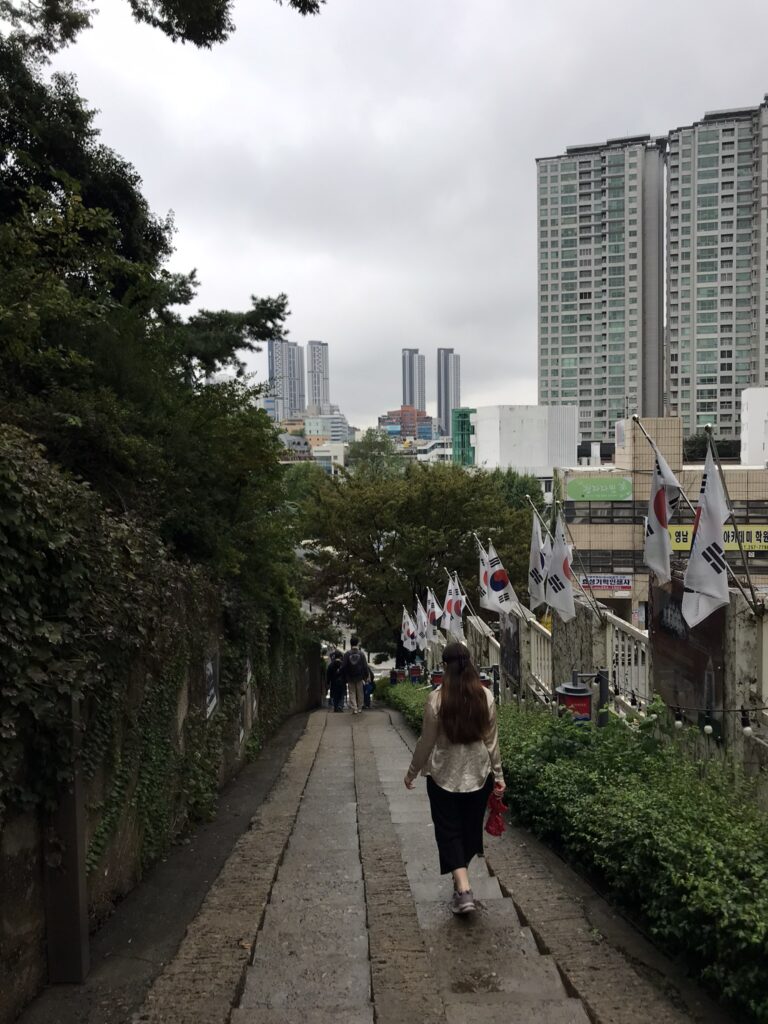
It’s impossible to visit South Korea without acknowledging its neighbour to the north and the constant looming tension under which the nation has existed since the middle of the 20th century. Having previously shared the same dynastic history, North and South Korea were split as a result of geopolitical posturing following World War 2, when the peninsula which had previously been occupied by Japan was divided into areas of Russian and American control – the north and south of the territory respectively. This led to the Korean War several years later, when communist Soviet-backed North Korea unexpectedly attacked the South, marching across the border in 1950 and taking control of almost the entire country in a matter of weeks. Only the area around the southern port city of Busan was not captured by the North. The Americans and a United Nations peacekeeping force immediately got involved and assisted South Korea to push back, retake most of the territory and even advance into the North until finally the conflict was frozen at the 38th parallel, which marks the current boundary between North and South Korea. Although an armistice was signed in 1953, no truce or resolution was ever reached and the two nations are technically still at war, with the situation remaining volatile to this day. The war changed the landscape of Korea forever as refugees flooded into cities, leaving the countryside empty. To this day, most of the population of South Korea continues to live in cities rather than rural villages.
From our experience, the general feeling towards North Korea from those in the South is one of sadness and regret. People in the South know that the situation in the North is terrible but they can’t do anything about it. The North and South Koreans are inherently the same people – they share the same language, history and up until the 1950s they shared the same culture. The separation between North and South Korea has divided families and displaced people from their homes – in some cases there are still family members stuck on opposite sides of the border, and a theme of longing for the homeland and sorrow at the divide is prevalent in Korean society. South Korea does see a constant trickle of defectors from North Korea – we learned that sometimes the defectors can struggle to adapt in a modern, developed capitalist society that is completely different from the situation in the North. There are even rare instances of people actually returning to the North. South Korea is living under constant threat as North Korean weapons are pointed at them constantly. The two nations are separated by a huge DMZ which has existed since 1953, surrounded by barbed wire and watchtowers and heavily mined. All South Korean men must complete mandatory military service and most are likely to end up stationed in guard posts along the DMZ border at some point. Despite this tension South Koreans go on with their everyday lives as normal, with all but the very elderly having never known anything different.
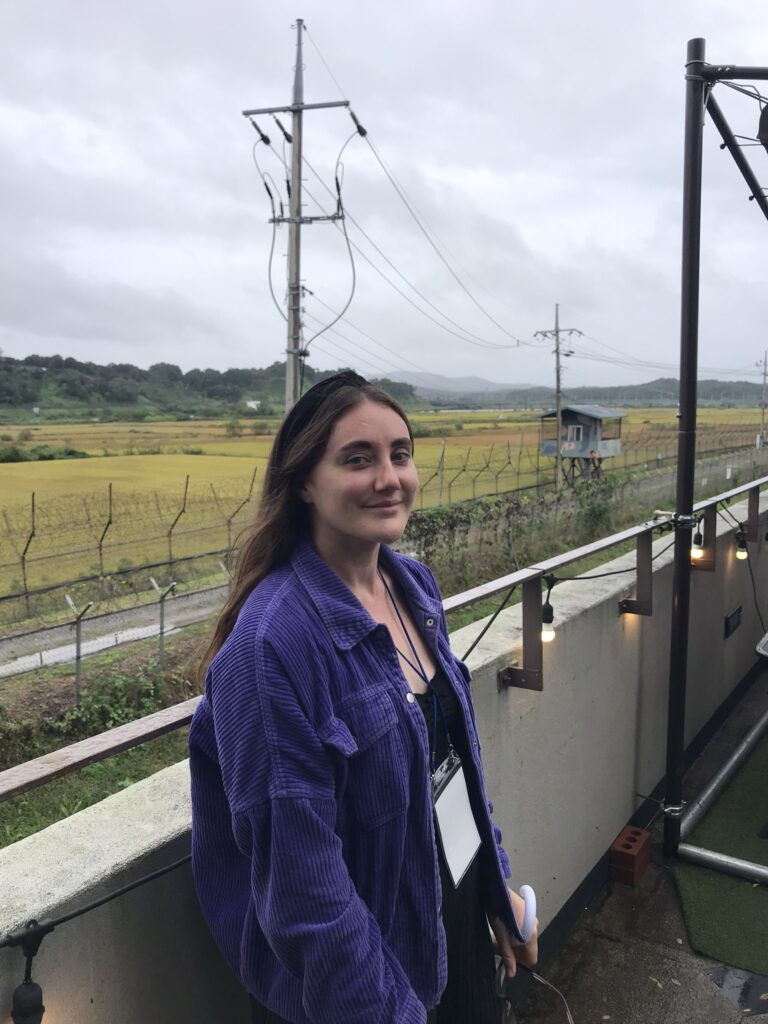
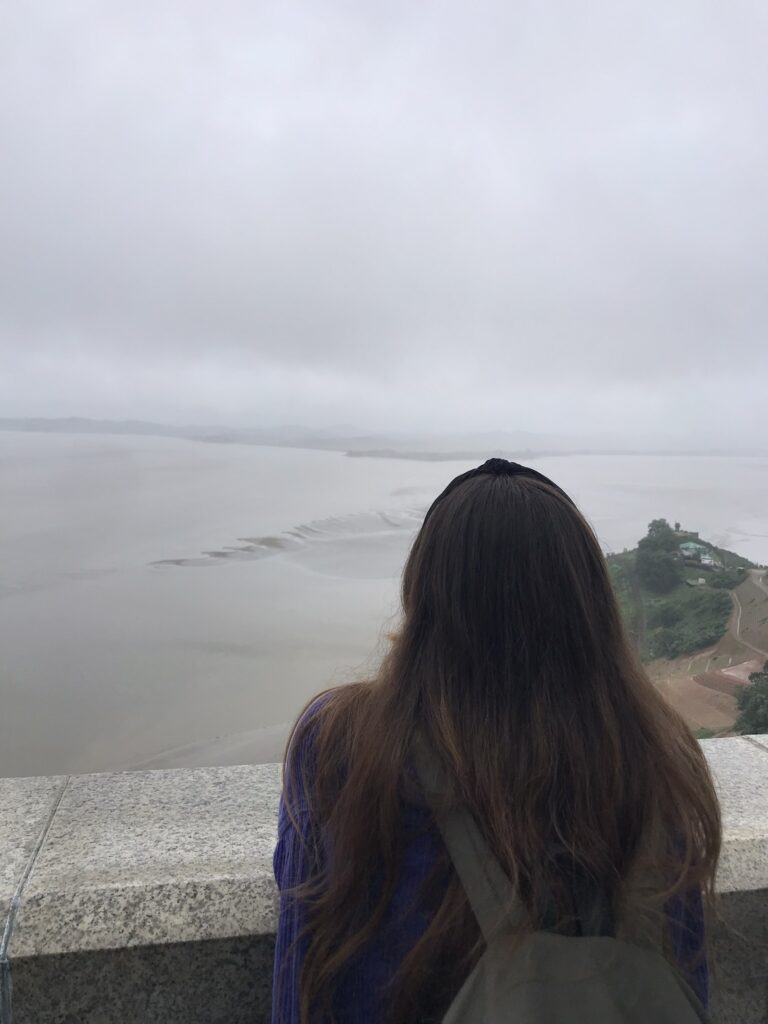
The border between North and South Korea is heavily fortified; observatories offer a glimpse into North Korea
Most people outside of the peninsula know very little about Korean history before the Korean War. The outside perception is that other nearby countries such as China and Japan tend to outshine Korea somewhat in terms of their feudal and dynastic history, but this isn’t true – Korea has a distinctive history of its own. Having been the site of numerous ancient kingdoms and fiefdoms, the 1st millennium CE in Korea saw the influential Three Kingdoms period, when the rival states of Silla, Baekje and Gogoryeo emerged as dominant powers on the peninsula. Based in what is now the city of Gyeongju in the south-east, the Silla kingdom eventually unified most of Korea in the 7th century CE. In 1392 the Joseon dynasty was founded, establishing a royal lineage which ruled Korea for over 500 years until being deposed by Japanese invaders who then occupied the territory for most of the early 20th century prior to World War 2. Korea was similar in many ways to Japan in that it was a closed kingdom which adopted isolationist foreign policies throughout most of the 2nd half of the 2nd millennium CE, before eventually being forced to quickly modernise and open up to international trade in the face of overwhelming military might towards the end of the 1800s. Many of Korea’s historic buildings were made of wood, and so have either been lost to fire or destroyed during various conflicts, particularly the Korean War and various Japanese occupations. As such, lots of the historic buildings standing in South Korea today have been restored or completely rebuilt from scratch. South Koreans are actively trying to restore their history and the things that were lost, often using original designs and materials to keep things as authentic as possible.
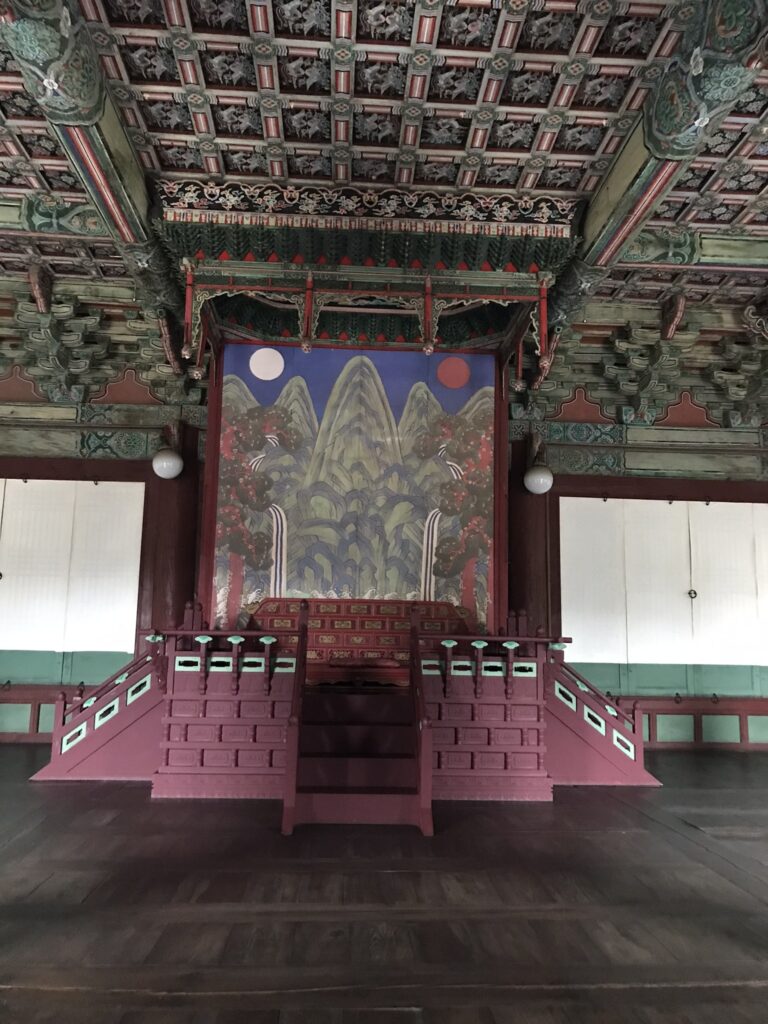
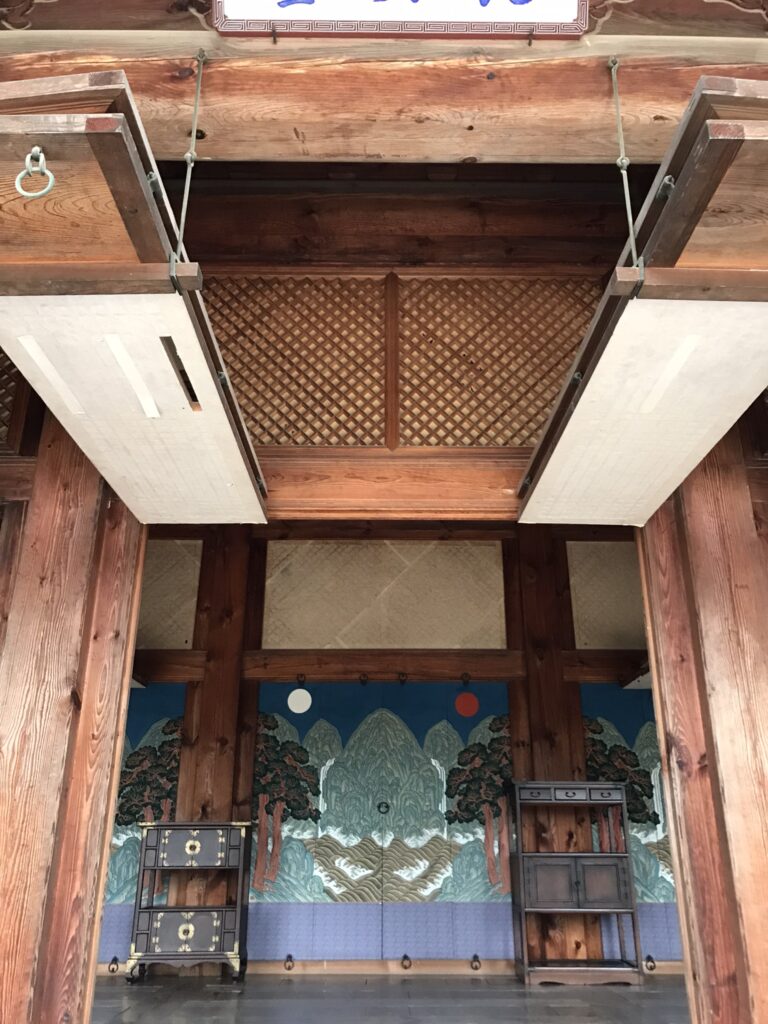
This banner, known as Irworobongdo, can be found in ancient throne rooms, representing the power and vast domain of the Joseon kings
Korea has close historical links with its neighbouring states of China and Japan, having been a geographic and cultural bridge between the two for centuries. Korea’s historical kingdoms saw various feuds and alliances with the Chinese dynasties throughout the centuries, and Korea’s kings were tributary to China’s powerful Ming and Qing emperors for most of the Joseon period. Korea’s writing script (Haengul) was invented relatively recently, in the 15th century as previously they used Chinese characters. The split between North and South Korea in the 20th century was heavily influenced by the newly-empowered communist regime in China. Korea’s historical relationship with Japan is quite complicated, with the Japanese having repeatedly attempted to conquer the peninsula – firstly on several occasions during the 1590s in a conflict known as the Imjin War, and again in the early 20th century when they successfully occupied and subjugated the country for several decades prior to World War 2. Both invasions saw the destruction and looting of many of Korea’s historical buildings and artefacts as well as brutal repression and violence against the Korean people. The peninsula has also suffered frequent attacks by Japanese pirates throughout history. Although the nations now enjoy more cordial relations, many of the museums and exhibitions in the country still tend to have a subtle (or not so subtle) anti-Japanese narrative. Many familiar aspects of Japanese culture were first introduced to Japan from China via Korea.
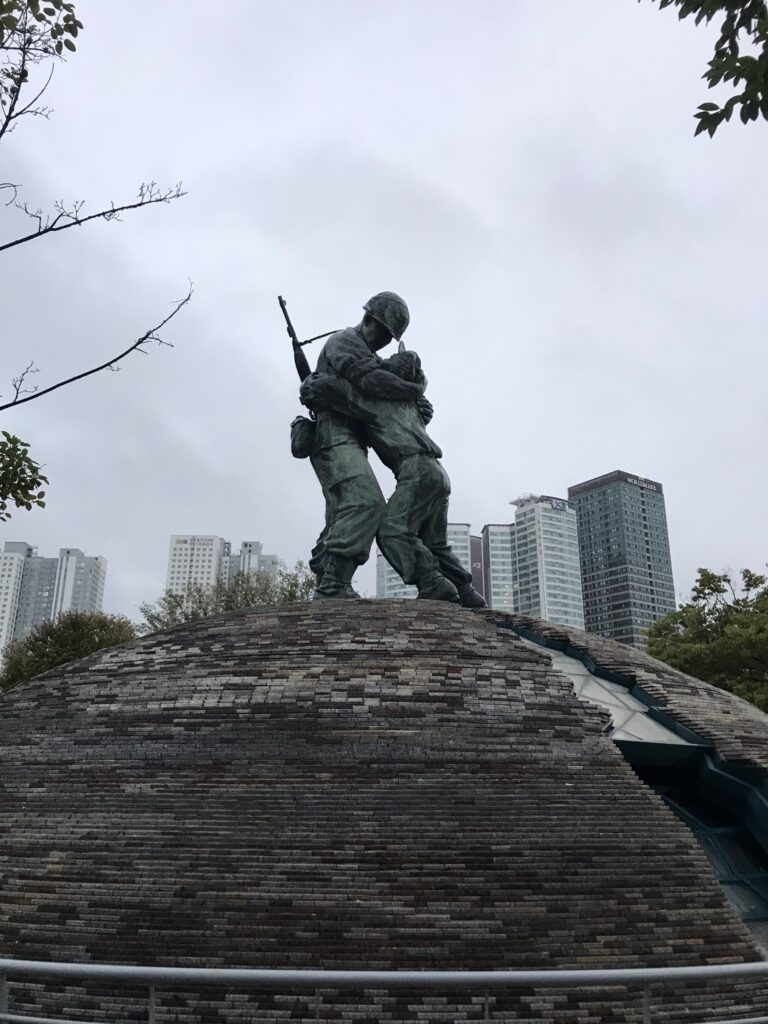
Since the Korean War, South Korea has also had a close relationship with the USA – this statue outside the War Memorial Museum in Seoul is symbolic of the closeness of their relationship
Historically the main religion in Korea was Buddhism, having spread from China before continuing on to Japan. The country is home to several ancient and renowned Buddhist temple complexes, and in the 21st century the Korean Buddhist order has developed a ‘templestay’ scheme in which tourists can stay and spend time living with Buddhist monks. Despite the popularity of this scheme, Buddhism is no longer the dominant religion in South Korea. Neo-Confucianism replaced Buddhism as the state religion and was hugely influential during the Joseon dynasty, with several original Confucian academies from that era dotted around the country. Today most Koreans are irreligious however Christianity is seeing a huge revival in the number of converts, it was brought by Western missionaries from the late 1800s onwards. Korean churches are easily identified by their distinctive red neon crosses – you could be mistaken for thinking that they are pharmacies. Ancestor worship and superstition also play a huge role in modern Korean society, arguably more than any organised religion.
In recent years South Korea has emerged as a cultural juggernaut. The 21st century has seen a meteoric rise in international popularity of all things ‘K’, like K-pop (including some of the most popular musical acts in the world such as BTS and Blackpink), K-dramas (internationally renowned such as Squid Game, Parasite etc), K-beauty products, Korean food such as kimchi, bibimbap, Korean BBQ and Korean fried chicken. The wave of global interest in Korean culture and products is known as ‘hallyu’ in Korea and is a big driver of South Korean soft power and modern Korean society.
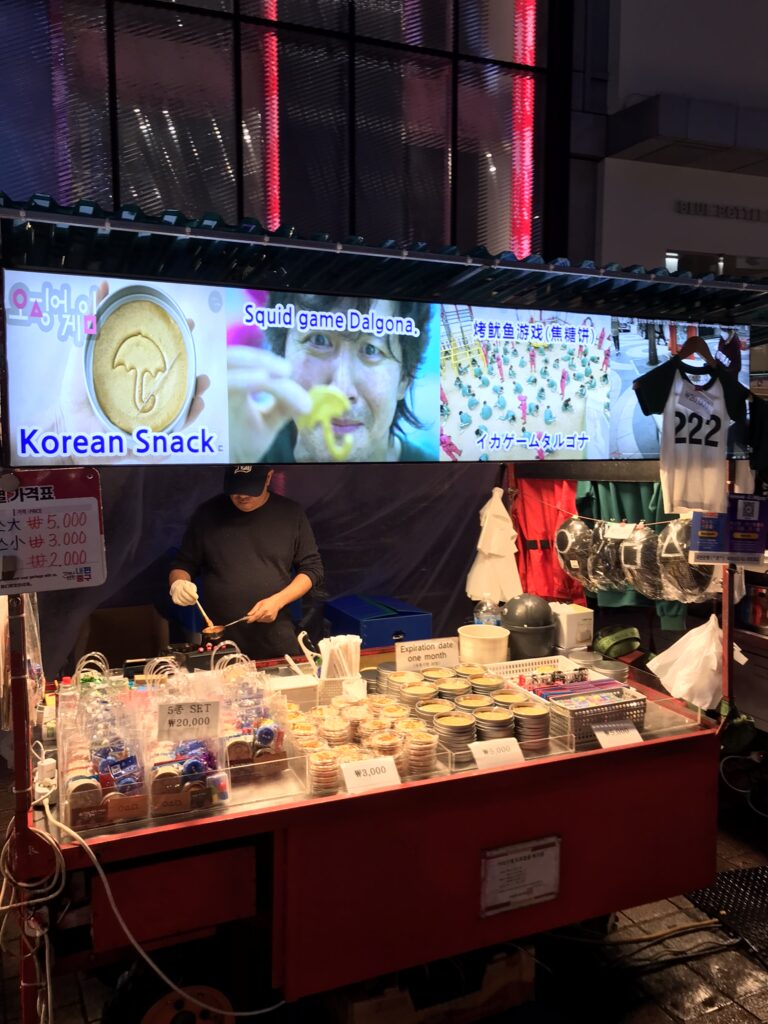
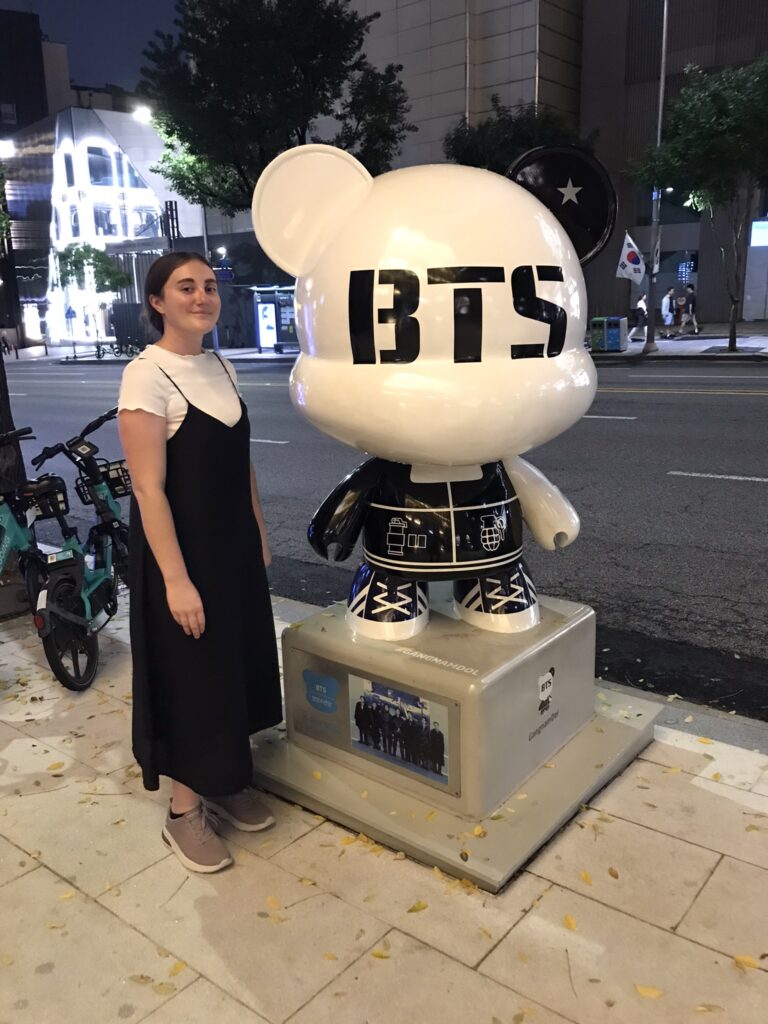
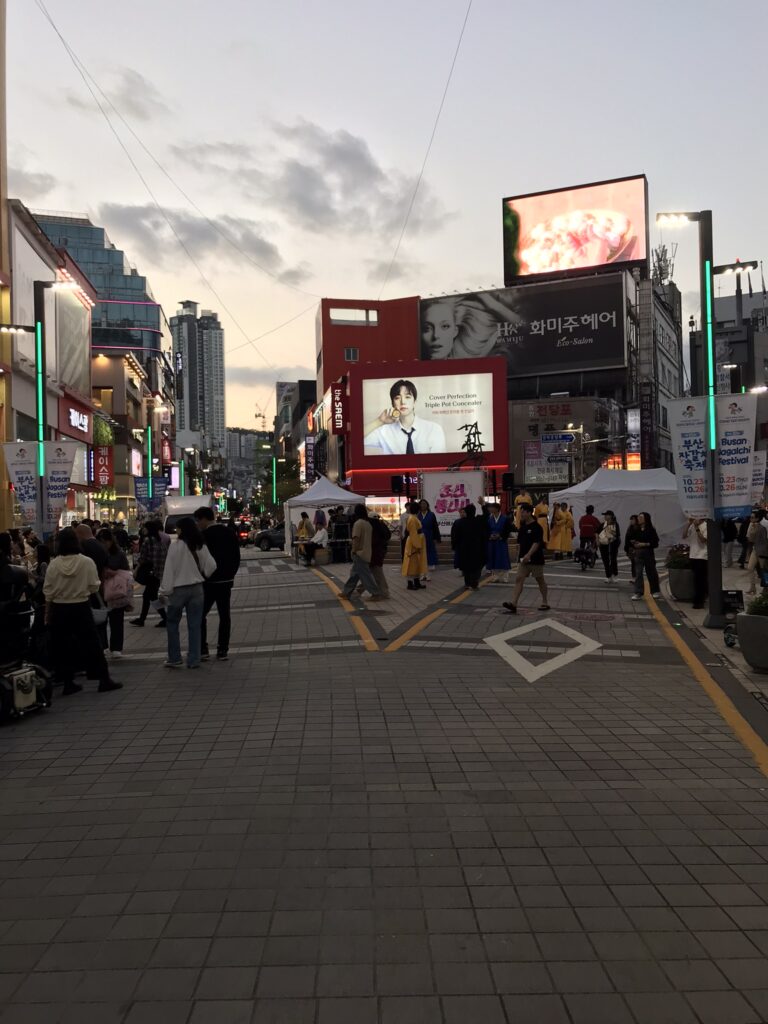
Top exports from South Korea include television shows like Squid Game, K-pop stars such as BTS and K-beauty and skincare products
South Korea and the ‘K’ wave is synonymous with the idea of perfection, which permeates to all facets of life. Korea’s college entrance exams are known to be some of the most challenging and demanding in the world, usually lasting for around 8 hours with students unable to take a break or eat during that time. Many youngsters enroll in private tutoring and cram schools in order to try and get ahead of the fierce competition, and it’s normal for high school students to spend up to 16 hours per day studying. Beauty standards in the country are insanely high and the country has the highest rate of cosmetic surgery in the world. Even I felt like an ugly duckling on the metro in Seoul – all the girls and women were dressed impeccably, with flawless glossy skin – they all looked like models.
K-Pop is particularly cutthroat and an example of the meticulous and rigorous mentality of the Koreans. It’s extremely sleek and synchronised, ultra-choreographed and produced with performers requiring the ability to act, sing and dance to the highest levels while looking flawless. Potential stars are enrolled in hardcore training academies from a young age, and many don’t make it – we saw reality TV shows centering around this.
Despite spending almost a month in South Korea, we found it quite difficult to talk to local people and really get beneath the surface of the place. South Koreans can be quite shy and reserved, often keeping to themselves in public. We also found that people can also be quite hesitant to attempt to speak in English, especially if they don’t feel confident or worry about making mistakes. I tried to talk to a female shop assistant in Olive Young in Jeonju to ask for advice on beauty products, only for her to make a cross sign to signify she couldn’t speak in English.
Most Korean people live in cities and have an ultra-modern urban lifestyle. Free wifi is everywhere in South Korea – it’s the most connected country I’ve ever visited in that respect. You can usually find accessible, working public wifi on the streets of most cities, as well as on public transport. Things can be a bit faceless, with high levels of technology and convenience replacing human interaction at times. Hotel checkins and food orders in restaurants are often done via a screen and actual human interactions can be quite limited. Despite this, South Koreans tend to eat out for most meals as they often only have rudimentary cooking facilities in their apartment. People mainly live in uniform high-rise apartment blocks and dining alone is common, with loneliness said to be a growing concern in the country.
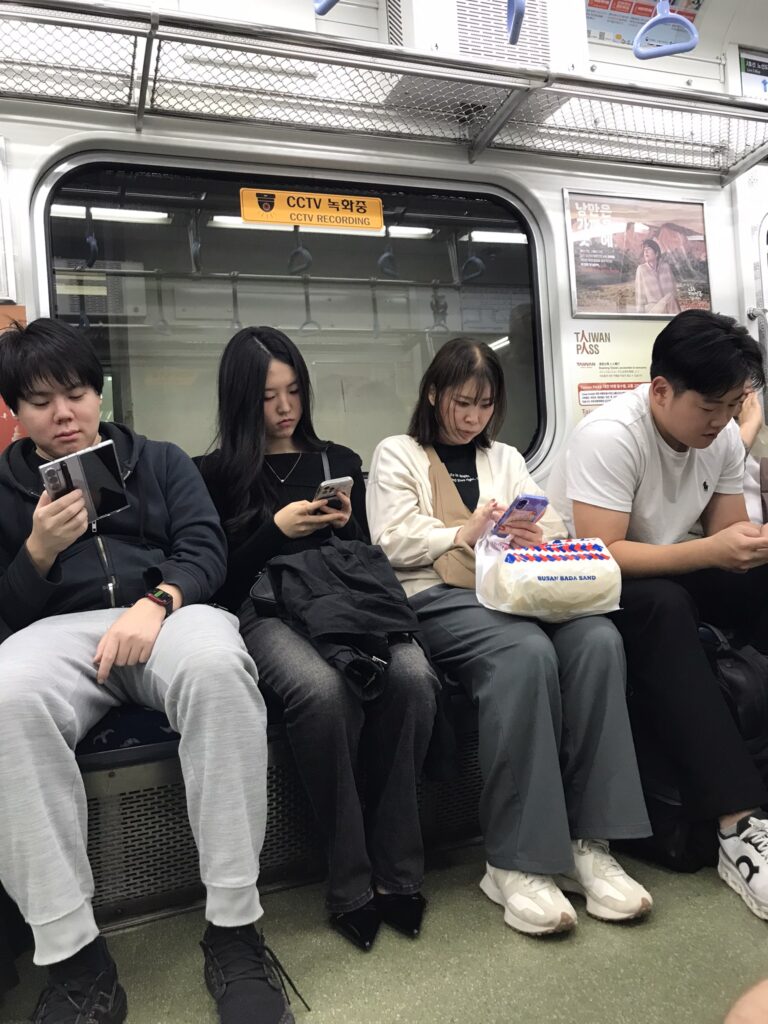
Free wifi on public transport means that this is a common sight
Korea’s food is one of the highlights of visiting the country, with local dishes like bibimbap, tteokbokki & bulgogi and international fusion foods like Korean fried chicken and Korean BBQ having gained prominence and spread throughout the world in recent years. Local restaurants tend to be very cheap in comparison to other developed countries. Seafood in Korea can be a particularly interesting experience with some very weird and wonderful options available, most of which we didn’t have the courage to partake in. Korean food can also be very spicy – we had some noodle soup in Daegu that felt like drinking fire! Almost all meals in Korea are served with kimchi and pickles. Often the kimchi is self-service and so you can keep going back for more – this also sometimes applies to rice and other condiments. There are also plenty of Japanese restaurants and we had some good Japanese food in Korea – it’s actually cheaper to go out for Japanese food in Korea than in Japan!
We spotted quite a lot of Korean-Americans in the country, including many expats/second generation Korean-Americans visiting on holiday – some didn’t speak Korean, leading to amusing situations and encounters with elderly locals which we happened to witness on a few occasions. There are close ties between the USA and South Korea going back to the Korean War. Americans first introduced fried chicken to South Korea, which today is one of the most popular and distinctive foods in the country with omnipresent chains like Kyochon Chicken and Mom’s Touch. It’s worth trying the Korean chicken even if you’re not usually into fast food.
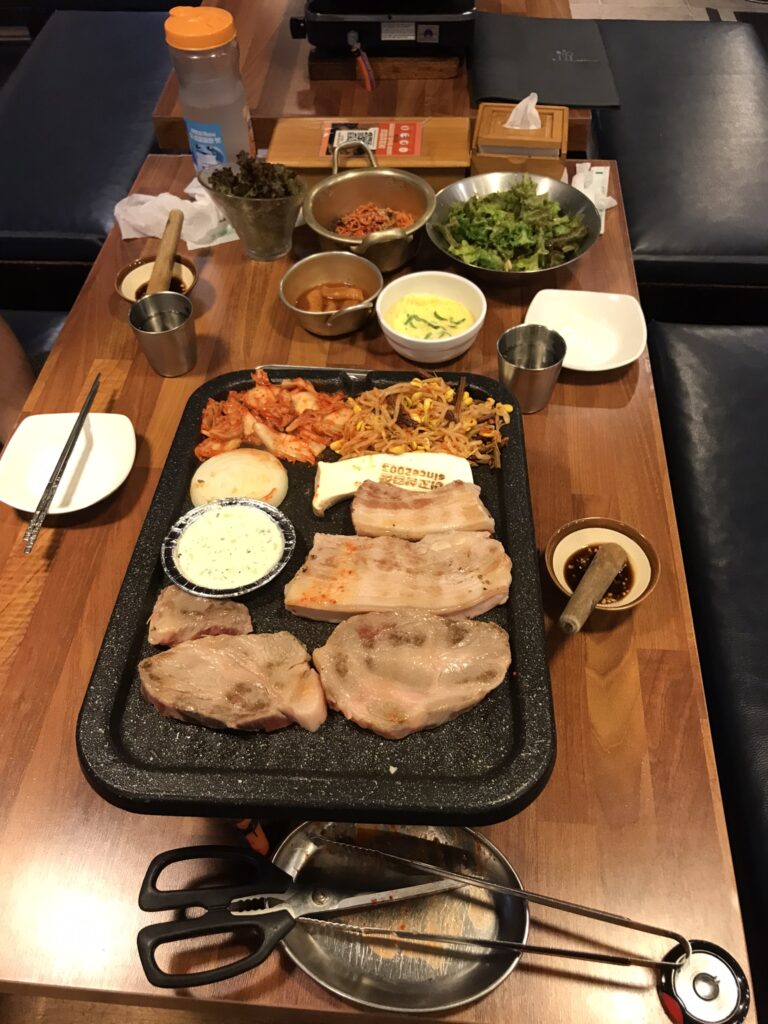
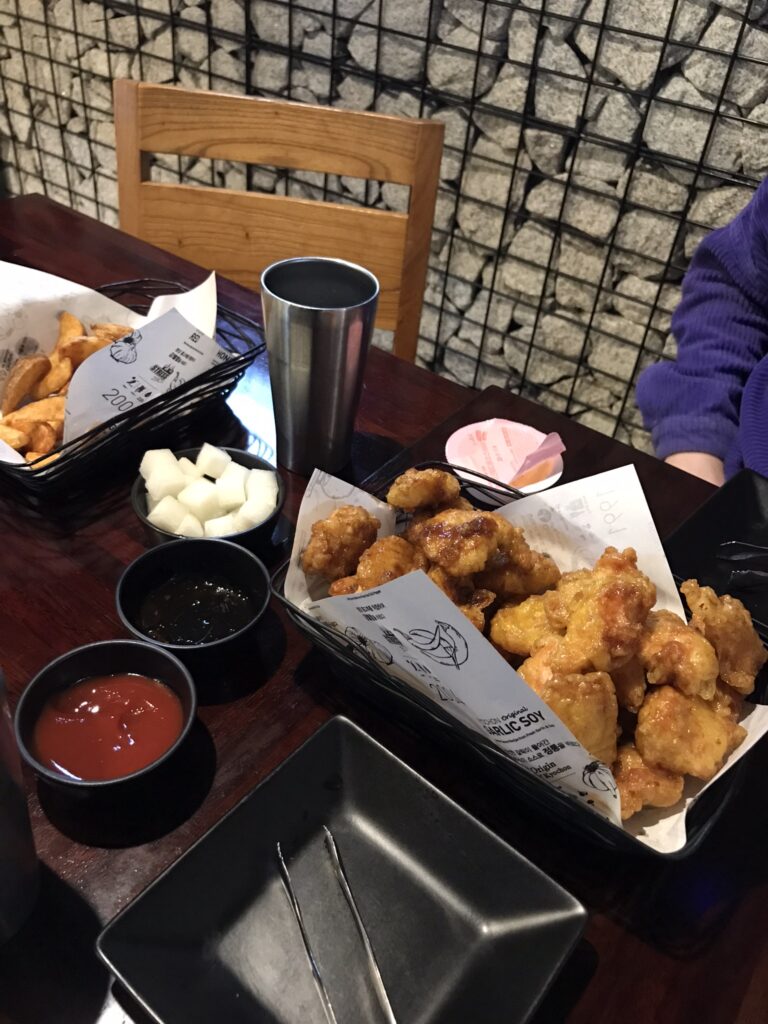
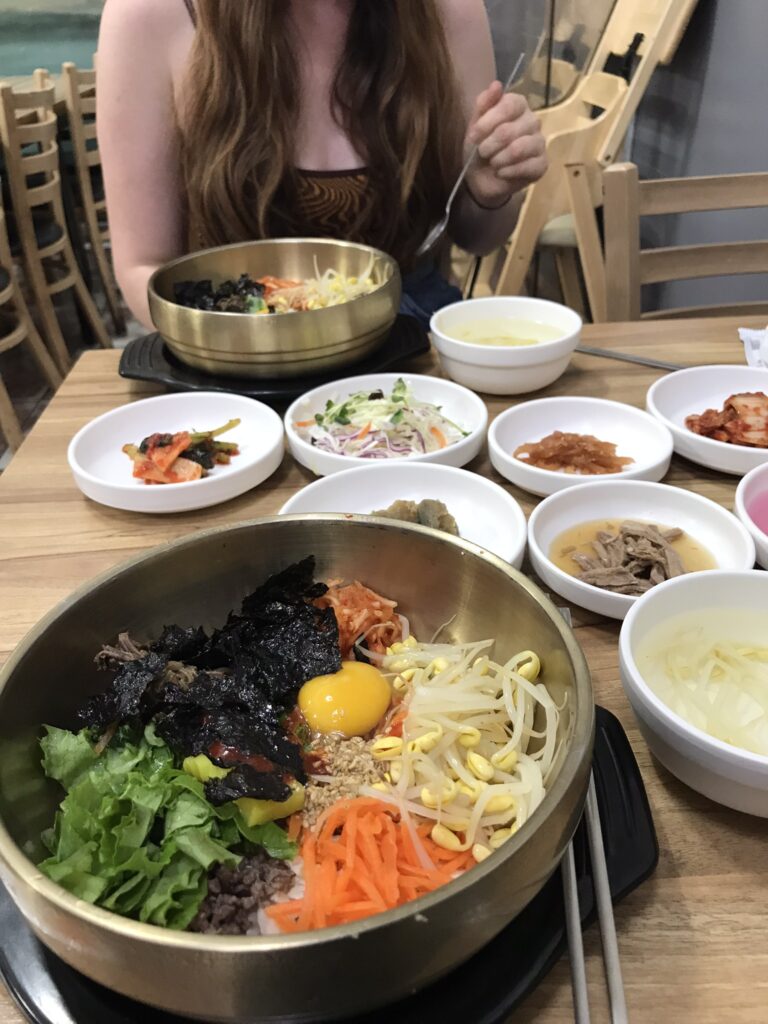
Korean BBQ, Kyochon fried chicken and bibimbap – three must-try Korean dishes
Independent travel in South Korea is generally cheap and very easy – it’s one of the easiest countries we’ve ever traveled in. Distances are generally small and public transport is extremely developed, with comprehensive bus networks as well as ultra-efficient metro systems in the larger cities. You can pretty much get to wherever you want to go in all parts of the country by public transport. Google Maps doesn’t work properly in South Korea, as the government doesn’t permit international companies to host in-depth mapping data due to security concerns surrounding North Korea. Instead, it’s highly recommended to download the local mapping app Naver. This app is outstanding, providing super-accurate public transport information and navigation throughout the country – you can even track the buses in real time so it’s ridiculously easy to get around (although be aware that inter-city buses are not always listed on the app).
Public transport in South Korea is cashless – passengers on local buses and trains tap in and out using a contactless card known as a T-Money card, which can also be used to purchase items at some convenience stores and vending machines. Ironically, the T-Money card can only be topped up via physical cash – we found it easiest to do so using the machines at metro stations in large cities, but it can also be done in some convenience stores. The T-Money cards are essential for getting around easily in South Korea – we picked ours up from a machine at Incheon Airport and they featured cute cartoon animal designs. Inter-city coaches and trains sometimes function a little differently and may not use the T-Money cards – in these cases you may need to go to a conventional ticket office in the station to purchase a ticket.
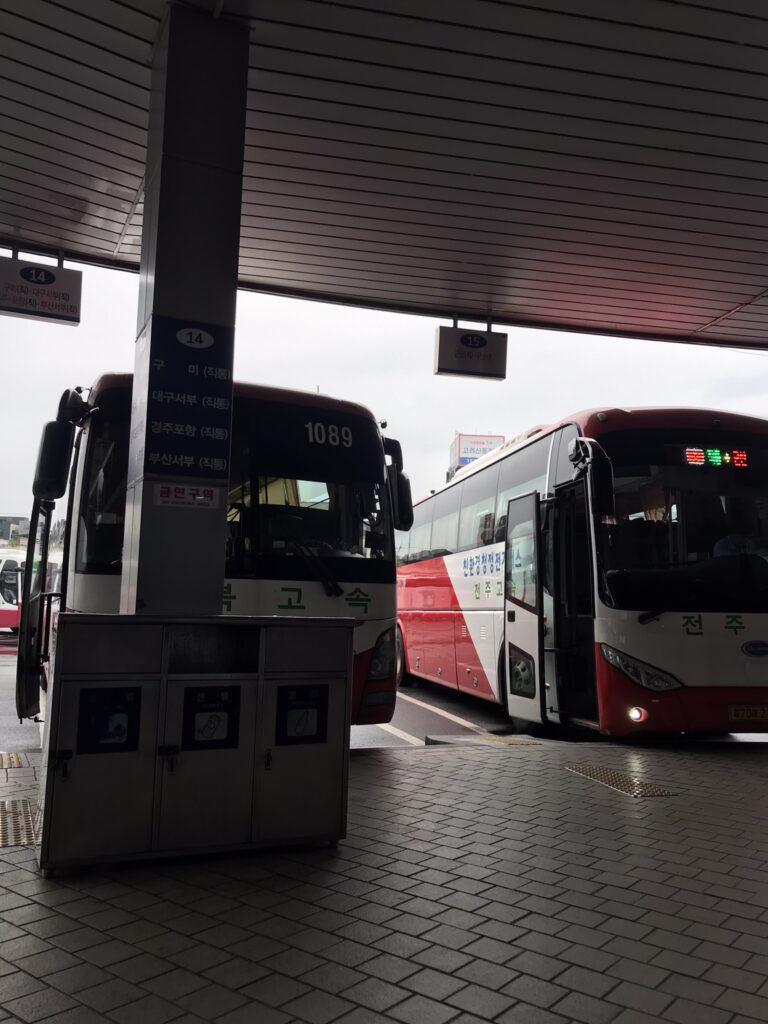
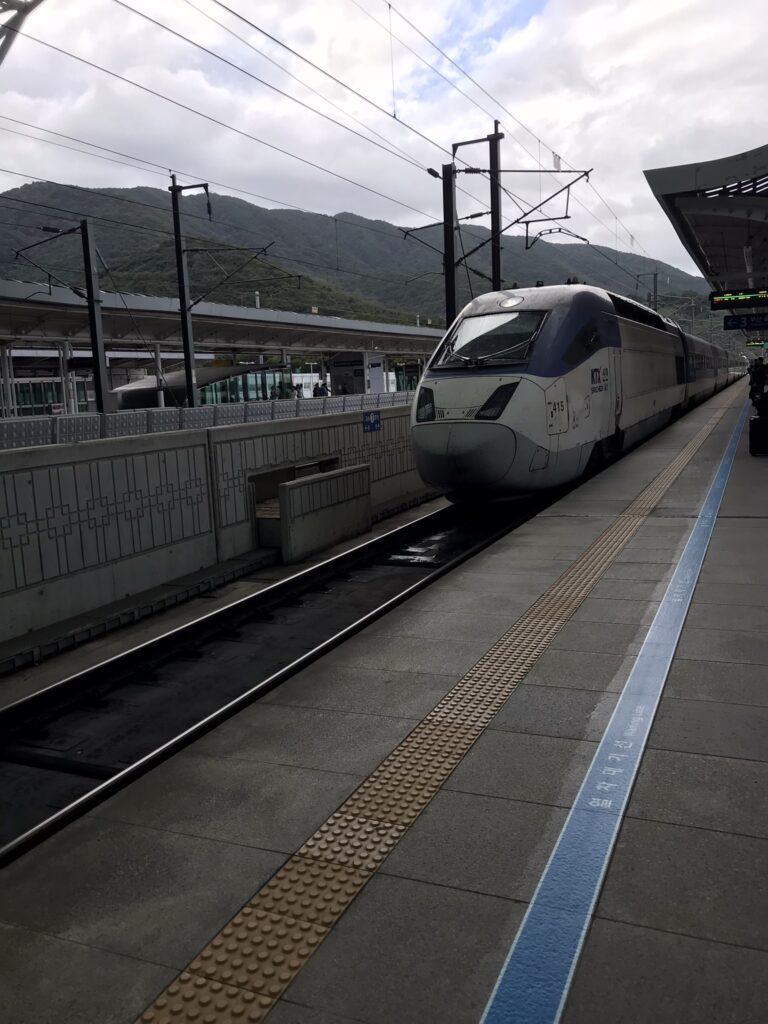
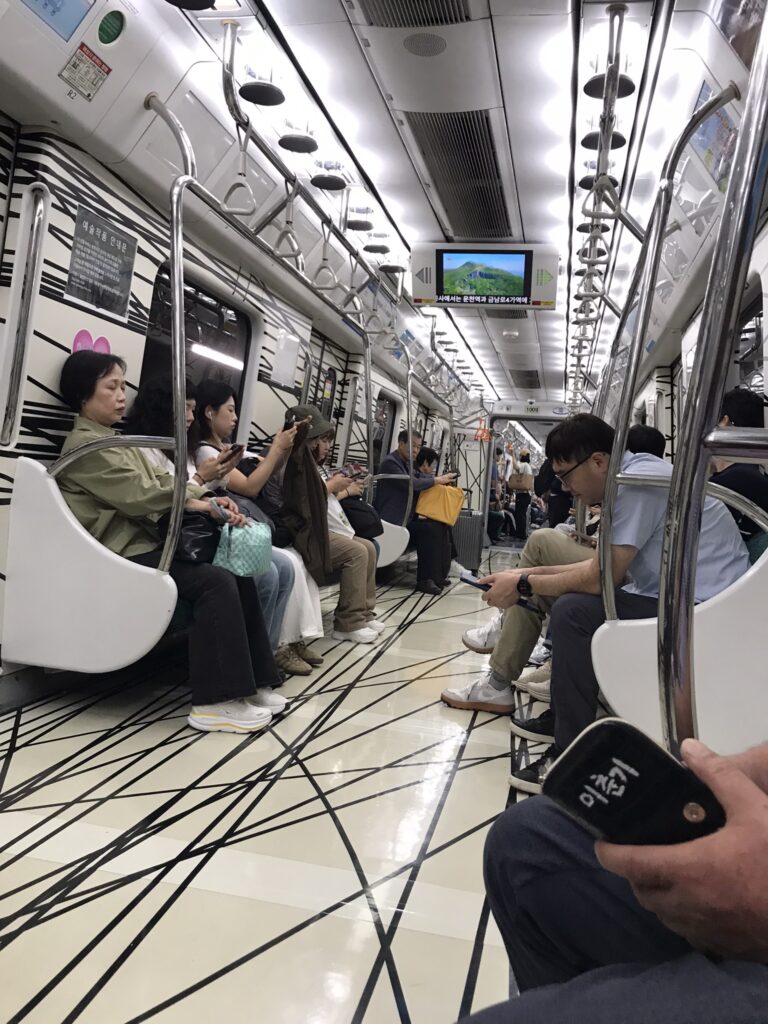
Inter-city coaches are the cheapest way to get around the country, while the KTX bullet train is usually a faster option for those short on time. Most large cities have a pretty developed and comprehensive metro and bus system which makes getting around a breeze.
Probably the most challenging aspect of travel in the country is the fact that making payments using international cards can be a little bit erratic in South Korea. The country’s banking network generally uses a different chip and pin verification system which is not always fully compatible with visa and mastercard, meaning that international credit and debit cards can often run into difficulties. We found that our international debit cards (UK-issued Monzo cards) tended to work for one payment and then decline everything afterwards. In most cases we were able to get around this by transferring a nominal amount (£0.01) between our cards – a procedure which required us to enter our pin on the app, resetting the chip and pin verification in the eyes of the Korean banking system and allowing our next transaction to process properly. It’s a bit of a pain in the neck and didn’t always work perfectly, but generally we were pretty successful with this workaround. Obviously I can’t comment for other cards/banks etc.
Seoul
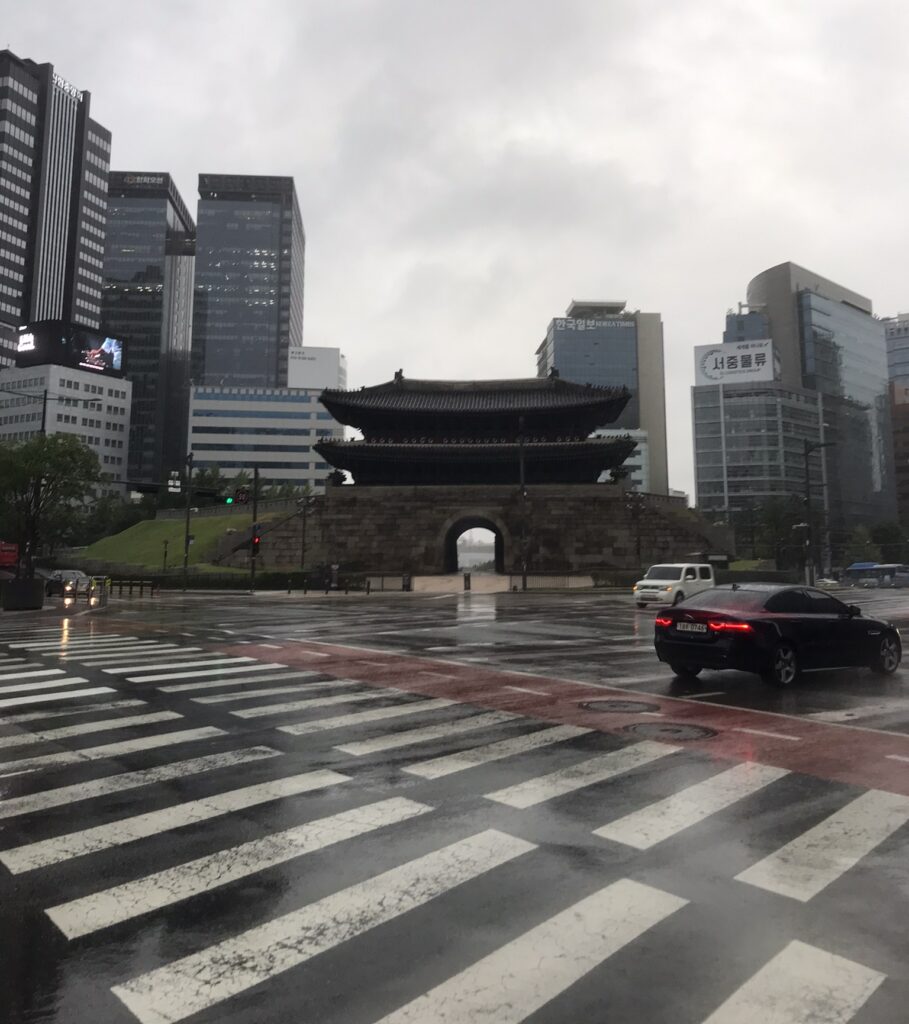
A sprawling megacity, Seoul is the capital and cultural heart of South Korea. Over half the country’s population lives in the greater Seoul area; it’s by far the largest city in South Korea and encapsulates the essence of the country in a nutshell. From glitzy high-end neighbourhoods, entertainment districts filled with vibrant South Korean youth culture, bustling markets, ancient palaces and tombs from the dynastic era, scenic mountains and artifacts relating to the Korean War. Seoul is a microcosm of South Korea as a whole. The city is also relatively close to the border with North Korea – there are several observatories within close proximity to the city which provide views over the Imjin River into North Korea and plenty of tour companies run day trips to the DMZ from Seoul, a popular activity for foreign tourists.
Seoul is a huge city with plenty of distinctive neighbourhoods to explore, some of which are renowned internationally such as Hongdae (a centre of youth culture) and Gangnam (a swanky upscale area). At a glance the city can be a bit overwhelming due to the size. Notable sites are dotted all over the city – it’s far from being walkable, and while the metro and bus network is very extensive it can still take quite a long time to get around due to the sheer size of the place. Like Tokyo, it’s best to plan your days around which area of the city you’ll be in and try to group nearby attractions together – you can’t really just dash to various attractions willy-nilly or you’ll spend most of the day sitting on the metro.
While many aspects of Seoul are ultra-modern, it’s also a city with plenty of historical value. Seoul (under its previous names of Hanyang and Hanseong) came to prominence when it was chosen as the capital of the nascent Joseon dynasty in 1394, and has functioned as a capital city pretty much continuously then. The city has many remnants and historical buildings relating to the Joseon dynasty, the most notable being the four main dynastic palace complexes (Gyeongbokgung, Changdeokgung, Changgeonggung and Deoksugang) and the royal Jongmyo shrine, all which are laid out in a square formation at the centre of the city.
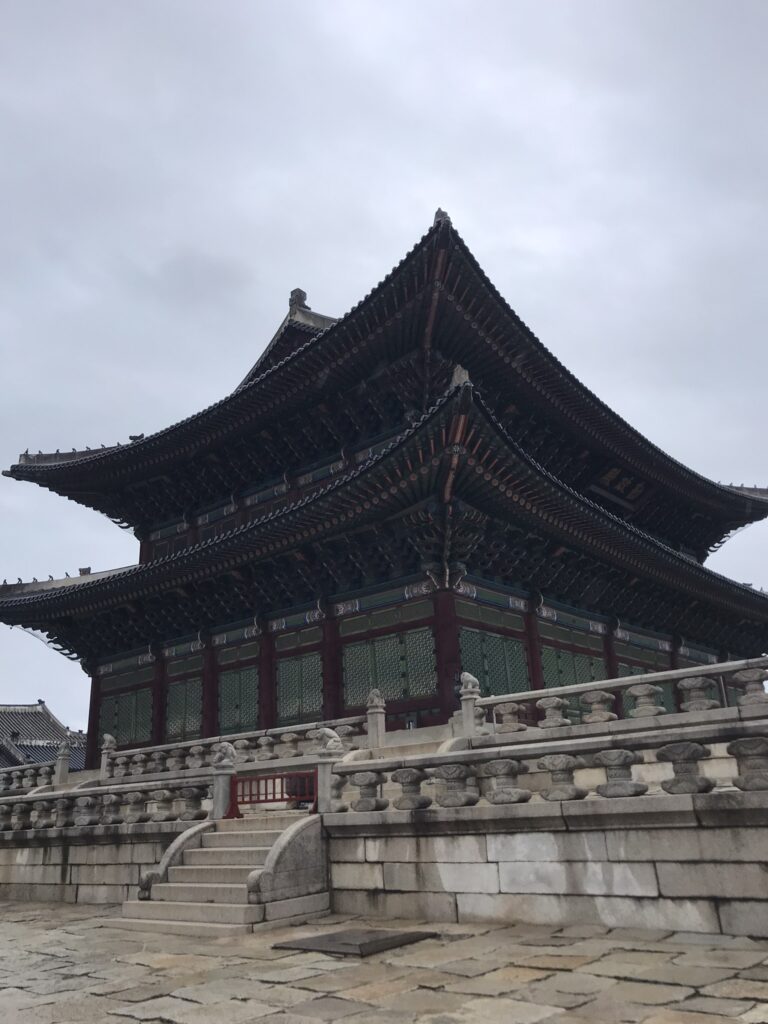
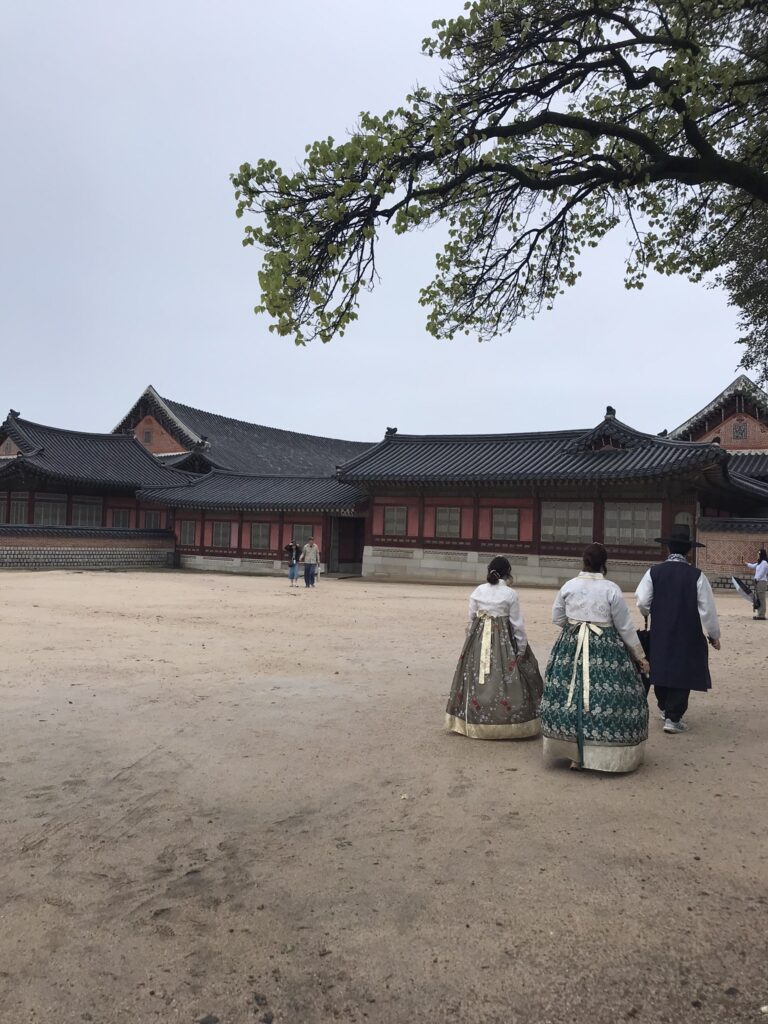
Gyeongbokgung is the most visited of the imperial palaces in Seoul
The palaces and royal structures have a typical walkway layout with three processional paths running side by side – the middle one was reserved for the king. You can instantly tell that you’re in a royal structure when you spot this. Many of the old palace buildings in Seoul were destroyed during the two Japanese occupations of Korea and so most of the structures today were rebuilt during the 20th century, however they are still very interesting for those who are into history and architecture. We were fascinated by the palace roof tiles and ‘japsang’ guardian figurines, a notable element of Joseon-era design. Most of the palaces and throne rooms feature a distinctive royal standard depicting the sun, moon, mountains and the rivers – a symbol of the Korean monarchy. As well as the palatial buildings, Seoul and the surrounding areas are also home to an array of Joseon-period royal tombs, some of which stand untouched in the centre of an otherwise ultra-developed urban area.
We found Seoul to be a little more expensive than the rest of South Korea, although still very cheap compared to the vast majority of cities globally with a similar standard of living and development. Our time in Seoul may have also been affected by the fact that we visited during the Chuseok period – the country’s most significant holiday which takes place in late September or early October each year. During this time many residents of Seoul leave the city to return to their ancestral hometowns and some restaurants and shops can be closed, which definitely limited our budget eating options. Attractions can also be busy as most locals are off work for an extended period. On the plus side, many of the attractions are free to enter during this period.
Accommodation
Stay Seorae – located in the neighbourhood of Seorae Village, a very boutique, cosmopolitan area which is said to have a bit of a French influence (there are plenty of bakeries). We stayed here out of necessity as we were visiting over Chuseok and accommodation options in the city were limited, but we found it to be a pleasant base. It’s a fair way out of the city centre, although well-connected by bus and metro so easy enough to get around. The accommodation itself was fantastic, clean and well-maintained with a shared kitchen. There were even free umbrellas for visitors. The only downside was the fact that we had a commute every day on the metro to get anywhere (although that’s probably the case for most places in the city). In typical Seoul style, check-in at the hotel is completely automated, the accommodation is keyless and the door lock is operated via a website. A helpful lady who seemed to be cleaning helped us with setting this up – apart from that, we didn’t encounter a single person working here.
Foodie Places
Themomoya – Japanese tonkatsu-style restaurant within walking distance of the National Museum. It seemed very popular so much so that at lunchtime we had to wait in a queue to get in. Orders are placed via a screen. We popped here for lunch while visiting the National Museum.
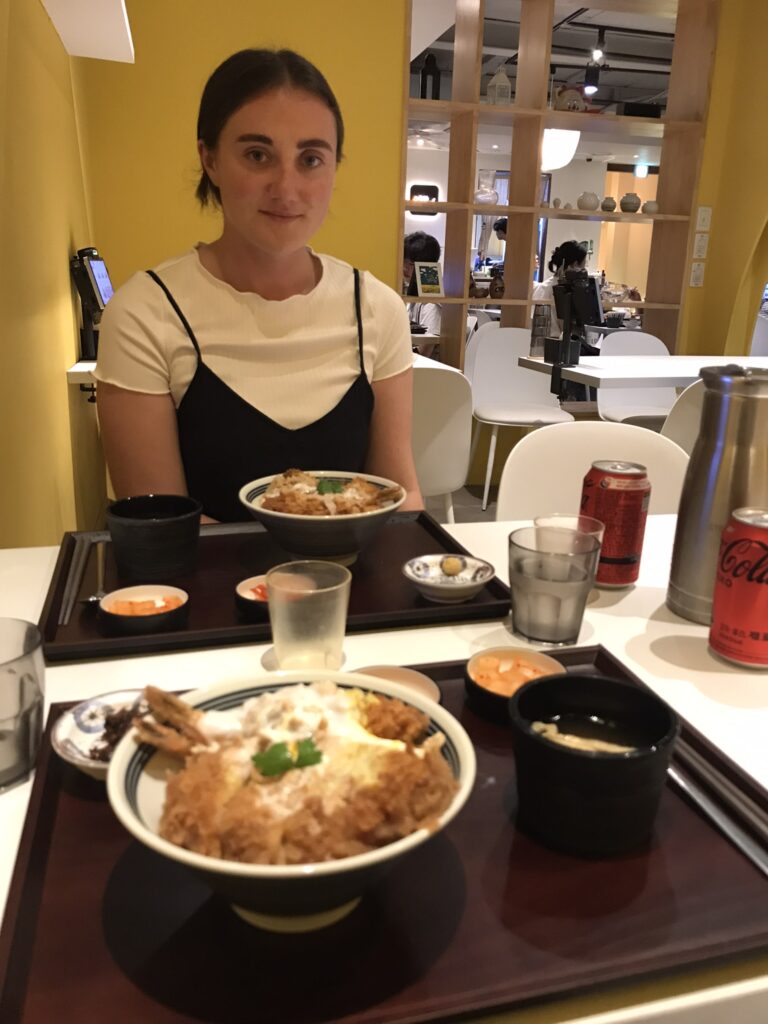
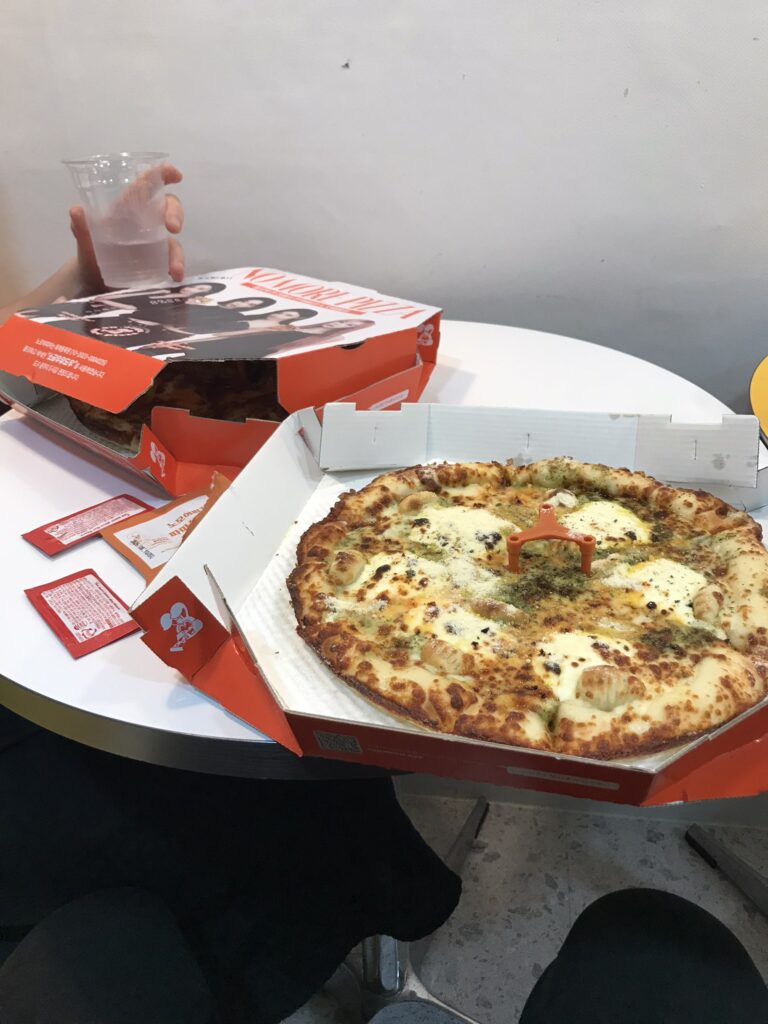
International food is very popular in Seoul such as Japanese tonkatsu (Themomoya) and pizza (No More Pizza)
No More Pizza – a well-known pizza chain with some interesting choices of toppings, including gnocchi pizza. We found the pizza here to be ultra-cheesy – extremely sumptuous, it almost felt too unhealthy to eat. Somewhat expensive but the pizza itself was extremely hearty; we struggled to finish the whole thing.
Kyochon Chicken – a well-known Korean fried chicken chain that is pretty much omnipresent throughout the country, considered a must-try for those looking for the modern Korean classic. We visited the branch in Bukchon and were a bit disappointed, we were surprised by the relatively high price and to be honest we weren’t blown away by the food. We gave Kyochon another chance in Busan and it was fantastic, so maybe they just had an off-day here (we did visit on Chuseok day).
Wolhwadang – located near to our accommodation, we ate here as it was one of the few places open on Chuseok day. Quite upmarket and swanky for a dumpling place. The staff were friendly and were able to communicate with us in quite good English. Shared dumpling hotpot seemed to be the most popular item on the menu.
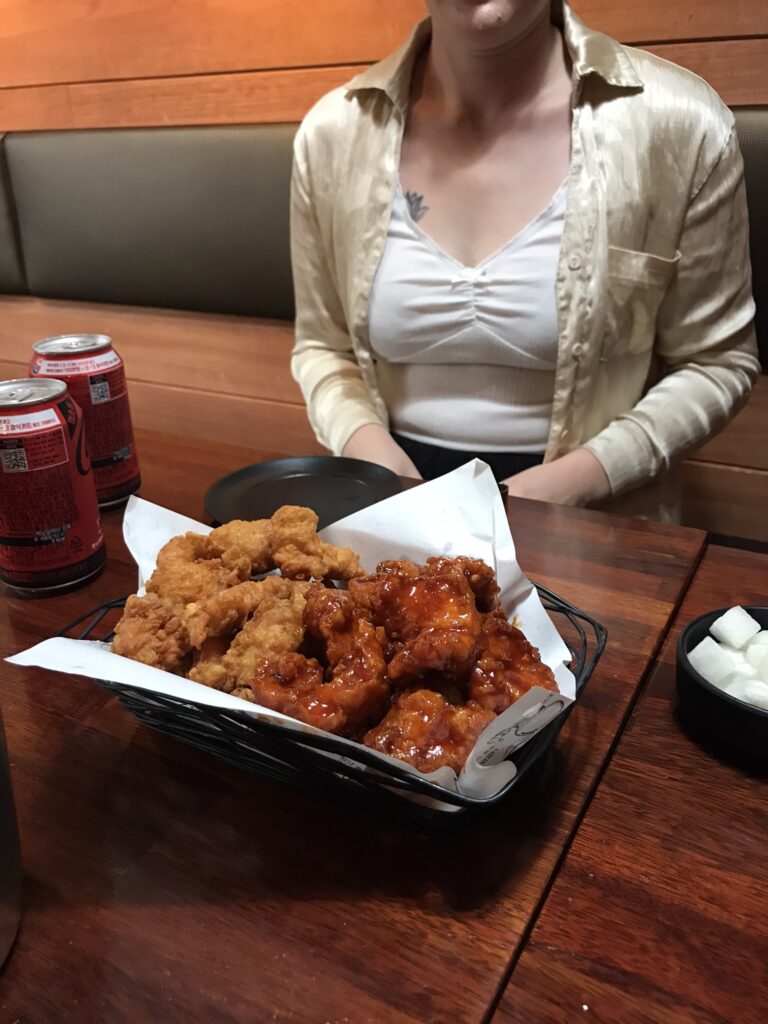
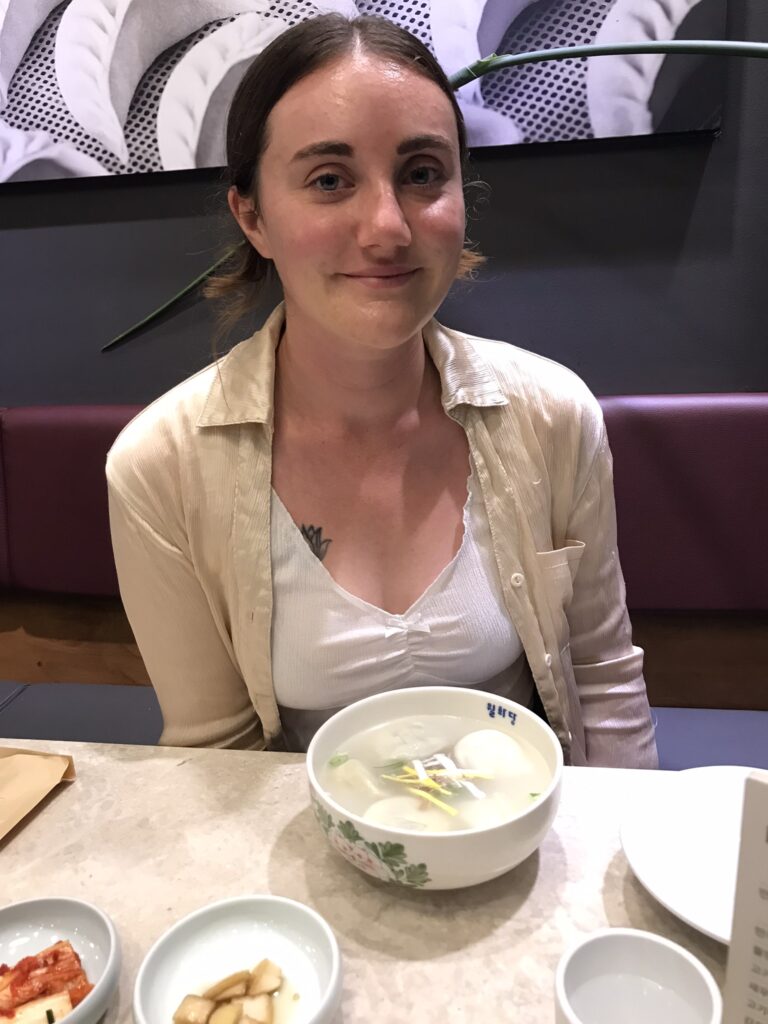
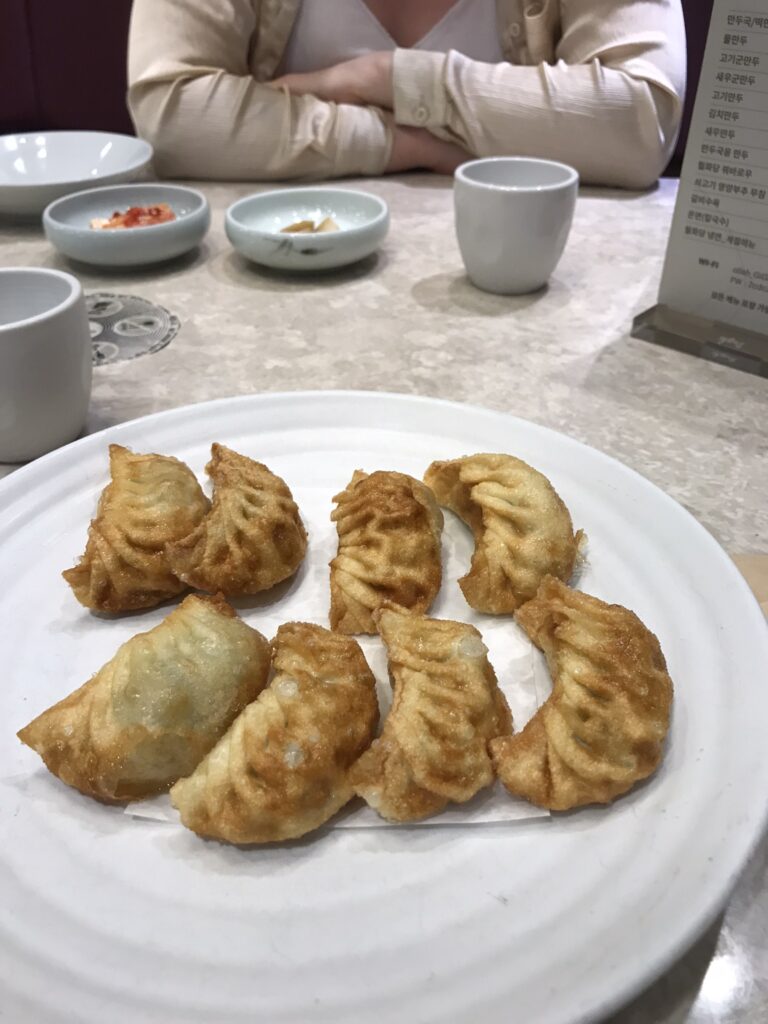
Sticky succulent fried chicken from Kyochon Chicken and delicious dumplings from Wolhwadang
Subway – we’ve inadvertently tried Subway in countless countries, and added South Korea to the list partly because it was one of the few places open during the Chuseok holidays. The sandwich here was pretty standard and unremarkable as far as Subway goes.
Mangwon Market – a covered arcade filled with street food options. We found this to be a much more authentic and cheaper alternative to the touristy Myeongdong. You can find classic Korean dishes here like tteokbokki and bibimbap. We had some kimchi dumplings and a strange seafood soup here, which were both great.
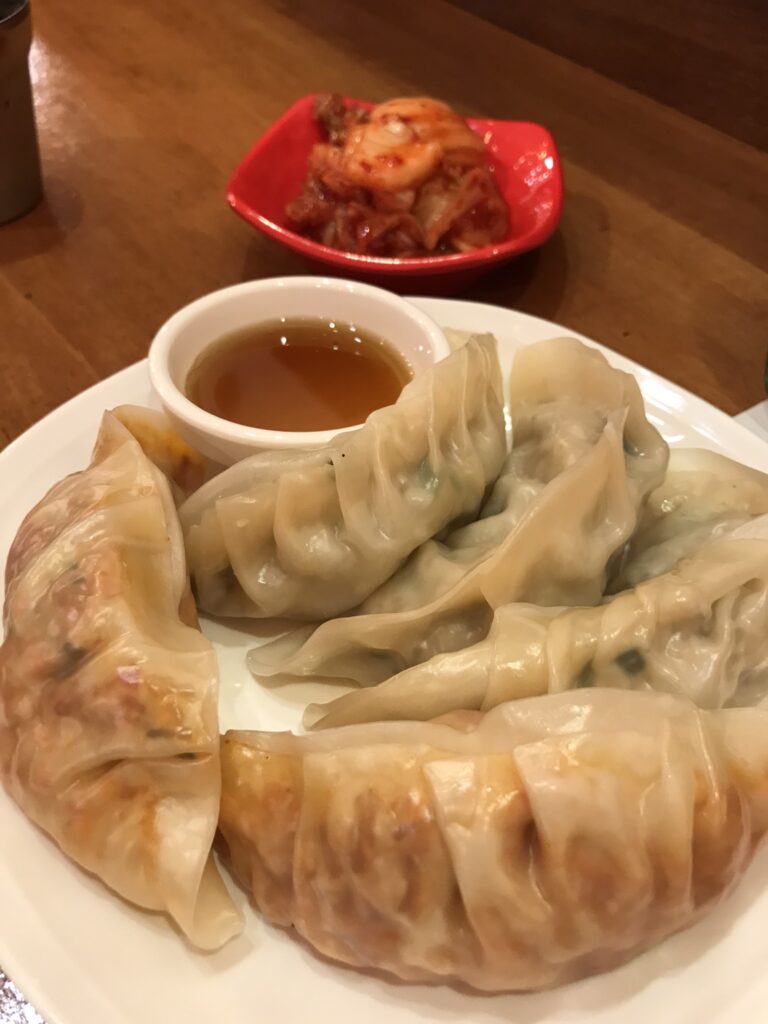
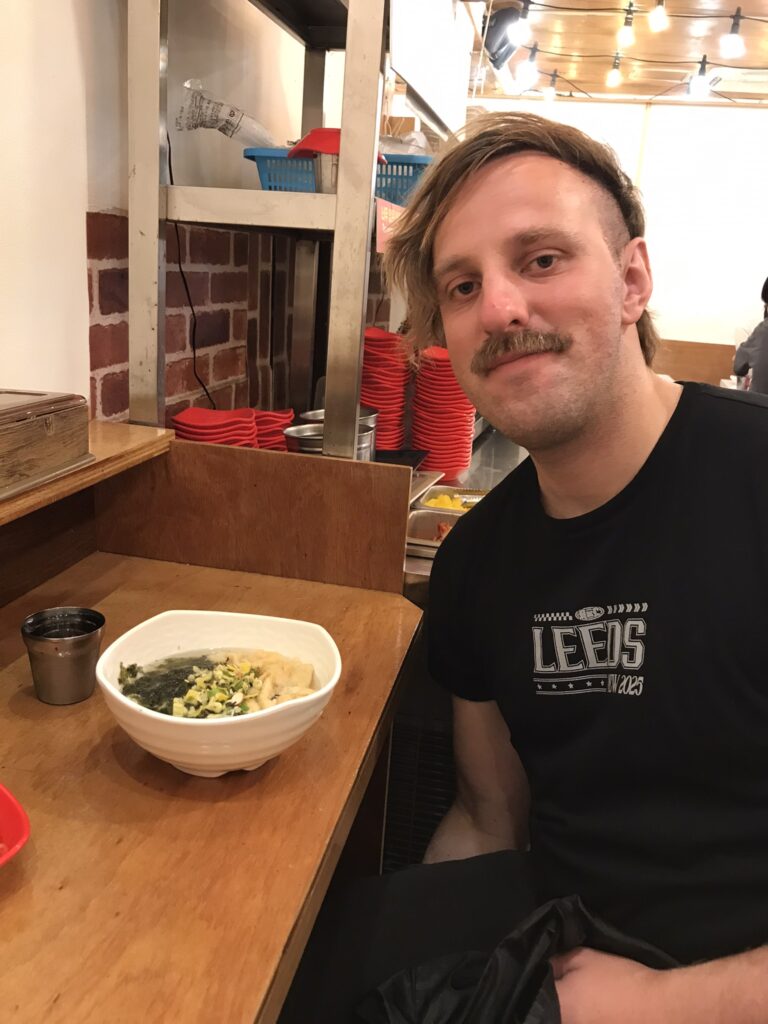
Kimchi dumplings and Dan with his seafood noodle soup from Mangwon Market
Activities
Gyeongbokgung Palace – the primary royal palace in Seoul, originally constructed in the 14th century to be the ruling seat of the Joseon dynasty. The scale and grandeur is striking – there are various structures, ponds, pavilions and courtyards with buildings and mini-complexes that served different functions, such as residential, administrative and religious. The palace has been rebuilt multiple times – the original was destroyed by the Japanese in the Imjin War of the late 16th century and was not restored for several hundred years, with the seat of power moving to nearby Changdeokgung Palace during that time. Gyeongbokgung was rebuilt in 1868 and became the royal residence once again, before once again being 90% destroyed in the early 20th century by the Japanese. Most of the structures today are modern reconstructions.
Stern-looking ceremonial guards keep watch outside – there is a changing of the guard parade and other ceremonies which takes place sporadically throughout the day (timings here). The palace is filled with plenty of hanbok-clad locals and tourists participating in impromptu photoshoots, with many hanbok (traditional costume) rental places nearby for those who want to join in the fun. It can get very busy inside the palace – we visited early on Chuseok day and it was fairly quiet, but there was a huge queue by the time we left. Sometimes events take place in the plaza and lawn outside the main entrance – at one point we stumbled upon a display of military re-enactment with some sparring soldiers here.
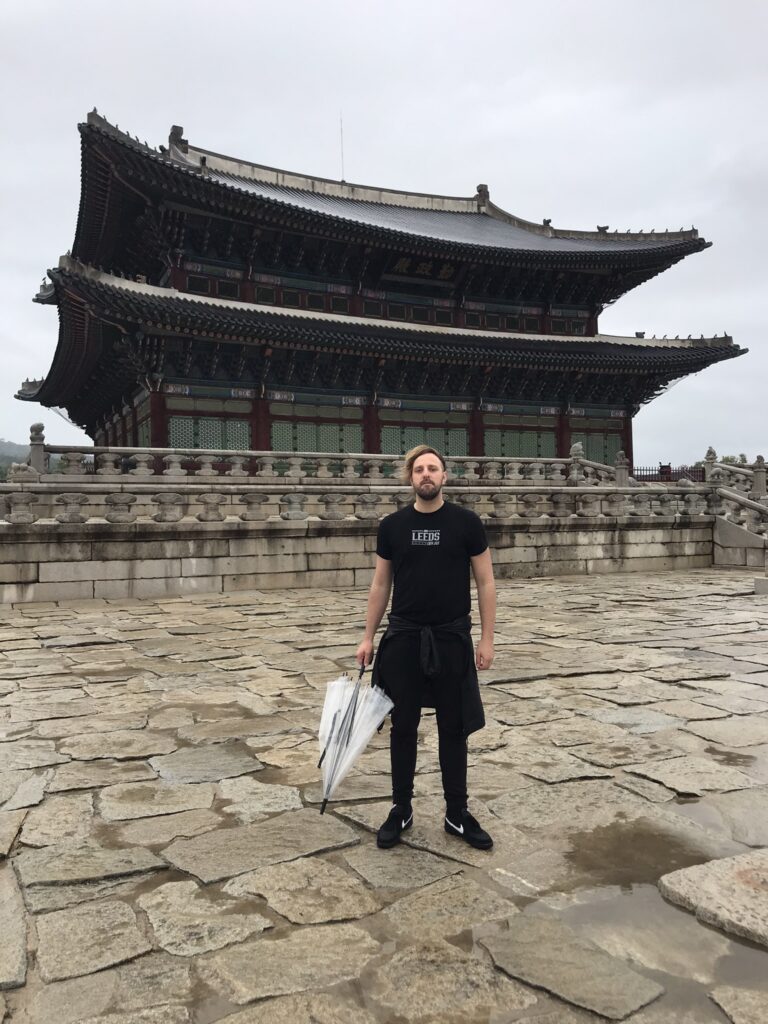
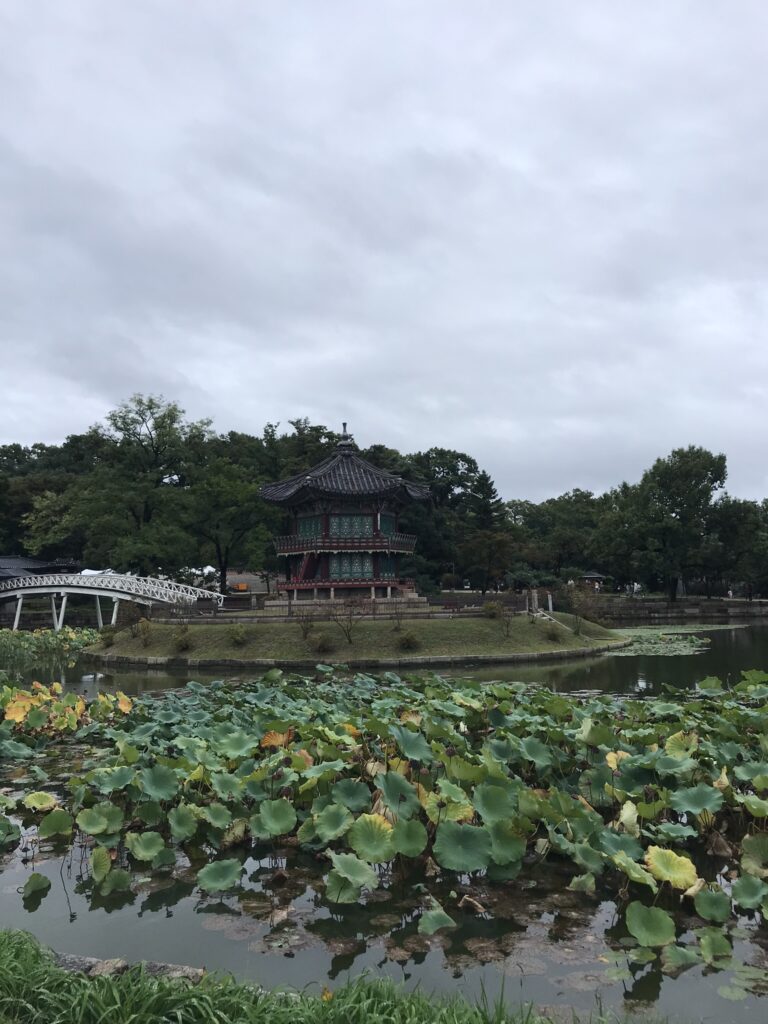
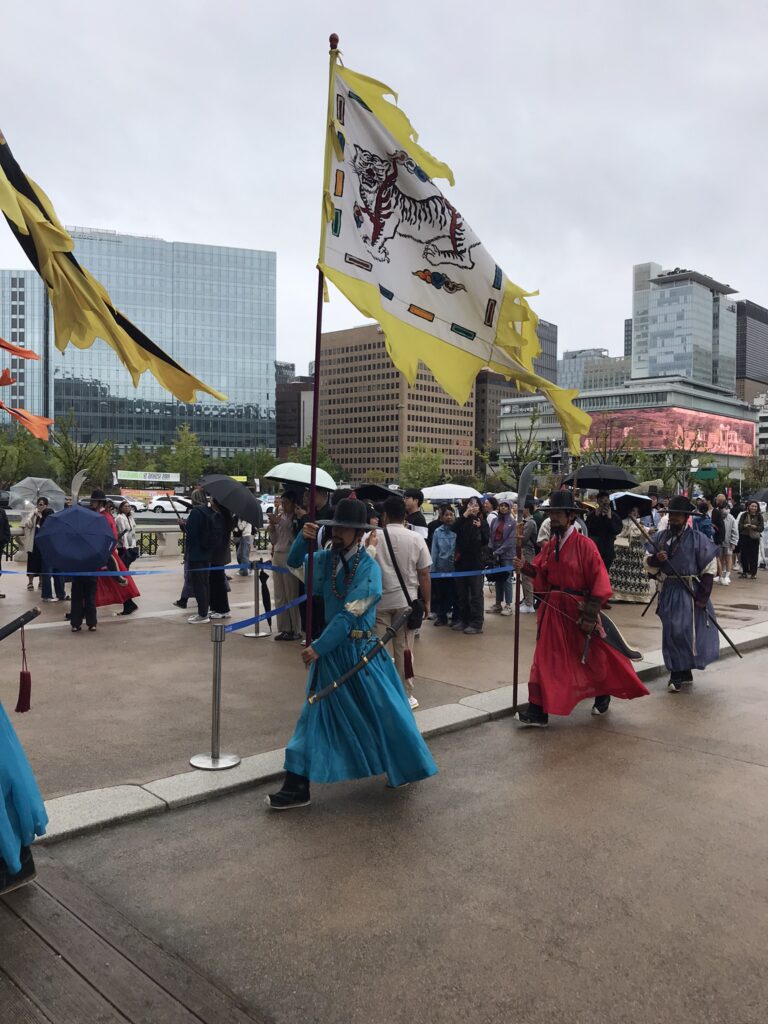
Gyeongbokgung Palace: pageantry, Joseon palace buildings and tranquil gardens
Changdeokgung Palace – one of the most important Joseon-era palaces and a UNESCO World Heritage Site, constructed in the early 15th century as a secondary ‘backup’ palace to the main Gyeongbokgung. Although initially subordinate to Gyeongbokgung, many of the Joseon kings chose to reside at Changdeokgung and it became the defacto main palace for the latter part of the Joseon dynasty when Gyeongbokgung was not rebuilt following the Imjin War. This is another large complex which is architecturally similar to Gyeongbokgung. Visitors can’t actually go inside the palace buildings here – it’s very much just wandering around the exterior and peering in. The complex also contains a ‘Secret Garden’, which requires another ticket for an extra cost so we didn’t visit.
Changgeonggung – adjacent to Changdeokgung, this palatial complex is located in a wider park at the bottom of the hill. It was originally constructed in the 15th century and was mainly used as a residence for queens, dowagers and members of the royal court, having since been rebuilt several times after being repeatedly destroyed by the invading Japanese. The palace was the scene of a notable incident in the 1760s when the reigning King Yeongjo locked his erratic and mentally unstable son, Crown Prince Sado, in a rice chest for 8 days until he died. Today some of the structures have been rebuilt and there are a few buildings that visitors can enter which include some small exhibits.
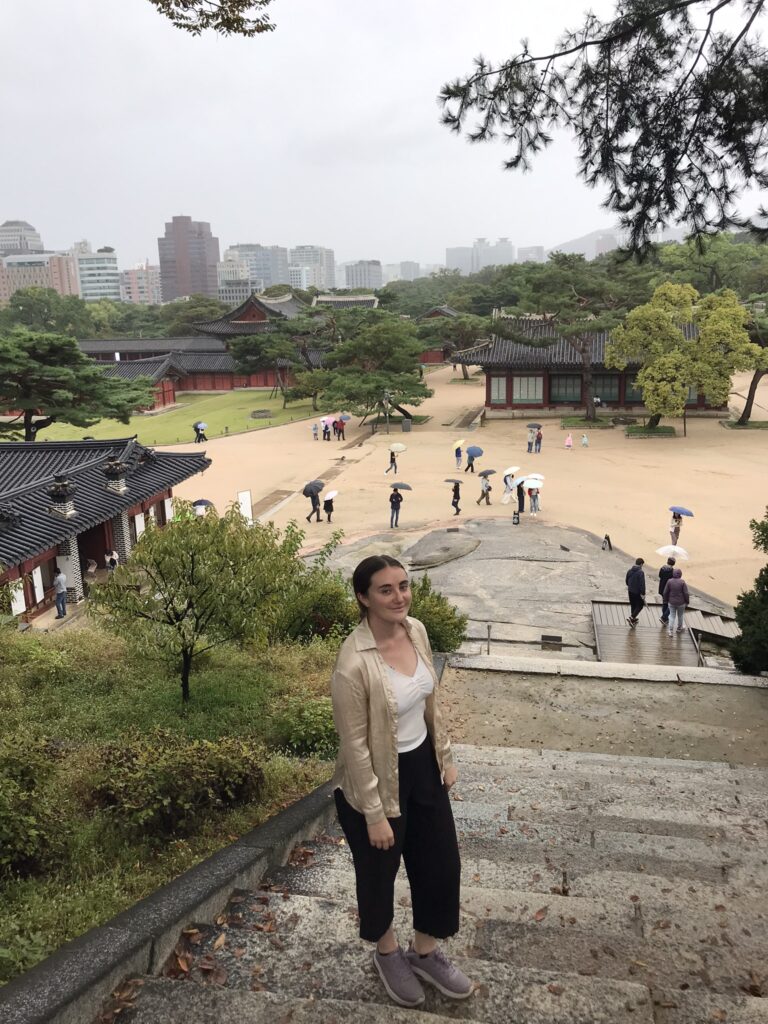
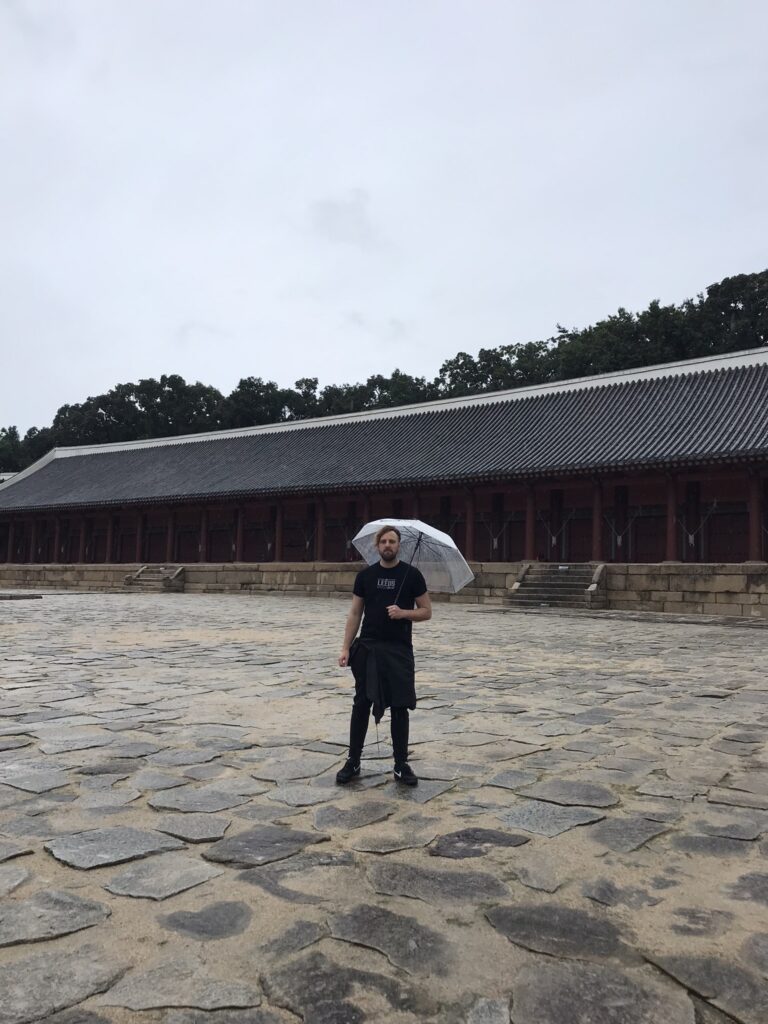
Changgeonggung and Jongmyo Shrine are in close proximity to one another
Jongmyo Shrine – a UNESCO site and the most important Confucian shrine in Seoul and South Korea, Jongmyo contains the enshrined souls of the Joseon kings, rulers of Korea between 1392 and 1910. There are a few buildings and halls within the complex including the main pavilion, Jeongjeon, which holds the spirit tablets of the most important Joseon rulers. The secondary hall, Yeongnyeongjeon, houses the tablets of the ‘less meritorious’ kings, while two deposed rulers are absent from the shrine completely. Aesthetically the pavilions look like large, long buildings with dozens of closed-up cubby holes. Not a visually spectacular place, but somewhere of great historical and cultural significance. It’s important to note that the kings themselves are not actually buried or entombed here, only enshrined as per Confucian traditions. The shrine is generally open to the public, with ancestor worship taking place here on auspicious days and a large annual festival of veneration held each May. An old stone waymaker outside the main entrance advises visitors to dismount from their horses. The shrine complex is walkable from Changgeonggung – a path at the back of the complex connects the two.
Deoksugung Palace – a more modern palace which became the main royal palace and was heavily developed during the short-lived Korean Empire in the late 1890s and early 1900s. This palace is slightly different from the other royal palaces in Seoul as it contains a fusion of traditional and modern styles, part of an attempt to symbolize the end of Korea’s self-imposed isolation. There are a number of different structures in the large complex including a traditional Korean-style throne room and also a Western-style palace with European architectural designs. There was a little exhibition in one of the buildings which we wandered into about 20th century Korean history, however there was not much info in English. The Western-style palace now contains the National Museum of Modern and Contemporary Art – a pretty good art gallery charting developments in Korean art through the 20th century.
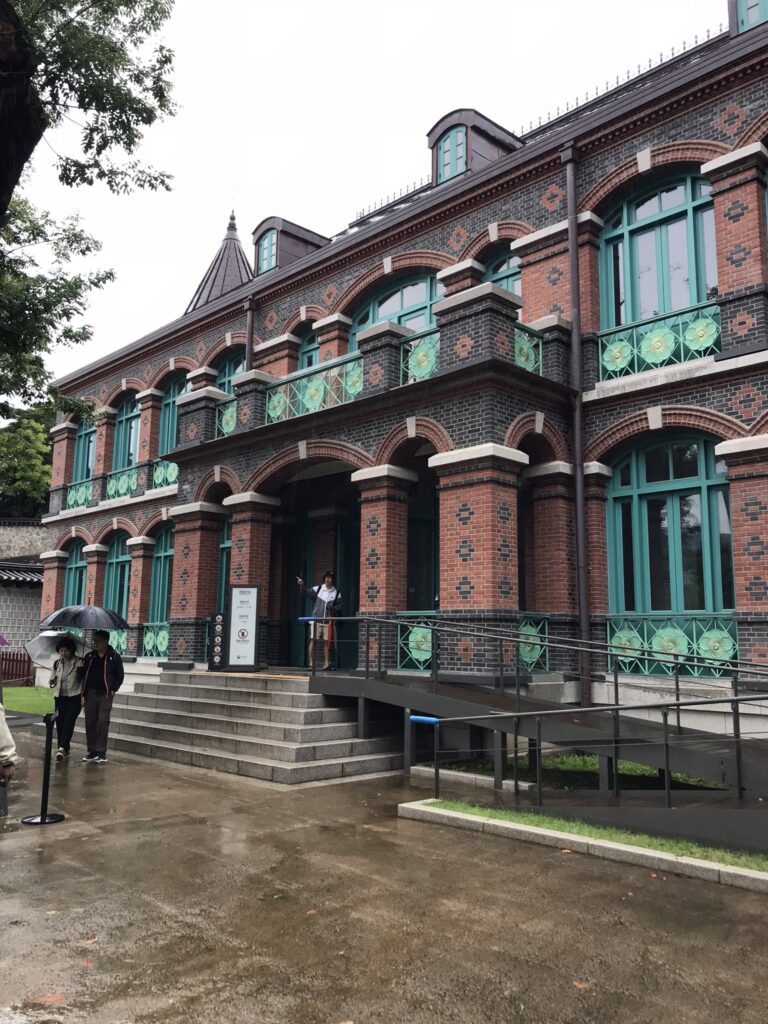
The western influenced architecture of the Deoksugung Palace makes for a noticeable change from the other imperial palaces
National Museum of Korea – a great introduction to the country and Korean history. We knew very little going in and felt like experts by the time we left. There is a huge amount to see in the museum, you could probably spend a full day here. The museum has free entry, and so at one point we went out to get lunch and came back! There can be large queues at the entrance, but these are mainly for bag searches. It’s much quicker to get in if you don’t have a bag.
War Memorial of Korea – an extensive museum which is best known for its extensive focus on the Korean War. This is undoubtedly the best place in the city to learn about this conflict, which continues to greatly affect Korean society and global politics to this day. The museum provides background information and context including an exact timeline of the war, as well as info about the role of the newly-formed United Nations which deployed peacekeeping soldiers from 22 countries including the likes of Colombia and Ethiopia. The museum and its grounds also contain a sizable arsenal of missiles, tanks and armoured vehicles. The sculpture of the American soldier supporting his Korean counterpart and associated memorials outside to the various UN troops that lost their lives are quite poignant and thought provoking. As well as the Korean War, the museum also provides in-depth information about the local history of warfare and a variety of other conflicts throughout Korean history, including the Imjin War of the 1590s and the role of the famous naval commander Yi Sun-sin. Entry to the museum is free and is a must-visit for those interested in 20th century/Korean history and global affairs.
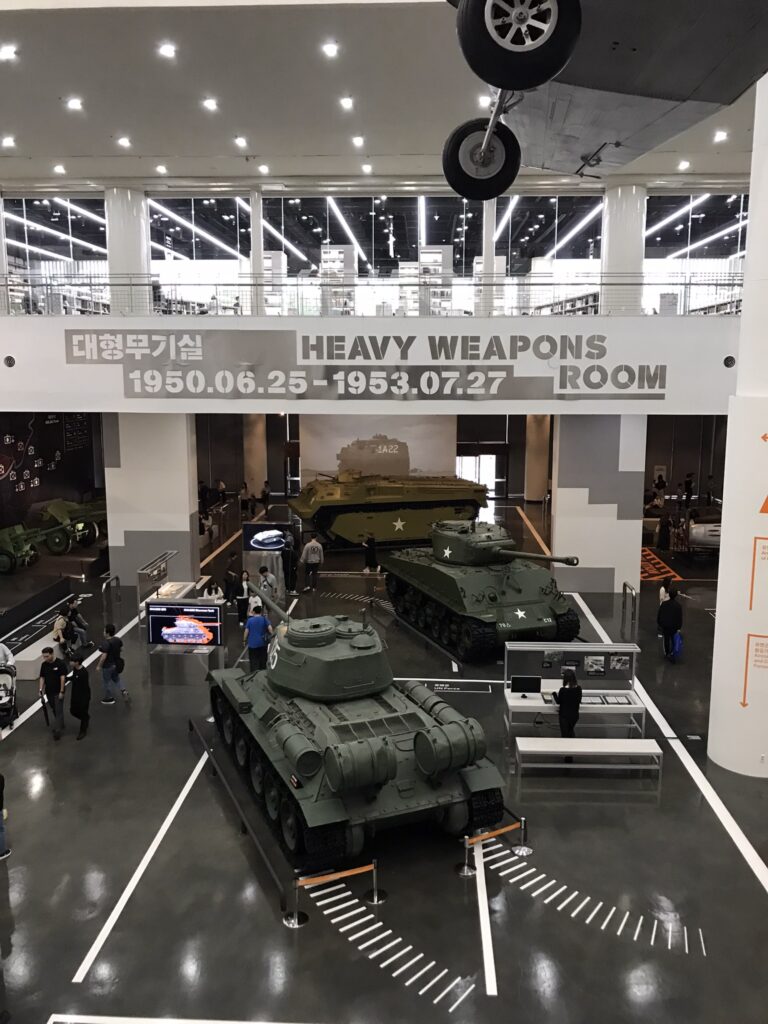
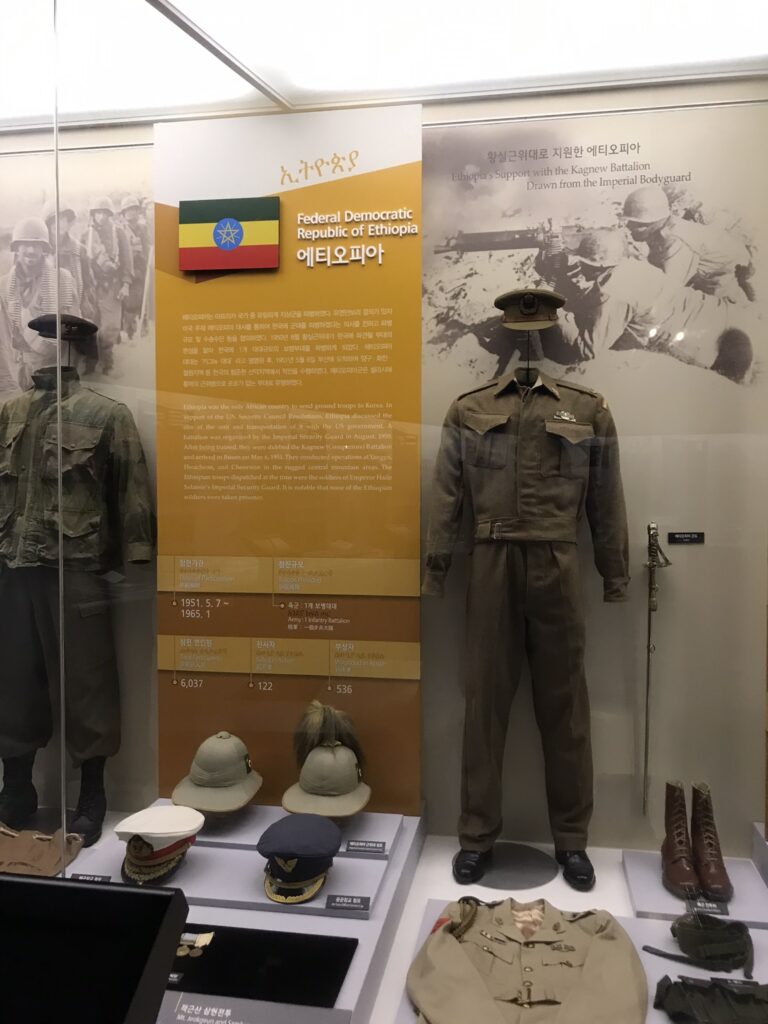
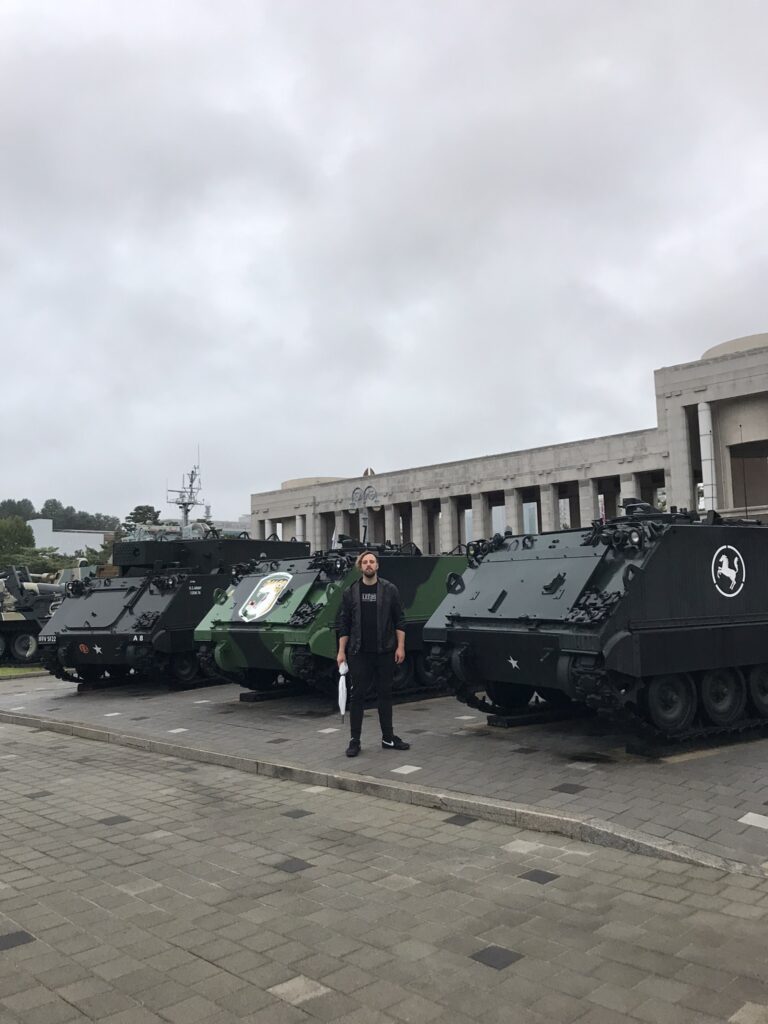
The War Memorial of Korea has all manner of military equipment on display such as tanks and uniform of the various soldiers who were part of the United Nations force
National Folk Museum – this museum is basically on the grounds of Gyeongbokgung Palace, although there is a separate entrance and the two aren’t linked. We found it to be very insightful, focusing on social customs rather than royal or dynastic history. There are sections on traditional clothing, seasonal festivities, folk masks, oriental medicine etc. We particularly enjoyed the exhibits on traditional hats – Korea has been described as the land of hats as this was a means of indicating social status. You can still see the distinctive hats worn as part of the hanbok outfits which are popular to this day.
Bukchon Hanok Village – in the centre of Seoul within the vicinity of Gyeongbokgung, this is a neighbourhood filled with traditional Korean ‘hanok’ houses, these are architecturally very different to the high-rise buildings of the rest of the city. A busy and bustling tourist area, some of the hanoks are now open for the public to enter while the neighbourhood as a whole still functions as a residential area – signs advise visitors to keep the noise down after dark.
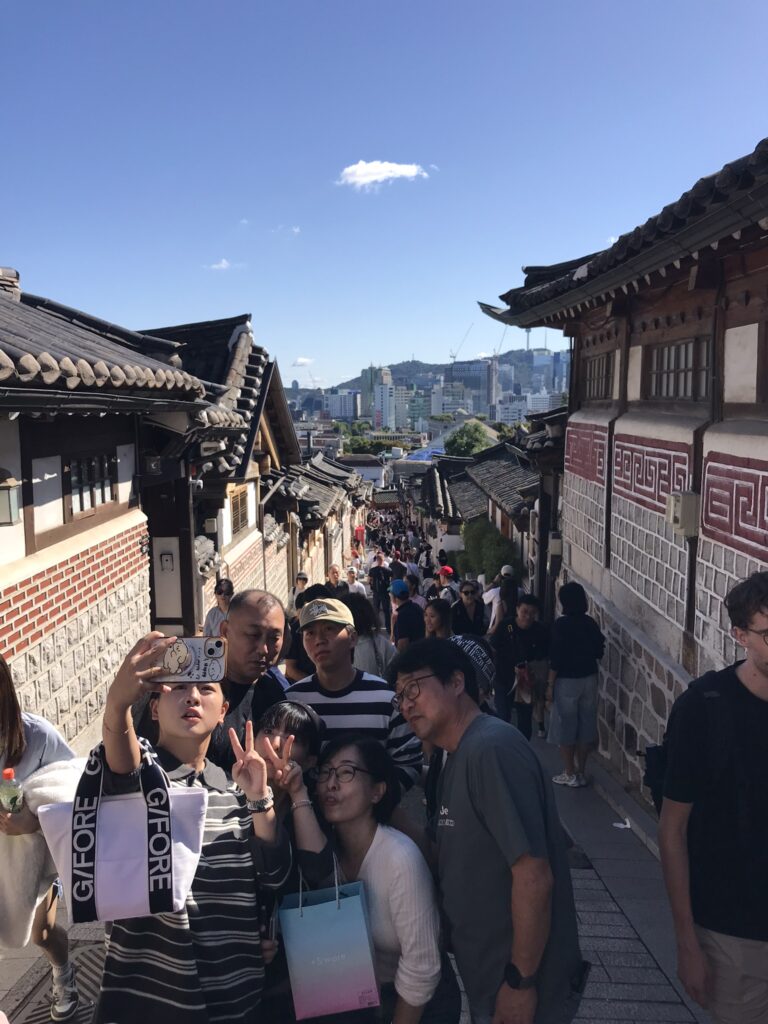
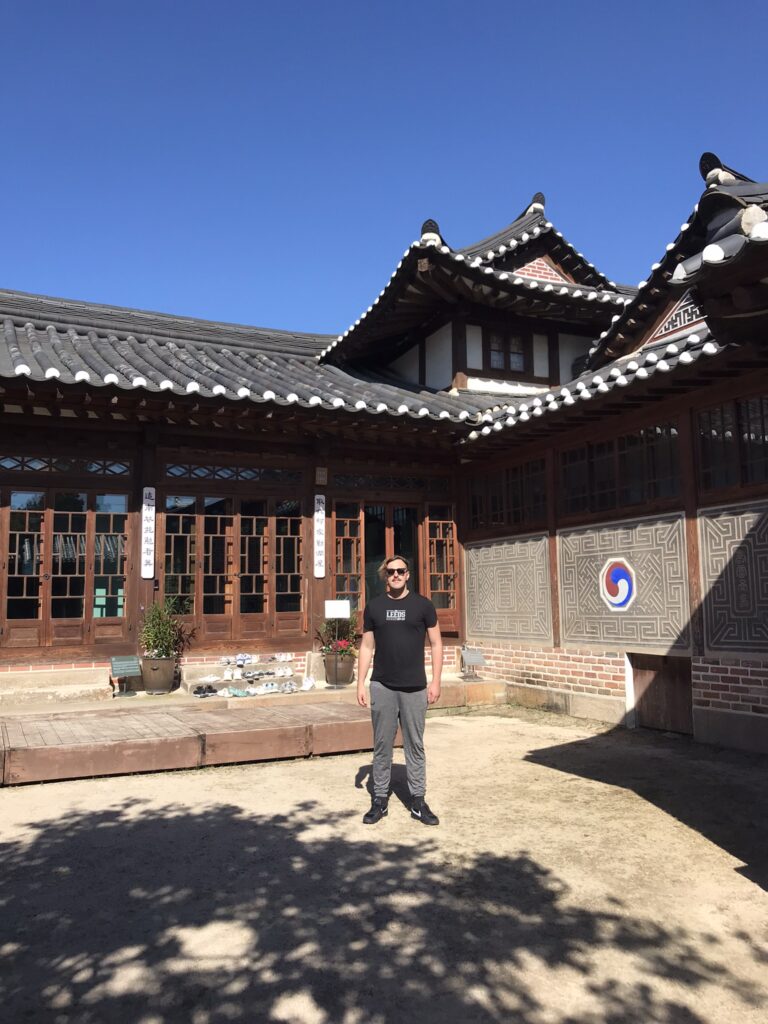
Bukchon Hanok Village is a great place to visit to see traditional hanok-style residences
Myeongdong Shopping Street & Market – a well-known area in central Seoul, this neighbourhood contains lots of flagship shops and is particularly vibrant at night when the smell of street food sizzling on the grill entices crowds of hungry onlookers. Some of the streets are so narrow that you almost end up in a pedestrian traffic jam – it can be a bit overwhelming. An ultra-busy, bustling and thriving area but it’s also very touristy. The street food market has many popular snacks such as potato on a stick, gimbap and skewers. Expect lots of selection but definitely tourist prices here! It’s an interesting place to look around and experience the hustle and bustle, but I don’t particularly recommend eating here unless you want to pay a premium for something you could find much cheaper elsewhere.
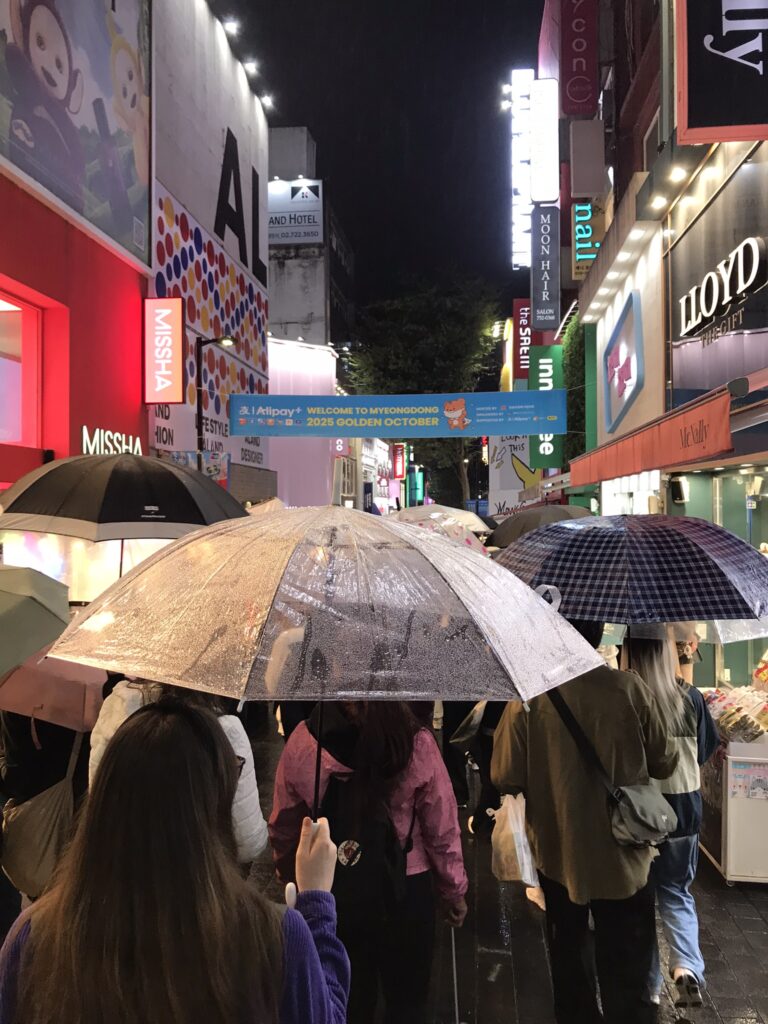
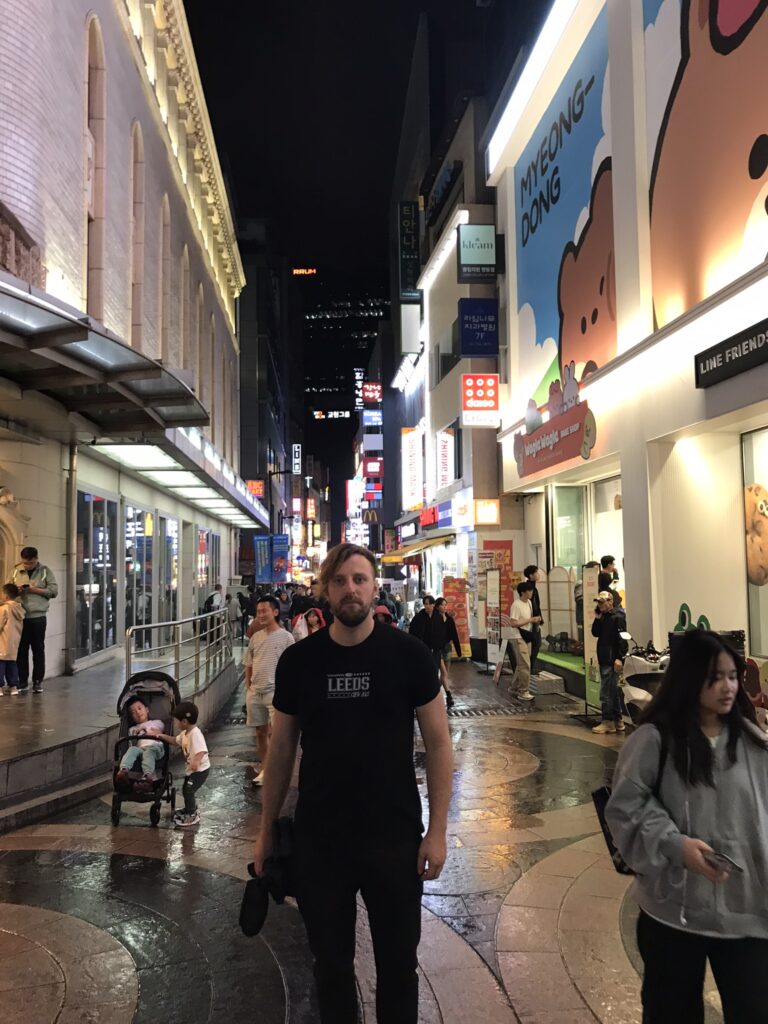
Myeongdong Shopping Street & Market is a cacophony of sounds, smells and bright lights
Seodaemun Prison History Hall – a notorious 20th century prison which held numerous activists and Korean patriots during both the Japanese occupation and subsequent American-backed dictatorship following WW2 – a period not often publicly talked about in modern South Korea. Closed in the late 1980s, the prison was later opened to the public as a museum. The prison complex is quite large and includes many displays about the detainees and conditions they faced. Executions and torture took place here, and some of the displays feature mannequins depicting the torture methods. It’s also possible to see the execution room, including a drop zone where the bodies of hung prisoners were collected and removed. Visitors are encouraged to follow a set route around the extensive complex but are free to wander at their own pace through the grounds, cell blocks and various other structures, which also include a factory area, an exercise yard and a separate section for female prisoners.
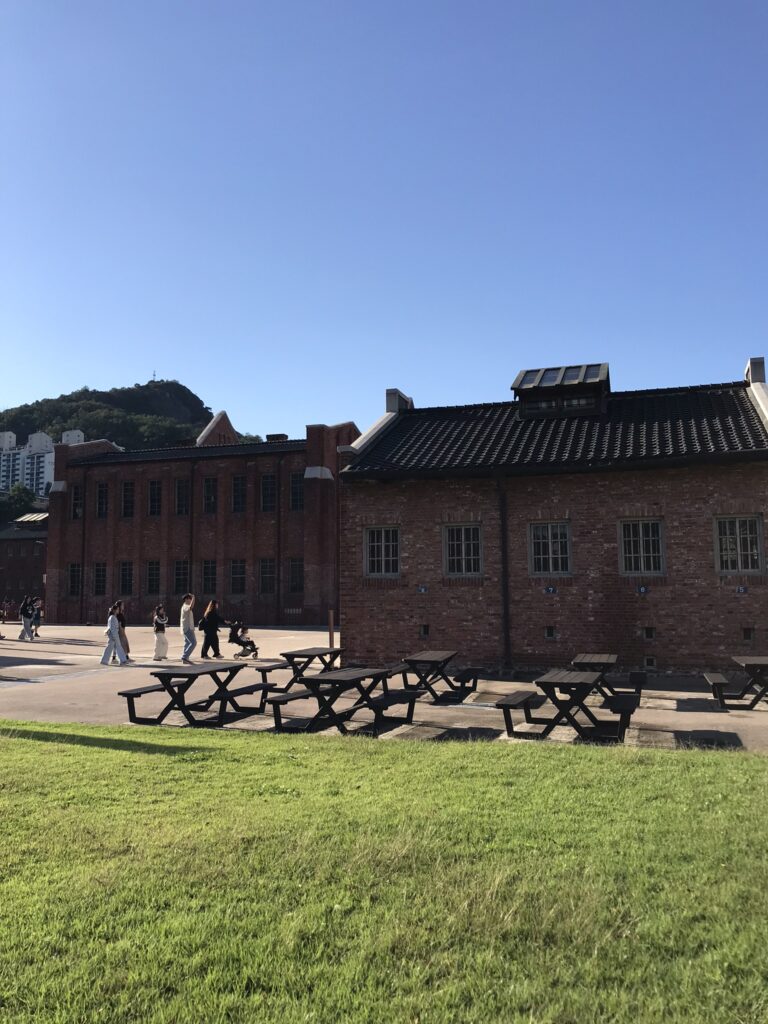
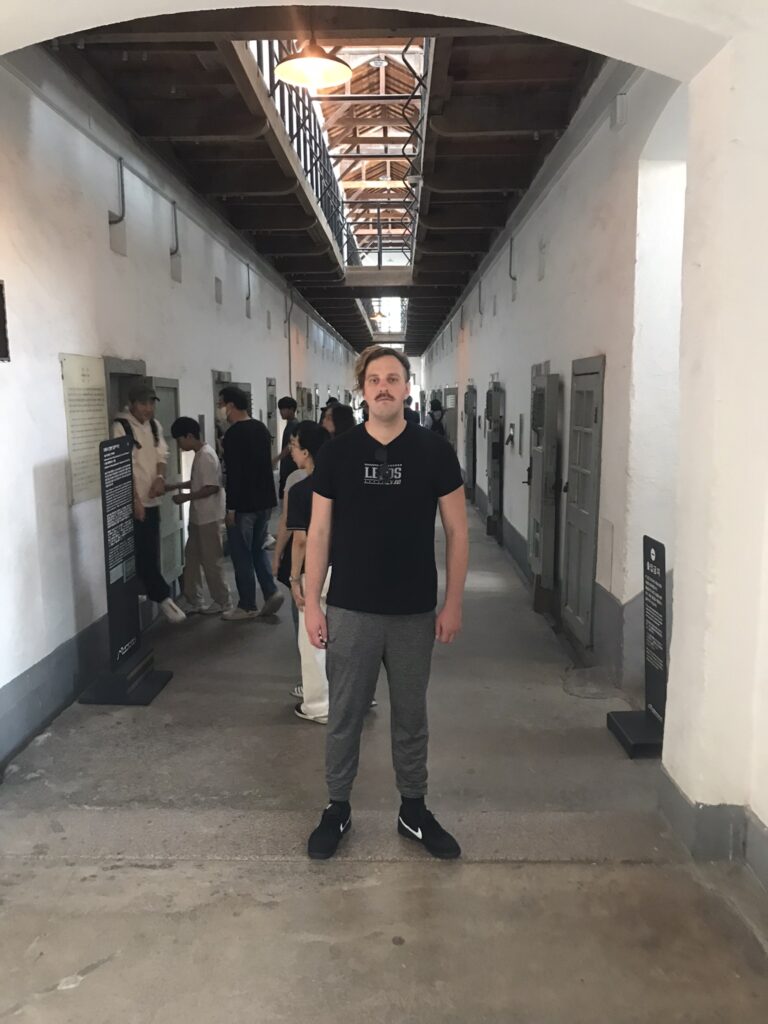
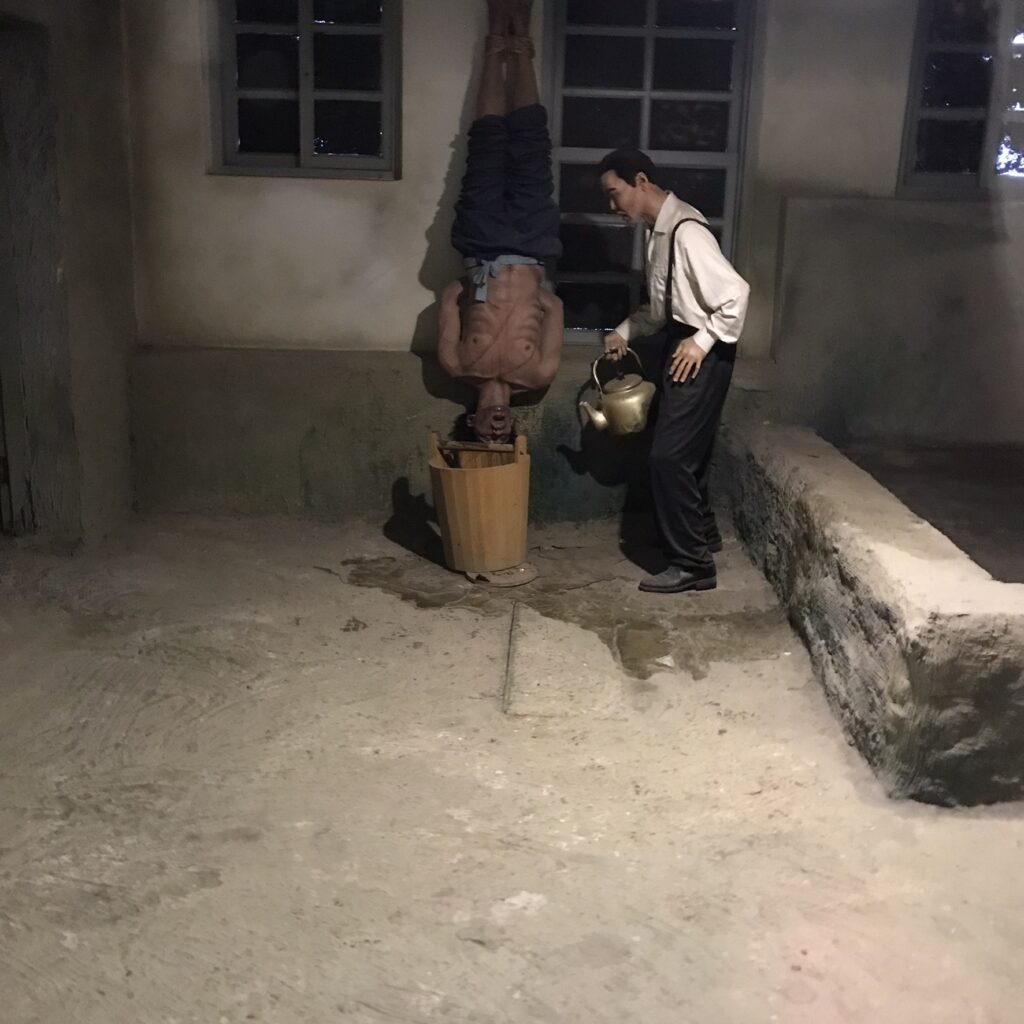
For those interested in the macabre head to the Seodaemun Prison History Hall to learn about torture and imprisonment in 20th century South Korea
Seolleung and Jeongneung Royal Tombs – a much lesser-visited UNESCO World Heritage Site, this park contains the tombs of King Seongjong and King Jungjong, the 9th and 11th rulers of the Joseon dynasty, as well as the queen consort of one of the kings. Dating back to the 15th and 16th centuries, the tombs now sit right in the middle of an extremely developed urban area near to Gangnam. High-rise buildings overlook the ancient graveyard, making for a surreal sight. The park containing the tombs is quite large and houses a number of trails which run through wooded areas between the tomb clusters. The tombs themselves are somewhat sparsely decorated – the main visible features are the statues of the tomb attendants which sit atop the burial mounds. We visited the park at dusk and there was a bit of a spooky atmosphere. We were able to enter for free although I don’t know if the admission was waived because of Chuseok, it seemed like there is usually a fee to enter here.
Banpo Bridge – a nightly light and water display emanates from this famous city bridge over the Han River. Locals line the riverbank each evening, creating a festive atmosphere. We saw a number of tourist boats getting prime position on the water for the light show. There are some concrete bleacher-like structures but I recommend taking a picnic blanket or something to sit on along the riverbank for the best views. A nice, free evening activity.
Gangnam – a well-to-do district which was made internationally famous in the 2010s by the singer PSY and his notorious global hit song Gangnam Style. This is a glitzy area which is frequented by celebrities and filled with high-end brands – literally more than 20 of the world’s most luxury and renowned brands have a flagship store here along a single road, which is quite a spectacle to see. We visited the K-Star Road (similar to the Hollywood walk of fame, lined with cartoony bears which represent K-pop stars amidst a backdrop of ultra high-end designer department stores, these are architectural marvels in their own right), Bongeunsa Temple, CO-EX mall (the mall is best known for a famous sculpture of the ‘Gangnam Style’ hands outside – Gangnam Style plays on repeat here, it’s funny to sit for a while and watch people lining up to do the dance) and the nearby futuristic and enormous Starfield Library.
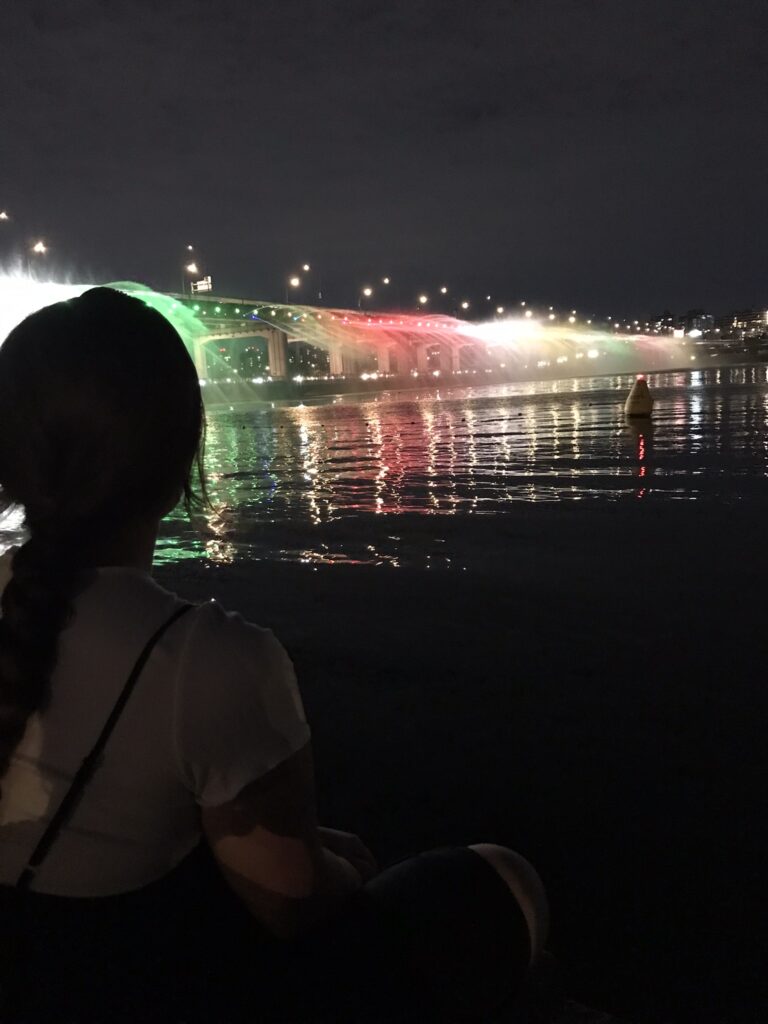
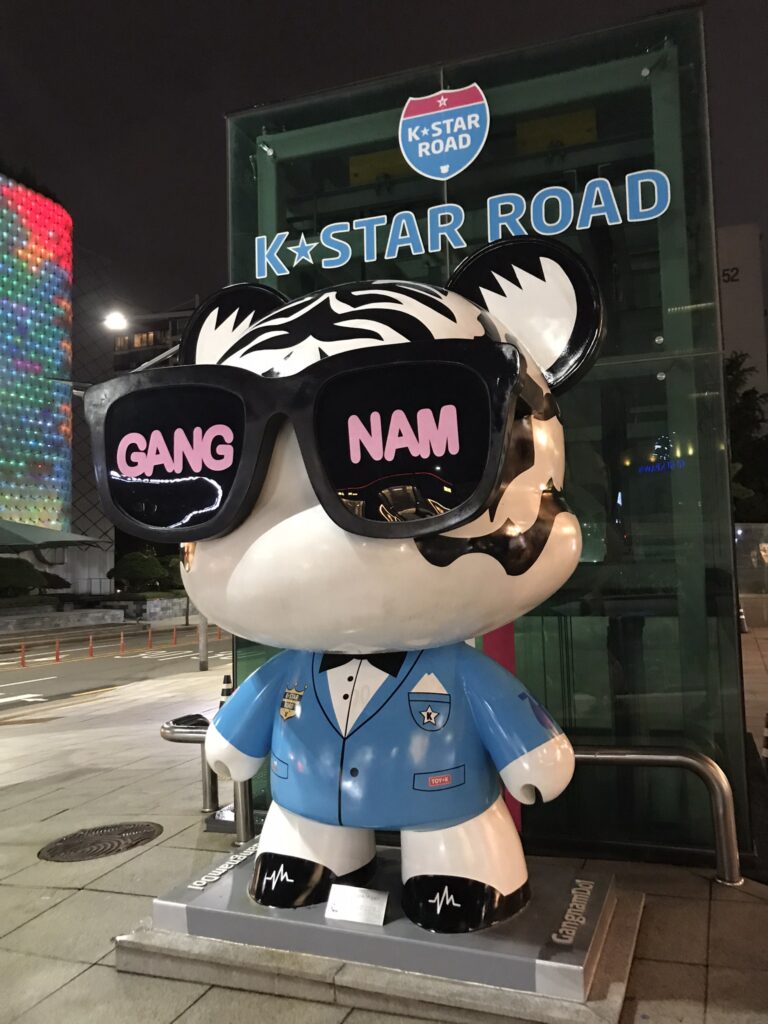
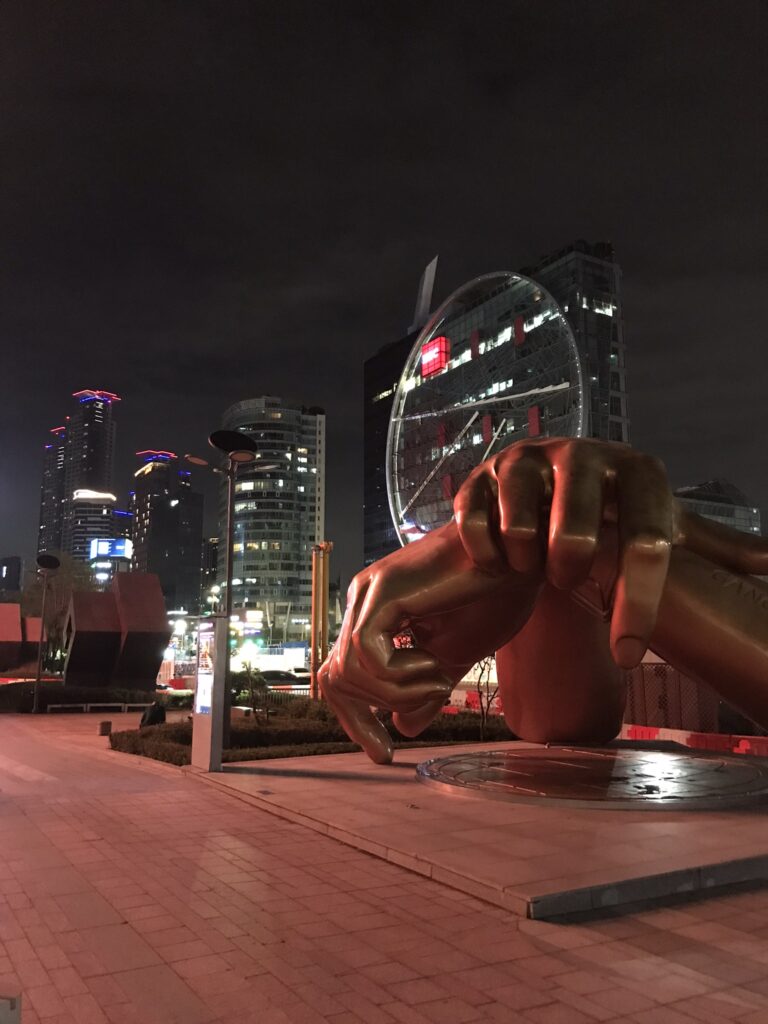
Banpo Bridge and Gangnam district are great places to visit after nightfall
Hongdae – where the students go to party, this entertainment area is filled with dazzling neon lights, impromptu street performances and karaoke bars. Walking through at night is a feast for the senses. Streets in this area seem to be named after different things (Festival Street, Mural Street, Club Street etc)
DMZ/North Korea border tour – by far the most convenient way to visit the DMZ and the famous Dora observatory is to take an organised tour, with numerous companies offering pretty affordable group departures from Seoul. We took a tour with a seemingly-reputable company (Cosmojin Tour), which also included a Q&A session with a North Korean defector. However things didn’t really work out at all as we chose to visit the DMZ on the day after Chuseok. What we didn’t realise is that the tickets to the DMZ can only be bought in person on a first-come, first-serve basis from the ticket office in Imjingang Park – tour companies have no inside track to getting tickets, the guide just has to queue up like everyone else. The park was incredibly busy on the day we visited and tickets were sold out by the time our group arrived, meaning that we were unable to actually visit the DMZ. A huge let-down. We therefore had to make do with a tour of Imjingang Park, a cable car over the river and a free observatory several miles away that we could’ve easily traveled to independently. We felt scammed and ripped off as we didn’t receive refunds from the company. Later we were told that the park is ultra-busy around Chuseok as North Korean defectors visit in droves in order to be closer to their home during this special holiday period. The moral of the story here is not to visit on or around Chuseok.
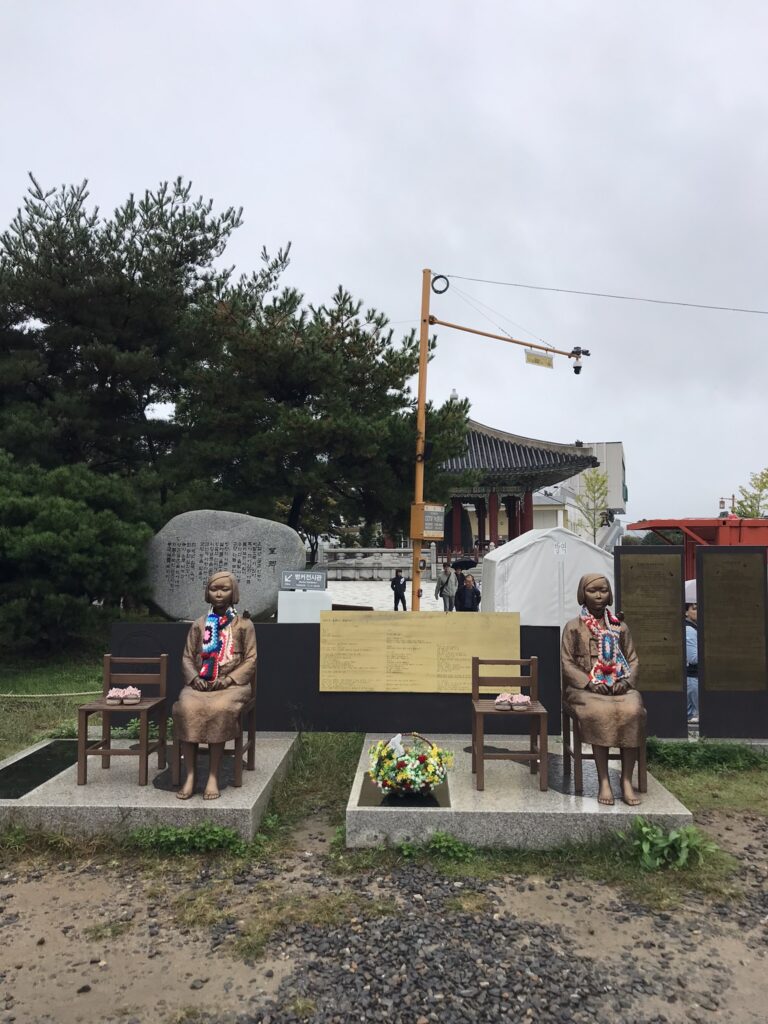
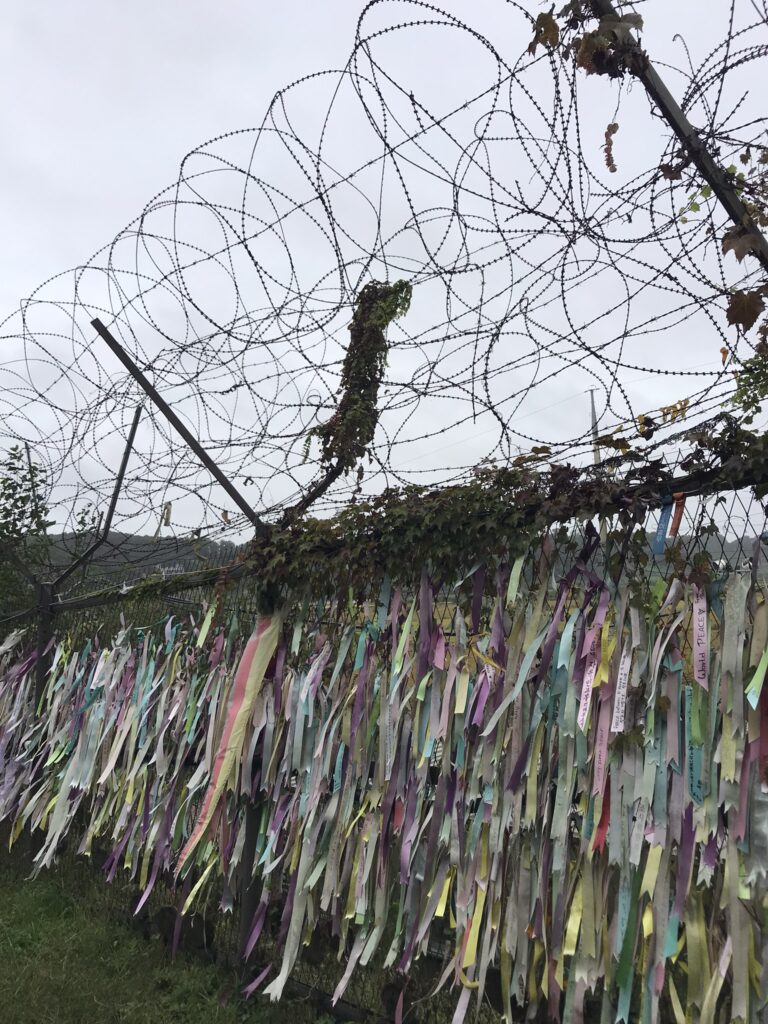
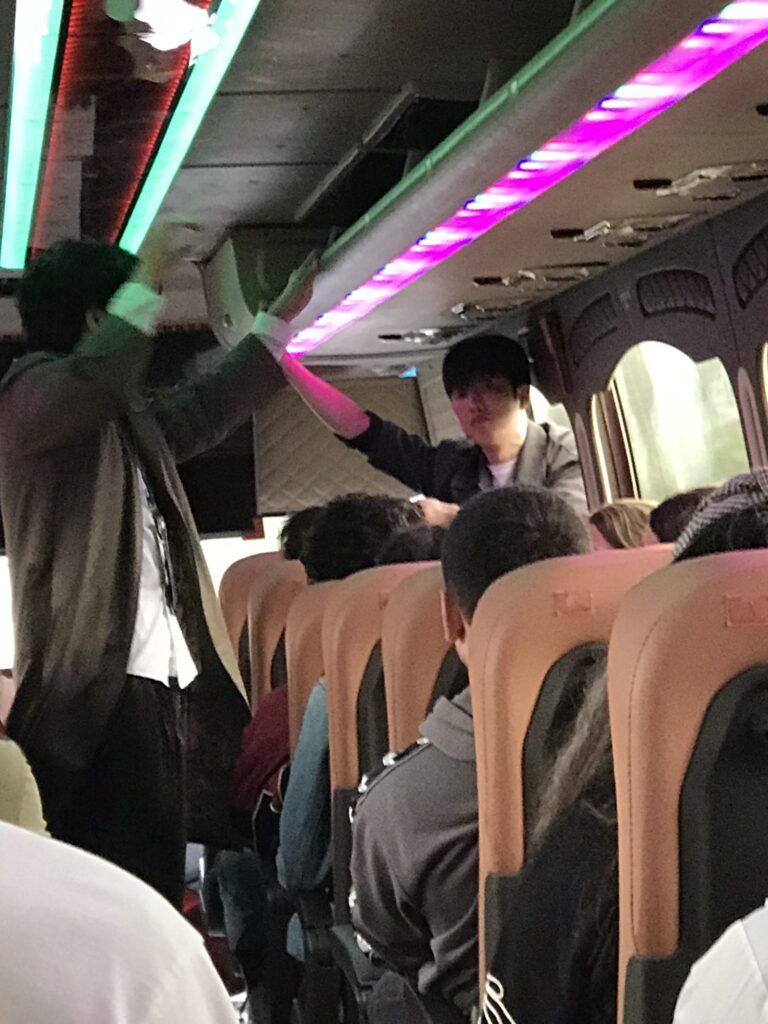
Korean Comfort Women statue in Imjingang Park alongside ribbons left by the relatives of those still trapped in North Korea; the Q&A session with a North Korean defector was definitely the highlight of our disappointing DMZ tour
Of the attractions that we were able to see, Imjingang Park has a few monuments and memorials which are quite evocative including a memorial statue for Korean ‘comfort women’ who were trafficked to Japan from both the North and South, as well as a bullet-riddled train which used to run along the now-destroyed railway line between the South and North (the train tracks now abruptly end). There is also a shop where tourists can purchase North Korean currency. Tickets to the Dora Observatory within the DMZ are bought from the office at Imjingang Park, but obviously I can’t comment on that experience as we weren’t able to visit. For those looking to save money, it may be possible to make your way here independently from Seoul using public buses (check Naver, it seemed quite a long and convoluted journey but probably doable) and then just buy a ticket at the park. I do recommend a clear rather than cloudy day for the best views into North Korea.
As part of our tour we had a Q&A session with a young North Korean defector. He told us that his mother was trained by the North to go overseas and work as a spy, which exposed her to the fact that the regime’s propaganda was a lie. She defected to the South and her son later followed. The South Korean government tries to support and provide assistance to defectors, but some still struggle to find jobs and opportunities. The guy on our bus said that he was training to be a nurse. This Q&A was definitely the highlight of our otherwise failed tour.
Suwon day trip
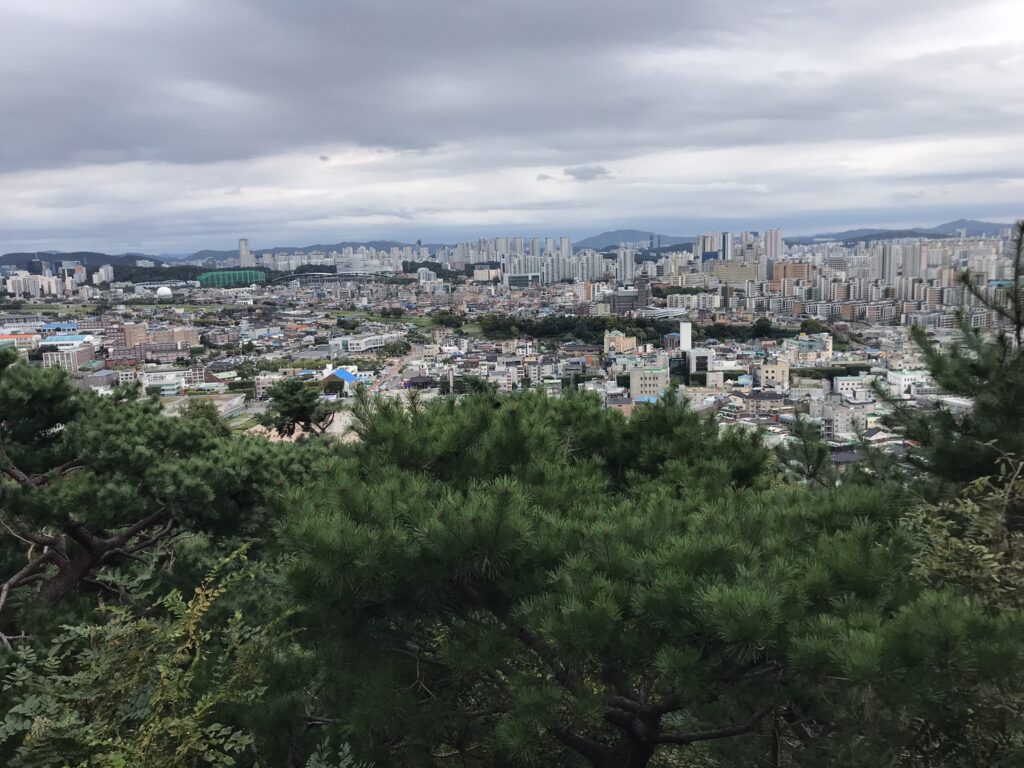
The satellite city of Suwon makes for an easy day trip from Seoul on the bus. A large commuter city, the main attraction is Hwaseong Fortress – a UNESCO World Heritage Site which is essentially just the extensive city wall of Suwon. The fortress was built in the late 18th century by King Jeongjo, who had intended to move the capital from Seoul to Suwon – a plan that was abandoned following his death. The walls, which have been meticulously restored based on original design plans, are huge and almost completely encircle the inner city with numerous bastions, pavilions and other features. It reminded us a little of the Great Wall of China on a miniature scale and within an urban setting. Walking on the walls is free – we walked around the entire circumference which took a few hours. It’s quite a steep ascent at one point to the south-east where the walls peak, but the climb is worth it as there are fab city views from the top. There’s a sharp contrast between the modern city outside the walls and the more low-rise buildings inside.
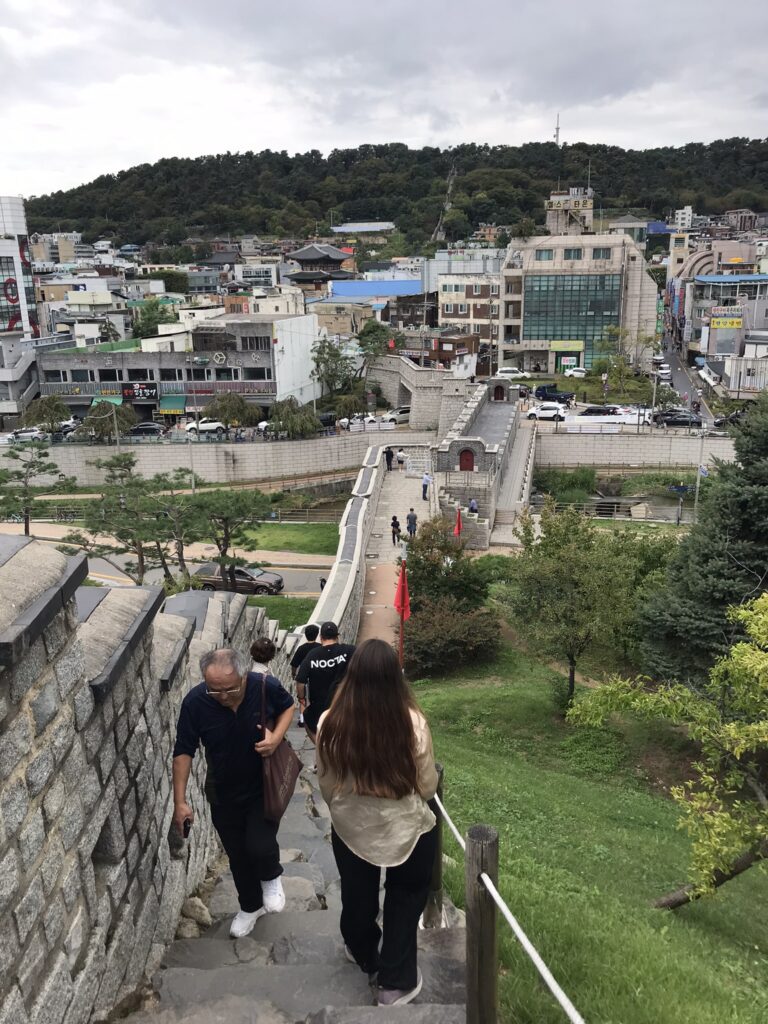
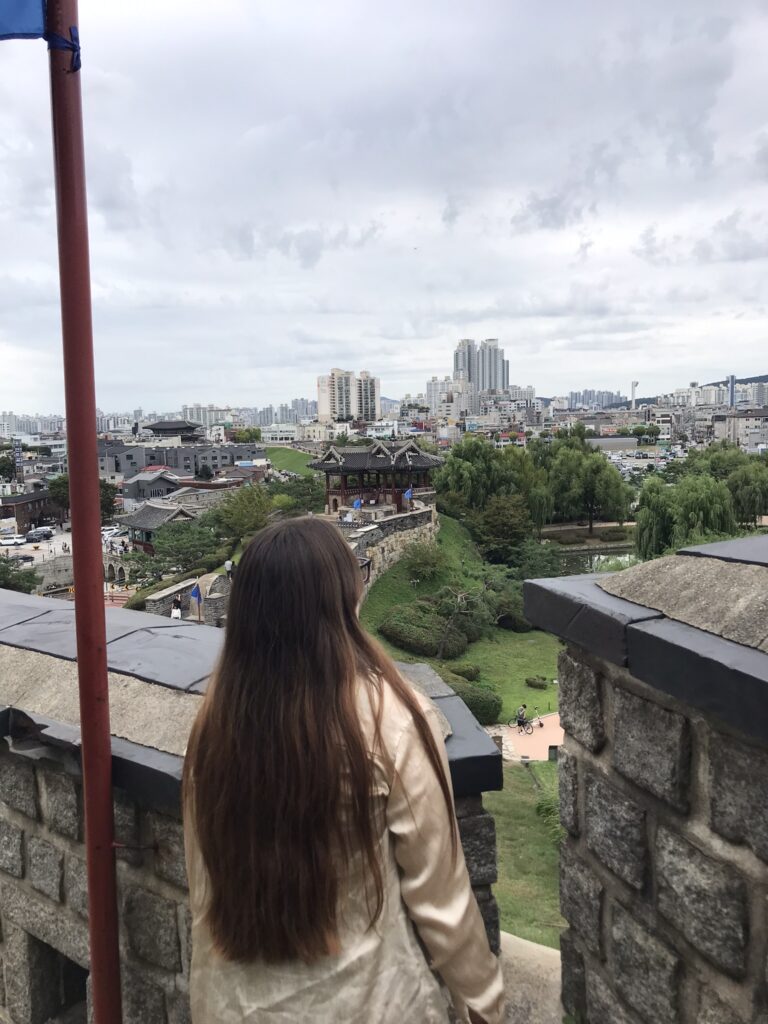
The old fortress walls are massive and almost form a complete loop
At the centre of the walled city is the Joseon-era ‘temporary palace’ of Hwaseong Haenggung – a secondary palace for the rulers of the time. Having been destroyed by the Japanese occupiers in the early 1900s, the palace was rebuilt in 1996 and is a complete and faithful reconstruction based on surviving design schematics of the era. Inside we found a few low-key exhibits, including one on traditional Korean toys. There seemed to be a festive atmosphere in the large open courtyard outside the palace, with many local people jovially singing, dancing and flying kites. There is a small entry fee to the palace, unlike the city walls which are free to visit and walk around.
We enjoyed our time in Suwon and found it to be an interesting city with plenty of cool looking places to eat. It’s ultra-cosmopolitan but we definitely got a more laid-back vibe in contrast to the bustling streets of Seoul. Expect a chilled atmosphere with locals walking their dogs and relaxing in green spaces. Some of the streets around the Haenggung palace area had a quaint feel and were quite pleasant to walk around. The city attracts some domestic tourists, but we saw very few other foreigners here. There’s a market area within the walled city and everything felt very non-touristy, genuine and authentic.
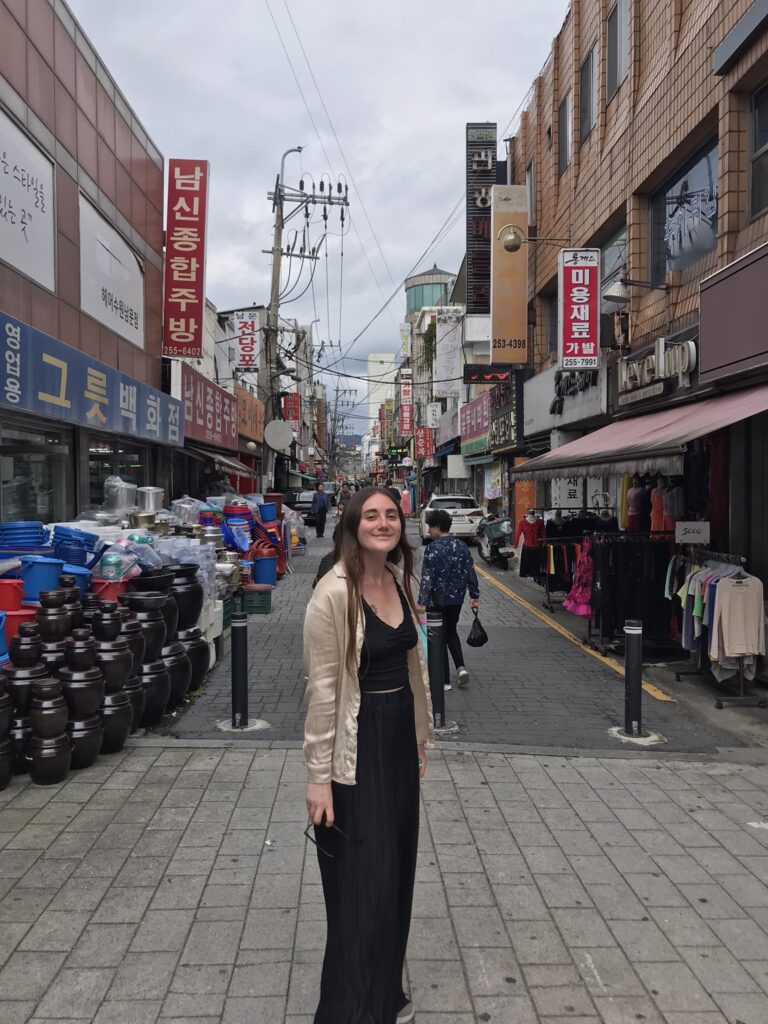
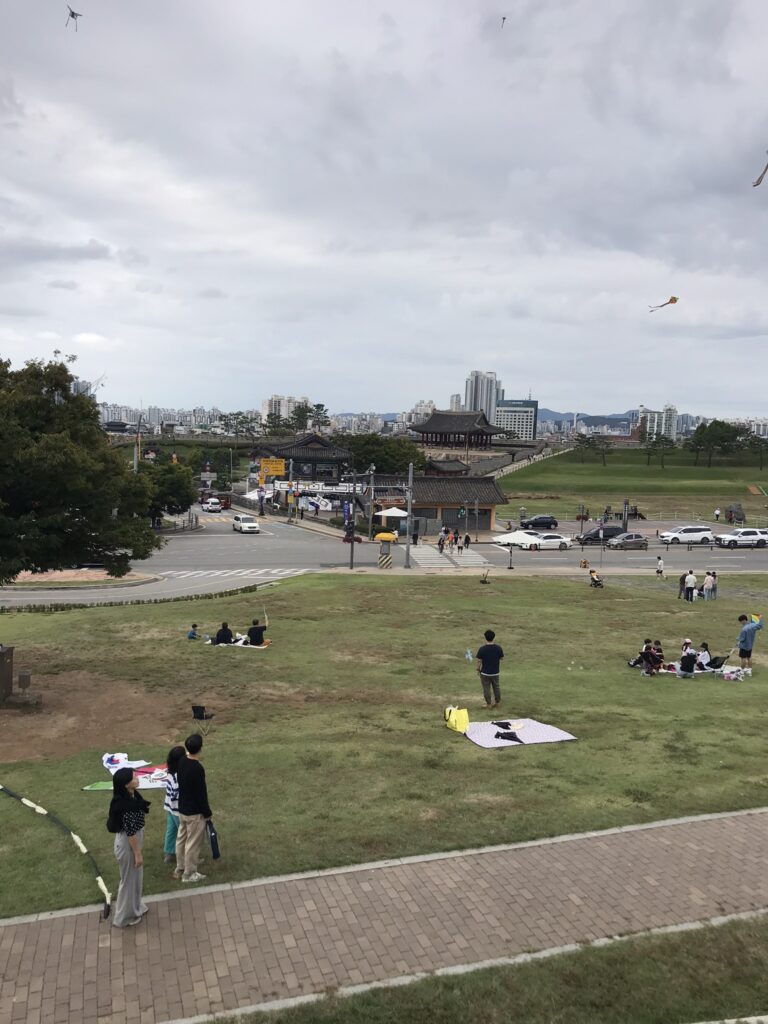
The city itself has a laid-back atmosphere in comparison to Seoul, but there’s still plenty going on
Foodie Places
Cong Caphe – a trendy Vietnamese cafe serving delicious bahn mi and juices as well as indulgent Vietnamese iced coffee. Located in a nice area within walking distance of the Temporary Palace, this place is a little on the expensive side but has an excellent atmosphere and quality food.
Jeonju
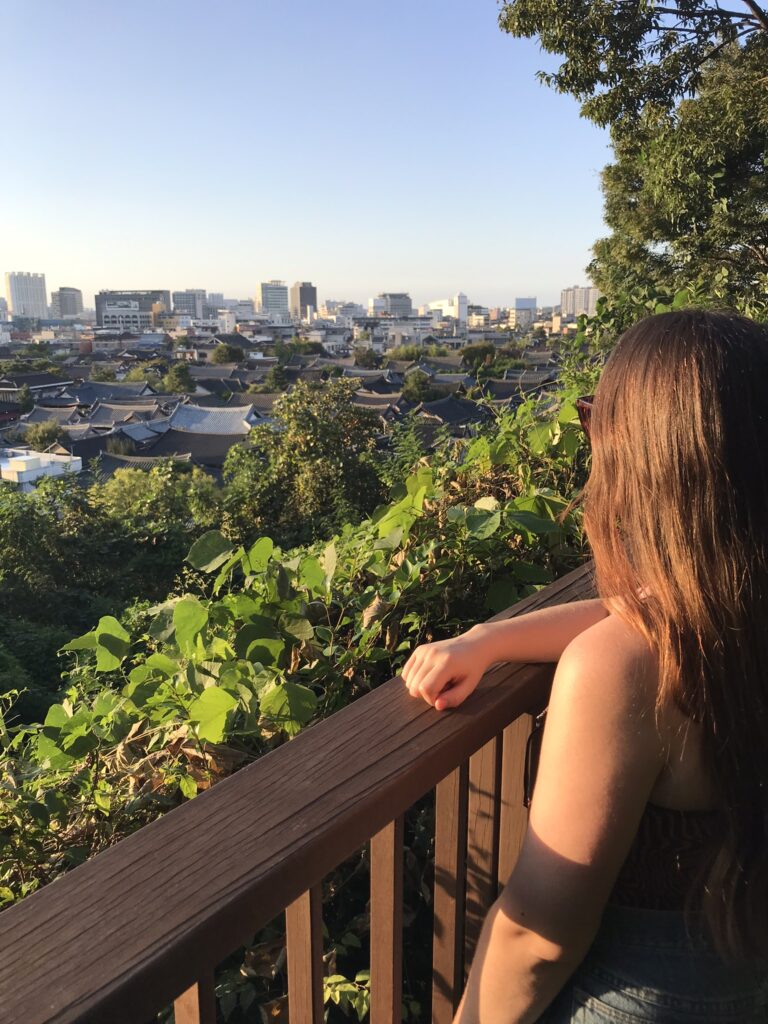
Located a few hours south of Seoul, the city of Jeonju is a provincial capital which is best known for its neighbourhood of traditional Korean ‘hanok’ houses. With over 800 traditional-style Korean houses in an area close to the city centre, this is the largest hanok village in South Korea. Understandably, the hanok village is a major tourist attraction – it’s particularly popular with domestic tourists who like to wander around in traditional costume (hanbok) and participate in long, protracted photoshoots with the various picturesque streets and monuments. The hanok village has a boisterous and ultra-touristy atmosphere, particularly at holidays/weekends when you can find domestic tourists being ferried around in golf carts. The hanok houses themselves have largely been converted into tourist accommodation, shops, cafes, gift shops etc. It’s not exactly a quaint old-town experience, but a vibrant and enjoyable place to visit as long as you accept it for what it is. To get a real sense of the layout of the Joseon-era city, make sure to pay a visit to the huge mural of the old city on one of the buildings near to the Jeolla Gamyeong .
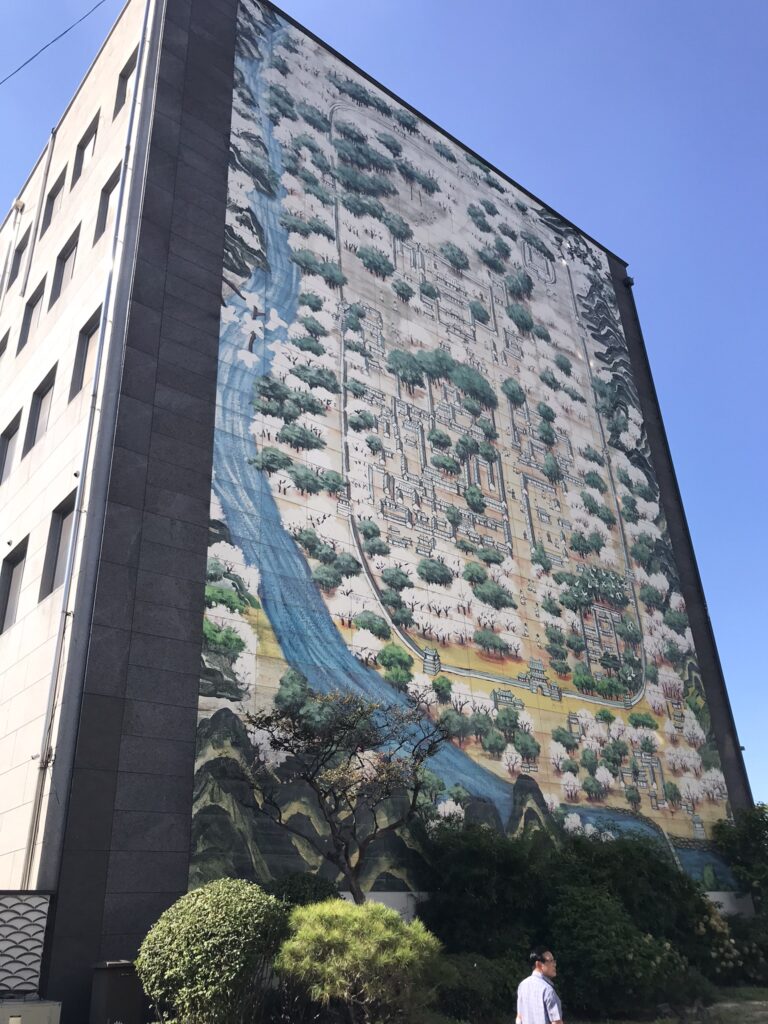
This handy mural map shows the layout of the old Joseon-era walled city; the hanok area was originally a settlement just outside the walls
Most visitors opt to stay in the traditional hanok houses within the hanok area. There are various levels of luxury – some will have a four poster bed and en-suite, while others are literally just a small room with a blanket on the floor. We stayed in a pretty basic hanok and, while interesting, it was definitely not the most comfortable experience.
Outside of the hanok district, Jeonju is a large and modern city. The hanok village is not within walking distance of the main intercity bus/train stations and requires taking a local city bus. The city itself has a few interesting low-key sites such as Pungnammum Gate and Jeolla Gamyeong – these are mostly in the vicinity of the hanok village and you can pretty much see everything in a single day. We had a spare day in Jeonju and so looked into day trips to some of the ancient Baekje kingdom sites to the north (specifically the towns of Iksan, Buyeo and Gongju), but logistically this didn’t really seem feasible via public transport. These places are probably best visited en-route to Jeonju from Seoul.
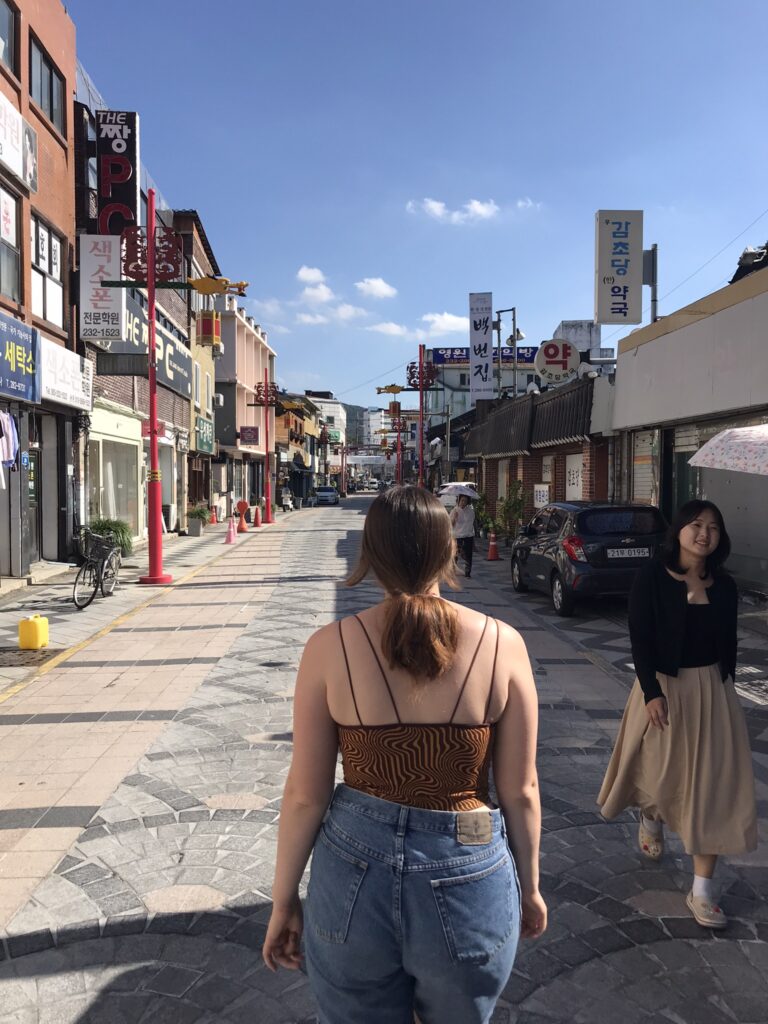
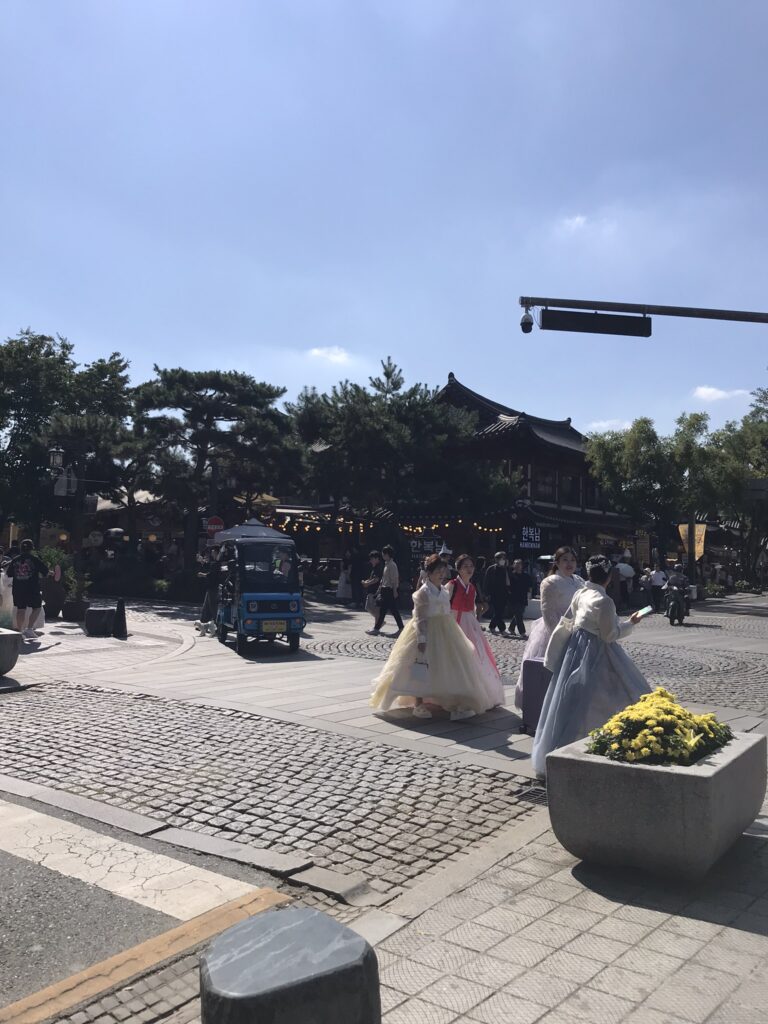
The modern city area and the hanok district have slightly different vibes
Jeonju is also known as the home of bibimbap – the famous rice dish which usually includes ground meat and numerous different elements including a cracked egg, beanspouts, grated carrot and seaweed along with gochujang sauce. One of the most popular Korean dishes, you can find plenty of cheap places to eat both bibimbap and other regional specialities around the Nambu Market and Pungnammun Gate area. Domestic tourists in the hanok district also seemed to be very interested in a particular street food which looked like some sort of fried claw/squid – we saw constant queues for this at all times of the day. We opted not to try this, deciding it was one of the more bizarre food fads floating about.
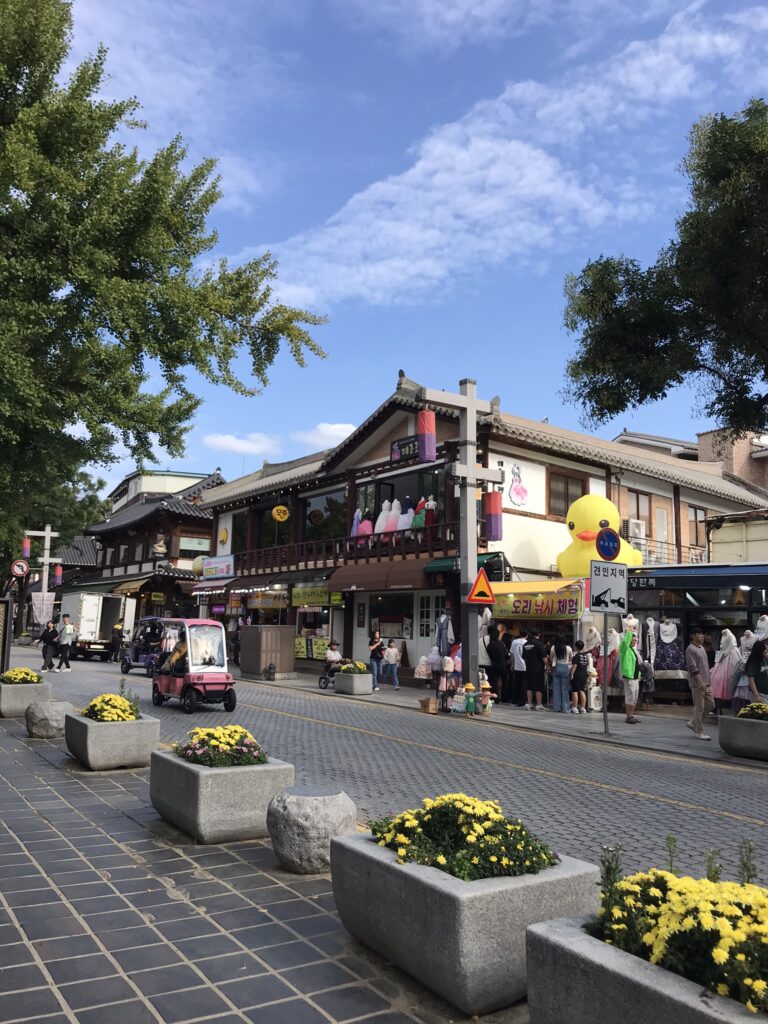
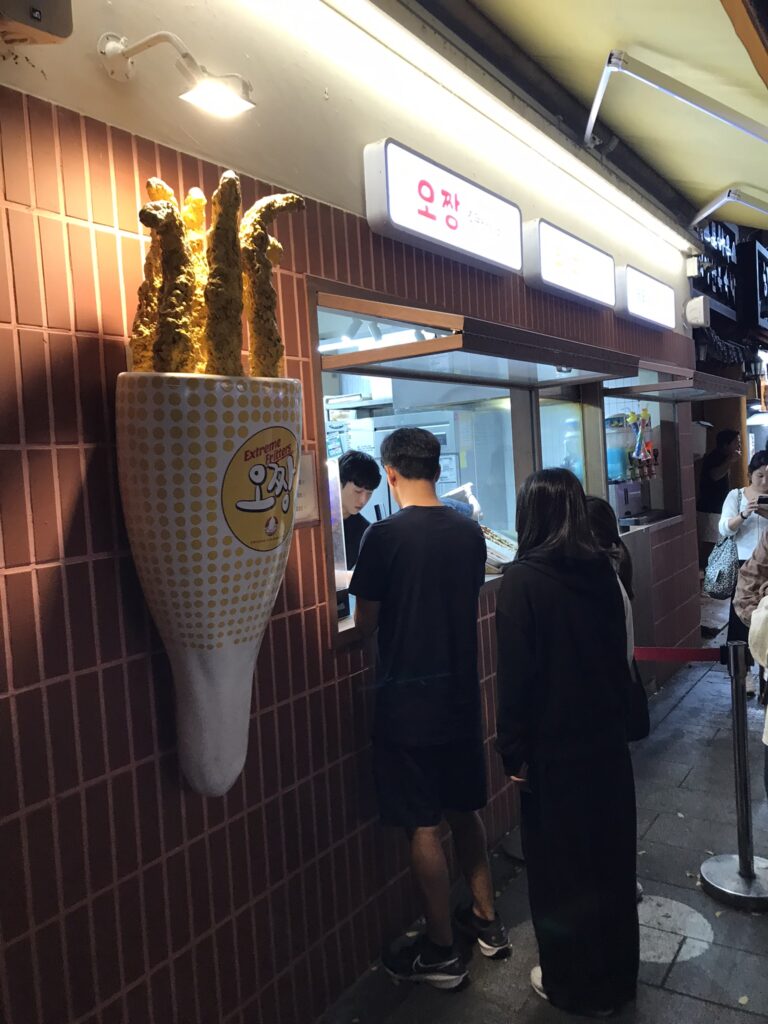
Expect wacky and wonderful goings-on in the hanok village; these ‘extreme fritters’ seemed especially popular for whatever reason (they really do look like that)
Accommodation
Seoro – classic hanok guesthouse located within the hanok village. Staying here was an interesting experience as we were essentially sleeping on the hard floor with minimal bedding. The soundproofing in the old building wasn’t fantastic so we didn’t get a great rest here, and we also woke up pretty sore from sleeping on the floor. On reflection we’d probably spend one night max in this sort of accommodation or opt for a real bed! The family who owned the guesthouse were friendly though and made a nice breakfast.
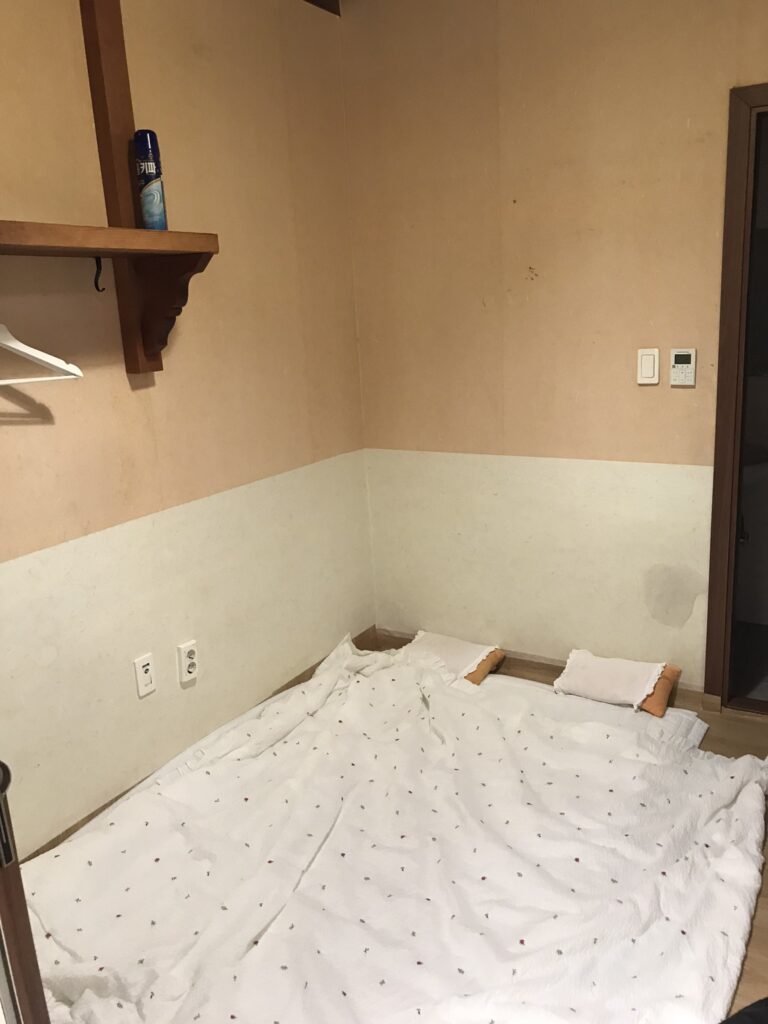
The hanok experience, which involves sleeping on the floor, is not the most comfortable. Some places offer a fixed bed for greater cost
Foodie Places
Nambu Market (Night Market) – we visited this famous covered arcade and its associated street food market and ended up having a Korean version of a typical British classic, the scotch egg! We were also tempted by the pies. Part of the spectacle at these markets is to watch the people preparing the food, definitely worth a look even if you aren’t planning to eat. There are eat-in restaurants here as well as a plethora of street food stalls.
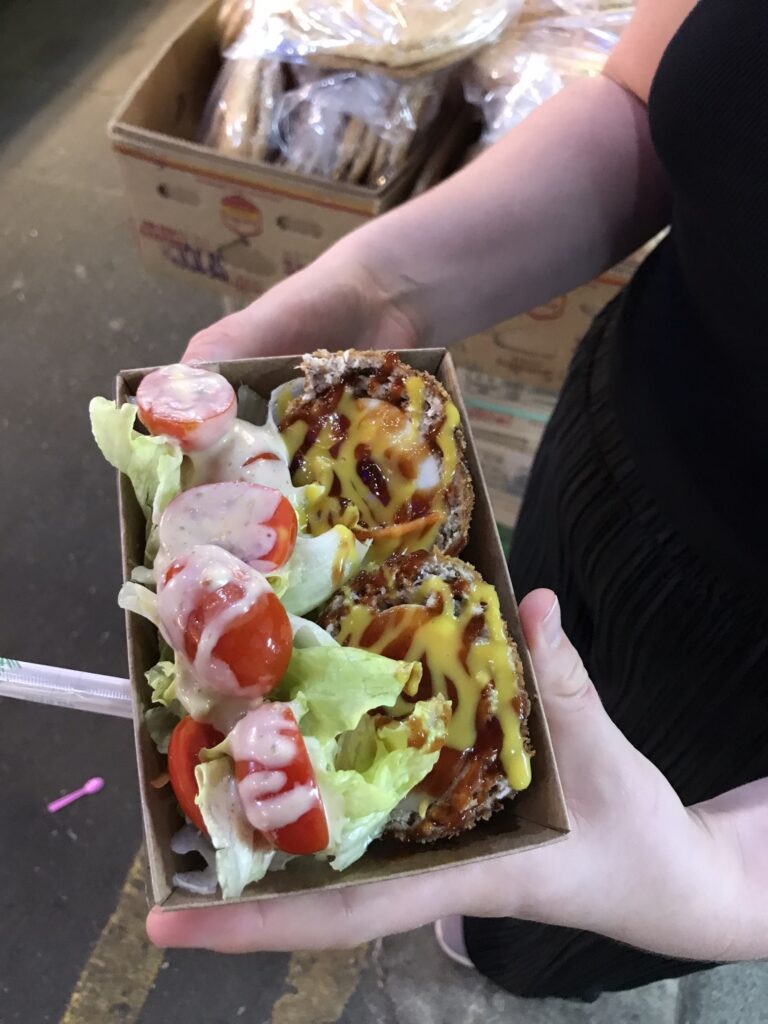
Scotch eggs, Nambu style
Pungnammun Bibimbap – located near to the old Pungnammun Gate in the vicinity of Nambu Market, this is definitely a locals joint that mainly opens just for lunch. Food was cooked and served by two older ladies. We were amazed by the amount of pickled/fermented side dishes. A classic Jeonju bibimbap.
Jin Halmeoni Galbi Gukbab – near to Nambu market, this place specialises in jjigae, a spicy and sizzling hotpot-style stew dish often served with meat. Our meal came with jellified, cold strips of meat. This place was great value serving up excellent food and service.
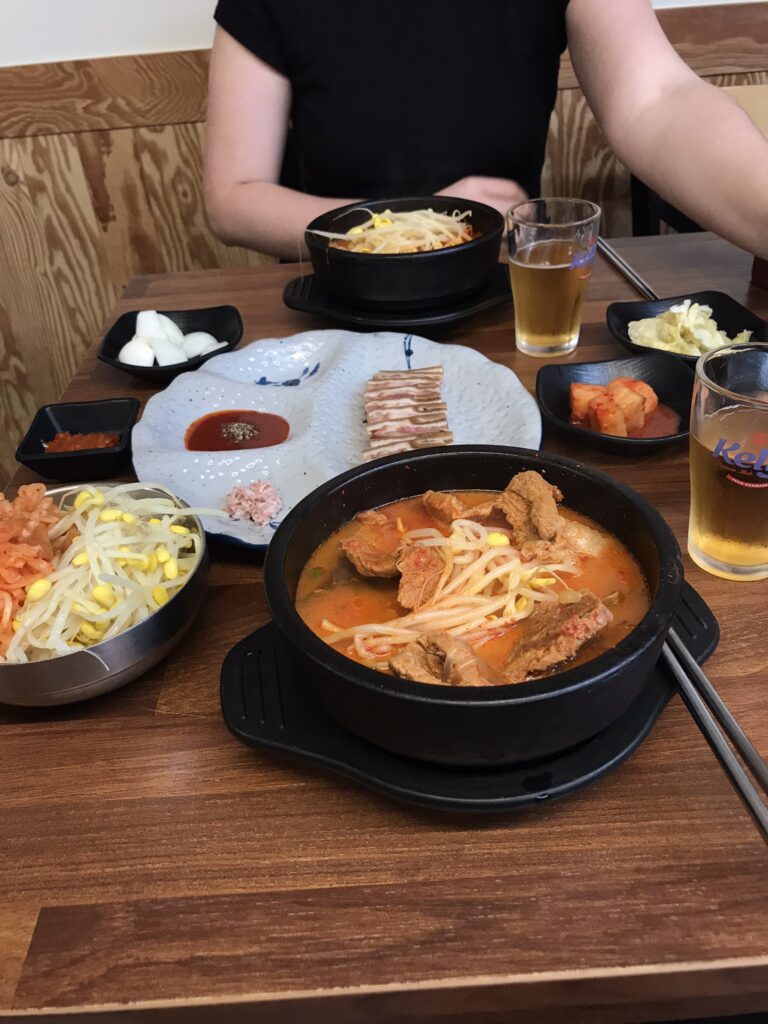
Getting jjigae with it
Mom’s Touch – a famous fast food/chicken burger restaurant which is an institution in South Korea. We aren’t really fast food eaters, but this chain was recommended to us and didn’t disappoint. Some of the best chicken burgers we’ve had anywhere. A cheap, reliable if slightly unhealthy option.
Haengwon – a historic cafe in a traditional heritage house featuring a courtyard and classical garden. A very serene setting which is worth visiting just for the history and building itself. It’s still functioning as a cafe, so you will need to order a drink to enter. We enjoyed an iced coffee and fruit smoothie.
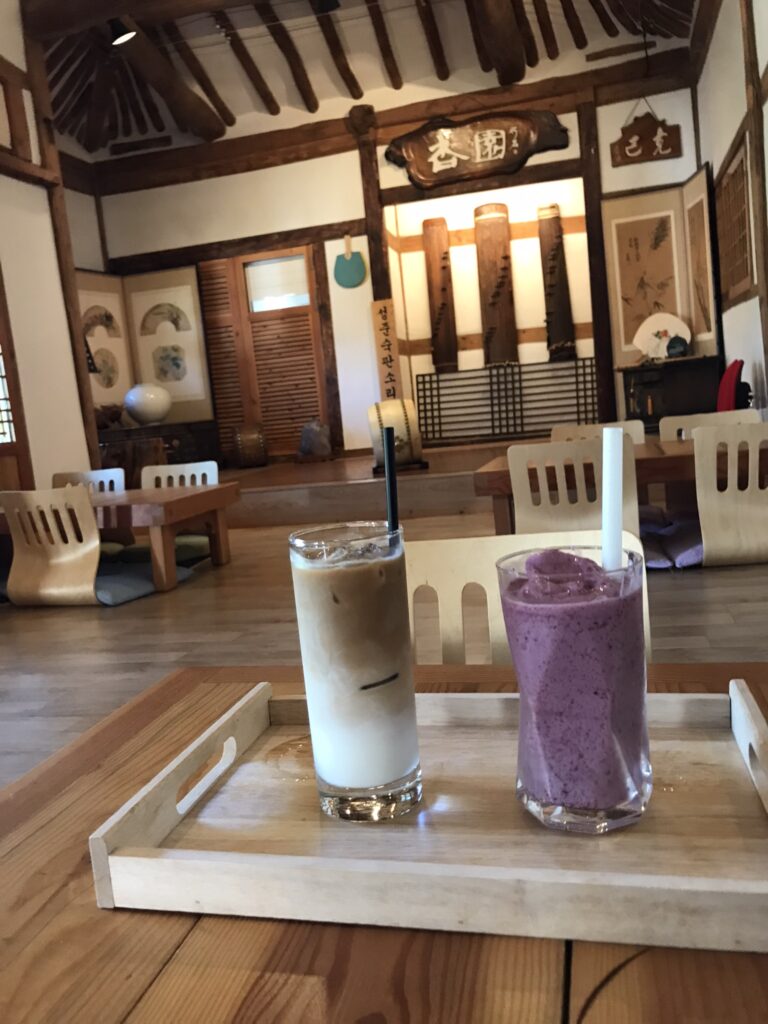
Great drinks in a great setting at Haengwon
Activities
Jeolla Gamyeong – a restored traditional wooden structure, this was the main regional administrative building during the Joseon era. Nothing particularly special inside, however we wandered past again at night and stumbled across a free performance of traditional music and courtly dance which was taking place within the courtyard . At first, we were hesitant to enter but a guard invited us in and we were blown away by the performance. I’m not sure if this is a regular thing or we just got lucky with the timing here.
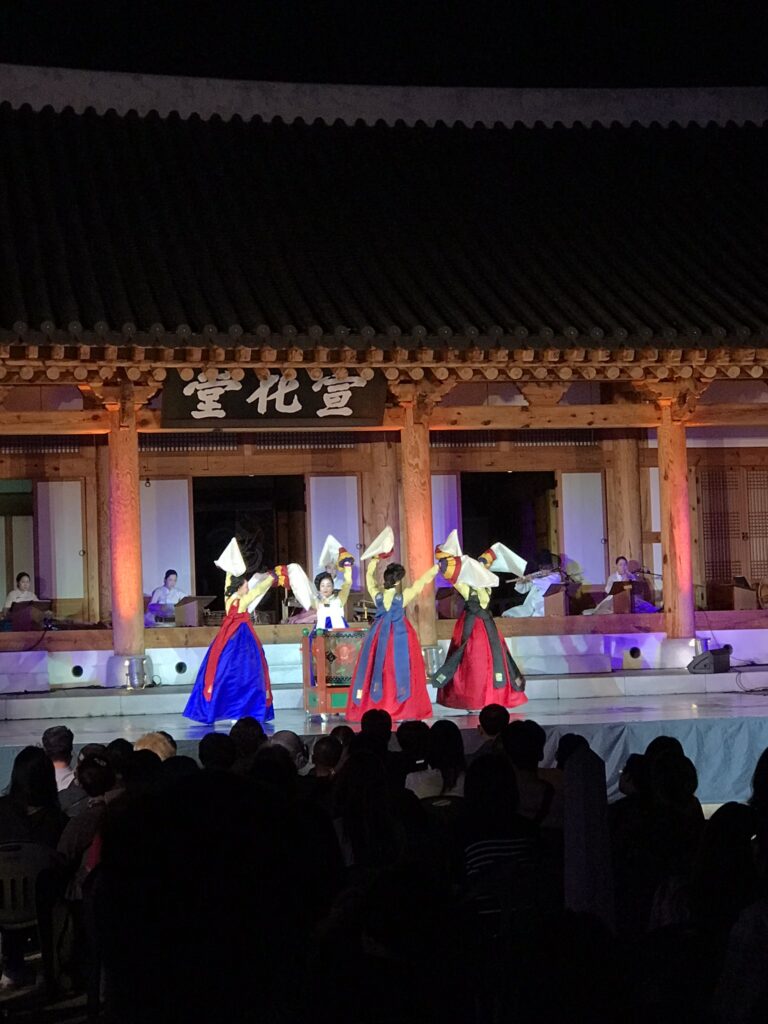
This show was an unexpected treat. Sadly I don’t have any information on what it actually was
Daga Yeohaengja Library – a pilgrimage spot for travelers, this library contains a huge selection of travel books, mostly in Korean but also some in other languages. It’s free to enter and browse for a while – there are some quirky items to be found. You can also go up to the roof for a view of the surrounding city streets.
Gyeongdong Catholic Church – this large Gothic-looking church marks the site of the beheading and disembowelment of some Christian martyrs in the late 18th century, known as the Shinhae Persecution. Several of the martyrs were beatified by Pope Francis many years later. The church was built by French missionaries in the early 20th century on the location of the martyrdom and is the earliest church to have been built in this region.
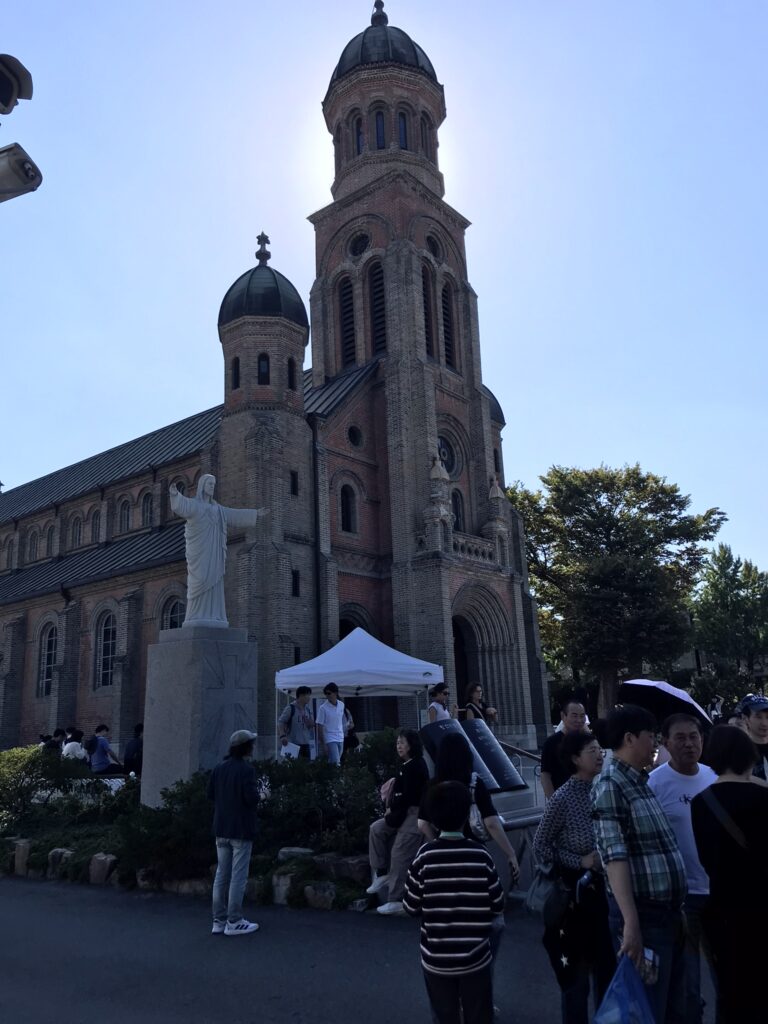
The church is one of the largest and most impressive buildings in the vicinity of the hanok area of Jeonju
Gyeonggijeon Shrine – Jeonju holds a special place in Korea’s royal heritage as it is the ancestral homeland of the dynastic rulers of the Joseon period. This shrine is particularly well-known as it contains the only surviving portrait of the founder of the Joseon dynasty, King Taejo. Built in 1410, the shrine complex was historically used for veneration rituals and also to house an archive of Joseon history. Most of the structures here have been repeatedly destroyed by the Japanese over the years, firstly during the Imjin War and then again during the Japanese occupation in the 20th century (only the main hall is original, having survived the Japanese attacks). The famous portrait of Taejo is kept in the Royal Portrait Museum which is located to the back of the complex behind the main hall – the museum is really set up around the painting of Taejo but there are a few other exhibits and other royal portraits on display, some replicas and some original.
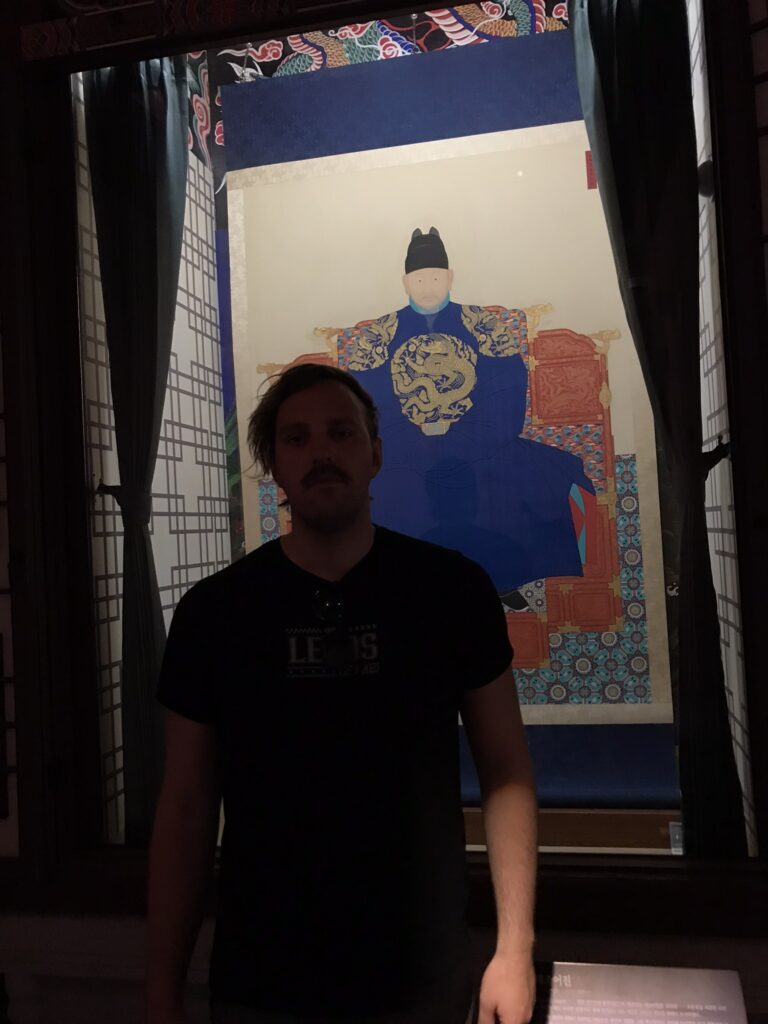
Dan and King Taejo
Jaman Mural Village – a rustic hillside neighbourhood within walking distance of the hanok village, best known for its extensive and colourful wall murals which depict a variety of cartoons, animals and also motifs of popular movies such as Leon the Professional and My Neighbour Totoro. We felt that the reason for the murals was probably just to try to draw visitors to an otherwise somewhat overlooked area, but it succeeded if so as the murals are very artful and quirky. There are a few coffee shops and other eateries here but they seemed a little expensive.
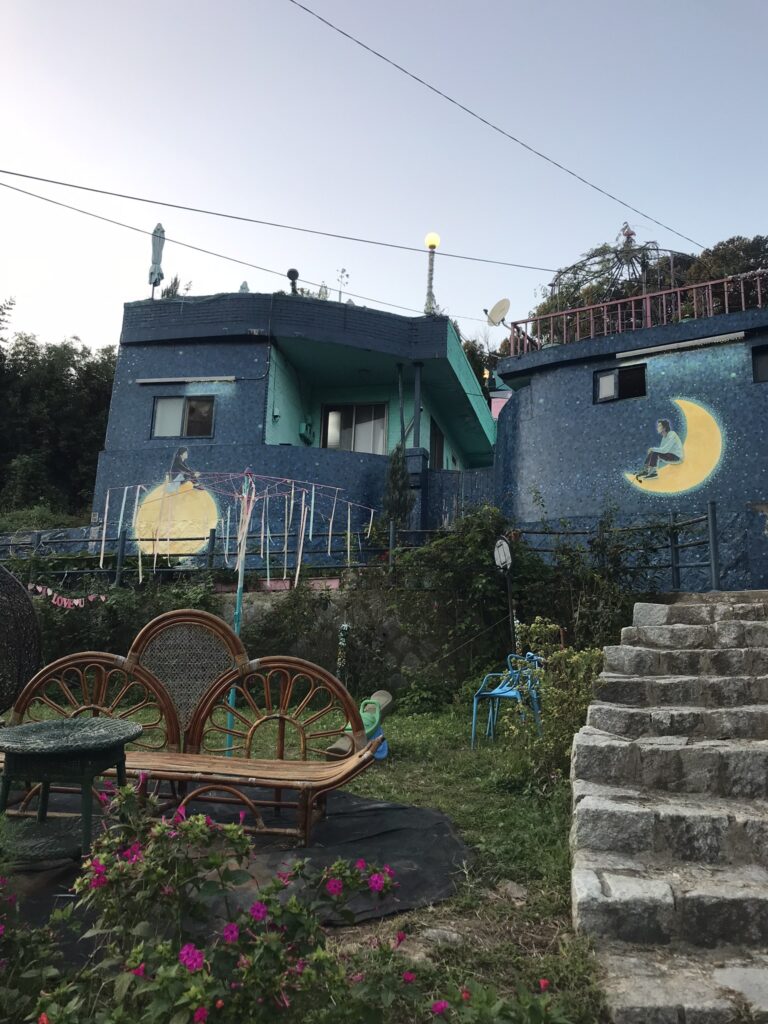
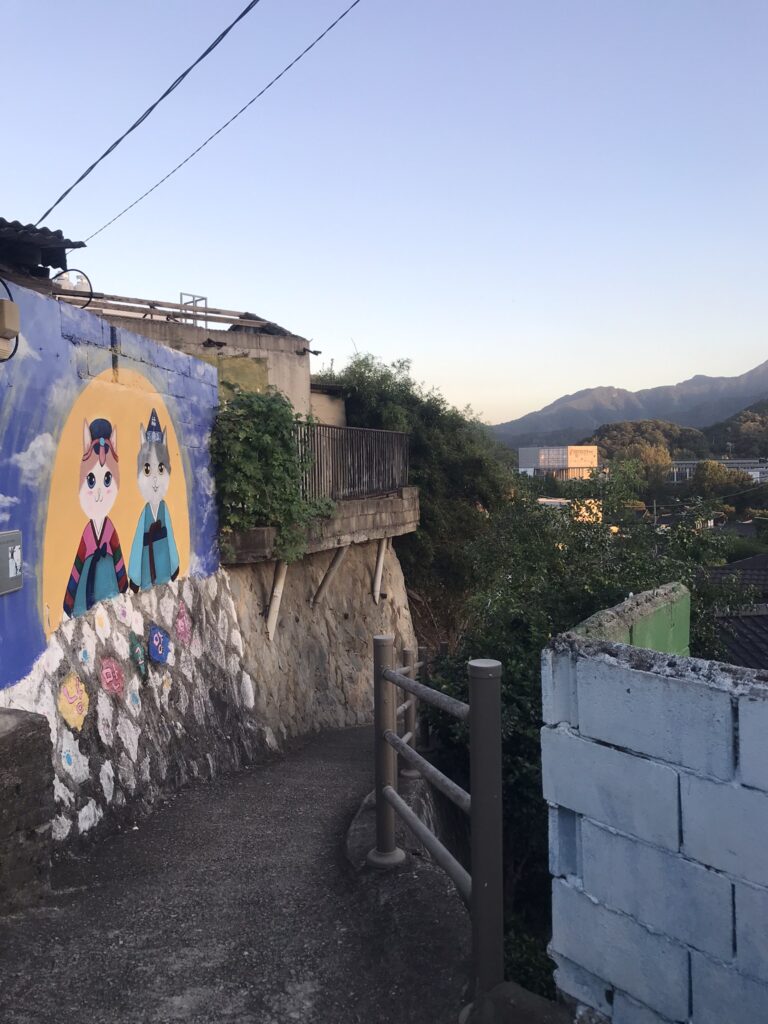
Jaman is worth a the short walk from the hanok area, especially for mural enthusiasts
Hanok village – it’s nice to just wander around the traditional village, admiring the historic buildings and architecture. Some of the main streets have a very touristic feel to them, but this quickly dissipates once you get into the backstreets which are much quieter. Several of the hanok houses are open as cafes or small galleries/museums. Head up Omokdae hill to fully appreciate the gently-sloping curvature of the hanok roofs from above – this also gives you a sense of the scale of the village, which is the largest hanok settlement in the country.
Fan Culture Centre – located within the hanok village is an old dwelling containing an extensive exhibition about handcrafted fans, it’s free to enter and wander around. A collection of intricately-designed fans are on display inside and we also watched a quite long and entrancing ASMR-style video which showed a man creating a handmade fan without any narration or context. There were also workshops here where visitors could paint and create their own fans.
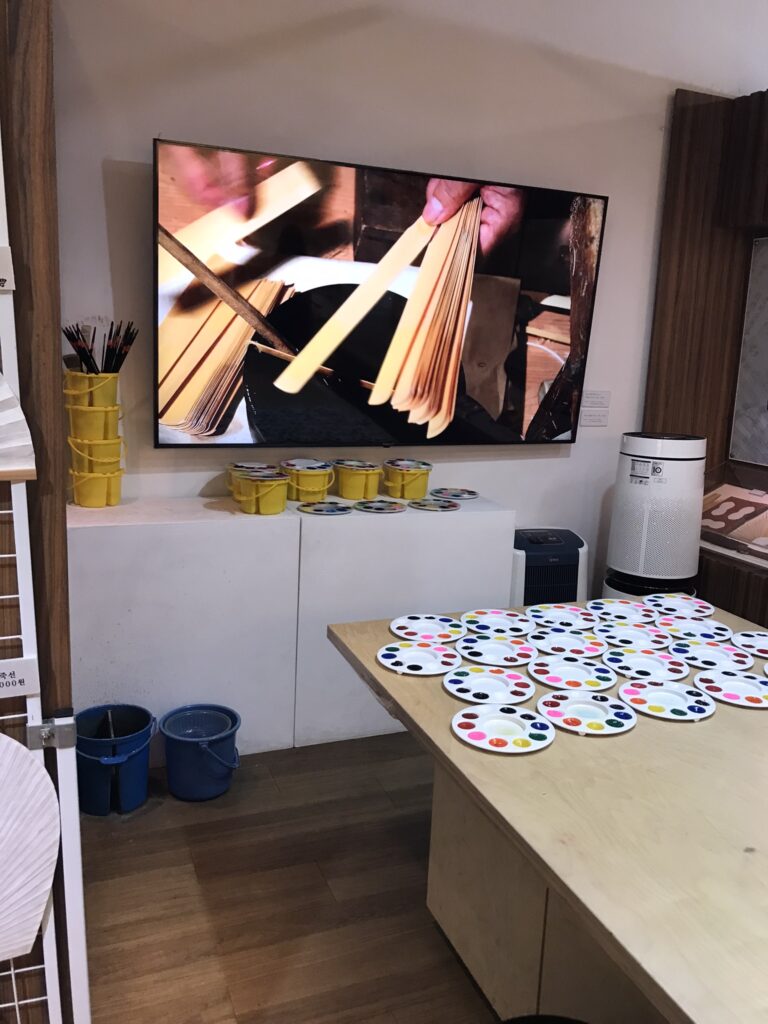
This video was quite entrancing
Jeonmang Cafe – head to this cafe and its spectacular rooftop terrace for the best views over the hanok village. You will need to order something to be able to access the area with the rooftop view – they are very strict about the fact that it is for customers only.
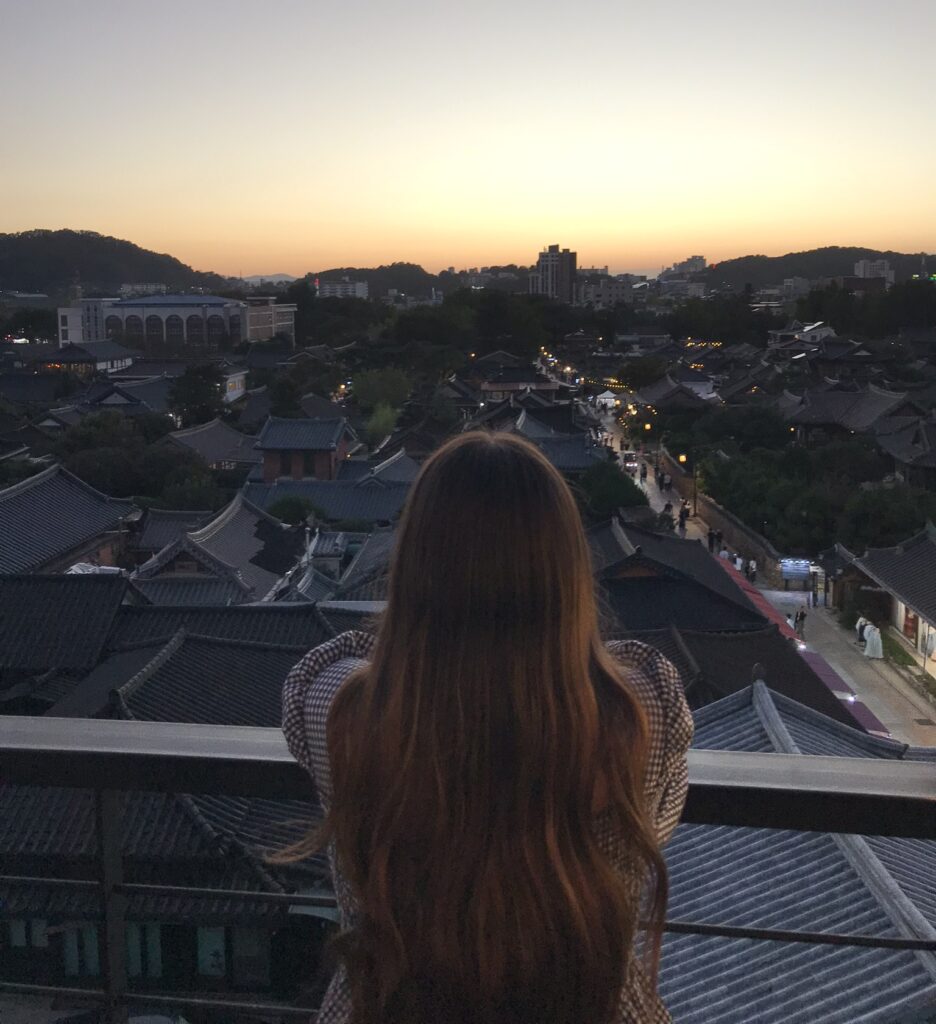
The best views in town at Jeonmang
Gwangju
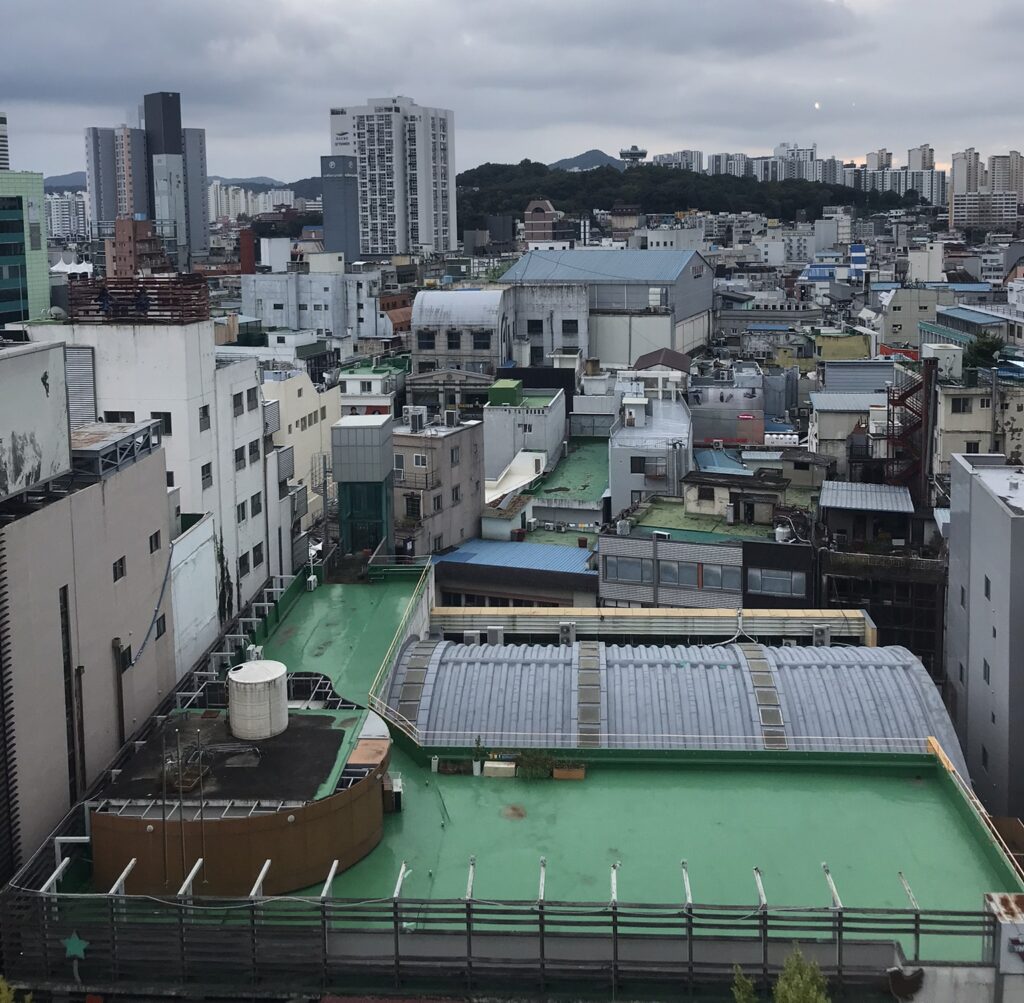
A much lesser-visited city in the south of the country, Gwangju gained notoriety on the world stage as the location of the popular uprising against South Korea’s military dictatorship in 1980 and subsequent crackdown by the regime. Known as the 5.18 uprising, this is a seldom-mentioned episode in South Korea’s recent history – you probably won’t hear much about it outside of Gwangju. The city is also known for hosting Gwangju Biennale, a large-scale international art exhibition which takes place approximately every two years. Today Gwangju is a modern, thriving urban city with a somewhat gritty feel due to its lesser-visited status and tumultuous recent past. We visited on a day trip by bus from Jeonju and found quite a lot of things to occupy our day.
Attractions in the city are pretty spread out from the centre, however we were able to rely on Naver to get around using local buses and the metro. There are two main areas of interest that we found – the Biennale complex, where many of the city’s museums can be found in close proximity, and the city centre area around 5.18 Democracy Square.
Activities
Museum of Art – a museum with a few different floors and exhibitions mainly focused on contemporary local art. Worth a visit for art lovers. You can climb to the top for a view of the Biennale and museum complex.
Gwangju National Museum – a very modern and well-maintained museum which mainly focuses on social history and local customs. The museum has the quirk of robot guides which visitors can interact with! The robots mill about the exhibition floor and are freely available for anyone to use, leading visitors around the various exhibits and providing narration, which is pretty cool. There was also a section at the end where we were able to participate in archery using suckers and plastic bows.
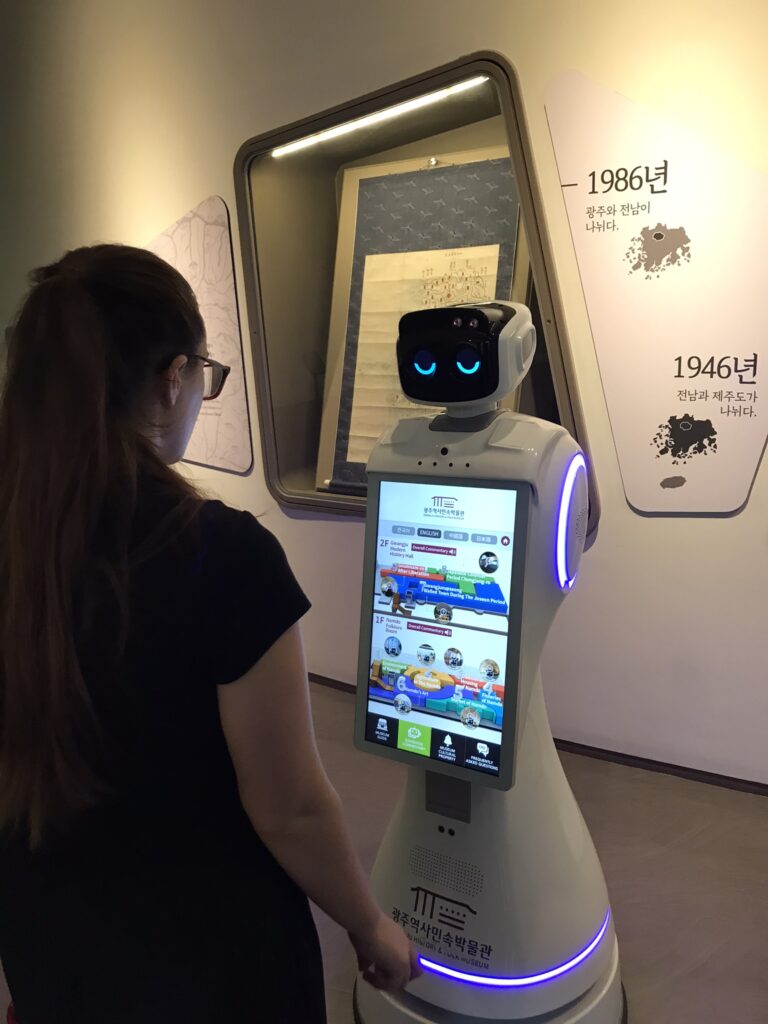
A robot guide in the museum
5.18 Democracy Square – the main city square which is synonymous with the 1980 uprising of the same name. An open space with a number of memorials and other features, it seems like quite a modern and lively place – there were plenty of people milling about, local teenagers skating, and a small craft market taking place when we visited. Nearby is the Asia Culture Plaza – a grand name, but as far as we could tell this is just an exhibition hall/conference space and there is nothing much to see for regular visitors.
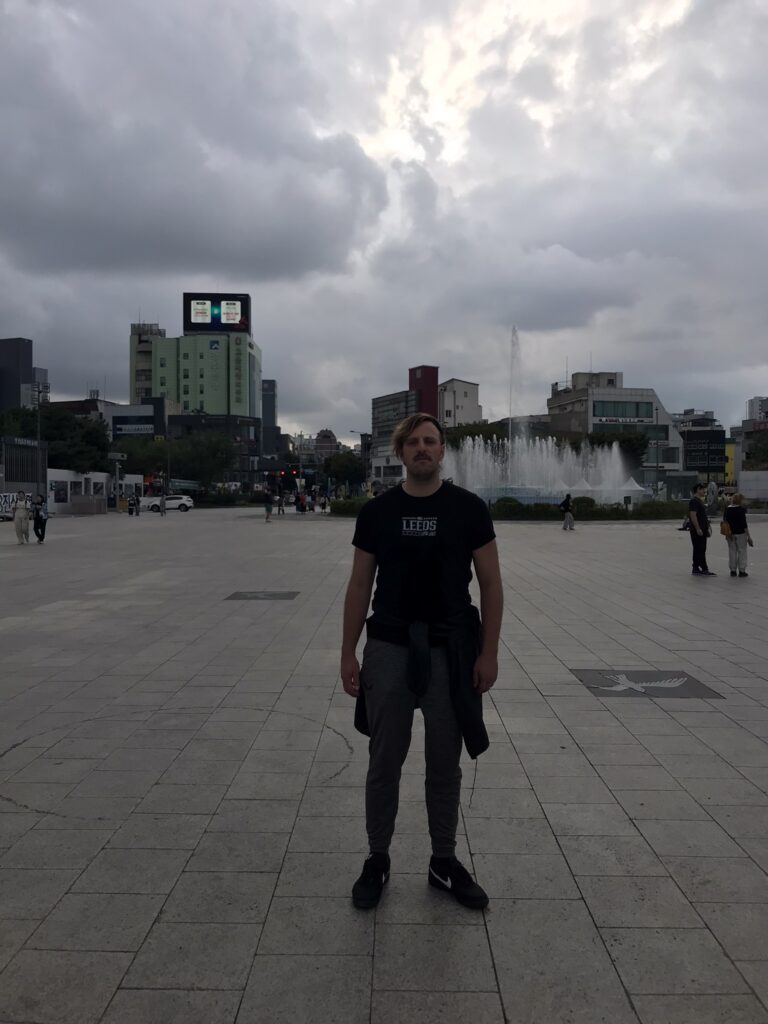
5.18 Democracy Square – a central focal point of Gwangju
Jeonil Building 245 – close to Democracy Square, this nondescript high-rise former office building was involved in a notorious incident relating to the 1980 uprising when an unidentified helicopter opened fire on the building, presumably in an attempt to quash the protests. Today an extensive exhibit and museum relating to the uprising is located on the upper floors of the building. The exhibit is free to enter and provides in-depth information as well as evidence of the crackdown in the form of numerous preserved bullet marks in the building, which were caused when the helicopter opened fire – something that was apparently denied and covered up by the regime afterwards. This is by far the best place to learn about this episode of South Korea’s modern history – you won’t find much info about this anywhere else.
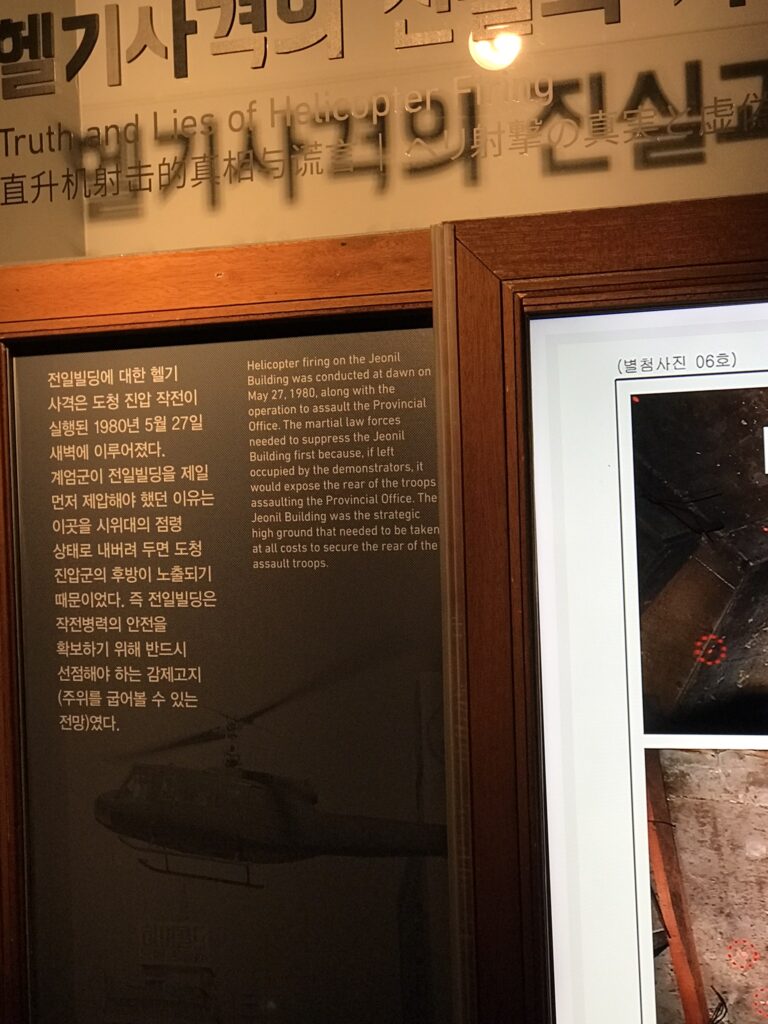
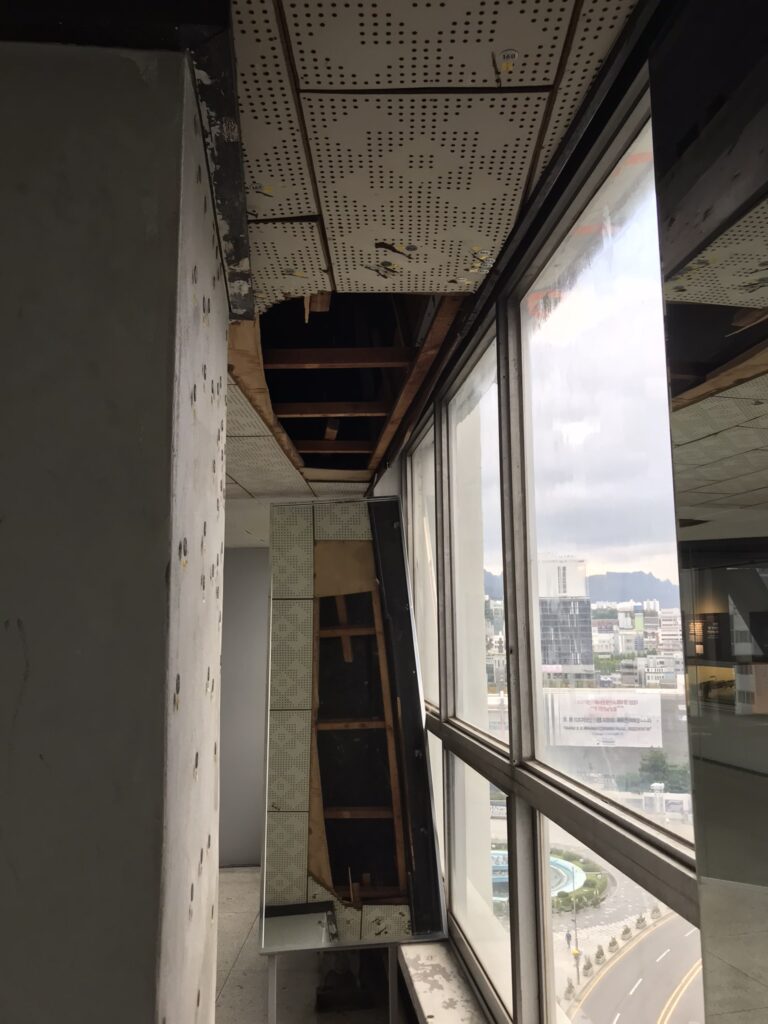
The Jeonil Building provides an extensive exhibit on the uprising; the preserved bullet marks and damage to the building remain as evidence of the helicopter firing incident – a dark chapter in South Korea’s recent history
Foodie Places
Myeongin Guksuwa Charcoal Naengmyeon Biennale Branch – the name is a mouthful and so is the bibimbap! This restaurant is located near the entrance to the main Biennale and art gallery area in Gwangju and highly recommended if you’re visiting. They didn’t have an English menu here but we were able to translate from the chalkboard menu using the restaurant wifi. The bibimbap was some of the best we had in South Korea – an unexpected delight.
Daegu
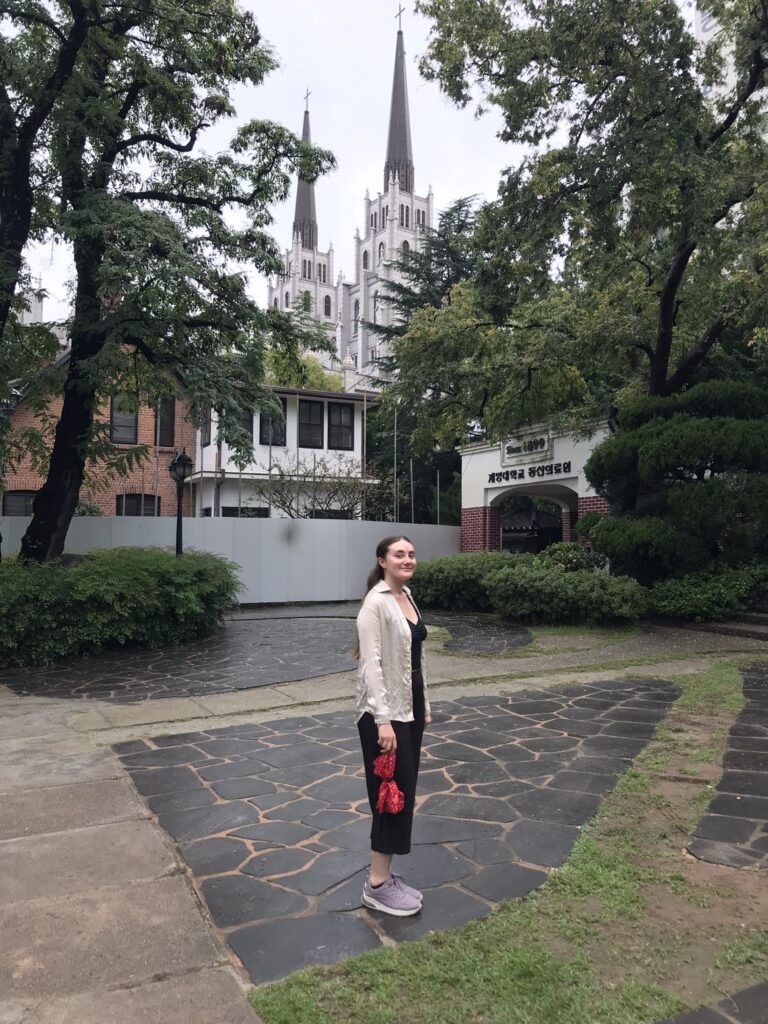
A large city in the centre of the country, Daegu lies roughly halfway between Seoul and Busan. It seems to get less attention from tourists than those two cities, however we found it to be an enjoyable stop-off for a few days. There aren’t as many obvious major attractions here, but the city has plenty to offer to visitors who are willing to take the time to look for it. As is the case throughout Korea, Daegu has excellent public transport with an extensive bus and metro network, so it’s super easy to get around. We found Daegu itself to be a fun and lively place with an upbeat atmosphere and plenty going on, particularly in the vibrant Dongseong-ro and Bongsan areas. Daegu is also the best location to visit the UNESCO World Heritage Site of Haeinsa, as well as for cheap flights to and from Jeju.
The Christian missionary and oriental medicine history of the city are particularly interesting and worth delving into. Daegu is the location of the oldest and largest traditional medicine market in South Korea, having been founded in 1658 during the Joseon period, the herbal medicine area is still active in the city today. Daegu is also the home of Samsung, which was founded in the city in 1938 and originally sold apples and dried fish.
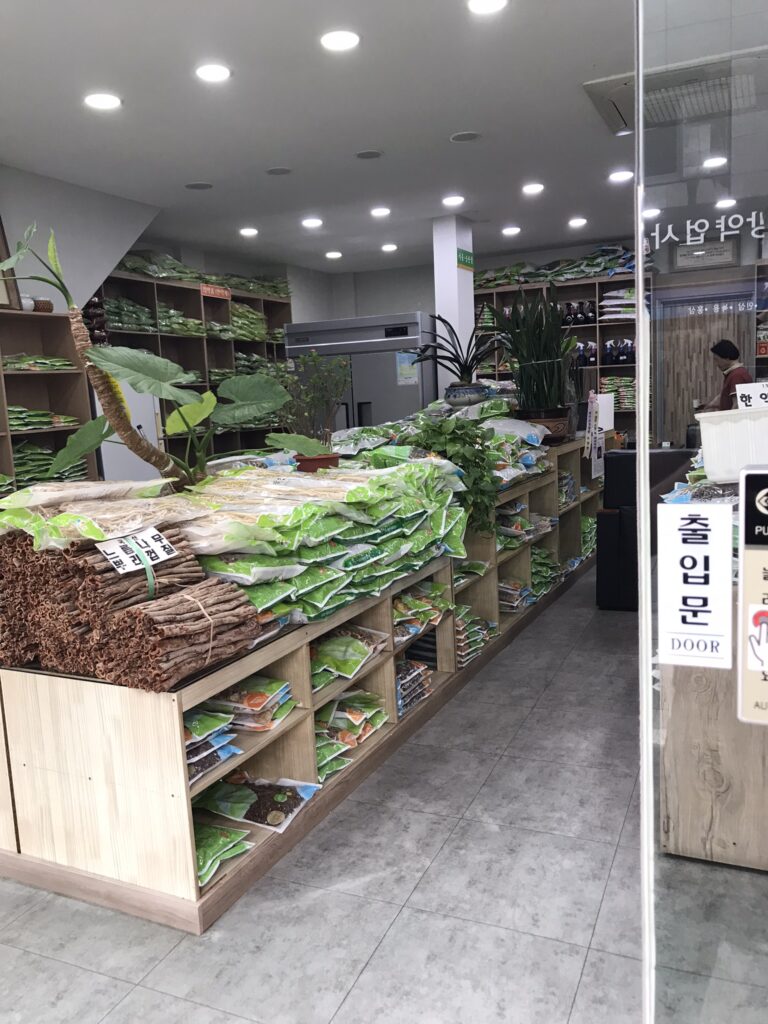
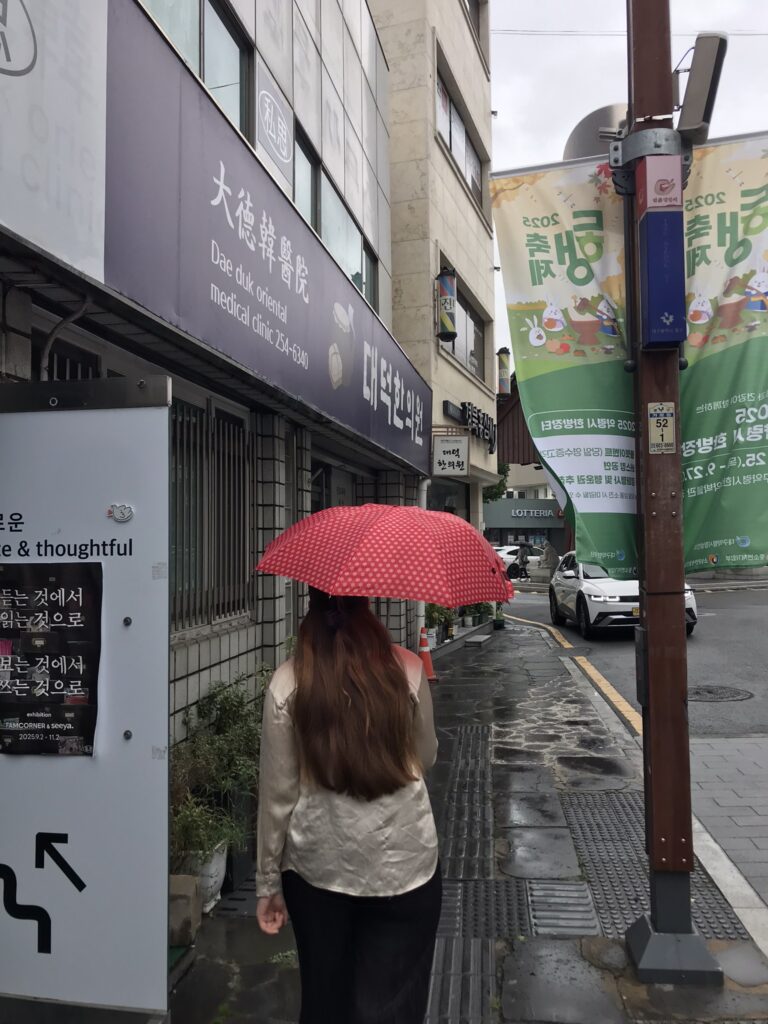
You can find plenty of herbal medicine stores around Yangnyeonsi – the old medicine market area in downtown Daegu
Accommodation
703ho (DDUBLE Square/Sky Studio APT) – a self-contained apartment in a high-rise building, ideally located close to the metro station and near the lively Bongsan area. Plenty of restaurants on the doorstep here (quite literally)
Foodie Places
Dana – a trendy Italian restaurant in the lively Bongsan area; the price to quality ratio is pretty good here. Overall, a good option for those wanting a break from Korean food
What? – an archetypal Korean barbeque joint. The meat, kimchi and other ingredients are delivered and then cooked on a grill which is built into the centre of the table. This was our first experience at this type of restaurant and we were unsure what to expect. Through the grapevine, we’d heard that the best BBQ places have a server who does the grilling for you, and this was the case here. The server helped us a lot, even when we made a faux-pas and didn’t use the lettuce leaves properly. FYI, guests are supposed to use the leaves to wrap the meat, adding the sauce and making a little burrito. We really enjoyed the food and experience – it’s more expensive than a usual meal in South Korea, but the prices at this restaurant were definitely still affordable.
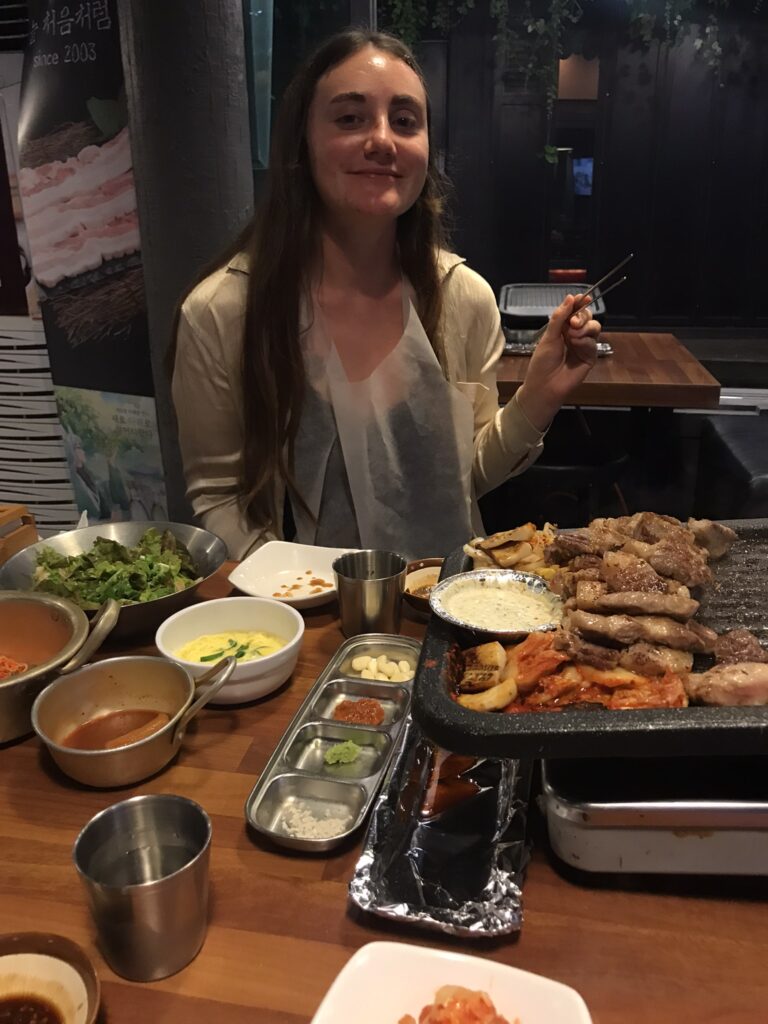
A BBQ feast at What?
Simji Plus – a Japanese tonkatsu (breaded pork cutlet) restaurant close to our accommodation. We rushed over just before closing time and luckily managed to bag a tasty tonkatsu meal. The food was great, on par with tonkatsu we had in Japan and much less expensive. Be careful with the complimentary buckwheat tea – we didn’t realise it wasn’t water at first and ended up consuming copious amounts of the caffeinated beverage.
Yakjeongolmok Wonjo Noodles – a small local place located near to Cheongna Hill in an area replete with murals full of regal figures on horseback. We were served boiling hot plain broth with noodles in a huge metal bowl. We figured out that it was necessary to add a chili-based substance for flavour, which really ramped up the spice levels. This was ridiculously spicy by the end, almost like drinking fire – our own fault for adding too much chili! We couldn’t believe how quickly the locals were slurping up thier noodles – we thought we were fast eaters before coming here.
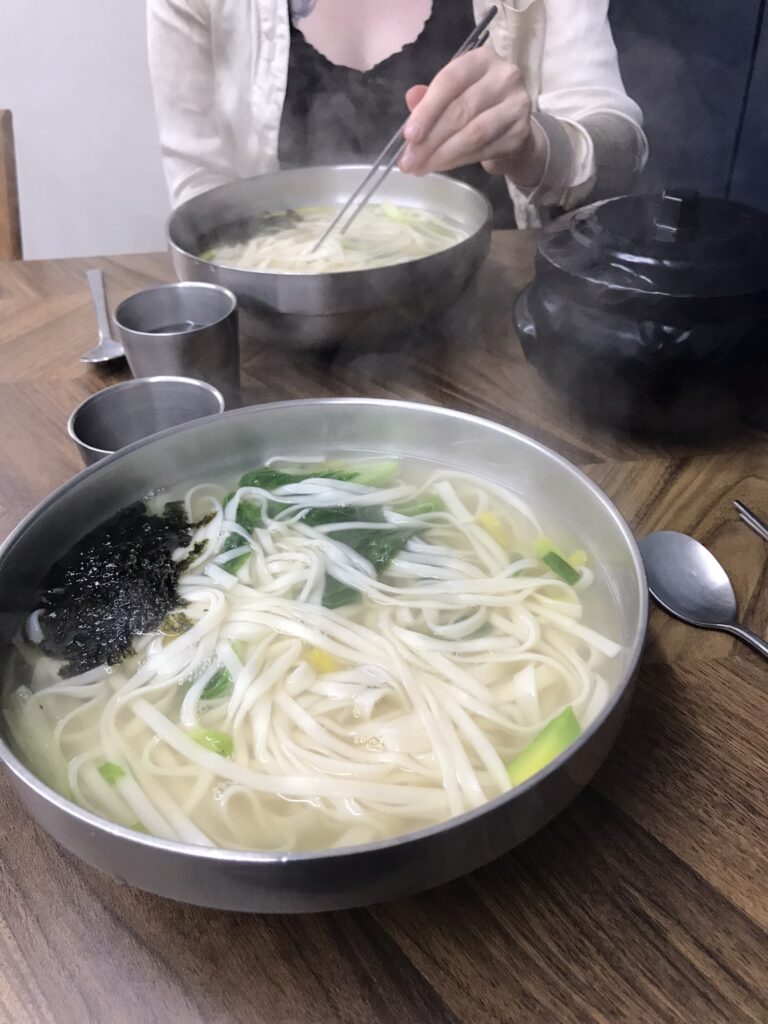
A fiery broth at Yakjeongolmok Wonjo Noodles
Activities
There are plenty of museums and attractions around the Dongsan area in central Daegu, known as the Daegu Heritage Trail. Check out my self-guided walking tour here!
Daegu Yangnyeongsi Museum of Oriental Medicine – a very informative but somewhat bizarre museum. We weren’t sure of the fundamentals behind a lot of what was going on and there seemed to be a fair amount of pseudoscience on display, although the museum strongly asserts that these traditional practices are more effective than more mainstream treatments. We were able to make the free English-language audio guide app here work after much ado – the museum is text-heavy and there are no translations other than those on the app so it would be a pretty frustrating visit for non-Korean speakers without it. The museum is located in the midst of the old medicine market and there are still a lot of herbalists and shops in the vicinity selling traditional remedies and products, which is quite cool to see.
Cheongna Hill – the old missionary area, these Western missionaries were some of the first foreign arrivals and spread Christianity to the region following the end of Korea’s isolation in the late 1800s. The hill contains a number of old missionary houses as well as the first modern hospital that was built in the city (Western medicine was one of the major incentives for local people to join the religion). There’s also a towering modern cathedral on the hill.
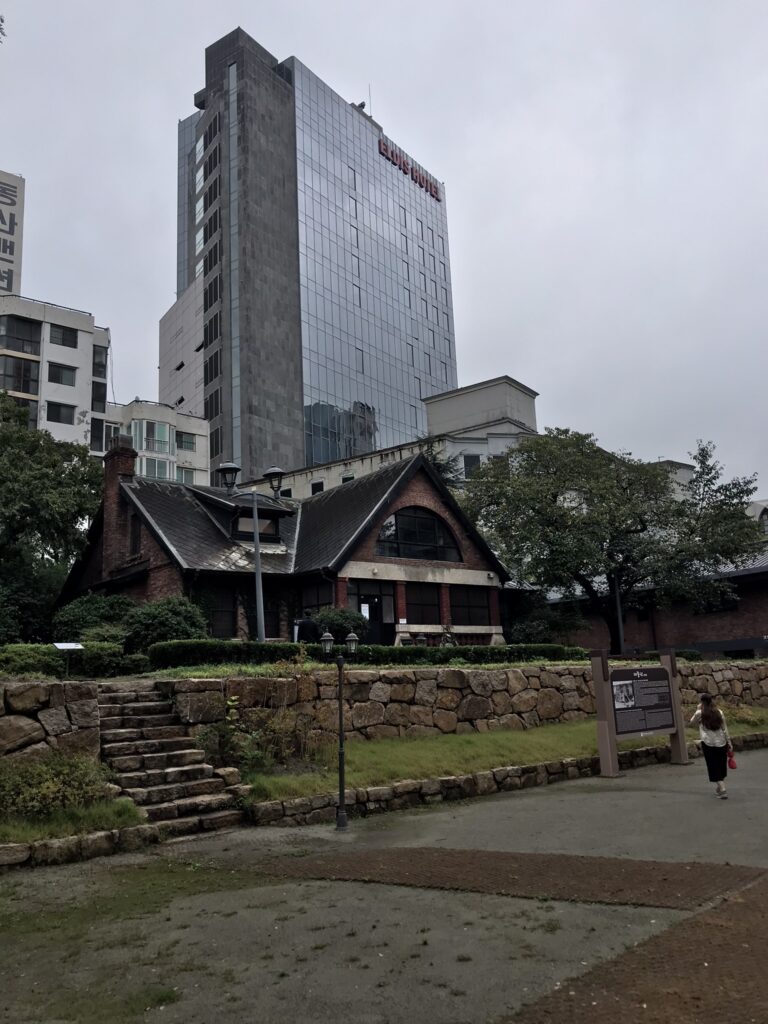
The old missionary area of Cheongna Hill is one of a number of places to explore in this part of Daegu
Gyesan Catholic Church – located near to Cheongna Hill, this church is worth a peek for its stained glass windows which feature striking figures in Joseon-era dress
Daegu Modern History Museum – located in an old bank, this local museum provides a pretty comprehensive overview of local history and culture – even referencing Marilyn Monroe’s visit to the city in 1954 to cheer up the American troops that were stationed here. Gyeongsanggamnyeong Park is just outside, including a pond with some fake ducks, some old government offices and a pavilion, which seemed to just contain a couple of old geezers chatting away.
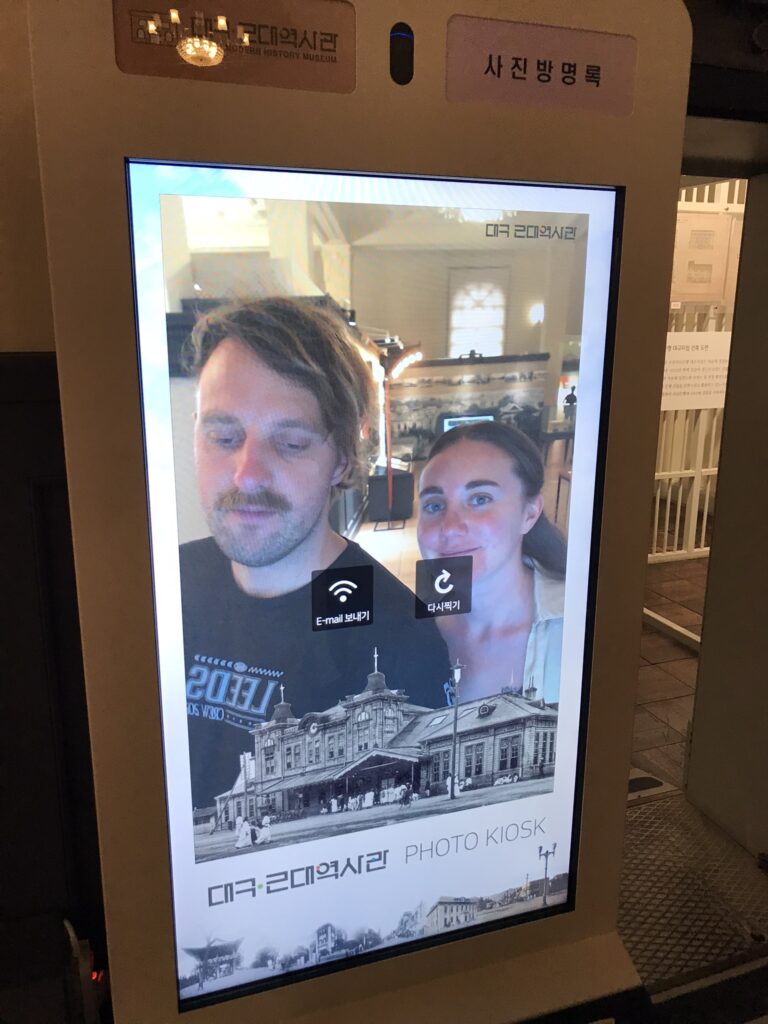
Messing around at Daegu Modern History Museum
Kim Kwangseok Street – little known outside of South Korea, Kim Kwangseok is a tragic folk singer who is sometimes described as Korea’s answer to Bob Dylan. Born in Daegu, he achieved national popularity and sold millions of records in the 1980s and early 90s before he sadly committed suicide in 1996. In his memory, a narrow street near to the river in Daegu was themed after him. Kim Kwangseok Street is filled with murals containing depictions of the singer and his lyrics. The murals are great quality and quite thought-provoking, even for those not familiar with Kim Kwangseok or his music.
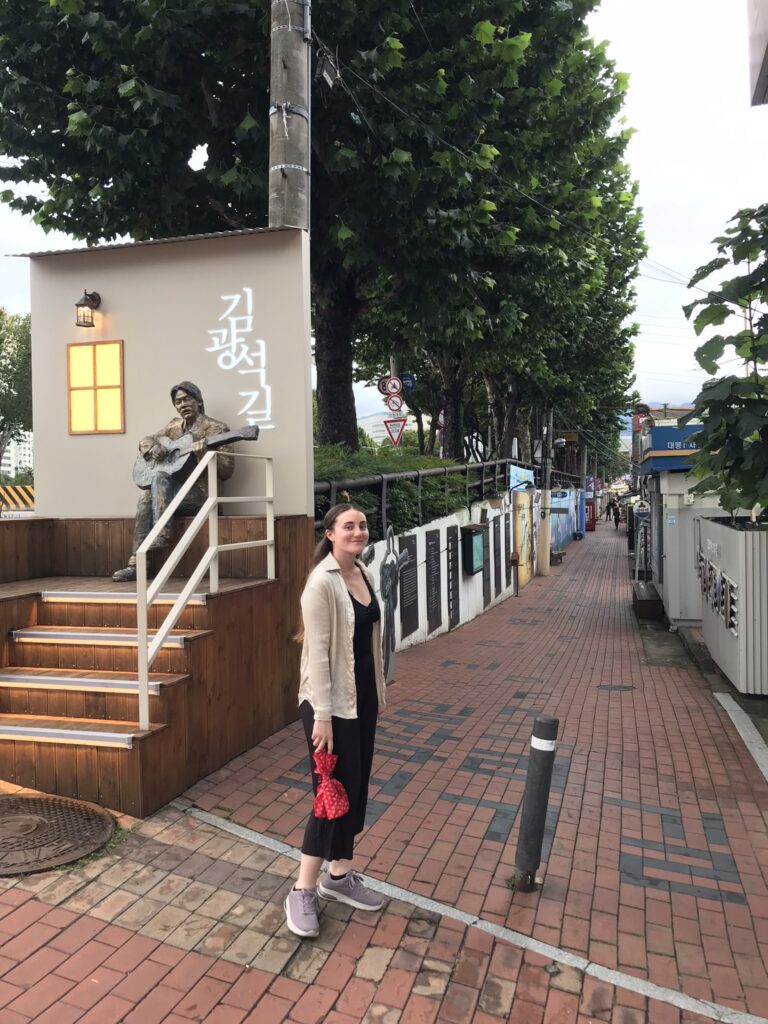
Kim Kwangseok Street is a nice spot even for those who aren’t familiar with the singer
Haeinsa day trip
The mountain temple of Haeinsa is one of Korea’s foremost UNESCO World Heritage Sites. You can easily reach the site via bus from Daegu, with buses running regularly from Seobu station in Daegu (Daegu West). Tickets for this bus are best purchased at the ticket office in the station with cash only, as the ticket machines are unlikely to work with a foreign credit card. From the bus stop in Haeinsa it’s necessary to backtrack a little down the road, then it’s an uphill walk to the temple complex. Times for the return bus are posted on the makeshift bus station next to the GS25 shop. On the way back there is no ticket office – a man turns up to sell the tickets 5 minutes before the bus sets off – buy from him with cash.
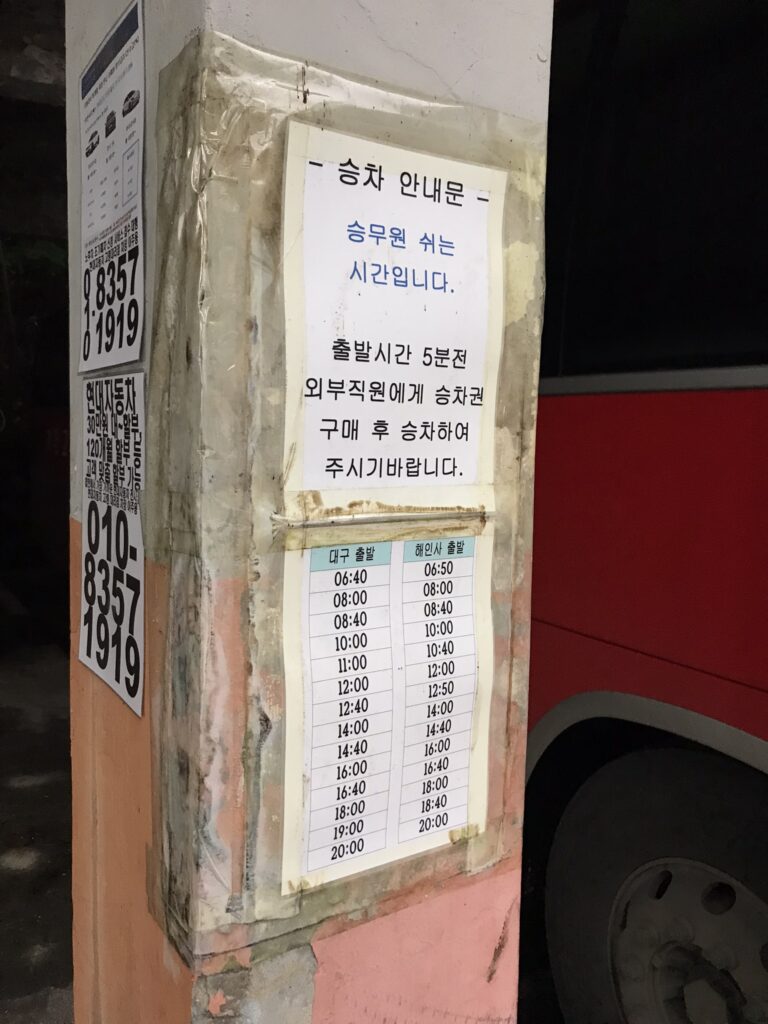
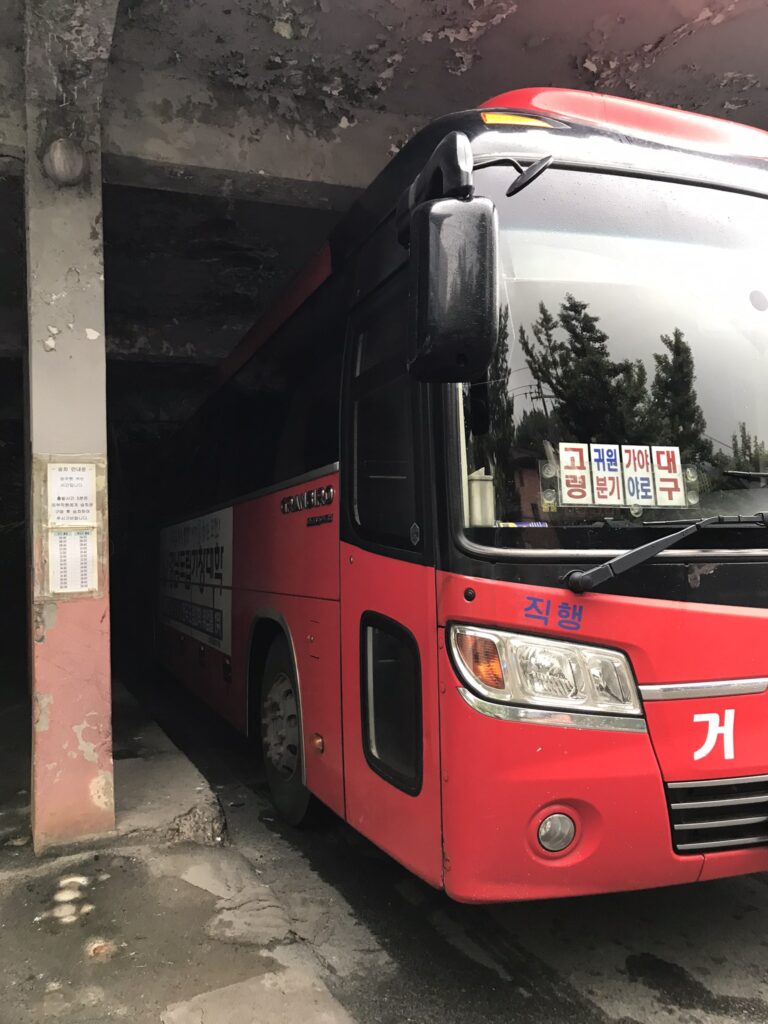
This was the bus timetable at the time of our visit
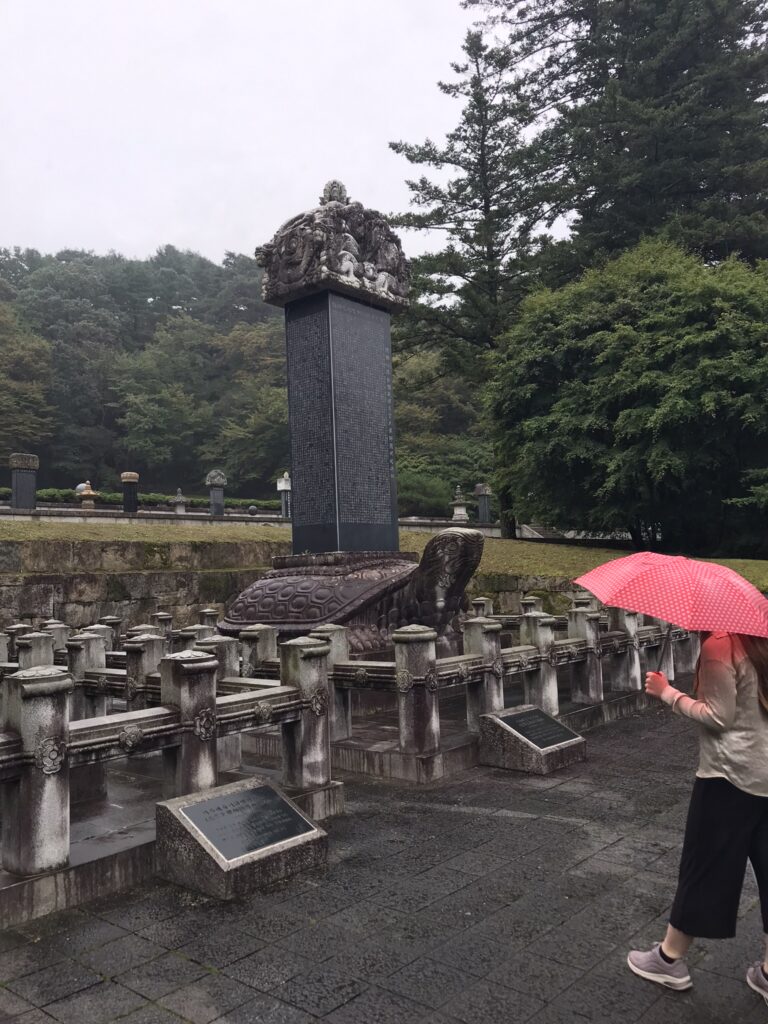
The route up to the temple is quite atmospheric – mysterious and misty. There are warnings around for wild boars but we didn’t spot any. On the way up are a plethora of stelae reminiscing about the deeds of long-perished Buddhist monks, including some particularly poignant tortoise-style stelae which we noticed had been recreated at the Hiroshima Peace Park in Japan to commemorate the Korean victims of the atomic bombing there.
The site is famed for the Tripitaka Koreana woodblocks – created in the 13th century and said to represent the oldest intact record of the Buddhist scriptures, with over 80,000 distinct carved blocks which were intended for use in printing in order to easily reproduce the scriptures. The carvings are kept in an ancient repository at the temple which was specifically designed with the ideal environmental factors for preservation of the wood. The ancient design here is so good that it trumps modern attempts – apparently several years ago the carvings were moved into a modern, purpose-built and climate-controlled facility but they started to decay and so had to be put back in their original location. It’s a bit of a modern mystery as to how the monks were able to construct a structure that preserves the carvings so well. Today the carvings are kept behind lock and key – visitors can observe the buildings which house them and catch a glimpse of them through the wooden slats.
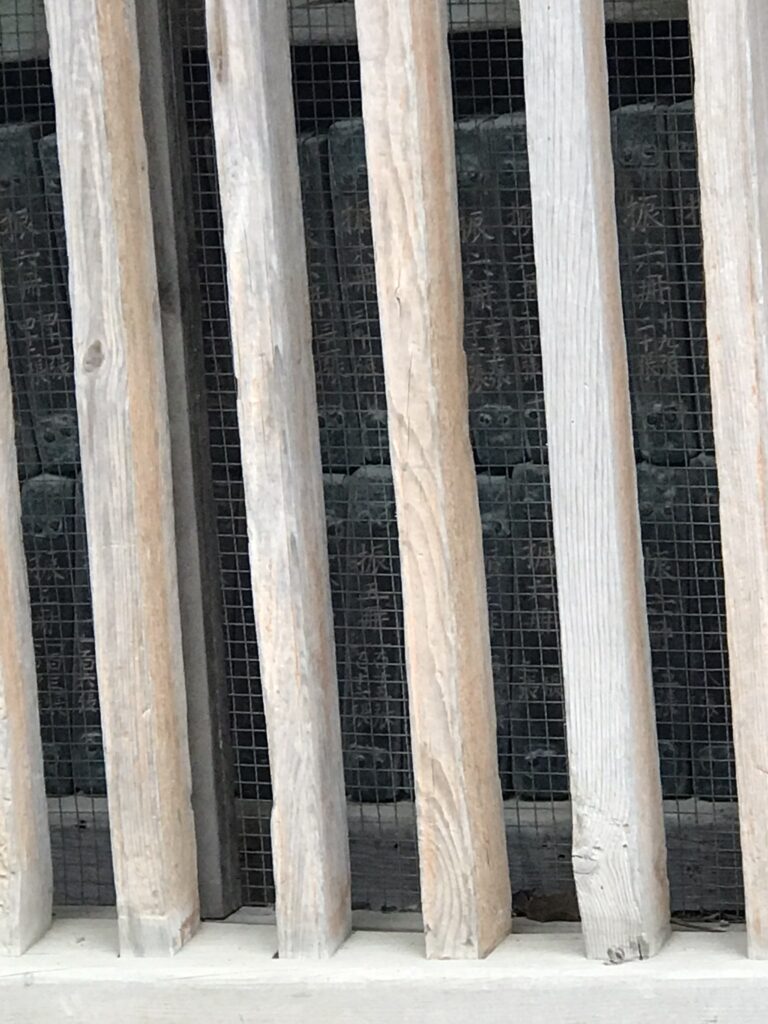
Most visitors can only get a sneak peek of the Tripitaka Koreana
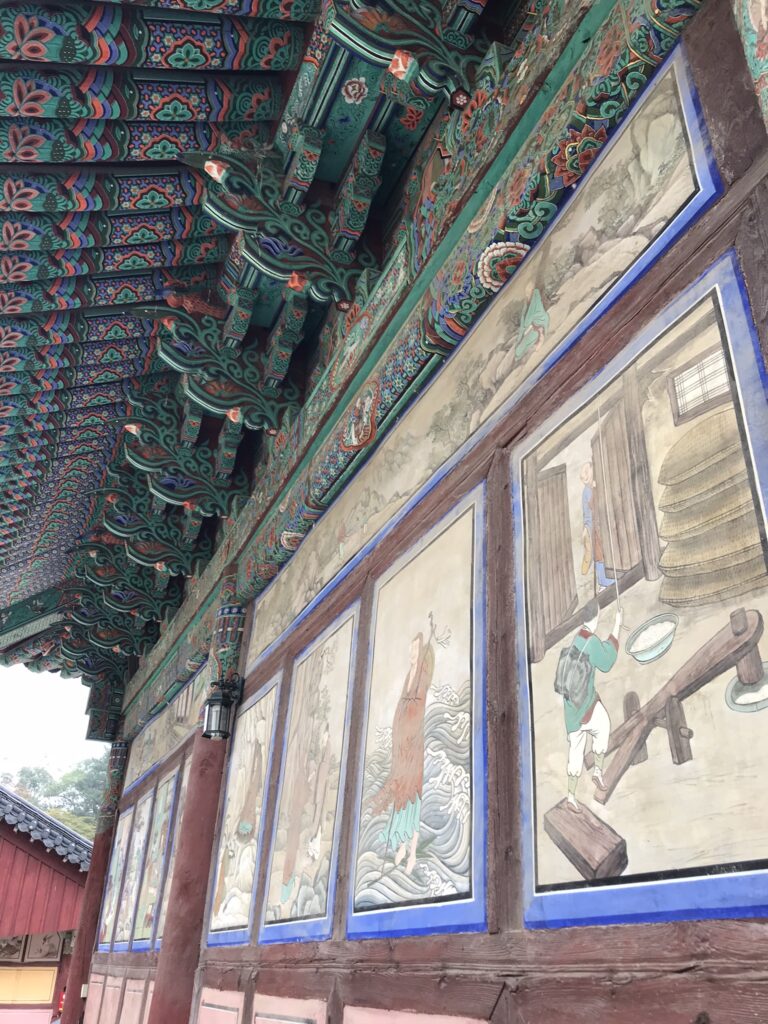
Haeinsa is a fully-functioning Buddhist complex – we saw the monks actively performing rituals and chanting. The temple buildings are covered with intricate detailing and wooden panels depicting the life of the Buddha. The temple complex avoided bombing during the Korean War – the story goes that a local pilot was ordered to destroy the temples in order to kill some guerrillas that were sheltering there, but disobeyed the order as he recognised their cultural significance – this pilot is regarded as a national hero as a result. There is a small museum onsite which contains some interesting artifacts, artwork and Buddhist treasures, as well as a replica of one of the woodblocks which visitors can use for printing in order to get an idea of how it was intended to work. There’s also a full recreation of the temple complex in lego!
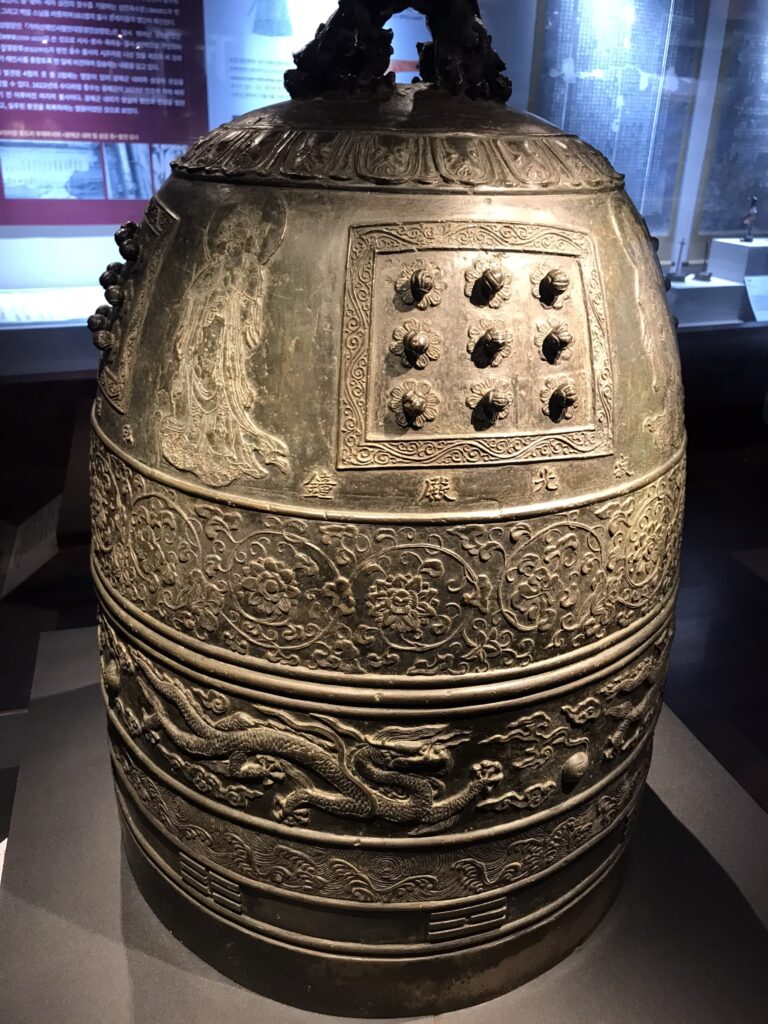
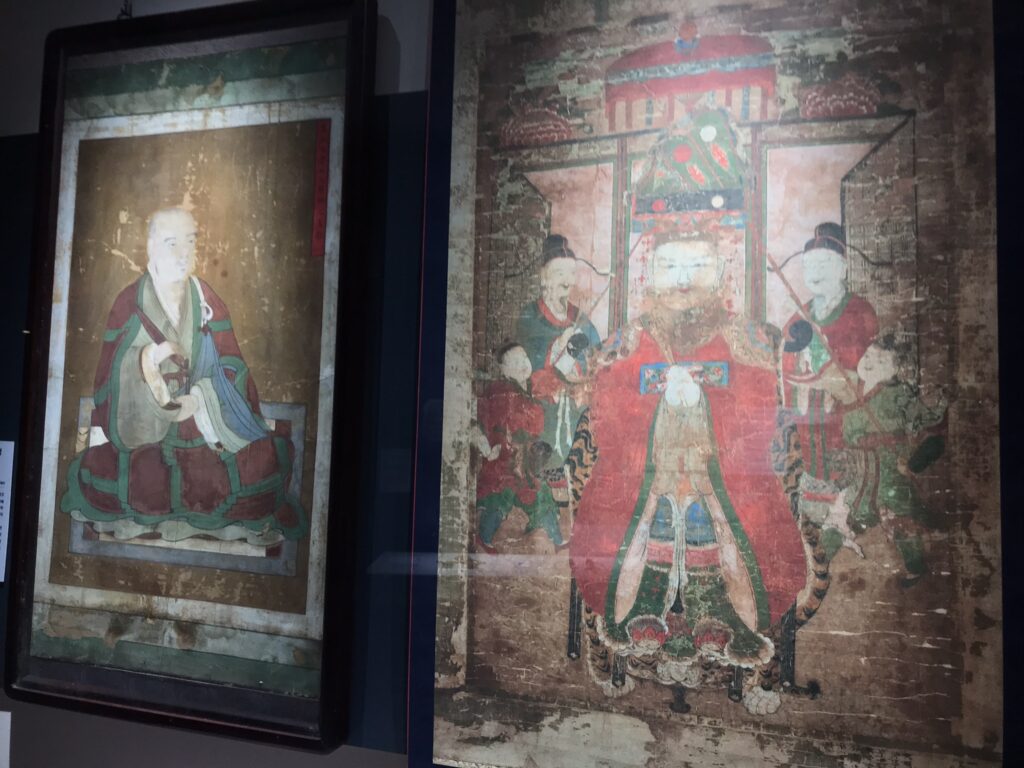
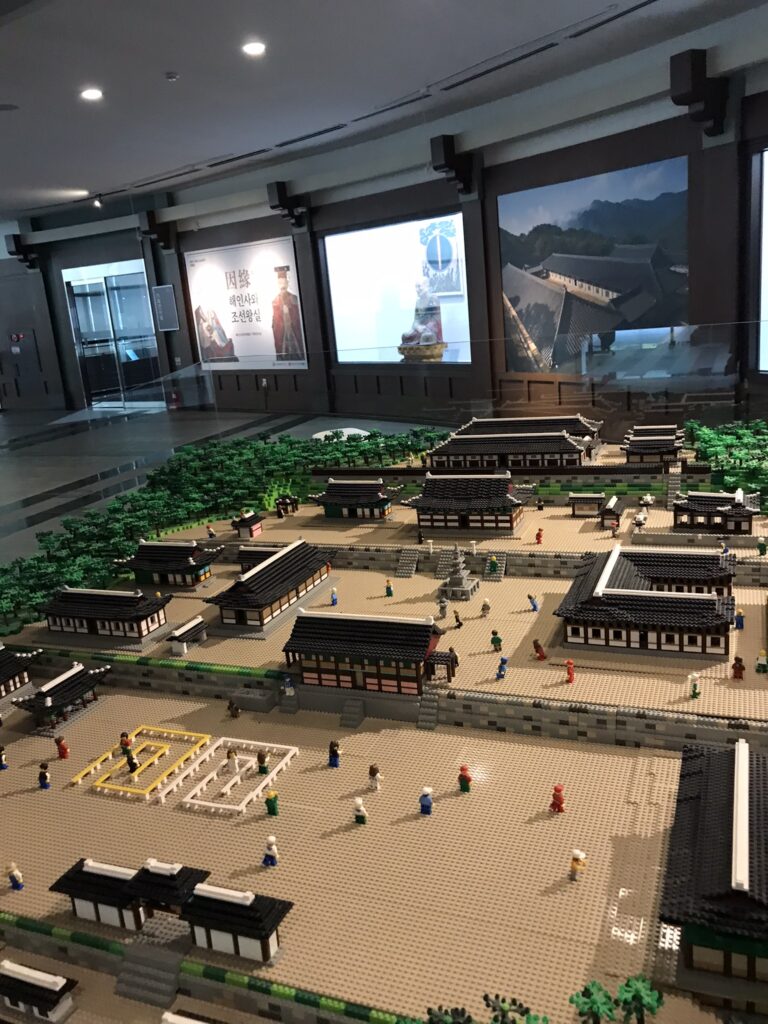
The museum is definitely worth a quick visit
Jeju
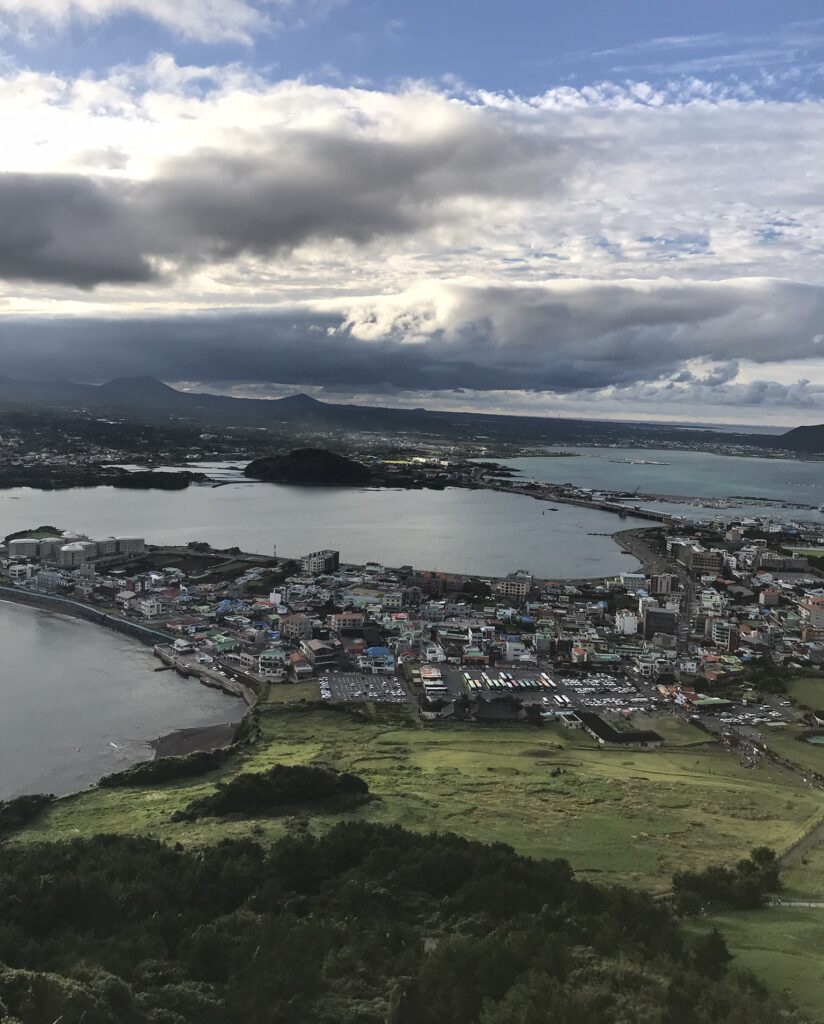
South Korea’s largest island, the volcanic Jeju lies around 50 miles south of the Korean mainland. With a distinct culture and subtropical climate, Jeju is a popular holiday destination for Koreans and is also gaining popularity with international tourists. However despite appearances, Jeju is not exactly a tropical island paradise. Don’t expect palm trees and coconuts. Jeju is a dark, craggy, mysterious and windswept volcanic landscape. The landscapes reminded us a little of the Galapagos. There is plenty of fertile volcanic soil and ample citrus fruits, but it’s also a land filled with black beaches and unusual rock formations. The tallest mountain in South Korea, Hallasan, is at the centre of the island and is an unmistakable presence, often shrouded in cloud and mist.
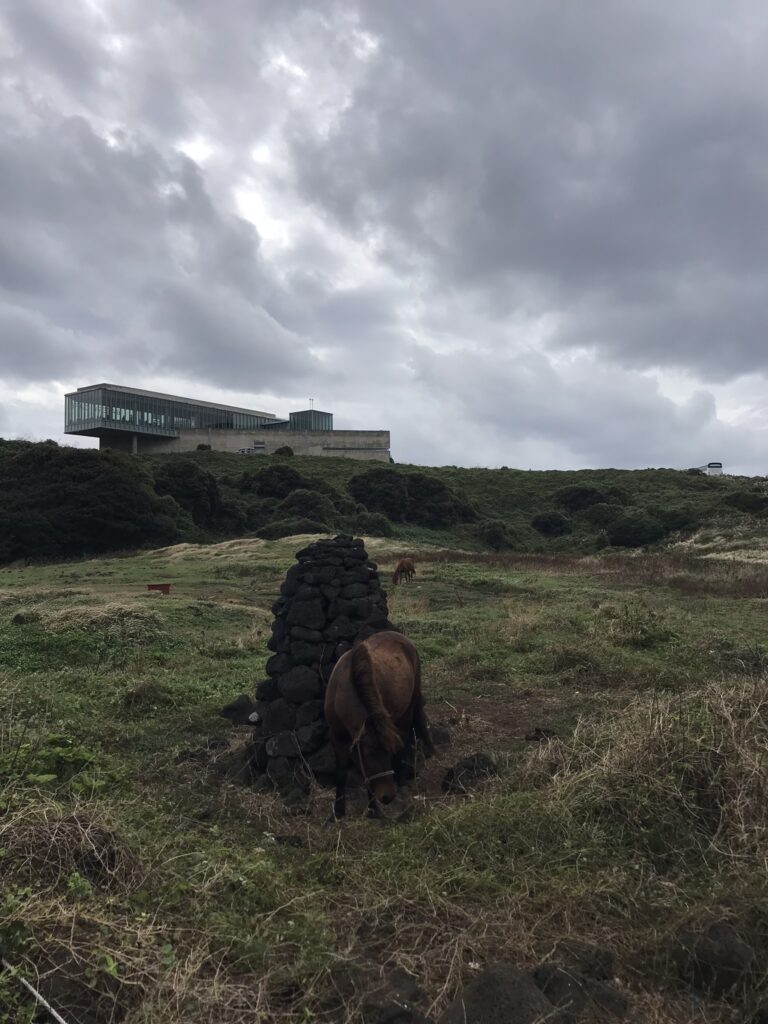
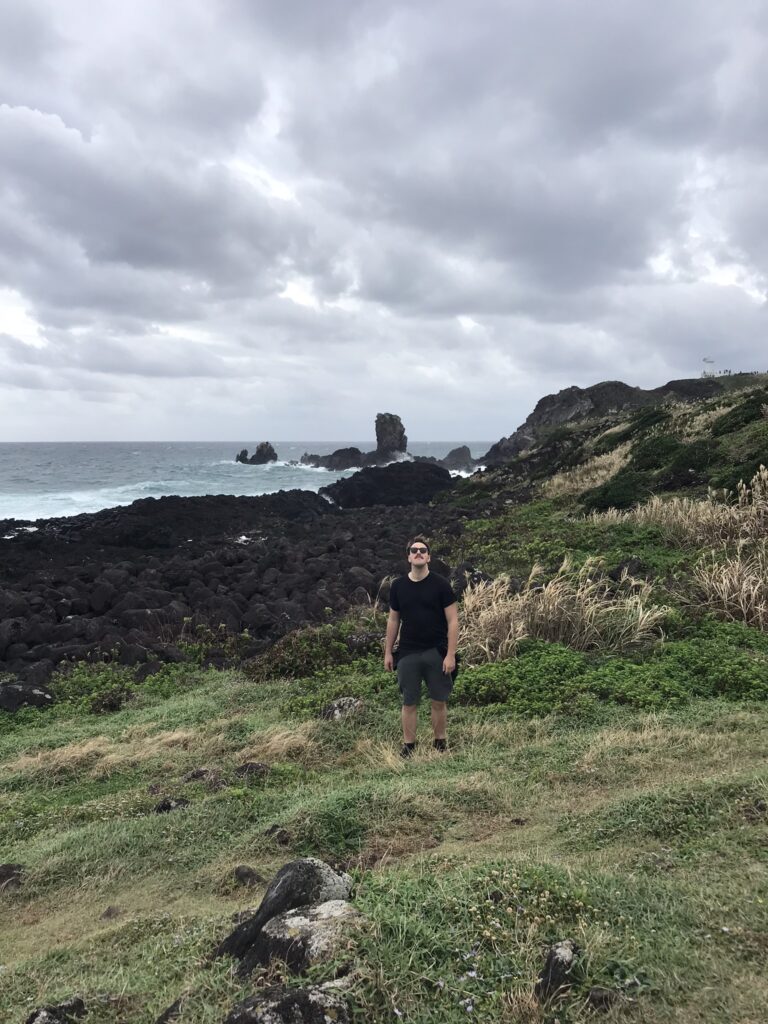
Jeju is a rugged, windswept land
Isolated from the mainland, Jeju has a unique cultural heritage which developed adjacent to but somewhat distinctly from the rest of Korea. Jeju has its own language, a variant of old Korean which is not mutually intelligible with the language of the mainland, although few native speakers remain today. Local people have traditionally felt a strong attachment to their natural environment and the resources of their island, particularly the sea and the local volcanic rock. We learned that historically people from Jeju were often looked down on or discriminated against when they traveled to the Korean mainland. During the dynastic period Jeju was often a place of exile for those who fell out of favour with the court, while the island saw an influx of refugees during the Korean War in the 20th century. Today, Korean tourists are drawn to Jeju for its distinctive culture and rugged landscapes. Traditionally, many newlywed Korean couples have taken their honeymoons in Jeju – the island even has a ‘love’ museum to help to inform them of what to do when they reach the conjugal bed.
A prime destination for walkers and nature lovers, Jeju is known for its ‘Olle’ trails (a local Jeju work for an alleyway) which run around the entire circumference of the island. Many visitors enjoy walking on these coastal paths, while the more adventurous also like to hike in the mountainous interior of the island – although we had mixed feelings about our own experience of hiking Hallasan. The island is also known for its distinctive ‘grandfather’ guardian statues carved from the omnipresent volcanic igneous rock, which are dotted all over the island. Known as dol hareubang, these stone watchers are said to ward off evil spirits as well as boosting fertility, and they are present pretty much everywhere you go on Jeju.
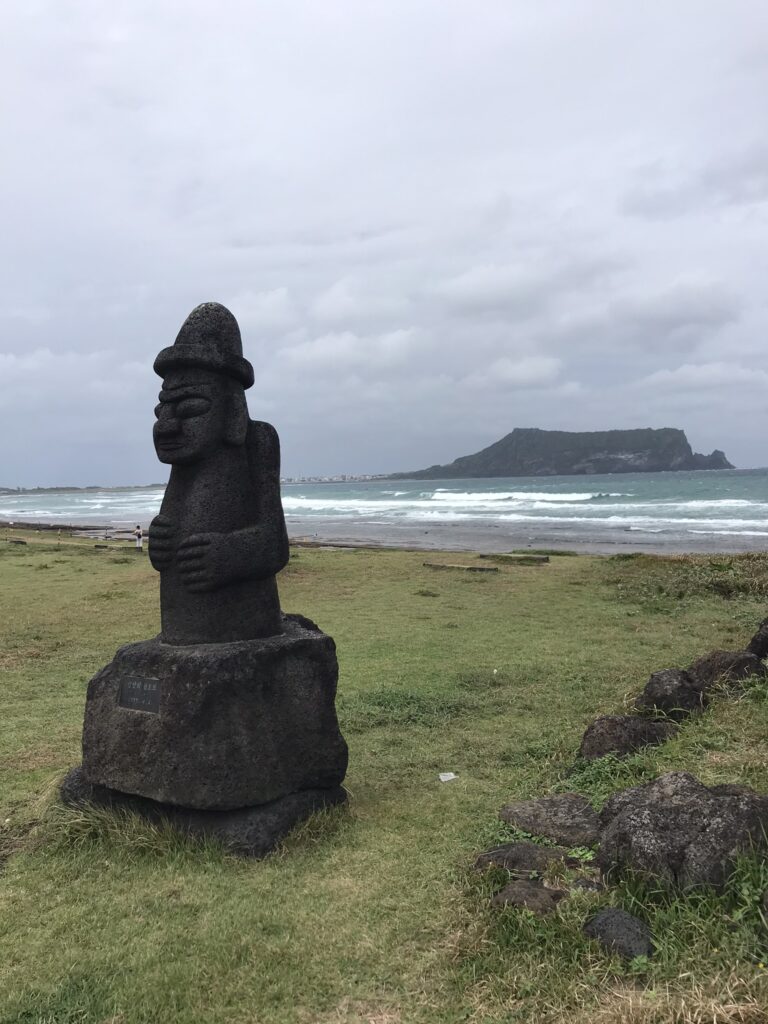
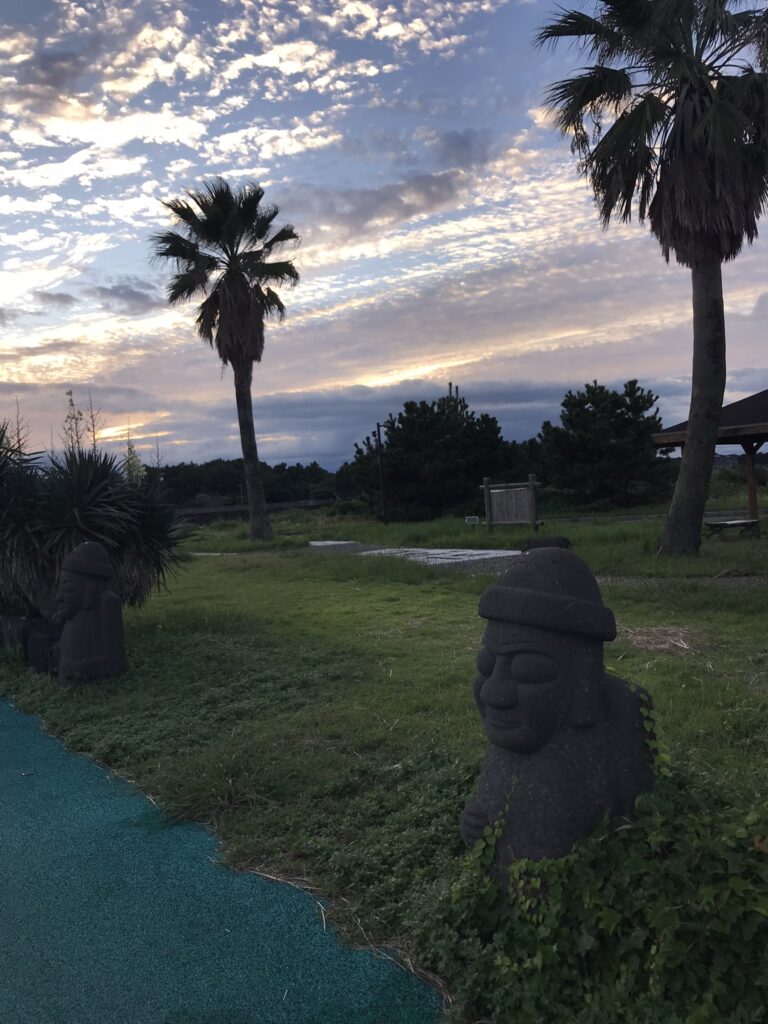
These stone guardians can be found all over the island
<p>Jeju is also known for its female divers, known as haenyo – an independent community of women whose life is spent diving to the seabed in order to harvest deep sea delicacies such as abalone. Operating for centuries as a cooperative, these women live and work together and are extremely skilled, able to hold their breath and dive far into the depths without specialist equipment. These female free divers are recognised by UNESCO as an inherent Jeju cultural heritage and are internationally renowned throughout the world for their expertise, skill and community spirit. The haenyo have at times been smuggled to work in other nearby countries and territories. Today, the haenyo are a somewhat dying breed as younger women don’t want to do this extremely gruelling, low-paid work. Most of the remaining haenyo are older ladies. It’s a hard and demanding job but the women express a deep affinity and fondness for their work and culture.
Having often been discriminated against in the past, the legend of the haenyo has grown over time and many tourists now yearn to catch a glimpse of these hardy women in action. The haenyo put on a daily paid tourist show on the northern side of Seongsang Ilchulbong outcrop, which is probably the easiest and most reliable way for most people to see them. However we managed to spot an authentic haenyo dive nearby at Sumapo Coast. It’s quite easy to miss – all you can see is their orange floats and a flipper or two popping out of the water. We sat for a while and were lucky enough to witness the women diving and then coming in for the day, hauling their catch of abalone in a net. It’s not a huge spectacle, plenty of people were passing by and barely anyone else realised that they were there. It’s definitely not guaranteed to spot the haenyo in action like this, we were lucky
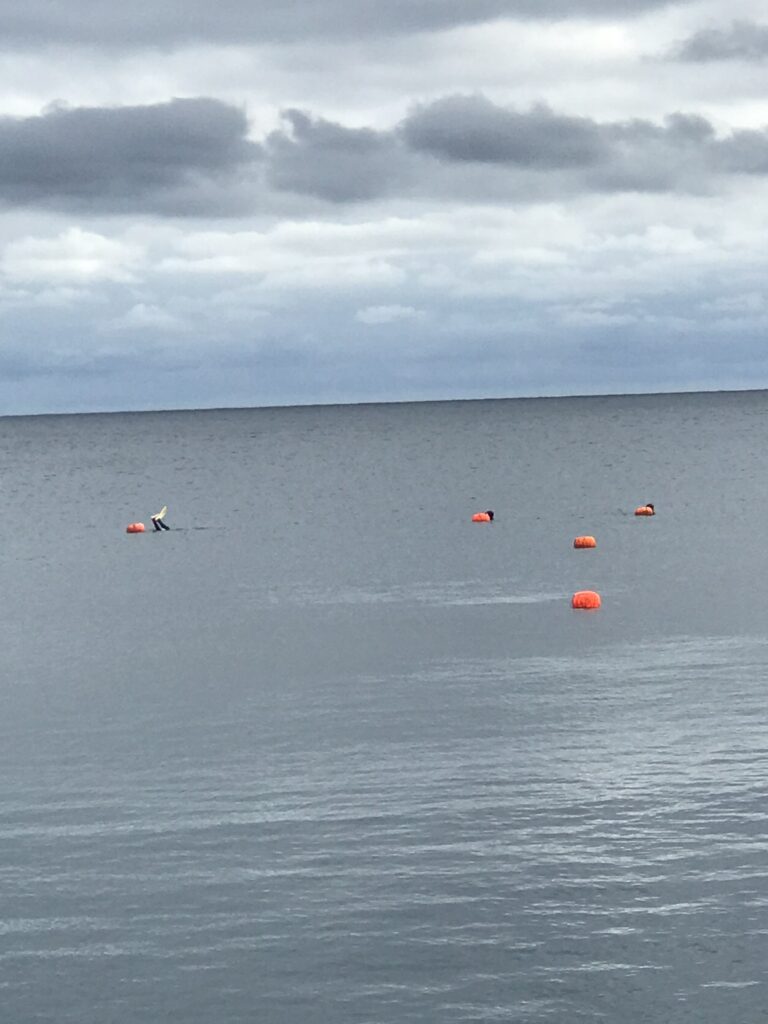
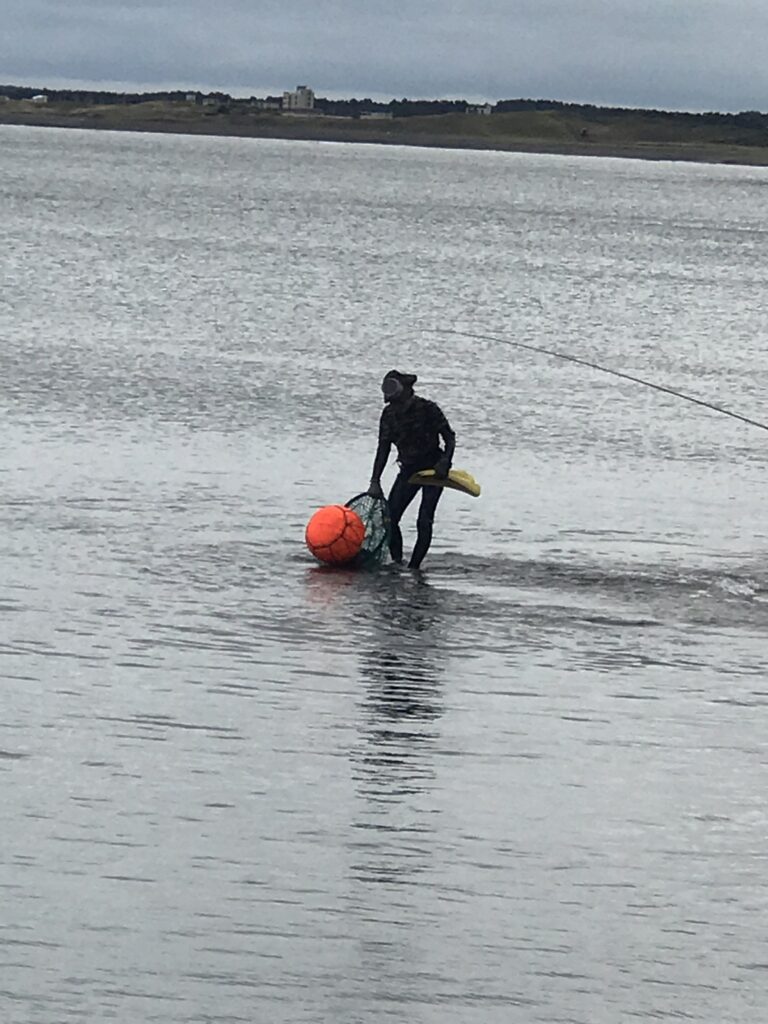
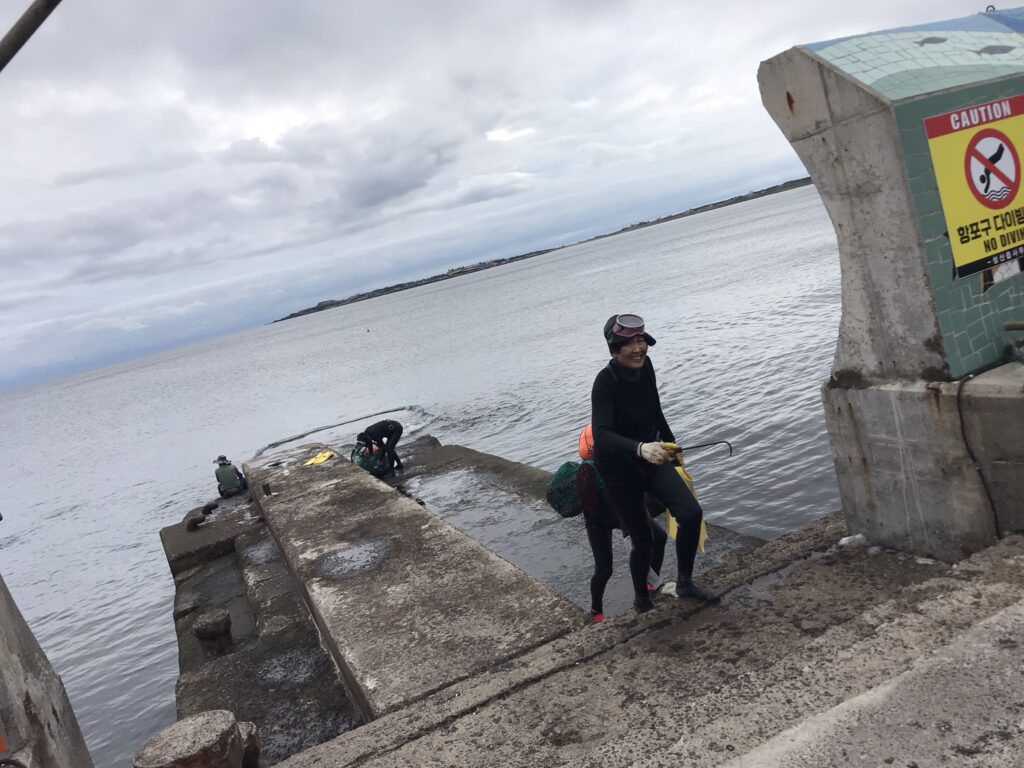
Haenyo doing their thing near Seongsang Ilchulbong, we were super lucky to stumble across this
Jeju is accessible from the mainland by boat, but by far the easiest and most cost-effective way to reach the island is to fly. Often flights between Jeju and the mainland are cheaper than the cost of a regular inter-city bus. We got a return flight to Jeju from Daegu, but it’s also possible to fly cheaply from Seoul or Busan and probably other airports too.
Jeju island is quite big and there’s often some confusion from tourists about the best area to stay and how best to tackle the island’s sights. Many people suggest hiring a car if you want to see everything, and while that would definitely make things easier it is also not completely necessary. Like the rest of South Korea, the island has an extensive and reliable bus network. We based ourselves on the east side of the island near to Seongsan Ilchulbong and got around as far as Hallasan in the centre using the local buses. If you truly want to see everything then you’d probably need two bases, one on the west and one on the east side in order to cover the entirety of the island. Jeju City is the main transportation hub, the largest settlement on the island and the location of the airport, but it’s not particularly close to any of the main attractions. You could probably base yourself here and take day trips to both the west and the east if you planned things carefully, but to be honest I’d suggest basing yourself in either the west, the east or both in order to minimise travel time and prioritise the things you want to see.
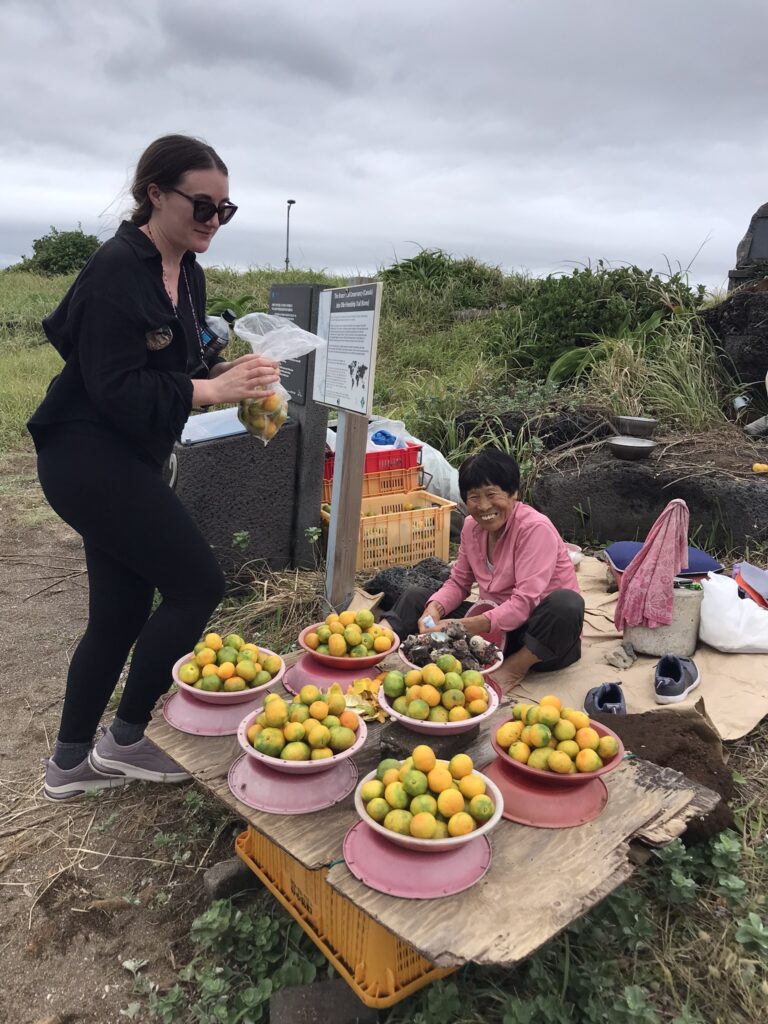
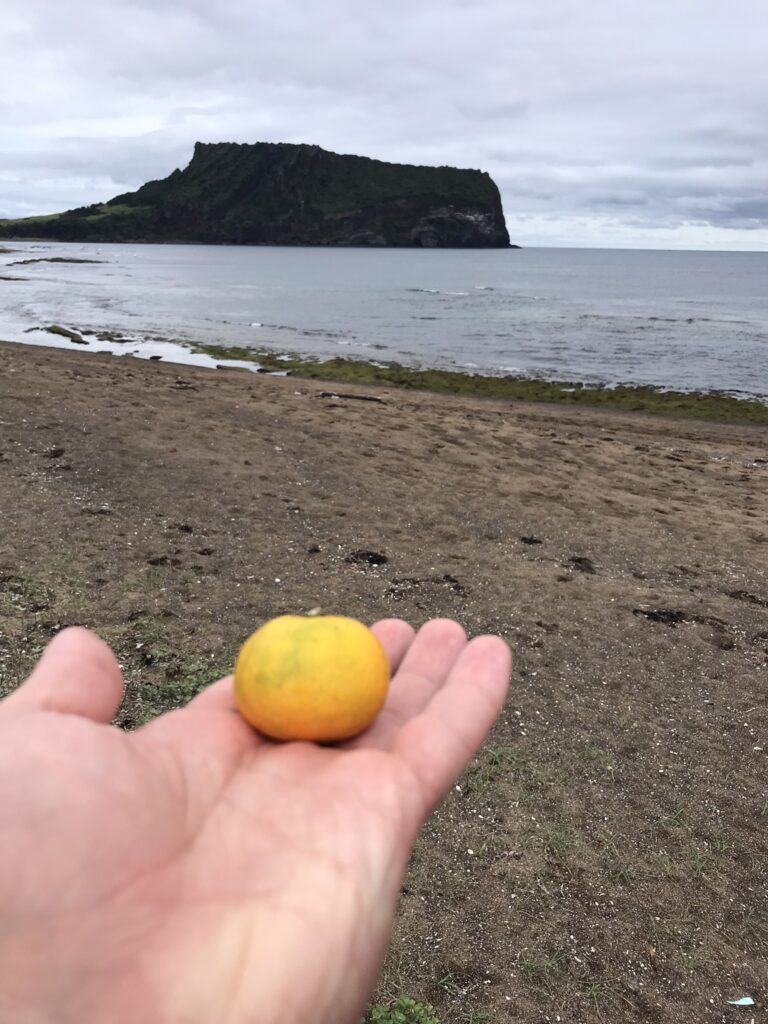
Jeju is also known for its citrus fruits – a product of the rich, volcanic soil
Accommodation
Playce Camp Jeju – we chose this resort-style hotel as it was within walking distance of several attractions on the east coast as well as a nearby settlement with good bus links. The hotel provides a free shuttle bus from the airport but public buses are also super cheap. To reach this hotel takes around an hour from Jeju City by bus.
Jeju R Hotel and Guesthouse – we stayed here in Jeju City on our last night before flying back to the mainland. Comfortable and cheap accommodation within walking distance of plenty of restaurants and amenities – an ideal place in our book.
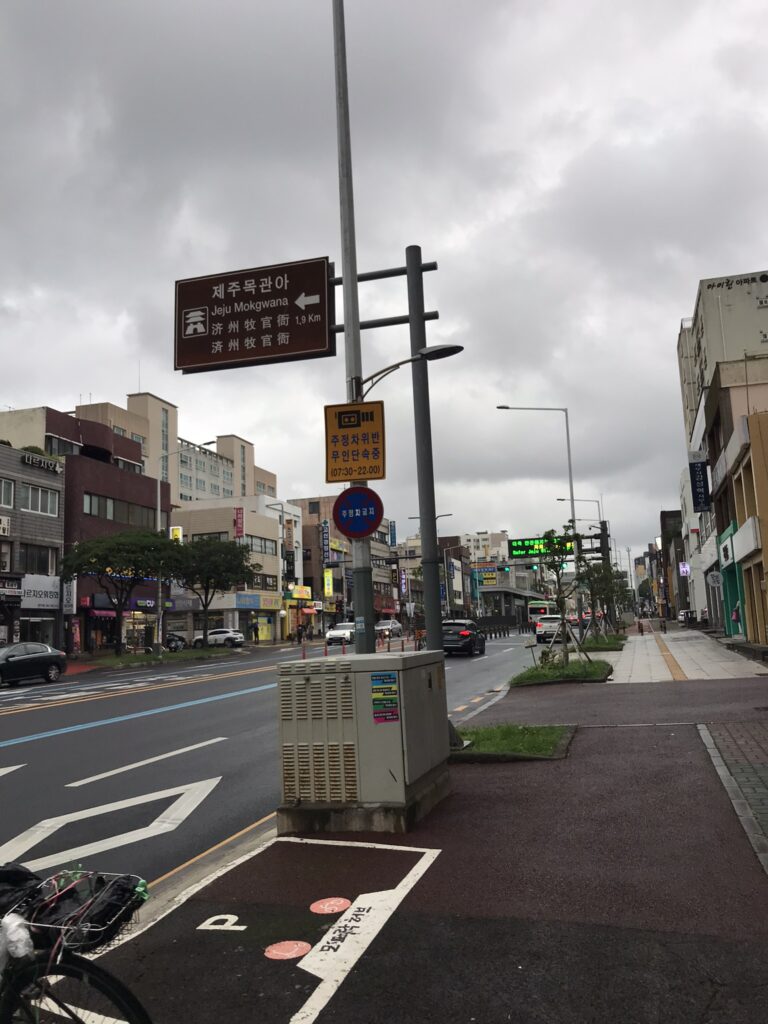
Jeju City is the largest settlement on the island and a good base for a night before or after flying to/from the mainland
Foodie Places
Bonggine Kkangtong Gui – a cheap and super-authentic Korean BBQ restaurant which seemed to mainly cater to locals/domestic visitors. The ladies working here spoke no English but were very friendly and demonstrated how to correctly eat the BBQ, using the lettuce leaf as a wrap. Free refills of beansprouts, kimchi, macaroni pasta and other extras which you can then cook yourself using the grill. Not a touristy place at all and the price/quality ratio was high as a result.
Mom’s Touch – this franchise fast food shop seemed to be operated by one person who was both the cook and server. As always, a good option for filling and unhealthy fast food and chicken burgers.
Chicken Pub Nuguna Banhan – a boisterous, jovial atmosphere here with lots of boozing locals on a Friday night. We visited as an alternative to getting another burger from nearby Mom’s Touch, we weren’t drinking and noticed that the noise level seemed to be rising considerably as the beers continued to flow for the many locals around us. The food here is chicken-based, we had some chicken rolls which were pretty tasty if slightly on the small side portion-wise.
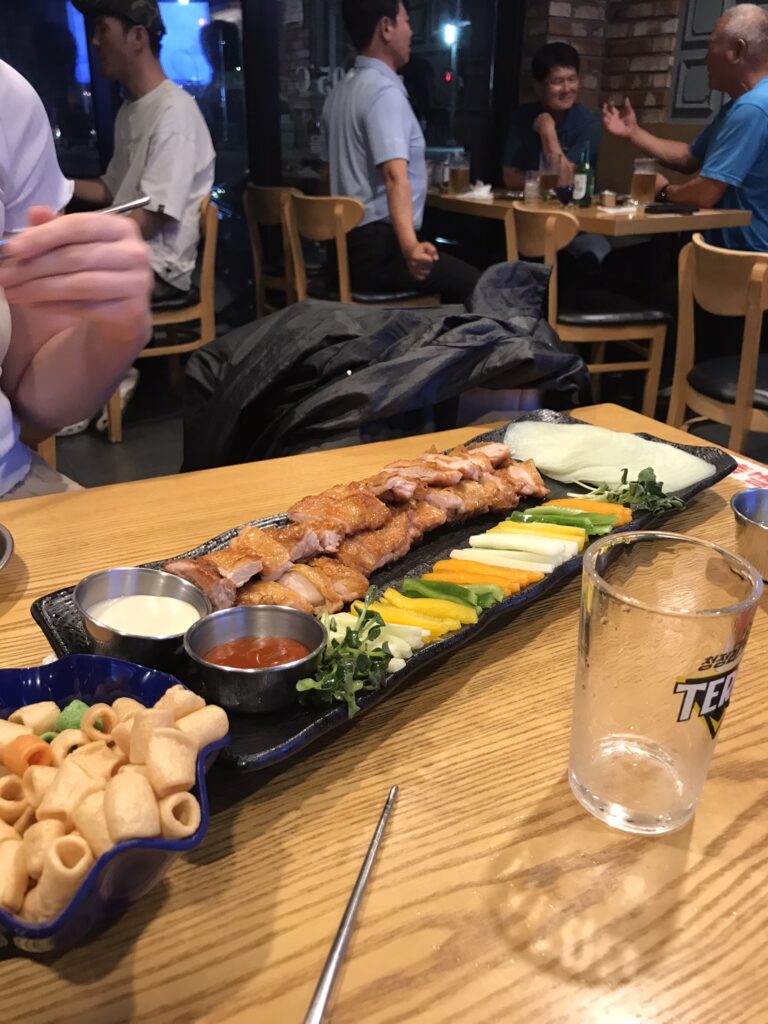
Chicken and jolly drinkers at Chicken Pub Nuguna Banhan
Paris Baguette – an omnipresent chain in South Korea, this is a personal favourite of mine for takeaway sandwiches and pastries. It’s trying to mimic a Parisian-style bakery, a little on the expensive side but ideal for an on-the-go lunch and the quality is always great.
Morellojeju – an unexpected treat in Jeju City, super affordable and high-quality Italian style pizza. You can order using a screen with built-in translation, which makes things very convenient and easy for foreigners.
Activities
Seongsan Ilchulbong – one of the iconic spots of Jeju and part of the traditional creation myth of the island. It’s a huge, looming rugged volcanic cone extending into the sea via a narrow peninsula from the main island, with great views across the island and its unique landscapes from the top. There is a free viewing area which doesn’t go much higher than the ticket booth, and also a paid trail which goes up to the summit of the cone. I highly recommend taking the paid trail. It’s an uphill climb to the summit but definitely worth the effort – you can take frequent rest stops along the way to admire the view. We weren’t allowed to take our water on the climb with us which wasn’t great, luckily it wasn’t a particularly hot day. Seongsan Ilchulbong is quite a touristy place, there were a number of large coach trips here when we visited and there are lots of touristy shops and restaurants near the coach parking.
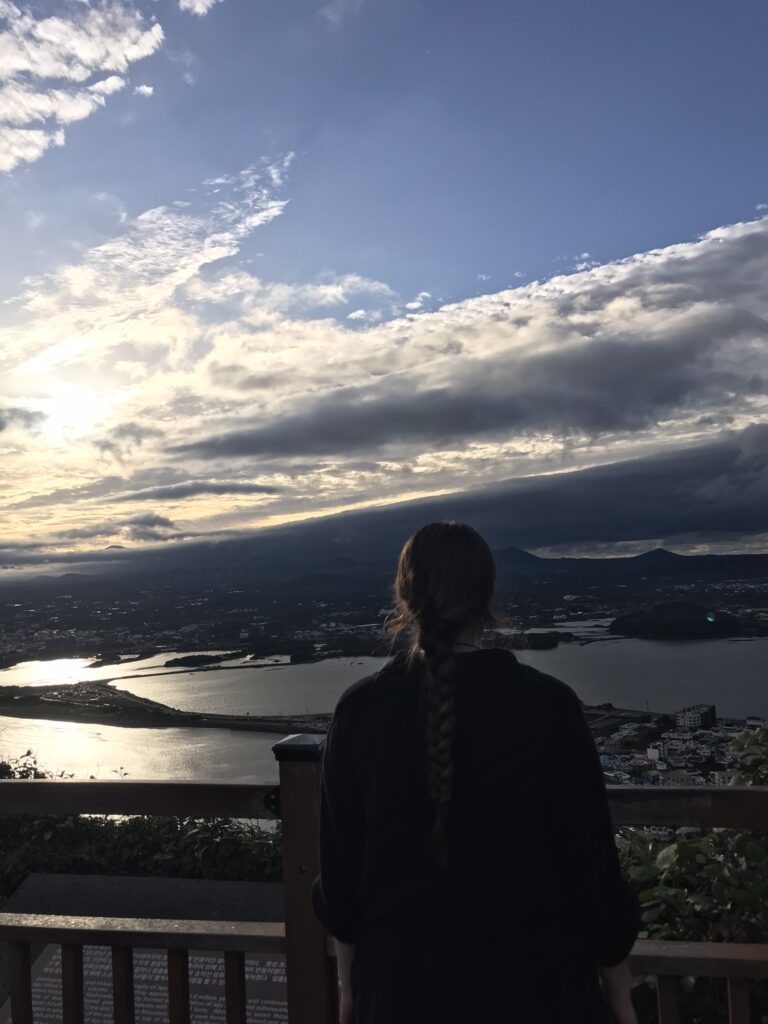
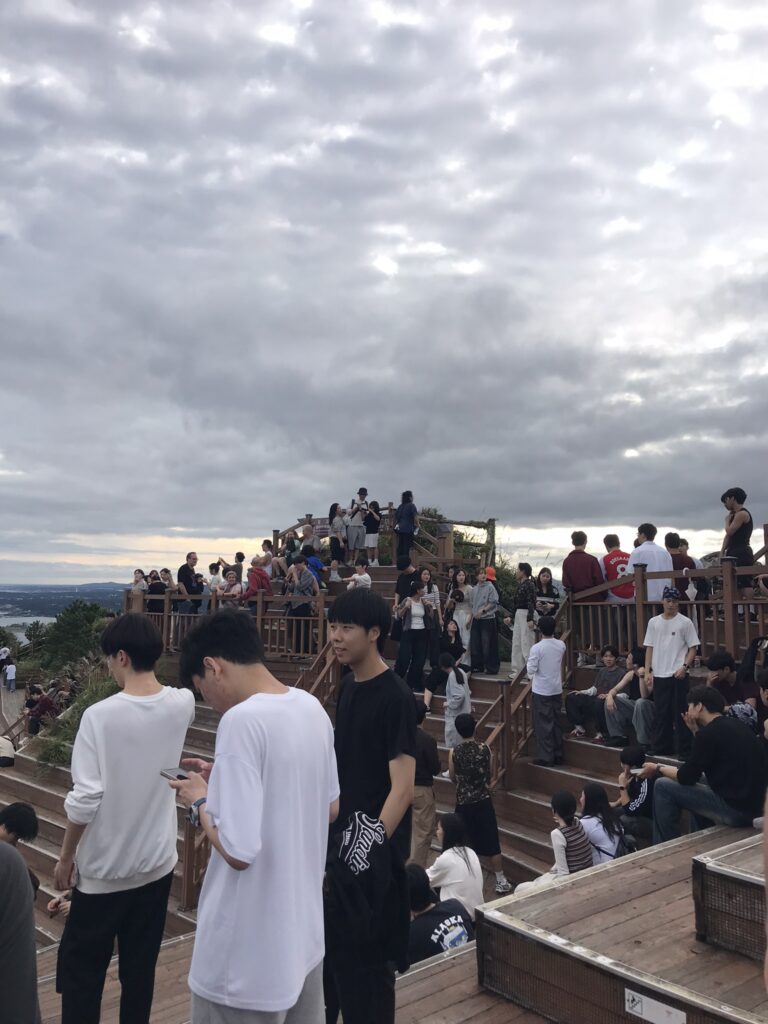
Amazing views from Seongsan Ilchulbong although it can get busy at the top
Gwangchigi Beach – a black volcanic beach with great views of Seongsan Ilchulbong across the sea. It didn’t seem like a great place for sunbathing or swimming, but definitely an interesting and rugged place to take a walk especially if you’re heading to the cone
Haenyo Museum – a great resource and celebration of all things related to the haenyo, their history and culture. These women are very hardy – there is personal testimony in the museum from haenyo who started out as young teenagers and worked until their 80s, as well as stories about pregnant haenyo who were working up until the day they gave birth and were back in the sea the following day. The museum emphasises that the women have a real affinity and feel at one with the sea. There is a community spirit amongst the haenyo – the museum explains their culture, how they live and work together, take little breaks and chat together in a special enclosure. The museum contains personal items and describes the lives of the women, also showing the evolution of their clothing and protective equipment over the decades. The haenyo have faced prejudice and discrimination at times, particularly when working outside of Jeju, however they are now a treasured part of the local culture. Upstairs at the museum was an art gallery with art made by and relating to the haenyo. The museum is in a small settlement on the east coast which is easily accessible by bus.
Jeju Stone Park – an enormous park with numerous different sectors relating to the use of volcanic stone – a key element in the local culture and development of Jeju. We were blown away by the size and quality of this park and all the different elements on show. There are extensive rock sculptures, spiritual areas relating to mythology and ritual, entire mock villages, several large and ultra-modern museum structures and even an art gallery. Most of the artefacts on show are replicas which are strategically placed for illustrative purposes. Regardless, this is one of the best attractions we visited in South Korea.
The sheer scale and amount of information and content on display at the park is mind-blowing. We spent hours here and couldn’t see it all. The park is located at the foot of Mount Hallasan, with cool and somewhat ominous views of the surrounding mountainous landscapes. Very few other people were visiting the park at the time of our visit and the misty mountain atmosphere gave it an almost eerie and dark, ethereal feel. You can easily access the Stone Park on the bus from pretty much anywhere on the island.
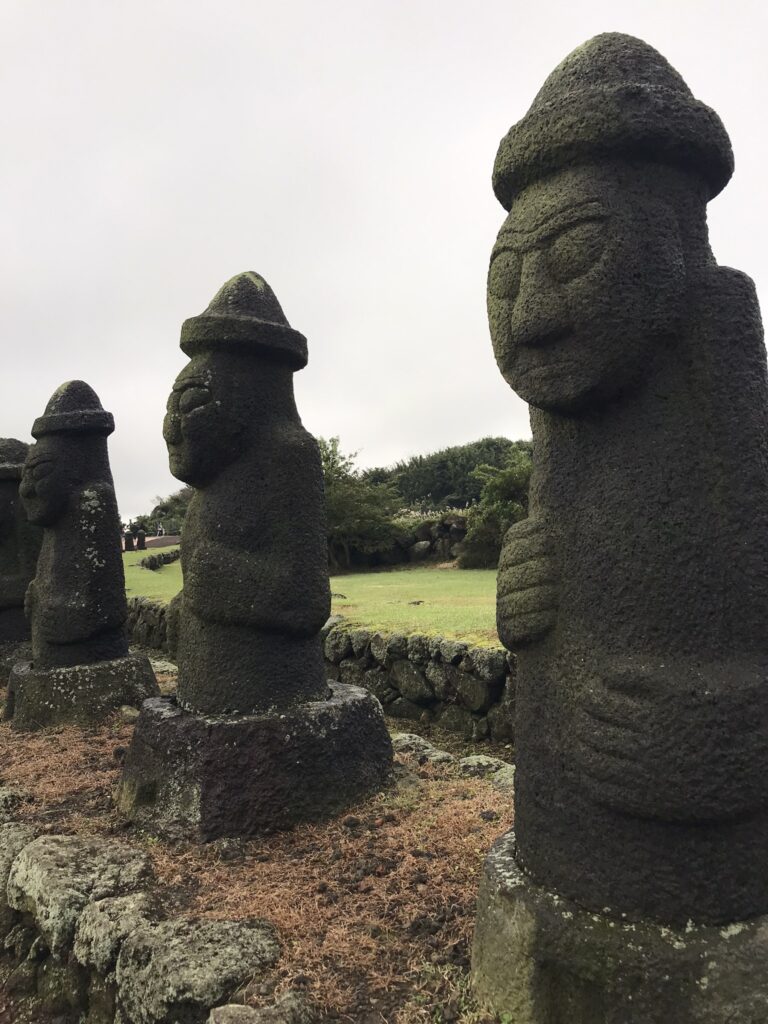
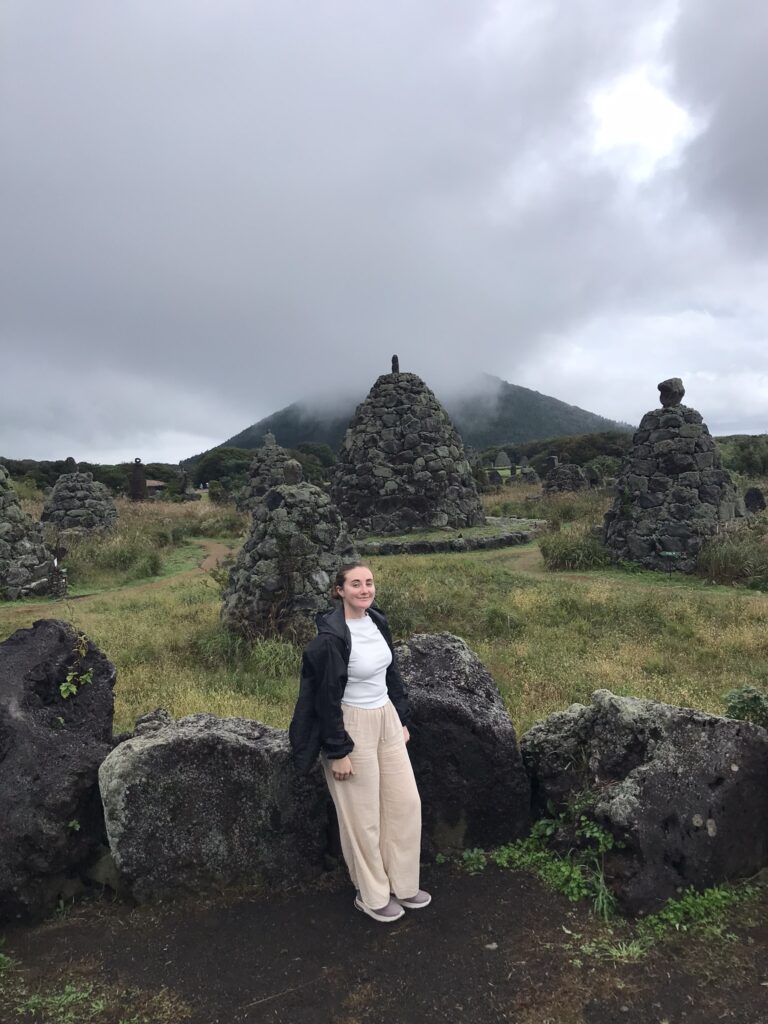
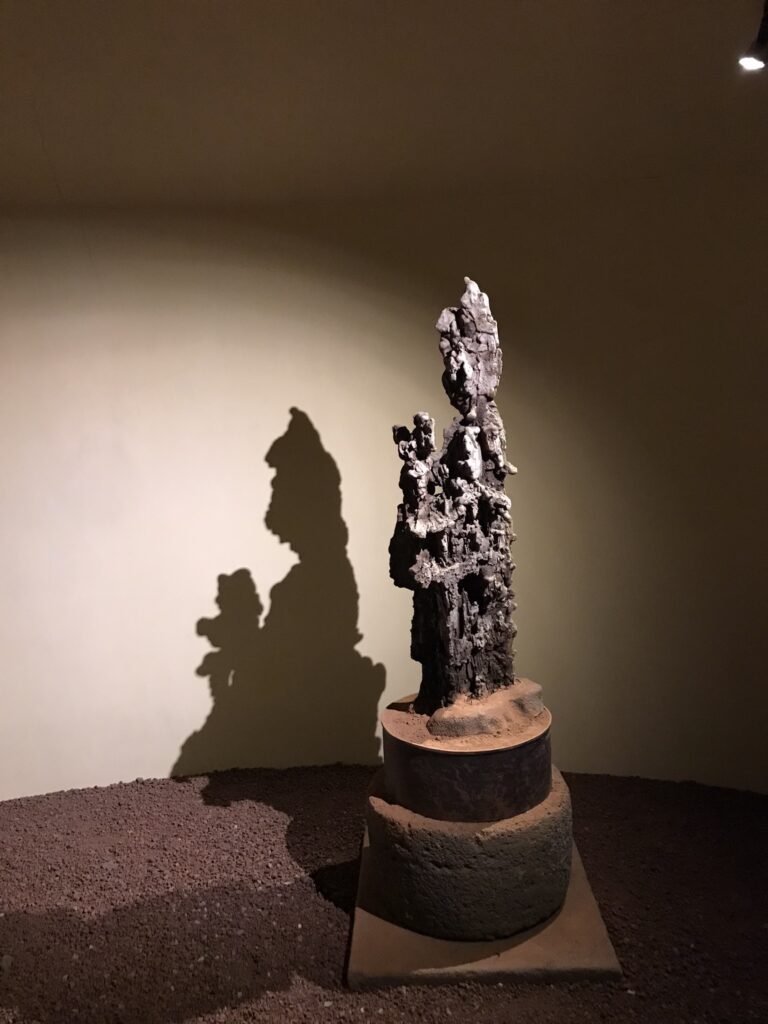
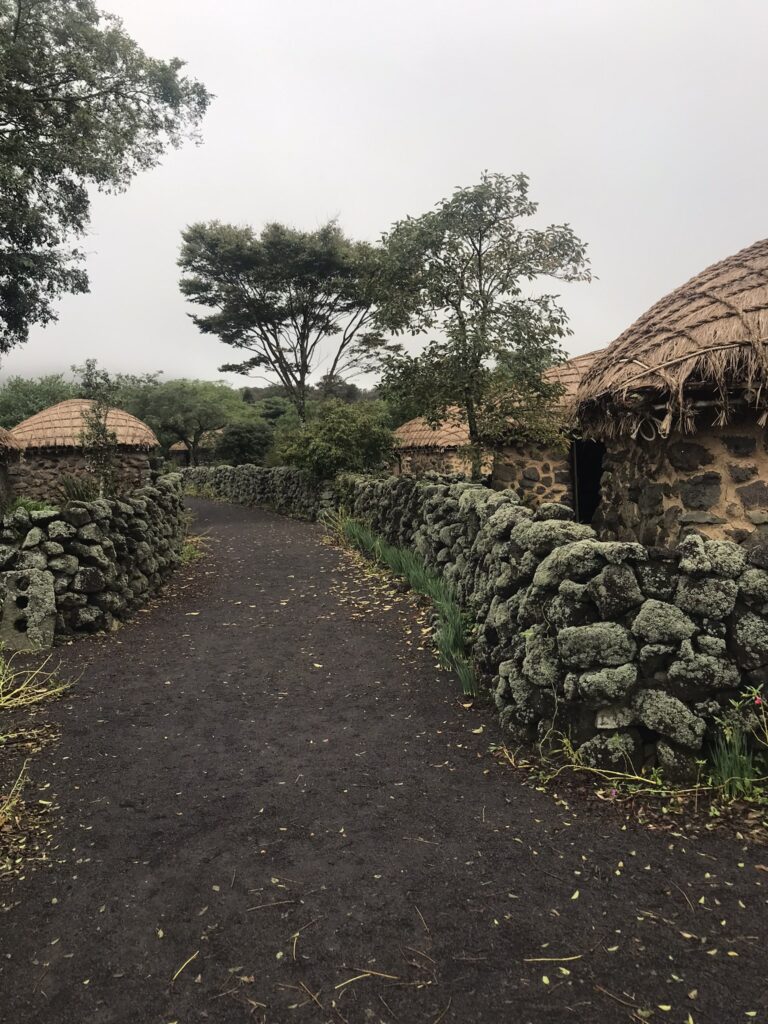
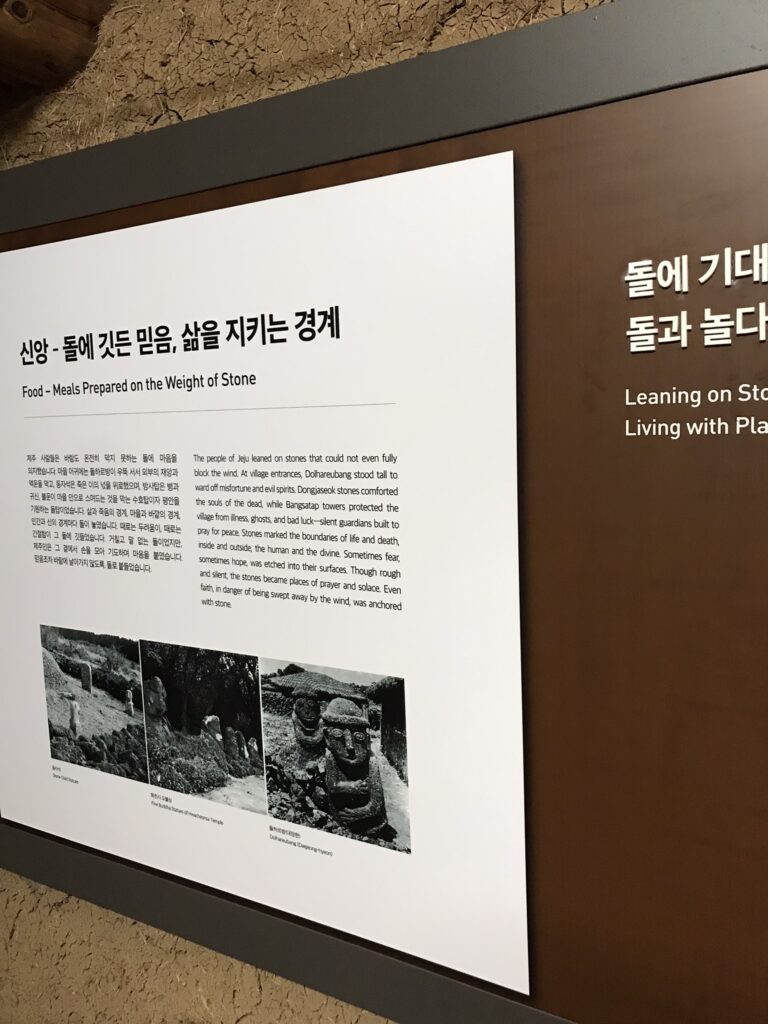
We were super impressed with Jeju Stone Park
Seopjikoji – we walked here from our accommodation as it was nearby and part of an Olle trail which runs along the coast. This outcrop features rugged coastline and distant views of Seongsan Ilchulbong. It’s a headland and was extremely windy here, we almost got blown away. There are a few stacks and stumps in the sea, with thrashing waves crashing on the rocks – typical Jeju coastline. A lighthouse at the top of the outcrop provides views of the surrounding area. Strangely, there was a large touristic apartment complex in the vicinity which seemed to be oddly dilapidated and semi-deserted, and a bizarre gingerbread-style abandoned building in the middle of the outcrop which we weren’t too sure about.
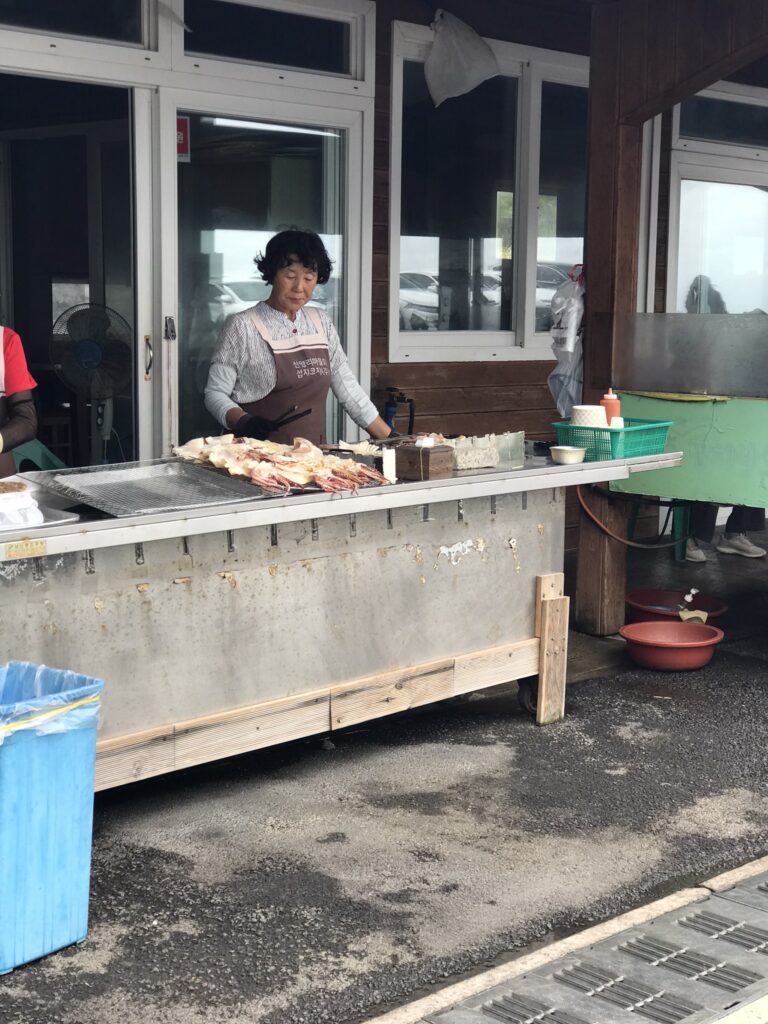
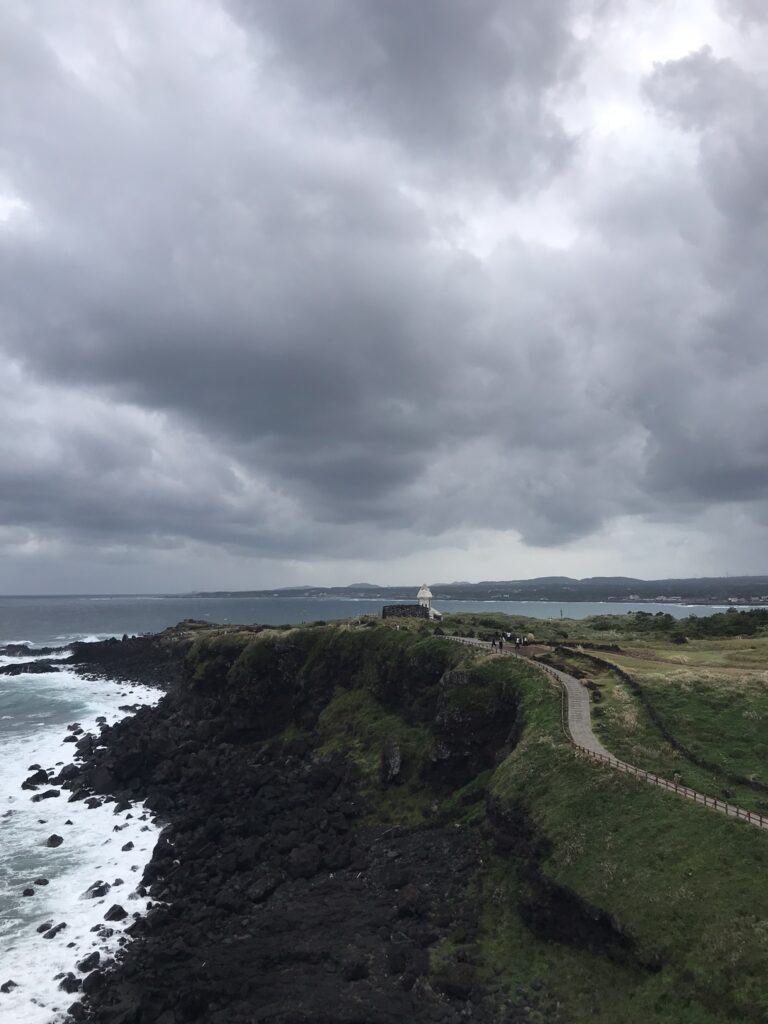
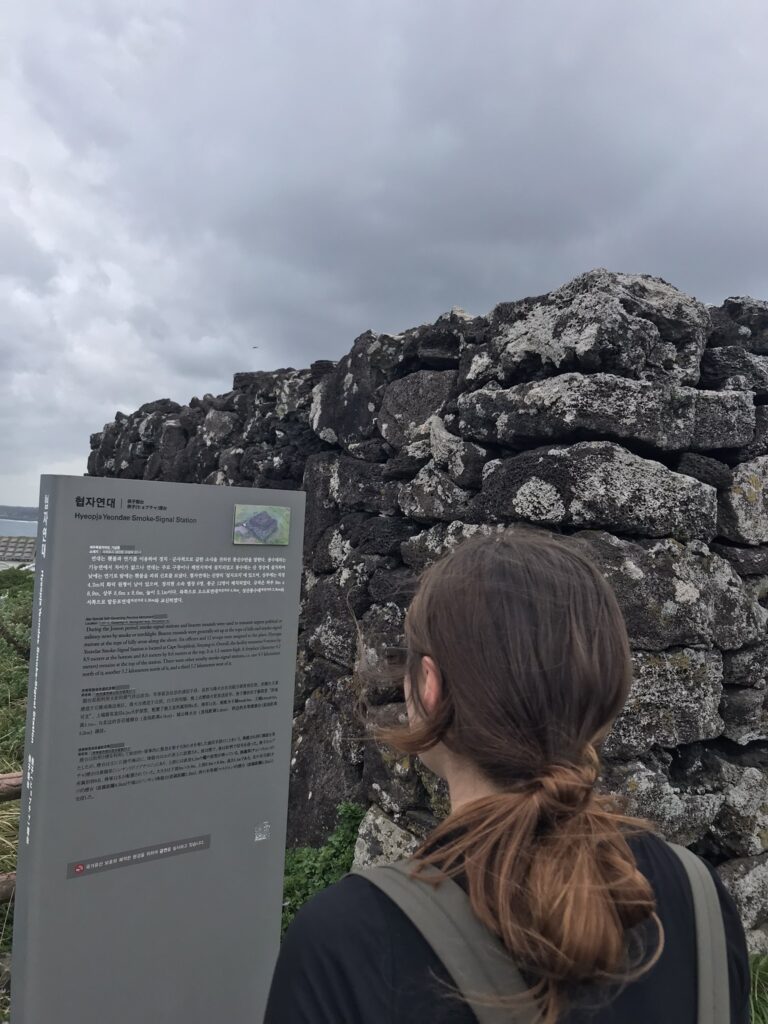
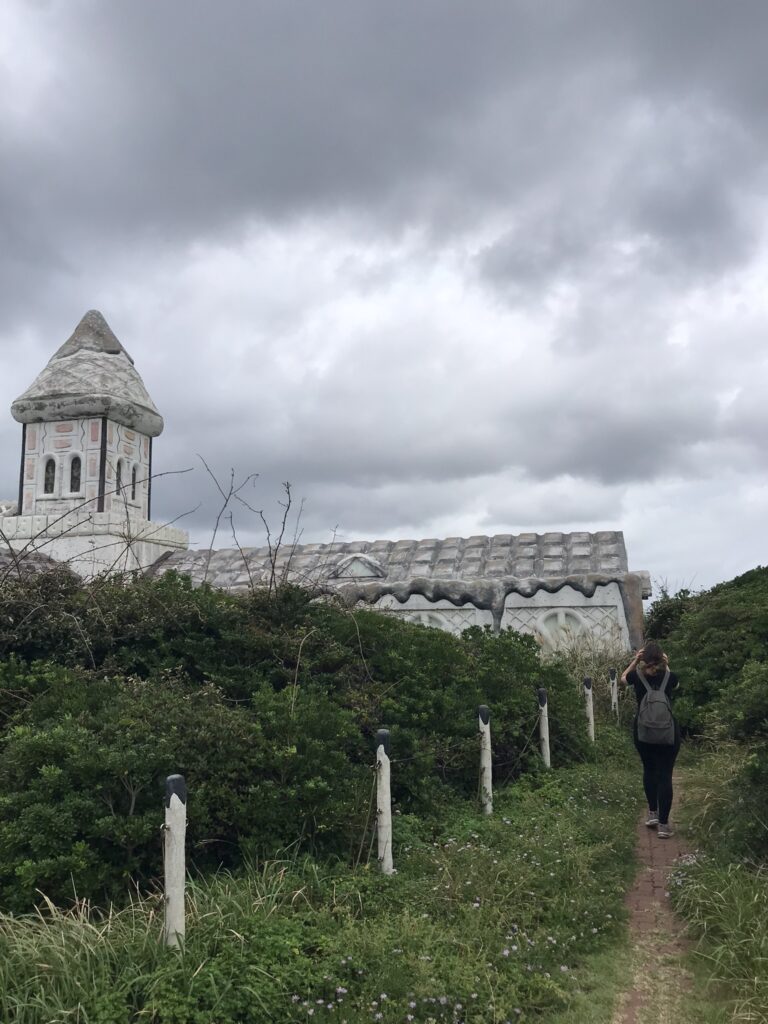
There are a few seafood stalls and interesting landmarks at Seopjikoji including a lighthouse and an ancient smoke signal tower; the abandoned gingerbread house was peculiar
Mount Hallasan Seongpanak Trail – there are several trails on Mount Hallasan, which is the largest mountain on Jeju and in South Korea. We chose to do the Seongpanak trail as it is one of the more established and the trailhead is easily accessible by bus (buses drop off and pick up from the bus stop right outside the trailhead for Seongpanak). Entry to the trail is free but it’s necessary to register and book a timed entry slot via the official website in advance, and it’s also necessary to bring ID as this is required at the entrance gate to verify the reservation. Reservations tend to be booked up well in advance, especially for the earlier slots. Trekking almost entirely takes place in the morning to allow walkers enough time to descend safely before dark. Visitors who want to reach the summit need to get to the highest checkpoint (which is about 3 hours uphill hiking from the trailhead) before roughly 11.30am – after that you will not be allowed to continue up to the summit. The summit itself closes at around 1.30pm (although this might vary depending on the season) and walkers are asked to start making their way down. Because of this, visitors usually book as early a slot as possible in order to increase their chances of actually making it to the top.
The Seongpanak trail is well-maintained and easy to follow. However our experience here frankly wasn’t great. Maybe we were expecting too much but it was basically just a 3 hour continuous uphill ascent through thick forest. We visited on a cloudy and misty day (which is often the case on Hallasan), but even if it was totally clear I don’t think there would’ve been many views worth seeing as we were surrounded by thick trees and vegetation for the entirety of the trek. Presumably the best views come after the final checkpoint. The thick mist and constant rain on the day didn’t help matters either – we were soaked to our skin and cold despite clear blue skies and warm weather at ground level when we were setting off. We had booked a later slot and so didn’t get a chance to head on from the final checkpoint to the summit, but we probably wouldn’t have bothered to go further even if we were able to as the views were non-existent due to the fog. The walk was therefore extremely monotonous and quite tough and gruelling with the constant uphill, for zero reward at the end. Not a great experience honestly.
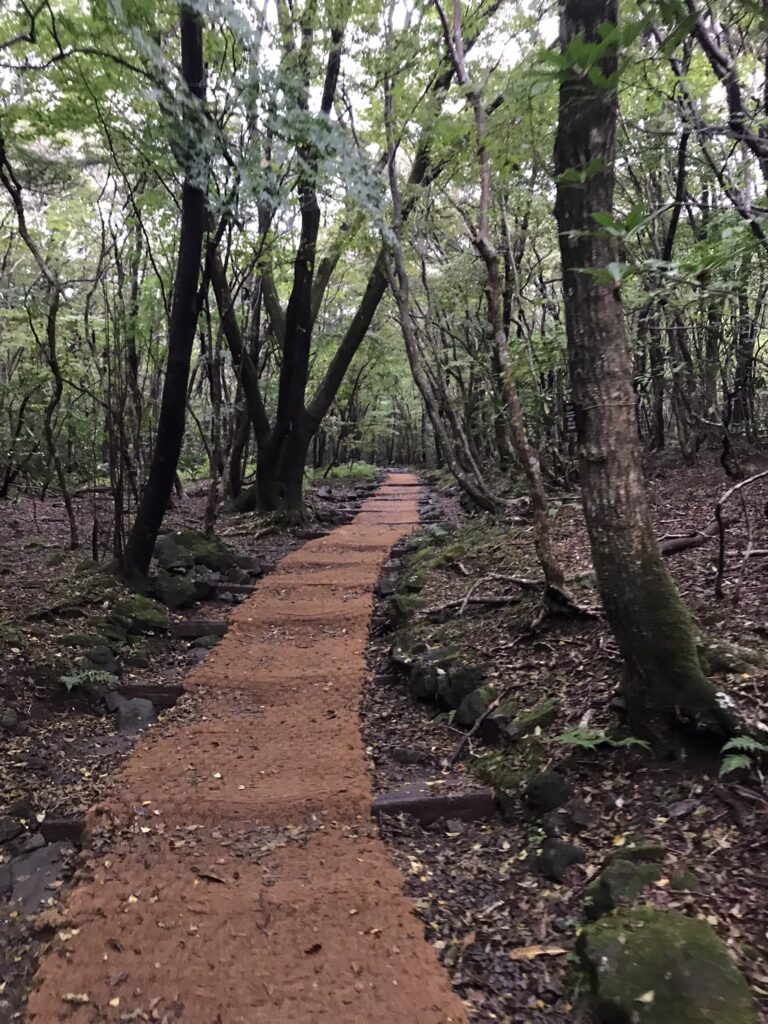
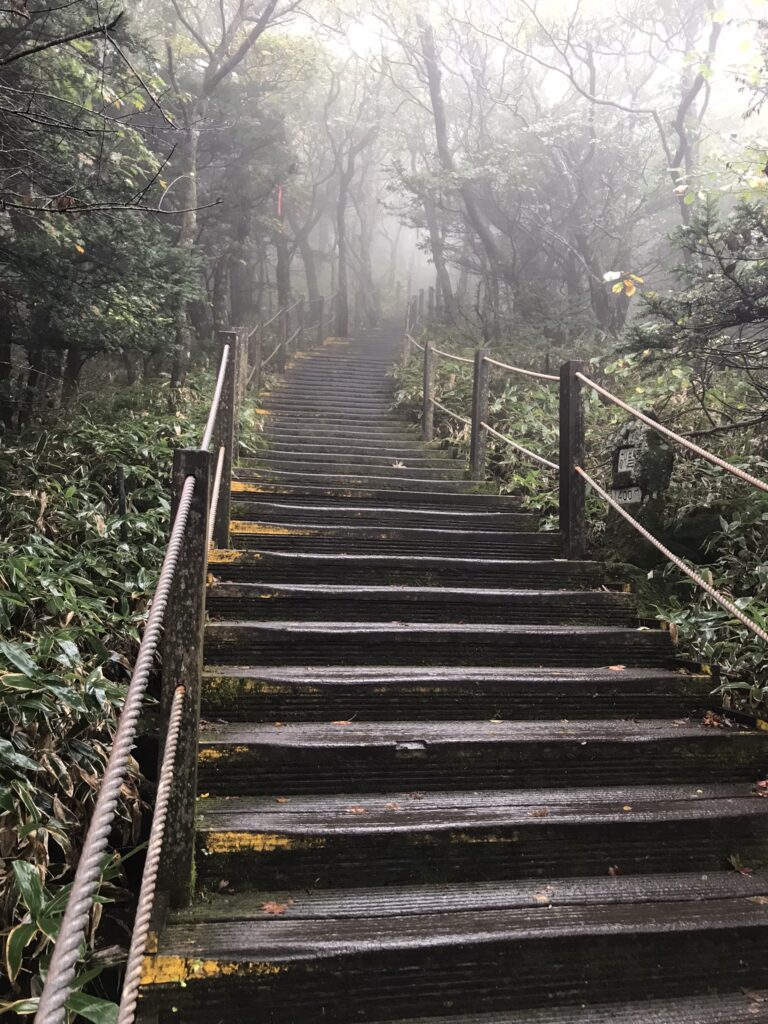
Expect a whole lot of this on the Seongpanak trail
Make sure to take food and drink with you as there is nowhere to purchase this along the way. The trail has one or two rest houses where you can use the toilet and try to get warm/dry. Be prepared for fog! On the day we visited there were clear blue skies elsewhere on the island, but Hallasan was shrouded in cloud and mist which you inevitably end up walking through and getting soaked. We probably got sucked into the hype here as so many other blogs and resources claimed that this was one of the best things to do on Jeju. In hindsight we would’ve much preferred to use this day to explore another part of the island.
Mangjanggul Lava Tube was closed when we visited. Seongeup Folk Village is another popular tourist attraction in the east of the island, but from our research this seemed to be a bit of a tourist trap so we didn’t visit.
Gyeongju
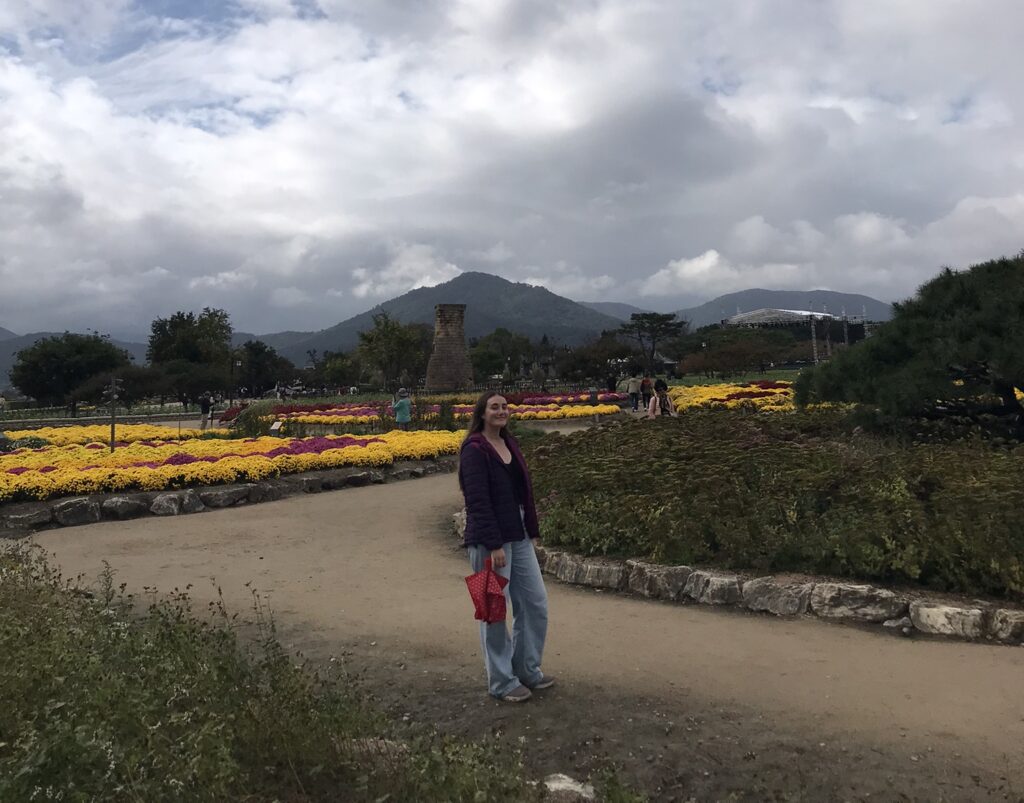
Home of the ancient Silla kingdom and one of the most historically important cities in Korea, Gyeongju is a UNESCO World Heritage Site, described as an ‘open-air museum’ due to its plethora of historical sites and ancient burial mounds which coexist with the modern urban development. Silla was a dominant regional kingdom for almost 1,000 years, expanding to rule most of the Korean peninsula between the 7th-10th centuries CE with Gyeongju (under its previous name of Seorabeol) as its capital. As such, the city developed as an important centre of power with a large population and a rich cultural heritage, home to almost a million people at its peak which at the time made it one of the largest cities in the world. Today Gyeongju is a quiet, moderately-sized city and a popular tourist destination. The symbol of the city is a half-cracked, hand-moulded 7th century Silla tile featuring a motif of a face with individualistic features, known as the ‘Silla smile’. This emblem can be seen throughout the city. The actual tile is in Gyeongju National Museum.
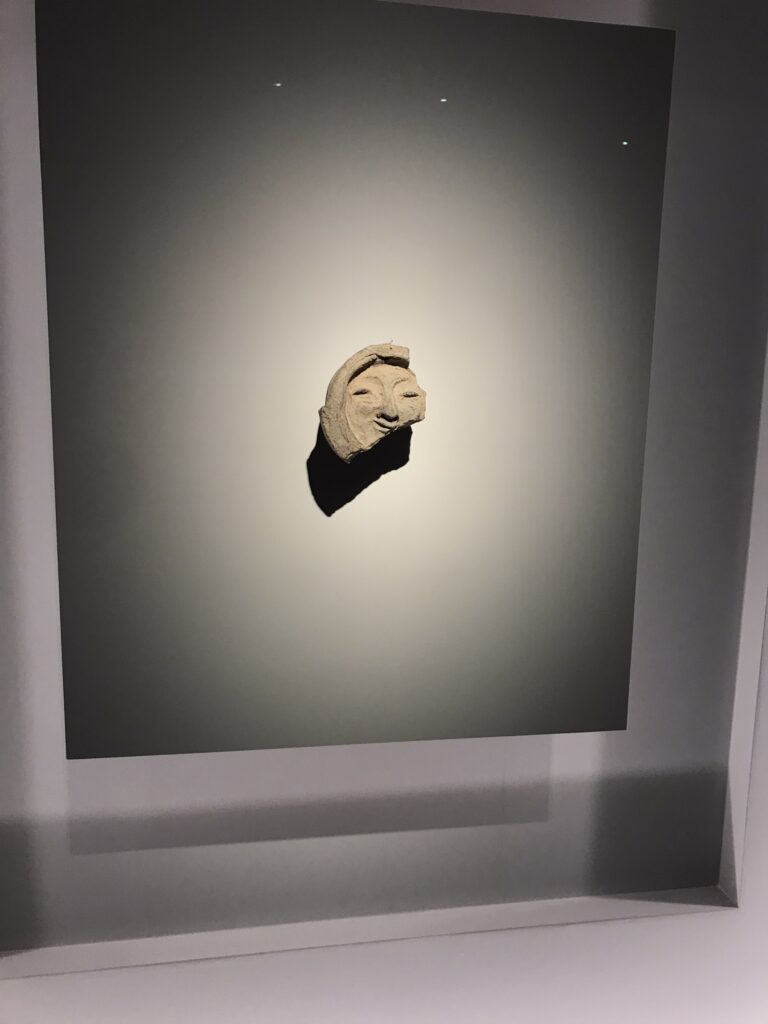
The Silla Smile
The most immediately striking feature of Gyeongju is its numerous bulbous burial mounds, some of which are situated in large open parks right at the centre of the city. These are the royal tombs of the Silla dynasty. The parks containing the mounds are free to enter and walk around, and most are open 24 hours – the burial mounds are lit up at night and can be quite spooky and atmospheric after dark, almost like the setting for a detective series. The mounds tend to be clustered together and vary in size and scale – most can only be seen from the outside, but a few have been excavated and can be entered by tourists. Lots of grave goods and ornate artefacts (including golden crowns) were found inside the excavated mounds, some of which are now at the national museum in Seoul and are considered to be national treasures. Aside from the burial mounds, most of the ancient Silla structures in Gyeongju are long gone (they were mainly made of wood), but there are some surviving landscape relics from the once-grand city including Wolji Pond and the ruins of the main fortress/palace complex (Wolseong). Namsan Mountain is also filled with Silla-period relics and sites, while nearby Bulguksa temple is renowned throughout the country and a UNESCO site in its own right.
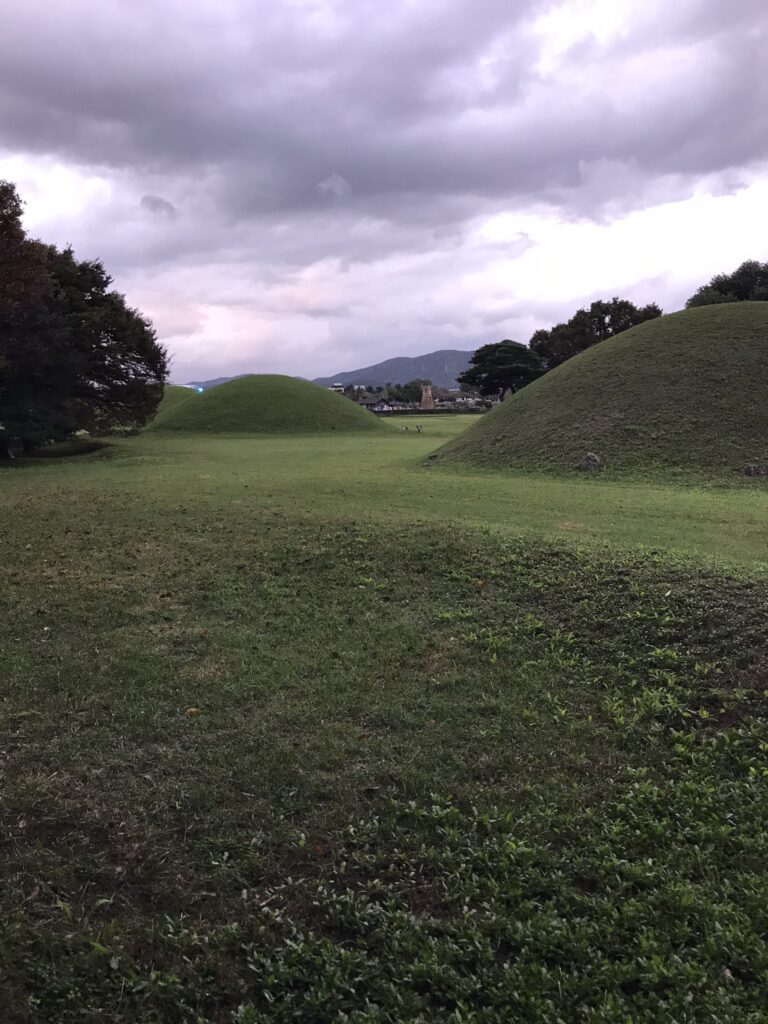
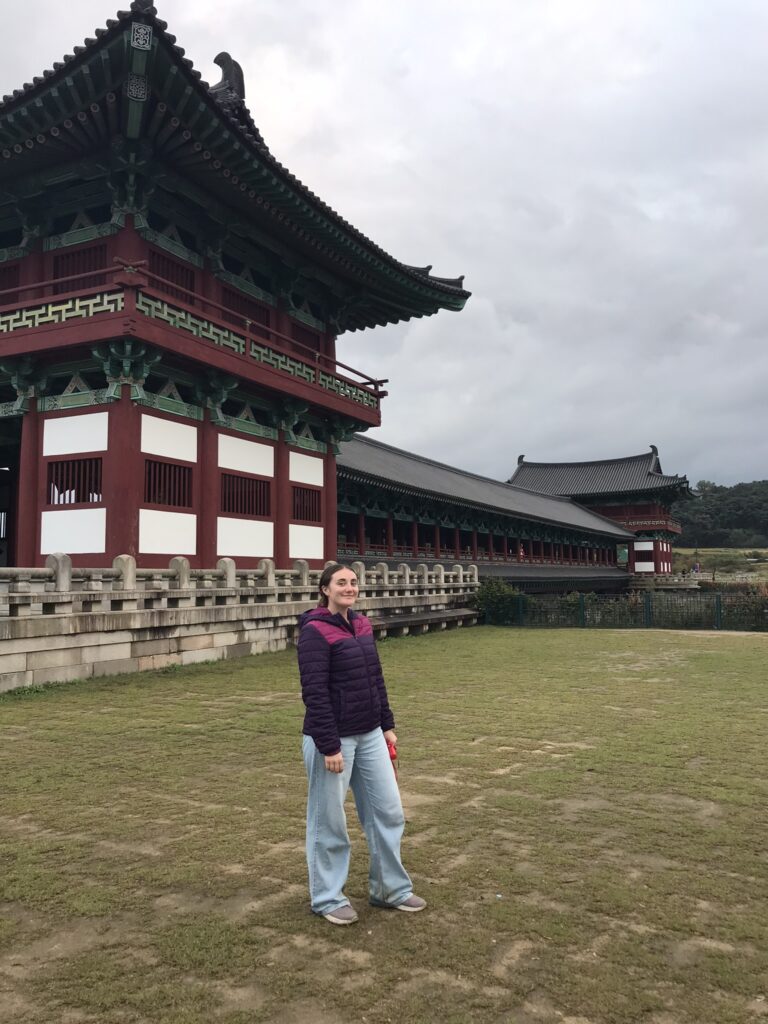
The royal burial mounds are inescapable in Gyeongju; Woljeonggyo Bridge is one of the restored Silla sites
Many of the main sites within the city are walkable, but some (like Bulguksa temple) are a little further out and require taking the bus. Luckily the city is well served by public transport. Public buses head to most of the major historical sites and tourist attractions both within the city and further afield. As in the rest of South Korea, the buses are cheap, convenient and easy to use, but from our experience certain routes can be particularly busy in Gyeongju as there is no metro system and the buses are used by both tourists and local people to get around. The city’s KTX railway station is located way out of town but frequent buses run to and from the city centre, while the main bus terminal is located very close to the city centre, making onward travel quite convenient. Many tourists visit Gyeongju as a day trip from Busan, but there’s so much to see that in our opinion this really wouldn’t do it justice at all. I recommend spending at least a few days here if you’re interested in Korean culture and history.
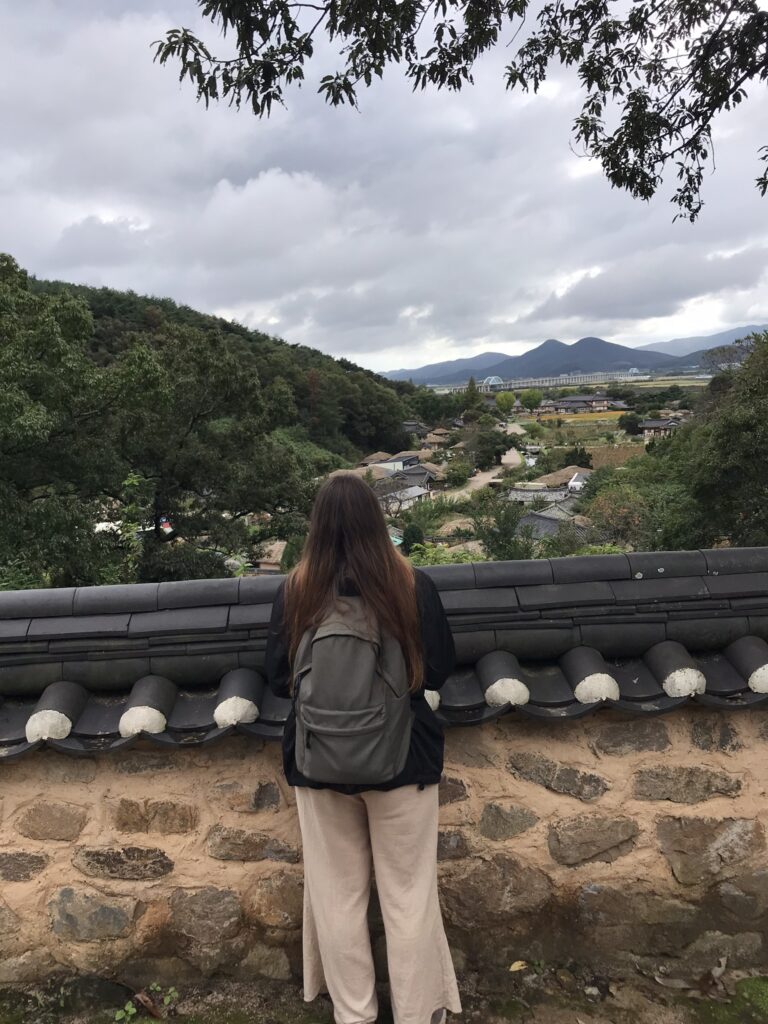
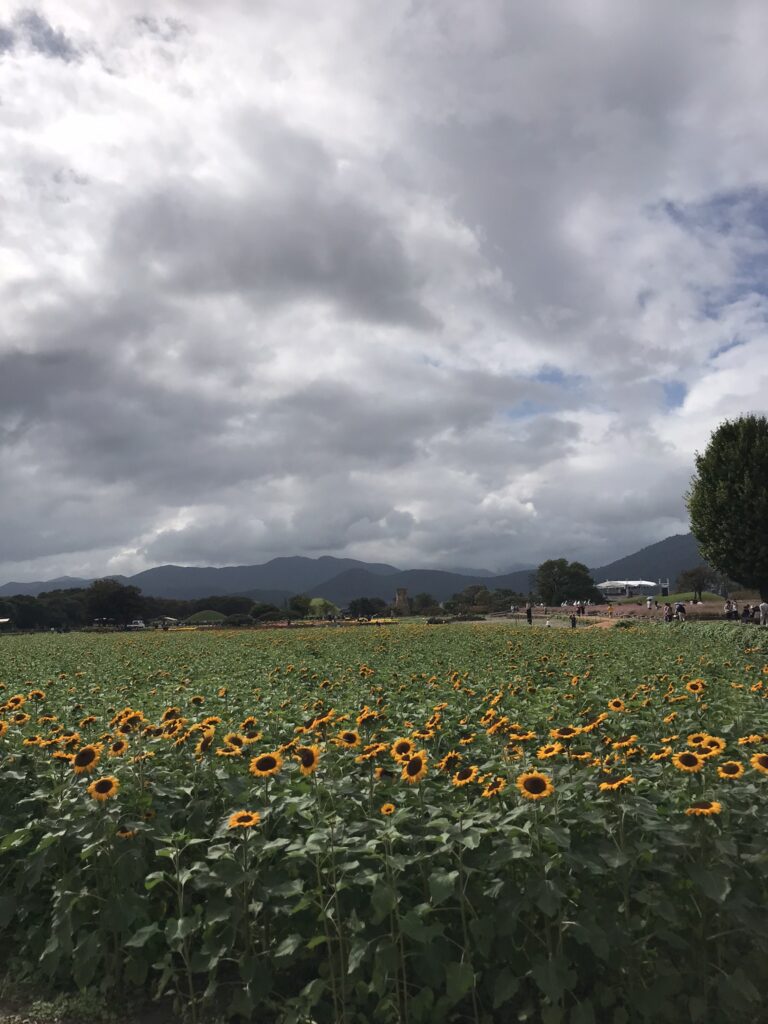
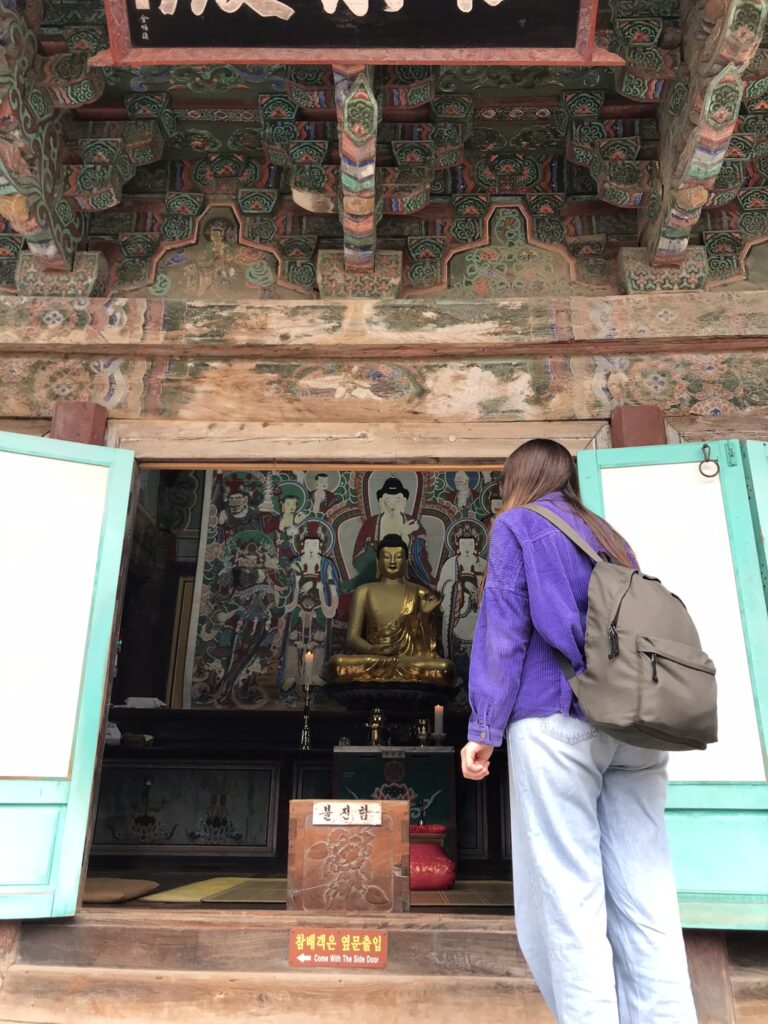
Gyeongju and the surrounding area is jam-packed with history, culture and scenery
Gyeongju was hosting a major international conference with many world leaders in the week after our visit and it was clear that a lot of effort was being put into making sure the place was clean and everything was running smoothly. I’m not sure if this affected our experience or not. It seemed like efforts were also being made to heavily promote tourism in Gyeongju specifically. The Hwangnamdong area and pedestrian street near the centre of the city is the main tourist drag, filled with lots of souvenir shops and touristy restaurants. Things are much more expensive in this area, catering to wealthy tourists and foreigners, so I recommend you keep your time there to a minimum if you’re a frugal traveler and want to experience more of the authentic local culture. We did eat on Hwangnamdong a few times and managed to find some decent enough budget places.
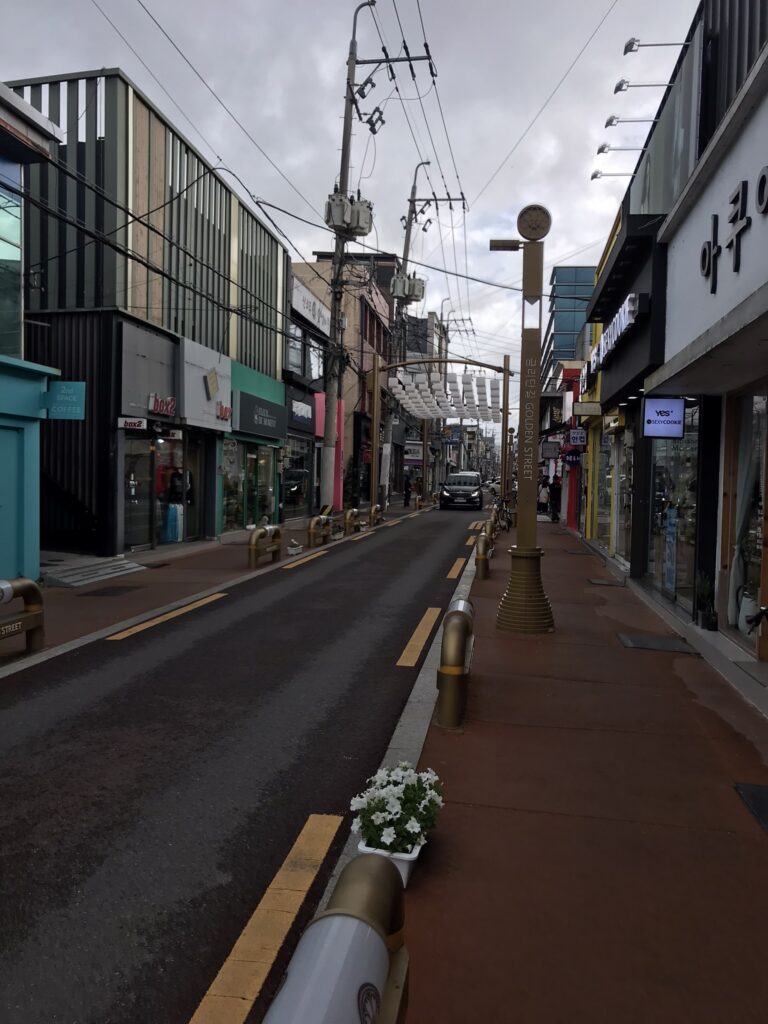
The city has a few tourist-oriented neighbourhoods such as Hwangnamdong and Golden Street
Accommodation
Gyeongju Bee House – not to be confused with the other ‘B House’ in Gyeongju, it’s quite a funny story, we very rarely make these sort of blunders but we actually went to the wrong accommodation (B House instead of Bee House), which turned out to be in a rural village outside of Gyeongju. We only realised our mistake after alighting the bus.
The correct Bee House is a small boutique hotel which straddles the new city and historic burial complex, so is in a great location.
Foodie Places
연꽃국수 (Lotus Noodle) – our go-to place in Gyeongju, located on a busy street close to the main royal tombs area. Fantastic bibimbap for great prices. There are a lot of expensive touristy restaurants in Gyeongju and this definitely isn’t one – a real locals joint. We befriended a local lady while eating here who then proceeded to drive us to a few of the more far-flung historical sites and give us a mini-tour.
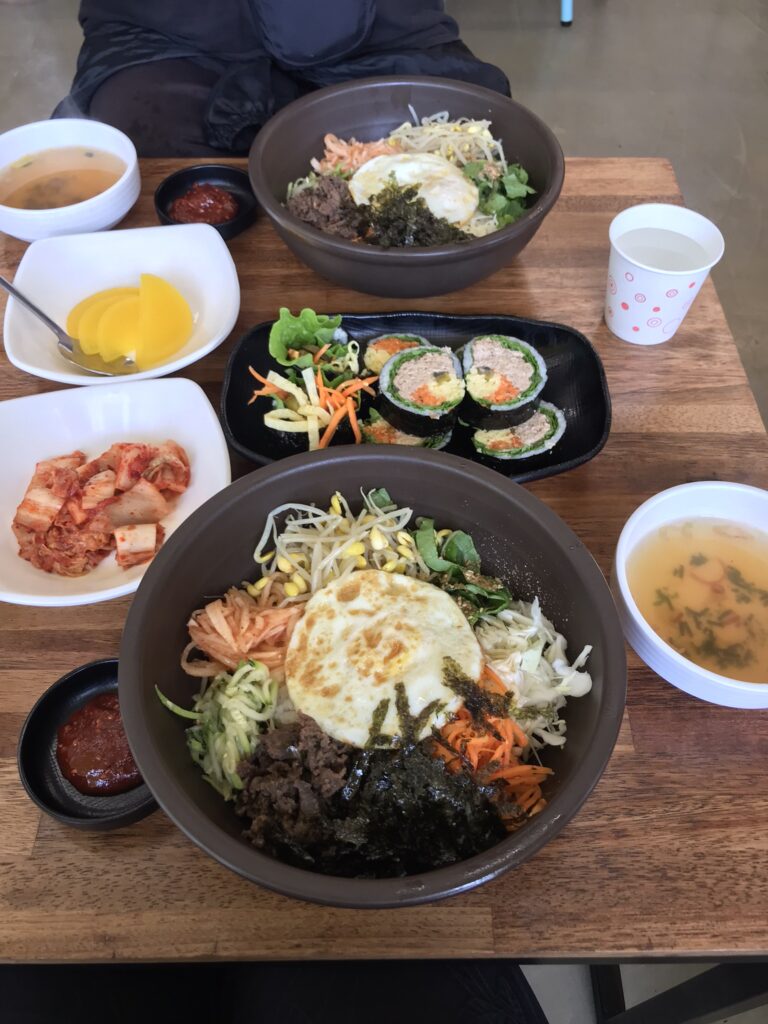
Top quality bibimbap at Lotus Noodle, our favourite place in town
Nai Pad Thai – a no-frills, cheap Thai restaurant within close proximity to the Hwangnamdong area. A small, compact eatery serving Thai classics such as red curry, green curry and pad thai.
Daewha Mandu – located on Hwangnamdong, we found the prices here to be pretty reasonable considering the location. I had jjolmyeon (cold spicy noodles) and Dan really enjoyed the tteokbokki. A good option for quick, cheap and hearty food.
37년전통 장터국밥 (37-year-old traditional Jangteo Gukbap/Express Bus Terminal Rice Soup) – a local place which is strangely situated within the courtyard surrounding the express bus station – a great location if you’ve just arrived or are leaving by bus. We had beef rice soup and bulgogi. There’s a self-service station where you can fill up on rice and kimchi, and you can even cook your own eggs on a grill! Great value for money and highly recommended particularly when getting the bus, just don’t expect the guys here to speak any English
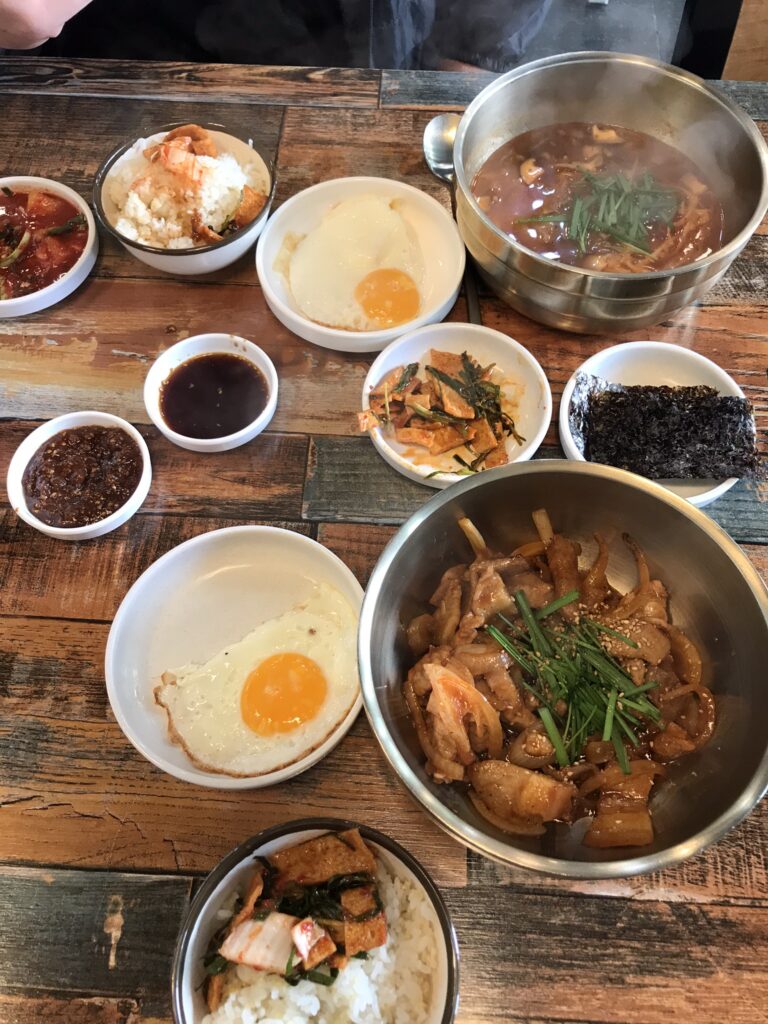
A great meal at 37-year-old traditional Jangteo Gukbap next to the bus station – we loved the fact that you can fry your own eggs!
Wae ga Hwangridan-gil – a somewhat touristy restaurant in Hwangnamdong – most of the diners here were white foreigners. We visited here as other places were closed and found it to be fine, if a little on the expensive side.
Seokdeung House – we were taken to this teahouse near to Woljeonggyo Bridge by our local friend Miki, we would never have discovered it otherwise. Located in Gyeongju Gyochon Traditional Village, the whole area is filled with hanok-style homes which have remained in the same family for hundreds of years, many of which are now used as cafes and teahouses. The property is part-cafe, part-guesthouse with a beautiful traditional garden and some very old fruit trees – the owner told us that they use the fruit in the drinks at the cafe. A large variety of teas are on offer here, including magnolia tea which was a hit with us. If you’re in the vicinity of the bridge then I highly recommend stopping off for a rest and a quick cup of tea.
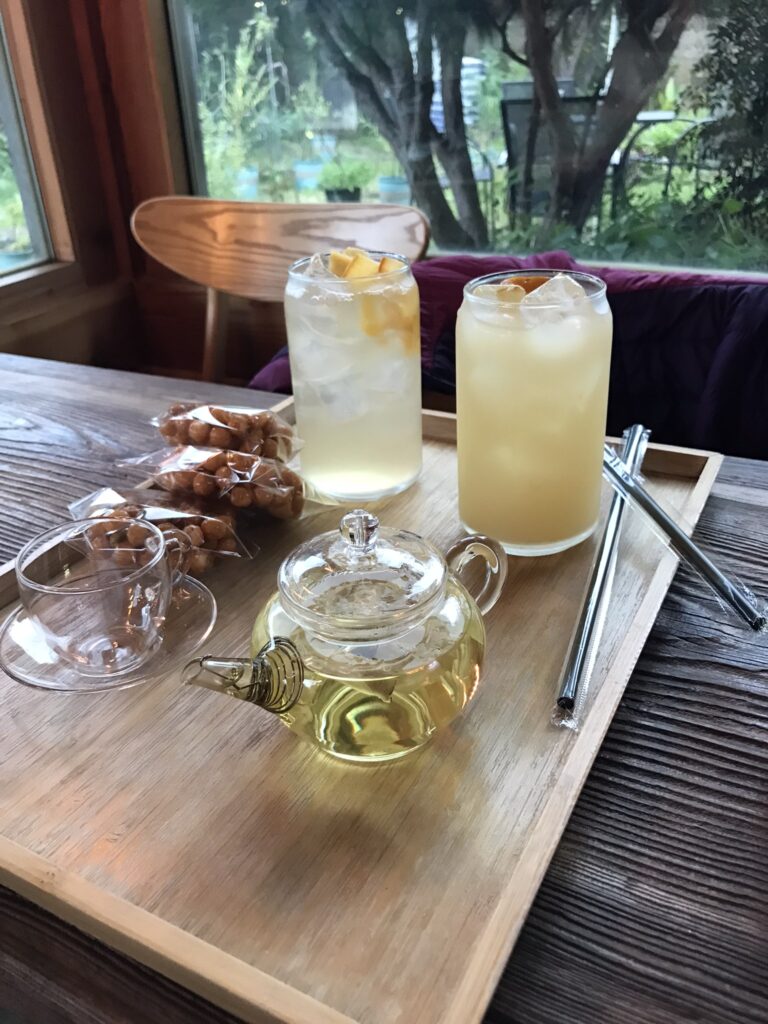
Magnolia tea and snacks at Seokdeung House
Activities
Bulguksa Temple and Seokguram Grotto – a UNESCO World Heritage Site and a major tourist attraction in Gyeongju, Bulguksa is a large and archetypal South Korean Buddhist temple dating from the Silla period. Featuring classic temple architecture with several different large courtyards, structures and rooms, the main draws here are the temple’s ancient bridges and stairways, the only remaining original parts of the temple. The complex is a little way out of the city centre but easily accessed on the bus. Don’t expect peace and quiet here – this was definitely the busiest Buddhist temple and one of the busiest tourist sites we visited in South Korea.
Seokguram Grotto is nearby and considered a sister attraction of Bulguksa. This mountain grotto features a huge carved rock statue of Buddha dating from the Silla period, which is now housed inside a protective structure. Buses run from Bulguksa and elsewhere to the top of Seokguram but we decided to walk up from Bulguksa temple, which in hindsight was a bad idea. It’s a long, tough uphill climb – around an hour of continuous uphill and there are no real interesting viewpoints or sights along the way, which makes for a tough slog and not a super rewarding walk. A far better option would probably have been to take the bus to the entrance of Seokguram and then walk down to Bulguksa, or just to take the bus between the two. There is some misinformation surrounding both the walk up to Seokguram (it’s far more than 300m or whatever it says on the information map at Bulguksa) and the availability of the buses, so it might be worth checking ahead of time. I can confirm that the uphill walk isn’t fun.
Photos inside the grotto itself are prohibited. The area surrounding the grotto has a mysterious atmosphere, with a backdrop of mist and fog.
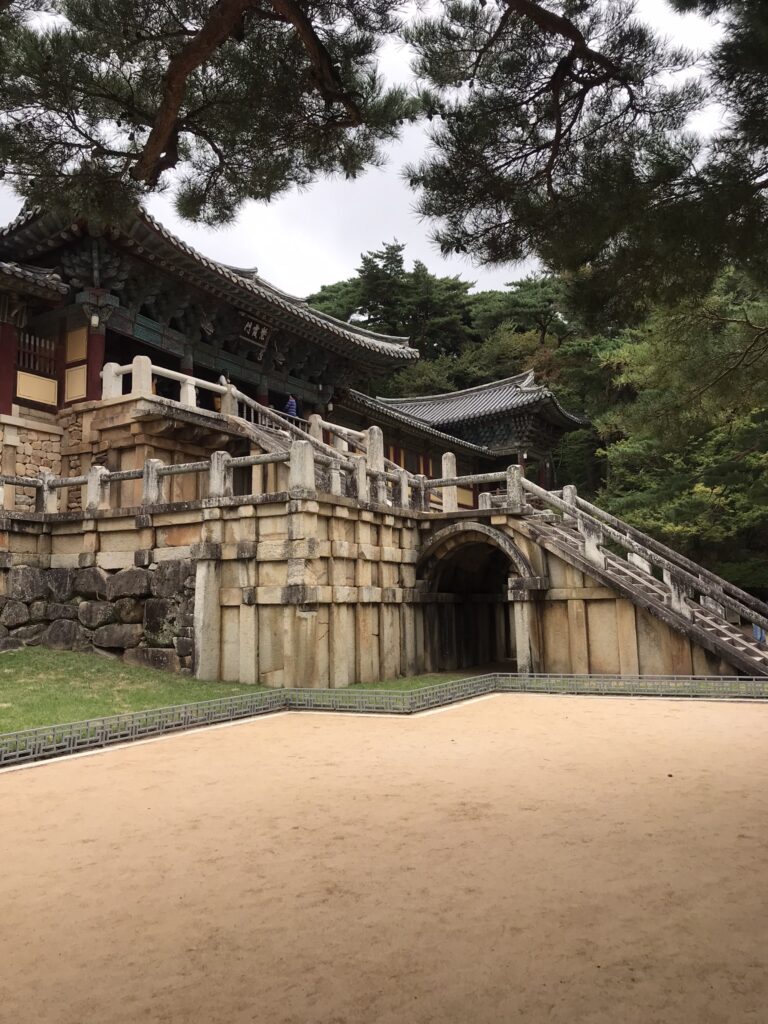
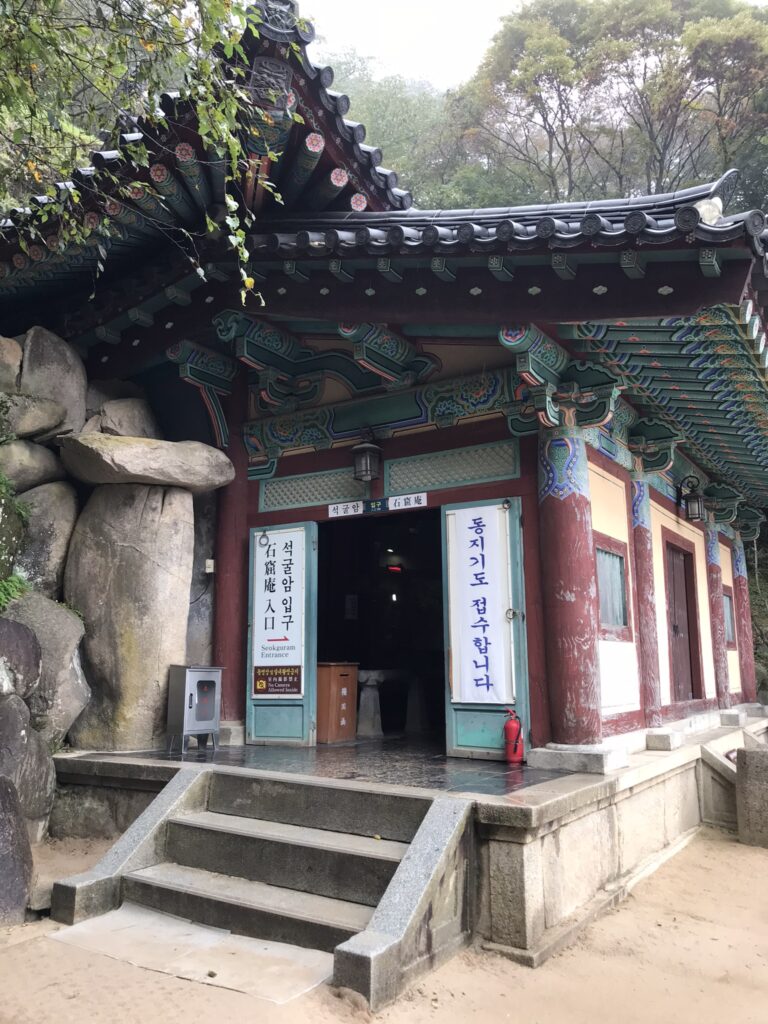
The old stairs are a major attraction at Bulguksa; Seokguram Grotto is quite small
Silla Royal Tombs – the burial mounds in Gyeongju are extensive. There are several distinct complexes which are adjacent to one another, all of which now take the form of green open parks filled with the distinctive mounds. Entry to all of the complexes containing the burial mounds is free and it can take a while to meander through the various parks and visit them all. Geumwanchong is a good starting point when visiting the tombs – this is an excavated burial mound which now houses a small museum containing a full-size reconstruction of the inner sections of the tombs and exhibits demonstrating how they are made, the placement of the grave goods and many other features. Entry to Geumwanchong is paid and the ticket also includes entry to an adjacent visitors centre with an immersive video documenting the history of the Silla dynasty. We were intrigued to learn about the construction process of the tumuli, starting with wooden scaffolding and then built up with layers of rocks. Another open tomb in this area is Cheonmachong, but we chose not to pay to enter after already visiting Geumwanchong. The rest of the tombs are sealed, grassy mounds. The tumuli are dotted all around the centre of Gyeongju, they are difficult to miss. It’s strictly prohibited to climb on the tombs and there are hefty fines for doing so.
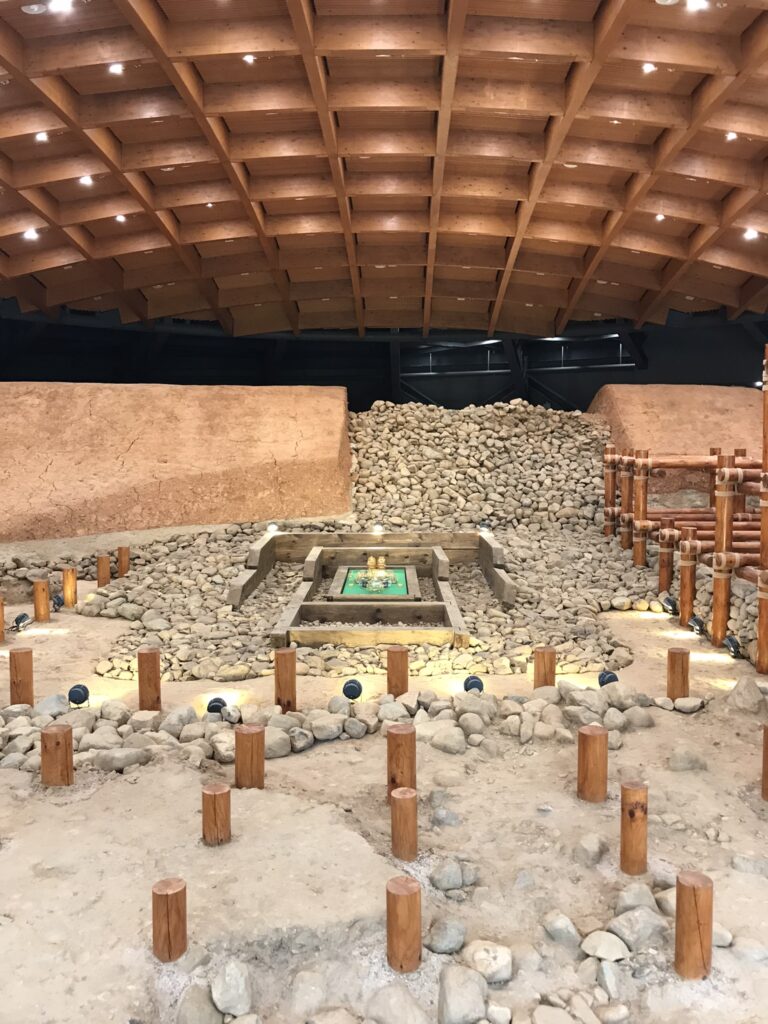
The small museum inside Geumwanchong provides valuable context regarding the purpose and construction process of the mounds
Cheomsongdae Observatory – a small structure in the vicinity of the royal tumuli, this dates back to the Silla period and is considered to potentially be the oldest standing astronomical observatory in the world. The area surrounding the observatory is part of the former citadel, but no other structures remain. It’s now filled with beautiful fields of flowers and poppies in all manner of colours, really bringing the area to life.
Wolseong Fortress – only the embankments and moats remain of this former Silla stronghold. If you didn’t know this was once a fort then you could easily mistake it for natural land formations. Visitors can freely walk around the embankments and visualise the size and scale of the ancient citadel and surrounding Silla capital.
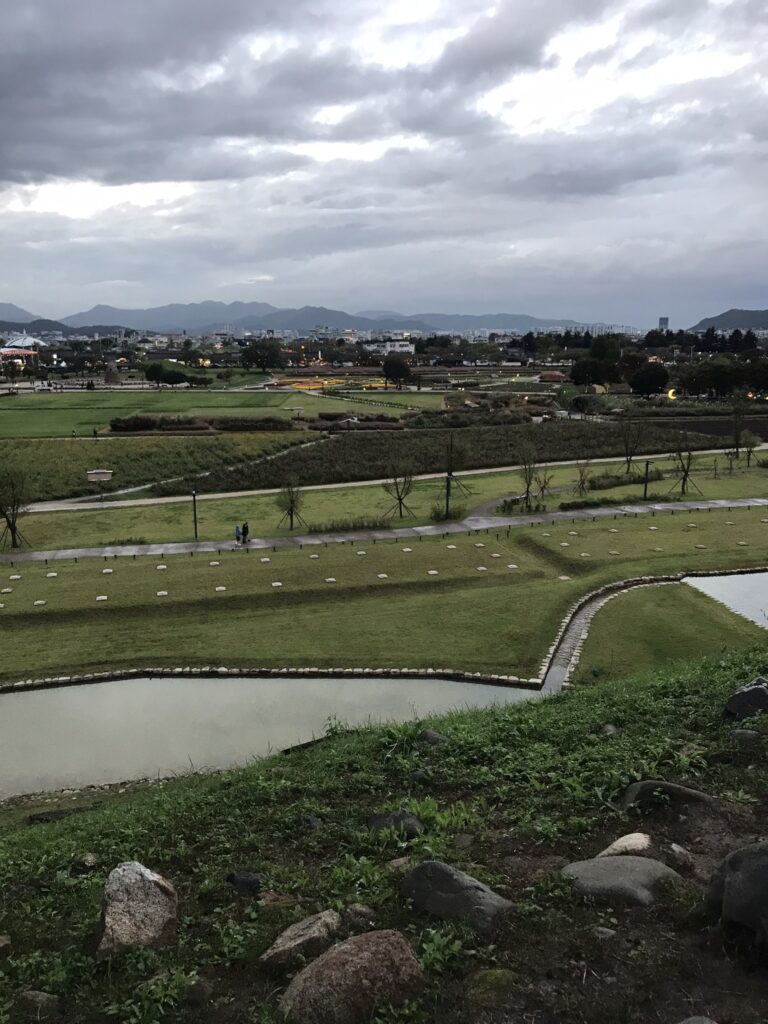
The view over the former citadel from Wolseong Fortress
Woljeonggyo Bridge – a majestic Silla dynasty bridge which once led to the royal citadel. The original bridge was destroyed prior to the start of the Joseon period – the modern structure is a recreation which was built in 2018. This is a popular spot for tourists and photographers.
Gyerim Forest – not so much a forest as a small wood with a few burial mounds, this area is linked to the Kim clan, monarchs of the Silla kingdom, via a myth involving a rooster and a baby found in a tree. In the vicinity of Wojeonggyo Bridge and Wolseong Fortress, it’s a part of the wider historical city.
Donggung Palace and Wolji Pond – one of the major Silla sites in Gyeongju, this was a former royal palace constructed during the era of the great King Munmu. The original palace buildings have long been destroyed – what’s left today is the grounds, the large pond and some recreated/restored pavilions. Admission here is paid – this is one of the only Silla sites in Gyeongju which requires a ticket. We opted to visit after dark, which turned out to be a good idea as the lights reflect on the dark water, creating an atmospheric scene. Visitors can walk around the entire circumference of the pond, taking in the various pavilions and viewpoints. There is a miniature model inside depicting the palace grounds, what they would’ve looked like at the time and how extensive they were.
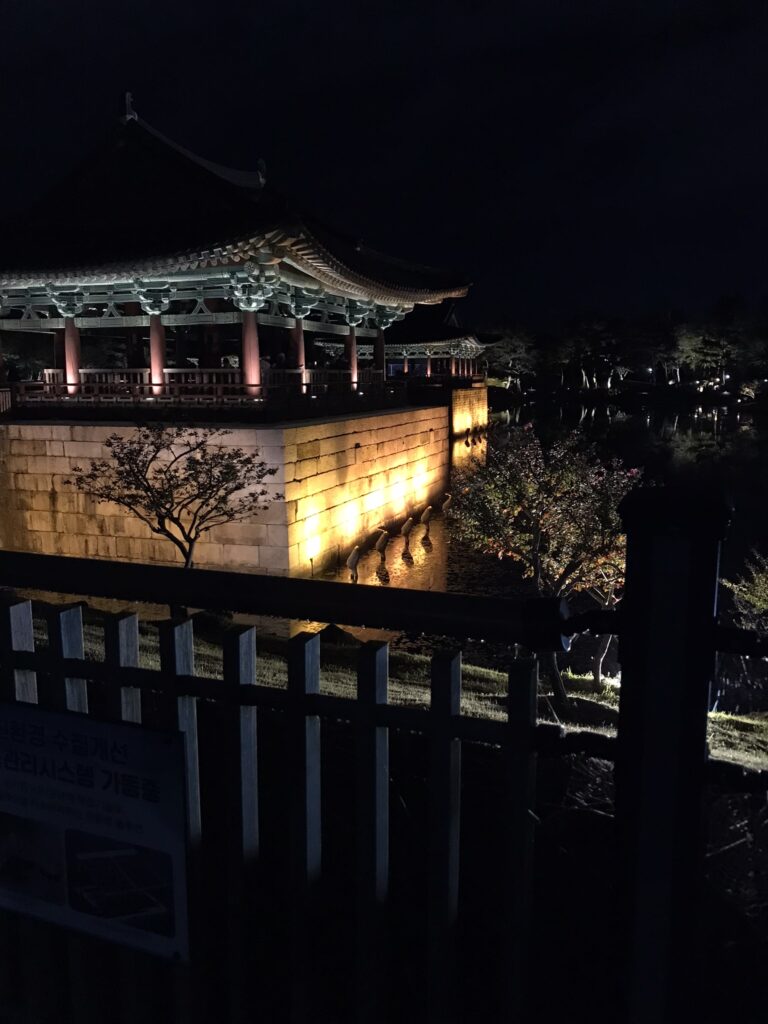
Wolji Pond after dark
Namsan – this sacred mountain has quite a few distinct Buddhist temples, shrines and ancient rock carvings which are included as part of the wider Gyeongju UNESCO site. Buddhist devotees still visit these shrines to leave offerings, but there was nobody around when we visited. Apparently sometimes the monks give rice cakes to visitors if they are around. This is a much less explored area by outsiders, providing a serene and tranquil atmosphere. Don’t expect to see many foreigners here, a sharp contrast to the more touristy central tumuli areas.
We had planned to try and take the bus, but by happy coincidence we befriended a local lady while eating lunch who was eager to drive us here and show us around. The sites we visited were in the foothills on the east side of the mountain – these were the Ongnyongam carvings (ancient Buddhist carvings including depictions of a mini pagoda, Buddha and devotees), the Bulguk ‘female’ Buddha (a feminine-looking Buddha statue) and the Seated Stone Buddha of Mireukkok Valley. Our local friend, Miki, had visited all of these sites before and so was able to show us the way – without her we probably would’ve got lost, as some of the carvings required a little bit of walking up the hillside trails beyond some of the shrines.
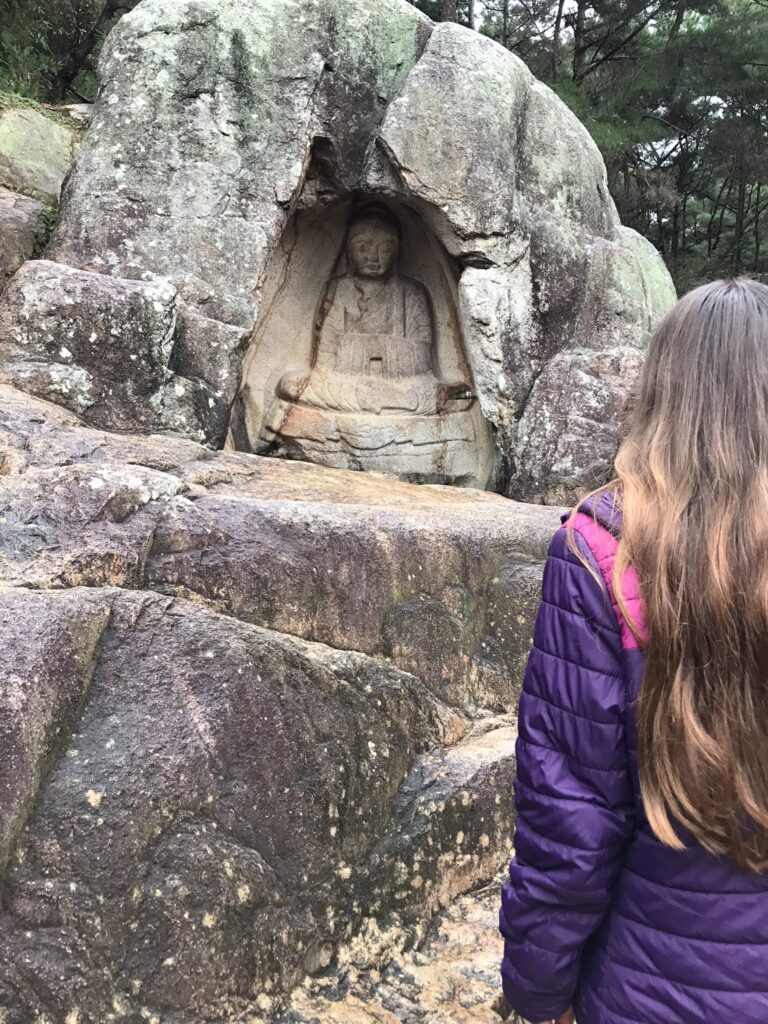
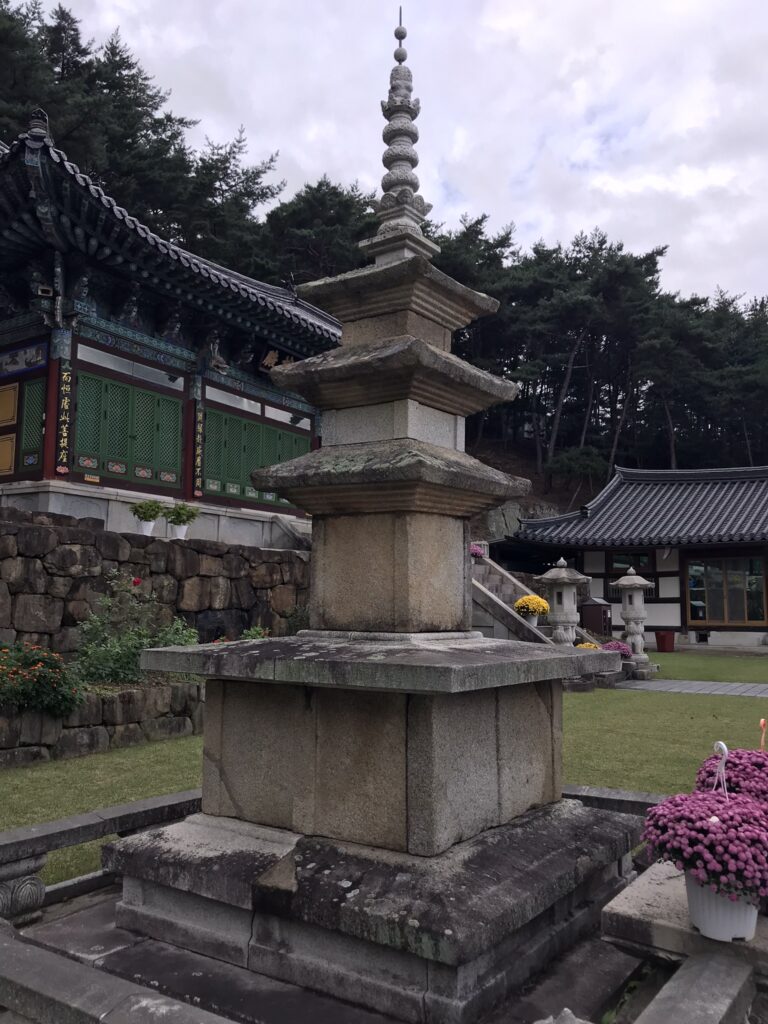
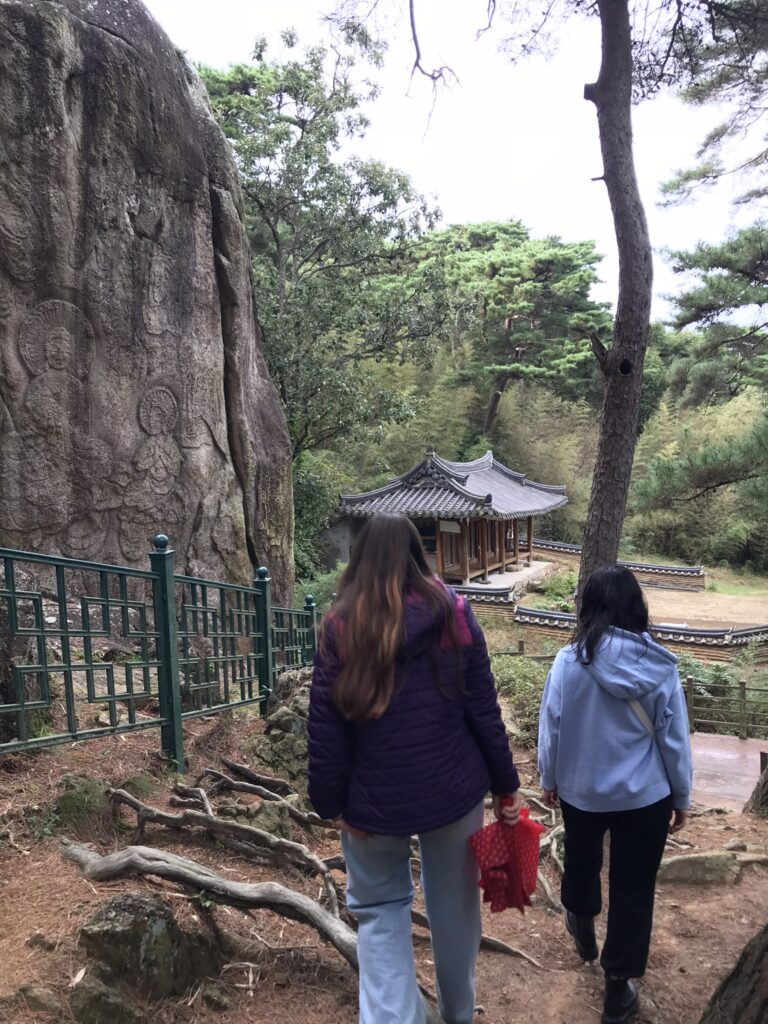
Exploring Namsan’s many temples and rock carvings with our friend Miki, a lovely local lady that we met in the bibimbap restaurant
If you aren’t as lucky as us to befriend a local, it should be possible to visit Namsan via bus combined with a bit of walking. It’s a much more remote area than it looks on the map though, so be prepared for some larger distances and things to take a bit longer than expected.
Gyeongju National Museum – the city’s major museum which consists of several distinct buildings each housing galleries related to the Silla kingdom. Unsurprisingly visitors can find plenty of information about the Silla civilization as well as ancient artefacts from the period, including an impressive collection of Silla crowns with various symbolic aspects relating to the crowns outlined in detail. There is also a separate gallery with artifacts that were recovered from Wolji Pond. The museum has plenty to see but the galleries themselves aren’t too massive so you’re unlikely to get bogged down here. The cracked ‘Silla smile’ tile is the main attraction – a symbol of the city of Gyeongju. The ancient Silla Big Bell outside the museum’s main building is another big draw – it can’t be bonged by members of the public for obvious reasons, but a sound effect plays every few minutes to demonstrate the sound of the bell. There is free luggage storage available at the museum, we were able to fit our large bags in which was much appreciated after arriving on the train. It’s recommended to visit the museum before exploring the rest of Gyeongju in order to get some historical context first
Tomb of King Munmu – the seaside tomb of King Munmu is a much lesser-visited attraction on Korea’s east coast, around 30km away from Gyeongju. This is the tomb of a renowned Silla king and is considered to be the only underwater tomb in the world. It was said that Munmu wished to be buried in the sea so that he could become a dragon following his death in order to protect the people in the event of an invasion from the east. There are a lot of legends and myths surrounding this remote shoreline. The beachfront has numerous huts and shamanistic rituals seemingly take place here. We didn’t investigate too closely as the whole area seemed to be a little sketchy and quite run down, but it was definitely an interesting place and very different from the sanitised, touristic image of central Gyeongju.
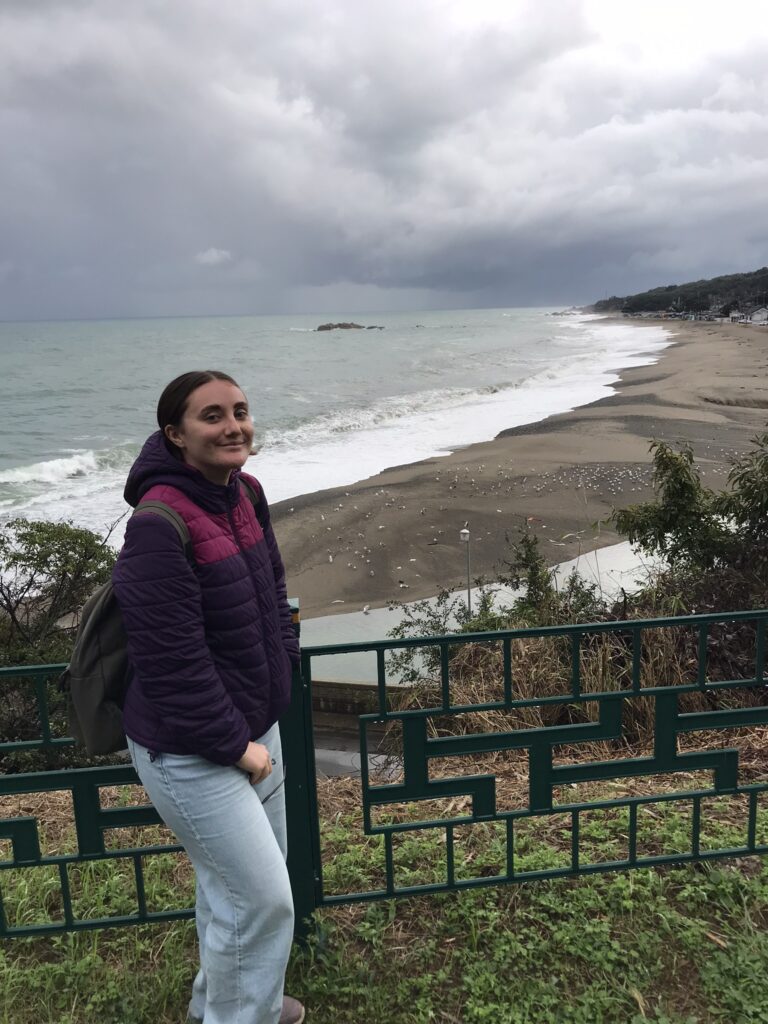
The underwater Tomb of Munmu lies off a strange, desolate stretch of shoreline
Visiting this place is pretty easy using public transport but we had a bit of a strange experience when attempting to do so. We took the 700 bus from outside Bulguksa temple – this bus runs directly to a coastal stop called Igyeondae, an old pavilion which overlooks the shoreline and is within walking distance of Munmu’s tomb and beach. The 700 is very much a local, non-touristy bus, nobody else was riding and unfortunately the driver, who presumably thought we were lost or confused tourists, basically refused to drive with us on the bus and forced us to disembark. I think he was trying to be helpful, but in fact this was very unhelpful and annoying. We had to wait at a random bus stop for the next 700 bus to arrive – the driver of this second bus was also very reluctant to take us and we pretty much had to just get on the bus, sit down and refuse to leave until he started driving. Be aware if taking this bus that it does go to the correct location (you can walk from Igyeondae over the bridge and down to the beach), but that you may have to forcefully argue with the driver before he will actually take you there. A really weird experience – we didn’t encounter anything like this anywhere else in South Korea! The bus journey itself was a scenic route through rice fields. We were able to get a bus back to Gyeongju without any hassle from just in front of the beach – this was a different number bus, so it may be easier to use Naver to find this bus and avoid the 700 to Igyeondae if you don’t fancy arguing with the driver.
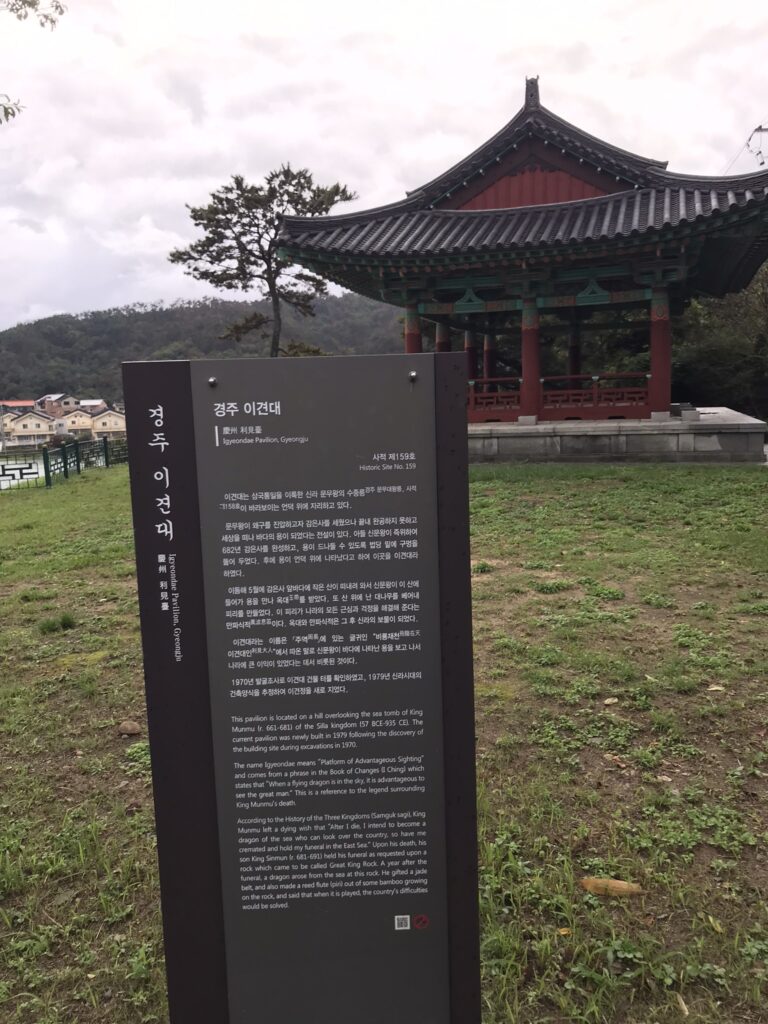
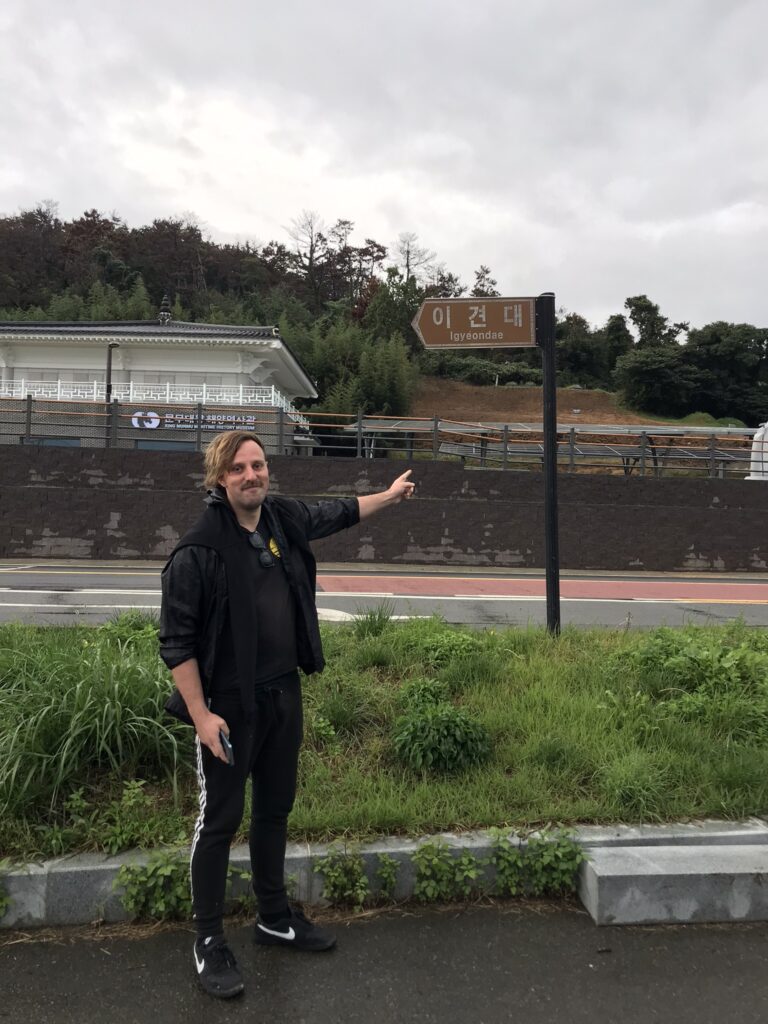
The infamous Igyeondae Pavilion and bus stop, within walking distance of the Tomb of Munmu – we made it even though the bus drivers didn’t want to take us here
Hwangnyeonsa Temple Site – this was once the site of one of the tallest structures in the world of its time, a 68 metre high pagoda which was constructed during the Silla period in the 7th century. Said to be made from interlocking panels of wood and constructed entirely without nails, this enormous structure would’ve been a truly spectacular site at the time and surely would’ve been considered one of the wonders of the world had it survived long enough to be preserved. Sadly the pagoda was destroyed by rampaging Mongol hordes in the 13th century.
The site today is pretty bare and desolate, aside from a very interesting and immersive museum which provides information about the former temple structure and more broadly about the Silla period in general. The museum features exhibits, immersive and somewhat whimsical 3D videos and a small-scale recreation of the pagoda, which is still massive in its own right. Excavations in the area seemed to be ongoing at the time of our visit. This area is a bit far removed from the main tourist trail and not too many visitors make their way here, which is a shame. There isn’t much spectacular or grand to see, but for lovers of archaeology and history it’s an interesting place.
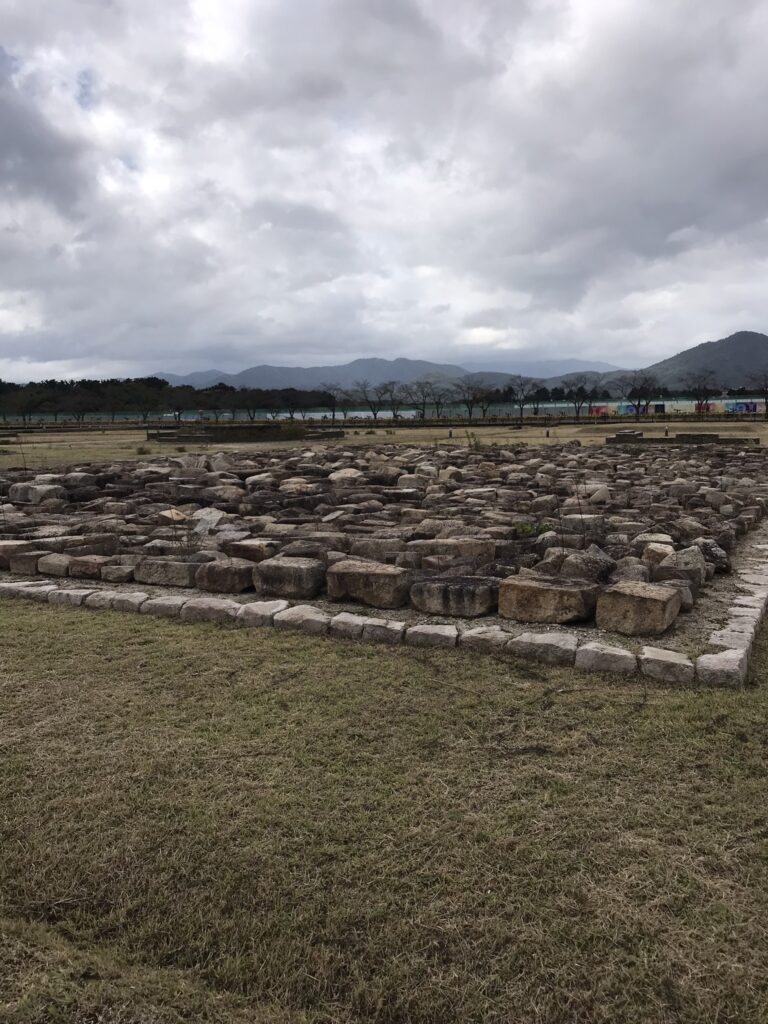
The ruin of Hwangnyeonsa; the on-site museum is really good, including free 3D movies which bring the history to life
Yangdong & Oksan day trip
An easy day trip from Gyeongju, Yangdong is a Joseon-era clan village which preserves its traditional architecture and customs, exhibiting a traditional, rural way of life which is slowly dying out. It’s now a UNESCO World Heritage Site and paid tourist attraction for non-residents, while also still functioning as a village where people live. Many of the houses have straw roofs and adjoining vegetable patches. It reminded us a little of the Shire from Lord of the Rings. The village is completely pedestrianised apart from the residents, some of whom have cars or trucks. The houses have been passed on through generations to the firstborn sons of the families, who served as the village headmen. Historically the upper classes would have houses at the top of the hills, with lower classes in the lower areas and more towards the entrance to the village.
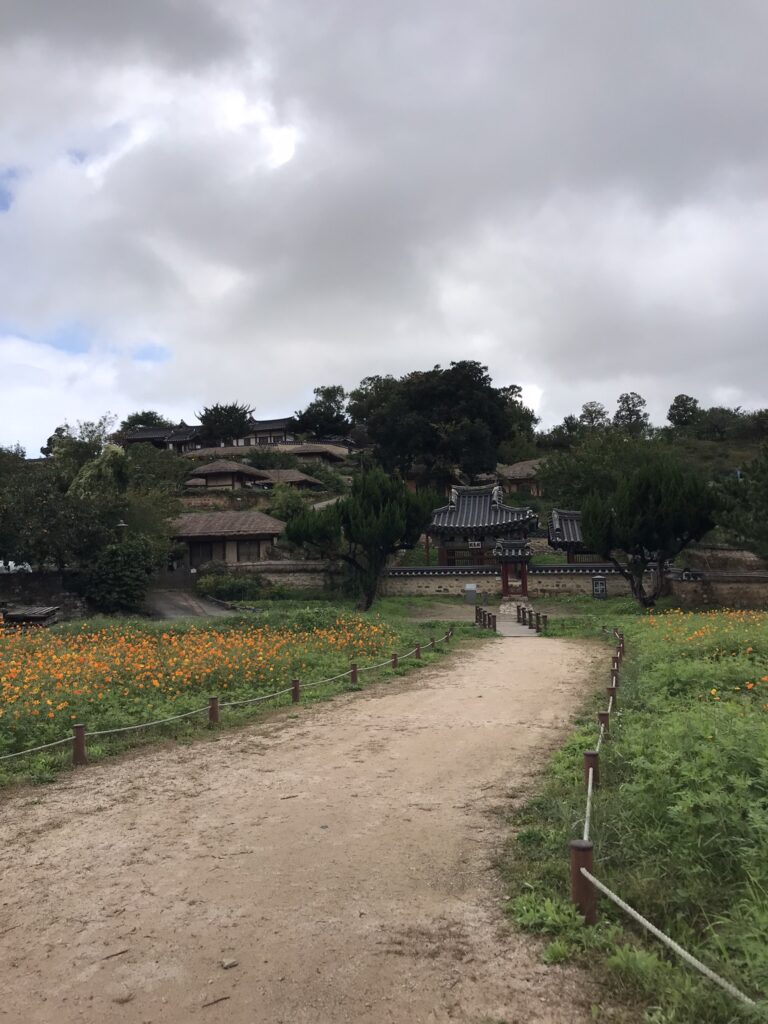
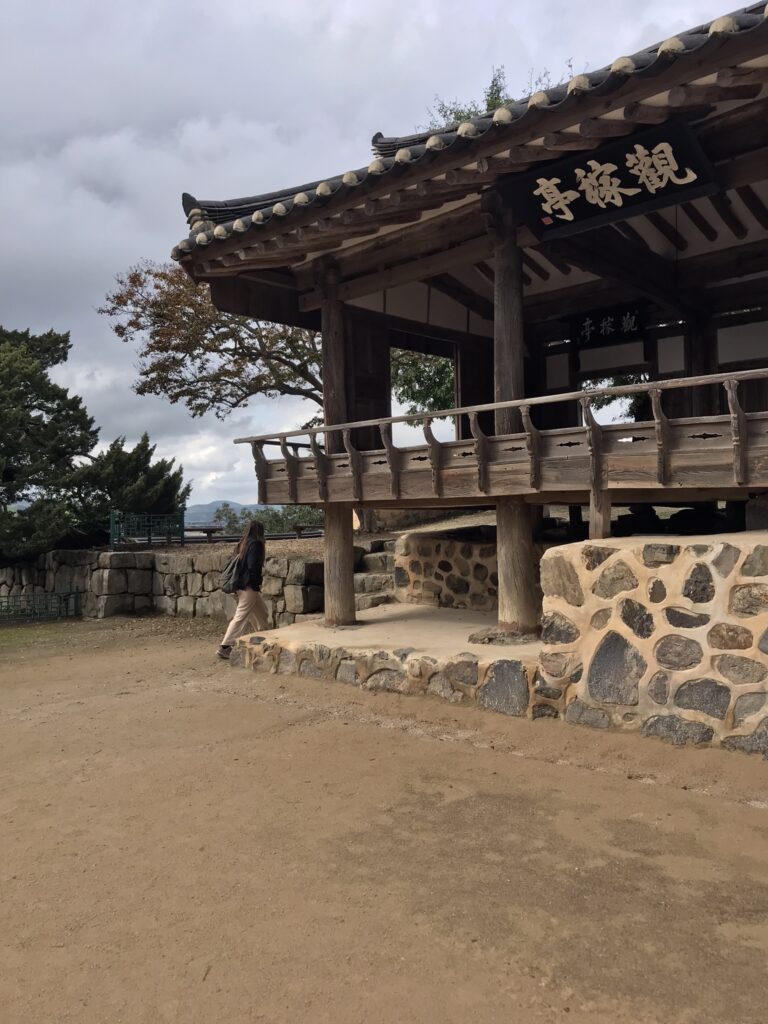
Yangdong is a scenic traditional village with several old houses to explore
It’s nice to amble about the village, admiring the unique architecture of the different houses and also the tranquil setting. There are a number of notable large houses in the village which are now open for tourists to visit and explore. These houses are still owned by and serve as the ancestral homes of important local families. Though they may no longer reside there permanently, members of the families occasionally return to use their houses for various purposes, so they can sometimes be closed off to the public. When open, they function as show homes with information plaques etc. Many of the other houses in the village are private homes which are still occupied. It seemed like most of the residents remaining in Yangdong are quite elderly. As well as the village, there is a small museum at the information center on-site and the ticket office has pamphlets which provide a map and a suggested walking route.
Frequent buses run to Yangdong from Gyeongju. A parking attendant gave us a printout with the onward and return bus times when we arrived on the bus, which was a nice touch. Most visitors just go to Yangdong and back, but after visiting Yangdong we chose to continue on to the small village of Oksan which is a little further along the same bus line.
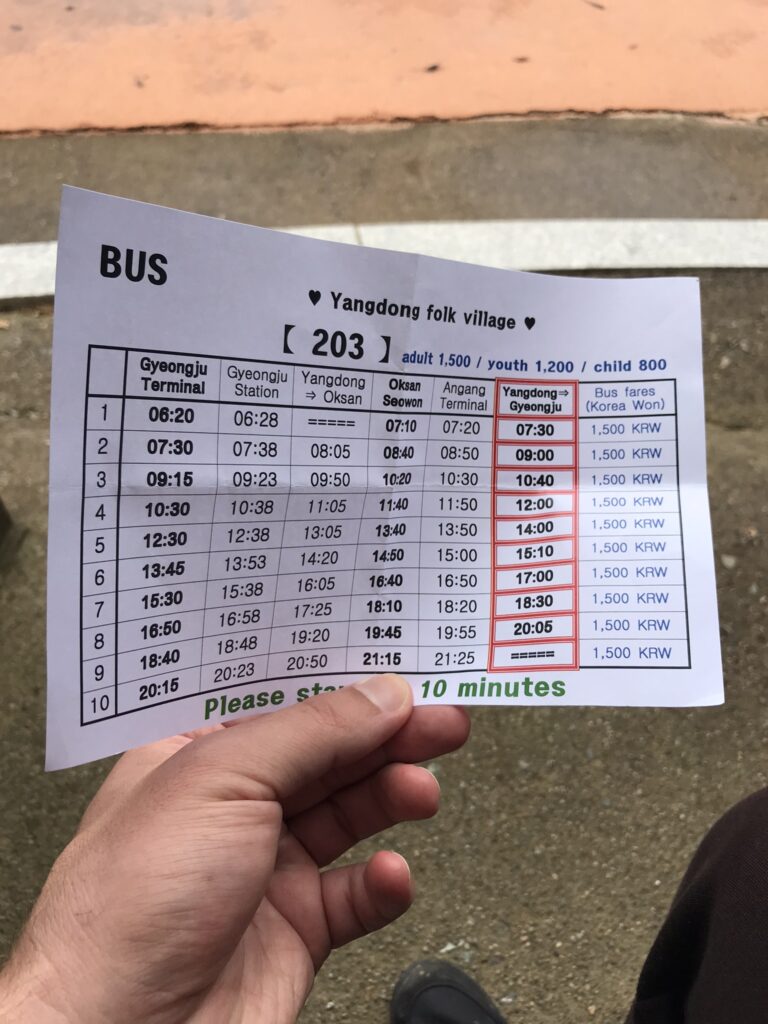
Bus timings as per the helpful parking attendant
Oksan is notable for its ancient Neo-Confucian academy. Known as ‘seowon’, these academies blended teaching and scholarly debate with the study of Neo-Confucianism and were the primary educational institutions during the Joseon period. The academy at Oksan is one of the few of its kind still standing in South Korea and is protected as a UNESCO World Heritage Site. The public bus from Yangdong drops off in the village close to the academy – inside you can see the hall where students and masters would have engaged in debates, as well as a built-in stream running through the premises for students to dip their feet in to avoid getting too hot while studying during the summer months.
Exploring the Seowon at Oksan
After visiting the academy complex, we followed a walking trail northwards along the bank of the stream to eventually reach Jeonghyesa temple site and its 13-story pagoda. We then made a loop back to the village, first visiting the 16th-century Dongnakdang House – the former residence of a Joseon-period Confucian scholar. The old property features a nice balcony overlooking the stream, and apparently also houses a collection of rubbings of ancient calligraphy. We also stopped off at a local cafe (Nagman Coffee) for some refreshing grapefruit lemonade along the way before getting the bus from the centre of the village all the way back to Gyeongju. We really enjoyed our visit to Oksan – a brief glimpse of fleeting rural South Korea with zero tourists in sight.
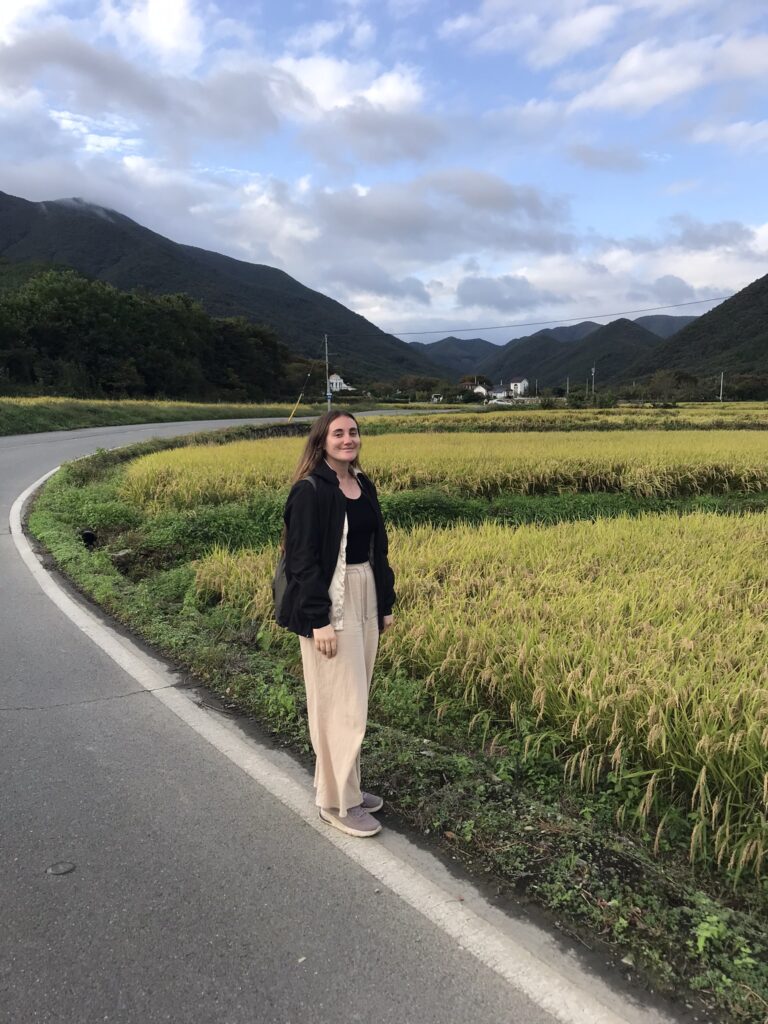
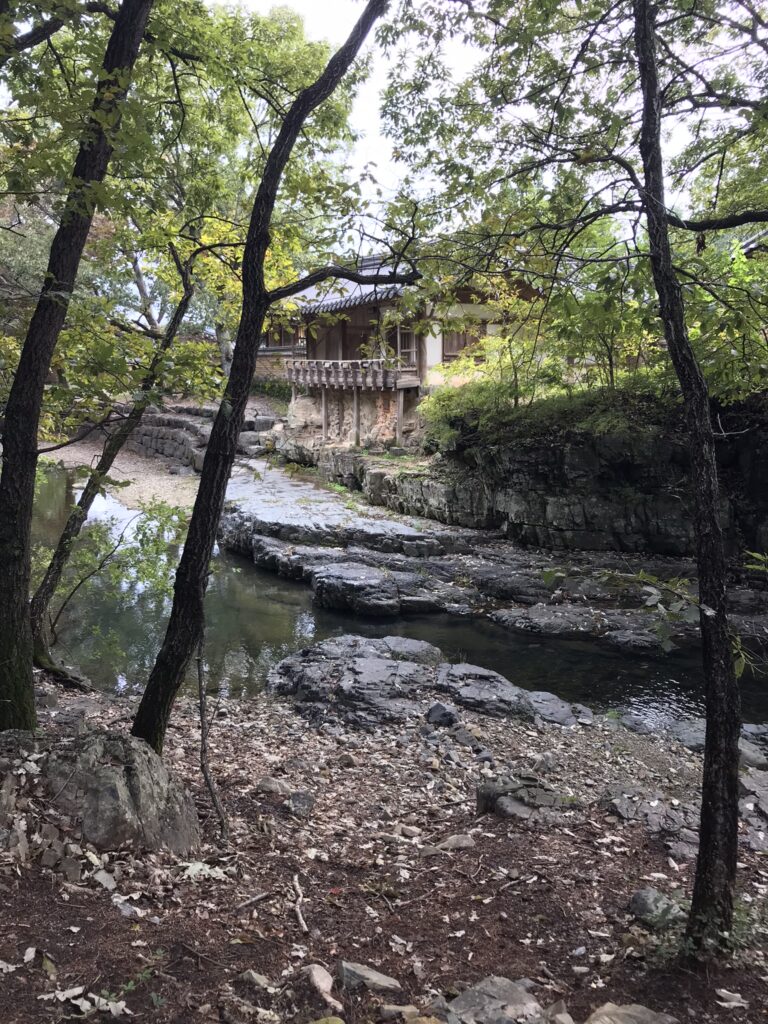
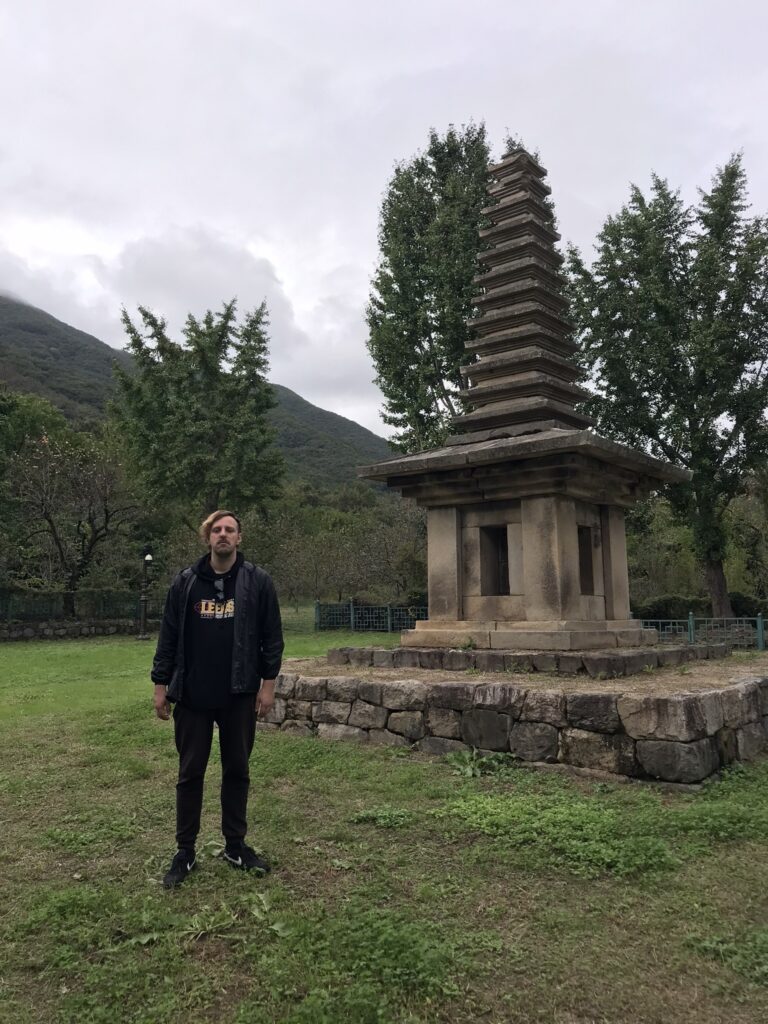
Oksan is a quiet and pleasant little place
Busan
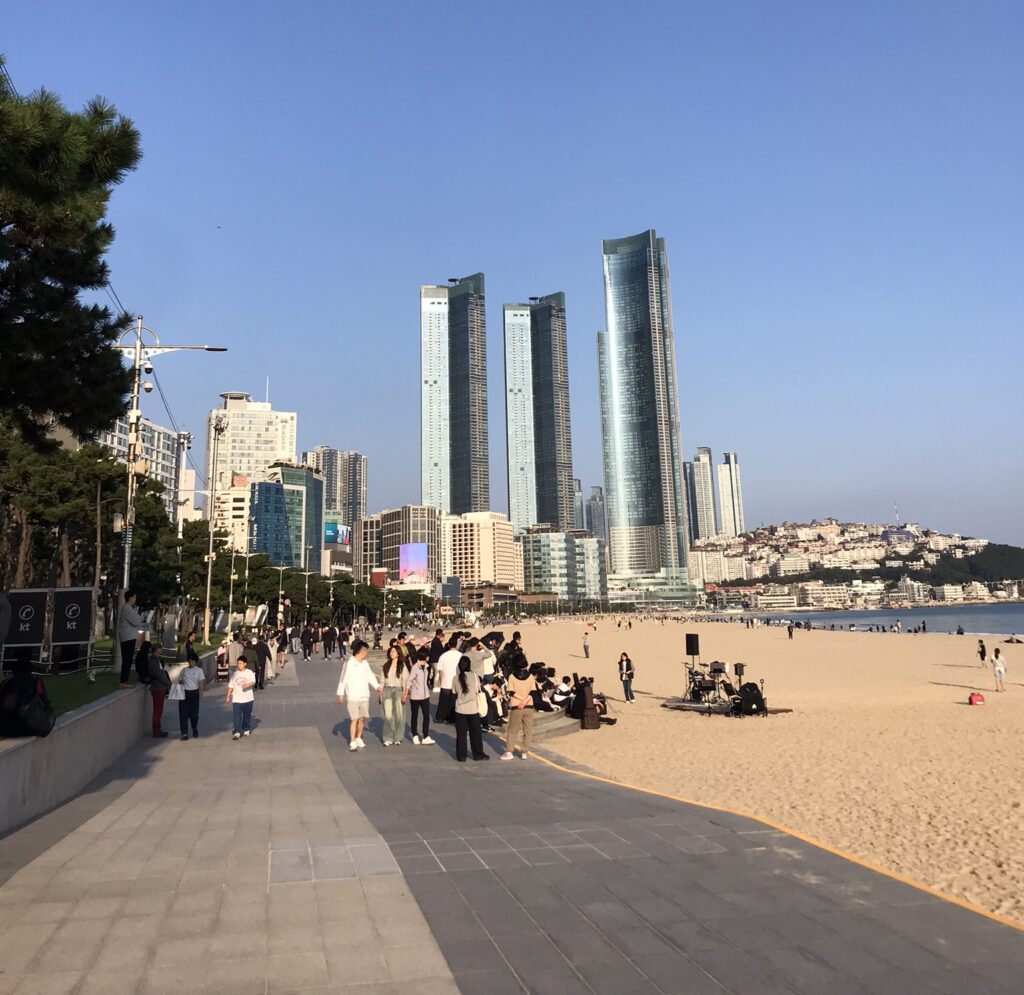
One of the world’s busiest ports, Busan is the second largest city in South Korea and a maritime hub. Built amidst a network of coastal hills and islands, Busan is an extremely developed modern city filled with glitzy high-rise buildings, and paradoxically it’s also home to some fantastic nature. Coastal areas like Taejongdae provide an escape from the urban bustle, while the main inner-city beach, Haeundae, is the cleanest and best city beach we’ve ever seen. Busan is a city which doesn’t really have any must-see tourist attractions per se, but there is a strong local culture and plenty going on in the city which makes it a lively and fun place to spend a few days.
Refugees flocked to Busan during the Korean War, as this was the final place in the country that did not fall under the control of the invading forces from the north. The city developed exponentially as a result. As such, Busan is a proud city which considers itself to be a bastion of South Korean culture. As a major port, the city is particularly known for its seafood. Seafood is big in South Korea in general, but Busan takes it to another level. The seafood markets here contain all manner of weird and wonderful (or not wonderful) creatures and crustaceans and are definitely worth checking out.
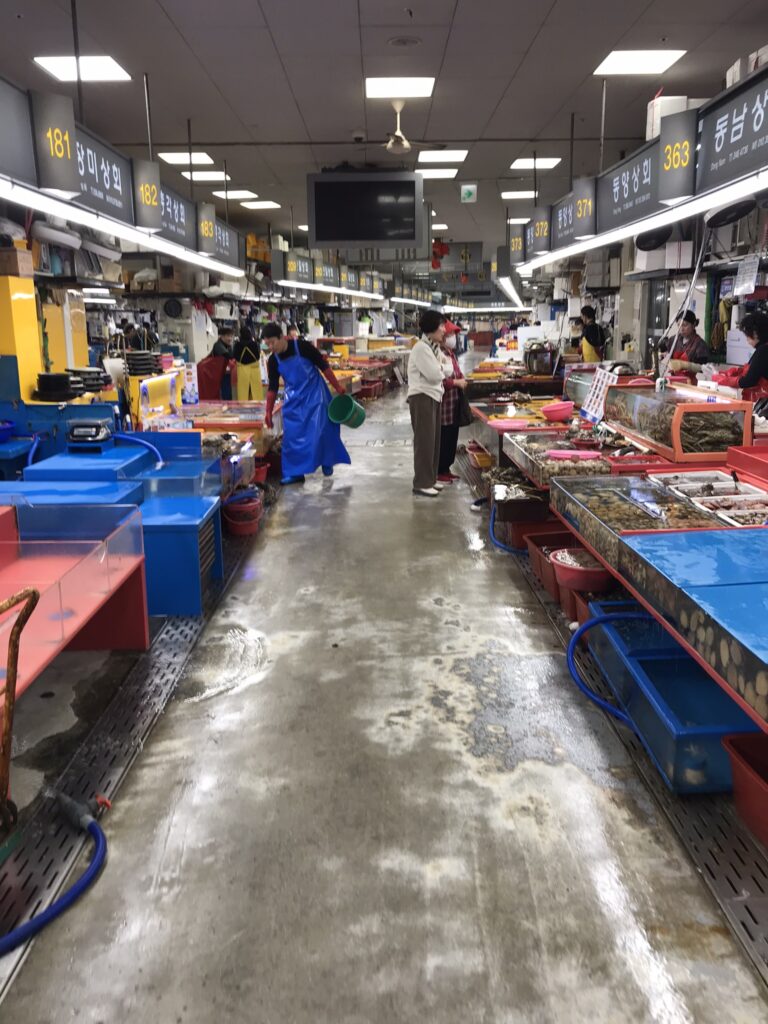
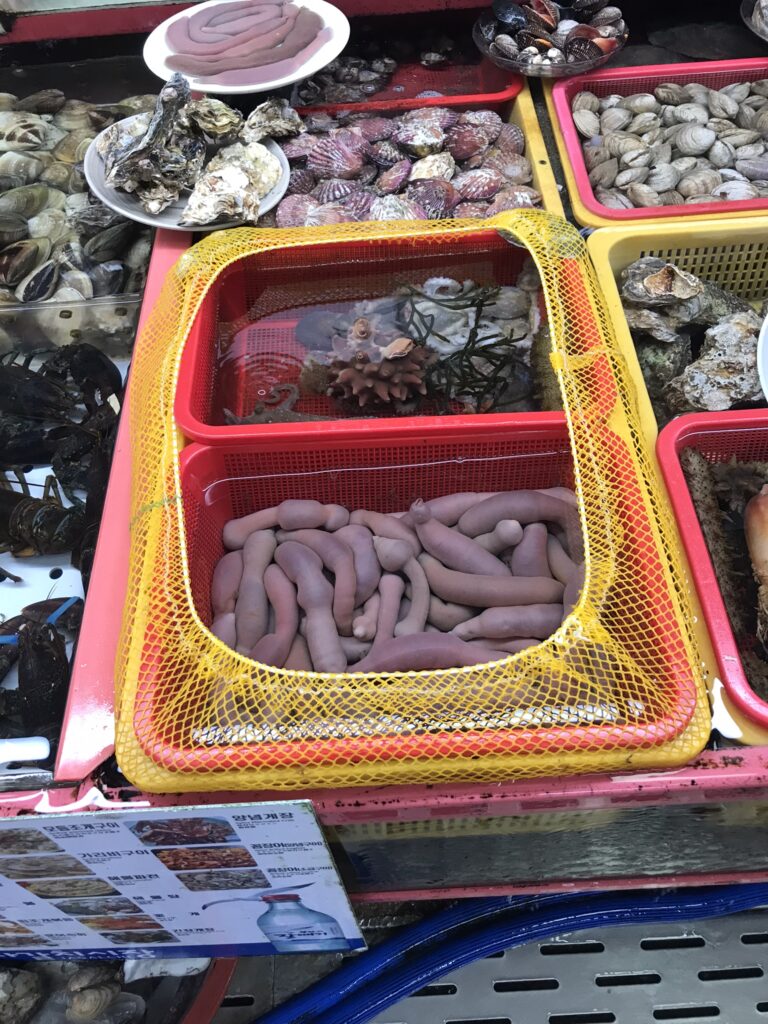
Jagalchi seafood market; I don’t know what this stuff is and nor do I want to
There is a vibrant and boisterous atmosphere throughout Busan with plenty of different areas and districts to explore, from the upmarket to the lowbrow. We couldn’t help but be interested by the very un-Chinese ‘Chinatown’ and ‘Texas Street’ located close to our accommodation and Busan railway station. An area with a sleazy feel which seemed to be geared towards Russian sailors, there are few remaining Chinese restaurants here and virtually nothing related to Texas. Instead there is a plethora of Russian shops and seedy-looking establishments complete with cyrillic signage, scantily-dressed women and some very questionable characters lurking outside, particularly at night. Interesting to see, but not necessarily a great place for families and kids to walk through at night. If you’ve just arrived on the train and end up in this area, don’t worry, the rest of Busan is not like this!
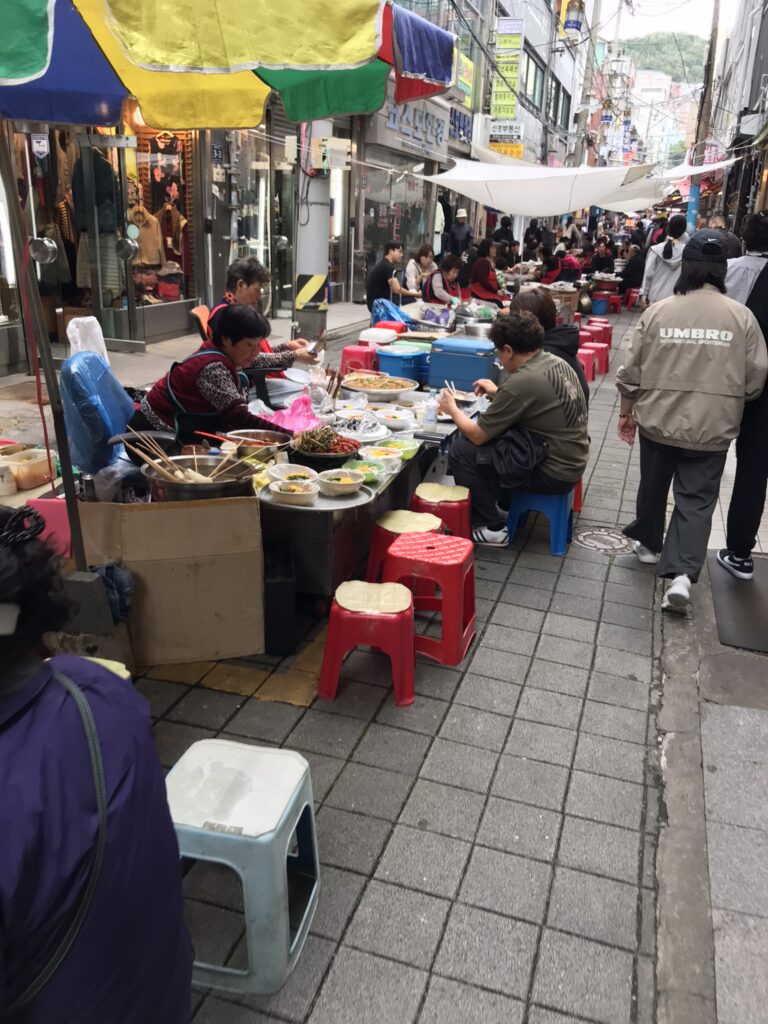
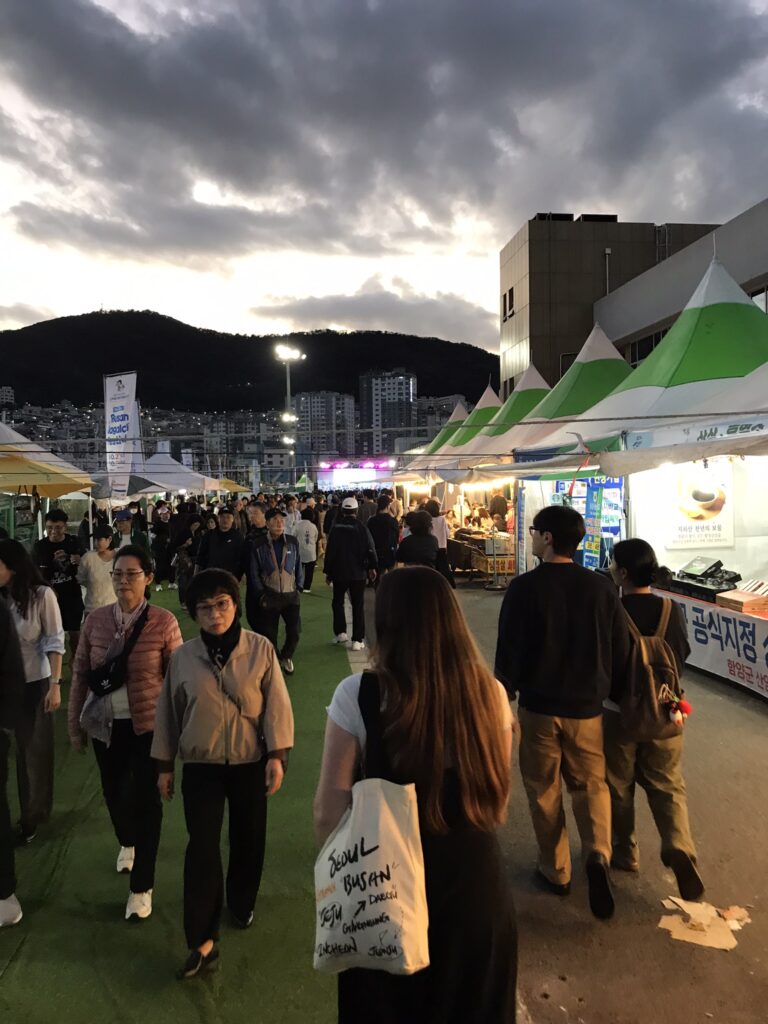
We found so much life and activity in Busan
Accommodation
One Way Guesthouse Busan – a cross between a hostel and a motel which is located within walking distance of the KTX station and the infamous Texas Street. Quite an informal atmosphere, there is a common area with fridges for guest use and a laundry service offered by the front desk.
Foodie Places
Cheese Forest Wood-fired Pizza and Pasta – a one-man show near to our accommodation and the KTX station, we struggled to pay here as our card kept declining – I’m not sure why, this was the only place in South Korea that this happened. A helpful guy stepped in to save the day. The pizza was a little on the expensive side here.
Bupyeong Market – after trying and failing to find food in Gukje Market, we headed across the street to what turned out to be an extensive food market in a covered arcade. A wide array of different options available – we tried freshly steamed dumplings, tteokbokki and pajeon (a type of seafood pancake). The tteokbokki here was some of the best we had anywhere in Korea.
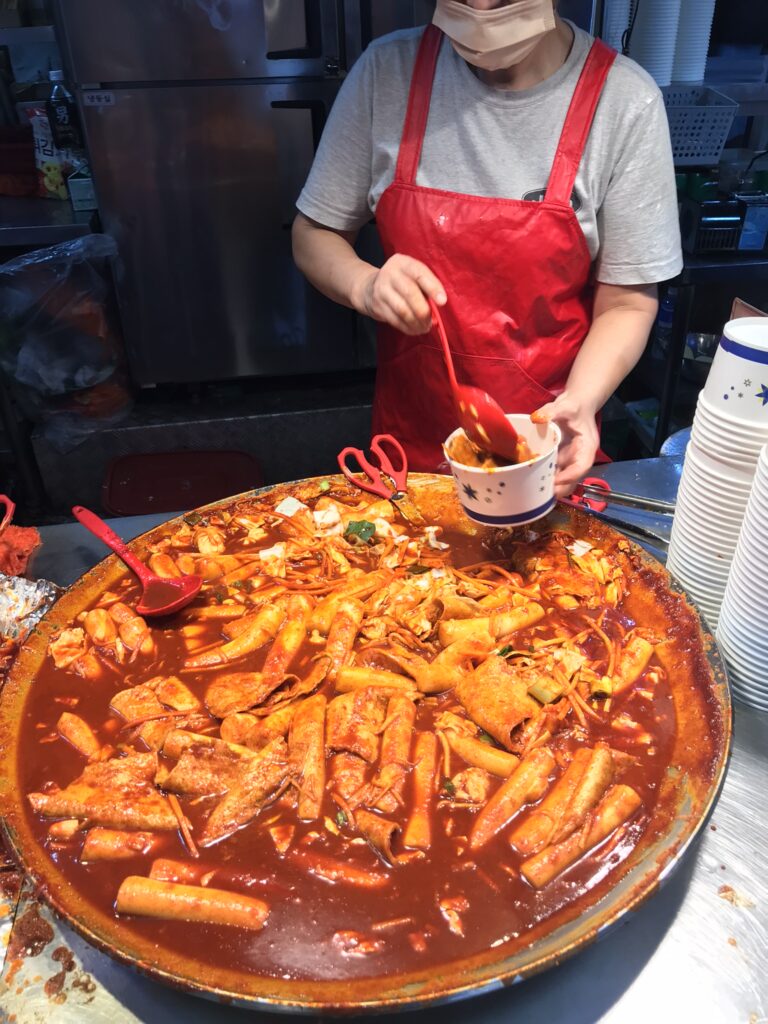
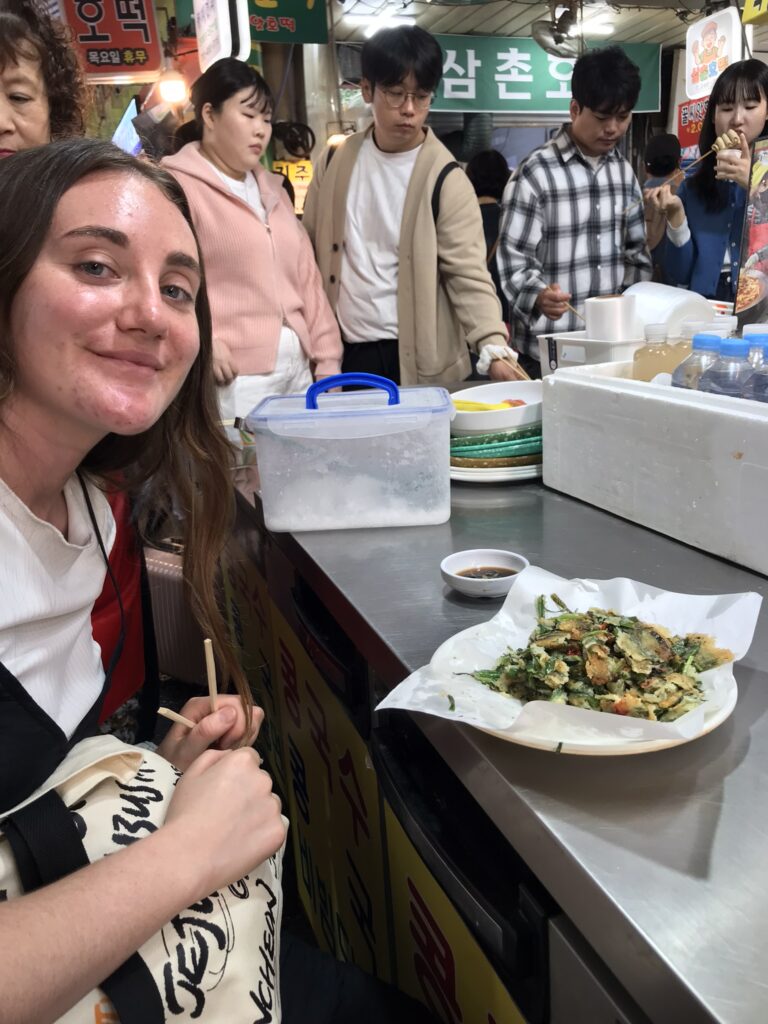
Eating well at Bupyeong Market
Tout le Jour – we tried this chain in Marine City, it was pretty good but honestly I didn’t prefer it to my trusty go-to bakery chain, Paris Baguette
Kyochon Chicken – the ubiquitous Korean chicken joint, we visited the branch within walking distance of our accommodation and Texas Street. It’s fun to eat the chicken using the provided tongs. Don’t just go for the plain chicken, make sure you try the different flavours – there are plenty of mix and match boxes available so you can get a good selection. I ordered plain chicken on our first visit to Kyochon in Seoul, and trying the different glazes greatly enhanced my experience here. We visited in the evening and it seemed like most of the locals were accompanying their chicken with beer, so we felt obliged to also partake. It’s not exactly a traditional food (fried chicken was introduced to Korea by the Americans during the 1950s), but Korean-style fried chicken and brands like Kyochon are ingrained in the modern South Korean psyche so it’s worth trying at least once.
Activities
Gamcheon Culture Village – a myriad of colourful painted houses nestled into the hillside which is reminiscent of a South American favela, this neighbourhood sprung up as a settlement for refugees from the Korean War before eventually becoming a permanent fixture. In more recent years the houses were given the colourful, vibrant spruce-up and the area was repurposed as a tourist attraction. It’s definitely different aesthetically from the typical Korean settlement. Along the main drag were so many souvenir shops and cafes catering towards the influx of tourists, with street festivals, street food stalls and pop-up activations which only added to the festive atmosphere. The village streets are quite steep – you can quickly end up out of breath if walking up and down the narrow alleyways, but it’s easy enough to follow the main route which runs around the gorge.
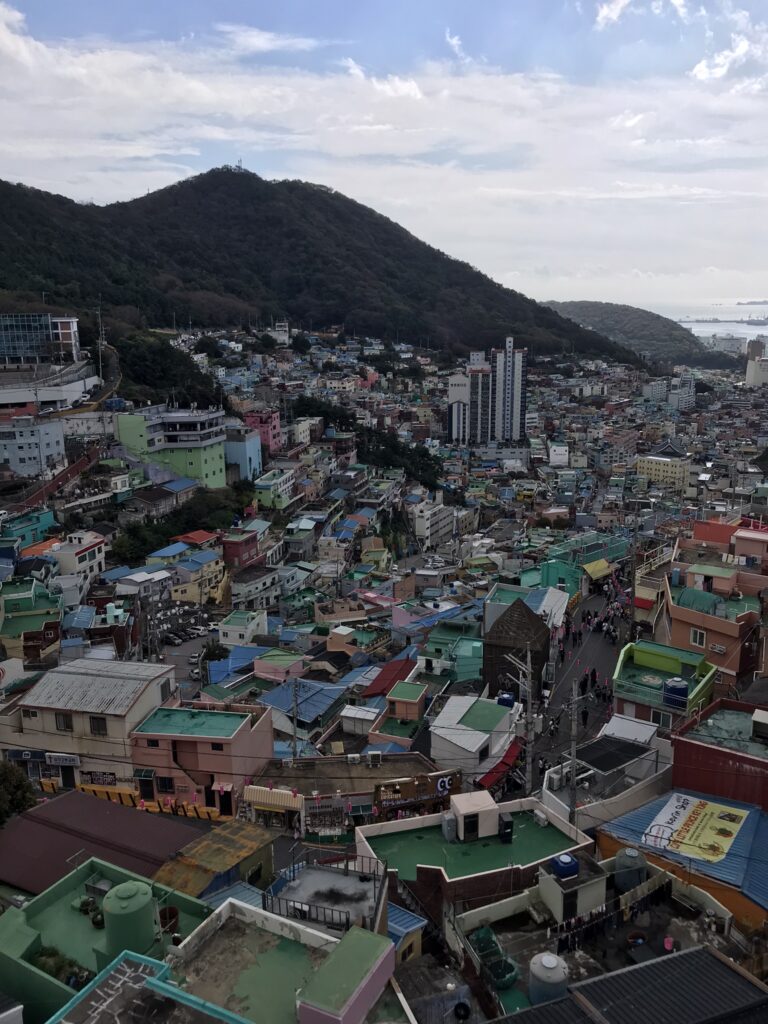
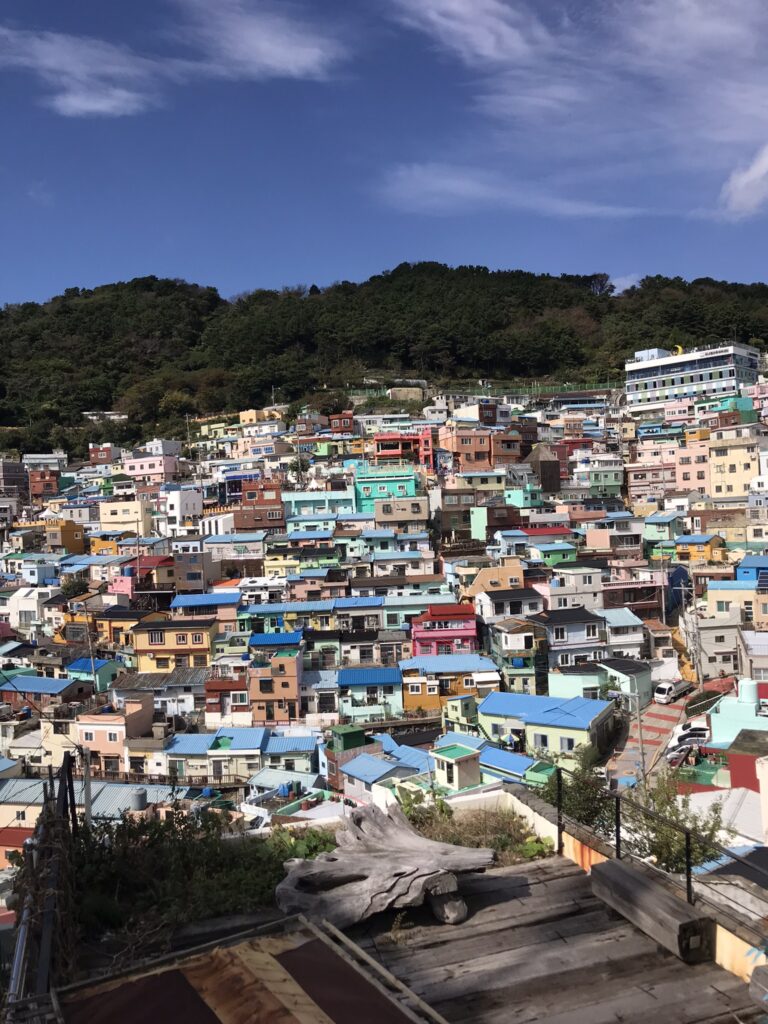
Yes, this is in South Korea
The village streets can get pretty busy with pedestrians, particularly around weekends. We meandered around, purchased some soju and makgeolli from one of the stalls and then headed up to the free observatory around the New Little Prince Statue for the best views over the neighbourhood and all the way to the sea. To get to Gamcheon from the centre of Busan requires taking a bus – it’s a hillside area and the metro doesn’t come here. Due to the winding and narrow hillside roads, these are typically microbuses and so can be ridiculously squashed and crowded at weekends.
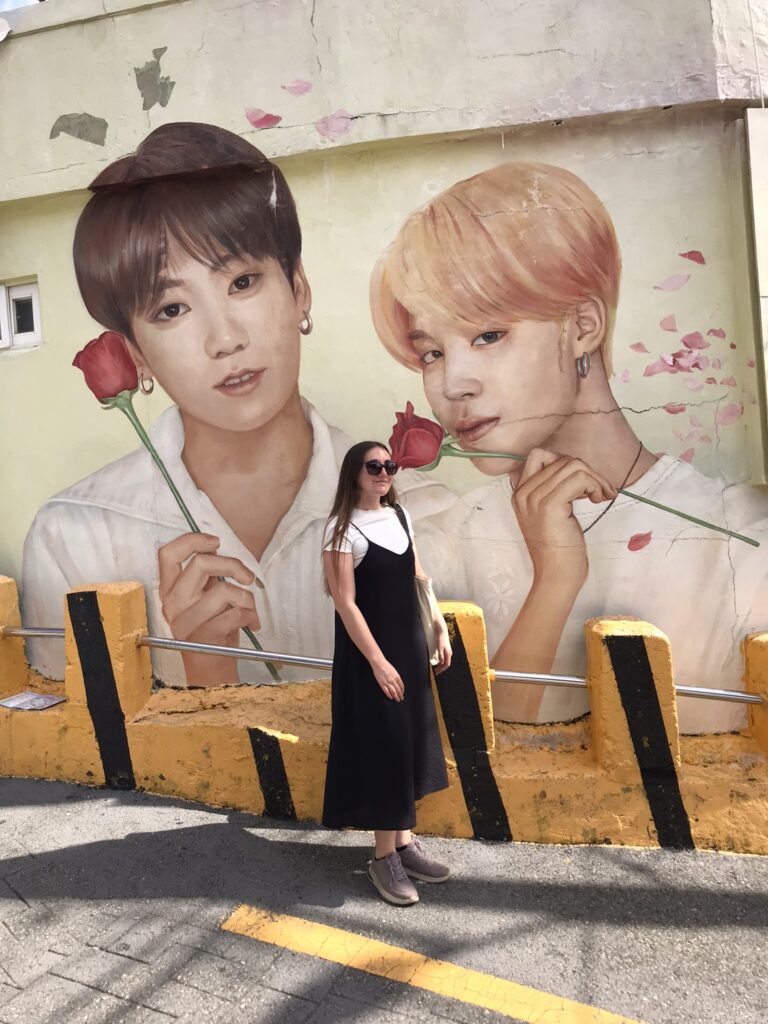
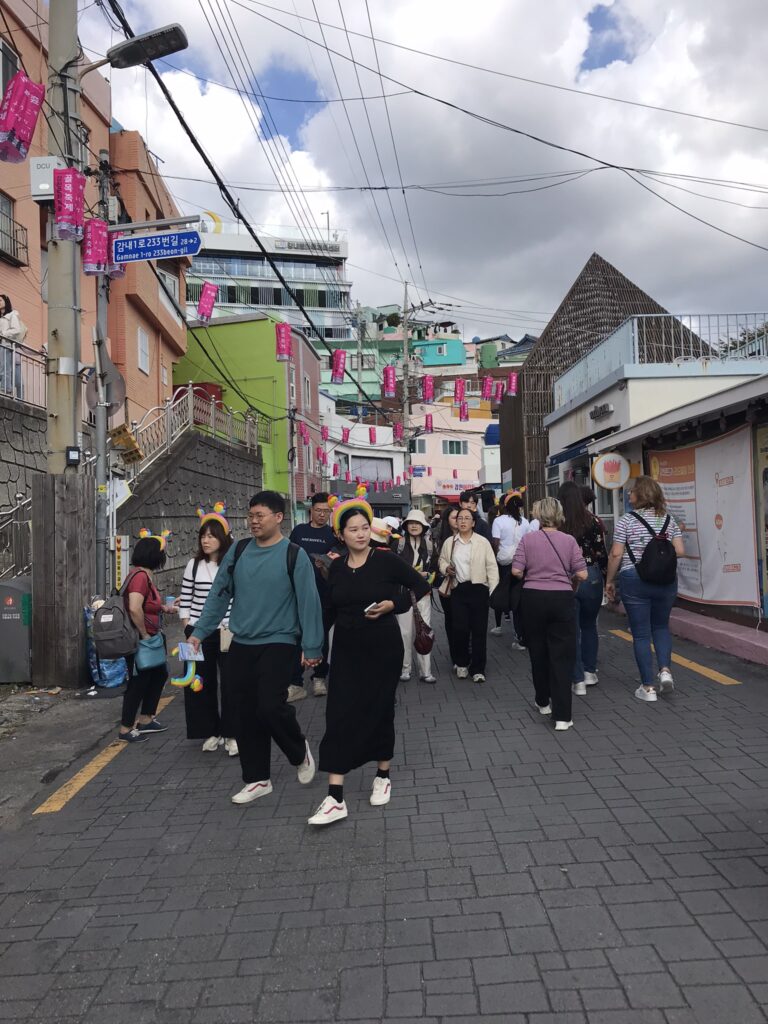
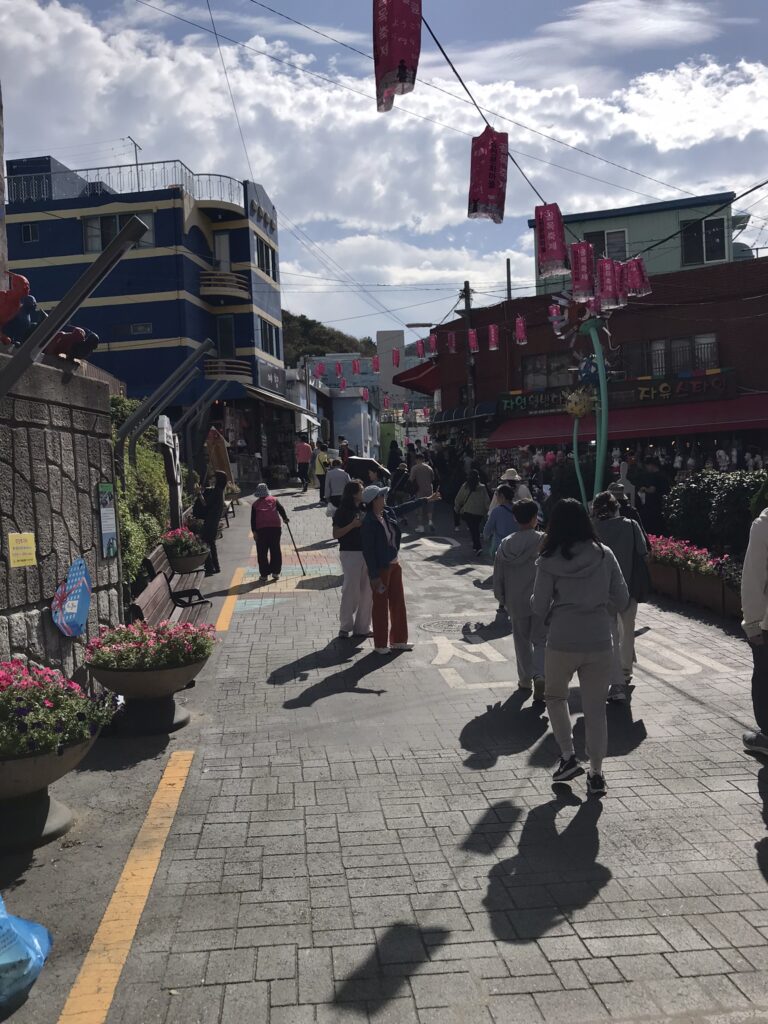
Gamcheon may look like a South American comuna or favela but the atmosphere is anything but
Nampo-dong – we had a walk around this neighbourhood in central Busan, which was incredibly busy with street food stalls and various sellers. It’s a bit of a shopping hotspot and lively central hub. You can’t miss the food stalls known as pojangmacha – small colourful stools where ladies serve traditional local snacks.
Busan Modern and Contemporary History Museum – a free museum which charts the history of the city, with a focus on industrialisation and modernisation. The museum is located on the upper floors of a building which also seemed to contain a popular cafe/eatery. This museum doesn’t seem to be particularly popular or have much of a reputation but we thought it was really good and informative – we learned a lot about the city and local history.
Busan Tower – this observatory provides great aerial views of the city, port and surrounding landscape. It’s such a diverse scene that we felt it was worth paying the relatively expensive admission for this tourist attraction. You can purchase a ticket from the vending machines outside and then enter the tower and join the queue to take the elevator up to the top. After visiting the observation deck there are some novelty attractions and visual installations on the way back down the tower. The park surrounding the tower also has a couple of statues and minor landmarks which are worth a quick look.
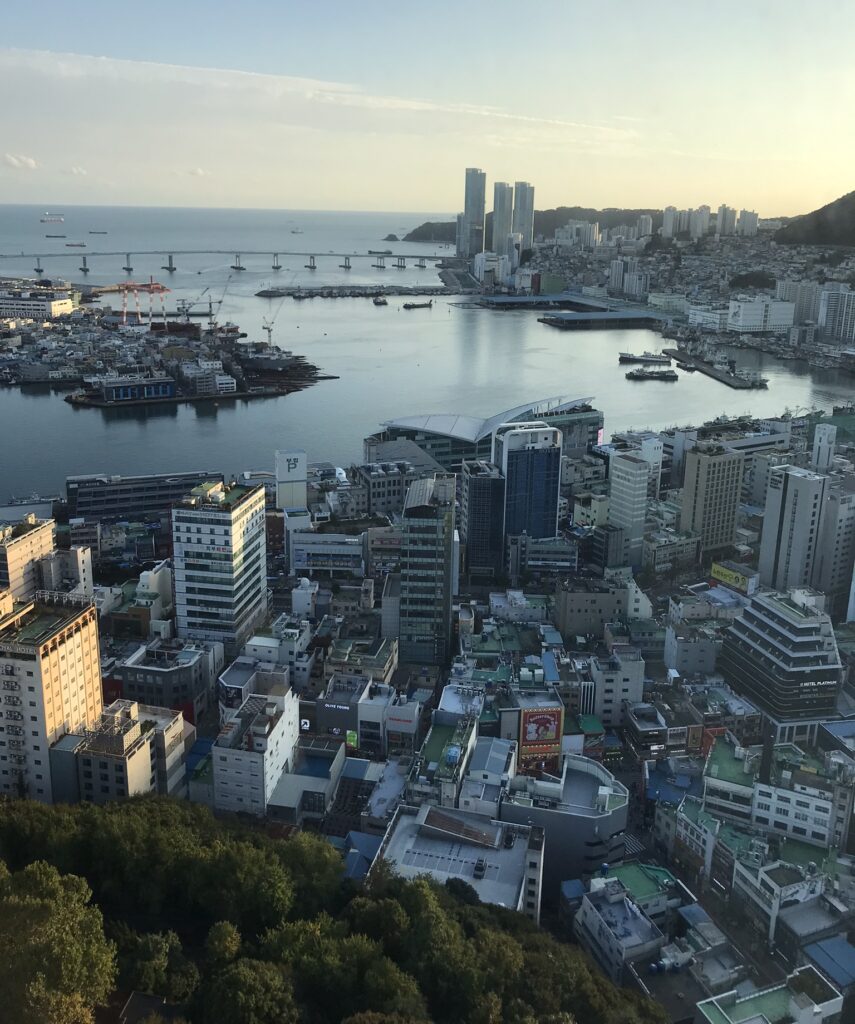
Fantastic views atop Busan Tower
Jagalchi fish market – there was a fish market festival taking place at the time of our visit, so it was ridiculously crowded and lively after dark with people dancing in the street. Outside of that, this is a fully-functioning fish market – not at all sanitised and definitely not a show market for tourists. The fishy and bloody water all over the floor might be a bit much for some people. The market itself is wild, filled with creatures that I’ve never seen before and some that I would happily never see again. The stalls tend to be manned by women – typically these are the fishermen’s wives as the fishermen themselves are out doing what they do best.
Gwangbok-ro – Busan’s glitzy main high street, featuring flagship stores of many famous local and international brands. It’s an interesting place for a stroll – again, there seemed to be street performances and the like; plenty going on here.
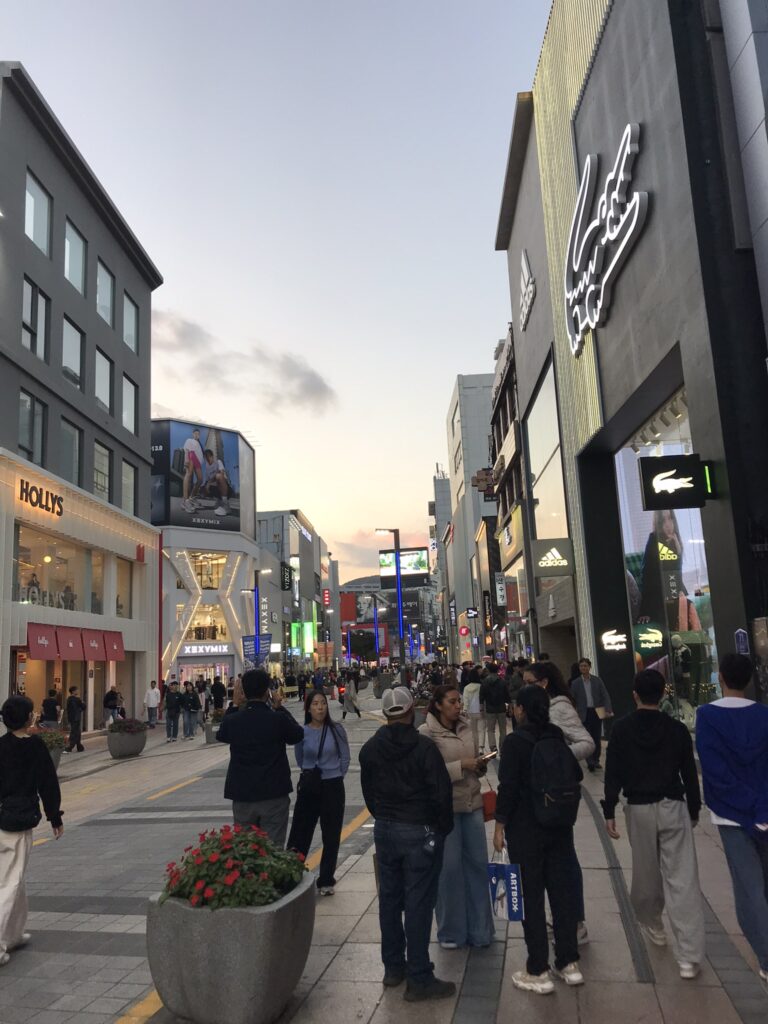
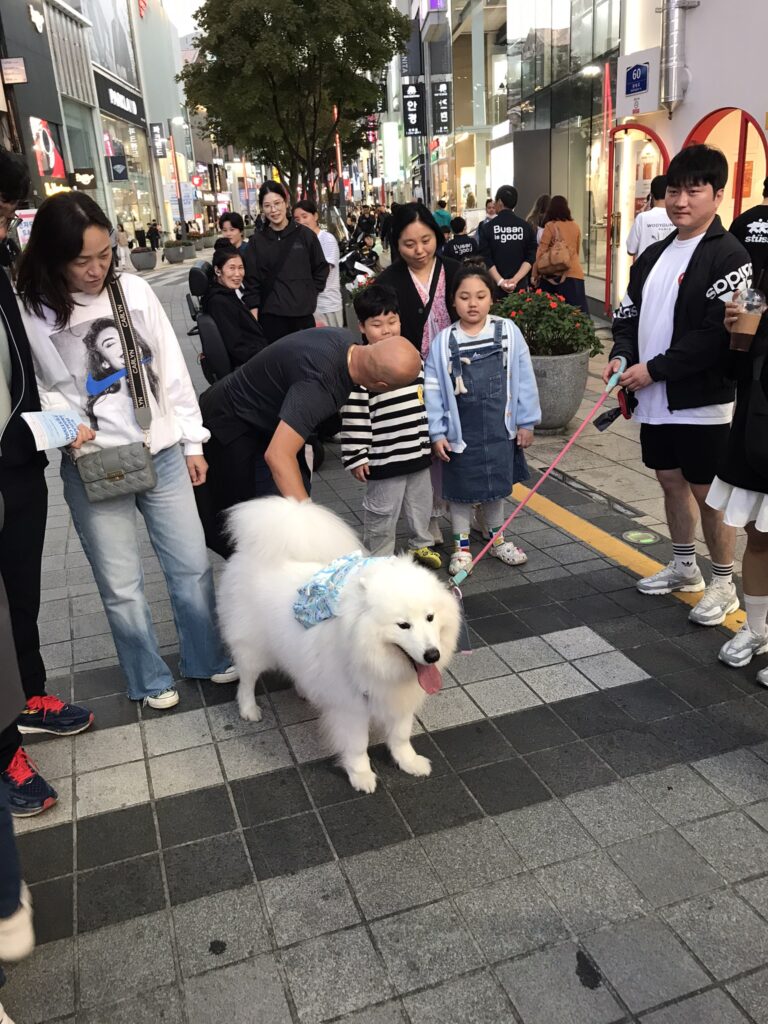
Glitzy Gwangbok-ro
Taejongdae – a scenic clifftop area located at the southern extreme of Yeong Island to the south of the port of Busan. This area can be visited by bus pretty easily from the centre of Busan.
There is a looping paved road around the scenic area with a number of attractions along the way, the most popular being Taejongdae Observatory and Yeongdo Lighthouse – both are free to enter. These are popular spots for tourists to watch the cargo ships in the bay and admire the natural landscapes and rock formations around the coast. There are also a number of small temples in the area which we didn’t visit.
It’s possible to just walk the loop around the scenic area, or you can jump on a mini land-train in order to cut out the uphill walk to the observatory. The train runs frequently and is pretty inexpensive. The walk itself is not difficult but is a little tedious as there isn’t all that much to see until you reach the observatory. We walked up and then got the train back down to save time. The area is quite verdant and green and so provides a breath of fresh air in an otherwise built-up city.
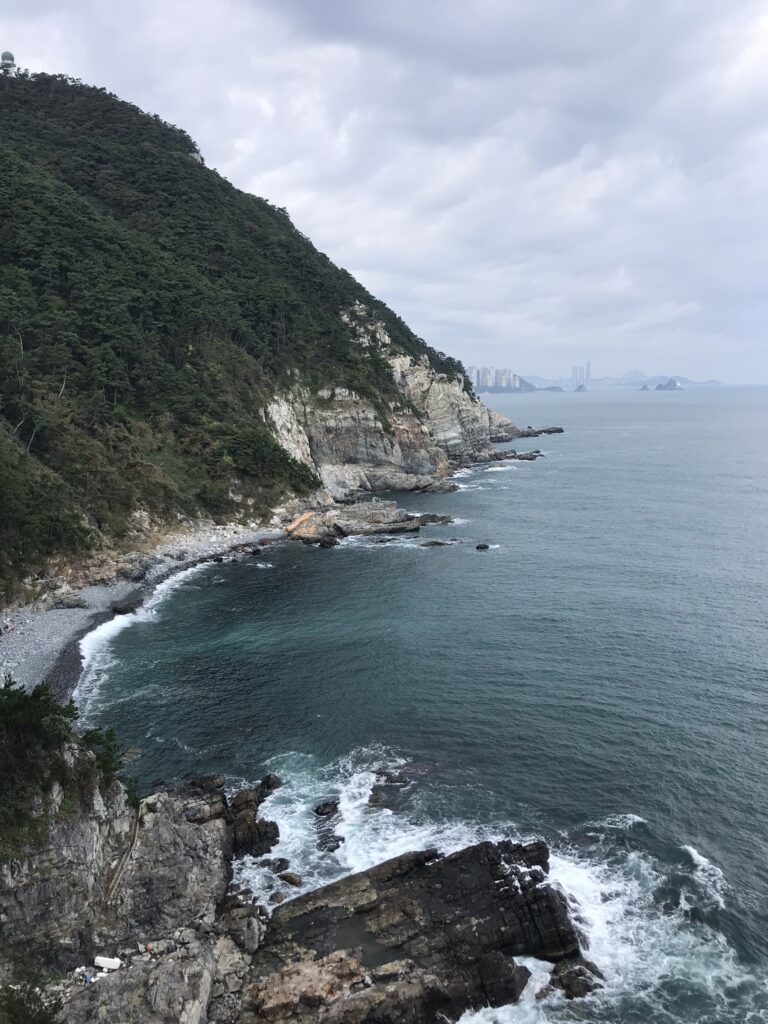
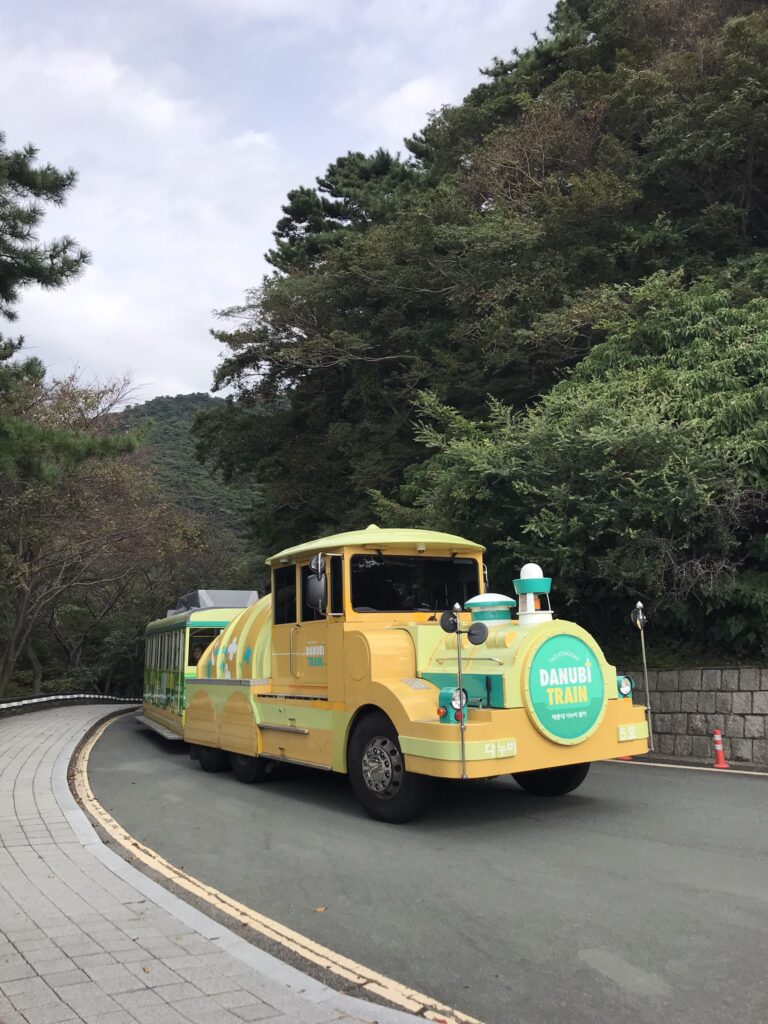
The scenic area of Taejongdae; the land-train makes things easier for those that don’t want to walk
Boat tours operate around the scenic peninsula and seem to be popular with locals, we didn’t partake and later saw the boats being absolutely mobbed by seagulls so I’m not sure how much fun this activity would be in reality.
Haeundae Beach – an iconic and emblematic spot in Busan. The beach is immaculate and absolutely spotless – we were shocked by how clean and well-maintained it was especially considering it is an urban city beach. We walked along the promenade to Haeundae from Marine City, which is a very built-up and glitzy area filled with glass-fronted skyscrapers and great views across the bay. There’s plenty going on at Haeundae Beach, it’s a hub of activity but it’s also a huge area and very spacious and so it doesn’t feel overcrowded at all, retaining a laid-back vibe.
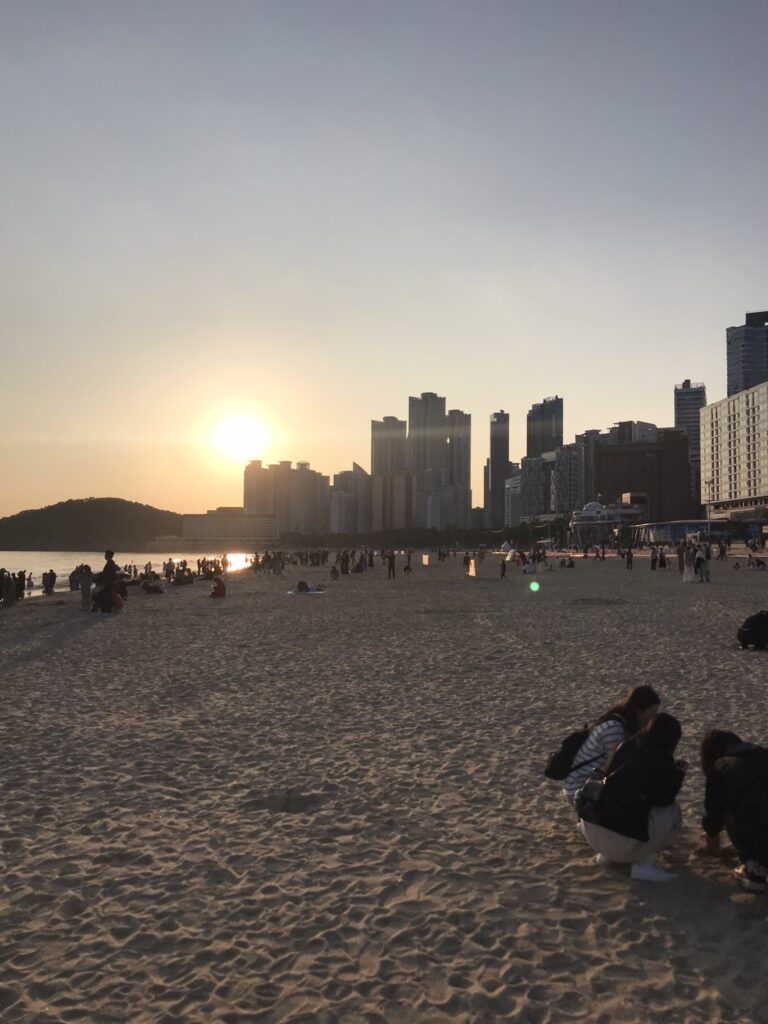
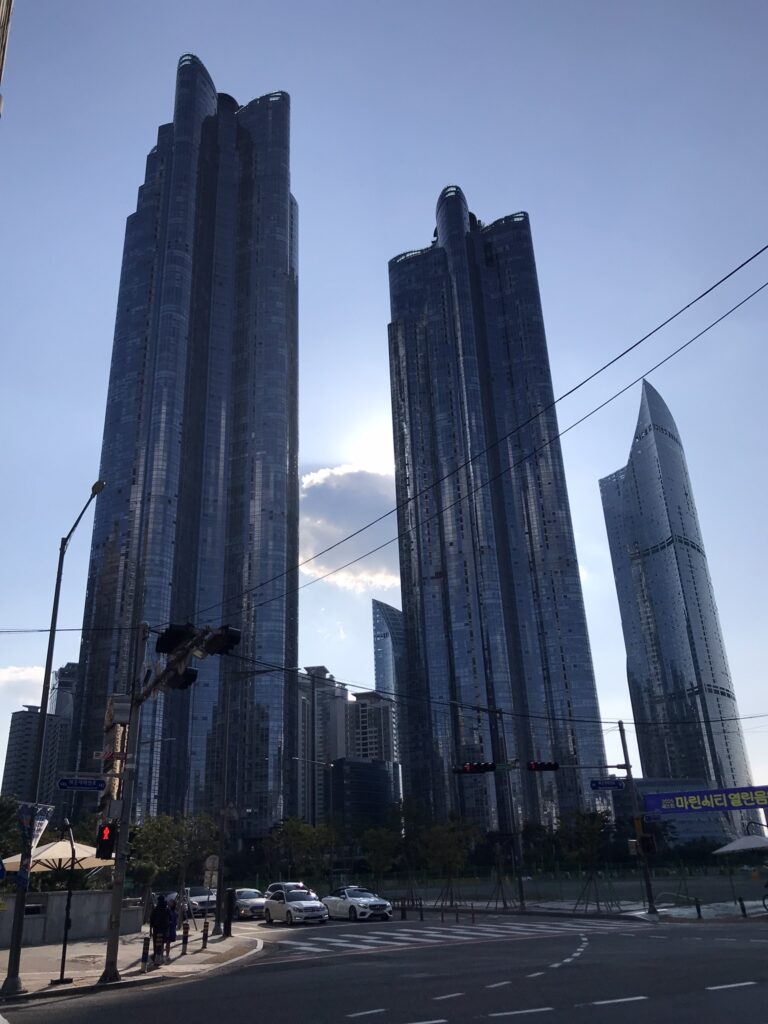
We opted to visit Haeundae around late afternoon and stayed to watch the sunset, which I would recommend. Afterwards, we walked back to the subway via Gunam Road – like the rest of Busan, we found that this was a vibrant place with lots going on including an international festival with stalls representing different countries. We even saw a cultural performance from Uzbekistan.
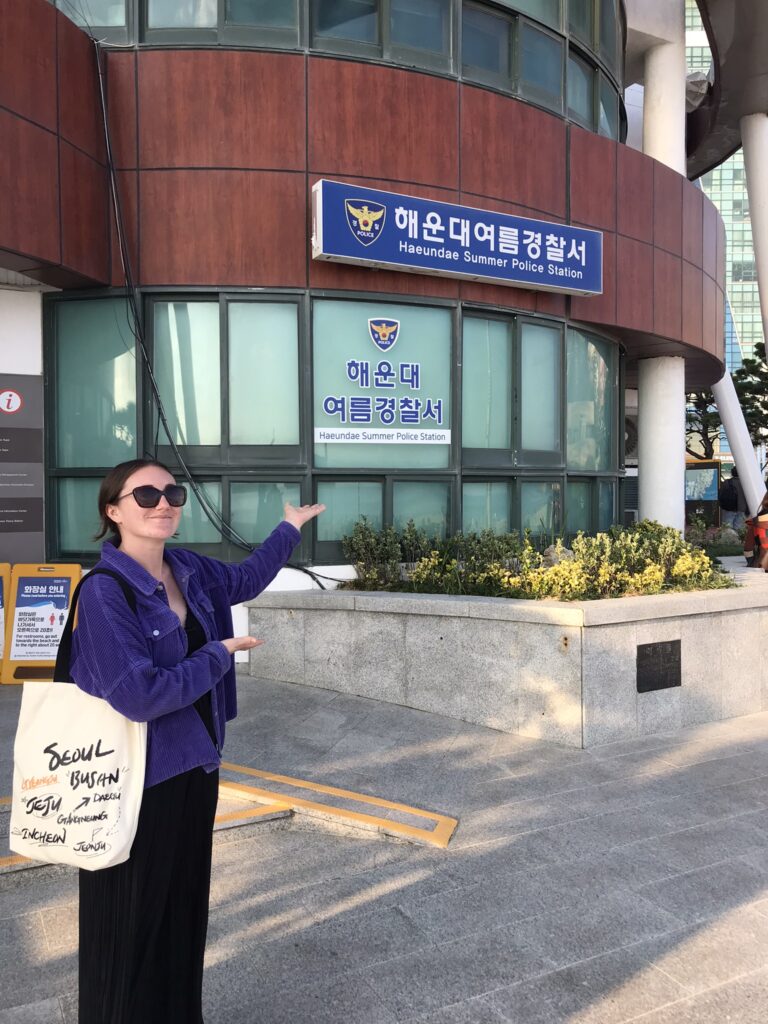
Congratulations – you made it to the end of the blog post
After visiting Busan, we took a flight to Hokkaido in Japan!