This article was authored by my number 1 fan – my mum, who is a lifelong resident of Spalding, Lincolnshire and made it her personal mission to rifle through the archives and trawl through the library to create an accessible walking tour guide for visitors. She uncovered many fascinating historical tidbits along the way.
The name Spalding may have originated from the tribe of “Spaldas”, who descended from 7th century Anglo Saxon invaders. The first mention of Spalding appears in a charter signed by King Ethelbad in AD 716, and the settlement was mentioned in the Doomsday Book in the 11th century. The fen land around Spalding was once waterlogged – the River Welland was tidal and the area suffered from regular flooding. It took hundreds of years to drain the land, dig out drainage channels and install a pumping system. This left the soil fertile and suitable for farming. Spalding Priory was founded in 1052 by Leofric, Earl of Mercia and his wife Godiva – the famous Lady Godiva! Benedictine Monks from the Abbey of Saint Nicholas in Angers, France were sent to take control of the area after the Norman conquest (1066-1071 AD), and the Priory became one of the richest monasteries in Lincolnshire. William the Conqueror’s nephew, Ivo Tailbois (1036-1094), married the 14-year-old heiress of Spalding, Lucy of Bolingbroke, around the year 1088 and lived locally in Spalding manor house, which was part of the Priory estate. Spalding was decreed a market town by King George 1st (1660-1727) and royal permission was granted for a weekly market and 5 annual livestock, merchandise and horse fairs – although an informal market in Spalding may have existed before this. As the river Welland was tidal, trade developed and Spalding grew as a busy port. There are about 80 historically listed buildings in Spalding – we will see some of them on this tour.
This walking tour includes a visit to a local museum (open Wed-Sun), a visit to a gardens and a stroll around the historical buildings in the centre of Spalding. It should last for approximately 3-4 hours and is suitable for all ages and fitness levels. The walk is on flat ground, there is a lift in the museum and accessible toilets in the gardens. There are also public toilets in Hall Place in the town centre.
For those arriving by car, there is plenty of parking in Spalding. I suggest the Vista Car park PE11 2RA – all day parking costs £3.10 between Monday-Saturday and is free on Sundays.
Start at Ayscoughfee Hall – entrance on Churchgate PE11 2RA
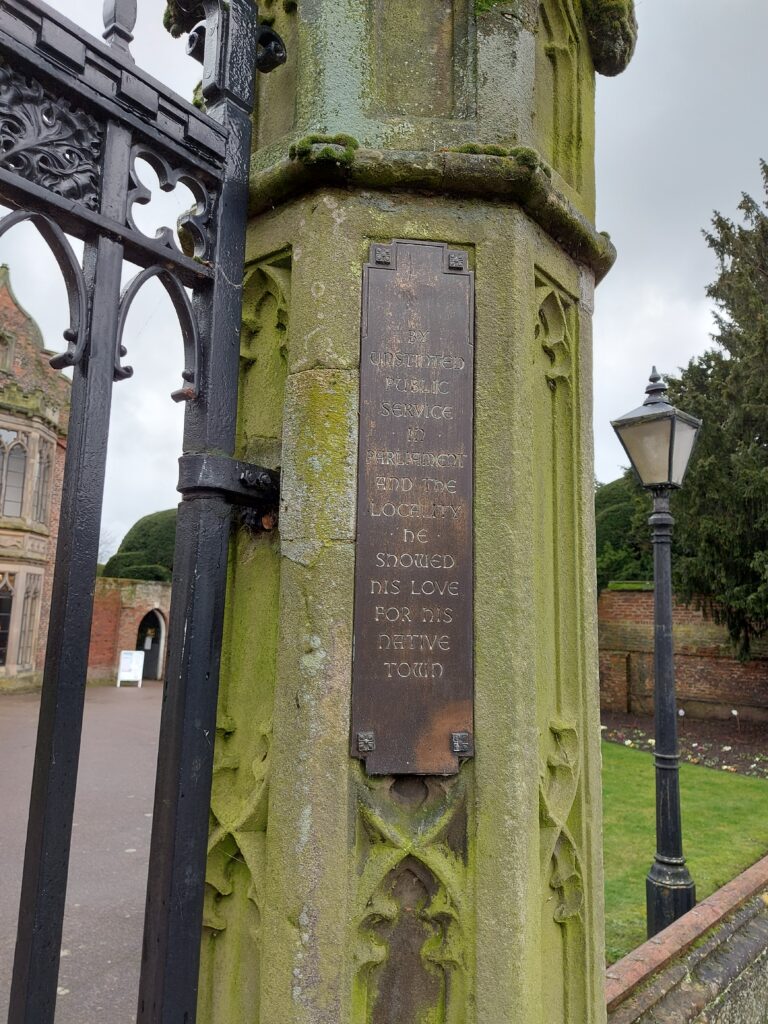
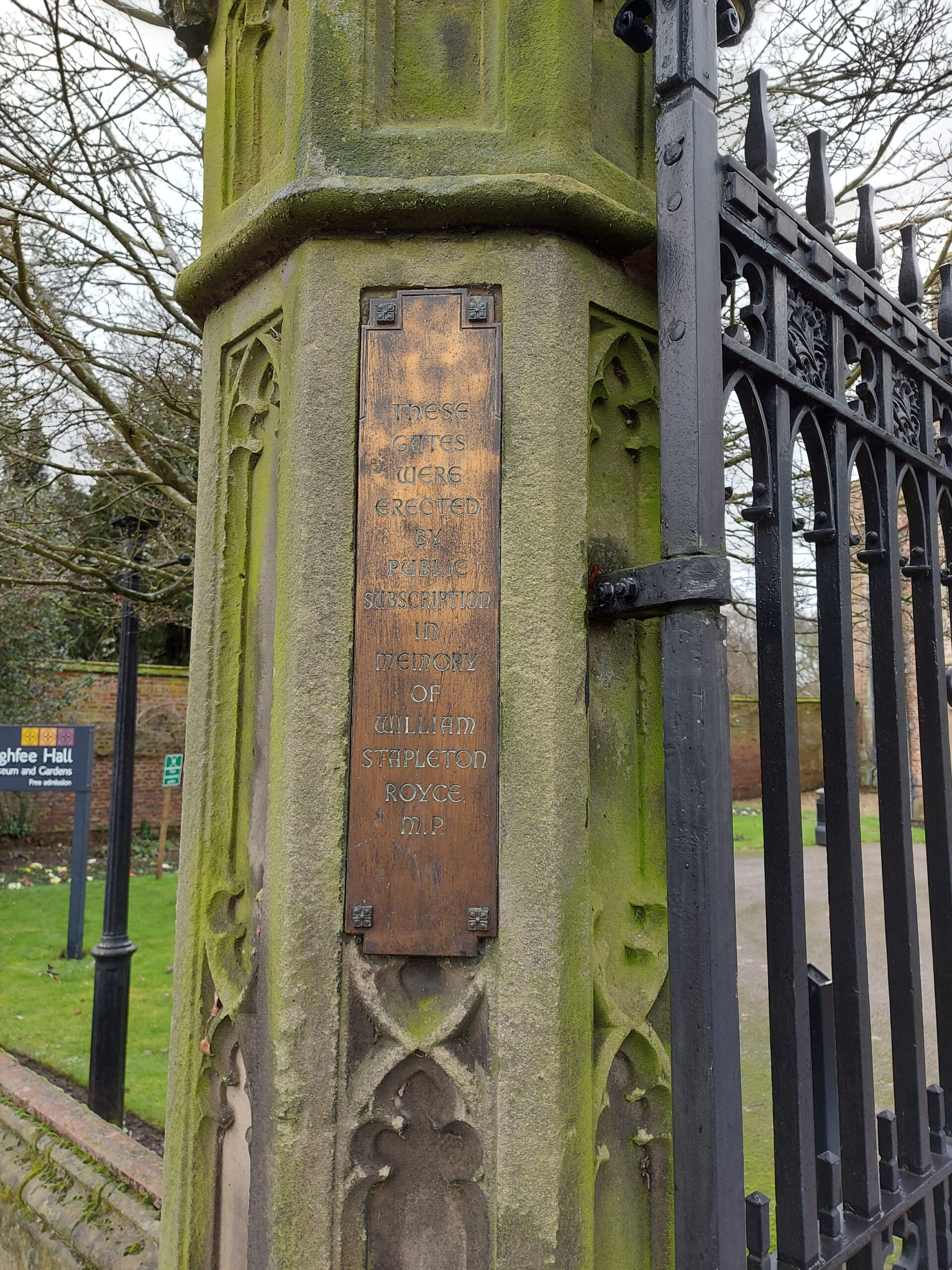
Ayscoughfee Hall Entrance Gates – these were donated by the public in memory of the local MP William Stapleton Royce who served as MP from 1918-1923. He tragically died of a heart attack on a London bus in 1924.
Ayscoughfee Hall, with the exception of the Ashmoleum in Oxford, is the oldest museum in the UK. It has been dated to 1450 and is a Medieval Grade 1 listed building with 5 acres of gardens. It was built by a local merchant named Richard Aldwyn, whose son became the Lord Mayor of London in 1499. Richard Aldwyn was a prosperous wool merchant and built his house next to the river which was used to transport his wool. In 1530, the estate was bought by the Ayscough family – a famous local aristocratic family whose extended line included the mother of Sir Isaac Newton. Ironically, the Ayscoughs may never have actually lived in the hall. The “Fee” at the time referred to the territory of a knight, and the house therefore became known as Ayscoughfee. The house served as a family home until the late 1800’s, when the people of Spalding raised £1,000 and borrowed an additional £1,000 to purchase it on behalf of the local community as a celebration of the Diamond Jubilee of Queen Victoria. The hall was handed over on the coronation of Edward VII in 1902 – it then functioned as a library, a school, council offices and housed Belgian refugees during World War 1, eventually opening as a museum in 2006.
Ayscoughfee Museum is open from Wed-Sun 10.30am to 4pm and is free to visit – I suggest this would take about an hour. Please ask at the reception desk for a map and further information. Inside are two must-see exhibits – the exhibition of Spalding Gentlemen’s Society and the beautiful Oriel stained glass window. Outside of the building, take a careful look at the wings on the crest – they have been stuck back together as the crest fell down during the Dogger Bank earthquake in 1931, the strongest recorded earthquake in British history and reportedly the biggest for 1000 years!
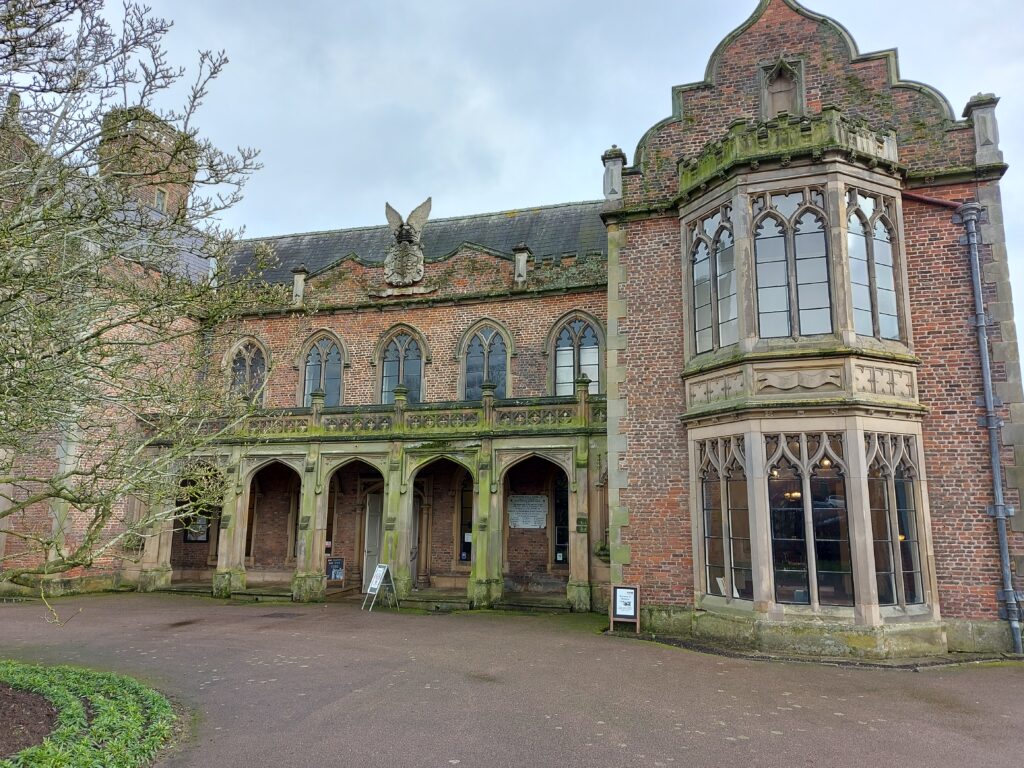
Ayscoughfee Hall Museum is an excellent place to sharpen up on local history
Established in 1710, the Spalding Gentlemen’s Society is the oldest provincial learned society in the country and has its temporary home at the Ayscoughfee Museum. The society was founded by Maurice Johnson (1688-1755). A local aristocrat who reportedly fathered 26 children, Maurice Johnson lived at Ayscoughfee Hall and was a lawyer who spent a lot of time in London where he enjoyed the vibrant social scene, discussing current affairs, philosophy, inventions, scientific discoveries and new publications such as the Tatler and the Spectator. He wanted to re-create this stimulating circle in his local area and so in 1710 at the age of 22 he decided to set up a society in a newly opened coffee house in Spalding – Youngers in Abbey Yard. The membership fee was set as a donation of a book worth at least £1, and the society now has a collection of around 20,000 books as a result! The society finally found a permanent home in 1911 to house the large collection of books and artifacts in Broad Street (we will pass this later in the tour). Spalding Gentlemen’s Society has had some important/famous members over the years including:
Sir Issac Newton (1643-1727) Scientist & Mathematician – The Theory of Gravity.
Dr William Stukley (1687-1765) Archeologist & Antiquarian – Was a very early member
Sir Joseph Banks (1743-1820) Naturalist & Botanist – Accompanied Captain James Cook on his voyage on the Endeavour to Australia in 1778
John Gay (1685-1732) Poet & Playwright
Richard Mead (1673-1754) Physician to King George II
Alexander Pope (1688-1744) Poet & Satirist
Sir George Gilbert Scott (1811-1878) 19th Century architect who designed St Pancras railway station and hotel
Alfred, Lord Tennyson (1809-1892) Poet
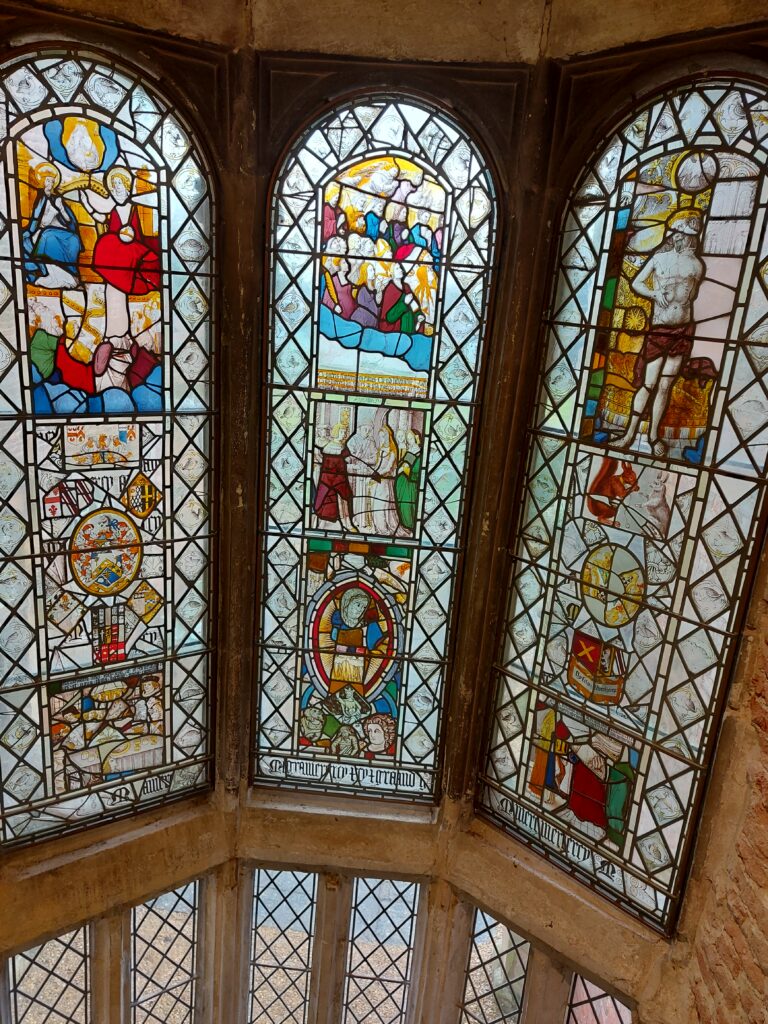
The Oriel stained glass window are a highlight in Ayscoughfee Hall Museum – some of the glass is late 13th century and was moved from a chapel in the grounds of Ayscoughfee.
When you have completed your visit to the museum, exit the hall and take the entrance to the gardens through a doorway on the left of the hall. There is a cafe in the grounds as well as public toilets.
Ice House – once in the gardens, take a right turn and walk along the beautifully shaped Yew trees (planted in 1725). At the rear of the garden you will see a small hill structure with an entrance pathway. This is the ice-house – a cool place to store perishable items for use at Ayscoughfee Hall. In the winter, big blocks of ice were cut from the lake and placed in the ice house to keep the goods cool through the summer.
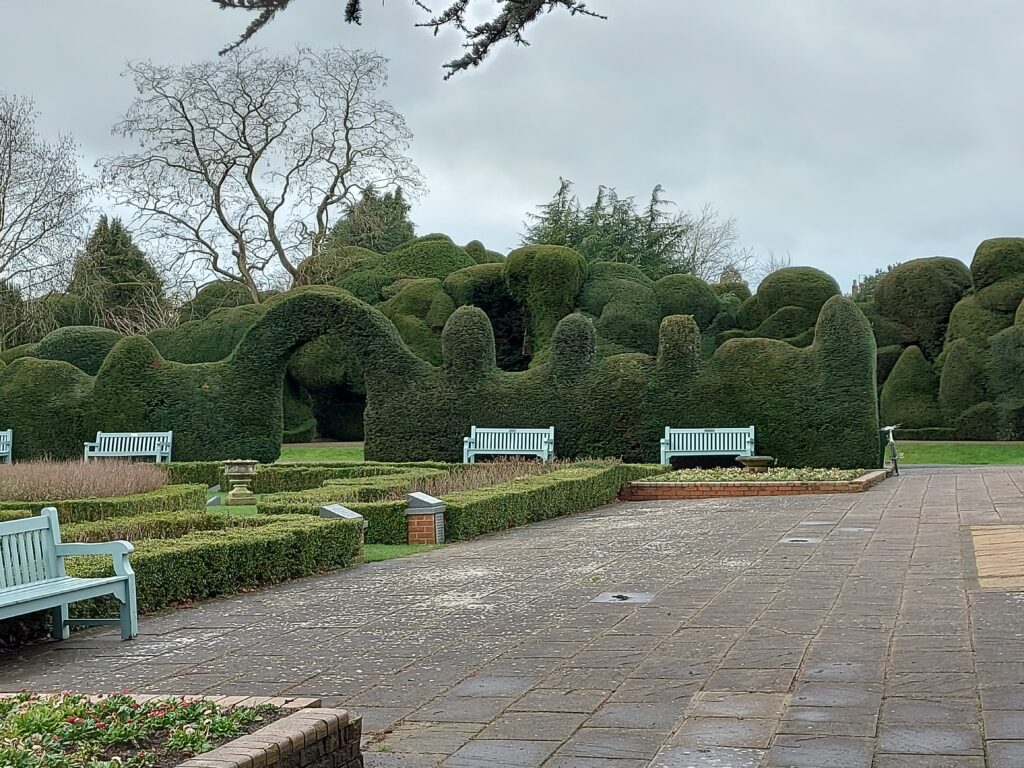
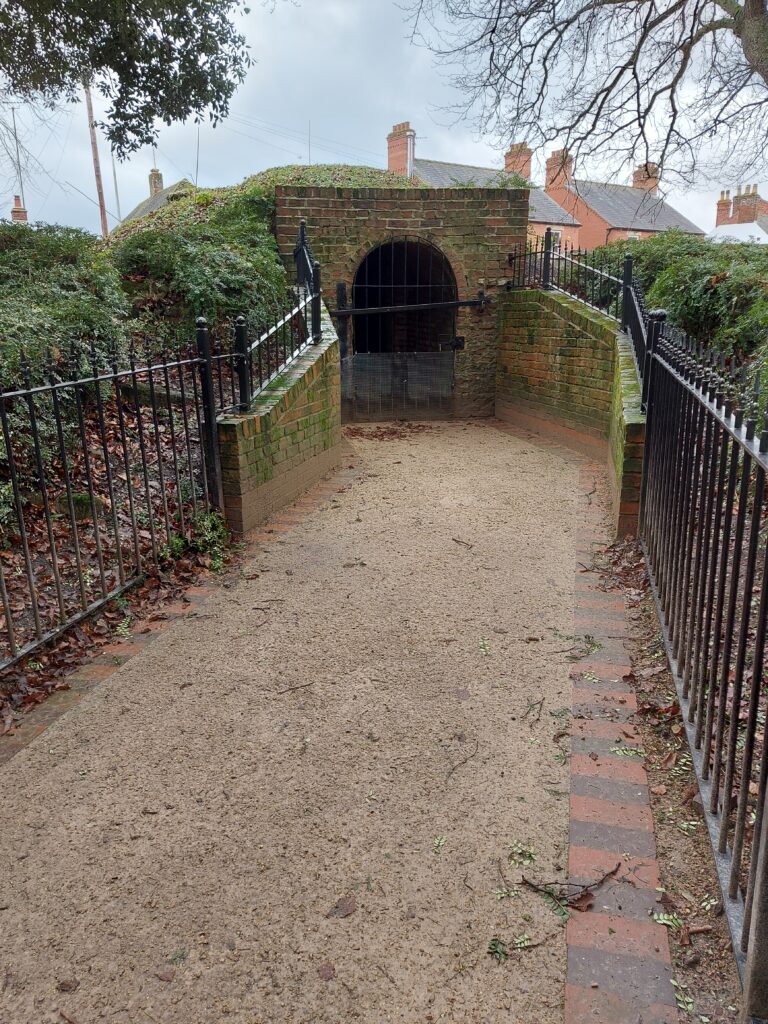
The grounds of Ayscoughfee Hall have many quirks like the wacky yew trees and scary-looking ice-house
War Memorial (Grade 1 listed) – with the ice house on the right, continue to walk until you come to a large structure which is at the end of a rectangular lake. This is the War Memorial, dedicated to the remembrance of lives lost in the 1st World War. The memorial was designed by Sir Edward Lutyens, who also designed the cenotaph at Whitehall in London. A folly called the owl tower originally stood on this site, containing a smoke room on the ground floor and a room for owls on the second floor. This was taken down in 1921/22 and replaced with the war memorial.
The Johnson Memorial Fountain – walk towards the cafe and turn right past the garden of peace and you will see a fountain with an information board. This fountain commemorates Miss Mary Ann Johnson, who donated £1500 in 1874 (around £200,000 in today’s money) to provide clean water for the people of Spalding by extending water mains to different areas of Spalding. The fountain was originally placed in the town centre (Hall Place) and provided fresh clean water.
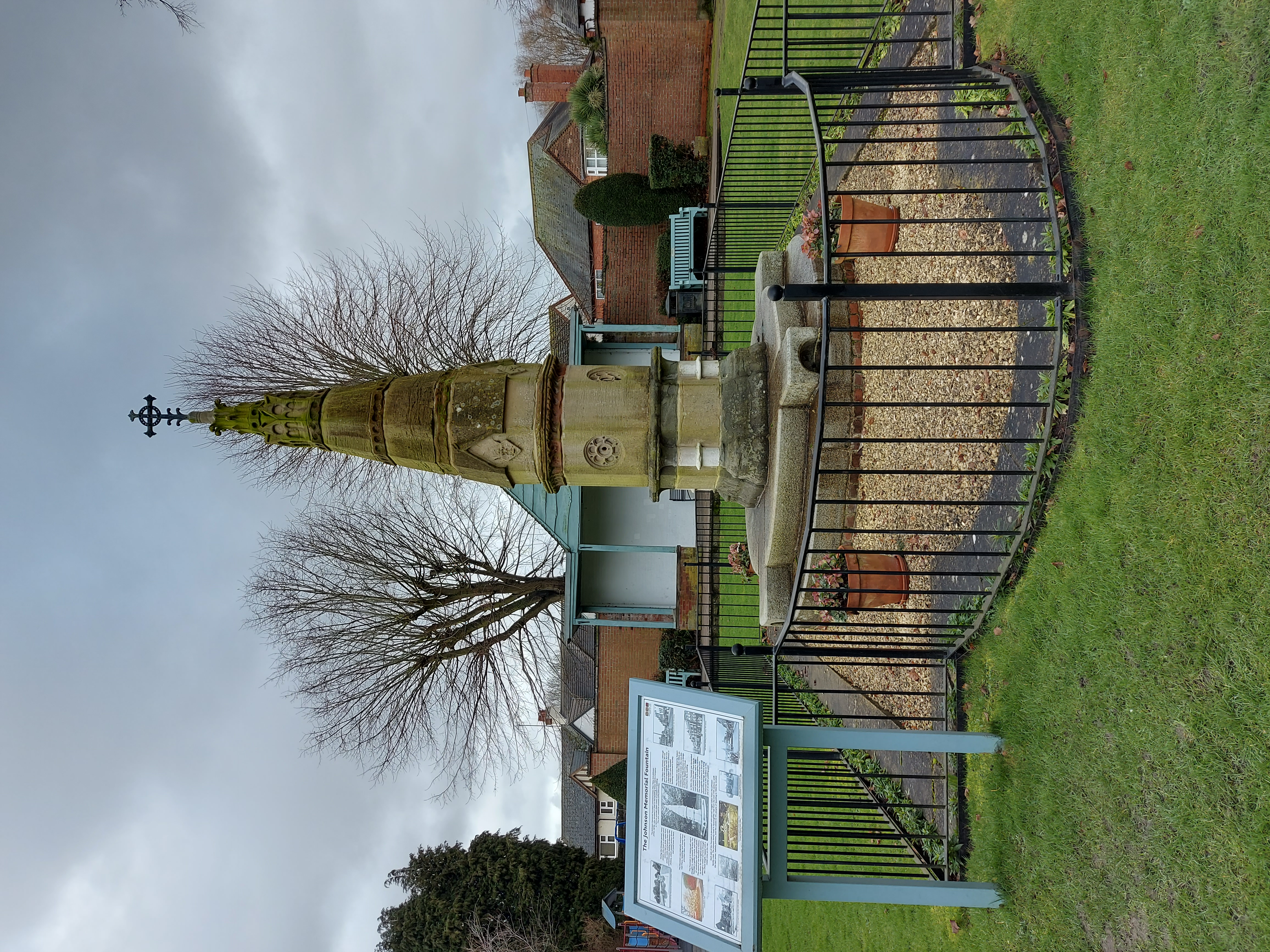
It’s easy to walk past without noticing the Johnson Memorial Fountain
When you have finished your visit to the gardens, exit and turn right and then walk along Churchgate to the Crystal Inn. A long thin building, this is a Grade II early 18th century building which was originally used for rope manufacturing. Rope was needed in the marine industry, which was thriving in Spalding at the time.
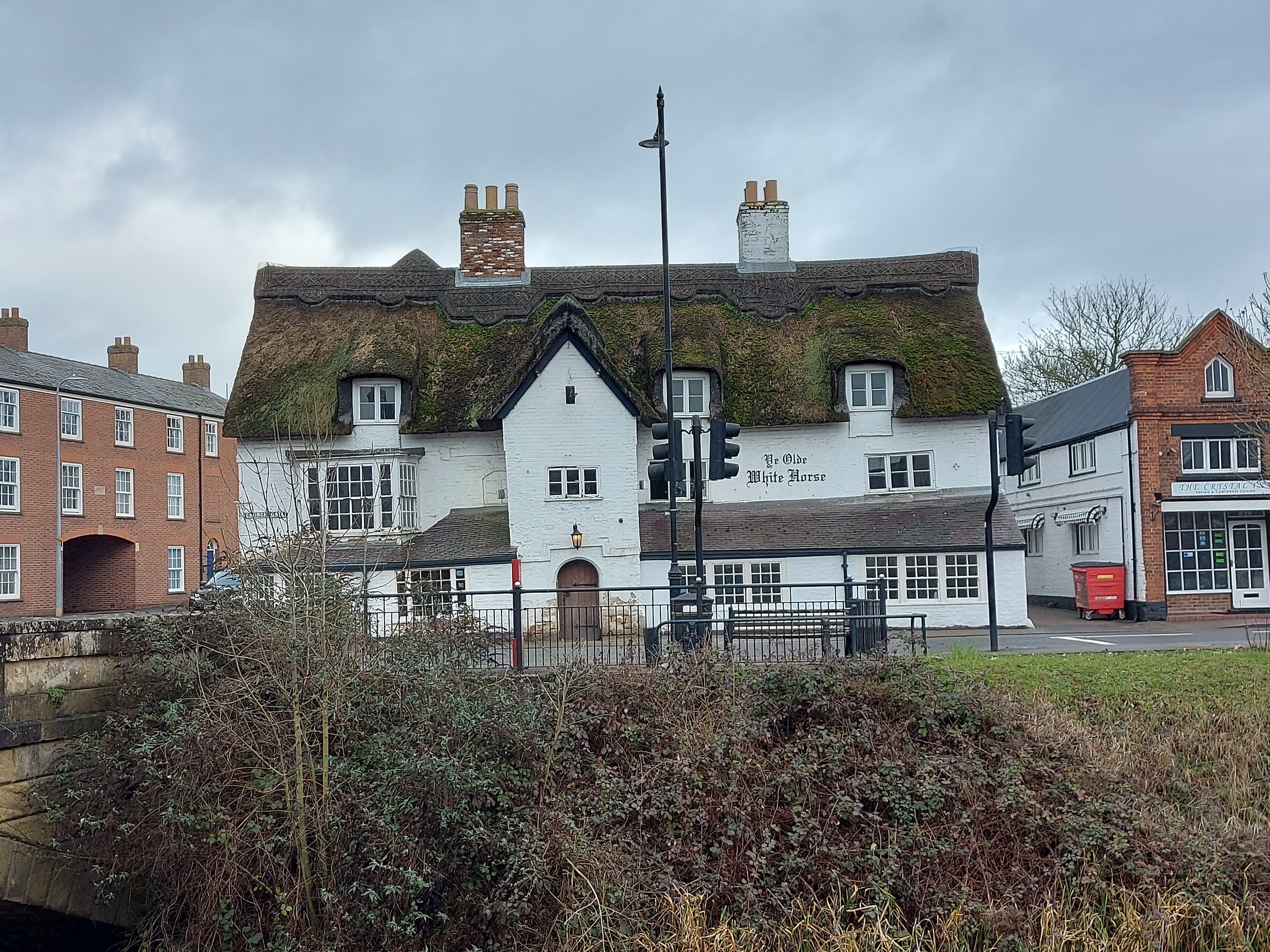
Next to the Crystal Inn is the Ye Olde White Horse Inn – a beautiful grade II listed 16th century building (built 1553) with a thatched roof. This was known as Berguery House in the 17th century and was a family home to William Willesby, who also founded the Willesby school in Spalding. After becoming a public house, in 1732 it was known as The George, then The White Horse in 1792. The building is currently owned by Samuel Smiths brewery and closed in 2019 – some remedial works have recently been carried out (as of 2026).
Cross the road toward the bridge and walk onto the black footbridge called Taku Bridge. This bridge is named after a submarine adopted by the town in 1942. A collection was made to help the war effort and £383,000 was raised – the equivalent to £10 per head – £600 in today’s money.
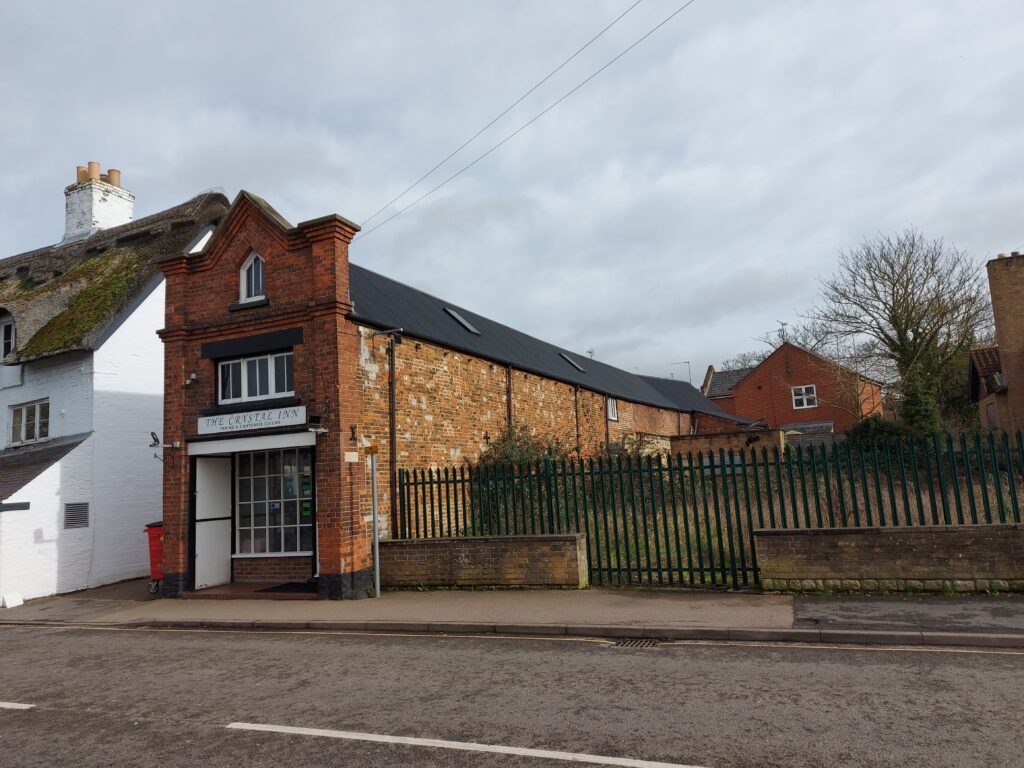
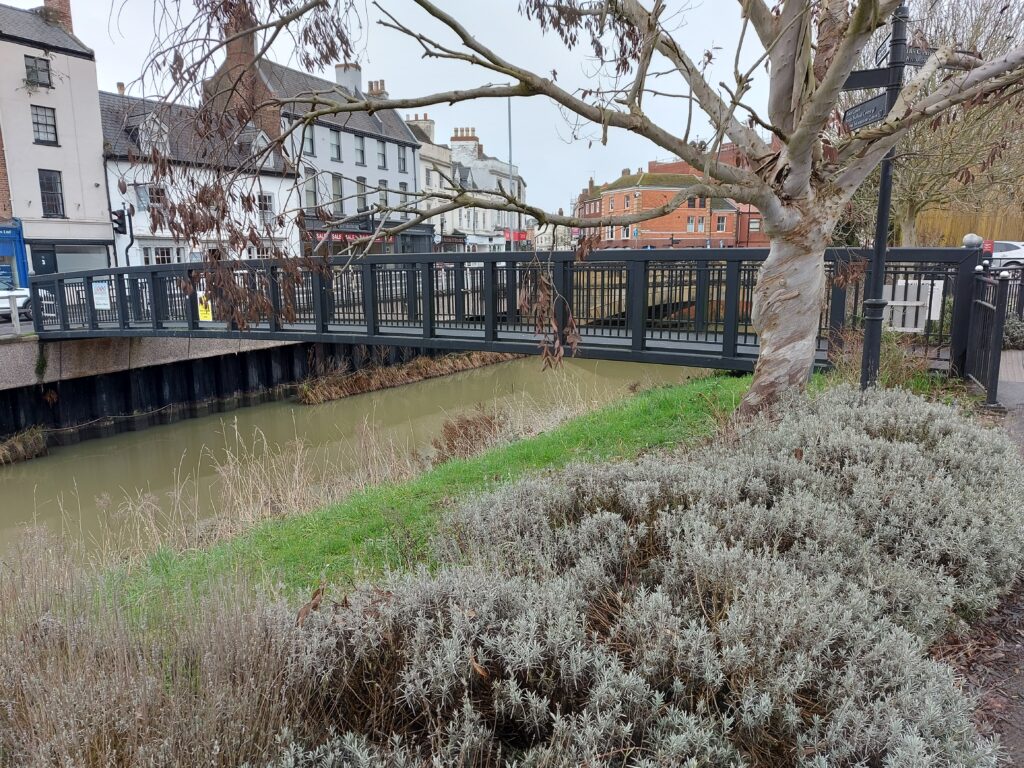
The Crystal Inn and Taku Bridge both have interesting stories to share
The footbridge goes over the river Welland, which begins in Northamptonshire and runs for 65 miles before ending at Fosdyke Wash. The river brought trade and merchants into Spalding – the main exports were oats, rapeseed oil, hides and wool, while imports were stone, timber, coal, groceries, glass and beeswax. Spalding Port handled some of the first imports of tea, coffee and chocolate in England. The port area was located along the river looking towards the Ye Olde White Horse Inn, and the merchants lived along the river in the beautiful Grade II 18th century Welland Terrace which can be seen as you look towards Ayscoughfee Hall. It’s possible to take a walk along the river to see these houses – you will also see newly installed willow sculptures if so. The boom period of the port was in the early 1800’s, where barges of up to 80 tons could dock in Spalding. By 1820, only barges of 40 tons could navigate the port as the river had started to silt up. Coal was transported to the local gas works by barge until the early 1900’s, however all commercial freight had stopped by the end of the second world war. The river also brought visitors by barge from local villages and towns. Lock gates were installed in 1953 at Fulney to exclude the tide as part of a flooding/drainage plan for the area.
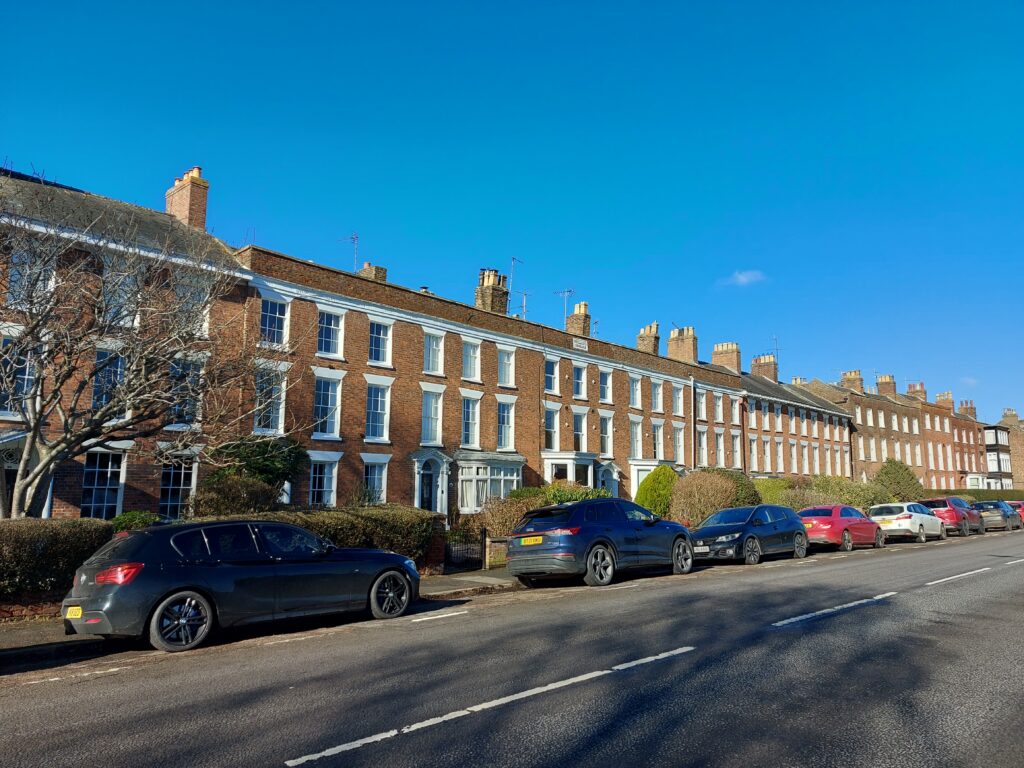
You can’t help but be impressed by the grand Welland Terrace
Look across at the road bridge, which is called High Bridge – this was built in 1838. The first bridge here was built by the Romans, and was known for over a thousand years as the Great Bridge of Spalding. However by the early 1800’s this was just a wooden bridge in a state of disrepair, and so it was decided to build a new bridge. The Adventurers of Deeping took responsibility for building the bridge – this was an organisation of engineers and local entrepreneurs founded in the very early 1600’s to overcome the challenges of draining the fens with projects authorised by the King, acts of parliament and raising of taxes. The foundation stone of the bridge was laid on the coronation of Queen Victoria in June 1838.
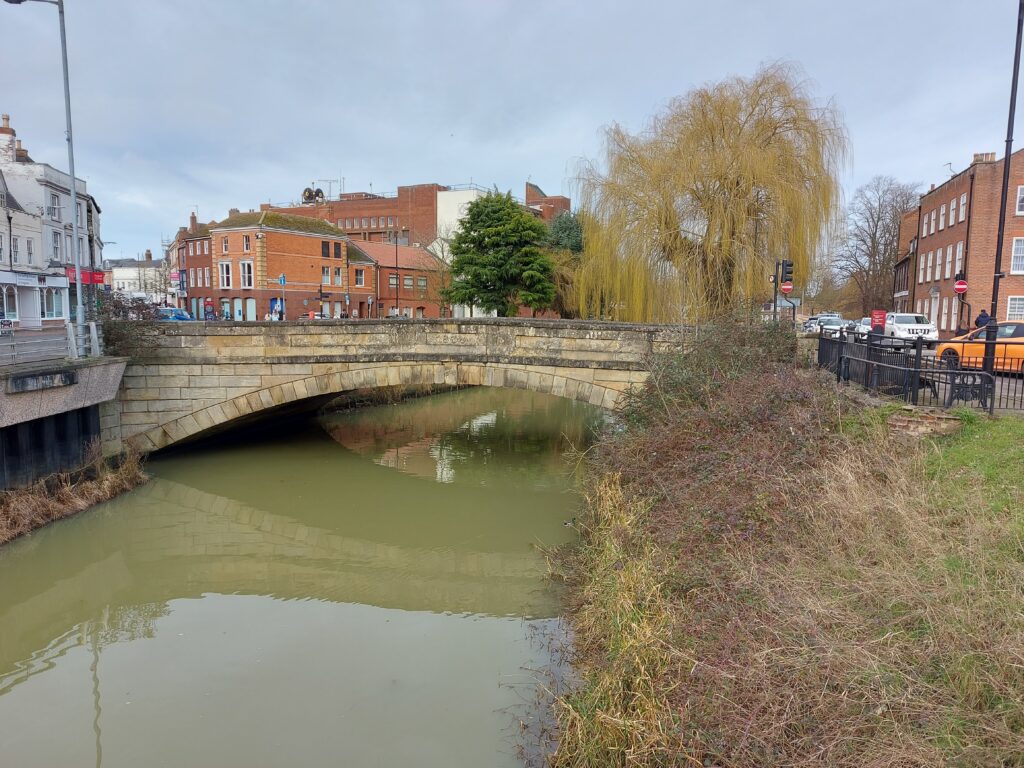
The most iconic view of Spalding is looking toward the High Bridge from Taku Bridge
Once over the footbridge, turn right and walk along the path until you are at the side of a closed bank (map co-ordinates 52.786429,-0.150241). You will see a blue plaque for Frank Pick (1878-1941), who was born at Bridge House on the opposite side of the road (located where the wooden benches currently are) and was a transport executive who was responsible for the development of the London Underground and its distinctive logo
Double back and enter the main shopping street of Spalding – the Market Place. On the left above Boots Opticians you will see another blue plaque for William Booth (1829-1912), founder of the Salvation Army who lodged here for two years in the 1850s early in his preaching career while acting as Reformers’ Minister in Spalding.
Walk into the market place and turn right where you will find the South Holland Centre. This stands on the site of the Corn Exchange, which was built in 1856. The Corn Exchange was a building which housed merchants buying and selling produce. On a Tuesday, Spalding would hold a market – between 9am to 12pm was a Beast and Sheep Market, and afterwards during the middle of the day was a butter, eggs, poultry and fruit market. The passageway known as “Butter Market” on the left of the South Holland Centre was where some of the produce was sold. Farmers who purchased goods had to visit the Corn Exchange by 1pm to pay for goods bought the previous week. The latest corn prices arrived by telegram and the buying and selling continued through the afternoon. There were regularly 2-3 thousand people visiting the market on a Tuesday, with cheap train tickets from surrounding settlements such as Holbeach, Bourne, March, Peterborough, Sleaford and Boston. The Corn Exchange was demolished in 1972 and the South Holland Centre was built. Now a community centre, it hosts films, plays, pantomimes, has a cafe/bar and an events space. Look at the tower where the clock is installed and you will see lots of bells – this is a musical instrument called a Carillon, consisting of at least 23 tuned bronze bells which can be played with a keyboard using hand levers and foot pedals.
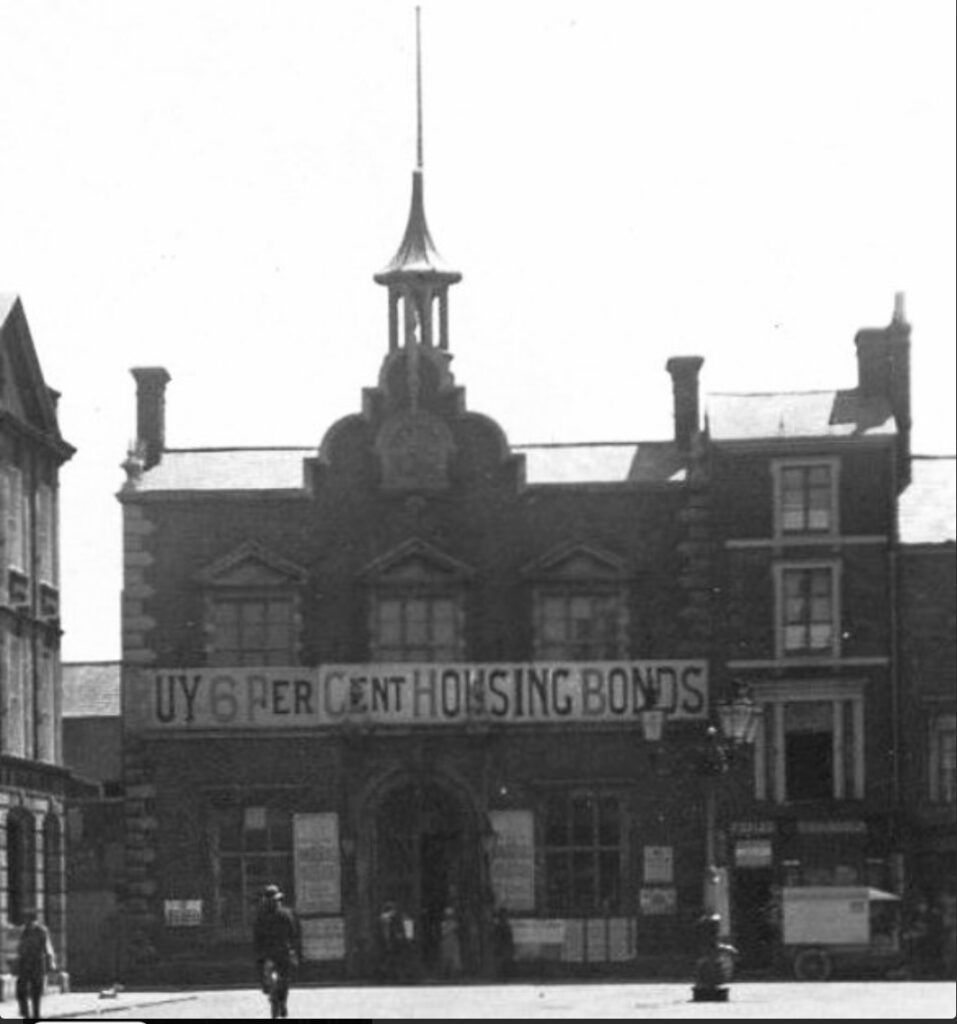
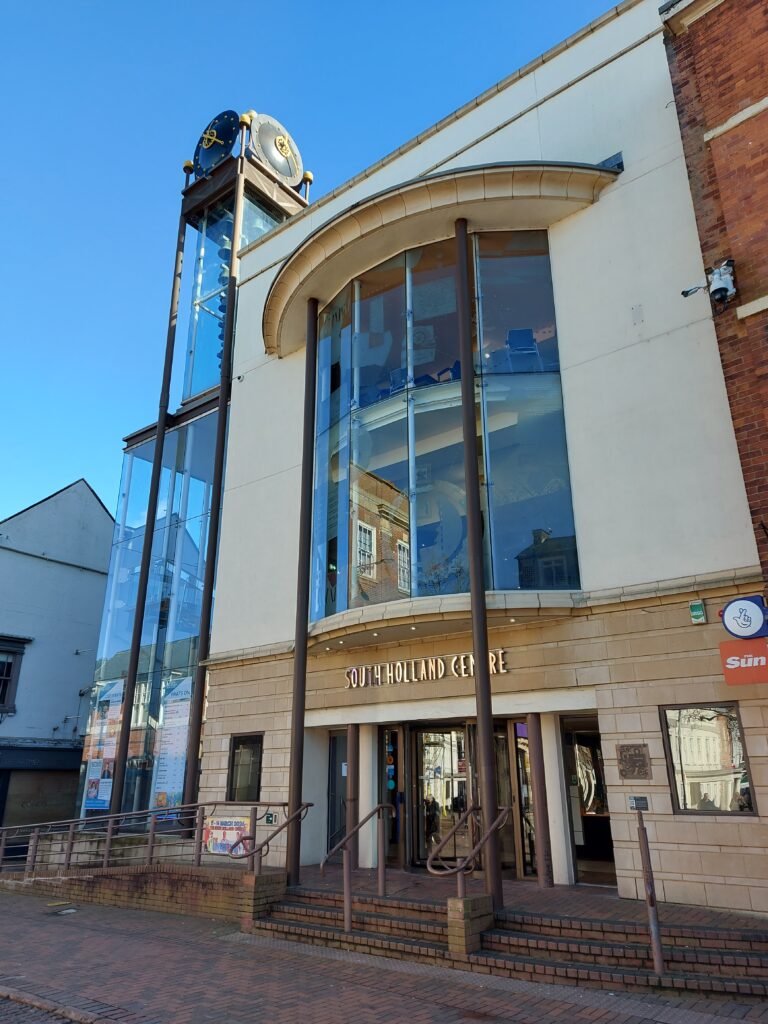
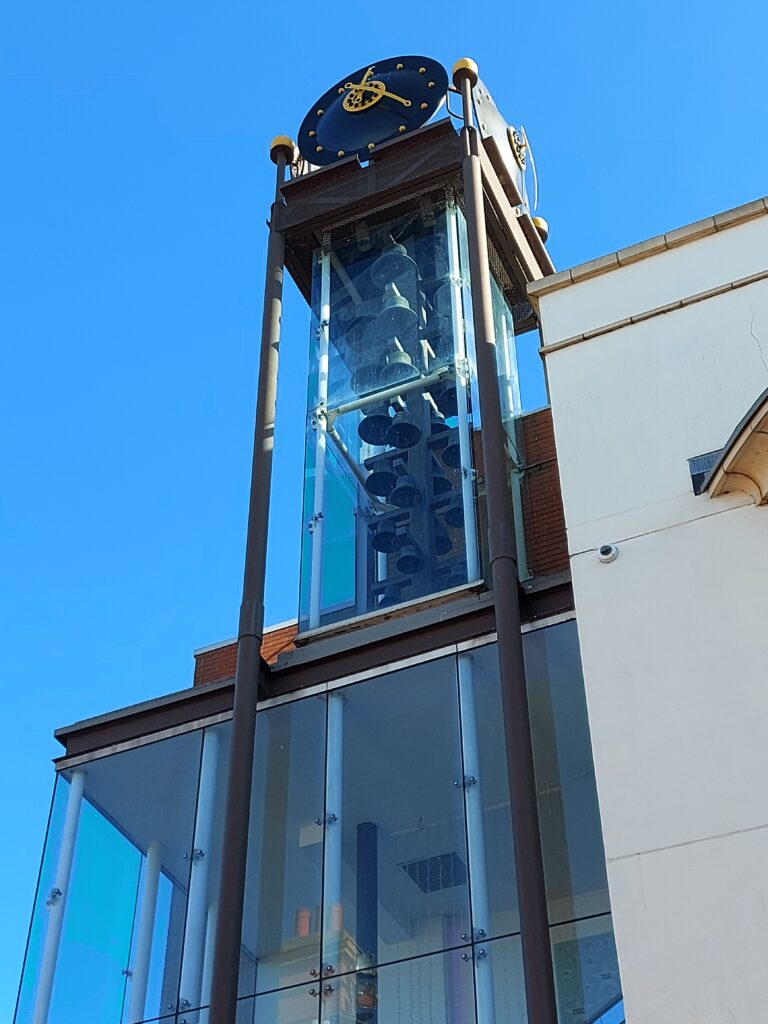
The Corn Exchange which once stood on the site of the South Holland Centre in Spalding town centre
If you look to the left you will see a sign on a shop reading “Elderkin Gunmaker Est 1880”. This is a beautiful traditional shop, one of the largest in the UK, selling and repairing shotguns and traditional countryside clothes. The shop employs 4 fully trained gunsmiths.
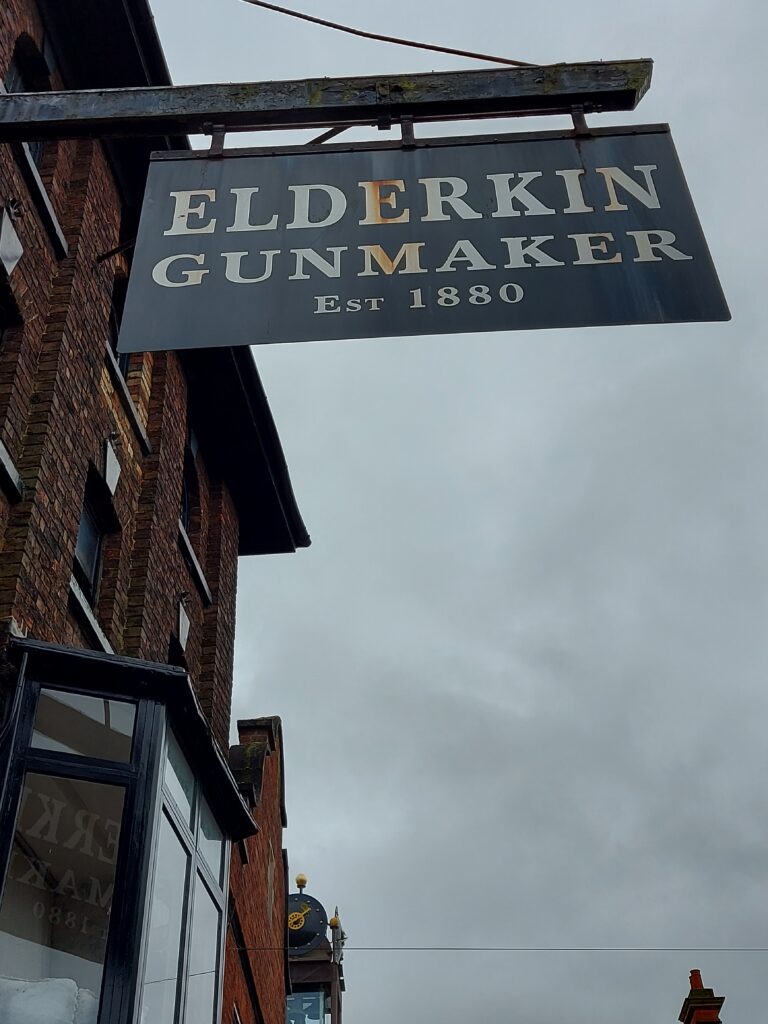
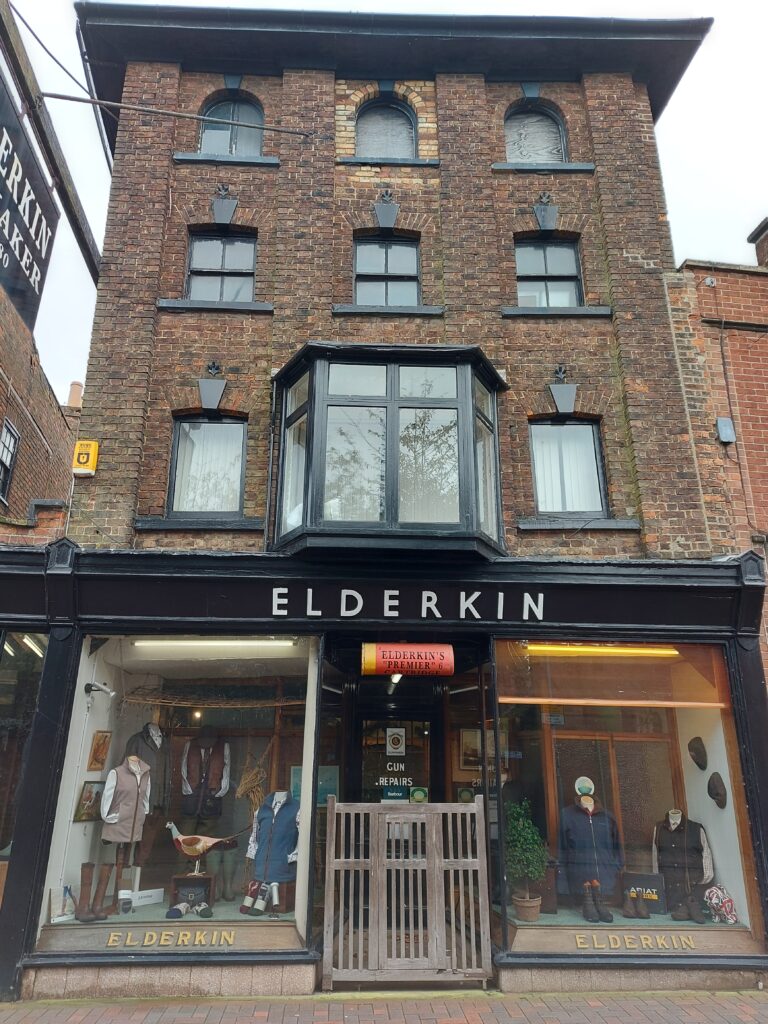
According to local gossip, Jacob Rees Mogg is a customer of Elderkin’s
Walk up Market Place and on the right, at the side of a white building housing Shanghai Gardens restaurant you will see another blue plaque for Jean-Jaques Rousseau, the French philosopher (1712-1778) who stayed in the White Hart Inn while making his way to Dover to return to France after being exiled from his homeland for his views. The White Hart Inn is a grade 2 coaching inn and was built in the 15th century, originally as a hostelry connected with the Spalding Priory. It was damaged in the great fire of Spalding in 1714 and refurbished around 1720. It stands as one of the oldest buildings in the town centre.
A few doors down on the corner is the Red Lion Hotel, an 18th century inn. Look up on the corner of the building and you will find a blue plaque for Jimi Hendrix (1942-1970), who stayed at the hotel in May 1967. He was here to play at the world’s first rock festival, Barbeque ‘67. The festival was held in the Tulip Bulb Auction Hall, which is now the car park of Sainsbury’s supermarket. The festival featured unknown rock bands at the time including Jimi Hendrix, Cream, The Move, Pink Floyd and Geno Washington and the Ram Jam band. A local band, Sounds Force Five, played between sets as the promoter thought it would encourage a local fan base to attend. The festival attracted thousands of people – around 6,000 were in the hall, with many thousands unable to get in. It cost just £1 per ticket! It is reported that Barbeque ‘67 was the first time Jimi Hendrix set fire to his guitar, which was afterwards just put in a rubbish bin! I have included a link to an interview with Gordon Randall who attended Barbeque 67 where he talks about his experience of the day.
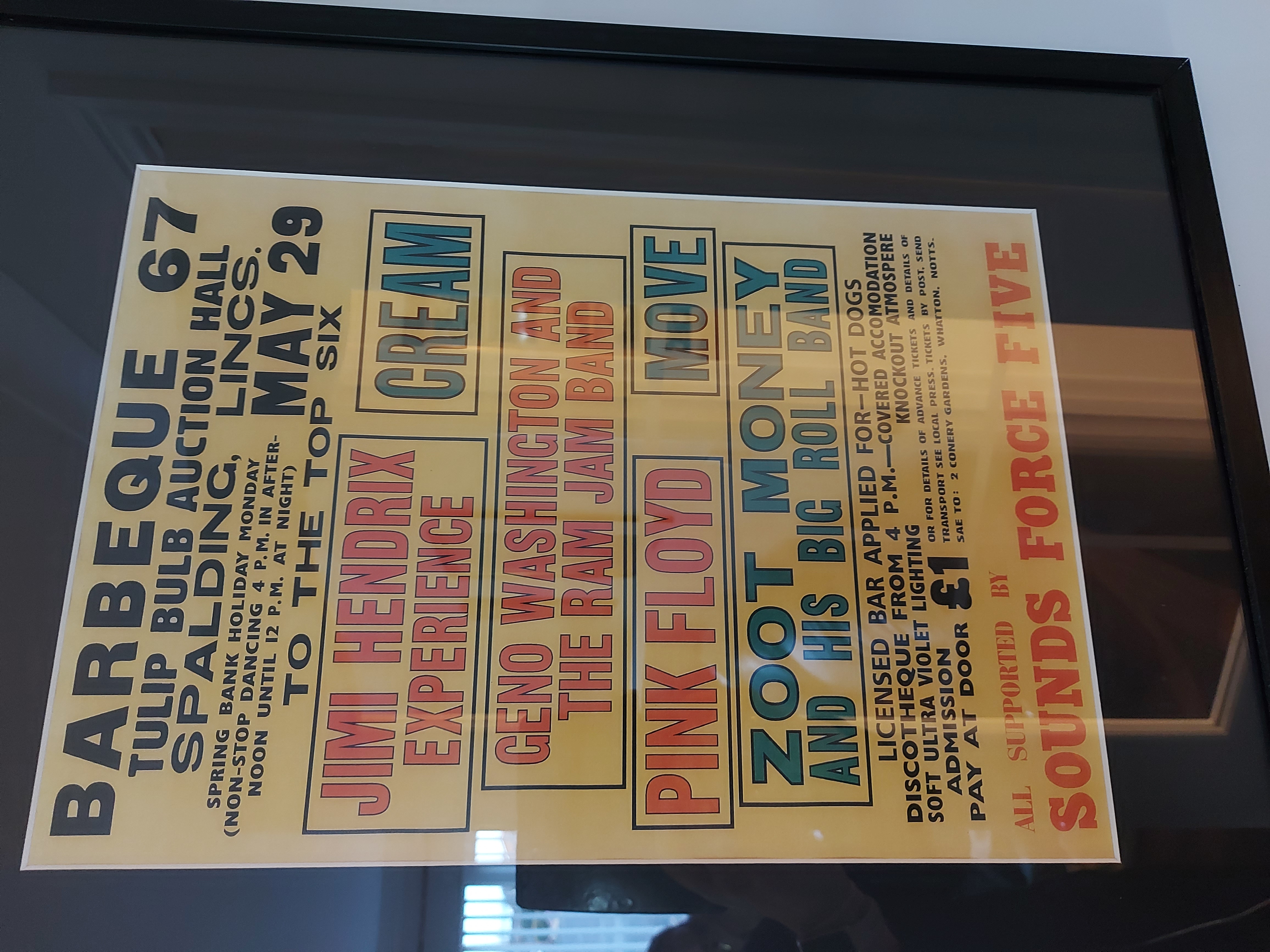
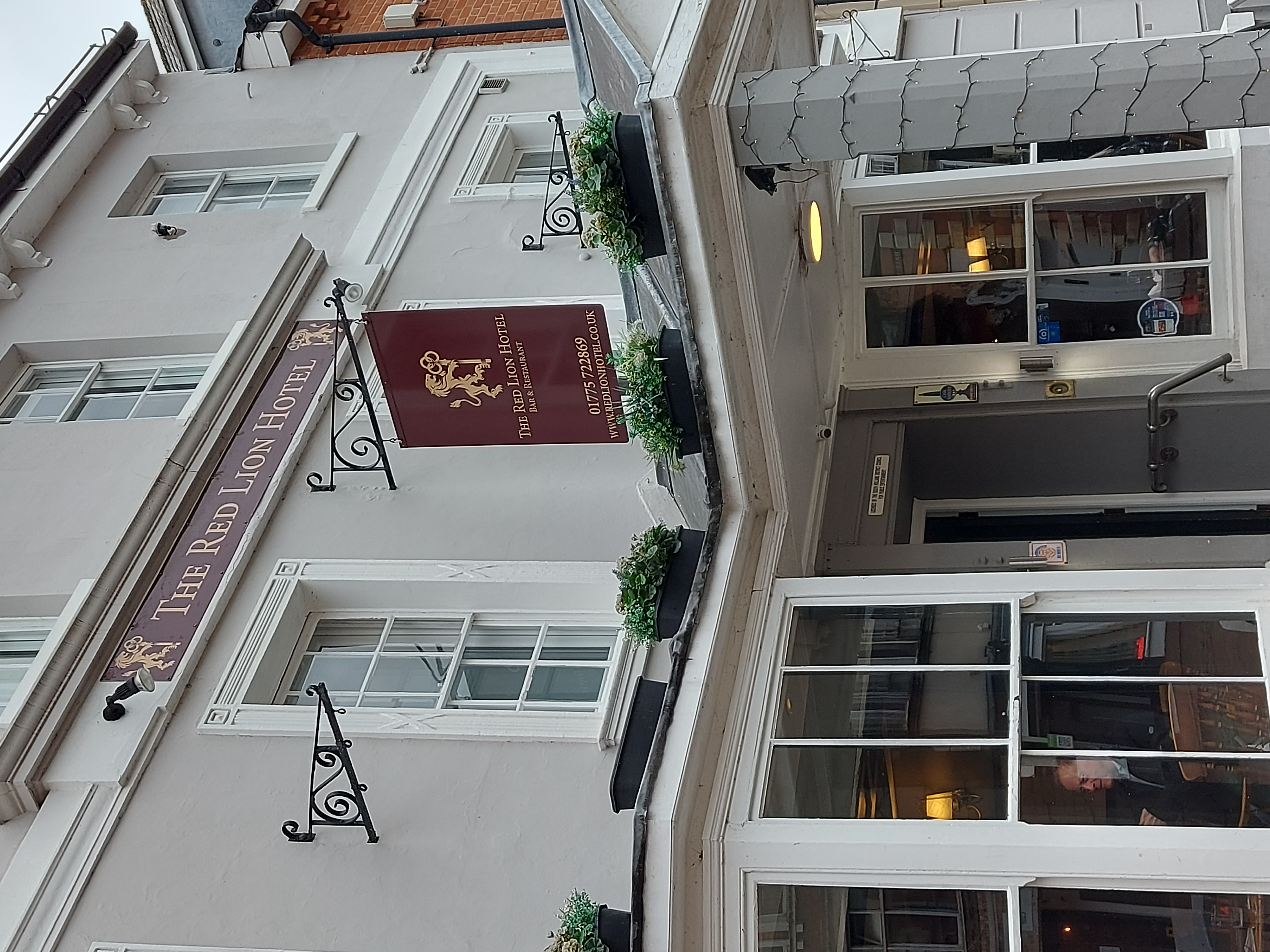
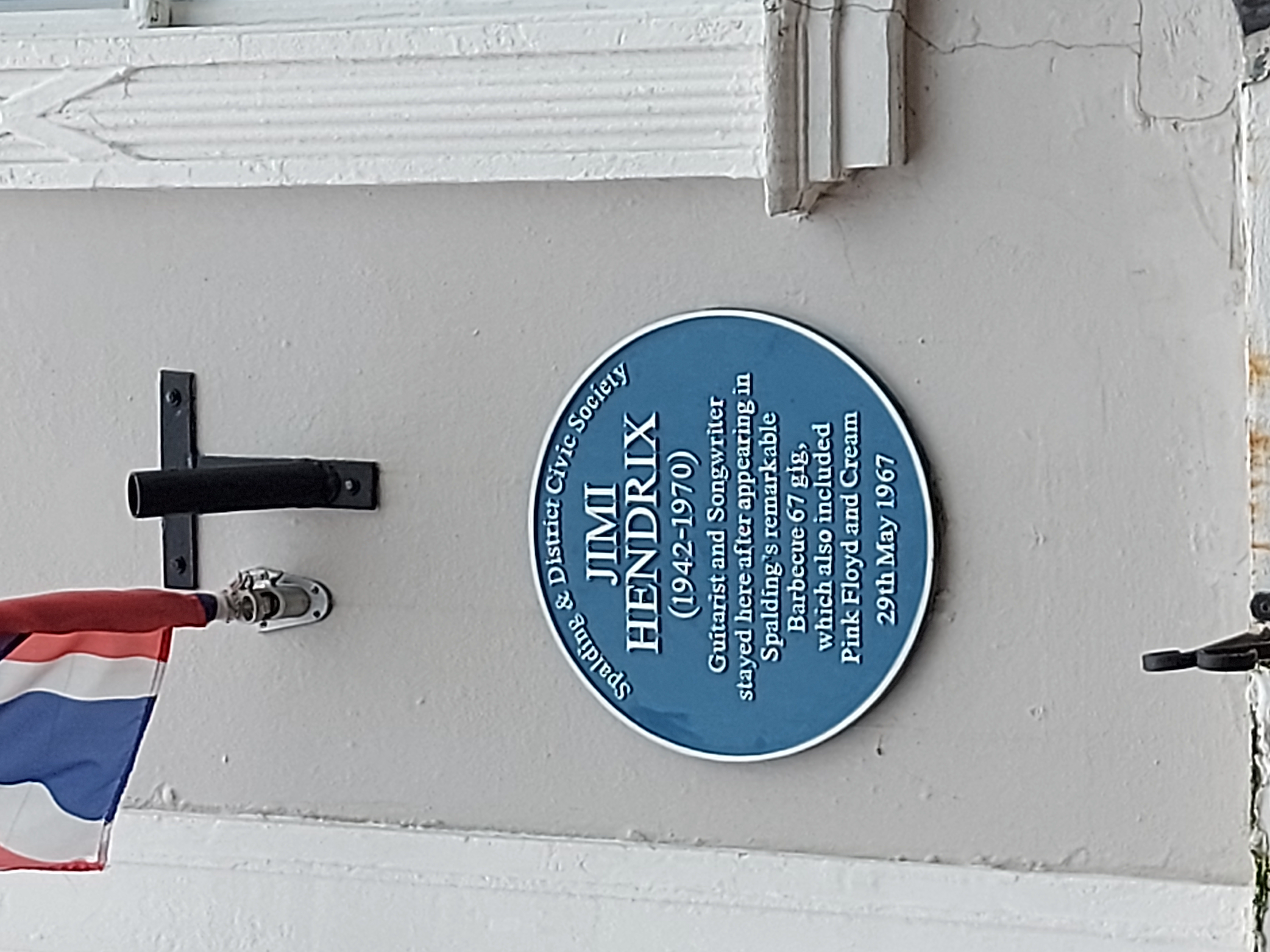
It’s crazy to think that the little town of Spalding featured so prominently in the history of music festivals, holding the first music festival ever called Barbeque ‘67
Keep walking through Market Pace until you come to the newly installed planters and find a sculpture entitled “The Hiring” – celebrating the traditional May hiring fair, where land owners and farmers would hire domestic and farm servants. This is part of an art trail of 14 sculptures dotted around the town – if you wish to discover these I have included a link to a map and a picture of the map.
Look toward the “Simpsons” butcher shop on the left hand side and you will find another of these small sculptures set into the wall, entitled “Michael with Pumpkin”. This celebrates the tradition of pumpkin growing in Spalding – the main local growing conglomerate, David Bowman’s, is the largest pumpkin grower in Europe. Since October 2002, Spalding town centre hosts an annual Pumpkin Parade to celebrate the Harvest.
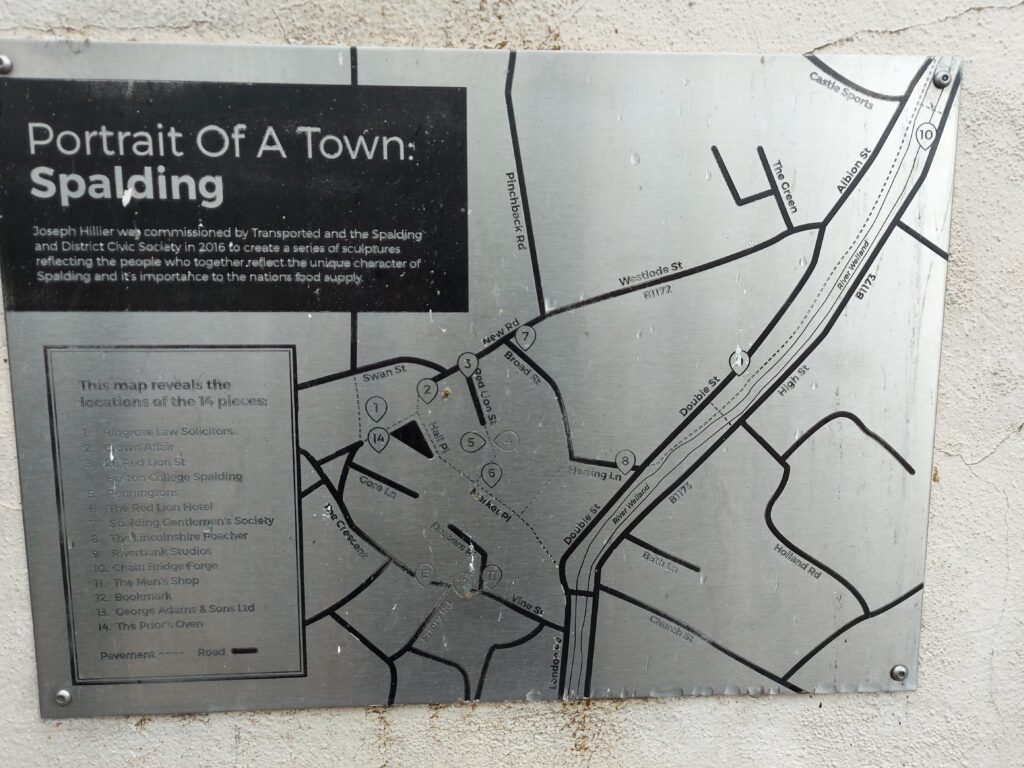
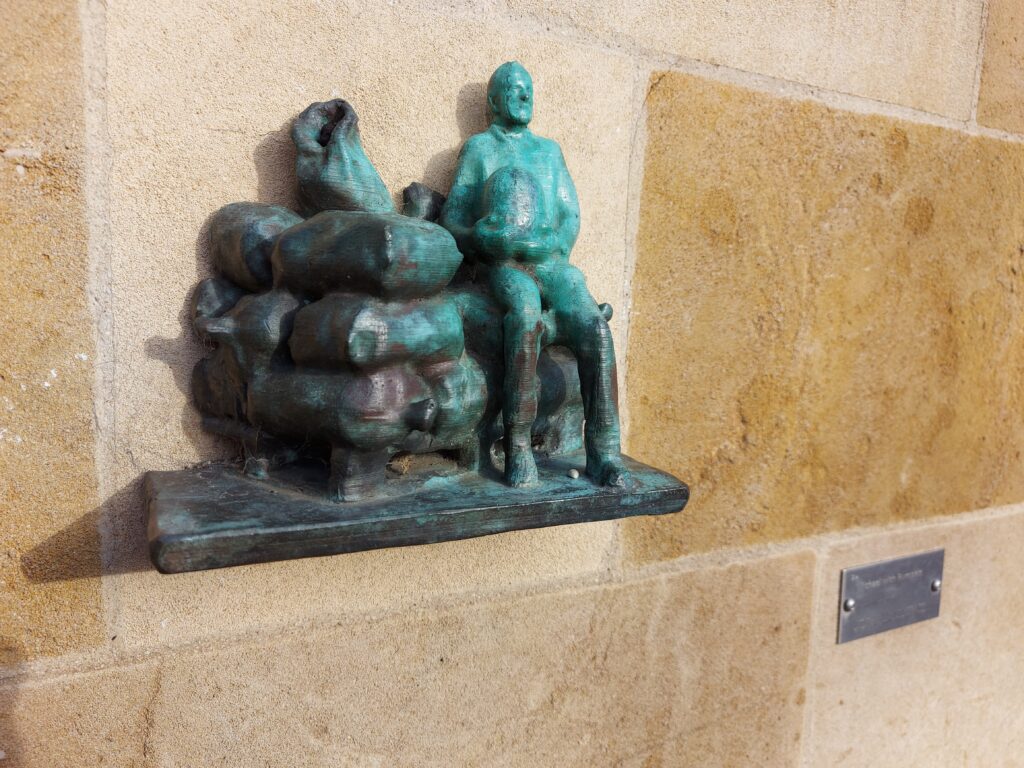
Map featuring the locations of the 14 sculptures alongside ”Michael with Pumpkin’
Walk back towards the large flower planters and pass Savers on your right until you come to a newly installed (2025) flock of sculpture sheep! These sculptures celebrate the Sheep market – held on a Tuesday on the area which is now a car park. In 1876, the ground was paved and iron railings were installed, making pens for the sheep at a cost of £4,000.
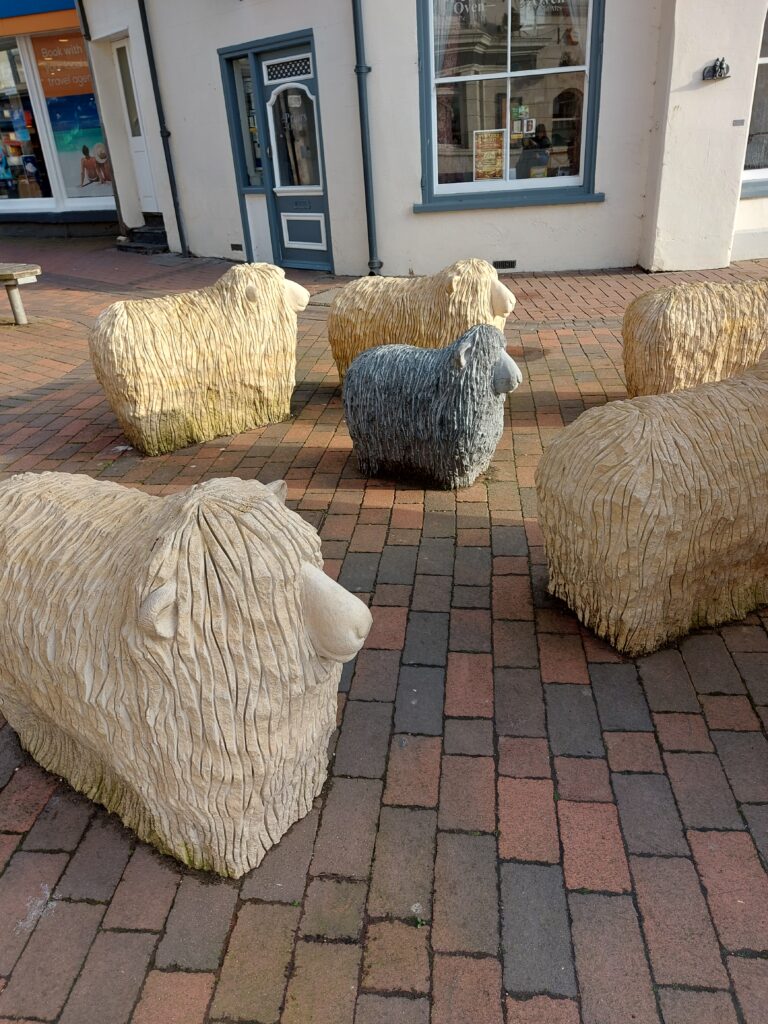
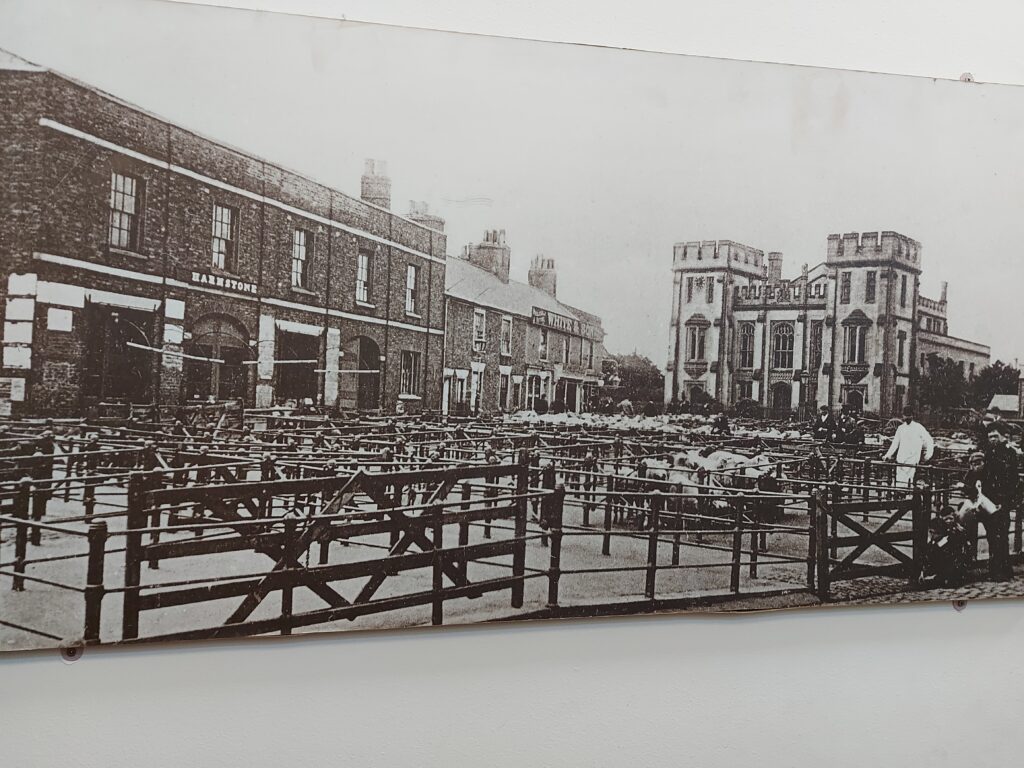
The local council seem to like creating sculptures of animals to reflect the history of the town -like this one that’s a nod to the sheep market
Look to your left at the Priors Oven, which is now a micro pub open between Thursday and Sunday. The building itself is the oldest in Spalding and was part of the old Benedictine Priory built around 1230 – it included a prison on the ground floor, a chamber for monks on the first floor and once had a bell tower which tolled for executions and solemn occasions. Legend has it that a secret underground passage goes to the Monks House building more than a mile away.
Walk to the Sheepmarket carpark and you will find the Sessions House (courthouse). Built in 1842/1843, this Grade II former courthouse is now a wedding and events venue with a courtyard cafe. The court was built next to a prison (built in 1825) and was in use from 1843 to 2012. It cost £6,000 to build – about £900,000 in today’s money.
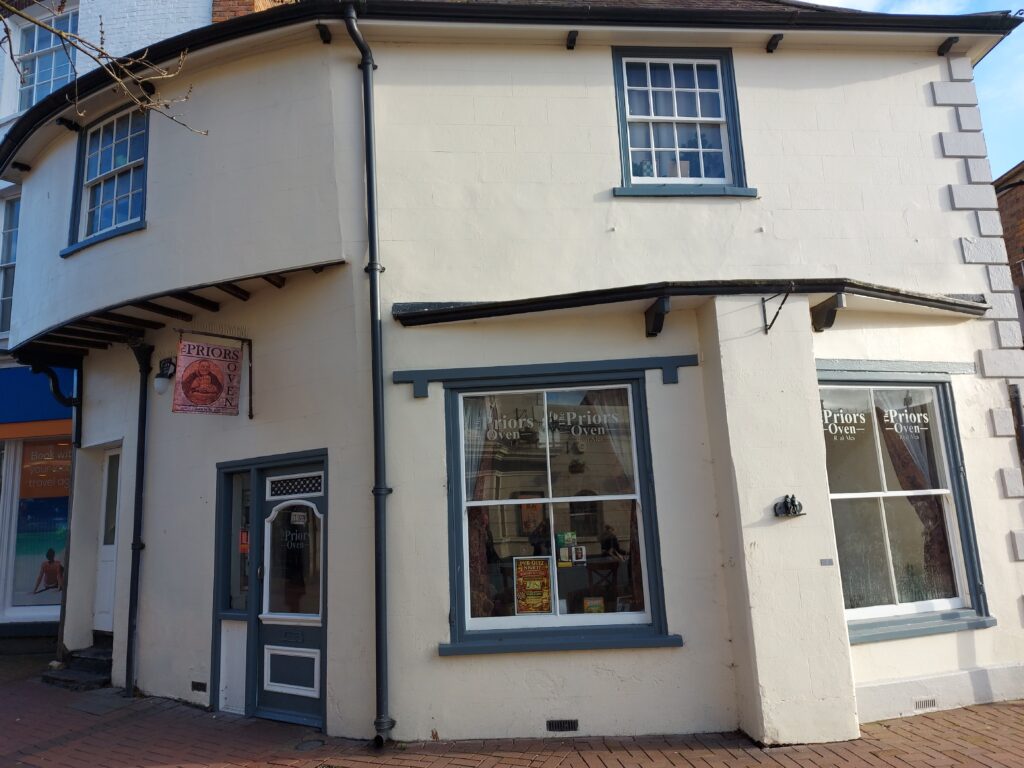
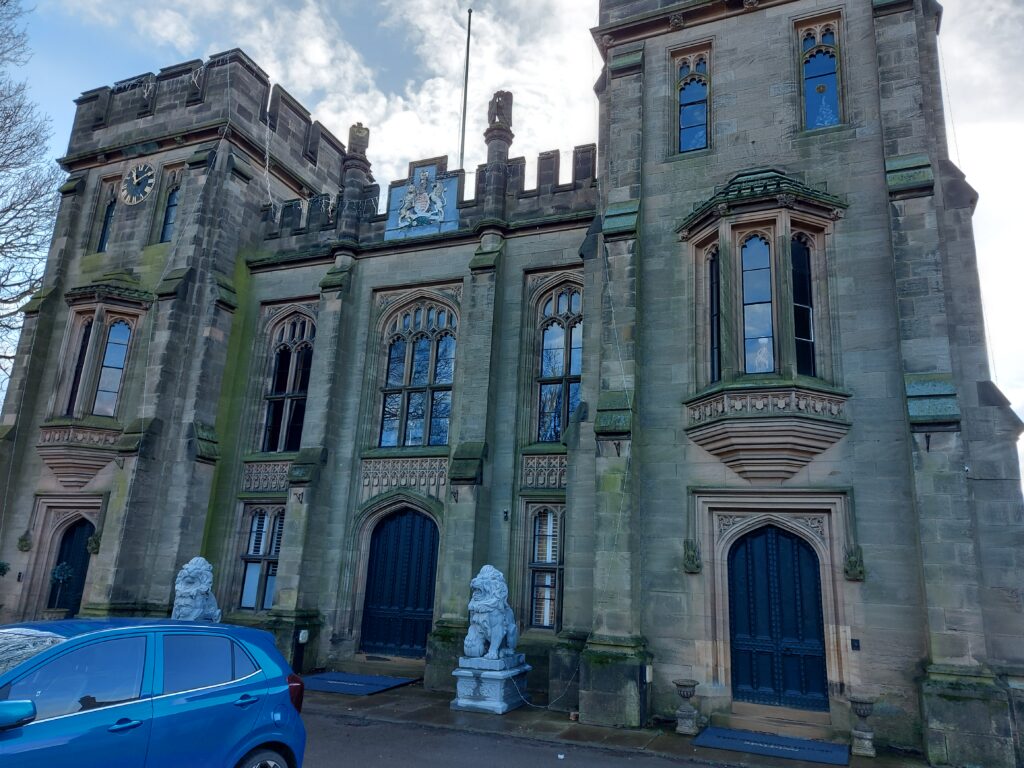
Once you scratch the surface of Spalding, you’ll find many historic buildings like Priors Oven and the Sessions House
Retrace your steps back to pass the flower planters and the small pumpkin sculpture and enter New Road where you will find American Burger on the left with a blue plaque for George Shepherd (1881-1954) – the son of a Spalding tailor who was a Labour politician in the post-war administration of Clement Atlee.
On the corner to the right you will see Longstaff Estate Agents, established in 1770 – one of the oldest businesses in Spalding. The early business functioned as an auctioneers and in the late 19th century it was mainly dealing in auctioning livestock. The cattle market was held along the whole of New Road – in 1899 the cattle market was booming and buyers came from as far as Nottingham and Leicester. You will see on the corner two newly installed (2025) Cow sculptures to celebrate the cattle market.
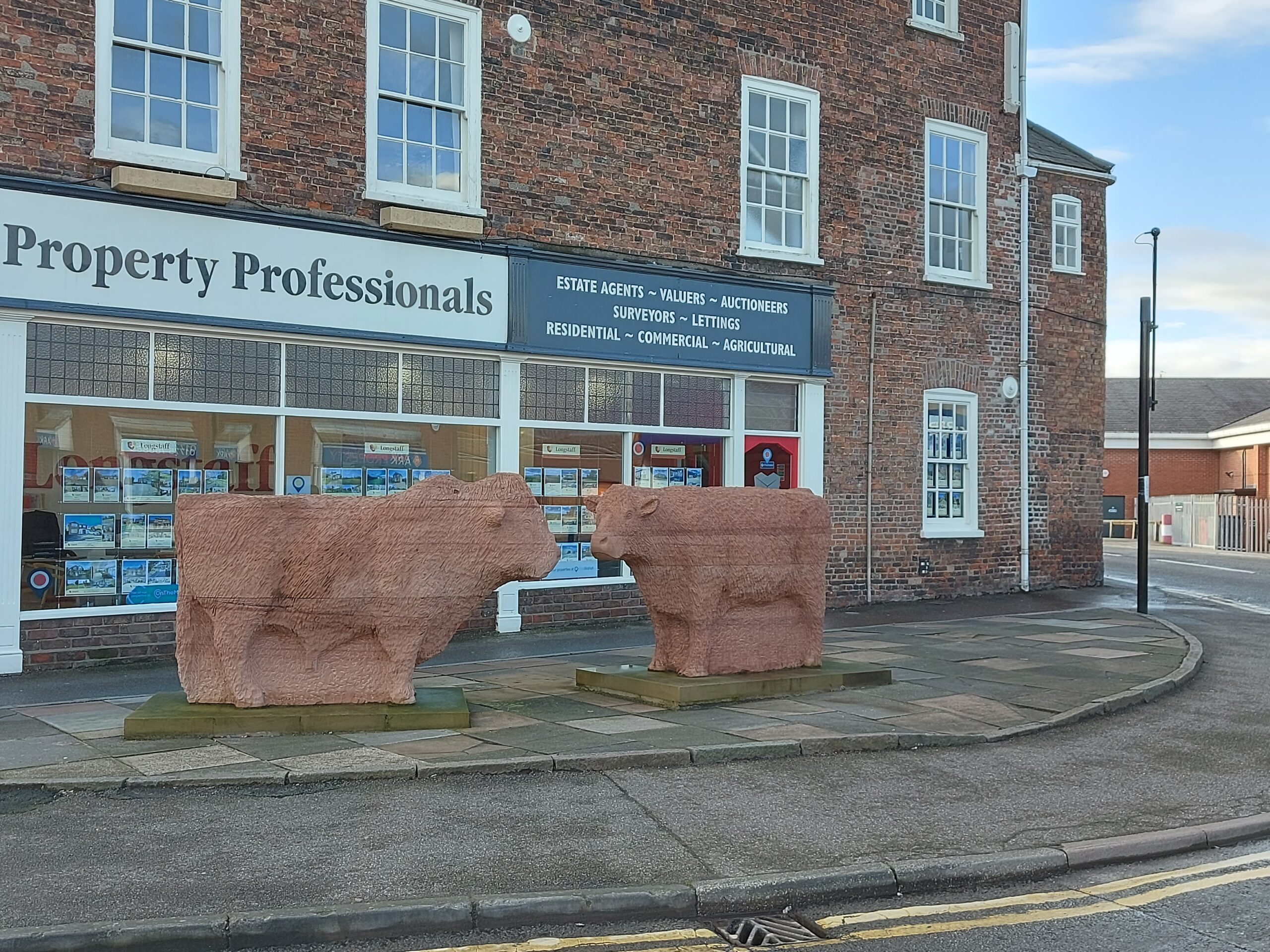
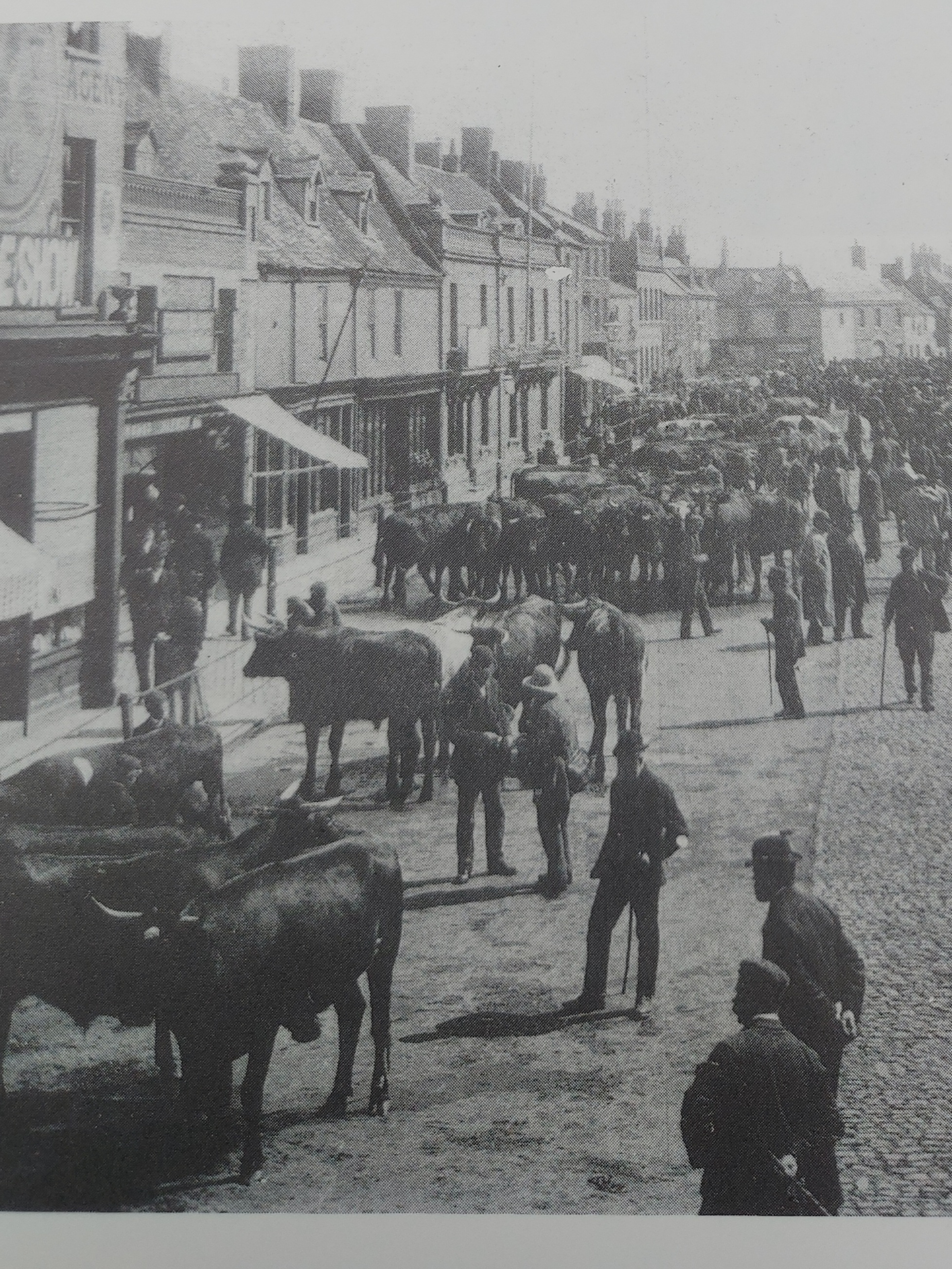
The infamous ‘Longstaff cattle’ signifying the location of the cattle market
Walk along New Road on the right hand path, passing the shops until you find Sheddy’s fish and chip shop, established in 1913 and famous for great fish and chips. Look to the right and you will see Paceys Baker and Cafe – another historic business which has been operational for over 100 years, locally famous for cakes and bread.
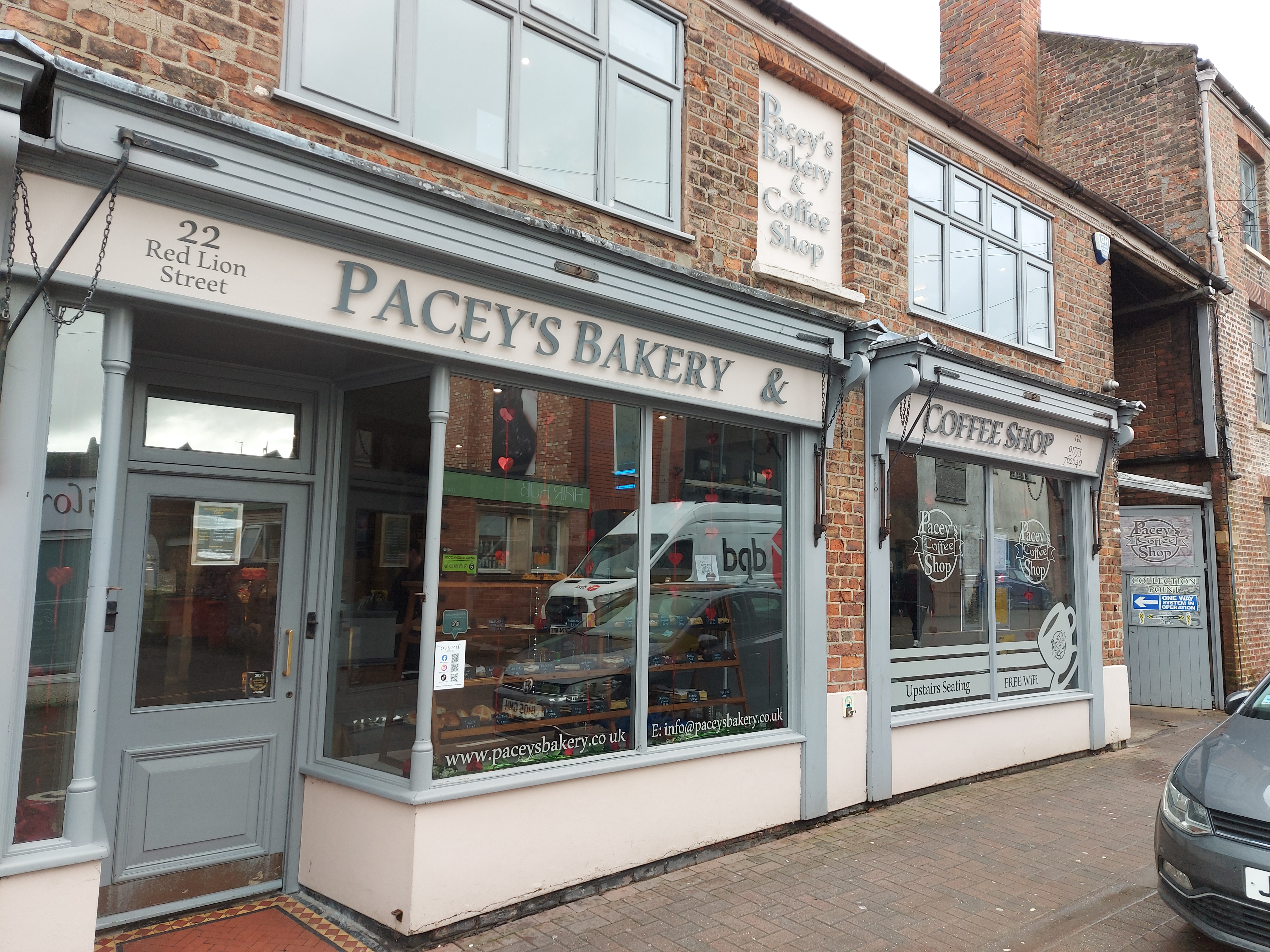
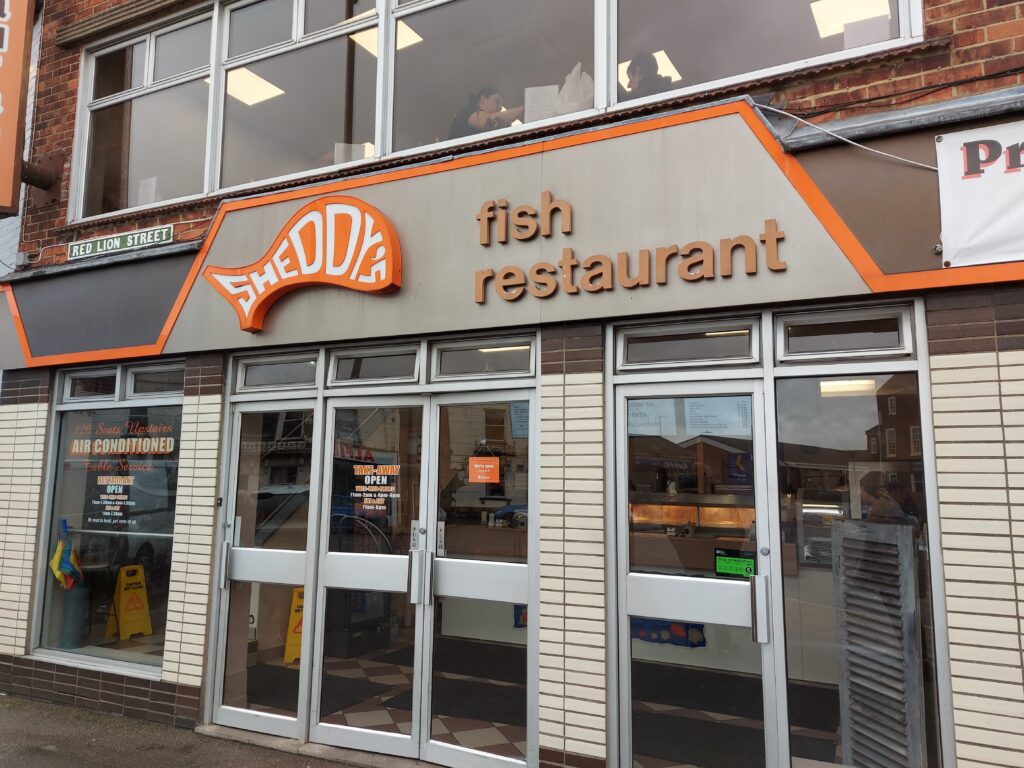
Spalding has plenty of historic businesses such as Pacey’s Bakery and Sheddy’s
Continue down New Road passing Sheddys, the Punch Bowl pub and turn the corner into Broad Street. On the left you will see the Spalding Gentlemen’s Society building – a grade II building opened in 1911.
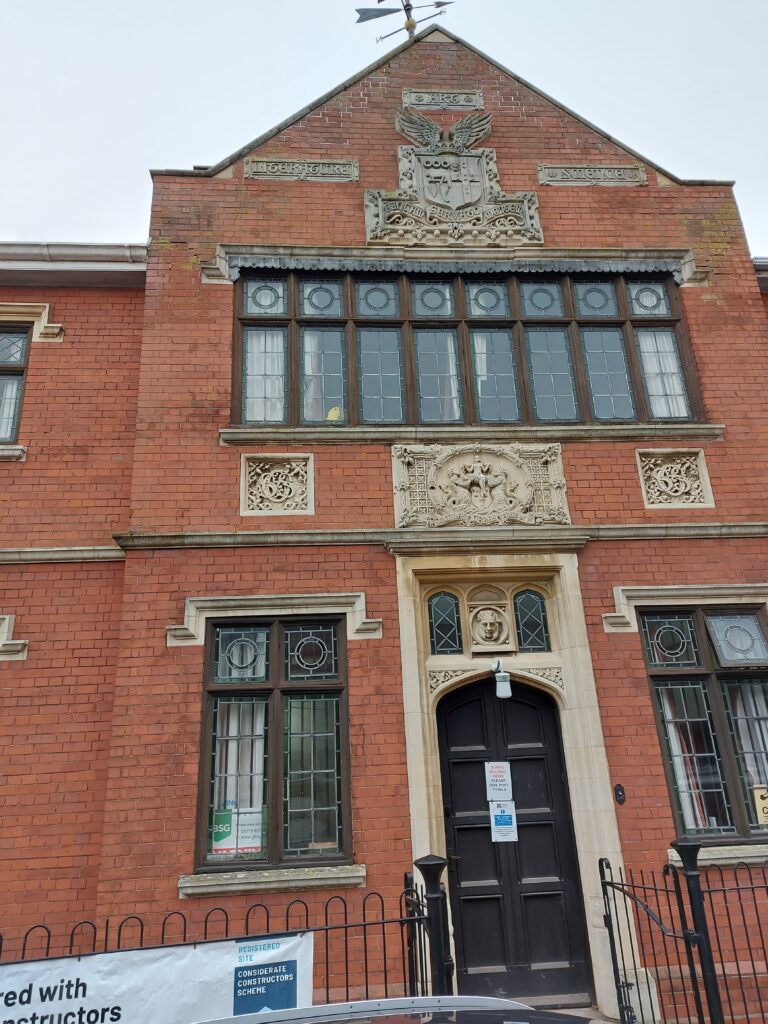
Although only built in 1911, the Gentlemen’s Society has a long history with a few famous members
Continue down Broad Street and follow the path as it turns towards the left and becomes Herring Lane, and find a mural on the wall at the end of the road on your left. The Mural is called Flos Pompa – flower parade in latin. The mural is recently installed (2025) and was created by local artists and the community. It celebrates Spalding’s history of bulb growing, tulips and the Spalding flower parade. Spalding was the centre of the UK flower bulb industry – the area is named South Holland as a result! In 1907 the first tulips were grown commercially and by the 1920s-1930s thousands of people would travel to the area to view the tulip fields, with 6,000 tons of flowers sent out as far as Glasgow, Edinburgh and London. In 1935, the amount of visitors and traffic overwhelmed the area and the small country roads and so the Tulip Time committee was established to plan a route for visitors and install signs. In 1948, “Tulip Week” was planned in conjunction with the RAC and maps were issued for visitors. By 1953 the official route for visitors during Tulip Week was 30-40 miles long, and on the Sunday there were around 100,000 visitors. The first official Tulip Parade was held along the Tulip Route in 1959, using the heads of the tulips that had been cut off to encourage growth in the bulb. Floats were made from metal and straw and thousands of tulip heads were pinned on – some large floats were covered with up to half a million tulips. Within 3 years there were 250,000 spectators at the Tulip Parade, and a Tulip Queen was chosen among the attendants. By 1975, 10,000 acres were locally planted with tulips. The last Tulip Parade took place in 2013 – its 55th year. The parade was revived in 2023 by the local community and re-named the Flower Parade, as the local industry had declined – the tulips had to be imported from Norfolk and lots of artificial flowers were used. It is hoped that the Flower Parade will continue to occur every few years as a regular event in the town.
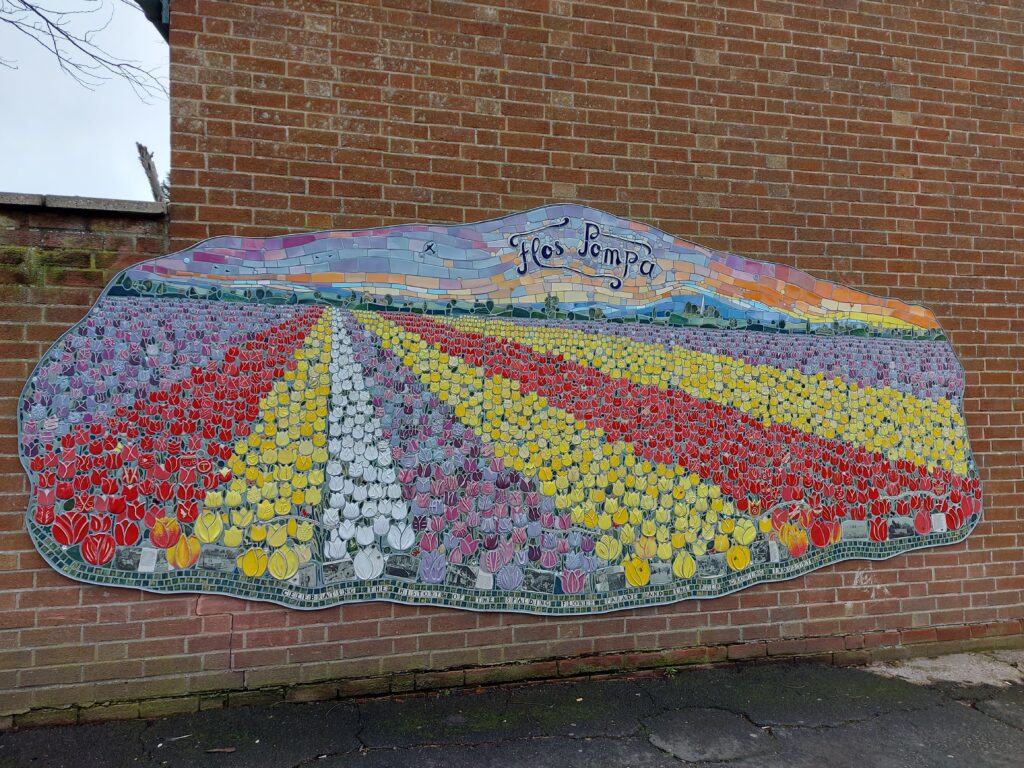
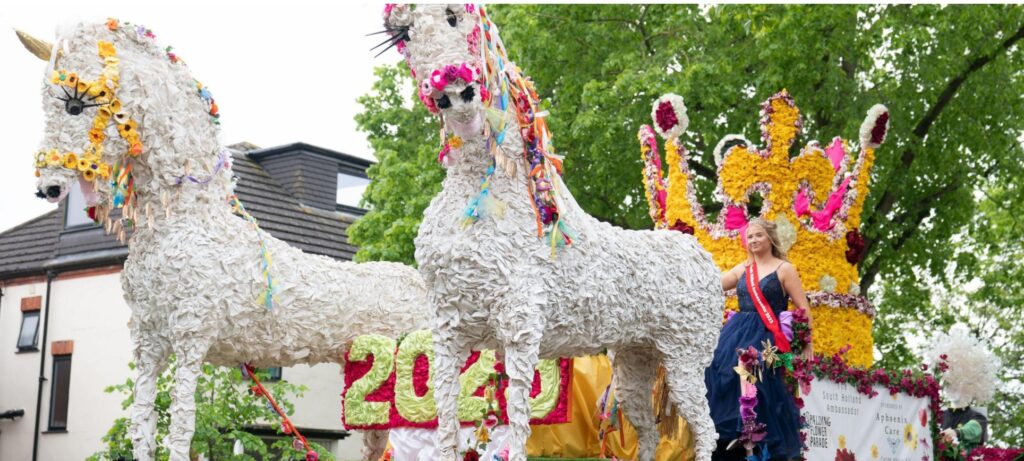
Every resident of Spalding is familiar with the Flower Parade, either attending or performing in it
Turn right and walk along the river (river on the left), and you will pass a mooring for the Spalding Water Taxi – operational between May and September. The boat travels to Springfields – an outlet shopping centre on the outskirts of the town. If you want to take a ride, just buy a ticket on the boat!
Keep walking to the traffic bridge and cross the road and take the black footbridge (Taku Bridge) on the left – cross over, turn right and the Vista car park will be on the left.
At the rear of the carpark you will see the Grade I Parish Church of St Mary and St Nicholas which was built around 1284 on the site of a chapel of the blessed Thomas the Martyr. The church has a connection with the Benedictine monks of Spalding Priory as they originated from the Abbey of Saint Nicholas in Angers, France and the church is dedicated to Saint Nicolas. The wages of the Vicar of Spalding are paid for by a charity – Spalding Rectory Feoffees established in 1620! The Queen Elizabeth Royal Free Grammar School was granted “letters patent” from Queen Elizabeth 1st and held in the Chapel of St Thomas a Becket from 1588 until 1881 – 300 years! In 1880/81 influential Spaldonians formed a committee to raise funds and erect a new Grammar School (1881) which was big enough for 20 boarders on its present site in Priory Road. The school grew and even admitted girls in 1908 – but the Spalding High School for girls opened in 1921 and the Grammar School reverted to boys only. Even today school children need to pass an Eleven Plus exam to be offered a place at the Grammar or High Schools!
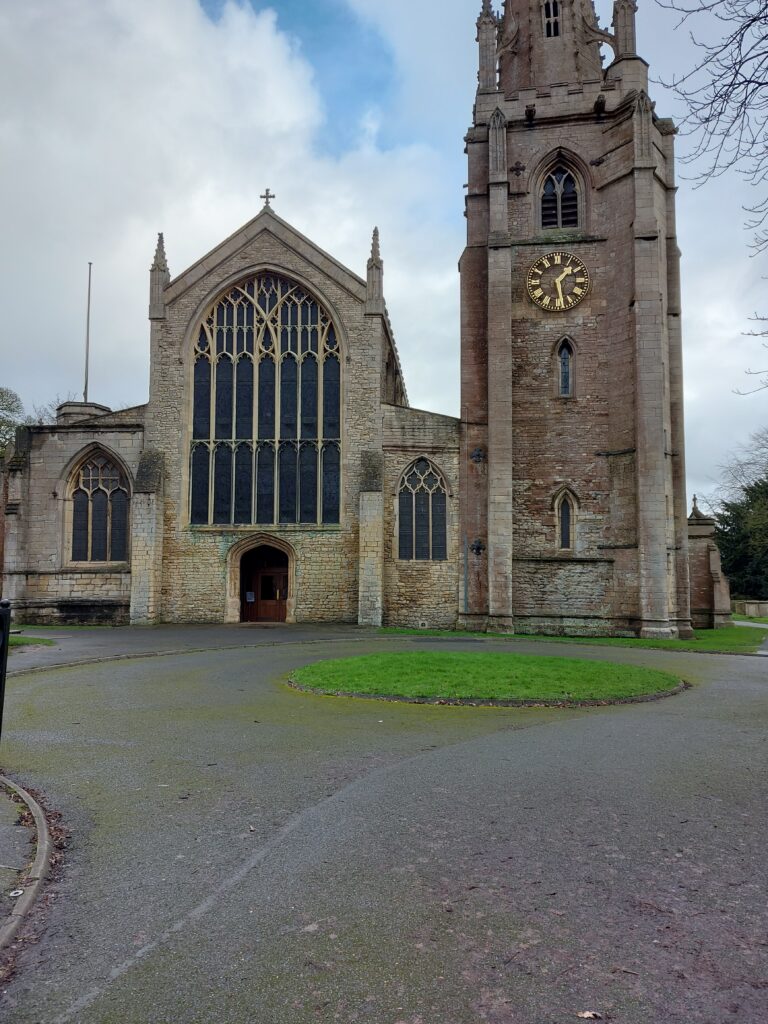
Check out the gothic Parish Church of St Mary and St Nicholas!
I hope you have enjoyed your tour of Spalding – one last quirky fact is that Spalding is famous for scanning the first bar code at a Key Market Supermarket in 1979 for a box of tea bags!
This article is also featured on GPSmyCity. To download this article for offline reading or create a self-guided walking tour to visit the attractions highlighted in this article, go to Walking Tours and Articles in Spalding.