Below is my blatantly honest rundown of the positive and negative aspects of independent travel in India; what to expect when walking in the streets, some travel hacks to stop you from being scammed, how to balance your itinerary to prevent burnout – everything you need to mentally prepare yourself for touching down in India.
The Good
- The food, culture and history – India is brimming with history, from the original Indus Valley Civilisation (the Harappa, one of the three earliest documented civilisations alongside Mesopotamia and Egypt) to the era of Ashoka and the Buddhist monuments he commissioned in the 3rd century BCE, the Pallavas (3rd – 9th century CE) and Cholas (9th – 13th century CE) in the south east, Chandelas in Madhya Pradesh (11th century CE), to the Muslim Mughal emperors (16th – 19th century), the 18th century Sikh dynasty in the Punjab, Marathas (seen as the biggest threat to British rule during the colonial period, 17th – 19th century CE), as well as the British Raj in the 19th century. Not to mention the countless princely states which emerged in the 19th century, each with an individual maharaja (rulers) and royal retinues/residences. There are too many dynasties, rulers and monuments to name. Wherever you step foot in India, it is likely to be teeming with both ancient and modern history. Each dynasty left an indelible mark on the area they ruled, with impressive temples (mosques, stupas, Hindu temples, Protestant and Catholic churches), royal palaces, water tanks, administrative buildings and forts. It’s mind-blowing to think that there are over 4000 forts and palaces dotted across the country.
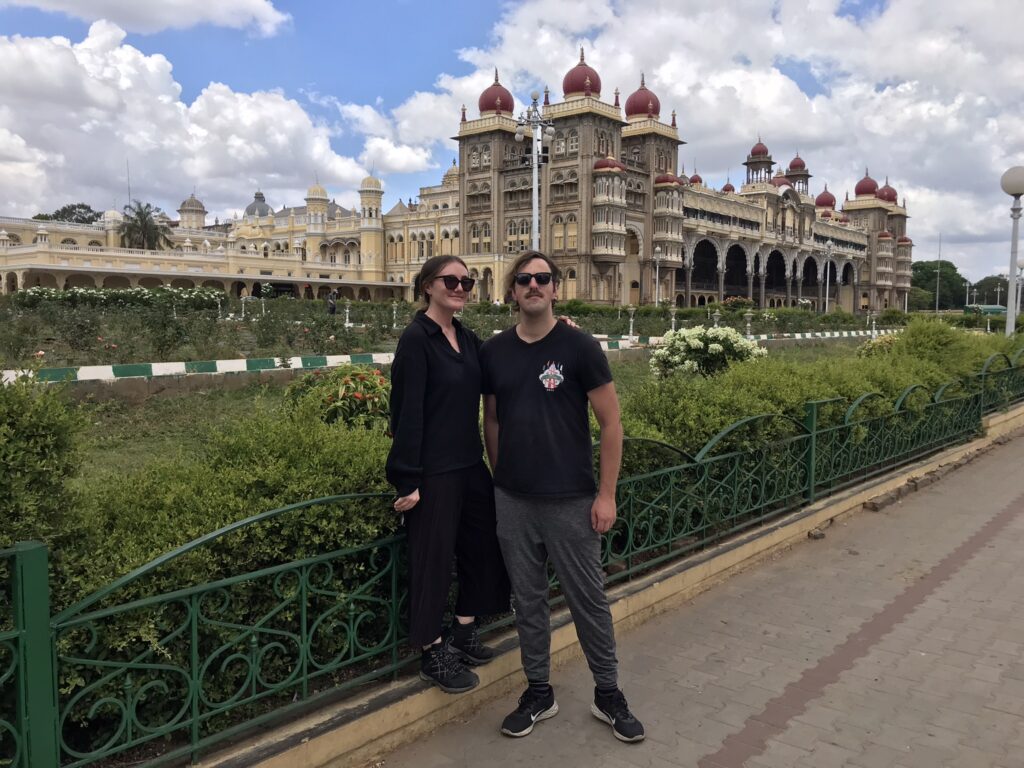
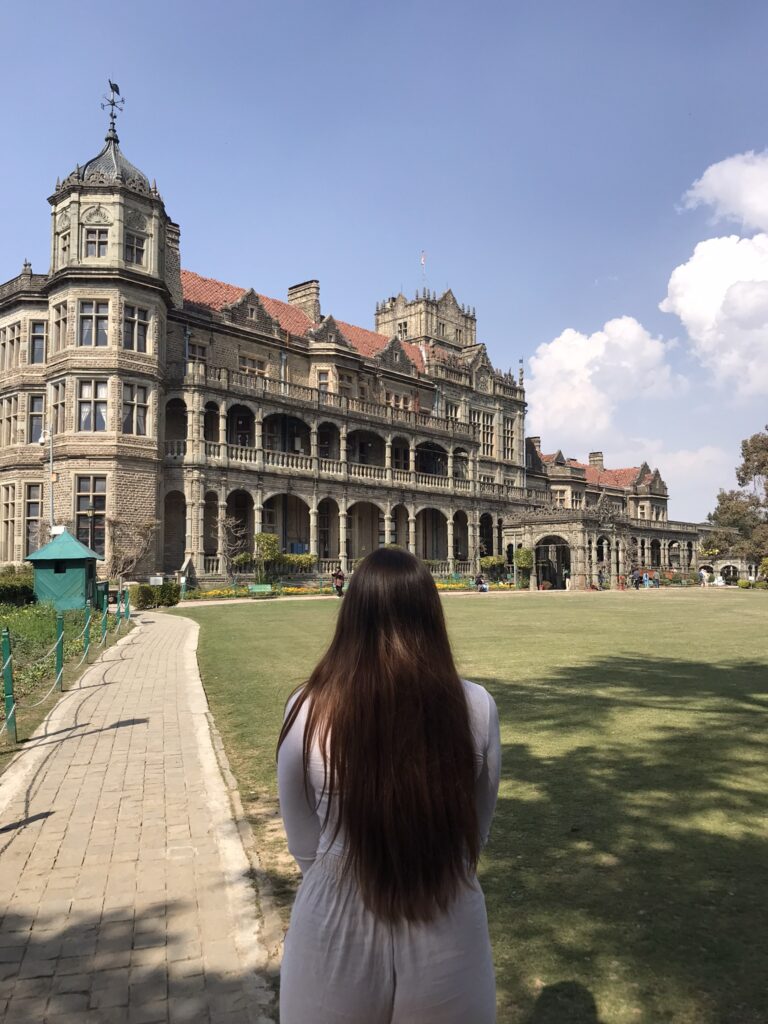
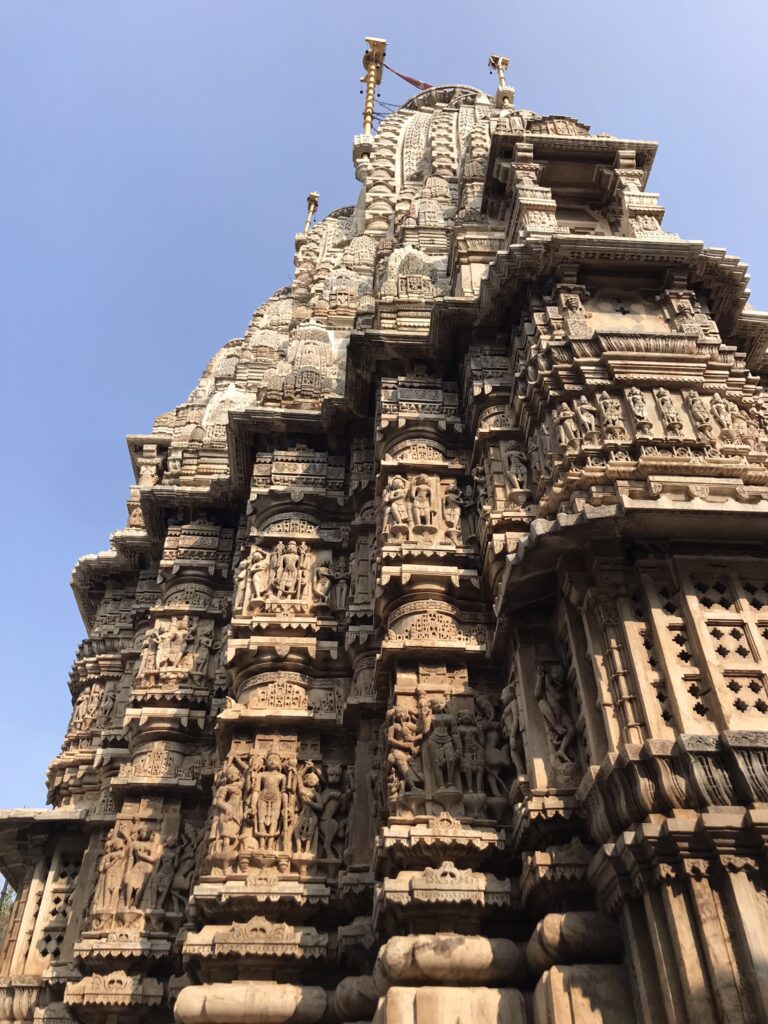
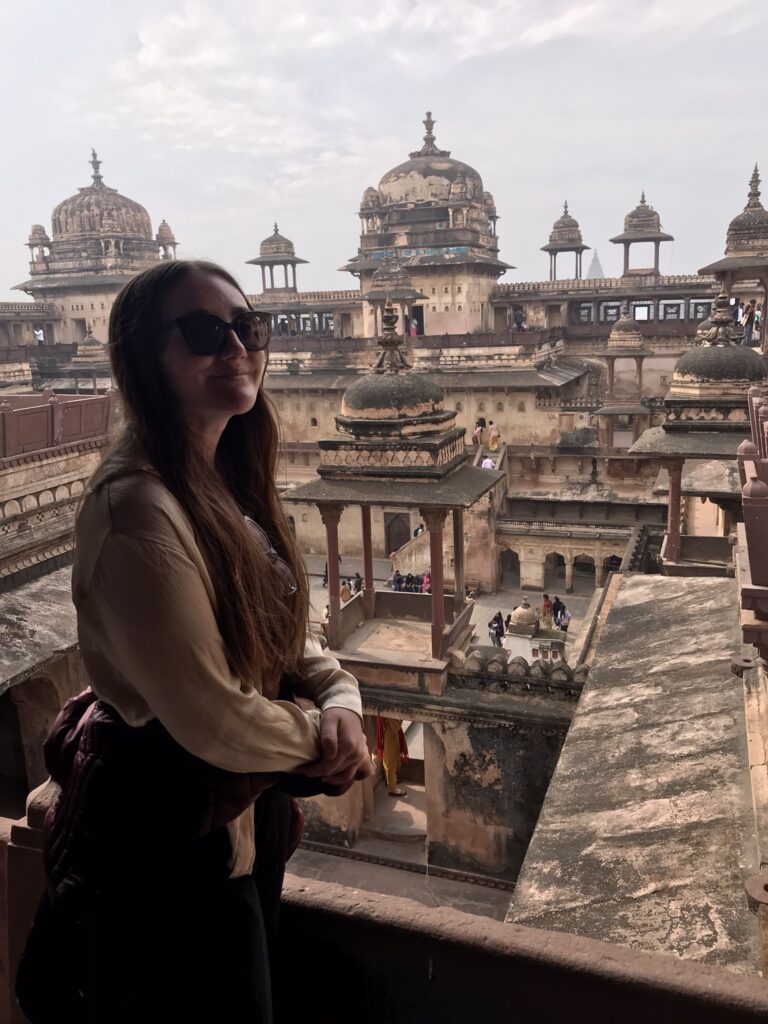
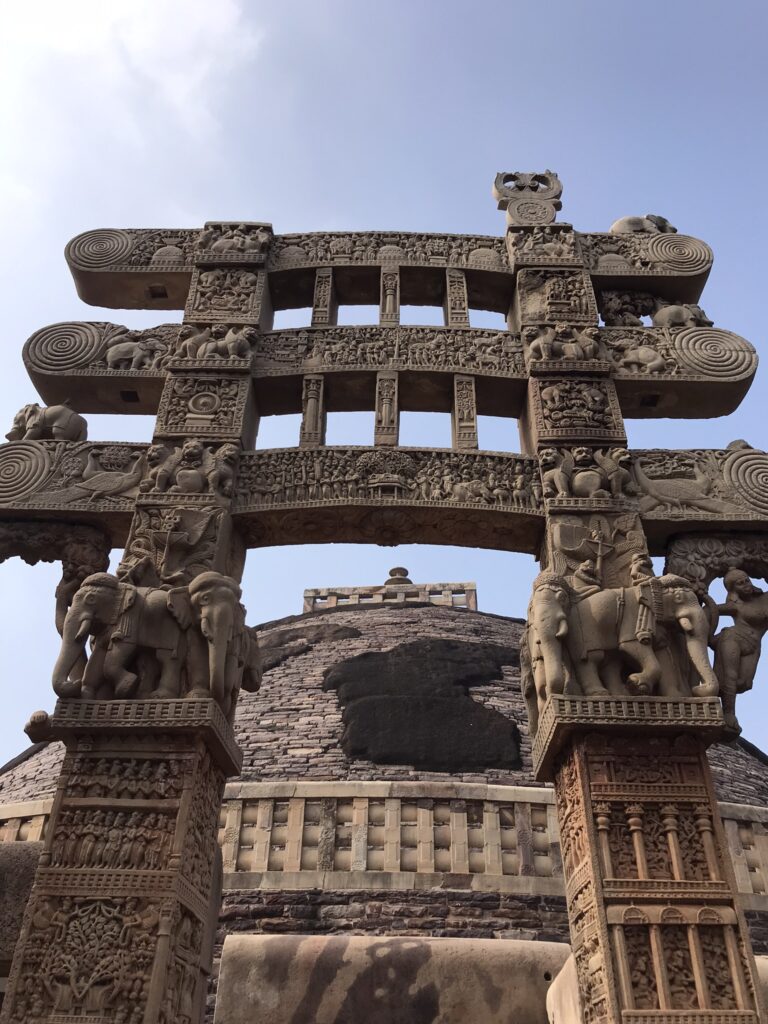
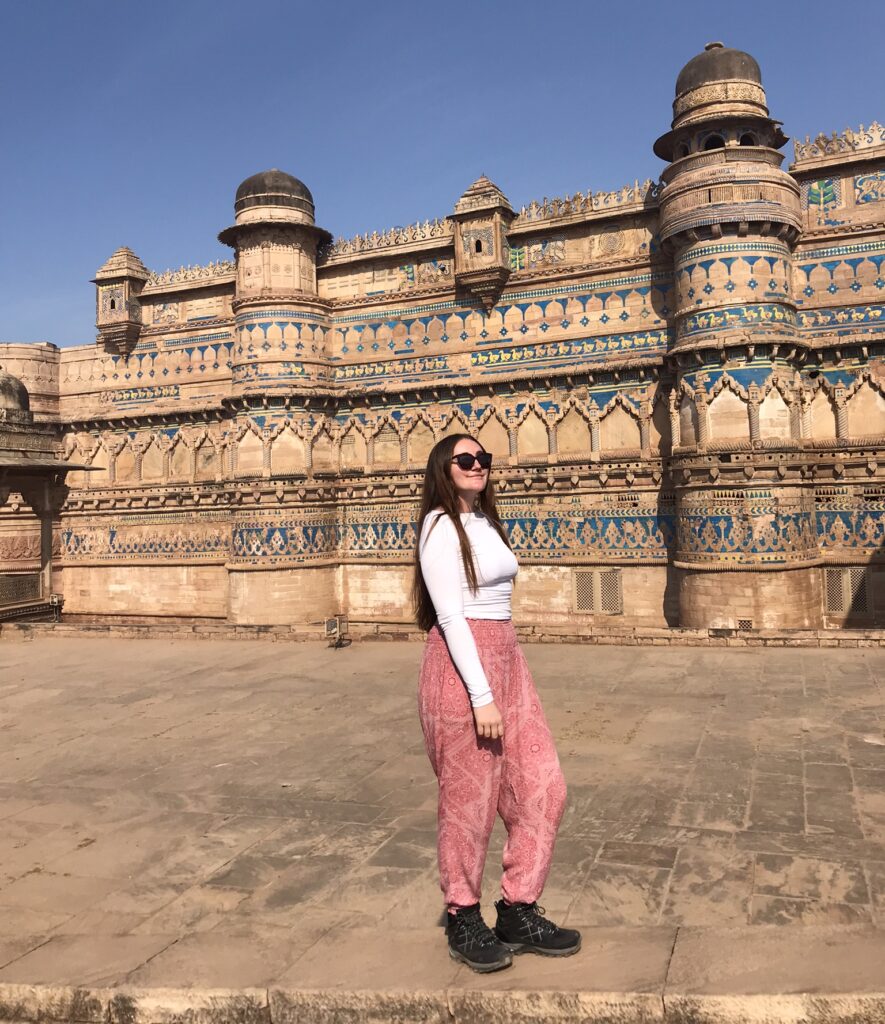
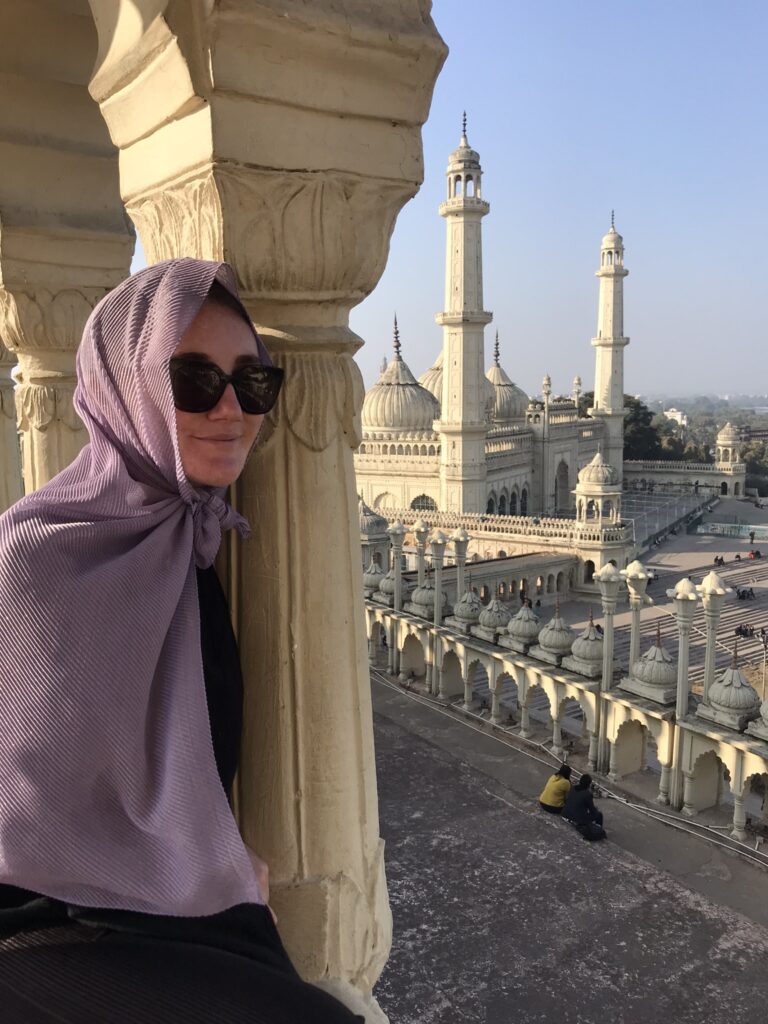
Palaces, forts and temples are next level in India
- The diversity of landscapes, from the verdant sloped forests surrounding Dharamsala to the tea regions in Assam, the desert regions of Rajasthan, lush tropical greenery of Kerala and the tranquil beaches of Tamil Nadu.
- An ideal travel destination if you’re vegetarian, as between 20% to 39% of the population in India is vegetarian – there are abundant vegetarian options such as daal, chana masala and paneer.
- Indians are very respectful towards temples of all religious denominations – people are expected to take off their shoes when entering any religious buildings including churches.
- Family is a sacred institution in India. Family is very important to Indians – most homes include more than one generation of the family. Children respect their parents and elders and are expected to look after them in old age.
- MRP prices or maximum retail prices are often listed on products (check the wrapper before purchasing) – make sure you’re not overcharged by always checking for the MRP before purchasing anything.
- Excellent public transport links – Indian Rail is one of the largest passenger carriers in the world, and the country also has a very extensive bus network so you will have no problem getting to where you need to go. Don’t be put off by the stereotypes and horror stories of overcrowding and squalid conditions – the quality of the trains in India varies by price, and some are actually very nice! For my guide to transport in India, click here!

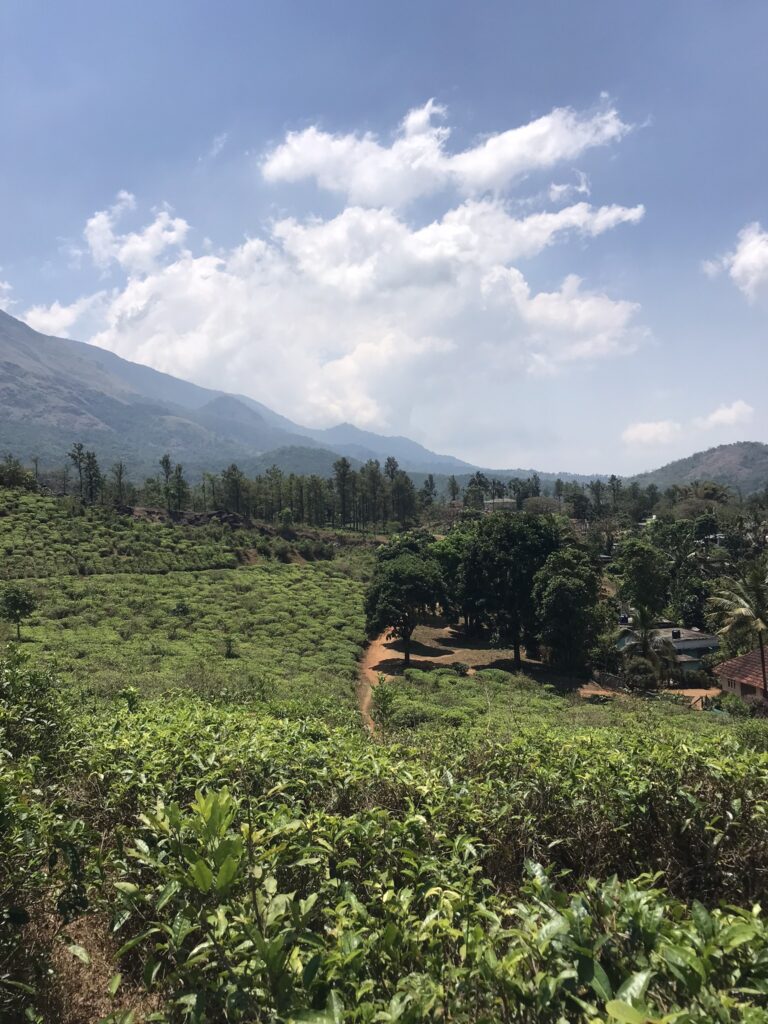
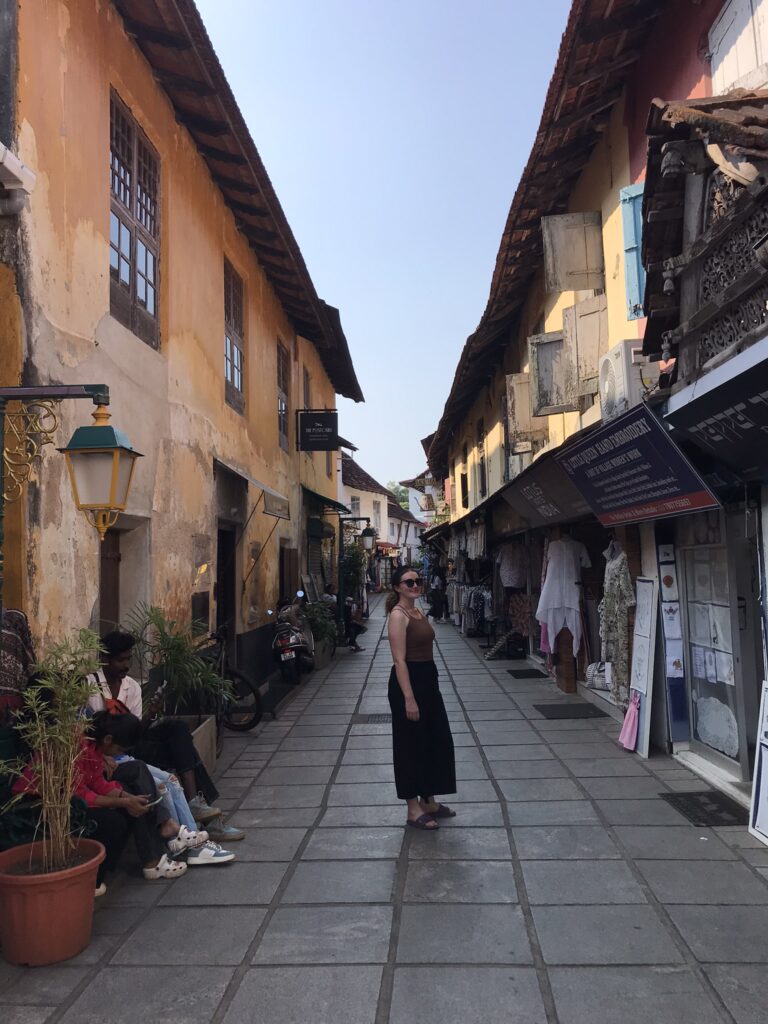
Just some of the different types of terrain we encountered in India; Udaipur, the tea fields in Kalpetta (Kerala) and the Dutch Fort Kochi (Kerala)
- Indian people are usually very friendly – it’s likely that you will receive an earnest welcome in the country from the vast majority of people. We met some great people and had some great conversations with locals in all parts of the country.
The Bad
Unfortunately, travel in India can come with many challenges, particularly in the north of the country (the southern states of Kerala and Tamil Nadu are a little different in our experience). You may have heard that independent travel in India can be tough and exhausting. From our own experience, here are some of the reasons why:
- Constant noise in cities, especially busy areas, at all hours of the day and night makes getting a good night’s sleep challenging. Make sure you bring earplugs or noise cancelling headphones. Noise proofing in hotel rooms ranges from absolutely terrible to acceptable. Expect noisy neighbours, honking vehicles and persistent noise throughout the night.
- If you have light skin, prepare to be asked for selfies from numerous people – even if you’re nipping out to the shop for some water not looking your best. You’ll be astounded by the amount of people that want to shake your hand – always carry hand sanitizer for these close encounters, as you’ll likely end up touching dozens of hands per day. This is both a good and bad thing – many people were legitimately curious, excited and happy to see us, but at times it can become a little overwhelming, particularly on a couple of occasions when we ended up being surrounded with queues and crowds starting to form!
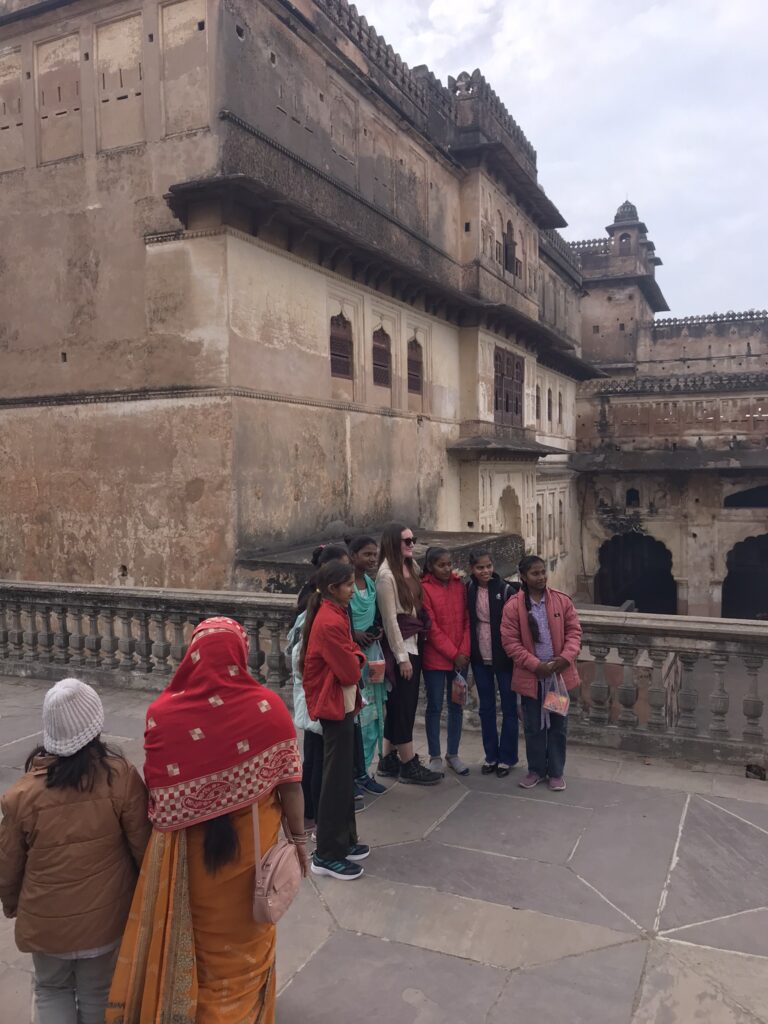
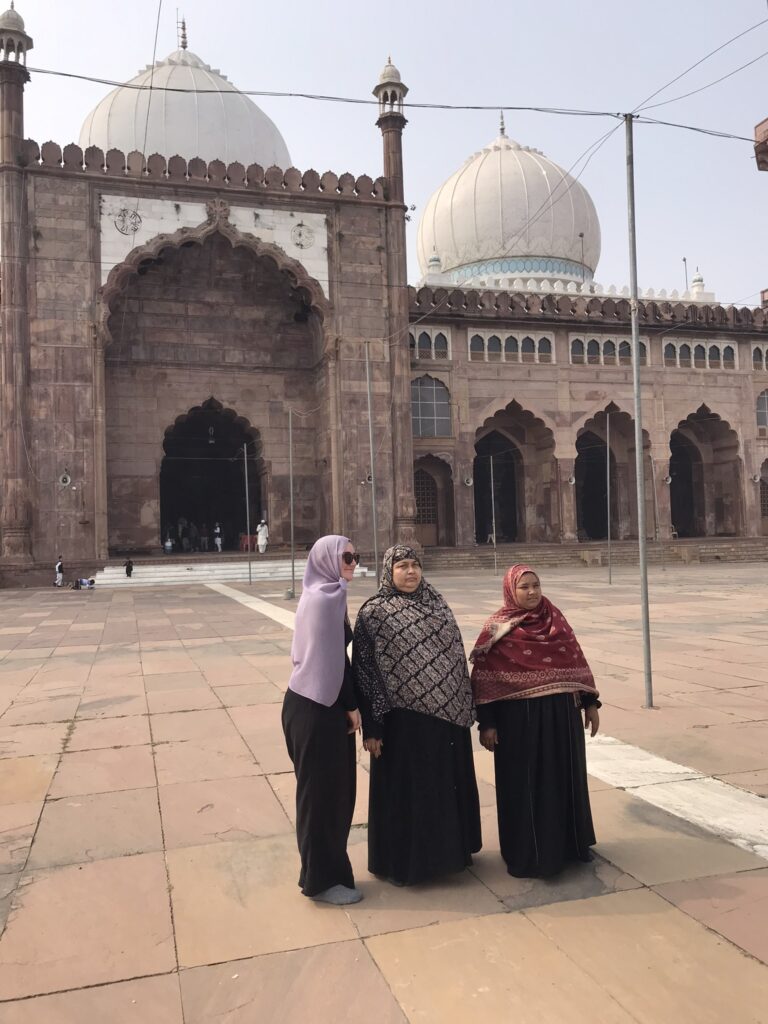
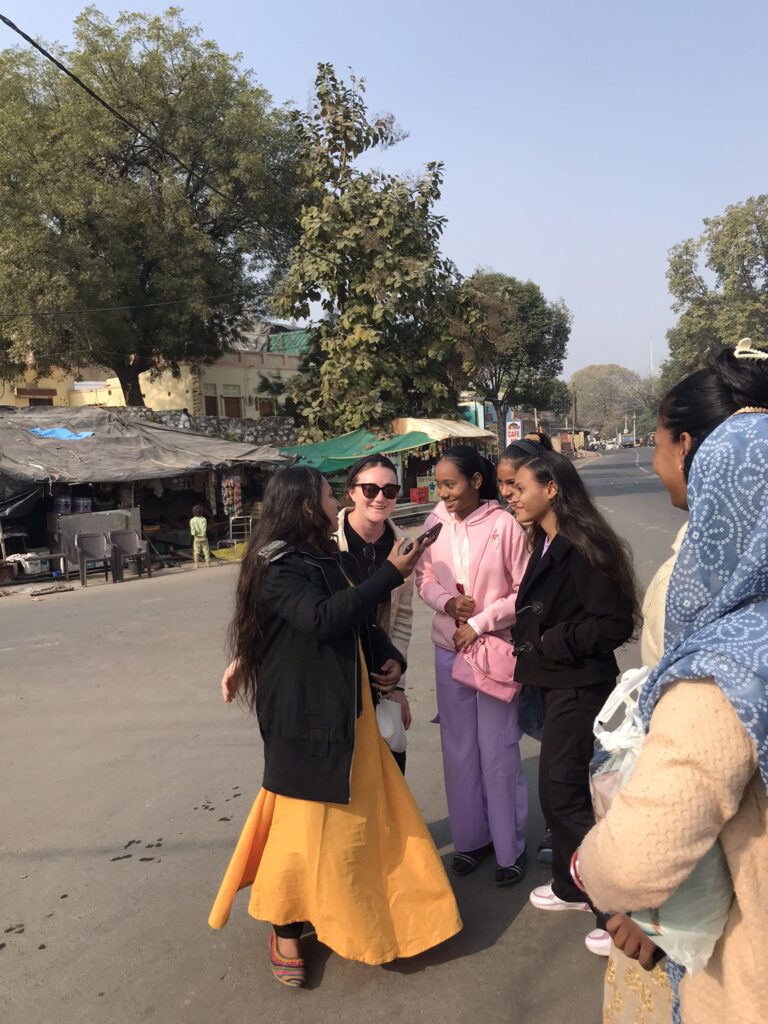
The paparazzi effect is real in India – most of the time it is very innocent and we were happy to oblige
- Streets can be very dirty, with cow faeces, food remnants, plastic garbage, unidentified filth and in some cases open sewers. Even in nicer neighbourhoods, wealthy Indians usually avoid walking the streets and you can see why!
- The lack of pavements/sidewalks and adequate safe pedestrian crossings is a constant problem. When walking the streets, most often there is either no pavement or it is blocked by street sellers, cows or random debris. Most locals therefore choose to walk on the road, but this is dangerous in itself as mopeds and tuktuks soar past within an inch of you, blaring their horns and weaving between other vehicles. When crossing the road you take your life in your hands, as often a red light or green man signal is not fully respected or adhered to. Just wait for a gap in the traffic and cross – be wary of local drivers as they often don’t stop and look as though they will run you over if you get in their way.
- For drivers, the roads are a dog eat dog world. The weak never get anywhere and the impolite and aggressive drivers are always the winners. This is not as much of a problem in the south as the north. Often drivers don’t check their mirrors before reversing, especially mopeds, so give any reversing vehicles a wide berth. On the other hand, pedestrians also neglect to check before crossing roads which adds an additional element of danger to driving. Cows often block the roads as they wander about searching for food amongst the rubbish. A certain amount of weaving is required when driving in India as it’s illegal to accidentally kill a cow (resulting in prison time in some states)!
- The overwhelming presence of cows in many towns and cities is quite surprising at first. Hindus treat cows with respect as they are considered holy animals (in Hinduism the cow is viewed as a representation of the mother). Eating beef is strictly prohibited and cows are left to freely wander the streets. Locals often feed them chapatis. While this sounds nice, in reality the cows can be problematic for several reasons. Most of the cows in the cities are docile and accustomed to the environment around them, however occasionally the cows can become agitated and lash out/attack. We encountered more than one angry cow during our time in India that we needed to give a wide berth. We also saw numerous instances of cows trying to raid street food sellers or market stalls. Cow faeces is everywhere, smeared all over the streets. We also had some concerns about the health of the cows – on almost a daily basis we saw malnourished-looking cows feeding on mounds of rubbish, eating plastic and other things that should really not be being eaten by cows.
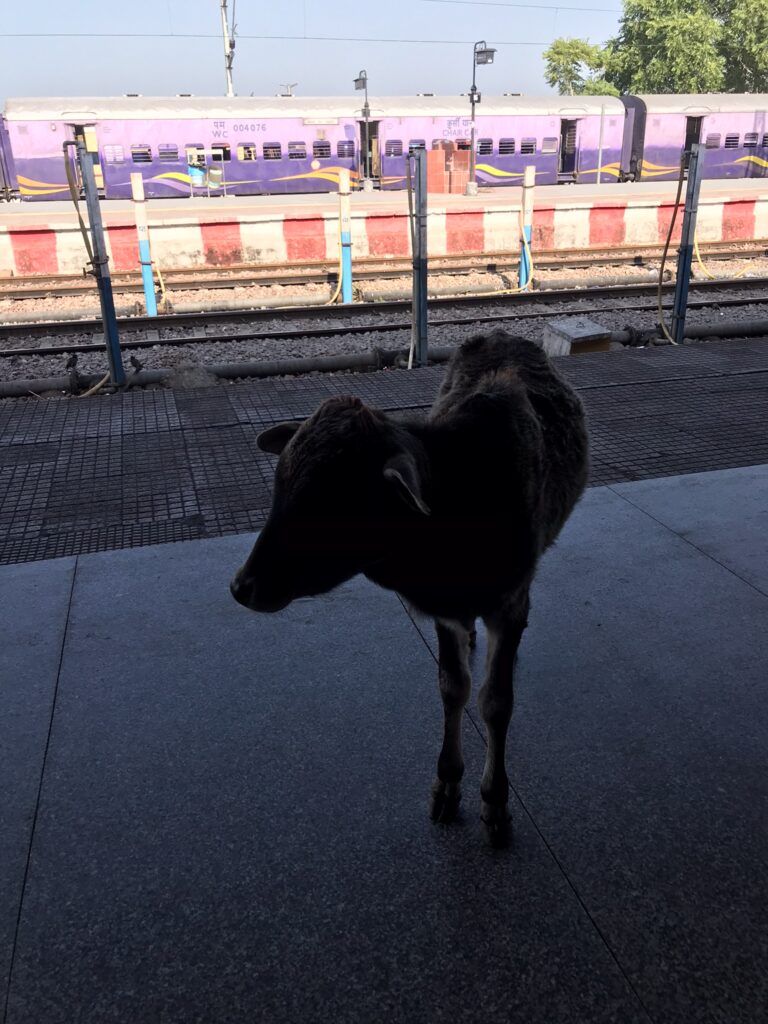
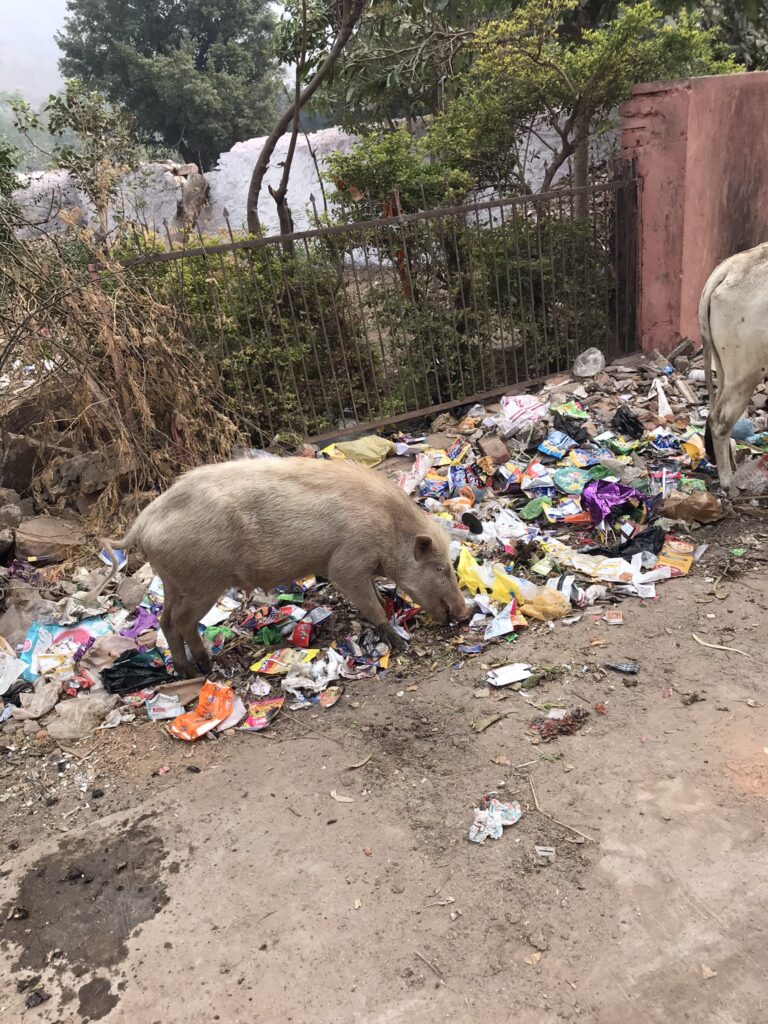
Cows somehow get absolutely everywhere in India, even on train platforms; sadly animals can’t decipher between harmful plastic and food
- Unfortunately as a foreigner you have to constantly be aware of scammers. These individuals usually gather at tourist attractions offering unofficial tours, tuktuk rides or guiding services. They can be very pushy and insistent that you go with them – they’ll then charge you an astronomical amount and try to take you to a ‘friend’s shop’ or somewhere you didn’t agree to go. Scammers may tell you that an attraction is closed – always check online or go to the ticket office to confirm this. It’s usually just lies to get you to go on a tour with them. Mumbai and the Golden Triangle cities of Agra, Delhi and Jaipur are particular hotspots for scammers as this is where most tourists visit, but from our experience they are pretty much everywhere in the country (we encountered numerous scammers in the small town of Orchha, for example). Scammers also are known to target domestic tourists as well so don’t take it personally. They are usually desperate people.
We personally witnessed or experienced the following attempted scams:
– Tuktuk drivers overcharging for short journeys. In all honesty you are never going to get the local price for a tuktuk journey – you’ve just got to accept that you’ll pay a little extra because you’re a foreigner. THIS IS A MUST: agree on a price before you get into the tuktuk, write down the price on your phone and make sure the driver agrees to it, do not pay anymore than that agreed price, except perhaps a small tip. Sometimes tuktuk drivers demand more than was originally agreed so leave no room for any misunderstanding when it comes to agreeing a price. In order to get a fair price, it is better to walk a little distance away from an attraction or popular spot and flag down a tuktuk from the street, find a ‘tuktuk rank’ in the city (they do exist), get in with a driver who has just dropped off a local or, best of all, get your accommodation to arrange a tuktuk for you. The guys that gather around tourist attractions, railway or stations etc are almost always scammers and will try to charge exorbitant prices.
– Unofficial ‘guides’ can sometimes follow visitors at attractions, trying to give them information and then demanding that they pay them – just say no as soon as you’re approached, don’t engage with them and get away from them as soon as humanly possible. They’re not trying to be helpful, they just want you to pay them. Be on guard for anyone trying to be helpful at the ticket office as they may have ulterior motives and then demand money, or they may be trying to sell you a different ticket at a higher price.
-We were approached outside the Gateway of India in Mumbai by a man asking us to buy milk for his child – he asked for the most expensive milk in the shop at many times the going price. These scammers just resell the product and are often in collusion with shop owners
-Uber drivers accepting a lift and then not moving or asking us to call them – this is another scam as the Uber drivers want you to pay with cash and not through the app, and may try to charge more than the Uber fee (always pick the premium option where possible, as this makes scammers less likely). In some cities, Uber just doesn’t work at all due to the prevalence of time wasters and scammers on the app.
-Some restaurants in tourist hotspots may have two menus – one with tourist prices and one with local prices. Others may just sell lower quality food or curry to tourists – we experienced this first-hand in Agra.
For more information about scams in India, I recommend you visit this Youtube channel.
- Standards of behaviour and public decency can be different in India to other countries, particularly in the north of India (we saw this less in the southern states). Public urination and sometimes even defecation are prevalent. According to Wikipedia, 522 million people in India continued to practise open defecation in 2024. The lack of public toilets and even private toilets is a public health crisis in the country. In one state we saw a public health scheme with the slogan ‘no toilet, no wife’ – encouraging brides to turn down potential grooms if they don’t have a toilet in their house. You’ll often see men urinating along busy roads, on railway tracks, pretty much everywhere! It’s done openly – most men don’t bother to hide what they’re doing. This made me feel quite uncomfortable having to constantly walk past men exposing themselves in public. At one point we witnessed two women squatting on the railway platform as well. The sanitation issue is something that has been ongoing for decades – we saw a quote form Gandhi bemoaning the poor standards of sanitation and public hygiene in the country during his era.
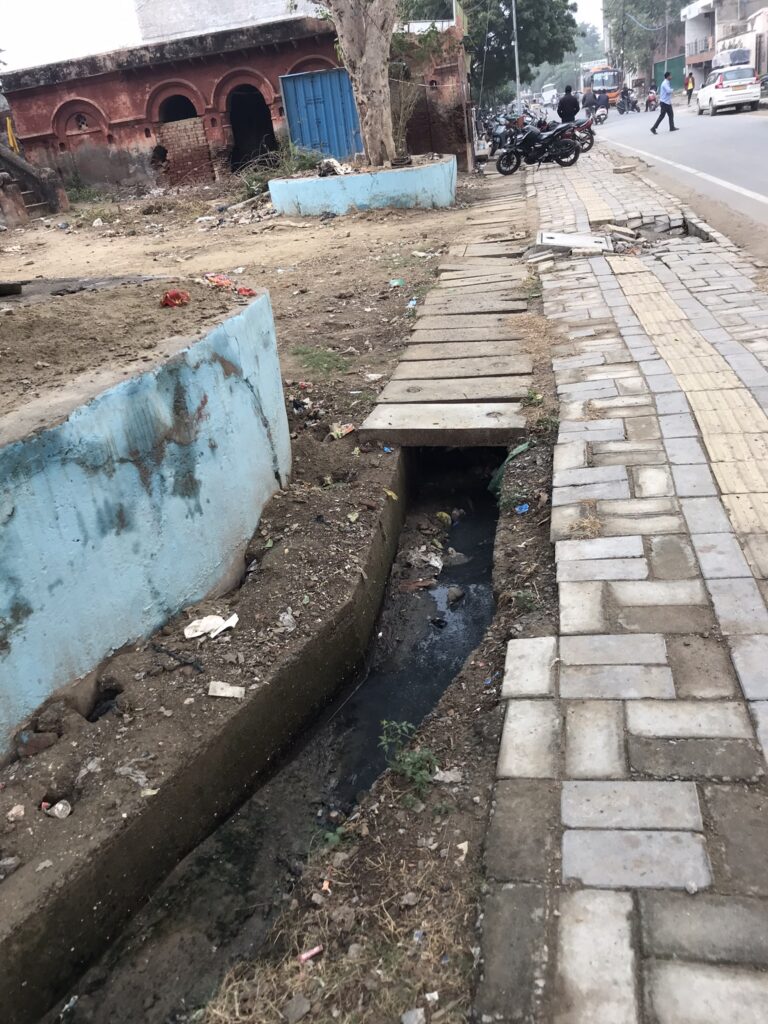
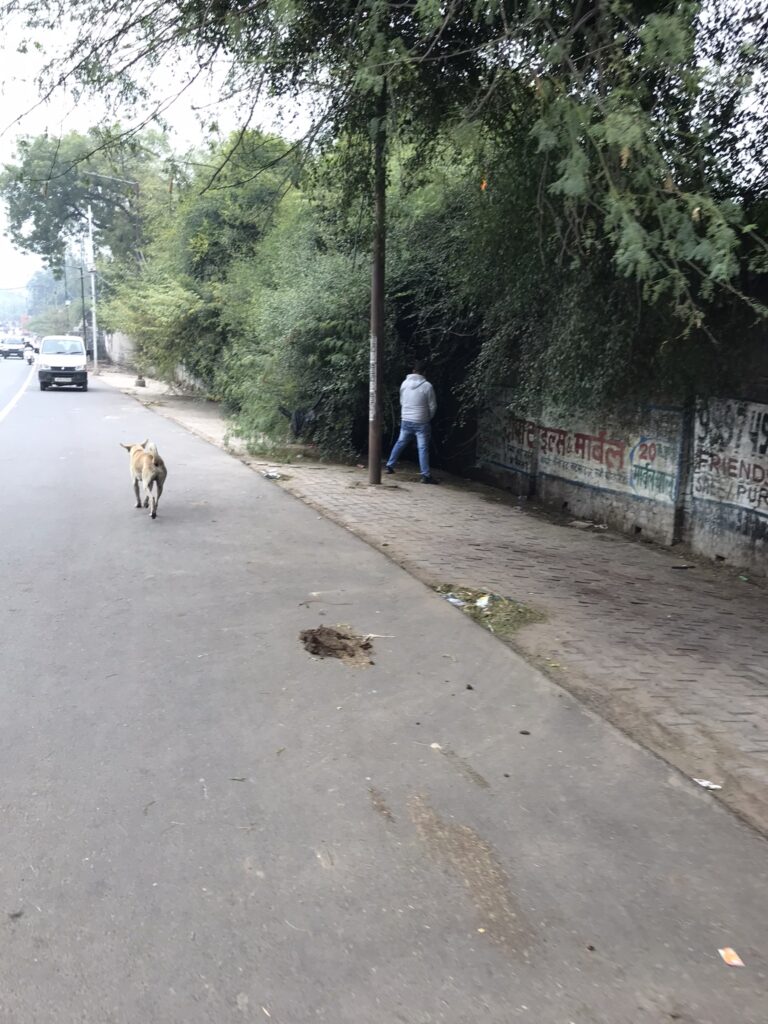
The sanitation was terrible in Agra with open sewers and men urinating on the street
- Spitting is an everyday occurrence in India – we even had to duck once when someone spat out of their car window without looking. This disgusting habit is another negative aspect of walking the streets in India. We attribute the spitting epidemic to the fact that a lot of men chew tobacco (which comes in little packets available country-wide) and air pollution causing phlegm. We saw signs in train stations and metro stations threatening fines for spitting, but often these were not enforced and ignored.
- It’s common to see people walking across the rails at train stations even when there are bridges for pedestrians to safely cross the tracks. We cannot understand why people would choose to put themselves, their children and their families in danger just to avoid some stairs. We personally saw parents lifting their children down onto the rails rather than using the walkways provided. Mind-boggling!
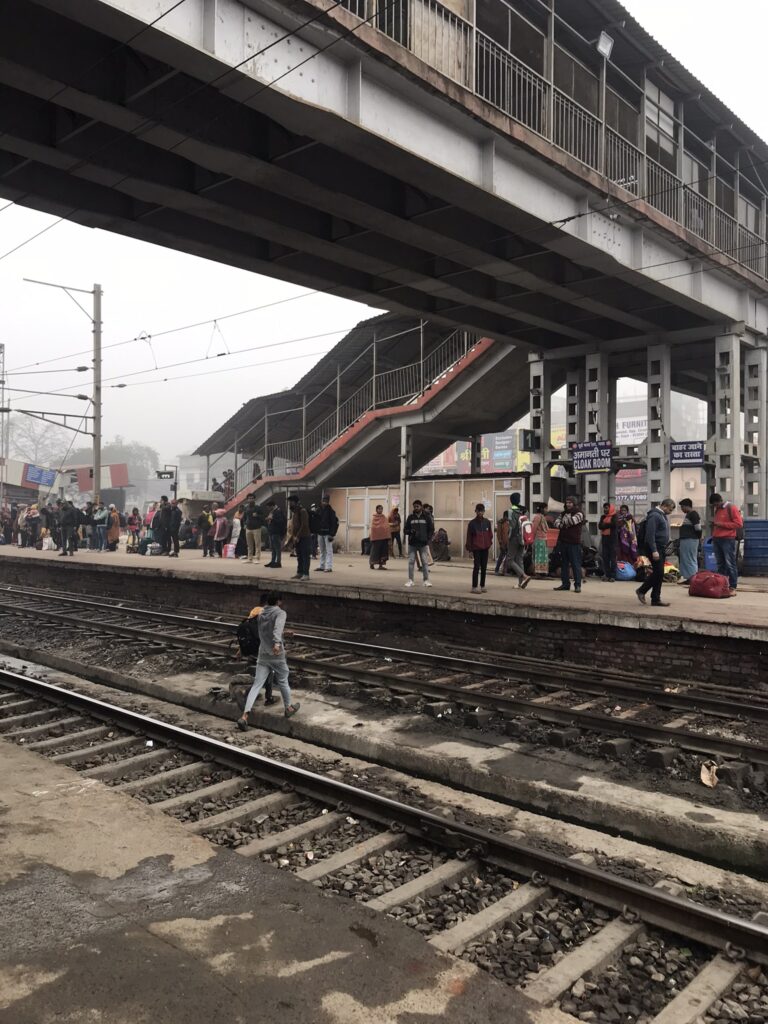
A man casually crossing the tracks even though there’s a overpass right next to him
- Expect to be constantly approached by tuktuk drivers when walking around. Tuktuk drivers see foreign people and assume you need a lift – as do the next 20 tuktuks that approach! It gets annoying very quickly! Again, we saw groups of local women being followed and hounded by tuktuk drivers too. Generally, it’s not expected for people of higher class or with money to be walking the street and so the drivers may be legitimately shocked to hear that you don’t want a ride.
- India has a huge problem with garbage disposal. Infrastructure is often underdeveloped and India is consuming at such a rate and producing so much waste that states simply cannot keep up with the disposal of rubbish. Adding to this issue is the fact that rubbish is often tossed on the ground by many Indian people instead of being disposed of correctly. After talking with a local in Kolkata, he suggested that this may be because plastic was introduced fairly recently, and before this working class Indians would use leaves as plates and discard them after use. While this hypothesis makes sense, it does not explain why the problem is so much worse in India than other parts of the world which have also developed quickly. India is by far the most polluted country I have ever visited. This pollution extends to rivers – especially the Ganges, the most sacred river for Hindus, which as of 2025 contains more than 4 times the safe levels of faecal coliform, indicative of harmful pathogens such as viruses, parasites, and other disease-causing bacteria originating from human or animal waste. We personally saw men openly urinating within 10 meters of the sacred river in Varanasi.
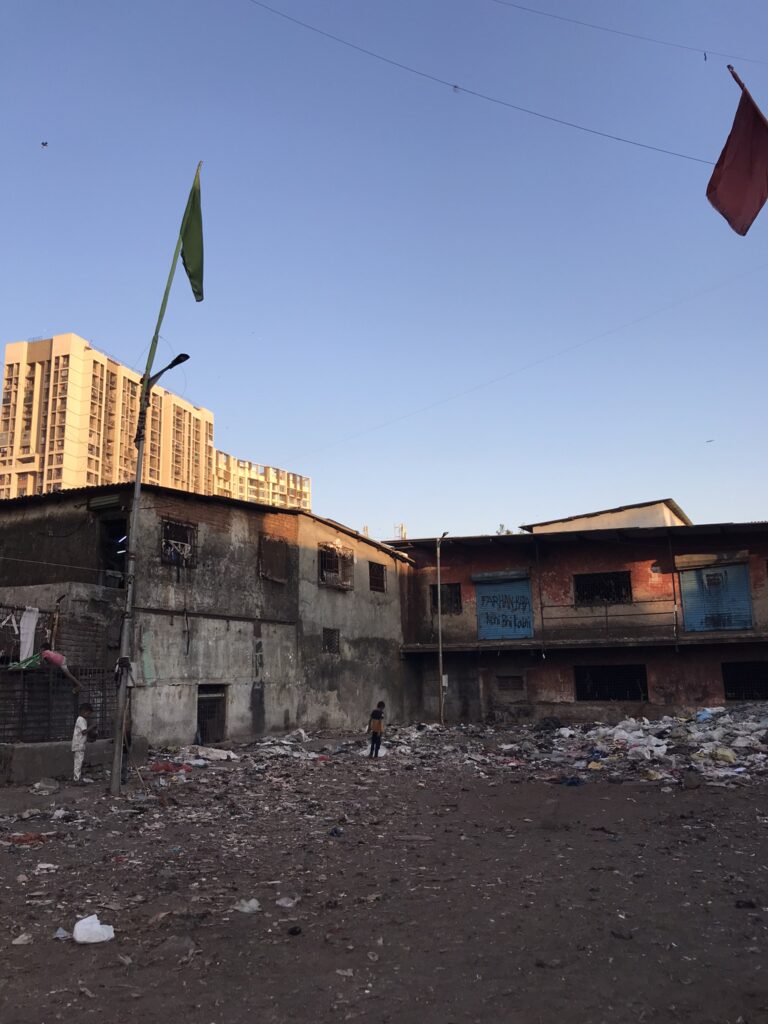
Piles and piles of garbage are sadly a common sight
- We usually rely heavily on Google Maps and the accompanying reviews to help us to get around, find decent places to stay and to eat. However this is much more difficult in India. Scam reviews are a thing here – businesses pay companies and individuals for fake positive reviews. A food company even messaged Dan offering him money to leave them a fake Google review. We also found it was easy to get lost in the sheer number of reviews – because of the large population, some restaurants have over 10,000 reviews! Many of the reviews from locals can often be a little bizarre, complaining about the food not being as good as what they would cook at home, accusing the staff of ‘bad behaviour’ or something similar which may not be relevant to the experience that you might have as a visitor. We tried to combat this by checking specifically for Western travellers’ reviews, as scammers usually only use Indian names for fake reviews. Make sure you always read the reviews of restaurants before eating at them.
- Everyone tells you to expect to see poverty in India, but until you’re actually in the country it’s difficult to imagine what this looks like. From families with young children sleeping on the streets to men with severe deformities and young children begging for spare change – it’s a miserable sight to see. Poverty is ever-present on the streets. India is a country where the rich and the poor live in very close proximity – slums border more privileged areas in cities teeming with people. People begging usually congregate at temples, train stations and tourist attractions. We found that some beggars specifically targeted us and skipped Indians – I suspect this is because we are white, ergo seen as being rich. After spending many hours in train stations in the north of India, I can safely say that the constant conveyor belt of beggars becomes emotionally exhausting after a while. We were advised not to give money to children as this encourages their parents to use them for begging – instead, offer them food or water.
- Indian cities can be a sensory overload – it can be truly overwhelming for the uninitiated who’ve just stepped off the plane. Some travellers are shocked by how much is going on just outside their hotel – it takes time to adjust to this new normal. The southern cities i.e. Kochi in Kerala, Bengaluru in Karnataka or Chennai in Tamil Nadu are good places to start your journey as they’ll gently ease you in rather than dropping you in the deep end in Mumbai or Delhi, where it’s easy to feel lost in the crowd.
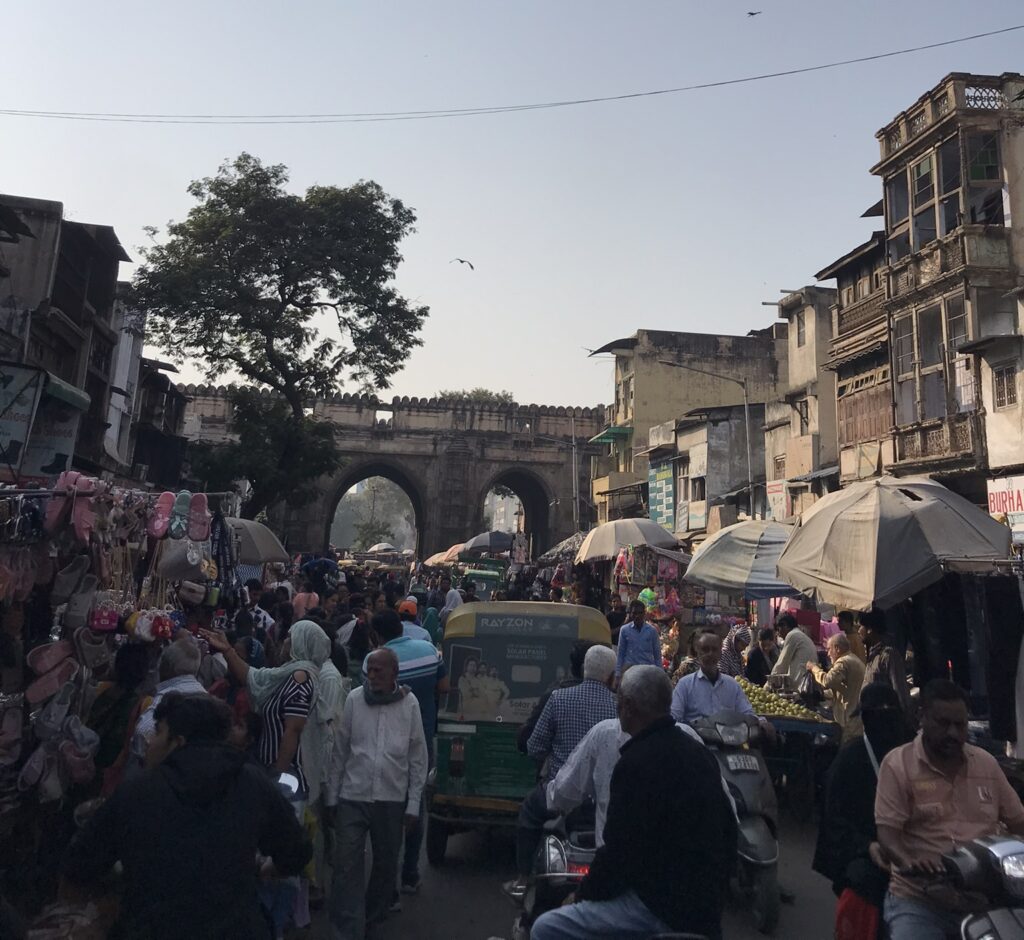
Indian cities can be insanely busy and hectic places. We were caught in human traffic jams on numerous occasions
- Budget hotels in India can be of a lower standard than other countries. Don’t expect 5-star quality or even minimum standards if you’re not paying a premium price. In most cases we were happy to receive clean bedding, a working shower and a reasonable level of quiet at night. Again, you need to scour the reviews closely to find decent places to stay as scam reviews can be common.
- What we would interpret as rude behaviour in other countries is often seen as normal in India. Pushing in queues? Completely normal. Even physically pushing other people in the queue from behind is not unusual. Vehicles honking constantly, even during the night, is perfectly normal. We saw many instances of people driving mopeds down empty residential streets with no obstructions sounding their horn incessantly for absolutely no reason. Trying to board the train before all the passengers have alighted, barging people who are trying to disembark out of the way or trapping them inside the train, is standard practice. From what I can understand this is part of the national psyche that if you don’t push or be forceful then other people will and you’ll be left behind – scarcity of resources and the need to fight to get what you need. It boils down to the fear of missing out. This applies to train travel, road travel and queuing. We saw people pushing to get onto the train even in reserved carriages when they already had seats assigned to them. It didn’t make much sense from my perspective.
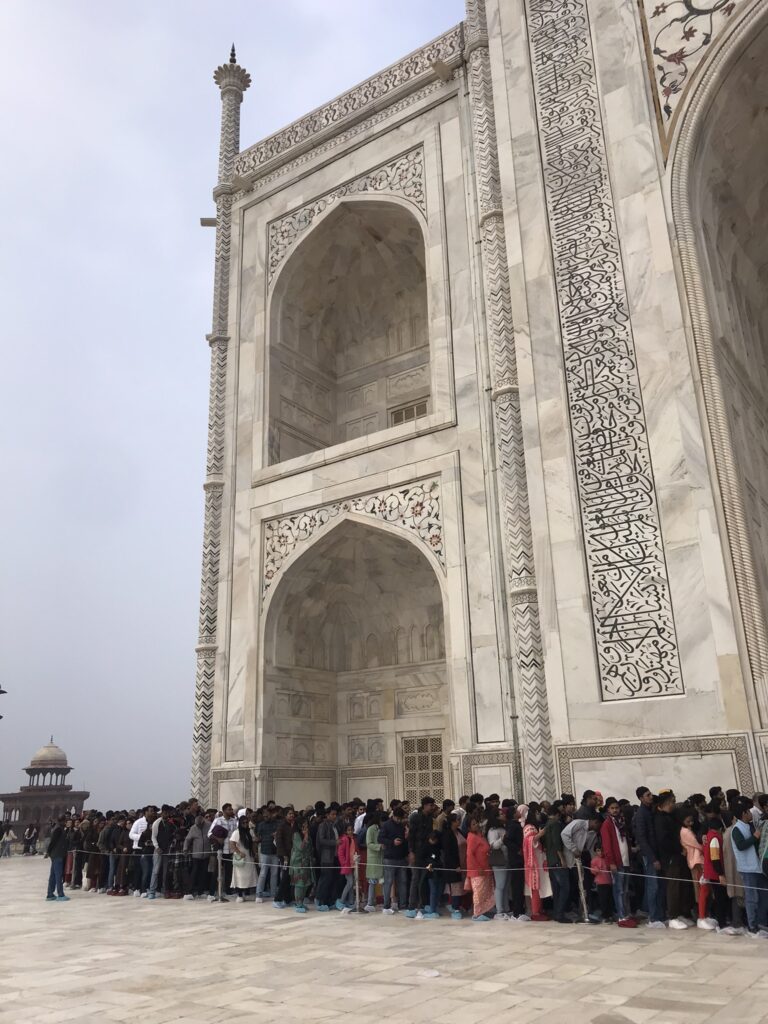
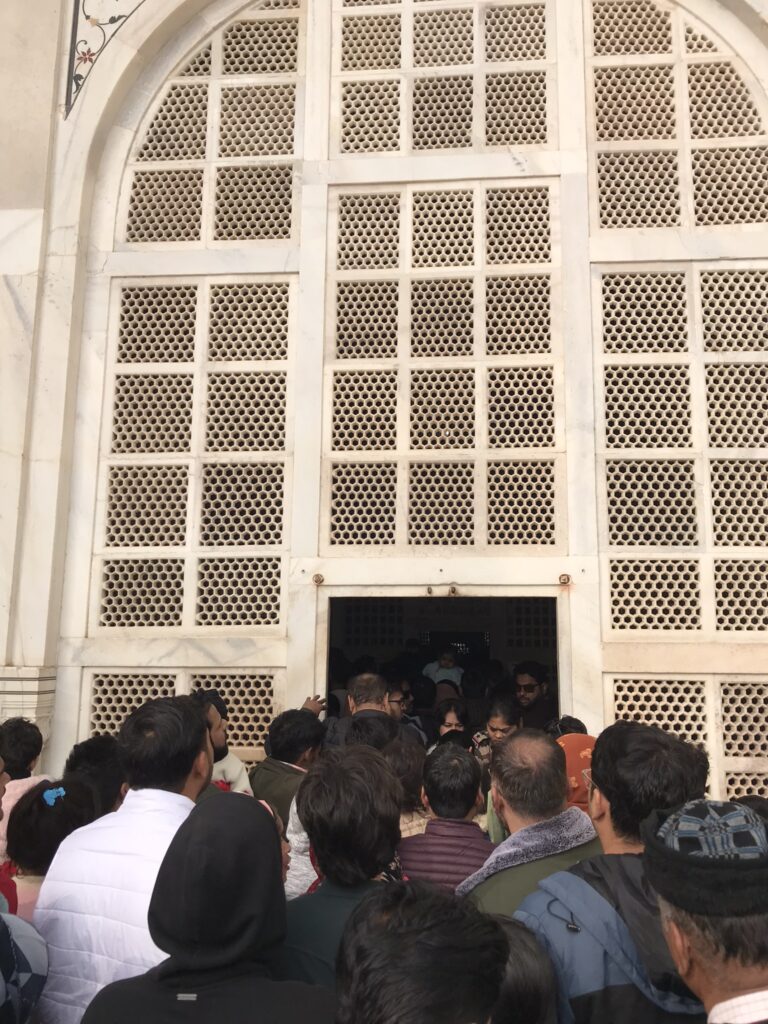
Pushing and shoving can be common at major tourist sites like the Taj Mahal
One mistake we made in India was trying to travel quite slowly, building in ‘rest days’ along the way. In hindsight this was a mistake – we found that remaining in one place for too long actually became more exhausting, as we started to quickly become worn down by whatever recurring issues were going on in that specific place. My recommendation is to move very quickly when traveling in India – see what you want to see and then more on to the next destination as quickly as possible. Although it may be more physically tiring, this helps to keep things fresh, avoiding mental burnout and minimising the possibility of becoming disgruntled and jaded with things. As I’ve said, the south of the country is a bit more relaxed and you can probably move more slowly there if you want to.
This post isn’t intended to put you off visiting India, just to make you aware of the some of the many things that can become exasperating and make life difficult for independent travellers. India is a completely unique place with many things that can’t be found anywhere else, it’s a bucket list destination for many and if you’re worried about what you’ve just read, you can probably avoid most of these problems (or at least minimise them greatly) by visiting as part of a tour. Otherwise, independent travel is definitely possible – just be prepared!