Homeland of the Sikhs, India’s northern Punjab region is a little off the beaten track for foreign tourists. I’m not sure why this is – it’s easily accessible from New Delhi and contains culture and history to rival anywhere else in the country. A visit to Punjab can also be combined with a trip to nearby Himachal Pradesh, another of the nation’s most unique states. Check out my Punjab India travel blog below!
Punjab originally referred to a much larger region of British India – the territory was divided between India and Pakistan following the Partition of India, which had grave consequences for the local population. Today, Punjab is also the name of a province of Pakistan, which is one of the largest subnational provinces in the world by population. Interestingly, the same language (Punjabi) is spoken on both the Pakistani and Indian sides of the border, however the written language may not be mutually intelligible as Pakistan side uses the Urdu script. India’s Punjab state was further split in 1966 following the creation of the state of Haryana, which was formed from the majority-Hindi speaking area of to the south. Chandigarh, the purpose-built capital of Punjab following the Partition of India, now functions as a joint capital of both Pubjab and Haryana, and is classified as its own distinct Union Territory as a result.
Patiala
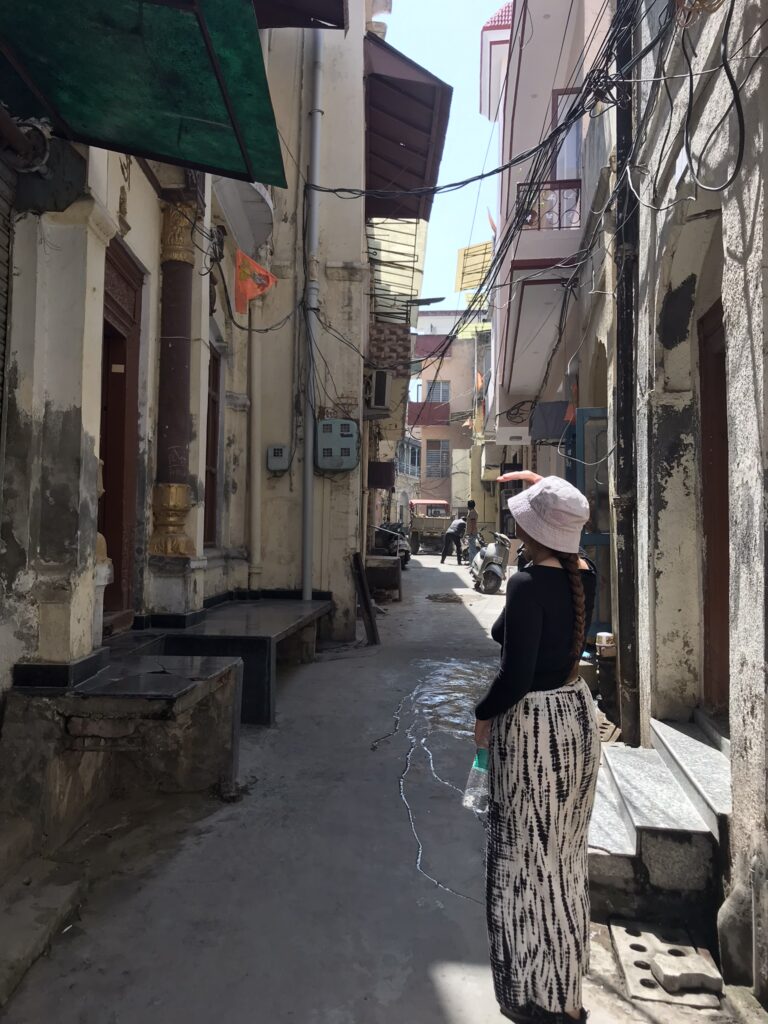
Patiala was our first stop in the Punjab region, which is known as the heartland of the Sikh people (although Hindus still make up a sizeable minority). Founded in 1763, Patiala was a dynastic city and the centre of a princely state which developed around it. Patiala state later became a collaborator and vassal of the British Empire – the city is filled with regal architecture as a result. Easily accessible by train from New Delhi, the city isn’t well-visited by tourists (we saw zero other foreigners here) but it has many interesting sights and historical buildings which are typical of the region.
The main attraction in Patiala is the old town, centred around Qila Mubarak – a large fortress dating back to the 18th century and the founder of the city, Ala Singh. The old town and surrounding market areas are quite busy, bustling and chaotic, but we also found that there was not much hassle and no scammers – a classic Indian experience without the nonsense. Most of the attractions and historic buildings within the city are unrestored, barely-maintained and free to enter – visitors just have to sign a register with the Sikh guard at the entrance. The guards were usually friendly and happy to see us.
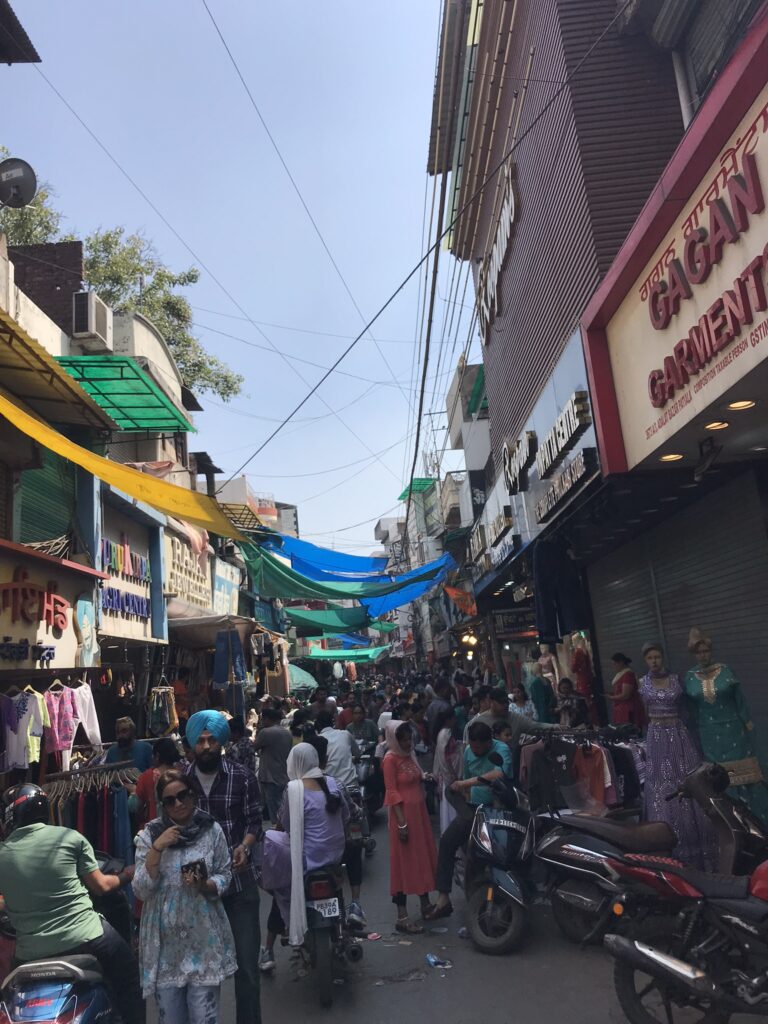
The market area around Qila Mubarak was insanely busy and hectic, but it didn’t bother us too much after months in India
We were told in Delhi about ‘Patiala Peg’ – triple or quadruple shots of alcohol. Sikhs have a reputation for being big drinkers, and we did notice copious amounts of alcohol flowing in restaurants here and quite a boisterous, jovial and lively atmosphere on a Saturday night. Sikhs also have a reputation for being helpful, honest, tough and respectable. We were told in Mumbai that if you have any problems, look for a turban! There are plenty of colourful turbans visible in the old town of Patiala and we definitely felt at ease in the city as a result. The outskirts of the town and the area near the Sheesh Mahal did feel a little more sketchy however.
We walked everywhere in Patiala – there are some longer distances, but we managed to cover all of the city’s main sights on foot. The only exception is the bus terminal – it used to be located near to the train station and so just about walkable from the old town, however this terminal is now closed and a modern new terminal has now been constructed here, a few miles outside of town. The new terminal is too far to walk – we arranged to take a tuktuk there via our accommodation, where we could get an easy bus onwards to Chandigarh.
Accommodation
The Heritage Villa – a hotel situated in a palatial heritage building, including a nice garden with an immaculate lawn and flower bed. The property is set back from the main road which gives it a more tranquil atmosphere. It definitely felt like a more upmarket place to stay, but still affordable and located very close to a few good restaurants and within walking distance of the train station and old town. Rooms were spacious and elegant, we didn’t meet the owner in person but he was very friendly and communicative via WhatsApp.
Foodie Places
Club16 – we visited several times. A festive atmosphere at weekends with families and groups of friends drinking, it seemed popular with upper-middle classes and groups of women on nights out. Serving both Indian/Punjabi and continental foods as well as an extensive array of alcohol on the menu. Food quality and service here was great, we loved the aloo gobhi.
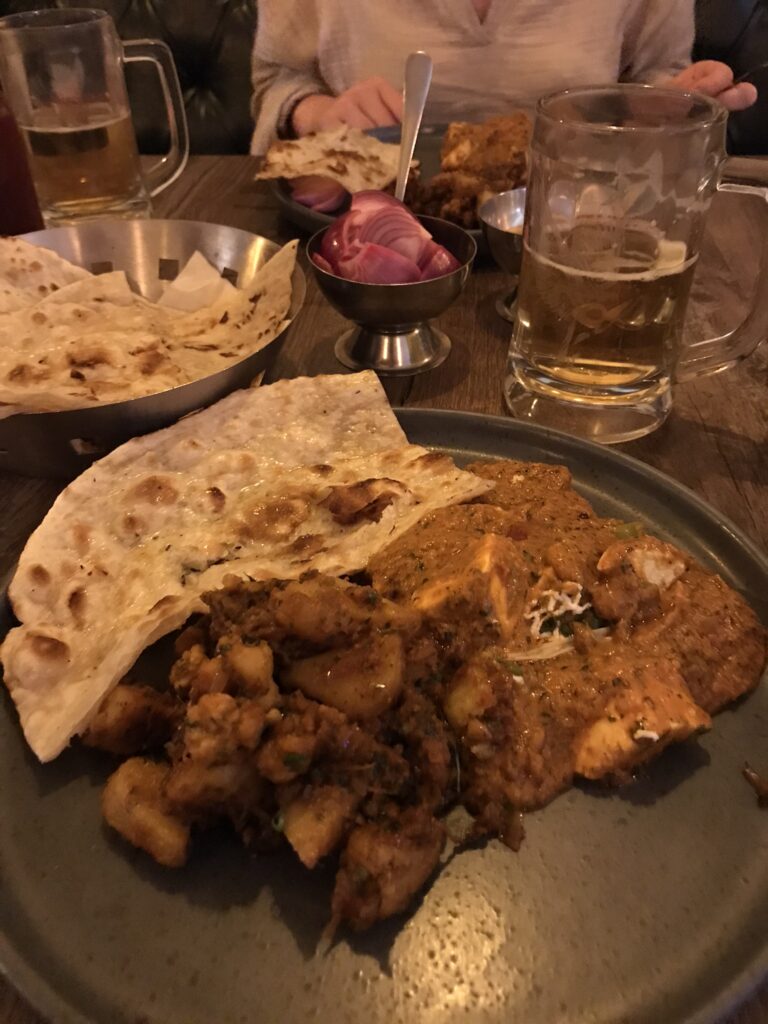
The food at Club16 was excellent – we couldn’t resist the aloo gobhi
Mocha cafe and bar (Zomato) – we ordered from Zomato, BMT panini and mac ‘n’ cheese – no complaints
Activities
Royal Cremation Grounds (Shahi Samadha) – a picturesque Sikh mausoleum complex with a central structure and then many surrounding individual monuments to the dynastic rulers, with distinctive domed plinths. The main building is dedicated to Ala Singh, the founder and first ruler of Patiala.
Accessing the complex involves passing through a grand entrance next to the street, there is then a surprising amount of space inside. The architecture of the complex is very grandiose, with pink-tinted stone construction. Inside we found that it was well-maintained and free of rubbish. Weirdly there were pastoral landscapes within the complex. Apart from the Sikh guard at the entrance there was absolutely nobody else here when we visited.
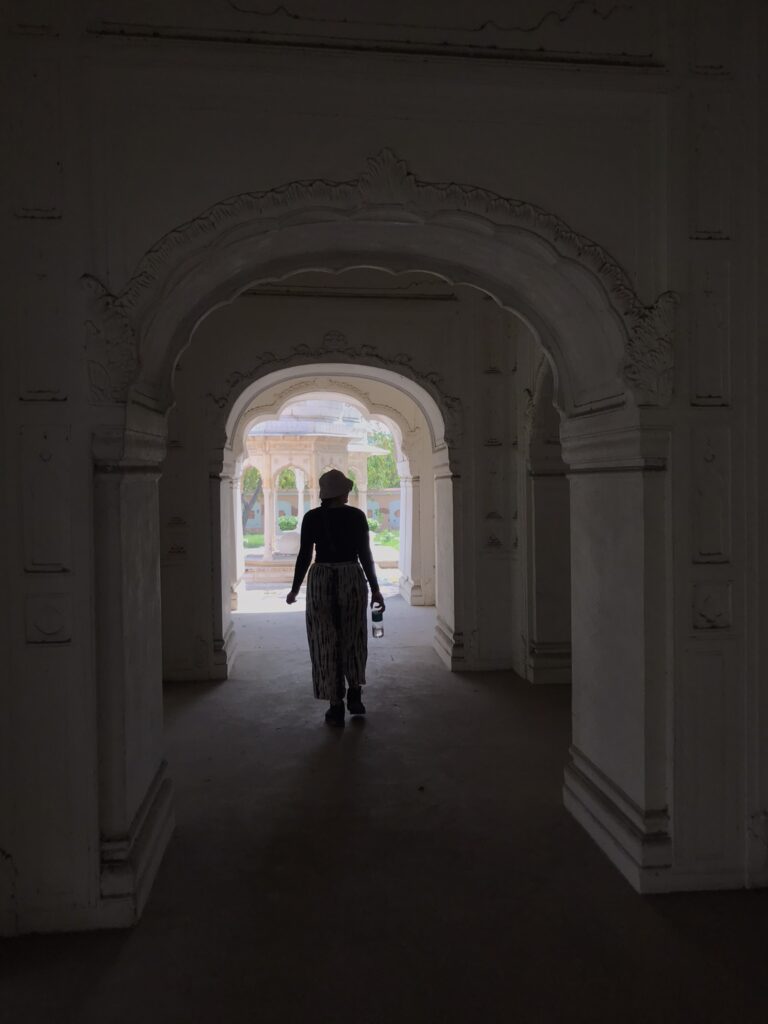
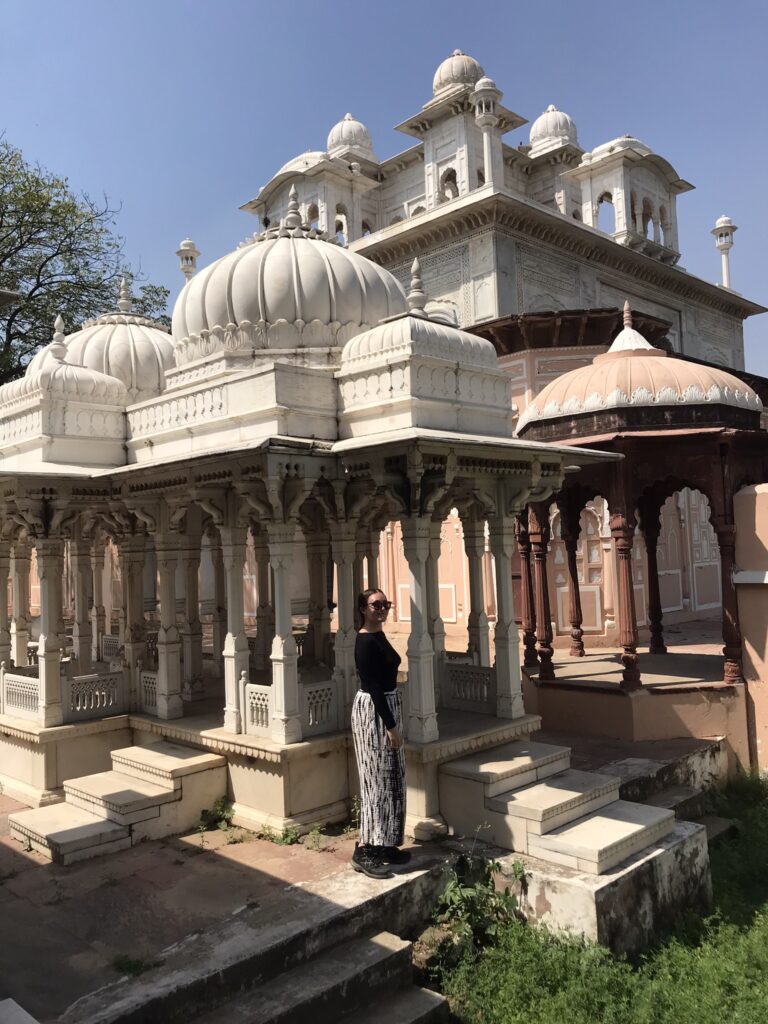
The Shahi Samadha complex was really nice to explore, with not a single other visitor present
Heritage walk (Haveli Street) – this atmospheric and historic winding street near to Qila Mubarak is marked on signs as ‘haveli street’, as it contains many havelis which are in various states of repair. Old havelis stand side-by-side with newer houses. Many of the havelis have a symbol of Ganesh on the door, and there is also a Jain area. People were friendly in the back streets and seemed to be proud of their houses and history – if you hang around for too long, someone might invite you in!
Qila Mubarak – the focal point of the city, this fortress was the main palace of the Patiala dynasty and was built in the 1760s during the time of Ala Singh. Today it is a huge structure right in the centre of the old town, with bustling markets surrounding its outer walls on all sides. Some of the shops are even built into the outer walls of the fortress. We were only able to access the inner courtyard, not the main building itself. Guided tours with special permissions might be allowed into the main building, but we were on our own so couldn’t go in.
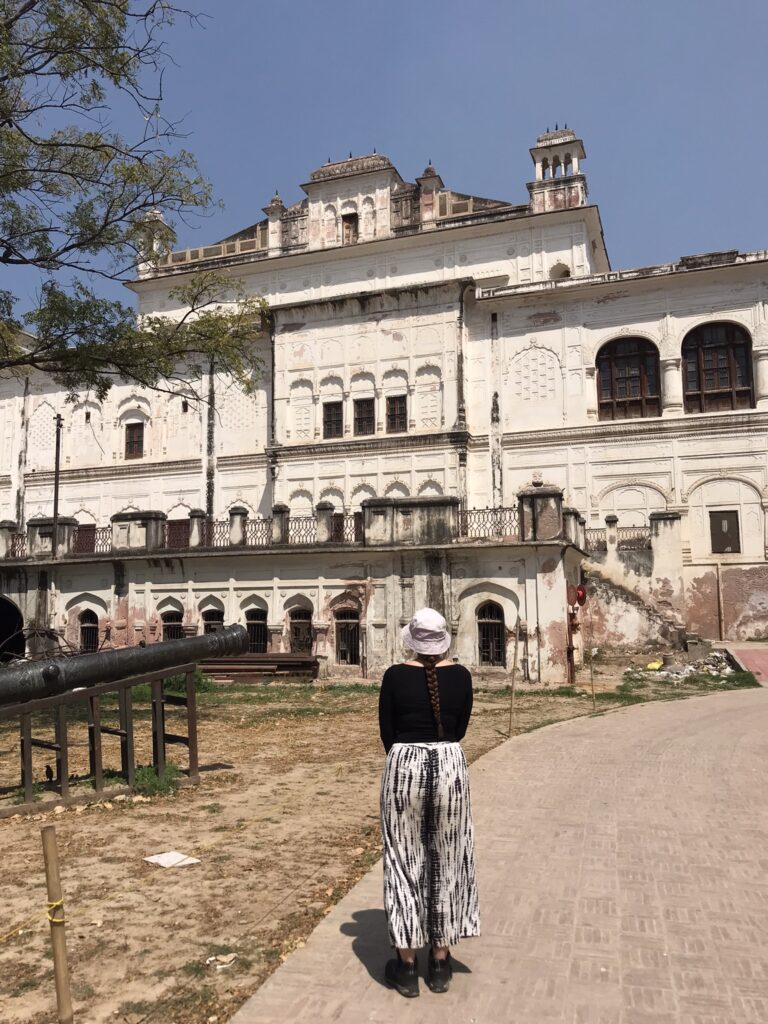
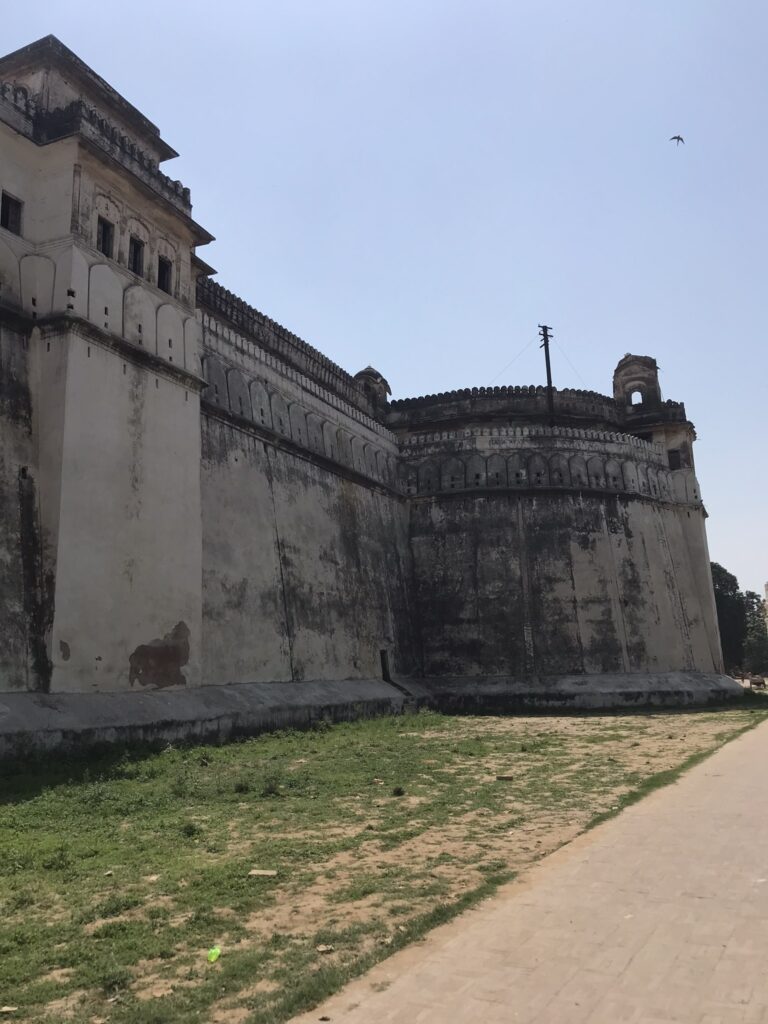
The Qila Mubarak complex has a few buildings inside, but the huge and imposing walls are arguably the most impressive aspect
There seemed to be a lot of renovations going on throughout all parts of the fortress complex when we visited, probably in an attempt to make it into more of an attraction as it was not a particularly polished area for visitors. Children of the renovation workers seemed to be freely running around inside the courtyard when we visited. A very fancy, recently-renovated hotel is located within the fortress complex, with a Sikh guard positioned outside. There were several other buildings dotted around the complex too that we were able to see from the outside only.
Bartan Bazaar – a thriving, bustling market in the old town. A typical Indian-style market area with people everywhere and lots going on.
Cenotaph/Black Elephant monument – located near to YPS Chowk, we stumbled across this small memorial for fighters in the India-Pakistan war. The memorial has some plaques with information about the conflict.
Old Moti Bagh Palace/Sheesh Mahal – a grand palace complex built by the local Maharaja during the 1840s. There is both an old and a new Moti Bagh Palace – these buildings are presently being used by the local government and so are off limits to visitors. The area accessible to the public is the Old Moti Bagh/Sheesh Mahal at the back. We tried to walk there from the old town via Gurdwara Sahib Moti Bagh (a typical grand Gurdwara complex) but couldn’t get through – you need to walk along the main road around to the back of the complex to access the public area.
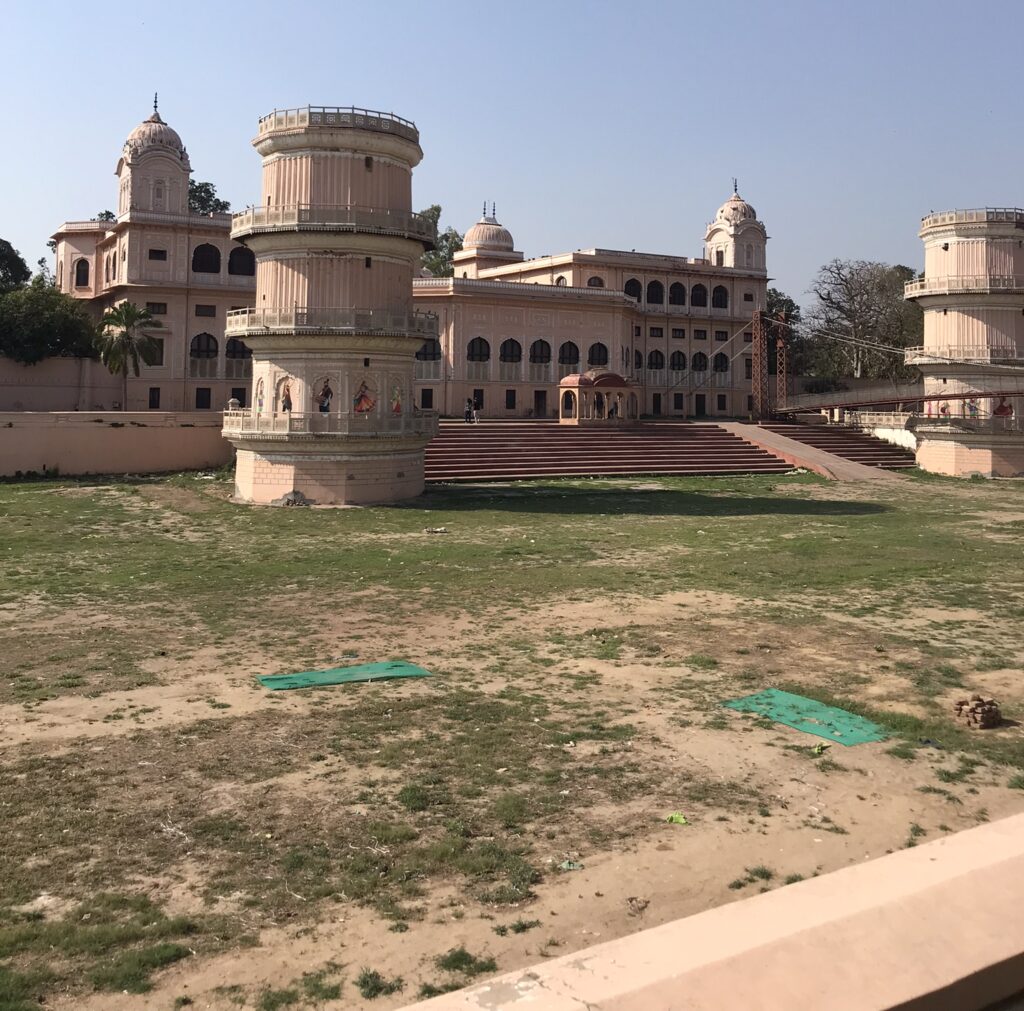
The strangely dilapidated Sheesh Mahal
The area around Sheesh Mahal seemed a bit more sketchy and wild westy than the old town – we were approached quite a lot by some strange people here. The complex contains the famous twin wedding cake style towers, which look like something from a fairytale. However the palace and grounds themselves are not well maintained and are in quite poor condition. It was interesting to see statues of Queen Victoria in the grounds. There seemed to be some small museum rooms, but they were closed when we visited and it was also not possible to go across the bridge when we were there. Hopefully this area gets some form of better maintenance or restoration in the future, as it is quite a grand complex.
Government Mohindra College – another grand palace from the dynastic era which has now been turned into a college. We tried to have a look but could only catch a glimpse from the outside as it is a functioning college and protected by a wall.
Chandigarh
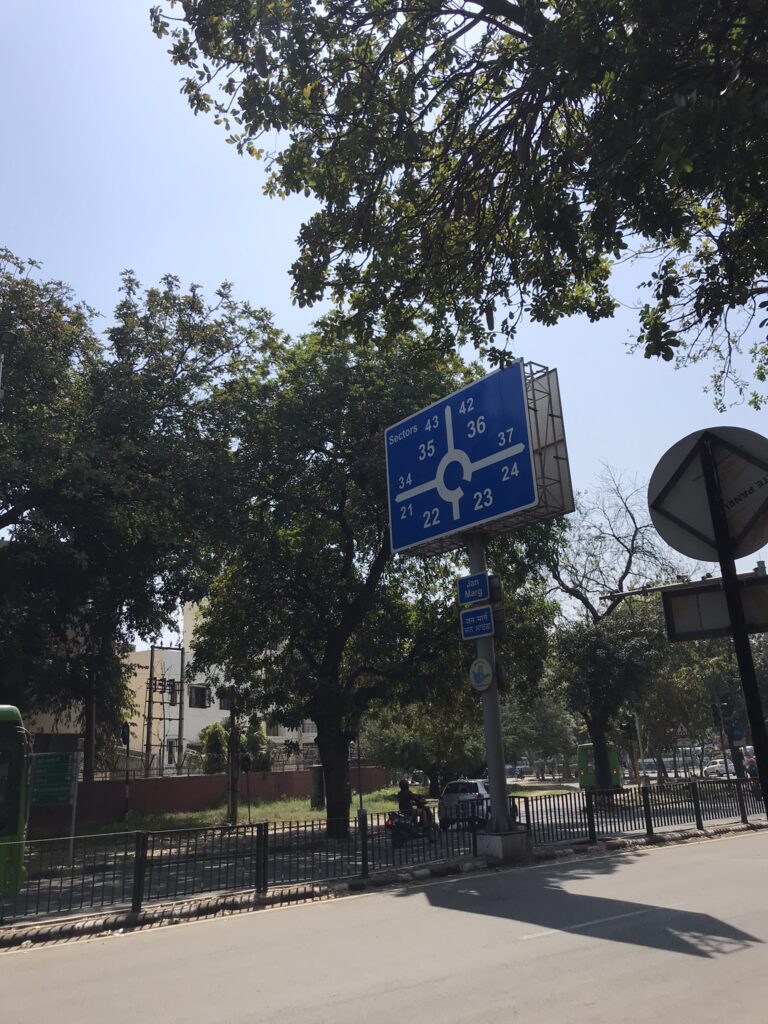
Chandigarh is split into numbered sectors – some of the street signs look like abstract clocks!
A unique city in many ways, Chandigarh serves as the capital of both Haryana and Punjab states but is not technically a part of either – it is classed as its own Union Territory. Chandigarh is also unlike most Indian cities in that it was constructed using modern city planning. Unlike the winding sprawl of many older cities, Chandigarh follows a highly-regimented block system, featuring huge, wide boulevards and dozens of traffic intersections. The city is divided into numbered ‘sectors’, which make up the different neighbourhoods.
A purpose-built capital and administrative centre, Chandigarh was initially created following India’s independence and the Partition of India as the Punjab region had lost its major city (Lahore) to Pakistan. The city was inaugurated in 1953. Later, when Haryana state was created, Chandigarh became the capital for that state as well. Several rural villages were destroyed to make way for the construction of Chandigarh city – controversial at the time, this legacy is recognised in Nek Chand’s Rock Garden, one of the city’s most notable attractions.
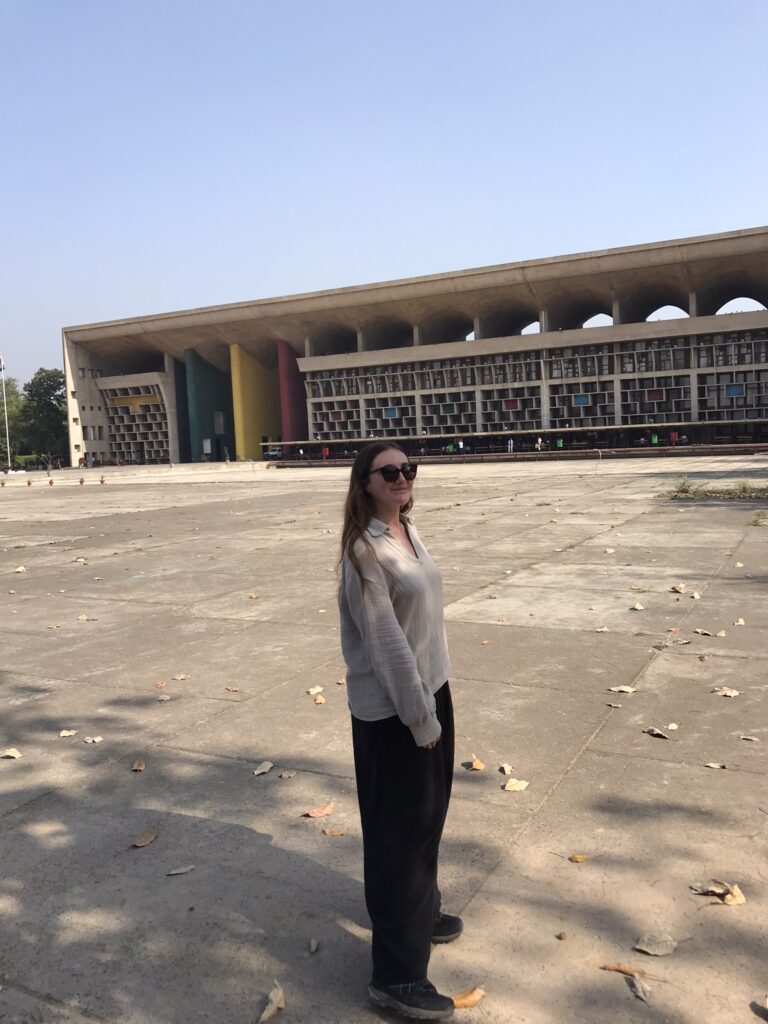
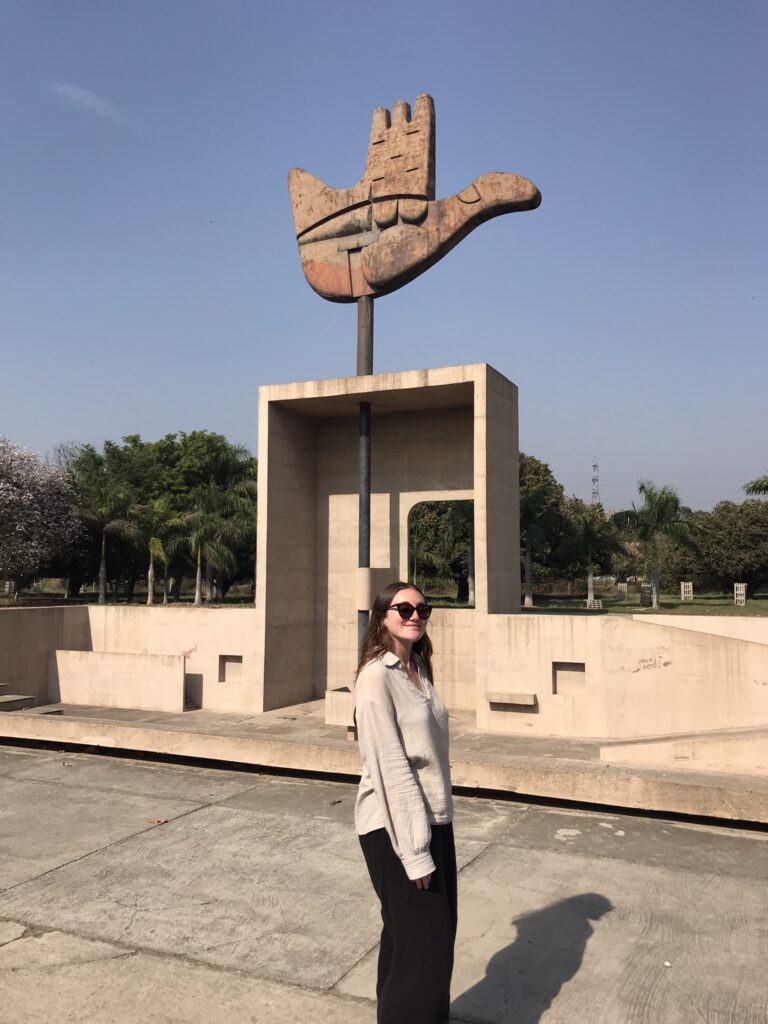
The post-modern Capitol Complex sits at the edge of the city
Despite looking deceptively small on maps due to its grid layout, Chandigarh city is massive, with boulevards continuing on for many kilometres. It’s not a walkable city at all and we found that getting around by tuktuk actually took longer and was more difficult than in some older unplanned cities due to the constant intersections and traffic lights. The main inter-city bus terminal is located in sector 43, and local buses run from there to the rest of the city. As the city is so big and decentralised, we relied heavily on Zomato for food deliveries.
Parts of Chandigarh, including the imposing Capitol Complex which houses the state administrative functions for Punjab and Haryana, were designed by the famous 20th century Swiss architect Le Corbusier. The city feels like a vision of the future from the mid 20th century – lots of concrete reminiscent of 20th century modern art. Be careful of the sloping gutters on all of the main roads – Dan suffered a bad injury here.
We were lucky enough to meet Narinder Singh International at the bus station – a local legend and lovely old chap, he has been helping visitors to the city for many decades. Narinder approached us at the bus station – after spending so much time in India we were cautious of being approached, but it became clear he just wanted to talk to us and help us. He showed us the local bus, refused to allow us to pay for the bus ourselves and even walked us to our accommodation. He also took us into a few interesting places on the way, including the lobby of the Marriott Hotel to use the toilet! We appreciated that he had a stick that he would wave at the traffic to help us to cross.
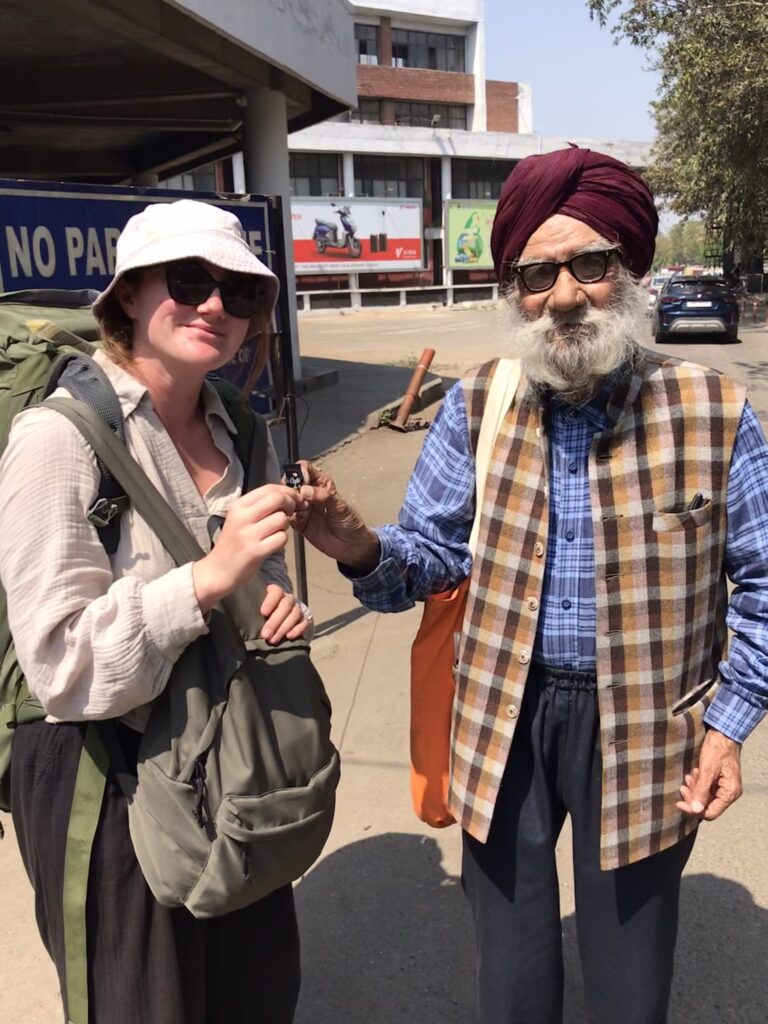
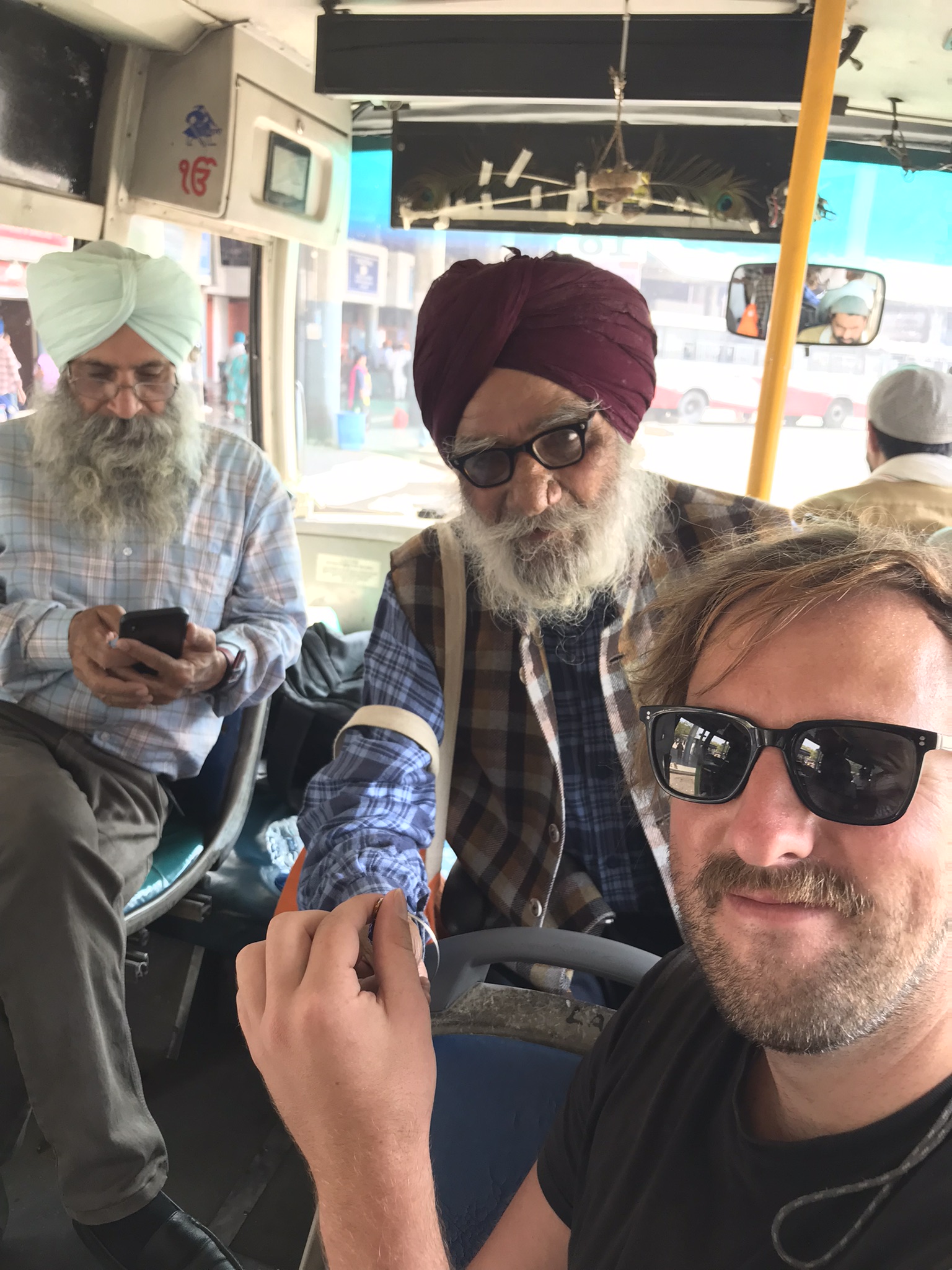
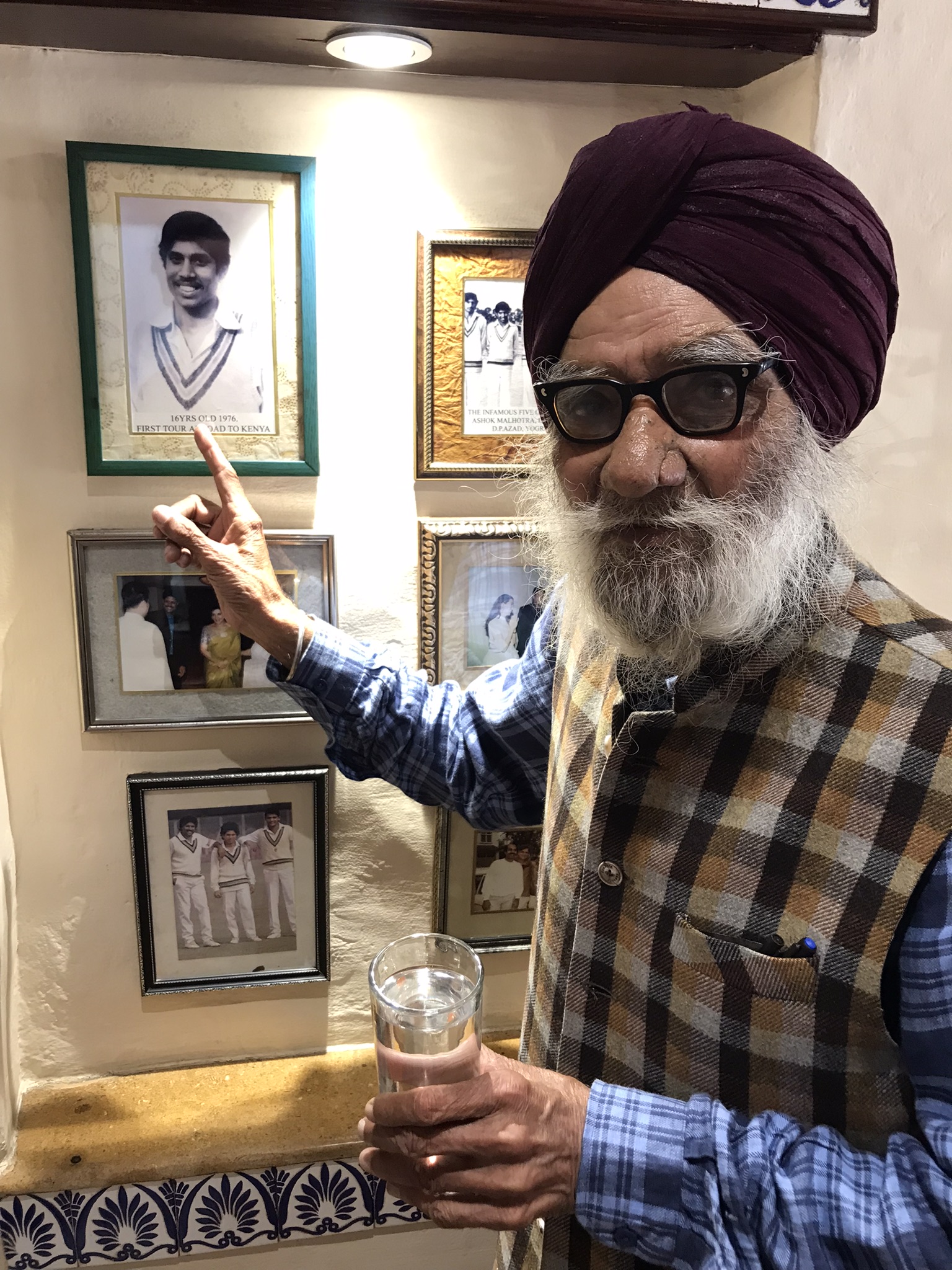
Narinder Singh accompanied us all the way to our hotel
Accommodation
The Kaptain’s Retreat – a cute boutique hotel which is owned by a former captain of the Indian cricket team. There are many photos of his cricketing exploits on the walls. A very comfortable and professional property with interesting interior decorations.
Foodie Places
Aja Honestly Good Food (Zomato) – Mexican chicken burrito which we ordered from Zomato, good quality.
Blue Tokai (Zomato) – again, we ordered using Zomato due to Dan’s foot injury. Pistachio and raspberry croissant, basil pesto pasta, tomato pesto and bocconcini softbread, chocolate hazelnut croissant crookie – outstanding cafe fare.
Activities
Capitol Complex – designed by Le Corbusier, this complex is a UNESCO World Heritage Site and considered an example of ‘modern urbanism’. It is located in sector 1, right at the edge of the city. This area is highly restricted – security is very tight and it’s not possible to walk around freely. The only way to access the complex is by guided tour. There are three tours per day, starting at 10am, noon and 3pm. Tours depart from the visitors centre just outside the main complex entrance. The tours are free but require registration at the visitors centre and foreigners need to show a passport. It is advertised that you need to turn up 10 minutes beforehand, but we arrived with only a minute to spare and were accepted on the tour.
The tour was pretty enjoyable. The guide was quite engaging, willing to chat and answer questions. I think the language of the tour depends on the makeup of the group – our tour was conducted in English as there were visitors from a variety of different Indian states. Apparently the very high levels of security are due to a terrorist attack and assassination that happened here relating to the Punjab insurgency and local separatist movement. We were escorted by security guards along with the guide and were not permitted to get too close to many of the buildings.
We visited the High Court (an unusual concrete structure which looks like books in a bookshelf), the Open Hand Monument (a symbol of the city that people say looks more like a bird than a hand), the assembly and secretariat buildings (but only from a distance)
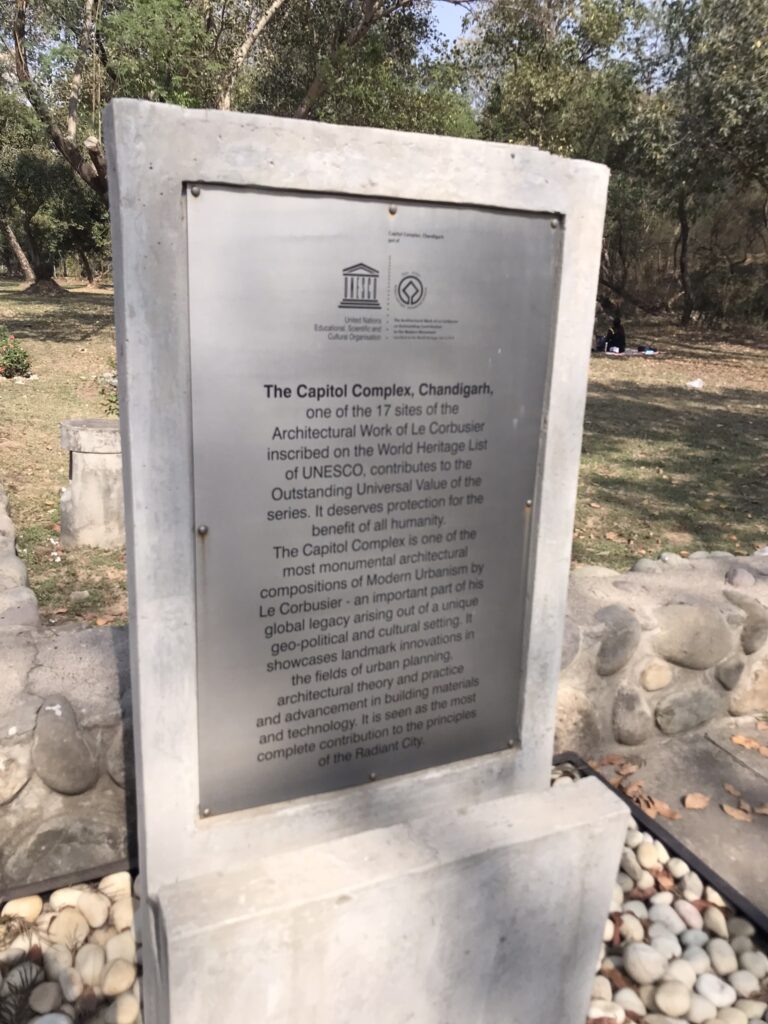
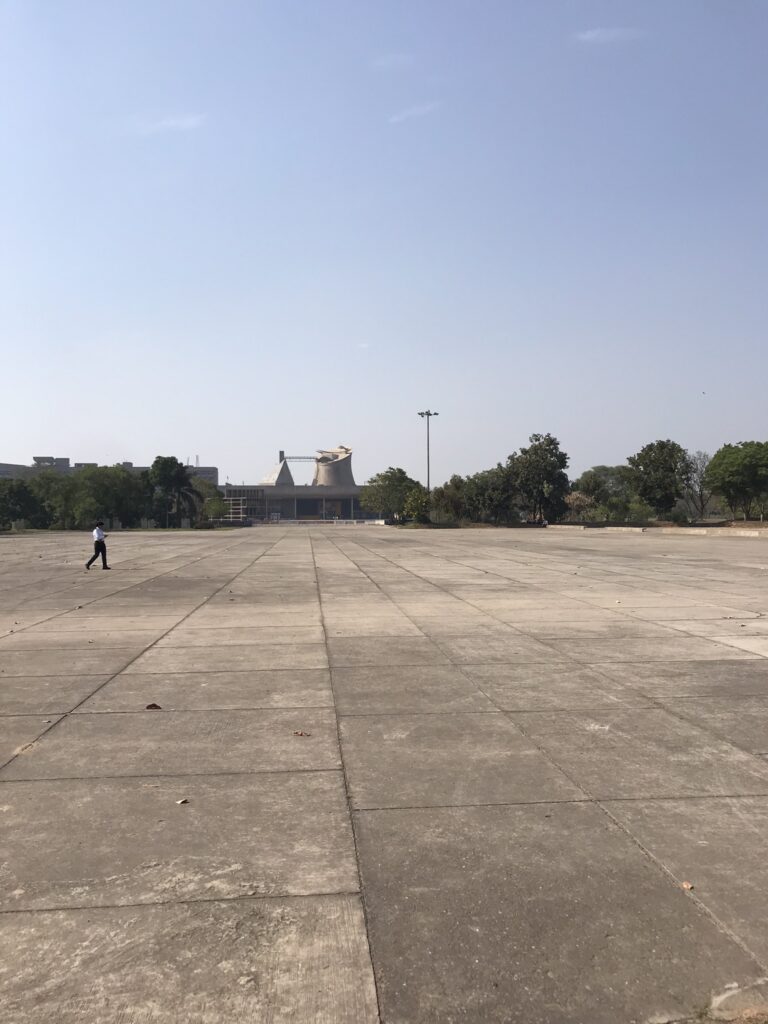
Prepare yourself for a whole lotta concrete at the Capitol Complex
Many of the buildings have been designed in such a way that they remain cool in summer and warm in winter due to the light refraction. There is a huge concrete paved area in the middle of the complex, with several other quirky modernistic features. Although it serves as the centre of administration for both Punjab and Haryana, we were interested to hear that the facilities within the complex are not shared. The buildings are actually internally divided 60/40 between Punjab and Haryana – they even have their own separate canteens!
Nek Chand Rock Garden – one man’s dream brought to life. This surreal space was created by a local man and amateur artist named Nek Chand using materials that were salvaged from various demolition sites, supposedly including the village that was destroyed to create Chandigarh. The legend states that Nek Chand constructed this area in secret without the knowledge or permission of the local authorities. The result is a sprawling whimsical fantasy world which is a bit like a mix of a sculpture park and fantastical theme park area.
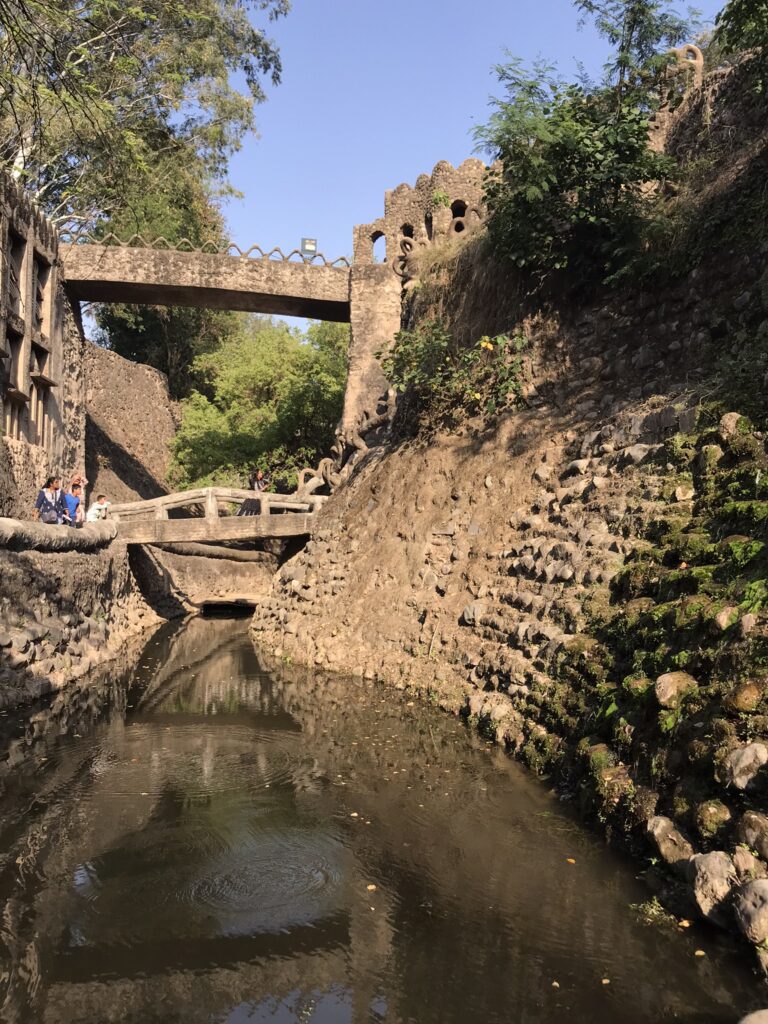
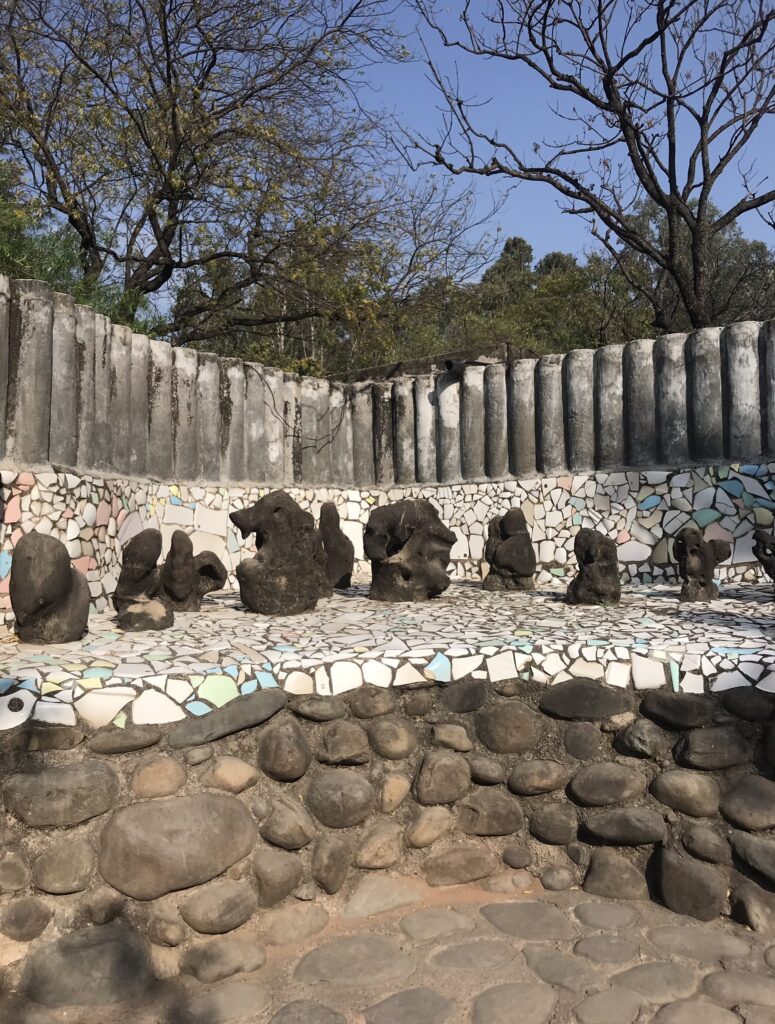
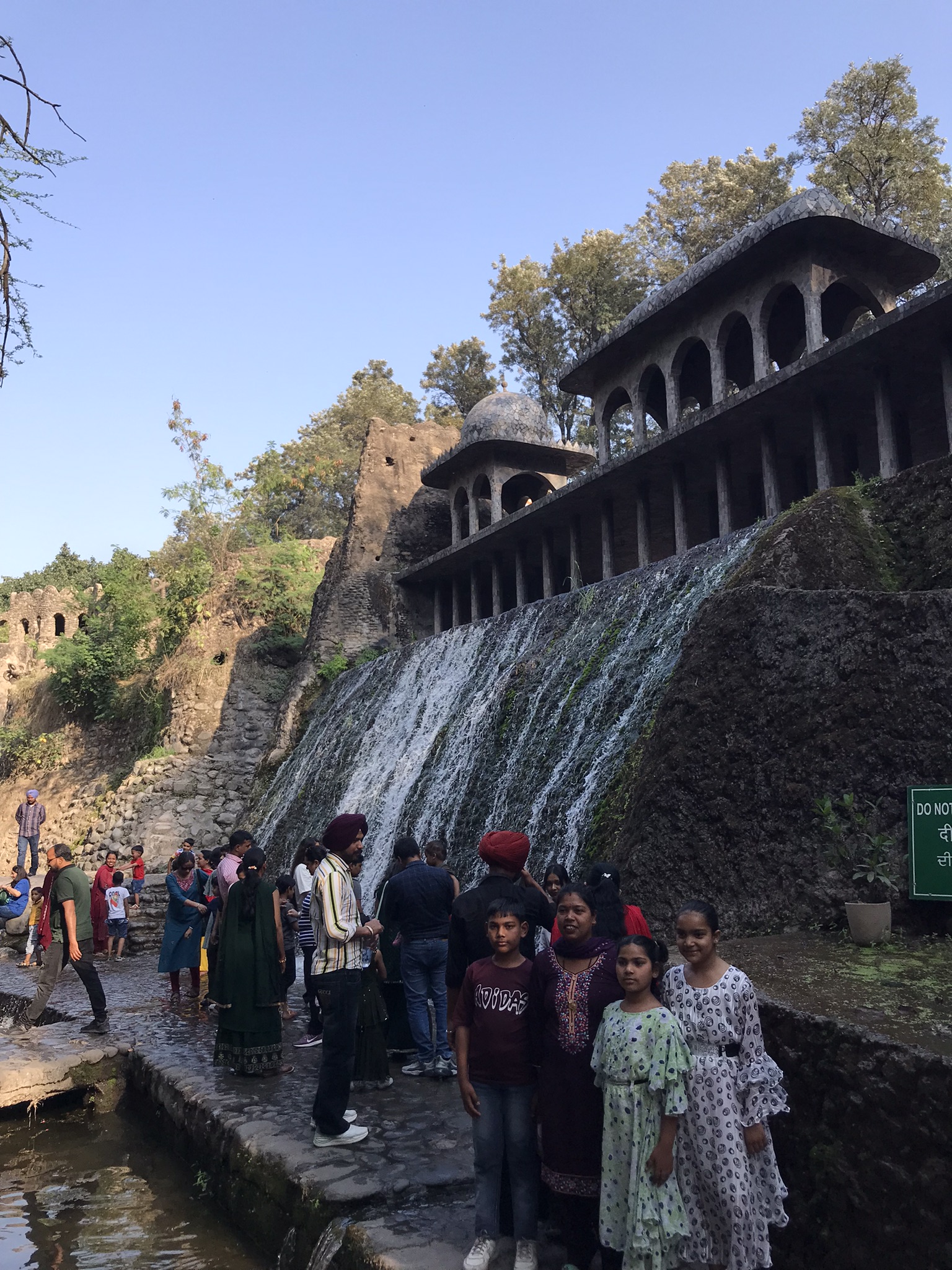
The first section of the Rock Garden is pretty normal
Despite the name, this is not an open garden. Visitors walk around a set trail through the dreamlike landscape. Some parts were like a fairytale with cutesy castles, sculpted waterfalls and fantasy houses – others were like a nightmare with figurines and dolls ominously lined up to represent the displaced villagers. A very strange and surreal place. There are some gimmicky attractions at the end of the walking route including a house of mirrors, a children’s playground, a ‘doll museum’ featuring dolls illustrating scenes from daily life and a small aquarium.
The garden is extremely innovative, with the wide variety of materials used to create the sculptures and structures. Well-known in India, it’s a popular attraction for domestic tourists and families. I wouldn’t want to be in some parts of the garden after dark as they were somewhat creepy and disturbing. The park is located just next to the Capitol Complex and is walkable from there – we visited after taking a tour of the Capitol. Entry was only 30 rupees when we visited. Fun, thought provoking, interesting and also a little creepy in equal measure
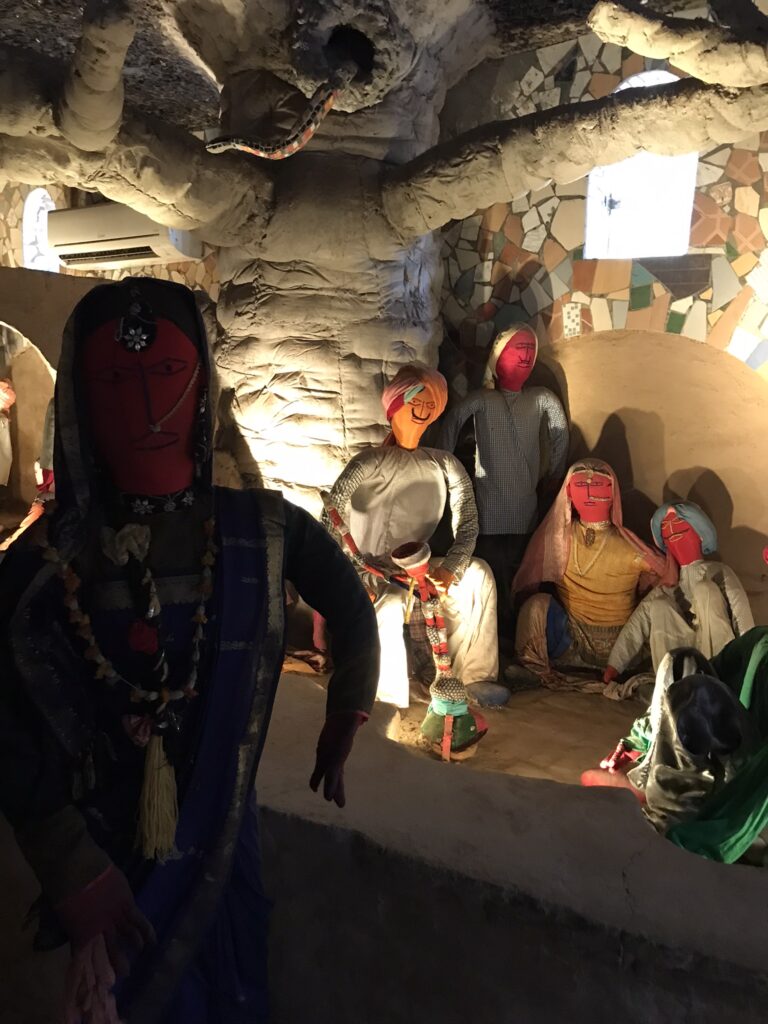
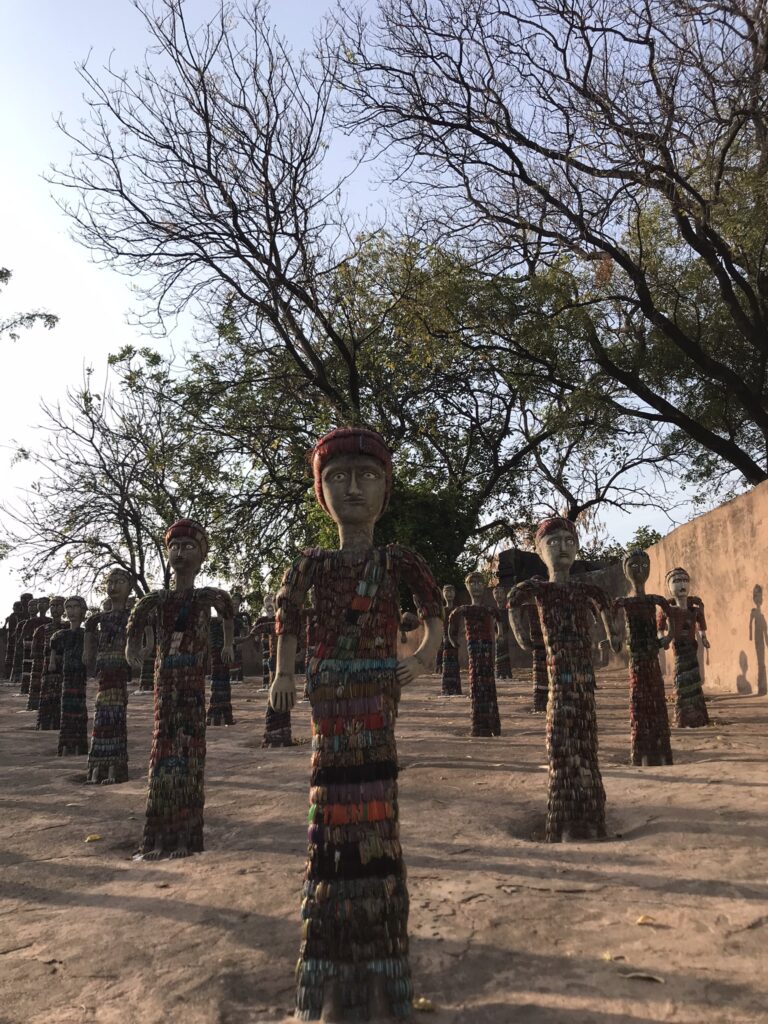
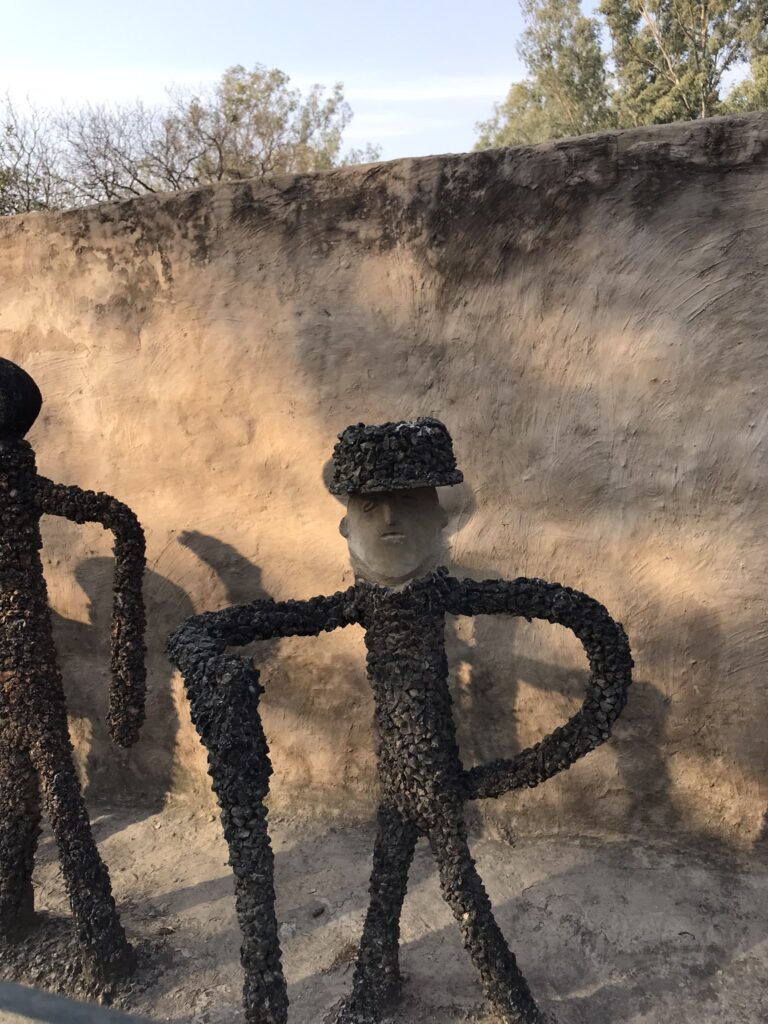
Things become quite bizarre in the Rock Garden
After visiting Chandigarh, we took a bus to Shimla in Himachal Pradesh, then headed to Dharamshala before getting a bus from there to Amritsar.
Amritsar
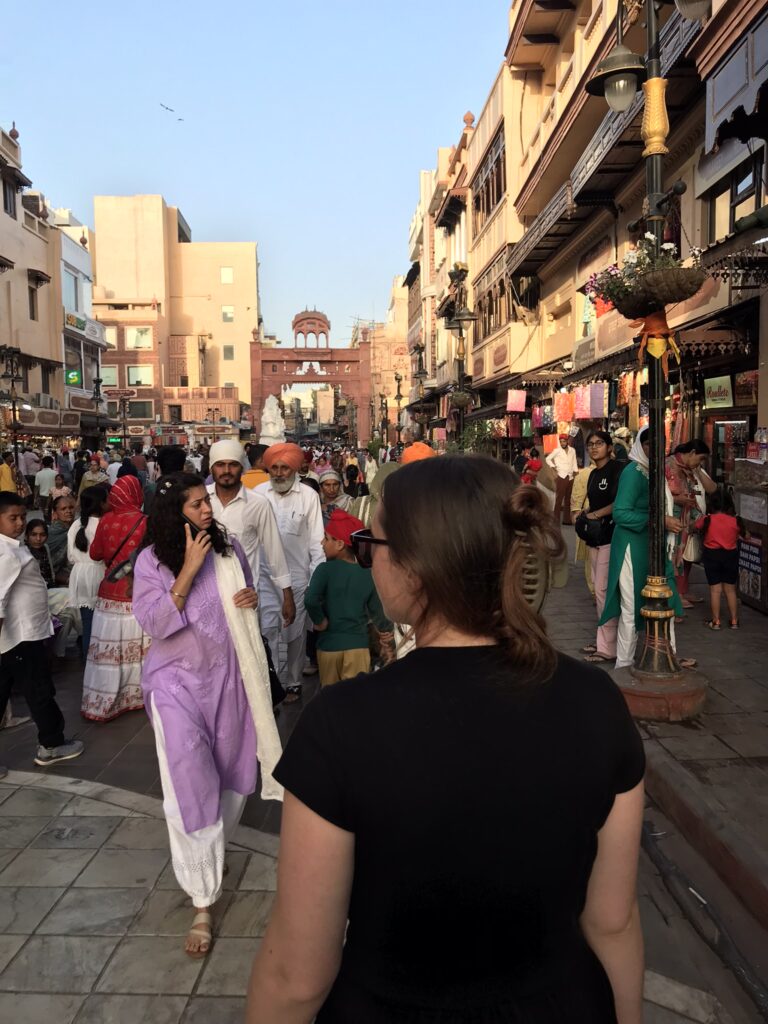
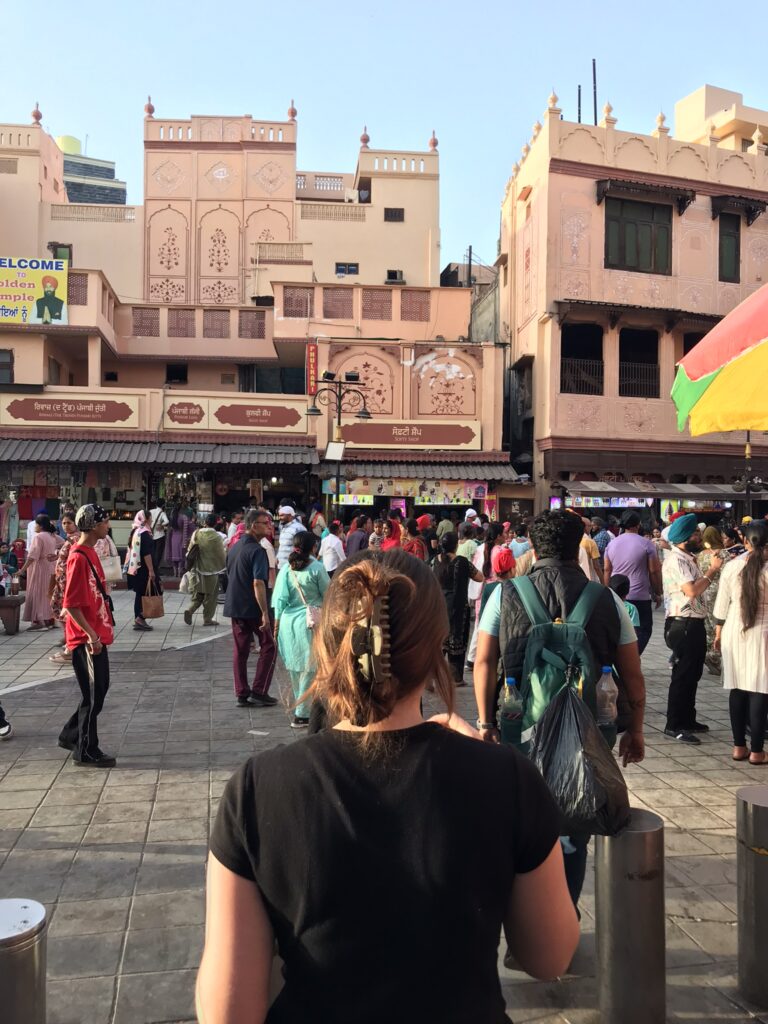
The sacred city of the Sikhs, Amritsar is best known as the location of the Golden Temple, the holiest building in Sikhism. It’s also a historically relevant city as it was the site of several significant events during the 20th century which helped to shape modern India, particularly in relation to its independence and the subsequent Partition of India.
Formerly a sister city with Lahore (now in Pakistan), Amritsar became a frontier during the time of the Partition when the territory was divided along an arbitrary line by the British. As the last and first stop for the massive transfer of people which resulted from the Partition, Amritsar witnessed violence and terror due to its location so close to the border. Much of this is documented in the Partition Museum in the city. Amritsar was also the location of the Jalianwala Bagh massacre in 1919, the worst atrocity committed during the time of the British Empire, as well as Operation Blue Star, one of the most shocking incidents of the 1980s which directly led to the assassination of India’s president, Indira Gandhi.
Amritsar is still the closest major city to the Wagah border, which for a long time was the only functioning land border between India and Pakistan. When open, this border is home to the famous Wagah border ceremony, with high-kicking guards from both India and Pakistan performing the ceremonial border closing in front of cheering crowds in a purpose-built stadium each evening.
Amritsar itself is a typically chaotic, visceral city. It can be very hectic in the area around the Golden Temple, although the streets have been cleaned up and pedestrianised in recent years. It’s still bustling with huge swarms of people – pilgrims, street sellers and even the odd Western tourist. There are many shops around the Golden Temple selling Sikh regalia, including turbans and kirpans, as well as stands selling kulche and other typical Punjabi street food. The old town can be quite atmospheric with its classic narrow winding streets and back alleys. The area outside of the old town is filled with horrendous traffic jams and lots of persistent tuktuk hasslers, particularly around the bus station.
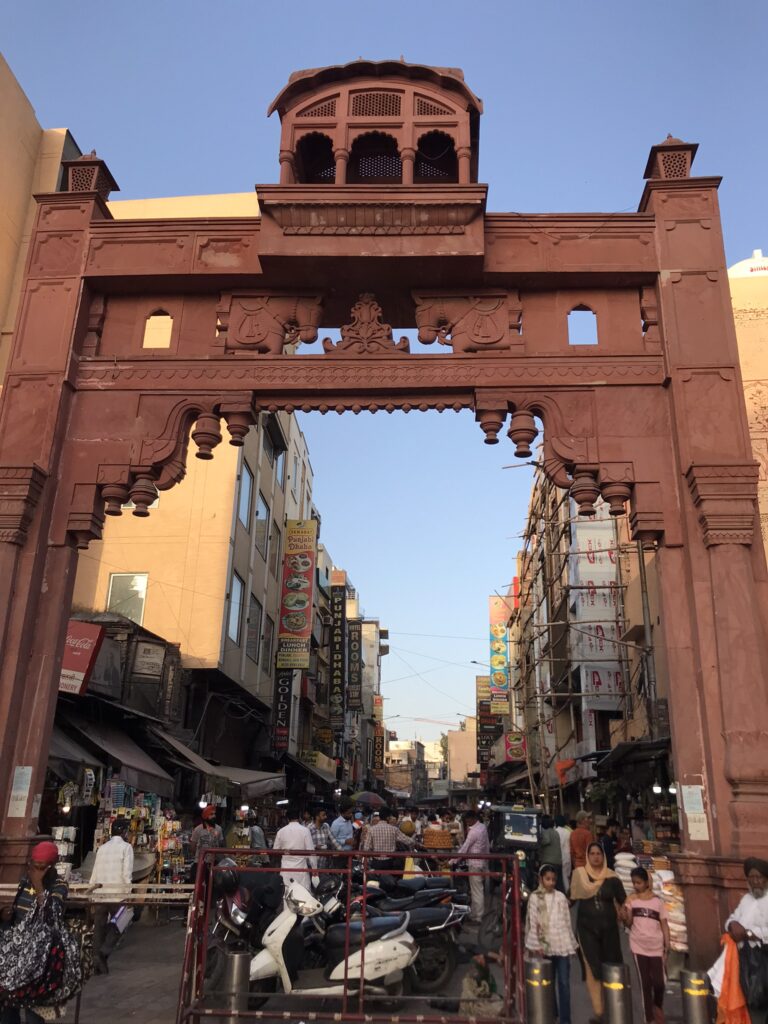
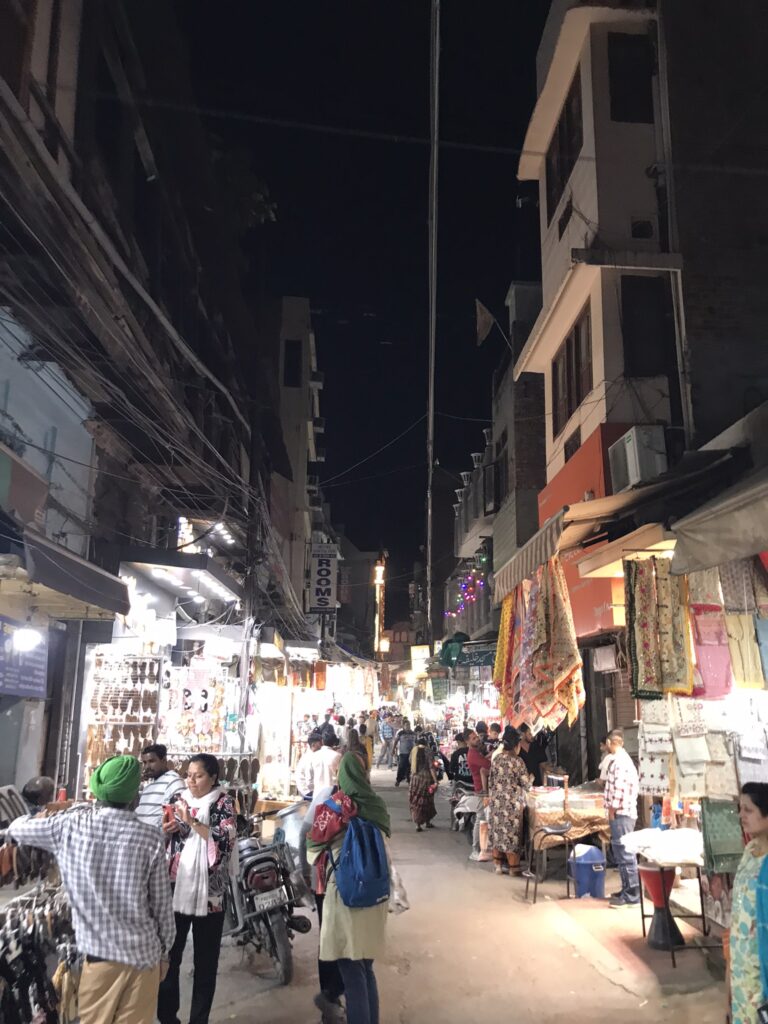
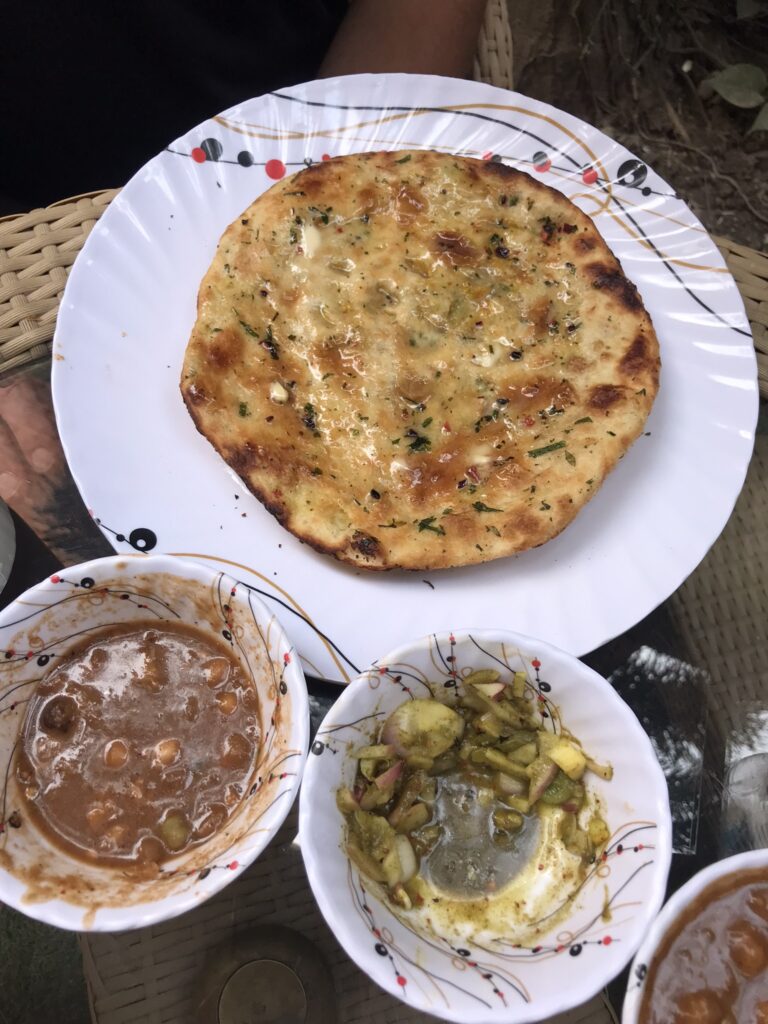
The streets around the Golden Temple are heaving with people, some indulging in the popular street food, kulche
Accommodation
City View with Garden – the highlight here was the extremely nice owner, a lovely man who gave us free breakfast most days, agreed to allow us an early check-in when we arrived exhausted after the early morning bus from Dharamshala, arranged a driver for the Wagah border ceremony and even provided us with a hand-drawn map. The rooms were ok, a little dated but the owner was such a nice guy that staying here was more than worth it. A good price and good location too, near to the Golden Temple.
Foodie Places
Strangely we struggled to find decent places to eat in Amritsar – hygiene ratings did not seem to be the best. It’s all about Dhabas in the Punjab region, but we were super careful with street food in India and couldn’t find any that we trusted enough to eat at.
Masala Darbar – we liked the thali – reasonably priced. The restaurant is connected to a hotel which meant we trusted the food a little bit more.
Golden Temple – a community kitchen (langar) is a feature of all Sikh temples and this is one of the largest and most renowned in the world. Food is free for everybody, with the only rule being that you are expected to eat all of the food that you are given and not ask for any more than you can eat. People are accepted into the dining hall in waves and sit cross-legged on the floor to eat. There was a fair amount of confusion, pushing and shoving while waiting to get into the dining area – even a guy in a wheelchair was being jostled by the hungry crowds. Once in, you are provided with a metal tray and Sikh attendants then come around offering food from large vats. The usual fare is daal, chapati, rice and some sort of rice pudding dessert. Prepare to eat with your hands. Everybody is equal in the langer – you could be sitting next to a beggar or a millionaire CEO.
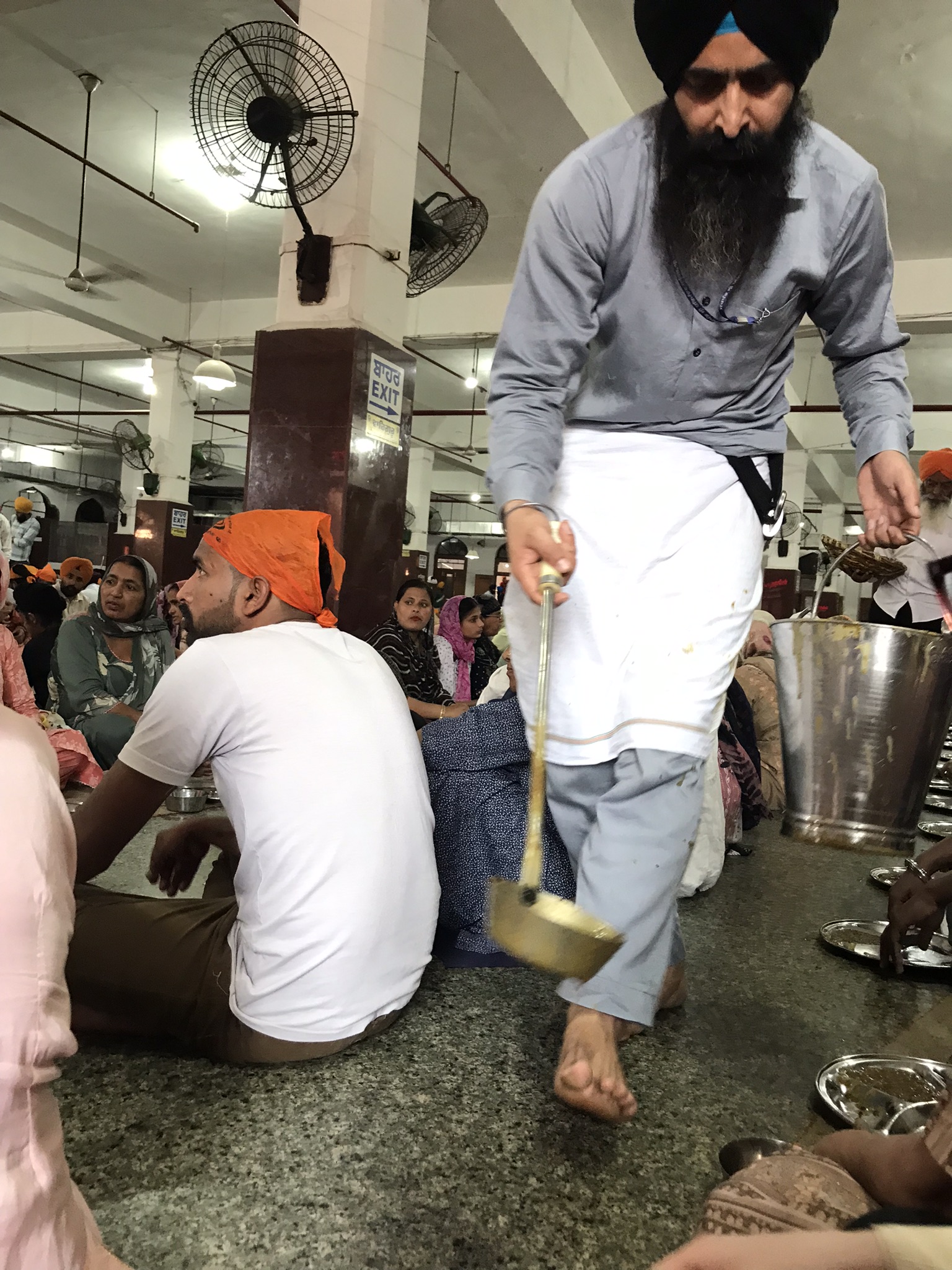
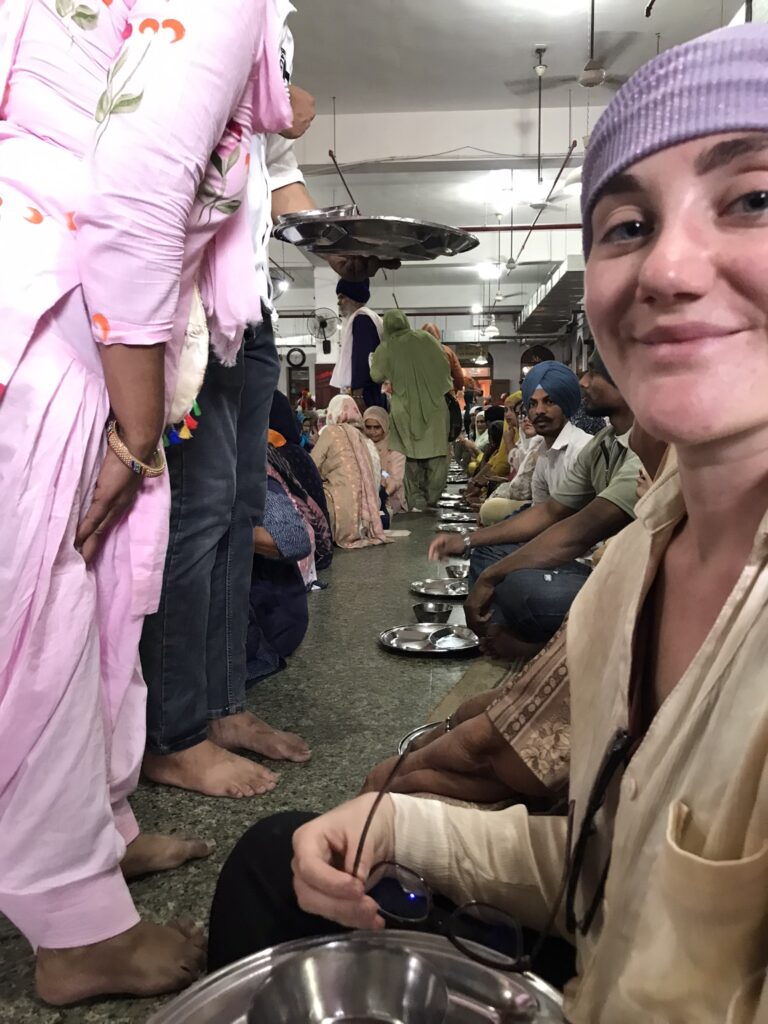
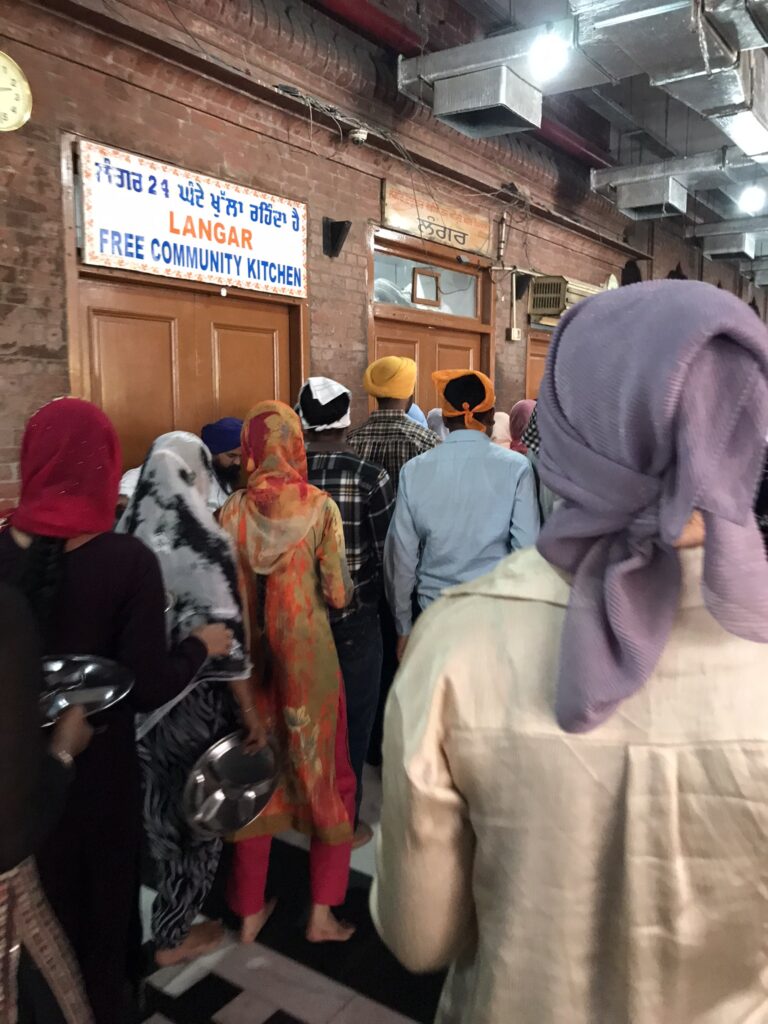
Every Sikh is expected to perform voluntary service as a part of their faith, working in the langar is one aspect of this
Greko Golden Temple Coffee Shop – located just outside the Golden Temple, an ok place to grab a paneer burger and cold drink, the cakes looked good too.
Greko Reserve (Zomato) – we got a delivery of a ‘Mexican burrito bowl’ and chilli garlic noodles. The burrito bowl included baked beans, which was interesting.
Activities
Partition Museum – an excellent museum with lots of detailed information about India’s independence movement, the actual process of Partition and the aftermath. The museum contains mostly info/interviews and document transcripts etc rather than artifacts, although there were some donated artifacts from survivors. We spent almost 4 hours inside this museum. We did notice that the museum was somewhat skewed towards the Indian side of the Partition, although this is understandable. The museum audio guide mainly just repeats the info on plaques and isn’t really worth it.
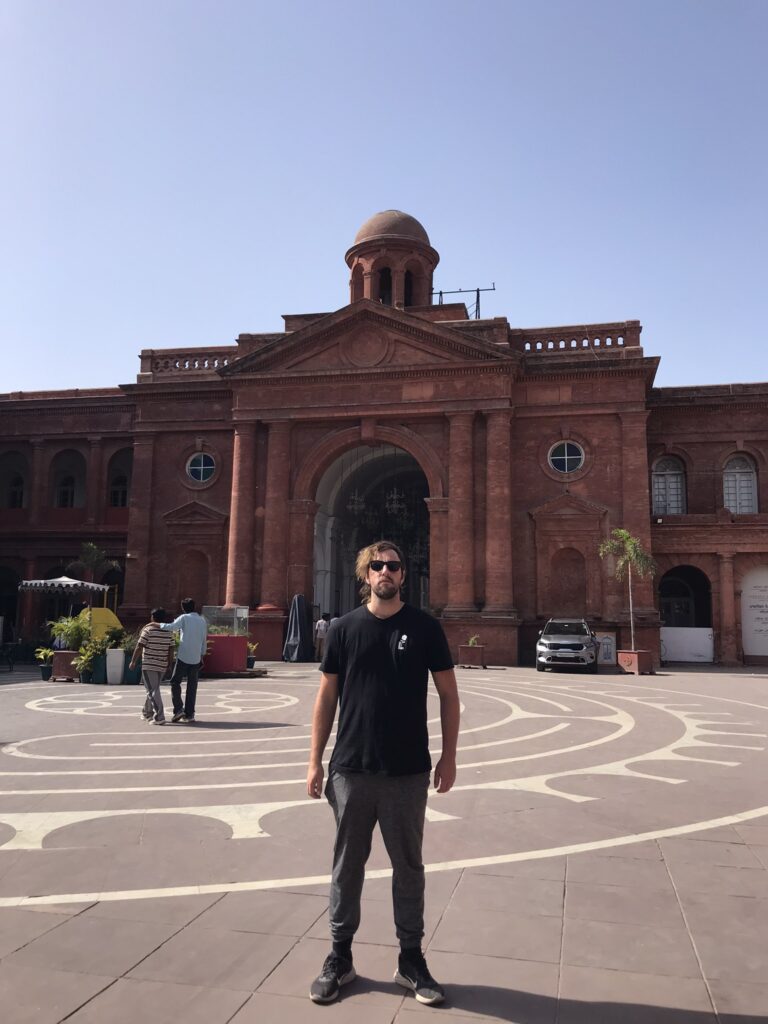
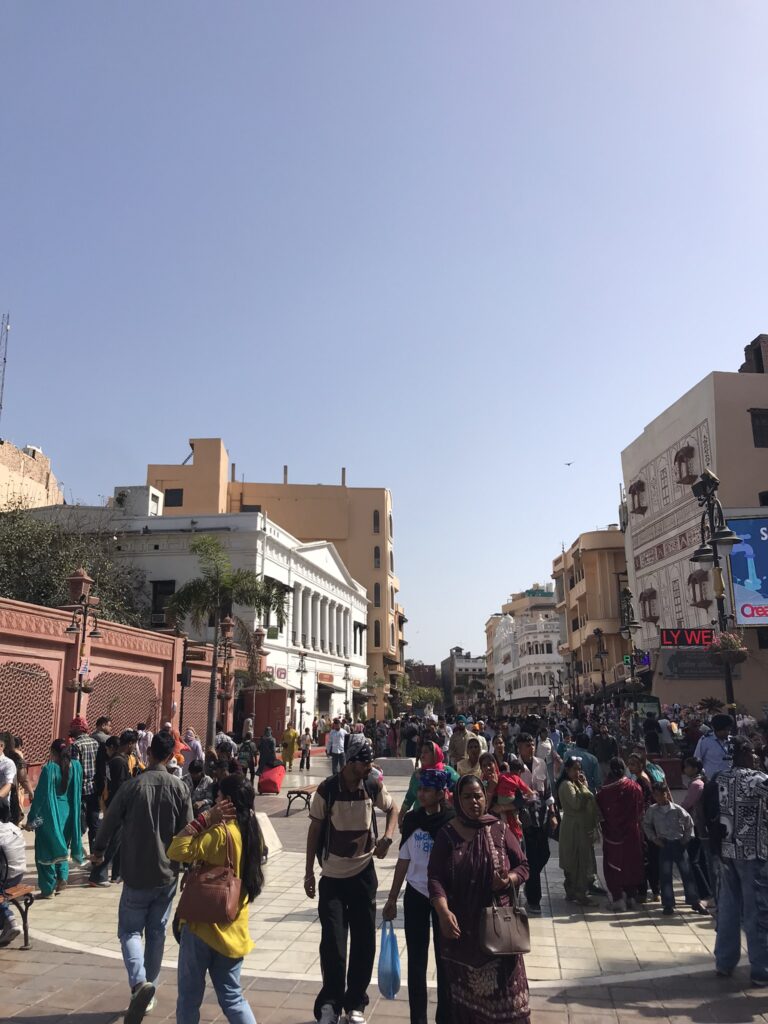
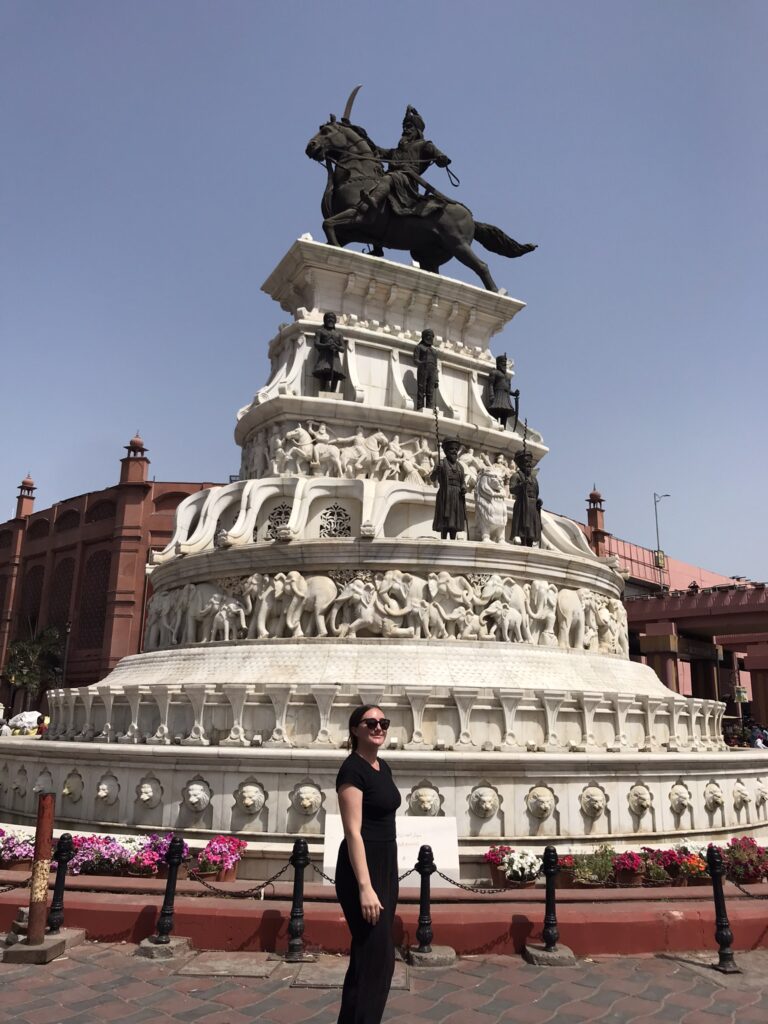
As with the Golden Temple, the Partition Museum and surrounding streets can get incredibly busy
Jalianwala Bagh – the site of the infamous massacre, when a British general ordered troops to open fire on unarmed civilians taking part in a protest in 1919. Entry is free to the area, which contains the square (now a garden with some memorials), some rooms with museum displays and some of the original buildings/features of the square, with bullet marks still visible. The well is a particularly poignant place as many people dived in to avoid the cascade of bullets.
Visiting was a strange experience. There were several informative and poignant displays, but there was also jovial music at the entrance and the place seemed to be filled with happy Indian families taking photos, making reels and asking us for selfies – it didn’t really seem fitting behaviour considering what happened there.
The displays in the garden are mostly nationalistic and vitriolic towards the British, which is understandable, although certain historical aspects are omitted. The small museum rooms contains the ashes of the man who assassinated Michael O’Dwyer, an Irish officer who was Lieutenant Governor of Punjab at the time of the massacre and supported the atrocity.
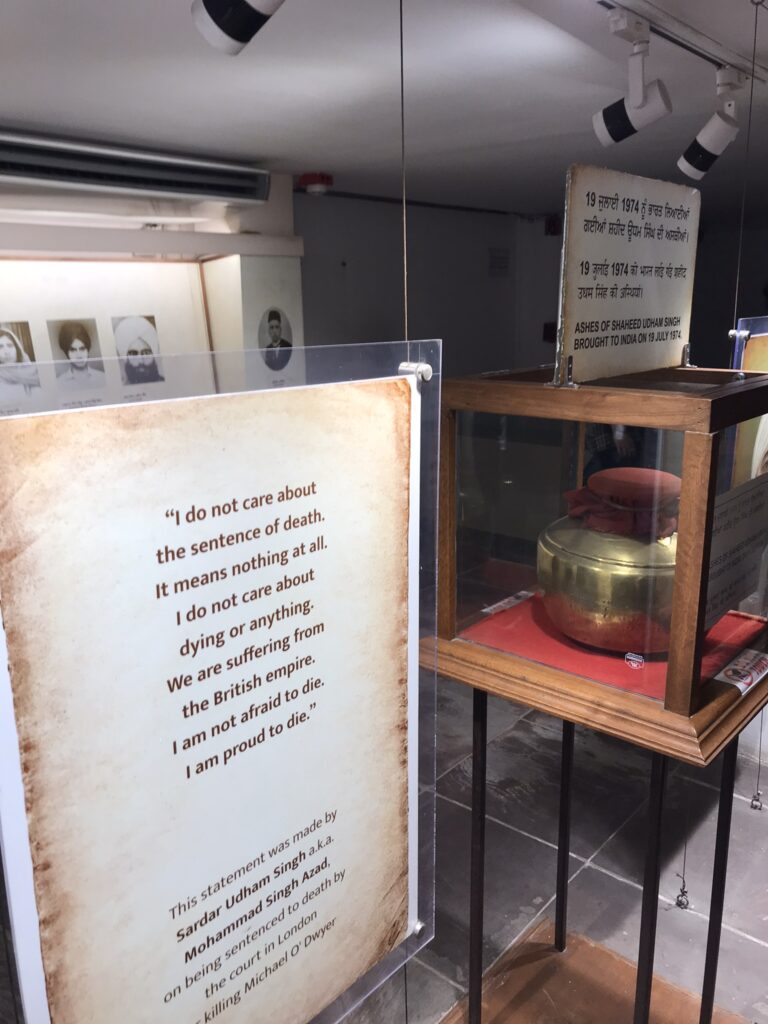
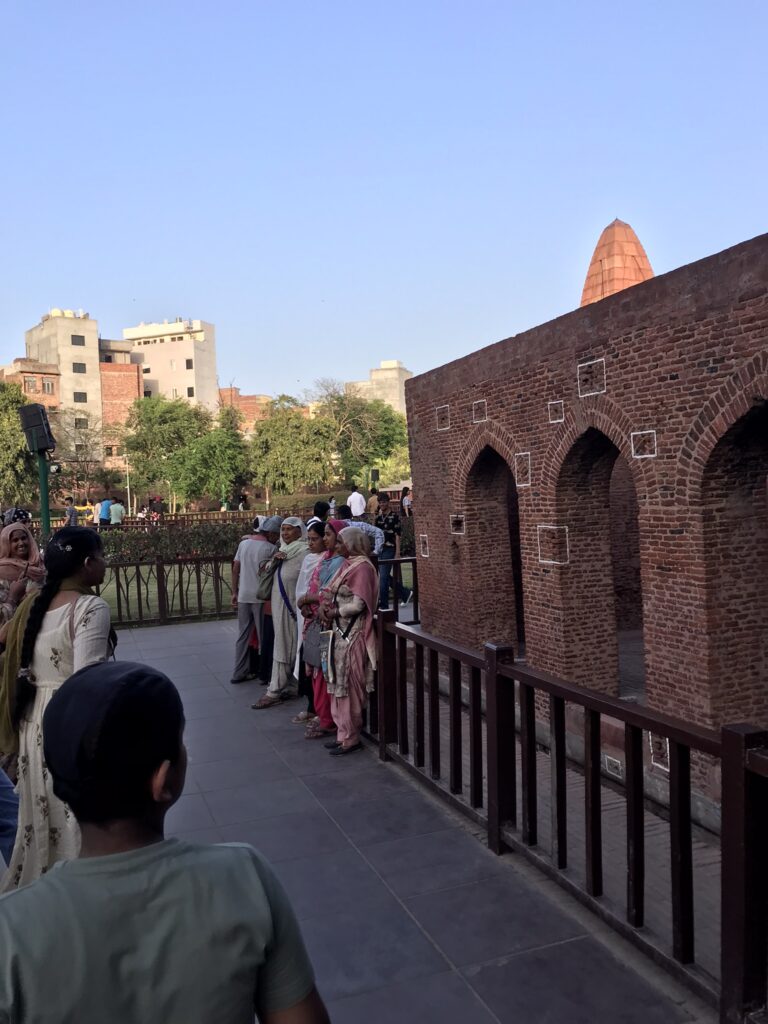
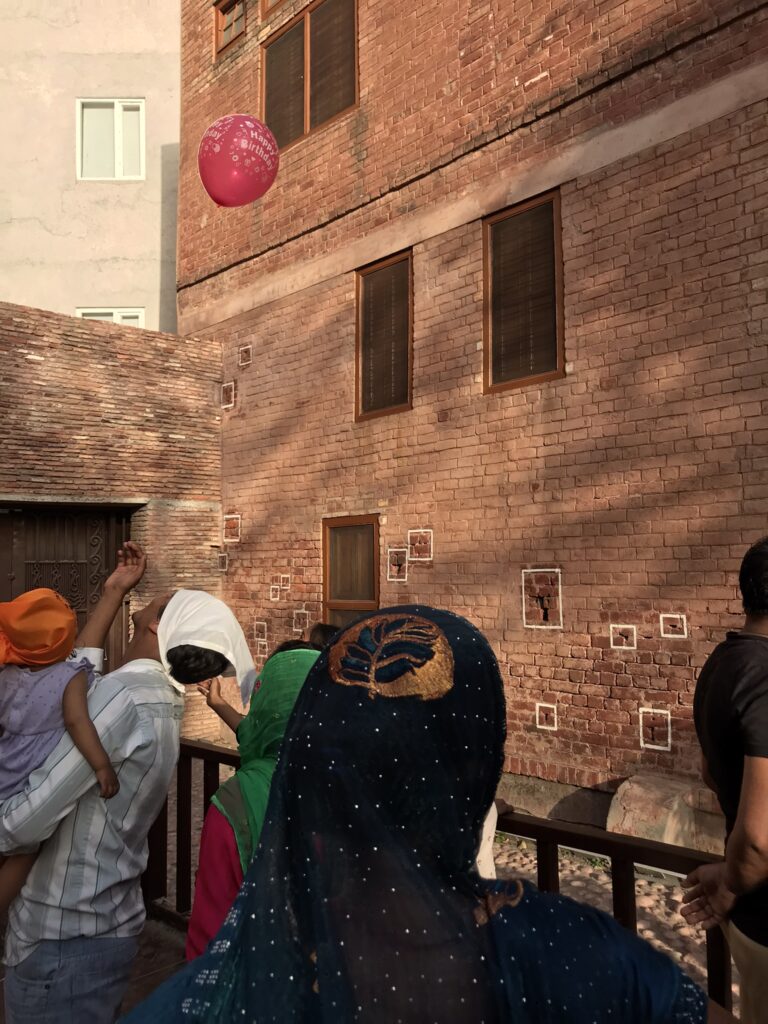
The oddly jovial atmosphere at Jalianwala Bagh was slightly unnerving; in case you’re wondering, yes the white squares mark out bullet holes; the ashes of an Indian patriot who assassinated the colonial Lieutenant Governor of Punjab
Golden Temple – the centrepiece of the old town of Amritsar and focal point of the city. It’s very easy to access the temple complex. No shoes or socks are permitted inside and head coverings are mandatory, however everything is free (to borrow) including the shoe deposit and head covering. Sikh guards in traditional blue robes armed with spears maintain order. They look formidable but are very friendly if you obey the rules. People inside the temple are also very friendly. The guards at the entrance are for some reason very strict about not bringing in cigarettes or anything to do with smoking – luckily we are non-smokers.
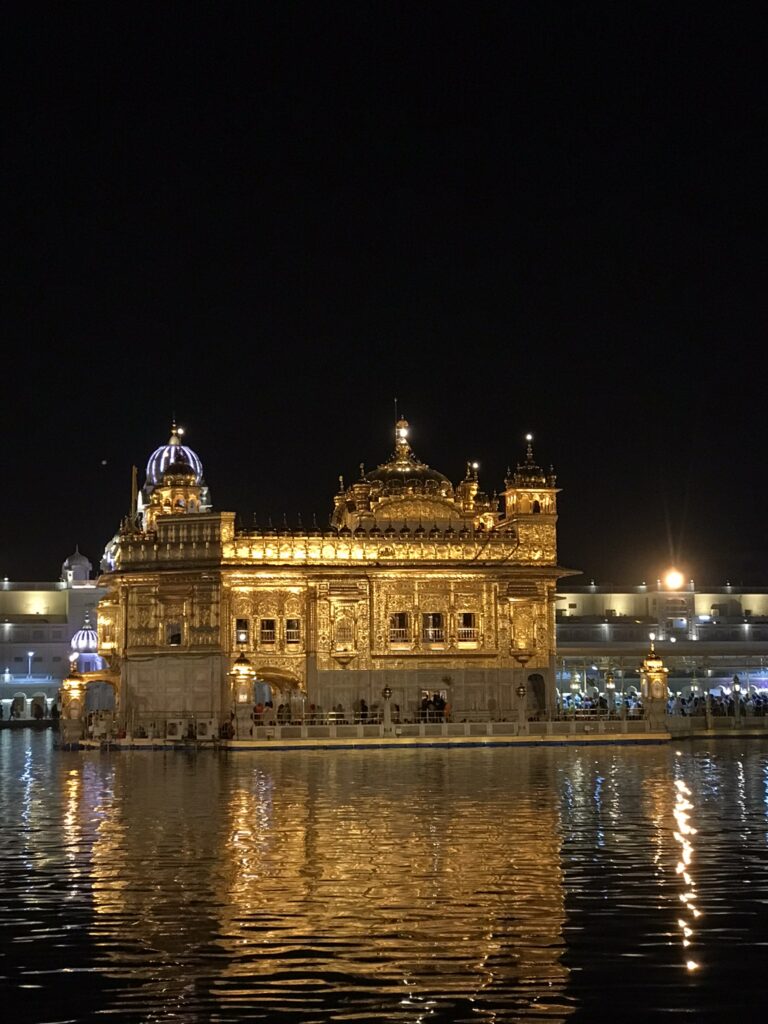
The Golden Temple is the centre of a large complex containing many other important buildings and palaces, which can be freely explored. The temple itself is almost like a mirage in the middle of the water tank. We enjoyed just walking around the tank and looking at the temple from various angles. Sikhs bathe in the sacred tank and there is a special section for women to bathe behind a screen. Non-Sikhs are made to feel very welcome within the complex, however should not bathe in the pool. The temple complex is absolutely buzzing and thronging with people – many people appeared to be sleeping in there.
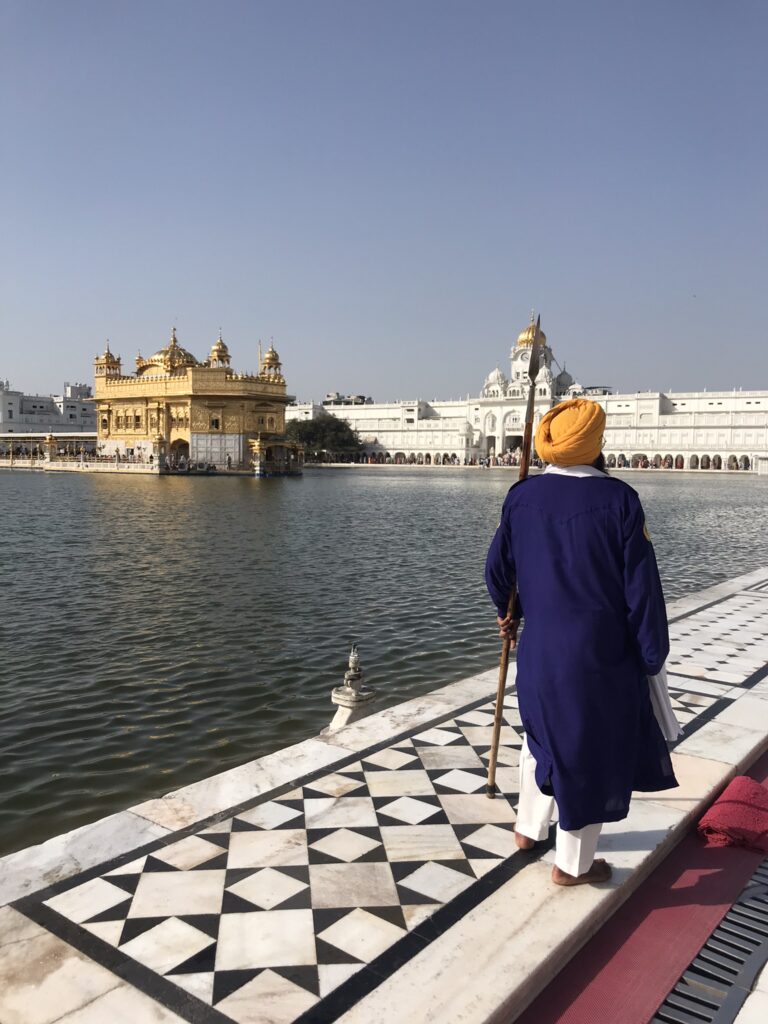
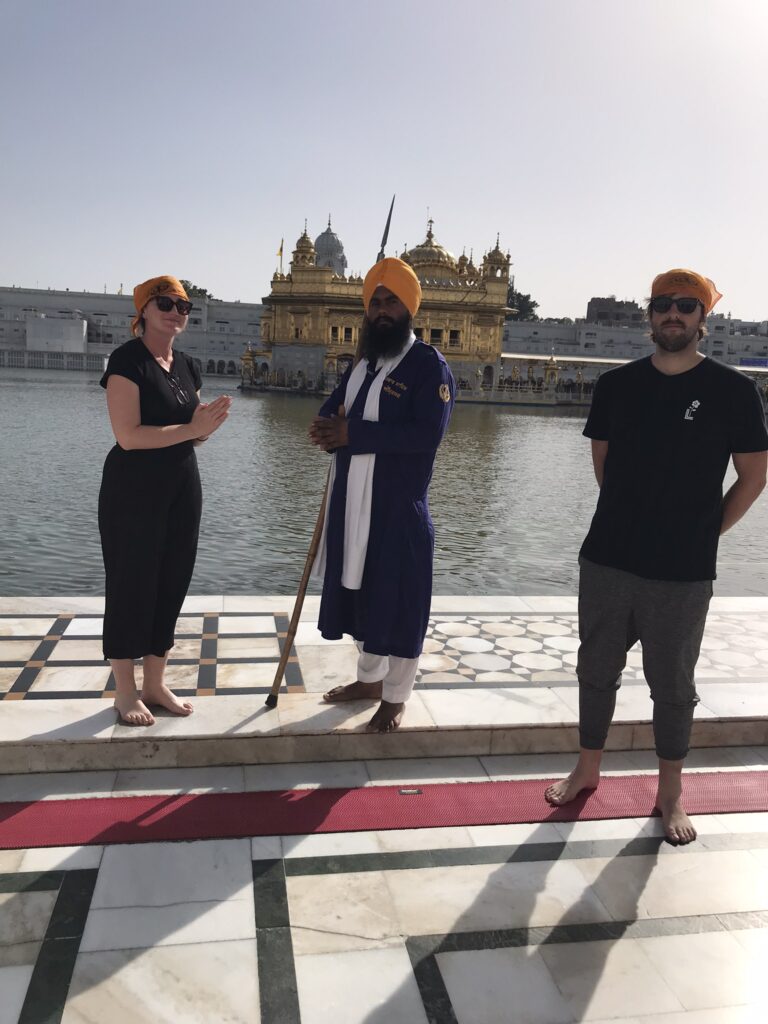
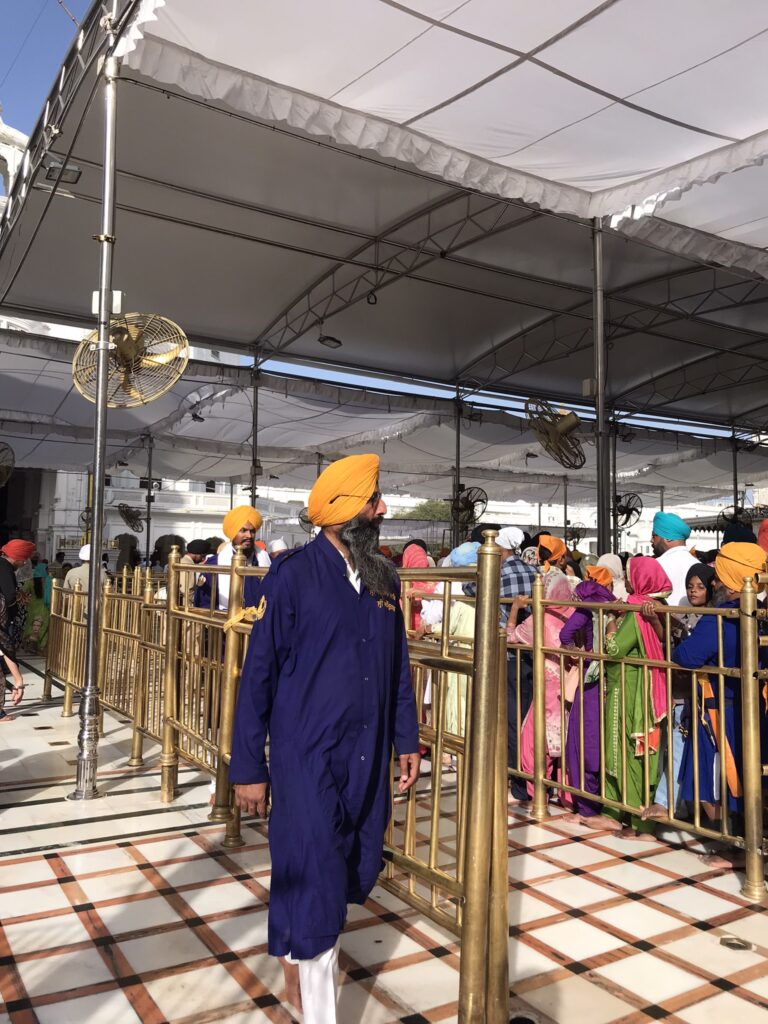
The never-ending queue for the main shrine in the Golden Temple and the friendly Sikh guards on patrol
The temple complex is open 24 hours per day. The complex is particularly spectacular after dark, with the gold reflections shimmering across the dark waters of the tank. It is possible to enter the inner sanctum of the temple itself, but the queues can be pretty terrible at all times of the day.
The ceremony of the Guru Granth Sahib being brought into the actual Golden Temple early in the morning is an important daily occurrence. We got up to see this as we didn’t think it would be super busy at that time, but we were wrong. It was an awful experience, queueing for 2 hours to get into the temple while being crushed, pushed, shoved in the back and stepped on by old women in the queue. Several people around us fainted while queueing. Not a fun experience.
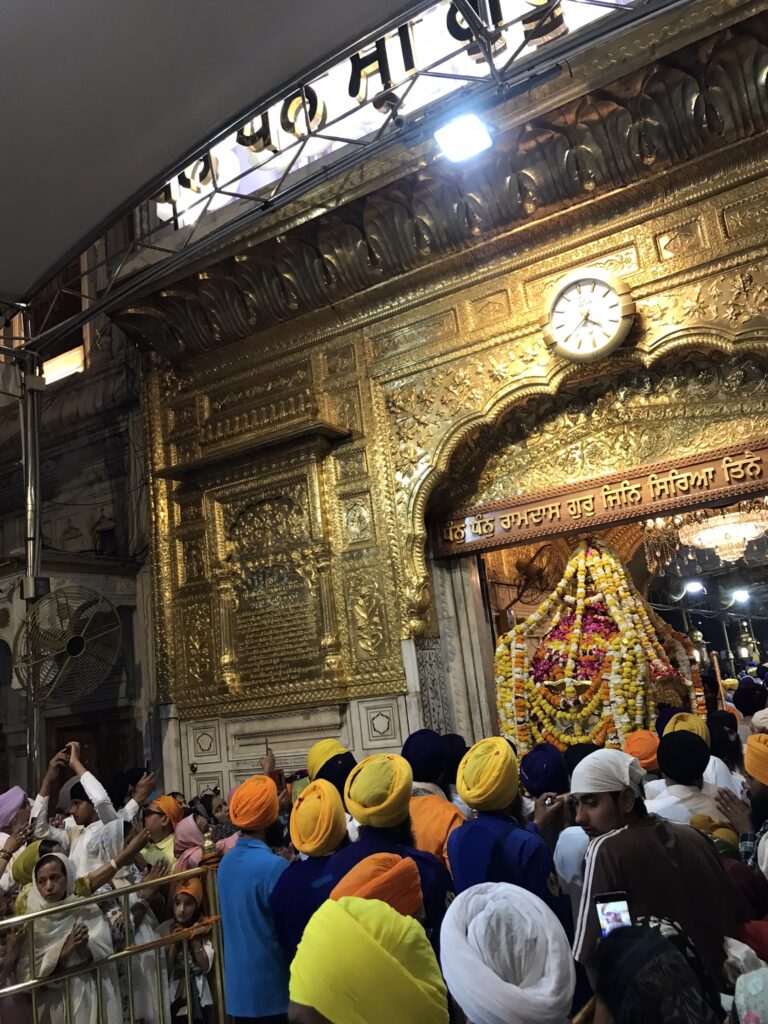
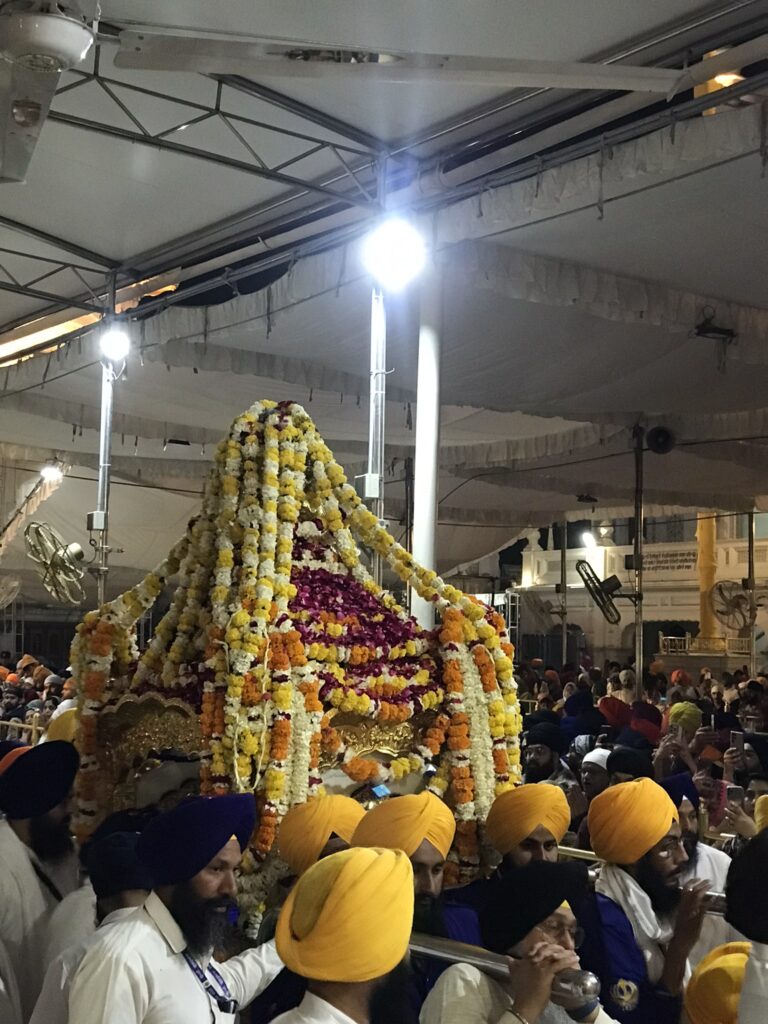
The daily parade escorting the last Sikh Guru, the Guru Granth Sahib, into the inner sanctum – ridiculously early in the morning
Golden Temple interpretation centre – underneath the courtyard near the shoe exchange, outside the entrance to the temple, this small museum with free entry features four themed rooms of cartoon videos about Sikhism. It takes about an hour in total to go through the four rooms. The museum is mainly aimed at non-Sikhs as a way of providing an introduction to their beliefs and customs, and is quite tastefully done. We had to wait for the first group of Hindi speakers to pass through, the staff then showed the videos in English. The medium of presentation is the most interesting part – each room is set up in a unique way relating to the aspect of Sikhism that is being discussed. This is a good place to learn the basics of Sikhism for those who are not familiar.
Central Sikh museum – inside the Golden Temple complex on the left as you enter, this is more of an art gallery than museum. The displays mainly consist of paintings of Sikh warriors and/or depictions of historical tales, including battles between the Sikhs and the Mughal Empire and the brutal deaths and punishments suffered by Sikh martyrs. Some quite gruesome scenes are depicted. There are also galleries with paintings and images of prominent Sikhs. Notably this gallery includes a portrait of Jarnail Singh Bhindranwale as well as Indira Gandhi’s assassins and several Sikhs that died in or as a result of the events of Operation Blue Star. Interestingly, little to no context or information at all is given about Operation Blue Star – instead, those involved are simply described ambiguously as ‘martyrs’.
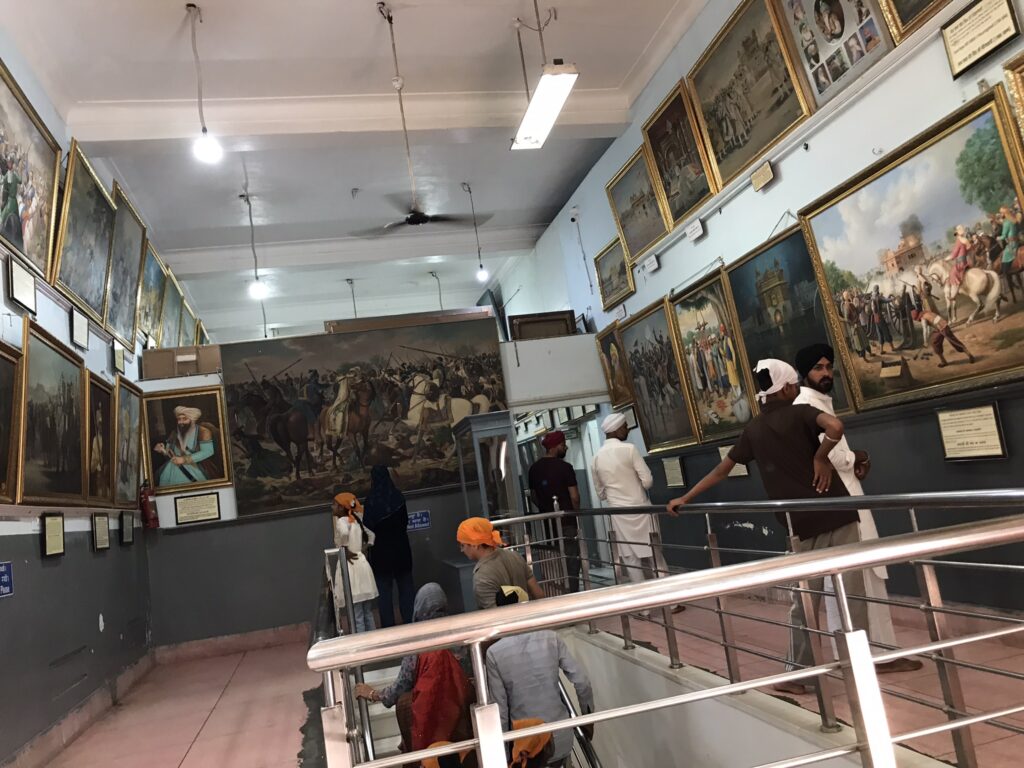
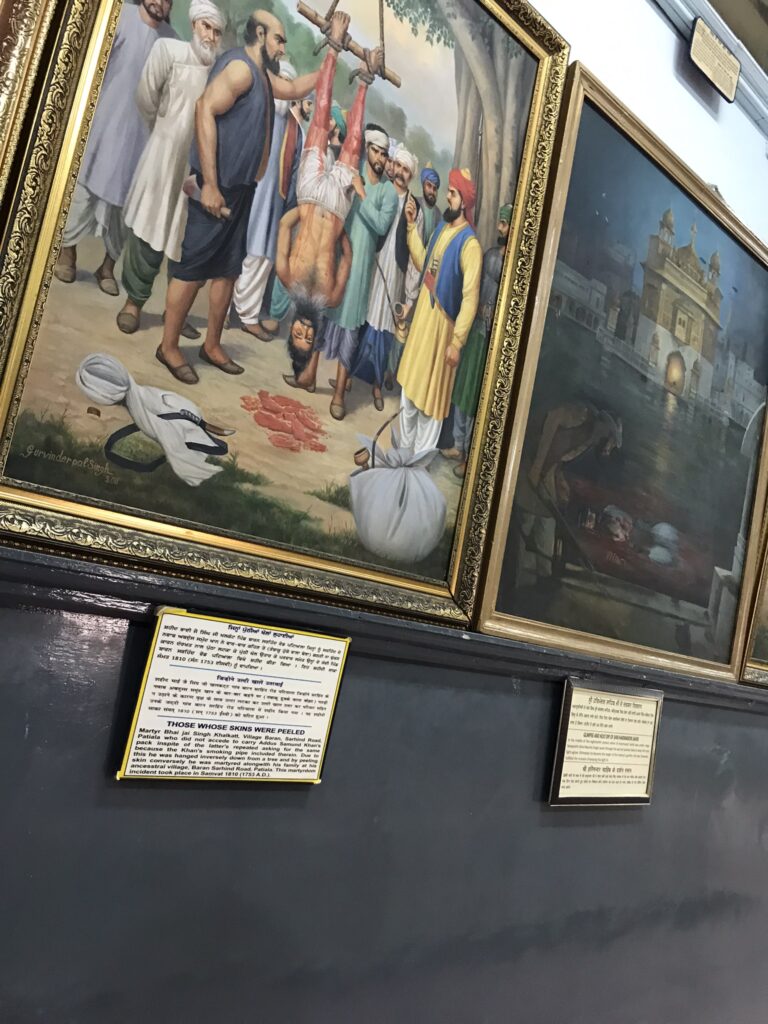
The Golden Temple has it all for Sikh pilgrims: a free restaurant, art gallery and bathing facilities
Wagah Border Ceremony – this is a unique experience featuring lots of high-kicking, marching and flamboyant displays of machismo between the border guards from India and Pakistan as they perform the ceremonial border closing for the day. The ceremony is held in the centre of a large purpose-built stadium. The stands on the Indian side of the border are much larger and more developed than the Pakistani side. The stadium is actually the site of the working border during the day.
The ceremony attracts huge crowds each night, particularly on the Indian side where uptempo music blasts from speakers and the soldiers of the Border Security Force (BSF) hype up the crowds to create a festive, jubilant patriotic atmosphere. Expect elaborate headwear and bold gesticulation! Part of the ceremony involves parading the military dogs.
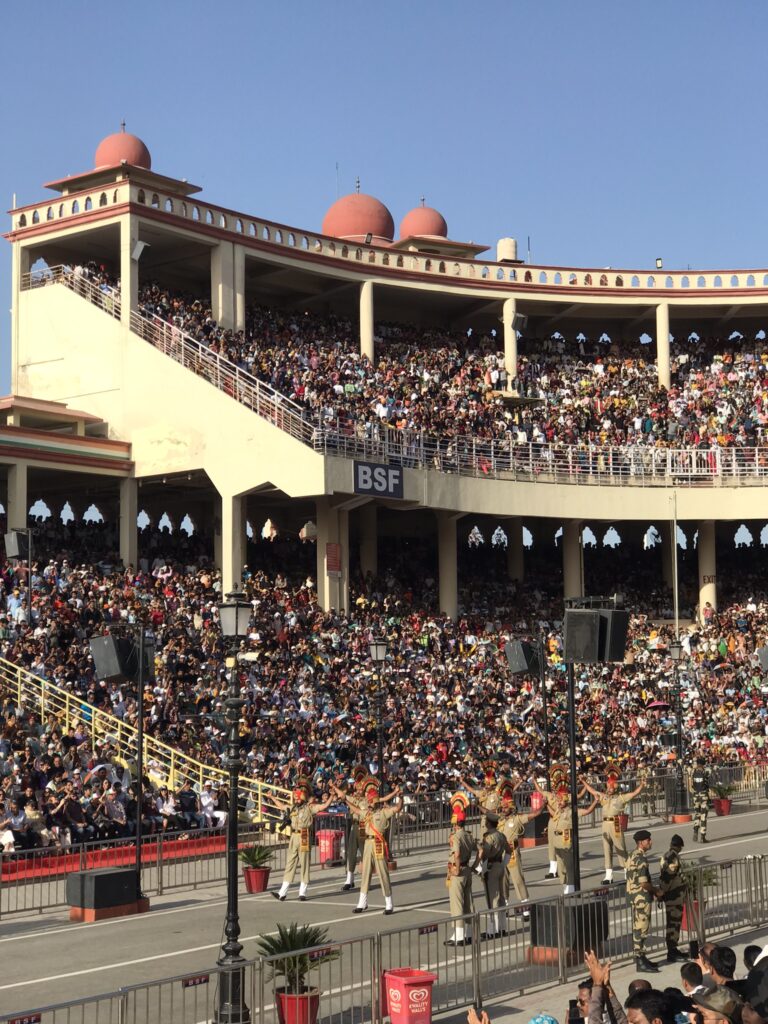
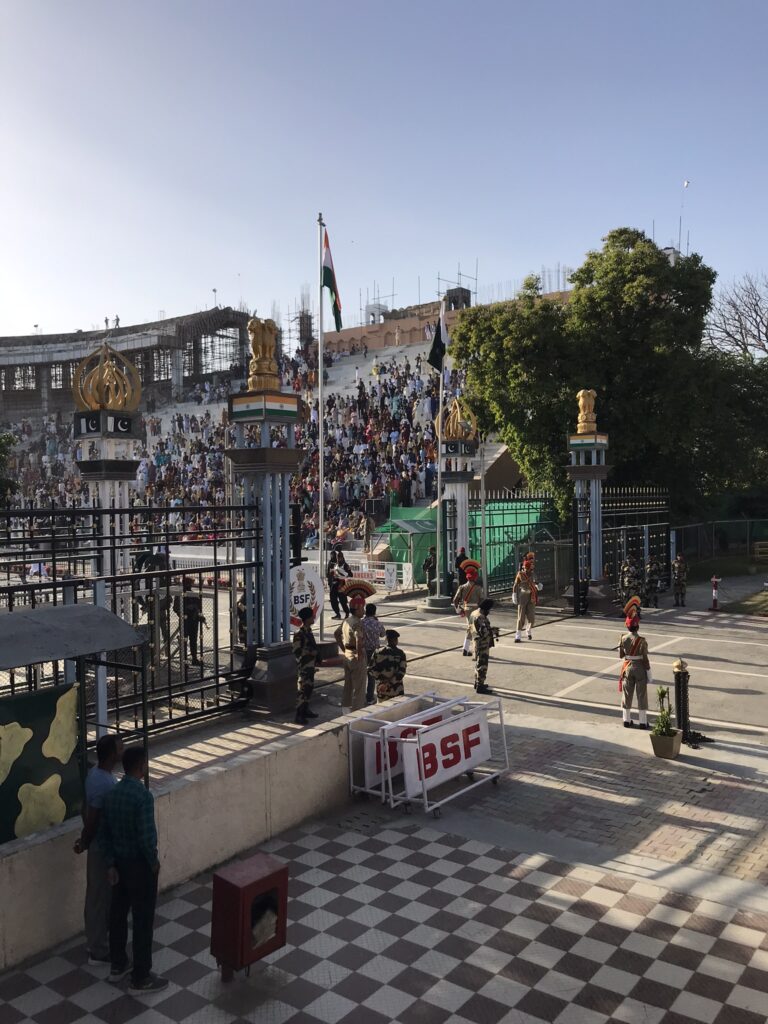
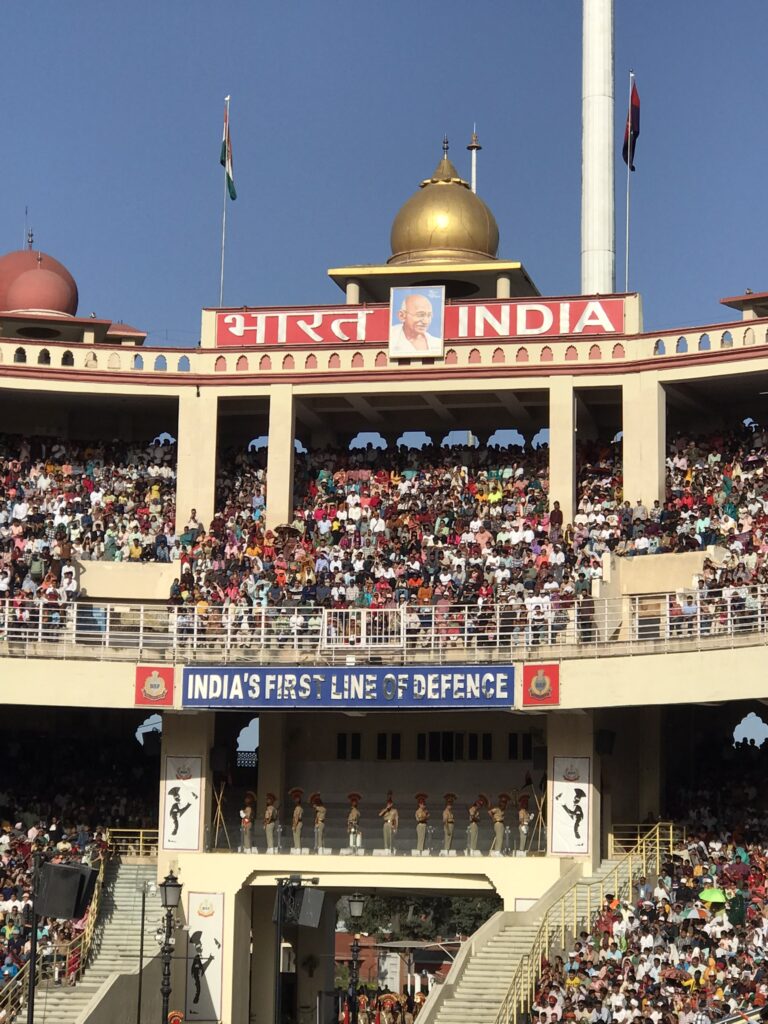
Pomp and pageantry at the Wagah Border Ceremony – sadly I’m unsure of the status of the ceremony after the border was closed in May 2025
In the crescendo, the gate marking the border between the two countries is opened with soldiers from both sides facing off in displays of pomp and pageantry, before the flags are lowered and the gate is then slammed shut again in the dramatic conclusion. The crowds then descend for photos with the soldiers. This is the official closing of the border for the night, although in reality it is impossible to actually cross the border for about an hour or so before the ceremony begins due to preparations for the ceremony.
Behind the dancing and party atmosphere were strong nationalistic elements – we noticed that the BSF soldiers were leading the people in chants of ‘Hindustan Zindabad’ (rather than just India), while crowds chanted for the BSF.
The border is located a few miles away from Amritsar and there are a few ways to get there for the ceremony. We got a taxi which was arranged via our guesthouse, and this was probably the most expensive option but was also the most convenient with the least hassle. Another option would be to take a tuktuk, or use the hop-on-hop-off bus service which may make a stop at the border ceremony. Get there early as there are large crowds and can be limited car parking. We arrived at 4pm to be greeted by many street sellers selling miniature Indian flags, face paint and other nationalistic merchandise. Walking along with the buzzing crowds felt like going to a football match – high-energy vibes. Try to remember where your vehicle is parked as it may be difficult to find afterwards.
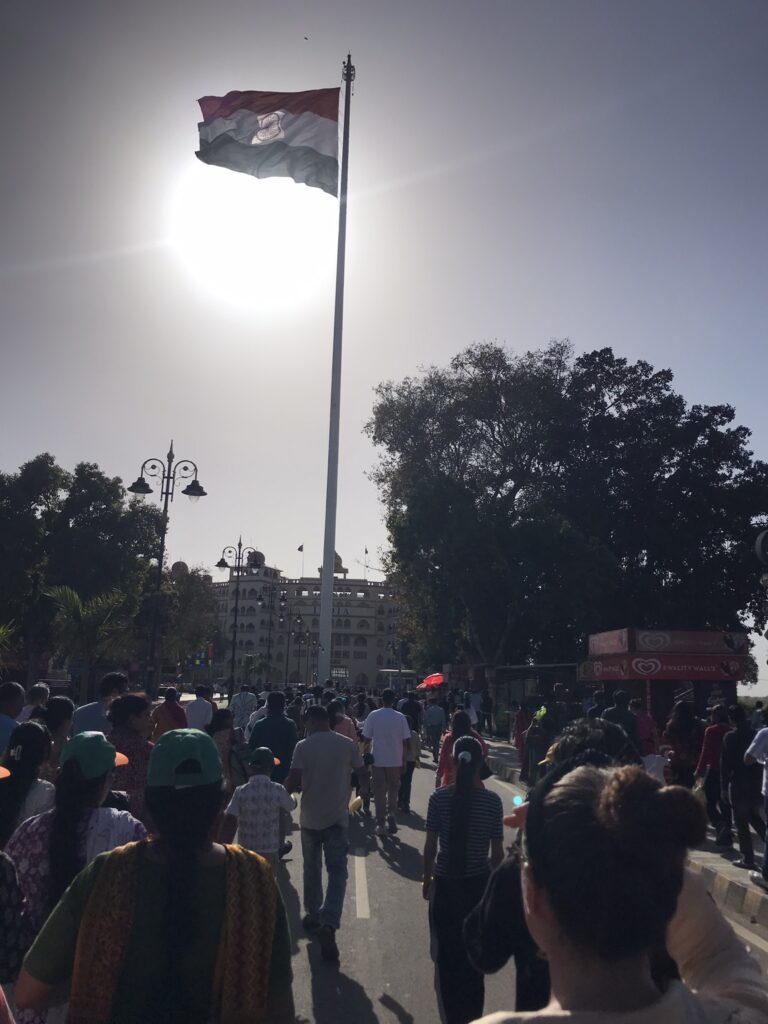
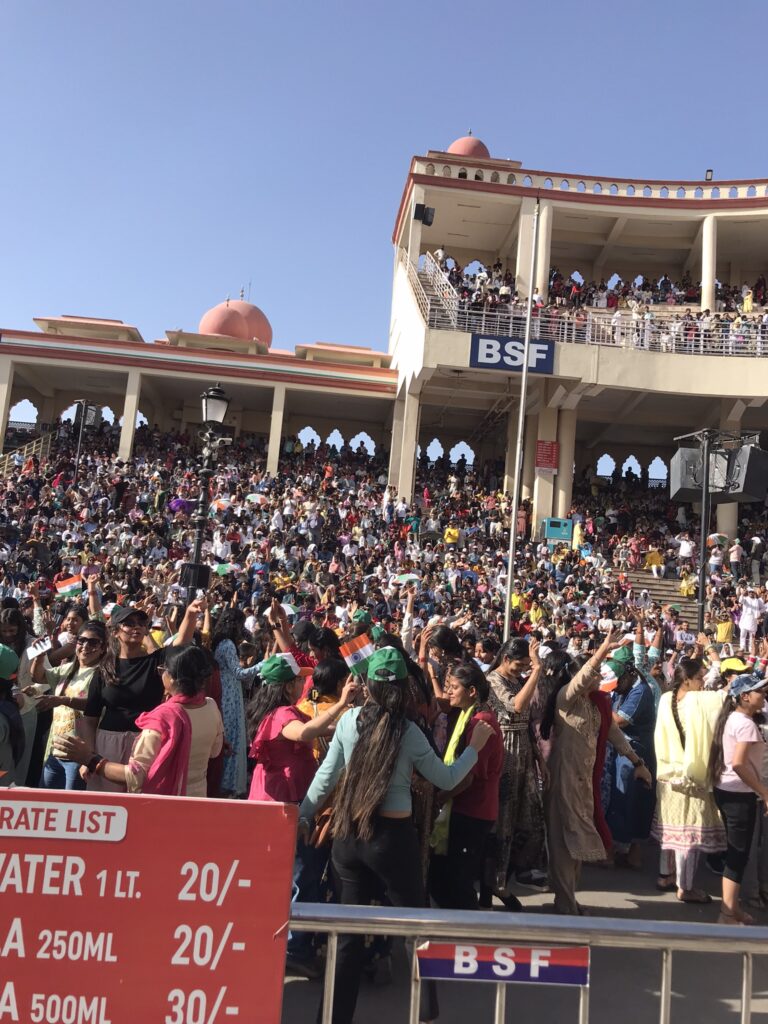
A party atmosphere at the Wagah Border Ceremony – it felt more like going to a concert or sports event
It is possible for foreigners to skip the long queue using the ‘VIP lane’ – this requires showing a foreign passport. You will then be taken to priority seats at the closest point to the border, in a VIP area sectioned off from the rest of the crowd. This was ideal – the queue for the regular stands is extremely long with pushing and shoving guaranteed..
After visiting Amritsar, we headed across the Wagah Border into Pakistan! For more India content, click here!