Said to be one of the 3 most scenic places in Japan, Matsushima (meaning Pine Islands) has captivated visitors for centuries. Filled with around 260 pine tree-covered islets, Matsushima Bay and the surrounding areas are almost a mirage of natural beauty. It has long been said that Matsushima’s picture-perfect landscapes embody the Buddhist concept of the ‘Pure Land’ and historically the area has been a major spiritual centre and Buddhist pilgrimage site as a result, known by some as the ‘Koyasan of Tohoku’ – a reference to the sacred mountain and pilgrimage site in the Kansai region to the south. Today, Matsushima is one of the most popular and renowned spots in this part of the country. Check out this self-guided walking tour of the main sights!
Start at Matsushimakaigan station
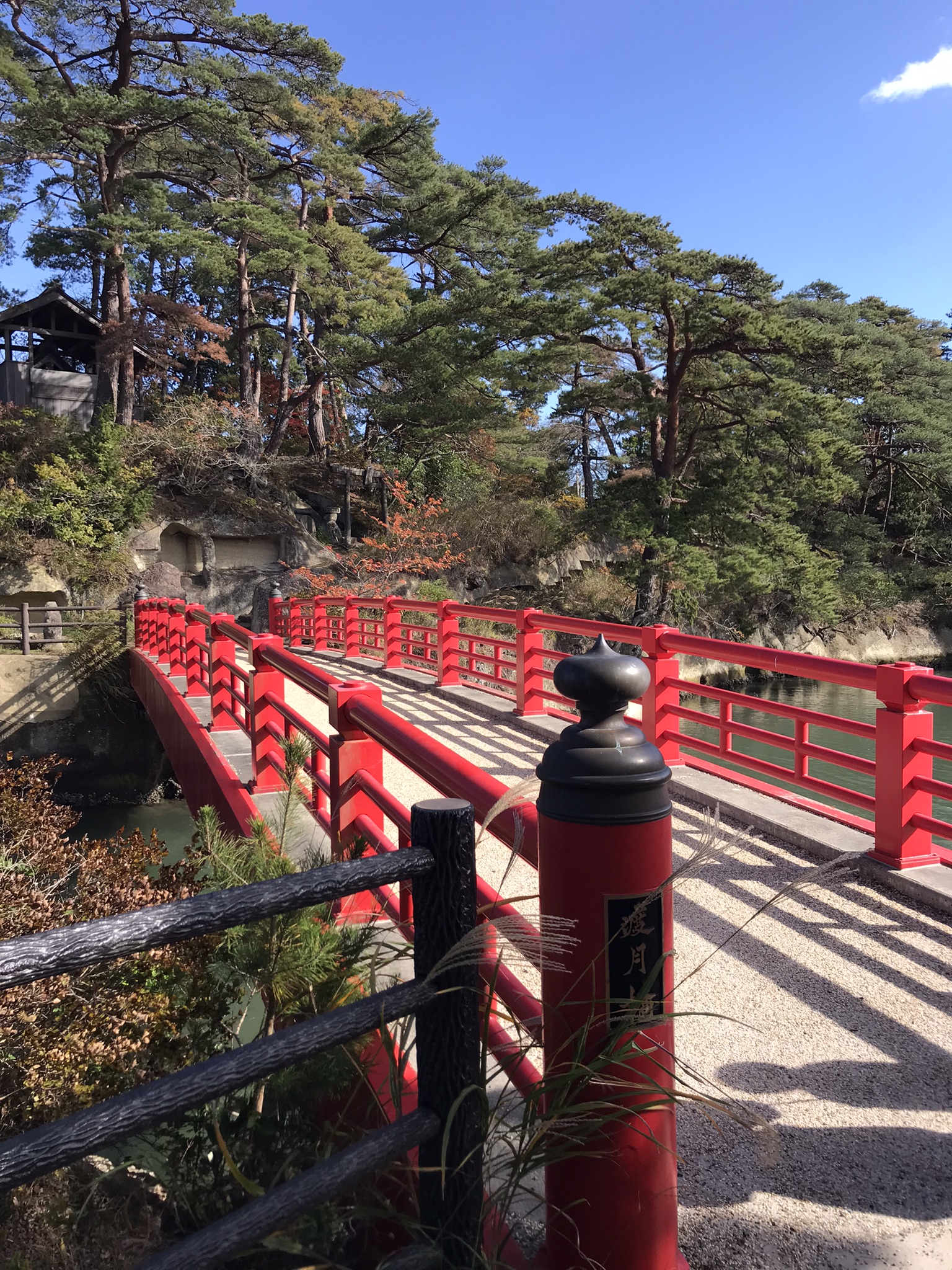
This train station has frequent trains to and from Sendai, taking about 40 minutes on the Senseki Line. Matsushimakaigan translates to ‘Matsushima coast’. From the station exit, turn right and follow the main road to the south. Make your way to the shoreline and cross Togetsukyo Bridge to reach the atmospheric island of Oshima.

Oshima is filled with weathered relics of the past
In the early 12th century, an ascetic Buddhist monk named Kenbutsu Shonin is said to have taken up residence on this island and lived here in isolation for over a decade, faithfully reciting sutras and carving numerous meditation caves into the rocky outcrop. Legends around Kenbutsu grew, with some claiming he had developed mystical abilities such as teleportation and the ability to levitate. Eventually word spread to the Emperor, who was said to have gifted 1,000 pine tree seedlings to Kenbutsu as a reward for his devotion. These were distributed on the island of Oshima and throughout the surrounding area, creating the Pine Islands of Matsushima as they are today.
Whether or not all the elements of this tale are true, Oshima has been considered a place of spiritual importance and reverence for almost a millennium. Today around 50 meditation caves can still be found dotted around the island along with numerous small statues, stone tablets and shrines. On the southern part of the island is a monument to Raiken, another ascetic Buddhist priest who is said to have spent 22 years here. This monument is an Important Cultural Property, having stood since it was erected by his followers in the early 1300s.
Many centuries later, the wandering haiku poet Matuso Basho visited Oshima island and was apparently so awestruck by the views of Matsushima Bay that he was lost for words and unable to compose his usual haiku poetry. Feeling that nothing he came up with would do the place justice, Basho gave up and went to sleep, later writing a poem in long-form prose about the area that he claimed was the most beautiful in all of Japan.
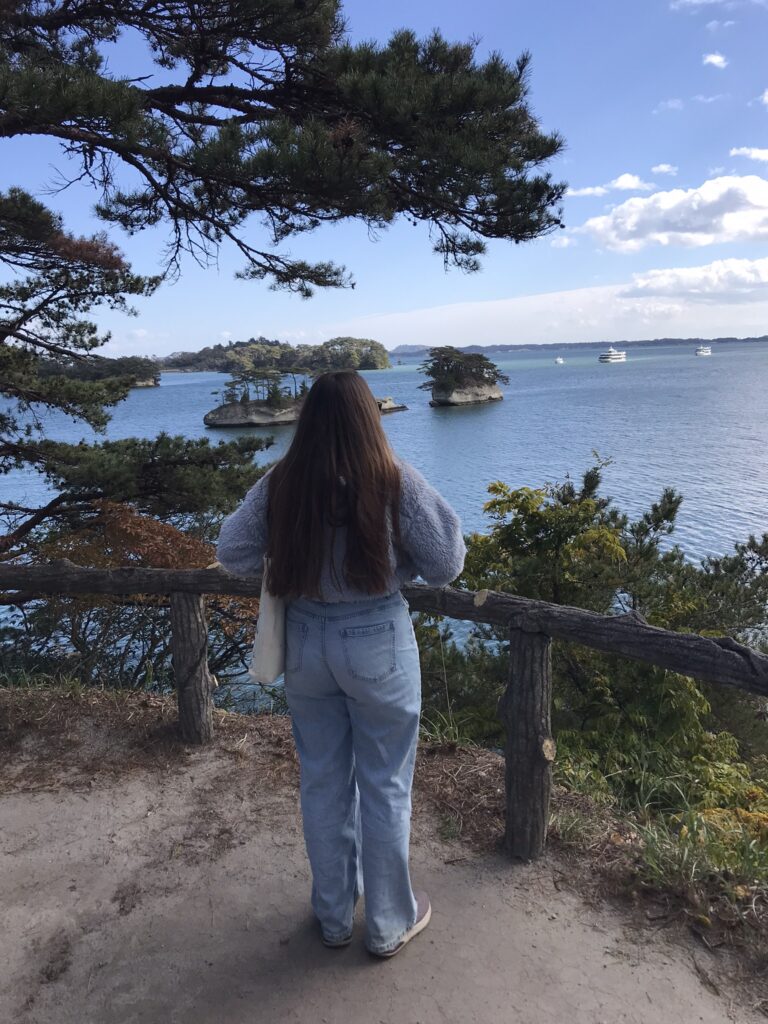
Oshima island provides great views across the bay
After visiting Oshima, head back across Togetsukyo Bridge and turn right, heading back north along the main road until you reach the open plaza area. Follow the path which runs alongside the Matsushima Shoreline. Up ahead on a ledge overlooking the bay you will see Kanrantei Tea House.
This historic teahouse, a designated Important Cultural Property of Japan, is said to have once belonged to the powerful warlord Hideyoshi Toyotomi and was originally located at Toyotomi’s Fushimi Castle near to Kyoto. The story goes that it was gifted to Date Masamune (the first lord and founder of Sendai) as a reward for his loyal service, and was transported from Kyoto to Masamune’s residence in Edo (modern-day Tokyo). The teahouse was then finally moved to its current location in Matsushima by his son and successor, Date Tadamune.
Once the exclusive realm of the local feudal lords and high-ranking samurai, today Kanrantei is open to the public as a functioning tea house, serving matcha tea sets and other treats. There is a small admission fee to enter the building, which also contains a very small museum display, and obviously the tea is an additional cost.
From the teahouse, head around the wooden gangway that runs alongside the waterfront. You’ll soon spot Matsushima Pier.
Boat trips around Matsushima Bay are exceptionally popular for visitors to this area. A boat tour is the best way to fully appreciate the scale of the vast bay with its many islets – it is considered practically a rite of passage for many visitors here. Boat tours leave from this large pier in front of the entrance to Zuiganji temple. There are usually many hustlers around this area selling tickets or drumming up business. Don’t worry, they probably aren’t scammers! From our own personal experience the tourist boats here are exceptionally well-run and professionally operated. The boats all more or less run on the same route, which usually takes 45 minutes for a comprehensive panoramic tour of this part of the bay. If you’re up for a ride, head to one of the many booths in this area and grab a ticket. Boats usually run on the hour every hour, from morning right through until sunset.
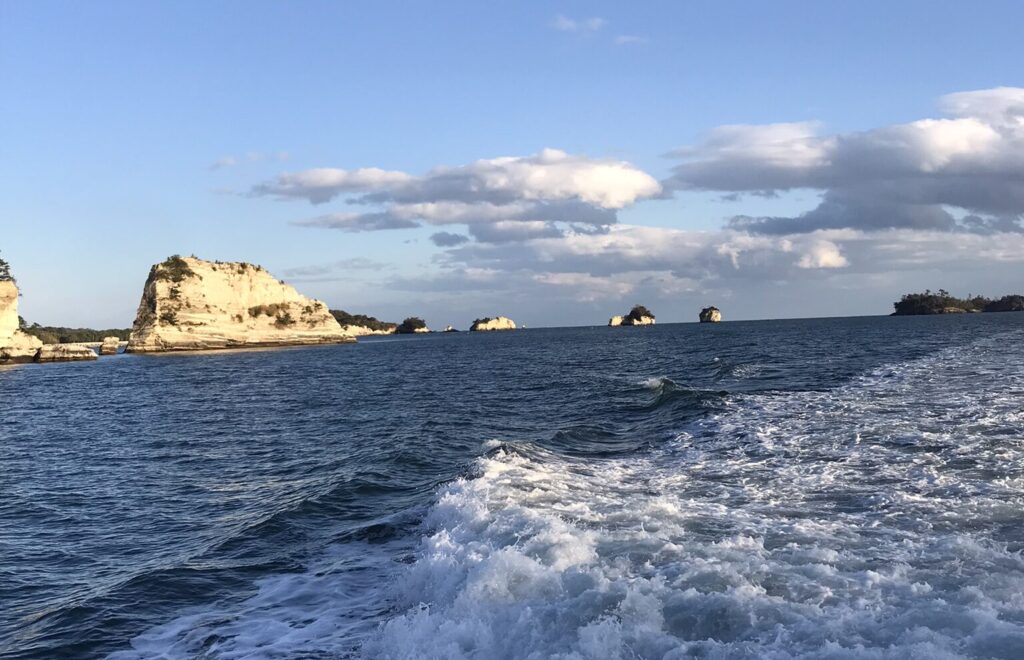
Boats departing from the pier provide a panoramic tour of the various islets of Matsushima Bay
From the boat dock, head inland and you will immediately see the entrance to Zuiganji across the road.
One of the most prominent Zen Buddhist temples in the region, Zuiganji was originally founded in the 9th century by the monk Jikaku Taishi, but it was greatly developed by the first lord of Sendai, Date Masamune, in the early 1600s. With spectacular and intricate carvings and designs which are typical of the period, the main hall and living quarters of the temple have been designated as National Treasures of Japan. Admission to the temple complex is paid and the ticket also includes access to a museum (Seiryuden), which houses many of the artefacts and historical items from the complex. Make sure you check the temple opening times when visiting – admission closes relatively early each day.
Zuiganji is also notable for its long tree-lined approach leading from Matsushima Bay. Within the gardens to the north of the main approach, don’t miss the series of meditation caves (the Zuiganji Temple Caves) which are carved into the rock face. Filled with small sculptures and carved tablets, these caves date back to the Kamakura period (late 12th-early 14th century) and, among other things, are said to have been used for funerary rites.
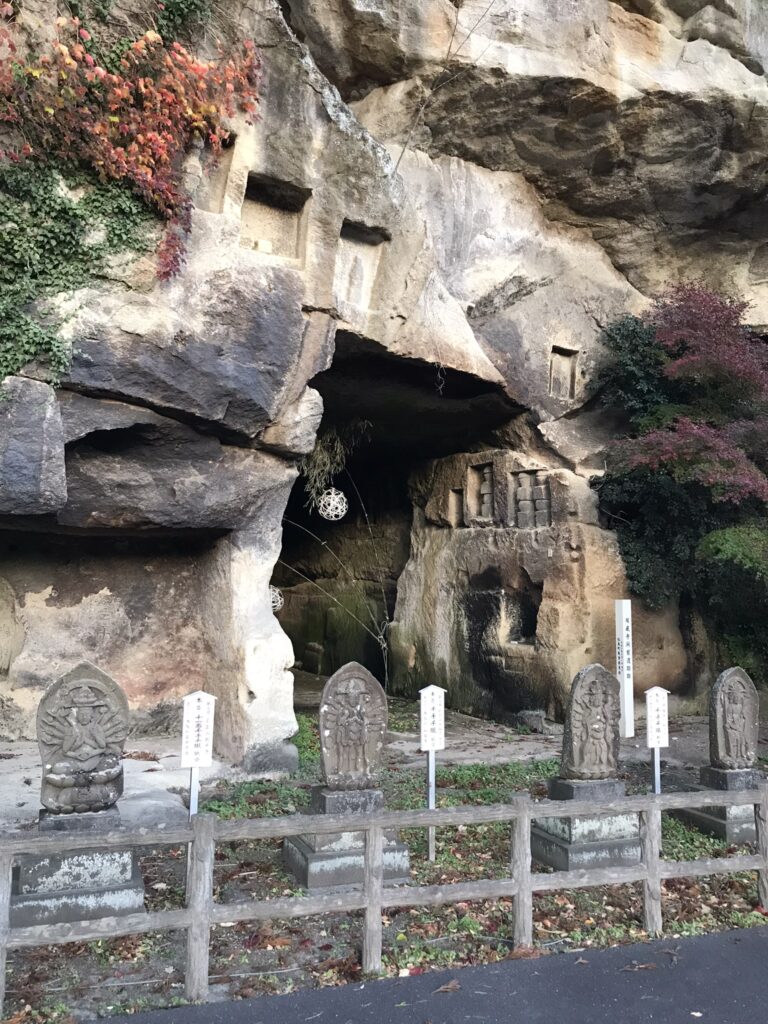
These manmade caves are around 800 years old
To the southwest, just next door to Zuiganji is another historic temple, Entsu-in. Dating back to 1647, this is a memorial temple which contains the mausoleum of Date Mitsumune, the grandson of Date Masamune and future heir to the Sendai domain who died at the age of 19 before he could take power. The main hall here is said to have been brought from Mitsumune’s residence in Edo, and was renamed daihitei or ‘Sadness House’. The mausoleum is notable for its use of Western-style motifs (known as namban or ‘southern barbarian’ style at the time) – a reflection of the Date family’s burgeoning interest in cultural exchange with the West during a period in which Japan was an isolationist society. However the temple is probably best known for its stunning moss and rose gardens, as well as its classic dry Zen garden.
From the temple area, head back to the shoreline and continue north-east. You’ll see the unmistakable Godaido shrine standing proudly atop a tiny islet in the bay.
Reportedly founded in the 9th century by the same monk that established the larger Zuiganji temple (Jikaku Taishi), Godaido is an iconic symbol of Matsushima. Like Zuiganji, this small shrine was redeveloped by Date Masamune in the early 1600s. Accessed from the mainland via a lacquered vermillion bridge, the hall contains five statues which are said to date back to the time of Jikaku Taishi. The statues are displayed to the public once every 33 years, so don’t expect to see them until the late 2030s. Still, the shrine makes for a picturesque and iconic spot within Matsushima Bay. Of particular interest are the Masamune-era wooden carvings underneath the hall’s eaves, which depict the 12 animals of the zodiac.
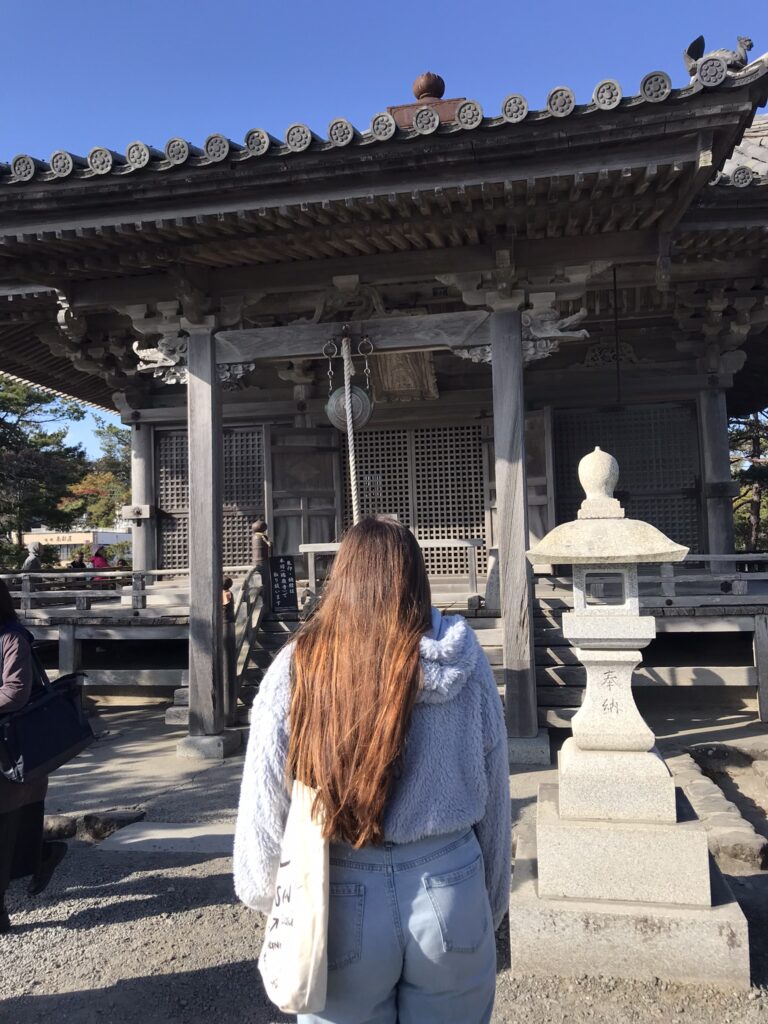
The wooden carvings of Godaido have withstood the test of time
From the Godaido, head further east along the coastline and you will see the Great East Japan Earthquake Memorial. This 2011 disaster, the most powerful earthquake ever to hit Japan and the fourth most powerful ever recorded, is mostly known internationally for triggering the subsequent meltdown of the Fukushima Daiichi nuclear power plant. However the tsunami generated by the earthquake caused significant damage along the Tohoku coastline in its own right, including in Matsushima where the eastern Higashimatsushima and Noribu areas were hit particularly hard. This memorial includes a mural which illustrates the scale of the impact on the bay, as well as a marker stone which features a line on the rear that indicates the height of the tsunami surge when it struck this part of the Matsushima coast.
Continue further along the coast and you will reach Fukuurajima. The largest island in this part of the bay, Fukuurajima is accessible to pedestrians via the iconic 250 metre Fukuuraabashi Bridge, nicknamed ‘Encounter Bridge’ due to the romantic notion that those crossing the bridge may meet a special someone coming the other way. This island, covered with Matsushima’s famous pine trees, is filled with short walking trails, small shrines and scenic lookout points over Matsushima Bay. Explore long enough and you will also find a small flower garden with displays of origami.
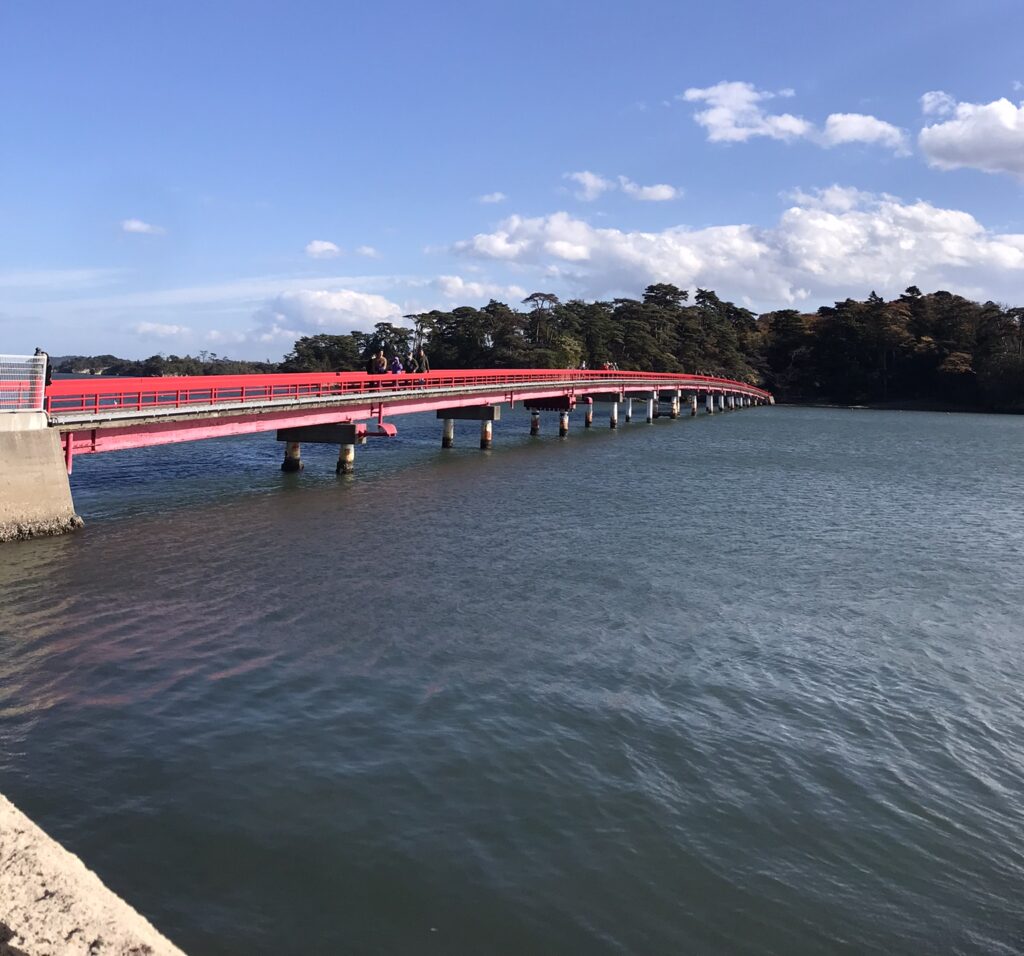
Definitely one of the larger footbridges I’ve come across. There is a small admission fee to cross the bridge and access the island.
After visiting Fukuurajima, head back to the main road and turn right, heading north-east along route 45. After about 100 metres you’ll see an archway on the left hand side leading to the Date Masamune Historical Museum. A powerful samurai warrior and warlord known as the ‘one-eyed dragon’ due to his partial blindness, Date Masamune was the founder of the city of Sendai, the first lord (daimyo) of the Sendai Domain and a key player in both local and national history during Japan’s Warring States period – a true icon of the samurai era.
Unsurprisingly, Matsushima was a favourite spot of Date Masamune – he and his successors were responsible for much of the regeneration in the area in the early 1600s, so it’s only fitting that there is a museum here dedicated to his life. Don’t expect a regular museum with exhibits and artefacts – this museum is purely illustrative, featuring life-size wax figures and dioramas which recount the various episodes of Masamune’s life in great detail. There are English translations inside so non-Japanese speakers can follow the story. For those who aren’t familiar with Masamune and are interested in learning more about Japan’s history and one of the most consequential and well-known figures of his time, this is a great place to start.
Across the road from the Date Masamune Museum is The Museum Matsushima which, despite the ambiguous name, actually contains a collection of intricate antiquated European music boxes. From the museum, continue northeast along Route 45. After a few hundred metres you will spot what looks like a strange yellow gas station on the right hand side of the road. This is Matsushima Retro Museum. Crammed full of nostalgic items from the mid-to-late 20th century, this is a great place to step back in time and experience the culture of Japan’s Showa Era. The museum is filled with old toys, games, magazines, records, electronic items, musical instruments and much more, all of which can be picked up, held, touched, read and played with by visitors. You can even request the staff to play one of the old records! Anyone with an interest in Japanese culture, 20th century nostalgia or just general oddities and curiosities will feel right at home here. The museum is fairly small but the entrance fee is low and the fun levels are high.
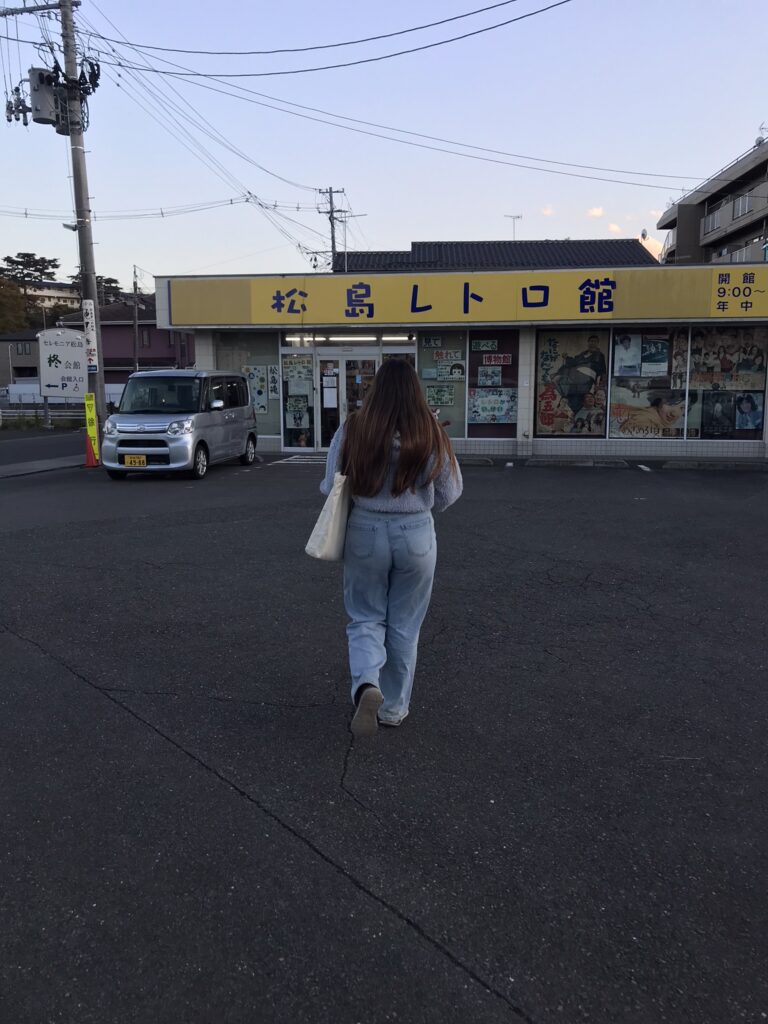
Matsushima Retro Museum – a place for some light-hearted fun
From the retro museum, it’s an easy walk back to Matsushimakaigan station along the bay. For more Tohoku and Japan content, click here!
This article is also featured on GPSmyCity. To download this article for offline reading or create a self-guided walking tour to visit the attractions highlighted in this article, go to Walking Tours and Articles in Matsushima.