
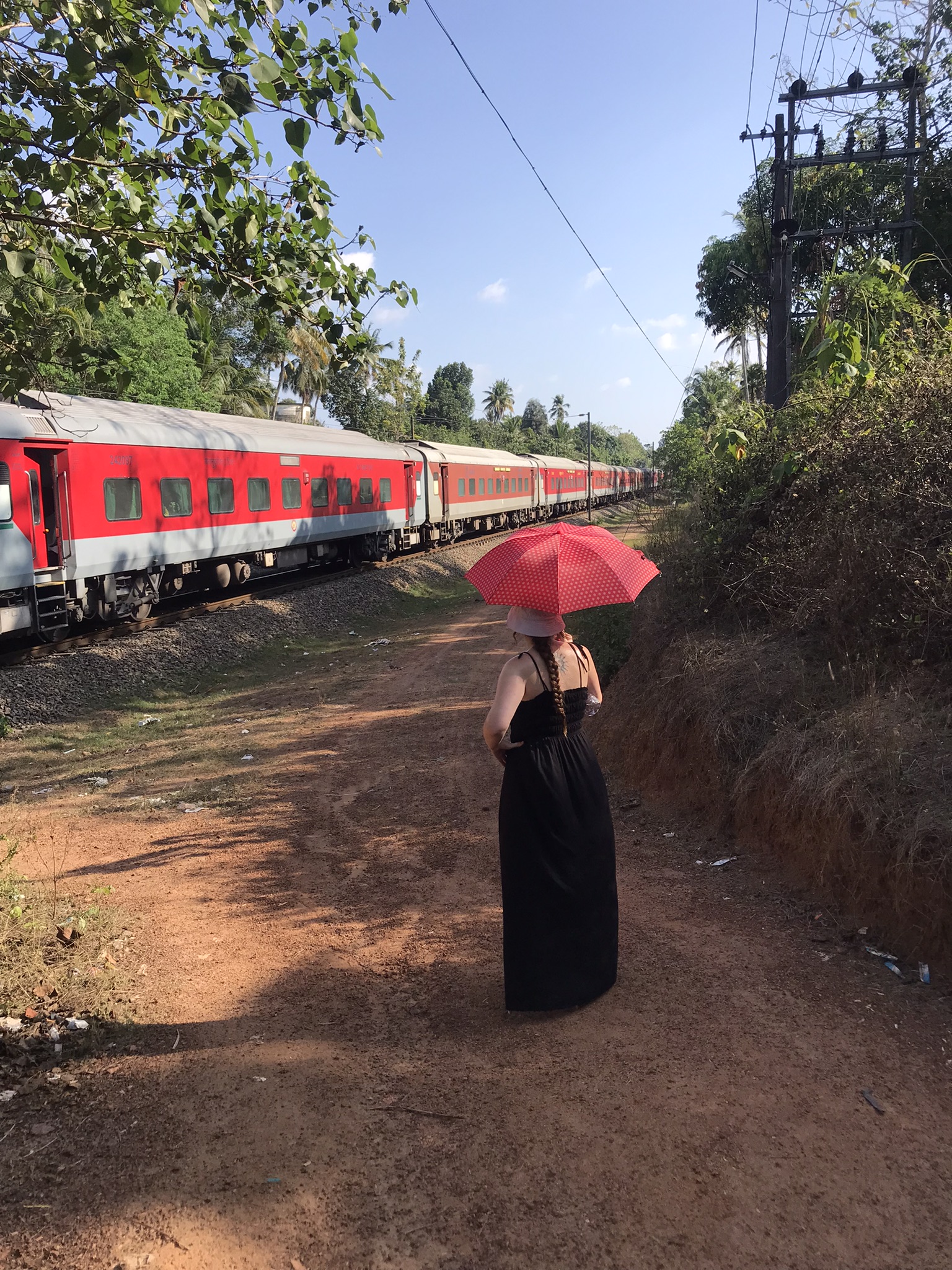
While there are plenty of difficulties facing independent travelers in India, public transport needn’t be one of them! India has one of the largest and most established rail networks in the world. Although it may seem daunting at first and is not without its challenges, once you’ve mastered India’s trains then traveling around the country becomes a breeze. India’s rail network spans the length and breadth of the country, with some train routes continuing for multiple days. In addition, the country has a very extensive network of inter-city buses. Once you know where to look, getting between destinations is actually really easy. There’s a pretty comprehensive guide to train travel in India at The Man in Seat 61. This practical guide is based on my own experiences of traveling to 15 different states and Union Territories.
I’ve broken this guide down into three steps – route planning, booking tickets and then finally the experience of taking the train itself. All of these aspects can be a little bit more complicated in India than other countries, but it’s completely manageable once you know what you’re doing. Additionally there is a section on inter-city bus travel, which is an important part of India’s public transport infrastructure and not to be overlooked.
Indian trains often have a poor reputation amongst foreigners, with stereotypes of cramped, overcrowded, poorly-maintained carriages and squalid conditions. However I’m pleased to say that this is far from the reality. Your experience totally depends on the type and class of train you book, with prices varying accordingly. We generally found train travel in India to be pleasant, safe and comfortable enough – above our expectations.
Planning a route
If it wasn’t already obvious, India’s rail network is vast and sadly there isn’t any singular tool or booking platform that actively makes route planning easy and straightforward (at least none that I’ve come across). Therefore, you need to use your intuition and do some of your own research, particularly if you’re planning a multi-city trip. A good first step is to use this interactive map. Although it seems ridiculously complicated at first, this resource provides a visual map of all of the train routes in India. From here, you can work out if your start and end destinations are linked by a singular track – if so, it’s likely that there will be a direct train between the two.
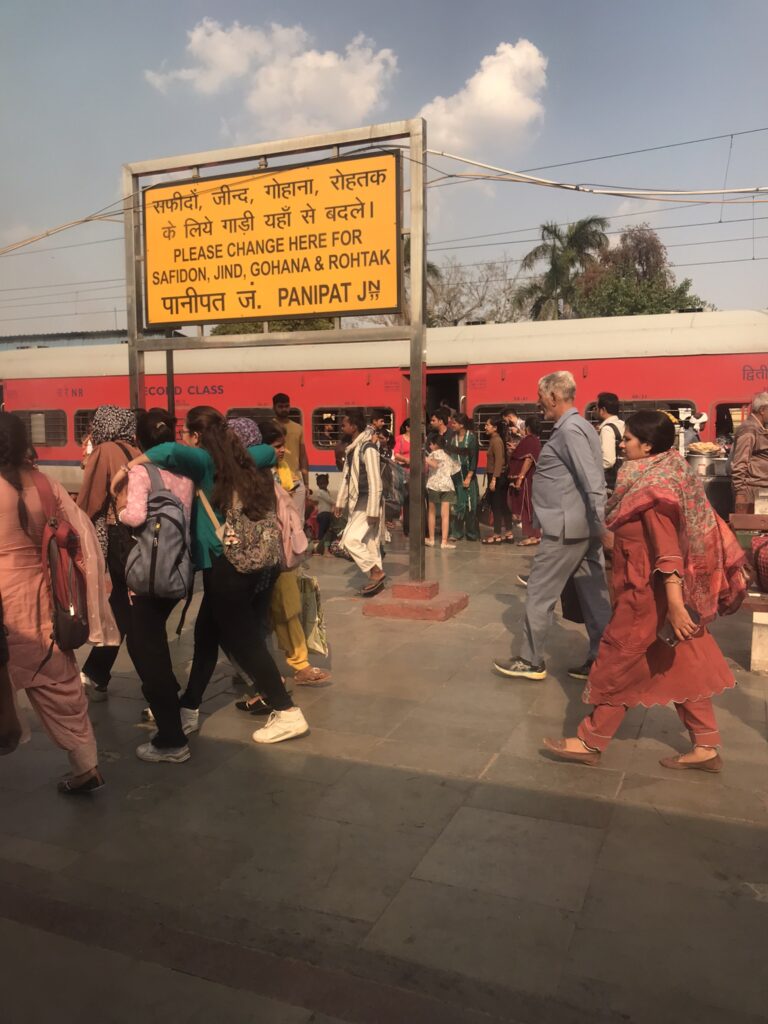
Sometimes it might be necessary to change, although we never needed to
The next step is to look up the train route on one of the booking platforms. The official ticket booking platform is IRCTC. However this website isn’t the most user-friendly, so I prefer to use Railyatri. By entering the departure and arrival stations into the search, you will be provided with a list of trains running on the specified date. Trains in India are identified by numbers – each scheduled train run has a unique 5-digit number, which you can use to identify and track the train.
Be aware that trains aren’t always scheduled to run every day. Some routes may run only one or two times per week. One of the reasons I like Railyatri is that it shows trains on alternative days of run, allowing you to plan your travel date accordingly if you’re traveling between two destinations with less frequent trains.
Sadly, these booking platforms only show direct trains running between the two points. If your search results in no trains being found then you will need to make alternative plans, usually in the form of a connecting train. You should be able to use the India Rail Info map above to work out a suitable route. Trains in India are very frequently delayed, so take this into account if you do need to make a connection. We planned our journeys in India specifically to avoid connecting trains for this reason.
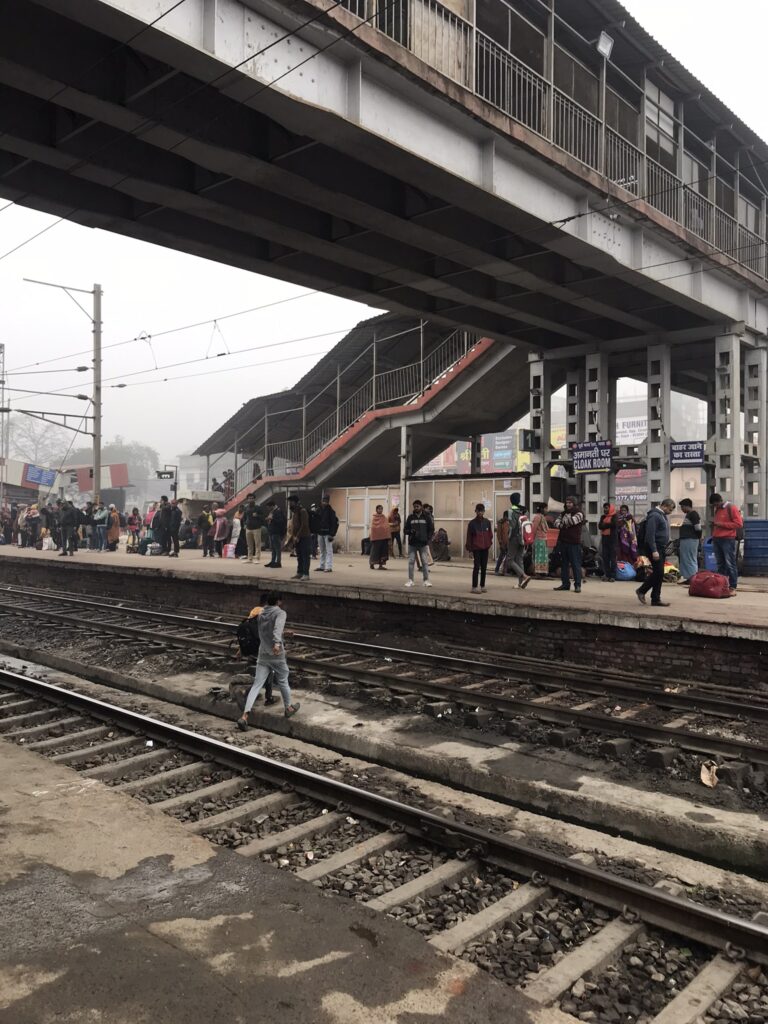
Sometimes the train may not go all the way to your intended destination – for example the nearest station to Bodhgaya is 15km away in Gaya
The next thing to take into consideration is the type and class of train available on your route. Numerous different classes of train ticket are available for purchase in India, which can become confusing. The Man in Seat 61 has a pretty extensive guide to all of them. In short, carriages are typically in a ‘sleeper’ or ‘chair car’ configuration. You will be able to see the list of ticket classes available for each train on the booking platform. The classes SL or 2S are the unreserved sleeper-style trains that conjure the stereotypes of overcrowding and squalid conditions, while there are also reserved sleeper tickets (3A or 2A) which are a bit more civilised, although you may still end up sharing your seat with strangers. When possible, we always preferred to go for the AC Chair Car (CC) class – an air-conditioned carriage with individual reserved seats similar to a western train.
All trains in India are operated by the state-owned Indian Rail. However, there are different ‘brands’ or classes of train operating underneath that banner, which can also be seen on the booking platforms. Standards can vary dramatically between the different train brands. The best trains in India are Shatabdi Express and Vande Bharat. These are modern, clean, fast trains with high levels of service. All of these trains operate AC Chair Car class as well as more expensive first-class tickets. If you’re able to take one of these trains on your planned route, I highly recommend doing so as you’ll be in good hands. Other trains such as Intercity Express may also offer CC class along with a mixture of sleeper and other class carriages, but these would generally be older trains with lower standards of service.
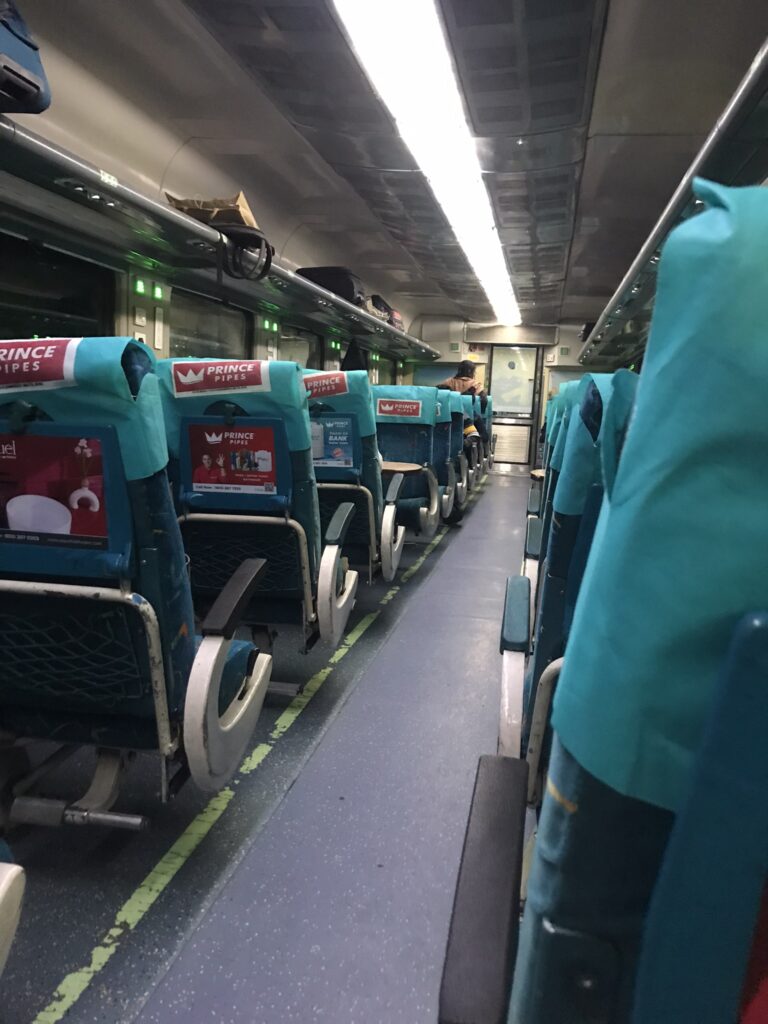
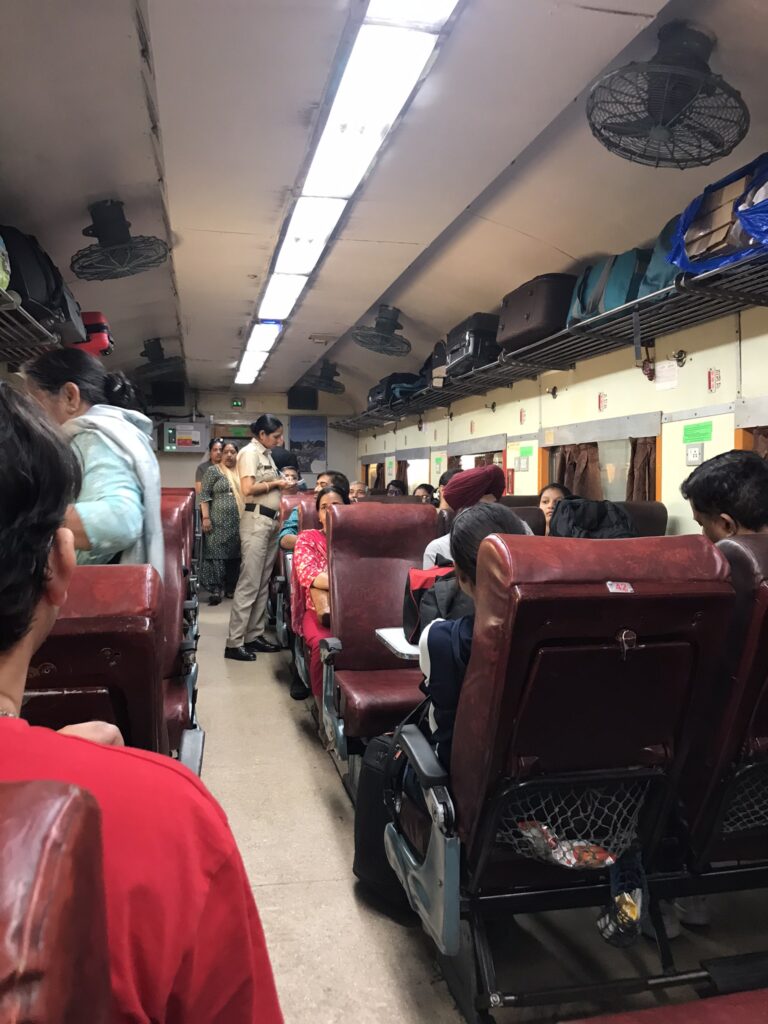
Inside a Shatabdi Express and an older Intercity Express chair car carriage
Be aware that not all train types and classes are available on every route. You may have to bite the bullet and get a lower standard of train than you want on certain routes, or delay your journey in order to get a better class of train. We only made a few short-distance journeys in the SL class and it was a pretty interesting experience, although definitely not something I would want for a longer journey.
Many trains in India are sleeper routes which run overnight. In these cases, bedding and an individual bunk will be provided if you book 2A or 3A class tickets, although these are open-plan carriages similar to the platzkart in Central Asia so privacy will be minimal. We specifically avoided taking any overnight trains during our time in India, so I can’t comment on this experience.
In addition to the major intercity trains, local trains also run between smaller regional town and village stations. Tickets are almost always unreserved and it is usually not possible to prebook. Info on these routes can be therefore be difficult to come across, as they are not always listed on the major booking portals or online (or in some cases they may be listed as ‘MEMU special’ without further information). If you do need to take one of these trains, the local state transport company website/app and Google Maps are often good resources to try to find run days and times. The best way, however, is simply checking in person at the station.
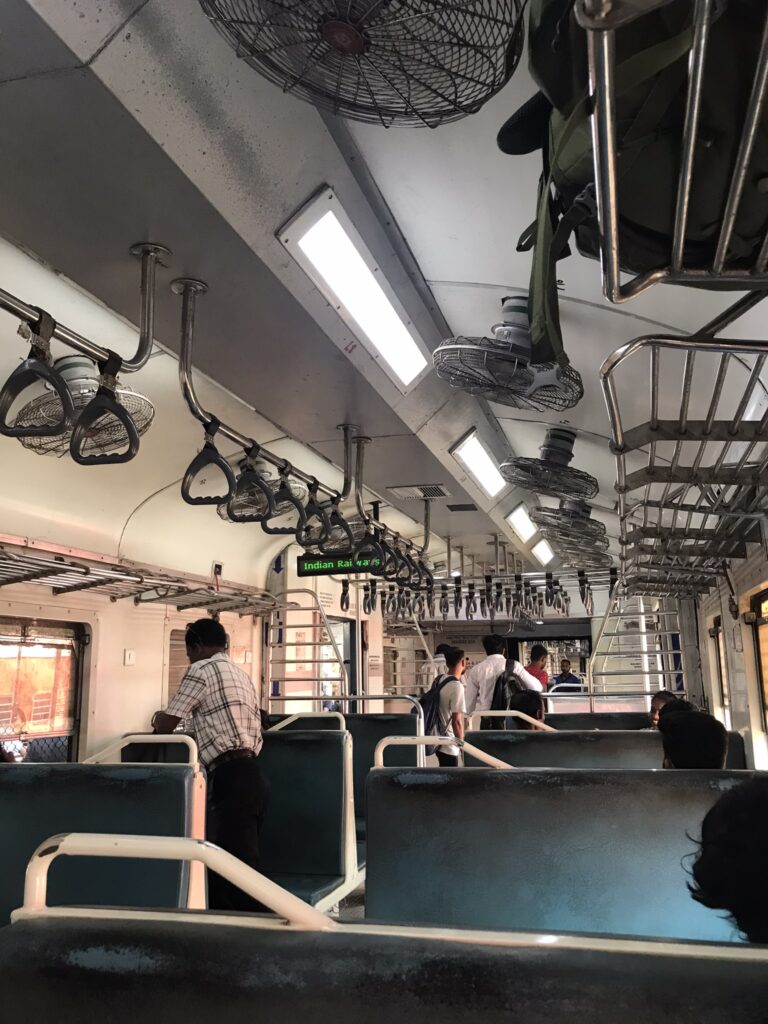
We took this unreserved MEMU train from Kochi to Munroe Island in Kerala
Booking ticket
Booking train tickets in India can be a minefield, particularly for foreigners. All trains are operated by the state provider, Indian Rail, with the official booking platform on the IRCTC website. However, booking via this platform requires an account. We were able to sign up without any issues before departing for India using the guide on The Man in Seat 61, but it does require a lot of hoop-jumping and many foreigners report just not being able to do it at all.
If you aren’t planning on making many train journeys in India, it’s possible to book individual train tickets on many of the popular routes using 12go Asia. However, this is significantly more expensive than booking directly with IRCTC. If you are making more than one or two journeys, I recommend persevering to sign up with IRCTC as the savings are considerable and you also have a much higher degree of flexibility when booking directly.
When booking reserved-class tickets with IRCTC, you should be able to specify whether you want a higher or lower bunk if in a sleeper carriage, or a window or aisle seat with chair car. You may also be able to arrange for a meal on the train – handy if you’re making a long journey. We had meals several times on Shatabdi Express and Vande Bharat trains, and I can vouch for their hygiene as well as their quality given the price.
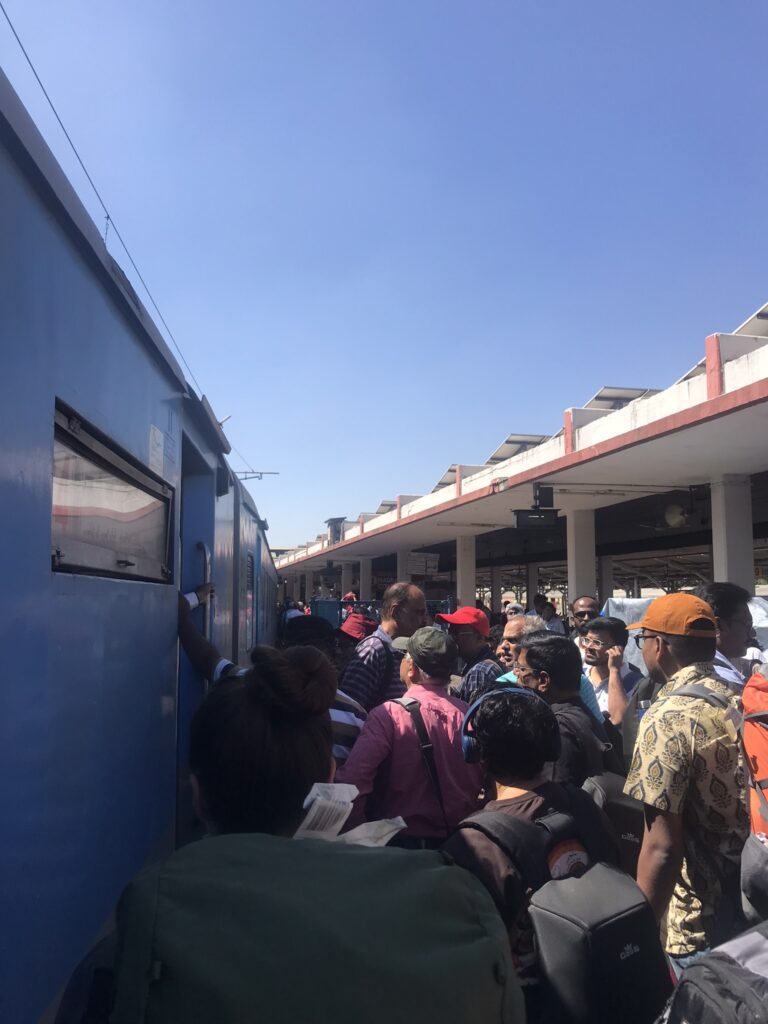
Trains in India can be really busy – make sure you book in advance
When purchasing a ticket online, you will be presented with numerous different payment options. For international customers, you can choose ‘multiple payment gateway’ and then select any of the options that list international cards – try different gateways if it doesn’t work at first. Once you’ve confirmed the booking, you should see a PNR number – make sure to record this, it is your booking reference and can be used to track your ticket.
After booking you should also receive a confirmation email, however the IRCTC system is notoriously patchy and sometimes didn’t send us any confirmation or proof of purchase at all – luckily we were able to access our booking data and confirm that the booking had been made using our IRCTC account and the PNR number. We also found that the IRCTC website sometimes just randomly didn’t work and took money without actually booking the ticket. In these cases, the money was automatically refunded after a day and we were able to book tickets again without any problems a few days later.
If taking a local or MEMU train, you may not be able to use the major booking portals and would instead need to purchase unreserved tickets in person at the station on the day. Typically these can be purchased from a special window at the train station. You may also be able to purchase local rail tickets using a state transport company app in some locations, but we don’t personally have any experience with this.
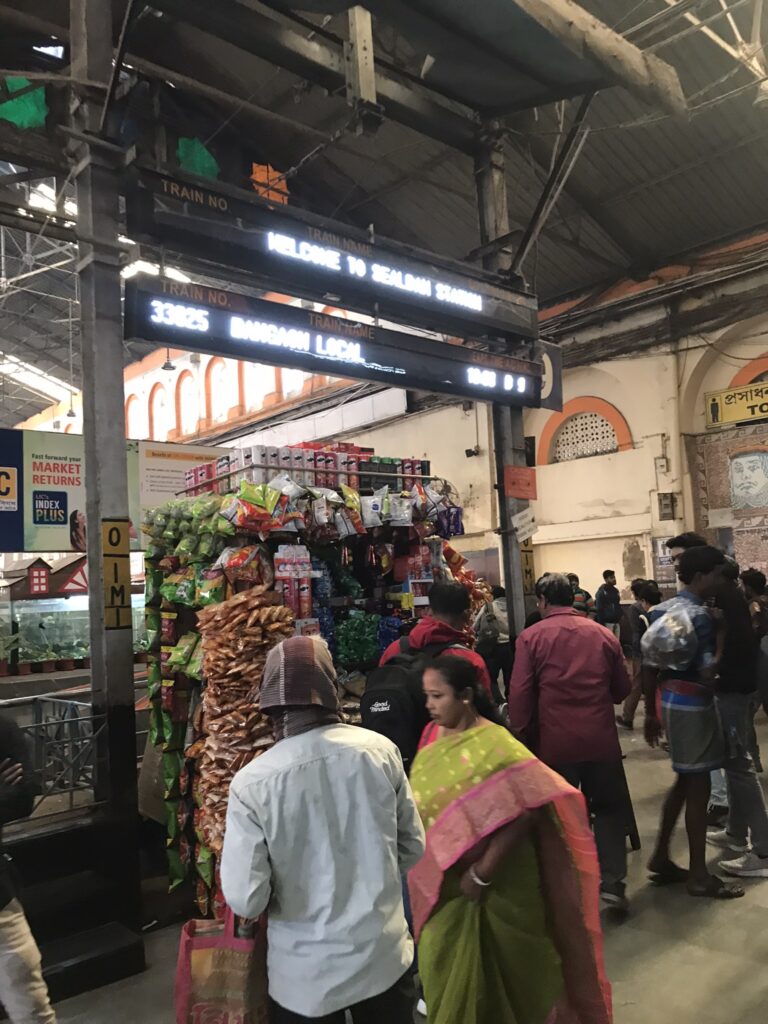
We took the local train from Kolkata to Bangaon when we crossed into Bangladesh
Trains in India can sell out very quickly and I highly, highly recommend booking tickets in advance – ideally a few weeks in advance if possible. You can see the number of tickets that are still available in each class of carriage when booking tickets using the IRCTC booking platform. In many cases, you may see a ‘waitlist’ number rather than actual availability – this means that the train tickets for that class have sold out, but that you can purchase speculative tickets which will convert into legitimate tickets as and when the actual ticket holders cancel. We didn’t use the waitlist and I really don’t recommend trying to do so if you want peace of mind for your booking.
There are also last-minute tickets (known as tatkal) and some specific ‘tourist tickets’ that may be held back on certain occasions – we didn’t ever purchase tickets in this way so I don’t have any info on either of these options. Overall, you can avoid all the hassle by planning ahead and booking in advance to ensure you get the tickets you want – unfortunately this means that you can’t always be flexible with your plans, but it’s a price worth paying in my opinion.
If you have an Indian phone number, the Railyatri app is an easy and convenient way to book train tickets. It’s an official vendor of Indian Rail and requires an IRCTC account as well as an Indian mobile number, but is much more user-friendly than the IRCTC website. We used Railyatri religiously for most of our time in India, until it randomly stopped working.
Remember, if train tickets are sold out, there’s always the bus! It’s worth checking both platforms anyway – sometimes the bus can be just as quick and even cheaper than the train.
Getting the train
Once you’ve booked train tickets and made your way to the station, the first hurdle is finding the correct platform/coach. Indian railway stations don’t always have great signage, and platform info isn’t always specified in advance. Luckily, most stations are equipped with large LED screens. As long as you know your train number, you should be able to find the correct location using these screens. Trains themselves are also not always clearly labelled, so make sure to check the LED screens on the platform to ensure you’re getting on the correct train. The trains can sometimes be very long, with dozens of carriages. Make sure you know your carriage and seat number beforehand – the LED screens on the platform are quite helpful and will be able to direct you to stand in the correct place before the train arrives.
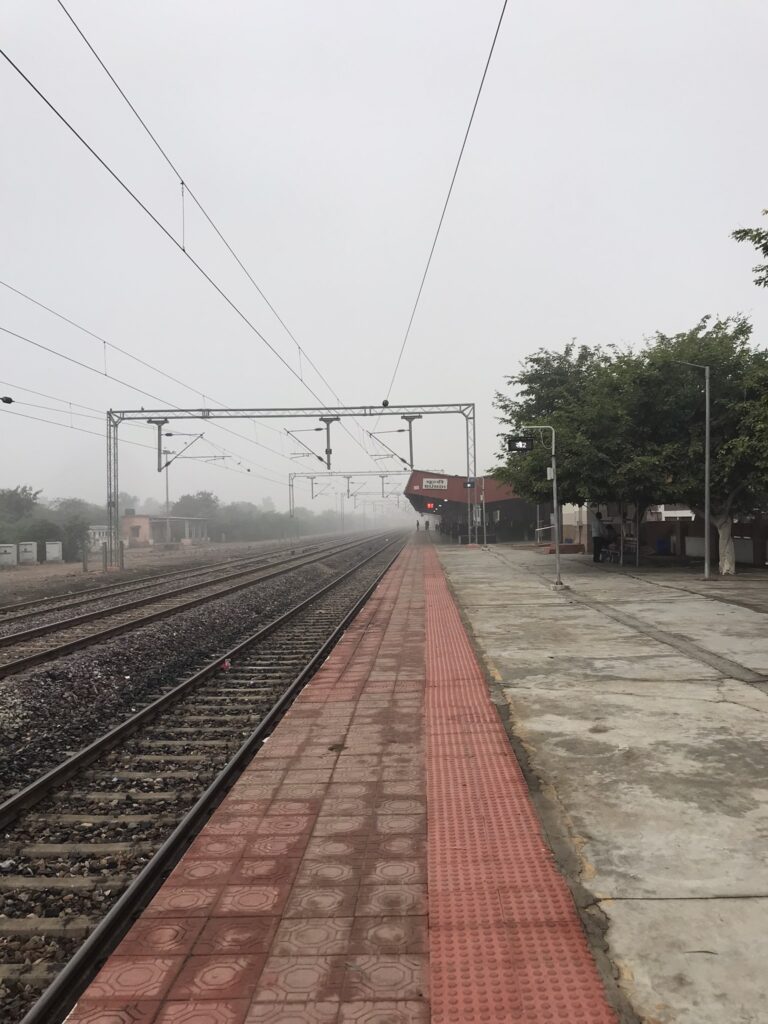
Railway platforms are massive – necessary to accommodate the huge trains. The LED screens will tell you where to stand
Once on the train, if you have a reserved seat then a conductor will come along once the train is moving and check your name against the chart. No physical ticket required. If you’re on a Vande Bharat or Statabdi Express train, assistants may also come by to drop off a complimentary bottle of water and/or a newspaper.
Make sure to stay alert when you’re on the train. Nobody announces stations stops and nobody will tell you when to get off – you will need to follow along on the map and work it out for yourself.
Trains in India can often be significantly delayed – it’s very common for trains to be several hours late. There are several services that provide live tracking of trains, including Railyatri. It’s good to check the status of the train before departing for the station – if the train is still several hundred kilometres away then you may want to delay your departure rather than sitting at the station for hours.
There are vendors on trains and at stations selling water and snacks. It’s also possible to arrange for meals on the train with Shatabdi Express and Vande Bharat services – this usually is a choice of veg or non-veg, typically a small thali with a few different curries, some chapatis and a sweet. It may also be possible in some instances to order takeaway from local restaurants directly to the train using the IRCTC e-catering service, the Railyatri app or similar. We did this on a few occasions and honestly it was great – the participating restaurants are set up for this services, they track the train and the delivery guy waits on the platform for you to come out and grab the food when the train stops. You may need an Indian phone number to make this work as often the delivery guy will try to call, although on one occasion they actually came onto the train and delivered straight to our seat!
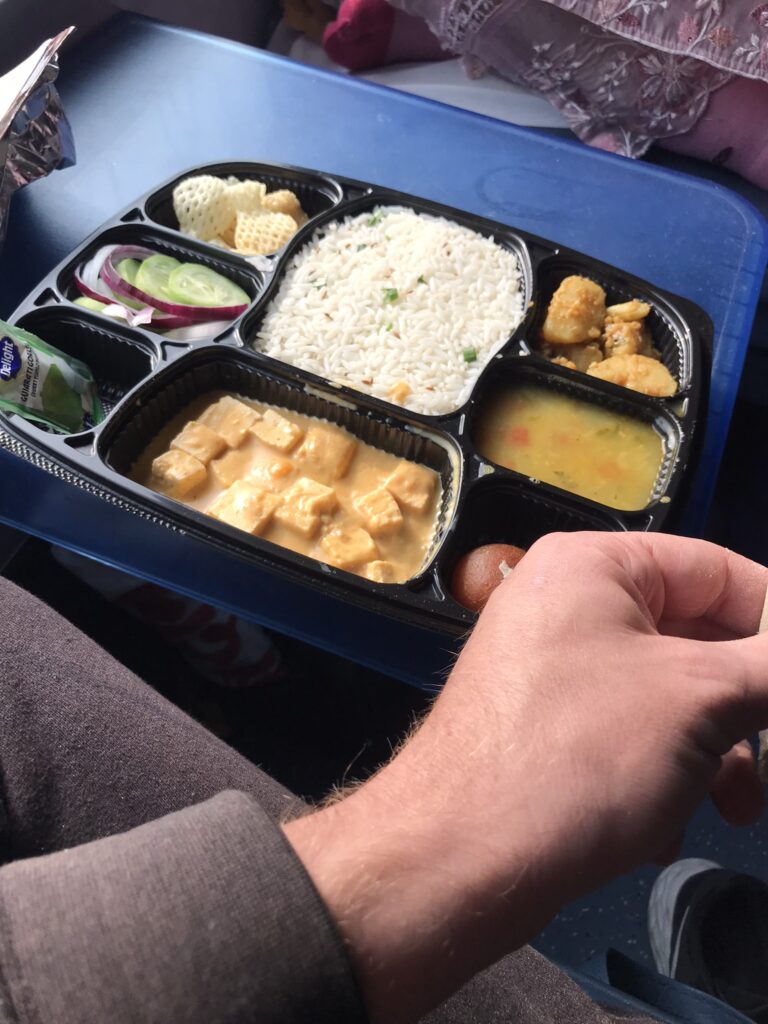
An on-train meal – this one was a delivery that we got via Railyatri
When taking a sleeper configuration train with reservations, people with reservations for the top bunks will generally just sit on the bottom bunk regardless of what they have booked – it’s seen as more of a communal area during the days. If traveling with a friend, if you don’t want to share then it’s a good idea to book one top and one bottom bunk to ensure getting the whole bottom bench to yourselves.
Train stations/platforms in India can be strange places, with a wide variety of people (for better or worse). Some stations are pleasant enough, while others are frankly horrible. I don’t recommend spending too much time at the train station if you can help it, although you may have no choice if your train is delayed!
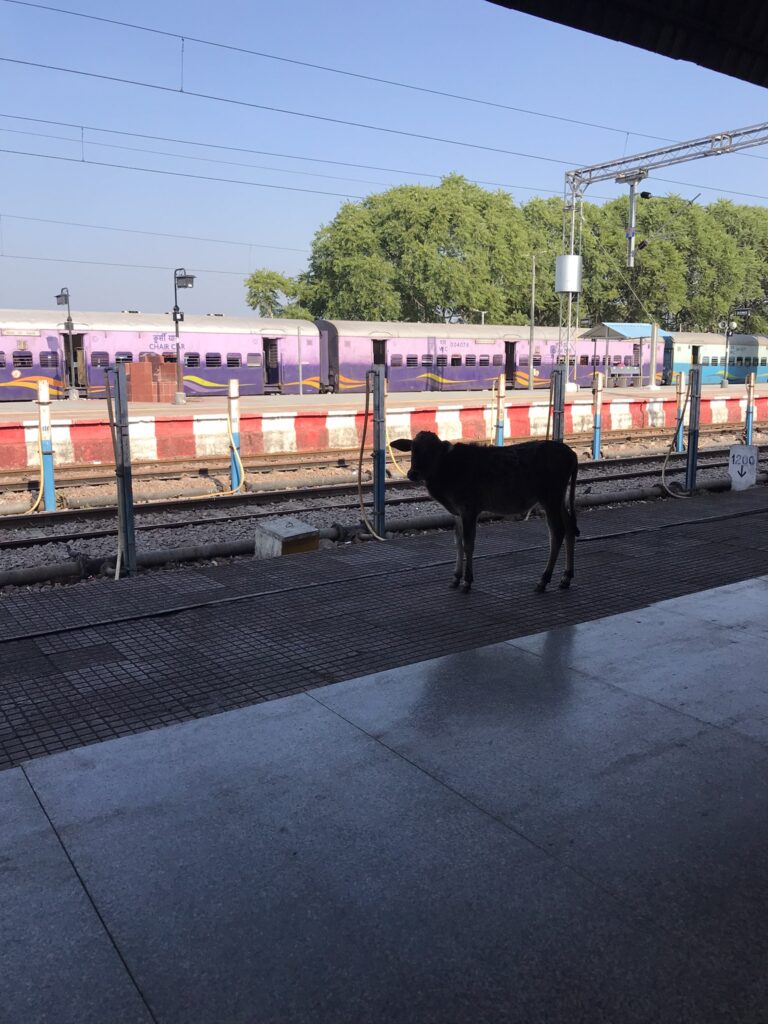
You might even see a cow
Bus travel in India
While India’s rail network grabs the headlines, the country also has an extensive inter-city bus network. Buses are less likely to sell out and can often be cheaper than trains. Buses also cover areas that may not be accessible by train, such as hill stations or areas with poor rail connection. When planning your journey, I really recommend checking out the availability of buses as well as trains to ensure you are getting the best route and value.
Bus tickets in India can be easily booked online. Our go-to portal is Redbus, which lists both private coaches and inter-city buses operated by the state transport companies. State transport buses are usually cheaper, but can also be less comfortable than the private coaches.
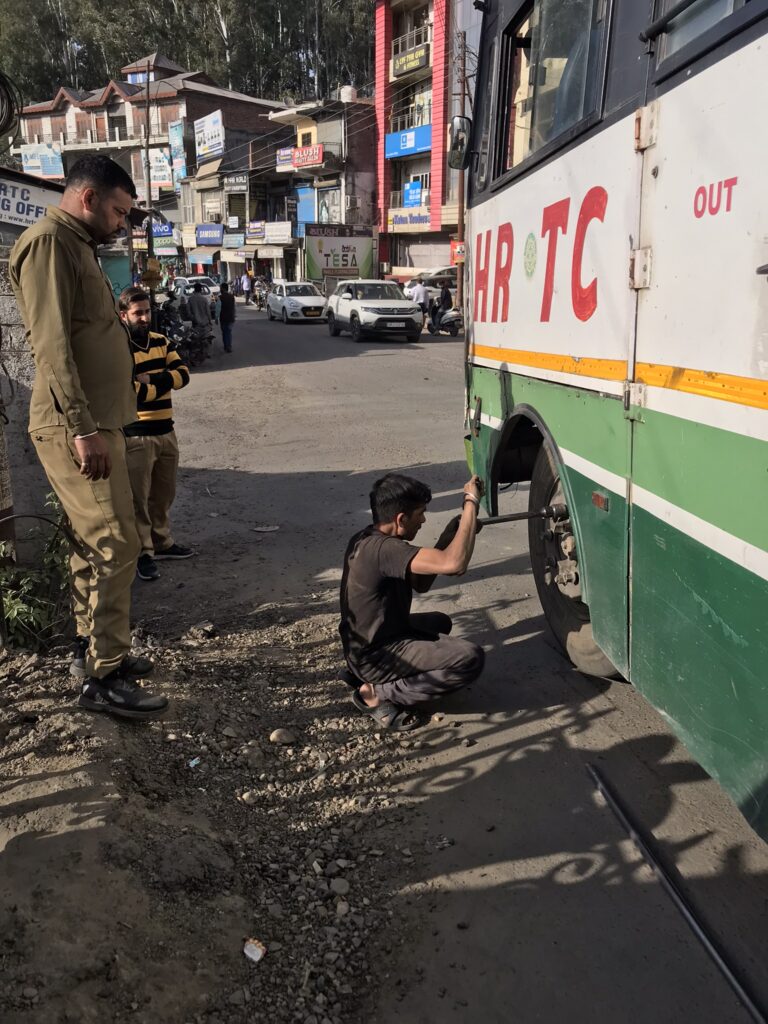
Bus travel is not always without its hiccups…
Unlike trains, you don’t really need to book buses much in advance in India – Redbus can tell you how many tickets are remaining and there’s usually plenty of availability. Local buses within cities are not listed on Redbus, and not all inter-city bus services are listed on there either but it does have pretty comprehensive coverage. We had a great experience when using Redbus service – sometimes you can even track the bus in real-time before it arrives!
Inter-city buses vary greatly in India – some are classic ‘coach’ style with air conditioning, while others are more equivalent to Central American chicken buses. On one occasion when traveling to Mount Abu we had a fantastic bus with literal bunk beds instead of seats. Luggage storage also varies within buses – your luggage may be put in a hold or you may need to dump it next to the driver at the front of the bus, or even ride with it on your lap like in Sri Lanka!
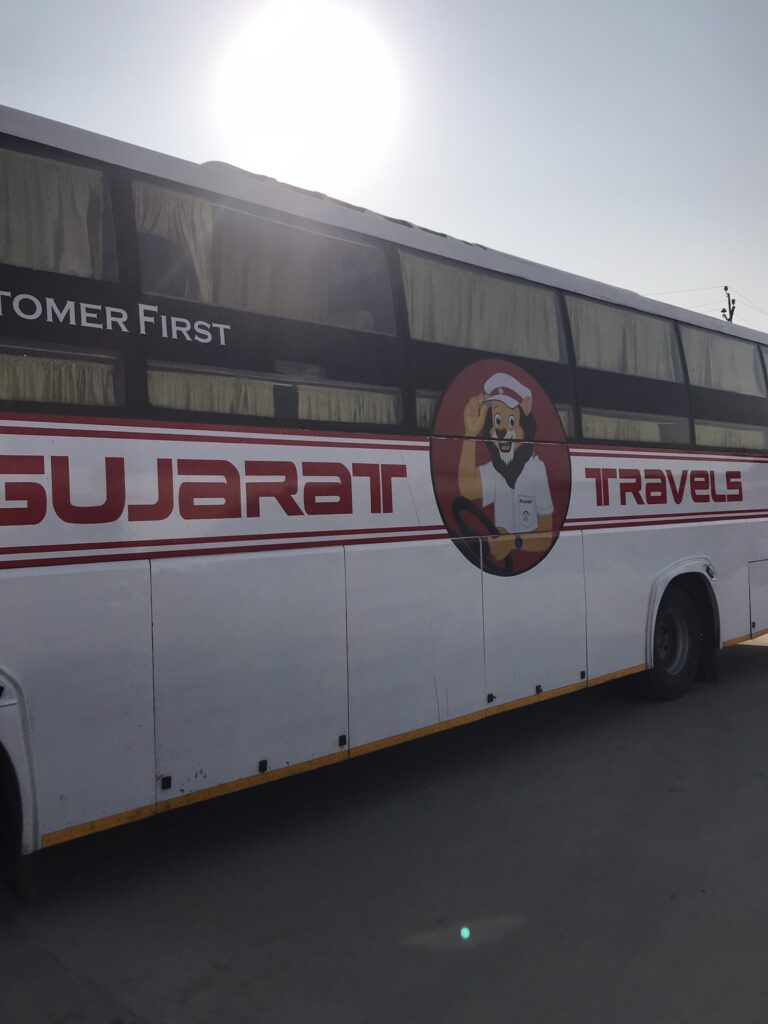
We had a great experience traveling to Mount Abu with Gujarat Travels
Transport within cities
Getting around within cities can be a little more difficult than inter-city travel. Many larger cities have modern metro systems – if you’re somewhere with a metro, I highly recommend using it! The metro is usually cheap, efficient and safe – in most cases they have a dedicated carriage for women only, which was much appreciated by myself at busy times. Uber is another option, although we found that results were mixed. In some cities Uber was great, while in other places it was a complete waste of time, filled with scammers and/or time wasters who would accept the ride and then either do nothing or try to call/message to ask for a higher fare. If you’re in a city which does have Uber then attempt to use it by all means, but don’t be surprised if it barely works or doesn’t work at all, not due to the app but the drivers.
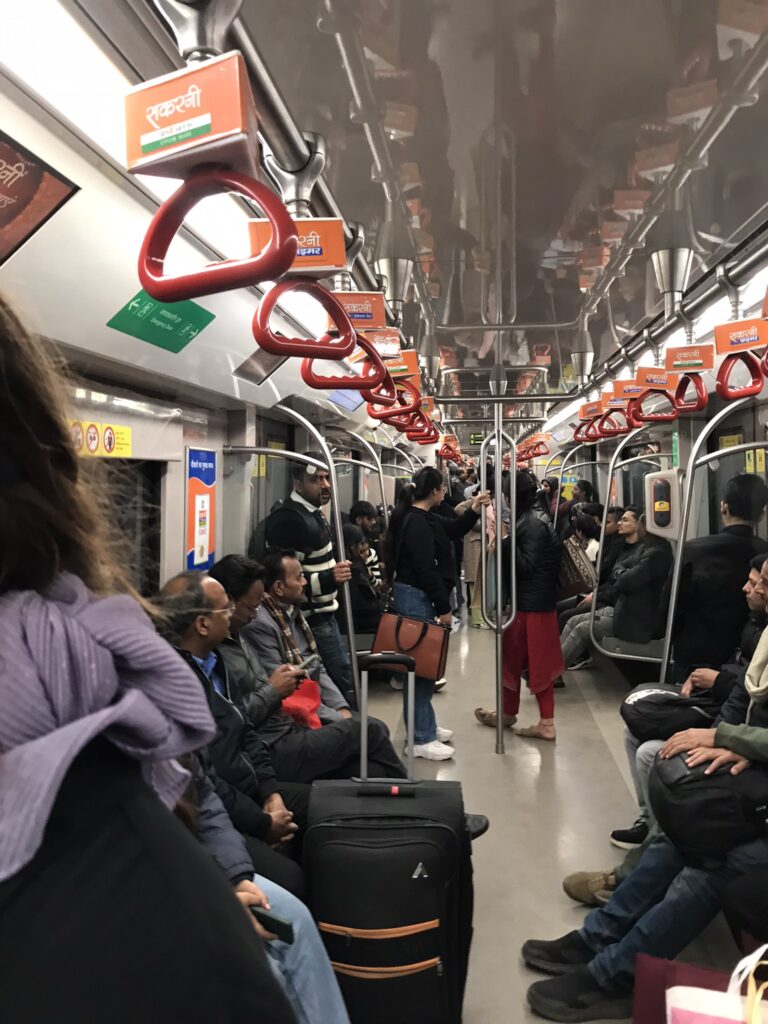
If there is one, the metro is by far the easiest, cheapest and most reliable way to travel within cities
Other than that, auto-rickshaws (tuktuks) are the most common means of transport within cities in India. Known as ‘autos’ by locals, we used tuktuks on many occasions, although always as a last resort. Auto drivers are notorious for ripping off customers, hustling, overcharging, scamming and generally being a nuisance. Thankfully this isn’t the case for all drivers – in fact, we didn’t actually have any bad experiences with auto drivers in India. Again, there are several ways to minimise the risk. Firstly, you can ask your accommodation to arrange an auto for you – usually this will involve them calling a trustworthy contact who is unlikely to scam or rip you off. Secondly, to avoid any and all drivers that actively approach you first. Unscrupulous auto drivers hang around outside many tourist attractions and public transport hubs, or cruise the streets in touristic areas looking for people to rip off. These are almost always the ones that should be avoided. If you approach a guy who is passively waiting at the side of the road or has just dropped someone off then you are much more likely to get a hassle-free service and a fair price. Many cities have specific auto stands (similar to taxi ranks) which are known by locals – again, you’re more likely to get a fair price here. Auto drivers almost never use their meter, so make sure you agree a fare beforehand!
For more India content, click here!