India’s 5th largest city, Ahmedabad is the focal point of Gujarat state. Ideally located on the route between Mumbai and Rajasthan, the city does not see the same levels of tourism as these popular hotspots but it has plenty to offer to visitors. Founded in the early 1400s by the Sultan of Gujarat, Ahmed Shah I, it has served as an administrative centre and major regional hub for centuries. Ahmedabad has played a key role in India’s recent history due to its association with Mahatma Gandhi, while the atmospheric and wildly chaotic old town provides a classic north Indian experience if you’re brave enough!
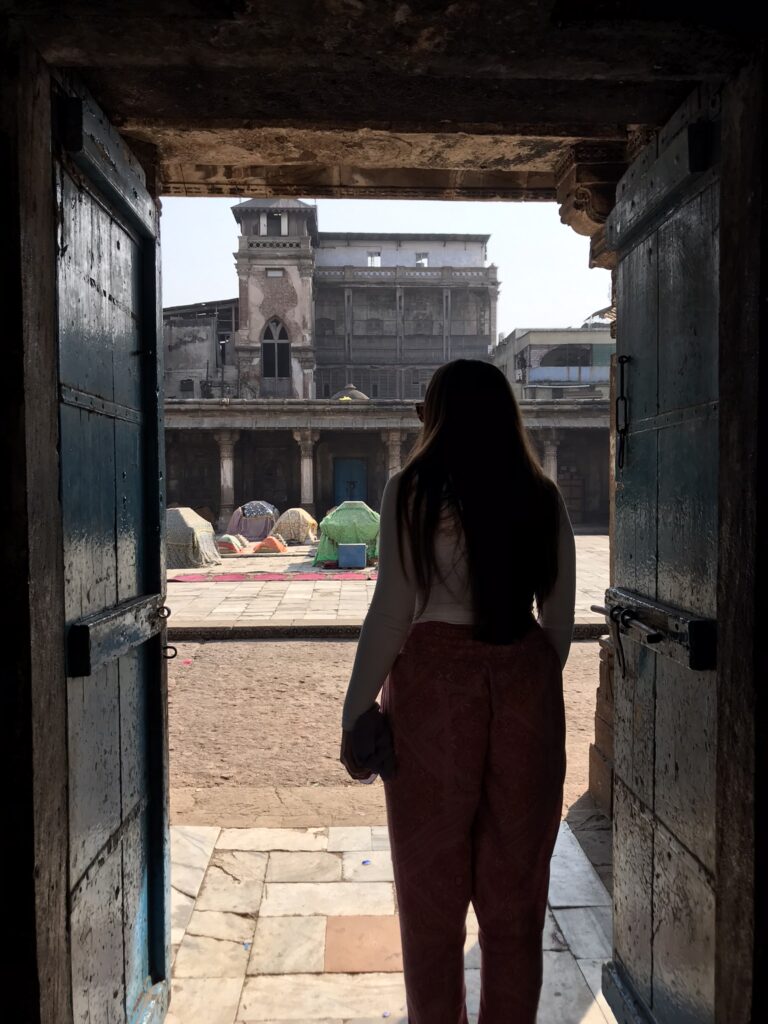
Ahmedabad is broadly split into two sections – the old town to the east and the more modern developments to the west, with the Sabarmati River flowing through the centre. The west side of town is economically thriving as a business and tech hub. The area east of the river, the old town, is a former walled citadel dating back to the early 15th century. Filled with winding, crowded streets, ancient temples and well-preserved havelis (Indian townhouses), this historic area was designated as a UNESCO World Heritage Site in 2017 – the only Indian city to have been given that designation. This walking tour covers some of the highlights of the old town.
Start at Hutheesing Jain Temple. If traveling by metro, the closest station is Shahpur which is around 15 minutes walk from the temple.
Hutheesing Jain Temple
One of Ahmedabad’s most impressive structures, this magnificent Jain temple dates back to 1848. Covered in ornate carvings inside and out, the temple almost resembles a castle or a fortress with its imposing walls. As it’s a Jain temple, strict rules need to be followed when entering the temple – shoes and socks must be removed to enter, the inner sanctum is not accessible to non-Jains, eating is prohibited as is photography and menstruating women are not allowed inside. Update: for those starting early, a walker has recommended that there is an all-you-can-eat Gujarati-style breakfast available in the restaurant within the Jain complex for a good price, with the restaurant closing at 9am.
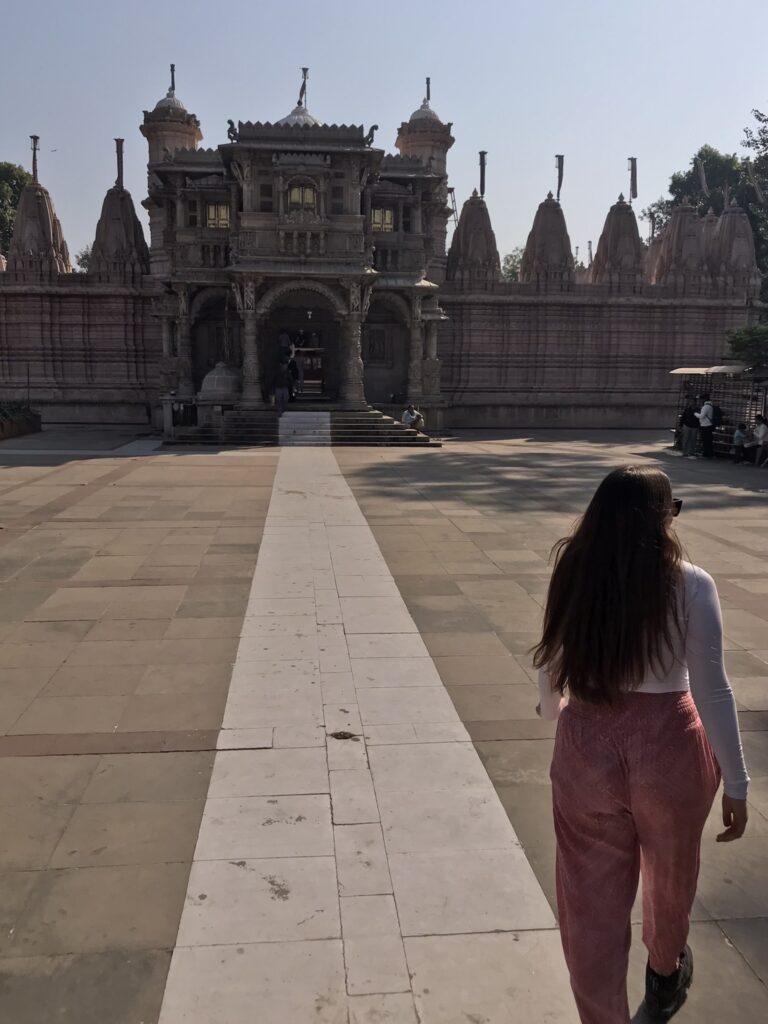
The Hutheesing Jain temple is covered in masterful carvings and design work
Delhi Darwaja
Walk south from the Hutheesing temple and you will reach Delhi Darwaja. One of the many gates of the old city, this is so-called because it faces Delhi. This gate was originally constructed in the late 1400s during the time of Sultan Mahmud Begada, the grandson of the city’s founder Ahmed Shah.
Passing through Delhi Gate you’ll enter into a labyrinth of crowded and chaotic roads and quiet backstreets with haveli-style houses. Head south along Harlapur Lane and you’ll eventually reach the Swaminarayan temple.
Shree Swaminarayan Mandir Kalupur
This colourful, extravagent temple was the first temple constructed by the Swaminarayan Samapraday – a sect of Hinduism which follows the teachings of its founder, Swaminarayan. This temple was built in 1822, allegedly following the directions of Swaminarayan himself after he was granted permission to do so by the British administrators.

The ornate and colourful Swaminarayan temple is the centrepiece of a wider complex
After passing through an elaborate gateway, you will enter into the temple complex. The temple is surrounded on all sides by ornate haveli buildings, which have over time served various uses including offices, classrooms, worship rooms and residences for holy men and temple officials. The temple itself is two-tiered and is considered a significant place of pilgrimage for followers of Swaminarayan.
From the temple, head south passing through the crowded and chaotic market streets until you reach Manek Chowk and Rani No Hajiro.
Rani No Hajiro
Also known as ‘Rani ka Hazira’, this historic structure dates back to 1445 and houses the tombs of the wives of Ahmed Shah, the Sultan of Gujarat and founder of the city of Ahmedabad. The tomb is run-down and a little difficult to find, nestled in the midst of a bustling market area. It may or may not be possible to enter the courtyard containing the tombs – you can peek through the latticed window if not.

The pillared tomb complex is located in the midst of a bustling market area – you have to head down a narrow side street to find it
One block to the west is Raja no Hajiro (or Badshahs Hajira), the tomb of Ahmed Shah. This small mosque also houses the tombs of several of his descendants and successors. Women may not be permitted to enter the tomb area. As with the Rani no Hajiro, this area suffers from poor maintenance and significant encroachment from the chaotic market that surrounds it.
Next to the tomb of Ahmed Shah is Ahmedabad’s Jami Masjid (Friday mosque). This large mosque was constructed in 1424 during the time of Ahmed Shah. Possibly the largest in India at the time of its completion, the mosque contains some Hindu and Jain-inspired carvings and design features and is said to represent the typical Gujarat style of Indo-Islamic architecture as a result. The mosque previously had two minarets at either side of the main entrance to the prayer hall – these were destroyed in an earthquake in 1819, but their intricately-carved bases are still visible. With its large central courtyard, the mosque has a peaceful atmosphere, especially when compared to the chaotic hustle and bustle of the streets outside.
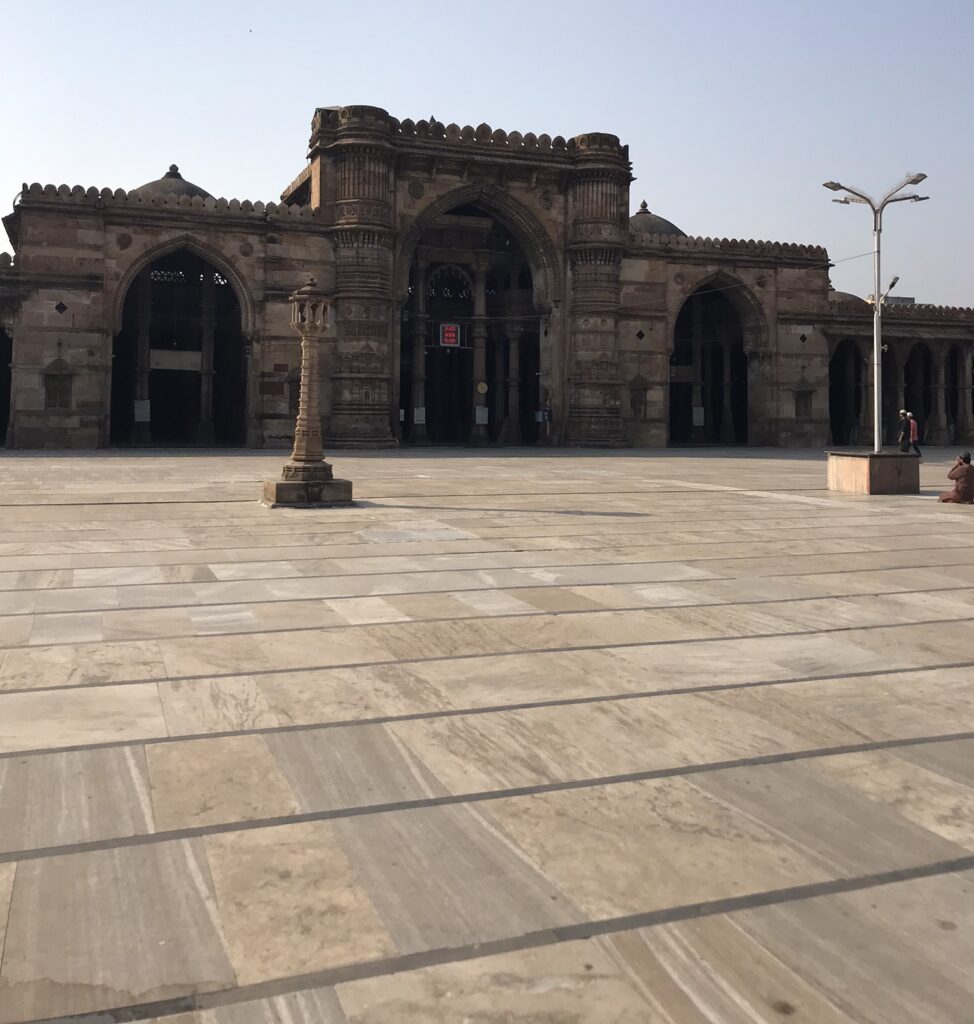
Jami Masjid is a haven of peace and quiet compared to the bustling market outside
Teen Darwaja
After leaving the mosque, head further west along Gandhi Road and you will pass through Teen Darwaja. Arguably the largest and most iconic of Old Ahmedabad’s many gates, this gate was constructed in 1415 and was one of the first structures of the walled city. A major thoroughfare, today it is a bustling and chaotic area that is emblematic of entry into the old town with many associated myths and legends. Look out for the inscription on the east side of the gate – written by the local governor during the period of Maratha rule in 1812, it declares that women should have equal rights to the inheritance of property, threatening both Hindus and Muslims that do not obey with punishment by their respective gods!
Bhadra Fort
The historic Bhadra Fort stands alongside an extremely crowded market area. This was once the royal complex, containing palaces and stretching out to Teen Darwaja. The grand entrance and imposing walls still remain today, along with a clock tower featuring a clock that was brought from London during the time of the British Raj. Most of the fort buildings are today used to house government offices, and there is also a Hindu temple inside the complex. A guard at the main door should allow entry through the gate to the clock tower area for those that wish to see inside.
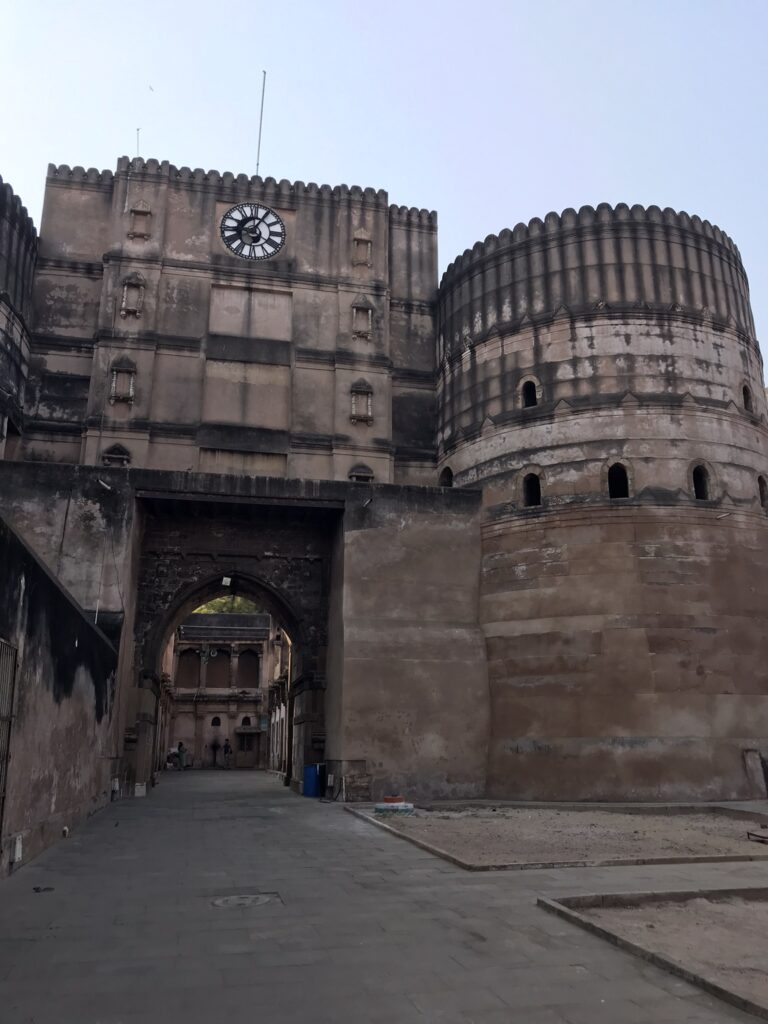
The imposing Bhadra Fort
Directly north of Bhadra Fort is the Sidi Saiyyed Masjid. This open-plan mosque was built in 1572 and is famed for its intricate lattice windows (known as ‘jalis’), in particular one window depicting an intertwined tree motif said to represent the Tree of Life. The mosque was said to have been built by an Ethiopian nobleman who was in the service of the Sultan at the time. Note that women are not allowed to enter the prayer area.

The famous ‘Tree of Life’ Jali
After exploring the old town, you can head to one of Ahmedabad’s most important sites, the Sabarmati Ashram. The easiest way to get there is to take the metro. From Sidi Saiyyed Masjid, head east to Gheekanta metro station – from there you can get the metro to Ranip station (changing at Old High Court Interchange), and from Ranip it’s around a 15 minute walk to Sabarmati Ashram.
Sabarmati Ashram was the primary home base of Mahatma Gandhi and his wife Kasturba between 1917 and 1930, as well as providing a religious commune and school for his followers. It is from here that Gandhi set off on his famous Salt Satyagraha (Salt March) in 1930 – a significant event in the developing Indian independence movement.
Today, the ashram complex contains an extremely in-depth and detailed museum about Gandhi’s life and role in the independence movement. Entry is free and even those who know nothing of Gandhi before entering will leave as experts. As well as the museum, it’s also possible to walk in Gandhi and Kasturba’s former house and see their modest rooms. Overlooking the Sabarmati river, the ashram makes for a serene place to sit and reflect.
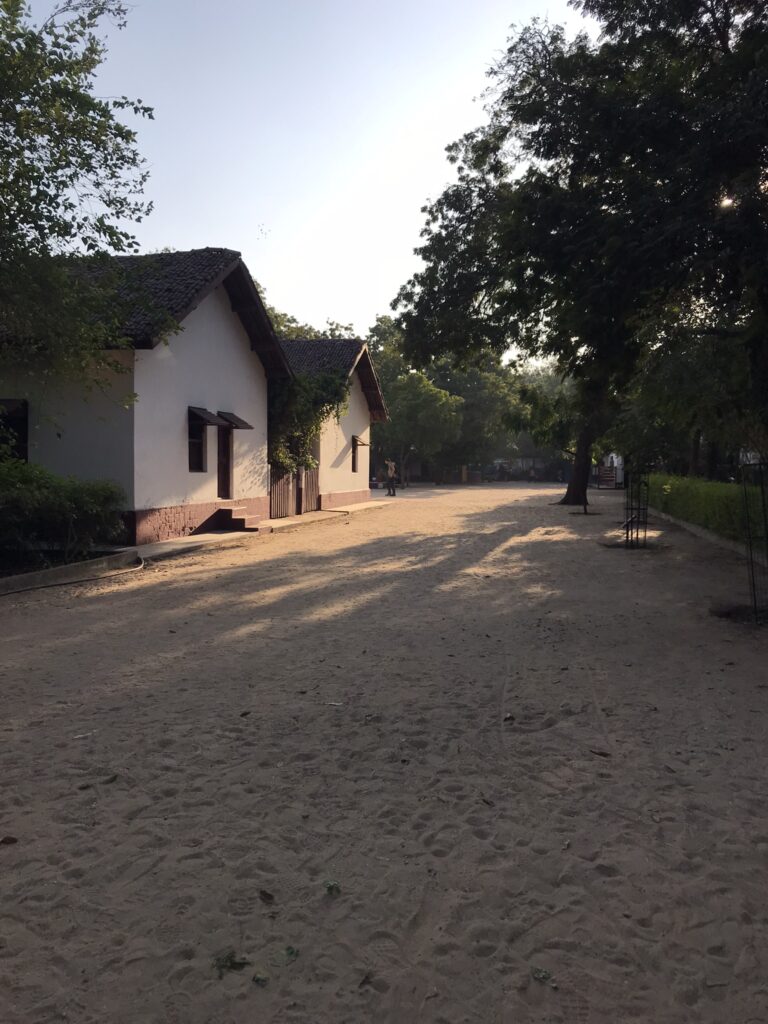
The ashram complex includes the museum as well as buildings and rooms which were used by Gandhi and his followers
Finish! For more India content, click here!
This article is also featured on GPSmyCity. To download this article for offline reading or create a self-guided walking tour to visit the attractions highlighted in this article, go to Walking Tours and Articles in Ahemdabad.