As the former capital of British India, Kolkata has a special place in India’s history. Formerly known as Calcutta, the city gained prominence in the early 1700s after the establishment of Fort William by the British and became the centre of operations for the British East India Trading Company, which later developed into Company rule over India and the British Raj. Although the British have long gone, the grandiose buildings and monuments left behind in Kolkata are a striking visual illustration of the might and scale of the colonial occupiers, as well as a testament to India’s subsequent independence. Check out this tried-and-tested walking tour of some of the city’s main historic sights!
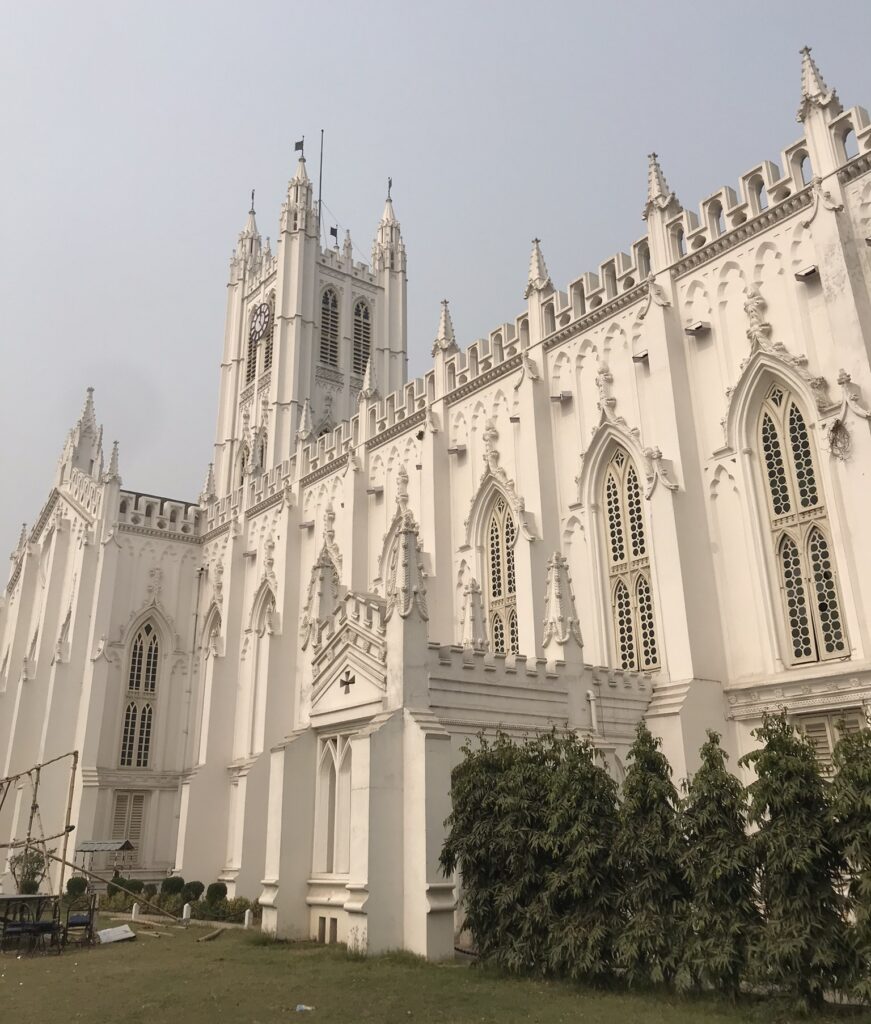
Start at St Paul’s Cathedral – entrance is from the north-west side of the complex. This grand Gothic-style church from the British colonial era dates back to 1847, when it was constructed to replace the smaller St John’s Church. Of particular interest are the various grave and memorial markers inside commemorating members of the former British congregation, including administrators and officials during the colonial period. We were charged a nominal entry fee of 10 rupees when visiting.
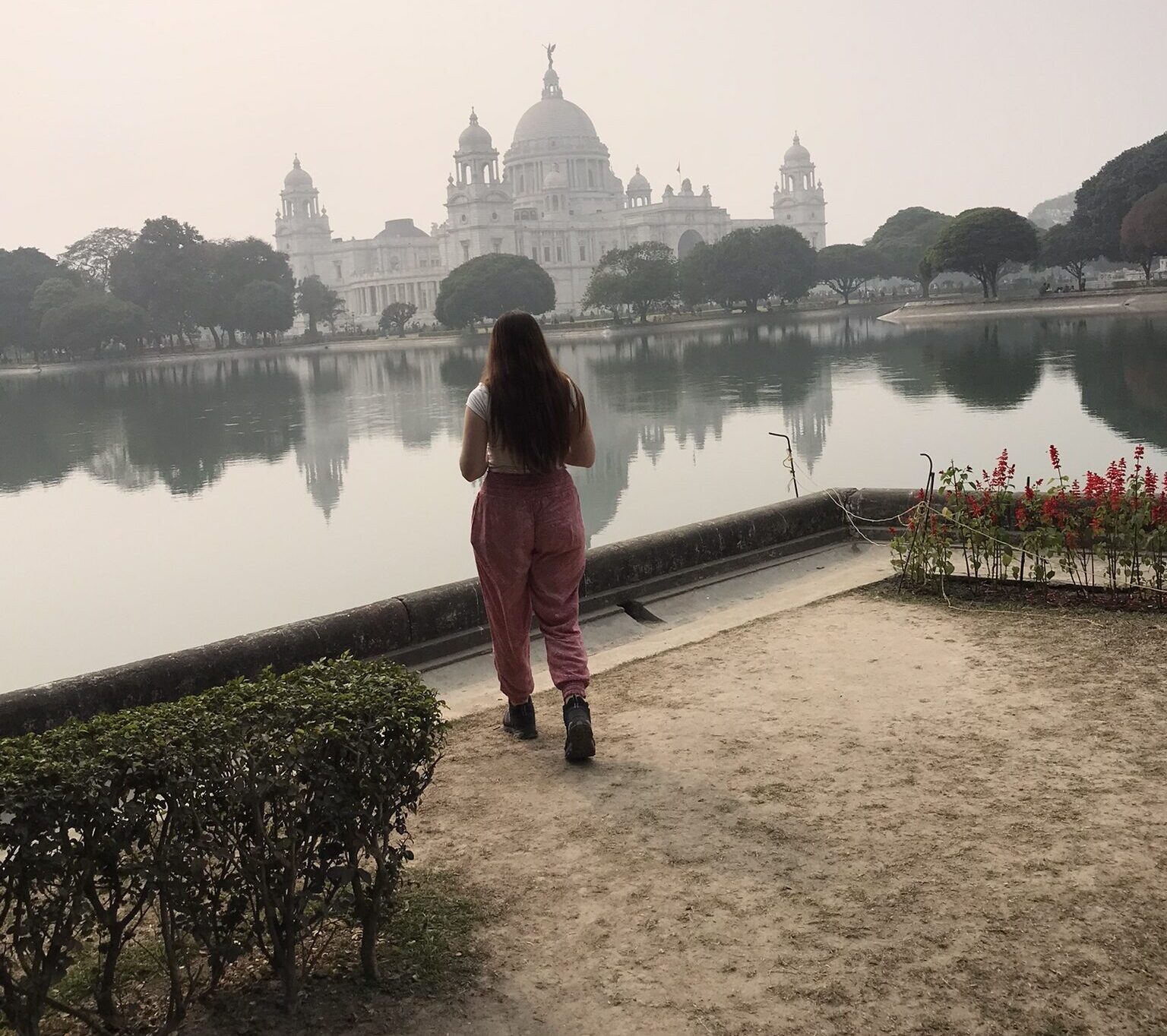
Head west from the Cathedral and you soon come to the unmistakable Victoria Memorial. This is one of the grandest and most beautiful buildings in India, sadly not constructed for any relevant reason but as a tribute to the late British Queen (and former Empress) Victoria, who never actually visited India.
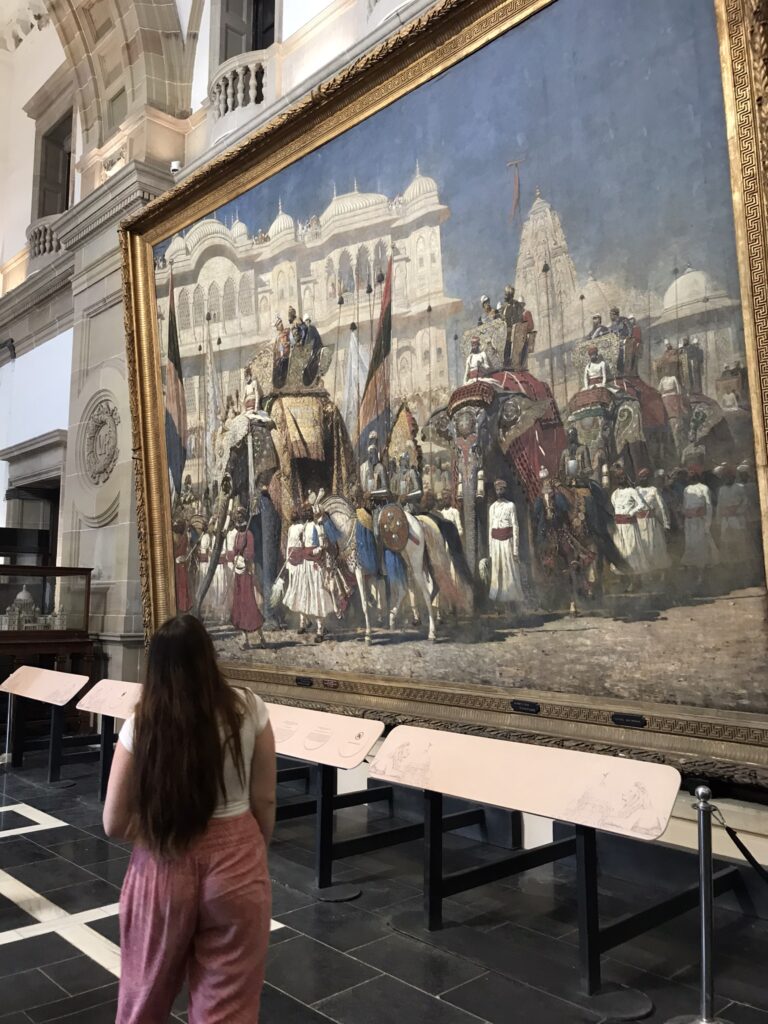
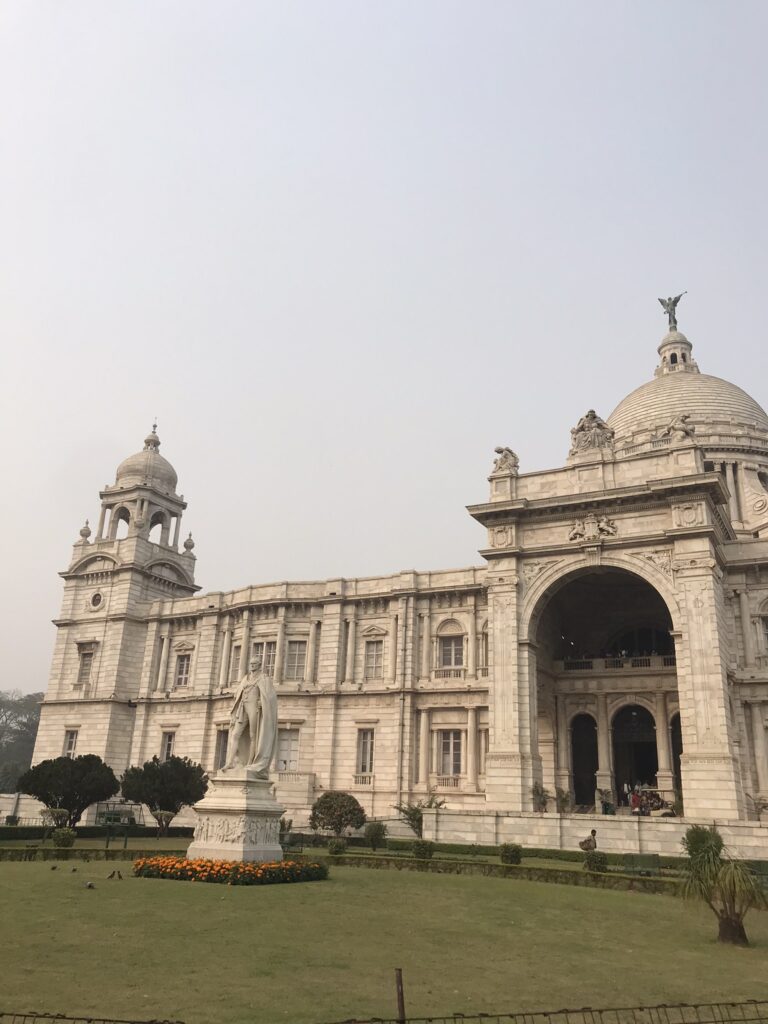
The Victoria Memorial is grandiose inside and out
Construction of the monument was started in 1906, five years after the death of Victoria, and completed 15 years later. Entry to the complex is paid – once inside, you can explore the extensive gardens which provide great views of the main building. The building itself houses a number of museum exhibits including colonial paintings and a sculpture of a young Victoria inside the central chamber.
After visiting the Victoria Memorial, head north and you will reach the Maidan. This large, somewhat desolate-looking area is the second-largest urban park in India and sits centrally to many of the city’s main historical attractions. It’s not a modern, sculpted park – it was originally designed as a parade ground for the British cavalry and essentially functions as a large playing field. Today you can usually find the Maidan filled with locals relaxing, taking a stroll and playing sports. The field plays host to many organised and impromptu games of cricket – watch out for flying balls as you walk through!
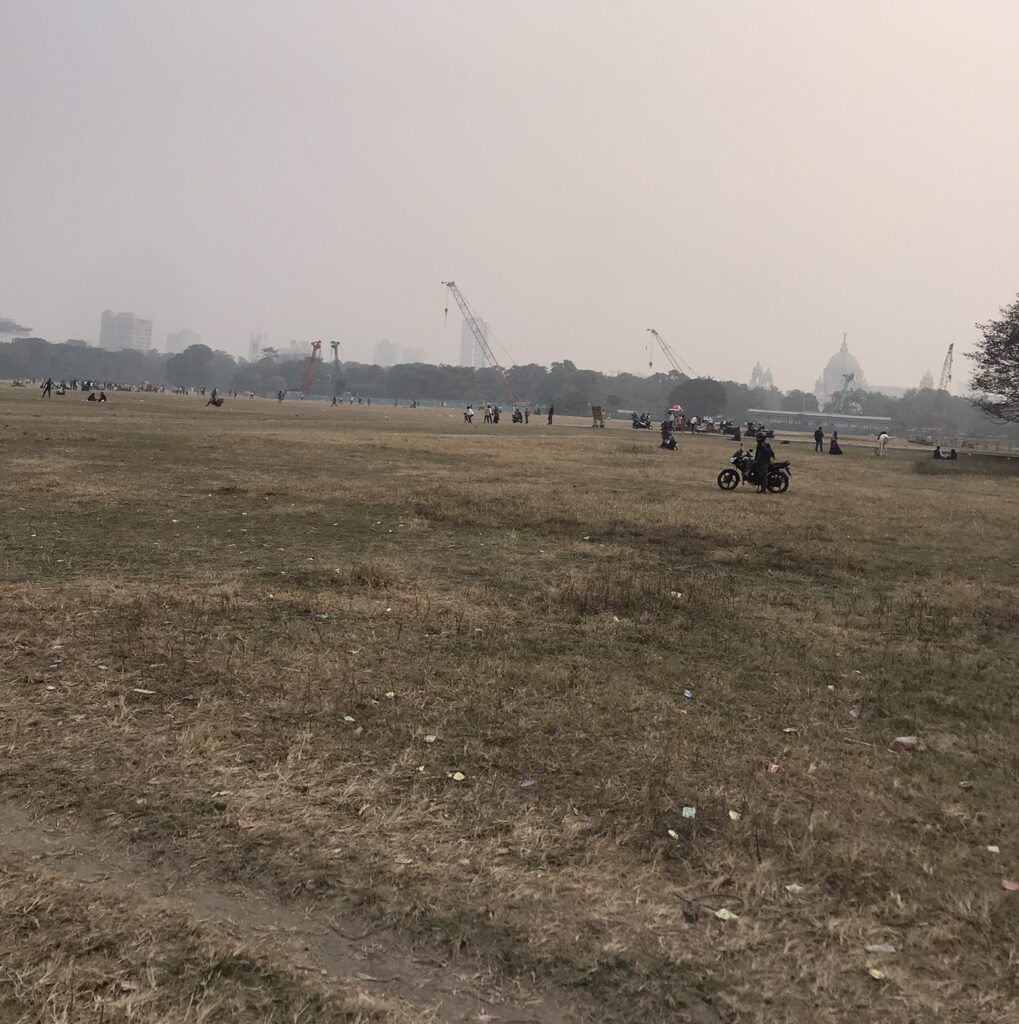
The Maidan is a pretty spacious area – it’s a huge former parade ground
To the west of the Maidan along the banks of the Hooghly River is Fort William, one of the most consequential forts in India’s history from where the British Company rule developed. This is actually the second iteration of Fort William – the first is now the site of the General Post Office building further north. Unfortunately, the fort is not open to the public – it’s now a functioning military base of the Indian Army and civilians are not allowed to go anywhere near.
At the north-east corner of the Maidan along Chowringee Road is the Indian Museum. Created by the local Asiatic Society, a group of British colonialists in the late 18th century who were interested in Indian culture, the museum in Kolkata dates back to 1814. It has been in its present location since 1878. This is both the largest and oldest museum in India, and claims to be the largest and oldest in Asia. The museum has a huge, extensive collection of artefacts, mainly from the Indian subcontinent but also from other areas such as Egypt.
From the museum, head north-west along Mayo Road and you will reach the Shaheed Minar. This column was constructed by the British in the 1820s and was originally known as the Ochterlony Monument, in tribute to the colonialist Sir David Ochterlony. Following India’s independence it was repurposed as a memorial to those who died during the independence struggle, and renamed as the Shaheed Minar (martyr’s memorial).
From the monument, head north along Marx Engels Beethi Road and then turn west down Government Palace Road. Continue along Government Palace Road and you will pass the entrance gate to the Raj Bhavan. This grand building was the official residence of the Viceroy of India during the period when Kolkata was the capital of the British Raj.
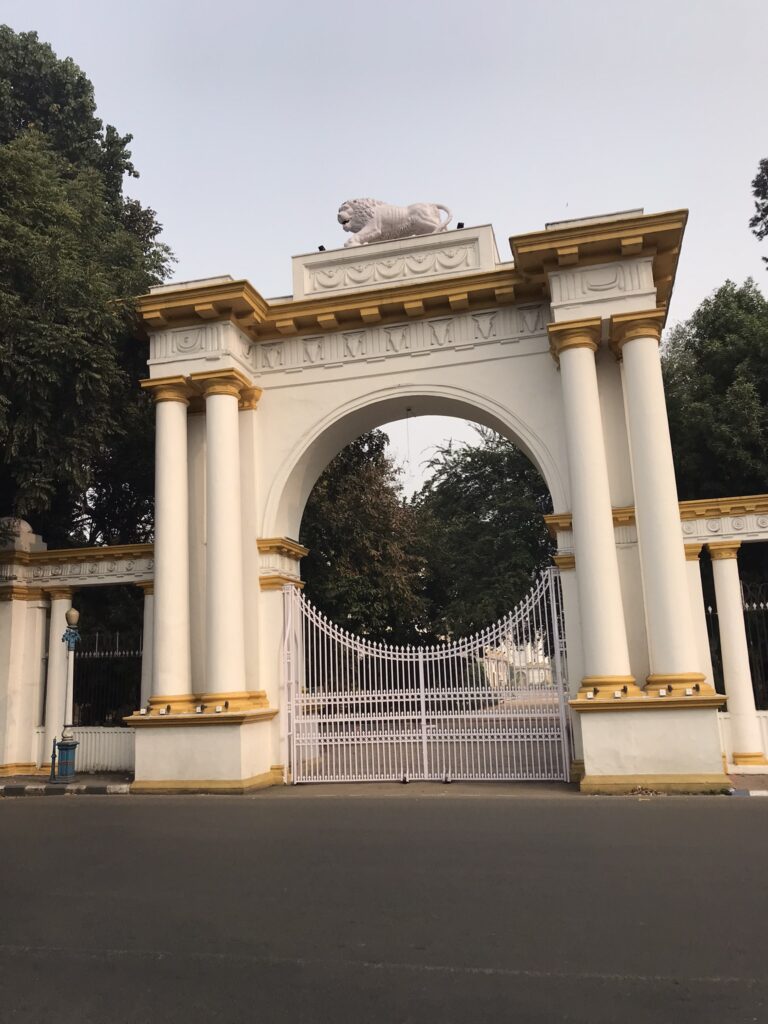
Even the gates of Raj Bhavan are impressive
The Raj Bhavan was originally constructed by Lord Wellesley, the Governor-General in the early 1800s during the time of British Company Rule. After spending a fortune on the grand palace he was accused of mishandling company money and recalled to Britain as a result. Today, the palace is used as the official residence of the governor of West Bengal. Unfortunately it’s very difficult for the general public to enter the building – only those who have obtained express prior permission are allowed in, so the view from the gates on Government Palace Road is the closest most visitors get.
From Government Palace Road, turn left and head to Esplanade Row West. Here you will find Calcutta Town Hall. The building was constructed in the early 1800s and was used as a public hall for gatherings and official events of the colonial elite. In later years it was also used for lectures and discussions involving prominent Indian intellectuals such as Swami Vivekananda and Rabindranath Tagore. After India’s independence, the building fell into a state of disrepair before being restored in the 1990s. Today it contains a small museum.
From the Town Hall, continue along Esplanade Row West and you will reach the impressive Calcutta High Court building. This is India’s oldest High Court, dating back to the 1860s, although the court building itself was not constructed until 1872. The building is modelled on the famous Cloth Hall in Ypres, Belgium. Outside is a statue of a prominent Bengali revolutionary figure, Surya Sen. The court inside is still active today, holding jurisdiction over the state of West Bengal as well as the Andaman and Nicobar Islands.
From the High Court, head up Old Post Office Road and then turn right down Kiran Shankar Ray Road and you’ll reach St John’s Church. Structurally this is not the most impressive building in the city, but it is one of the oldest and most interesting. The church was constructed in 1787 and housed an office of the first Governor-General of India, Warren Hastings. The office is on the right-hand side as you enter the church – we were ushered in to have a look by the jolly church warden.
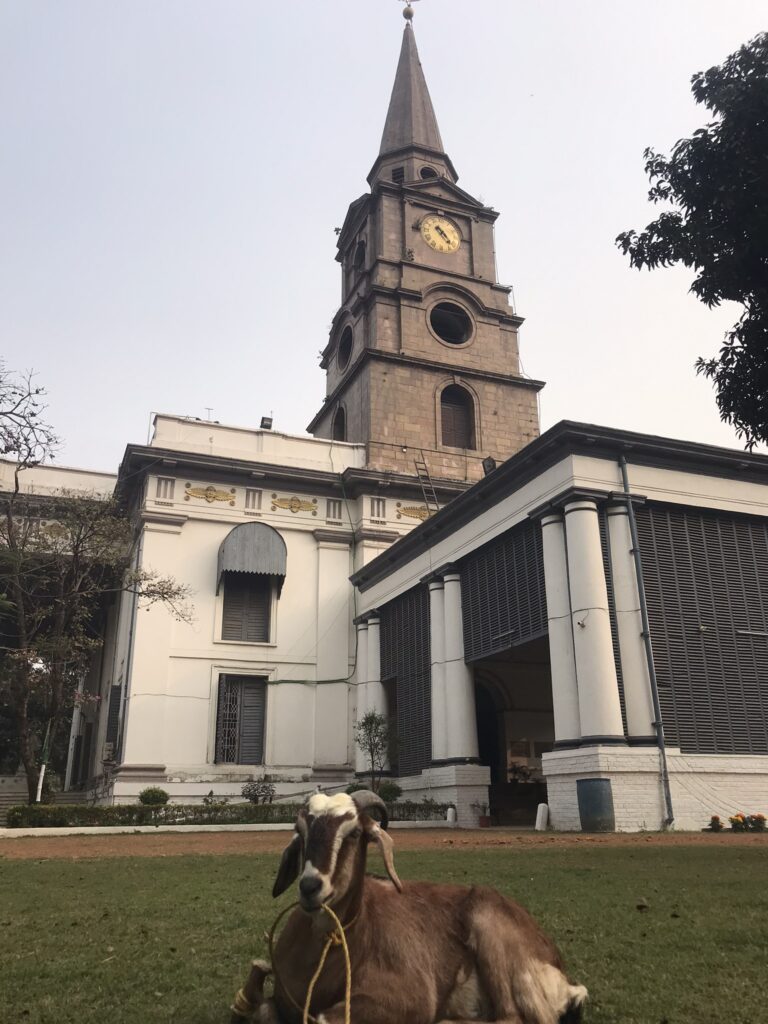
We were surprised to find a goat in the yard outside St John’s Church
The church contains a large painting dating back to 1787 by the German artist Johann Zoffany, which depicts a near-copy of Leonardo da Vinci’s Last Supper but with Jesus and his disciples represented by local colonial figures of the time. Both inside and outside the church you can find an array of historical graves and memorials from the colonial era, including a memorial for Lady Canning, the wife of the first Viceroy of India.
The graveyard outside predates the church. Notable sights include the large memorial to those that died in the infamous ‘Black Hole of Calcutta’ incident in 1756, when 146 British troops were locked inside a small dungeon in Fort William by the local Nawab and most suffocated. The graveyard also contains the tomb of Job Charnock, the British man credited with founding the city of Calcutta, and Begum Johnson, a local character during the colonial era who lived to the age of 89 (unheard of at the time) and whose grandson Robert Jenkinson went on to become Prime Minister of the United Kingdom. There are many other colonial grave markers around, mostly dating back to the mid-1700s.
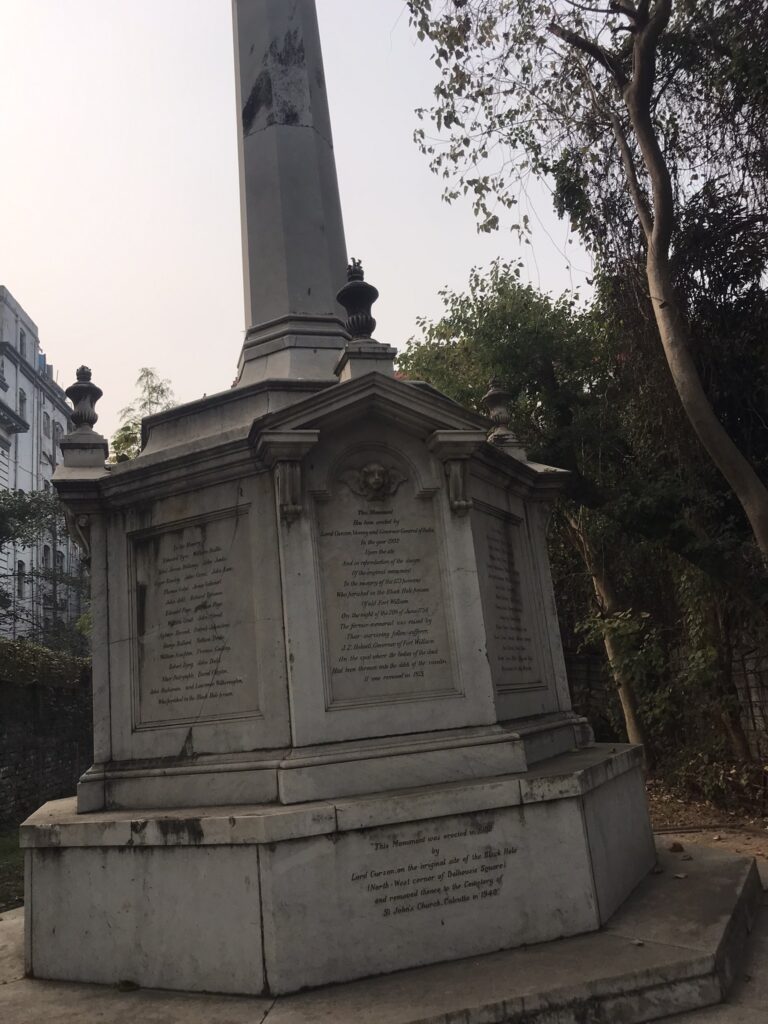
The memorial to the infamous Black Hole incident
From St John’s Church, turn left and head up Netaji Subhas Road and you will pass the General Post Office. Established in 1774, this is the oldest general post office in India and is still functioning to this day. The current building, with its unmistakable domed design, dates back to 1868 and sits on the site of the original Fort William, where the Black Hole of Calcutta incident took place.
North of the post office you will see the Writers’ Building. Dating back to 1780, this iconic redbrick structure was the administrative headquarters of the British East India Company. The site saw an important incident in the Indian independence movement when in 1930 three local revolutionaries named Benoy Basu, Badal Gupta and Dinesh Gupta infiltrated the building and assassinated the British chief of police inside. The square and surrounding area, formerly Dalhousie Square, was renamed BBD Bagh after these three men.
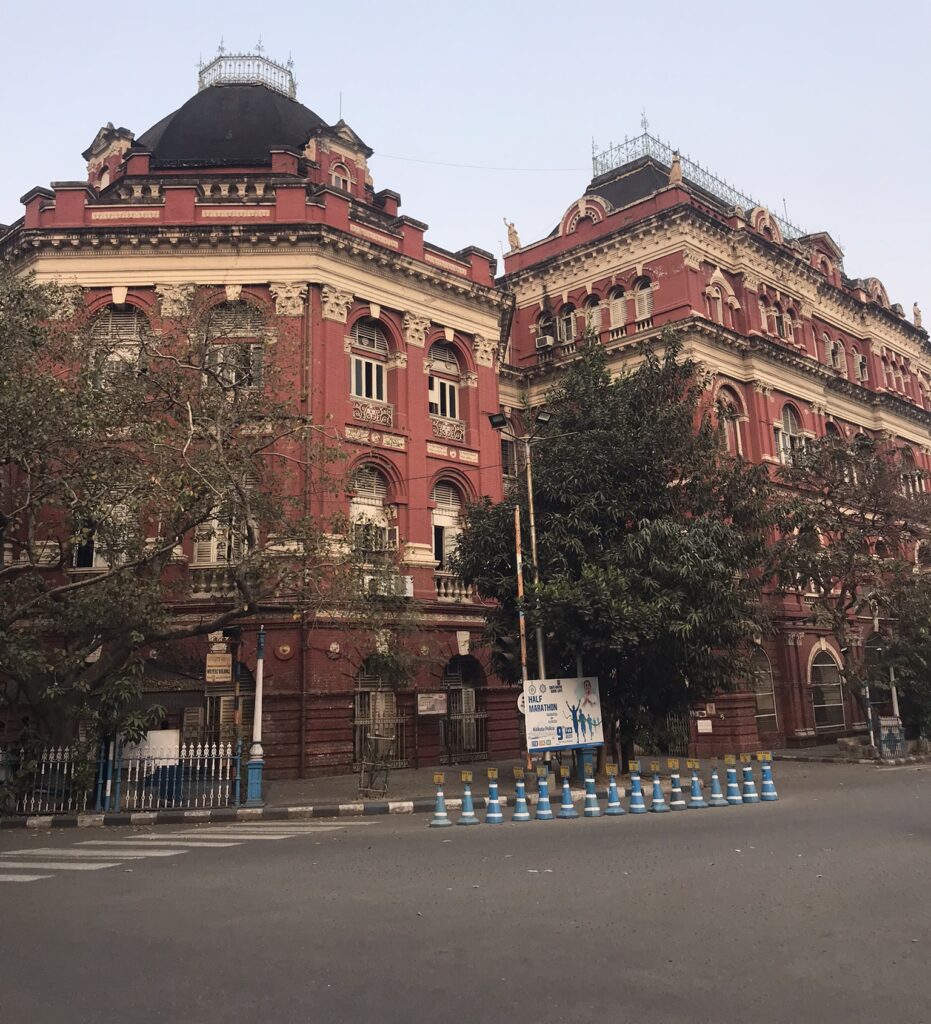
The former British East India Company HQ and West Bengal secretariat – the Writers’ Building
Following India’s independence, the building housed the secretariat of the state of West Bengal, however it was closed for renovation in 2013 – this was scheduled to last for 6 to 9 months, but was never completed. The building remains unoccupied and off-limits for visitors.
Finish! If you want to keep exploring, you can head to the old Chinatown area or the Mallick Flower Ghat. For more India content, click here!
This article is now featured on GPSmyCity. To download this article for offline reading or create a self-guided walking tour to visit the attractions highlighted in this article, go to Walking Tours and Articles in Kolkata!